Albergue Rosalía, Castrojeriz. 16.44.
I’m back in Castrojeriz, a Castilian hill-fort town some twenty-one kilometres down the road from last night’s stop in Hornillos. I probably could have gone a little further today, but there’s a local festival in town and I wanted to check it out. It’s much too easy to lose track of things on the Camino over a good conversation, and in so doing miss something special.
I mean – it is a garlic festival. So it’s nothing extraordinary. But I happen to love garlic (sopa de ajo is my favourite dish in the whole world) so I feel duty-bound to check this one out.
The hospitaleros at Hornillos left out a proper spread for breakfast, so we ate well today. Even so, we were up and gone by 6.20am, shortly before sunrise – which is getting noticeably later each week. The turbines on the surrounding hills continued to spin in the twilight, their red warning lights blinking like eyes along the blue horizon.
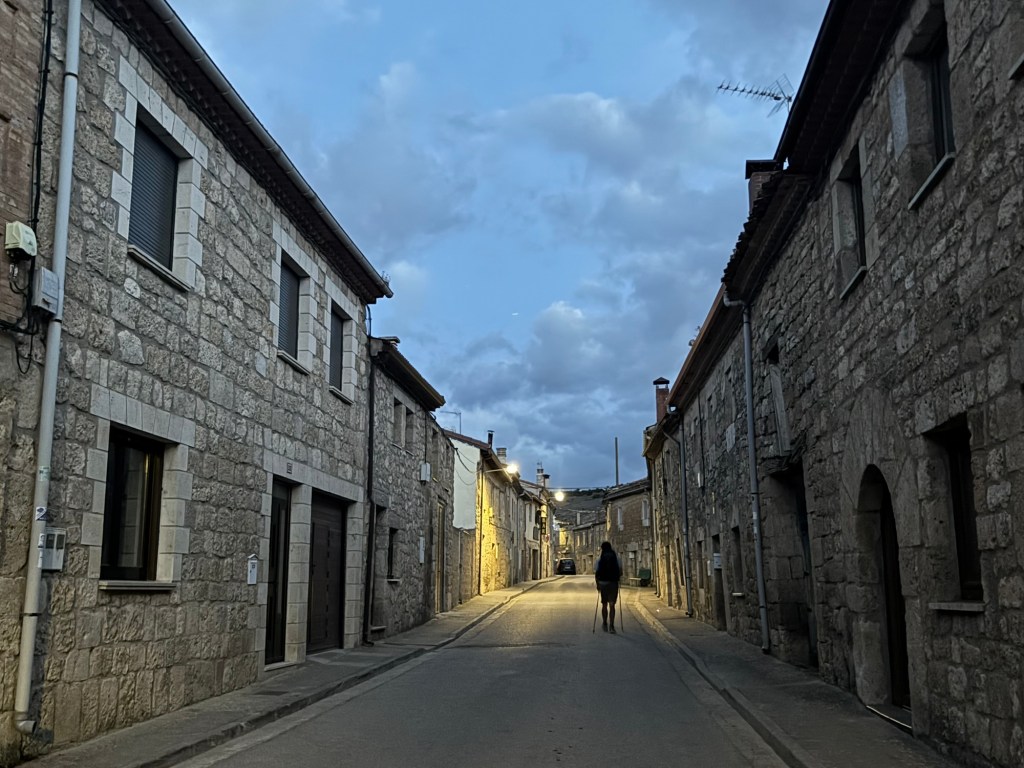
A gentle blanket of cloud shrouded our ascent up to the high meseta west of Hornillos. Apart from a few simple crosses erected along the road, the terrain was featureless, and all the shadows harrier-shaped: I counted at least seven Montagu’s harriers quartering the fields between Hornillos and Hontanas, from the agile ring-tailed youngsters to the ghostly silver shapes of the adult males. Vultures always take the top spot in my animal pantheon, but Montagu’s harriers are absolutely in my top five.
There’s not much a mobile phone can do with these elusive spirits, but you can just about make out the long-tailed shape of one in the photo below.
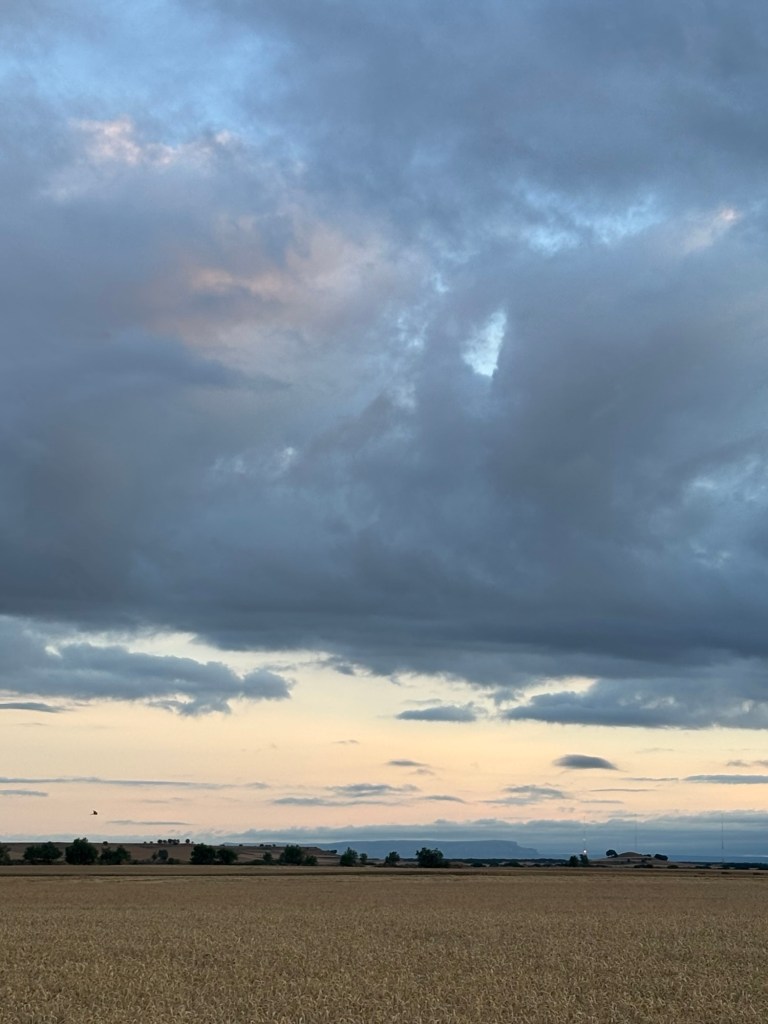
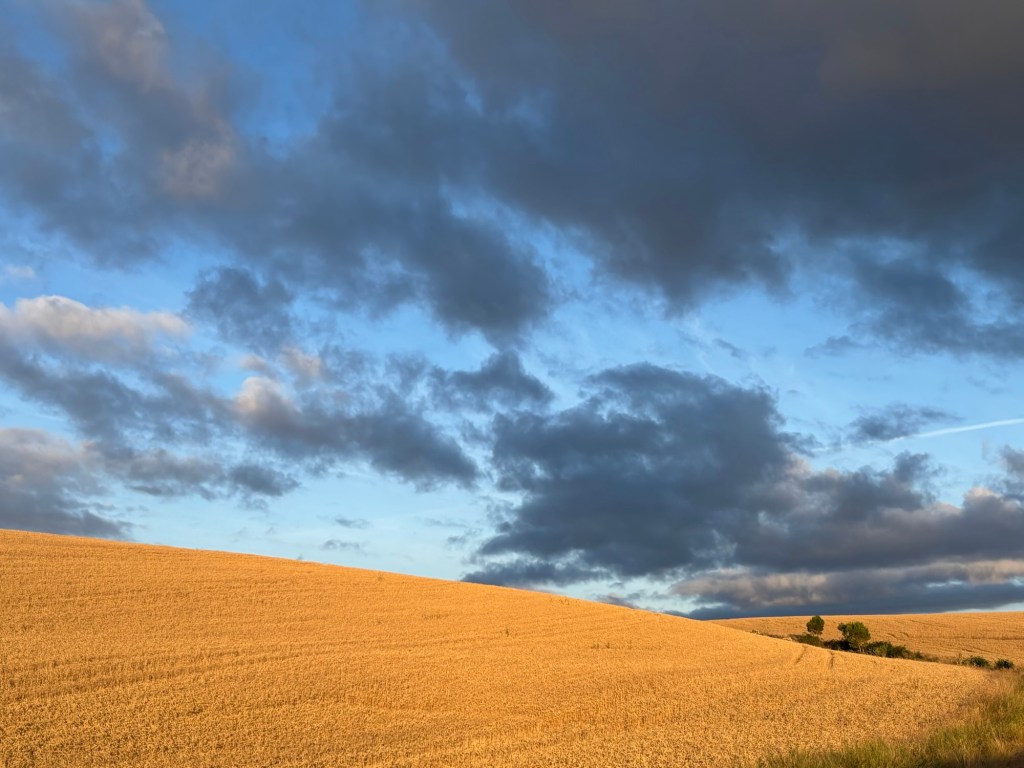
The sunrises over the meseta are peerless. It’s amazing just how many colours come out of the fields of gold, which pairs better with the sky than the grapes of La Rioja with the local jamón. I can’t imagine walking this route in winter, when the fields are stripped and bare. It must be spiritual then, too, but I would miss the warm hues of the wheat.
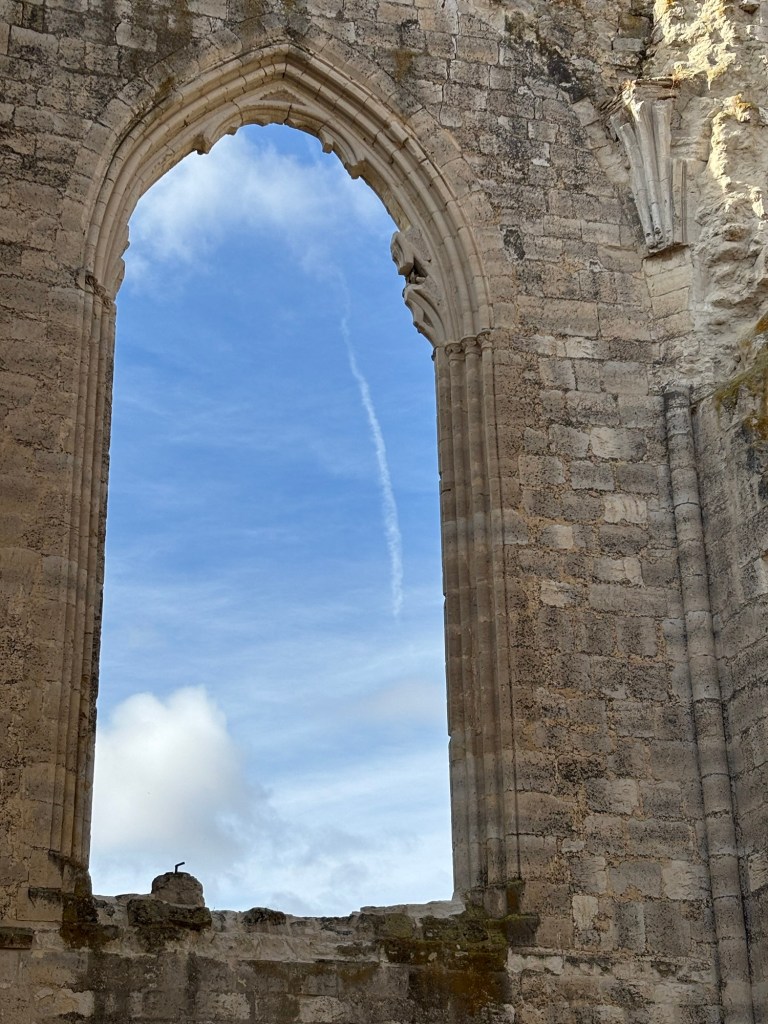
To reach Castrojeriz, you have to pass through the ruins of the Monasterio de San Antón. According to my route planner, I had intended to stay here, but it was only ten o’clock, and the day was still very young, so I pressed on – but not before snapping some photos of what is easily one of the most breathtaking buildings along the Camino Francés, with its ruined arches spanning the road to Castrojeriz.
The monks quartered here used to treat those afflicted with Saint Anthony’s Fire, a sickness we now know as ergotism. Advances in agriculture have more or less eliminated the disease, but the source is all around us in the wheat and rye that once carried the sickness. Before the causes were understood, the spasms and hallucinations that sufferers endured were believed to be a form of divine punishment or demonic possession. It’s hard to say whether the monks’ sanctified treatments truly worked, or whether the cutting-out of rye from their diet was what made the Order so effective. Either way, the monks resorted to a Christian form of white magic to keep the locals safe back in the day.
I like to imagine their ministrations might have saved the lives of at least a few pilgrims bound for Santiago over the centuries.
Gust was waylaid by a photographer for about half an hour on the road to Castrojeriz, and I was only spared the same fate by his silent warning to stay away and the timely arrival of two British university students, one of them a Durham undergrad. They stopped a little way along with their group so I couldn’t walk with them for that long, but I hope I can catch up to them again at some point before León.
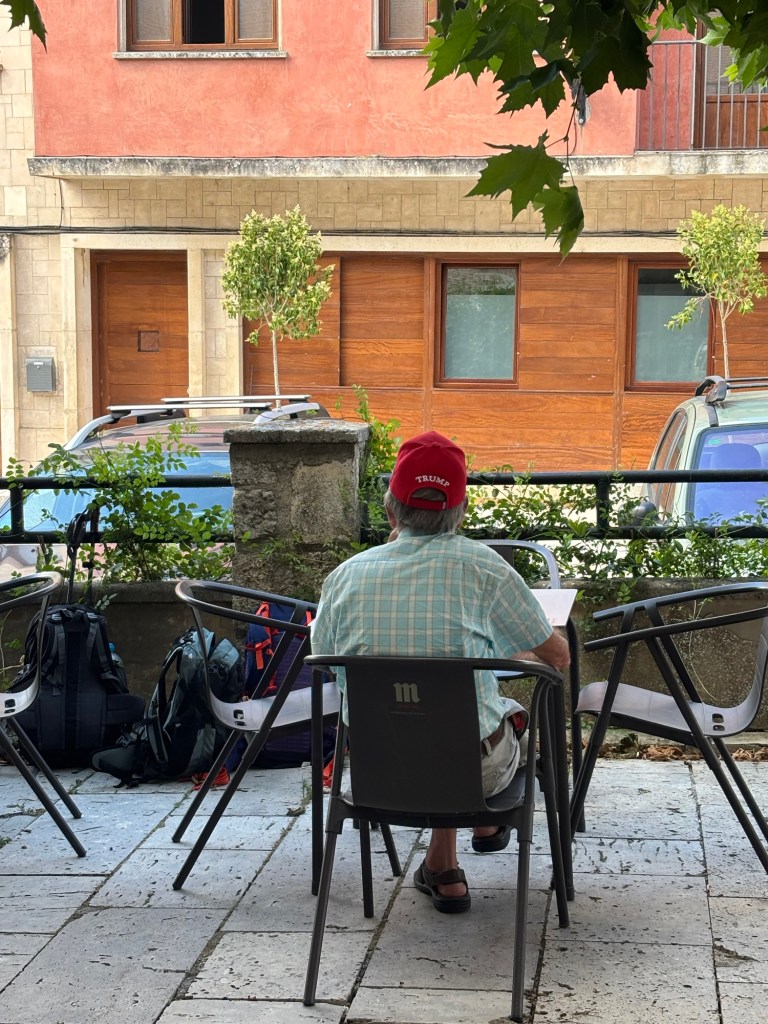
I rejoined the Americans at Castrojeriz and we grabbed a drink before lunch, partly out of curiosity to see whether Gust could extricate himself from the photographer’s grip. We were more than a little surprised to see a MAGA hat, but nobody dared to engage the man in conversation. If he was a pilgrim, he was traveling very light indeed.
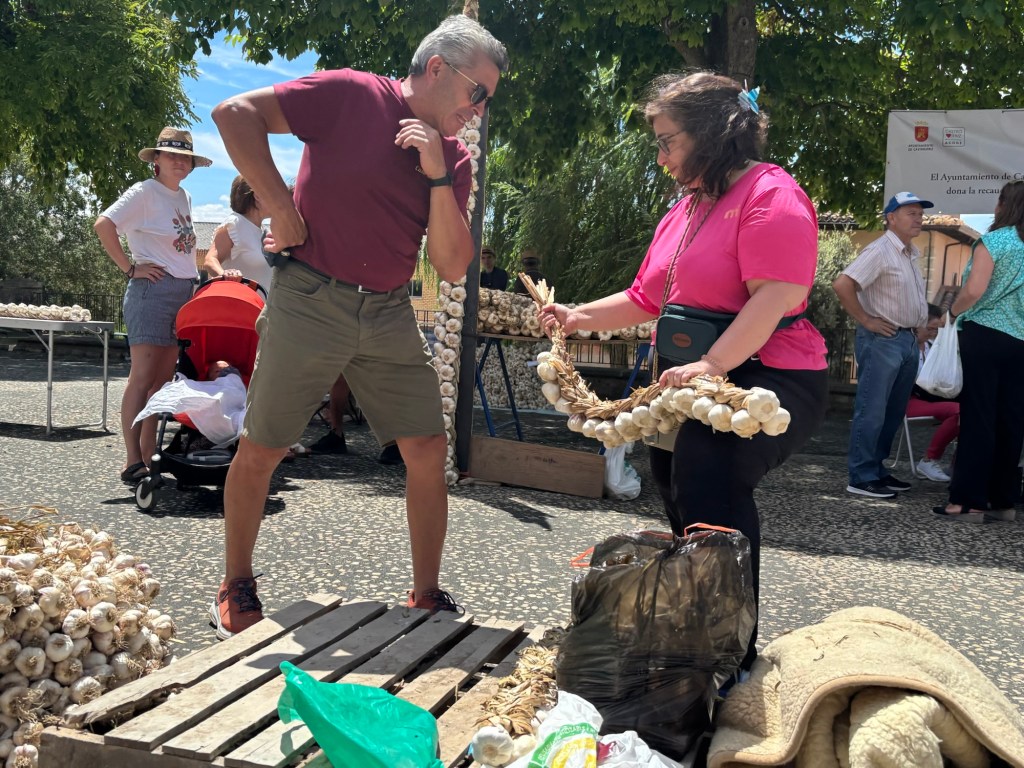
Downtown, the garlic festival was in full flow. A charanga band was marching around town, playing their oompah-like music wherever they went (just like back in Nájera), while old folks huddled around their collection of cloves and groups of kids in matching tee-shirts ran rings around the market stalls.
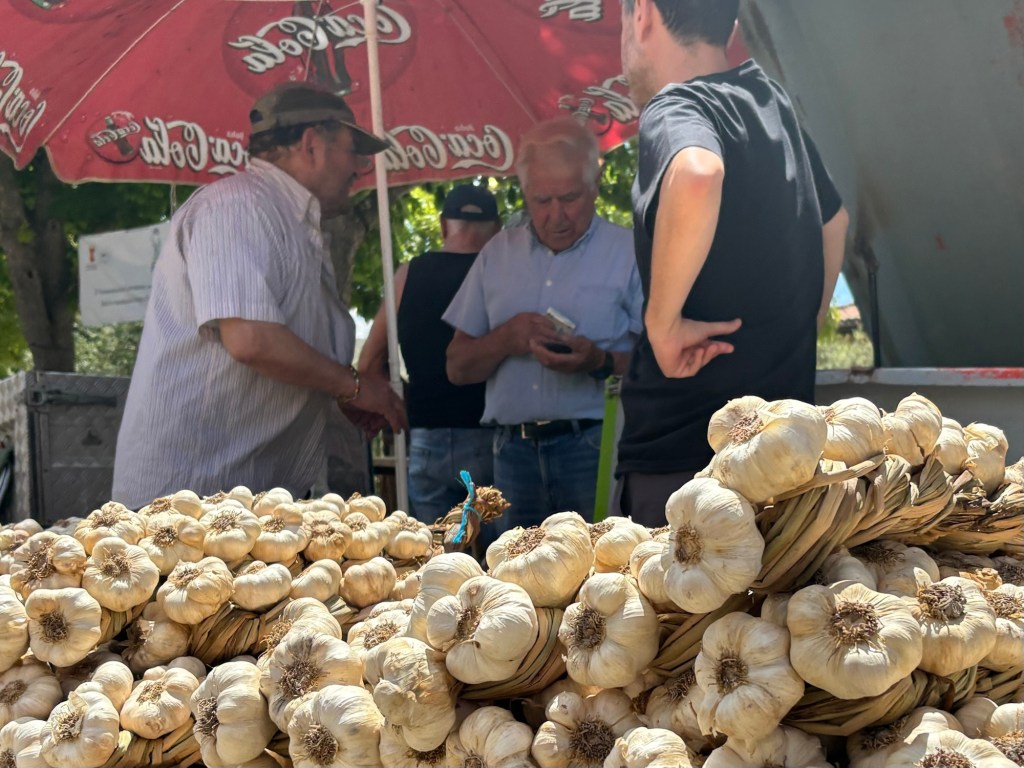
I suspect the Feria del Ajo is a relatively recent innovation (I’ve seen the number 46° floating around), but I shouldn’t wonder that this kind of harvest festival has been happening here for far longer. There’s a food-tasting event we’re going to check out later, and even a concert by the New York Youth Orchestra at 8pm tomorrow – though we’ll be long gone by then.

Garlic is famous in folklore for its protective characteristics, especially against malevolent spirits like vampires and demons. It’s also mightily medicinal, and has been fighting off disease and bacteria in humans for far longer than it has been used to ward off the undead. Given its life-giving properties, it’s easy to see how the latter superstition came about, in an age when Galen’s law of humours was widely accepted as gospel and any and all imbalances, including light and dark, required correction.
Frankly, I can’t think of any imbalances that couldn’t be corrected by a nice, hot bowl of garlic soup. It really is the very best of restoratives.
Audrey has popped out to explore the town. Alonso is watching a movie and Talia has fallen asleep. I might head out for a wander in a moment too, now that things are starting to open again after the afternoon siesta. Here’s to a little more white magic this evening! BB x
 The Book of Barnabas