I’m sitting at a table for one at the Bar Sevilla in the Plaza Mayor in Villafranca del Bierzo, after a 37km trek across the Valle del Bierzo this morning. I ordered a pizza almost without thinking, and now I’ve had a closer look, the menu del día looks fab. But, the caldo gallego and pig’s ears will have to wait until I’m in Galicia proper. The important thing is that I eat decently tonight, as I walked a lot today, and I’ve got a fair bit of climbing to do tomorrow.
I allowed myself a slightly later start this morning as breakfast was on offer at the albergue. I took the opportunity to make myself a sandwich for the road and warm myself up for the road ahead with a Cola Cao substitute, which was needed – it was quite a scramble down the mountain from El Acebo to the valley floor. If ever there were a bad day to be deprived of a good hiking stick, it was definitely today.
On the plus side, the mountains held the rising sun at bay long enough for me to get clear of the mountains, so I had a fairly cool descent. It’s always quiet high up in the mountains before sunrise, but the cheery song of blackcaps, the trill of a robin and the eerie, extraterrestrial whirr of a nightjar from somewhere in the valley below kept me company all the way down.
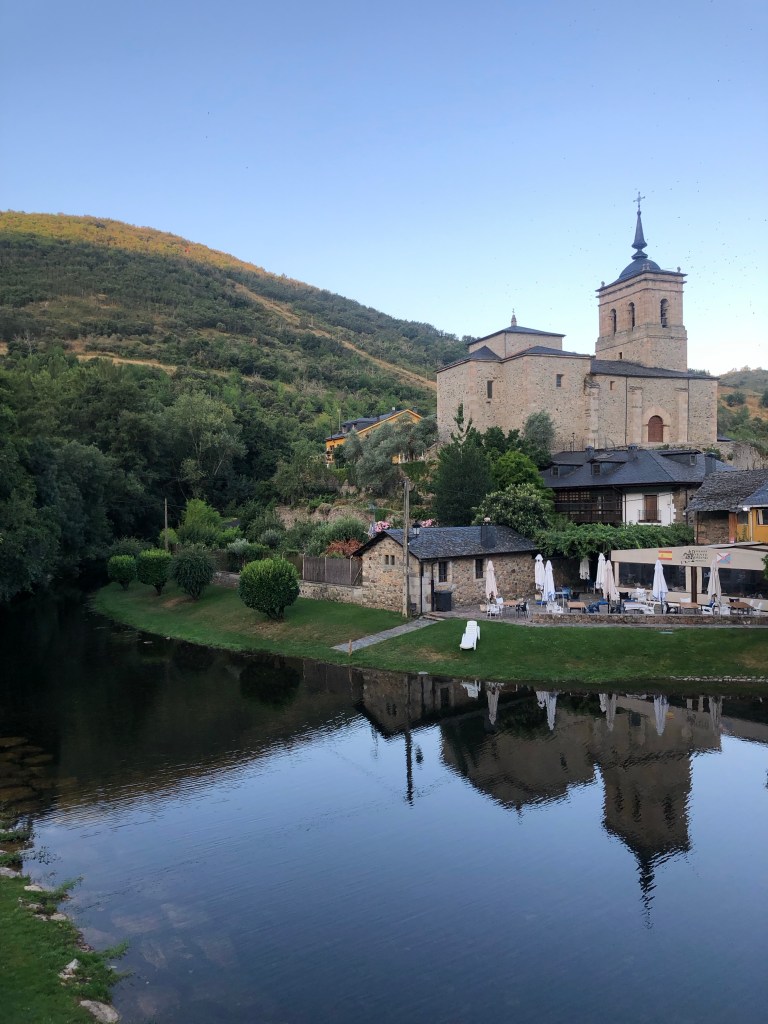
Molinaseca was a stunning slate-roofed chocolate-box town, albeit frozen in time by the fact that it was 7.30am on a Sunday morning when I arrived. Like Castrojeríz, it had a big sign declaring its status as one of the ‘pueblos más bonitos de España’, and I guess it deserves that title. I’ll just have to come back sometime – I’ve already marked it in my Camino guide for next time.
I managed to clear Ponferrada and its extensive suburbs in just over an hour. Rather than follow the way-marked route I made a straight shot through the heart of the city, following what must once have been the original Camino down an arrow-straight road called Calle Santiago that didn’t move an inch left or right until it had cleared at least two outlying towns. After that, the Camino reappeared and, once the minor matter of the motorway had been cleared, it led down into the green vineyard valley of El Bierzo.
I stopped for a drink and ate the sandwich I’d plain forgotten about in the shade of an oak by a stream. A few pilgrims were having a similar pause in the next town, but other than ducking into a church for a stamp and a prayer, I didn’t really stop for much longer than fifteen minutes all morning.
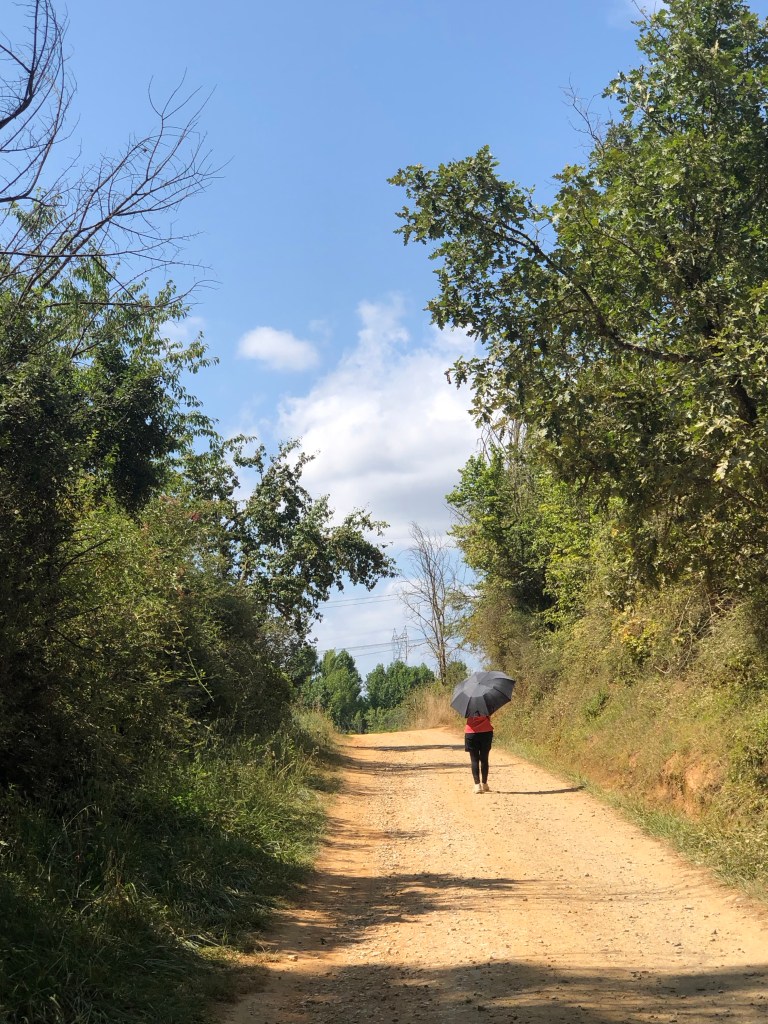
Finally, a few kilometres short of Villafranca, a few pilgrims came into view – always a promising sight. You can spot the Koreans a mile away: they’re often covered from head to foot, gloves and socks and all, to avoid tanning the pale skin that is so valued over there – or so they tell me. One was even carrying a parasol. Then again, am I any more sane for wearing no protective gear on my head or eyes whatsoever? (Ever since I lost a treasured flat cap years ago, I don’t do hats…)
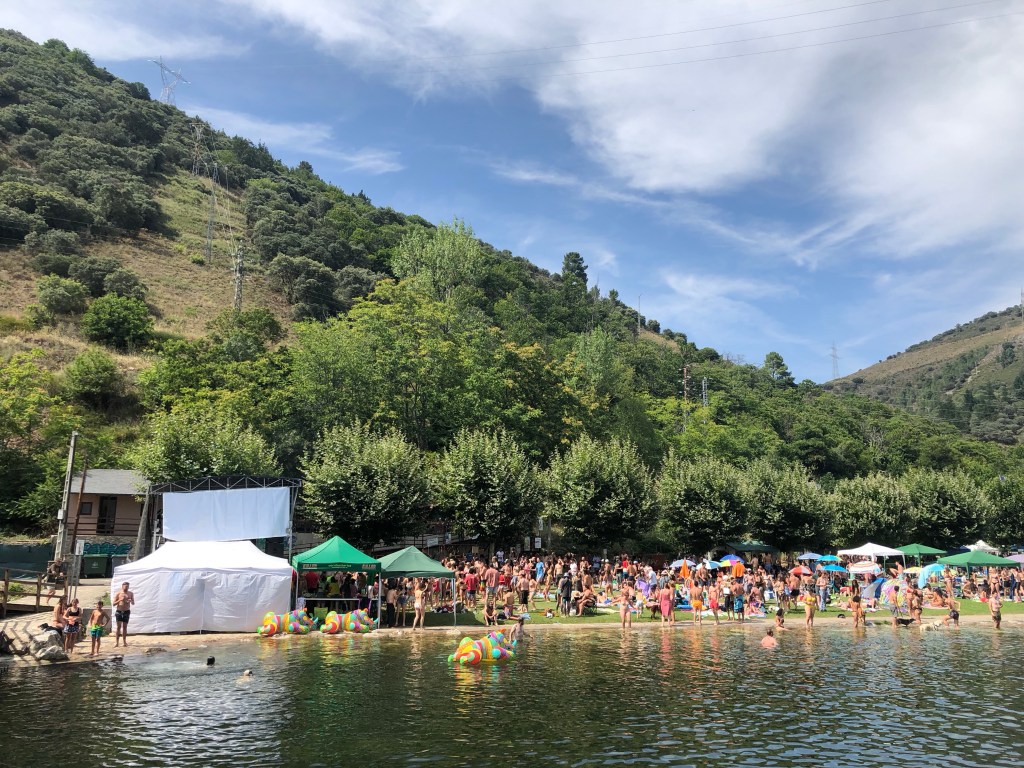
Villafranca del Bierzo seemed quiet when I got here, but I’d only got a few groggy minutes into my afternoon nap when I became vaguely aware of a throbbing bass from somewhere beyond the church on the opposite hill. One of the bicigrinos (cycling pilgrims) told me he’d heard there was a festival in town, so I tagged along with an American pilgrim and went to have a look.
I’m not quite sure what to make of it still. Did I miss a turning and end up back home in Brighton, or was it Woodstock? All I really remember is an endless stream of seriously groovy Afrobeat rhythms sailing across the river from a crowded lawn, where a stage had been set up, and a frantic crowd of party-goers in varying states of undress – with swimwear being as formal as it got, and starkers being the standard. They seemed to be having the time of their lives, but I felt more than a little voyeuristic, so I went back into town to find a less hedonistic way to spend the afternoon. Free weed, fire jugglers and naked breasts wherever you look might be a standard summer if you’re a festival follower, but I’m on pilgrimage here!
That being said, I could have picked a holier spot than the local natural history museum.
Set up by the Pauline Fathers, a religious order, it’s a small museum that contains a number of curios like Hispano-Roman and 17th century Spanish coins, fossils and crystals, an enormous collection of seashells and an impressive array of stuffed animals, with the quality of the taxidermy (and labelling) varying considerably.
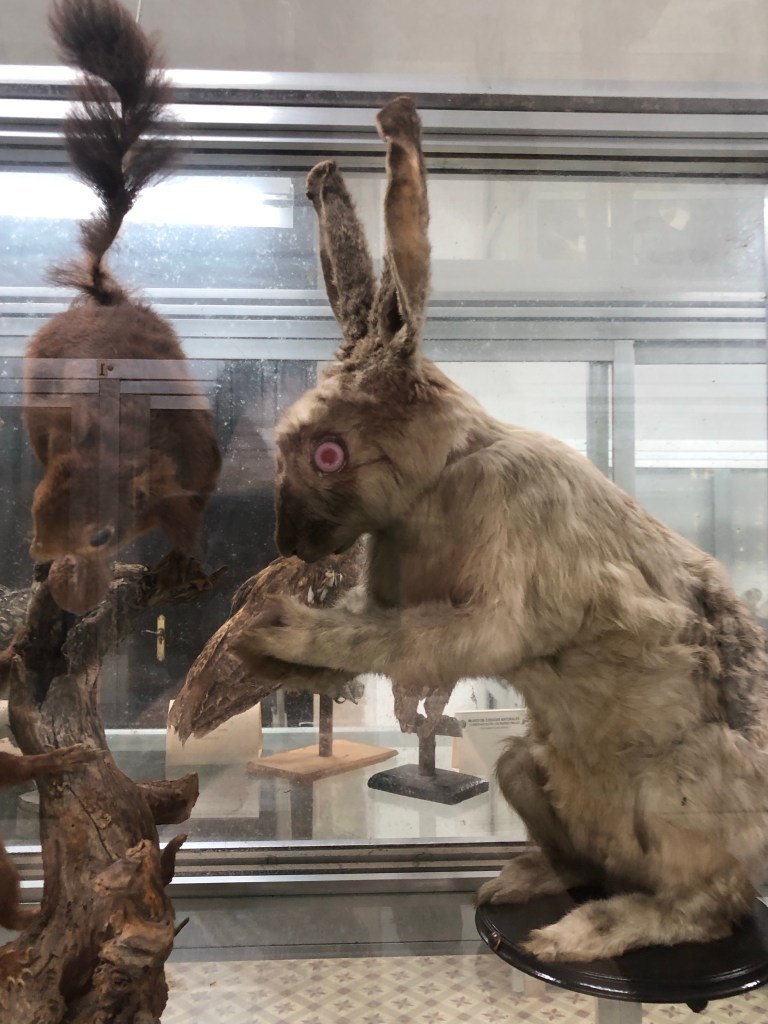
Some of the exhibits are unique to the museum, thanks to the collector’s taste for the bizarre. There are a number of mutant animals, including a two-headed goat (with two vestigial legs poking out of its back), a lamb with one head but two bodies, and a piglet with a similarly unfortunate birth defect. An enormous albino hare with bright red eyes threatened to knock the eyeless dolls of Mansilla from the top spot of creepiest museum artefact, and while the bird collection was clearly the work of an ornithologist, it’s always surprising how easy it is to botch a stuffed cat.
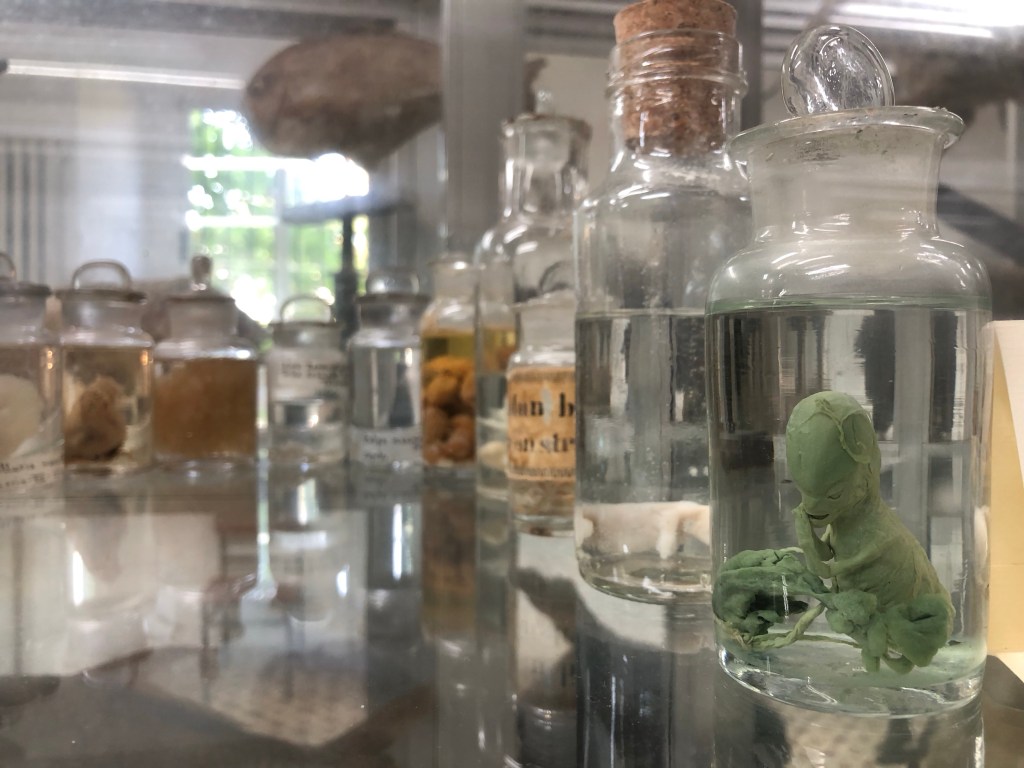
But perhaps the most disturbing exhibits were the specimens in the vinegar bottles. You expect to see the usual array of frogs, snakes and crustaceans in these soulless bottles, their contents looking a lot healthier of complexion than their stuffed neighbours, albeit a lot less alive. But while pickled geckoes was definitely a novelty, the two human fetuses on display were a nauseating shock. That the museum is housed inside the church of San Nicolás, and the collectors in question were monks, only adds to the disturbing nature of this particular exhibit.
Definitely worth a visit, but not for the faint of heart.
For a change of scene, I dropped in on the Colegiata de Santa Maria. Unlike the usual friendly old parishioner in charge of pilgrim stamps in churches along the Camino, a young lad in his late teens loitered near the desk inside. He looked as though he would have preferred to be at the festival which could still be dimly heard through the church’s stone walls, but was very well-spoken and wished me well on the road, so perhaps I misjudged him.
All I’ll say is to end on is that my last lap of the building took me to an image of La Sagrada Familia: Joseph, Mary and Jesus. I don’t think I’ve ever seen all three depicted together as a family so, and I was genuinely struck for a minute or so. The Bible talks a lot about Jesus coming down and becoming Man, but it stands to reason he was a Child before that. And in a country so intrinsically Marian in its devotional practices, it was quite something to see Joseph standing shoulder to shoulder with his wife, the halo about his head just as radiant as hers. The likeness between father and son – or at least the son depicted as a grown man elsewhere in the church – was an interesting detail.
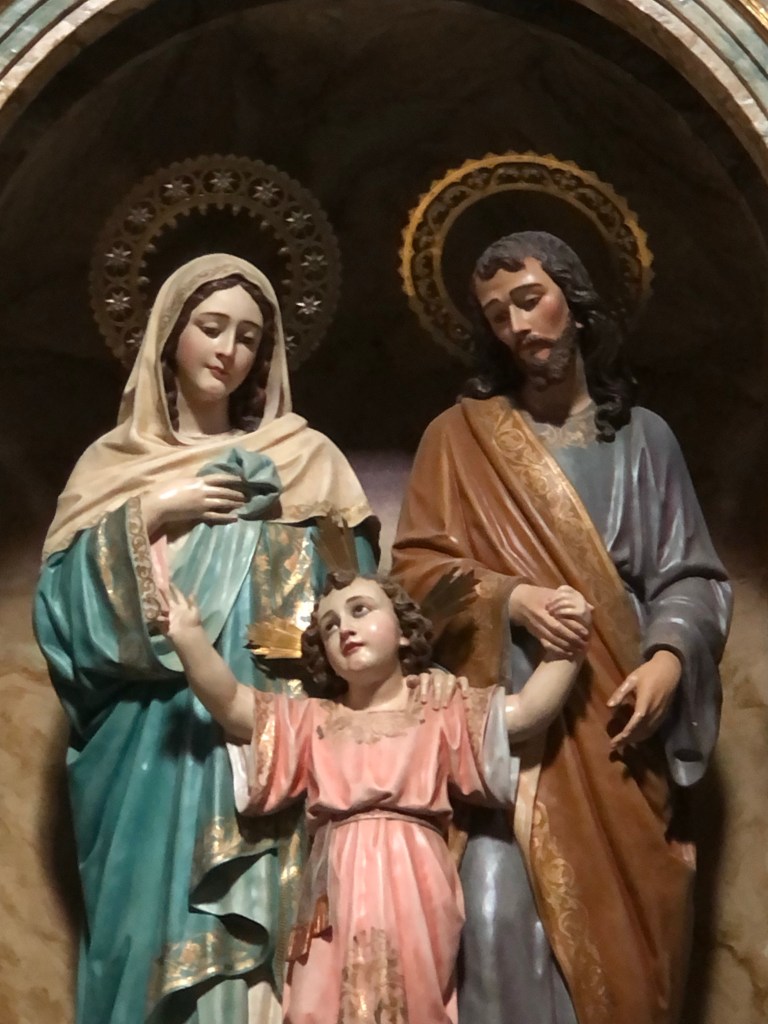
Was the artist trying to make a statement? After all, the short form of José (Spanish for Joseph) is Pepe, which is the same sound as two P’s, standing for ‘padre putativo’ (probable father). Or maybe he just wanted to tie the son of God that bit closer to man on Earth. In any event, I was moved.
Tomorrow, I make for the frontier. I will either stop at La Faba, the last Leonese outpost before Galicia, or climb the last couple of kilometres up to O Cebreiro and be over the border by nightfall. Either way, I’m looking forward to a shorter day. Catch you later! BB x
 The Book of Barnabas