Diamond in the Rough

This week started just about the same way as every week begins, with me waking up to the sound of my seven o’clock alarm, with the morning’s first class just an hour and a quarter away, and finding myself struck with the weekly conundrum that is ‘now, what am I going to teach today?’.

For the first three weeks I had some stellar lesson plans, but we’re filing into my fifth working week here now (I told you before, my observation week became my first teaching week) and my tried-and-true classes have come and gone. Four down, twenty-seven to go. Since in school I teach across the age-groups, from six to twenty-two, I have to split my material in half depending on their ability, which requires two new lesson plans each week. Not exactly a challenge, per se, especially when several of those are shared between groups, meaning it’s possible (and highly recommended) to recycle material; but it’s a weekly problem, after a weekend spent traveling, partying or what have you, that on Sunday night the question is always there on the tip of my tongue as I bed down for the night. What am I going to teach them today?

Today I thought I’d brave it and try literature on the kids. Foolhardy, I know, especially after my last attempt at sparking some creativity amongst the would-be dullards, but I’m not about to give up on them yet. To spark their interest – and since I’ve just spent most of the weekend reading the tale – I kicked things off by drawing a blackboard-sized Moby Dick on the board, complete with scars, harpoons and rigging. Most of them had heard of it, but understandably, none of them had actually read it.

Well, not quite. One of them had.

I did a little double-take at this and made him explain the plot to the class. The way he put it, in English, a language that is not his own, told the tale better than Herman Manville (personally, I found the text hard-going, turgid even, though the story itself was impeccable). Better yet, he beat me to it and cited Manville as the author. I thought I’d let him sit on his laurels for a while and ask the others for any books they’d read recently, but they just stared blankly at me, as though I’d asked them if they’d like to spend the rest of the day doing quadratics. Moby – the pseudonym I shall forthwith use for this very literate kid – had his hand up the whole time and went on to tell me about Bram Stoker’s Dracula, Jules Verne’s Around the World in Eighty Days and Edgar Allan Poe’s The Tell-Tale Heart. That he had read them in translation is beside the point. This is a boy of fifteen who’s busy working his way through the classics.

As I was struggling to elicit some kind of interest from the rest of the class – who, as you might expect, were getting visibly bothered by Moby’s contributions – my colleague spent the hour taking notes of other writers that he might enjoy, amongst them Arthur Conan Doyle and Charles Dickens. One of Moby’s companions lost it and complained loudly that it was unfair that only Moby was talking. My colleague and I soundly brought him down a size by repeating that all I was asking for was a story any of them had read, and that as Moby was the only one who was willing to talk, they only had themselves to blame for their silence. I opened the floodgates a little by allowing them to tell me about a film or television series they might have seen, but on that inch they took a mile and missed the point completely; three accounts down the line I had to remind them that match reports, game shows and reality TV are not stories, and consequently didn’t count.

Pushed into a corner, one kid looked very chuffed to say he thought his favourite TV show, a Spanish version of Match of the Day, was far better entertainment than any book he’d ever read. Granted, he probably hasn’t read very widely – I hadn’t at his age – but for good measure I told him that a show where two obnoxious early retirees discuss what happened, what might have happened, what should have happened and what might happen next time in a football match for an entire hour could hardly be as entertaining as a decent read. I could have done worse, of course, but I held back. Most of it went over his head anyway, as it was supposed to. I’m not foolhardy enough to let my personal prejudices against the tedium that is the world of football discussion ruin my relationship with my students, who already know I’m none too keen on it.

As you might have guessed, I was getting pretty frustrated by this point. I’ve learned to mask it after a month of teaching these kids, but it’s still pretty galling when you ask a simple question and all you get in return is twenty-three gormless expressions. But Moby came back with the goods, stating that he hadn’t read any books in English yet, but that over Christmas he was going to try with Tolkein’s The Lord of the Rings. You’ve got to hand it to the kid; starting to read in a foreign language with Tolkein…? That takes guts. My parents are prolific readers and they can’t stand his writing, and sadly they’re not alone (though I, for one, can’t get enough of the stuff).

In the other establishment I work at there are several kids like Moby in every class; students who are well-read, well-cultured and whose English is streets ahead of their companions. It’s the norm in a private school. And teaching in both private and state has its merits. But kids like Moby make the state school experience so much more worthwhile, for all the challenges. Here is a boy who, despite everything, is working his way through the literary greats for the pure pleasure of it, with his mind bent on attending university in Toronto of all places. It’s kids like Moby who remind me just why it is that I love teaching. Because for all the sour looks, disinterest and gossipping that goes on, when there’s at least one kid who’s shining with promise there’s a reason to go on. Obviously you can’t cater to that one child alone – if it were that simple, everyone would want to be a teacher, I think – but as long as you know that what you’re dealing is going towards somebody’s personal development, that’s reward enough for all your travails.

As for me, I’ve got a fair amount of catching up to do. Moby Dick was this weekend’s read; The Adventures of Tom Sawyer and Robinson Crusoe await, along with Allan Quatermain (after a two-month hiatus). Maybe I’ll recommend King Solomon’s Mines to Moby when I next get the chance. It’s certainly one of my favourites. BB x
Creativity in the Classroom: A Step Too Far?

I´m falling into something of a routine out here, now. Three hours with the state school, two hours with the Catholic school, one hour´s private English lesson, one hour´s Spanish conversation with my flatmate, a couple of hour´s reading and then bed. That´s good. I like a routine. It lets me know what I´m doing. I tend to go a bit spare without exact orders.

As I guessed all along, the term ´language assistant´ is a very loose one, interpreted by different schools in different ways. Some of my companions are working as ´classic´ language assistants, taking individuals or small groups for short periods for conversation. Others attend class with an English teacher as a human dictionary, there to lend a hand whenever a native speaker´s touch is needed. In Spanish, the term ´language assistant´ gets shortened down to just one word – auxiliar – which leaves even more room for interpretation. And just as happened in the last two ´language assistant´ jobs I´ve had, I seem to be working a real teacher rota.

Granted, I had prior warning this time. The first time I was promoted, so to speak, I had no idea that I was supposed to be taking full classes on my own until I was told that the diminutive head of the French department had decided to benefit from my presence by taking a month´s holiday at short notice. This time I was given a couple of lessons´ observation to get the feel of it, and even though they mostly left me leading the events – a harbinger, I guess – it was good to know what I was getting myself in for in advance.

So I´m a sub-teacher. That´s not a problem. In fact, it´s exactly what I wanted. It´s just… well, it´s reassuring to know that it doesn´t matter where you go in the world, ´language assistant´ is always a very flexible term.

In one school I take entire classes on my own, from bawling primary level to studious upper sixth. In the other I also prepare an hour´s class for whichever groups of the twelve I have that day – equally widely-spread, but fortunately without the weekly terrors of the primaria – and these are almost always under the supervision and occasional assistance of one of the English staff. The irony there is that they´re probably doing what comes under my job description. The system in place is the one used by bilingual schools nationwide: one class where the language of conversation can only be English, to compliment the others which are spent on writing and grammar. Nobody likes grammar. So that means it´s my class that everyone looks forward to by default, which is something to smile about.

Taking a full class obviously means you need an hour´s worth of material, and with teenagers thrown into the mix, you need to be prepared for all eventualities. I´m learning what to do when they´re tired, and how to calm them down when they´re exciteable, without letting them know there´s a system to it all. I´m learning what ideas students wants to discuss and which ones turn them off, and which games work well, and which ones don´t. And though I should have seen it coming a mile off, I tried this week once again with what is and always has been the greatest stumbling block of all: tapping into the students´ creativity.

Now this is something I feel very strongly about, and I´ve already written one behemoth of a text this week, so I´ll tackle it as lightly as I can. The simple fact of the matter is that there isn´t enough emphasis placed on creativity in schools these days. To tell the truth, I´m not entirely sure there ever has been. One of my English teachers once announced at a parents´ evening that she was ´paid to teach, not to inspire´. I disagree entirely. Inspiration should be right at the front of teaching, if we´re not all to become mindless robots.

Ah, but this is beginning to smack of yesterday´s post. It´s vaguely related, primarily because the game I´ve been ending my technology lessons with – a simplified variation on the British radio show I´m Sorry I Haven´t A Clue´s “Good News, Bad News” – has, time and again, come up dead in the water. The reason? Because nobody´s able to tap into their own creativity. I don´t know whether it got stamped out of the education system in favour of textual comprehension or the study of presentational devices – the kind of stuff that actually comes up in an exam – but the art of coming up with stories seems to disappear once you hit secondary school level.

For a budding author, I find this nothing short of horrifying. I spent most of my school career writing stories, and yes, it probably did affect my grades, but I left with an impressive English mark, and it´s my English that has always saved my neck. I´d have been flat-out rejected from grammar school if it hadn´t been for my English, since my mathematical capability is comparable to that of a wet flannel. The only excuse I can think of is that I´ve never stopped writing: from short stories to novels, diaries to blogs, love letters to newspaper articles. It keeps me alive. More importantly, it keeps my brain alive.

The higher up the education system you go, the less you´re encouraged to think for yourself. At some point you have to start quoting other writers. Then you have to start referencing other texts you´ve read and basing your arguments on the standpoints of extinct luminaries. The result, of course, is that by the time you get to university and you´re suddenly encouraged to come up with your own argument, a lot of people are quite understandably left high and dry, because they haven´t been taught how to think that way.

Here´s the difficulty. Creativity cannot be taught. It can be encouraged, it can be inspired, but it cannot be taught. For starters, how do you mark creativity? This is a regular feature of the arts world, of course, but outside the tripartite kingdom of Art, Music and Drama, creativity doesn´t get all that much of a look-in. In a world where everybody is mark-centric, from pupils to parents to headmasters and the governors to whom they bow, that kind of question gets thrown out early on, and the baby with the bathwater. So me going headlong into a class of fifteen year-olds and expecting them to come up with a story in fifteen minutes of “Good News, Bad News” was the very height of foolishness, especially for somebody with two jobs´ worth of teaching experience under his belt. A different English teacher – one who certainly did know how to inspire – once told us that the truth of the matter is that there are those who can, and those who can´t. I´m still not entirely sure where I stand on that, since I´m none too keen to cut anybody off, but I acknowledge that there´s more than a kernel of truth in that statement.

Creativity, I believe, is something that we´re all born with. We all loved to listen to stories when we were children, and most of us will have tried our hand at making one or two, intentionally or no. Heck, it´s fuelled language growth, all the arts and technology for all human existence. The trouble is that so much of it disappears when we grow up, when we´re told we have to put fiction behind us and focus on the real world. Unless you´re a stubborn little bastard like me, and you decide early on to defy that and to hold on to your creativity and remain a child forever. Like a twenty-first century Peter Pan.

In short, it´s perhaps too much to expect every student to be able to create stories of their own, especially at secondary level. There are a few rogue elements – it´s not difficult to recognise your own characteristics in others – but on the whole it strays much too far into the awkward silence minefield. Well, I´ve learned my lesson (no pun intended). But I´m not about to concede defeat. Never. I doubt I´ll make story-tellers out of the lot of them, but if I can sow the seeds of a budding Cervantes or Lope amongst the drowsy horde, I´ll consider my job accomplished. At the end of the day, we´re all story-tellers in one way or another. All it takes is the courage to leave behind what is real and to dabble with what is not. I said right at the start that I like exact orders. True. But there´s enough of an anarchist in me to want to break free sometimes. I hope there´s a little anarchy in everybody. BB x

No Going Back

Saying goodbye is never an easy thing to do. I’m certainly not particularly good at it. In fact, there are quite a few goodbyes I’d like the chance to go over again, given the opportunity. You know the kind: the ones where it was all too fleeting, or maybe you didn’t quite say everything you wanted to say, or maybe the real goodbye never came around and you were left with a last meeting that wasn’t really a send-off at all. Most likely you’ve encountered that oh-so-very British awkward goodbye at least once in your lifetime: the one where you say goodbye to somebody, only to bump into them a few minutes later. Don’t you find that situation crops up a lot? It certainly does in Durham, anyway…

For a chatty gossip like me (you’ll just have to imagine the deep sarcasm there), I don’t suppose there’s much point in an elaborate farewell. It’s only really an issue if you’re going to be out of contact for an extended period of time, like stepping off the plane into the abyss and severing all connections with the outside world. Which is essentially what I do every time I step off the train at Three Bridges. I have a phone, true, but I rarely use it. I think I sent a grand total of three texts over the last three months, and all three of them last Sunday. Radio silence on my part doesn’t necessarily mean I’m traveling – I’m probably a lot more talkative when I’m on the road – but it doesn’t mean I’m inactive, either. I simply enjoy going for long periods of radio silence. Anything that needs saying can surely be said best face-to-face, and anything that’s worth saying is always worth waiting for. That makes me quite a distant person, I guess – and not the easiest to track down. For somebody who spent almost all of two years on teenage texting tenterhooks, it’s a policy I’ve guarded jealously for some time now. So in that sense, setting off on another long adventure isn’t really all that different from any other end of term break, as far as contact is concerned.

I’m going off topic. I suppose I’d better come out with it. I’m heading off to Spain in two days’ time – less – to spend nine months working in a secondary school… and I’m not coming back in between.

The idea first came to me when I had a look at the Spanish school calendar for the coming year. That projected end of term date on the twenty-second of December shocked me at first, despite having been schooled in Spain at Christmastime before. It’s all about the reyes magos out there, and that’s not until January. I must have got it into my head early on, but it wasn’t until saying farewell (successfully, mind!) to Andrew at Gatwick Airport that it hit me: I want to be out there for the long haul. Taking a year abroad isn’t just about honing your language skills to fluency, it’s about growing up – and Lord knows I’ve still so much more of that to do. What better way than to strike out on your own for an entire year? Because that’s what it’s set to be, with my second Arabic stint in Morocco striking up almost as soon as I’m done in Extremadura at the end of May, meaning I won’t see the green hills of England again until August 2016, at the very earliest. That doesn’t trouble me as much as it should.

I'm going to miss autumn in England. No, I'm really, really, really going to miss it

I’m going to miss autumn in England. No, I’m really, really, really going to miss it

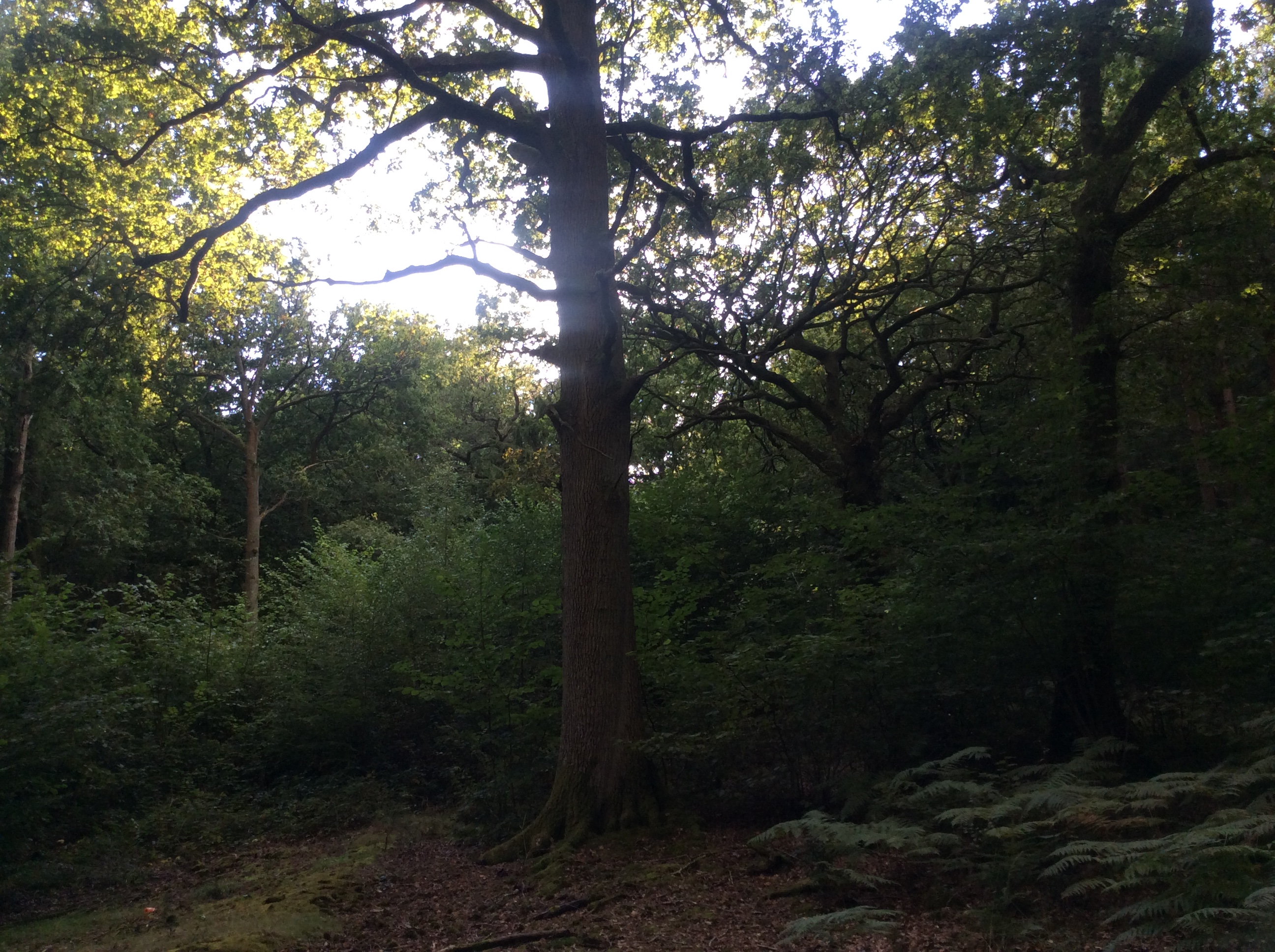
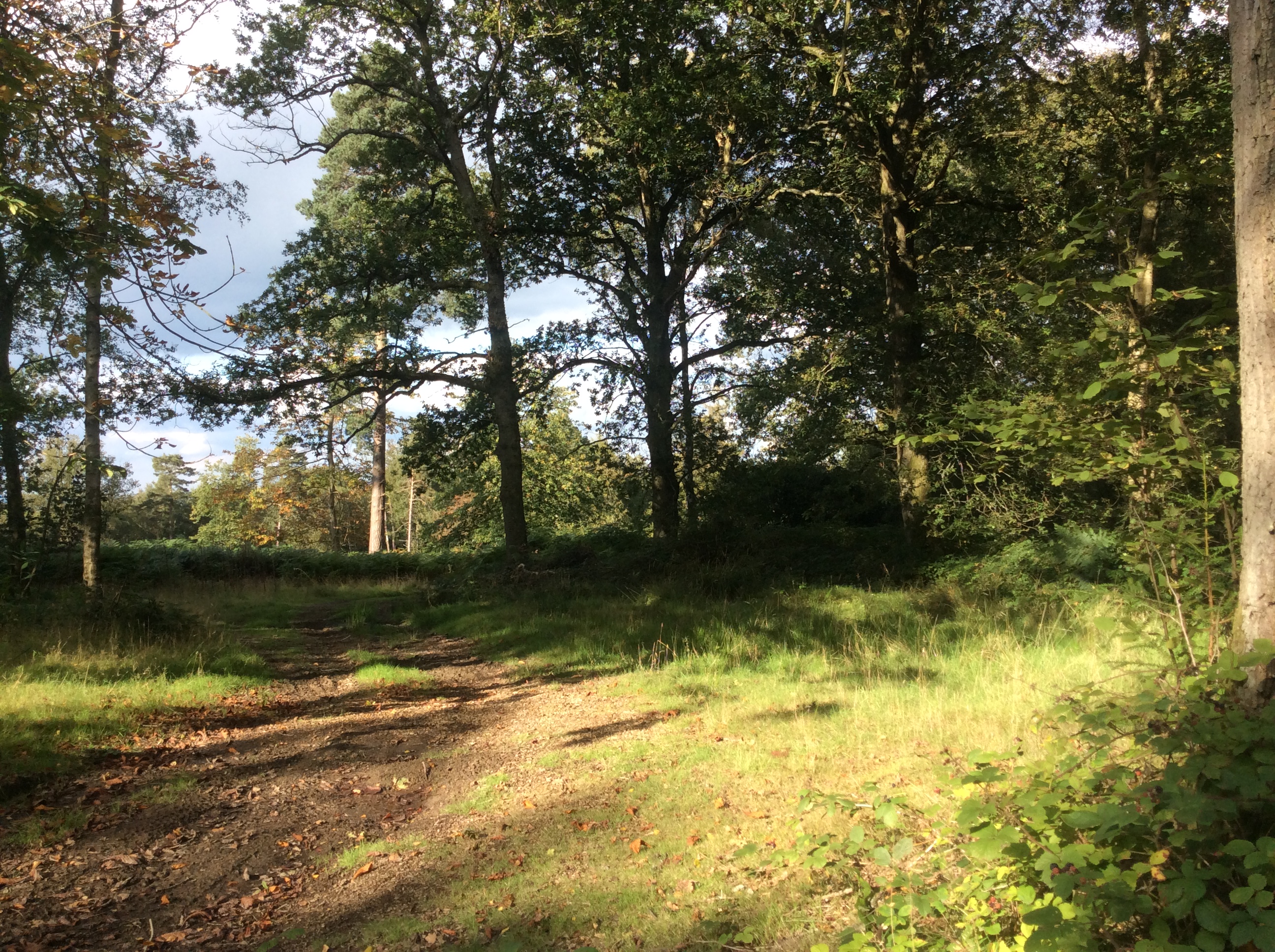
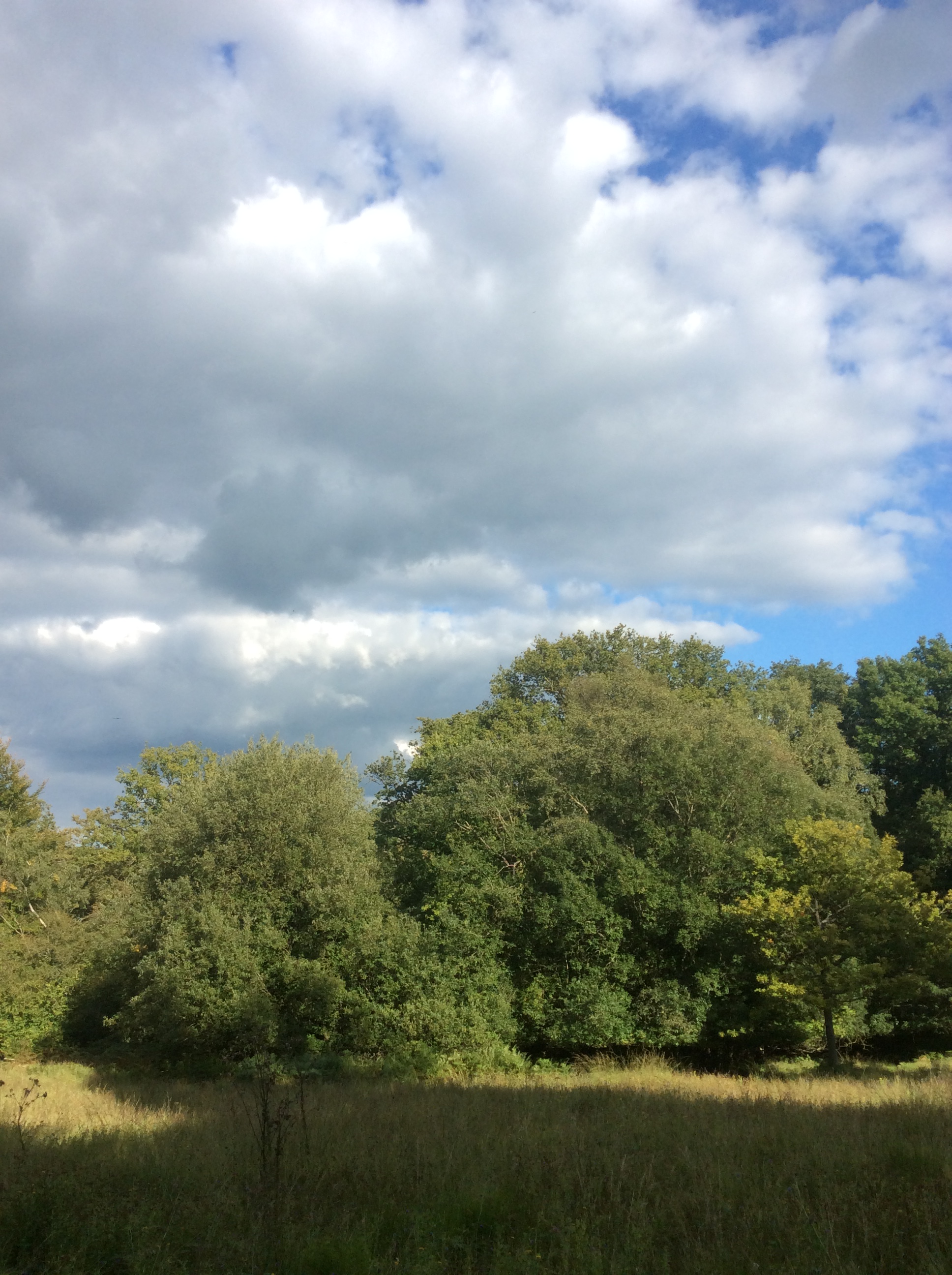
The last few days have been wonderful for a last taste of England. I consider myself extremely lucky to live in one of the most charming spots in West Sussex, overlooking a dream-sequence of rolling hills as far as the eye can see, right up to the point when they tumble into the sea to the south. Autumn’s in the air, the forest is full of mushrooms and the buzzards that nest deep in the woods are cartwheeling noisily through the skies as usual. Morpurgo described them ‘mewing’ in one of his books and I can’t think of a better way of putting it. This is England, and I’m going to miss it. But there’s something in the air, telling me it’s time I should be moving on. Maybe that’s autumn. The signs are everywhere. The leaves on the oak trees are going a gorgeous golden colour. Out on the school rugby pitches the odd wheatear sits taking a breather, whilst flycatchers and warblers hurry on through the hedgerows snatching a quick meal on their way home. But most telling of all are the great flocks of swallows and the martins streaming on southwards overhead, and in a couple of days I’ll be following them. Maybe I’ll even see some of the same individuals swooping by from Villafranca. Who knows?

Ten points if you can see the buzzard in this one

Ten points if you can see the buzzard in this one

The hardest thing for me to leave behind – besides the monstrous tapestry, which is never going to be finished anytime soon – will be the growing mountain of books in my bedroom.

A year and a half, five metres in and still slaving away

A year and a half and still slaving away…

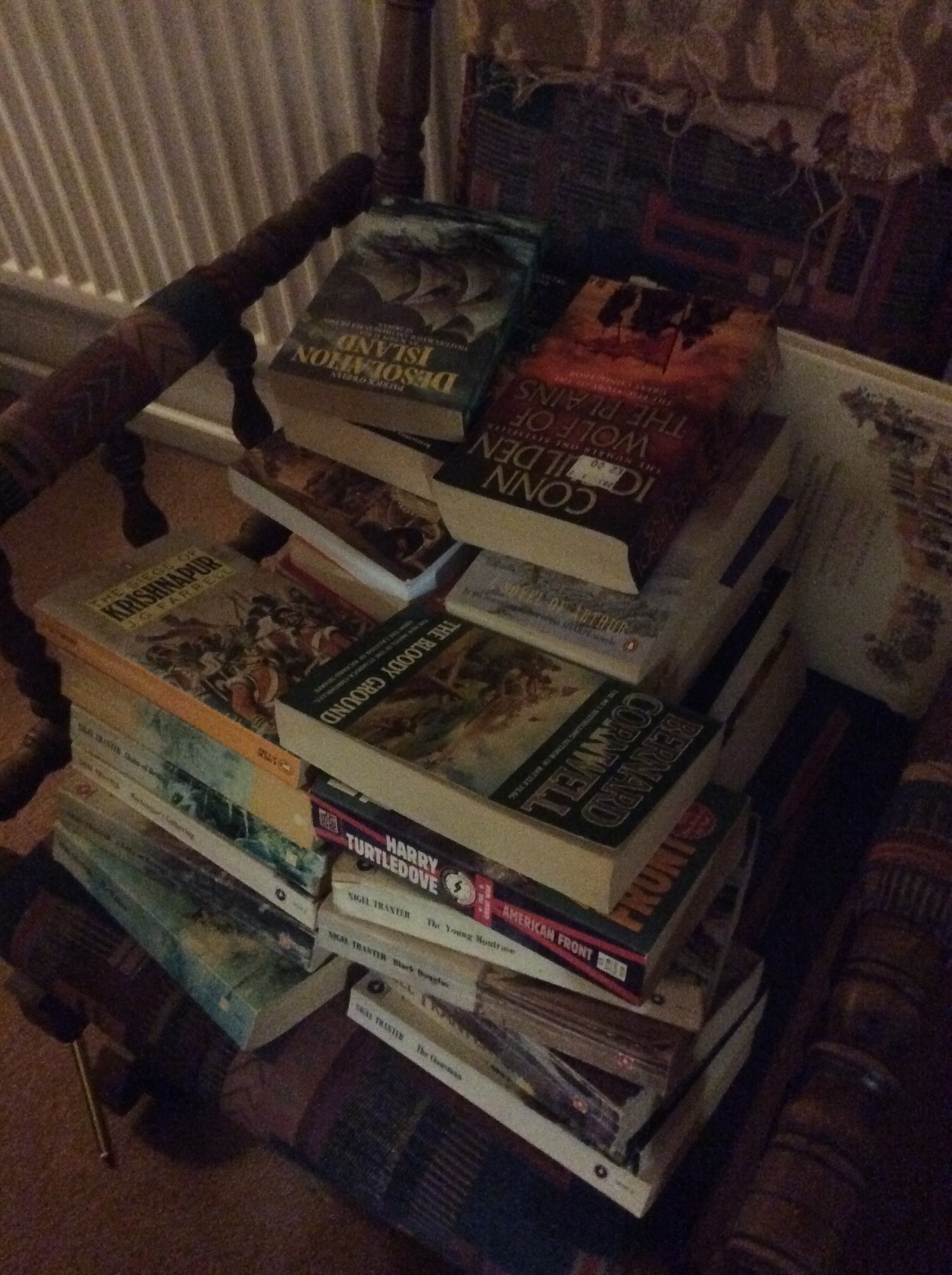
It’s pretty daft, but for an aspiring writer, I’m late into the fold as regards actually reading. I got it into my head once that if I never read any books that contained ideas similar to my own, I couldn’t get done for plagiarism, because I’d never have noticed the similarity. How very typically overcomplicated of me. The end result is that I haven’t read a decent book – besides Pavilions – in nigh on ten years. At least, one that hasn’t been prescribed by my course. Now I’m motoring through them at lightning speed, assisted by all the iBooks freebies, an immense library at home (courtesy of my equally bookish mother) that I never truly appreciated, and an all-too brief visit to a real bookshop over the weekend.

So many books, so little time...

So many books, so little time…

I say real to distinguish it from your average WHSmith or Waterstones. Seriously, this place had everything. All the historical fiction you could shake a stick at. The entire Hornblower saga. Flashman in abundance. Sharpe, Iggulden and even the master of the art herself, M.M. Kaye. All beautifully spined, deliciously musty and lovingly second-hand. A new gadget may be a good thing, but there’s nothing better than an old book. Mum found a particularly beautiful pair of illustrated Arabic dictionaries – formerly the property of a military attaché, as stamped. Oh, I could have died and gone to heaven. I was in kid-at-Christmas mode. If I’d had this newfound book obsession just two years earlier, I might have given languages the boot and applied for an English degree. The only thing holding me back at the time was a general reading apathy…

Today’s been the downer of the month for no other reason than that every so often I have a lonely spell where it takes a lot to lift me up. Fortunately I’m in the best place for it: start of term or not, the grounds of Worth Abbey are no less than the finest place I’ve ever encountered for soul-healing. Alright, so the stone-pine copse along the Raya Real with its attendant black kites just comes up trumps, but that’s not on my doorstep every morning. Not yet, anyway. Besides, when the loneliness birds come flying in, the open world is always there. Nature’s an unpredictable lady at the best of times, but she’s never let me down. I’ve said that before, and I’ll say it as often as it takes to drive this funk of mine away. Everything will look better in the light of a new morning. It always does.

Waldeinsamkeit - the feeling of being alone in the woods!

Waldeinsamkeit – the feeling of being alone in the woods!

These are curious things to dwell on when home will be so very far away for the next eleven months. But home is where the heart is, and mine has been in Spain for as long as I can remember, and that’s got to count for something. Maybe she’s out there, and maybe she’s not. That’s not for me to decide. If fate decides to cut me a break and give me a good turn, I’m ready to run with it. But one thing’s certain: I will leave Spain fluent. If I can leave the country at the end of the year as bilingual as the grandfather I never knew, I’ll have accomplished a dream two generations in the making. Being a quarter Spanish will mean so much more.

I will be fluent. And that’s a promise. BB x

Jekyll and Hyde

One week from today, I’ll be sitting on the beach at Aqaba with term over and my labours temporarily at an end. Two weeks from today, I’ll be waking up in the comfort of my own bed once again, looking out over the Sussex Downs. Three weeks from today I’ll probably be back in Kent with the family, to see my brother in especial before he leaves for University. And one month from today, I’ll be sitting in the bus station in the sunblasted Plaza de Armas in Seville, waiting for the coach that will take me northwards to what is to be my home for the next nine months.

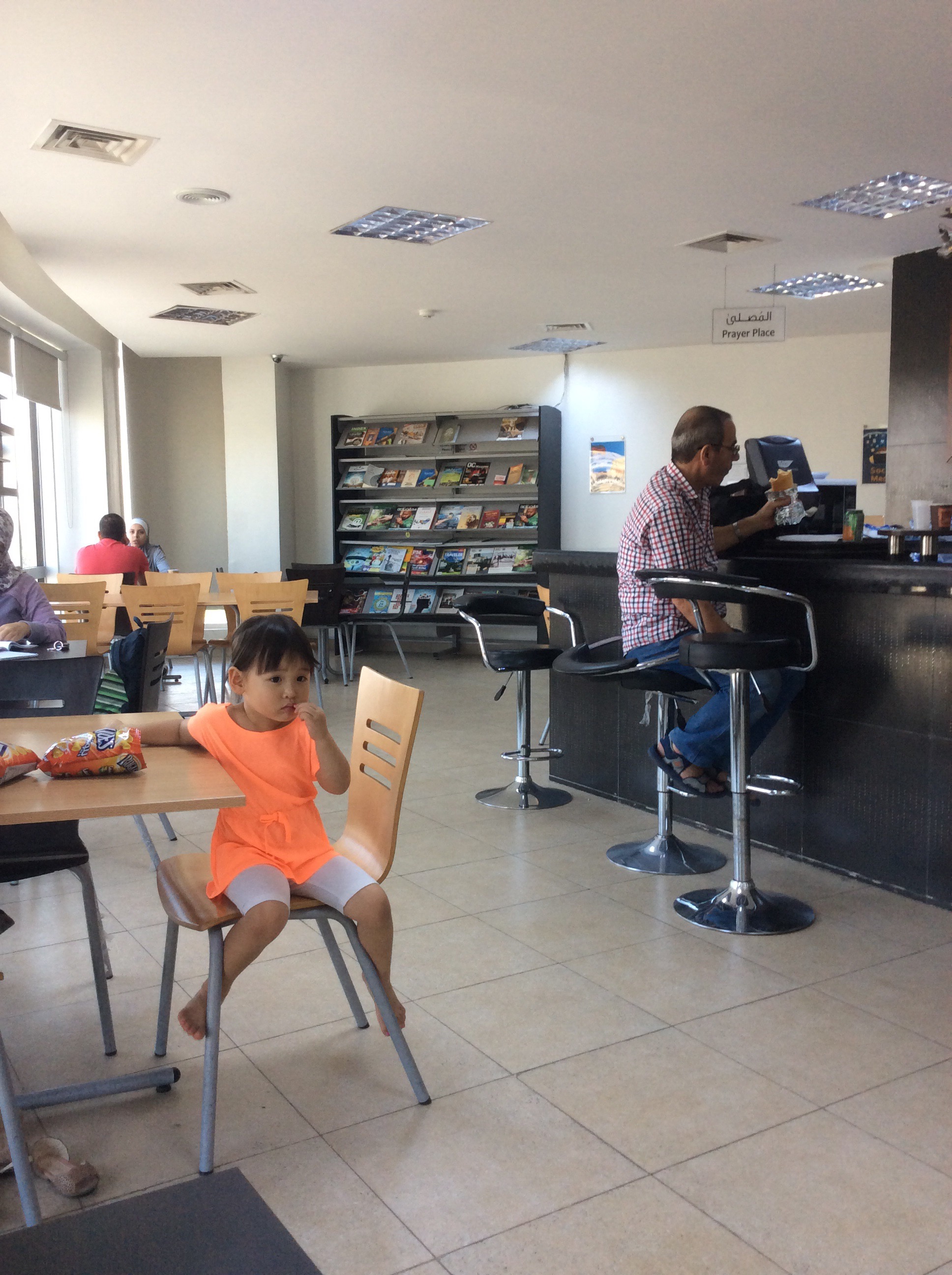
It’s all moving thick and fast roundabout now. I’m taking some time out in Ali Baba to work on the novel for a bit. Most everyone else has gone off in different directions: some to Wadi Mujib, some to grab a falafel lunch, others to one of the nearby cafes for some quiet study. I’m here in search of my voice, which I seem to have lost whilst I’ve been out here. I spoke to Andrew for quite a bit about this last night, reading back over some of my notes that I penned last year, in various states of emotion. Andrew gave me quite a jolt when he opined that my writing was a great deal better back then. Those aren’t easy words to take for somebody who’s set himself on the path to bettering his writing… How could this be, I wonder? Is it because I’m writing every other day, so I’m drip-feeding my thoughts rather than saving them up for a grand oeuvre? Or maybe it’s because I’m not finding enough time for myself to think properly out here in the city? I think there’s a bit of truth in both of those. My writing has become rather acerbic of late. Compared to all the self-help greenie moralising I used to throw about, my later work comes across as bitter, over-excitable, and above all else more than a little opinionated. I hope it’s not a lasting trend. I took the time to read over my notes a second time after I’d discussed them with Andrew and I’m a lot happier with them, though I know I wasn’t at the time. Maybe I’ll look back on these blog posts in the same way, and maybe not. My saving grace is that there was a victory achieved last night, however small; after comparing my writing, Andrew conceded that maybe sticking it out in a city really isn’t good for me at all. Because if there’s anything that might be described as a true window into the soul, it’s the way we express ourselves, poetry, paint or prose.

My summary of Amman a week ago was misinterpreted by some as an all-out attack on Jordan. I’d like to come clean on that point and confess that it’s really not that. In many ways, I’ve loved Jordan. The dizzying views up into the Golan Heights from across the river, the crashing waterfalls of Wadi Mujib and the stars stretched out like glittering velvet over the desert. Dana in all her majesty. Jordan is beautiful. And capital city though it may be, even Amman has its bright sides. In my melancholy, I’ve been unable to see it; largely, I guess, because I didn’t want to see it. It eludes me still. Picture this: you’re at the cinema, and the guy in the row in front of you turns around and asks you to stop kicking the back of his chair. You didn’t even realise you were doing it. Of course, you then spend the next five minutes wanting the kick the chair even harder – or is that just me? There’s a window into my mind and a half.

What I’m trying to say is that I have a bad stubborn streak, and this city – or any city, for that matter – brings it out of me like never before. When somebody tells me to stop doing something, or that I’m going to like something, my first instinct is to disobey. Watch Mean Girls, they say, ‘because it’s unavoidable… it’s part of our culture’. Instinct tells me therefore I cannot, under any circumstances, be made to watch it. Wait it out in Amman, they say, and try to learn to love it ‘because city life is just something you have to get used to… and Amman is actually a really cool place once you get to know it.’ Sod’s law dictates that it cannot be. It’s the old ‘I’ve come this far, I can’t turn back now’ line.

When you set it down in writing, it’s really quite pathetic…

What’s a guy to do? I reckon the thing that I’m missing most of all, perhaps even more than escaping the metropolis, is time. Time to think, to write, and to be myself. It’s not just my writing that got bitter out here, it’s my personality. It sure is helpful having people around to point that out before it gets rotten. The year abroad is such an important part of your degree that it can feel criminal to ‘waste’ even an hour of it. As such, the last two months have been almost non-stop. Wake up, class, study, go downtown, shopping, sightseeing, studying, repeat. I rarely have more than an hour or so to get my head straight and that’s seldom in the solitary silence that I crave. Maybe I’ve made myself too dependant on ‘me time’; if there’s one common feature in all of my notes from last year, it’s a heavy emphasis on the importance of ‘me time’. I was busy then, too, rushing from class to rehearsal to gig after gig – and yet, I still managed to find time to wind down every week or so and defuse. Not so here. And it shows, right?

Oh, there’ll be one last big reflection on everything that’s gone down out here in the Middle East before I go. I hope that will be a better read, too. A blog in itself is a funny old thing, pasting your thoughts and feelings for the world to see. But that’s what writers do, paper or pixels. Some of my best writing was set down when I was in the throes of a hopeless crush, some time ago. Or maybe it’s just because we’re human, and we all love a good gossip. I don’t know. I’m going to keep looking for my voice, and I hope that I can find it again before I leave this place, if just to leave you with Jekyll’s view on Amman rather than Hyde’s. I think that would be fair. (Oh look, I’ve gone and done a JK Rowling, leaving the explanation of the title to the very last line of the chapter. Now I really do need to get reading some more!) BB x


Clear the Runway

That’s it! No more exams this year! And none for another two years, come to think of it. How’s that for a load off the mind? I guess only time will tell how they went – three weeks’ time, to be precise, by which time I’ll be home. Blimey, but this year has drawn to a close quickly… I’m really not expecting an awesome turnover as far as the language exams are concerned. These last few weeks more than ever I’ve heard people liken language to Maths – the beauty, apparently, being that there’s a logic, and there’s a right and a wrong. Great news if you’ve got the kind of brain that can crunch logic like a harvester, but devastating if your mathematical competence is on par with a freshly-picked beetroot. The highest I ever achieved in a regular Maths paper at school was a paltry 28%. How I got this far – to Durham, of all places – with such a pitiful weakness for numbers is nothing short of a miracle. For me, there’s nothing better than a good, old-fashioned essay, so this last week has been an absolute breeze in comparison with the previous three weeks of grammar-busting. There’s no denying the importance of grammar – it’s the bedrock of any and every language – but it doesn’t exactly make for entertaining reading. Especially when you have to tread the line between what is right and what is wrong. Thank goodness for Arts, where it becomes one big grey area. A difficult place to excel, but a far better environment for the mathematically inept, like me.

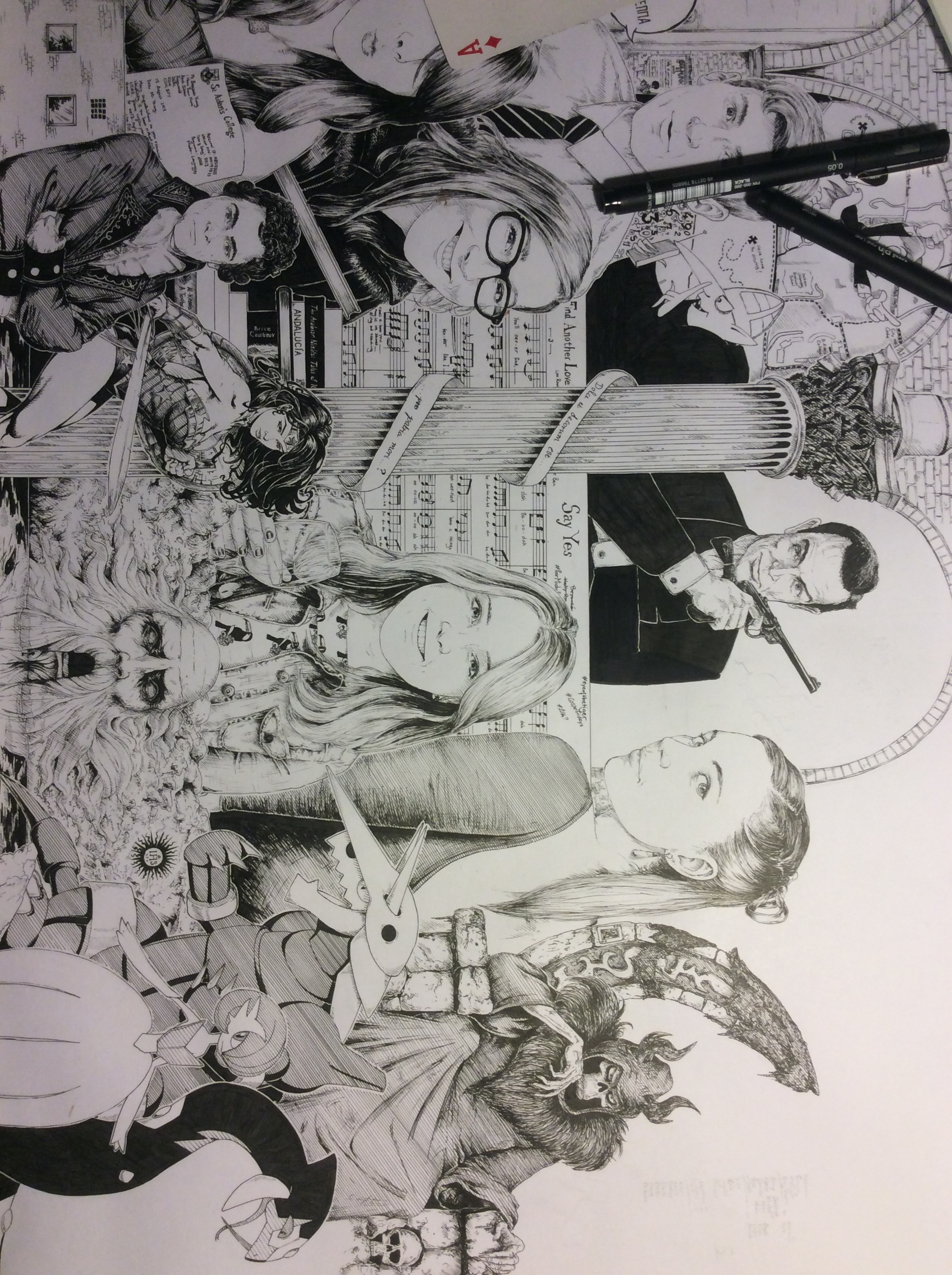
Away with the musing. The Morocco/Jordan debate came to a sudden and decisive end yesterday with the booking of return flights from Amman at the end of June. Done! Expensive, but that’s the price you have to pay for visiting wealthy countries. It’s not as though I had much of a choice with my department either, the way things have gone of late. We’re banding together as a year to prevent the following years being plagued by the same problems we faced. Hopefully they don’t have to go through with all that chaos. But that’s that! So I’m going to Jordan. I’ll be there for just over two months before zipping back for a short stop at home before jetting straight back out to Spain, by which point I’ll have much more of an idea as to where it is they’re sending me. Exciting stuff. Now all I’ve left to do is to wait a couple of days for my monstrous portrait to arrive and I can get straight back to work on that, and let’s not forget all the gigs and rehearsals set to swamp me over the coming weeks. And paperwork. Christ, the paperwork. Will it never end?

If you’re after an alternative point of view over the next two months in Jordan, give my friends over at Langlesby travels a browse (https://langlesbytravels.wordpress.com/). It’s highly entertaining reading and a great deal less greenie-pontificating than me! I’m working on that… BB x

Summer's here and the lane is as dark as night again

Freedom!

Bruegel under the Microscope

Screenshot 2015-05-11 at 22.17.27

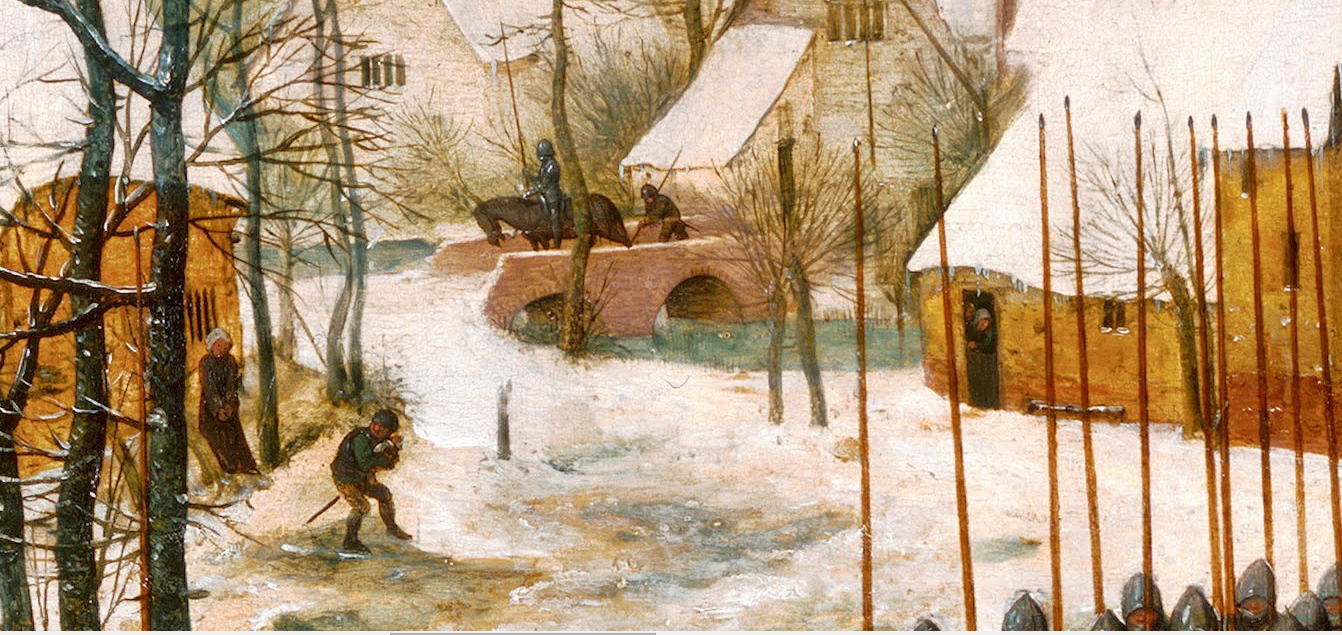
Ever looked closely at Bruegel the Elder’s Massacre of the Innocents? I wouldn’t blame you if you haven’t. It’s a pretty famous painting, but it’s not the Mona Lisa or Van Gogh’s Sunflowers. You might have seen it on a Christmas card, along with the more common Hunters in the Snow, another painting by Bruegel. And why not? It’s a snowy scene with plenty of animals. Perfect for Christmas. Until you look closer. On first inspection it looks like a raid – sundries strewn in the snow, soldiers carrying off sacks, livestock taken for slaughter. A far cry from Christmas. But look a little closer and you’ll see the signs that there’s something far more sinister at work. Hidden away in various corners of the painting are the ghostly remains of figures now painted over. You don’t have to look too closely to surmise that there’s something amiss; a lot of the animals depicted look messier than the figures surrounding them, as do the clothes and sacks. Look closer still and you’ll see shadowy feet beneath one of the sacks. Or a little hand reaching out from the huddle of poultry gathered before the mounted soldiers in the centre of the image. What you’re looking at is far more than just a raid. It’s a Biblical scene brought to life in the snowy Spanish Netherlands; that of Herod and the Hebrew children. It’s a genuine massacre of the innocents.

How did I stumble upon this? Good question. Revision is a tiresome thing and I found Bruegel’s painting on one of my desperate ‘productive procrastination’ sprees. I still can’t remember how. But it was one of those images that I just couldn’t stop staring at, and the more I looked, the more I wanted to know. Why the children? Why were they painted over? And why, when the painting was restored, were they not returned? It chilled me to the bone when I first saw one of the few uncensored images floating around, but I think it’s more poignant than the one we’re left with now, shocking though it may be. What would Goya have thought if the men of El Tres de Mayo had been painted over with cattle? Or is there a line that cannot be crossed, as far as children are concerned? Goya obviously didn’t think so. See Saturn devouring his Son. But what do I know? I’m just musing as usual.

What I think matters most of all is one of the few details that wasn’t amended. In the background, behind the Spanish soldiers, is a man crossing the frozen river with an infant in his arms. He has a sword at his belt but his stance, in tandem with that of the woman standing behind him, imply that his actions are protective, rather than nefarious. It’s the one detail that really sticks in my mind. Is he the father of the child, or a friend, trying to smuggle the child to safety? Did he succeed? Perhaps most poignant of all, is it something Bruegel saw? Tough questions. I wish I’d had more trips to art galleries when I was at school. You can lose yourself for hours in a painting like this. The more you look, the more you see.

Apologies for the heavy content of today’s musing. I’m thinking of writing a novella based on the painting, so I thought I’d share the image with you in case you’re interested. It sure piqued my interest! x