Women’s eyes are always bright, whatever the colour.
HENRY RIDER HAGGARD, KING SOLOMON’S MINES
Sunday 27th March. Eight days until Italy, my first solo adventure in a long time. My desk is a little cluttered: a Marco Polo guidebook to Rome, a spare exam paper for Year 7 French, the Greenwich Maritime Museum’s Pirates: Fact & Fiction and various other odds and sundries. The pile of books I dip in and out of continues to grow. Previous girlfriends would have kept that habit in check, but in this bachelor’s pad, the library creeps through the house like an advancing army, billeting its troops on every flat surface in sight.
I don’t know what to expect from Italy. The last time I set off with a city break in mind I came home early. Barcelona was all a bit much, and I didn’t have much of a plan beyond seeing the old city. After three months of windowless boarding school life, however, I’m just looking for a change of scenery, really. Something to make my journal hum with anticipation (since this one is currently the least-travelled of the five, despite having the longest shelf life – thanks a lot, COVID). I’m hoping I’ll meet some interesting people who’ll give me stories to tell, and with whom I can share stories of my own, but the most likely outcome is a solid twenty-odd pages of sketches. And that’s no bad thing.
My primary inspiration in this field is the French illustrator Gustave Doré. You may have seen his works before, even if you don’t know the name: his was the creative genius behind the dark engravings that told the stories of Paradise Lost, Dante’s Inferno and Don Quixote, as well as various illustrations of the Bible. Some divine brilliance guided that man’s hand throughout his life. Half the hangings in my flat are prints of his, and all of them pillaged from desecrated copies of the most precious book in my library: an illustrated account of the Spanish adventures of Jean Charles Davillier.
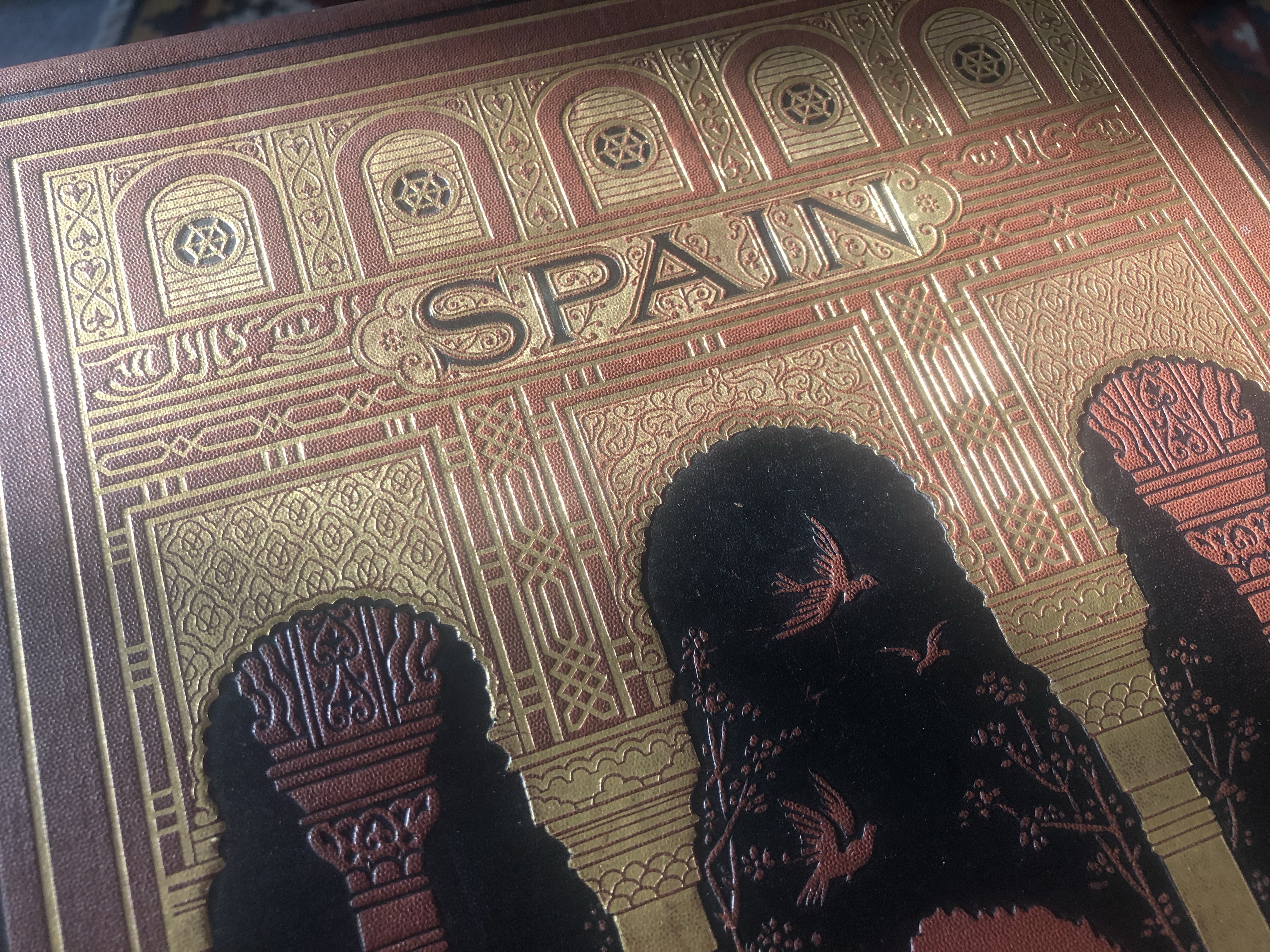
It took me over a year to track down a copy of said book for myself. I’m not a collector of rare books, but I do take a small amount of pride in having a well-stocked Spanish library, and when I learned of the existence of this masterpiece, I knew I had to get my hands on one somehow – before they were all chopped up for their precious prints. Its rarity is evident in the ludicrous priced charged by some vendors on the internet: I’ve seen well-kept copies of the book go for as much as £1,350, with the most reasonable offers starting at around the £350 mark. So I could hardly believe my luck when I found an eBay vendor trying to get rid of theirs for £50. Collection only – as if that would prove an obstacle for such a prize. I’ll never forget the sheepish look on the trader’s face as she handed it over.
“Are you a collector, then? It was in a box in my dad’s garage along with all this other junk. Feel free to have a look. We’re converting the place and need to get rid of a lot of his old things. It’s funny, the day after you paid for it, I saw another copy going for several hundred. I guess I undervalued it.”
She did. Considerably. But beauty is in the eye of the beholder, and to me, it’s more than just a rare book of Doré’s. It’s a window into another man’s head: another man who, like myself, came to Spain and was bewitched by its very own brand of black magic.
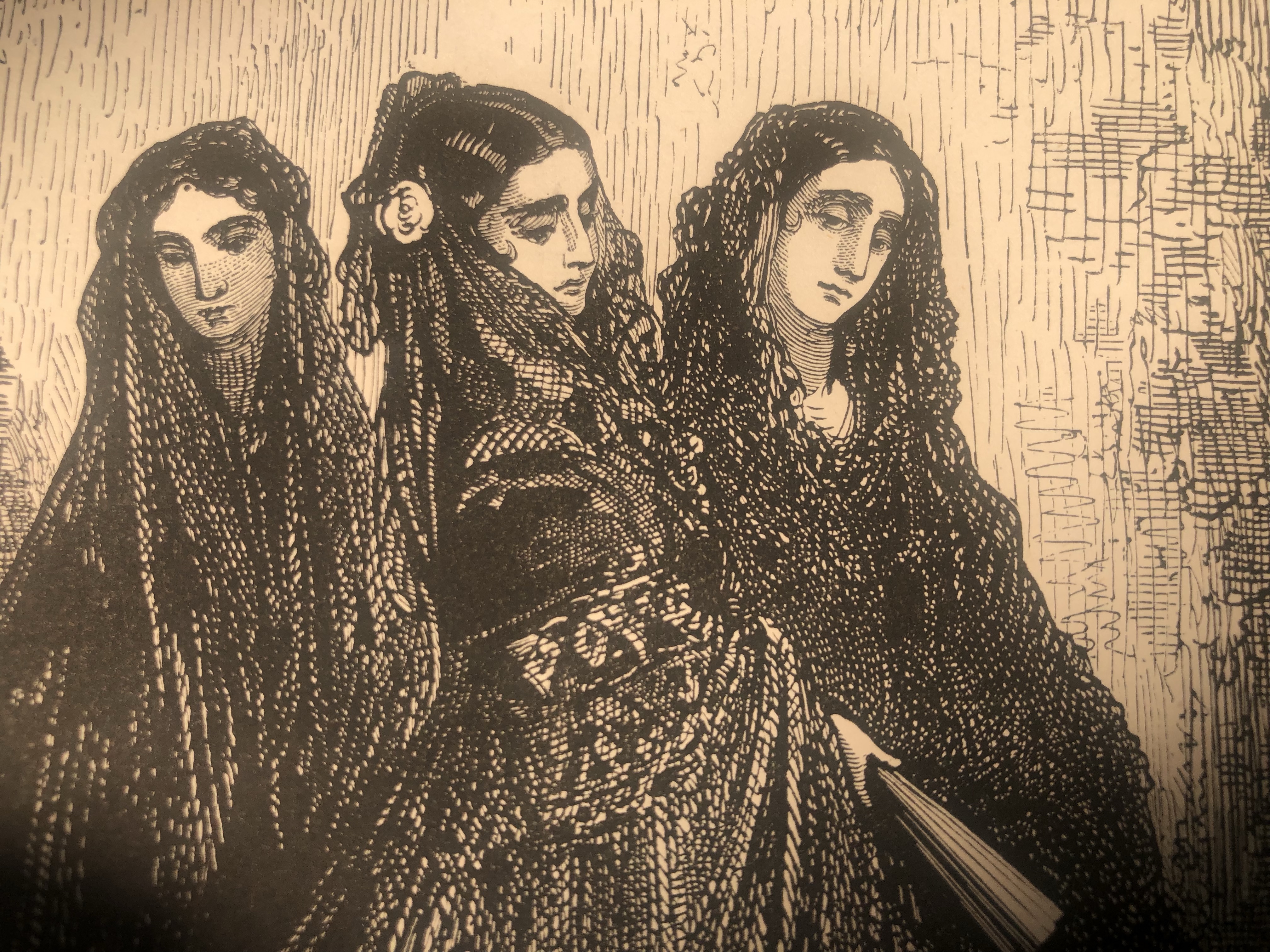
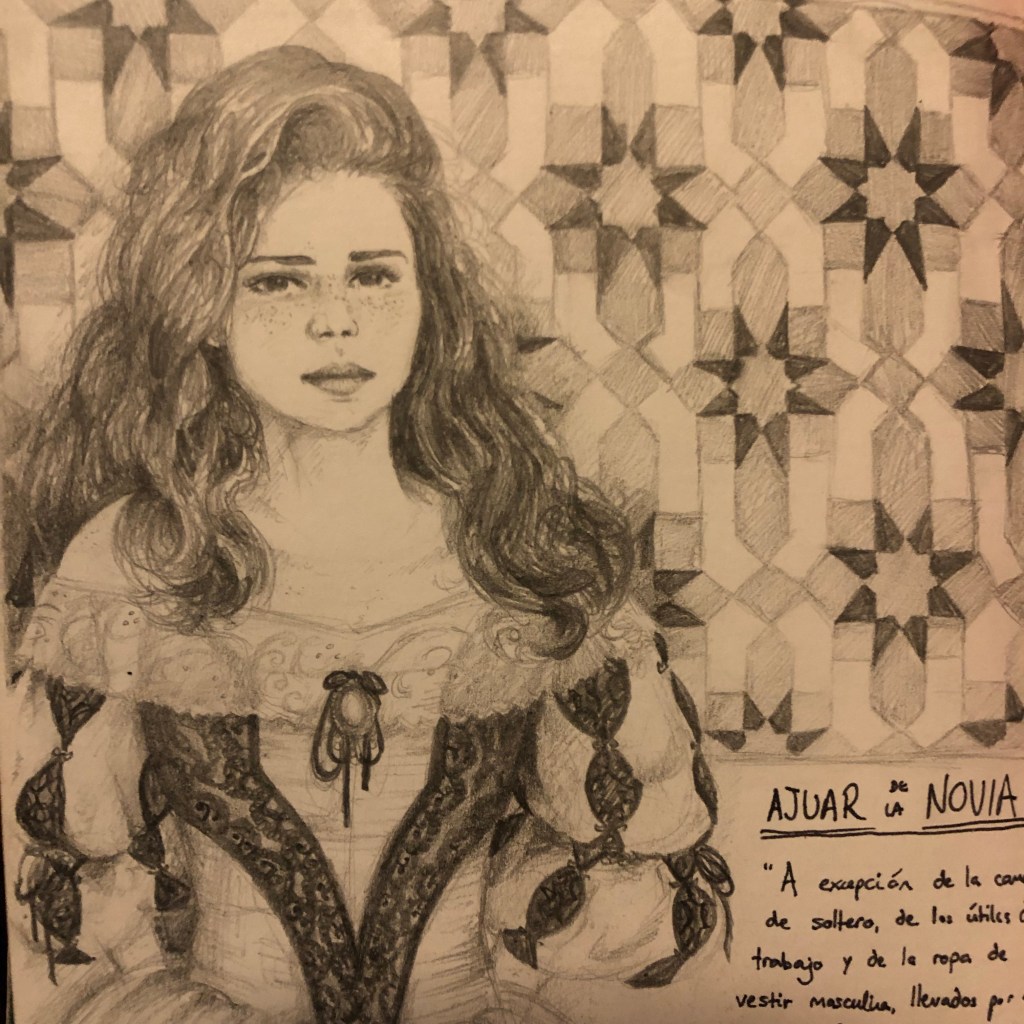
Of all Doré’s prints, I treasure his landscapes most of all, but it’s his portraits of the Spaniards themselves that I want to leave with you today – and particularly the fair Spanish ladies.

I’ll be honest with you, I’m as much a sucker for beauty as the next man, and when I’m sitting on the high street, or on the Tube, or scrolling through Pinterest, nine times out of ten it’s the girls who catch my eye and stir my pencil into action (Freud and a thousand schoolboys would have a field day with that sentence, I know). Double the prize if the sun is shining at the right angle, and Doré does this spectacularly – you can almost hear the midday heat in the image above with its shadows cast straight down by an unforgiving Castilian sun immediately overhead.
The grass is always greener on the other side, right? My grandfather found something that caught his eye in an English girl, a long time ago, but it’s his people who hold my eye. Not that I’ve ever held down a relationship with a Spaniard. It’s a hard thing to do when you live on this rainy rock, as Spaniards’ ties to their homeland are stronger than steel. I’ve met a few wanderers, but they are the exception to the rule. Cortes, the great conquistador of Cuba and Honduras and the Mexica Empire, came home to die. And when Spain is as beautiful a country as she is, who can blame them?
I’ll leave it to San Isidro of Sevilla to conclude with words more powerful than my own:
Of all the lands that extend from the west to India, thou are the fairest, o sacred Hispania, ever-fecund mother of princes and peoples, rightful queen of all the provinces, from whom west and east draw their light.
SAINT ISIDORE OF SEVILLE, DE LAUDE HISPANIAE
See you soon. BB x

 The Book of Barnabas