Two weeks from now – right now – I will be sitting somewhere in the transit lounge in Bogotá’s El Dorado International Airport, awaiting my connecting flight to Peru. That’s about 5,300 miles (or 8,500 kilometres) from home, which will be the furthest I have ever been from home by a long shot, beating both Kampala and a brief layover in Dallas last year – and, if things go to plan, I may well find myself even further afield before the year is out. I will also be a full five hours out of sync before I even reach my final destination, so I will need to be careful and try to acclimatise with an altered sleep schedule a few days in advance.
We are very much into the preparation phase now. I have arranged the last of my accommodations for the journey in Ollantaytambo, where I hope to end my Peruvian adventure in the peace and quiet of the Sacred Valley. I have ordered a new pair of sturdy Merrell hiking books to see me around the altiplano and beyond. I should do a preparatory pack this weekend to see if I can fit everything into my rucksack. I’m a light traveller, but the zoom lens is likely to be the largest and heaviest of the equipment I will be lugging around. The jury’s still out as to whether I should take a book with me or simply use up the last of my Audible subscription credits and download more audiobooks than I could possibly hope to finish in that time. I’m leaning toward the latter, if only because I’m not particularly good at leaving a good book behind.
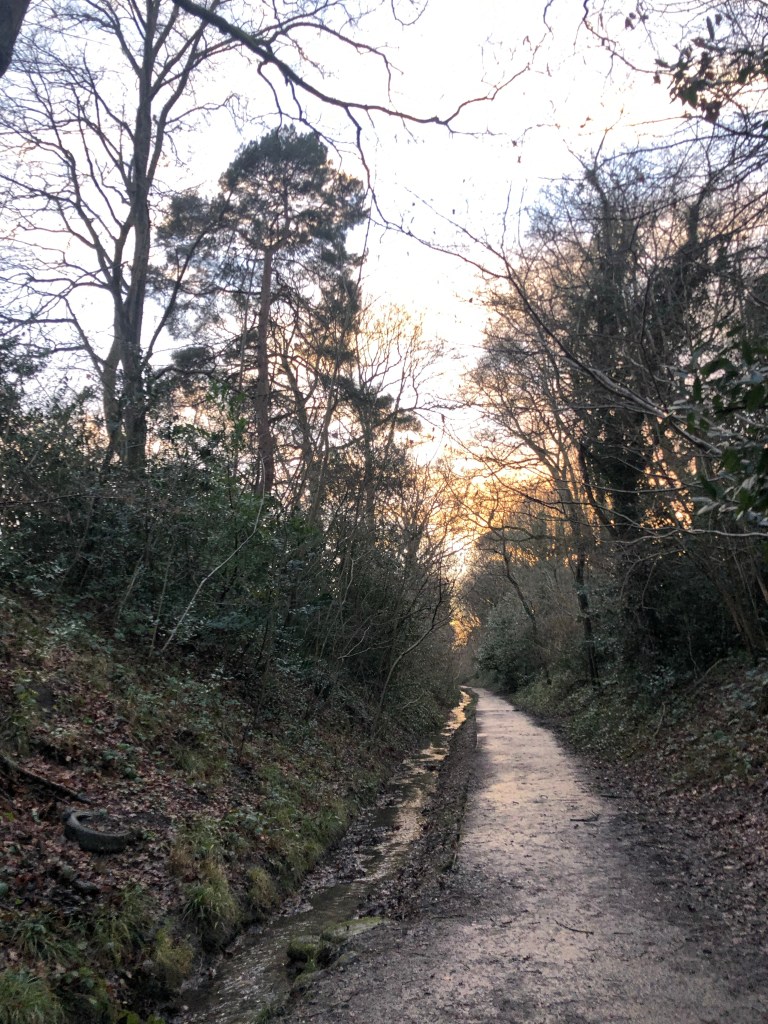
I’ve been meaning to get out and about and keep practising with the lens, but my time is very limited. Last week I managed to escape for just over an hour on Friday afternoon while the sun was out, but between report-writing, lesson planning, taking my team to Oxford Schools on Saturday and being on duty almost all of Sunday, I haven’t had much luck. The Netherclay Community Wood isn’t too far from home, but it had rained a lot on Friday so I didn’t explore the woods too much, as the ground beneath my feet had become little better than a squelching quagmire. Little wonder, then, that there were so few walkers out and about.
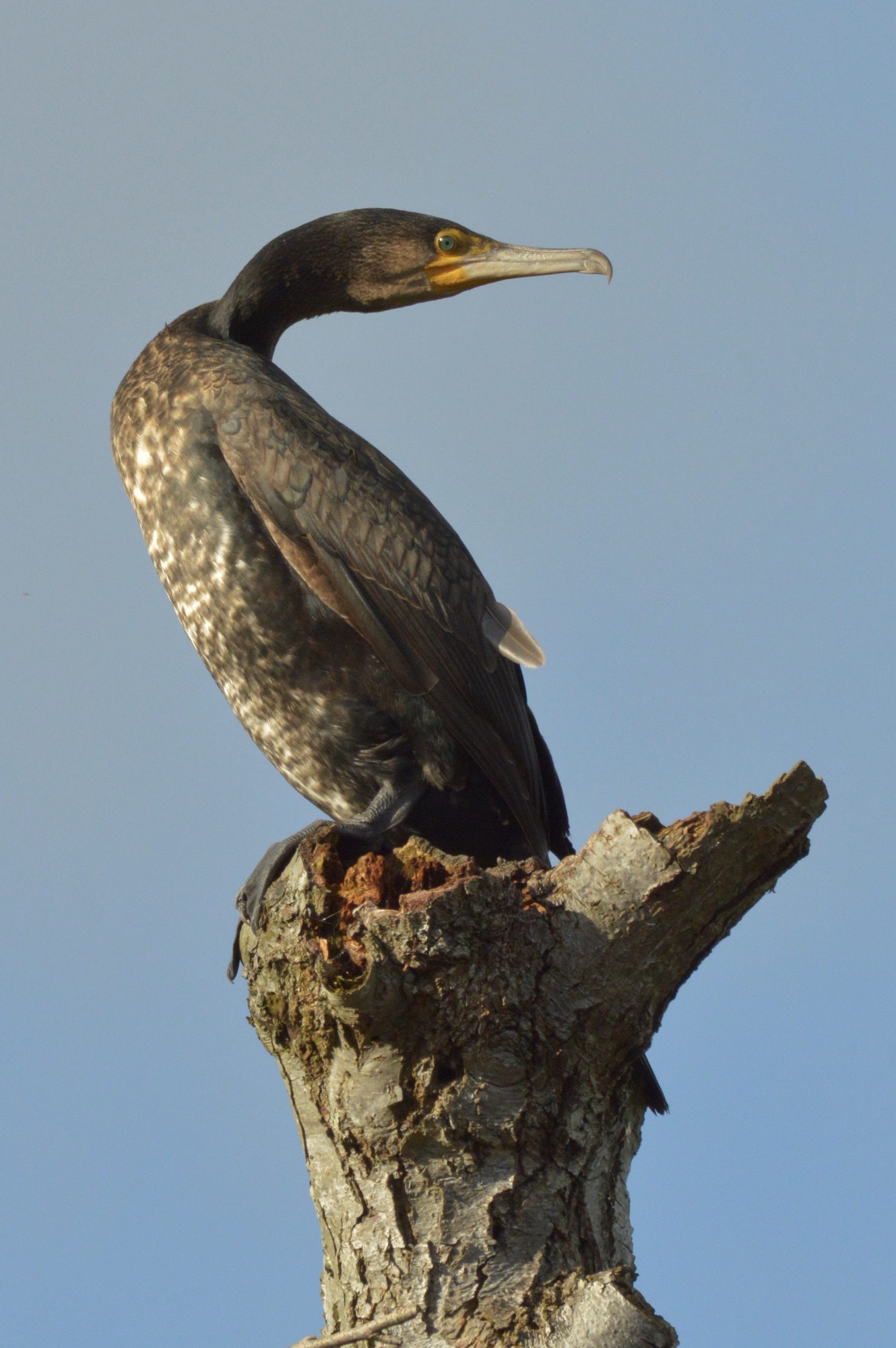
I went looking for the water rail that I heard last week, but I didn’t see or hear it. I did disturb a kingfisher on the other side of the pond, though, and while the halcyon bird was much too fast for me, I did have more luck with a young cormorant in the momentary interlude when the winter sun deigned to show its face.
Having something incredible to look forward to always makes the Lent term – by far the hardest of all the school terms – a lot easier to bear. Last year, the knowledge that I would be spending all of three weeks in and around Spain was enough. This time, I have pushed the boat out so far that there is a very real danger that the tide will carry it away. And once it does, where will it take me? I’ve lost track of the number of times I’ve caught myself exploring other destinations, other wildlife adventures, other places where I can run while I still have the light of life. This year it’s South America’s turn, but in the years to come, I would dearly like to see the rest of the world, now that the wanderlust has returned. I still harbour dreams of seeing the eerie saguaro stands of Sonora, but a number of other old ideas have started to rise to the surface, like bubbles beneath a frozen lake: KwaZulu-Natal, Kanha National Park, Svalbard and Borneo.
It may well be that in abandoning my search for Her, wherever she may be, and indulging in the thing that has always brought me the most joy, I am putting off the thing I want the most in life. It may also be that I find Her along the road. Either way, I am done waiting. The apps are drier than the Atacama these days and the conversations drier still. There is a world of light and life and joy out there and I can no longer ignore it. It is time for a change of scenery. BB x
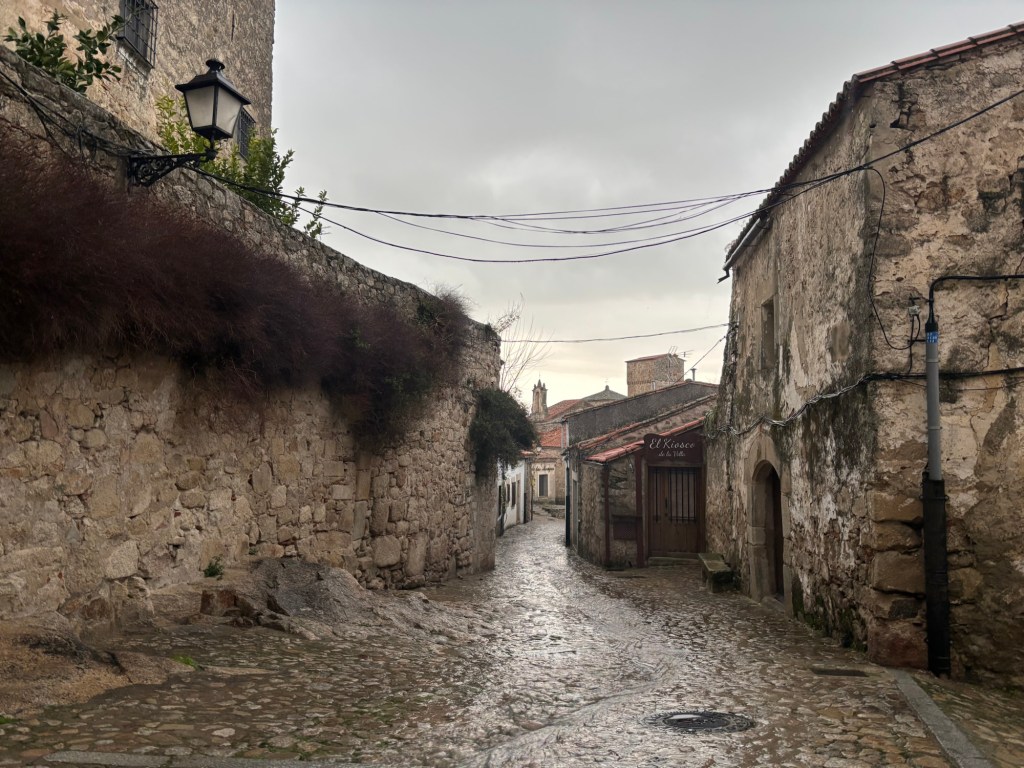
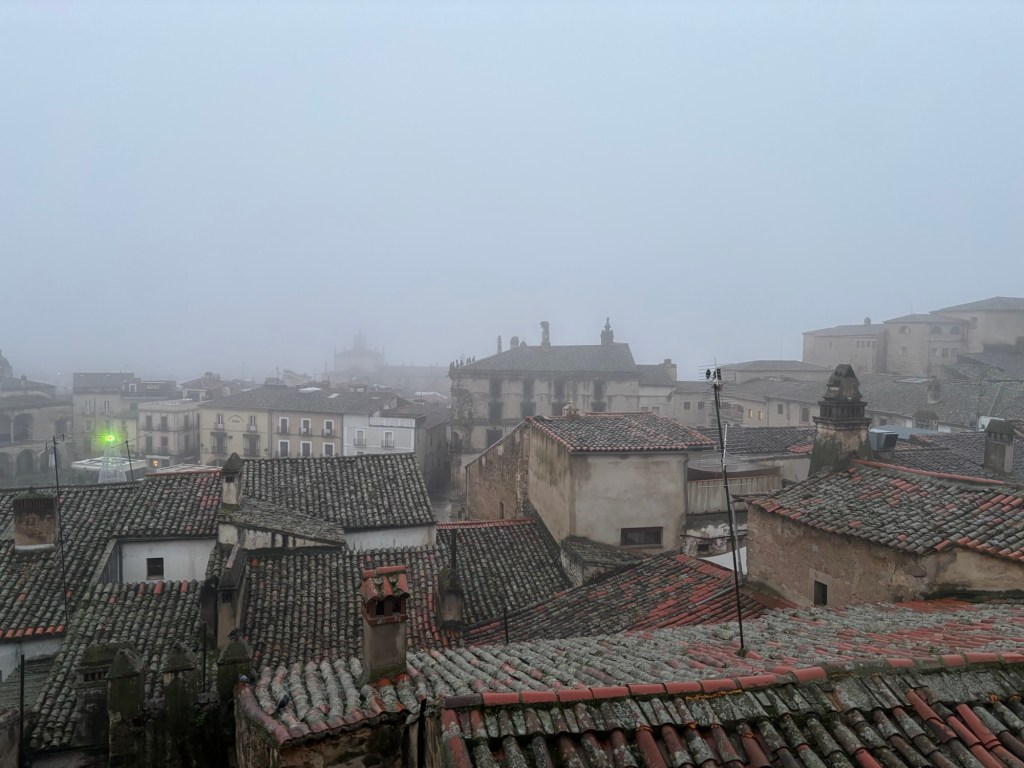
It turns out the rain in Spain does indeed fall mainly on the plain. And when it does, it does so with a Biblical vengeance. I made it to my hotel in Trujillo with just seconds to spare when the heavens opened. Any hopes I might have harboured of exploring the city’s surrounding countryside were swiftly washed away, as the rain came down all afternoon, all through the night and long into the following morning.
This would be a real downer if I’d had plans. But my itinerary is an open book and I’m always happy to improvise – it is my preferred method of travel. So I enjoyed a late morning, a proper breakfast and the blissful quiet of one of Spain’s most beautiful (if isolated) towns.
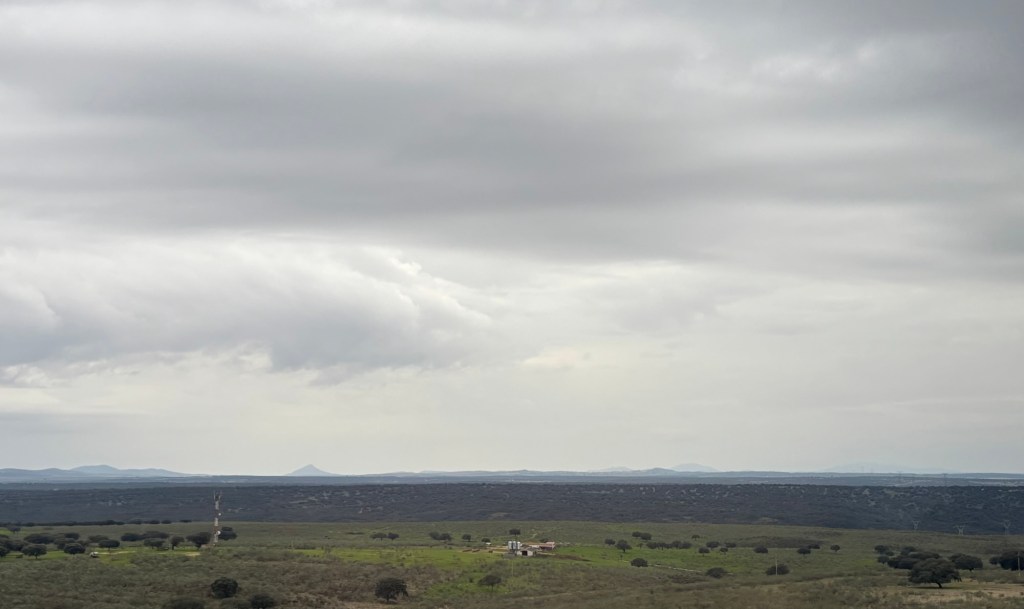
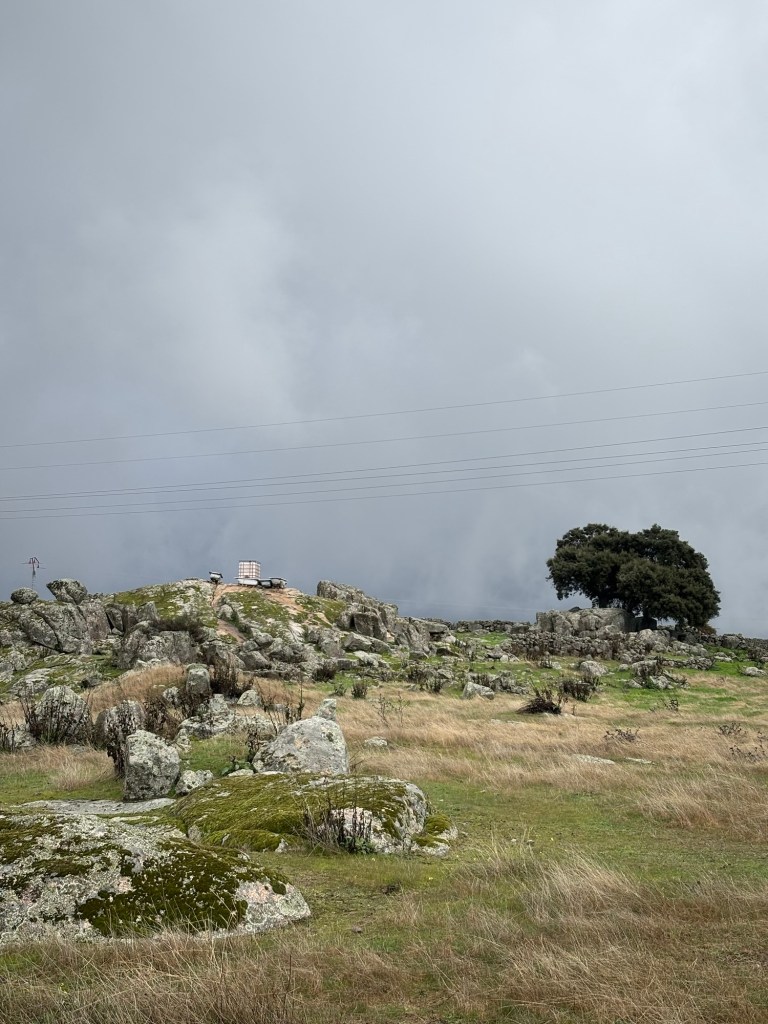
Trujillo sits atop a small granite ridge in a boulder-strewn corner of the Llanos de Cáceres, a vast and featureless steppe that stretches between the Sierra de San Pedro in the west and the Ibor Mountains to the east. There’s nothing like it in Western Europe. You’d have to go as far as the Puzsta in eastern Hungary to find anything close to its vastness. Lichen-covered granite boulders rise out of the earth like giant’s teeth and the odd tree stands alone in the fields, but beyond that, it’s like staring into the infinite.
Little wonder, then, that Hernán Cortés and Francisco Pizarro – both native sons of this part of the world – set their sights on nothing less than the horizon – they’d had no choice but to do so since the day they were born.
Extremadura can be a desolate place in winter. It can be pretty desolate in summer, too, but there is a virgin beauty in its isolation. By avoiding the grasping arms of the hordes of tourists who have strangled much that remained of Old Spain into submission, Extremadura has managed to hold on to the embers of an ancient fire which exists only in the memory of those living among the tower blocks of the southern coast.
Perhaps that’s why it’s often considered one of the main contenders for the Birdwatching Capital of Europe, since so many rare and otherwise elusive species still flock here in droves, taking advantage of our absence to go about their lives as their ancestors have done since before we came to this land.
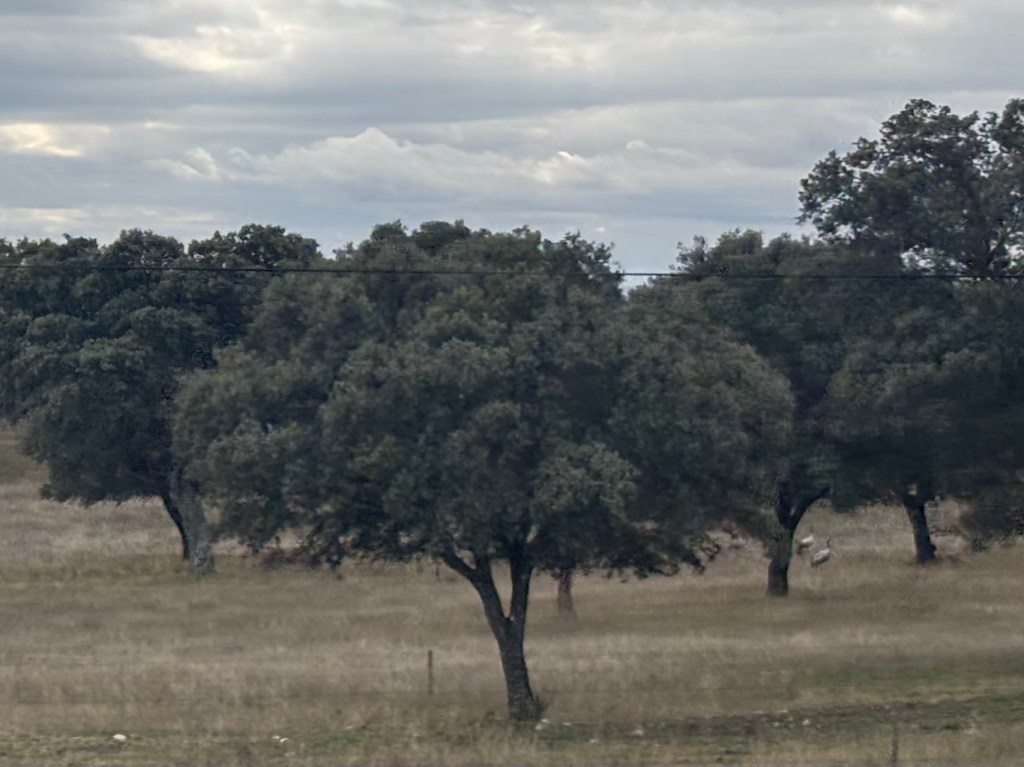
You can see some of that without even leaving the motorway. Every winter, more than 75,000 common cranes travel from their breeding grounds in Northern Europe to this remote corner of the Iberian peninsula. They spend the colder months in the shade of the dehesas, feeding on acorns. They’re a rather common sight if you look beneath the trees, and at over a metre in height, they’re hard to miss.
When I first came to Trujillo in the spring of 2016, I promptly fell in love with the place. It wouldn’t be the first remote corner of Spain that’s stolen my heart – El Rocío and Hornachos are up there – and it won’t be the last. It’s found its way into my saga as the elected home of my hero, partly out of practicality and partly out of a sense of wish fulfilment on my part. Half of me wishes I’d been brave enough to flat out ask to be sent here for my second British Council placement back in 2017. It would have been a lottery, of course, but what would it have been like to live here, I wonder? Trujillo is a lot smaller than Villafranca de los Barros – and a lot more out of the way – but infinitely more scenic.
I managed a short reccie to the north of town, before the skies turned dark once again and I had to admit defeat and return to the hotel. The cobbled streets running down from the hilltop had become rivers in their own right. It wasn’t yet siesta time, but nobody else was out and about. And with good reason!
From my vantage point on the second floor of the hotel, I can see out across the plaza and the rest of town. There isn’t all that much to see, with the rain clouds obscuring most of the world from view, but when the sun is shining, you can see straight across to the pyramidal Sierra de Santa Cruz – and the town at its feet, curiously named Santa Cruz de la Sierra (I’m not altogether sure which came first).
If the weather had been kinder I’d have set out at first light and tried to reach the old Moorish settlement at its summit… but then, I haven’t exactly come dressed for a hike. Perhaps it’s for the best that I have had a day to take it easy in Trujillo.
Tomorrow is a new day. 0% chance of rain. I don’t need to rush off anywhere, so I might go for a stroll after breakfast and try to soak up the countryside while I’m here. BB x
Warsaw is a strange town. For a European, at least. It’s like looking at a replica – which is not so far from the truth at all, as the city was razed to the ground with unparalleled savagery on Hitler’s orders. It seems absurd that I stayed in buildings in the US this summer that were older. But, there we are. It’s a testament to the Poles’ love for their capital city that they rebuilt the place brick by brick, presumably at no small expense.
I’ve come to the centre of the Old Town in search of amber for my mother, to replace a pair of cherished earrings lost long ago. I wanted to visit the Polish Jewish Museum and the Warsaw Uprising Museum, but as luck would have it, those two museums – and only those two – are closed on Tuesdays. So I do one of my usual make-it-up-as-you-go walking tours instead.
The usual global parasites that infest the heart of Europe’s ancient cities have been mercifully kept outside the old town walls: the lurid glare of the Hard Rock Café, Costa coffee and the Golden Arches can be seen from its outermost streets, but no further. Along with the usual array of anachronistic American college jackets with Warsaw splashed across them, quite a few souvenir shops appear to be selling tee-shirts with the city’s name in Star Wars font. One even has a chibi Darth Vader next to the slogan “I love Warsaw”. It seems a little tasteless to have a man infamous for his hatred, wanton destruction, ruthless repression and stormtroopers (and who isn’t even the obvious real life counterpart) associated with a city like Warsaw, but perhaps the irony was lost on the designers.
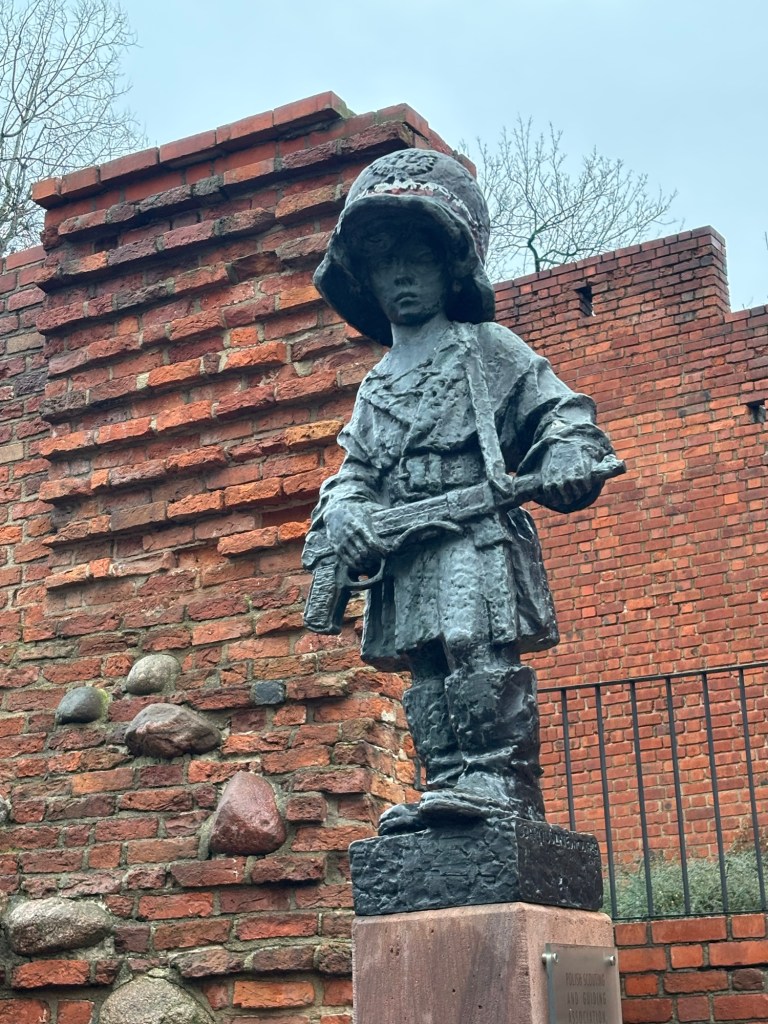
Not far from the city centre stands a miniature statue atop a plinth, just outside the city walls. It depicts a child soldier, an anonymous victim of the Warsaw Uprising. It is a stark reminder of just how young the rebels were: the average age of the insurgents was only seventeen. One has to hand it to the incredible courage of the Poles for standing up to the might of the Third Reich, when they were all but trapped under the heel of the Führer’s jackboot.
Nothing remains of the Jewish ghetto, which was considerable. Similar ghettos in Spanish cities are minute by comparison, despite Spain once housing a not insignificant percentage of the world’s Jews. There are nods to what once was: a metal plaque cuts across the road in places, marking where the perimeter walls once stood.
In a park nearby, a woman in a fur coat walks her dog. I arrive one minute too late to catch the start of the changing of the guard, but I do see the new sentries move into position beside the Tomb of the Unknown Soldier. A fire burns steadily in an iron grate between them. The chosen shelter for the tomb is the last remaining piece of a former palace complex, of which only three arches survived the destruction of war. A short wall on either side of the square bars access to what looks like an excavation site. Beyond that, the yellow squares of ceiling lights gleam from behind the glass of the office buildings. I have always been curious as to what it might be like to work in one of those places, though it’s the same kind of curiosity I harbour for how it might feel to tumble over a cliff or to sink to the bottom of the ocean. Perhaps I’m happier not knowing.
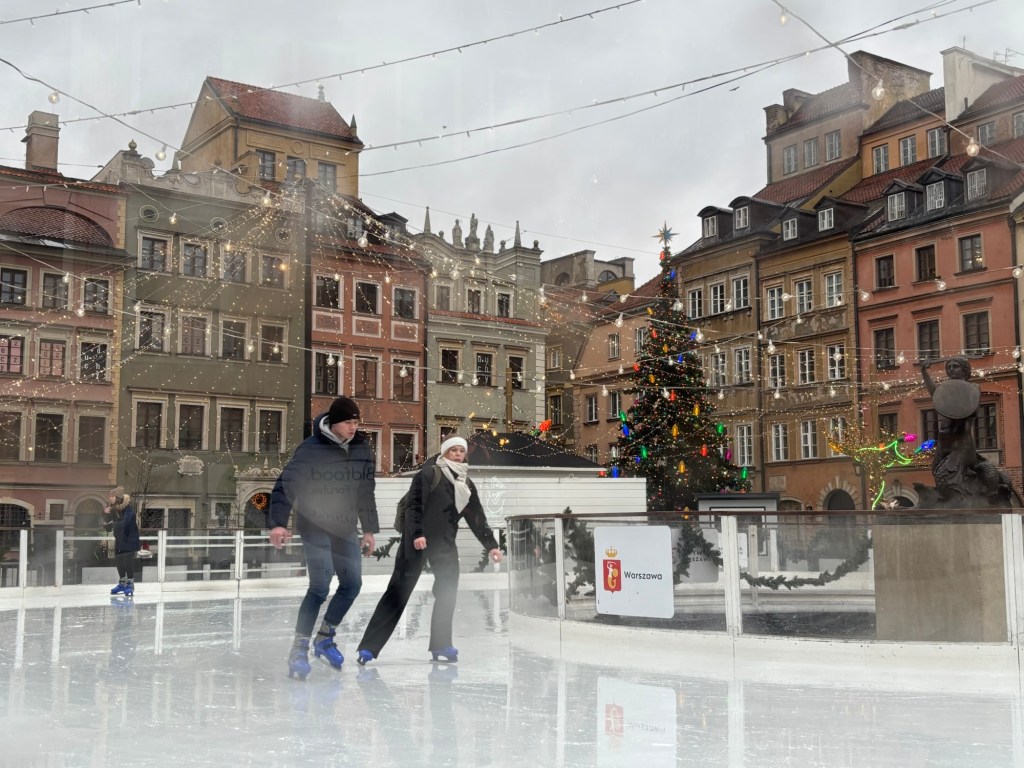
Night falls. Warsaw puts her Christmas clothes on. I consider going without supper, but one of the restaurants in the old town does flaki and I can never say no to offal. This time I can savour it in peace, without the tutting and sermonising of the vegetarian globetrotter who was so judgemental of my taste before. The pierogi are probably a bit much and I can’t finish them all, but I do an honest job of it. I suspect that flaki appeals to me because tripe stew isn’t too far from the Spanish dish of callos or any number of dishes I have eaten in Uganda and Morocco.
Back at the hotel, I have a lot of time to think. I pack my bags. I watch Polanski’s The Pianist and try to picture those things happening right beneath my hotel window, some eighty years ago. I tell myself I mustn’t sell myself so cheaply anymore, apologise to a few matches on Hinge and unmatch. I take a shower and read back through the blog to happier times, to the Camino, and wonder whether that ought to be my next grand adventure. After all, the end of the Camino isn’t the end of the road. It’s just the start of the next one. BB x
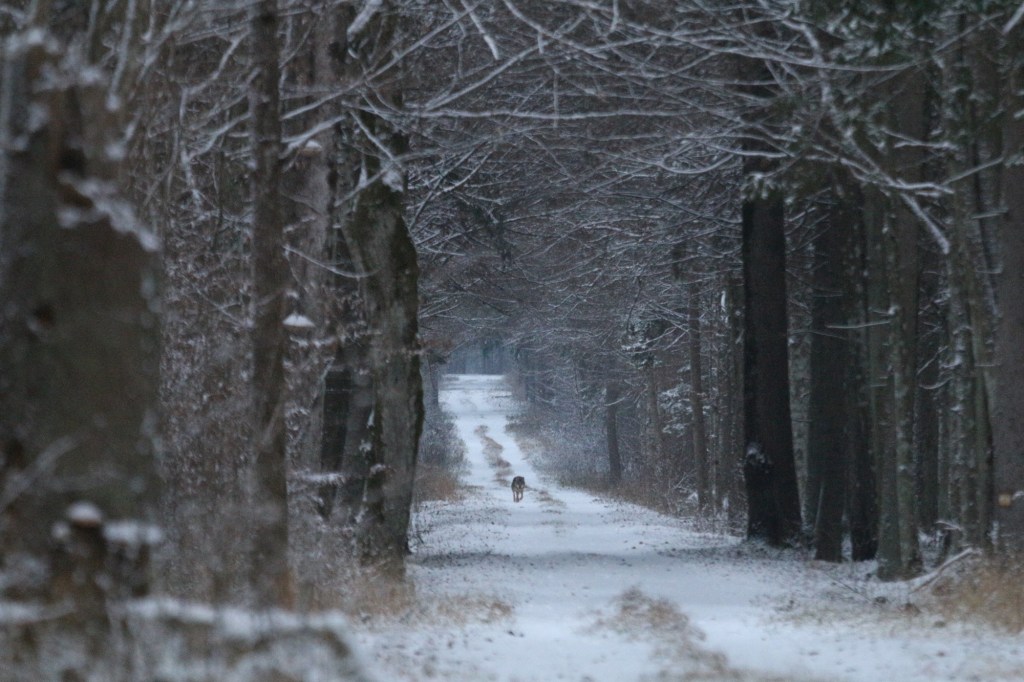
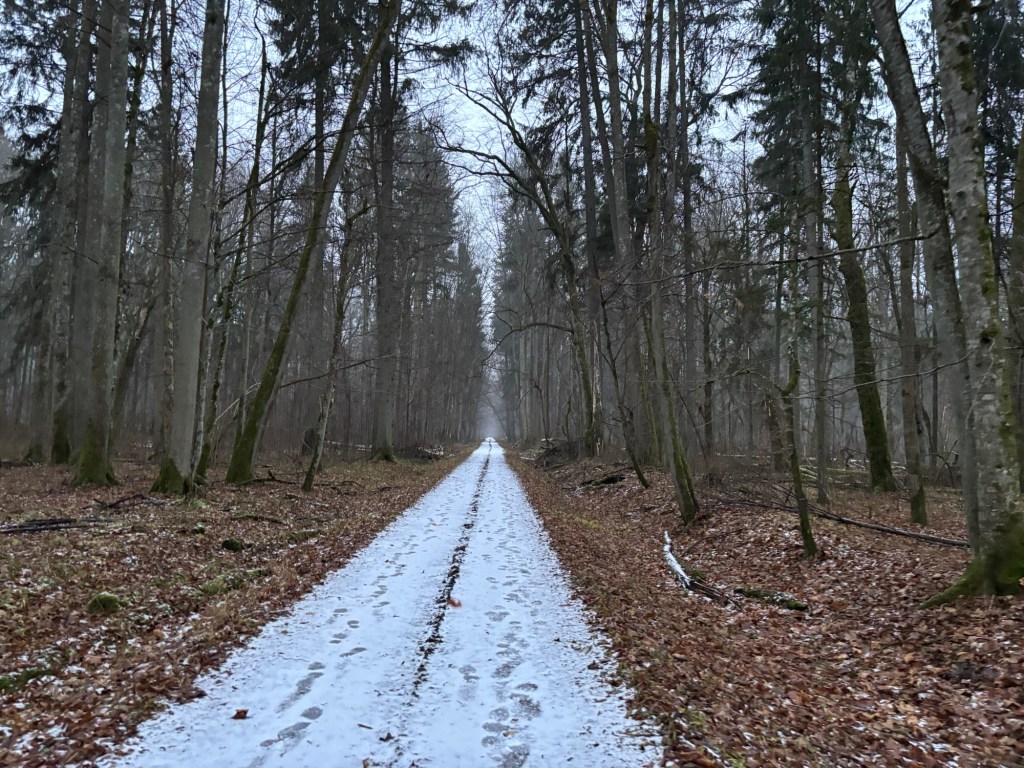
I’m kneeling in the snow, staring down an arrow-straight road carved through the forest by the Russians more than a century ago. Our guide makes a signal and tells us to wait. We could be here for up to an hour. The fever that has followed me since stepping out of the plane in Warsaw has not broken yet: I’m still nursing a headache and a bad cough, my back hurts, and I’m starting to freeze from the feet up. But I’d suffer it all again to see what I just saw: a genuine forest spirit, a shadow of the ancient world, loping out of the trees and onto the road. A wild wolf.
When I woke up this morning, it was to a frozen world. The snow hadn’t started falling when I turned in around midnight, but there must have been quite a lot of it during the night, because there wasn’t a single track to be seen in the village. That may have more to do with the fact that we were up and gone by six thirty, a full hour before sunrise, and on a Sunday morning to boot.
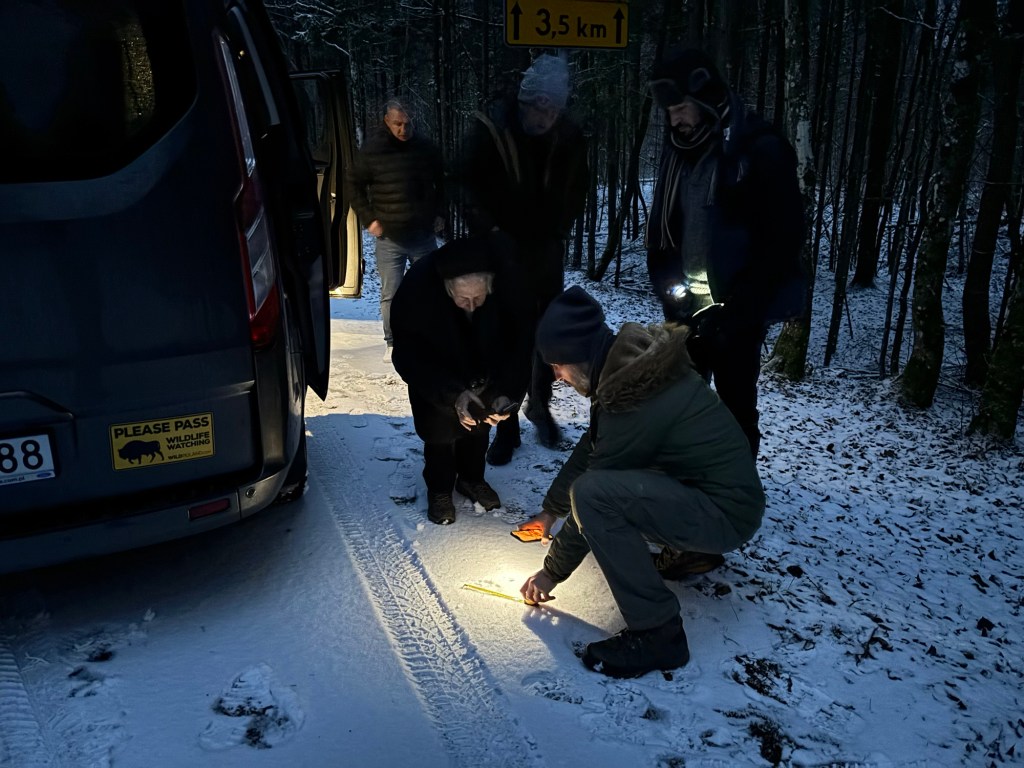
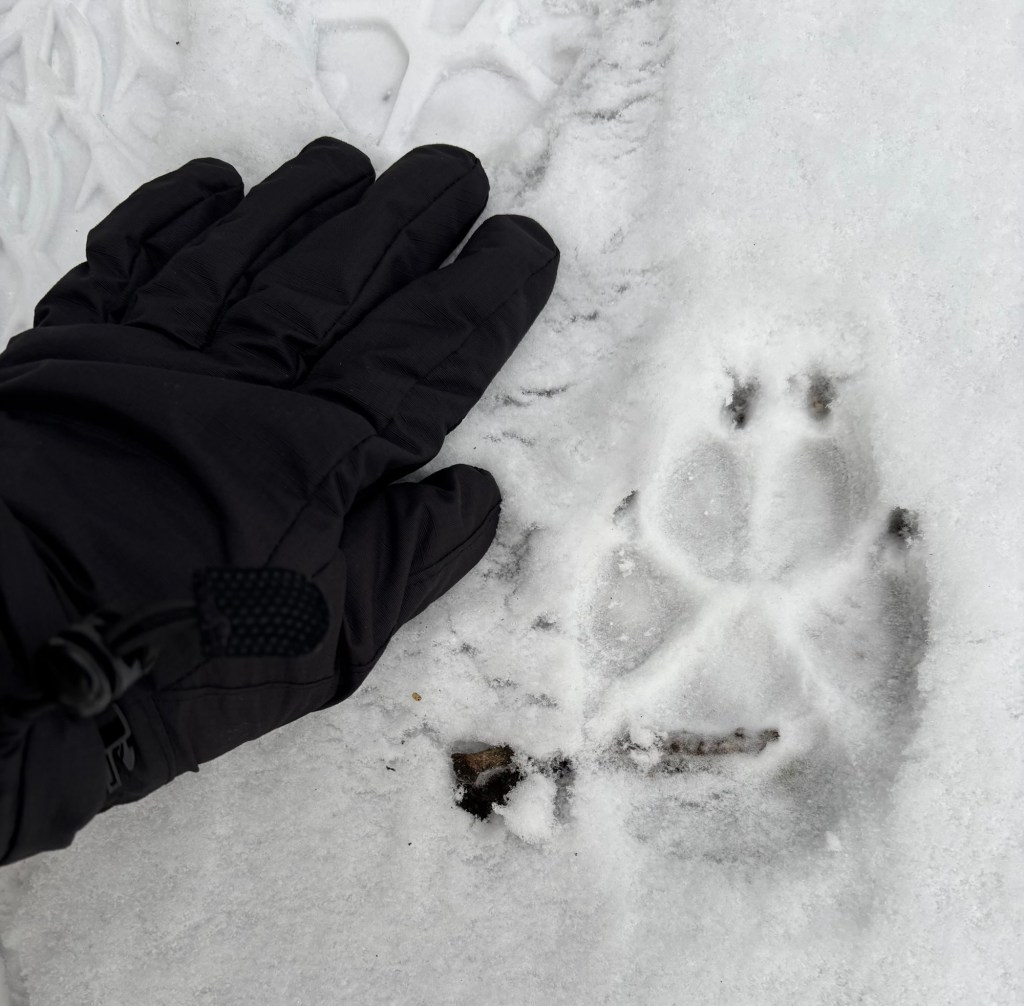
After a short drive through the frozen forest, Łukasz brought the car to a sudden stop and jumped out to show us what he had seen: a single set of footprints in the snow, larger than those of any dog I’d ever seen. Following a tip-off from a friend of his, we set off into the forest to try our luck with one of the wolf packs that inhabit Białowieża Forest.
We didn’t have to go for before we found another set of prints. And another. And another. In all, we counted around eleven sets of prints in the snow. They had to be recent: the snow had only started in the early hours of the morning, and it was still very early. We pushed on to the crossroads, hoping to catch a glimpse of our quarry crossing the road in one of four possible directions.
We waited. A couple of red deer broke the cover of the trees, but they didn’t look particularly perturbed – not a good sign when you’re tracking a creature that puts the fear of God into nearly everything that moves in the forest. Łukasz tried calling out to them – and a bloody convincing mimic he is, too – but the forest was silent. Wherever the wolves were, they were doing what they done since we first crossed paths as a species hundreds of thousands of years ago: giving us a very wide berth.
We moved on, taking a chance on the left road. A couple of minutes into the walk, we came to a sudden halt at the sign of a dark shadow in the road at the top of the rise. On closer inspection through the binoculars, it was another tracker and his party staring right back at us through a pair of binoculars of his own.
We met halfway. Łukasz and the other guide swapped information. They’d come from the other side of the quadrant and had found tracks on the road leading into the woods, but nothing on the forest trail, meaning the pack of eleven had to be in there still. They might well have been watching us all the while, invisible between the thousand arms of the trees within.
Well, some of them, anyway. One of the women from the other party suddenly pointed back down the road and said something. My head turned so quick it might have snapped – and then I saw it. A lone wolf standing in the road, staring straight at us. Łukasz gave a signal and we all dropped to the ground, some on their bellies, since wolves are more likely to be spooked by a standing human silhouette than a prone one.
It didn’t hang around. Before my companions could get their cameras ready, it had loped off into the cover of the trees on the other side and was gone.
We waited there for quite some time. Where there was one, the other ten were sure to be nearby. Just as we were getting restless, three red deer came hurtling through the trees to our right, from the part of the forest where the wolves were hiding. Had they been spooked by the pack? The others were momentarily distracted and in that moment I had my eyes on the road, and that’s when I saw it: a second wolf, emerging right where the first had come and gone. Unlike the first, this one didn’t cross the road in one go, but instead came trotting towards us. I motioned to the others and tried a few photos, but my poor camera was struggling in the low light, so I contented myself with the binoculars instead.
Nothing quite prepares you for the size of the wolf. You expect a dog, or something like it, but it is so much more. Bigger. Stronger. A restless hunger in its yellow eyes. An untamed purpose in its gait. Even its footprints tell you you’re in the presence of something magnificent: there’s no graceless wrinkles or adapted opposable thumbs in its pug, just a perfect symmetry of power.
We never did see the other nine members of the pack. It’s possible they made a kill during the night and decided to remain close to their prey, sending the two we saw ahead as scouts. Who knows? Eventually, we elected to abandon the vigil and leave them be, since by now the pack must have worked out where we were and how to avoid us. We left the forest by the same road we came, but not before a lone bull bison emerged from the trees just a hundred metres or so down the road. Poland, you sure know how to pull out all the stops!
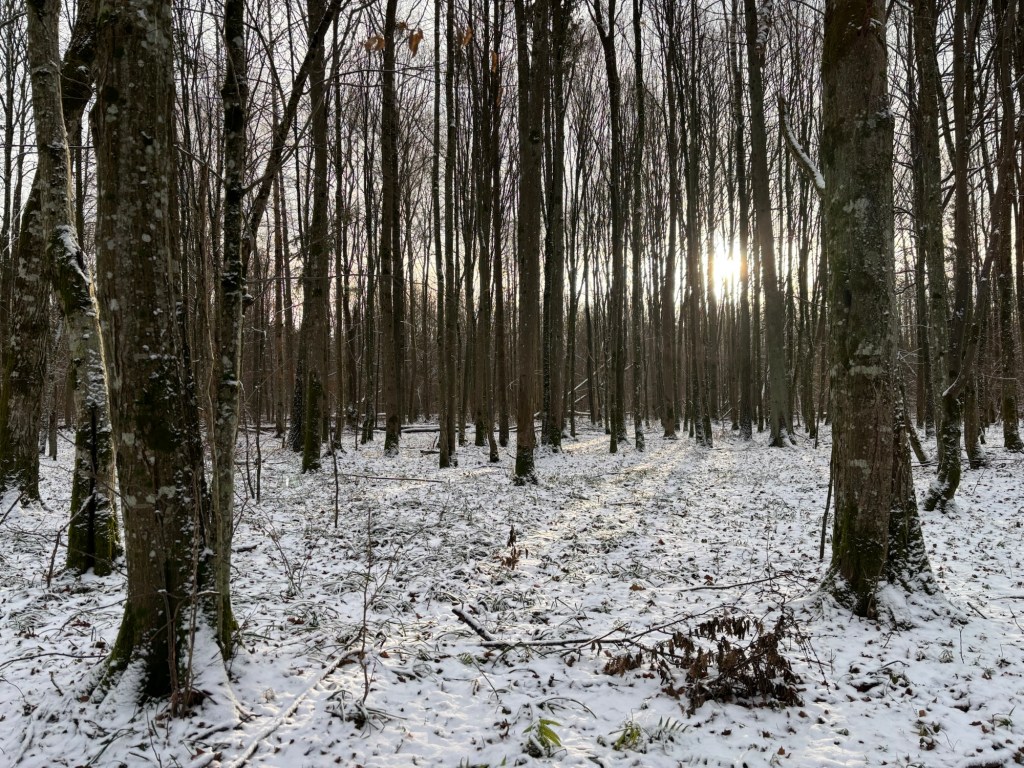
We ventured into the strictly protected area of Białowieża Forest after breakfast, hoping to try our luck with some of the park’s rare bird species, but a combination of high wind and sleet cast a spell on the woods. A single mistle thrush cackling at the gates was the only sound we ever heard: neither the croak of a raven, the wittering tattoo of a nuthatch, nor the hoot of an owl, the mew of a buzzard or the drumbeat of one of the nine species of woodpecker that call the forest home. Nothing. Even the wind died away as we wandered deeper into the woods, where some of the trees are hundreds of years old, and others older still.
Białowieża Forest is famous for being one of Europe’s last remaining primeval forests, but what is even more fascinating – if a little disturbing – is that an astonishing 30% of its trees are dead (some figures indicate it may even be nearly 50%). It is, in a way, a forest of the dead, albeit one so full of life in the spring and summer that you could be forgiven for missing that small detail.
Not so in the bleak midwinter, however. The towering spruce trees look more like the charred pillars of a gutted cathedral, while those that have crashed to the ground seem like the carcasses of enormous serpents, their curving branches like shattered ribs on the forest floor. Everywhere is the sweet smell of decay and black fungus grows on the stumps of the fallen giants. The presence of several stones and crosses marking the mass execution site of hundreds of Polish Jews by the Nazis only adds to the creeping dread.
We spent around three hours in the woods, learning about the ancient trees and the various species of fungi that call the forest home, but the eerie silence of the birds was sorely noted.
We did not leave disappointed, however. Something far more beautiful and far more chilling took its place.
Just a hundred metres or so from the main gate, an unmistakeable howl broke the silence, echoed a few seconds later by another. It’s amazing how a sound that you must have imagined and read about in books for years can still make the blood run cold on instinct.
I would have settled for hearing a wolf over seeing one on this trip, and I got both. I may not have been the luckiest in love this year, but I’ve taken all the chips home with the wolves on this trip. Maybe it’s a sign that I’m doing something right at last – reconnecting with the younger version of me who was far more interested in the natural world than anything else.
If I have any budding resolutions for the New Year, it’s to do something like this again. I am, and always will be, a naturalist first and foremost, and everything else I claim to be second. I should reclaim that part of me. It is, it must be said, a genuinely happy and fulfilled part of me, and the greatest gift I could give to any children I should be lucky enough to have someday. BB x
The temperature has risen a little since yesterday, though not by much. I’m still nursing a bad case of end-of-term-itis – it always hits me bad in the first few days of the holidays – so marching through the frosty Polish deepwoods with weak lungs and a headache was a bit of a challenge. But if I was properly breath-taken, it was on account of the incredible wildlife encounters I had this morning.
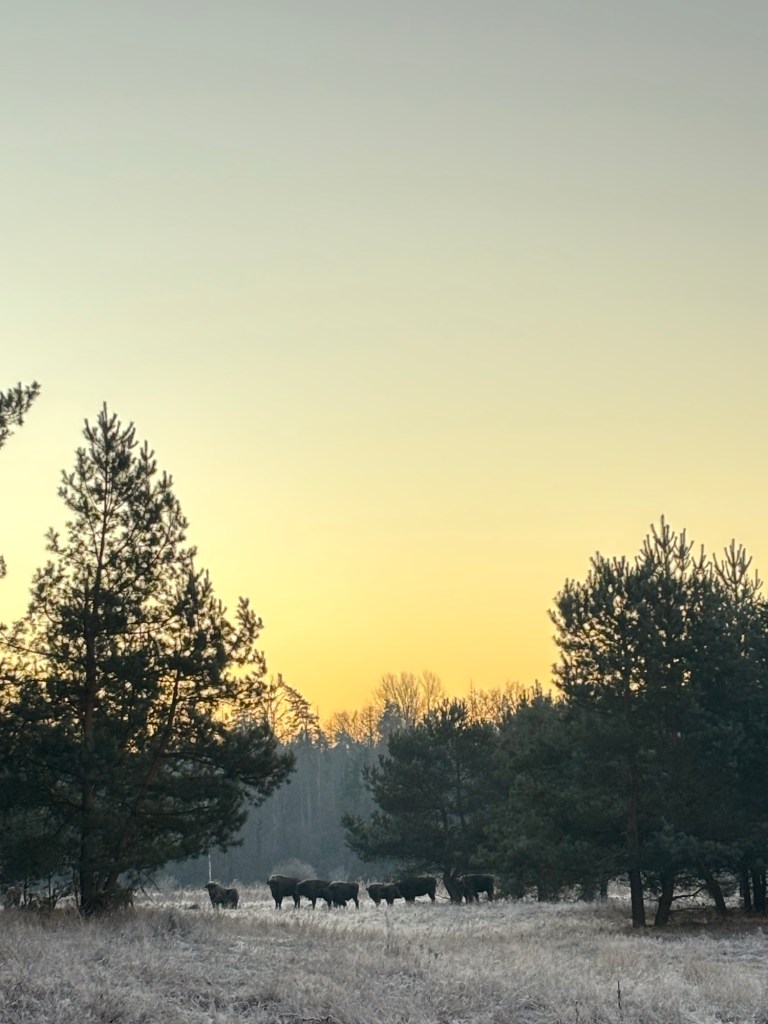
We must have set off shortly after 7am, about half an hour before sunrise. We had a couple of false starts – it turns out hay bales make very convincing bison half an hour before sunrise – but it didn’t take us long to track down a sizeable herd grazing in the fields.
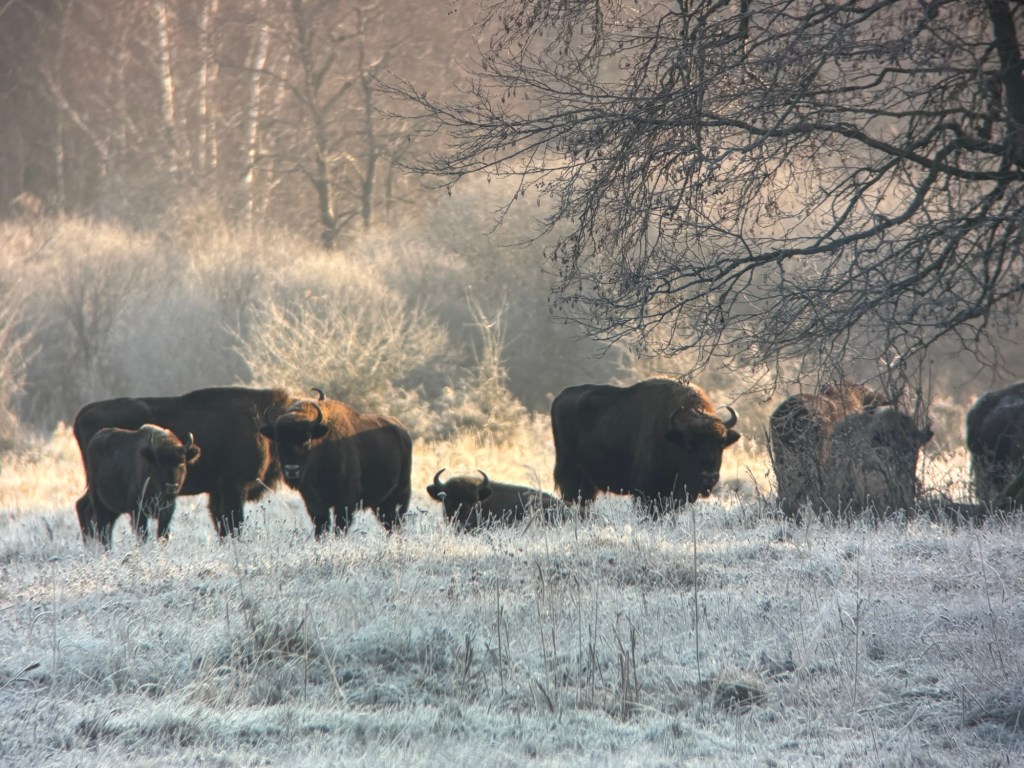
The European Bison, or wisent, is one of conservation’s greatest success stories. What was once a ubiquitous symbol of Pleistocene Europe had been driven to extinction in all three of its holdouts by the end of the first quarter of the 20th century. Though strictly protected on the hunting preserves of the Russian Tsars, their numbers were already dwindling during the Early Modern Period and the last wild bison was shot here in Białowoeza in 1921, shortly after marauding German soldiers during WW1 whittled the herds down to just a few surviving beasts. With so many bison in zoos and private menageries spread across Europe, however, an effort was conceived to bring the wisent back from extinction. From an initial breeding stock of twelve, the population gradually recovered over the second half of the last century. The wild population now stands at around 4,000 individuals, headquartered along the Poland-Belarus border, with reintroduction projects from Blean Woods in Kent to Castelo Branco in Portugal – a truly remarkable rescue operation.
Our guide, Łukasz, took us to a number of places where the bison often leave the forest to graze. It’s been a good year for acorns, so they aren’t venturing out into the open as much as usual, browsing instead on the bumper crop in the dark heart of the ancient forest. Perhaps that’s why we had no luck after leaving the first herd to try our luck elsewhere.
We did find a solitary elk sitting beside the road, half covered in frost, which was an amazing stroke of luck.
Łukasz made the call to return to the herd we’d seen at sunrise, so we parked at the last spot we’d seen them and ventured out across the frosty meadow in search of our quarry.
It wasn’t hard. The heaviest land animal in Europe isn’t exactly inconspicuous.
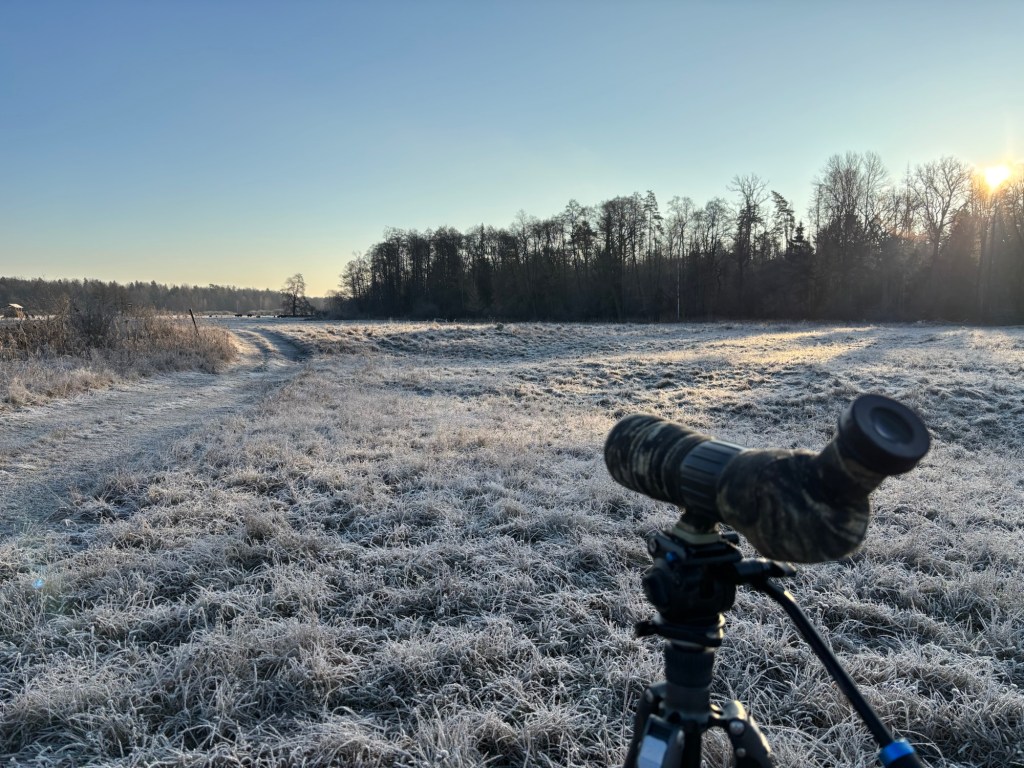
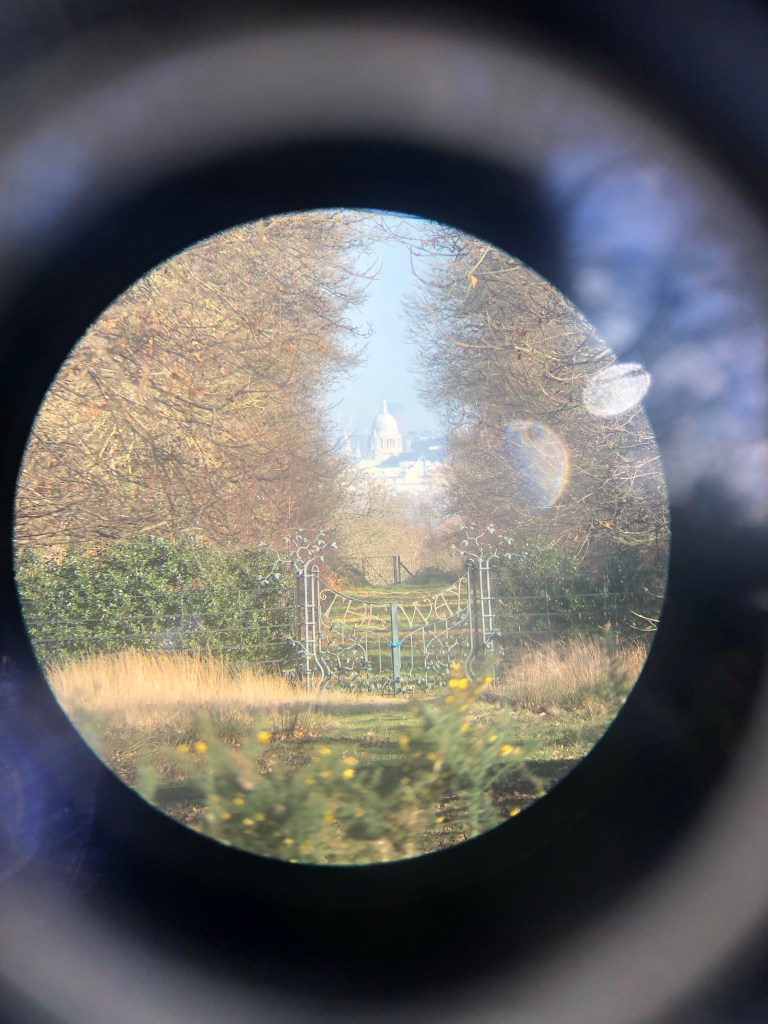
My camera didn’t really do the beasts justice – I don’t possess a supertelephoto lens like many amateur wildlife photographers – so I resorted to a little optical trickery by “digiscoping” – that is, holding my iPhone camera up to the viewfinder of Łukasz’ scope. It took some manoeuvring and I only got one usable shot, but the result was pretty good… for a phone.
Tomorrow, we set out in search of the reason I booked this holiday in the first place: wild wolves. I’m well aware the odds are stacked against us, and to be honest I’d settle for hearing them, or even just following their tracks, but it is set to snow tonight, so who knows – we may get lucky. Watch this space! BB x
They weren’t kidding about the cold here in Poland. It’s hasn’t snowed properly yet this year, but the full moon is just a few days away and it’s set to bring the first snow in its wake. An icy vanguard has already won the field. The grass in the car park was already crunchy underfoot after lunch, and when I could take my eyes off the stars on my way back to my room tonight, the wood panelling outside glittered like stardust.
I’ve come out here on an organised tour run by Wild Poland, a firm that I must have recalled from ads in the wildlife magazines I read as a kid. Łukasz, our guide, met me outside a Costa coffee shop in the arrivals lounge of Warsaw-Chopin Airport, together with the other three members of our group. It’s definitely what you’d call a private tour – but that’s not how it’s always been. “We barely survived COVID”, Łukasz explained. “Back then, we had a team of maybe thirty people. Now it’s just me and Tomasz. Brexit didn’t help. Before Brexit, maybe fifty perfect of our clients were British. Then they stopped coming. Not altogether, but not as many as before. Maybe they were worried about getting stuck over here.”
We stopped for lunch at a hotel-restaurant outside Wyszkow. The couple of British retirees provided some entertainment in their desperate search for a vegetarian option on the menu, while the third member of the expedition, a French wildlife photographer from Zürich, wasted no time in wolfing down a bowl of flaczki (beef tripe soup) followed by a rare steak topped with two fat king prawns.
Tour-hoppers are an interesting sort. I haven’t met people like these since I went gorilla trekking back in 2012. The Frenchman seems to travel the world for work, taking every opportunity he can to spend an extended weekend “shooting animals” – with one of his two cameras, of course, though before the ambiguity was cleared it was very amusing to see the momentary alarm in the faces of the retired couple when he said he was going to spend his Christmas in the south of France shooting flamingoes.
The retirees themselves seem to have spent their entire lives traveling. Iraq, Libya, India, Lake Baikal, Switzerland, Costa Rica, South Africa… it doesn’t sound like there’s a place they haven’t been. They seem to have done bloody well for themselves for a couple who left school at sixteen without mentioning work once during the day’s conversation, but perhaps belonging to the generation that inherited houses bought on the cheap in London has something to do with it. Their speech smacked of the Grand Tour. I couldn’t quite square the lady’s worldly, highly tolerant attitude with her strict vegetarianism, but I guess it takes all sorts.
It’s very quiet here in Narewka. The forest crowds in on all sides, dark and unforgiving. The lurid green Christmas decorations hanging from the lamp-posts, wrought in the shape of half-trees look rather ridiculous – a pathetic artificial import of the real thing, which stands mere feet away, as the myriad stars of the winter night sky glitter and gleam between the branches of the ancient forest. Art imitates nature and, as usual, fails to match its majesty.
Over dinner, Łukasz takes out his map and shows us the plan for the next few days. On a table behind, five men in heavy blue policja overalls play cards, sometimes coming and going, sometimes replaced by a new face, but always totalling five.
“They’re here to patrol the border,” our guide explains. “They will work through the night.” The Belarusian border is only ten kilometres away as the crow flies, slicing right through the heart of the forest. It’s been a natural crossing point for immigrants over the last few years, so the police presence here is fairly notable. I’ve seen more officers than locals.
It feels odd to be so close to the border and to hear it talked about as though it were the Iron Curtain resurgent. It feels only all the more odd with these two retired Brits talking about their carefree travels in the 1970s, before the wall came down, and all the other borders went up – before the world was gentrified.
Not for the first time, I wonder if I was cheated out of an adventure on the Greyhound buses by every American I ever met, purely because of an inherited terror incubated over decades of a world beyond the safety of their own property. Now that you can travel without fear of risk, why would you travel any other way? Adventure – from the Latin advenire – implies something unexpected, something about to happen. Something alien to a generation of tourists who only want the social clout of a shiny new Instagram photo or another country on their roster. And with more and more influencers joining their ranks every day, it’s only set to get worse.
The age of adventure didn’t stop when the last corner of the world was discovered. It ended when we sent a marketing team there.
I’ve avoided organised tours for so long because I have a deep mistrust of others managing my travels for me. I appreciate my freedom, and I prefer it to be absolute – to allow me to meet the real people and get to know the place properly. In this case, my Polish isn’t up to scratch, and I want to see a proper wildlife tracker at work.
I also really, really want to see a wild wolf. So fingers crossed for a lucky weekend! BB x
Back in April, I made a flying trip to Prague to spend a few days with my dear friends Andrew and Babette. I’d never been to the Czech Republic before, so I used the opportunity to see the sights: the statue of Jan Hus, the Jewish cemetery and the tomb of Rabbi Loew, creator of the legendary Golem of Prague. But I was in for an unexpected treat when Andrew took me to see an evening show of Moje Sibiř, a spatial composition centred around the spirit of Siberia. Over the space of 45 minutes and seven movements, Roman Zabelov and his troupe dimmed the lights and carried the audience away into the endless forests of the Siberian taiga by the power of music alone.
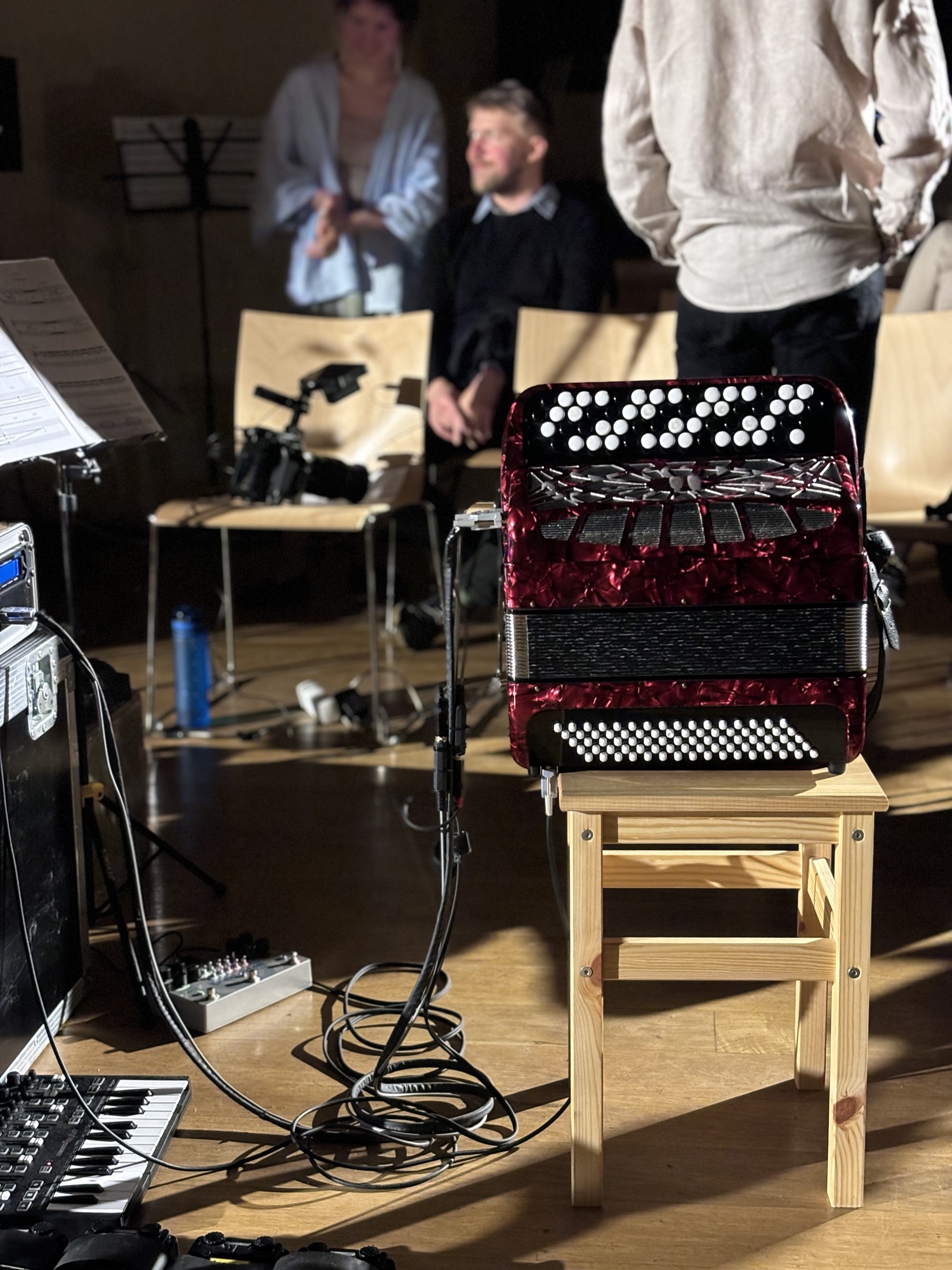
Roman led the suite with his voice and his accordion, conducting much of the composition with eyes closed tight in the manner of a shaman weaving some kind of ancient magic. Speaking of spellbinding, I have never seen an accordion played so creatively: it is obvious that Roman is a something of a frontiersman, combining unorthodox techniques with a quasi-mystical, body-and-soul engagement with his craft, like a Belarusian Pan of the Far East. Zabelov’s ensemble, stationed in various locations around the performance space, worked together to turn the hall into something far more intense than a simple performance space. Through a clever combination of ethereal singing, haunting vocals and long, whooshing breaths, it felt as though they were summoning the arctic wind itself into the room. I had to close my eyes for one of the movements and let it carry me away.
The setting might have been showstopping in its own right, with seating arranged beneath the myriad paintings of the Baroque Refectory of the Dominican Cathedral of St. Giles, but a combination of technical wizardry and clever vocal choreography transformed the gallery into an illusory space: shadows seemed to leap from the paintings and follow the echoes around the room, while the heavens above rippled beneath the rusty iron waters of a tundra pool. I might as well have been holding the heart of the taiga in my hands.
Whether or not it was Roman’s intention, I have been spellbound by the idea of Siberia ever since. I suppose it’s the instigator behind my current fascination with the Amur region and its tigers. If it weren’t for the fact that any and all possibilities of traveling out there are off the table because of the current tension between Russia and the West, I might well have been looking into making my own way out there. It’s amazing what a little musical hypnotic suggestion can do. BB x
There are places that whisper and shout. There are places we return to and that we look for all our lives. These places are both real and imaginary, but that doesn’t detract from their reality. Such is My Siberia. Roman Zabelov
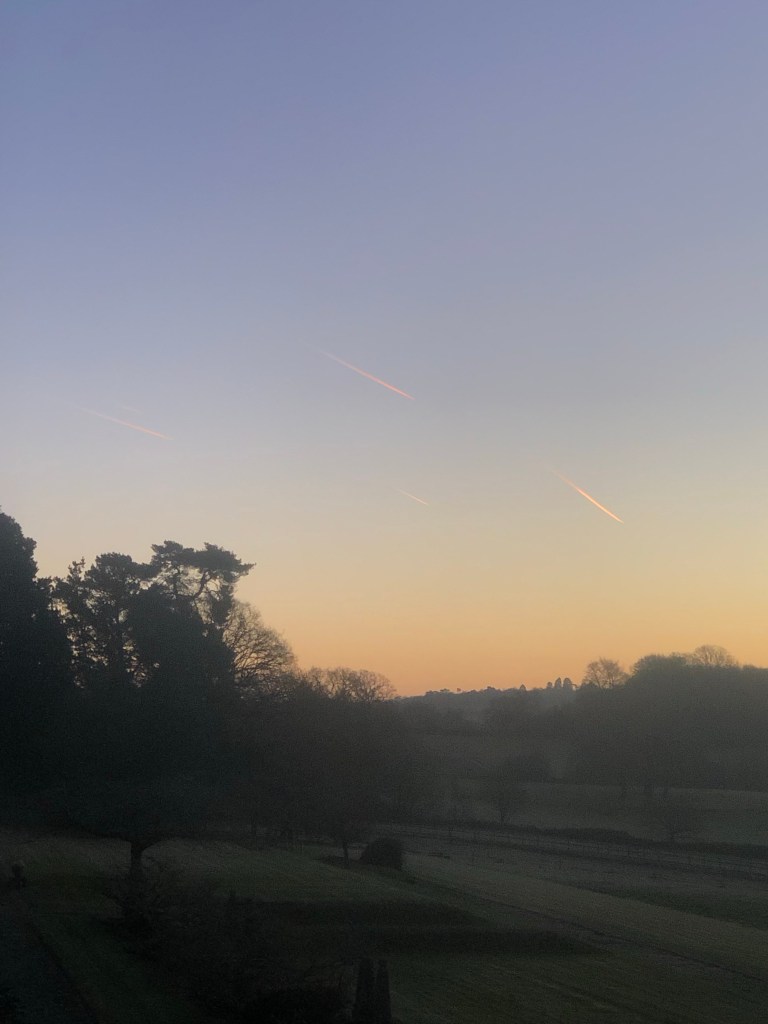
Winter is on the retreat. It began on Tuesday, when I heard a dunnock singing from the top of one of the trees by the church. A tiny foot soldier, the herald of the advance guard that has set up camp at the edge of the Weald, singing his heart out in defiance of the lingering cold. The dawn chorus grows in strength by the day. It woke me before my alarm did yesterday. There are still a few redwings about, but it’s been a long time now since I heard the cackle of a fieldfare, and the evenings are getting lighter. Spring is still a little way off, but it is finally on its way.
I’ve been a lot more mobile these last few months. No, it’s not because I finally have a set of wheels – I don’t, and that is still very much a work in progress – but all the same, it has meant I have spent even more time in the Weald than ever before. While my head and my heart have been busy elsewhere, my eyes and ears have not taken a day off. The shifting seasons and the changes they bring have always been a major source of happiness for me, and there have been so many things to see on my weekly commutes that I’ve been pretty spoilt for choice.
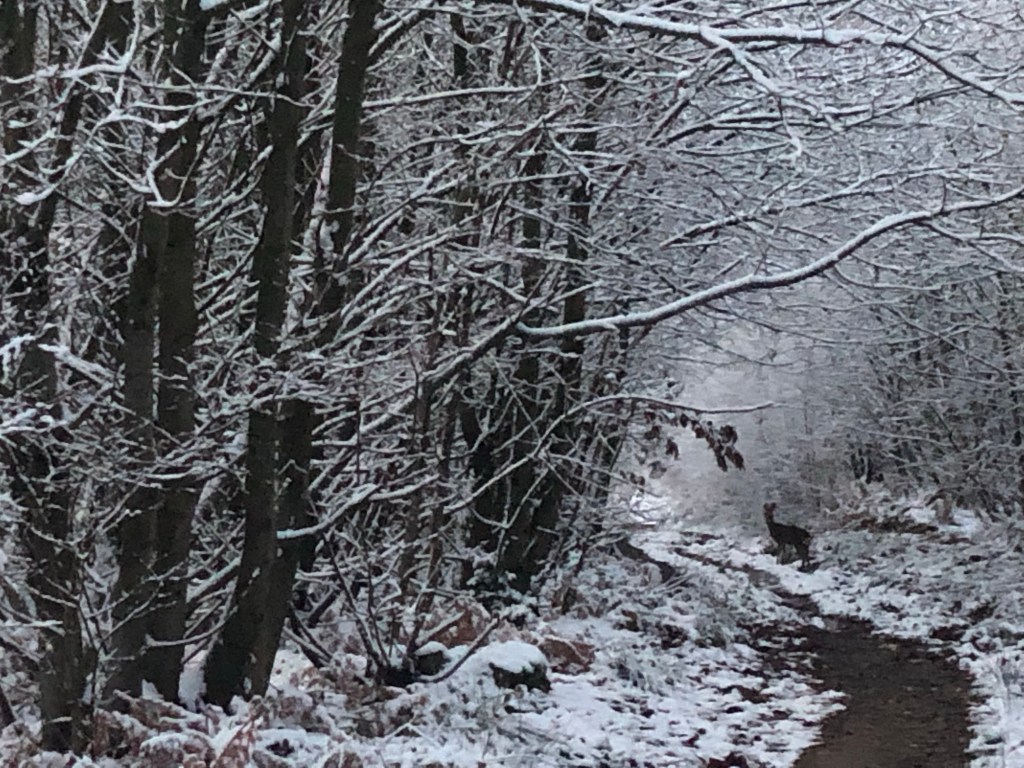
More than a couple of times, I’ve looked over my shoulder to see a roe buck staring back at me. I almost walked right past a couple on my way into town yesterday, and they stood their ground even when I stopped to stare right back. They’re easy to miss at this time of year, blending seamlessly into the starving ferns and leaf-litter, and I might well have missed them more than I’ve seen them. The only obvious sign you get is when they dash off into the woods, their tails flashing white like a signal behind them. When the snow came down in December, they were only too easy to spot. I very nearly missed my train into London because I stopped to let a small herd cross the path into the woods beyond, watching them until they disappeared into the gloom. It wouldn’t be the first time.
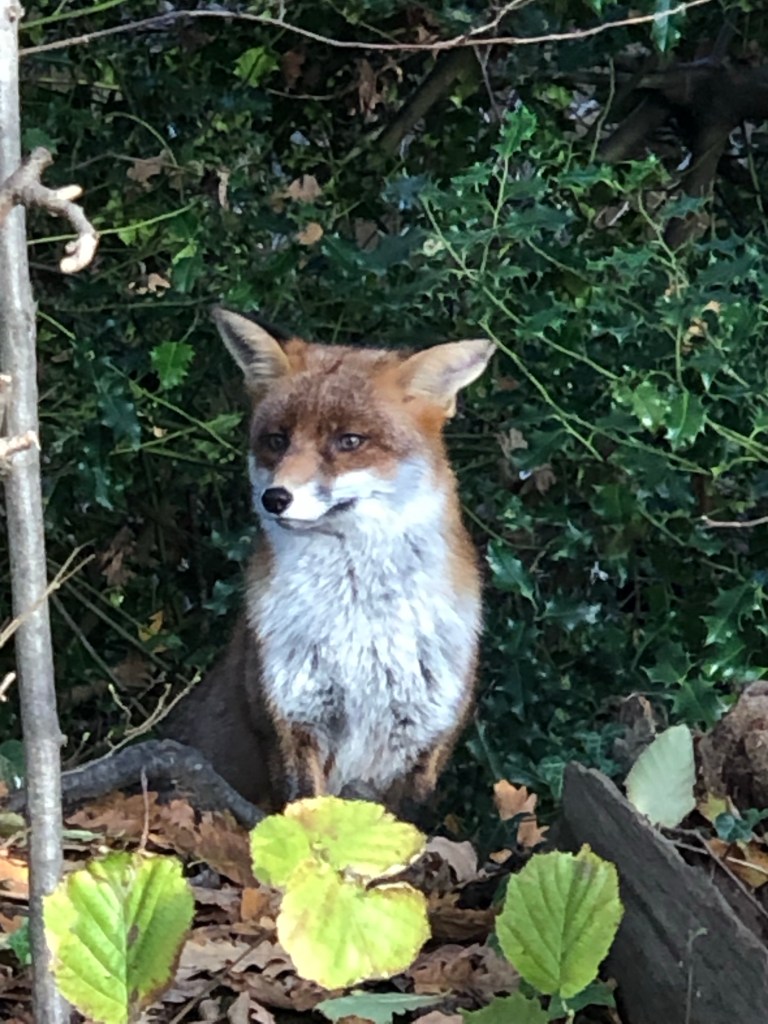
During a cold snap like the one we had before Christmas, it isn’t uncommon to see foxes out and about during the day, since the going gets tough for pretty much everything that lives in the forest. Last weekend I saw one curled up asleep in the open beside the Gatwick stream, one eye open and trained on me as I wandered by. Not too many weeks before, I had a close encounter with a younger tod on the edge of town, which was either so accustomed to people passing by or too hungry to care that I was sitting only a few metres away. Plenty of folk passed by without so much as a sideways glance, which is understandable, I suppose – foxes aren’t universally popular for a number of reasons – but the country boy in me can’t help but stop, and look, and listen. Whether or not they’re virus vectors or poultry pilferers, foxes are undeniably beautiful creatures when you get the chance to have a good look at them.
Then there’s all the voices of the Weald. Snatches of conversations in languages at once familiar and unfamiliar. The croak of the ravens that nest somewhere in the forest. The harsh cry of a hulking grey heron as it soars above the trees. The thin rattling wheeze of a wren, and the answering snare drum of a woodpecker. It’s all I can do to keep my head facing forward on my way to and from lessons at work, lest I make my love for these things painfully obvious. In a very real sense, I’ve been playing the same game since I was a schoolboy. That makes it twice as fun, I guess.
Boy, but it feels good to be writing again. I’m out of practice. I’ll report back when I have something to report. BB x
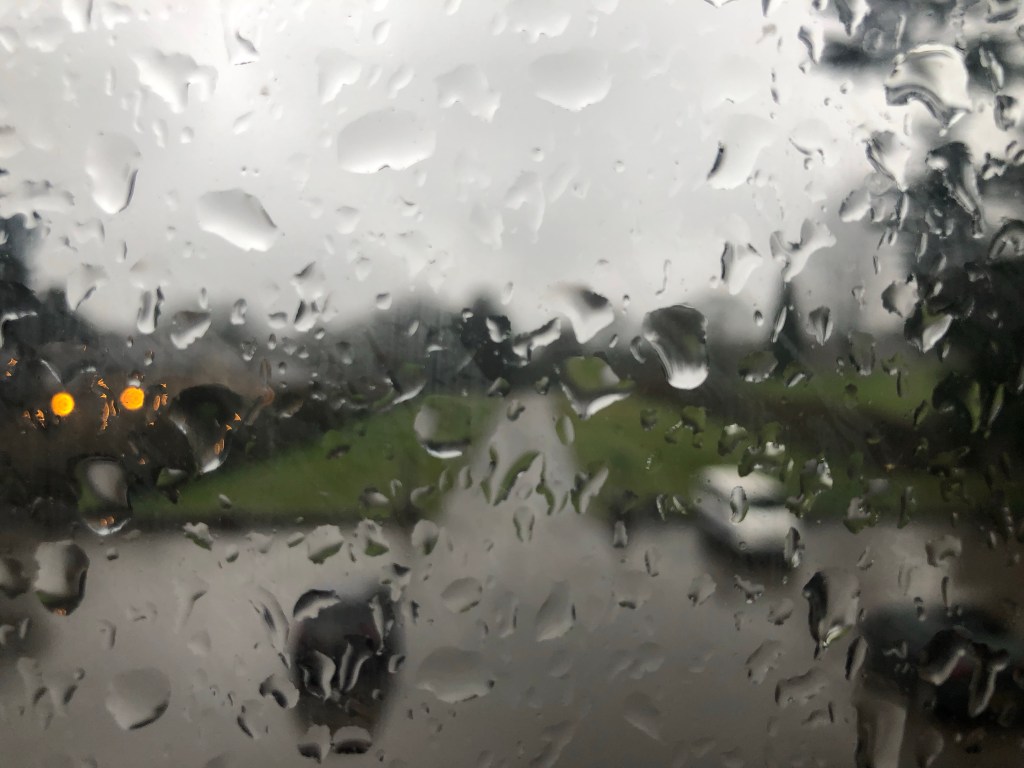
Today’s the last day of the February half term. Storm Eunice is on her way out, but she’s dragging her talons behind her. I’m cooped up with a blanket and a mug of Ovaltine in my study, looking out at the grey world beyond. Cars parked at angles. Wet tarmac mirroring the featureless sky. Winds of over fifty miles per hour howl across the grounds. One of the windows in my flat is permanently ajar due to some fault with its ancient locking mechanism, and the banshee wails moaning through the corridor sound like the Ice Cavern from Ocarina of Time (nostalgia trip here). Between the raging wind and the rattling tattoo of the flagpole two floors up, I might as well be at sea.
I came home from visiting my parents last night to find the whole site in darkness. From what I’ve seen and heard, Eunice had been busy while I was away, tearing her way along the coast like a hurricane and leaving great swathes of the south without power. It took me at least a minute or two scrolling through the UK Power Network website to find my postcode amidst the many hundreds reporting a power outage. After the fair number of power cuts we had last year, you would have thought I would have been prepared, but for the life of me I couldn’t find any of the candles I’d stockpiled over the years. I think my previous housemate used them all up for beer bottle decoration. Fortunately, some foresight – or hindsight – on my part led me to a hidden cache of hand-torches in a chest of drawers. The bulb had gone in the smaller one, but the other, though flickering as a match-flame, gave just about enough light to read by.
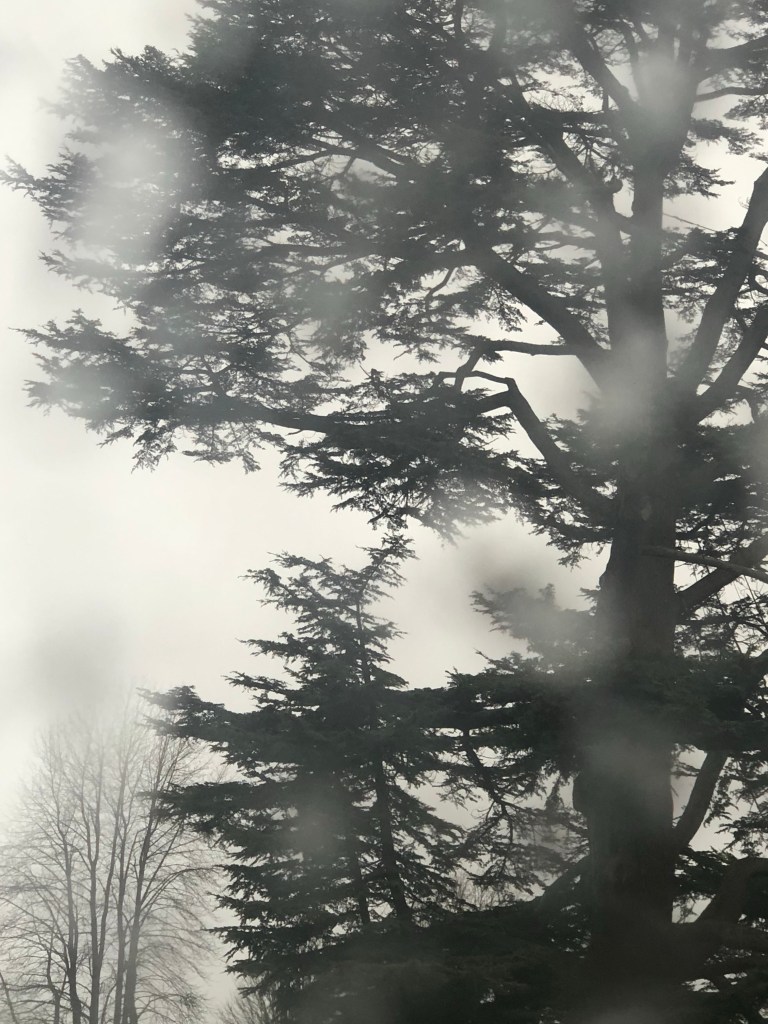
I half expected to come home to find the silhouette of the great Atlas cedar missing from the skyline, its mighty body bent and broken upon the drive like a fallen giant. Fortunately its roots go deep, like the mountains upon which its kin grow far away to the south, and there is strength in the old man still.
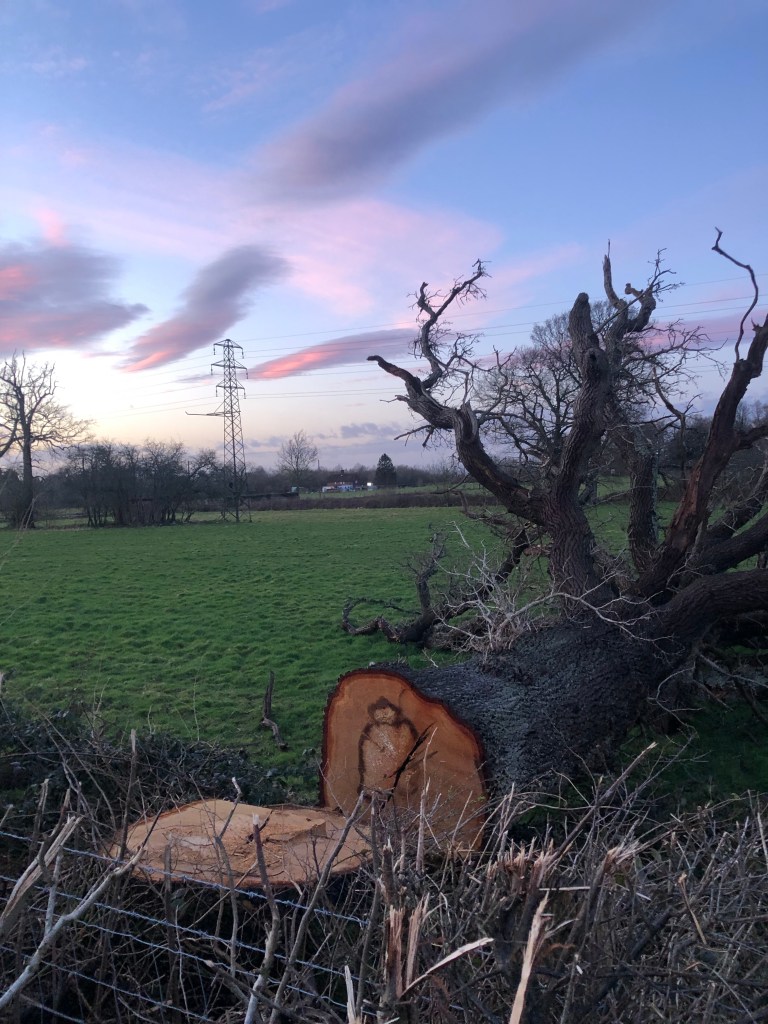
The same cannot be said of many of the free-standing trees that line the road into town. I promised myself I’d get a taxi home for the sake of my new trainers, but as usual, I went back on that promise, only this time it was not out of stinginess but a genuine curiosity to see the wreckage of the storm that I had only glimpsed from the train. Crawley wasn’t given a lashing quite like Brighton and Hove, but it had its fair share of casualties, scattered and trimmed across roads and gardens. The damage was less obvious deeper into the woods beyond. There is safety in numbers, it seems, even for trees: much of the forest was untouched by the storm. It was seriously muddy underfoot, though, and I spent a good ten minutes cleaning my trainers by torchlight once I’d made it home.
It seems unoriginal – not to mention extremely British – to go on so about the weather, but I feel as a writer there is nothing more important than taking the time to talk about the world around you every so often. It’s our duty to tell stories of the world as we see it, so that others who come after us can learn from us somehow. One of the books I actually read cover-to-cover last year, Nature’s Mutiny, pieces together the world of the Little Ice Age through diaries, sermons, letters, hymns and poems penned by those who saw it with their own eyes. Back then there was still a great fear of God tangled up in the awesome power of the weather, and a hundred years of savage winters had led a lot of Europeans to the natural conclusion that sin was to blame. Some resorted to witchcraft; some resorted to witch-burning. Others, of a more temperate nature, put their thoughts into verse:
In constant rancour we abide / and war is ruling far and wide
Envy and hatred everywhere / in all estates discord and fear
That too, is why the elements / reach out against us with their hands
Fear coming from the depth and sea / fear from the very air on high
In morning is the source of joy / the sun no longer sends bright rays
The clouds are raining like a fount / the tears too plentiful to count.
Paul Gerhard Translated by Philipp Blom (Nature’s Mutiny, 2019)
I wonder how many modern lyricists sing about the weather? Back in 2007, when the UK was plunged into its wettest summer since records began, Rihanna’s perfectly-timed Umbrella became a best-seller. There were even joking accusations on the internet that the singer was responsible for the unseasonal weather across the pond…
Now that it’s raining more than ever
Know that we’ll still have each other
You can stand under my umbrella
You can stand under my umbrella, ella, ella, eh, eh, eh
Rihanna (“Umbrella“)
Of course, Rihanna wasn’t thinking about the British summer yet to come when she wrote those lines, but four hundred years ago they might have burned her for a witch for such impeccably bad timing. Come to think of it, though, I do distinctly remember her name being on the list handed to me by the Prefect Witchfinder General at a school I worked at in Uganda, some five years later. Apparently the school’s witch-hunting guild had found a website listing known witches in the Western world? If they’d stumbled upon one of the various forums discussing the timing of Umbrella, perhaps it’s not an unprecedented conclusion. If I remember correctly, Wayne Rooney’s name was also on that list. The internet is a strange place.
Speaking of the internet, I decided to bite the bullet and give the online dating scene a whirl. Living and working in a boarding school doesn’t exactly facilitate an open line of communication with the outside world, so rather than sitting on the fence I thought I’d chase some stories for a change. After a brief browse it looks as though Bumble is the kindest of the Golden Triangle (with Hinge and Tinder), not least of all because it’s the most self-aware of the damage the online dating scene can do to the mental health of its users. It’s good to see that in an undeniably superficial meat market, some of the folks up top are aware of the dangers and offer support.
It’s almost certainly a silly idea, living as far from the city as I do, but, who’s to know? Shy bairns get nowt once again. If I had a penny for every variation of that phrase I’ve heard throughout my life, I might just have a pound. BB x
The students have gone home for half term. Silence hangs over the school. The corridors of the boarding house are dark, and a little cold, too. The floorboards creak under my foot with the kind of volume that only darkness can amplify. The dull glow from the torch on my phone casts long shadows. A friend of mine once explored an abandoned hospital on a dare. I did not go with him then, out of some primordial fear of the darkness within. And yet, here I am, haunting the empty corridors of this old house by night, the last man standing. Filling up a water bottle from the cooler on the Year 10 corridor becomes a quest in its own right.
I’ve had a lot of time to think lately. I guess coming out of a long term relationship will do that for you. One of the things I thought I might be able to recover was the fierce reading streak I had on my year abroad, but I just can’t find my mojo for that right now. Time just seems to slip through my fingers when I’m not at work. I wonder what the world does when it’s not working? I guess that’s what television is for, or Netflix, or whatever streaming service is in right now. But then, I’ve never been good at sitting down to movies or TV shows. My brain wants to be involved. There’s a precious few I’d happily watch over and over and over again, but it’s rare that I find a new picture out there that sinks in.
There’s not a day goes by where I don’t feel a genuine fulfilment in my line of work. Teaching is in my blood, a duty that my ancestors have carried out for generations. Knowing that I am the torch-bearer for my generation gives me a sense of purpose that is utterly unshakeable. And it’s not as though that purpose hasn’t been tested over the years. It’s just that, whenever something comes up to shake its fist in my direction, I know instinctively that there’s a greater mission behind it all, and that’s reason enough to persevere – even when my core beliefs are thrown into disarray. I wonder if my great-grandparents, Mateo and Mercedes, ever had such doubts?
There’s a little owl calling outside. It’s been piping away from the upper branches of the Atlas cedar in the drive for half an hour now. The foxes have been quiet for a week or so now. I suppose their noisy January antics in the front quad are over for the year. Three buzzards were soaring over the grounds the other day during morning break, but none of the students seemed to notice. The redwings and the fieldfares have moved on and the snowdrops are out. The daffodils will be on their heels soon enough. I escaped to Richmond Park a few weekends back, just as the first blooms were sprouting. It was good to see the wide world again, even if only through my own eyes.
The meltwater of the long Covid winter is starting to run. Just like the birdsong and the subtle shift in the light over the last couple of days, change is in the air. Piece by piece, the last fragments of the old world are coming back. At the request of one of my students, I blew the dust off my long-neglected violin and rocked up to orchestra this week. I’m about as good on the thing as I ever was – that is, haphazard at best – but I’d forgotten how much fun it used to be. It’s one of those things that simply slipped through my fingers over the last couple of years.
I think I’ll take up the guitar this half term. A zealous diet of sevillanas have powered me through the darkness of the winter months this year, and I’m done with being able to sing along but never sing alone. At the very least it will give me something to do until my provisional arrives and I finally confront the long-delayed challenge of learning to drive, which I have put off for far too long.
I’m done with playing games. It’s high time I went on another adventure. The Easter holidays aren’t far off, and I could do with some more writing fuel. And spring is always such a hopeful time of year. BB x








 The Book of Barnabas