Slow Travel: The Highs and Lows of Amtrak

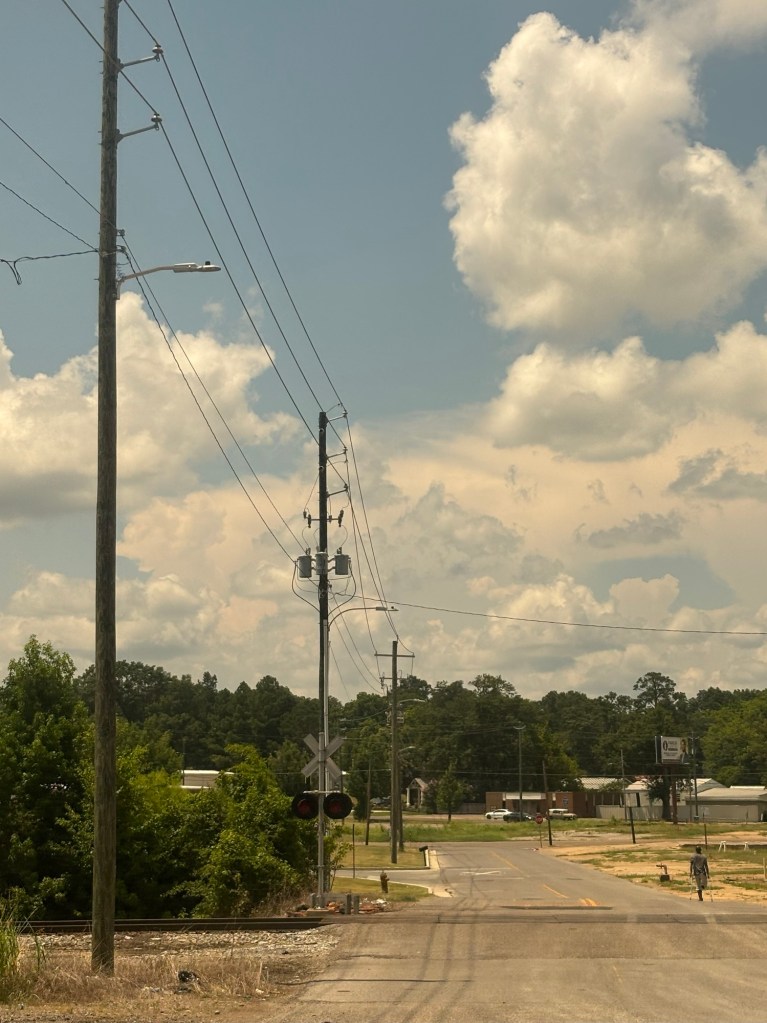
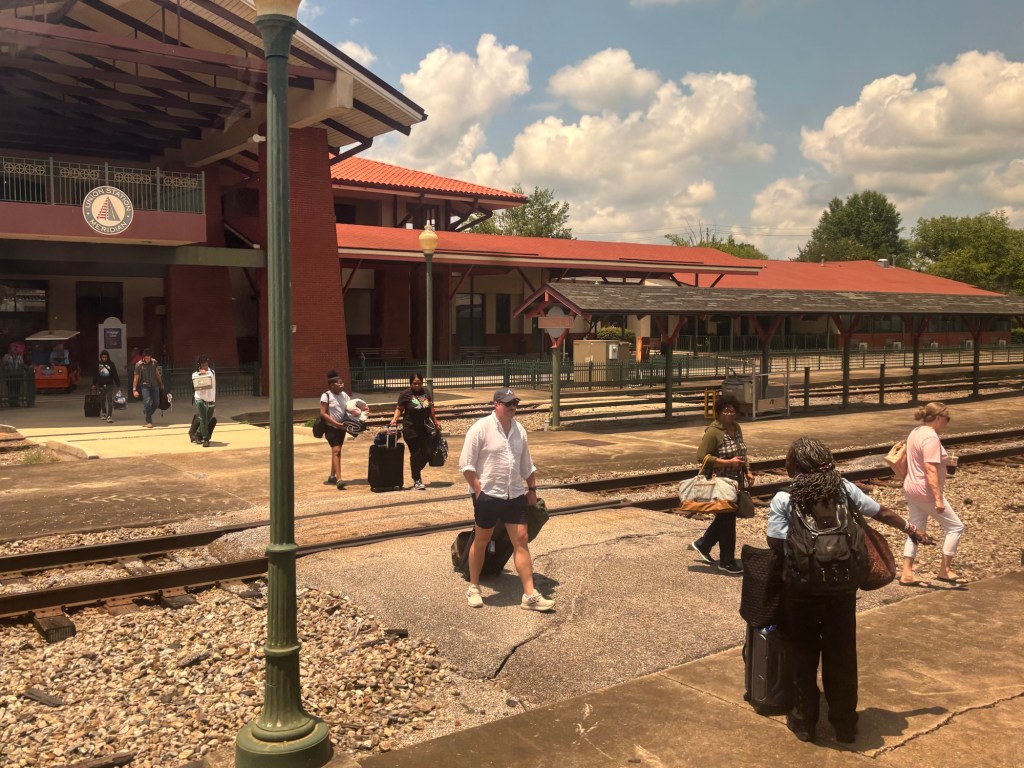
It’s 17.09, it’s been over nine hours since I last ate something and I’m somewhere in the Alabama woods between Tuscaloosa and Birmingham. If we were running to schedule, I’d be arriving in Birmingham in the next few minutes. But, as every American has gone to great pains to explain, the trains in the US never run on schedule. If you’re not in any particular hurry, it’s a phenomenal way to see the States, provided you’re happy to gawp at trees for most of the journey. Lucky for me, I’m easily pleased, and it’s been all I can do to peel my eyes from the window for the last eight hours or so.


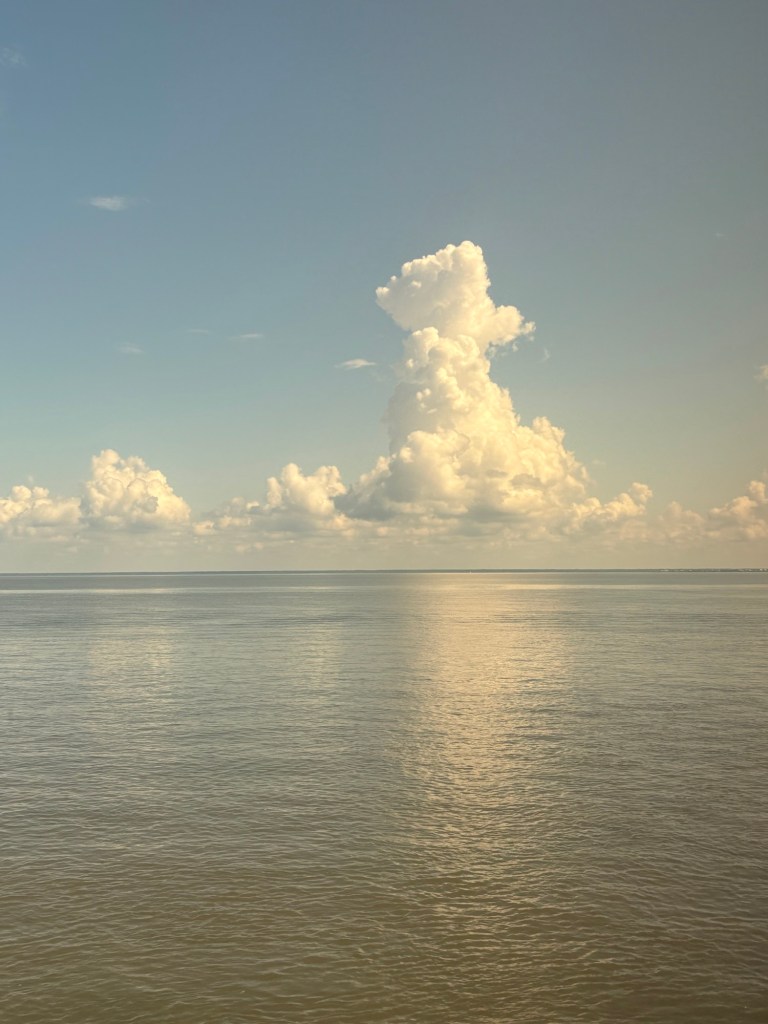
The American South reminds me in many ways of Uganda. There’s something familiar about the immensity of the sky, the redness of the earth, the rusting abandoned vehicles and – especially – the enormous homemade painted advertising on homes, cafés and storefronts. The most American thing I’ve seen so far – beside the lone bald eagle standing on the banks of Lake Pontchartrain – are the countless colourful billboards advertising private law firms, demanding your attention with Colgate smiles in nauseatingly familiar language: Bart’s always got your back, Call ya girl Desi, IYKYK, that sort of thing.


Let’s forget any time pressure for a moment. Riding an Amtrak train is actually a really comfortable experience, and I’m surprised it isn’t more popular. There are charging stations for every seat, curtains for the windows, sturdy WiFi and a cheery Southern burr over the tannoy to replace the cold, automated replay of British trains. I’ve even got enough leg room to stretch my legs, and that’s taking into account the fact that the guy in the seat in front has put his chair back into full recline. I haven’t seen as much wildlife as I’d have liked over the course of my vigil, but I’ve still managed to clock a few deer, a whole lot of egrets and a few birds of prey, including the symbol of America itself. That’s not too shabby for a bit of on-board birdwatching.

To be honest, the only thing I’d change is the seat numbering, which is baffling – and very obviously a new concept, as even the ticket inspectors seemed to get muddled up by the numbers (which don’t really correspond to any of the seats at all). Folk don’t seem to mind, though. I think most of the passengers here have simply found an empty seat and made themselves comfortable, and all of them are quite happy to shuffle as and when a couple or family comes aboard. That’s one major difference to European trains. I was traveling in Germany once and still remember an officious German lady who made the entire coach get up and scramble because there was somebody in her seat and she absolutely had to sit in the seat she had been assigned. The human soul: the price of efficiency.


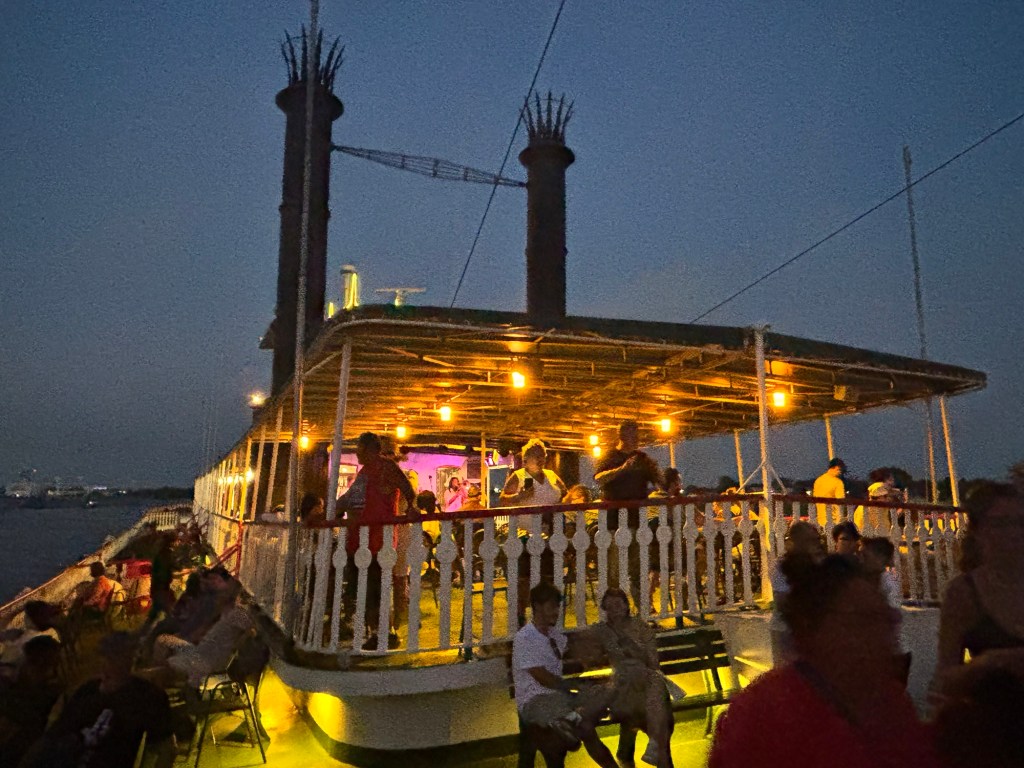
I ended my stay in New Orleans with a jazz fest, seeing a local band in Preservation Hall and then taking the Natchez steamboat cruise down the Mississippi with its attendant Dixieland band providing a jaunty backdrop. If it’s done one good thing for me, New Orleans has reminded me that there is hope for those of us who still believe in music bringing the world together. The Preservation Hall jazz band ticked more diversity-and-inclusion boxes than a school website: the trombonist was black, the saxophonist Latino, the pianist Scandinavian, the double bassist Japanese and the lead trumpeter Creole. I hate to admit it, but I’m still bleeding a little over the way my Gospel Choir was torn apart years ago. Maybe I always will be. That’s partly why I’m here in the States, in this limbo between jobs, between worlds: to try to put a seal on that episode of my life, and to remind myself that there are plenty of people out there who don’t see things that way. And where better than America, the great Melting Pot itself?


I’d better stop writing – it looks like we’ll be arriving soon. In the end, we’re only 50 minutes behind schedule. It’s funny how little that seems to matter! In the UK, there’d be apologies over the tannoy and prompts to get a refund via the website…

Alright America. I’ll admit it. Just this once, you have us beat on heart. BB x

Gators, Gumbo and Vanishing Cabinets

Alright, so the primary reason for my trip to the States is to soak up the music out here. Yes, I’m perfectly aware that I could have saved a little and gone to Glastonbury, but frankly the idea of camping out in a field with thousands of party-goers sounds like Hell on Earth to me. I’m quite happy chasing a more traditional, more intimate range of older styles out here in the States. That’s why I’ve shelled out on a couple of jazz-themed events this afternoon. But before that, there’s one other major reason I decided to kick off my American adventure in Louisiana. The Bayou.


I’ve got a thing for swamps. I spent weeks of my childhood clomping around the misty reedbeds of Stodmarsh in search of bitterns and marsh harriers, while anybody else my age with half a brain was honing their social skills at the park or on the pitch. The Easter holidays required a ritual voyage to Doñana National Park, the ‘Mother of the Marshes’, which became something of a Mecca of mine. So to come to Louisiana and not pay a visit to the Bayou would be foolishness in the extreme.

Of course, it isn’t all that easy to get into the Bayou proper without a boat, or a car for that matter. Fortunately there are a lot of offers on the table to take you out of New Orleans and into the swamps. I threw in my lot with Cajun Encounters – it looked to be far and away the best one going.

The bus picked me up from outside the hotel shortly after eight, giving me plenty of time to wolf down breakfast. The driver, though not a tour guide himself, did a brilliant job pointing out the sights as he took us through the residential districts of New Orleans and out into the wilds of Slidell. The devastation of Hurricane Katrina is remarkably apparent, even twenty years on: together with the hulking wrecks of houses and ships, the skeleton of New Orleans’ only amusement park can still be seen arching above the trees, while the bizarre Fisherman’s Castle on the edge of Lake Pontchartrain remains the only building to have survived the floodwaters intact.

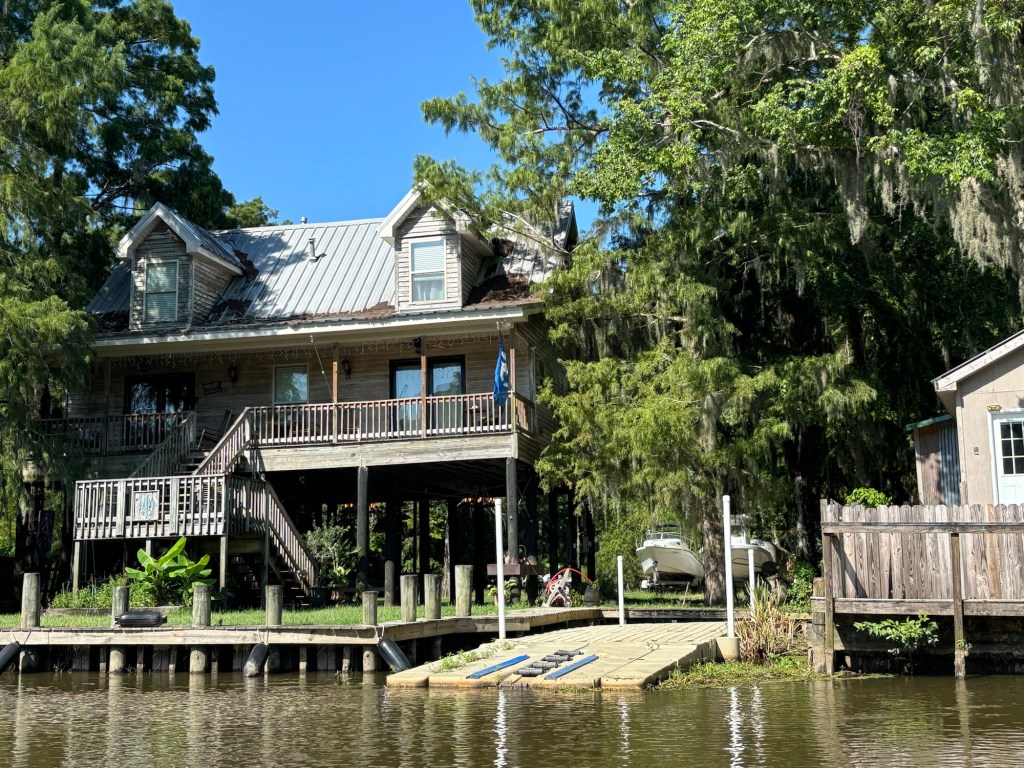
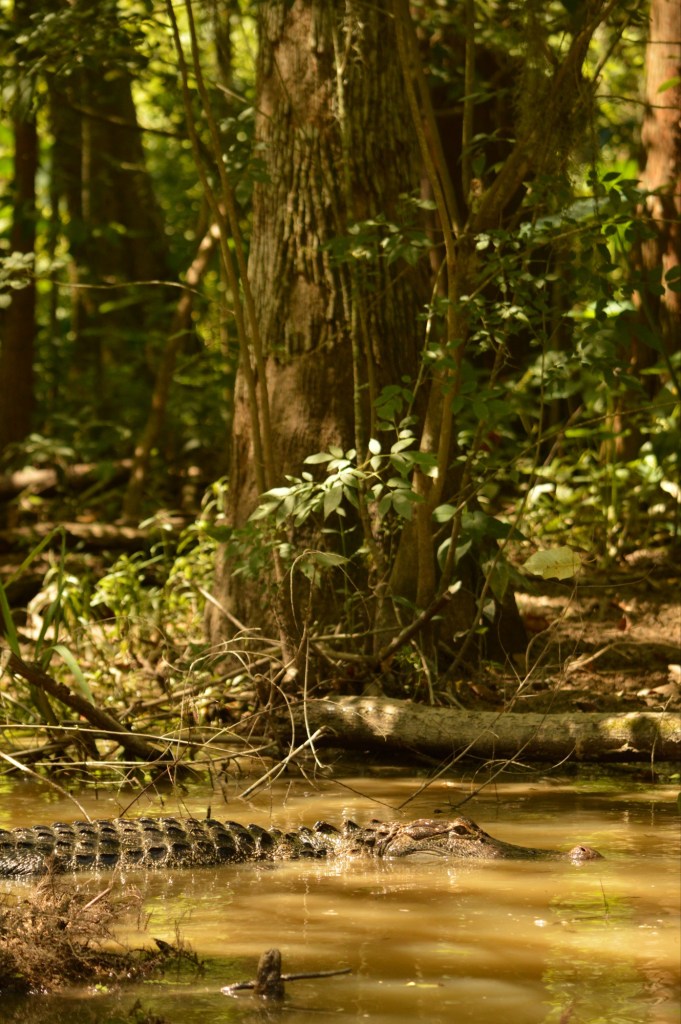
The tour begins beyond sleepy Slidell on the bank of an inlet of the Pearl River, where the swamp-folk came pearl fishing many years ago. The six of us in my boat were assigned the formidable Captain Zander, a former warehouse packer and a true Cajun to boot. To say we drew the winning ticket would be an understatement. As well as being a no-nonsense authority on the Bayou, he seems to know just about everybody out on the Pearl River – including Cindy, one of the biggest gators in the swamp.


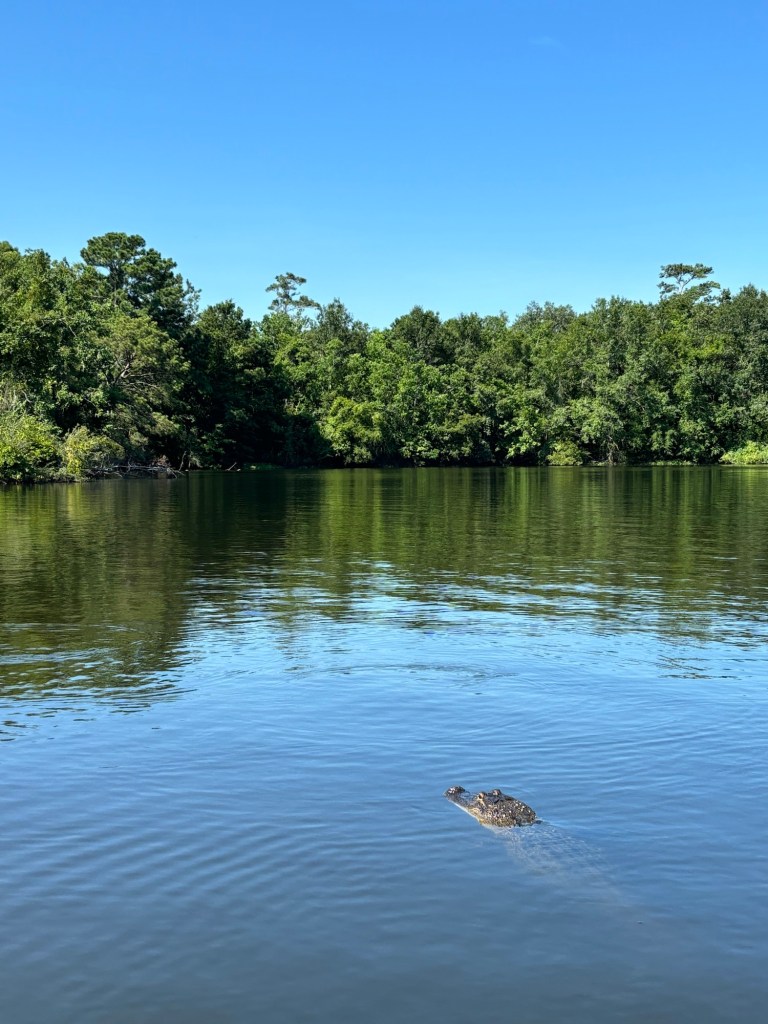
You’d be surprised how quickly you get used to the presence of the alligators. I must have counted around forty by the end of the outing, from amber-skinned yearlings to hulking, black-scuted beasts, visible only by the unmistakeable silhouette of their snouts just above the water. Before you know it, you feel as though they’re just part of the scenery!


When I was a kid I had a picture book that listed the American Alligator as endangered – which is true, as back in the 90s it was facing the very real danger of extirpation. Since then, however, the environmentalists have stepped in to throw the spirit of the Bayou a lifeline, and they have returned in force: more than a million can now be found in the Louisiana swamps alone.


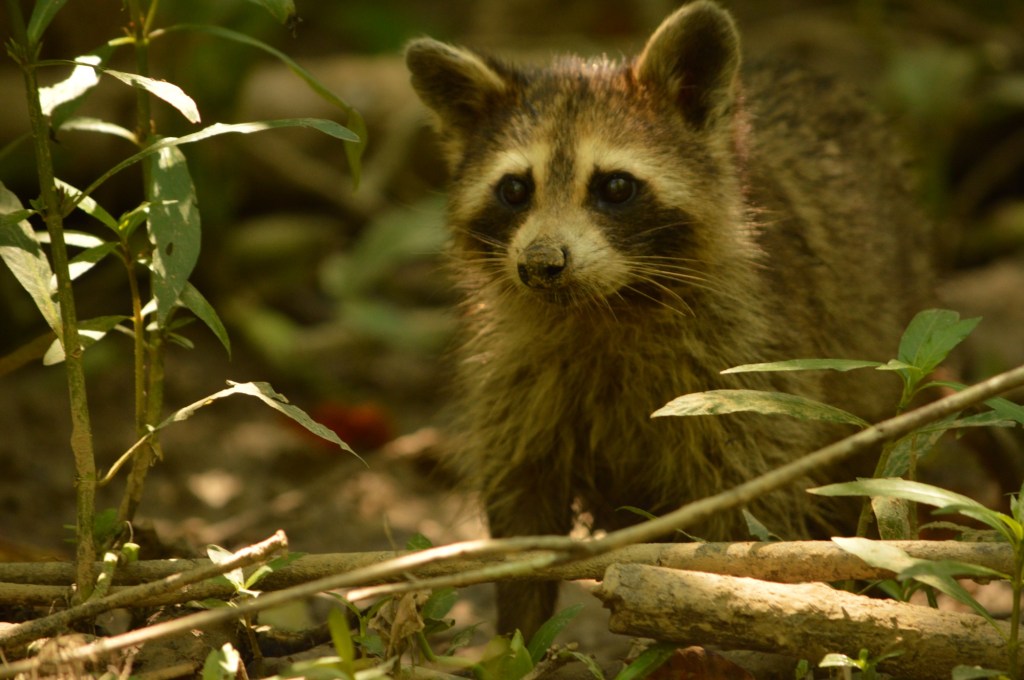
Summer is one of the best times to see Louisiana’s gators, but the heavy foliage can make it harder to see the other denizens of the Bayou. All the same, over two hours I clocked wood ducks, whistling ducks, a pair of high-flying anhingas, several ospreys, green, yellow-crowned and black-crowned night herons, roseate spoonbills, cattle and great egrets, a single great blue heron and, in one of the deeper inlets of the Pearl River, a family of raccoons – a real American experience!

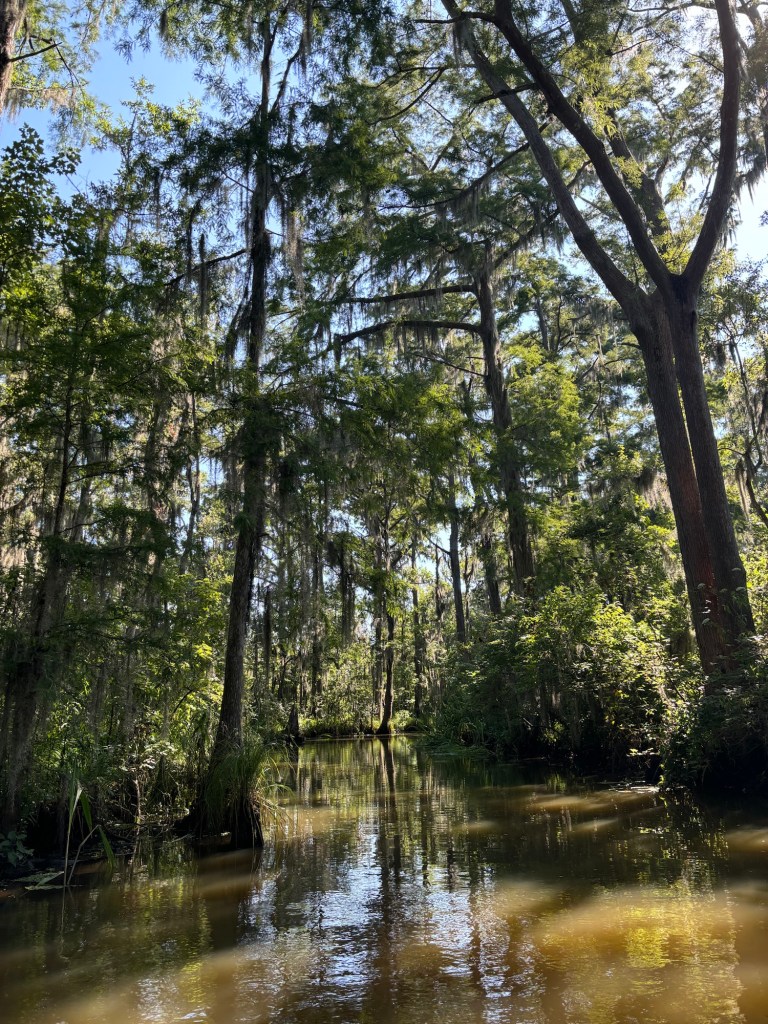
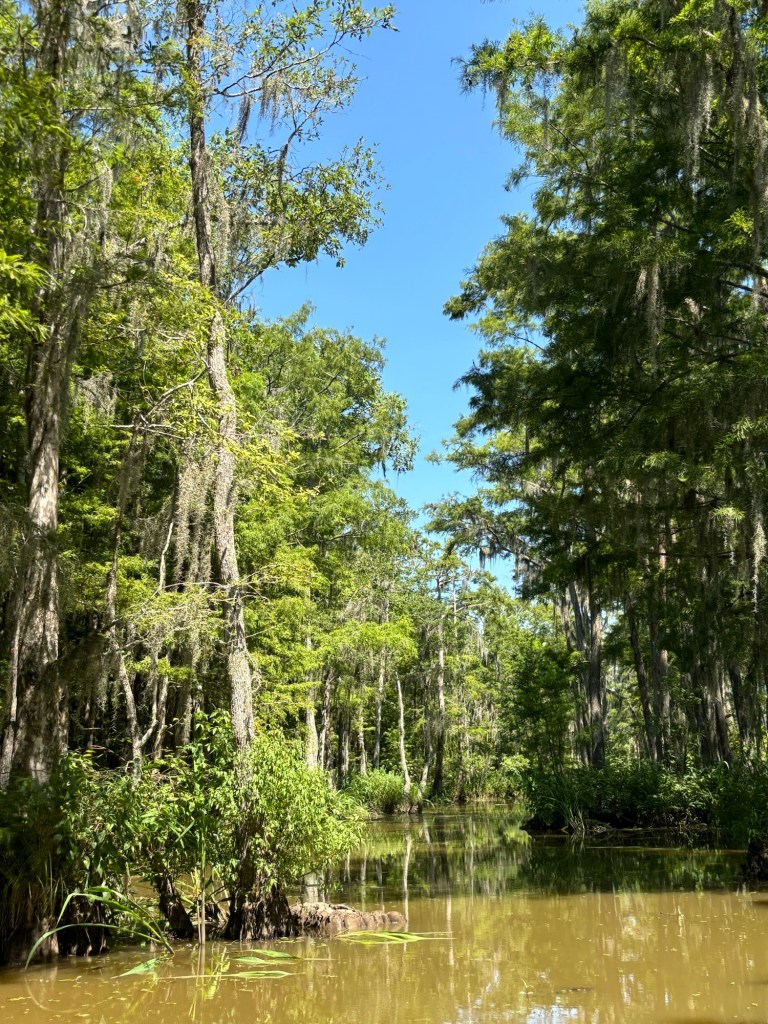
It really was quite something to drift along the snaking rivulets that cut through the Bayou, shielded from the merciless Southern Sun by the trailing beards of Spanish moss hanging from the cypress trees – named neither for their origin or their species (being neither Spanish nor a type of moss) but for their resemblance to the long grey beards of the first Spanish explorers to pass through these swamps hundreds of years ago. I wonder if Cabeza de Vaca and his brave company passed through here on their odyssey?


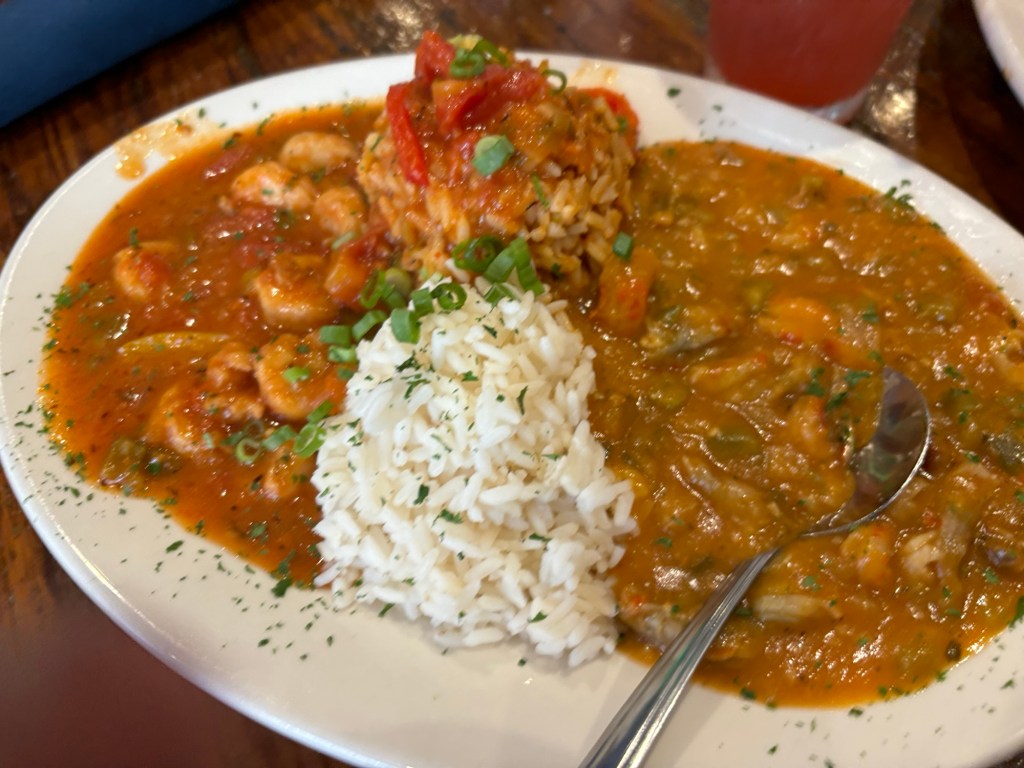
Back in New Orleans, I grabbed some lunch at Mr Ed’s Oyster Bar, following a tip-off from my Uber driver. It’s easy to shell out on your first meal in another country when you don’t know how things work, and I ended up with a starter that could have fed three as well as a main and a drink – before factoring in the inevitable 20% tip expected in the States and, of course, the inescapable taxes. That said, one cannot come to New Orleans and not try the food, and I have to admit the crawfish étouffée has shot up into the top ten foods I’ve ever tried. It was absolutely sensational. Didn’t feel brave enough for the oysters just yet, but maybe next time!

When I came back to the hostel, it was to find that Room 302 was being taken in hand: three Mexican labourers were hard at work uninstalling the ceiling tiles to address the leaking air-con unit, which meant I had to linger in the lobby until they were finished.

I had the shock of my life after they left, when I returned to the room to find my locker open and all the contents removed, with the exception of two shot glasses from Prague (a gift for a friend). Clothes, camera, the cash my students gave me as a leaving gift – all gone. In a blind panic I took the stairs at a run to find the receptionist and let them know what had happened… only to get a knowing smile and a ‘forgive me’ gesture.

Turns out they’d moved all my belongings into a new room while the works were being done and hadn’t found me yet to tell me.

Crisis averted – at the expense of a couple of years off my life! I’m not generally that fussed when it comes to losing things on my adventures – one less thing to carry and all that – but as this is my first time in the States, I’d rather be prepared, not to mention have enough clothes to wear for the next few weeks! BB x

Camino VIII: Lonely Oasis

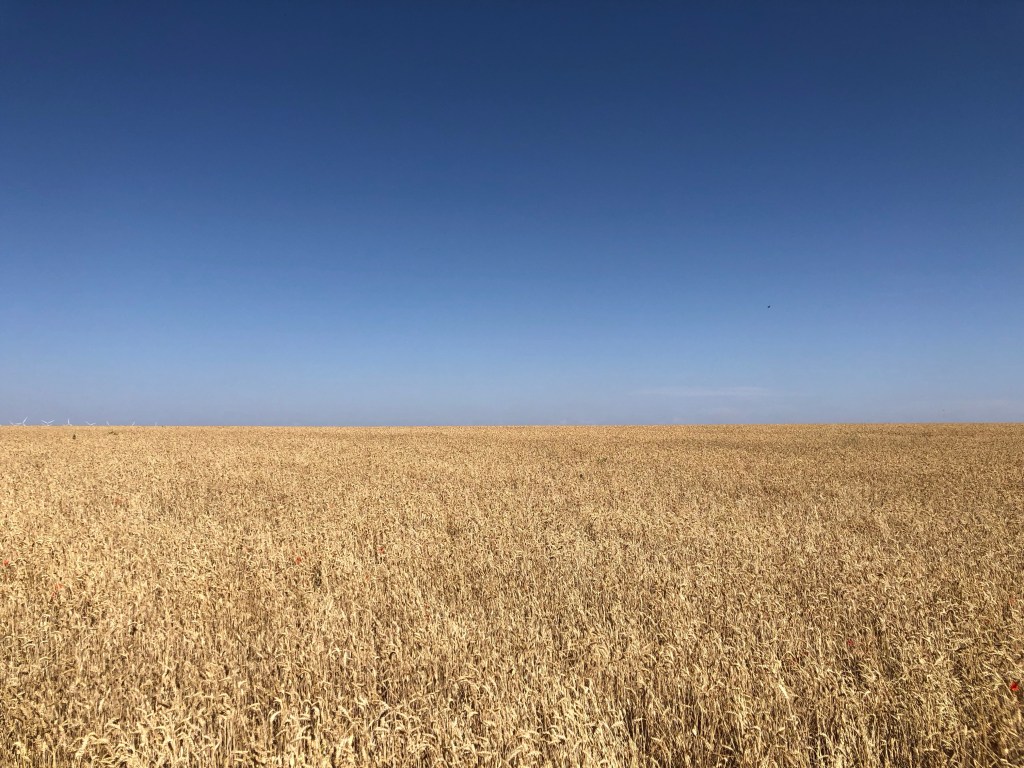
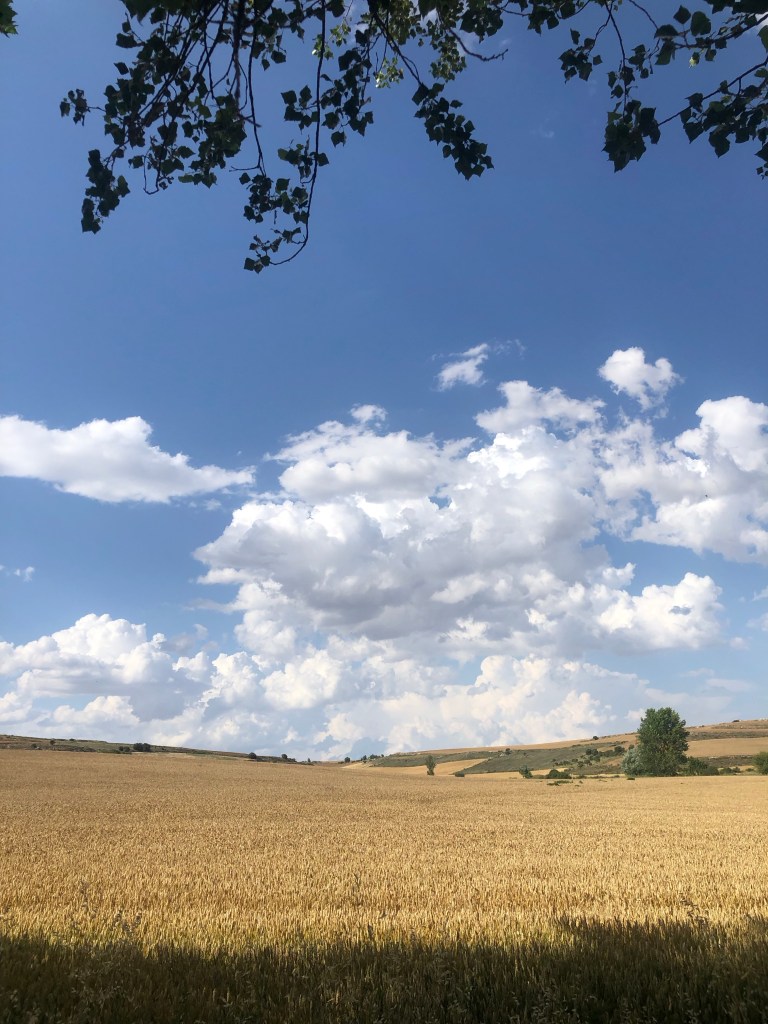
I’ve heard various accounts of the pilgrim road across the Meseta. It is so often described as the most arduous stretch of the Camino, skipped by those pilgrims who find its endless expanses of featureless wheat fields uninspiring and/or dull. A dear friend and former companion on the road wrote to me yesterday, calling it “demotivating and mentally draining”. So I haven’t come out here under any illusions.

I’m only one day in, so I haven’t yet got the full flavour of the Meseta. But I’ll tell you what it has in abundance: silence. Spain isn’t a country that is known for peace and quiet – quite the opposite, in fact, being a regular contender for Europe’s loudest country – but if there is a corner of the kingdom where silence is as golden as the fields over which it presides, this is


It should be said, setting off a full hour before daybreak probably didn’t help (yes, I am definitely that pilgrim). The others in the hostel in Burgos must have found my coming-and-going at a quarter past five in the morning frustrating, though I did what I could to soften my steps. I would have thought I had learned my lesson last time, but for whatever reason I’m still working on the assumption that most places fill up quickly around midday.

Burgos was softly lit by a clouded moon as I took my leave of the Cid’s city. Beside the storks, those speechless sentinels of Spanish skies, I only saw two other living things on my way out: a street-sweeper hosing down the steps above the cathedral, and a solitary Japanese peregrino who took a wrong turn. Everyone else with half a brain – the city’s entire population and the rest of the pilgrims on the trail, for that matter – was still in bed, enjoying a few hours’ more sleep.


The sun was up by the time I reached the outskirts of Villalba de Burgos, the first stop on the road. Still no pilgrims, but the Guardian Civil made a couple of appearances as they patrolled the road in their car. Here I took my leave of the Arlanzón river, stopping only to refill my water bottle at a park fountain and to listen to the flute-song of a golden oriole concealed somewhere within the poplar trees.

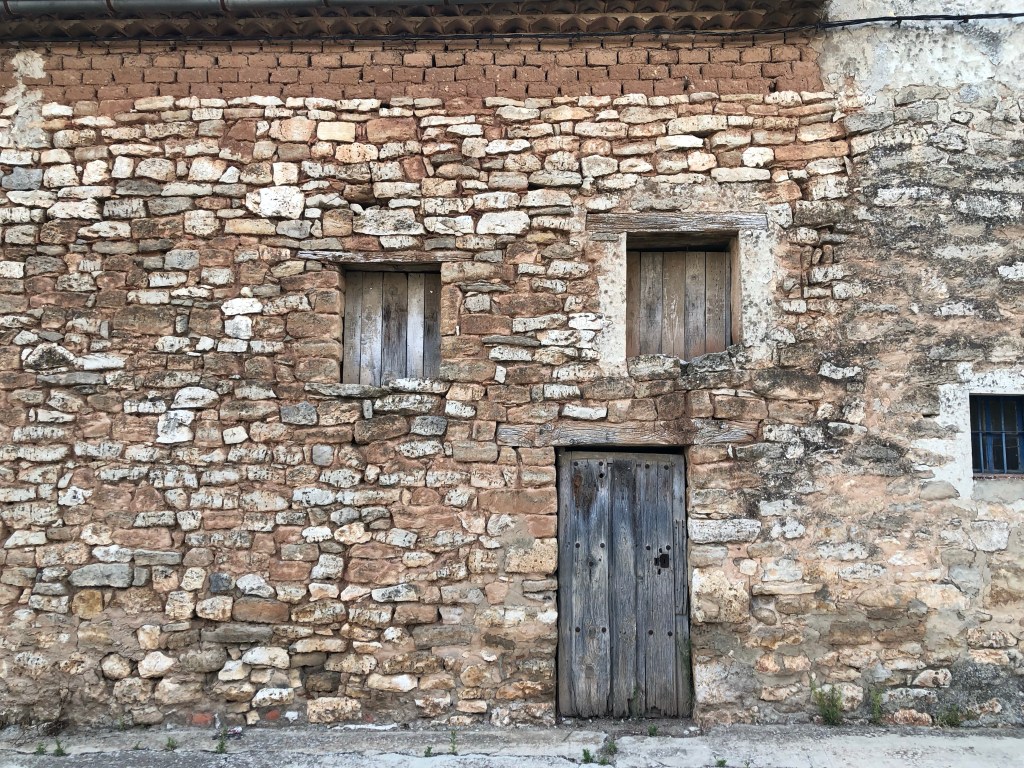
The Meseta begins to unravel in earnest after the sleepy town of Tardajos, which I imagine presents a good introduction of what is to come. Half the town seems deserted, and this time that has little to nothing to do with the time of day. Squat, single-storey townhouses rub shoulders with taller, more modern homes, though in some cases it is just as much the latter that have their windows boarded up as the former.


I stopped at Rabé de las Calzadas to see if the local church were open. No luck. It looks as though the parish priest serves multiple towns, celebrating Mass first at one church and then another. You can sometimes get stamps in these spots, but it’s really candles I’m looking for – when I can, I like to say a prayer for my grandfather and great-grandparents, for whom I walk this road. They say the reason is that pilgrims would probably try to sleep in them for free and might not be as respectful of their lodging if they did. Which is understandable. So far this year, I’ve only found one I could enter. I’ll keep looking, though.

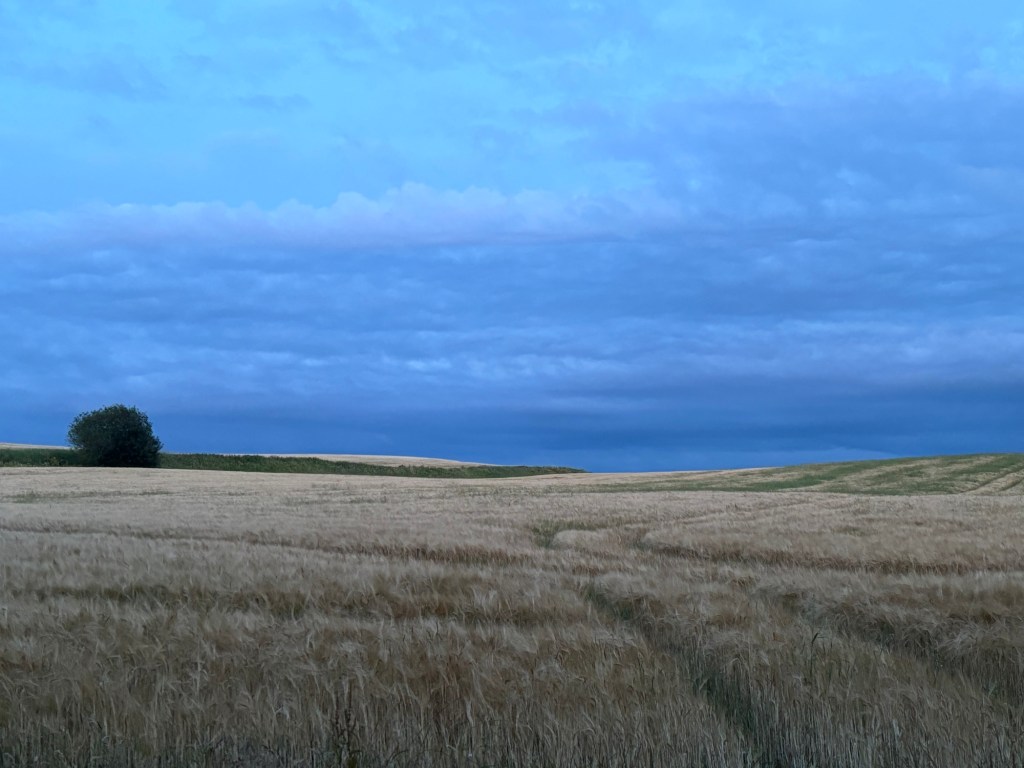
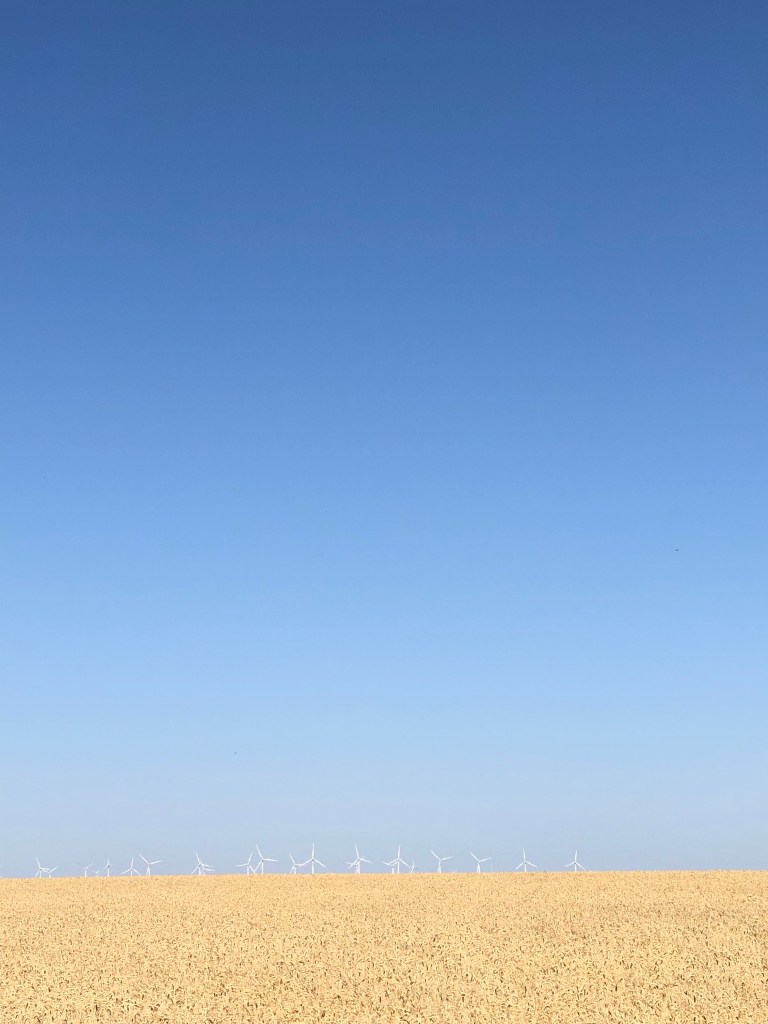
It’s a steep climb after Rabé up into the Meseta proper. The last green hills of Burgos give way to a sea of gold, unbroken at eye level but towered over by a host of wind turbines that make the place a dry parody of the North Sea: similarly featureless, though a great deal warmer.


I’m getting the feeling this is all coming across as rather maudlin. For a nature lover like me, however, this is bliss. If you can put a name to the sights and sounds around you, you’re never truly alone.

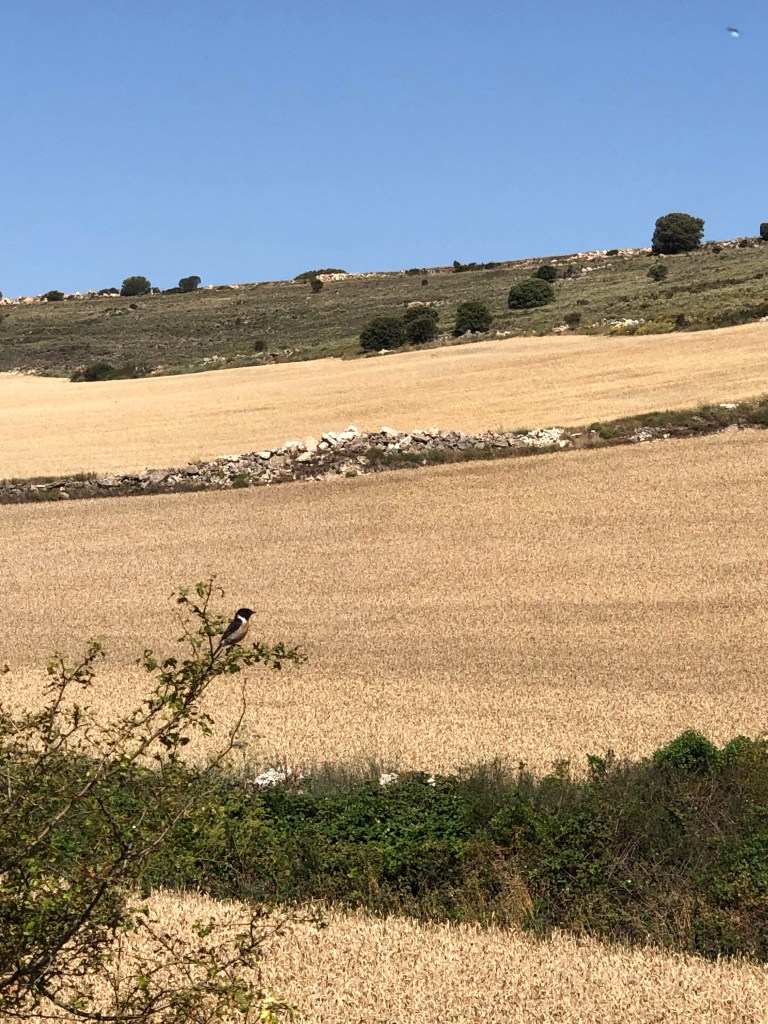
Since leaving Burgos, I’ve been accompanied most of the way by the friendly two-tone song of the stonechat. Families of three – a parent and two fledgelings – seem to pop up everywhere, unbothered by my passing in their tireless search for food. Warblers of every kind – willow, Sardinian, fan-tailed and Cetti’s – sing from the hedgerows, signalling the presence of a river long before it comes into view. Corn buntings, wagtails and jolly wheatears pop in and out of sight between the wheatsheafs. Swifts, swallows and martins fill the empty villages with sound, and hoopoes add a flash of brilliant black-and-white when disturbed in the parks and gardens along the way. In the vast Castilian skies, storks, kites, ravens and solitary griffons are a constant presence, and in the fields below, quail and turtle dove sing unseen, their purrs and whistles keeping the silence at bay. And butterflies of every colour and size are so abundant there’s a very real danger of stepping on them.

On the plateau above Hornillos, I even caught a glimpse of one of my favourite creatures of all: the slender, ghostly shape of a male Montagu’s harrier, quartering the fields like a runaway birdscarer. I haven’t seen one of those since my time in Extremadura, where they find the vast emptiness much to their liking.


I’ve come to a halt in arguably the strangest stop of the Camino so far. Falling prey to my own hubris, as I am often wont to do, I left Hornillos behind and pressed on to what several guidebooks call a “Camino favourite”, the remote Albergue de San Bol. Tucked away in a river valley just five kilometres shy of Hontanas, it is easily missed, and with so many pilgrims keen to race through the Meseta, that’s understandable. I got here at half twelve and found the place deserted, with a sign on the door saying it would be opened at two. I stuck around, taking the opportunity to wash my feet and sandals in the small pool and do some reading while I waited.

Five or six curious pilgrims came by to investigate. None of them have stayed. The first one, a German by the sound of him, asked about a place to fill up his bottle, shrugged and moved on. Another two came by, but went on their way not five minutes afterwards. A Dutchman made noises about staying on but disappeared without a trace while I was washing my clothes. Two Italians rocked up an hour later, who could easily have been my age… only, they were fresh out of school and keen to press on to Hontanas. By this point I’d already made the decision to stay, so I bid them addió and nailed my colours to the mast when at last the local hostalera showed up.

From her I learned the truth – the Camino has been quiet for a few days, but April and May were absolutely heaving this year. That’s probably due to the backlog of pilgrims like myself who haven’t been able to take the road for two years due to COVID. At this time of year, few pilgrims stop at this stage, unless they’re traveling in a group. Would I be alright if I were the only guest tonight, she asked?

Well, so much for my first “communal feel” albergue. On the plus side, it allows me one more day to really be my own boss. It isn’t often on the Camino that you get an entire dormitory to yourself, or the chance to watch the sunset in a place so idyllic as this. I’ve already paid for my bed for the night with the last of the coins I had on me (I really should have taken cash out in Burgos, as banks and ATMs are few and far between out here) so I’m going to kick back and really enjoy having this slice of paradise to myself for once.


There will be plenty of time to socialise on the Camino. But I’m in no hurry – if anything I’d like to avoid the crush in Santiago on Saint James’ day three weeks from now – so I will take my time and allow myself a few later starts from now on. And who knows? If I tarry a while, I might just find more stories in these slumbering villages than I would in the pilgrims tearing through this lonely stage.

Peace out. I’m getting some serious peace in tonight. BB x

Wildwood

With the summer exams afoot, we’re entering “gained time”. Assessments replace lesson plans, trips take kids out of circulation more frequently, and savvier colleagues do a stock check on their red/green biros (delete as appropriate) for a lucrative summer of script-marking. Since my job description covers not just every year group but also all the conversation classes for the exam years as well, my timetable takes an even larger hit than most at this time of year. As of today, I’ve lost an enviable eighteen hours a fortnight. A man could go mad with that much idleness – so, as I do every year, I set myself a project to fill the time.

This one’s pretty straightforward: read a chapter a day of any book – just one chapter, no more, no less – and reflect on it in less than a thousand words. That way, I’m hoping I’ll develop a better reading habit, as well as keep my writing arm flexed well into the summer. It doesn’t pay £3 per throw like the exam scripts do, but it’s good practice. And who knows? One of these days, when I finally manage to convince somebody to let me try teaching English again, all of this reading might pay off. But until then, I have time to kill and a library to devour.


Guy Shrubsole, The Lost Rainforests of Britain

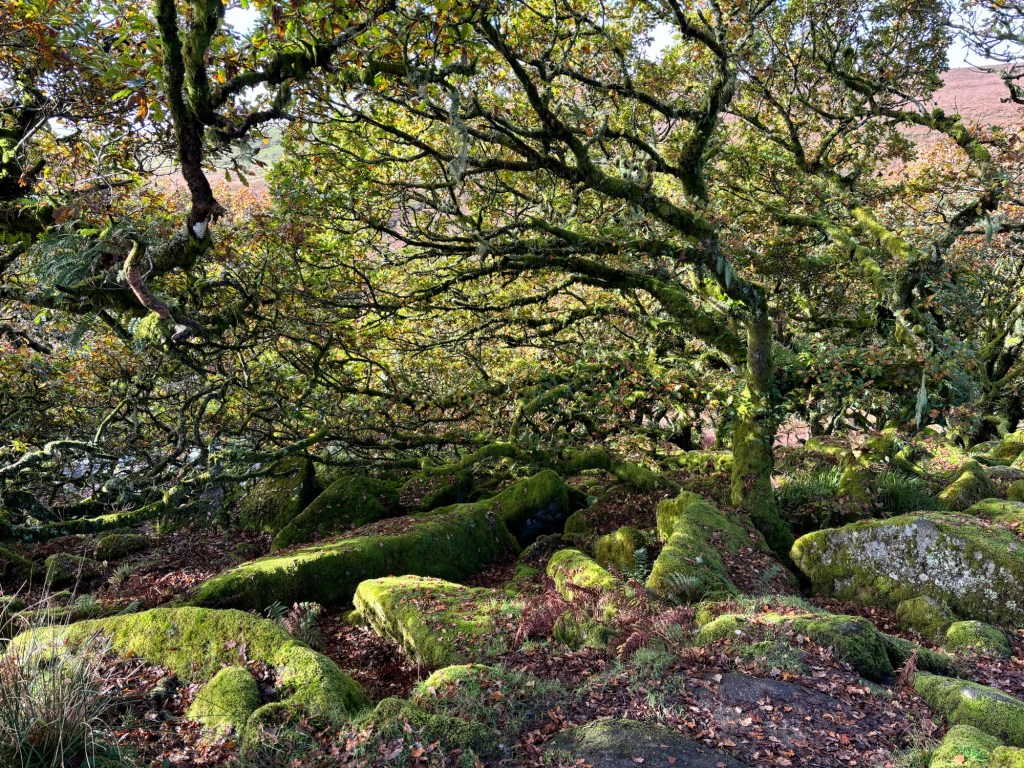
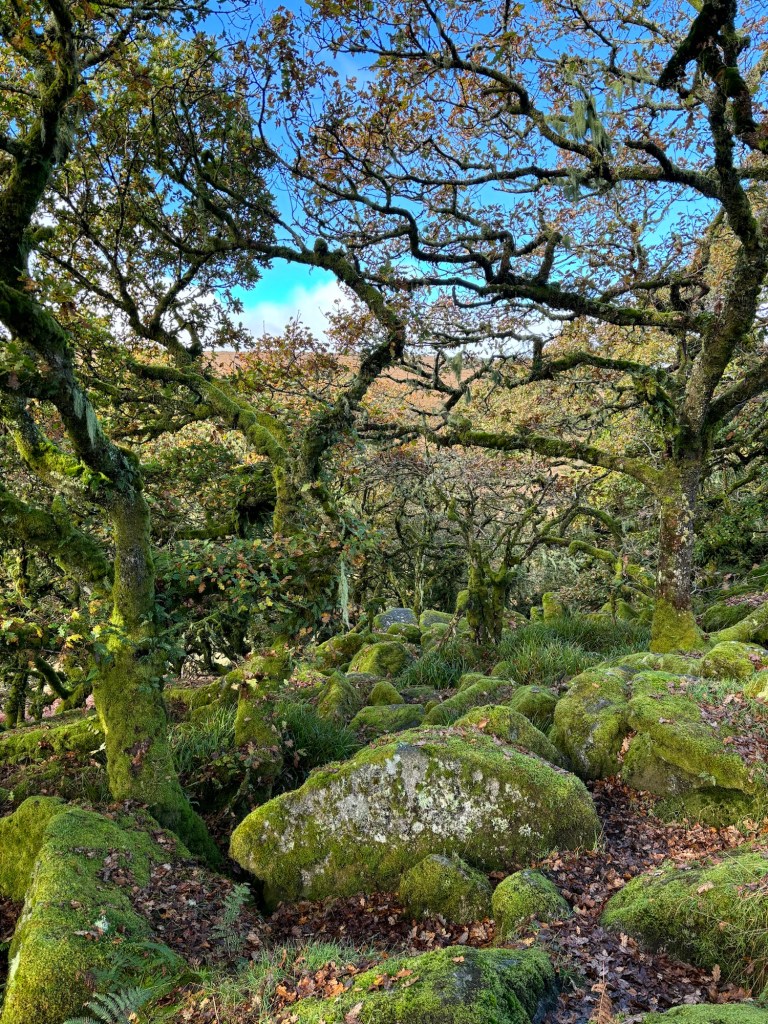
Here’s a book I’ve had my eye on for a while now. Shrubsole knew what he was doing when he hired the illustrator Alan Lee, of Tolkien fame, to design the cover of his paean to the vanishing temperate rainforests of Britain. The gnarled, mossy arms of Wistman’s Wood might as well be an early sketch for Fangorn Forest. Even the choice of a jay for the single flash of colour is inspired – for what bird could be more evocative of the deepwoods of the British Isles than the oak-sower, a creature almost singly responsible for the very existence of our oak forests?

There’s a medicine within the woods that has few equals. If I close my eyes and let my mind wander, I can picture the trees I sought out when my heart was in a bad place. Brabourne, Canterbury, Durham – and even as far as Plasencia. Now I think about it, those “healing trees” were invariably oaks, every one of them. I’m no spirit of the New Age – I live just a little too far north of Brighton for that – but I can’t help but draw something from that coincidence. Is it because they’re the largest trees in the forest? The oldest, and thus the wisest? Is it because their thick branches reach closer to the ground than other trees, like outstretched arms? While the regimented conifers bristle from trunk to treetop with their arms held high in a stiff salute, the oak tree is a serene creature. Motherly, almost.

Shrubsole’s passionately written text takes the reader by the hand into the soaking air of the last remaining rainforests in Britain. I confess I never really thought of rainforests as a British entity, though I would be the first to admit that, when living abroad, my fondest memories of England were of grey skies and the sound of autumn rain over an English wood. I’m incredibly fortunate to come from a line of amateur botanists: my mother was brought up knowing all the different plants and flowers and their uses (as well as which fungi were best avoided), and though I was stubbornly fixated on my animals, she did her best to pass on what she had learned to me. Consequently, I don’t need an app to tell my beeches from my birches. However, I know I’m on an island in more ways than one in that regard.

Since the last Ice Age, Shrubsole writes, we have cut down a third of all the forests in the world, and half of that in the last century alone. In that time, while we awakened to the plight of the shrinking rainforests in the tropics, our own green treasures have been quietly slipping over the edge and into oblivion. The ancient Britons revered the forests that once covered this island. Most of us, however, are a lot less likely to meet a druid than we are that one person who says something along the lines of “such a nice view, shame about the tree” – as though this land were ours to sculpt.

“Plant blindness” is a reality we must accept. Put simply – in the words of Tolkien’s Treebeard – “nobody cares for the woods anymore”. It’s easy to get excited about conservation when it’s got two shining eyes that straddle the line between beauty and vulnerability, but it’s that much harder to extend that zeal to the silent world of plants. Lack of knowledge leads to lack of empathy. As both a naturalist and a teacher, one of my cardinal rules is that once you can put a name to something, it means so much more to you. Perhaps the reverse is true: if you know nothing, your heart won’t bleed when you tread on a bluebell.

Recent studies showed that only 14% of A Level biology students could name more than three British plant species, while an even more alarming survey indicated that 83% of British children were unable to identify an oak leaf on sight. I suspect if I brought in a few leaves tomorrow and asked my Year 9 students to identify them, I’d fare little better. And yet, they’re very aware of the deforestation in Indonesia and the deleterious impact of the palm oil industry. The grass is always greener – or at least, it would be, if we could tell it was grass to begin with.

I’m learning to drive this summer, and I’m not ashamed to admit that one of the only things that genuinely excites me about having a car of my own is the freedom it will give me to explore even more of this country on foot. I appreciate the irony. But with avian flu decimating our seabird populations last year – an article in The Guardian put the death toll at 50,000 – and more and more common land disappearing under the pressure for affordable housing, I’ve never been more conscious of the need to see our green and pleasant land – before it’s gone. Before the baseline shifts, and we learn to accept what was once unacceptable.

I had a couple of hours between lessons this afternoon, so I took myself for a wander through the estate. I found a toad beneath the remnants of a tarpaulin from the old forest school I used to run three years ago, and a merry carpet of bluebells in their dying days followed me to the deepwoods where a chalk stream gurgles southward on its journey to the sea. A silent pool of rainwater sparked into life as the sun came down, drawing three tadpoles into its warm gaze. Chiffchaffs sang at various intervals, and somewhere overhead, unseen, a buzzard mewed. I didn’t hear our ravens today, but I often do.

The druids were onto something. There really is a medicine in the woods. If only the whole world could see it! BB x


Further Reading:

What is plant blindness? (Kew Royal Botanic Gardens)

Do you suffer from plant blindess? Jon Moses, 5th April 2023

Who owns England? (Guy Shrubsole’s Blog)

Cross Country

The Camino might be over for this year, but the adventure certainly isn’t. Before my flight back home tomorrow, one last challenge remained: to scale Monte Santiago and lay eyes upon Spain’s highest waterfall, the Salto del Nervión. Since I’m staying in Bilbao, which straddles the Nervión on its journey to the sea, it seemed only natural to go in search of its source. The fact that it springs from a mountain bearing the same name as the patron saint of the Camino clinched it. So, just after eight o’clock this morning, I grabbed my rucksack and poncho (just in case) and set off for the Bilbao-Arando train station.


Leaving the stained-glass masterpiece of Bilbao-Arando behind, I took the 8.25 to Orduña on the C3 line. It’s the furthest stop on the Cercanías line and the trains were running very consistently even through the holiday season, so I was pretty confident about getting there and back OK.


Orduña itself was just waking up when the train pulled in. I made a quick detour via an AlCampo mini-market to grab a picnic lunch: the usual fare of semicurado cheese, chorizo slices and a fresh loaf of bread, with a punnet of grapes to boot. I then doubled back, crossed the bridge over the railway and started to climb up into the hills.

Fortunately for me, somebody had the peace of mind to leave a clearly-labelled map outside the train station. I’d found a few maps online, but I was relieved to find a more reliable one at the start of the trail, so I snapped a photo and used it as my map for the day. I can’t find it online, so here’s a copy if you’re interested:


First things first: the climb was bloody steep. Easy to follow, but steep. And before long, I’d climbed up beyond the cloud level and was weaving in and out of the mist. Sometimes I couldn’t see more than ten metres or so ahead, and sometimes the road seemed to stretch on forever up the mountainside. A jay screeched at me from the base to the summit, and while it may well have been a number of them, I had the strange feeling it was the same bird watching my slow progress. And yet, whenever I tried to lock eyes upon it, I only ever caught a disappearing shadow between the trees.

In the deep woods of the Basque Country, when the clouds are at ground level, it’s easy to see how myths of the Basajaun – wild men of the woods – persisted for so long. God only knows what was watching me unseen in the mist.


I only met two other souls on the road coming down: a local man with a hiking pole in hand about halfway up and a jogger leaving the forest, which would imply he’d just run down the mountain. There’s a reason the Basques have a formidable reputation.


Near the summit, a spring of crystal clear water was a welcome find. I couldn’t help remembering a childhood memory of vomiting for days after drinking from a village spring in the Alpujarras, but the water looked so clean I couldn’t help myself. It was easily the most delicious water I’ve had out here – mountain water always is, if you can get it – though I was sane enough not to use the metal cup chained to the rock, which looked in dire need of a good clean. In a nearby tank, filled to the brim with the spotless spring water, a few tiny newt efts were swimming about.

After what felt like an age (but in reality only took ten minutes over an hour) the track suddenly came to a narrow crevasse which cut a path through the karst to the clifftop. With one last screech from the jay echoing after me, I put the cloud forest behind me, pushed the metal gate open and stepped out of the Basque Country and back into Castilla.

At first, the rolling clouds shrouded all but the peak upon which I was standing from view. I could just about make out the bizarre sculpture to an apparition of the Virgin Mary in the form of a colossal concrete block supported by a stylised tree looming out of the mist, but it looked like it had been fenced off and graffitied for good measure long ago.


More impressive by far was what I could see when I turned around. The Castilian sun began to beat down through the clouds, and suddenly the sheer majesty of the Sierra Sálvada began to unroll before me like a painting. I was lost for words. Pictures don’t do it justice, but they might bring you closer to that wonder I witnessed.


The breathtaking crags of the Sierra Sálvada give an indication of what to expect from the Salto del Nervión long before you reach it. It’s a drop of more than 200m to the bottom in places, and even the thought of kicking a pebble over the edge is enough to tie your stomach in several uncomfortable knots.

Don’t get me wrong. I’m absolutely mad about mountains. But there’s nothing funny about a drop of that height, particularly when it isn’t broken by any tree or slope on the way down.


Ironically, perhaps, some of Spain’s biggest creatures are perfectly at home here. The hulking shape of the griffon vulture was rarely out of sight during my wanderings along the clifftop, but nowhere more so than about the stark stack known as the Fraileburu – the Friar’s Head – an utterly unassailable column where many of the Sierra’s griffons had chosen to roost, haughtily observing the valley below. I haven’t needed my camera once on this holiday – my phone has done a more than satisfactory job – but I was missing it then more than ever. A decent telephoto could have worked wonders on the griffons riding the thermals below, as well as pulling the acrobatic choughs and the few pairs of Egyptian vultures into focus for good measure. Instead you’ll just have to see how many you can spot clinging to the cliff face below.


From the summit of Monte Santiago, it’s a fair trek to the Salto del Nervión. I didn’t stop often and I keep a pretty merciless pace, but it still took me the better part of two hours to reach the waterfall. Fortunately, the path cuts through tree cover for a large stretch, and the views are incredible – especially so as the sun had burned off most of the mist by this point, offering spectacular views down to Orduña, now some way in the distance.


The Mirador at the Salto was quite busy by the time I arrived (around one o’clock) but one look was enough. The river was bone dry: I might have guessed from the absence of any sound of crashing water. So much for the highest waterfall in Spain! It seems it’s only really in action after heavy rain, otherwise the Nervión is supplied by a network of underground rivers that ensure it flows year-round, while its primary spring in neighbouring Castilla has a tendency of drying up in all but the wettest seasons.

Still – box ticked, I suppose.


Perhaps more interesting than a dry waterfall is the nearby lobera, an ancient wolf trap built possibly over two thousand years ago by the ancient Basques to hunt wolves and other large game on the clifftop. In a fashion akin to the Native American buffalo jumps, the wolf would be chased into a funnel, with men beating drums on one side and the cliff on the other, driving the poor beast into a deep pit at the end of the funnel as its only escape.

I didn’t see any wolves during the hike, though they have been seen recently in the area after a long absence. Instead I disturbed an amorous couple who had straddled the large wolf statue and were enjoying each other’s company, though they had picked an exceedingly odd place: I can think of better spots for a tryst than the site of a Neolithic abattoir.


From the Salto del Nervión, I decided to fork east and descend back into the valley of Orduña that way. The trouble was, the map – which had been utterly brilliant thus far – was pretty dismal about suggesting a way back down bar turning around and heading back the way I came. One of the maps I’d found online seemed to indicate a track that led down through the forest an hour or so to the north of the Salto, but I couldn’t find anything like it. Scanning the east side of the valley during the hike didn’t show much either, beyond what might have been a dry river gulley running down the mountainside.

In the end, rather than face a possibly two or three-hour march to the north, I decided to follow the beginnings of a track that appeared as the cliff began to slope rather than drop. Whether it was made by man or beast I’m not entirely sure, only that it probably wasn’t the track suggested online and that it very quickly came to an end.

There are few things more frustrating than getting halfway down a mountain and realising you’ve lost the path. At least you can surrender going up, but on the descent, you have no choice but to find a way down somehow. So I did what I have done in the past, foolhardy though it seems, and cut across country.

This is a lot easier said than done when the cross country in question is a forest thick with underbrush that happens to be growing on the side of a mountain. The ground under my feet was not always stable, there were thorns everywhere and the animals tracks I was following – boar, I wouldn’t wonder – were not always reliable. The heat of the midday sun was similarly unwelcome, silencing the forest and making my every step sound like a cannon. The vultures circling overhead only added to the dismal state of affairs.


Twice I came upon what looked like a road, but rather than wind up on some local farmer’s turf (and potentially ending up in really cross country) I decided to stick to a personal motto (don’t ever, under any circumstances, f*ck with the Basques) and continue to forge my own path.

It took just over an hour to escape the forest. I don’t think I’ve been more relieved to see a tarmac road in years.


I made it back to Orduña’s train station with seven minutes to spare before the 16.45 train back to Bilbao. I must have looked a beardy, sweaty mess but I was past caring. Despite the mountain’s best efforts, I’d made it back in one piece.

My old English teacher once told me you can’t claim to conquer a mountain, a thing which has been standing on this earth since the world was young and will be there long after you have gone. I’m still hooked on the idea of climbing higher than the vultures – there are few things in this world more awe-inspiring than looking down on creatures that are usually specks in the great blue beyond – but I’ll hand it to him here. Mountains are ancient, treacherous things that deserve to be treated with respect.


I finished my time in Spain by summiting Santiago’s mountain, but the mountain very nearly got the better of me on the way down. A knock to my hubris – and a necessary one.

I’ll stick to regular cross country around the school grounds for now. I’ve had quite enough wayfaring for one holiday! BB x

Camino II: Dawnbreaker

Holy Week got off to a flying start last night outside Logroño’s cathedral, Santa María de La Redonda. It isn’t always easy to tell which towns will have a serious procesión, but for the record, Logroño goes the distance. It looked as though all the brotherhoods were out in force last night, garbed in white, red, green, black and blue. Crucially for me, they also beat out the same halting drumbeat from my memories of Holy Week in the south. Not every town does it, but you’ll notice if they do: it’s the ever so slightly delayed drum roll during the march that, once you hear it, you can’t unhear. It’s the suspense of the last days of Jesus’ life, as his followers waited to see if he would save himself. At least, that’s one way of reading into it.

I had supper with a rather awkward American, the only other guest for dinner at the albergue. He wasn’t even staying there, but appeared to have wandered in looking for a menu peregrino (the cheap three-course fare offered to pilgrims on the Camino). He had his reservations about how sociable people are on the Camino and pined for the quieter stretches, and from his less than satisfied reaction to the ‘vegetarian option’ he’d asked for, I couldn’t help wondering what he was doing out here. He was quick to want to fact check my anecdote about his home state of California being one of the only places in the world named for a fictional location (it takes its name from the mythical island in Montalvo’s 16th-century chivalric novel, Las sergas de Esplandián) but I won’t begrudge him for it. After Trump and the fake news boom, who’d trust anyone?


I was definitely one of the first out of town this morning. Though I passed some pilgrims on the road a few hours in, from the speed at which they were walking I suspect they’d been lodging one or two towns ahead. As a result, I had pretty much the whole 30km hike to Nájera to myself – including the first hour and a half before sunrise, which is always one of the most magical times to walk the Camino.

Approaching the Laguna de Grajera from the east, I counted about six or seven night herons flying in from their roost somewhere beyond Logroño. You can just about make out the silhouette of one of them in the photo above, as dawn was starting to break. There were rabbits everywhere – more than I’ve ever seen in this country – and the morning sky was alive with the songs of blackbirds and larks. I could have waited for company at any point, but I do love to have that part of the day to myself. Self indulgent, perhaps, but worth indulging all the same.

There was even an icon of Nuestra Señora del Rocío on the lakeside. Whether or not I sang her into existence through various repetitions of Las llanuras ardientes and El Rocío es un milagro as I was walking is conjecture. It felt special to find her here, so far from her usual haunt in the marismas down south.

Now, while I needn’t have set off quite so early (the 8 hours in the guidebook is a joke, the trek is at the very most 6h30 with a stop for lunch) I did have my reasons, and one was to catch a very specific angle of the sunrise at just the right moment.

At the brow of a hill to the west of the laguna stands one of the famous Osborne bulls for which Spain is so famous. By the time I got clear of it – at around 8.20am – the sun was almost exactly behind it. I could not have timed it better. Point and shoot!

The rest of the walk was pretty straightforward. The ruins of the old pilgrims’ hospice at San Juan de Acre were picturesque and the Camino itself, though it cleaved close to the road on occasion, was quiet and easy underfoot. I let a couple of Dutch pilgrims overtake and continued to have the road to myself. The Sierra de Cebollera remained cloudbound for most of the walk, and I kept my hoodie on until I reached Nájera – it simply wasn’t hot enough to justify fewer layers, and that’s not bad thing!

Navarrete was stunning – easily one of my favourite stations on the Camino so far. The church is a classic Spanish affair: pokey and generic on the outside, and an immense explosion of heavenly gold within. I lit a candle for abuelo, left a story in the visitor’s book, sang through Thomas Morley’s Nolo mortem peccatoris (since there was nobody there) and moved on.

From Navarrete, the final stretch rolled across the hills before sloping down toward the cliff face of Nájera. Legend has it the French hero Roland fought a Syrian giant on one of these hills in a single combat that went on for days, but I was happy enough to see the familiar silhouette of the giants of my childhood: griffon vultures, circling high above the meseta in the distance. I didn’t keep a tally, but there were raptors everywhere today. Kestrels and kites – both black and red – and buzzards and booted eagles, these last in both white and brown. Since it’s still early enough in the season, some of them were displaying still, climbing high and then plummeting down in a sharp V with wings tucked in. Between that and the flute-song of woodlarks that followed me for the last hour before Nájera, I have been in seventh heaven all morning. Oh Camino, I have missed you!

The Albergue Municipal is filling up. Maybe I’ll meet some of these people later. But for now, I’ve done my write-up for the day and I could use a little shut-eye before I seek further adventures in Nájera this evening. Until the next time, folks. BB x

Camino I: Plus Ultra

6.15am, Gatwick North Terminal

I left over an hour and a half to make my flight this morning, but I could easily have done it in less. Even with the extras (a few more items of clothing than originally planned in case of inclement weather), I’m traveling lighter than ever. Who’d have the fuss of a suitcase when the open road is so inviting?

I think I must have raced to the gate in my eagerness. It was almost deserted for some time when I got here. Only two or three others joined me in my vigil: a Spanish girl chaperoned by her mother, a Greek/English couple (yes, I googled the man’s passport symbol – call me a nosy Parker but the square cross had me stumped) and a woman who from her accent could only be Basque: one side of her head shaved, brow furrowed, a black hoodie emblazoned with the slogan ‘DESIGNED BY AN IMMIGRANT’ in block white capitals.

No tannoy for this flight – the attendant called out Bilbao almost as quietly as I did trying to call a student over in the canteen last week for his poor choice of language. She only changed her tune to ‘Speedy Boarding Only’ when the first six or seven of us were clear. Sometimes, just occasionally, it pays to arrive ahead of schedule.


10.18am, Bilbao Intermodal Bus Station

I’ll say this much for Bilbao Airport: it’s a lot less hassle than Gatwick. All in all I don’t think it took much more than fifteen minutes between touchdown and the shuttle bus.

As I thought, the skies over Bilbao when we landed were clouded, grey and low. They always have been on my visits to this corner of Spain, to the extent that clouds and the Basque Country are virtually inseparable in my mind. The Spanish author Miguel Delibes once said that the sky over Castile is so high because the castellanos themselves put it there from staring at it so much. While my kith and kin chase the coy heavens plus ultra, always in search of the new, the ever practical Basques bring the skies down to their level, coveting the Viscayan rain and wrapping their dark forests in mist and cloud. I don’t expect to be free of that shroud until we reach the frontier.


11.56am, near Pobes

I’m now racing south on the Bilbao-Logroño bus, basking in the intermittent glow of the Spanish sun. Craters of blue have started to appear in the sky as though punched through by some celestial artillery, and still the Basque line of defence holds.

Here below, the landscape is changing. The military ranks of pines encamped around Bilbao suddenly give way to a gentle blanket of beech trees. Patches of brilliant green herald the coming of spring to these hills, and limestone crags scar the mountains like bones – first in uniform grey, then bleached with that warm golden stain that is so evocative of Spain’s highlands.

And then, suddenly, the dark hills of the Basque Country fall away and the plains of Castile are all around me: a forgivingly flat golden country, nestled between the high crags north of Haro and the snowbound peaks of the Sierra de Cebollera to the south. Castles and monasteries dating back to the time of a real frontier sit atop the hills and knolls like childish imitations of the limestone cliffs behind, the handiwork of the greatest craftsman of all.

And there, racing over the fields near an Alcampo petrol station, is my first swallow of the year. It’s only a fleeting glimpse as the bus races on past a bodega and a Lidl in quick succession, but it’s enough to make my heart soar – higher still than those Castilian skies.

I’m drunk on all this scenery, in case that wasn’t obvious (the overblown choice of a frontier semantic field was probably a dead giveaway). Rehab is the usual cure. However – to keep in line with this post’s choice of imagery – sod that for a game of soldiers. I have a week and more to wander around my grandfather’s country once again. I can’t think of a better rehab than this.


5.27pm, Albergue Santiago Apostol, Logroño

Logroño is climbing back out of its siesta. I’ve spent the afternoon here and there, though perhaps more here than there. Here being the Albergue Santiago Apostol, the same place I stayed when I last did the Camino four years ago. The only thing that seems to have changed is the stamp for my pilgrim’s passport. That, and I’ve come alone this time.

The albergue is quiet. I’ve only crossed paths with a handful of other pilgrims: Joan i Laura, a couple of peregrinos from Girona, a French family of three and a German family of four. I expected the Camino to be busier during Semana Santa, but I guess if you have a week’s holiday you’d do the stretch that can be done in a week or less – that is, the last 100km from Sarria. Out here in La Rioja, it’s likely to be rather quiet.

That will make for a rather soul-searching experience, which is no bad thing!

I’ve gone for dinner and breakfast at the albergue, 1) to make sure I actually eat and eat well and 2) to meet some of the other pilgrims ahead of the 31km stretch tomorrow. And also 3) because, at 16€ for dinner and breakfast, it’s a steal. I hadn’t forgotten how affordable the Camino is, but it is nice to rediscover, as it were.

I ate my lunch (chorizo and queso curado in a fresh barra de pan) under a beech tree on the bank of the Ebro river. Spring may be slow in coming to England but she’s been here a while already. The beak-clicking display of the local storks can be heard every so often, even from the albergue, though a drumming woodpecker in the park was giving them a run for their money.

English and Spanish birdsong combined on the riverbank. Blackcaps, wrens and blackbirds supported a local chorus of serins, short-toed treecreepers and wrynecks. I don’t think I’ve seen (or heard) a wryneck since my first stint in Villafranca back in 2015, but I hadn’t forgotten its call. After scanning the branches for a minute or so I tracked it down to a lightning tree just a few metres from where I was sitting. They really do look bizarre, the way they move about mechanically, looking for all the world like the clockwork nightingale from Hans Christian Andersen’s fairy tale. The wryneck kept me company for most of my lunch and only took off when a dog walker came by, carrying an African grey parrot on his arm.

I’ll try to catch the first of the procesiones tonight. ‘It’s only Monday,’ said the hostalero at the desk, alluding to the fact that the pinnacle of Semana Santa is toward the end of the week. Even so, my pride as a Spanish teacher is at stake (I have just been teaching the topic to my Year 10s) and besides, I’m a fanatic for the pasos. You can blame my year in Andalucía for that. I’ll also see if I can’t locate the local legend of the Bookseller of Logroño that fellow English traveler George Borrow recounted in his book on the Gypsies of Spain, published a little under two hundred years ago – because what’s an adventure without a quest of some description? BB x

Leveret

The heavens opened last night. The water butts, which were pretty much exhausted yesterday, were filled right up to the brim and overflowing as the rain continued long into the morning. Then the winds blew in hot from the southwest, then the skies clouded over and a chill set in. Looks like we’re back to formula with a regular English summer once again.

I read a couple of articles in The Critic today. Oxford University in a bind over a Benedictine college. Simmering anger against the rising tide of wokery. In the news, US Congresswoman Nancy Pelosi landed in Taiwan against the wishes of the Chinese government, Beyonce changed the lyrics to her latest hit single after outcry against an offensive word and Big Brother announced its return. I could have added that the latter information was revealed at the end of this year’s season of Love Island, but the ambiguity is very much intentional on my part.

I quit the house for a bit, grabbing a worn Barbour coat and a pair of binoculars. Figures if I’m on the wrong side of history, I might as well look the part. Watching the swallows yesterday made me nostalgic for the long, quiet days of my childhood when I would set out into the countryside with my camera in search of nature. It was a bit warm for the Barbour, despite the clouds, but it’s a damn sight better for blending into the khaki hues of the English countryside than anything else in my wardrobe.

Lincolnshire seems to have quite a sizeable population of hares. You don’t see so many of these impressive creatures in the south-east. Being larger and more skittish than the rabbit, they don’t cope so well with how crowded it is down there. Neither the rabbit nor the hare are native to these islands. Both were brought over here by the Romans – for sport and for eating, if not for some early scientific whim. Our only native species is the mountain hare, and you’ll have to travel to the wildest parts of Great Britain and Ireland in order to find them. Ultimately, that’s neither here nor there: two thousand years have come and gone since the Romans were here, and the hares that race across the fields are by now as English as the oaks that have grown in our soil since time immemorial.

The hares I saw in the fields behind the house were only youngsters – leverets. They hadn’t developed the long and powerful back legs and enormous eyes that make adult hares so striking. They also weren’t as fleet-footed as adults, who will usually disappear in a black-and-tan dash into the middle distance long before you can get close. They let me approach further than I expected before deciding the Goldilocks line had been breached, and off they went. I followed, slowly, at a distance, and caught up with them by the sand martin colony. One hung back to watch me for a few moments before slipping through the fence and bounding after its sibling. After that, I climbed the fern-bound rise and scanned the forest for a while, listening to the wind in the trees and the buzzards calling. It feels good to be back in nature again.

When I get back home, I really must get back in the habit of spending more time in nature again. I’ve neglected this side of me for too long. At the end of the day, I love to try my hand at various things, but under all those layers is a naturalist. Life is a mosaic – you never lose who you were, or the people you’ve been at various stages of your life. You will always carry them with you in one shape or another. The largest shard in my mosaic is an earthy brown, like the soil; greenish-grey, like oak leaves; and bluish-white, like the sky. I need to go back to nature. I need to go back to being me again. BB x

They Bring the Summer

The year is turning. Can you feel it? The light in the morning has shifted ever so slightly, but it’s noticeable. We’re past the peak, and before long the red-gold winds of autumn will be upon us. Thanks to the fierce heat we had in July, some of the trees are already wearing their russet cloaks. I shouldn’t be surprised if we’re in for a long, dry winter this year. Perhaps that’s the way of things to come, perhaps not. Time will tell.

The family of swallows that nests in the barn near the house have had a very successful year. I counted eleven of them on the wires this morning: two parents with full streamers and nine noisy youngsters whose tails have yet to grow out in full. I had to count twice because of a sand martin who seems to prefer hanging out with swallows than his own kin, who have a colony in a field half a mile down the road. There comes a time every year, usually in September, when the swallows and martins suddenly gather en masse in a noisy spectacle before setting off for the south. We’re not quite there yet, no matter how abnormal this summer’s weather has been, but it sure felt like a nod to that day this morning.

Swallows, swifts and martins – collectively known as hirundines, which might have something to do with the Latin word harundo, meaning the forked shaft of an arrow – really are some of nature’s miracles. The tiny flashes of blue and white that dance over the fields with such cheerful abandon in summer travelled around 9,700km from their wintering grounds in South Africa to get here, and in the space of a few short months they have to make the same journey all over again in reverse, this time with their young in tow. Most estimates have them traveling about 320km every day. That’s a bloody long way to go when you’re only a few months old!

This morning the family looked like they were getting some practice in for the long journey ahead. Mum and dad would sit with the youngsters on the wires for a while, chattering amongst each other while the kids preened endlessly, before suddenly taking off and wheeling about the garden with their offspring racing after them. They might have been hunting, of course, but some of the young ones were far more interested in playing keep-up with a pigeon feather, catching it and keeping it from touching the ground, the way children sometimes do with a balloon. It was really quite endearing to see.

In the past, where our swallows went each winter had us stumped. There were some truly bizarre theories floating around. Following in Aristotle’s footsteps, some thought they hibernated underground. Some thought that they slept at the bottom of deep lakes and ponds, since they spent a great deal of their time hawking over the water during the summer months. One 17th century theory, courtesy of Englishman Charles Morton, claimed the Moon as the swallows’ winter destination as the only logical explanation for their total disappearance. It sounds absurd, but it’s not so outlandish a theory when you try to imagine explaining that these tiny creatures travel further twice a year than most humans will in a lifetime. It even makes the underground hibernation theory seem plausible!

It’s an incredibly hazardous journey, and not every one of our brave swallows will make it there and back. There are all manner of dangers they have to face: sea crossings, storms, high winds, predation by hobbies (consummate swallow-catchers), not to mention human interference – some will be caught for food, and the Maltese in particular are infamous for their practice of trapping migrating birds by liming fences. And then, of course, there’s the mighty Sahara Desert. Michael Morpurgo wrote a fantastic children’s book about that journey – Dear Olly – which you should read if you want an idea.

So why travel all that way? Competition might well have something to do with it. After all, Africa has plenty of swallows of its own (without all these European swallows “comin’ over ‘ere and takin’ our jobs” etc.) and fans of Monty Python will be well aware of the fact that African swallows are non-migratory. On my travels around Uganda during the rainy season (November) back in 2012, I saw plenty of familiar-looking swallows hawking over the White Nile, but most of the birds I clocked were local species that don’t travel far from home. Still, I couldn’t help wondering whether maybe just one of the brave little birds flitting by had crossed my path sometime before, either in Spain or the south of England. How’s that for a flight of fancy! <groan>

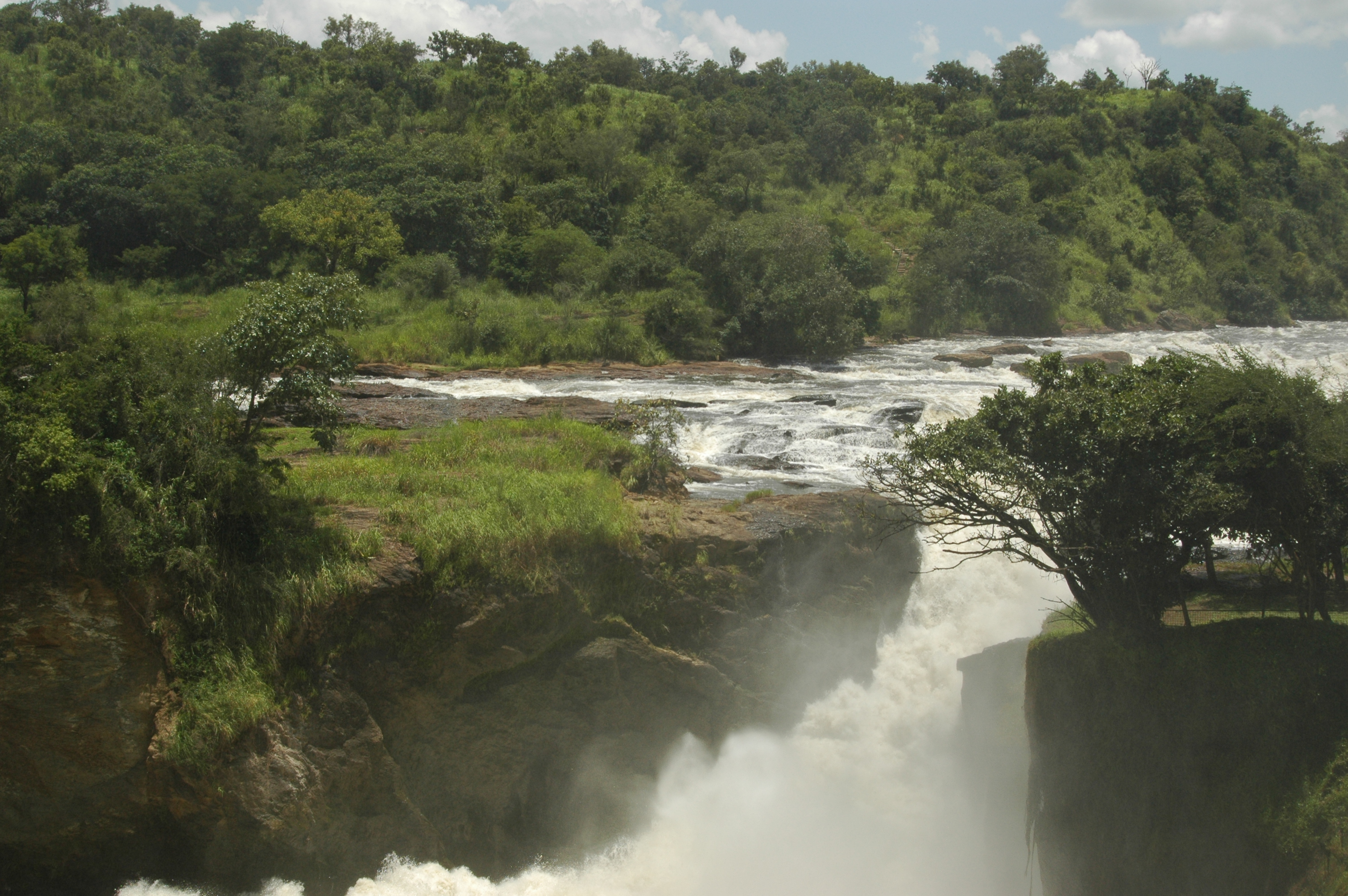
Greater striped swallow, Ishasha Lodge (Queen Elizabeth National Park) Uganda, 18th November 2012

Swallows are remarkable creatures to watch. While we still have a few weeks left of summer, try to find a few minutes to enjoy the little winged miracles. I’m sure they do wonders for one’s mental health, but to use less clinical terms, they sure can lift one’s spirits. Today, for the first time, I saw two of the youngsters doing something I’ve never seen swallows do before: sunbathing. Plenty of birds do this kind of thing to regulate body temperature, but it’s the first time I’ve seen swallows in the act. It was just two of them who kept leaning over in the sunlight – the others were far more interested in preening, though the sand martin looked as though he wanted to get in on the action!

One swallow does not a summer make, but their departure certainly puts an end to it! If you’ve enjoyed reading my homage to our chatty little neighbours, you might find the links below worth a browse, too. Until the next time! BB x
https://www.historytoday.com/archive/natural-histories/great-migration-mystery
https://www.rspb.org.uk/birds-and-wildlife/wildlife-guides/bird-a-z/swallow/migration/

Greenheart

I’ll be frank. Summer is my least favourite season. Summer is, in the vocabulary of my students, “dead”. Most of the birdsong is over for the year, the whole nation is out and about and the holidays stretch on for what feels like forever (especially when you work in a private school). There’s a dry stasis in the air that you don’t get in the changeling months of spring and autumn and you’re too cold to notice in winter. This summer, as is tradition, I’m spending my time between watching documentaries and watching the clock. There’s not all that much else to do when you find yourself in the countryside far away from everyone you know.

There are, however, massive perks to being here. A few days visiting my parents in Lincolnshire usually throws up a chance to explore somewhere new, and though today’s ramble was more of a wander “round the back” than an adventure per se, it was a beautiful reminder that there are some things that make an English summer worth seeing.

Up on the wolds near Donington, I heard a quail. It’s been years since I heard one in this country, but once heard, you never forget. That iconic wet-my-lips call carries for miles, especially under a hot midday sun when the only other sound is the wind. It reminded me of the green riverbanks of the Dehesa del Banco, where the call of quails was just one instrument in a wetland symphony: percussive reed warblers, the accelerando snare of the corn bunting, the indescribable beauty of the bee-eater’s woodwind and zitting cisticolas going zzzzit zzzzit zzzzit overhead. It sure felt nice to be taken back there from the sunlit uplands of Lincolnshire.

The skies here are immense. The land seems to go on forever in all directions. You get a real sense of eternity in this vast corner of England. Little wonder, then, that so many Lincolnshire folk hoist the red and green county flag over cars, windows and doors. And yet, as is so often the case in England (and why I really didn’t take too well to life in Jordan), you’re never too far from a dark forest, which – admittedly – are especially peaceful places in the quiet summer months.

I tried to explain to my companions in Amman again and again the importance to me of green spaces. I think at the time I said I needed more trees, and was quite rightly told there were plenty of trees in Amman’s parks. But there’s something very special to an Englishman about the quality of light that can be found filtering through the trees in an English wood. Something about the infinite shades of green, alder branching over ash, ivy climbing up oak, a ceaseless communication from leaf to leaf, tree to tree. Little wooden fences put up by one of the country folk using fallen branches. The sound of the wind in the leaves: the way it chatters and whispers through the oak trees, and sings without syllables in the firs. Stop and listen the next time you’re near one and you’ll see what I mean.

It’s a magical feeling, standing in the dappled shade of an English forest in summer, and the loss of it in Amman broke my heart, I think. It was, perhaps, the time in my life when I stopped hating on my English heritage and came to appreciate the land where I was born – which, I think, is a stage we must all go through at some point in our lives. Not making peace with the establishment, exactly; rather, making peace with one’s roots. Learning to love the land that made you who you are.

Ten years ago today, I was spending my final childhood summer gigging with my funk band in an attempt to distract from results day. Two months later found me teaching for the very first time in a private school in East Africa. It’s been a colourful decade since then. I feel like I’ve lived around the world in my twenties: Durham, Jordan, Morocco, Sussex, Dorset, Lincolnshire and various corners of Spain. I’ve also found a real fondness for Edinburgh, reawakened my love for France and started a love affair with Italy. And while all those LinkedIn “so grateful for” posts make me want to throw up into my hands, I have to admit I’m incredibly lucky to have had such a colourful decade. I wonder where the next ten years will take me?

I hope She is out there somewhere. I never lose faith in that. And faith, as always, keeps one believing in a better tomorrow. For now, there is the English countryside and the sounds of summer. I can live with that. BB x