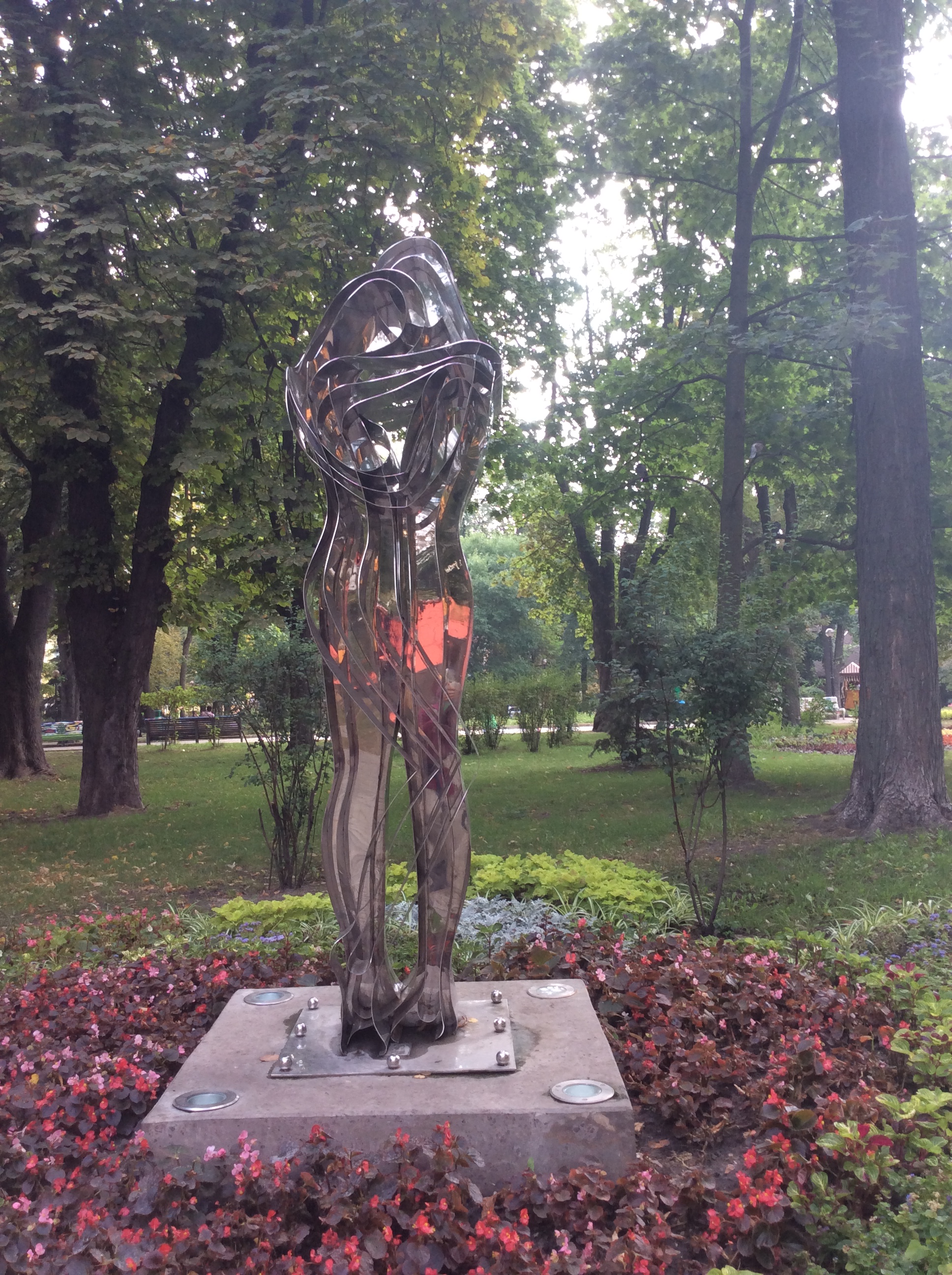
Amber and Ashes

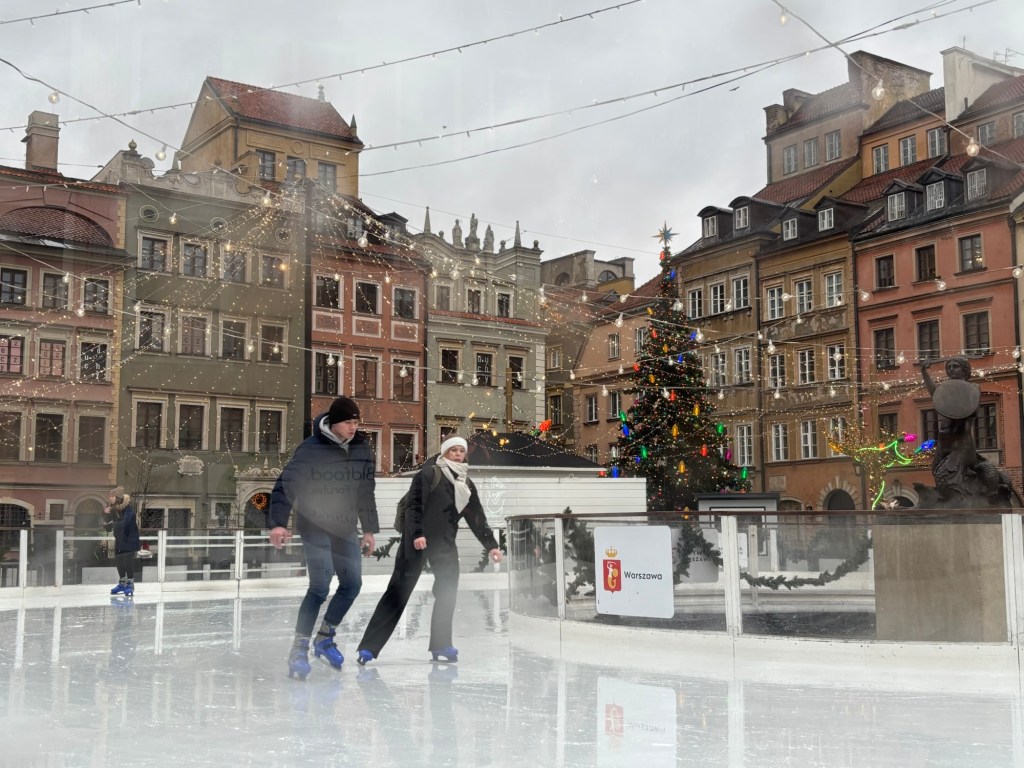
Warsaw is a strange town. For a European, at least. It’s like looking at a replica – which is not so far from the truth at all, as the city was razed to the ground with unparalleled savagery on Hitler’s orders. It seems absurd that I stayed in buildings in the US this summer that were older. But, there we are. It’s a testament to the Poles’ love for their capital city that they rebuilt the place brick by brick, presumably at no small expense.

I’ve come to the centre of the Old Town in search of amber for my mother, to replace a pair of cherished earrings lost long ago. I wanted to visit the Polish Jewish Museum and the Warsaw Uprising Museum, but as luck would have it, those two museums – and only those two – are closed on Tuesdays. So I do one of my usual make-it-up-as-you-go walking tours instead.

The usual global parasites that infest the heart of Europe’s ancient cities have been mercifully kept outside the old town walls: the lurid glare of the Hard Rock Café, Costa coffee and the Golden Arches can be seen from its outermost streets, but no further. Along with the usual array of anachronistic American college jackets with Warsaw splashed across them, quite a few souvenir shops appear to be selling tee-shirts with the city’s name in Star Wars font. One even has a chibi Darth Vader next to the slogan “I love Warsaw”. It seems a little tasteless to have a man infamous for his hatred, wanton destruction, ruthless repression and stormtroopers (and who isn’t even the obvious real life counterpart) associated with a city like Warsaw, but perhaps the irony was lost on the designers.


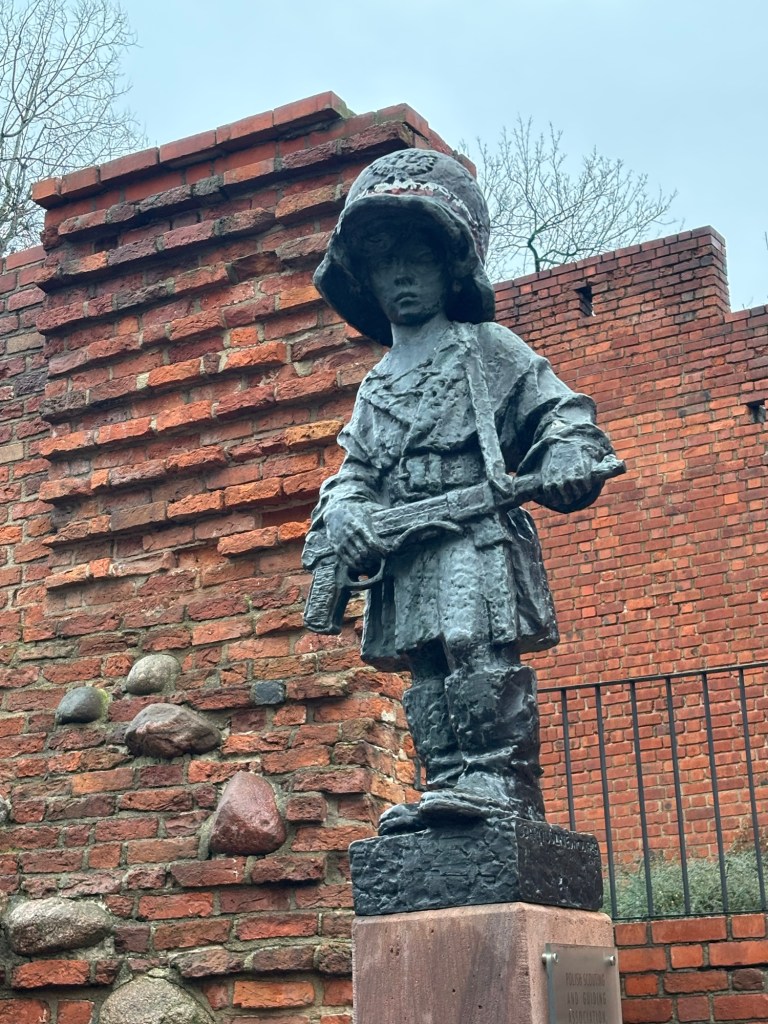
Not far from the city centre stands a miniature statue atop a plinth, just outside the city walls. It depicts a child soldier, an anonymous victim of the Warsaw Uprising. It is a stark reminder of just how young the rebels were: the average age of the insurgents was only seventeen. One has to hand it to the incredible courage of the Poles for standing up to the might of the Third Reich, when they were all but trapped under the heel of the Führer’s jackboot.


Nothing remains of the Jewish ghetto, which was considerable. Similar ghettos in Spanish cities are minute by comparison, despite Spain once housing a not insignificant percentage of the world’s Jews. There are nods to what once was: a metal plaque cuts across the road in places, marking where the perimeter walls once stood.

In a park nearby, a woman in a fur coat walks her dog. I arrive one minute too late to catch the start of the changing of the guard, but I do see the new sentries move into position beside the Tomb of the Unknown Soldier. A fire burns steadily in an iron grate between them. The chosen shelter for the tomb is the last remaining piece of a former palace complex, of which only three arches survived the destruction of war. A short wall on either side of the square bars access to what looks like an excavation site. Beyond that, the yellow squares of ceiling lights gleam from behind the glass of the office buildings. I have always been curious as to what it might be like to work in one of those places, though it’s the same kind of curiosity I harbour for how it might feel to tumble over a cliff or to sink to the bottom of the ocean. Perhaps I’m happier not knowing.


Night falls. Warsaw puts her Christmas clothes on. I consider going without supper, but one of the restaurants in the old town does flaki and I can never say no to offal. This time I can savour it in peace, without the tutting and sermonising of the vegetarian globetrotter who was so judgemental of my taste before. The pierogi are probably a bit much and I can’t finish them all, but I do an honest job of it. I suspect that flaki appeals to me because tripe stew isn’t too far from the Spanish dish of callos or any number of dishes I have eaten in Uganda and Morocco.


Back at the hotel, I have a lot of time to think. I pack my bags. I watch Polanski’s The Pianist and try to picture those things happening right beneath my hotel window, some eighty years ago. I tell myself I mustn’t sell myself so cheaply anymore, apologise to a few matches on Hinge and unmatch. I take a shower and read back through the blog to happier times, to the Camino, and wonder whether that ought to be my next grand adventure. After all, the end of the Camino isn’t the end of the road. It’s just the start of the next one. BB x

Fall

There’s a small oak tree that grows beside the boarding house. It shed its leaves a couple of weeks ago, briefly covering the tarmac in a golden-brown carpet, before the groundskeepers swept them all up into the back of a truck and took them away to the tip. A beautiful gift of death tossed into the trash. Word must have got around, in that silent way that trees have, as so many of the trees around the school have since held jealously onto their leaves well into the usual falling season. My oak, stripped to the skin, looks cold. Winter will soon be here and it has lost its coat.


The world seems a little darker right now. It’s not just the longer nights. The news is full of it. Abuse in the Church of England. Treachery and death in the Middle East. A self-confessed day-one-dictator returning to the White House. Politicians who once laughed at the Man spinelessly throwing in their lot behind the future power base. Shadows creeping over Ukraine. I expected to see more of it on my social media feed, but there’s been surprisingly little said about the US elections. Perhaps the folks I know have listened to the voices in the wind and decided that now is not the time to voice their concerns online. Perhaps they vented their frustration elsewhere. Or perhaps – and I suspect this to be the grim truth – most of them just didn’t care overmuch.


There’s a quote often attributed to the Anglo-Irish philosopher Edmund Burke that runs along the lines of ‘evil triumphs when good men do nothing’. As is the way with so much these days, there’s almost no evidence that he actually said such a thing. We have learned to doubt everything. In that light, how can you blame a nation for putting their confidence in a self-confessed liar?

Burke did, however, say something similar, albeit a lot more profound:

When bad men combine, the good must associate; else they will fall, one by one, an unpitied sacrifice in a contemptible struggle.
Thoughts on the Cause of the Present Discontents (1770)

He might have been writing a little over two hundred and fifty years ago, but he might just as well have been describing the world as it is today. It is always rather chilling when the voices of history stretch their pale and clammy hands into the present.

Until we learn to put our differences aside and work together – even with those with whom we do not, cannot or simply will not see eye to eye – our future will be in somebody else’s hands. Until the educated West accepts this reality, there will be no end to the head-scratching and the bewilderment. I have beat upon this drum since my schooldays, where it was doubtless drummed into me by my teachers, but I still believe this to be true: that you should always be prepared to listen and engage in conversation, no matter what you believe. Cancel culture does not work. It just fans the flames of those who feel their needs are being ignored and their voices silenced. We are marching into an increasingly intolerant age, and it worries me that those who fight for tolerance’s sake are among the vanguard, whether they know it or not. Men like Trump ride into power on the backs of such virtue-signallers.

I’m reading my way through a number of books to try to see the world through somebody else’s eyes. It’s my way of dealing with the situation – particularly when my profession is to help children to make their way in the world. I’ve started with Douglas Murray’s The Strange Death of Europe in an attempt to understand the growing immigration frustration in my country (having been an immigrant myself, however briefly). Ilan Pappé is in the wings. I can’t say I agree with everything I read, but it’s broadening my perspective a little more, and that’s no bad thing.


In the spirit of remembrance, they read the list of names of former students of the school who lost their lives in the two world wars in front of the war memorial yesterday. All of the numbered fallen had one thing in common: not a single one had died on the field of battle. Died in a collision during training. Run over by a lorry near base camp. Killed by an explosive during a training exercise. Shot down by friendly anti-aircraft fire after returning from a successful mission. The senseless waste of war was never more plain. When I was younger I had the morbid suspicion I would see another such great war in my lifetime. It was only ever a whimsy, but these days I am not so sure.

Some of the students were dressed in their military uniform. I had a grim vision of a towering cenotaph. Etched into the cold marble slab were names from every corner of the globe. I hope it does not come to that.


On closer inspection, my little oak has not lost everything. Not yet. A few golden leaves have held onto life, a full fortnight after the rest bowed to the inevitable. It just so happens that they are growing on the branch that reaches closest to the light. I wonder if that is what is keeping them alive.

We can’t give up hope. Hope is one of the things that makes us human. As winter draws near and the world darkens a little more every day, remember to hold on to the light in whatever form that takes for you. It is a warm and precious thing. BB x

Omaha Beach: Battlefield Forever?

It’s easy to ask yourself why you’re bunkered down in a hostel when you’re at the point on your life where you can afford a little comfort here and there. But I stand by my decision: hostels are a fantastic way to meet people from all walks of life. And that’s what travel is all about, right?

I got talking to Gavin from Utah last night – the first American from a state that isn’t Cali or Texas that I’ve met in a long time (those two states pump out travelers like there’s no tomorrow). To have an American perspective here in Normandy was more than I could have asked for, and Ana from Austria provided a Germanic point of view – so I really scored a hat trick here!

Over dinner last night the three of us decided to check out the landing beaches today. Gavin had already booked himself onto an organised tour, but I’m nothing if not stubborn when it comes to planning my own affairs, so Ana and I improvised our own plan of attack, starting at Pointe du Hoc.


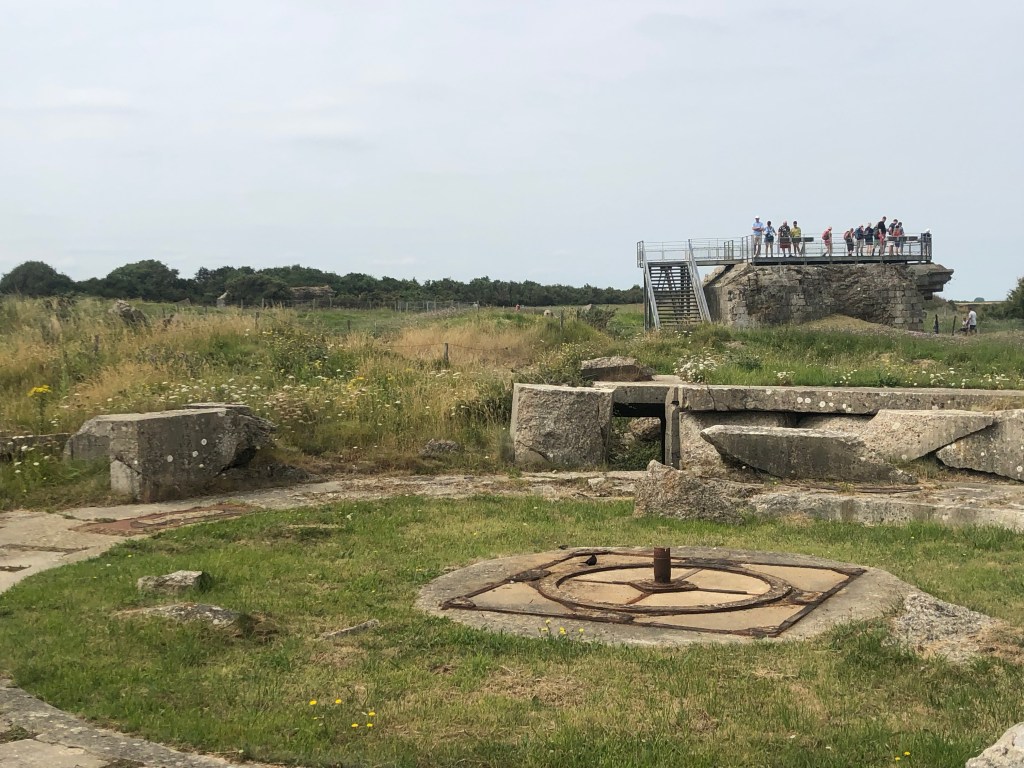
Most of Omaha Beach – one of the main landing zones for US troops during the D-Day landings – has reverted to its pre-war status as a pleasure beach, so it’s important to visit a site like Pointe du Hoc to really get a feel for how things were. The promontory is strewn with craters caused by Allied shells, some so deep you can stand in the centre of them and still be more than a head below ground. It’s hard to take it all in at once: the scarred, lunar landscape overgrown with tall grass and summer flowers, with pipits and wagtails and warblers singing their hearts out. In a cavity in one of the old gun mounts, a blackbird stood washing itself, and away to the east the mournful cries of a large colony of kittiwakes. I wonder how much of this vanished when the clouds of earth came down here, all those years ago.

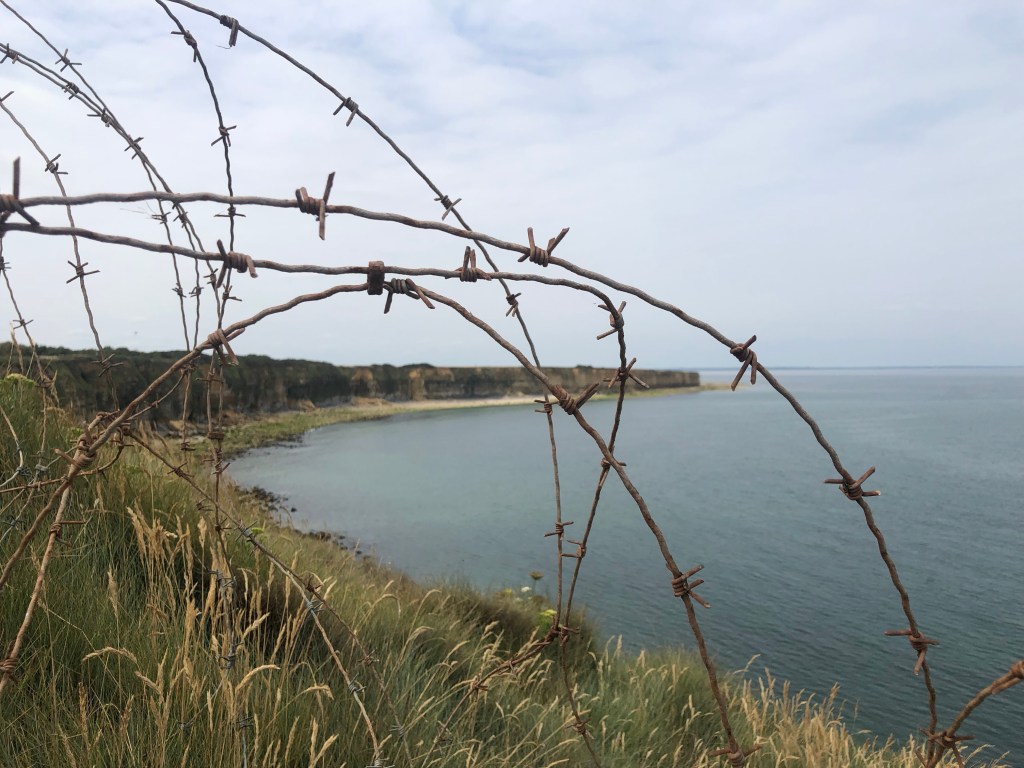
The bunkers are eerie. No other word for it. They’re cavernous on the inside, with a lot more rooms than you think at first. Some of them have marks in the rear wall that can only be from stray bullets fired directly through the opening. You try not to imagine how they got there. And then there’s the coils of barbed wire that ring the cliff edge, rusted from years of exposure to the salted wind. You can’t help but take your hat off to the US Rangers for not only coming ashore under heavy fire but scaling a vertical cliff-face before launching their assault.

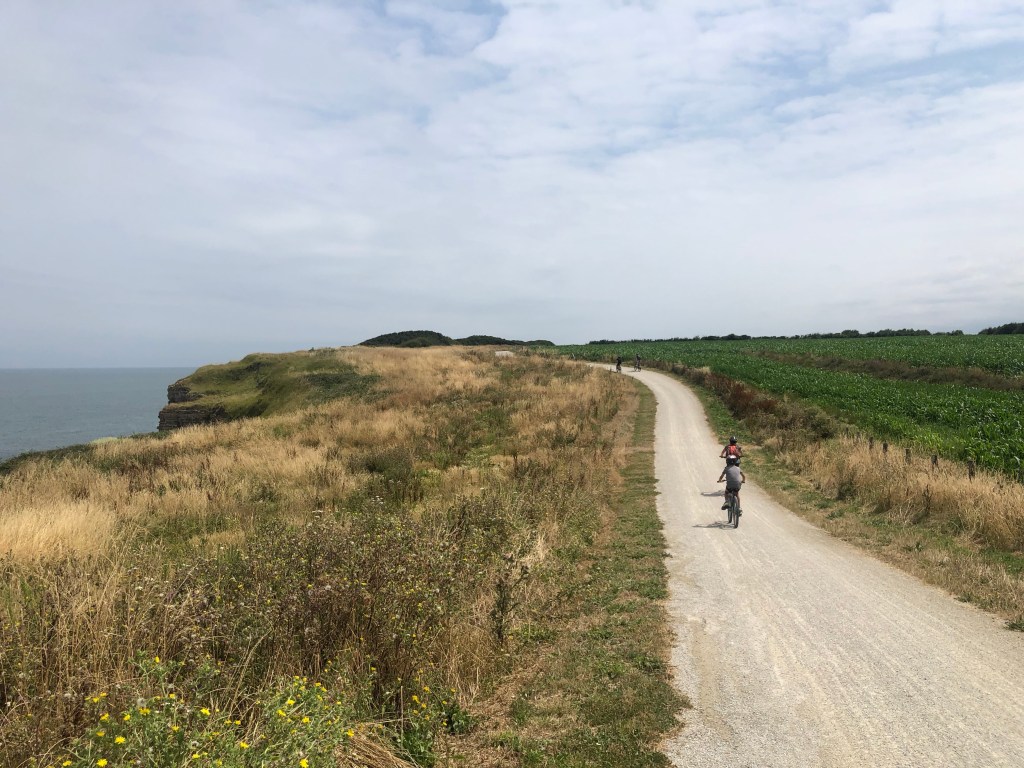
From Pointe du Hoc we found a track along the cliffs to take us back to Omaha Beach. It’s completely invisible on Google Maps, but reason told me there would surely be such a path, and as luck would have it, there is: a relatively new cycle track that starts at the Pointe du Hoc car park and follows the coast all the way to the beach at Vierville-sur-Mer.

It’s clearly a popular route with the locals, and there were plenty of cyclists out and about, from hobbyist Dutchmen clad in Lycra to families of sporty-looking Germans – and, of course, your classic stately monsieur paying no heed to aerodynamics in his beige jacket and jeans. We passed him at least twice (did he lap us? I think he lapped us…).

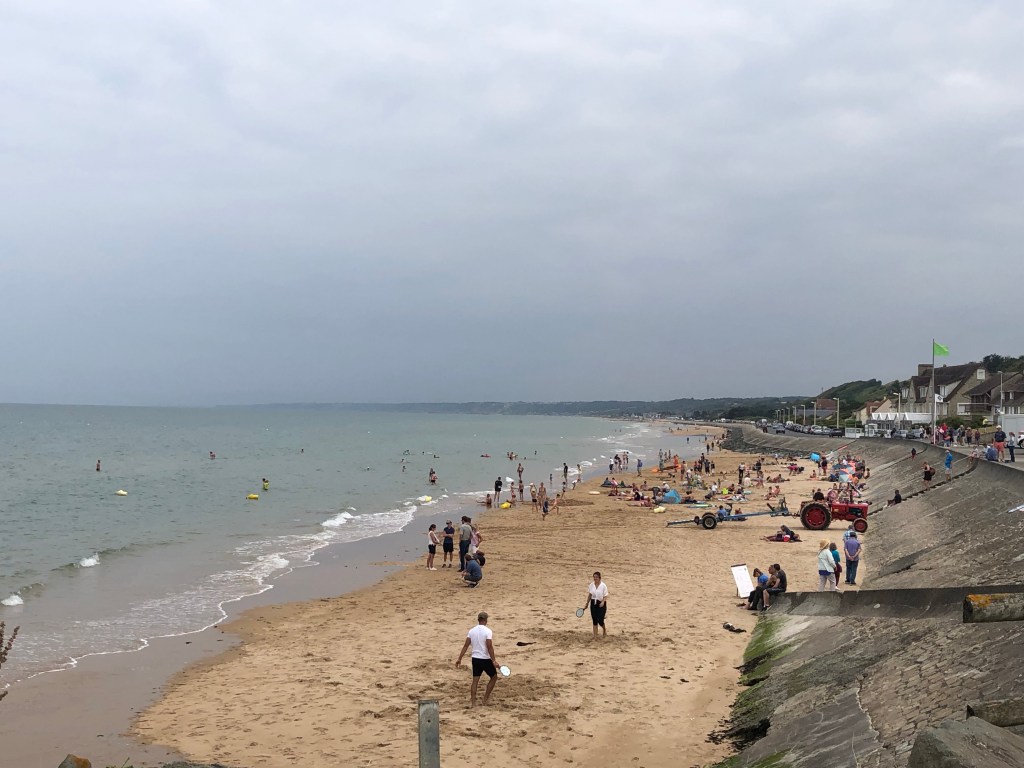
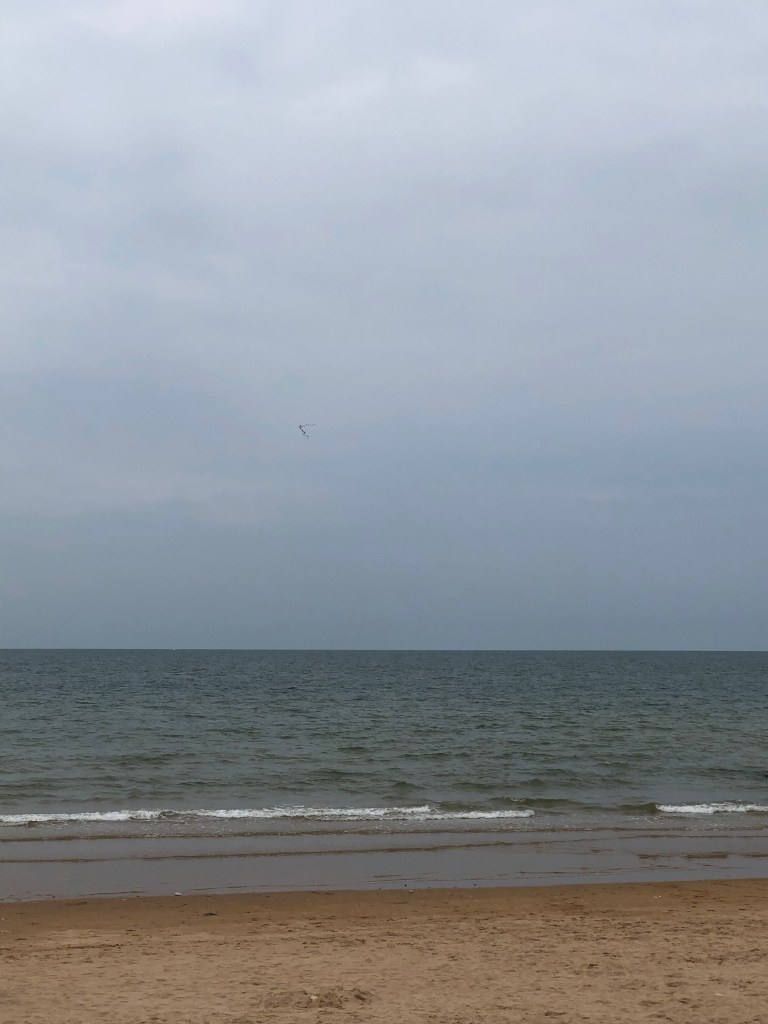
Omaha Beach was pretty busy when we got there some two hours after leaving Pointe du Hoc. Paddle boarders, bathers and dogs plied the shallows between the beach and the sandbar. Children built sandcastles and dug bunkers of their own, while parents leafed through this or that summer book. If you squinted down the coast you could almost imagine the many thousands of troops who landed on this beach nearly eighty years ago, but I get the feeling that memory is fading further and further into the distance. The tour guides bussing up and down the coast road in WW2-era jeeps look more whimsical than reverential, like taking a ride in a sedan chair. Gavin said he thought it a shame that it hadn’t been preserved more like the battlefield that it was. I’m not so sure. I think the regeneration of a battlefield is part of the healing process. This is, also, France, and having borne the brunt of the fighting in not one but two world wars in the last century – not to mention their occupation by the Nazi regime – they may well want to move on.

In any event, I wasn’t averse to a swim in the bloody waters of Omaha, if only to say I’d done it. After a two-hour hike in the sun along the cliffs, it was definitely the right thing to do. The heatwave might be over, but it’s still hot enough to dry off in a matter of minutes, so I had no concerns about swimming out to the sandbar and beyond for a bit. I’m not the best swimmer, but God, I’ve missed being in the water. It’s a pain living so near the coast and yet so far.

I didn’t think about the history as I stepped into the water. The infamous opening scenes of Saving Private Ryan didn’t flash across my eyes. I just waded in up to my waist and kicked off into the murk. As the poppies that grow on the fields of the Somme have become a symbol of remembrance, I think it’s only fair that the spirits of Omaha are also allowed to depart in peace. Their heroic struggle will never be forgotten, but the land beneath our feet is not ours to sculpt, no matter how hard we try. It was here before us and will be here long after we’re gone. To see Omaha and to stand where they stood is enough, I think. And that’s my two cents on the matter. BB x

Storm Clouds over Soho

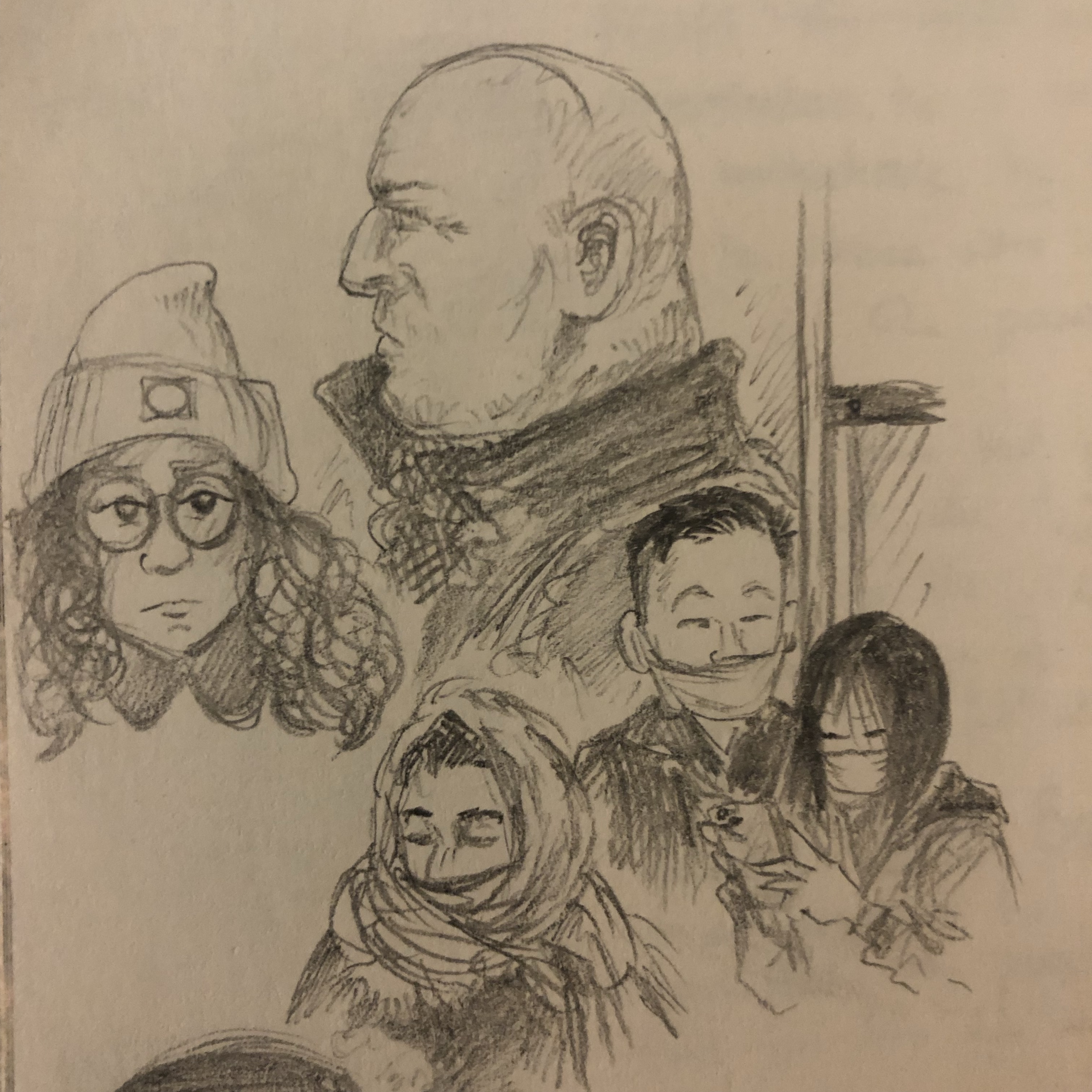
I got the train up to London today with a view to getting my hands on a decent pair of shoes, since I’m told the Italians can be a little snobbish when it comes to standards of dress. With the Northern Line under repairs, it took a little longer to get up to Bloomsbury, so I took a leisurely ride on the Circle Line from Blackfriars and indulged in a favourite pastime: sketching commuters on the Underground. There’s an art to it (no pun intended) – you’ve got to be quick, since most of them only travel a few stops before getting off. And now that face masks are a minority affair, it’s a lot more enjoyable a practice than it was.

Predictably, I got waylaid in Gower Street’s Waterstones en route to the shoe shop. Ever on the hunt for new additions to my Spanish library, I thought I’d do some digging at one of London’s finest bookstores, since it’s been quite a long time since my last visit. I managed to exercise a considerable amount of restraint this time, leaving behind two case studies on the Inquisition from the antiques section in the basement and Minder’s The Struggle for Catalonia… though I’ll be back for that one eventually. Giles Tremlett has brought out a new book on Spain which looks like it will pump out a lot of material I can use with my A Level Spanish students, which is my way of justifying that purchase. The only book I didn’t question was an account of Walter Starkie’s Camino. Starkie wrote so vividly about his journeys as a minstrel across Spain in Spanish Raggle Taggle and peppers his writing with old verses all over the place, so I had to salvage that one.

I wandered down towards Oxford Street in search of a decent pair of shoes, but I couldn’t find anything that jumped off the shelves at me, so I decided to make do what I have (a fine piece of advice at the best of times, which I wantonly ignore whenever I should be near a bookshop) and cut across town back to the river through Soho.

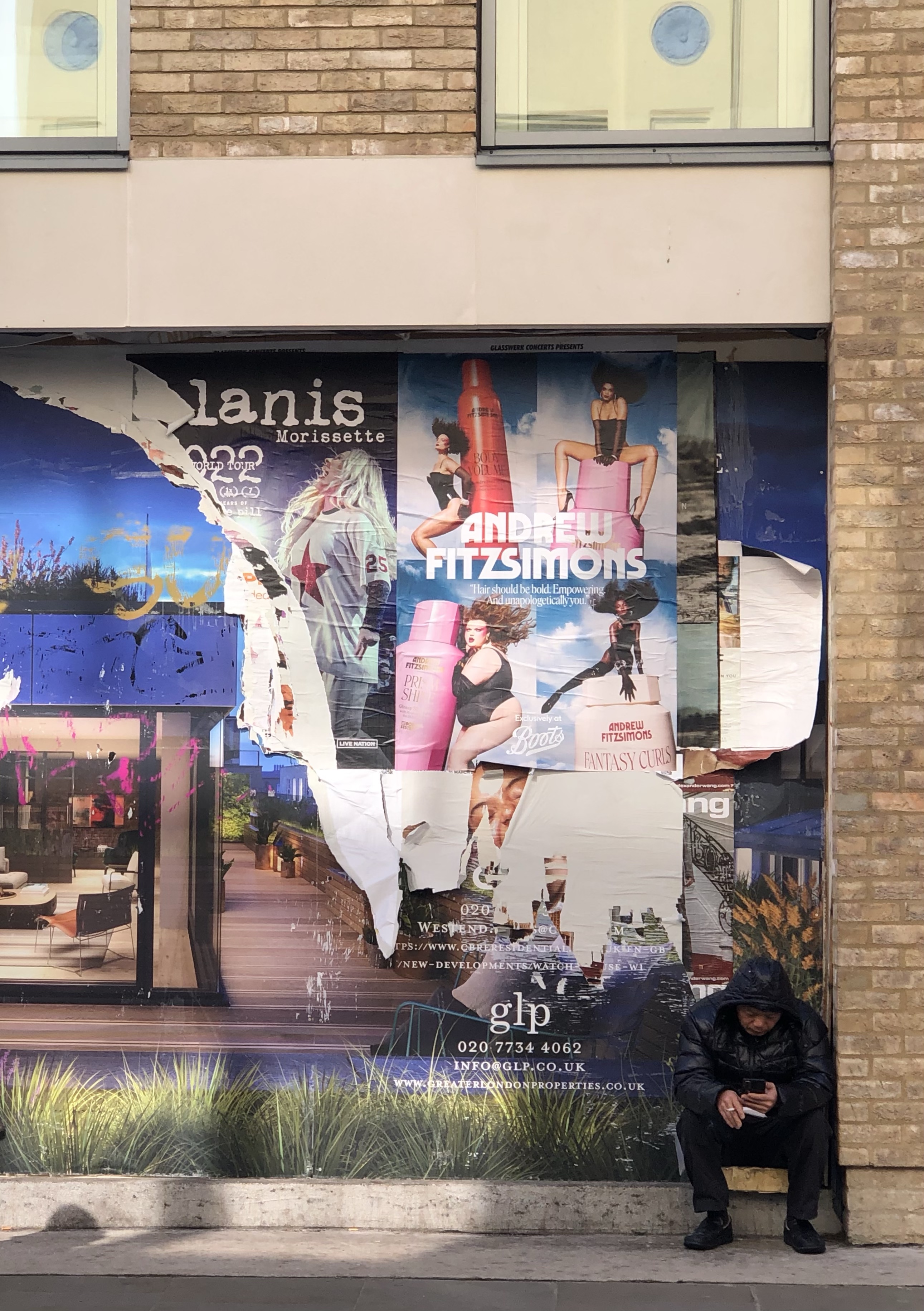
I’ve either forgotten how luridly seedy Soho is, or I haven’t properly explored the place before. What looked like a shortcut led me down a dark alleyway with shady adult stores on either side. The noise of Oxford Street seemed to die in the distance, like the record player in the Waterstones’ basement, stifled into silence by a wall of books… only now by grimy bricks and a mere sliver of sunlight through a gap between the buildings above. I almost collided with a stocky man in a big puffer jacket with a cough came lumbering out of a film store, stuffing something under the sleeve of his coat. Two Arabs stopped talking and gave me a funny look as I passed, clutching my journal in one hand and one strap of my rucksack with the other, humming the tenor line from Ola Gjeilo’s Northern Lights to myself. I guess Soho isn’t on the tourist trail.

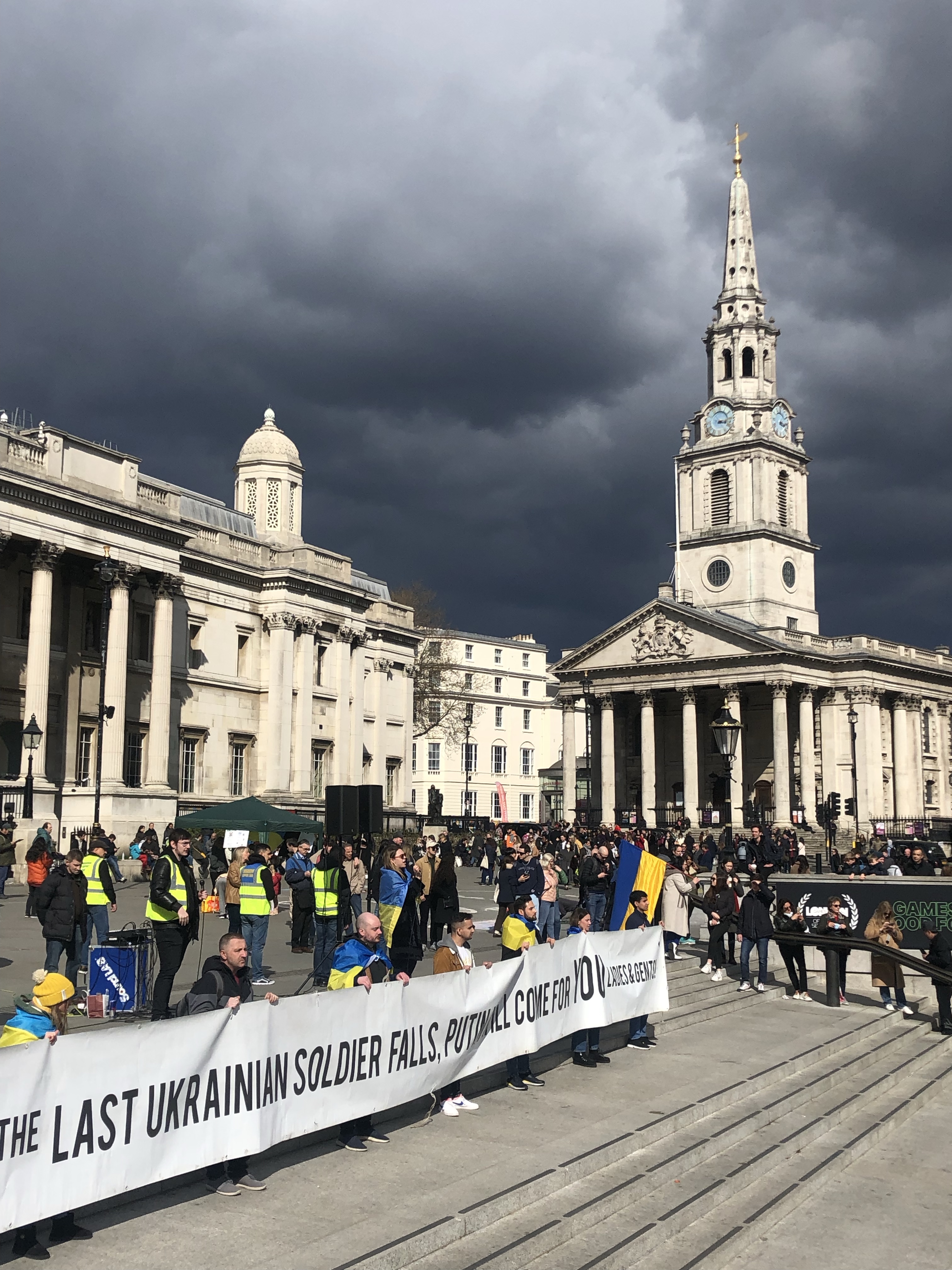
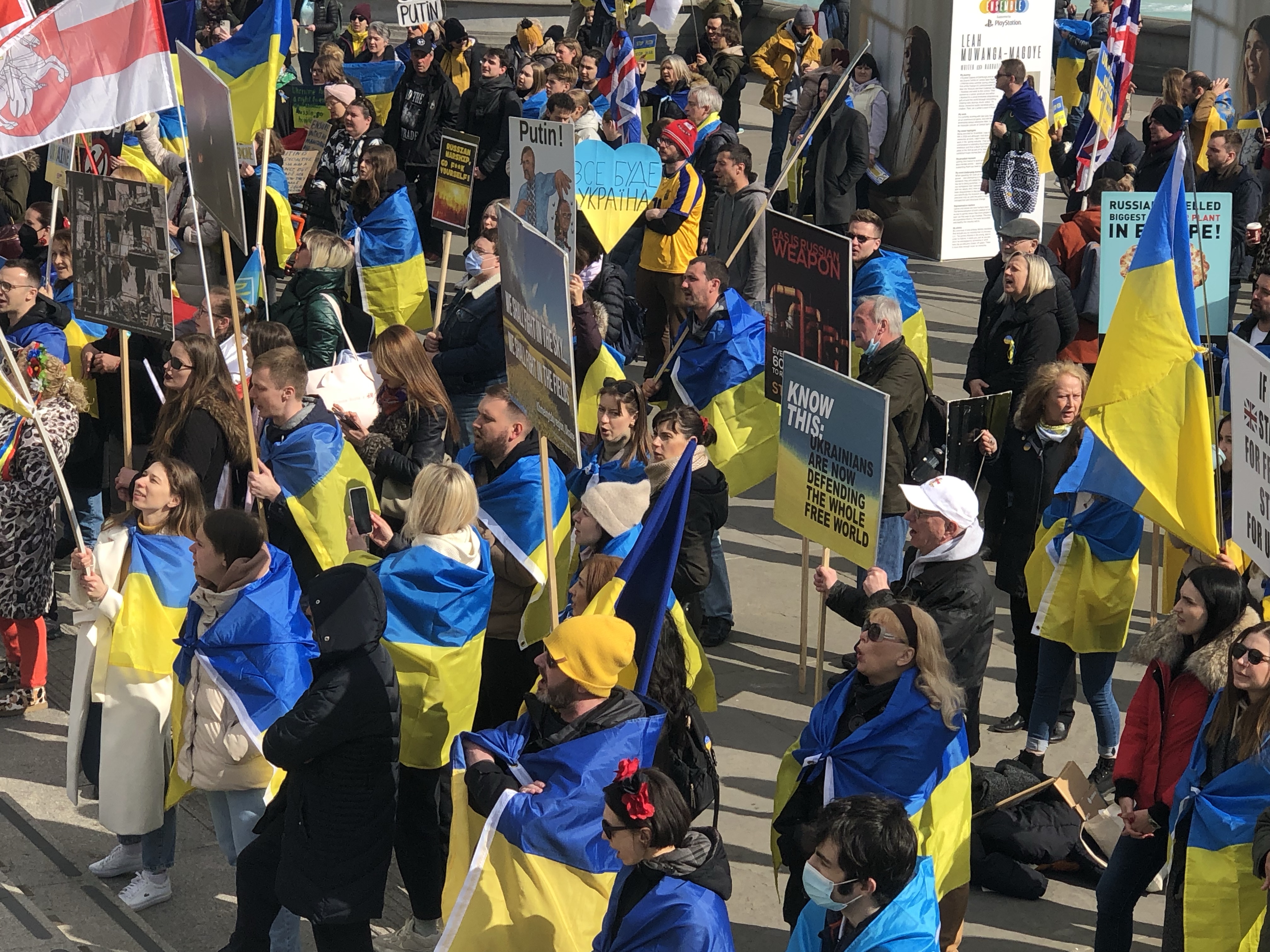
Leaving Soho behind, I wandered through the crowds in Chinatown and came out onto Trafalgar Square, where a large crowd had gathered on the steps. Unsurprisingly, it was a rally against the war in Ukraine. Blue-and-yellow flags fluttered high above the throng, joined here and there by Polish and Hungarian partisans adding their colours to the mast. One woman, the tryzub emblazoned on her cape, stood defiant at the front of the congregation, fist raised in a powerful salute for most of the half-hour I stuck around to watch.

Boycott Russia.
Arm Ukraine.
Stop Putin, stop the war.

Those were the chants, coming around and around before the crowd. The main speaker apologised for the necessity of being so blunt, before decrying the rape of Ukrainian women by Russian forces and the slaughter of its children. An Englishman spoke slightly hesitantly about the need to support Ukraine’s disabled and elderly refugees, and a Ukrainian began to sing a national lament as the sky darkened overhead and the sun faded from sight. I’ll admit I half expected there to be a police van lurked nearby, its officers on standby for any disruption, but I couldn’t find a visible copper for love nor money.

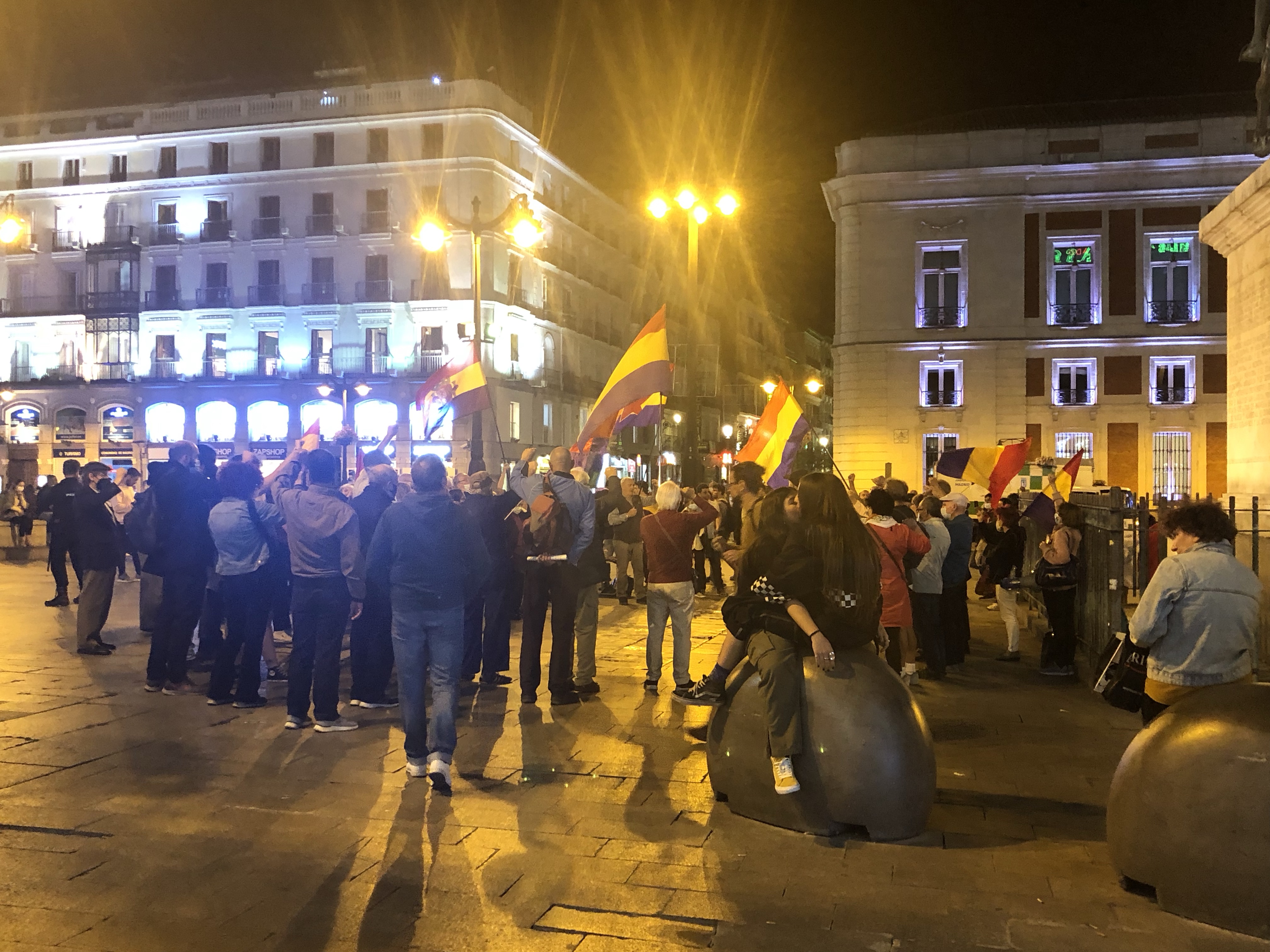
The last time I saw a demonstration like this was back in October in Madrid’s Puerta del Sol, as I walked back to my hostel with one of my cousins. “They’re always here,” he told me, “and so are they,” indicating the loitering policia who hang back just shy of the crowd, silent, hands on their truncheons, watching the Republican flags flying in the night air. The crowd was surprisingly mixed: an old man in a flat cap stood shouting his passionate support in the centre of the throng, while two girls shared an equally passionate and equally political moment on one of the bollards. The policia watched on, silently.

Puerta del Sol, October 2021

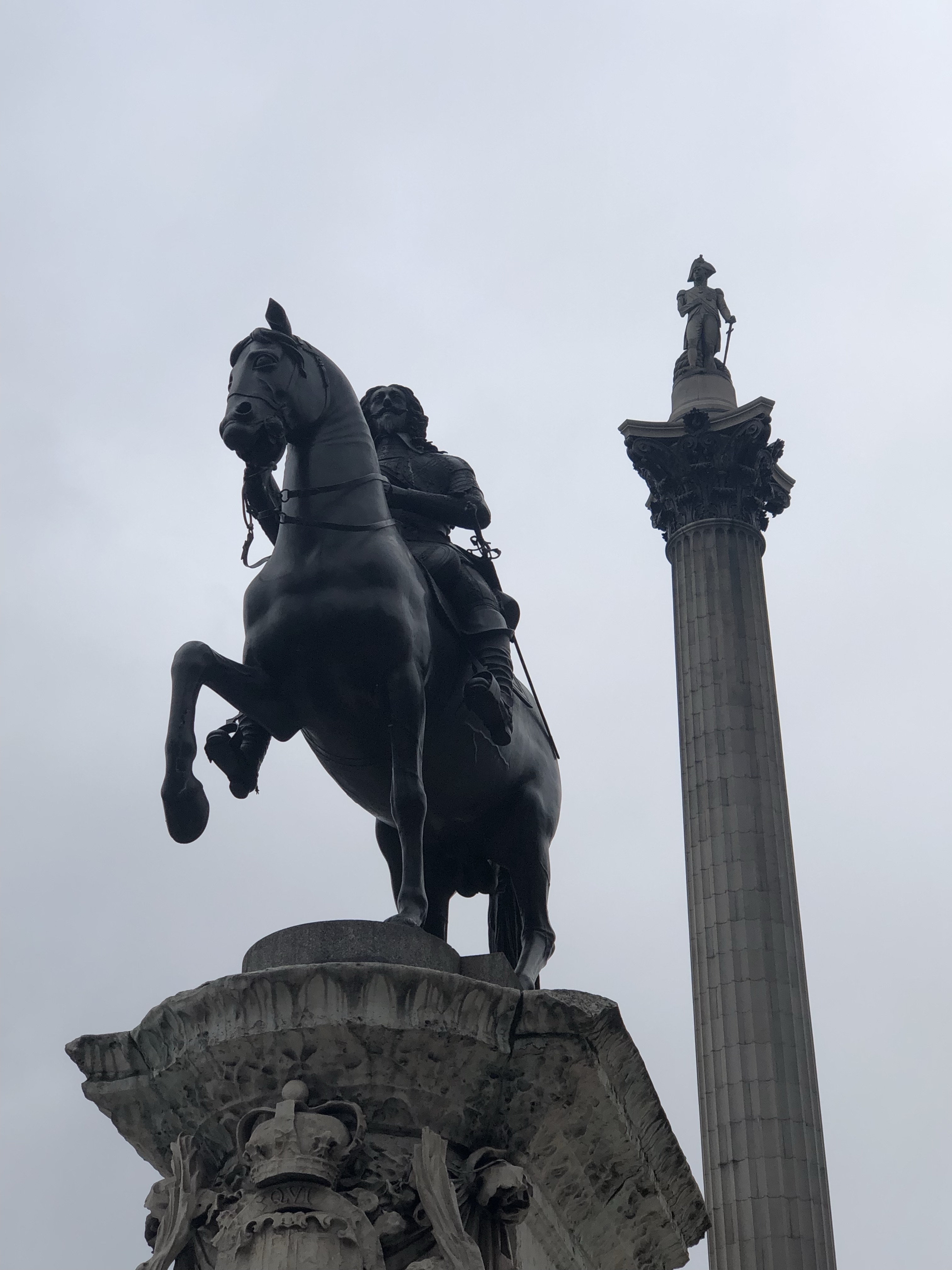
On my way back to the station, I stopped at the traffic lights and looked back to Trafalgar Square. Lord Nelson and a mounted Charles I stared southwards over my head, silhouetted against the clouded sky: two men who got personally involved in European wars and paid a physical price for their efforts. Little wonder, then, that the European powers are so reluctant to send any troops into open battle to defend the Gateway of Europe.

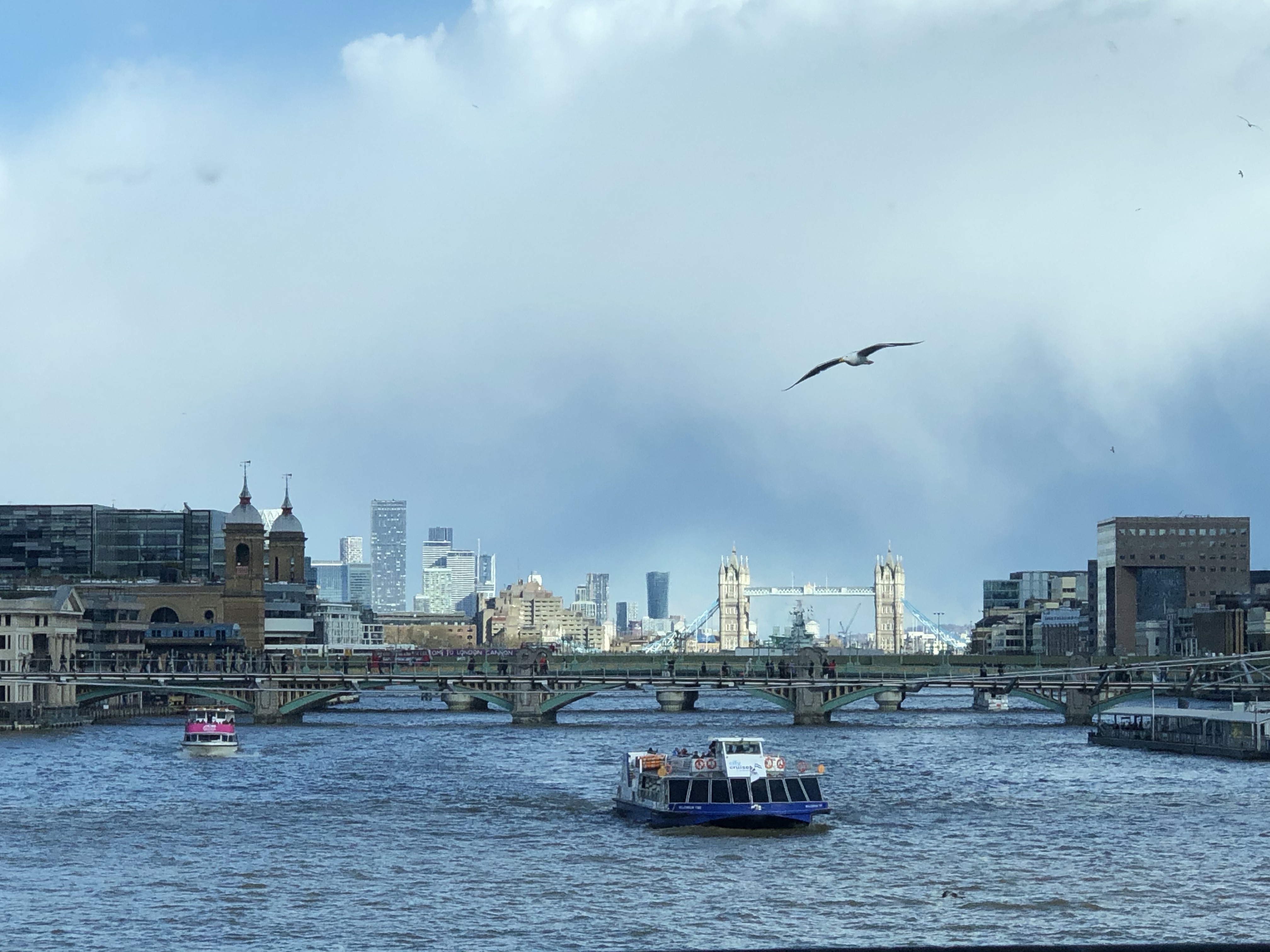
Back at Blackfriars, the rally seemed a world away. I missed the early train by a whisker and had to wait twenty minutes for the next one. A Catalan girl sat on a bench nearby, a red-and-yellow skiing jacket from Cerdanya proudly displaying her winter colours. I instinctively reached for my face, but my usual rojigualda facemask was at home: I’d opted for a less nationalistic face covering today. Away to the east, the sun broke through the clouds over the Thames, lighting up Tower Bridge against the rainclouds rolling in from the south. London seems to go on forever, whatever happens to the rest of the world, and yet it’s Rome that holds the title of the Eternal City. I’m looking forward to seeing it with my own eyes and reading such stories as I can find in its people and its streets. BB x

Wailing World

“Sir, what’s your opinion on Russia v Ukraine?”

In the vocabulary of a child, it sounds harmless, like a friendly football match. It tears away the shock and the hysteria. It tells a story of immediate information, of children monitoring the dawn of war on the screens of their smartphones. It seems almost absurd, watching a war unfold in real time.

I couldn’t answer the student because I don’t know enough about what’s going on in Ukraine to give anything like an informed opinion of my own. My meddling with Russian affairs amounted to nothing more than a short-lived attempt at after-school Russian classes in my sixth form days. The two other chaps in the class went on to study Russian at Oxbridge. I had no such intentions. I happened to be studying the Russian Civil War in A Level History, I was intrigued by the art style of the Soviet propaganda machine and felt like learning a new language. Not for the first time in my life, I felt like a foolish hobbyist amongst eager professionals. I don’t think I ever made it to the second class.

I chose to focus on Arabic instead, for equally casual reasons. I didn’t want to be a spy, or a civil servant, or an ambassador. I don’t have the cunning or the sense of national pride. All I wanted to do was to read my history books, and to draw back the curtain on al-Andalus. I had the chance to explore an entirely different world, and I took the other road. God only knows where my life might have taken me had I made it to that second Russian class.

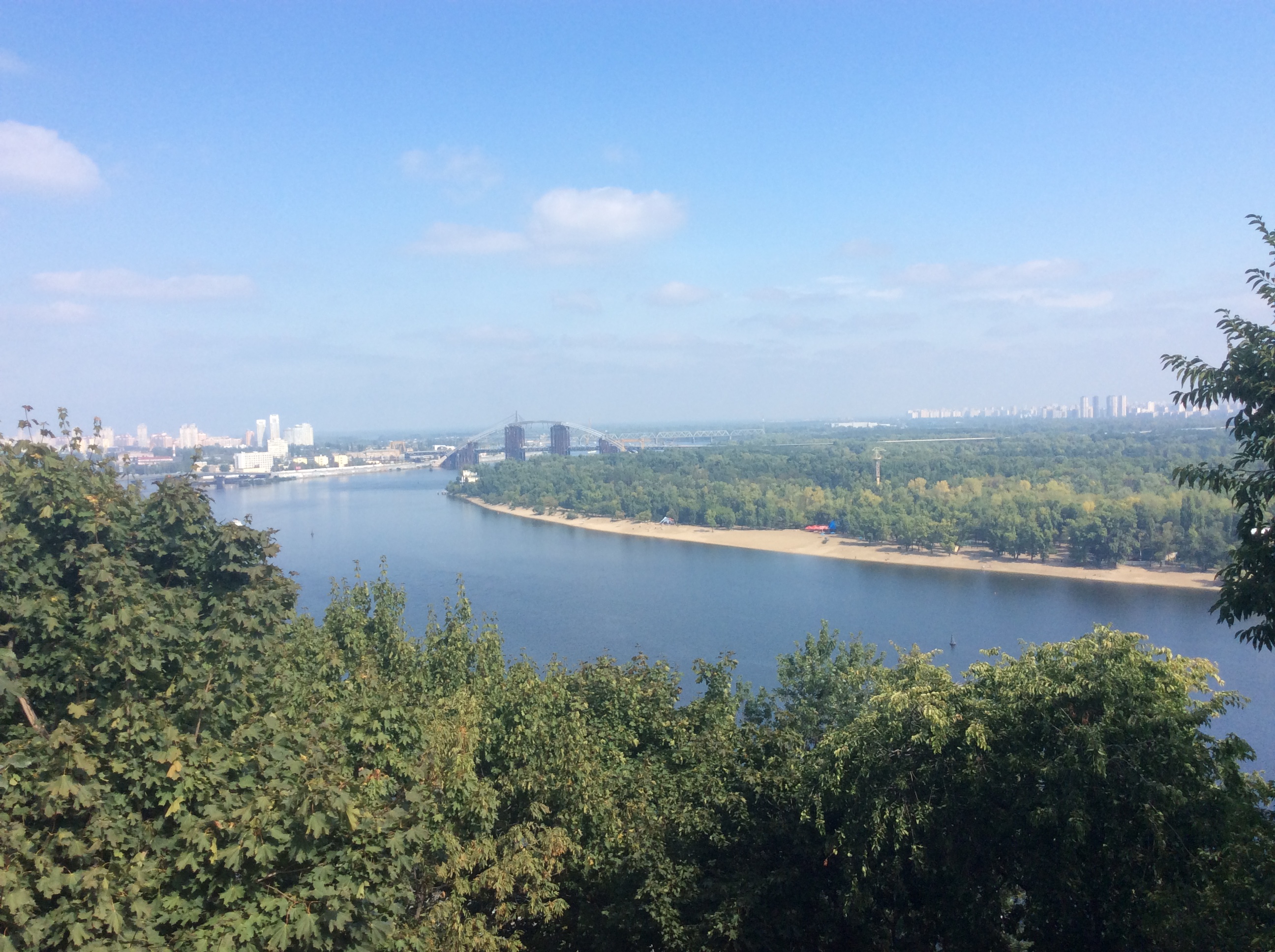
As the fighting intensifies in Kiev, I remember flashes of my brief stop in the city almost seven years ago. Bearded, sweat-scarred and looking forward to coming home, however briefly, after two trying months in Amman. The decision to take advantage of a twelve-hour layover and make a flying trip out to Kiev from Boryspil Airport was a fool’s fancy on my part, as it so often is, but it did mean that I got to see with my own eyes a city that is now in headlines around the world.

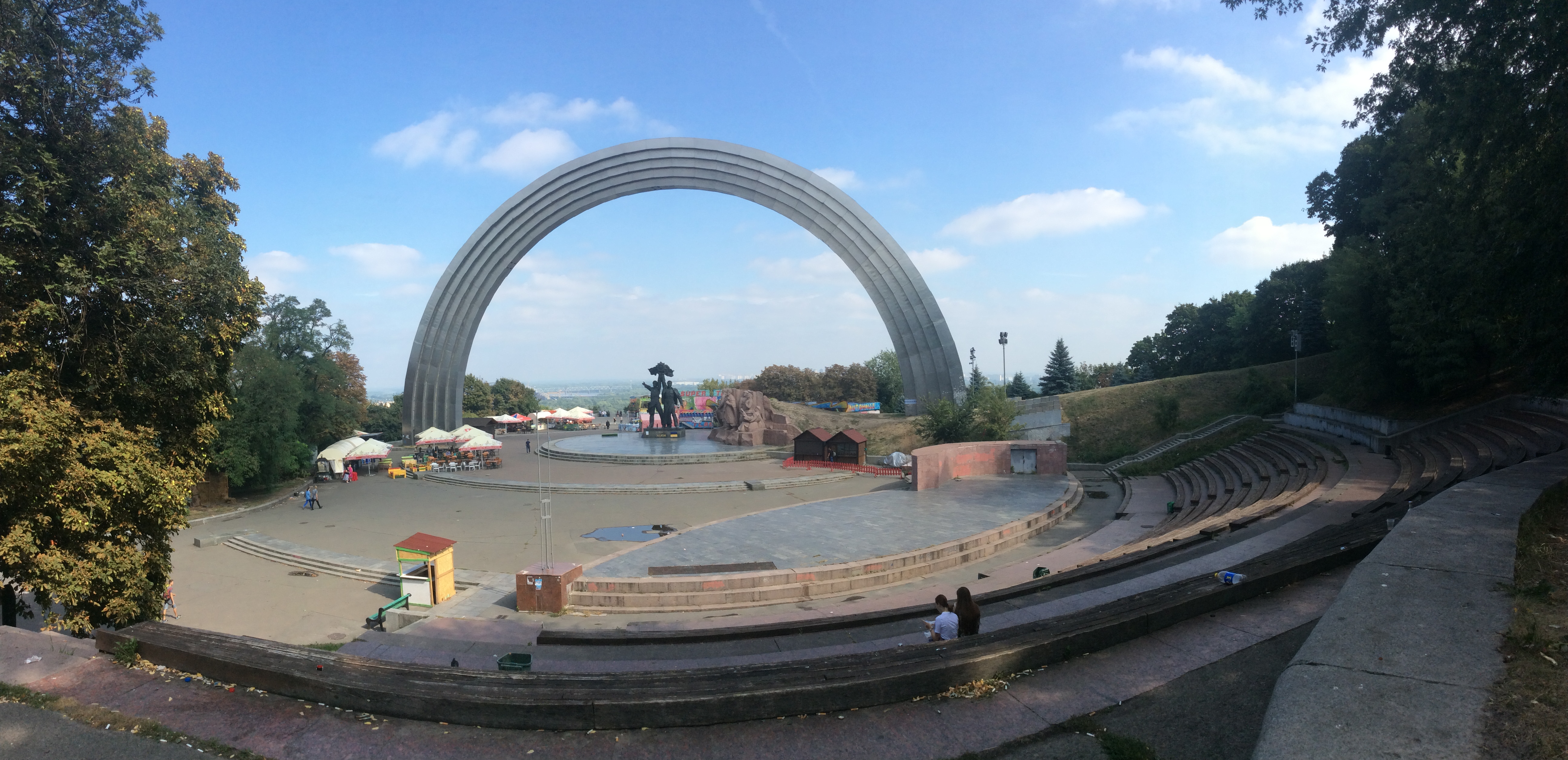
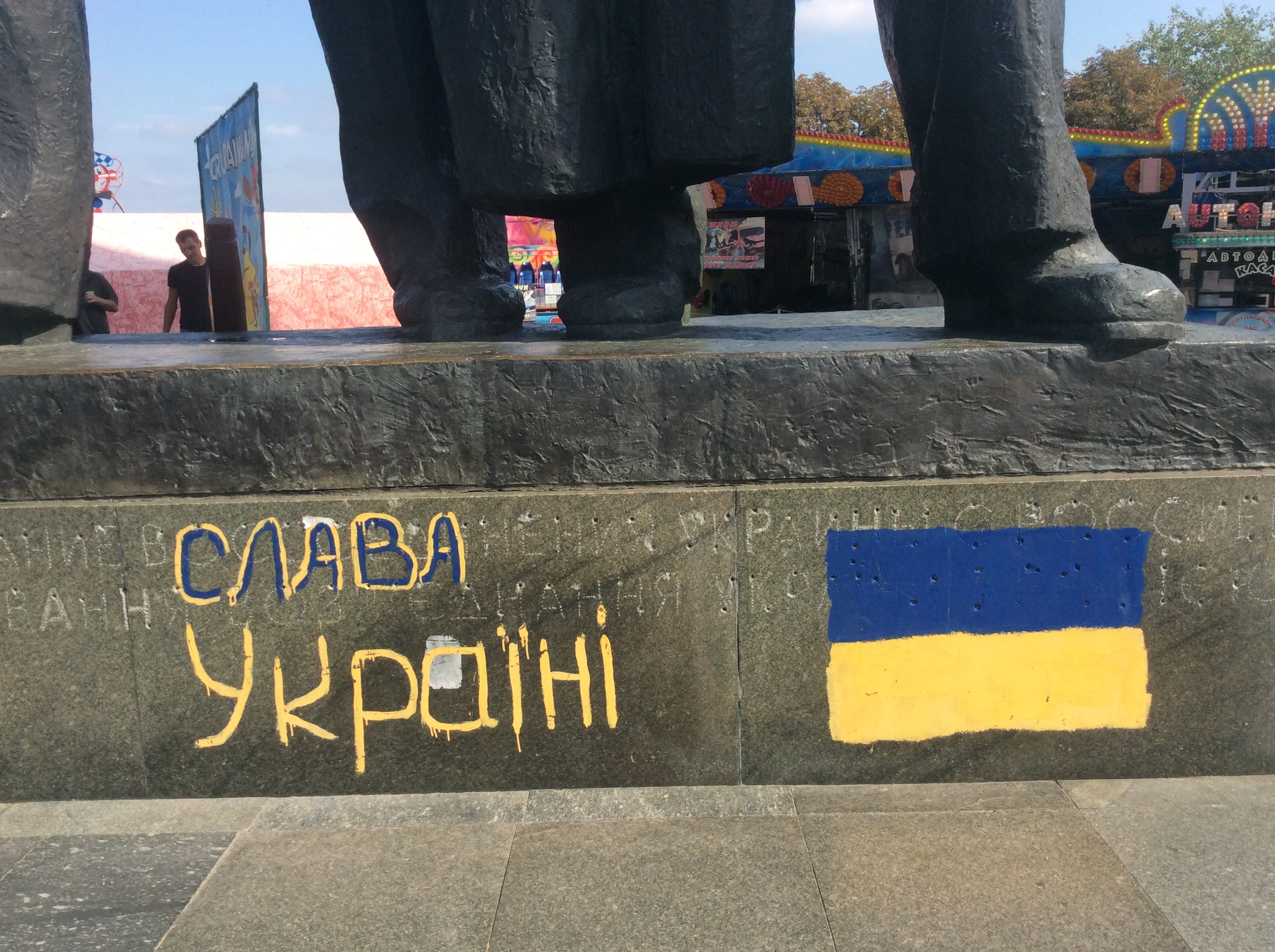
That was back in 2016, only a couple of years after the Revolution of Dignity and the subsequent annexation of the Crimea. The city was quiet, but the stress lines were there to see, if you looked closely. Beneath the People’s Friendship Arch, a monument to Russian and Ukrainian unity, a messaged daubed in Cyrillic: “Slava Ukraini” – Glory to Ukraine. The nationalist call-sign, forbidden during the years of the Soviet Union.

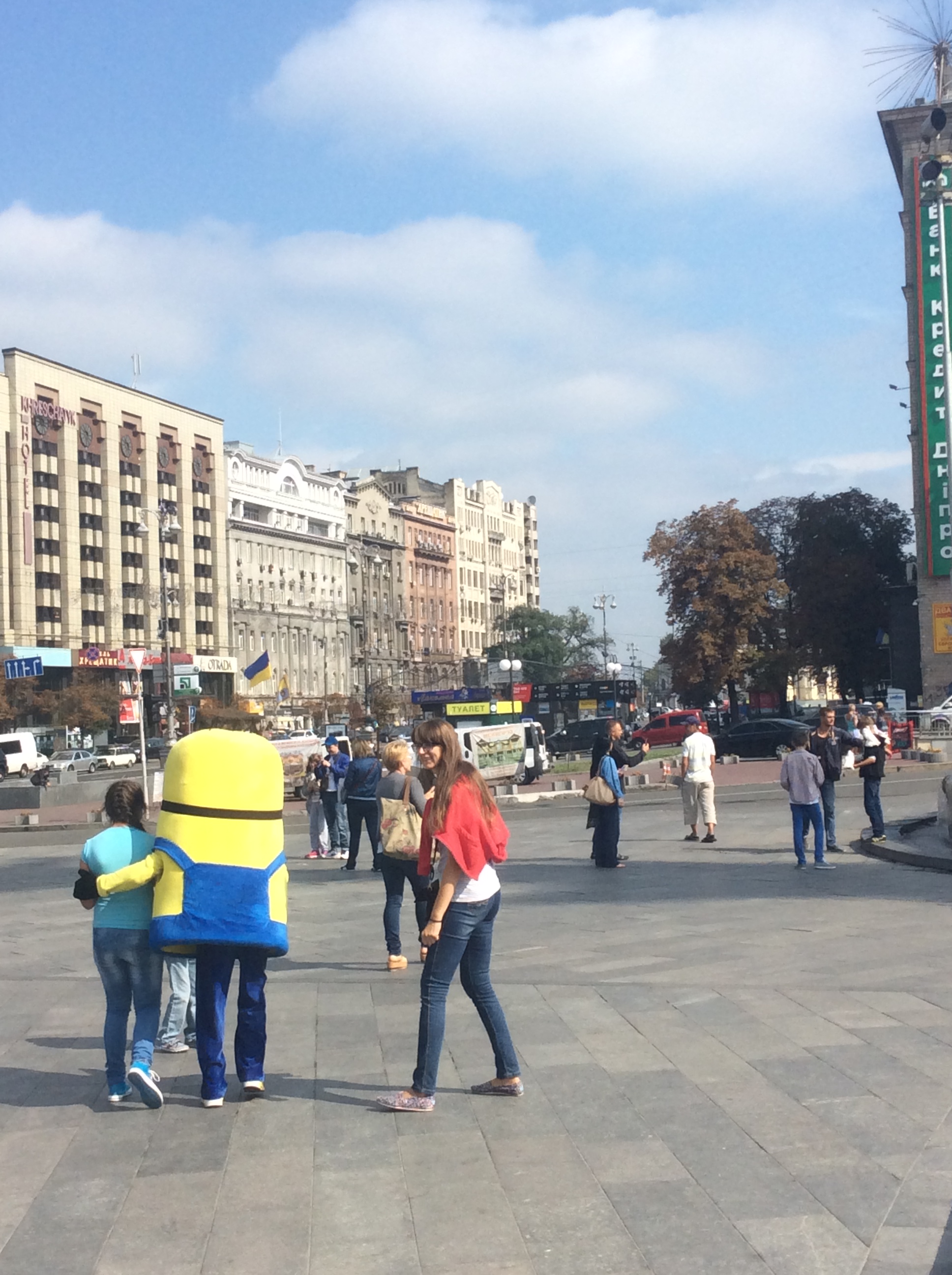
The blue and yellow of the national flag was everywhere, almost as fiercely ubiquitous as the rojigualda in the months following the 2017 Catalan rebellion. Even the street artist dressed as a minion in the Maidan Nezalezhnosti (Independence Square) seemed intentionally patriotic.

The blue and yellow from the city streets of Kiev has since fanned out across the web. Profile pictures bear its bicoloured hue. Thoughts, prayers and shares tell the story of the conflict to millions. And while part of me feels this is the way things should be, there’s something that keeps cropping up that I feel the need to talk about.

As is becoming customary in the Instagram Era, there’s just as much anger on my social media feed about the underrepresentation of conflicts happening elsewhere in the world as there is about the fighting taking place in Ukraine. For every “thoughts and prayers” post there’s a story bemoaning how much less of a fuss was made over Israel’s actions in Palestine, or the Indian occupation of Kashmir, or the assault on Yemen, as though one ought to be losing one’s head every time a gun is fired anywhere around the world. All of them immensely valid causes, no more or less than the chaos unfurling in the land of the Rus right now. Still, the phrase “pick your battles” comes to mind, and perhaps I’ve never used it more accurately. You can’t fight every war.

War. It’s not a word I’m used to using in the present tense, jaded as we are in the West by decades of relative peace. Thousands of us – maybe even millions – have never known what war means beyond what we studied at school. There’s a strong argument against the virtue-signalling “thoughts and prayers” response trending across social media, but maybe that’s just the knee-jerk reaction of a generation so far-removed from war that the word has all but lost its meaning.

Thoughts and prayers for the people of Paris after the Notre-Dame fire. Thoughts and prayers for the people of Afghanistan. Thoughts and prayers, but never enough of them, and never going to all the right places at the right time.

There’s so much human suffering that the whole world should be wailing.”

Joy Chambers, My Zulu, Myself

Taking the colonialist argument off the table, just for a moment, I don’t know whether we’re even capable of feeling a genuine sense of outrage at every injustice there is in the world – even my generation, which does a very good line in being outraged and incensed at everything. Every injustice, though? How can you fight for every cause and still remain true to your own beliefs? That much pain would be enough to tear the soul apart. It’s bad enough being a bleeding heart about the natural world – which, when the chips are down, is the first thing people forget to care about.

Fight, by all means. Resist. Shout about the things you care about. But pick your battles, and don’t attack those who didn’t come when you called, just because the fire in their hearts was not burning so bright.

What’s my opinion, then? Bewilderment. Jaded bewilderment, like so many of my generation. Bewilderment at the aggression. Bewilderment at the inaction. Bewilderment at the comparison to the Sudetenland saga I’ve heard so many times this week.

I studied the Soviet Union for years, but I’m no nearer an answer than any other armchair expert – probably because of my innate aversion to 20th century history, having studied it to the exclusion of every other century at school. Before I speak out, though, I will do what I do best. I will read. I will research. I will inform myself, as we were so often commanded to do during the BLM movement. I will speak to those who know more than I do, when the time is right.

While the world watched the city of Kiev, five islanders returned from the Chagos Archipelago in the Indian Ocean. It was their first independent trip home since they were forcibly removed by the British authorities during the 1970s as part of a deal to secure Mauritian independence. Mauritius wants its territory back. The Chagossians just want to go home.

Just one more injustice to add to the pile. Perhaps the whole world should be wailing – but for whom? Our world is full of people who think differently, and long may that be so. I will defy my generation and risk the use of a colonial poet to conclude, because I do believe Kipling had the right of it in this verse… BB x

Oh, East is East, and West is West, and never the twain shall meet,
Till Earth and Sky stand presently at God’s great judgement seat,
But there is neither East nor West, Border, nor breed, nor birth,
When two strong men stand face to face, though they come from the ends of the Earth!

Rudyard Kipling, The Ballad of East and West

Not the End of the World

If I let the events of the last few days go by without a word, I’d be failing as a writer.

The hysteria is real. Donald Trump is the next President of the United States. Social media has exploded. Race hate is on the rise. Politics has, after so many predictable years, suddenly got very interesting indeed. The UK’s decision to leave the EU is old news: there’s a larger finger on the big red button. The race for the White House may have split the States, but everybody would agree that America’s new president can mean only one thing: change.

In one of the strangest turns of events I’ve ever witnessed, the man widely heralded as the most laughable of all of the presidential candidates of the campaign has defied all expectations and, despite a slew of racial slurs, misogynistic remarks and just about anything and everything else that might have destroyed any other runner-up, Trump has surged into power and we must now accept the fact that, like it or not, the controversial tycoon is now one of the most most powerful men on Earth.

That is, as long as there is an Earth for him to police. There’s no denying it: so many of us believed that a Trump presidency would be the forerunner of the apocalypse.

But is it really?

Now bear with me, as I’m going to do something very radical and very out-of-character, and I’m going to suggest that a Donald Trump presidency may be exactly what the world needs right now.

Now, why on earth would I say something like that? How could a see-sawing, prejudiced, misogynistic, arch-capitalist with his hands on the nuclear codes ever be a good idea? Well, for starters, I never said it was a good idea, nor that it sat well with me at all. However, I’m slowly coming around to thinking that it might not be the travesty it first seemed (Or maybe I’m just disillusioned with reality after Brexit).

I’ll do my best to explain. Firstly, the mere fact that a firebrand like Trump managed to beat the system and defy all expectations means that the status quo has been given a serious shakedown. The slump of pendulum politics is officially over. Granted, Trump was no saint, but Clinton’s track record made it difficult for the Democrats from the very beginning. Bernie might have been our hero, and it’s easy to believe that he would have led the Democrats to victory, but something tells me that the United States would have sooner seen a certified bigot in the White House before electing a socialist. Old habits die hard. But it’s this desperate adherence to the status quo that has brought us to this. People are sick and tired of the ways things are, the way things have been for so long. Trump offered to give them that change. Clinton had a tried-and-true dustpan and brush, Trump was offering a Dyson. It’s as simple as that.

In that sense, the election of Donald Trump ought to be seen as a triumph, not just of prejudice, but of change. Maybe next time the Democrats will provide a more idealistic individual, one unmarred by scandal and unfettered by the chains of regularity. In the interests of good politics, let’s hope so.

So why now? Here’s the sticky bit. Think back to the last time there was ever all-out war between the world powers. I’m not talking Cold War meddling, I’m talking boots-on-the-ground assault. 1945. That’s over seventy years ago. Since then we’ve meddled with countries across the globe, but it’s been all quiet in the Western Front. And seventy years is a very long time to go without war by Western standards. Meanwhile the US, the UN, the EU, all of these ‘peace-keeping’ bodies have been policing the world, trying to resolve conflicts left, right and centre – and, in many cases, deliberately capitalizing on them. But the clock is ticking. If history tells us one thing, it’s that nothing ever stays the same forever.

I believe that we’ve been living through a Pax Romana, a necessary ceasefire. As long as everybody did as they were told, the peace would hold. But this isn’t the way it’s supposed to be. Humans are naturally belligerent, and we’d be fooling ourselves to believe otherwise. We have so much capacity for love and compassion, but instinct cannot be denied. Conflict is one of the most natural elements of existence and we’ve been stemming it for so long. It may not have looked like it until recently, but we’ve been sitting on a volcano for a long time now. The pressure is mounting and it’ll blow before too long, with dire consequences for us all.

How could that ever be good? Again, it’s not. It’s terrible, and when war comes, I will be just as distraught as the rest of us. But, sooner or later, it is necessary. Resolving conflict by removing it from the equation can only work so many times, just as taking painkillers is no substitute for a cure. In the end, perhaps the best thing to do is to fight it out, to let it all come to a head. The rise of terrorism, the refugee crisis, pitifully low voter turnouts and the wave of race hate that’s sweeping the West… These are all the signs of a world that’s bristling for a fight. Between who, I cannot say. But it’s in the air.

Previously, wars have not only brought long periods of hostility and dissatisfaction to a decisive end, but they’ve resulted in massive social upheaval, often with various positive side-effects. In that one instance, war may save us all. I dread to think what may happen to this world if things go on the way they are.

Trump might not be the one to start the War That Is To Come, but you could interpret his election as the first of many thrown stones. Of course, it could all be a storm in a teacup, and the Mexican Wall and the ‘complete shutdown on all Muslims entering the United States’ may be as likely to materialize as UKIP’s £350m pledge to the NHS, but if we’re due a decade of change, for good or ill, this seems like the obvious trigger.

So what can we do? For starters, we can try to learn from our mistakes. The Democrats lost because they believed their idea of democracy would work. It didn’t, and now the age-old system has failed. It’s time to search for a new way of doing things, before it’s too late. I don’t pretend to have even the first idea what the new way might entail, but I can see plainly enough that holding to the status quo is no longer a reliable option. 

We should also get learning languages. Now. Obviously as a linguist I have more than a touch of bias here, but I mean it. In the current climate where nations the world over are becoming more and more insular as ‘us and them’ politics take the floor, it is more important than ever that we learn to interact with the world outside our own. Whatever you think of Trump or his policies, blind, beer-touting isolationism is a one-way road to destruction in the long run. So the EU has failed? Don’t walk away from it. Work on it. Change it. I’ve met so many non-Europeans who fell foul of the EU and had little love for it, so – despite espousing the Remain camp myself – I can see why people think it has failed them. But we could do so much more by working together. It’s just a question of time. English may be the world language for now, but there’s no reason to believe that’s the way it will always be, nor should it.

When Trump takes office next year, it’s difficult to know exactly what will happen. The bookies have been wrong time and again this year, so it’s hardly worth consulting them anymore. But if war comes, in ten years or in twenty, don’t say I didn’t warn you. BB x

Tetouani Wanderings

It’s another regular Saturday in Tetouan. I’m chilling on the roof of Alex’s hotel doing sweet F.A. in the afternoon sun with a book and a blog and a map for tomorrow’s hike. Today’s a day for doing nothing and not feeling guilty about it. The others went to Chauen en masse. The Alegría music festival is on and they went to check it out, though I don’t half wonder whether they spent most of the day admiring the town itself. Apparently it’s shot from obscurity to one of Africa’s most visited municipalities over the last five years. Oh, to have visited it before the boom…

Tetouan’s Hotel Reducto has some simply gorgeous rooms…


I’ll keep today’s post short. Just a few observations I’ve made over the course of the day in elaborated bullet form. That ought to keep the ideas concise.

  • The wind governs life in Tetouan. Seriously, it exercises a power greater than the beloved King himself. When the Levante is blowing, and it almost always is, the world slows down. People sit out the sun and the maddening wind. The minute the wind changes, the city is suddenly full of joggers and movement. I’m serious about the joggers. That one afternoon when it rained back in June, every other man in town was out running.
  • Tetouan’s a great place to be in summer, even during Ramadan, but this place must simply shut down in winter. With the King out of town, and no tourists, and precious little commerce, not to mention the total absence of desire for the beach… why, it must be like Durham in summer. Or Mérida in winter, perhaps.
  • The Turkish First Army staged a failed coup in the early hours of the morning. Erdogan crushed it. It may not look like it, but the world is chomping at the bit for a war. All these proxy wars, migrant crises and terrorist attacks are the signs of a world that’s been held back from all-out war for too long. Globalization and the atom bomb might have saved us from further conflict, but it’s been over seventy years now since the last global war: seventy years removed from something that has been our oldest and most persistent tradition as a race. There’s a slow creeping back towards the far right across Europe. Britain has severed its ties with the European Union. Trump is within a few months’ reach of being allowed a shot at the nuclear codes. And all the while the terrorist strikes are increasing, striking randomly at civilians the world over like sharks biting at a whale. The centre cannot hold. It’s only a matter of time.
  • Pokémon Go has taken the world by storm… and yet, I have absolutely zero interest in getting in on this fad. And that’s despite being a PokéNut until I was twenty-one at least. I caught them all, all 720 of them – twice – and I must have spent several months’ worth of my life staring gormlessly at those little pixelated monsters along the way. I was just playing at David Attenborough, I guess. Pokemon was perfectly suited to a budding, obsessive, studious little naturalist like me. It’s less that I’ve grown out of it now so much as reading and the novel have taken its place. A well-deserved revenge, perhaps, since they were both ousted for hours of Pokébore when I was ten. No, I’ve already got a world of my own to jump in and out of, and it requires no technology whatsoever, thank you very much.
  • The girl behind the counter in the stationary shop is kinda cute. Buying a couple of 2B pencils and a pen turned into a scene out of one of my novels where I wound up talking to this lady through the glass as we picked out the right kind of pen. That was also a lot of eye contact for a little transaction (I tend to get to know the stationary shop staff far better than the people who work in cafes or restaurants. Hey, I have an insatiable appetite for a certain kind of pen and a certain kind of notebook, alright?). I do wonder, though… If I don’t find Her on the road, or in a park or concert or wherever, I might just end up finding Her in a bookshop. There’d be a kind of divine justice in that.

That’s all for today. Early start tomorrow. After weeks of staring up at those peaks, Alex and I are finally going to tackle Mount Ghorghez. And none too soon; another two weeks from now and I’ll be back in England and all of this will be a thing of the past. Fa3lan, time is running out… BB x