Hotel Riviera Colonial, Arequipa. 19.00
Some days I am extremely grateful for being an optimist. Today was definitely one of those days.
I was up at 2.30am – by far the earliest start of the whole trip – to catch the tour bus to Colca from outside my hotel (or rather, the hotel I originally booked, as they made a mistake with their booking and put me in a sister establishment seven minutes down the road). Unlike the social media savvy PeruHop, I didn’t have an awful lot to go on as to precisely which bus I was meant to be looking out for… just a vague indication that I would be picked up from my alojamiento between 2.50 and 3.20am. I got there for 2.51 at a very brisk walk, passing a couple of buses along the way, and as the time went by and no bus appeared, I began to wonder whether I had missed it. It would be a first for South America – an extremely prompt bus – but your mind plays those sorts of tricks on you when you’re tired and traveling solo far from home.
Just as the numbers on my phone’s screen switched to 3.20am, a man jumped out of a small people carrier at the end of the road and asked if I was Benjamin. I was evidently their last pick-up, because as soon as I was on board we set out on the three-hour journey to Chivay, the gateway to Colca Canyon.
Unlike my companions – Peruvian to the last man – I’m not sure I managed any sleep. The windows were so heavily fogged up with their breath that my continued attempts to clear a viewing panel never lasted any longer than a few seconds. Even so, between the twilight and the condensation, I spotted my first herds of camelids out on the altiplano. Vicuñas, I suppose – I don’t think you get guanacos this far north.
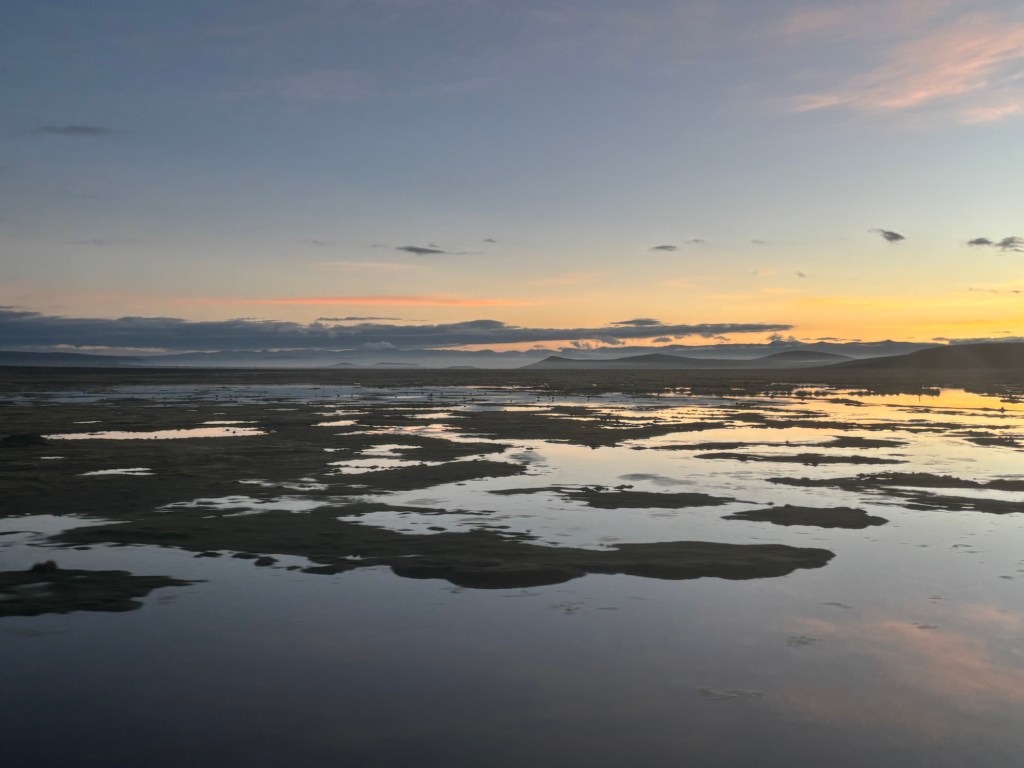
Today’s journey took me up into the Andes for the first time. We stopped at a mirador some 4.910 metres above sea level, which is easily the highest I’ve ever climbed in my life – and this isn’t even the Andes proper. The ground was covered in a thin layer of frost, turning the many hundreds of stone cairns all around into petrified snowmen. A few hardy native women wrapped up from head to toe in colourful scarves were bravely plying their wares to each and every bus that stopped by – which, this being Good Friday and thus a national holiday, was no small number.
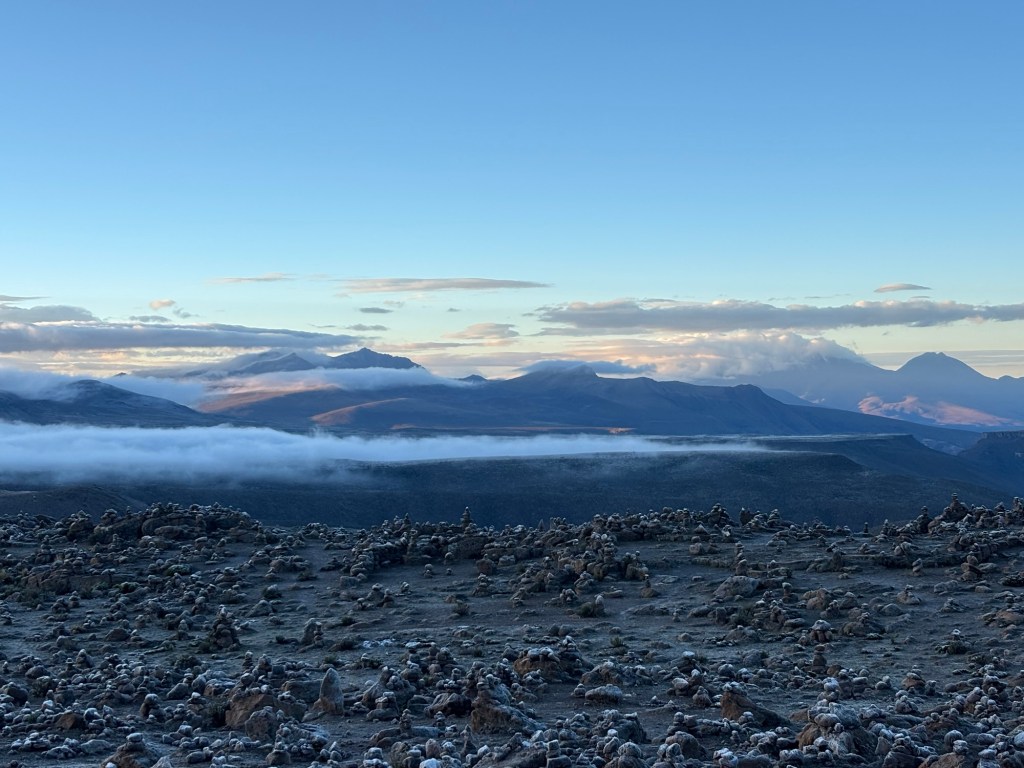
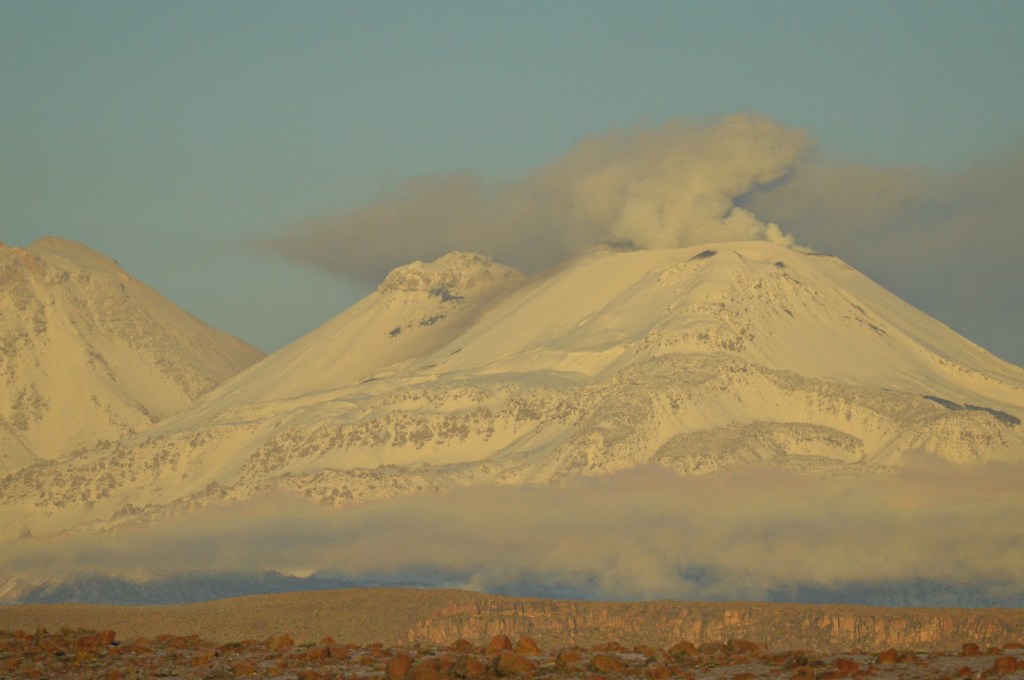
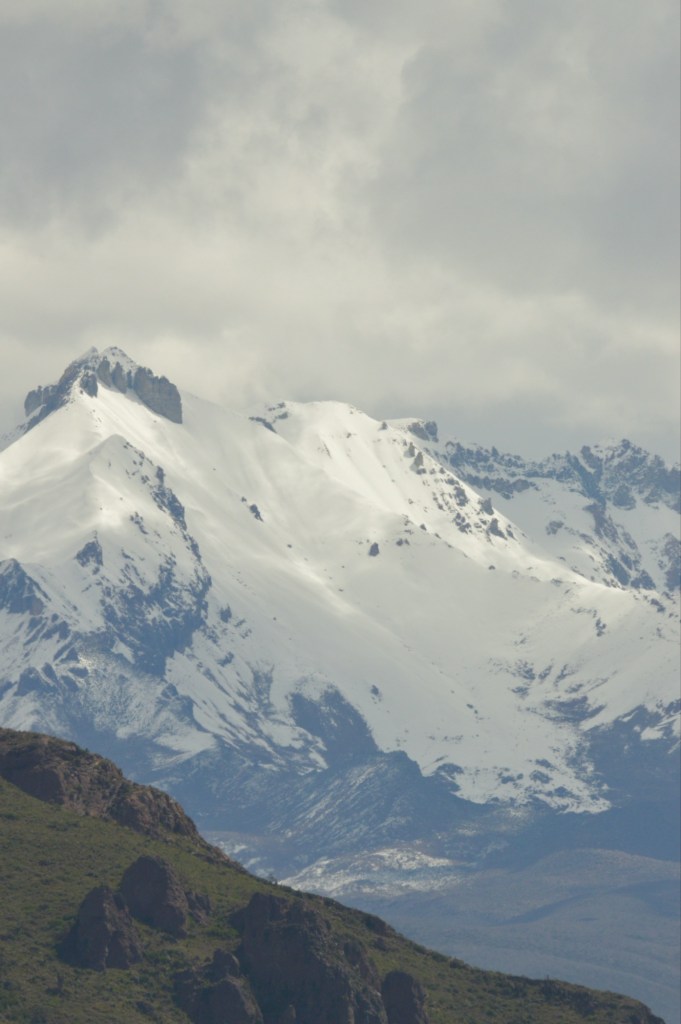
The snow-capped peaks of the Andes were all around us now. Away to the west, one of them was producing its own clouds, billowing slowly from its summit: Sabancaya, the Tongue of Fire, a volcano that erupted into life in 2015. I’ve heard an active volcano before, way back when I was looking for mountain gorillas on the Congolese border, I’ve experienced their terrifying tremors and I’ve even seen the sky glow red from their magma, but I’ve never actually laid eyes on one.
From the frozen heights of the Mirador, we climbed slowly back down into the valley below to the town of Chivay, where we stopped for a light breakfast of boiled eggs, flatbread and a watery but absolutely delicious kind of porridge. While the others dosed up on coffee, I made sure to sift through the teabags and find the one containing mate de coca. I had a feeling I was going to need it. I even took a couple extra for the road.
From Chivay, we made straight for the canyon. The sun was just about at that optimal point in the sky for thermals, and everybody knew it. Our daring driver tried to overtake a particularly stubborn tour bus on at least four occasions, but their driver was having none of it.
Fortunately, despite the potentially alarming number of graves and shrines at the side of the road, the bus cut a safe path through the canyon, treating us to spectacular views along the way.
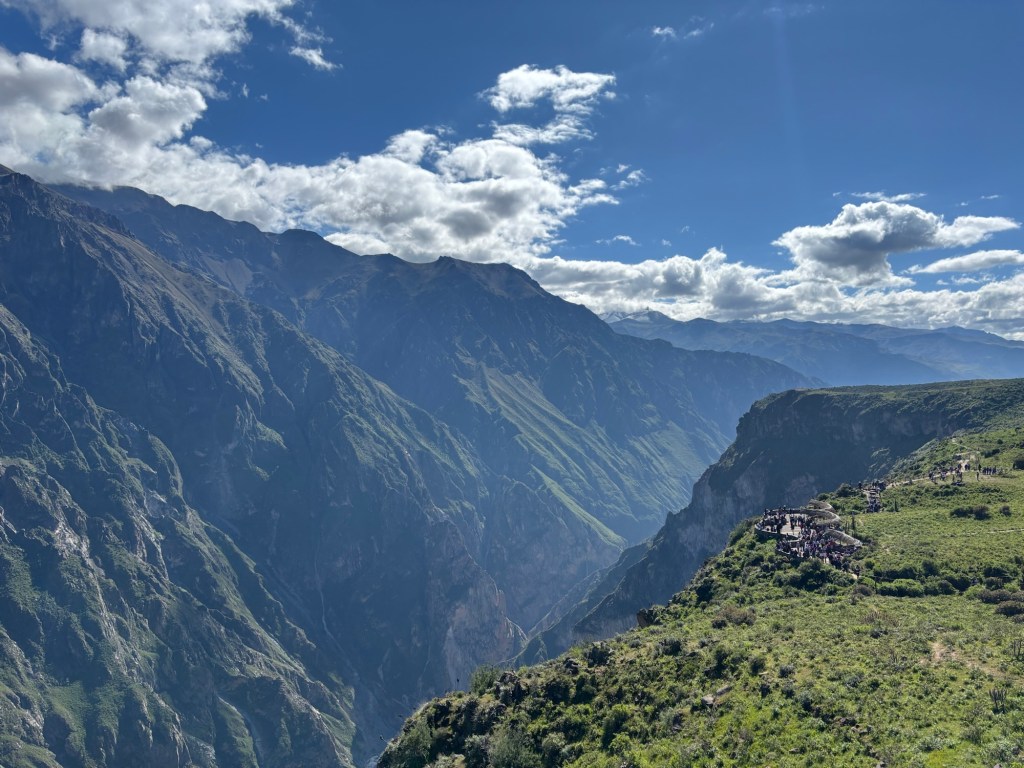
We reached the Cruz del Condor at around 8.45 – along with the rest of Peru, by the looks of things. And we couldn’t have timed it better! I had barely managed to get the camera strap around my neck when our guide pointed out a huge shadow cresting the ridge, right over the heads of the gathering crowd: a juvenile Andean condor. I didn’t need the lens to work that one out, since only the adults have the telltale white scarf.
I had to make a choice: climb up to the melee of the Cruz del Cóndor itself, or try my luck at the quieter vantage point further along the ravine.
I went for the former – which, in the circumstances, was absolutely the right thing to do.
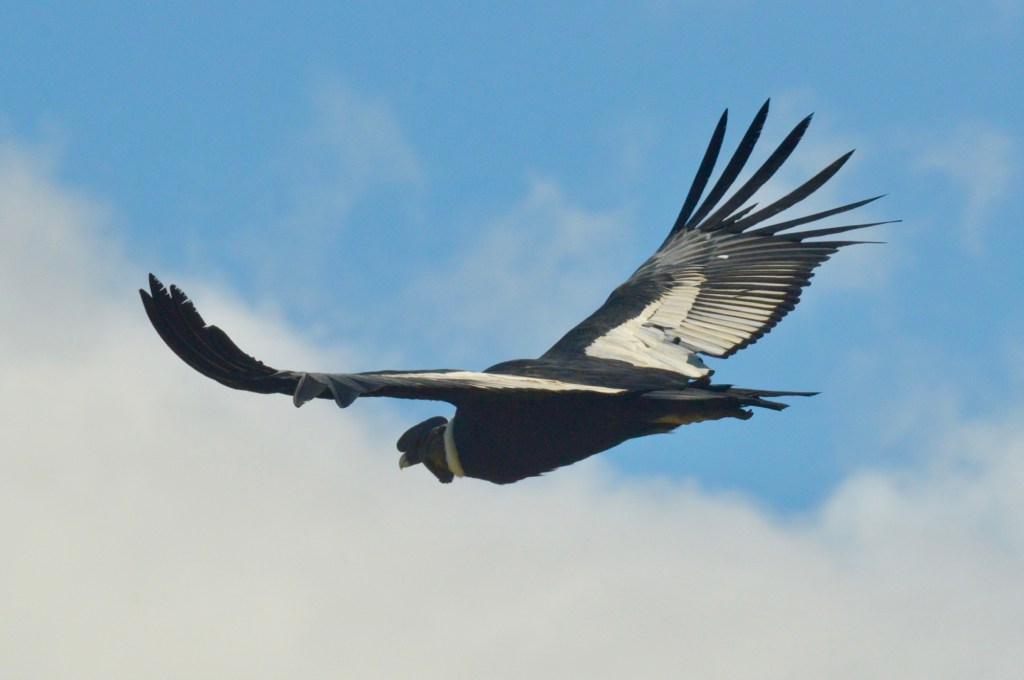
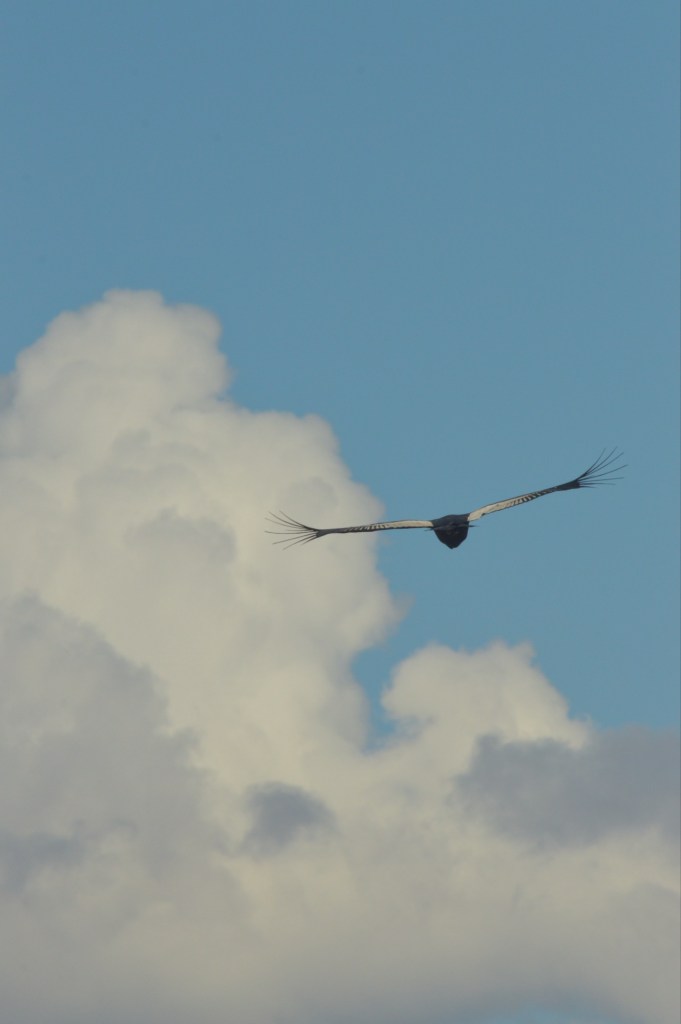
I found a space for myself near the top, where a young couple had lately been taking selfies. I didn’t have to wait long. Another enormous shape – this time a fully-grown adult – came soaring up the canyon toward us.
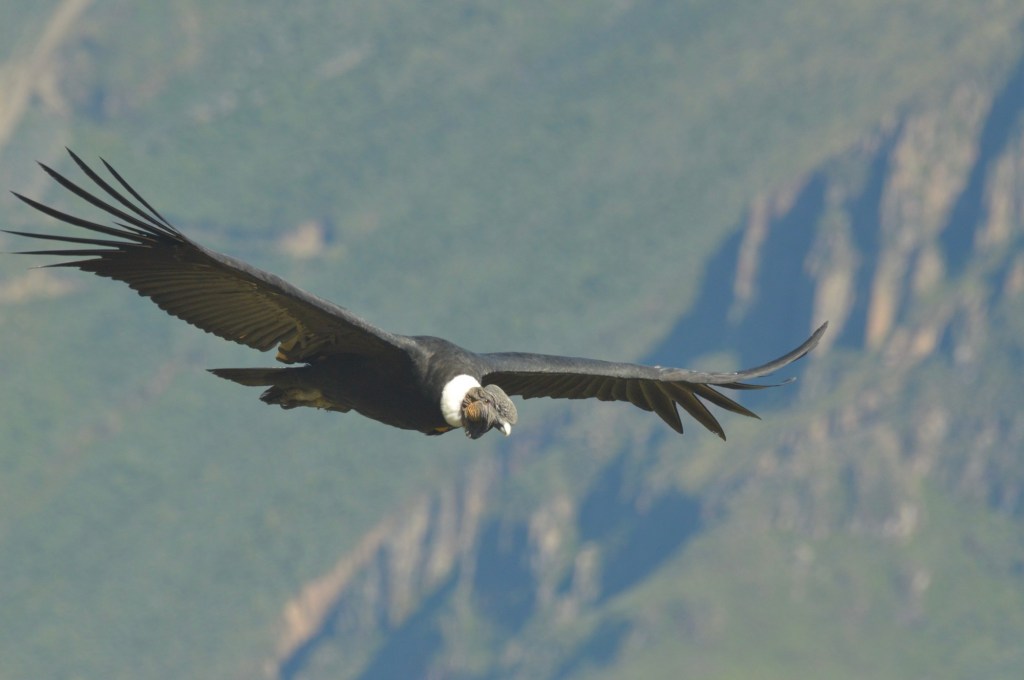
I knew the odds at Colca were good, but I had no idea the views would be quite this good. As my guide put it, I “came prepared with the big gun”, but I might just as well have brought the 300mm, since they came so close. I might even have got the whole bird in the frame, especially when one of them flew straight overhead at so low an altitude that I could hear the whoosh of the wind in its massive wings.
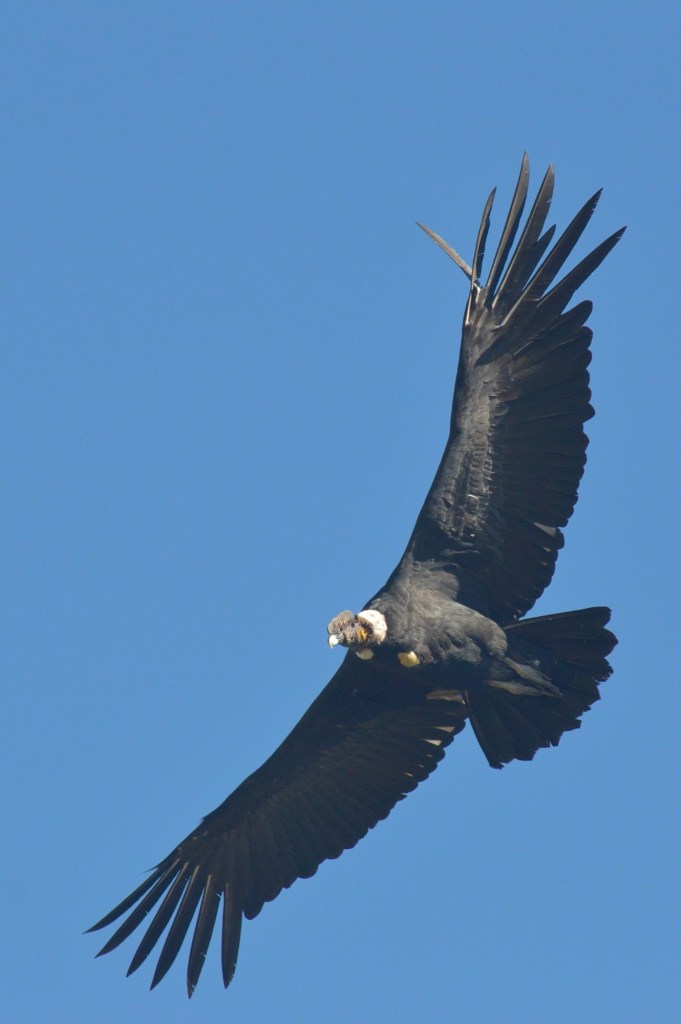
I’ll be honest with you – and with myself. This is why I’m here. It was condors or bust. The Amazon tour awaits – though that feels like a very distinct holiday – and the things that I have seen so far have been incredible, but it has all been a crescendo up to this moment. I am, unashamedly, a vulture fanatic, and there probably isn’t a greater quest out there for a vulture fiend like me than tracking down the largest vulture on the planet.
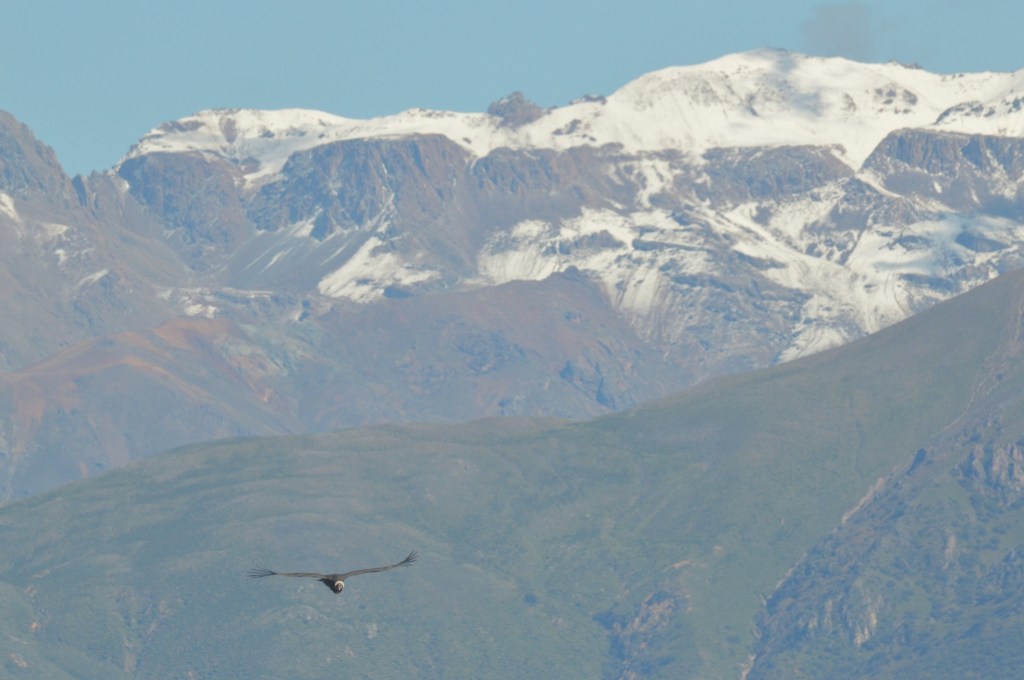
Genuinely, I’d have settled for a distant sighting against the backdrop of the mighty Andes, like the one below, but somebody up there is being extremely generous.
My only regret is remembering the continuous shoot mode on my camera after I had got back onto the bus. Then again, with 1,400 photos already on my memory card out of a possible 4,000 and six days in the Amazon still to go – other adventures notwithstanding – perhaps I could afford to be conservative!
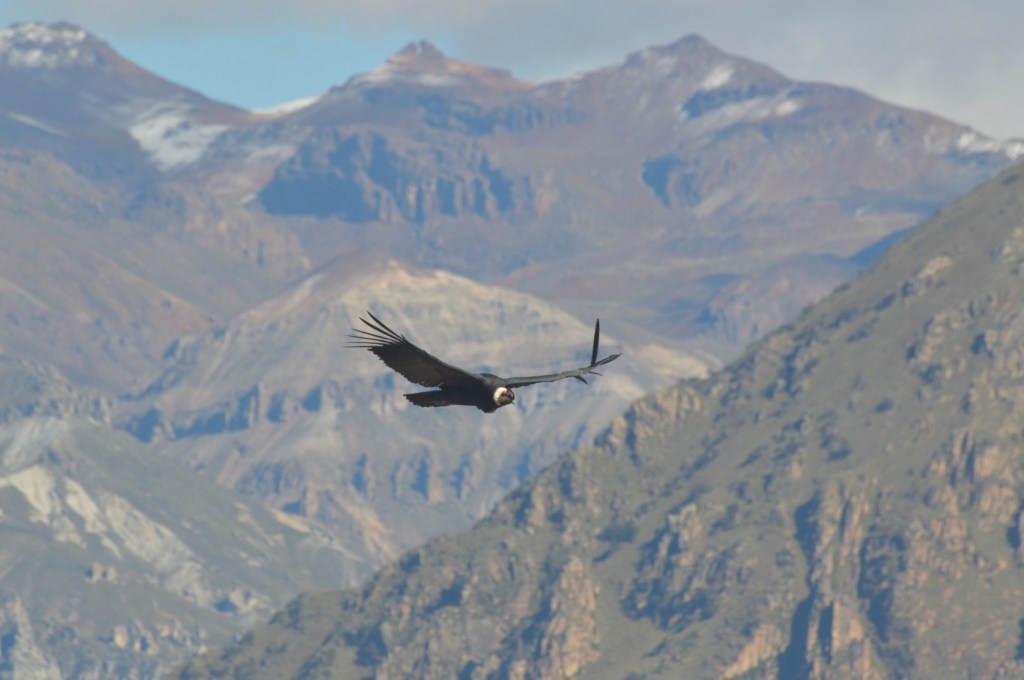
There are plenty of other high montane species to be found around the Colca Canyon, including giant hummingbirds and hillstars, but I was quite happy to give all of my time to the condors – especially as we only had forty minutes. It’s moments like these that remind me (with no small amount of relief) that I am a naturalist and not a twitcher.
That said, I did finally manage to catch up with Peru’s answer to the house sparrow, the handsome rufous-crowned sparrow, as there were a few of them scampering about the car park.
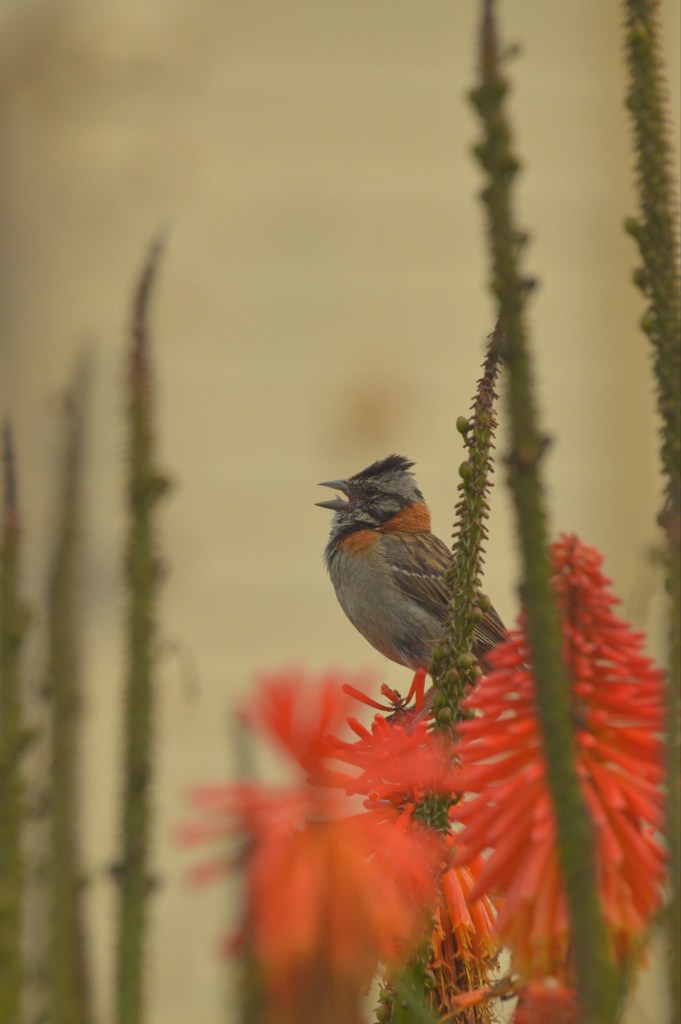
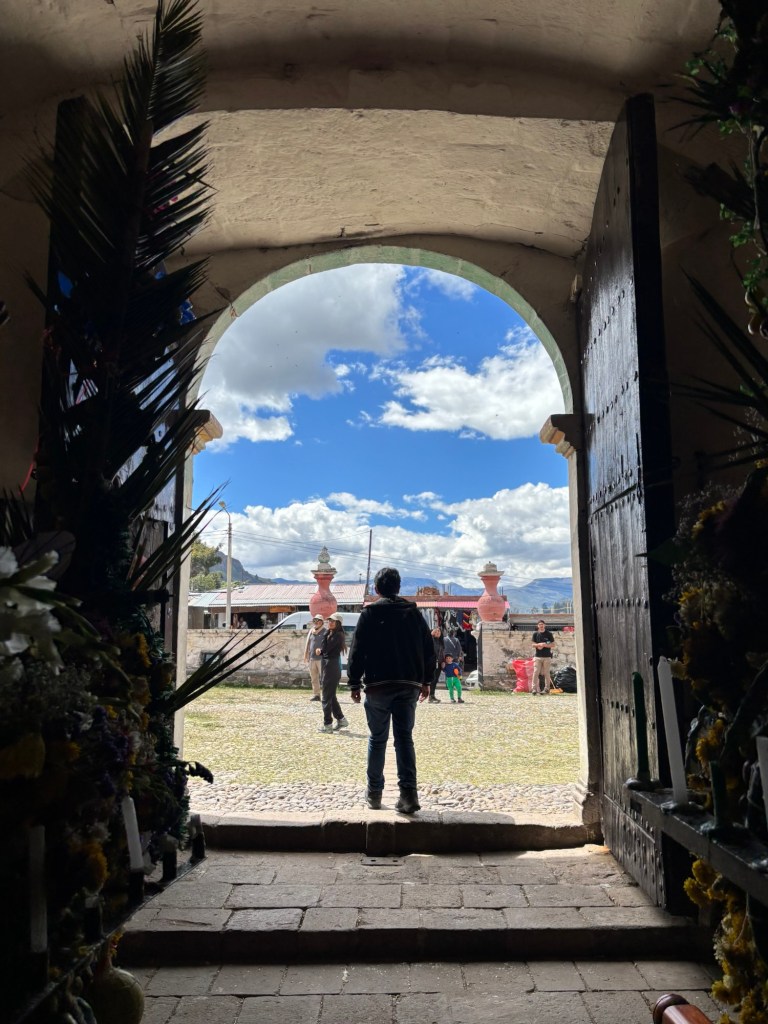
Leaving Colca and its condors behind, we returned the way we had come, stopping in the mountain hold of Maca for a bit of souvenir shopping. I’m useless at buying souvenirs, so I used the time to explore the town and its church. Earthquakes are common in this part of Peru, and Maca’s church – like every other church in the canyon – was held up both outside and in by a scaffold of supportive struts. Many of these churches date back to the time of the reducciones, when the Spanish forced the indigenous Quechua people out of the mountains and into the towns and villages, where they could be counted, controlled and – most importantly – taxed.
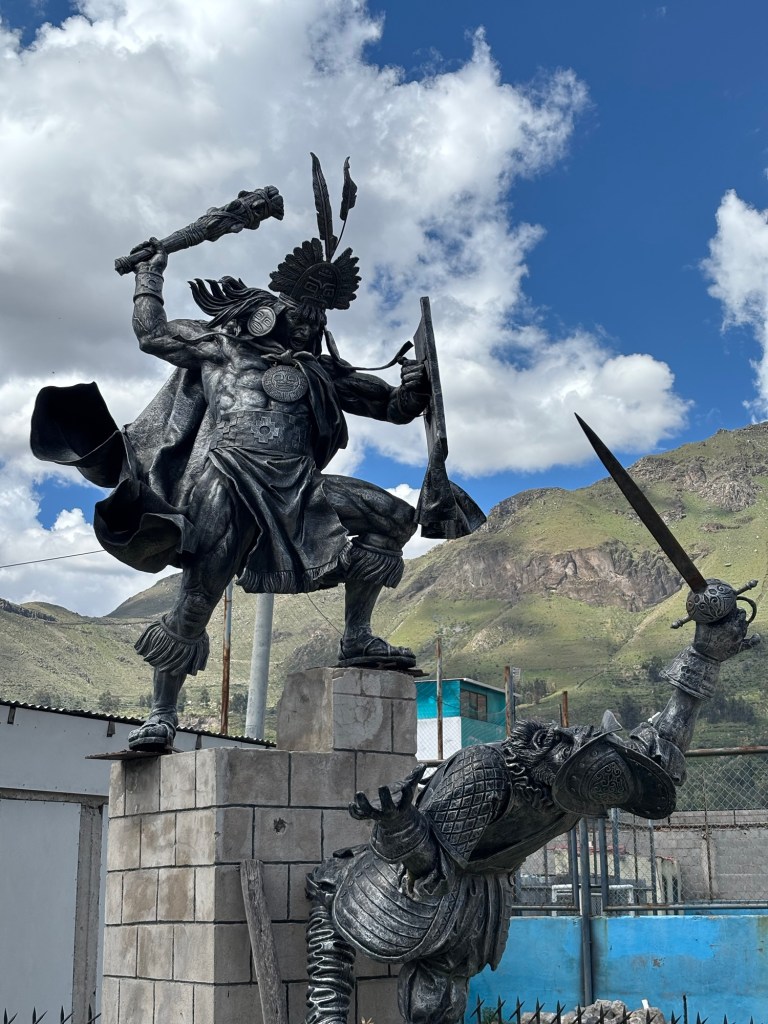
There are a number of statues and sculptures in town, but the one that really caught my eye was one I’d spotted on the way out, featuring an Inca warrior fighting off a conquistador. Apart from the churches, this is actually the first obvious reference to the Spanish invasion I’ve been able to find. I was expecting more. Perhaps they will become more obvious in Cusco.
The next stop on the tour took us to a river valley near Chivay famous for its hot springs. Most of the others went for a dip in the baths, along with hundreds of other Peruvians enjoying their Good Friday holiday. Following a tip-off from a blog I’d read recently, I set off in the opposite direction and climbed up into the hills, where it was significantly quieter. From there, you can see all the way up to a range of snowbound peaks where, if my guide is correct, the Amazon river is born.
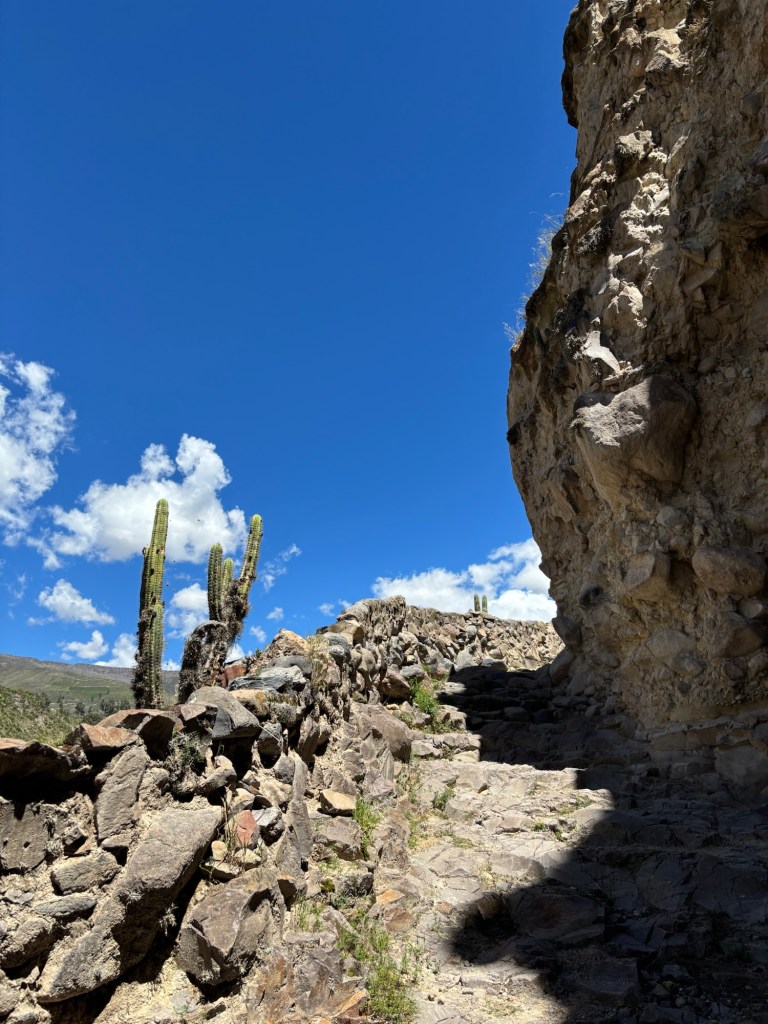
I had another run-in with the tiny, sparrow-sized ground-doves that seem to be the only animal in Peru with a healthy fear of man – I hadn’t been able to catch a photo of one for love nor money! I also disturbed a tinamou, a Peruvian gamebird more closely related to the ratites (rheas, emus etc) than to the partridges and pheasants which they resemble. It too was much too quick for me, disappearing into the scrub below before I could distinguish anything more than a jagged crest. I’ll have to check later when I have signal, as there’s been precious little up here in the mountains.
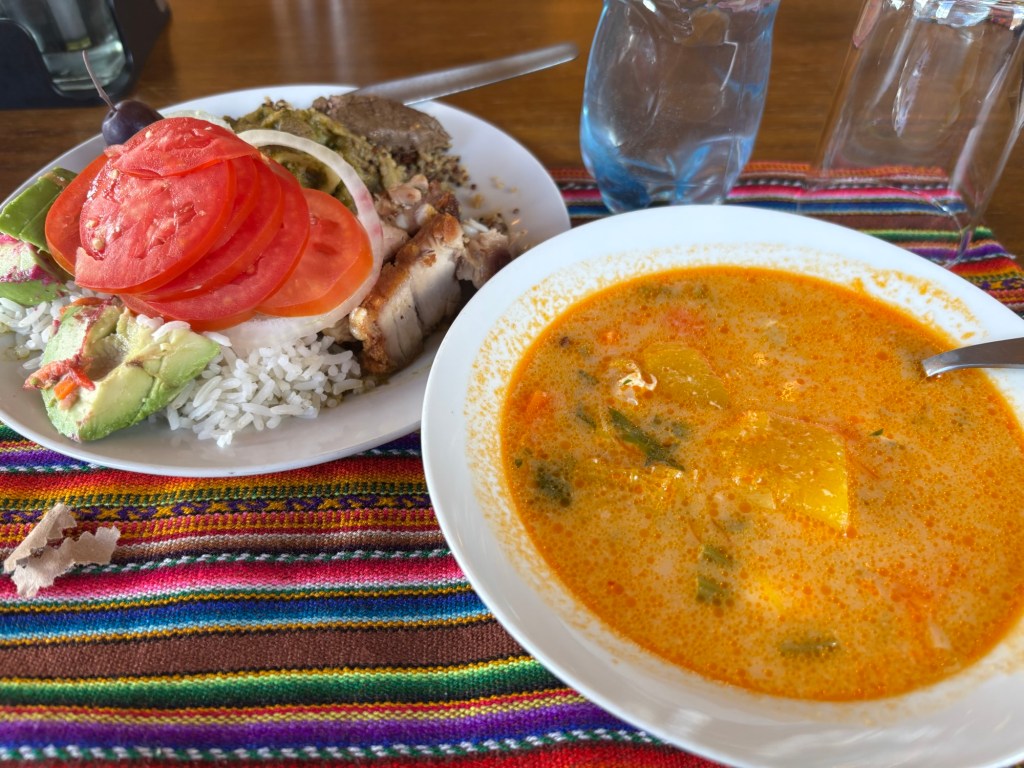
Lunch was a spectacular buffet with a wide array of Peruvian options, including alpaca (tough and beefy), lamb (in a delicious green Andean sauce) and chicharrón, an old favourite. The trout soup I had for starters was one of the best I’ve ever had in my life, and tasted almost exactly the way I always imagined Yeto’s superb soup in Zelda: Twilight Princess (right down to the rich cheesy flavour).
Half of our group was suffering from the effects of mal de altura, especially the young family of four from Lima (with the possible exception of their eight-year-old daughter, who seemed utterly immune to its debilitating effects). I thanked my stars for my constitution, my luck or the coca tea I had earlier in the morning, because I didn’t seem to have been affected at all.
The return journey to Arequipa took us back across the altiplano which we had crossed in the darkness this morning. Once we were down and out of the high mountains, we reached a large stretch of Andean prairie, pockmarked with spongy pools. There was a small herd of alpacas grazing, but they weren’t alone. With the weather still holding out (and only just), I had the chance to see the vicuñas I’d only glimpsed this morning, grazing not too far from the road.
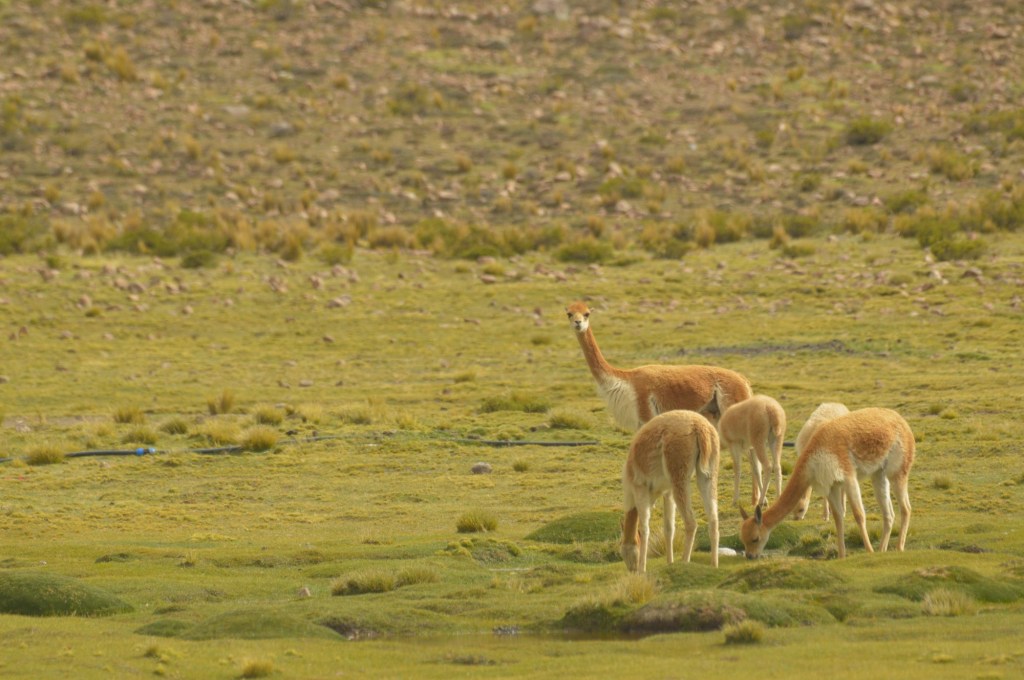
Alpaca wool is world-famous for its warmth and softness – and justifiably so – but vicuña wool is in a class all of its own. Like chamois leather, there must be something about a life lived high up in the mountains that makes their pelts unbelievably soft. I’m quite happy to see it on the body of the animal it belongs to, but I was concerned that this blog was becoming less informative and more “I went here and saw this”, so I thought a fact or two might even things out!
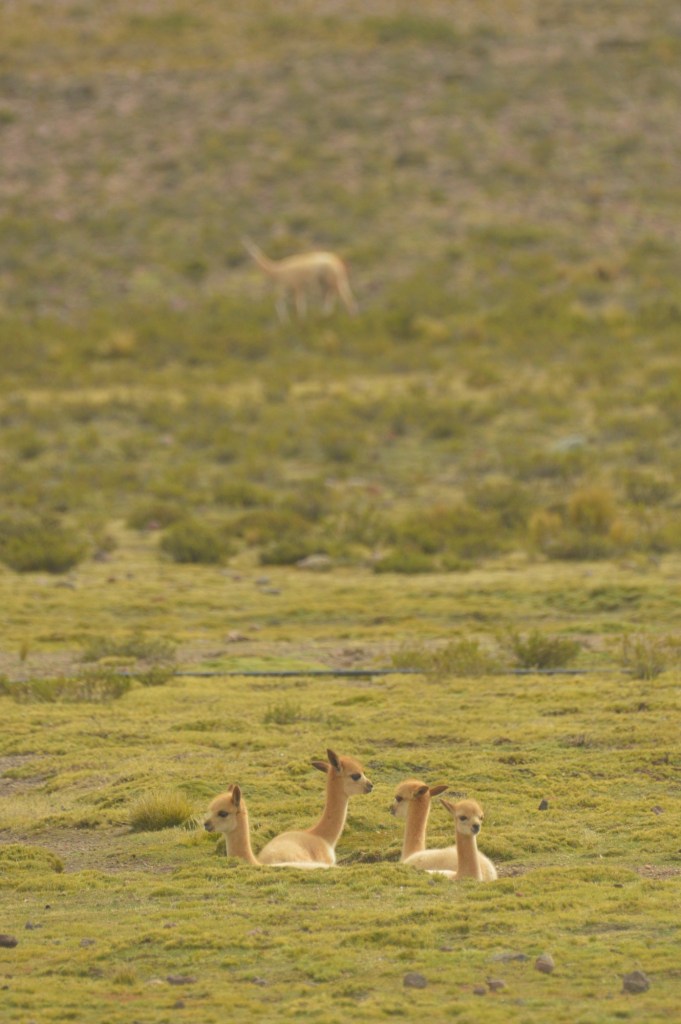
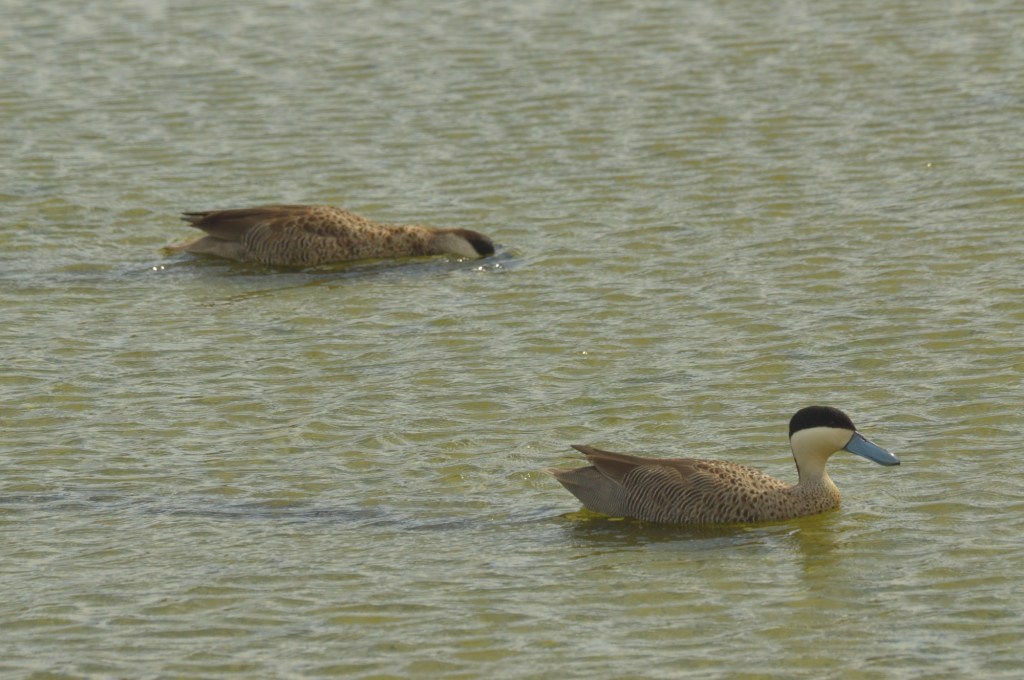
As well as the vicuñas, there were four other altiplano specialists in and around the pools: Andean geese, Andean gulls, a number of very handsome Puna teals and, further off, the swamphen-sized giant coots that can only be found high up in the mountains. It was only a five minute stop, and I’ll be back tomorrow to explore this part of the reserve, so I prioritised the gull and teals.
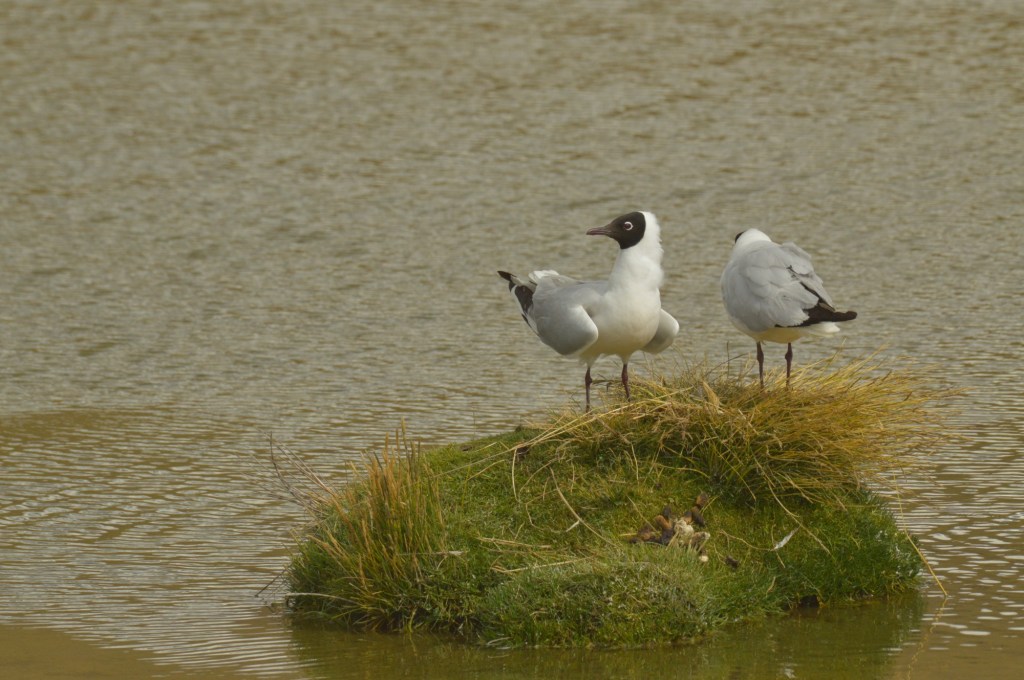
Teals of any variety are always well-dressed birds, as though the Creator gave them first choice of evening wear, but I thought these blue-billed mountain ducks were especially smart.
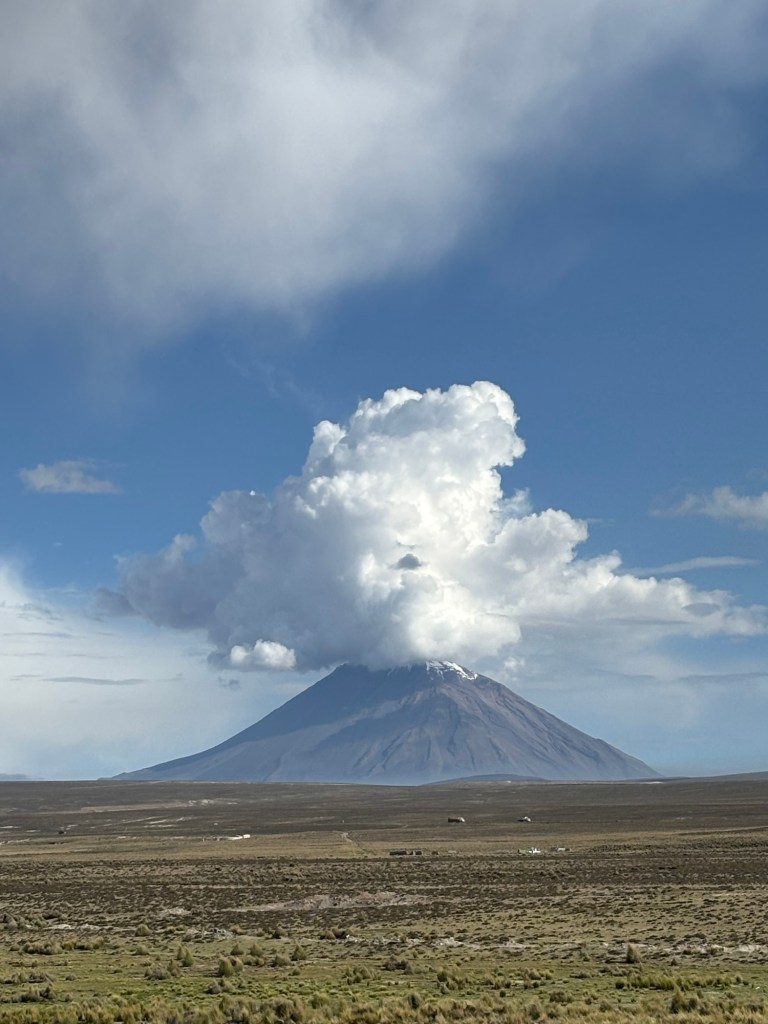
One last stop – a glorified toilet break, I suspect – set us down at the edge of the altiplano, with stunning views of the conical volcano that lords over Arequipa, known as El Misti. It was quite a sight as I touched down in Arequipa yesterday, but even more impressive without the sprawl of the city at its feet. The influence of El Misti is everywhere in Arequipa, also known as the White City, since most of the buildings are constructed out of the white volcanic ashlar stone that gave the city its title. It hasn’t had a major eruption since the time of the Inca Empire, more than five hundred years ago, but it remains an active volcano – and a potential threat to the city of Arequipa which lies at its feet.
Today started out potentially dicey and wound up being the best day of the adventure so far. I’ve had Good Fridays that were memorable, but this one really takes the biscuit. This was a very, very Good Friday. I’ll be sure to give the Lady of the Marshes the thanks she deserves tonight.
Once again, I am reminded that optimism is the right outlook, no matter how bad things get. It’s also categorically impossible to be worried or sad in a country as full of natural wonders as Peru.
This country has won me over. The Peruvians are so kind and seem to care a great deal more about the natural world than the average European. The salespeople understand boundaries. The food is incredible (I’m aware I’ve used the phrase “best ever” at least twice now). The mountains take my breath away, without leaving my head spinning (so far). The women are beautiful – and they give you the time of day. The plants are fascinating, the animals are incredible and the birds are nothing short of spectacular.
I’m often asked by my students which, of all the places I’ve been, is my favourite country. Spain has been uncontested for all my life, and it always will be. But at least now I have a definitive second place where there wasn’t before. Someday, God willing, I’ll be back. BB x




 The Book of Barnabas