Casa Tunki, Cusco. 17.42.
Six hundred years ago, under the vision of the Inca Pachacútec, a team of architects were tasked with turning an existing settlement in the Sacred Valley into the cultural nerve centre of an empire. For their inspiration, they chose one of the most powerful of all the animals with which they shared their world: the puma. The city of Cusco is believed to have been built in the shape of a resting puma, with the Tullumayo and Saphy rivers marking the outline of its body, the citadel of Sacsayhuamán as its head (ears and all) and the Huacaypata – the present-day Plaza de Armas – as its heart.
The puma was an incredibly important spiritual entity for the Inca. Legend gave it tremendous power: their spit was hail, the blink of their eyes thunderbolts, and their roar was the roll of thunder.
I’m writing this in Casa Tunki’s restaurant, with the heavy roll of thunder overhead. I have been exceptionally lucky with the weather thus far, but it’s still the rainy season out here, and the rain has finally caught up to me. It has spelled disaster for tomorrow’s expedition to Waqrapukara, which the operators have had to cancel due to landslides in the area. Luckily for me, I have three whole days after returning from Manu, so I am not too troubled. I could always try again when I return.
My wanderings today took me to a quiet corner of Cusco. Tucked away in the hills to the south of the suburb of San Jerónimo is a tiny hummingbird sanctuary, nestled on a forested slope off the 123 highway. If you didn’t know it was there, you’d never be able to find it.
My guide Benjamin picked me up from the hotel and, together with his companion and driver Jeremy, we set out. It was just me on this tour, so for the first time out here I had the chance for a proper conversation.
The sanctuary itself – titled the Pachacútec Bosque Andino – is a strange mix of what looks like a garden centre, a Zen garden and a hiking trail. At different times of year, different birds can be found here. I got the impression from my guide that other guests have come here seeking the Bearded Mountaineer, a Peruvian endemic. He seemed a little anxious at first that I might be pinning my hopes on finding one. I hope I gave him the impression that I wasn’t a lister. I was just happy to be out of the city and surrounded by nature again.
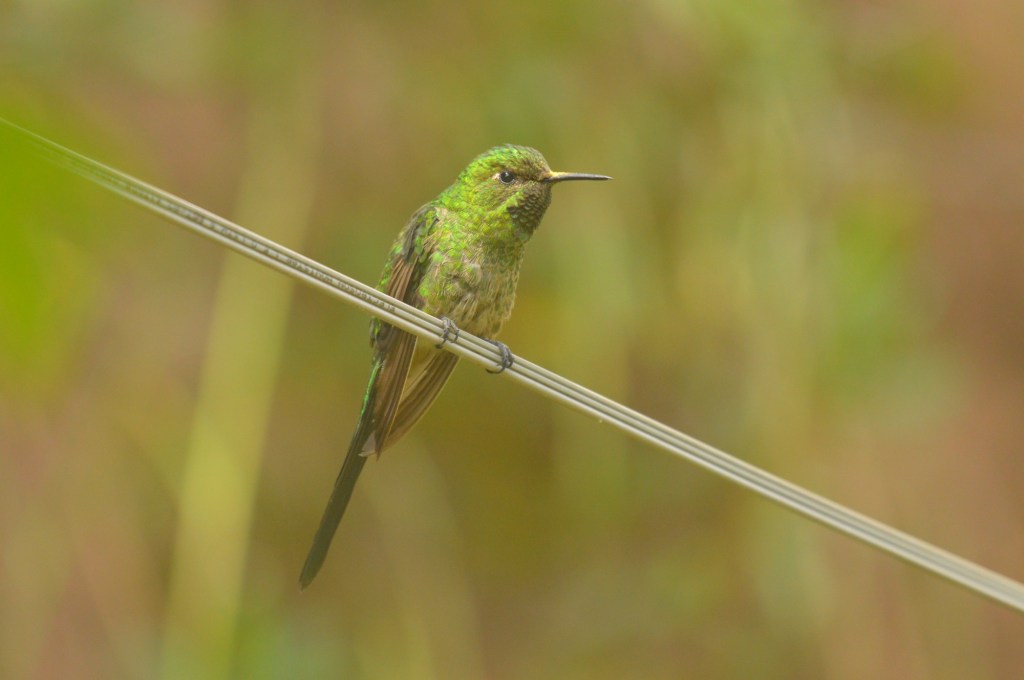
One of the sanctuary’s starlets, a young trainbearer, put in an early appearance. The adult males of this species have enormous tails that nearly double their length, but this one still has a fair bit of growing up to do.
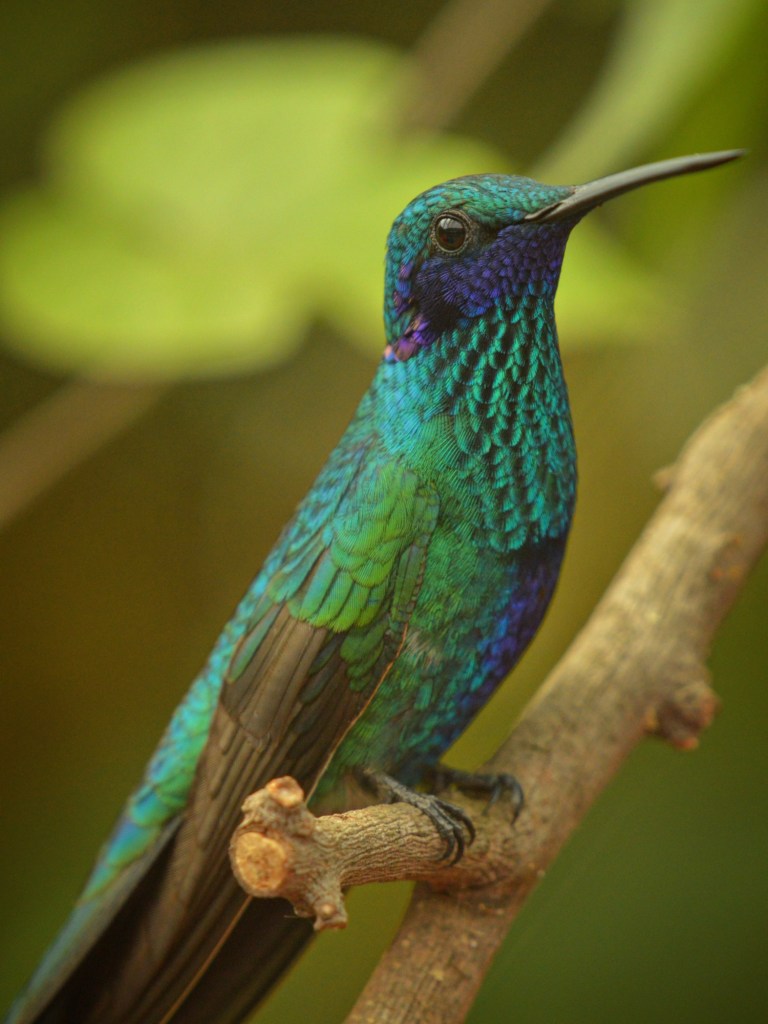
The primary residents of the sanctuary – as in the hills around Cusco itself – are the violetears. They’re extremely territorial and will fight off just about anything that gets in their way, no matter the size. I saw them take on metaltails, thrushes, tanagers and even the giant hummingbird that was trying to use the feeders.
Yesterday, I found them by sound and movement. Today, I hardly needed to try. They didn’t seem to be bothered by us at all.
Whenever the violetears were busy fighting everything that came too close, a tiny metaltail popped out of the bushes to chance a quick feed at one of the flowers, before darting away the moment the mechanical clicks of the violetears announced they were on their way back.
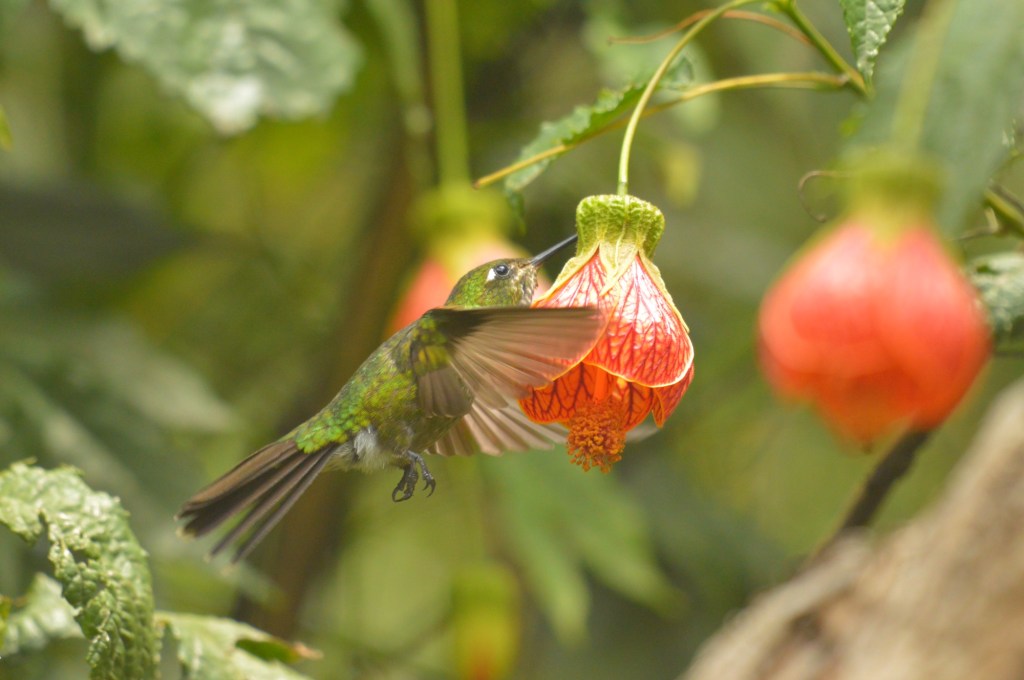
I seem to remember reading somewhere that hummingbirds and flowers have evolved simultaneously, with some flowers only admitting a certain species of hummingbird to visit them. It explains why their Old World equivalent, the sunbirds, remain stranded east of the Atlantic, while hummingbirds can only be found in the west.
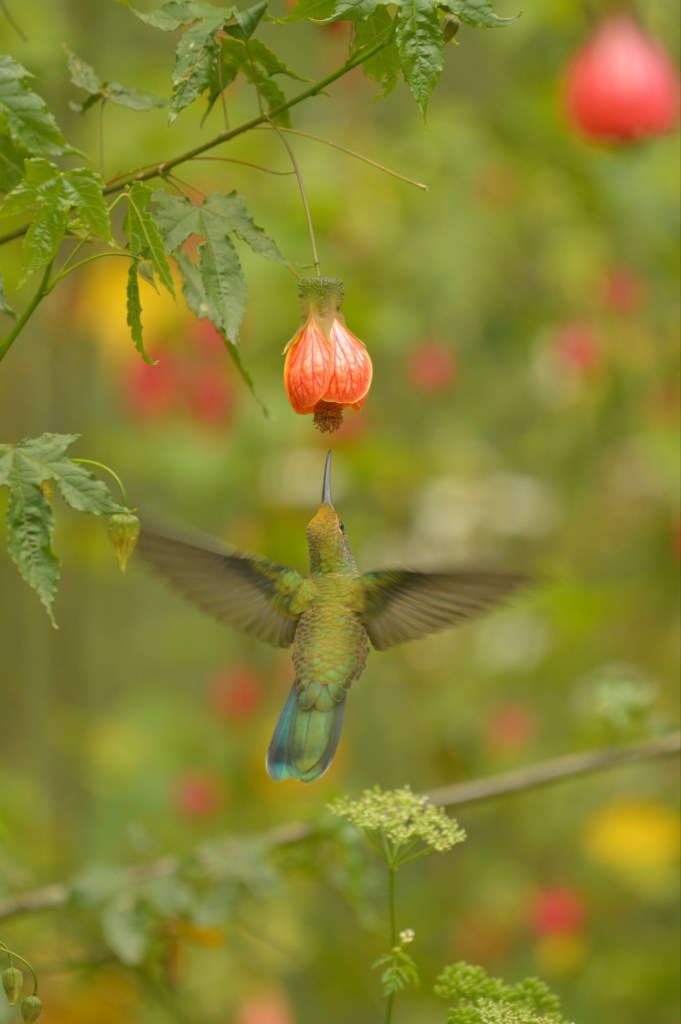
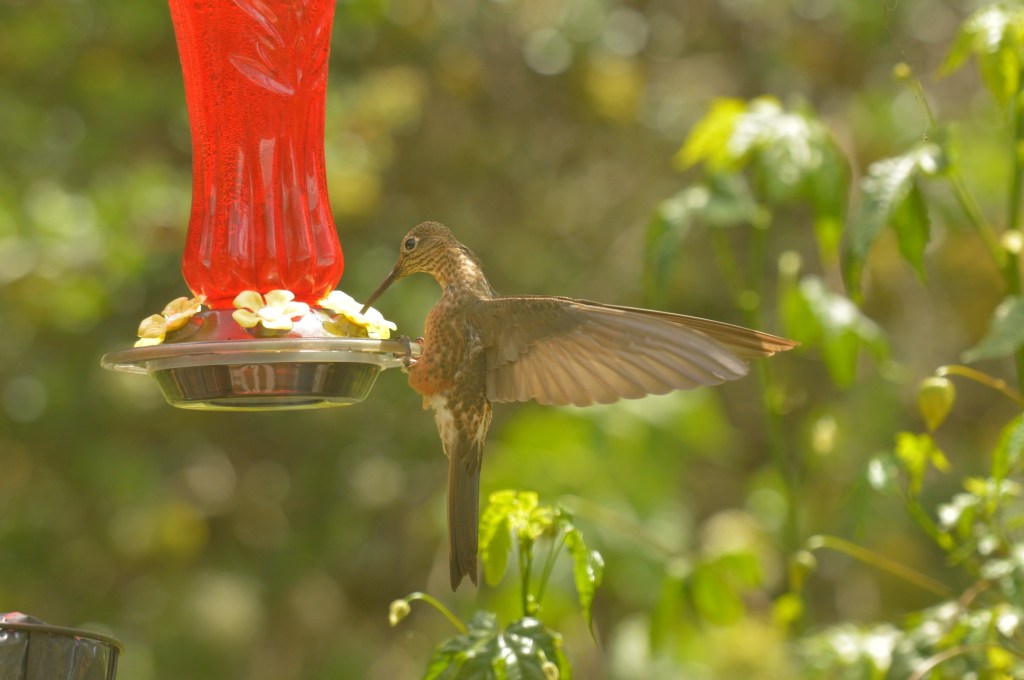
The largest hummingbird species, the giant hummingbird, was surprisingly shy – though that may have more to do with the aggressive violetears than any inherent skittishness in its nature. They’re considerably larger than their diminutive relatives, being about as large as a small thrush, and they sound a lot less like bees when they fly overhead, though they still move like the clappers.
Well now – now that I have a whole day free, I think I’ll take it easy tomorrow. I’ll try to make more use of my boleto turístico, the ten-day ticket that covers most of the historic sites and museums in Cusco.
I’ve finalised the arrangements for the Amazon, which is now only a little over twenty-four hours away. The two Americans in the hotel next to me are busy discussing which nautical themed tattoo they should get (as they’re considerably cheaper here than back home), but I will be putting all of this behind me for a week. I am quite looking forward it that.
Fingers crossed my luck holds out for some wholesome companions! BB x
 The Book of Barnabas