Venice IV: Ghettos, Glass and Gold

The Italo high-speed train races across the Ponte della Libertà, leaving Venice and its islands far behind. I’m bound for Rome, the Eternal City, my final stop in this first expedition to Italy. In what is possibly a crime against humanity, I’m skipping Florence this time, on the pretext that to spend anything less than two full days in Dante’s city would be to woefully undervalue one of Italy’s greatest treasures. Next time – and there will be a next time – I’ll come back for Florence, and Trento, and maybe even Milan. But since it’s my first time here, and my Italian is rudimentary at best, I’d rather depart with a hunger to return.


Far and away my favourite corner of Venice is the Cannaregio district to the north of the island. It’s marked with a Star of David on most maps, and it’s where you’ll find the city’s former Jewish ghettos (not in confusingly named Giudecca which, despite being a mangling of judaica, was never home to the city’s Jewish population). It’s a quieter corner of the city, dark and understated, but take a moment to stop and take stock of your surroundings and you’ll see some surprising sights – chiefest of all being the Jews themselves, hanging on tenaciously in the same corner of the city in which they were once corralled.
My contact with the Jewish world has been ethereal for the greater part of these last twenty-eight years. I played a Jewish tailor in Fiddler on the Roof and Klezmer stalwarts like Hava Nagilah and Tants, Yidelekh, tants (Dance, Jew, Dance) were my go-to violin pieces as a child, but that’s about as close as I ever got. Doubly so after Covid derailed my trip to Israel two years ago. To tell the truth, I could probably count on the fingers of one hand – two, tops – the number of Jews I’ve ever had a conversation with. So coming to Venice and seeing not just a sizeable but highly active Jewish community in the flesh has been nothing short of heart-stopping.

As usual, the Spanish connection was the real draw. Among the Italians, there are a great many Spanish surnames carved into the various memorials commemorating the disappeared and the dead. Morenos. Navarro. Vidal. Grim reminders of the centuries-long fate of the Jews, fleeing from one intolerant regime into the arms of another. At some point in their history, many of Spain’s Sephardim must have been faced with the painful choice: to abandon hope and their homes, or to abandon their faith. If the stories I do so want to believe are true, then my ancestors made the bitter decision to remain under the unforgiving aegis of a Christian God, rather than leaving behind the land that had been their home for generations. Could you blame them for that?
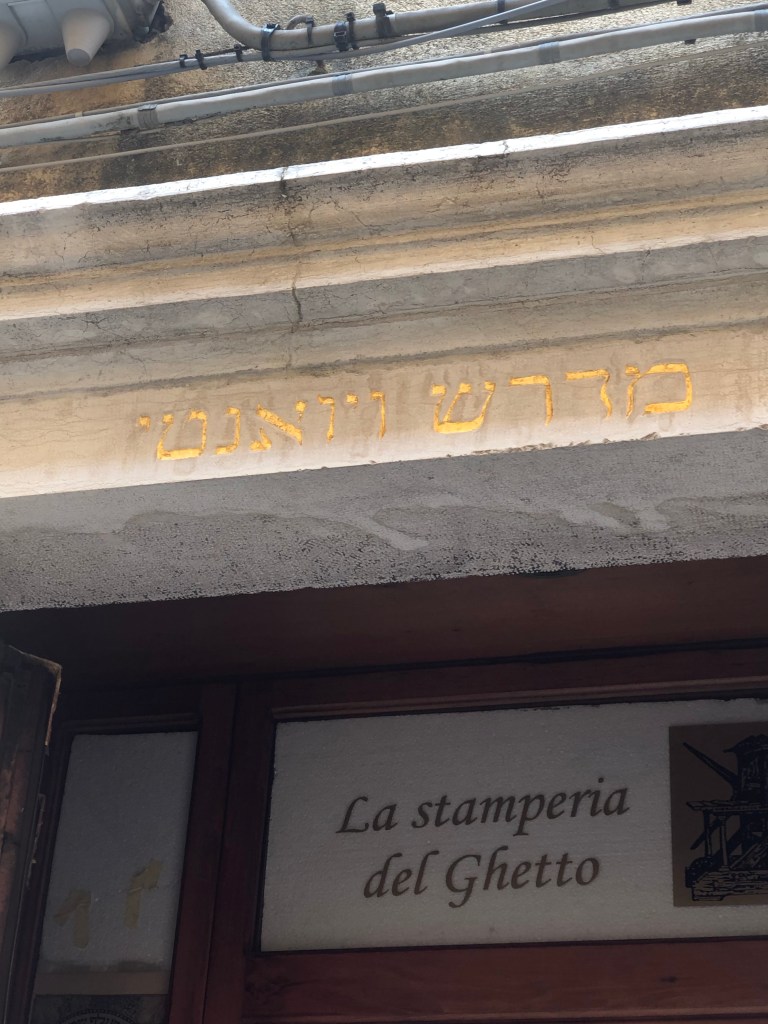
As I wandered through the ghetto nuovo, I saw a Haredi gathering through a window. A boy stood outside the window, shawl at his waist, shuckling at prayer. A girl on the vaporetto at Murano had a gold necklace bearing the Hebrew letter he (ה). Out in the backwaters of Burano, a man sped by on his boat as I ate my lunch, sidelocks flying in the wind. I didn’t expect Venice to be such a centre of Jewish activity, but it’s a miracle to behold.


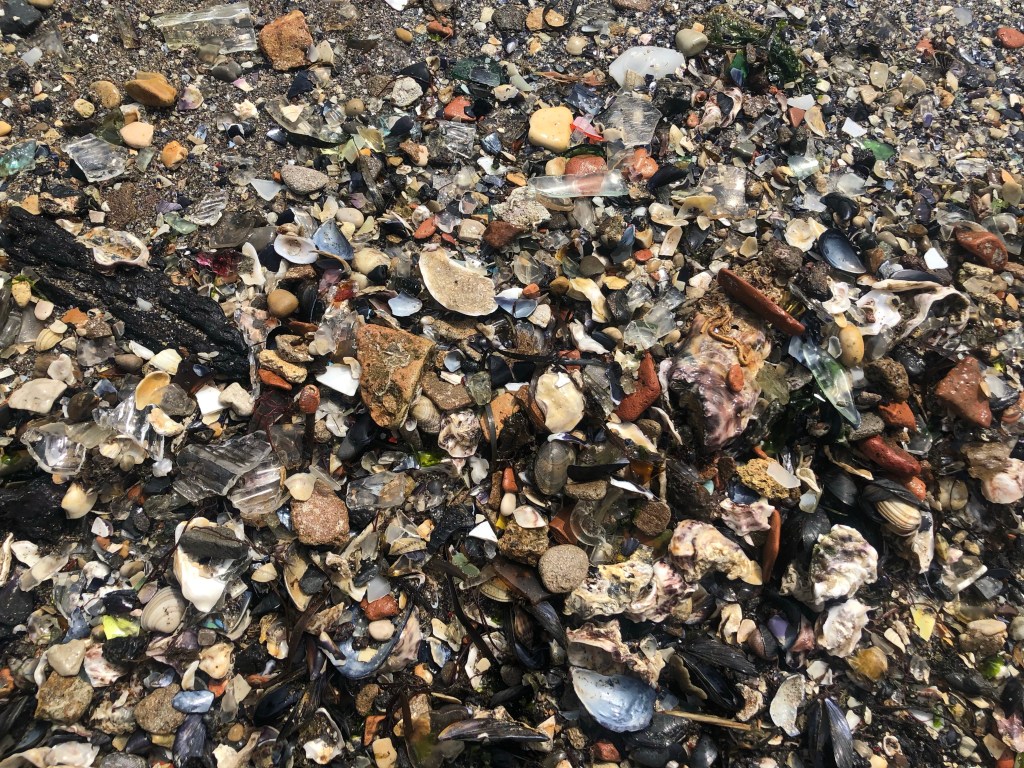
My eagle eyes were trained on other things than just bird life and Hebrew paraphernalia. If you visit Murano for its glasswork, something you ought to do is go beach-combing by the vaporetto stop near the lighthouse. For one thing, it’s ridiculously easy to spend a week in Venice without ever touching the water once, and this is a very accessible point to make contact. For another, an island whose primary output is glass and clumsy tourists makes for a mudlark’s dream: scattered amongst the lagoon’s mussel and oyster shells you’ll find all manner of glass washed up on the shore. Who knows how old the shards are? Some of them might be decades or even centuries old. A great many more were probably dropped in yesterday by this or that day tripper who was careless in boarding the boats. Whatever their history, there’s a rainbow of debris along Murano’s shoreline that’s well worth a careful investigation, if you fancy getting your hands on some free if highly fragmented Murano glass.
With only a few hours left on the clock, I very almost missed Venice’s main attraction entirely. Despite passing St Mark’s Basilica every time I got off the vaporetto from Giudecca, I confess I hadn’t considered going in to explore at all, until the realisation that I might let my private feud with scaffolding debar me from seeing one of the most beautiful churches in Christendom finally got the better of me. And not a moment too soon – after my island-hopping excursion around the lagoon, I only just made it back in time for the final opening hour.
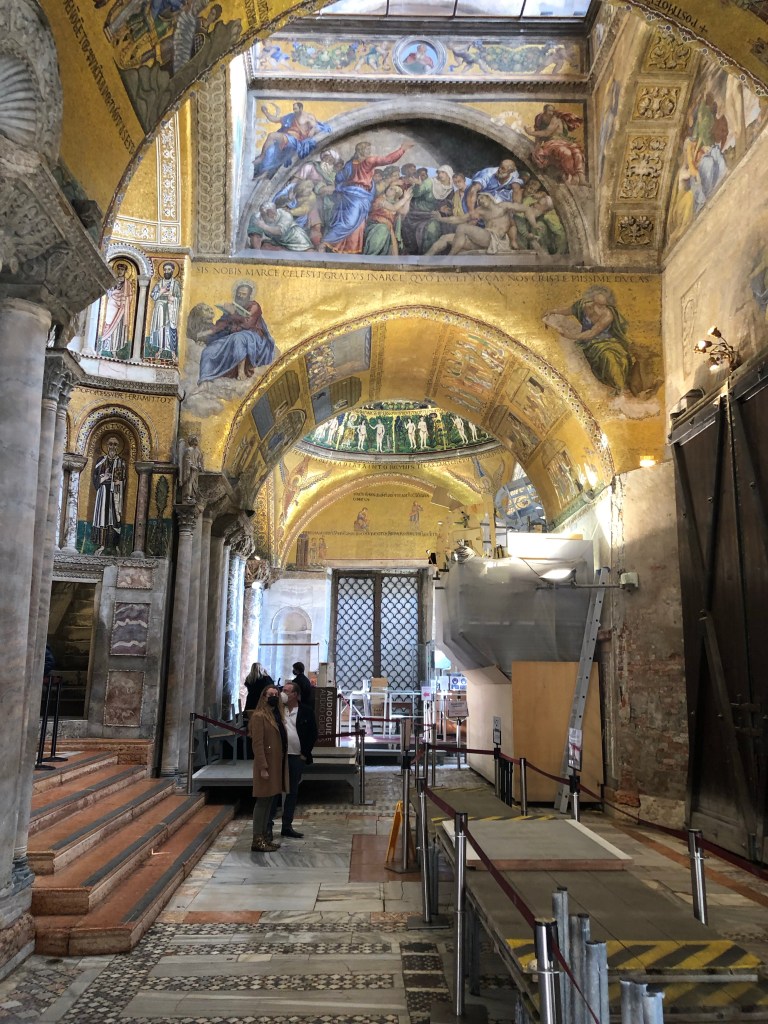
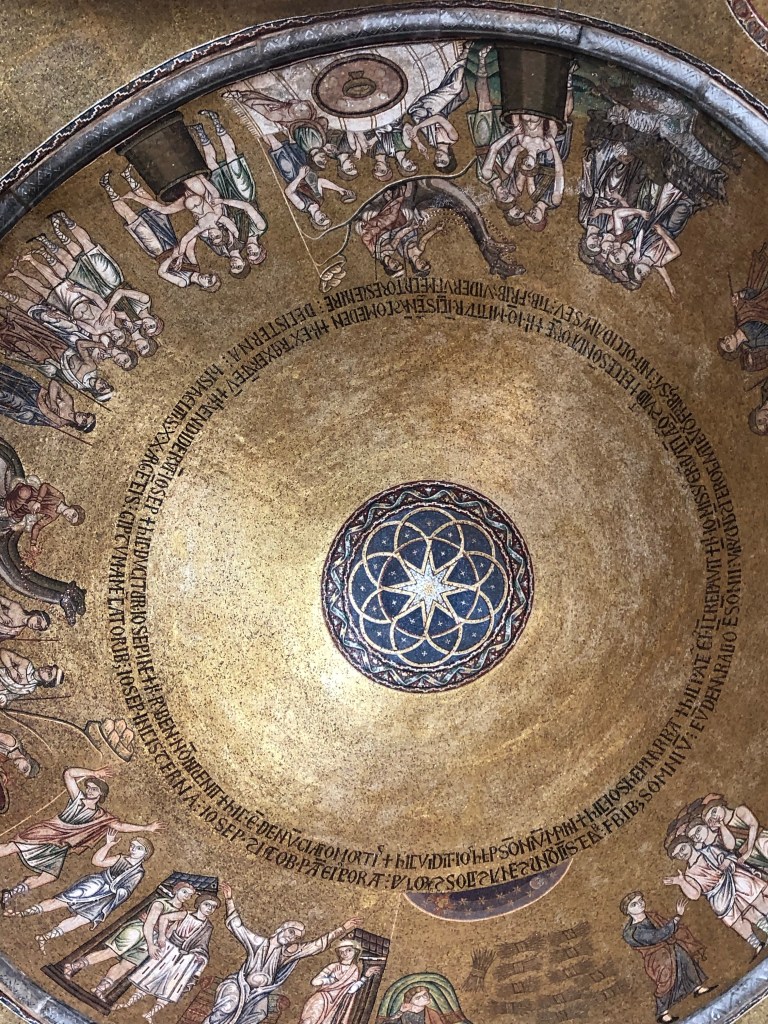
In short, I’m glad I did. It’s not free to enter like it once was, but 3€ is a pitifully small sum to pay to see the glittering Byzantine majesty that is St Mark’s ceiling. Heathen that I am, I don’t have a lot of time for Renaissance art, but there’s something about the sunken, staring eyes of Byzantine saints that I find absolutely spellbinding. And St Mark’s certainly isn’t short on saints.

Probably the most awe-inspiring part of the interior is the entrance itself – while you’re busy buying your ticket, don’t forget to look up at some of the best lit (and best preserved) of the basilica’s mosaics!
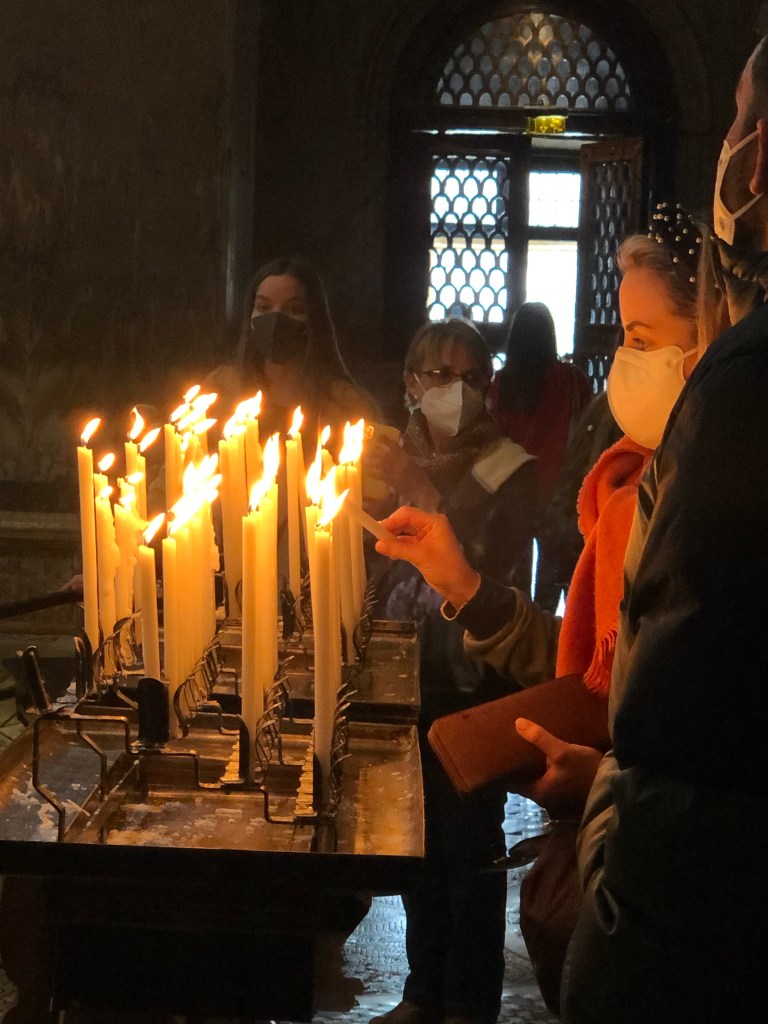
I lit a candle for my ancestors before leaving. My grandfather was a traveler, but I doubt he ever made it this far. So when I travel, I travel for him; just as when I write in my journal, I do so in memory of my great-grandmother. Traditions are everything. Insert your Fiddler on the Roof pun here.
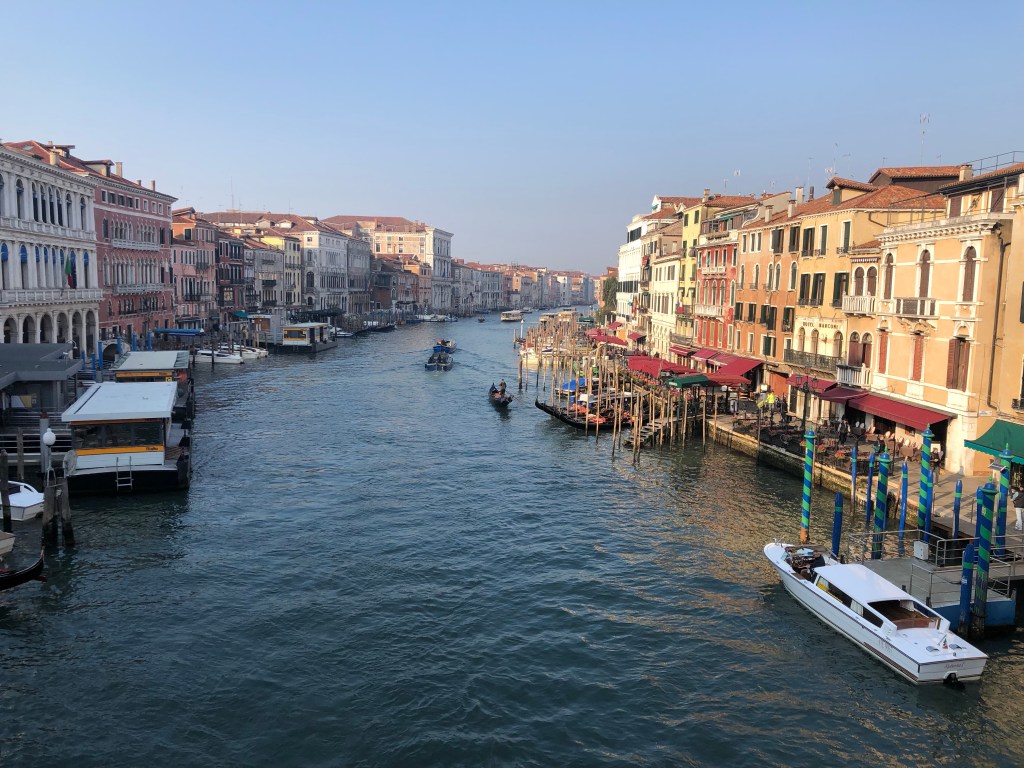
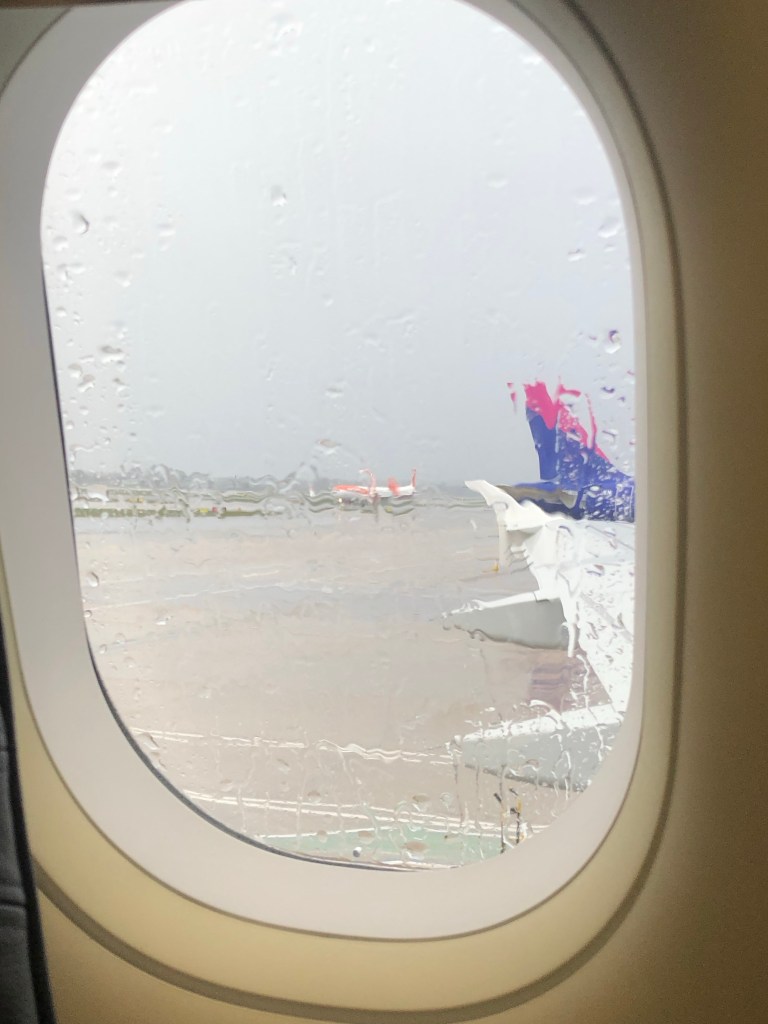
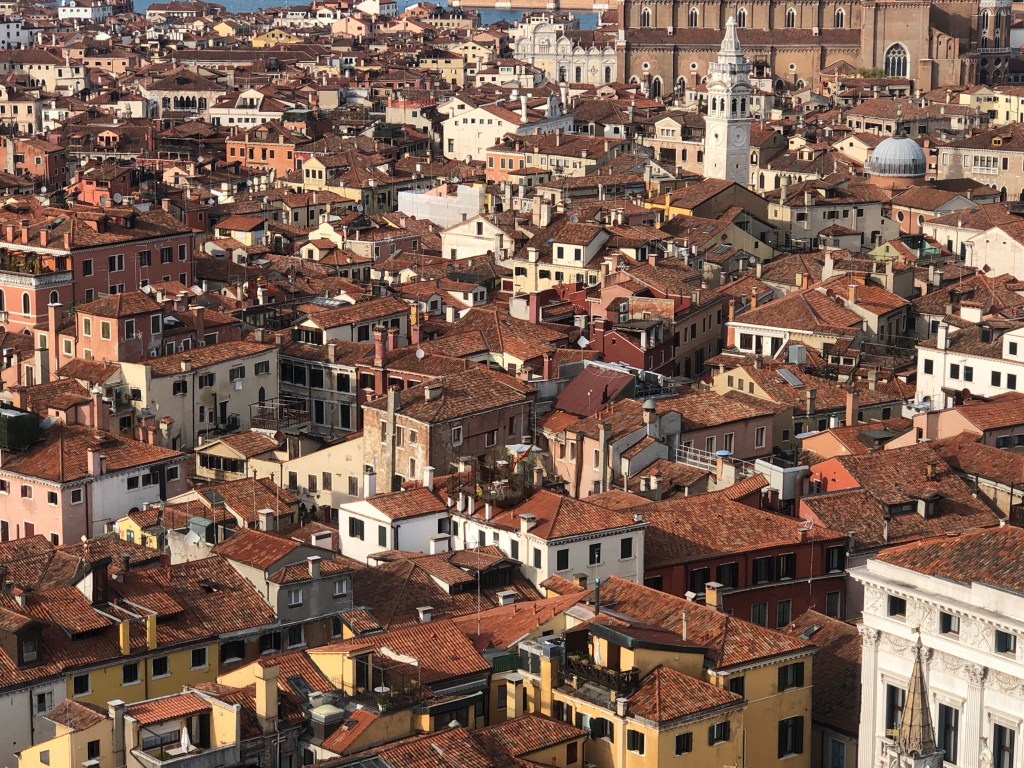
To round out my stay in Venice, I took the lift up the campanile to see the city from on high. It’s worth the 10€ – the views are spectacular and it really helps to put your adventures around the lagoon in context, as you can see most of the islands from up there. There aren’t many cities in the world that aren’t eaten away at by modern cement monstrosities, so Venice is a city you should see from as many angles as you can. And since I didn’t have the window seat on the flight in, this was the next best thing!
The train is slowing down. We’ve cleared the long dark tunnel through the Apennine Mountains and left clouded Florence far behind. The group of four American travellers from Badiddlyboing, Odawidaho (right out of the frighteningly accurate Harry and Paul skit https://youtu.be/BGc3zFOFI-s) have finally stopped talking about Geoff’s wine tour and are playing Candy Crush in silence. Outside, the sun shines on Lazio, and I’m ready for the next adventure. Andiamo di qua! BB x
Venice II: Madonna and the Amazons

This morning I struck out alone, early, just after sunrise.

So early, in fact, that most things were closed, even after a false start on the wrong vaporetto. St Mark’s Basilica wasn’t taking any visitors when I arrived, though at the moment it looks like a building site with all the scaffolding on its central façade.

The scaffolding curse strikes again. After my last piece on the subject disappeared under mysterious circumstances (I swear I remember publishing a piece called “Ode to the Scaffold” and Facebook tells me I’m not lying), I’m all the more convinced there’s a global conspiracy that has every major world heritage monument under restoration when I’m in town. Altamira, Fes’ tanneries, Lindisfarne, León’s cathedral, Gaudí’s Casa Battló and now the Basilica di San Marco. I’m truly cursed.

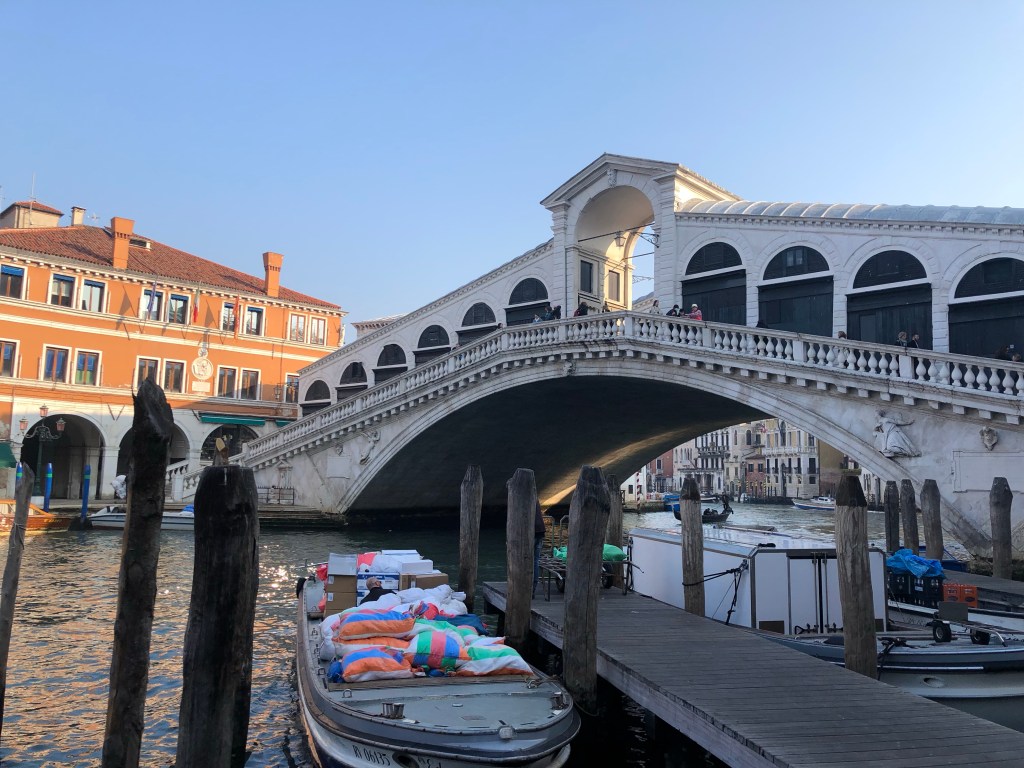
Fortunately, building interiors and Renaissance paintings don’t hold as much fascination for me as the city itself, so I set off in search of some other parts of Venice with stories to tell. And where better to begin than the Rialto? The great bridge over the Grand Canal where Shylock learned of his rival’s ruin?

I’ll admit that today was something of a schoolboy-fanboy morning. Othello and The Merchant of Venice were two of my A Level texts back in the day and walking down the very streets where some of Shakespeare’s greatest works were set felt nothing short of magical. Some come to Venice seeking romance, fine dining and Renaissance majesty, but I’m wired differently. Jews, plague and Shakespeare – that’s why I’m here.

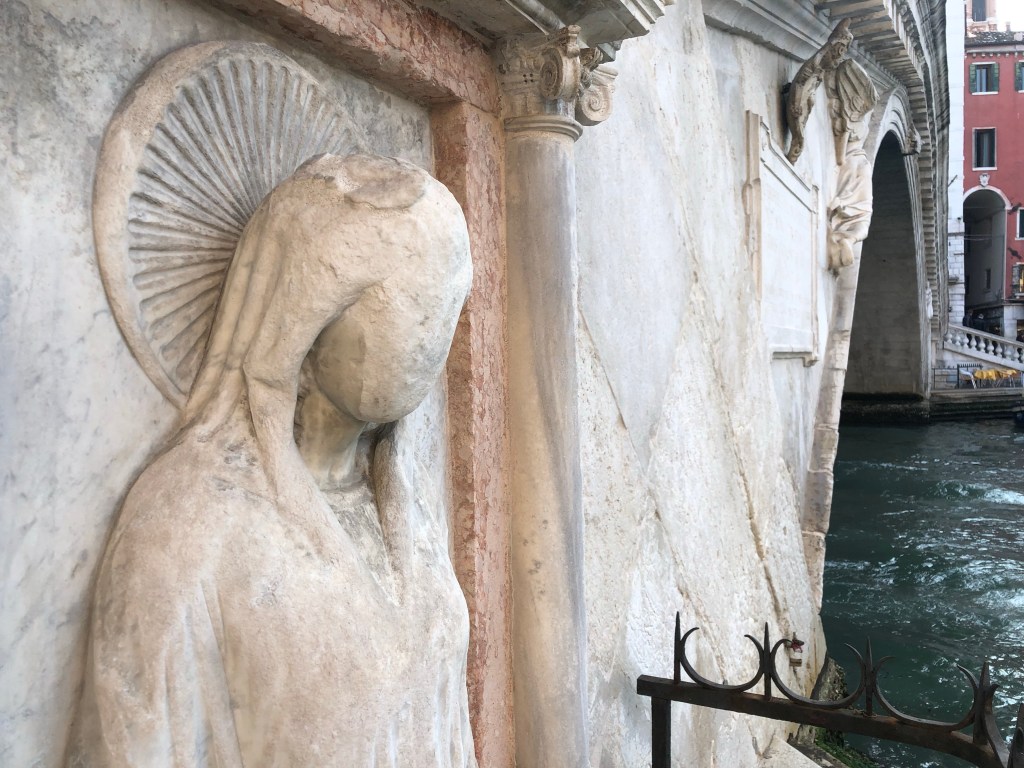
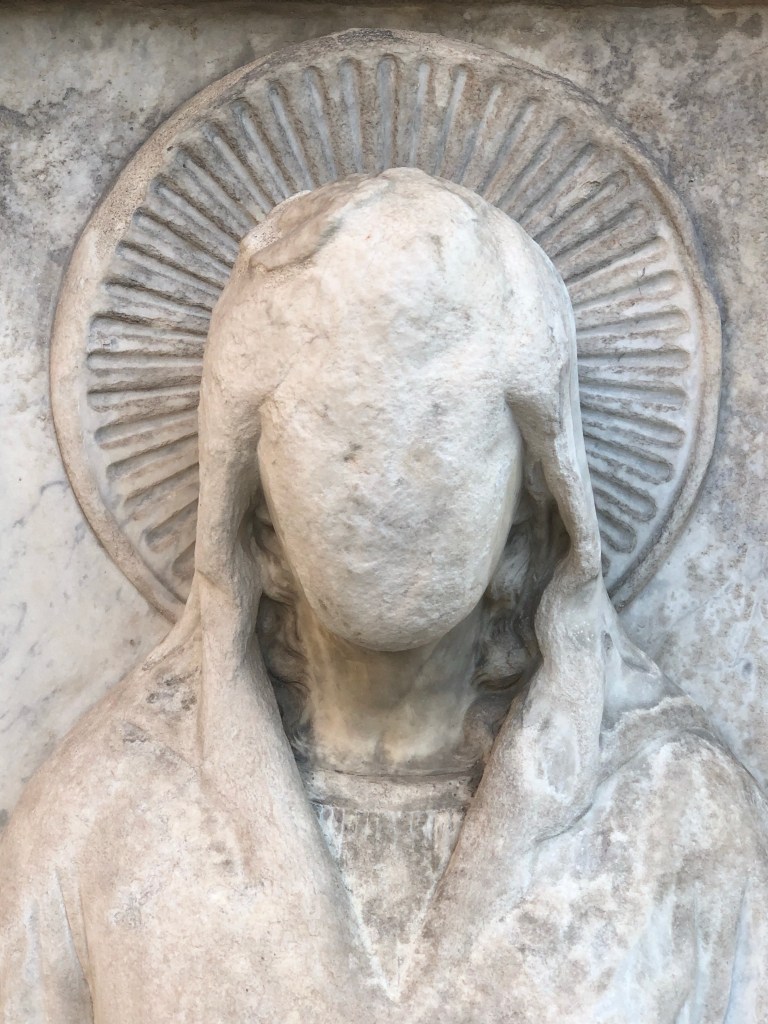
A faceless bust of the Madonna sits carved in marble on the west side of the bridge. I can’t find anything on her, and my Italian isn’t quite up to scratch to ask a local yet, but in a city filled with busts of Mary, this faceless one grabbed my attention.

How many have touched her face over the centuries in adoration? How many have asked for her intercession? I see that many of the older Venetians, like their coreligionists across the sea, cross themselves whenever they pass one of these ancient busts. Were their wishes granted, or did their ships founder on the Goodwin Sands (or not, in a rather silly plot twist from the Bard)?

Onwards from the Rialto and deeper into the heart of the city. I’m seeking Cannaregio and the ghettos, but I keep getting distracted by the Venetians themselves. How tall these Italians are! We of Spanish blood are a stocky folk at the best of times, and I feel blessed to be taller than average for once whenever I’m there, but here I am dwarfed. Broad-shouldered gondolieri swaggering about with bolshy Italian charm, thickset old-timers puffing on cigars as they vent about che succede, exceptionally elegant young women on long legs and perfectly chosen outfits. And that especially fetching eye colour that is so particular to the Italians, a fair and greenish brown that arrests the heart for a moment.

Ok, I’m staring. Time to move on.

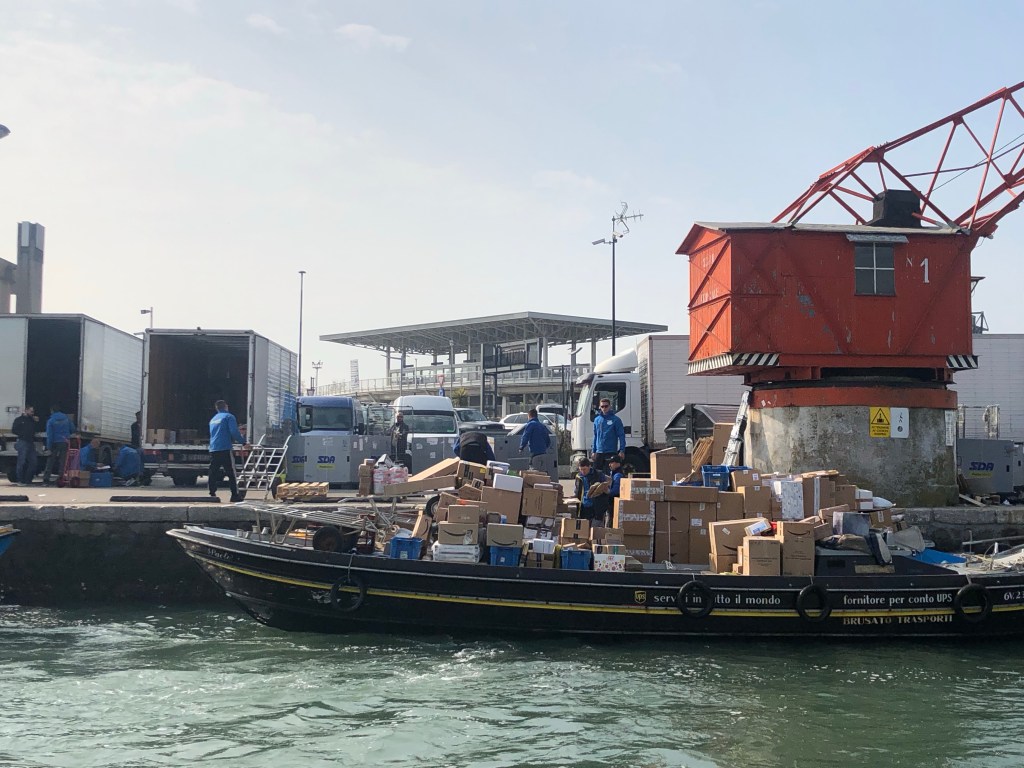
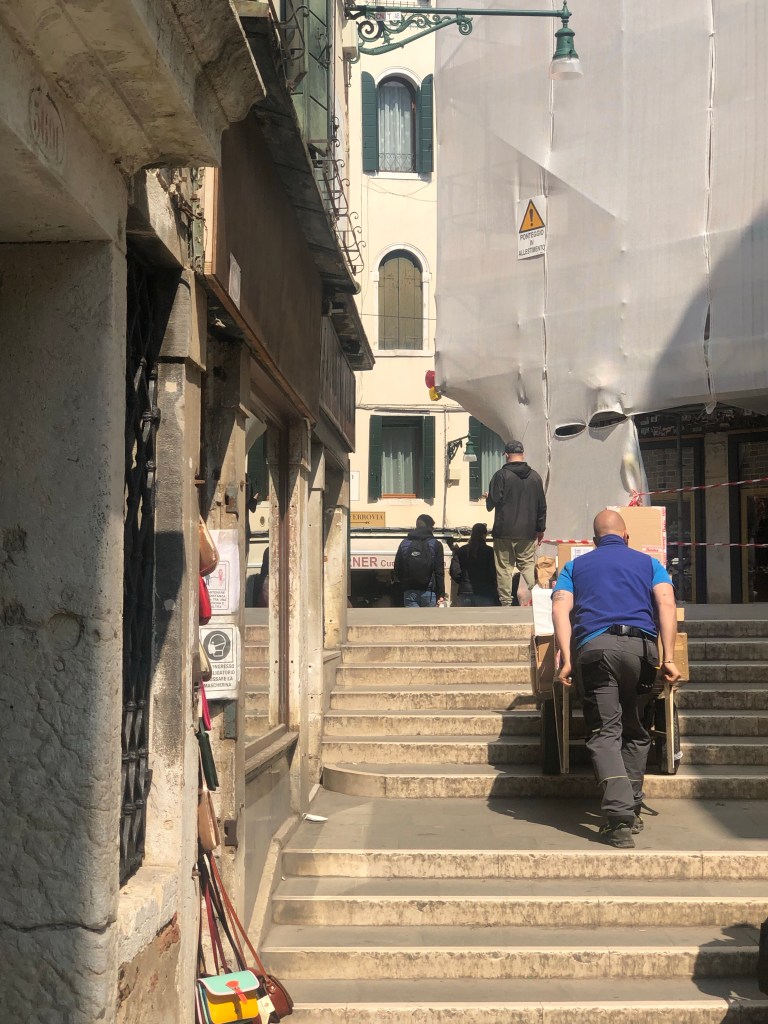
One thing that’s really got my attention today is how Venice has adapted to the age of Amazon Prime. In a city with no cars, the usual “white van man” has no jurisdiction. Instead, I’ve watched boats ferrying parcels in from the mainland all morning, while wiry, suntanned porters haul the day’s Amazon payload up and over the city’s many bridges using a purpose-built trolley that seems designed to tackle Venice’s myriad steps. Ingenious!

I could think of better places to work for Amazon, but as Venice has been a trading hub since its inception, I expect the Venetians are used to it.

I ate my lunch/brunch of a focaccia ai olive and an extremely filling lemon ricotta cheesecake in Campo San Geremia, after overshooting the ghetto district by a bridge or two. I listened to a Senegalese busker and wondered if African minstrels were a thing in Shakespeare’s Venice, too. His music was fun and his voice captivating. My dad would have said it was repetitive. I would have said it was catchy. Mr Busker would probably have said he was just having the time of his life – and raking it in in the process Seriously, I’ve rarely seen a busker’s cap so full – there was more shine coming off the euros on his guitar case than ripples on the Grand Canal. Venice must be a minstrel’s dream.

My thoughts and feelings wandering through the ghetto vechio and the ghetto novo were much too powerful to sum up in what is already a comprehensive article. I’ll save them for when I return tomorrow. Right now, the brightest part of the day is almost over and I’m feeling rested. Time to go and explore again. BB x

Venice: First Impressions

My eyes hurt. The 4.15am start probably didn’t help, but I’d wager the blinding light of the Venetian sky has something to do with it, too. The good weather is supposed to start tomorrow, but today the city is draped in a lagoon of cloud – and that’s no ugly thing.

Check-in was easy. Considerably so. Though it’s a little sad the world has gone and got itself in a big damn hurry and replaced most of the human interactions in airports with machines, it doesn’t half cut the time spent queuing. Despite one of the smoothest transitions from home to gate, however, the plane was all of forty five minutes late leaving Gatwick. Apparently they’d oversold the flight by one and by the time they’d sorted that one out, we’d missed our slot. I was listening to Ravel’s Boléro which only made the anticipation all the more amusing – that piece is basically thirteen minutes of build up to a two minute finale. I could have listened to it three times over in the time between our original departure time and takeoff… but, as I’m not a masochist, I didn’t. Fifteen minutes of snare drums is good enough.

Have EasyJet seats shrunk over the years or have I just forgotten? In any event, Venice’s Marco Polo Airport is very easy to navigate. Passport control is also machine-operated, though I did still get my stamp from a singing security guard. The one upshot of Brexit is that my passport is beginning to look well-travelled again, after years of “ghosting” between the UK and Spain.

Those who’ve traveled with me before will know I prefer to keep an open book when I travel. That can make me either the most liberating or the most frustrating person to travel with. However, it’s a rule I stick to. It is, of course, considerably easier to do when you travel alone.

I thought about sailing into Venice on one of Alilaguna’s water transports and even got as far as buying a ticket, only to be told that the Rosso service via Giudecca wasn’t running today. Nobody thought to tell the machine. This, I suppose, is one example where machines will be the death of us – starting small, bleeding the shy and the awkward of their petty cash, before bloodying us when Skynet takes over.

Joking aside, I decided to skip the hassle and take the bus. A much better idea – it’s a short ride and at only 8€ it’s an easy, affordable trip. And though I was planning on heading straight to Giudecca to drop off my gear, in the end taking the bus swayed me to get to know the floating city a little along the way.

I’ve been good this time. I haven’t actually done a lot of research. I haven’t binged in Venice photos or read up on travel blogs. The only real binging I’ve been indulging in is my Italian, which is already paying dividends out here. As a result, I’ve managed to dodge the Petra Effect this time. Hype really is a killer – so I’ve arrived blissfully underexposed. And what an impact that has!

First impressions? I think one of the most surprising things about Venice is how quiet it is. I was expecting one of the most beautiful cities in Europe to be absolutely heaving, but it’s not. I lost count of the number of times I found myself crossing a bridge in an empty, silent street, with nothing meeting my ears but the rippling water and the crying of gulls overhead. Even the Venetians themselves seem toned down (but then, I am used to Milanese Italians who are especially vocal). But no. None of that. It’s incredibly peaceful here.

The vaporetti couldn’t be easier to use. I’ve bought a three-day pass for 40€ that will allow me to bounce on and off them over the next few days. If you stay on Giudecca, you’ll be making frequent use of them just to get to the city and back, and at 7.50€ for a single trip you’ll make a saving even if you only plan to make a return trip from Giudecca once each day. I have a few days to play with, so I’m going to try to explore the outlying islands of Murano and Burano. Better hold on to that ticket!

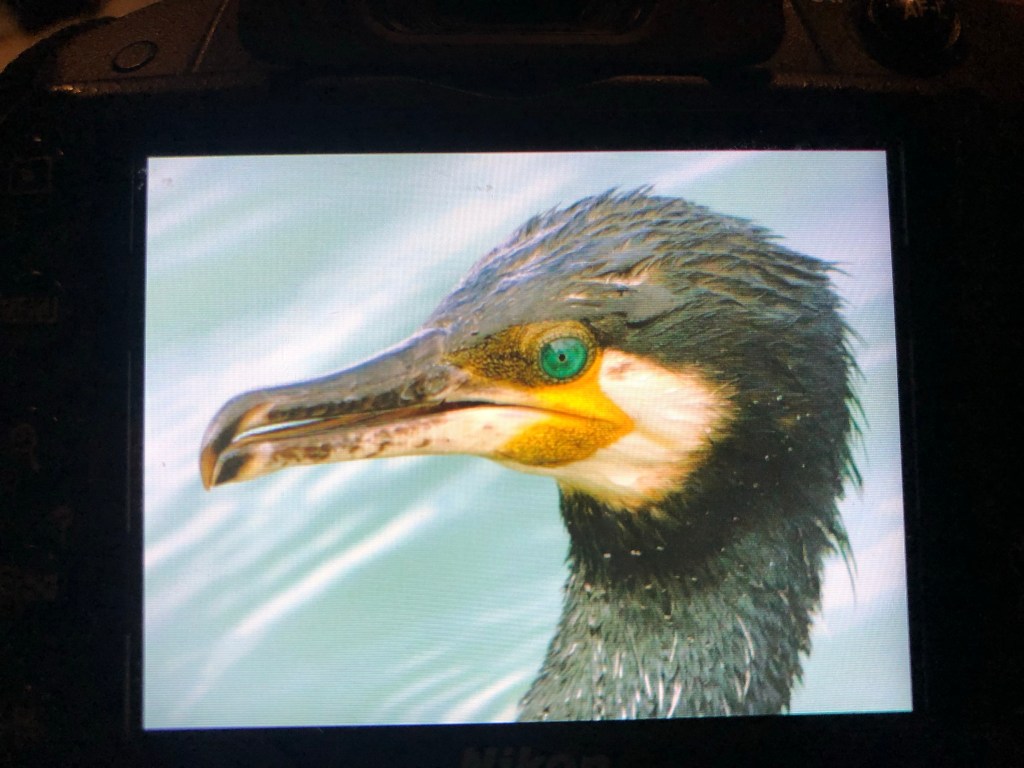
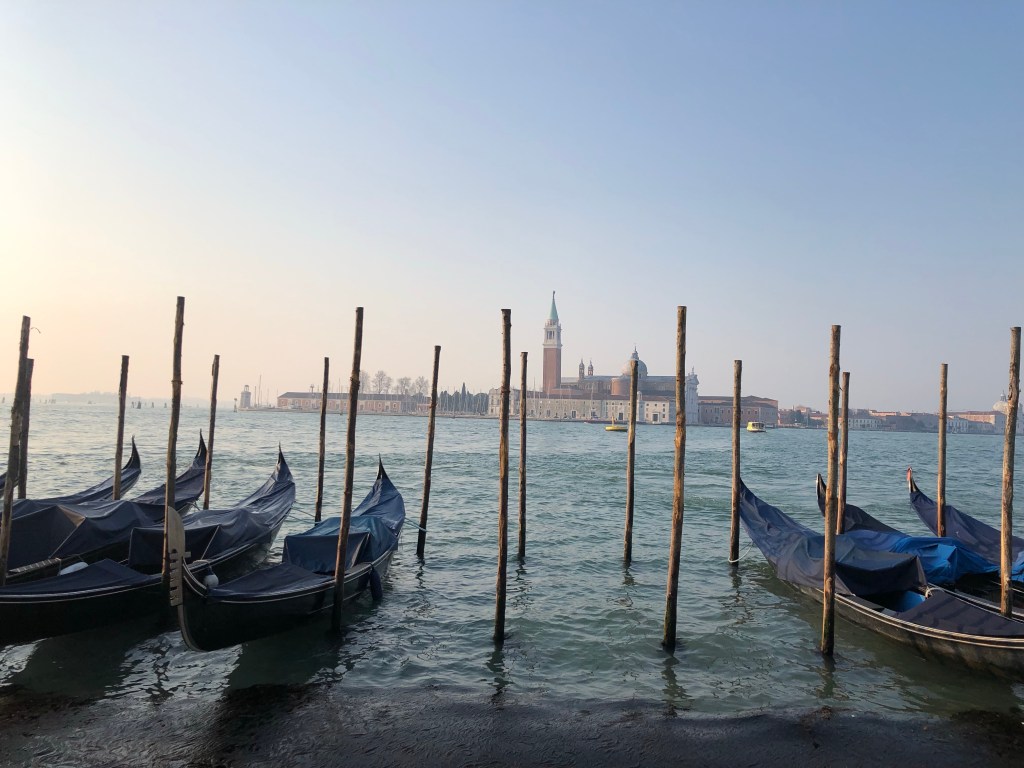
Giudecca is a quiet place to stay. I spent most of the afternoon snagging photographs of the cityscape in a mirrored window and chasing a cormorant down the waterfront. For once I’m armed with my trusty 300mm and can get back to my roots as an amateur wildlife photographer. I ought to invest in a means of transferring my photos straight to my phone for on-the-go reporting like this, but for now, a grab shot from the old iPhone will have to do.

Looks like the other occupants of my dorm are stirring. I noticed a Spanish book on someone’s bed as I came in. I can see a Pembroke College Cambridge tog bag hanging from one of the bunks and I know I recognised a French accent back there. Time to break a habit and instigate a conversation for once. I fancy dinner and a chat. I’ve missed this way of life. Catch you later! BB x