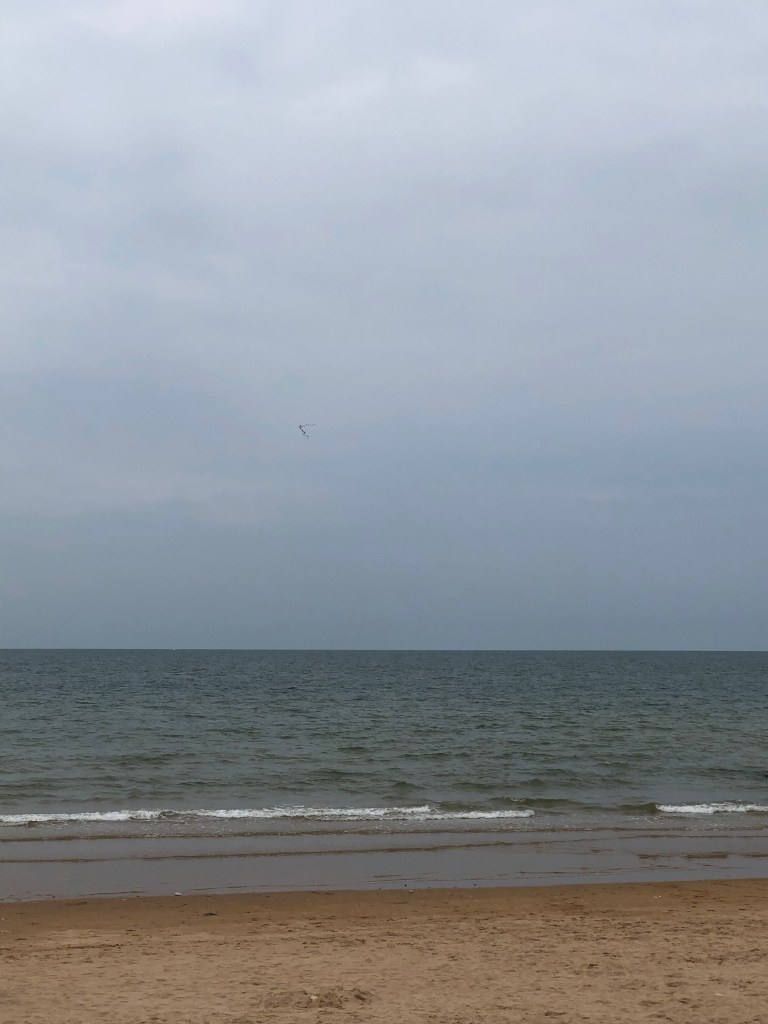
On the Road Again

I’ve got my third driving lesson of the summer this afternoon. They’re not going too badly, considering I had a three month hiatus after my last instructor was rushed to hospital, forcing me to cancel just two weeks shy of my test. I wouldn’t say I’m test ready, by any stretch of the imagination, but it’s becoming more natural behind the wheel, and I’m hopeful that I will be on the road in wheels of my own before the end of my thirtieth year. That’s the goal, anyway.

Cruising around the unfamiliar roads of Somerset had me thinking about the freedom I will have with a car of my own. It’s the thing people tend to point out time and again when the subject of getting my driver’s licence comes up in conversation, but it’s honestly not something I think about all that often. Which is absurd, because when I do have the chance to get out and explore, I know I’ll be out most weekends if I can, especially in this wild and sometimes desolate corner of the British Isles. With Exmoor, Dartmoor and the Jurassic Coast on my doorstep, I’d be a fool not to.

I’ve been on a number of grand road trips over the course of my travels, and I thought I’d use some old photos as a launch to reminisce about a few of them: snapshots, if you will, of great adventures.

1. The Badia, Jordan. 3rd July 2015: 10:56am


At the end of my first week living in Jordan back in that sweltering summer of 2015, a couple of Dutch students from my language school, Bern and Marco, hired a van and offered to take a group of us out into the Eastern Desert, also known as the Badia, on a Jordanian road trip. It was a bit of a squeeze, fitting ten of us and our supplies into the damned thing, but it allowed us to see more of the country than the public transport system ever could.

Something that strikes you immediately about the Badia is how empty it is. The desert itself is vast, covering more than 72,000km. That’s larger than the Republic of Ireland, and it’s actually only a fraction of the greater Syrian Desert. Highway 40, the road that connects the oasis city of Azraq to the capital Amman, is a largely featureless drive across the edge of the Harrat as-Sham, often translated as the Black Desert. It is no misnomer. Forget your childish images of rolling sand dunes and palm trees. The Black Desert is an immense expanse of flat, black rock, stretching as far as the eye can see in all directions. The silence is almost as oppressive as the heat. One of my American friends, the enigmatic Washingtonian Mackenzie, used to play a game on the road, Camel or Human, every time something larger than a boulder appeared on the horizon. Usually it was a camel, but just every so often we’d pass a wanderer on the road, miles away from everything and everyone. Not exactly a forgiving place to break down.

2. Reinosa, Spain. 21st February 2016: 11.46am
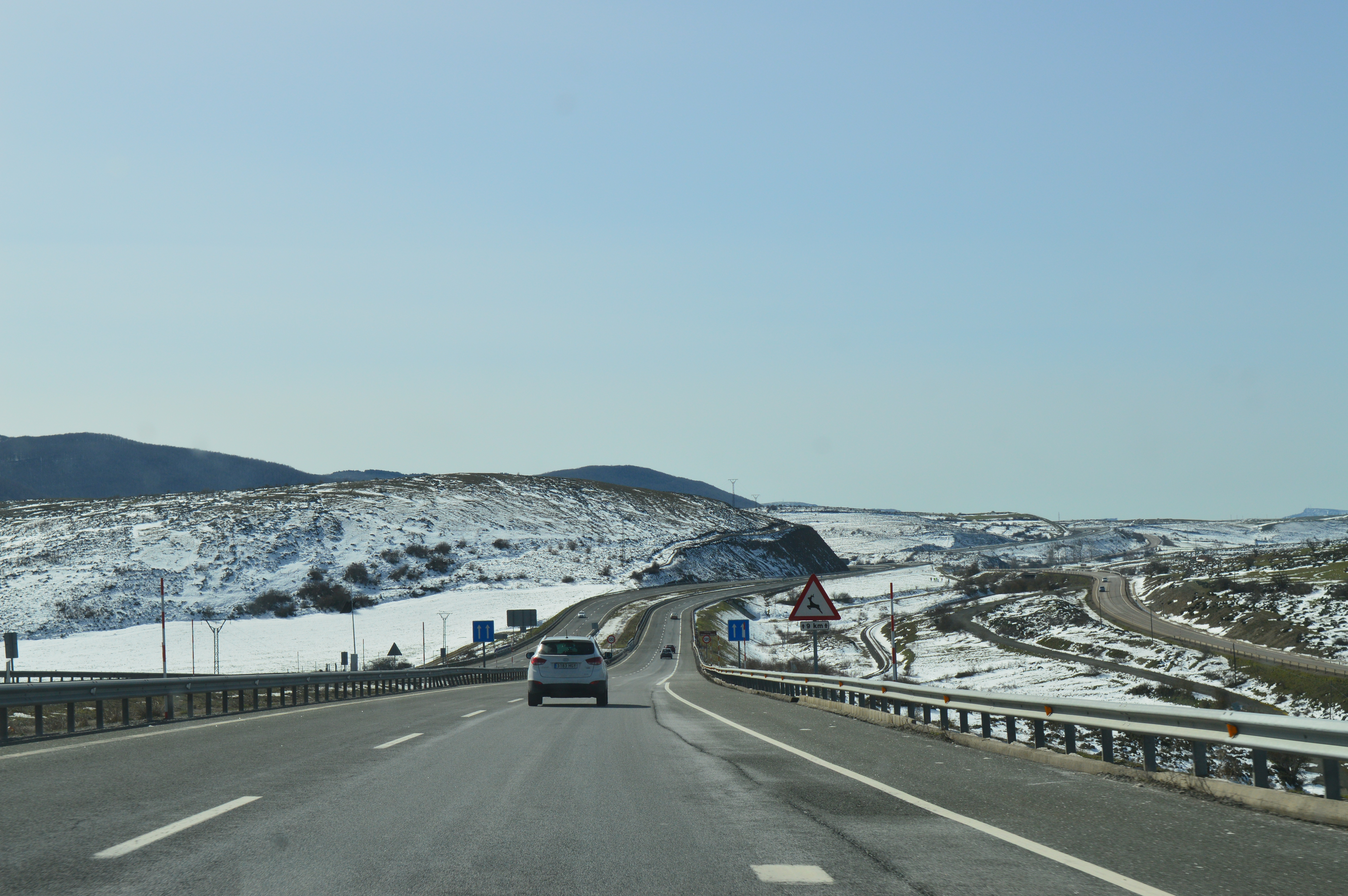

I used a variety of methods to travel around Spain when I lived out there: the carshare app BlaBlaCar, the short-distance Extremadura bus firm LEDA and, latterly, the superb train network RENFE. For the longest journeys I leaned heavily on ALSA, Spain’s answer to National Express. Cheap and efficient, provided you had time to spare, they serve most of Spain’s larger cities and provided a very reliable means of getting around. I took the bus one wintry weekend to see my friend Kate up in Cantabria. It was a ten-hour journey – not for those who get bored or travel-sick – but it does take you through some of Spain’s most breath-taking natural beauty: the wild steppe of Cáceres, the cherry-blossom valleys of Plasencia, the high meseta of Old Castile and the snow-covered mountains of the Cordillera Cantábrica. Driving from south to north across Spain, you really do feel as though you have arrived in a totally different country when you step out of the car at the end of the day.

I hitched a ride south to get home with a friendly student who was heading back to Algeciras after visiting family in Santander. At over 1,000km, it’s probably one of the longest drives you can do in the country. Luckily for me, Villafranca de los Barros was on his way home. In a year where I hardly saw any snow – and where Durham got some of its best in a decade – it was spellbinding to see the northern reaches of Castile covered in a heavy blanket of snow and ice. I’ll have to come back and explore someday.

3. Piste 1507, Morocco. 20th March 2015. 11.45am
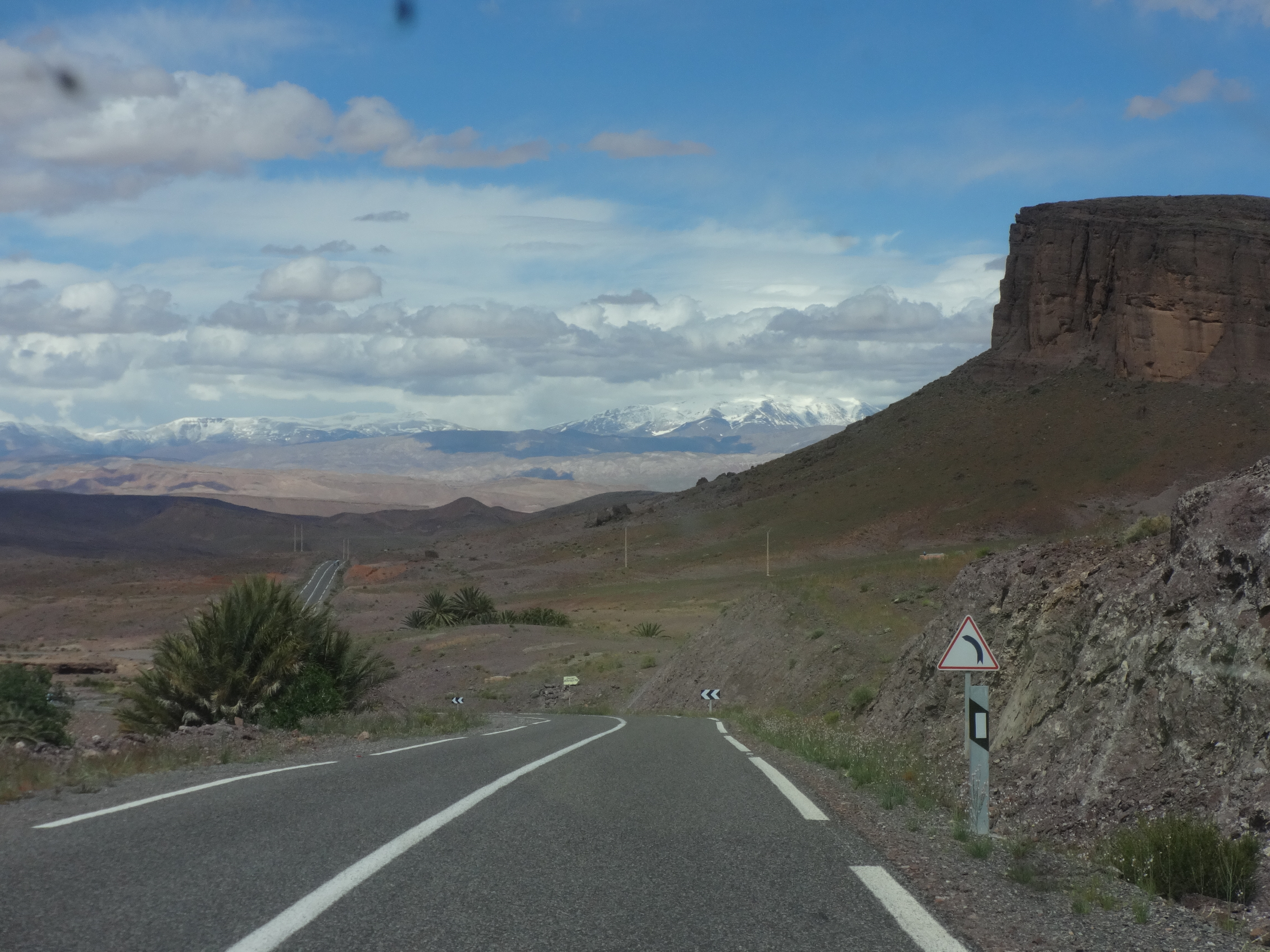

Another marathon road trip, and one of the most bizarre. My friend Archie and I hailed a grand taxi in Oulad Berhil for Ouarzazate, a desert town famous for being the location of choice for a number of movie studios who require a desert theme in a relatively safe location (including blockbusters like The Mummy and Gladitator). Our taxi driver, Ibrahim – whose name I only discerned from the badge on his windshield – was quite possibly the grouchiest, least sociable character I have ever encountered on my travels. Over the course of a three-and-a-half-hour drive across the rugged mountain valleys of Drâa-Tafilalet, he never said a word, despite our intermittent attempts to engage him in conversation. Perhaps he found us tiresome, or perhaps he was cooking up the plan he would later carry out to quintuple the price we had agreed back in Oulad Berhil, safe in the knowledge that Archie’s rucksack (and passport) was locked up in the boot of his car. I’ll never know. Archie fell asleep for much of the trek, but I spent the greater part of it with my eyes glued to the window, watching the world beyond sail past. I love road trips for that. I don’t think I could ever get tired of seeing the world.

4. Interstate 65, Alabama, 3rd July 2024. 7.40pm
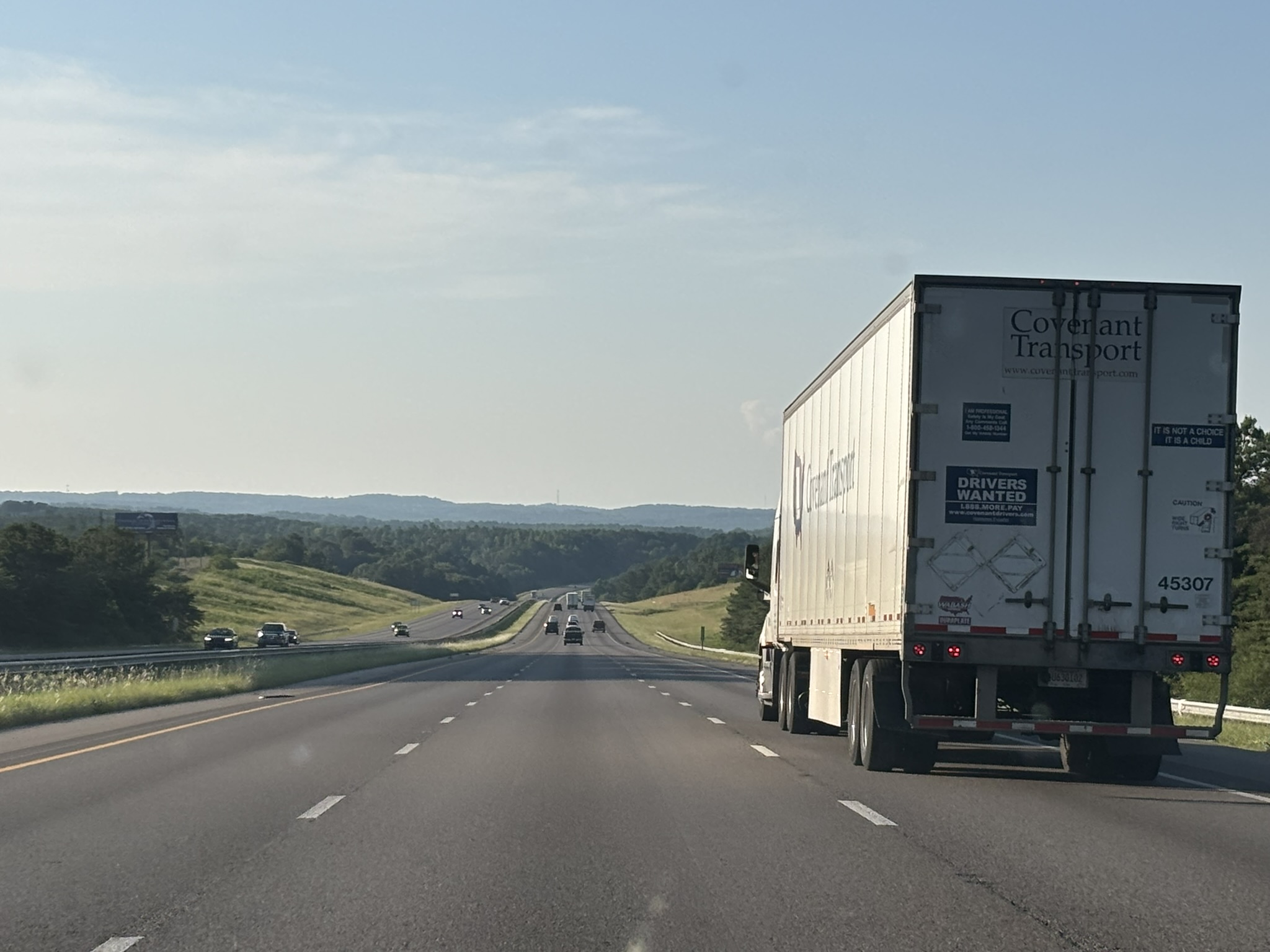

It’s one number shy of Route 66, but it was a phenomenal introduction to the American road trip. The highway in question travels north from Mobile on the south coast of Alabama all the way up to the shores of Lake Michigan in Gary, Indiana. I was only on the road for a fraction of it, from Birmingham up to Huntsville, but it was enough to make my eyes pop. Squashed armadillos, discarded tyre tracks and billboards were features I had anticipated to some degree, but the forests… I don’t think I was aware at all of just how forested North America truly was. The history books and the movies give the impression that most of the great tracts of forest were cut down, but in the American South – especially in the foothills of Appalachians – they go on for mile after mile, stretching across the land like an immense green carpet. The highways just cut right through them, dynamiting their way through hill and mountain as though they were merely molehills.

If I’d known how painful the destination would prove, would I have still made that journey?

Absolutely. Without a second’s hesitation. Some things are worth burning for. Some things are worth traveling all around the world to see, even if only for a moment in your life.

5. Boroboro, Uganda, 11th October 2012. 5.06pm
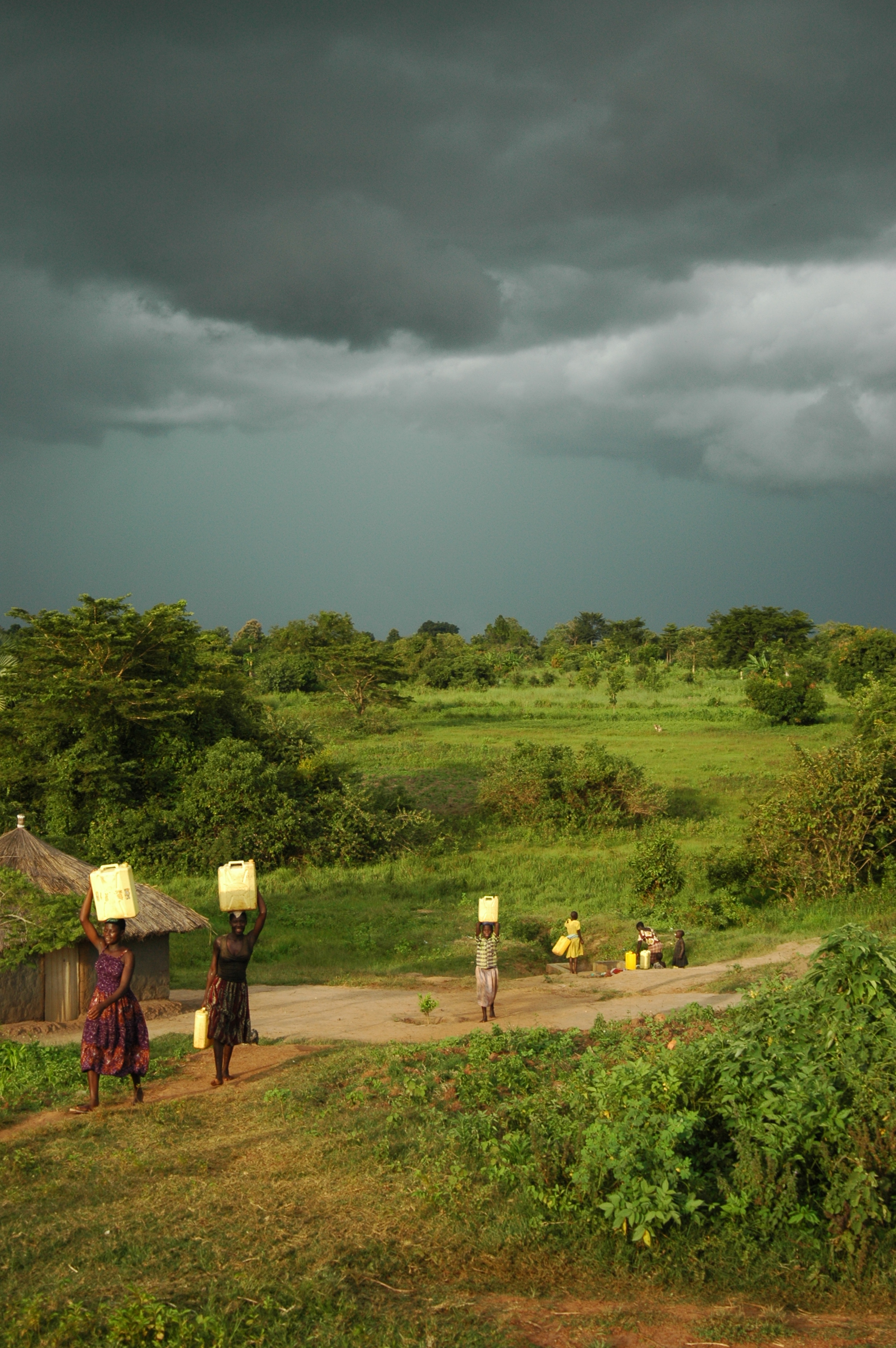

I thought I’d end this post with what is probably the best photo I’ve ever taken, and one that has a real story behind it.

One month into my first teaching post in northern Uganda, I was invited to visit the former headmaster, Mr Ojungu Hudson Luke, on his farm on the banks of the White Nile. It was an incredible experience, herding Uganda’s famous longhorn cattle through the forests and the driving rain, with one of the world’s greatest rivers thundering away in the background, and perhaps I’ll tell you that story and more as the summer draws to a close. On the way home, after three days without access to electricity, my camera was out of charge, bringing my frenetic documentary spree to a standstill. Uganda’s roads can be treacherous and breakdowns are common, and when they do happen, they can be final: I will always remember the graveyard of trucks and lorries between Boroboro and Lira, rotting at the side of the road where they collapsed. Luckily, we made it back to Lira with little trouble, just in time to meet a tropical storm riding in on dark clouds.

The lighting was spectacular: brilliant evening sunshine, heavy, dark clouds, vivid colours all around. Red African soil and a thousand shades of green. Not for the first time in my life, I gave the finger to the sunburn on my skin and rode the last hour of the journey in the back of the truck so that I could see the world with my own eyes. Determined to capture the moment, I took the battery out of my camera and tried to breathe new life into it by rubbing it between my hands and – well – breathing on it. The first roll of thunder came rumbling down just as I pushed the battery back in and bought myself a couple of seconds. With Luke Ojungu still hurtling up the road at quite a pace, I grabbed two shots of the passing countryside from the back of the truck before the camera died.

We were a hundred metres or so from home when a lightning bolt struck a tree just ahead of us, bringing half the trunk down across the telegraph wires, which exploded in a shower of brilliant sparks. We were lucky to avoid any harm, but we soon found out we would be without power for the best part of a week until the electricians came around to fix the problem. It was only after that, with power restored, that I was able to charge my camera and see what I had managed to capture: a beautifully evocative shot of the countryside around Boroboro, lined up almost as though on command. I have it framed in my living room beneath a matching frame of Kanyonyi, the silverback of the mountain gorilla troupe we tracked on that same expedition.

Do stay tuned – I think it might be fun to relive my Ugandan adventures with you, since they predated the blog by some three years! BB x
Slow Travel: The Highs and Lows of Amtrak

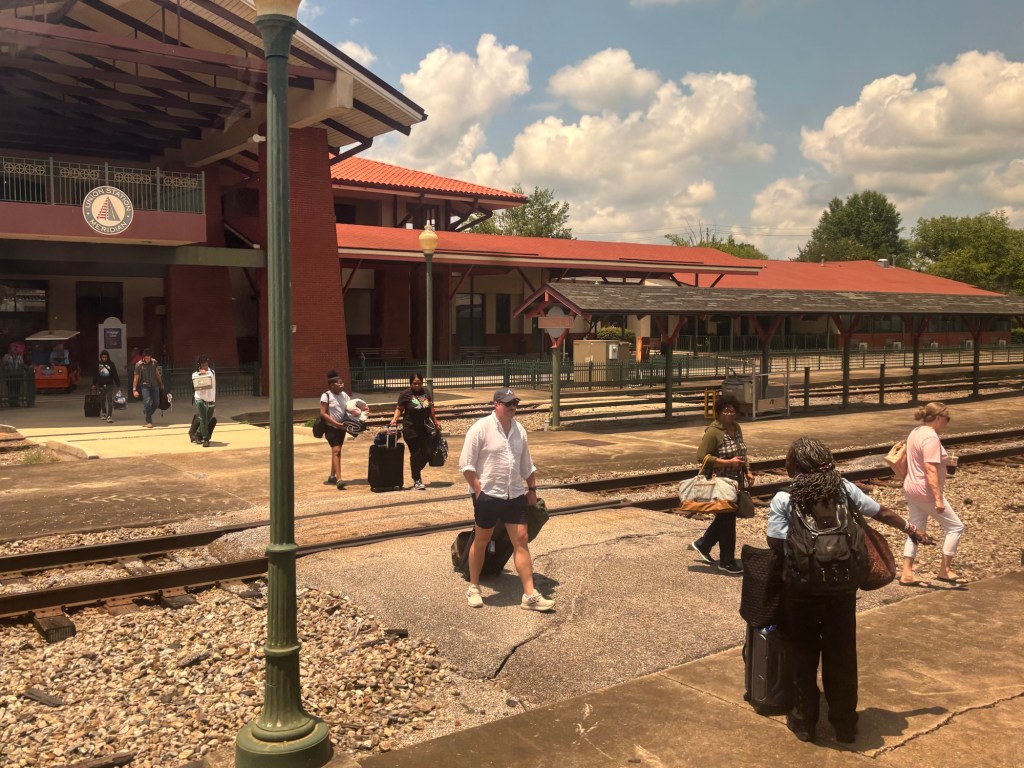
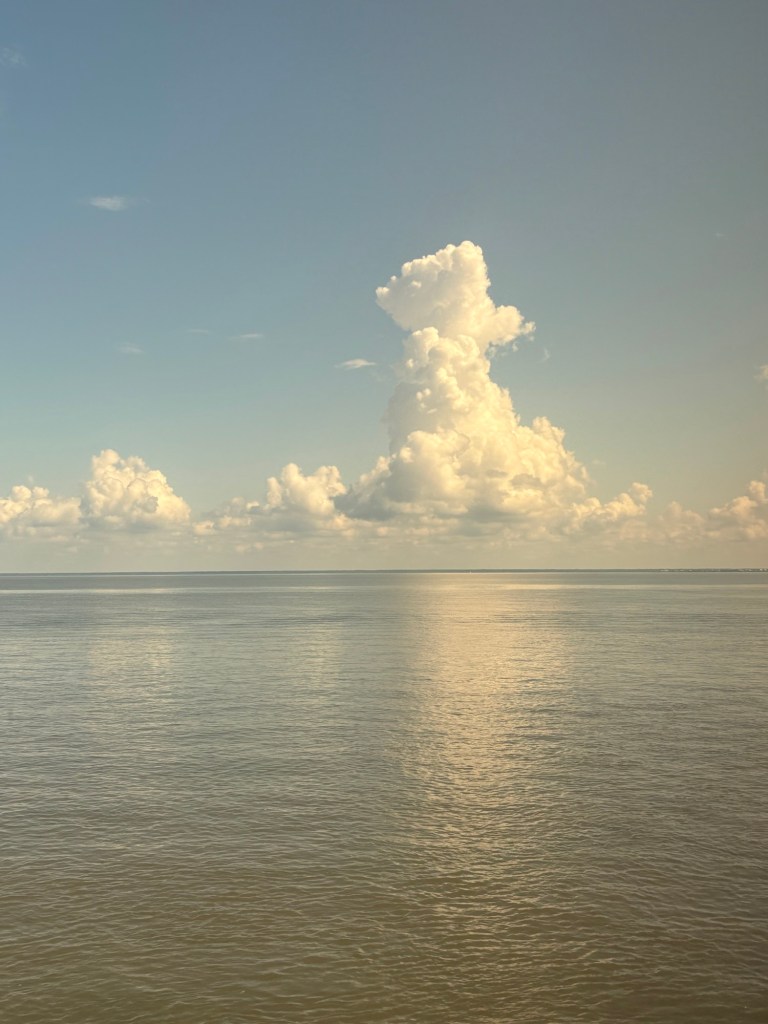
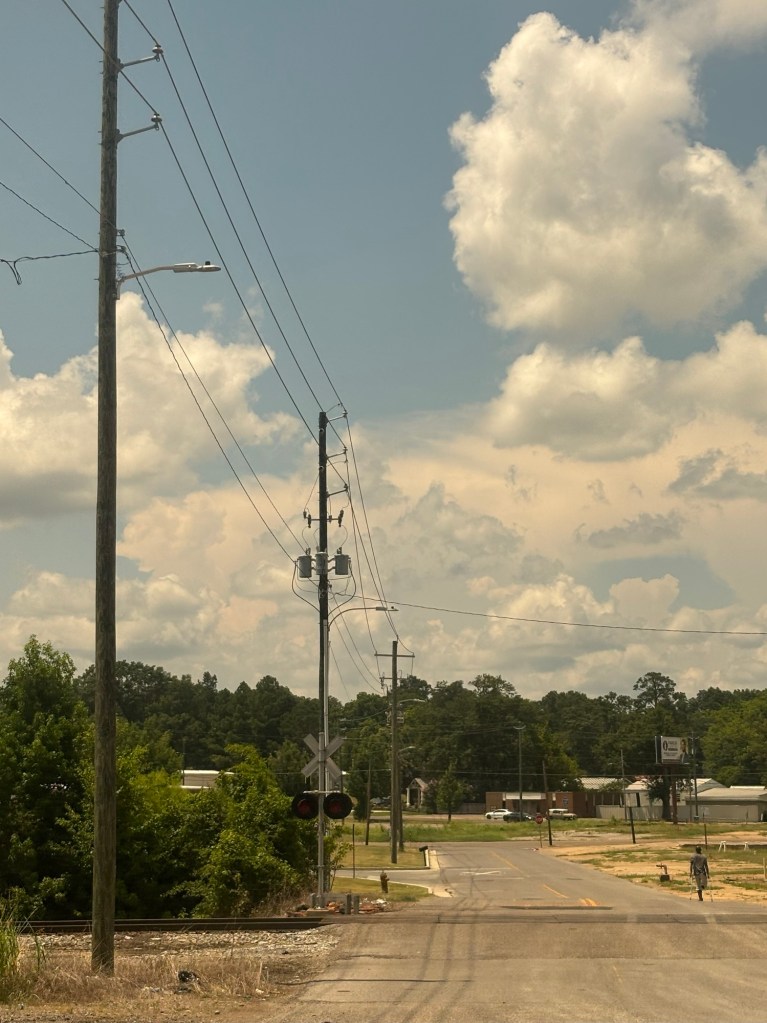
It’s 17.09, it’s been over nine hours since I last ate something and I’m somewhere in the Alabama woods between Tuscaloosa and Birmingham. If we were running to schedule, I’d be arriving in Birmingham in the next few minutes. But, as every American has gone to great pains to explain, the trains in the US never run on schedule. If you’re not in any particular hurry, it’s a phenomenal way to see the States, provided you’re happy to gawp at trees for most of the journey. Lucky for me, I’m easily pleased, and it’s been all I can do to peel my eyes from the window for the last eight hours or so.


The American South reminds me in many ways of Uganda. There’s something familiar about the immensity of the sky, the redness of the earth, the rusting abandoned vehicles and – especially – the enormous homemade painted advertising on homes, cafés and storefronts. The most American thing I’ve seen so far – beside the lone bald eagle standing on the banks of Lake Pontchartrain – are the countless colourful billboards advertising private law firms, demanding your attention with Colgate smiles in nauseatingly familiar language: Bart’s always got your back, Call ya girl Desi, IYKYK, that sort of thing.


Let’s forget any time pressure for a moment. Riding an Amtrak train is actually a really comfortable experience, and I’m surprised it isn’t more popular. There are charging stations for every seat, curtains for the windows, sturdy WiFi and a cheery Southern burr over the tannoy to replace the cold, automated replay of British trains. I’ve even got enough leg room to stretch my legs, and that’s taking into account the fact that the guy in the seat in front has put his chair back into full recline. I haven’t seen as much wildlife as I’d have liked over the course of my vigil, but I’ve still managed to clock a few deer, a whole lot of egrets and a few birds of prey, including the symbol of America itself. That’s not too shabby for a bit of on-board birdwatching.

To be honest, the only thing I’d change is the seat numbering, which is baffling – and very obviously a new concept, as even the ticket inspectors seemed to get muddled up by the numbers (which don’t really correspond to any of the seats at all). Folk don’t seem to mind, though. I think most of the passengers here have simply found an empty seat and made themselves comfortable, and all of them are quite happy to shuffle as and when a couple or family comes aboard. That’s one major difference to European trains. I was traveling in Germany once and still remember an officious German lady who made the entire coach get up and scramble because there was somebody in her seat and she absolutely had to sit in the seat she had been assigned. The human soul: the price of efficiency.


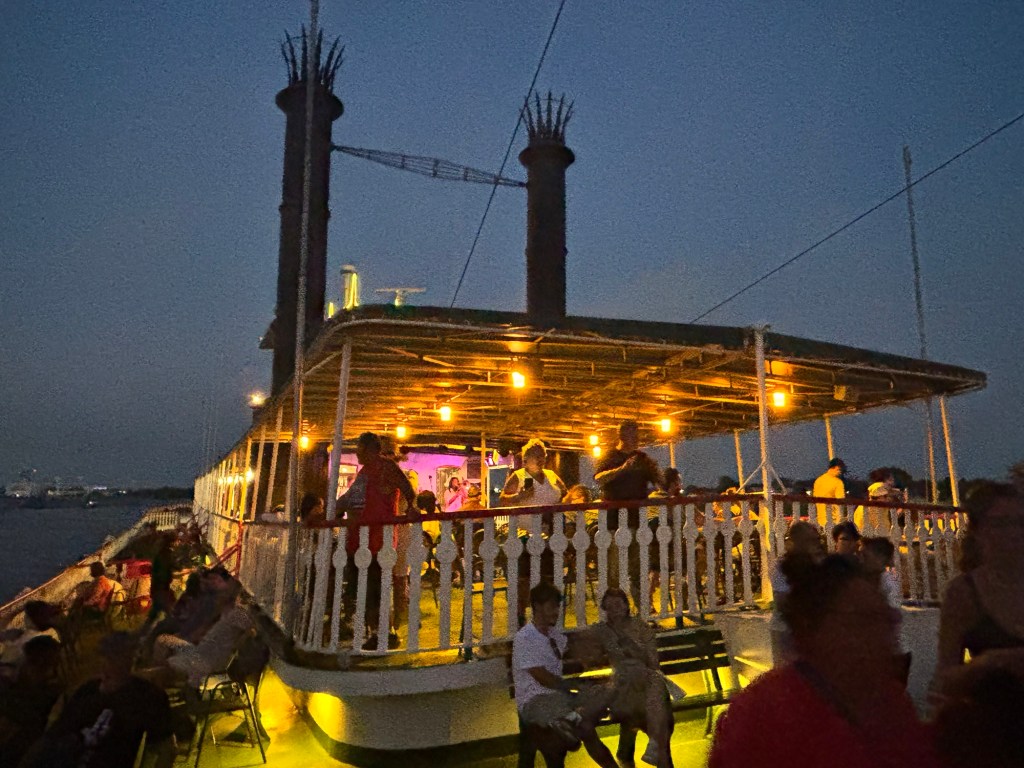
I ended my stay in New Orleans with a jazz fest, seeing a local band in Preservation Hall and then taking the Natchez steamboat cruise down the Mississippi with its attendant Dixieland band providing a jaunty backdrop. If it’s done one good thing for me, New Orleans has reminded me that there is hope for those of us who still believe in music bringing the world together. The Preservation Hall jazz band ticked more diversity-and-inclusion boxes than a school website: the trombonist was black, the saxophonist Latino, the pianist Scandinavian, the double bassist Japanese and the lead trumpeter Creole. I hate to admit it, but I’m still bleeding a little over the way my Gospel Choir was torn apart years ago. Maybe I always will be. That’s partly why I’m here in the States, in this limbo between jobs, between worlds: to try to put a seal on that episode of my life, and to remind myself that there are plenty of people out there who don’t see things that way. And where better than America, the great Melting Pot itself?


I’d better stop writing – it looks like we’ll be arriving soon. In the end, we’re only 50 minutes behind schedule. It’s funny how little that seems to matter! In the UK, there’d be apologies over the tannoy and prompts to get a refund via the website…

Alright America. I’ll admit it. Just this once, you have us beat on heart. BB x

Gators, Gumbo and Vanishing Cabinets

Alright, so the primary reason for my trip to the States is to soak up the music out here. Yes, I’m perfectly aware that I could have saved a little and gone to Glastonbury, but frankly the idea of camping out in a field with thousands of party-goers sounds like Hell on Earth to me. I’m quite happy chasing a more traditional, more intimate range of older styles out here in the States. That’s why I’ve shelled out on a couple of jazz-themed events this afternoon. But before that, there’s one other major reason I decided to kick off my American adventure in Louisiana. The Bayou.


I’ve got a thing for swamps. I spent weeks of my childhood clomping around the misty reedbeds of Stodmarsh in search of bitterns and marsh harriers, while anybody else my age with half a brain was honing their social skills at the park or on the pitch. The Easter holidays required a ritual voyage to Doñana National Park, the ‘Mother of the Marshes’, which became something of a Mecca of mine. So to come to Louisiana and not pay a visit to the Bayou would be foolishness in the extreme.

Of course, it isn’t all that easy to get into the Bayou proper without a boat, or a car for that matter. Fortunately there are a lot of offers on the table to take you out of New Orleans and into the swamps. I threw in my lot with Cajun Encounters – it looked to be far and away the best one going.

The bus picked me up from outside the hotel shortly after eight, giving me plenty of time to wolf down breakfast. The driver, though not a tour guide himself, did a brilliant job pointing out the sights as he took us through the residential districts of New Orleans and out into the wilds of Slidell. The devastation of Hurricane Katrina is remarkably apparent, even twenty years on: together with the hulking wrecks of houses and ships, the skeleton of New Orleans’ only amusement park can still be seen arching above the trees, while the bizarre Fisherman’s Castle on the edge of Lake Pontchartrain remains the only building to have survived the floodwaters intact.

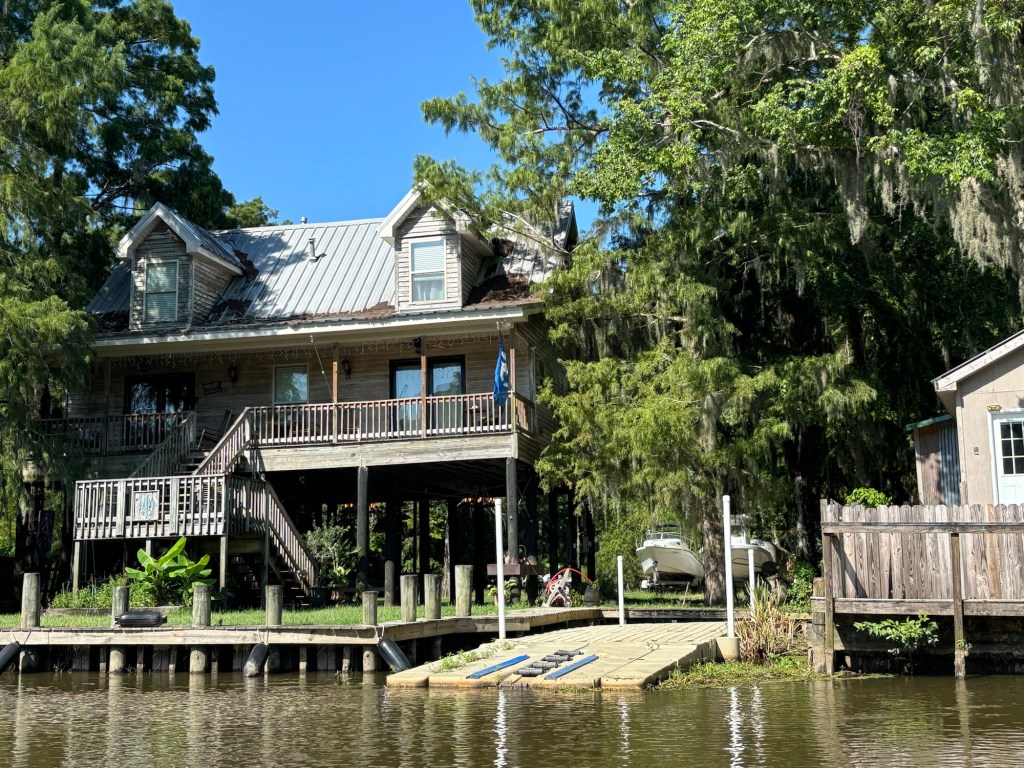
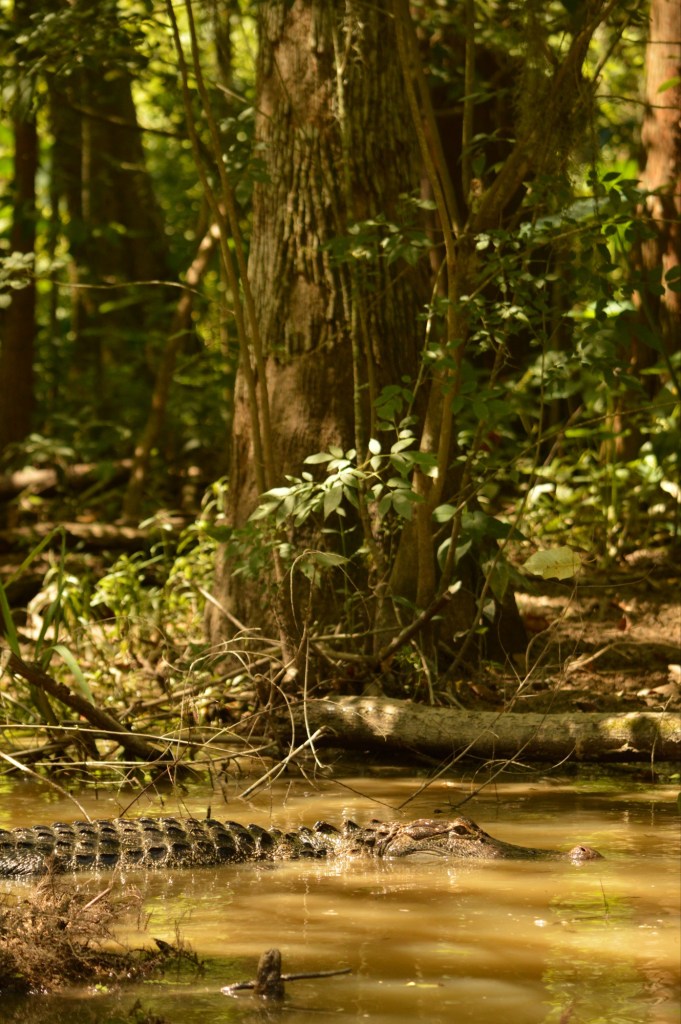
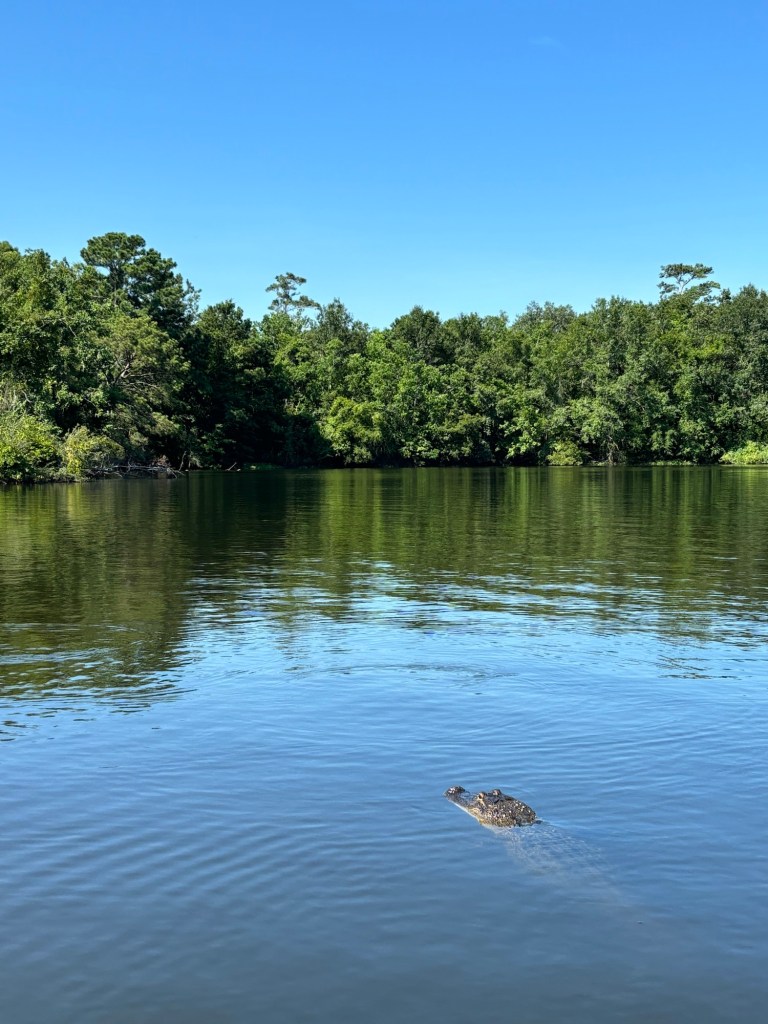
The tour begins beyond sleepy Slidell on the bank of an inlet of the Pearl River, where the swamp-folk came pearl fishing many years ago. The six of us in my boat were assigned the formidable Captain Zander, a former warehouse packer and a true Cajun to boot. To say we drew the winning ticket would be an understatement. As well as being a no-nonsense authority on the Bayou, he seems to know just about everybody out on the Pearl River – including Cindy, one of the biggest gators in the swamp.


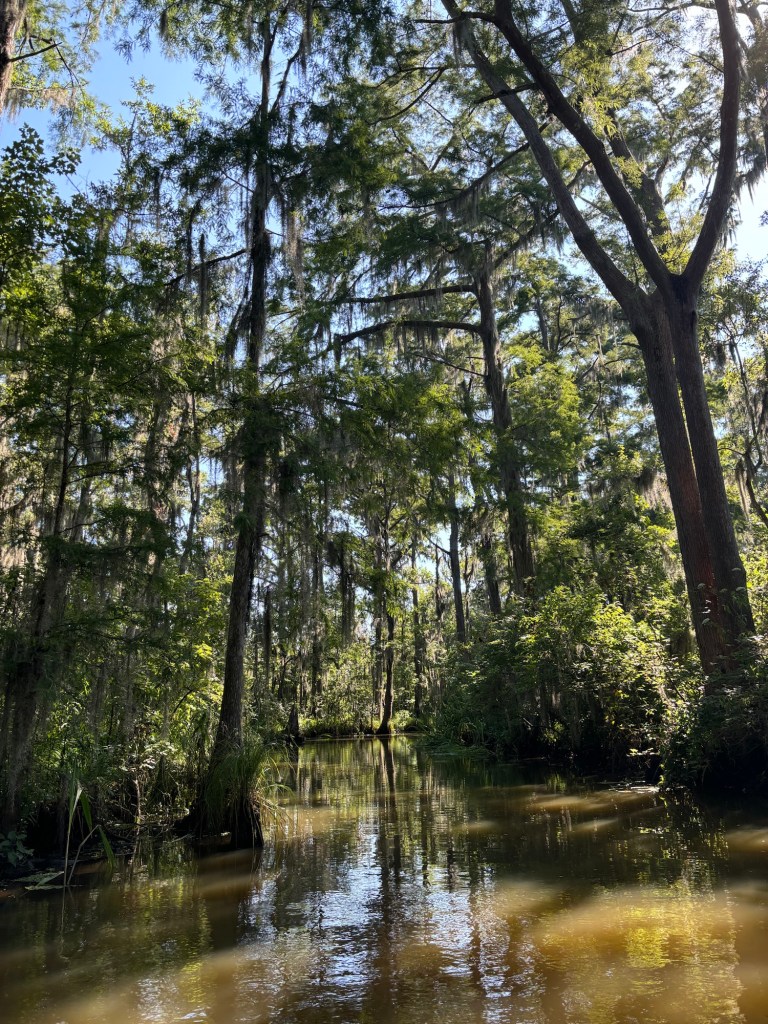
You’d be surprised how quickly you get used to the presence of the alligators. I must have counted around forty by the end of the outing, from amber-skinned yearlings to hulking, black-scuted beasts, visible only by the unmistakeable silhouette of their snouts just above the water. Before you know it, you feel as though they’re just part of the scenery!


When I was a kid I had a picture book that listed the American Alligator as endangered – which is true, as back in the 90s it was facing the very real danger of extirpation. Since then, however, the environmentalists have stepped in to throw the spirit of the Bayou a lifeline, and they have returned in force: more than a million can now be found in the Louisiana swamps alone.


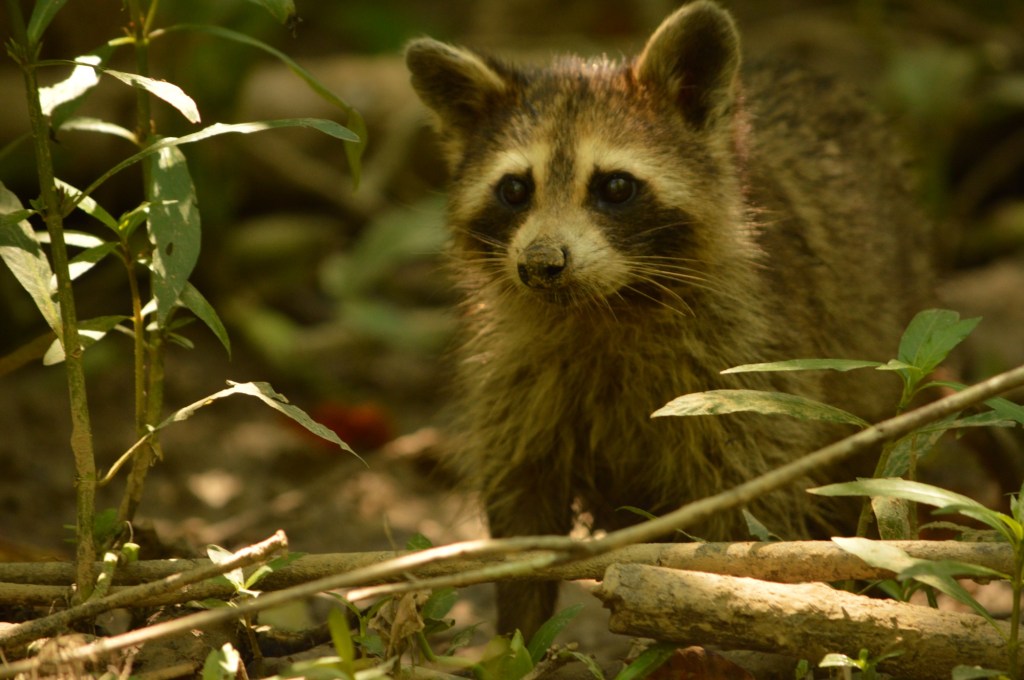
Summer is one of the best times to see Louisiana’s gators, but the heavy foliage can make it harder to see the other denizens of the Bayou. All the same, over two hours I clocked wood ducks, whistling ducks, a pair of high-flying anhingas, several ospreys, green, yellow-crowned and black-crowned night herons, roseate spoonbills, cattle and great egrets, a single great blue heron and, in one of the deeper inlets of the Pearl River, a family of raccoons – a real American experience!


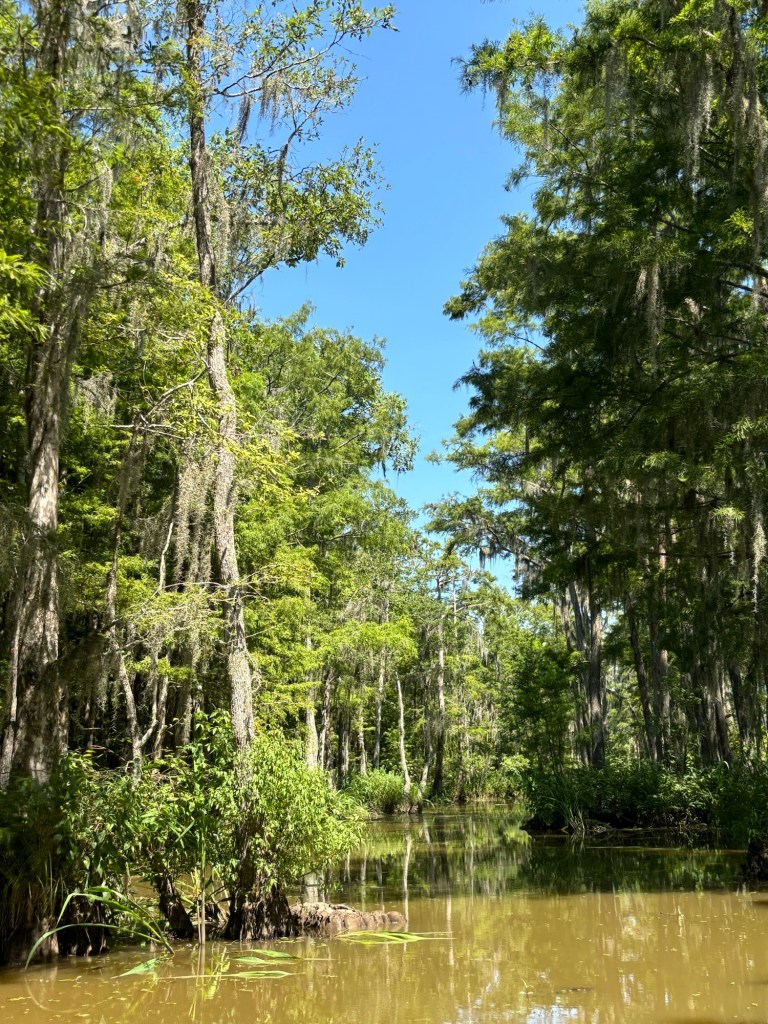
It really was quite something to drift along the snaking rivulets that cut through the Bayou, shielded from the merciless Southern Sun by the trailing beards of Spanish moss hanging from the cypress trees – named neither for their origin or their species (being neither Spanish nor a type of moss) but for their resemblance to the long grey beards of the first Spanish explorers to pass through these swamps hundreds of years ago. I wonder if Cabeza de Vaca and his brave company passed through here on their odyssey?


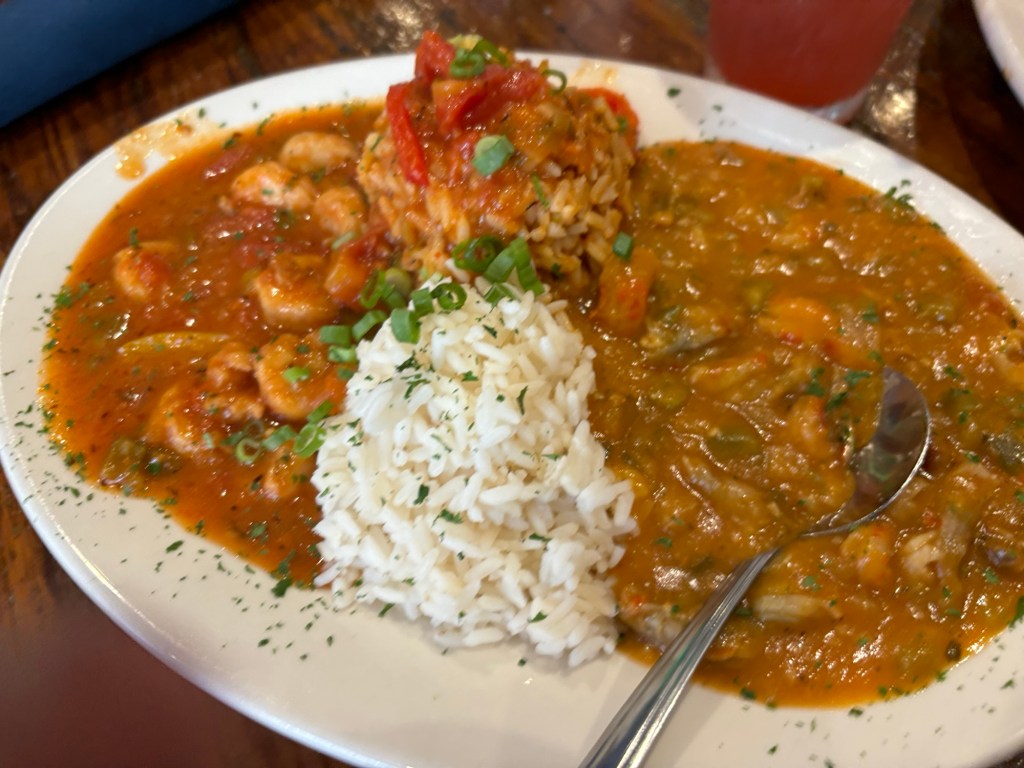
Back in New Orleans, I grabbed some lunch at Mr Ed’s Oyster Bar, following a tip-off from my Uber driver. It’s easy to shell out on your first meal in another country when you don’t know how things work, and I ended up with a starter that could have fed three as well as a main and a drink – before factoring in the inevitable 20% tip expected in the States and, of course, the inescapable taxes. That said, one cannot come to New Orleans and not try the food, and I have to admit the crawfish étouffée has shot up into the top ten foods I’ve ever tried. It was absolutely sensational. Didn’t feel brave enough for the oysters just yet, but maybe next time!


When I came back to the hostel, it was to find that Room 302 was being taken in hand: three Mexican labourers were hard at work uninstalling the ceiling tiles to address the leaking air-con unit, which meant I had to linger in the lobby until they were finished.

I had the shock of my life after they left, when I returned to the room to find my locker open and all the contents removed, with the exception of two shot glasses from Prague (a gift for a friend). Clothes, camera, the cash my students gave me as a leaving gift – all gone. In a blind panic I took the stairs at a run to find the receptionist and let them know what had happened… only to get a knowing smile and a ‘forgive me’ gesture.

Turns out they’d moved all my belongings into a new room while the works were being done and hadn’t found me yet to tell me.

Crisis averted – at the expense of a couple of years off my life! I’m not generally that fussed when it comes to losing things on my adventures – one less thing to carry and all that – but as this is my first time in the States, I’d rather be prepared, not to mention have enough clothes to wear for the next few weeks! BB x

Don’t Sleep With a Drip (Call a Plumber)

In the Southlands there’s a city / way down on the river / where the women are very pretty / and all the men deliver.

The Princess and the Frog

Two things hit you right away when you step out of the car and into New Orleans: the heat and the smell. Both are overpowering. The heat gets under your clothes and into your skin in seconds, as though you’re sliding into a sauna. The smell hits you like a wave: a heady mix of diesel, sugar and, above all else, weed. I’ve never been anywhere quite like it.


After the city complex that is Dallas/Fort Worth International, New Orleans’ Louis Armstrong Airport felt much cosier – insofar as Americans do “cosy” when it comes to buildings. The lack of passport control caught me off guard, but then, it was only on an interstate flight. I didn’t get a stamp for the passport, which is a little annoying – it would have looked nice next to all the European stamps (a tiny compensation for Brexit).

I took an Uber into town, it being a Sunday and me having no idea where the bus set out from. Every American I’ve ever spoken to has only had bad things to say about their public transport, and besides, I figured an Uber would at least give me a local to talk to en route. My driver Calvinisha was a very charming New Orleans girl who was only too keen to point me in the direction of a number of food joints, namely Mr. Ed’s Oyster Bar. I’ve added it to the list. She also added that I’d ‘just missed out on the swinger festival’. I didn’t ask her to clarify whether she meant that in the musical or sexual sense. In New Orleans, it could easily have been either.


I checked into my hostel on 1028 Canal Street and set out for a wander, very conscious that I needed an early night to avoid any jet-lag on my first couple of days. My room was empty but for a steady drip from a leak in the ceiling and a disembodied voice coming from behind one of the curtains: a British guy clearly playing some kind of MMORPG, telling his friend to “use black sword”, “send in a fire mage” and other strange and rather bizarre commands. Leaving him to his world of make-believe, I locked my things away and set out for a stroll.

It’s hard to describe my first thoughts of New Orleans and at the same time do the city justice. It is certainly a culture shock for a European country boy like me. Skyscrapers that dwarf most of London’s tallest buildings. Shops that look like El Rocío homes openly advertising voodoo, weed and “barely legal” strippers. At first glance, New Orleans is everything you might expect to hear about in 20th century Soviet propaganda about America: casual, sleazy, decadent. But when it’s 38°C out there and the humidity is over 70%, can you blame them?


It feels like this town ought to operate on a Spanish-style siesta timetable – and yet, even in the hottest part of the day, folk are still wandering the streets. You have to hand it to the pioneers and their descendants. Louisiana heat is not to be trifled with.


For me, this whole American adventure is kind of a test. I think one of the subconscious reasons I’ve never really thought about going to the States is because of my languages. Hear me out. I’m not the best at striking up a conversation with a total stranger, in a shop or bar or anywhere else – unless it’s in another language. For whatever reason, I’m a lot bolder in my dealings with strangers when it’s in Spanish or even French. I honestly believe that it’s a confidence trick – you’re focusing so much on getting the language right that you don’t stop to think about where you are, who you’re talking to. I’ve heard so much Spanish here and I’m instantly filled with a desire to leap into conversation, which I can’t say happens as readily in English. I’ll just have to work on that.


I came back to the hostel around seven thirty and tried to get an early night’s sleep. I was in for a bit of a shock: the dripping was actually coming down onto my bed, a full third of which was soaked through. Never mind the damp, the constant slap of water on the soaked mattress was maddening. It’s funny how you can doze off amid the constant hum and roar of a plane engine, but a rhythmic tap with keep you up. I tried taping it up, but after five minutes it returned with a vengeance, beating an even faster rhythm than before. I admitted defeat and curled up into the drier part of the bed.

I confess I was so tired that I didn’t have the energy to drag myself out of bed and tell the front desk, but in the end I didn’t need to – a guardian angel in the bunk next to mine had already phoned ahead and eventually the hostel staff allowed me to move to the bed across the room. I don’t think I’ve ever fallen asleep so fast.

Tomorrow is another day – the bayou calls! BB x

Skylink

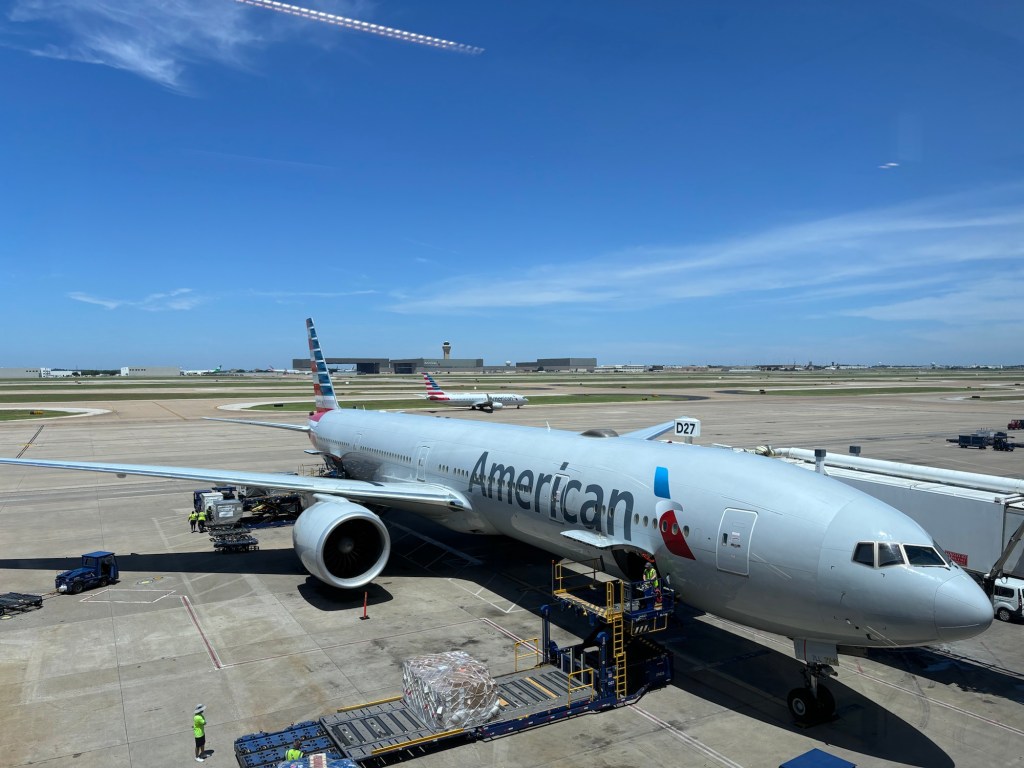
Four days ago I was standing in the ruins of a Roman theatre in the Andalusian port of Cádiz, a contender for the oldest continually occupied city in Europe at over three thousand years old. Four days, one Leavers’ Ball and a ten hour flight later and I’m sitting in Terminal B for Bravo in Dallas/Fort Worth International Airport, built in the year 1974. The fact that Cádiz’s Roman theatre itself is relatively young – built around 70 B.C. – only adds to the stark comparison. The culture shock is real.

First impressions:

  • The Mississippi is huge. Enormous. It looked like a colossal brown snake winding across the plains into the distance
  • Cowboy hats seem to be worn unironically here – and with a frequency that would surprise you!
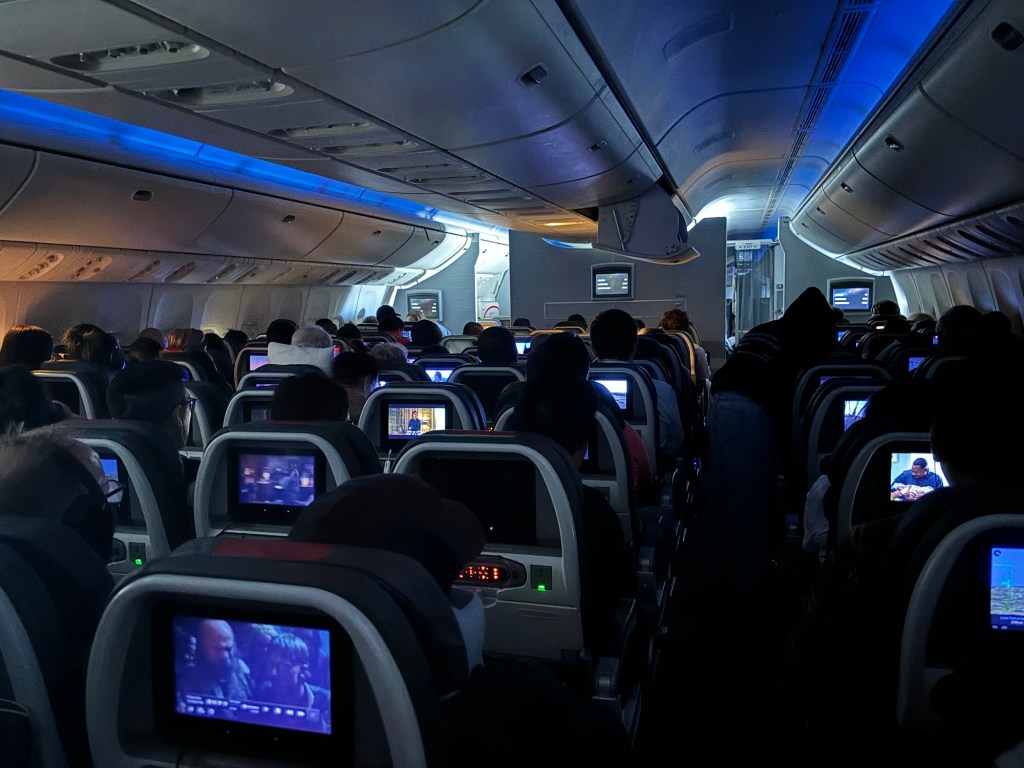
  • The selection of in-flight movies on offer is considerably superior to all the streaming services at the moment (heck, they even had both Dune movies)
  • Airport taxes – what the hell is that about?
  • Security was thorough but not nearly as austere as I expected

In case you haven’t noticed, this is my first time in the United States. I honestly have no idea what to expect, since until recently I wasn’t particularly interested in crossing the Atlantic for an adventure – well, not this far north of the Caribbean, at any rate.

But I did promise myself that I’d reward myself with a proper adventure if I landed a new job this year, and a promise is a promise. I just didn’t expect it to take me to the land of Sitting Bull and Civil Rights, that’s all!


I don’t have too much to report on just yet, beyond a general wide-eyed wonder at all of it. After all, I haven’t legally set foot in the States yet – that will happen when I touch down in New Orleans in a few hours’ time.

Sounds like they’re boarding in five minutes’ time. Not sure what a Deadheader is outside of a gardening context, but I’d better get my stuff together all the same. Starting to feel the jet-lag kicking in, but I hope I can shake it with an early night this evening! BB x


Omaha Beach: Battlefield Forever?

It’s easy to ask yourself why you’re bunkered down in a hostel when you’re at the point on your life where you can afford a little comfort here and there. But I stand by my decision: hostels are a fantastic way to meet people from all walks of life. And that’s what travel is all about, right?

I got talking to Gavin from Utah last night – the first American from a state that isn’t Cali or Texas that I’ve met in a long time (those two states pump out travelers like there’s no tomorrow). To have an American perspective here in Normandy was more than I could have asked for, and Ana from Austria provided a Germanic point of view – so I really scored a hat trick here!

Over dinner last night the three of us decided to check out the landing beaches today. Gavin had already booked himself onto an organised tour, but I’m nothing if not stubborn when it comes to planning my own affairs, so Ana and I improvised our own plan of attack, starting at Pointe du Hoc.


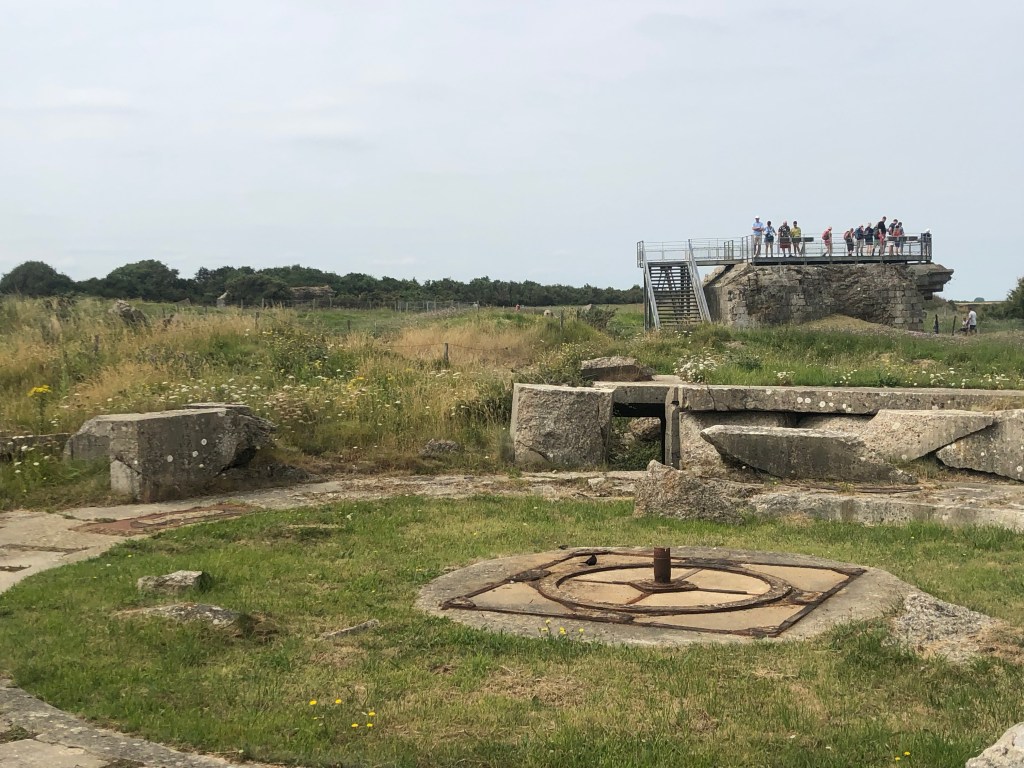
Most of Omaha Beach – one of the main landing zones for US troops during the D-Day landings – has reverted to its pre-war status as a pleasure beach, so it’s important to visit a site like Pointe du Hoc to really get a feel for how things were. The promontory is strewn with craters caused by Allied shells, some so deep you can stand in the centre of them and still be more than a head below ground. It’s hard to take it all in at once: the scarred, lunar landscape overgrown with tall grass and summer flowers, with pipits and wagtails and warblers singing their hearts out. In a cavity in one of the old gun mounts, a blackbird stood washing itself, and away to the east the mournful cries of a large colony of kittiwakes. I wonder how much of this vanished when the clouds of earth came down here, all those years ago.

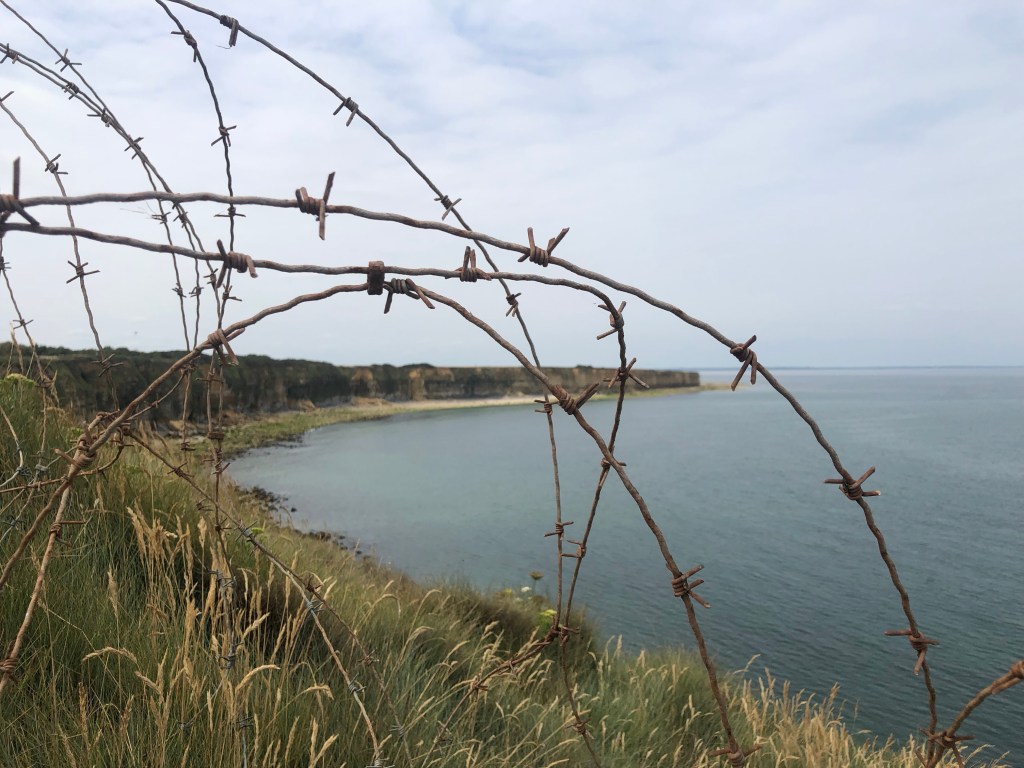
The bunkers are eerie. No other word for it. They’re cavernous on the inside, with a lot more rooms than you think at first. Some of them have marks in the rear wall that can only be from stray bullets fired directly through the opening. You try not to imagine how they got there. And then there’s the coils of barbed wire that ring the cliff edge, rusted from years of exposure to the salted wind. You can’t help but take your hat off to the US Rangers for not only coming ashore under heavy fire but scaling a vertical cliff-face before launching their assault.

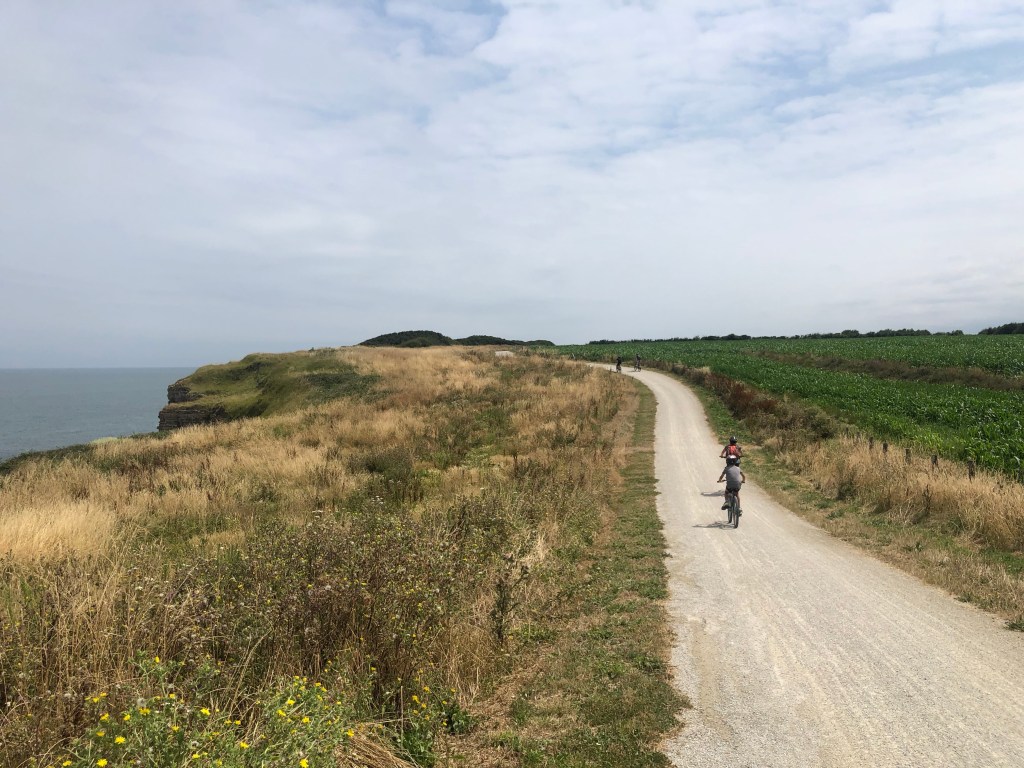
From Pointe du Hoc we found a track along the cliffs to take us back to Omaha Beach. It’s completely invisible on Google Maps, but reason told me there would surely be such a path, and as luck would have it, there is: a relatively new cycle track that starts at the Pointe du Hoc car park and follows the coast all the way to the beach at Vierville-sur-Mer.

It’s clearly a popular route with the locals, and there were plenty of cyclists out and about, from hobbyist Dutchmen clad in Lycra to families of sporty-looking Germans – and, of course, your classic stately monsieur paying no heed to aerodynamics in his beige jacket and jeans. We passed him at least twice (did he lap us? I think he lapped us…).

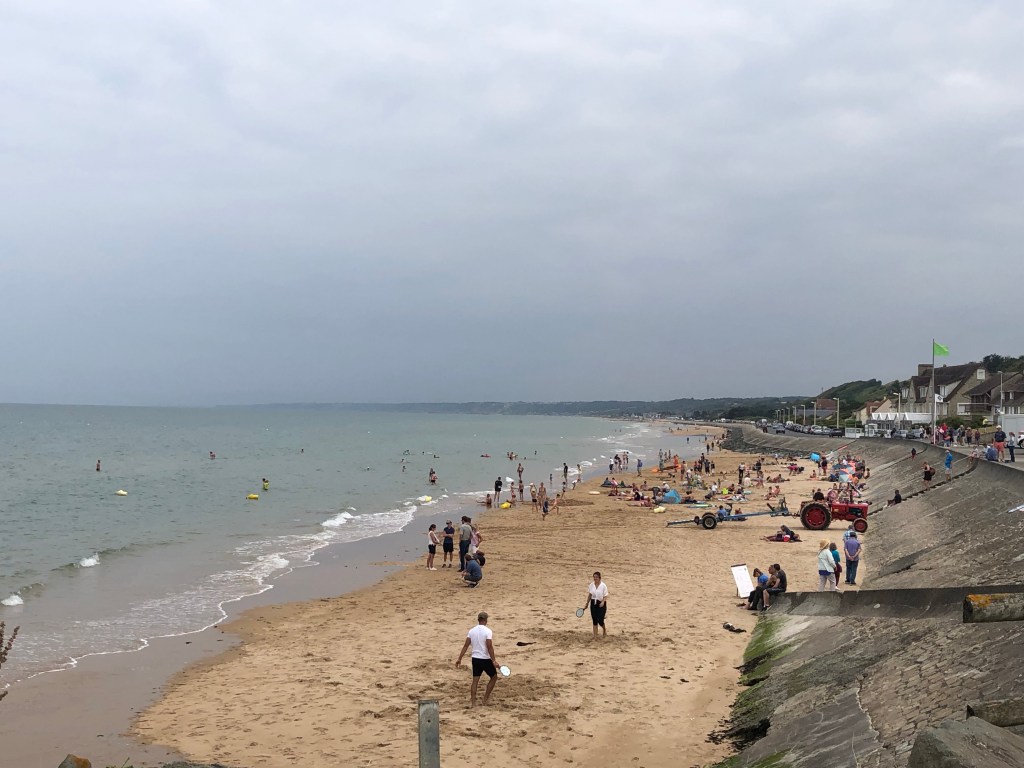
Omaha Beach was pretty busy when we got there some two hours after leaving Pointe du Hoc. Paddle boarders, bathers and dogs plied the shallows between the beach and the sandbar. Children built sandcastles and dug bunkers of their own, while parents leafed through this or that summer book. If you squinted down the coast you could almost imagine the many thousands of troops who landed on this beach nearly eighty years ago, but I get the feeling that memory is fading further and further into the distance. The tour guides bussing up and down the coast road in WW2-era jeeps look more whimsical than reverential, like taking a ride in a sedan chair. Gavin said he thought it a shame that it hadn’t been preserved more like the battlefield that it was. I’m not so sure. I think the regeneration of a battlefield is part of the healing process. This is, also, France, and having borne the brunt of the fighting in not one but two world wars in the last century – not to mention their occupation by the Nazi regime – they may well want to move on.

In any event, I wasn’t averse to a swim in the bloody waters of Omaha, if only to say I’d done it. After a two-hour hike in the sun along the cliffs, it was definitely the right thing to do. The heatwave might be over, but it’s still hot enough to dry off in a matter of minutes, so I had no concerns about swimming out to the sandbar and beyond for a bit. I’m not the best swimmer, but God, I’ve missed being in the water. It’s a pain living so near the coast and yet so far.

I didn’t think about the history as I stepped into the water. The infamous opening scenes of Saving Private Ryan didn’t flash across my eyes. I just waded in up to my waist and kicked off into the murk. As the poppies that grow on the fields of the Somme have become a symbol of remembrance, I think it’s only fair that the spirits of Omaha are also allowed to depart in peace. Their heroic struggle will never be forgotten, but the land beneath our feet is not ours to sculpt, no matter how hard we try. It was here before us and will be here long after we’re gone. To see Omaha and to stand where they stood is enough, I think. And that’s my two cents on the matter. BB x