Knowledge – For its Own Sake

Bristol Temple Meads, 9.02am.

The May half term is drawing to a close. I’ve stayed put for a change, using the time to mentally decompress after another very busy term. Four weeks remain of the school year, and while there’s not as much teaching going on, it’s still going to be an intense gauntlet of exams, reports, events and rehearsals. I’ve done a lot of much-needed spring cleaning, idle Camino planning, bouncing ideas off ChatGPT and now, a little stir crazy, I fancy a day out. So I’ve grabbed some Y8 marking and a few books (Adrienne Mayor’s The First Fossil Hunters is my current obsession) and I am now on the train bound for Oxford.

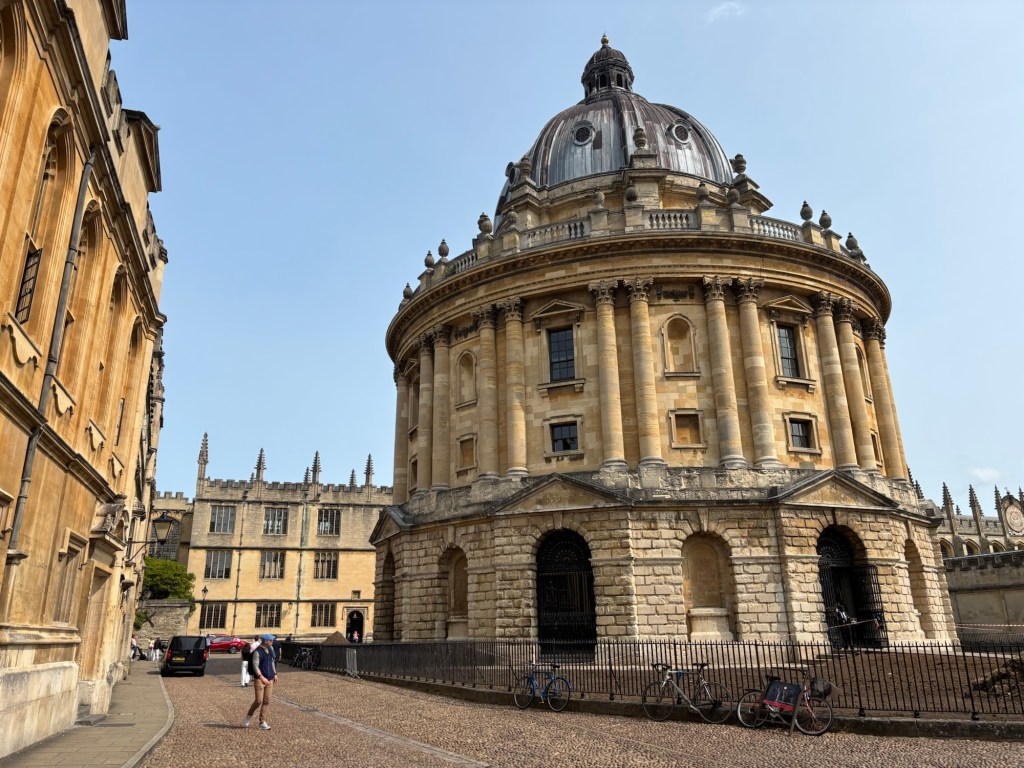
Why Oxford? Partly because I haven’t really been to Oxford before. I was there two months ago for the Oxford Schools Finals Day, but as I was leading a school trip I didn’t really have any time to appreciate the city for itself. It’s also partly for the Museum of Natural History, which is supposed to be exceptional (I never did grow out of the dinosaur phase). But it’s also because over the last few days I have started to flirt with the idea of a possible career change: setting my teaching and boarding duties aside to pursue a Master’s degree in Medieval Studies.

There’s a couple of travelers next to me on the train having a very interesting conversation. They are a curiously paired ensemble: one, with a patchy beard, AirPods in and his shirt unbuttoned to the sternum, talks in a streetwise drawl about how he stole a few cans of Red Bull from Tescos once, and how the worst thing in the world is that parents don’t discipline their kids right anymore – if he’d disrespected his dad, he’d have “had a black eye”. He drops his T’s in the words right and football and drops F bombs in the gaps. The man next to him, a young Asian in a smart shirt with his sleeves rolled up nearly to his elbows, calmly (and without a hint of profanity) explains the difference between Asia’s bullet trains and the UK’s privatised public transport system (which he calls the public torture system), the importance of location when investing in property and celebrates a model aircraft he recently won at an auction. That seems to be their connection – they’re model plane collectors. I was beginning to wonder what could possibly tie these two together.

Why a Master’s degree? Why Medieval Studies? And why has the idea only come to me now, eight years after graduating with a BA in Modern Languages and Cultures? To be honest, I’m not entirely sure. A number of reasons come to mind. Citing my Y9 class seems churlish, but it’s probably part of the bigger picture of just how much of a gear change this year has been. Challenging and engaging, but occasionally uncomfortable. I suppose that’s only natural when you up sticks completely and change schools. Perhaps that’s why some teachers never leave.

It’s a little deeper than that. I do miss academia. I have always loved the pursuit of knowledge for its own sake, and just occasionally, I find that hard to square with a job where success is so often scored against a mark scheme that shifts according to the national skill level.

I’ve just started to sink my teeth into A Level teaching, but I’m both disappointed and mildly alarmed by the lack of general knowledge of my students. Only one of mine could tell me what Scylla and Charybdis were, and that was a child in Year 10. I’ve had sixth formers before to whom I’ve had to spell out the story of Adam and Eve – we’re talking Catholic Europeans here, too – and mine was the only hand to go up in chapel two weeks ago when we were asked if we knew the parable of the man who built his house on the rock.

You could chalk that last one up to nobody wanting to look foolish putting their hand up in church on a Tuesday morning, but classical (and even general) knowledge of even the most basic sort seems to have fallen away by the time our kids reach sexual maturity. They all seem to know who Mr Beast is, though.
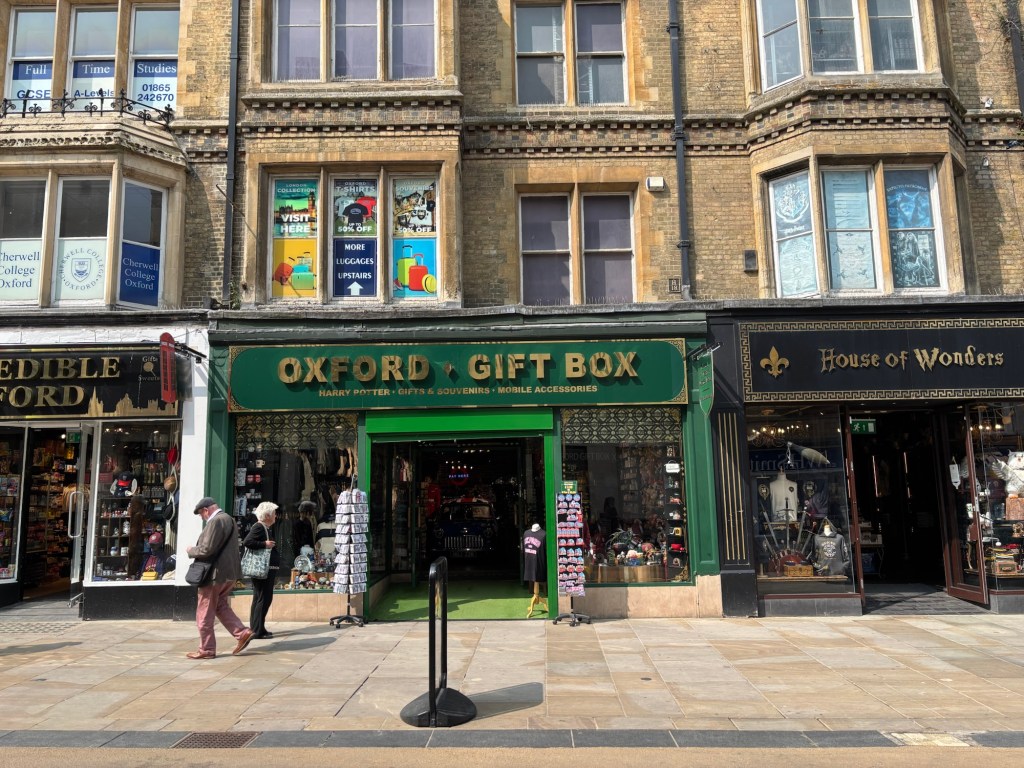

Something I wasn’t expecting in Oxford was the Pottermania. I deliberately haven’t waded in with an opinion on J.K. on here because, as with a number of topics, my thoughts are not in line with those of the rest of my generation. But one thing that is really quite depressing is that I ran into no fewer than five Harry Potter themed tours, pointing out turrets, windows and other locations used during the filming of the saga back in the early 2000s. It seems a little trite that tourists flock to a city that harbours one of the oldest universities in the world just to snap a selfie in the style of a still from a movie… I took a cohort of summer school kids on one of those trips once and they were deeply disappointed (I think they were expecting Harry Potter studios, not a Chinese woman with a ring bound pad of stills).
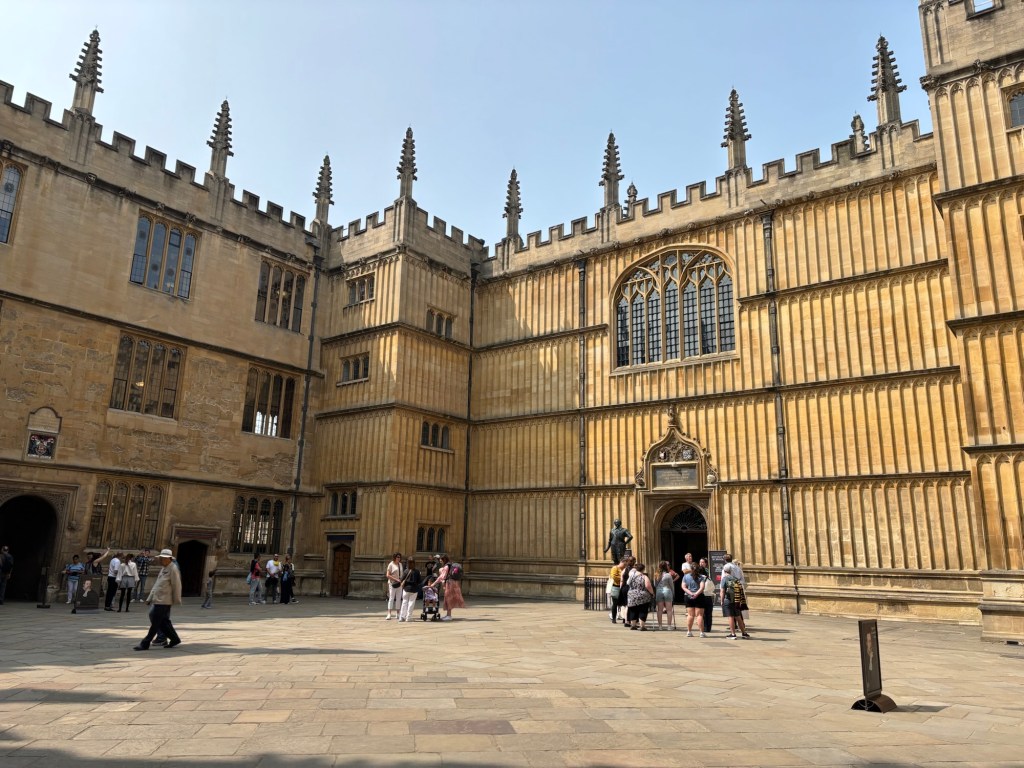

It’s times like this that I need a good kick in the shins – somebody (besides myself) to call me out for being so judgmental. Maybe that’s something I miss about university, too.


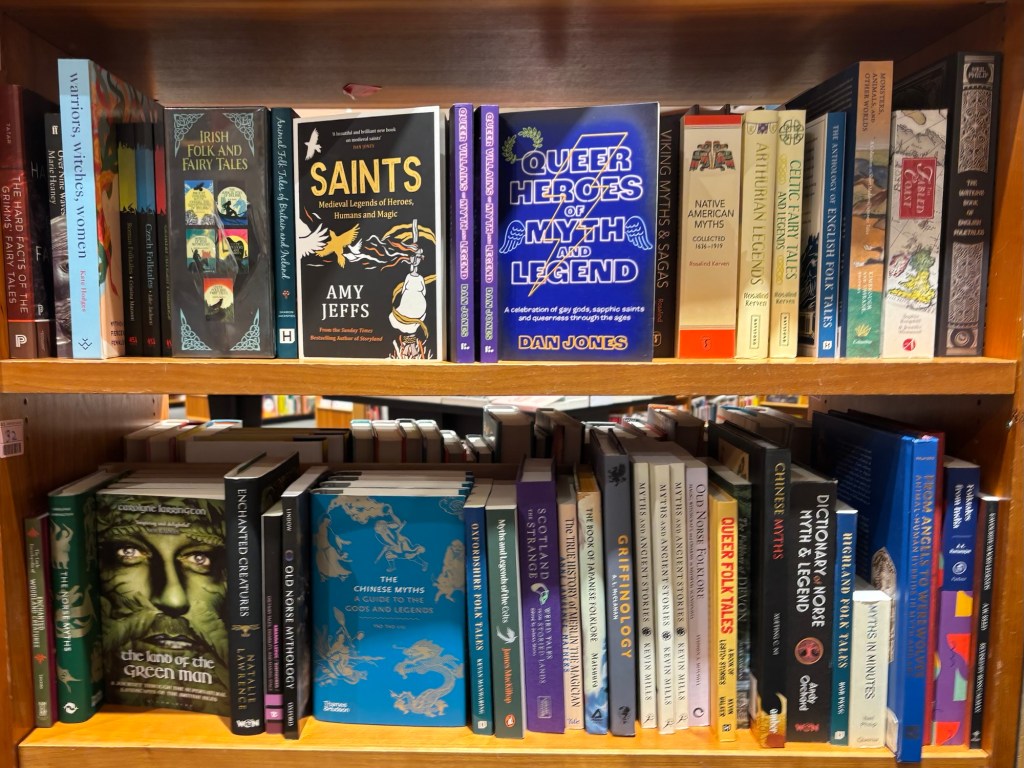
Before checking out the museum, I explored Blackwells, Oxford’s famous bookstore. The shop is particularly well-known for its Norrington Room, a literary Aladdin’s cave beneath the city that seems to have everything. I made a beeline for the Mythology and Folklore section and looked for anything Iberian.

Nothing. Tome upon tome on Norse mythology, endless volumes of British folktales, a beautiful gold-bound compilation of the tales of Anansi the Trickster and no fewer than five collections of Queer Fairytales – whatever those are – but nothing on Spain or Portugal. Nothing at all. Even Google didn’t seem to have anything.

Spain isn’t lacking in colourful folklore of its own. From my reading, it’s apparent that the combined efforts of the Almoravids, the Almohads, the Spanish Inquisition and Franco’s regime weren’t able to snuff it all out. But the literature simply doesn’t appear to exist.

I think somebody should write about it. And I’m starting to think that somebody should be me. Oxford University has a Masters course on Medieval Studies that occasionally covers Iberian founding mythology – the subject I chose for my undergraduate dissertation – and that just might be the way in… if I can get in.


I’m not really Oxbridge material. I got as far as an interview at Cambridge, but my meekness was torn to pieces in the French interview – and I really haven’t read enough of the classics. But I have read a lot of books.

I grew up on a privileged diet of literature. We had more books than anything else at home, largely on account of the fact that my mother rips through books in a single night and was thus always on the hunt for a replacement. The bookshelves in my bedroom were (and still are) crammed full of colourful dinosaurica, but sandwiched in among them was a mountain of mythology and a feast of fantasy. My mother may not have been an outspoken supporter of “fantasy shite” but she did encourage my voracious reading habits. And I know my Dad used to read to me a lot – he even read the Harry Potter books to me when they first came out.

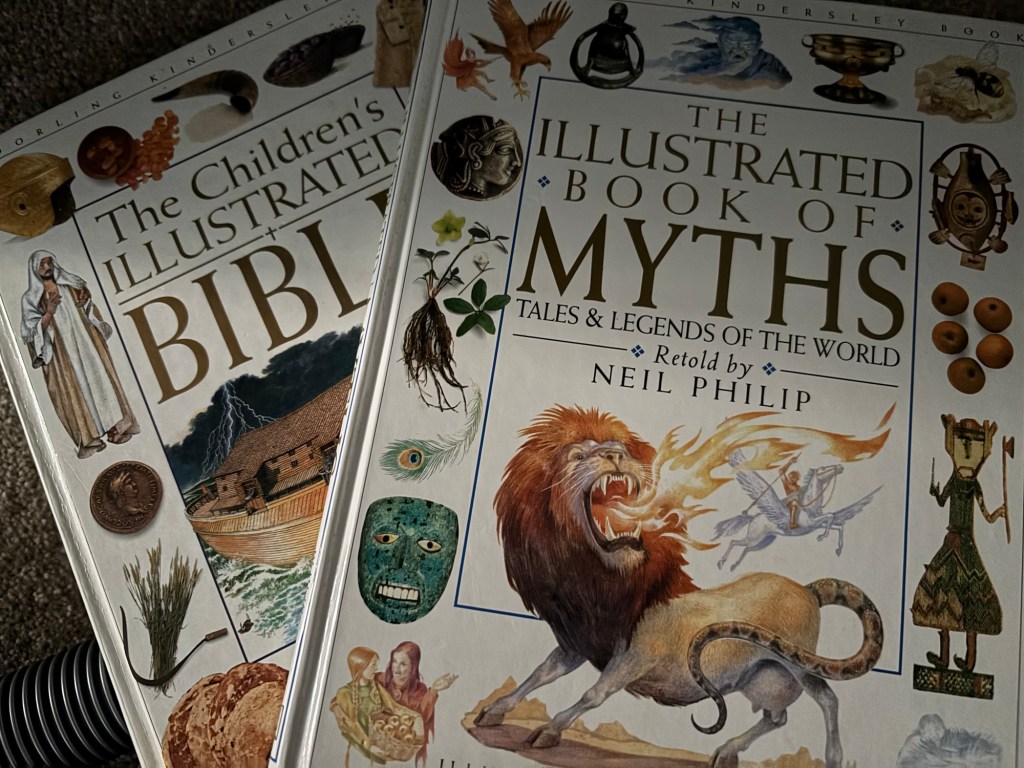
Neil Philip’s Illustrated Book of Myths played an especially large role in all of this. Atticus the Storyteller had a similar hand (and, to a lesser extent, the Age of Mythology games), but the colourful illustrations in the Dorking Kindersley compilation made it especially impactful. I must have spent literal days poring over the pictures in that book, cramming my childish head with stories of Athena and Anansi, Izanagi and Izanami, Glooscap and Gilgamesh. All tremendously important things to know – and none of it serving any practical purpose beyond the pages of the book where they were written. I haven’t even been able to use much of it in the odd pub quiz, which seem to rely on a more grounded understanding of Emmerdale and the last FA cup final than the exploits of Gilgamesh and Enkidu.

If I’m lucky enough to have children of my own someday, I will read to them from that book – even though I know most of the stories by heart. The pictures are so beautifully illustrated that I can see most of them still when I close my eyes, though it may be over twenty years since I last saw them.

Stories are how I make sense of the world. I’ve been writing stories for as long as I could write my own name. There’s not an awful lot of call for storytelling at work, but I do my best to share them with my students when the curriculum allows.

And it’s taken me a long time to realise that, after Spanish interest and natural history, the third largest collection of books in my library is all folklore and mythology – the oldest stories in the world.

Maybe – just maybe – I’m scratching the surface of the real me. I did always want to be a writer. I just didn’t ever think I could do it.

I’m still unsure. So much of my identity has been built upon the rock of being a teacher, and casting off those robes to dive into the world of myths and legends seems… well, childish at best, selfish and reckless at worst. And there’s the question of stability, job security, money and the fact that all I really want to do is find the One, raise a family and tell stories. But the void in all those bookshops is tremendously loud. Stories that aren’t told will eventually disappear, taking their worlds and their characters with them. It would be a terrible shame if the generations of the future looked back on our time and accused us of letting the ancient wisdom of the past slip through our fingers while we were so violently hypnotised by the bewitching glare of this or that Pied Piper of Instagram.

Who will remember Mr Beast five hundred years from now? What stories will they tell of him? Will his legend amaze and inspire, or will it push more and more children toward the worship of Mammon? I worry about that. I worry about that quite a lot.

I’ll give it some more thought. These are not decisions made lightly. The Camino will provide. It always does. BB x
The Big Graduation Post

It doesn’t happen like you think it will, graduation. I suppose the same can be said of all those grand rites of passage of life: like as not, you speculate a great deal about how it’s going to be, until the day itself is over before you know it, and a lot less grand an affair than you thought it was.

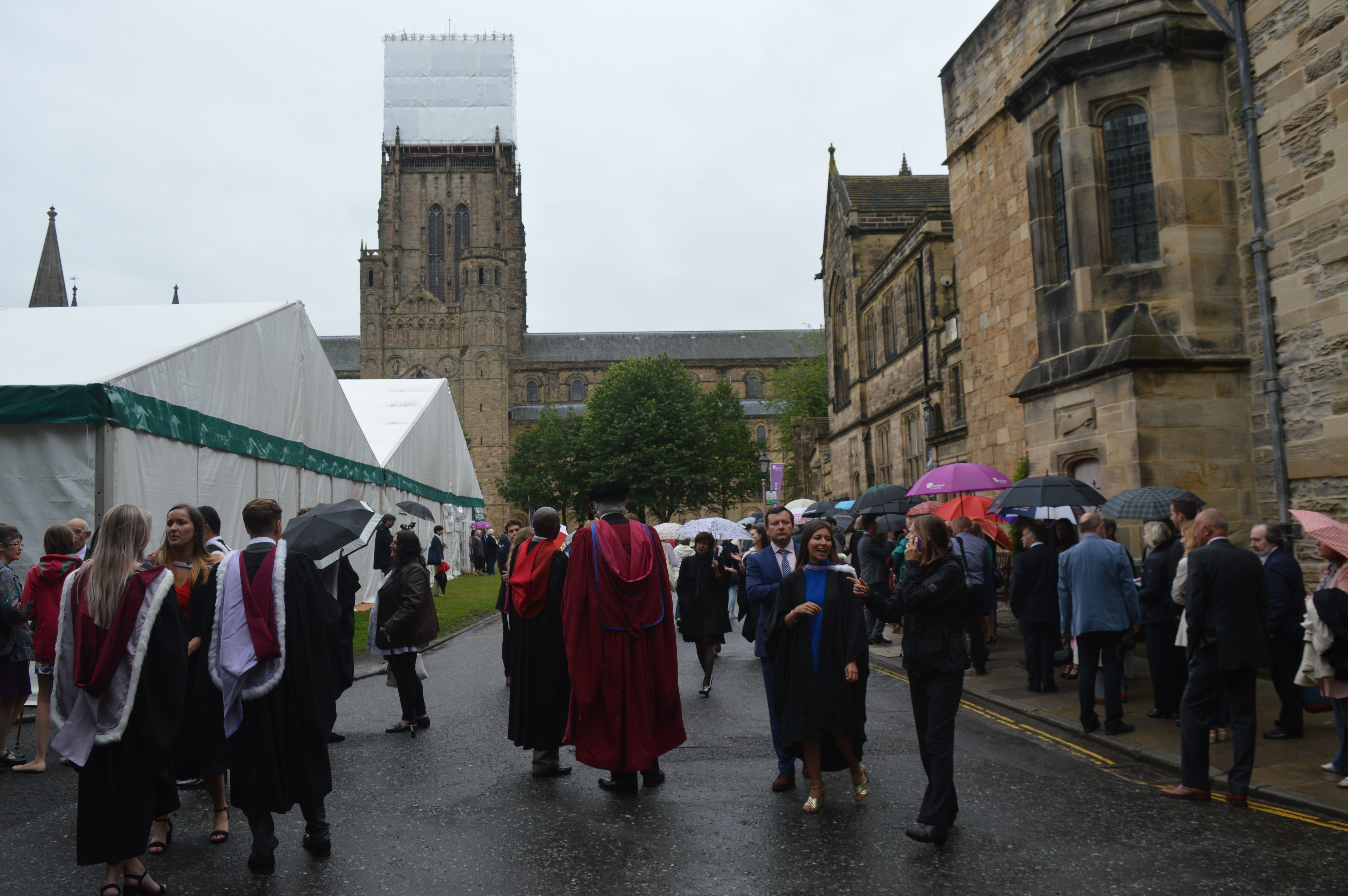
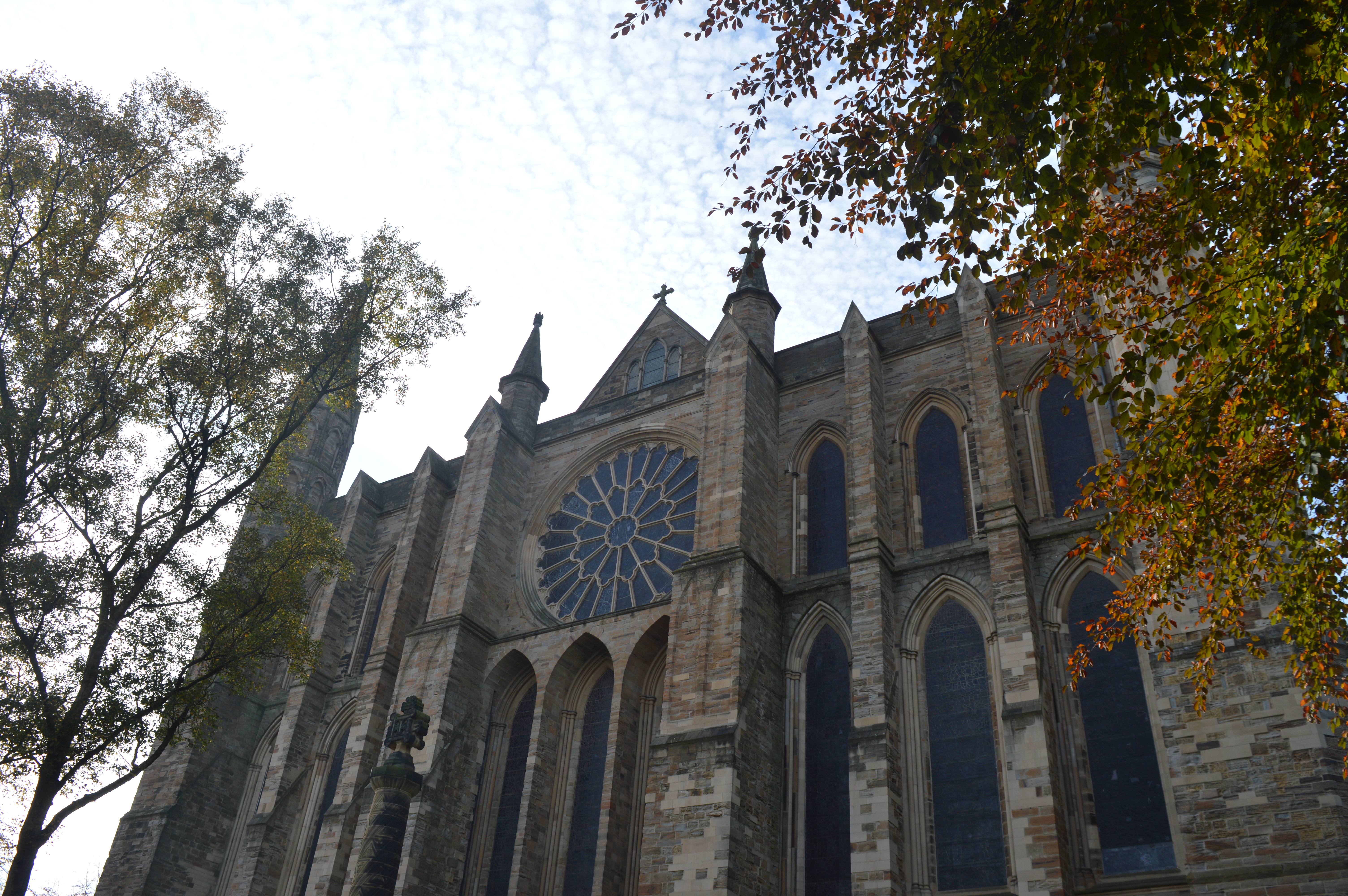
Certainly, when I tried to imagine what graduating from Durham would be like four years ago, I didn’t ever imagine that the cathedral tower would be under scaffolding. You win some, you lose some.

DSC_1071

One of the most difficult things about graduating is that it’s so very easy to use it as your last chance to say goodbye. It makes sense; for some, it might be the last time in a while you see the people who have been your friends through thick and thin for three or four years. Regrettably, for others it might even be the last time you see them at all. That’s a humbling thought. If I have any advice to give, it’s to say your farewells before the big day. Of course there is time for the odd one here or there on the day, but with everybody mingling with friends and family alike, it can be nigh-on impossible to track everybody down in time – especially if you end up on a time limit yourself.

DSC_0042

I’ve had a lot of time to think over the past few weeks, and a lot of things to think about. One of the most enlightening conclusions I’ve come to (and late in the realisation, too) is that, for all of my best efforts, I am not first and foremost a linguist. And if it took missing a First Class degree by less than one percent to realise that, it was a lesson well learned. Language tests, and perhaps grammar in general, have never been my forte, not that that’s ever stopped me from trying. Writing is, was and always will be my trump card. If I hadn’t been so pig-headed about not reading fiction back in Year 13, I might well have let my doubts get the better of me and gone for a degree in English Literature instead.

The fact remains that I didn’t. For all the disparity between my English marks and my marks in French and Spanish, I went for a degree in modern foreign languages. Why? Precisely because of that; because languages were not my strongest point. Talking to people was something I really struggled with. I had no opinions of my own, I felt hopelessly outclassed whenever I had to take part in any kind of intellectual discussion and I tended to avoid any unnecessary socialising.

And in my own particularly sadistic way, I threw myself headlong into the one degree that would give me no choice but to talk to people, to face my fears head-on. And when you’re getting yourself into an extra £9000 of debt per year, it makes no sense whatsoever to go on studying what you’re best at.

Jailbreak

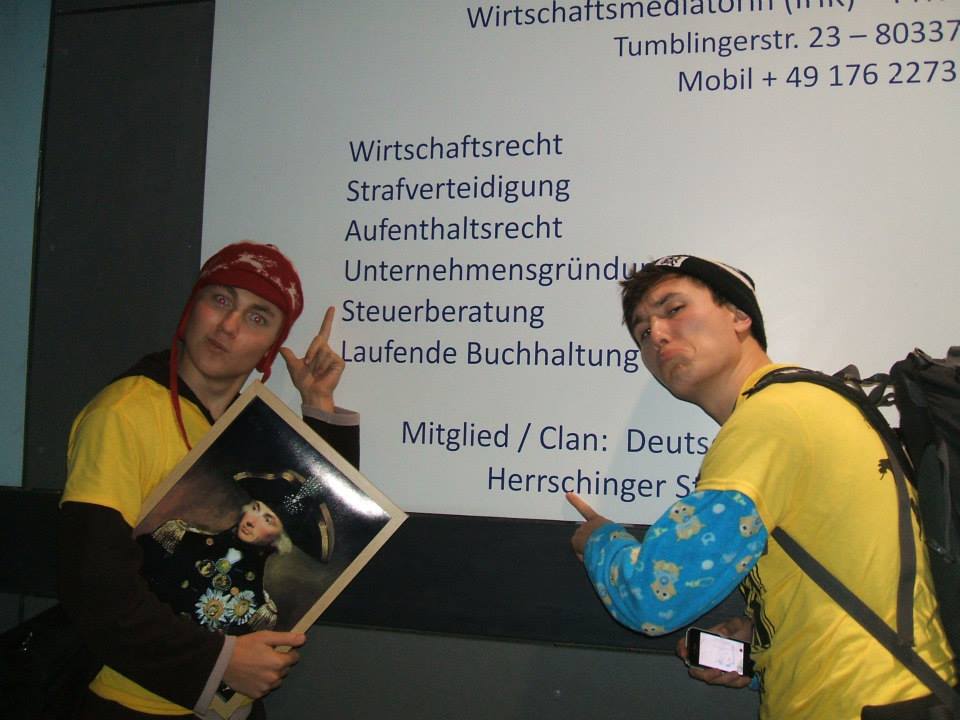
My time as an undergraduate at Durham has been, without a shadow of a doubt, the best four years of my life so far. I might have been to some extraordinary places had I gone for my second choice, St. Andrews, but I most likely would not have found myself in a metro station in Münich with a portrait of Admiral Lord Nelson. I might well have had access to researchers in my primary field of interest, al-Andalus and the Maghreb, but I probably wouldn’t have written such a cracking essay on Spanish banditry. And I might have got involved in a musical, or a choir, or maybe even the funk band I longed for since my schooldays, but I almost certainly would not have found myself wrapped up heart and soul in the collegiate a cappella scene.

Gala Show (35)

Thanks to one last fling with the Northern Lights at the 70th Edinburgh Fringe Festival this summer, graduation was not as final an affair as it otherwise might have been. Knowing that I’d be back in Durham in just over a month took much of the sting out of the farewells, and I left the city dry-eyed and carefree – which is not how I imagined it, but just the way I wanted it. I find that written words often carry meaning a good deal further than the spoken word ever can, and so I made my fondest goodbyes in card form, in case I didn’t get the chance to say so in person. That, too, made the process a lot easier to deal with. In a way, I’d said everything that needed to be said. I could do no more.

YearAbroad (62)

I didn’t have a great deal of say in the matter of coming to Durham. My own mother dropped the name of the place so often as I grew up that by the time UCAS came around, it seemed sacrilegious to even consider anywhere else. And that’s exactly how it panned out, after an initial rejection and a gap year to try again. Bother the prospectuses, there was simply something magical about Durham. I had to go there.

It’s been one long week of thank you’s. To all the friends that supported me, both at home, at university and abroad. To the staff who inspired my interests and discouraged my careless wanderings. To my college principal, who sowed the seed of interest in a PhD in me; to my first Arabic lecturer, who through discipline fashioned a mature love for the language out of nervous enthusiasm; to those who have lived with me these last four years, for putting up with the day-to-day trivial madnesses and misinformed ramblings of yours truly. And of course, to music, for adding so much more to my degree than just books.

The wide world awaits with, at least for now, a smiling, familiar face (and a very strong Villafranqués accent). The far future – the beyond – remains as elusive as ever, but perhaps it doesn’t do to look that far ahead. Three months remain, and then I leave this country for Spain, only this time it will be for a much longer stint than anything I’ve ever attempted before. I can hardly wait.

And you bet I’ll be back to blogging for the whole affair. Just you wait. BB x

Double-Edge

The Christmas holidays have come and gone. I’m back in Durham once again for what is beginning to feel increasingly like the last tilt of sand in the hourglass. Last term went by like a bullet as I found myself thrown headlong into a heavy workload once again, but yours truly must have learned his lesson over the last year or two, because I can’t think of a day when I let it get me down. The troubles and traumas of the first two years of academia and extra-curricular pressures wanted and unwanted were very much absent from last term; if they were there, they were buried deep beneath a veneer of simple satisfaction. Satisfaction with my course, satisfaction with my extra-curricular commitments, satisfaction with the direction my life is taking me.

That’s not to say I’ve got it all figured out. I don’t. I’m still waiting on a crucial reference to secure my post next year – without it I could end up in hot water. I’m surrounded by people who are powering ahead with their dissertations at a remarkable rate, whilst I content myself with reading leisurely around the subject before I even think about the process of putting pen to paper. The Lights are also taking me forward at considerable speed, and it is this last which is eating into my timetable more than anything else at the moment. After three entire days of pitch-punching and choreo workshops, it’s easy to forget that university is a place for the pursuit of knowledge.

That’s something I’ve been thinking about recently: what does a university mean?

Over the last few years I’ve met a lot of people from different walks of life who have very different attitudes to university. There are many for whom it is simply the next stage in their studies, a means to an end, an expensive-but-necessary qualification to hack into the job market. I find it a little heartbreaking that this is what university has become for so many, the semi-obligatory next step in the road and one that we are all too often pushed into without even thinking. University should be open to everybody, of course, but does that necessarily mean that everybody needs to go to university? I’m not so sure.

Then there are those who accept that first notion and proceed to enjoy their time at university with their eventual degree very much subsidiary to their overall experience. They’re the ones who couldn’t care less if they land a 2:2 at the end of three years of lectures and under-prepared seminars, just as long as they had an amazing time and met some life-changing people along the way. Granted, it’s a point of view that suits the wingers and the daddy’s-boys more than most, but it’s not too uncommon. And at the end of the day, you can’t criticise the stance too harshly: it’s a very good example of making the best of a bad situation.

What else can a university degree offer? Networking, for one. It’s a fantastic way to meet new people and, by default, make important contacts in the outside world. It’s a good way to hone the skills you learned at secondary school to perfection, or to stay immersed in a subject you enjoyed. Some just don’t like to leave the school environment behind: the routine, the structure and the linear timetabling make for a familiar existence (and I include myself shamelessly in that bracket).

There is, of course, another important reason people decide to go to university: in pursuit of raw knowledge. That, for me, is the very essence of university. It’s what it’s all about: seeking new truths, dispelling old beliefs and walking into new worlds. What saddens me most is that this is so rarely the primary motivation. I wonder whether it’s more than a little big-headed of me to say such a thing, but I guess I expected to find more people with this kind of attitude when I rocked up a fresh-faced, idealistic fresher a few years back. I wasn’t exactly popular, and with an attitude like that, it’s really not hard to see why. Since then I’ve mellowed a bit, but I still feel a little happier than I should when I encounter somebody else who has nothing but unbridled passion for their degree. Perhaps that’s just the nature of an undergraduate degree; the Masters students all seem to be wholly absorbed in their studies. I guess I’ll just have to return to this world a few years down the line.

Perhaps it’s because I want to be a writer that the simple pursuit of knowledge for its own sake is so important to me. How can you profess to write for people if you don’t read? It’s little banal thoughts like that that kicked me back into reading fiction two years back. The effect that reading fiction has had on my overall enjoyment of academic research is surprising, to say the least. I wonder whether the two were supposed to go hand-in-hand from the very beginning.

More and more these days my degree leads me and my stories into worlds and places I could never have found on my own, and likewise the years of research I have carried out for my books gives me insight into my degree that features nowhere in my course. I have been torn from Spain, from the land that bled life into my tales like veins to a beating heart, but with a little hard work, I have found a survival mechanism in the university effect. Whatever one’s motivation for going to university may be, the result is a hot-pad of intellectuals of all walks of life. It is a place for bringing together great minds for the bettering of the nation, in pursuit of new truths and new ideas. Just the vibe alone of such an environment is reason enough to throw oneself into academia. That, I think, is the real purpose of university.

If only the UK could follow the Scandinavian example and make a university degree a realistic option for all, with no respect for money or background. The way things are going, such an aspiration is little more than a pipe-dream at the moment, but if we might try to take a step in the right direction, I’d implore the powers that be to rethink the idea that everybody in this country should be going for a university degree by necessity. University should be encouraged, of course, but no more than an apprenticeship, an equally admirable path by all respects. Higher education should be for everybody, but’s it’s not. An option, not a necessity.

I may be little more than another one of those liberal, meritocratic millennials, but I’m not alone. I think there’s something very wrong with the way we’re monopolising higher education, when it should be nothing more than that: an education.

To make good on my words and dispel a few old beliefs. A university degree is not meant to be the three best years of your life. It’s not meant to be a government-sponsored ride of wild parties and last-minute essays. And it’s not meant to be a long slug of soulless study either. But it can be immensely worthwhile and should not be abused.

But what do I know? Students are, after all, noisy creatures that are happy to live in hovels and live in close-knit cliques of their own. What do I know about the world? x

Exile: To BBC or Not to Be

Two factors have triggered this post. One, a suggestion from my dissertation supervisor that I misread two months ago. Two, Emily Mortimer in The Sleeping Dictionary.

It’s been about six months since I decided to move to Spain for good once my university degree is over. The number was in my head without even thinking, and I had to count to make sure. Six months exactly (sometimes you just know these things). It wasn’t one of those eureka moments. It was, I suppose, a bit like a journey to find one’s faith: one day I woke up and it just seemed as though I’d known the answer all along. In that sense, there was really little I could do about it. You can’t deny that kind of enlightenment.

Over the last few months, freed at last from work and study, I’ve had a lot of time to think this one over. I’ve come up with something resembling a game plan for the next three years. I find it’s a useful thing to have when you find yourself having to reason your decision to abandon the land where you were born.

The repercussions are, understandably, quite immense. No more Christmas. No more Whole Earth peanut butter. No more Poldark or Have I Got News For You (or British TV at all, for that matter). And no more taking my mother tongue for granted: in a year’s time the only major outlets I’ll have for the English language will be my work and my book. That’s pretty extreme.

Now I’ll admit, it’s not as painful a decision as I’m making it sound. The peanut butter I can live without. British television will be a major loss though, I’ll give you that. You don’t appreciate just how good the Beeb is until you move abroad (Spanish comedy is entertaining, but it’s just not as brilliant as British humour – or maybe I’m just not fluent enough?). As for Christmas, while I’ve never been particularly excited about it since growing up, I was a little sad that December came and went and… nothing happened. Christmas is something that Spain simply doesn’t do. Even Lisbon seemed to do Christmas better in the twenty-four hours I spent there last year. On the other hand, they do have Semana Santa and that is a hundred times more impressive, so it’s a sacrifice I am willing to make.

There is at least one snag I’ve been almost too quick to ignore in this whole chasing-my-destiny thing and that is the obvious one: who and where is She? Is she Spanish, or is she English? Or something else entirely?

I’ve read a lot of articles on this subject. I feel like I had to; earlier this year it was compulsory reading, when I thought I’d found her and I needed to think things through. I hadn’t, obviously, but it did me good to read about others who had been down the same road. The general consensus seems to be that, unless you are both determined to stay together, and that there is something akin to a balance between the languages, these cross-cultural relationships are fraught with difficulties. And whilst I’ve heard a lot of people talk about how much they’d love bilingual children, from those few dual-nationality parents I’ve met, it sounds like a serious uphill slog to achieve that, as the language of their immediate environment will always take the prime position.

Never mind the bilingual children for now. I have more pressing things to worry about, namely my dissertation, which may or may not be on the subject of exile (a suitable topic for this year, I think). It is possible to look too far ahead. But as the prospect of exile looms closer, I think it likely that there may well be a few more reflective posts of this nature. It’s easy to say that you’re never coming back, but quite another to hold to that.

Perhaps it’s best to think of it not as exile, but going back to my roots. Even so, I was born in England and am, by all accounts, an Englishman. I never said it would be easy, and it won’t. But some things in life are greater. This, I believe, is one of those things. BB x

A New Beginning

Hello blog. It’s been a while. In case the absence of posts over the last few weeks wasn’t proof enough of my self-imposed isolation, the cramp in my left shoulder is what has really kicked me back into gear. I’ve been slaving away over the megadrawing for almost a solid month now and it shows: at seven metres and twenty centimetres in length, I’m very almost at the end. Only two sections remain.

Even so, I feel I need a break. And with the gorgeous weather we’re having at the moment, I think my drawing arm could do with a break.

There are still another couple of weeks to go before I’m needed back in Durham (in truth, another month – but I’m quite ready to get going long before term begins in October). With my target language research project out of the way, I have very little to worry about for now. And that, I should point out, is pure bliss after all of the administrative missions of the past year. How long it will be until the spell is broken is debatable. It simply depends on whether I’m ready to tackle the workload that final year has to offer.

I can. There’s no doubt about it. Mindset is the key and I believe I can. Truly.

It’s unseasonably warm and sunny for September here in Sussex. I missed out on autumn last year in Spain; it came in a couple of days in the middle of winter, and was gone in the blink of an eye. Autumn is my second favourite time of year after spring, so I was a little sad to see none of it last year. There’s something wonderful about the falling of the first leaves, the coming of the conkers and that first chill in the air that tells you that winter, far off, is on its way. Perhaps that’s something England does better than Spain. Or perhaps I simply haven’t been in the right part of Spain in autumn.

I don’t have much news to tell for now. Doubtless that will change when I get to Durham. I sent off my job application for next year and am waiting patiently for a response. If I should succeed in that, I will follow it up with a second, in the hope of snagging the two-job rota that kept me so well afloat last year. In the meantime, I have my sights set wide, and if it comes to it, I’m more than prepared to bite the bullet and freelance for a time. All I need for now is enough money to survive and as much experience as I can get my hands on. The main reason I’m planning to return to my former post is simple logic: I’ll be teaching many of the same kids, so I won’t be able to fall back on my old lessons. I’ll just have to draw up a whole year’s worth of new ones. And once I’ve been a year at that, I’ll have two years’ worth of ideas under my belt and will be truly ready to go mobile.

That, at least, is the game plan.

A lot can happen in a year. I can be rather spontaneous when I choose to be, but it’d take nothing short of a miracle to turn me from my road now. Spain is in my heart and it’s Spain for which I’m bound. I don’t think even Helen of Troy could dissuade me at this hour.

Unless, of course, she was Spanish. BB x

Go with Peace

Jimminy. One more week and it’s all over. This year abroad, at times both the fastest and slowest year of my life, is drawing to a close. The old tablecloth analogy is back in force: somebody gave the table a tilt back in April (or was it September?) and now everything’s sliding towards the edge at an increasing rate (which is a real shame, because Tetouan was beginning to feel like home). As has been the case throughout the rest of the year, I’ve a fair few goodbyes to make, though as any frequent traveler will know, these get easier every time. So I’ve one last farewell to make before the end.

Or not. Because it’s not just goodbye to the team at Dar Loughat. It’s a bigger step by far.

It’s goodbye to Arabic studies.

Hey, now, don’t give me that look. If you’ve been reading carefully throughout the year, you’ll have seen this coming a long way off. You might even have cottoned on sooner, since I didn’t really make up my mind until the last days of June.

The blog, however, speaks for itself. It tells a tale of depression and despair in Amman and the golden friends I found there; and perhaps, the beginning of the end. It tells the story of how I fell in love with my grandfather’s country all over again; how Spanish became more than just a language, but the key to happiness itself; how I found in Extremadura the paradise I’ve been searching for for so long. Of the One-that-could-have-been and the opening of my eyes to the rest of Iberia. And in amongst all the musing posts in between, it reveals a slow but steady swing towards the heart of the matter, a realignment with the most important thing of all: finding where I belong. In retrospect, it’s obvious. It was always going to happen. It was simply a question of when. And in one of life’s great paradoxes, that realization came when I was more confident with my Arabic than I’ve ever been in my life.

Happiness was the key. I had to be truly happy to see the truth.


I reckon I still have a fair amount of explaining to do. I built up a bit of a reputation for myself in first and second year as the keenest Arabic nut alive (though I outright refuse the term BNOC). Granted, all of that time spent juggling societies, subjects and a social life in second year wore me down a bit, but at heart I was still a bloody keen bean. Always on time, always ahead of the game… Almost always optimistic. (Seriously, I was insufferable in first year, just ask any of my classmates). As a result, this is probably still a shock move for those of you who know me. Well, I’ll do my best to explain my decision.

  1. Spain happened. Specifically, the British Council assistant placement. We were warned; I didn’t listen; I fell in love. Because if you seriously want to push ahead with two languages, it’s absolutely essential to balance them, especially when it comes to…
  2. …the Year Abroad. Ya3ni, at least half of the class will have spent a minimum of six months in an Arabic-speaking country by October. That’s two more than me, and considering the speed at which I advanced in Tetouan, I’d be tempted even to discount any and all ‘progress’ I might have made in…
  3. …Amman. And in all honesty, I don’t really want to use Amman as an excuse, but it is. My time in Jordan was certainly eye-opening, full of highs, lows and plenty of laughs, but I don’t think I’ve ever been more drained in my life. This is honestly the least of reasons, but because of the effect it had on my attitude towards Arabic, it’s a reason nonetheless.
  4. Career paths. My companions have such noble ambitions with Arabic. Not me. I’ve mapped out the next five or six years of my life and they don’t stray very far from a homely little village somewhere in Spain. In light of this, improving my Arabic further seemed a little pointless.
  5. Priorities. A lot of people learn languages to travel, to communicate, for work, for business etc. the list goes on. But I don’t want to learn Spanish. I want to master it. As in, not just to speak it like a native, but to be able to write it as though it were my mother tongue. That’s going to take commitment, drive and serious levels of focus, the kind you can’t share with an Arabic degree.
  6. Simple credit-crunching. With 80 credits from Arabic last year, the language is already going on my degree title, so I’d be gaining nothing by moving on. If anything, I’d be risking…
  7. …a shot at a potential First. Arabic 2B, brilliant though it was, cost me dear last year and brought me crashing down to an overall 67. A First-class degree at Durham is something even my own mother never managed, so to achieve that… It’d be nothing short of legendary.
  8. The book. I started learning Arabic, amongst other reasons, because I needed it for my book. How could I ever hope to write convincingly about the Arabs if I couldn’t understand their language? Well, I’ve got to the stage where I can speak, read and write Arabic with respectable fluency. I’ve even learned calligraphy along the way. My work here is done. Which reminds me…
  9. …I never actually intended to take Arabic beyond the first year of university. Looking at my plans from school and the gap year that followed, I apparently meant to go on with French. It looks like Arabic simply took French’s place in my heart. And that’s completely, wholly and unashamedly down to…
  10. …the group vibe. Durham’s Arabic class of ’17 is no more and no less than the most wonderful, capable and hilarious bunch of people I’ve ever known, and they have been the lifeblood of my degree thus far. But in perfect, mercenary honesty, that’s not the best reason to jeopardize a First. I applied to Durham partly because of the fantastic college system, but to be honest, I never really fitted in at Aidan’s. I made a few unforgettable friends there, but it was in my degree that I met the people most important to me. And isn’t that how it’s supposed to be?

It wasn’t an easy decision to make. In fact, it took all of three weeks to fully sort out, in the end. But I worked my way this far and I succeeded. I can speak Arabic with almost the same confidence as Spanish, even though my vocabulary is only half the size. I can discuss Barbary corsairs, Tuareg mythology and Andalusian heritage with my teachers at speed. Gone are the days of Assad drinks milk, fathers that work in the United Nations and being fa3lan wahiid all the time. I’m walking out with my head held high.

I’m really going to miss sharing class with these wonderful folks!


Next year isn’t going to be drastically easier. Far from it. What with a short-fat module, the dissertation and the inevitable music commitments, the first term alone is going to be a serious uphill climb. But Spanish is my weapon, my Tizona, and I am determined to make this work. I know, at last, where I belong. BB x

Lose Some, Winsome

I’ll pick up from right where we left off two posts ago with the dissertation.

I didn’t get it.

I should have seen it coming, I suppose. 2016 has been a bit like my last Maths exam: full of wrong answers. It’s been an odd year. A very odd year. A year where Donald Trump actually became first a viable and then the only Republican candidate for the US presidency. A year that saw 51% of Britain actually give in to race hate and fear-mongering and leave the EU. A year that brought us a Pokémon-inspired traffic jam, Boris Johnson elected as Foreign Minister, and the deaths of Prince, David Bowie and Alan Rickman. And now, just to top it all off, I’ve been thrown back onto my second choice dissertation.

In perspective, mine is a very minor problem. It still smarts, though.

Granted, radically changing my modules at the last minute may not have helped matters. But after all of the hard work I put into chiseling out a wholly original dissertation topic (not so easy, when Google contains the abstracts of almost every dissertation imaginable), I’ve been thrown back on my second. Small mercies, then, that I put just as much time and effort into making my fallback as enjoyable and challenging as the first.

Oh wait, hold the phone. I’ve done a real Benjamín here. It turns out I played an old hand this time around, one that’s never failed me before: that is, I deliberately made my second module broader, a little less original and closely linked to my TLRP, so that my university would be forced into giving me my first choice. The old ‘Second-best’ maneuver.

It’s a good trick, and it’s worked before. Only, this time I was outmaneuvered. And now I’ve been put into such a position that, if I stick to my original title, it would be almost impossible not to plagiarize myself. That’s without mentioning that the dissertation I intended to write (my first choice: memories of al-Andalus in Spanish literature) was the one I’d been planning on writing since I was in Year 10 in secondary school (I was an odd kid). It’s essentially research for my novel, the best there could have been. Gone. So that’s a six-year dream squashed underfoot. And no room for maneuver either, since they’re fixed now, and also as somebody else got the al-Andalus dissertation this year. Not so winsome now.

What a diss-aster. Thanks a lot Durham. Thanks.

On the bright side, my dissertation supervisor is possibly my favourite lecturer, so I can’t really complain. I’ll just have to swallow my six-year pride and do the best with what I’ve got. And what I’ve got is still good. Very good. Only, it looks to be a little bit harder to spin twelve thousand words of this one. Without plagiarizing myself, preferably. Don’t say I didn’t warn you.

To commiserate, we went to the Med this afternoon to soak it all off in the sun. Katie has plenty to say about her equally unfair diss-missal, but the sun and the sea saw to our anger, and a couple of rounds of Psychiatrist killed any bad feeling remaining. I’ve come to love my Dar Loughat droogs as much as I did my Ali Baba babes if not more, which is a tough task. Balancing the time between them and the host family remains a tightrope walk, and one of these days I’ll have a bad fall if I’m not careful, but for now, the peace lasts.

But that’s it for today. I’m back in bed, I’m recharged on data (5€ for 5GB is a stupidly good deal) and I’m ready and waiting for the rest of the misadventures 2016 has in store for me. Global financial meltdown? World War Three? Another friend-zoning-of-the-century? All equally possible.

Here’s to another hike this weekend. The way things are going, hiking is probably the most hassle-free activity left to me.

But then again, this is me we’re talking about. Who knows what madness I’ll get up to next? BB x

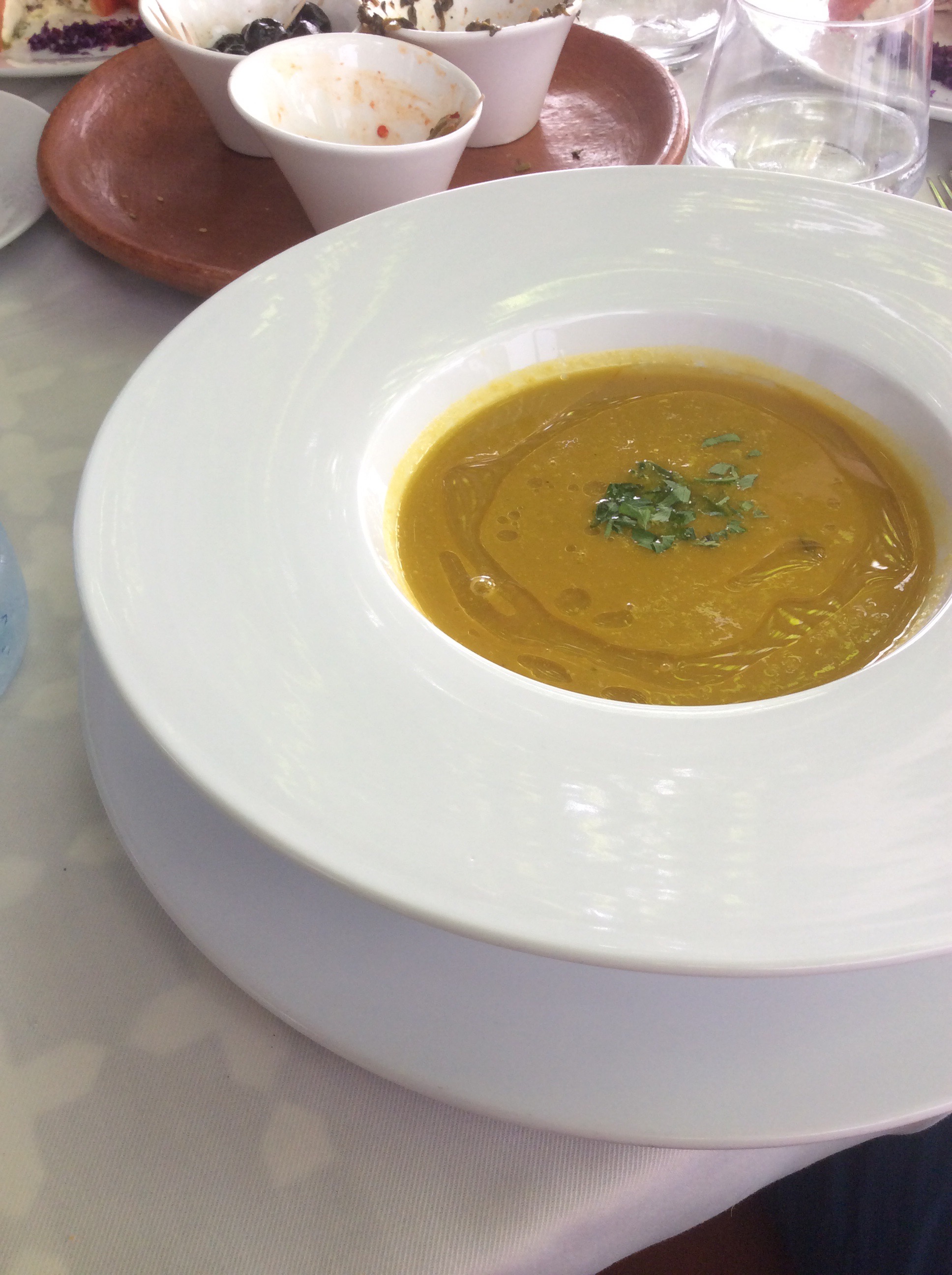
Don Quijote soup – when the rim is larger than the meal itself

Headcase

…………………..<draws a blank>

Buffering, buffering…

Please wait whilst the page loads….

Taking longer than usual to connect….

Predictably, my first session in Dar Loughat was a bit of a shock to the system. Perhaps even more so than my attempts at conversation with my hosts. That would be because striking up a conversation doesn’t tend to require case-marking every single letter.

As lessons go, it was superbly taught. The whole asking-you-for-the-word-in-your-own-language thing is new and a serious improvement; it put a stop to me nodding my way into ignorant oblivion from the get-go. I’m not sure why other teachers haven’t tried that in the past, I needed it bad. I guess it’s the sign of a truly capable linguist, if he’s able to field three languages at once on top of his own.

Nevertheless, I can’t help but feel I was trailing. The placement test landed me with a Parisian postgraduate who had taught herself Arabic alongside Farsi, Urdu and Russian. As if that wasn’t enough, she case-marked everything she said or read almost perfectly, tanwiin fatHas and mansūb endings all over the shop. Like an Archie 2.0. I pretty much gave up on cases in Year Two… and boy, does it show. Some find hardworking people like that inspiring. I just feel cowed. I spent most of that class with a weak smile on my face, like some kind of vestigial ape expression of fear. I brought this on myself, I suppose. I wanted to meet new people, to have a non-Durham class. I got what I asked for.

At the end, the teacher asked us how the lesson went. My classmate said it was very basic. I personally felt like I’d just finished the first assault course in boot camp. He laughed and said that Arabic is a bit like sports.

Great. Exactly what I wanted to hear.

I never said it was going to be easy. To make matters worse, we’re starting from Al-Kitaab 3 again. Not that that’s a bad thing – it’s pretty clear now that I’ve forgotten almost everything I learned out there, except possibly all the bird names I taught myself (escapism – because it was in my interest) – but the first topic is politics. Anybody who knows me knows how pigheaded and closed-minded I am about politics… That is to say, I hate it. I don’t like talking about things I don’t know and I know grand zilch about politics. Again, my classmate proved the yin to my yang: she loves it, takes a passionate interest in the subject and wants to pursue it through journalism.

So just as conversations at home tend to err towards the one-sided field, so too may classes here. All I have to offer is that I study books… A firm background of literature, art and music doesn’t make for an easy playing field when the subject is politics; specifically, the political ramifications of the Iranian Revolution in Islamic nations around the world. Give me the sleazy wine poetry of Abu Nuwās any day.

There’s an orientation at half three. Lessons last from nine to twelve and it sounds as though students spend the afternoon involved in projects. Which projects exactly I’m hoping I’ll find out today. That might be the key to staying alive. There’s little use in heading back to the flat… I have everything I need here, and it’s a tad too far to walk (dammit). So just for today I’ll stick around and take advantage of the speedy WiFi.

The first class was always going to be tough. Nevertheless I’m determined not to give up, not this time. If Arabic were only vocabulary, it’d be a dream… But we must be realistic. Besides, I guess it’s like maths – another thing that floors me. It’s simply a matter of knuckling down and mastering the technique. I gave up on maths too early. As a result, I can’t do division. I never could. I won’t make the same mistake with Arabic. BB x

Counting Sheep and Blessings

February is over at last and the long, languid days of glorious sunshine are here.

Who am I kidding? This is Spain. We’ve had glorious sunshine on and off since September, and more on than off.

My private school whisked away the entire student body to Guadalupe today, yet another trip which I could have attended had I not a second job to balance. That gave me the afternoon off, which I sorely needed, having come down with a head-cold of some description since Monday morning. Frankly I’m surprised I got through almost the entire winter without a single incident, as I’m usually down with something or other in the first two months of the year. Not that I’d ever let it stop me from working, naturally, but it’s not all that easy to lead a conversation class when talking is just about the very last thing you want to be doing. Nevertheless, the stubborn endurance (or rather, total and deliberate ignorance of my condition) I inherited from my mother won out and I made a decent morning of it. Being ill, in a way, is just like being bored or heartbroken; the very best cure is to keep too busy to give it any thought.

On second thoughts, don’t take my word for that.

I took a detour through the park on the way home and, it being such a warm, sunny day, I sat by the water feature and tried meditating for a bit. I haven’t actually done any in months and boy, does it show. I’m out of practice, so I decided instead to simply soak up the sun, listen to a BBC Radio In Our Time podcast on the Spanish Inquisition and watch the goldfinches bathing in the water. I think I was there for an hour, or two… It could easily have been longer. For some reason when I’m ill I tend to lose track of time.

Something that occurred to me this week is how lucky I am to be where I am. I’ve been searching for a way of putting this that doesn’t come across as boastful, though I’d rather use the term proud; it refers to my ego, and it might just mark the final stepping stone in a healing process that’s taken all of seven years to complete.

I’ll explain. Since the day I moved to a junior private school at the age of eight, I’ve been surrounded by people vastly more capable than me. I was always something of a second-class citizen at that school: I didn’t have the brains to keep up with the best, and I didn’t have the money to keep up with the rest. I was swiftly filtered into the middle set, which is something of a no-man’s-land, from which it’s very hard to escape. I left that establishment after three years for other reasons, mostly financial, but also because (in one of the most pig-ignorant decisions of my life to date) my classmates were beginning to use ‘bad words’ and I’d got it into my head that a boys’ grammar school would be a more civilized environment.

I’ll be brief. It wasn’t. But as far as my surroundings were concerned, the wealth was removed but the feeling of being overshadowed trebled, not least of all because I actually failed the entrance test and got in purely on the merit of my writing. So I came in pretty much at the bottom of the pile, in a school where the average student was scoring eight or nine A*s at GCSE level. Add to that the number of kids on the ‘Gifted and Talented’ list, or on MENSA, with national-level CAT test grades; and the large proportion of students playing various sports at county level; and the musicians with Grade 8 on two or three instruments – most of these, I should add, heavily concentrated in the super-bright ones…

It was very hard to stand out at all in such a school. I guess that’s one of the reasons I’ve thrown myself at so many fields over the years: music, literature, history, dance, art, horse-riding, photography, ornithology… For want of an example, I led my school’s Funk Band, but I was a long way off from being the best singer. I simply did it because I was reasonably good at it and because I enjoyed it. The same with Art; there were some genuine Picassos in my art class. I was not one of them. So I was and always have been kind of a Jack of all trades and master of none, if we ignore a paltry average of 26% in my mock Maths exams.

Durham is not much better. Being the stomping ground of private and grammar alike, it’s just as much of a melting pot for the über-talented as either of my previous schools. That’s a great thing – really – as it brings great minds together. The result is some stellar orchestras, sports teams and research groups… at the cost of being ‘normal’ (which, I hasten to add, is not necessarily a bad thing, but then, nobody in my family has ever been or ever will be normal).

Coming to Villafranca, however, I’ve had my eyes opened for the first time in over a decade to what I can do. It’s not that I’m in a town of country bumpkins – there are some seriously bright stars amongst my students – but for the first time in my life I’m not surrounded by people who are leagues ahead of me in all fields. And for somebody who’s more than used to settling for second-best, it’s a wonderful feeling. Don’t get me wrong, I’m chomping at the bit to get back to a place where music for its own sake actually exists, but I intend to make the most of not being outshone this year. Maybe that’s one of the reasons I love travel so much. Getting away from it all.

That said, I’ve spent most of today in bed, drifting in and out of sleep. My dreams have been vivid and memorable of late, as tends to happen when I’m down with a headache. I can’t remember all the details, but I remember consoling Liam Neeson last night over the death of a family member, and then feeling slightly miffed that I didn’t get a photo with him.

If that’s the kind of thing that my brain does in its spare time, there’s probably a reason I’ve always been second best. But that’s ok. It’s a role that suits me just fine. B, after all, comes right after A. BB x

Diamond in the Rough

This week started just about the same way as every week begins, with me waking up to the sound of my seven o’clock alarm, with the morning’s first class just an hour and a quarter away, and finding myself struck with the weekly conundrum that is ‘now, what am I going to teach today?’.

For the first three weeks I had some stellar lesson plans, but we’re filing into my fifth working week here now (I told you before, my observation week became my first teaching week) and my tried-and-true classes have come and gone. Four down, twenty-seven to go. Since in school I teach across the age-groups, from six to twenty-two, I have to split my material in half depending on their ability, which requires two new lesson plans each week. Not exactly a challenge, per se, especially when several of those are shared between groups, meaning it’s possible (and highly recommended) to recycle material; but it’s a weekly problem, after a weekend spent traveling, partying or what have you, that on Sunday night the question is always there on the tip of my tongue as I bed down for the night. What am I going to teach them today?

Today I thought I’d brave it and try literature on the kids. Foolhardy, I know, especially after my last attempt at sparking some creativity amongst the would-be dullards, but I’m not about to give up on them yet. To spark their interest – and since I’ve just spent most of the weekend reading the tale – I kicked things off by drawing a blackboard-sized Moby Dick on the board, complete with scars, harpoons and rigging. Most of them had heard of it, but understandably, none of them had actually read it.

Well, not quite. One of them had.

I did a little double-take at this and made him explain the plot to the class. The way he put it, in English, a language that is not his own, told the tale better than Herman Manville (personally, I found the text hard-going, turgid even, though the story itself was impeccable). Better yet, he beat me to it and cited Manville as the author. I thought I’d let him sit on his laurels for a while and ask the others for any books they’d read recently, but they just stared blankly at me, as though I’d asked them if they’d like to spend the rest of the day doing quadratics. Moby – the pseudonym I shall forthwith use for this very literate kid – had his hand up the whole time and went on to tell me about Bram Stoker’s Dracula, Jules Verne’s Around the World in Eighty Days and Edgar Allan Poe’s The Tell-Tale Heart. That he had read them in translation is beside the point. This is a boy of fifteen who’s busy working his way through the classics.

As I was struggling to elicit some kind of interest from the rest of the class – who, as you might expect, were getting visibly bothered by Moby’s contributions – my colleague spent the hour taking notes of other writers that he might enjoy, amongst them Arthur Conan Doyle and Charles Dickens. One of Moby’s companions lost it and complained loudly that it was unfair that only Moby was talking. My colleague and I soundly brought him down a size by repeating that all I was asking for was a story any of them had read, and that as Moby was the only one who was willing to talk, they only had themselves to blame for their silence. I opened the floodgates a little by allowing them to tell me about a film or television series they might have seen, but on that inch they took a mile and missed the point completely; three accounts down the line I had to remind them that match reports, game shows and reality TV are not stories, and consequently didn’t count.

Pushed into a corner, one kid looked very chuffed to say he thought his favourite TV show, a Spanish version of Match of the Day, was far better entertainment than any book he’d ever read. Granted, he probably hasn’t read very widely – I hadn’t at his age – but for good measure I told him that a show where two obnoxious early retirees discuss what happened, what might have happened, what should have happened and what might happen next time in a football match for an entire hour could hardly be as entertaining as a decent read. I could have done worse, of course, but I held back. Most of it went over his head anyway, as it was supposed to. I’m not foolhardy enough to let my personal prejudices against the tedium that is the world of football discussion ruin my relationship with my students, who already know I’m none too keen on it.

As you might have guessed, I was getting pretty frustrated by this point. I’ve learned to mask it after a month of teaching these kids, but it’s still pretty galling when you ask a simple question and all you get in return is twenty-three gormless expressions. But Moby came back with the goods, stating that he hadn’t read any books in English yet, but that over Christmas he was going to try with Tolkein’s The Lord of the Rings. You’ve got to hand it to the kid; starting to read in a foreign language with Tolkein…? That takes guts. My parents are prolific readers and they can’t stand his writing, and sadly they’re not alone (though I, for one, can’t get enough of the stuff).

In the other establishment I work at there are several kids like Moby in every class; students who are well-read, well-cultured and whose English is streets ahead of their companions. It’s the norm in a private school. And teaching in both private and state has its merits. But kids like Moby make the state school experience so much more worthwhile, for all the challenges. Here is a boy who, despite everything, is working his way through the literary greats for the pure pleasure of it, with his mind bent on attending university in Toronto of all places. It’s kids like Moby who remind me just why it is that I love teaching. Because for all the sour looks, disinterest and gossipping that goes on, when there’s at least one kid who’s shining with promise there’s a reason to go on. Obviously you can’t cater to that one child alone – if it were that simple, everyone would want to be a teacher, I think – but as long as you know that what you’re dealing is going towards somebody’s personal development, that’s reward enough for all your travails.

As for me, I’ve got a fair amount of catching up to do. Moby Dick was this weekend’s read; The Adventures of Tom Sawyer and Robinson Crusoe await, along with Allan Quatermain (after a two-month hiatus). Maybe I’ll recommend King Solomon’s Mines to Moby when I next get the chance. It’s certainly one of my favourites. BB x