Camino XXXVI: You, Me and the Eucalyptus Tree

Albergue de Peregrinos, As Seixas. 19.00.

Melide and the busy pilgrim road are less than fifteen kilometres away, but you’d never know. I’ve found an oasis of quiet here in As Seixas, which doesn’t appear to be an especially popular stop, despite being the obvious final stage before the roads converge at Melide. There must be around thirty beds in this municipal albergue, but only six of them are occupied: five in the small room and me on my own in the big room. It’s funny how that worked out. Outside, it’s just the chirping of sparrows and the sound of the wind. I had better bottle it up before the explosion of noise that is the last stage of the Camino Francés.


I walked in silence for the first two hours today. I don’t rush for my music or an audiobook when I start walking. That usually comes much later. The first hours are sacred, even when they involve nothing more than a concrete walk through the city outskirts. Those crucial first six or seven kilometres or so are a golden time to clear your head. At least, that’s one of my Camino principles.
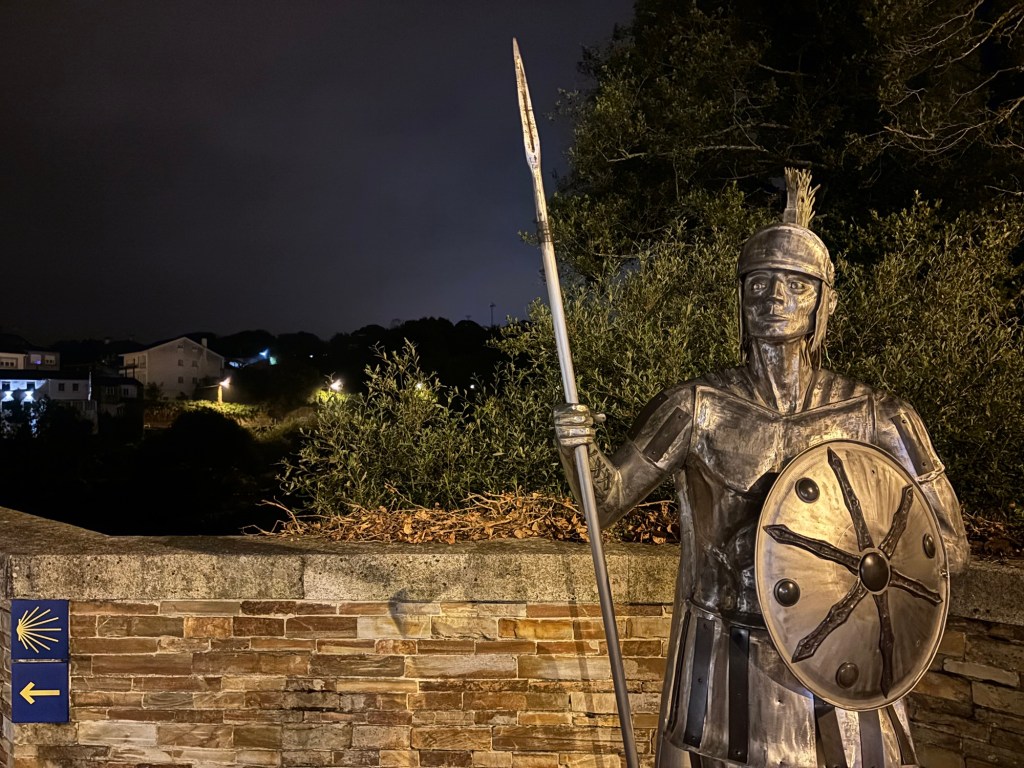

Only once the sun was well on its way beyond the white clouds of the morning did I pop my earphones in and crack on with Matthew Harffy’s Dark Frontier (a Western – a formulaic genre but one which I never get tired of). I passed quite a few pilgrims on the road, including a German gentleman (now a surprisingly rare breed on the more popular Caminos) who had started at 4.30am, but eventually their numbers thinned out and I had the road to myself again.

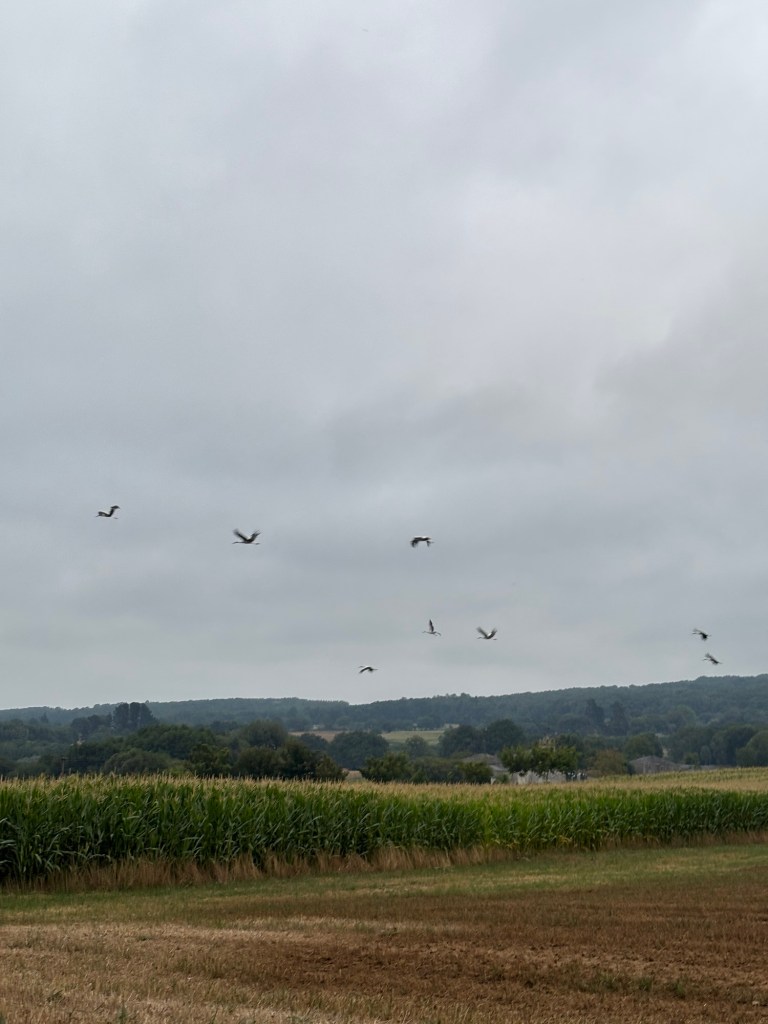
I passed a few fields with storks striding across them. I haven’t seen as many of these majestic creatures since leaving the dry plains and high towers of Castilla y León, and I shall miss them when they’re gone. They really are some of the most beautiful birds to be found in Europe, with their serene stride and their smart crimson legs.

The Camino Primitivo does wind through a lot more woodland than the Camino Francés. This comes in two distinct forms in Galicia: the native ancient oak, dark and twisted, with lichen hanging from its sprawling branches; and the introduced eucalyptus, a pet project of Francisco Franco, tall, bright and peeling like a hapless tourist under the Spanish sun, its sickle-shaped leaves carpeting the road like so many paper blades.
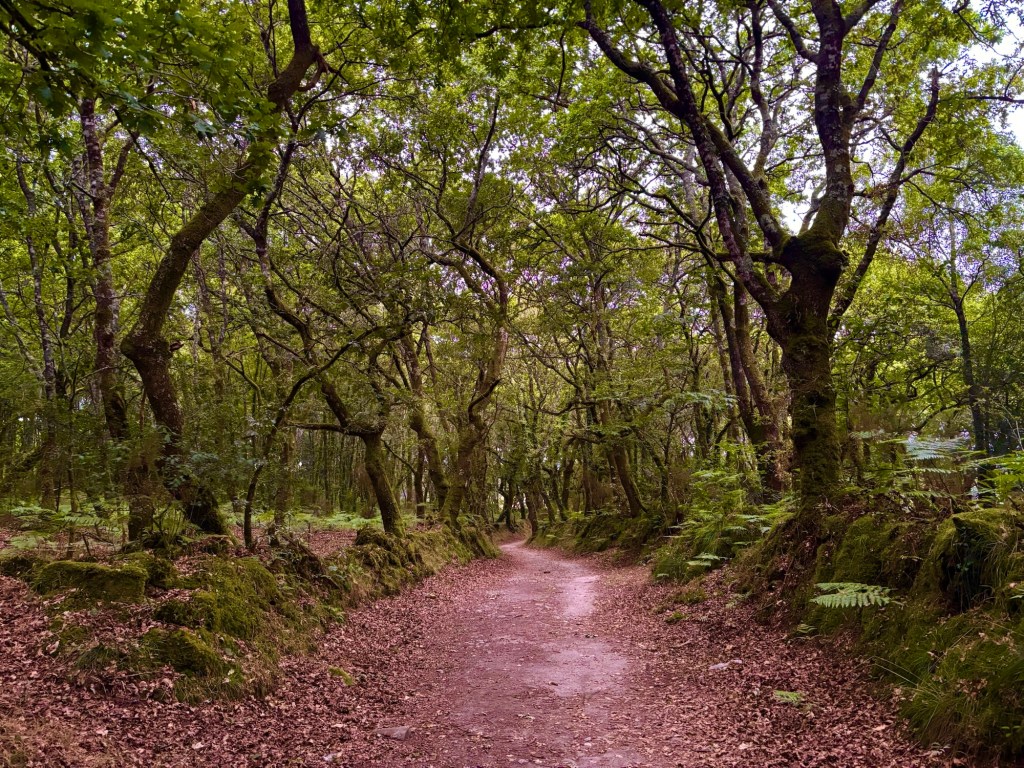

The eucalyptus stands are eerie in their silence: where the ancient oak woods are full of the comings and goings of a thousand living things, from dunnocks and dormice to woodpeckers and woodlice, the foreign woods stand awkwardly about the path, listening but saying nothing, like a line of immigrants waiting for their papers, unsure of what to say and who to talk to. In their native Australia they have an entire ecosystem within which they are the master tree, but here in Spain they’re still a “ghetto crop” of sorts – an inescapable part of the landscape, but not yet assimilated into the world.
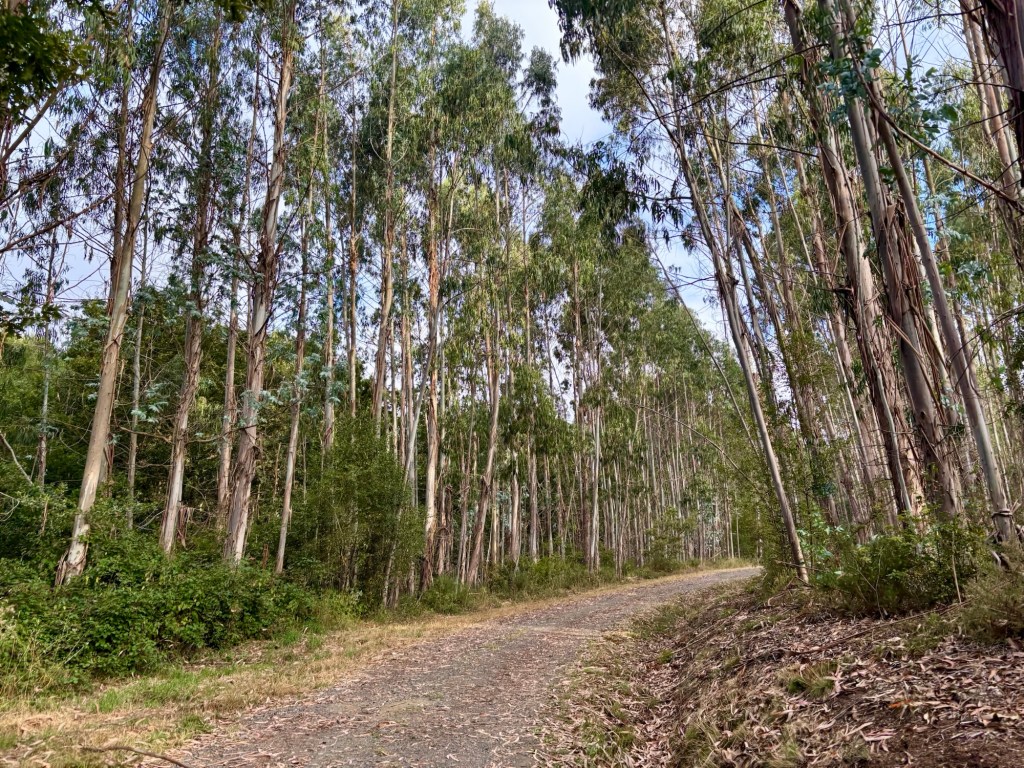

A lot of Spaniards aren’t happy about the eucalyptus tree – and with good reason. It’s not just because it’s an invasive species. It’s also an organic tinderbox.

Eucalyptus trees contain a large amount of volatile oils, which they use quite cannily in their homeland to outcompete other plants and trees in the vicinity – for the tree is both highly flammable and remarkably resistant to the ravaging effect of fire. The bark that peels off their trunks in strips and the sheer volume of shed leaves at their feet create natural kindling, and as the tree burns, it releases gases that fan the fire into an inferno. Many eucalyptus trees will survive these blazes, but the native trees will not. Like Australia, Spain is prone to forest fires in dry summers (we’re having a lot of them right now as I write), but unlike Australia, Spain’s forested Atlantic coast is rather crowded, putting thousands of communities right in the line of fire.

Bizkaia in the Basque Country has banned the planting of the tree, and Galicia – where the plantations are most heavily concentrated – has even set up its own de-eucalyptus brigades to attempt to mow down the fire-starter forests, especially after the infernos of 2017 that affected the port city of Vigo.

I’ve never been to Australia, so the eucalyptus has always been – strangely – a Spanish tree in my mind, like the holm oak and the stone pine, only… stranger. Always growing where it shouldn’t. Like me, perhaps, living in a country which might not have been mine, had life turned out differently.

I’ll set out a little later tomorrow, but hopefully no later than six. My intention is to aim for Ribadiso with its idyllic river and Roman bridge, rather than bustling Arzúa and its throngs of turigrinos, though let’s wait and see. My feet (or stomach) may allow me to press on. Or they may not. Either way, Ribadiso is the target, otherwise the final march will be more than a forty kilometre slog: a worthy final challenge, but again, I’d like to have the use of my feet to explore the city without too much pain the day after. Here’s hoping. BB x
Greenheart

I’ll be frank. Summer is my least favourite season. Summer is, in the vocabulary of my students, “dead”. Most of the birdsong is over for the year, the whole nation is out and about and the holidays stretch on for what feels like forever (especially when you work in a private school). There’s a dry stasis in the air that you don’t get in the changeling months of spring and autumn and you’re too cold to notice in winter. This summer, as is tradition, I’m spending my time between watching documentaries and watching the clock. There’s not all that much else to do when you find yourself in the countryside far away from everyone you know.

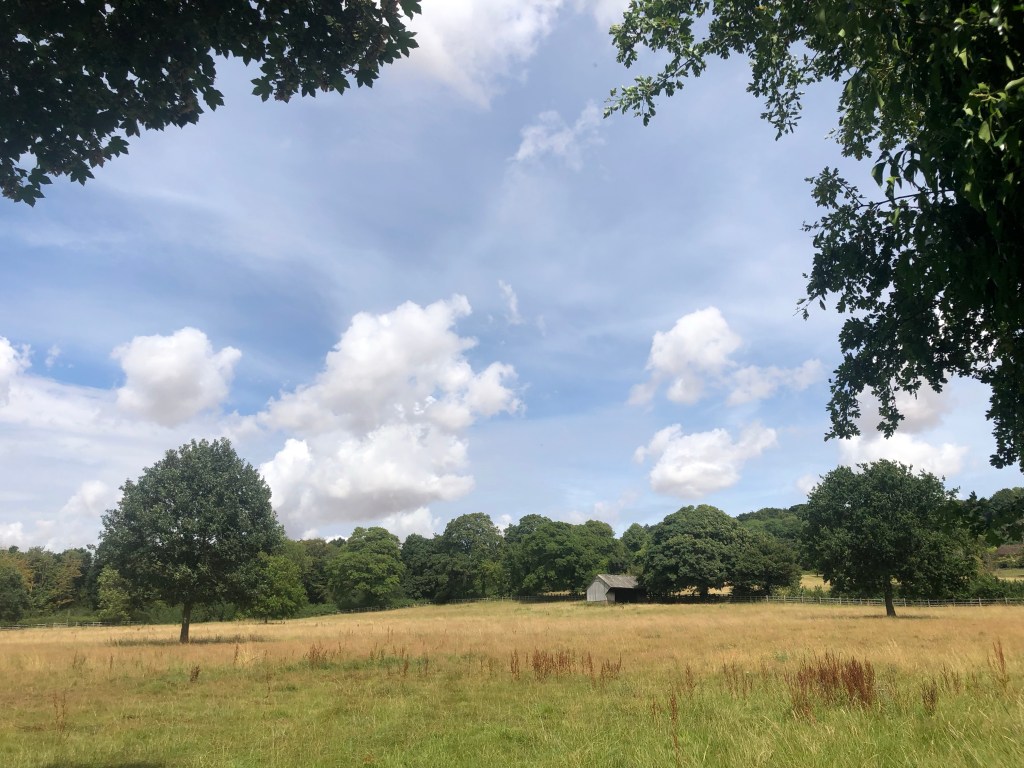
There are, however, massive perks to being here. A few days visiting my parents in Lincolnshire usually throws up a chance to explore somewhere new, and though today’s ramble was more of a wander “round the back” than an adventure per se, it was a beautiful reminder that there are some things that make an English summer worth seeing.

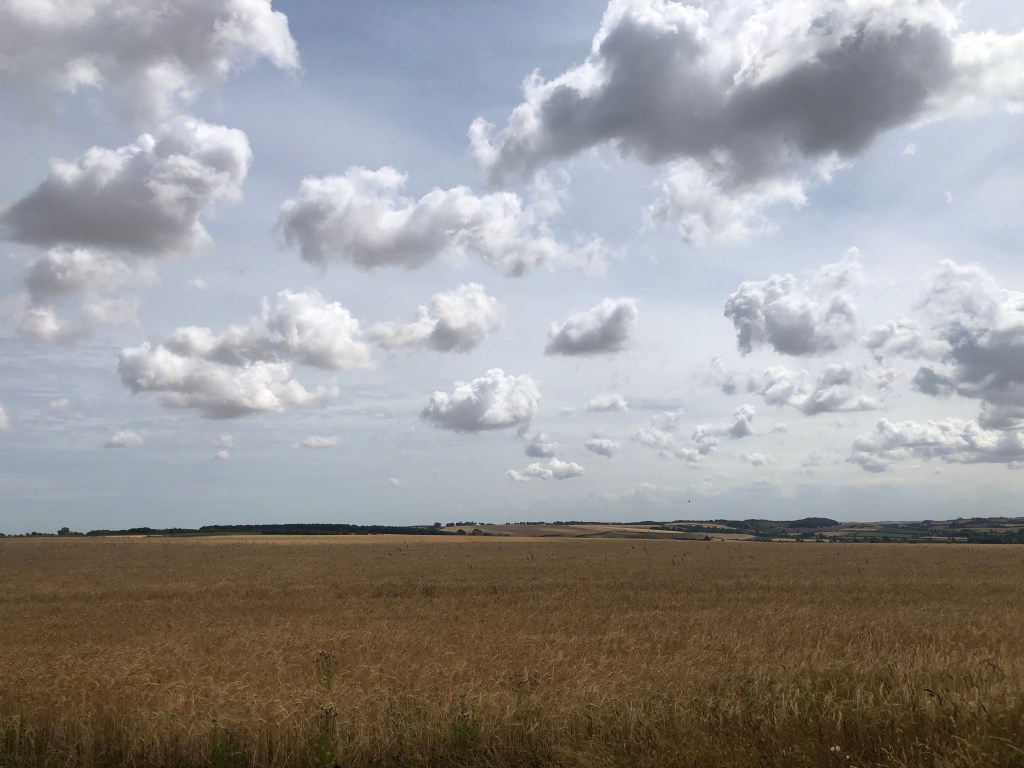
Up on the wolds near Donington, I heard a quail. It’s been years since I heard one in this country, but once heard, you never forget. That iconic wet-my-lips call carries for miles, especially under a hot midday sun when the only other sound is the wind. It reminded me of the green riverbanks of the Dehesa del Banco, where the call of quails was just one instrument in a wetland symphony: percussive reed warblers, the accelerando snare of the corn bunting, the indescribable beauty of the bee-eater’s woodwind and zitting cisticolas going zzzzit zzzzit zzzzit overhead. It sure felt nice to be taken back there from the sunlit uplands of Lincolnshire.

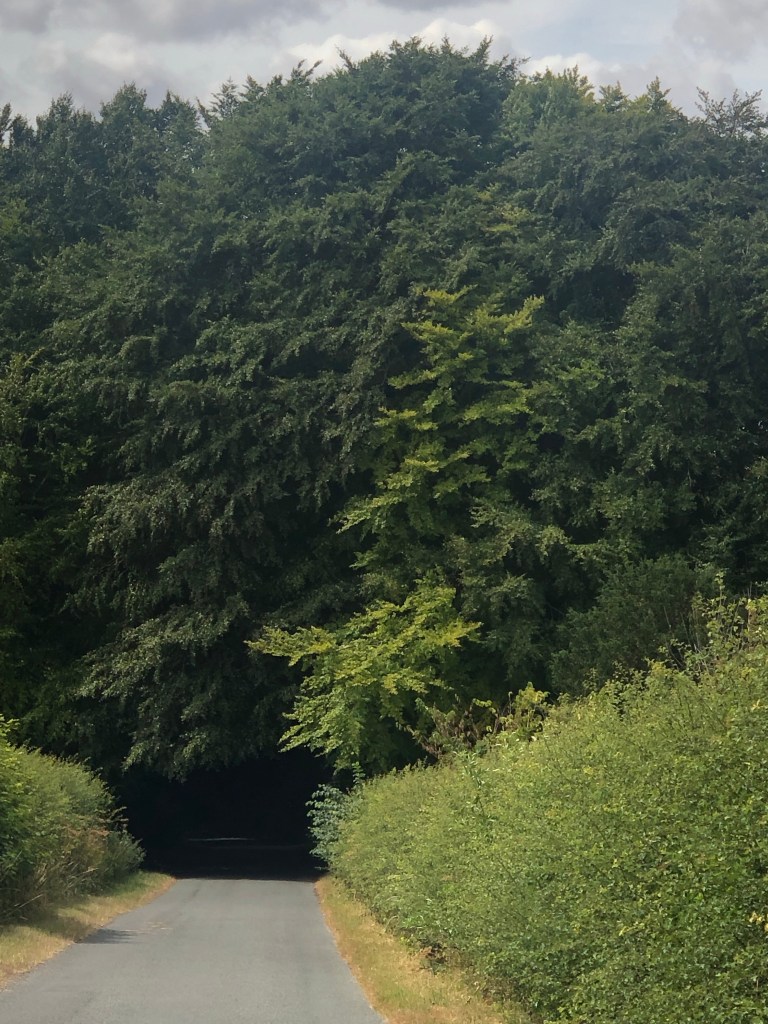
The skies here are immense. The land seems to go on forever in all directions. You get a real sense of eternity in this vast corner of England. Little wonder, then, that so many Lincolnshire folk hoist the red and green county flag over cars, windows and doors. And yet, as is so often the case in England (and why I really didn’t take too well to life in Jordan), you’re never too far from a dark forest, which – admittedly – are especially peaceful places in the quiet summer months.

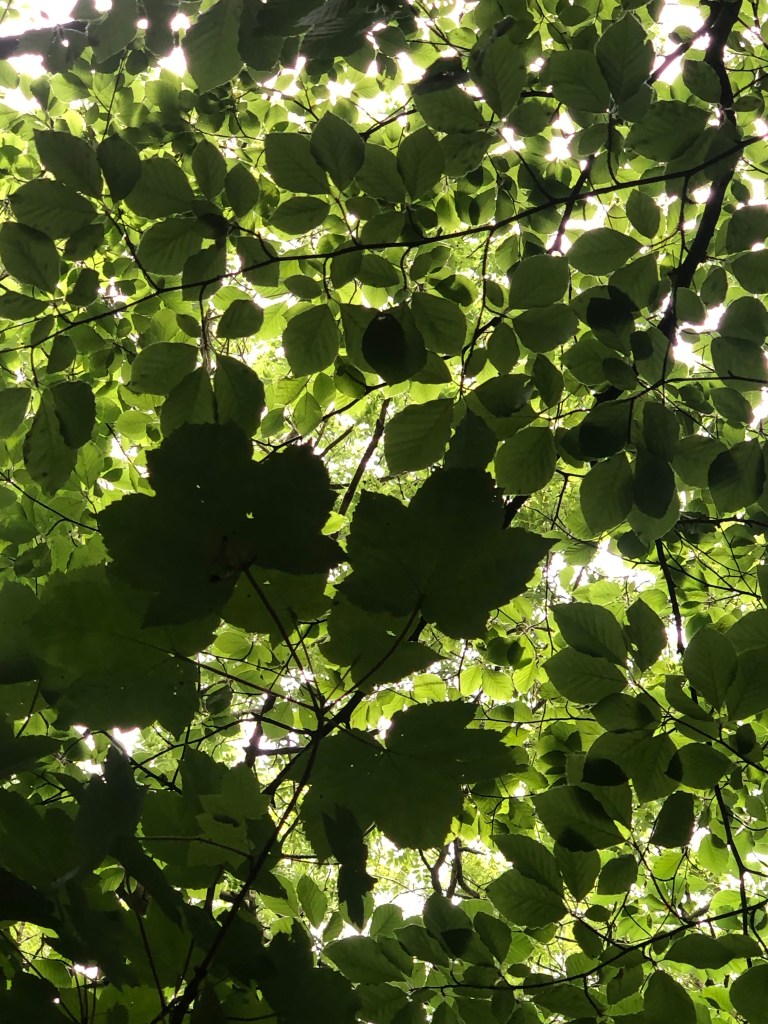
I tried to explain to my companions in Amman again and again the importance to me of green spaces. I think at the time I said I needed more trees, and was quite rightly told there were plenty of trees in Amman’s parks. But there’s something very special to an Englishman about the quality of light that can be found filtering through the trees in an English wood. Something about the infinite shades of green, alder branching over ash, ivy climbing up oak, a ceaseless communication from leaf to leaf, tree to tree. Little wooden fences put up by one of the country folk using fallen branches. The sound of the wind in the leaves: the way it chatters and whispers through the oak trees, and sings without syllables in the firs. Stop and listen the next time you’re near one and you’ll see what I mean.

It’s a magical feeling, standing in the dappled shade of an English forest in summer, and the loss of it in Amman broke my heart, I think. It was, perhaps, the time in my life when I stopped hating on my English heritage and came to appreciate the land where I was born – which, I think, is a stage we must all go through at some point in our lives. Not making peace with the establishment, exactly; rather, making peace with one’s roots. Learning to love the land that made you who you are.

Ten years ago today, I was spending my final childhood summer gigging with my funk band in an attempt to distract from results day. Two months later found me teaching for the very first time in a private school in East Africa. It’s been a colourful decade since then. I feel like I’ve lived around the world in my twenties: Durham, Jordan, Morocco, Sussex, Dorset, Lincolnshire and various corners of Spain. I’ve also found a real fondness for Edinburgh, reawakened my love for France and started a love affair with Italy. And while all those LinkedIn “so grateful for” posts make me want to throw up into my hands, I have to admit I’m incredibly lucky to have had such a colourful decade. I wonder where the next ten years will take me?

I hope She is out there somewhere. I never lose faith in that. And faith, as always, keeps one believing in a better tomorrow. For now, there is the English countryside and the sounds of summer. I can live with that. BB x

Abide with Me

Today’s the last day of the February half term. Storm Eunice is on her way out, but she’s dragging her talons behind her. I’m cooped up with a blanket and a mug of Ovaltine in my study, looking out at the grey world beyond. Cars parked at angles. Wet tarmac mirroring the featureless sky. Winds of over fifty miles per hour howl across the grounds. One of the windows in my flat is permanently ajar due to some fault with its ancient locking mechanism, and the banshee wails moaning through the corridor sound like the Ice Cavern from Ocarina of Time (nostalgia trip here). Between the raging wind and the rattling tattoo of the flagpole two floors up, I might as well be at sea.

I came home from visiting my parents last night to find the whole site in darkness. From what I’ve seen and heard, Eunice had been busy while I was away, tearing her way along the coast like a hurricane and leaving great swathes of the south without power. It took me at least a minute or two scrolling through the UK Power Network website to find my postcode amidst the many hundreds reporting a power outage. After the fair number of power cuts we had last year, you would have thought I would have been prepared, but for the life of me I couldn’t find any of the candles I’d stockpiled over the years. I think my previous housemate used them all up for beer bottle decoration. Fortunately, some foresight – or hindsight – on my part led me to a hidden cache of hand-torches in a chest of drawers. The bulb had gone in the smaller one, but the other, though flickering as a match-flame, gave just about enough light to read by.

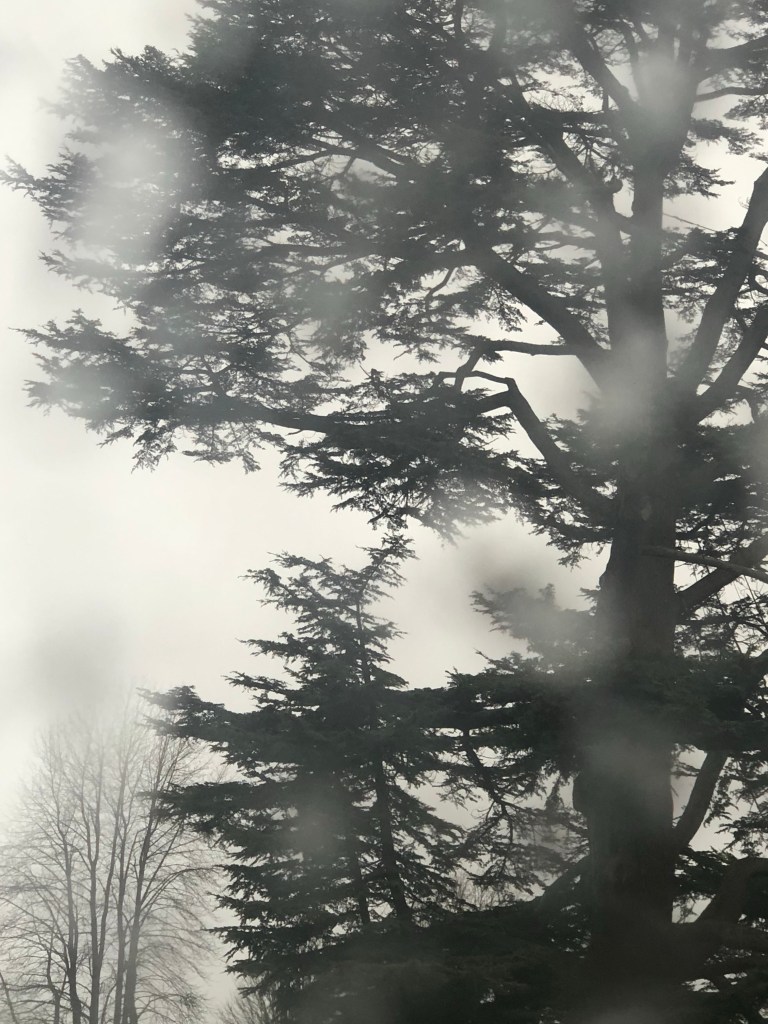
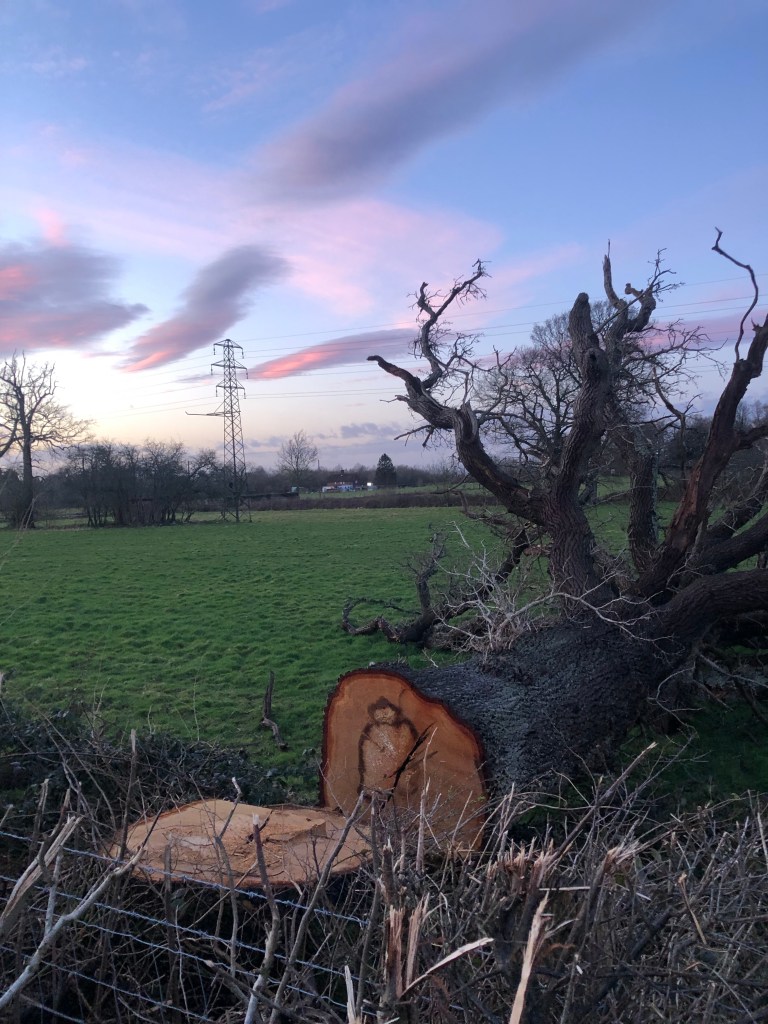
I half expected to come home to find the silhouette of the great Atlas cedar missing from the skyline, its mighty body bent and broken upon the drive like a fallen giant. Fortunately its roots go deep, like the mountains upon which its kin grow far away to the south, and there is strength in the old man still.

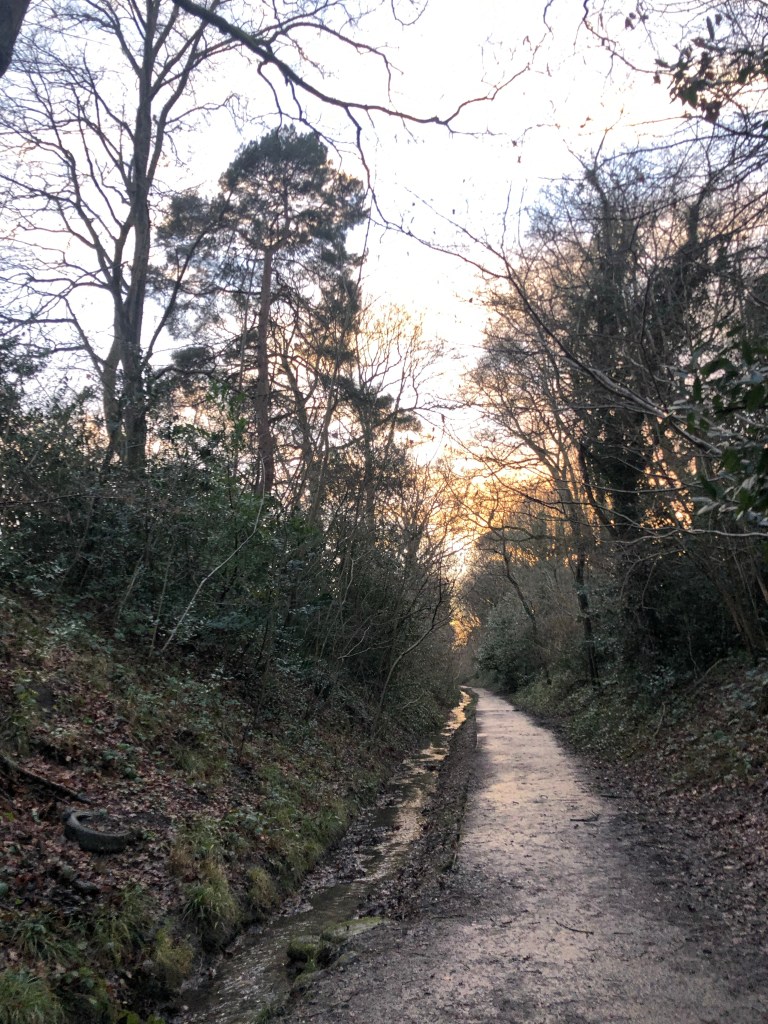
The same cannot be said of many of the free-standing trees that line the road into town. I promised myself I’d get a taxi home for the sake of my new trainers, but as usual, I went back on that promise, only this time it was not out of stinginess but a genuine curiosity to see the wreckage of the storm that I had only glimpsed from the train. Crawley wasn’t given a lashing quite like Brighton and Hove, but it had its fair share of casualties, scattered and trimmed across roads and gardens. The damage was less obvious deeper into the woods beyond. There is safety in numbers, it seems, even for trees: much of the forest was untouched by the storm. It was seriously muddy underfoot, though, and I spent a good ten minutes cleaning my trainers by torchlight once I’d made it home.

It seems unoriginal – not to mention extremely British – to go on so about the weather, but I feel as a writer there is nothing more important than taking the time to talk about the world around you every so often. It’s our duty to tell stories of the world as we see it, so that others who come after us can learn from us somehow. One of the books I actually read cover-to-cover last year, Nature’s Mutiny, pieces together the world of the Little Ice Age through diaries, sermons, letters, hymns and poems penned by those who saw it with their own eyes. Back then there was still a great fear of God tangled up in the awesome power of the weather, and a hundred years of savage winters had led a lot of Europeans to the natural conclusion that sin was to blame. Some resorted to witchcraft; some resorted to witch-burning. Others, of a more temperate nature, put their thoughts into verse:

In constant rancour we abide / and war is ruling far and wide

Envy and hatred everywhere / in all estates discord and fear

That too, is why the elements / reach out against us with their hands

Fear coming from the depth and sea / fear from the very air on high

In morning is the source of joy / the sun no longer sends bright rays

The clouds are raining like a fount / the tears too plentiful to count.

Paul Gerhard
Translated by Philipp Blom
(Nature’s Mutiny, 2019)

I wonder how many modern lyricists sing about the weather? Back in 2007, when the UK was plunged into its wettest summer since records began, Rihanna’s perfectly-timed Umbrella became a best-seller. There were even joking accusations on the internet that the singer was responsible for the unseasonal weather across the pond…

Now that it’s raining more than ever

Know that we’ll still have each other

You can stand under my umbrella

You can stand under my umbrella, ella, ella, eh, eh, eh

Rihanna (“Umbrella“)

Of course, Rihanna wasn’t thinking about the British summer yet to come when she wrote those lines, but four hundred years ago they might have burned her for a witch for such impeccably bad timing. Come to think of it, though, I do distinctly remember her name being on the list handed to me by the Prefect Witchfinder General at a school I worked at in Uganda, some five years later. Apparently the school’s witch-hunting guild had found a website listing known witches in the Western world? If they’d stumbled upon one of the various forums discussing the timing of Umbrella, perhaps it’s not an unprecedented conclusion. If I remember correctly, Wayne Rooney’s name was also on that list. The internet is a strange place.

Speaking of the internet, I decided to bite the bullet and give the online dating scene a whirl. Living and working in a boarding school doesn’t exactly facilitate an open line of communication with the outside world, so rather than sitting on the fence I thought I’d chase some stories for a change. After a brief browse it looks as though Bumble is the kindest of the Golden Triangle (with Hinge and Tinder), not least of all because it’s the most self-aware of the damage the online dating scene can do to the mental health of its users. It’s good to see that in an undeniably superficial meat market, some of the folks up top are aware of the dangers and offer support.

It’s almost certainly a silly idea, living as far from the city as I do, but, who’s to know? Shy bairns get nowt once again. If I had a penny for every variation of that phrase I’ve heard throughout my life, I might just have a pound. BB x

Song of Autumn

I usually walk home across the Bailey after lectures, but today I turned left at the end of Kingsgate Bridge and took the path along the river Weir. It was the goosanders that did it, I suppose. The one constant of my three years at Durham University has been that, come winter, there’s a family of three goosanders on the Weir (don’t know what a goosander is? Look it up, they’re beautiful). I was done for the day and everybody else had gone their separate ways to study, so I thought I’d treat myself to a half-hour’s isolation.

I don’t think I ever forgot how beautiful England is in the autumn. In fact, I think I grew to appreciate all the more for being so far away from it last year. There’s nothing like thirteen consecutive months of almost total sunshine to give you a real heartache for a cold, crisp autumn morning. Well, it’s certainly been cold recently, even if the frost hasn’t settled in yet, but now that our boiler’s fully functional, I’m not complaining. Even so, after the madcap nature of the last two months – I really have had something to do every day, come to think of it – something I really had forgotten to do was to make time for myself. And I’m not talking the lying-in-bed-watching-Youtube kind of me-time. Everybody has something that fills them up again when they’re feeling low. Maybe it’s good food, maybe it’s a hearty jog, or that song that never fails to put a smile on your face. For me, it’s nature. Between DELE revision, rehearsals with the Lights and this many other commitments, I’ve scarcely had the time to think straight. I’ve waxed lyrical about the importance of being busy and having people around you that radiate good energy, but for me, there’s no substitute for a good hour or so in nature’s arms.

Mrs Goosander wasn’t about this afternoon. She sometimes goes fishing further downstream. Mr Goosander and his rather shabby-looking youngster (still moulting, but more impressively, still here) were going about their business in their usual spot. The father looks especially impressive at the moment, with his feathers flushed that special shade of salmon-pink that is so particular to his kind. I think I saw him catch about three or four fish whilst I was there. Sit long enough in a sheltered spot and the little world accustoms itself to you…

An inquisitive little coal tit came to have a look-in on one of the trees overhanging the river. A couple of blackbirds were making a lot of noise rummaging around in the undergrowth as is their fashion. The soundscape was so autumnal, I only wish I could have recorded it for you. Words will have to do: the cooing of a woodpigeon in the trees; the machine-gun twittering of a roving party of nuthatches; the high-pitched seee of redwings overhead; the cawing of crows coming in to roost. The pitch-pitch, pitch-pitch-pitch of a chaffinch, tea-cher tea-cher of a great tit, and, once or twice, the distant shriek of a jay.

I don’t tend to talk about my favourite pastime all that often. Sometimes you don’t have to: the things that matter most are plain to see. Besides, who’d want to listen? I learned a long time ago that there are precious few who care about the distinction between wrens and robins, crows and jackdaws, mallards and goosanders. And, I suppose, the names are not important. What matters is that people know that they’re there. Planet Earth II seems to be extremely popular up here, and I hope it’s encouraging people to look around more when they’re out and about. 

So that’s my advice. The next time you’re out for a walk, whether you’re on your way to or from work, or just to kill some time, unplug yourself from the noise, find a quiet spot to sit down, shut your eyes and just let the world let you in. You won’t regret it. There’s no better music (and believe me, I’ve looked – my whole family are musicians).

Blackbirds, crows and redwings. The wind in the trees and the splash of diving ducks in the silent river. These are the sounds of my childhood. Of all the things life has taught me, I am no happier than in my knowledge of the world around me. I have my mother to thank for that, I think. That and my obsessive habit of chasing the details. I should probably have given journalism a little more thought. Then again… BB x

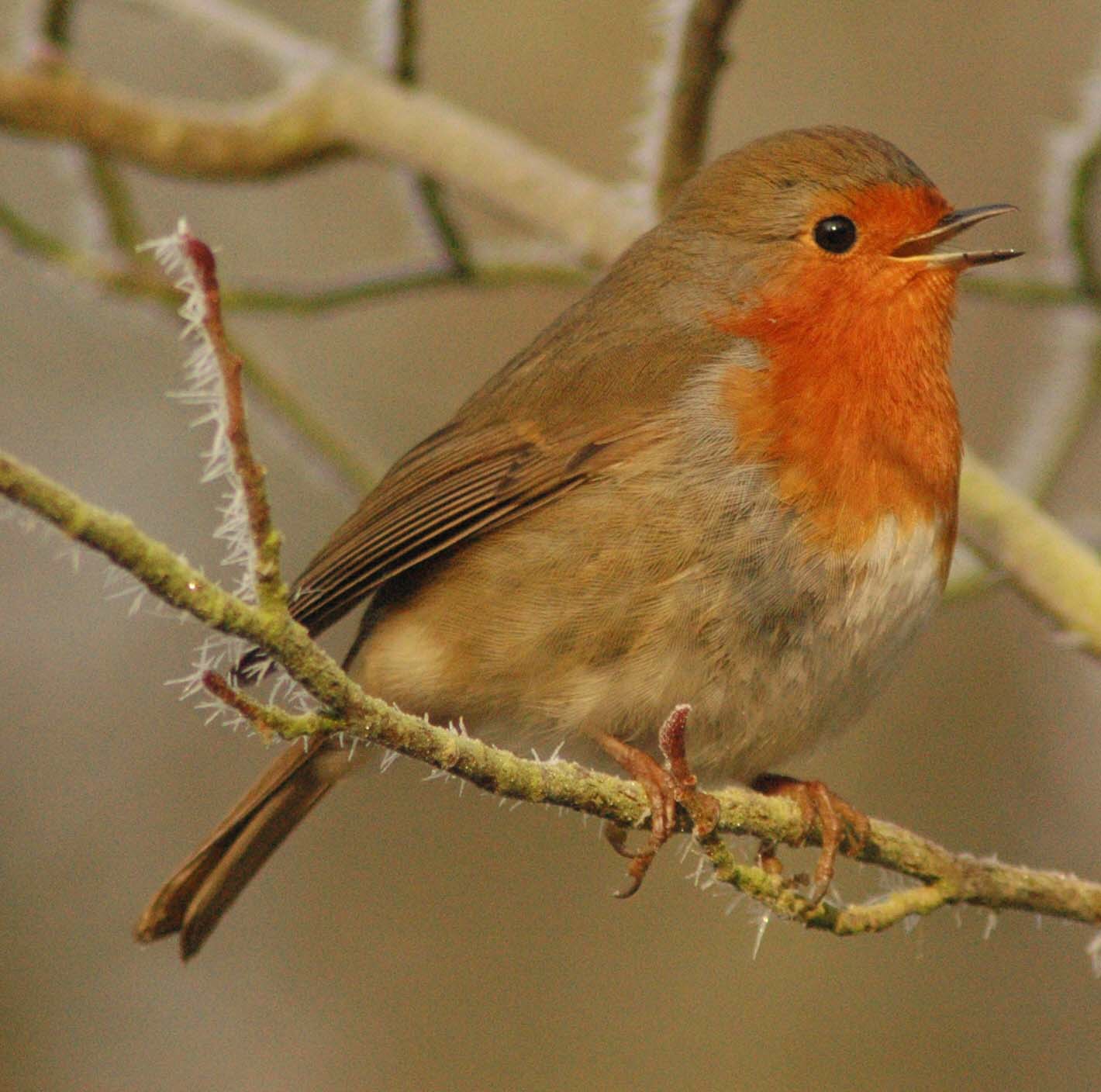
An old photo of mine from 2008, when I had nothing on my mind but birds!

Necessarily Childish

Would you believe it? There are clouds over Amman today – real, genuine clouds. Yes, I really am getting excited about clouds. So tell me I’m crazy; I already know that. I just miss the sight of a sky that isn’t a brown shade of blue, that’s all.

We’re coming to it now, the end of my stay in Jordan. Just three days of class remain, and then a whole week and more to do whatever before our return flight takes us home – via a day’s sojourn in Kiev, provided the airport authorities allow us to pop out for a visit between flights! (Those twelve hours sure will drag if they don’t…) Way back in May when Kate, Katie, Andrew and I booked our flights, we had no idea we were going to get almost all of our traveling done before the end of term. Well, here we are at the end, and I’ve already seen the abandoned desert castles, seen the sun set over the Promised Land from the bitter waters of the Dead Sea, wandered the Roman ruins of Jerash, swam with triggerfish at Aqaba, trekked Dana, gawped at Petra by day and night and watched a veritable storm of shooting stars over Wadi Rum. Somehow I’ve managed all of that in our weekend breaks, and in retrospect, it’s as well that I did so; had I stuck to my guns in leaving some sights for next year, I’d have missed out for good on sights like Petra and the reefs of the Red Sea. Though Amman itself may have crushed this little country mouse, I can’t recommend Jordan highly enough. That’s always been my stance.

Trees, people! Trees……..!

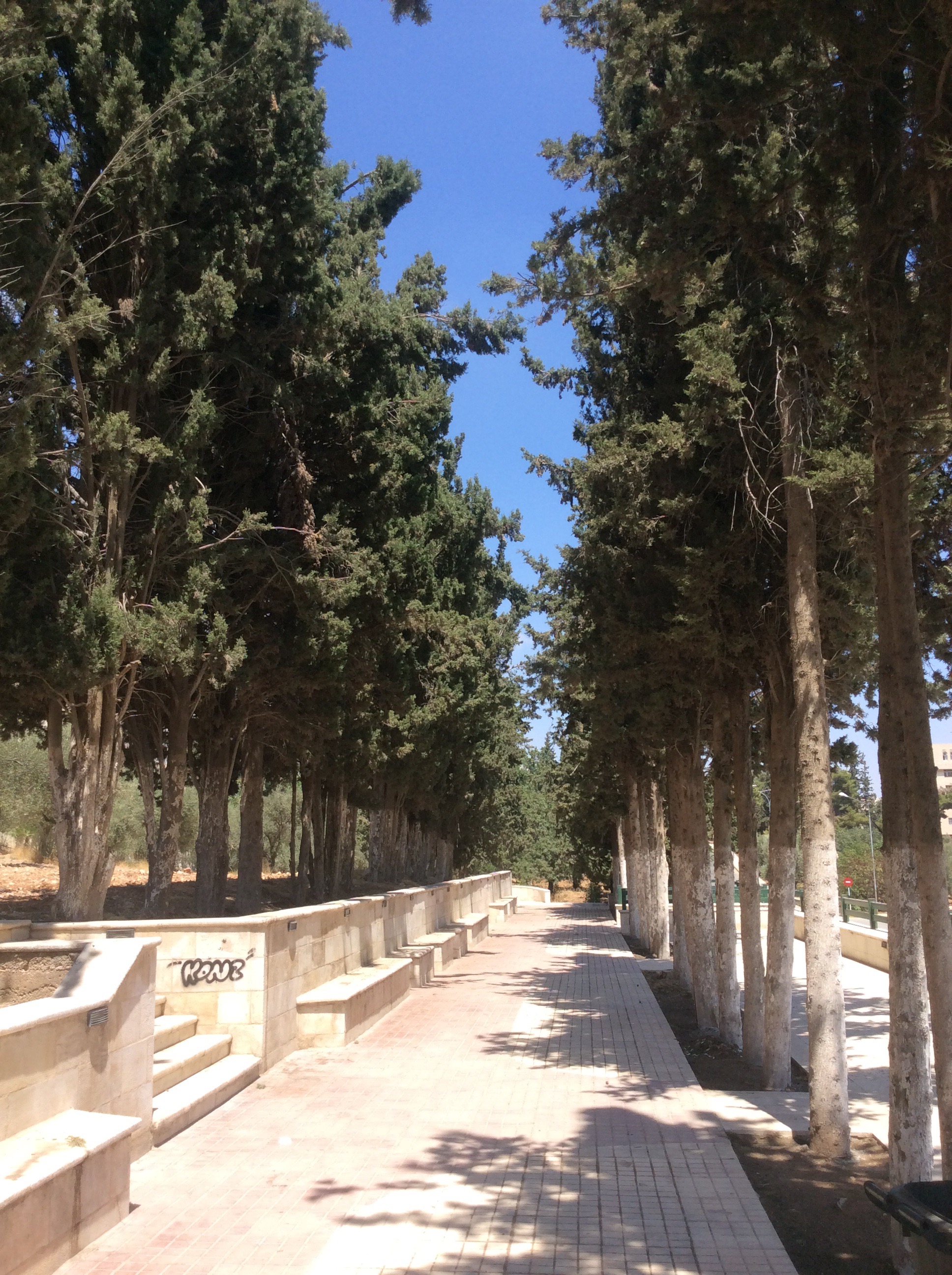
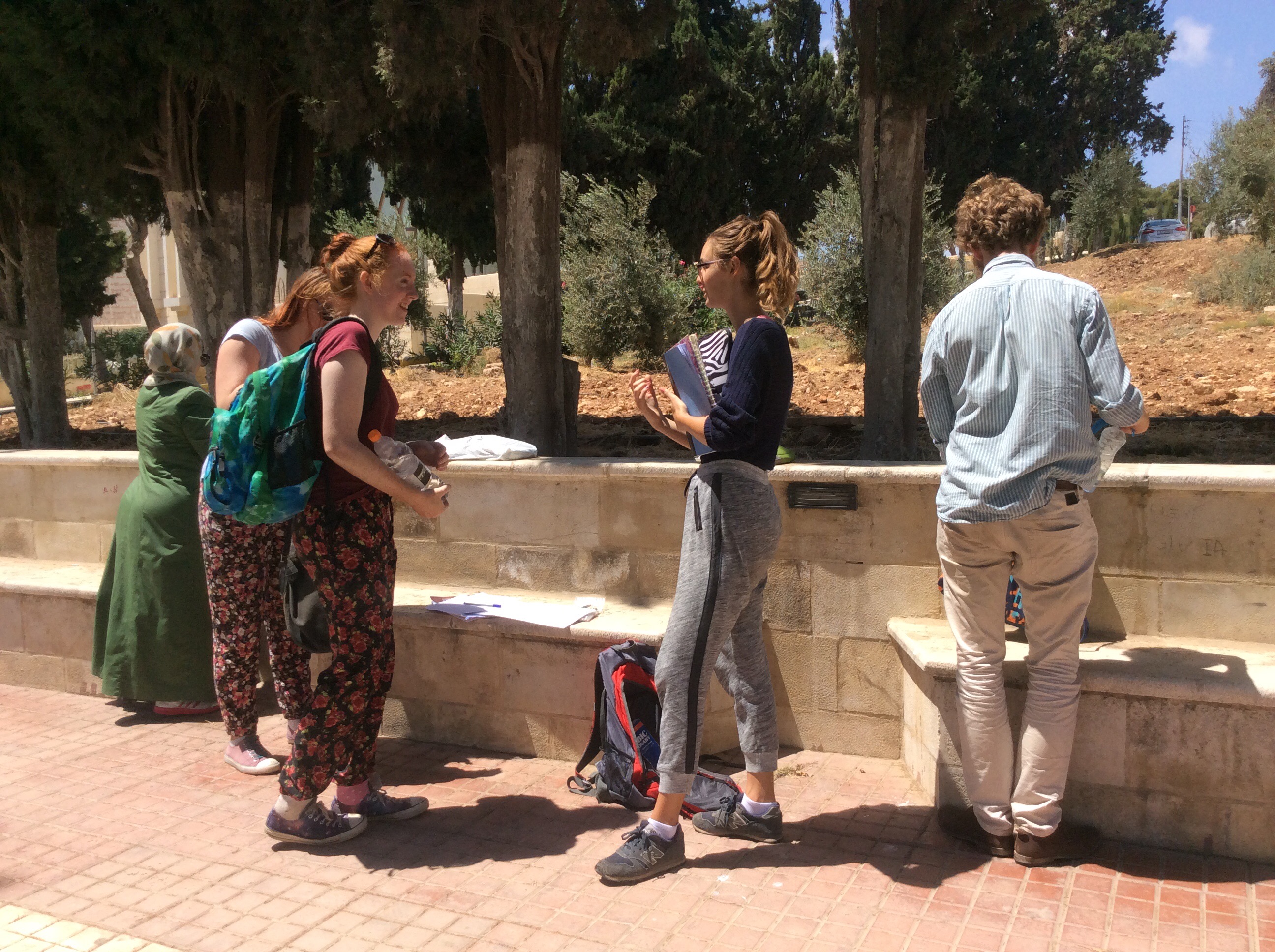
We took an hour and a half of class today out in the sunshine in the Jordanian University grounds. They’re on vacation at the moment, so the grounds were deserted of students and we had the run of the northern campus. I’ve never felt more focused in all my time out here; just a little dose of sunshine, the warbling trill of a sunbird from one of the cedar trees and the taste of air that hasn’t come from a fickle conditioner… I was speaking more fluently than ever before. I guess that drives home this morning’s debate on students being more attentive if given access to green spaces in school. Now that’s something I can agree with! If only we could visit the university more often… It’s a bummer, living right next to the only green space in Amman, and not being allowed to enter it except on official business.

Class dismissed

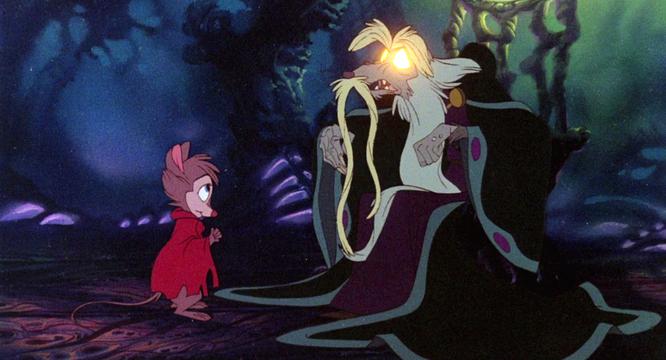
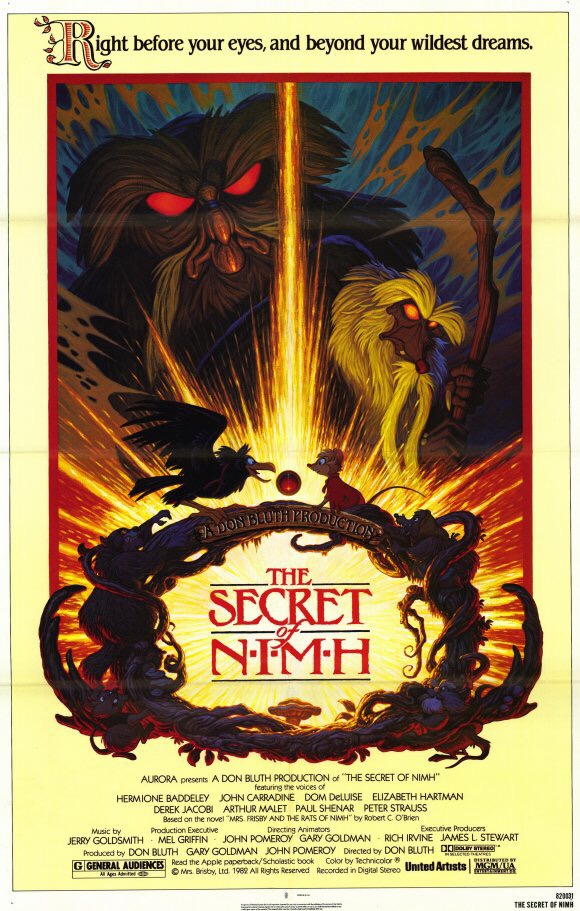
To keep the engine going in the last hurdle, I’ve been making liberal use of Youtube. Specifically, two animated films from my childhood: Kenneth Grahame’s The Wind in the Willows (the 1988 Burbank version) and Don Bluth’s The Secret of N.I.M.H., based on the 1971 book Mrs Frisby and the Rats of NIMH by Robert C. O’Brien. If there’s one thing I’m seriously into, it’s obscure cartoons. The ones that fell by the wayside, in a manner of speaking. I guess that has something to do with growing up with Freddie as F.R.0.7., the obscurest of the lot, but there’s something magical about trawling through all of these hidden gems. Jaded as it sounds, they just don’t make films like ’em these days. Dreamworks and Pixar paved the way for a new era of animation with works of genius like the Shrek films and Finding Nemo, but since then, it’s just been one furry animal film after the other, as far as I can tell. I’d say I’m getting too old for such things, but that’s a complete lie; I still get the same kick out of The Lion King that I did when I was a five year-old sitting ten inches from the television in the back room. Preach.

But Don Bluth… oho, now we’re talking. They’re just so… dark. Tell me you didn’t feel afraid when you first watched The Land before Time – those jagged landscapes and bubbling swamps, and all the death…! Littlefoot’s mother died onscreen. Disney could do it too: The Lion King was extraordinary because you saw Mufasa die onscreen. Powerful stuff. But the best Disney offers up these days is one of a thousand villains falling to an offscreen demise (my sincerest apologies, Clayton). Not so with Don Bluth. The wise Nicodemus is crushed beneath a mountain of scaffolding. Rasputin’s soul is sucked out of him by the forces of Hell itself. The guy even had a hand in the original Sleeping Beauty, so you know he knew what he was doing. His style is also truly iconic; those stark, jagged landscapes from The Land Before Time follow you through American TailThe Secret of NIMH and Thumbelina; truly, a world apart from the sugar-coated Disney kingdom.

Derek Jacobi, is that really you?

Not that I have anything against Disney. I love it. Even some of their new stuff is great. I thought Wreck-it-Ralph was going to be dismal from the premise, but it blew me away. I just find myself wishing that the Paperman project had pulled through. Hand-drawn animation just smacks of my childhood and I covet it dearly.

Don Bluth, you really did have a thing for glowing eyes…

If you remember any of these classics, I’ll point you towards some even more obscure titles that you may not have heard of. Give Ralph Bakshi a try if you haven’t already: I’m thinking Cool World and Fire and Ice. Or there’s Nelvana’s niche Rock and Rule. Equally trippy, but worth the ride. And don’t forget the darkest of them all, the one that gave an entire generation nightmarish images they would never forget: Rosen’s 1978 adaptation of Watership Down. So… much… blood…

This, of course, has next to nothing to do with Jordan, or even Arabic for that matter. But it’s a damned good healing technique. I’m quite ready to go home, even though eleven days still remain, but the memory of these animated gems will keep me soldiering on. Ah, to have been alive in the sixties and seventies when these wonders were being created… I might have thrown caution to the wind and gone for a career as an animator. What a different life that might have been! BB x