When the Whales Came

As Escaselas. 12.01pm.

Rain. It started early this morning, while I was still fast asleep, but it’s coming down quite hard now. The bus has just climbed the hill north of As Escaselas and is rolling towards Sardiñeiro, its windscreen wipers working overtime. Lichen-coated hórreos, a symbol of the Galician countryside, stand shoulder to shoulder with new-build white houses with wide garages. That strange mix of ancient and modern is ubiquitous along the pilgrim road: here is a wizened fisherman in blue overalls mending his lobster creels in the shelter of an awning, above which a sign advertises (in English only) “hippie/chill-out/goa fashion”. The lady on the bus behind me talks down the phone in a Galician accent so thick it could be Portuguese, while a couple of free-spirited Germans discuss their next steps. My German is rudimentary at best, but I catch the words “Mallorca”, “Sontag” and “yogi”.

Now and then I recognise a patch of road from that summer two years ago, when Simas and I pushed on together for the Cape, in warmer days when the wind blew west and America still seemed like a land full of hope. Now, the news is full of fury as Trump’s tariffs threaten a global trade war, and the US government tells its citizens to “trust in Trump”. Americans, it should be noted, have been notably absent from the pilgrim trail over the last few days.

Three pilgrims return home on foot in coats that cover their backpacks, and one pilgrim comes back the other way, striking out for the last stage of her journey. The Camino is eternal.


Spooky by Dusty Springfield plays over my earphones as the bus pulls into the former whaling town of Cee. A crude iron sculpture on the seafront is all that remains of that heritage, besides its name, though there are honorary clues all over the place: Restaurante As Balenas, a number of whale-themed hotels, a couple of whale-shaped hobby horses in the play park and even a friendly mural on a wall near the bus station, offering a whimsical nod to that monstrous practice.

Whaling has been outlawed here since 1986. Spain was slow to adopt the ban and Galicia was one of the regions hit hardest, though by that point most of the whales had long since been driven to local extinction. Lately, however, these majestic creatures have been sighted off the coast again, after an absence of nearly forty years, including the greatest of them all, the blue whale – the largest creature ever to grace this planet.

Perhaps they’ve been driven here by the depleting of their feeding grounds further south. Or perhaps – and this is what some scientists believe – it is an ancestral memory that has brought them home, in spite of the knowledge they must have of their kind’s slaughter at the hands of man. Something stronger than fear has called them back, the same compulsion that makes the tiny swallow travel around the half world twice a year. The same compulsion, perhaps, that leads pilgrims of all stripes to seek the end of the world here, as they had done long before the legend of Santiago washed up on these shores over a thousand years ago.


There’s a small bust-up in Muros, where the bus stops for a change of drivers. The two German pilgrims get off for a smoke and return with their rucksacks. The driver tells them they’ll have to leave their bags underneath if they’re headed for Santiago, as the bus will fill up when we reach Noia. One of the two – the one who speaks Spanish – argues the toss, asking if they can keep them at their feet. This annoys the driver, who points out that other passengers will need the seats more than their bags. Keeping my rucksack on me nearly got me out of a nasty scrape when I was backpacking around Morocco, but here in Spain, there’s no need to be quite so defensive. ALSA, Spain’s largest bus company, actually gives you the option to buy up the seat next to you, which seems a bit selfish. Monbus – a smaller corporate creature by far – is a lot more democratic.


There’s an enormous queue for the bus when it reaches Santiago, almost all of them under the age of thirty. It only dawns on me then that the only young people I saw out and about in Fisterra were pilgrims, and few of them under thirty at that. Spain is much like the rest of the world in that regard: its youth abandon the towns and villages for the bright lights of the city in pursuit of opportunities in work or love, returning home only to see friends and family, or once they have a family of their own.

My digs for the night are within a stone’s throw of the cathedral – quite literally. I can hear the bells chime every half hour from my room. I made a flying visit to some of the local bookstores, but wound up returning to my old haunt in Casa del libro in search of a couple of histories on Tartessos, a current fixation of mine. So far, my specialist areas include:

  • Bandit legends and narratives
  • Spain’s founding myths (esp. Pedro del Corral’s Crónica sarracina)
  • El Cid & Frontier Epics
  • Al-Andalus & Spain’s Islamic heritage
  • Extremadura
  • 17th Century Spain (Under Felipe IV)
  • Gypsy culture and narratives
  • Spanish wildlife (esp. concerning Doñana)

Once I’ve consumed these two new acquisitions, hopefully I can add Tartessos to that list!

I did make it to Mass this evening, but that’s worth a separate blog post, I think. So keep your eyes peeled! BB x

Elemental

Praia do Mar de Fóra, Fisterra. 12.31.

An enormous storm is moving in off the Atlantic. That’s what it says on the El País headlines on my phone. The signs were clear this morning: the wind was up and the waves were agitated, as though some supernatural force were stirring beneath the water out beyond the cape. Or maybe that’s just because I finished reading The Leviathan today and I have sea monsters on the brain.

That and the old English saying about red skies in the morning being a sailor’s warning.


I didn’t come all the way out here to hide away from the elements, so once the worst of the morning’s rain was over, I nipped into town, grabbed an empanada and made for the Praia do Mar de Fóra on the west side of the cape. There were still a few clouds stretched across the sky, but none so ominous as those that were splashed across the news from the Canaries this morning. I sat on a boulder with my feet in a small stream and ate my lunch in peace, having the entire beach to myself for the second day in a row.


It’s easy to forget that there aren’t that many places in England where you can appreciate the full force of the Atlantic. Most of the English coastline looks out across the North and Irish Seas or the British Channel, and none of those are in the same league as the Great Western Ocean. From my post at the edge of the beach, I can see the sea mist rolling in with each crashing wave. Some of the waves collapse before they hit the shore; others swell while they’re still far off, hulking and dark and full of threatening force.

The ancients believed that Poseidon, God of the sea, was the ultimate force behind the power of the ocean. As well as the deity responsible for waves and quakes both terrestrial and marine, he was also the lord of horses, perhaps stemming from an even older association between horses and the sea. Poseidon is believed to have fashioned the first horse from the waves in an attempt to win over the people of Athens, who ultimately spurned his gift in favour of the olive tree offered by Athena, a far more practical gift for a seafaring folk for the myriad properties of its wood and fruit. And then there’s the parallel between the nature of horse and ocean, both extremely volatile – at one moment calm and beautiful, at another restless and powerful, stirred into action by some powerful emotion.

It’s thought that some of these beliefs come from seeing the shapes of horses’ heads as the foaming crests of the largest waves catch the wind before they break upon the shore. Before the unfettered force of the Atlantic bearing down on this little bay like a besieging army, it’s not hard to see the likeness to an elemental cavalry charge in the surf.


I had most of my lunch and readied to scale the cliffs. A half-beaten track snakes its way up the slope – a snake with a sadistic habit for traveling in a straight line, that is. The cliff climbs 200m in less than a kilometre, so I had plenty of opportunities to stop and take in the beauty of the bay (or, alternatively, a breather).

As I began my ascent, a couple of waxbills saw me off, a bizarre African immigrant in this Celtic corner of the world. I found the half-eaten corpse of a guillemot a little way up, the only one of its kind I saw, though they do still breed here at the westernmost corner of their range. For the rest of the climb, I was followed by a pair of red-billed choughs, an incredibly acrobatic bird which seems to delight in its ability to fly like few others. Now hanging in the wind, now plummeting into the abyss before unfolding their wings and climbing back out of their death-defying dives, they appear to perform these feats of gravitational defiance for the sheer thrill of it, since they serve no practical purpose whatsoever. The peregrine falcon employs a similar tactic to strike its prey out of the sky, but while I did spot one wheeling overhead, it wasn’t hunting today.

Far out to sea, the occasional gannet soared by, its wings just above touching the crests of the waves. They were shadowed now and then by the squat-bodied shags leaving their crude nests to fish; beautiful creatures in their own right, but ugly, misshapen imitations before the slender, powerful wings of the gannet. Down below, just metres beneath their colony, the Atlantic roiled in aquamarine anger between the cliffs.

It was a dizzying spectacle with both my feet (and my hands) firmly planted on the ground. Goodness knows how the choughs see such a sight and feel compelled to hurl themselves at it, as though defying the gods themselves. But then, I was never much fond of rollercoasters either.


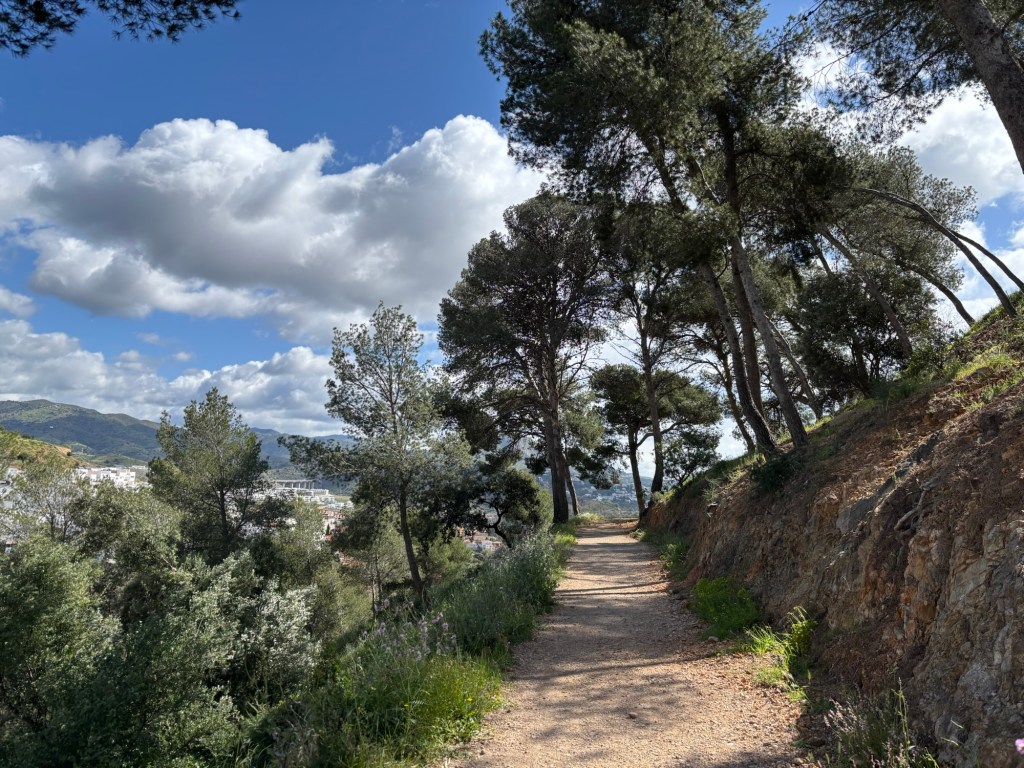
The cliff path works its way up to the watchtower of Veladoiro, where the wind howls through the bars of its iron-framed mast, before skirting the edge of a pine forest so perfectly arranged it must have been planted here as a windbreak for the villages in the valley below. The lithe shapes of lizards and at least one snake dart across the path ahead of me, and I find the snapped-off tail of a slow worm that obviously wasn’t fast enough, though by the wearing at the severance point it seems to have been there for at least a day.

At the edge of the forest I come across a hidden bay: Praia da Arnela. It’s hard to tell from Google Maps why this pristine beach isn’t more of a magnet, but the answer is obvious to the naked eye: it can only be reached by a steep descent from an offshoot of the nearby hamlet of Vilar de Duio. I haven’t brought a towel, and I don’t think I’d fancy climbing back up the cliffs even if I had, so I content myself with watching the waves roll in from the clifftop instead.


Turning my back on the sea, I start to descend into the interior. The fields of buttercups nestled between the forests on either side of the cape shine in two distinct shades of yellow: one a warm gold, the other a brighter, almost greener yellow. American and European, perhaps, though I’m not sure which way round. A single swallowtail butterfly dances into the field, its own golden wings lost in the shining petal sea.

The last time there was a great Atlantic storm, some of the mighty monarch butterflies were blown across the sea to our shores. I think that was in 2016, as I recall seeing one or two in Morocco and then, even more bizarrely, in Kent within that same summer.

Sometimes I wonder if esoteric anecdotes like these are worth recording. But perhaps it serves a greater purpose, as naturalists the world over try to understand the forces of the world around us by drawing together tiny threads such as these.


Back at Langosteira, I remove my sandals and continue along the beach barefoot. The relief as the waters rush over my tired feet is like nothing else. There are no swimmers out – it’s much too early in the year – but I’m happy to have my feet in the water again.

A single dunlin races ahead of me along the shore, a straggler from the traveling group of five that I saw from my window yesterday, perhaps. It will soon be on its way north to its breeding grounds in the Arctic circle. Much like the swallows who sing merrily from the telegraph wires in the fields here, you have to marvel at the courage and strength of these little wanderers who travel many thousands of miles each year, defying the elements to answer a call beyond their understanding: the call to come home, wherever that may be.

A less fortunate wanderer lies stranded in the sand, glistening in the sunlight: an enormous jellyfish. Not a false jelly like a man-o’-war, nor even a lion’s mane by the colour of it, though it’s hard to say with any degree of certainty, as some marine predator has already devoured its trailing tentacles, leaving the flabby and presumably inedible bell behind. A hollow has pooled about it where the waves have dug it a grave, after a fashion. On the off chance that it might still be alive, I carry it back to the tideline and lower it back into the water. The tide spits it back up again and it lands on its head, motionless. An ancient creature, practically unchanged since a time before life moved over the land, humbled by a force older than the world itself.


I’m back at the pensión now and taking a well-earned rest. There is Wi-Fi here, but it doesn’t reach quite as far as the last room in the corridor (which happens to be mine) so I’ve been using data to patch up the gaps. Quite a lot, by the looks of things, as it takes my app a long time to do the maths – longer than me, and that’s saying something. I’m feeling like it might be a good excuse to get an early night tonight, as I’ve got a few late ones coming up, so I’ll make the most of it while I can. BB x

The Shell Thief

Pensión Doña Lubina, Fisterra. 21.20.

First Dates is on TV. I can never find the equivalent in the UK, but in Spain it seems like it’s always on. Tonight’s couples include a pensioner from Sevilla, a rocker in his fifties and a Colombian male model whose dealbreakers in a would-be partner include the term “vergón”. Spanish TV, like Spanish music, certainly doesn’t deal in subtlety.


I woke up around six this morning to the sound of the waves breaking on the shore outside – the same gentle woosh that I can hear as I write.

The sun crested the jagged bluff of Monte Pindo shortly after 8.15, so I slipped down to the beach to catch the light. A couple of dog walkers were out and about and a single pilgrim sat reading in the dunes, but otherwise the long curved bay of Playa Langosteira was empty. The tide had come in during the night, leaving a breadcrumb trail of seashells all along the tidal maximum. A beautiful sight, to be sure.

Or, at least, it should have been. Only, the only shells left on the beach were broken. It looked as though the sea had kept the best ones to itself and spat out the rest. As it turns out, the truth wasn’t far off.


A barefoot pilgrim stood a hundred metres or so ahead of me, turning something over in her hand. Satisfied with whatever it was, she moved further along the beach, stopped, and stooped to pick something up. Clearly, she was looking for seashells. She must have repeated the exercise about eight or nine times before I overtook her. I didn’t turn to see if she had more to find, but I did catch a glimpse of a large collection of seashells in the crook of her arm as I passed.


I’m not really one for calling people out. Anyone who knows me even in passing will know the last thing I ever want to do is to risk upsetting anyone, even when the matter seems ridiculously trivial. It’s a people-pleasing tendency of mine that I’ve never been particularly good at quashing. However, if there’s a line in the sand, it’s when I see someone doing something that threatens the natural world in some way. And this definitely constitutes a transgression in my book.

Before you think me a busybody, I feel I need to point out that this isn’t just high-handedness on my part. The law is on my side here. In 2017, faced with a surge in tourists in coastal areas (still a major problem today), the Spanish government passed the Ley de costas, which – to the official letter of the law – “forbids the extraction of any element of the public littoral domain, such as sand, shells or stones”. This makes it illegal to beach-comb in any part of the Spanish territory, from Galicia and the Costa Brava to the Balearics and the Canary Islands. Period.

If my experience of this country and its people is anything to go by, I’d be surprised if the Spanish police actually enforce this law, but the consequences of falling foul of it can be severe: the fines for collecting seashells range from 500 to 3,000 euros. The Mediterranean island of Sardinia is even stricter: taking large quantities of sand from its famous beaches can lead to a prison sentence.


There’s a very good reason for all of this. It’s easy to say that if we all took five or six shells from the beach on our holidays, soon there’d be nothing left to take. But there’s more to it than that.

Seashells are a fundamental part of the littoral ecosystem. The continual pounding of the waves eventually grinds them into fragments – the same fragments that make up the sand beneath your feet. In a way, your average beach is actually an enormous marine graveyard. Without the shells, there’d be less sand to go around, seriously threatening the thousands of creatures that make their home in the littoral zone and the birds that rely on them as a food source.

Discarded shells serve a second purpose. Nothing goes to waste in the ocean. Besides the obvious hermit crabs, who literally depend upon seashells to survive, an abandoned shell provides a much-needed shelter for smaller creatures like shrimps and fish fry, who use these temporary refuges until they are large enough to avoid some of their former predators, as well as a holdfast for barnacles, limpets and chitons. Larger shells may even harbour an octopus, a creature perfectly adapted to squeezing into the most awkward of spots to escape from predators.

Which they definitely need to do on the regular in these waters, given the Galician obsession with octopus as a delicacy.


Sorry… I got up on my pulpit there. In truth, I was mulling all of this over in my head as I read a signboard by the beach exit which detailed some of the above, while the beachcombing pilgrim stood washing every single shell she’d collected under the outdoor shower. I didn’t want to challenge her, but I couldn’t just let her take all those shells away. She laid them out in three rows along the wall as she washed them. She must have amassed around thirty in all, from scallops to periwinkles and everything in between.

When it looked like she had finished with the ablutions, I got her attention and told her politely to take one if she had to, but to leave the rest behind. She looked confused. I repeated myself in Spanish, but that didn’t seem to work either. She looked like she might have been Thai or Malay, so Spanish wouldn’t have been much use. I tried French. I pointed at the sign and tried to indicate that taking the shells was wrong – not that it would have done much good, as the sign was in Galician and Spanish and faded in places due to the ravages of sun, sand and surf, and thus presumably illegible to the average tourist. Nothing.

I even tried mimicking handcuffs and paying a fine. She just stared at me and held out one of her shells for me to take, presumably thinking I wanted one. I shook my head and said “illegal” a couple of times. She said “OK” and wandered off. I didn’t see where she went, or if she left the shells behind. She didn’t return to the beach, at any rate.


When I was a kid I got walloped for trying to stop a couple of older boys from stealing a frog. They had caught one in a bucket and were taking it away to put in their garden. In a fit of fury I still can’t explain, I snatched the bucket and legged it to the river to release the creature. I was pushed into the water for my insolence and given a couple of kicks for good measure, but I had achieved what I set out to do: the frog got away.

Was it my place to give that girl a ticking off? Probably not. But we have to stand up for the things we believe in. Without principles, we are merely waiting out our time on this earth. Our core beliefs give us grounding, a rock to stand on, which no wind or waves or wickedness can wear away.

I’ve got back onto the pulpit again. I’d better get off before I end up considering a career in the clergy. BB x

At the End of the World

Cape Finisterre, 20.11.

Galicia provides. Happiness writes white but the white light is brilliant, like the sands that run along the length of the bay beneath my window. Like the feathers of the gannets and terns that dance above the face of the water. Like the sparkling reflection of the sun as it sinks below the horizon along the 42nd parallel north, disappearing beyond the Atlantic, beyond Chicago, beyond the end of the world.


Madrid feels a world away. I caught the early AVLO train from Chamartín and joined a modest number of passengers on the three hour journey to Spain’s north-westernmost region. The railway line tunnels under the snowy peaks of the Guadarrama before racing across the featureless plains of Zamora and then, slowly, climbing into the wooded hills and craggy moors west of Astorga before rolling through the deep valleys of Galicia proper. Spain is one of those countries that alters radically as you travel through it, and the Madrid-A Coruña train is a very good way to prove that point.


I arrived in Santiago de Compostela with a couple of hours to kill before the bus to Fisterra, so I wandered into town and sat in the main square in front of the cathedral for a while. A few school groups posed noisily in front of the cathedral, while exhausted pilgrims sat at the feet of the pillars, soaking up the sunlight to recharge their batteries. There aren’t as many now as there were during the summer. I guess that’s to be expected. The year I made the trek, 2023, was also a delayed holy year, the first since the COVID-19 pandemic shut the Camino down, so the numbers were especially high.

I wonder how far these bold pilgrims had come this year. What friends did they make on their journey? What memories will they take away with them forever? Did somebody watching from the sidelines wonder that about me, years ago?


The bus from Santiago to Fisterra is almost as long as the train from Madrid, but it does travel along one of the most scenic routes in the whole country. To reach the famous cape, it first has to pass through all the towns and villages along the coast, fording the great rías that weave through the cliffs on their way to the sea. The sun came out from behind the clouds just as the cape came into sight, and the whole coast seemed to come to life: the yellow flowers of the gorse shone like gold, the sand beneath the shallows glittered like jade. My heart did a similar leap once when I saw the silhouette of Olvera, my old hometown, for the first time in seven years. It made me smile to think that this place had joined that pantheon.


I arrived early, so I went down to the beach to soak up the sea air for a while. Fisterra is so special to me because it combines the two sides of my heart: the sounds and smells of the sea from my childhood in England, and the language, cliffs and mountains of my adult love for Spain. Mountains take my breath away (especially the craggy limestone kind) and marshes hold a special kind of rapture for me, but I think I will always come back to the sea when I need to feel whole again.

As I watched, a sandwich tern flapped into the little bay and started diving for fish. It was a beautiful sight to see, for the waters are so clear here that I could see the bird’s brilliant white form beneath the water after it had dived, moving like a living arrow. After five attempts it speared a shining silver fish and took off to the south with its catch in its beak. I realised the path on Google Maps didn’t actually exist and beat a quick retreat to the hotel for check-in.


The last time I was here, I only saw the town’s fishery out of hours. I got lucky this afternoon: on my way to the cape I dropped in and caught the daily auction (or lonxa) in full flight. Crates of hake, mackerel, red gurnard and more than a dozen other species I learned to identify as a kid went to the highest bidder in one of the mildest mannered auctions I’ve ever seen (though, to be fair, I haven’t seen that many auctions). Some of the larger fish had QR codes slapped on the sides linking them to the fishermen who caught them, I suppose – my camera didn’t reach far enough to tell.


On one side of the room, crates of sea urchins were stacked fifteen high. I didn’t see any percebes (the region’s famous goose barnacles), but then, the manner by which they are collected is very different indeed, so that’s hardly surprising.

I left before the giant anglerfish went under the hammer. I’d have been curious to know how much that went for.


I called home from the cape and said I’d be back before sunset. It’s now fifteen minutes to sunset and I’m still here, but I’m glad I stayed. The weather here is so changeable and this might be my only chance to watch the sunset from the cape, as it was rained off the last time I was here. A small cohort of like-minded pilgrims and locals have come out here with the same idea. A couple of noisy Spaniards made a pig’s ear of taking a highly choreographed selfie nearby, much to everyone’s frustration, but they’ve gone now, and it’s been nothing but the sound of the waves for the last twenty minutes.

I’m going to stop writing now. The sun will be sinking below the horizon soon and I want to appreciate every second as it does. See you on the other side. BB x

The Hall of the Dead

San Lorenzo de El Escorial, 13.45

A shadow lies upon his tomb, in Moria, in Khazad-dûm. The Company stood silent beside the tombs of the kings of old. There were many recesses cut in the rock of the walls, and in them were large iron-bound sarcophagi of black marble. Frodo and the Company stood in awe, but Pippin felt a compulsive urge to reach for his iPhone so that he might share the spectacle on Instagram. He held it aloft, and for a moment it glimmered, faint as a rising star struggling in heavy earthward mists, and then it issued forth a minute heart of dazzling light, as though Eärendil had himself come down from the high sunset paths with the last Silmaril upon his brow.

“No photos!” barked the security guard, gesturing wildly in Pippin’s directions, before muttering a loaded “turistas” under her breath.


In the year 1563, Felipe II ordered the construction of an enormous palace in the foothills of Monte Abantos, partly to commemorate his victory over the French at the Battle of San Quintín, partly as a country retreat where he could hunt big game, but perhaps most importantly as a necropolis for the Hapsburg line. Here, entombed within the bowels of the largest Renaissance building on Earth, lie the remains of almost every king and queen of Spain of the Hapsburg and Bourbon lines.

To get here from Madrid, you have to catch a bus from Moncloa. Spain is steadily catching up to the rest of the world as a cashless country, but most of the local bus companies are still coin-operated. I was delayed by an hour because my first attempt to board was a flop: the driver thought I said “puedo cobrar” instead of “comprar” and wagged a finger at me, saying “yo cobro, pagas”. Granted, I had a cold, but I’m pretty sure I made myself clear. I was honestly so ruffled by his wagging humour that I forgot I did actually have a ten euro note on me, so I got off the bus and went in search of breakfast and a cash machine – and a few plasters for my wounded ego.

The next bus driver wasn’t a wisecrack, so I had a very enjoyable ride across the dehesa. To the north of the road to El Escorial, the snowbound peaks of the Guadarrama rise up out of the plain, its mantle pure and unspoilt by the ski-lifts and stations that criss-cross similar ranges in Central Europe. At one point, the road crosses the Valdemayor reservoir, and on a cloudless day such as this, the mountains rise again into the mirrored surface of the blue waters.


The centrepiece of El Escorial – as is so often the way with Spain’s grandest architectural treasures – is an enormous basilica, featuring a collection of saintly portraits, painted ceilings and a gilded reredos of jasper and red granite that stands an eye-watering 92 ft tall. As if that weren’t enough, the high altar is watched by the sentinel eyes of life-size bronze sculptures of Felipe II and his father, Carlos V, and their respective families, eternally offering their prayers to God above the crypt where their bodies are interred. It’s no great leap of the imagination to compare El Escorial to the Valley of the Kings: should it fade into memory someday, the discovery of the altarpiece alone would be an archaeologist’s field day.

The comparisons don’t end there. Much like the triumphal engravings of Ramses’ victory at Kadesh in Abu Simbel and Trajan’s Column in Rome, El Escorial’s “Sala de Batallas” (Hall of Battles) testifies to the martial prowess of the Habsburg line, depicting the greatest victories over the French, Moors and other enemies of the dynasty across over a hundred metres of fresco. That’s ten times the length of my mega drawing and eight times the height. I clearly missed my calling by four and a half centuries.


As well as a hoarding place for countless royal artefacts (including one of the largest collections of holy relics in the world, numbering around 7,500), El Escorial is most widely known as the final resting place of Spain’s monarchy from the early modern period on. These most haunting treasures of the royal palace can be found in the innermost depths of the palace complex, entombed within vaulted marble sarcophagi that contain the remains of princes, consorts, bastard sons and daughters and other high-ranking members of the Hapsburg line, right the way up to the present. The blank headstones above the sarcophagi in the last rooms sit waiting for Juan Carlos’ relatives and their progeny.


If that weren’t chilling enough, one of the rooms features an enormous marble monument to those of royal blood who perished before puberty, marked with A or B to differentiate between the Austria and Bourbon clans. With their famous predilection for morganatic marriages, it’s perhaps no surprise that so many infantes never made it to adulthood.

In the deepest reaches of all, far below the palace itself, is a golden chamber called the Panteón de los Reyes. This is the Habsburg Holy of Holies, where the bodies of the kings and queens were laid to rest: from Carlos V, who oversaw the conquest of the America’s and the birth of the Spanish Empire, all the way up to Alfonso XIII, exiled in 1931 by the short-lived Spanish Second Republic. In a single 360° turn you can see them all. There can be few places in the world quite like this, where you are quite literally encircled by the tombs of the kings of the past.

In such a sacred space, photos are, quite naturally, forbidden – but that didn’t stop a couple of Korean and American tourists from trying. I just carried out a quick sketch in my journal and was done with it. Nobody ever seems to mind the sketching. I wonder why that is?


Outside, the air is a lot less oppressive. A number of articles describe the location as “austere”, and I can imagine that in the grip of winter it may well be, but under the warm spring sunshine it is anything but. A cool wind blows down from the snowy mountains, but it is accompanied by a warmth in the air, sweeter with the scent of cherry blossom. Crag martins and wagtails twitter merrily over the pool, and in the dehesa beyond, I saw (and heard) a family of one of Spain’s most beautiful birds of all, the Iberian magpie, a relic of the Ice Age whose nearest living relatives can be found in eastern China. As I watched them hopping around in the branches of the nearest tree, a little owl flew into sight, calling to its partner in the valley below.

Finally, the greatest sight of all. As I made my way back to the bus station, a lonely black shadow came down from the mountains, casting an unmistakeable silhouette against the intense blue of the Spanish sky: a griffon vulture, the true king of these mountains. They were here long before the Hapsburgs and will be haunting these hills long after they have been forgotten.

I have been fascinated with vultures since the first time I saw one. That boyish glee I get when I see that shape in the ether hasn’t gone away after twenty years. I don’t think it ever will.


Austere? The building, perhaps, in true counter-reformation style, but the location? Hardly. I don’t think Felipe needed much convincing. If I had all that Habsburg money floating around, I’d have wanted to end my days here, too. BB x

Wishes and Migas

Calle de San Millán, Madrid. 20.09.

The sun is just starting to set beyond the skyline. Down in the street below, Madrid’s colourful denizens are out for an evening paseo, dressed to the nines to the last man (and woman). The rumble of motorbikes is a constant accompaniment to the general hubbub and the occasional police siren soars above it all every now and then. The lodgings I’ve managed to snag come with a balcony that looks out over the crossroads below, so I’m treating myself to the noise of Madrid for a few days before retreating to the quieter shores of Finisterre, at the end of the world.


The capital is much as I remember it from my last visit, several years ago, though it makes a change to see the place under the warm spring sunshine rather than wrapped up in the chestnut smoke of winter. It’s inching toward 20°C outside, but the madrileños are still going about in puffer jackets and (fashionable) greatcoats as though it were 5°C. I haven’t brought any heavy-duty winter wear as I have to carry everything with me from Madrid to Galicia to the Canary Islands and beyond on this latest adventure, but I might pick up a few Spanish clothing supplies while I’m here in the city. I haven’t overpacked, for once.


During the course of my wanderings I stumbled (quite by accident) upon the Tienda de Deseos again. I found this strange corner of Madrid last Christmas, its walls covered with the scribbled desires of a hundred passers-by fluttering in the winter wind. Last year there were quite a few lonely hearts on here. This year there seem to be a lot more general “wishing for all the best in life” requests. I made a wish last year to find her – “wherever she may be”. This year I was a bit more specific. Beautiful though it was, I don’t think I’m quite ready for another trans-Atlantic situationship.


Even in the heart of the capital, there are clear signs that spring is here. The cherry trees lining the Calle del Arenal are dressed all in white. The swifts are here early, too – they must have come hurtling in on the wings of the rainclouds, because I’ve never seen the Río Manzanares so full.

There were a few posters on some of the bollards advertising an anti-hate march in defense of the Trans community, which I really ought to have stuck around to watch, as it’s one of the A Level topics for Spanish at the moment. A smaller group of protesters were picketing the Corte Inglés just off Sol, sporting the usual V for Vendetta masks and carrying telescreens displaying the slaughter of fish off the Spanish coast. Nobody seemed to be paying them much attention.


I treated myself at dinner with a rather upmarket restaurant modelled on Arturo Pérez-Reverte’s Capitán Alatriste books – dishes, decor and all. It didn’t disappoint one bit. I had my first migas in seven years and tried cochinillo for the first time. It was incredible, even though my taste buds hadn’t quite recovered from the usual end of term knockout cold.

On my first grand adventure across Spain many years ago, food was a luxury I rather recklessly decided to do without. Now that I have the means, I intend to make good on that dreadful error by exploring the best dishes the country has to offer as I go. I haven’t found any callos yet, but they’re on my list!


Please excuse the rather humdrum post today. I haven’t had any grand escapades yet! The real adventures start tomorrow… BB x

Shuffling Along

I’m sitting in the rest area at Bristol Parkway Station, watching the blinking lights of cars cruise around below me in circles like so many coloured beetles in the darkness. If I’d made my original train, I’d be at my mum’s place by now. But there was an incident on the 20.35 from Bristol that the authorities had to deal with, so a twenty minute delay has turned into an hour’s setback as I missed my changeover. I’d chalk it up to some Friday night jollities from some of my ruddy-faced countrymen in the next carriage. The only highlight was the very comical collective groan from the other passengers when the announcement came through. Can I still use the term passengers? It’s been recently outlawed by National Rail, who apparently fear it sounds “too formal” – what has the world come to?

So, I’m stuck here for another half hour. I’ve wolfed down a meal deal and am now watching the world go by with my Spotify on shuffle. The holidays are here at last, so I guess it’s time to blow the dust off the blog and flex my rusty writing arm with a little exercise. I’ll use the first five songs on shuffle as a jump-off point and see where we go from there.


Stronger – Kanye West

Ah, the latter days of 2007. After largely eschewing popular music, my brother and I were simultaneously introduced to modernity with Now That’s What I Call Music! 65 around Christmas 2006, our first away from home during our short-lived attempt to up sticks and move to Spain. Maybe it was because it was a link back to the world we’d left behind, but I leapt upon the novelty, and it’s fairly safe to say that my awakening as an explorer started with that CD. I used to get almost all of my music from those Now! compilations. Thank goodness Spotify came along and broadened my horizons!

It was a good time for music, anyway. Rihanna was still pumping out hit after hit (Don’t Stop the Music had just hit the scene), Ed Sheeran was unheard of, and Kanye was famous for his beats and his bars, and not his antisemitism or his (now ex) wife’s rather large bottom. Those were happier times.


Bailando – Enrique Iglesias

Wind the clock forward around ten years. Durham’s Music Society released the theme for the summer concert (Around the World) and the Northern Lights – then in the early days of our ascendancy – hit the books to find a suitable number to fit the bill. I wasn’t anywhere near as talented as some of my peers (at least four of whom have gone on to moonlight as professional musicians since) so this was my one chance to take the reins with a song where I might be able to do something the others couldn’t – that is, singing in another language.

By that point, aged 22 and fresh from the year abroad, I was spoilt for choice. But let’s face it, it would have been a tall order to get an English a cappella group to sing the Arabic smash hit M3allem, and all the sevillanas I had committed to memory were much too demanding, even for those who could speak a little Spanish. Luckily, Enrique Iglesias was famous enough to provide a bridge between the two languages, and after some negotiation with my musical director, I managed to get Bailando onto the set. I put my heart and soul into my Grapevine arrangement, but I honestly had a lot more fun performing Bailando with the gang, not least of all on account of the choreography.


Mammati – Willie Mohlala

Somewhere at my dad’s place is a little red memory stick containing a number of MP3 files: mostly obscure Ugandan pop and folk music, with a few Dolly Parton numbers sprinkled in for a little variety. That playlist was the soundtrack to the various marathon road trips of my time in Uganda, since the full playlist was never enough to span the enormous distances we used to travel. Shazam still struggles to identify the greater part of that playlist, and since Willie Mohlala was one of the only artists labelled on the tracklist, he was one of the few to travel with me out of Africa. Him and Dolly, of course, though quite how she wound up in central Africa beats me.


AM to PM – Christina Milian

Given my guilty pleasure for early noughties R&B, I’m surprised it took me until the summer of 2024 to discover this banger. I have vivid memories of boogying to this one in a club in town with a girl I’d met on Hinge, the first of several attempts to move on from my American heartbreak. It didn’t come to anything. None of my dates have since. But I did pick up this little number, so I did manage to take something away from the experience. I’ve been using the same excuse to justify traveling more than four thousand miles to discover AC/DC’s Thunderstruck, but since that electric anthem has catapulted itself into my top ten, I’ll allow the hyperbole.


Get Me Home – Foxy Brown ft. Blackstreet

I did a Spotify audit the other day and found I’d amassed about 97 playlists. More than half of them (52, to be precise) are ones I made myself. One of them is definitely a ‘mood’ collection, staffed by Missy Elliott, Blue Six and the legendary Foxy Brown. It’s not one that gets an awful lot of airtime, but it is seriously groovy.


I Go to the Rock – Whitney Houston (with the Georgia Mass Choir)

The London Community Gospel Choir did a school visit to the girls’ school over the road when I was around fifteen. This was back before they were a big deal – and back when there was such a thing as the subject specialist initiative in schools that provided money for that sort of thing. I Go to the Rock was the song they taught us that day.

Like so many of the greats in the music industry of old, gospel was where I truly learned to love singing. It was a true release from years of staid hymnals – which I look back on fondly, but not with the same awesome power that gospel provided. It felt like singing from the deepest reaches of my soul. It’s probably no great leap to say that I wouldn’t have launched myself at the funk band if I hadn’t had that crucial awakening through gospel.

It’s a shame that global politics prevented me from sharing that pivotal joy for so many years. I will always carry that scar, I suppose. At least these days I am in a more tolerant establishment that understands the importance of offering diversity through music. I dread to think where the other road leads. I don’t doubt the talents of Taylor Swift and Ed Sheeran, but if that’s what people like me will be limited to in years to come, my music tastes will be so much the poorer for it.


For the Love of Money – The O’Jays

Well, would you look at that. When I started writing this post, I was shivering in the upstairs waiting area at Bristol Parkway. I’m now inching closer to the rammed check-in desk at Gatwick Airport. Turns out most everyone on this flight has the same problem: directed to the check-in desk to collect their boarding pass, due to the sheer number of people on board. I could have dodged this by buying priority, maybe. But with prices up everywhere (the Alhambra visit is costing me nearly £100!) I decided to dodge the £8 priority add-on this time. That’s on me!

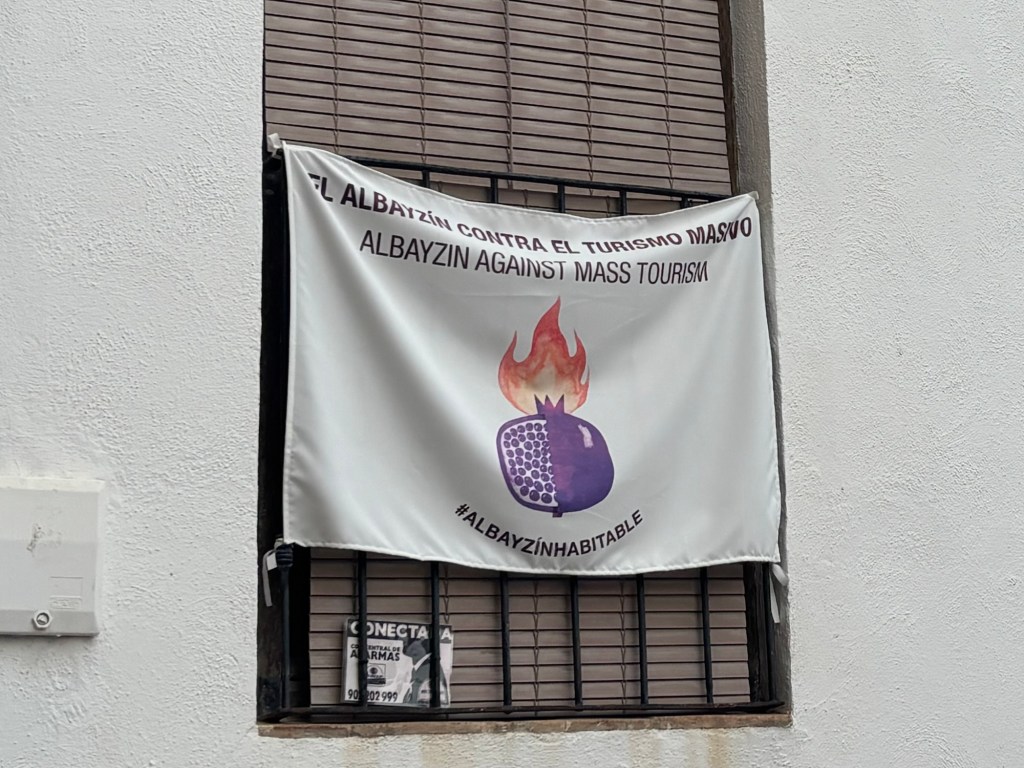
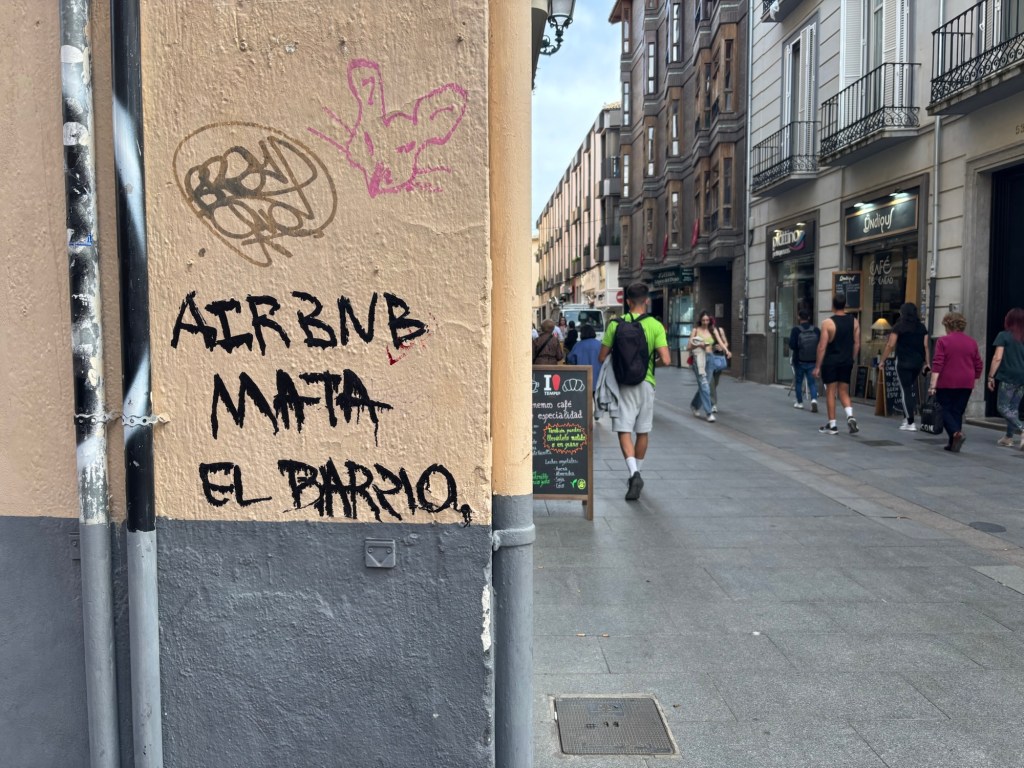
Money is the root of all evil – do funny things to some people. Spain is in the throes of an anti-tourist rebellion, centred on Barcelona, Mallorca and the Canary Islands. And not without reason: the tourist trade has been allowed to run rampant in some parts of the country, to the point where it has utterly destabilised life for the locals, forcing a dependence upon tourist money that only comes but a few times a year. Unlike Santa Claus, however, it doesn’t seem to be spreading much joy. Some protesters vented their frustration last year by hosing down tourists at cafés along Las Ramblas with water pistols.

I’m hoping to investigate this blight a little during my adventures over the next three weeks. I appreciate the irony of doing so as a tourist, but I’d like to think that by avoiding resorts and foreign hotels, I’m doing my part to contribute to the local economy in parts of the country that aren’t necessarily overrun. Speaking Spanish helps.


Well, ten minutes until take-off. My arm feels exercised. See you on the other side! BB x
Amber and Ashes

Warsaw is a strange town. For a European, at least. It’s like looking at a replica – which is not so far from the truth at all, as the city was razed to the ground with unparalleled savagery on Hitler’s orders. It seems absurd that I stayed in buildings in the US this summer that were older. But, there we are. It’s a testament to the Poles’ love for their capital city that they rebuilt the place brick by brick, presumably at no small expense.

I’ve come to the centre of the Old Town in search of amber for my mother, to replace a pair of cherished earrings lost long ago. I wanted to visit the Polish Jewish Museum and the Warsaw Uprising Museum, but as luck would have it, those two museums – and only those two – are closed on Tuesdays. So I do one of my usual make-it-up-as-you-go walking tours instead.

The usual global parasites that infest the heart of Europe’s ancient cities have been mercifully kept outside the old town walls: the lurid glare of the Hard Rock Café, Costa coffee and the Golden Arches can be seen from its outermost streets, but no further. Along with the usual array of anachronistic American college jackets with Warsaw splashed across them, quite a few souvenir shops appear to be selling tee-shirts with the city’s name in Star Wars font. One even has a chibi Darth Vader next to the slogan “I love Warsaw”. It seems a little tasteless to have a man infamous for his hatred, wanton destruction, ruthless repression and stormtroopers (and who isn’t even the obvious real life counterpart) associated with a city like Warsaw, but perhaps the irony was lost on the designers.


Not far from the city centre stands a miniature statue atop a plinth, just outside the city walls. It depicts a child soldier, an anonymous victim of the Warsaw Uprising. It is a stark reminder of just how young the rebels were: the average age of the insurgents was only seventeen. One has to hand it to the incredible courage of the Poles for standing up to the might of the Third Reich, when they were all but trapped under the heel of the Führer’s jackboot.


Nothing remains of the Jewish ghetto, which was considerable. Similar ghettos in Spanish cities are minute by comparison, despite Spain once housing a not insignificant percentage of the world’s Jews. There are nods to what once was: a metal plaque cuts across the road in places, marking where the perimeter walls once stood.

In a park nearby, a woman in a fur coat walks her dog. I arrive one minute too late to catch the start of the changing of the guard, but I do see the new sentries move into position beside the Tomb of the Unknown Soldier. A fire burns steadily in an iron grate between them. The chosen shelter for the tomb is the last remaining piece of a former palace complex, of which only three arches survived the destruction of war. A short wall on either side of the square bars access to what looks like an excavation site. Beyond that, the yellow squares of ceiling lights gleam from behind the glass of the office buildings. I have always been curious as to what it might be like to work in one of those places, though it’s the same kind of curiosity I harbour for how it might feel to tumble over a cliff or to sink to the bottom of the ocean. Perhaps I’m happier not knowing.


Night falls. Warsaw puts her Christmas clothes on. I consider going without supper, but one of the restaurants in the old town does flaki and I can never say no to offal. This time I can savour it in peace, without the tutting and sermonising of the vegetarian globetrotter who was so judgemental of my taste before. The pierogi are probably a bit much and I can’t finish them all, but I do an honest job of it. I suspect that flaki appeals to me because tripe stew isn’t too far from the Spanish dish of callos or any number of dishes I have eaten in Uganda and Morocco.


Back at the hotel, I have a lot of time to think. I pack my bags. I watch Polanski’s The Pianist and try to picture those things happening right beneath my hotel window, some eighty years ago. I tell myself I mustn’t sell myself so cheaply anymore, apologise to a few matches on Hinge and unmatch. I take a shower and read back through the blog to happier times, to the Camino, and wonder whether that ought to be my next grand adventure. After all, the end of the Camino isn’t the end of the road. It’s just the start of the next one. BB x
A Parting Gift

A loud knocking at my door woke me this morning. It was only Łukasz checking I was up and about, but it caught me off guard all the same. I must have passed out the night before. I guess I was more worn out than I thought. My phone was on about 18% battery and the bathroom light was on. I sheepishly turned it off, threw on some clothes and all but inhaled a cup of green tea so as not to hold the others up any longer. Talk about a bad start.

I needn’t have been so flustered. It was absolutely miserable outside, the earth damp from a night of rain and melted snow and the sky dark with the threat of more. The temperature had risen by about six degrees, which was something, but it was hardly what you’d call perfect wildlife watching conditions.

Nature, however, is and always has been fickle, and we were in for more than one surprise before we bade farewell to Białowieża.


We agreed to try for the bison once again, after our lucky encounter with the wolves the day before. We found the herd even faster than on the first morning, grazing in a field just outside Narewka. They seemed unapproachable at first, but Łukasz had a better idea.


A hidden track ran through the forest on the other side, allowing us to get a lot closer than we’d managed on the previous occasion. Of course, the conditions were awful for photography. The focus assist light on my camera kept blinking in its struggle to focus on the dark shapes which Łukasz admonished me for, fearing it might spook the herd. I gave up pretty quickly and contented myself with watching the bison through my binoculars. I did manage a grab shot through them with my phone again, though.


A squall came in and we backed down. Łukasz concluded it was not the herd we’d seen before, which had numbered some thirty-nine individuals and hadn’t featured the bull with the twisted horn. Hoping to show us more in the time we had left, he took us back to the last place we’d seen the larger herd. He offered to go out and run to the spot where we’d left them. I volunteered to go with him. We had barely gone more than a few yards when he suddenly stopped in his tracks, held up his hand and said ‘Wolf!’.

I dropped to my knees and followed his line of sight. And there it was, standing on a rise at the edge of the forest: a white wolf, its winter coat lightly flecked with grey and brown. Like an echo from yesterday, it soon got wind of our attention and slinked back into the trees and out of sight. Łukasz tried calling after it, but there was no response.

After waiting for several minutes, we counted our stars for a second encounter with wolves in as many days and started heading back to the car. I must have been on high alert since being all but shaken out of bed this morning, because I saw it first: a second wolf, barely fifty metres away, watching us from the field adjacent to the track. This time it was me that gave the signal. I’d made the choice to leave my camera behind on this quick sortie, but I didn’t care. With only my binoculars to rely on, I was spared the frustration of staring through a viewfinder and getting poor results, and instead had the joy of watching the beautiful creature bounding away across the field as though it were only feet away.

I can’t show you what I saw. So let me describe it to you.

A tall and powerfully built creature, with the faintest of black lines down its legs. A warm buff colour lines its flanks, the colour of undercooked gingerbread, but its eyes – a lot more visible at such close range – are an amber so intense that not even the best of Warsaw’s jewellers could hope to replicate it. It runs as gracefully as though it were sailing across the field, and its body moves like a wave, arching and falling with every step. When it stops to look back – and it does this only once, and for just a moment – the black lips on its white muzzle are drawn into a grin. And then it turns away with a swish of its tail and lopes off into the forest.

This is Białowieża’s farewell: a final encounter with one of its most handsome creatures of all.

It is magnificent. I am lost for words.


The car is now flying through the vast flats of Eastern Poland. Scenery I remember seeing only in picture books of the East plays beyond the window like a zoetrope: stands of towering, limbless spruce trees, bending under the weight of the wind; lonely cabins and hunting hides in the fields; water towers and the bulbous spires of Orthodox churches rising out of the low-lying villages we pass.

It’s unlike any place I’ve ever been before – but then, I guess I haven’t ever traveled this far east. Go any further than Białowieża and you’ll run headlong into the Belarus border wall – a reminder that Iron Curtain of the previous century was, true to its name, only drawn back, and not ripped down for good.


One day, if the fates allow, I would love to see Siberia. I suspect that kind of adventure is absolutely off the cards for now, but until then, I can only hope things do not spiral out of control the way they did before.

There is too much that is beautiful in this part of the world, too much that has been done to save these treasures from the brink of oblivion. Too much to sacrifice on the altar of ambition. Well – that’s my ten cents on the matter, anyway. BB x
Forest of the Dead

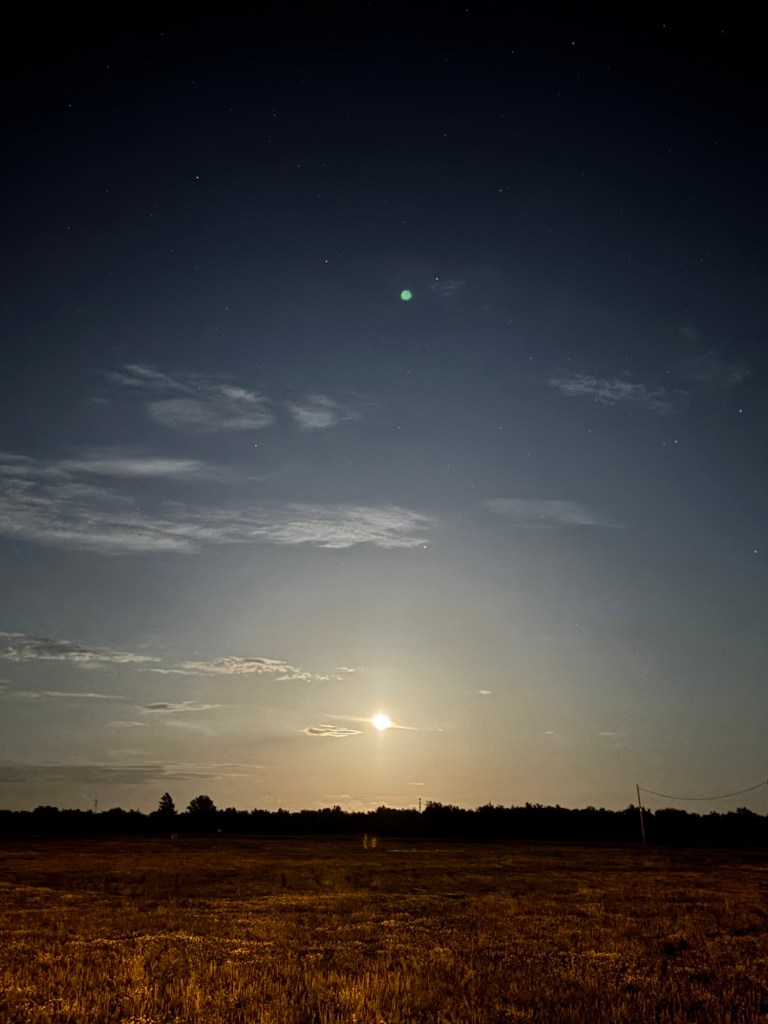
I’m kneeling in the snow, staring down an arrow-straight road carved through the forest by the Russians more than a century ago. Our guide makes a signal and tells us to wait. We could be here for up to an hour. The fever that has followed me since stepping out of the plane in Warsaw has not broken yet: I’m still nursing a headache and a bad cough, my back hurts, and I’m starting to freeze from the feet up. But I’d suffer it all again to see what I just saw: a genuine forest spirit, a shadow of the ancient world, loping out of the trees and onto the road. A wild wolf.


When I woke up this morning, it was to a frozen world. The snow hadn’t started falling when I turned in around midnight, but there must have been quite a lot of it during the night, because there wasn’t a single track to be seen in the village. That may have more to do with the fact that we were up and gone by six thirty, a full hour before sunrise, and on a Sunday morning to boot.
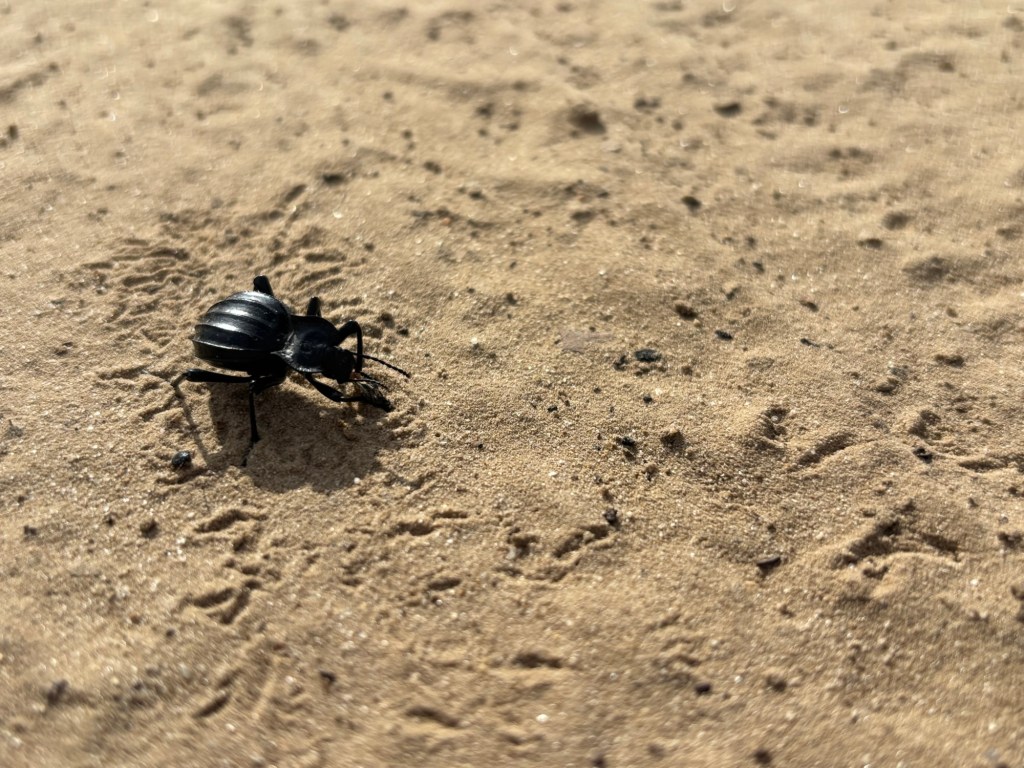

After a short drive through the frozen forest, Łukasz brought the car to a sudden stop and jumped out to show us what he had seen: a single set of footprints in the snow, larger than those of any dog I’d ever seen. Following a tip-off from a friend of his, we set off into the forest to try our luck with one of the wolf packs that inhabit Białowieża Forest.

We didn’t have to go for before we found another set of prints. And another. And another. In all, we counted around eleven sets of prints in the snow. They had to be recent: the snow had only started in the early hours of the morning, and it was still very early. We pushed on to the crossroads, hoping to catch a glimpse of our quarry crossing the road in one of four possible directions.


We waited. A couple of red deer broke the cover of the trees, but they didn’t look particularly perturbed – not a good sign when you’re tracking a creature that puts the fear of God into nearly everything that moves in the forest. Łukasz tried calling out to them – and a bloody convincing mimic he is, too – but the forest was silent. Wherever the wolves were, they were doing what they done since we first crossed paths as a species hundreds of thousands of years ago: giving us a very wide berth.

We moved on, taking a chance on the left road. A couple of minutes into the walk, we came to a sudden halt at the sign of a dark shadow in the road at the top of the rise. On closer inspection through the binoculars, it was another tracker and his party staring right back at us through a pair of binoculars of his own.

We met halfway. Łukasz and the other guide swapped information. They’d come from the other side of the quadrant and had found tracks on the road leading into the woods, but nothing on the forest trail, meaning the pack of eleven had to be in there still. They might well have been watching us all the while, invisible between the thousand arms of the trees within.

Well, some of them, anyway. One of the women from the other party suddenly pointed back down the road and said something. My head turned so quick it might have snapped – and then I saw it. A lone wolf standing in the road, staring straight at us. Łukasz gave a signal and we all dropped to the ground, some on their bellies, since wolves are more likely to be spooked by a standing human silhouette than a prone one.

It didn’t hang around. Before my companions could get their cameras ready, it had loped off into the cover of the trees on the other side and was gone.

We waited there for quite some time. Where there was one, the other ten were sure to be nearby. Just as we were getting restless, three red deer came hurtling through the trees to our right, from the part of the forest where the wolves were hiding. Had they been spooked by the pack? The others were momentarily distracted and in that moment I had my eyes on the road, and that’s when I saw it: a second wolf, emerging right where the first had come and gone. Unlike the first, this one didn’t cross the road in one go, but instead came trotting towards us. I motioned to the others and tried a few photos, but my poor camera was struggling in the low light, so I contented myself with the binoculars instead.


Nothing quite prepares you for the size of the wolf. You expect a dog, or something like it, but it is so much more. Bigger. Stronger. A restless hunger in its yellow eyes. An untamed purpose in its gait. Even its footprints tell you you’re in the presence of something magnificent: there’s no graceless wrinkles or adapted opposable thumbs in its pug, just a perfect symmetry of power.


We never did see the other nine members of the pack. It’s possible they made a kill during the night and decided to remain close to their prey, sending the two we saw ahead as scouts. Who knows? Eventually, we elected to abandon the vigil and leave them be, since by now the pack must have worked out where we were and how to avoid us. We left the forest by the same road we came, but not before a lone bull bison emerged from the trees just a hundred metres or so down the road. Poland, you sure know how to pull out all the stops!


We ventured into the strictly protected area of Białowieża Forest after breakfast, hoping to try our luck with some of the park’s rare bird species, but a combination of high wind and sleet cast a spell on the woods. A single mistle thrush cackling at the gates was the only sound we ever heard: neither the croak of a raven, the wittering tattoo of a nuthatch, nor the hoot of an owl, the mew of a buzzard or the drumbeat of one of the nine species of woodpecker that call the forest home. Nothing. Even the wind died away as we wandered deeper into the woods, where some of the trees are hundreds of years old, and others older still.

Białowieża Forest is famous for being one of Europe’s last remaining primeval forests, but what is even more fascinating – if a little disturbing – is that an astonishing 30% of its trees are dead (some figures indicate it may even be nearly 50%). It is, in a way, a forest of the dead, albeit one so full of life in the spring and summer that you could be forgiven for missing that small detail.

Not so in the bleak midwinter, however. The towering spruce trees look more like the charred pillars of a gutted cathedral, while those that have crashed to the ground seem like the carcasses of enormous serpents, their curving branches like shattered ribs on the forest floor. Everywhere is the sweet smell of decay and black fungus grows on the stumps of the fallen giants. The presence of several stones and crosses marking the mass execution site of hundreds of Polish Jews by the Nazis only adds to the creeping dread.

We spent around three hours in the woods, learning about the ancient trees and the various species of fungi that call the forest home, but the eerie silence of the birds was sorely noted.

We did not leave disappointed, however. Something far more beautiful and far more chilling took its place.

Just a hundred metres or so from the main gate, an unmistakeable howl broke the silence, echoed a few seconds later by another. It’s amazing how a sound that you must have imagined and read about in books for years can still make the blood run cold on instinct.

I would have settled for hearing a wolf over seeing one on this trip, and I got both. I may not have been the luckiest in love this year, but I’ve taken all the chips home with the wolves on this trip. Maybe it’s a sign that I’m doing something right at last – reconnecting with the younger version of me who was far more interested in the natural world than anything else.

If I have any budding resolutions for the New Year, it’s to do something like this again. I am, and always will be, a naturalist first and foremost, and everything else I claim to be second. I should reclaim that part of me. It is, it must be said, a genuinely happy and fulfilled part of me, and the greatest gift I could give to any children I should be lucky enough to have someday. BB x