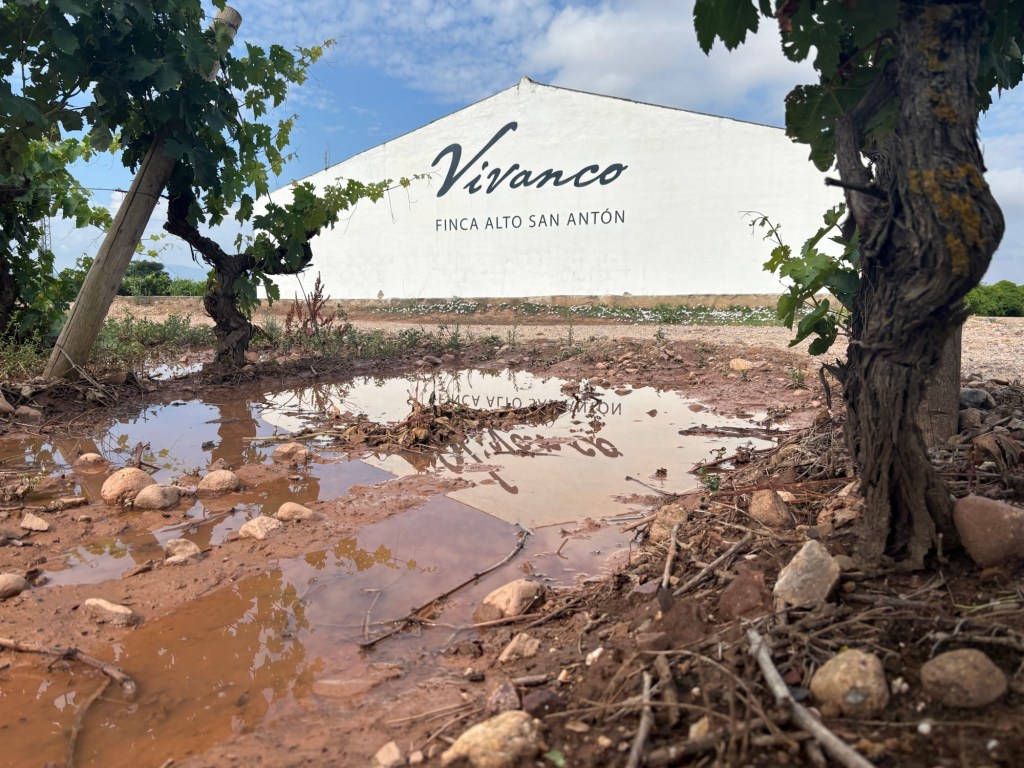
Camino V: Along the Aragón

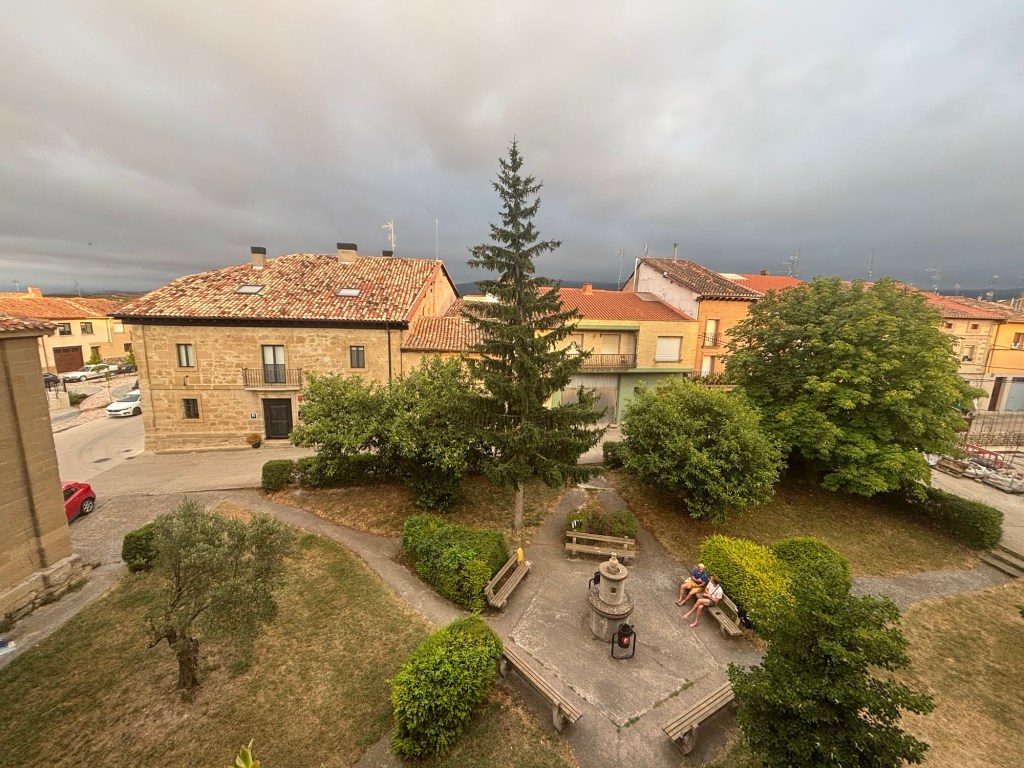
Albergue de Peregrinos de Arrés. 13.48.

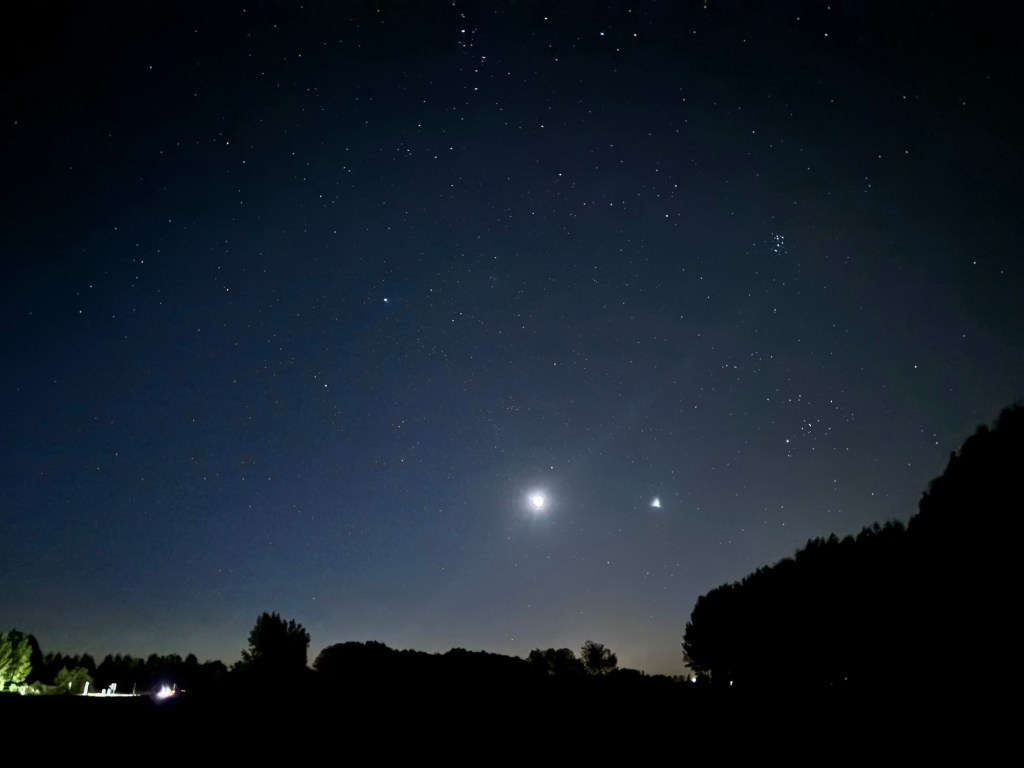
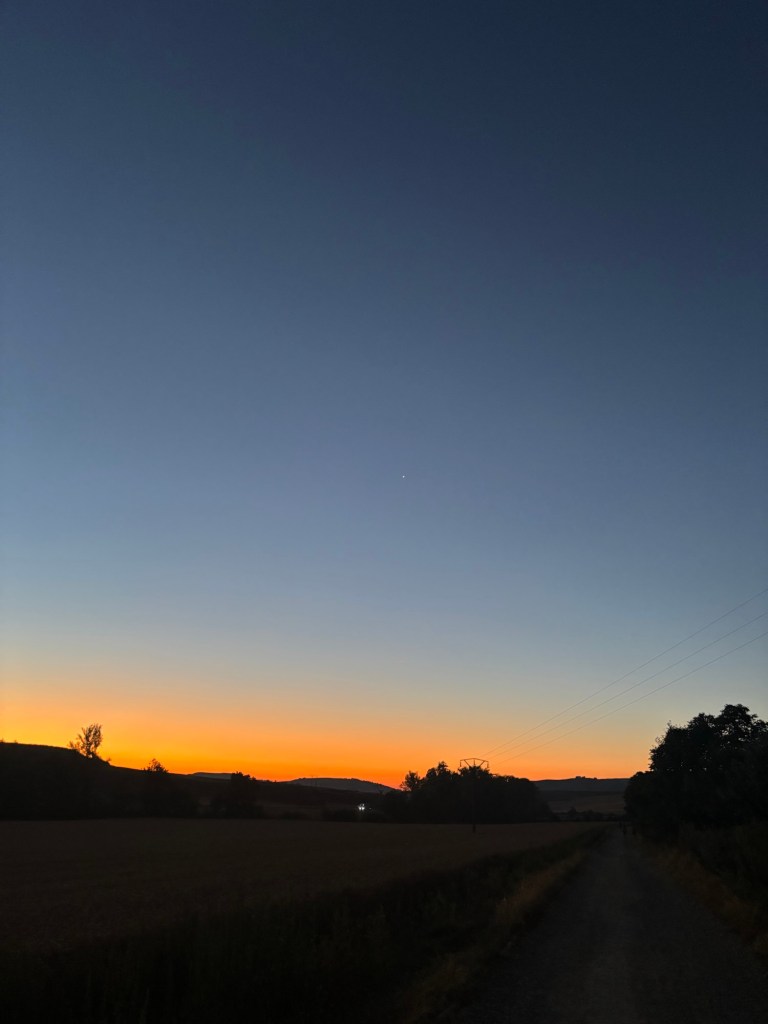
I bid Mariano adiós at around 5.45 this morning and left Jaca just all the young folks were finding their way home after an enjoyable Friday night on the town. Far away to the south, a summer thunderstorm lit up the sky every four or five minutes, and by counting the seconds between flashes, I was able to catch one of the strikes with my camera.


With Jaca behind me, I am very conscious I am headed into a world of great distances and tiny villages, so I did double-check to make sure I had enough cash to last at least three days – the time it will take to get to the next town with a functioning ATM.

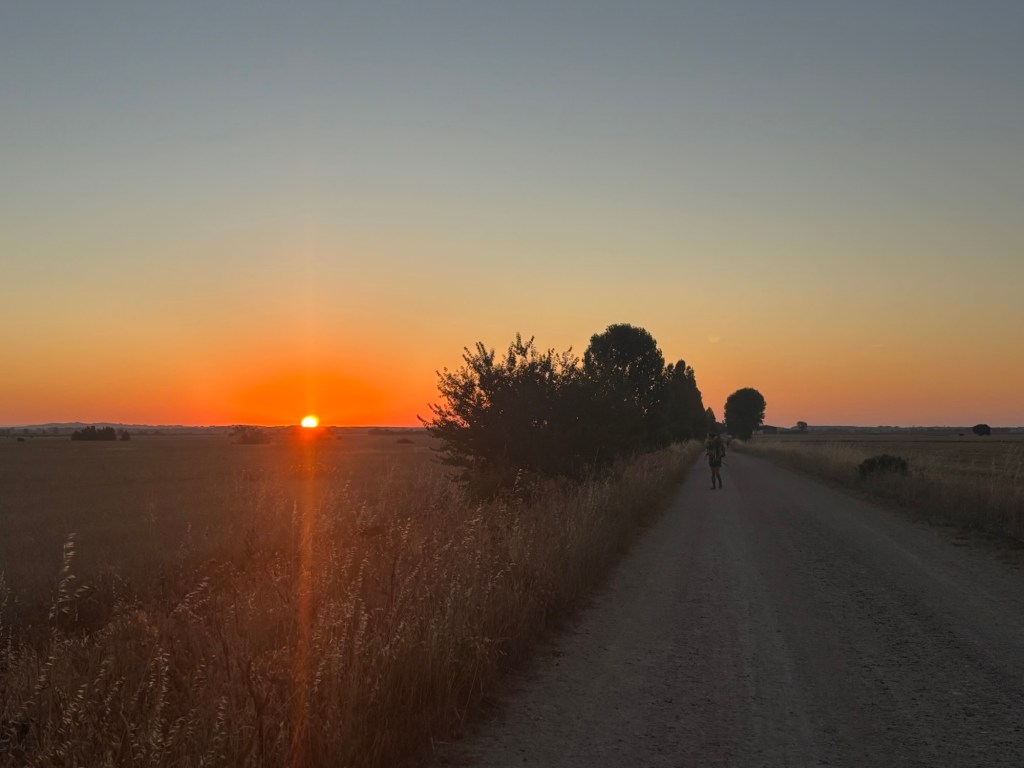
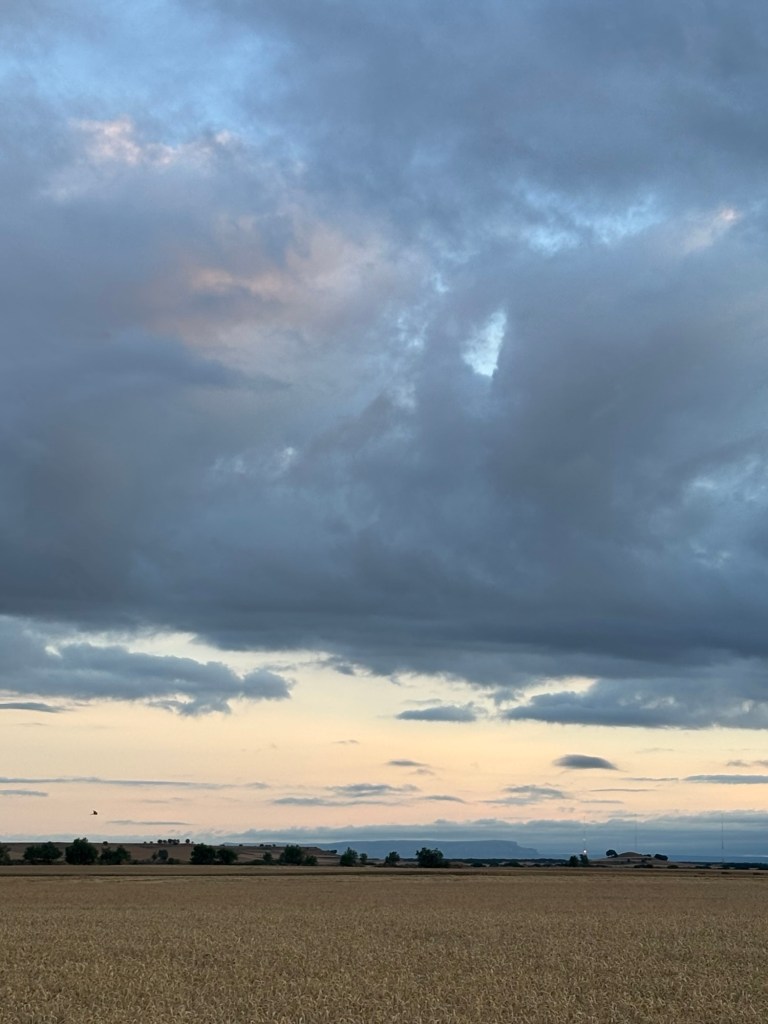
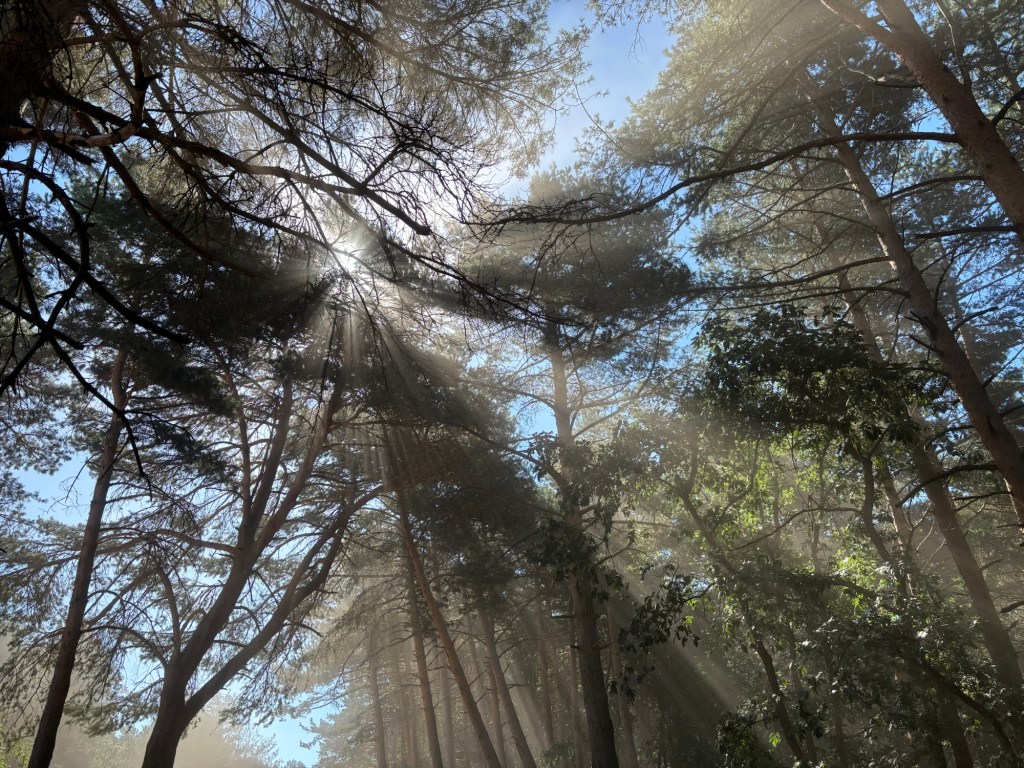
With the thunderclouds rumbling away in the distance, I had to keep turning back to watch the sunrise, which was singularly spectacular this morning. The sky was a shade of pastel pink normally reserved for Renaissance paintings, and the clouds building up above the mountains could only hold back the sunburst for so long. When it came, it pierced two gaping holes in the clouds, like gleaming eyes, before ripping an almighty gash right through the centre and sending a hundred golden rays into the morning sky.


I had a choice to make today – to press on to Arrés or take a lengthy detour via the Monastery of San Juan de la Peña – but in the end it was the weather that made my mind. A gentle summer rain began to fall shortly after sunrise – not the heavy, sheet rain that makes any outdoor activity miserable, but a light, warm, refreshing rain. The kind that provides relief after a long morning on the road – but makes cross-country hikes hard and soggy work. Rerouting to San Juan de la Peña turns an already reasonable itinerary (24.6km) into a trek (38.4km), and after my ascent and descent of the Pyrenees in one go two days ago, I thought it wiser to forgo the monastery this time – after all, these feet have to take me all the way to Santiago. I have to be careful!


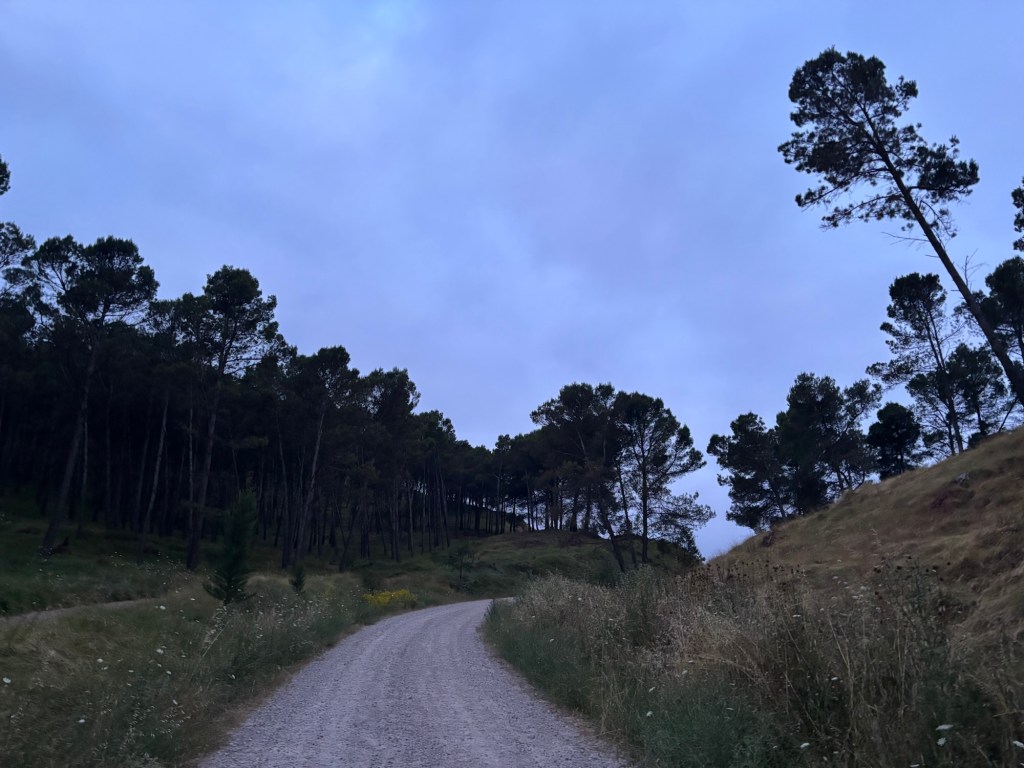
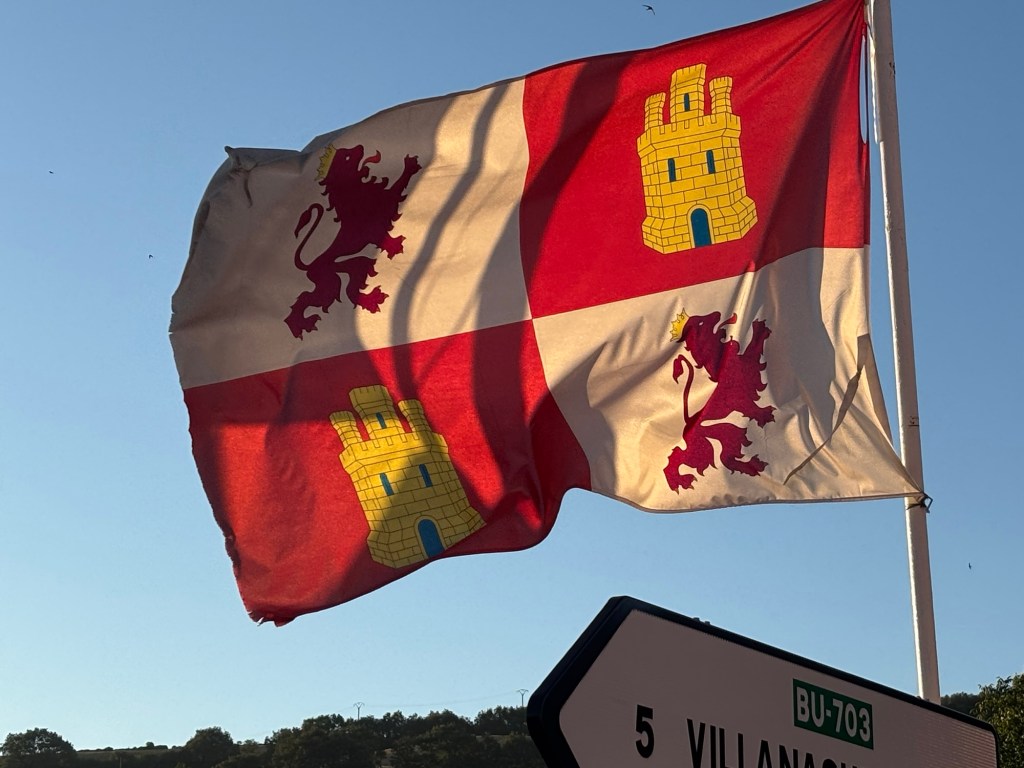
The Camino from Jaca mostly follows the road and the river, but it does provide several forested cross-country stretches that offer some relief. On one of these, in the hills south of Ascara, I stopped for a breather and there I found a most remarkable thing: a symbol of Santiago, a shell, but ancient. A fossil from an ancient sea, perhaps ten million years old or more, just sitting at the side of the Camino, waiting to be found.


I’ve always wanted to come to Aragón for its fossil beds. Teruel, Aragón’s southernmost province, is believed to have the highest concentration of fossils per square metre in Europe, and there’s even a sauropod named for the region (Aragosaurus). There are some incredible relics from the ancient world to be found in this vast region, including a large number of well-preserved dinosaur footprints at El Castellar and Galve. I wasn’t expecting to have any luck with dinosaurs on the Camino, as the fossil beds themselves are far from the pilgrim road and pretty hard to reach without a car, so I can’t believe my luck in finding a Miocene scallop shell – and in such good condition!


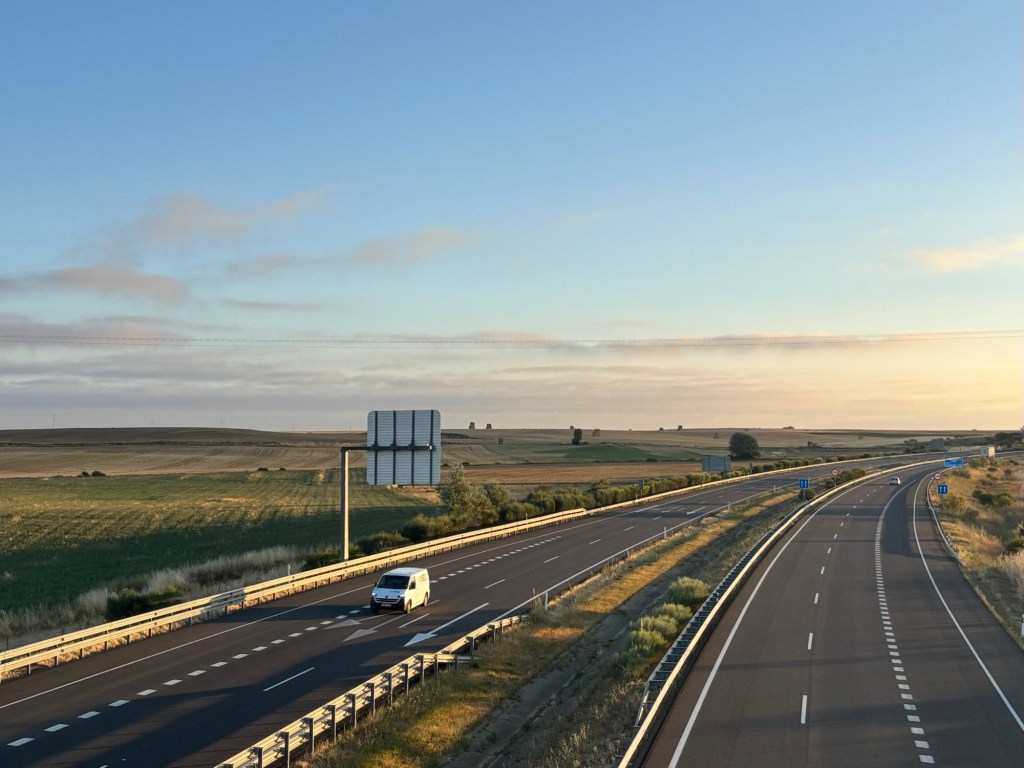
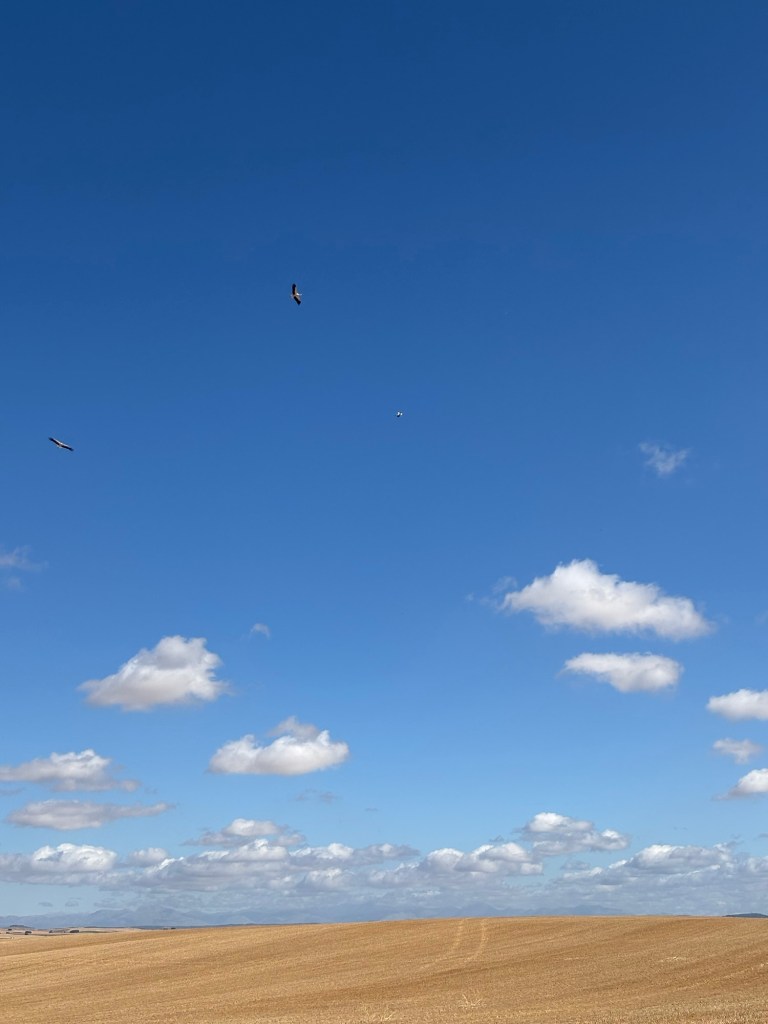
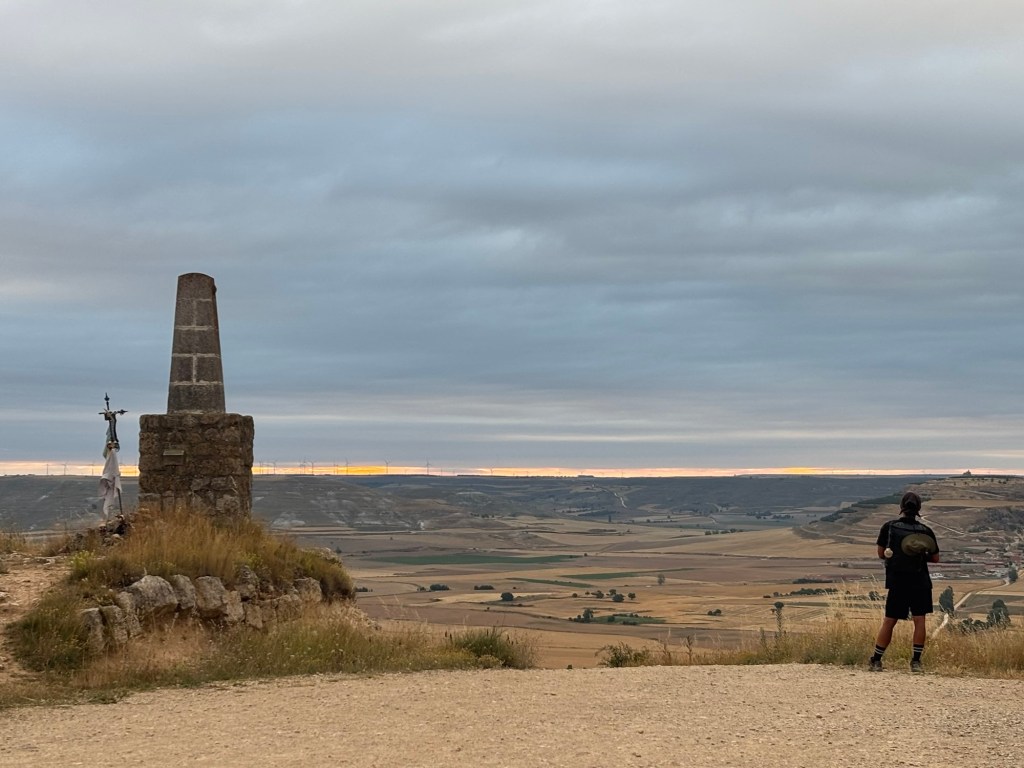
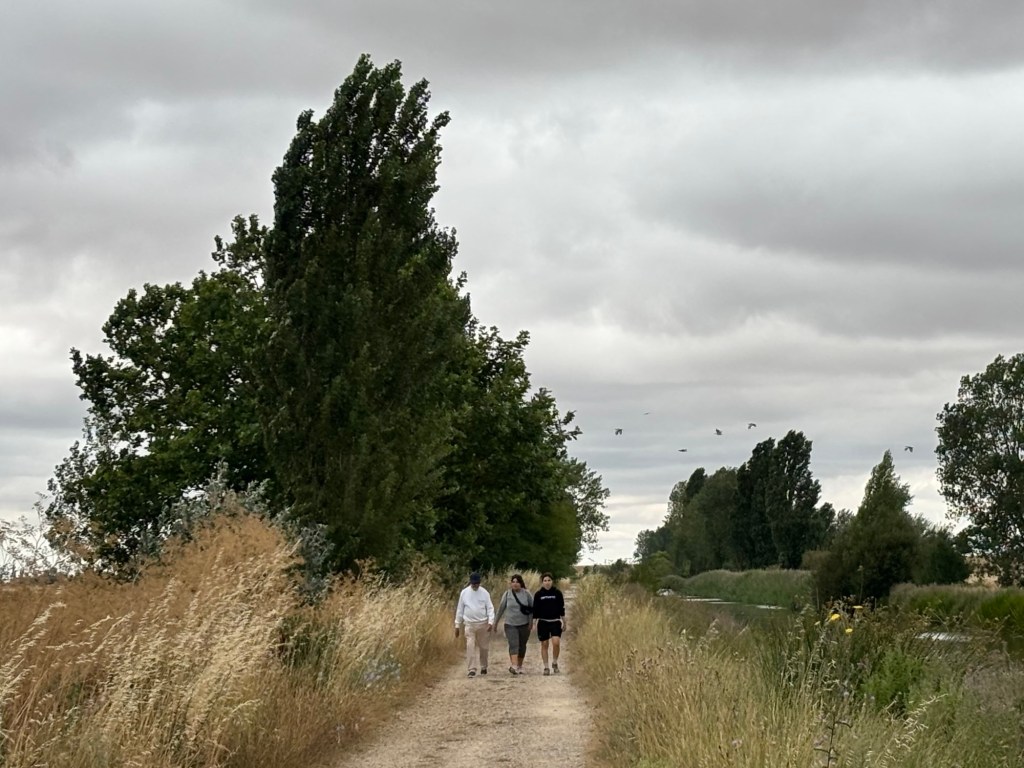
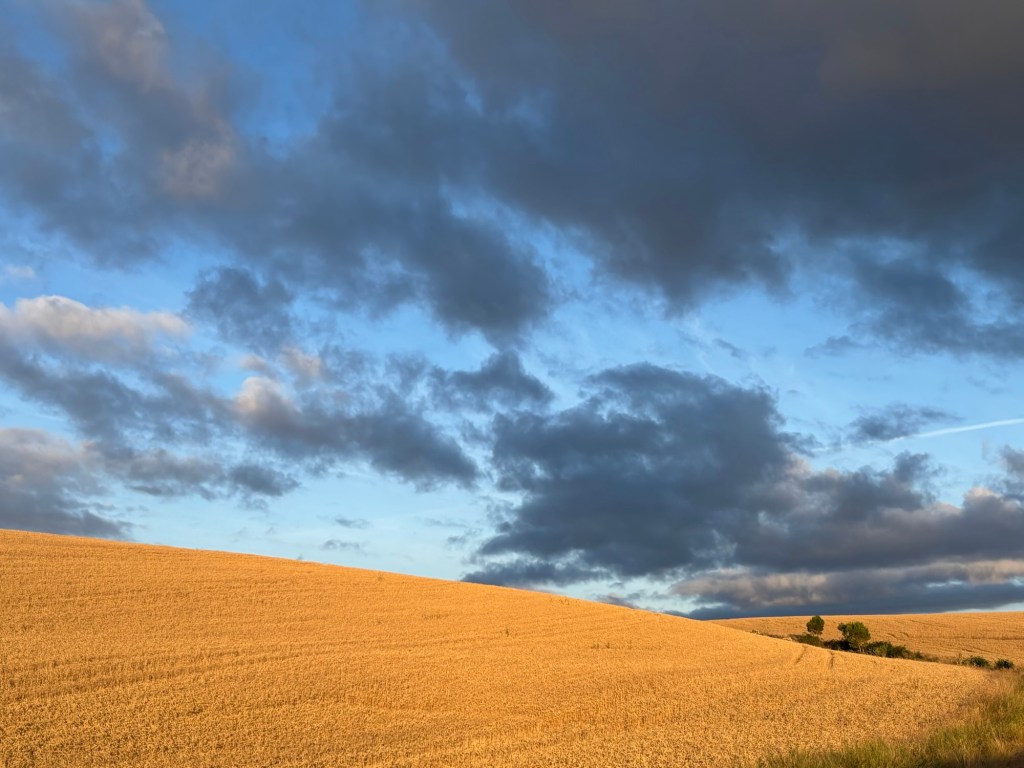
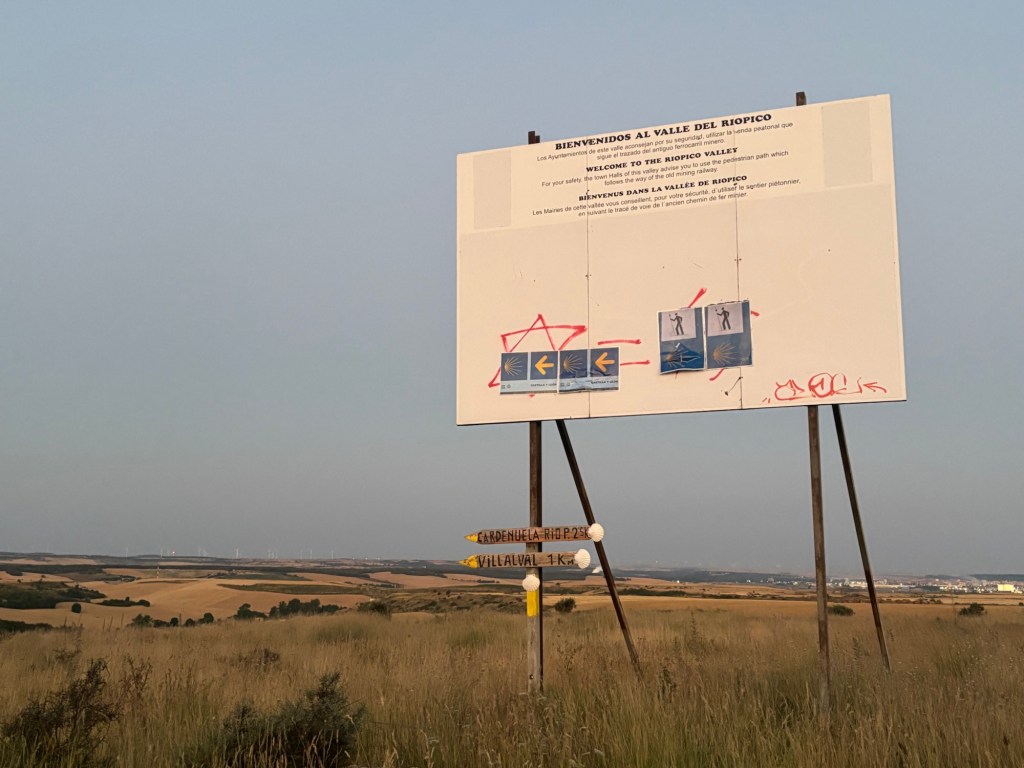
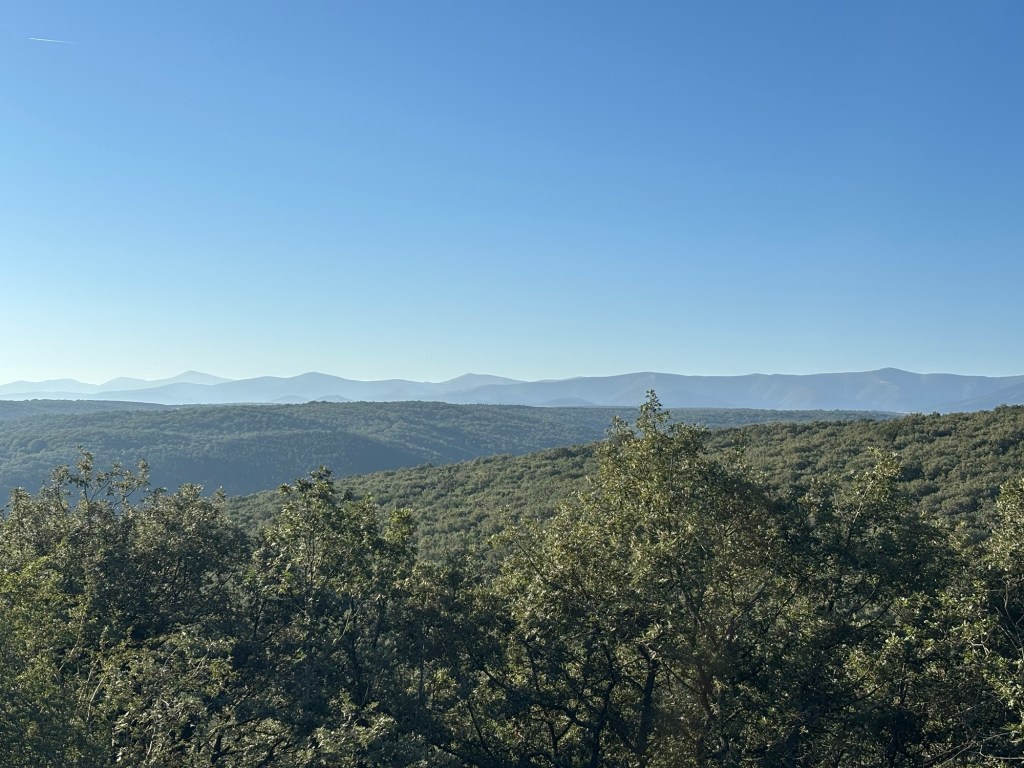
Today’s hike was a pretty solitary one. That’s not to say I’ve met many pilgrims on the road – today I saw one, and that’s one more than the last four days – but the distances between the towns today felt immense. That’s fairly typical of the Spanish interior, and Aragón is no exception. What makes this part of Spain so striking is its singular orography: so many of the hills in the Río Aragón basin are perfectly flat on top, forming an alien landscape that reaches its peak in the Bardenas Reales to the southwest.

Naturally, in this land of shifting frontiers, many of these mesas have a hilltop town or castle sitting neatly on top. I can see at least one from my stop for tonight in the hill town of Arrés: Canal de Berdún, away to the north. If Arrés had proved to be a ghost town, I would have tried my luck there.


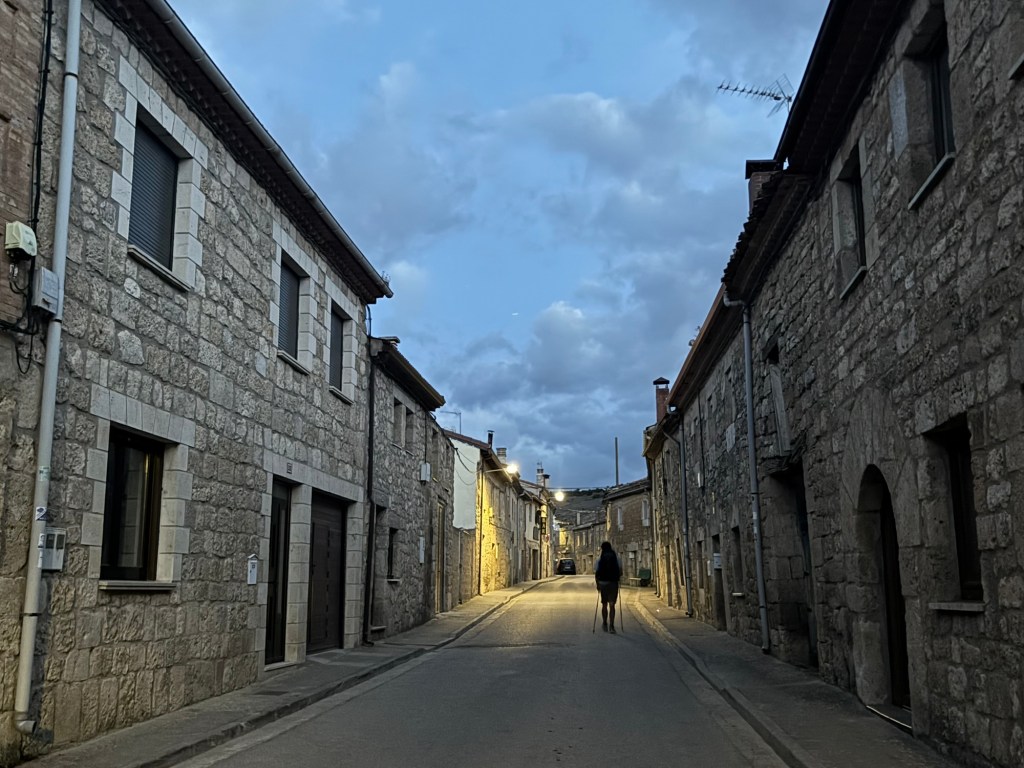
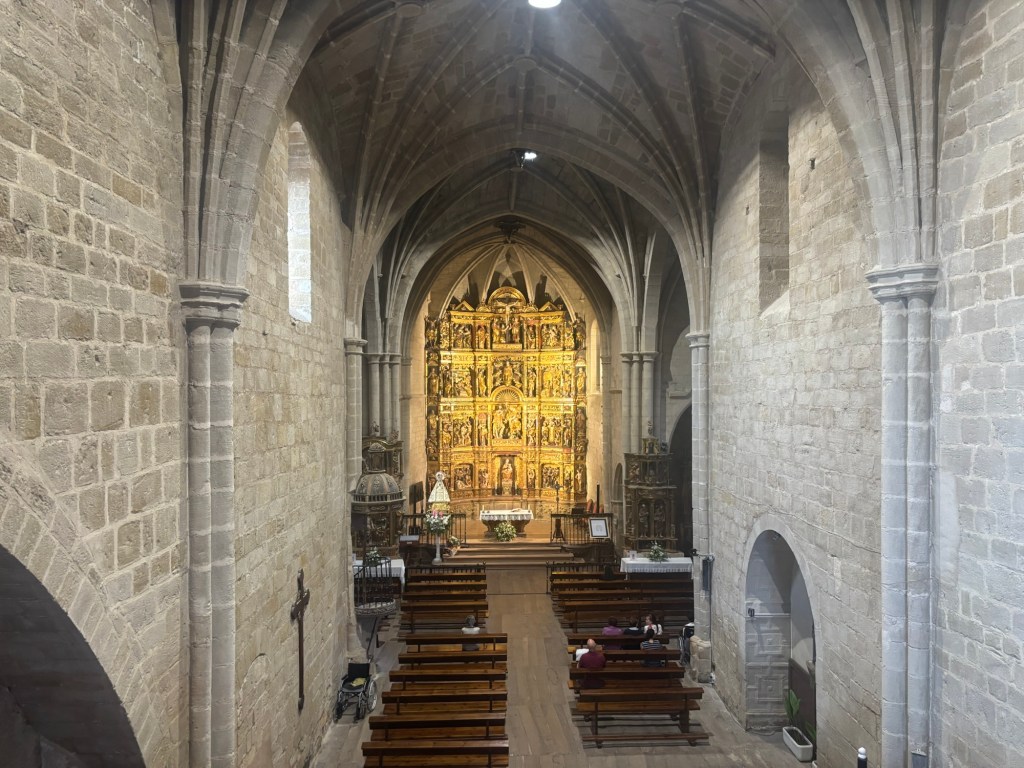
Fortunately, it isn’t. Arrés is little more than a hamlet tucked away in a cleft of the long wooded sierra that runs the length of the Río Aragón, with some fifty permanent residents or less to its name, but don’t let its silence deceive you (even on a Saturday afternoon when everything seems to have ground to a halt). The municipal albergue is fully operational and perfectly equipped, allowing for a stay in possibly one of the most beautiful corners of the Camino Aragonés.


I’ve done my washing by hand, as usual, and it’s hanging out to dry. In this heat, it already will be within another ten minutes or so.


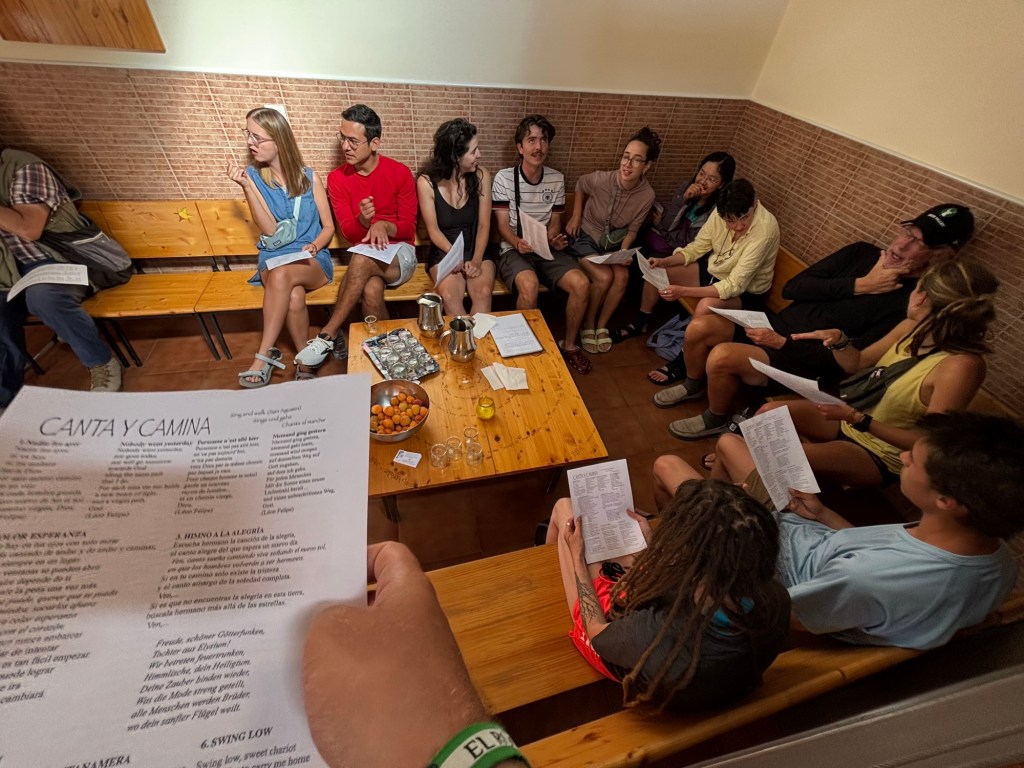
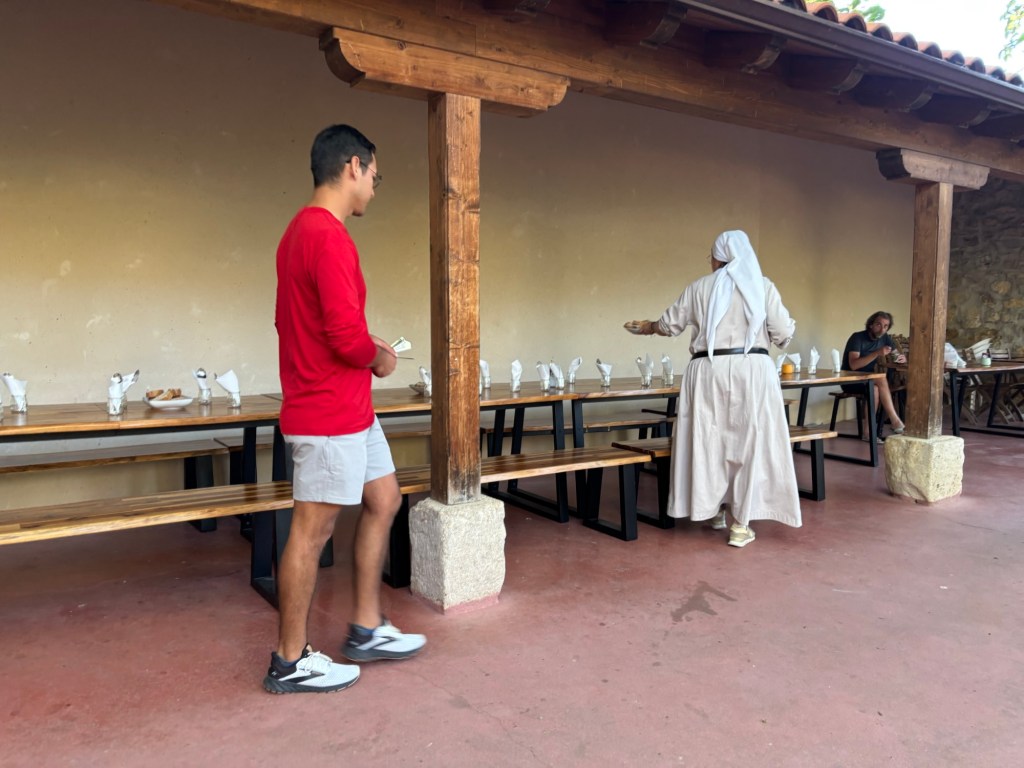
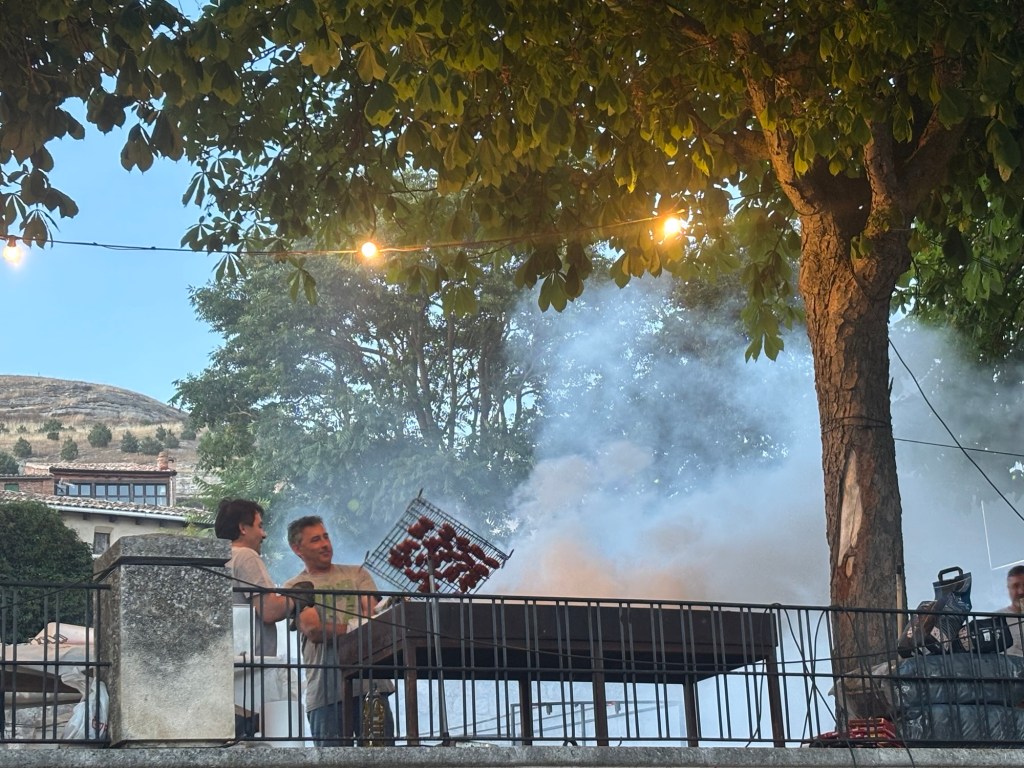
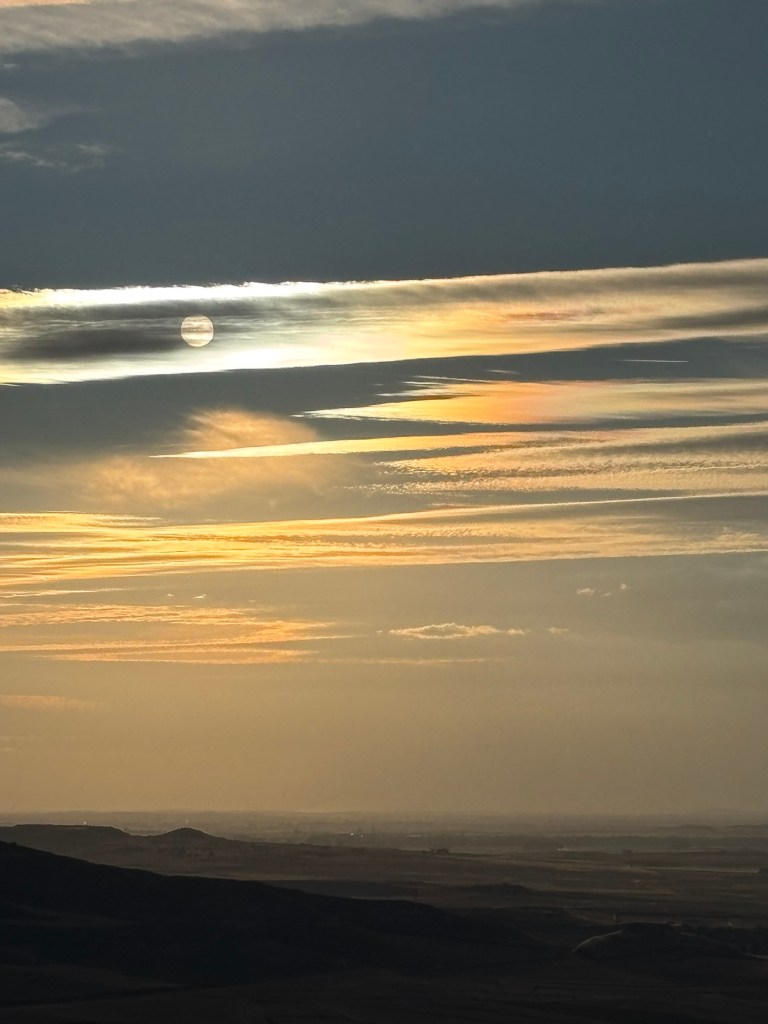
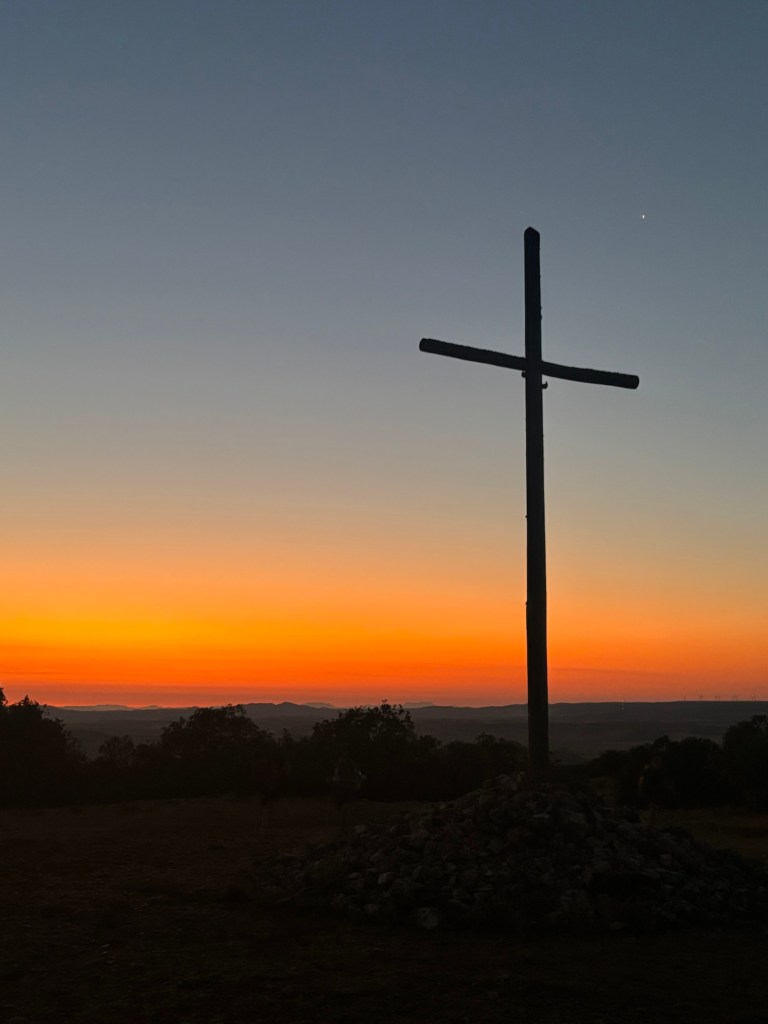
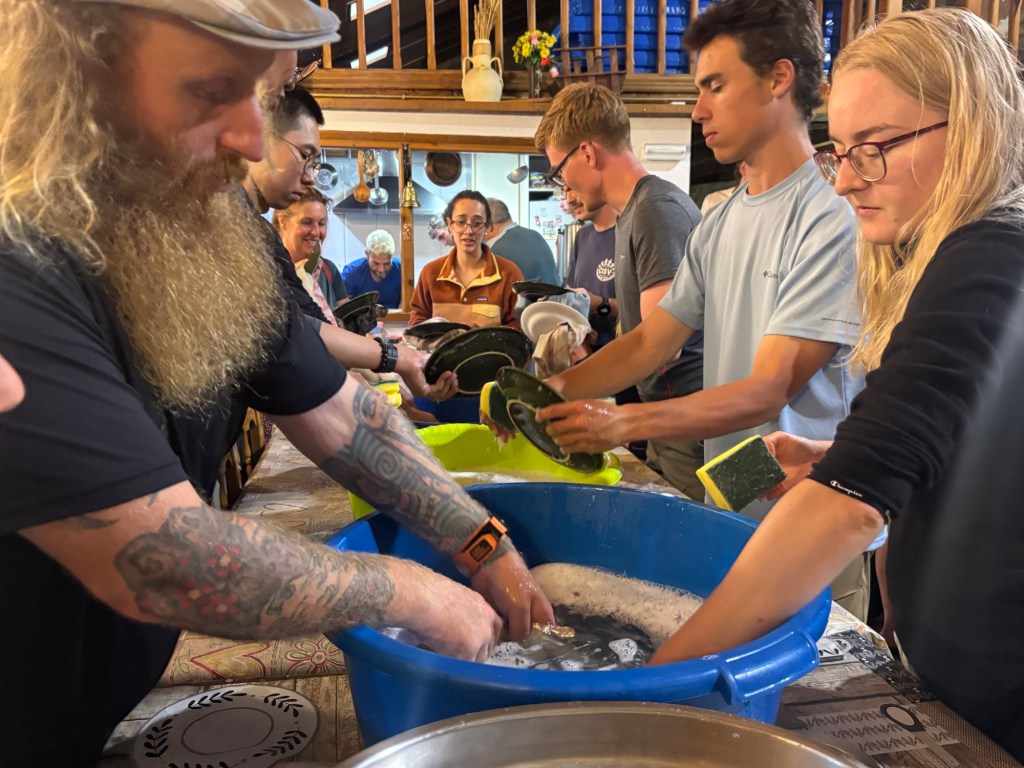
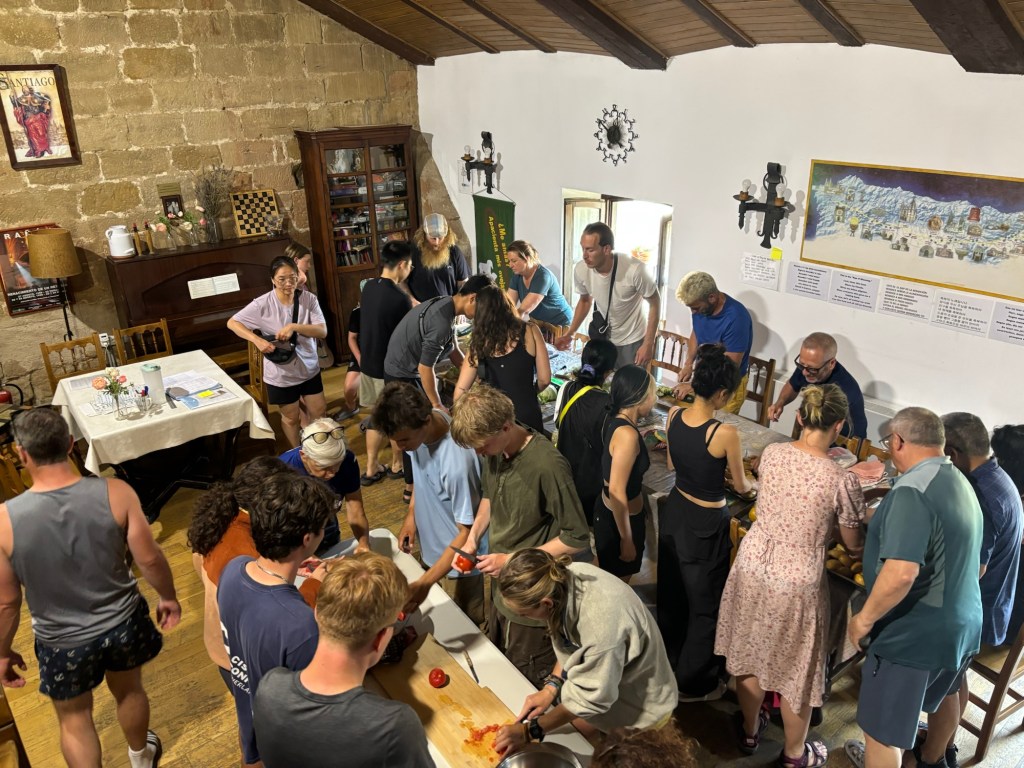
To end the day, the French hospitaleras, Lulu and Nicole, gave us a tour of the village, showed us the sunset from the highest point (which was spectacular) and cooked up a wonderful dinner which we shared between the six of us (including two Aragonese bicigrinos who showed up five minutes before dinner).


I’m just penning the last details now, drinking a chamomile tea, and listening to the night sounds of crickets, a distant dog barking and, somewhere in the valley below, the ceaseless extraterrestrial churring of a nightjar. It’s blissfully quiet here. I’m looking forward to the sociable side of the Camino Francés, but I’m so glad I came this way. It’s been spectacular. BB x

Southbound

Gare SNCF de Dax. 10.04.

If you’d asked me what accent would be the first I’d hear on arrival in Bordeaux, gaditano would not have been my first guess. As it was, there was a family of gitanos from Cádiz waiting at the metro stop outside the airport, and they didn’t have to mention their hometown in conversation before I clocked that iconic intonation (and volume) that can only come from the southwest coast of Spain. It’s the accent that I grew up with, so I’d recognise that accent anywhere.

I had a good night’s sleep in my hostel in Bordeaux, and a proper breakfast, too, so it’s been a gentle start to this year’s Camino. It was a half-hour walk to the station from the city centre, so I had some time to appreciate the city before taking my leave.

I don’t envy the homeless in this heat. They seem to be a lot more numerous here than in similarly-sized cities in England – or maybe they’re just more visible. Sometimes I wasn’t sure whether I was looking at a sandbag or an occupied sleeping bag. Now that I’m teaching A Level French as well as Spanish, I’m trying to keep both eyes open to these things.


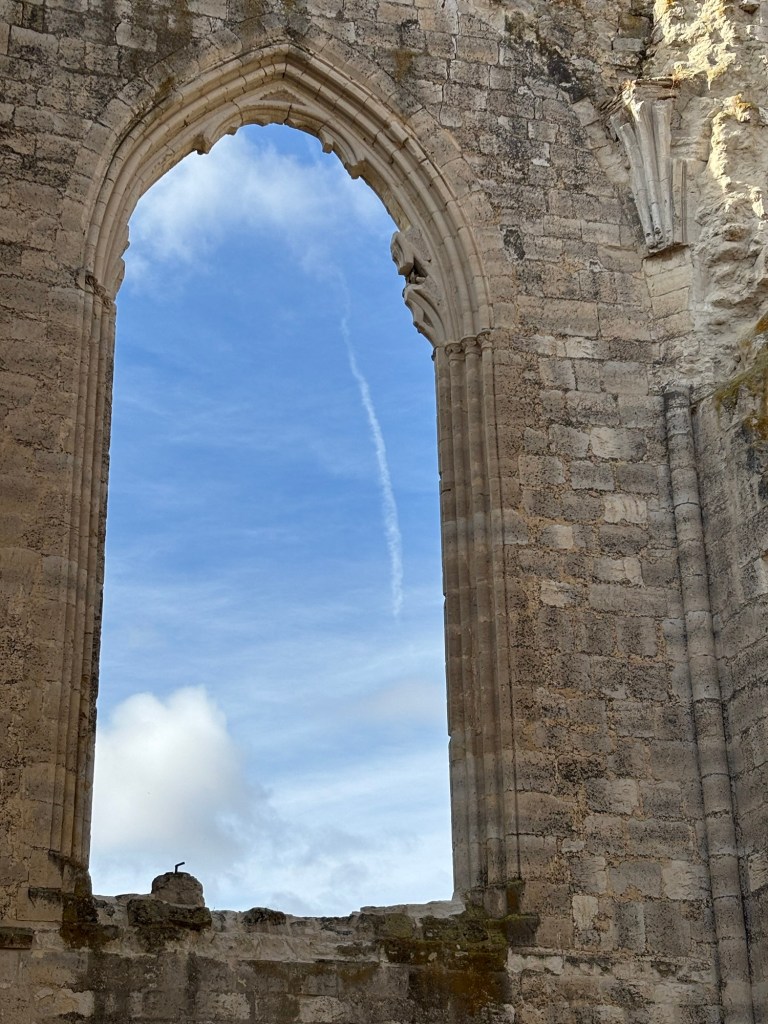
I was so enthralled by the stonemasonry on the portal of one of Bordeaux’s churches that I almost didn’t notice the man sleeping in the doorway. He looked like a dead ringer for a down-on-his-luck Alexandre Dumas. The way he was stretched out in sleep, he might have been a fallen detail from the paradise arches, come to life.

Granada’s Alhambra must have looked like this, once upon a time: the crumbling ruins of a peerlessly beautiful palace, its walls carved with ancient stories, become the roost of the city’s poor and dispossessed.


There was quite a surge for the southbound train at Bordeaux’s Saint-Jean station. I noticed at least one or two travellers who might have been pilgrims. I can’t think of anyone else foolish enough to have a heavy backpack on in the middle of summer, with the temperatures set to soar as high as 40°C today. In a rare turn-up for the books, there’s a beautiful French woman in a cherry-red dress in the seat next to me, but she’s fast asleep. I’ve been chatty enough already with the staff at airport security and the hostel, so I’ll save any more chitchat for the road.

As the train rattles through the sandy forests of the southern reaches of Nouvelle Aquitaine, let me show you the shell I’m taking with me.


The first time I did the Camino, I picked up a shell from a shop in Saint-Jean-Pied-de-Port. It felt a little undeserved, buying the shell from a shop, but it is something of a Camino tradition. In the early days of the Camino, the shells were not just a pilgrim’s badge of office but also an essential part of their kit, primarily serving as vessels for drinking water from the fountains along the pilgrim road. These days, of course, they’re completely ornamental – keepsakes for the wall or mantelpiece, next to your compostela.

My original shell lasted all of five days, before shattering when I had to remove my rucksack in a hurry after a wasp went up my sleeve and got trapped (the five or six stings it gave me on its way out were with me for weeks!). I took it with me on my last Camino, but I had to have it tucked into one of the outer pockets in its smashed-up state. I didn’t want to buy a shell this time, so instead, I’ve made one of my one using a scallop shell I brought home from Saint-Malo last summer.

It’s really quite easy to do. Seashells are rather brittle, but if you heat one up over a flame, it softens the shell a little, making it a lot easier to perforate the surface without cracking the structure. I did this in my kitchen with a lighter, a hammer and a small nail.

For the cross of Santiago, I used a red Sharpie. I didn’t have any string lying around, so I made an improvised knot with the wristband from the Cofradía de Mengíbar that I picked up three years ago. That brings the total of Saints guiding me to Santiago de Compostela to four: La Virgen de la Cabeza (the Mengíbar wristband), La Virgen de la Caridad (my aunt’s rosary), La Virgen del Rocío (la más santa de mi devoción), and Santiago himself. Well, technically I suppose that’s only two, since three of them are the same person, but Spain (and the Catholic faith) would be a poorer place with only one incarnation of the Virgin Mary!

I wouldn’t say I’m necessarily that religious. Spiritual, maybe. But it is nice to know you’re not alone on the road, and because of my faith I am never alone.


And there they are. The jagged peaks of the Pyrenees. They were only ever a faraway vision in the east before, but now they’re towering above me, a colossal natural barrier between me and my grandfather’s country. It was easy to say I wanted a proper challenge from the comfort of my sofa back home, but now that I’m here, they look quite daunting. Somport – from summus portus, the high gate – looks like it will live up to its name. I hope I have the stamina.


Église Saint Martin, Pau. 11.39am.

The streets of Pau are almost empty – hardly surprising, with the temperatures soaring. I found a shop selling sturdy-looking walking sticks, but they had childish carvings of lions and eagles on the top, so I passed on. New journey, new stick… but not that stick. I can wait for the right one.

I’ve retreated into the shade of the Église Saint Martin. There were two tourists wandering around, but no pilgrims – I’m not yet on the Camino. That said, I saw at least three Japanese pilgrims in the station. They didn’t seem to speak any French. If they’re still there when I get back, I’ll see if they need a hand. Lord knows I’ve fallen foul of the French train system before!

I lit the first of many candles, said my prayers in the Lady chapel and took my leave. No stamps here, but it would be disingenuous to collect any before I get to Oloron, the real starting point of this year’s Camino. All the same, I can feel my credencial burning a hole in my pocket. The stamp fever is real!


Oloron-Sainte-Marie. 14.03.

If this isn’t a heatwave, then I’ve never experienced one. The merciless sun has driven just about everyone indoors. There’s a gentle breeze coming down from the mountains, and the twin rivers of the Ossau and Aspe sure do make the place sound less hot than Pau, where the screams of swifts seemed to increase the temperature by several degrees, but there’s no escaping the fact that it is hot out here. The Relais du Bastet, Oloron’s pilgrim hospital, doesn’t open until 3pm, so I’ve grabbed a cold bottle of water from a nearby magasin and have set up shop in the public gardens, where the sound of the fountain provides a temporary relief.

I’ll have to play it carefully over the next few days if this goes on. Early starts, absolutely, but it’s how you play the waiting game when you reach your destination, as almost all albergues shut for midday – by which point you should have stopped walking, if you value your skin – that’s the real question.

No stamps yet. I guess I’ll have to wait until I check in for stamp number one.


Well – here we are. I’ve checked into the Relais du Bastet and had a shower. The daily rhythm of the Camino will be a welcome return after the madness of the summer term. Once I’ve had a rest, I’ll go in search of some more stamps. Christian, one of the two French-speaking pilgrims on the Voie d’Arles who is sharing a room with me, has offered to cook for us this evening, so that’s dinner taken care of. I’ve missed this.

À bientôt x

Preparations

Reports written. Exams marked and feedback given. A couple of workshops with the Y12s on character strengths and interview skills given. With the exception of six lessons at the start of next week, the school year is all but finished. I had nothing to do this afternoon, so I popped into town to get some Camino supplies. In two weeks’ time I’ll be on the road, and for six weeks at that – the longest adventure I’ll have ever taken – so I need to make sure everything is in place.

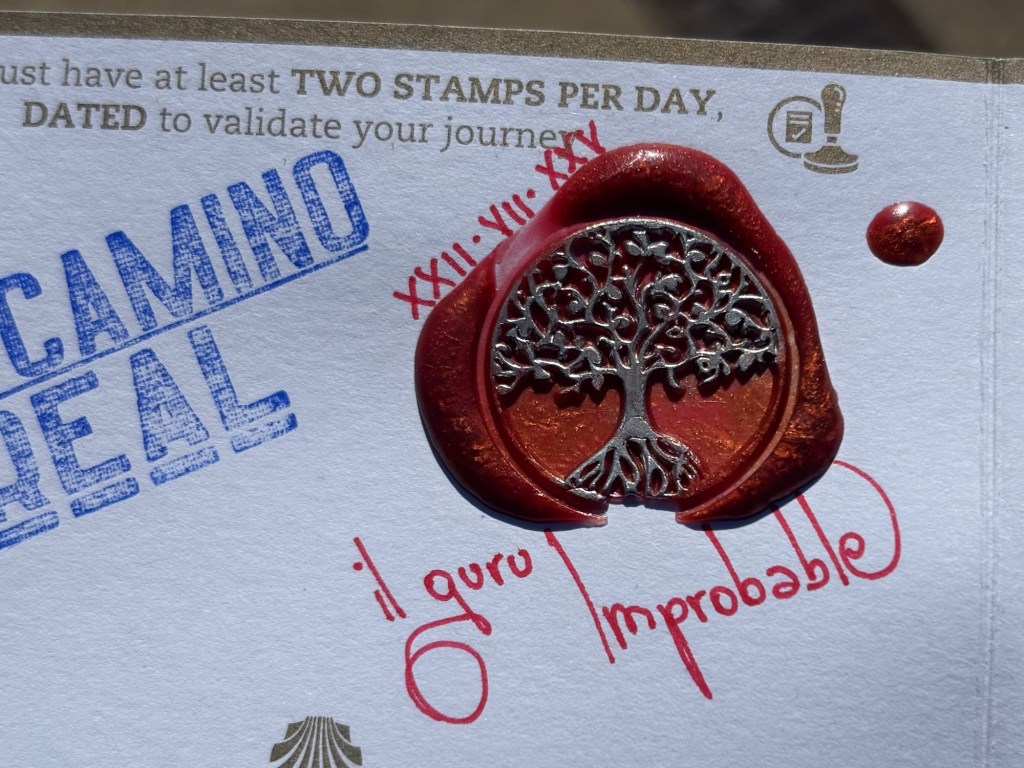
One thing I won’t be short of this time is stamp space. The credenciales I ordered from Santiago have arrived: two, plus a freebie with the guide I ordered to the Camino Primitivo. Each one has space for about 78 stamps, so even if I collect three stamps per day every day across those six weeks, two should cover it nicely. I can hold onto the spare for myself, or give it to a pilgrim who is running low. I’ll take all three in any event.


Am I hoping to meet some people around my age? Of course I am. There weren’t all that many the last time I did the Camino in the summer of ’23 (compared to the spring, that is) but maybe I just timed it wrong. Being a teacher, summer is all I really have to work with, so summer it is.

I’ve been walking in my new Keane sandals, and they’re as reliable as ever. I have some new Merino wool socks that should help with the prevention of blisters, and I have dug up my supplies of Compeed blister plasters from whatever hole they’d disappeared into since the last Camino – I was surprised by how many I still had. I didn’t pick up a First Aid kit today, but that might be an airport job, as there are useful implements that I wouldn’t be able to take through security anyway.


Not too much to report. It might not be such a bad idea to get back into the habit of blogging daily before I go – writing requires regular exercise, just like training for a hike. Maybe I’ll try to do something with the books I’ve been reading. That might be illuminating. BB x

The Long Road


It’s been nearly a year since I left my post at Worth School and moved to the West Country. I’m supposed to be making a start on my Year 9 reports tonight, but it’s my birthday, for pity’s sake – I could use a break. Between house duties, calendar committee meetings, end of year speaking exams, invigilation, improv workshops and regular teaching, I’ve barely had time to sit down today.

The summer holidays are drawing near. My original plan was to spend them learning to drive, but I’ve kicked that can down the road for another year. This year has been hard work, and the last thing I need is to give myself something to dread once a week for every week of the summer holidays. I’ve never been good at doing things I don’t enjoy, and I really don’t enjoy driving. My last instructor was a vocal and humourless Brexiteer, who reminded me a lot of the father of an ex-girlfriend, and just a few lessons with him pretty much put me off driving since.

It’s a hurdle I definitely need to overcome, but not this summer. I need something uplifting after the manic year I’ve had, and I firmly believe there’s no cure like the Camino. So tonight I’m booking my flight to Bordeaux so I can do what I’ve never really done before: a full run at the Camino Francés.

Well – I suppose that’s not strictly true. I’m planning to start in Somport this time and begin with the Camino Aragonés, joining the Camino Francés proper a week later. I’ve also pencilled into my plans to travel north from León via the Salvadorana to Oviedo and then walk the last stretch along the toughest and oldest of all the Caminos, the Camino Primitivo. It will take me around six weeks, in all likelihood. Six weeks that will be tough on the feet but good on the heart. Six tiring but purposeful (and very affordable) weeks in the most beautiful country on earth, meeting people from all around the world and telling stories. What’s not to like?

I will, of course, be back to journaling as I go, so expect a flurry of activity on here towards the end of this month. You can follow me on my journey if you’d like. There’ll be stages that I’ve done before, but it’ll be a very different cast of characters this summer, and it’s so often the people that make the stories.

It’s also now mandatory to collect two stamps a day, so I’ve already ordered my credencial. I’ve ordered three, on the logic that the two I had last time only just got me to Fisterra, and that was with careful rationing toward the end – and over a fragmented span of five weeks. Over six, I can afford to go stamp-hunting with a little more reckless abandon. And who doesn’t love the stamp-collecting element of the Camino?

Escapism? Absolutely. But for once, perfectly justifiable. I don’t say it often, but I could use a holiday. BB x

For the Legion

Departures Lounge C, Malaga-Costa del Sol Airport. 9.18am.

My adventure is drawing to a close. In a matter of hours I will be back in the familiar settings of my flat. Sometimes, at the end of a holiday, I’d be feeling glum at this point. There’s a bit of that right now – I’m never overly happy to leave this country behind. But it’s been such an incredible three weeks that I have no regrets whatsoever, so I’m going back home with a full heart and a nauseatingly broad smile. Not even the British weather waiting for me when I get home could take that away from me.


I was up early this morning to check in to my last pensión of the trip. Nowhere is open for check-in at 8 o’clock in the morning, but I was suspicious about the link I’d been sent asking for confirmation payment up-front, and wanted to dot the I’s and cross the T’s in person. I was right to be cautious: their Booking.com account had been hacked, asking customers for a down payment that “might not be the same as on the website” – in my case, a fare ten times the amount agreed. Thank God I went in person to sort things out. God helps those who help themselves, or so the saying goes, but I’d like to think that La Virgen del Rocío is still watching out for me.

With my mind at ease, I had my last chocolate con churros of the trip and then set out to see the Legion, who had just disembarked and were on their way to their casa de hermandad west of the river. Once again, I was lucky to find a space to stand, since by the looks of things the entire city had turned out to welcome the troops.


La Legión, also known as the Tercio, is one of the most famous wings of Spain’s military. Though modelled on the French Foreign Legion, a similarly fearsome fighting force, la Legión is not as foreign as its name might imply: Spaniards comprise the vast majority of its troops, with Latin American and citizens of other Spanish-speaking countries making up the rest. This was the unit that Francisco Franco commanded, a mighty and highly professional unit used with devastating effect against the Republican forces during the Civil War. My allegiance should be straightforward – my great-grandparents were Republicans, and my great-grandfather Mateo was a victim of the regime that La Legión helped to put into power – but even I have to admit that I thought them impressive as they paraded through the city, belting their battle hymn, El novio de la muerte, at the top of their lungs.

The past is the past. Hate has to find the hands that it knows, and I’m not one for grudges. I’m also a Catholic who bloody loves a good spectacle, and the Legión certainly provides.


In one last stroke of luck, when I came back to the pensión to check in, the receptionist asked if I would rather “dormir o ver la procesión”: somebody had cancelled just minutes before I arrived, and a balcony room had suddenly become available. As a good friend once said, “you can sleep when you’re dead” – so I snapped up the balcony room. My pensión of choice looked out over Calle Especería, which just so happened to be the primary conduit for all but one of the eight pasos making their way through the city. Not only would I be able to watch the processions from the comfort of my room, I would be able to do so without having to deal with the inevitable crowds, now at their greatest in number as Semana Santa reached its summit. I really couldn’t have been dealt a better card.

The first paso arrived shortly after half past five, at which point the street below became impassable. It’s just as well I had supplies, because one procession followed another – it would be past one o’clock in the morning before the last procession had come and gone, and the spectators walling the street with it.


From my vantage point on the second floor, I could see a lot of things I hadn’t noticed before. Like the old-fashioned jugs each paso carried with it, appearing suddenly from beneath the tronos every time the procession came to a halt to provide relief to the weary costaleros. As the night went on, the train on the dresses of the Virgin Mary got longer and longer, and many of the costaleros were entirely reliant on the sound of the llamador (the bell at the front of the trono) and the voice of the capataz (the man in charge of guiding the costaleros) to know when to stop and when to go.


The Legión arrived a great deal sooner than I expected. I’d just popped back inside for a drink when I heard the first verse of El novio de la muerte (literally, The Groom of Death) and had to double back. I must have only seen one of the four tercios (divisions) of the Legión this morning, because they seemed to have quadrupled in number. Led by their officers, the nazarenos of their brotherhood and a number of standard-bearers carrying golden flagpoles, it had all the trappings of a Roman triumph. I guess that’s part of the look they were going for. Either way, it was quite something to watch from on high – especially the way their marching steps fanned out in a perfectly synchronised wave from the left.


I experienced my first genuine saeta shortly before midnight. There is little that can compare to a proper saeta: it is, in essence, a religiously inspired solo piece, sung by a spectator who feels so moved by the emotion of the procession that they put their feelings into song. The origins of the saeta are unclear, but they’re thought to have derived from a fusion of Islamic calls to prayer and Jewish psalmodies with old Franciscan processional hymns. In Andalusia, the region most commonly associated with the practice, they have a strong connection to flamenco, which becomes immediately obvious when you hear the wailing style of the singer and their wild gesturing toward the paso, which must by tradition come to an immediate halt when a saeta begins.

I’ve seen saetas before, albeit slightly less impressive – the kind where somebody stands in front of the church and reads from a score. Not this one. This came from the heart and soul of a man in his sixties, who was leaning half off his balcony and crying out to both El Cristo and La Virgen with every ounce of duende that his spirit could muster. It was really something to behold, and it had the whole street in silent rapture – which, with hundreds of people lining both sides of the street below, only made it all the more impressive.


There’s something about the music of Semana Santa that is fundamentally powerful. It could be the wailing solos played on the keyed trumpets with that quality of vibrato that is so ineffably Hispanic, often associated with bullfights and Mexican standoffs. It could be the way that the drumbeats make your very heart tremble within you as they reverberate off the walls of the narrow streets, or the way that one of the drumrolls is always delayed, producing an effect that is almost hypnotic. But I think a lot of it comes down to the fact that the music is modal – that is, a music form phased out by the Protestant Church as it was felt to be “too ornate” for worship.

You can say what you like about the quality of modern Christian worship music, but as far as I’m concerned, the moment that this kind of music was deemed “too distracting” was the moment that the decay set in. In the opinion of this author, there’s nothing that Hillsong and its ilk could ever do to even come close. Semana Santa is an endless replay of the last week of Jesus’ life, with all of the grief and pain and none of the vapid Jesus-we-love-you-ness that marks a lot of modern Christian music. That’s one of the reasons I have a thing for Gospel music, too: while it also indulges in giddying joy, it draws on the shared pain of its creators to delve into the dark heart of suffering in ways that Hillsong just can’t. There are three hundred and sixty days in the year to celebrate the joy of Jesus’ resurrection, but Semana Santa focuses the lens on the five days where he suffered most terribly. It’s a memento mori, a reminder of the relatable human mantle that Jesus took to suffer and die for the sins of mankind, and of the grief of a mother over the death of her son. Christ the Lord is Risen Today seems almost farcical by comparison (especially if you’ve seen the infamous John Daker video, which I have far too many times). By making worship music more accessible by simplifying its structure, they ripped out its soul.

Spain is a country that has experienced a tremendous amount of religious rage and repression, arguably more than any other in Europe if you factor in the tumultuous conquest and reconquest by Christian and Muslim overlords and the religious persecution that followed over a period of seven hundred years. So the suffering evoked by their saetas and processional marches is very, very real. In some parts of the country, the music isn’t enough: there’s a town in Extremadura where the penitentes bind themselves to crosses in a simulation of the crucifixion and do some of the procession on their knees, while the most devout Spaniards will even follow the processions with crowns of thorns of their own, or whip themselves as they march down the street. The suffering becomes as much a performance as the music itself. Church attendance may be on the wane here just as much as it is everywhere else, but in Semana Santa, you’d be forgiven for thinking that the official statistics were wrong.


La Virgen de la Esperanza and her bearers returned home shortly after seven o’clock in the morning, almost an hour before sunrise and just before I walked past on my way to the train for the airport, after a nine hour march through the city. In a few days it will all be over, and the city will return to normality until the whole process starts all over again in a year’s time. But I have bottled as much of the magic as I can and am returning to England with my head and my heart ringing with the rattle of snare drums and the wail of trumpets. I have been reminded in no uncertain terms that it is here in Andalusia that it all began, when my parents made that mad decision to move out here for a year, and my future was lashed forever to this wild and passionate corner of a wild and passionate country.

I’ll be back. So help me God, I’ll be back. BB x

Brotherhood

Calle Especería, Málaga. 16.40.

There’s no two ways about it. I’m a total Semana Santa junkie. If it wasn’t for Semana Santa falling within the school holidays for the first time in years, I probably wouldn’t be here at all. Given the choice, I’d be nowhere else for Holy Week. Spain – and especially Andalusia – simply does Easter like nowhere else in the world. The only reason I haven’t followed a procession all night this time around is on account of being in a swarming city. One day, if God should see fit to grant me that privilege, I should like to take my uncle up on his offer and serve the family’s cofradía as a costalero. That would be the only way to put a seal on my obsession with this phenomenal custom.


I was only half an hour off the bus back from Gibraltar when I was back out on the streets to catch the Wednesday night pasos. I didn’t have to go far: the Brotherhood of Nuestro Padre Jesús “El Rico” y María Santísima del Amor had just left their parish and were looping back around the Plaza de Merced. The rank and file nazarenos were dressed in robes of deepest blue, but some of them wore white cloaks emblazoned with the red badge of the Order of Santiago.


In their train was a group of women in black, wearing the traditional mantilla, a gesture of solidarity with the grief of the Virgin Mary. Known as manolas, they are a relic of a time before women were allowed to participate in the usual Easter celebrations, such as wearing the capirote or carrying the pasos. Until as late as 1987, it was forbidden for women to don the hood, and it wasn’t until some time after that it became common practice for them to do so. These days, wearing the mantilla is something of a badge of honour for young women, knowing that they are keeping an ancient tradition within a tradition alive.


I allowed myself an hour’s respite – mostly to charge my phone – before heading back out into the night to see the processions by candlelight, when they truly come into their own. I was lucky to get a spot at all. Being such a major annual event, many malagueños know to stake out a spot early to get a good seat – quiet literally, in fact, as a number of the principal routes were lined with foldable deckchairs from eight o’clock in the morning!


Málaga’s guiris don’t seem to be huge Semana Santa junkies. By nightfall, they had mostly retreated to their hotels, leaving the streets to the locals. As such, with a couple of exceptions during the night, the dominant language in the street was that wonderfully ebullient andaluz, best spoken a gritos. My mother likes to collect sugar packets from cafés, and Spain has a quaint habit of decorating theirs with quotes. The only one that has always stuck with me is the incredibly Spanish ‘lo que vale la pena decir se dice a gritos’ (whats worth saying is worth shouting), which is probably one of the most Andalusian statements around. And to think I once found their accent impenetrable and annoying…! Heresy. Now it’s nothing short of music to my heart.


Another beautiful tradition of Semana Santa is that of the bola de cera. As the sun goes down, the nazarenos light their long candles – hardly necessary in a city as well-lit as Málaga, but an essential part of the spectacle. They need to be long to last the night, and it’s for this reason that the nazarenos all wear gloves, to stop the hot wax from dripping onto their hands.

In Andalucía, there’s another layer to it. Every time the procession comes to a halt, children run out into the street and ask the nazarenos for the wax from their candles.


They collect it on little sticks with a coin attached to the end – or using last year’s wax balls, if memory serves – and compete to see who can get the biggest ball of wax by the end of the night. It’s an old way of keeping the younger children entertained during the long hours of the processions, which usually go on well past midnight.


Honestly, it’s just incredibly endearing to see how wholesome this little game is. Sure, Spanish kids love their mobile phones just as much as (if not more than) English kids, but you don’t see a lot of English kids collecting wax or playing with spinning tops in the streets. I still have very fond memories of playing dodgeball and pilla-pilla in the streets with my friends when I was growing up out here. There’s just a bit more variety in the games that Spanish kids play. I want that world for my kids, if I should be so lucky to have children of my own someday.


There was a bit more of the behavioural policing tonight that I’m used to seeing in the pueblo: silver-staffed nazarenos striding over to give a ticking off to younger penitents who might have broken rank for a moment to gossip or talk with friends and family in the crowd. I’m always amazed by how quickly the nazarenos are recognised by their peers in the street, but then, if a ewe can tell its own lamb from its call alone, is it is so hard to imagine that a mother can tell their child from their eyes or gait? Perhaps not. We may not have the heightened senses of some of our animal friends but we are mighty indeed.


The one transgression that wasn’t being quite so closely monitored was the clustering of nazarenos around the glow of a screen at every stop – particularly in front of the Irish bar, where a large telescreen was playing the Real Madrid/Arsenal game. One nazarena was accompanied by her boyfriend, her black robes and his hoodie bathed in green light by the game on his phone, while a cluster of six nazarenos stopped to catch up on the replay, courtesy of one of the costaleros.

It was obviously an important game (what do you expect when Real Madrid are playing?) and it ended in a crushing 2:1 defeat for Real Madrid, but thanks to the greater task at hand of the procession, you wouldn’t have noticed. That said, I suspect that a Spanish victory might have been very noticeable: Spaniards don’t celebrate in silence.


To round out the night, a wing of the Spanish Army – specifically its Almogávar paratroopers – paraded by, accompanying their image of the Virgin Mary on her journey through the city. Lots of Spaniards come to town to see the Legion, but the Almogávares were a bloody good warm-up act, performing a number of impressive drills and acrobatics with their weapons as they marched.

Like a lot of military terms – including our own admiral – the word almogávar is Arabic in extraction, deriving from the word al-mughāwir, a light infantry raiding unit used by both the Moors and the Spanish during the Reconquista. Spain owes a lot to its Islamic past, from saffron and stirrups to rice pudding and the police. Slowly, I think the country is starting to appreciate its coloured past a bit more.


I’d better leave it there, or I’ll have bored you stiff with Semana Santa stuff – and I’ve still got one more night’s work to report! So stick around – the best is yet to come! BB x
The Pillars of Hercules

La Línea de la Concepción. 15.37.

Eighteen years ago, some family friends came out to visit us and spend a walking holiday in the sierras of southern Andalucía. That’s when I first saw the Rock.

Since then, it has loomed large over so much of my work. It was a talking point in my Year 13 Extended Project Qualification on the Islamic Legacy in Spain. It served as an illustration on the front of my final dissertation on Pedro de Corral and the Spanish founding myth at Durham University. It’s been a subject for discussion in goodness knows how many A Level, IB and GCSE classes I’ve taught over the years, and it’s going to feature once again in the talk I’m delivering next week to the local Hispanic society on Spain’s Islamic History.


The Rock. Calpe. Tariq’s Mountain. One of the two pillars of Hercules. The key to the Mediterranean. Gibraltar has gone by many names over the centuries, indicating its enormous cultural footprint. So it’s easy to see why the Spanish get so cut up about the fact that this relatively small peninsula belongs, not to either of the countries that can see it – Spain and Morocco – but to the United Kingdom, an opportunistic seafaring nation that snapped up the city in 1704 during the War of the Spanish Succession. It was Spain – or rather the Spanish crown – that officially ceded the peninsula to Great Britain. It has been a decision they have regretted ever since.


Modern-day Gibraltar is a very strange place. You cross a staggeringly short airstrip and enter a completely different world – like a jigsaw piece from a different puzzle that fits, but looks totally out of place. It’s as though somebody has taken a slice of an English county town and dropped it incongruously on the Spanish coast. Not even the tourist-infested Costa del Sol matches its otherworldly vibe.

Red postboxes. English traffic signage. Curry, gin and Cadbury’s. Pubs bearing the faces of Lord Nelson and Queen Victoria. Even the layout of the high street is unmistakably English. If Spain truly wants Gibraltar back, it will have some serious landscaping to do.


As I recall, we were short of time on my last visit here. The bus from Málaga made the trip down the coast in record time, so I had all of six hours to explore – almost all of which I spent walking. My phone seems to think I’d clocked twenty-one kilometres by the end of it… which, given my roundabout route through town, to Europa Point and up and down the Rock, is probably not too far from the truth.

Hidden away at Europa Point is a symbol of the British subversion of the terms of the Treaty of Utrecht: the Jews’ Gate Cemetery, where many of its former rabbis are buried, and the Ibrahim al-Ibrahim Mosque, one of the largest in a non-Muslim country. Tucked away here on the south side of the rock, they’re not immediately obvious from the Spanish side, and while the mosque may be a recent addition (built in 1997), it’s thought that the cemetery was put there to conceal the presence of Gibraltar’s Jewish population from prying Spanish eyes. The Treaty of Utrecht was quite clear on the matter:

Her Britannic Majesty, at the request of the Catholic King, does consent and agree, that no leave shall be given under any pretence whatsoever, either to Jews or Moors, to reside or have their dwellings in the said town of Gibraltar.

Great Britain, unsurprisingly, largely ignored this clause of the Treaty, and Gibraltar has been a haven for a small enclave of Jews ever since. Lately, it seems a Muslim population has also returned to the Rock – large enough to warrant a sizeable mosque funded by the Saudis – fuelling some dissent from the Spanish side.


As you start to climb the rock at Jews’ Gate, the view across the Strait to the South becomes even more spectacular. What makes it all the more special to me is that I know those mountains very well, albeit from the other side, having climbed a few of them myself when I lived in Tetouan. I could just about see Ghorghez in the far distance, as well as the peninsula of Ceuta, but Jebel Musa is the most recognisable, being the most likely candidate for the southernmost of the Pillars of Hercules, the twin mountains that stand like sentinels at the mouth of the Mediterranean.

There’s an awful lot of lore here. The legend has it that the Greek hero Heracles split the original mountain in two in order to clear a passage to his tenth labour, the capture of the cattle of Geryon. While he was here, at the edge of the known world, he supposedly founded a city that would later become Seville. That’s why the Greek hero features so prominently in Spanish folklore – and on the Andalusian flag, for that matter. The legendary pillars themselves are on the Spanish cost of arms, emblazoned with the mantra ‘plus ultra’ or “further beyond” – the defiant Spanish response to an older inscription left on the rocks by the civilisations of old, non plus ultra, warning of the emptiness beyond: an emptiness that Christopher Columbus famously disproved in 1492.

Nowadays, both of the pillars bear the names of the two Muslim commanders who led the invasion of Spain: Musa bin Nusayr, the governor of Ceuta, and his subordinate, Tariq bin Ziyad. Though Tariq was executed on Musa’s orders for his hasty invasion (it’s not every day a raid turns into a regicide), it’s his name that has gone in history as Jebel Tariq – gradually mangled into Gibraltar.


Being so close to Africa, Gibraltar is a natural (and phenomenal) place to observe the annual migration of birds traveling to and from their breeding grounds in spring and autumn. It’s especially good in spring, as the birds ride the thermals on the Moroccan coast and soar across the Strait with hardly a wingbeat, gradually descending and sometimes arriving on the European side at eye level.

My camera was a dead weight as it had run out of power shortly after arriving in Gibraltar, and I’d plum forgotten to bring the charger (which I could have used here, since Gibraltar uses English sockets). All the same, I could observe some of the migrating birds with the naked eye. I clocked around thirty black kites as I climbed the Rock, along with a number of honey buzzards and black storks. I thought I heard some bee-eaters, but they turned out to be an audio recording hidden in the bushes at the park’s entrance. How odd!


Let’s be honest, though – I came here to see the monkeys!


The Barbary macaque is the only species of monkey that you can find in the wild in Europe. The fossil record shows that they were once found across Europe during the Ice Age, but they can now only be found in the Rif Mountains of Morocco – and here in Gibraltar. It’s almost certain that these aren’t the last survivors of the European population, but rather a group brought over by the Moors (and later restocked on the orders of Winston Churchill himself). Nevertheless, they’re as much at home here as they are in the cedar forests of the Atlas Mountains across the Strait. Perhaps more so, since there are so many hapless tourists just asking to have their lunch stolen.


There’s plenty of food left out for the macaques every day, but there’s a further incentive for keeping your snacks under a close watch: it’s illegal to feed the monkeys, punishable by a fine of up to £4,000. That won’t stop them from trying to snatch what you’ve got, edible or otherwise, but it’s best to avoid any cases of mistaken identity by keeping your food and drink out of sight.

This one by the Skywalk was scoffing something that definitely wasn’t official monkey food. I wonder what they make of M&Ms? Do you suppose they taste any better to a monkey’s palate?


It’s a bizarre experience, walking around the Rock and seeing wild monkeys wandering about the place, like some African safari. The long lines of white tourist taxis crawling along the Queen’s Road and stopping for their passengers to take photos only add to the experience. Not that the macaques seem to mind overmuch – the youngsters are quite happy to play undisturbed.


Alonso del Portillo, the first Spaniard to include Gibraltar in his chronicles, referred to the macaques as the “true owners” of the Rock, occupying its eastern face since “time immemorial”. Even so, I wonder if their not so inhuman brains ever stretch as far as thoughts of that land on the other side of the sea, where the rest of their kin can be found? They certainly seem to spend a lot of time looking out that way.


I’ve always been a keen naturalist, but my especial love for primates goes back to my time in Uganda, where I had the privilege of seeing mountain gorillas up close. That seems a more logical place to start, since it probably doesn’t stretch back as far as my last visit to Gibraltar, when one of the macaques welcomed me to the Rock by shitting down the back of my hoodie as I left the cable car.

No cable car this time – and no shit either. Cause and effect! (And also a financial dodge, as the cable car costs an extortionate 19€…)


The only downside to not taking the cable car was the climb back down the Rock. I took the steps down the Charles V wall, a 16th century fortification against the Barbary pirates who once plagued these waters. They’re bloody steep, they can only be walked down (or up) in single file, and there’s the added hazard that the macaques use them as well – and they don’t like to be cornered.

Fortunately, by the time I came down, it was well past noon and most of the macaques were dozing off the midday sun. These two barely batted an eyelid as I carefully stepped over them. I hope the tourists I passed at the bottom coming down were as considerate.


A local legend has it that Gibraltar will only fall when the monkeys go – much like the English legend about the ravens and the Tower of London. And just like the ravens, the government has stepped in to prevent that superstition from coming to pass in times of crisis. Winston Churchill had their numbers bolstered during the Second World War when their numbers dwindled to just seven individuals – no doubt relying on his friendly relations with the infamous Thami El Glaoui, the self-styled Lord of the Atlas Mountains.

El Glaoui was a wily tribal chieftain and the son of a slave who, through a number of deft political manoeuvrings, came to rule much of modern Morocco. He is said to have counted Winston Churchill as one of his close friends. I wonder what he really thought of the eccentric British bulldog? Or of his decision to resupply the apes to keep a British legend alive? In Morocco, these beautiful creatures are often caught and forced to perform in market squares for the amusement of tourists. At least here in Gibraltar they don’t have to wear humiliating dresses or chains and can claim the Rock as their home.


Unsurprisingly, it’s getting late. That took a long time to write. I should get some sleep, but the Guardia Civil are processing tonight and I’d love to see that before the Legion arrives tomorrow. And that really should be a special way to end my adventures. What a journey it’s been! BB x

Rain On Your Parade

Plaza de la Merced, Málaga. 21.13.

Everything always looks better in the light of a new day. It also always feels better after a decent night’s sleep, which – bar a brief episode where the street sweeper went by at 4am this morning and woke everyone up – I most definitely had. With my inner city blues no longer making me want to holler quite like they did the day before, I set out into Málaga in search of somewhere green and quiet.

The street sweepers were still at work as I wandered across the old town, scouring the slabs outside the cathedral. There’s two reasons for this: one, to remove the wax from the dripping candles of the processions, and two, to remove the gum spat out by the thousands of spectators (especially the younger ones – almost every other guy and girl was chewing something last night).

I see a fair amount of gum-chewing as a teacher, but nowhere near as much as I do here. Spanish kids seem to be hooked on the stuff.


Gibralfaro is the antidote to the crowded streets of Málaga. An island of green in the busy seafront city, it allows for a rapid escape from the noise. Stick to the nature trails and you’ll leave even the rest of the foreigners behind. It might seem hard to believe, but there are corners of Gibralfaro where you can sit and imagine what this place was like a hundred years ago, before the coast was swallowed up by the leviathan of modern day tourism.


I came here looking for chameleons, primarily. They’re one of a number of strange African animals that can be found in Spain, alongside the genet, the mongoose, the Barbary macaque and the crested coot – all but the last of them introduced by the Moors, in all likelihood, though there is fossil evidence to indicate that some inhabited the Iberian peninsula in ancient times.

Looking for chameleons was something of a personal quest when I was a boy. They’re notoriously hard to spot, being both small in size and famously good at camouflaging themselves to blend into their surroundings, but that only made it more exciting. My parents took me on at least two abortive attempts along the coast of Cádiz, once to Barbate and once again to some other location whose name escapes me. Even with the knowledge that they have a preference for white broom bushes (perhaps on account of the insects they attract), they always managed to elude me.

It wasn’t until my last few days left in Spain, when my brief but life-changing year in Andalucía came to an end, that I finally struck gold. Hiding within the branches of a broom bush near the cliffs of Barbate, and not much longer than the span of my hand, was a chameleon. I had done it – I could leave Spain in peace.


It was, looking back, the first of the ‘great quests’ that I have set for myself. Finding a chameleon was the fulfilment of a boy’s dream just as finding my Spanish family was the accomplishment of an older, wiser wish.

Most of my ‘great quests’ have centred on Spain. I suspect that they will continue to do so as long as my heart beats in time with the magnetic pulse of this beautiful country.


Well, I didn’t find any chameleons this time. They’re quite numerous in the Axarquía, the verdant sierras that stretch east along the coast from Málaga, but while there are supposedly a few to be found on Gibralfaro, I didn’t see any. Still, it was a fun way to kill some time and step back into the shoes of a younger version of me whose passion for Spain was only just beginning to burn.

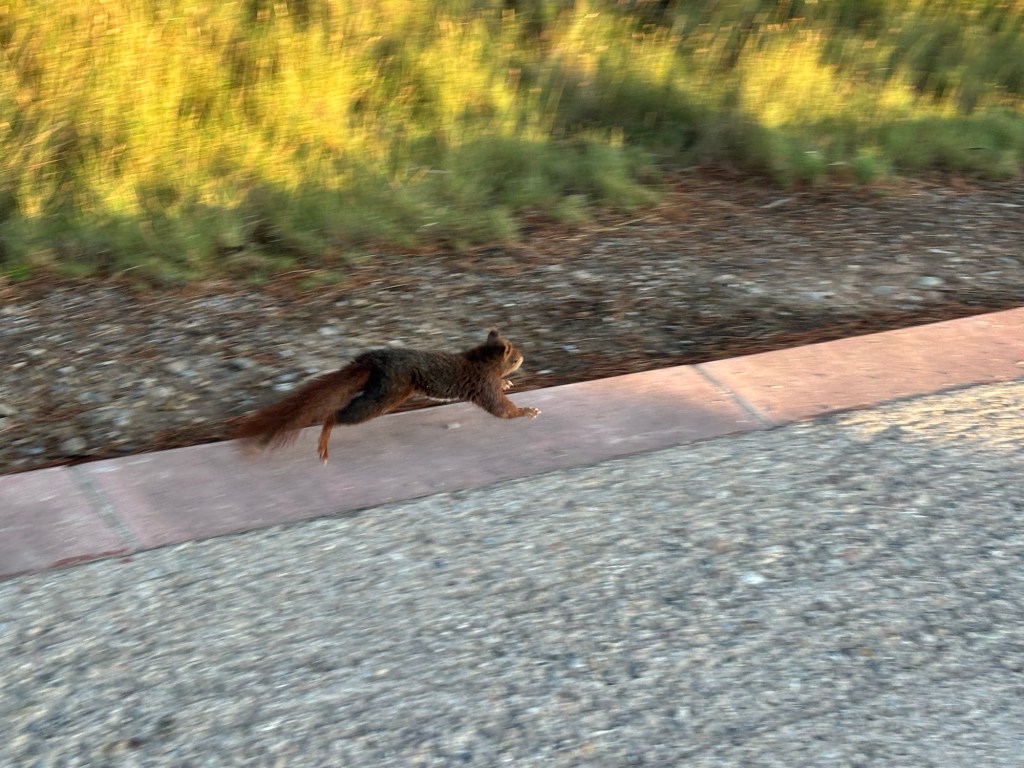
I did have a couple of encounters with the mountain’s red squirrels, though. Like most of the mammals that inhabit the Iberian peninsula, their fur is streaked with darker colours to better match the terrain around them. The only obvious shades of red can be seen in their fingers and toes.

The invasive American grey squirrels that have driven our native reds almost to extinction in the United Kingdom are not to be found here in Spain, so the reds are a lot less fearful than they are back home. They do, however, seem to possess the same fiery temperament that is often associated with humans of their colouring, and are quick to sound the alarm when they sense a threat.


One species that has invaded Spain in the last century – almost as obviously as the tourists – is the monk parakeet. This South American species fulfils the same niche as the Asian ring-necked parakeet in the south of England, albeit with a much wider range: monk parakeets can be found in larger cities from Barcelona and Valencia all the way along the Mediterranean coast to Málaga and Cádiz, and even as far inland as Madrid.

They’re impossible to miss by even the briefest visitor to Spain’s cities, not least of all on account of the racket they make as they fly around the parks and gardens in search of fallen fruit, dried or otherwise. They made such an impact on the Spanish cityscape that the Japanese developers of the most recent Pokémon games, Scarlet and Violet, modelled an aggressive parrot-like Pokémon on them: Squawkabilly, whose appearance (and Pokédex description, for that matter) matches them exactly.


It was supposed to rain today, but it didn’t come down until late. Rain isn’t unheard of in Semana Santa. In fact it’s quite common, common enough for every hermandad to have a backup plan. And several backup plans were required this afternoon, as the heavens opened to a brief but torrential downpour.

I stayed inside for the worst of it, following the rescue attempts live on TV, and then set out to find a space in the brief respite provided by the rains – and, morbidly, perhaps, to see what damage had been done.


There’s usually the odd outpouring of grief from the spectators during the processions, sometimes in the form of a beautiful and spontaneous saeta (the traditional songs sung to the pasos, which requires the procession to come to an immediate halt), but there were a lot more tear-stained faces than usual. For some Catholics in Spain, this is the high point of the Christian calendar: publicly demonstrating their faith summa cum laude with their friends and family in the hermandad. When the conditions are just too poor, some pasos will be rained off entirely.

I counted at least five nazarenas in floods of tears being consoled by their families after dressing their best, only to be soaked to the skin and unable to continue their procession.

I’ve often wondered if the reason the Andalusians take Semana Santa to heart so much more than the other regions of Spain is that they once had far more to prove: being the region of Spain held longest by the Muslims, theirs was the shakiest of Christian bloodlines, and thus it must have behoved them to make twice as much of a show of being good Christians than their co-religionists in the north. It would go some way to explaining the unrestrained force of duende in the hearts of many an Andaluz costalero.

It’s just a theory, but I think it might have some grounding in truth.


Despite the threat in the clouds, the rain never returned. Jesus and Mary were taken out of the protective plastic coverings that had been hastily applied, the ornate candle-holders were emptied of all the water they had accumulated and those processions that had already made a start have now jumped the gun to make good for lost time. They will go on late into the morning, with the latest finishing around half past four. The crowds will be with them all throughout the night, but I need some sleep. Tomorrow brings another grand adventure – the last of this grand tour. I hope my legs are in good shape! BB x
The Captive

Plaza de la Merced, Málaga. 21.30.

I’ve arrived at the final destination of my journey: Málaga, ancient port city of the Phoenicians, Carthaginians and Moors and holiday hotspot of choice for thousands of guiris. It’s an odd place for a self-professed country boy like me to end the trip, but there’s a method to my madness: Spain’s foreign legion comes to town to accompany the Semana Santa processions on Thursday, which is a mighty spectacle, and what better a place to wind up my unofficial investigation into Spain’s mass tourism blight than in than the place where it all began, decades ago?


Doñana feels a long way from here. It’s quite easy to walk down a street in Málaga and hear no Spanish whatsoever. I set a timer and managed to clock a maximum of seventeen minutes before I heard a sentence in Spanish on my way to my accommodation: of the foreign languages in town, German was by far the most common, followed closely by Dutch and English.

The simple explanation might well have been that the locals had better things to do this afternoon than mosey about the high street: Holy Week begins in earnest today, and those Spaniards I did see were dressed in their Sunday best, or carrying musical instruments, white peaked caps or wire cones for the hoods of their capirotes.


Málaga, together with Sevilla and Jaén, draws in the largest number of spectators for its Holy Week processions: last year, the additional income from Semana Santa alone was an eye-watering 393 million euros in the space of a week. As it stands, around 80% of the city’s accommodation options are at full capacity. Some of that is down to the fact that Holy Week coincides with the school holidays in the UK, but a great many of those tourists will be Spaniards, for whom the processions are far more than just a spectacle.


For the average tourist (or even the irreligious Spaniard), Semana Santa can be something of a headache, both literally and logistically. The passage of the nazarenos and their enormous floats, numbering as many as six hundred penitents, can prove an unorthodox and lengthy roadblock, with the longest processions taking more than thirteen hours to conclude. You have to admire the zeal of the nazarenos for such a stakeout, especially those who do the whole thing blindfolded, barefoot or dragging chains, but it does have the effect of turning the streets of the old town into a live action render of the Snake game on the old Nokia phones: time it wrong and you can end up trapped between the undulating tail of two processions at once.


I couldn’t get anywhere near the Gitanos, one of the city’s most spectacular processions, as the crowd was five or six lines deep against the barriers, so I sought out the Estudiantes gathering outside the cathedral instead. Dressed in red and green, indicating their affiliation with Christ or the Virgin Mary respectively, the Estudiantes are the youngest of Málaga’s brotherhoods, drawing on the city’s youth for its members.

That much was plain from the behaviour of the nazarenos, who seemed a little less austere than I’m used to, popping up their hoods to drink from plastic bottles and waving at family members in the crowd. Perhaps it detracted from the magic, but then, my previous experience of Semana Santa is largely a small-town affair, where the sacred traditions of uniform anonymity are usually taken very seriously indeed. I’ve seen nazarenos scolded by their leaders for so much as looking into the crowd.

Málaga is notorious throughout Spanish history for its rebelliously liberal nature, so perhaps it’s unsurprising that their take on the Holy Week processions is a little more familiar.


If I had a euro for every time I’ve had to explain away the comparison between the nazarenos and the villainous Ku Klux Klan – to students and Americans – I could probably afford another couple of nights of this holiday. The comparison seems far more obvious when the colour of their costume is white, of course – and I’ve seen unprepared American tourists jump out of their skin at the sight of the procession.

The simple answer is that Klan, among their myriad other crimes, purloined the outfit from here. The actual origins of the capirote are arguably darker still: they were originally known as sambenitos and were worn by the victims of the Spanish Inquisition, or rather, those victims granted the “mercy” of a quick death by strangulation for recanting their heretical ways and accepting Jesus. Those who didn’t were burned alive.

The different colours of the hermandades or brotherhoods may have originated in the designs on the sambenitos of the accused, indicating the crime they had committed or the fate for which they were destined. It’s believed that the Spanish started to make a connection between anonymity, penitence and overt professions of faith, and adopted the sambenito for use by those seeking to make penance during Holy Week as early as the 16th century. Certainly, by the middle of the 17th century, its use had become widespread, developing steadily into the tradition we now see today.

That makes the sambenito somewhere between two and three hundred years older than the robes of the Klan, who only officially adopted the ceremonial white robes under their reorganisation as the Second Klan in 1915.

So hopefully that puts the matter to bed.


I’ve never been troubled by their appearance, having encountered the nazarenos long before I learned about the KKK at school, but the procession isn’t without its issues for me. Something I’ve had to face here is my aversion to crowded spaces. It’s not agoraphobia, but it’s probably not far off.

In many ways, I feel more Spanish than English, but in one I am on the other side of a cultural gulf: I cannot stand the hustle of a crowd for the life of me. Spaniards seem to enjoy the hypersocial element of a giant conglomeration: there’s a thousand possible conversations to be had, a hundred new friends or connections to be made, and always the chance to enjoy something together – be that food, music, a joint or a spectacle. While an Englishman’s home is his castle, the Spaniard’s natural environment is in good company.

Good company is fine, but I have my limits, and it isn’t my idea of fun to be pushed, jostled and elbowed about by a massing crowd for the best part of a couple of hours. Semana Santa has always been a sombre, intimate affair in my previous encounters in Olvera, Villafranca and Villarrobledo. Here in Málaga, it is anything but.

The omnipresence of the police – all of them armoured and heavily armed – is a constant reminder of just how big the crowds are. They flank the processions, pushing the milling crowds back when they step out of line to take a selfie in front of the pasos (an affliction which, though it pains me to say, is very much a Spanish trend). One couple just kept trying, leaning into the paso as it passed so close that the costaleros – already carrying more than five thousand kilos on their shoulders – had to actively sway more to the right so as not to collide with them.

Crowds have a nasty habit of getting to me, as does selfishness, and it all got a bit much. Hemmed in by the processions, however, I had no choice but to either wait it out or duck into a restaurant until the way was clear. I chose the latter option.


I’ll have another shot at the processions tomorrow. I have gone from zero to sixty in the blink of an eye, coming from the total quiet and solitude of Doñana to… this. It will simply take a bit of getting used to, that’s all.

Until then, I have my books. Far too many of them. Thank goodness for extra bags on flights! BB x
The Mother of the Marshes

Casa Los Tres Aires, El Rocío. 14.01.

The long-promised rains have arrived. Buckets of it. It began with a sudden gust of wind in the palm trees and a ripple over the lagoon, turning the mirrored surface of the water into a sea of silvery sand dunes. Some of the locals wandering in the square turned to the west and pulled their jackets about them. The savvier ones pointed and moved toward the shelter of the church. Then the darkening sky turned a pale grey, and the trees beyond the road disappeared behind an advancing sheet of rain. Just as the church bell chimed for half past, an almighty drumroll of thunder sounded in response and the heavens opened, and down it came: sheet rain, a wall of water, turning the sandy streets of El Rocío into rivers in a matter of minutes. By the time I made it back to my casa rural I was soaked to the skin – and more alive than I’ve ever been.


Some devotees of La Blanca Paloma – the White Dove, the nickname of the Virgen del Rocío – believe that her sudden appearance in the branches of an olive tree in the marshes of Almonte was a manifestation of the divine. More sceptical minds might be persuaded that the image was simply one of many hidden away from the conquering Moors and scattered across the countryside, forgotten until their chance discovery by bewildered countryfolk. Whatever you choose to believe, the Virgen del Rocío exerts a powerful influence over the town and its surroundings, bringing more than a million pilgrims to her shrine every year.

One legend has it that the townsfolk prayed for her intercession during the Napoleonic invasion, hearing that a raiding force of French soldiers was heading for the town. For whatever reason, they never made it as far as El Rocío, turning back at Pilas, just shy of thirty kilometres away. Maybe it was the unforgiving terrain of the marshes – or maybe it was the watchful power of the Virgen. Who knows? The fact remains that the village of El Rocío was untouched by both the Napoleonic War and the Civil War in the following century, a conflict which tore almost every town in Spain apart. It’s easy to see how many have come to believe that some great force watches over these marshes, shielding them from harm.


It hasn’t been able to protect them from everything. While it’s incredible to see Doñana restored to life, it’s important to bear in mind how it got into the state it was in: this time last year, the news were all full of woe, decrying the death of one of Europe’s last great wetlands as its life was slowly sucked out of it. Why, you ask? Climate change may be part of it, but the blame lies almost entirely at the feet of the monstrous theft of the land’s water by the agropiratas.

These mercenary industries have set up shop in the outskirts of Doñana and, over the last two decades, they’ve been draining its aquifers to grow strawberries on an industrial scale. Strawberries are a very water-hungry fruit, and the results have been catastrophic, causing the water supply to cascade, lakes to dry up and the local extinction of a number of species that can be found almost nowhere else, including the white-headed and marbled ducks, the salinete (a fish found only in Doñana) and the eel – formerly abundant and now almost completely eradicated from these marshes.

I could do a lot more for charity’s sake, but there are two causes I will not budge from. I will never visit Malta, on account of their refusal to abide by European laws concerning the protection of migrating birds (they still practise the vile tradition of bird-liming), and I will never buy strawberries from Spain, knowing what damage they are causing here. If only we could go back to a time before globalisation, when people were more patient, and prepared to wait for strawberries to be in season, for a short time each year…


It’s still raining out there. It cleared up for a few hours, and then the storm clouds came back with a vengeance. March 2025 has been one of the wettest months in Spain since records began, putting an end to four years of minimal rainfall. It hasn’t been unprecedented: the flash floods that swept through Valencia in October and claimed 232 lives are still a very recent memory. Even so, taken as a whole, the average rainfall over the last five years is still well below the average. Spain will need more consistent rain if places like Doñana are to survive in the long run.

That, and decisive action from the government on the villainous agropiratas and their strawberry farms.


I wanted to make the most of the park’s rebirth, so I went for a long walk in the pine woods of La Rocina to the south of El Rocío. A boardwalk trails stretches for five kilometres along the side of the river that feeds into the Madre de las Marismas, the lagoon that sits under the eye of the Virgen del Rocío. Like the Raya Real, this place is very dear to me: I used to come here as a boy and look for bee-eaters, hoopoes and scarab beetles in the scrubland at the trail’s northern edge.


My sense of smell – mercifully restored after a debilitating cold had me in its grip at the start of my travels – was assailed on all sides by Spanish lavender and curry plant, and every bush seemed to harbour a nightingale. I even saw one, singing high in the branches of one of the pines – a fairly impressive feat, since these master ventriloquists have the uncanny ability to seek out the most acoustic spots in the forest, whilst also remaining invisible to the naked eye as they perform their vast repertoire. I’ve included a recording I took below – have a listen and you’ll see what I mean.


I spent my last evening in El Rocío enjoying boquerones fritos and an incredible torrija – a Semana Santa speciality – in Restaurante La Canaliega, watching the sun set over the Madre de las Marismas. The town’s drains were working overtime to deal with the rivers that had formed in the streets, but there was still enough water in the main square to form a second lagoon, reflecting the Ermita’s unique shell-shaped doorway.


I would have traveled a thousand miles to see just this view, but the Virgen del Rocío saw fit to show me her rarest treasure of all on the day I arrived. I have come away with a new rosary of hers, so that I can offer my thanks wherever I am, and so that there will be some piece of her influence wherever I go.

I used to get the stuffing knocked proverbially out of me at school for defending my stance on faith, in spite of being a “rational thinker”. I stand by my beliefs to this day: I do think the world is a better place with a little more love and little more mystery. On the one hand, I adore the pursuit of knowledge for its own sake: the ability to look up at the stars and know their names.

But I also think it’s important to value the wisdom of the ancients. I may not be able to see the shape of a lion up there, but somebody must have done once to call a constellation Leo. And though it took me a long time to find Lynx, it’s taken me a lot longer to find the animal in the flesh. This year, Doñana – and whatever mystical force presides over these marshes – saw fit to show me a glimpse. You can call me credulous if you like, but that’s enough to make a man like me believe.


Not for nothing is the lake named the Madre de las Marismas: the Mother of Marshes. Doñana is feminine in every way, from its name to its essence: a provider, a life-giver, faithful, fickle and generous in turn. I have always said that Spain is my greatest love – but it’s probably fair to say that Doñana is that love crystallised into one place.

I have been gone too long. I must return someday. The fight to save these precious marshes goes on. BB x