Cross Country

The Camino might be over for this year, but the adventure certainly isn’t. Before my flight back home tomorrow, one last challenge remained: to scale Monte Santiago and lay eyes upon Spain’s highest waterfall, the Salto del Nervión. Since I’m staying in Bilbao, which straddles the Nervión on its journey to the sea, it seemed only natural to go in search of its source. The fact that it springs from a mountain bearing the same name as the patron saint of the Camino clinched it. So, just after eight o’clock this morning, I grabbed my rucksack and poncho (just in case) and set off for the Bilbao-Arando train station.


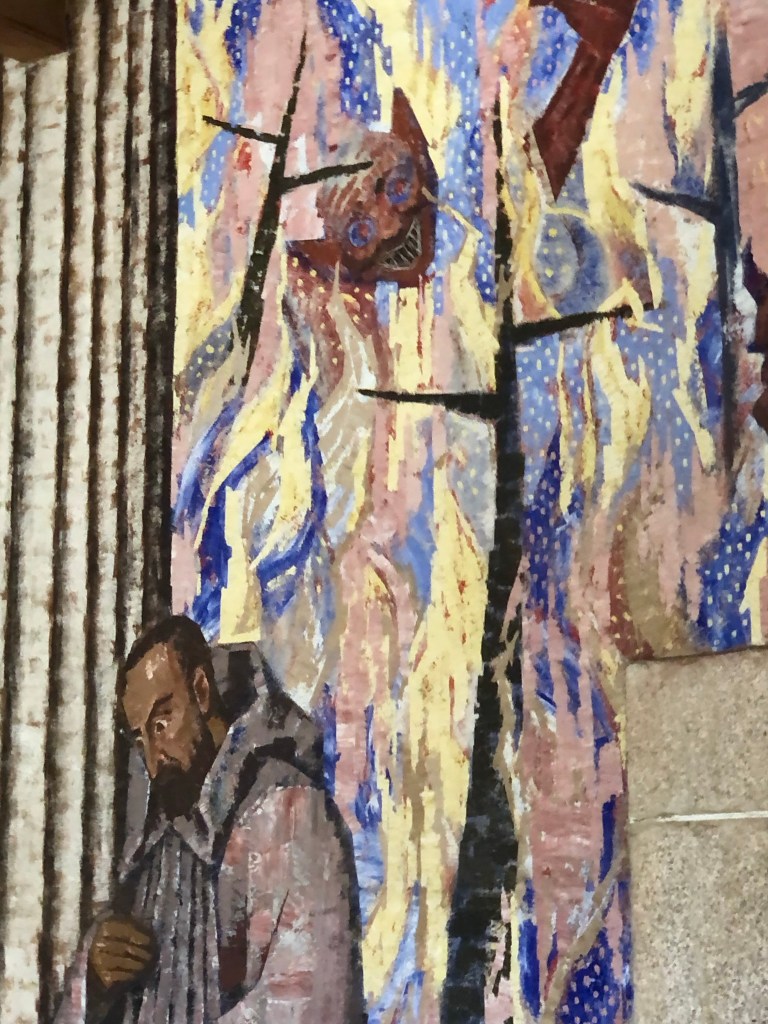
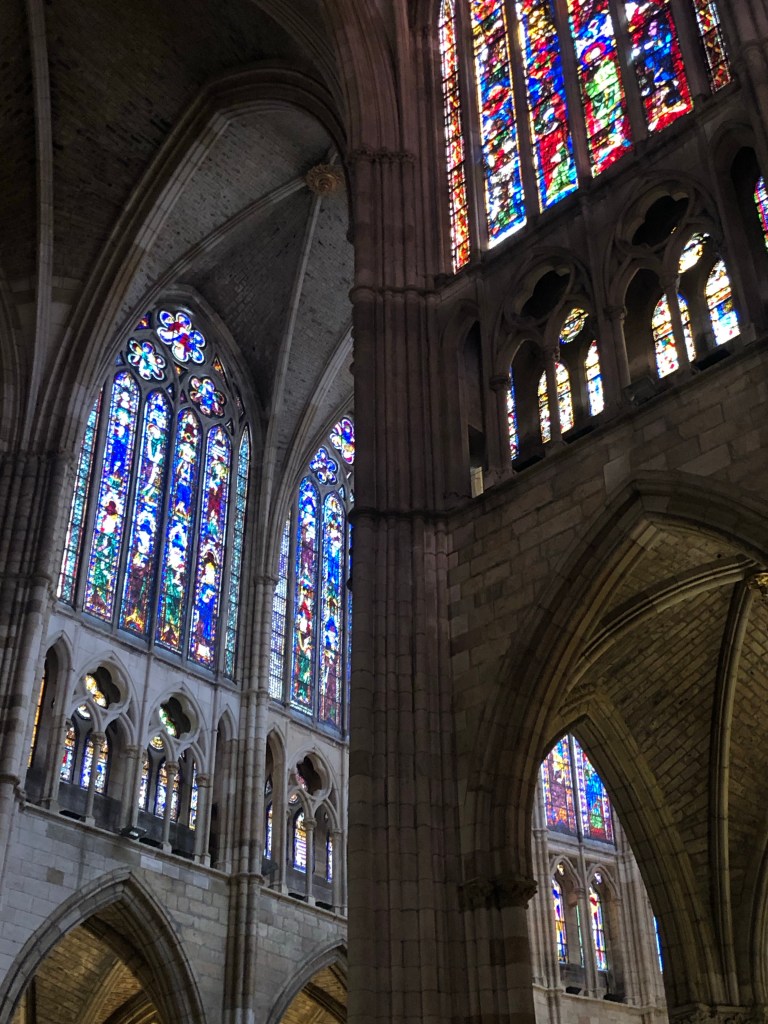
Leaving the stained-glass masterpiece of Bilbao-Arando behind, I took the 8.25 to Orduña on the C3 line. It’s the furthest stop on the Cercanías line and the trains were running very consistently even through the holiday season, so I was pretty confident about getting there and back OK.


Orduña itself was just waking up when the train pulled in. I made a quick detour via an AlCampo mini-market to grab a picnic lunch: the usual fare of semicurado cheese, chorizo slices and a fresh loaf of bread, with a punnet of grapes to boot. I then doubled back, crossed the bridge over the railway and started to climb up into the hills.

Fortunately for me, somebody had the peace of mind to leave a clearly-labelled map outside the train station. I’d found a few maps online, but I was relieved to find a more reliable one at the start of the trail, so I snapped a photo and used it as my map for the day. I can’t find it online, so here’s a copy if you’re interested:


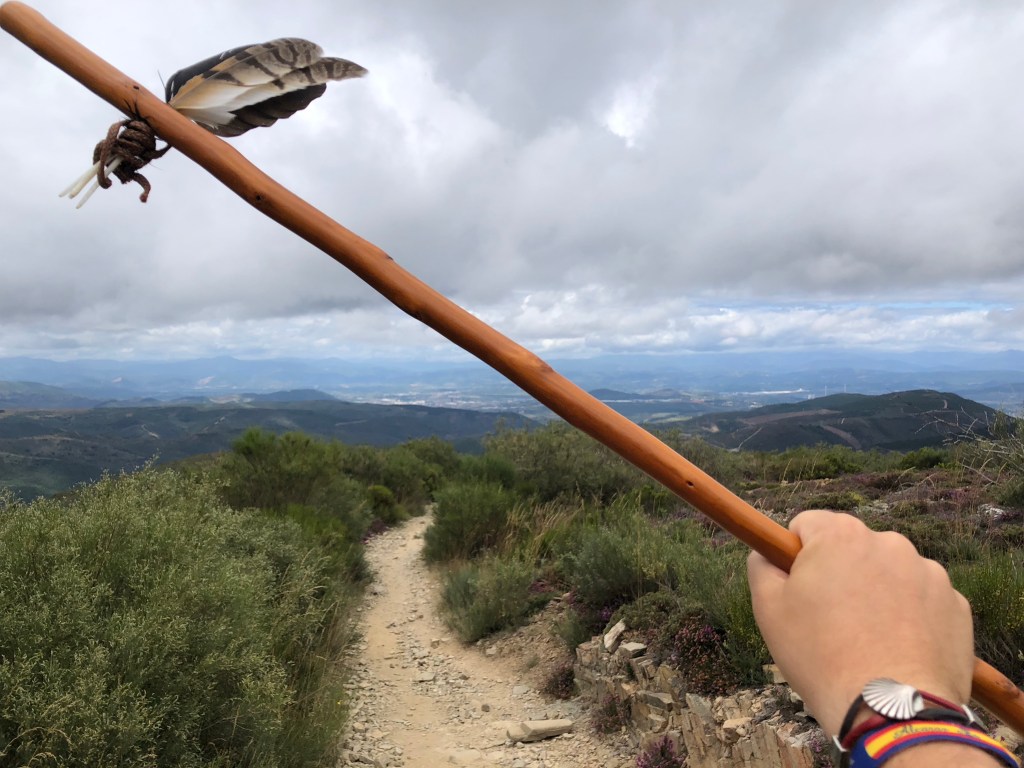
First things first: the climb was bloody steep. Easy to follow, but steep. And before long, I’d climbed up beyond the cloud level and was weaving in and out of the mist. Sometimes I couldn’t see more than ten metres or so ahead, and sometimes the road seemed to stretch on forever up the mountainside. A jay screeched at me from the base to the summit, and while it may well have been a number of them, I had the strange feeling it was the same bird watching my slow progress. And yet, whenever I tried to lock eyes upon it, I only ever caught a disappearing shadow between the trees.

In the deep woods of the Basque Country, when the clouds are at ground level, it’s easy to see how myths of the Basajaun – wild men of the woods – persisted for so long. God only knows what was watching me unseen in the mist.


I only met two other souls on the road coming down: a local man with a hiking pole in hand about halfway up and a jogger leaving the forest, which would imply he’d just run down the mountain. There’s a reason the Basques have a formidable reputation.


Near the summit, a spring of crystal clear water was a welcome find. I couldn’t help remembering a childhood memory of vomiting for days after drinking from a village spring in the Alpujarras, but the water looked so clean I couldn’t help myself. It was easily the most delicious water I’ve had out here – mountain water always is, if you can get it – though I was sane enough not to use the metal cup chained to the rock, which looked in dire need of a good clean. In a nearby tank, filled to the brim with the spotless spring water, a few tiny newt efts were swimming about.

After what felt like an age (but in reality only took ten minutes over an hour) the track suddenly came to a narrow crevasse which cut a path through the karst to the clifftop. With one last screech from the jay echoing after me, I put the cloud forest behind me, pushed the metal gate open and stepped out of the Basque Country and back into Castilla.

At first, the rolling clouds shrouded all but the peak upon which I was standing from view. I could just about make out the bizarre sculpture to an apparition of the Virgin Mary in the form of a colossal concrete block supported by a stylised tree looming out of the mist, but it looked like it had been fenced off and graffitied for good measure long ago.


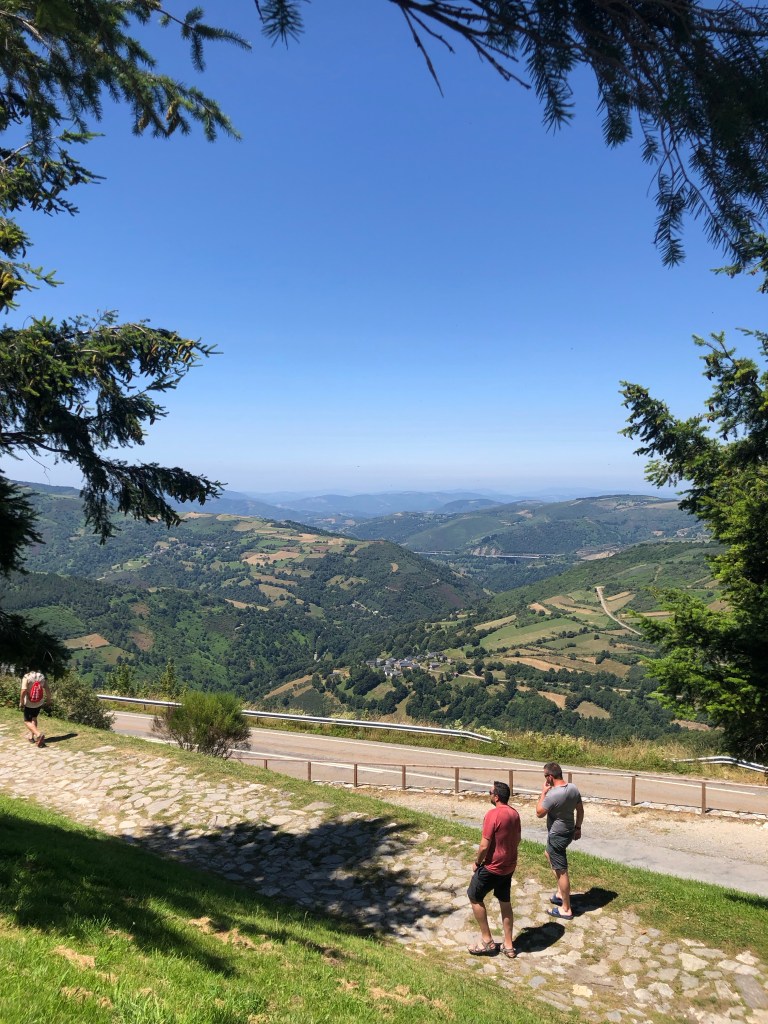
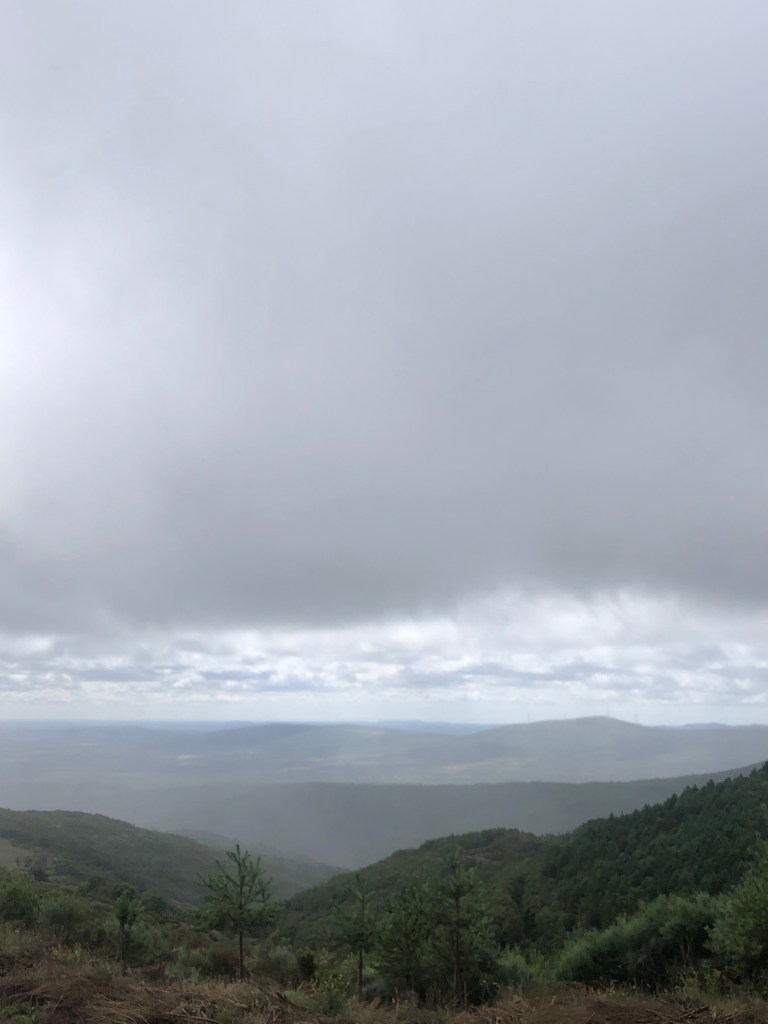
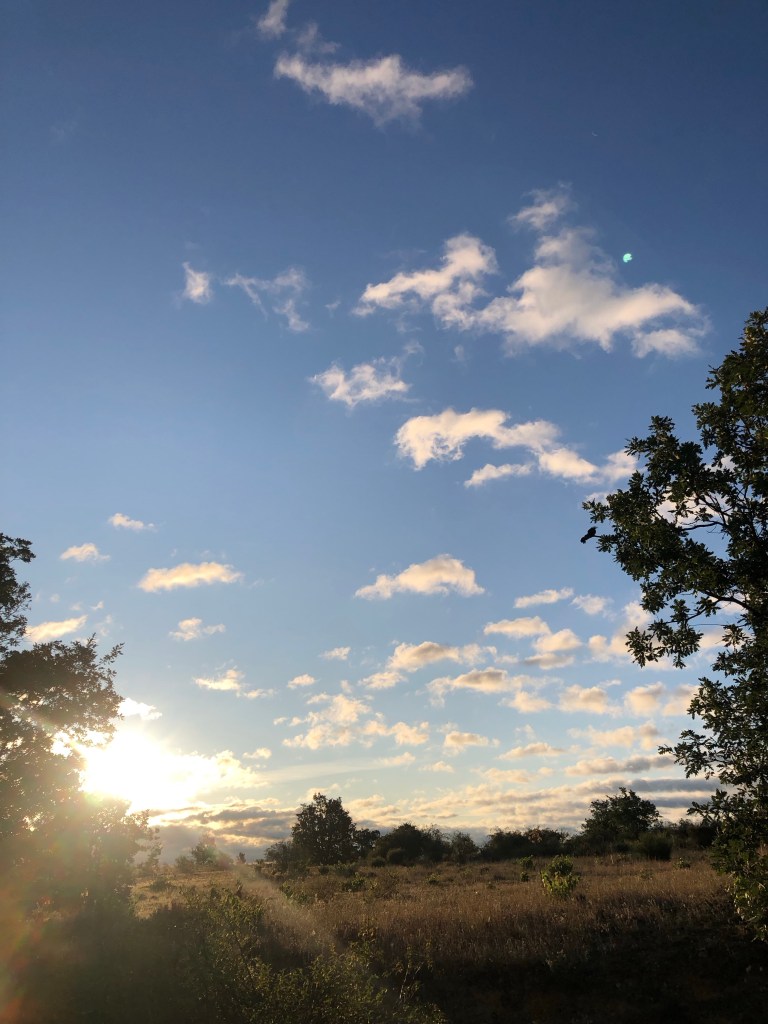
More impressive by far was what I could see when I turned around. The Castilian sun began to beat down through the clouds, and suddenly the sheer majesty of the Sierra Sálvada began to unroll before me like a painting. I was lost for words. Pictures don’t do it justice, but they might bring you closer to that wonder I witnessed.


The breathtaking crags of the Sierra Sálvada give an indication of what to expect from the Salto del Nervión long before you reach it. It’s a drop of more than 200m to the bottom in places, and even the thought of kicking a pebble over the edge is enough to tie your stomach in several uncomfortable knots.

Don’t get me wrong. I’m absolutely mad about mountains. But there’s nothing funny about a drop of that height, particularly when it isn’t broken by any tree or slope on the way down.


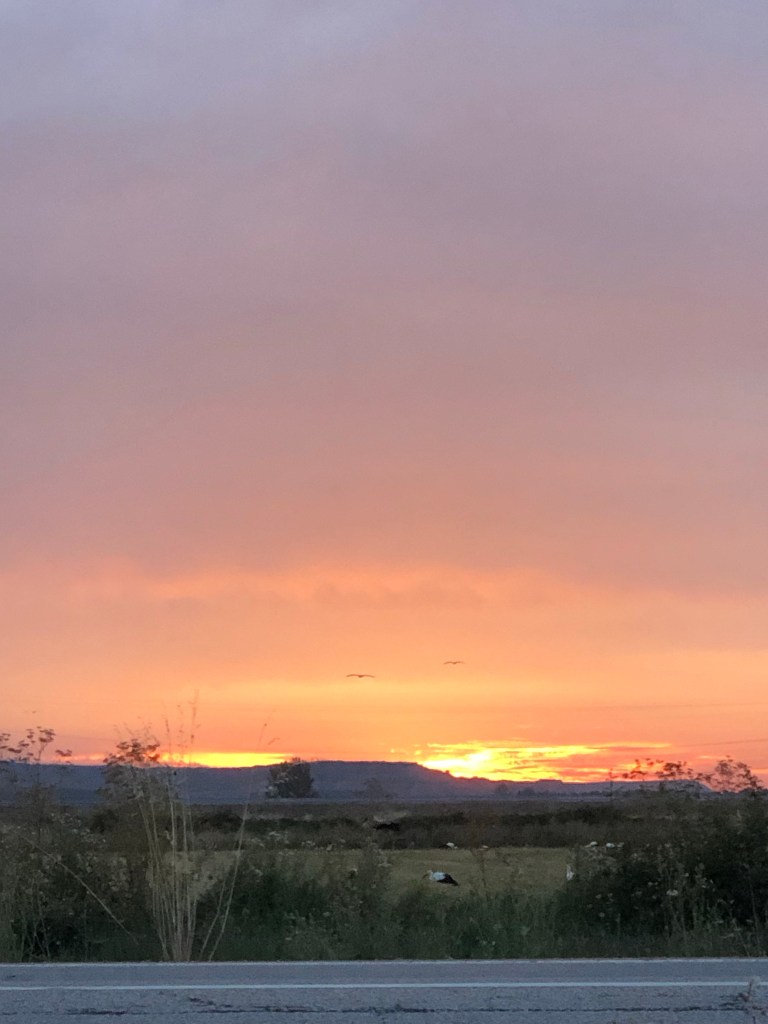
Ironically, perhaps, some of Spain’s biggest creatures are perfectly at home here. The hulking shape of the griffon vulture was rarely out of sight during my wanderings along the clifftop, but nowhere more so than about the stark stack known as the Fraileburu – the Friar’s Head – an utterly unassailable column where many of the Sierra’s griffons had chosen to roost, haughtily observing the valley below. I haven’t needed my camera once on this holiday – my phone has done a more than satisfactory job – but I was missing it then more than ever. A decent telephoto could have worked wonders on the griffons riding the thermals below, as well as pulling the acrobatic choughs and the few pairs of Egyptian vultures into focus for good measure. Instead you’ll just have to see how many you can spot clinging to the cliff face below.


From the summit of Monte Santiago, it’s a fair trek to the Salto del Nervión. I didn’t stop often and I keep a pretty merciless pace, but it still took me the better part of two hours to reach the waterfall. Fortunately, the path cuts through tree cover for a large stretch, and the views are incredible – especially so as the sun had burned off most of the mist by this point, offering spectacular views down to Orduña, now some way in the distance.


The Mirador at the Salto was quite busy by the time I arrived (around one o’clock) but one look was enough. The river was bone dry: I might have guessed from the absence of any sound of crashing water. So much for the highest waterfall in Spain! It seems it’s only really in action after heavy rain, otherwise the Nervión is supplied by a network of underground rivers that ensure it flows year-round, while its primary spring in neighbouring Castilla has a tendency of drying up in all but the wettest seasons.

Still – box ticked, I suppose.


Perhaps more interesting than a dry waterfall is the nearby lobera, an ancient wolf trap built possibly over two thousand years ago by the ancient Basques to hunt wolves and other large game on the clifftop. In a fashion akin to the Native American buffalo jumps, the wolf would be chased into a funnel, with men beating drums on one side and the cliff on the other, driving the poor beast into a deep pit at the end of the funnel as its only escape.

I didn’t see any wolves during the hike, though they have been seen recently in the area after a long absence. Instead I disturbed an amorous couple who had straddled the large wolf statue and were enjoying each other’s company, though they had picked an exceedingly odd place: I can think of better spots for a tryst than the site of a Neolithic abattoir.


From the Salto del Nervión, I decided to fork east and descend back into the valley of Orduña that way. The trouble was, the map – which had been utterly brilliant thus far – was pretty dismal about suggesting a way back down bar turning around and heading back the way I came. One of the maps I’d found online seemed to indicate a track that led down through the forest an hour or so to the north of the Salto, but I couldn’t find anything like it. Scanning the east side of the valley during the hike didn’t show much either, beyond what might have been a dry river gulley running down the mountainside.

In the end, rather than face a possibly two or three-hour march to the north, I decided to follow the beginnings of a track that appeared as the cliff began to slope rather than drop. Whether it was made by man or beast I’m not entirely sure, only that it probably wasn’t the track suggested online and that it very quickly came to an end.

There are few things more frustrating than getting halfway down a mountain and realising you’ve lost the path. At least you can surrender going up, but on the descent, you have no choice but to find a way down somehow. So I did what I have done in the past, foolhardy though it seems, and cut across country.

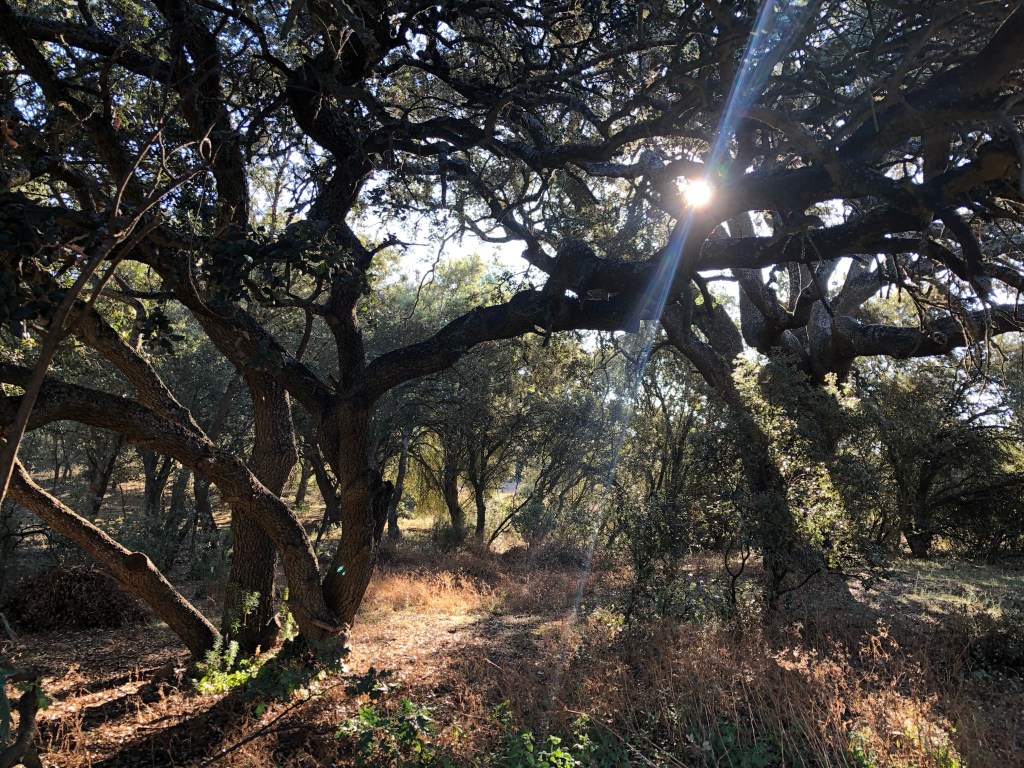
This is a lot easier said than done when the cross country in question is a forest thick with underbrush that happens to be growing on the side of a mountain. The ground under my feet was not always stable, there were thorns everywhere and the animals tracks I was following – boar, I wouldn’t wonder – were not always reliable. The heat of the midday sun was similarly unwelcome, silencing the forest and making my every step sound like a cannon. The vultures circling overhead only added to the dismal state of affairs.


Twice I came upon what looked like a road, but rather than wind up on some local farmer’s turf (and potentially ending up in really cross country) I decided to stick to a personal motto (don’t ever, under any circumstances, f*ck with the Basques) and continue to forge my own path.

It took just over an hour to escape the forest. I don’t think I’ve been more relieved to see a tarmac road in years.


I made it back to Orduña’s train station with seven minutes to spare before the 16.45 train back to Bilbao. I must have looked a beardy, sweaty mess but I was past caring. Despite the mountain’s best efforts, I’d made it back in one piece.

My old English teacher once told me you can’t claim to conquer a mountain, a thing which has been standing on this earth since the world was young and will be there long after you have gone. I’m still hooked on the idea of climbing higher than the vultures – there are few things in this world more awe-inspiring than looking down on creatures that are usually specks in the great blue beyond – but I’ll hand it to him here. Mountains are ancient, treacherous things that deserve to be treated with respect.


I finished my time in Spain by summiting Santiago’s mountain, but the mountain very nearly got the better of me on the way down. A knock to my hubris – and a necessary one.

I’ll stick to regular cross country around the school grounds for now. I’ve had quite enough wayfaring for one holiday! BB x

Camino IV: To Be a Pilgrim

After three to four days on the Camino de Santiago, you really do start to become well-acquainted with the faces of your particular clan – that is, those who are walking the same stages as you and, by extension, staying in most of the same albergues, too.

I’ve fallen in with a group of younger pilgrims ranging from eighteen to thirty-four, and rather than being an unsociable bastard and cannonballing my way toward my next stop, I decided to hang back and take the road with them today. The result? A more leisurely, more talkative Camino – and ultimately, more fulfilling. In some senses, quite literally!


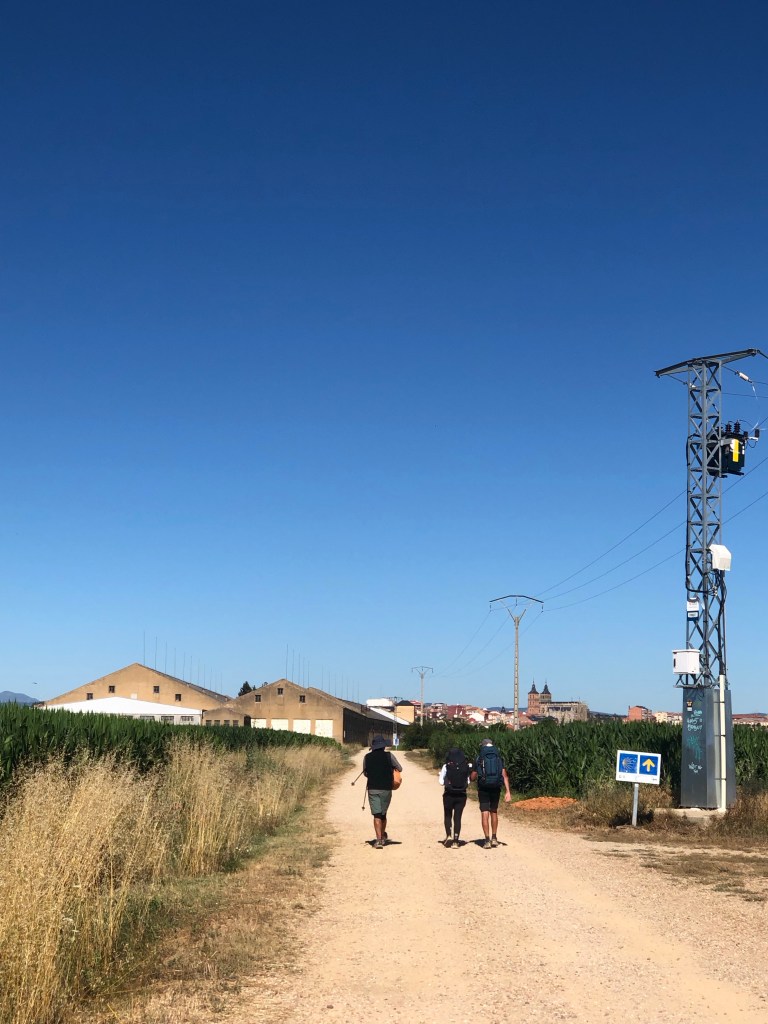
While I didn’t manage to track down Enrique the muleteer today (though there were clear signs on the road that his horse and mule had gone on ahead but recently), I did track down the Professor (the Californian I met on day one), the Sailor (a Spanish/Australian globetrotter and his wife) and the Carabiniere, an outrageous but loveable Italian former policeman for whom the saying “the man, the myth, the legend” might well have been coined. And because I had company on the road, I was much more inclined to stop for food, which made today’s long, sun-scorched hike across the plains of Castile a lot more enjoyable.


Top tip for pilgrims on this stage: just as you reach the village of Viloria de Rioja, the Parada de Viloria on your right as you hit the town is one of the friendliest places on the whole journey. They don’t have a menu peregrino, but rather the husband and wife who run the albergue cook up a simple lunch with a donations box on the side – you give what you can. The eggs, the bread and the tomatoes are all fresh and presumably their own produce, if not sourced from the farmers a few houses down the road. I had what was probably the best tortilla sandwich I’ve ever eaten in my life today. Hell, I’d do that stretch again for another bite.


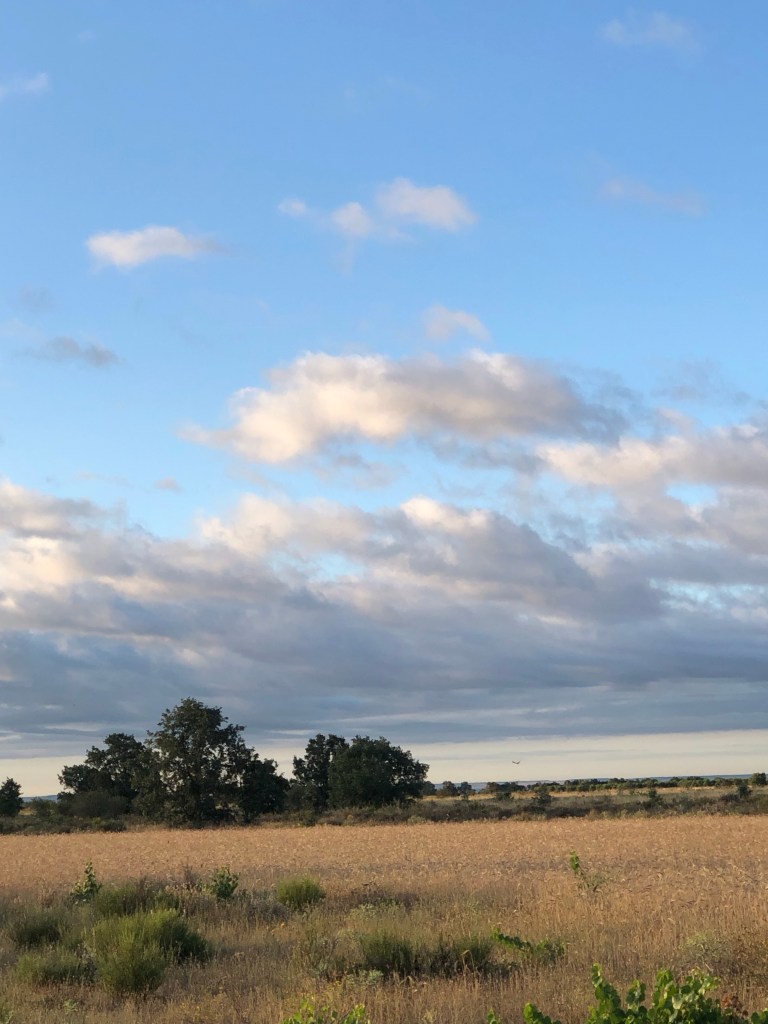
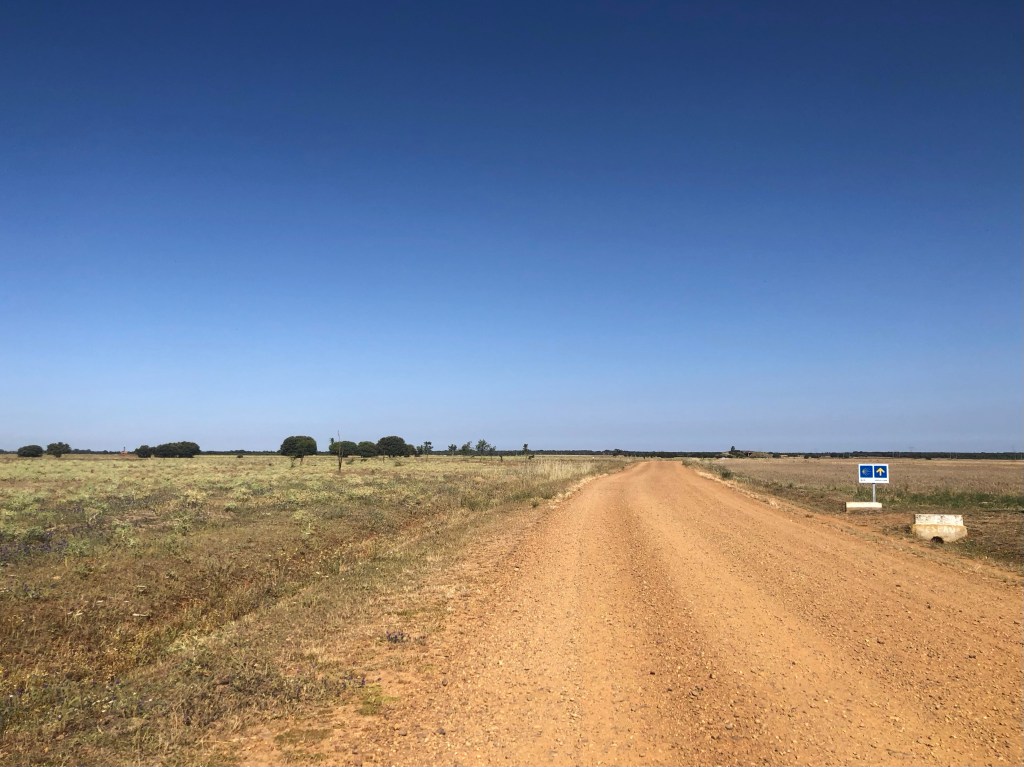
We left La Rioja behind today and started out upon what will become the Meseta Central. In a very real sense it already felt like we’d reached the middle stretch between Burgos and León – sun high overhead, the Camino cleaving close to the road, dust clouds and rolling wheat fields replacing former river valleys and distant mountain ranges. It’s stunning, but in a different way – a very Castilian kind of beautiful, austere and proud in its starkness.

Fortunately I had company to chew the fat with rather than lapse into the same clichés that other (and considerably better-versed) British travellers have used before me.


We arrived in Belorado shortly after two o’clock to find the town heaving with both pilgrims and locals – the festivities for Jueves Santo had just begun, and between that and the concentration of pilgrims in this small town, the albergue municipal was already fully booked. Luckily there were other options, and the place I ended up – Cuatro Cantones – could hardly have been a friendlier establishment. It even had a covered pool, which was a godsend after a twenty-three kilometre hike across the dusty plains.

Sopa de Ajo – a personal favorite!

I’m now over halfway through the walking stage of this attempt at the Camino. In two nights it will be over: I will have reached Burgos, at which point I will take my leave of my companions as some move on and others return home while I stay and rest in the city of the Cid. I will be immensely appreciative of the break, but no more so than my feet, which are not used to this much walking – even from somebody who doesn’t drive!

Tomorrow, we either roll the dice on San Juan’s one pilgrim hostel or push on in search of pastures new. Luck be an albergue tonight, I guess. BB x

Camino III: Green Fields Forever

If this is a later blog post than usual, it’s because I’ve bought into the spirit of the Camino a bit more today and allowed myself to socialise with some of the other pilgrims – which often takes some doing for an introvert like me. Tonight’s digs are fantastic, though, and I’m writing from the genuine comfort of my dorm bed in Santo Domingo de La Calzada’s cofradía, one of the longest-serving albergues on the whole Camino.


So first, a confession. After arriving in Nájera yesterday, I got itchy feet. The cliffs above the town were calling to me, and the voice telling me I’d already walked 30km that morning was drowned out by the other saying go on, do it, you’ll regret it if you don’t. The summit – a lonely bluff called Malpica – even had a cross at the top, which is essentially putting a hat on a hat. I had to climb it.


Oddly enough, nobody else was up there at half past four in the afternoon with temperatures pushing into the twenties. Which is just as well, because it turned out to be a hands-and-feet climb to the summit. Fortunately I’ve been doing that kind of thing since I was a kid, so I’m pretty handy with my feet. The view from the top of Malpica was breathtaking – moreso because I didn’t have an awful lot of breath left to take – but the real reward was the butterfly show. For whatever reason, a swarm had descended upon the clifftop, among them some of the most beautiful butterflies you can find in Europe: swallowtails. One or two of them – zebra swallowtails – were so large you could hear their wingbeats. The ‘blood dripping from their fangs’ kind, as my mother would put it. I was just happy to sit up at the top and watch them frolic for a while. It delayed the inevitable descent – again on hands and feet – for at least a short while.


I fully intended to wait for some of the other peregrinos this morning, but when 7 o’clock had come and gone, I came and went with it. I’m rather fussy about catching the sunrise on the Camino, and will happily sacrifice a sit-down breakfast for it. This morning, I’ll admit, I really should have dawdled, as it was biting cold out. It had been well below zero during the night and, with the sun still below the horizon, it was still -1°C when I set out. You notice these things quickly when you’ve only packed with heat in mind.


That being said, the Camino was busy. The Koreans had all set out well before sunrise. They’re turning out to be most of if not the only real pilgrims (in the religious sense) on the Camino, with the possible exception of the odd Brazilian. I’d hoped to explore some of the churches along the way, but they were all closed – a possible drawback to setting out so early – so I powered through the first fifteen kilometres alone, soaking up the silence of the green fields of La Rioja.

And what a silence! At the start of the day the birdsong was explosive, and I got quite used to listening out for certain motifs in certain places: the rasping call of a black redstart on tiled roofs, the drawn out wheeze of corn buntings on fence posts and the singsong warble of woodlarks in the vineyards. But at one point it suddenly all went quiet. No birdsong, no cars, not even the sound of distant chatter from other pilgrims on the road. I had to stop walking to listen, taking out the monotonous beat of my own two feet that’d I’d long since tuned out. It wasn’t eternal, but it was powerful while it lasted. I’d even say it will be a treasured Camino memory.


Just before Cirueña I fell into step alongside the only other English peregrino I’ve met thus far. It was good to share the road at last, and we swapped stories to the backdrop of the patchwork fields of La Rioja passing by.


Just shy of Santo Domingo itself, we caught up with a genuine arriero, making the Camino in riding boots and a high vis jacket, taking his mule Jena and a Connemara horse along with him. It was a fleeting encounter, cut off all too soon by our imminent arrival in Santa Domingo, and I hope I can catch up to him again – I must have a hundred questions or more from years of research on arrieros that only a real muleteer could answer. Wait for me, Enrique! BB x
Camino II: Dawnbreaker

Holy Week got off to a flying start last night outside Logroño’s cathedral, Santa María de La Redonda. It isn’t always easy to tell which towns will have a serious procesión, but for the record, Logroño goes the distance. It looked as though all the brotherhoods were out in force last night, garbed in white, red, green, black and blue. Crucially for me, they also beat out the same halting drumbeat from my memories of Holy Week in the south. Not every town does it, but you’ll notice if they do: it’s the ever so slightly delayed drum roll during the march that, once you hear it, you can’t unhear. It’s the suspense of the last days of Jesus’ life, as his followers waited to see if he would save himself. At least, that’s one way of reading into it.

I had supper with a rather awkward American, the only other guest for dinner at the albergue. He wasn’t even staying there, but appeared to have wandered in looking for a menu peregrino (the cheap three-course fare offered to pilgrims on the Camino). He had his reservations about how sociable people are on the Camino and pined for the quieter stretches, and from his less than satisfied reaction to the ‘vegetarian option’ he’d asked for, I couldn’t help wondering what he was doing out here. He was quick to want to fact check my anecdote about his home state of California being one of the only places in the world named for a fictional location (it takes its name from the mythical island in Montalvo’s 16th-century chivalric novel, Las sergas de Esplandián) but I won’t begrudge him for it. After Trump and the fake news boom, who’d trust anyone?


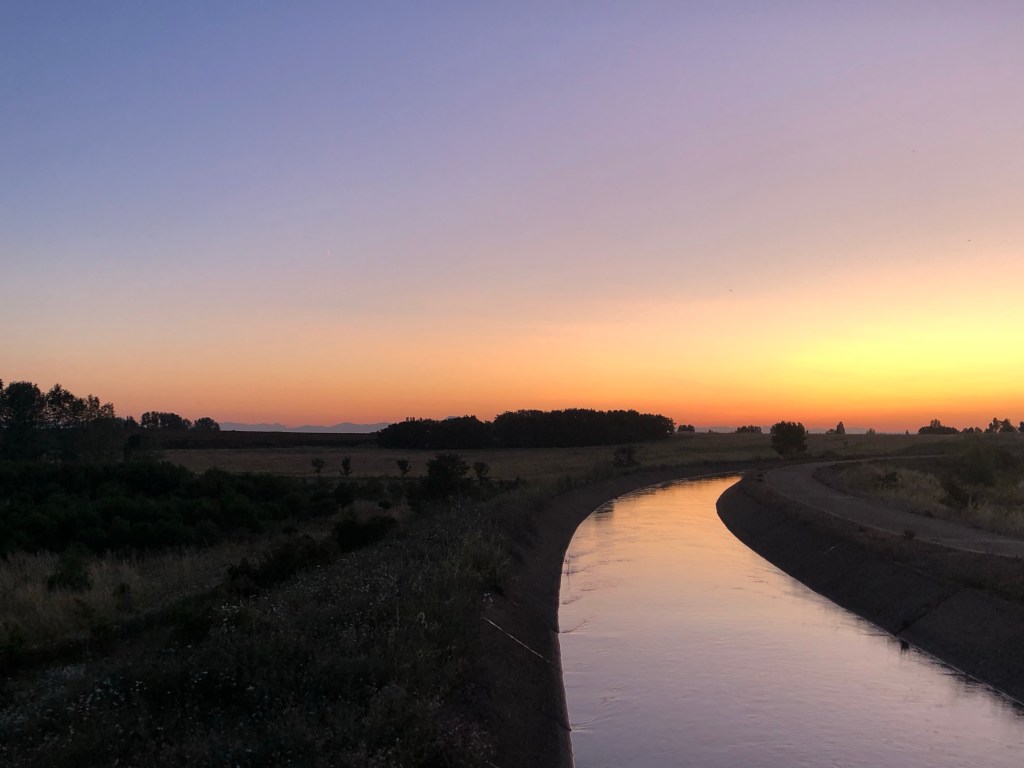
I was definitely one of the first out of town this morning. Though I passed some pilgrims on the road a few hours in, from the speed at which they were walking I suspect they’d been lodging one or two towns ahead. As a result, I had pretty much the whole 30km hike to Nájera to myself – including the first hour and a half before sunrise, which is always one of the most magical times to walk the Camino.

Approaching the Laguna de Grajera from the east, I counted about six or seven night herons flying in from their roost somewhere beyond Logroño. You can just about make out the silhouette of one of them in the photo above, as dawn was starting to break. There were rabbits everywhere – more than I’ve ever seen in this country – and the morning sky was alive with the songs of blackbirds and larks. I could have waited for company at any point, but I do love to have that part of the day to myself. Self indulgent, perhaps, but worth indulging all the same.

There was even an icon of Nuestra Señora del Rocío on the lakeside. Whether or not I sang her into existence through various repetitions of Las llanuras ardientes and El Rocío es un milagro as I was walking is conjecture. It felt special to find her here, so far from her usual haunt in the marismas down south.

Now, while I needn’t have set off quite so early (the 8 hours in the guidebook is a joke, the trek is at the very most 6h30 with a stop for lunch) I did have my reasons, and one was to catch a very specific angle of the sunrise at just the right moment.

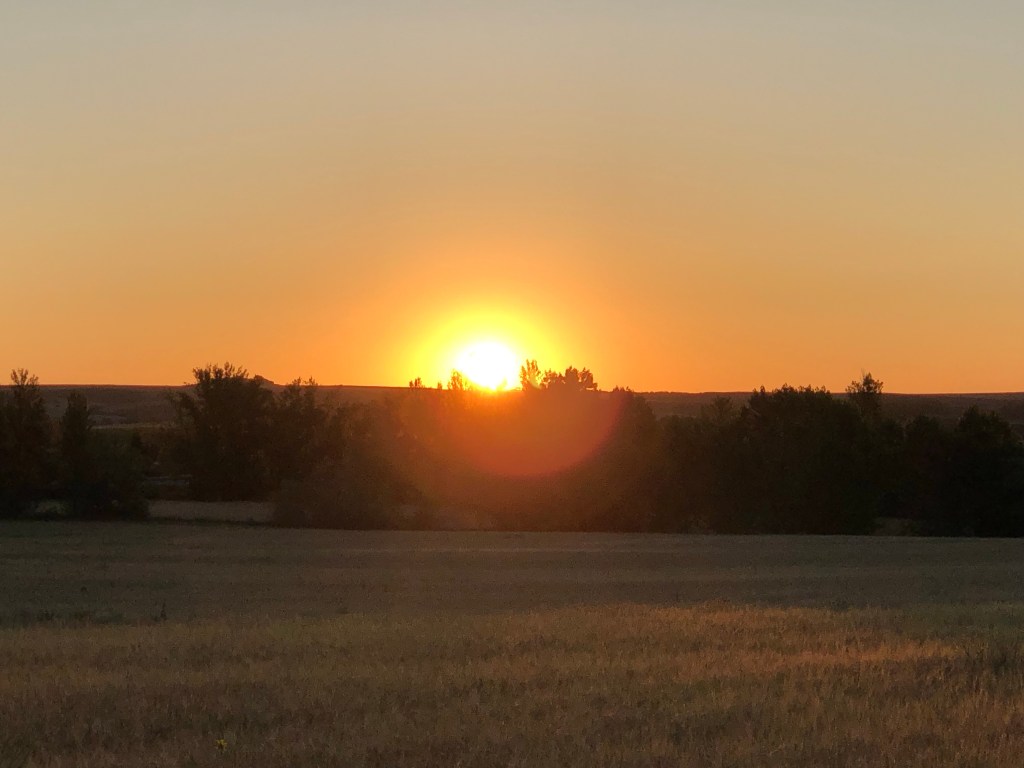
At the brow of a hill to the west of the laguna stands one of the famous Osborne bulls for which Spain is so famous. By the time I got clear of it – at around 8.20am – the sun was almost exactly behind it. I could not have timed it better. Point and shoot!

The rest of the walk was pretty straightforward. The ruins of the old pilgrims’ hospice at San Juan de Acre were picturesque and the Camino itself, though it cleaved close to the road on occasion, was quiet and easy underfoot. I let a couple of Dutch pilgrims overtake and continued to have the road to myself. The Sierra de Cebollera remained cloudbound for most of the walk, and I kept my hoodie on until I reached Nájera – it simply wasn’t hot enough to justify fewer layers, and that’s not bad thing!

Navarrete was stunning – easily one of my favourite stations on the Camino so far. The church is a classic Spanish affair: pokey and generic on the outside, and an immense explosion of heavenly gold within. I lit a candle for abuelo, left a story in the visitor’s book, sang through Thomas Morley’s Nolo mortem peccatoris (since there was nobody there) and moved on.

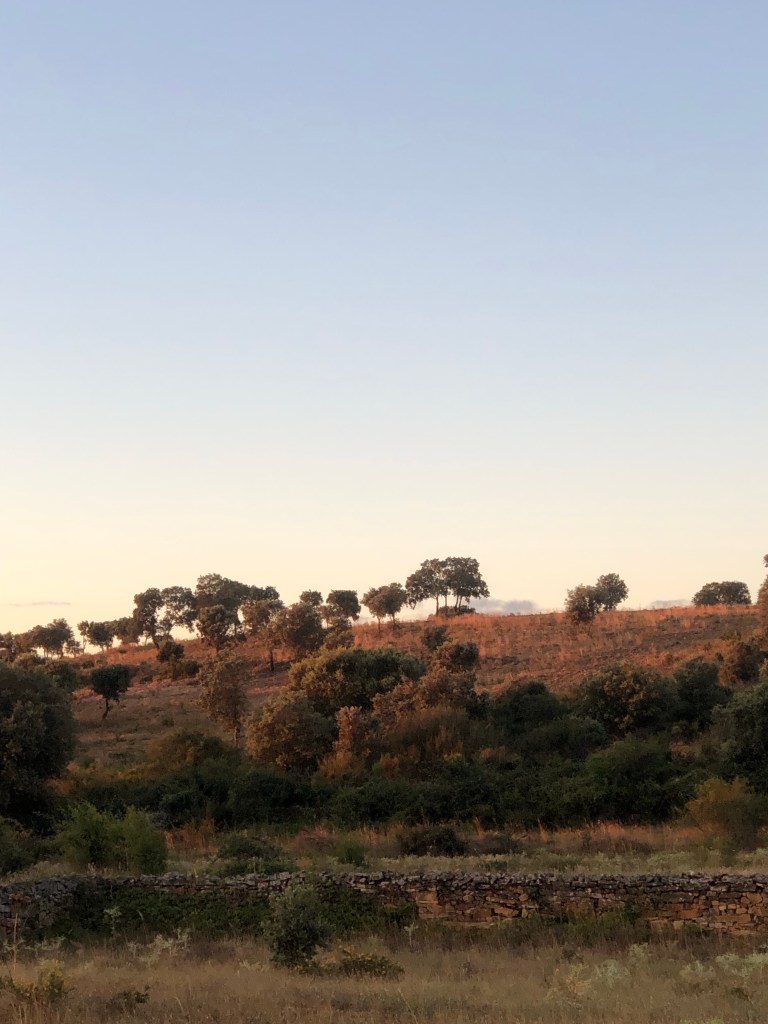
From Navarrete, the final stretch rolled across the hills before sloping down toward the cliff face of Nájera. Legend has it the French hero Roland fought a Syrian giant on one of these hills in a single combat that went on for days, but I was happy enough to see the familiar silhouette of the giants of my childhood: griffon vultures, circling high above the meseta in the distance. I didn’t keep a tally, but there were raptors everywhere today. Kestrels and kites – both black and red – and buzzards and booted eagles, these last in both white and brown. Since it’s still early enough in the season, some of them were displaying still, climbing high and then plummeting down in a sharp V with wings tucked in. Between that and the flute-song of woodlarks that followed me for the last hour before Nájera, I have been in seventh heaven all morning. Oh Camino, I have missed you!

The Albergue Municipal is filling up. Maybe I’ll meet some of these people later. But for now, I’ve done my write-up for the day and I could use a little shut-eye before I seek further adventures in Nájera this evening. Until the next time, folks. BB x

Camino I: Plus Ultra

6.15am, Gatwick North Terminal

I left over an hour and a half to make my flight this morning, but I could easily have done it in less. Even with the extras (a few more items of clothing than originally planned in case of inclement weather), I’m traveling lighter than ever. Who’d have the fuss of a suitcase when the open road is so inviting?

I think I must have raced to the gate in my eagerness. It was almost deserted for some time when I got here. Only two or three others joined me in my vigil: a Spanish girl chaperoned by her mother, a Greek/English couple (yes, I googled the man’s passport symbol – call me a nosy Parker but the square cross had me stumped) and a woman who from her accent could only be Basque: one side of her head shaved, brow furrowed, a black hoodie emblazoned with the slogan ‘DESIGNED BY AN IMMIGRANT’ in block white capitals.

No tannoy for this flight – the attendant called out Bilbao almost as quietly as I did trying to call a student over in the canteen last week for his poor choice of language. She only changed her tune to ‘Speedy Boarding Only’ when the first six or seven of us were clear. Sometimes, just occasionally, it pays to arrive ahead of schedule.


10.18am, Bilbao Intermodal Bus Station

I’ll say this much for Bilbao Airport: it’s a lot less hassle than Gatwick. All in all I don’t think it took much more than fifteen minutes between touchdown and the shuttle bus.

As I thought, the skies over Bilbao when we landed were clouded, grey and low. They always have been on my visits to this corner of Spain, to the extent that clouds and the Basque Country are virtually inseparable in my mind. The Spanish author Miguel Delibes once said that the sky over Castile is so high because the castellanos themselves put it there from staring at it so much. While my kith and kin chase the coy heavens plus ultra, always in search of the new, the ever practical Basques bring the skies down to their level, coveting the Viscayan rain and wrapping their dark forests in mist and cloud. I don’t expect to be free of that shroud until we reach the frontier.


11.56am, near Pobes

I’m now racing south on the Bilbao-Logroño bus, basking in the intermittent glow of the Spanish sun. Craters of blue have started to appear in the sky as though punched through by some celestial artillery, and still the Basque line of defence holds.

Here below, the landscape is changing. The military ranks of pines encamped around Bilbao suddenly give way to a gentle blanket of beech trees. Patches of brilliant green herald the coming of spring to these hills, and limestone crags scar the mountains like bones – first in uniform grey, then bleached with that warm golden stain that is so evocative of Spain’s highlands.

And then, suddenly, the dark hills of the Basque Country fall away and the plains of Castile are all around me: a forgivingly flat golden country, nestled between the high crags north of Haro and the snowbound peaks of the Sierra de Cebollera to the south. Castles and monasteries dating back to the time of a real frontier sit atop the hills and knolls like childish imitations of the limestone cliffs behind, the handiwork of the greatest craftsman of all.

And there, racing over the fields near an Alcampo petrol station, is my first swallow of the year. It’s only a fleeting glimpse as the bus races on past a bodega and a Lidl in quick succession, but it’s enough to make my heart soar – higher still than those Castilian skies.

I’m drunk on all this scenery, in case that wasn’t obvious (the overblown choice of a frontier semantic field was probably a dead giveaway). Rehab is the usual cure. However – to keep in line with this post’s choice of imagery – sod that for a game of soldiers. I have a week and more to wander around my grandfather’s country once again. I can’t think of a better rehab than this.


5.27pm, Albergue Santiago Apostol, Logroño

Logroño is climbing back out of its siesta. I’ve spent the afternoon here and there, though perhaps more here than there. Here being the Albergue Santiago Apostol, the same place I stayed when I last did the Camino four years ago. The only thing that seems to have changed is the stamp for my pilgrim’s passport. That, and I’ve come alone this time.

The albergue is quiet. I’ve only crossed paths with a handful of other pilgrims: Joan i Laura, a couple of peregrinos from Girona, a French family of three and a German family of four. I expected the Camino to be busier during Semana Santa, but I guess if you have a week’s holiday you’d do the stretch that can be done in a week or less – that is, the last 100km from Sarria. Out here in La Rioja, it’s likely to be rather quiet.

That will make for a rather soul-searching experience, which is no bad thing!

I’ve gone for dinner and breakfast at the albergue, 1) to make sure I actually eat and eat well and 2) to meet some of the other pilgrims ahead of the 31km stretch tomorrow. And also 3) because, at 16€ for dinner and breakfast, it’s a steal. I hadn’t forgotten how affordable the Camino is, but it is nice to rediscover, as it were.

I ate my lunch (chorizo and queso curado in a fresh barra de pan) under a beech tree on the bank of the Ebro river. Spring may be slow in coming to England but she’s been here a while already. The beak-clicking display of the local storks can be heard every so often, even from the albergue, though a drumming woodpecker in the park was giving them a run for their money.

English and Spanish birdsong combined on the riverbank. Blackcaps, wrens and blackbirds supported a local chorus of serins, short-toed treecreepers and wrynecks. I don’t think I’ve seen (or heard) a wryneck since my first stint in Villafranca back in 2015, but I hadn’t forgotten its call. After scanning the branches for a minute or so I tracked it down to a lightning tree just a few metres from where I was sitting. They really do look bizarre, the way they move about mechanically, looking for all the world like the clockwork nightingale from Hans Christian Andersen’s fairy tale. The wryneck kept me company for most of my lunch and only took off when a dog walker came by, carrying an African grey parrot on his arm.

I’ll try to catch the first of the procesiones tonight. ‘It’s only Monday,’ said the hostalero at the desk, alluding to the fact that the pinnacle of Semana Santa is toward the end of the week. Even so, my pride as a Spanish teacher is at stake (I have just been teaching the topic to my Year 10s) and besides, I’m a fanatic for the pasos. You can blame my year in Andalucía for that. I’ll also see if I can’t locate the local legend of the Bookseller of Logroño that fellow English traveler George Borrow recounted in his book on the Gypsies of Spain, published a little under two hundred years ago – because what’s an adventure without a quest of some description? BB x

Peregrino Soy

Last night, according to the Beeb, there was a planetary parade. After yesterday’s exceptional conditions – the first day of spring in every sense – it would have been easy to spot from home. That the news decided to report the phenomenon exclusively in the past tense was a kick in the teeth. At the very least it would have been something to write about before the holidays. A warm-up exercise, so to speak, since that’s usually when I have the time to write. I bent the usual dry spell of the summer holidays to my will last year, but this year’s summer break is looking to be all about wheels with little to no time for anything else. Knowing I have to spend a great deal of the summer learning to drive is a pain in the neck, albeit a necessary one, and it’s naturally got me thinking about all the things I’d rather be doing. Fortunately, at this point in my life I can limit all those things to one thing and one thing only, and that’s the job I didn’t finish two years ago: the Camino de Santiago.

So, in my typical stubborn fashion, I’ve thrown caution to the wind and booked a return flight to Bilbao to pick up where I left off over the Easter break. Peregrino soy, volando voy.

Last time I made the trek I got as far as Logroño before having to fly home for both a house move and my pre-PGCE literacy and numeracy test. That’s somewhere between a quarter and a fifth of the total distance (780km). And though I’m not a fan of re-starting things if I can help it, it does feel like one of those treks that ought to be made in one, if you can.

Realistically, it takes about a month to walk the whole Camino, from Saint-Jean-Pied-de-Port to Santiago de Compostela. A month of 5am starts and 12pm finishes, racking up around 20km a day before noon with afternoons spent resting, exploring and talking to fellow pilgrims. It’s an experience like none other. Everyone is on the same road, but no two people started in the same spot or with the same motivations. You fall into a healthy routine after a couple of days, and yet every day is different.

People come from all over the world to walk the Camino. For the first couple of days, I tagged along with three Italians and an Argentinian. We parted ways at Estella when I stayed behind, enchanted by the Basque town. You could easily walk the Camino in a month, but there’s so much to see and do that it’s worth stopping every so often to see all the towns along the pilgrim route have to offer – and your feet will appreciate a day off after five or six days’ walking. Since I’m traveling within the parameters of a two-week holiday I don’t have all the time in the world, so I’ll try to follow the same pattern this time around: five or six days of solid walking, broken up by a decent night’s sleep in somewhere that isn’t an albergue at either end. That tends to be a good idea.

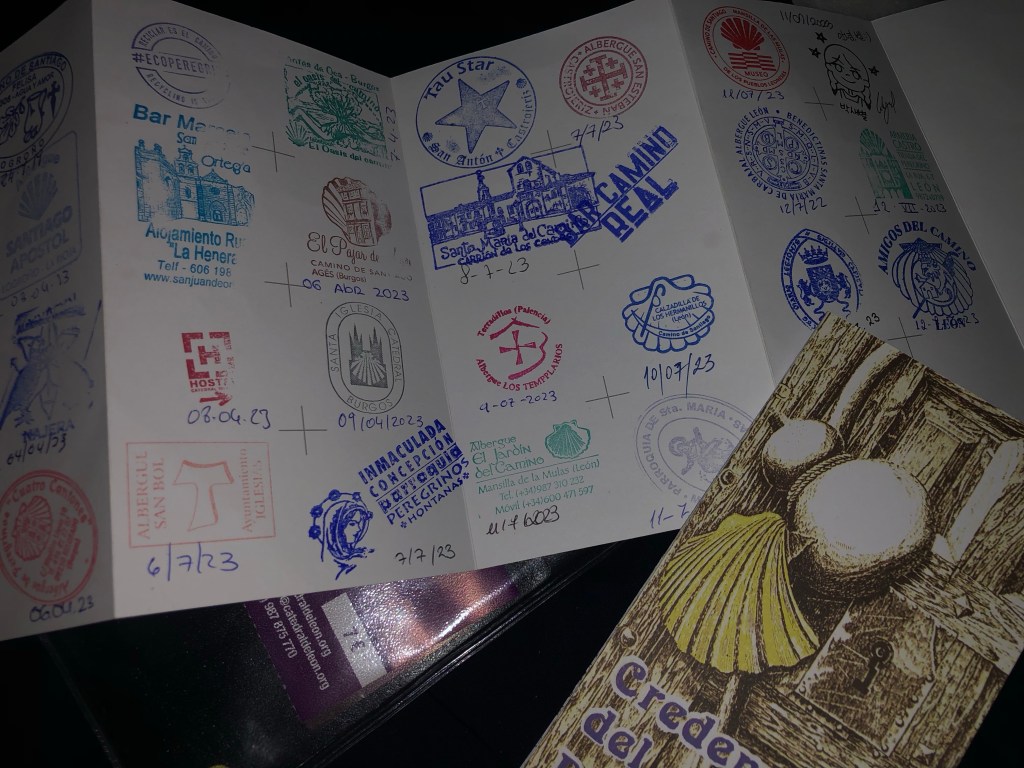
My credencial, or pilgrim’s passport, is already sitting on the coffee table, open at the last stamp. My sleeping bag is rolled up and ready to go and I’ve ordered a good quality rucksack as the one I used last time is at my parents’ place – and it was falling apart after more than a decade of use. For a sense of continuity, I’ll aim to stay at the same place where I came to a stop last time. My Spanish colleagues at work expressed some dismay at the idea of doing the Camino at this time of year – “pero oye, esto se hace en verano” – but I’m going to trust my instinct on this one.

I’m well aware that I’m heading out in none other than Semana Santa, the holiest week in the Spanish calendar. As well as adding to the colour of the Camino nights, with all the reckless passion of the pasos, it may well make for a busier (and more Spanish) Camino than usual. But after a couple of safe and highly-organised school trips, I’m more than game for a proper adventure. And few things provide quite like the Camino.

Bring it on! BB x
Home Again

I’m back home in England. It’s a lot noisier than it was in Bayeux, but then, the summer school kids are still here. It’s a Friday night, which means an end-of-week party, curated by the team leaders. That’s what we always used to do. You can tell because the music pumping out of the hall is almost entirely hits from the 2010’s. Twenty-somethings revelling in university nostalgia at a party ostensibly for children. Every once in a while a track comes on that they all seem to know: Freed from Desire, Mme Pavoshko, the Macarena. I’m almost nostalgic for Sur ma route, ever the anthem of my summer school days. Almost.

Blimey, but it’s a long ferry ride from Caen, though. As I caught the overnight ferry on my way out on Monday, I slept through most of the journey, but this time I watched the whole thing from the seats. At first you’re riding parallel to the sloping French coast to the east, and the seabirds follow you out: pairs of scoters, heavyset black-backed gulls, solitary gannets and the odd fulmar. Then it’s nothing but sea in all directions. England, on the horizon, hides behind a wall of cloud and mist, and the sea seems to fade into the sky. There’s always at least one or two shopping containers in the distance, the lettering on their hulls so vast you can read it from miles away. In a trick of the light, an Evergreen tanker seems to float in the void between the sea and the sky.

More than once, I tried to imagine what it must have been like for the soldiers crossing the Channel. The Allies riding into the jaws of death on the beaches of Normandy; and the Normans themselves, some nine hundred years prior, setting out to rewrite the history of a nation. The Conquered liberating the land of the Conqueror. There’s a poetic symmetry to that. Perhaps that’s why Normandy felt so special. It really is a history fanatic’s paradise and I couldn’t recommend the place more highly.

I really enjoyed being back in France. Toulouse was OK and Bordeaux pleasant enough, but there’s a magic in the north I’d never noticed before. It was also a pleasant reminder that I can handle myself just as capably in French as I can in Spanish, and I needed that. I should get to know that beautiful country some more over the years. Normandy was especially beautiful and I may well be back someday.

But for now, my legs could use a rest. And I could do with the sun making a return, since my feet, having been in sandals for four days, look like something you might find in a Bernard Matthew’s packet in the frozen food aisle in Tesco’s. BB x
The Weatherman Cometh

It starts with an ominous grey sky to the west. The patchwork of fluffy summer clouds that have been insulating the leftover heat from three scorching days suddenly drops into a void the colour of slate, matching the roof of Bayeux’s cathedral almost exactly. A man in a beret watches the skies; a French family whose children seem to tan faster down the years savour their two-scoop ice creams; a boy and his mother walk their five beagles.

The first raindrop falls on the back of my neck like a kiss. Cool, swift, sweet. I’m sitting on a bollard, sketching. I wait for another. It lands on my arm. Almost instantly a third lands on my sketchbook, narrowly missing the moustachioed gentleman I’ve been sketching. I snap the book shut and watch the tourists scattering as the rain comes down: the French dignified beneath their umbrellas, the Dutch unflinching behind their cameras, the Americans in a mad dash. I think about taking a slow walk back to the hostel to savour the blessed rain after so many days of sun. I’m no further than a few feet around the corner of the cathedral when the heavens open.

I concede defeat to the tempest and join a small but growing crowd seeking shelter in the ancient stone doorway of Odo’s cathedral. The beagle-fanciers are here, along with a cross-section of Bayeux’s tourists. The rain comes down in sheets, hammering the cobblestones like a snare drum, and then a sudden flash and a rolling crash from the bass drum up in the sky. “On est bien dessous, hein?” remarks a Frenchwoman with short-cropped hair and round glasses. A boy with long eyelashes runs in and out of the rain in his yellow anorak, singing the chorus of the Wellerman shanty over and over.

A solitary American standing nearby stares at his phone in disbelief and growls. It sounds like he’s frustrated at a video game, but as he starts to verbalise his frustration it’s obvious he’s checking a weather app. “You’re kidding me, I’ve got to wait half an hour? God, you’ve got to be kidding me. Come on!”. He growls again. And again, louder this time. Some of the other tourists back away. “Hrrrrrnnnn!” The grunts and growls sound uncannily like a bull, giving fair warning before a charge. “END! NOW!!!” A couple of startled jumps from the crowd. By the looks on their faces, they’re weighing up whether to tell him it’s futile to attempt to command the skies, or whether it’s more futile still to reason with a man so blatantly trying to do just that. As a result, nobody intervenes, and Yankee Canute continues to defy the elements, bellowing at the clouds with increasing fury. “Hmmmmmhnnn, CAHM AAAAHN. When’s it gonna EHYAAND? GAAHD, I don’t have TAAM for this SHIIYET”.

The growling and grumbling is briefly cancelled out by another clash of thunder. “Hurry up, END, NOW! Cahm aaahhn, pleeez, end now! Why does it have to do this during the day, it should do this at night!” – (a fair point here, it was unbearably hot last night) – “Gahd, I don’t have time for this shit!”.

I slip inside the cathedral to escape the verbal artillery for just a moment. Bayeux’s cathedral survived intact the last time it came under fire from an American battery, so I figure it’s a safe bet. The muted thunder beyond the stone walls sounds strangely beautiful, and the grey skies filter through the stained glass in hopeful technicolour. The aisles are packed with a colourful array of tourists waiting out the storm; a phoney faithful glued to their phones, waiting to proceed on their pilgrimage to the crêperies outside – a combination of American flags and English spoken here signs were drawing in the crowds earlier. Staring down at the sightseers, a gargoyle pulls his mouth into a sneer, tongue out, deriding a thousand years of peasants, pilgrims and pensioners.

Outside, the rest of the gargoyles are doing their job, spewing rainwater from their mouths onto the streets below. For the first time they look complete, as though the gaping mouths were merely voids waiting to be turned into channels. A father points them out to his daughter, one hand gesturing, the other on her ear as our frustrated Yankee Canute swears blue murder at the sky.

The streets of Bayeux shine under the whitening sky. Umbrellas and ponchos have been magicked out of the air (and some straight out of souvenir shops). The Wednesday market is being dismantled. The fishmonger reclaims the last two skate wings and a Norman bookseller voices a quiet complaint to the heavens as he stacks his pulped collection of second-hand books: “aujourd’hui, précisement?”.

The storm has passed and the sun has returned with a milder temperament, his midsummer fury sated at last. I think I’ll take the rest of the day off. Find a park, do some reading, and clue up on the bus times for tomorrow’s expedition to the coast. A bientot! BB x
For Whom the Bell Tolls

My provisional license arrived in the post yesterday. My second, I should say, since after a very thorough summer holiday shakedown of the flat I’m convinced I must have accidentally thrown my first one out with the trash months ago. It’s put a major stopper on the whole learning-to-drive this summer by holding up the theory stage, but now that it’s here I’ve got no excuses. I should get booking.

But first, I’m getting out of here for a few days. I’m done with scrolling, hoping for contact from the outside world and turning off the WiFi for a bit of enforced internet downtime. Summer holidays just drag on and on when you have nothing to do, so I’ve decided to get out there and do something.

So here I am in the ferry terminal in Portsmouth, waiting for the 22.45 to Caen. The overhead telescreens keep alternating between the blue departures board and the vivid blue and yellow banner of Ukraine. The BBC News app remains focused on the heatwave, though the magic number 40 has disappeared from the headlines – “temperature tops 38C and likely to rise”. Five stories down, Tugendhat is eliminated from the running for Tory leader.


It certainly was hot today, but it didn’t feel much like that blisteringly hot summer holiday in Jerez almost twenty years ago. Despite the threat of 40°C heat, the breeze rolling in across the Weald kept the school grounds pleasantly cool. Even so, the signs that this has been an unseasonably hot few days are clear. When I went out to do a little reading in the morning, the summer soundscape was there: the echoing whack of a tennis racket, the ceaseless chatter of the house martins, grasshoppers chirping lazily in the meadow. A few hours later, the whole place was silent. Only a lone crow broke the stillness, and that was just the once.

I thought the train journey would be problematic due to the hysteria in the news, but despite the grovelling apologies over the Southern Rail tannoy, the train was only ten minutes late pulling into Portsmouth – which is remarkable, given how prone to delays they can be outside of a national crisis.

It’s a beautiful train ride, the route from Crawley to Portsmouth – one of those British rail journeys you should tick off the list, like the one from Darlington to Edinburgh. I never get tired of passing Arundel Castle and the fens at its feet. A childhood spent in and out of various salt-marshes around Kent has left me rather fond of their bleak serenity. Herons stalking the water’s edge. Egrets bedecking the bushes like so many plastic bags snagged on the branches.

Suddenly, an intensive greenhouse-farm appears, concealed from the outside by a thick growth of trees. A ravenous human hand clawing the depths of the earth to satisfy a hungry world. And then it’s gone, the train is hurtling forwards and I’m back in the marshes. I could be looking into the past or the future. I remember the fate of El Acebuche, its silent reeds swaying in the wind, and I’m not sure I want to.

The French family in the seats behind me must be headed for the ferry port, too. At least, I guess they are – I’ve caught the word “bateau” often enough. The children swap in and out of French and English without much of an accent overlay in either. The father speaks only on French, until he stops the ticket inspector to ask if she can turn off the air conditioning. “Don’t you think it’s rather nice, as it’s so hot out there?” – “For five minutes is nice, but it’s freezing.” – “If I were you I’d enjoy it.” At the next stop, the father gets out to soak up the sun. His daughter only just coaxes him back on as the doors close. Before he returns to his seat, he steps into the next carriage, remarks that it’s warmer, and moves. Within minutes the rest of his children have followed suit. It seems petty, but they have a point – the air con was turned up so high I had goose-flesh for half the journey.

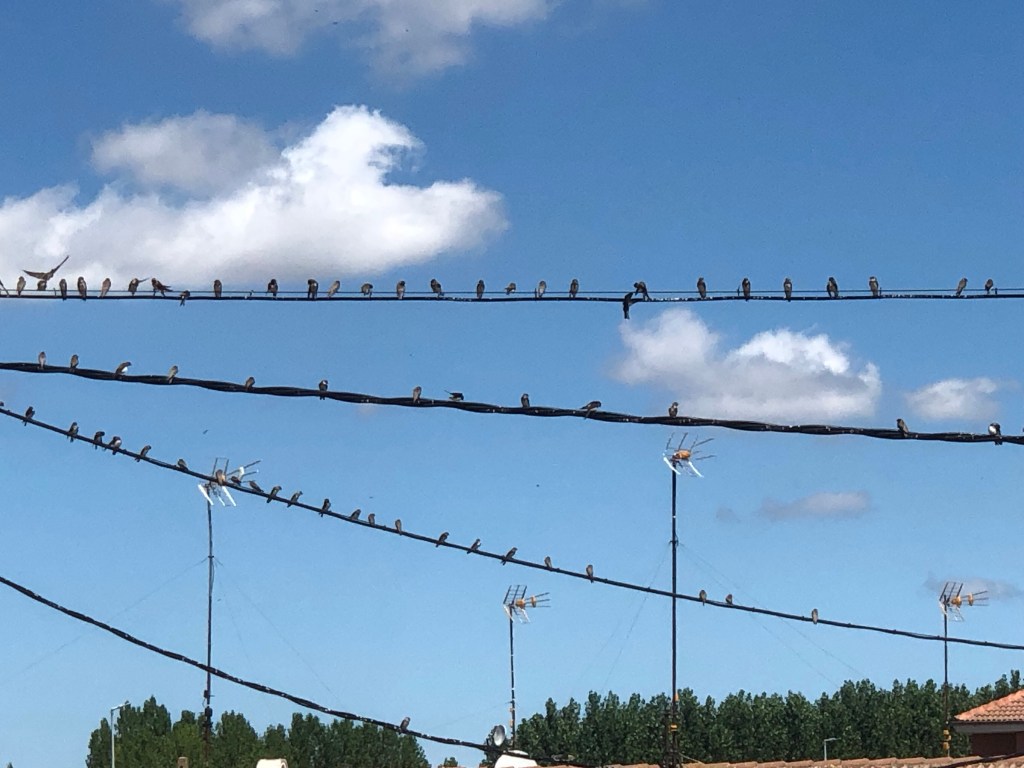
I haven’t been to Portsmouth before. The last time I caught a ferry in this neck of the woods was from Southampton, but that was many years ago and we didn’t stop. I had four hours to kill and not a lot to do, so I picked a spot in Victoria Park and watched the world go by. The bells of St John’s sounded for seven. They sounded strangely mournful, but though I hummed the melody back a couple of times, I couldn’t work out why. Two handsome women wander by, their accent West African and intensely musical. Three kids hurtle past, one on a scooter, two on skateboards. One wears a red-and-black chequered shirt tied around his waist (did everybody own one of those shirts at some point?). A family of cockatiels screeched from an aviary in the centre of the park, stolen away from their home far beyond the sea to entertain the fancy of the British public. An ancient Chinese bell stands nearby and seems to serve a similar function, pilfered – it says so in almost as many words on the plinth – during a campaign in Taku. A cryptically-worded message daubed above reads “Perpetual Felicity Achieved” in austere capitals. A breeze blows and the bell moves a little, but it makes no noise. Some cage birds stop singing after a while, too.

As the sun sets, I head to the port. The heat and the hysteria have driven everyone indoors. The high street is virtually empty. Just a couple of kids with drinks they’re nowhere near old enough to drink and a level of delirium to match, and a weatherbeaten gentleman sleeping in the shadow entrance to an Ann Summers store. A grey mannequin in turquoise lingerie poses suggestively through the window at him, blowing a kiss. He wipes his nose, shakes his head violently and turns the page in the book he’s reading.

There’s plenty of folk driving here and there, but nobody on foot. For several minutes I feel like the only human in the city. A couple of Deliveroo me go by on their bikes. A bearded man in a red-and-black chequered shirt worn over his t-shirt, bent over almost double. I pass an outpost of the Redeemed Christian Church of God in a backstreet, and later, the house where Charles Dickens was born. Everything is shut. The high rasp of a motorbike going by, the evening heat and the strangeness of a new place… It almost feels like I’m abroad already.


But no. I’m still here in the terminal. Boarding starts in ten minutes, so I suppose I’d better close there. A demain, mes amis. France is calling! BB x
Rome IV: Popes & Palms

Bloody hell, but that was unnecessarily early start. The trip to Fiumicino Airport (8€ on the shuttle bus from Via Crescenzio 2) was on time and completely hassle-free, so I arrived with four hours to go until my flight – a new record in caution. Still, better early than late! It gives me time to relax and put yesterday morning into words.

All I can say to start with is believe in your own luck for a change. Because Sunday morning’s adventure wouldn’t have happened at all if I hadn’t taken a chance.

One of the main reasons I came to Rome and stayed until this morning was because of the very real chance of seeing the Pope deliver his Palm Sunday Mass in St Peter’s Square. That’s not the kind of opportunity you pass up on if you can help it. Unfortunately, the information on the internet is vague, conflicting and genuinely quite hard to track down. Most of it implies you need to apply for a ticket directly to the Vatican via fax (!!), sometimes as early as three months in advance, to be in with a chance of securing a “coveted” ticket. At least, that’s what all the tour companies say. By Saturday night, I’d more or less given up on the whole affair and planned to go for a morning walk down the Via Appia instead.

Turns out the internet is wrong. So here’s me setting the record straight.

Contrary to what you may find online, you do not need a ticket to attend the Palm Sunday service in the Vatican City. It’s free and there’s no need to book!!!

I rocked up in my casual clothes with my picnic packed for the Via Appia and thought I’d check to see what was going on in VC and before I knew what I was doing I’d followed a whim and chanced the security barriers. They scanned my bag, found only a punnet of olives, a punnet of strawberries, breadsticks and some other snacks… and let me pass.

As it was still only 8.20am, St. Peter’s Square was still relatively empty. Thousands of chairs had been set up overnight, along with the temporary barriers raised around the central obelisk and the wind rose, but other than a small crowd settling into the first block of seats the pickings were good. I found a seat near the front of the second block, just two rows back from the barrier and strategically positioned behind two families who’d put their children in the seats directly in front, giving me a perfect view over their heads to the Papal seat. If I’d planned to come I could have arrived sooner and snagged the best seats in the house, but for a spur-of-the-moment decision I really lucked out.

By the time the warm-up Ave Marias were being chanted (in Italian, the real lingua franca of the Vatican), the seats on either side of me had been taken: by a diminutive group of Indian nuns on my right and a large Eurasian woman and her daughter on my left. I would have been squashed throughout the service had the nuns not seen on one of the telescreens that there were still five empty seats in the front block and gone charging off for a better seat, and my other neighbour left during the Communion after realising she was holding up the entire row by being the only one not going up for communion. By the end of the service, I had more room than I knew what to do with!

The Swiss Guard were quite a sight to see in their full regalia: plumed morion helmets, black capes worn about their landsknecht-esque striped uniforms and, at least in the hands of those guarding the cardinals’ seating area, impressive halberds, their tips flashing in the sun. I’m not sure if they’re more visible if you take a walk through St Peter’s basilica or the Musei Vaticani, but I certainly hadn’t seen them until now, so it was worth coming even if only for that!

And of course, Pope Francis himself, dressed in regal red until the end of the service. Since my wanderings tend to take me off the beaten track, the list of famous people I’ve encountered is downright pitiful, but this has got to rank right up at the top – like Pope Francis did in 2013’s Time Magazine. Seeing the warm smile of the humble head of the Catholic Church at such close quarters was a once-in-a-lifetime event, truly… I couldn’t help taking up the cry of ‘¡Viva el Papa!’ raised by the Colombian family in front of me. His humility is what makes him so inspirational to me – that a man in so important a position should have no qualms making apologies for centuries-old abuses of power by his institution, or reject the majesty of status outright while still holding true to the core values of the church. I might not have gone to such lengths for a different Pope, but for Francis, my feelings were genuine. What an inspiration!

I’ve also never seen a Palm Sunday service quite like it. Multilingual (there were readings in Spanish, English, French, Portuguese, Mandarin and Malayan, as well as Italian) and multifaceted: the song of Jesus’ arrest by Pilate and his Passion was performed by various cantors with the full choir as the voice of the crowd. Faith through storytelling through song… now that’s more like it! It was like watching a passion play of old – and in a very real sense, I suppose that’s exactly what it was. They’ve been doing the same thing here in this square for well over a thousand years.

The Pope ended the service with a reminder to care for the poor – ever at the heart of his urbi et orbi message. When I left, I saw that in the merry exodus from the square, some misguided pilgrims had smashed right through a street vendors’ wares, knocking them in all directions. As I approached, several strangers gathered round to help the man set his little stall back to rights. Just as there are those who profess to do good and look no further than their own backyards, so too are there people out there prepared to help their fellow man, whoever that may be. That gives me hope. To quote a famous film set in and around the Vatican City:

Religion is flawed, but only because man is flawed.

Dan Brown, Angels and Demons

I’ve made it to the pueblo and a much-needed week with my cousins. It’s been fun wrangling with Italian, but these lips were meant for speaking castellano, hombre. Until next time! BB x