Black Sand and Starlight

Caserío los Partidos, Tenerife. 8.19am.

Well, if that wasn’t the best sleep I’ve had in a week, I don’t know what a good sleep is. The four-hundred-year old stone walls of my room might not look like the cosiest setup, but it couldn’t be more enchanting: a log-burning stove in the corner, a skylight above the bed so you can see the stars from the comfort of your bed, and a warm shower… I’d have settled for less, especially after several hours’ hiking around the ash flow of Chinyero, but it was nothing short of heaven on my return.
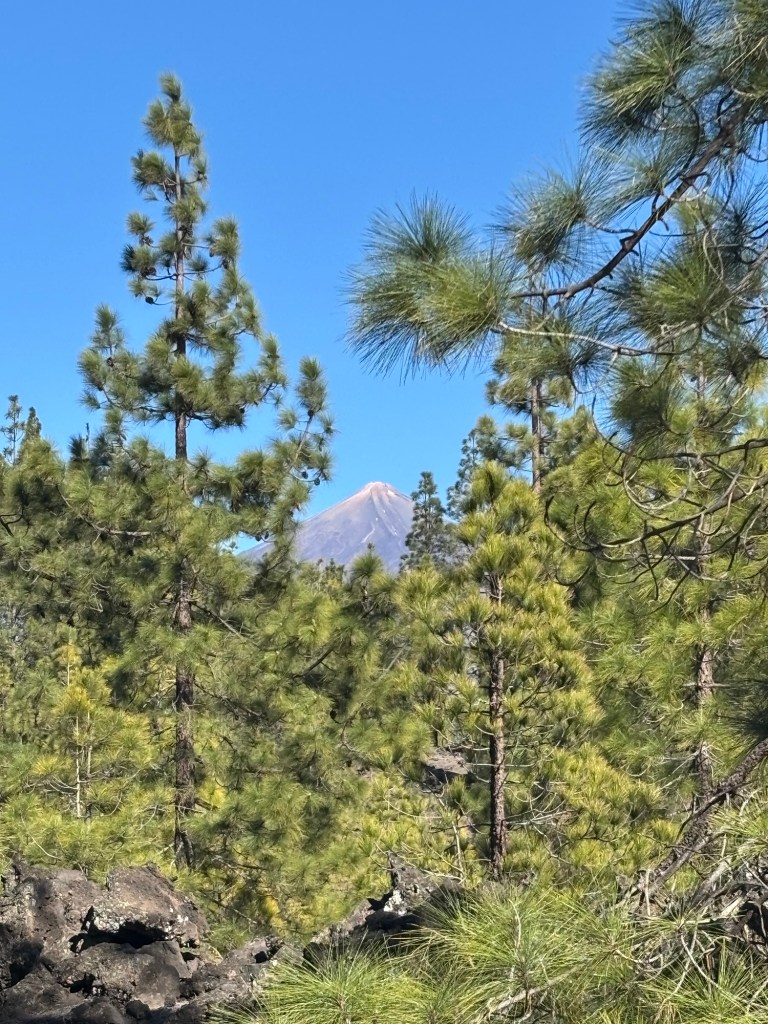

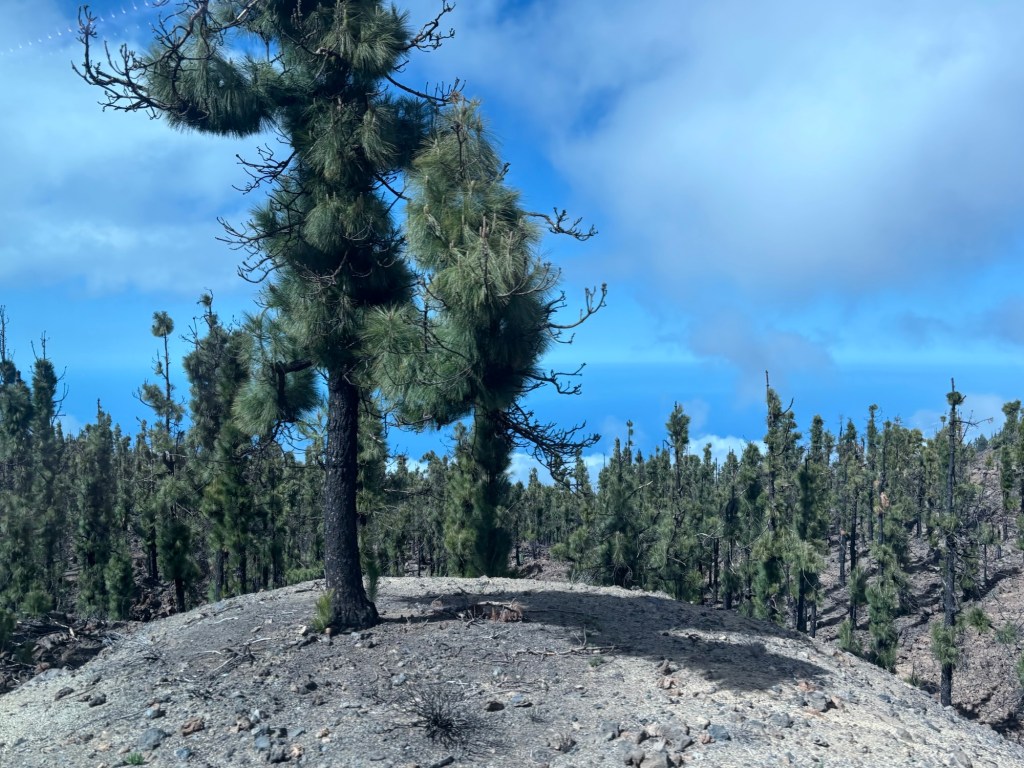
Chinyero is the reason I’m here. This is the site of the last eruption in 1909, Chinyero being one of the vents of Teide, which looms over everything to the west. This is also Teide’s best side: from here, it is perfectly conical, like a child’s drawing of a volcano, and at this time of year you can still see the last traces of snow and ice in the deep gulleys running down its peak. Sure, the Roque Cinchado may have been a worthy candidate for one of the Top Ten sights of this trip, but what I really wanted to see here in Tenerife was the black sand forest: a natural marvel growing out of the destruction wrought by Teide over a hundred years ago. I was not to be disappointed.
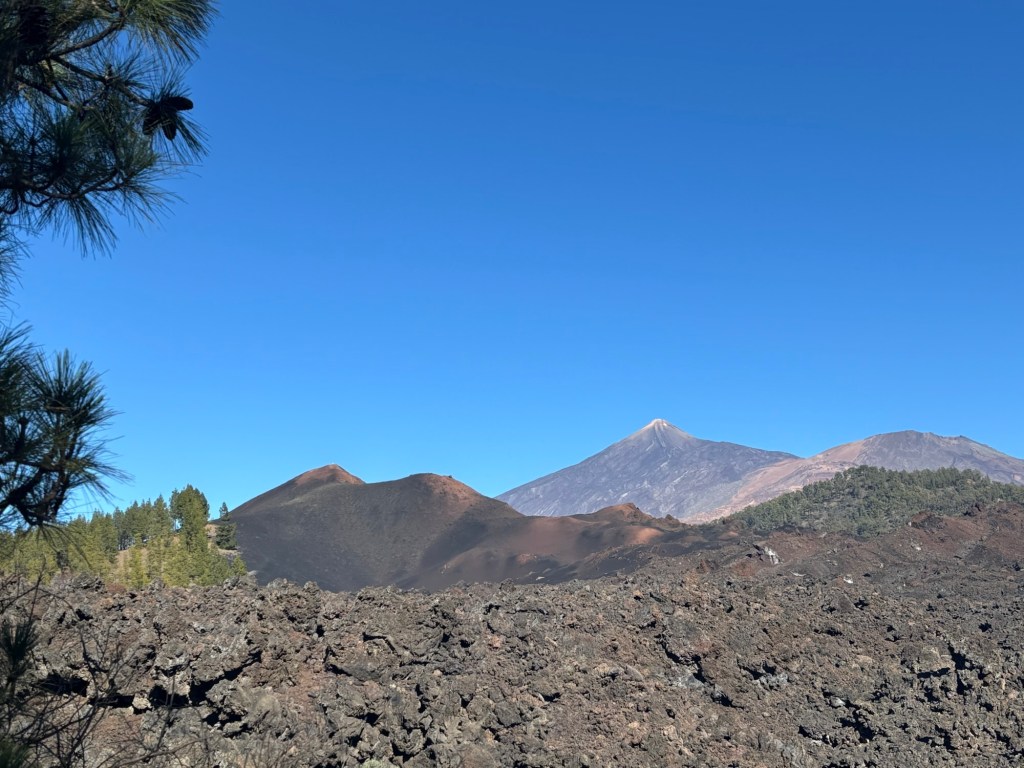

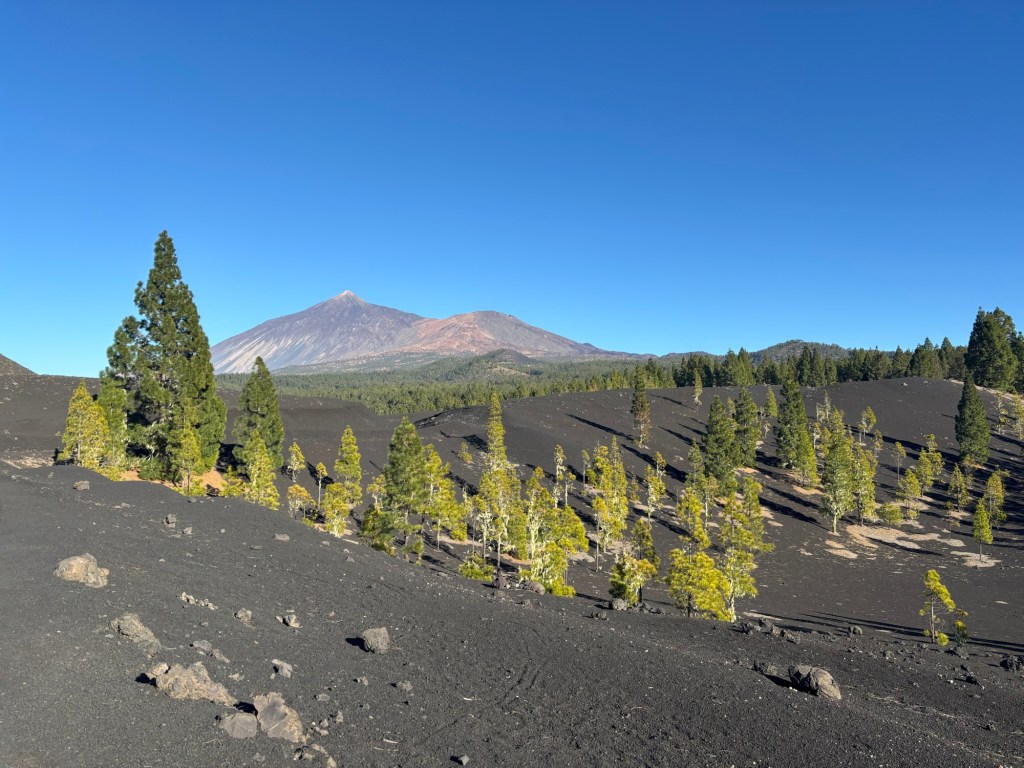
It’s a two and a half hour circular hike from Caserío up into the ash fields, most of it very well signposted and all over well-trodden paths, though the hardened basalt and steep climbs make for slow going at times. I saw three or four cyclists and one other hiker far off, but compared to Teide National Park, it’s a much more personal experience of the mountain on this side of the island. Most of the hike takes place in the shade of the Corona Forestal, the crown of pine trees that ring the mountain (but especially its fertile north face). Some of the trees look like they still bear the scars and scorch marks of the fires that raged through here when Chinyero erupted, long ago.


Did you ever see Fantasia 2000 as a kid? This place reminds me of the Firebird sequence, which plays Stravinsky’s masterpiece as the backdrop to the eruption and rebirth of a volcano. It also gives off major Primeval and Walking with Dinosaurs vibes, which is true for at least one of those TV shows, as the final episode of the first season of Primeval was filmed on the almost identical ash fields of Gran Canaria. All three creations draw on an ancient force in an even older setting, and the black sands of Chinyero really do feel like a walk back in time – if not on the surface of another planet.

There are very few mammals native to Tenerife, as is often the case with island fauna, which usually specialises in creatures with fins or wings (or those that had wings, once upon a time). I saw a couple of rabbits during my hike, which accounts for the presence of buzzards in these forests, but besides that, the ash fields seem almost deserted, unless you listen closely. The island’s canaries were singing away in the treetops, along with a few goldcrests, treecreepers, chiffchaffs and the local Canarian race of great tits. I counted at least three woodpeckers drumming at different frequencies on the descent, though I only saw one. Best of all was a brief encounter with a blue chaffinch, a special bird found only on the islands of Tenerife and Gran Canaria and only above the tree line. Tracking it by its call, I tried imitating it to get its attention, and it came to have a look. I got pretty close, but it must have thought me a very strange chaffinch indeed.

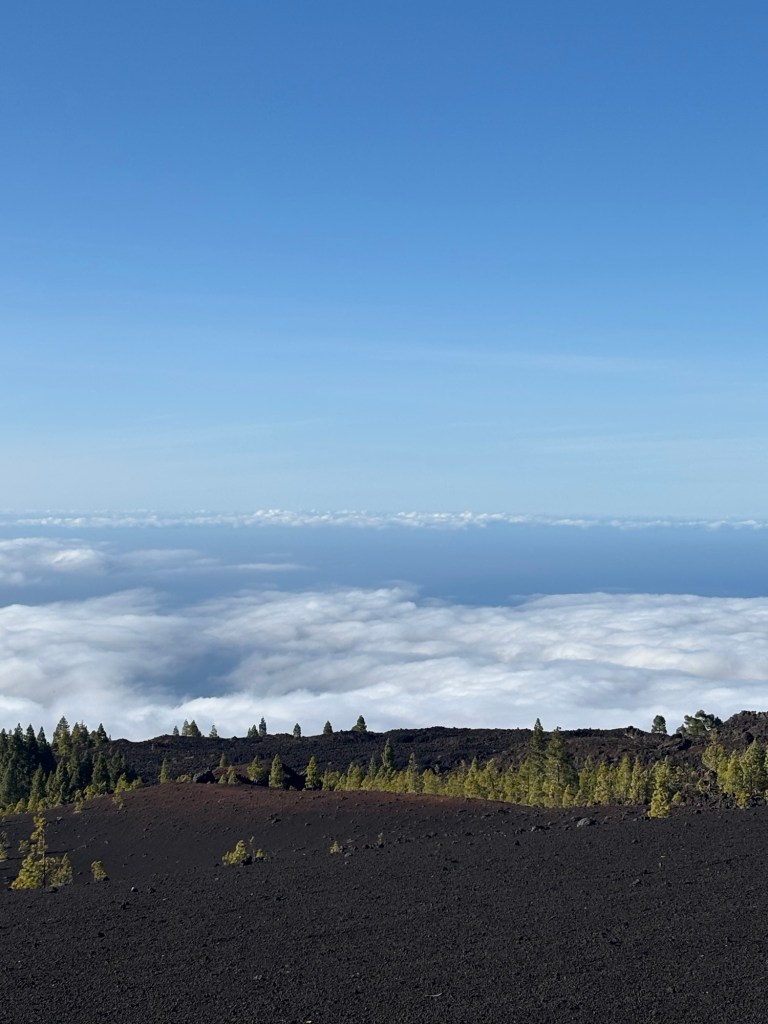
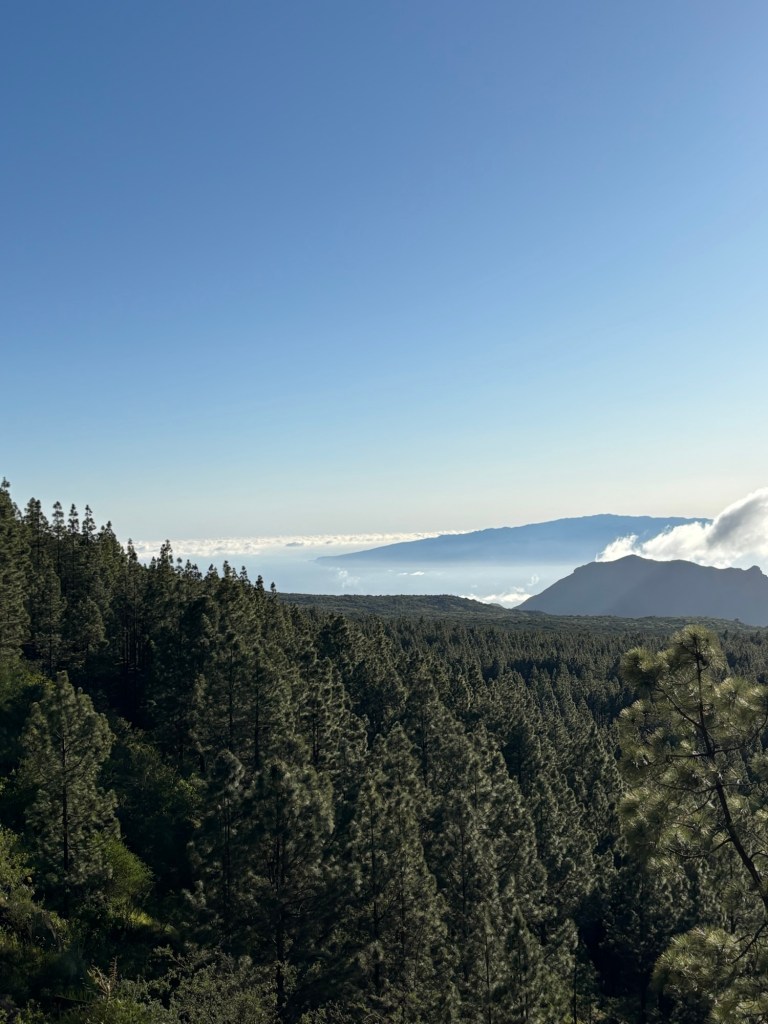
Meanwhile, to the north, the island seems to fall away into the sea, disappearing beneath the clouds. We really are very high up here.

The views on the climb back down to Caserío are breathtaking, especially at the end of the day when the sun is beginning to sink into the Atlantic to the west. Stand at just the right spot and you can see the neighbouring islands of La Gomera and La Palma, flanking the Teno mountains on the westernmost point of Tenerife. I don’t know much about La Palma, but La Gomera harbours an otherworldly rainforest in its centre, the Garajonay National Park, full of gnarled and twisted trees and trailing beards of moss and lichen. If I should return, that would be near the top of my list.

I had a well-earned dinner and a glass of wine back at Caserío, the last of which very nearly knocked me out – perhaps that explains the long sleep. But I did hold on to my senses long enough to properly appreciate the other thing I came all the way out here to see (not just to Chinyero, but the Canaries as a whole): the night sky. The English fixation with security and LED lighting means it’s hard to get an unpolluted view of the stars anywhere in the country (outside of Northumberland, anyway), since we seem to delight in stringing glaring yellow street lamps along our roads like fairy lights, and filling our towns and cities with floodlights.

Out here, however, the lighting is less pervasive and restricted to the larger cities. And up here in the mountains, there’s almost no lighting at all, so the stargazing is spectacular.


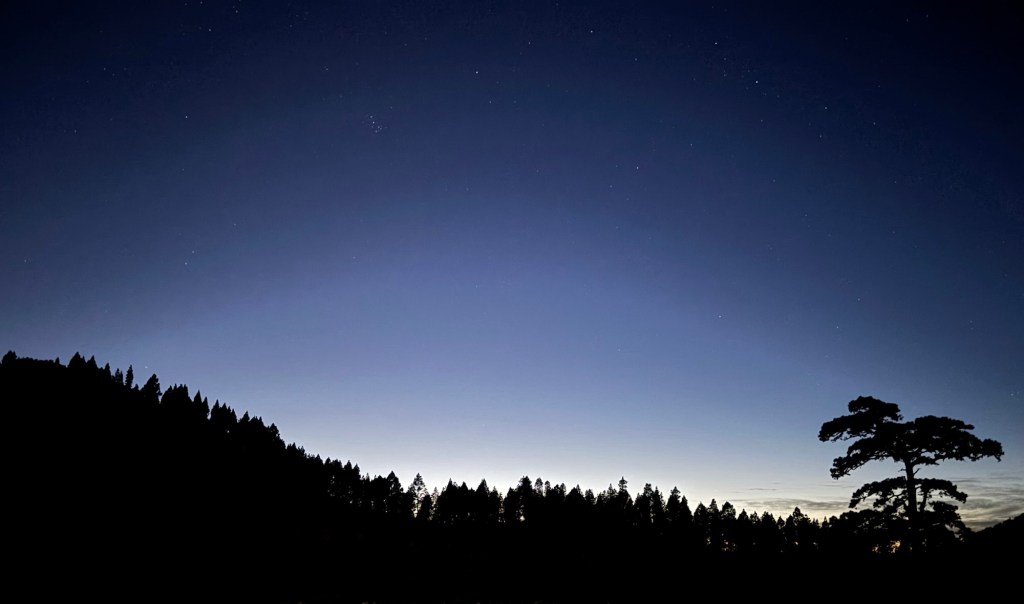
I didn’t see any shooting stars this time, but I’d be willing to bet that this is an incredible place to be at the peak of the Perseid meteor shower in the summer. I did count a number of constellations I haven’t properly seen before, blinking dimly behind the belt of Orion: Leo, Cancer, mighty Hercules and the Corona Borealis. And, of course, the full body of Ursa Major, not just the twinkling torso of the Plough.


My SLR would have struggled, but the iPhone did a remarkable job in the twilight. It may not be able to perform a quality zoom to save its life, but it does handle low light incredibly well.

Tomorrow is another day. Since I made it up to Chinyero a day early, I’ll take it easy. If I can, I’ll try to navigate round the south of the island to Santa Cruz for a change of scenery. I can’t say it’s the side of the island with the most appeal to me, being by far the more resort-heavy side, but that might make for something to write about in itself. But first, I have to find a bus to take me out of here – and that might be easier said than done! BB x
Devils of Fire and Dust

Capsule 19, Atypicap, Puerto de la Cruz. 19.02.

The last post went off on a tangent about guaguas – so much so that I didn’t even get on to talking about the purpose of my voyage: to hike in the caldera of Spain’s tallest mountain and the symbol of Tenerife itself: Teide National Park.


Ignore the ads plastered across bus stations and billboards: Teide, not the widely advertised Loro Parque, is the true ‘must’ of Tenerife. There is so much about Teide that is worthy of a story. It is an active volcano, erupting most recently in 1909. It was sacred to the Guanche people (the native peoples of the Canaries before the Spanish conquest), who saw it as both a holy mountain and the jail of the fire demon Guayota, interred within the mountain by their supreme deity, Achamán.

What did Guayota do to deserve such a fate? He kidnapped Magec, the Guanche sun god, and trapped them inside the mountain, plunging the world into darkness. Despairing for their future, the islanders prayed to Achamán, who fought a fierce battle with Guayota and imprisoned him within the mountain forever.


Teide itself is a mighty thing indeed. Even from the caldera – which, it must be said, is not the mountain’s most beautiful side – it towers above everything else, dwarfing not just the high cliffs and mountains around Tenerife’s rim but the surrounding islands as well. One can only imagine the terror the islanders must have felt when it caused the earth to roar and spewed fire and fury out of its peak.

It was said that Teide’s eruptions were a sign of Guayota’s fury at his imprisonment, and that his children, in the form of demonic dogs known as tibicenas, haunted the mountainside by night.

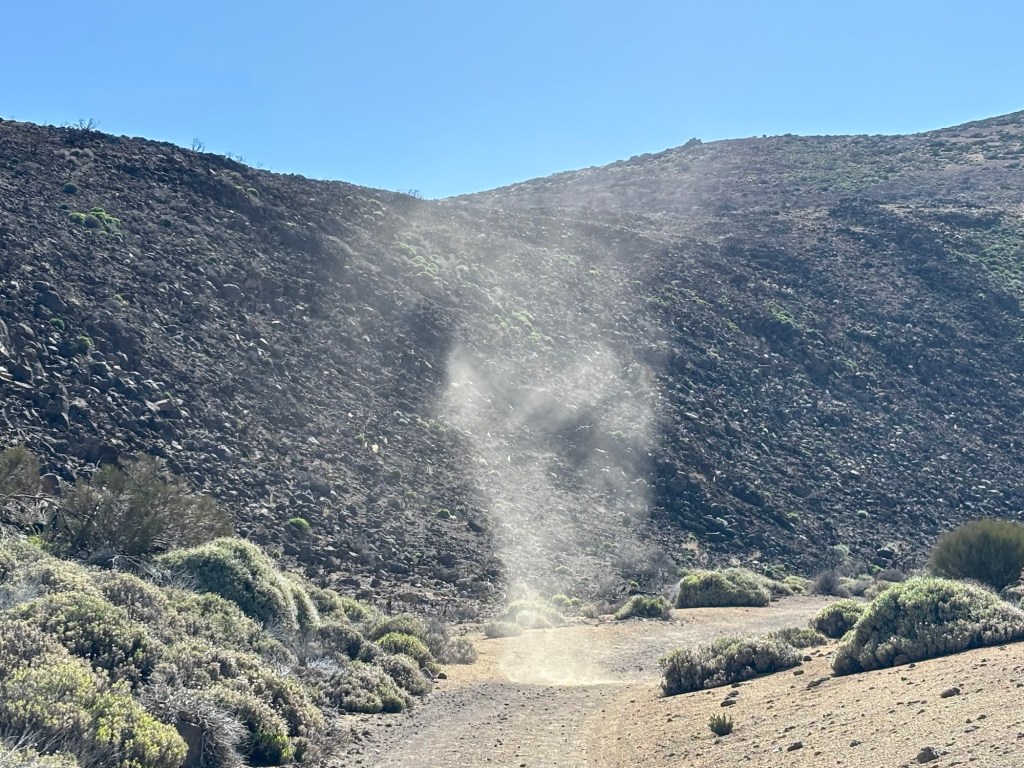
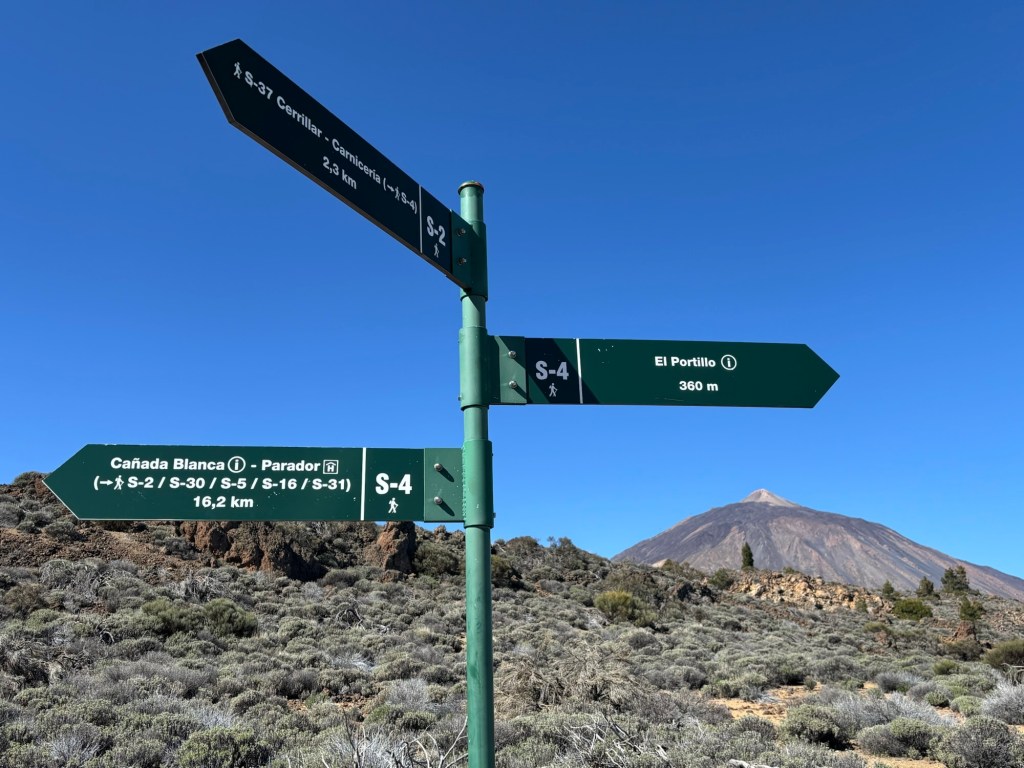
I didn’t see any hellhounds on my lap of the park, but I did see a dust devil as I set out from El Portillo. I used to see these quite frequently when I lived in Jordan, but outside of desert environments they are quite rare.


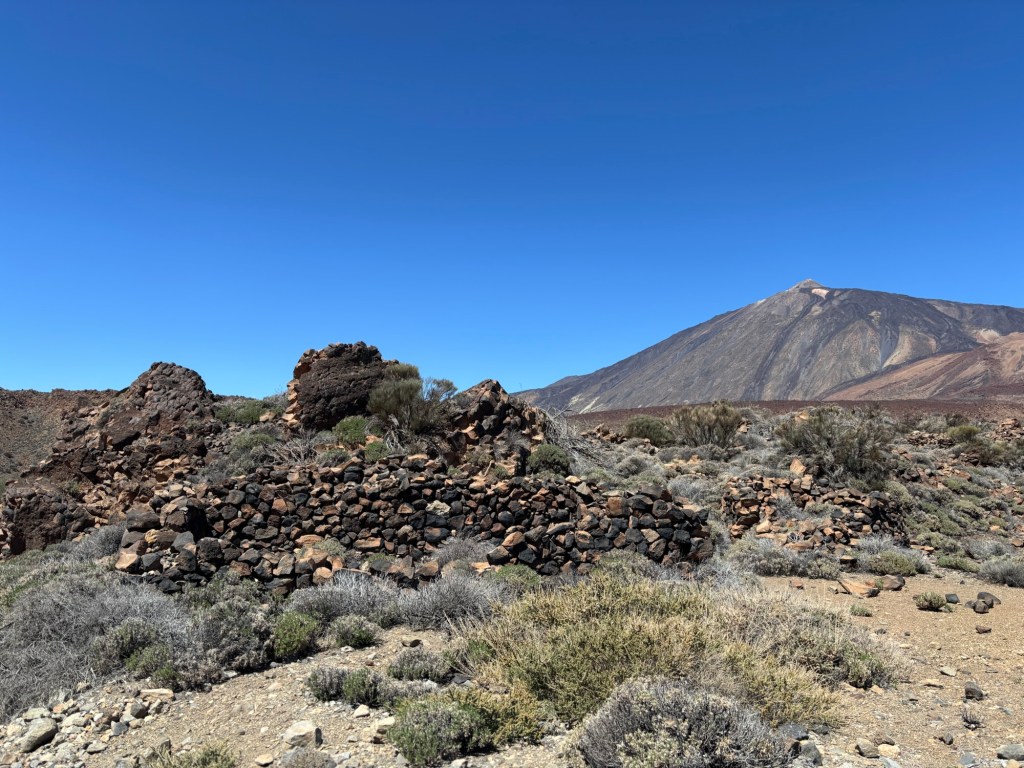
Scattered around the caldera floor are a number of unfinished or ruined dwellings built out of the scattered basalt rocks. These present a mystery to the casual hiker: what were they? The ancient dwellings of the Guanches? An initiative by the park authorities? Hunting refuges? In truth, they are none of these things: the caldera was far too hostile an environment for settlement by the Guanches, construction within the national park is tightly restricted, and hunting – naturally outlawed – would net a poor return, as the largest birds within the park are kestrels and the odd buzzard, and the only native mammals are bats.

No – they are actually the remains of a German attempt to build a sanatorium within the caldera in the early 20th century. A lack of funding, the eventual creation of the National park and, of course, two world wars put a bullet in the head of the project and now all that remains are the foundations of these houses, which now provide shelter for the enigmatic blue-bellied lizards that can only be found here on Tenerife.


These creatures are everywhere in the caldera, darting across the path and into the numerous crevices in the boulder-strewn ash field as you pass. There are two other species endemic reptiles within the park – the Tenerife skink and the Tenerife gecko – but the casual observer is much more likely to cross paths with the Tenerife lizard, especially around the Parador car park where they have become quite fearless.

The Canary Islands – curiously, named not for the species of finch that calls the islands home, but for the large population of monk seals (or sea dogs) that once lived here – are home to a large number of endemic reptiles, some of them textbook cases of island gigantism: that is, where a species has fewer natural predators and can thus grow to a size far greater than its mainland relatives. The largest of these, the El Hierro giant lizard, is a relic of precolonial times, when giant lizards were much more common in these islands, as well as much larger: fossils indicate that some could exceed a metre in length, right up until the arrival of the Spanish in the 1490s.


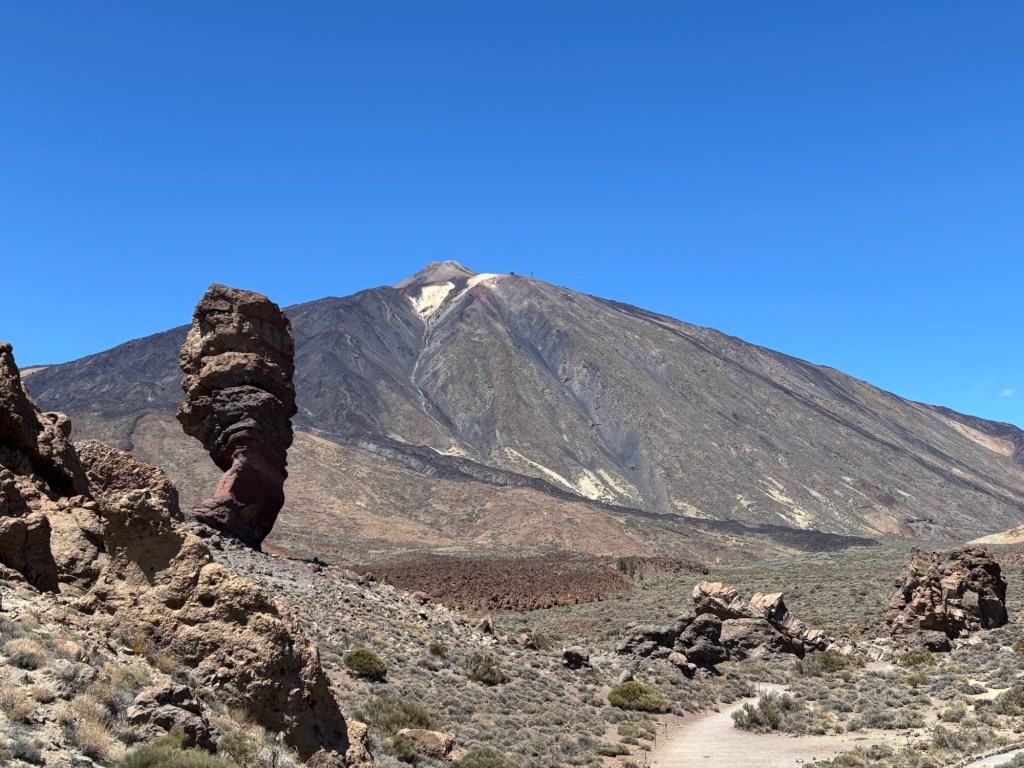
No visit to Teide would be complete without taking in the Roques de García, the roots of an ancient mountain even older than Teide itself. The most well-known of these has to be the Roque Cinchado, also known as ‘el árbol de piedra’ – the stone tree. Standing on the footpath a few paces from the car park provides you with one of the most famous views in all of Spain: the Roque Cinchado with Teide as its backdrop. The old man of the mountain and its son. I had to wait for a family testing out their drone to get a clear shot, but it was worth it.


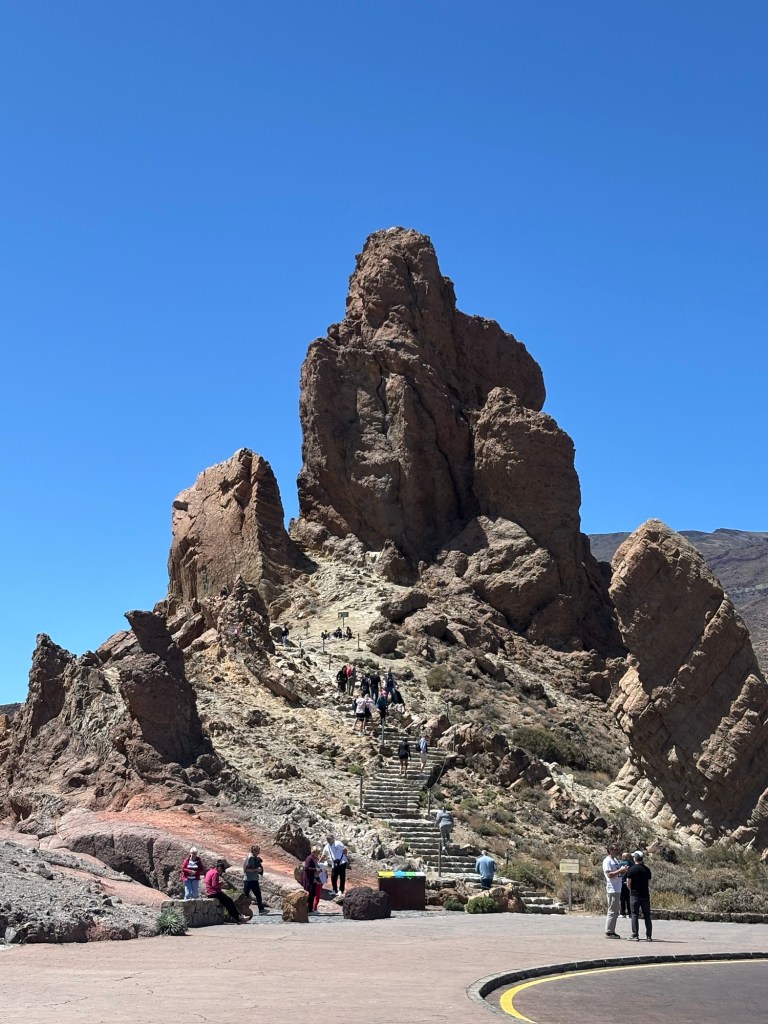
It’s not the only impressive rock formation in the caldera: there’s a mighty organ-like basalt structure down in the valley floor, and the largest of the Roques de García seems to have become – of all things – a beauty spot. Three Italian men sat at the top of the steps, sporting designer sunglasses and expensive shoes. A Ukrainian girl dressed in pink with her hair tied back in a high ponytail occupied one of the lower peaks for the best part of twenty minutes, turning her head this way and that while her friend took photographs. As a matter of fact, I was the odd one out for not wearing my best: it seems whole busloads of well-dressed teens and students come up here for the ultimate profile picture.

I wonder if they spared a thought for the ancient fire demon trapped with the mountain behind them – or whether they thought to learn about the Guanches, the true Canarians, whose fire was extinguished many hundreds of years ago. They were crushed as a mere prelude to the conquest of the Americas, and I don’t remember their story featuring much in my history classes in Spain. If there are any left, their bloodline had long since mingled with the Spanish to the point where it has all but faded away. Perhaps it is fate that they too, like the fire demon Guayota, now lie buried deep within the mountain.


Tomorrow I strike out west for the peace and quiet of Chinyero. It’s been a long time coming. BB x

Ga-ga for Guaguas

La Corona Forestal, Tenerife. 16.34.

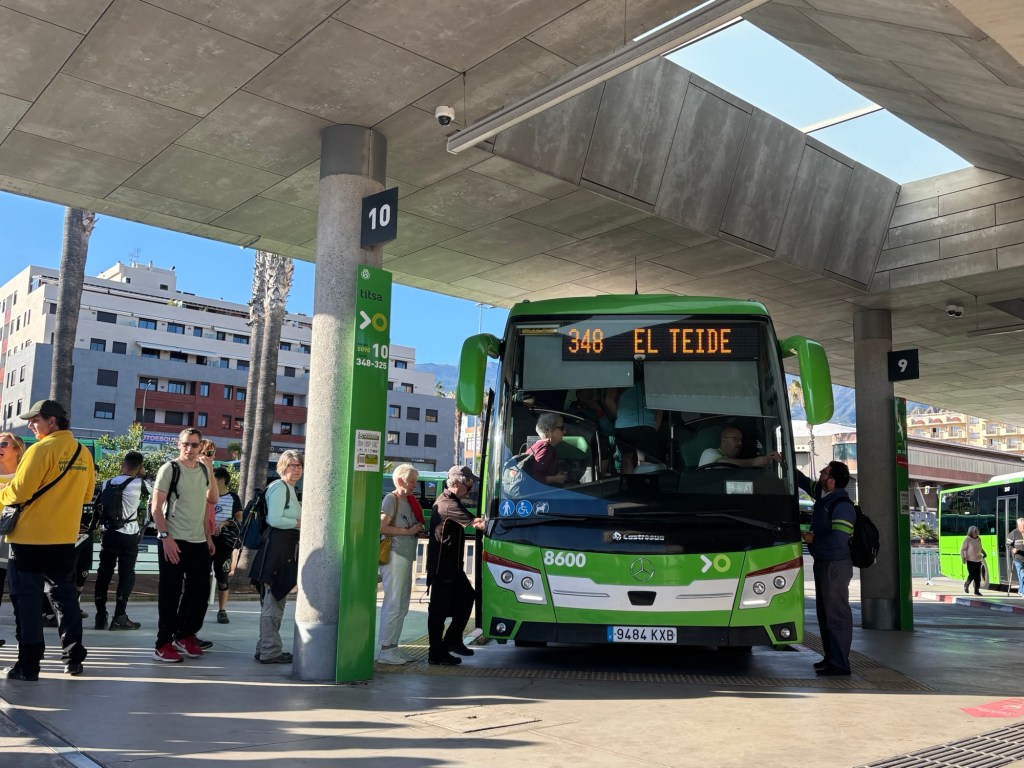
If there’s a hard mode for learning to drive, at least one of the levels must be the permit to drive the 348 from Puerto de la Cruz to Teide National Park. It’s utterly ridiculous. The vertiginous indifference required behind the wheel as the bus makes the sixteen sharp turns necessary to climb the two thousand metres from the city to the rim of the caldera – while negotiating said turns with the many tour buses that ply that route – is nothing short of medal-worthy. Truly, if you can drive here, you can probably drive anywhere.

And that’s as good a lead-in as any to the nub of today’s story: the legendary guaguas, the bus network of the Canary Islands.


Where did I leave things yesterday? In Santiago airport? Well, I made it safe and sound to Tenerife, some one thousand miles to the south. I was on high alert for most of the flight, as this is the one leg of the grand tour that I don’t know inside out. The plane took off a leisurely twenty minutes late, and I was so concerned that we’d miss the last bus to Puerto de la Cruz that I completely forgot to factor in the time difference… because the Canary Islands operate on British time! 

Using every second of the additional hour, I set out to find the bus lane. It wasn’t all that easy to find, and when I did, it was to learn that Google had got the times wrong: the last guagua for Puerto de la Cruz from Tenerife North leaves at 20.30 on Saturdays. So I’d missed it.

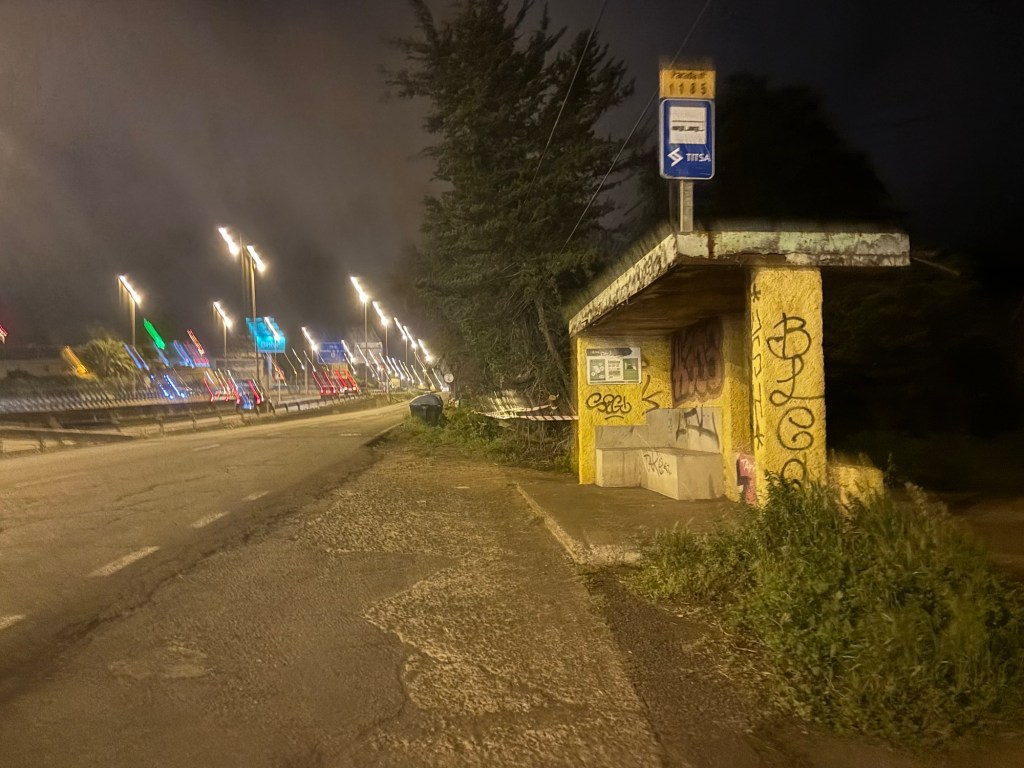
But, where there’s a will (and a stubborn won’t concerning the 75€ taxi alternative) there’s a way, so I gathered my belongings and set out into the night for the bus stop over the road from the airport.


I struck out over the road – well, more like along it, as Tenerife North isn’t very walkable. Still, I wasn’t hassled or beeped at en route (always a good sign), and I did manage to track down the bus stop outside a rather seedy establishment called Eclipse de Sol. Google assured me there was a bus on its way, which is just as well, as none of the QR codes on any of the signs around Tenerife seem to work – helpful, when they’ve decided to save on printing the timetables. But, somebody up there was watching over me, because the bus for La Orotava eventually turned up.

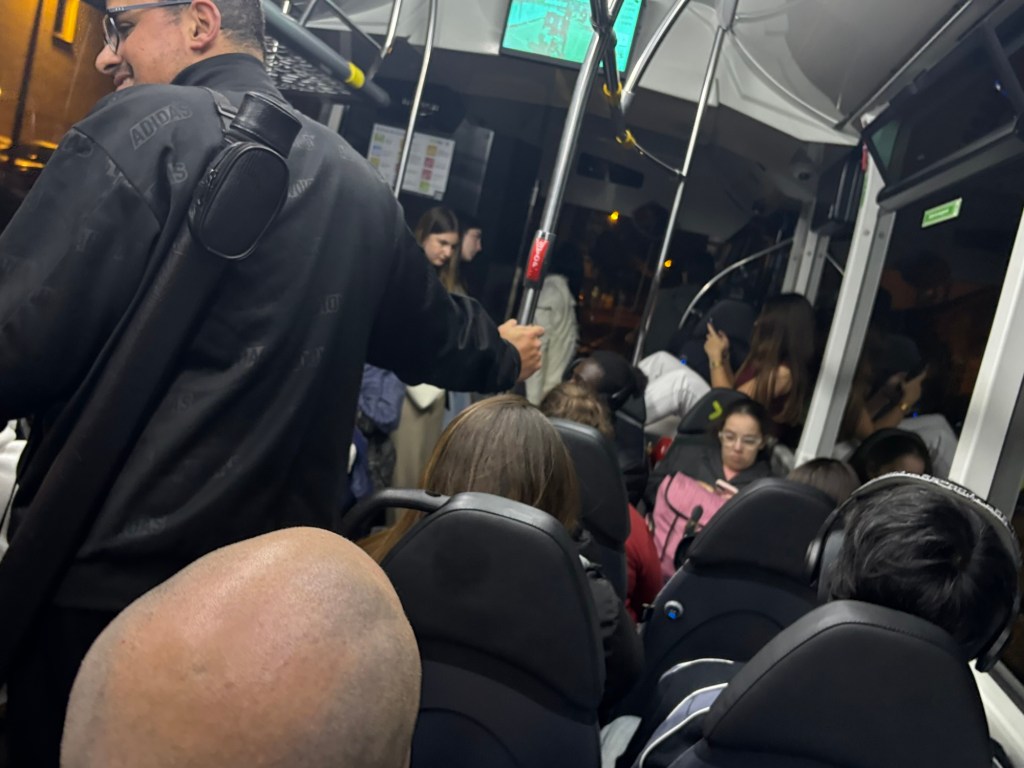
Let me tell you something for free: traveling by guagua is the perfect blend of European and African/South American public transport: all the bells and whistles and all of the noise that comes with it. It was packed to the gills: students sitting in each other’s laps, others crowded into the luggage racks, passengers stood two abreast in the aisle from the back of the bus all the way to the steps leading up to the driver. I was lucky to get on at all.


The sardine tin I managed to catch wasn’t even the right one, as it terminated in La Orotava – still a good five kilometres from my destination (and 360m up). I considered taking a chance on catching the right bus, which was on its way but twenty minutes late, but the prospect of it not being real and getting stuck at the junction in the middle of nowhere did not appeal. I thought about jumping into a taxi at La Orotava instead, but even as I thought that over, another bus arrived with “Puerto de la Cruz” emblazoned across its screen. I haven’t been so relieved to see a bus in years.

A similar story unfolded today en route to Teide National Park. There are only two buses per day: one there, one back. No exceptions. Given what I’ve already told you about the logistics, that’s not entirely surprising. But you’ve got to get there early, as it’s a very popular ride and the queue is always huge. I just about made it, despite being late due to my shopping quest for Factor 50 sunscreen on a Sunday morning (they’re all locked away behind a glass cabinet so I had to get a clerk to open it first). The travel card I bought was next to useless, so I paid in cash. I still don’t quite know how they work – there isn’t a flat rate for a single journey, as the website implies, as it’s 6,30€ to get to Teide from Puerto de la Cruz, and the driver wasn’t the friendliest – though when you’re having to deal with hapless guiris on the most popular bus in town, and then drive said bus up one of the steepest bus routes in Europe, I can’t say I blame the man.


Tomorrow, I’m braving the guaguas once again to get to Icod de los Vinos, partly to see the famous dragon tree, and partly to stock up on supplies for another hike around the ash flow of Chinyero, where I have booked a casa rural so that I can see the other thing that has brought me to Tenerife, besides the need to tick this last autonomous community off the list: the stars. Tenerife has some of the best stargazing in the world, once you get away from its coastline. I plan to make the most of that. BB x