Where to next…?

It’s getting mighty cold here in Tierra de Barros. I went to sleep clutching at my knees and somehow managed a decent night’s rest, only to wake up and find I’d left the window slightly ajar. I think I need to invest in a winter duvet more than a bike. I’m still not used to this system of alternating between summer and winter duvets. I almost miss the English climate. Almost…

We’re now three weeks away from the end of term. Yes, term ends on the 22nd December, and this year that falls on a Friday. Late, but not too late. Today’s a regular Monday. I’m sitting in the living room, easily the warmest room in the flat, having just turned the heating off after a generous couple of hours’ life-giving warmth. I have a private class with the kiddos at six (hopefully they’ll behave better this week – but then, they are only three years old), and I need to go shopping, as when I went this afternoon it took picking up the first item in the fruit and veg aisle for me to realise I’d left both my cash and my card at home.

So what’s to do? Well, it’s the time of year when I need to start thinking about where I’d like to be next year. Amongst other cards I have on the table – up to and including the JET programme in a few years’ time – the original plan still stands, which is to carry on with the British Council assistant jig for another year, albeit this time not in IES Meléndez Valdés, 06220 Villafranca de los Barros, Badajoz. The school has been wonderful to me and I could hardly have asked for a better host for two years, but I ought to spread my wings and discover somewhere new whilst I can. After all, Spain is a kingdom of many worlds: Extremadura may be one of her most beautiful, but there are other jewels in the crown!

So, for my own benefit – and for those who are interested in applying for the programme – I’ve decided to go through each region, in alphabetical order, to assess the strengths and drawbacks of working in each. Coming back to Villafranca was easy… it’s time to step back into the unknown!

(Ed.: I’ve used my own photos where possible – Andalucía, Cantabria, Extremadura and Madrid – but the rest are various stock images!)


Andalucía
DSC_0208

Where: South
Weather: Hot
Dialects: No (though Andalú, the regional accent, might as well be)
Visited?: Yes (far too often)

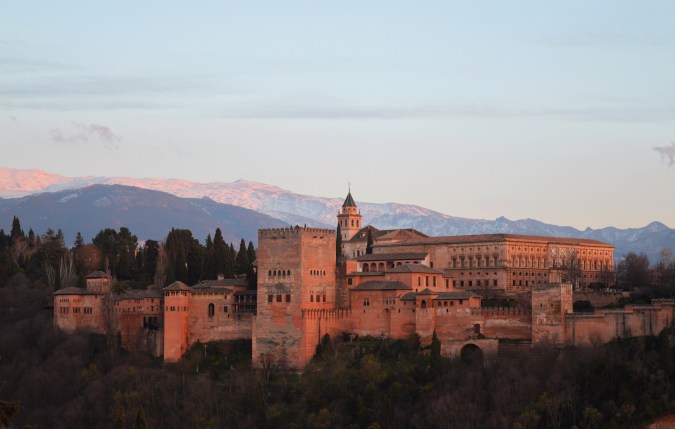
Ah, Andalucía. My old homeland! And, until recently, the region of Spain I knew best. In many ways the ‘classic’ Spain that comes to mind, Andalucía is – understandably – very oversubscribed as a destination. The Americans tend to have their eyes on it, and thanks to their system, which allows preferential treatment to consecutive-year assistants, they tend to end up there eventually, too (after doing time in equally beautiful backwater regions). Andalucía isn’t necessarily more spectacular than any of the other regions, but it offers a lot more bang-for-your-buck over the distance it spans: cities like Granada, Córdoba, Cádiz, Ronda and Sevilla ooze Romantic charm, and then there’s the natural beauty of the Alpujarras, Doñana National Park, the Sierra Morena and the all-too-often-overlooked beaches of the Costa de la Luz. It’s a fantastic region in which to fall in love with Spain, but because it’s so well known, it can be difficult to escape… unless, of course, you end up in somewhere like Olvera.

Probability: 7/10

Aragón
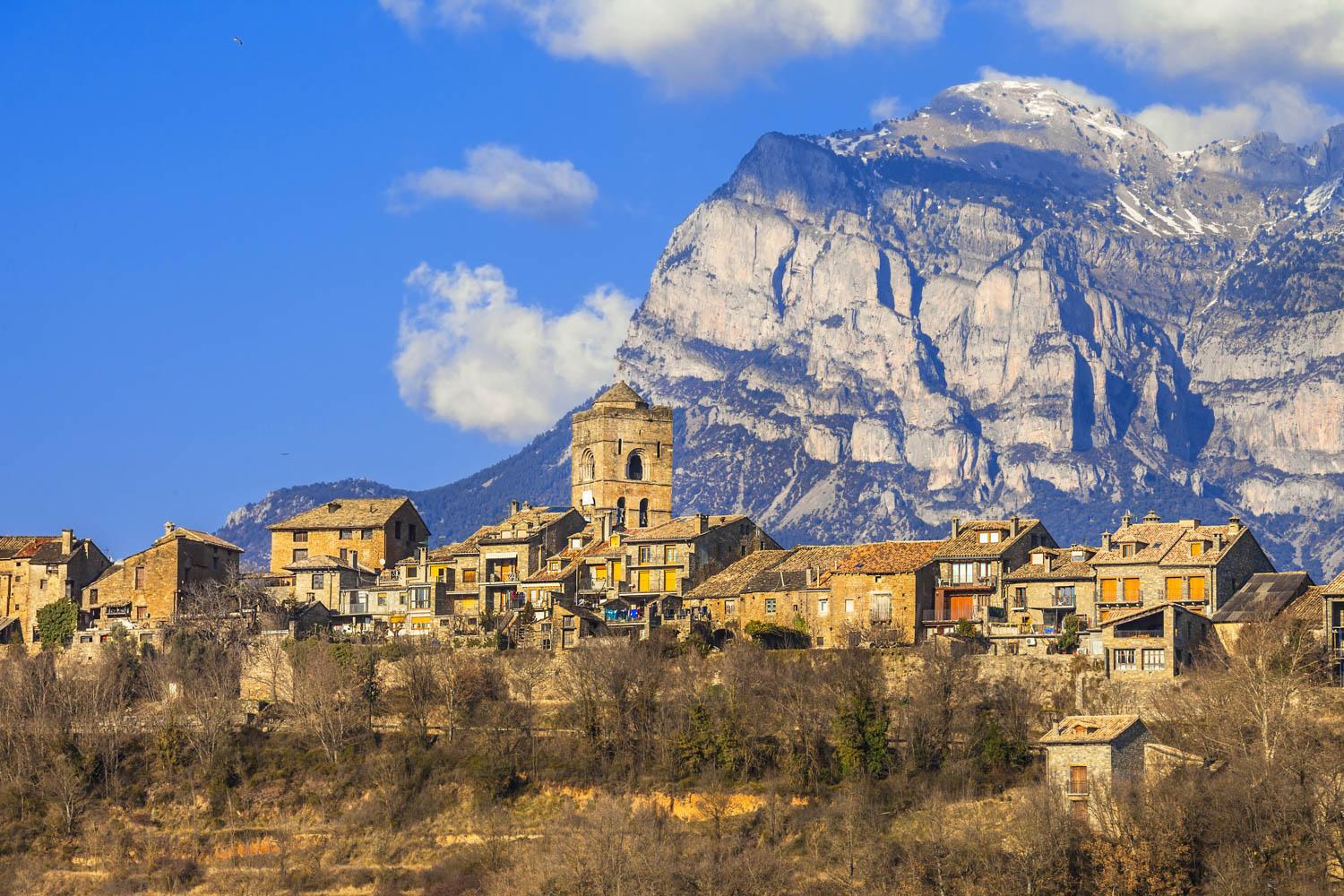
Where: Northeast
Weather: Cold
Dialect: Aragonese, Catalan (only in the high north and west)
Visited?: Yes

Alright, so a service station and a brief visit to Calatayud don’t exactly count as visiting Aragón per se… Aragón is a lot like Extremadura. Lots of people pass through it on their way to somewhere else. Zaragoza is probably its most famous city, but what of the rest of the region? Huesca in the north plays host to some of the most beautiful Pyrenean landscapes out there, and Teruel would kindly like to remind you that it does exist, despite what the rest of Spain will tell you. Aragonese, a local dialect, survives to the present, but as Spanish is the only ‘official’ language, there’s no cause for concern. High on the Spanish plateau, it gets mighty chilly in winter, but it is also the home of the Comarca de Monegros, a vast expense of semi-desert. And, like Extremadura, its comparatively unknown status makes it a very good place to go native.

Probability: 8/10

Asturias
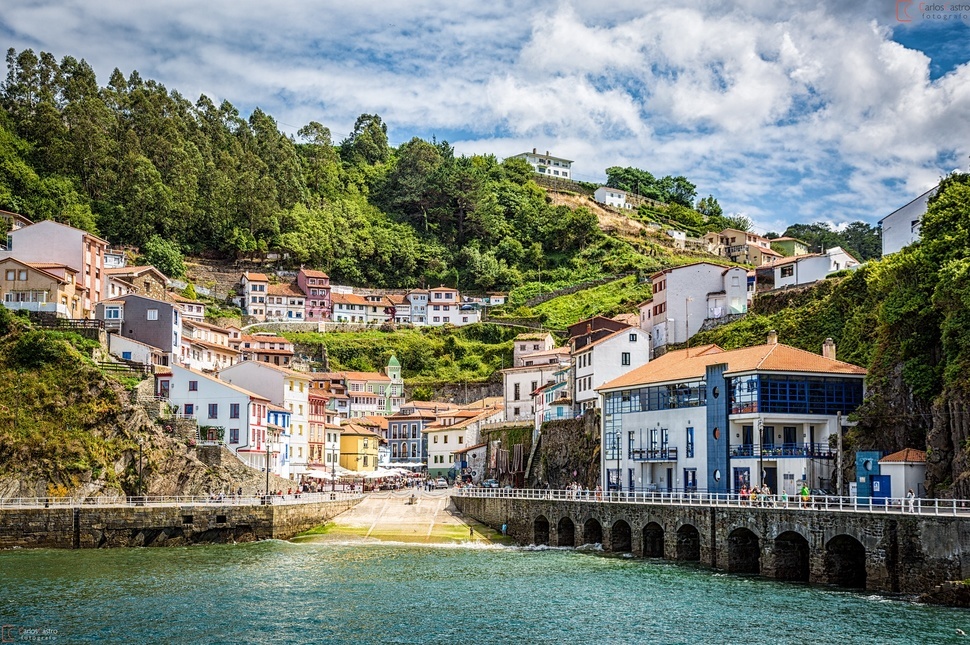
Where: North
Weather: Cold
Dialects: No
Visited: Yes

A popular choice amongst second-years, Asturias is where modern Spain was born. With pretty seaside towns, Alpine comforts and forested hills that actually go brown in autumn, in some ways it’s the perfect antidote to the Spanish south. For those used to endless heat, readily available paella and Moorish castles, it can seem like a very different world… which it is. The Spanish is very clear here, and it has some of the most beautiful beaches on the peninsula, even if they aren’t exactly the warmest. It’s a little harder to get to, but Santander’s airport offers cheap flights and is only just across the border. It is, however, a little on the expensive side.

Probability: 8/10

Cantabria

DSC_0201

Where: North
Weather: Cold
Dialects: No
Visited: Yes

Cantabria, after Andalucía and Extremadura, is the region of Spain I’ve visited the most. No, scratch that. Technically speaking, Santillana del Mar is the third region of Spain I’ve visited the most, as for some reason I ended up there on all three occasions. A marginally less mountainous version of Asturias, Cantabria is a good choice for the British auxiliar who doesn’t want to leave behind too many creature comforts. Quesada pasiega, a local speciality, is unheavenly good (like most of the Iberian peninsula’s takes on the custard tart), and the stereotype is true: I’ve seen more cows and tractors here than in any other part of Spain. It doesn’t have the quasi-African feel of the south, but what it does have is a cheap and reliable train network, which is a huge plus in any world.

Probability: 5/10

Castilla La Mancha

Where: South-central
Weather: Hot/cold
Dialects: No
Visited: Yes

Like Aragón, Castilla La Mancha is a region I can hardly claim to have visited, having spent just a few days in Toledo a few years back. If Andalucía is the Spain sold to tourists, Castilla La Mancha is the one you find in picture books. It’s Don Quijote country, and any bus ride from Madrid to the south will show you that: seemingly endless fields stretch as far as the eye can see, dotted in various locations with mountain ranges and the iconic windmills (see Consuegra, above). It’s also, coincidentally, the land of my ancestors; my grandfather was from Villarrobledo, a town near Albacete. An immense region where it is very easy to go native, but perhaps not the most awe-inspiring on offer. Toledo, however, is easily one of the world’s most beautiful cities…

Probability: 4/10

Castilla y León

Where: Northwest
Weather: Cold
Dialects: Leonese (in León province)
Visited: Yes

Make no bones about it. Castilla y León is gorgeous. It has its less interesting parts (the Camino de Santiago goes through them), and is in part a mirror of sister-province Castilla La Mancha to the south, but drawn across the meseta are some of Spain’s most striking landscapes. The Duero river gorge is breath-taking, as are the old Roman gold mines of Las Medulas (see above), and the granite-strewn scenery to the north of Burgos looks like something out of a Lord of the Rings film (but then, this was where El Cid was born). Here they speak the ‘purest’ Spanish, so you’ll have absolutely no problems with the language here. It’s clear, crisp and, whilst no slower than the usual Spanish machine-gun delivery, easier to understand than, say, any of the southern accents. The cuisine is also spectacular; in my humble opinion, most of Spain’s best food is its earthy, country food, and you’ll find a lot of it here. The cities of León, Burgos and especially Salamanca are wonders in their own right. Just watch out for the slow-burning Leonese separatist movement.

Probability: 8/10

Cataluña

Where: Northwest
Weather: Warm
Dialects: Catalan (official language)
Visited: Yes

This year would have been a very interesting year to be working in Spain’s black-sheep region. Even after the failure of Puigdemont’s half-hearted rebellion, I suspect it’d be worth a punt for the next few years. I’ve been to Barcelona a couple of times; school trips on both occasions, so I’ve barely begun to scratch to the surface of the place. The Costa Brava is undeniably beautiful, with stunning Mediterranean coves and sparkling white beaches. The Catalonian interior, however, is what grabs me: like neighbouring Aragón, Cataluña has some spectacular mountains. This is Serrallonga’s country, and I’d sure like to find out some more about the gang warfare between the Nyerros and the Cadells of old… if it weren’t for the language barrier. Now more than ever do I regret taking a Persian module over Catalan at university! You should bear in mind that Cataluña’s relative affluence makes it a little more expensive than the other comunidades, especially so in Barcelona itself. But if you’re after a more cosmopolitan experience, this is the place for you!

Probability: 6/10

Ceuta and Melilla

Where: North coast of Morocco
Weather: Hot
Dialect: No (though strong Arabic presence)
Visited: No

Despite the fact that I lived in Tetouan for an entire summer last year, I never did visit Ceuta. For one reason or another, something always came up to stop me going. Which is a shame, really: as the Spanish territories go, they’re pretty unique. Expect a very Moroccan vibe, with the North African kingdom literally within a stone’s throw at any given moment. If it weren’t for their size and the general cost and difficulty in getting to and from them if I ever wanted to travel, I’d probably sign up right away. It would, at the very least, give me an excuse to keep my Arabic polished. Most of the placements are in the two cities, though, which is a bit of a turn-off for me.

Probability: 4/10

Extremadura
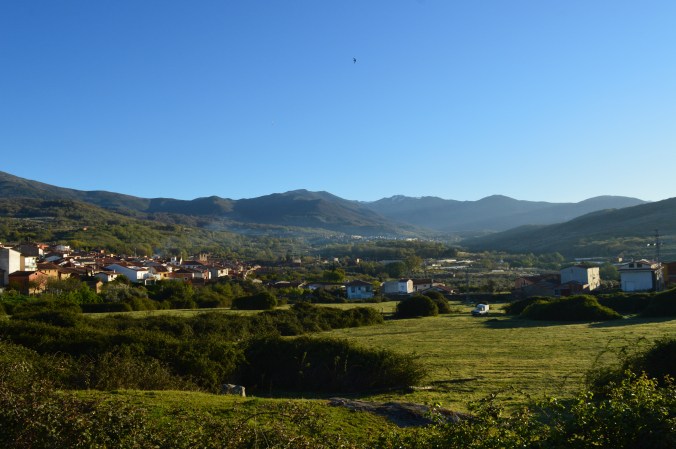
DSC_0546

Where: West
Weather: Hot/cold
Dialects: No
Visited: Yes

Of course, I could always stay put, but ask for a more northerly location: specifically, the green hills of Cáceres. There’s no denying Extremadura is by far my favourite region, and with good reason: it’s wild, it’s still relatively undiscovered, it’s lacking in other guiris and the people are some of the friendliest I’ve ever met. Plus, La Vera. Plus, Hornachos. Plus, the book. Heck, I’d stay just to be closer to Tasha and Miguel, who were pivotal in my return to Villafranca this year. With its welcoming vibe and its off-the-wall auxiliares, it’d be my top recommendation to anybody, though I’d concede you have to be prepared to be out in the sticks to be here. For me, however, it’s something of a safe option, and I’d much rather use this chance whilst I have it to explore some more of my grandfather’s beautiful country. Even if Extremadura is the best. Period. I’ll be coming back to this place for the rest of my life.

Probability: 7/10

Galicia
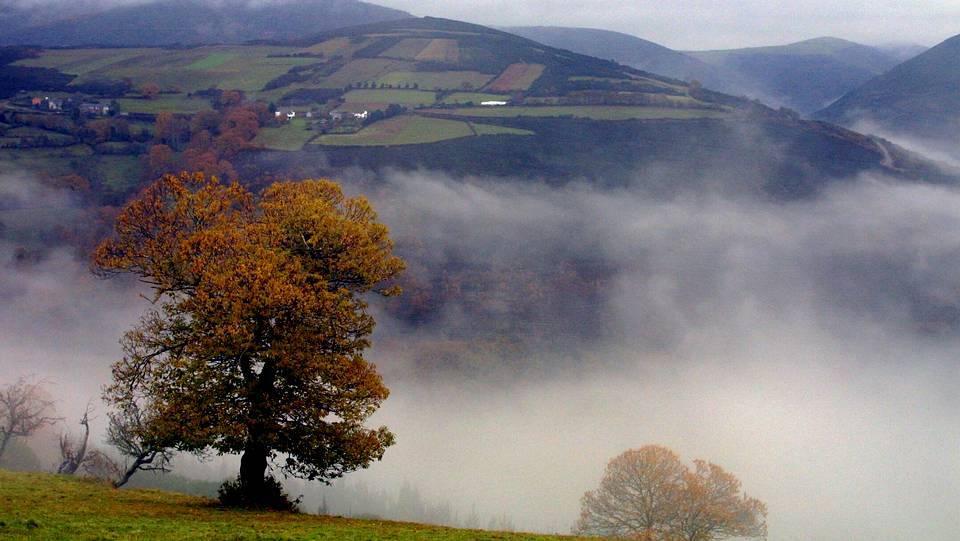
Where: Northwest
Weather: Cold
Dialects: Gallego (official language)
Visited: No

It rains a lot. Now that we’ve got that out of the way, let’s look at Galicia. Galicia is the Ireland of Spain, where the country’s Celtic roots are strongest. I mean, when their folk bands deliberately cover songs made famous by The Corrs, the ties are hard to miss. Galicia is about as far from the Spanish south as you can get on the mainland, in both distance and culture. Gallego is a thing, but I’m not above learning a new language. The word on the street is that the auxiliar programme there is one of the best in the country, if not the best. That, combined with the cheapness of living and otherworldliness that this region offers, make it the standout competitor for my attention this time around. And I never thought I’d consider it, which makes it all the more appealing. After all, I had no idea what or where Extremadura was, once upon a time. I’d very much like Galicia to be my next miraculous discovery.

Probability: 9/10

Islas Baleares

Where: Mediterranean Sea
Weather: Hot
Dialects: Catalan
Visited: No

Mallorca, Menorca and Ibiza. Party destinations in summer… and for the rest of the year? Well, EasyJet and Ryanair are always offering such cheap flights that there must be something to do there in January… right? If it weren’t for the fact that they’re islands, I might seriously consider the Baleares. But I like having room to manoeuvre, and I don’t know whether I’d feel trapped on an island. Plus, they speak a lot of Catalan there. Once again, I wish I’d not gone chasing Persian down the rabbit hole.

Probability: 2/10

Islas Canarias

Where: Off the west coast of Morocco
Weather: Hot
Dialects: No
Visited: No

First things first: it’s quite a long way from Spain. The Canary Islands, like the Baleares, can seem a very remote posting. Cheap flights are readily available to the UK and elsewhere, thanks to a steady flow of tourists, but I’m not sure I’d be thrilled if I were posted there – not least of all because it’s quite difficult to distance yourself from the touristic side, upon which the Canary Islands depend. I wouldn’t mind going in search of the islands’ Houbara bustards though, or taking a stroll in the misty laurel forests of the Garajonay National Park.

Probability: 3/10

La Rioja

Where: North
Weather: Warm
Dialects: No
Visited: No

I’m going to be perfectly honest. I know next to nothing about La Rioja, except for the fact that it’s a small region with a justifiable fame for its wine. Given its positioning, I expect it’s a little more pricey than what I’m used to, but don’t hold me to that. I’ll leave you to discover La Rioja in my stead.

Probability: 2/10

Madrid

DSC_0341

Where: Central
Weather: Hot
Dialects: No
Visited: Yes

One word. No. The surrounding countryside of Madrid is unquestionably beautiful, no doubt about that, but I would rather leave the country than work in Madrid itself. As cities go, Madrid’s not so bad, but I’m a country boy; cities are for visiting, not for living in. Auxiliares posted in Madrid earn 1000€ instead of the usual 700€ to compensate for the higher living costs and also work 16 hours per week instead of 12, though after calculating the going rate for private lessons and such, I don’t half wonder whether that’s entirely fair – or even financially viable. No; for me, Madrid is just too big a move. I’d recommend the Sierra de Guadarrama, El Rey León and the Parque del Retiro, though (pictured).

Probability: 1/10

Murcia

Where: Southeast
Weather: Hot
Dialects: No
Visited: No

This year’s auxiliares are complaining about the fact we haven’t been paid for October and November yet. If what I’ve heard about Murcia is true, the auxiliares posted there are never paid on time. Murcia is one of Spain’s hidden gems: like Aragón and Extremadura, it often gets overlooked because it has more glamorous neighbours that have more of what it has and better. In Murcia’s case, that’s Valencia and Andalucía. I know a few lovely people from Murcia and I’d love to visit one day, but as year on year it becomes a larger wing of Almeria’s enormous European greenhouse, I find myself drawn to the greener, wilder parts of Spain.

Probability: 4/10

Navarra

Where: North
Weather: Cold
Dialects: No
Visited: No

A former kingdom in its own right (which, you could argue, is an accolade held by most of the Spanish realms), Navarra sits at the feet of the Pyrenees as a less extreme though equally wondrous region in the Spanish north. A friend of mine was based in Tudela last year and had a great time there, so it seems to be to be a good place to work. Like the Canary Islands, it’s also more popular with Brits than Americans, so expect less encounters with scotch tape, candies and Fall. It’s also rather well situated, allowing easy access to several of Spain’s more attractive destinations.

Probability: 6/10

País Vasco

Where: North
Weather: Cold
Dialects: Basque
Visited: Yes

The Basque Country got a positive makeover recently in the film Ocho Apellidos Vascos and its sequel, not doing away with but helping to redirect attention from the ETA bombings of the past to the more attractive aspects of Basque culture. If the Catalans are independent, it’s nothing compared to the Basques, whose regional language – Euskera – is so far removed from Spanish that it feels as though you’ve skipped five countries rather than one region. Situated in the industrial north, the Basque Country plays host to much of Spain’s industry (just look at all the Basque banks), and is therefore afforded a more affluent lifestyle. That makes it more expensive, which is a drawback, but many would argue it’s worth it. The Basques are, after all, the stuff of legend…

Probability: 5/10

Valencia

Where: East
Weather: Hot
Dialects: Valencian
Visited: No

There’s a good deal more to Valencia than the corruption and the coast, even if that is the image most people have. I’ve never made it to El Cid’s triumphal city, it never having been quite on my radar, and though I have many friends who have been up and down the coast, I’ve never quite felt the pull to go. Another more costly region, Valencian – a variant of Catalan – is widely spoken here, though Spanish is also used in its capacity as the kingdom’s official language. It played a large role in the expulsion of the Moriscos though, and that’s something I’d like to look into, albeit over a short period of time. Maybe for holidays, but for me, not for work.

Probability: 3/10


I’m more or less decided on the northwest, but I’m still open to ideas. Now that Senegal is an option for language assistant placements, it’s that little bit harder to say no to the world beyond Spain (that would have turned my world upside down if it had been an option in my second year. I would very probably have dropped Arabic, studied French and continued to wing it with Spanish). However, a promise is a promise, and I’m determined to do what I can to become truly fluent in Spanish, however long it takes, wherever it leads me.

The deadline for next year is 12th February 2018. I have a couple of months to decide. BB x
A Waiting Game

Teaching’s going fine. It’s been a misty last few days here in Tierra de Barros. After a hearty Thanksgiving Party in Almendralejo and a decent slog at the karaoke for afters (via Tom Jones and Lionel Richie under my karaoke alter ego, Bem), it’s back to business as usual for the last three weeks of term (the fourth is always anybody’s guess). My old rule – never repeat a game – is holding fast. Amongst the games I’ve played with my classes are:

  • Psychiatrist
  • The Triangle Game
  • I’m Going on a Trip
  • Chain Word Advance (Noun, Adjective and Verb)
  • Never Have I Ever
  • Kim’s Game
  • Mafia
  • Twenty-One

I’ve still got a few more in the bag before I run out of my set, but when I do, it’s only a matter of invention and re-invention. This teaching assistant malarkey is simply a case of giving the kids an incentive to speak in English, and what better way is there than giving them games they can enjoy in their own language once we’re done? Psychiatrist went down a storm – the kids play it at break-times, they tell me – and this week’s Twenty-One (courtesy of Tasha, an old hand at this game) has proven itself to be more popular yet. The Triangle Game left a good many of them boggled and more than a little frustrated, but my older classes found it immensely entertaining.

The key, I suppose, is not to think of these games as ESL activities in their own right, but as the kind of games you’d have enjoyed playing with your friends at school, or at university, or in any other setting. Parlour games are prime material, such as Psychiatrist (for which I am indebted to the French animateurs at my first summer job who rendered it Pussycat, after the French psychiatre). Campfire games are also a wonder here, and I find myself wishing that the younger me had been more sociable; an upbringing in the Scouts or Guides might have armed me with a good deal more material in this field. Last, but not least, drinking games are an unexpectedly rewarding resource, if modified correctly – especially as many of them are already corrupted games in their own right. Remove the element of drink and place a greater emphasis on speech and you have plenty of ideas at your disposal.

Of course, I have to keep this up for a full academic year. That’s thirty-one weeks of games; twenty-one, if we’re counting down (that’s as many days of games as Emperor Commodus declared in Gladiator…). As a point of pride, I will never resort to Hangman. Thus, the search continues. So help me God.

IMG_2599-1


Meanwhile, I’m finding myself drawn to the attractions of home more keenly than usual. Perhaps it’s because my old friend Biff is bound for South Africa in the new year (KwaZulu-Natal no less, the lucky so-and-so), or perhaps because it’s Christmas and – being in Spain – you’d never know it, or perhaps it’s the simple fact that, unlike the last time I was working here, I haven’t got the surety of returning home at the end of the year. The fact that this will also be my first Christmas away from home does factor into it, too.

Skyscanner went from a casual browsing affair to my most visited webpage overnight. By the end of the night I’d searched for flights to Gatwick and to Newcastle; to Stansted, Luton and even Durham Tees; and then to Durban and Cape Town; Paris, Toulouse and Berlin… With the Northern Lights’ annual Christmas Concert next week and several old friends due to return to watch, I found myself tempted to wing my way over if I could. But between an 8am flight from Málaga, a midnight bus ride from Durham to London and the knowledge that I’d have to take two days off work for it to be even possible, I decided to save the 180€ it would have cost me towards more worthwhile ventures (I could buy a decent bike for that kind of money – or even pay for two return trips to Gatwick in low season).

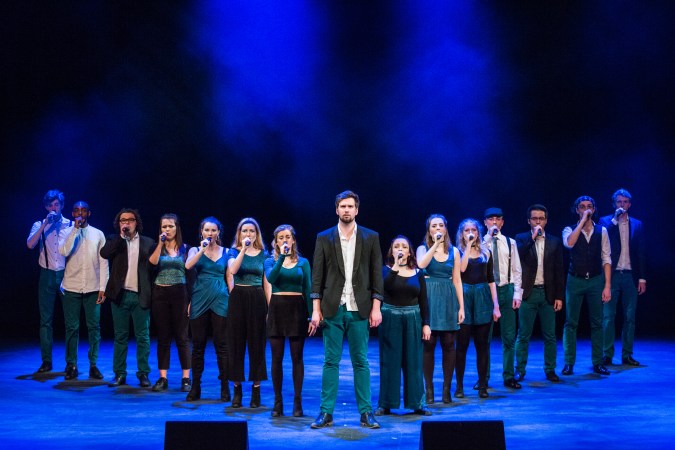
I still miss music, and I’ve been pouring my heart and soul into my a cappella arrangement of Marvin Gaye’s What’s Going On, as well as tinkering with arrangements of Jefferson Airplane’s Somebody to Love, The Sugababes’ Red Dress and an Afrobeat mashup of Thriller and Fela Kuti’s Zombie and Opposite People. The musical energy within me still needs siphoning off somehow, and even if the Lights have enough material for years already, all these arrangements are, at least, a temporary solution for my own frustration.

Gala Show (35)


To keep my writing muscles flexed, I’ve been building my vocabulary daily on the sly. Whether I’ll use my learning as part of a Pasapalabra-style test for the kids remains to be seen, as some of the words are downright impossible to divine without the right knowledge, but as a writer I’m hoping it’ll do me some good. Here’s a few of my recent findings:

umbrageous (adjective): (of a person) inclined to take offense easily

nonbook (noun): a book without literary or artistic merit

earthshine (noun): the dim light on the unlit surface of the Moon caused by the Earth

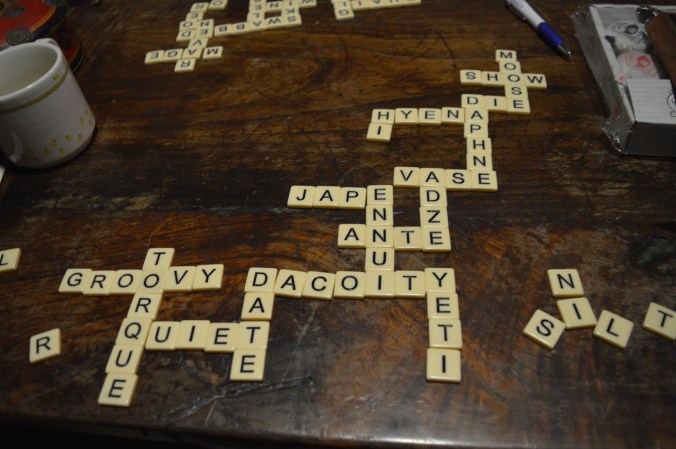
A good many of them are much too specific to wend their way into everyday conversation (see bombinate), but I’m hoping it’ll increase my vocabulary in the long run. Polygon and Scrabble would be a lot easier, for one thing. And, of course, Bananagrams. Until the next time. BB x

DSC_1095


The Swing of Things

Routine has returned. The dust has settled, and I’m not talking about the kind that’s tinting the sky a dirty grey every day, nor over the Catalan situation. My life as an auxiliar de conversación in IES Meléndez Valdés is back in shape, much the same as before, with a few noteworthy changes. They’ve decided to streamline the programme a little more this year, with me working through the coursebook rather than preparing a random talking point every week. Honestly, I’m rather relieved. It was fun coming up with something new and bold every week, but I found myself questioning more than once whether it was really the most efficient use of my time and theirs.

Oh, and there’s talk of a band or even choir in the making. Pretty revolutionary for a country where it takes a class of sixteen-year olds the best of ten minutes to realise that the one potential youth club activity they’ve forgotten is music. ‘Music is only extracurricular’, explains one of the girls who couldn’t understand why I was so confused that none of them had come up with it within seconds. I guess that’s Spain for you. This is a country that loves sport so much you spend your primary years learning theory of sport, for pity’s sake. Proof, if ever you needed it, that people vary in their tastes from country to country. I’ve been trying to enthuse about music here, but I’m fighting a lose battle. It’s not so much selling sand to the Arabs as trying to convince them of the merits of a pair of high-grade skis. Still, we live in hope. Enrique Iglesias, the Gypsy Kings and Camarón de la Isla all hailed from this peninsula. Where there’s a will, there’s a way.

I found the town library. It eluded me all year during my last post, because – like many things in Spain – it’s so badly signposted that unless you happen to know that many libraries are located within the confines of the Casa de Cultura, you’d be lost. It’s certainly not advertised on the outside of the building. I found it, anyway, and it’s the perfect working environment. They converted what looks like a small factory floor into the reading area and the typist’s offices into the library itself. It’s a far cry from the Bill Bryson, but it’s a start. Before the year is out, I’ll give the bigger one in Mérida a look-in. I wonder if it has any material on Hornachos…

Just a short post today. I’ve little more to say. The air-con in this library is on at full blast and noisy. Most of the kids in here are wearing Spagnolo shirts, which means they’re almost certainly from one of the two private schools, though I can see at least one of my lot at one of the tables. But then, it’s five to six in the afternoon. Who in their right mind would be in the library when they could be out in the evening sun with their friends? BB x

First Conditional

I’m sitting here in the town park, leeching off the café wifi for presumably the last time this year. It’s a glorious afternoon and I have the place mostly to myself. You’d hardly know this was a town of some fourteen thousand inhabitants at all at four o’clock on a Saturday afternoon. The place is dead.

Oh, for pity’s sake. I said that and now it’s clouded over and a wind has picked up. If that’s not a metaphor I don’t know what is. Change is a-comin’. In four days’ time I’ll have left Villafranca. Another three and I’ll be in Morocco, ready and waiting to begin my third and final year abroad placement in the Dar Loughat International Language Centre in Tetouan. Perhaps it would be better to say ‘waiting’; after almost nine months with no Arabic practice, I hardly think ‘ready’ is the appropriate term. I even had al-Kitaab brought out to me and I’ve barely touched it. Why would I, when my heart is here and mastering Spanish is so much more important?

I should be excited for Morocco. I loved it the last time I was there. Both of them. But the sadness of leaving behind Villafranca, my two schools and far and away the happiest year of my life cancels that out somewhat. The thing is, it’s all about a good mindset. I proved that to myself with Jordan. I expected the worst, and I got it. Conversely I came out here with a fierce desire to make it work – and it did. Positive affirmations and all of that self-help fluff. Don’t knock it, though. It really does work. At the dire risk of sounding like a queasy, turtleneck-donning life guru, a positive attitude makes for a positive life. Truth.

I’m leaving this country with a healthy tan, a bagload of farewell gifts, a new, more suitable dress sense and a very acceptable level of Spanish, if I might be so immodest. I’m leaving behind several books, a veritable skipload of old clothes, a healthy bank account ready and waiting for when I return, my exhausted if popular converses and, apparently, bigger shoes of a different nature. I’ve told my kids to be nice to the next auxiliar, and assured them that he or she will most likely do a better job than me, though I have little doubt there’ll be no more ludicrous Trump impressions, eight a.m. blackboard drum-rolls and spontaneous performances of the Lion King.

Here’s a tip for anybody striking out as a British Council assistant next year. The most useful tool to have at your disposal, besides a reasonable ability with chalk for when the interactive whiteboard or projector or computer isn’t working (and those are stackable odds, by the way), is a firm base of general knowledge. I’m not talking dates of World Cup victories and key mathematical equations. I’m talking geography, history, music, art and all the little things that make kids tick. Without overstepping the mark, I’ve found that dropping the occasional hint that you know more than you’re letting on to be a real winner. Little things like sketching Celebi or Doraemon in a lesson on time travel, name-dropping a local star in a lesson on music or having enough of an idea of world geography to draw a map of any particular country without reference to a computer.

I don’t profess to have the best general knowledge in the world at all. In fact it’s precisely because I know next to nothing about sport or mathematics that I was so quick to write them off back there. But whilst I admit that a little sporting knowledge would certainly be a major plus, being unafraid to display an understanding of a broad range of topics will make your kids a lot more interested. You don’t have to nerd out over the details for the sake of those who show an immediate interest. In fact you really shouldn’t. Not only will it alienate the others, it will also alienate you. But a harmless name-drop from time to time will do wonders. That’s a trick I’ve learned this year.

You might say I’ve got one step closer to learning to keep my mouth shut. Which would be a major step forward.

Another little piece of advice for the year abroad. Don’t let your guard down because of a pair of big goo-goo eyes. Don’t do it. Phil was right. I spent my entire first term and most of Christmas sallying to and from the same little town because I’d managed to convince myself that I’d found her. That was the time when I should have been looking for friends here in Extremadura, of course. But I didn’t see it that way then. Granted, falling for girls who don’t lead you on would be a boon. But you can’t control such things. What you can control is what you choose to do with the situation.

I don’t regret any of it. If anything, all those WhatsApp conversations and dinner dates that went nowhere were the perfect trampoline for my Spanish. But next time I’ll try harder to find a friend – and a friend – closer to home. Frankly, I’m tired of being led on, let down and cast aside. I’ve always been better off alone anyway. It’s time to live for me.

True to form, the pressure of the last few days has done wonders for my writing. In a single morning I’ve fully plotted out five of the six novels in my series, which until today had been skeleton texts with a clear start, a clear finish a handful of events scattered in between. My TLRP could sure do with some of that magic, but until I have stable internet, I’ve said a straight no to that. It’s just no good trying to do your research on a single-tab phone on mobile data, or on the pages you’ve saved on Google Books, which expire the instant you scroll up or down. And what of it? My books are my life. And one day, I hope, I will have them in book-format in my hands to read to my children before they go to bed. That’s the dream.

In other news, the hoopoes are feeding well today. There’s at least five of them in the park, but it could just as easily be the same one that keeps going backwards and forwards in that bouncing, butterfly flight behind me. I’m going to miss them, too. Durham might have Reggaeton-free clubs, but it hasn’t got any hoopoes. BB x

Bebida 10

It’s a Wednesday afternoon. I’m back in the staff room as per, not doing anything particularly noteworthy, other than watching Armstrong and Miller and catching up on old Have I Got News for You episodes over a 60c cup of chocolate más espeso. For some reason it’s almost always bebida number ten; it’s as though the man upstairs is reminding me that it’s become too rigid a routine, and that sooner or later things have got to change.

Wednesday in particular is a very routine day. It starts late, with a lie-in and a little reading before my 10.05 class, the first of two hours of 2º ESO. The first class is large and potentially rowdy, but rarely causes a headache – and, if I’m using the whiteboard (something I’ve learned to rely on less and less), has me returning to the computer every thirty seconds to cancel an automatic shutdown that seems to have plagued the model for the last two months. The following class usually has me on my own for the first twenty or thirty minutes, which results in absolute chaos; I do declare that the thirteen/fourteen threshold is quite possibly the very worst stage of adolescence (though that’s nothing ground-breaking in itself). Worse is that at least three of the students are always desperately trying to silence the rest, proving that this particular subaltern does have a loyal following even when I’m left in charge of the ship.

I then have half an hour before my next class, over at the private school, with the tinies of lower primaria. Whilst they can be just as destructive as their Monday peers, there’s a far greater chance of them doing something like work in my weekly session with them. And they’re absolutely adorable. The first five minutes are basically me trying to wade to my desk through a sea of hugs.

Which makes the following fifty-five minutes of crowd control a little easier.

The last two classes of the day, the upper tiers of the private school Cambridge English course, are an endurance course of a different breed – that is, holding back laughter. They’re an uproarious lot. The First group are one step away from speaking like native English speakers, I swear, so an hour with them (or forty minutes, since they’re twenty minutes late without fail every week… ‘went home for lunch’ is the excuse) is more akin to a conversation at school with a group of kids four years below you. It has its fair share of jokers, as does the following class, which is usually a little more low-key… though it has its moments. Today’s golden crown goes to ‘motor-water’, because jet ski ‘didn’t sound very nice’.

And then I’m here. The Meléndez Valdés staff room. With an empty plastic cup and my novelling notebook, planning my surprise entry into a class I’ve been given back after a three-month absence. You know you love your job too much when you are offered the chance to work one hour less for the same pay and you kick up a fuss about it for three months.

I can only hope they take their lesson on time travel as well as the others have. Beginning the lesson with Hitler phones goats turns out to have been a good idea after all. BB x

Be Kind, Rewind

My primary function over the last week has been more akin to a substitute CD player than a teacher. The Epiphany term is drawing to a close and mock exams are very much in fashion. The trouble is, the school’s CD players are acting up, and have been for years. I was called in to help – in my free time, I’ll have you know – to ‘improvise’ a brand new listening text for them on the Tate Modern.

And I’ll also have you know it was totally worth it. Whipping up a different, two-minute text on the same subject to suit different ability sets every time might sound dull, but as a writer I found it deliciously challenging. And as a former Langtonian, to whom improvisation comes quite naturally (for want of a better term beginning with B), it’s something I’m rather good at.

I’m now quite used to doing favors for my school. I feel I owe it to them every time I get a lesson off (which isn’t often, but it does happen from time to time). But that’s a mercenary approach: it’s more because I simply love what I’m doing. If I didn’t have these occasional hankerings to go adventuring at the weekends, I don’t half wonder whether I’d throw my day off out the window and work Fridays as well. It’s not as though I don’t already come into school on the occasional Friday almost hoping to be asked to take a lesson. I really must be a few screws loose.

I appreciate that I’ve been damned lucky to have landed such a jammy set-up. I wouldn’t say it’s the best shift in the world – the kids are about as rebellious as you might expect from teenage Spaniards – but it comes very close. I’m still going to strike out for somewhere new in the year after Durham – and I’m thinking one of either Aragón, Andalucía or a different part of Extremadura – but I’m almost 100% set on coming back to Villafranca in September 2018. I mean that. It’s not the most exciting place in the world to live, but it’s a wonderful place to be from a people perspective. The only thing I lack is a friend circle of people my own age, and that’s due in part to my Olvereñan fatalism and my awareness that this was always going to be a year in transition; perfect for getting a taste, impossible for laying down roots.

Sadly, I’ve become painfully aware that there’s only ten teaching weeks left. It was Brocklesby who alerted me to that; beforehand, I’d barely given it thought. That does mean ten more weeks of new lesson plans, of riotous primary classes and of absent teachers, but the ups outnumber the downs.

And best of all, it really is spring now. I forgot to wear my hoodie to sleep last night as I’ve been in the practice of doing since October (Spamish duvets are stupidly thin) and I didn’t notice until I put it on this morning. Spain’s about to put on her very best dress and I can’t wait to see what her stylist has done with her this year. BB x

  
PS. One of my colleagues just came to the staff room to tell me that despite the difficulty of the text, quite a few of them actually overachieved, so it shows they were listening after all. Which is kind of what you’d hope in a Listening exam, but there you go. It’s little things like that that make my days! They were also shown the artwork which I chose to talk about, which just so happens to be an old enemy of mine. It’s Andre’s Equivalent VIII (The Bricks). I’ve met it once before. The students hated it. The teacher hated it. And if I’m perfectly honest, out of my entire art class of 2011, I couldn’t stand it either. Great minds, eh?

Counting Sheep and Blessings

February is over at last and the long, languid days of glorious sunshine are here.

Who am I kidding? This is Spain. We’ve had glorious sunshine on and off since September, and more on than off.

My private school whisked away the entire student body to Guadalupe today, yet another trip which I could have attended had I not a second job to balance. That gave me the afternoon off, which I sorely needed, having come down with a head-cold of some description since Monday morning. Frankly I’m surprised I got through almost the entire winter without a single incident, as I’m usually down with something or other in the first two months of the year. Not that I’d ever let it stop me from working, naturally, but it’s not all that easy to lead a conversation class when talking is just about the very last thing you want to be doing. Nevertheless, the stubborn endurance (or rather, total and deliberate ignorance of my condition) I inherited from my mother won out and I made a decent morning of it. Being ill, in a way, is just like being bored or heartbroken; the very best cure is to keep too busy to give it any thought.

On second thoughts, don’t take my word for that.

I took a detour through the park on the way home and, it being such a warm, sunny day, I sat by the water feature and tried meditating for a bit. I haven’t actually done any in months and boy, does it show. I’m out of practice, so I decided instead to simply soak up the sun, listen to a BBC Radio In Our Time podcast on the Spanish Inquisition and watch the goldfinches bathing in the water. I think I was there for an hour, or two… It could easily have been longer. For some reason when I’m ill I tend to lose track of time.

Something that occurred to me this week is how lucky I am to be where I am. I’ve been searching for a way of putting this that doesn’t come across as boastful, though I’d rather use the term proud; it refers to my ego, and it might just mark the final stepping stone in a healing process that’s taken all of seven years to complete.

I’ll explain. Since the day I moved to a junior private school at the age of eight, I’ve been surrounded by people vastly more capable than me. I was always something of a second-class citizen at that school: I didn’t have the brains to keep up with the best, and I didn’t have the money to keep up with the rest. I was swiftly filtered into the middle set, which is something of a no-man’s-land, from which it’s very hard to escape. I left that establishment after three years for other reasons, mostly financial, but also because (in one of the most pig-ignorant decisions of my life to date) my classmates were beginning to use ‘bad words’ and I’d got it into my head that a boys’ grammar school would be a more civilized environment.

I’ll be brief. It wasn’t. But as far as my surroundings were concerned, the wealth was removed but the feeling of being overshadowed trebled, not least of all because I actually failed the entrance test and got in purely on the merit of my writing. So I came in pretty much at the bottom of the pile, in a school where the average student was scoring eight or nine A*s at GCSE level. Add to that the number of kids on the ‘Gifted and Talented’ list, or on MENSA, with national-level CAT test grades; and the large proportion of students playing various sports at county level; and the musicians with Grade 8 on two or three instruments – most of these, I should add, heavily concentrated in the super-bright ones…

It was very hard to stand out at all in such a school. I guess that’s one of the reasons I’ve thrown myself at so many fields over the years: music, literature, history, dance, art, horse-riding, photography, ornithology… For want of an example, I led my school’s Funk Band, but I was a long way off from being the best singer. I simply did it because I was reasonably good at it and because I enjoyed it. The same with Art; there were some genuine Picassos in my art class. I was not one of them. So I was and always have been kind of a Jack of all trades and master of none, if we ignore a paltry average of 26% in my mock Maths exams.

Durham is not much better. Being the stomping ground of private and grammar alike, it’s just as much of a melting pot for the über-talented as either of my previous schools. That’s a great thing – really – as it brings great minds together. The result is some stellar orchestras, sports teams and research groups… at the cost of being ‘normal’ (which, I hasten to add, is not necessarily a bad thing, but then, nobody in my family has ever been or ever will be normal).

Coming to Villafranca, however, I’ve had my eyes opened for the first time in over a decade to what I can do. It’s not that I’m in a town of country bumpkins – there are some seriously bright stars amongst my students – but for the first time in my life I’m not surrounded by people who are leagues ahead of me in all fields. And for somebody who’s more than used to settling for second-best, it’s a wonderful feeling. Don’t get me wrong, I’m chomping at the bit to get back to a place where music for its own sake actually exists, but I intend to make the most of not being outshone this year. Maybe that’s one of the reasons I love travel so much. Getting away from it all.

That said, I’ve spent most of today in bed, drifting in and out of sleep. My dreams have been vivid and memorable of late, as tends to happen when I’m down with a headache. I can’t remember all the details, but I remember consoling Liam Neeson last night over the death of a family member, and then feeling slightly miffed that I didn’t get a photo with him.

If that’s the kind of thing that my brain does in its spare time, there’s probably a reason I’ve always been second best. But that’s ok. It’s a role that suits me just fine. B, after all, comes right after A. BB x