Quote Unquote: STREET OF THIEVES

img_4944

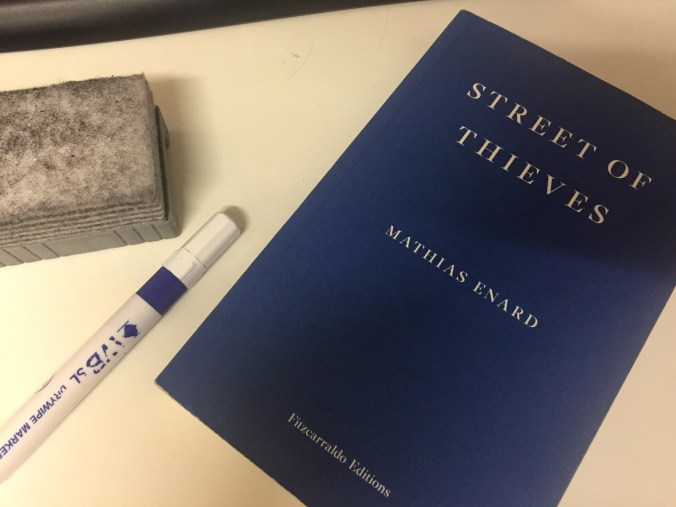
This week’s read is a work in translation: Mathias Enard’s Street of Thieves (Rue des voleurs in the original French). As a former student of languages, I have a somewhat conflicted view on reading works in translation. Part of me has always been a bit of a purist on the subject: if you can read a book in the language in which the author intended it to be read, why not do so? There are so many details and nuances that can be lost in the tricky process of translation – the author’s voice, for one. However, what you read impacts on what you write, and since I write predominantly in English, it always made far more sense to me to read works intended to be read in English, with the effect that I eschewed works in translation altogether. I grew up with English, therefore I must write in English. That at least was the argument I cleaved to for most of my time at university. A colleague once said to me he could destroy that argument in three words: Waiting for Godot. Unfortunately, uncultured pleb as I am, Samuel Beckett has yet to feature on my reading list – nor will he for some time, theatrical scripts not being my preferred reading material of an evening. However, I concede it a point well made, and in the years since I have relaxed my approach a little and tried dipping my toes in the water.

Street of Thieves tells the tale of Lakhdar, a young, idealistic Moroccan whose boyish desire to seek his fortune across the Strait is realised after a series of stark, harrowing underworld adventures that make Enard’s text a bildungsroman of the darker variety. There is enough of the everyman in Lakhdar to make him an instantly sympathetic protagonist, and no matter how you look at it, the sequence of events that set his journey in motion would humble even the strongest of wills.

The greatest strength of Street of Thieves is in its flawless realism. Every single event is wholly and utterly believable; some magic in Enard’s emplotment almost strips the story of its “story”, as though you are watching Lakhdar’s life in real time. Tragic events happen and caricatures come and go, but they are so very real, so human, they might as well be people picked off the street at random and given parts to play. Where there is grief, there is no melodrama; where there is rage, there are no histrionics; just the restless drone of everyday life, weaved seamlessly into the fabric of fiction.

The book’s title refers to a street in Barcelona’s Raval district, one of the seedier quarters of the coastal metropolis. Enard lived in Barcelona for a time and his knowledge of the comings and goings within the depths of the city paint a convincing picture, though even if he had no experience of his own, he could hardly have chosen a more fitting counterweight to the city in which Lakhdar’s story begins: Tangier, by many accounts one of Morocco’s seedier locales. There is a magic to both cities that draws tourists in every year – the ever lucrative vein of “pink gold” Enard so evocatively describes – but we don’t see much of it from Lakhdar’s perspective. Everything is huge, dark and dirty, as though we are seeing both cities through the eyes of a cockroach, scuttling from corner to darker corner. It is certainly an easier book to write about than it was to read.

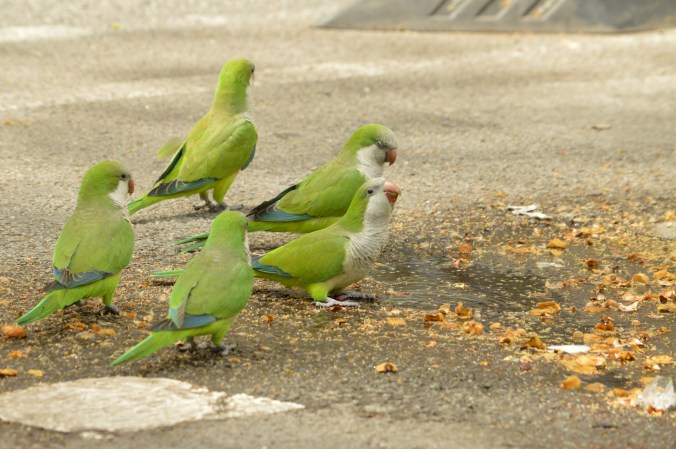
I may not have read Waiting for Godot, but I have had the good fortune to explore both Barcelona and Tangier. I went to Barcelona earlier this year in the hope of finding material for my own writing. It was a wistful fantasy, to which I am often prone; I found little of any real value in my wanderings around the city, my interests being so far removed from the modern metropolis – say, by about four hundred years. I wandered around the Raval district a lot, carrying with me only my notebook and the card key to my hostel room, and found the place shadowy, dusty and surprisingly Arabic-speaking, but not as menacing as I had heard tell. Then again, I limited my explorations to the daylight hours: I believe Raval puts on a very different mask by night, if the stories are to be believed. All I really remember about Raval was a chance encounter at the end of a street with a flock of monk parakeets drinking from a puddle in the road, illegal immigrants of a different colour, but illegal immigrants all the same.
DSC_0341

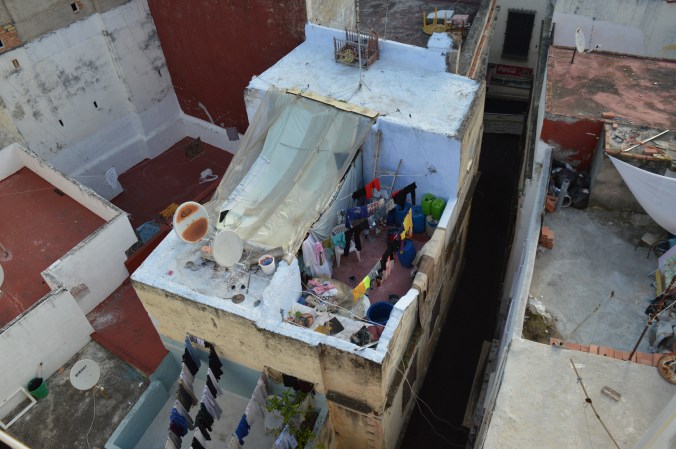
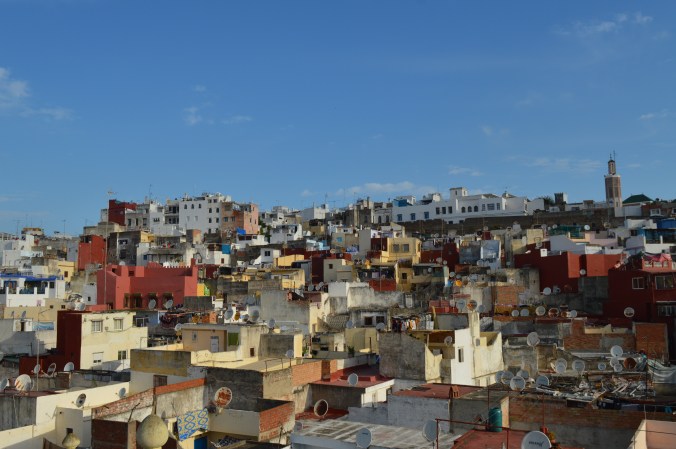
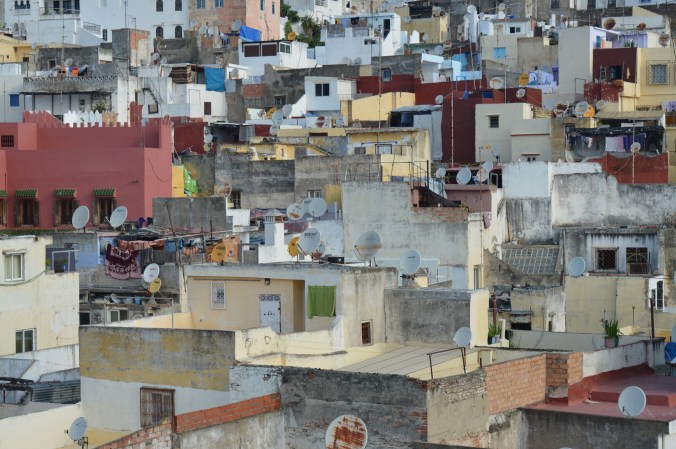
Having traveled a good deal in Morocco previously, I found in Tangier a curious melange of the other cities I had seen, as though it were a human imitation of the work of Gods elsewhere. Here were echoes of Fes’ labyrinthine medina, without the medieval charm; echoes too of Marrakesh’s charming cafes, without the charm, Taroudant’s city walls, without the beauty of the desert, and the blinding white of Casablanca, stained brown and grey with age. All the same, Tangier had a far greater effect on me than Casablanca or Marrakesh, knocking both cities down in strength of character, showing that hybrid vigour that sometimes allows a mongrel dog to triumph over a prize-fighter.

I met a Lakhdar, once. Not in name, but almost identical in nature. He was friendly and sincere, with that almost too sincere character common to the folk of many African countries that puts a lot of Europeans on their guard. Had I been traveling alone, I would have undoubtedly abandoned my plans and gone with him to meet his family at his invitation. As it was, I did not, and I have never felt entirely happy with myself for how the ensuing drama played out. Lakhdar, too, is frustrated by visiting Europeans who, one way or another, lead him on only to let him down, concerned or agitated by his desire for friendship. That the story takes place in the turbulent months of the Arab spring gives more than a little credence to their caution, and yet… if you were in Lakhdar’s shoes, would you see things so clearly? The gulf between Africa and Europe is only nine miles wide at its narrowest point, and yet it yawns like Mariana.
DSC_0310


Favourite Scene:

Tough call. Street of Thieves is not a book of standout scenes so much as it is an exploration of the difficulties experienced by a young Moroccan crossing over. Maybe his lengthy descriptions of the sordid Raval district? Enard painted the side of Raval I wanted to see but was too cautious to venture out at night in search of – the Raval one sees through the slits in the blinds. A quarter inhabited by fleshy prostitutes, circling drug addicts and lecherous men who ogle the women one day and turn a blind eye the next on their way to Friday prayers. Like Goya, the Romantics and all the Victorians before me, I am drawn to the dark, if only to better understand the light.


Favourite Character:

Another coin toss, though this time, it’s between two men: Sheikh Nureddin and Marcelo Cruz. The coin analogy is not a bad way to start, for in a way they are two sides of the same coin, just as Tangier and Raval mirror each other. Sheikh Nureddin is the more sinister of the two: calm and comforting, fatherly and always dressed to the nines, he exudes moral strength and commands confidence, and yet all the while he drives honest men to commit brutal acts in his name. Scarier still, even after the illusion flickers and you see the demon beneath the dress-suit, Enard has you seeing his humanity when he walks back into Lakhdar’s life, like Lucifer with his wings restored. Marcelo Cruz, by contrast, is a grotesque caricature of corruption. A twenty-first century undertaker who races to be the first on the scene whenever the bodies of the unfortunate wash up on the shores of the Spanish Mediterranean, Cruz takes an almost inhuman delight in his profession. Death has lost its meaning to him; he has become corrupted by the stink of corruption, and only the endless spiral of ever-darkening videos on the internet keep him entertained as he waits for the bloody tide. Both men are avatars of fear; one wields it, one is possessed by it, and it is hard to say which is the more fearful of the two. The devil you know, and the devil you worship. It is a wonder that Lakhdar is as sane as he is at the end of the narrative – though perhaps you might come to your own conclusions.


Favourite Quotes:

He spread a terrible sadness; the rotten smell of a lonely soul.

Cities can be tamed, or rather they tame us; they teach us how to behave, they make us lose, little by little, our foreign surface; they tear our outer shells from us, melt us into themselves, shape us in their image – very quickly, we abandon our way of walking; we stop looking at buildings, we no longer hesitate when we enter a metro station, we have the right rhythm, we move around at the right pace; and wherever you come from, in the end they train you like dogs.

You try acting funny or charming in literary Arabic, it’s no piece of cake, believe me; people will always think you’re about to announce another catastrophe in Palestine or comment on a verse of the Koran.

 

img_4392

Volver

‘What is he saying?’
‘It’s closed.’
‘Wakha. Fermé. No ferry.’
‘Closed? Why?’
‘I think he said there’s a strike… Huelga? Uh… grève? Est-ce qu’ils ne travaillent pas aujourd-hui?’
‘Ah! No lanchan ferry! Wakha, sadiqii, wakha!’
‘Pero, en serio Ben, tu te has enterado?’
‘A mí me gustaría mucho enterarme…’

You know what I was saying a couple of posts back about loving the multilingual melange that is Tangier? Well, I guess I got my comeuppance this afternoon. After a long shopping trip in the medina, loaded down with suitcases and food for the return journey, we hailed down a grand taxi for the harbour. But for the photography hiccup in Chaouen (and Booking.com refusing to refund me for a bungled payment), our four-day trip to Morocco had gone without a hitch.

So it’s only natural that the taxi driver would leave it until we got to the harbour to tell us that, due to exceptionally strong winds, the port was closed. This was swiftly backed up by both the police and the FRS office, as if we weren’t already doing a bad job of playing the trust card. If we wanted to get home, there was only really one viable option: we’d have to catch the big FRS ferry from Tanger Med near Ksar Es-Seghir, some forty kilometres up the coast.

DSC_0610

We should have seen this coming just looking out from the hotel, really…

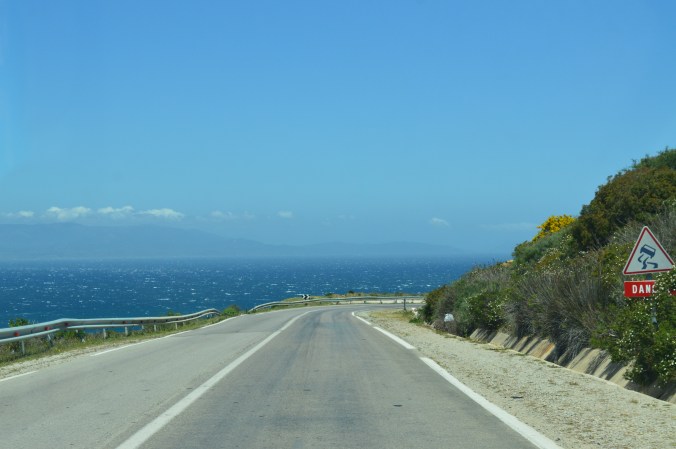
That’s how I found myself still in the same taxi some twenty minutes later, rounding the bends of the twisting coast road for the port and trying to make one intelligible sentence out of the five-language jumble of our taxi driver. His Classical Arabic, French, Spanish and English were all perfectly reasonable, but his mixing-up of all four of them mid-sentence with his native Dārija made it nigh-on impossible to understand a word of what he was saying. Speaking four languages is one thing, but trying to make sense of them all at once is a step too far for me.

DSC_0608

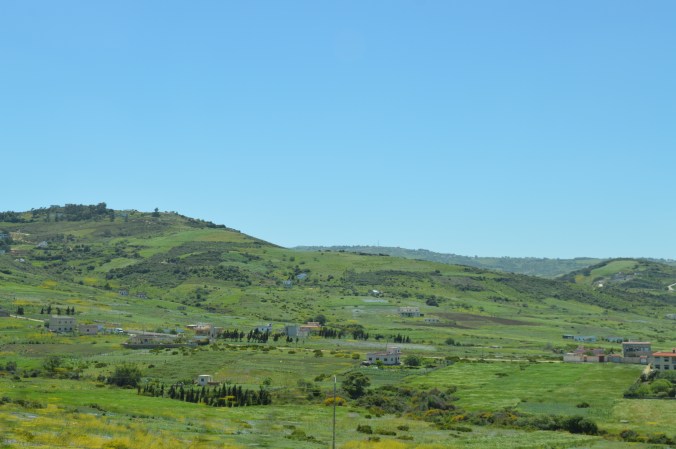
So green – but how much longer will it last?

By some streak of luck we made it to the docks in time, and for a fair price, too; 180MAD for the car from Tangier, for the record, and not quite the 2500MAD that was his first offer (trumping even the villainous Oulad Berhil cabbie in greed). Predictably enough, we weren’t the only ones caught with our pants down by the closure of the Tangier port: at least two other boatloads turned up for the 14.00h, which was necessarily shunted back to 15.00h, and then 16.00h. Passport control was, for the once, the least of our concerns; a succession of connecting buses came and went, none of them bound for the FRS service. I don’t suppose I minded too much. I spent the last hour playing Peep-O and making silly faces at a little girl who seemed only too pleased at the diversion. By the time the FRS shuttle pulled in it was coming on to five minutes to four and tempers were running short. Mufasa would have been all too familiar with the stampede that followed.

a

God, I’m so evil

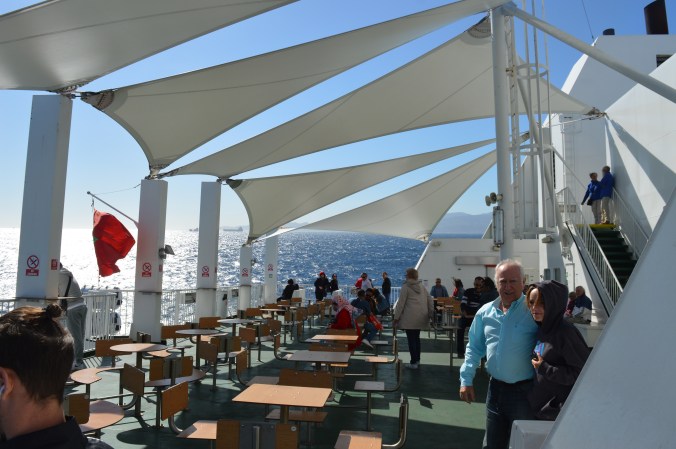
Despite repeated warnings from the bridge, I spent almost the entire journey out on deck in the hopes of seeing a shearwater (I’d seen a few dusky shapes in the gloom on the way out, but I needed to be sure). The Strait is also a very good place to look for whales and dolphins, so I had an eye out for them, too… whenever it wasn’t shut tight in a wince in the game-force winds, that is. The sea was choppier than I’ve ever seen it, making whale-watching a no-go and rendering photography difficult. At its worst, the ferry was tilting at a twenty-five degree angle from side to side, giving spectacular views down the deck into the ocean or the open sky at any given moment.

DSC_0683

Not the healthiest angle for a ferry

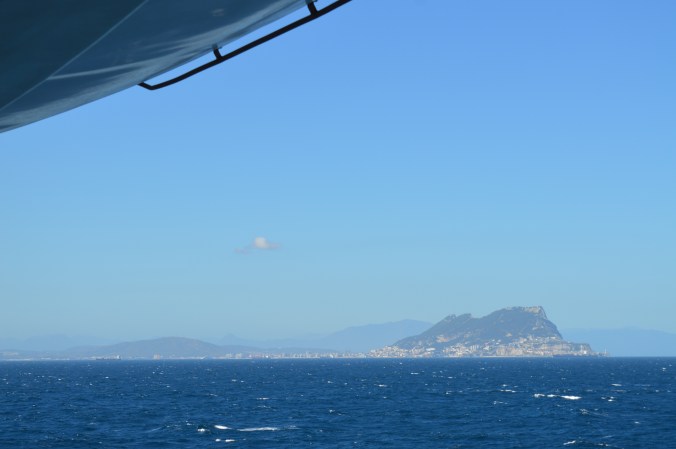
A sensible mind would have given up the ghost and retreated. But I’m not all that sensible, and I was rewarded for my obstinacy just short of the bay of Gibraltar by a single, chocolate-coloured seabird gliding effortlessly between the waves and a far-off but recognisable vertical jet of steam. Stubbornness has its rewards.

DSC_0689

The Bay of Gibraltar (plus very distant shearwaters)

Let’s just take a step back for a moment. This is now the third extracurricular adventure I’ve had with my colleagues, following Andorra and the Romanian exchange. Before Meléndez Valdés I’d never imagined life as a teacher to be anything like this. I’m completely and utterly sold on this way of life. This is my life, opening up before me: traveling Extremadura as a qualified English teacher until I have enough experience under my belt to settle for good. The oposiciones sound tough, but my colleagues here are encouraging me to come back and go for it, which makes it all the more worthwhile. Spain, you just keep winning me over. How I love you with all of my heart and more…

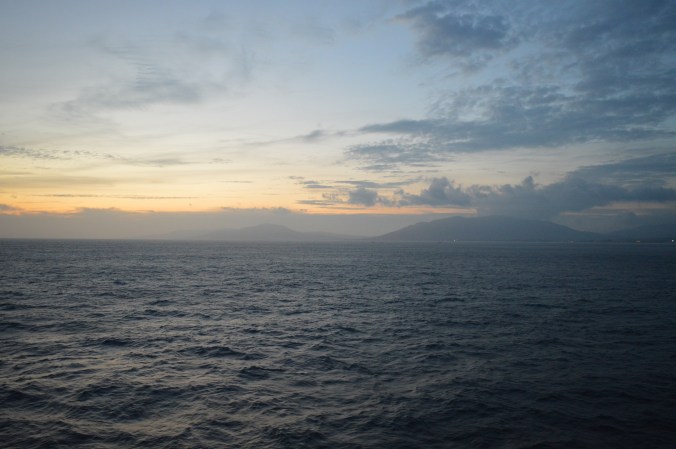
It’s coming up to ten o’clock, Spanish time. The sun set an hour or so ago. Eight o’clock start tomorrow morning. Ive had worse. On the whole it’s been a very good weekend, and my appetite for the summer is more than whetted. Only next time, I think I’ll catch the plane. BB x

Four Days without Reggaeton

‘You want taxi, my friend? No? What, you no want talk to me? Why you travel if you no want talk to people? You all the same, you think you are better than us, but you are wrong. We are better than you.’

Welcome back to Morocco, I suppose.

DSC_0267

Goodbye Tarifa!

There’s something endlessly enchanting about waking up in a new country. It breaks up the monotony of the everyday. It sends gears spinning that had until recently been lying dormant. It also comes with a change in breakfast too, which is never a bad thing.

DSC_0291

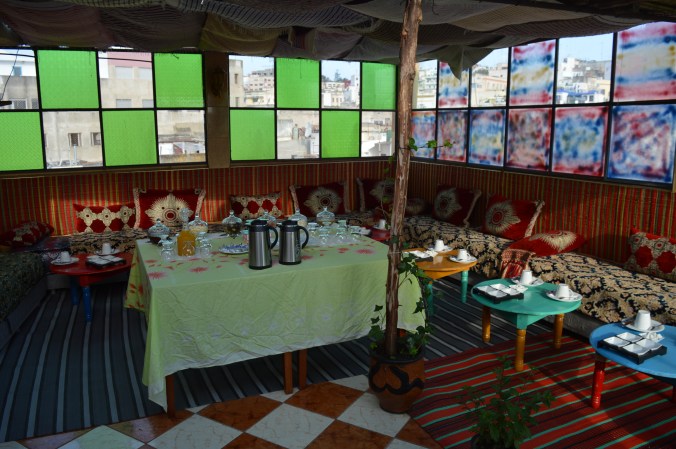
Bang in the centre of the medina and all you can eat for 10 euros a night…

On one of those fantastically last-minute whim decisions which I have been known to make , I decided to take up the offer of two of my English department colleagues to spend the puente de Mayo in Morocco. Four days isn’t nearly enough to enjoy Morocco – each town deserves a full day and night’s exploration to even begin to get a taste of the area – but when it’s so close that you can see the cars from the other side of the sea, it’s impossible not to feel the tug of the south. I’m not very good at saying no to anything, but when it comes to adventure, I find it exceedingly difficult to say no. So here I am, on the 12 o’clock bus to Chefchouen, saying yes – and loving every second of it.

DSC_0295

Getting Bourne Ultimatum vibes…

The last time I was in an Arab country was Jordan. Let’s not go over that again. Jordan’s going to be a bug-bear of mine for a very long time. It’s a name which carries greater fear for me than Syria, Korea and the Democratic Republic of Congo ever could. It wasn’t so much the country as it was the fact that I simply didn’t want to be there. Backed into a corner as I was with my commitments to the British Council, I wasn’t given a choice. And in that frame of mind, as always, I was defeated before ever I got on the plane. It wasn’t in my interest… And as my parents will know only too well, if something is not in my interest, the chance of me doing well is next to zero.

DSC_0346

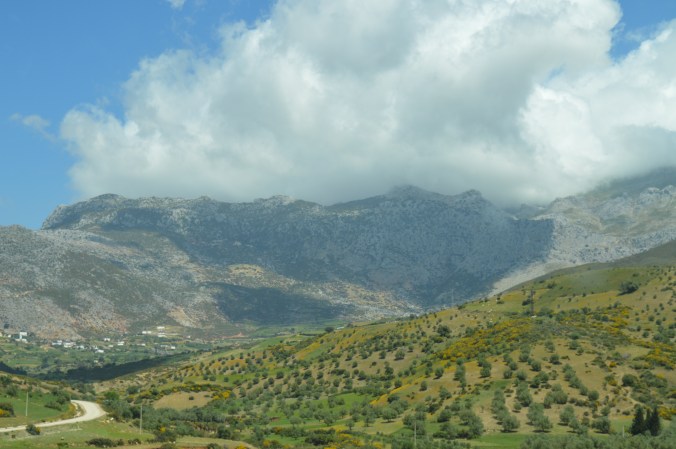
The Rif: b-e-a-utiful

Not so Morocco. Maybe it’s the green hills and the icy rivers flowing down from the mountains and into the sea. Maybe it’s the jaw-dropping kasbahs of the desert south or the quiet, homely feel of the melting-pot medinas of the north. Maybe it’s even the simple fact that this is Africa. But I think that the real reason I have so much love for this country is because I want to be here. It’s a minor difference, but it changes everything.

Waking up with the dawn chorus in the middle of a city sounds ridiculous, especially when there’s a complimentary alarm service courtesy of the mosques at four in the morning, but in Tangier it’s easily done, and the soundscape is just as fantastic a mix as the city itself. There’s the warbling calls of flocks of roving bulbuls, that ever-present feature of Arab towns; on top of that you’ve got a chorus of roosters crowing at the dawn, interspersed with the occasional bubbling note of a laughing dove, two quintessentially African sounds; and then there’s the aggressive cackle of the gulls, which smacks more of Europe than anywhere else. Even the repetitive wi-tu wii-twii-tu wii-twii-tu of the house buntings echoes the sales pitch of the taxi driver, yelling the name of his destination over and over as though it were an object to be bought or sold.

DSC_0301

Spot the six species of bird in this picture (better still, imagine them)

And that’s just the naturalist in me. The linguist side of me is in his element: this is a place where I could be using all four of my languages – English, French, Spanish and Arabic – at any given moment. Across Morocco, but especially in Tangier. It’s like something out of a dream, and we haven’t even got to Chefchaouen yet.

DSC_0332

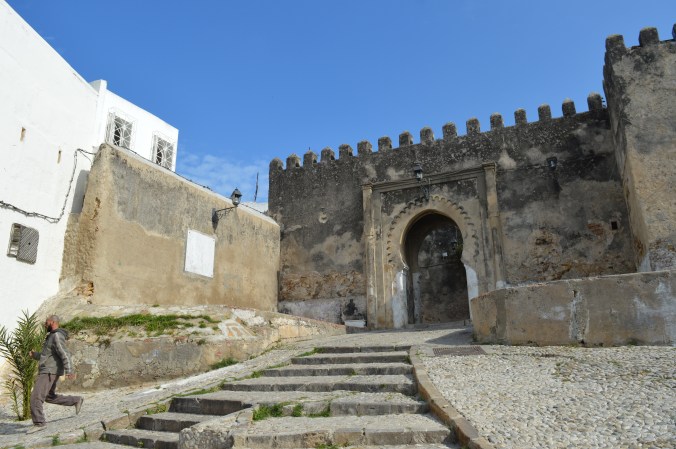
Tangier’s Kasbah is actually a lot more impressive than it is made out to be

But for a less-than-welcoming start thanks to a jilted taxi tout lying in wait at the dock entrance, it’s been so good to be back. And as I’m the only Arabist in tow, this time it’s up to me alone to do the talking – and that’s a huge plus right off the bat. I hope there may soon come a time when it’s safe enough to study Arabic anywhere, from Western Sahara to the Sudan, from Yemen to Iraq; to excel, I need to be on my own. And that’s what this year has been all about. I’ve learned from my mistakes in Jordan. Moroccan Arabic won’t be any easier than Jordanian, if not harder, but I’m going to tackle it head-on and alone – and better still, in a willing state of mind. I can’t wait. BB x