Camino XXII: Starlight

Albergue de la Santa Cruz, Sahagún. 21.17.

Today was a lot more like the Camino Francés that I remember: long, unforgiving, sociable and under the stars for the first half of the morning. I’ve been taking it easy with all these post-sunrise starts with the other pilgrims, so with my fork from León now very much on the horizon, it’s good to get back into the routine.


We agreed the night before to strike out for Sahagún, partly because Audrey wanted to go further and potentially save a day to add to the end of her trip, and partly because I wanted to get to Sahagún after having had the place recommended at least twice. There was also the very real possibility that we could both shake the freeloading Englishman and catch up to the endlessly entertaining double act of Juha and Mad Max, who have been at least a day ahead of since Grañón, where the floor beds didn’t agree with Max’s back.

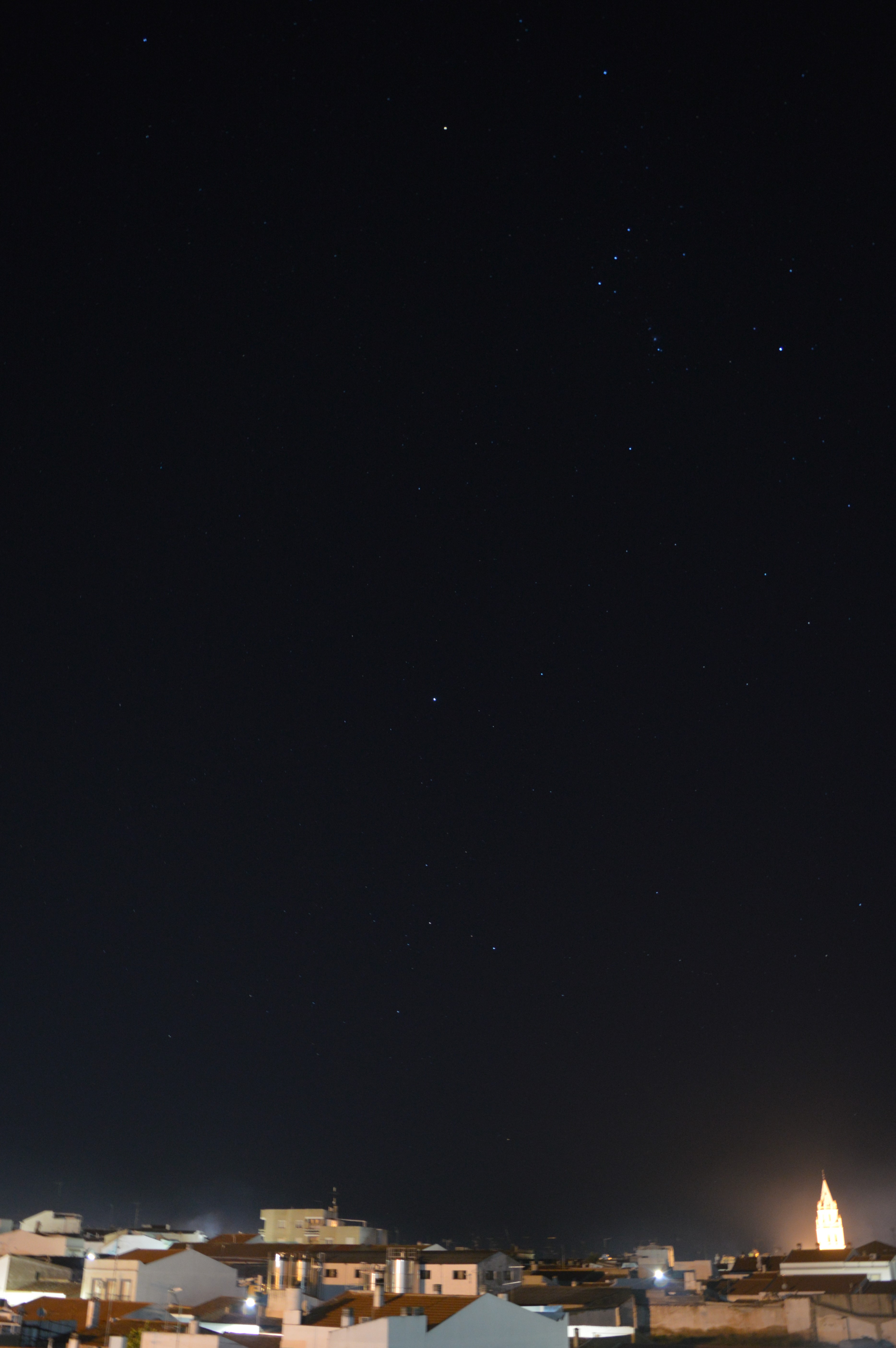
So, at five on the dot, the five of us set out from Carrión and into the night. We lost Edoardo sometime before sunrise – I’m not sure he could keep up, as he does appear to be carrying the biggest stick on the Camino (which probably might be better described as a branch or log). I also got lost: in my stubborn refusal to use artificial light, I completely missed the turn-off to the pilgrim road after Carrión and lost twenty minutes backtracking once I’d realised my mistake. On the plus side, it did mean total silence and an unrestricted view of the night sky, which was spectacular this morning.
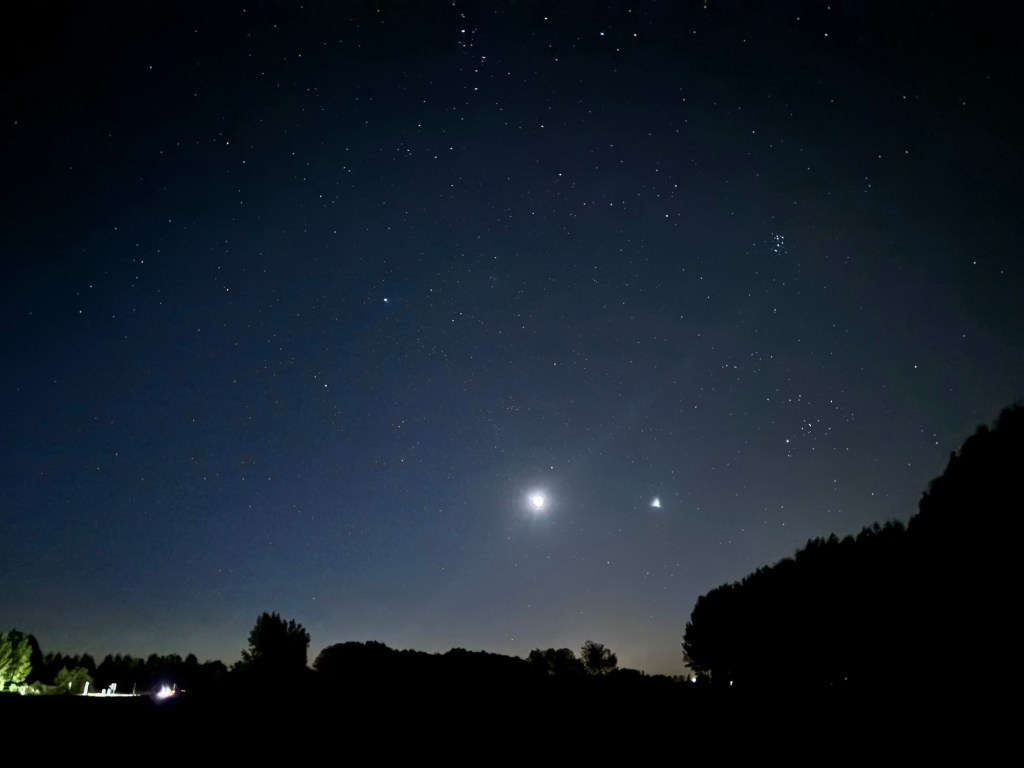

There’s no lighting along the nineteen kilometre road between Carrión and Calzadilla, and all the towns are distant, so the stargazing was almost as good as it was on Tenerife. Even the Milky Way was visible, stretching westwards toward Santiago like the songs describe.

I spent a great deal of the morning racing ahead, mostly because of an obnoxious pilgrim who was lighting the entire path with a brilliant LED head torch, even though visibility by star and moonlight was perfectly good enough once your eyes had adapted. With him in the dust, I allowed myself some time to listen to a couple of chapters of an audiobook (some short stories about the Sargasso Sea from Strange Tales from the Deep and I, Claudius).
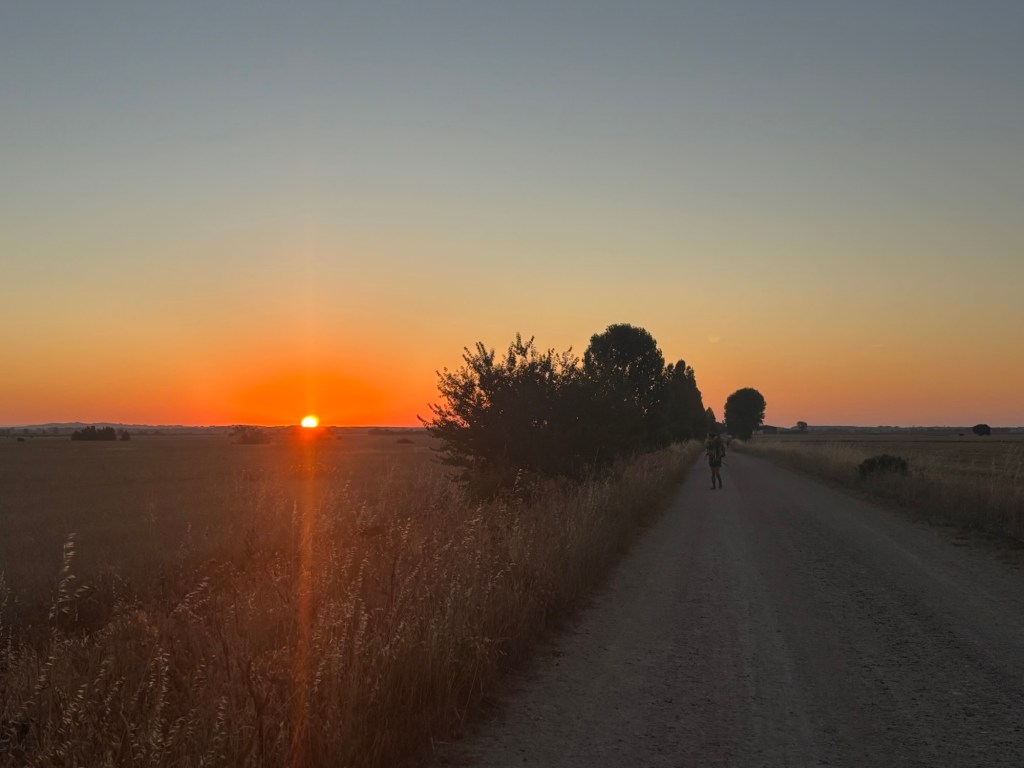

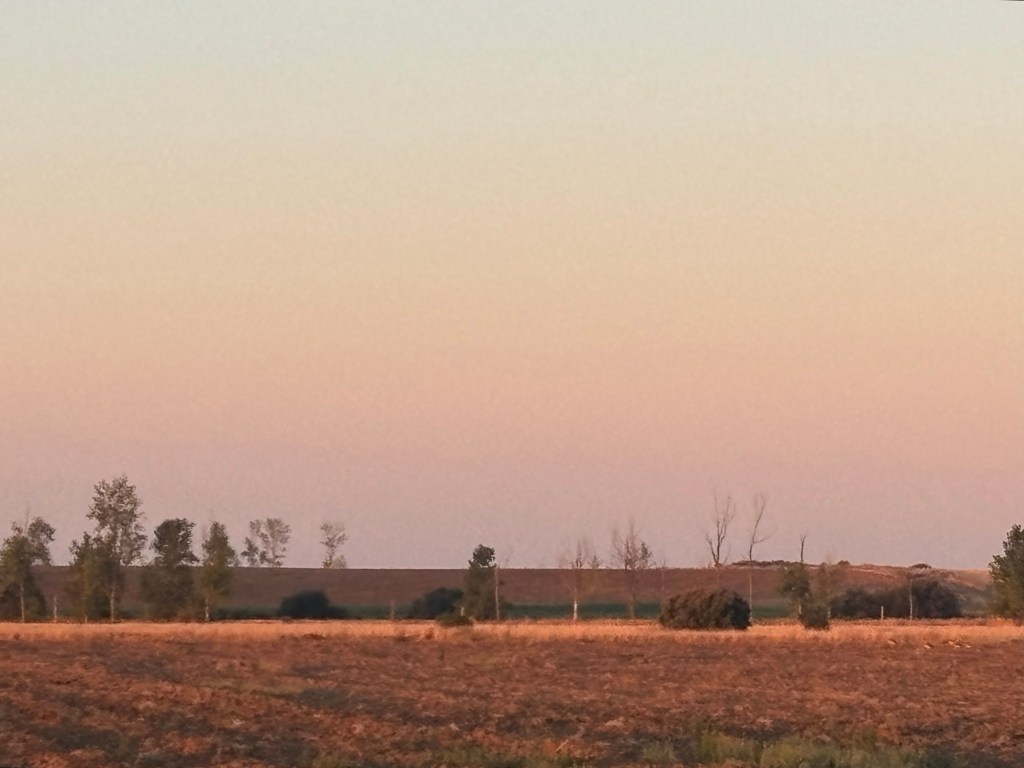
Not too long after sunrise, I saw flashes of white in a field by the road and trained my eyes on the spot: I counted ten great bustards, closer than I’ve ever seen them. Of course, they were far too distant for my iPhone (which makes for a superb camera, but is utterly useless as a telephoto lens), but you can just about make them out in the photo below (to the right).

After a brief pitstop for breakfast in Calzadilla, I raced on ahead once again. This time, I took advantage of the empty pilgrim road to do some singing practice, mostly from Jesus Christ Superstar, which I pretty much sang off-copy for all parts. I don’t have an eidetic memory, but I do have an uncanny ability to retain enormous amounts of information about things I’m interested in. Musical scripts fall under that category.


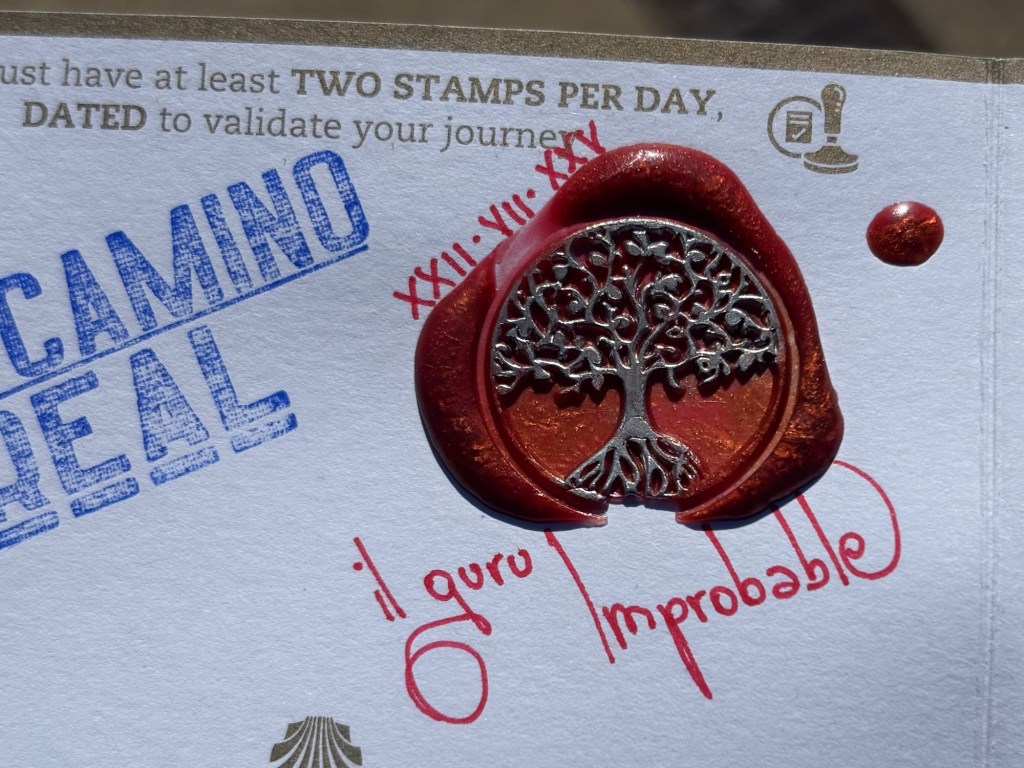
I stopped in Moratinos to pick up a beautiful wax stamp from Il Guru Improbable. I’ve missed this one before, as it’s much too soon after the usual staging post of Terradillos de los Templarios to obtain in the early hours of the morning, so I’m glad I pushed on today.

At Moratinos, I took up with a new group of pilgrims: Tom, a retired education superintendent from Michigan; a Finnish woman on her fourth Camino; and Tina, a Swiss-Guatemalan girl inspired to walk the Camino by a German comedian who hates walking. It made for a healthy change, and it was fun to tell my grandfather’s tale in full once again, which I haven’t done anywhere near as often on this Camino – last time, it usually preceded me by the time I met a new face!

Audrey caught up to me as we approached Sahagún and we entered the town together, seeking a pharmacy (for her feet) and an ice cream (for my appetite). At 13.10, it was the latest we’ve arrived at a destination yet, but it did mean no waiting for the albergue to open, which was a huge plus.
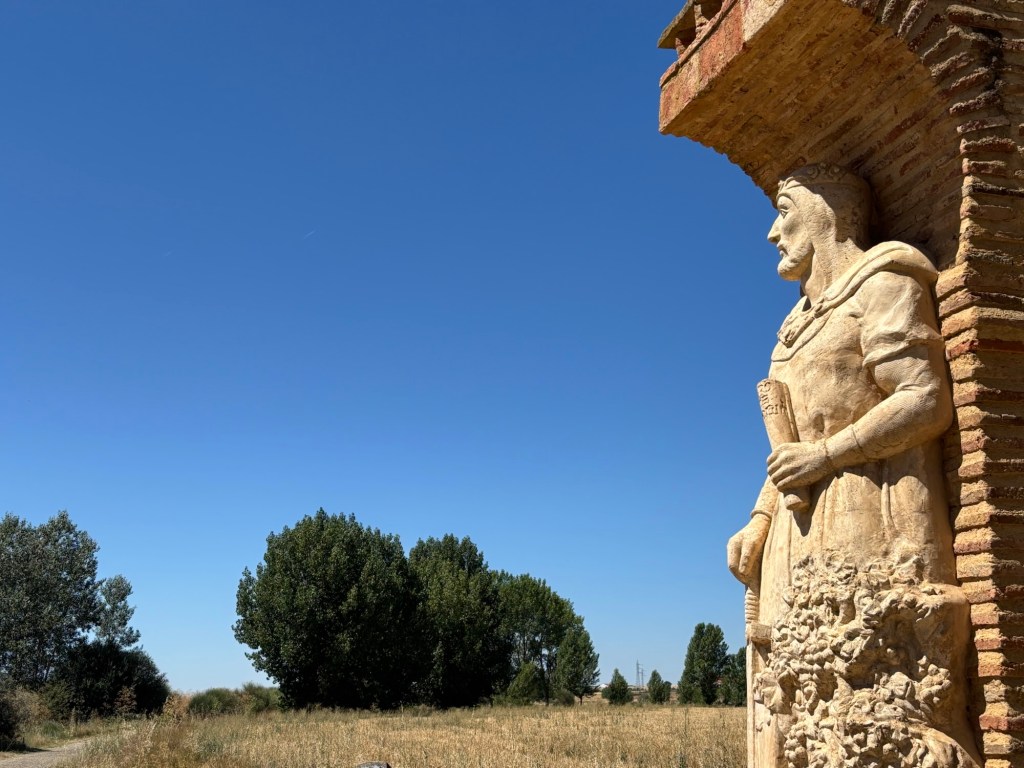

The bells are ringing for 22.00, and the white storks nesting on the bell tower are doing a lot of beak-clicking. That’s a sound I will always associate with Spain, no matter where else I may hear it.

Tomorrow we’re going to do another long slog, striking out for Mansilla de las Mulas if we can – which should, in theory, catch us up to the others who we lost on the road over a week ago.

Catch you later! BB x
All Change

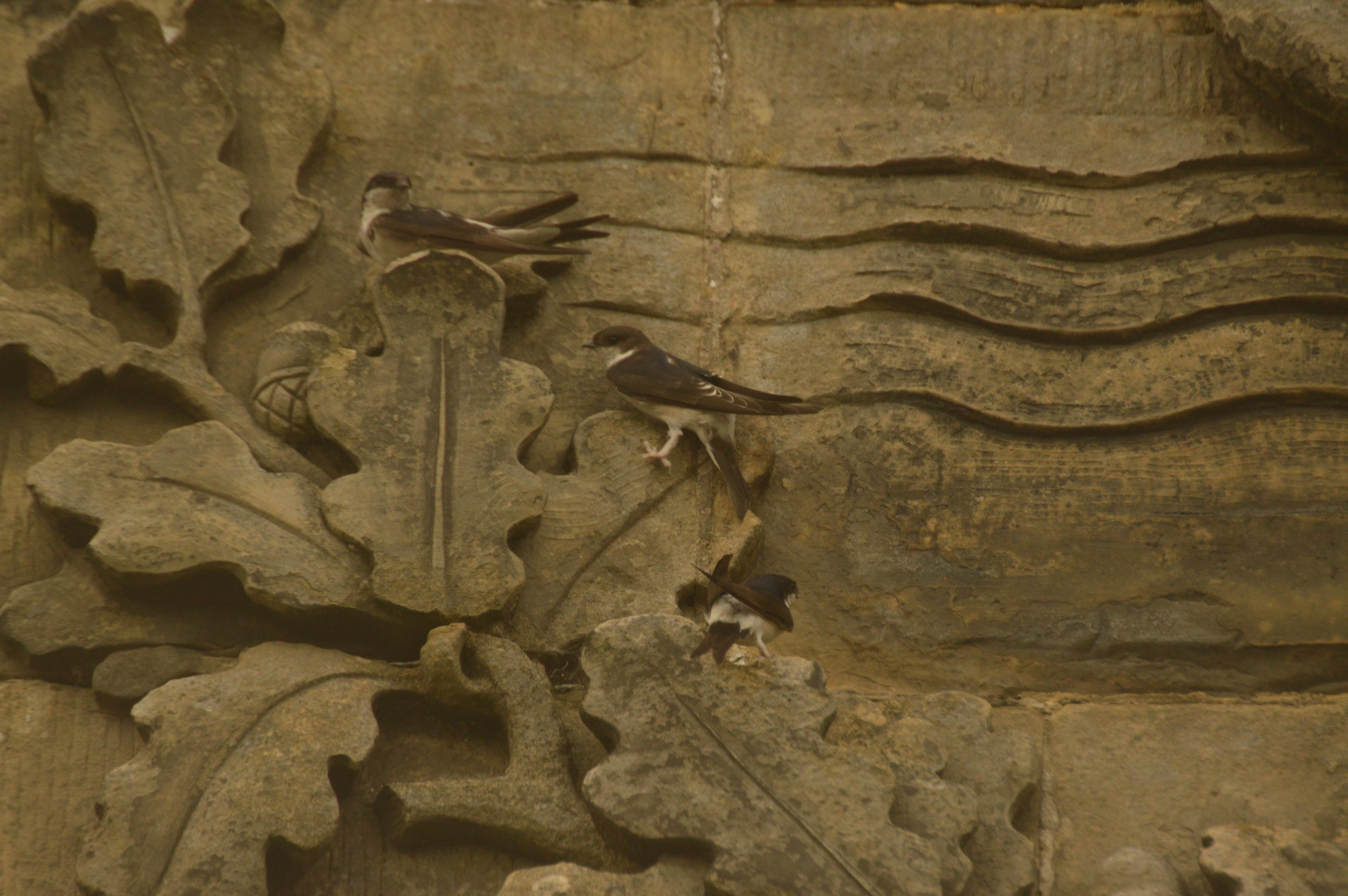
Autumn has come early this year. Following in the wake of the fierce heat of the hottest summer on record in the British Isles, many of the trees have started to shed their leaves almost two weeks earlier than usual. Two weeks does seem to be the number: the forest is thick with the musty air of fungus, and the colony of house martins that nest in the school have already started to muster on the roof as though they mean to depart any day now, though they are usually with us well into September. We’re in for a long winter when it comes.

The zenith of the summer stargazing season is behind us now. It’s one of the things I most look forward to about the summer, living where I do: despite the eternal glow from London to the north, the stars and the planets are surprisingly clear. Some of the summer nights this year were so hot it was possible to go out stargazing well after midnight without catching a chill, and I refamiliarised myself with the constellations: the twinkling ‘W’ of Cassiopeia; the Northern Cross; the winding enormity of Draco; and arrayed along the horizon, the bright lights of three planets: Jupiter, Saturn and Mars. It was so bright at the peak of the heatwave that I didn’t even need a torch to find my way around, thanks to the unfriendly glare of the hunter’s moon. While I couldn’t catch the planets with my camera, the Moon was easy enough.

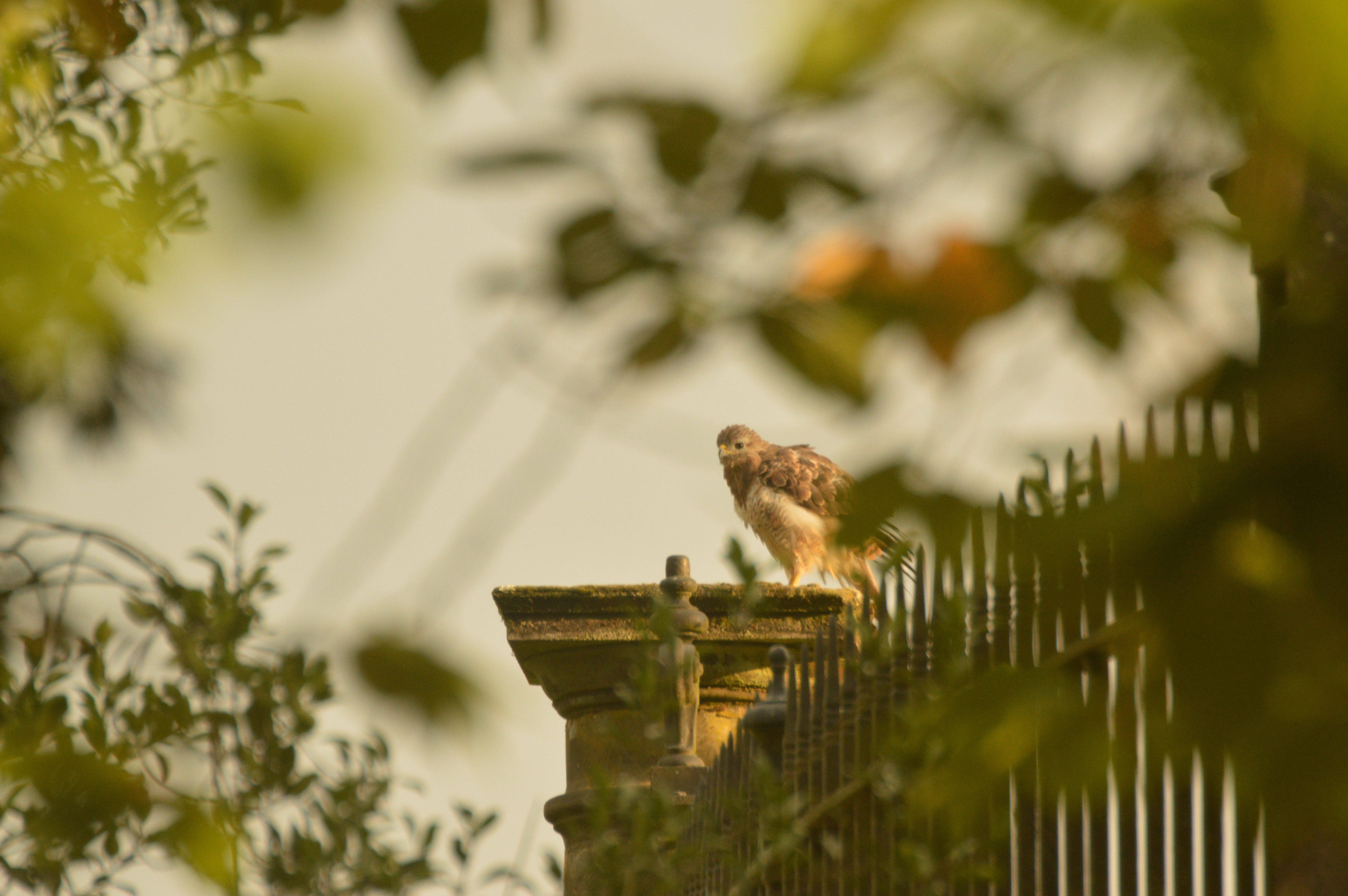
There’s a buzzard that lives in the forest which sometimes quarters the school grounds. A few days ago I saw her from the kitchen while I was having breakfast one morning, and on a childish whim I set out with my camera in hand. I used to be rather good at stalking for a good shot, but I’m a good number of years out of practice. I did manage to get close enough to see the hawk’s eyes with my own, which was the standard I always used to hold myself to back when I was a schoolboy, before it took off over the woods.


Words can’t describe how good it feels to be back at work. Usually, the two days of staff training can feel like a gut punch from the backstage crew as the curtain is yanked back – a kind of ‘playtime’s over, now get out there and earn a crust’. But this year, after eight weeks of on-and-off isolation, it could hardly be more welcome. I’ve been chomping at the bit to get back in the classroom since the end of July at least, and finally, it’s come around again. Only the bank holiday stands between the last few hours of the summer and blissful occupation.

I popped up to London yesterday and bought myself a new suit and shoes in a hollow attempt to pave the road to success this year, but also to treat myself after the success of my first ever GCSE cohort to sit exams came out shining. But will they detract from the beard? I find that doubtful.

Sir has been known to radically change his appearance before. I shaved my head once two years back and braved the raised eyebrows of my kids for months as it took its sweet time growing back. I’ve not cultivated a beard (or a ’tache, for that matter) since my time in Jordan, now seven years ago, and despite my initial apprehensions, I have to admit it’s starting to grow on me – faster than it’s growing in, anyway. I’ve accepted the fact that it’s going to leave me looking more like one of Leif Ericsson’s men than one of Hernán Cortés’ conquistadores – I am three-quarters English, after all, and what Spanish blood I have is more than a little rubio. Still, change is good. One can get too comfortable.


I tidied the flat a bit this morning. Took some clothes to a recycling centre. Did one last shopping trip before the portcullis comes down on Tuesday and ordered a grooming kit to keep this new project under control. The writing bug bit earlier this week, as it always does just before work begins. I guess I need to be busy to be productive.

As the clock runs down, I’m enjoying a warm mug of Cola Cao (courtesy of Garcia’s on Portobello Road) and leafing through one of the oldest books in my collection: a 138-year old copy of Washington Irving’s Life of Mahomet & Tales of the Alhambra. The writing is wonderfully poetic, and it even smells historical. One of my students is writing a project on the Alhambra, having fallen under the same spell that I did at his age – the same magic that ensnared Irving and countless other devotees long before us. It would do me a world of good to clue up on that old obsession once again.

It’s going to be a very busy year, but I’ll write as often as I can – it’s been really therapeutic, getting back into the writing game after a long hiatus. Until the next time, dear readers! BB x

Afterglow

Walking home from work this evening I found myself unnaturally aware of the night sky. Normally in the corner of West Sussex where I live, the skies at night are impressive, and you can see all the constellations of the season with a clarity you wouldn’t expect to find so close to London. Last summer I even saw a comet shining a brilliant blue as it shot across the sky overhead. But tonight the clouds were low, and a strange, eerie light hovered along the horizon on either side of me: a greenish-yellow to the north, hanging over the distant lights of London, and a more unholy bluish-green patch of cloud to the south, indicating a floodlit pitch somewhere below. Elsewhere along the skyline, similar patches of tarnished gold and green light made the night a rather sinister shade of grey. Somewhere in among the phosphorescence, the glow of an almost-full moon went unnoticed.

When I lived in Spain as a child, I remember a night when several towns in the area decided to take part in a five-minute power-cut. I believe it was in protest about climate change, or energy wastage, or something along those lines. Our town sat atop a lonely hill in the middle of a great valley ringed by mountains. Villages were few and far between, and the nights were dark enough even with the interference of the thousands of twinkling yellow streetlamps. But one night, for five minutes, it was even darker still. My mother took me up to the square at the top of the hill to look out upon a world blanketed in a darkness it had not known for decades, perhaps even centuries. I was only twelve years old, but it made a deep impression on me. I have never forgotten the quality of the darkness, the stars that shone so brightly that in memory they seemed almost like suns – which is perhaps not so very far from the truth.

We spend a lot of time discussing the irreversible damage we have done to our oceans, how we have choked the earth and its rivers with our plastics and detritus, but it is far deeper and more sinister than that. Man’s quest to vanquish his fear of the dark is well on the way to robbing us of our natural light. In some parts of the world, it already has.

It is not so much our desire to ape that concerns me – our fierce instinct to twist the natural into the artificial – because I know that story. It is the fable of the Emperor and the nightingale. Tragically, as is often the case with stories meant for children, it seems the moral was lost on us a long time ago – a modern-day version would no doubt have the Emperor plug simply his iNightingale in to recharge. No, it is our desire to outdo. The go one step beyond. To beat nature at her own game, like a petulant child insisting they are old enough to look after themselves. I am reminded of another children’s story concerning a devil’s mirror, that sought to make a mockery of all that it looked upon…

When you spend weeks going over the pollution topic of the iGCSE and IB exams with your foreign language students, it’s easy to forget the creeping damage of light pollution, if only because we choose not to see it. Light is good. It shows us the way, it helps us see where to go. It makes us comfortable and it keeps us safe. So perhaps it is a loss we must bear. What is, is what must be. But I do wish, on nights like these, when the clouds are low and heavy and stained with the unholy afterglow of the city, that I could go back to the night of the power-cut, when the night was clearer and more beautiful than any light show I have ever seen. BB x

YearAbroad (430)

Stargazing in La Siberia, May 2016


Dust and Ashes

I watched a house being torn down on my way home yesterday. The sun was setting behind, casting beautiful golden rays through the dust as the maw of the digger ripped the walls apart. Destruction is an odd thing to witness. It obviously has its pull; there were some four or five others standing by who, like me, had paused in their perambulations to watch: an old man, a chap in blue overalls, a man and his dog, a mother and her daughter, and me; all of us gathered there to witness the last moments of a 60’s flat block. The walls came down like sand.

I once heard it said that it can be a thrill to watch somebody on a downward spiral. I never did understand what it meant, though I suppose it’s along the same lines as the death of the flat block. It’s a spectacle. We don’t pay to see movies where the hero overcomes every single obstacle and has a wonderful life thank-you-very-much, with no end to his or her wish-you-were-here lifestyle. We want to see suffering. We want to know they’re as vulnerable as us. And if they succeed, and they don’t always succeed, we want to know it came at a cost. Nobody is invincible, but everybody is human to some degree. It’s about what rises out of the ashes, rather than the ashes themselves.

I’ll have to think about that downward spiral case some more.

DSC_0012

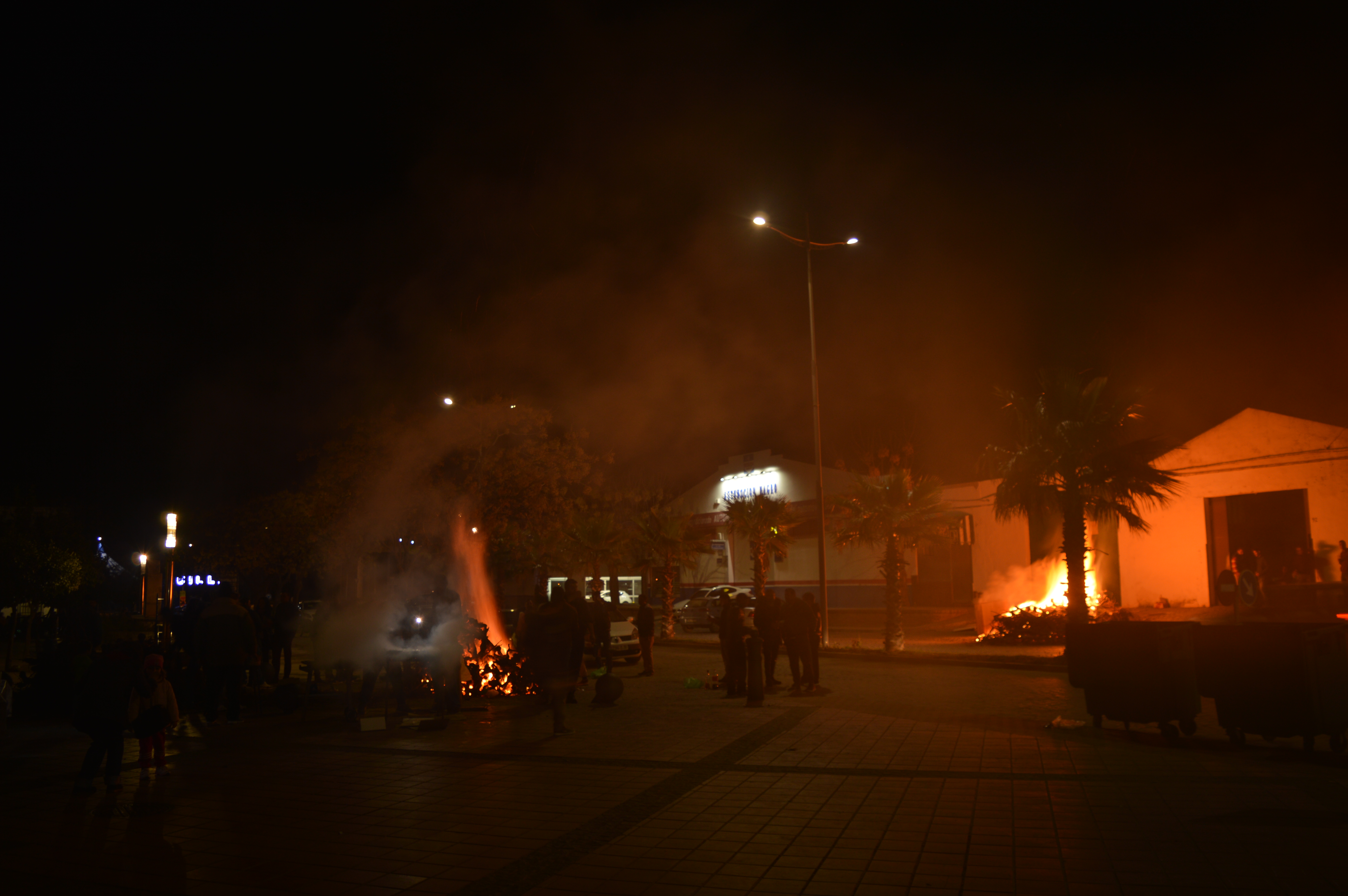
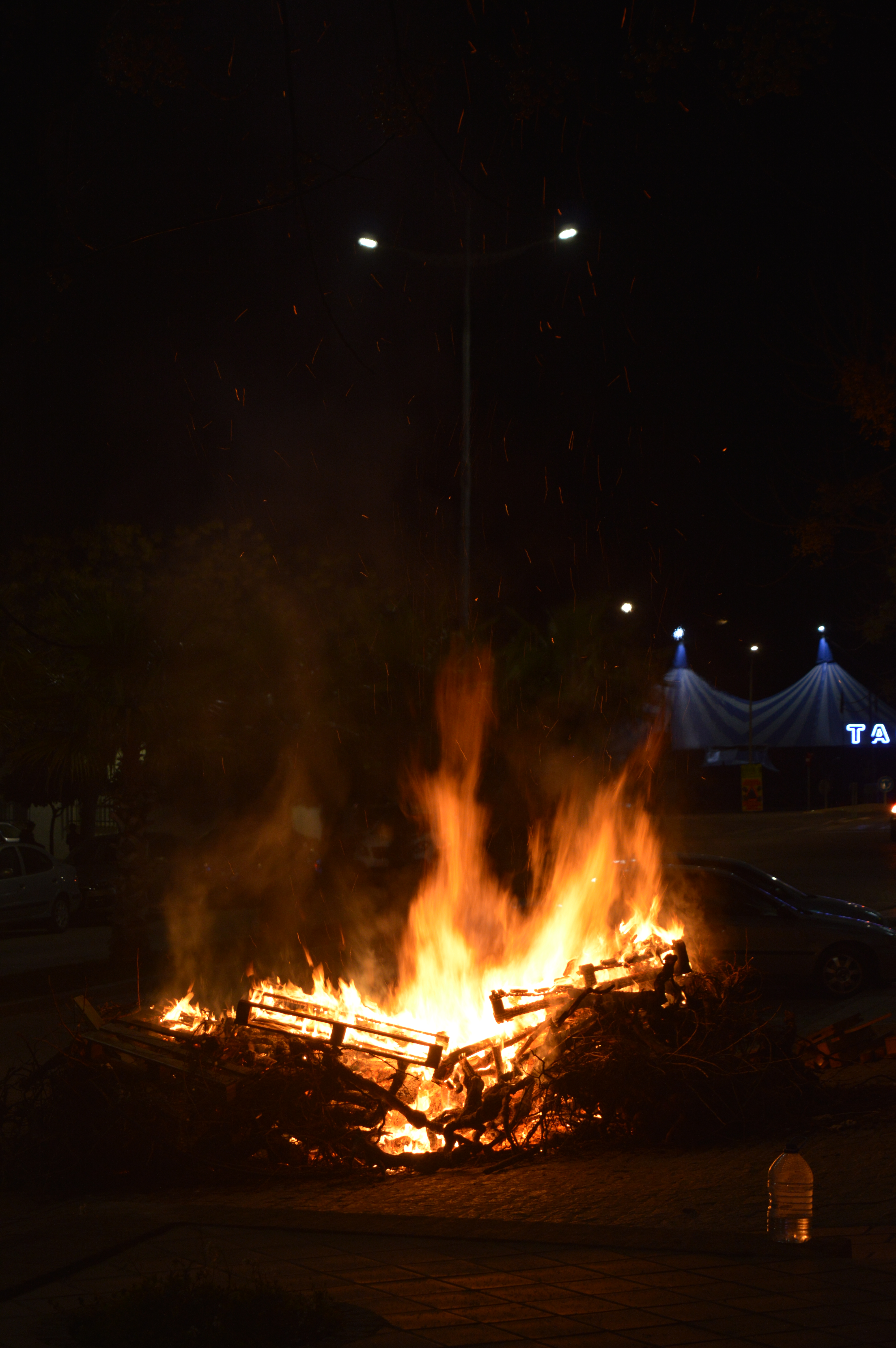
Villafranca celebrated Candelas last night. It’s a local festival, similar to the English custom of Bonfire Night only in that the main ingredient is a number of bonfires. Folk were gathered in front of the main bars in town, where a handful of small bonfires had been laid out and set alight. Whatever they were putting on them was coughing up thick smoke and a hellish rain of sparks. Beyond, on the town outskirts, the neon lights of a visiting circus glared through the haze. It looked like something out of a Don Bluth film. I tried to imagine the first candelas, four hundred years ago and more, then the only lights in this dark land. A friendlier festival than Halloween – or, perhaps, what Halloween has become – if only I had somebody around to share it with. That night I wandered the streets alone, knowing once again after a long time how it feels to be on your own.

DSC_0023

Our electricity bill is almost double what it was last term. That’s hardly surprising; since then, we discovered the flat’s heaters – both the presence of and the real need for them. No biggie. I’m keeping my options open on the job front, looking for work in both Spain and England. It may be some time before I have the enviable position of being able to make such a decision from a position of comfortable stability. Until then, I need to put Reinette through her paces (Hornachos is still beckoning), read a few more books, write a few more letters and apply some serious muscle to my novel. Time is in my favour this year, but still it slips through my fingers by the second. Orion watches from the night sky as he has for millennia, and the sight of him comforts me.

DSC_0030 (2)

I’ll be back in England in under a week. It’s a nice way round to have it, I’ll grant you, living in Spain and holidaying in England. There’s also talk of an upcoming gig for the Northern Lights which I might feasibly be able to make. The ground beneath my feet is moving. In the meantime, I’m relying on Thomas Hardy, Marvin Gaye and a never-diminishing rota of classroom games to keep my mind at work.

In other words, life goes on. I’ll see you around. BB x

From Burning Desert to Sapphire Sea

One minute I’m standing on a high rock, staring into a lunar desert whilst desperately trying to even up my tan lines; two hours later I’m staring down at a school of damselfish drifting over a coral reef. I’m still struggling to get my head around it.

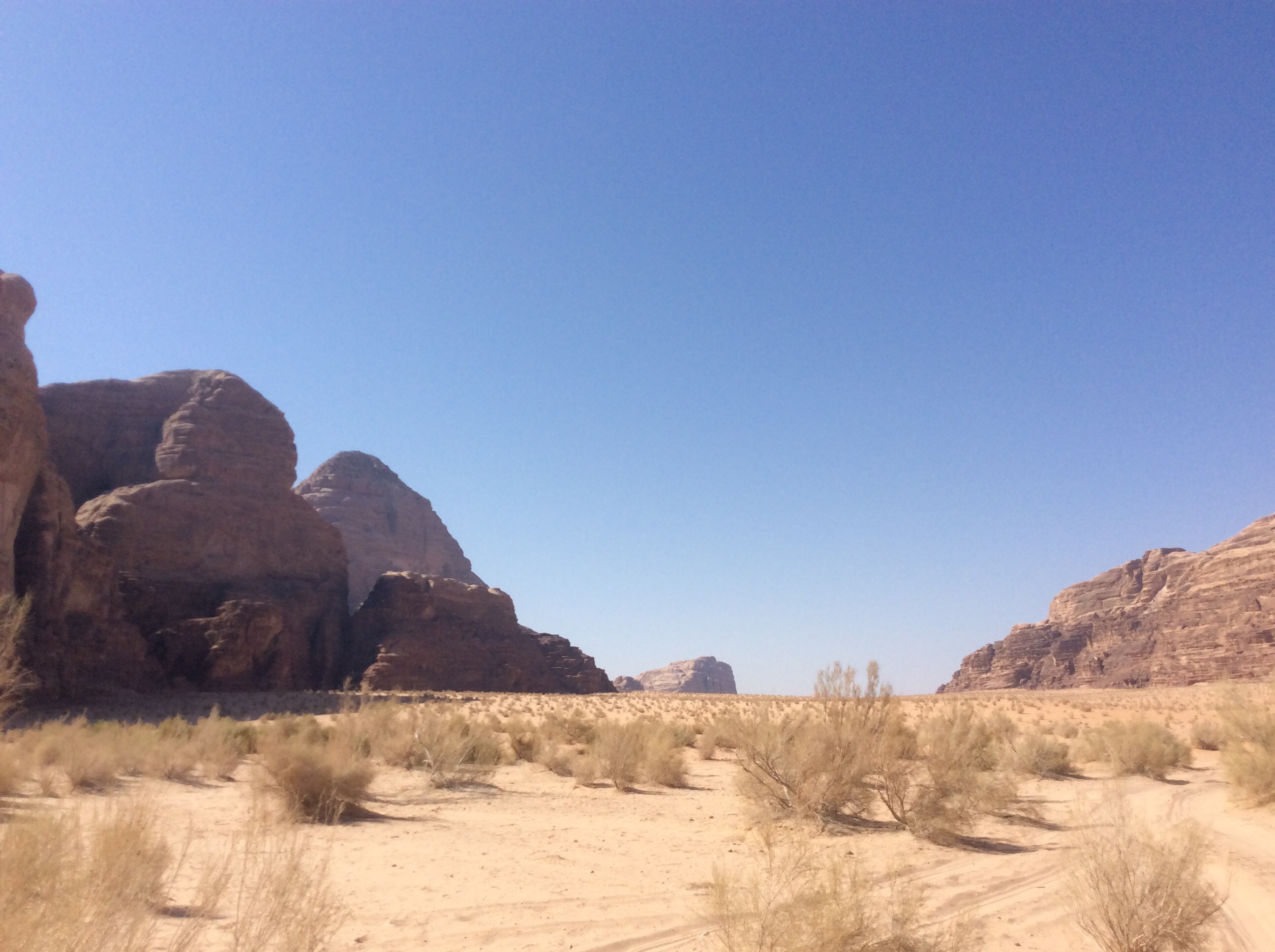
Sunrise feels far longer ago than this morning. After putting the finishing touches to last night’s report, I left the others sleeping in the campground and set off alone into the desert once again, this time to see the sunrise. I made it to the other side of the valley in time to catch the first rays of sunlight bursting over the cliffs. The sand was full of tracks: the footprints of beetles, snakes, camels and four-wheel drives crisscrossed the valley floor. There was even a lone skink trail halfway across, both satisfying and amusing on a more personal level (for the record, it’s an old family joke about lesser-spotted three-toed eagle-eyed skinks that gets wheeled out whenever yours truly gets boorishly specific about animals). The others were mostly up and about by the time I returned, and in perfect time for half an hour’s meditation before breakfast. The hefty futur Ahmad and his brother Khaled prepared for us was a kingly feast: fresh bread, helwa, jam, hummus, falafel and hard-boiled eggs (there’s no escaping them!), and that’s without mentioning four glasses of that lovely sage and cinnamon-infused Bedouin tea. Dee-lish. God help my teeth over the coming year, because Spain and the Arab world most certainly won’t.

The jeep tour of Wadi Rum was a pretty standard exploration of the main sights, as you might expect: the early Nabatean rock art, Lawrence’s house and the rock arches. I needn’t elaborate much; such sights, stunning though they may be, are better detailed in guidebooks. Besides, Langelsby’s got it covered. I highly recommend you go for a tour if you’re in the area, though. On a more personal note, I found it profoundly ironic that I finally found a haven for wildlife, in what must be outwardly one of the most inhospitable landscapes on the planet. Desert larks, white-crowned wheatears, rock martins and rosefinches followed us from rock to rock whilst the ever present grackles, the tricksters of Wadi Mujib, whistled noisily overhead. No sign of the nocturnal denizens of the desert, but a welcome change from scabby cats and pigeons. The naturalist in me will never be suppressed. So says the lesser-spotted three-toed skink, at any rate.

On the knowledge that wrangling a bus from Wadi Musa to Amman might be beyond us, we arranged with Ahmad, our kohl-eyed Bedouin guide, to take us as far as Aqaba instead, where buses to Amman would be easier to achieve. Aqaba may be your run-of-the-mill beach resort these days, but it has a notch on everything I’ve seen before: the Red Sea. Sapphire would be a better name by far. I’d heard stories and seen pictures, but I’d never really believed quite how deep a blue the Red Sea was. Quite by accident, and with no small meddling from my heart, I found myself physically incapable of passing up the chance to go snorkeling.

Water sports and I don’t have an easy history, let’s say. Ask the population of Whitstable, who watched me capsize a kayak twice and have to be towed ashore (yeah, that still smarts). Swimming’s just about my favorite sport, being both an important skill and the only sport I’ve ever enjoyed, but I have breathing issues – something to do with my nose – which makes most other water sports more problematic than entertaining. Snorkeling has always been a dream of mine, though. Not as technical as scuba and easily doable for somebody with breathing issues. I say that, at least. It’s easy in retrospect.

The first forty minutes were tortuous – not because very salty water kept leaking into my mask, or because I was panicking over the oddity of breathing through a tube, but because the scenes opening up below me were nothing short of some of the most breathtaking sights I’ve ever seen (ouch, that was a bad pun). Stacks of frilled and fringed coral giving way to deep, sandy gardens shimmering in the crystal sunlight. Black sea urchins stretching their tapering spines out of crevices. Angelfish, surgeonfish, triggerfish, even clownfish, frolicking just inches in front of me. It was like living a wildlife documentary in the flesh. By the time I’d finally worked out how to breathe properly – ironically, the key to it was simply calming down and having faith in the tube – we only had five minutes left in the water. But those last five minutes were magical, even more so than the stars over Wadi Rum. Who could possibly feel lonely, or even give loneliness a second’s thought, with scores of brightly colored fish teeming about so close to? Those were my brightest moments.

Christ, but I feel like a tourist right now. I’ve just tackled three of Jordan’s biggest attractions in two days flat: Petra, Wadi Rum and the Red Sea. I didn’t really give Petra much clearance, did I? Mm, I’ll leave that one to the girls over at Langlesby Travels (https://langlesbytravels.wordpress.com/).

It’s been a busy weekend and a half. It feels unreal, somehow. But I don’t regret it for a second – and for once, l don’t even feel ashamed. I am a tourist. Jordan thrives on tourism. I guess I’m finally beginning to accept that. And about time too! Travel is no more and no less than the best thing you can do with your life, and it’s such a shame to have it spoiled by something you could never change, even if you wanted to. BB x