At the End of the World

Cape Finisterre, 20.11.

Galicia provides. Happiness writes white but the white light is brilliant, like the sands that run along the length of the bay beneath my window. Like the feathers of the gannets and terns that dance above the face of the water. Like the sparkling reflection of the sun as it sinks below the horizon along the 42nd parallel north, disappearing beyond the Atlantic, beyond Chicago, beyond the end of the world.


Madrid feels a world away. I caught the early AVLO train from Chamartín and joined a modest number of passengers on the three hour journey to Spain’s north-westernmost region. The railway line tunnels under the snowy peaks of the Guadarrama before racing across the featureless plains of Zamora and then, slowly, climbing into the wooded hills and craggy moors west of Astorga before rolling through the deep valleys of Galicia proper. Spain is one of those countries that alters radically as you travel through it, and the Madrid-A Coruña train is a very good way to prove that point.


I arrived in Santiago de Compostela with a couple of hours to kill before the bus to Fisterra, so I wandered into town and sat in the main square in front of the cathedral for a while. A few school groups posed noisily in front of the cathedral, while exhausted pilgrims sat at the feet of the pillars, soaking up the sunlight to recharge their batteries. There aren’t as many now as there were during the summer. I guess that’s to be expected. The year I made the trek, 2023, was also a delayed holy year, the first since the COVID-19 pandemic shut the Camino down, so the numbers were especially high.

I wonder how far these bold pilgrims had come this year. What friends did they make on their journey? What memories will they take away with them forever? Did somebody watching from the sidelines wonder that about me, years ago?


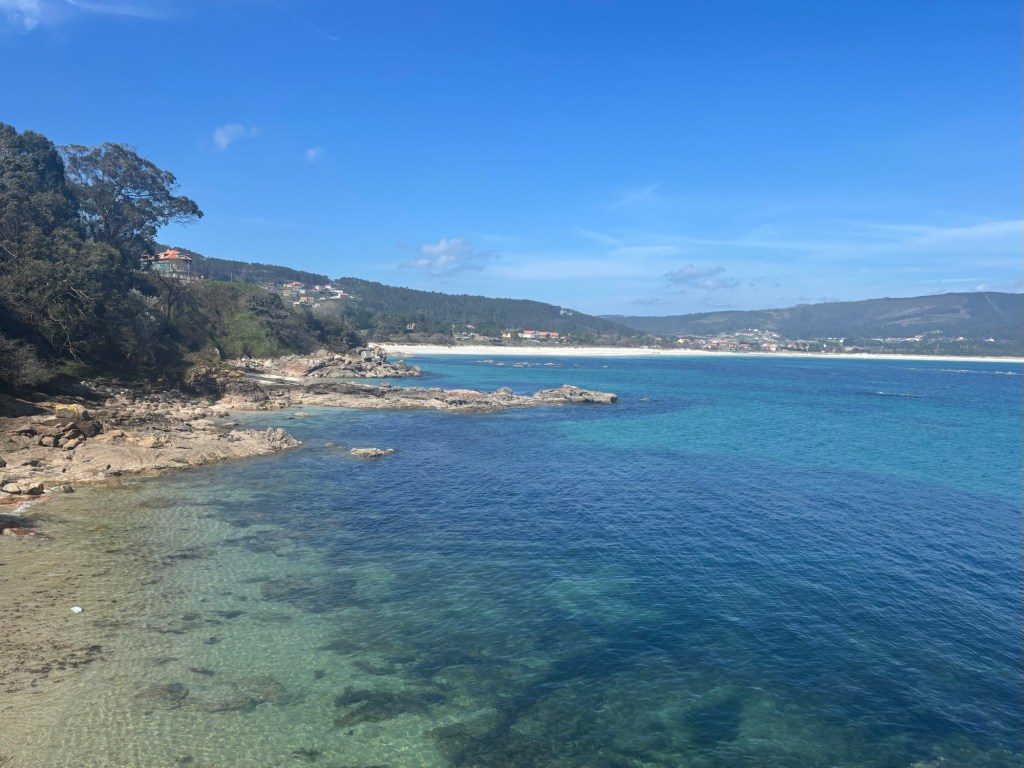
The bus from Santiago to Fisterra is almost as long as the train from Madrid, but it does travel along one of the most scenic routes in the whole country. To reach the famous cape, it first has to pass through all the towns and villages along the coast, fording the great rías that weave through the cliffs on their way to the sea. The sun came out from behind the clouds just as the cape came into sight, and the whole coast seemed to come to life: the yellow flowers of the gorse shone like gold, the sand beneath the shallows glittered like jade. My heart did a similar leap once when I saw the silhouette of Olvera, my old hometown, for the first time in seven years. It made me smile to think that this place had joined that pantheon.
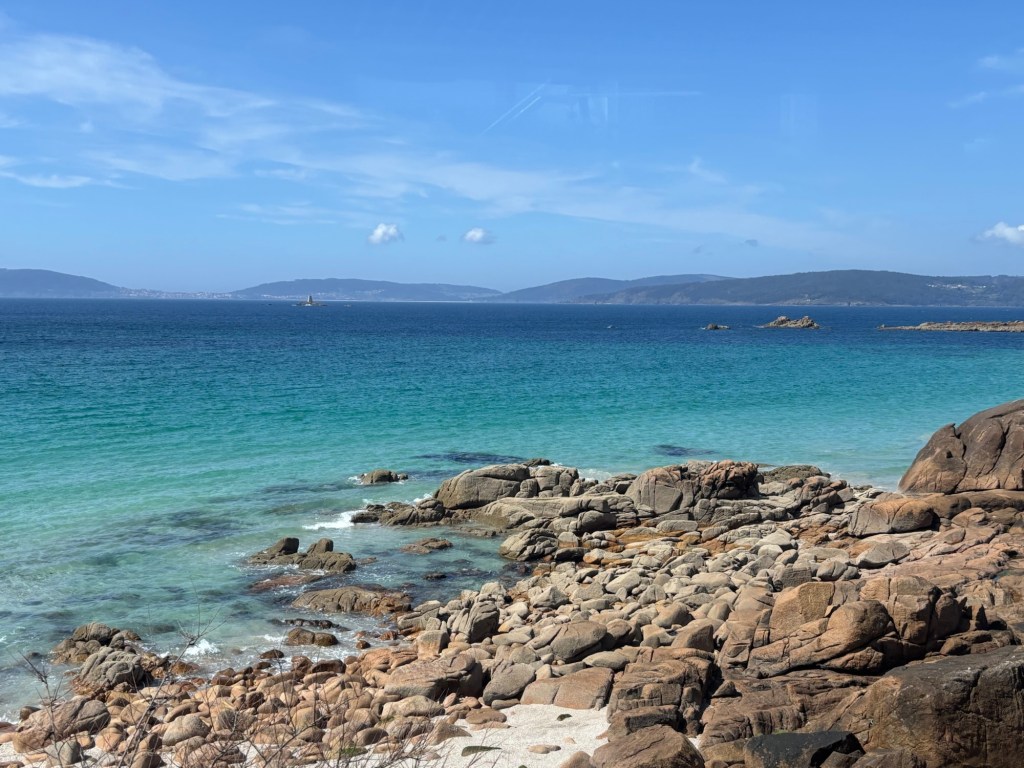

I arrived early, so I went down to the beach to soak up the sea air for a while. Fisterra is so special to me because it combines the two sides of my heart: the sounds and smells of the sea from my childhood in England, and the language, cliffs and mountains of my adult love for Spain. Mountains take my breath away (especially the craggy limestone kind) and marshes hold a special kind of rapture for me, but I think I will always come back to the sea when I need to feel whole again.

As I watched, a sandwich tern flapped into the little bay and started diving for fish. It was a beautiful sight to see, for the waters are so clear here that I could see the bird’s brilliant white form beneath the water after it had dived, moving like a living arrow. After five attempts it speared a shining silver fish and took off to the south with its catch in its beak. I realised the path on Google Maps didn’t actually exist and beat a quick retreat to the hotel for check-in.

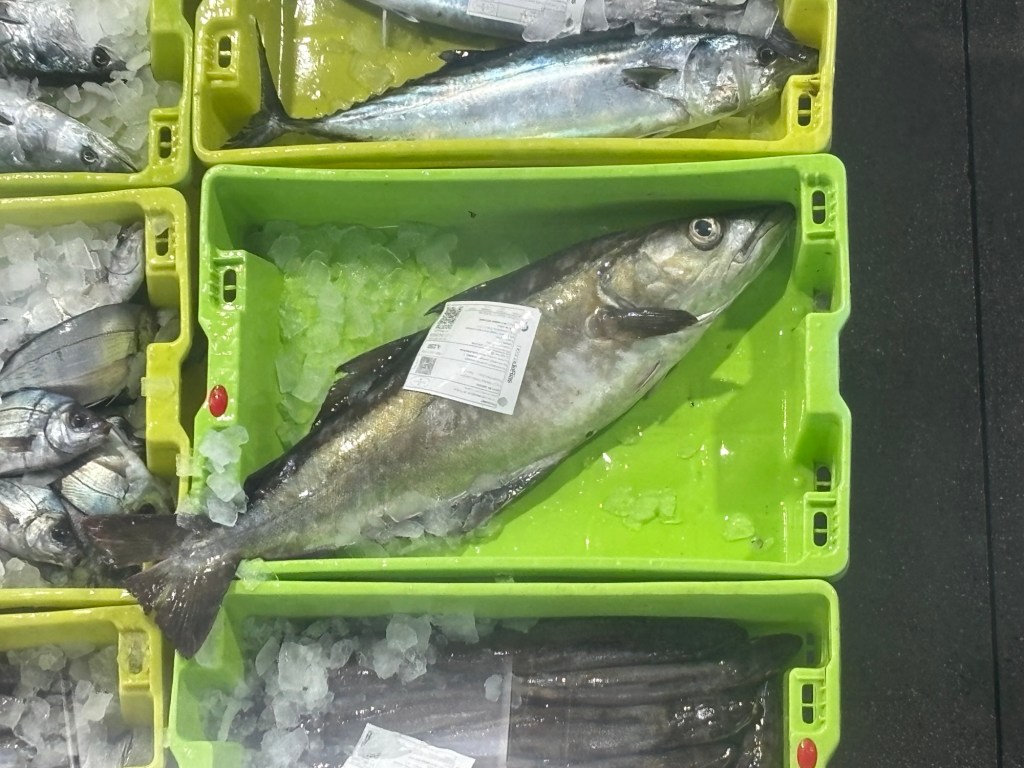
The last time I was here, I only saw the town’s fishery out of hours. I got lucky this afternoon: on my way to the cape I dropped in and caught the daily auction (or lonxa) in full flight. Crates of hake, mackerel, red gurnard and more than a dozen other species I learned to identify as a kid went to the highest bidder in one of the mildest mannered auctions I’ve ever seen (though, to be fair, I haven’t seen that many auctions). Some of the larger fish had QR codes slapped on the sides linking them to the fishermen who caught them, I suppose – my camera didn’t reach far enough to tell.
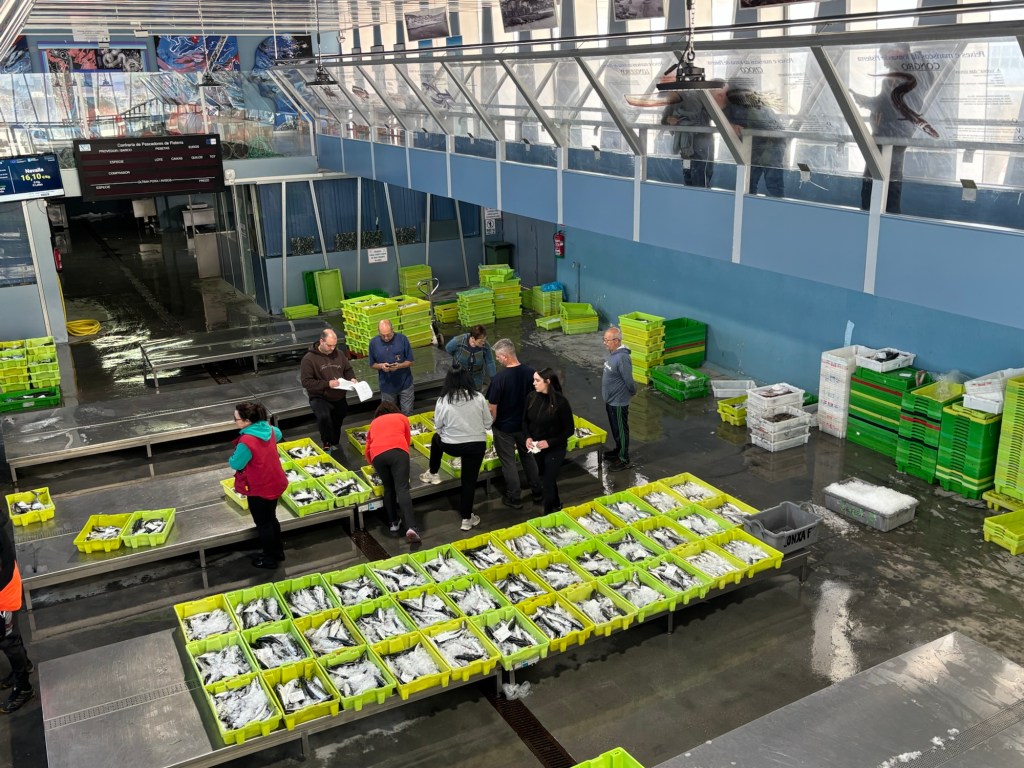

On one side of the room, crates of sea urchins were stacked fifteen high. I didn’t see any percebes (the region’s famous goose barnacles), but then, the manner by which they are collected is very different indeed, so that’s hardly surprising.

I left before the giant anglerfish went under the hammer. I’d have been curious to know how much that went for.

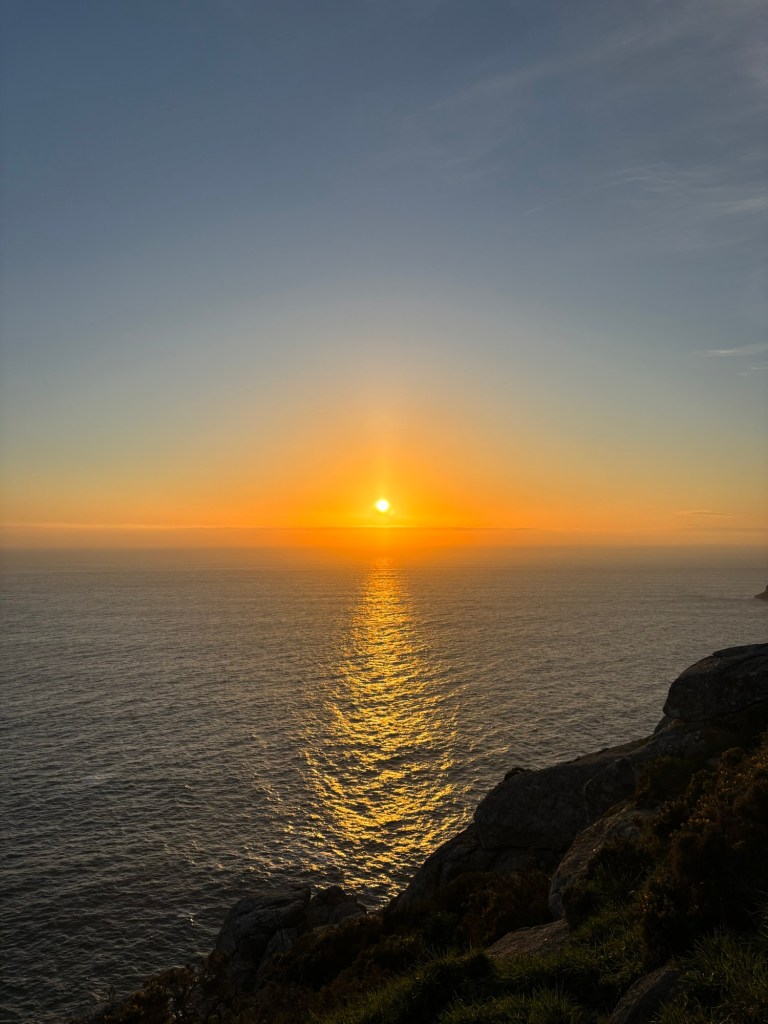
I called home from the cape and said I’d be back before sunset. It’s now fifteen minutes to sunset and I’m still here, but I’m glad I stayed. The weather here is so changeable and this might be my only chance to watch the sunset from the cape, as it was rained off the last time I was here. A small cohort of like-minded pilgrims and locals have come out here with the same idea. A couple of noisy Spaniards made a pig’s ear of taking a highly choreographed selfie nearby, much to everyone’s frustration, but they’ve gone now, and it’s been nothing but the sound of the waves for the last twenty minutes.

I’m going to stop writing now. The sun will be sinking below the horizon soon and I want to appreciate every second as it does. See you on the other side. BB x
Wishes and Migas

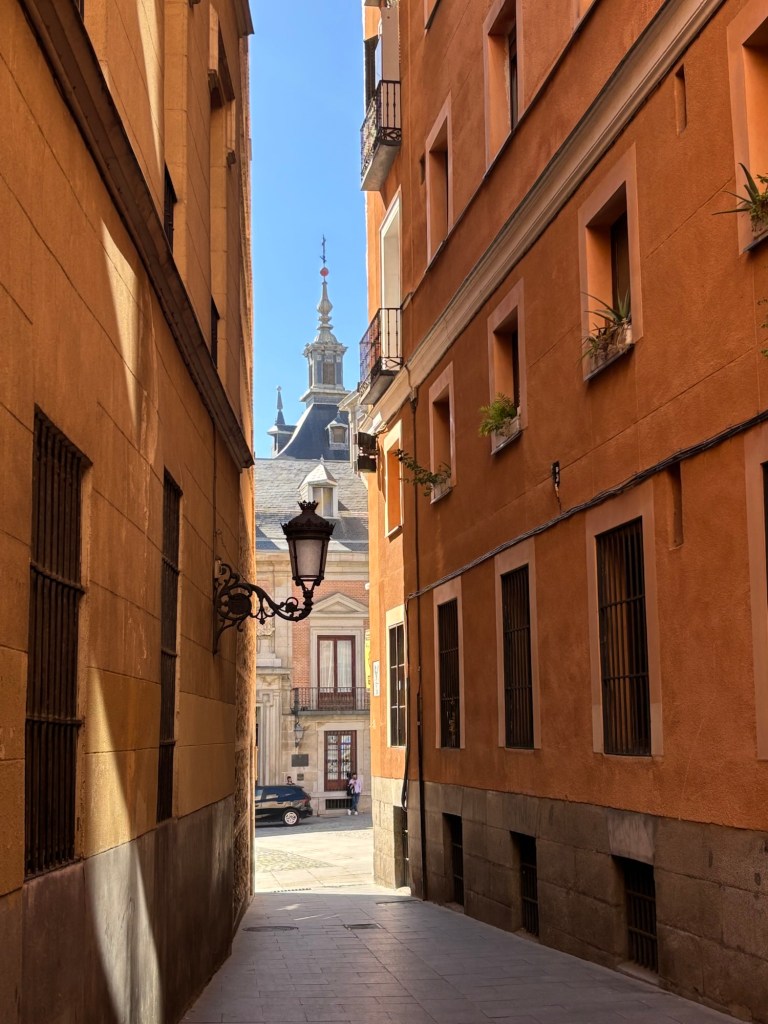
Calle de San Millán, Madrid. 20.09.

The sun is just starting to set beyond the skyline. Down in the street below, Madrid’s colourful denizens are out for an evening paseo, dressed to the nines to the last man (and woman). The rumble of motorbikes is a constant accompaniment to the general hubbub and the occasional police siren soars above it all every now and then. The lodgings I’ve managed to snag come with a balcony that looks out over the crossroads below, so I’m treating myself to the noise of Madrid for a few days before retreating to the quieter shores of Finisterre, at the end of the world.


The capital is much as I remember it from my last visit, several years ago, though it makes a change to see the place under the warm spring sunshine rather than wrapped up in the chestnut smoke of winter. It’s inching toward 20°C outside, but the madrileños are still going about in puffer jackets and (fashionable) greatcoats as though it were 5°C. I haven’t brought any heavy-duty winter wear as I have to carry everything with me from Madrid to Galicia to the Canary Islands and beyond on this latest adventure, but I might pick up a few Spanish clothing supplies while I’m here in the city. I haven’t overpacked, for once.


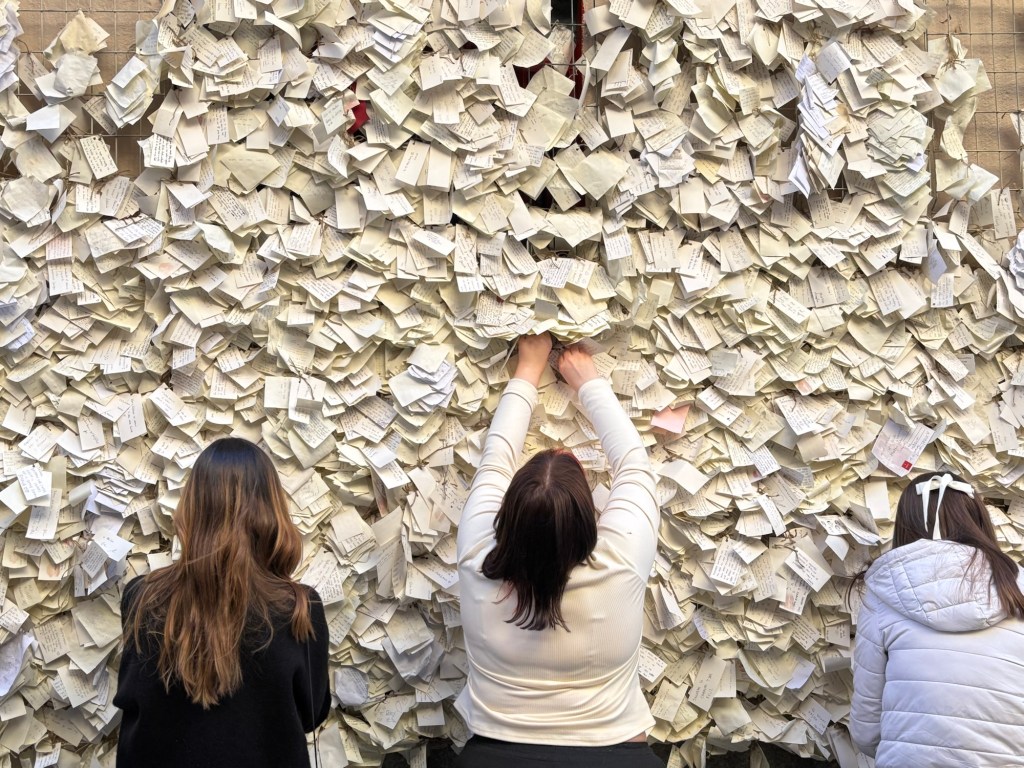
During the course of my wanderings I stumbled (quite by accident) upon the Tienda de Deseos again. I found this strange corner of Madrid last Christmas, its walls covered with the scribbled desires of a hundred passers-by fluttering in the winter wind. Last year there were quite a few lonely hearts on here. This year there seem to be a lot more general “wishing for all the best in life” requests. I made a wish last year to find her – “wherever she may be”. This year I was a bit more specific. Beautiful though it was, I don’t think I’m quite ready for another trans-Atlantic situationship.


Even in the heart of the capital, there are clear signs that spring is here. The cherry trees lining the Calle del Arenal are dressed all in white. The swifts are here early, too – they must have come hurtling in on the wings of the rainclouds, because I’ve never seen the Río Manzanares so full.

There were a few posters on some of the bollards advertising an anti-hate march in defense of the Trans community, which I really ought to have stuck around to watch, as it’s one of the A Level topics for Spanish at the moment. A smaller group of protesters were picketing the Corte Inglés just off Sol, sporting the usual V for Vendetta masks and carrying telescreens displaying the slaughter of fish off the Spanish coast. Nobody seemed to be paying them much attention.


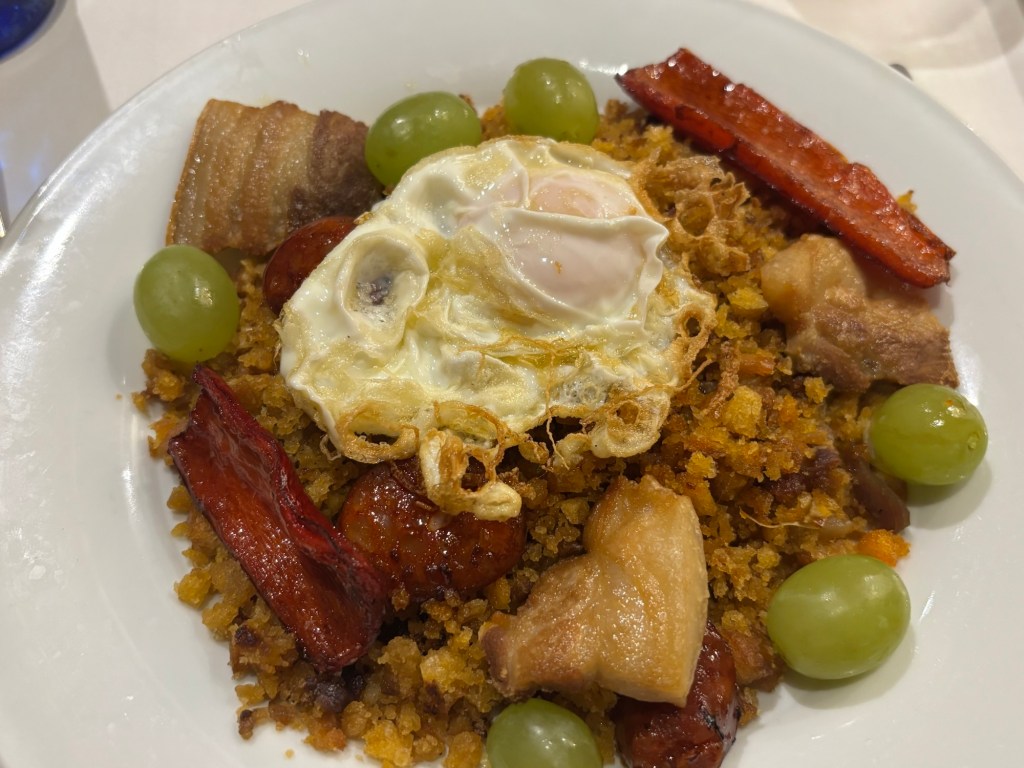
I treated myself at dinner with a rather upmarket restaurant modelled on Arturo Pérez-Reverte’s Capitán Alatriste books – dishes, decor and all. It didn’t disappoint one bit. I had my first migas in seven years and tried cochinillo for the first time. It was incredible, even though my taste buds hadn’t quite recovered from the usual end of term knockout cold.

On my first grand adventure across Spain many years ago, food was a luxury I rather recklessly decided to do without. Now that I have the means, I intend to make good on that dreadful error by exploring the best dishes the country has to offer as I go. I haven’t found any callos yet, but they’re on my list!


Please excuse the rather humdrum post today. I haven’t had any grand escapades yet! The real adventures start tomorrow… BB x

Shuffling Along

I’m sitting in the rest area at Bristol Parkway Station, watching the blinking lights of cars cruise around below me in circles like so many coloured beetles in the darkness. If I’d made my original train, I’d be at my mum’s place by now. But there was an incident on the 20.35 from Bristol that the authorities had to deal with, so a twenty minute delay has turned into an hour’s setback as I missed my changeover. I’d chalk it up to some Friday night jollities from some of my ruddy-faced countrymen in the next carriage. The only highlight was the very comical collective groan from the other passengers when the announcement came through. Can I still use the term passengers? It’s been recently outlawed by National Rail, who apparently fear it sounds “too formal” – what has the world come to?

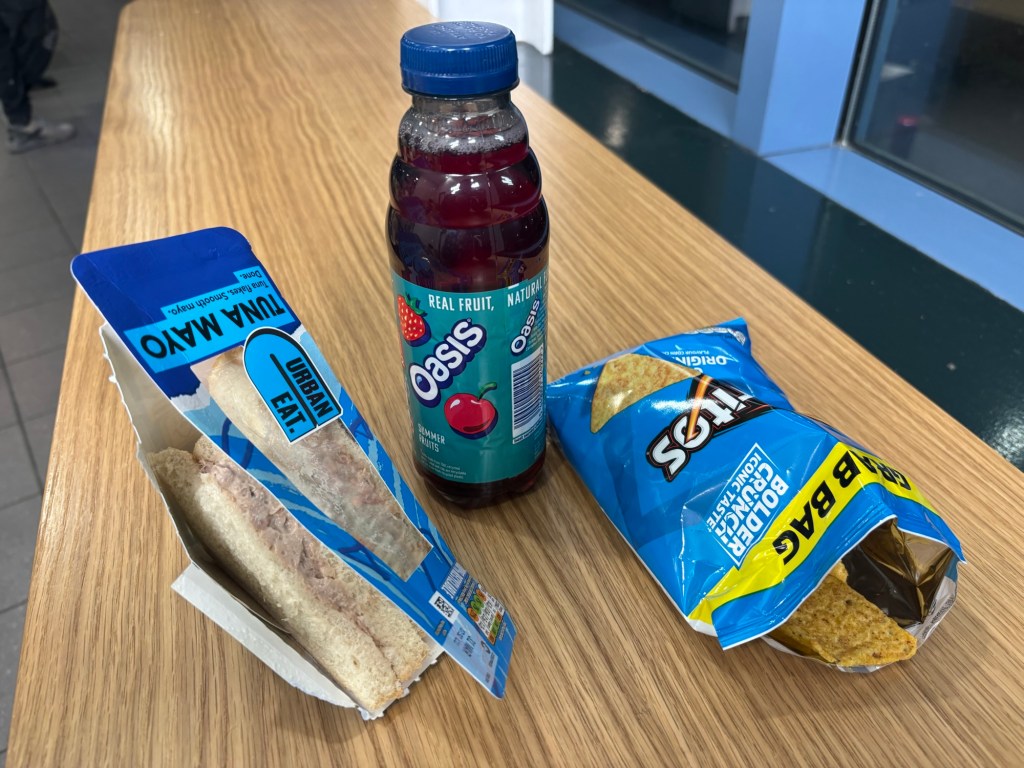
So, I’m stuck here for another half hour. I’ve wolfed down a meal deal and am now watching the world go by with my Spotify on shuffle. The holidays are here at last, so I guess it’s time to blow the dust off the blog and flex my rusty writing arm with a little exercise. I’ll use the first five songs on shuffle as a jump-off point and see where we go from there.


Stronger – Kanye West

Ah, the latter days of 2007. After largely eschewing popular music, my brother and I were simultaneously introduced to modernity with Now That’s What I Call Music! 65 around Christmas 2006, our first away from home during our short-lived attempt to up sticks and move to Spain. Maybe it was because it was a link back to the world we’d left behind, but I leapt upon the novelty, and it’s fairly safe to say that my awakening as an explorer started with that CD. I used to get almost all of my music from those Now! compilations. Thank goodness Spotify came along and broadened my horizons!

It was a good time for music, anyway. Rihanna was still pumping out hit after hit (Don’t Stop the Music had just hit the scene), Ed Sheeran was unheard of, and Kanye was famous for his beats and his bars, and not his antisemitism or his (now ex) wife’s rather large bottom. Those were happier times.


Bailando – Enrique Iglesias

Wind the clock forward around ten years. Durham’s Music Society released the theme for the summer concert (Around the World) and the Northern Lights – then in the early days of our ascendancy – hit the books to find a suitable number to fit the bill. I wasn’t anywhere near as talented as some of my peers (at least four of whom have gone on to moonlight as professional musicians since) so this was my one chance to take the reins with a song where I might be able to do something the others couldn’t – that is, singing in another language.

By that point, aged 22 and fresh from the year abroad, I was spoilt for choice. But let’s face it, it would have been a tall order to get an English a cappella group to sing the Arabic smash hit M3allem, and all the sevillanas I had committed to memory were much too demanding, even for those who could speak a little Spanish. Luckily, Enrique Iglesias was famous enough to provide a bridge between the two languages, and after some negotiation with my musical director, I managed to get Bailando onto the set. I put my heart and soul into my Grapevine arrangement, but I honestly had a lot more fun performing Bailando with the gang, not least of all on account of the choreography.


Mammati – Willie Mohlala

Somewhere at my dad’s place is a little red memory stick containing a number of MP3 files: mostly obscure Ugandan pop and folk music, with a few Dolly Parton numbers sprinkled in for a little variety. That playlist was the soundtrack to the various marathon road trips of my time in Uganda, since the full playlist was never enough to span the enormous distances we used to travel. Shazam still struggles to identify the greater part of that playlist, and since Willie Mohlala was one of the only artists labelled on the tracklist, he was one of the few to travel with me out of Africa. Him and Dolly, of course, though quite how she wound up in central Africa beats me.


AM to PM – Christina Milian

Given my guilty pleasure for early noughties R&B, I’m surprised it took me until the summer of 2024 to discover this banger. I have vivid memories of boogying to this one in a club in town with a girl I’d met on Hinge, the first of several attempts to move on from my American heartbreak. It didn’t come to anything. None of my dates have since. But I did pick up this little number, so I did manage to take something away from the experience. I’ve been using the same excuse to justify traveling more than four thousand miles to discover AC/DC’s Thunderstruck, but since that electric anthem has catapulted itself into my top ten, I’ll allow the hyperbole.


Get Me Home – Foxy Brown ft. Blackstreet

I did a Spotify audit the other day and found I’d amassed about 97 playlists. More than half of them (52, to be precise) are ones I made myself. One of them is definitely a ‘mood’ collection, staffed by Missy Elliott, Blue Six and the legendary Foxy Brown. It’s not one that gets an awful lot of airtime, but it is seriously groovy.


I Go to the Rock – Whitney Houston (with the Georgia Mass Choir)

The London Community Gospel Choir did a school visit to the girls’ school over the road when I was around fifteen. This was back before they were a big deal – and back when there was such a thing as the subject specialist initiative in schools that provided money for that sort of thing. I Go to the Rock was the song they taught us that day.

Like so many of the greats in the music industry of old, gospel was where I truly learned to love singing. It was a true release from years of staid hymnals – which I look back on fondly, but not with the same awesome power that gospel provided. It felt like singing from the deepest reaches of my soul. It’s probably no great leap to say that I wouldn’t have launched myself at the funk band if I hadn’t had that crucial awakening through gospel.

It’s a shame that global politics prevented me from sharing that pivotal joy for so many years. I will always carry that scar, I suppose. At least these days I am in a more tolerant establishment that understands the importance of offering diversity through music. I dread to think where the other road leads. I don’t doubt the talents of Taylor Swift and Ed Sheeran, but if that’s what people like me will be limited to in years to come, my music tastes will be so much the poorer for it.


For the Love of Money – The O’Jays

Well, would you look at that. When I started writing this post, I was shivering in the upstairs waiting area at Bristol Parkway. I’m now inching closer to the rammed check-in desk at Gatwick Airport. Turns out most everyone on this flight has the same problem: directed to the check-in desk to collect their boarding pass, due to the sheer number of people on board. I could have dodged this by buying priority, maybe. But with prices up everywhere (the Alhambra visit is costing me nearly £100!) I decided to dodge the £8 priority add-on this time. That’s on me!

Money is the root of all evil – do funny things to some people. Spain is in the throes of an anti-tourist rebellion, centred on Barcelona, Mallorca and the Canary Islands. And not without reason: the tourist trade has been allowed to run rampant in some parts of the country, to the point where it has utterly destabilised life for the locals, forcing a dependence upon tourist money that only comes but a few times a year. Unlike Santa Claus, however, it doesn’t seem to be spreading much joy. Some protesters vented their frustration last year by hosing down tourists at cafés along Las Ramblas with water pistols.

I’m hoping to investigate this blight a little during my adventures over the next three weeks. I appreciate the irony of doing so as a tourist, but I’d like to think that by avoiding resorts and foreign hotels, I’m doing my part to contribute to the local economy in parts of the country that aren’t necessarily overrun. Speaking Spanish helps.


Well, ten minutes until take-off. My arm feels exercised. See you on the other side! BB x

Wildwood

With the summer exams afoot, we’re entering “gained time”. Assessments replace lesson plans, trips take kids out of circulation more frequently, and savvier colleagues do a stock check on their red/green biros (delete as appropriate) for a lucrative summer of script-marking. Since my job description covers not just every year group but also all the conversation classes for the exam years as well, my timetable takes an even larger hit than most at this time of year. As of today, I’ve lost an enviable eighteen hours a fortnight. A man could go mad with that much idleness – so, as I do every year, I set myself a project to fill the time.

This one’s pretty straightforward: read a chapter a day of any book – just one chapter, no more, no less – and reflect on it in less than a thousand words. That way, I’m hoping I’ll develop a better reading habit, as well as keep my writing arm flexed well into the summer. It doesn’t pay £3 per throw like the exam scripts do, but it’s good practice. And who knows? One of these days, when I finally manage to convince somebody to let me try teaching English again, all of this reading might pay off. But until then, I have time to kill and a library to devour.


Guy Shrubsole, The Lost Rainforests of Britain

Here’s a book I’ve had my eye on for a while now. Shrubsole knew what he was doing when he hired the illustrator Alan Lee, of Tolkien fame, to design the cover of his paean to the vanishing temperate rainforests of Britain. The gnarled, mossy arms of Wistman’s Wood might as well be an early sketch for Fangorn Forest. Even the choice of a jay for the single flash of colour is inspired – for what bird could be more evocative of the deepwoods of the British Isles than the oak-sower, a creature almost singly responsible for the very existence of our oak forests?

There’s a medicine within the woods that has few equals. If I close my eyes and let my mind wander, I can picture the trees I sought out when my heart was in a bad place. Brabourne, Canterbury, Durham – and even as far as Plasencia. Now I think about it, those “healing trees” were invariably oaks, every one of them. I’m no spirit of the New Age – I live just a little too far north of Brighton for that – but I can’t help but draw something from that coincidence. Is it because they’re the largest trees in the forest? The oldest, and thus the wisest? Is it because their thick branches reach closer to the ground than other trees, like outstretched arms? While the regimented conifers bristle from trunk to treetop with their arms held high in a stiff salute, the oak tree is a serene creature. Motherly, almost.

Shrubsole’s passionately written text takes the reader by the hand into the soaking air of the last remaining rainforests in Britain. I confess I never really thought of rainforests as a British entity, though I would be the first to admit that, when living abroad, my fondest memories of England were of grey skies and the sound of autumn rain over an English wood. I’m incredibly fortunate to come from a line of amateur botanists: my mother was brought up knowing all the different plants and flowers and their uses (as well as which fungi were best avoided), and though I was stubbornly fixated on my animals, she did her best to pass on what she had learned to me. Consequently, I don’t need an app to tell my beeches from my birches. However, I know I’m on an island in more ways than one in that regard.

Since the last Ice Age, Shrubsole writes, we have cut down a third of all the forests in the world, and half of that in the last century alone. In that time, while we awakened to the plight of the shrinking rainforests in the tropics, our own green treasures have been quietly slipping over the edge and into oblivion. The ancient Britons revered the forests that once covered this island. Most of us, however, are a lot less likely to meet a druid than we are that one person who says something along the lines of “such a nice view, shame about the tree” – as though this land were ours to sculpt.

“Plant blindness” is a reality we must accept. Put simply – in the words of Tolkien’s Treebeard – “nobody cares for the woods anymore”. It’s easy to get excited about conservation when it’s got two shining eyes that straddle the line between beauty and vulnerability, but it’s that much harder to extend that zeal to the silent world of plants. Lack of knowledge leads to lack of empathy. As both a naturalist and a teacher, one of my cardinal rules is that once you can put a name to something, it means so much more to you. Perhaps the reverse is true: if you know nothing, your heart won’t bleed when you tread on a bluebell.

Recent studies showed that only 14% of A Level biology students could name more than three British plant species, while an even more alarming survey indicated that 83% of British children were unable to identify an oak leaf on sight. I suspect if I brought in a few leaves tomorrow and asked my Year 9 students to identify them, I’d fare little better. And yet, they’re very aware of the deforestation in Indonesia and the deleterious impact of the palm oil industry. The grass is always greener – or at least, it would be, if we could tell it was grass to begin with.

I’m learning to drive this summer, and I’m not ashamed to admit that one of the only things that genuinely excites me about having a car of my own is the freedom it will give me to explore even more of this country on foot. I appreciate the irony. But with avian flu decimating our seabird populations last year – an article in The Guardian put the death toll at 50,000 – and more and more common land disappearing under the pressure for affordable housing, I’ve never been more conscious of the need to see our green and pleasant land – before it’s gone. Before the baseline shifts, and we learn to accept what was once unacceptable.

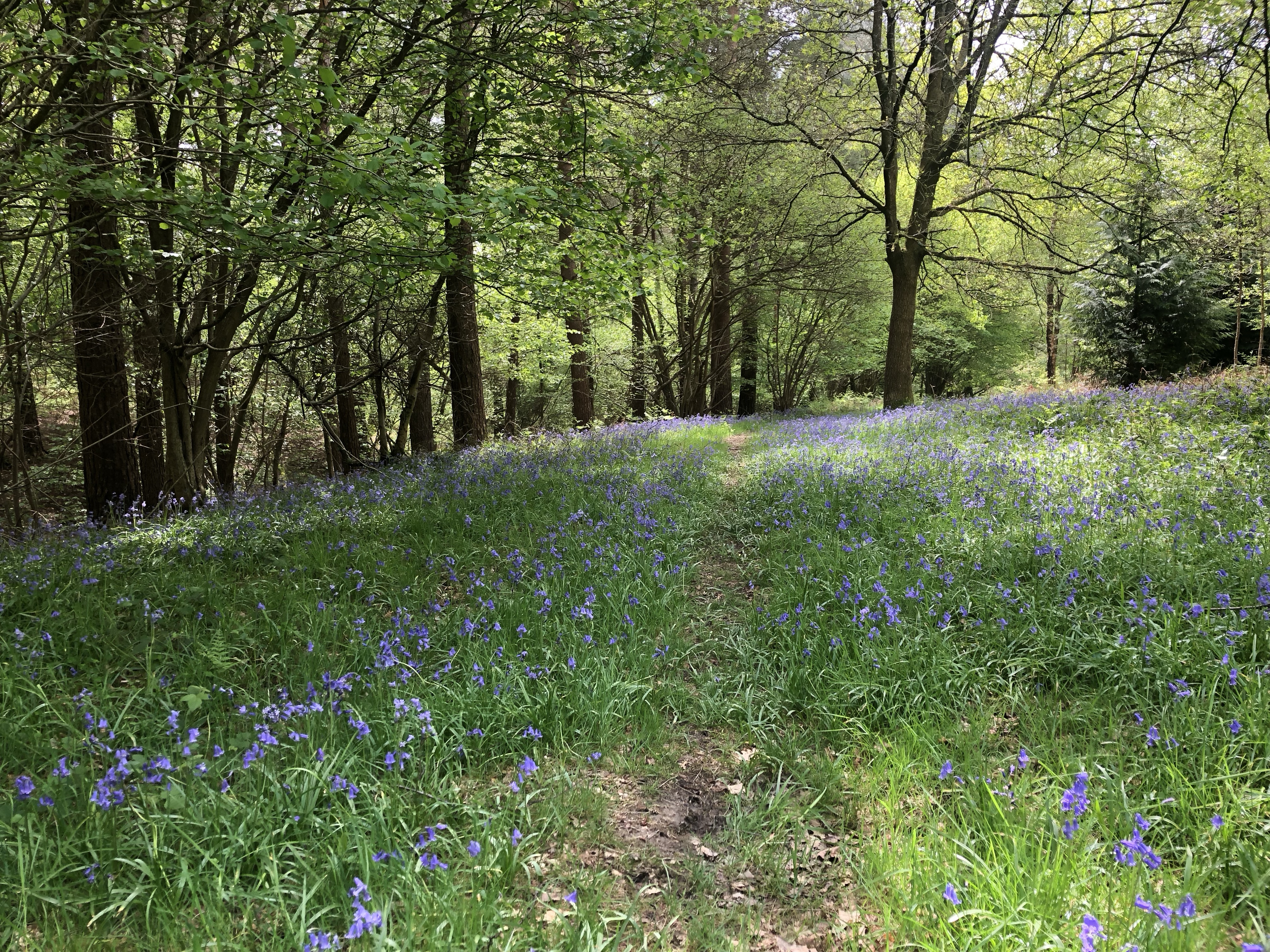
I had a couple of hours between lessons this afternoon, so I took myself for a wander through the estate. I found a toad beneath the remnants of a tarpaulin from the old forest school I used to run three years ago, and a merry carpet of bluebells in their dying days followed me to the deepwoods where a chalk stream gurgles southward on its journey to the sea. A silent pool of rainwater sparked into life as the sun came down, drawing three tadpoles into its warm gaze. Chiffchaffs sang at various intervals, and somewhere overhead, unseen, a buzzard mewed. I didn’t hear our ravens today, but I often do.

The druids were onto something. There really is a medicine in the woods. If only the whole world could see it! BB x


Further Reading:

What is plant blindness? (Kew Royal Botanic Gardens)

Do you suffer from plant blindess? Jon Moses, 5th April 2023

Who owns England? (Guy Shrubsole’s Blog)

Spirits of the Forest

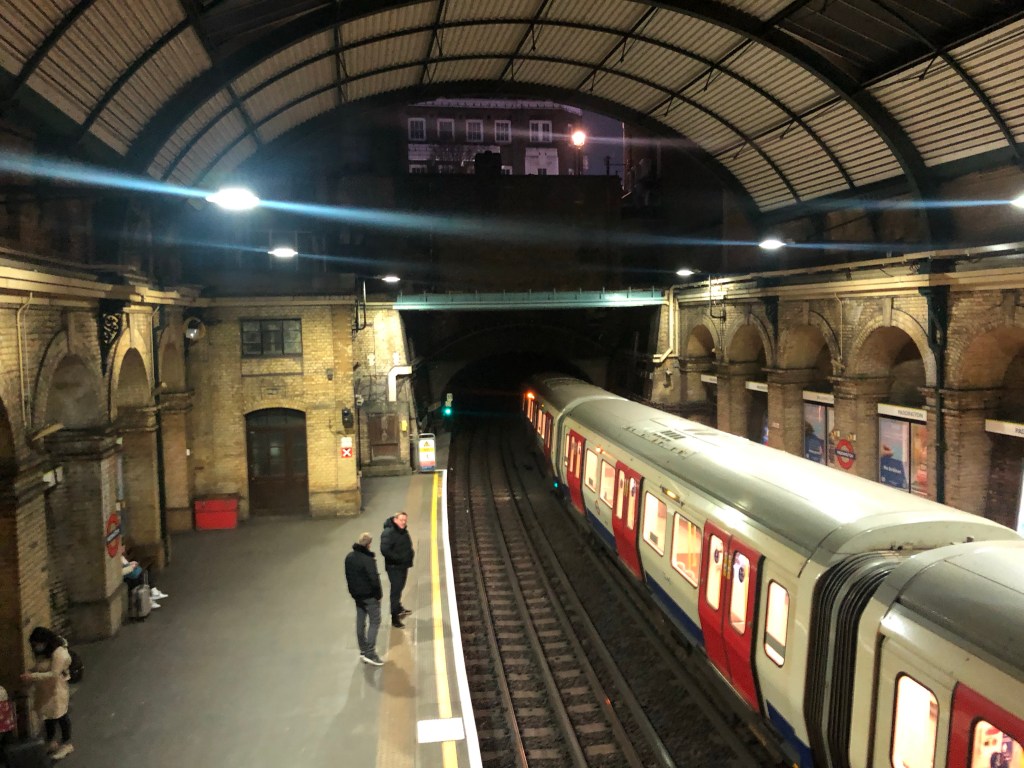
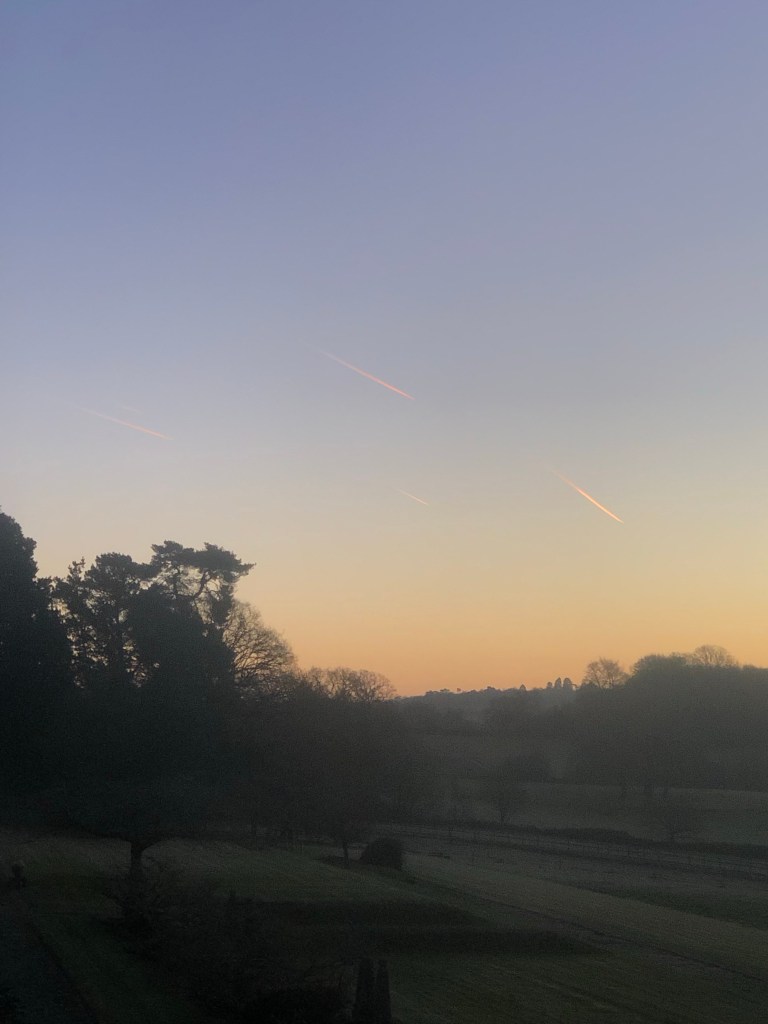
Winter is on the retreat. It began on Tuesday, when I heard a dunnock singing from the top of one of the trees by the church. A tiny foot soldier, the herald of the advance guard that has set up camp at the edge of the Weald, singing his heart out in defiance of the lingering cold. The dawn chorus grows in strength by the day. It woke me before my alarm did yesterday. There are still a few redwings about, but it’s been a long time now since I heard the cackle of a fieldfare, and the evenings are getting lighter. Spring is still a little way off, but it is finally on its way.

I’ve been a lot more mobile these last few months. No, it’s not because I finally have a set of wheels – I don’t, and that is still very much a work in progress – but all the same, it has meant I have spent even more time in the Weald than ever before. While my head and my heart have been busy elsewhere, my eyes and ears have not taken a day off. The shifting seasons and the changes they bring have always been a major source of happiness for me, and there have been so many things to see on my weekly commutes that I’ve been pretty spoilt for choice.

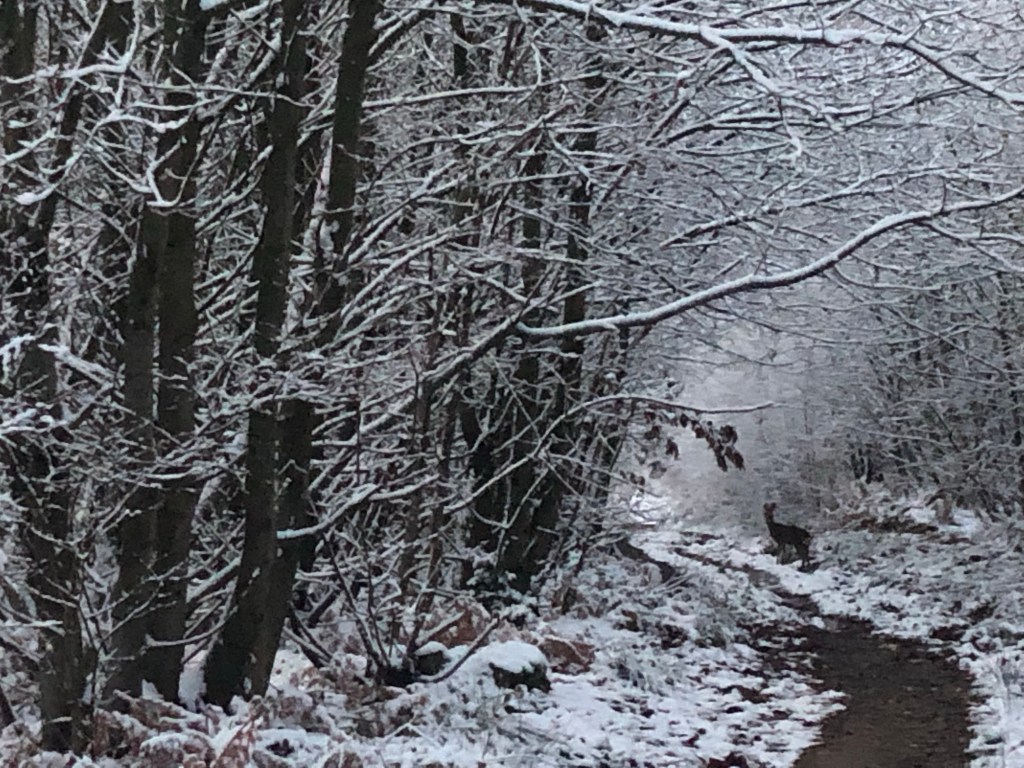
More than a couple of times, I’ve looked over my shoulder to see a roe buck staring back at me. I almost walked right past a couple on my way into town yesterday, and they stood their ground even when I stopped to stare right back. They’re easy to miss at this time of year, blending seamlessly into the starving ferns and leaf-litter, and I might well have missed them more than I’ve seen them. The only obvious sign you get is when they dash off into the woods, their tails flashing white like a signal behind them. When the snow came down in December, they were only too easy to spot. I very nearly missed my train into London because I stopped to let a small herd cross the path into the woods beyond, watching them until they disappeared into the gloom. It wouldn’t be the first time.

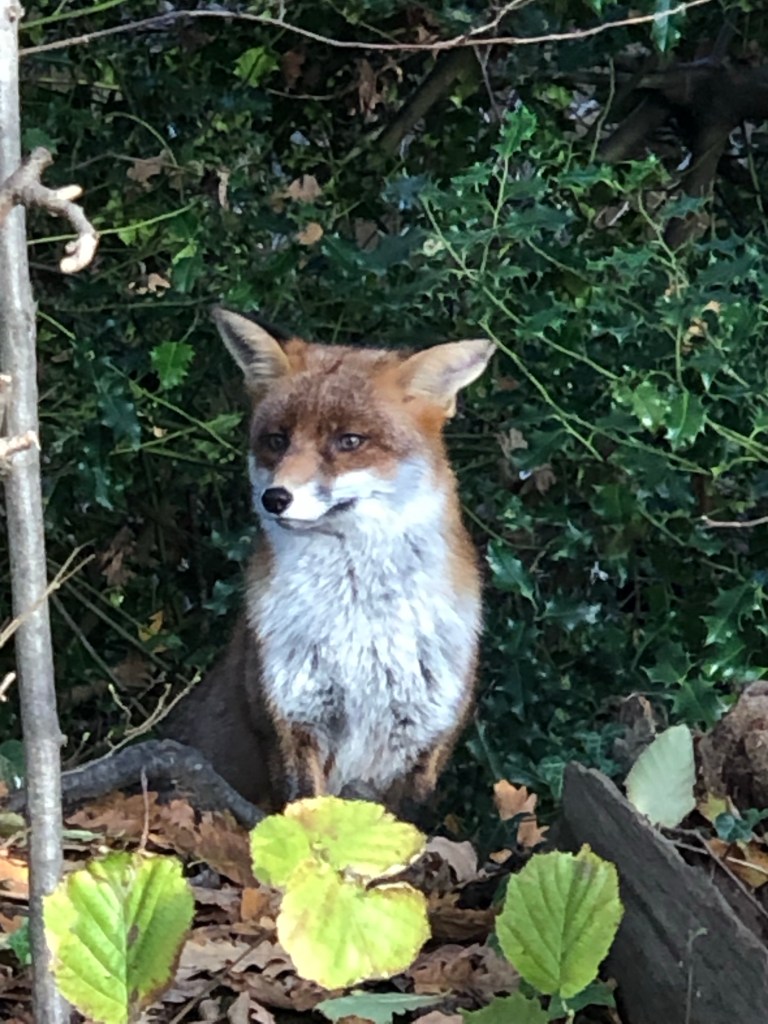
During a cold snap like the one we had before Christmas, it isn’t uncommon to see foxes out and about during the day, since the going gets tough for pretty much everything that lives in the forest. Last weekend I saw one curled up asleep in the open beside the Gatwick stream, one eye open and trained on me as I wandered by. Not too many weeks before, I had a close encounter with a younger tod on the edge of town, which was either so accustomed to people passing by or too hungry to care that I was sitting only a few metres away. Plenty of folk passed by without so much as a sideways glance, which is understandable, I suppose – foxes aren’t universally popular for a number of reasons – but the country boy in me can’t help but stop, and look, and listen. Whether or not they’re virus vectors or poultry pilferers, foxes are undeniably beautiful creatures when you get the chance to have a good look at them.

Then there’s all the voices of the Weald. Snatches of conversations in languages at once familiar and unfamiliar. The croak of the ravens that nest somewhere in the forest. The harsh cry of a hulking grey heron as it soars above the trees. The thin rattling wheeze of a wren, and the answering snare drum of a woodpecker. It’s all I can do to keep my head facing forward on my way to and from lessons at work, lest I make my love for these things painfully obvious. In a very real sense, I’ve been playing the same game since I was a schoolboy. That makes it twice as fun, I guess.

Boy, but it feels good to be writing again. I’m out of practice. I’ll report back when I have something to report. BB x

Half Time

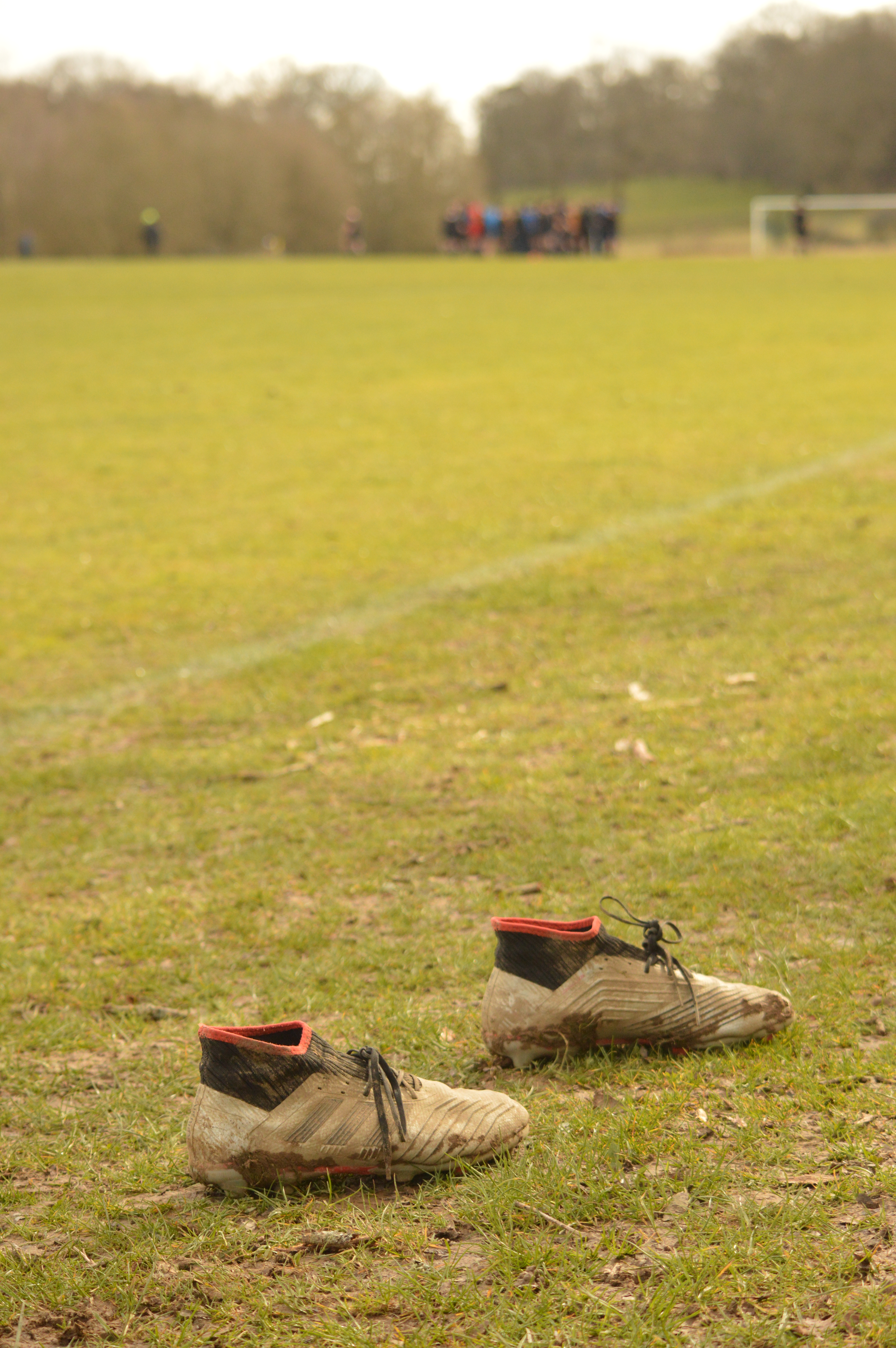
Saturday afternoon finds me out on the side lines, camera in hand, supporting the boys. We put up a valiant fight and place third, thanks to a surprise goal and some seriously impressive goalkeeping. The ball comes my way at some point and I aim to block it, but apparently the ball was way over there and my leg was somewhere else. One of the boys saw fit to rib me about it in house later. I can laugh it off now as I did then. Football has never been my forte, or any other sport for that matter.

Working in a boarding school has got me more invested in sports than I ever was at school. There’s something magnetic about watching your charges do themselves and their team proud, whether they win or lose, that I never really felt when I was obliged to play the game. It’s not that my parents didn’t try to get me into sports when I was younger – goodness knows they tried their best – it’s just that then, as ever, it wasn’t in my interest. Which is why I’m here, not far off the age of thirty, and I still couldn’t name you more than about ten footballers at best. Somewhere along the line it seemed a great deal more important to consign to memory the sight and sound of every single feathered animal in the UK. I guess my excuse for stretching myself thin with the things I do – making music, speaking five languages, writing books and knowing my way around the natural world – might be construed as compensating for the fact that I could never do the one thing that comes naturally to most boys… that is, kicking a ball.

I can’t really remember a great deal about my sports lessons at school. If the truth be told, I’m pretty sure I used what cunning I had back then to wangle my way out of sports for good by the time I was sixteen. I think it was along the lines of “rehearsals for a musical” that I managed to stretch over two years. At least in my first year at school I was given an excuse when an angry sixth former stoved in a few lockers, including mine, with my sports kit trapped blissfully inside. Two memories alone remain: being made to play on through a blizzard in woefully short football kit, and the humiliation of being made to keep attempting the high jump until I was finally able to clear it – by which point it was almost level with the mat. And while I’d normally pull a face at using the same verb twice in succession, “being made to…” sums up my sporting experience pretty well. Understandably, this air-headed naturalist wasn’t ever really at home on the sports pitch.

Which is why it’s all the more surprising to me that I get such a kick out of supporting my boys in their games at the weekend.

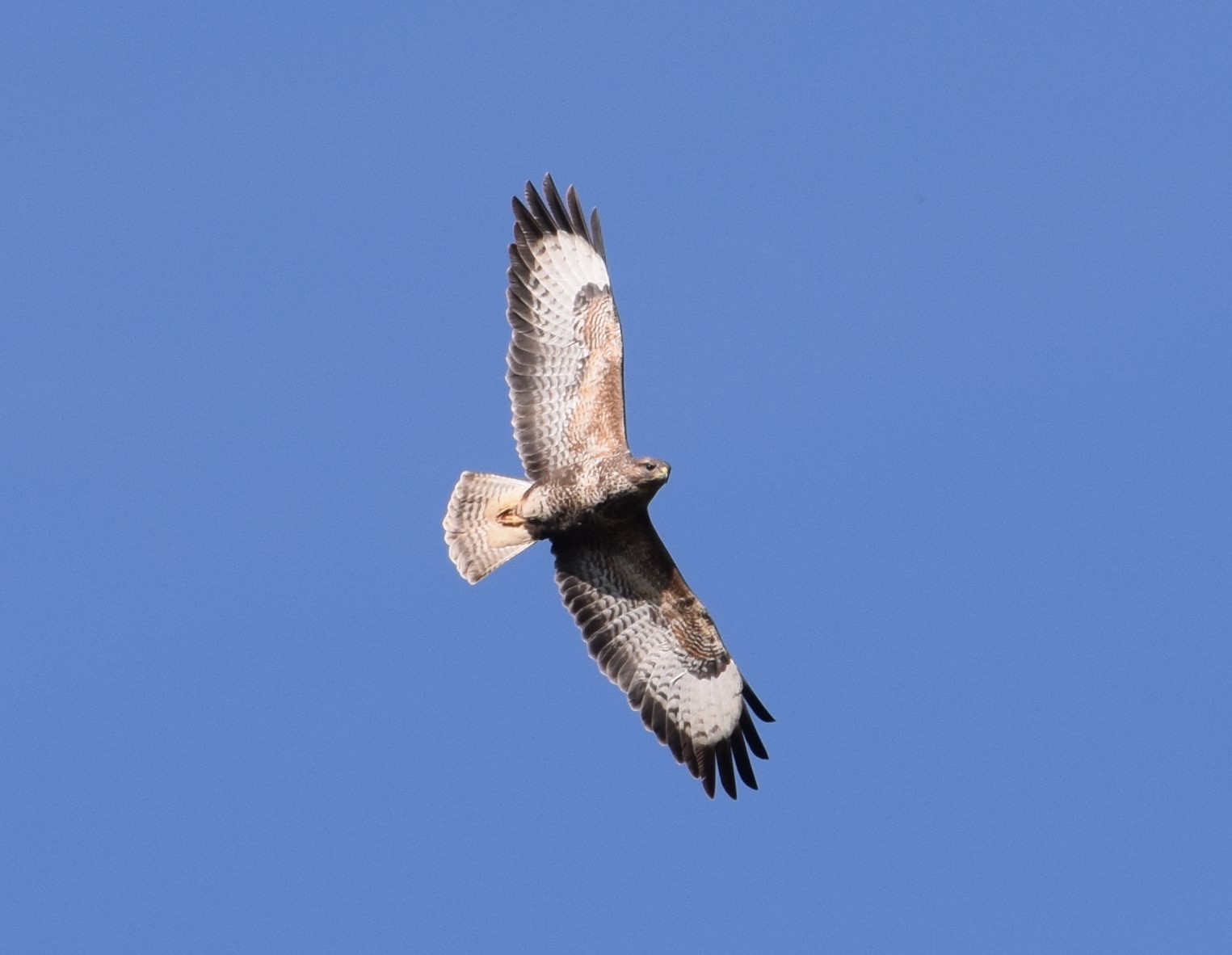
Because leopards never change their spots, I turned my camera skywards a couple of times on the buzzards that came drifting over the pitch, as I once did during the summer fixtures a decade ago. Spring is here and the birds are pairing off already. There’s a part of me that sighs, but a sunnier, more hopeful side that smiles, and I cross my fingers and I hope theirs is a successful pairing. Successful being the appropriate word, since happiness seems out of sorts. We still don’t know for sure whether birds feel emotions like we do, but I’d like to think they have something close to it. You see hints every so often that they might: a swallow mourning beside its partner’s tiny body, crows sliding down snow-bound rooves, choughs hurling themselves from great heights seemingly for the sheer thrill of it.

It’s uplifting seeing the smiles on my boys’ faces during a game, and I find myself wondering whether that’s the same electric feeling you get after a concert, or from sighting one of our island’s most beautiful creatures riding the spring thermals. And now the sun is out again, I might just go for another heart-healing walk in the Weald. The forest weaves a magic that never dies. BB x

For the Sport of Your Own Crows

My phone is telling me I walked some twenty-five kilometres today. After trekking to Three Bridges Station there and back on foot, various perambulations through Reading and London and walking the Combe Gibbet Circular, I can’t say I’m surprised. What I can say is that I bloody well ought to learn to drive, because it’s frankly ridiculous how much of the world I could be exploring at weekends which is just too far away to reach on foot. Dammit.

Fortune favours the bold, which is another way of saying if you want to get lucky, you have to make your own luck. Fortunately, today’s little outing got off to a cracking start with luck knocking on my door. With the kids off site this weekend, the grounds were eerily quiet, even for a Sunday morning. I guess that’s why one of the forest’s more secretive residents made it all the way up onto the main drive this morning.

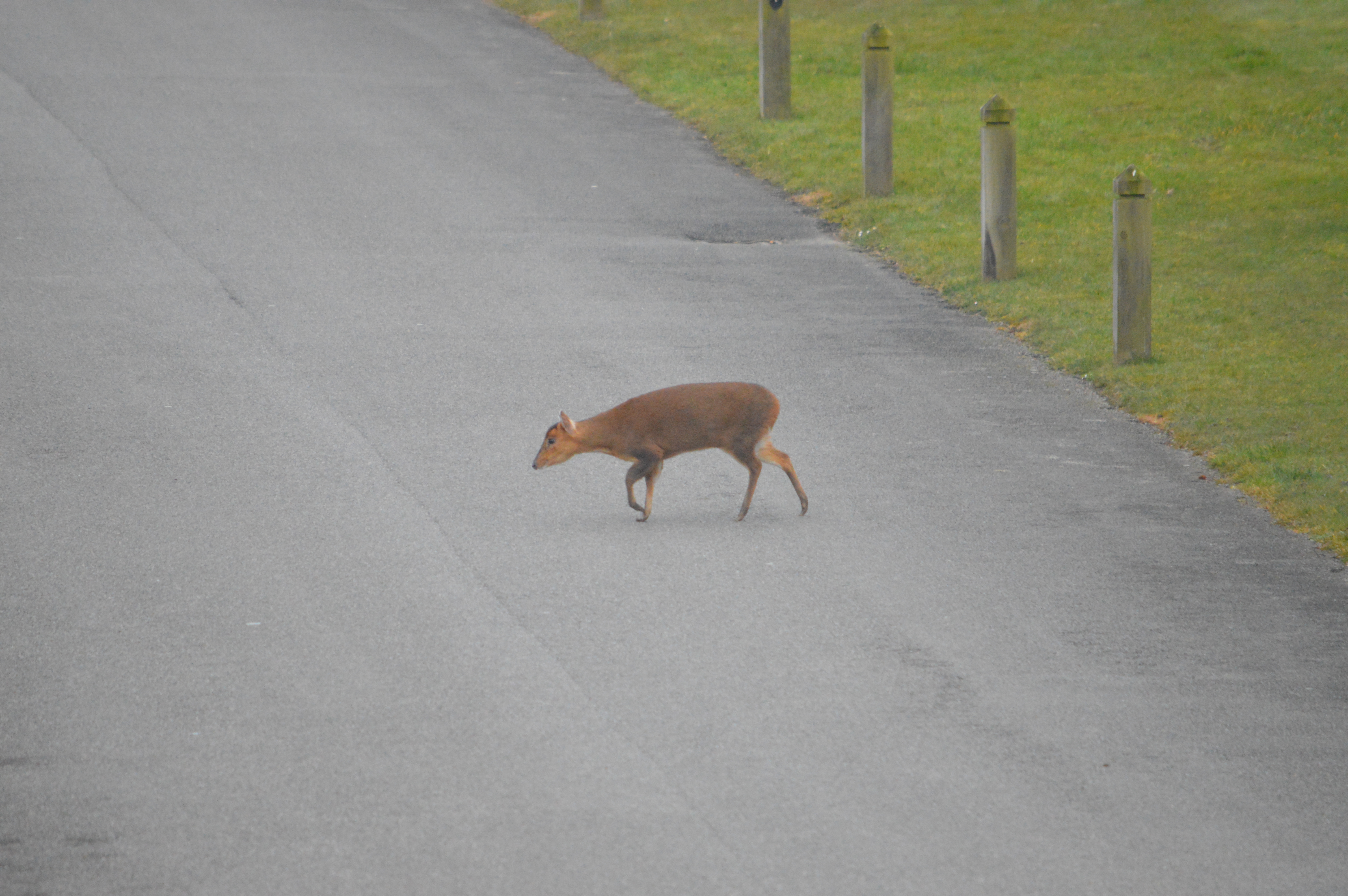
Muntjac deer are such fascinating little creatures. They keep some of our boys up at night with their barking in the summer, and unlike some deer species they’re quite fearless if you cross paths with one in the wild: I’ve had what can only be called a stand-off with a buck in the woods on my way into town more than once (and probably with the same individual). This one didn’t hang around for long, and if I’d not happened to look out of the window as I was getting dressed I’d probably have missed it.

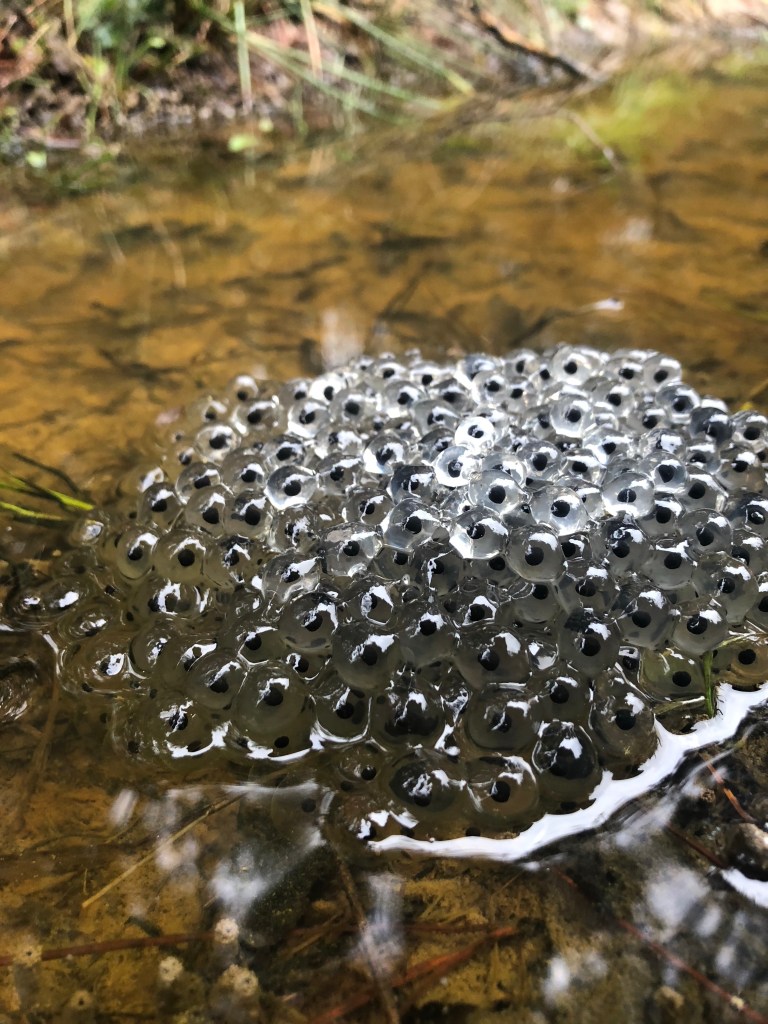
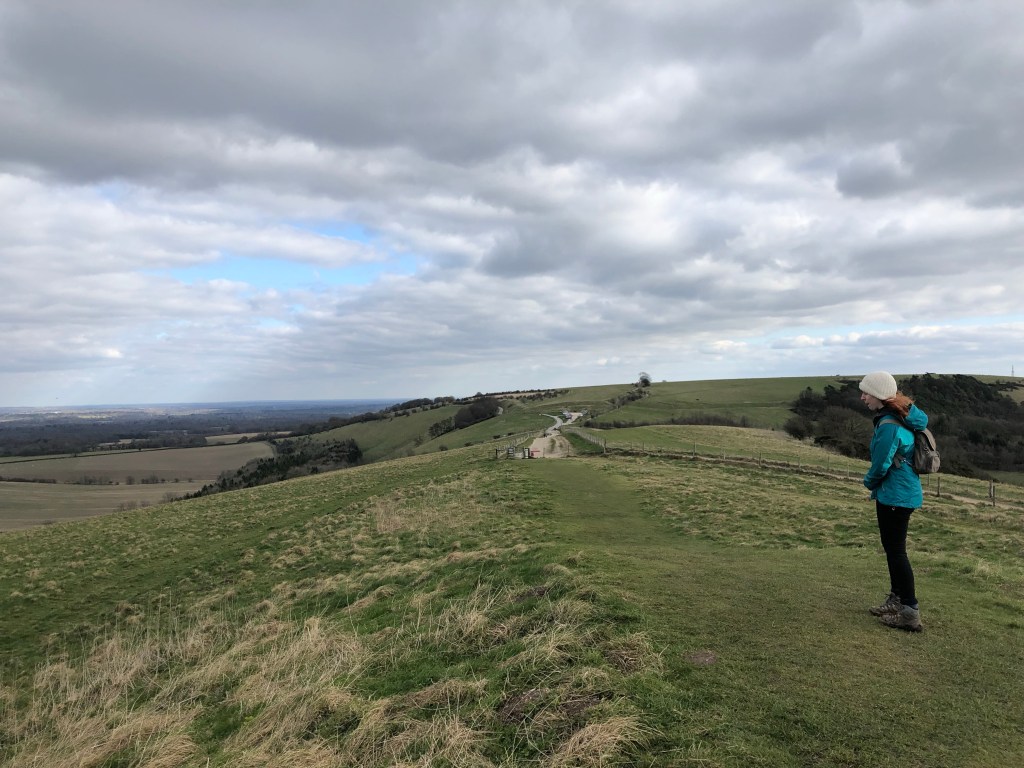
I managed to make it out into the windswept wilds of Berkshire this weekend. I haven’t been up that way since a school retreat to Daoui a few years ago, and I remember feeling spellbound by the place then (well, I was certainly spellbound by the evening prayers, that much is true). On the way, signs that the year is very much on the turn were everywhere. Masses of frogspawn in the usual spots in the forest. Crocuses pushing up through the bracken as the snowdrops wilt away. The explosive chattering of a roving band of siskins in the treetops. And, Berkshire being Berkshire, red kites absolutely everywhere. I swear I saw more kites than pigeons today.

Climbing high up onto the downs above the hamlet of Inkpen, I even heard my first skylark of the year, merrily singing its heart out as it soared skywards. I haven’t seen any swallows or martins yet, but spring is certainly well on the way.

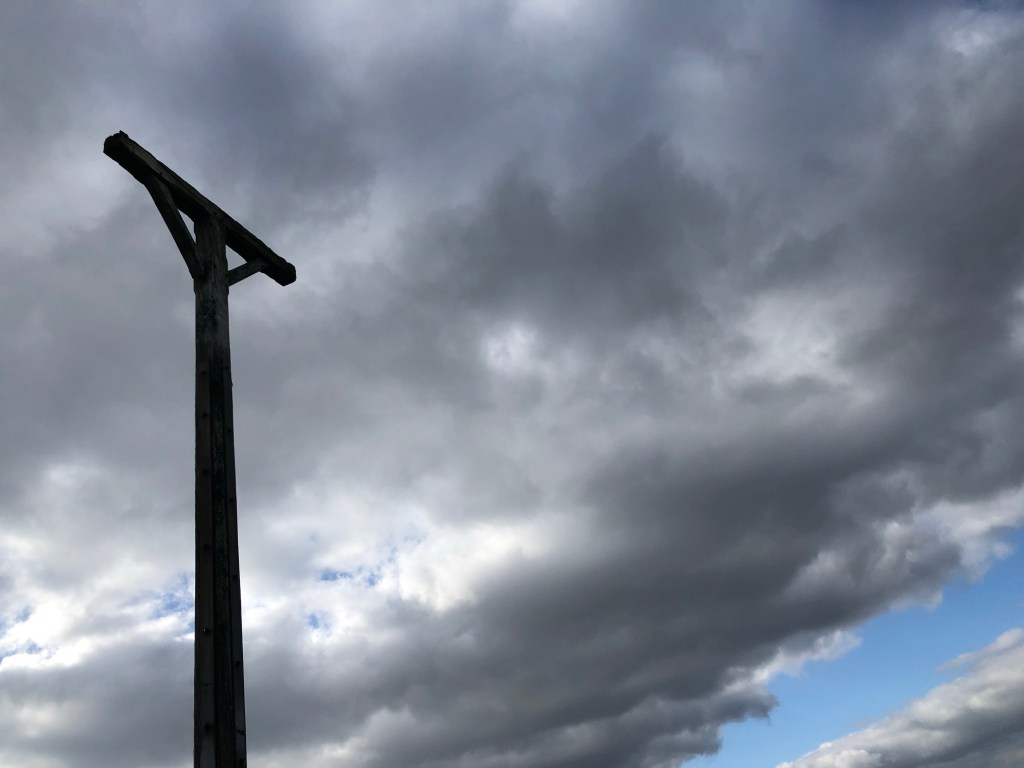
Standing tall upon the summit of Inkpen Beacon is a lonely-looking structure that can be seen for miles around: the Combe Gibbet. As we climbed towards it, my dear friend and learned guide Kate (one half of the dynamic duo that were Langlesby Travels) regaled me with its dark history: as the story goes, it was built in the year 1676 for the hanging of local murderers George Bromham and Dorothy Newman after the double murder of Bromham’s wife and son, the only obstacles to their unrequited love. For Bromham’s infidelity and the brutality of their actions – they supposedly bludgeoned the mother and child to death before hiding the bodies in a nearby dew pond – they were hanged by the neck in Winchester and their bodies displayed high upon the hilltop for all to see. Apparently the sight could be seen from “several counties”, which seems a bit of a stretch, though it really did feel like you were on top of the world up there on Inkpen Beacon. It’s always an incredible feeling when you’re looking down on the raptors wheeling through the air below.

I was particularly keen to see the gibbet because I’m currently looking into the Great Plague of Seville and the curious habits of the plague doctors of the 17th century. There – I’m sure you’ve got that image in your head already: the broad-rimmed hat, the long, heavy black robes, leather gloves and – of course – the sinister, raven-beaked mask. It’s hardly surprising that the plague doctor became associated with despair. I’ve read somewhere that when Venice was devastated by the plague, the bird-like plague doctors were quite a common sight along its canals. I’ll have to do some exploring to that effect when I’m out there in just over a month’s time.

We were followed on the way down the Beacon by one of the Combe’s kites, wheeling lazily in the spring sunshine, its forked tail steering it effortlessly over our heads without a single wingbeat. I’ve always been in awe of kites. If it weren’t for the utter majesty of the griffon vulture, I might well hold the kite close to my heart as my favourite bird of all. It’s certainly a bird that’s been a part of my life for years, from the black kites of the Raya Real to the termite-hunting horde that haunted the Bishop’s Residence in Lira, Uganda, almost a decade ago. A solitary raven drifted mightily on the wind on the way home, a couple of hares skidded up the banks and out of sight as we passed, and a bullfinch was singing its mournful song from the hedgerow as we reached Kate’s car. Berkshire’s an expensive part of the UK to live for various reasons, but I never knew just how healthily wild it was until today. I guess the downs I can see from my window are every bit as breath-taking, if I could only reach them somehow. Still – that’s something to look forward to, I suppose.

Walking home in the dark, I almost had a conversation with a fox. A vixen, I think it was – it didn’t have that long face with the sunken eyes that dog foxes do. She froze in the middle of the track like wild things sometimes do, and if a man hadn’t come by walking his dog, I could have sworn we might have gone on looking at each other. Dogs and foxes have something of a chequered past, though, and at the first sound of the approaching mutt it was off into the verge and gone without a trace.

Today was a wild day, and wild days are always easy to write about when you’re as big a nature nut as I am. Write what you know, I suppose. Now if only there weren’t already a famous nature writer called BB, I might just squeeze my way into that very cramped market. Since when was BB short for Denys Watkins-Pitchford, anyway? BB x

Athene noctua

The students have gone home for half term. Silence hangs over the school. The corridors of the boarding house are dark, and a little cold, too. The floorboards creak under my foot with the kind of volume that only darkness can amplify. The dull glow from the torch on my phone casts long shadows. A friend of mine once explored an abandoned hospital on a dare. I did not go with him then, out of some primordial fear of the darkness within. And yet, here I am, haunting the empty corridors of this old house by night, the last man standing. Filling up a water bottle from the cooler on the Year 10 corridor becomes a quest in its own right.

I’ve had a lot of time to think lately. I guess coming out of a long term relationship will do that for you. One of the things I thought I might be able to recover was the fierce reading streak I had on my year abroad, but I just can’t find my mojo for that right now. Time just seems to slip through my fingers when I’m not at work. I wonder what the world does when it’s not working? I guess that’s what television is for, or Netflix, or whatever streaming service is in right now. But then, I’ve never been good at sitting down to movies or TV shows. My brain wants to be involved. There’s a precious few I’d happily watch over and over and over again, but it’s rare that I find a new picture out there that sinks in.

There’s not a day goes by where I don’t feel a genuine fulfilment in my line of work. Teaching is in my blood, a duty that my ancestors have carried out for generations. Knowing that I am the torch-bearer for my generation gives me a sense of purpose that is utterly unshakeable. And it’s not as though that purpose hasn’t been tested over the years. It’s just that, whenever something comes up to shake its fist in my direction, I know instinctively that there’s a greater mission behind it all, and that’s reason enough to persevere – even when my core beliefs are thrown into disarray. I wonder if my great-grandparents, Mateo and Mercedes, ever had such doubts?

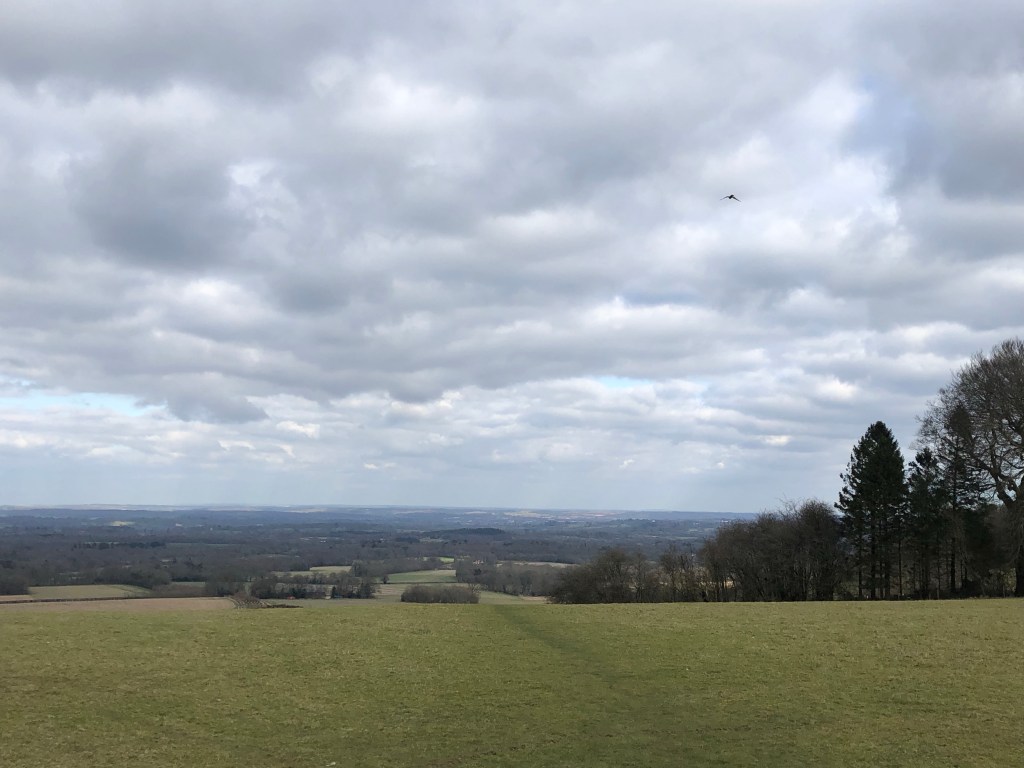
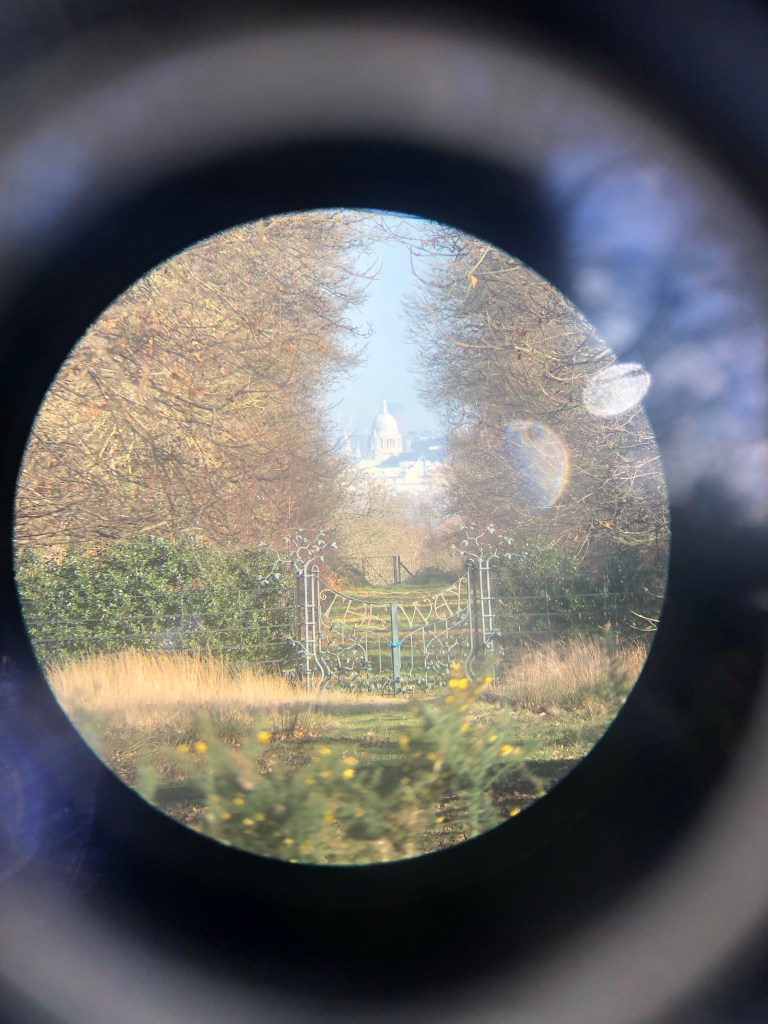
There’s a little owl calling outside. It’s been piping away from the upper branches of the Atlas cedar in the drive for half an hour now. The foxes have been quiet for a week or so now. I suppose their noisy January antics in the front quad are over for the year. Three buzzards were soaring over the grounds the other day during morning break, but none of the students seemed to notice. The redwings and the fieldfares have moved on and the snowdrops are out. The daffodils will be on their heels soon enough. I escaped to Richmond Park a few weekends back, just as the first blooms were sprouting. It was good to see the wide world again, even if only through my own eyes.

No photo description available.

The meltwater of the long Covid winter is starting to run. Just like the birdsong and the subtle shift in the light over the last couple of days, change is in the air. Piece by piece, the last fragments of the old world are coming back. At the request of one of my students, I blew the dust off my long-neglected violin and rocked up to orchestra this week. I’m about as good on the thing as I ever was – that is, haphazard at best – but I’d forgotten how much fun it used to be. It’s one of those things that simply slipped through my fingers over the last couple of years.

I think I’ll take up the guitar this half term. A zealous diet of sevillanas have powered me through the darkness of the winter months this year, and I’m done with being able to sing along but never sing alone. At the very least it will give me something to do until my provisional arrives and I finally confront the long-delayed challenge of learning to drive, which I have put off for far too long.

I’m done with playing games. It’s high time I went on another adventure. The Easter holidays aren’t far off, and I could do with some more writing fuel. And spring is always such a hopeful time of year. BB x

T-12

The Heavens have given us a temporary respite. The spring rains that began a month ago today are still falling hard, and set to fall harder still over the next week or two, but today the clouds are colourless and clear. I no longer live in a state of quasi-permanence beside the brasero and soon I’ll be able to put my jumpers back in the wardrobe once again. Spring has definitely arrived here: my morning walk to school is a symphony of song from the park, albeit a symphony where every part seems to think they hold the solo, from the strings of the serins and the woodwind of the blackbirds to the kestrel fanfare, stork drumrolls and the uncompromising neither-here-nor-there noise of the starlings. It puts a smile on my face every morning.

I’m conscious, as I often am at this time of year, of my time running out. Where the year seemed to stretch on into the middle distance back in cold, gloomy February, March holds up a mirror as if to remind me how much the cold warps one’s perspective. As it stands, I only have twelve weeks remaining, of which nine and a half are working weeks and only four bring as-of-yet unscheduled weekends. In my desire to be busy once again I’ve burdened myself up with responsibilities that eat into my timetable like caterpillars: a private lesson in Almendralejo, choir rehearsals in Zafra and play rehearsals at 8.15am on a Thursday morning. Combined with commuting time, and those inevitable private lessons that are at the incredibly inconvenient time of six o’clock in the afternoon, my time is slipping through my fingers and the year will be over before I know it. And with a summer job and a proper job at the end of it waiting for me back in England, that’s more than a little disheartening. Something’s got to give.

Reading is keeping me afloat. I finished She the other day and I’m onto another classic, Hardy’s Far from the Madding Crowd. After the insightful but heavy high-Victorian ‘thees’ and ‘thous’ of Haggard’s dialogue, it’s a breath of fresh air to hear people speak in an altogether more human register some twelve years prior. Once again, I’m reminded that, if it weren’t for my all-consuming love for Iberia, I would have followed my grades at gone for a degree in English Literature. I might not have enjoyed reading as much at the time, but I’m certainly making up for lost time here and now, even if that does entail reading two Haggard books per month. Still, I don’t read Haggard for the dialogue: the old adventurer might be unable to tear himself from his medieval register, but there is wisdom scattered in his words like pearls on a stormy beach, and I love mining his books for quotes in such a fashion. I just need to modernise my reading tastes so my own writing doesn’t become quite as jaded. Hardy might be a step backwards in time, but he’s more than a step forwards in modernism. BB x

Slow Clocks and White Socks

Good morning from the staff room. My second 1°ESO class are busy preparing posters on British food for next week’s Semana Cultural this morning, so I’m off the hook for an hour. It’s a shame, really; they’re probably the one class that could have really benefited from a presentation on the UK, seeing as it’s what they’re working on right now. My other 1°ESO class loved it, and I dare say the addition of a Honchkrow to explain ‘honcho’ helped a lot in the ‘foreign words in English’ section. Not that honcho – a Japanese term for ‘big boss’ – is a word you expect to come across all that often, but it makes the language learning process a lot more colourful. Going over the same ‘how much is a ticket’ dialogue every week gets a bit dry, eventually.

I went for a walk in the park yesterday. It’s been so warm and sunny recently, I simply couldn’t justify going straight home from work. Tired as I was, I slapped a small lunch together, downloaded a few In Our Time podcasts and crossed the road into the park. It was a little windier than I’d have liked, so I didn’t stay all that long in the end. Without it, it might have been as warm as 18°C. In February. But here in the plains of Extremadura, we’re ruled by the terrain. The wind that blows across the flats is cold and loud, like something out of the Old West. You half expect a tumbleweed to pass you by. It’s a shame that we think immediately of America when we hear that name: with its wide open plains, rocky cliffs and canyons teeming with bandits, and its historic code of honour and justice, I’d like to think Spain was the real Old West; the Ancient West, if you will.

The swallows are here. I watched a few of them twittering noisily as they careered about the pond, whilst one of the town’s storks soared lazily overhead. The trees were alive with goldfinches, and I saw a huge bat on its way to the park from my flat the other night. It was a lot easier to consider a job in England a month ago, I’m telling you, before Spain started thinking about her Spring clothes. Now that it’s feasible to go to bed without having the heater on for a full hour, and the blue skies are no longer laden with a biting cold air, I find myself in love once again. The saying goes: ‘nueve meses de invierno y tres de infierno’ – nine months of winter and three of Hell – but Spain can be equally unforgiving in the grip of winter.

I spent a little while watching a robin – always one of my favourite birds – and a couple of hoopoes flapping about like oversized butterflies. Symbols of England and Spain, in my head. I should go to the park more often.

It’s hard to see the change in the seasons here in Tierra de Barros, with the park full of evergreens and the surrounding eternity of vineyards and olive trees, but the animals tell you. And where they fail, the town drummers do a pretty good job. Carnaval is over, and I thought that might be the end of their incessant weekly drumming, but I was wrong: last night as I lay dozing in the living room, I heard the unmistakeable march of the Holy Week procession. It’s a good month away, but preparations have begun in earnest. But I’m not complaining: Semana Santa is far and away one of my favourite things in Spain and I never want to be anywhere else when it’s on. Like countless Brits before me, I’m shamelessly enthralled by the primal magic of it.

And, like countless Brits before me, I’m steadily coming to understand that our humour and theirs – or anybody else’s, perhaps – simply don’t mix. My jape about my countrified accent got cut from the play this morning. I guess they didn’t see the funny side. One of my students did point out to me recently that imitating their accent is one of the few things guaranteed to rile an extremeño. As a guiri, perhaps I’m allowed a certain amount of leverage – it’s always funny to see a foreigner having a go, I guess – but patience, in the end, wears thin. Especially when I have to make that same joke at twenty-five minutes past eight every Thursday morning.

A few weeks ago there was an article in The Times titled ‘How to be Spanish‘ that caused uproar on Spanish social media. The Spanish, it seems, don’t like being told how to be Spanish by an Englishman (a puto guiri, to quote various Twitter users). Surprise of the century. Spaniards came out with war flags, claiming the author had no idea what country he was talking about. Whoever these folks were who eat tapas at the bar and never at the tables, swear so liberally and have a slightly more relaxed attitude to time than the hyper-punctual English, they certainly weren’t Spanish.

Shortly afterwards, the Spanish retaliated with an article of their own on how to be British, citing such customs as queuing for everything, wearing white socks, wall-to-wall carpeting and, of course, our penchant for exaggeration. It was a childish exchange, but you have to admit, there were a few cultural nuances both sides got spot-on.

It was a lot of fun to discuss in class, I’ll give you that, but whilst I agree that the original author could have been a little less damning in his exaggerations – a flaw I’m often party to (see the war flags remark) – it seems to me that the problem lies not in the content itself, but in how it was received. Of course not all Spaniards act the way the author describes, but then, he doesn’t go out of his way to make that clear. And, of course, it wouldn’t be so funny if every observation in the article carried a disclaimer. Remember those jokes that your friends make that you didn’t get, and they then had to explain? Yeah… They weren’t funny at all.

As Brits, we read such things with a smile, seeing the irony and the humorous comparisons, because as a nation that’s what we do best: ridicule. We love to laugh, to laugh at others, and (sometimes) to be laughed at in turn. It’s not a universal attitude, but trying to be funny on a regular basis is, I think, an inherently British custom. Most everybody else has a life to be getting on with. Great Britain is cold, rainy and – according to some – has potentially the worst cuisine in the world (the very un-English chicken tikka massala was our most popular dish for years), but we are fantastic at making light of this and everything else, from our politicians and our history to our friends and neighbours, even if the rest of the world looks on in confusion. I gave up trying to introduce my kids to Blackadder and Monty Python a long time ago. It requires too much explanation. By contrast, Mr Bean works like a dream… because there’s no dialogue whatsoever. Which, given that he’s portrayed by easily one of our wisest and wittiest comedians, is a crying shame.

So that’s all it is. The British like being funny. And when our jokes involve people beyond our remit, we get confused when they take offence. Why can’t they see the funny side? The answer is simple: they don’t have to. That’s not to say we shouldn’t make jokes anymore. British humour is, in the humble opinion of this author, king. But we could be try to be a little more aware of what cultural difference means. If the Spanish come across as having a lax approach to time, it’s only because we’re unreasonably pernickety about it. The whole and ungeneralised truth lies somewhere in between.

Jokes are fine. Our problem is that we expect others to take a joke, to know when we’re being funny and when we’re not… and it’s not always easy. Especially in print. BB x