The Hall of the Dead

San Lorenzo de El Escorial, 13.45

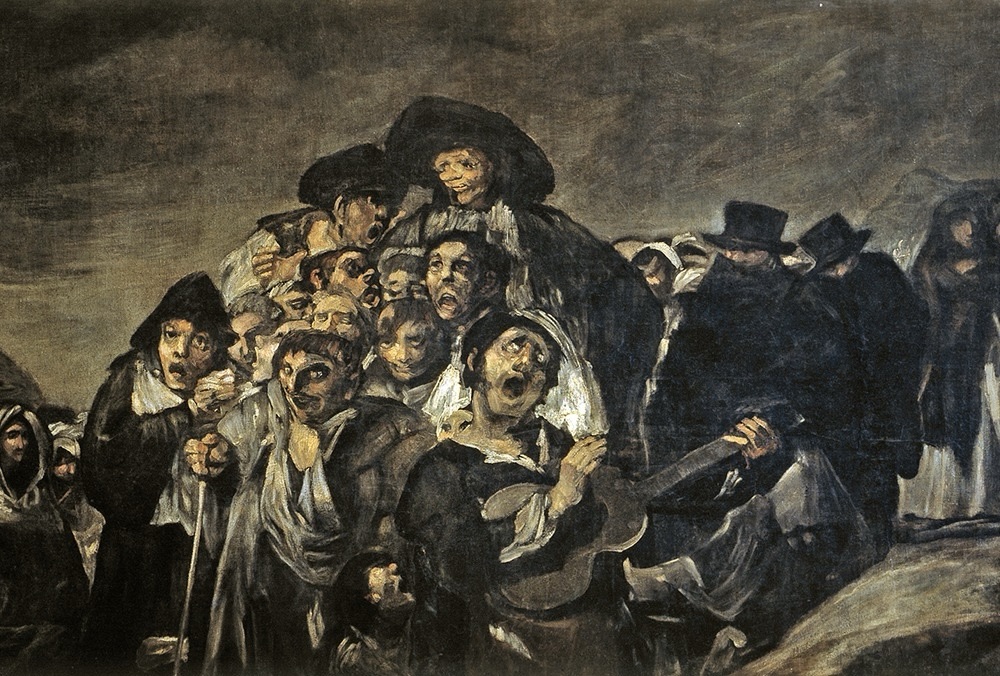
A shadow lies upon his tomb, in Moria, in Khazad-dûm. The Company stood silent beside the tombs of the kings of old. There were many recesses cut in the rock of the walls, and in them were large iron-bound sarcophagi of black marble. Frodo and the Company stood in awe, but Pippin felt a compulsive urge to reach for his iPhone so that he might share the spectacle on Instagram. He held it aloft, and for a moment it glimmered, faint as a rising star struggling in heavy earthward mists, and then it issued forth a minute heart of dazzling light, as though Eärendil had himself come down from the high sunset paths with the last Silmaril upon his brow.

“No photos!” barked the security guard, gesturing wildly in Pippin’s directions, before muttering a loaded “turistas” under her breath.


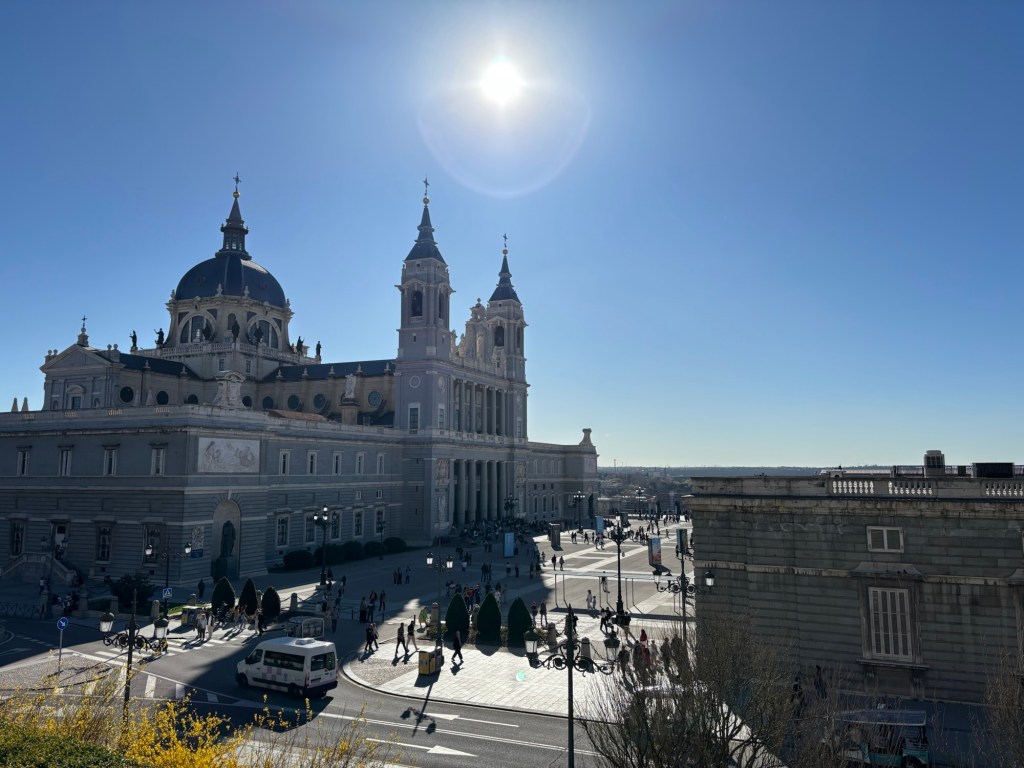
In the year 1563, Felipe II ordered the construction of an enormous palace in the foothills of Monte Abantos, partly to commemorate his victory over the French at the Battle of San Quintín, partly as a country retreat where he could hunt big game, but perhaps most importantly as a necropolis for the Hapsburg line. Here, entombed within the bowels of the largest Renaissance building on Earth, lie the remains of almost every king and queen of Spain of the Hapsburg and Bourbon lines.

To get here from Madrid, you have to catch a bus from Moncloa. Spain is steadily catching up to the rest of the world as a cashless country, but most of the local bus companies are still coin-operated. I was delayed by an hour because my first attempt to board was a flop: the driver thought I said “puedo cobrar” instead of “comprar” and wagged a finger at me, saying “yo cobro, pagas”. Granted, I had a cold, but I’m pretty sure I made myself clear. I was honestly so ruffled by his wagging humour that I forgot I did actually have a ten euro note on me, so I got off the bus and went in search of breakfast and a cash machine – and a few plasters for my wounded ego.

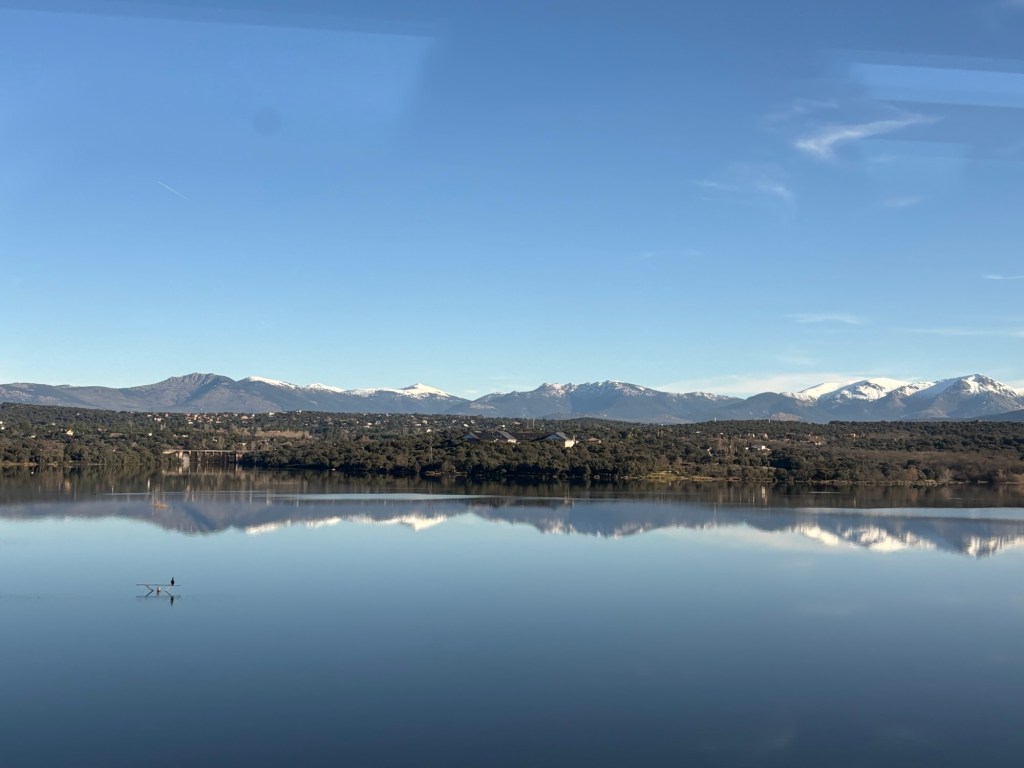
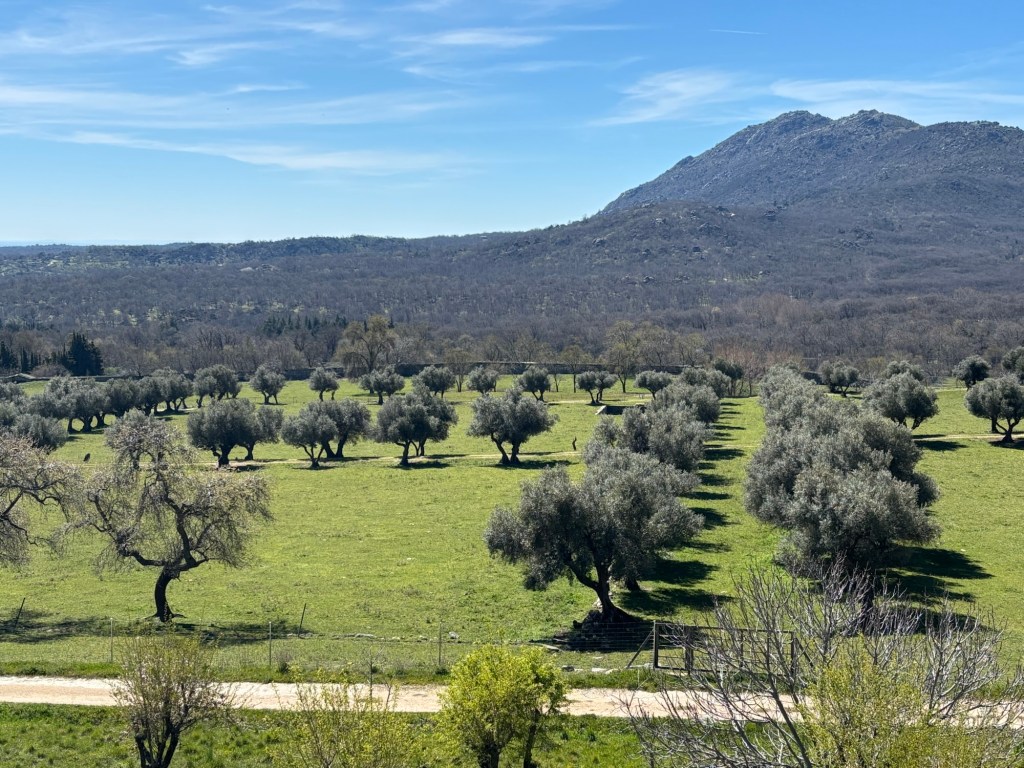
The next bus driver wasn’t a wisecrack, so I had a very enjoyable ride across the dehesa. To the north of the road to El Escorial, the snowbound peaks of the Guadarrama rise up out of the plain, its mantle pure and unspoilt by the ski-lifts and stations that criss-cross similar ranges in Central Europe. At one point, the road crosses the Valdemayor reservoir, and on a cloudless day such as this, the mountains rise again into the mirrored surface of the blue waters.


The centrepiece of El Escorial – as is so often the way with Spain’s grandest architectural treasures – is an enormous basilica, featuring a collection of saintly portraits, painted ceilings and a gilded reredos of jasper and red granite that stands an eye-watering 92 ft tall. As if that weren’t enough, the high altar is watched by the sentinel eyes of life-size bronze sculptures of Felipe II and his father, Carlos V, and their respective families, eternally offering their prayers to God above the crypt where their bodies are interred. It’s no great leap of the imagination to compare El Escorial to the Valley of the Kings: should it fade into memory someday, the discovery of the altarpiece alone would be an archaeologist’s field day.

The comparisons don’t end there. Much like the triumphal engravings of Ramses’ victory at Kadesh in Abu Simbel and Trajan’s Column in Rome, El Escorial’s “Sala de Batallas” (Hall of Battles) testifies to the martial prowess of the Habsburg line, depicting the greatest victories over the French, Moors and other enemies of the dynasty across over a hundred metres of fresco. That’s ten times the length of my mega drawing and eight times the height. I clearly missed my calling by four and a half centuries.


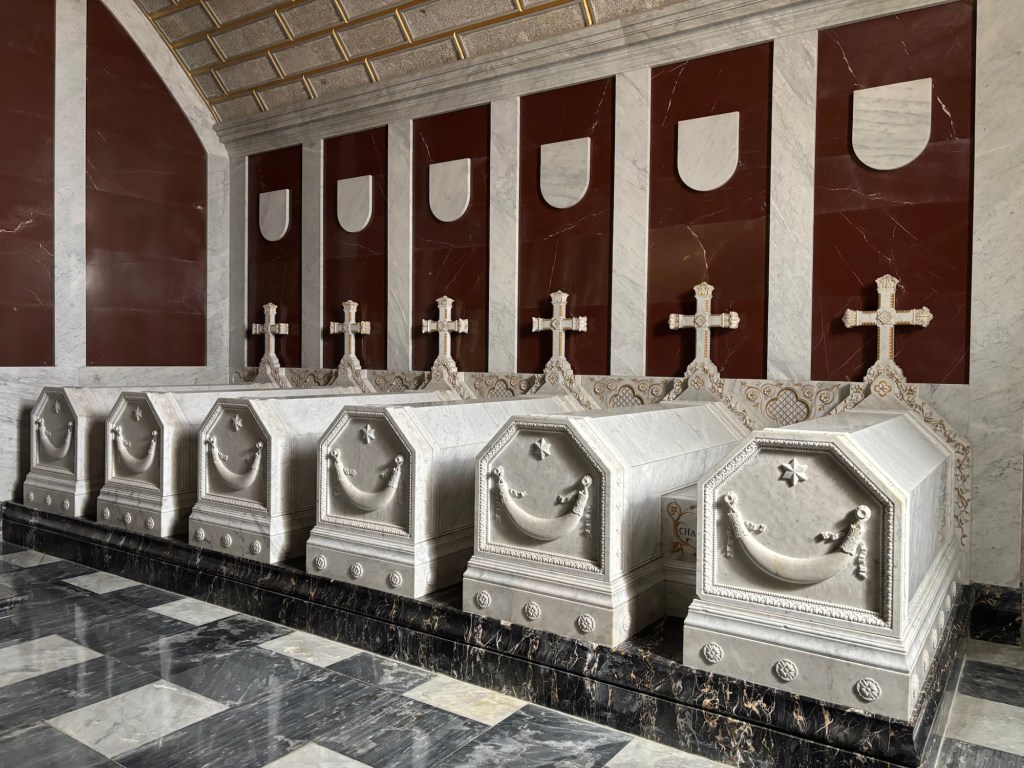
As well as a hoarding place for countless royal artefacts (including one of the largest collections of holy relics in the world, numbering around 7,500), El Escorial is most widely known as the final resting place of Spain’s monarchy from the early modern period on. These most haunting treasures of the royal palace can be found in the innermost depths of the palace complex, entombed within vaulted marble sarcophagi that contain the remains of princes, consorts, bastard sons and daughters and other high-ranking members of the Hapsburg line, right the way up to the present. The blank headstones above the sarcophagi in the last rooms sit waiting for Juan Carlos’ relatives and their progeny.


If that weren’t chilling enough, one of the rooms features an enormous marble monument to those of royal blood who perished before puberty, marked with A or B to differentiate between the Austria and Bourbon clans. With their famous predilection for morganatic marriages, it’s perhaps no surprise that so many infantes never made it to adulthood.

In the deepest reaches of all, far below the palace itself, is a golden chamber called the Panteón de los Reyes. This is the Habsburg Holy of Holies, where the bodies of the kings and queens were laid to rest: from Carlos V, who oversaw the conquest of the America’s and the birth of the Spanish Empire, all the way up to Alfonso XIII, exiled in 1931 by the short-lived Spanish Second Republic. In a single 360° turn you can see them all. There can be few places in the world quite like this, where you are quite literally encircled by the tombs of the kings of the past.

In such a sacred space, photos are, quite naturally, forbidden – but that didn’t stop a couple of Korean and American tourists from trying. I just carried out a quick sketch in my journal and was done with it. Nobody ever seems to mind the sketching. I wonder why that is?


Outside, the air is a lot less oppressive. A number of articles describe the location as “austere”, and I can imagine that in the grip of winter it may well be, but under the warm spring sunshine it is anything but. A cool wind blows down from the snowy mountains, but it is accompanied by a warmth in the air, sweeter with the scent of cherry blossom. Crag martins and wagtails twitter merrily over the pool, and in the dehesa beyond, I saw (and heard) a family of one of Spain’s most beautiful birds of all, the Iberian magpie, a relic of the Ice Age whose nearest living relatives can be found in eastern China. As I watched them hopping around in the branches of the nearest tree, a little owl flew into sight, calling to its partner in the valley below.

Finally, the greatest sight of all. As I made my way back to the bus station, a lonely black shadow came down from the mountains, casting an unmistakeable silhouette against the intense blue of the Spanish sky: a griffon vulture, the true king of these mountains. They were here long before the Hapsburgs and will be haunting these hills long after they have been forgotten.

I have been fascinated with vultures since the first time I saw one. That boyish glee I get when I see that shape in the ether hasn’t gone away after twenty years. I don’t think it ever will.


Austere? The building, perhaps, in true counter-reformation style, but the location? Hardly. I don’t think Felipe needed much convincing. If I had all that Habsburg money floating around, I’d have wanted to end my days here, too. BB x
Wishes and Migas

Calle de San Millán, Madrid. 20.09.

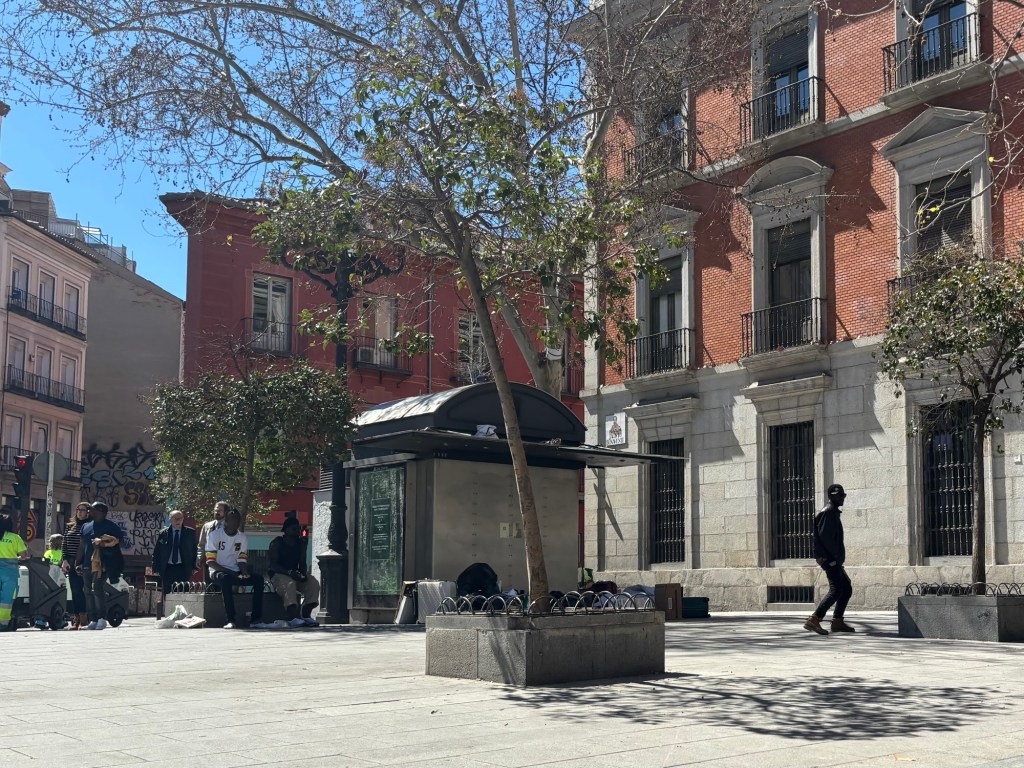
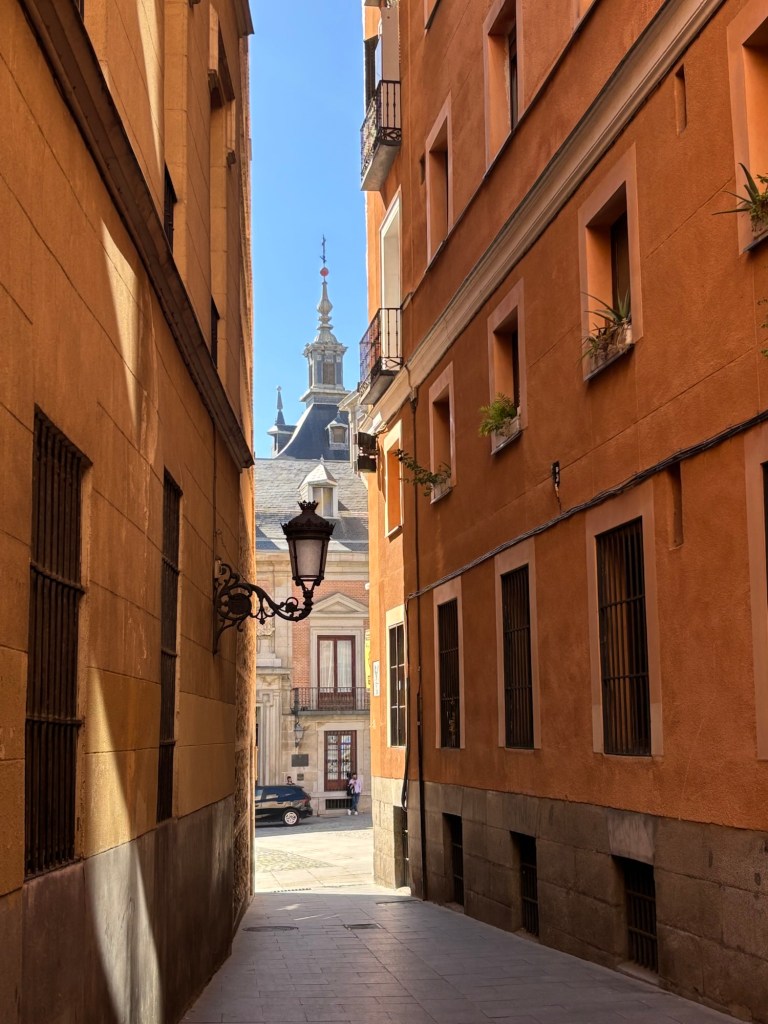
The sun is just starting to set beyond the skyline. Down in the street below, Madrid’s colourful denizens are out for an evening paseo, dressed to the nines to the last man (and woman). The rumble of motorbikes is a constant accompaniment to the general hubbub and the occasional police siren soars above it all every now and then. The lodgings I’ve managed to snag come with a balcony that looks out over the crossroads below, so I’m treating myself to the noise of Madrid for a few days before retreating to the quieter shores of Finisterre, at the end of the world.


The capital is much as I remember it from my last visit, several years ago, though it makes a change to see the place under the warm spring sunshine rather than wrapped up in the chestnut smoke of winter. It’s inching toward 20°C outside, but the madrileños are still going about in puffer jackets and (fashionable) greatcoats as though it were 5°C. I haven’t brought any heavy-duty winter wear as I have to carry everything with me from Madrid to Galicia to the Canary Islands and beyond on this latest adventure, but I might pick up a few Spanish clothing supplies while I’m here in the city. I haven’t overpacked, for once.


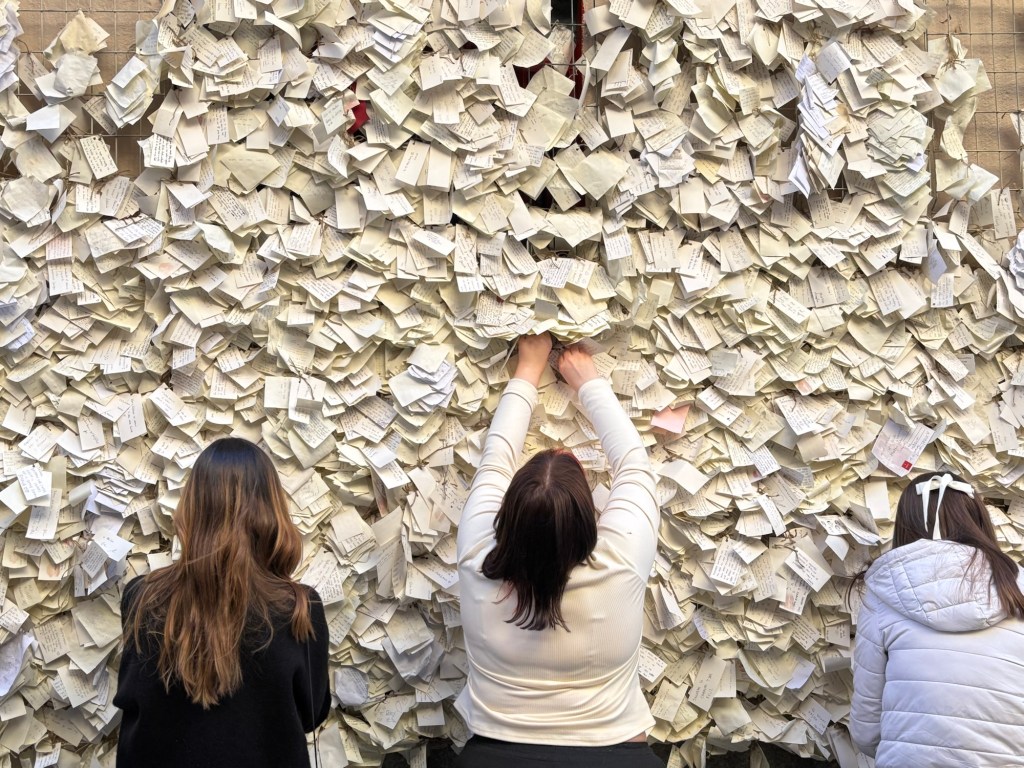
During the course of my wanderings I stumbled (quite by accident) upon the Tienda de Deseos again. I found this strange corner of Madrid last Christmas, its walls covered with the scribbled desires of a hundred passers-by fluttering in the winter wind. Last year there were quite a few lonely hearts on here. This year there seem to be a lot more general “wishing for all the best in life” requests. I made a wish last year to find her – “wherever she may be”. This year I was a bit more specific. Beautiful though it was, I don’t think I’m quite ready for another trans-Atlantic situationship.


Even in the heart of the capital, there are clear signs that spring is here. The cherry trees lining the Calle del Arenal are dressed all in white. The swifts are here early, too – they must have come hurtling in on the wings of the rainclouds, because I’ve never seen the Río Manzanares so full.

There were a few posters on some of the bollards advertising an anti-hate march in defense of the Trans community, which I really ought to have stuck around to watch, as it’s one of the A Level topics for Spanish at the moment. A smaller group of protesters were picketing the Corte Inglés just off Sol, sporting the usual V for Vendetta masks and carrying telescreens displaying the slaughter of fish off the Spanish coast. Nobody seemed to be paying them much attention.


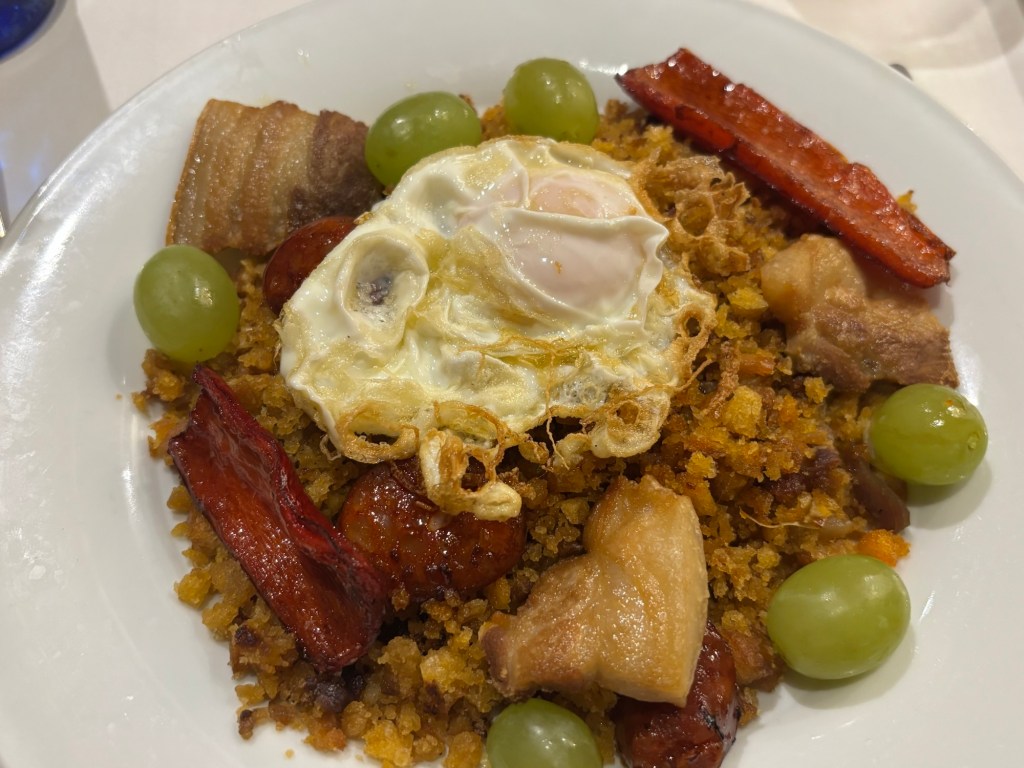
I treated myself at dinner with a rather upmarket restaurant modelled on Arturo Pérez-Reverte’s Capitán Alatriste books – dishes, decor and all. It didn’t disappoint one bit. I had my first migas in seven years and tried cochinillo for the first time. It was incredible, even though my taste buds hadn’t quite recovered from the usual end of term knockout cold.

On my first grand adventure across Spain many years ago, food was a luxury I rather recklessly decided to do without. Now that I have the means, I intend to make good on that dreadful error by exploring the best dishes the country has to offer as I go. I haven’t found any callos yet, but they’re on my list!


Please excuse the rather humdrum post today. I haven’t had any grand escapades yet! The real adventures start tomorrow… BB x
Shuffling Along

I’m sitting in the rest area at Bristol Parkway Station, watching the blinking lights of cars cruise around below me in circles like so many coloured beetles in the darkness. If I’d made my original train, I’d be at my mum’s place by now. But there was an incident on the 20.35 from Bristol that the authorities had to deal with, so a twenty minute delay has turned into an hour’s setback as I missed my changeover. I’d chalk it up to some Friday night jollities from some of my ruddy-faced countrymen in the next carriage. The only highlight was the very comical collective groan from the other passengers when the announcement came through. Can I still use the term passengers? It’s been recently outlawed by National Rail, who apparently fear it sounds “too formal” – what has the world come to?

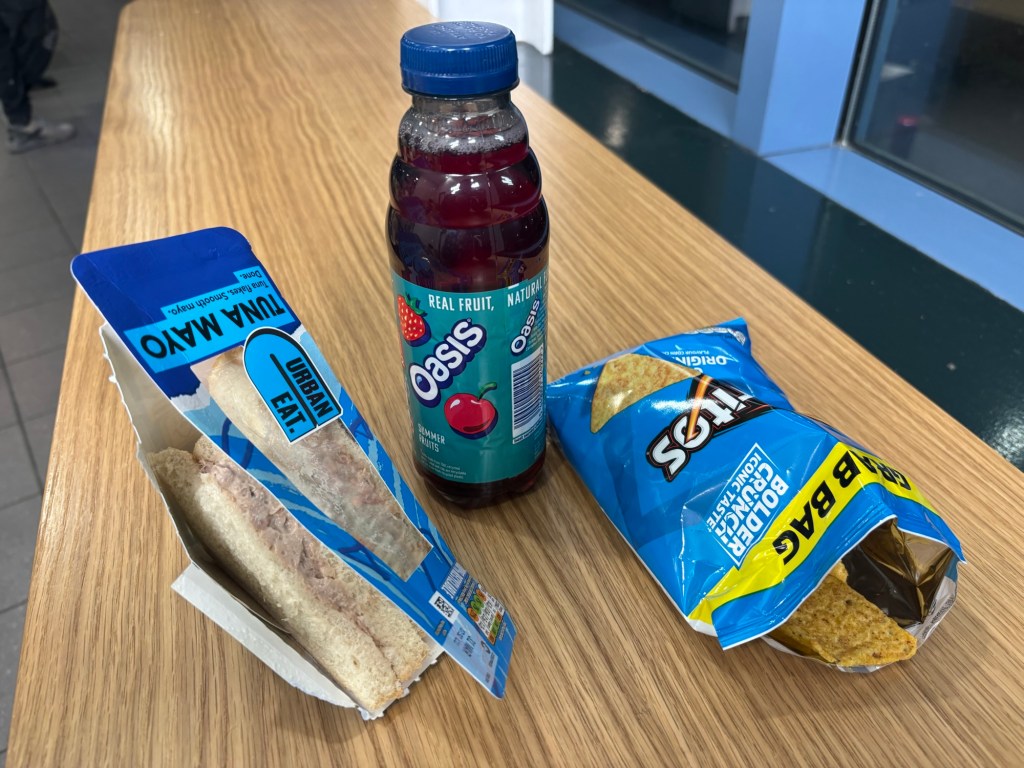
So, I’m stuck here for another half hour. I’ve wolfed down a meal deal and am now watching the world go by with my Spotify on shuffle. The holidays are here at last, so I guess it’s time to blow the dust off the blog and flex my rusty writing arm with a little exercise. I’ll use the first five songs on shuffle as a jump-off point and see where we go from there.


Stronger – Kanye West

Ah, the latter days of 2007. After largely eschewing popular music, my brother and I were simultaneously introduced to modernity with Now That’s What I Call Music! 65 around Christmas 2006, our first away from home during our short-lived attempt to up sticks and move to Spain. Maybe it was because it was a link back to the world we’d left behind, but I leapt upon the novelty, and it’s fairly safe to say that my awakening as an explorer started with that CD. I used to get almost all of my music from those Now! compilations. Thank goodness Spotify came along and broadened my horizons!

It was a good time for music, anyway. Rihanna was still pumping out hit after hit (Don’t Stop the Music had just hit the scene), Ed Sheeran was unheard of, and Kanye was famous for his beats and his bars, and not his antisemitism or his (now ex) wife’s rather large bottom. Those were happier times.


Bailando – Enrique Iglesias

Wind the clock forward around ten years. Durham’s Music Society released the theme for the summer concert (Around the World) and the Northern Lights – then in the early days of our ascendancy – hit the books to find a suitable number to fit the bill. I wasn’t anywhere near as talented as some of my peers (at least four of whom have gone on to moonlight as professional musicians since) so this was my one chance to take the reins with a song where I might be able to do something the others couldn’t – that is, singing in another language.

By that point, aged 22 and fresh from the year abroad, I was spoilt for choice. But let’s face it, it would have been a tall order to get an English a cappella group to sing the Arabic smash hit M3allem, and all the sevillanas I had committed to memory were much too demanding, even for those who could speak a little Spanish. Luckily, Enrique Iglesias was famous enough to provide a bridge between the two languages, and after some negotiation with my musical director, I managed to get Bailando onto the set. I put my heart and soul into my Grapevine arrangement, but I honestly had a lot more fun performing Bailando with the gang, not least of all on account of the choreography.


Mammati – Willie Mohlala

Somewhere at my dad’s place is a little red memory stick containing a number of MP3 files: mostly obscure Ugandan pop and folk music, with a few Dolly Parton numbers sprinkled in for a little variety. That playlist was the soundtrack to the various marathon road trips of my time in Uganda, since the full playlist was never enough to span the enormous distances we used to travel. Shazam still struggles to identify the greater part of that playlist, and since Willie Mohlala was one of the only artists labelled on the tracklist, he was one of the few to travel with me out of Africa. Him and Dolly, of course, though quite how she wound up in central Africa beats me.


AM to PM – Christina Milian

Given my guilty pleasure for early noughties R&B, I’m surprised it took me until the summer of 2024 to discover this banger. I have vivid memories of boogying to this one in a club in town with a girl I’d met on Hinge, the first of several attempts to move on from my American heartbreak. It didn’t come to anything. None of my dates have since. But I did pick up this little number, so I did manage to take something away from the experience. I’ve been using the same excuse to justify traveling more than four thousand miles to discover AC/DC’s Thunderstruck, but since that electric anthem has catapulted itself into my top ten, I’ll allow the hyperbole.


Get Me Home – Foxy Brown ft. Blackstreet

I did a Spotify audit the other day and found I’d amassed about 97 playlists. More than half of them (52, to be precise) are ones I made myself. One of them is definitely a ‘mood’ collection, staffed by Missy Elliott, Blue Six and the legendary Foxy Brown. It’s not one that gets an awful lot of airtime, but it is seriously groovy.


I Go to the Rock – Whitney Houston (with the Georgia Mass Choir)

The London Community Gospel Choir did a school visit to the girls’ school over the road when I was around fifteen. This was back before they were a big deal – and back when there was such a thing as the subject specialist initiative in schools that provided money for that sort of thing. I Go to the Rock was the song they taught us that day.

Like so many of the greats in the music industry of old, gospel was where I truly learned to love singing. It was a true release from years of staid hymnals – which I look back on fondly, but not with the same awesome power that gospel provided. It felt like singing from the deepest reaches of my soul. It’s probably no great leap to say that I wouldn’t have launched myself at the funk band if I hadn’t had that crucial awakening through gospel.

It’s a shame that global politics prevented me from sharing that pivotal joy for so many years. I will always carry that scar, I suppose. At least these days I am in a more tolerant establishment that understands the importance of offering diversity through music. I dread to think where the other road leads. I don’t doubt the talents of Taylor Swift and Ed Sheeran, but if that’s what people like me will be limited to in years to come, my music tastes will be so much the poorer for it.


For the Love of Money – The O’Jays

Well, would you look at that. When I started writing this post, I was shivering in the upstairs waiting area at Bristol Parkway. I’m now inching closer to the rammed check-in desk at Gatwick Airport. Turns out most everyone on this flight has the same problem: directed to the check-in desk to collect their boarding pass, due to the sheer number of people on board. I could have dodged this by buying priority, maybe. But with prices up everywhere (the Alhambra visit is costing me nearly £100!) I decided to dodge the £8 priority add-on this time. That’s on me!

Money is the root of all evil – do funny things to some people. Spain is in the throes of an anti-tourist rebellion, centred on Barcelona, Mallorca and the Canary Islands. And not without reason: the tourist trade has been allowed to run rampant in some parts of the country, to the point where it has utterly destabilised life for the locals, forcing a dependence upon tourist money that only comes but a few times a year. Unlike Santa Claus, however, it doesn’t seem to be spreading much joy. Some protesters vented their frustration last year by hosing down tourists at cafés along Las Ramblas with water pistols.

I’m hoping to investigate this blight a little during my adventures over the next three weeks. I appreciate the irony of doing so as a tourist, but I’d like to think that by avoiding resorts and foreign hotels, I’m doing my part to contribute to the local economy in parts of the country that aren’t necessarily overrun. Speaking Spanish helps.


Well, ten minutes until take-off. My arm feels exercised. See you on the other side! BB x

On the Road Again

I’ve got my third driving lesson of the summer this afternoon. They’re not going too badly, considering I had a three month hiatus after my last instructor was rushed to hospital, forcing me to cancel just two weeks shy of my test. I wouldn’t say I’m test ready, by any stretch of the imagination, but it’s becoming more natural behind the wheel, and I’m hopeful that I will be on the road in wheels of my own before the end of my thirtieth year. That’s the goal, anyway.

Cruising around the unfamiliar roads of Somerset had me thinking about the freedom I will have with a car of my own. It’s the thing people tend to point out time and again when the subject of getting my driver’s licence comes up in conversation, but it’s honestly not something I think about all that often. Which is absurd, because when I do have the chance to get out and explore, I know I’ll be out most weekends if I can, especially in this wild and sometimes desolate corner of the British Isles. With Exmoor, Dartmoor and the Jurassic Coast on my doorstep, I’d be a fool not to.

I’ve been on a number of grand road trips over the course of my travels, and I thought I’d use some old photos as a launch to reminisce about a few of them: snapshots, if you will, of great adventures.

1. The Badia, Jordan. 3rd July 2015: 10:56am


At the end of my first week living in Jordan back in that sweltering summer of 2015, a couple of Dutch students from my language school, Bern and Marco, hired a van and offered to take a group of us out into the Eastern Desert, also known as the Badia, on a Jordanian road trip. It was a bit of a squeeze, fitting ten of us and our supplies into the damned thing, but it allowed us to see more of the country than the public transport system ever could.

Something that strikes you immediately about the Badia is how empty it is. The desert itself is vast, covering more than 72,000km. That’s larger than the Republic of Ireland, and it’s actually only a fraction of the greater Syrian Desert. Highway 40, the road that connects the oasis city of Azraq to the capital Amman, is a largely featureless drive across the edge of the Harrat as-Sham, often translated as the Black Desert. It is no misnomer. Forget your childish images of rolling sand dunes and palm trees. The Black Desert is an immense expanse of flat, black rock, stretching as far as the eye can see in all directions. The silence is almost as oppressive as the heat. One of my American friends, the enigmatic Washingtonian Mackenzie, used to play a game on the road, Camel or Human, every time something larger than a boulder appeared on the horizon. Usually it was a camel, but just every so often we’d pass a wanderer on the road, miles away from everything and everyone. Not exactly a forgiving place to break down.

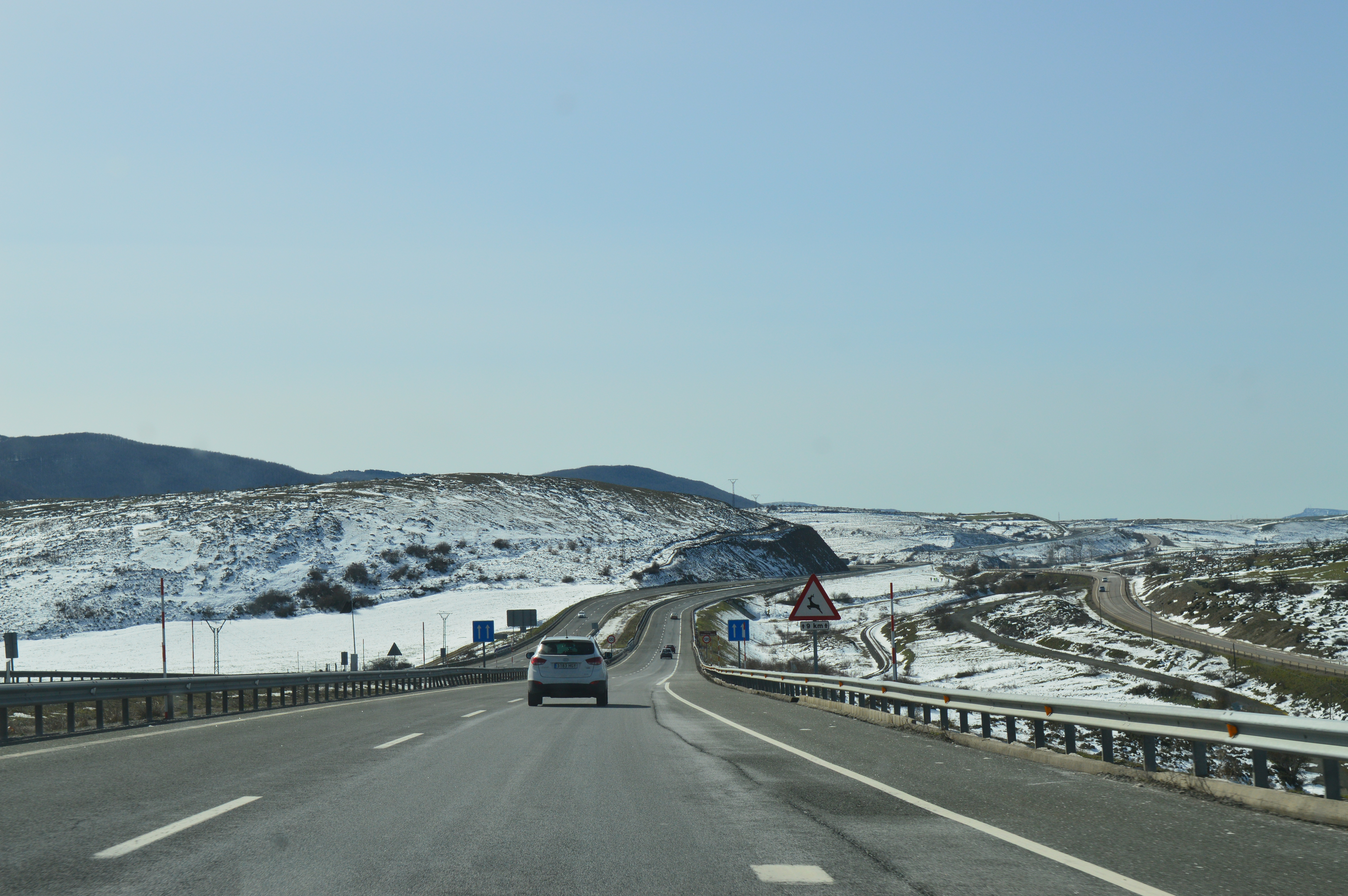
2. Reinosa, Spain. 21st February 2016: 11.46am


I used a variety of methods to travel around Spain when I lived out there: the carshare app BlaBlaCar, the short-distance Extremadura bus firm LEDA and, latterly, the superb train network RENFE. For the longest journeys I leaned heavily on ALSA, Spain’s answer to National Express. Cheap and efficient, provided you had time to spare, they serve most of Spain’s larger cities and provided a very reliable means of getting around. I took the bus one wintry weekend to see my friend Kate up in Cantabria. It was a ten-hour journey – not for those who get bored or travel-sick – but it does take you through some of Spain’s most breath-taking natural beauty: the wild steppe of Cáceres, the cherry-blossom valleys of Plasencia, the high meseta of Old Castile and the snow-covered mountains of the Cordillera Cantábrica. Driving from south to north across Spain, you really do feel as though you have arrived in a totally different country when you step out of the car at the end of the day.

I hitched a ride south to get home with a friendly student who was heading back to Algeciras after visiting family in Santander. At over 1,000km, it’s probably one of the longest drives you can do in the country. Luckily for me, Villafranca de los Barros was on his way home. In a year where I hardly saw any snow – and where Durham got some of its best in a decade – it was spellbinding to see the northern reaches of Castile covered in a heavy blanket of snow and ice. I’ll have to come back and explore someday.

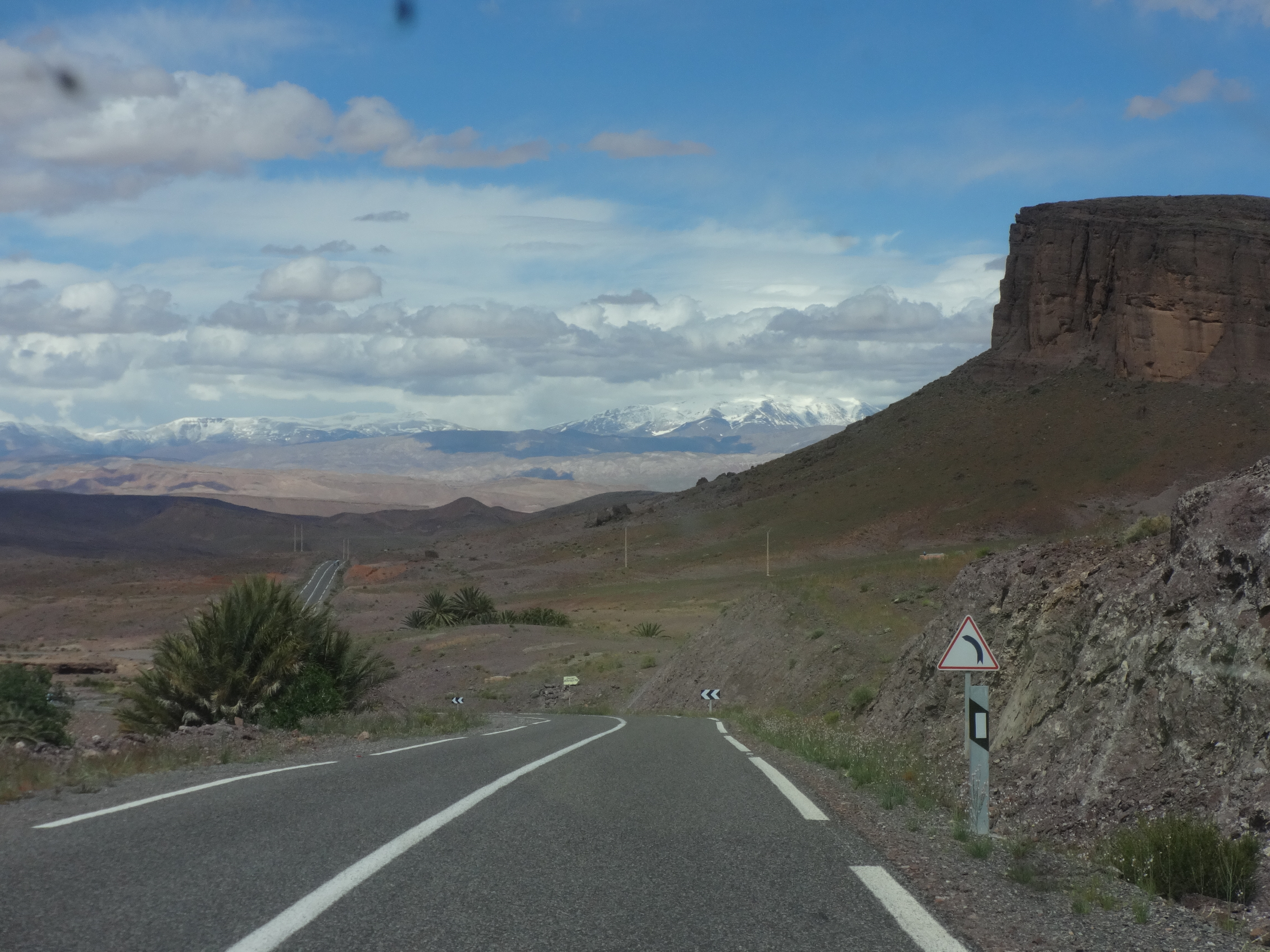
3. Piste 1507, Morocco. 20th March 2015. 11.45am


Another marathon road trip, and one of the most bizarre. My friend Archie and I hailed a grand taxi in Oulad Berhil for Ouarzazate, a desert town famous for being the location of choice for a number of movie studios who require a desert theme in a relatively safe location (including blockbusters like The Mummy and Gladitator). Our taxi driver, Ibrahim – whose name I only discerned from the badge on his windshield – was quite possibly the grouchiest, least sociable character I have ever encountered on my travels. Over the course of a three-and-a-half-hour drive across the rugged mountain valleys of Drâa-Tafilalet, he never said a word, despite our intermittent attempts to engage him in conversation. Perhaps he found us tiresome, or perhaps he was cooking up the plan he would later carry out to quintuple the price we had agreed back in Oulad Berhil, safe in the knowledge that Archie’s rucksack (and passport) was locked up in the boot of his car. I’ll never know. Archie fell asleep for much of the trek, but I spent the greater part of it with my eyes glued to the window, watching the world beyond sail past. I love road trips for that. I don’t think I could ever get tired of seeing the world.

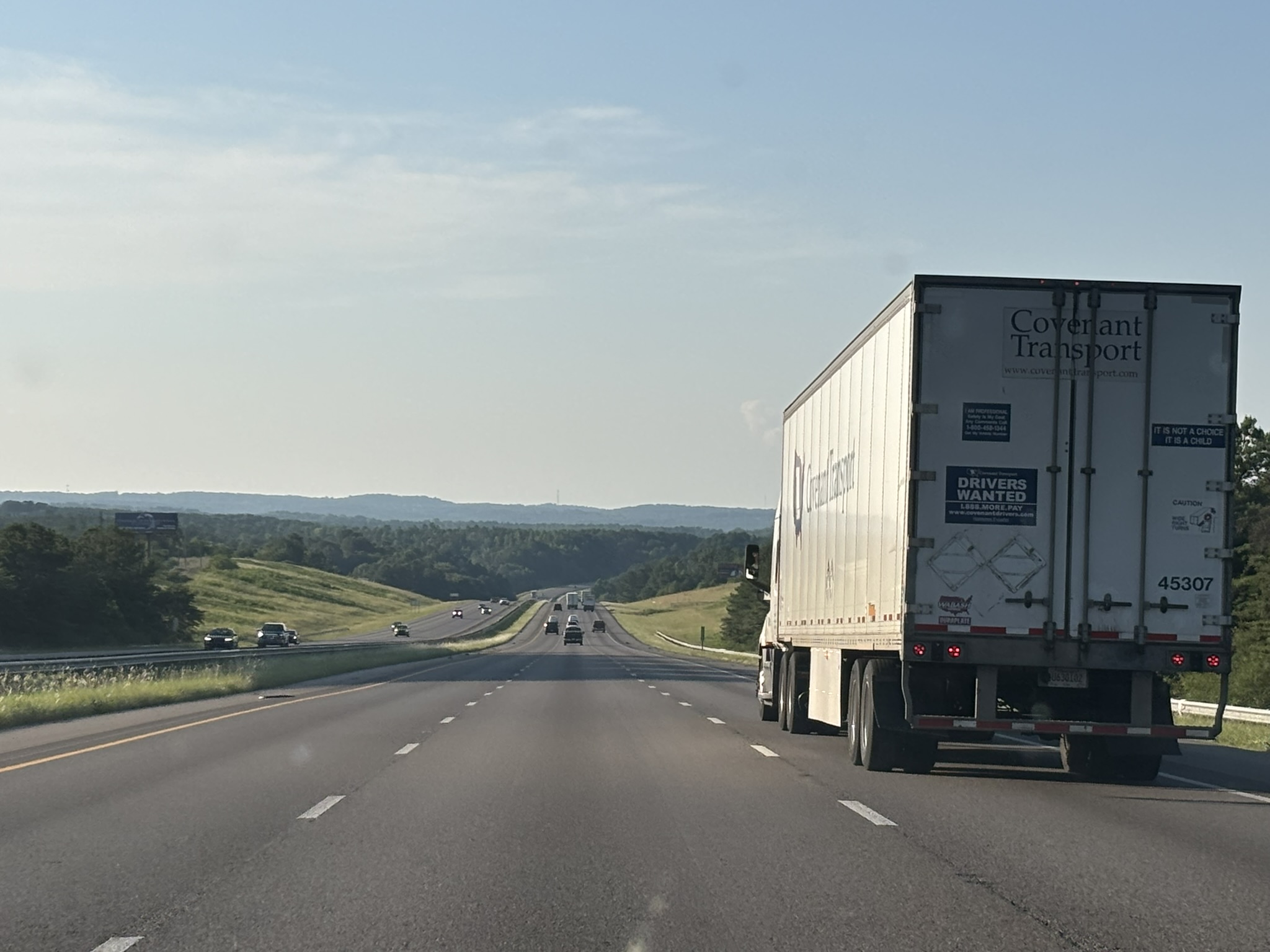
4. Interstate 65, Alabama, 3rd July 2024. 7.40pm


It’s one number shy of Route 66, but it was a phenomenal introduction to the American road trip. The highway in question travels north from Mobile on the south coast of Alabama all the way up to the shores of Lake Michigan in Gary, Indiana. I was only on the road for a fraction of it, from Birmingham up to Huntsville, but it was enough to make my eyes pop. Squashed armadillos, discarded tyre tracks and billboards were features I had anticipated to some degree, but the forests… I don’t think I was aware at all of just how forested North America truly was. The history books and the movies give the impression that most of the great tracts of forest were cut down, but in the American South – especially in the foothills of Appalachians – they go on for mile after mile, stretching across the land like an immense green carpet. The highways just cut right through them, dynamiting their way through hill and mountain as though they were merely molehills.

If I’d known how painful the destination would prove, would I have still made that journey?

Absolutely. Without a second’s hesitation. Some things are worth burning for. Some things are worth traveling all around the world to see, even if only for a moment in your life.

5. Boroboro, Uganda, 11th October 2012. 5.06pm


I thought I’d end this post with what is probably the best photo I’ve ever taken, and one that has a real story behind it.

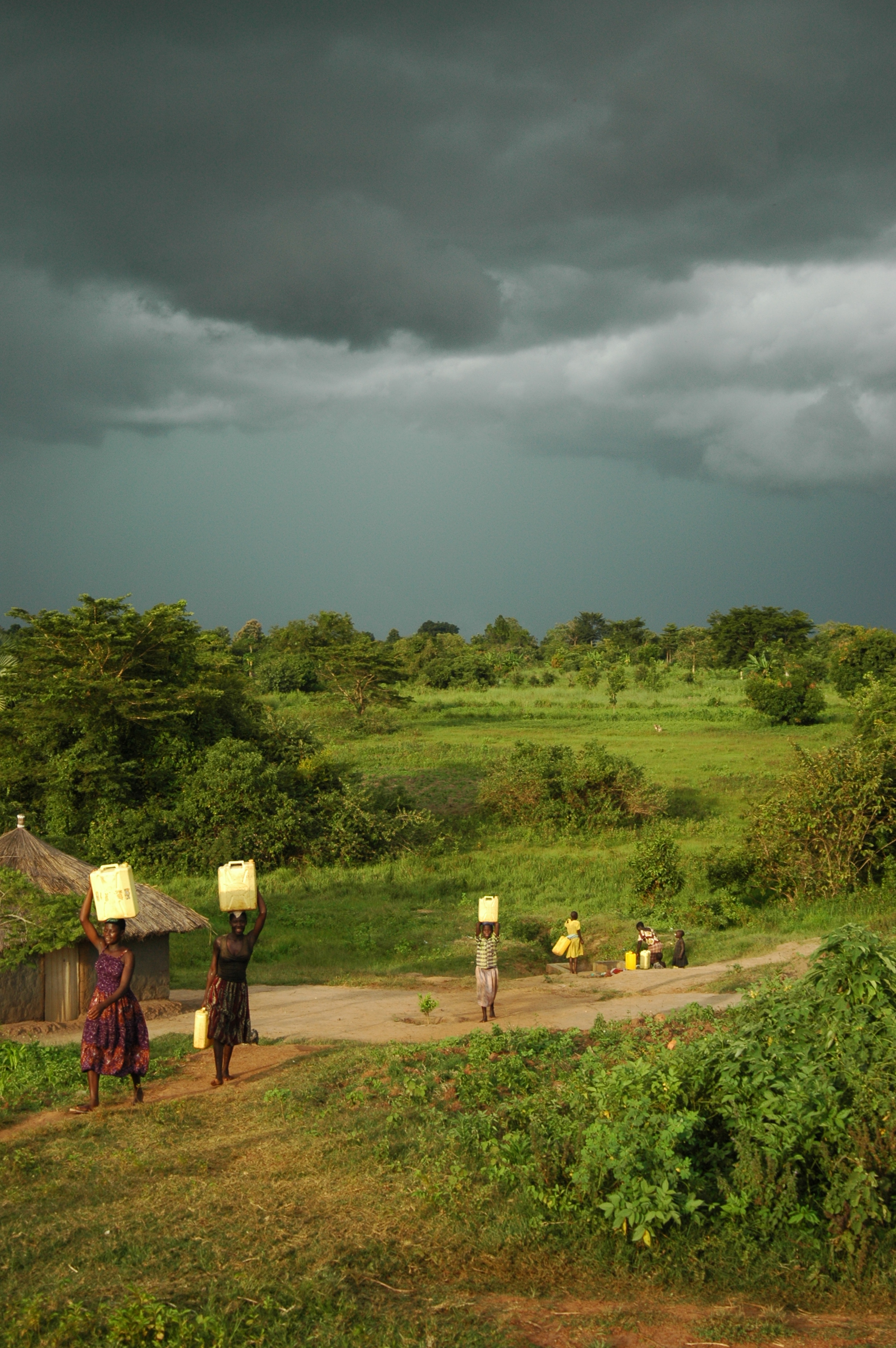
One month into my first teaching post in northern Uganda, I was invited to visit the former headmaster, Mr Ojungu Hudson Luke, on his farm on the banks of the White Nile. It was an incredible experience, herding Uganda’s famous longhorn cattle through the forests and the driving rain, with one of the world’s greatest rivers thundering away in the background, and perhaps I’ll tell you that story and more as the summer draws to a close. On the way home, after three days without access to electricity, my camera was out of charge, bringing my frenetic documentary spree to a standstill. Uganda’s roads can be treacherous and breakdowns are common, and when they do happen, they can be final: I will always remember the graveyard of trucks and lorries between Boroboro and Lira, rotting at the side of the road where they collapsed. Luckily, we made it back to Lira with little trouble, just in time to meet a tropical storm riding in on dark clouds.

The lighting was spectacular: brilliant evening sunshine, heavy, dark clouds, vivid colours all around. Red African soil and a thousand shades of green. Not for the first time in my life, I gave the finger to the sunburn on my skin and rode the last hour of the journey in the back of the truck so that I could see the world with my own eyes. Determined to capture the moment, I took the battery out of my camera and tried to breathe new life into it by rubbing it between my hands and – well – breathing on it. The first roll of thunder came rumbling down just as I pushed the battery back in and bought myself a couple of seconds. With Luke Ojungu still hurtling up the road at quite a pace, I grabbed two shots of the passing countryside from the back of the truck before the camera died.

We were a hundred metres or so from home when a lightning bolt struck a tree just ahead of us, bringing half the trunk down across the telegraph wires, which exploded in a shower of brilliant sparks. We were lucky to avoid any harm, but we soon found out we would be without power for the best part of a week until the electricians came around to fix the problem. It was only after that, with power restored, that I was able to charge my camera and see what I had managed to capture: a beautifully evocative shot of the countryside around Boroboro, lined up almost as though on command. I have it framed in my living room beneath a matching frame of Kanyonyi, the silverback of the mountain gorilla troupe we tracked on that same expedition.

Do stay tuned – I think it might be fun to relive my Ugandan adventures with you, since they predated the blog by some three years! BB x
2023: A Year in Pictures

January

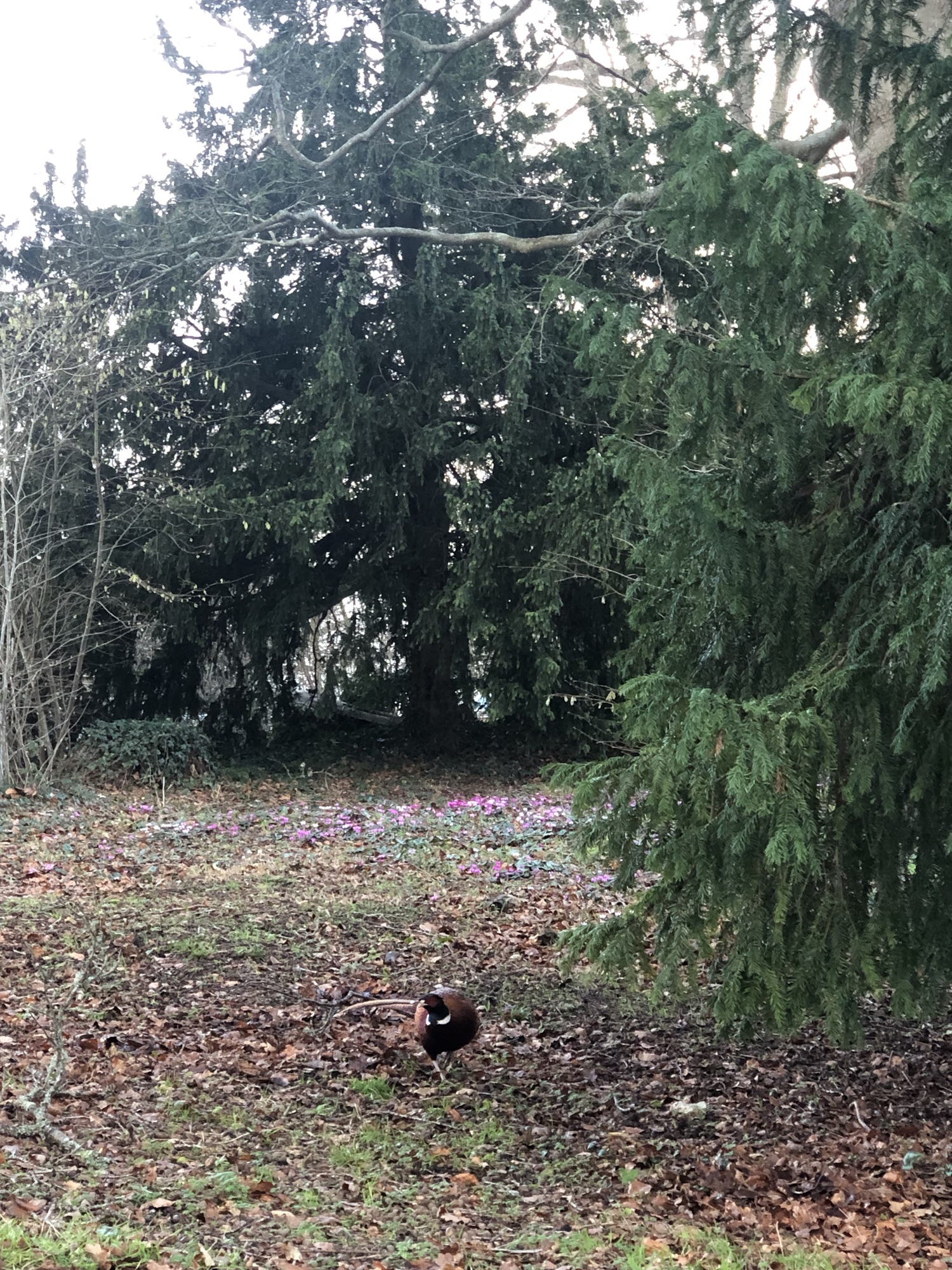
2023 begin much like it is today: wet and windy. In keeping with the last seven years, the year began somewhere new: this time, in an AirBnB in Wilpshire, some two hundred and thirty-five miles from home. It had been a wonderful New Year’s Eve, but a fleeting one: cracks were starting to form in my relationship. I decided to ignore them and looked inwards instead. A few weeks later I saw a pheasant on a stroll around Wakehurst and had no idea that the very same bird would seek me out when things began to unravel several months later. Hindsight is a curious thing.


February

The villagers of South Willingham lost their bid to save the local forest from being turned into a bike park. I know it will bring much-needed money to the area, but a part of my heart always breaks a little when somebody carves up another patch of the earth for human entertainment. I wandered among the trees and soaked in the winter light. No footpath leads through the woods, so I might be the last person to do so. I also passed my driving theory test, but didn’t tell anybody about that for a while.


March

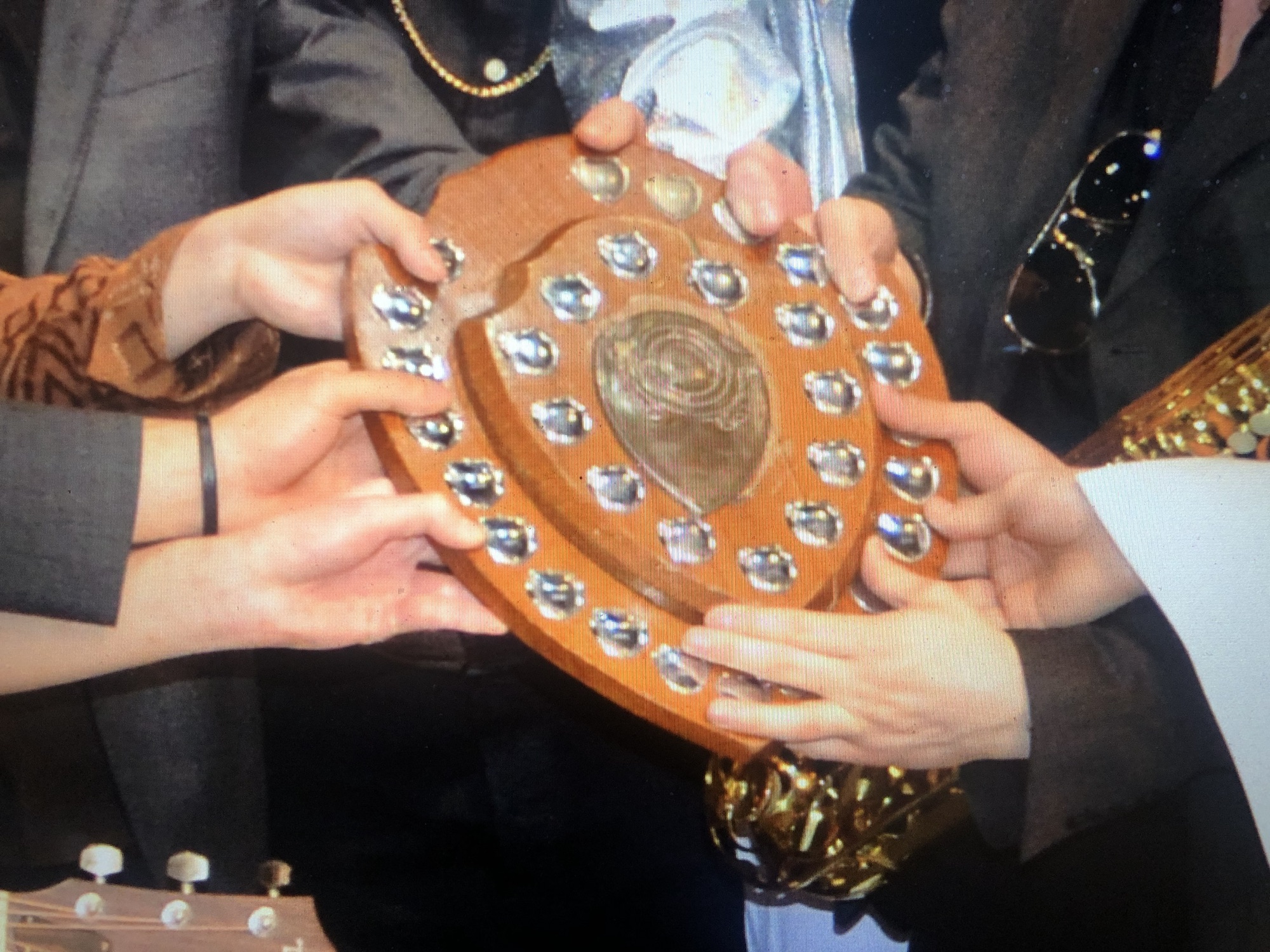
The man who doesn’t take a day off unless he’s dead or dying was very nearly brought down by a fever this term, reaching its peak the day of the House Music final. My very conscientious partner drove all the way up to my place to drop off a get-well-soon care package and gave me clear instructions to rest, but I dragged myself to the school theatre to support my boys in their bid for victory – and was not disappointed. Rutherford took home the House Music shield for the first time in over a decade. I didn’t fully recover until the following Monday, but I rode the high of their success for months afterward.


April

Seeking answers, I sought out the Camino – and the Camino provided. Within days I had found an incredible cast of characters, and had the Easter holidays been longer, I would have gone with them all the way to the end. I walked a hundred and thirty kilometres in just under a week with a Brit, a Dane, a Canadian, a Spaniard, a Dutch girl, a couple of Californians and the most charismatic Italian I have ever encountered – and I have encountered more than a few. I told myself I would be back to finish the job, but I didn’t think at the time that I would throw myself back at the Camino a few months later.


May

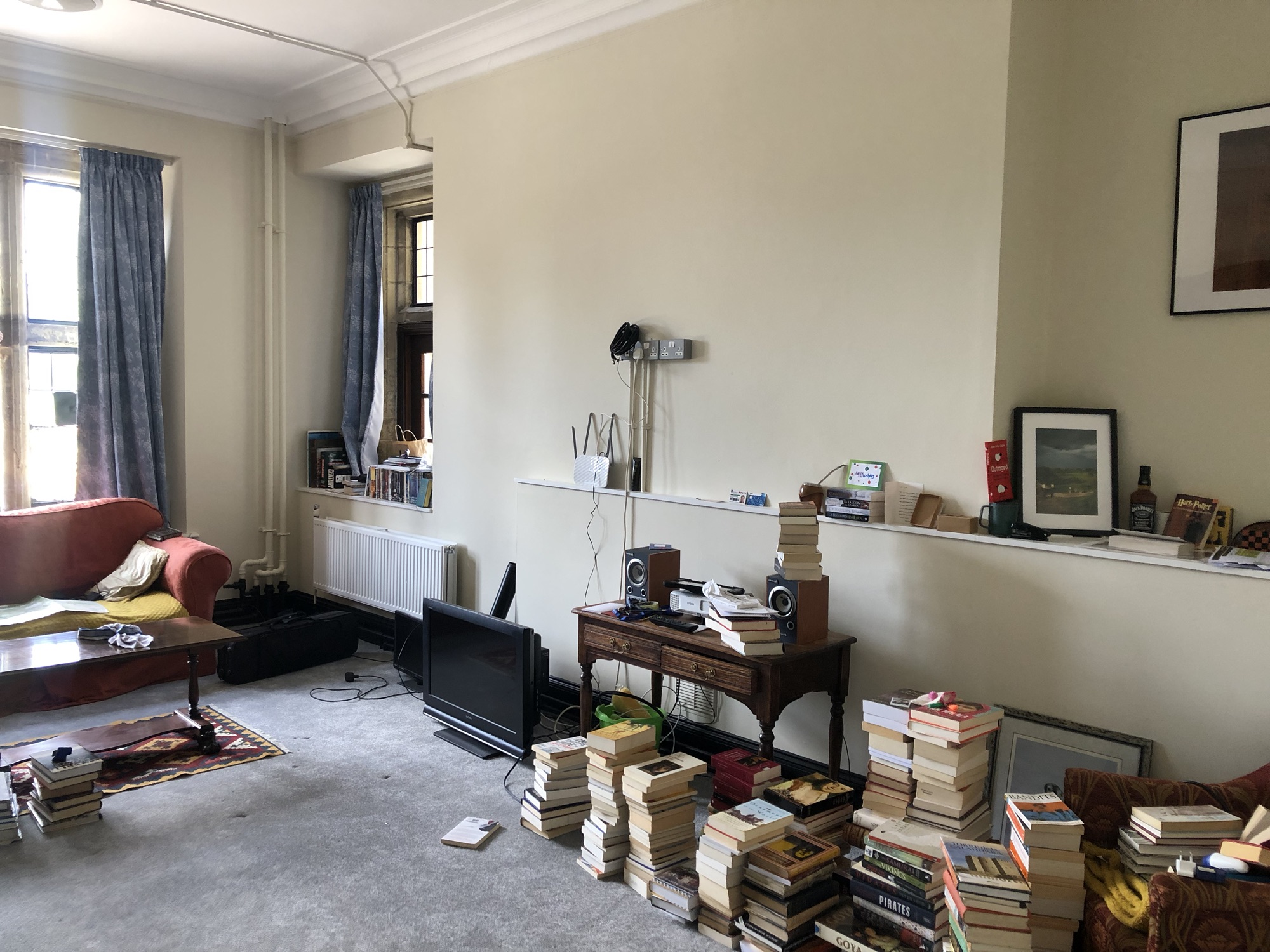
Matters of the heart came to a head. I drifted back to Wakehurst and sat on a grassy bank near the American plantation to clear my head. The pheasant appeared and sat beside me, keeping me company for the best part of half an hour. Say what you like, but animals seem to have a sixth sense for when humans are in distress. My mother’s cat made a beeline for my brother when he was in the doldrums in much the same way. It did not heal my heart but it did a lot to patch it back together. In the meantime, I went at my living room and restructured the place, hoping to find a new sense of direction by altering my perspective and my surroundings. It’s a lot easier to move a bookcase around when you don’t possess several hundred books, though.


June

I broke things off with her and felt awful about it – but seventy-eight reports, a bout of vomiting sickness in the boarding house and preparations for the school trip to Seville helped me stay on track. The Leavers’ Ball was more of an event than a formality this year, seeing as it meant saying farewell to a cohort of students who had joined the school at the same time I had. An immensely nostalgic music tour to Salzburg rounded out the month and found me playing the violin at the same bandstand I had played back in 2006, some seventeen years ago. In a very up-and-down year, June was a particularly erratic rollercoaster of a month.


July

I’m quite convinced that the answer to most questions can be found on the Camino, and I had unfinished business from the Easter holidays, so a mere two days after returning from Austria I was back on a plane and bound for Bilbao once again. You’ve probably followed me on that particular journey already, but if you haven’t, you can always start again right here. Three weeks and nearly five hundred kilometres later, I arrived at the end of the world and stared across the Atlantic to America. Someday soon, I’ll take my adventures across that ocean. But not yet.


August

August was a quiet month. August always is. I popped up to London a couple of times and saw some old friends, which was much needed – I have distanced myself from a lot of old acquaintances after the way they upbraided me over the Gospel Choir fiasco, and it took quite a bit of courage to resurface, even though it’s been some two years since. The social current flows fast in the capital city. London remains a charming place to visit, but I’m sure glad I don’t live up there. I’m a lot better at dealing with cities than I used to be, but I’m definitely a country boy at heart.


September

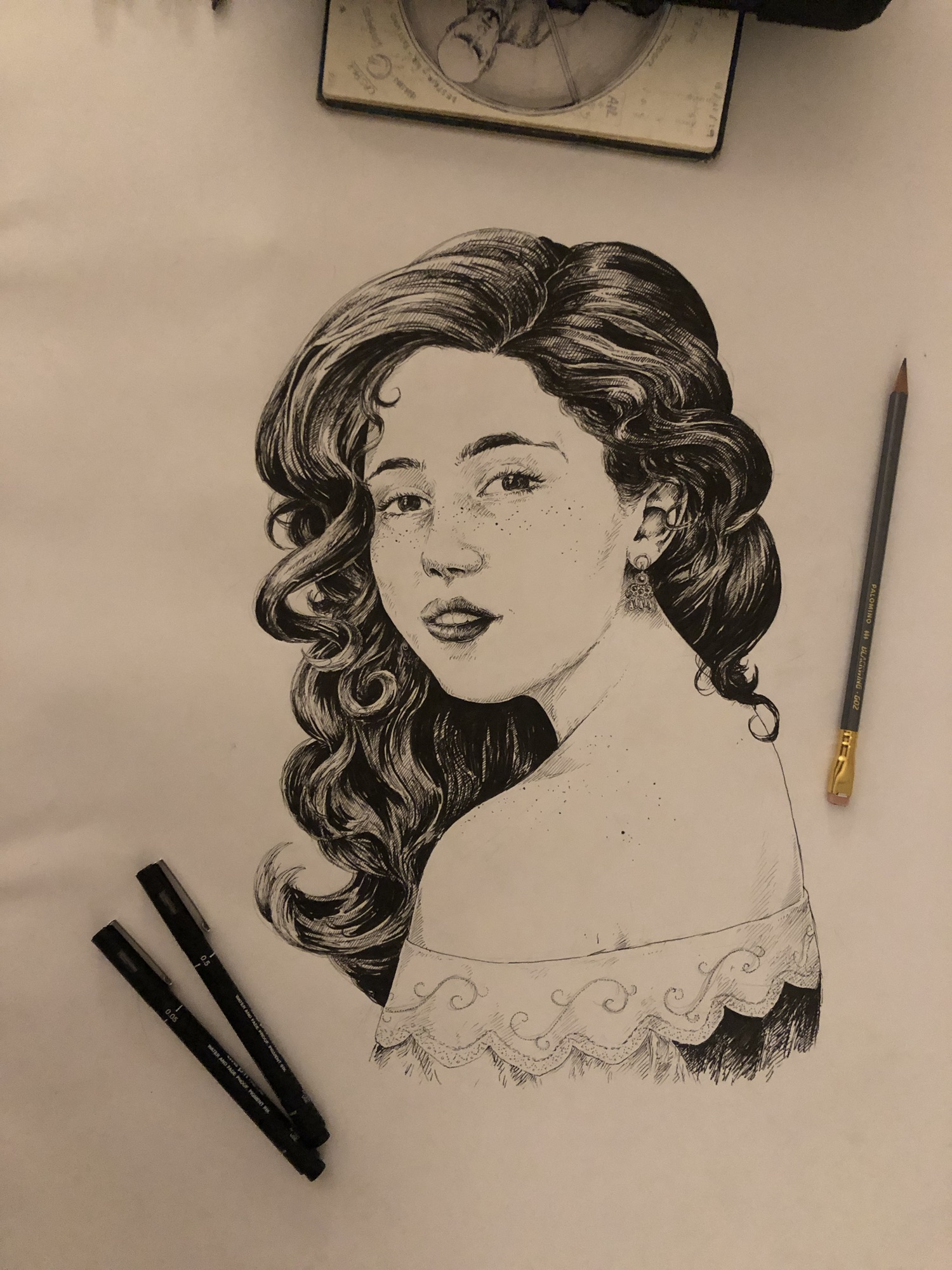
Term started late this year, meaning August was already over by the time the students returned. It wasn’t a scorcher like last summer, but the warm weather stayed with us for quite some time. A new wave of weekend activities and a house camera kept me busy at weekends, and I finally managed to host a party in the flat over the first Exeat of the year, using the old projector to beam karaoke onto one of my walls. I also got back into drawing, completing a giant poster for one of the walls.


October

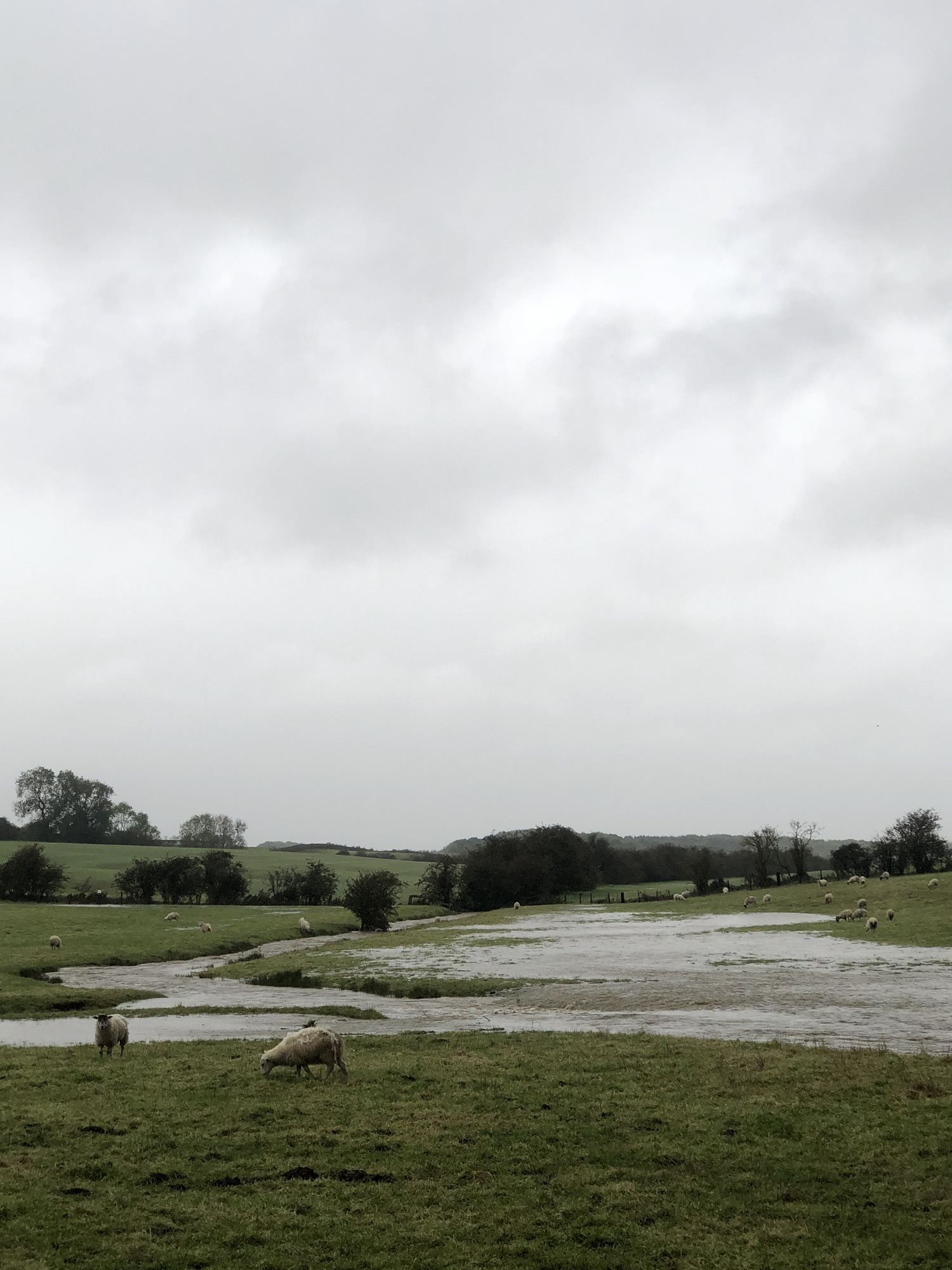
Storms Agnes and Babet tore across the British Isles and put an abrupt end to the long summer days. Sussex remained relatively stable while the roads of the Lincolnshire Wolds turned into rivers. I spent the October half term with my parents and even made it to Manchester to see my brother’s first ever publicly exhibited artwork on the first floor of a fancy riverside hotel. I also wrote a pantomime for my school, but internal politics made it impossible to get off the ground. At least I have the backbone of a script that I can carry over to whichever school I head to next.


November

We lost the first round of House Music, but only by a single point – so there’s hope for my boys yet. More importantly, I bit the bullet and started learning to drive. Finding the time to schedule in two hours of driving during a working week is ridiculous – and probably the biggest reason I’ve put it off for so many years – but, steadily, I’m starting to get the hang of it. Or rather, I was, until a combination of sickness and cover lessons made it impossible to schedule in the last two lessons of term. Here’s hoping I can pick up where I left off in the new year.


December

December hurtled around at the speed it always does, though this year the last stretch did seem longer than usual. I managed to strong-arm Riu Riu Chiu back into the Carol Service at last, which the kids seemed to love, and helped to draw up the motion for the Students vs. Alumni debate, though I was not especially fond of the heavy economical slant in which it dragged the proceedings. My brother spent Christmas with his partner, so it was just my mother and father and I this year. Midnight Mass was bizarre – half an hour of forced carols before the Mass itself began at midnight (rather than the usual 11.45pm start) – but, traditions must be maintained. I blew the dust off Duolingo and got back into learning Italian after more than a year’s hiatus, though I daresay I’ve picked up a little in that time from my students.


This time tomorrow I’ll be in Madrid. Since leaving university I’ve made a point of seeing in the New Year somewhere new, but this year, for the first time since we met, I can finally celebrate it with my Spanish family, so I’m headed for the pueblo to see in 2024. I haven’t seen some of my cousins since my youngest counsin’s first communion back in 2019, so it’s a reunion that’s been a long time coming. Here’s to a good one, folks. BB x

Camino XXVII: Journey’s End

Finisterre. The End of the World. It’s a fitting place to end the Camino, which can sometimes feel like it really does go ever on and on, down from the door where it began. Well, here we are at the end of the road. Kilometre 0. My great quest for the summer is over.


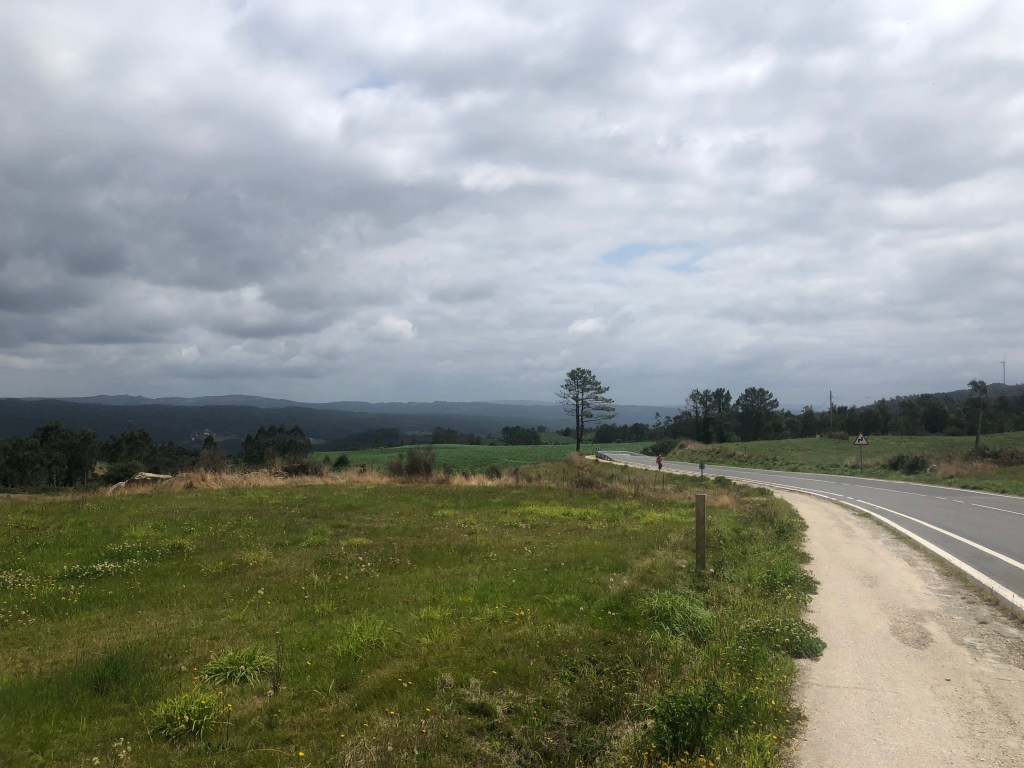
With a good thirty-two kilometres between O Logoso and the seaside town of Fisterra, Simas and I set off early this morning. One last six o’clock start, an hour or so before the dawn, to end the Camino as it began: in the dark. The churring of nightjars echoed in the forest around us as far as Hospital, after which the road climbed up over a treeless moor before slowly beginning to descend toward the clouded horizon beyond.

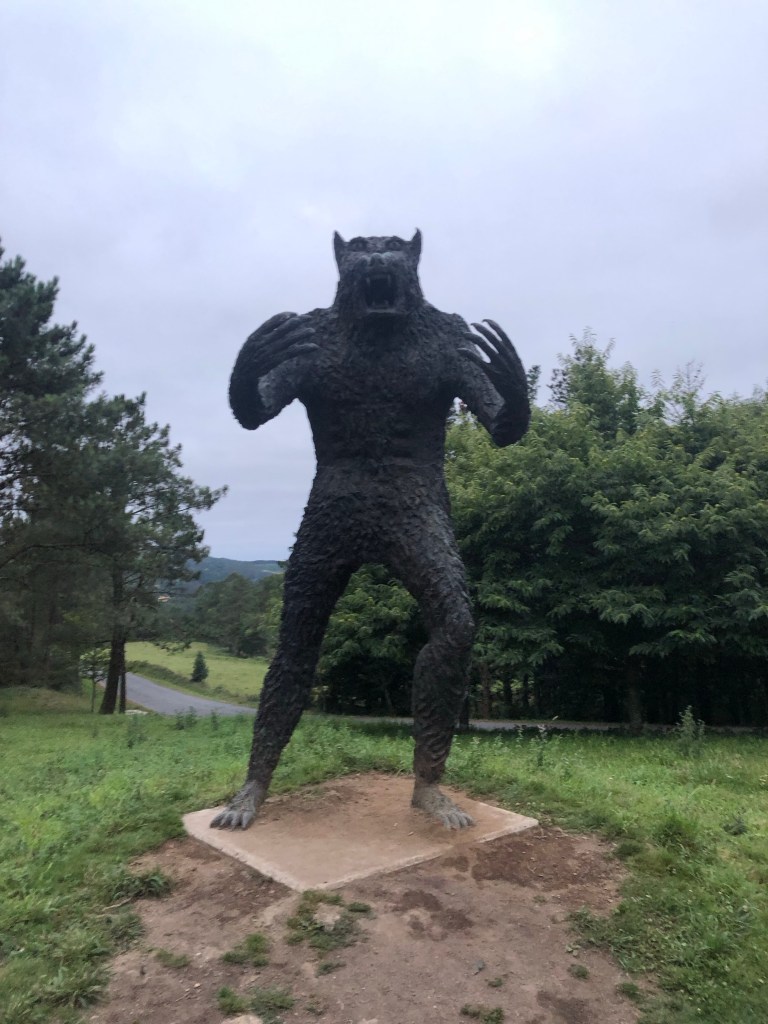
We passed a few alarming signs declaring ‘territorio vákner’, which didn’t make a lot of sense until we stumbled upon an enormous sculpture in the woods of a wolf-man. The ‘vákner’ was, according to 15th century pilgrim lore, a Galician forerunner of the werewolf legend, and one of a number of terrible beasts that beset pilgrims in the forests after Santiago. The more you know!


Less fantastical, though by no means less legendary, we found a Tupperware box on one of the stone walls deeper in the woods containing a number of breakfast options: yoghurts, bananas and pastries, complete with plastic spoons in case of need. The invisible benefactor, an eleven-year old local boy, was trying to raise money for a trip to Madrid. I tipped him generously via his piggy bank and enjoyed the breakfast I otherwise might not have had this morning. What a little angel!


Shortly after leaving the forest, as though out of a dream, the sea came into view. I have been so excited to see the sea after three weeks on the road and saving it as a reward for the final day was definitely the right thing to do. We came down into the busy former whaling town of Cee and had a proper breakfast of churros con chocolate, for the princely sum of 3.75€. And that’s including Simas’ café con leche. I’m going to miss how cheap this country is.

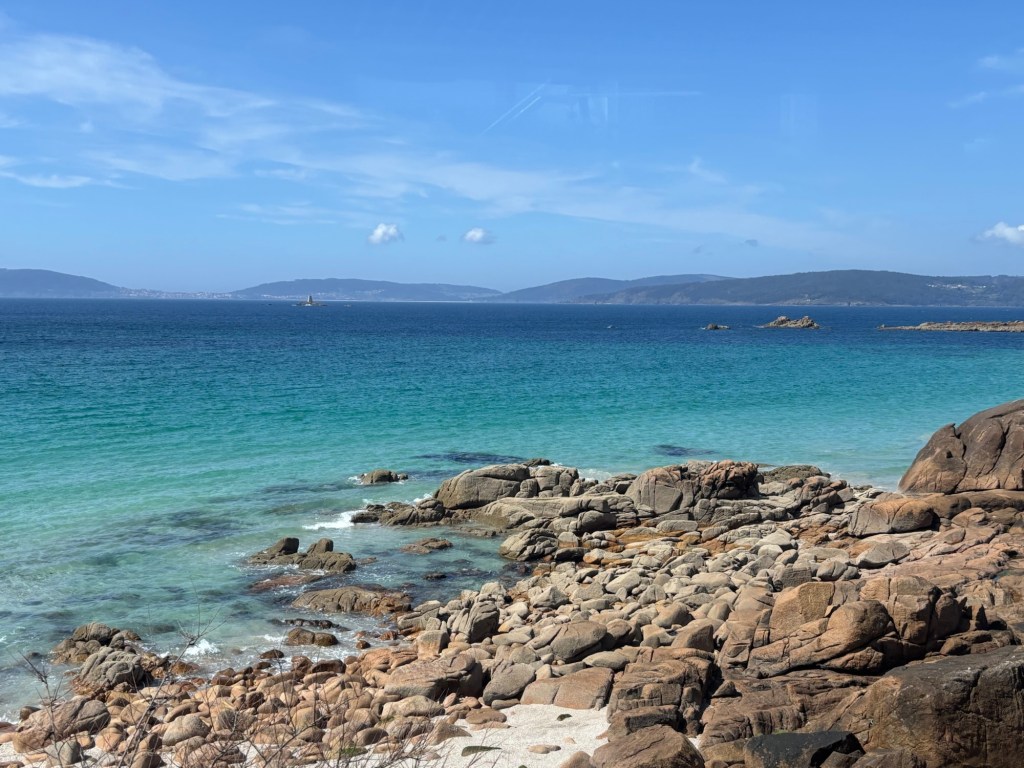
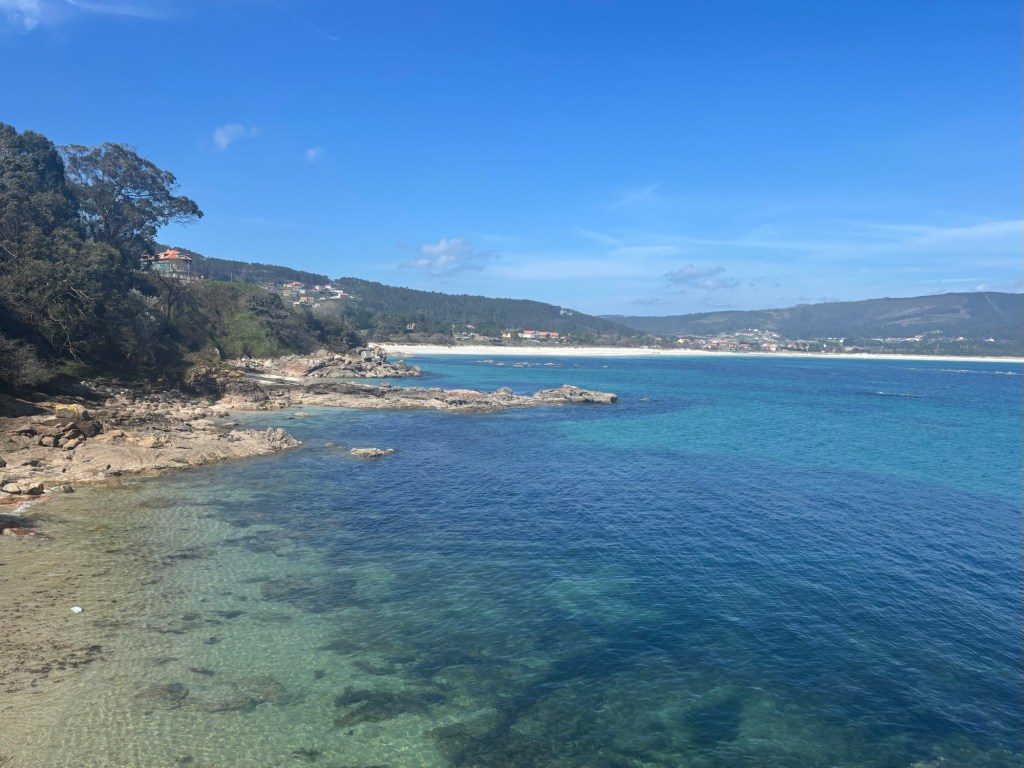
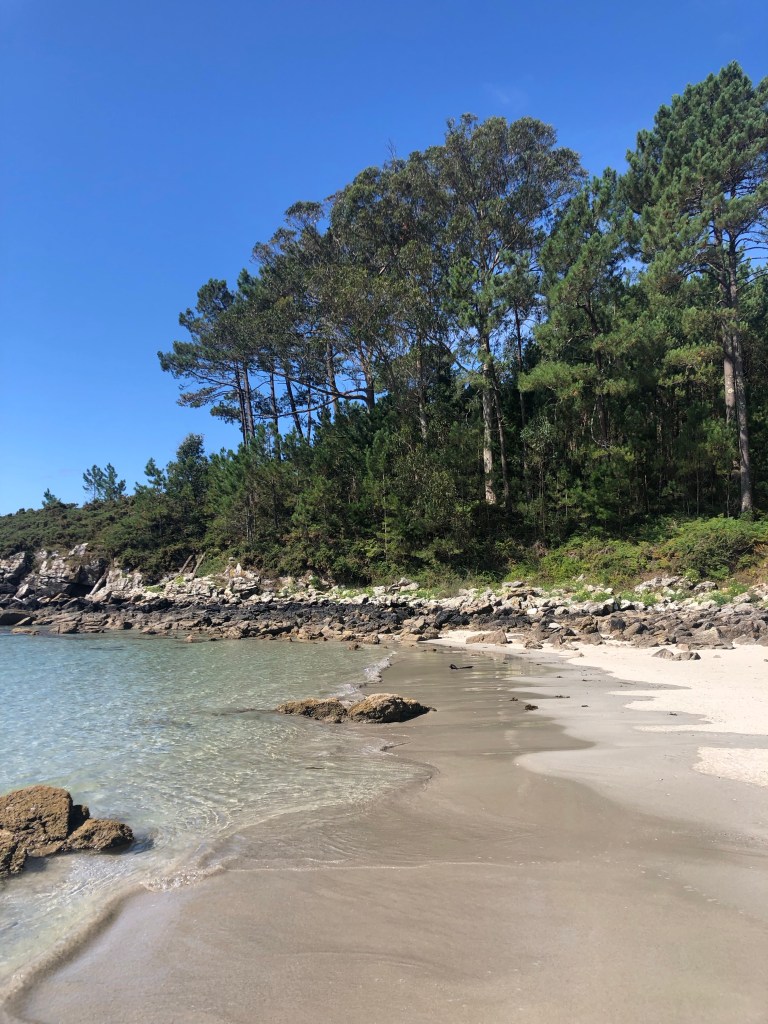
Having killed an hour, we pressed on north and west through Corcubión, which was being kitted out for a medieval fair. We detoured a little to see the coast, and were guided back to the Camino by a friendly local afflicted by throat cancer, who pointed us back to the road using a robotic device at his throat. We had not gone much further than Estorde when the sun came out, causing the white sands of the beaches to shine out like a beacon. Given the gloomy forecast for the rest of the day, we took a chance and detoured once again to one of the coves, finding it deserted. And boy am I glad we did!


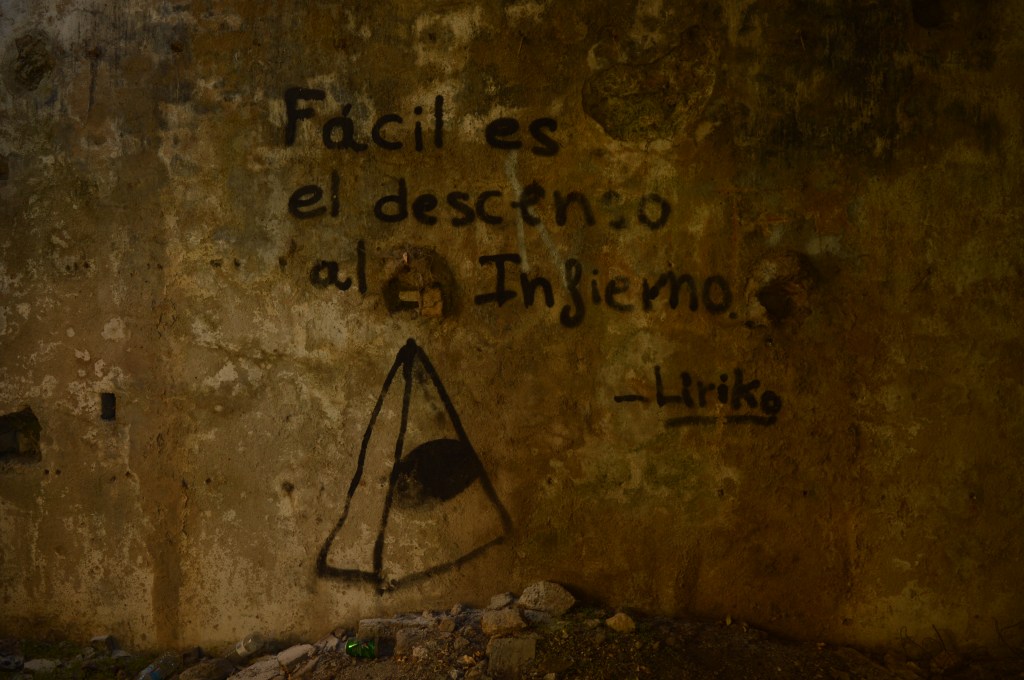
This was what I walked five hundred and sixty kilometres for: truly, the treasure at the end of the rainbow. There were no pots of gold, but there might as well have been diamonds in the water: each gentle wave kicked up clouds of white sand that glittered in the sunlight like a thousand twinkling stars. Sand eels and mullets darted in silver shoals nearby and a sandpiper scurried up and down the shoreline at a safe distance from us. The way the forests practically tumble right into the ocean, ringed with beaches that shine a purer white than anything the Mediterranean can muster… I’m amazed the Galician coast isn’t as heavy a hitter on the tourist trail as the Costa Brava. Amazed – and grateful. Because from some of the graffiti on the town walls – no a la Marbellización – it’s pretty clear the gallegos don’t want it to have that level of fame either.


A special mention should be made for saint number two of the journey: Nacho, a Valencian who had set himself up on the hill overlooking the Langosteira beach with two paella dishes full of home cooking that he was handing out to passers-by, free of charge. He was quite insistent on this last point, maintaining that though he was between jobs he had enough money by the grace of God to live on, and wanted to share his luck with the world. We had a good natter about what constitutes a real paella, but above all it was really uplifting to meet such a good-hearted man from my grandfather’s region – because while I’m proud to have Manchego heritage, my grandfather was actually born in Torrevieja, which means my immediate ancestry is actually Valencian. Go figure!


We reached Fisterra just after one and checked into the albergue municipal, which was already quickly filling up. It is as well that we did, too, as it landed us the final stamp in the credencial and an additional compostela for completing the final 100km of the Camino. After a quick nap we grabbed a table at O Pirata, a very characterful port-side seafood restaurant whose staff (and hangers-on) really did give off the right vibes as a motley crew rather than a team of restauranteurs. Between our waiter, who might well be the fastest-talking man in Spain, the chef with his black bandana and earring, and the three musicians sat outside, strumming guitars and clapping along – not to mention the seafood itself, which was delicious – it was easily the best meal of the whole Camino. Best of all, they threw in a free ego massage, telling me it wasn’t just the La Mancha shirt that gave away my Spanish heritage but also my ‘actitud’. I’ve actually managed to convince quite a few Spaniards that I’m a native on this Camino, which is a huge thing for me. I’m one step closer every day to reclaiming my heritage!


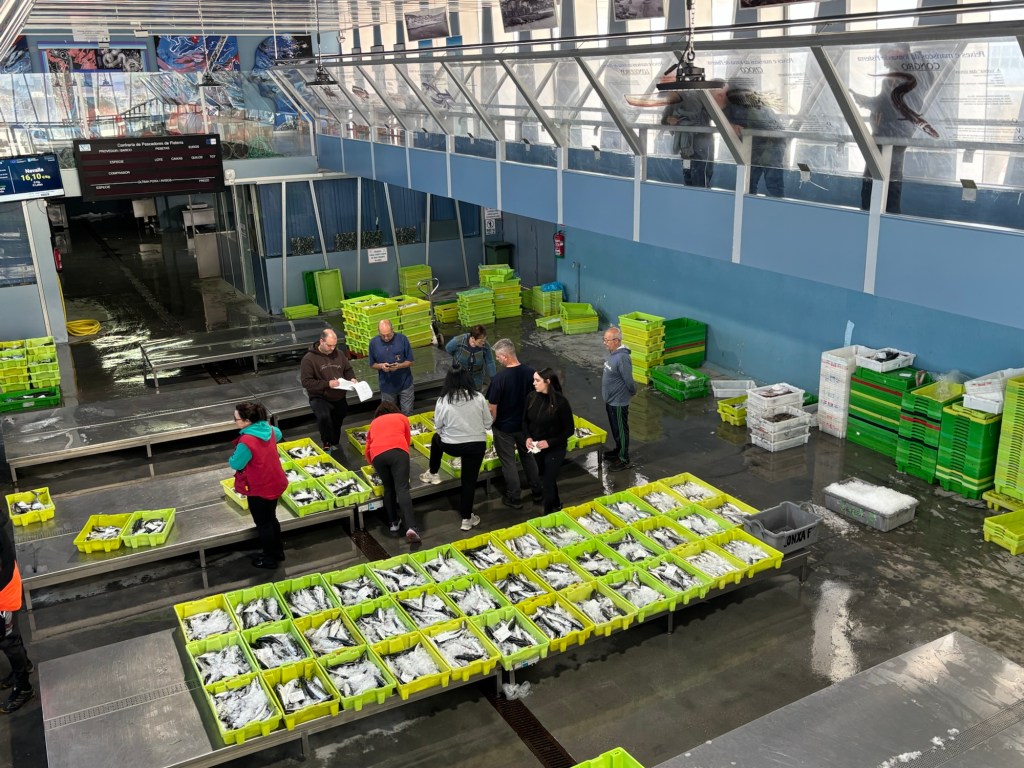
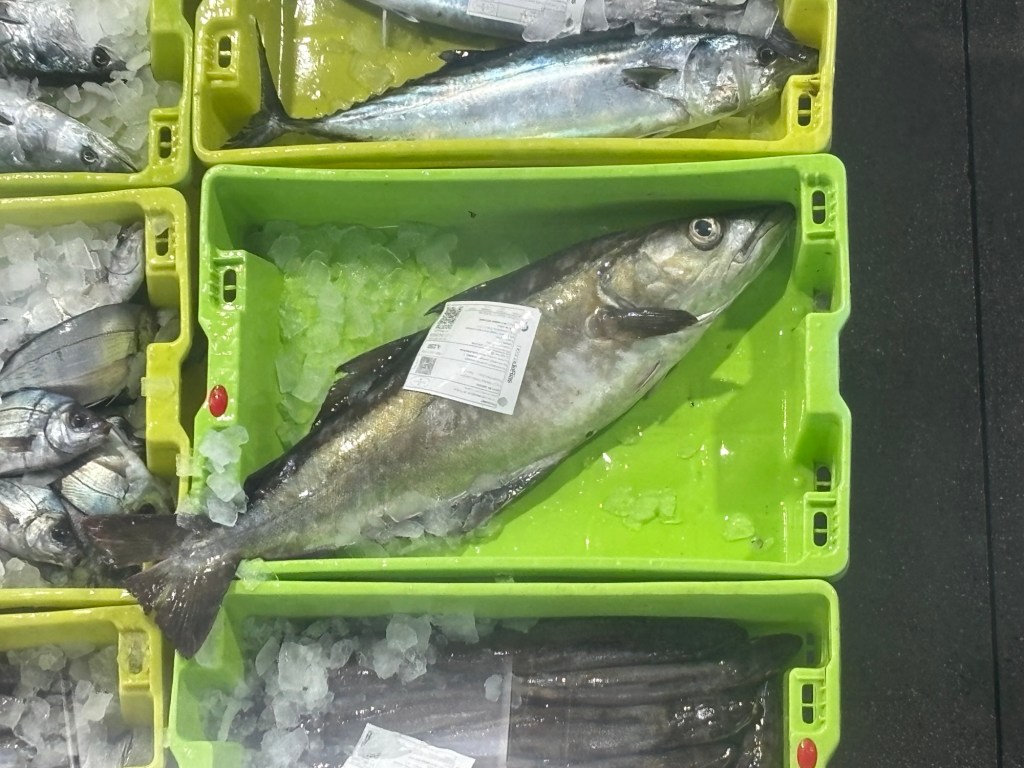
After lunch, Simas went back to the albergue for a siesta but I fancied a wander around town before the forecasted rain came down. What I thought might be a museum/aquarium in the harbour turned out to be an open-air working fishery, where a raised walkway lets you look down on the fishermen at work, processing and sorting the morning’s catch. It’s a brilliant idea and a fascinating way to have a look-in behind the scenes – especially after enjoying the fruits of their hard work for lunch! One chap was sat measuring the many thousands of razor clams and sorting them by weight, which looked to be a truly Sisyphean task: it must take hours to finish before the next haul arrives and the task begins again.


Stamps and celebratory seafood platters aside, you can’t say you’ve completed the Camino unless you really do go all the way to the end of the road, which is another three kilometres down the coast to the windswept cliffs of Cape Finisterre. The pictures imply a lonely lighthouse watches the cape, but it’s also home to a hotel, a bar, a car park and a couple of souvenir shops, so it’s not as remote a spot as you might think. The steep banks of the cliffs were pretty busy when we got there, with both pilgrims and tourists from various parts of Spain, and it was a good place to bid farewell to several pilgrims I have crossed paths with on the road: Alan, the wannabe hostalero, and the French team of three, Jean-Paul, Adine and Philippe; as well as Liza the Belgian (whose wish was granted by beating me to the Cape) and Catherine the German (who wins the award for the most random encounters along the whole Camino).

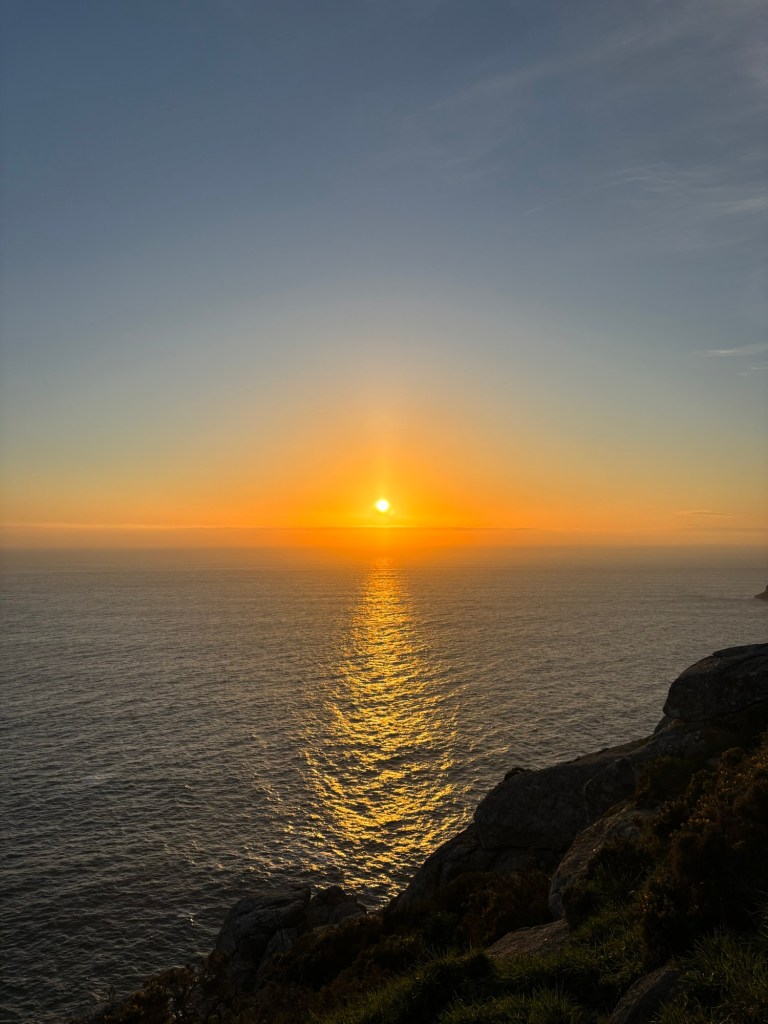
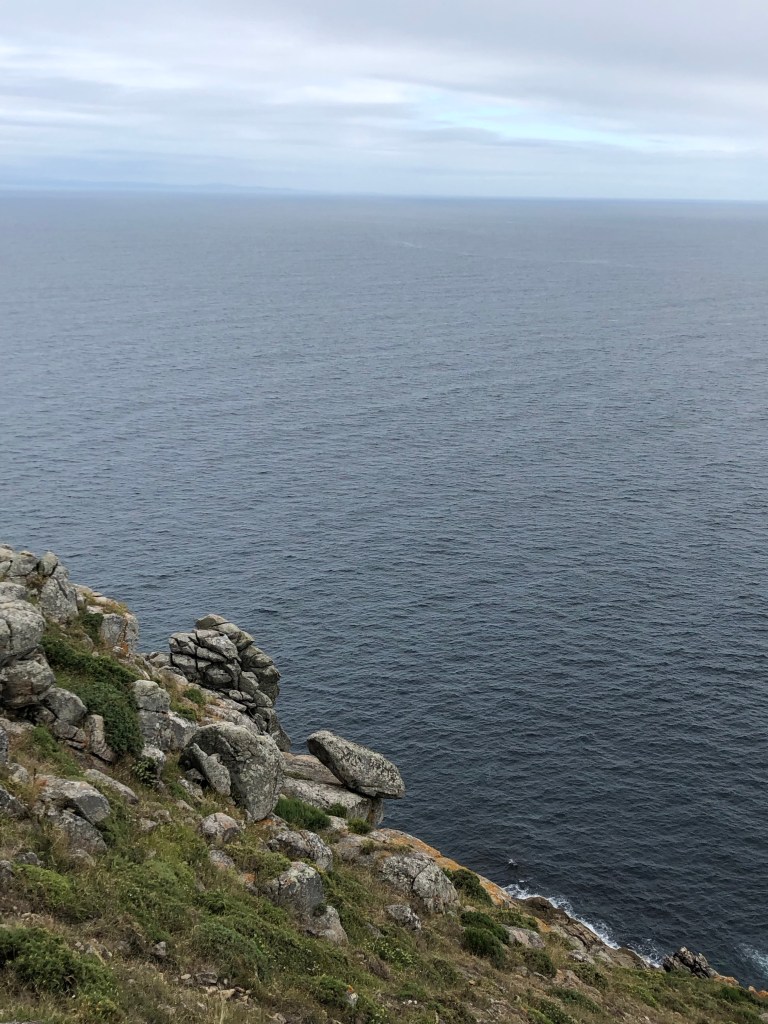
I found a quieter spot lower down and sat there for a while, watching the waters of the Atlantic below. It was a good place to reflect. I let go of a lot of things at last, letting them drift from my heart through my fingers and out across the ocean. Down below, gulls wheeled and cried around the cliff edge while a sparrow and a redstart made a few dizzying sallies across the precipice. My eyes were trained on the waves, searching for one thing in particular, and after half an hour – in the wake of a fishing boat – I saw what I was seeking. Not the lonely gannet or flight of shags that rounded the cape, but a fleet of shearwaters, an endearing and highly acrobatic seabird that truly lives up to its name, flying low over the water with the tips of their wings slicing the tips of the waves like blades. I was far too high up to tell what kind they might be, but I imagine they were Balearics, given their size and number.

If the ghostly harrier and quail were the spirits of the early Camino, it’s the handsome shearwater that marks its end. While I’ve walked most of the Camino alone, I’ve had companions every step of the way, from the merry stonechats that have been with me every day to the nightjars that have kept me company in the twilight hours. If you can put a name to the sights and sounds all around you, you’re never truly alone on the road.


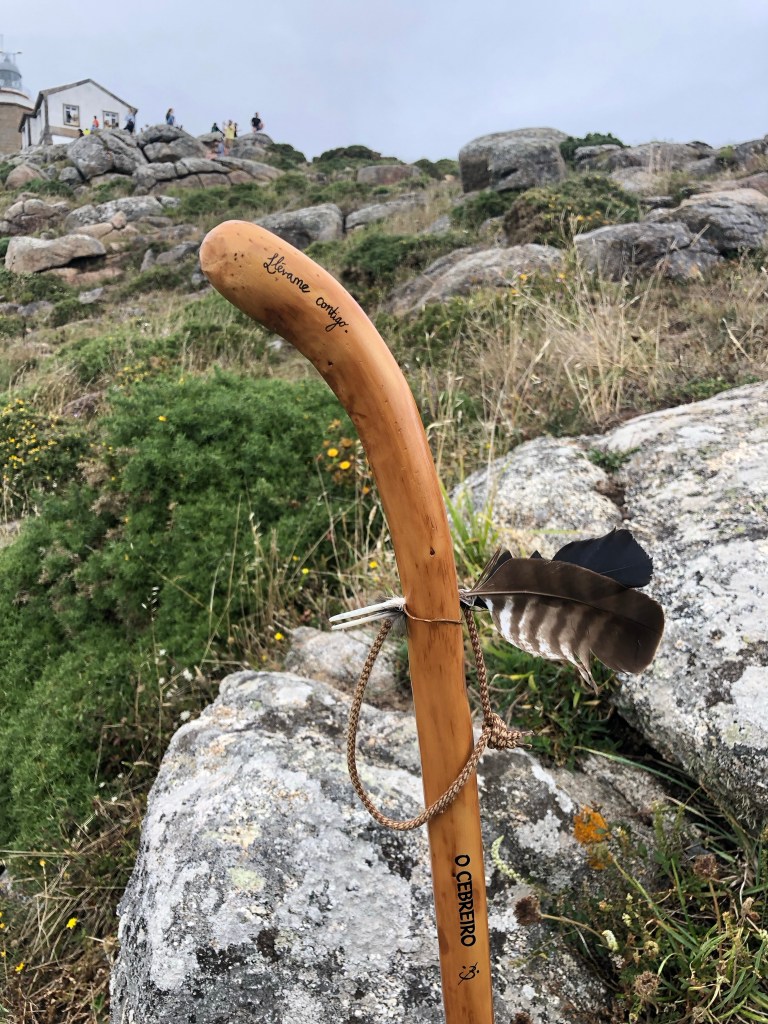
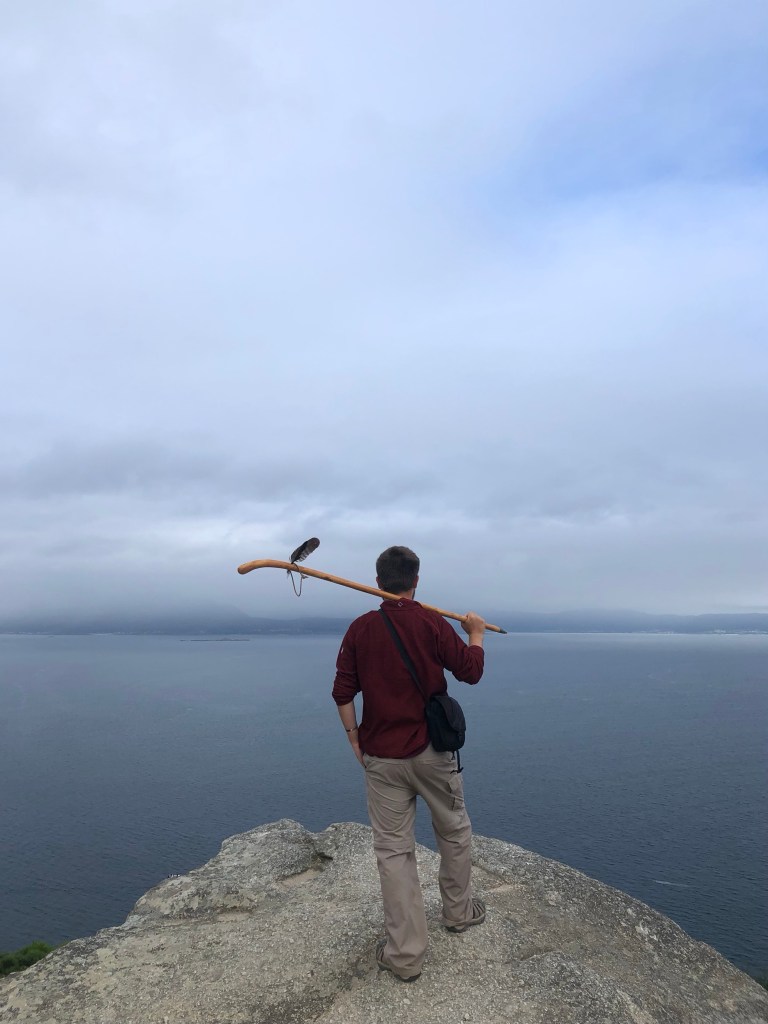
If you kept going in a straight line from here, you’d reach Long Island and perhaps even New York City. But unless you have the stamina of a god and the strength to match, that’s simply not possible, so here the road ends at last. I penned the words ‘Llévame contigo’ (Take me with you) into my faithful stick and planted it in the earth just behind where I had been sitting. I hope somebody does take it with them, and that it brings them as much joy and support as it has brought me.

I thought of its predecessor, and the feathers that had made it so memorable to other travellers on the road, and as I did, a couple of ravens suddenly appeared on the wind, soaring in circles around the cliffs below. One of those feathers I carried before belonged to a raven – so perhaps they were with me all along in spirit. I’d like to think that. According to legends of old, it was a raven that first brought the light of hope into the world.


Well, that’s a wrap. It’s now twenty to eight on Friday 28th August. The rain is falling outside and I’m booked on the 11:45 bus back to Santiago. I’m going to find myself a café near the harbour and do some writing while I wait, in this seaside town with which I have fallen in love. Galicia has been beautiful since O Cebreiro but its coast has utterly enchanted me. It feels like home, and yet like Spain at the same time. It feels like Edinburgh, Hythe and Olvera all rolled into one.

I will come back. There is more to the Costa da Morte than I have seen. I must come back. BB x

Camino XXVI: RICE, RICE, Baby

I’ve set down my bag for the night in O Logoso, a village up in the highlands to the west of the Great Lakes of Fervenza. It wasn’t yet one o’clock by the time we arrived, but I was persuaded by the images of a natural swimming pool nearby – and my shins are finally starting to complain, after almost three weeks on the road. I walk everywhere out of habit and that’s a fact, but even I have my limits!


I walked with Simas today, so I decided against shooting for Cee (in retrospect a wise move) and instead took it easy over the 23km hike toward Hospital. It’s a hell of a lot easier to stop to grab breakfast or a drink when you have company, so I took full advantage of Simas’ voracious appetite (the man puts food away like Logi in the old Norse legends) and had a Cola Cao and tortilla breakfast – possibly one of my last of the Camino!

It was great to have company on the road again. I’ve happily walked most of the Camino on my own, but it’s always enlightening to share the road with a kindred spirit – a memory shared is a memory doubled. I had time to reflect on the conversation I had with some of the other pilgrims in the albergue last night, too (which was marvellous, by the way, run by two very friendly abuela types who made us a home-cooked dinner to remember), and my line that it’s better to come away from the Camino with a lighter mind and a heavier load than the other way around (since no matter how many concerns I come out here with, I always seem to convert them through some unholy alchemy into the physical weight of books I collect along the way….!)

Simas asked for a brief history of Spain as we walked, which certainly helped to while away the time… I must have been yakking on for a good hour and a half at least, before I reached the 18th century, at which point my knowledge does run out all of a sudden, since it’s a period I’m not particularly interested in (it’s probably the ridiculous obsession with powder wigs).


We’ve met a lot of pilgrims coming back the other way – more than we’ve encountered heading to Finisterre, in fact. I guess those pilgrims mad enough to push on to the coast tend to be the ones who are equally mad enough to come back the same way. Collective insanity, Simas called it, and he’s probably right. Could you convince a friend to walk twenty to thirty (and sometimes forty) kilometres a day, every day, for four weeks? It’s a tall order unless you’re already bitten by the Camino bug…

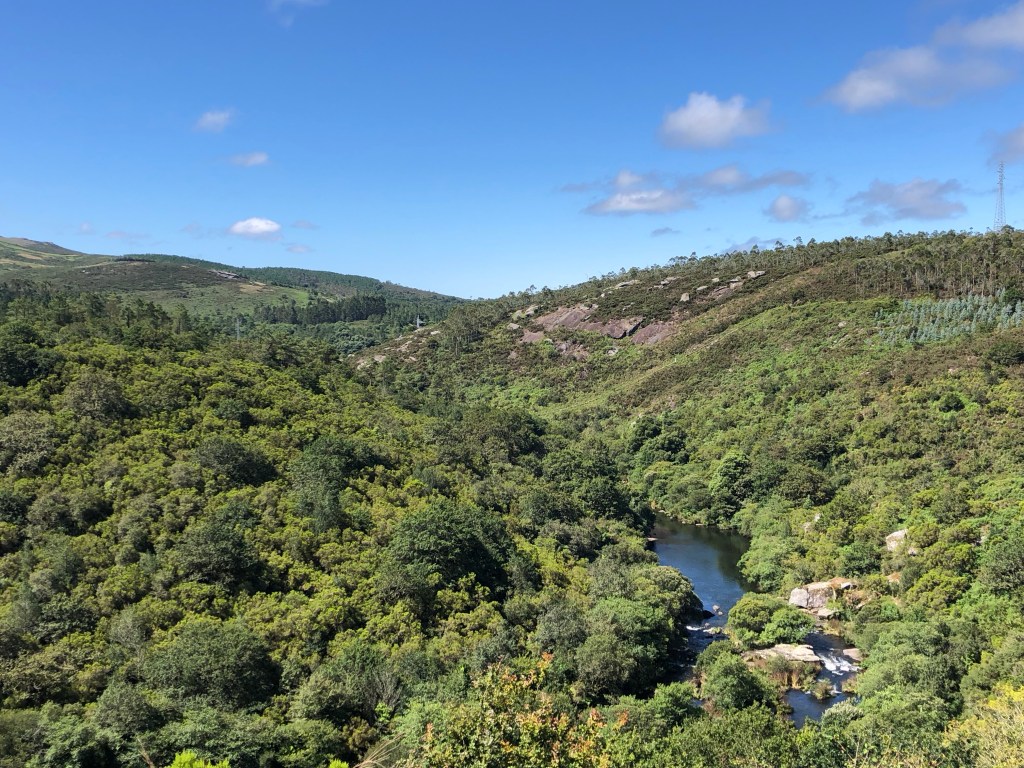
After Santa Mariña the ground began to rise as we reached the edge of the coastal highlands. We didn’t quite see the Atlantic today, but we must be pretty close – I could smell the salt on the air as we came down the hill into O Logoso this afternoon, over the thunder of the river in the valley below. The countryside is certainly awe-inspiring: the tedious stretches of eucalyptus plantations between Sarria and Santiago seem a world away up here, while the endless wheat fields of the Meseta might as well be on another planet.

The stonechats are still here, as are the black redstarts and swallows – I even had two close encounters with a cuckoo today – but there are signs that the local fauna is about to shift one last time: I heard the cry of a full this morning from somewhere far away, and the Concello symbols on bus stops and hotels now feature the distinctive silhouette of a curlew – which, together with the rolling moorland, conjures up images of the north of England. I’m not lying when I say that this is probably the part of the Camino I have been most looking for to!


I think I’ve finally contracted a minor Camino injury in the form of shin splints – the merciless climb up and over Monte Avo today, even with the stick, probably didn’t help. I’m just grateful it’s happened this late in the journey, with just one day left to go – it would have been nothing short of torture had it happened last week, or worse, two weeks ago!

So I took it easy this afternoon and hit the I of the RICE method by taking a dip in the pool just up the road from O Logoso. Spain has a wealth of hidden piscinas naturales – many of which are in Extremadura’s mountainous north – and finding one this afternoon was just what the doctor ordered. Now, at least, I can apply the bandages I brought from my First Aid course before the end of term and take one more thing from my backpack before the journey home!


I’ll also make sure I eat well today and tomorrow. I’m conscious that my time here is running out, and the chance to dine out on delicious Spanish cooking won’t be so easy to find come the weekend… so roll out the bandages and roll on the bandejas! There’s only one day more to go. BB x

Camino XXV: Underhill, Over Hill

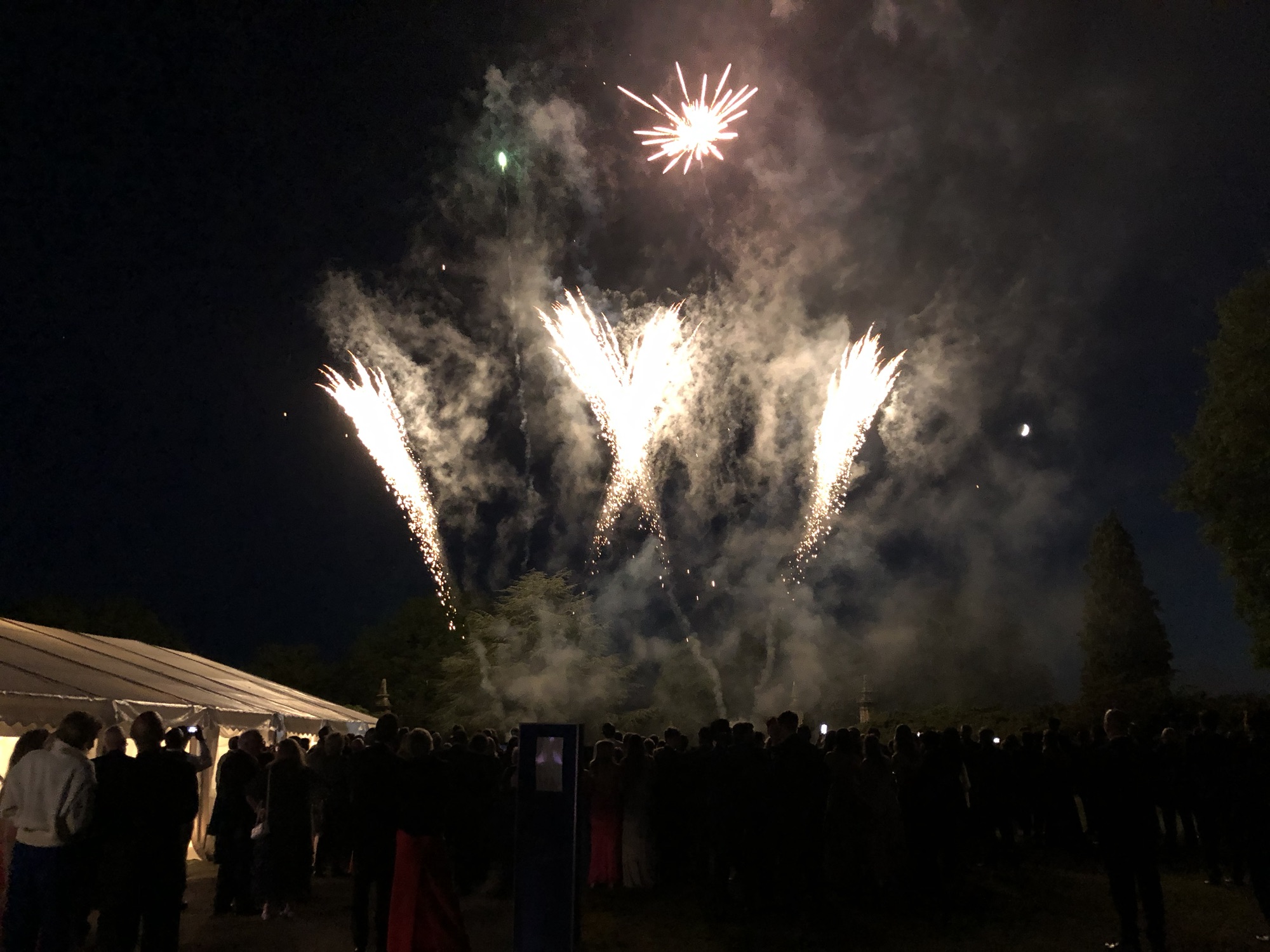
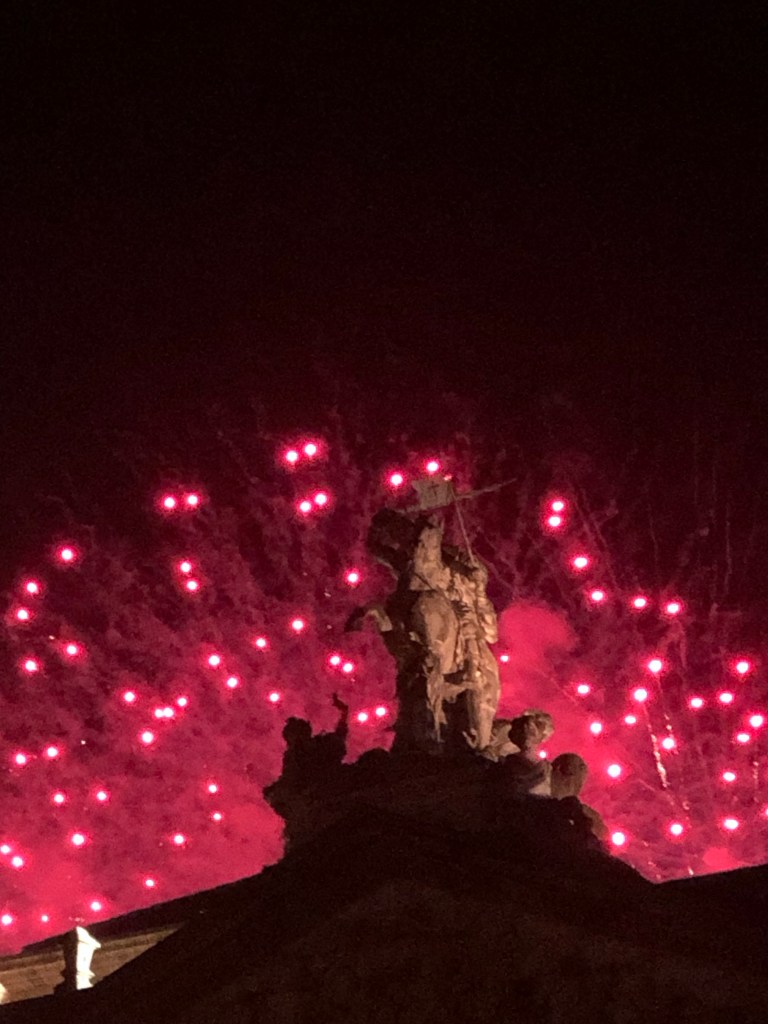
After all that build-up to the grand firework display on the night of the 24th, the pilgrim party in Santiago was a little underwhelming. I suppose, like most things, it simply couldn’t live up to the hype. In some years, the entire facade of the cathedral is lit up with a phenomenal son-et-lumiere show while pyrotechnics close the fifteen minute performance. This year, however, the fireworks were set off from six different points around the city – but not the Praza do Obradoiro. I’m glad I gave up my three-hour vigil and went back to the albergue for something to eat at ten thirty or else I would have been pretty cranky! Fortunately, though almost all the fireworks were obscured behind the huge Concello building (meaning the crowd which had previously filled the square wound up massed into a thin wedge overlooking the park) I managed to find a good angle to remedy the situation.


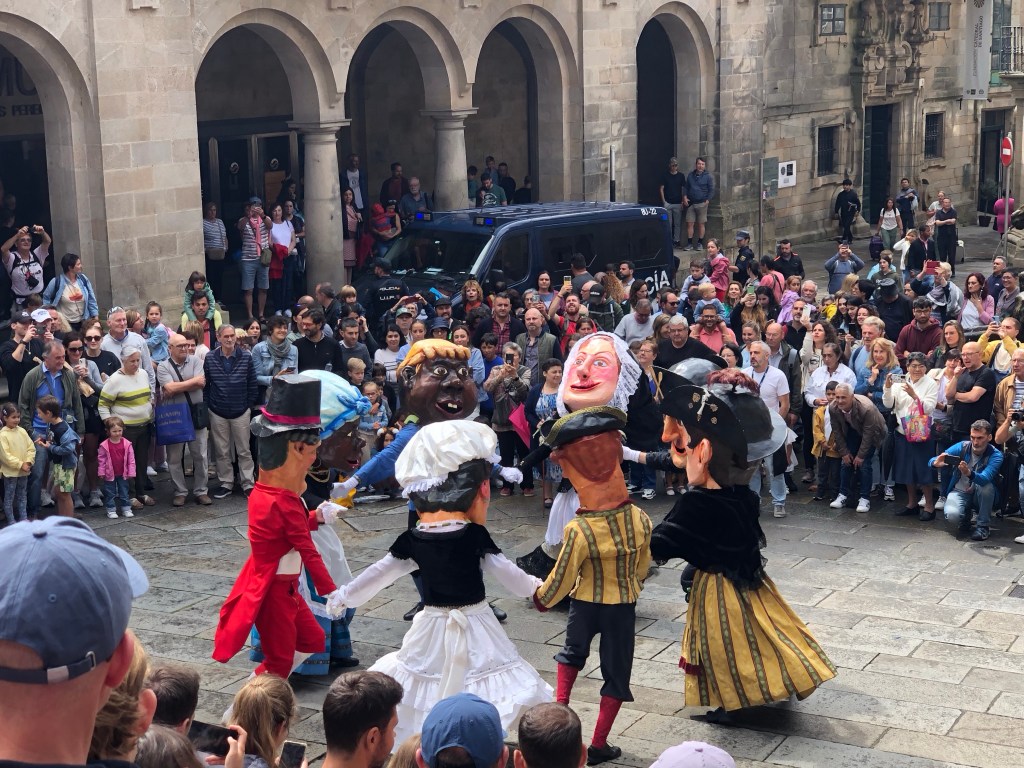
I’m glad I got to see the cabezudos in action, though. I’ve often heard of this farcical summer festival but I’d never seen them in action until yesterday. It beats me how the dancers were able to move so easily with such huge objects on their heads, but they did. At one point they even invited the children in the audience to dance with them. My mother said she had always been a little scared of them, and it’s not hard to see why – they really are grotesque. I could see some of my contemporaries back home immediately assuming the festival to be racist, due to the over-exaggerated features on the two black cabezudos, but if you compare them to the others, they’re no more or less ghastly. I think it’s just the Spaniards laughing at the world and everyone in it as they always have done – and after their most recent car crash of a general election, who can blame them? Context is everything.


I set off relatively late this morning, leaving the albergue just before seven. If I was expecting a quiet escape from Santiago, though, I was mistaken: all of Galicia’s youth had descended upon the city last night (the 24th/25th being a national holiday, after all) and, in true Spanish fashion, they had made a full night of it. So when I descended into the city proper, the streets were packed with hundreds of twenty-somethings having breakfast in every available bar, café and pastelería. Unlike England, there were no scenes of drunken behaviour at all. The Spanish drink about as much as we do on a night out, but as their nights out last a full four hours longer than ours, it tends to work its way out of their system. And don’t get me wrong, but a Spanish breakfast of Cola Cao and a tostada is a much better end to the night than a dodgy kebab!


Leaving my long-buried memories of clubbing in my university days behind, I set off under a clouded sky toward the west. The cement Camino waymarkers helpfully reappeared, together with the yellow arrows, guiding me on to Finisterre, the end of my journey.

After the tedious stretch between Arzúa and Santiago, it was a welcome relief to rediscover some of the magic of the old Camino on the westward road, devoid of the post-Sarria stampede. Oak forests, Roman bridges and stepping stones replaced eucalyptus plantations and ironworks, and the merry stonechats who have been with me every day of the Camino reappeared, as though the same family had accompanied me all the way from Burgos.


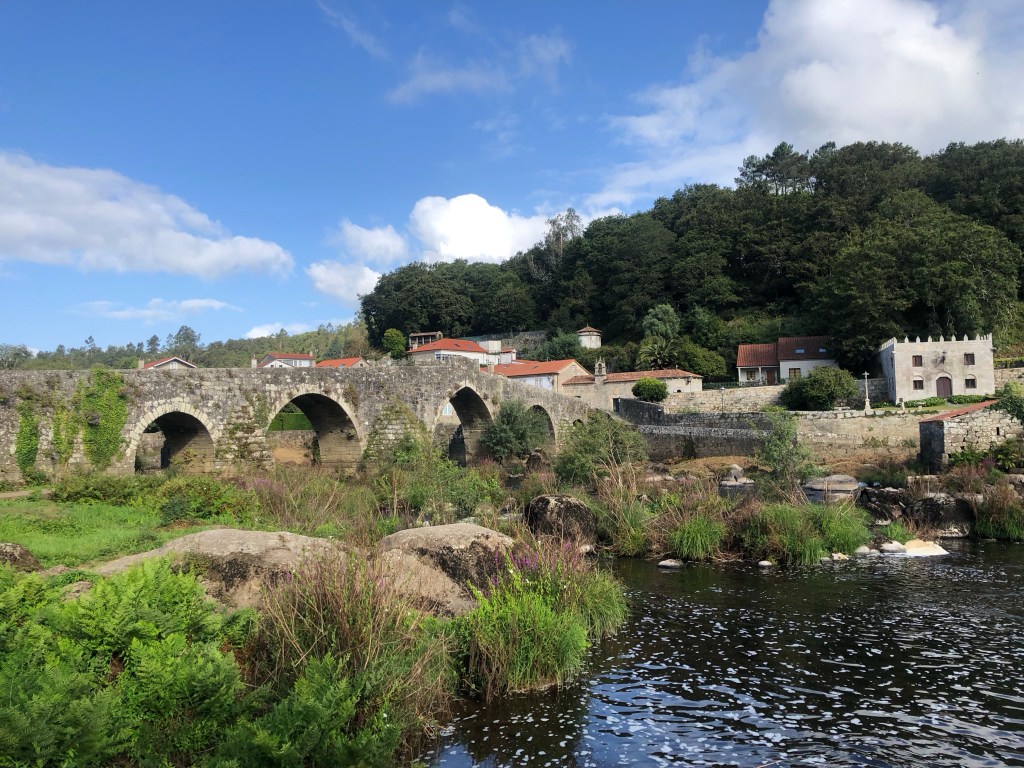
Finally, as I reached the riverside haven of Ponte Marceira, I saw something I have been looking for since León: an otter. It was only a brief glimpse, and from a fair distance, but it was enough to be sure. For me it was exactly the reassurance that I needed after two days in a city that I was back where I was supposed to be: in the countryside again, doing what I do best – that is, walking and watching the world go by.


Having left my iPhone/earphone connector on the bus at the very beginning of the Camino (one of a number of accidentally jettisoned items including my sunglasses, shampoo, gloves and scallop shell) I have done most of the Camino without any kind of soundtrack whatsoever beyond the silence (or birdsong) of the world around me. There have been a lot of pilgrims on the road with AirPods in, which is a little sad to see, and more still talking of the podcasts they’ve been listening to. I really wanted to take in the meseta, silence and all, so I have deliberately saved an audible treasure for the final stages of the Camino: the BBC Radio adaptation of The Lord of the Rings.

Brian Sibley’s take on Tolkien’s masterpiece has a longstanding association with travel in my head, as my dad used to put it on when we went to the Lake District when I was a child. Consequently, though I must have listened to it in its entirety some twenty times since, there are still fragments that give me visions of the Lakes as crystal clear as the waters that lap upon their pebbled shores (the last march of the Ents in particular always conjures up the thundering falls of Aira Force).

I’m deeply attached to the films, but the BBC Radio version is something all Tolkien fans should know. Peter Woodthorpe’s Gollum is so good it puts Andy Serkis’ interpretation in a firm second place (and that takes some doing) and the Shakespearean majesty of Michael Hordern’s voice makes for a phenomenal Gandalf.

But it’s the firmer focus on the road and the journey that makes the radio adaptation so special when you’re travelling. The films glaze over it with stunning New Zealand visuals, but the radio drama gives Tolkien’s poetry and song the airtime it so richly deserves, and several of his walking songs have been staples of mine this summer.

I got as far as the attack at the Ford of Bruinen before arriving at my destination of Vilaserío today, where I had lunch with Liza, a chirpy Belgian pilgrim I keep bumping into, and three Ukrainian pilgrims from Lviv who had run out of money in Santiago but continued their Camino to Finisterre anyway, foraging and sleeping rough for the last forty eight hours. We bought them lunch to keep them going, and I hope others extend the same helping hands wherever they end up!


Tomorrow is another day. If I do as well as I did today, I will shoot for the coast and the old whaling town of Cee, but if I only make it as far as Buxantes, then that is no bad thing either. Before then, however, I have my second communal dinner of the Camino (I have managed to miss most of the places that do these somehow) with my old friend Simas. It’s good to have company once again. BB x

Camino XXIV: Darkness into Light

Tonight, for the first time in over two weeks, I have a room to myself. More than that, I have a bed with cotton sheets. It’s amazing how a life lived on the road makes you so grateful for something we take for granted in this day and age. That’s the magic of the Camino, I guess!


I was up before my alarm this morning, but only just. When it did go off, I was up and dressed in a matter of minutes. I did delay long enough to have my modest breakfast of a couple of pastries, a flat peach and a Cacaolat drink, but by 5.40 I was out the door, staff in hand, and determined to beat both guidebook and Google Maps’ suggestions for travel time. The former hypothesised a ludicrous 5 1/2 hours, whereas the latter recommended a more reasonable 4 hours and ten minutes from O Pedrouzo.

Setting off so early meant that for half the trek I was in the dark, but that doesn’t bother me. In fact, I’ve got so used to navigating my way home through woodland paths by night after late trains from London over the years that I’ve become quite comfortable moving around in the darkness. The snap of twigs or the call of some night creature cannot unsettle me like it once did. And so, once I’d got ahead of the five or six torch-wielding pilgrims on the road, it was just me, the night and the nightjars.

I had a lot of time to think on the Camino, and it’s these quiet early morning stretches that make you think the most. Today, perhaps more than ever with the end in sight, I felt the spirit of my grandfather walking by my side. It is for him that I walk this road, in his name that I say a prayer every day. Every step is a step closer to a man I never knew, and yet one who has been a guiding light all of my life. Naturally, it has me thinking a lot about my own mortality. The darkness will do that to you. Like my mother, I do not fear death. Suffering, pain, naturally. But not death. There’s a chance, however slight, that in death my spirit may join with those of my kin, in whose borrowed light I have walked all the days of my life. Death is just the start of the real Camino, just as pilgrims are always told the Camino starts when you return home with what you have learned. A further journey toward the light, then. That can’t be so bad.


The roar of a plane taking off overhead woke me from my reverie as I rounded Santiago’s airport, and with the rising sun, the birdsong carried away all thoughts of the other world as the blue dawn drew me on through hill and forest to the edge of the apostle’s city.

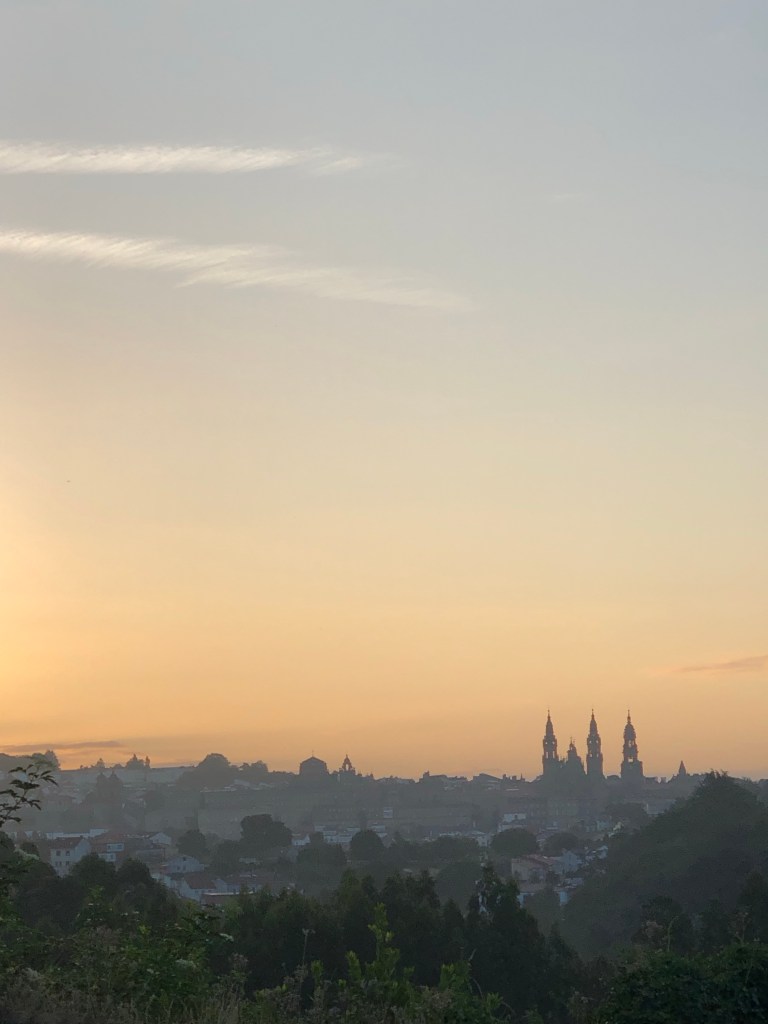
I set a ferocious pace this morning, stopping for nothing but the odd shoe in my sandals, with the result that by the time the twin spires of Santiago appeared on the horizon at Monte do Gozo, I had shaved a full hour off Google’s cautious estimate. In the end I made the nineteen kilometre trek in a little over three hours. Not bad for a morning’s work – and since I was in town before nine, I arrived bang on time to collect my compostela (the pilgrim’s certificate) as soon as the office opened on the hour.

There was a small queue already waiting, and some were there for the Finisterre credential (apparently that’s a thing), but as it’s a lower priority, they were shunted to one side. I was given the number eleven – auspicious, as it’s my birthday – and called to the desk within minutes. They must have been anticipating a tidal wave of pilgrims today, because they had pre-printed the forms and dispensed with the questions. Which is just as well, as I was prepared to defend my choice of name, but in the end I didn’t have to say a word.

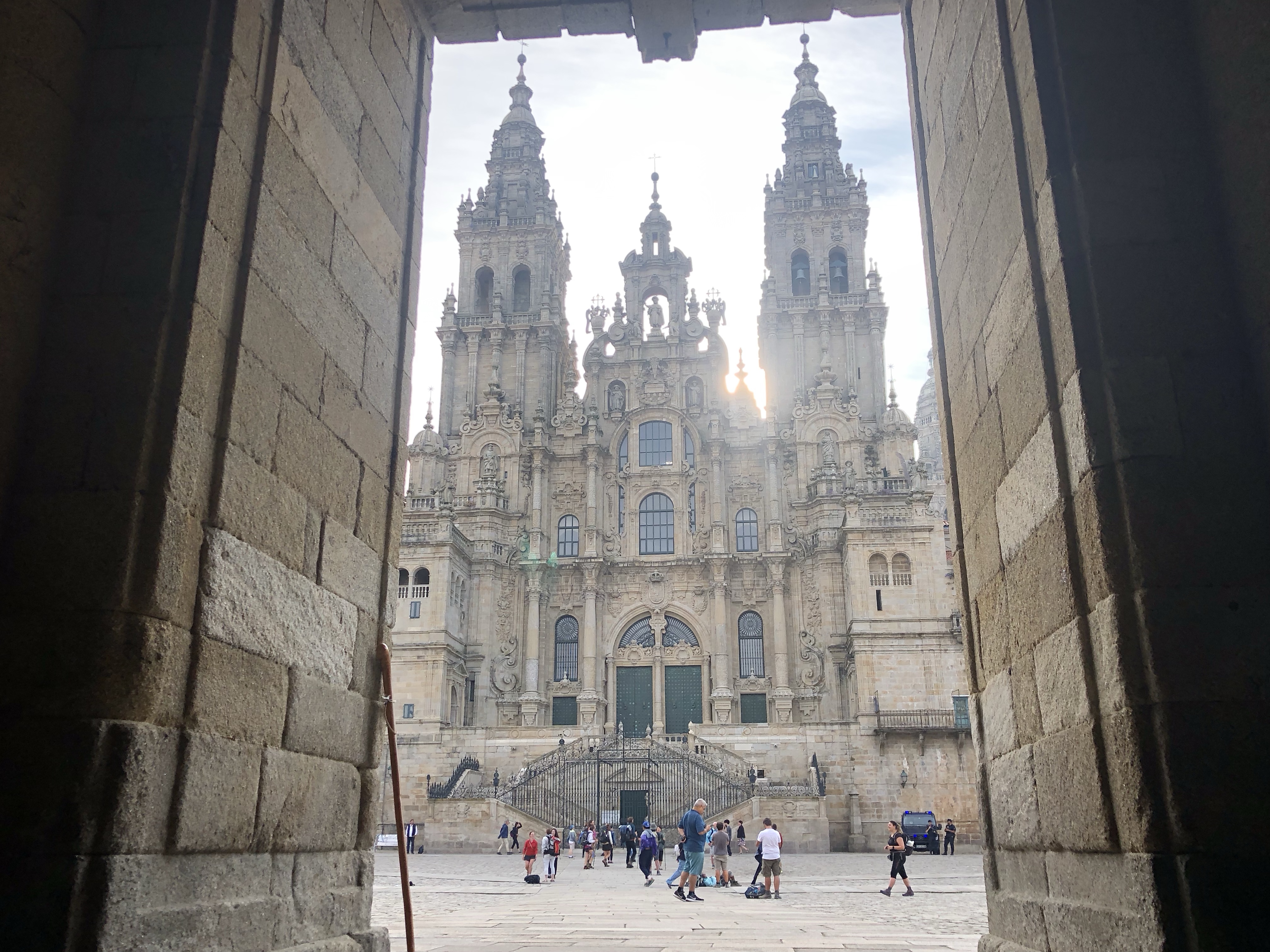
With my compostela in hand, I lingered for a while in the Praza do Obradoiro, watching the pilgrims come and go. Most of the travelers with whom I shared the road earlier on should rock up tomorrow, though Simas got here yesterday, and I’m told Louis the Belgian was in town last night too.


After collecting one last stamp ahead of the four spaces saved for the Finisterre finish, I met up with Simas and we grabbed a bite to eat at Bar La Tita at the recommendation of a Georgian friend of his. And what a find! The tortilla is some of the best I’ve had on the Camino, it comes free with a drink, and keeps on coming with more drinks…! England, watch and learn!

I tried to make midday Mass, but missed out by literally two spaces, so I decided to come back later and head for the albergue instead. I was waylaid by an urban dance-a-thon which I shamelessly got involved with (they were playing Everybody Dance Now, Candy Shop and various other dance/hip hop classics, how could I say no?). Yes, I appreciated the irony of a tour guide explaining how in holy years a pilgrimage to Saint James’ tomb will cleanse the soul of all sins, while 50 Cent’s chant ‘if you be a nympho, I’ll be a nympho’ reverberated off the cathedral walls. But I had a good time!


I checked into the Seminario Menor and spent most of the early afternoon dozing off. Frankly, after averaging 28-30km a day every day for two weeks and more, I think I’d earned it.

I wandered into town for six, well ahead of the 7.30pm pilgrims’ mass, but ducked into the cathedral as soon as I reached it and took a seat near the front anyway. I killed time with my sketchbook, and from one moment to another the organ above was blaring and the priests of Santiago were processing in, arrayed in coats of black, white and red, the real tricolour of Spain. After weeks of spoken Mass, it was a welcome change to have sung Mass once again, and since they provided use with an order of device, I could finally follow along, too. Bach’s Toccata and Fugue came bellowing out of the organ to finish, and after saying one last prayer for my family, I took my leave of Santiago’s cathedral.


After skimping on lunch I figured I deserved a treat for making it here in record time – that, and a single communion wafer makes for a poor supper. So I popped into one of the bars on the busy Rúa do Franco and, eyeballing a good’un (O Barril), I ordered a surf and turf dish: zorza (Galician pork in pimentón) and zamburiñas (the iconic scallops of the Camino).

I finished the night on a little ritual with the scallops. They came in the perfect number: seven. One for each of the companions who have lit the road of the Camino for me like stars in the night sky.

I toasted each one in turn. First, my mother, who first introduced me to the Camino and walked most of the first leg with me. Second, to Paz, an Argentinian woman who was my first companion on the road over the Pyrenees in that first assault on the Camino four years ago. Third, to Simas, my final companion on the road, and the only recurring light this summer who could keep pace with me (and in so doing, ground my wandering thoughts for my own good). Fourth, fifth and sixth, to my three stalwart companions on the road this spring: Sophia, Mikkel and Lachlan, with whom I would have gladly walked this road to the end and back, and whom I have carried with me in my heart this summer. And last, but certainly not least in my thoughts, to José, my grandfather, without whom there would be no Camino.


Tomorrow is a new day. Santiago de Compostela glitters under a cloud of gentle rain, and my back is relieved to be free of its shell for two days. It’s time to explore this jewel of a city! BB x

Camino XXIII: Music in the Forest

After over two weeks on the road, I’m finally within striking distance of Santiago. The kilometre countdown on the much-abused concrete markers has dropped to below twenty, which is less than a morning’s work (I managed more than thirty kilometres before midday today). The end is in sight!


The final two days from Arzúa to Santiago are, quite possibly, the least appealing of the Camino. And that includes the much-maligned Meseta, which I actually really treasured! Whether it’s the busier pilgrim road, the lack of connection between the hundreds of last-minute pilgrims or the endless stands of alien eucalyptus, the magic slips away through your fingers a little as the finish line draws near.

Fortunately, I had my fill of magic moments to power me through the morning.

I was up at 5am as usual with the first of the pilgrims. The turigrino girls were up and about surprisingly early, though it turned out the reason behind their haste was their pre-Camino makeup routine. Thinking I could get the jump on them by striking out early, I set out as soon as I was ready, some fifteen minutes or so before six.

I’m not one for torches, preferring to accustom myself to the darkness, so my own headtorch remained stubbornly in my rucksack throughout the first hour of darkness, even as the Camino wound its way through the dense Galician forests and I lost all the aid of starlight on the road. What I gained, however, was a full immersion in the dawn that is lost when you charge ahead with a bright light. In an ancient forest west of O Carballal, after crossing a stepping stone bridge, I was suddenly surrounded by the otherworldly churr of nightjars. I recorded the sound and played it right back, and was rewarded with a sight of two hawk-like shadows performing their wing-clap display flight against a dawn sky through the trees. They must have clocked my ruse because when I heard them again they were deeper in the forest, but the martian churring followed me right to the edge of the trees, unlike finally the light of daybreak brought it to a sudden halt.


My replacement stick had finally assumed its full inheritance, adorned as it is now with a buzzard feather, two magpie feathers and a sprig of brilliant mountain heather. Somewhere out there, near or far, my old stick may well be traveling the same road. But its successor has done a fine job and I am grateful for its aid in carrying me this far. Lacking a traveling companion, I find a decent stick to be as good a friend as a warm fire in the darkness. And I’m getting a lot better at not leaving it propped up against things when I’m readjusting my clothes!

In the woods after Arzúa, I heard the distinctive reedy sound of a gaitá. Thinking it might be somebody practicing ahead of the regional (and national) festival on the 25th, I filmed a sound bite and moved on – only to almost walk headlong into the source further along the trail. A couple of youngsters, the elder probably no older than twenty, had chosen a spot beside one of the Camino markers, set a hand upside-down and were busking for passing pilgrims: one playing the gaitá (Galician bagpipes) and the other a drum. It more than made my morning, so I tipped them handsomely and stayed to listen for a while.


I stopped for brunch rather than breakfast at a witchcraft-themed café in Boavista (no tortilla, they ran out as soon as I got to the bar) and then slogged right on. The original target, Santa Irene, would have been fine, but it was still ten past twelve and the additional forty minutes on to O Pedrouzo – shaving forty minutes off tomorrow’s final push – were just too tempting to pass up.

Obviously, I wasn’t the only one with that in mind. A sixty-strong group of turigrinos beat us all to the Xunta albergue, evidently by quite some time: they’d lined their rucksacks in a queue leading from the door right up to the road, and some of them had even rolled out their roll-mats and got into their sleeping bags to wait…! Why they thought they might need roll mats on the Camino (as I didn’t see a single tent or any other camping gear on them at all) is beyond me, but perhaps this is their method: arrive early, camp out en masse and seize the first few beds.

On the plus side, while waiting in line with the handful not attached to the group, I was mistaken for an Andalusian by one of the Spaniards. Sure, she was swiftly corrected by a real Andalusian, but the intonation that clings on since the Olvera days still seems to be enough to create a temporary disguise. At the very least, it’s a good way to delay the inevitable ‘soy guiri’.


Well, I’ve done a final run for supplies at the local Día market. I’ve had an empanada for dinner and I have what I need for breakfast, so I can cut and run tomorrow morning. If I’m quick – and the last couple of weeks are good evidence that I am – I’ll be in Santiago for 9am, so I’ll try to get my Compostela before I check in. That would be ideal! But, as I keep telling myself, there’s no rush. I have sorted my lodgings for the next couple of nights, and it’s a room of my own, so for the first time in weeks, I will be able to really kick back and rest… before the real final stretch to Finisterre and home. ¡Hasta la próxima!


P.S. It occurred to me in Día that Spaniards don’t go in for personal catering like the English do. Grab bags, meal deals, milkshake bottles and salty snacks… they’re all designed to be shared. Is that more of a reflection on our culture or theirs? Are we so isolated a nation that our own supermarkets know we would prefer to eat quickly and alone, or are the Spanish so gregarious that a vendor wouldn’t even think of stocking something that would vanish in seconds if passed around? Just one to think about.