Spotified

I’ve just finished re-assembling my entire music collection on Spotify. It’s taken me the best part of three days, since I amassed a pretty sizeable library in the years before Spotify had pretty much everything. Time was when iTunes was where one kept all one’s digital music, ready for transport onto this or that hand-me-down iPod Shuffle, bought from a friend for £20 or so. Those early models could only store so much music, and you had to decide which 240 songs would make it. Those were trying times.

My parents grew up with mixtapes and CDs, but I belong to the generation where music went digital. If a song came out that you liked, you bought the CD, burned it onto iTunes or some other software and uploaded it directly to your device (alternatively, you could take the cheaper route and just find any one of the YouTube to MP3 converters that were occasionally dodging the censors). My first walkman – a bizarre pen-drive device that might just as easily be taken for a vape pod today – had a small collection of music, mostly hand-me-downs from my parents: Michael Jackson’s Greatest Hits, Spiceworld, Stravinsky’s Rite of Spring. This was back in 2008, and Spotify was still a few years away from hitting the big time, so most of us turned to YouTube for our music. YouTube, ever-growing, seemed to have almost everything, and I’m not afraid to admit it was a major conduit for musical discovery in those early years (and still is!).

Carving up my library into playlists has made one thing glaringly obvious: my taste in music has changed little over the years. The range of artists has certainly exploded, but the genres are almost exactly as they were in the first playlists I drew up in iTunes years ago – that is, a motley collection of Folk, Klezmer and Gypsy music, with a similar number of Classical musicians (my parents were both music teachers); a broad range of World music and edited highlights from the major Pop hits (largely selected for nostalgia purposes); and in the top spots, a virtual eternity of Soundtracks, and – constituting the greatest majority by far – Soul, Funk & Disco. The last ten years have seen Afrobeat, Hip-Hop and Flamenco occupy an increasingly large section of the library, while Rock remains miserably underrepresented (it’s quite simply a genre I’ve never really been that drawn to). What Spotify doesn’t have is the absolute mine of videogame soundtracks that I’ve also collated over the years, but perhaps that’s for the best…!

Yes, I’m a heathen because amongst the thousands of songs in my collection I haven’t got a single song by The Beatles, or the Rolling Stones, or even Bob Dylan (I feel I ought to apologise to somebody for this). But I do have every single track James Brown ever laid down (even the bad ones), a fair grasp of obscure Balkan folksongs and a burgeoning playlist of sevillanas that I am trying to learn off by heart. And thanks to Spotify’s constant suggestions, which get smarter as the playlists grow and grow, the fact that almost all of my favourite artists died a long time ago is no barrier to discovery: every week I find something new.

The music we listen to has a profound impact on who we are. Equally, I’m sure who we choose to be has an impact on the music we choose to listen to, but I’m more inclined to believe in the transformative power of music. With very few exceptions, my taste in music veers towards the upbeat. Fast-paced, feel-good numbers dominate. I wasn’t counting, but if I were to go back and have a look, I probably couldn’t find more than one or two dozen slow or sad songs amongst the thousands. Those that are there are there for a reason: Marvin Gaye’s What’s Going On holds the line as one of my favourite albums of all time, and Whispering Winds from Don Bluth’s The Land before Time is just there to make me cry on occasion. The reason for the lack of slow music is quite simple: I’ve always turned to music as a cure to my doldrums. I’m not one for wallowing in my sadness. If you want to conquer misery, loneliness or fear, there’s no use getting stuck in a rut. You have to face your demons head-on. I’d much rather shake off my blues with something that puts a smile on my face immediately. That’s why my most-used playlist is called Smile! (feel free to vomit)

Personal music curation is an unending process in the digital age, but Spotify is one of the few technological advancements to which I’m not afraid to be a committed disciple. A virtual library where you can find almost all the music ever produced, anytime, anywhere? Yes please! BB x


P.S. I’m a fervent believer that music should always be shared, so if your tastes align with mine, or you’re simply curious to explore, please feel free to browse the following playlists I’ve put together:

Cairo to Cape Town: A collection of African music, from Moroccan Gnawa to Highlife and Afrobeat

Liquid Red: A collection of the finest Soul & Funk music from James, Aretha, Marvin and more

Puro arte: A small but potent collection of Spanish folk music

Photo by Castorly Stock on Pexels.com

Heatwaves and Boogie Nights

It was a good year for the vultures. The sun, unfettered by even the promise of cloud, laid waste to the land with biblical fury. Men cowered in the shadows of their houses, praying to a younger god for salvation, while their sheep and cattle died by the thousand. Crops perished, forests blazed in the night and rivers that had once thundered through the mountains ran dry. Only the Tagus, the mightiest of these, stayed its course through the parched land, though it too had suffered, to which the broad halo of white mud that lined its banks from east to west stood as a grim testament. The vast plains south of the great river, once several shades of green, lay barren and brown under the white sky, scarred with huge marble wounds that ran like veins across the earth. In the heat of the afternoon even the mountains seemed to melt, shimmering somewhere beyond the cloudless ether; and it was from these mountains that they came, in ones, twos and hundreds, scouring the world below for the dead and dying.”


I wrote that old opening paragraph to my novel a few years ago during the sweltering Covid summer, when temperatures soared before the school term was quite finished. Half the trouble with writing a book set in Spain is that it was an awful lot easier to write convincingly about the place when I was living out there – since moving back to this rock, my wellspring has dried up somewhat. In truth, I’ve only ever experienced a Spanish summer twice – despite spending almost three years living out there, I’ve always managed to avoid the tres meses de infierno – but the current flick of the claw from Thumberg’s nemesis is giving me a pretty good idea of what it might feel like.

The UK is on red alert. Heck, the radio even said this morning that there was to be a Cobra meeting about the high temperature crisis (things really have reached that kind of an extreme, it seems). It’s a balmy 26 degrees out there right now as I write, and the happy-clappy Christian camp have long since retreated indoors, taking their frisbees and their babies with them. All the forecasters are pointing to a record-breaking 40 degree high on Monday. The current record was set two years ago, with a garden in Cambridge registering 38.7 degrees. That seems absurd, but that’s where we are. The last time I was caught in temperatures that high I was living in Jordan, on the edge of the Syrian Desert, where one expects that kind of celestial fury in the summer months. Not here. Not in West Sussex.


Scorching afternoons aside, I’m enjoying my current routine. I’m up on my feet almost as soon as I’m awake, which is usually around six thirty (yes, even in the holidays – I’m a creature of habit). I’m up earlier (and faster) if I find myself on the sofa. That thing is a death trap – I don’t know what enchantment was cast upon it by its previous owners, but it lulls whoever sits on it to sleep in a matter of minutes. If I don’t have to make the shopping trek (an hour into town and another one back on foot), I get an hour and a half in the sun with a book on the ha-ha. I’m currently working through Hernan Diaz’ In the Distance. When I return, I’ll make myself some lunch and kill the hottest part of the day with a round of Age of Empires II (if I’m feeling uncaringly unproductive), which usually knocks out a couple of hours – especially if I do a little follow-up historical reading afterwards, as I often do. By four o’clock the sun is no longer dead overhead so I pick a different spot on the ha-ha facing the South Downs and get another hour of reading in. I usually get distracted in that spot and end up watching the world. The presence of a summer school right behind me doesn’t bother me overmuch. It’s very easy to forget they’re there when you’re engrossed in a good book, or a panorama as beautiful as the one I have on my doorstep. Sometimes there’s a red kite or two riding the thermals over the Weald and I lose myself in the moment. Sometimes I close my eyes and imagine I’m somewhere else, like the shade of that special oak tree beyond the Puente del Ajoli on the Raya Real. And sometimes I just count the contrails. It’s a peaceful life. I’m grateful, really.

At the end of the day, after dinner, I retreat to the living room, put on some Soul, Funk or R’n’B and jam, with or without my liquid red bass guitar. I spent a good hour with my bass yesterday, to which the bandage on my thumb and the blister underneath will testify. I’m not much good at the bass, but I find it next to impossible not to get involved when I hear music I love, and I’m slowly starting to get the hang of my favourite bass riffs by ear. Always by ear. It’s the only way I know.

Last night I managed to get to grips with two of my all-time favourite basslines: I Need Your Lovin’ by Teena Marie and Till You Surrender by Rainbow Brown. I improvised around The Cardigans’ My Favourite Game and had an honest go at Billy Ocean’s Stay the Night. One day, hopefully, I’ll be good enough to nail the incredible slap bass in Ain’t We Funkin’ Now by The Brothers Johnson.

I can’t share my love for all things Soul and Funk with my students anymore on account of the colour of my skin. They say it’s not my place. But it remains my favourite music genre by far, and they can’t stop me listening to the music I love. It’s just a shame I have to be so selfish with something that really should be shared, not least of all on account of the power within.

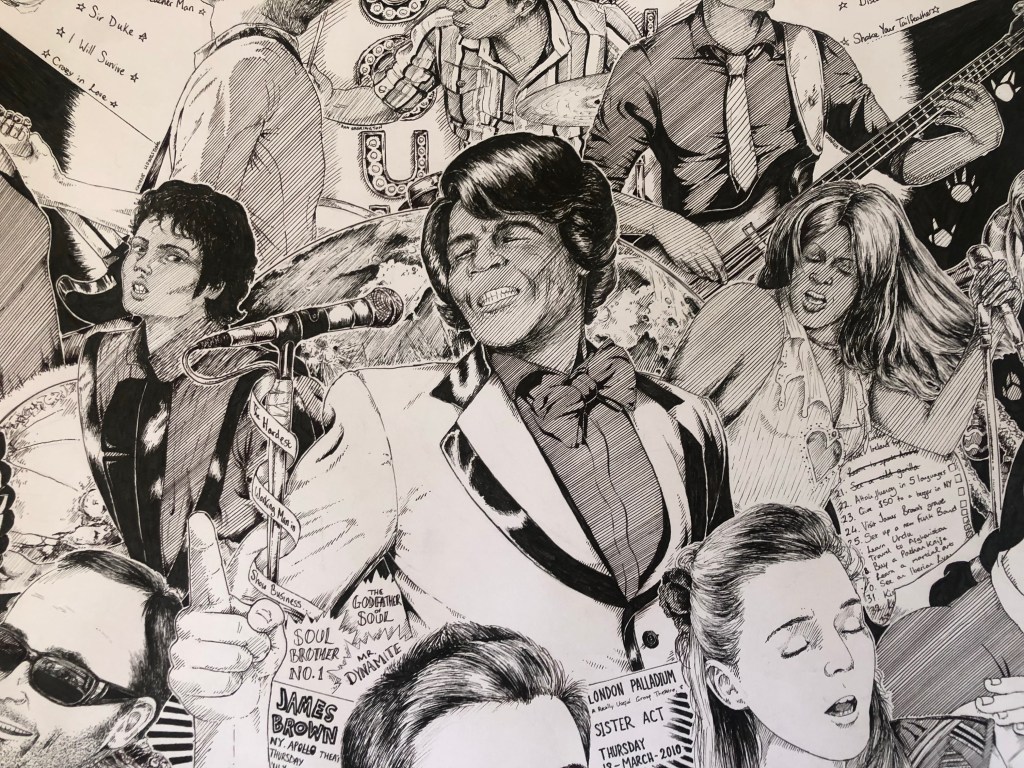
Marvin. Tina. Stevie. Lou and Luther, Sam and Dave, and Aretha, Minnie and Michael. They’re in my ears most nights. But nothing and nobody can lift me out of a dark spot like the hardest working man in showbusiness, the Godfather of Soul, soul brother number one, Mister James Brown. If only I could have seen him live…! James was a living legend, and one of the few artists I know whose recorded work pales in comparison to his live shows. Any try-hard can stand in front of a microphone with a guitar and croon. James could move like lightning and his band hung on his every movement for their cues. I reminded myself of his mastery the other day by watching his performance at the T.A.M.I. Show back in ’63, when, in a fit of pique over being snubbed as the closing act in favour of the Rolling Stones, he and his Famous Flames blew the opposition out of the water with an up-tempo run of Out of Sight. That and his legendary mike-drop in Montreux almost twenty years later (check it out at the 4 minute mark).

The Trinity in the Mega Drawing (2017)

Forgive the fanboying. There are few things I love more in this world. I’d like to think that the sheer amount of time and love I’ve invested in my passion for Soul and Funk and its history over the years renders my taste in music sincerely reverential rather than appropriative. The way I see it, it’s steered me through the darkest waters in my life and always brought me back to the light, and I owe it to my old bandmaster Mr D who introduced me to that world. If I can share that light with somebody, even just one other person, I’ll have passed on the torch. Nothing so powerful and so precious should be preserved for enjoyment in private. That’s definitely not what James would have wanted.

Well, it looks like the sun is slowly starting to sink at last. Time to pick up where I left Håkan on the trail. Though the world is already blazing hot out there, keep the funk alive, y’all. BB x

Desert Island Discs

There are few things in the world that mean more to me than music. If that wasn’t clear enough by now, here’s me setting the record straight. My tiresome Chinese Bluetooth headphones might instil an odd lethargy whenever I put them on, but they provide a welcome lifeline on the five-minute walk to school on Monday mornings. So it strikes me as rather odd that, in two and a half years of blogging, I’ve yet to pen my own Desert Island Discs-style blog. Perhaps that’s just as well, as one’s taste in music is as much a part of growing up as one’s outlook on the world. It would surprise me greatly if I ever met a man whose tastes had remained unshaken since the beginning. I know mine haven’t. That is, not too much.

I’m going to keep to the BBC Radio programme’s format: that is, eight tracks, from which I will have to pick a favourite. So, whilst I’m still young, naïve and idealistic, here’s my Desert Island Discs.


1. Circle of Life (Elton John/Lebo M.)

CoL.png

Say what you like about the 90s, but they did give birth to one of the greatest animated films of all time. I haven’t the least shame in admitting that, to this day, Disney’s The Lion King remains one of my favourite films of all time. It’s simply perfect. I used to spend hours gawping at it as a kid, and watching some of my private lesson kids crawling around the room pretending to be all the animals in the opening sequence almost brings tears to my eyes. If there’s a better way to invoke a sense of awe and love for Africa’s natural beauty in four minutes flat, I’d like to see it.

When did you first discover it?
Given that The Lion King came out in the year I was born – a mere four days later, in fact – it’s very possible I’ve known this song for my entire life. I expect my first ‘real’ encounter with it would have been shortly after my first birthday when we got the movie on VHS.

What do you like most about it?
Lebo M.’s voice. The first twenty-eight seconds are pure gold. Who doesn’t love the opening? Even if most everyone gets the words wrong…

Any special memories?
I used it as my audition piece to get into Durham University’s A Cappella group, Northern Lights. Thanks to my dear friend Biff, we ended up performing it, and I got to pay homage to Lebo M. in Durham Cathedral itself in front of a crowd of a thousand. Riffing over the top of DUOS, Chamber Choir and the rest of Durham’s finest in the finale of King of Pride Rock will probably never be toppled as one of the happiest moments of my life.

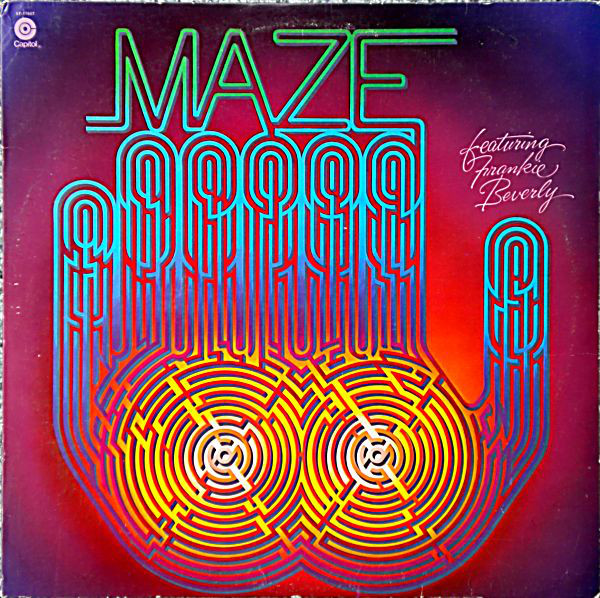
2. Back in Stride (Maze feat. Frankie Beverly)
DID2

Maze is far from one of the most famous bands of their day. The late 70s was a hard time to make it big as a new artist, with heavyweights like Barry White and Earth, Wind and Fire kicking around. But for me, this is a special one-hit wonder that floors them all. Back in Stride is neither ground-breaking nor thought-provoking, but it is feel-good, and one of the most feel-good numbers I know. There’s just an honest, heartfelt get-up-and-go about it that brings me out of the dark and into the light whenever it comes on. And Frankie Beverly may well be one of the most underrated male vocalists of all time.

When did you first discover it?
If memory serves, it came on the radio on one of the few nights I tuned in to a local Soul and Funk radio station, shortly before my great Spanish adventure. Like I’ve said before, if I’m proud of one thing, it’s my whim decisions.

What do you like most about it?
The delay on the rolling bass guitar line. Apparently Despacito has been scientifically proven to be catchy because of the deliberate delay in the chorus. I wonder whether it’s the same mechanism at work here. I wouldn’t be altogether surprised if it were.

Any special memories?
This song once saved my life. Quite literally. When I was sleeping rough in the mountains to the north of Madrid, it rained through the night and my bivvy bag turned out to be a lot less waterproof than I’d hoped (though I suppose they’re supposed to be used in tandem with a tent, rather than as the sole defence). I couldn’t sleep, I was shaking from head to foot for hours, and I wanted my parents more than ever in my life. Listening to this song on repeat pulled me back from the brink. Which, I suppose, is what granted Back in Stride a certain legendary status in my Top Ten.

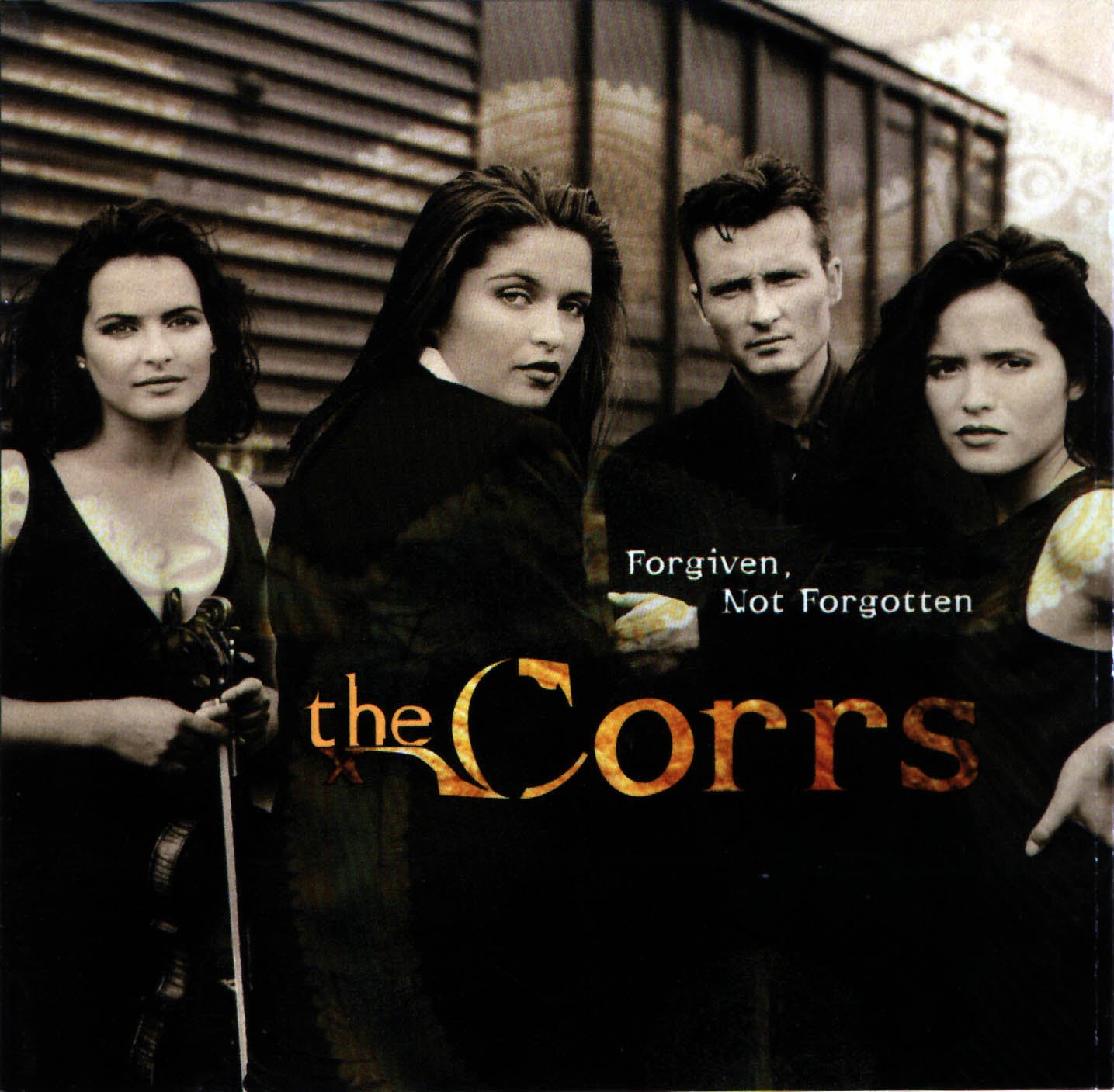
3. Forgiven Not Forgotten (The Corrs)
DID3

Anyone who knows me will know that I go on and on (and on) about how black is beautiful when it comes to music. You only need to look at this list to see where my preferences lie, and it’s by no means a good sampling, with Fela Kuti, Tina Turner and the one and only Luther Vandross being narrowly beaten to the punch on this list. So it might come as a surprise that my favourite band is not black at all, but an Irish folk band. The Corrs and I go way back, and there’s hardly a song of theirs I don’t love. Forgiven Not Forgotten is a gem of an album and the title number is the standout diamond.

When did you first discover it?
Forgiven Not Forgotten was my first ever album, back in the days when a mixtape meant an actual tape. My dad used to put it on every once in a while on the way to school, where the novel was born to the sound of Sharon Corr’s violin. The cassette itself is long since missing in action, and – like many of its kind – probably ended up a mess of spent tape that no pencil could fix, but I still have the cassette case.

What do you like most about it?
Andrea Corr’s vocals are hauntingly beautiful. I’d have to say that the break into the harder-hitting second verse is what takes the biscuit, though. It sends me soaring.

Any special memories?
As a kid, knowing that my favourite childhood author, Michael Morpurgo, was also a fan of the group made me smile a lot; he namedrops the band often in his Scilly Isle stories.

4. Thriller (Michael Jackson)

DID4

Who’d have thought that a song about zombies would be one of the most popular songs of all time? Who else but Michael Jackson? Thriller is amazing. I love it. I can’t shake it. The chords are insane. The bassline is unforgettable. And don’t even get me started on the dance routine. It’s MJ at his finest; no deep message, no heavy lyrics, just pure, all-out fun. Any one of these eight songs could be a strong contender for my favourite, but as far as the official list is concerned, Thriller has been in the throne for the longest. And that’s despite Vincent Price’s voiceover, which somehow adds to the charm…

When did you first discover it?
You know, I don’t know? I won’t even pretend I do. We had Michael Jackson’s Number Ones on our CD rack at home, and I don’t think it took me all that long to find it.

What do you like most about it?
The whine of the theremin during the third and final verse. No doubt about it. I get the shivers every single time.

Any special memories?
Turning up to Arrowsmith’s Halloween party in my Thriller outfit, to find fellow Light Luke had come in exactly the same outfit. The beginning of a long and happy friendship, grounded in a common love for one of the world’s greatest.

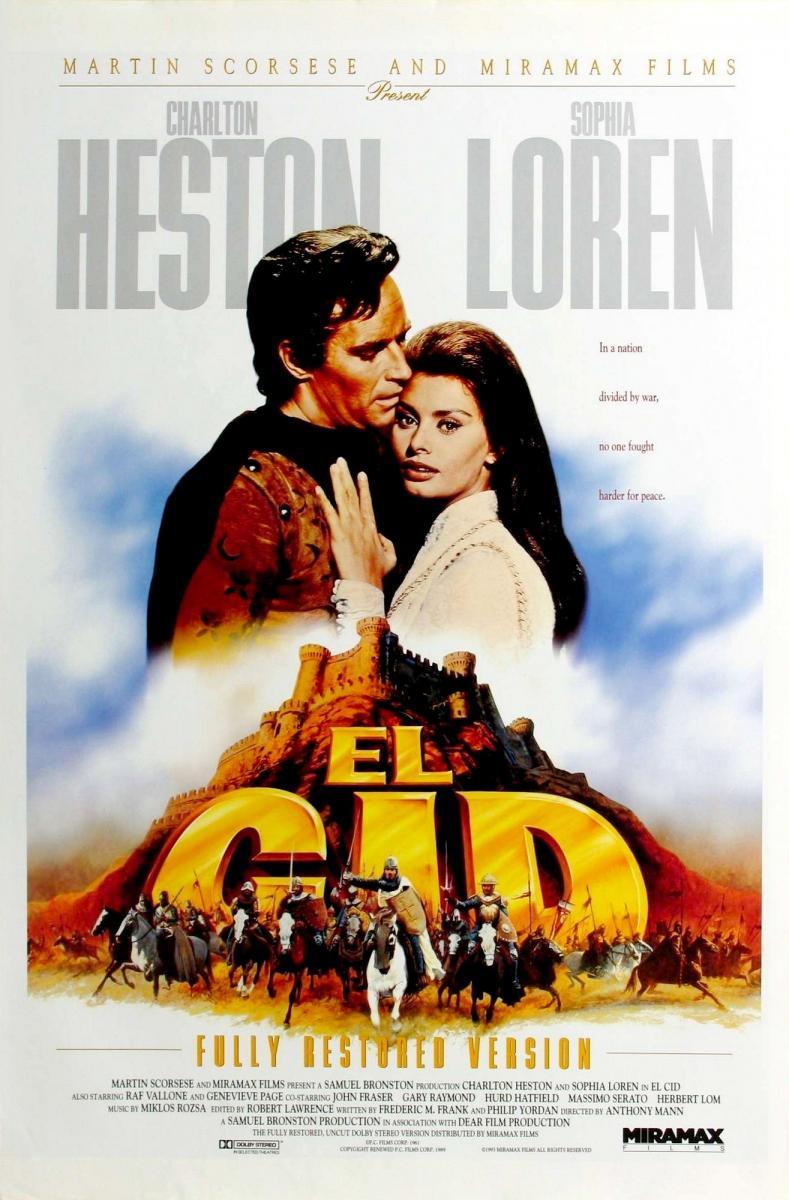
5. Love Theme from El Cid (Miklós Rózsa)
DID6

Many of the songs on this list are songs I grew up with, and number five is no exception. I can’t have seen El Cid more than two or three times before returning to study the epic at university, which brought me back into contact with the endlessly evocative soundtrack of the film. It just screams Spain, more so even than Bizet’s Carmen. Rózsa knew what he was doing. No matter what happened, I was once a violinist, and to have a set of favourites without the beautiful violin solo of the Love Theme would be nothing short of criminal. There are many pieces from the soundtrack that I adore, such as the famous El Cid March and the Fanfare Coronation, but the Love Theme wins it for me.

When did you first discover it?
Technically speaking, I ‘rediscovered’ it whilst I was writing my El Cid essay last year. I had the album on repeat every time I sat down to write, so it surprises me that Spotify seems to think ‘dance-pop’ was my favourite genre. By all rights, unrepresentative as it would be, my fixation with this album in essay season should have pushed it to the top.

What do you like most about it?
The violin solo in the second half. It’s breath-taking, and makes me wish I hadn’t given up the violin years ago, if only to be able to play it as well as the soloist does.

Any special memories?
I believe I finished my dissertation shortly after playing it for probably the 53rd time. That’s a special memory if ever there was one… right?

6. What’s Going On (Marvin Gaye)

DID7

Stealing its way into the spotlight like a fine wine, Marvin Gaye’s pleading revolution song has been with me for a while, but only found its way into my heart recently. At a time in my life when music was taken from me (after a particularly music-heavy summer at the Edinburgh Fringe), Marvin found me and picked me back up. What’s Going On called out to me with a meaning it never had before and I fell in love with it. Grapevine might be one of his greatest legacies, but the subdued vocals of this particular number make it nothing less than spectacular.

When did you first discover it?
On my first serious fling with the world of Soul, Funk and Disco music in my final year at school, under the guiding influence of my former bandmaster, Mr D. I must have overlooked this diamond then, perish the thought.

What do you like most about it?
Whilst I don’t tend to go for songs for their lyrics, believing the music itself to be of far more importance, What’s Going On strikes a chord with the pacifist in me. And, of course, there’s the violins: the sailing strings of the third verse reach so high they trace the heavens and rain down gold.

Any special memories?
It isn’t often you discover a new artist you adore, but when it does, it’s a little bit like falling in love. Discovering Marvin Gaye ‘properly’ this year via this song makes for a special memory, I think.

7. Erin Shore (The Corrs)

DID3

What do you know? It’s The Corrs again. I told you there was hardly a song of theirs I didn’t love and I wasn’t lying. It was a struggle not having at least three Corrs numbers in this list (you’d find the third if we were to expand this list to ten). Erin Shore is an instrumental, and it must have meant a lot to the band: it’s at the opening and closing of Forgiven Not Forgotten. In my head it’s the theme of the Royals in my novel, and thus this piece alone has had a heavy influence the development of the novel. The Love Theme from El Cid may have been beyond me as a dropout Grade 6 violinist, but I had the book of violin parts as a kid and I remember teaching myself this one, before ear and memory sufficed.

When did you first discover it?
Shortly after (and before) discovering Forgiven Not Forgotten.

What do you like most about it?
The bells, the flutes, the choir… the sounds of Ireland… And, of course, the wicked drumming before the final uplifting round.

Any special memories?
Every time I listen to this track I see the heroes of my book. It’s not a memory as they’re almost always on my mind, but that makes it doubly special for me.

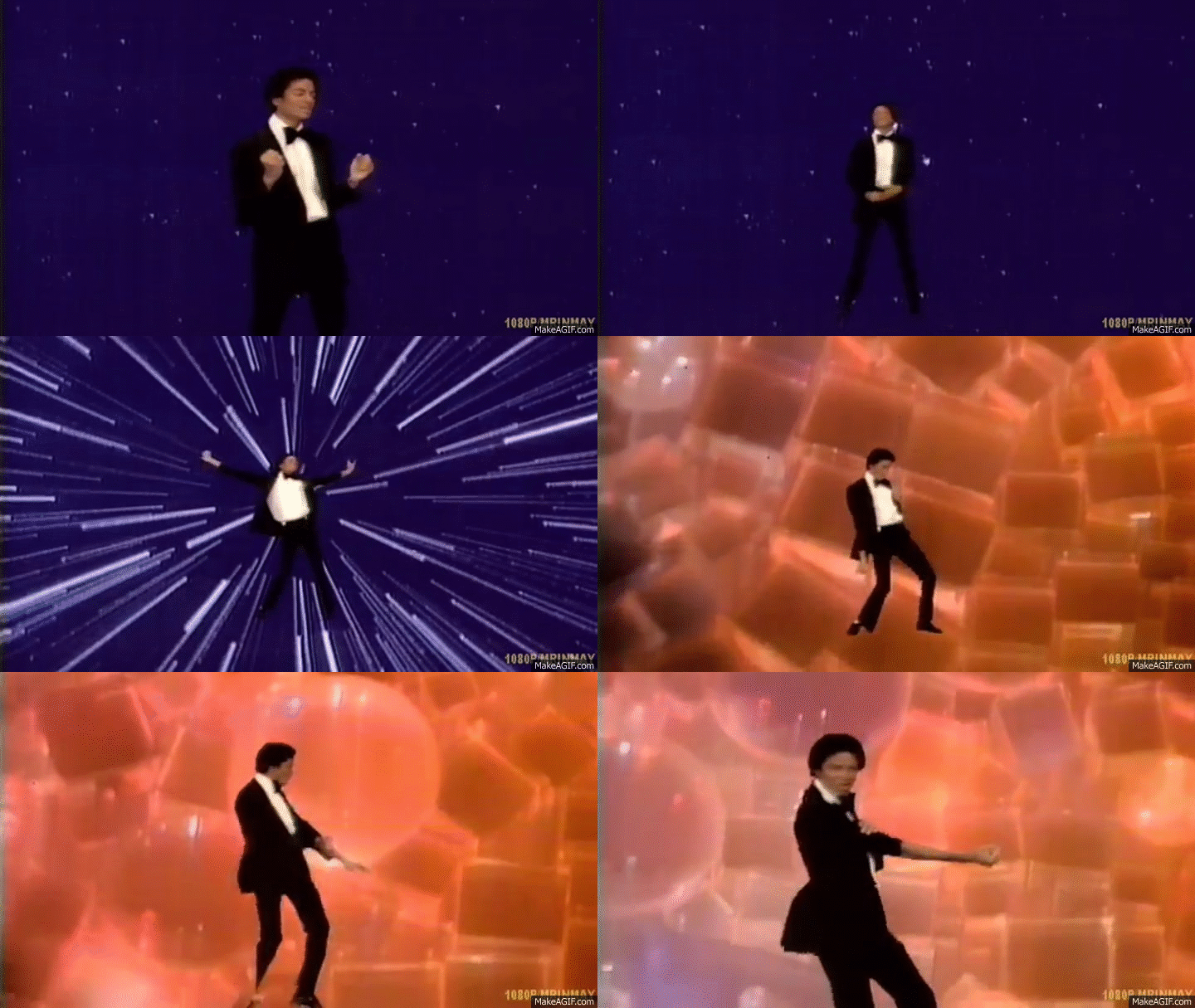
8. Don’t Stop ‘Til You Get Enough (Michael Jackson)
DID5

If the Corrs get a second mention, then the other great light of my life needs to be up there too. And he’s not here by proxy. Don’t Stop ‘Til You Get Enough is the happiest, grooviest, boogiest song I know. I just want to get up on a stage and dance. If there were ever a film made about my life, this would be song playing as they rolled the end credits. The music video says it all: MJ, MJ, MJ. Oh look, more MJ. Billie Jean, Wanna Be Startin’ Something, Earthsong and The Way You Make Me Feel are all serious contenders for my top twenty, but this one makes the cut. Because it makes me want to dance.

When did you first discover it?
It was the first song on the Number Ones CD, which means that, of all MJ’s greatest hits, this was the one I came upon first. I remember boogying about to it as a toddler, unable to understand the lyrics, but smiling all the same.

What do you like most about it?
The opening. Like Thriller, MJ felt like having a few spoken words thrown in for good measure. And though what he says is James Brown levels of inspired, it is almost exactly what goes through my head every time this banger comes on.

Any special memories?
When they played this track on a night out in York back in ’14, I went berserk. I’d been waiting for a song I truly knew to get my mojo on, and then Don’t Stop came on and I lost it. I remember grooving with a couple of great dance partners on the dance floor and feeling like I’d stepped back in time to 1979. What a year to be young and free…

‘…and if you had to choose just one?’

Tough call. But it’d have to be Erin Shore. I might be on that desert island for a while, but Erin Shore would take me home in my dreams.


Special Recommendations:

Someday (The Corrs); Mother Africa Reprise from The Power of One (Hans Zimmer); A House is Not a Home (Luther Vandross); Shosholoza (Ladysmith Black Mambazo); Ukuthula (Soweto Gospel Choir); Truth Gon Die (Femi Kuti); I Wish (Stevie Wonder); Proud Mary (Ike & Tina Turner); I Feel Good (James Brown)


Fancy doing this yourself? Be my guest! Isn’t it wonderful to take a trip down memory lane through music? BB x

Life Lessons from the Mixed-Up Chameleon

‘How small I am, how slow, how weak. I wish I could be big and white, like a polar bear. And the chameleon’s wish came true. But was it happy? No…’

Do you remember reading The Hungry Caterpillar as a child? Eric Carle, the author, wrote another book around the same time called The Mixed-Up Chameleon. It’s about a chameleon that becomes dissatisfied with its own skin and so mimics the animals it sees, until it has transformed into something monstrous. The moral was clear: be true to yourself. For some reason it stuck in my mind far more vividly than the ever-popular Caterpillar, and for good reason: I don’t think there’s a children’s book out there that would have been a better beginning for me.

Adaptability is, in my honest opinion, the greatest asset in the human arsenal. It is, in a way, the most human of traits. We thrive because we can adapt. The trouble with trying to adapt is that at some point you have to put on the brakes and remain true to yourself, or run the risk of being many things and none: a mixed-up chameleon in the flesh. I sometimes wonder whether I am one of those who did not heed the warning signs and simply forgot to brake.

Before I even get into tackling this subject, I know straight off the bat that I am not the most qualified person to write about this. I’m mixed-race, but not enough physically for it to have had a significant impact on my growing-up (we’ll leave the mental impact out for now). In many respects, and despite my best efforts, I am a picture-perfect Englishman. There are people from whom this article would make so much more sense, to whom it would ring more true. And that’s exactly why I’m writing about it: because I’m not the man for the job – and, as a result of that, because I am.

As we grow up, we mould ourselves around the things around us, just like the chameleon: the people we associate with, the expressions we use, the music we listen to. We absorb these aspects of our surroundings along the way in a never-ending process, some voluntarily, some involuntarily, and these little changes can affect our lives in the subtlest ways. In years gone by, when the world was smaller, the number of directions life could take you in were, perhaps, more limited than they are today. YouTube can take you to downtown Los Angeles. Spotify can take you to Mali. Everything is just a click away these days, and so the possibilities for discovery are far more accessible than they once were.

And so we go on absorbing. But herein lies the problem: when does one stop? Is it a subconscious action? Or is there a point when we ought to work on what we are rather than search for the self elsewhere?

Growing up, I always felt that some people were ‘more complete’ than I was. Fellow classmates who had firm opinions of their own, or skills they had mastered. Friends who spoke in complete sentences that made sense, an eloquence I could only hope to achieve with a pen or keyboard. These were people who just seemed to have it all together, to be happy with where they were and confident in what they did. I don’t think I ever was. I wanted to be complete, like them. I even went through the motions if and when I could, but I always felt like a fish out of water. I was a romantic in a cynical age; a funkster in a decade when acoustic was King; an Afrophiliac in a white boy’s body.

So much of what I liked or wanted to be was not what I was on the outside. It made me hate what I was for years, and I fuelled that hate by reading into the worst of my race’s actions. For a long time I was obsessed with the brutalities of the Raj, the inhumanity of the American genocide and the barbarism of the West. It taught me a great deal about the world, but none of it did any wonders for my attitude towards my kin.

In one of life’s beautiful ironies, it was actually a fictional Imperialist – Allan Quatermain – who saved me from my condition, at a point in my life when my will was at an all-time low. He may not be the ideal balanced man by twenty-first century standards, but there was something about his acceptance of his lot that spoke to me, and brought me back from the brink of misanthropy.

Even so, I am still something of a mixed-up chameleon. I can be, but I am not. I suppose that’s natural for a mimic – or, perhaps, a linguist. And of all of the factors that mix me up, the strongest by far is music.

As the child of two music teachers, I admit I find it impossible to imagine a world without music. I was exposed from a very early age – before birth, if you listen to my mother – to all kinds of music. I got the full range of classical music from my father, and the most eclectic mix you could imagine from my mother, up to and including klezmer, jazz, gypsy jazz, disco, punk, broadway classics, film soundtracks, zulu chant and flamenco. As a result, my musical upbringing was incredibly mixed-up. I could have gone down any particular route – except perhaps acoustic-guitar-and-voice, which nobody in my family really went in for – and yet, despite my classical training (or perhaps because of it) I grew tired of that very Western world and threw myself headlong into ‘black music’; the blacker, the better.

It probably wouldn’t be too far-fetched to say that my taste in music and its subsequent effect on my identity has had a massive impact on my attitudes to talking about race, either. How else do I explain my willingness to discuss the one subject guaranteed to make most of my countrymen blanch?

Where am I going with this? We had solo auditions this afternoon for a few new numbers in our repertoire and – after the usual fit of nerves – it dawned on me that I was, once again, fighting for something that wasn’t me. I suppose my problem is that musically, as with so many other aspects of my life, I have made myself something of a Frankenstein. I have tried to be so many different things over the last twenty years and, in complete honesty, a great many of them I am simply not: I could go on and on about how much I dig the tune, but James Brown’s Say It Loud (I’m Black and I’m Proud) was, quite simply, not written for a white middle-class English boy. And it sure ain’t easy singing about the ghetto when you were born and raised in a quiet country village.

My mother’s gift to me in diversity may not have helped my case much. I worship the things that I am not. And whilst I go through the motions, others around me have grown up singing the ‘right’ music for their world. I rebelled, and here I stand, somewhere in the middle, neither here nor there. The fact remains that I am out of place, and it is entirely of my own doing.

‘Just then, a fly flew by. The chameleon was very hungry, but the chameleon was very mixed up. It was a little of this and a little of that. “I wish I could be myself”. The chameleon’s wish came true – and it caught the fly.’

So in choosing to favour diversity over working on what I do best, I have become something of a jack-of-all-trades, master-of-none. A good mimic, but not the best at what I do. Versatility has its drawbacks, it must be said. But, given the chance, I would not trade my position for all the world. I may not be the master of the art, but I love the art to death. Funk music gives me a beat I just can’t shake. Michael Jackson makes me feel alive, African voices lift me to the heavens and flamenco stirs me into a passion I can’t explain. Who gives a damn if I’m white? Music transcends that. It’s how I feel on the inside that really matters.

If catching the fly is the key to getting the job done, I’m still a long way off. But if it symbolises happiness, then I’m better off a mixed-up chameleon. BB x