City of Memories

Hostal La Banda, Calle Dos de Mayo. Sevilla. 15.20.

The Americans have taken over. They’re sitting at a table behind me discussing the local culture of Sevilla that interests them so, like baseball, 7-Eleven and Jello shots. One of them asks the receptionist for a board game and they set to a game of Cards Against Humanity.

Outside, the rain comes down. When it comes to the weather, Luck has not necessarily been on my side during this holiday. Fortunately, I’ve been to all of these places before and seen the main sights before, so my heart isn’t bleeding over a few rain clouds. It’s actually quite relaxing, not having to dash off to this or that bit of sightseeing. It feels like living out here again. That was, I believe, the general idea.


Sevilla and I go way back. I’m not 100% certain, but I think came here for the first time in the summer of 2005, shortly after my parents bought the house in Olvera (that we still haven’t managed to sell off, twenty years on). I don’t remember much from that first visit beyond a flying visit to the Alcázar under a blazing sun, the noise and smell of the horses in the Plaza del Triunfo and a little blue notebook with a plastic cover where I kept a record of the animals I saw in my new country: black kites, bee-eaters, lesser kestrels and the city’s ubiquitous monk parakeets (which have only increased in number).

Since then, it has been the backdrop to a number of different episodes of my life.

Through my secondary school years, I made the odd pilgrimage to Doñana National Park with my mother. That was when Sevilla really started to become a fixture in my life. After Gatwick, it’s probably the airport I’ve used the most. Mum and I always had the same ritual upon arrival: before anything else could be achieved, we had to grab a zumo natural or café solo from one of the airport cafés. We never stayed in the city, but it was our regular conduit to and from the sanctuary town of El Rocío.

It was also where we learned of the eruption of Eyjafjallajökull in 2010, as we had no WiFi at our campsite in El Rocío, and this was before the advent of mobile data. You’d have thought there might have been something on TV, but all we saw on the night of the eruption which grounded all flights across Europe was a brief noticiero questioning whether Spaniards actually pay attention to STOP signs, given that they’re written in English – a question I still ask myself today, as I wander around Sevilla.


When I moved to Spain for my first British Council placement in 2015 – when this blog began – it was Sevilla to which I came, suitcase in hand, to sit beneath the shade of a fig tree on the east bank of the Guadalquivir and think about the future.

I came back to Sevilla again and again when I got back in touch with my former classmates from Olvera, particularly a childhood sweetheart (who led me up the garden path for several months before throwing up a wall during a memorably awkward visit to Madrid). Every visit to the pueblo required just under an hour’s commute across the city centre between Plaza de Armas and Prado de San Sebastián. By the third or fourth visit, I’d got the route down to twenty-five minutes, though I did once make the trip in under ten when I was in danger of missing the last bus home.

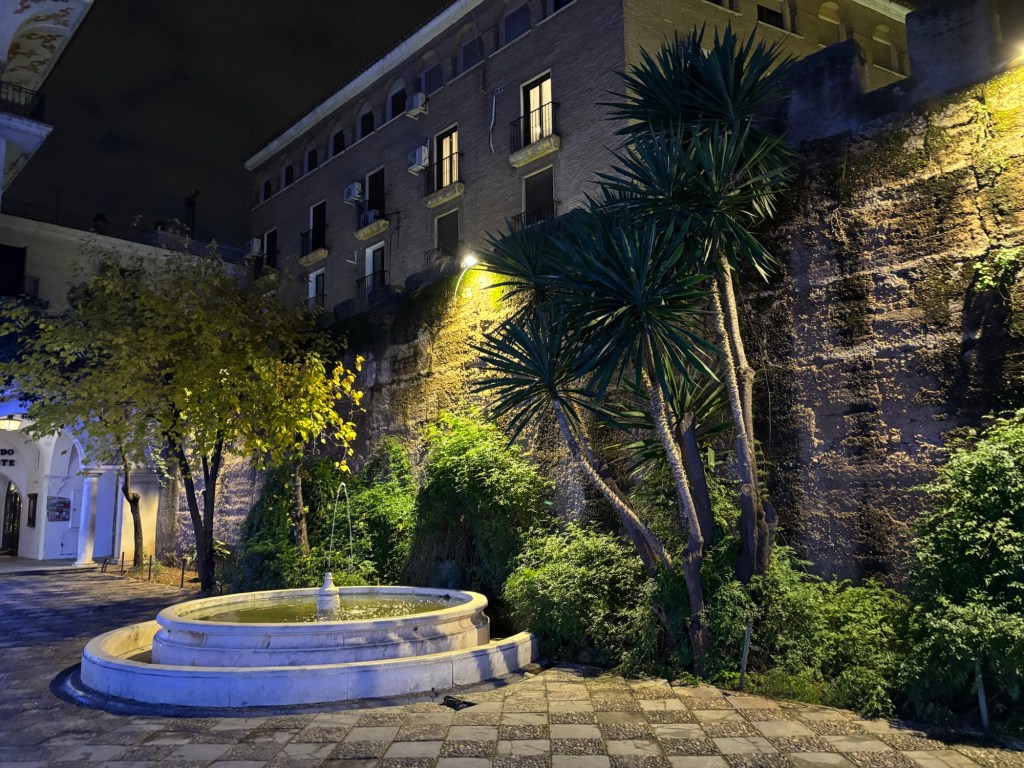
It was around then, during those frenzied trips between Sevilla’s bus stations, that I really fell in love with the Plazuela de Doña Elvira, sitting as it does in the labyrinthine heart of the old city. I’ve made a point of stopping by ever since.


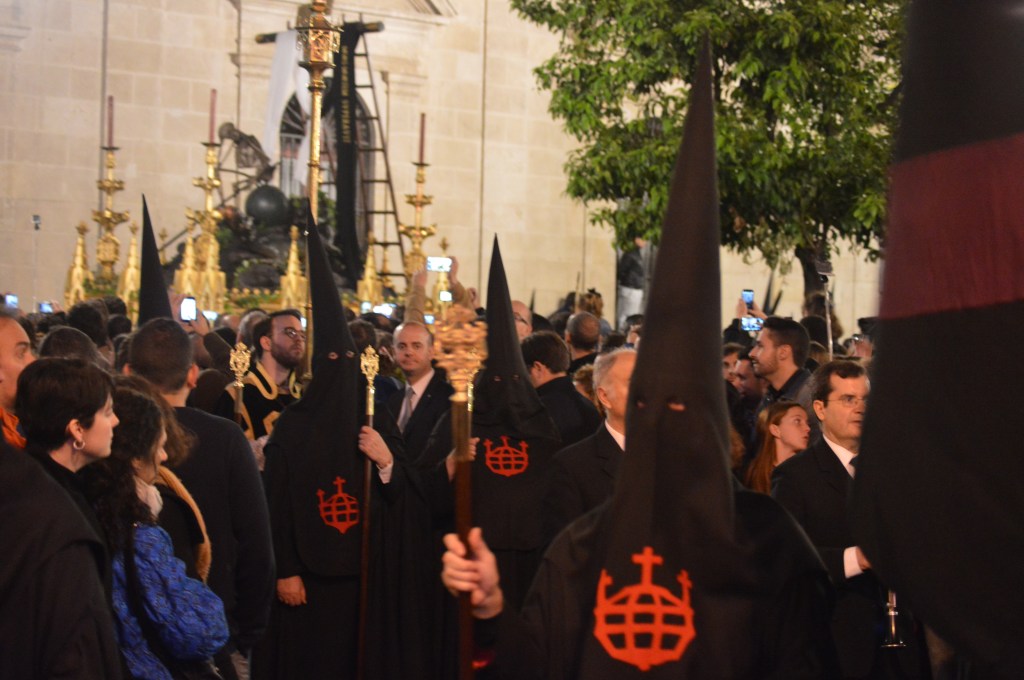
Halfway through that year, I took a friend to the city to show her the majesty of Semana Santa. My experience of Spain’s Easter celebrations had previously been confined to Olvera, which was a highly unfair place to start – on everywhere else. Olvera’s penitentes, demonstrating a strength bordering on the Herculean, have to navigate the monstrously steep gradients of the town’s roads, constantly ducking and rising to avoid the low-hanging wires – all while carrying several tonnes of sacred wood and several hundred tapering candles within a precarious silk canopy. Caídas (falls) are not unheard of in Semana Santa, but I never saw the olvereños break so much as a sweat for their endeavour.

After that, I might be forgiven for having exceptionally high standards for Semana Santa. Sevilla met them. We were walled in by three simultaneous processions, but a friendly Guardia unintentionally gave us front row seats to the greatest show in town when he shoved us unceremoniously with his baton out of the road and in front of the lines that had been growing along the side of the street all morning. Málaga and La Mena may have raised my expectations even higher, but I’d like to go back and see Sevilla in its Easter glory again sometime.

By my mid-twenties, I could be pretty confident in saying that I knew few cities in the world better than Sevilla – including almost every city in my home country (with the possible exception of Canterbury). I do believe that I really could navigate this city blindfolded, if I had to. That was why I decided to take my second girlfriend there, less than a month after we started dating. I hoped that sharing the city with her would be like sharing my heart – since it had found its way in there a long time ago.

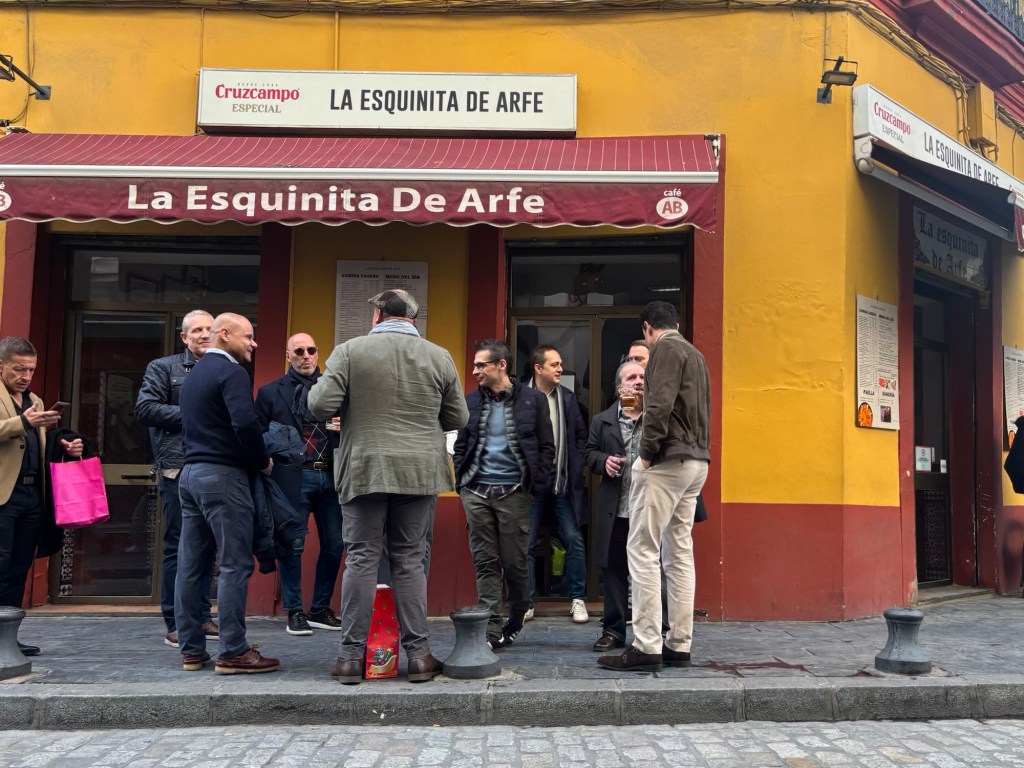
I took her to all my favourite places. Bar El Postiguillo. La Plazuela de Doña Elvira. La Plaza del Cabildo. El Real Alcázar and El Herbolario. She smiled sweetly and played the part of my muse around the city, but I don’t know if she felt the same way about the place as I did.

Later, when things started to fall apart, she told me I’d “missed the boat” for teaching her Spanish. It was the confirmation I’d long suspected that I was never going to be able to share my undying love for this country with her, and the chief reason why I broke things off with her in the end. A heart divided cannot love.

I have no desire to return to America after the intensity of last summer’s heartbreak. Sevilla, however, is immune. My heart could break a thousand times within its scented streets and still I would return.

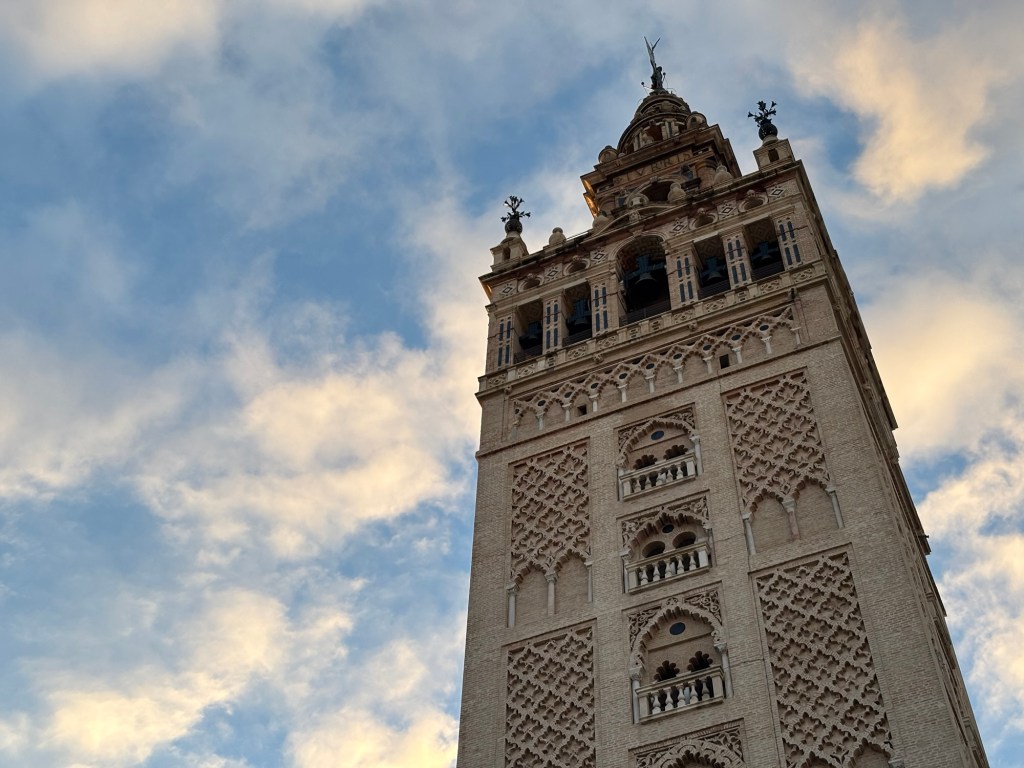
In the last few years, I’ve led a couple of school trips here, too, playing the part of historian, quartermaster and tour guide. In this last capacity, Sevilla has sealed its place in my head as much as my heart, as I had to swot up on so much local history that I might as well have put on a red jacket and joined the city’s legion of guías turísticos.

And here I am again, as 2025 draws to a close. It’s been about twenty years since I first came here, and that’s around two thirds of my life. I don’t doubt I’ll be back again soon, drawn by some invisible magnetism to her cobbled streets, her orange-scented courtyards and the irresistible joy of her people and their merry accent.

The local hostalero gave me the highest possible praise last night. My accent, while occasionally inflected with English, is unmistakably andaluz. Coming from an Andalusian, that is praise indeed – I usually get told I sound sureño by northerners, but no de aquí by the southerners themselves, pointing to the east when I am in Cádiz and west when I am in Almería. That’s twice this year I’ve managed to blend in.

It’s about time I moved here. The stars are aligning. I only need the opportunity. BB x
The Best Margherita in the World

It must be time for the second half of Biff and Ben’s Andalusian Adventures. Apologies for the delay; work is picking up speed fast, just like it always does. Private lessons are adding up now. I look after a group of kids for an hour twice a week and suddenly the whole town is in on the game. It won’t be long before my previously timetable is fully booked, perhaps even more so than the last time I was here. The way things are going, I might even earn more than that year, too: private lessons pay a lot more in the long run than a regular assistant’s hourly salary.

So, after spending an enjoyable sunset watching bats skimming low over the water in the town park, I thought it was high time I got this post out of the way so I can justify giving you weekly musings and updates – which, I maintain, always make for much more entertaining reading than another ‘wish-you-were-here’ travelogue.

That said, here’s one such adventure.


After a day wandering about Seville and discussing the pros and cons of Salvation, I thought we could do with a trip further afield. Through our AirBnB host Emma we managed to rent a car at less than twenty-four hours’ notice. It took some doing, but we did it. All we had to do was decide upon a destination. It took some convincing, but I managed to dissuade Biff and Rosie from visiting El Rocío. Why they alighted on that one in particular is beyond me. I suppose the fact that I’d name-dropped the place for years and years had something to do with it. At any other time I’d have loved to show off my favourite Spanish lady, but after a year of bad droughts and worse forest fires, she’s hiding her skirts in shame at the way she’s been treated. I can only hope she finds her smile again.

Emma looked horrified when they mentioned their plans to her, pulling the same pained expression most Spaniards seem to pull whenever you mention you’re headed for Huelva (“but… why?”). I spent most of the night and a good twenty minutes of the morning making other plans and, over breakfast, I posited a route through the Serranía de Ronda an alternative. They took the bait. Thank the Lord.

With Biff at the wheel, we reached the intersection and headed east, instead of west. Towards the mountains. Always a good direction to be going in. There was a strange black fog over the town of Dos Hermanas as we left Seville behind. Not sure what that was all about. Time to head up into the mountains where the air is clear.

DSC_1107

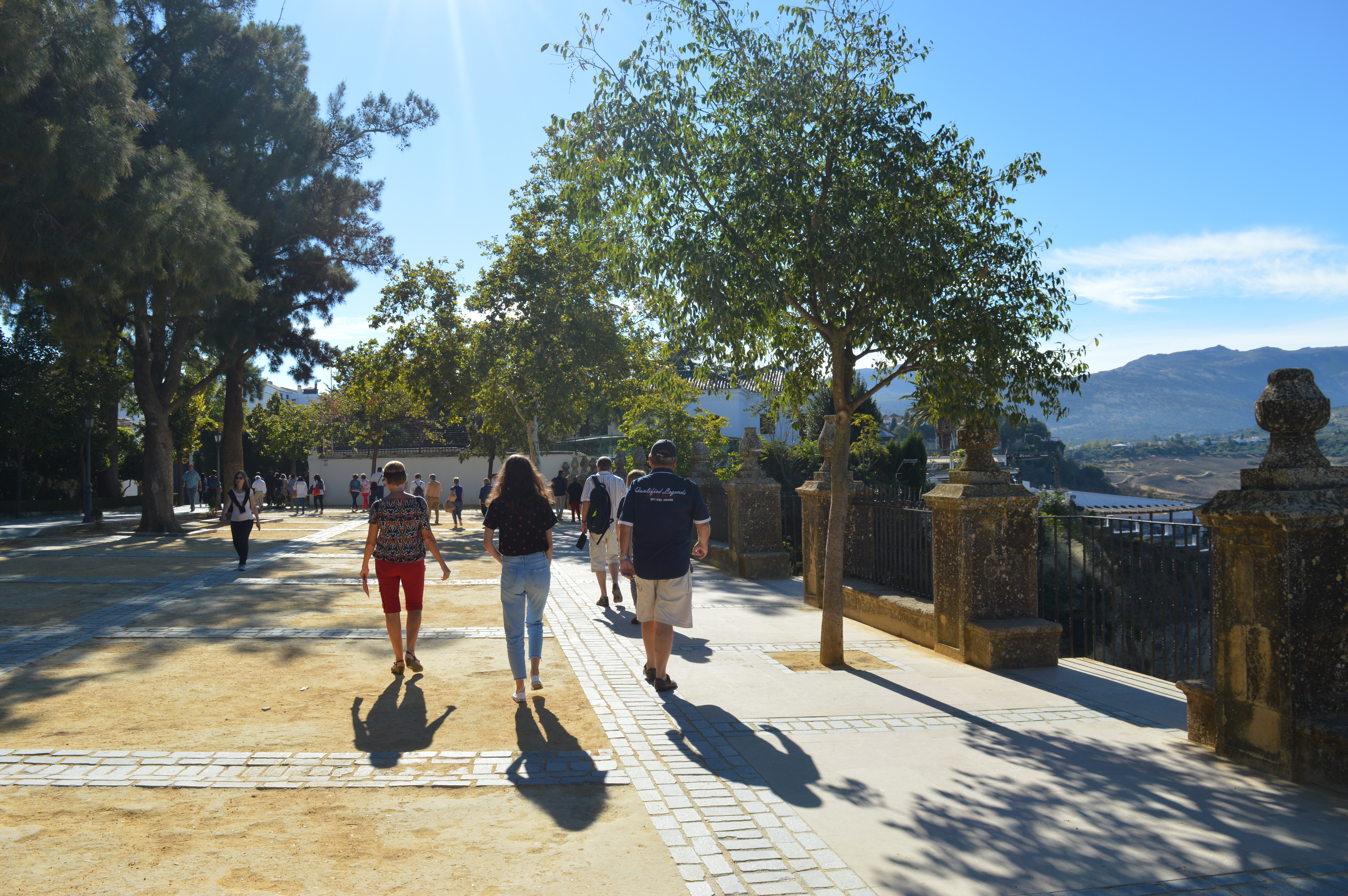
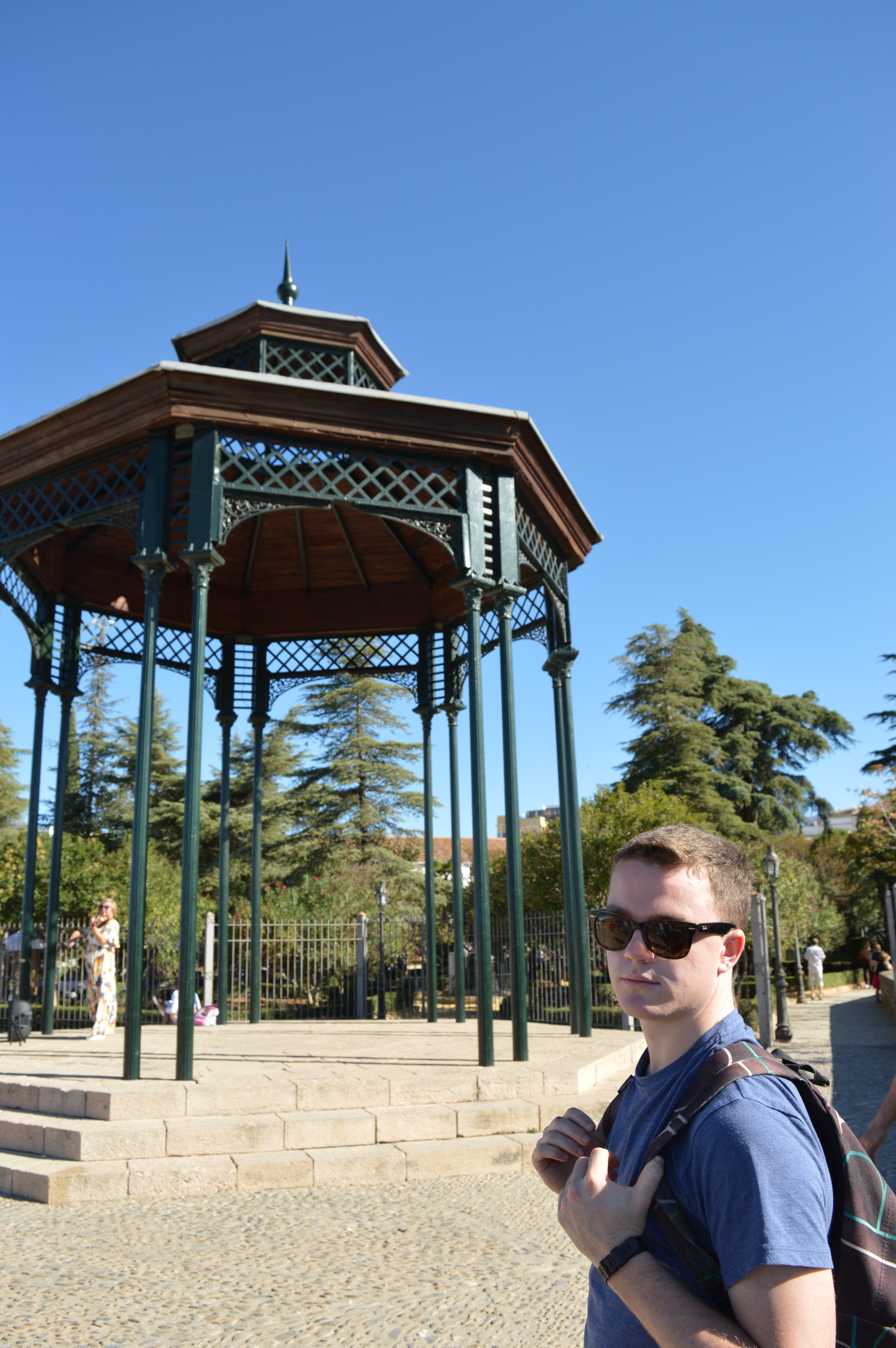
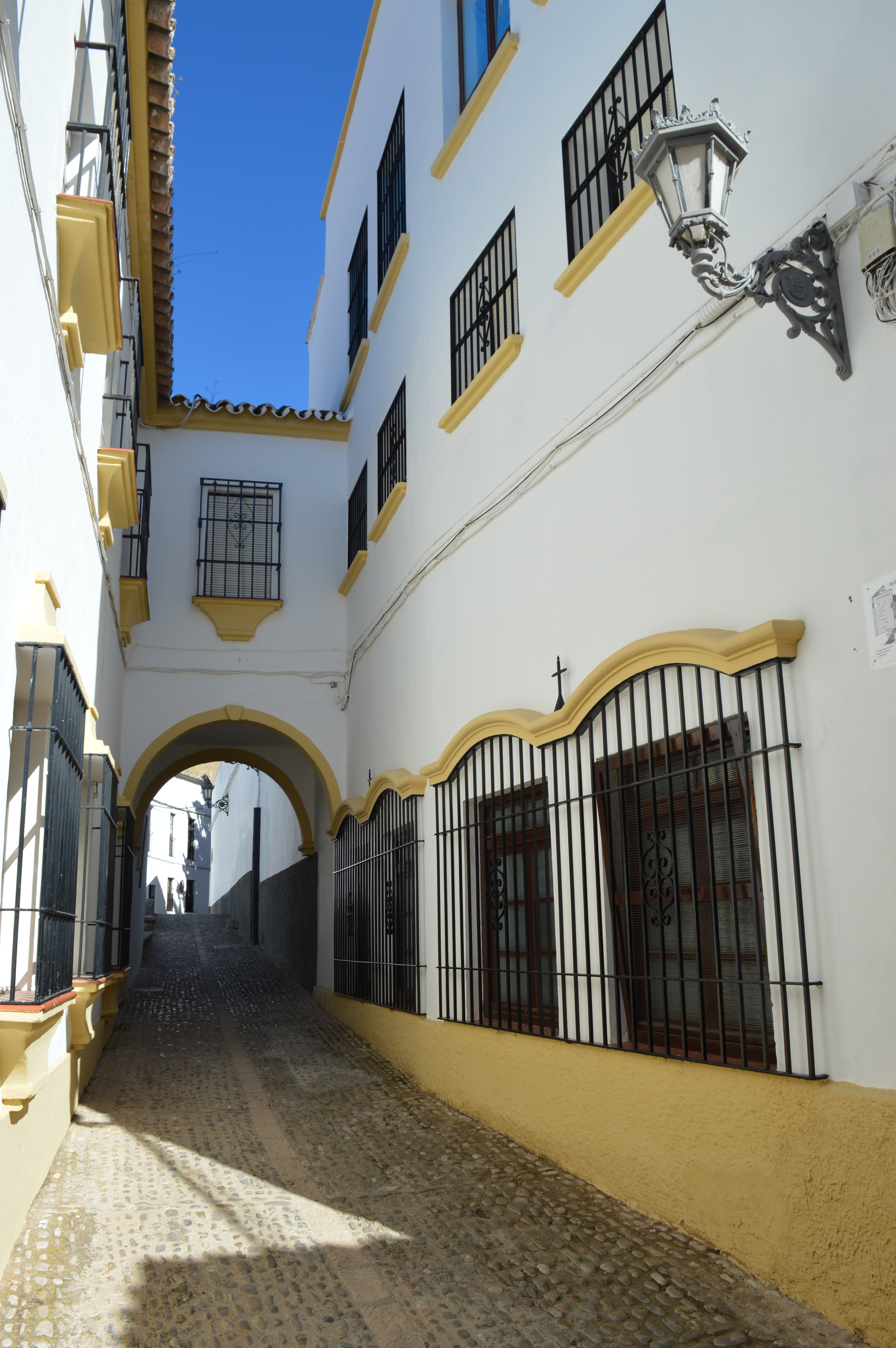
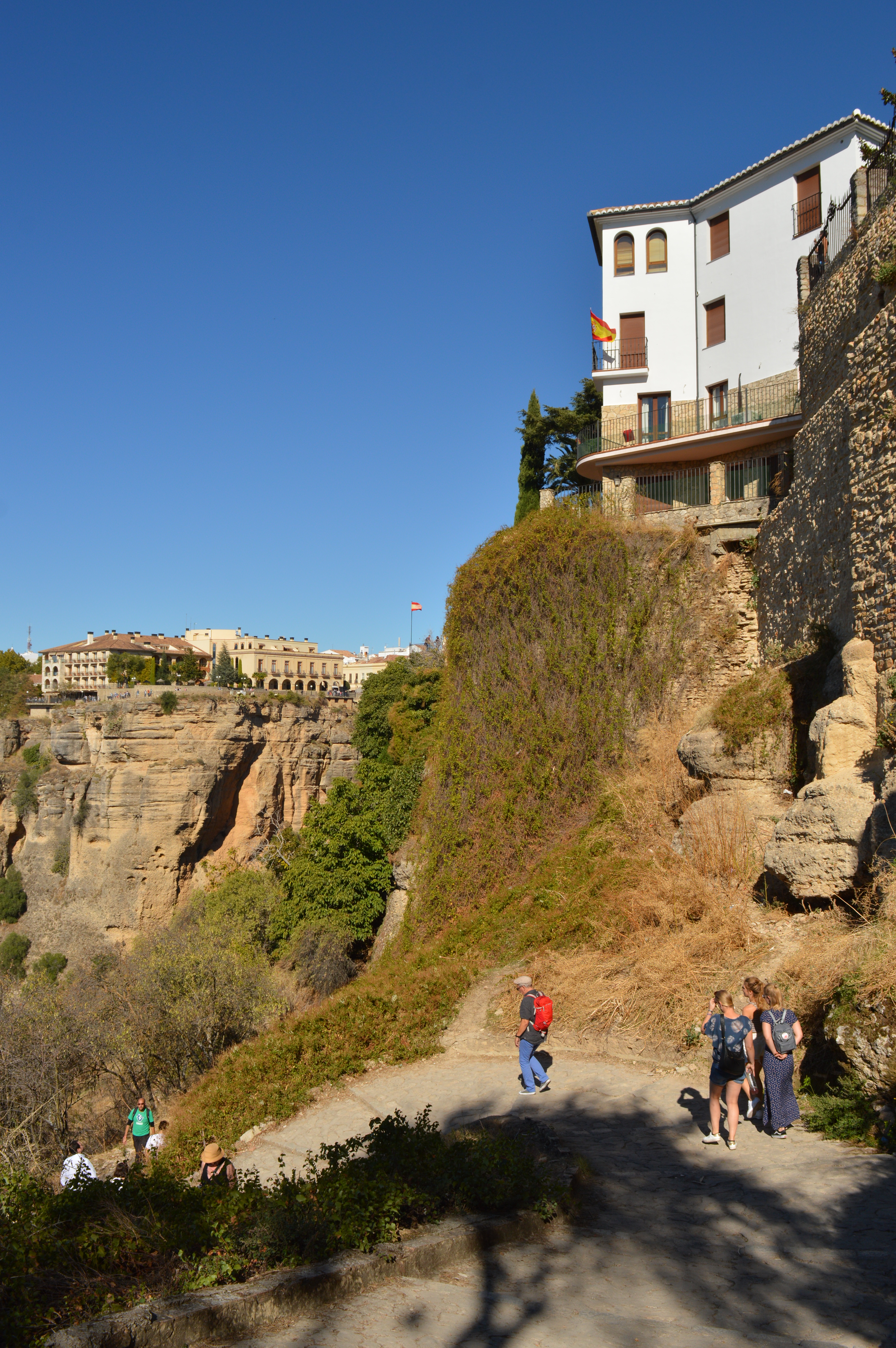
Ronda. It’s been ten years. It’s been more than ten years. And still I remembered my way about that most beautiful town, truly the jewel of the Andalusian sierras. Little wonder the famous bandoleros made the sierras around here their home. A guitarist and his accompanying dancer plied their trade before the balcony on the park promenade. A horde of Spanish tourists marched down the walk towards us, the noisiest of all the world’s sightseers. And now they’re armed with selfie sticks. They seem to be one of the few things the older generation has learned how to use – and discovered to be much to their liking. God help us all.

DSC_0006

We had plenty of time and a lot of shadows to kill. So we meandered along the cliff wall in the direction of the famous bridge, whilst I explained how GHOTI was fish and Biff threw me for a loop with the seven pronunciations of -OUGH. Trust me, when you’re in the English teaching trade, nuggets like these are fun. I’m serious.

DSC_0011

Or at least, they are for me. Biff may have other ideas

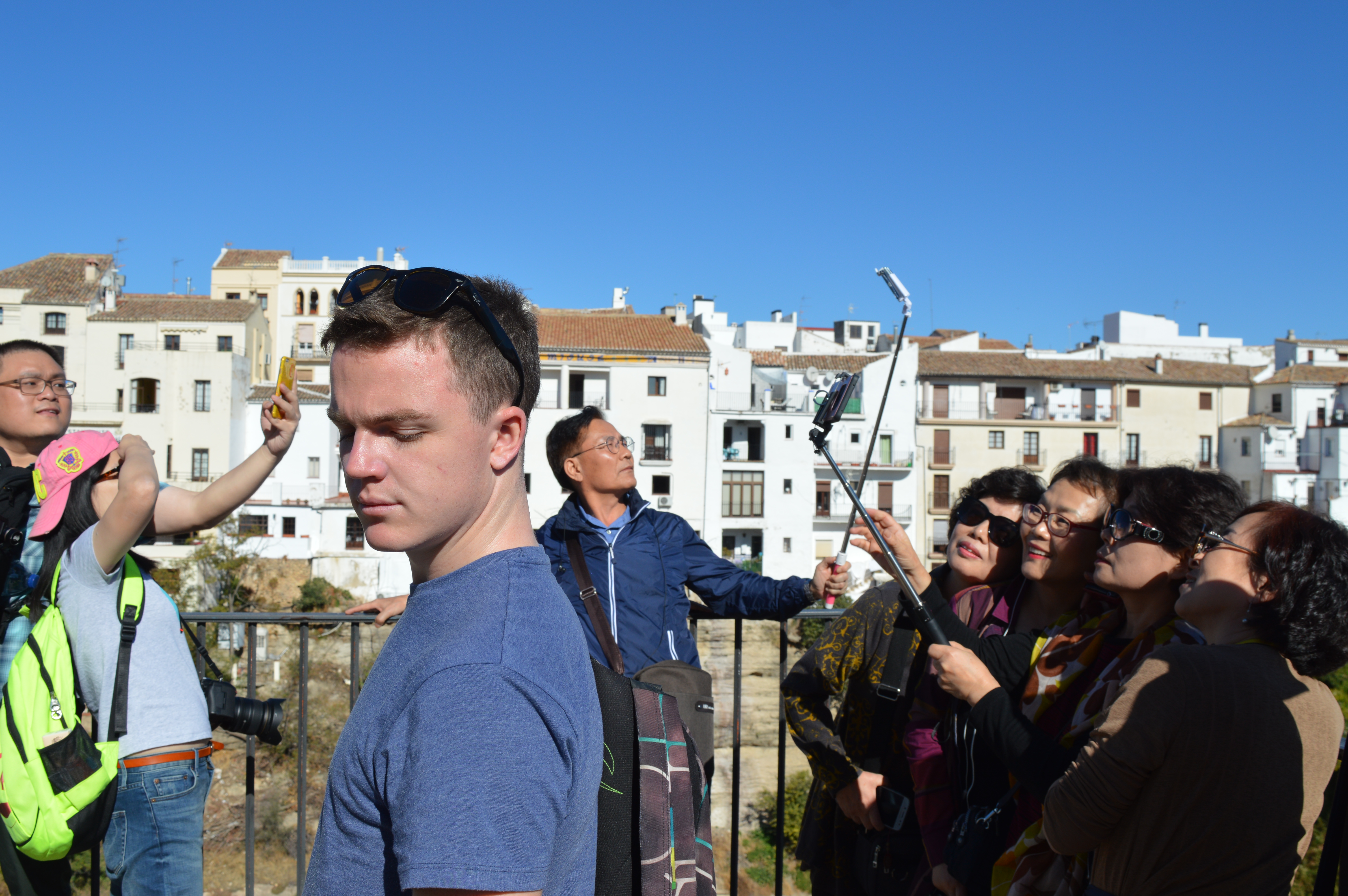
Rivalling the Spanish tourists in town were the Asians, who had come in great numbers. And upon the battlefield of the bridge, where Spanish and Asian met, selfie-sticks held aloft, it looked as though two armies wielding pikes were set to clash. It was rather difficult to find a good spot without crossing somebody’s line of fire, I can tell you.
DSC_0021

What’s wrong with a good landscape?

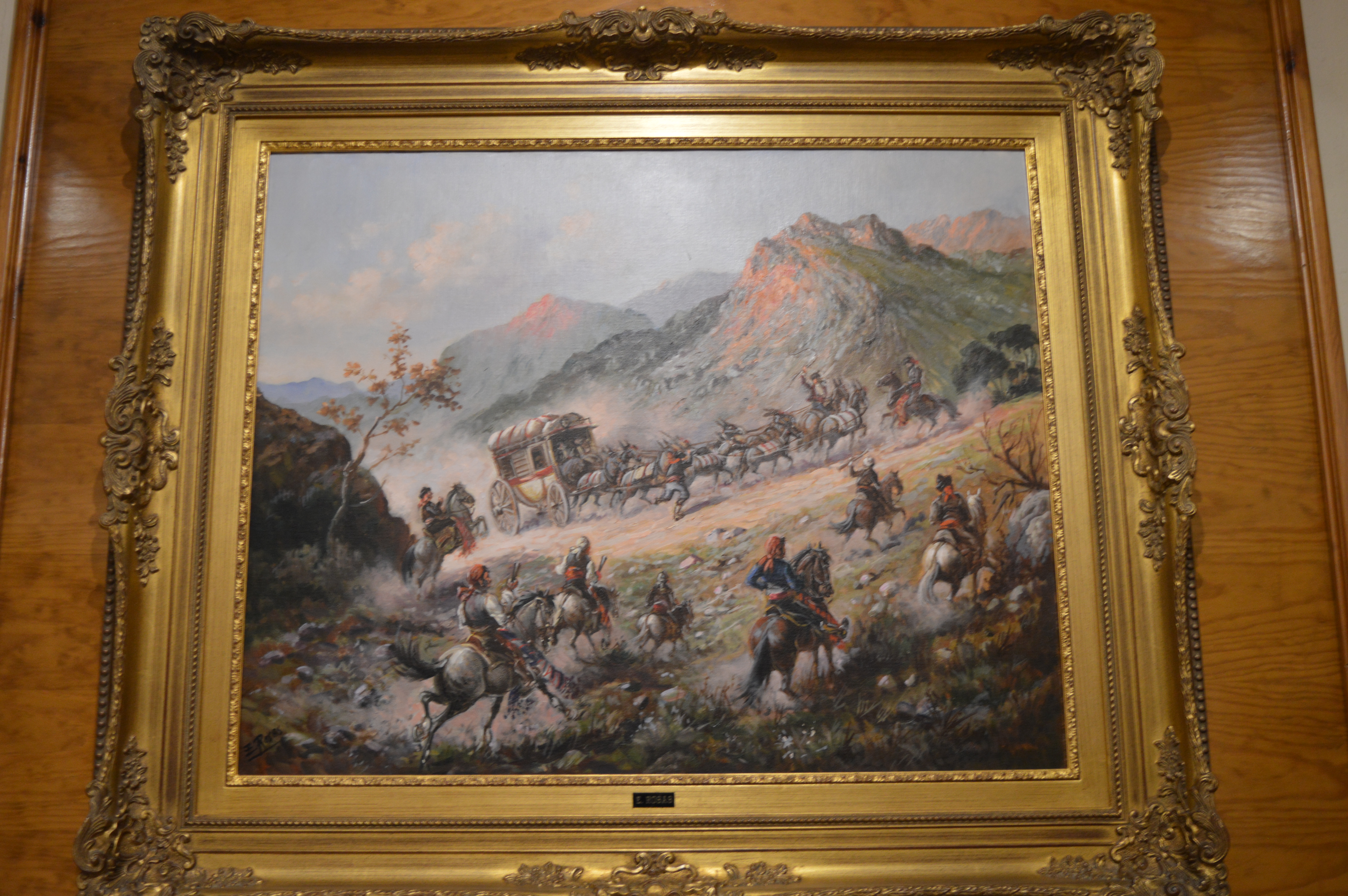
We passed the homage to the Romantic Travellers of Ronda where, despite the relatively sparse decoration, the selfie stick brigade was back in force. A little further on, past a curio shop and the Museo de Lara, we stumbled upon another blast from the past: the bandit museum. Had I had half a brain I would have made it priority number one to visit this little establishment whilst writing my TLRP on bandits two years back. I didn’t, and I still nabbed a decent 85% (thank you, Google Books), but boy, do I still wish I had! The place was a gold mine and – to my surprise – it didn’t drive Biff and Rosie out of their minds. On the contrary, they even seemed to enjoy the visit! Which made me happy. Though perhaps not as happy as having the chance to see an entire collection of bandit knives…
DSC_0041

Lunch – at Gastrobar Déjà Vu, directly opposite the museum – was spectacular. I haven’t eaten so well for so little since Amman’s Bab el-Yemen. Twelve euros for ten tapas. And that’s ten home-made, local produce tapas. Insane. England, please look and learn. Tapas shouldn’t cost more than three to four euros a head, if that. Not seven. Please remember that.

DSC_0064

Ronda’s streets look stunning under the azure sky, but it was the gorge we came to see. And this is where my ten-year-old memory failed me a little – because the last time I came here, I’m almost certain the path beneath the cliff wall went no further than a few metres or so.

DSC_0067

Not anymore. I guess Ronda must have hit the bigtime on the tourist circuit, because the track down to the gorge is in a brilliant state, complete with Via Ferrata routes, ropes and little cairns left by daytrippers here and there.

DSC_0144

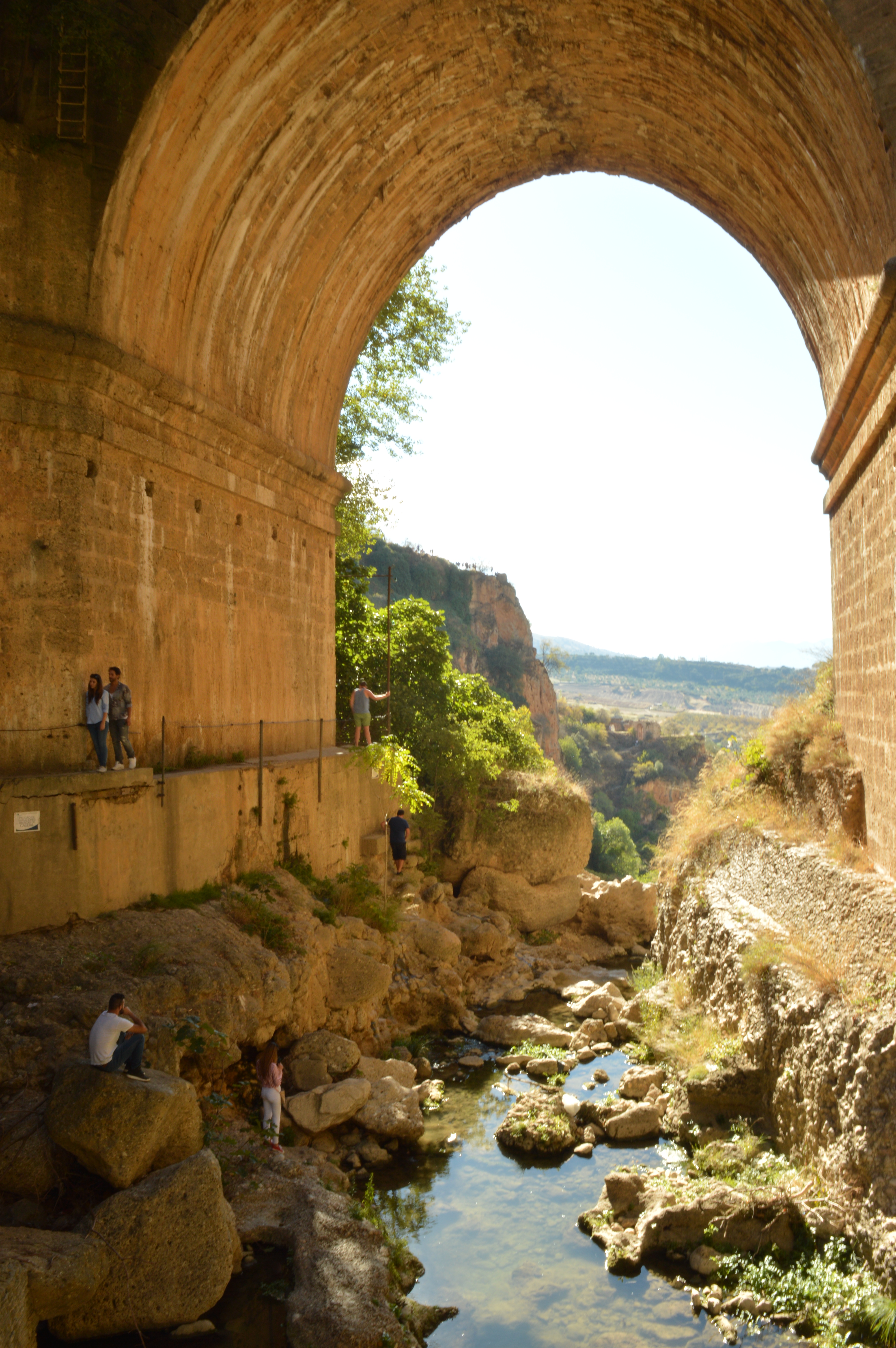
I could have sworn the Tejo river itself was polluted and closed off the last time I was here. Not so anymore! You can wind your way down the gorge and walk along the river valley, looking up at the bridge high above. It’s quite a surreal experience, and very humbling. The bridge looks enormous from on high, but it’s nothing compared to how it looks from below. And when you’ve got the sierras beyond framed by the archway…

DSC_0166

…I could hardly ask for more.

The only anomaly of the excursion was the well-hut a short way out on the other side of the gorge. Because, if memory serves, I remember getting as far as a small building like that when I was twelve years old… though this one lies so close to the waterfall at the bottom that one might as well be there already. I wonder just how far I got?

DSC_0192

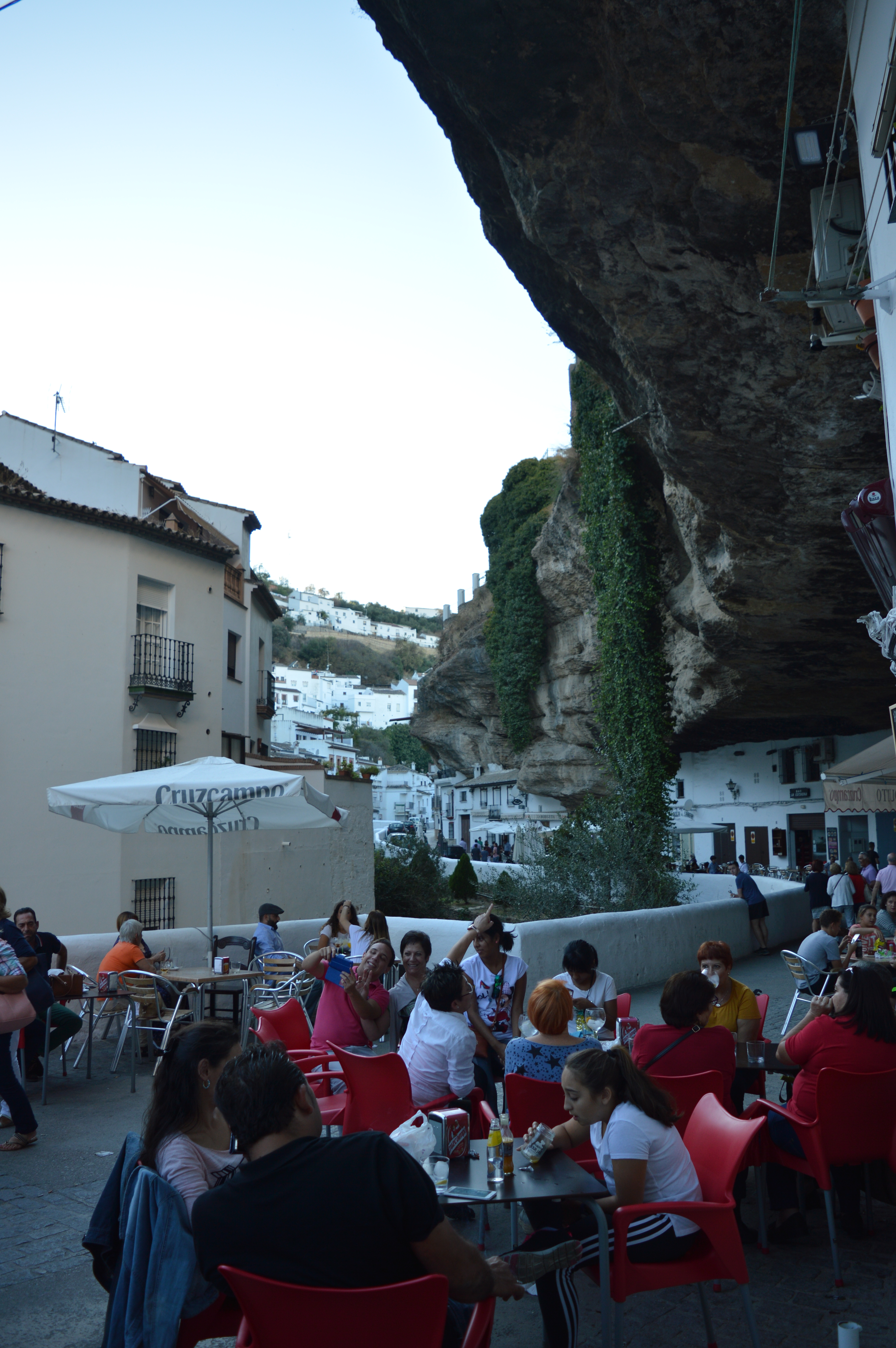
From Ronda we took a meandering north route home via Setenil de las Bodegas, another gorge town where the denizens decided to build under and over rather than just over. It’s well off the beaten track, and well worth the visit. The sun was quite low in the sky by the time we got there and much of it was in shadow, but as Biff pointed out, you could definitely feel the difference between the warmer, sunlit side of the street, and the cooler, forever-shaded side. Enterprising people, these Andalusians.

DSC_0221

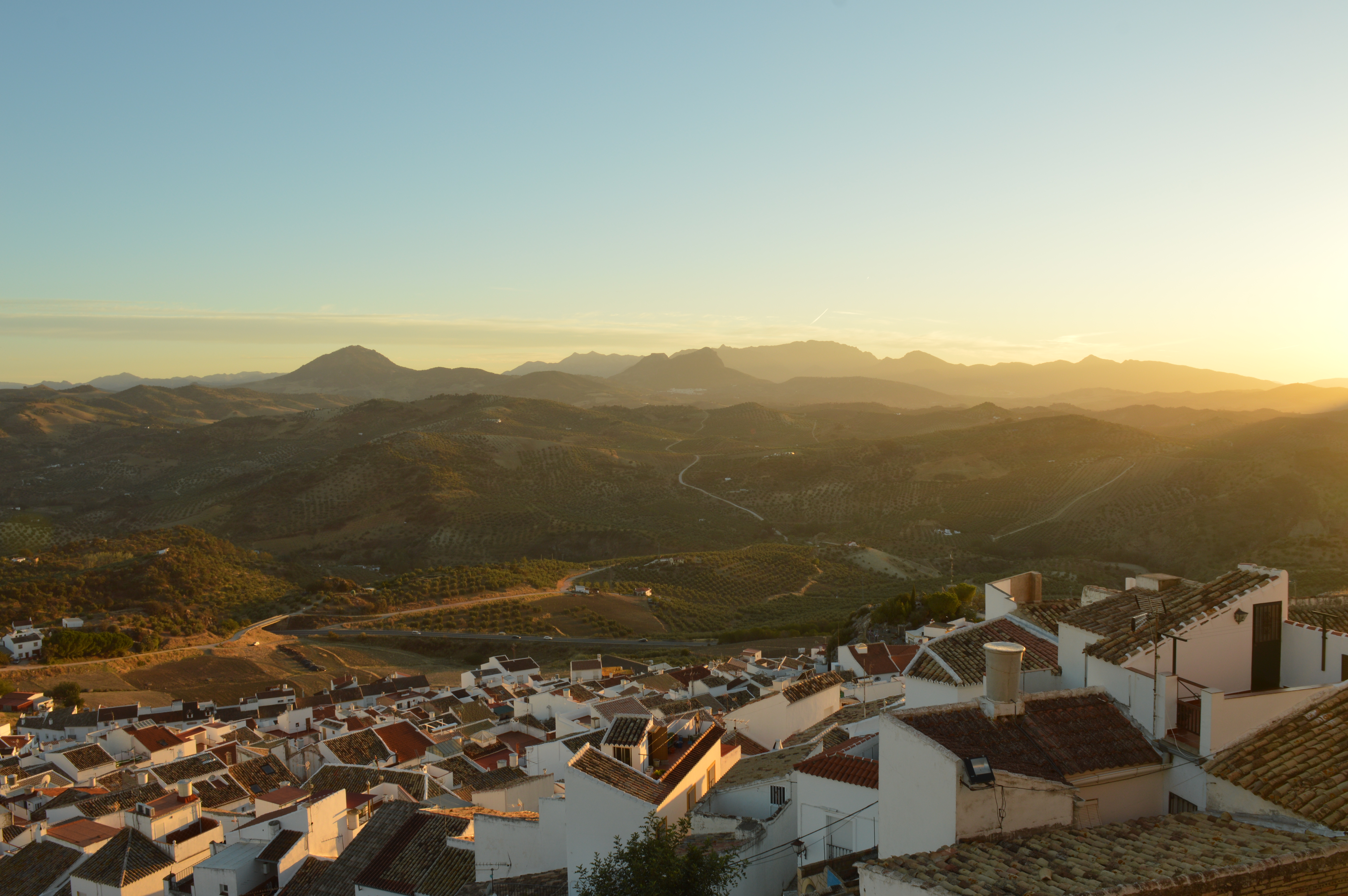
The road home to Seville took us on a beeline towards a sight which is now very, very familiar to me: the silhouette of my old home, Olvera. The road from Setenil offers perhaps the best view of the town for miles around. So despite my better judgement, Biff and Rosie convinced me that we needed to pay it a visit.

So we did.

DSC_0248

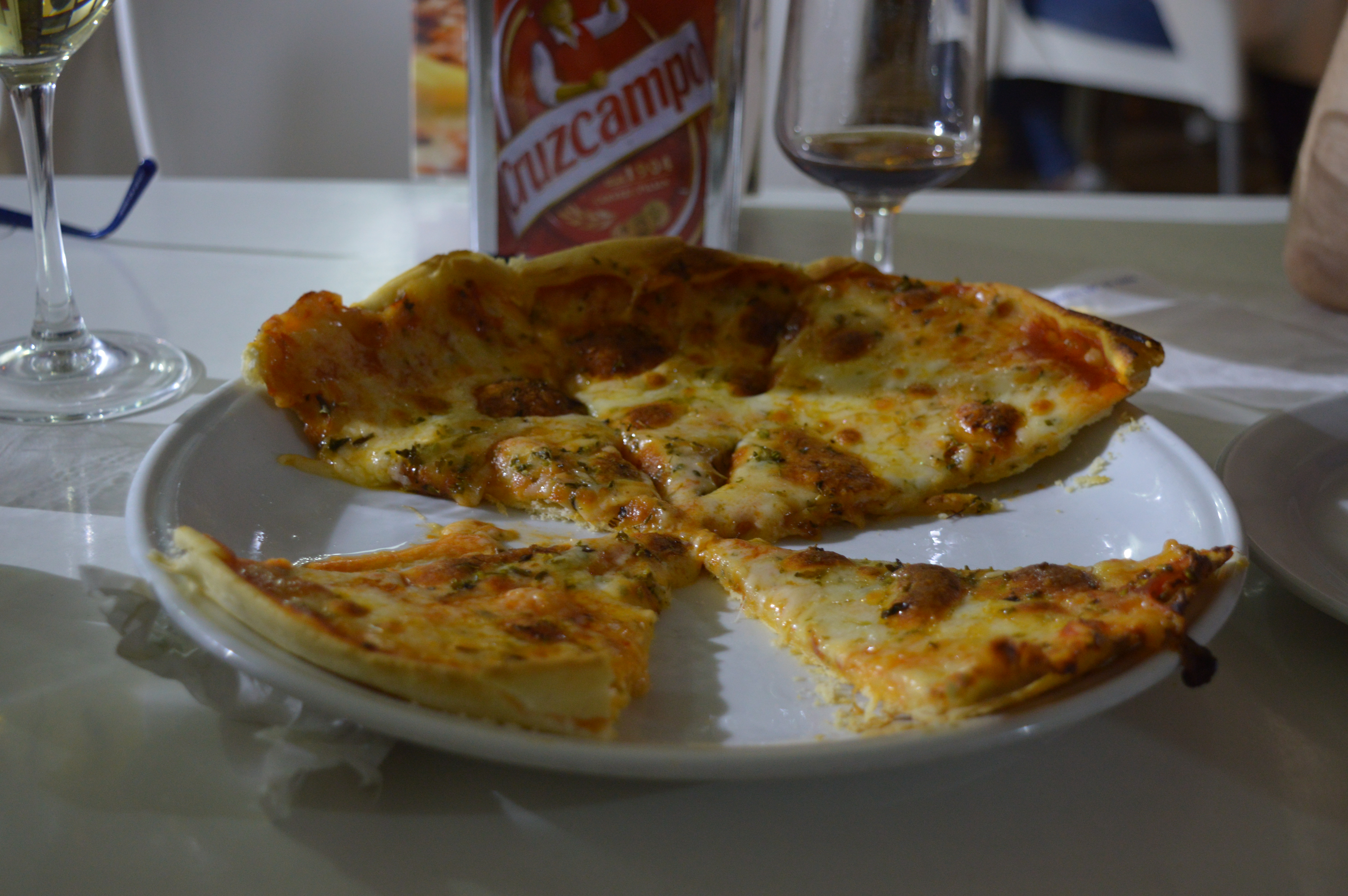
It was decidedly weird to see Biff – my oldest and closest friend – walking down the streets of a town which, until now, has stood like an island in my life, a year away and apart. Worlds collided. And I said as much several times. So, to recover from the weirdness of it all, I suggested dinner at Bar-Restaurante Lirios. And there’s a decision I had no second thoughts or qualms about. Because Lirios, in my humble opinion, serves up the best margherita pizzas in the whole world. And that’s worth travelling all the way over the hills and across the sierras for. I usually order margherita whenever I’m out at a pizzeria to see if anywhere can do it better. Having not been to Italy, my options have been limited, but thus far, I’ve yet to meet Lirios’ match. When last I came to this town, it was in search of an old flame of mine. Frankly, I missed a trick. What was really calling to me over the distance of years was not a brown-eyed beauty, but a well-seasoned pizza. As with most things in Spain, and in life, I suppose, it’s the simplest pleasures that speak the loudest.

DSC_0263

I’ve no travels on the books as of yet. The bike hunt is still in progress (I put a busy WhatsApp conversation on silent at just the wrong time), and I’m still waiting for a day when I have the time and the lack of errands to allow me to find a bike to take me to Hornachos and beyond, that prince of towns.

It’s winter, now. This morning was bloody cold. I almost got my scarf out of the drawer. It won’t be long until I’ll be less hesitant. Autumn lasted for a grand total of one week and three days. Fran’s complaining about the absence of an enagua for the table, and I have a cold. Summer’s finally taken her leave. Winter has arrived. BB x