For the Legion

Departures Lounge C, Malaga-Costa del Sol Airport. 9.18am.

My adventure is drawing to a close. In a matter of hours I will be back in the familiar settings of my flat. Sometimes, at the end of a holiday, I’d be feeling glum at this point. There’s a bit of that right now – I’m never overly happy to leave this country behind. But it’s been such an incredible three weeks that I have no regrets whatsoever, so I’m going back home with a full heart and a nauseatingly broad smile. Not even the British weather waiting for me when I get home could take that away from me.


I was up early this morning to check in to my last pensión of the trip. Nowhere is open for check-in at 8 o’clock in the morning, but I was suspicious about the link I’d been sent asking for confirmation payment up-front, and wanted to dot the I’s and cross the T’s in person. I was right to be cautious: their Booking.com account had been hacked, asking customers for a down payment that “might not be the same as on the website” – in my case, a fare ten times the amount agreed. Thank God I went in person to sort things out. God helps those who help themselves, or so the saying goes, but I’d like to think that La Virgen del Rocío is still watching out for me.

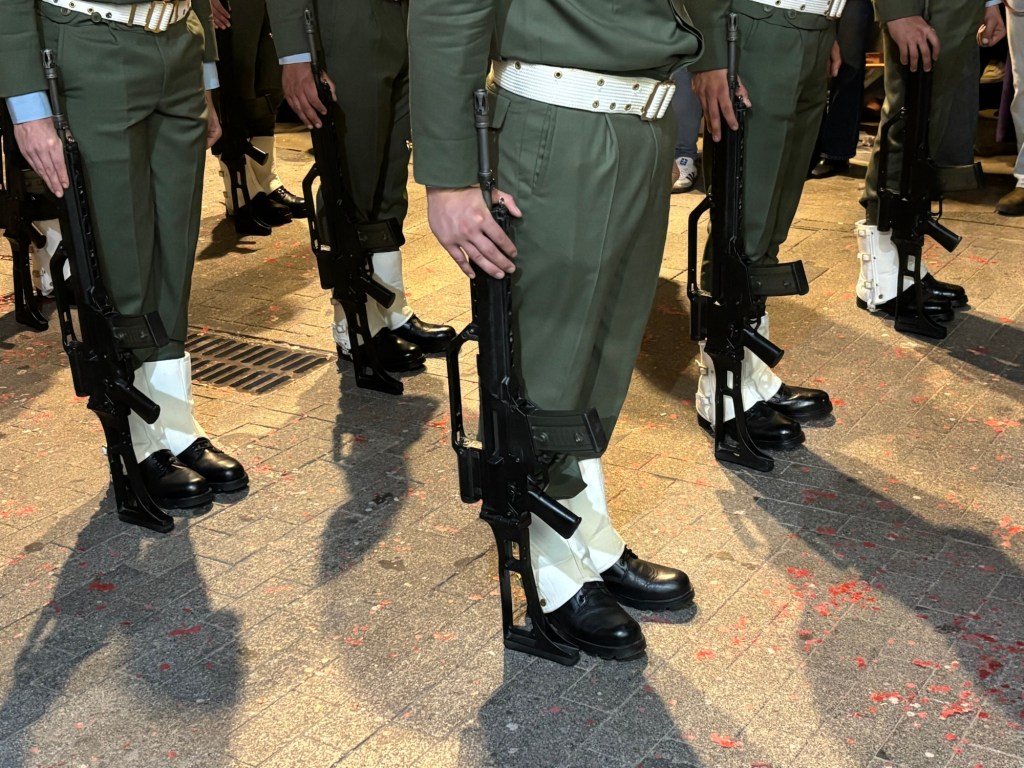
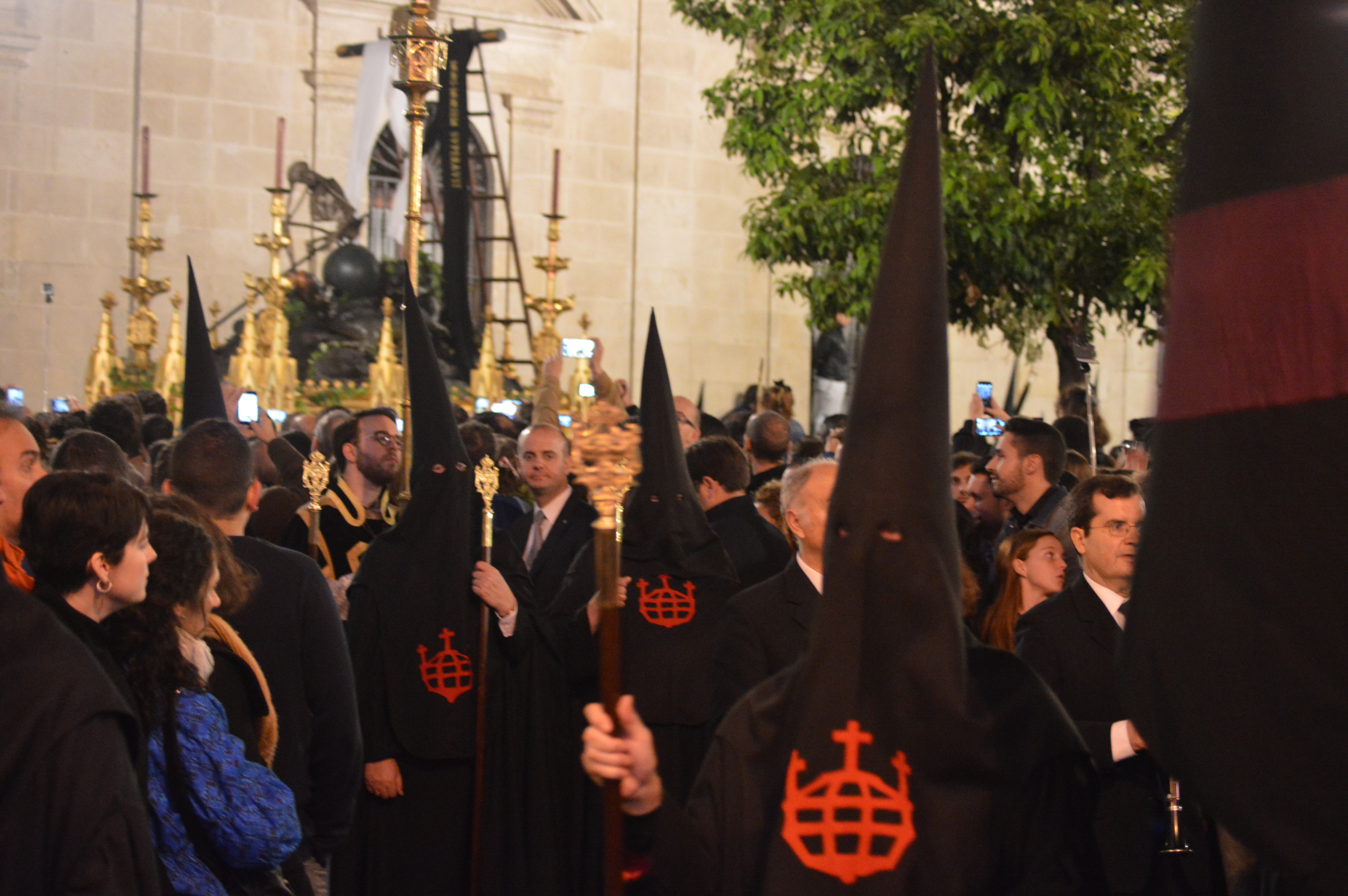
With my mind at ease, I had my last chocolate con churros of the trip and then set out to see the Legion, who had just disembarked and were on their way to their casa de hermandad west of the river. Once again, I was lucky to find a space to stand, since by the looks of things the entire city had turned out to welcome the troops.
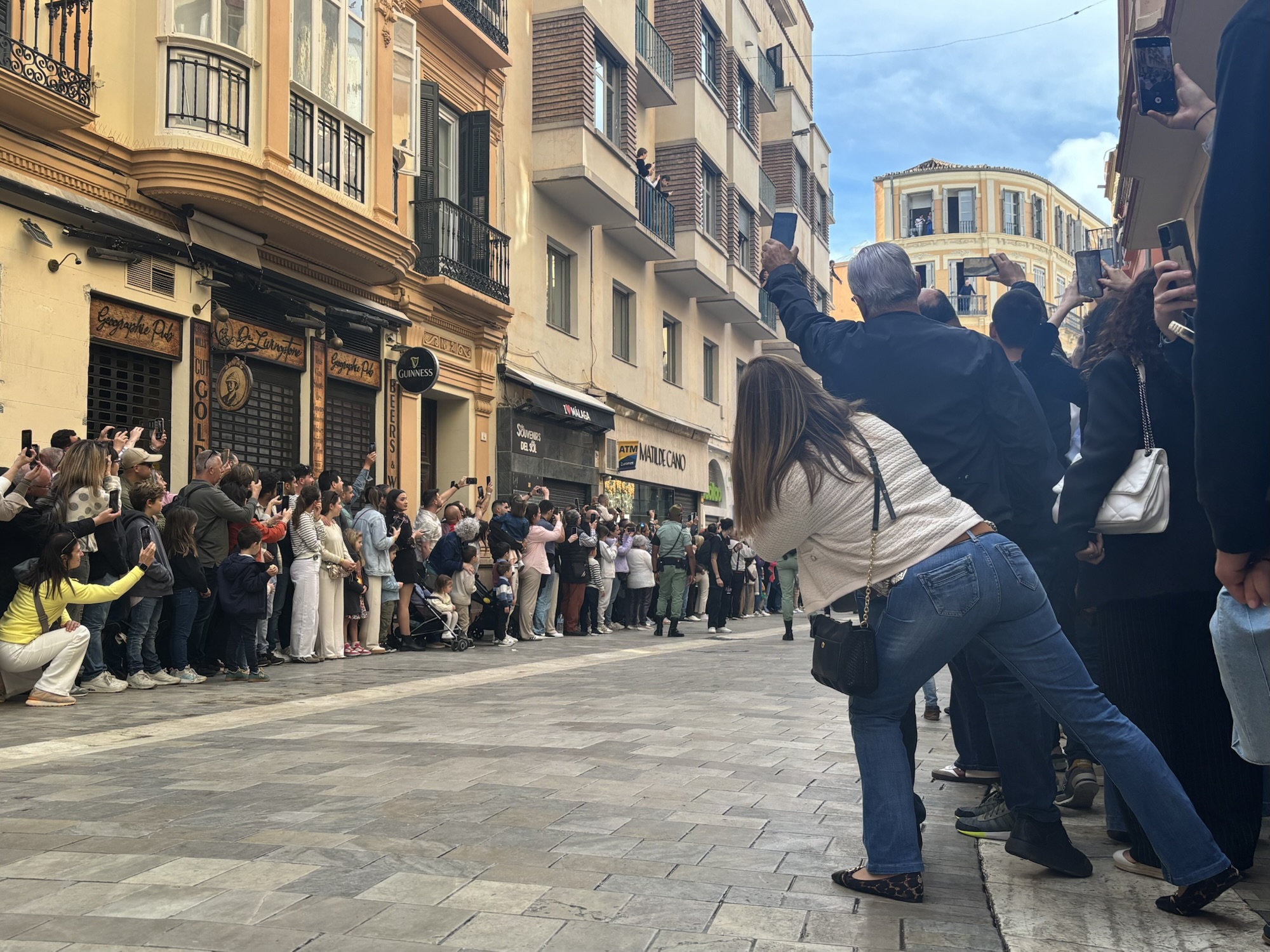

La Legión, also known as the Tercio, is one of the most famous wings of Spain’s military. Though modelled on the French Foreign Legion, a similarly fearsome fighting force, la Legión is not as foreign as its name might imply: Spaniards comprise the vast majority of its troops, with Latin American and citizens of other Spanish-speaking countries making up the rest. This was the unit that Francisco Franco commanded, a mighty and highly professional unit used with devastating effect against the Republican forces during the Civil War. My allegiance should be straightforward – my great-grandparents were Republicans, and my great-grandfather Mateo was a victim of the regime that La Legión helped to put into power – but even I have to admit that I thought them impressive as they paraded through the city, belting their battle hymn, El novio de la muerte, at the top of their lungs.

The past is the past. Hate has to find the hands that it knows, and I’m not one for grudges. I’m also a Catholic who bloody loves a good spectacle, and the Legión certainly provides.
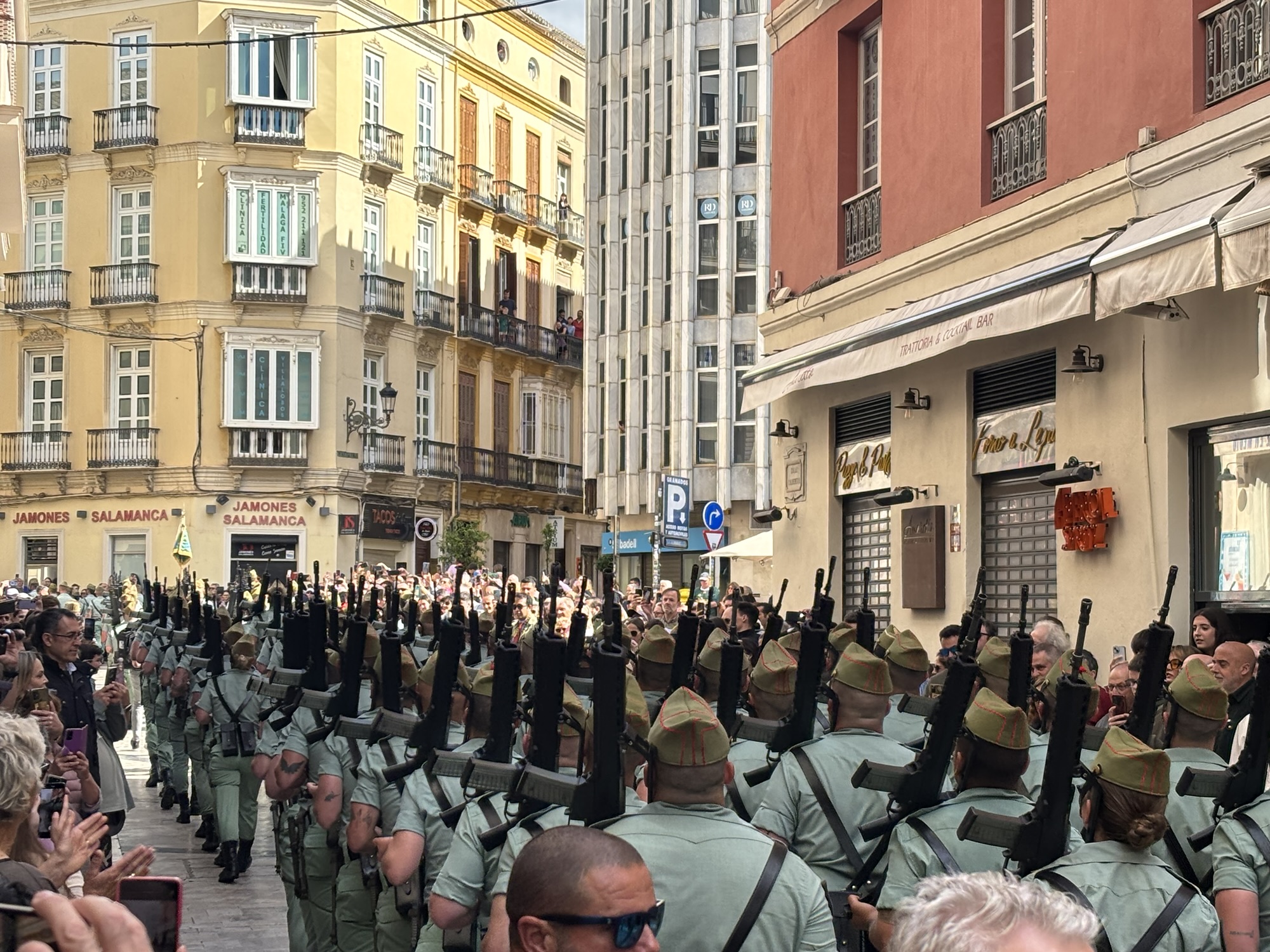

In one last stroke of luck, when I came back to the pensión to check in, the receptionist asked if I would rather “dormir o ver la procesión”: somebody had cancelled just minutes before I arrived, and a balcony room had suddenly become available. As a good friend once said, “you can sleep when you’re dead” – so I snapped up the balcony room. My pensión of choice looked out over Calle Especería, which just so happened to be the primary conduit for all but one of the eight pasos making their way through the city. Not only would I be able to watch the processions from the comfort of my room, I would be able to do so without having to deal with the inevitable crowds, now at their greatest in number as Semana Santa reached its summit. I really couldn’t have been dealt a better card.

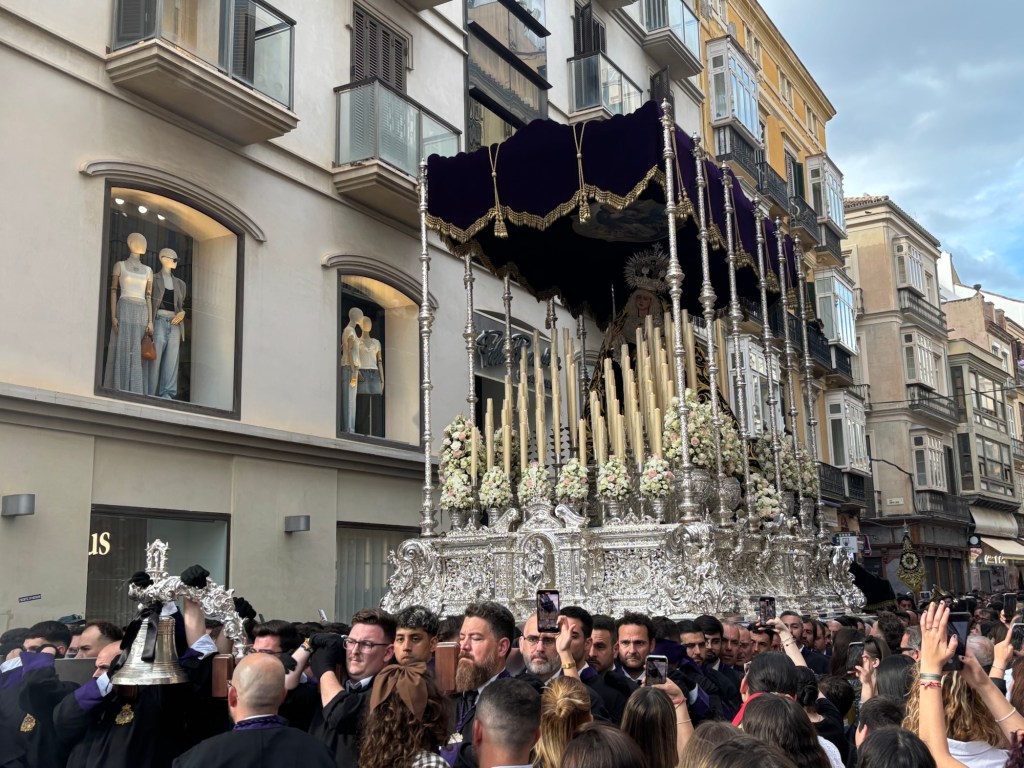
The first paso arrived shortly after half past five, at which point the street below became impassable. It’s just as well I had supplies, because one procession followed another – it would be past one o’clock in the morning before the last procession had come and gone, and the spectators walling the street with it.
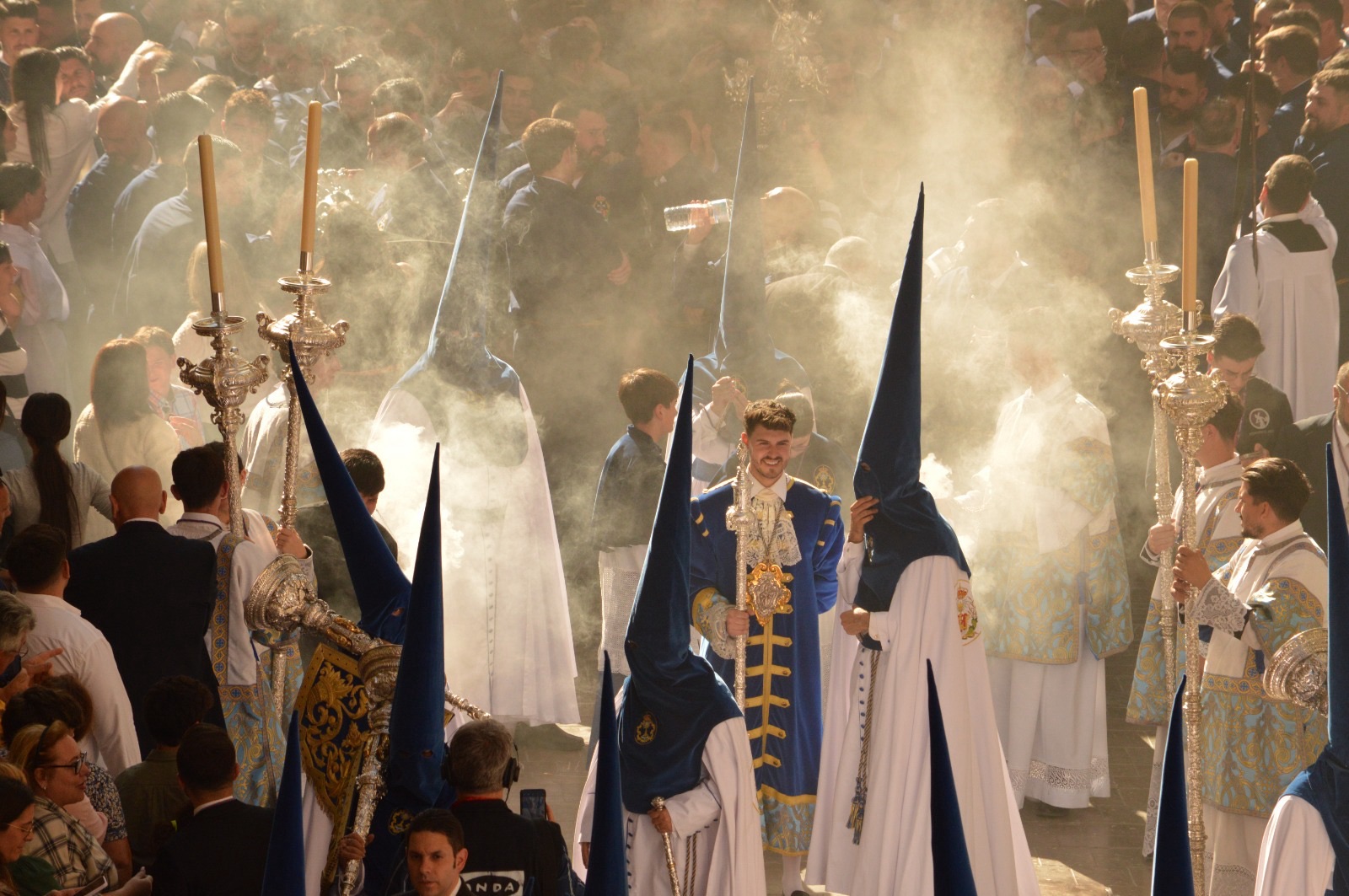

From my vantage point on the second floor, I could see a lot of things I hadn’t noticed before. Like the old-fashioned jugs each paso carried with it, appearing suddenly from beneath the tronos every time the procession came to a halt to provide relief to the weary costaleros. As the night went on, the train on the dresses of the Virgin Mary got longer and longer, and many of the costaleros were entirely reliant on the sound of the llamador (the bell at the front of the trono) and the voice of the capataz (the man in charge of guiding the costaleros) to know when to stop and when to go.


The Legión arrived a great deal sooner than I expected. I’d just popped back inside for a drink when I heard the first verse of El novio de la muerte (literally, The Groom of Death) and had to double back. I must have only seen one of the four tercios (divisions) of the Legión this morning, because they seemed to have quadrupled in number. Led by their officers, the nazarenos of their brotherhood and a number of standard-bearers carrying golden flagpoles, it had all the trappings of a Roman triumph. I guess that’s part of the look they were going for. Either way, it was quite something to watch from on high – especially the way their marching steps fanned out in a perfectly synchronised wave from the left.


I experienced my first genuine saeta shortly before midnight. There is little that can compare to a proper saeta: it is, in essence, a religiously inspired solo piece, sung by a spectator who feels so moved by the emotion of the procession that they put their feelings into song. The origins of the saeta are unclear, but they’re thought to have derived from a fusion of Islamic calls to prayer and Jewish psalmodies with old Franciscan processional hymns. In Andalusia, the region most commonly associated with the practice, they have a strong connection to flamenco, which becomes immediately obvious when you hear the wailing style of the singer and their wild gesturing toward the paso, which must by tradition come to an immediate halt when a saeta begins.

I’ve seen saetas before, albeit slightly less impressive – the kind where somebody stands in front of the church and reads from a score. Not this one. This came from the heart and soul of a man in his sixties, who was leaning half off his balcony and crying out to both El Cristo and La Virgen with every ounce of duende that his spirit could muster. It was really something to behold, and it had the whole street in silent rapture – which, with hundreds of people lining both sides of the street below, only made it all the more impressive.


There’s something about the music of Semana Santa that is fundamentally powerful. It could be the wailing solos played on the keyed trumpets with that quality of vibrato that is so ineffably Hispanic, often associated with bullfights and Mexican standoffs. It could be the way that the drumbeats make your very heart tremble within you as they reverberate off the walls of the narrow streets, or the way that one of the drumrolls is always delayed, producing an effect that is almost hypnotic. But I think a lot of it comes down to the fact that the music is modal – that is, a music form phased out by the Protestant Church as it was felt to be “too ornate” for worship.

You can say what you like about the quality of modern Christian worship music, but as far as I’m concerned, the moment that this kind of music was deemed “too distracting” was the moment that the decay set in. In the opinion of this author, there’s nothing that Hillsong and its ilk could ever do to even come close. Semana Santa is an endless replay of the last week of Jesus’ life, with all of the grief and pain and none of the vapid Jesus-we-love-you-ness that marks a lot of modern Christian music. That’s one of the reasons I have a thing for Gospel music, too: while it also indulges in giddying joy, it draws on the shared pain of its creators to delve into the dark heart of suffering in ways that Hillsong just can’t. There are three hundred and sixty days in the year to celebrate the joy of Jesus’ resurrection, but Semana Santa focuses the lens on the five days where he suffered most terribly. It’s a memento mori, a reminder of the relatable human mantle that Jesus took to suffer and die for the sins of mankind, and of the grief of a mother over the death of her son. Christ the Lord is Risen Today seems almost farcical by comparison (especially if you’ve seen the infamous John Daker video, which I have far too many times). By making worship music more accessible by simplifying its structure, they ripped out its soul.

Spain is a country that has experienced a tremendous amount of religious rage and repression, arguably more than any other in Europe if you factor in the tumultuous conquest and reconquest by Christian and Muslim overlords and the religious persecution that followed over a period of seven hundred years. So the suffering evoked by their saetas and processional marches is very, very real. In some parts of the country, the music isn’t enough: there’s a town in Extremadura where the penitentes bind themselves to crosses in a simulation of the crucifixion and do some of the procession on their knees, while the most devout Spaniards will even follow the processions with crowns of thorns of their own, or whip themselves as they march down the street. The suffering becomes as much a performance as the music itself. Church attendance may be on the wane here just as much as it is everywhere else, but in Semana Santa, you’d be forgiven for thinking that the official statistics were wrong.


La Virgen de la Esperanza and her bearers returned home shortly after seven o’clock in the morning, almost an hour before sunrise and just before I walked past on my way to the train for the airport, after a nine hour march through the city. In a few days it will all be over, and the city will return to normality until the whole process starts all over again in a year’s time. But I have bottled as much of the magic as I can and am returning to England with my head and my heart ringing with the rattle of snare drums and the wail of trumpets. I have been reminded in no uncertain terms that it is here in Andalusia that it all began, when my parents made that mad decision to move out here for a year, and my future was lashed forever to this wild and passionate corner of a wild and passionate country.

I’ll be back. So help me God, I’ll be back. BB x

Brotherhood

Calle Especería, Málaga. 16.40.

There’s no two ways about it. I’m a total Semana Santa junkie. If it wasn’t for Semana Santa falling within the school holidays for the first time in years, I probably wouldn’t be here at all. Given the choice, I’d be nowhere else for Holy Week. Spain – and especially Andalusia – simply does Easter like nowhere else in the world. The only reason I haven’t followed a procession all night this time around is on account of being in a swarming city. One day, if God should see fit to grant me that privilege, I should like to take my uncle up on his offer and serve the family’s cofradía as a costalero. That would be the only way to put a seal on my obsession with this phenomenal custom.


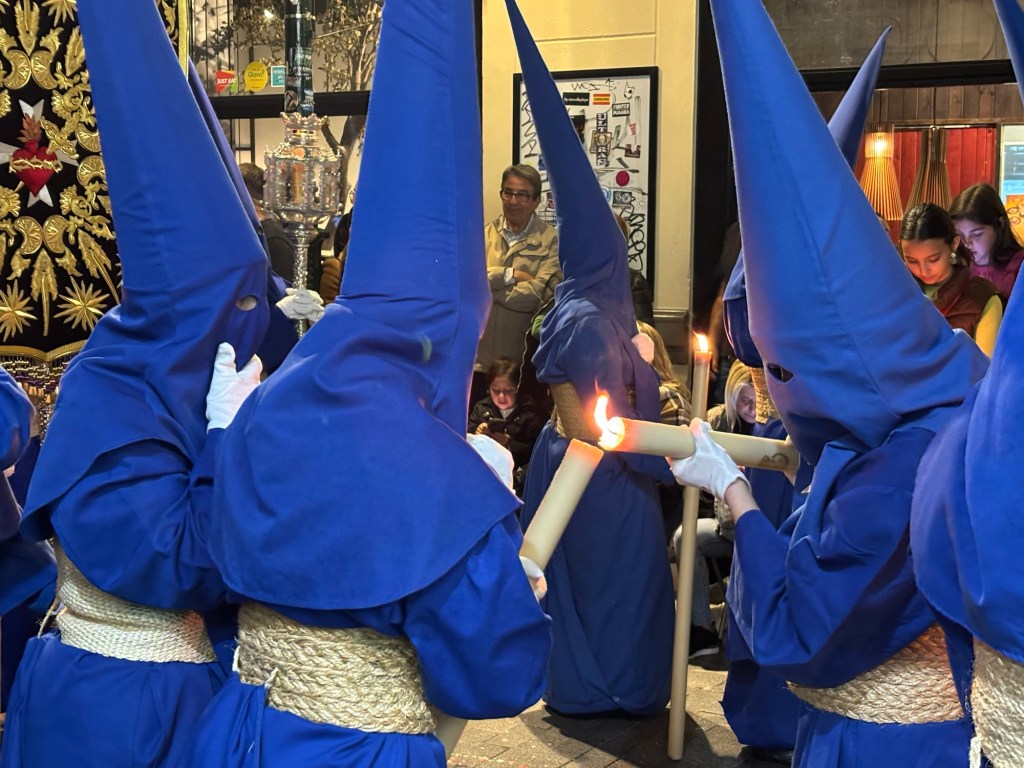
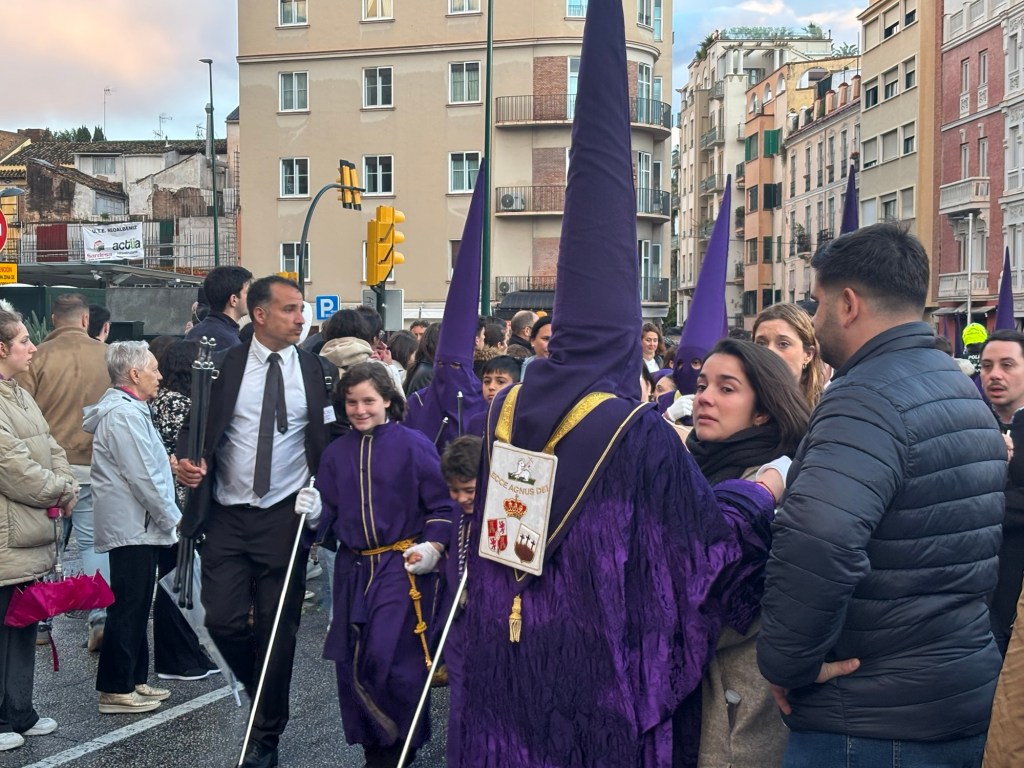
I was only half an hour off the bus back from Gibraltar when I was back out on the streets to catch the Wednesday night pasos. I didn’t have to go far: the Brotherhood of Nuestro Padre Jesús “El Rico” y María Santísima del Amor had just left their parish and were looping back around the Plaza de Merced. The rank and file nazarenos were dressed in robes of deepest blue, but some of them wore white cloaks emblazoned with the red badge of the Order of Santiago.


In their train was a group of women in black, wearing the traditional mantilla, a gesture of solidarity with the grief of the Virgin Mary. Known as manolas, they are a relic of a time before women were allowed to participate in the usual Easter celebrations, such as wearing the capirote or carrying the pasos. Until as late as 1987, it was forbidden for women to don the hood, and it wasn’t until some time after that it became common practice for them to do so. These days, wearing the mantilla is something of a badge of honour for young women, knowing that they are keeping an ancient tradition within a tradition alive.


I allowed myself an hour’s respite – mostly to charge my phone – before heading back out into the night to see the processions by candlelight, when they truly come into their own. I was lucky to get a spot at all. Being such a major annual event, many malagueños know to stake out a spot early to get a good seat – quiet literally, in fact, as a number of the principal routes were lined with foldable deckchairs from eight o’clock in the morning!


Málaga’s guiris don’t seem to be huge Semana Santa junkies. By nightfall, they had mostly retreated to their hotels, leaving the streets to the locals. As such, with a couple of exceptions during the night, the dominant language in the street was that wonderfully ebullient andaluz, best spoken a gritos. My mother likes to collect sugar packets from cafés, and Spain has a quaint habit of decorating theirs with quotes. The only one that has always stuck with me is the incredibly Spanish ‘lo que vale la pena decir se dice a gritos’ (whats worth saying is worth shouting), which is probably one of the most Andalusian statements around. And to think I once found their accent impenetrable and annoying…! Heresy. Now it’s nothing short of music to my heart.


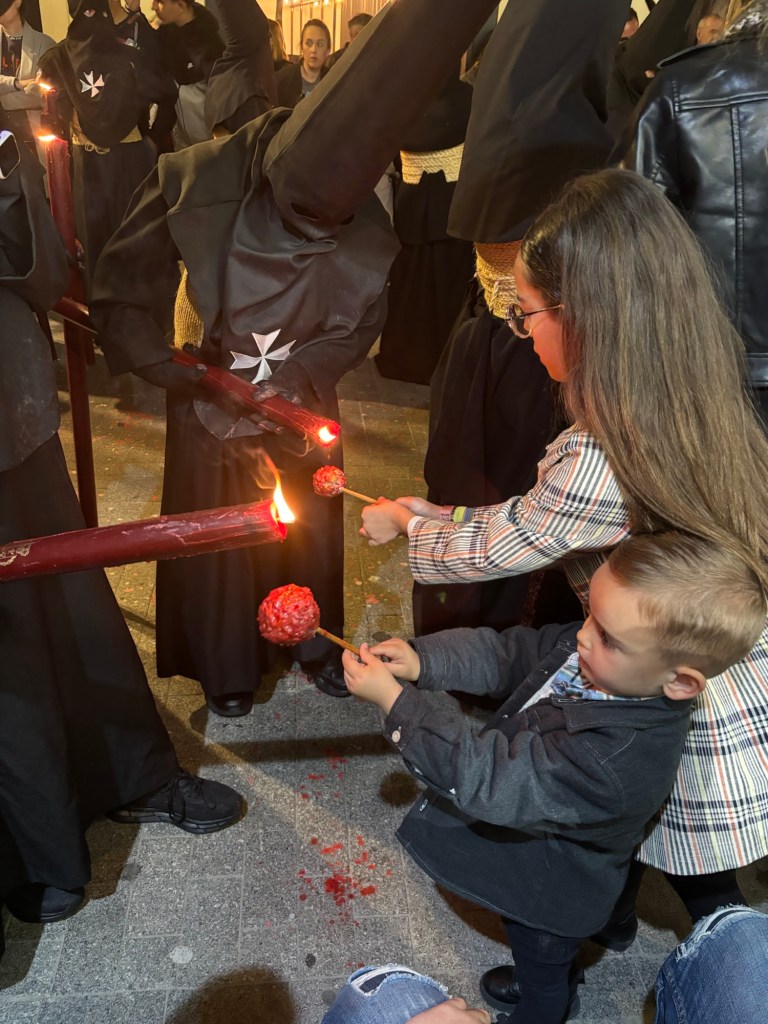
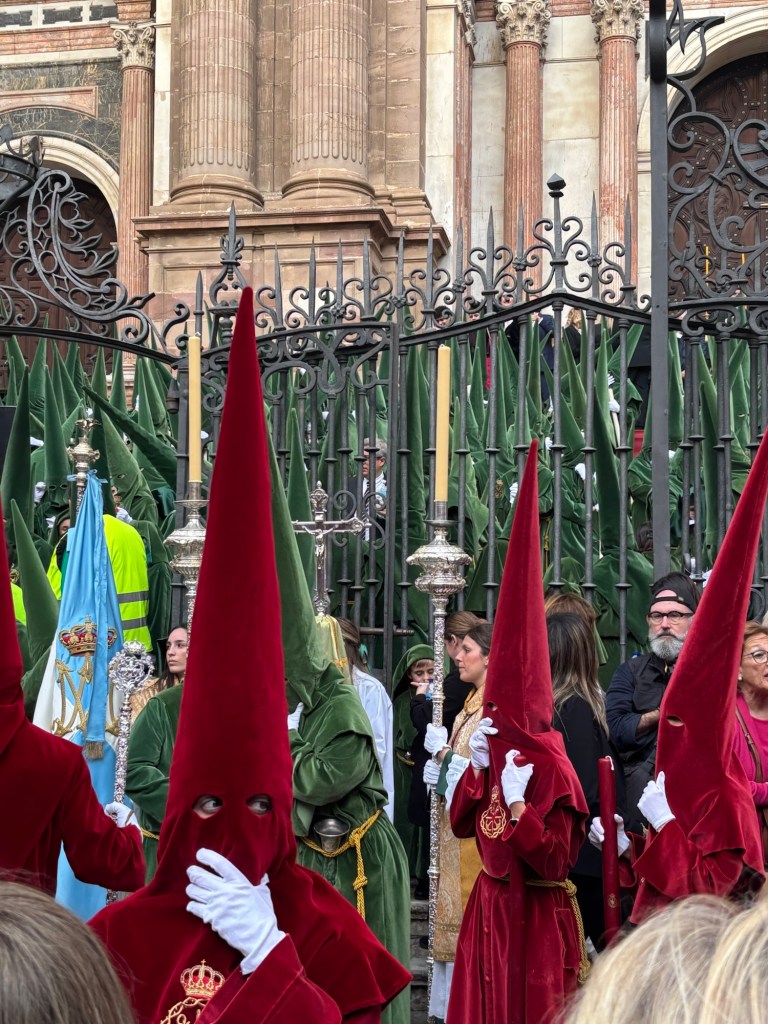
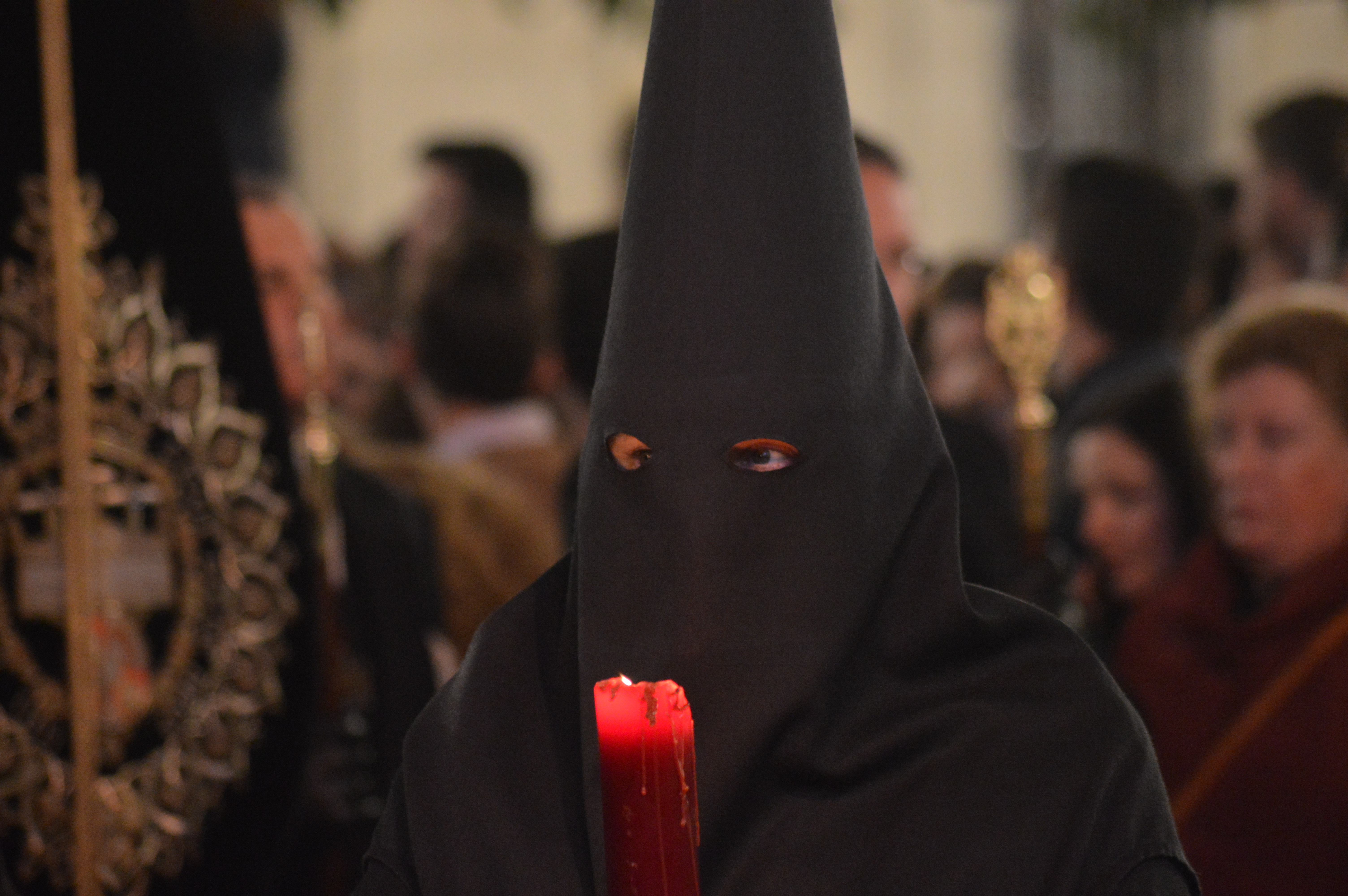
Another beautiful tradition of Semana Santa is that of the bola de cera. As the sun goes down, the nazarenos light their long candles – hardly necessary in a city as well-lit as Málaga, but an essential part of the spectacle. They need to be long to last the night, and it’s for this reason that the nazarenos all wear gloves, to stop the hot wax from dripping onto their hands.

In Andalucía, there’s another layer to it. Every time the procession comes to a halt, children run out into the street and ask the nazarenos for the wax from their candles.


They collect it on little sticks with a coin attached to the end – or using last year’s wax balls, if memory serves – and compete to see who can get the biggest ball of wax by the end of the night. It’s an old way of keeping the younger children entertained during the long hours of the processions, which usually go on well past midnight.


Honestly, it’s just incredibly endearing to see how wholesome this little game is. Sure, Spanish kids love their mobile phones just as much as (if not more than) English kids, but you don’t see a lot of English kids collecting wax or playing with spinning tops in the streets. I still have very fond memories of playing dodgeball and pilla-pilla in the streets with my friends when I was growing up out here. There’s just a bit more variety in the games that Spanish kids play. I want that world for my kids, if I should be so lucky to have children of my own someday.


There was a bit more of the behavioural policing tonight that I’m used to seeing in the pueblo: silver-staffed nazarenos striding over to give a ticking off to younger penitents who might have broken rank for a moment to gossip or talk with friends and family in the crowd. I’m always amazed by how quickly the nazarenos are recognised by their peers in the street, but then, if a ewe can tell its own lamb from its call alone, is it is so hard to imagine that a mother can tell their child from their eyes or gait? Perhaps not. We may not have the heightened senses of some of our animal friends but we are mighty indeed.


The one transgression that wasn’t being quite so closely monitored was the clustering of nazarenos around the glow of a screen at every stop – particularly in front of the Irish bar, where a large telescreen was playing the Real Madrid/Arsenal game. One nazarena was accompanied by her boyfriend, her black robes and his hoodie bathed in green light by the game on his phone, while a cluster of six nazarenos stopped to catch up on the replay, courtesy of one of the costaleros.

It was obviously an important game (what do you expect when Real Madrid are playing?) and it ended in a crushing 2:1 defeat for Real Madrid, but thanks to the greater task at hand of the procession, you wouldn’t have noticed. That said, I suspect that a Spanish victory might have been very noticeable: Spaniards don’t celebrate in silence.


To round out the night, a wing of the Spanish Army – specifically its Almogávar paratroopers – paraded by, accompanying their image of the Virgin Mary on her journey through the city. Lots of Spaniards come to town to see the Legion, but the Almogávares were a bloody good warm-up act, performing a number of impressive drills and acrobatics with their weapons as they marched.

Like a lot of military terms – including our own admiral – the word almogávar is Arabic in extraction, deriving from the word al-mughāwir, a light infantry raiding unit used by both the Moors and the Spanish during the Reconquista. Spain owes a lot to its Islamic past, from saffron and stirrups to rice pudding and the police. Slowly, I think the country is starting to appreciate its coloured past a bit more.


I’d better leave it there, or I’ll have bored you stiff with Semana Santa stuff – and I’ve still got one more night’s work to report! So stick around – the best is yet to come! BB x

Rain On Your Parade

Plaza de la Merced, Málaga. 21.13.

Everything always looks better in the light of a new day. It also always feels better after a decent night’s sleep, which – bar a brief episode where the street sweeper went by at 4am this morning and woke everyone up – I most definitely had. With my inner city blues no longer making me want to holler quite like they did the day before, I set out into Málaga in search of somewhere green and quiet.

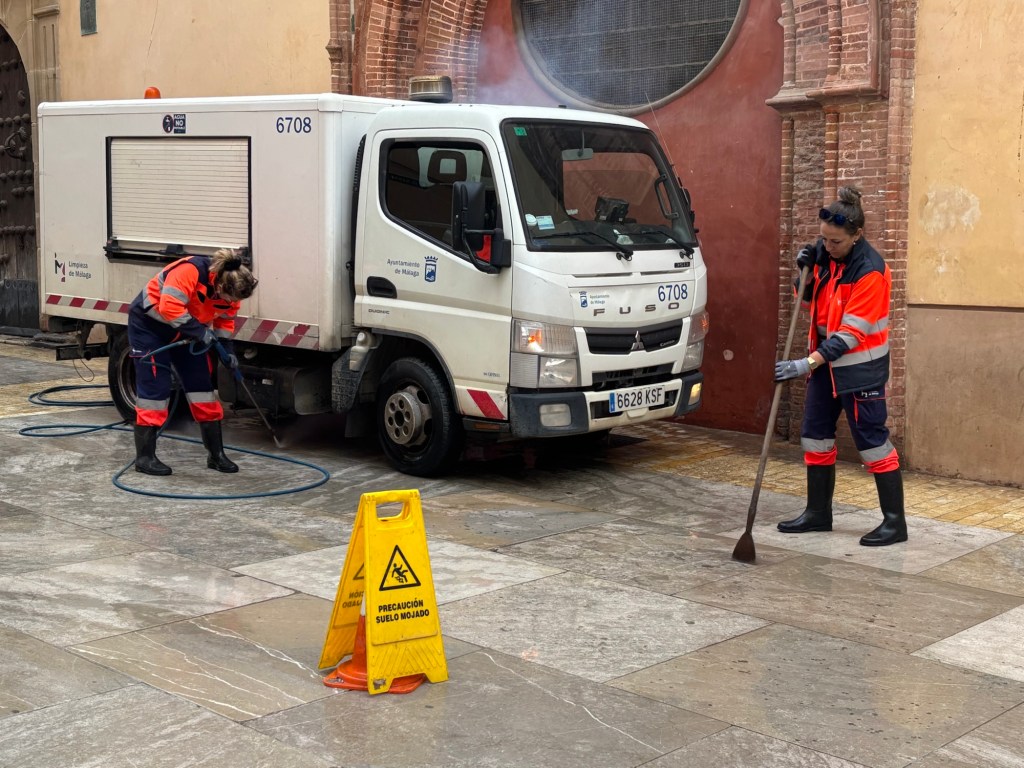
The street sweepers were still at work as I wandered across the old town, scouring the slabs outside the cathedral. There’s two reasons for this: one, to remove the wax from the dripping candles of the processions, and two, to remove the gum spat out by the thousands of spectators (especially the younger ones – almost every other guy and girl was chewing something last night).

I see a fair amount of gum-chewing as a teacher, but nowhere near as much as I do here. Spanish kids seem to be hooked on the stuff.


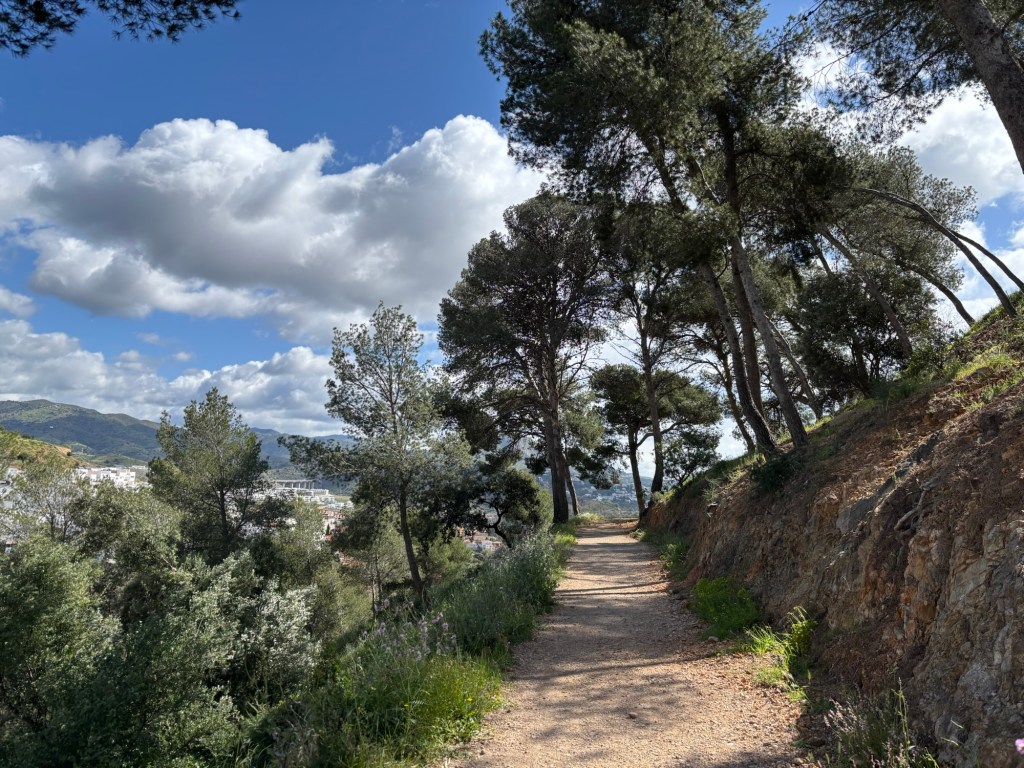
Gibralfaro is the antidote to the crowded streets of Málaga. An island of green in the busy seafront city, it allows for a rapid escape from the noise. Stick to the nature trails and you’ll leave even the rest of the foreigners behind. It might seem hard to believe, but there are corners of Gibralfaro where you can sit and imagine what this place was like a hundred years ago, before the coast was swallowed up by the leviathan of modern day tourism.


I came here looking for chameleons, primarily. They’re one of a number of strange African animals that can be found in Spain, alongside the genet, the mongoose, the Barbary macaque and the crested coot – all but the last of them introduced by the Moors, in all likelihood, though there is fossil evidence to indicate that some inhabited the Iberian peninsula in ancient times.

Looking for chameleons was something of a personal quest when I was a boy. They’re notoriously hard to spot, being both small in size and famously good at camouflaging themselves to blend into their surroundings, but that only made it more exciting. My parents took me on at least two abortive attempts along the coast of Cádiz, once to Barbate and once again to some other location whose name escapes me. Even with the knowledge that they have a preference for white broom bushes (perhaps on account of the insects they attract), they always managed to elude me.

It wasn’t until my last few days left in Spain, when my brief but life-changing year in Andalucía came to an end, that I finally struck gold. Hiding within the branches of a broom bush near the cliffs of Barbate, and not much longer than the span of my hand, was a chameleon. I had done it – I could leave Spain in peace.


It was, looking back, the first of the ‘great quests’ that I have set for myself. Finding a chameleon was the fulfilment of a boy’s dream just as finding my Spanish family was the accomplishment of an older, wiser wish.

Most of my ‘great quests’ have centred on Spain. I suspect that they will continue to do so as long as my heart beats in time with the magnetic pulse of this beautiful country.


Well, I didn’t find any chameleons this time. They’re quite numerous in the Axarquía, the verdant sierras that stretch east along the coast from Málaga, but while there are supposedly a few to be found on Gibralfaro, I didn’t see any. Still, it was a fun way to kill some time and step back into the shoes of a younger version of me whose passion for Spain was only just beginning to burn.

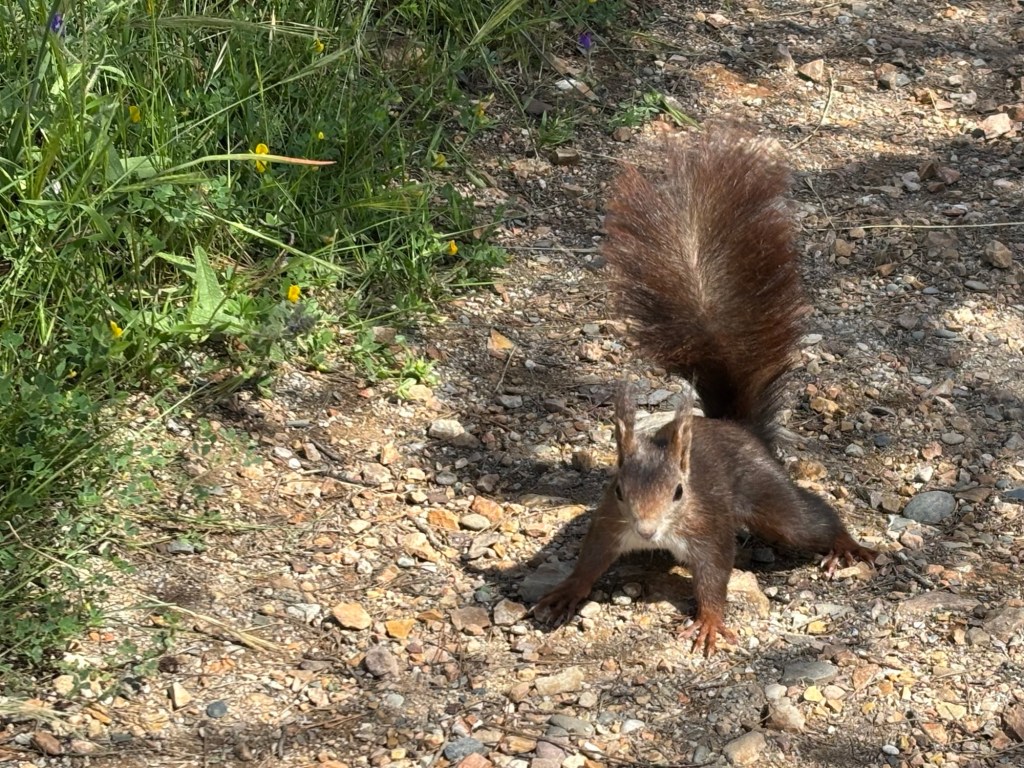
I did have a couple of encounters with the mountain’s red squirrels, though. Like most of the mammals that inhabit the Iberian peninsula, their fur is streaked with darker colours to better match the terrain around them. The only obvious shades of red can be seen in their fingers and toes.

The invasive American grey squirrels that have driven our native reds almost to extinction in the United Kingdom are not to be found here in Spain, so the reds are a lot less fearful than they are back home. They do, however, seem to possess the same fiery temperament that is often associated with humans of their colouring, and are quick to sound the alarm when they sense a threat.


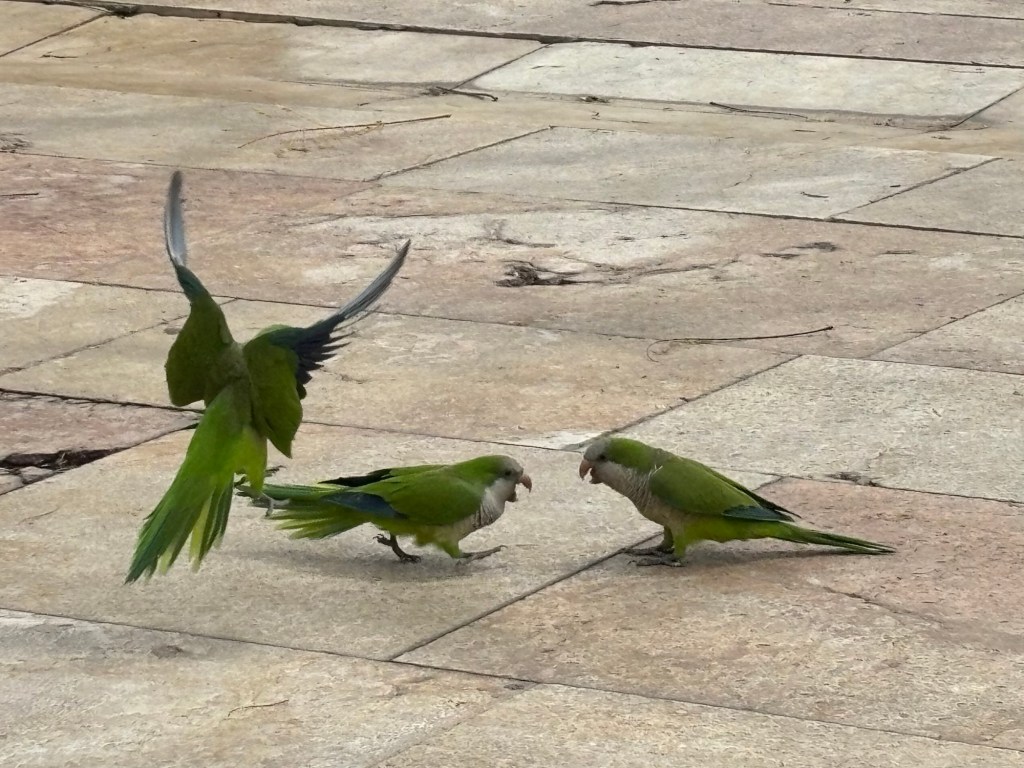
One species that has invaded Spain in the last century – almost as obviously as the tourists – is the monk parakeet. This South American species fulfils the same niche as the Asian ring-necked parakeet in the south of England, albeit with a much wider range: monk parakeets can be found in larger cities from Barcelona and Valencia all the way along the Mediterranean coast to Málaga and Cádiz, and even as far inland as Madrid.

They’re impossible to miss by even the briefest visitor to Spain’s cities, not least of all on account of the racket they make as they fly around the parks and gardens in search of fallen fruit, dried or otherwise. They made such an impact on the Spanish cityscape that the Japanese developers of the most recent Pokémon games, Scarlet and Violet, modelled an aggressive parrot-like Pokémon on them: Squawkabilly, whose appearance (and Pokédex description, for that matter) matches them exactly.


It was supposed to rain today, but it didn’t come down until late. Rain isn’t unheard of in Semana Santa. In fact it’s quite common, common enough for every hermandad to have a backup plan. And several backup plans were required this afternoon, as the heavens opened to a brief but torrential downpour.

I stayed inside for the worst of it, following the rescue attempts live on TV, and then set out to find a space in the brief respite provided by the rains – and, morbidly, perhaps, to see what damage had been done.


There’s usually the odd outpouring of grief from the spectators during the processions, sometimes in the form of a beautiful and spontaneous saeta (the traditional songs sung to the pasos, which requires the procession to come to an immediate halt), but there were a lot more tear-stained faces than usual. For some Catholics in Spain, this is the high point of the Christian calendar: publicly demonstrating their faith summa cum laude with their friends and family in the hermandad. When the conditions are just too poor, some pasos will be rained off entirely.

I counted at least five nazarenas in floods of tears being consoled by their families after dressing their best, only to be soaked to the skin and unable to continue their procession.

I’ve often wondered if the reason the Andalusians take Semana Santa to heart so much more than the other regions of Spain is that they once had far more to prove: being the region of Spain held longest by the Muslims, theirs was the shakiest of Christian bloodlines, and thus it must have behoved them to make twice as much of a show of being good Christians than their co-religionists in the north. It would go some way to explaining the unrestrained force of duende in the hearts of many an Andaluz costalero.

It’s just a theory, but I think it might have some grounding in truth.


Despite the threat in the clouds, the rain never returned. Jesus and Mary were taken out of the protective plastic coverings that had been hastily applied, the ornate candle-holders were emptied of all the water they had accumulated and those processions that had already made a start have now jumped the gun to make good for lost time. They will go on late into the morning, with the latest finishing around half past four. The crowds will be with them all throughout the night, but I need some sleep. Tomorrow brings another grand adventure – the last of this grand tour. I hope my legs are in good shape! BB x

The Captive

Plaza de la Merced, Málaga. 21.30.

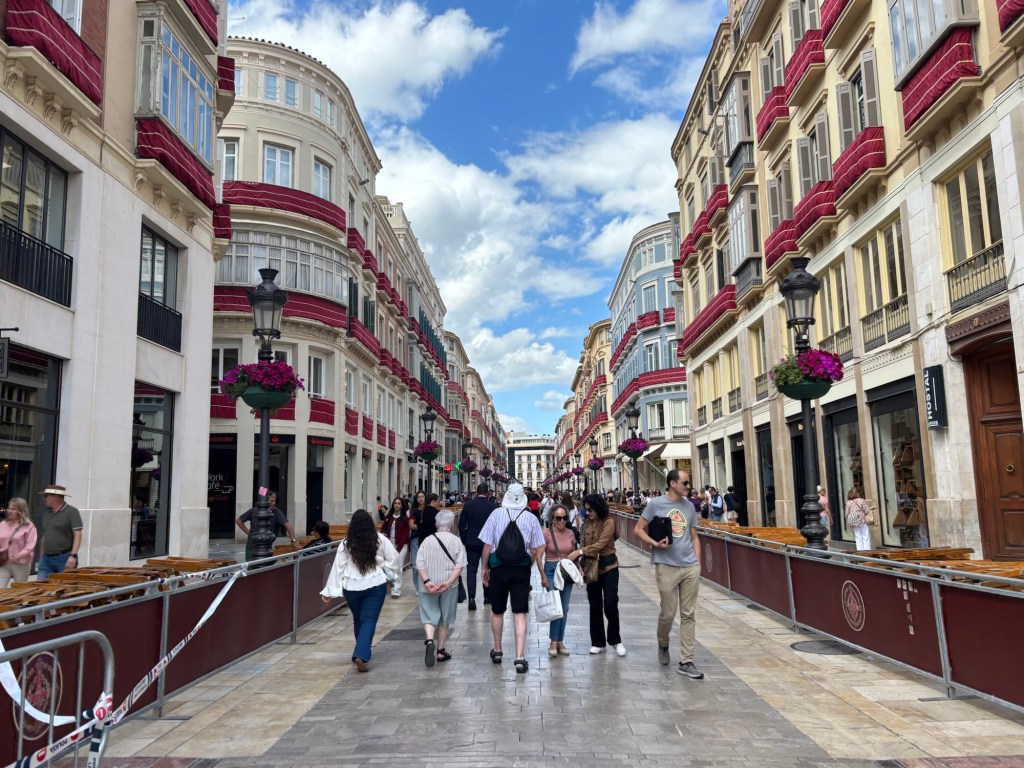
I’ve arrived at the final destination of my journey: Málaga, ancient port city of the Phoenicians, Carthaginians and Moors and holiday hotspot of choice for thousands of guiris. It’s an odd place for a self-professed country boy like me to end the trip, but there’s a method to my madness: Spain’s foreign legion comes to town to accompany the Semana Santa processions on Thursday, which is a mighty spectacle, and what better a place to wind up my unofficial investigation into Spain’s mass tourism blight than in than the place where it all began, decades ago?


Doñana feels a long way from here. It’s quite easy to walk down a street in Málaga and hear no Spanish whatsoever. I set a timer and managed to clock a maximum of seventeen minutes before I heard a sentence in Spanish on my way to my accommodation: of the foreign languages in town, German was by far the most common, followed closely by Dutch and English.

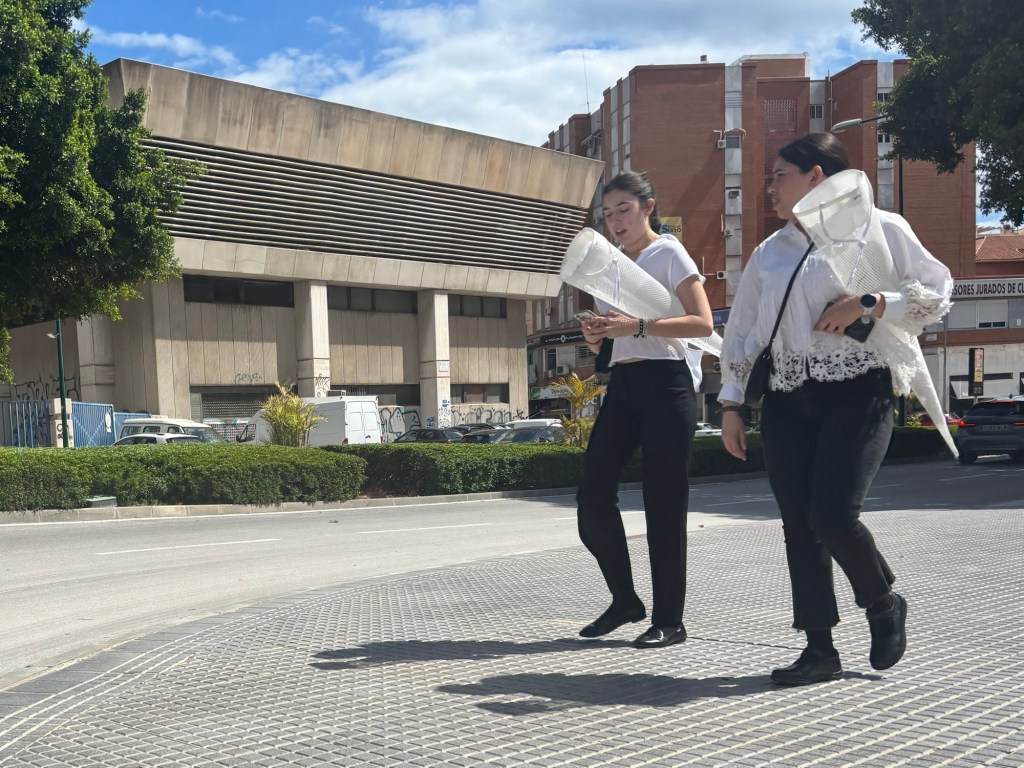
The simple explanation might well have been that the locals had better things to do this afternoon than mosey about the high street: Holy Week begins in earnest today, and those Spaniards I did see were dressed in their Sunday best, or carrying musical instruments, white peaked caps or wire cones for the hoods of their capirotes.


Málaga, together with Sevilla and Jaén, draws in the largest number of spectators for its Holy Week processions: last year, the additional income from Semana Santa alone was an eye-watering 393 million euros in the space of a week. As it stands, around 80% of the city’s accommodation options are at full capacity. Some of that is down to the fact that Holy Week coincides with the school holidays in the UK, but a great many of those tourists will be Spaniards, for whom the processions are far more than just a spectacle.


For the average tourist (or even the irreligious Spaniard), Semana Santa can be something of a headache, both literally and logistically. The passage of the nazarenos and their enormous floats, numbering as many as six hundred penitents, can prove an unorthodox and lengthy roadblock, with the longest processions taking more than thirteen hours to conclude. You have to admire the zeal of the nazarenos for such a stakeout, especially those who do the whole thing blindfolded, barefoot or dragging chains, but it does have the effect of turning the streets of the old town into a live action render of the Snake game on the old Nokia phones: time it wrong and you can end up trapped between the undulating tail of two processions at once.


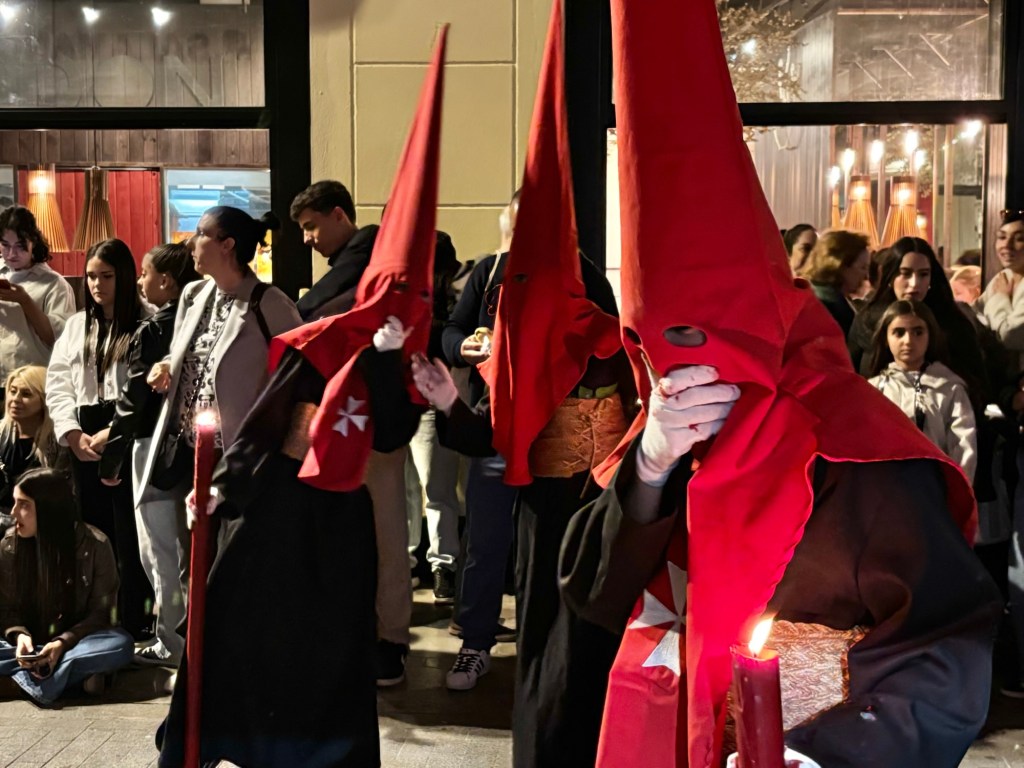
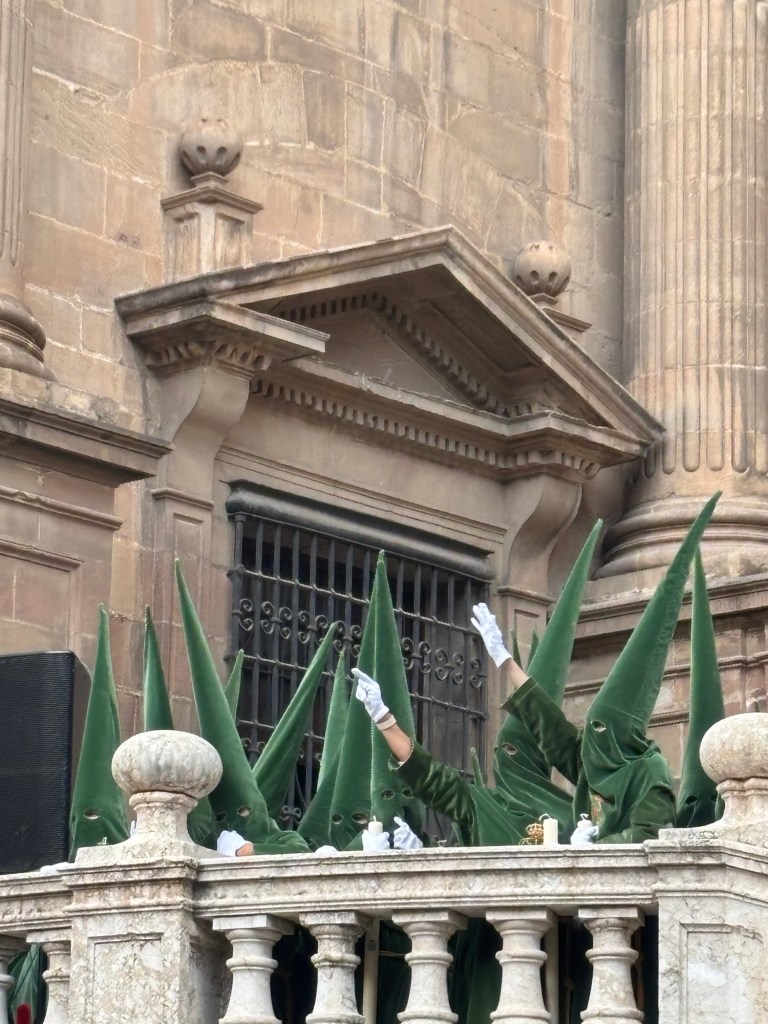
I couldn’t get anywhere near the Gitanos, one of the city’s most spectacular processions, as the crowd was five or six lines deep against the barriers, so I sought out the Estudiantes gathering outside the cathedral instead. Dressed in red and green, indicating their affiliation with Christ or the Virgin Mary respectively, the Estudiantes are the youngest of Málaga’s brotherhoods, drawing on the city’s youth for its members.

That much was plain from the behaviour of the nazarenos, who seemed a little less austere than I’m used to, popping up their hoods to drink from plastic bottles and waving at family members in the crowd. Perhaps it detracted from the magic, but then, my previous experience of Semana Santa is largely a small-town affair, where the sacred traditions of uniform anonymity are usually taken very seriously indeed. I’ve seen nazarenos scolded by their leaders for so much as looking into the crowd.

Málaga is notorious throughout Spanish history for its rebelliously liberal nature, so perhaps it’s unsurprising that their take on the Holy Week processions is a little more familiar.


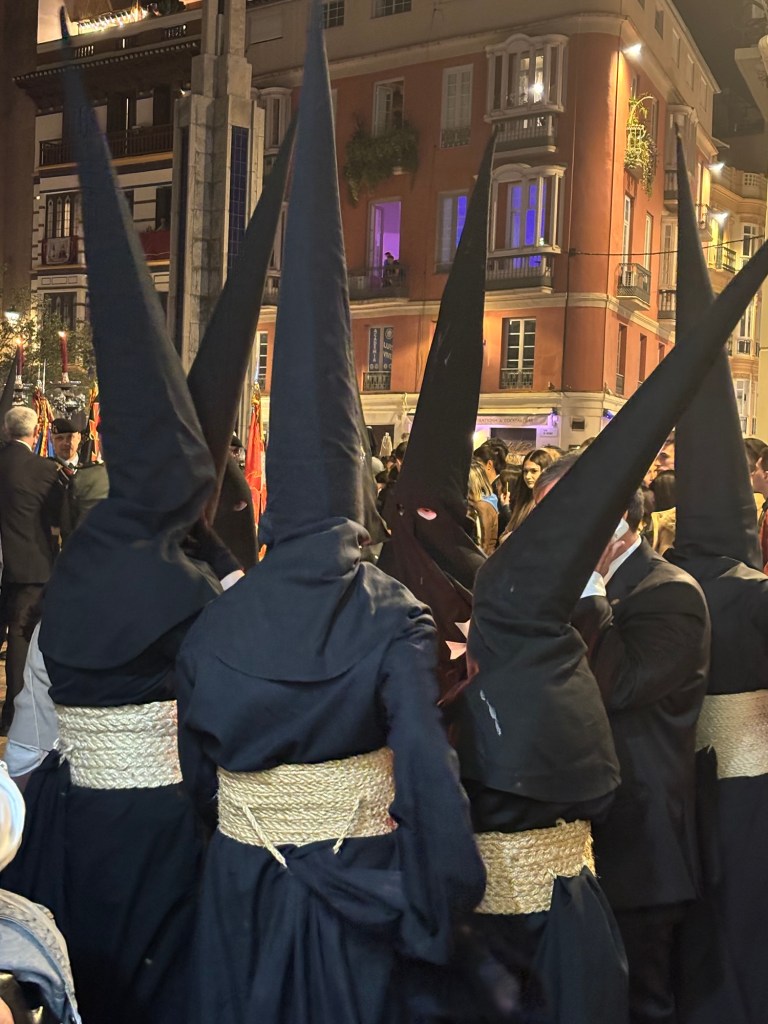
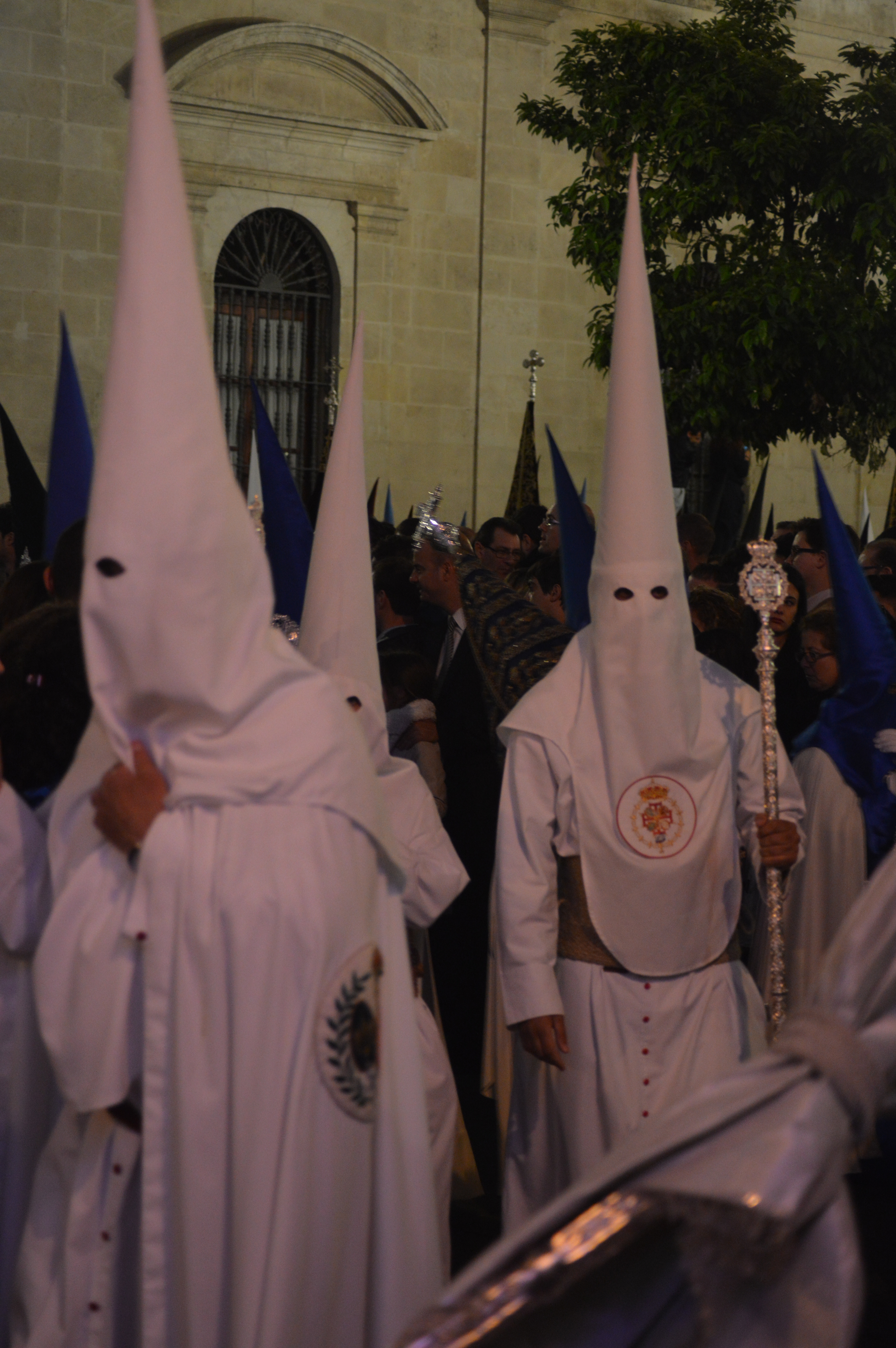
If I had a euro for every time I’ve had to explain away the comparison between the nazarenos and the villainous Ku Klux Klan – to students and Americans – I could probably afford another couple of nights of this holiday. The comparison seems far more obvious when the colour of their costume is white, of course – and I’ve seen unprepared American tourists jump out of their skin at the sight of the procession.

The simple answer is that Klan, among their myriad other crimes, purloined the outfit from here. The actual origins of the capirote are arguably darker still: they were originally known as sambenitos and were worn by the victims of the Spanish Inquisition, or rather, those victims granted the “mercy” of a quick death by strangulation for recanting their heretical ways and accepting Jesus. Those who didn’t were burned alive.

The different colours of the hermandades or brotherhoods may have originated in the designs on the sambenitos of the accused, indicating the crime they had committed or the fate for which they were destined. It’s believed that the Spanish started to make a connection between anonymity, penitence and overt professions of faith, and adopted the sambenito for use by those seeking to make penance during Holy Week as early as the 16th century. Certainly, by the middle of the 17th century, its use had become widespread, developing steadily into the tradition we now see today.

That makes the sambenito somewhere between two and three hundred years older than the robes of the Klan, who only officially adopted the ceremonial white robes under their reorganisation as the Second Klan in 1915.

So hopefully that puts the matter to bed.


I’ve never been troubled by their appearance, having encountered the nazarenos long before I learned about the KKK at school, but the procession isn’t without its issues for me. Something I’ve had to face here is my aversion to crowded spaces. It’s not agoraphobia, but it’s probably not far off.

In many ways, I feel more Spanish than English, but in one I am on the other side of a cultural gulf: I cannot stand the hustle of a crowd for the life of me. Spaniards seem to enjoy the hypersocial element of a giant conglomeration: there’s a thousand possible conversations to be had, a hundred new friends or connections to be made, and always the chance to enjoy something together – be that food, music, a joint or a spectacle. While an Englishman’s home is his castle, the Spaniard’s natural environment is in good company.

Good company is fine, but I have my limits, and it isn’t my idea of fun to be pushed, jostled and elbowed about by a massing crowd for the best part of a couple of hours. Semana Santa has always been a sombre, intimate affair in my previous encounters in Olvera, Villafranca and Villarrobledo. Here in Málaga, it is anything but.

The omnipresence of the police – all of them armoured and heavily armed – is a constant reminder of just how big the crowds are. They flank the processions, pushing the milling crowds back when they step out of line to take a selfie in front of the pasos (an affliction which, though it pains me to say, is very much a Spanish trend). One couple just kept trying, leaning into the paso as it passed so close that the costaleros – already carrying more than five thousand kilos on their shoulders – had to actively sway more to the right so as not to collide with them.

Crowds have a nasty habit of getting to me, as does selfishness, and it all got a bit much. Hemmed in by the processions, however, I had no choice but to either wait it out or duck into a restaurant until the way was clear. I chose the latter option.


I’ll have another shot at the processions tomorrow. I have gone from zero to sixty in the blink of an eye, coming from the total quiet and solitude of Doñana to… this. It will simply take a bit of getting used to, that’s all.

Until then, I have my books. Far too many of them. Thank goodness for extra bags on flights! BB x

Easter and El Cid

Ending any stage of the Camino is always a sad experience. I think I’d managed to put it out of my memory last time, but it came back to bite this morning. I guess it’s the routine sense of purpose the Camino provides so effortlessly: wake up, eat, walk to your next destination, wash your clothes, eat, sleep and repeat. You never need to worry about planning ahead, and that allows you to focus on the small pleasures: conversations on the road, birdsong in the morning, the joy of taking off your sandals at the end of the walk. Life can seem a little lacking in purpose when you step out of it.

So, unwilling to surrender entirely to sorrow, I strapped my sandals back on and set out to explore the beautiful city of Burgos, city of Spain’s greatest hero of all time: Rodrigo Díaz de Vivar, El Cid.


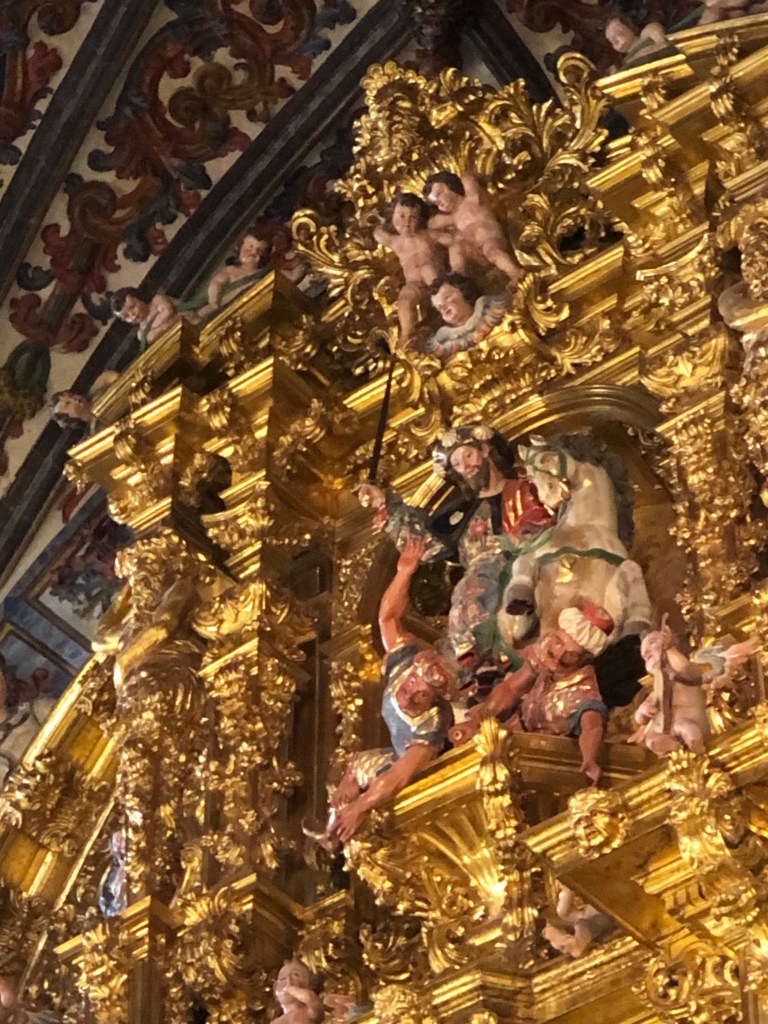
I went to Mass in the cathedral. There were two celebrations taking place in the chapels at the front of the cathedral ahead of the misa solemne. I opted to attend one of the smaller ones. For my sins I haven’t always been to church on Easter Sunday since becoming a Catholic, so it was extra special to turn that around here in one of Spain’s most beautiful cathedrals. Even if it did mean staring up at one of the least subtle icons of Santiago Matamoros.


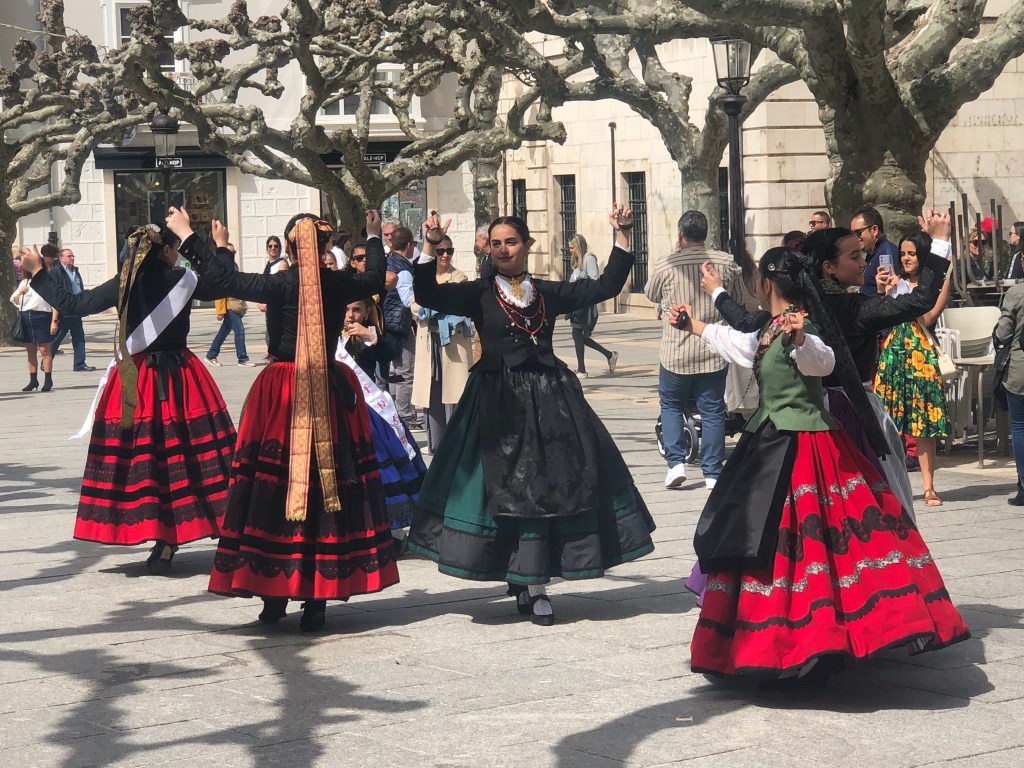
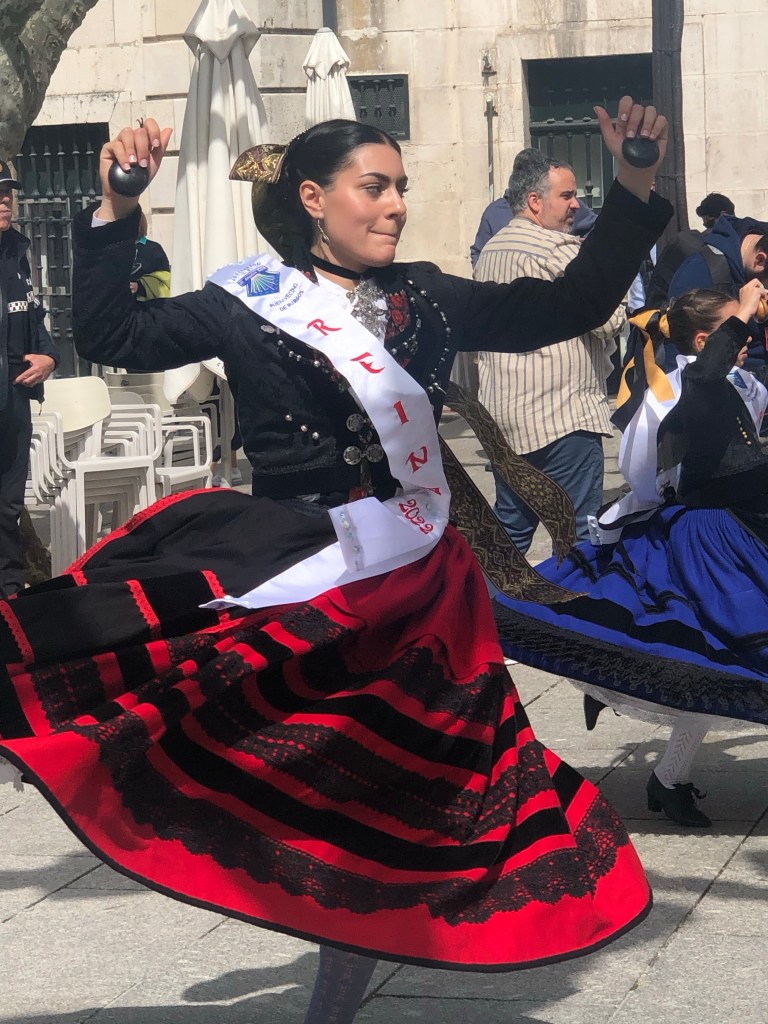
While soaking up the sunshine on the bank of the Arlanzón, I heard the sound of bells. A colourful procession was making its way down the Paseo Espolón, trailing a happy crowd of Sunday pedestrians. Gone were the solemn drums of the nightly pasos: the air was thick with the clean sound of hand bells and castanets. Gone too were the hoods that had so spooked the American pilgrims: these celebrants were welcoming the Easter season in with golden ribbons in their hair.


I’m a bit of a purist when it comes to Semana Santa. In the same way that I prefer enigmatic bulerías to happy-go-lucky sevillanas, I’ll always take the dark mystery of the nightly processions over the happier parades that bookend Semana Santa, Domingo de Ramos and Domingo de La Resurrección. Even so, the addition of an advance guard of local dances (in local dress) is a very nice touch: I don’t think I’ve ever been moved so by Easter Sunday’s celebrations.


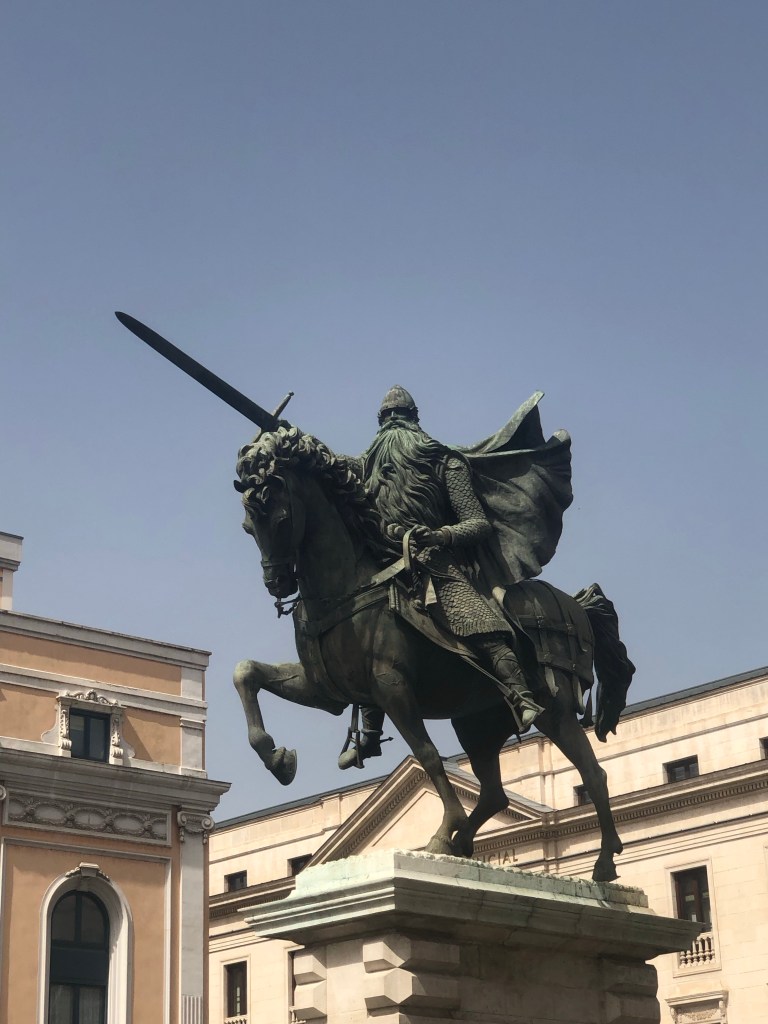
Leaving the celebrants behind, I made for the Puente de San Pablo, which is, frankly, a less than impressive name for what should really be called the Puente de los Héroes. Watching the passing traffic from eyes of stone are the primary characters of the Cantar del Mio Cid, among them Alvar Fáñez, his lieutenant and nephew; Jimena Díaz, his wife; and Abén Galbón, his Muslim friend and lord. At their head on the north bank stands the Cid himself, an imposing figure astride his war-horse Bavieca with the sword Tizona in his hand. I’ve been obsessed with the legend of El Cid since I was a boy, and none of that has faded as I approach thirty. I still get a giddying kick in the guts at the sight of that statue. Whatever the real Rodrigo Díaz might have been – warlord, mercenary, king in all but name – I will always be a fan of the legend. It is, truly, one of the greatest stories to come out of Spain.


It occurred to me that I had not actually been inside the cathedral proper on my last visit ten years ago, so I decided to make good on that this time. After all, it isn’t every day you get to pay your respects at the resting place of a real-life legend – and at half the price, as a peregrino (5€ with a credential – that’s a steal!).

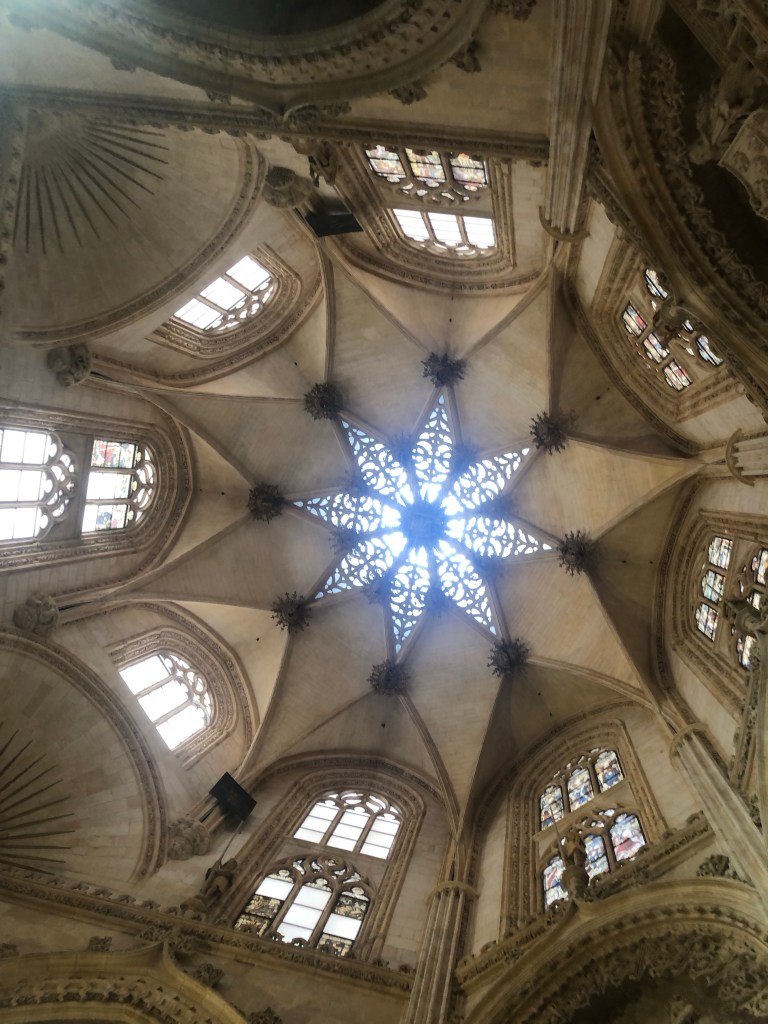
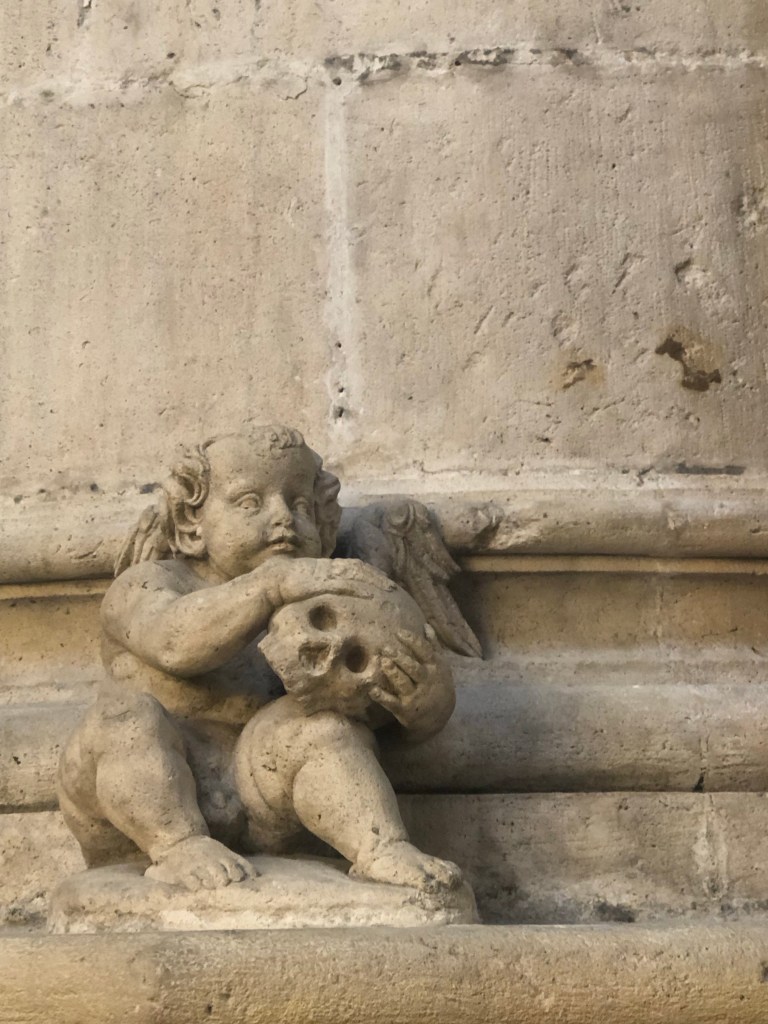
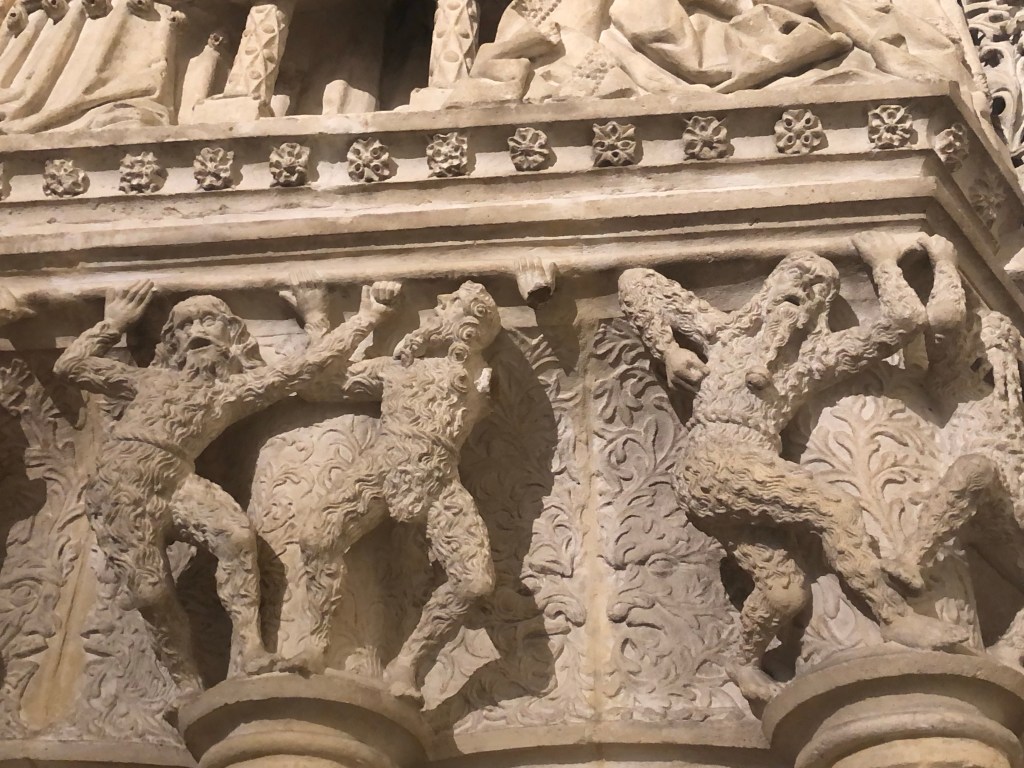
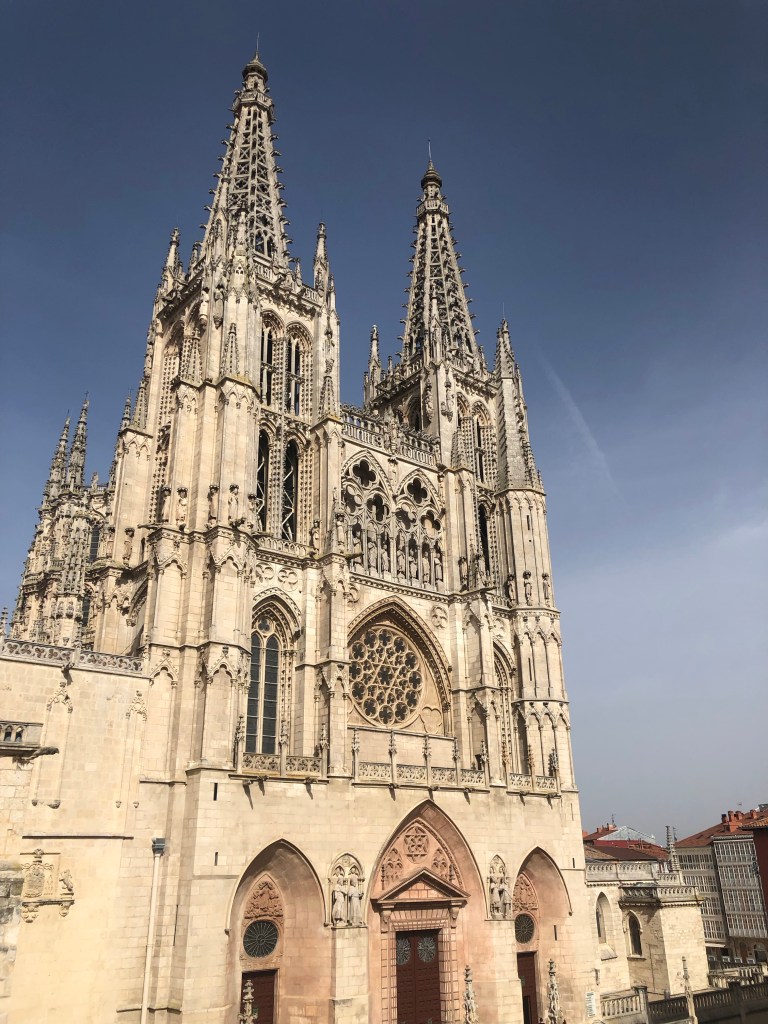
Now, I’ve spent my life in and out of cathedrals – I know Canterbury’s so well I could probably navigate it blindfolded – but Burgos is something else. I’ve heard people say it’s more impressive outside than in. While it’s easily one of Spain’s most breathtaking cathedrals to behold, the interior of Burgos’ cathedral is no slouch. Come for the tomb of El Cid (or what remains of his the French didn’t loot as trophies during the Peninsular War) but stay for the incredible stonework. There really is something to see at every turn, from starburst-like windows in the upper vaults to stone carvings of skulls, savage beasts and wild men.


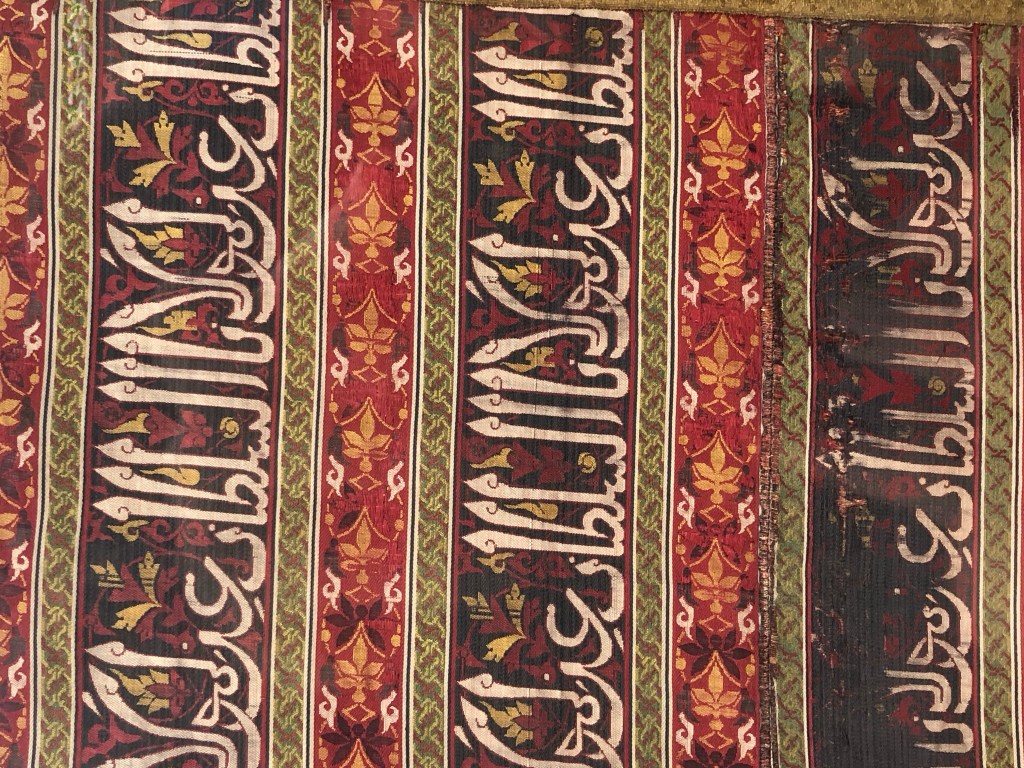
The treasure rooms in the lower chambers also hold a number of interesting relics, including the Cid’s legendary chest of sand, the silver hand of Saint Thomas A’Beckett (of Canterbury, of all places!) and a beautiful Moorish cloak emblazoned with the motto “Glory to the Sultan”. I wasn’t expecting to see any Moorish treasures so that last was an unexpected bonus!


With my tour of the vaults complete I popped into one of the only food stores still open and had a snack dinner of mejillones en escabeche – a solo travel staple of mine – overlooking the cathedral. A pair of ravens circled the twin spires for about an hour, their usually impressive stature dwarfed by the Gothic masonry. I couldn’t get into the bottled tinto de verano I bought on a whim – foolishly, I didn’t think to check if it would need a bottle opener. It’s still sitting unopened on my beside table as I write.


Finally, I went out for a beer with Francisco, the Mexican from the hostel. He was keen to draw my attention to a mural near the bar, where the Cid once again leapt off the page of legend into life. I was most impressed to see one detail in particular: the moros watching from the corner were striking for how un-Moorish they looked. Why, without their turbans, they might just as easily have been as Castilian as the other citizens of Burgos.

Which is exactly the point. We can be fairly certain that, by the time of the Cid (the mid to late 11th century), many if not most of Iberia’s Muslims would have been native to the peninsula for generations, not the lean, bearded Syrian stereotype that is so often thrown about when painting this period of history. Major props to the artist – it’s a brave stroke but a necessary one.


I have now made landfall in Bilbao. I’ve scouted the bus and train stations and they seem navigable enough. Tomorrow, I strike out for the highlands that followed me all the way along the Camino. I’ve had two days to recover and my feet are feeling much better. One final challenge stands between me and my flight home. Let’s hope I’m up to it! BB x

Rome IV: Popes & Palms

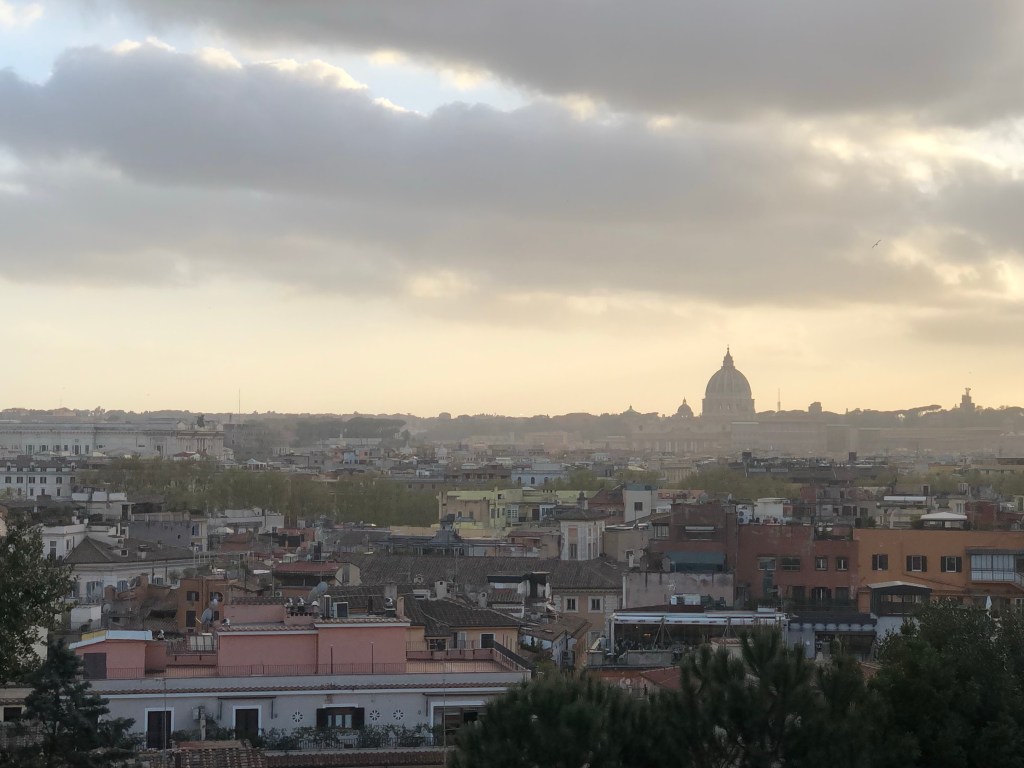
Bloody hell, but that was unnecessarily early start. The trip to Fiumicino Airport (8€ on the shuttle bus from Via Crescenzio 2) was on time and completely hassle-free, so I arrived with four hours to go until my flight – a new record in caution. Still, better early than late! It gives me time to relax and put yesterday morning into words.


All I can say to start with is believe in your own luck for a change. Because Sunday morning’s adventure wouldn’t have happened at all if I hadn’t taken a chance.

One of the main reasons I came to Rome and stayed until this morning was because of the very real chance of seeing the Pope deliver his Palm Sunday Mass in St Peter’s Square. That’s not the kind of opportunity you pass up on if you can help it. Unfortunately, the information on the internet is vague, conflicting and genuinely quite hard to track down. Most of it implies you need to apply for a ticket directly to the Vatican via fax (!!), sometimes as early as three months in advance, to be in with a chance of securing a “coveted” ticket. At least, that’s what all the tour companies say. By Saturday night, I’d more or less given up on the whole affair and planned to go for a morning walk down the Via Appia instead.

Turns out the internet is wrong. So here’s me setting the record straight.

Contrary to what you may find online, you do not need a ticket to attend the Palm Sunday service in the Vatican City. It’s free and there’s no need to book!!!

I rocked up in my casual clothes with my picnic packed for the Via Appia and thought I’d check to see what was going on in VC and before I knew what I was doing I’d followed a whim and chanced the security barriers. They scanned my bag, found only a punnet of olives, a punnet of strawberries, breadsticks and some other snacks… and let me pass.

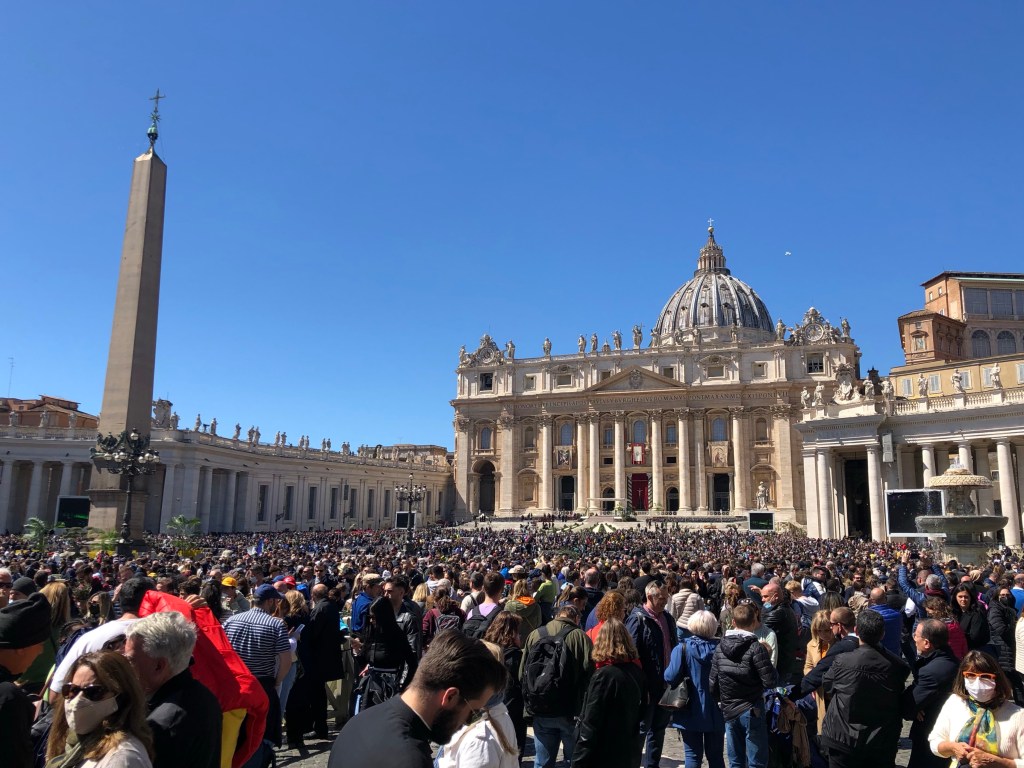
As it was still only 8.20am, St. Peter’s Square was still relatively empty. Thousands of chairs had been set up overnight, along with the temporary barriers raised around the central obelisk and the wind rose, but other than a small crowd settling into the first block of seats the pickings were good. I found a seat near the front of the second block, just two rows back from the barrier and strategically positioned behind two families who’d put their children in the seats directly in front, giving me a perfect view over their heads to the Papal seat. If I’d planned to come I could have arrived sooner and snagged the best seats in the house, but for a spur-of-the-moment decision I really lucked out.

By the time the warm-up Ave Marias were being chanted (in Italian, the real lingua franca of the Vatican), the seats on either side of me had been taken: by a diminutive group of Indian nuns on my right and a large Eurasian woman and her daughter on my left. I would have been squashed throughout the service had the nuns not seen on one of the telescreens that there were still five empty seats in the front block and gone charging off for a better seat, and my other neighbour left during the Communion after realising she was holding up the entire row by being the only one not going up for communion. By the end of the service, I had more room than I knew what to do with!

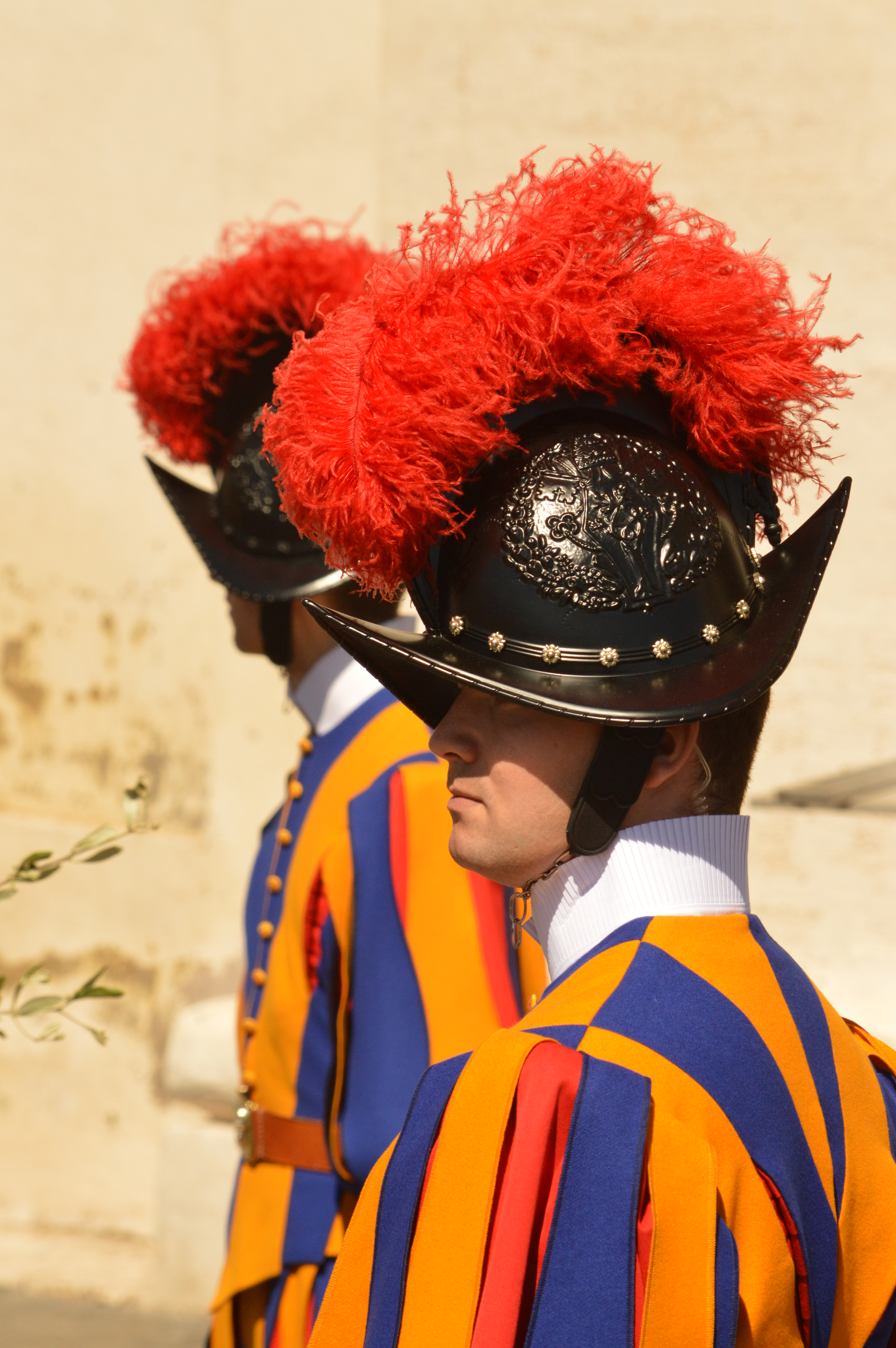
The Swiss Guard were quite a sight to see in their full regalia: plumed morion helmets, black capes worn about their landsknecht-esque striped uniforms and, at least in the hands of those guarding the cardinals’ seating area, impressive halberds, their tips flashing in the sun. I’m not sure if they’re more visible if you take a walk through St Peter’s basilica or the Musei Vaticani, but I certainly hadn’t seen them until now, so it was worth coming even if only for that!

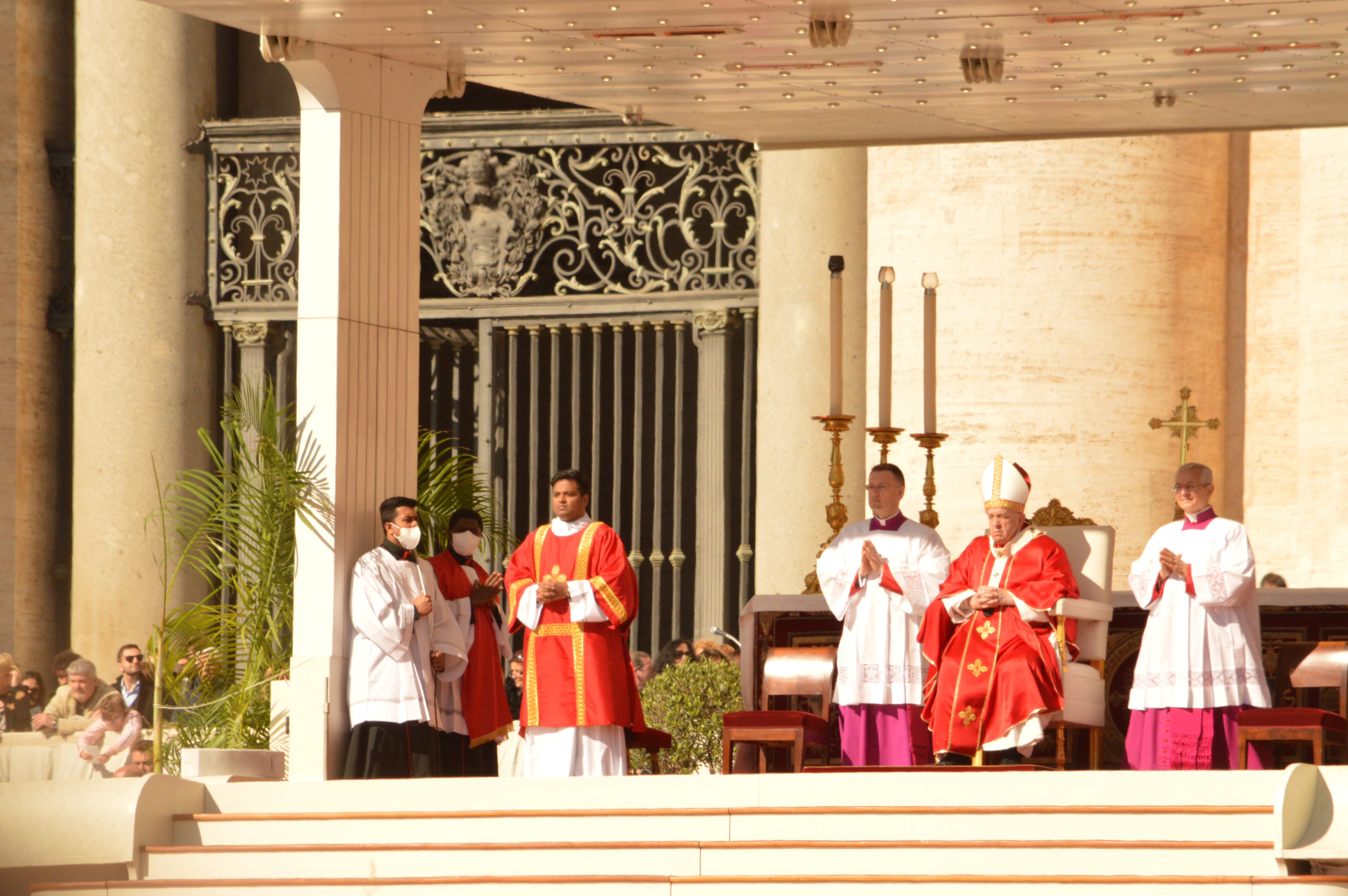
And of course, Pope Francis himself, dressed in regal red until the end of the service. Since my wanderings tend to take me off the beaten track, the list of famous people I’ve encountered is downright pitiful, but this has got to rank right up at the top – like Pope Francis did in 2013’s Time Magazine. Seeing the warm smile of the humble head of the Catholic Church at such close quarters was a once-in-a-lifetime event, truly… I couldn’t help taking up the cry of ‘¡Viva el Papa!’ raised by the Colombian family in front of me. His humility is what makes him so inspirational to me – that a man in so important a position should have no qualms making apologies for centuries-old abuses of power by his institution, or reject the majesty of status outright while still holding true to the core values of the church. I might not have gone to such lengths for a different Pope, but for Francis, my feelings were genuine. What an inspiration!

I’ve also never seen a Palm Sunday service quite like it. Multilingual (there were readings in Spanish, English, French, Portuguese, Mandarin and Malayan, as well as Italian) and multifaceted: the song of Jesus’ arrest by Pilate and his Passion was performed by various cantors with the full choir as the voice of the crowd. Faith through storytelling through song… now that’s more like it! It was like watching a passion play of old – and in a very real sense, I suppose that’s exactly what it was. They’ve been doing the same thing here in this square for well over a thousand years.

The Pope ended the service with a reminder to care for the poor – ever at the heart of his urbi et orbi message. When I left, I saw that in the merry exodus from the square, some misguided pilgrims had smashed right through a street vendors’ wares, knocking them in all directions. As I approached, several strangers gathered round to help the man set his little stall back to rights. Just as there are those who profess to do good and look no further than their own backyards, so too are there people out there prepared to help their fellow man, whoever that may be. That gives me hope. To quote a famous film set in and around the Vatican City:

Religion is flawed, but only because man is flawed.

Dan Brown, Angels and Demons

I’ve made it to the pueblo and a much-needed week with my cousins. It’s been fun wrangling with Italian, but these lips were meant for speaking castellano, hombre. Until next time! BB x

Kicking the Habit

I can’t believe it. I’ve done the unthinkable: I’ve booked myself a holiday, and for once, it’s not Spain. Well, that’s not strictly true. I should say I’ve booked half a holiday that isn’t in Spain, because there’s nowhere else in the world I’d rather be in Holy Week than with my family, especially since the procesiones haven’t happened for two years now. But after an evening spent stuck in a rut over where to go and what to do in the week prior, I decided it was high time I broke the mould and explored somewhere new for a change. It’s a place I’ve never been before, and yet it’s also a place I’ve had so much to do with over the years that it would be nothing short of criminal to keep ignoring it.

The destination…? Italy!

For years the excuse for passing over Italy has been my (completely unfounded) belief that “everything Italy can do, Spain can do better… plus they speak Spanish”. Spoken like a true tercio, but not exactly the most grounded of opinions, nor a particularly sensible idea for somebody who’s supposed to be a modern foreign languages teacher.

So I’m giving myself a week out there to open my eyes and blow my mind.

I have six weeks to teach myself some basic Italian. Given the almost daily contact I have with Italians at work, that shouldn’t be too difficult – and hey, I could use a challenge.

Part of me feels I’m getting a little old for this solo travel malarkey, and yet there’s another part of me that’s been getting restless for months. I need something to take my mind off how messy 2021 was, something to jumpstart the thrill of adventure I used to feel all those years ago… and, most important of all, something that will give me stories to tell on here that aren’t always about my grandparents. I could certainly do with some fresh material for a change.

A slightly mad move on my part, but if I have to spend another holiday at home I’ll almost certainly go mad. 2017 Me is wagging a finger and calling this kind of behaviour entitled, but then, 2017 Me thought he had it all figured out – and he had just spent a week up at the Edinburgh Fringe, which was probably one of the most expensive holidays I’ve ever had. To throw more fuel on the fire, this year’s summer holidays are going to be little but driving lessons, and as the Camino de Santiago has yet to return to normal, I have no excuses. So it all hangs on Easter.

I have a start point in Venice. And I have an end point in Rome. Eight days is what I have to play around with. I suspect there’s so much to see in both cities that I ought to split the week in half between the two rather than trying to cram in anywhere else en route, but I’ll cross that bridge later. For now, I have a language to learn.

Gee, I haven’t felt this motivated in ages. It’s time to fall in love with the open road once again. Fatti sotto, Italia! BB x

Holy Gridlock, Batman!

I remember saying a couple of days ago that I was going to take it easy and travel less this year, beginning with Semana Santa. Predictably, that failed almost as soon as the words left my mouth. I’m now sitting at ease on the balcony of a cute little hostel in Córdoba, having spent the last four days traveling in a large triangle around Andalucía, from Matalascañas to the Great Mosque. It’s the Easter equivalent of last term’s ‘square puente’ to Lisbon, Aveiro and Salamanca. Only this time, I’m not alone, and it’s been a barrel of laughs from start to finish.

I’ve told you about El Rocío. Let’s start with Seville. Seville is one of those cities that I’ve always thought rather overrated. It’s the Spanish equivalent of Frozen; people come back from it raving about what they’ve seen to such an extent that by the time you get around to going to see it yourself, it’s difficult not to be disappointed. Unlike Frozen, however, it’s worth digging in and opening your eyes a little.

DSC_0983

No, I’m not the biggest fan of Frozen. Something to do with Elsa’s dumbstruck ‘of course, love!’ remark, as though love were entirely alien to a Disney film and its target audience… and let’s not forget that ubiquitous Let it Go.

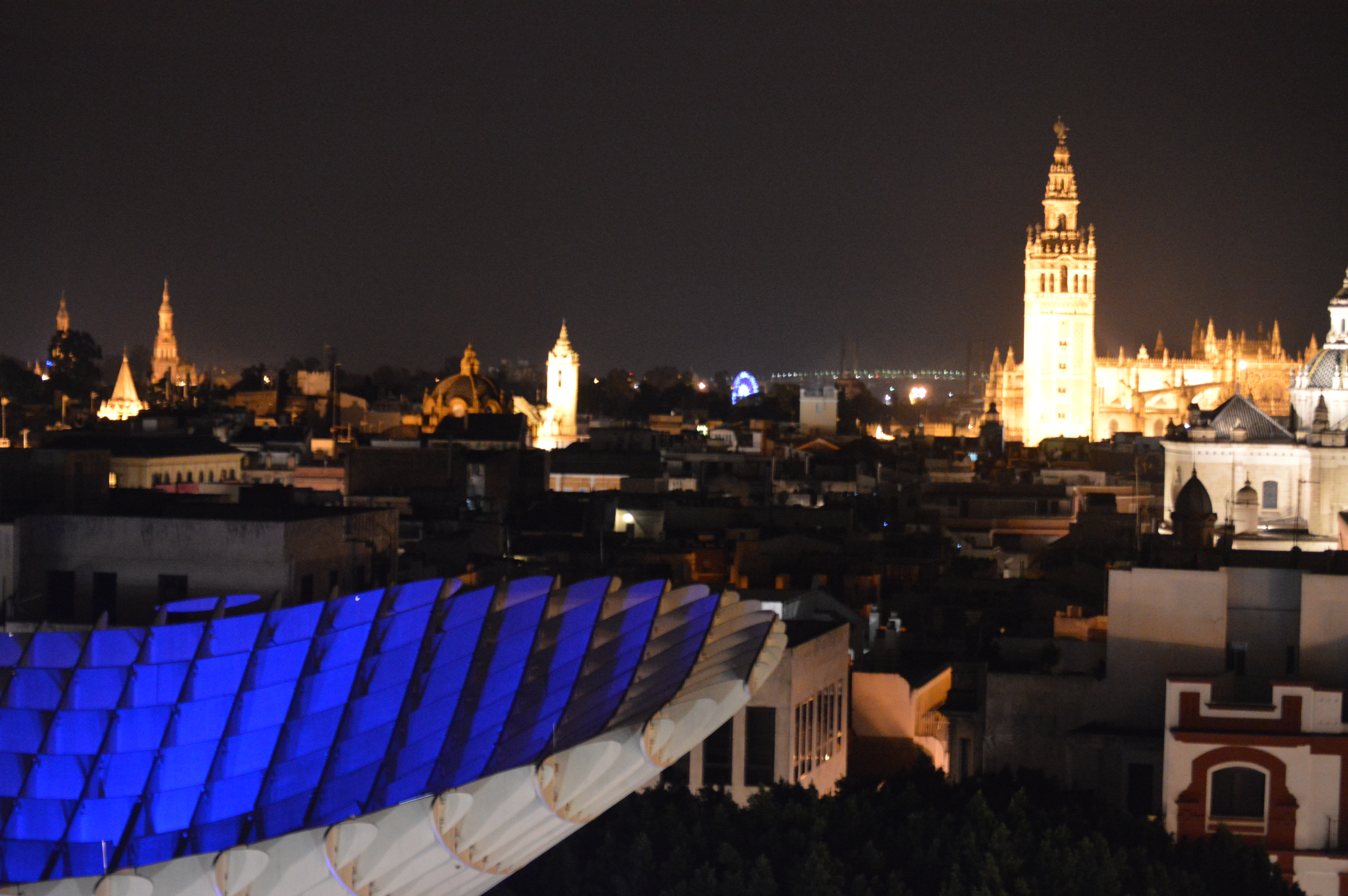
I’m sidetracking. As usual. I’ve been very blasé about Seville all year, using it largely as a transit between Villafranca and other southern destinations – mainly Olvera – and never visiting the city for its own sake. Mistake. If you can find a place to stay for the night in Seville, do. Especially in Semana Santa. Having the freedom to see the city by night as well as by day is a treat not to be overlooked.

DSC_1053

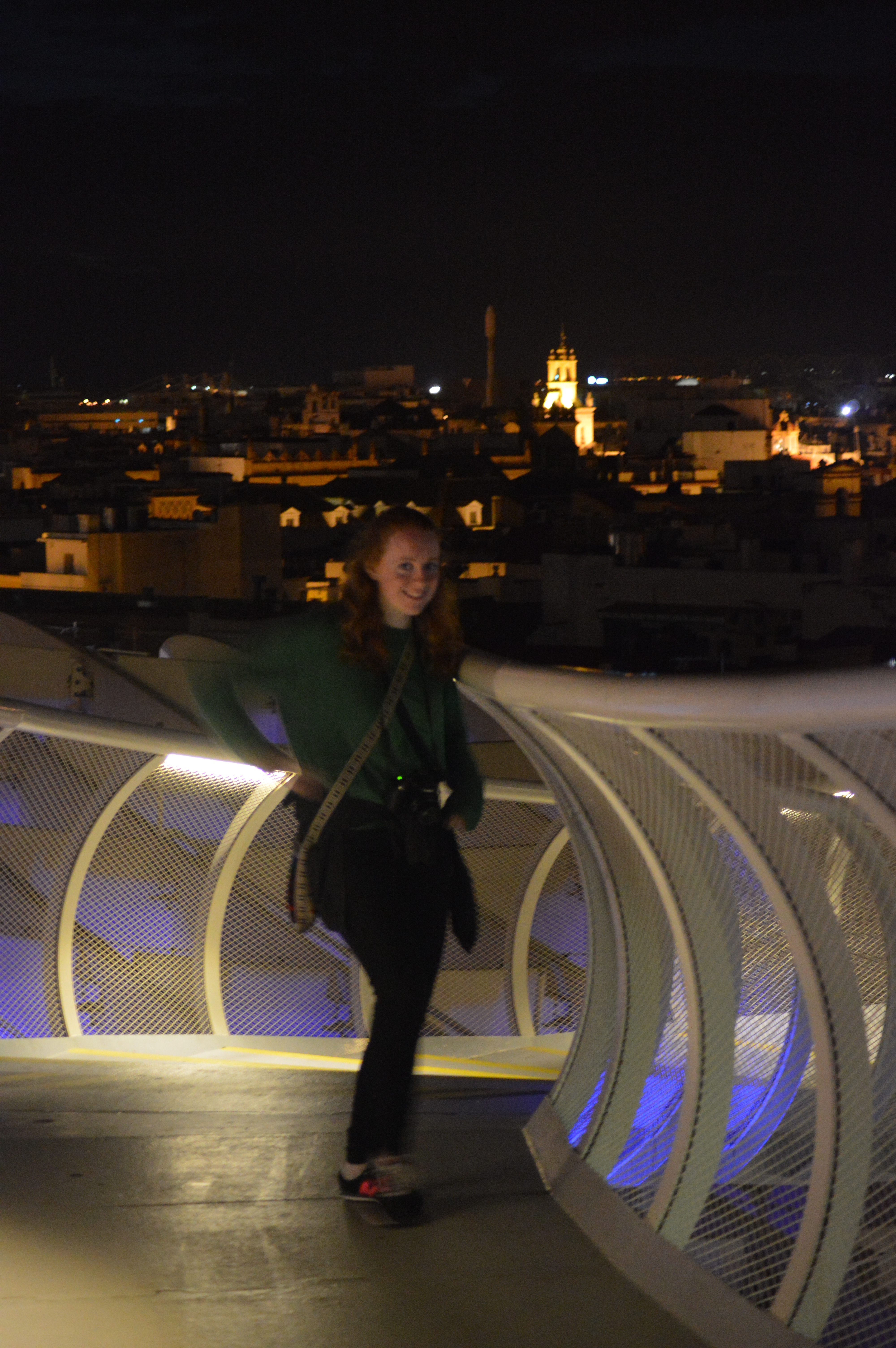
In my current adventures I’m joined once again by fellow traveler/blogger Brocklesby, spending half of her Easter holidays down south. Traveling with a companion can be infinitely more entertaining than going solo, especially when you’re both new to the place, but it’s been super-helpful acting as a kind of lemming-guide. I’m something of an old hand with Sevilla and Córdoba, having spent about a month apiece in each of them when you add up the days, so – with the fifty-fifty assistance of the Arch Deceiver aka HERE Maps – I’ve been acting as a guide. It’s a lot of fun to introduce somebody to all of your favourite spots, as well as the main sights, but best of all you get to try things out that you never quite found the gumption to do alone, like this museum or that ice cream parlour. It’s a blast and I should travel in twos or threes more often.

DSC_1036

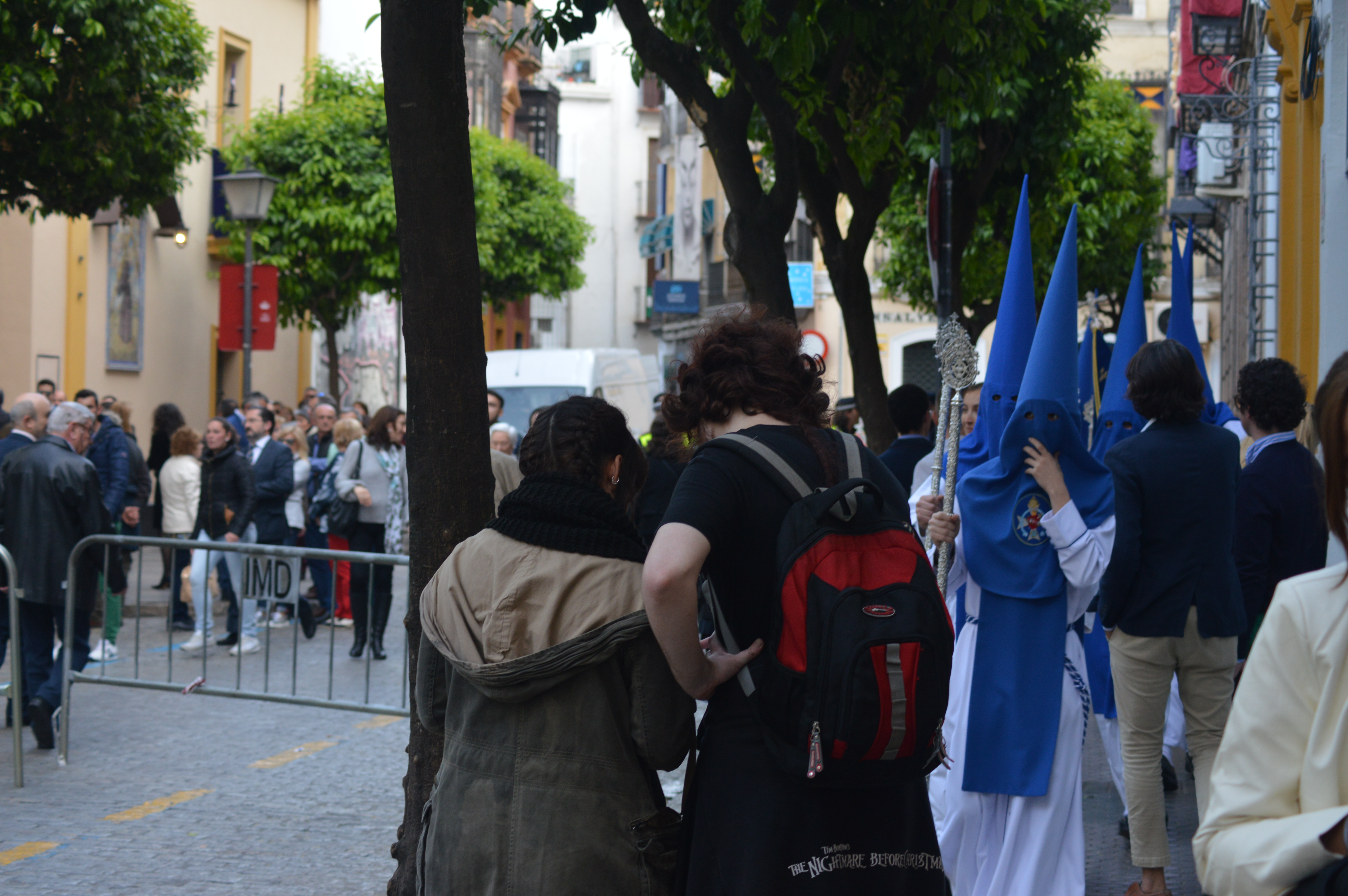
Travelers to Seville in Semana Santa should be warned: bring a compass, a map and/or plenty of patience. Navigation is made almost impossible by the processions. In most of the smaller towns, these are usually nocturnal affairs of some eighty metres in length that take five or six minutes to pass, and good seats can be had by simply racing ahead by several streets and waiting by the side of the street.

DSC_0988

Not in Seville. Not only is everyone in town in on the secret, so is the tourist population, both of which are immense. On top that, the processions themselves are enormous, trailing as many as three streets at a time and taking all of an hour and more to pass – and there can be as many as six happening simultaneously across town.

Understandably, this turns something as simple as crossing a street into a labour of Heracles. It’s a circumstance where shortcuts really do make long delays, and itinerant penitants and busy streets make the heart sink. I distinctly remember saying that ‘if you see Jesus, you’re screwed’; blasphemous, perhaps, but in accurate reference to the fact that the float bearing Jesus is almost always followed by the Virgin Mary some thirty minutes later, meaning that Jesus marks the very epicentre of the gridlock. Thanks Jesus.

DSC_1073

That being said, it’s something you have to watch at least once. And whilst it may not be all that much fun to watch the tips of the penitents’ colored hoods sailing by over the heads of a pushy multitude, if you can get yourself to the front, it’s surely one of the human wonders of the world to behold.

DSC_1107

I’m not a pushy person. I think I’m too English. So it would take a miracle to get me to the front of the queue. But God, or Fate – or an unusually benevolent Murphy – had other plans tonight. Having said that it would be ironic if we ended up walking down a street and coming face to face with a procession headed in our direction, that is exactly what happened, and with the grand finale, no less. We tried to duck out of the way through a gap in the multitude, but the Guardia closed it off and shoved us unceremoniously back into the crowd – which put us, quite by accident, right at the front. It suited us just fine, but it must have bothered those who’d been there long before us something awful.

DSC_1173

It might not have been as soul-stirring as the Olvera madrugada procession – which goes on all through the night and involves no small amount of mountain-climbing – but it was a genuine privilege to behold from such a premier position.

I’ll be back next year. Most certainly. A lot of Spaniards claim to be rather impassive on the subject of Semana Santa, but their dogged adherence to an age-old tradition far more authentic than any search for chocolate eggs says otherwise. I, like Hemingway and Irving before me, am yet another foreigner hopelessly entranced by the magic of it all; only, I’ve at least a quarter of Spanish blood in me, so I’m not a total stranger. I’d like to think that counts for something. BB x
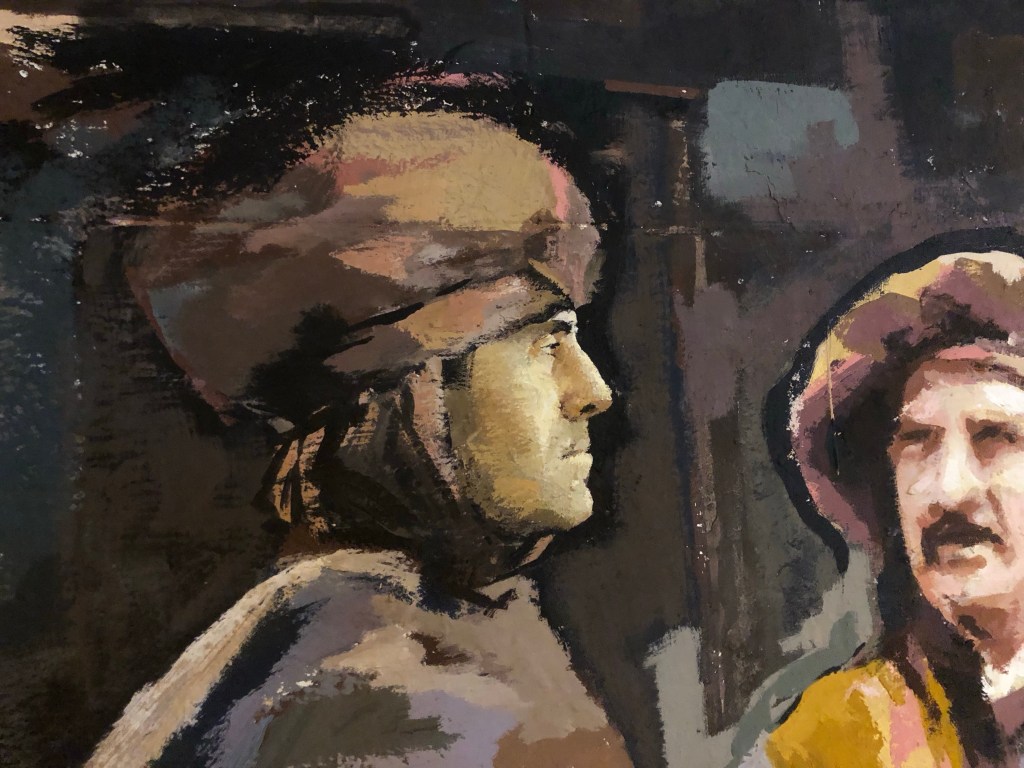
The Line Must Be Drawn Here

Yes, that’s a Picard line. No, I’ve never watched even a single episode of Star Trek. However, it’s famous enough to transcend that particular level of pop culture, and it suits this past weekend just perfectly.

What with flight week drawing closer (I’m giving myself until the end of this week to buy my flights for good), I’m getting money-savvy and making fewer travel plans. And me being me, that’s resulted in a knee-jerk spontaneous Moroccan adventure with a few Spanish friends and a Semana Santa celebration in Córdoba. The former is largely reliant on my two friends actually getting back to me, so in a way I’m none too bothered whether I end up crossing the Strait or not – I’ll still be heading to Tarifa for the weekend anyway – but it’s there on the table and I’ve budgeted accordingly.

This term has been no less sparing on the adventure front, but I have been a lot more sensible money-wise, forking out on only one big adventure per month: Madrid in January, Cantabria in February and Tarifa in March. Accepting that I’m coming back for at least two years more after Durham has removed me of my desperate need to see all Spain whilst I can and that’s been a very healthy decision on all counts. It means that (with the exception of rent) I rarely need to draw anything out of my account: my weekly private lessons cover groceries and all other expenses, as well as buying the majority of my travel expenses. To fill the time, I’ve allocated at least one or two weekends a month to being sociable in Almendralejo, something I didn’t do nearly enough last term and am currently making up for lost time.

DSC_0015

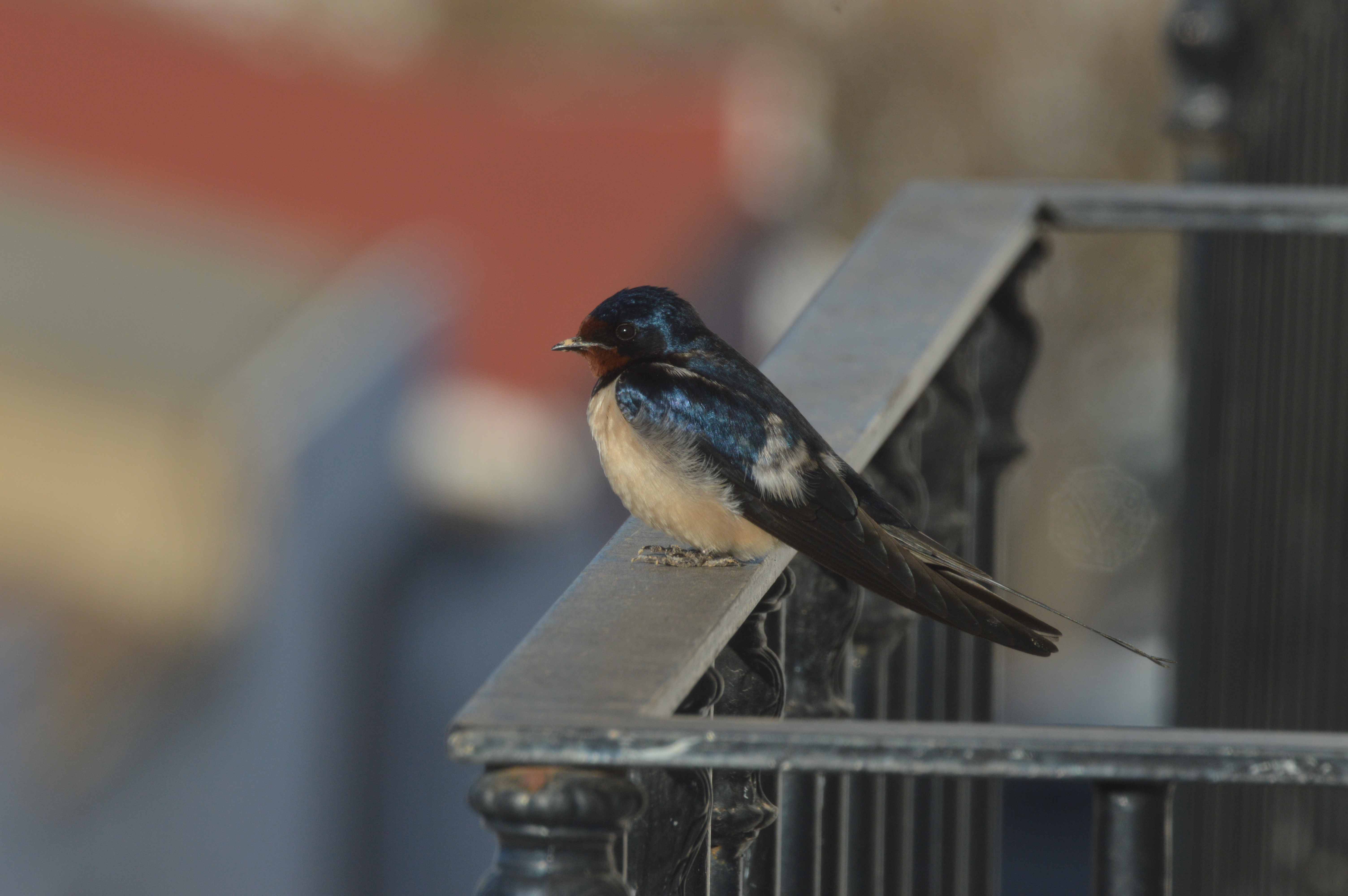
It’s been a big weekend for swallows – there’s a few here to stay now!

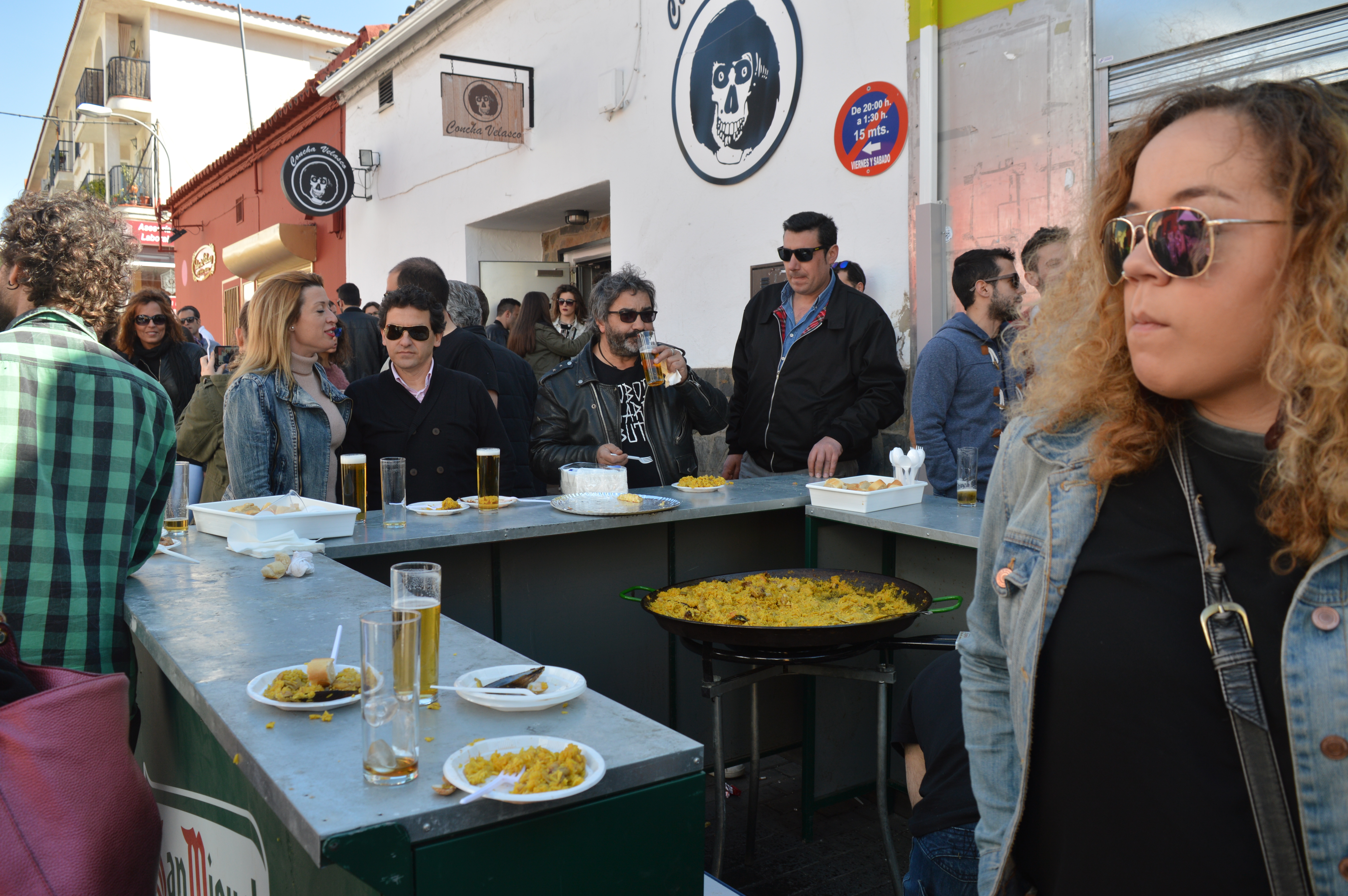
Almendralejo is a bigger town than Villafranca and as a result there’s a lot more to do, especially on the nightlife front. This weekend was the twenty-second anniversary of one of my usual haunts, the Concha Velasco, a kitschy bar decorated with Gothic props (most of them from a film set) and plenty of Goya paintings. It’s usually playing a selection of 80’s rock and it’s a nice place to chill before or after a dance. To celebrate, they were holding a concert for a few local bands, beginning with a free paella and caldereta lunch in the street.

DSC_0020

How long do you think a concert lasts? Four or five hours, perhaps? I’ve been playing in concerts for most of my life and the longest was about five. Not this one. There were about four acts and each one had a two-hour set, there or thereabouts. Due to start at half five, things finally got moving at around ten to six. That’s normal.

First up was the band we had come to support, with our friend Miguel on electric guitar. I’m told it was their best gig yet. I’ve only seen them perform this once and I’m sold. Rock is one of the last frontiers of music that I haven’t really reached into and I’m sold on a few of them. Beginning with the theme tune from Back to the Future sold me and I enjoyed the set immensely – and still found time to take some snaps. Consider me now a fan of Spanish 80’s rock (ed. BB, will you ever learn to be normal?)

I felt pretty voiceless and worn out when the set was over so Fran and I set off to De Blanco, a quieter local, for a change of mood and a few early birthday drinks. Having gorged on all the freebies on offer at lunch, I forgot dinner completely, which was a mistake for several reasons. The most obvious was the effect of a single rum and coke (ron barceló). Having been teetotal until this year, my alcohol tolerance still isn’t brilliant, and I felt rather dizzy for about half an hour. Motoring through a bowl of fizzy sweets the bartender brought didn’t help in the slightest. Fortunately, we weren’t in a hurry to get anywhere and I regained my senses after a time. Still, I know what I’m not doing in future.

One of the strangest things about being English abroad is the simple novelty of being English. Apparently it’s motivation enough to strike up a conversation, and this was just another example. A trio of Spaniards sitting next to us joined us after a few minutes out of curiosity and ended up inviting us out to go dancing with them at another nightclub, Almen’s Whisky A Go-Go. Apparently there was supposed to be a star from Spain’s Gran Hermano turning up, but whether she did or not, I have no idea. At any rate, there was no sign of her by ten to four in the morning, at which point Tasha and I returned to Concha to see if we could catch the end of the last set for the night.

Remember what I said about concerts? Well, here’s the thing. The fourth set hadn’t even started when we got there. At four in the morning. A DJ and saxophone duo (who knew?). This is probably the first time I’d heard a full set without even a single reggaeton number – all dance, from start to finish – and I went into a creative overdrive of at least half an hour before I ran out of ideas and returned to simple jives. The result was that several of the crowd were egging me on for the rest of the night every time I began to run out of steam. At about half five the five hours of almost non-stop dancing, ten hours of music, general fatigue and more pressing hunger began to wear me down. Tasha insisted that I could keep going and kept me fuelled on glasses of water, and I’d like to say that on any other night I’d have willingly stuck it out until the end… but we had been going for almost ten hours, and I hadn’t eaten since three o’clock the previous day. In the end we retreated at the ‘early’ hour of six o’clock for a quick bite to eat at the kebab shop opposite and then, gratefully, I crashed on Tasha’s sofa and slept.
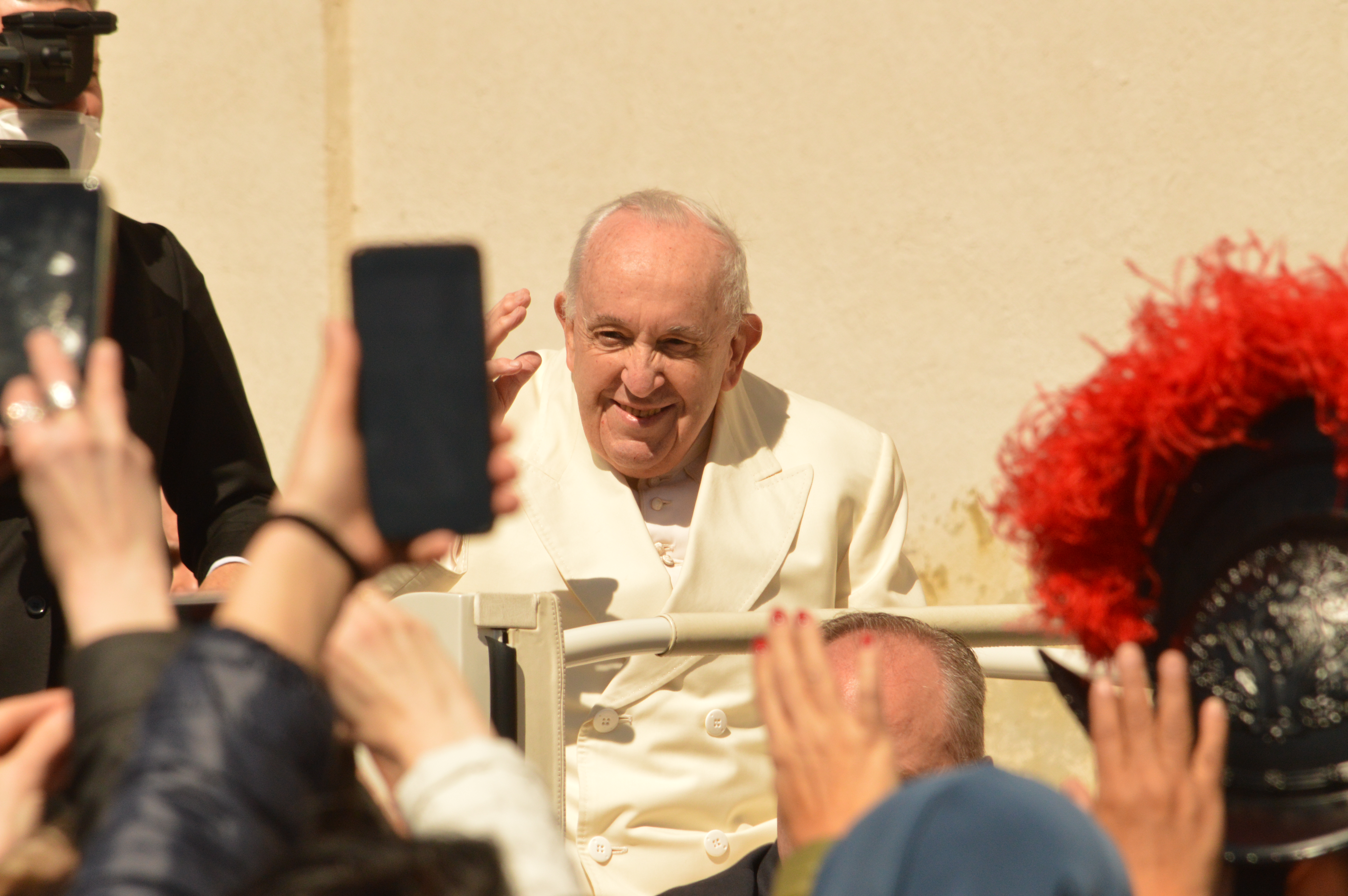
Until the Breast Cancer fun run woke me up at nine o’clock the following morning, that is. I’ve been recovering sleep ever since.

Here’s to a more relaxed weekend to kick off the Easter holiday this weekend. I could do with it. BB x