The Shell Thief

Pensión Doña Lubina, Fisterra. 21.20.

First Dates is on TV. I can never find the equivalent in the UK, but in Spain it seems like it’s always on. Tonight’s couples include a pensioner from Sevilla, a rocker in his fifties and a Colombian male model whose dealbreakers in a would-be partner include the term “vergón”. Spanish TV, like Spanish music, certainly doesn’t deal in subtlety.


I woke up around six this morning to the sound of the waves breaking on the shore outside – the same gentle woosh that I can hear as I write.

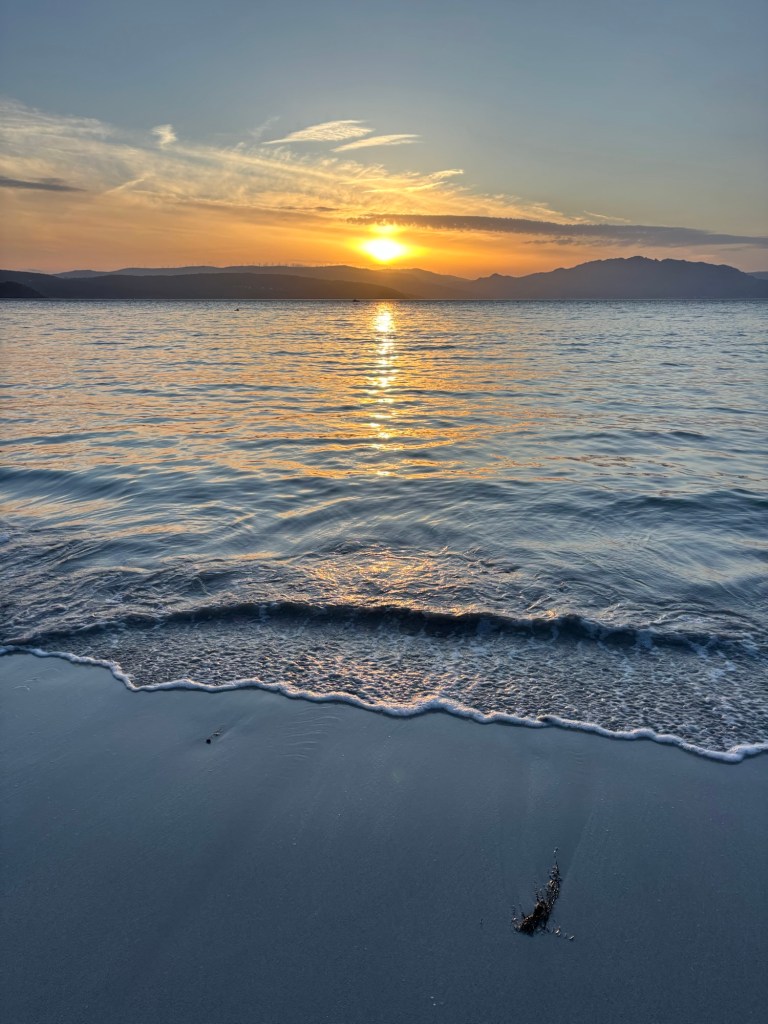
The sun crested the jagged bluff of Monte Pindo shortly after 8.15, so I slipped down to the beach to catch the light. A couple of dog walkers were out and about and a single pilgrim sat reading in the dunes, but otherwise the long curved bay of Playa Langosteira was empty. The tide had come in during the night, leaving a breadcrumb trail of seashells all along the tidal maximum. A beautiful sight, to be sure.

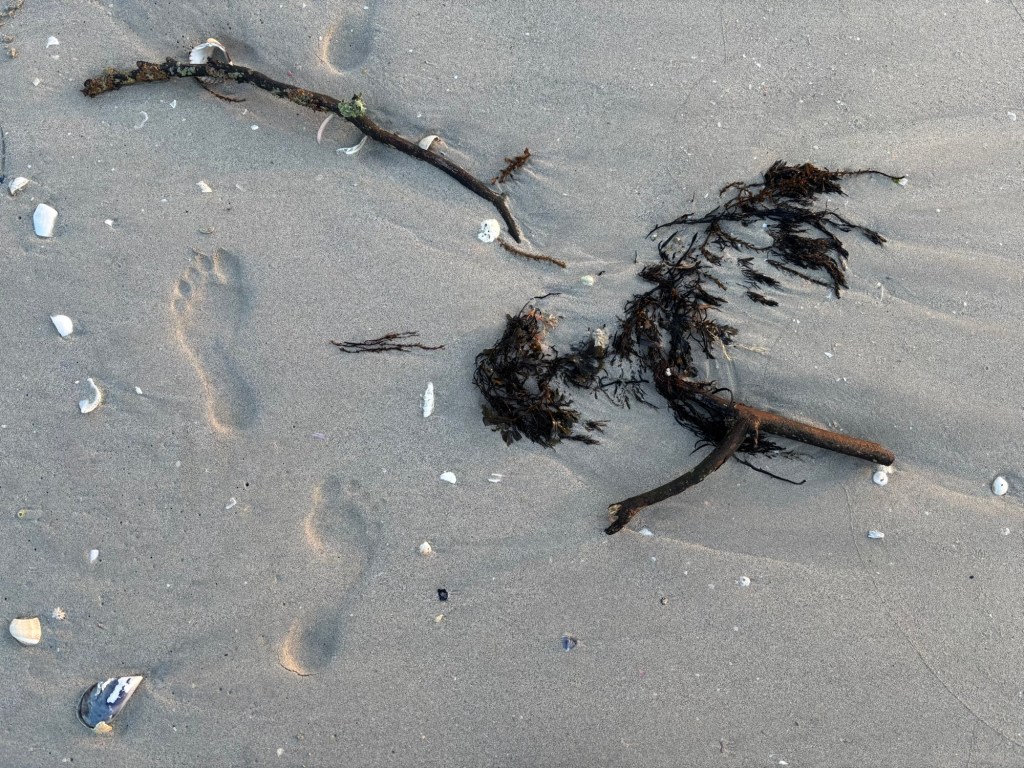
Or, at least, it should have been. Only, the only shells left on the beach were broken. It looked as though the sea had kept the best ones to itself and spat out the rest. As it turns out, the truth wasn’t far off.

A barefoot pilgrim stood a hundred metres or so ahead of me, turning something over in her hand. Satisfied with whatever it was, she moved further along the beach, stopped, and stooped to pick something up. Clearly, she was looking for seashells. She must have repeated the exercise about eight or nine times before I overtook her. I didn’t turn to see if she had more to find, but I did catch a glimpse of a large collection of seashells in the crook of her arm as I passed.

I’m not really one for calling people out. Anyone who knows me even in passing will know the last thing I ever want to do is to risk upsetting anyone, even when the matter seems ridiculously trivial. It’s a people-pleasing tendency of mine that I’ve never been particularly good at quashing. However, if there’s a line in the sand, it’s when I see someone doing something that threatens the natural world in some way. And this definitely constitutes a transgression in my book.

Before you think me a busybody, I feel I need to point out that this isn’t just high-handedness on my part. The law is on my side here. In 2017, faced with a surge in tourists in coastal areas (still a major problem today), the Spanish government passed the Ley de costas, which – to the official letter of the law – “forbids the extraction of any element of the public littoral domain, such as sand, shells or stones”. This makes it illegal to beach-comb in any part of the Spanish territory, from Galicia and the Costa Brava to the Balearics and the Canary Islands. Period.

If my experience of this country and its people is anything to go by, I’d be surprised if the Spanish police actually enforce this law, but the consequences of falling foul of it can be severe: the fines for collecting seashells range from 500 to 3,000 euros. The Mediterranean island of Sardinia is even stricter: taking large quantities of sand from its famous beaches can lead to a prison sentence.


There’s a very good reason for all of this. It’s easy to say that if we all took five or six shells from the beach on our holidays, soon there’d be nothing left to take. But there’s more to it than that.

Seashells are a fundamental part of the littoral ecosystem. The continual pounding of the waves eventually grinds them into fragments – the same fragments that make up the sand beneath your feet. In a way, your average beach is actually an enormous marine graveyard. Without the shells, there’d be less sand to go around, seriously threatening the thousands of creatures that make their home in the littoral zone and the birds that rely on them as a food source.

Discarded shells serve a second purpose. Nothing goes to waste in the ocean. Besides the obvious hermit crabs, who literally depend upon seashells to survive, an abandoned shell provides a much-needed shelter for smaller creatures like shrimps and fish fry, who use these temporary refuges until they are large enough to avoid some of their former predators, as well as a holdfast for barnacles, limpets and chitons. Larger shells may even harbour an octopus, a creature perfectly adapted to squeezing into the most awkward of spots to escape from predators.

Which they definitely need to do on the regular in these waters, given the Galician obsession with octopus as a delicacy.


Sorry… I got up on my pulpit there. In truth, I was mulling all of this over in my head as I read a signboard by the beach exit which detailed some of the above, while the beachcombing pilgrim stood washing every single shell she’d collected under the outdoor shower. I didn’t want to challenge her, but I couldn’t just let her take all those shells away. She laid them out in three rows along the wall as she washed them. She must have amassed around thirty in all, from scallops to periwinkles and everything in between.

When it looked like she had finished with the ablutions, I got her attention and told her politely to take one if she had to, but to leave the rest behind. She looked confused. I repeated myself in Spanish, but that didn’t seem to work either. She looked like she might have been Thai or Malay, so Spanish wouldn’t have been much use. I tried French. I pointed at the sign and tried to indicate that taking the shells was wrong – not that it would have done much good, as the sign was in Galician and Spanish and faded in places due to the ravages of sun, sand and surf, and thus presumably illegible to the average tourist. Nothing.

I even tried mimicking handcuffs and paying a fine. She just stared at me and held out one of her shells for me to take, presumably thinking I wanted one. I shook my head and said “illegal” a couple of times. She said “OK” and wandered off. I didn’t see where she went, or if she left the shells behind. She didn’t return to the beach, at any rate.

When I was a kid I got walloped for trying to stop a couple of older boys from stealing a frog. They had caught one in a bucket and were taking it away to put in their garden. In a fit of fury I still can’t explain, I snatched the bucket and legged it to the river to release the creature. I was pushed into the water for my insolence and given a couple of kicks for good measure, but I had achieved what I set out to do: the frog got away.

Was it my place to give that girl a ticking off? Probably not. But we have to stand up for the things we believe in. Without principles, we are merely waiting out our time on this earth. Our core beliefs give us grounding, a rock to stand on, which no wind or waves or wickedness can wear away.

I’ve got back onto the pulpit again. I’d better get off before I end up considering a career in the clergy. BB x

At the End of the World

Cape Finisterre, 20.11.

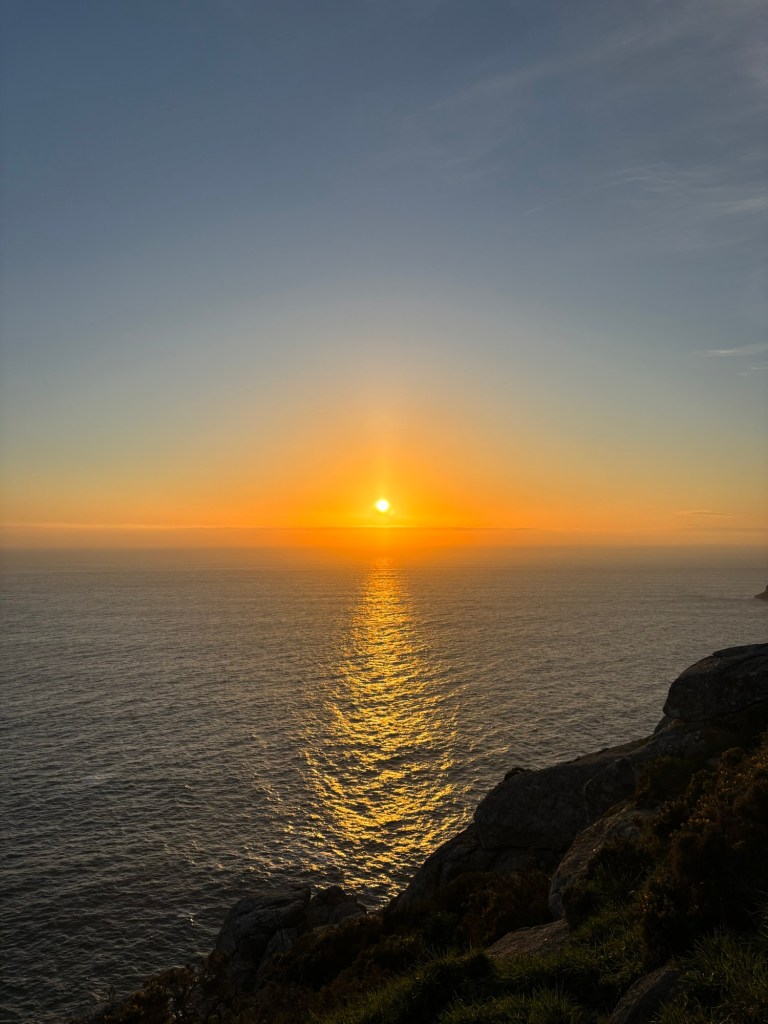
Galicia provides. Happiness writes white but the white light is brilliant, like the sands that run along the length of the bay beneath my window. Like the feathers of the gannets and terns that dance above the face of the water. Like the sparkling reflection of the sun as it sinks below the horizon along the 42nd parallel north, disappearing beyond the Atlantic, beyond Chicago, beyond the end of the world.


Madrid feels a world away. I caught the early AVLO train from Chamartín and joined a modest number of passengers on the three hour journey to Spain’s north-westernmost region. The railway line tunnels under the snowy peaks of the Guadarrama before racing across the featureless plains of Zamora and then, slowly, climbing into the wooded hills and craggy moors west of Astorga before rolling through the deep valleys of Galicia proper. Spain is one of those countries that alters radically as you travel through it, and the Madrid-A Coruña train is a very good way to prove that point.


I arrived in Santiago de Compostela with a couple of hours to kill before the bus to Fisterra, so I wandered into town and sat in the main square in front of the cathedral for a while. A few school groups posed noisily in front of the cathedral, while exhausted pilgrims sat at the feet of the pillars, soaking up the sunlight to recharge their batteries. There aren’t as many now as there were during the summer. I guess that’s to be expected. The year I made the trek, 2023, was also a delayed holy year, the first since the COVID-19 pandemic shut the Camino down, so the numbers were especially high.

I wonder how far these bold pilgrims had come this year. What friends did they make on their journey? What memories will they take away with them forever? Did somebody watching from the sidelines wonder that about me, years ago?


The bus from Santiago to Fisterra is almost as long as the train from Madrid, but it does travel along one of the most scenic routes in the whole country. To reach the famous cape, it first has to pass through all the towns and villages along the coast, fording the great rías that weave through the cliffs on their way to the sea. The sun came out from behind the clouds just as the cape came into sight, and the whole coast seemed to come to life: the yellow flowers of the gorse shone like gold, the sand beneath the shallows glittered like jade. My heart did a similar leap once when I saw the silhouette of Olvera, my old hometown, for the first time in seven years. It made me smile to think that this place had joined that pantheon.


I arrived early, so I went down to the beach to soak up the sea air for a while. Fisterra is so special to me because it combines the two sides of my heart: the sounds and smells of the sea from my childhood in England, and the language, cliffs and mountains of my adult love for Spain. Mountains take my breath away (especially the craggy limestone kind) and marshes hold a special kind of rapture for me, but I think I will always come back to the sea when I need to feel whole again.

As I watched, a sandwich tern flapped into the little bay and started diving for fish. It was a beautiful sight to see, for the waters are so clear here that I could see the bird’s brilliant white form beneath the water after it had dived, moving like a living arrow. After five attempts it speared a shining silver fish and took off to the south with its catch in its beak. I realised the path on Google Maps didn’t actually exist and beat a quick retreat to the hotel for check-in.


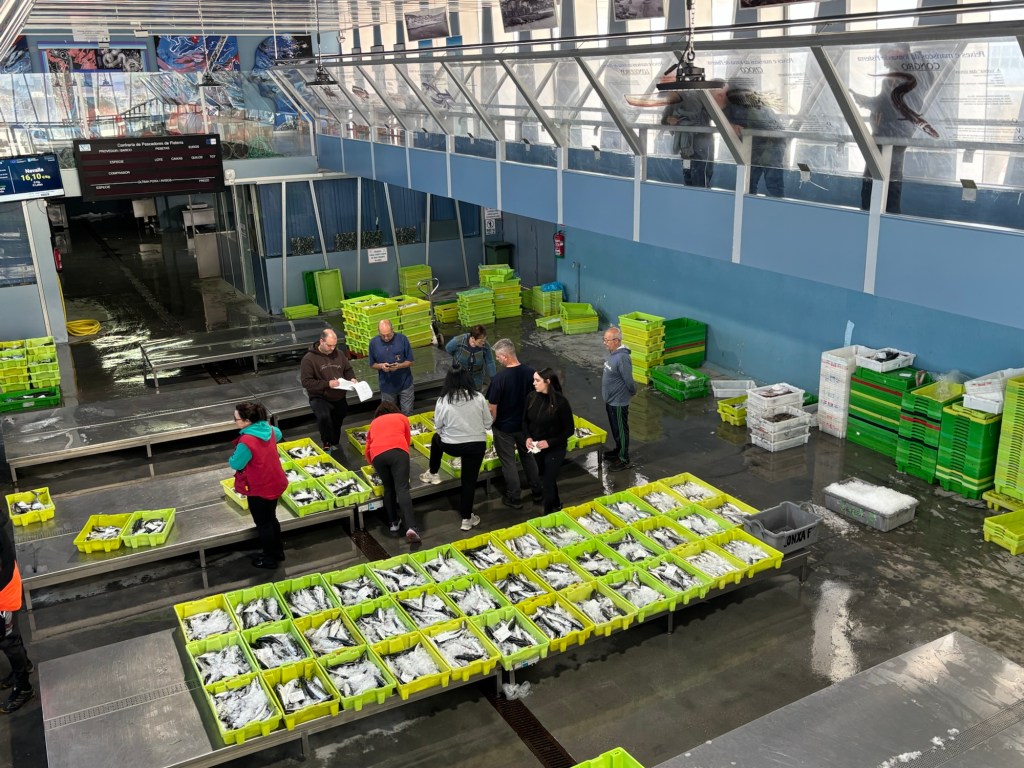
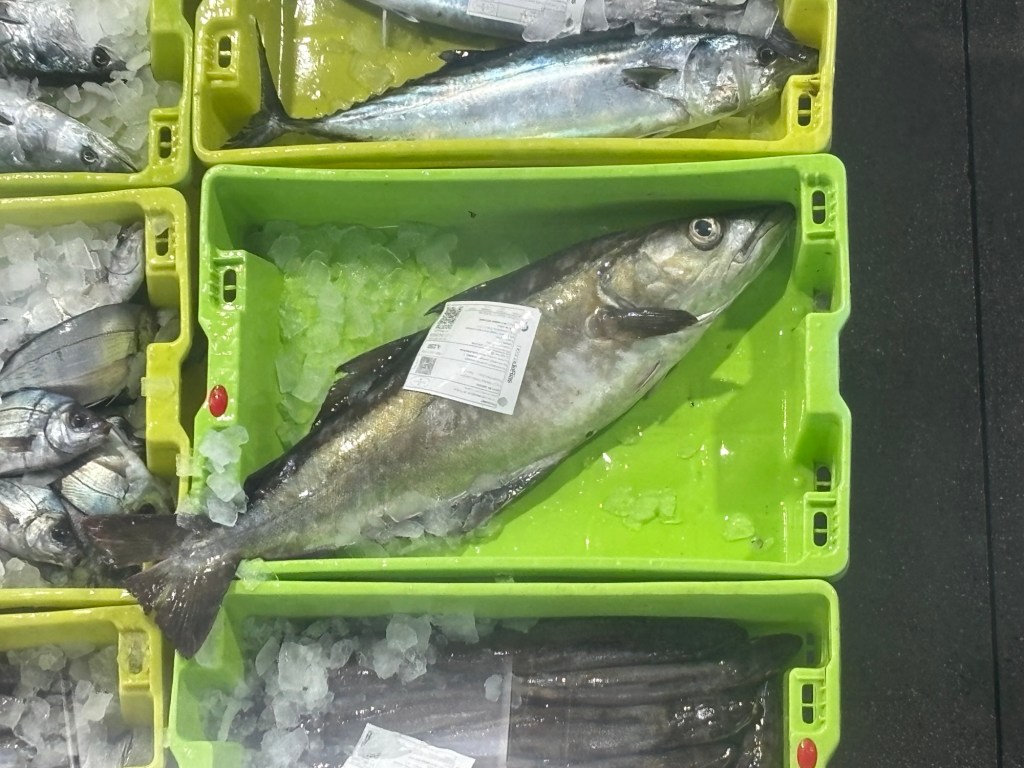
The last time I was here, I only saw the town’s fishery out of hours. I got lucky this afternoon: on my way to the cape I dropped in and caught the daily auction (or lonxa) in full flight. Crates of hake, mackerel, red gurnard and more than a dozen other species I learned to identify as a kid went to the highest bidder in one of the mildest mannered auctions I’ve ever seen (though, to be fair, I haven’t seen that many auctions). Some of the larger fish had QR codes slapped on the sides linking them to the fishermen who caught them, I suppose – my camera didn’t reach far enough to tell.


On one side of the room, crates of sea urchins were stacked fifteen high. I didn’t see any percebes (the region’s famous goose barnacles), but then, the manner by which they are collected is very different indeed, so that’s hardly surprising.

I left before the giant anglerfish went under the hammer. I’d have been curious to know how much that went for.


I called home from the cape and said I’d be back before sunset. It’s now fifteen minutes to sunset and I’m still here, but I’m glad I stayed. The weather here is so changeable and this might be my only chance to watch the sunset from the cape, as it was rained off the last time I was here. A small cohort of like-minded pilgrims and locals have come out here with the same idea. A couple of noisy Spaniards made a pig’s ear of taking a highly choreographed selfie nearby, much to everyone’s frustration, but they’ve gone now, and it’s been nothing but the sound of the waves for the last twenty minutes.

I’m going to stop writing now. The sun will be sinking below the horizon soon and I want to appreciate every second as it does. See you on the other side. BB x
Marooned

13.25. High summer. Somewhere in the Lincolnshire Wolds.

English summer skies are blinding. There’s an intensity to the white clouds that blanket this island in summer that demands a permanent squint, or a pair of good sunglasses. America – and even Europe – seem a long, long way away from here.

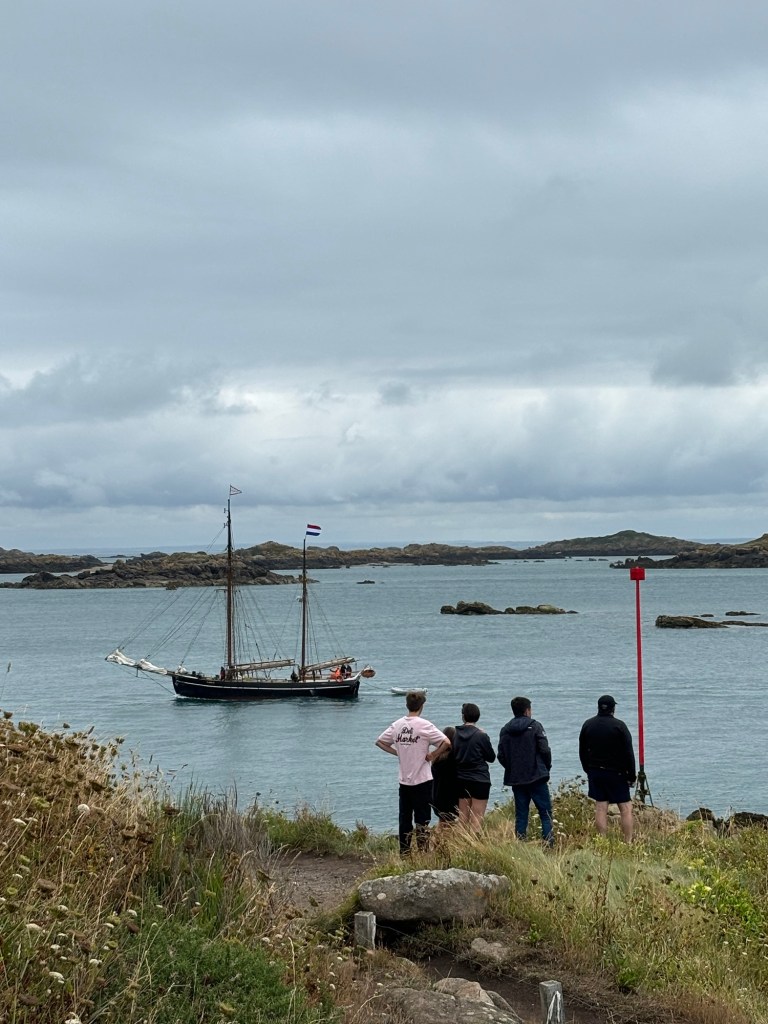
Six days ago I was sitting on a low wall among the ruins of an old boathouse on the largest of the Chausey Islands, a collection of low-lying islands in the bay of Saint-Malo. I’d never heard of them until the day before, when I saw that a local ferry company was offering day trips out that way, but I do love an adventure, especially one that goes well off the beaten track. Due to its remote location, there were only two boats a day from Saint-Malo: one to the island, and one from. Which is how I ended up spending seven hours on an island measuring just 1.5km across.


The Chausey Islands are a magical place. Quiet. Peaceful. Cut-off. It’s not so far from the coast that you feel lost – neighbouring Granville over in Normandy is a little nearer than Calais is to Dover, and in good sunlight you can see as far as the spires of Saint-Malo on the Breton coast – but far enough to feel like you’ve put some distance between yourself and the world. Even on a cloudy day, you can see the ghostly pyramid of Mont-Saint-Michel rising out of the sea to the south like Atlantis. Or should that be Ys?

People have been living in these islands for centuries. The Vikings of old used to stop here regularly en route to their raids along the mainland, and you can still see the holes they bored into some of the rocks to anchor their longboats. The narrow channel between Grand Île and the other islands still carries a Viking name: the Chausey Sound, the southernmost “sound” in Europe. There were once a few farms here, and even a school until the last century. Now it plays home to French holidaymakers, who pass their jealously-guarded homes down through the generations, so I’m told.


I have a habit of winding up in places like this. Others travel to meet people, have a great time, see the world. I always seem to end up by myself, searching for myself, marooned with my thoughts. It’s not that I don’t set out in search of those things too – I just find my way to these spots quite naturally.

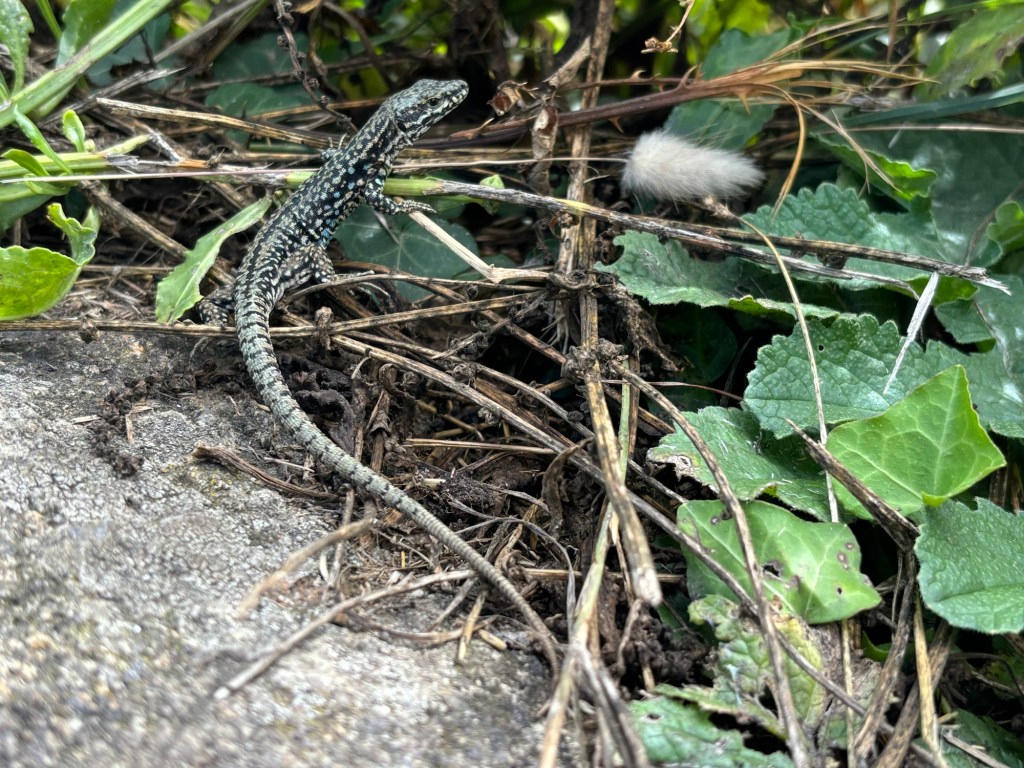
I found the spot I was searching for to the west of the island, on a low islet overlooking the ebbing tide beneath a crown of standing stones. But for the hulking black-backed gulls, a couple of oystercatchers and the odd lizard, I had the bay to myself.

I let my mind wander. I thought about a great many people, and wondered what they were doing at that moment in time. Were they happy? Were they wandering like me? Had they ever found just such a place and turned their thoughts to friends and lovers past? I think so. I think it’s in our nature to do just that in the far-flung corners of the world. Maybe that’s why I’ve always been a sucker for a good Western: nothing sends you on a greater inward journey than the wilderness.


I had questions, but the answers didn’t come to me as readily as they did on the Camino last year, so I waited out the hours on a beach, reading Breton fairytales and burning under the sun. When the boat did come, it was to carry me back to Saint-Malo across a choppy sea that left half the passengers on the deck soaked to their skin, though the sun was shining bright.

I didn’t see as many seabirds as I hoped, but I did clock a guillemot taking its fledgling on what might well have been its first swim as the sun came out. I also came away with a number of close encounters with the lizards that call the island home – all of them a lot less skittish than their cousins on the mainland. I used to love looking for lizards in the countryside when I was a kid, so after the nostalgia of rockpool rediscovery, it was refreshing to turn another leaf of the history books.


Until the next adventure, folks. BB x

Bagpipes on the Beach

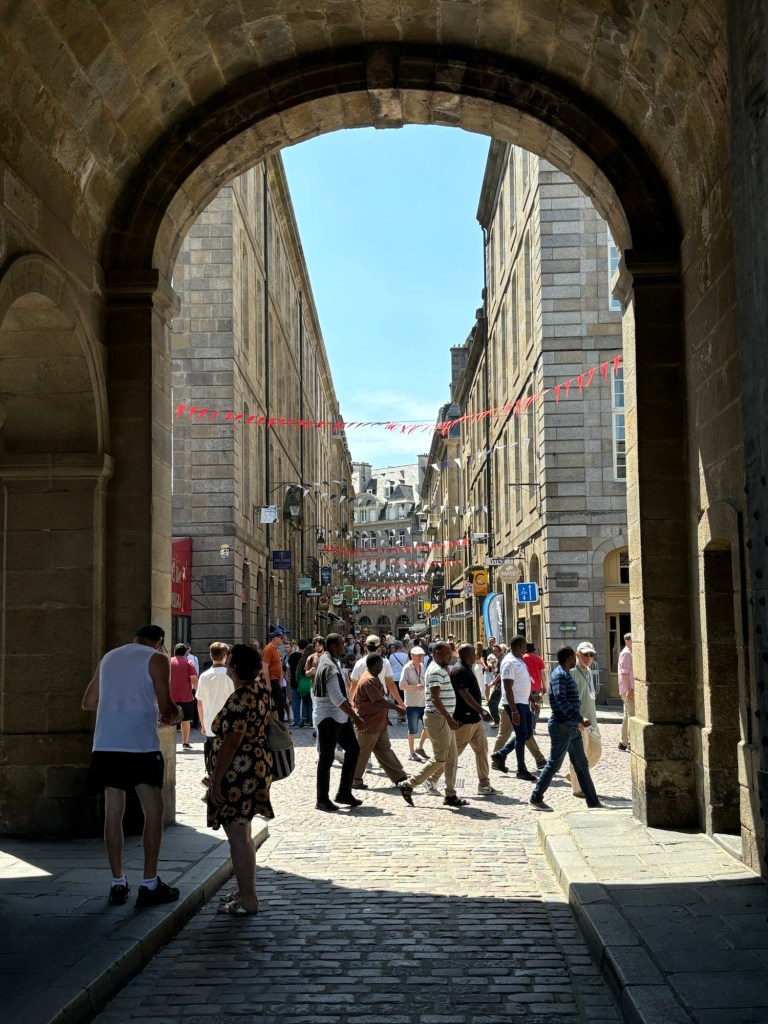
The sun is going down on my second night in Saint-Malo, an enchanting walled port city on the north coast of Brittany. Hector, the herring gull that seems to come with the AirBnB where I am staying, has gone up to the roof to roost. Swifts are still screaming outside and the moon, two days away from its full phase, is already creeping up behind the district of Saint-Servan across the harbour to the southeast.

I’m not entirely sure why I settled on Saint-Malo. My first intention was to make for Saint-Jean-de-Luz on the Basque coast, following a tip-off from a French student at Worth. One way or another, I ended up being drawn to the northwest, and Saint-Malo seemed the natural choice as a base of operations: easily accessible by train, ferry links to Portsmouth, a good combination of sandy and rocky beaches and a former pirate town to boot. It’s also not far from Normandy, and I did so love Normandy the last time I was here. After all, that’s what this whole trip is about, isn’t it? Finding something about France that will spark my interest?

I think I first heard of Saint-Malo in the famous French sea shanty Santiano by Hugues Aufray. My dear friend Andrew slipped that track my way a few years ago, so I owe him for this discovery. It really is a very special place.


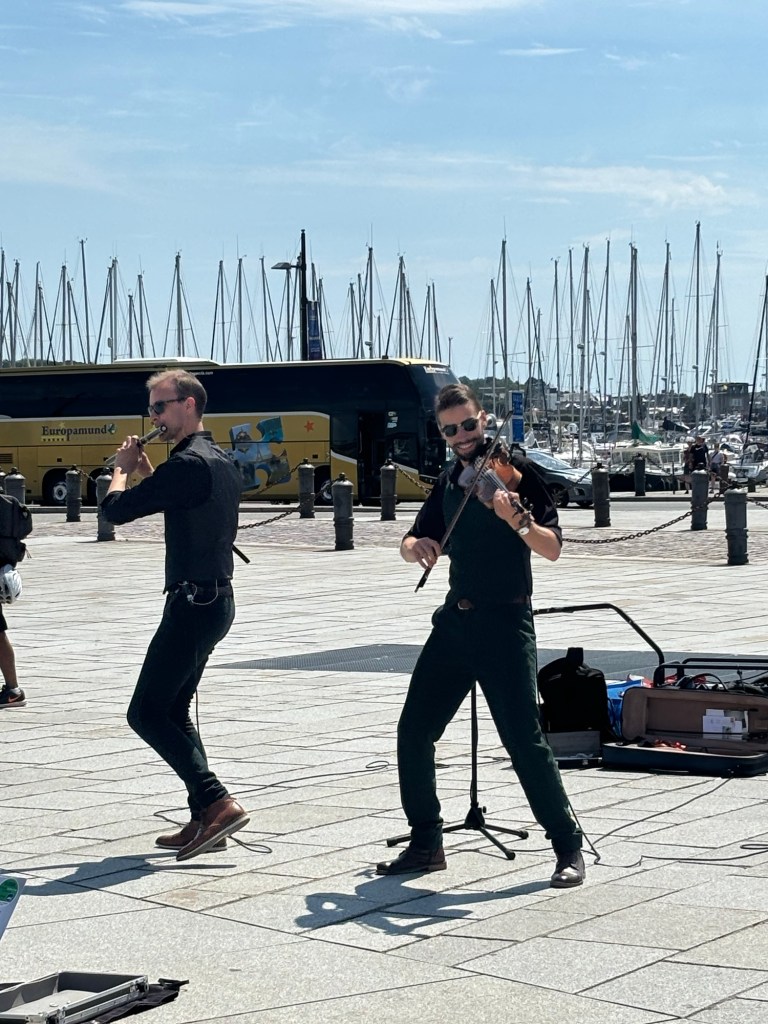
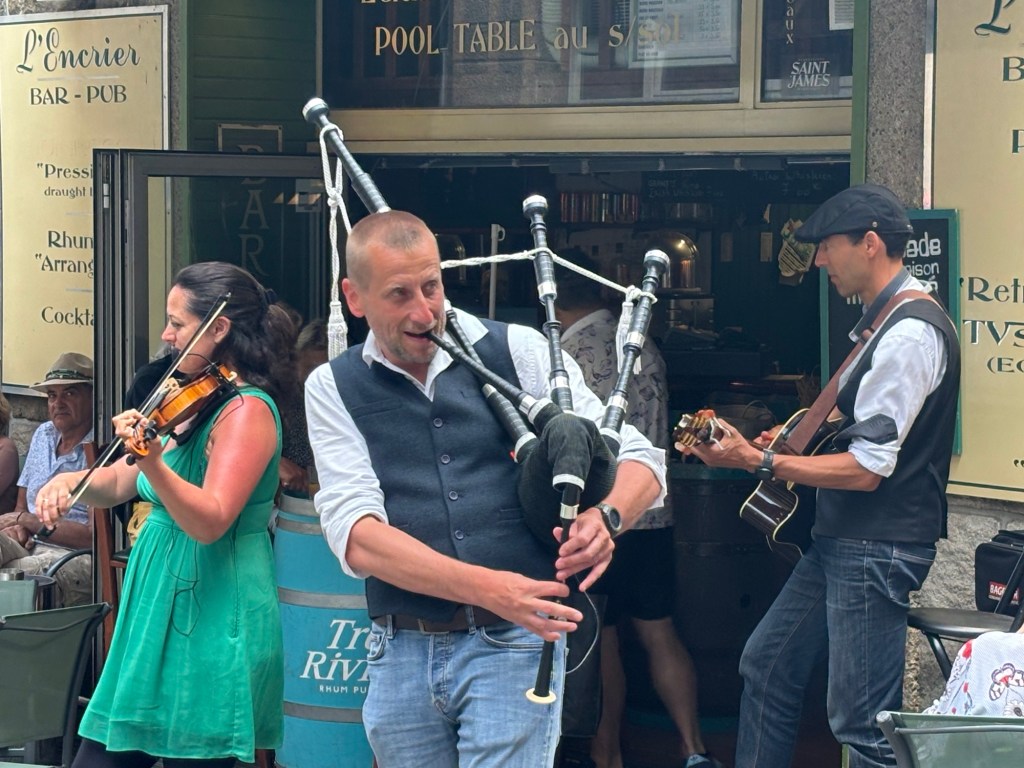
When I arrived yesterday, a local folk band, the Green Lads, were playing a merry medley of familiar folk songs. A few hours later I ran into another trio of buskers, Celtic Whirl, entertaining tourists with a run of similarly Celtic songs, including the theme to Last of the Mohicans. One of the players even whipped out a set of Breton bagpipes, known here as binioù braz (a 19th century Scottish redesign of the local Breton variety). I stuck around for about half an hour in both spots and couldn’t help tipping generously and tapping my feet. It’s strange that neither of the two groups have a French name – they’re both clearly French – but maybe it appeals more readily to the tourist trade (who – he adds with poorly concealed contempt – don’t seem to make much of an effort to speak any French).


Galicia. Brittany. Cornwall. There’s obviously something that draws me to these Celtic corners of the world. Maybe it’s the fact that my instrument is the violin (despite all the noise I make about playing the bass guitar), and that I found a sanctuary in jigs, reels and hornpipes when all the studies, scales and exam pieces got too stultifying for my teenage mind. Perhaps there’s more to it than that, though what it is, I really cannot guess. But I do believe that if I had not taken up the post at Worth seven years ago and instead gone on to a teaching post in Galicia, as was the plan, I might well have stayed there. I think it was the discovery of Galician folk band Luar na Lubre which forced my hand. Galicia is notorious in the British Council auxiliar programme for its charm: few apply for the place, but those who end up there have nothing but gushing praise for the quality of life when they get there.

It just strikes me as odd that, for all my obsessive investigations into the Jewish and Islamic influences on Western Europe, it’s the Celtic corners that I keep coming back to. I wonder why that is? My mother was always very keen to point me in the direction of my Spanish heritage, but I think I’ve been doomed since the moment I heard the first five notes of The Corrs’ Erin Shore.


Yes. That must be it. I blame the Corrs. They’re definitely responsible. I used to listen to Forgiven not Forgotten obsessively on the way to and from school when I was younger, and the fact that they got a shout-out from my favourite childhood author, Michael Morpurgo, probably didn’t help. They have weathered every new wave, every genre, and the aforementioned album remains stubbornly in the top spot of my all-time favourites. I still have the cassette and its case. I think I always will.


I enjoyed a delicious dinner of moules marinières before watching the sunset over Grand-Bé, the larger of the two islets. The French Romantic Chateaubriand is buried there, and when the tide is out tomorrow I will go in search of him, and see why he chose that spot for his forever resting place. As a fellow Romantic, I can’t say I blame him for choosing this town. Saint-Malo is as shining as the shimmering stardust on its shores, when the tide pulls it back out to sea. BB x

Camino XXVII: Journey’s End

Finisterre. The End of the World. It’s a fitting place to end the Camino, which can sometimes feel like it really does go ever on and on, down from the door where it began. Well, here we are at the end of the road. Kilometre 0. My great quest for the summer is over.


With a good thirty-two kilometres between O Logoso and the seaside town of Fisterra, Simas and I set off early this morning. One last six o’clock start, an hour or so before the dawn, to end the Camino as it began: in the dark. The churring of nightjars echoed in the forest around us as far as Hospital, after which the road climbed up over a treeless moor before slowly beginning to descend toward the clouded horizon beyond.

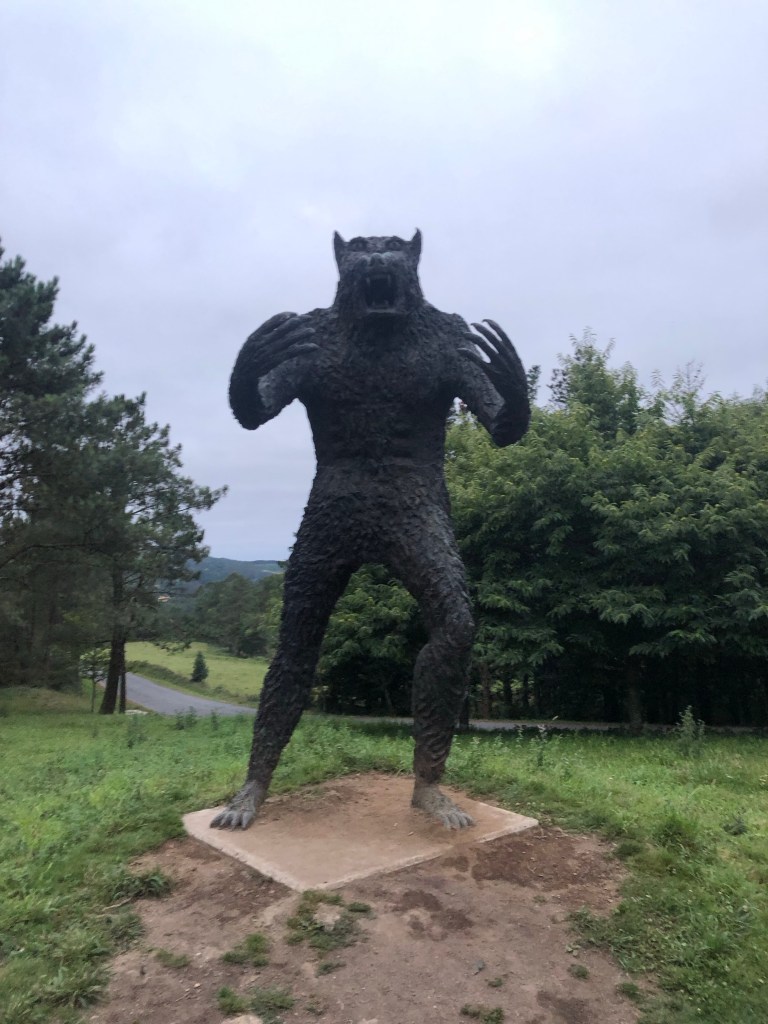
We passed a few alarming signs declaring ‘territorio vákner’, which didn’t make a lot of sense until we stumbled upon an enormous sculpture in the woods of a wolf-man. The ‘vákner’ was, according to 15th century pilgrim lore, a Galician forerunner of the werewolf legend, and one of a number of terrible beasts that beset pilgrims in the forests after Santiago. The more you know!


Less fantastical, though by no means less legendary, we found a Tupperware box on one of the stone walls deeper in the woods containing a number of breakfast options: yoghurts, bananas and pastries, complete with plastic spoons in case of need. The invisible benefactor, an eleven-year old local boy, was trying to raise money for a trip to Madrid. I tipped him generously via his piggy bank and enjoyed the breakfast I otherwise might not have had this morning. What a little angel!


Shortly after leaving the forest, as though out of a dream, the sea came into view. I have been so excited to see the sea after three weeks on the road and saving it as a reward for the final day was definitely the right thing to do. We came down into the busy former whaling town of Cee and had a proper breakfast of churros con chocolate, for the princely sum of 3.75€. And that’s including Simas’ café con leche. I’m going to miss how cheap this country is.

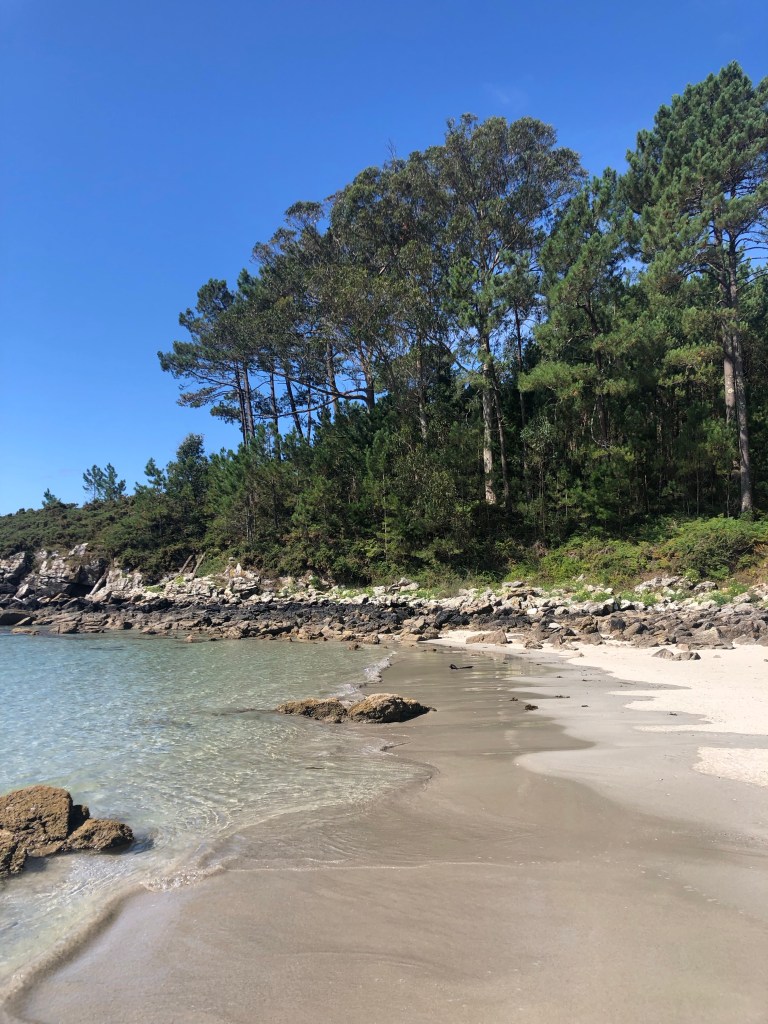
Having killed an hour, we pressed on north and west through Corcubión, which was being kitted out for a medieval fair. We detoured a little to see the coast, and were guided back to the Camino by a friendly local afflicted by throat cancer, who pointed us back to the road using a robotic device at his throat. We had not gone much further than Estorde when the sun came out, causing the white sands of the beaches to shine out like a beacon. Given the gloomy forecast for the rest of the day, we took a chance and detoured once again to one of the coves, finding it deserted. And boy am I glad we did!


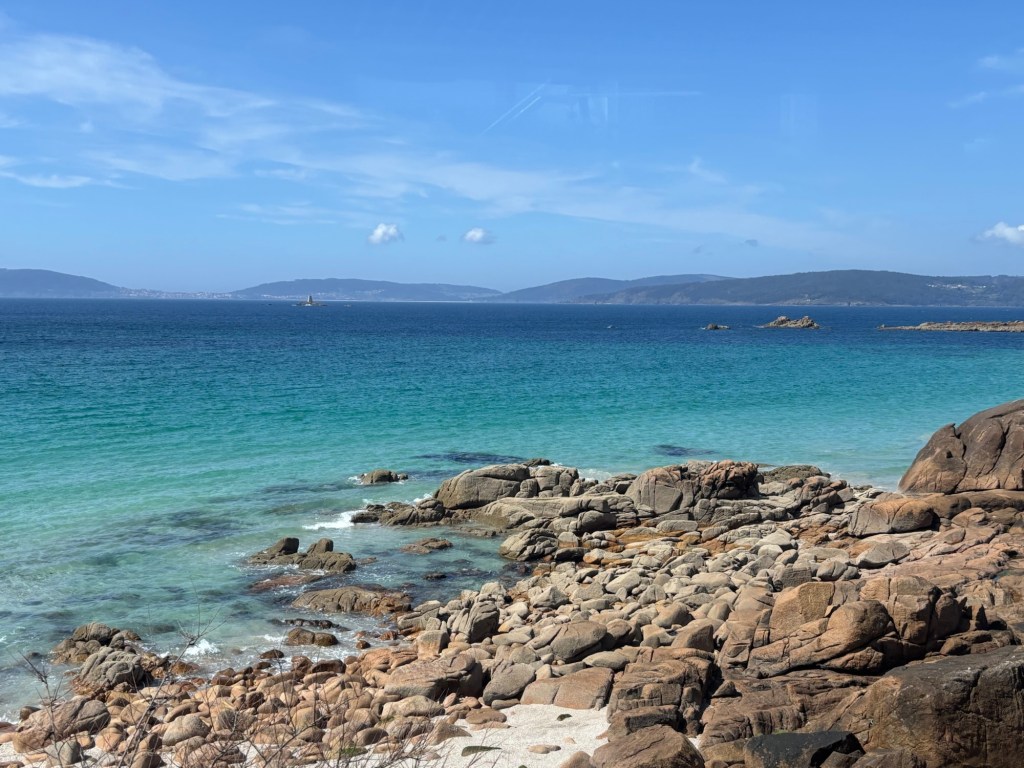
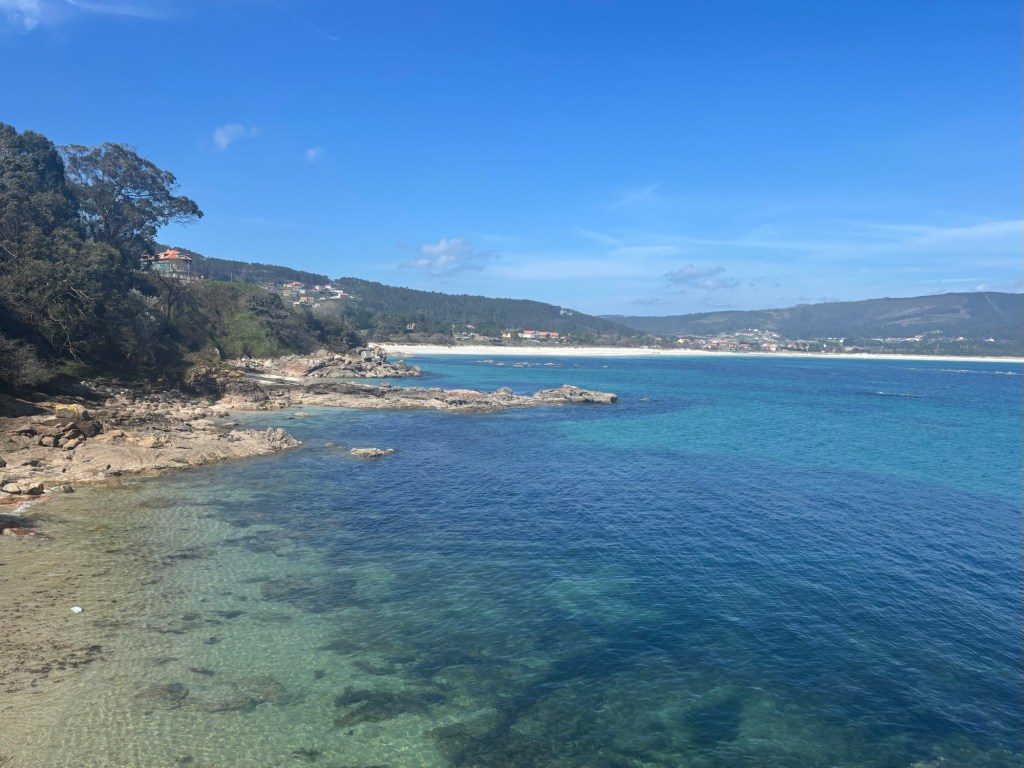
This was what I walked five hundred and sixty kilometres for: truly, the treasure at the end of the rainbow. There were no pots of gold, but there might as well have been diamonds in the water: each gentle wave kicked up clouds of white sand that glittered in the sunlight like a thousand twinkling stars. Sand eels and mullets darted in silver shoals nearby and a sandpiper scurried up and down the shoreline at a safe distance from us. The way the forests practically tumble right into the ocean, ringed with beaches that shine a purer white than anything the Mediterranean can muster… I’m amazed the Galician coast isn’t as heavy a hitter on the tourist trail as the Costa Brava. Amazed – and grateful. Because from some of the graffiti on the town walls – no a la Marbellización – it’s pretty clear the gallegos don’t want it to have that level of fame either.


A special mention should be made for saint number two of the journey: Nacho, a Valencian who had set himself up on the hill overlooking the Langosteira beach with two paella dishes full of home cooking that he was handing out to passers-by, free of charge. He was quite insistent on this last point, maintaining that though he was between jobs he had enough money by the grace of God to live on, and wanted to share his luck with the world. We had a good natter about what constitutes a real paella, but above all it was really uplifting to meet such a good-hearted man from my grandfather’s region – because while I’m proud to have Manchego heritage, my grandfather was actually born in Torrevieja, which means my immediate ancestry is actually Valencian. Go figure!


We reached Fisterra just after one and checked into the albergue municipal, which was already quickly filling up. It is as well that we did, too, as it landed us the final stamp in the credencial and an additional compostela for completing the final 100km of the Camino. After a quick nap we grabbed a table at O Pirata, a very characterful port-side seafood restaurant whose staff (and hangers-on) really did give off the right vibes as a motley crew rather than a team of restauranteurs. Between our waiter, who might well be the fastest-talking man in Spain, the chef with his black bandana and earring, and the three musicians sat outside, strumming guitars and clapping along – not to mention the seafood itself, which was delicious – it was easily the best meal of the whole Camino. Best of all, they threw in a free ego massage, telling me it wasn’t just the La Mancha shirt that gave away my Spanish heritage but also my ‘actitud’. I’ve actually managed to convince quite a few Spaniards that I’m a native on this Camino, which is a huge thing for me. I’m one step closer every day to reclaiming my heritage!


After lunch, Simas went back to the albergue for a siesta but I fancied a wander around town before the forecasted rain came down. What I thought might be a museum/aquarium in the harbour turned out to be an open-air working fishery, where a raised walkway lets you look down on the fishermen at work, processing and sorting the morning’s catch. It’s a brilliant idea and a fascinating way to have a look-in behind the scenes – especially after enjoying the fruits of their hard work for lunch! One chap was sat measuring the many thousands of razor clams and sorting them by weight, which looked to be a truly Sisyphean task: it must take hours to finish before the next haul arrives and the task begins again.


Stamps and celebratory seafood platters aside, you can’t say you’ve completed the Camino unless you really do go all the way to the end of the road, which is another three kilometres down the coast to the windswept cliffs of Cape Finisterre. The pictures imply a lonely lighthouse watches the cape, but it’s also home to a hotel, a bar, a car park and a couple of souvenir shops, so it’s not as remote a spot as you might think. The steep banks of the cliffs were pretty busy when we got there, with both pilgrims and tourists from various parts of Spain, and it was a good place to bid farewell to several pilgrims I have crossed paths with on the road: Alan, the wannabe hostalero, and the French team of three, Jean-Paul, Adine and Philippe; as well as Liza the Belgian (whose wish was granted by beating me to the Cape) and Catherine the German (who wins the award for the most random encounters along the whole Camino).

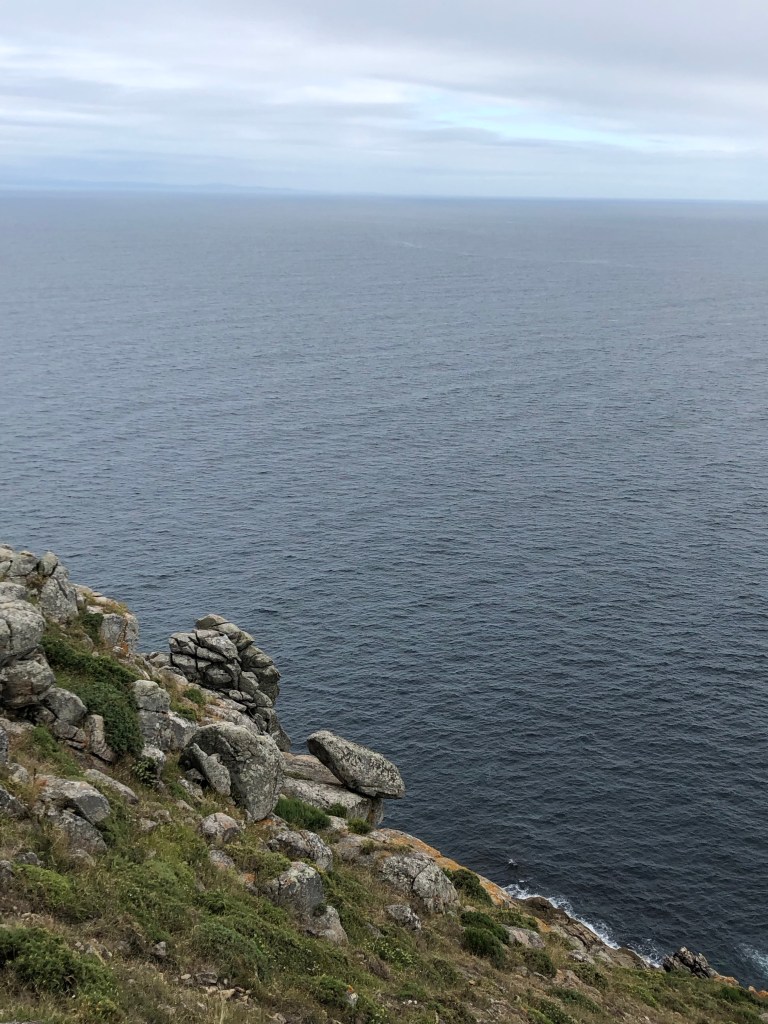
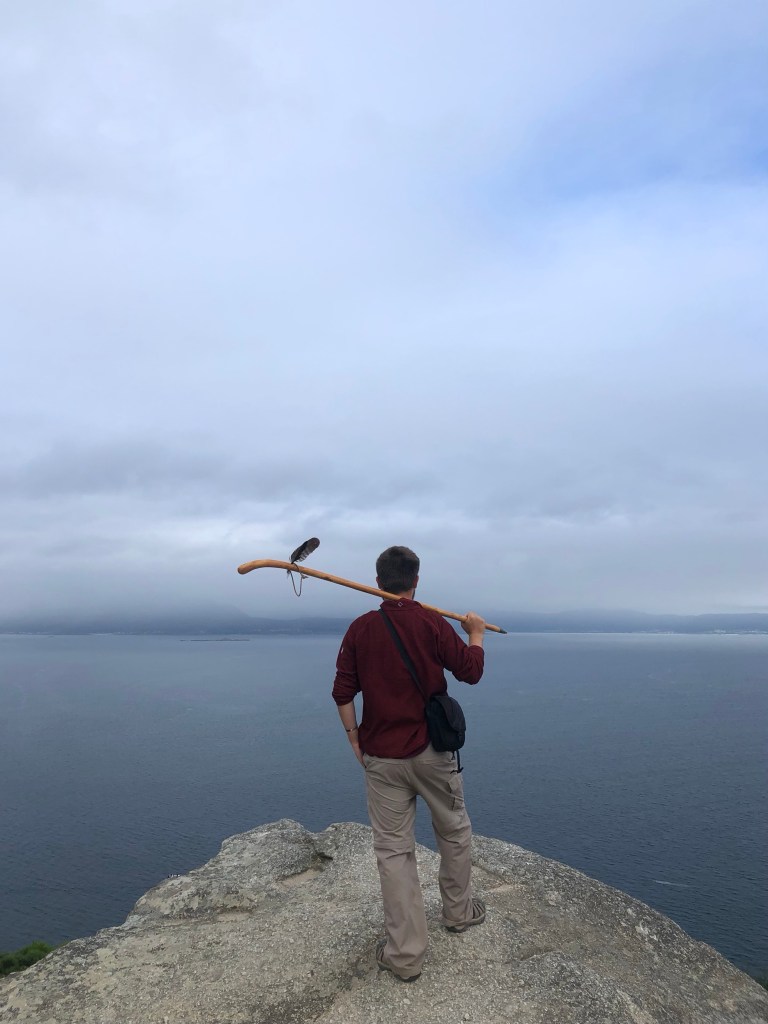
I found a quieter spot lower down and sat there for a while, watching the waters of the Atlantic below. It was a good place to reflect. I let go of a lot of things at last, letting them drift from my heart through my fingers and out across the ocean. Down below, gulls wheeled and cried around the cliff edge while a sparrow and a redstart made a few dizzying sallies across the precipice. My eyes were trained on the waves, searching for one thing in particular, and after half an hour – in the wake of a fishing boat – I saw what I was seeking. Not the lonely gannet or flight of shags that rounded the cape, but a fleet of shearwaters, an endearing and highly acrobatic seabird that truly lives up to its name, flying low over the water with the tips of their wings slicing the tips of the waves like blades. I was far too high up to tell what kind they might be, but I imagine they were Balearics, given their size and number.

If the ghostly harrier and quail were the spirits of the early Camino, it’s the handsome shearwater that marks its end. While I’ve walked most of the Camino alone, I’ve had companions every step of the way, from the merry stonechats that have been with me every day to the nightjars that have kept me company in the twilight hours. If you can put a name to the sights and sounds all around you, you’re never truly alone on the road.


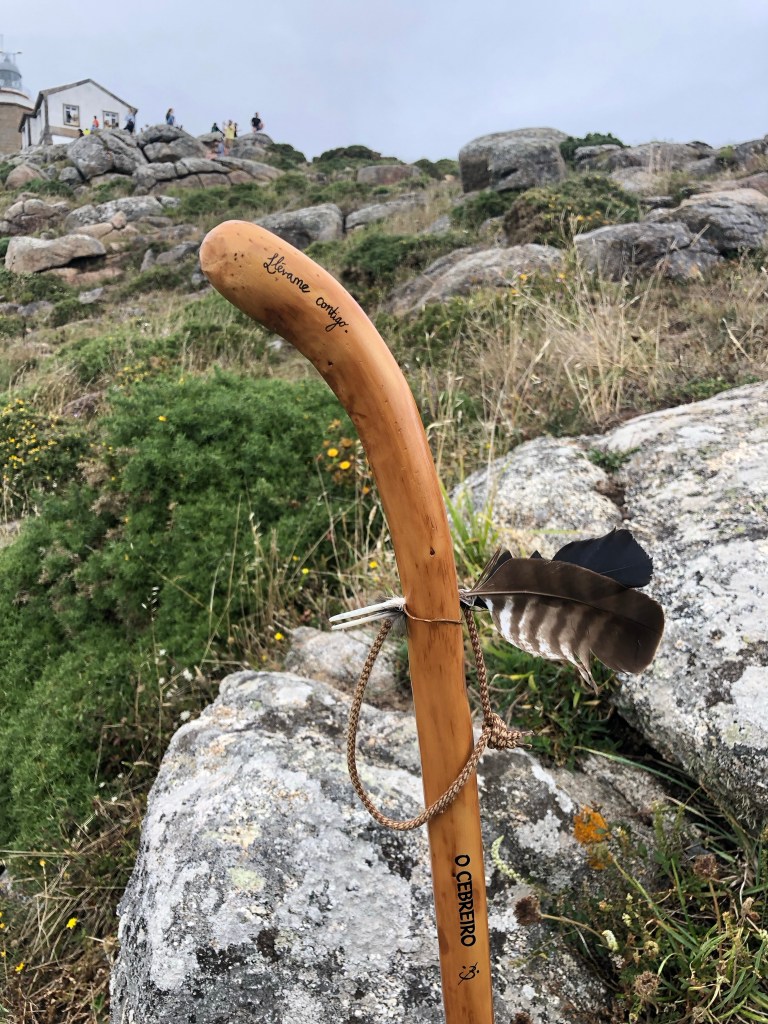
If you kept going in a straight line from here, you’d reach Long Island and perhaps even New York City. But unless you have the stamina of a god and the strength to match, that’s simply not possible, so here the road ends at last. I penned the words ‘Llévame contigo’ (Take me with you) into my faithful stick and planted it in the earth just behind where I had been sitting. I hope somebody does take it with them, and that it brings them as much joy and support as it has brought me.

I thought of its predecessor, and the feathers that had made it so memorable to other travellers on the road, and as I did, a couple of ravens suddenly appeared on the wind, soaring in circles around the cliffs below. One of those feathers I carried before belonged to a raven – so perhaps they were with me all along in spirit. I’d like to think that. According to legends of old, it was a raven that first brought the light of hope into the world.


Well, that’s a wrap. It’s now twenty to eight on Friday 28th August. The rain is falling outside and I’m booked on the 11:45 bus back to Santiago. I’m going to find myself a café near the harbour and do some writing while I wait, in this seaside town with which I have fallen in love. Galicia has been beautiful since O Cebreiro but its coast has utterly enchanted me. It feels like home, and yet like Spain at the same time. It feels like Edinburgh, Hythe and Olvera all rolled into one.

I will come back. There is more to the Costa da Morte than I have seen. I must come back. BB x
Home Again

I’m back home in England. It’s a lot noisier than it was in Bayeux, but then, the summer school kids are still here. It’s a Friday night, which means an end-of-week party, curated by the team leaders. That’s what we always used to do. You can tell because the music pumping out of the hall is almost entirely hits from the 2010’s. Twenty-somethings revelling in university nostalgia at a party ostensibly for children. Every once in a while a track comes on that they all seem to know: Freed from Desire, Mme Pavoshko, the Macarena. I’m almost nostalgic for Sur ma route, ever the anthem of my summer school days. Almost.

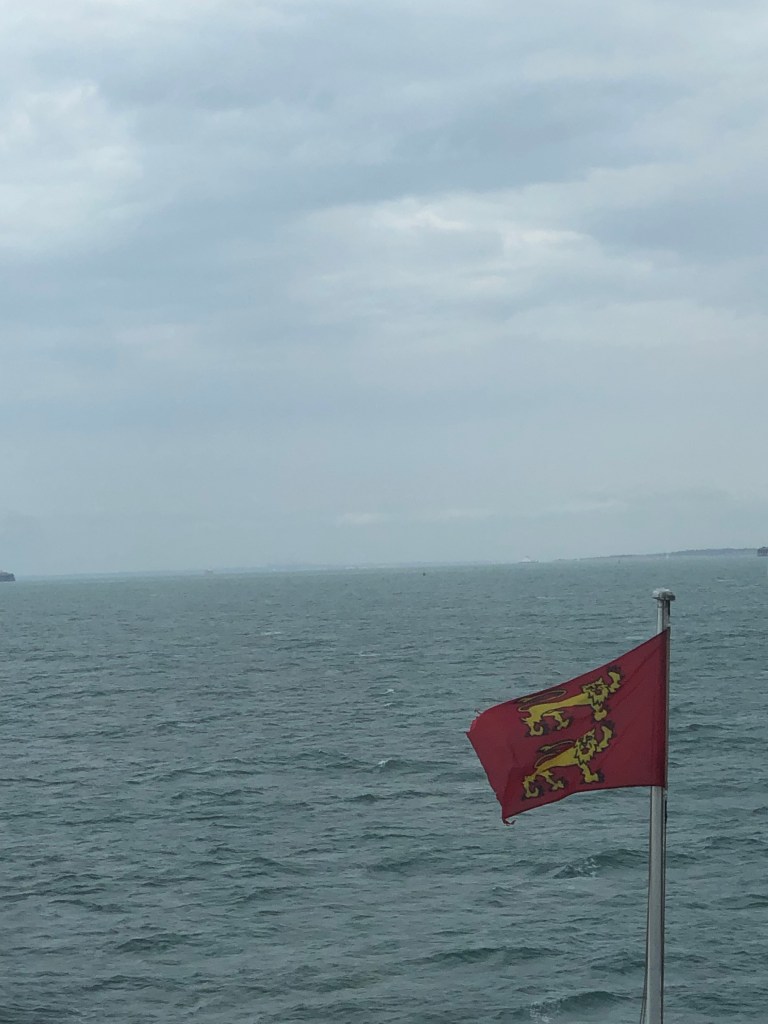
Blimey, but it’s a long ferry ride from Caen, though. As I caught the overnight ferry on my way out on Monday, I slept through most of the journey, but this time I watched the whole thing from the seats. At first you’re riding parallel to the sloping French coast to the east, and the seabirds follow you out: pairs of scoters, heavyset black-backed gulls, solitary gannets and the odd fulmar. Then it’s nothing but sea in all directions. England, on the horizon, hides behind a wall of cloud and mist, and the sea seems to fade into the sky. There’s always at least one or two shopping containers in the distance, the lettering on their hulls so vast you can read it from miles away. In a trick of the light, an Evergreen tanker seems to float in the void between the sea and the sky.

More than once, I tried to imagine what it must have been like for the soldiers crossing the Channel. The Allies riding into the jaws of death on the beaches of Normandy; and the Normans themselves, some nine hundred years prior, setting out to rewrite the history of a nation. The Conquered liberating the land of the Conqueror. There’s a poetic symmetry to that. Perhaps that’s why Normandy felt so special. It really is a history fanatic’s paradise and I couldn’t recommend the place more highly.

I really enjoyed being back in France. Toulouse was OK and Bordeaux pleasant enough, but there’s a magic in the north I’d never noticed before. It was also a pleasant reminder that I can handle myself just as capably in French as I can in Spanish, and I needed that. I should get to know that beautiful country some more over the years. Normandy was especially beautiful and I may well be back someday.

But for now, my legs could use a rest. And I could do with the sun making a return, since my feet, having been in sandals for four days, look like something you might find in a Bernard Matthew’s packet in the frozen food aisle in Tesco’s. BB x
For the Glory of Jellyfish

Tuesday 12th July, 11.13am
Hassocks Station

I needed to get out. While it was ultimately my decision to come back south to my flat and cut myself off once again – and I stand by that decision – it’s all too easy to go stir crazy in here on my own. I was angling on getting out and seeing friends for a couple of days, but as my plans fell apart, I’ve had to take the reins myself. So I decided to strike out for the coast. Brighton always makes for good writing, that perfectly bizarre city.

It’s clearly a school trip day today. The train south from Three Bridges was absolutely rammed with saaf Landan kids in high-vis jackets, their beleaguered teachers sitting close at hand, identifiable for the throbbing veins in their temples if not by their lanyards. Standing room only. It’s kind of noisy in the gangway, so I pop my headphones on. The Spinners’ Rubberband Man cancels out some of the angrier verses the kids are throwing around from their phones. I don’t understand the unbridled rage in that kind of music, much less its magnetic appeal to kids. Give me the laidback fun of the seventies any day.


12.40pm
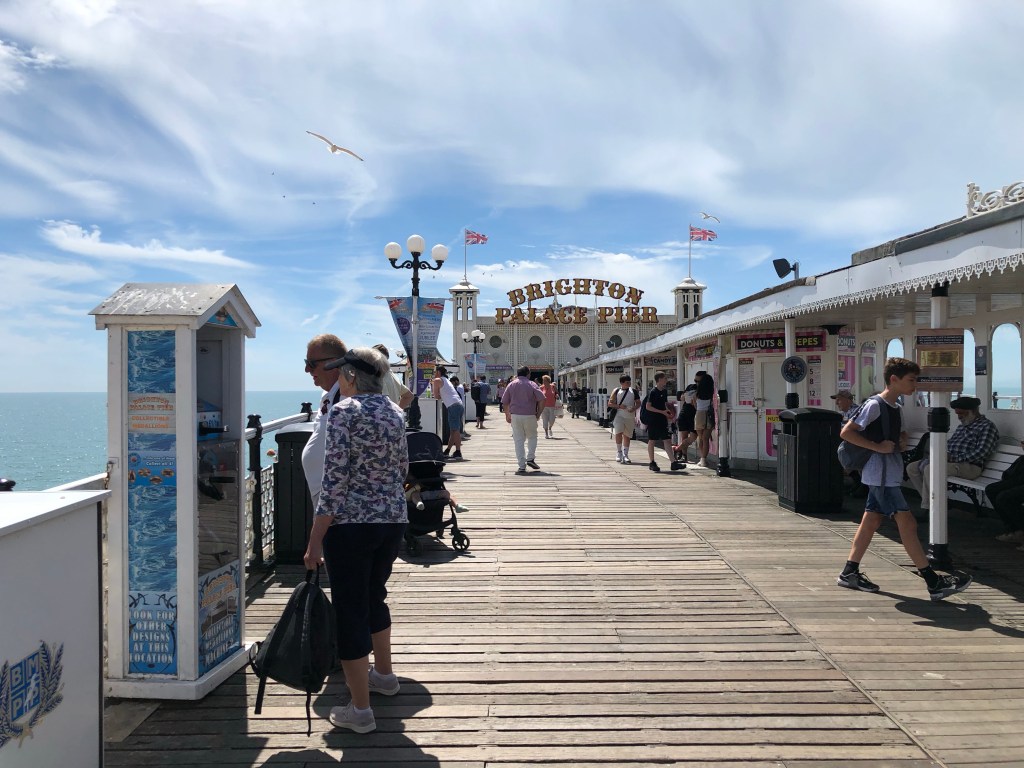
Brighton Palace Pier

Somehow it took me all of an hour to get from the station to the pier. Time slips through my fingers in a bookshop. It’s as though Waterstones operates in its own dimension. That could well be because I’ve become a lot more tactical when it comes to book-buying, taking the time to really get a flavour for a book before deciding to add it to my collection. As a general rule, any and all books on Spain (pre-20th century) go straight into the basket, but I’ve genuinely reached the stage now where if I don’t have it, it’s not worth having. There’s still a wealth of material out there in Spain in Spanish, but with Spain’s ludicrous stance on FBP, shopping for books over there is simply not economically viable. At the moment I’m trying to pick up my European reading challenge where I left off a few years ago, so I sought out a Ukrainian book to add to the collection today. I thought I was onto a winner with Sholem Aleichem’s Tevye the Dairyman – the forefather of Fiddler on the Roof – only it turns out, predictably, my mother already bought the book years ago. Still, no matter. That’s one more book I can feel better about giving away someday.


1.27pm
Brighton SeaLife Centre

Yes, I visited the aquarium. Don’t judge! When I was a kid I used to love going to aquariums – or the more ecologically-sound sealife centres, as they are so often called these days. Nausicaa across the Channel in Boulogne was a personal favourite, but Hastings’ SeaLife Centre came a very close second.

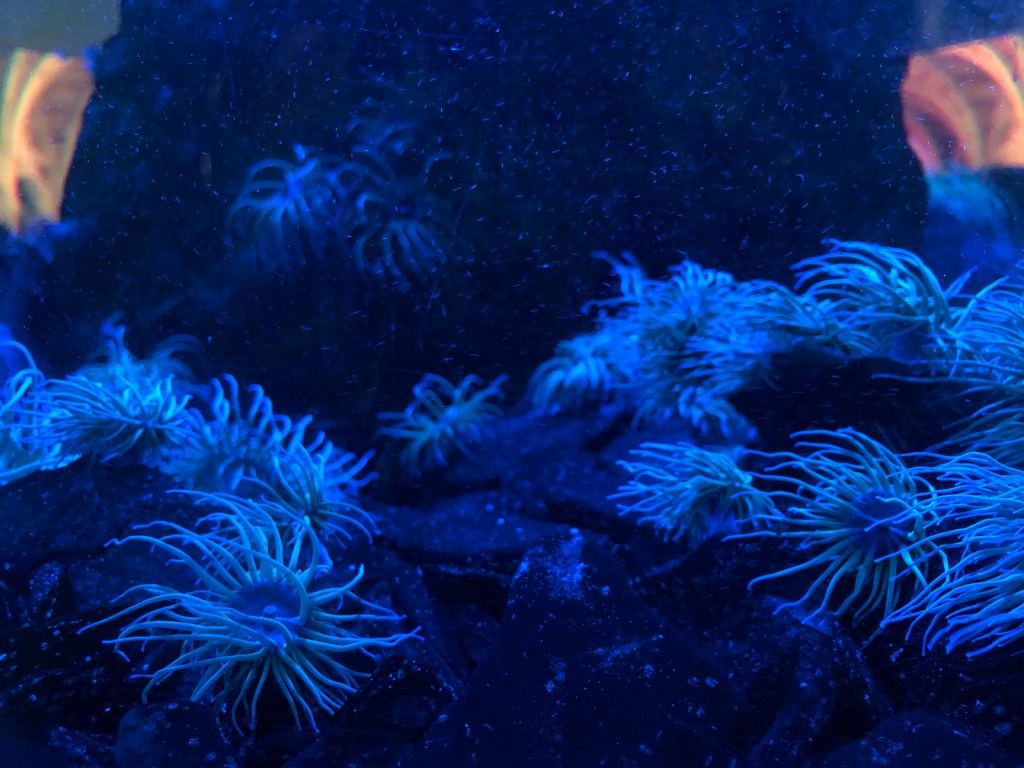
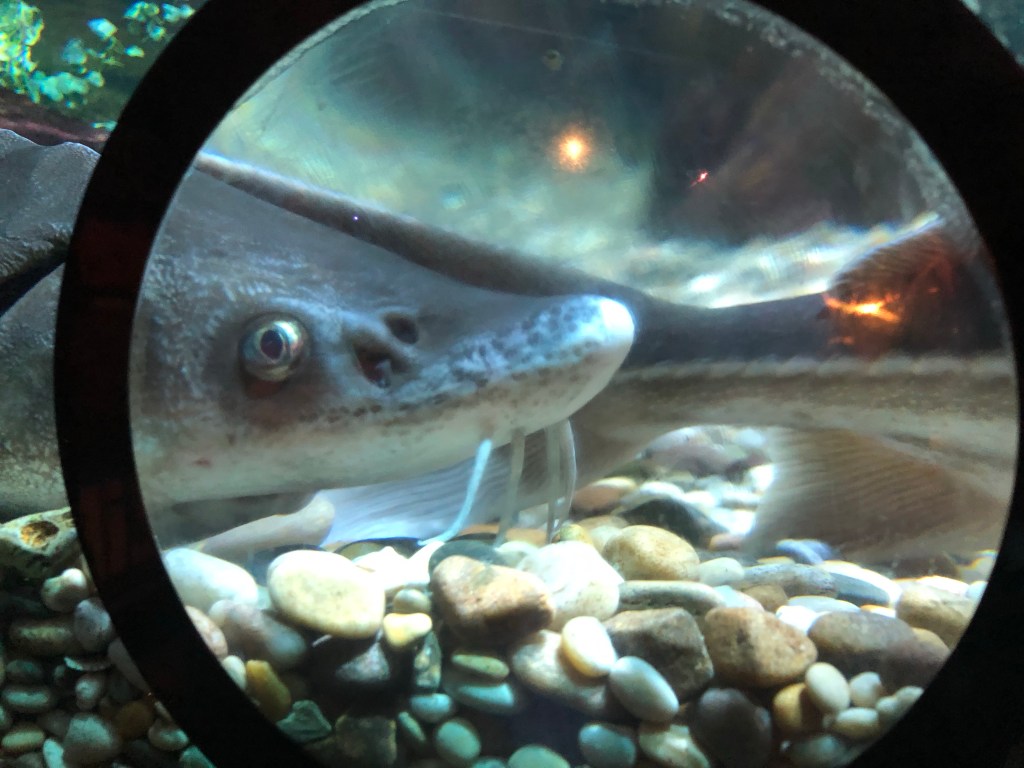
It was pretty much deserted. A large primary school group came in after me, but they never made it any further than the cafe housed in the original Victorian aquarium. I felt like a kid again and challenged myself to name the fish whose names I’d furiously memorised more than twenty years ago. For some crazy reason it’s all still there. From loach, tench and trout (easy mode), to snakelocks anemones, garden eels and corkwing, rainbow and cuckoo wrasse (standard) and on to pacu, Bloody Henrys and discus fish (hard mode). It’s a safe bet that the reason I had such a hard time learning anything in science class was because that part of my brain was stuffed full of animal trivia. If only biology had been about animals and not plant cell structure…! Who knows, I might have gone on to study it. As it is, I was bored stiff and let it go as soon as I could.

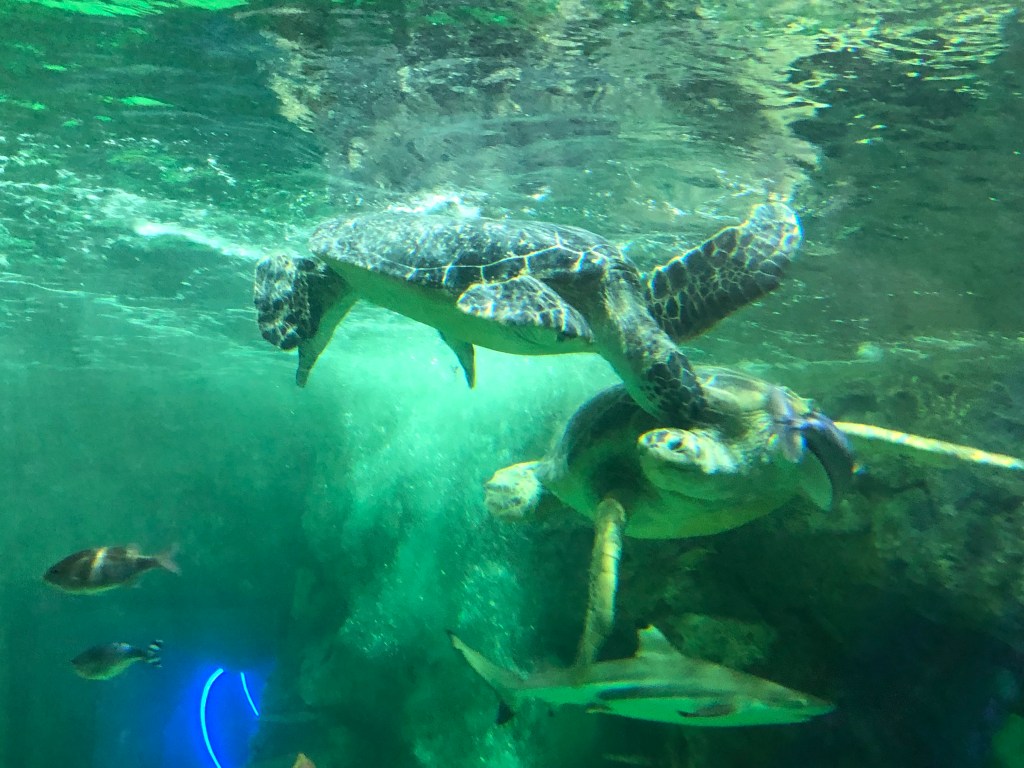
I stood and watched the turtles for quite a while. I don’t think I’ve ever seen a live sea turtle before. My god, they’re huge. Nature found a perfect recipe over 100 million years ago and decided ‘yep, that doesn’t need any more work’. Like sharks, turtles have been around for millions of years. Watch a turtle fly through the water and you’re reminded of how pathetically short our time on this planet has been by comparison. Only, these turtles looked a little stereotypic. One bit the other on one pass. Creatures can develop odd behaviours when they’re cooped up in small quarters. Maybe that’s a window into what’s happened to me in my flat this summer!

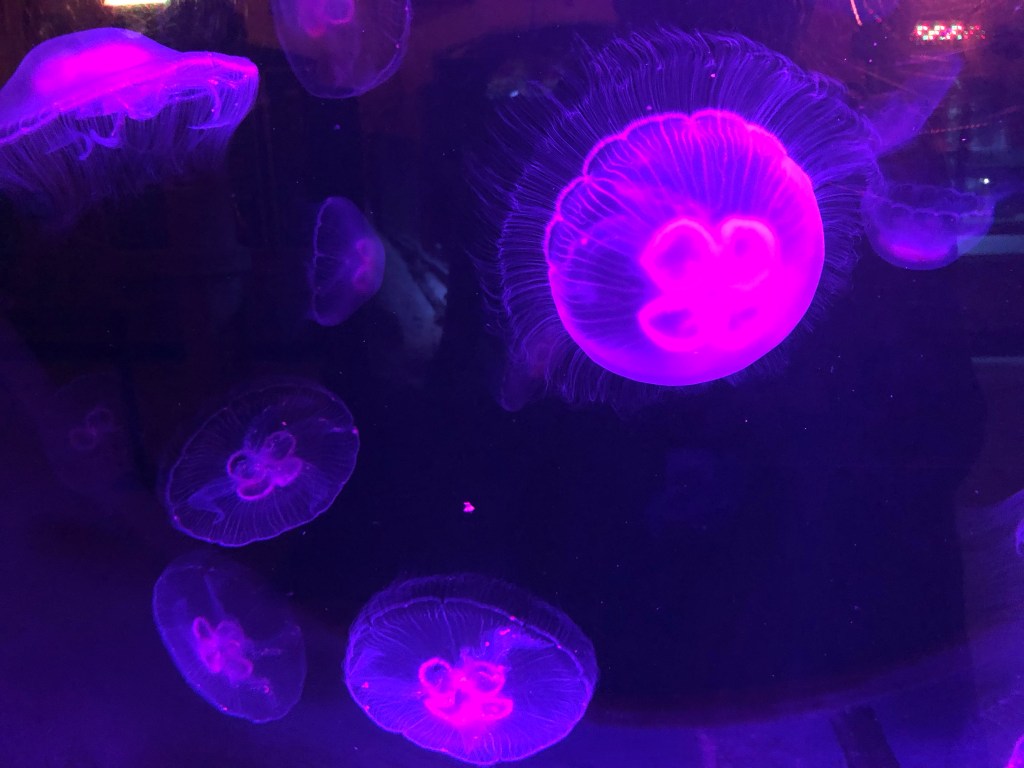
On to the jellies. I could have come here for the jellyfish alone. They’re absolutely mesmerising to watch in flight, pulsing slowly through the water, their hair-like tentacles trailing behind them. Another perfect life form that has seen millions of years of evolution come and go. Almost all sci-fi flicks imagine aliens from other planets as bipedal if not all-but human in appearance (Doctor Who and Star Wars are the prime examples), but if I were a betting man, I’d stake a fair amount on extra-terrestrials looking more like jellyfish than man. Isn’t it rather selfish of us to assume that ours is the perfect life form when turtles, sharks and jellyfish – hell, even cockroaches – have outlived us by millions of years? And on that note, I’d better clear out of here before I sell out mankind to the invading jellies faster than Kent Brockman.


2.58pm
Artists’ Beach

After nearly betraying humanity over a jellyfish and admiring the beautiful world beneath the waves for an hour, I promptly went outside, climbed the steps up to the palace pier and ate a battered fish with chips and vinegar. The irony was fortunately lost on the hoarse chippie vendor, who barely got the order numbers out in a grating voice. A group of girls next to me got their orders in after me, but somehow got their orders out first. £8.20 for fishcakes and chips seemed a bit steep compared to the £5.40 deal just 200 metres from the pier, but it was good quality, and since I barely managed to finish it, I didn’t have to wash it down with a tot of buyer’s remorse.

Brighton was packed with graduands this afternoon, red-faced and sweating in their full academic dress for the 28°C degree heat. If they opted for modesty, the other beach goers didn’t get the memo. British flesh on florid display, ranging from lobster-red to milk-white. A few lucky sightseers with bronze skin seemed to walk a little taller, but they were definitely in the minority. Lifeguards, street vendors and tramps made up the rest. Folk who have little choice but to soak up the sun.

Freeze frame. I pop the chip-box in the bin and look around – and really look. Yuppies in “gap-yah” pants and strappy tops. A lady in a wheelchair, and two women at the traffic lights who get to discussing behind their hands how she might have ended up there (the kind of curiosity my generation loves to hound out as aggression). Goth-types with nose rings, vape-sticks protruding from their fingers. On that note, cryptic vape ads everywhere (what on earth is the appeal?). A squadron of Korean cyclists suiting up on the sidewalk. A cormorant flying east along the coast. The indefatigable enthusiasm of the man selling rides on the motionless merry-go-round. A boy with what looks like rickets going by. The blonde girl in her thirties singing her heart out to a crowd of beachgoers enjoying a late lunch. Nobody is looking up at her.


3.35pm
Preston Park Station

The train home is much emptier, but I still walk the length of the train to find a carriage to myself. I pop the headphones back on as the train begins to pull away and Manu Dibango comes on. Sax City, Africadelic and Soul Makossa. Dibango was one of the victims of COVID two years ago. Like Marvin, James and Luther, that’s one more of my favourite artists who I’ll never get the chance to see live (or alive, for that matter).

During the Gospel Choir debacle, I spoke to a colleague and asked for their thoughts. They said they had thought a lot about the issue of music in a post-BLM world, and questioned even having been to a soul music gig as a white person. That messed with my head for months. It’s not that I don’t rate musicians who look like me, but give me a choice between Ed Sheeran and Fela and it’s Fela every time. Pop is catchy, but disco is eternal – it just keeps on giving, fifty years later. Folk is clever but Soul finds notes that folk just can’t. And highlife is surely a candidate for the most feel-good music genre on the planet. How can you deny yourself the chance to listen to such wonders on account of a feeling of awkwardness?

I’m all for better representation in the music industry. It needs it. I just hope we don’t end up carving ourselves up into islands where we can only listen to people who look like us, think like us, talk like us. And I mean that literally as well as musically. Social media is doing that already. It’s a dangerous path we’re treading, and I hope we can weather the storm that’s coming.

Would you look at that. I’m back to sermonising. I think I was doing better with committing acts of high treason for the conquering jellyfish. Time to go. Blppp blppp blpppp. BB x

Volver

‘What is he saying?’
‘It’s closed.’
‘Wakha. Fermé. No ferry.’
‘Closed? Why?’
‘I think he said there’s a strike… Huelga? Uh… grève? Est-ce qu’ils ne travaillent pas aujourd-hui?’
‘Ah! No lanchan ferry! Wakha, sadiqii, wakha!’
‘Pero, en serio Ben, tu te has enterado?’
‘A mí me gustaría mucho enterarme…’

You know what I was saying a couple of posts back about loving the multilingual melange that is Tangier? Well, I guess I got my comeuppance this afternoon. After a long shopping trip in the medina, loaded down with suitcases and food for the return journey, we hailed down a grand taxi for the harbour. But for the photography hiccup in Chaouen (and Booking.com refusing to refund me for a bungled payment), our four-day trip to Morocco had gone without a hitch.

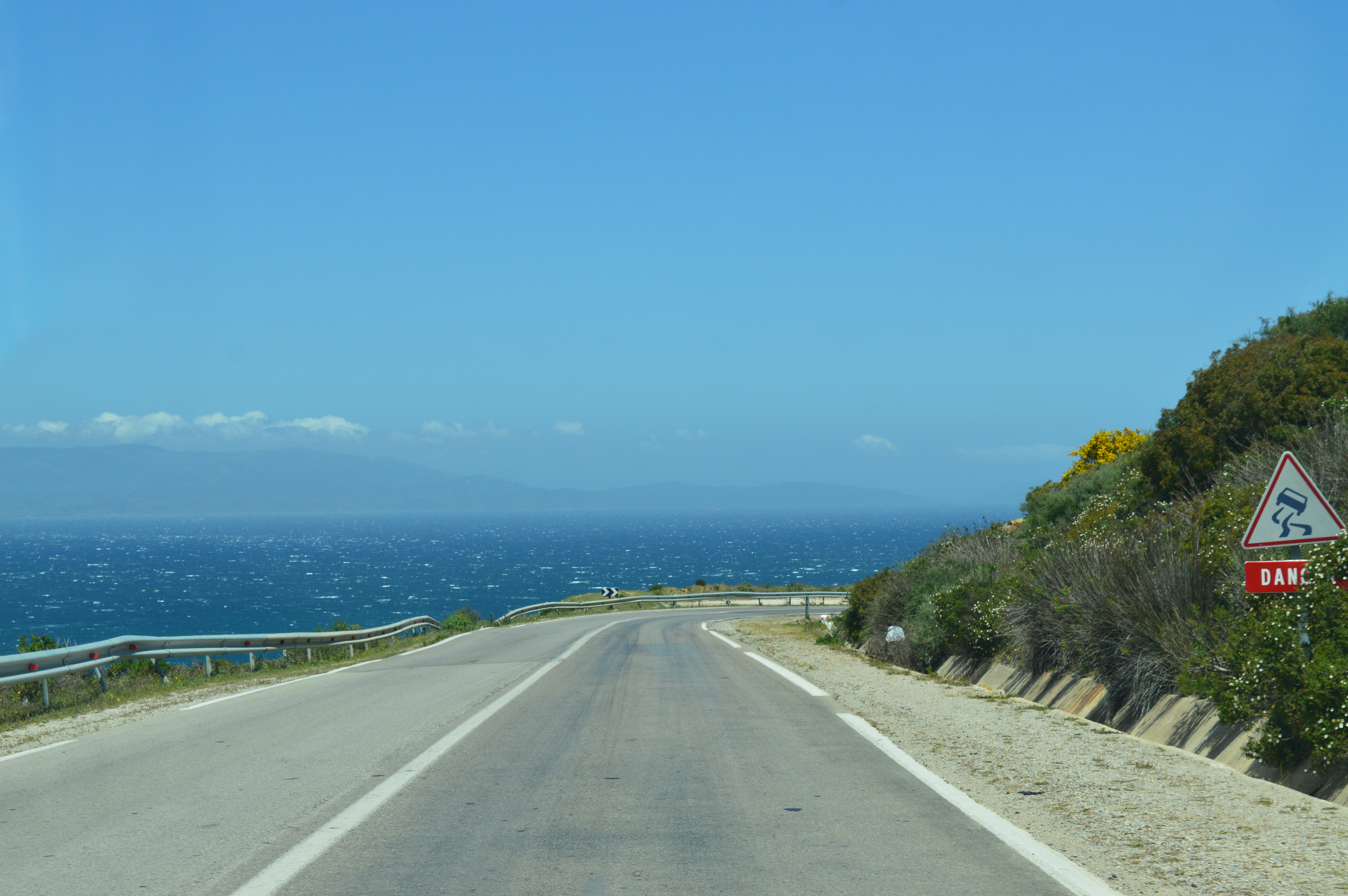
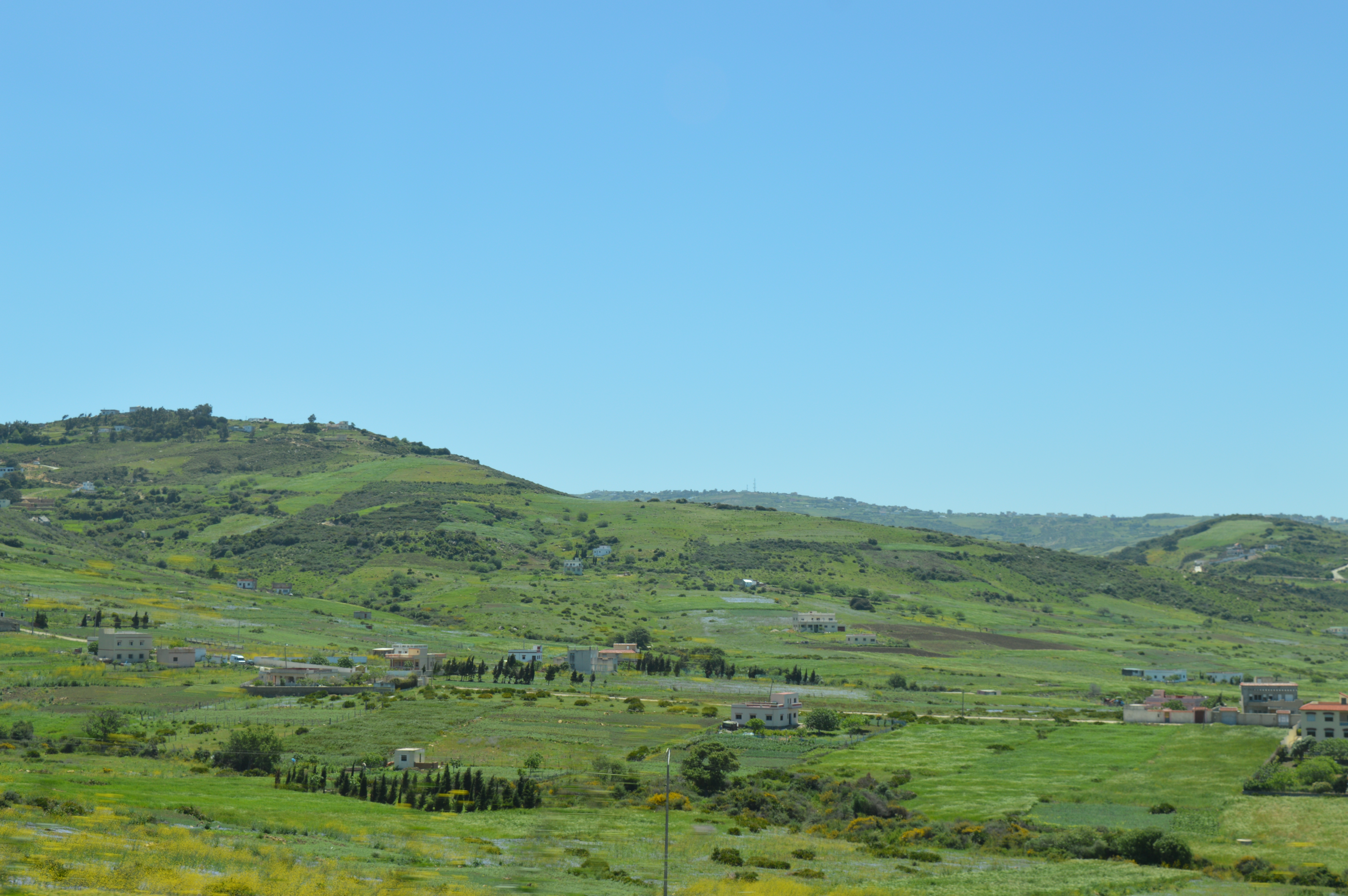
So it’s only natural that the taxi driver would leave it until we got to the harbour to tell us that, due to exceptionally strong winds, the port was closed. This was swiftly backed up by both the police and the FRS office, as if we weren’t already doing a bad job of playing the trust card. If we wanted to get home, there was only really one viable option: we’d have to catch the big FRS ferry from Tanger Med near Ksar Es-Seghir, some forty kilometres up the coast.

DSC_0610

We should have seen this coming just looking out from the hotel, really…

That’s how I found myself still in the same taxi some twenty minutes later, rounding the bends of the twisting coast road for the port and trying to make one intelligible sentence out of the five-language jumble of our taxi driver. His Classical Arabic, French, Spanish and English were all perfectly reasonable, but his mixing-up of all four of them mid-sentence with his native Dārija made it nigh-on impossible to understand a word of what he was saying. Speaking four languages is one thing, but trying to make sense of them all at once is a step too far for me.

DSC_0608

So green – but how much longer will it last?

By some streak of luck we made it to the docks in time, and for a fair price, too; 180MAD for the car from Tangier, for the record, and not quite the 2500MAD that was his first offer (trumping even the villainous Oulad Berhil cabbie in greed). Predictably enough, we weren’t the only ones caught with our pants down by the closure of the Tangier port: at least two other boatloads turned up for the 14.00h, which was necessarily shunted back to 15.00h, and then 16.00h. Passport control was, for the once, the least of our concerns; a succession of connecting buses came and went, none of them bound for the FRS service. I don’t suppose I minded too much. I spent the last hour playing Peep-O and making silly faces at a little girl who seemed only too pleased at the diversion. By the time the FRS shuttle pulled in it was coming on to five minutes to four and tempers were running short. Mufasa would have been all too familiar with the stampede that followed.

a

God, I’m so evil

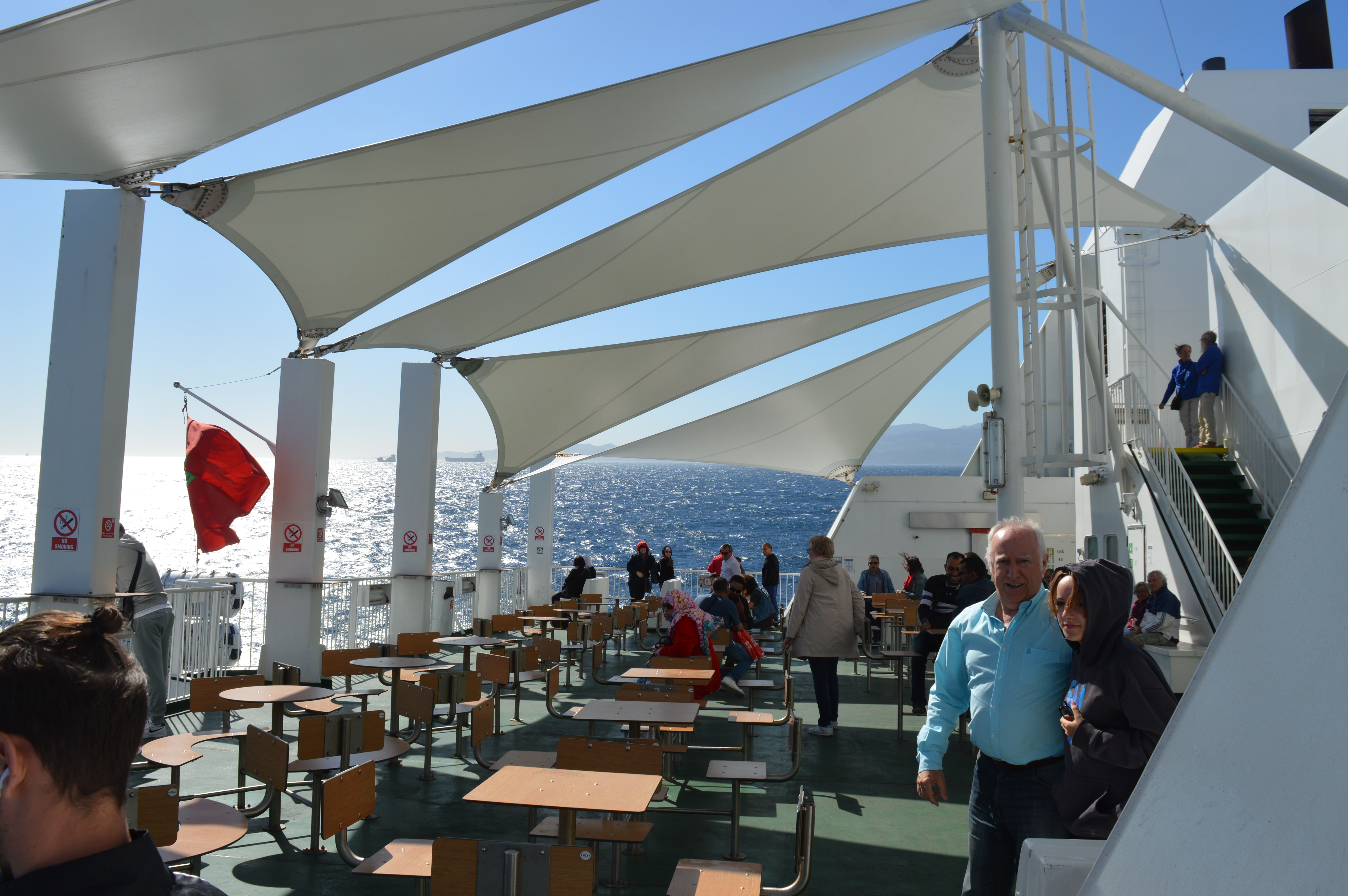
Despite repeated warnings from the bridge, I spent almost the entire journey out on deck in the hopes of seeing a shearwater (I’d seen a few dusky shapes in the gloom on the way out, but I needed to be sure). The Strait is also a very good place to look for whales and dolphins, so I had an eye out for them, too… whenever it wasn’t shut tight in a wince in the game-force winds, that is. The sea was choppier than I’ve ever seen it, making whale-watching a no-go and rendering photography difficult. At its worst, the ferry was tilting at a twenty-five degree angle from side to side, giving spectacular views down the deck into the ocean or the open sky at any given moment.

DSC_0683

Not the healthiest angle for a ferry

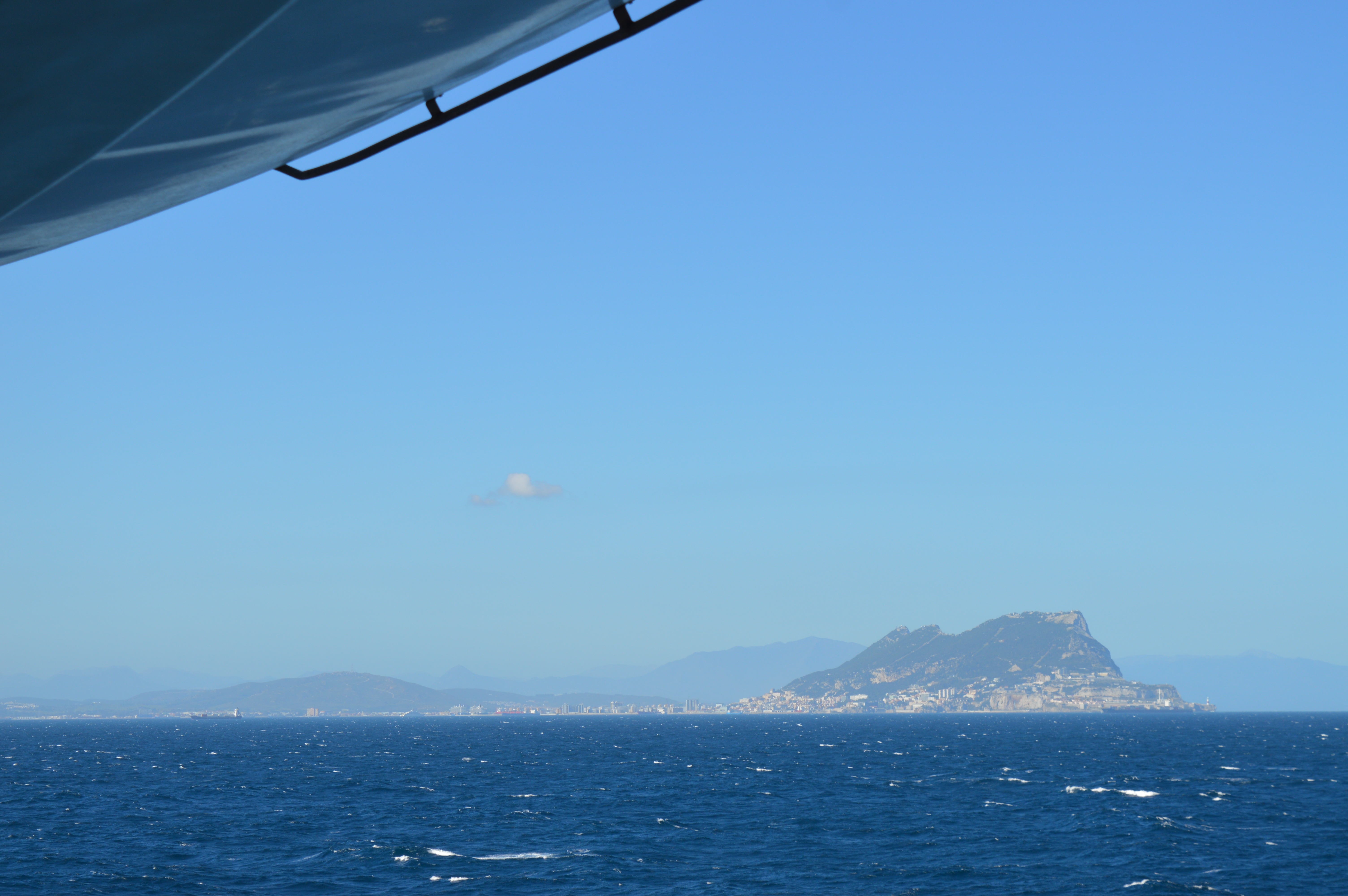
A sensible mind would have given up the ghost and retreated. But I’m not all that sensible, and I was rewarded for my obstinacy just short of the bay of Gibraltar by a single, chocolate-coloured seabird gliding effortlessly between the waves and a far-off but recognisable vertical jet of steam. Stubbornness has its rewards.

DSC_0689

The Bay of Gibraltar (plus very distant shearwaters)

Let’s just take a step back for a moment. This is now the third extracurricular adventure I’ve had with my colleagues, following Andorra and the Romanian exchange. Before Meléndez Valdés I’d never imagined life as a teacher to be anything like this. I’m completely and utterly sold on this way of life. This is my life, opening up before me: traveling Extremadura as a qualified English teacher until I have enough experience under my belt to settle for good. The oposiciones sound tough, but my colleagues here are encouraging me to come back and go for it, which makes it all the more worthwhile. Spain, you just keep winning me over. How I love you with all of my heart and more…

It’s coming up to ten o’clock, Spanish time. The sun set an hour or so ago. Eight o’clock start tomorrow morning. Ive had worse. On the whole it’s been a very good weekend, and my appetite for the summer is more than whetted. Only next time, I think I’ll catch the plane. BB x

Adventures in Cow Country

Good morning Cantabria!

DSC_0069

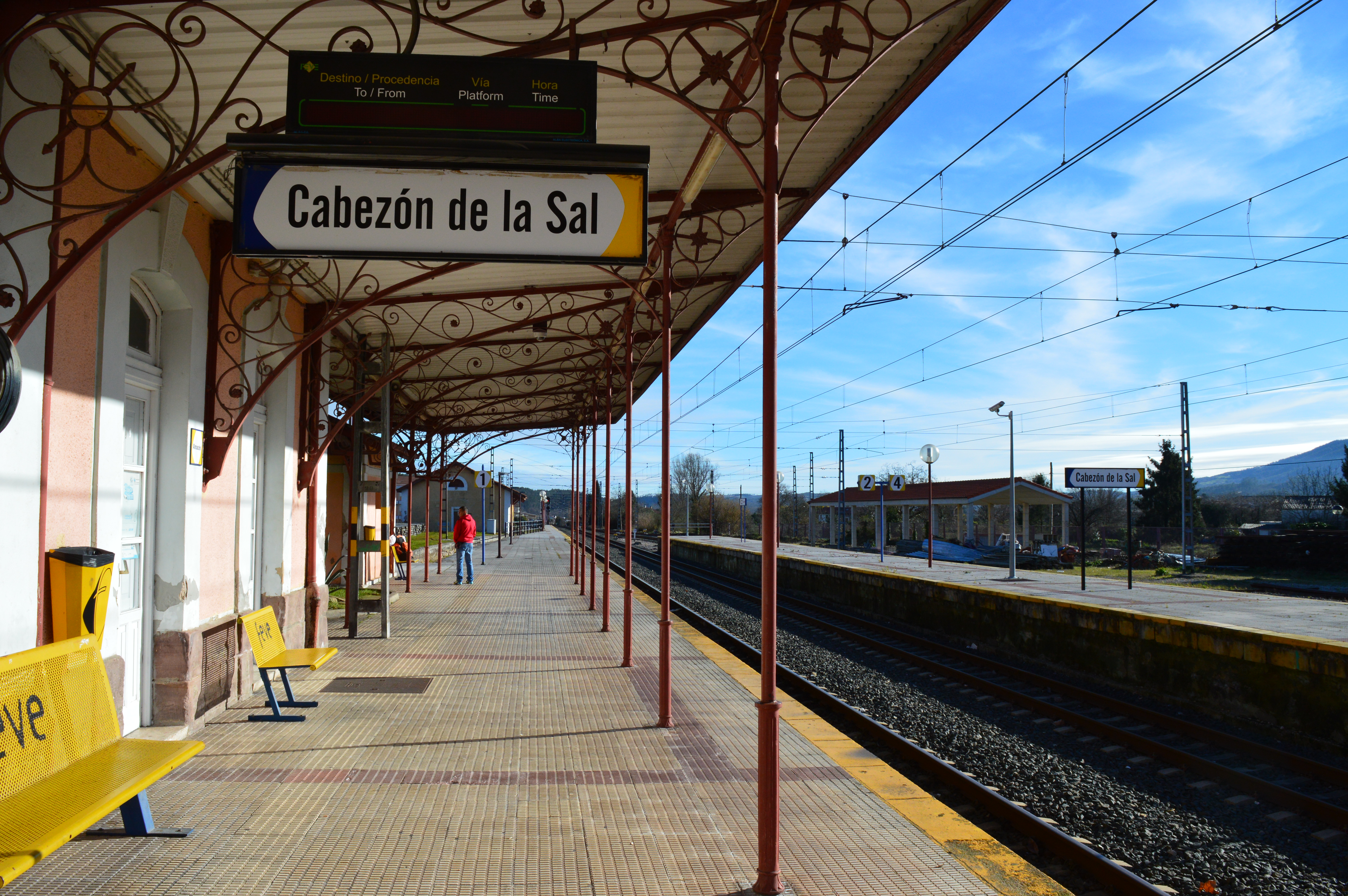
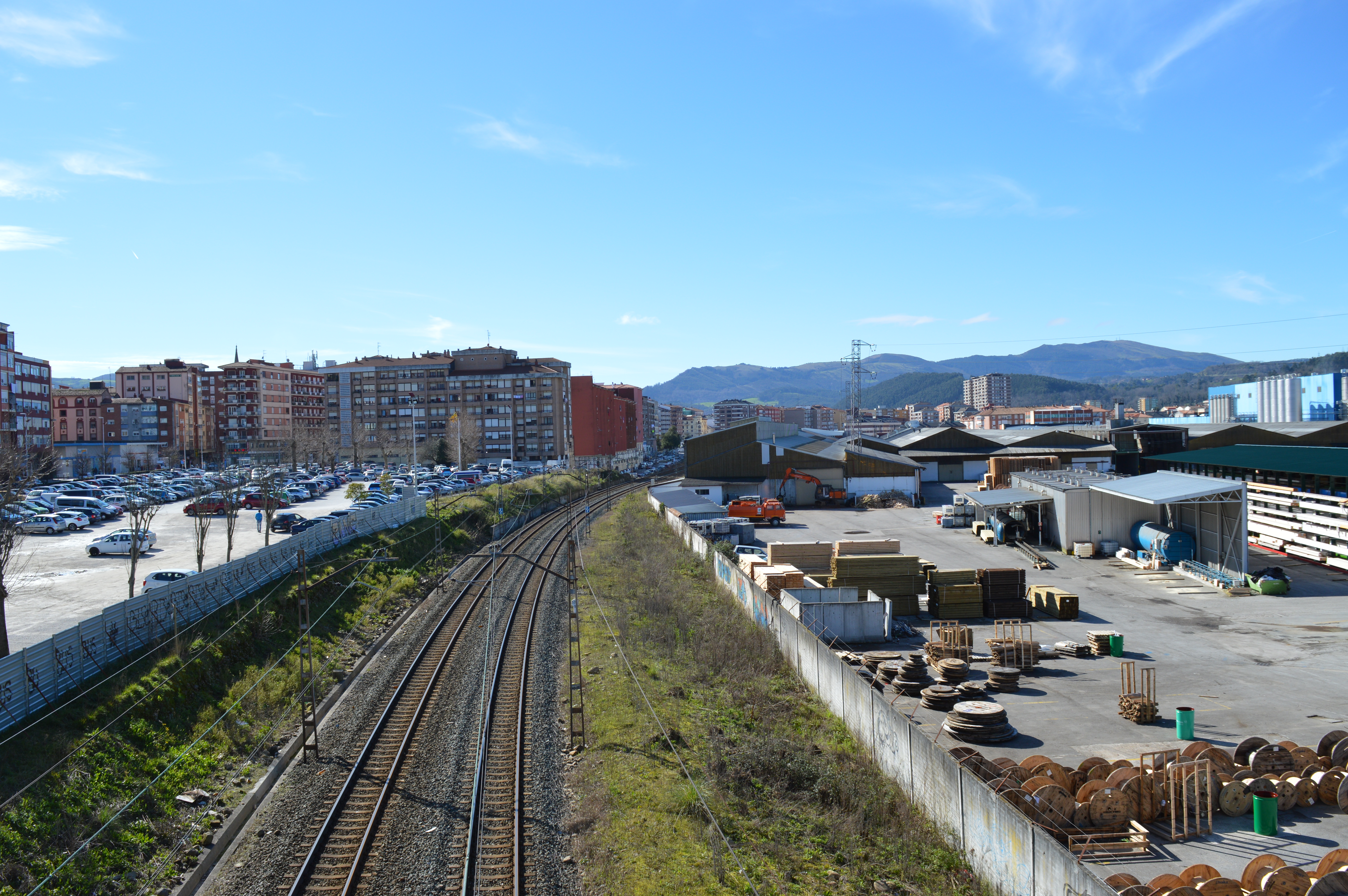
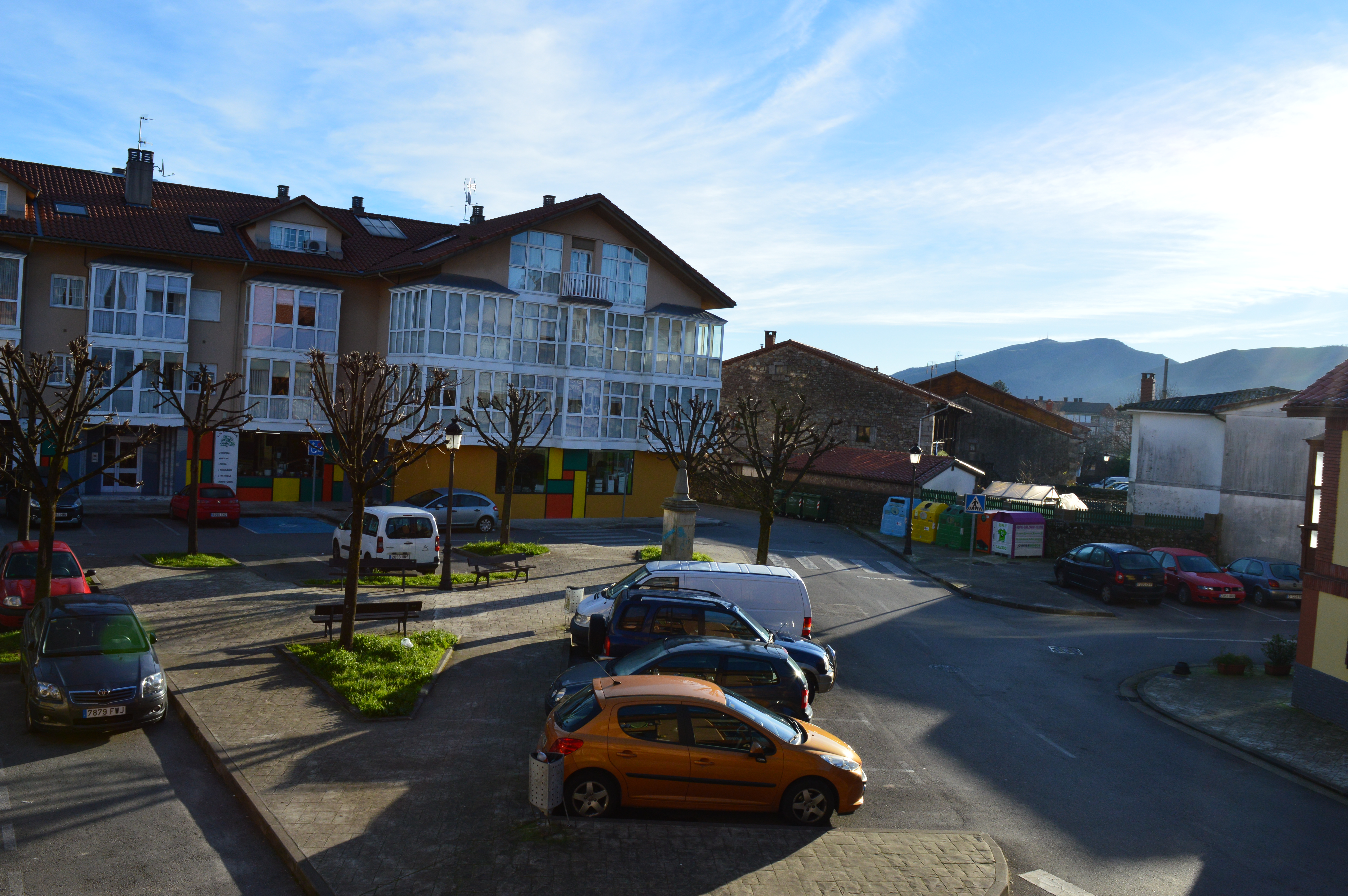
Cabezón de la Sal is a simply gorgeous mountain village sat in a cleft between the hills of Santillana and the Escudo de Cabuérniga, a mighty ridge stretching in a straight line all the way to the Asturian border. What makes it so immediately different from the south is the layout of the town: if anything, it’s more English than Spanish. Where small two-story flats hold the monopoly in the town centre, semidetached houses dominate almost everywhere else. Long gone are the snake-like rows of white houses with barred windows and marble porches; the Cantabrian norm is stone-brick dwellings with wooden roofs and quaint, upper-storey balconies. It’s charming, if a little alien to a habituated southerner like me.

DSC_0292

There are buses – apparently – but it’s the local train service that holds sway here. Quiet, comfortable and cheap at the price, Cantabria’s FEVE provides a reliable alternative to Extremadura’s LEDA – provided you arrive in town before ten to nine at night, that is.

DSC_0080

‘Let’s go to Potes,’ says Kate, ‘for a little walk.’ So off we went to Torrelavega, that city of burgeoning factories and towering flat-blocks that I passed through twice four years ago in the early days of my trans-Iberian adventure. In the sunlight, Torrelavega looks…

DSC_0089

…well, I’ll not beat about the bush. Torrelavega is not exactly Paris. If Cabezón is a more rustic version of Villafranca, Torre is the Almendralejo equivalent in Kate’s neck-o’-the-woods. But like Almendralejo, it’s got its own charms. One of them goes by the name of red velvet sponge-cake.

DSC_0087

We arrived in Torrelavega looking for the bus to Potes, but the bus station proved singularly unhelpful, and a quick browse of the internet told us that the bus we were looking for left not from the bus station, but from the Palomera office by the train station we’d just left behind. In a scene which echoed the night before (albeit in slow motion), we half-ran back to the station… but there was absolutely no sign of the bus. Or any bus. Or even a bus stop, for that matter. Unless the Potes bus is a mystical bus which flies through the air and receives its passengers from the balcony of the Palomera offices on the second floor, I declare that bus stop to be an enigma. The city of Atlantis and the fabled kingdom of Shangri-La have captivated the imagination of man for centuries. Now I shall brazenly add the Palomera bus stop to that box of unsolved mysteries.

DSC_0088

Thinking on our feet, we dabbled with the idea of catching the train into Asturias in search of the equally mysterious inland bay of Gulpiyuri, but after all of that faffing around with the Potes bus we’d just missed the only practical train to Llanes by five minutes. As though calling out from a memory, Santillana del Mar came to mind and I decided we would grab the next train back to Cabezón and strike out for the coast via the Town of Three Lies. Public transport has as its advantages, but as a species, we should never forget that it was learning to walk on our own two feet that got us where we are today. And so off we went.

DSC_0096

The strangest thing about this last-minute change of plan was that it meant retracing my steps almost pace for pace from that ridiculous adventure, now some four years ago, right down to getting off at the very station where the driving rain turned me back to the shelter of Santillana del Mar. But for a few forks in the road, I had the entire route embedded in my mind as though I’d walked it ten times over rather than once. Perhaps that’s fate. She’s been playing a long game with me.

DSC_0119

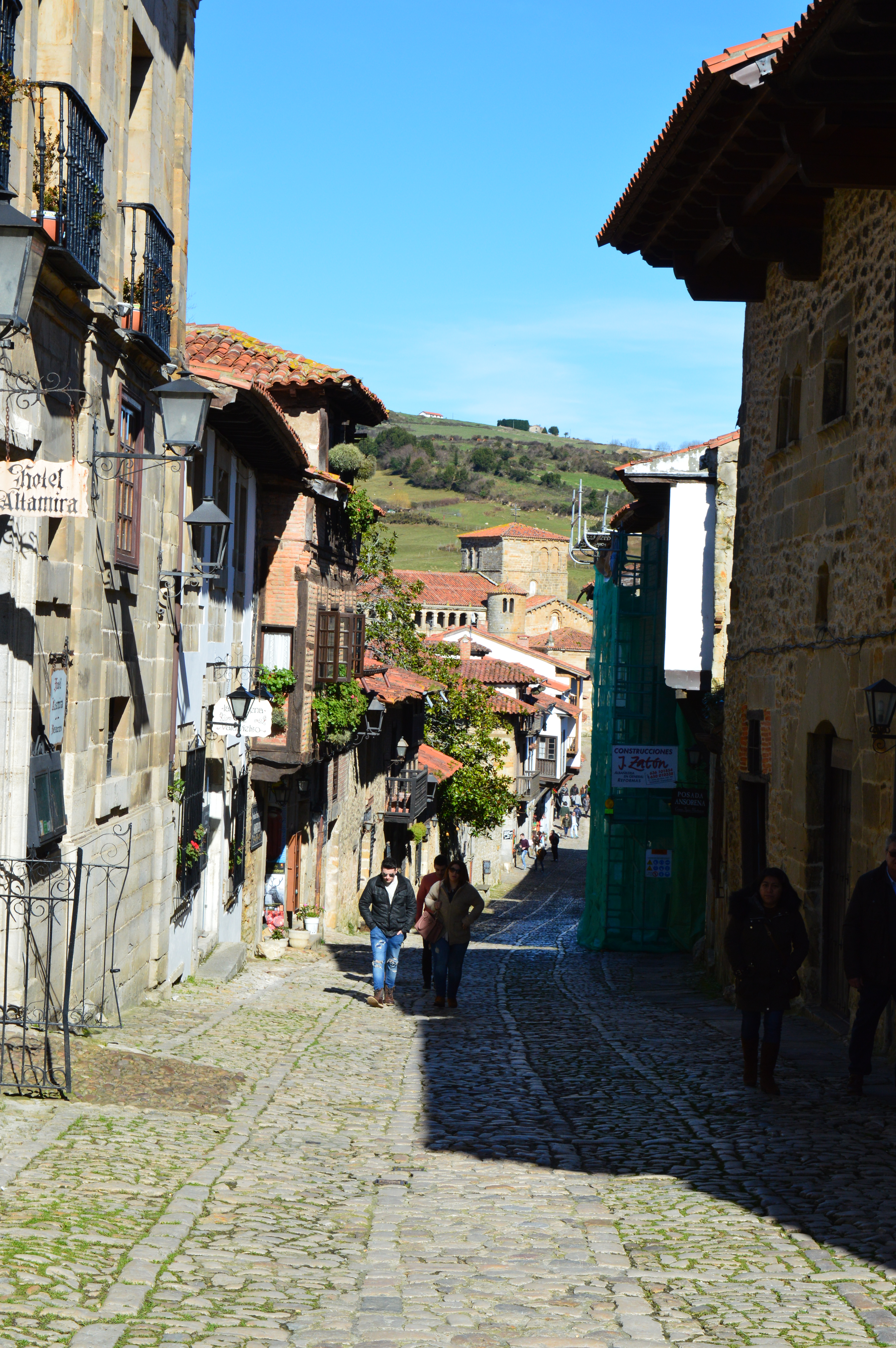
It felt decidedly weird coming down out of the hills into the cobbled streets of Santillana all over again. As Spanish villages go, Santillana has got to be amongst the very prettiest. It’s known as the town of three lies – being neither holy, flat, nor by the sea – but if that is so, then it’s a damned beautiful liar. As I so often find myself doing, I made sure to revisit all of the places I’d been before: the same church, the same quesada shop, the same Savage Culture boutique that I still don’t fully understand. I can’t explain it, but something about this town keeps pulling me back.

DSC_0130

We had a picnic lunch of peanut butter sandwiches on the steps of the Colegiata de Santa Juliana and basked in the afternoon sun. 15 degrees Celsius… not bad for Cantabria. In all the bad weather Spain’s north coast has been having of late, I must confess I think myself bloody lucky to have landed a whole twenty-four hours of glorious sunshine in the one day I had to explore the place. I could hardly have asked for better: better weather, or better countryside, or better company.

DSC_0160

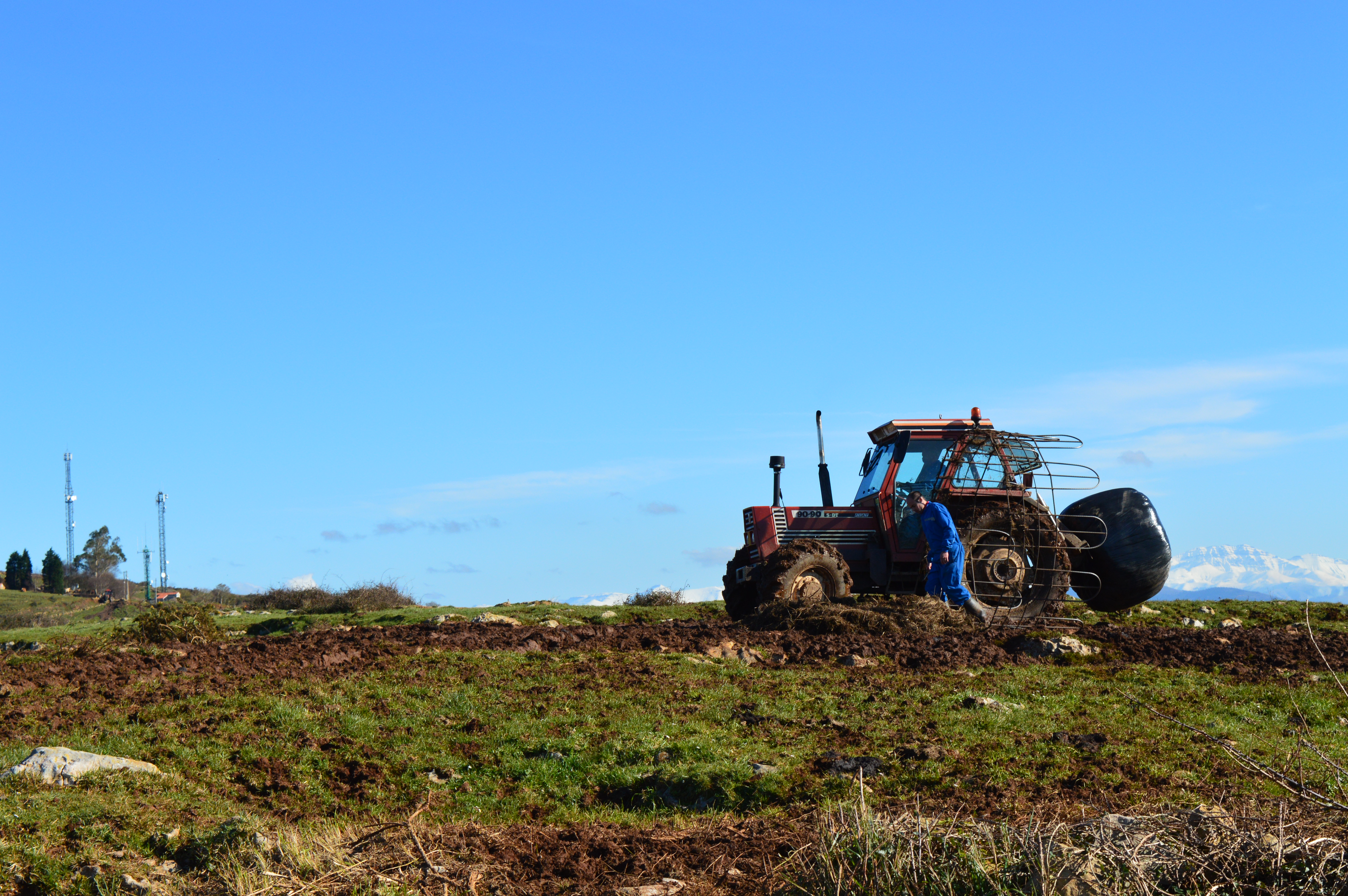
Leaving Santillana behind, we climbed steadily northwards across the rolling hills to the coast. Along the way we were misled by the Arch-Deceiver that is HERE Maps, which tried to convince us that what looked suspiciously like an overgrown stream was actually a main road, and we were caught up in a high-speed chase with a tractor, like an extremely low-budget Cantabrian version of Need for Speed. The stereotype lives: Cantabria truly is a land of green hills, of cows and of tractors.

DSC_0146

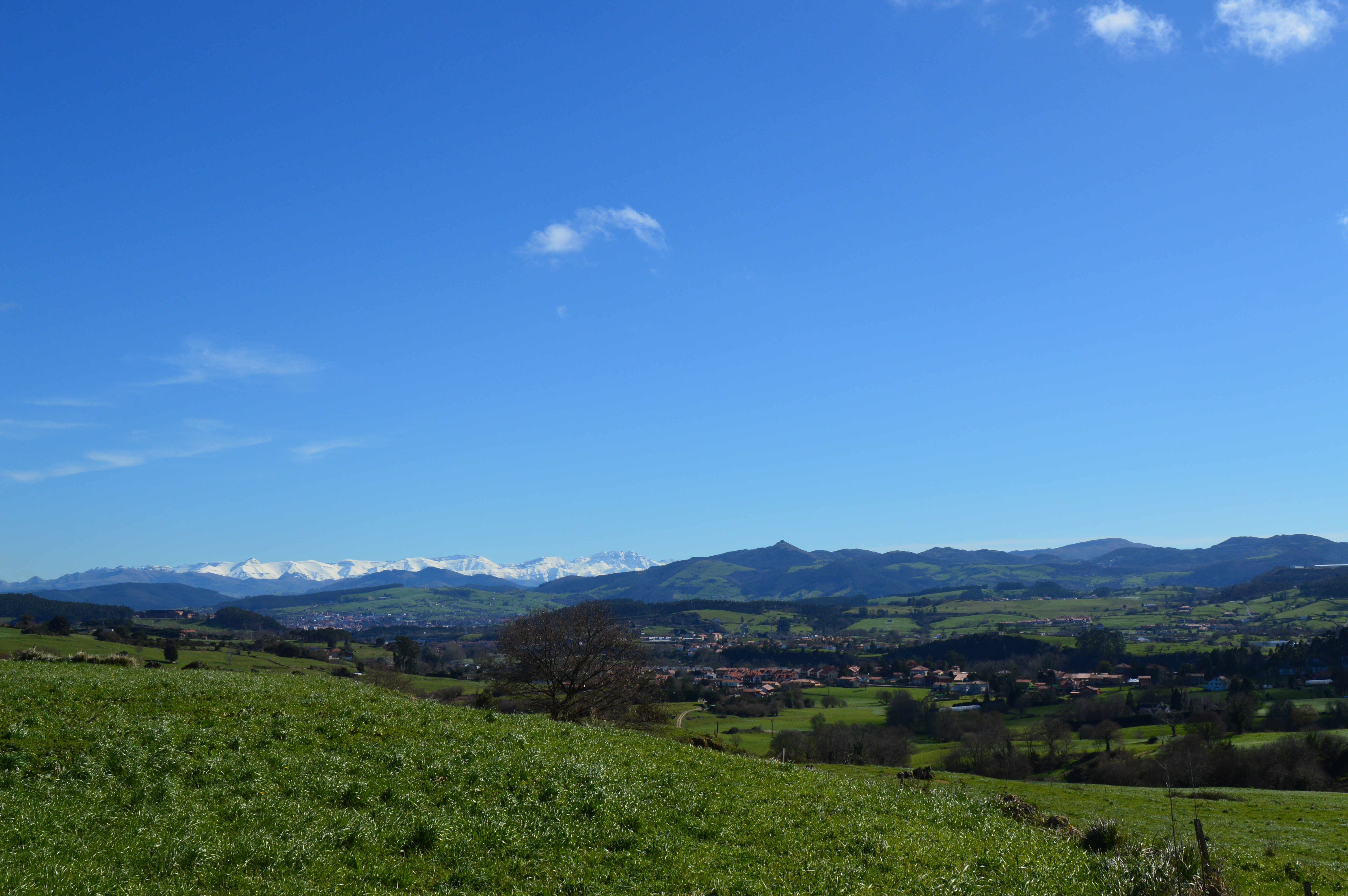
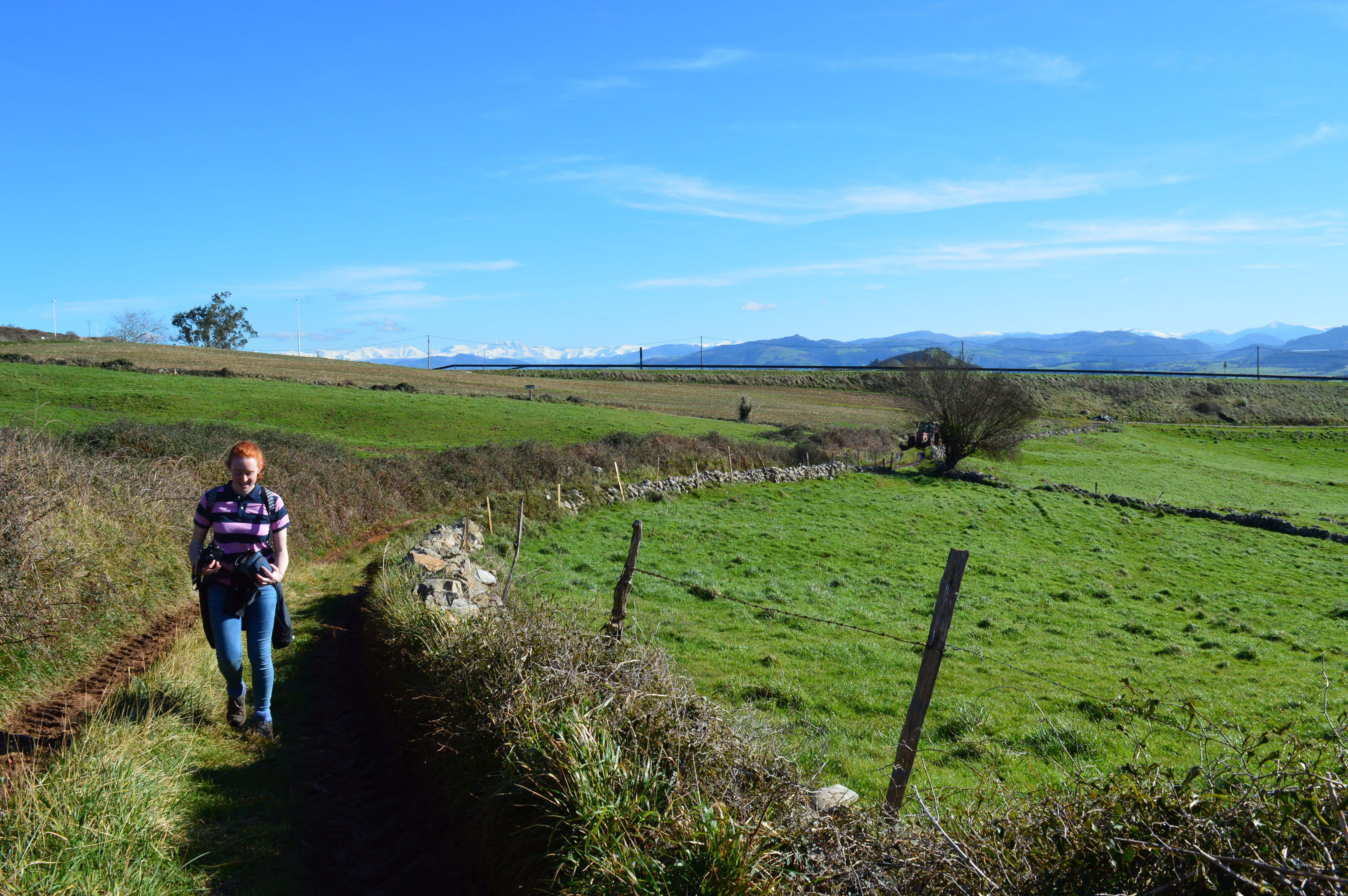
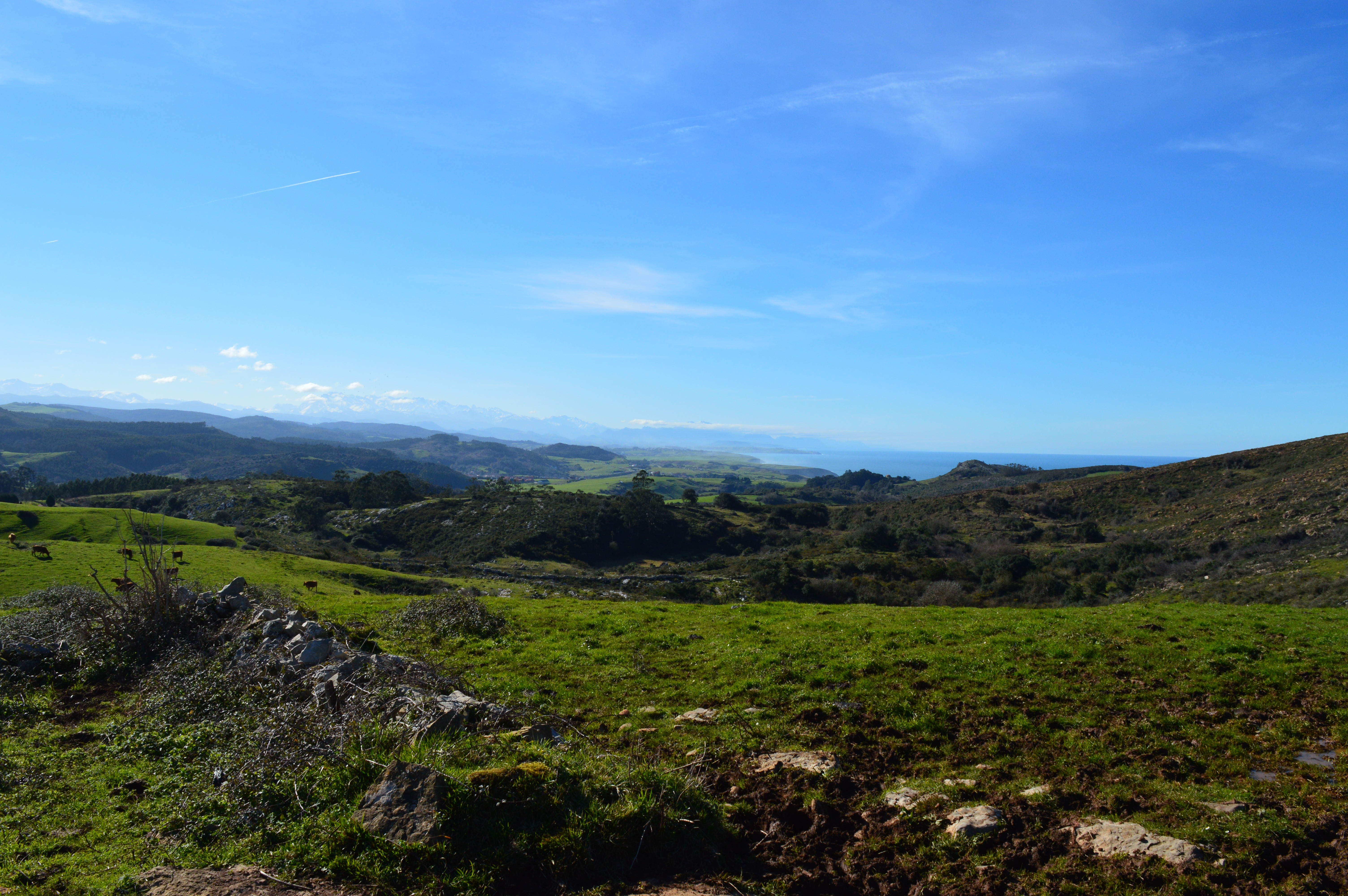
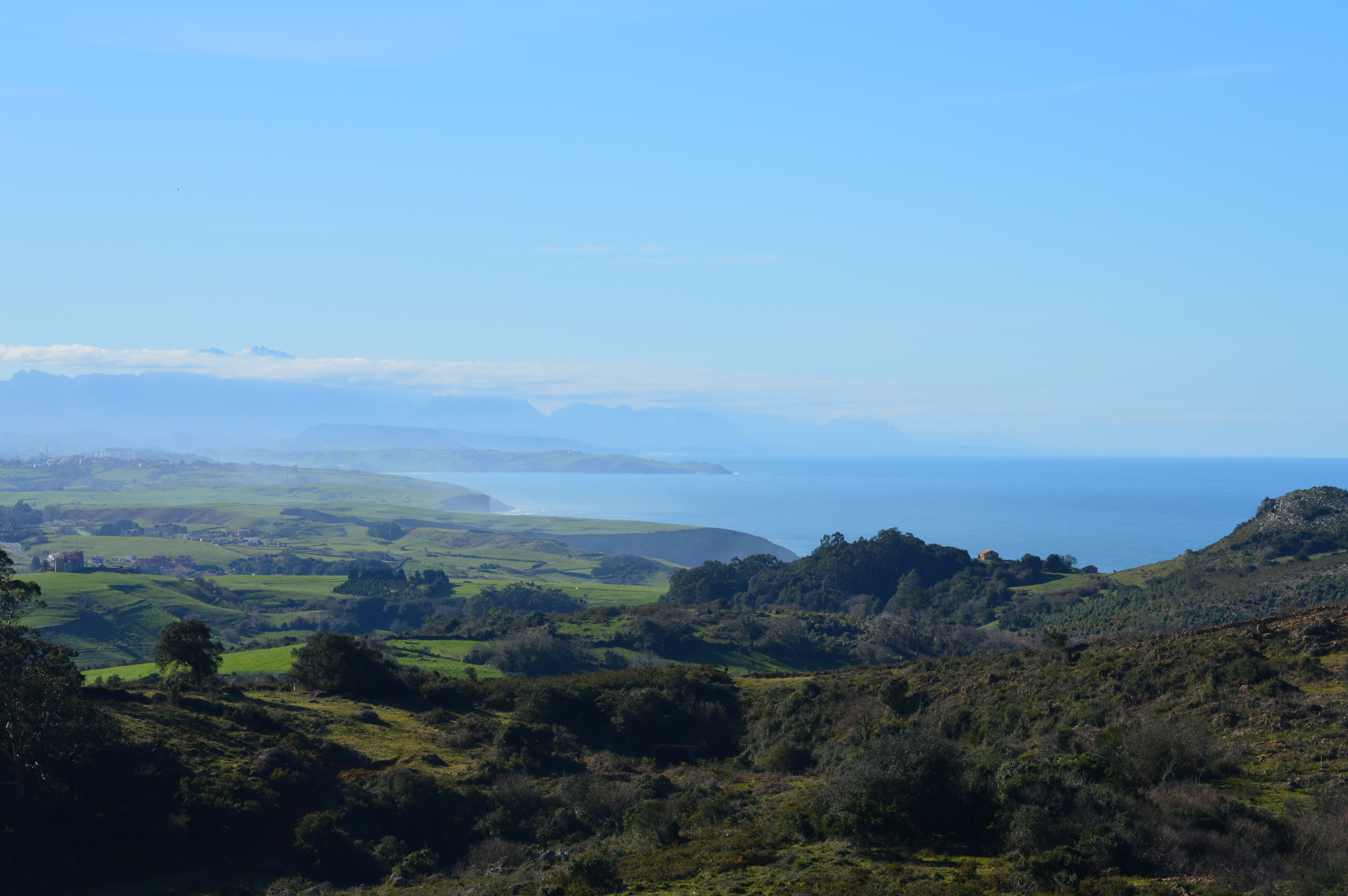
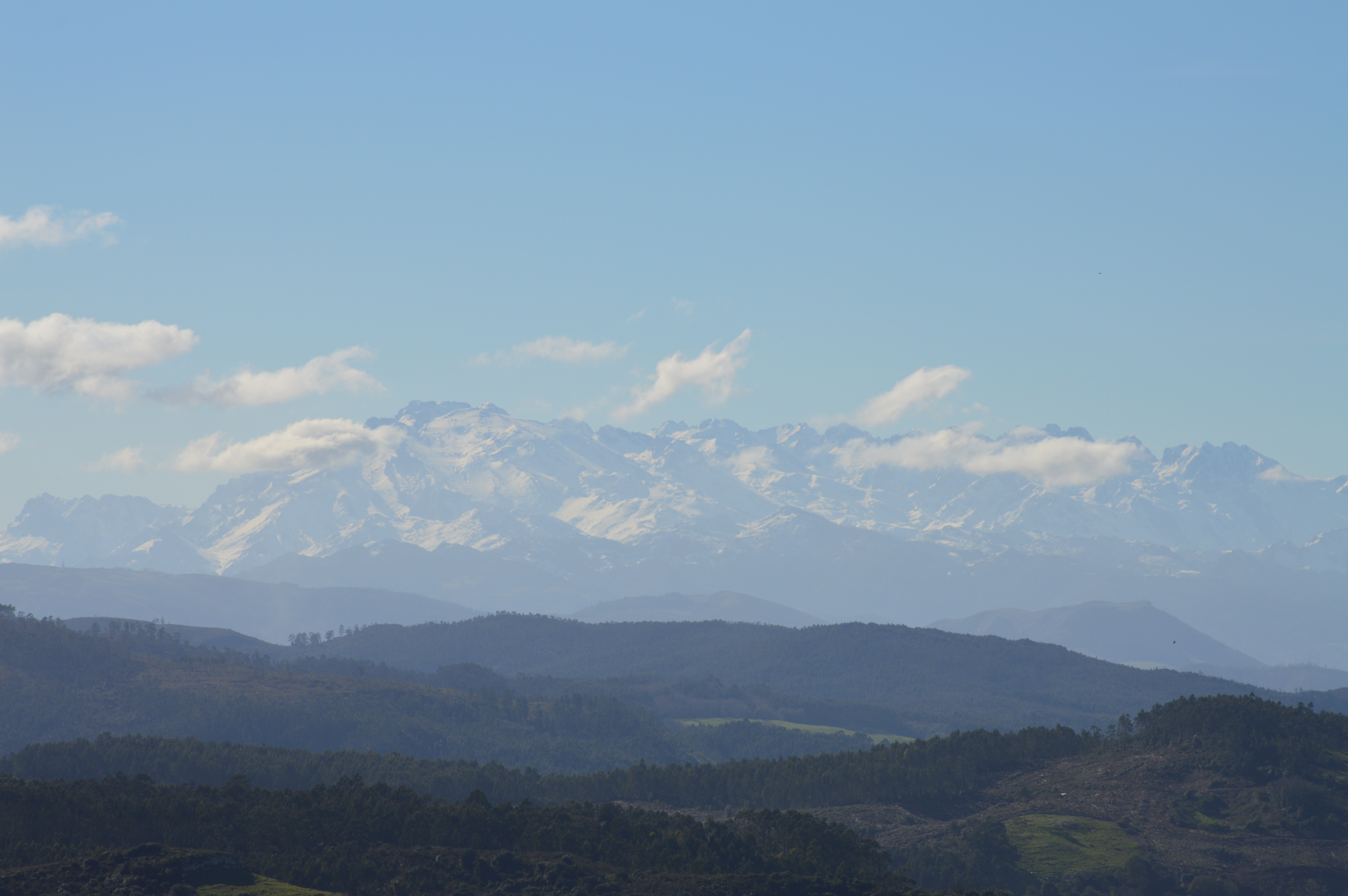
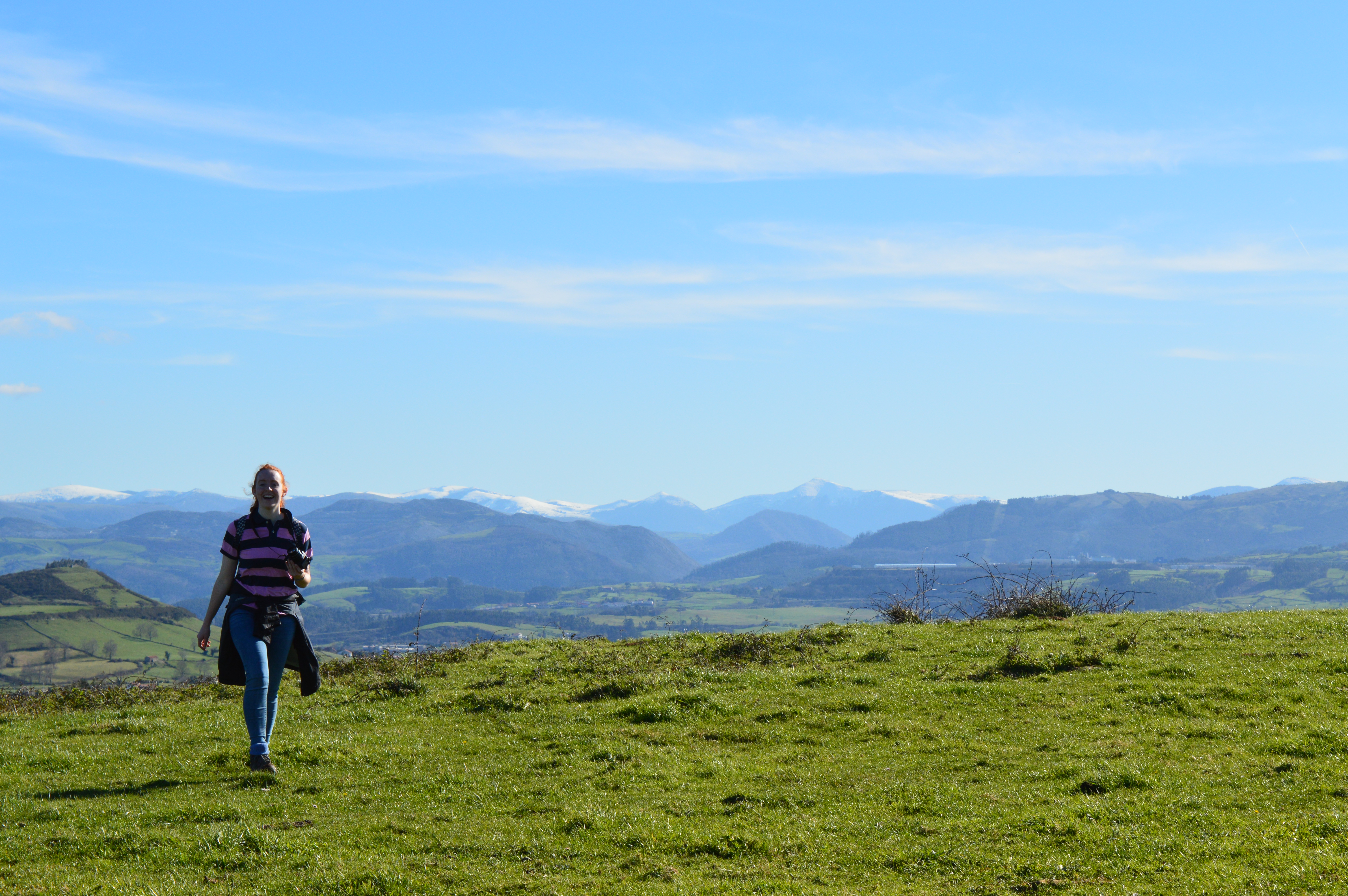
The last time I wandered these hills, the skies were iron-grey and I could only see as far as the next range of hills for the glowering rainclouds. I can’t have known it at the time, but I was seriously missing out. After abandoning the path and freelancing our way up a hill, Watership Down fashion, we were treated to what must be the most awe-inspiring landscape I’ve seen since I first stepped onto the plains of Caceres.

For once, I had the full works on me, so you can enjoy the view three times over, with the wide-angle 18mm…

DSC_0150

…and the macro 200mm…

DSC_0153

…and the telephoto 500mm.

DSC_0154

Sadly, the Nikon-compatible Sigma 500mm doesn’t come with an in-built autofocus motor, so it won’t be the powerhouse it has always been for rapid-fire avian photography, but at least I got some use out of it this weekend.

It was a beautiful view and all of that, but it was an equally beautiful dead end, so we had to climb back down the hill, cross the cow-fields and roll under a possibly electrified fence in order to get back to the road down to the sea (we didn’t check to find out – not when we were so close to our goal). After a very long and very winding road down one last hill, we made it – at last – to the sea.

DSC_0237

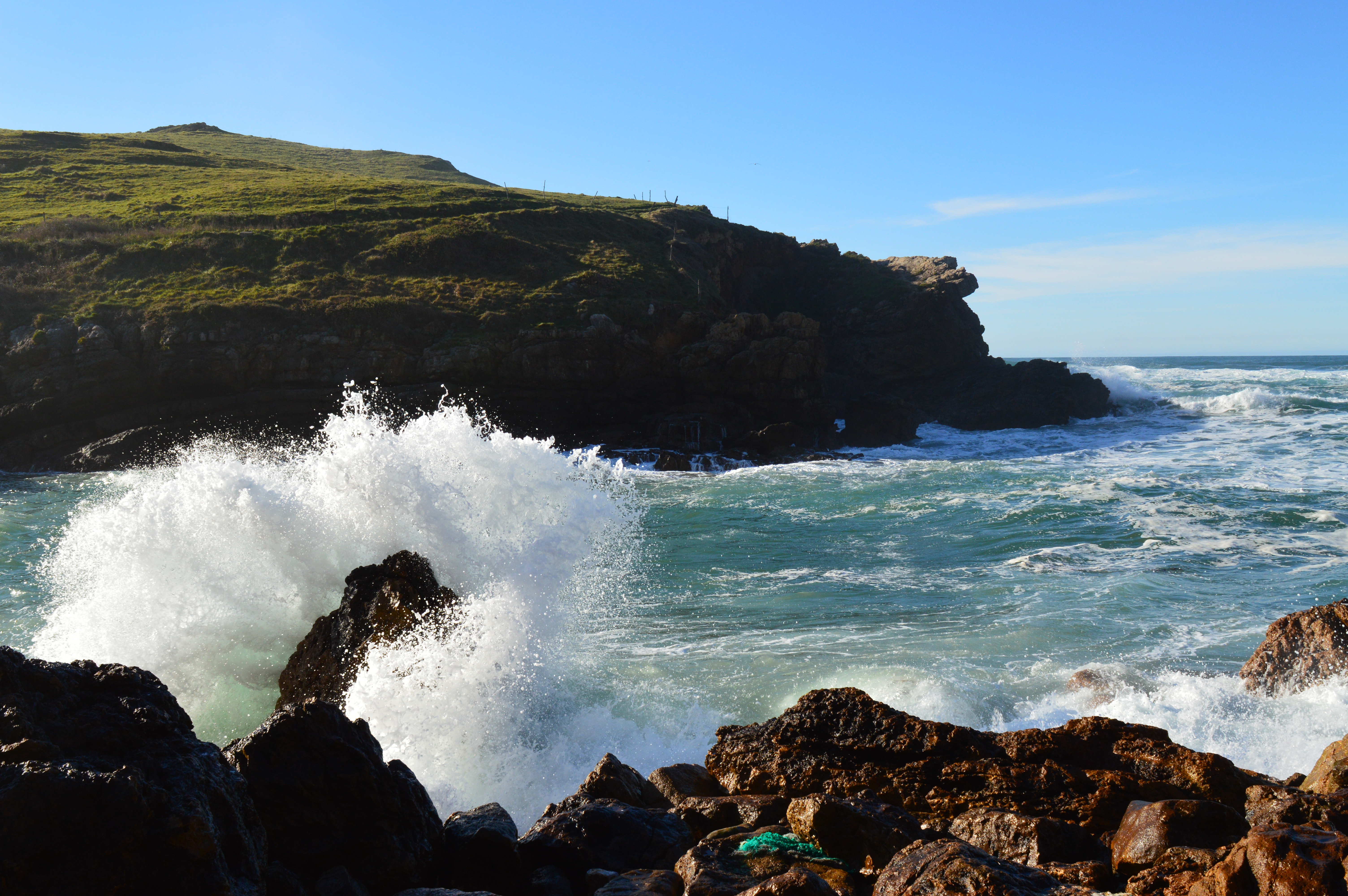
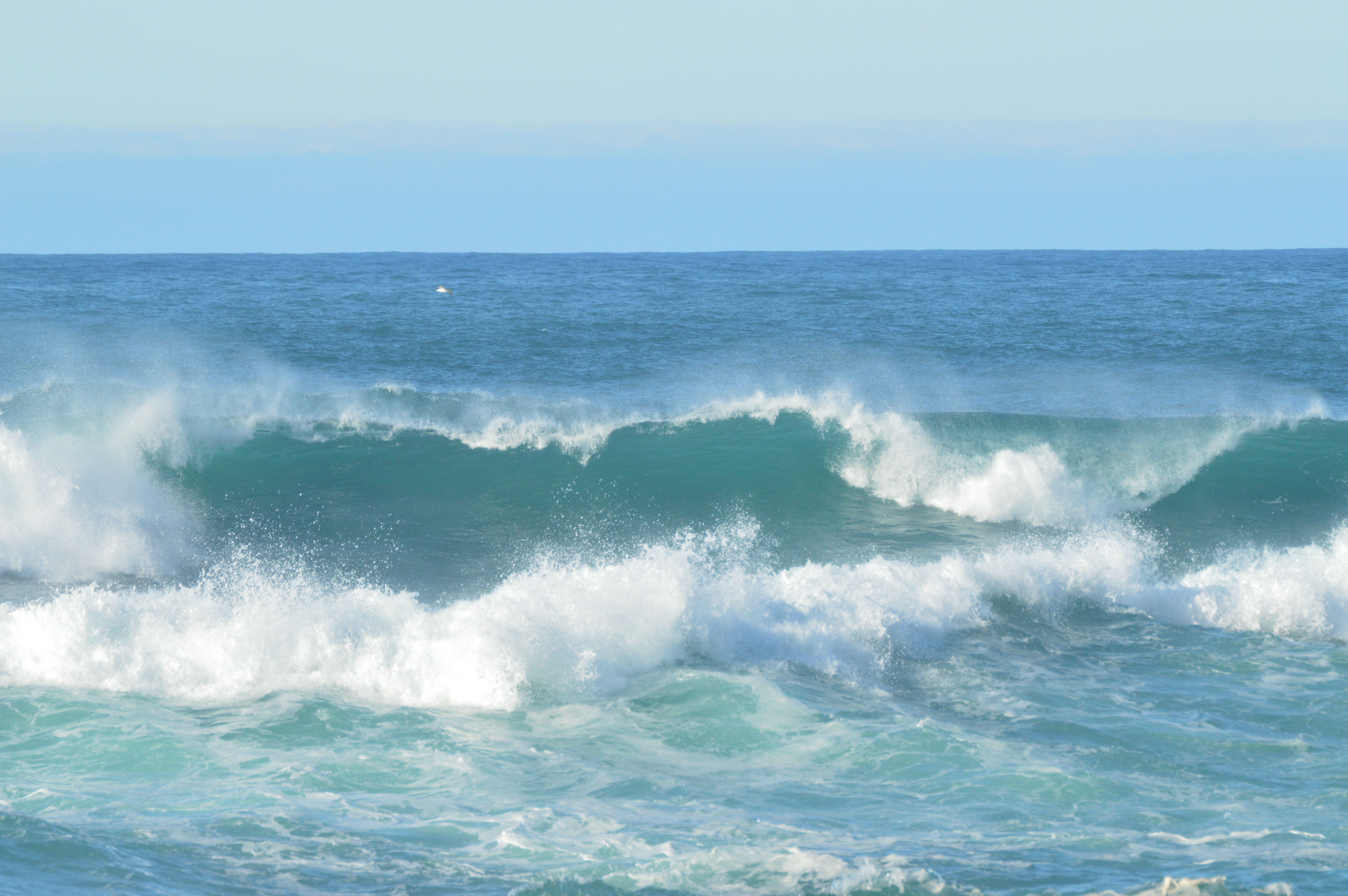
Extremadura has so much to offer, but there’s one thing it really lacks: the sea. You don’t notice until you think about it. Discounting Uganda, I’ve never lived more than an hour from the sea (much less in the UK) so Extremadura is the most inland location I’ve ever had to deal with. To see the Atlantic in all its cold fury once again was a real sight for sore eyes. The storm-force winds and murderous waves of the previous week are gone, but the waves still put on a formidable display for us.

DSC_0188

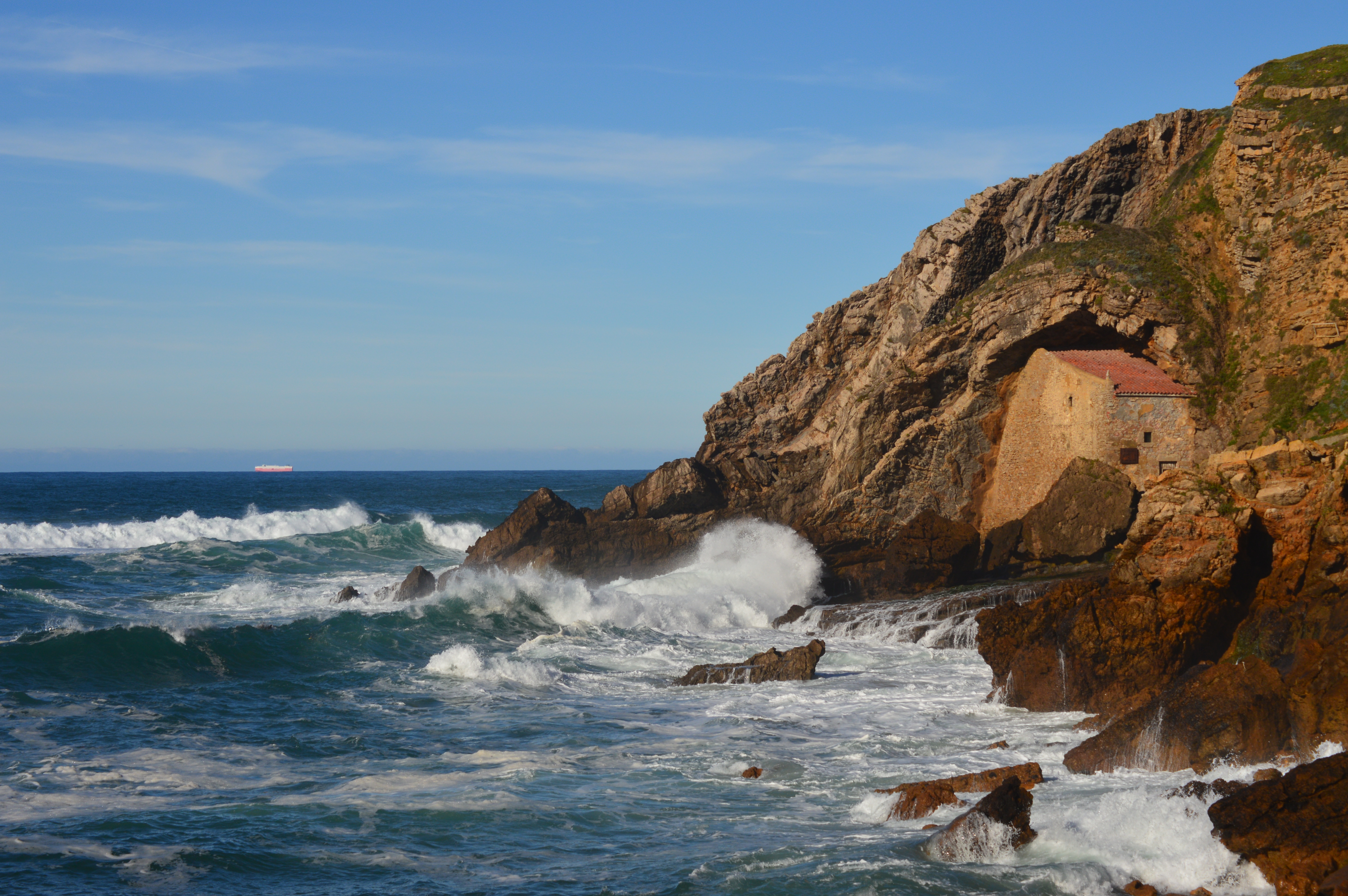
We spent about an hour by the sea, Kate and I, watching the waves pounding the shore and snacking on Cantabria’s finest delicacy, quesada pasiega. Yum yum. There’s a little ermita built into a cave in the cliffs which we didn’t get the time to visit, but I doubt it would have looked any more impressive up close than from afar. Imagine living in a place like that, with the sound of the Atlantic roaring all about you, twenty-four hours a day. The focus you would have to have – or learn to have – borders on the superhuman. Little wonder, then, that it is what it is. I wonder how an estate agent might describe it?

DSC_0201

It’s getting to that time of year when the sun starts to set later, but sunset was already fast approaching as we turned back for Santillana at about six o’clock. In the gloom of the oncoming night, we finished off the quesada on the banks of the Saja river by moonlight and killed time by making for Rudagüera, the next stop along the Cabezón line… and then legging it back the way we came when it became apparent that it was a little further than we’d thought (one last flick of the claw from HERE Maps) and that we’d probably miss the next train.

DSC_0261

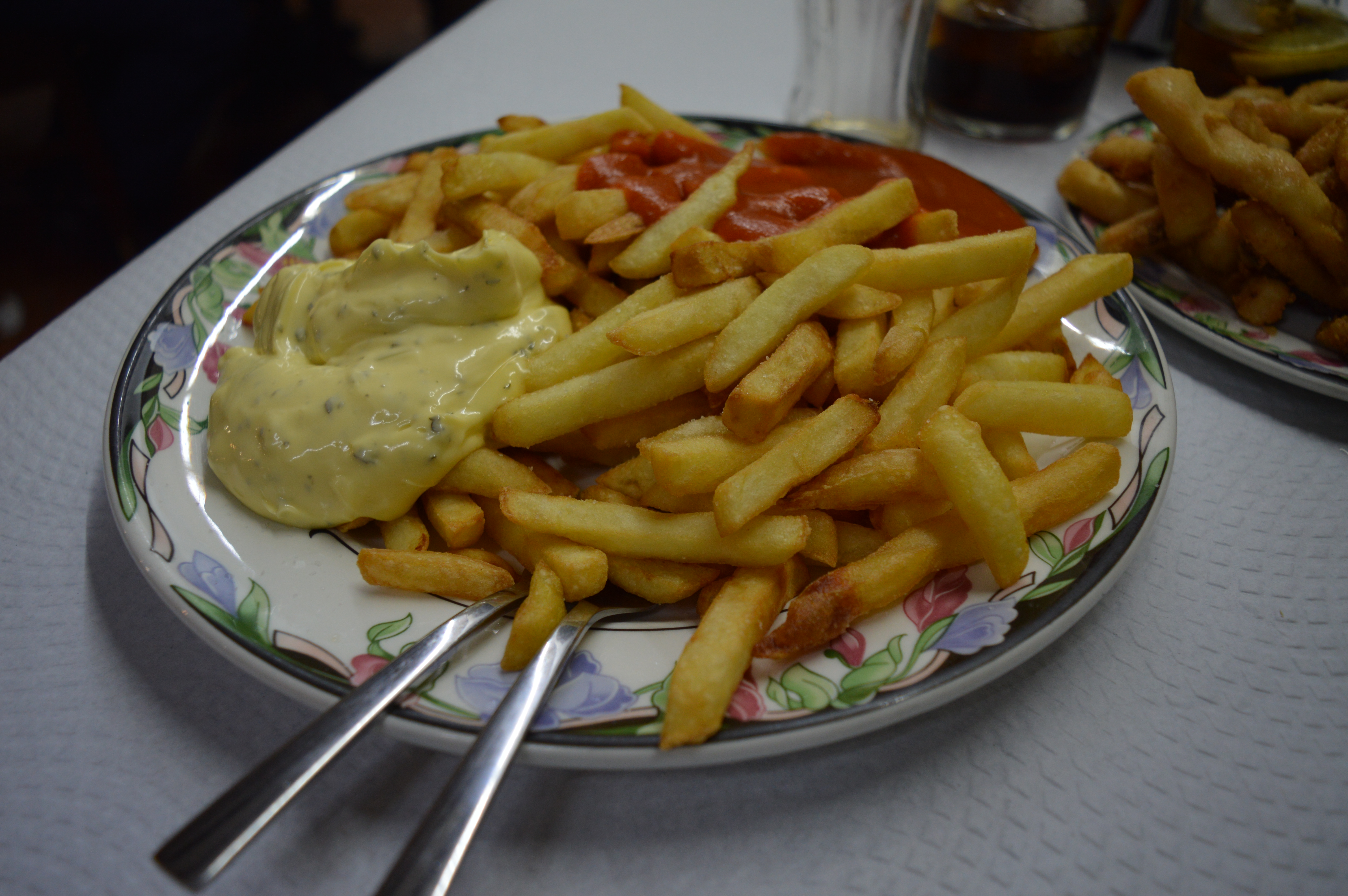
Back in Cabezón, after a drink at a local hunters’ bar, complete with mounted boar heads and numerous black-and-white stills of hunting men of old stood proudly over the carcasses of Cantabria’s once widespread brown bears, Kate took me to visit one of her favourite eateries, El Paraíso. At 2,45€, I thought a ración of patatas bravas would be enough to fill a corner after so much walking (we crammed in about thirty kilometres today, all in all), but I forgot…

DSC_0276

We’re in the north. In my experience, northerners in any country seem to have a much better idea as to what constitutes a decent portion size. Maybe it’s the climate. Who knows? In my earlier traveling days, food was the last thing I was prepared to fork out for. How things have changed since then! Coming back from that Spain trek dangerously underweight four years ago has left a profound mark, and these days food is the one luxury I’m prepared to spend on, and spend well. A long day’s walking deserves a long night’s eating, and I think I did pretty well on both fronts.

So, all in all, it was a very successful trip, albeit a very brief one! I was lucky enough to get a BlaBlaCar on the way back that didn’t mess me around. Better yet, he was no more and no less than a gaditano. Oh, to hear that accent again after twenty-four hours and more of people pronouncing their s’s…! You have no idea how happy it made me.

DSC_0323

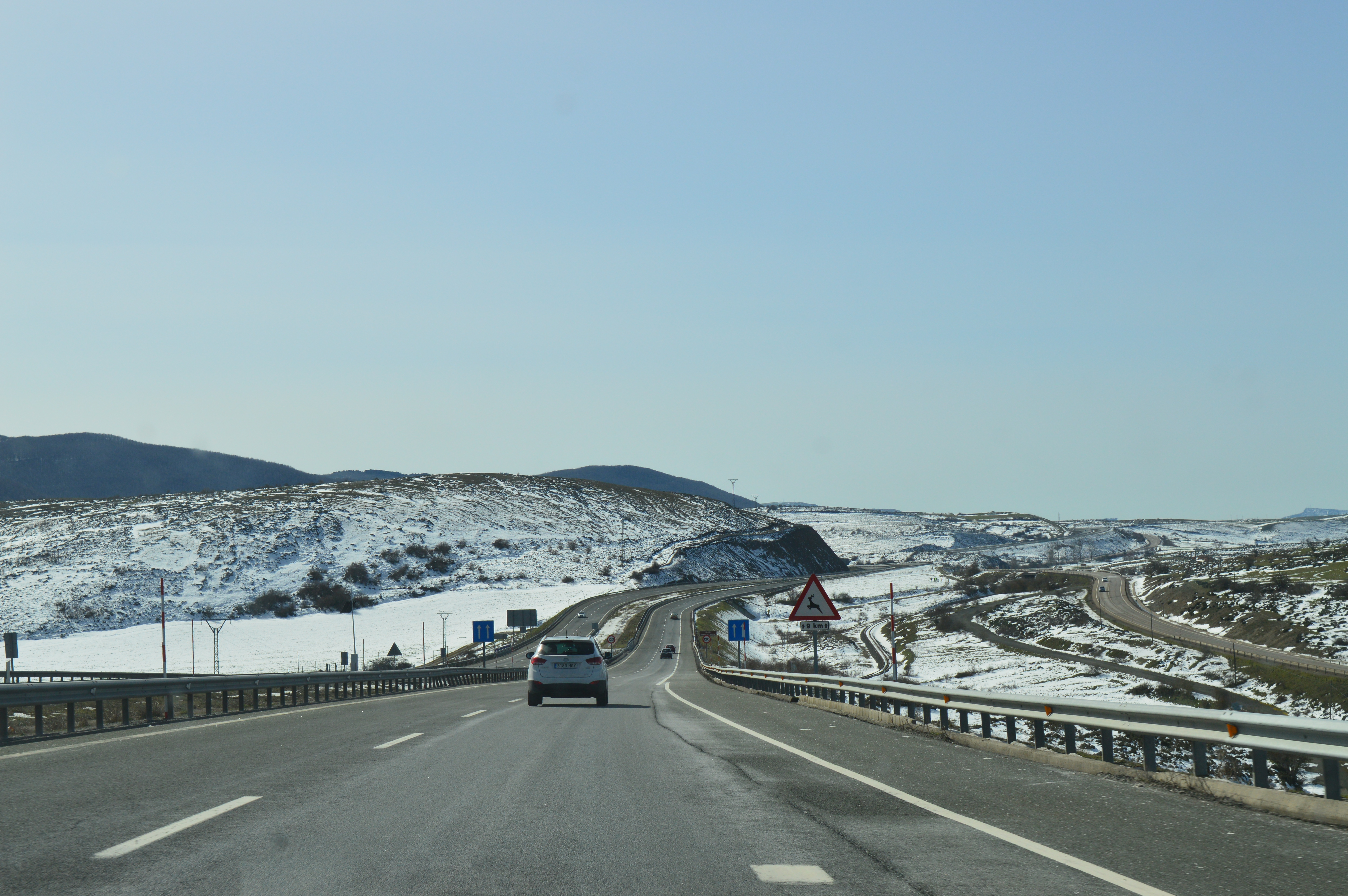
Cabezón de la Sal to Villafranca is still a bloody long way to go, but where the bus took all of nine hours, Rafa made it for me in six. In those six hours, taking in the windswept, snowy heights of Reinosa, I was treated to the finest conversation BlaBla can offer, up to and including:

  • Franco’s suppression of the education system
  • The legacy of al-Andalus
  • An anthropological history of Cadiz
  • The true nature of corruption in Spain
  • The Spanish Civil War
  • Gibraltan Spanglish
  • The rationality of England’s outside stance on the EU
  • Podemos and the total absence of a government at the moment
  • Why and how dubbing came to be one of Spain’s biggest businesses (and blights)
  • Piracy in the Old Mediterranean
  • The Growth of the Spanish film industry

I could go on. There were at least five or six hours of it. And all of it in Spanish, and in the very finest gaditano. Talk about a workout… and politics! The eighteen year-old me would never have believed a word of it.

Needless to say, my faith in BlaBlaCar is restored and I’ll be bound for Cadiz proper at some point to make good on that drink I’ve been offered. If I am to live up to the title of ‘Él que va conociendo al mundo’ that I’ve been given, BlaBlaCar is a damned good way of going about it.

DSC_0164

But last of all, I’d like to air high-five my good friend Kate for putting me up (and putting up with me) for two nights and a day in Cantabria. Yours truly is not the most pleasant company in a city, but in the countryside where he belongs, he’s just as insufferable, if only on the other side of the positive/negative spectrum. Kate’s seen me at my lowest in Amman and probably at my highest – quite literally – in the life-giving paradise that is Cantabria. Thank you, Kate, and I hope to return the favour when you’re down in the south! The adventure never ends. Not really. Not ever. BB x

PS. You can read about her side of things here. It’s a lot more tongue-in-cheek than mine.

Back in Action

It’s been a while!

I kept my word, it seems. It’s been about two weeks since my last post. Probably more. In that time I’ve not honestly been up to much at all, hence the dearth of posts, though that probably has more to do with a real need to take some serious time-out; last term was pretty hectic, especially towards the finishing line.

Coming home for Christmas was never part of the original plan, but I’m glad I did. England at this time of year is pretty magical, with the mist, the frost and the rain in the pine woods about the house. Doubly so this year, as it’s been all of three months since the last time I saw rain in Spain. Apparently global warming is to blame. Whoever the culprit may be, it’s impressed upon me just how much I like rain. I don’t know whether that’s ineffably English or the reverse. I don’t really mind either way. I wasn’t really complaining about the gorgeous blue skies and twenty-two degree heat right up until my last day in the country (the twenty-second of December, in fact). All I hope is that it keeps for one week longer at least, so that it doesn’t put a damper on my stay in Madrid next week… more on that later.

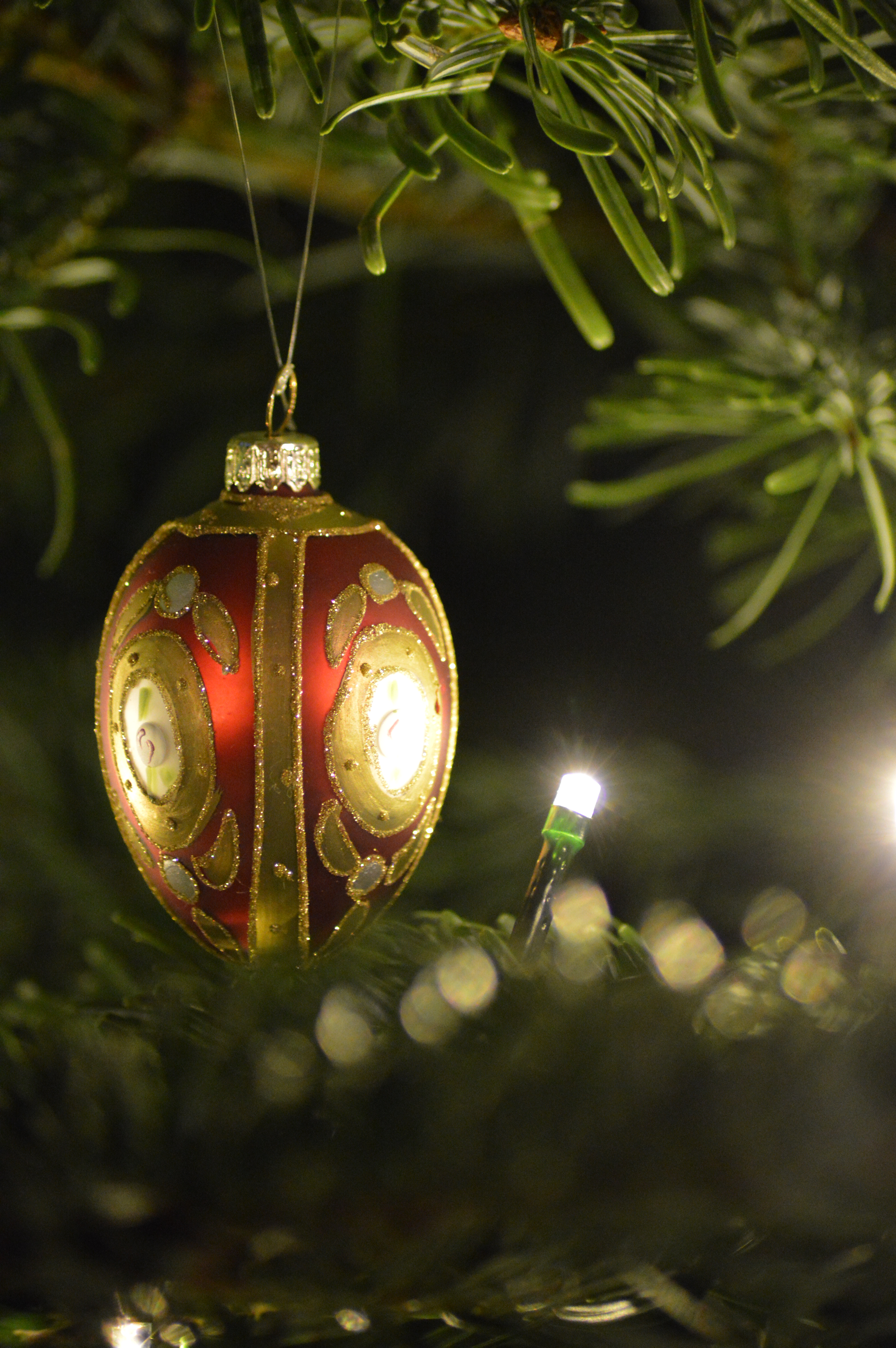
That said, I haven’t sung a single Christmas carol this year, and that makes me feel more than a little wierd. Not even Silent Night. That must be the first time in my life where I haven’t. Next year had better make up for that.

I haven’t made anywhere near as much progress on the grand drawing as I’d have liked. Nor have I finished my series of 2015 doodles. What I have achieved over the last two weeks, however, is a new camera. The trusty old Nikon D70 has done me wonders over the last ten years, but… ten years is a long time. Especially in the fast-moving world of digital photography. I got my comeuppance for my loyalty when I went into Extremadura’s biggest camera store and was roundly told by the head clerk that nowhere stocked the ‘gigantic’ CompactFlash memory cards that the D70 runs off anymore. Time, perhaps, to move on.

Fortunately, I’ve been working two jobs and several private lessons over the last three months, so I’ve enough set aside for such adventures.

Introducing the Nikon D3200. In all its 24 megapixel glory.

DSC_0007

Tech that can crack out magazine quality prints on AUTO mode is worth the investment. Sadly, most of my lenses are a little out of date too, and the autofocus doesn’t work, so it’s been an ordeal learning to use manual (finally). A necessary one, but an ordeal nonetheless. Manual and nuthatches simply don’t mix.

To put it through its paces, I took it to Deal for a final coffee with the family before I jet off back to Spain for the unforeseeable future. Even on manual mode alone, it did a fine job.

The phrase ‘a kid at Christmas’ springs to mind; but then, I am a kid at heart, and this is technically still the Christmas season, so there you have it. I’m waiting on baited breath for my kit lens and the ol’ telephoto to have a functional autofocus (I haven’t been able to check thus far as I left them in Spain), but in the meantime, I’ll just keep practising with manual.

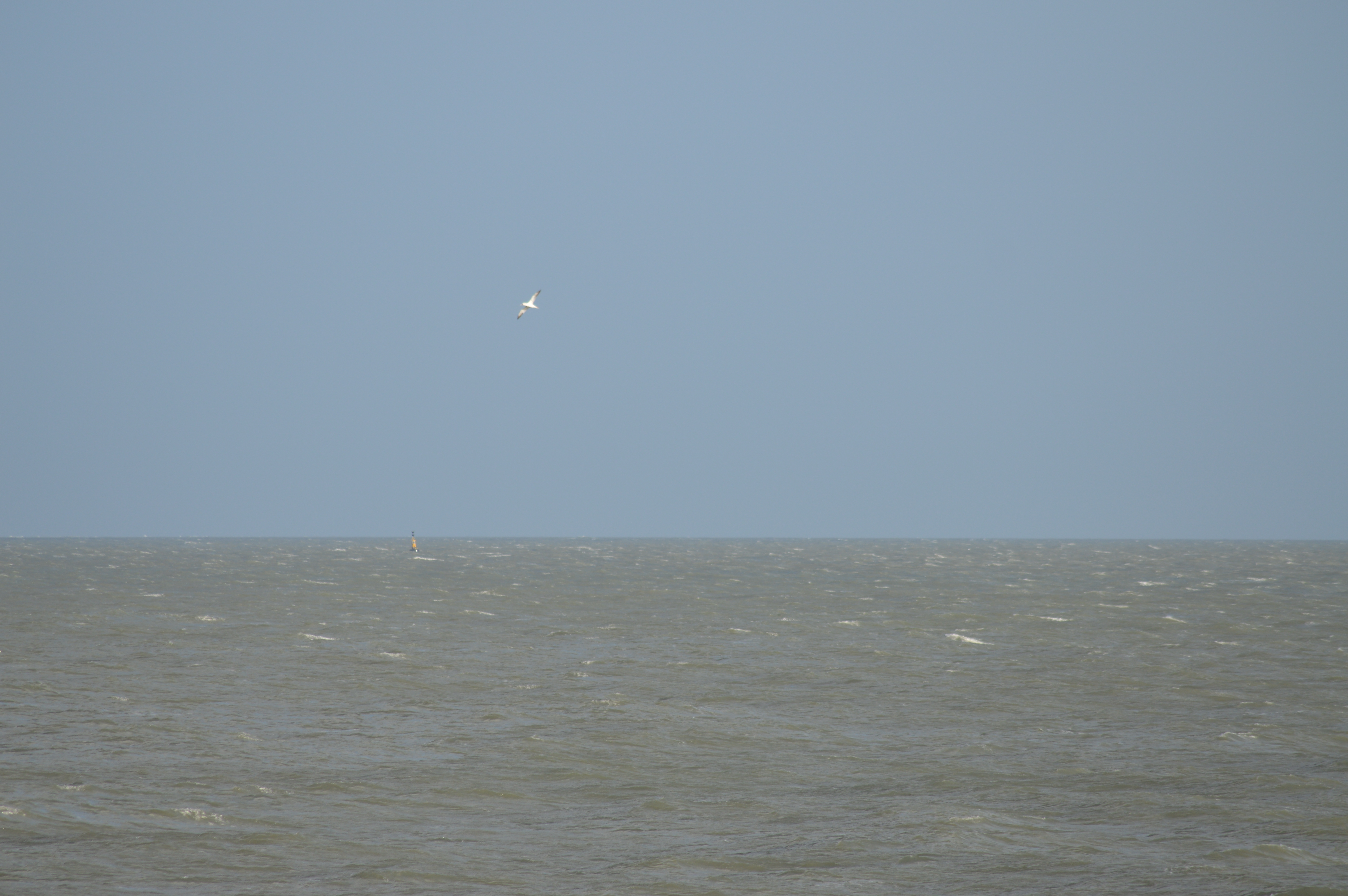
DSC_0039

A gannet far out to sea (Sigma 500mm, where are you when I need you?)

Apart from getting back into some serious camera hijinks, it was worth coming home for a reunion with two very special friends, and a whole panoply of others close to my heart. That’s what Christmas time is for; being with your nearest and dearest. A phrase I heard bandied about a lot this Christmas was that people had learned to distance themselves from those they ‘simply no longer really had time for’. I guess that’s a good ethos, and a strong marker of that over-the-hill feeling that is turning twenty-two. The first winnowing of friendships that were once so strong, and at the same time the moment when you see clearly, perhaps for the first time, who the people are that you will fight to keep in touch with. Having always had it in mind to leave these rainy shores to chase my dreams in Spain, I’ve never allowed myself to grow too attached to anybody here in England, but for two shining lights I would return home anytime and oft, and you know I would. You know who you are. Thank you.

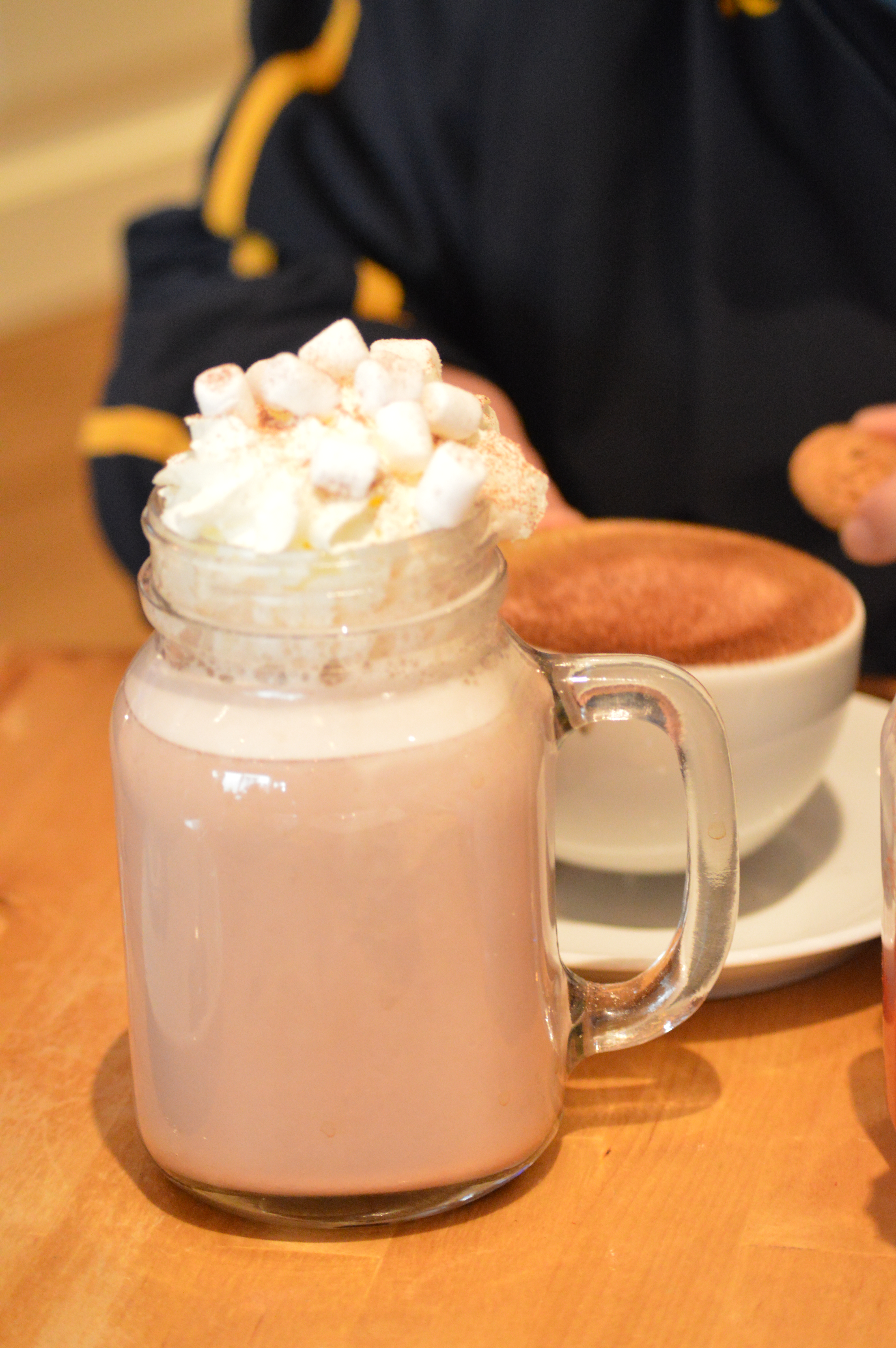
DSC_0032

Things you’d be hard-pressed to find in Spain: a tankard of whipped-cream-topped hot chocolate

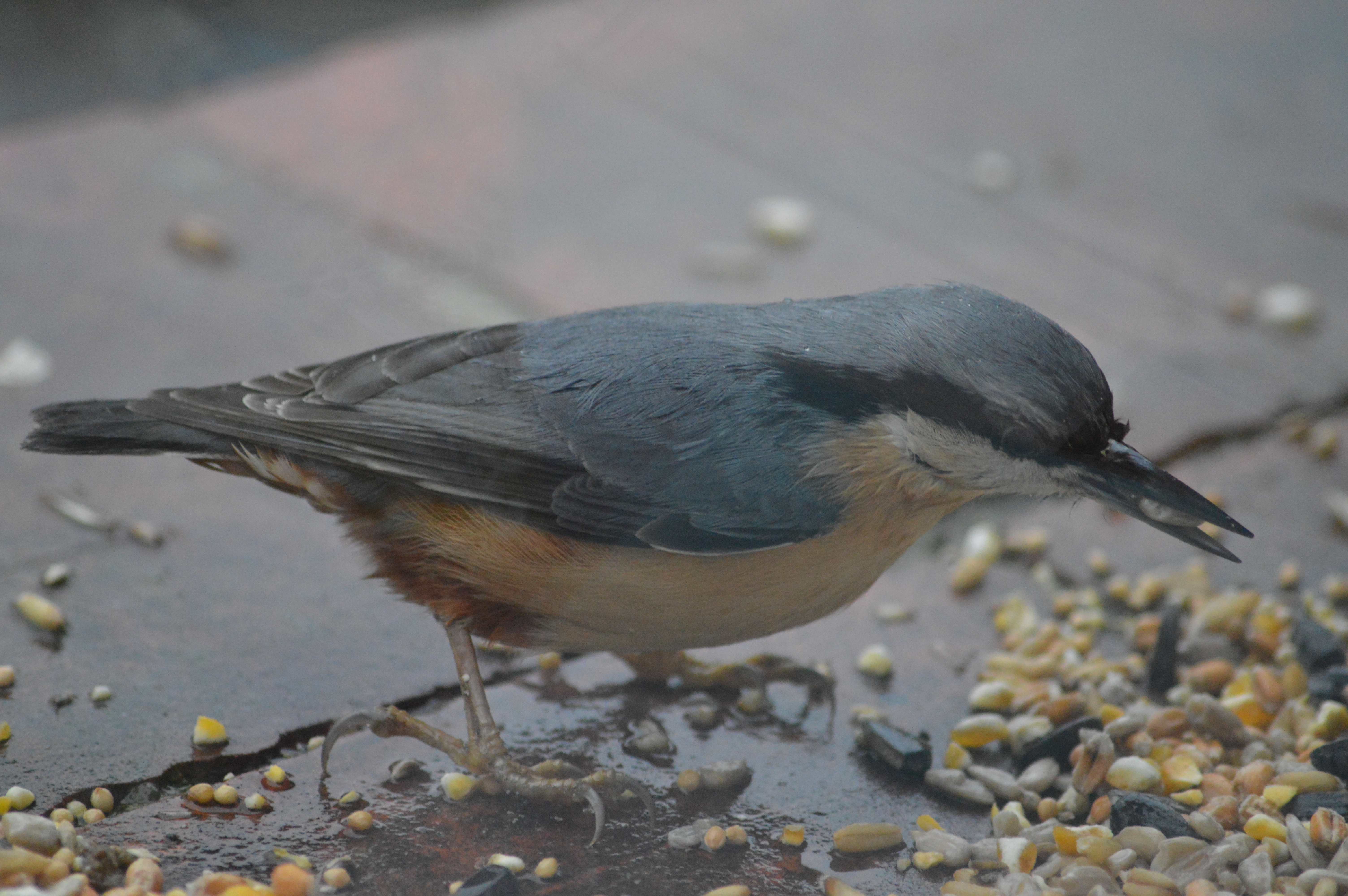
Well, Kent is behind me now, I’m back in West Sussex – where the rain and the darkness has not ceased for several days – and counting down the hours until my plane whisks me back to Seville and home. But for the wind, the place is as silent as the grave. That hasn’t stopped the birds from letting me know that they have not appreciated my absence, so I made sure to throw out some New Years’ seed for them. They’ve got to be so tame now that I hardly need to freeze when the camera’s out.

DSC_0055DSC_0064

Such is the power of that camera that neither of those have been zoomed in or edited whatsoever. Oh, but we’re going to have some serious fun with this thing.

Well, I’ll keep you posted. My next insert will probably be from Spain, but whether that will be pre- or post-Madrid depends entirely on whether the Bar Atalaya WiFi is in operation. In any case, hasta pronto, amigos. The rain in Spain falls mainly on England x