Breathless in Paradise

Snorkeling is just about the best idea anybody ever had. The world underwater is singularly enchanting, whether you’re drifting over white sands, coal stacks or the open blue. If it weren’t for my breathing issues, and a nasty little demon called fire coral, I’d rank it right up at the top of my favourite things in life.

With school out for the end of summer – just like last year, I’ve been working all the way through it to the point where it feels like it never came at all – we’ve nothing but time on our hands until our Saturday morning flight. At Eloise’s suggestion, Andrew and I find ourselves back in Aqaba, two weeks after we popped by for a visit on our way back from Wadi Rum. By some curious stroke of luck, our hotel, the Bedouin Garden Village, happened to be the very same place we’d got our snorkeling gear from last time, so the manager, a carefree local who makes his living lounging about on the beach, smoking shisha and leading diving groups out into the reefs, already knew us and was pleased to see us again. It’s still intolerably hot – the midday sun peaks at a regular 42 degrees – but it’s cooler than it was, if you ask the locals. 


 The last time I wrote about snorkeling, I gave myself a paragraph. Looking back, that’s more than a little silly. It’s criminal. So this time I’ll put you inside my head, so you can see what I see:

I squeeze my feet into two giant flippers and waddle down to the water like a particularly incapable penguin, adjusting and readjusting my snorkel; there’ll be none of last time’s mistakes, or I’ll just have o March straight back to the hotel and ask – God forbid – for a demonstration. Walking forwards in the water isn’t easy in footwear more than three times the size of your feet, so I turn and start walking backwards, for all the good it will do. And what do you know? It’s a little easier. There’s a neat little life hack for you. Alternatively, you could just belly out and swim. And so I do.

For the first few metres it’s a long stretch of silver sand, dotted here and there with a buried cola bottle or lens cap. The first few fish are tiddlers, with the exception of a familiar school of silvery mullet that gawp their way along the shore. Up ahead, the reef looms. One more kick of the flippers and we’re over.

There’s only a small space between the reef and the surface, hardly enough for a man to swim over untouched, but temptation is a dangerous lady, and I can’t stop myself. Up on the reef it’s a sudden explosion of colour, and the coral has very little to do with that. It’s the fish that light up the place. There are canary yellow butterflyfish in twos and threes, flanked by dusky Arabian angelfish and solitary sergeant majors; the mottled form of a greasy grouper hugging the rocks while a triggerfish, resplendent in robes of blue and green, watches from the sand; dragonfish staring up in a stargazing torpor from the seabed whilst speckled white gobies dig their nests all about; clownfish weaving in and out of the multicoloured anemones they crave. Stranger denizens still, like the angular boxfish, the pipefish-through-photoshop cornetfish and the bizarre unicornfish, with what can only be described as a horn protruding an inch and more between its eyes, haunt the nooks of the reef, like the shady underbelly of this grand fashion show.

I’d like to say those are the thoughts going through my head right now, but it’s actually more of a constant stream of ‘ohh’, ‘wow’ and ‘ohmyGodthisissobeautiful’. Poetic to the last. And this time, my mask isn’t leaking and my snorkel is watertight, and I can enjoy this whole spectacle without hyperventilating. Further out, there’s a shipwreck that’s supposedly crawling with moray eels, and even a sunken tank. I’d love to swim out to see them for myself, but I don’t put much trust by the strength of my reserves. I may be a mean (if explosive) sprinter, but I’m not the strongest of swimmers, having been much too obstinate to ever learn to breathe properly. I’ll leave that adventure to Andrew and Mac. They already have a taste for exploring creepy wrecks from the abandoned hospital off Rainbow Street. I might try again this afternoon, but right now I’d rather continue to explore the reef.

Oh bummer, some seawater got into my snorkel. I have to surface to spit it out, but in the action a great wave pushes me under and I get an eyeful of Red Sea salt. By the time I’ve got my mask back on, it’s steamed up and I have to take it off again to clear it up. The vicious waves are making this little task impossible. I make a beeline for the buoy line that marks the edge of the reef and try holding on to that, but of course, it goes under the water, and it’s prickly to the touch from all the little reef creatures growing on it. So I make for a stack of brain coral and haul myself as gently as I can to sit on it and readjust my mask in peace. The wind’s really picking up; you can see the sand blowing across the beach back on the shore. The waves are equally relentless, but I’m holding my own here. I can see Andrew and Mac a fair way out. They’ve gone beyond the buoy that marks where the sunken tank is supposed to be, but they’ve drifted quite a way off course. If we’re not careful we’ll have a fair walk on our hands when we get back to the beach – or a harder swim, flippers or no.

Fwoosh! The giant wave comes out of nowhere and throws me back against the coral. No, not the coral, against the rock, and a stack of fire coral, which isn’t really coral at all, but a jellyfish-like creature with a nasty sting. I don’t have much time to think about that, because I’m back underwater without my mask. Pulling myself angrily back onto the brain coral and securing my mask back onto my head, I examine my arm. There’s an ugly red weal running up the length of it, scored with white. It could just as easily be leprosy. Not only that, there’s also a similarly nasty scar on my lower back and cut across my right hand from where I grabbed the reef as the wave took me under. Oh yeah, and the covered in salt water, too. Time, I think, to beat a hasty retreat.
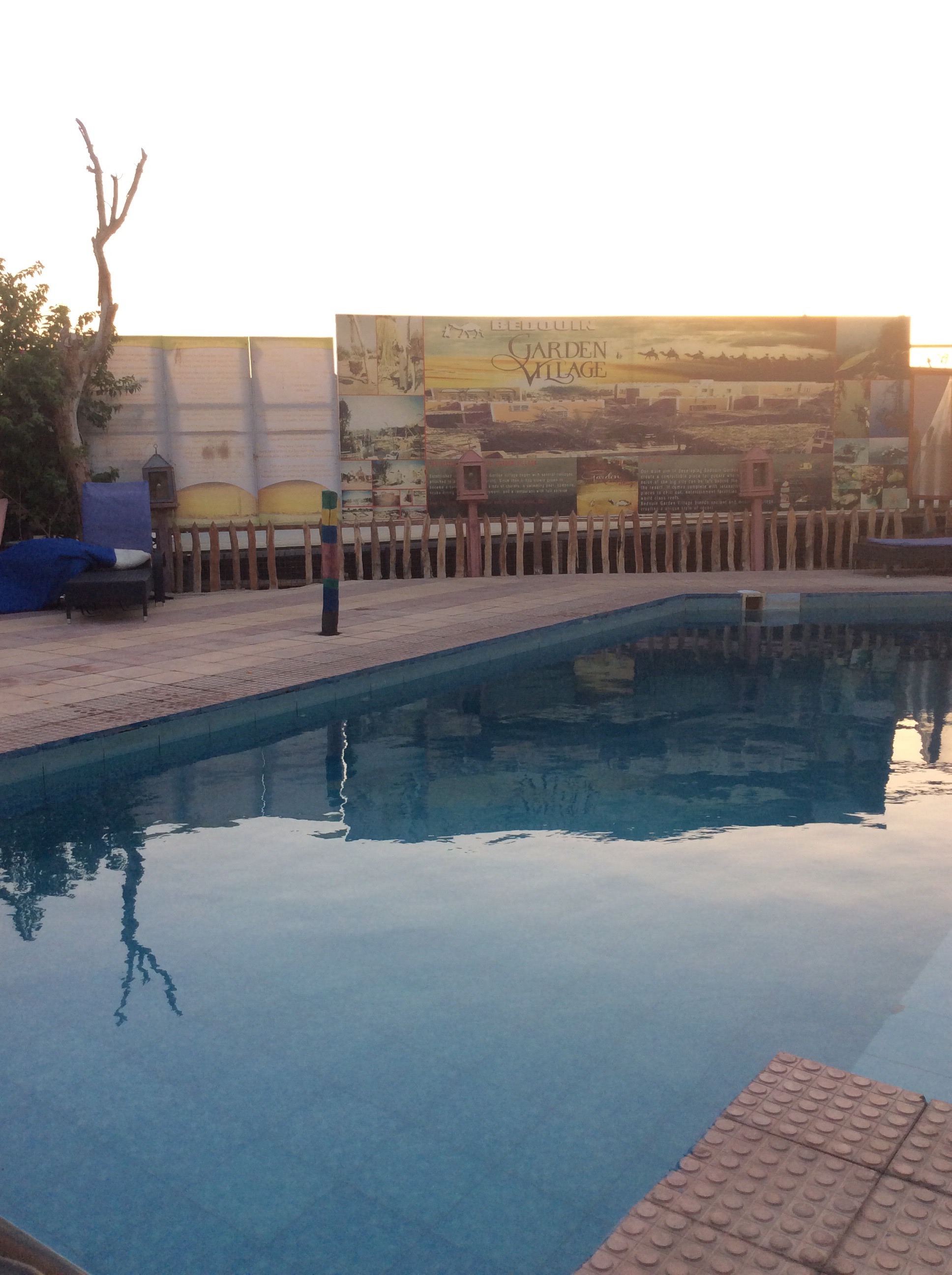
  
The beach is no friend of mine today. Two seconds on my front in the sand and there’s a stinging sensation all along my right-hand side. It’s not even my reef scars; it’s the sand, whipped up by the wind to scour my skin. Talk about a full-body workout! We’re going to have to retreat further than just the shore. I’m heading back to the pool. I don’t think I’ve ever been more grateful for such a thing.
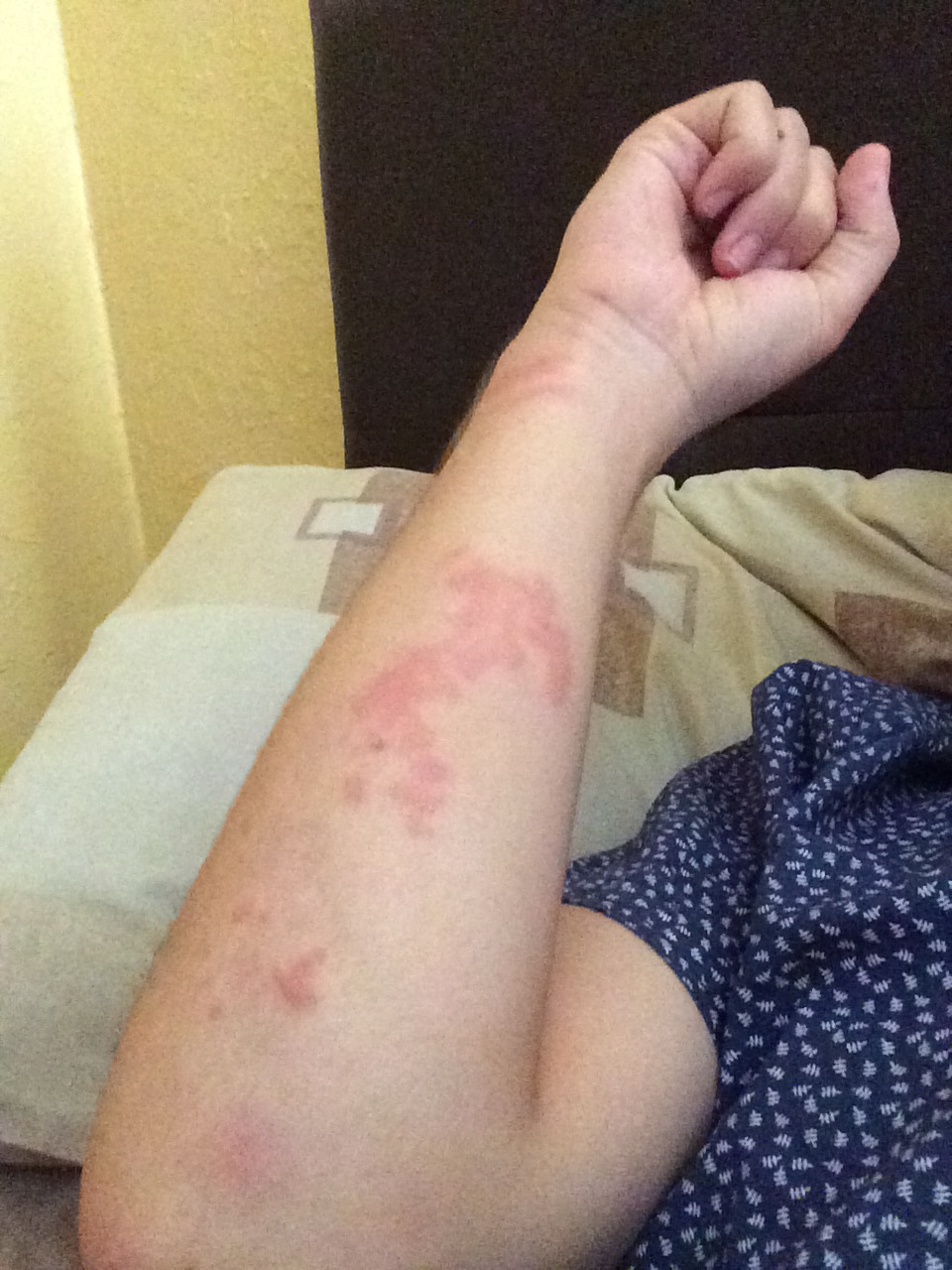
  

All the same, I don’t regret it for a second, even though the fire coral rash along my arm continues to pester me, some three days later. For another hour with the colorful denizens of the Red Sea, I’d do it all again. Tell me, though; is diving supposed to be such an ordeal every time, or is Butterfingers over here just as naive as ever? BB x
From Burning Desert to Sapphire Sea

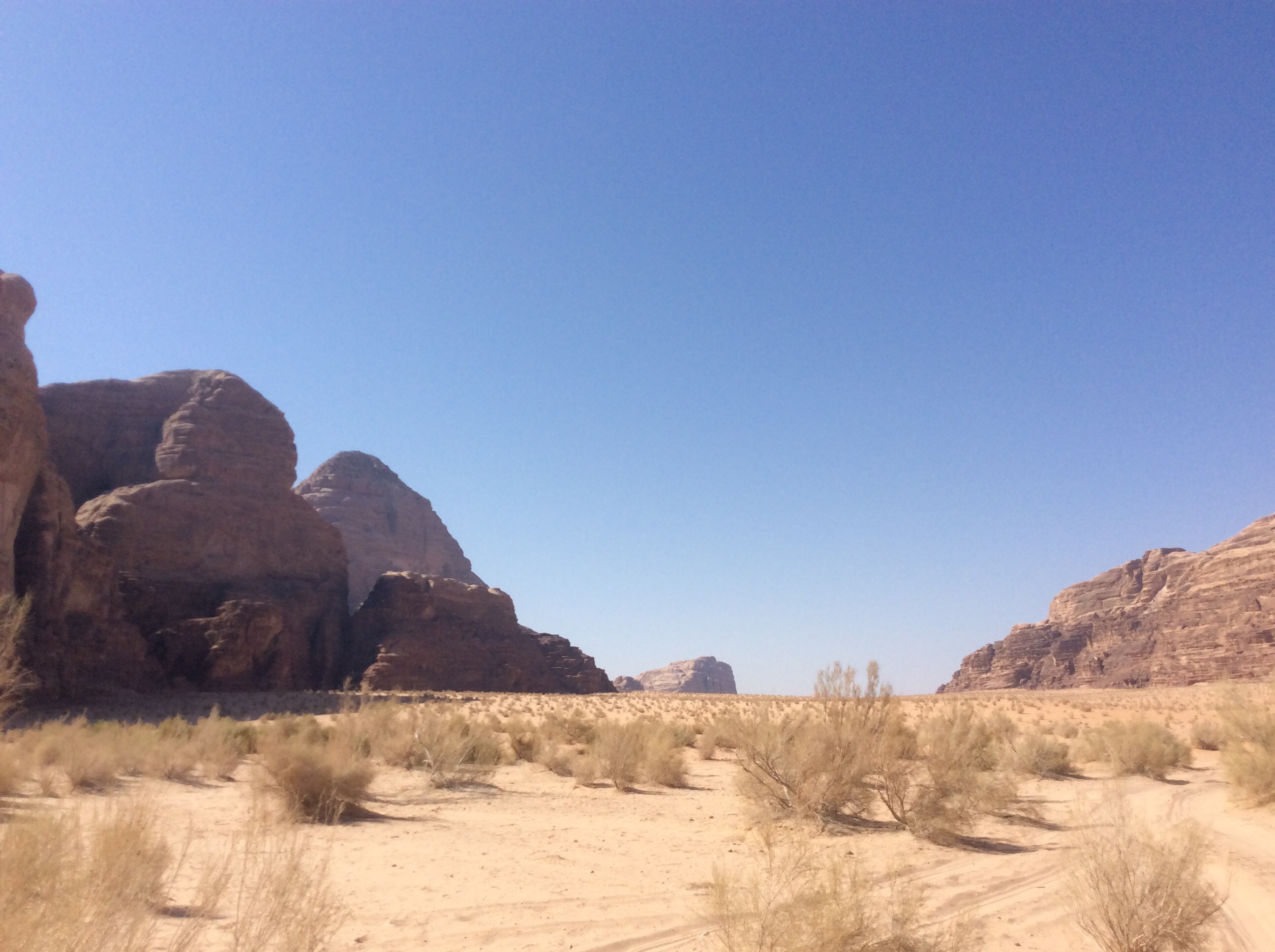
One minute I’m standing on a high rock, staring into a lunar desert whilst desperately trying to even up my tan lines; two hours later I’m staring down at a school of damselfish drifting over a coral reef. I’m still struggling to get my head around it.

Sunrise feels far longer ago than this morning. After putting the finishing touches to last night’s report, I left the others sleeping in the campground and set off alone into the desert once again, this time to see the sunrise. I made it to the other side of the valley in time to catch the first rays of sunlight bursting over the cliffs. The sand was full of tracks: the footprints of beetles, snakes, camels and four-wheel drives crisscrossed the valley floor. There was even a lone skink trail halfway across, both satisfying and amusing on a more personal level (for the record, it’s an old family joke about lesser-spotted three-toed eagle-eyed skinks that gets wheeled out whenever yours truly gets boorishly specific about animals). The others were mostly up and about by the time I returned, and in perfect time for half an hour’s meditation before breakfast. The hefty futur Ahmad and his brother Khaled prepared for us was a kingly feast: fresh bread, helwa, jam, hummus, falafel and hard-boiled eggs (there’s no escaping them!), and that’s without mentioning four glasses of that lovely sage and cinnamon-infused Bedouin tea. Dee-lish. God help my teeth over the coming year, because Spain and the Arab world most certainly won’t.

The jeep tour of Wadi Rum was a pretty standard exploration of the main sights, as you might expect: the early Nabatean rock art, Lawrence’s house and the rock arches. I needn’t elaborate much; such sights, stunning though they may be, are better detailed in guidebooks. Besides, Langelsby’s got it covered. I highly recommend you go for a tour if you’re in the area, though. On a more personal note, I found it profoundly ironic that I finally found a haven for wildlife, in what must be outwardly one of the most inhospitable landscapes on the planet. Desert larks, white-crowned wheatears, rock martins and rosefinches followed us from rock to rock whilst the ever present grackles, the tricksters of Wadi Mujib, whistled noisily overhead. No sign of the nocturnal denizens of the desert, but a welcome change from scabby cats and pigeons. The naturalist in me will never be suppressed. So says the lesser-spotted three-toed skink, at any rate.

On the knowledge that wrangling a bus from Wadi Musa to Amman might be beyond us, we arranged with Ahmad, our kohl-eyed Bedouin guide, to take us as far as Aqaba instead, where buses to Amman would be easier to achieve. Aqaba may be your run-of-the-mill beach resort these days, but it has a notch on everything I’ve seen before: the Red Sea. Sapphire would be a better name by far. I’d heard stories and seen pictures, but I’d never really believed quite how deep a blue the Red Sea was. Quite by accident, and with no small meddling from my heart, I found myself physically incapable of passing up the chance to go snorkeling.

Water sports and I don’t have an easy history, let’s say. Ask the population of Whitstable, who watched me capsize a kayak twice and have to be towed ashore (yeah, that still smarts). Swimming’s just about my favorite sport, being both an important skill and the only sport I’ve ever enjoyed, but I have breathing issues – something to do with my nose – which makes most other water sports more problematic than entertaining. Snorkeling has always been a dream of mine, though. Not as technical as scuba and easily doable for somebody with breathing issues. I say that, at least. It’s easy in retrospect.

The first forty minutes were tortuous – not because very salty water kept leaking into my mask, or because I was panicking over the oddity of breathing through a tube, but because the scenes opening up below me were nothing short of some of the most breathtaking sights I’ve ever seen (ouch, that was a bad pun). Stacks of frilled and fringed coral giving way to deep, sandy gardens shimmering in the crystal sunlight. Black sea urchins stretching their tapering spines out of crevices. Angelfish, surgeonfish, triggerfish, even clownfish, frolicking just inches in front of me. It was like living a wildlife documentary in the flesh. By the time I’d finally worked out how to breathe properly – ironically, the key to it was simply calming down and having faith in the tube – we only had five minutes left in the water. But those last five minutes were magical, even more so than the stars over Wadi Rum. Who could possibly feel lonely, or even give loneliness a second’s thought, with scores of brightly colored fish teeming about so close to? Those were my brightest moments.

Christ, but I feel like a tourist right now. I’ve just tackled three of Jordan’s biggest attractions in two days flat: Petra, Wadi Rum and the Red Sea. I didn’t really give Petra much clearance, did I? Mm, I’ll leave that one to the girls over at Langlesby Travels (https://langlesbytravels.wordpress.com/).

It’s been a busy weekend and a half. It feels unreal, somehow. But I don’t regret it for a second – and for once, l don’t even feel ashamed. I am a tourist. Jordan thrives on tourism. I guess I’m finally beginning to accept that. And about time too! Travel is no more and no less than the best thing you can do with your life, and it’s such a shame to have it spoiled by something you could never change, even if you wanted to. BB x

Amman: Observations of a Country Boy

It occurred to me a couple of days ago that most of my posts – discounting the rambling ones – are anecdotal more than informative. That’s only natural; you can’t spin a good story out of a constant streak of facts. And I tend to let my heart bleed all over my writing, so to speak, for good or ill. So I thought I might give you something factual for a change. It’s a little run-of-the-mill as topics go, but I can’t help but feel a few detailed observations on what life is like in Amman might not be such a bad idea. It’s the kind of thing I was trawling the internet for in the weeks leading up to my arrival here, now over a month and a half go. Obviously, we’re talking about a city, and a capital city at that; such places are very much what you make of them. If you’re prepared to go out and make a good time for yourself, you’ll probably find it. That’s as may be. At any rate, that takes a stronger will than mine.

Technically this kind of thing is best left until the end of one’s stay, but I’ll probably be out of internet range in my last week and having plenty of tale-worthy adventures whilst I’m at it. Besides, I think I’ve seen enough of this place over the last month and a half to have a fair idea of how it all works – at least, from my point of view. So without further ado, here’s my fifteen observations about Amman.

1. Amman is immense

I don’t have the figures, but you don’t exactly need them to know this. That you can stand at just about any point in the city and be completely unable to see an end to the seemingly infinite sweep of beige tower blocks has more to do with the fact that Amman is spread over several hills, making a full panorama nigh-on impossible unless you manage to climb one of the larger skyscrapers. Getting just about anywhere requires time, patience and, more often than not, a taxi. Some of the distances may look walkable, but in the heat of the midday sun, it’s just not worth it. Besides, a taxi ride means more Arabic. That’s good, right?

2. Grass does not exist

Looking for a shady green park to sit and study in? Think again. Amman has many things to offer, but grass is not one of them. The great belt of trees in the grounds of the Jordaninan University overshadows a bed of dust and pine needles, along with more plastic bags and bottles than the aftermath of a botellón. If you’re really after a green space, I’d suggest not coming here in summer for one, or else take a weekend sortie up to Ajloun in the north or Dana in the south.

3. Dust gets everywhere

This is one of the very first things you will notice. Wherever you go, there’s no escaping the dust. You can’t see it – at least, not unless you stand on a vantage point and look out over the city, where the brown haze over the skyline speaks for itself – but if you leave anything in the open air for a minute or more, you’ll find yourself brushing the dust from every available surface. Look on the bright side: when the occasional sandstorm sweeps its way up from the desert to the southeast, the wall of buildings act like a filter, so when it reaches Amman itself, it just looks like mist. Only, brown mist. Pretty novel when you first see it, I have to say.

4. Most of your Arabic practise will be in taxis

In a city that thrives on the back of its taxi service, it’s hardly surprising that the place you’re most likely to find yourself practising Arabic on a daily basis is in the front seat of a taxi. That’s not a bad thing per se, so long as you can put up with asking the same bloody questions day in, day out; how long have you been a taxi driver, are you from Jordan or Palestine, why is it so busy today etc etc. You won’t get lucky every time; there are a few singularly impossible cabbies who have wildly skewed ideas as to how much a ride downtown should cost, but for the most part they’re a chatty bunch. Life story, please!

5. Almost all taxi drivers are Palestinian

In seven weeks of living in Amman, I’ve met no more than three Jordanian cabbies. All the others have been Palestinian. And that’s assuming an average of six taxi rides a week. Most of them have plied various trades before becoming taxi drivers, up to and including military officers, teachers and engineers (all of which, thankfully, al-Kitaab One taught me). You can get a pretty good idea as to the nature of the Arab-Israeli conflict after just a couple of taxi rides, in this way. Not a subject to bring up yourself, naturally, but if they have an opinion to share, it’s always interesting to hear. Did you know, for example, that Hollywood rarely, if ever, shows Palestinians in a good light? Food for thought.

6. Every bus has a different siren

Remember those BopIt! toys everybody had once upon a time? Try to picture triggering each of the annoying noises one after the other twice over and you have a fairly accurate idea of what a street in Amman sounds like. I’m not joshing you. From vuvuzelas to ambulance wails and car alarms to foghorns, no two sirens are the same. Fortunately, the majority of Amman’s drivers are constantly on hand to remind you what a regular car horn sounds like, every second of every minute of every hour of every day. These people will honk at everything that moves.

7. Stray cats are a thing; dogs really aren’t

This isn’t just a Jordanian thing either. I seem to remember Fes being similar, though I didn’t stay there long enough to see for myself. But there are no dogs in Amman. Cats, on the other hand, are everywhere, prowling the dustbins, skulking along the sidewalk or fighting beneath the window in the early hours of the morning. If you’re an animal lover like me, you’d better learn to accept the fact that the sleek and healthy cats of home are not to be found here. Amman is a fast-growing, modern city where you’ll need all of your wits to get about, and the cats that prowl the dusty roads reflect that, scabs, scruffy hair and all.

8. Cafés and restaurants give you water

This one caught me by surprise. Apparently it’s a Jordanian custom to give water to guests, water having always been something of a scarce commodity in this part of the world. That’s all well and good, but when you notice for the first time that it’s included in the bill, it’s a bit galling. And there’s no escaping it, either; it’s just something you have to accept. Take my advice and find one of the smaller establishments, where you might just get off the hook. Doors might look inviting, but behind all the bells and whistles, it’s essentially the Starbucks of Amman. If you’re looking for a local, look elsewhere.

9. Bins are optional

Rubbish bins aren’t as rare as they might seem at first. Most streets will have one or two skips where the locals deposit their trash, and these are emptied at least once a week, much to the cats’ chagrin. But the way the people of Amman drop litter, you’d think they’d never heard of a bin. Bottles, cups and crisp packets, once used, are simply thrown over the shoulder, discarded underfoot or lobbed at the nearest wall. Little wonder, then, that stinking, wind-borne piles of trash tend to gather in street corners.

10. Rainbow Street is where all the ExPats go

If you miss an old-fashioned British tea or coffee, you’d better get yourself down to Rainbow Street. It’s a creature-comfort lover’s paradise, with milkshakes, bookshops and ice cream parlours galore. But if you’re after an authentic Jordanian experience, you’d be better off looking elsewhere. Not only is Rainbow Street quite pricey by Jordan standards, it’s also crawling with Americans, Brits and other foreign students, with the result that many shopkeepers will address you in English and not in Arabic. It’s popular with Amman’s younger generation, too, so it’s not all rainclouds, but try exploring downtown and its offshoots first. Hashems and al-Quds, though popular, are more of an Arabic experience than Books@Café.

11. Falafels are the way to go

Jordan may be expensive to get to, but once you’re here, eating out can be as cheap as chips. And if you decide to forgo potatoes for falafels, it’s even cheaper. A falafel wrap, stuffed with salad, harira and hummus, shouldn’t set you back any more than forty piastres. That’s about 38p. It’s a great snack, and it makes for a good lunch or dinner, too. Hashems is supposed to have the monopoly on all the falafel joints in town, being a favourite of the King of Jordan himself, but most places will do a good line in the falafel wraps. It’s not the most varied of diets, but it’s cheap, and it beats McDonalds any day.

12. Piracy is the norm

Don’t let the DVD stores spook you: just because there’s not a legitimate DVD case in sight, it doesn’t mean you’re breaking the law. If you’ve travelled to Asia or Africa before, you’ll already know the drill. Shops where you can buy as many as fifteen suspiciously homemade films for seven pounds’ worth are the norm. They’re also the lifeblood of the Jordanian student: especially if you’re up in out-of-the-way Tla’ al-Ali near the Ali Baba International Centre, you’ll be relying on these establishments to liven up the evenings when you’re out of pocket – or energy – to go to downtown and back.

13. Habibah is a dangerous place

Baklava. Kunafeh. Mille-feuille. Pistachio-coated trifles. Honey-glazed cakes. Triple-scoop ice creams. All of this in giant air-conditioned building so vast that it might well be the Arabian equivalent of Willy Wonka’s chocolate factory. It’s a good thing that this heavenly establishment is as out of the way as it is, or we’d all be doomed.

14. Vegetables are cheaper downtown

This is a given wherever you go in the world, but it’s worth repeating all the same: for fruit and veg, never go anywhere other than the main market next to the mosque in the city centre. For reasons beyond my understanding, the price seems to double outside the market walls, but especially up in Tla’ al-Ali, the environs of the Ali Baba school. Sure, it’s cheap by UK standards, but if you’re paying UK prices when the locals are getting their produce for half the price, you’re being ripped off. Downtown, ten dinars can give you enough greens to last you a fortnight, if you’re careful, and that’s including a taxi ride into downtown, provided you split it with a friend. It’s barmy logic, but it works.

15. Crossing roads is like playing Frogger

Feeling lucky, punk? Then give the mean streets of Amman a try, if you dare. Traffic lights are like the last egg in an Easter Egg hunt; you’ll do a little fist-pump for joy when you see one. In most places, you just have to brave it and step out into the fury. The rule of the road is one of might is right, but most cars will stop for pedestrians. The only thing to remember is not to hesitate under any circumstances. As the guidebooks will tell you, the drivers will base their actions on what they expect you to do. If you make the first move, carry it through. You’ll pick it up eventually. And it’ll be just as much of a thrill to the last.

That’s it for the time being. It’s probably important to note that this is very much my own opinion, and one coming from somebody used to living in a town of no more than a few hundred people, so Amman hit me harder than it probably should have done. As I’ve said before, once you get outside Amman it’s a very different story and I’ve met some of the most wonderful people on my travels around Jordan. It’s just that Amman itself and I were never made for each other. Insha’allah, Fes will show me the light.

I’ll be away in the south of Jordan for a couple of days to catch the Perseid meteor shower in Wadi Rum, via Petra, so expect some more adventure stories when I get back on Saturday night! Until the next time. BB x