Rome IV: Popes & Palms

Bloody hell, but that was unnecessarily early start. The trip to Fiumicino Airport (8€ on the shuttle bus from Via Crescenzio 2) was on time and completely hassle-free, so I arrived with four hours to go until my flight – a new record in caution. Still, better early than late! It gives me time to relax and put yesterday morning into words.


All I can say to start with is believe in your own luck for a change. Because Sunday morning’s adventure wouldn’t have happened at all if I hadn’t taken a chance.
One of the main reasons I came to Rome and stayed until this morning was because of the very real chance of seeing the Pope deliver his Palm Sunday Mass in St Peter’s Square. That’s not the kind of opportunity you pass up on if you can help it. Unfortunately, the information on the internet is vague, conflicting and genuinely quite hard to track down. Most of it implies you need to apply for a ticket directly to the Vatican via fax (!!), sometimes as early as three months in advance, to be in with a chance of securing a “coveted” ticket. At least, that’s what all the tour companies say. By Saturday night, I’d more or less given up on the whole affair and planned to go for a morning walk down the Via Appia instead.

Turns out the internet is wrong. So here’s me setting the record straight.

Contrary to what you may find online, you do not need a ticket to attend the Palm Sunday service in the Vatican City. It’s free and there’s no need to book!!!

I rocked up in my casual clothes with my picnic packed for the Via Appia and thought I’d check to see what was going on in VC and before I knew what I was doing I’d followed a whim and chanced the security barriers. They scanned my bag, found only a punnet of olives, a punnet of strawberries, breadsticks and some other snacks… and let me pass.

As it was still only 8.20am, St. Peter’s Square was still relatively empty. Thousands of chairs had been set up overnight, along with the temporary barriers raised around the central obelisk and the wind rose, but other than a small crowd settling into the first block of seats the pickings were good. I found a seat near the front of the second block, just two rows back from the barrier and strategically positioned behind two families who’d put their children in the seats directly in front, giving me a perfect view over their heads to the Papal seat. If I’d planned to come I could have arrived sooner and snagged the best seats in the house, but for a spur-of-the-moment decision I really lucked out.

By the time the warm-up Ave Marias were being chanted (in Italian, the real lingua franca of the Vatican), the seats on either side of me had been taken: by a diminutive group of Indian nuns on my right and a large Eurasian woman and her daughter on my left. I would have been squashed throughout the service had the nuns not seen on one of the telescreens that there were still five empty seats in the front block and gone charging off for a better seat, and my other neighbour left during the Communion after realising she was holding up the entire row by being the only one not going up for communion. By the end of the service, I had more room than I knew what to do with!
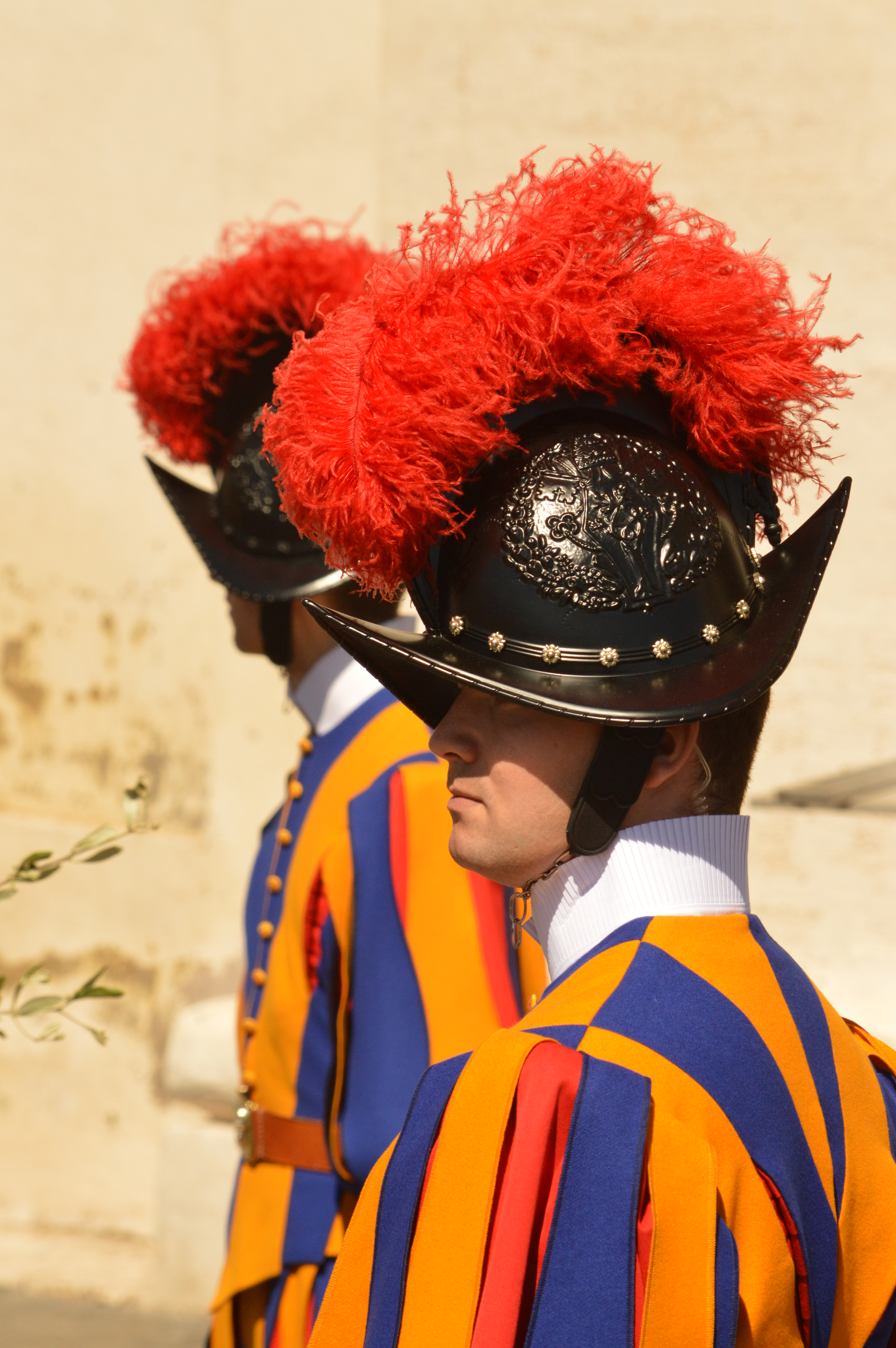
The Swiss Guard were quite a sight to see in their full regalia: plumed morion helmets, black capes worn about their landsknecht-esque striped uniforms and, at least in the hands of those guarding the cardinals’ seating area, impressive halberds, their tips flashing in the sun. I’m not sure if they’re more visible if you take a walk through St Peter’s basilica or the Musei Vaticani, but I certainly hadn’t seen them until now, so it was worth coming even if only for that!
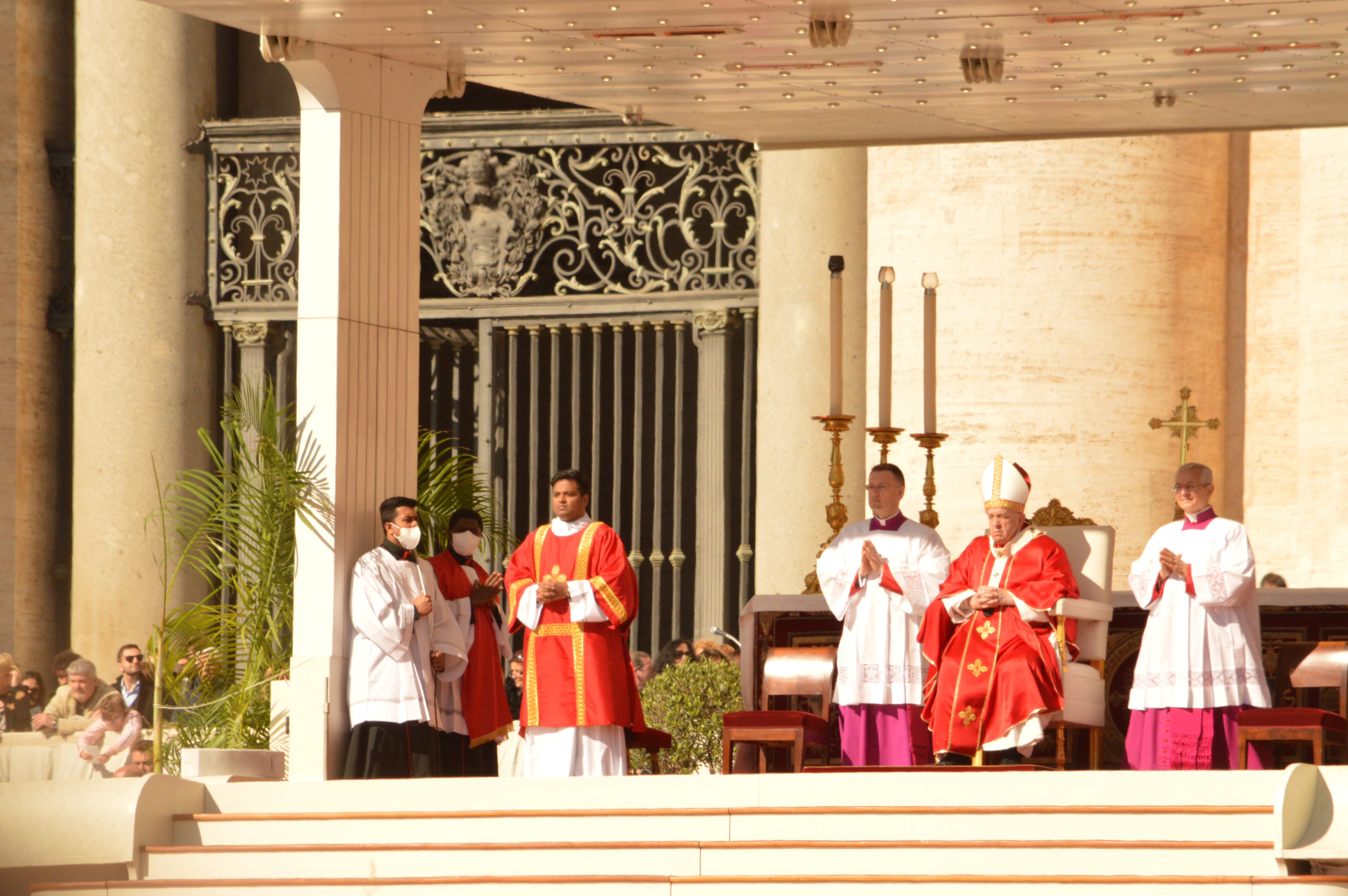
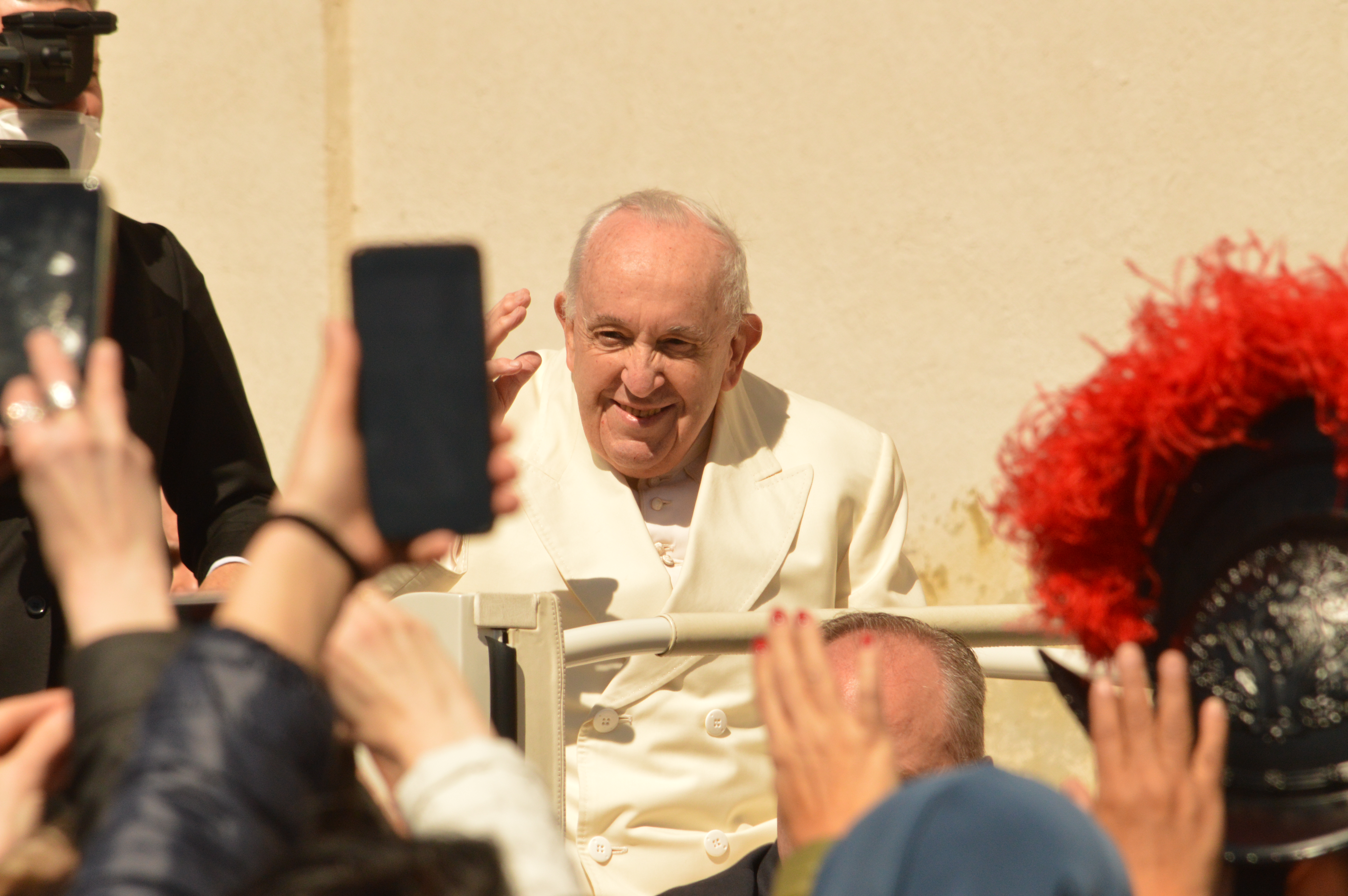
And of course, Pope Francis himself, dressed in regal red until the end of the service. Since my wanderings tend to take me off the beaten track, the list of famous people I’ve encountered is downright pitiful, but this has got to rank right up at the top – like Pope Francis did in 2013’s Time Magazine. Seeing the warm smile of the humble head of the Catholic Church at such close quarters was a once-in-a-lifetime event, truly… I couldn’t help taking up the cry of ‘¡Viva el Papa!’ raised by the Colombian family in front of me. His humility is what makes him so inspirational to me – that a man in so important a position should have no qualms making apologies for centuries-old abuses of power by his institution, or reject the majesty of status outright while still holding true to the core values of the church. I might not have gone to such lengths for a different Pope, but for Francis, my feelings were genuine. What an inspiration!
I’ve also never seen a Palm Sunday service quite like it. Multilingual (there were readings in Spanish, English, French, Portuguese, Mandarin and Malayan, as well as Italian) and multifaceted: the song of Jesus’ arrest by Pilate and his Passion was performed by various cantors with the full choir as the voice of the crowd. Faith through storytelling through song… now that’s more like it! It was like watching a passion play of old – and in a very real sense, I suppose that’s exactly what it was. They’ve been doing the same thing here in this square for well over a thousand years.
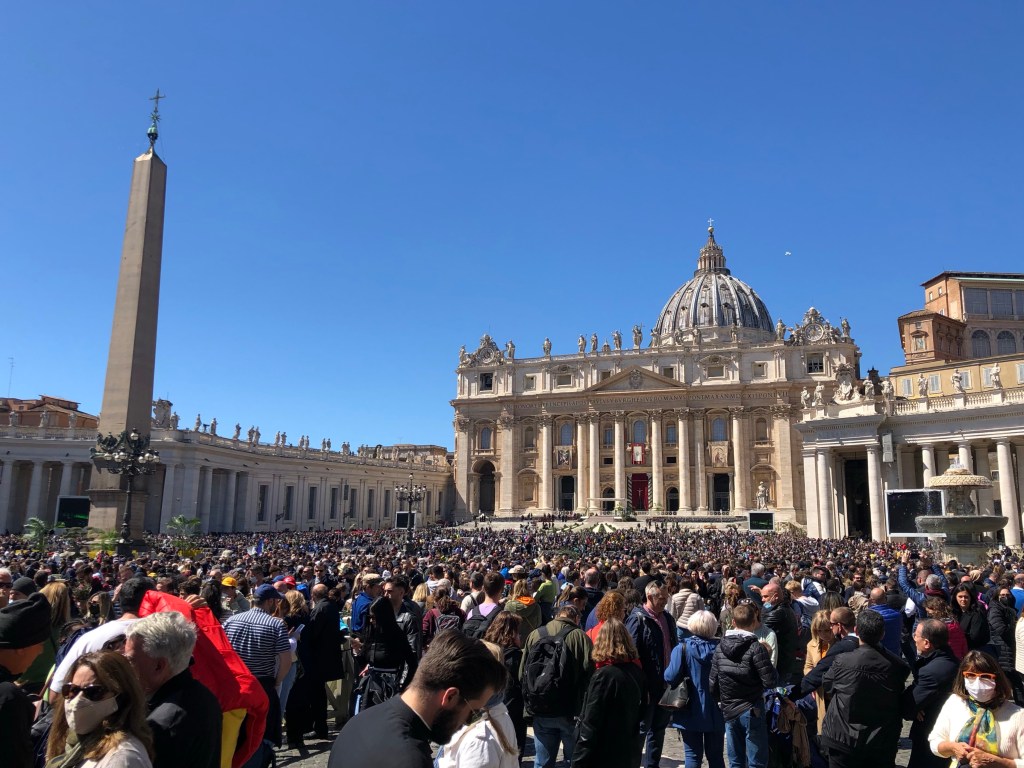
The Pope ended the service with a reminder to care for the poor – ever at the heart of his urbi et orbi message. When I left, I saw that in the merry exodus from the square, some misguided pilgrims had smashed right through a street vendors’ wares, knocking them in all directions. As I approached, several strangers gathered round to help the man set his little stall back to rights. Just as there are those who profess to do good and look no further than their own backyards, so too are there people out there prepared to help their fellow man, whoever that may be. That gives me hope. To quote a famous film set in and around the Vatican City:

Religion is flawed, but only because man is flawed.

Dan Brown, Angels and Demons

I’ve made it to the pueblo and a much-needed week with my cousins. It’s been fun wrangling with Italian, but these lips were meant for speaking castellano, hombre. Until next time! BB x
Rome III: Respighi’s Quest

For my last two days in Italy, I decided to embark on a rather esoteric quest: to see all the pines of Rome featured in the orchestral piece of the same name by Italian composer Ottorino Respighi. If you grew up with Disney’s Fantasia 2000 – like I did – you may remember it as the number with the flying humpback whales. The symphonic poem in question is divided into four movements, and though I didn’t manage to hit the correct time of day for each one, it was an enjoyable musical challenge to round out my time in Italy!

It’s also a fitting challenge since music provided me (and my mum) with our first Italian connection, and I’ve been scraping by out here on a combination of guesswork from Spanish, DuoLingo and twenty years of orchestral jargon…

So, play the music below and read along as the Chicago Symphony Orchestra takes you through the movements!


I. The Pines of the Villa Borghese (I pini di Villa Borghese, allegretto vivace)

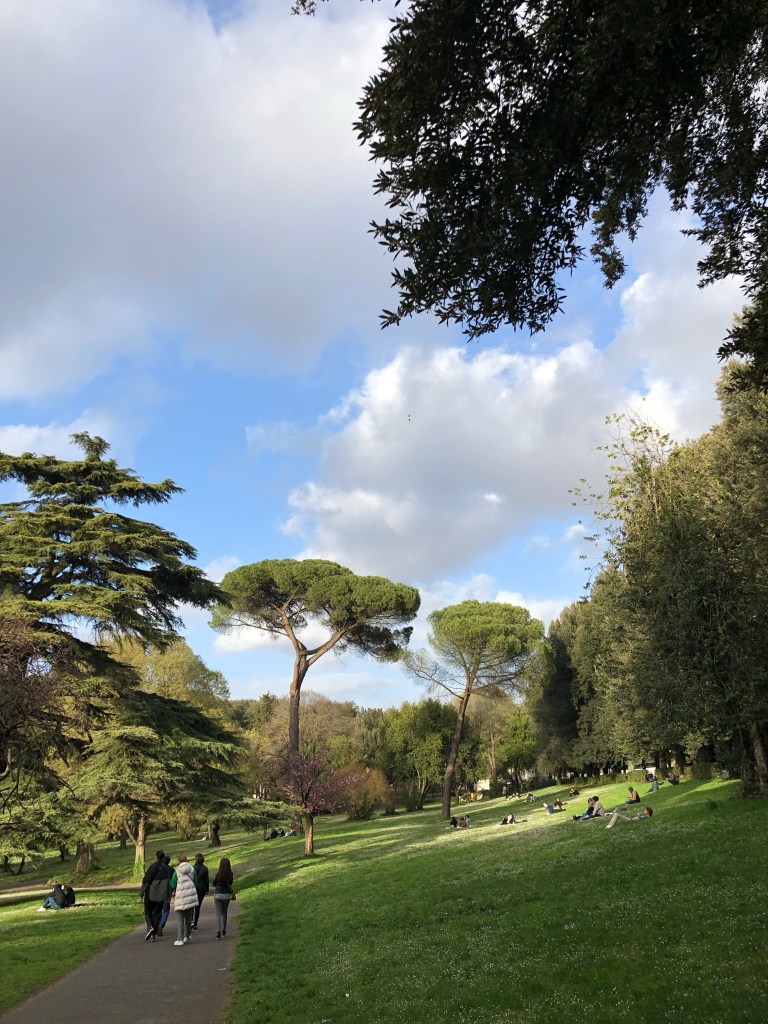
I clocked these pines last night on an evening wander towards the Spanish Steps. Respighi wasn’t wrong to write this movement as the jolliest, most playful of the four: when I was there, the Giardini della Villa Borghese were full of children playing in the evening light. A couple of fairground rides replaced the Roman ring a ring o’roses game in the original, but in all other respects it still fits perfectly. The man knew his source material!

The Borghese gardens also appear to be a favourite spot for Roman romance. As the sun starts to sink behind the trees, the long shadows cast by the stone pines stretch like rivers between the patches of sunlight, where in one corner of the gardens couples clustered like mayflies in the light. A girl in her twenties was picking daisies to fashion into a chain, four Spaniards laughed their heads off as they wheeled up and down the paths on rental bikes, while in the middle of the gardens a priest gave a homily to a small crowd in front of one of the chapels.

If I should find the One someday, I’ll take her for a walk here, too.


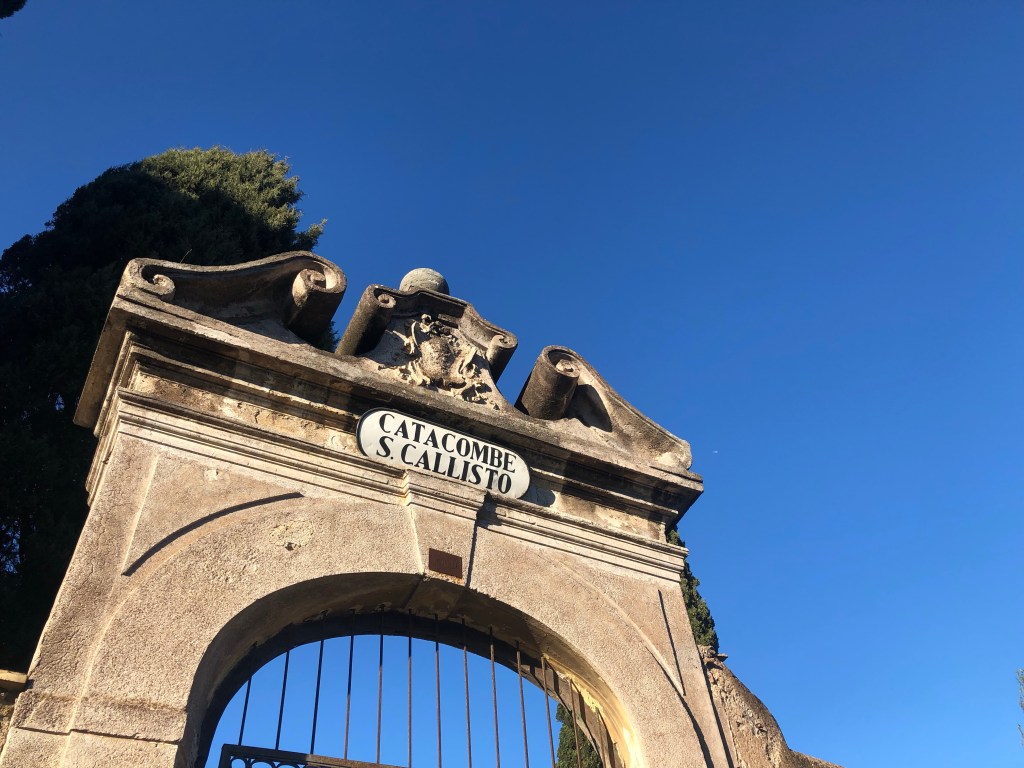
II. The Pines near a Catacomb (I pini presso una catacomba, lento)

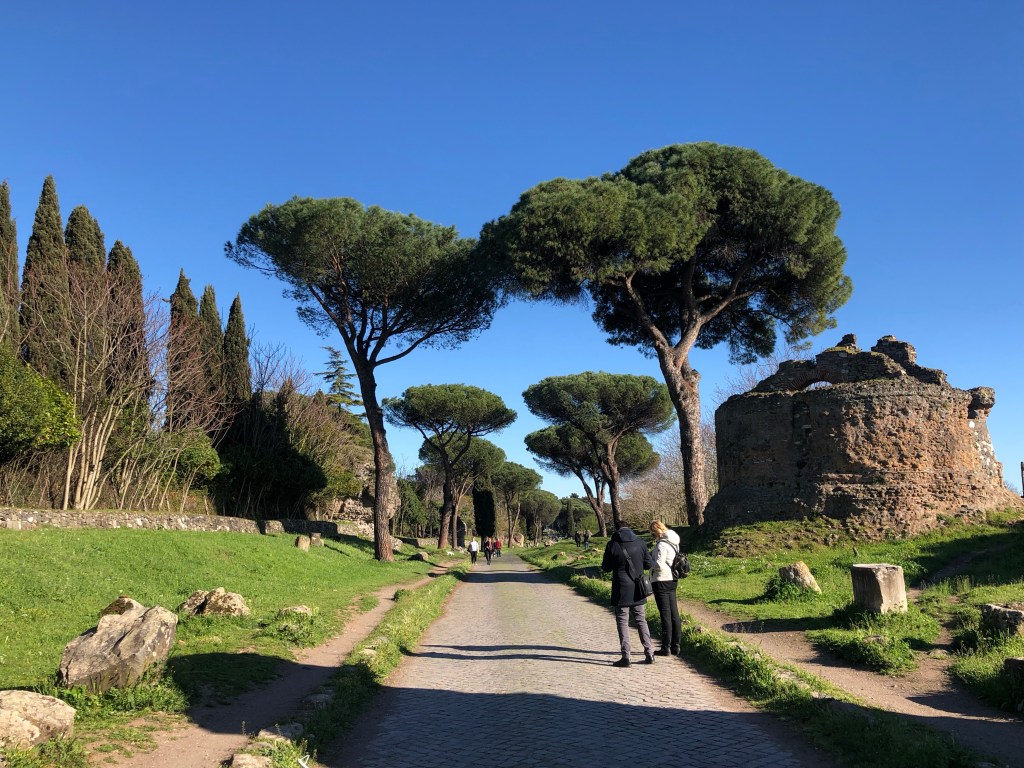
By the time I reached the catacombs, they were all shut up for the week… but that’s what you get for prioritising the Pope over a blog post. Compared to the rest of the Appian Way, the area around the catacombs was quiet and shaded… though that may have more to do with the lateness of the hour by the time I reached them. Here in Rome, as in Spain, cypress trees mark the resting places of the dead, lining the roads to the catacombs. They’ve been symbols of death since ancient times, since they cannot regenerate when cut back, and so they stand as sentinels outside tombs, cemeteries and graveyards all across the Mediterranean. The Romans’ beloved stone pines tower above them, but I think its the sad and stately rows of cypress trees that Respighi is alluding to in this movement.


III. The Pines of the Janiculum (I pini del Gianicolo, lento)

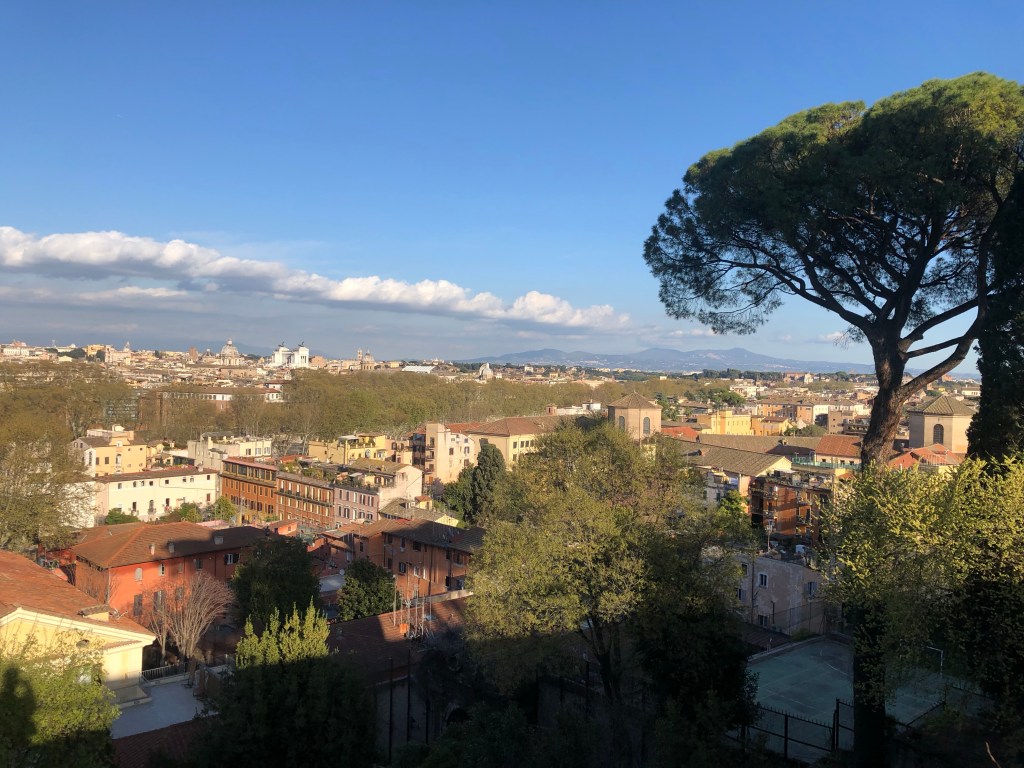
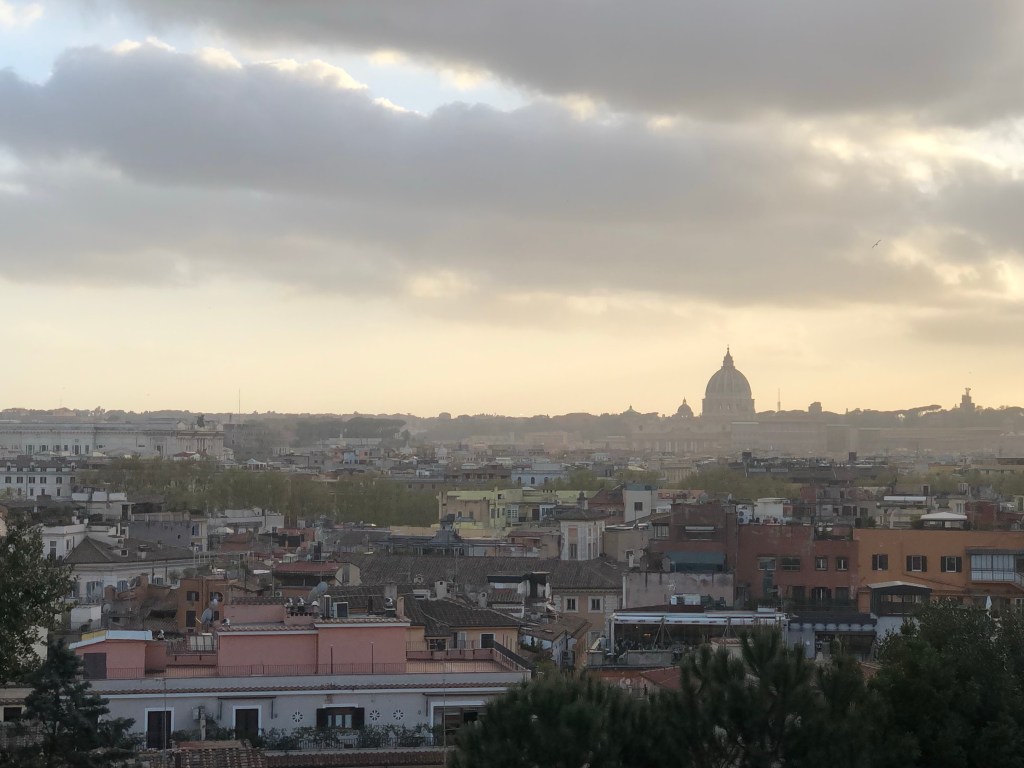
My first night in Rome was spent watching the sun set over the Eternal City. A girl I once put on pedestal told me to make the most of every sunrise and sunset. I left behind both girl and pedestal years ago, but it’s still a rule I live by when I’m on the road. Snacking on a focaccia from the hilltop, I had a sweeping view of the city, from the Vatican to the distant towns of Tivoli and Palestrina. The pines that grow here are the stone pines of Doñana, the trees of my childhood. The Romans had a special love for this tree and planted it wherever they went, especially along roads like the Via Appia.

Down in the dark branches below the viewpoint, some of the city’s monk parakeets screeched this way and that (oddly enough this South American species began to colonise Rome around the same time the Argentinian Pope Francis was elected), but my eyes were drawn to a tiny black-and-white shape moving up the trunk of the tallest stone line overlooking the city: a lesser spotted woodpecker, the first I’ve seen in many years. The rising and falling flute in Respighi’s movement pairs well with all the birds I saw here: the parakeets racing by, the pigeons wheeling over the roofs below, the tiny woodpecker climbing up and up. But I didn’t hear the nightingale that Respighi insisted on featuring at the end of this movement. Perhaps it’s too early in the year – though I suspect it’s more because it’s much too crowded here for such a self-conscious minstrel.


IV. The Pines of the Appian Way (I pini della Via Appia, tempo di marcia)

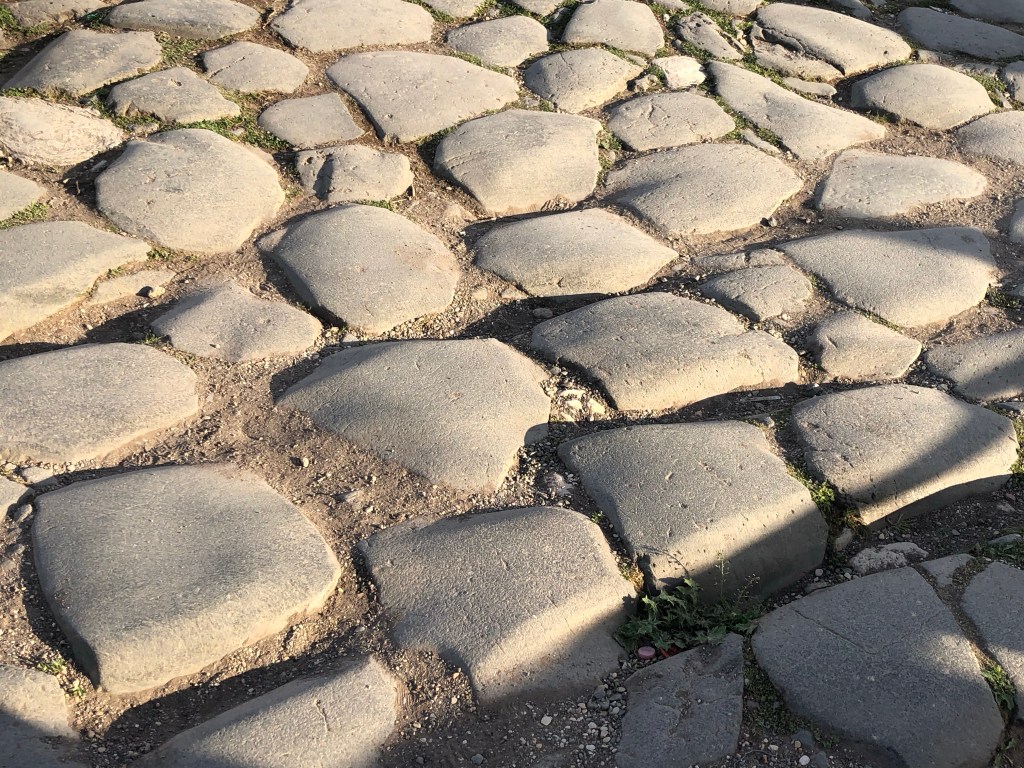
This was always my favourite movement – and what a sight! No visitor to Rome should pass up the chance to take a walk on the Via Appia, especially on a Sunday when the road is closed to traffic and the Romans descend upon the ancient highway in their droves for an afternoon passegiata. Walking the forum is one thing, but this is something else. The Via Appia is probably the oldest road still in use in the western world, and you really do get the feeling you’re walking in the footsteps of the ancient Romans as you walk this road. The things this road has seen…! This is where soldiers marched to the port and on to Egypt, where nobles lived in luxury beyond the confines of the city, and where the great orator Cicero was assassinated. I fell into the Romantic trap of many travelers before me as I passed one old Roman sitting on a marble colonnade, with skin of burnished bronze, black, sunken eyes and an aquiline nose that would have looked supreme on any Caesar; and I wondered whether he was the descendant, through many fathers, of Romans who had lived on this road two thousand years ago.

I also heard a nightingale here – he must have missed his cue in the Third Movement.

If Cannaregio was my favourite spot in Venice, the Via Appia takes the top spot in Rome. It’s breathtakingly beautiful, flanked with ancient Roman treasures along its entire length, and absolutely mustn’t be missed. And Respighi nails it with his final movement: it’s heroic, majestic and the perfect finale to both my long walk and my time in Italy.


I’ll tell you the tale of my incredible Palm Sunday experience as soon as I get my hands on a computer, as my phone photos simply don’t do it justice, but until then, arrivederci Italia! Sei bellisima e tornerò presto! And that’s a promise. BB x

Rome II: Vatican Two

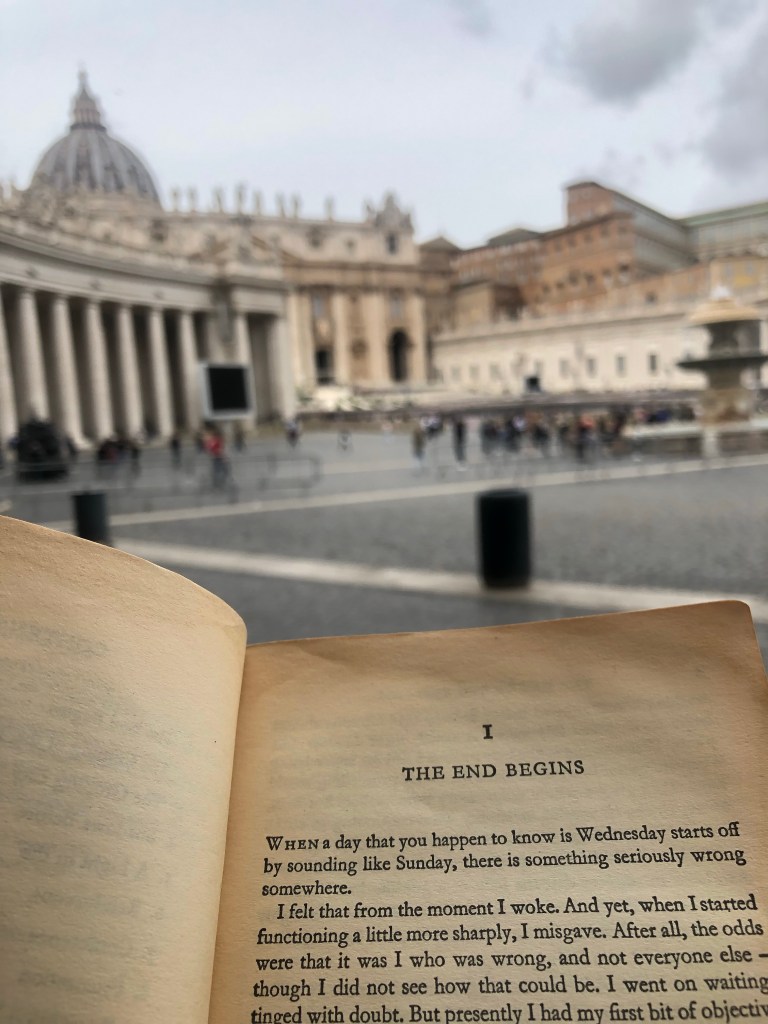
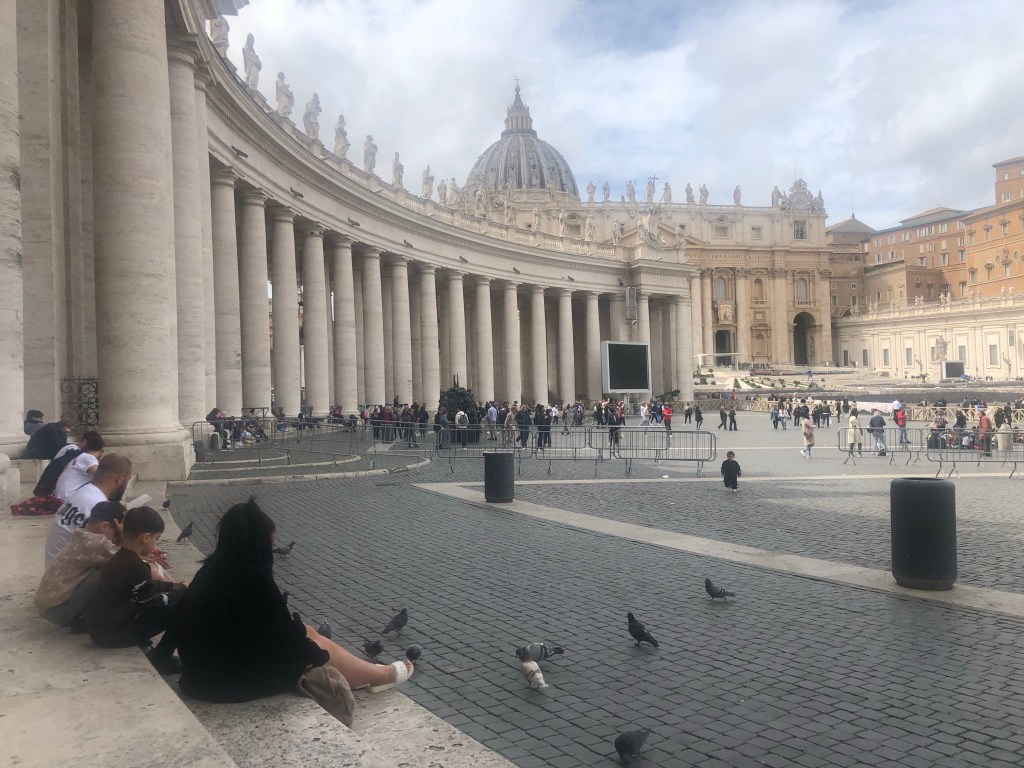
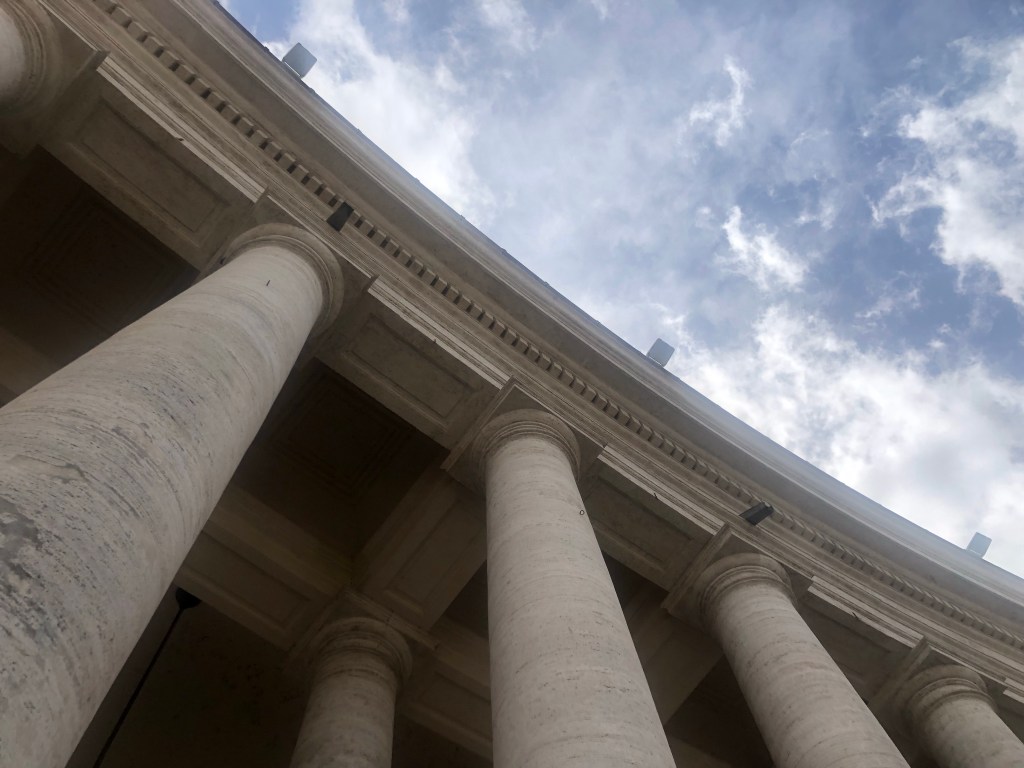
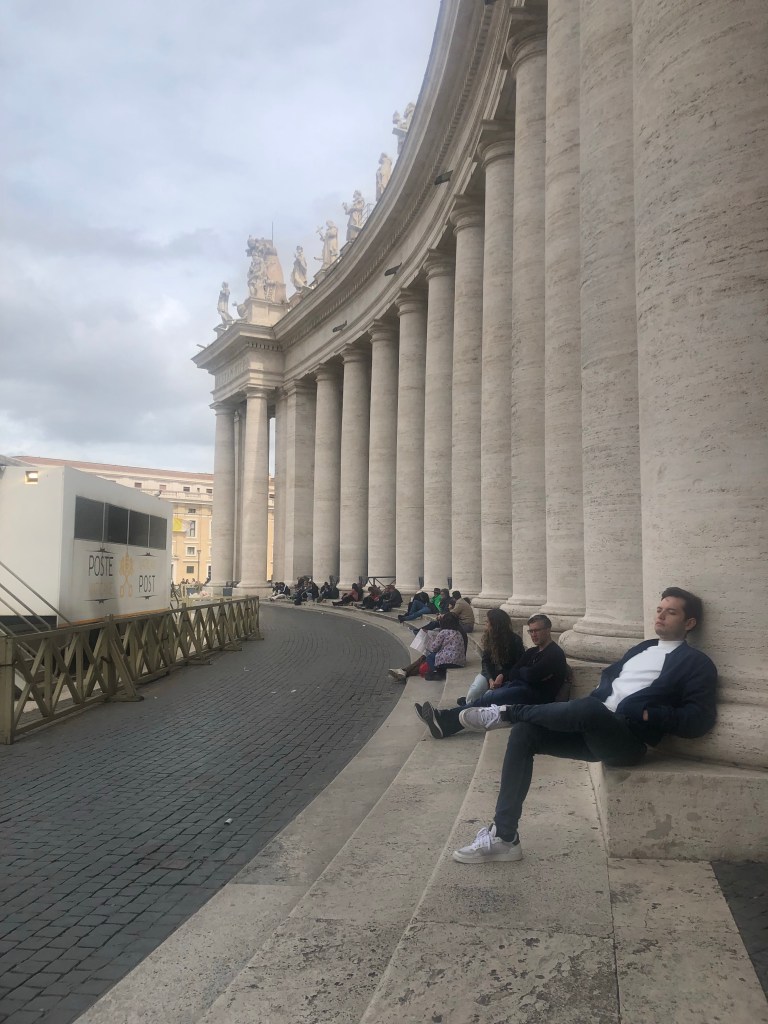
13.25. The surging throng of visitors to the Vatican Museums is steadily beginning to thin out. I could still probably count a thousand or more within the pillared walls of St Peter’s Square, but the morning rush is almost over. From my outpost under the statue of St Philip, I can see most of the piazza, except for the part obscured by the Vatican Post Car parked a few feet away. The postman came to pick up the mail around 11.30, some two hours ago. Since then I’ve been watching the visitors, tuning into the various languages around me and observing the interactions of the many thousands who pass through the Vatican every day. You could call it snooping, I suppose. I prefer to think of it as people watching. As I leaf through the first chapter of Triffids – my solo traveler’s Bible – I try to capture everything I see around me.

Two very well-heeled girls have been taking photographs of each other in front of the pillars for at least half an hour now. One of them is kitted out in a striking tea green trouser suit; the other is more noticeable for her red hair. Let’s call them Green and Red. I imagine what they’re trying to do is one of those time-lapse images for this or that social media network, since Red keeps strutting backwards and forwards in a highly artificial manner, flickering her hair over her shoulder and looking back to Green’s phone. The Vatican City seems an odd place for a glamour shoot, but then, what do I know? It’s a changed world.

A toddler is having the time of his life chasing pigeons in front of me. He’s so caught up in the chase that he keeps falling flat on his stomach, but the brave little soldier hasn’t cried once. He just gets right back up and charges headlong into the flock, giggling wildly and scattering the panicked sky-rats in his wake while his parents watch and mum takes a film on her phone.

After the people and pigeons, the next most numerous living thing here in the Vatican is the city’s gull population. Apparently they’re only a recent arrival: until as recently as the 1970s, gulls were a rare sight this far inland. Now they’re everywhere, raiding bins, snatching bread from hopeful pigeons and circling St Peter’s basilica like dirty angels – or do I mean vultures?

Three locals have dropped by with a pizza box for a snack lunch in the square. It seems the obvious spot for a lunch break: the domed sky is immense – you have to really open up your eyes to take it all in – and there’s always something going on here. A few minutes ago a woman was screaming something on the other side of the square – I never did see her face nor did I catch what she was shouting about over the cascade of the fountain, but from her constant used of “ustedes” I’m going to guess she had that evangelical fire that you only find in Latin American Catholicism.

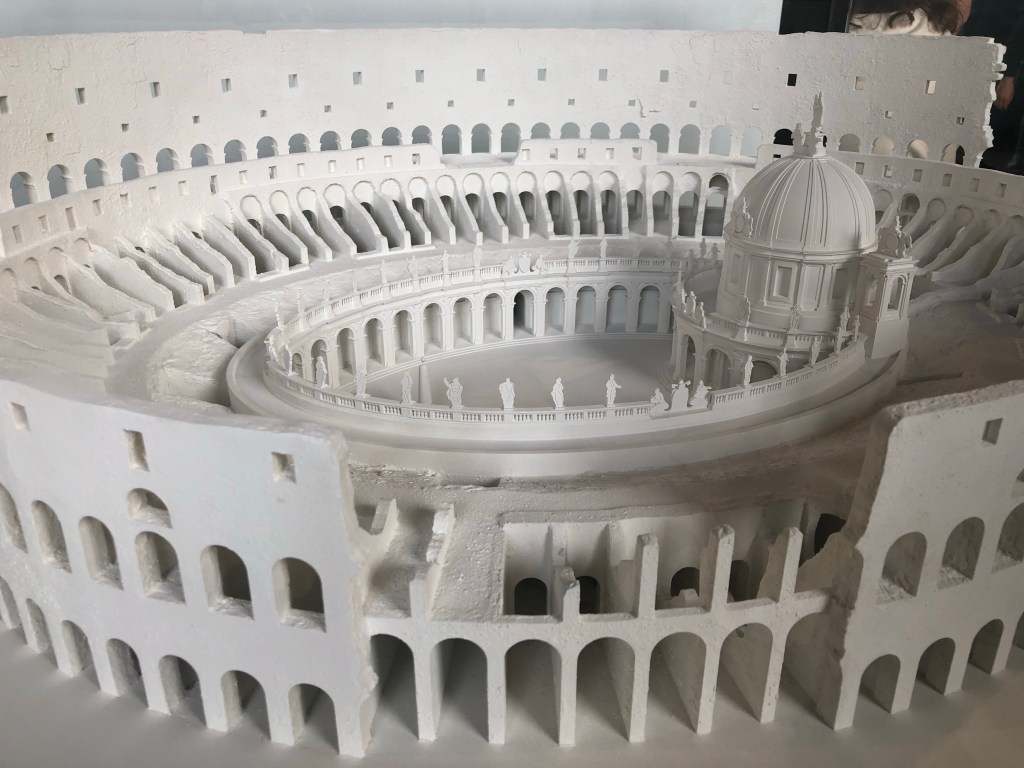
Did you know there were plans to turn the Colosseum into a church? Fortunately they were abandoned many years ago, sparing Italy the shame that Spain has to bear in the desecration of its greatest Islamic treasures of the Alhambra and the Great Mosque of Córdoba.

Well, perhaps not entirely. A casual walk around Rome reveals that many of its ancient churches are carved out of the bones of other Roman carcasses, perhaps most notably the basilica of Santa Maria degli Angeli e dei Martiri, housed in what was once an impressive frigidarium. Still, it’s worth remembering that this fate is probably what saved it from the twitching fingers of the stone-thieves that reduced many of Rome’s treasures, including the Colosseum itself, to the picked and dismembered skeletons we see today.

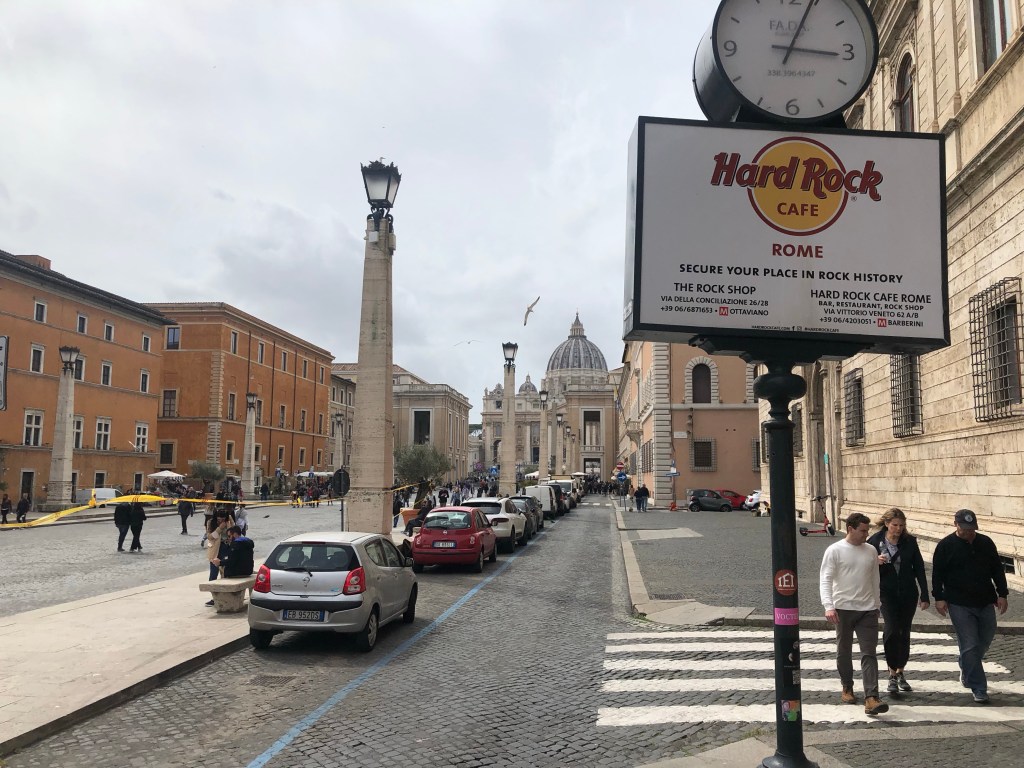
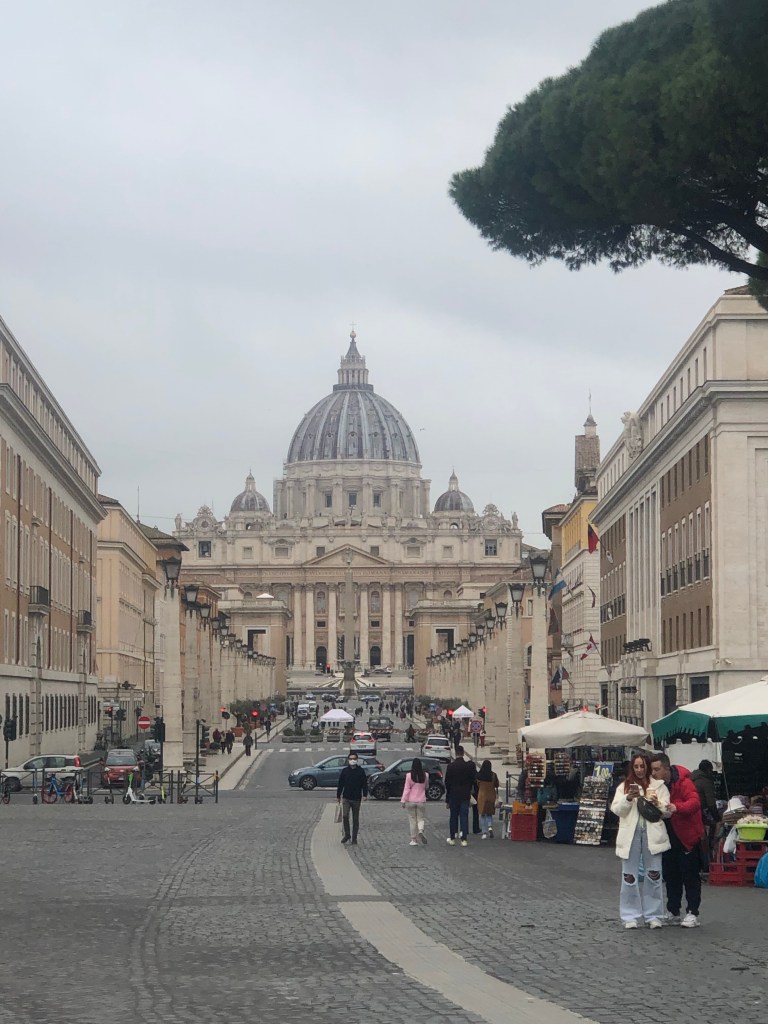
These days the Church has lost interest in “reclaiming” ancient wonders for Christ. Now it’s faithless corporations like Hard Rock and MacDonalds that play Columbus in the ancient places of the world, stamping their flags as close to the action as possible so as to draw in their customers like spiders. In that sense there’s not an awful lot of difference between them and the hawkers offering line cuts in St Peter’s Square at “special special” prices. They’re simply out to make a quick buck at the expense of the next band of pilgrims. It is a little disheartening that the first shop down from St Peter’s Square on the Via della Conciliazione sells branded British tee-shirts.

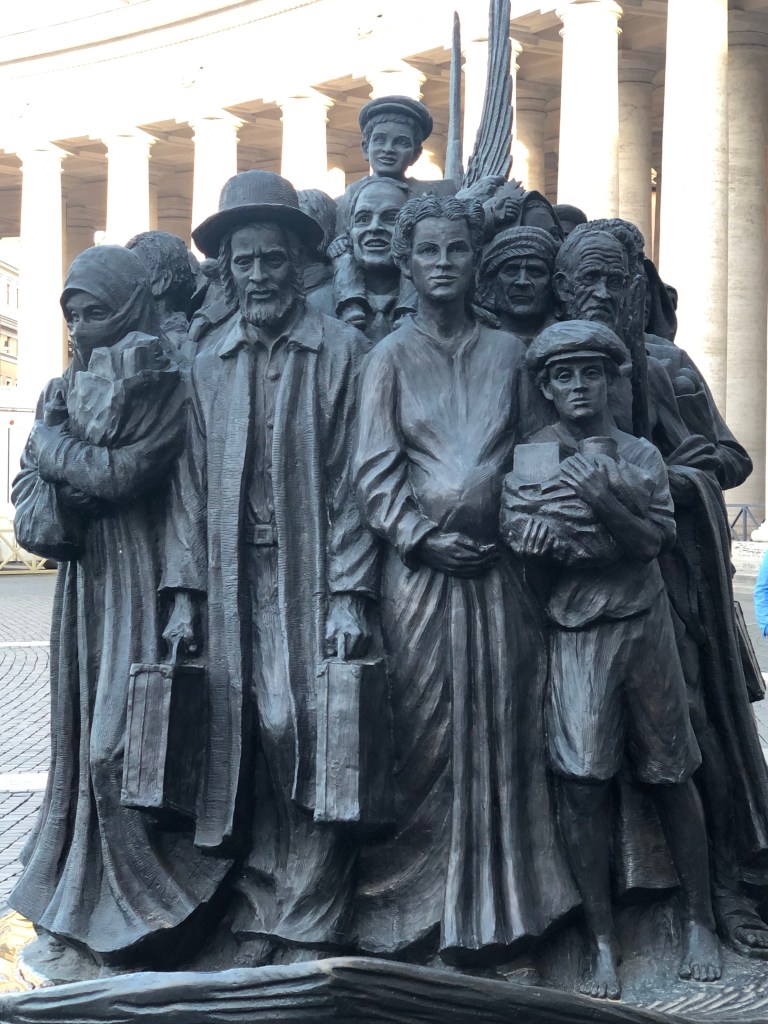
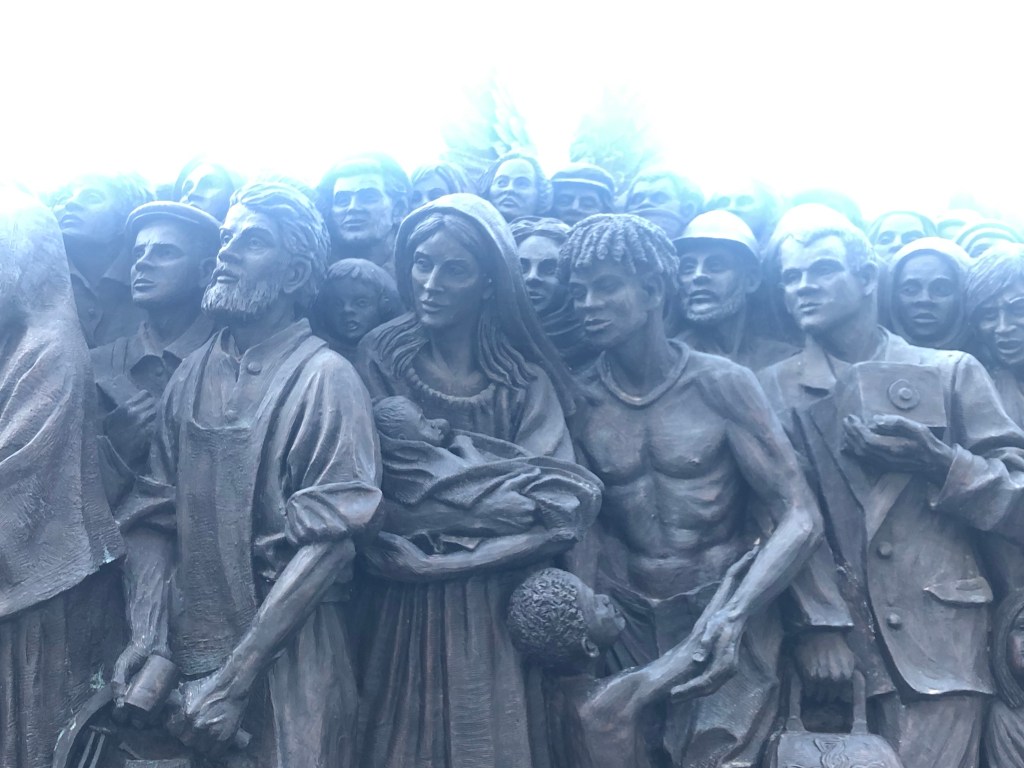
Speaking of which, the newest addition to the square is drawing a steady crowd. Timothy Schmalz’ Angels Unawares depicts a muddled group of refugees from every corner of the globe and drawn from across several ages in history: a Syrian mother and child, a Polish Jew, a family of African migrants, even a Native American nobleman. In a square full of righteous saints and martyrs, it’s a necessary homage to the real sufferers around the world: the everyday folk whose worlds are turned upside down because somebody somewhere thinks their world view has the right of it.

It’s 14.30. I’ve kept my vigil here for over four hours, and now I’m getting peckish. My feet, however, are immensely appreciative of the break from yesterday’s constant Roman around (ha ha). Time, I think, for a spot of lunch. BB x

Rome: Marching on the Capital

They weren’t wrong when they called Rome the Eternal City. It seems to go on forever and ever – which is probably why everybody I asked told me not to walk, but get the bus or metro. But I’m stubborn when it comes to walking – years of not driving forces you to master the art – so I spent today exploring Rome on foot. The only foolish thing was that I did it twice: once to scout the city, then once again to visit the Colosseum for my timed entry slot. My heels are aching and frankly I can’t blame them. But if anything should be aching, it’s my eyes… because there’s more to see in Rome than in any city I’ve ever seen in my life.


I’m staying in a cosy AirBnB behind Castel Sant’Angelo, situated within a condominium that’s just a stone’s throw from the Vatican City. I figured it would be nicer to be in a quieter part of the city as I’m not much of a city boy, and I wasn’t wrong… Rome is loud. Somebody grabbed the volume dial on the train from Venice and ramped it up to max. Noisiest of all are the ambulanzas… the way they hurtle down the streets with sirens blazing every ten minutes you’d think the Romans had one of the highest mortality rates in Europe. Given the Vatican’s population growth rate of 0% and the average age of its citizens, perhaps that’s not surprising.

It’s telling enough that between writing the word ambulanza and this line, I’ve heard four go by in the space of two minutes. Ils sont fous, ces Romains.

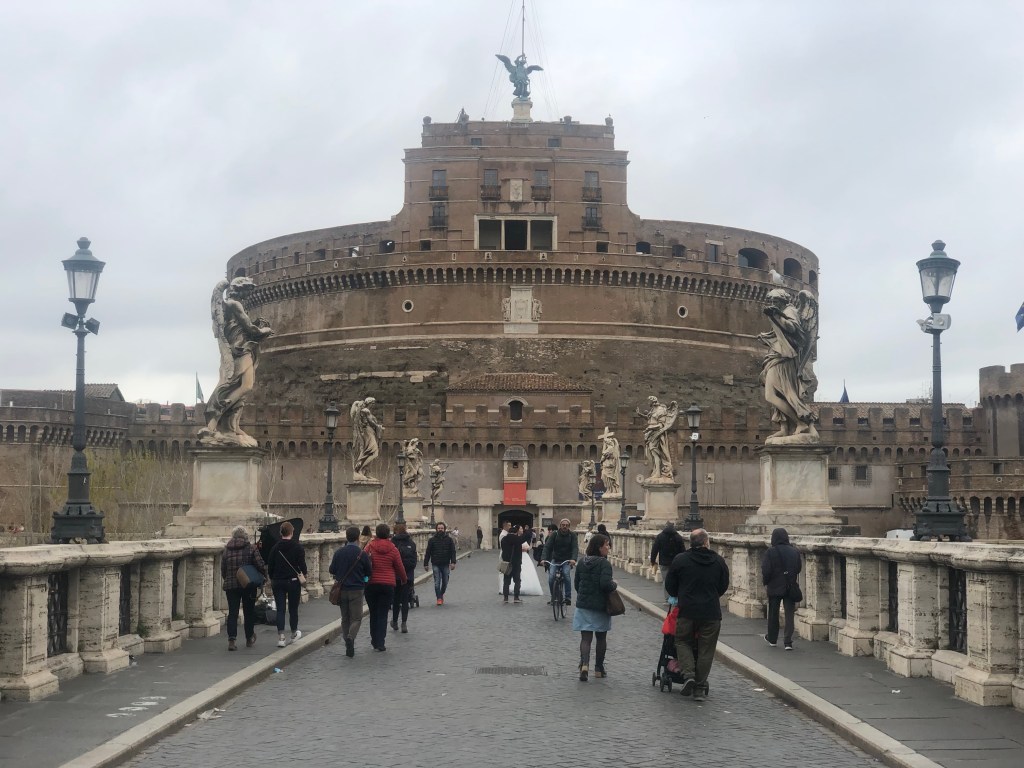
I started my route by crossing the Tiber over the Ponte Sant’Angelo. A Korean couple posed for their wedding photographs on the bridge while two local men dressed as legionnaires did the same with a family of tourists before bullying them for cash. It’s been a long time since I’ve done real tourism – my usual holiday destinations are well off the beaten track – so the vast number of selfie stick sellers, water hawkers and tack touts caught me off guard. They seem to swarm about the oldest parts of the city like flies around a wound, preying especially on the young, the old and the Chinese. For the first time, as a single male traveler, I passed most of them as though invisible. I guess I’m not prime real estate – nor would I have much need of a selfie stick when I’m armed with my trusty Nikon D3200.

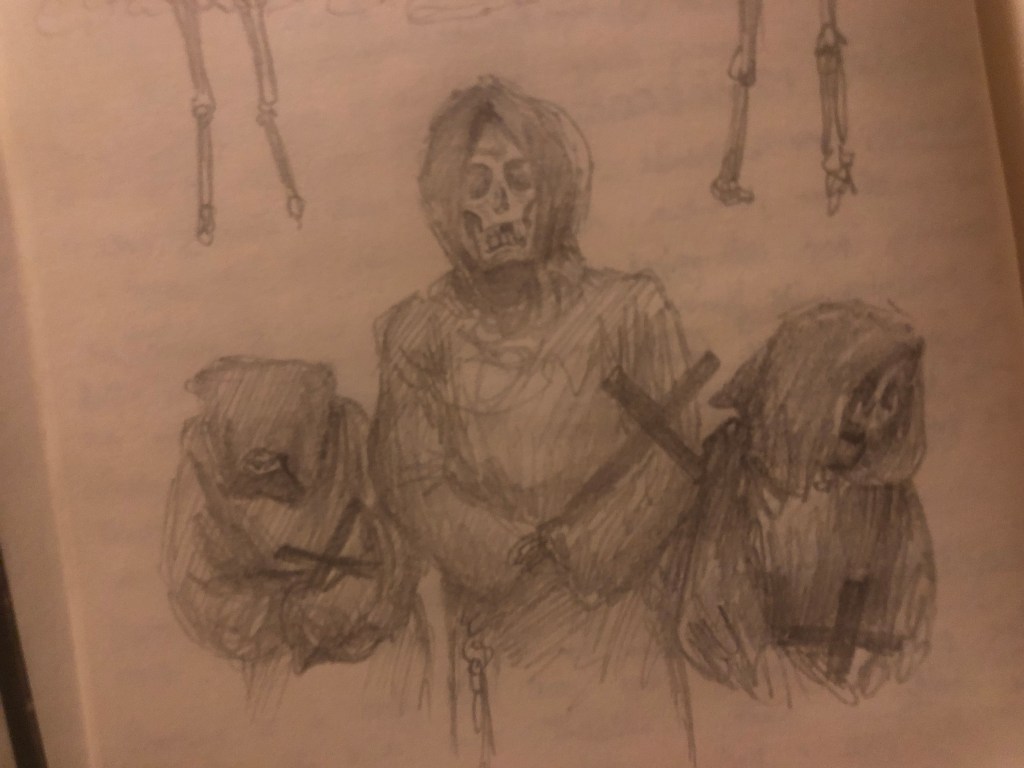
The Pantheon was a little underwhelming on such a cloudy day, so I saved it for later. The famous Trevi Fountain was being cleaned as I walked past, knocking two items off my itinerary early on. Instead, I spent some time in the bizarre Capuchin Crypt to see one of the most alarming sights in Rome: the disinterred and rearranged bones of hundreds of monks, dressed up and set on display in a grisly but remarkably intricate work of art. As a mark of respect to the bodies (which does seem odd when they’ve been played with so) cameras aren’t allowed, but fortunately nobody ever seems to have any issues with sketching, so I spent some time drawing the macabre display instead.

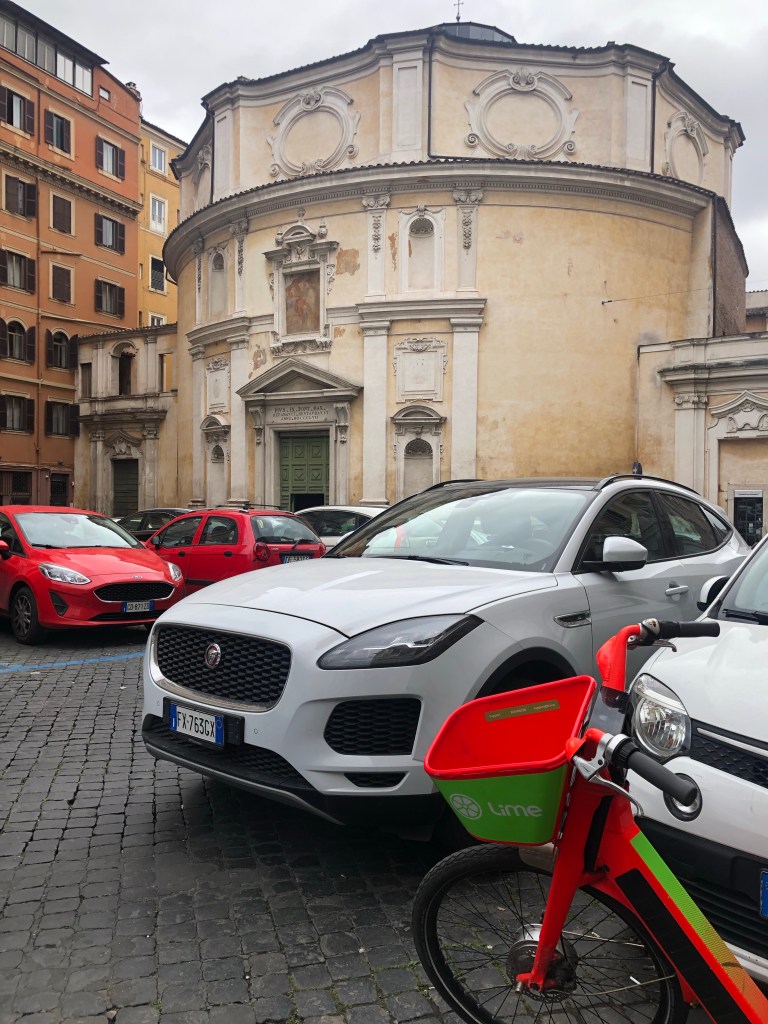
Moving on through the squares and streets, past sharp-dressed polizia and fire-breathing carabinieri, I made a point of dropping in on a couple of Rome’s churches. Not too many – there are so many here one could burn out easily – but enough to get a flavour. Even if you’re not religious in any way, they’re blissful refuges from the constant hubbub of the city.

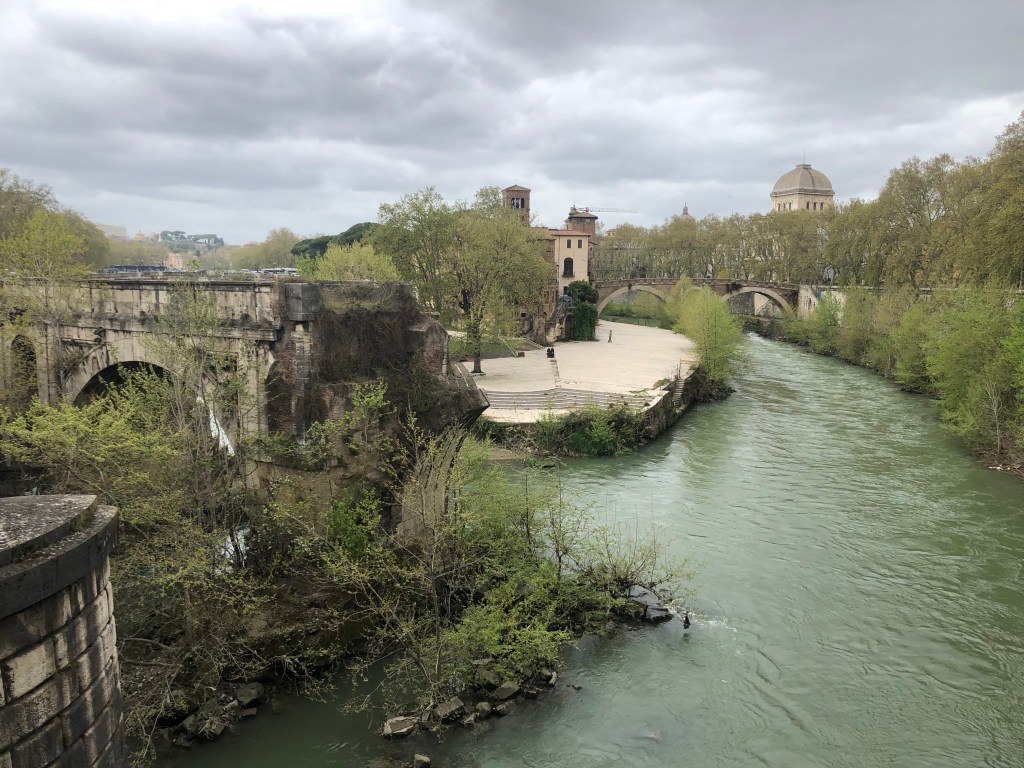
After four days in Venice, the near total lack of traffic along the River Tiber was hard to believe. And not just on the water – its banks too were almost deserted, but for a couple of joggers and a few clusters of homeless folk. Even the usual river fauna was nowhere to be seen… just a motley crew of gulls and a couple of hooded crows. By contrast, the Guadalquivir is usually heaving with both birds and sunseekers. Perhaps Rome is just too busy to afford the Tiber either.

After an all-too brief recharge back at the AirBnB I trekked back across the city toward the forum, where sadly no funny things happened. I made it to the Colosseum in more than enough time and they let me in fifteen minutes early, so I guess the newly imposed time slots are more guidelines than a point of law.

Standing in line, I watched a German family try to take a selfie where they all try to jump at the same time. Ein, zwei, drei! Ein, zwei, drei! A gang of twenty-something-year-olds sauntered by, and one of them who clearly thought himself a first class joker kept jumping into their shots, sauntering off with an unflattering imitation of their countdown. The same thought occurred to me as it had with the phoney legionnaires: some people are just goons for no reason.

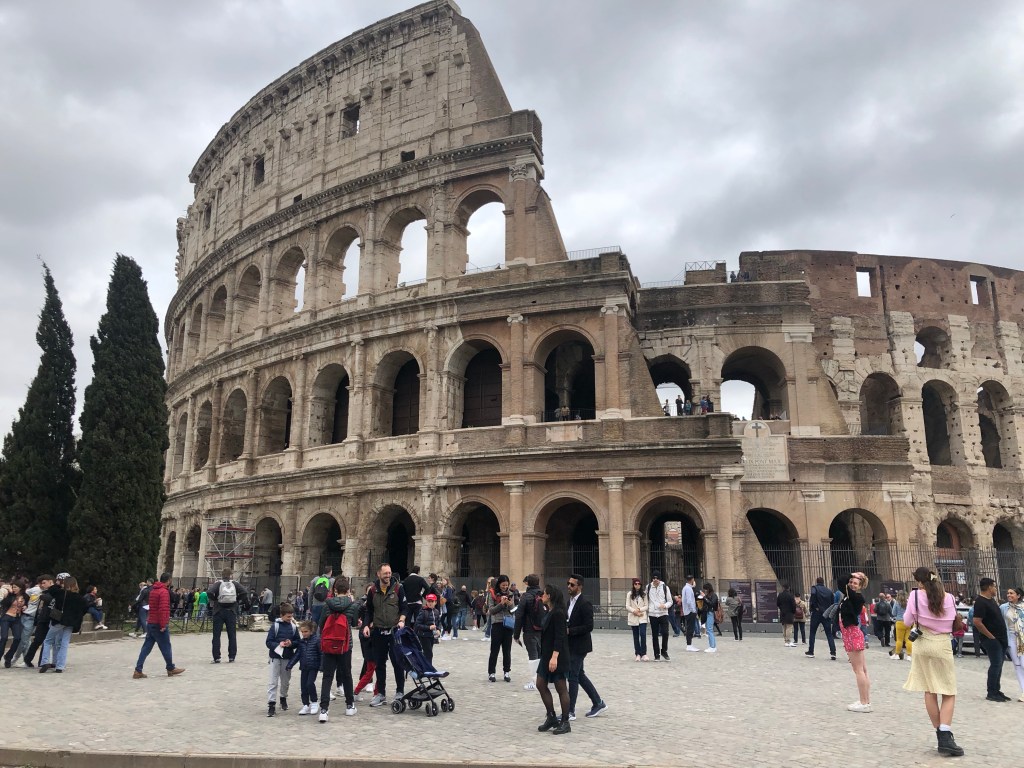
The Colosseum… was it worth the entry fee? I think so. It is without doubt one of the most impressive buildings in the world, and though it’s a lot more imposing from the outside, with all the scaffolding and building work going out around it, it’s easier to get an impression of its ridiculous scale from inside these days. They’re currently building a new metro line that will service the old city, which I saw advertised all over today. Great news for my feet, not so great news for the Colosseum, which won’t enjoy the additional underground reverberations.

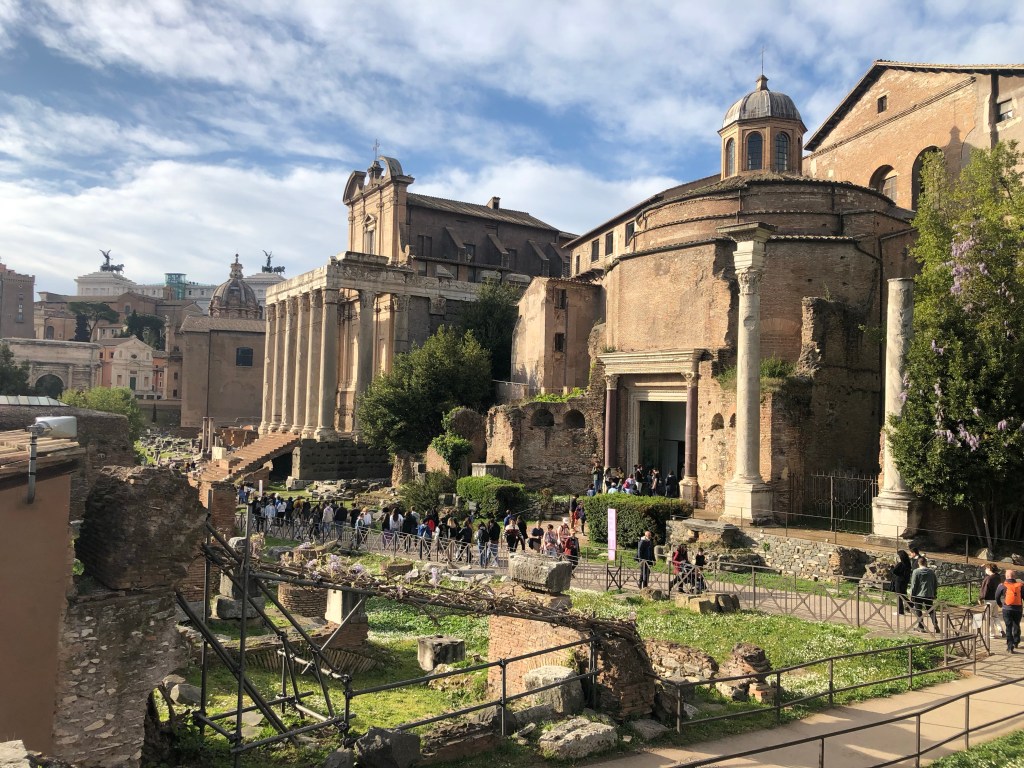
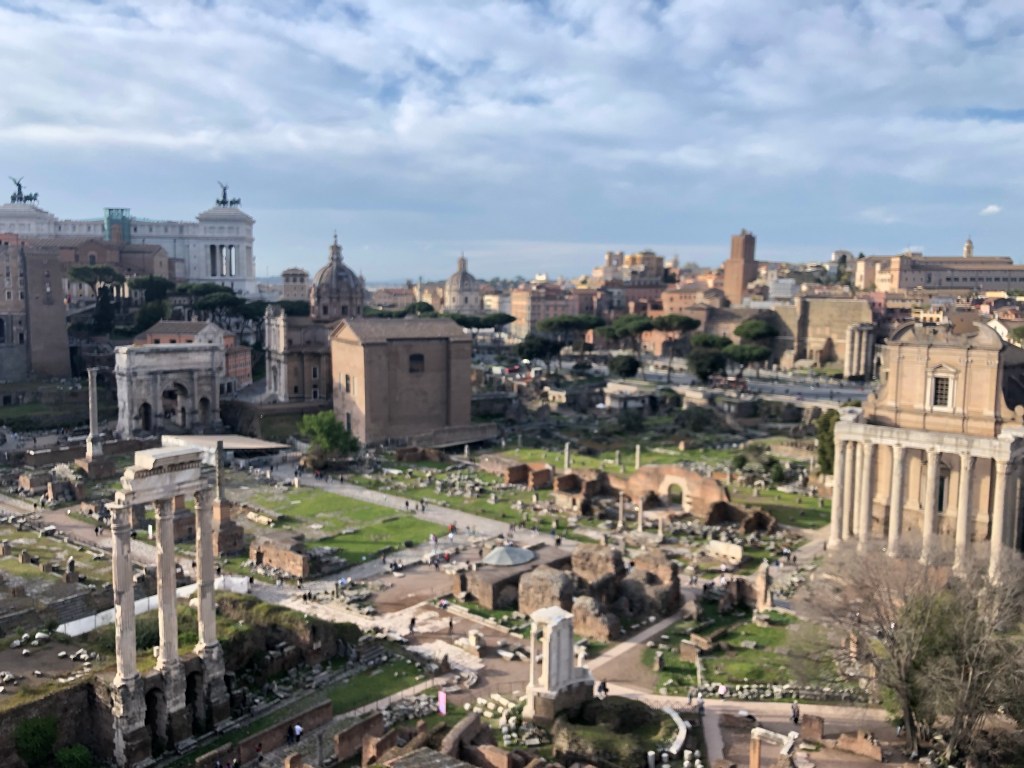
I did get one thing right today, and that was my timing: the blinding white clouds that covered the city all morning were gone by five o’clock, which meant my walk home through the Forum landed right in the golden hour. Blackbirds and blackcaps sang from the olive trees and the crumbling walls as they must have done since before the Romans came. Children played leapfrog between the pillars. A British Indian family had an argument about “too much history for a holiday”, while a Turkish girl made her boyfriend take her photo again and again and again and again under the wisteria tunnel. My services as a family photographer were called upon three times between Titus’ Arch and the Temple of Saturn, but that’s what you get for obviously wandering about with an SLR camera.

I don’t really have anything profound or original to say about my adventures today, which is a little disappointing. I guess you could say that everything that could be said about Rome has been said by thousands before me. So tomorrow, after a decent rest for my beleaguered feet, I think I’ll investigate somewhere further afield. There’s something very appealing about spending the day in Ostia Antica – not least of all because of the mild amusement I get as a Spaniard from the name alone. But that’s not set in stone. For now, I should get some shut-eye, and give my blistered heels a well-earned break. BB x

P.S. Oh, and I also had my first Italian pizza this evening. It was… OK. Nothing to write home about. Which is ironic, since that’s exactly what I’m doing right here.