I’ve made it to the mountain village of El Acebo, the first town of El Bierzo, León’s westernmost outpost before the green hills of Galicia. I didn’t mean to shoot this far, but after arriving at Foncebadón before 11am I decided to press on with a couple of other pilgrims. It’s been a long hike today, and one of the most beautiful of the whole Camino.
I was up before 5am, which is just as well, as one of the pilgrims in my dormitory was impervious to his 5 o’clock alarm, which continued to ring for well over ten minutes, waking everybody up but him. I’d had the foresight to dress for the road ahead of time, so I simply slipped away from the phoney alarm clock (ha ha) and retreated to the downstairs kitchen to pack.
The doors of the albergue were closed until 6am, but some of the pilgrims must have been impatient, because after I’d had my breakfast and went upstairs to wait, I found it already ajar. So, not too long after half past five, I was out in the windy streets of Astorga and on my way.
I did my first bit of serious journaling for a while last night, so I had the company of all the characters of my novel in my head for the first few hours of the morning. Spain is working its usual magic: just being here gives me ideas, threading new storylines into the patchwork where life in England simply leaves me in a creative block. I must have run through some of the same dialogues over and over to keep them fresh in my mind before reaching the picturesque village of Santa Catalina de Somoza, where I stopped in front of a giant stone die to watch the sunrise. The clouds tumbling over the mountains ahead glowed a fierce salmon pink for just a few seconds, which I missed by a whisker with my phone, but it was worth the early start to catch even a glimpse of that morning wonder.
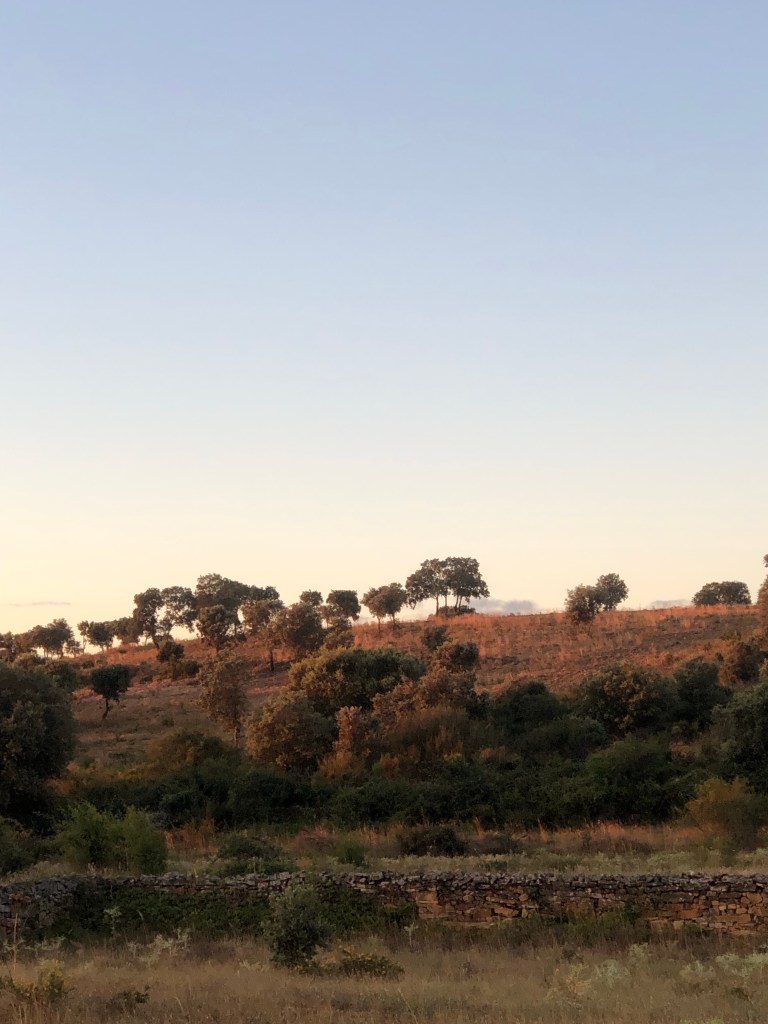
The meseta is well and truly behind me now. It was never low – most of the meseta from Belorado is over 800m above sea level – but from the lofty heights of the Montes de León, surrounded by a changing landscape of heather, broom and drystone walls, it feels a great deal more than two hundred metres down.
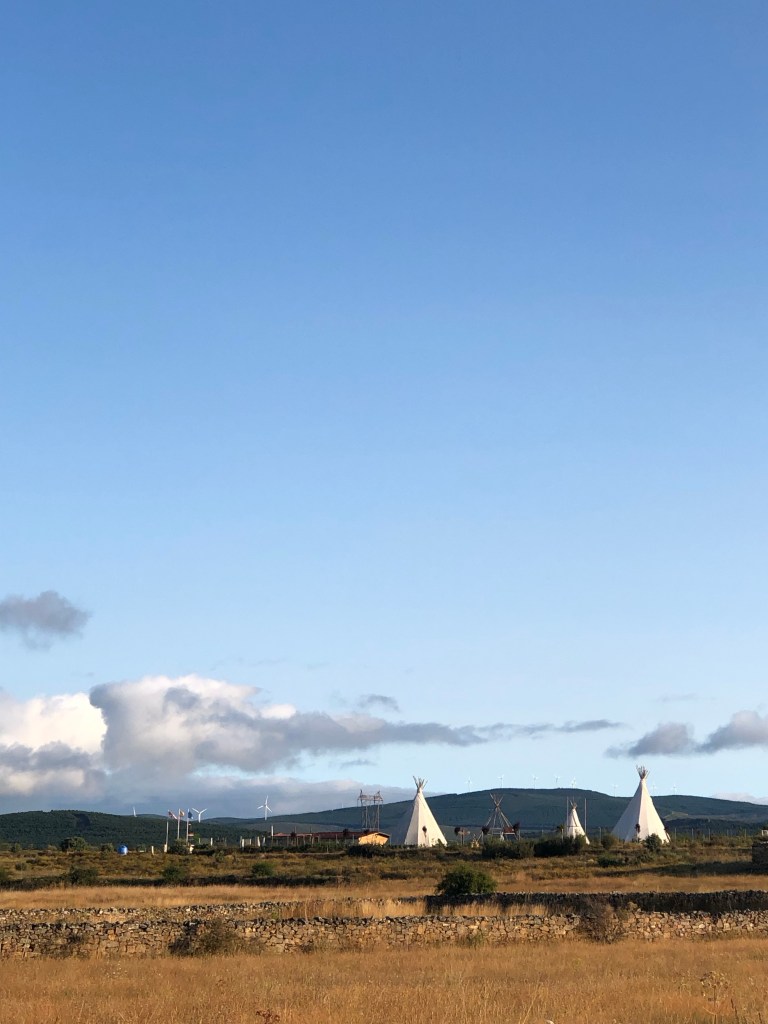
Even the wildlife has changed. Rock buntings replace corn buntings, and woodlarks sing in lieu of skylarks. The kites and kestrels of the plains are nowhere to be seen: instead, I clocked a peregrine and an eagle of some kind from a great distance, though I couldn’t tell what kind against the clouds. I practically stumbled upon a couple of red-backed shrikes near the decidedly out-of-place pueblo indio outside El Ganso, which is a first for me! You don’t find them further south than this.
The shrikes, I mean. I don’t know how far you’d have to go to find another faux-Indian setup like this one…
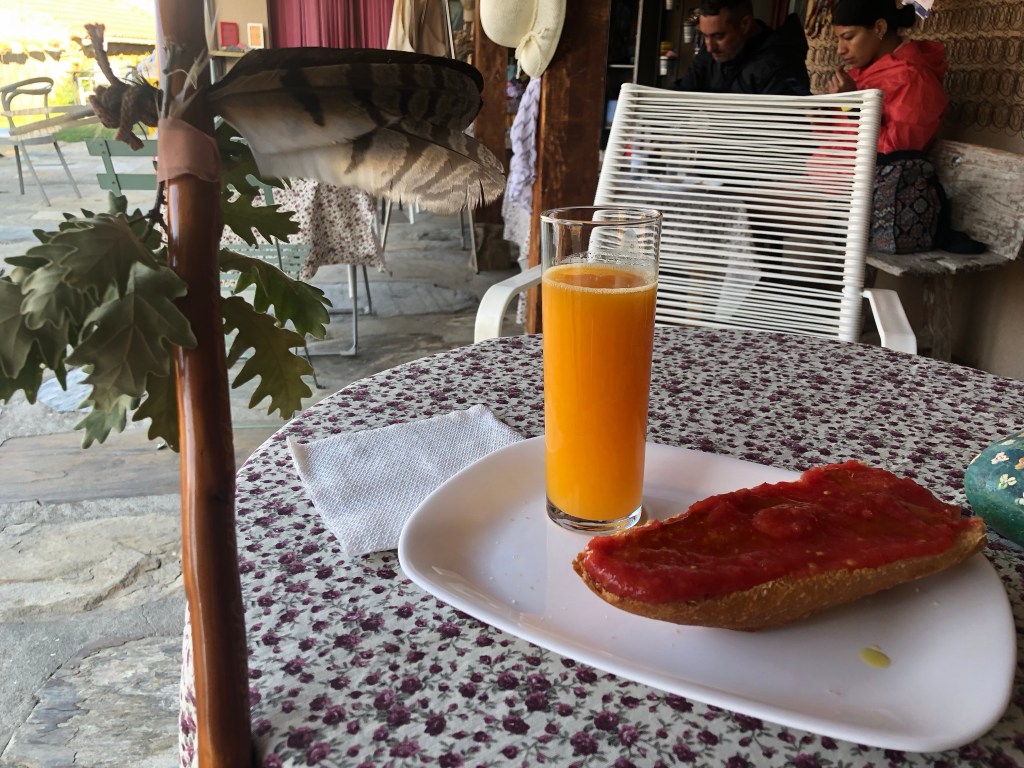
I made an uncharacteristic stop for breakfast in El Ganso, and what a fantastic idea that was. I had probably the best tostada con tomate y aceite of the whole Camino with a tall glass of fresh orange juice, and snagged a leather bracelet for the road as a keepsake. I missed the famous Cowboy pilgrim stop as it was too early, but at 5€ for the below, I think I found what I was really looking for.
Walking songs carried me on and up the mountainside toward Rabanal del Camino. I took advantage of my solitude in this forested part of the Camino and burned through my repertoire from Tolkein to all my favourite sevillanas, only shutting up when the town was in sight.
I shared the road thereafter with an Australian backpacker, Alex, for a little while, before reuniting with Belgian pilgrim Louis for the last push to Foncebadón. I even doubled down on my food pitstops and dropped into a bar for a cider. I even came away with a free tapa of tostada con jamón serrano. Win win!
And based on that boost, I threw caution to the wind and decided to press on with Louis to El Acebo. I’ll admit it was another linguistic flight of fancy on my part, based on his interpretation of the town’s name in French: là, c’est beau (it’s beautiful there).
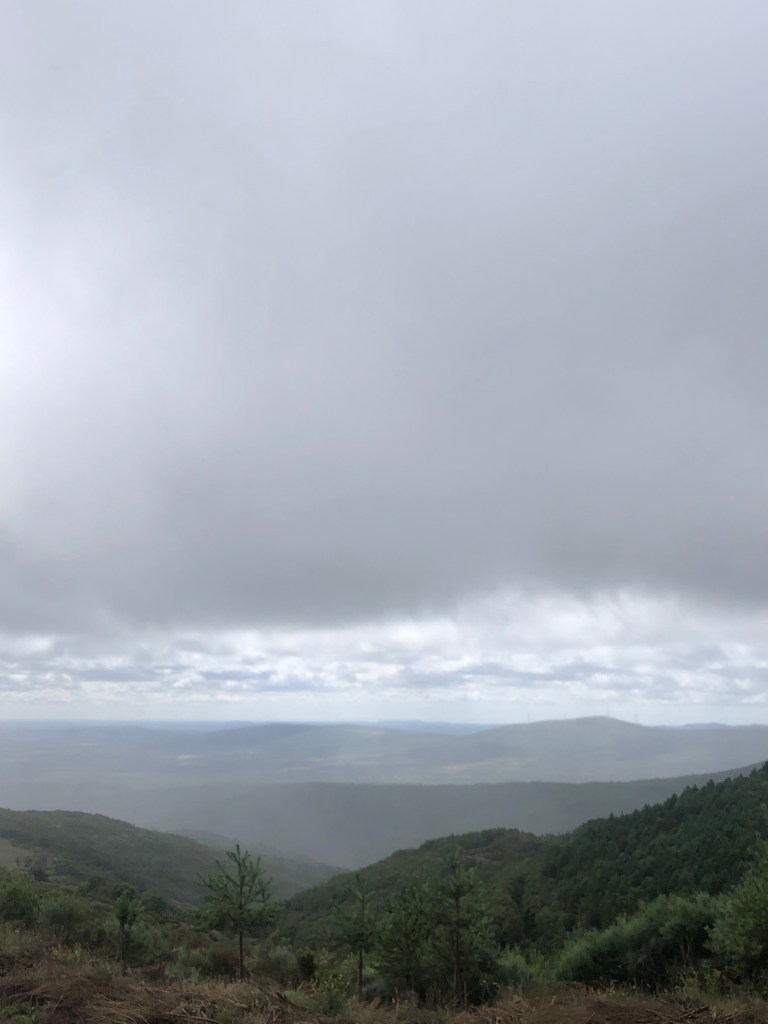
The clouds descended to punish me for my hubris just a few minutes out of town. I haven’t needed my poncho thus far, so it was buried at the very bottom of my rucksack, and I needed to do a lightning-quick pack and unpack to retrieve it as the rain came down. As luck would have it, the shower was over only a minute later, but I kept the coat on, and the showers came and went intermittently throughout the climb. The only thing that got really bedraggled were my owl feathers, but then, owls aren’t exactly famous for being waterproof.
At 1498m above sea level, Cruz de Ferro marks the highest point of the Camino Francés. It’s perhaps more famous for the mountain of stone offerings at its base, which is a pilgrim tradition. I added my own to the stack and went on my way. I met Louis once again, who had gone on ahead but retreated because of a couple of stray dogs on the road. I’ll admit I hoped he’d stumbled upon some wolves, which are known to live in this part of the world, and I would dearly like to see one someday… but no, they were just a couple of strays. Louis’ wariness was understandable, and he wanted to go back and wait for them to pass, but there’s safety in numbers, so I led him past the dogs and back to the Camino. They followed us for a bit, but soon lost interest and returned to the road.
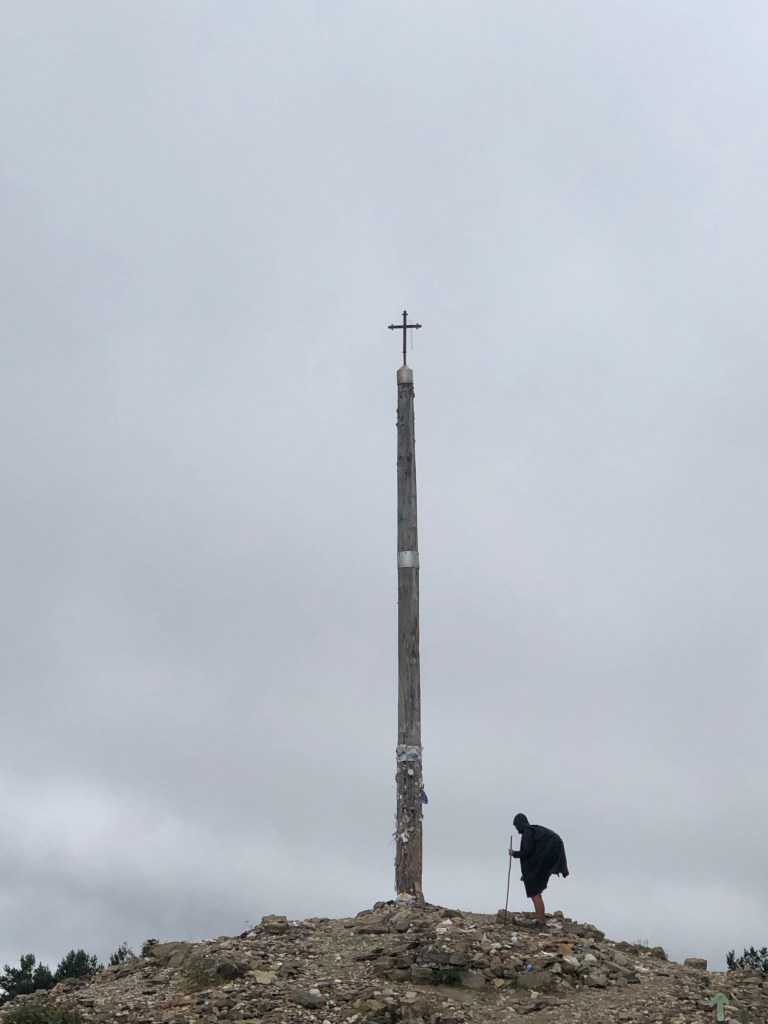
The rest of the hike winds its way through the spellbinding mountain countryside of the Bierzo borderlands, where the trees are covered in hanging moss and slate-roofed villages appear and disappear in clefts in the valley below. The bloody Welshman continues to make his presence known, daubing Cymru am byth in luminous white paint on roads, benches and even the odd boulder, but other than that, it’s a truly wild trek.
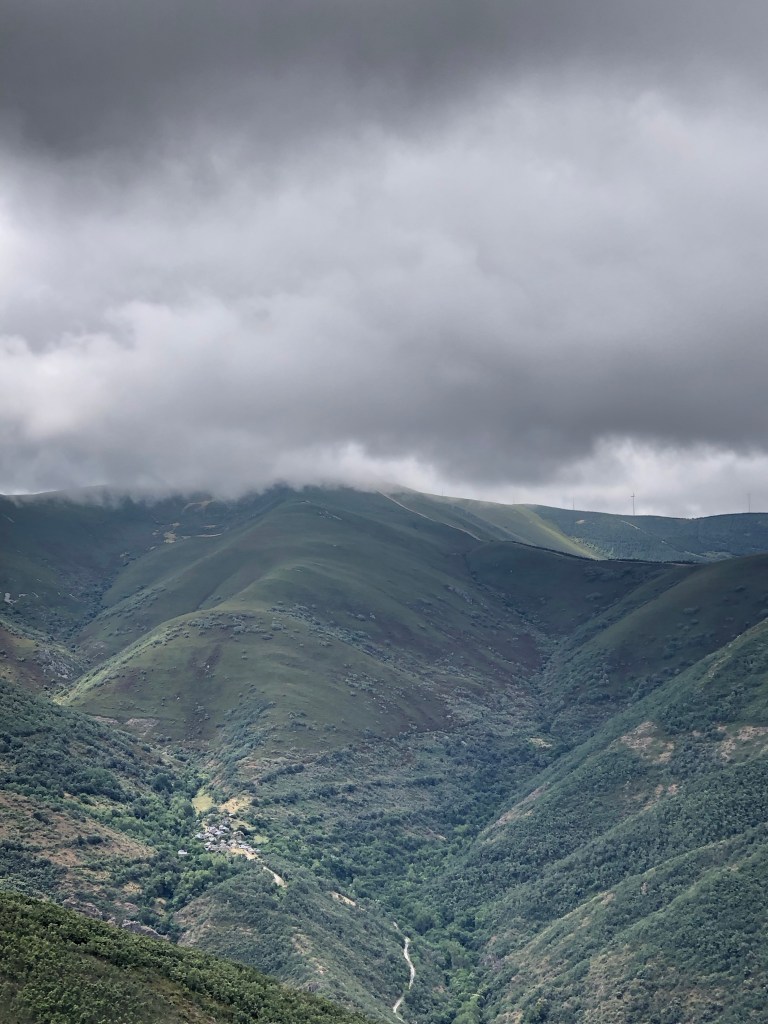
Finally, after what seemed like hours (and probably was), the ground underfoot began to descend and the city of Ponferrada came into view in the valley below. It was still some time before I was back below cloud level, but my feet were grateful for the sight of the finish line.
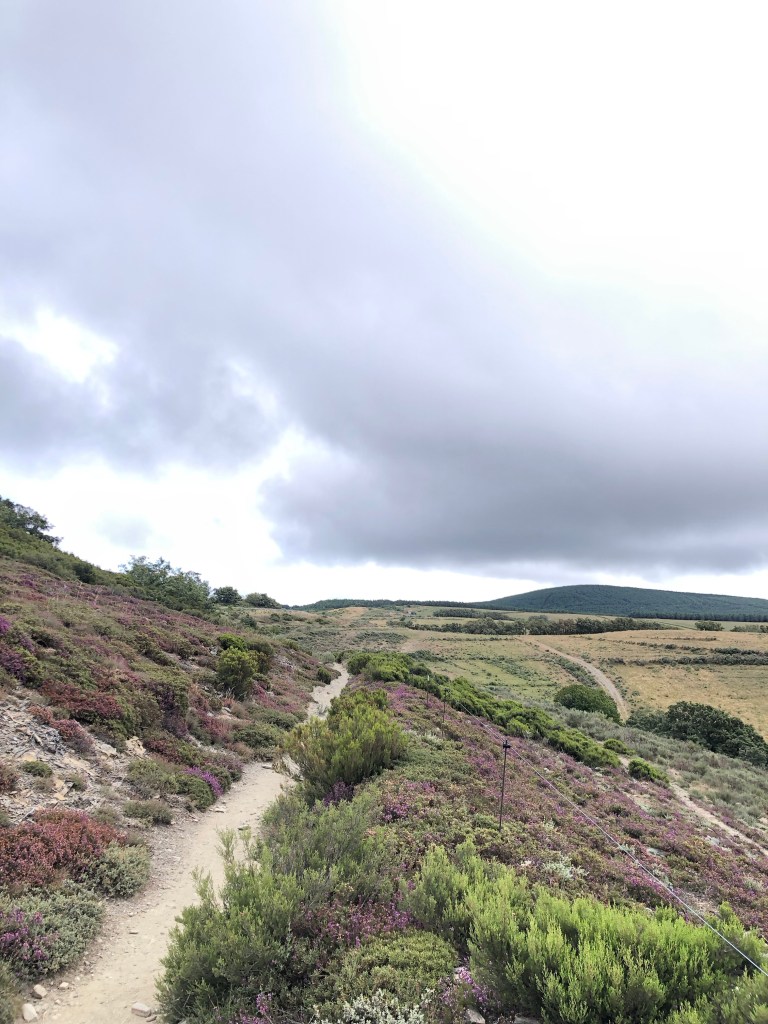
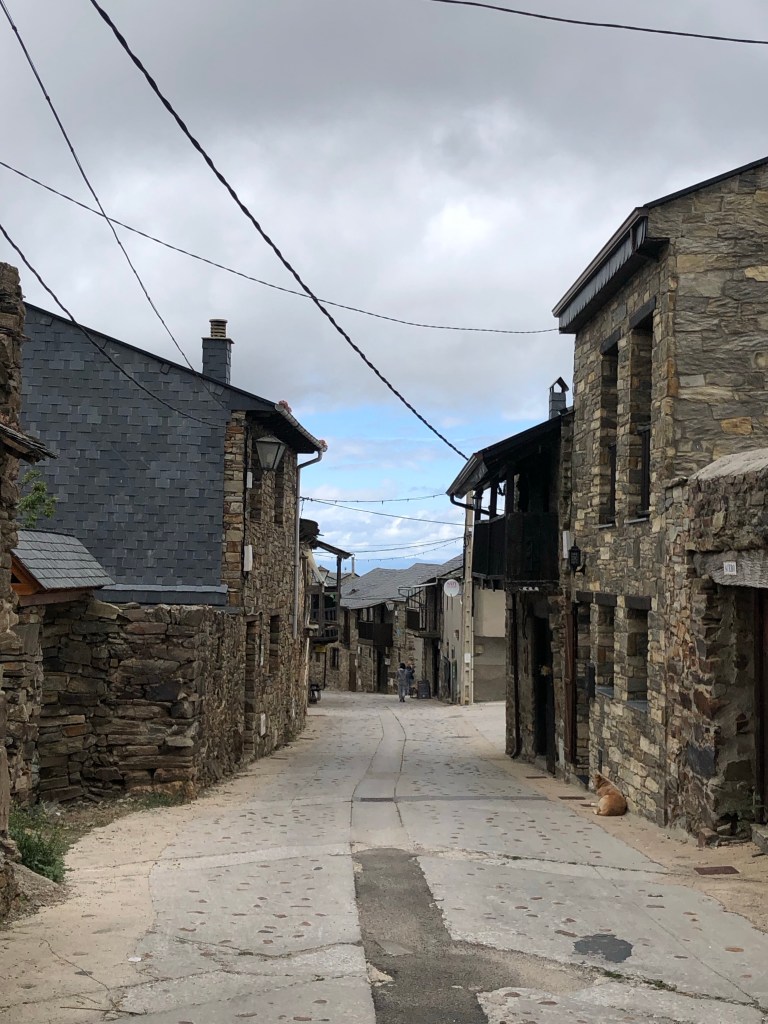
El Acebo is a stunning mountain village, and I’d probably have better memories of the place in future but for a minor disaster after my arrival.
I walked with Louis to the Casa del Peregrino, a new hostel touted as ‘the best albergue on the Camino’ with a shop, bar and swimming pool… Only, upon arrival, it turned out there was an additional charge for the pool, dinner came to the tune of 25€ and needed advance booking, and the whole place looked decidedly out of place – a chic hotel with a dorm option, rather than an albergue. I decided to double back in search of the albergue parroquial instead.
I realised I must have looked a sight in my bright red poncho and rainproofed rucksack, so I put my things down by a ruined barn to remedy the situation. I was a good 200m up the road when I realised I had my raincoat in one hand and my satchel in the other.
But no stick.
I kid you not, I legged it back to the barn where I’d propped it up against a door, but it was gone. I raced back to the other albergue to see if I’d left it there, but it wasn’t there either. I even went charging after the pilgrims I’d passed on the way up in case they’d picked it up, but they only had metal guiri sticks. I swore a lot – and badly at that – and had another look in town, but it was nowhere to be found. In the space of a single minute it had simply disappeared.
Oh, stick my stick! I was always going to have to leave it behind at some point – ideally near Finisterre – but the loss of it still bothered me more than it should have done. I can only hope that whoever took it away – pilgrim or child – finds some better use for it. And I suppose I did at least keep my word and give that owl one last journey, even if it wasn’t as long as I’d have hoped.
The Camino is all about letting go, when you think about it. From leaving the busy world behind and the ritual of placing stones on the cairns you find, to the very real possibility of losing weight along the way, it’s very easy to end the Camino with a great deal less than what you had when you started out. All the emotional baggage you carry out with you somehow finds its way through your fingers and out into the ether as you walk. There’s an ancient magic in that.
I’m not ashamed to admit my primary reason for throwing myself back onto the Camino this summer was to help with the healing process after a recent break-up. I know I made the right decision for both of us, but that doesn’t mean it hurt any the less to go through with it. Losing a partner often feels like losing a part of yourself. The Camino always provides, just as easily as it takes away, and I hoped it would help me to let go of the last of the hurt and find myself again.
Perhaps losing my faithful stick today was a reminder that, when it comes down to it, the only thing you need to be you is you.
What is life but loss upon loss, til life itself be lost? But in death, we may find all that we have lost.
Henry Rider Haggard, Allan’s Wife
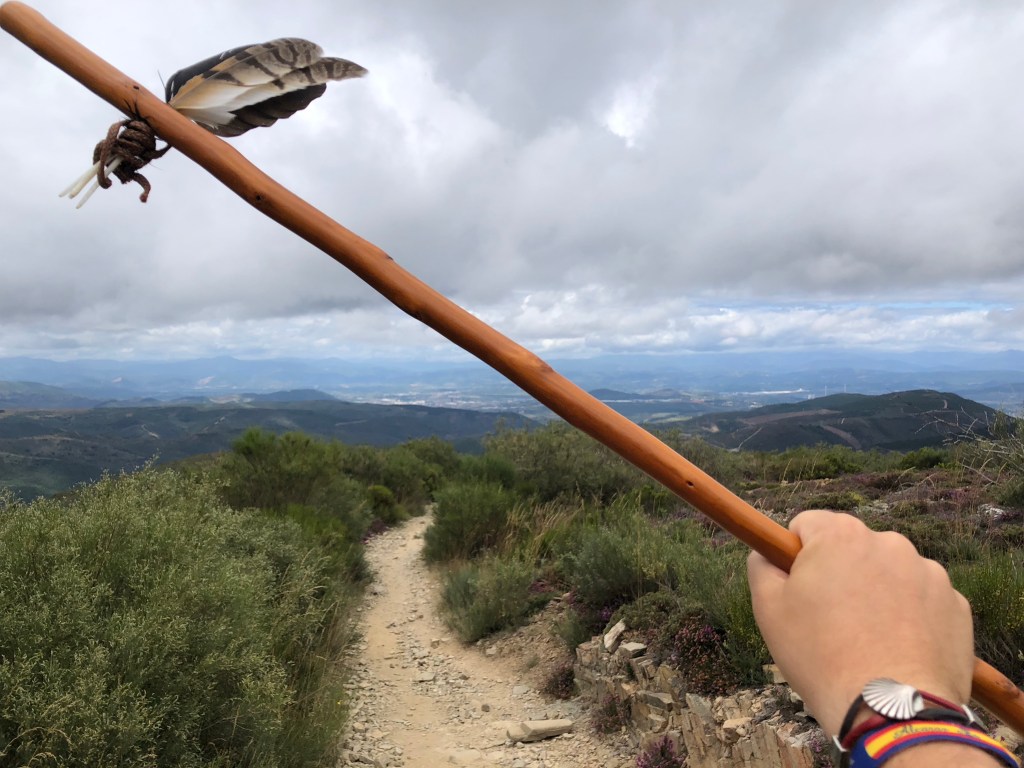
Well, my brief sojourn as a shaman is over, and there’s no use grumbling about it. I’ll take a leaf out of another Haggard book and seek out a new stick for a new journey tomorrow. But for now, I’ll give my feet the rest they deserve. It’s been a hard day’s hike and then some. BB x

 The Book of Barnabas