Rome III: Respighi’s Quest

For my last two days in Italy, I decided to embark on a rather esoteric quest: to see all the pines of Rome featured in the orchestral piece of the same name by Italian composer Ottorino Respighi. If you grew up with Disney’s Fantasia 2000 – like I did – you may remember it as the number with the flying humpback whales. The symphonic poem in question is divided into four movements, and though I didn’t manage to hit the correct time of day for each one, it was an enjoyable musical challenge to round out my time in Italy!

It’s also a fitting challenge since music provided me (and my mum) with our first Italian connection, and I’ve been scraping by out here on a combination of guesswork from Spanish, DuoLingo and twenty years of orchestral jargon…

So, play the music below and read along as the Chicago Symphony Orchestra takes you through the movements!


I. The Pines of the Villa Borghese (I pini di Villa Borghese, allegretto vivace)

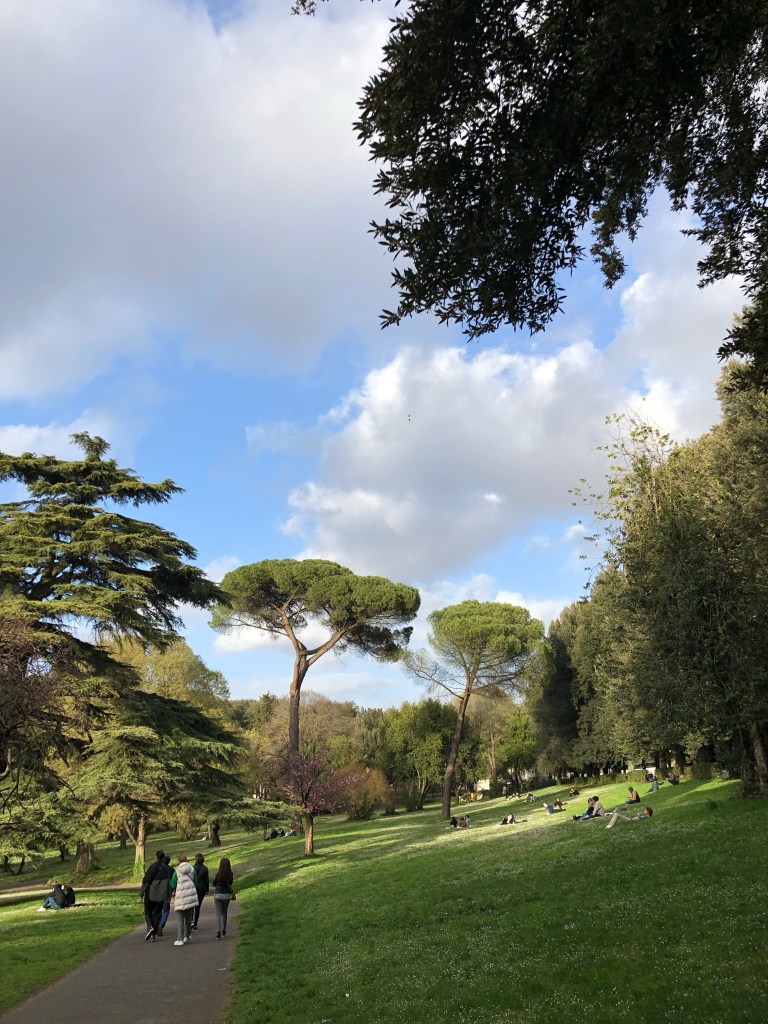
I clocked these pines last night on an evening wander towards the Spanish Steps. Respighi wasn’t wrong to write this movement as the jolliest, most playful of the four: when I was there, the Giardini della Villa Borghese were full of children playing in the evening light. A couple of fairground rides replaced the Roman ring a ring o’roses game in the original, but in all other respects it still fits perfectly. The man knew his source material!

The Borghese gardens also appear to be a favourite spot for Roman romance. As the sun starts to sink behind the trees, the long shadows cast by the stone pines stretch like rivers between the patches of sunlight, where in one corner of the gardens couples clustered like mayflies in the light. A girl in her twenties was picking daisies to fashion into a chain, four Spaniards laughed their heads off as they wheeled up and down the paths on rental bikes, while in the middle of the gardens a priest gave a homily to a small crowd in front of one of the chapels.

If I should find the One someday, I’ll take her for a walk here, too.

II. The Pines near a Catacomb (I pini presso una catacomba, lento)

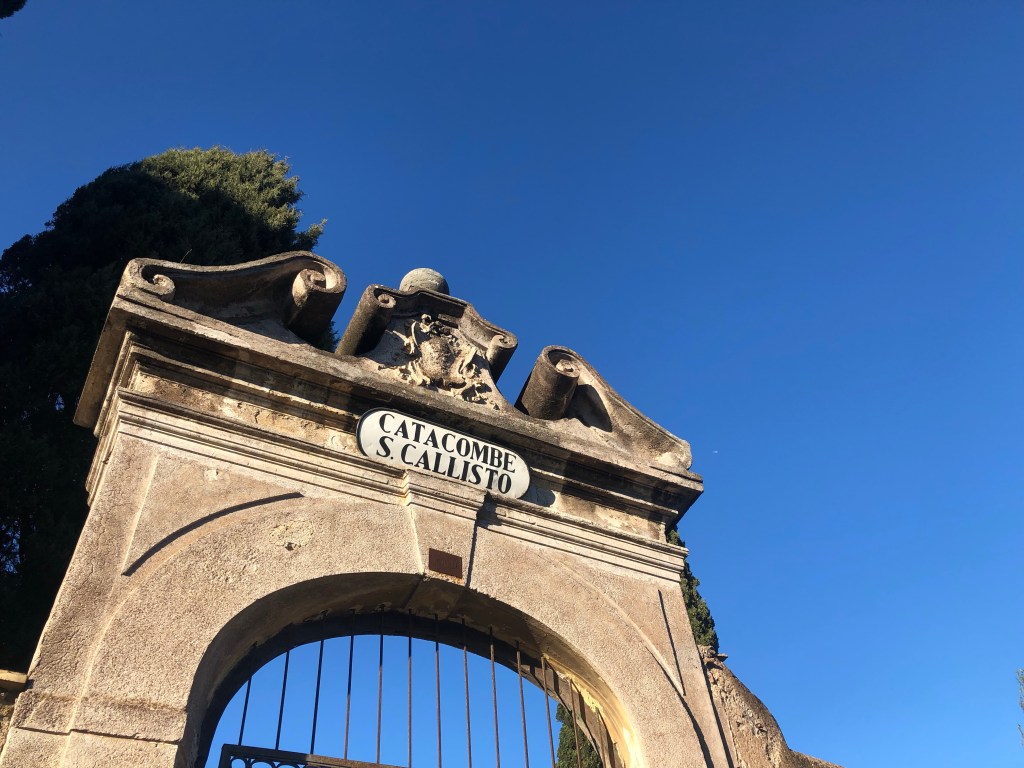
By the time I reached the catacombs, they were all shut up for the week… but that’s what you get for prioritising the Pope over a blog post. Compared to the rest of the Appian Way, the area around the catacombs was quiet and shaded… though that may have more to do with the lateness of the hour by the time I reached them. Here in Rome, as in Spain, cypress trees mark the resting places of the dead, lining the roads to the catacombs. They’ve been symbols of death since ancient times, since they cannot regenerate when cut back, and so they stand as sentinels outside tombs, cemeteries and graveyards all across the Mediterranean. The Romans’ beloved stone pines tower above them, but I think its the sad and stately rows of cypress trees that Respighi is alluding to in this movement.

III. The Pines of the Janiculum (I pini del Gianicolo, lento)

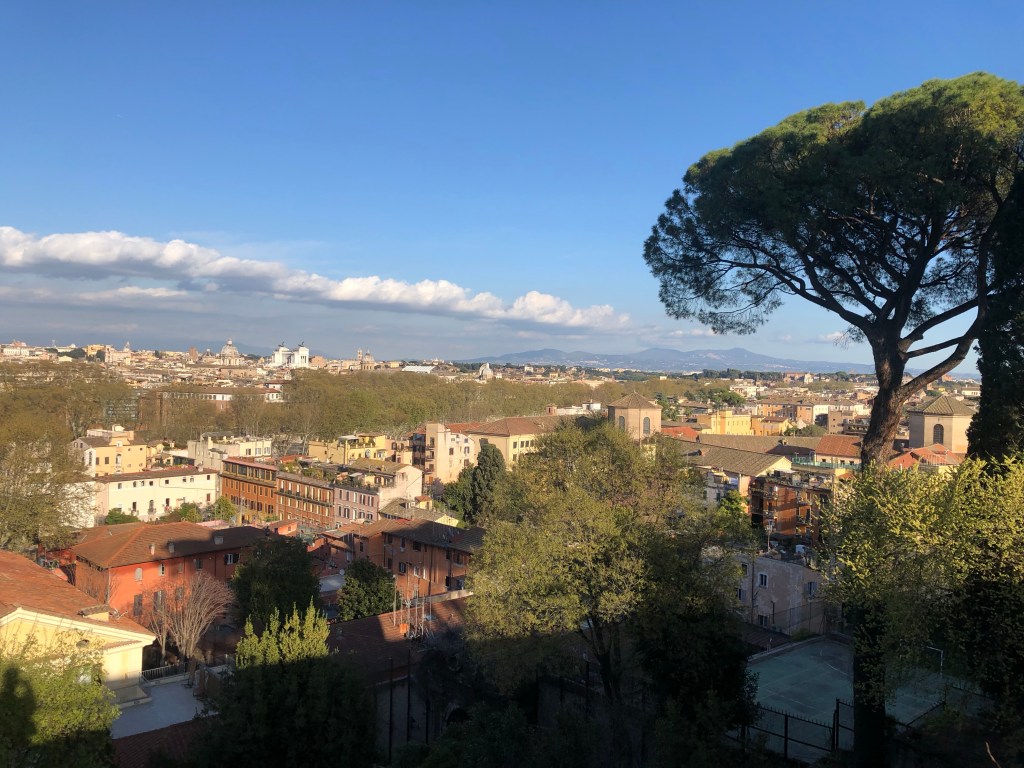
My first night in Rome was spent watching the sun set over the Eternal City. A girl I once put on pedestal told me to make the most of every sunrise and sunset. I left behind both girl and pedestal years ago, but it’s still a rule I live by when I’m on the road. Snacking on a focaccia from the hilltop, I had a sweeping view of the city, from the Vatican to the distant towns of Tivoli and Palestrina. The pines that grow here are the stone pines of Doñana, the trees of my childhood. The Romans had a special love for this tree and planted it wherever they went, especially along roads like the Via Appia.

Down in the dark branches below the viewpoint, some of the city’s monk parakeets screeched this way and that (oddly enough this South American species began to colonise Rome around the same time the Argentinian Pope Francis was elected), but my eyes were drawn to a tiny black-and-white shape moving up the trunk of the tallest stone line overlooking the city: a lesser spotted woodpecker, the first I’ve seen in many years. The rising and falling flute in Respighi’s movement pairs well with all the birds I saw here: the parakeets racing by, the pigeons wheeling over the roofs below, the tiny woodpecker climbing up and up. But I didn’t hear the nightingale that Respighi insisted on featuring at the end of this movement. Perhaps it’s too early in the year – though I suspect it’s more because it’s much too crowded here for such a self-conscious minstrel.

IV. The Pines of the Appian Way (I pini della Via Appia, tempo di marcia)

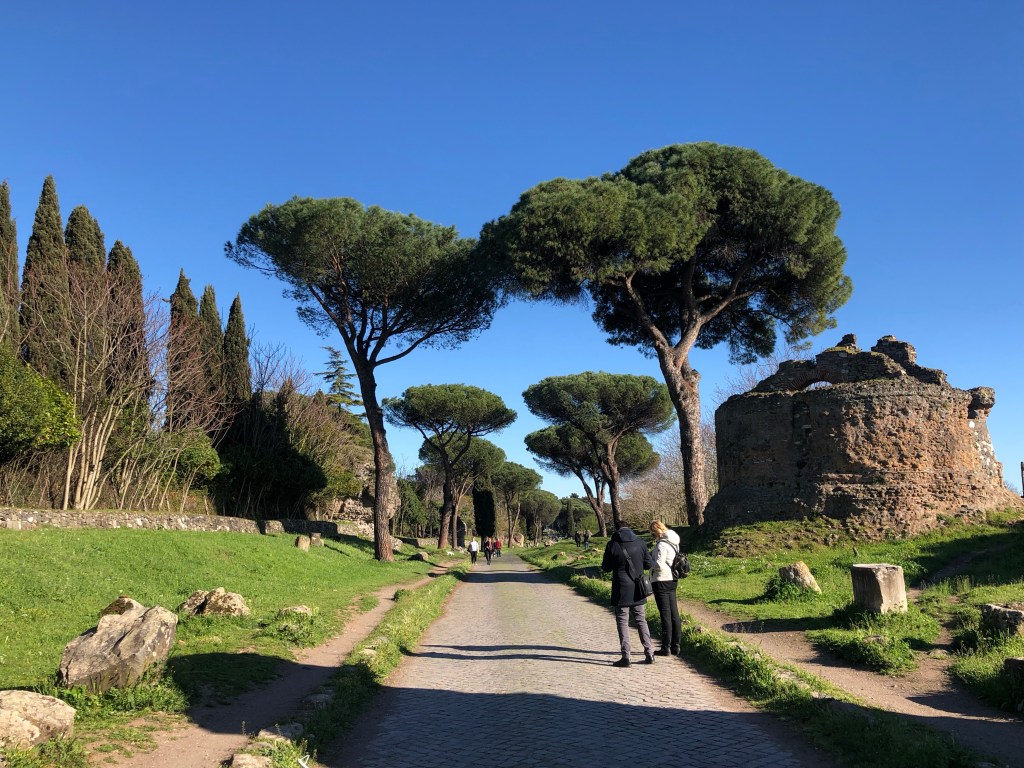
This was always my favourite movement – and what a sight! No visitor to Rome should pass up the chance to take a walk on the Via Appia, especially on a Sunday when the road is closed to traffic and the Romans descend upon the ancient highway in their droves for an afternoon passegiata. Walking the forum is one thing, but this is something else. The Via Appia is probably the oldest road still in use in the western world, and you really do get the feeling you’re walking in the footsteps of the ancient Romans as you walk this road. The things this road has seen…! This is where soldiers marched to the port and on to Egypt, where nobles lived in luxury beyond the confines of the city, and where the great orator Cicero was assassinated. I fell into the Romantic trap of many travelers before me as I passed one old Roman sitting on a marble colonnade, with skin of burnished bronze, black, sunken eyes and an aquiline nose that would have looked supreme on any Caesar; and I wondered whether he was the descendant, through many fathers, of Romans who had lived on this road two thousand years ago.

I also heard a nightingale here – he must have missed his cue in the Third Movement.

If Cannaregio was my favourite spot in Venice, the Via Appia takes the top spot in Rome. It’s breathtakingly beautiful, flanked with ancient Roman treasures along its entire length, and absolutely mustn’t be missed. And Respighi nails it with his final movement: it’s heroic, majestic and the perfect finale to both my long walk and my time in Italy.

I’ll tell you the tale of my incredible Palm Sunday experience as soon as I get my hands on a computer, as my phone photos simply don’t do it justice, but until then, arrivederci Italia! Sei bellisima e tornerò presto! And that’s a promise. BB x
White Hart

This time tomorrow I will be in Venice, hopefully enjoying una cena veneta with a few fellow travelers, but more likely getting some rest from a busy day on the road (and a 4.30am start). So, as is tradition, I went for a walk in the countryside to bid adieu – or even addio – to the England I love, as it will be almost a fortnight before I return to this island.

I originally meant to get a breath of fresh air and nothing more, having spent most of the day inside, packing and preparing. But the darkness between the trees in the dying light of the evening pulled me in, so I decided to take an alternative route home through the forest.

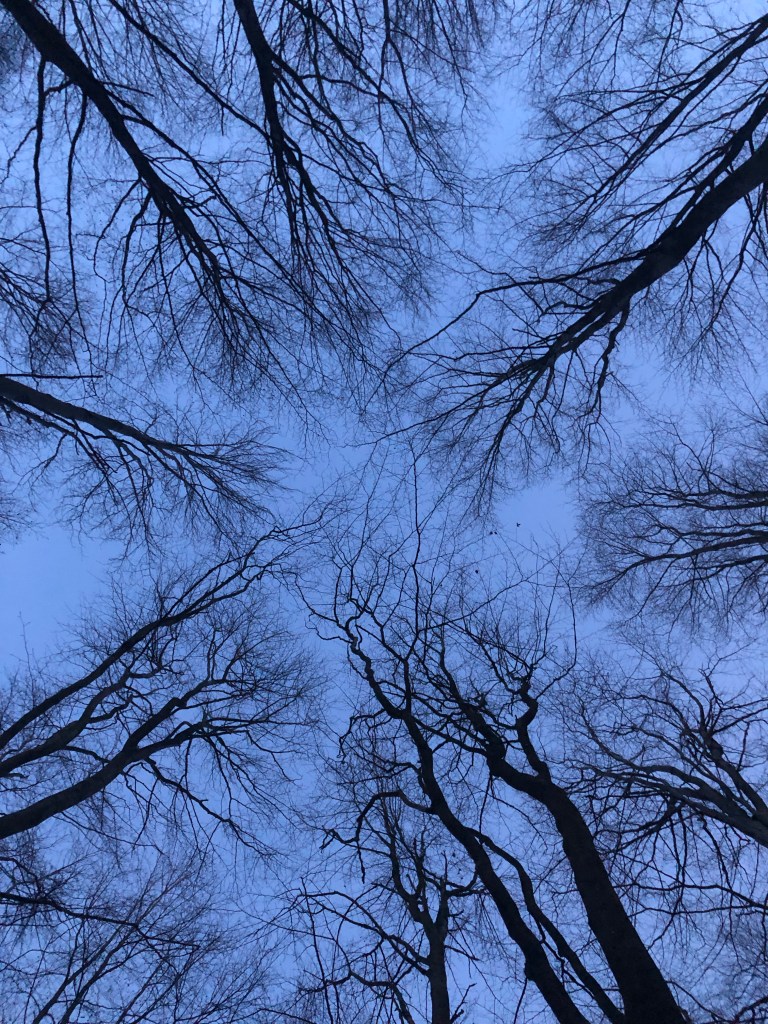
There’s something intensely magical about walking in a forest after sunset. For some reason it’s never given me the shivers – at least, not if we don’t count that frightful wild camping episode I wrote about a couple of months back. With the light failing with every second, your sense of hearing intensifies: the crunching leaves beneath your feet crackle like a bonfire, and the alarm calls of blackbirds echo through the trees like klaxons.

If you stop and stand still for a moment, though, you’ll hear other sounds. The rustle of movement in the undergrowth. The drumroll wingbeat of a cock pheasant after his cry. The distant hoot of an owl. The footsteps of deer, not too far away.

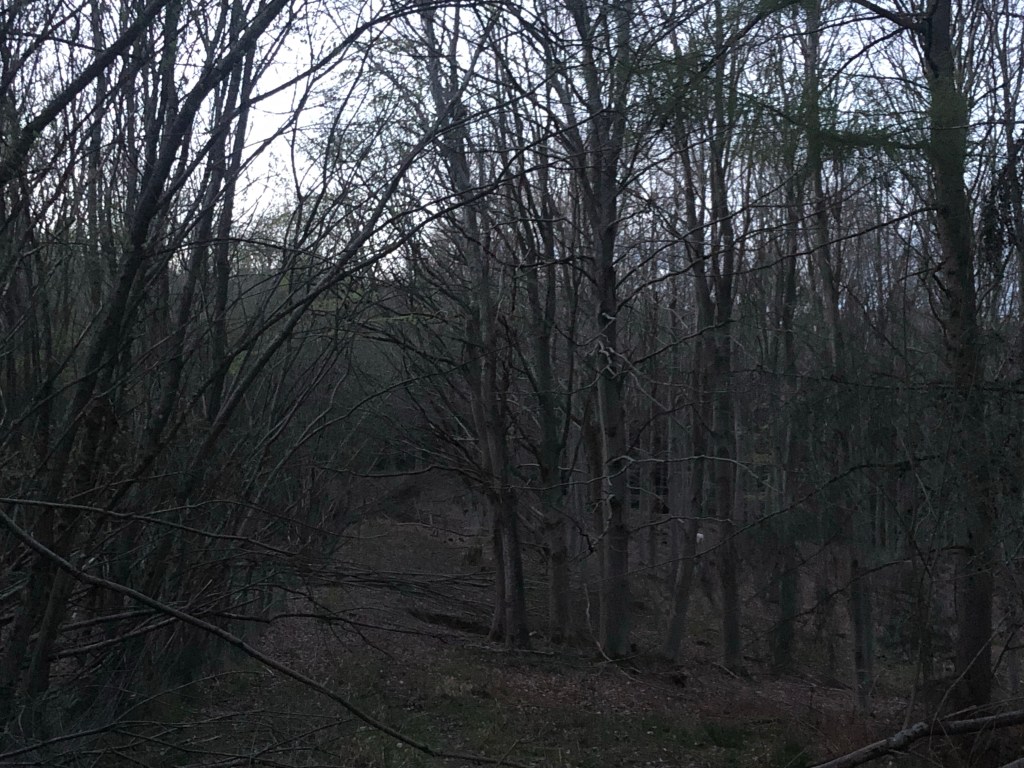
I came across the herd in their usual clearing, where the poplars grow. I call it the cathedral, because of the way the trees soar into the air in four rows, their branches covering the sky like the vaulted arches of Canterbury. It’s also blissfully dark here in summer, when the leaves blot out the sun, and I often find the muntjac here. Tonight, the fallow herd were resting between the pillars – until they heard me coming, that is.

Even with my keen eyesight, the deer did a fantastic job at staying out of sight, though there must have been at least twenty of them, fading seamlessly into the forest floor the moment they stopped moving. Only one remained visible, shining like the morning star: the white hart. Look closely and you’ll see it, even in the shoddy resolution of my phone’s camera.

In British folklore, white stags are quintessential symbols of quests. Lots of children’s books feature white stags that can never be caught. If anything one ought to feel sorry for the beasts, as nature can hardly play a crueller trick than to make a prey animal absolutely incapable of blending in to any environment that isn’t covered in thick snow. All the same, it’s always a sight to see – even if our white heart hasn’t got any antlers to show for it. So I won’t be following in the footsteps of Saint Eustace and seeing Christ between its antlers. Not that I got close enough to see whether it really was Jesus or a chaffinch perched upon its head – the beast had enough good sense to disappear deeper into the forest as I drew near. Saint Eustace must have been a damned good sneak.

As for my quest, my quest is to rediscover the thrill of the open road once again. With my taxi due to arrive in only a few hours’ time, I suppose I’ll know soon enough. BB x

Rewind, Reset, Refocus

Diary Entry: 14th March, 2012. Ten years ago today.

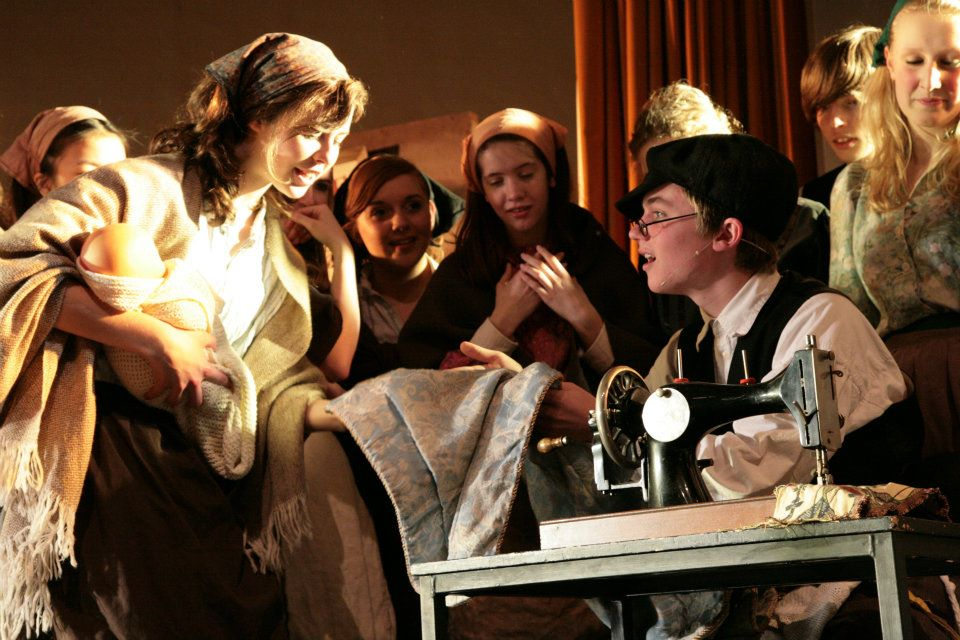
Heavens above, the first night of Fiddler is less than a day away! This year has flown by… Today went by in a similar blur: four frees (essentially), Spanish and English raced past with a quick thrashing of Peter at chess over lunch and a Yearbook planning session. The dress rehearsal was superb – a lot to be ameliorated for the night itself (apparently) but otherwise very good. I must say, personally, I’m impressed with everyone. Our Tevye in particular: he’s come a long way since only just deciding to put his oar in… One of the big five is almost out of the way! The only question is… what next?


When I was seventeen, lists to me were everything. I think it was a long hangover from the teenage bird-watching days: garden lists, patch lists, year lists and lifers. That kind of thing. I wasn’t really the kind of kid who had it all figured out from the beginning, but I did appreciate a tick list to motivate me. I must have the original “bucket list” of fifty miscellaneous tasks I wanted to achieve before the age of fifty stored away on a memory stick, buried deep beneath a hundred other forgotten half-finished jobs, books and games. The irony isn’t lost on me.

I still remember the big five, though. They were the “ultimate goals”, the quests that I had to complete, come Hell or high water. It went something like this:

  1. Play the part of Motel in Fiddler on the Roof
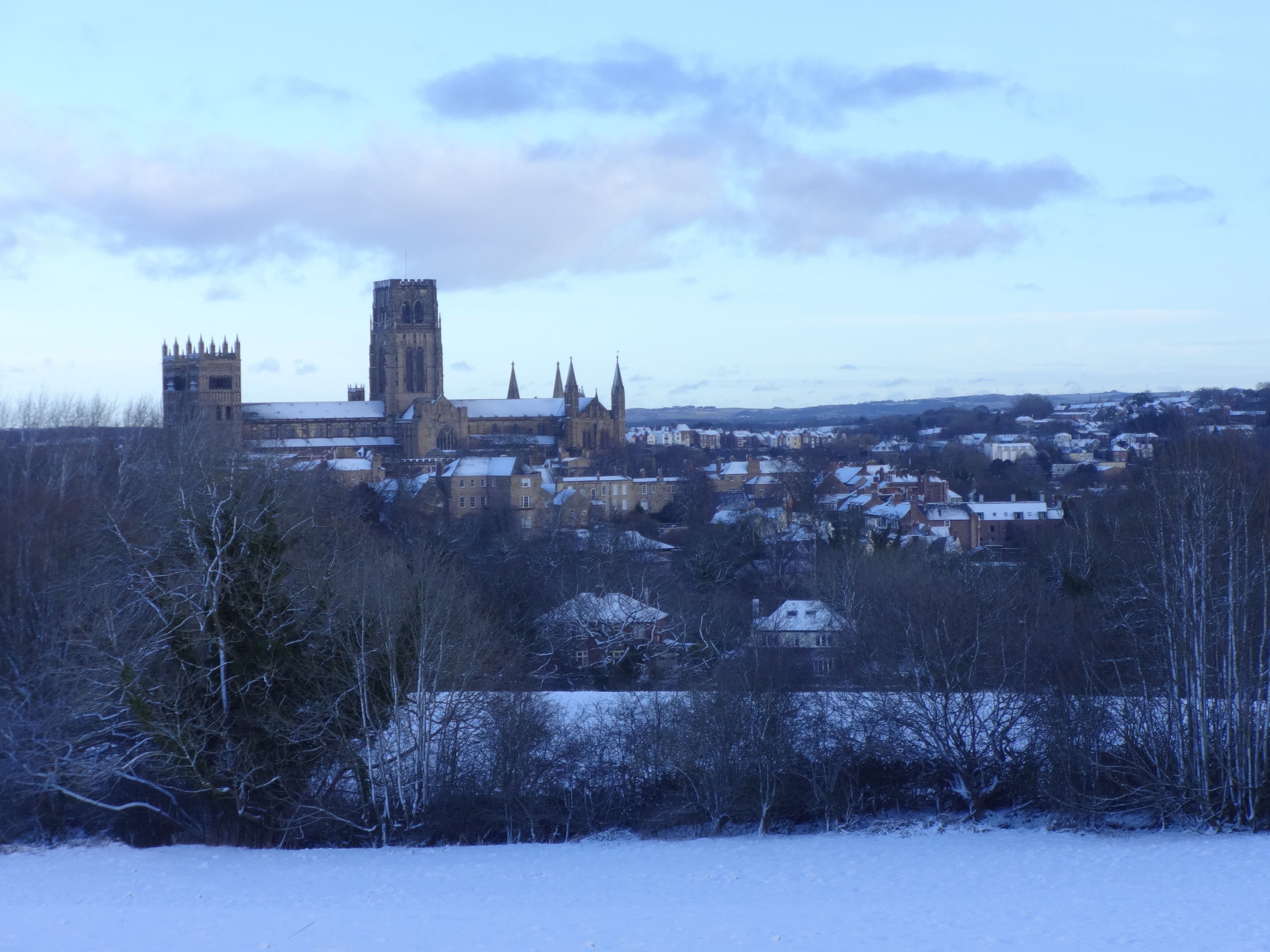
  2. Get a place at Durham University
  3. Travel from Cairo to Cape Town
  4. Get married
  5. Publish the book

You’ll notice that two of them are struck through. Completed. Dicho y hecho. You might well think it more than a little foolish that I managed to get two of my five “great quests” completed within six months of each other, and by the age of eighteen, to boot. You might also question the logic of making the First Quest so very specific, which relied upon a great many external factors, but as the descendant of a lost Jewish family driven into hiding, Fiddler on the Roof holds a very special place in my heart. I was also uncommonly blessed with a musical director for a mother, so I did, I admit, have a significant advantage in achieving one of them early on.

Is there a blessing for a sewing machine?

Durham? Durham wasn’t even up for debate. I simply had to get there. And though I do my very best to advise my own students against such stubborn folly, I was more than prepared to take a gap year and have a second shot when I didn’t get a place at the university of my dreams the first time around. Call it madness, but I wasn’t prepared to accept anywhere else. It was a gamble I ended up making good on, shored up by a much more favourable set of A Level grades. A combination of luck, hard work and stubborn pride secured me the Second Quest.

Of the remaining three, one was swapped out a few years back for a new quest:

3. Find the family

As I got older and my desire for reckless travel steadily fell away – the pressures of holding down a job and being in a relationship will do that to you, I guess – the idea of making the great overland trek from Cairo to Cape Town by any means at hand drifted further and further into the nether realms of lost dreams. Living in Uganda very much whetted my appetite for all things African, but in the years since I’ve been made to question that interest so often, through the lens of anti-colonialism, BLM and the downfall of my Gospel Choir. Eventually, the risks outweighed the allure. I buried that dream a long time ago, and replaced it with a much more personal Third Quest: finding the lost family I had never met.

I found them. That was five years ago – you can read the story here, if you missed it. Of all my quests, the search for my family has been the most precious, and I live in its afterglow twice a week every week as I guide my youngest cousin towards his English B1 exam.

That leaves only two of the original five: arguably, the two chambers of my heart. The book, and the one. I’m not afraid to admit that my single greatest ambition since childhood has been one and the same, and combines those two into one; and that is to read my own stories to my own children one day. It’s an image I’ve had in my head for almost twenty years: sitting on the edge of the bed, my life’s work in my hands, putting on all these silly voices and painting the world I’ve spent decades creating for my children. Leading them there, chapter by chapter. Watching them grow up with my heroes, until they find stories of their own and take up the mantle my great-grandparents passed on to me.

Of course, there’s a small but fundamental stepping stone that must be crossed first: the Fourth Quest.

Getting married and publishing the book. The two quests go hand in hand. That, perhaps, is why coming out of a long-term relationship has been a bit more jarring than I thought it would be. The derailing of two quests at once. A future rerouted, rewritten, a page of thoughts and ideas and names scrubbed blank. It’s not disheartening – nothing can be when the birds are singing and the year is on the turn – but it does leave you knocked out of orbit.


Ten years ago tonight, I was psyching myself up for the first night of Fiddler on the Roof. Tonight, Russian forces continue to cut a burning path through Ukraine. Kiev shelled. Mariupol in flames. Hospitals in ruins. As Motel, I took my young family and fled west into Europe. The radio today was talking about how the British government is offering a tax-free allowance of £350 per month to those willing to put up Ukraine’s refugees. According to the Beeb, some 43,000 have already signed up to help, only five hours in.

The events described in Fiddler took place in 1905. More than a hundred years later, the parallels seem alarming. They put one’s troubles in context. Personal quests and family pride must be denied and set aside and mortified and all that. Perhaps it’s high time I set myself a new quest. In the meantime, there is work, and work is good for the soul, even if marking GCSE translations is a far cry from any soul food I’ve ever eaten. BB x

Tevye: Work hard, Motel. Come to us soon.

Motel: I will, Reb Tevye. I’ll work hard.

Fiddler on the Roof, Act II, Scene 8

Letters from my Grandfather

I never knew my grandfather. Neither did my mother. In the twenty-two years I have lived on this earth, my family has never numbered more or less than four: my mother, my father, my brother and I. No uncles, no grandparents, no second-cousins… Four. No more. It certainly made for an easy job learning languages – especially Arabic – but now that I’m older, and especially at this time of year, I find myself wondering just how much I have lost in that absence; an absence I share with my mother.

On account of a bad cold and a very real fear of spending another New Years Eve stranded in a strange place, I shied away from the celebrations last night and spent the following morning in church, questioning my elusive faith as usual. Do I feel like I missed out on a good time? Perhaps. Perhaps not. I try not to think that way these days. Sometimes, however, these things are meant to be. I believe that. I always have. The choices we make lead us in the right direction, wherever that may be.

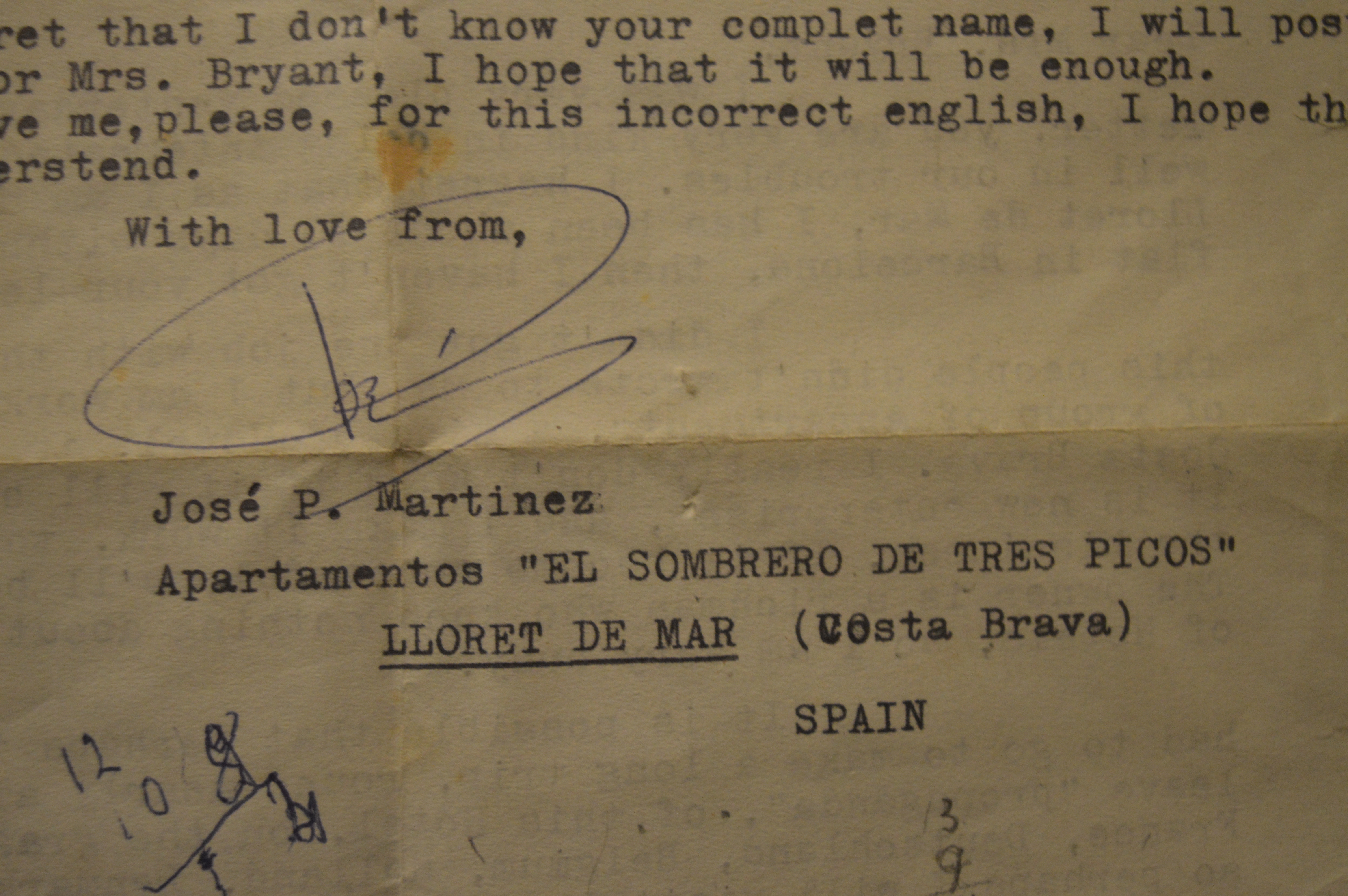
It just so happens that my choice led me to stumbling upon something I’d never seen before: a collection of letters from my grandfather.

dsc_0167

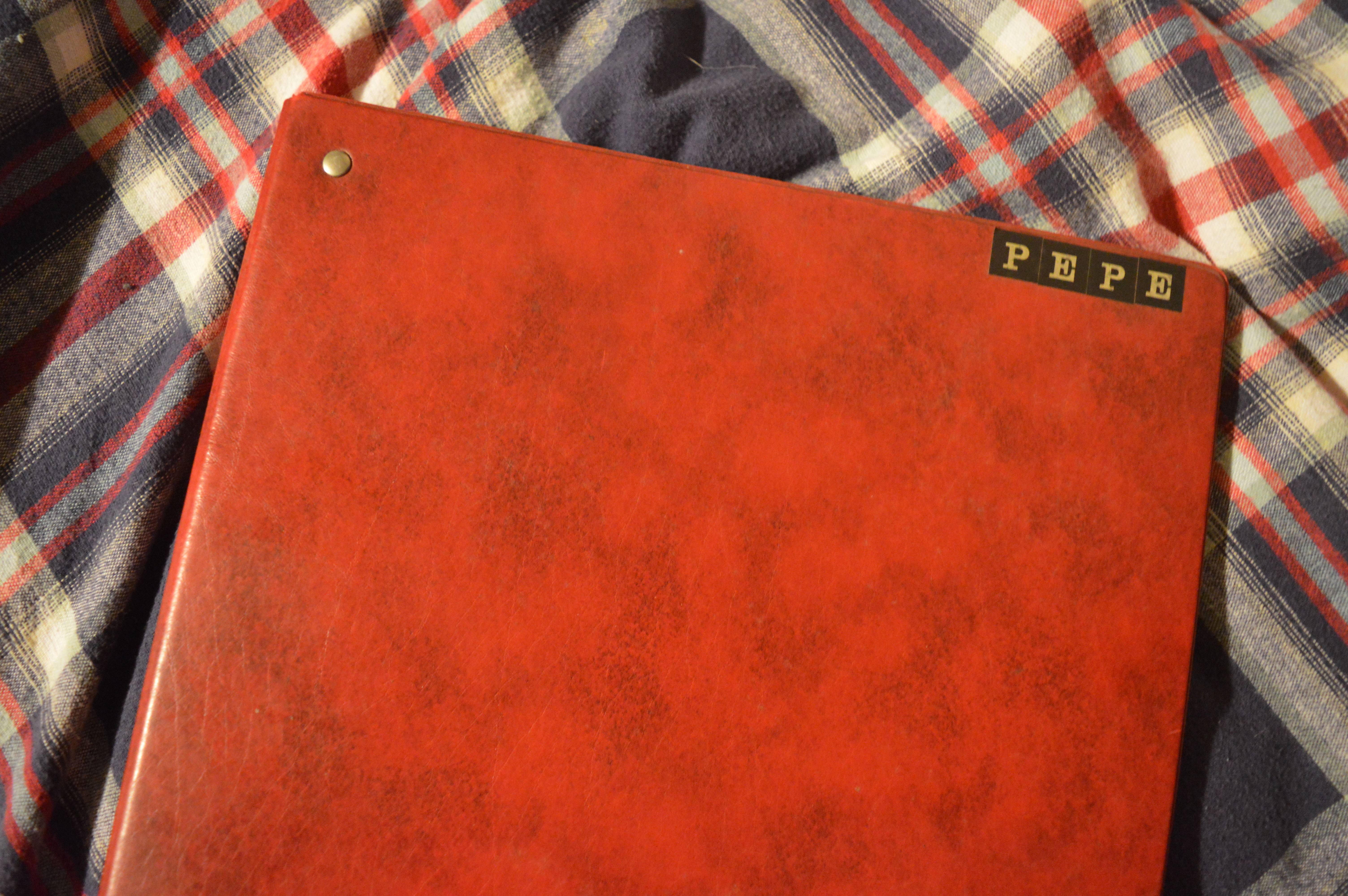
My grandmother’s journal of memories

I don’t need to explain my love for Spain here. I’ve done it before and I expect you don’t want to hear me say it again, nor do I need to tell you if it’s news to you. I used to get sick of people taking the mick out of me for it, as if they hadn’t got it in them to love the places they’d been on their years abroad. I apologise for such childishness on my part. Of course, it’s foolishness to have even reacted in the first place. Because Spain is more than just an obsession. It’s my grandfather’s country. It’s where a part of me is from. It’s a deeply personal adventure, and these things always hurt.

dsc_0169

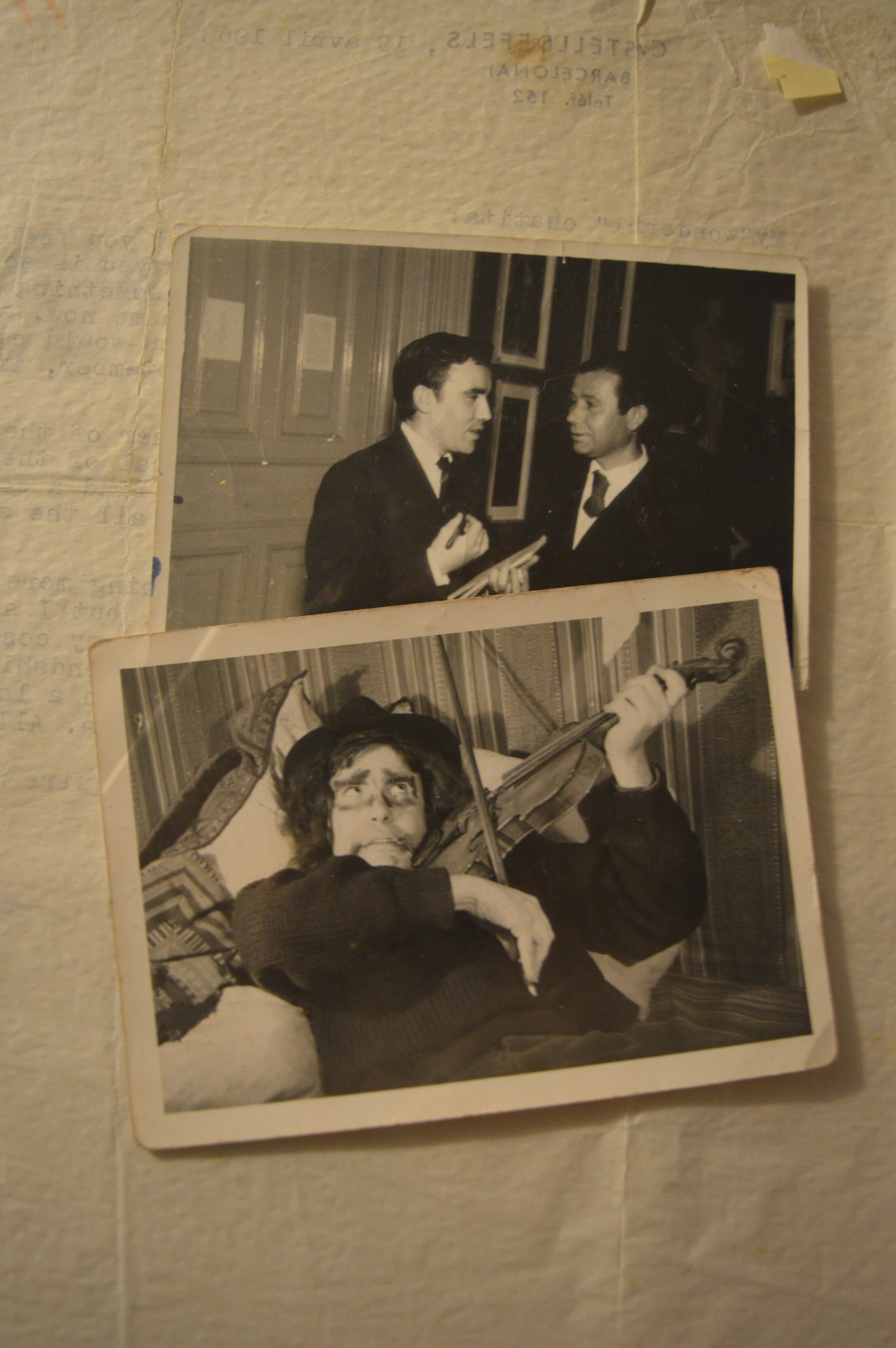
It looks like he could dress up and dress down…

Who were you, abuelo? What did you sound like when you laughed? Did you laugh often? There is sadness in your letters, impatience and frustration, but so much hope. Did you play the violin well, or did you tire of it like me? How can I know, when your mother burned it when you went away? You were a linguist, like me, but you weren’t afraid to chase your dreams. There is so much resolve in your writing, so much conviction. There was a living to be made on the Costa Brava, even if your parents didn’t see it that way. Those dreams of yours, those plans to take my grandmother out to dinner on a boat on the Seine… Spain was about to open up to the world. Did you know, I wonder? How old were you when that car struck you down on that black day in June 1964? I don’t even know that much. All I know for sure is your name, your letters, and your typewriter. I wish I knew you better. I wish I knew you at all.

hotelcatite

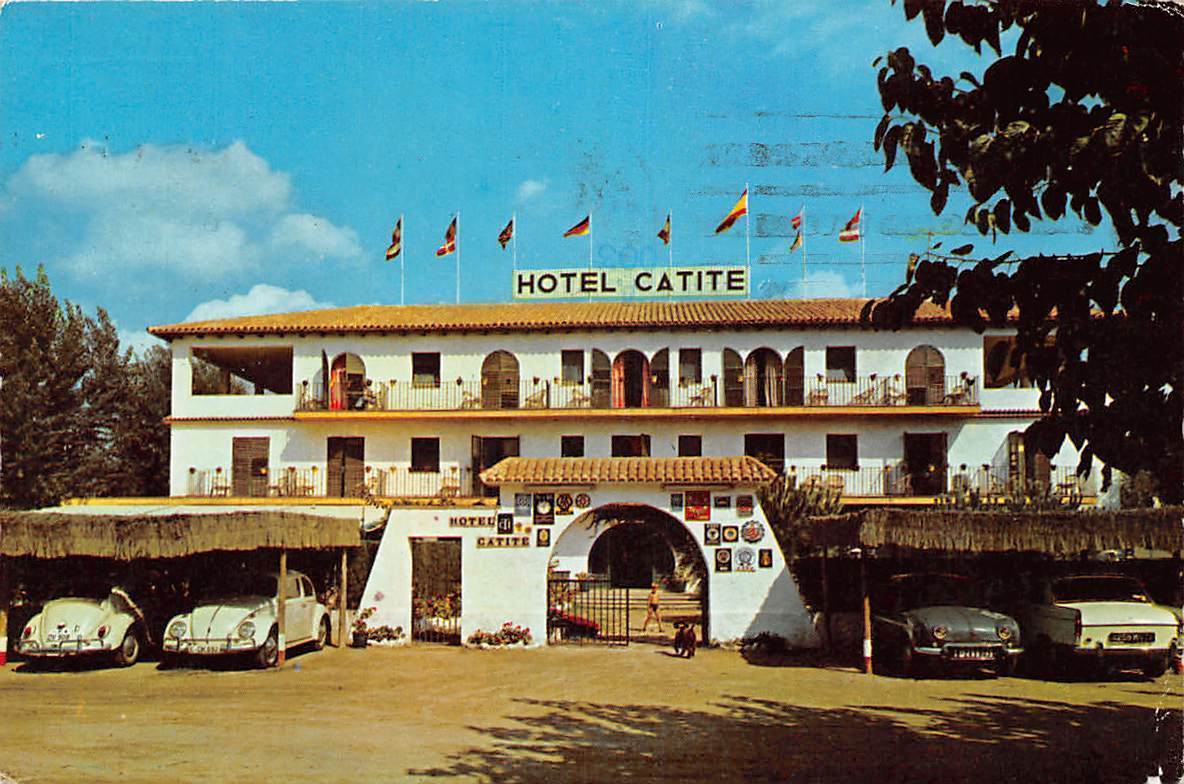
Hotel Catite, Castelldefels, where my grandfather worked as the hotel’s first receptionist

How different life might have been had we met, abuelo. It is impossible to imagine. I see you in my mother and, perhaps, in myself. But you had a family, somewhere out there, and now it’s up to me to find them. Last year I went chasing a dream, but when I found what I was looking for it turned out to be a dream and nothing more and it slipped away through my hands like dust. This is something more. I can feel it.

dsc_0173

Who cares about a language barrier when you’re in love?

2016 has come and gone. It was an odd year. Many things that happened that confused me, and some things conspired to bring me down, and many more lifted me high. It was, for me at least, one of the best of years. The new year is yawning ahead and I have my quest. The road will be long and not wanting in fears old and new, but it leads on and I must follow it now, for my own sake, and for my grandfather José who set this whole affair in motion many years ago. BB x

Searching for God

I’m not a Christian. At least, not in the truest sense of the word. Insofar as my upbringing is concerned, I guess I don’t fall under any category other than Church of England, but when the occasional questionnaire gets handed my way, I tick the box marked ‘agnostic’ without a second’s thought. Only if that’s not an option, and it usually is, Christianity gets my vote over the ‘no religion’ box. Why does this matter? Because today I found myself, once again, in a position where it made more sense to come down on one side of the fence. ‘Christian’ simply makes a lot more sense than ‘no religion’. Strong words for a not-so strong belief, don’t you think?

Let me explain (you’d better get comfortable). I was baptised as a Christian. Church of England. Standard fare. I had a fairly regular English upbringing. I attended a Church of England primary school. I went to church every Christmas and Easter, like almost everyone else. The only minor difference was that my parents both had various musical roles in their respective churches, which meant that I probably spent more time in church than most kids my age. It just so happened that one of them was Canterbury Cathedral, where my dad was a lay-clerk. I guess you get a little blasé about that kind of thing when evensong is a biweekly venture. Not to mention all the school carol services held there. It certainly made the local church back home seem a little small by comparison, though I have warmer memories of that. When I was little I went to church every other Sunday, or at least when Mum played the organ. The memories get a little fuzzy sometimes; this is reaching quite a way back into my childhood. I remember only that I used to sit behind the choir near the organ pipes, and you could hear the organ humming long after everyone had filed out of church and Mum took her hands off the keys. Between that and the old gas heater glowing a dim red in the corner, I have this musty image of your run-of-the-mill Church of England parish tucked away in my head. That’s my strongest memory of the early days, at least. Nothing particularly special. I wasn’t even old enough to sit in the choir then, but I knew most of the hymns well enough, especially the ones they used to roll out on the projector at school. Morning has Broken, for one.

Fast-forward on a few years and it gets a little more interesting. Moving back to England from a year abroad in Spain finds me singing in the church choir in my new home town. It’s nothing more than something to do, I suppose, as I have little else to do at the weekends but go birdwatching down at Stodmarsh or Sandwich Bay – I’m still too young to be thinking about girls or going out – but it pays my first wages, and it feels ‘sort of right’. Right enough to take that next C of E step and decide to get ‘confirmed’. It’s not as big a deal as it is over in Spain, with the sailor suits and all the bells and whistles that go with it, but like I said, it seemed like ‘the right thing to do’. And the other kids in the choir were a lovely bunch, too.

Then along comes my early teenage years, a girlfriend and the beginning of a new approach: evangelicalism. She got me into it, I suppose, but it was something I took to with relish. Prayer and worship, spiritual healing, speaking in tongues… It was a brand new world and I loved every second of it. Ever heard of Soul Survivor? That kind of thing. It was a far cry from ‘open your hymn-books to Hymn no. 348‘ or what-have-you, at the very least. I might even go so far as to say that, for a little while, I even believed it. But it was the people that really made it for me, not the spiritual side of it. Just like playing the violin, the practising of which I had come to loathe, it was more the sense of community that went with it that I craved: the orchestra over the recital, and the worship group over the prayers. I guess you could say I built my house on the sand. Little wonder, then, that it all came crashing down with the end of that relationship. Coincidentally, it was raining that night, too.

I wandered for a while. I asked a lot of questions. I even stopped saying prayers at night, realising that most of them had been selfish anyway – especially the later ones. If not selfish, then love-blind at the very least. Eventually I returned, somewhat shame-faced, to my local church youth group, whom I’d abandoned for almost a year and a half. That was where I met Seth and Jenny Cooper, the Walmer Parish, and Katherine, that everlasting beacon, who showed me that there was more to life than a constant search for answers. For a little while longer, I continued to carry the flag, stronger than before. I was happy. But it was not to last. A series of unfortunate events came as the second hammer blow to my faith. I started to read about the Empire, and all the horrors that had been wrought in the name of God. My brother was assaulted on the way home from school. And Katherine, ever the kindling flame, went out of my life. A few weeks later, I gave up altogether.

As a true Christian, that was my final chapter. I had another fling with the Church in Uganda – ain’t no party like an African Baptist Prayer and Worship Party – but that was little more than a dalliance. Back in England, on the gap year that seemed like it would never end, faith eluded me. Mum, on the other hand, found her way to the Catholic Church and embarked upon what she has described as the ‘road her whole life had been leading towards’. I coveted that, I suppose. It wasn’t her new-found happiness of hers that I wanted, but that contented state of mind. Structured. Ordered. At peace. At one. Something that I’ve struggled with in all the hypocrisies of my life for the last seven years. Her faith gave her life a new meaning. I’d been looking for that meaning for a while with no such luck. People say that ‘finding yourself’ is the first step on the road to that level of understanding. If I could have ‘found myself in Africa’ as so many jokingly think I did, I’d probably have more of an idea as to where exactly I am right now. Unfortunately – or perhaps fortunately, as God knows how lost I’d have been – I didn’t, and the search continues. Right up until last night, when I found myself sitting in an Iraqi church, listening to a Californian preacher explaining the meaning of John 3:16 whilst a translator conveyed it to the congregation in Arabic. Talk about a new way of looking at things!

Now we come to the heart of the matter. I’m not a Christian, like I said at the start. I might have been once, but for a token gesture or two of late, I’m not labelling material at the moment. I can go through the motions like a mynah bird, of course, but that’s got more to do with habit and observation than anything else. That, and a burning desire to believe, whenever that day comes. Until it does, everything seems false. To pray to a God you don’t believe in with all of your heart, with all of your soul – does that not seem a bit ingenuous? That’s not to say I’m not religious, though. Given the choice I’d rather be spiritual than to disbelieve entirely. I’ll put it this way: there’s a hole in my heart that’s waiting for faith. I just haven’t found it yet.

I’ve had this discussion/argument with Andrew recently. I put it to him that I’d be happier not knowing all the answers; that sometimes it’s better to stop asking questions and to have a little faith in what you can’t see; that some things, like as not, are necessarily beyond our understanding. It goes against a great deal of my character, and I think he took umbrage at that, but it’s a principle I try to stick to, and as far as I’m concerned it’s connected to the most fundamental principle of all: hope. I swear by it. There is no greater sin in my book than despair. I might not have the staying power that others prize – indeed, if something is beyond my capability (or, more often, interest) I’m more likely than not to throw up my arms and walk away – but I never truly give up on the inside. And as long as that’s the case, I’d like to believe I still have a chance.

Faith lies somewhere along the road, of that much I’m sure. Wherever it may be is, for the time being, beyond my understanding. And that’s not a bad thing. I tried to find it out here, but for all the strength of the community and the goodwill of the people, it continues to elude me. Maybe I’m being picky. Maybe I’m looking too hard. I don’t know. I’ve just got to keep trying.

I leave you (and this gargantuan post, which is approaching essay length as the clock strikes twenty minutes to midnight) with the only Bible verse I’ve consigned to heart, as it speaks to me on much the same level as it ever did five years ago, when first I found it:

The light shines in the darkness, and the darkness has not overcome it.
John 1:5

I wonder whatever happened to Katherine? I hope her light is still shining brightly for the rest of the world, wherever she is. BB x