Smoke Signals

Aeropuerto De Santiago – Rosalía De Castro. 14.40.

I’m back at Santiago’s very small, very civilised airport. It’s another five hours until my flight, but Galician weather is highly unpredictable and I didn’t fancy making the three-hour hike to the airport under a belt of rain clouds, so I forked out a euro and caught the bus instead. On the plus side, it gives me plenty of time to read and rest – tomorrow will involve no small amount of walking, so it’s best I don’t wear out my feet just yet.

There’s a WHSmith in the departures lounge. I wonder how much longer that outpost is for this world, and others scattered in airports across the world, now that the dependable newsagents is going under, just like Woolworths before it.


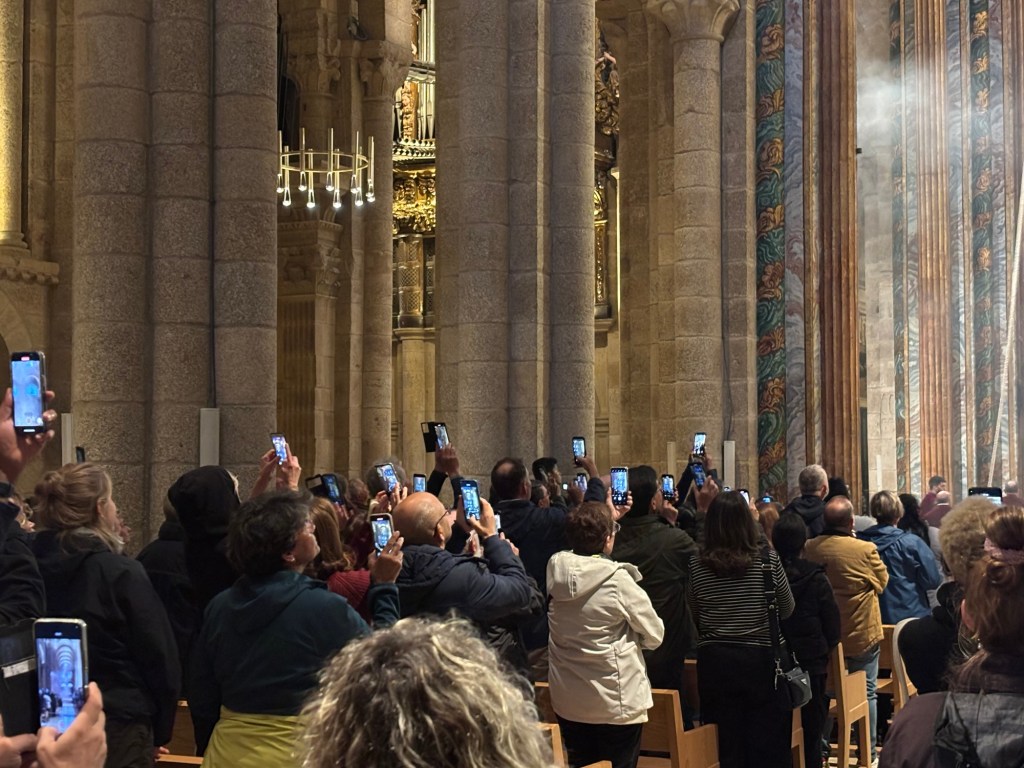
I only just made it to the 19.30 pilgrim Mass in the cathedral of Santiago last night – it took me a little longer than I anticipated to track down the books I was looking for. There was a queue outside the door, and when I was a few metres from the great doors, an attendant in a high-vis orange jacket announced that visits were now over for the day – unless, of course, we were queuing for the Mass. That thinned some of the line, but even so, it was standing room only this time… not the front row seats I enjoyed at the end of the Camino in 2023.

The reason for the crush became apparent in the last few minutes of the Mass, when a group of eight priests in burgundy cassocks approached the enormous knotted rope securing the botafumeiro, Santiago’s famously huge incense burner and, with one collective tug, began to hoist the thing into the air.


Weighing in at 80kg and measuring an impressive 1.93m in height, the botafumeiro of Santiago is one of the largest in the world, outsized only by the Christendom College censer in Virginia (because of course the Americans, not satisfied with an imitation, had to have a bigger one). Unlike its American cousin, however, the botafumeiro is more than just a showpiece. The reason for its size was to purify the air within the cathedral and thus cover up the smell of the pilgrims, who must have stunk to high heaven in the centuries before Jacotrans, Booking.com and Compede blister plasters.

The botafumeiro you see today has been in use since 1851. The original, a 15th century thurible of solid silver, was stolen by French troops in the Spanish War of Independence and supposedly melted down for coinage. This and other acts of vandalism marked the French occupation, which saw many monasteries and Roman bridges destroyed in the name of military strategy. A local legend holds that the Alhambra was nearly blown to pieces on Napoleon’s orders as the French lost their grip on Spain, spared only by the efforts of a single French soldier who had a change of heart and stayed behind to defuse the charges, saving the last remaining medieval Islamic palace in the world from being lost forever.
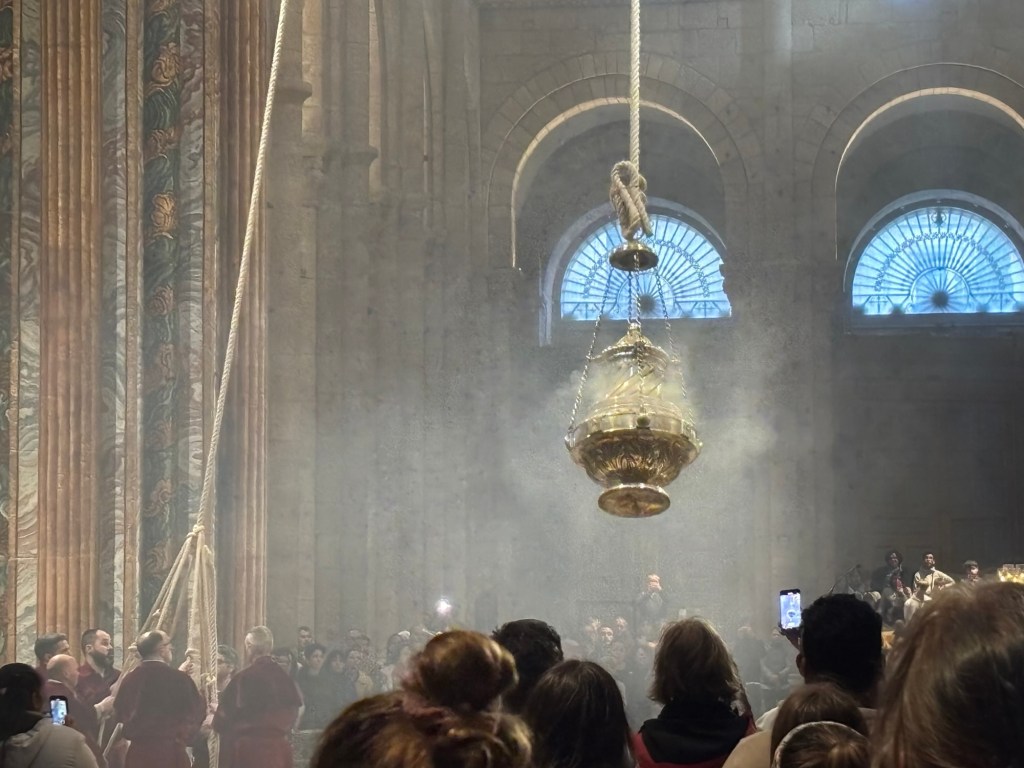

The botafumeiro swings alarmingly low over the heads of the faithful, reaching a top speed of 68km per hour, though never low enough to catch the heads of even the tallest German pilgrims. It’s quite a special sight, because its presence isn’t guaranteed: it’s usually only brought out on holy days, such as Easter Sunday or the Feast of Santiago on the 25th July. I missed it last time as I set out for the coast on the 25th, hoping to beat the crowds that would follow.

There is a small chance, however, that your visit may coincide with the whim of this or that religious order (or wealthy pilgrim), who can pay a certain amount of money to have the censer brought out especially for their arrival. This time I got lucky: a confraternity had traveled all the way from Goa to celebrate Mass in Santiago, so the botafumeiro was brought out. Lucky me!

After three visits to the cathedral without paying my respects to the true purpose of the Camino, I decided to make one last trip to see the tomb of Santiago himself. The first of Christ’s apostles to be martyred for his faith, Santiago el Mayor (or Saint James the Greater, if you prefer) was beheaded on the orders of Herod Agrippa. His head was buried near the spot where he was killed (now beneath the Armenian Cathedral of Saint James in Jerusalem) but his body is believed to have been transported to the Galician coast, where his remains were discovered – as they so often are – by a hermit in the woods, who saw a great light shining upon a forgotten Roman tomb.

The veracity of the legend is irrelevant: word got around and soon the final resting place of Santiago had become the most important pilgrimage site in all of Christendom. That it just so happened to coincide with a time when the Christian kingdoms in the north were desperately seeking a rallying flag to counter the Muslim forces who had taken the Iberian peninsula by storm (and the angels believe to aid them in battle) is curious, to say the least.

Santiago’s tomb is a small silver coffin, located in a crypt beneath the central altar. The eighty-strong Portuguese school trip group that I had fallen behind weren’t all that interested in the bones of Jesus’ most faithful apostle, busying themselves repeating lines from Portuguese trap songs and stealing kisses from their girlfriends in the shadows, so I had plenty of time to stop and admire the coffin undisturbed.
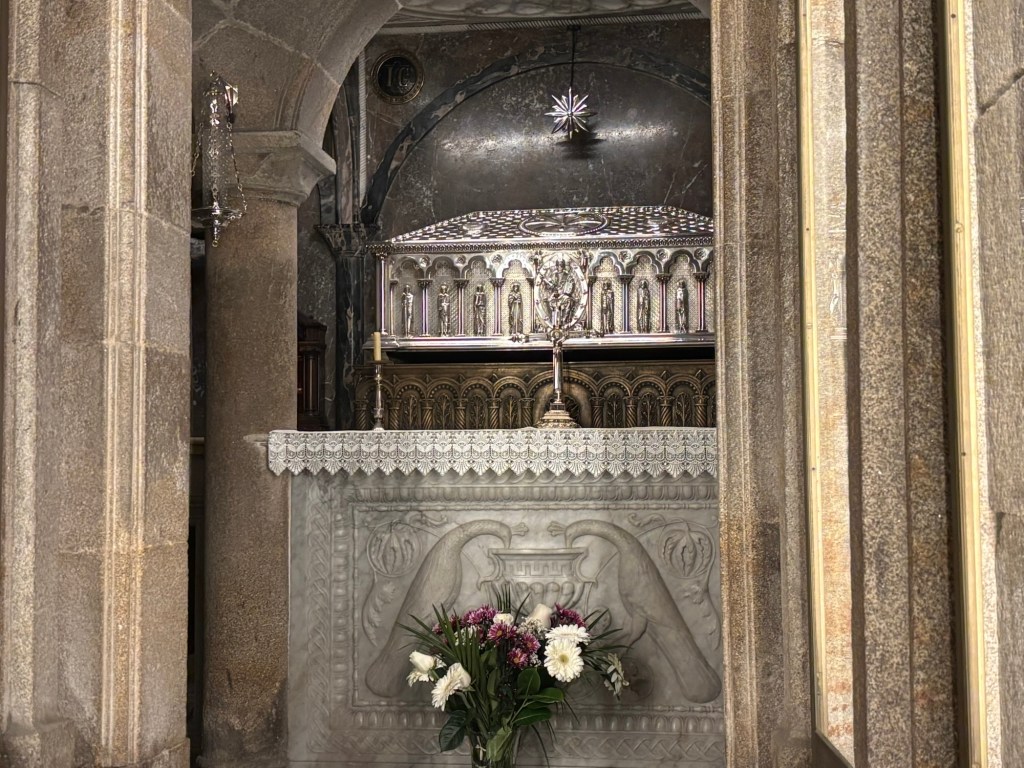

I was lucky to get in when I did: by the time I left via the north door, the queue to get in stretched for nearly two hundred metres around the side of the cathedral. Pro tip: get in early, or just after Mass, when the queues are at their thinnest!


I had a quick bocadillo lunch in the old town and packed my things, thinking to spend a few sunny hours in the Parque de Alameda, but I was distracted en route by the sound of shouts and firecrackers. Doubling back, I found an advance guard of local police cordoning off the Avenida de Xoán Carlos I, and behind them, an enormous crowd of youths dressed mostly in black, carrying flags, placards and loudhalers.

I could have guessed what they were going to be protesting about, and my guess would have been on the money – after all, it’s a sore tooth Spain has been nursing for several years now: the housing crisis.


The short explanation? Spain’s housing market is a shambles. By some estimates, the cost of renting a property has gone up by 78% in the last decade, driven by rampant speculation and unrestricted vulture funds. Put simply, the average Spaniard now finds it very difficult (if not impossible) to find an affordable place to live, especially in the areas most popular with tourists. This is a country where flat-sharing websites like Idealista and Easypiso hold sway: AirBnB and its kin have made Spain a tough place to buy.

This has been most keenly felt in Barcelona and the Balearics, where many properties are vacant for large parts of the year, occupied only during the summer months by foreign investors. It’s one of a number of factors forcing Spaniards to live at home with their parents well into their twenties (or even thirties), and driving others to seek their fortune elsewhere. It’s also why I’m making a point of staying in pensiones wherever I go – a far older and more sustainable method of supporting the local economy as I travel.


There’s an even more sinister side-effect of the housing crisis in cities like Barcelona. I’m referring to the okupas, or the occupation of properties by gangs and other drug-related agencies who turn vacant holiday homes into drug dens, known here as narcopisos. The shady legal status of squatters in Spain, which makes it very hard to evict without the proper authority, doesn’t help matters at all.

Yes, A Place in the Sun and your kind – this is partly your fault. By encouraging the buying and selling (and re-selling) of property along the coast, you are driving the locals out of town faster than the local wildlife was displaced before them.
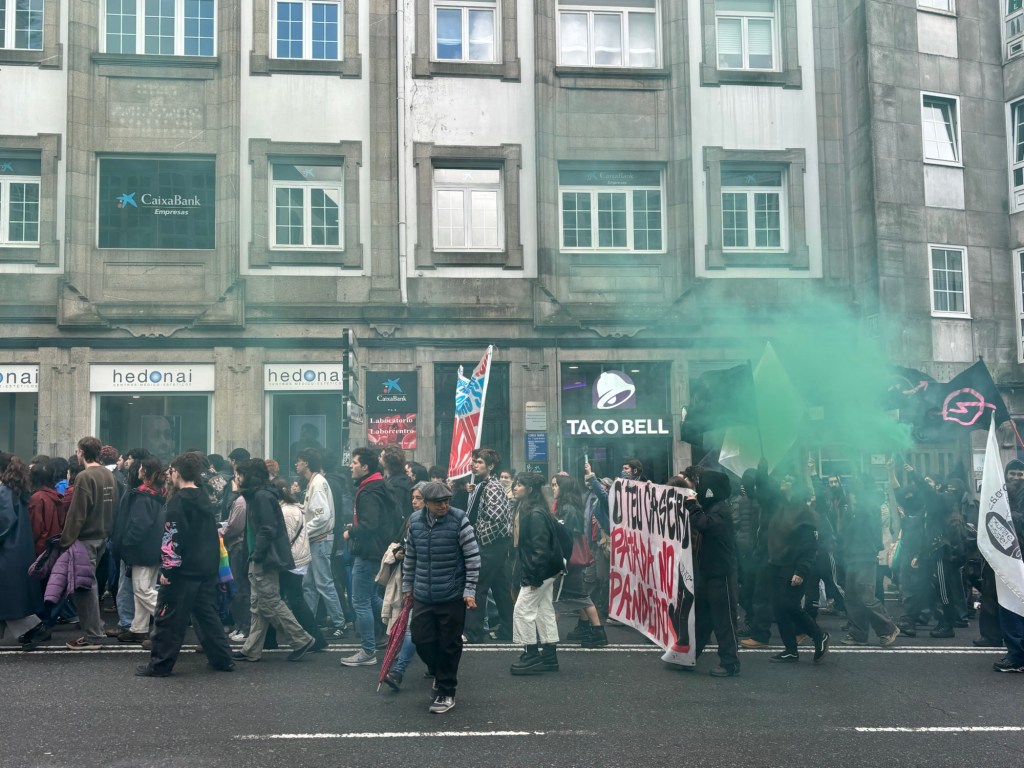

Naturally, it’s Spain’s youth who are taking the brunt of this crisis – and so, quite naturally, they’re the ones taking to the streets in large numbers to complain about it. Pedro Sánchez, Spain’s Prime Minister, has attempted to address the problem by proposing a ban or even a supertax on foreign buyers, but in the regions that depend the most on tourist dollars like Andalucía and the Costa Brava, that will be a very bitter pill to swallow. So, for now, Spain will have to muddle through these murky waters until a more universal solution can be found.


The protesters marched on up the avenue, followed closely by the police and their van, carrying their riot helmets at their hips. Some of the protesters threw petards into the road as they passed. Others lit flares. I watched them go and returned to the park.

Similar protests are taking place all across Spain today. I wonder if it will come to a head? It’s hard to say, but it is fascinating to be here on the ground while it’s all going down. It isn’t often that you get to live through history in the making, especially when it’s something you teach (manifestaciones is one of the tried-and-true A Level Spanish topics).

This. This is why I travel.
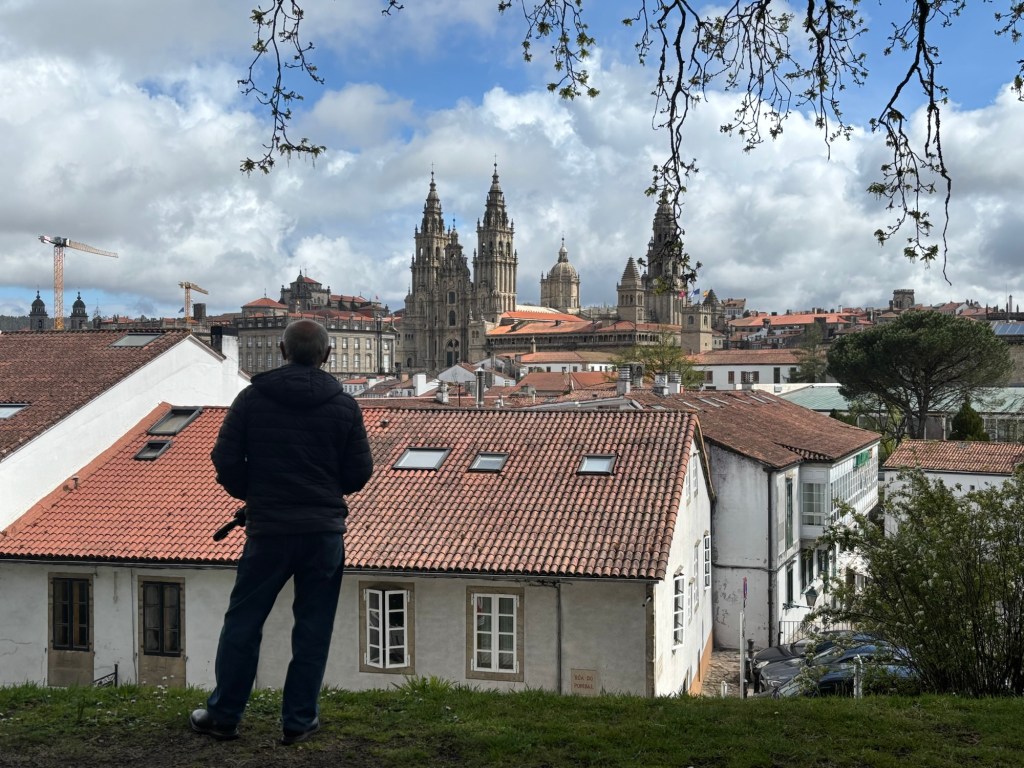

The smoking incense of Santiago’s botafumeiro was meant to cover up the stink of something rotten. Seeing the smoking flares of the protesters as the police escort them through the city, I can’t help but note the connection.

I’ll keep you posted if I hear or see anything else. I trust this isn’t the last we’ll hear of it. BB x
Article Ten

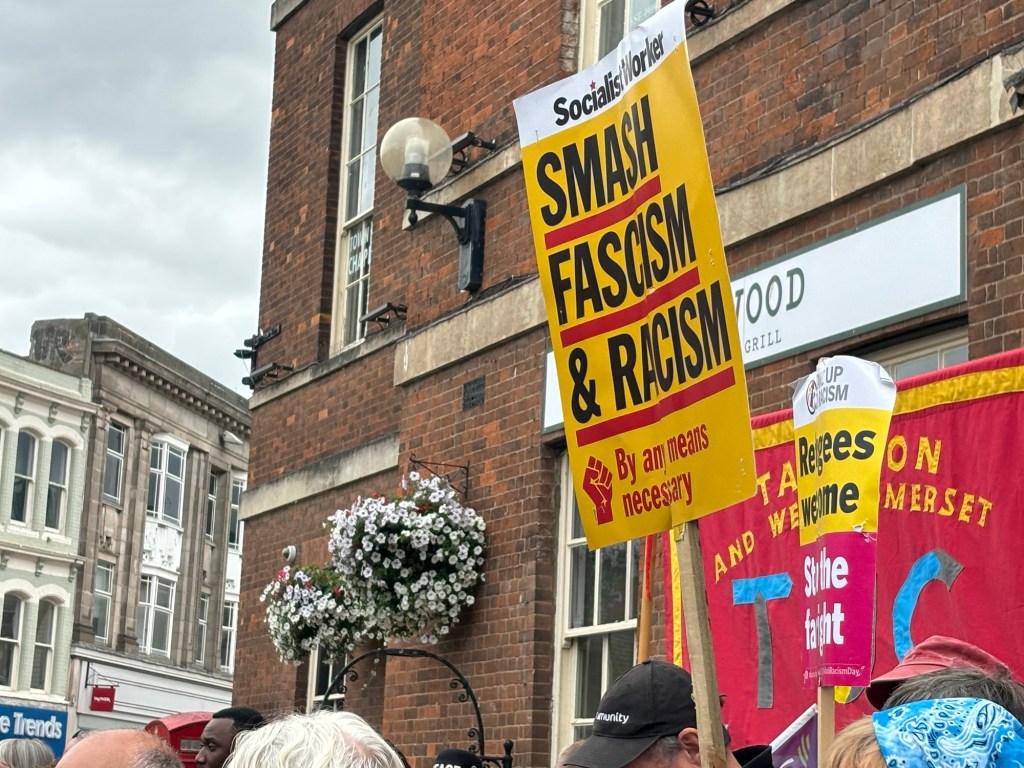
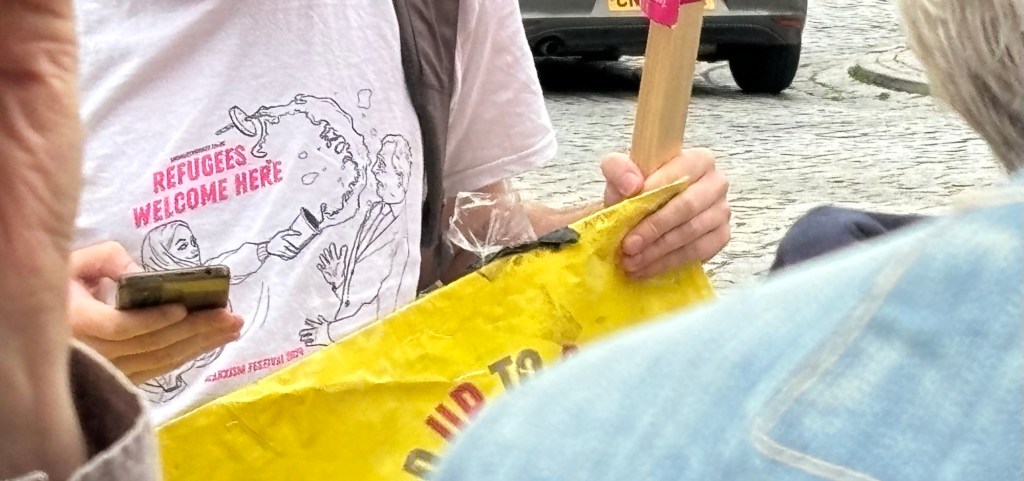
This morning I found myself in Taunton’s market square, standing shoulder-to-shoulder with a branch of the Stand Up To Racism movement, some of whom had come from as far afield as Bristol to head off the rumoured far-right protest that had been brewing here.

It was morbid curiosity that drew me into town, I suppose. My driving instructor inadvertently tipped me off about the planned protest, and the journalist in me wanted to see events unfold for myself rather than trust in the news, which is so very hard to do these days. I had no idea that the rally I would find would be the counter-protest, nor had I planned to join in, but curiosity turned into a burning sense that the right thing to do, the right place to be, was there with the peace rally.

My great-grandparents, Mateo and Mercedes, had little love for the fascist regime under Franco. My bisabuela went to the grave convinced that the state had murdered her husband on the operating table, as his Marxist beliefs were well-known. So in a way, it felt like carrying on their work, standing up to fascism, even in a small way, some seventy years after Mateo’s demise.


Trade unionists. Socialists. Artists. Refugees. Doctors, policewomen, teachers. English, German, Indian, Cameroonian, Brazilian. Shouts of Whose streets? Our streets! Representatives from other movements jumped aboard: Black Lives Matter and Free Palestine joined the fray. Some of the speakers pulled the rally in different directions: frustration against the super-rich coorporations, against Sunak, Patel and Braverman, against the police (who, credit where credit is due, had sent a small detachment to protect the rally today, so that last speaker’s targeting was poorly judged). I couldn’t help but be reminded of Orwell’s experience in Catalunya during the Civil War, however, with so many factions within the Republican camp and our own. If the opposition did come to meet us in force, theirs would be a militia to our band of mercenaries.

The minutes turned to hours, and the opposing force that were supposed to be marching on Market Square failed to materialise. A police officer let us know that the mustering point in Hamilton Park was still empty at one o’clock, when they were supposed to have gathered in force, and a cheer went up from the crowd. An elderly Indian man embraced everyone around him, gleefully repeating “We did it! We scared them off!”.

Scared is probably the wrong word. You can’t quell that kind of resentment that easily. They also weren’t entirely invisible this morning: an armoured car sporting four Union Jacks and a large gun mounted on the roof did make three threatening laps of the square towards the start of the rally, its driver staring at us with hostile, wordless eyes, before the police chased him off. I should be grateful that’s the closest we got to any kind of danger.


I confess I don’t exercise my civil right to protest nearly as much as I should. Going to a protest in London always felt dangerous, and just getting there and back was easier said than done, what with Thameslink and Southern Rail experiencing eternal delays. So it’s nice to be able to do my part here in Taunton, while I still have time and energy to spare.

It’s now after 4pm. The Avon and Somerset police issued a statement half an hour ago that the planned protest never did take place. They also counted us – at its peak, there were sixty of us in the square, beating back the prejudice and the hate with words alone. It’s a small victory, but if such a thing can be repeated nationwide, we will have made these islands a friendlier place for those who come here to seek their destiny.

To paraphrase one of the speakers today, immigrants are the backbone of our NHS, but they prop up the country in so many other ways. They give us new perspectives, open up our small worlds to larger spheres. If we can open our hearts and our minds, we can learn so much from them. The United Kingdom is not just a name, it’s an ideal: a kingdom of people from all walks of life, working together. We are so much the richer for it.

Life doesn’t always take us in the direction we want, but it does have a very good habit of setting us back on the right path in the end. Or, in another writer’s words:

The infinite will of God is always mysterious, mercifully granting us what we need more often than what we want.

Thomas Hoover, Moghul

See you around, folks. BB x

Before the Storm

Three weeks of the summer holidays remain, which I must now try to fill somehow. Yesterday I went up to Bristol – for better shopping, primarily, but also because I’d never been, and there’s at least a couple of things in this city that I wanted to achieve: a new suit for work, and a close encounter with arguably one of the most famous statues in the country.


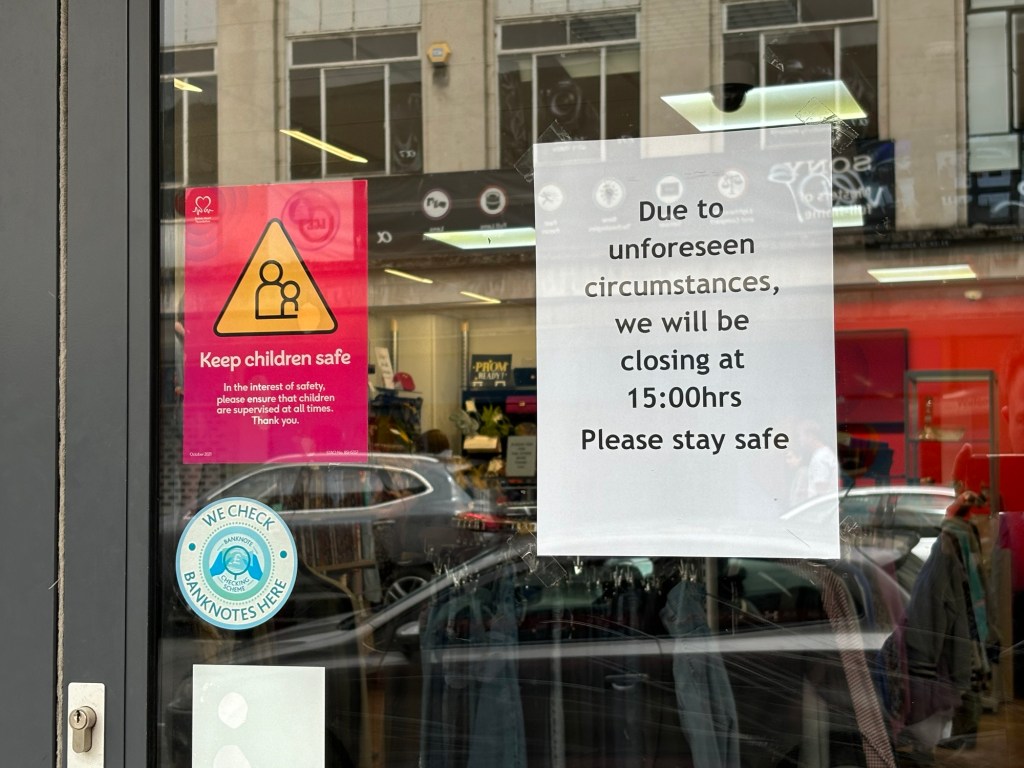
Bristol was not as busy as I expected, but then, with all this talk of protest in the air, perhaps that’s not surprising. Despite the official line from the police to the contrary, at least two shopkeepers warned me to get out of town before 6pm. They said that a mob was being gathered online to march on an immigration legal aid firm in the Old Market district, not more than five minutes or so from Bristol Temple Meads Station. I passed several shops with signs in the windows indicating an early closure, and I saw at least one being boarded up, just in case things got out of hand.

Part of me considered sticking around to see what went down, but for once, the rational part of my brain (which usually plays second-fiddle to the romantic up there) took charge and sent me home. Still, it was quite something to see a city preparing for potentially violent civil unrest, like a quiet siege. It was rather eerie. I’ve never seen anything like it before.

As it happens, there was a protest march that evening – but not the one that was expected. Nearly two thousand anti-racists staged a peaceful counter-protest in Bristol’s Old Market, where the anti-immigration rally was due to take place. My faith in this country has been restored, even if only by a little.


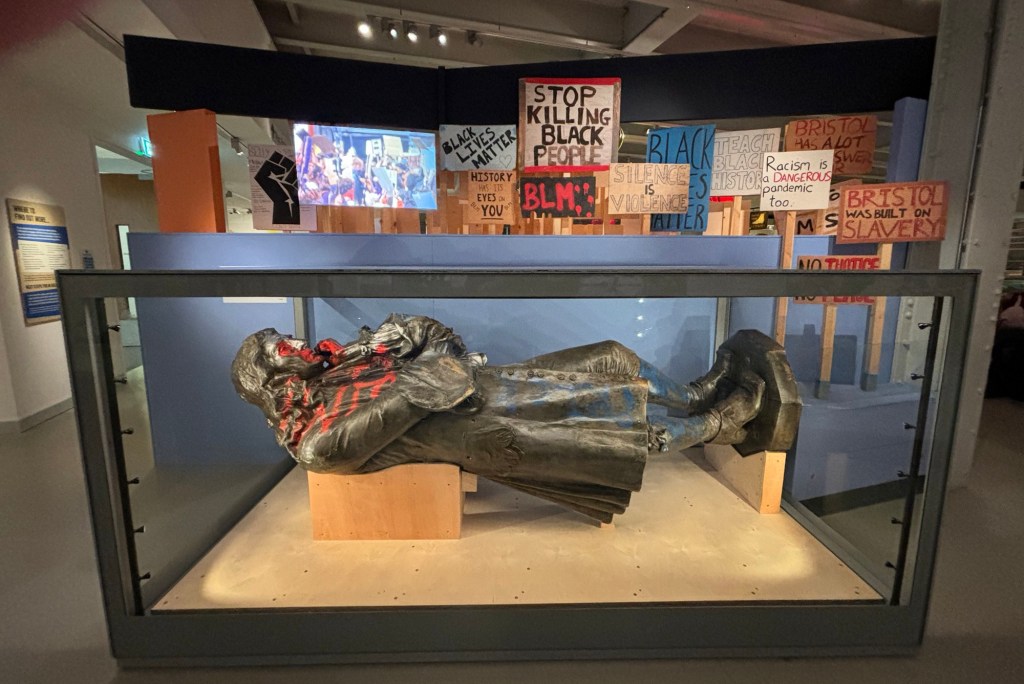
I visited the M Shed Museum in the Bristol dockyards, where the statue of Edward Colston can now be seen after it was recovered from the bottom of the harbour. Social media played a decisive role in mobilising the mob back then, too, albeit under very different circumstances.

Colston rests in a glass sarcophagus surrounded by a collection of placards borne by those who tore him from his plinth back in 2020. It looks almost like one of the stone effigies you might find in a cathedral, with homemade banners replacing the coats of arms.


Colston used much of the wealth that he accrued from his involvement with the Atlantic slave trade to philanthropic ends in Bristol and beyond, establishing almshouses and sponsoring schools. For more than two hundred years, he was even something of a local hero. But times have changed since the events of 2020, and a much-needed revision of the history books has shed a new darkness on men like Colston who, for all their good deeds, were active participants in a system which brought unimaginable misery, pain and slaughter to millions. Colston had many hats, but “slave trader” is usually the first title next to his name in most accounts.

I wonder if history will see modern “heroes” like Steve Jobs in the same light someday for their involvement in the rape of the Congo and its people for the coltan that powers our phones. We may be reliant on the damned things for just about everything these days, but that’s a poor excuse, when you think about it. After all, we used a similar excuse to justify the entire slave trade once upon a time.


I did a little window-shopping before popping into a second-hand vinyl store in search of a couple of albums for my wall. I’m in the process of making my house a really happy space, and I figured I’d take a leaf out of the book of my old bandleader (and great inspiration), Mr D, and frame a few LP sleeves. I was tempted by a couple of colourful Fela Kuti numbers, but in the end I came away with just the one LP: Marvin Gaye’s What’s Going On, one of “the Big Three” albums that changed my life, alongside MJ’s Thriller and The Corrs’ Forgiven Not Forgotten. I’ll hunt the other two down on eBay.

Until the next time! BB x

Storm Clouds over Soho

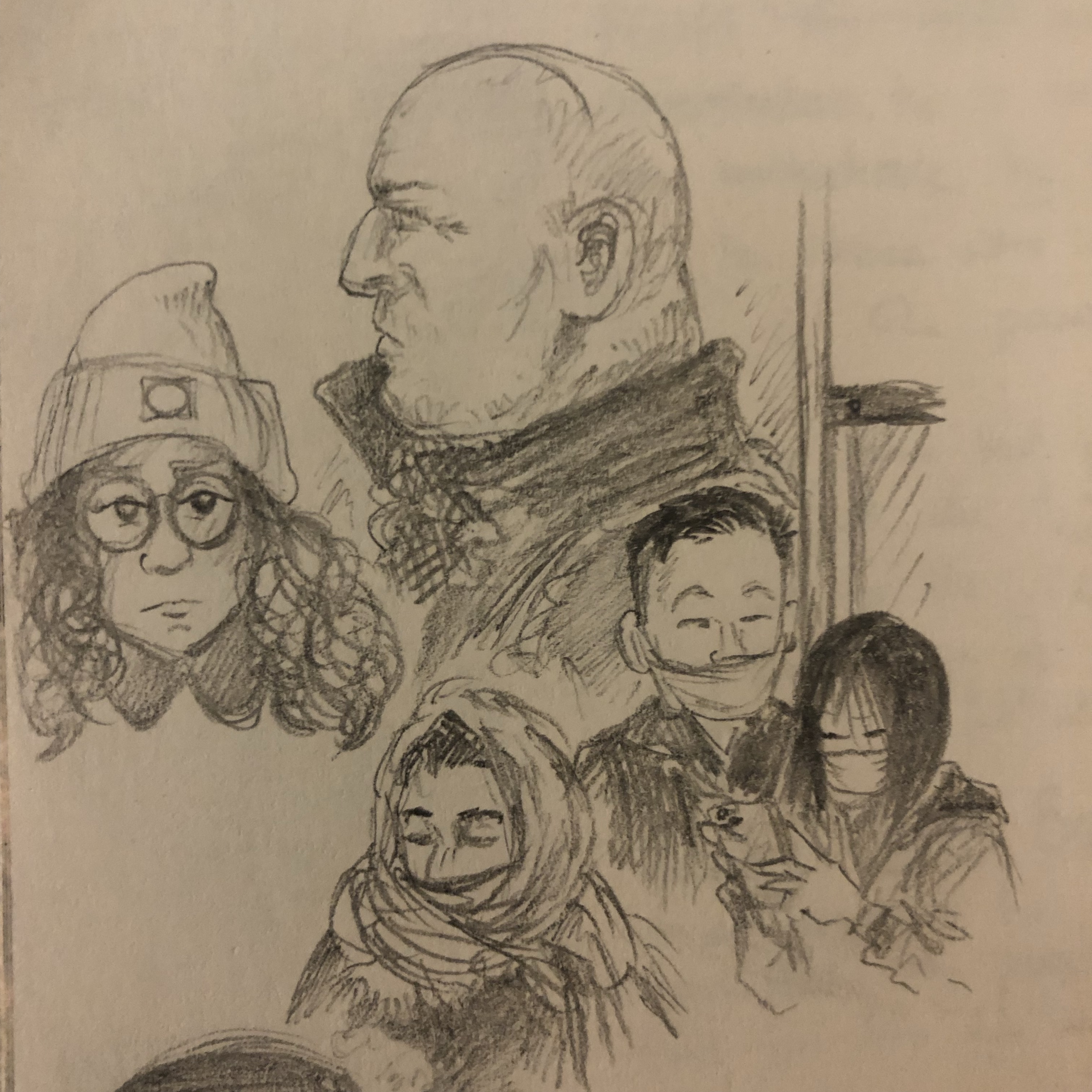
I got the train up to London today with a view to getting my hands on a decent pair of shoes, since I’m told the Italians can be a little snobbish when it comes to standards of dress. With the Northern Line under repairs, it took a little longer to get up to Bloomsbury, so I took a leisurely ride on the Circle Line from Blackfriars and indulged in a favourite pastime: sketching commuters on the Underground. There’s an art to it (no pun intended) – you’ve got to be quick, since most of them only travel a few stops before getting off. And now that face masks are a minority affair, it’s a lot more enjoyable a practice than it was.

Predictably, I got waylaid in Gower Street’s Waterstones en route to the shoe shop. Ever on the hunt for new additions to my Spanish library, I thought I’d do some digging at one of London’s finest bookstores, since it’s been quite a long time since my last visit. I managed to exercise a considerable amount of restraint this time, leaving behind two case studies on the Inquisition from the antiques section in the basement and Minder’s The Struggle for Catalonia… though I’ll be back for that one eventually. Giles Tremlett has brought out a new book on Spain which looks like it will pump out a lot of material I can use with my A Level Spanish students, which is my way of justifying that purchase. The only book I didn’t question was an account of Walter Starkie’s Camino. Starkie wrote so vividly about his journeys as a minstrel across Spain in Spanish Raggle Taggle and peppers his writing with old verses all over the place, so I had to salvage that one.

I wandered down towards Oxford Street in search of a decent pair of shoes, but I couldn’t find anything that jumped off the shelves at me, so I decided to make do what I have (a fine piece of advice at the best of times, which I wantonly ignore whenever I should be near a bookshop) and cut across town back to the river through Soho.

I’ve either forgotten how luridly seedy Soho is, or I haven’t properly explored the place before. What looked like a shortcut led me down a dark alleyway with shady adult stores on either side. The noise of Oxford Street seemed to die in the distance, like the record player in the Waterstones’ basement, stifled into silence by a wall of books… only now by grimy bricks and a mere sliver of sunlight through a gap between the buildings above. I almost collided with a stocky man in a big puffer jacket with a cough came lumbering out of a film store, stuffing something under the sleeve of his coat. Two Arabs stopped talking and gave me a funny look as I passed, clutching my journal in one hand and one strap of my rucksack with the other, humming the tenor line from Ola Gjeilo’s Northern Lights to myself. I guess Soho isn’t on the tourist trail.

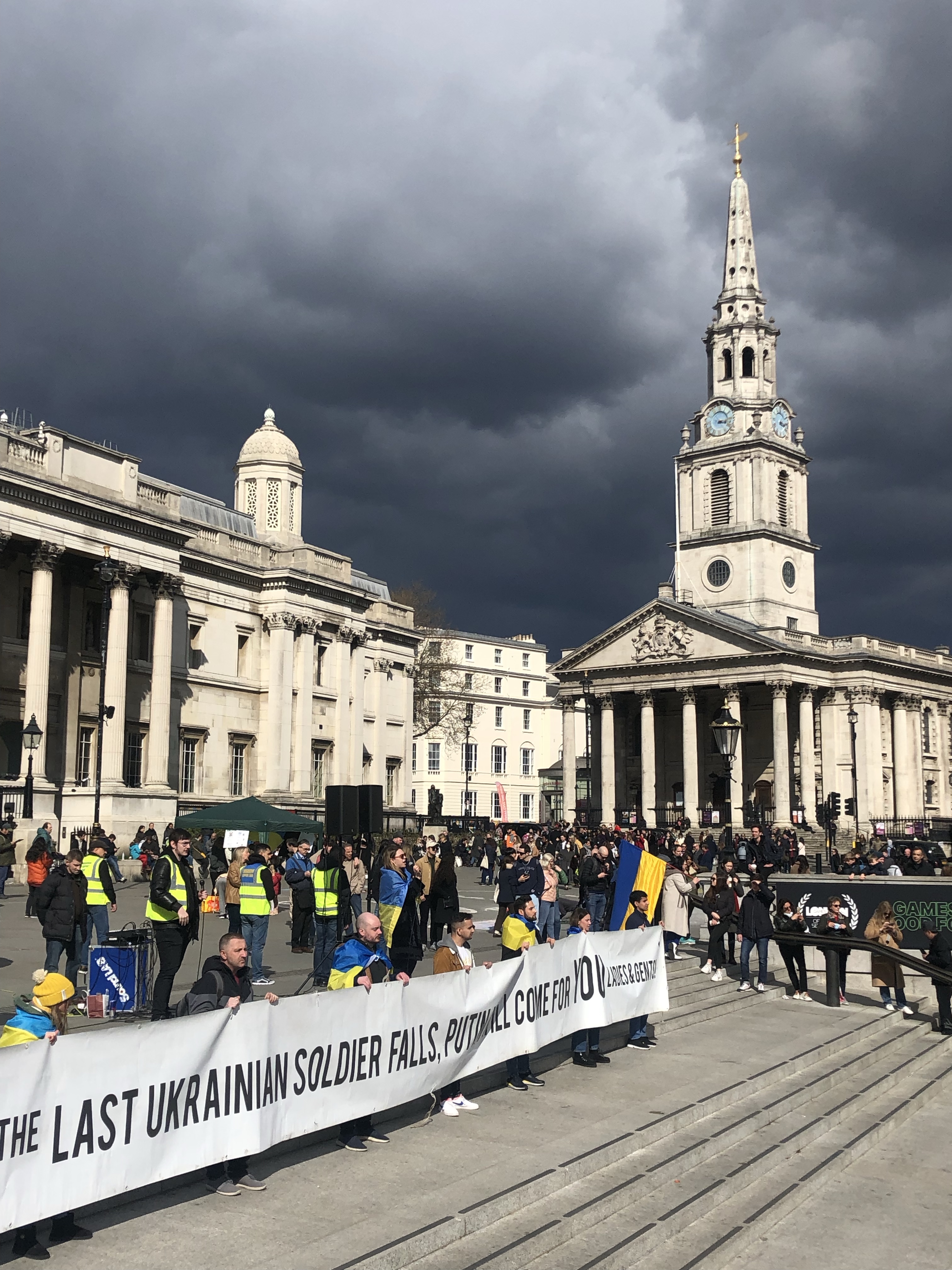
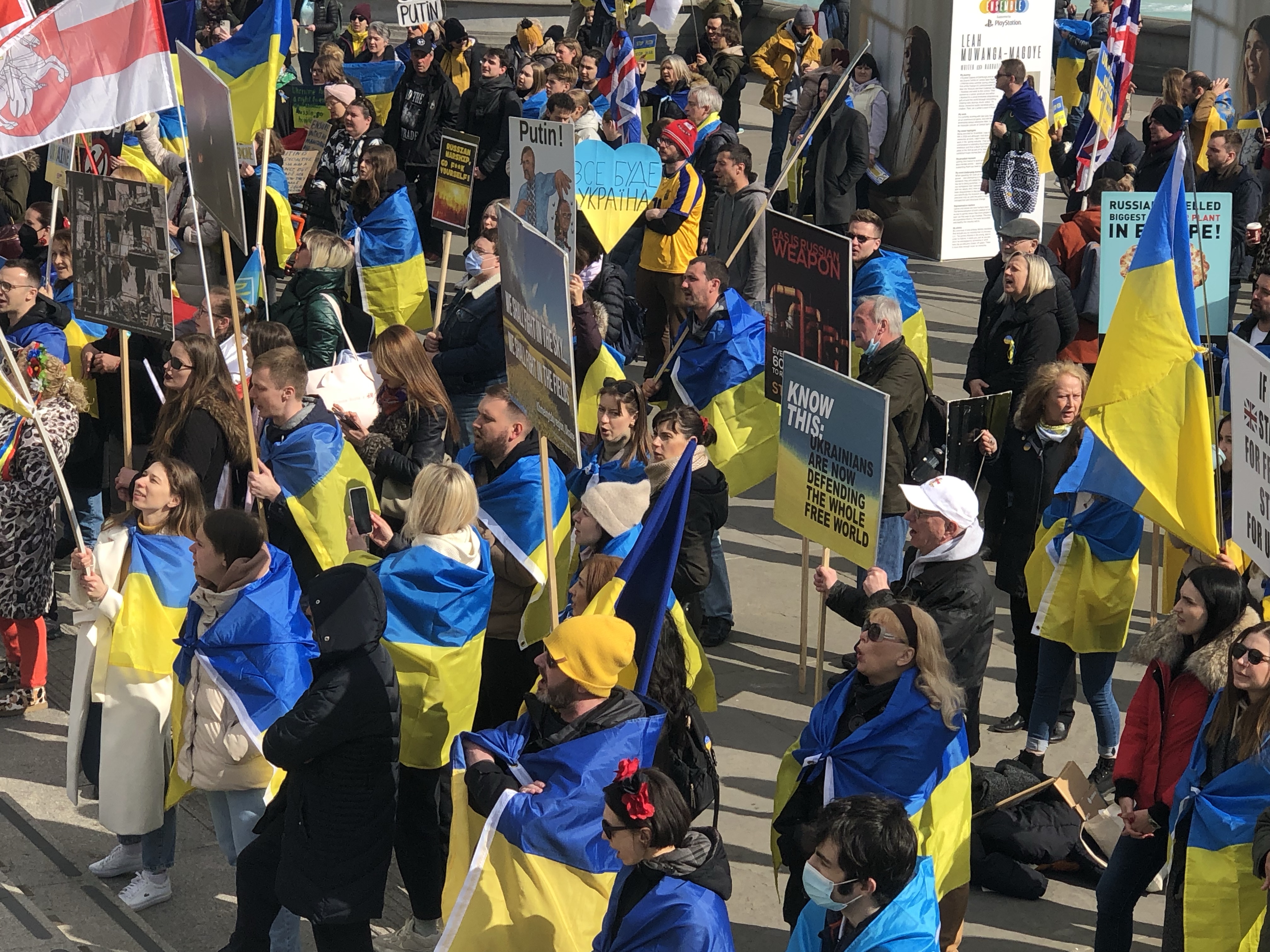
Leaving Soho behind, I wandered through the crowds in Chinatown and came out onto Trafalgar Square, where a large crowd had gathered on the steps. Unsurprisingly, it was a rally against the war in Ukraine. Blue-and-yellow flags fluttered high above the throng, joined here and there by Polish and Hungarian partisans adding their colours to the mast. One woman, the tryzub emblazoned on her cape, stood defiant at the front of the congregation, fist raised in a powerful salute for most of the half-hour I stuck around to watch.

Boycott Russia.
Arm Ukraine.
Stop Putin, stop the war.

Those were the chants, coming around and around before the crowd. The main speaker apologised for the necessity of being so blunt, before decrying the rape of Ukrainian women by Russian forces and the slaughter of its children. An Englishman spoke slightly hesitantly about the need to support Ukraine’s disabled and elderly refugees, and a Ukrainian began to sing a national lament as the sky darkened overhead and the sun faded from sight. I’ll admit I half expected there to be a police van lurked nearby, its officers on standby for any disruption, but I couldn’t find a visible copper for love nor money.

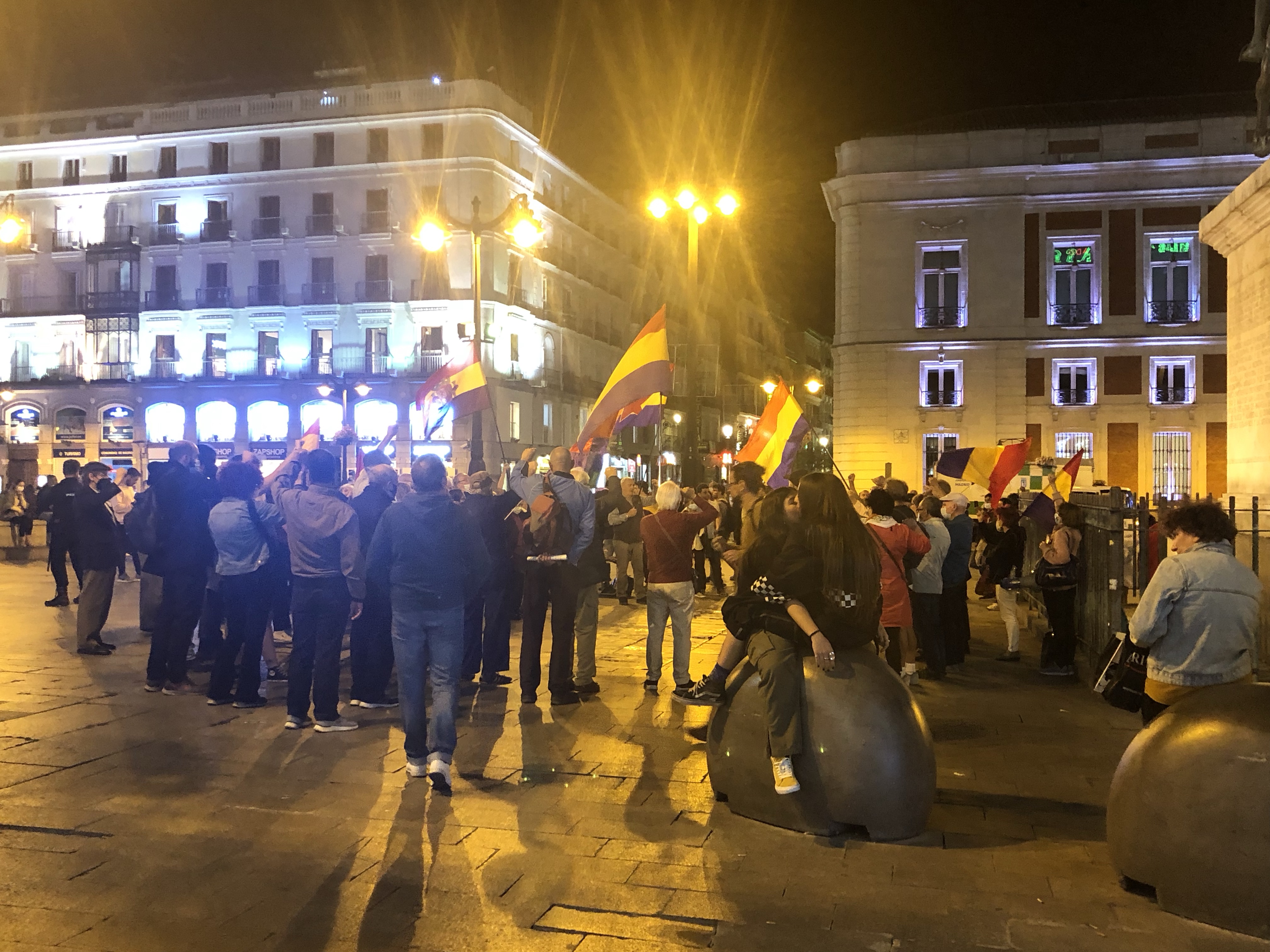
The last time I saw a demonstration like this was back in October in Madrid’s Puerta del Sol, as I walked back to my hostel with one of my cousins. “They’re always here,” he told me, “and so are they,” indicating the loitering policia who hang back just shy of the crowd, silent, hands on their truncheons, watching the Republican flags flying in the night air. The crowd was surprisingly mixed: an old man in a flat cap stood shouting his passionate support in the centre of the throng, while two girls shared an equally passionate and equally political moment on one of the bollards. The policia watched on, silently.

Puerta del Sol, October 2021

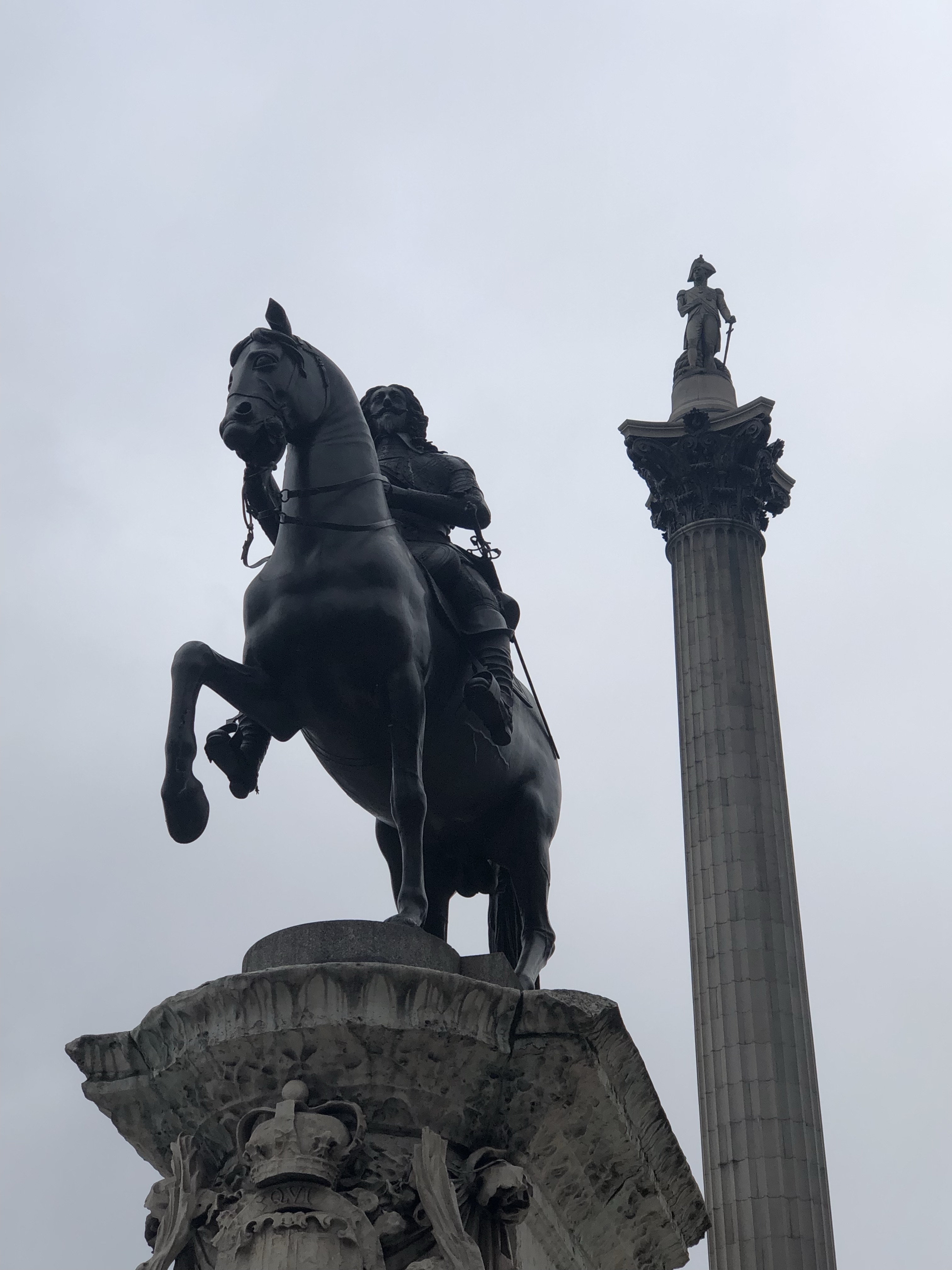
On my way back to the station, I stopped at the traffic lights and looked back to Trafalgar Square. Lord Nelson and a mounted Charles I stared southwards over my head, silhouetted against the clouded sky: two men who got personally involved in European wars and paid a physical price for their efforts. Little wonder, then, that the European powers are so reluctant to send any troops into open battle to defend the Gateway of Europe.

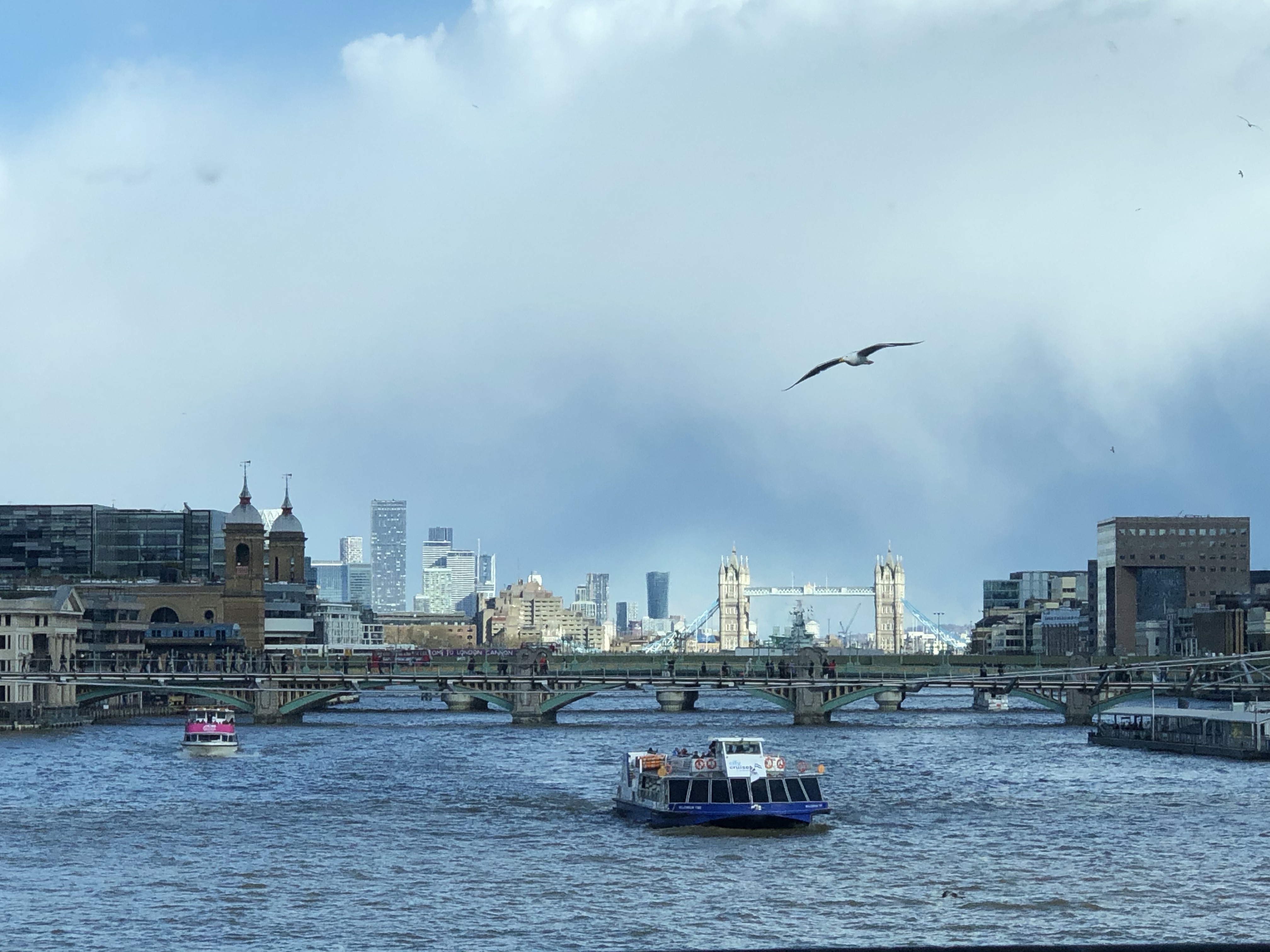
Back at Blackfriars, the rally seemed a world away. I missed the early train by a whisker and had to wait twenty minutes for the next one. A Catalan girl sat on a bench nearby, a red-and-yellow skiing jacket from Cerdanya proudly displaying her winter colours. I instinctively reached for my face, but my usual rojigualda facemask was at home: I’d opted for a less nationalistic face covering today. Away to the east, the sun broke through the clouds over the Thames, lighting up Tower Bridge against the rainclouds rolling in from the south. London seems to go on forever, whatever happens to the rest of the world, and yet it’s Rome that holds the title of the Eternal City. I’m looking forward to seeing it with my own eyes and reading such stories as I can find in its people and its streets. BB x