Camino XXXVII: Hundreds and Thousands

Albergue de Peregrinos, Ribadiso da Baixo. 15.10.

Today marks the longest walk I have ever done in my life. As of eleven o’clock this morning, I have walked 1,013km since setting out from Bordeaux nearly six weeks back on the last day of June. My feet are mildly blistered but not painful, and one of my sandals is starting to fall apart, but my head and heart are clear and Pinta and Niña are none the worse for their thousand-kilometre journey across the country.

I haven’t used my journal much, but I wouldn’t have set out upon this road without it. It’s now by far the longest-serving and most well-travelled (and most battered) of the three journals I have kept since I bought the Red Book in a librería in Villafranca de los Barros back in 2015. Now a veteran of four Caminos, it’s earned an early retirement, I think, but I’m still a good fifty pages or so from finishing it, so it may well have further to travel, I suspect.

Maybe I should just hurry up and get that bloody book written already. Lord knows I have crammed enough research into those journals.


Today ought to have been a short one, but I ended up adding an extra three kilometres to my walk after realising halfway through the dark woods out of As Seixas that I’d left my credencial behind. I have three, including a spare and the completed one in my journal, so I wouldn’t have been turned away at the next albergue, but it’s the principal, damn it – and I was only ten minutes into the walk, so I legged it back without the aid of a torch to the albergue, hoping the other pilgrims had not shut the door behind them.

Luckily, they hadn’t, and my credencial was sitting on the bunk above mine along with a sachet of Cola Cao, just where I’d left it the night before. Sometimes I’m in such a hurry to be the first out the door and on the road that I leave things behind. So far on this trip, that has cost me a pair of sunglasses and a vest – and very nearly my credencial. Muppet.

I restored my reserves with a cup of hot chocolate from the vending machine and took a shortcut back to the Camino via an improvised route to the north. The roads were deserted, so I didn’t have any issues. The three pilgrims who I had sprinted past seemed surprised to be overtaken, after they’d last seen me going back down the Camino about half an hour ago.

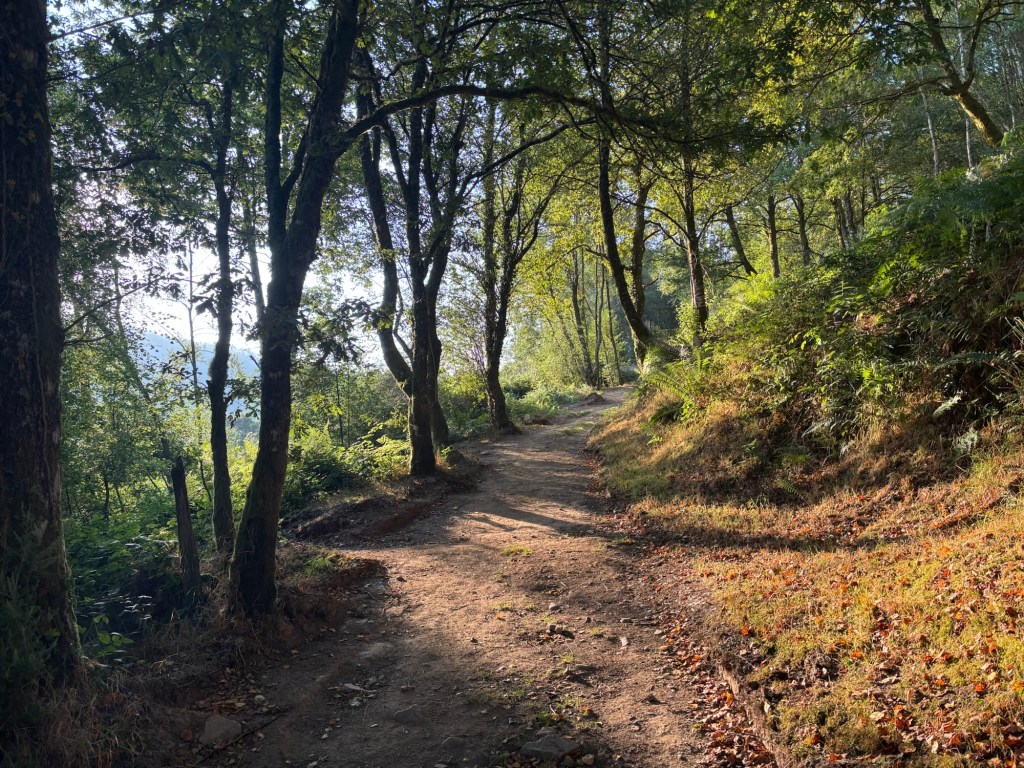
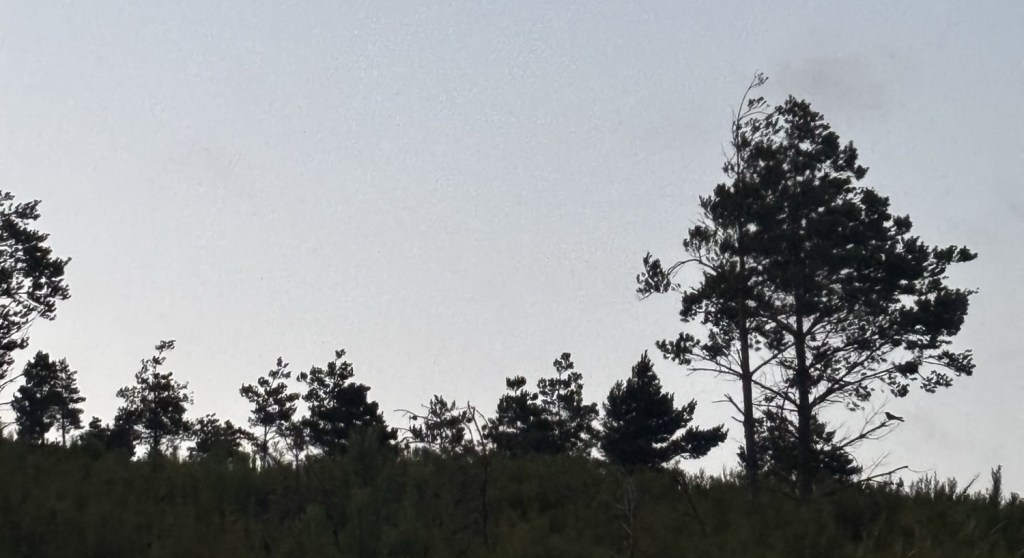
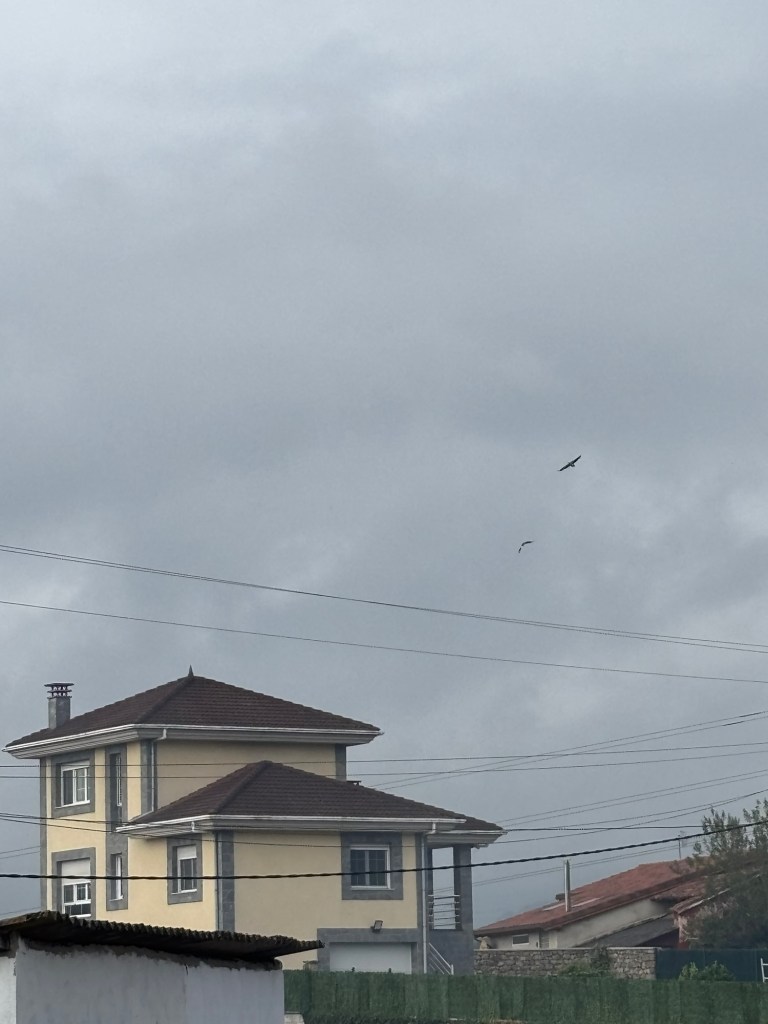
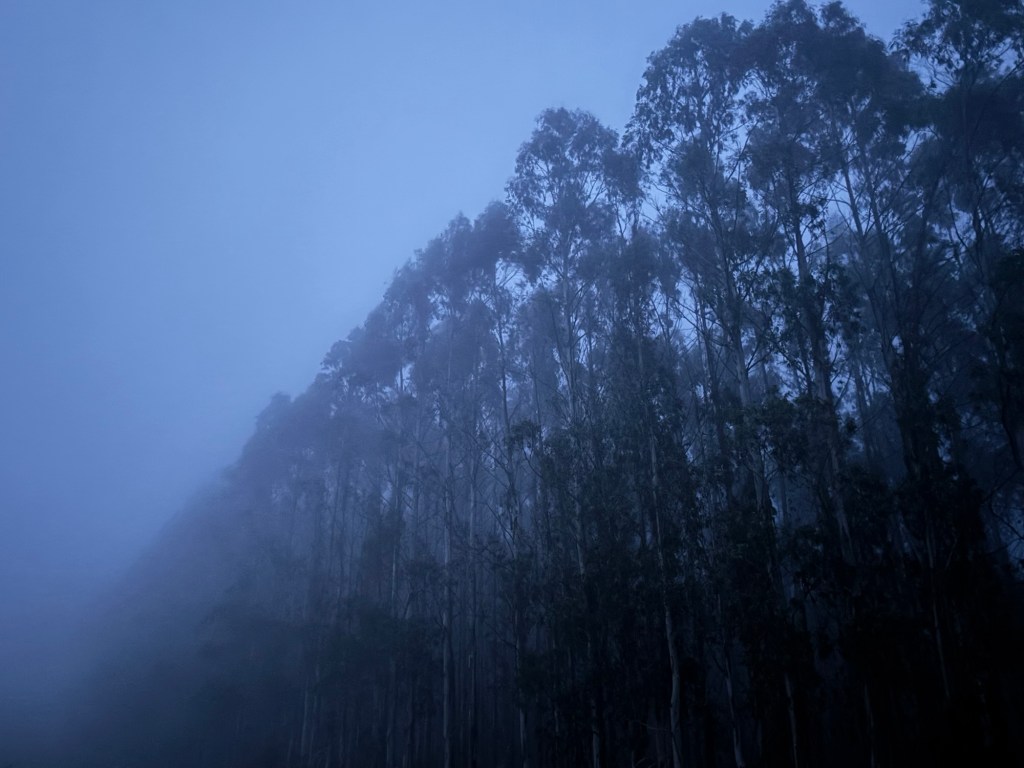
It was a very dark and misty morning. As Seixas is at the foot of a great big hill lined with wind turbines, which kept a lot of the morning mist hanging over the village and its eucalyptus stands. It was a little eerie, and I nearly jumped out of my skin when a nightjar almost clipped my head, announcing its presence merely inches from me with its frog-like grooik flight call. It may well be one of the last ones I see this summer, so I did not begrudge him the fright.

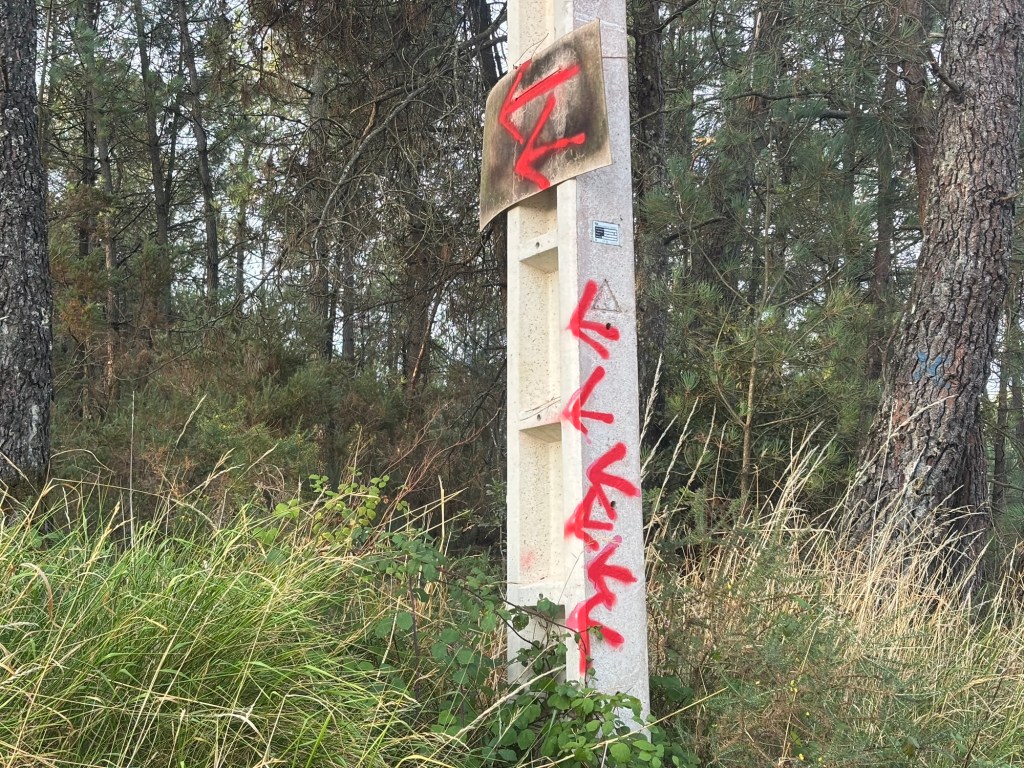
Twice today I very nearly took a wrong turn, saved by my intuition. I have followed the yellow arrows of the Camino all the way from the heights of Somport and they have not yet put me wrong. Curiously, however, a number of red arrows have sprung up, usually in large groups and always pointing off the road. They may indicate an alternative route but they are a little unreliable: in one case they put me back on track after I took the wrong road, but in another spot they pointed in completely the wrong directions and only a brief chat with a friendly labourer solved the conundrum.

If in doubt, don’t trust the red arrows. The yellow arrows always lead to Santiago. The red arrows might not. When you put it like that, it’s almost like a child’s game.

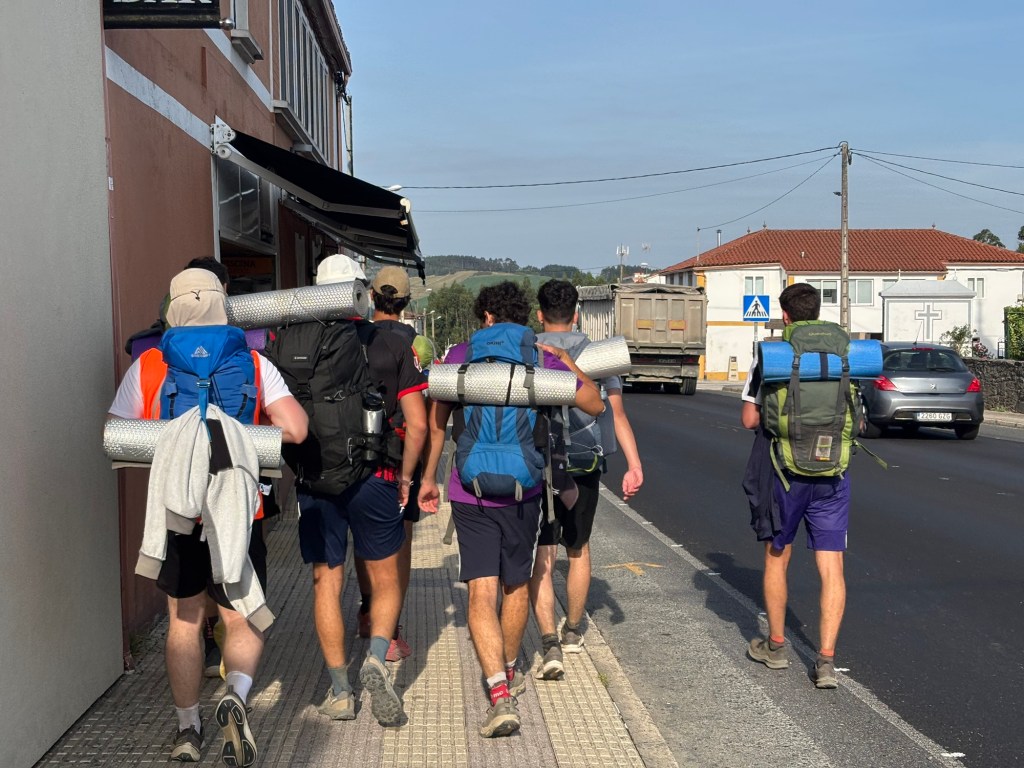
I reached Melide just before nine (ahead of schedule, despite the loss of 20 minutes) and bought a few supplies in one of the corner shops before moving on. The volunteer in the Concello de Melide warned me about the “fiesta” from here on out, and he wasn’t wrong: for the rest of the morning, the Camino was absolutely packed. Extended families and university groups, parishes and pensioners and pre-teens with their parents, and quite a lot of dog walkers, most of them carrying small backpacks and sticks they’d found at the side of the road (as opposed to the titanium pole wielding pilgrims of the Camino Francés). On average, it’s estimated around a thousand people a day walk the final 100km in August.

Hence the rush for a room.

I wonder what became of my shaman stick that was stolen in El Acebo? Who knows – perhaps it’s already done another Camino of its own.
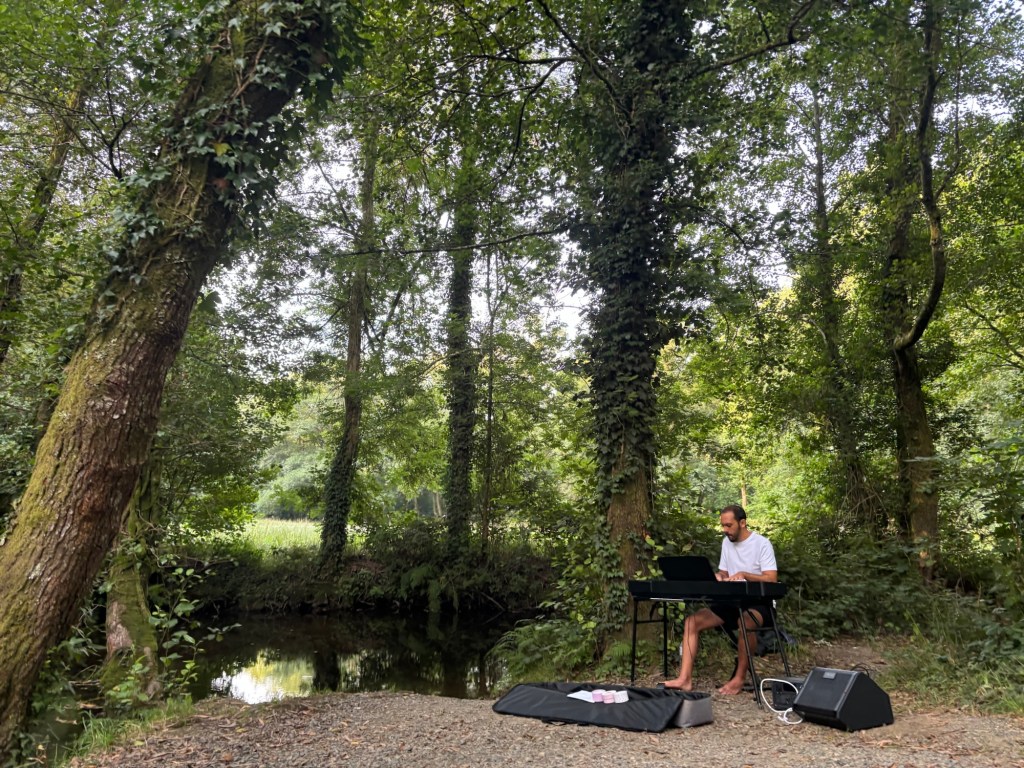

I had a choice to make this morning: finish early and stake out the albergue municipal in Ribadiso, or roll the dice and shoot for Arzúa, only three kilometres further on. Arzúa’s municipal has fifty-seven beds to Ribadiso’s sixty, and it would lop three kilometres off tomorrow’s trek… but Arzúa is the end stage in all the guidebooks. How could I be certain that there’d be a bed left, even if I made it before half eleven? I passed at least a hundred pilgrims on the road before reaching Ribadiso, and I had set out from Melide after nine o’clock – a full four hours after the early birds.

No – wisdom overcame risk today. I found a spot by the bridge in Ribadiso and sat down. It looked at first like around twenty to thirty other pilgrims had the same idea, but gradually they came and went, stopping only for a quick paddle in the river. With temperatures rising up into the mid thirties this afternoon, and so much paved road below, who can blame them?
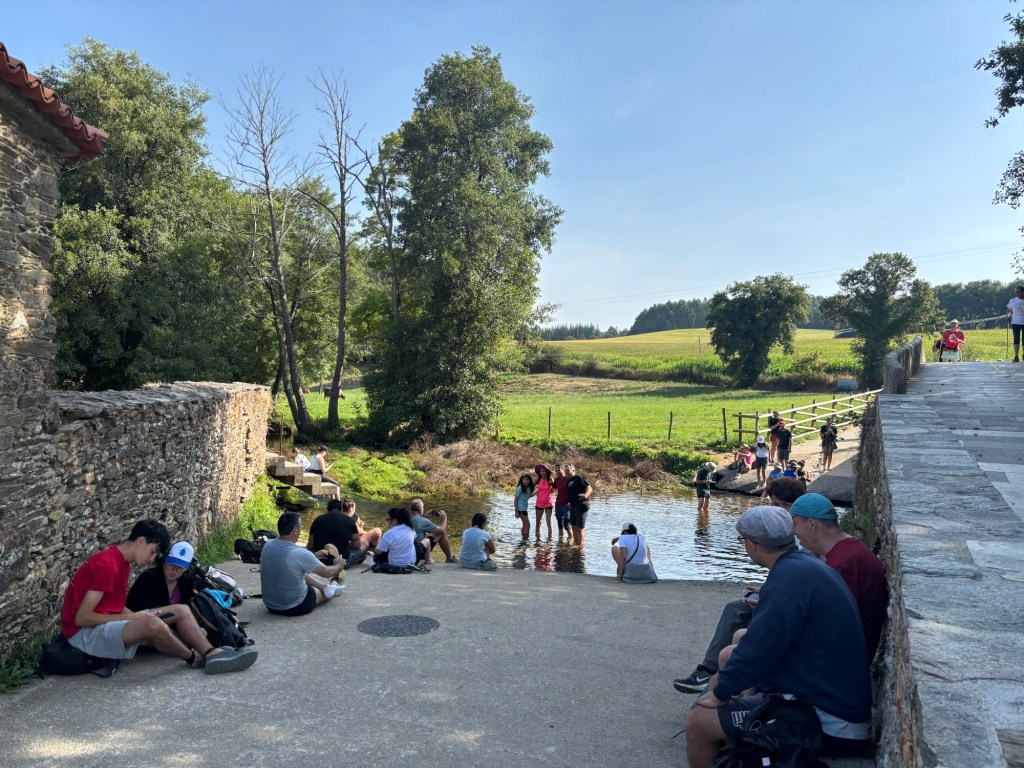

I might go and paddle myself, once the hordes have moved on. For now, I might catch up on some sleep. I have one last challenge tomorrow and it’s a long one: over forty kilometres remain. Let’s…. Must focus and proof-read, but… Zzz… BB x
Camino XXXIV: Prayers in the Mist

Albergue de Peregrinos, Castroverde. 16.50.

Less than a week remains. I’ve been on the road for well over a month now. Thirty-six days, to be precise. Thirty-six days of the same morning routine, which I shall try to relate below.

Wake up at 4.45am. Sometimes an hour later. Pack away my sleeping bag and charger and scan the area to make sure I don’t leave anything behind. Go to the door and check for the essentials: passport, wallet, phone, sticks. Set out by 6am at the latest and have some kind of breakfast as I go: a Nakd blueberry bar, a Bolycao or a flat peach.

Some days I stop for breakfast. Some days I stop for a breather. And some days I don’t stop at all. Today was one of those days. Apart from a five minute pause in the shade, I walked pretty much without a break from A Fonsagrada to Castroverde – nearly forty kilometres over hill and fell.

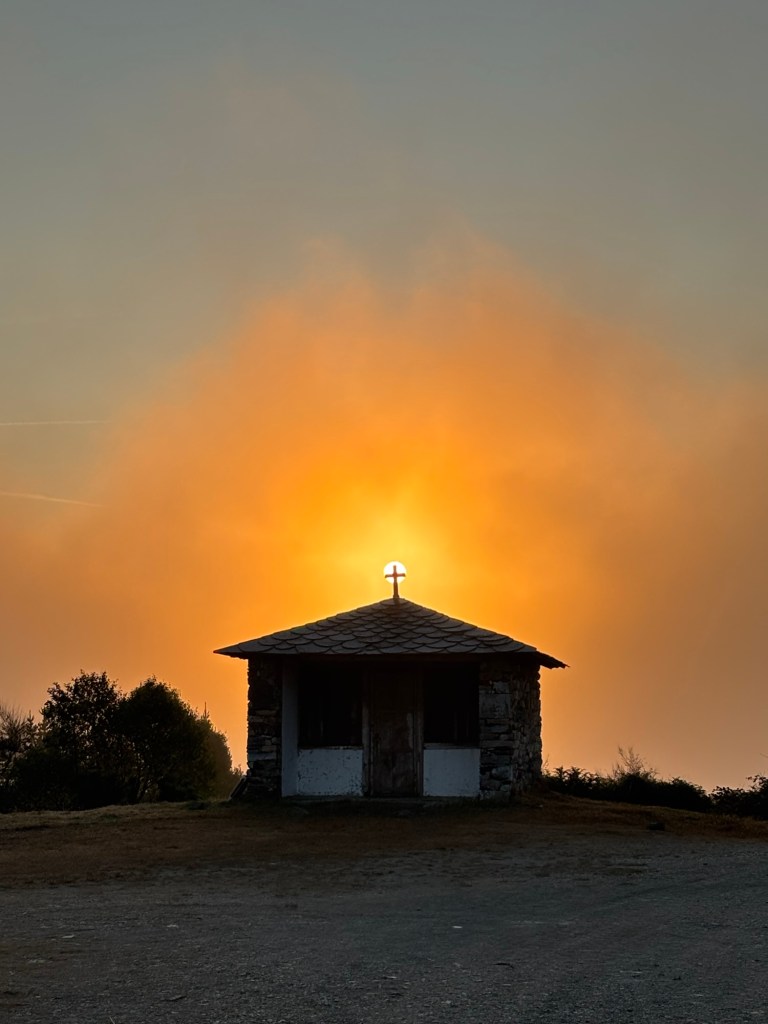
But I always make a brief stop when I reach a church or sanctuary – or, failing that, a cross in the wilderness. Prayer is an important part of my Camino, as it’s one of the few times I really feel connected to my faith.

I pray for the dead: for my grandfather José and my great-grandparents, Mateo and Mercedes; and I pray for David, the father of a dear friend who passed away earlier this year, in honour of a promise I made.

I pray for the living: for my companions along the road, and for the communities through which I have passed, as is often the request in some of the smaller and more devoted villages along the Camino. I usually add an intention for somebody or something different every day: the Italian girl too ill to go on, an inspirational teacher who came to mind during the walk, or someone I crossed verbal swords with at some stage or another.

Finally, for myself, I ask only that my steps be guided to Her, wherever She may be – the woman who will love me as much as I love her. She’s proving rather difficult to find, but prayers can be good for the soul, even if they don’t always deliver.


It is easily to be contemplative along the Camino de Santiago. So many hours alone on the road, with nothing but the songs of birds and the whistling of the wind in the trees above. I’ve had the familiar company of the characters from the Lord of the Rings for the last four days, but that saga ended shortly before I reached O Cádavo and I needed silence for the last two hours after that.

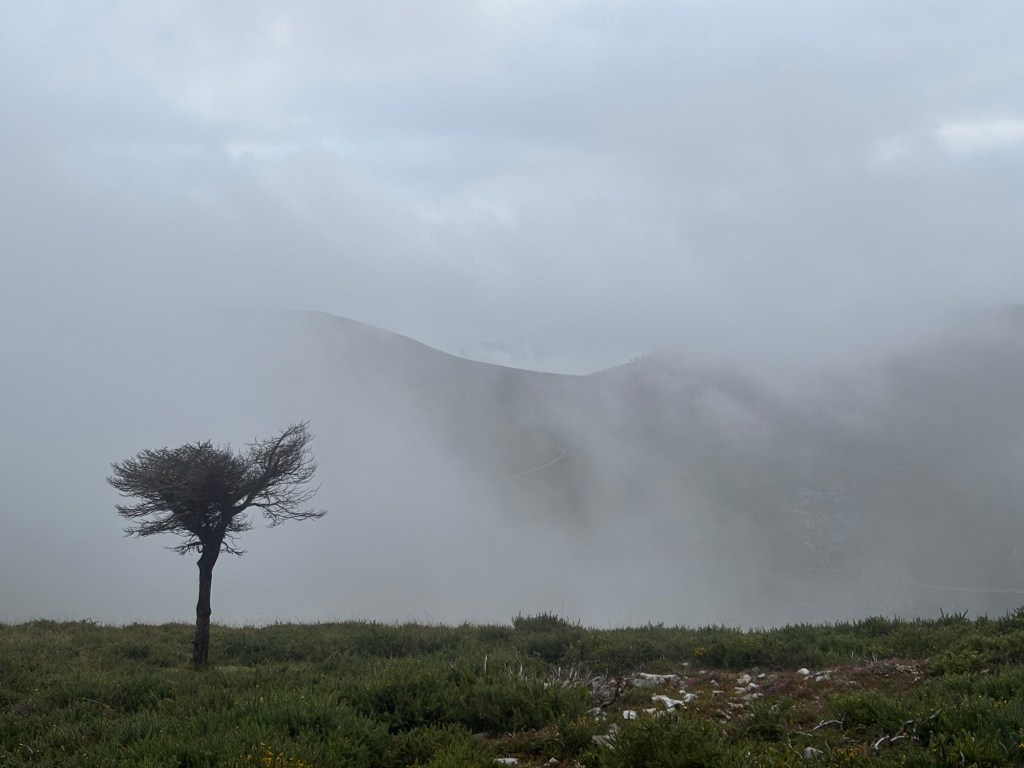
The timing was apt. The last third of The Return of the King is all about saying goodbye. Today I said goodbye to the mountains, crossing Montouto – the last of the high sierras on the Primitivo – shortly before eight o’clock. My feet will be thankful, but I shall miss the awesome beauty of being up among the clouds in the early hours of the morning. There is a silent magic in the mountains, colossi of stone that have watched the world grow around them since time immemorial. The Camino is an ancient road, but the land is older still, and the Primitivo takes you through some of the best of it.


I wonder if it’s the silent prayers that are answered more readily than the spoken ones? I have never prayed for good fortune with the wild things along the Camino, or on any of my adventures for that matter, and yet I have had such luck this year: nightjars, otters, vultures, wolves and that magnificent lynx. Some of it you could chalk up to practice, knowledge and stealth, or even just luck, but I like to think it’s earned somehow. Despite the heartbreaks I have had, I still tend to go into relationships with my heart wide open – and that has always been the case in my relationship with nature.

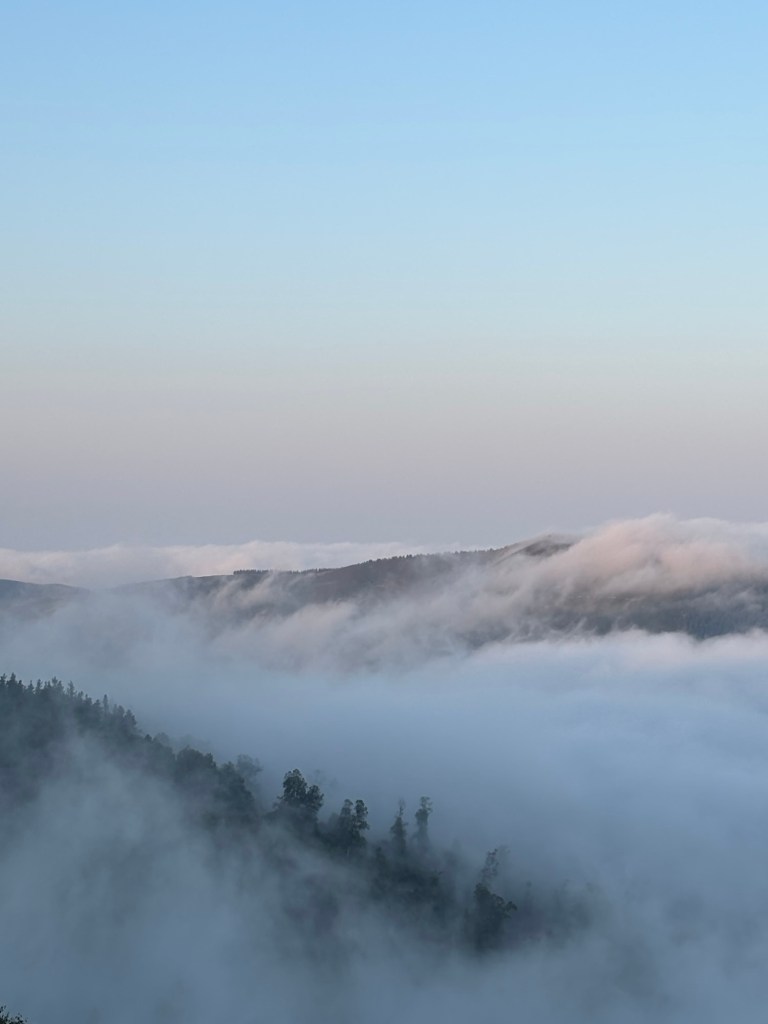
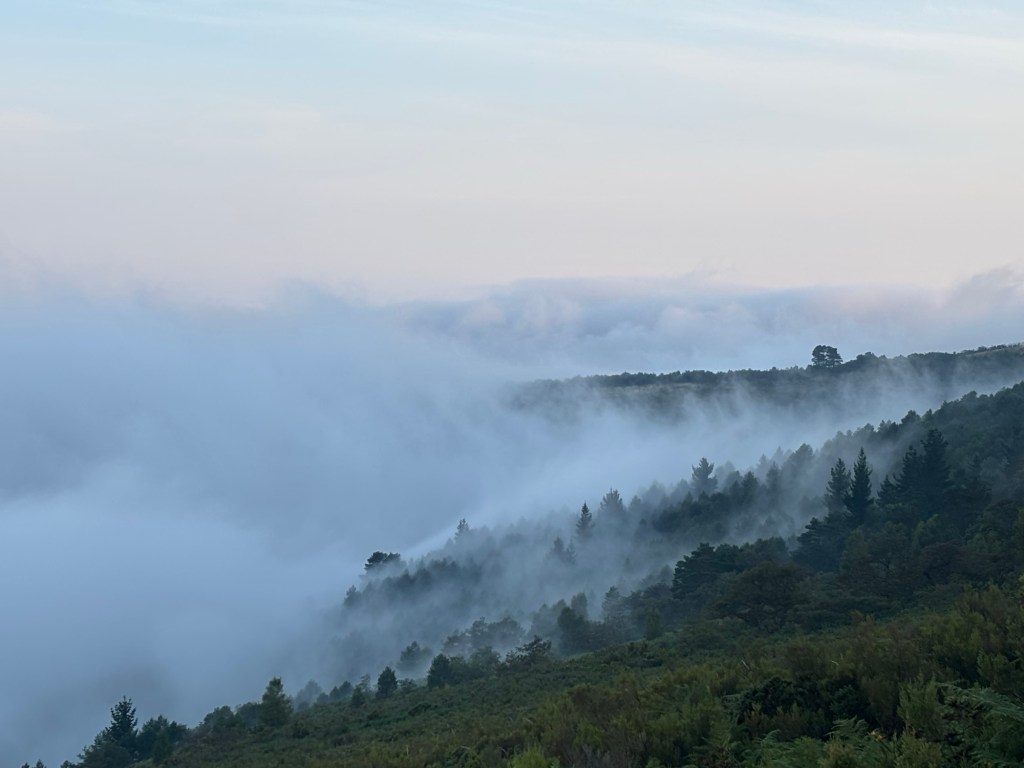
Watching the ocean of clouds roll across the valley and through the trees was enough to lift my spirits this morning. I forgot to say thank you in my prayers then, so I shall tonight. It isn’t every day you get to see such beauty, and we should always be grateful for such things.


In a month’s time, I shall be back at my desk. Planning lessons. Responding to emails and Teams messages. Worrying about this or that task that needed doing yesterday. I have been able to shut myself off from it all on the Camino – in fact, I’ve hardly given it much thought until today. What a beautiful panacea the Camino is!


I met an old friend in Castroverde today: Teodor, a Romanian pilgrim who I had dinner with in Monreal, now all of four weeks ago. I didn’t recognise him at first, but he recognised me. Curiously, he’d heard talk of me on the road a few days prior. How is beyond my guessing, as I’ve done several double days, so whoever it is who had met me has obviously been racing ahead. The Camino can be like that: a one-thousand kilometre long bubble.

I went to the local pool with him and the small group of young men in his train, but I didn’t have dinner with them. Teodor and the Danish doctor among them made for fascinating conversation, but the others were more interested in smoking and talking about how many ‘b*tches’ they could have been ‘doing’ on the Camino between awkward attempts to get the waitress to linger. I’m not a big fan of rakish behaviour, so I politely excused myself and had dinner back at the albergue.

Tomorrow I make for Lugo. It’s only twenty kilometres or so, so it’s a really light day, but my feet might forgive me the release after two forty kilometre stints back to back. I do want to get to Santiago with functioning feet, after all. BB x

Camino XXXIII: Forty-Five

Albergue Pensión Casa Cuartel, A Fonsagrada. 17.15.

My feet are seriously tired, but I’ve done it – the longest stint yet on this year’s Camino. Forty-five kilometres of hills, sierras and reservoirs, of steep descents and sunlit climbs, which puts me one day closer to Santiago and gives me the peace of mind to spend a day exploring the city the day after I get there. I sacrificed seeing a local festival in Grandas de Salime for this, but after speaking to some of the pilgrims in this hostel, I think I made the right choice. It sounds just like the set-up at Castrojeriz, which – if memory serves – left me with a little less than two hours’ sleep after the local verbena went on into the small hours.

There are two English lads in this hostel who must be fresh out of private school, talking about “going for brekkie” in that easily identifiable southern drawl and using the same slang terms like “cooked” and “rizz” that my students do. They’re sitting on the steps outside playing one of those mobile phone games that their generation seems to be absolutely hooked on. They’ve been doing so for the best part of the last two hours, talking loudly about their tactics as they do. The two men from Valencia who went the wrong way today are both fast asleep in the next bunk, which is the quietest the shorter of the two has been all afternoon – he’s a particularly merry sort.


I left Berducedo a full two hours before dawn, long before any of the other pilgrims were up. There wasn’t even the faintest glow on the horizon, so I did have to use my phone torch for some of the trek, especially the hundred metres or so that cut through a forest (where a number of large bats seemed to enjoy the light and the moths it attracted). The constellations were a sight to behold, as was the arm of the Milky Way stretching away to the west, towards Santiago. It’s not quite Perseid season – that’s still a little over a week away – but I did see one shooting star away to the south and made a wish.


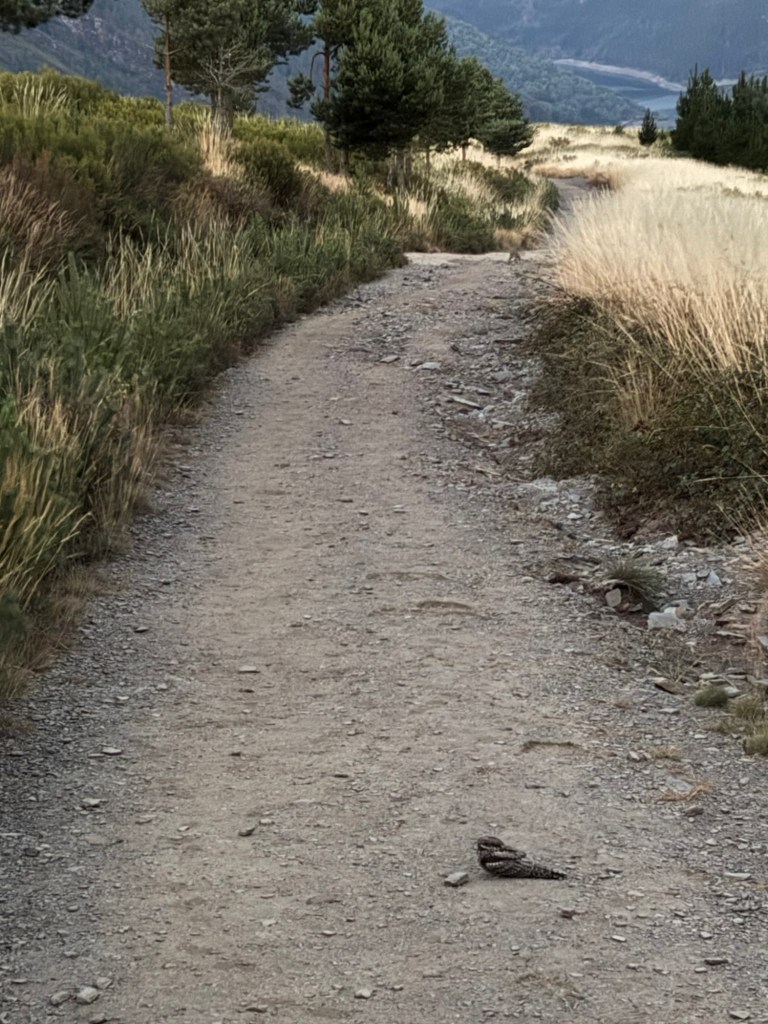
The first cold glow of dawn descended as I began my own descent into the valley before Grandas de Salime. It’s a very steep path that zigzags down the hillside, descending by 800m in a very short space of time. I was quite happily enjoying the Battle of Helm’s Deep when a nightjar almost clipped my face with its wings and one of the rocks in the path ahead suddenly grew wings of its own and took off into the morning air. There were at least three of them hawking about the track, looking for all the world like enormous feathered moths with their strange alternating flight, sometimes flappy, sometimes gliding with their wings held high.

One landed in a tree nearby and set up its eerie churring call, which is almost as iconic to the Camino as the endless tread of my own feet.


Another – the one I had mistaken for a rock – alighted on the track a little way ahead. I approached very slowly and, at least for a little while, it didn’t look like it was in any hurry to take off again. I got so close that I could see it yawn with my own eyes: their vast, gaping mouths are one of the features that gave them their Spanish name of “chotacabras”, or goatsuckers. I almost missed the hare that came bounding out of the grass behind it, appearing more clearly in the photos I took than it did in reality.

Of course, it took off before I could get too close, making its strange grooik flight call as it did so. It landed a little way back up the path but I left it alone and pressed on.

Nightjars are just one of the rewards of setting out early on the Camino. You might hear them, but you’d never see them if you set out after breakfast. I’ve been lucky enough to see quite a few on this year’s Camino, but never so close and never on camera. I haven’t wanted my SLR often on this Camino – I’m carrying enough as it is – but today I would have given a small part of my library to have had it in my hands!


I reached Grandas de Salime shortly after nine, making it a four hour walk from Berducedo (compared to the guidebooks’ suggestion of six or seven). This is usually the stage end, but as it was not even the halfway point, I allowed myself a decent breakfast of a tostada con aceite y tomate, a slice of tortilla and some fresh orange juice so that I might have the energy to push on. There were a few pilgrims having breakfast at the bar, but not that many. The townsfolk were setting up for the second night of their local festival, and I imagine a number of pilgrims had decided to stick around and have fun. I, however, had another twenty-five kilometres still to go and couldn’t stay for long.


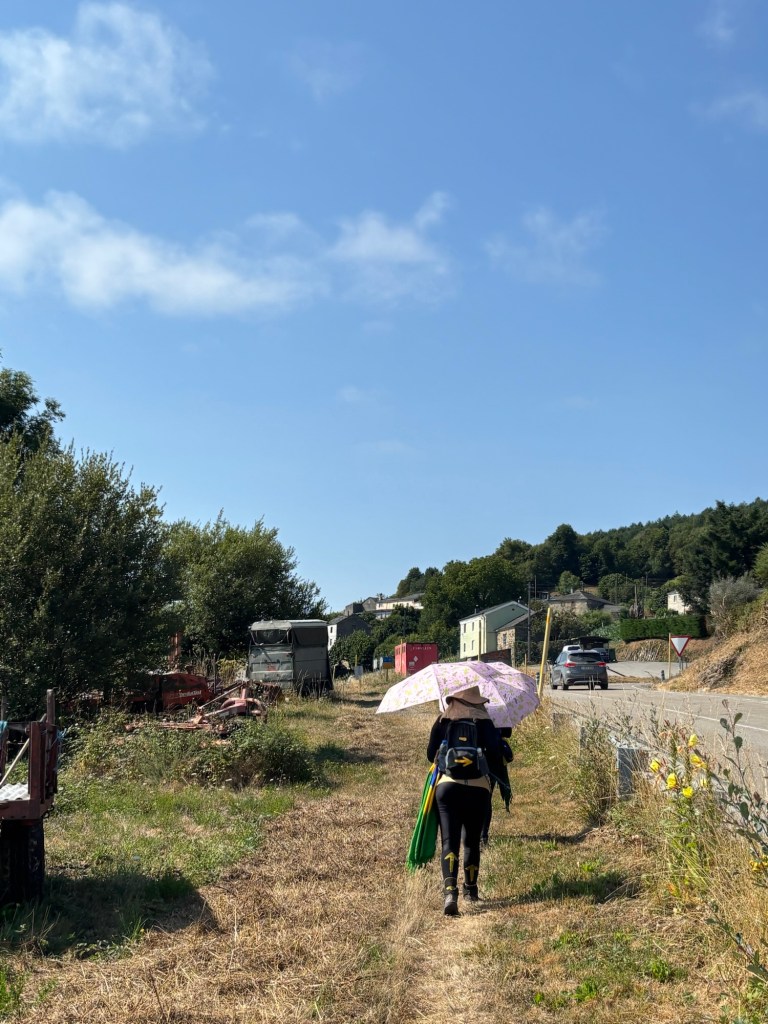
I trailed a couple of Brazilian pilgrims for a little while before Peñafuente, dressed in sporty Lycra, marching cactus-print parasols, a giant Brazilian flag and immaculate hair (something the Brazilian pilgrims seem to prioritise above all other things). I’ve become a lot less cagey about drinking from unmarked fountains along the Camino and the one at Peñafuente was absolutely incredible. The guidebooks recommended the one at Fonfría, but that wasn’t as good or as cold as the one at Peñafuente, so I drank deep and bottled deeper, as it was still a long way to A Fonsagrada. I had hardly begun the second leg, which the guidebooks suggested should take eight to nine hours, and what clouds there were in the sky did very little to block the sun. I was going to need all the water I could get. I can be a real camel on the Camino, but it’s always best to be prepared.


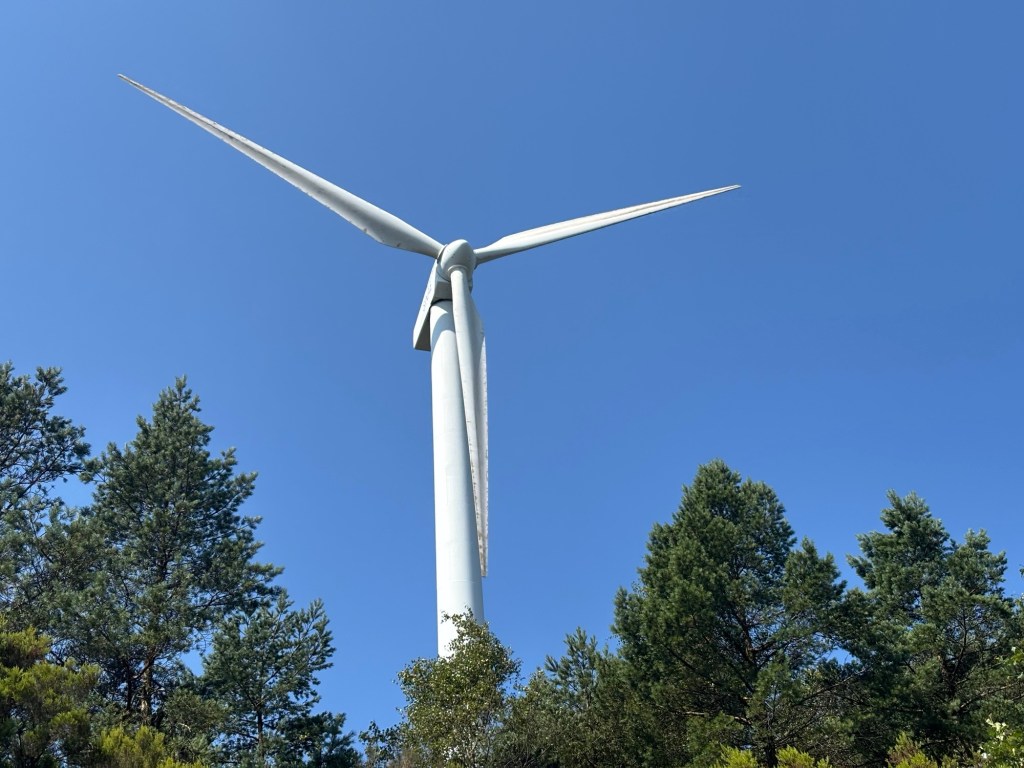
There are quite a few hills to climb between Grandas and A Fonsagrada, none of which were particularly easy under the midday sun. The Camino cuts right through one of Asturias’ many wind farms, though these ones are nowhere near as enormous as the turbines found up in the mountains on the San Salvador route. The heavy whoosh of their arms as they spin in the wind is quite something to hear up close, punctuated with the odd mechanical whirr when the head tilts one way or the other. The way the Spaniards were complaining about the wind up in the mountains yesterday, you’d think that wind was a rare occurrence in Spain – but the turbines that crown many of Spain’s hills and sierras say otherwise.


The Spanish are nothing if not practical with their high places. If there isn’t a watchtower, a sanctuary, a hermitage or a radio mast on top of this or that hill, there’s usually a row of wind turbines.

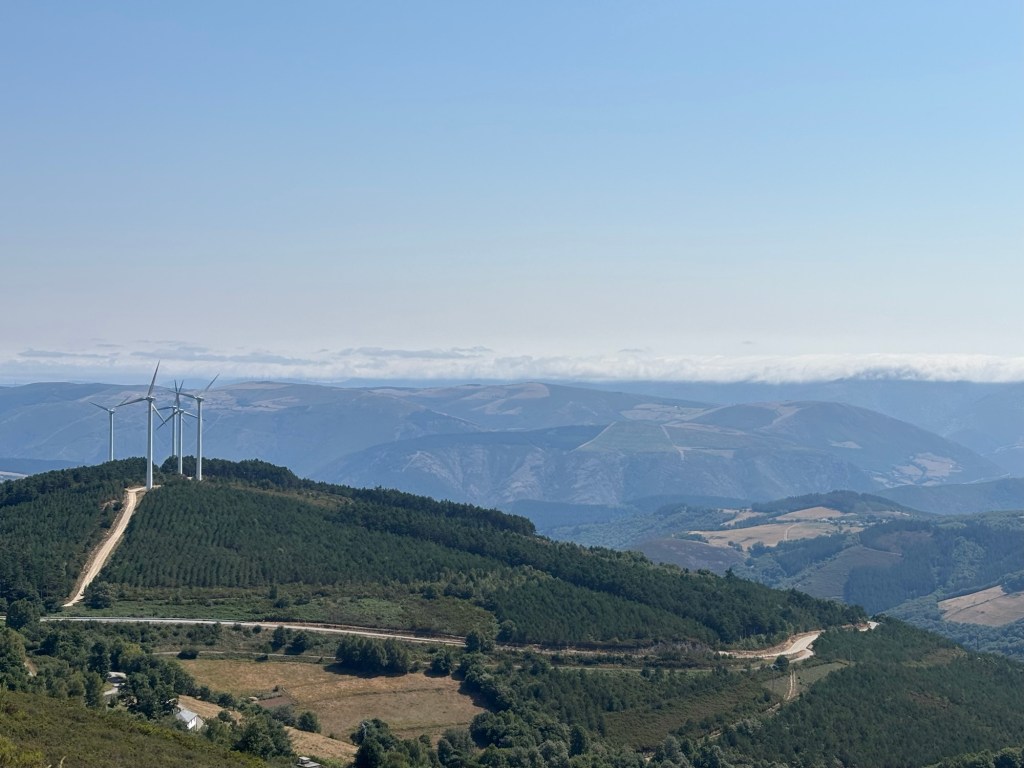
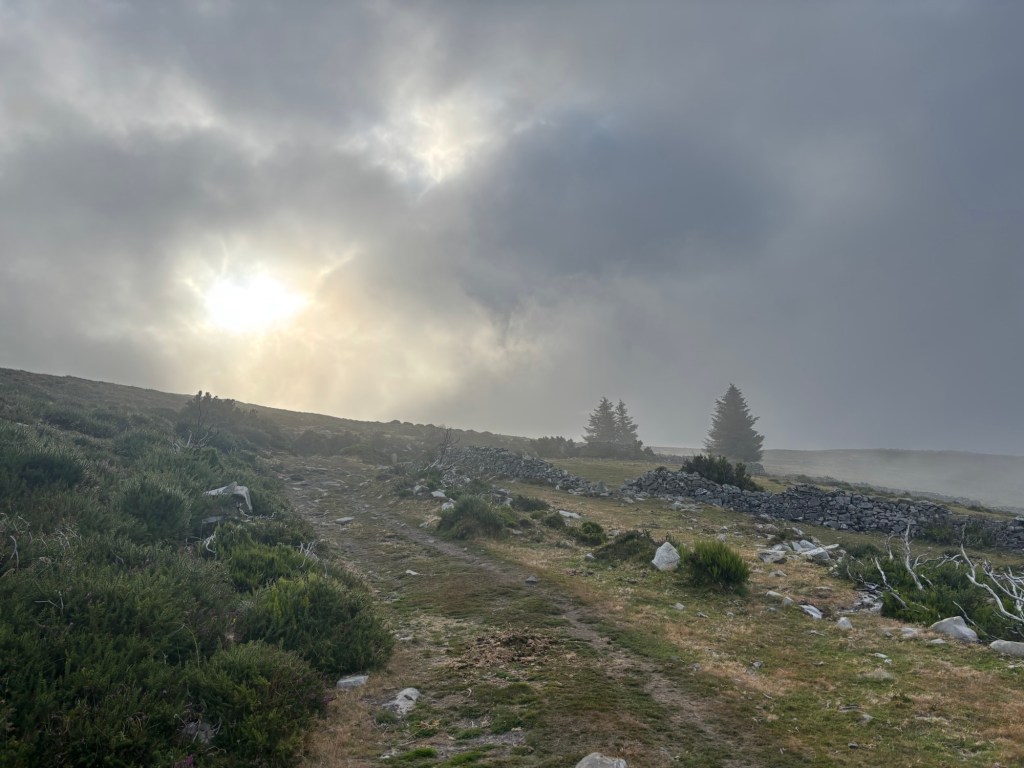
I passed the first row of turbines before sunrise this morning. You can just about see them to the right of the nearer turbines in the photo below, on the last range of hills before the wall of cloud held back by the mountains of Asturias. It’s a good indicator of just how far I walked today.


Shortly after passing the last row of turbines, I crossed the border into Galicia, the last of Spain’s regions on the Camino de Santiago. The marker wasn’t as grand as the one at O Cebreiro – just a crude line of flints and a small cement block featuring a Facebook link to a motorcycle page owned by a guy called Nando, which also happened to indicate that Asturias was on one side and Galicia on the other.

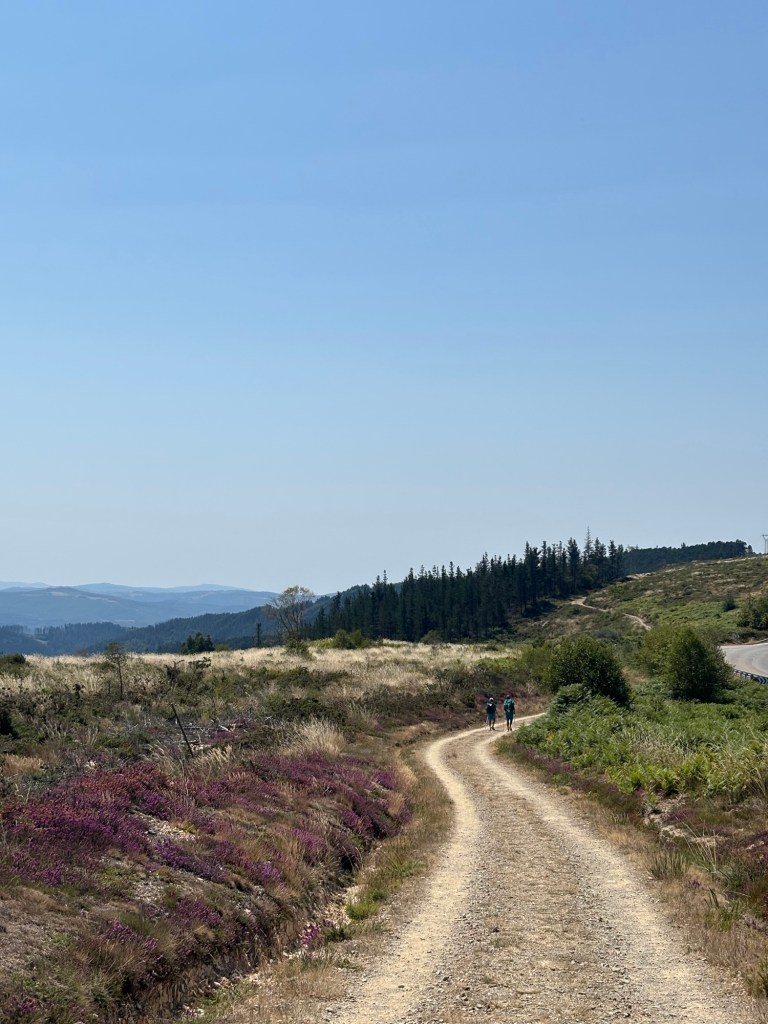
The scenery is already different. The hills are no longer quite as rugged. Instead, they’re carpeted in golden grass and purple heather. I was sorely tempted to get an ice cream at O Acebo, but decided to postpone that desire until I had reached my destination. It took another two and a half hours from the border to reach A Fonsagrada, and the last steep climb up to the hilltop town didn’t help, but I was relieved to learn that the albergue I had found was a bit of a step up from the usual, with real linen bedsheets, soap in the showers and an in-house washer-dryer complex (though I still prefer to wash my clothes by hand whenever I can).


So… forty-five kilometre days can be done, even on the Primitivo! That’s the longest I’ve done so far, and probably the longest I’ll do this year. There’s no sense in rushing to Santiago, which is a lot more expensive to stay in than the towns and villages along the way, so from here on out I intend to enjoy the Camino at a relatively leisurely pace.

Which is, of course, a white lie – because after 45km, 30km is relatively casual. Or 35. Or even 37… BB x

Camino XXXII: El Saltamontes

Albergue de Peregrinos, Berducedo. 17.10.

I have acquired a nickname on this Camino: the Grasshopper. It makes a bit more sense in Spanish, where the name literally translates as “mountain-leaper”. Evidently Hispanic grasshoppers are better at jumping than English ones. Well, not this one, anyway: I took the mountains today at something between a run and a hurdle, leaving the other peregrinos in the dust. I wasn’t in any particular hurry, as I’m still ahead of schedule, but let’s just say I didn’t want to end up walking another 40km day after yesterday’s fruitless endeavours.

Well – mission accomplished!


All the guidebooks indicate that making it as far as Pola de Allande puts the famous Hospitales route out of the question. Fortunately, that’s a load of nonsense. If you’re prepared to do some serious climbing, there’s a farm track that leads back up the mountainside, and I was more than prepared.

And so, as the Fellowship of the Ring tackled Caradhras and the Redhorn Gate (exceptional timing), I hurled myself at the mountain.


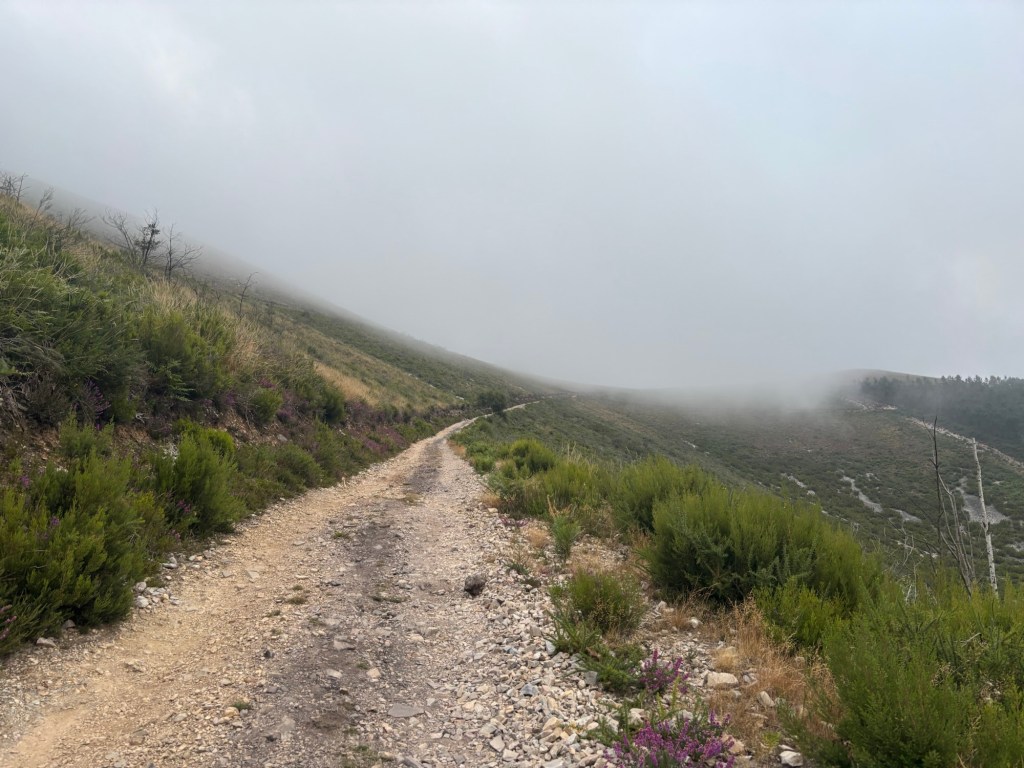
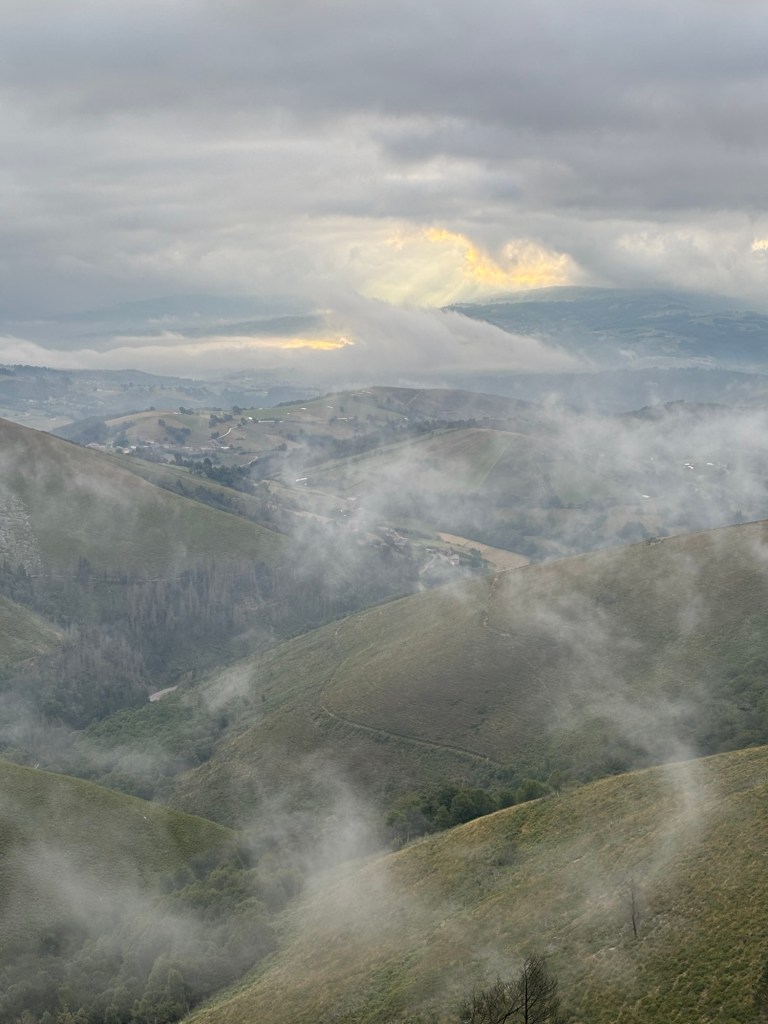
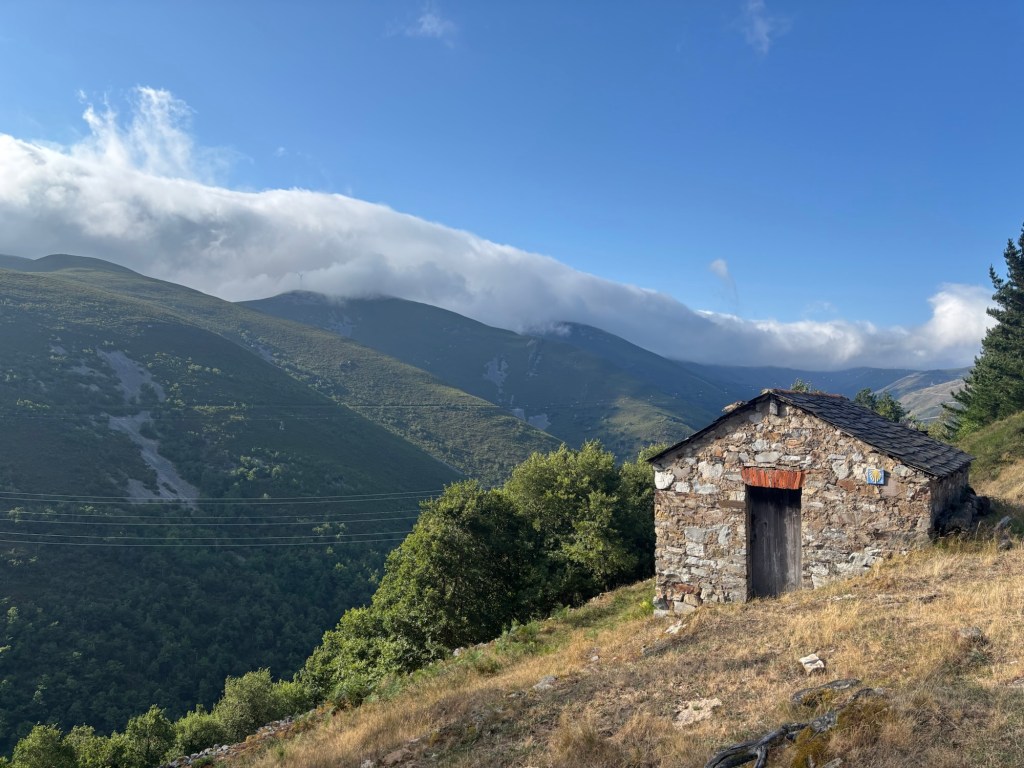
Uphill would be putting it lightly. Let’s just say that the company had already left Moria by the time I reached the top. But was it worth it? 100%. It wasn’t exactly the cloud sea that you get from the summit of O Cebreiro on the Camino Francés – which is around the same elevation – but it was a spectacular sight: pillars of golden light falling upon the green hills of Asturias to the east, dark forests of pine weaving through the valley floor below like a monstrous snakeskin, and great waves of clouds surging up the mountainside to break like water at its peak.


Standing here, upon the heights of the misty mountains, it was easy to see where the painters of Biblical masterpieces of old got their inspiration. Who wouldn’t be inspired with some sort of religious ecstasy in the high places of the world? Are not the mountains the closest we can get to the Heavens?


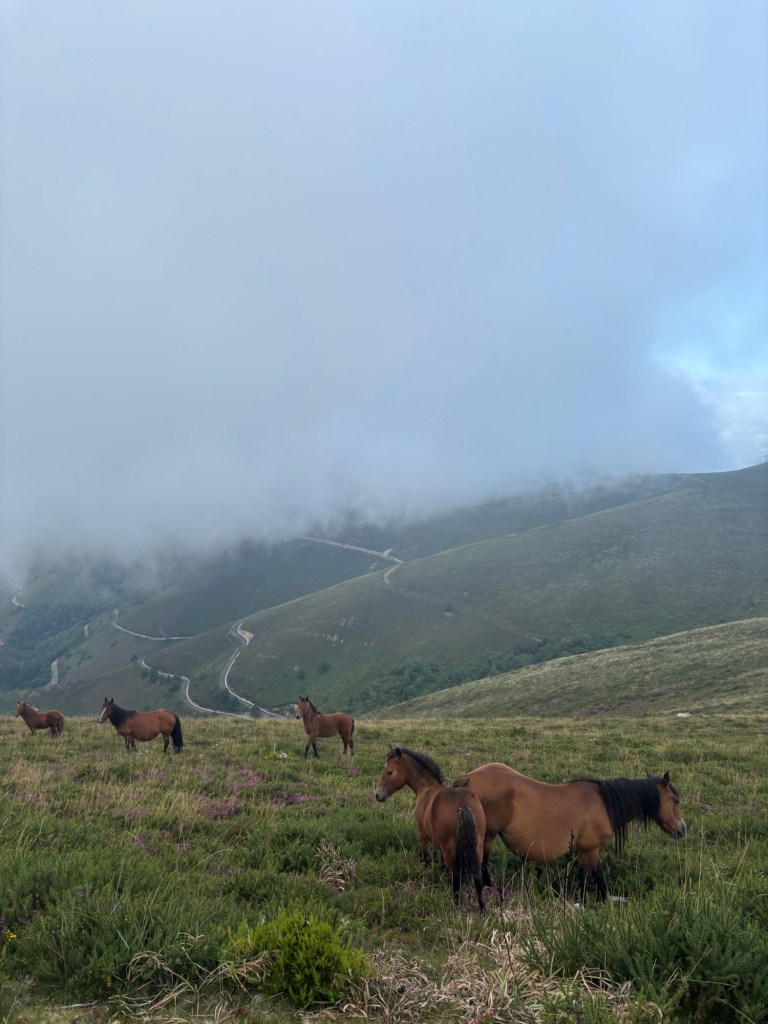
It’s still quite a schlep even when you’ve made it to the summit to reach the point where the Hospitales route joins up, so I had a fair stretch to myself. Me and the wild horses, that is, which were just about everywhere the cows weren’t. It must be a pretty charmed existence for them up here: all the fresh grass they can eat and all the space in the world, even if it is tremendously vertiginous…


After passing the ruins of the old pilgrim hospitals, I caught sight of the first peregrinos of the morning – mostly the crowd of twenty-odd who had reached Colinas de Arriba before me yesterday. Not to be outdone once again, I picked up the pace and vaulted past them. It’s hard to explain, as I don’t come from a particularly mountainous part of the world, but I have always been pretty nimble on my feet in the mountains, so there were large stretches where I confess I really was jumping from boulder to boulder. It feels right, somehow, in a way that a jog around the school grounds just doesn’t match. To think how fit and healthy I would be if I found a way to live in this country forever…!


The descent from Monfaraón was mightily steep, but then again, so is tomorrow’s descent to the Embalse de Grandas, so I looked at the exercise as good practice. The Camino climbs (or races) through the slumbering mountain villages of Montefurado and Santa María de Lago, and by the time I’d reached the latter I had put at least half an hour between myself and the last pilgrims I’d encountered on the road.


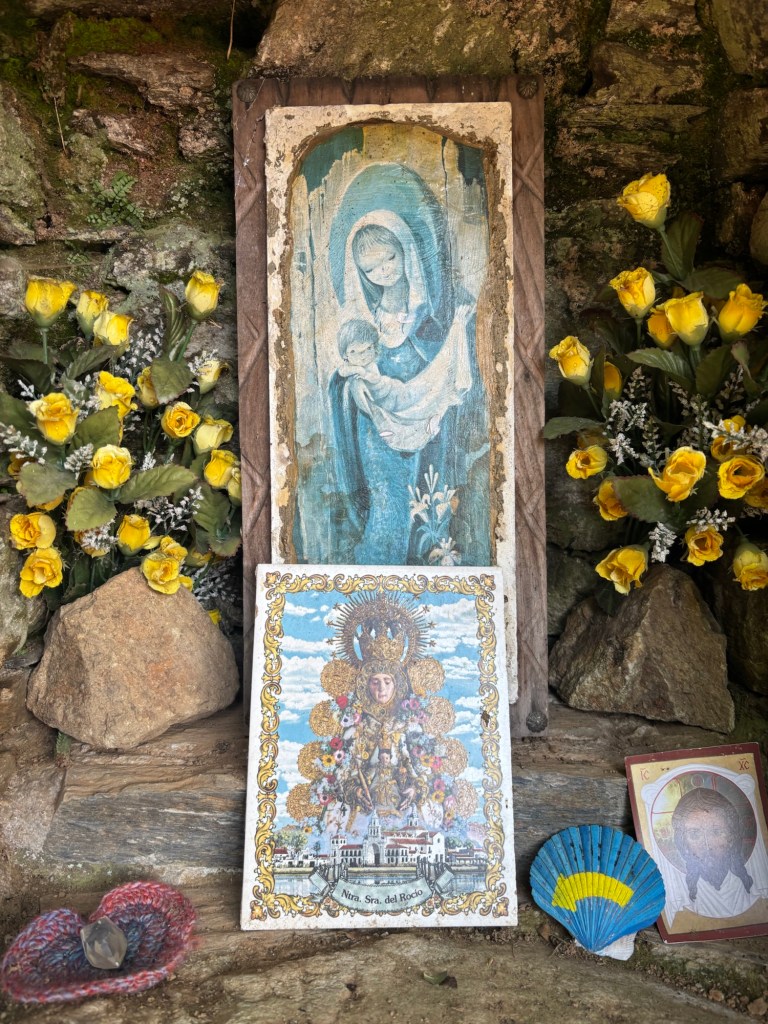
I didn’t see anything of especial note on the wildlife front beyond a veritable army of Dartford warblers in the heather on the mountaintop, but I did find a small shrine to the Virgen de Lago, in front of which somebody had placed an icon of the Blanca Paloma, which was a definite highlight. She has been a real guiding light on this Camino and my hearts soars whenever I find a space where she is venerated.


I got to Berducedo at around 11.40, all of an hour and a half before the albergue was due to open, so I could have pressed on – but after yesterday’s adventure, I wasn’t taking any chances, so I staked out the albergue and scored the first bed. A small victory, but one well-earned.

Not for the first time on this Camino, I bamboozled the other pilgrims by speaking only in Spanish and with a very thick southern accent which, I’m told, smacks of “La Línea o algo” – a mix of English and Andalusian, but more Spanish than English, which is plenty good enough for me.

I had lunch with a large group of Spanish pilgrims from all over: León, Toledo, Donostia, Madrid and Andújar, as well as an English lad here brushing up on his Spanish before the trials of Year 13. The fabada was phenomenal, and should give me all the energy I need for tomorrow’s mad trek, as I need to gain a day or two somewhere between now and Santiago.


There’s an Italian girl who is in tears because she can’t go on. One of the Spaniards is gently encouraging her to look after her health and to come back when she’s ready and pick up where she left off. She’s not the first casualty I’ve encountered on the Camino this year and she won’t be the last. I have to count myself lucky that I’ve made it so far in such good health. Maybe my daily prayers are doing some good for me after all. BB x

Camino XXXI: On and On

Albergue de Peregrinos de Pola de Allande. 20.04.

Yesterday, as it turns out, was only a test drive in fully-booked albergues. Today’s leg saw me walking a further fifteen kilometres in search of a bed after all the other options en route were exhausted, one by one. I’m not even at the logjam that is the Sarria-Santiago stretch, but the early warning signs are already here.

But I’m getting ahead of myself.


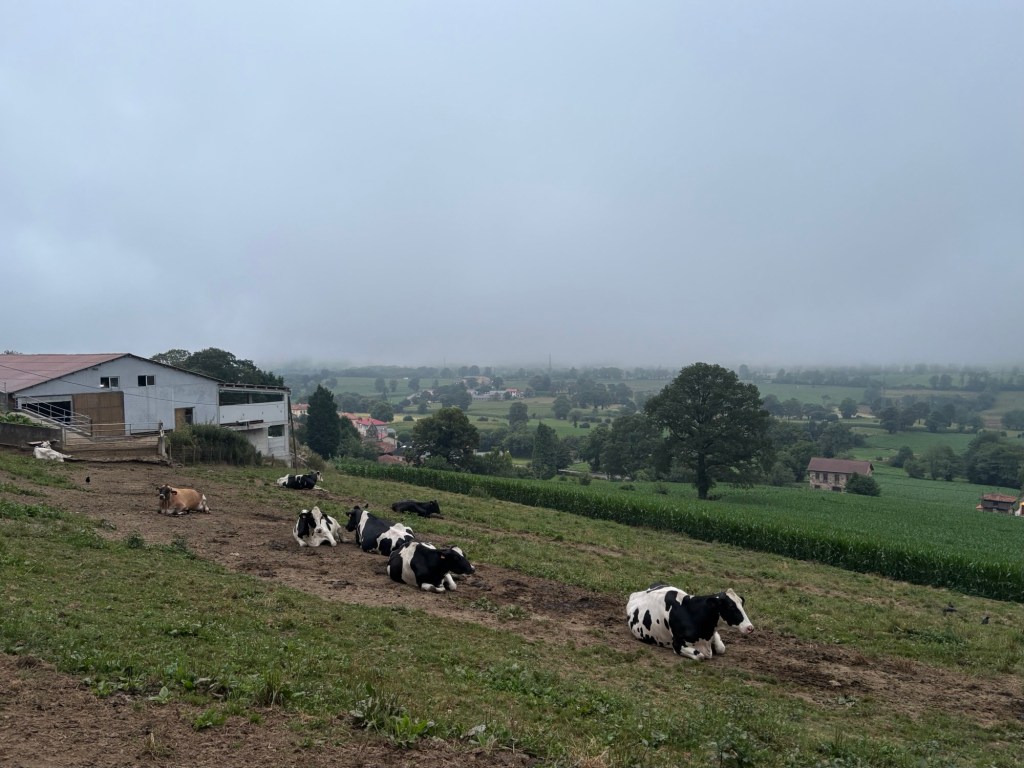
After a blissful night’s sleep in an albergue that was really a converted house (and quite possibly the best shower on this year’s Camino) I left at the relatively slack time of 6.45am, as the sun failed to materialise behind a heavy belt of cloud. The next major town, Tineo, was about two hours’ walk from La Espina, through a vast network of hillside cattle fields. My Spanish students in Extremadura used to joke about Asturias having only tractors and cows. It sounded like a gross stereotype at the time, but let’s put it this way: this part of the country would make for a very repetitive game of I Spy.


At Tineo, as I stopped for a drink at one of the fountains, I was almost jumped by a young pine marten which leapt out of the bushes above the statuette of Santiago. I should have known something was about because the blackbirds were kicking up a fuss in the trees, but I was thirsty so my senses weren’t as acute as usual. It didn’t hang around long enough for a photograph, though it did pop its head out of the bushes a few minutes later from the safety of a shed roof halfway down the hill. That’s the second one I’ve seen. They must be fairly plentiful in this part of the country.

At the edge of the woods above Tineo stands a little house that commands a spectacular view of Tineo and the surrounding hills. Until recently this was the home of Arcadio Rey López, the self-styled “Último de las Filipinas”, a former miner, local celebrity and dyed-in-the-wool Republican who once welcomed pilgrims on the Camino Primitivo. Arcadio died in 2018 and, since then, his former home has lost much of the poetry which once adorned the chalkboards around his house.

Curiously, the expression “ser el último de las Filipinas” means to be the last one to arrive, which was something of a theme of today’s adventure.


Up on the heights above Tineo, I could see all the way to the Bay of Biscay – my first (and potentially last) sighting of the sea along the entire Camino. I heard a quail for the first time in a while, but was followed all the way by the two most common spirits of the Camino: black redstarts and stonechats. These last are ubiquitous in Spain, no matter which Camino you choose to follow, and make for entertaining companions as they race ahead in pairs along the fences ahead of you.


The Camino forks at this stage, offering a slow descent to Obona, but the path itself was roped off, so I took the regular route. When I was deep in the forest beyond, however, I came across a most confusing bit of signposting, which didn’t make it abundantly clear where to go, with the Camino arrow pointing right and the Obona arrow pointing back the way I had come, and a third path going straight ahead with no indication at all. It’s not often that the Camino signage isn’t easy to read, but this was a bit of a puzzle.

So, as Google Maps wasn’t being particularly helpful either, I turned to PolarTrek, an app I’ve been using to track my mileage each day. For whatever reason, PolarTrek is much better at seeing footpaths, which I used to double-back and visit the abandoned monastery of Obona, once a mandatory stop on the Camino.

Obona’s ruined monastery is… haunting, to say the least. It’s hard to tell when it was abandoned, though it must have been sometime in the 19th century after Mendizábal’s confiscation in 1835 of the “manos muertos”, the Church’s inalienable properties in Spain. People have obviously come and gone since then: graffiti both harmless and profane had been scrawled across one stretch of surviving plasterwork; somebody has lit a fire in one corner of the old refectory and written the name “Diego” into the fire-blackened wall; an empty packet of budget Bluetooth headphones lay between the naked beams that must once have supported a tiled floor at one end of the cloister; and a couple of empty bottles and a crushed can of Aquarius had been thrown into one of the antechambers alongside four stacked chairs and the top half of a choir lectern, which was in remarkably good nick if it was a genuine 19th century design.

The cloister itself, unfinished and overgrown, smelled tremendously strongly of mint, which was growing all over the place. I couldn’t resist chewing on a few of the leaves – fresh mint tea is a delicacy I don’t make for myself as often as I should.


Back in the forest, I tired of the lacklustre American reading voice of From the Depths and returned to an old favourite: the 1981 BBC Radio adaptation of J.R.R. Tolkien’s The Lord of the Rings. I was lucky enough to grow up with Peter Jackson’s films (which I adore) but before the films I had the radio series and it is still, in many ways, the superior adaptation in my head. How can you possibly go wrong with a voice cast of Ian Holm, Michael Hordern, Bill Nighy and John Le Meisurer? Not to mention Stephen Oliver’s beautiful orchestration of Tolkien’s verse to music…

Like Triffids, which I often take with me on any solo adventure, I like to listen to The Lord of the Rings whenever I’m on a walking holiday. So much of the saga is about a long journey, and the series’ denouement – which handles the slow sense of loss as each of the heroes part ways until Frodo is left alone – is easily its strongest point, and one which is all too familiar on the Camino. I cannot recommend it enough.


Thus armed, I was relatively sanguine about the subsequent disaster which was my attempt to find a bed for the night. After buying two sandwiches in Campiello – one for today’s lunch and the other for tomorrow – I tried the donativo in El Espín, hoping its relative obscurity would make it an early win. It was not to be. I was greeted with the now frustratingly familiar blue “HOY COMPLETO” sign.

I tried Borres, which I reached after a little tricky negotiation of some churned-up cow slurry. The municipal was noisy and looked half full. Three Spaniards in Lycra told me to check in at the bar in town, about ten minutes’ walk away. I ought to have done just that, but I didn’t fancy the place, and in my hubris I decided to push on to the spot that the Dutchman from El Texu had recommended in Colinas de Arriba.

When I got there, about an hour later, I found a large party of fifteen or sixteen Spaniards having lunch in the foyer. Two others sat at laptops in the bar. The landlady turned a rather apologetic look at me and shook her head – unless I wanted to rent the apartment, which wasn’t cheap, there was nothing they could offer me. I shrugged and said I was sure I’d find something. I should have asked if I could at least fill up my bottle – which I had almost emptied as I neared Colinas – but I forgot.

It took another hour and a half to reach Pola de Allande, now well off the track up to the highlands, arguably one of the Camino Primitivo’s most scenic spots. Finally, just as Frodo volunteered to take the ring to Mordor at the Council of Elrond, I reached Pola’s albergue to find it almost as empty as the Monastery of Obona: just two pilgrims had staked out beds in a room that could have housed at least eighteen. Relieved, I took off my sandals and bag – always one of the highlights of each day – and crashed out on the blue rubber mattress of the nearest bed.

I wasn’t feeling like a meal out, but I did buy myself a tin of fabada asturiana and a couple of arroz con leche puddings, which restored my energy reserves a fair amount. By the looks of things, today was actually one of the longest stretches yet on the Camino, and that’s before factoring in the elevation, which was considerable. So perhaps I did have something to celebrate after all.


I’m loving the scenery of the Camino Primitivo but I’m not enjoying this daily rigmarole of disappointment when faced with pre-booked albergues. The Camino Francés is popular too, but it has a lot more infrastructure to deal with the increasing numbers of pilgrims. The Primitivo’s charm is in its solitude, which isn’t as easy to find in August as it must be at other times of year.

But I remain optimistic. Tomorrow is another day. Tolkien’s walking song has ever been my companion on the road, and I often sing it to myself when I am alone and the road stretches out before me. If there is a more fitting song for the Camino, I haven’t heard it. BB x

The road goes ever on and on

Down from the door where it began.

Now far ahead my road has gone

And I must follow if I can.

Pursuing it with eager feet

Until it joins some larger way

Where many paths and errands meet

And whither then? I cannot say.

J.R.R. Tolkien

Camino XXIX: Asturias

Albergue de Peregrinos, Grado. 21.40.

Confession. I was genuinely considering skipping Grado to gain a day this morning. I think I still hadn’t shaken the idea that, if I could only walk a little faster, I might catch up to my companions on the Camino Francés before they left for home. But the Camino, like an old god, is fickle. I’m not sure whose idea it was – Santiago, the Lady of El Rocío or the capricious spirit of the Camino itself – but I was waylaid at the albergue this morning by a retired Swedish woman who wanted company on the road out of town. The Camino leads straight to the train station, and I might have made it in time… but the Swedish woman pointed left and I followed without thinking.

I lost her about half an hour later when I picked up speed at the city’s outer limits, but I see now that it was a signal: no tricks this time. This Camino must be walked from beginning to end. There is something along this road that I am meant to do or see. The fatalist in me takes over on the Camino, and right now he is utterly convinced of that fact. So here we are.


Welcome to the Camino Primitivo. If you were expecting something similar to the Camino Francés, think again. It’s almost like stepping out of a bus and onto a boat: the same feeling of companionship, but an altogether different vehicle in an altogether different environment.

Asturias is, in a way, the grandfather of Spain. This green and clouded region, together with Cantabria and the Basque Country, was the final holdout of Iberia’s Christians during the Moorish invasion of 711, and it was from here – so the legends tell – that Don Pelayo established the Asturian monarchy, the earliest forerunner of the Spanish crown, and began the Christian reconquest of Spain – the Reconquista – which would take nearly eight hundred years to complete.

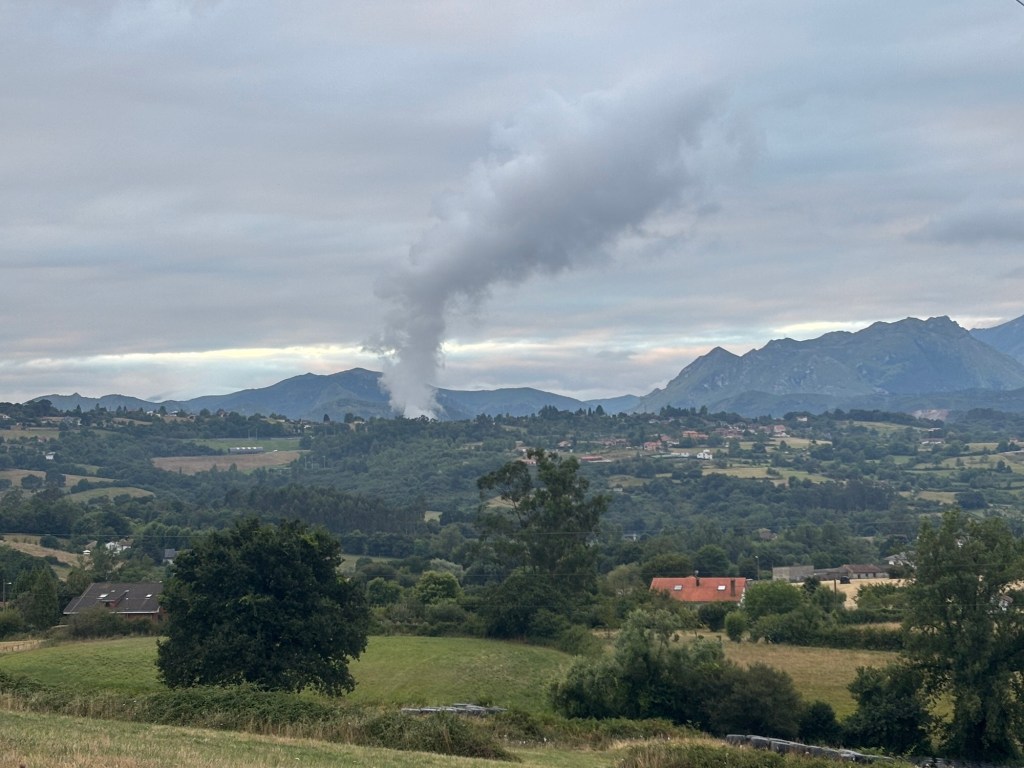
You might think such a place would be as Spanish as it gets. You would be mistaken. This is not a land of paella, flamenco and bull-fighting, or dark-skinned maidens flanked by guitar-wielding lotharios (a stereotype far more common among Italian pilgrims this year). This is a green and hilly country where the clouds descend as far as the tree-tops and sometimes beyond; where the rain rolls in off the sea in visible eddies and falls like mist on your face. Where the men are short but powerfully built, and the women breathtakingly pale. Where great clouds of smoke rise from the quarries and factories, and the air is thick with the constant ringing of cowbells. This is Asturias. It could hardly be more different to neighbouring León. It is a reminder – as though one were needed – that Spain is, in reality, a multinational state, where even the kingdom that started it all has its own distinct language and identity.


For the greater part of the morning, my road was cushioned by the clouds. Sometimes they moved with me, sometimes they moved against me. It rained for a half-hour or so, but it was not so much rain as a rain cloud that was so low to the ground that one could walk right through it. The Camino from Oviedo ducks and weaves through the hill country, sometimes following the asphalt roads, sometimes leading down dark trails into the tangled forests of oak and eucalyptus.

It’s very easy to see how this corner of Spain – behind the frontier of the Cordillera Cantábrica – shelters most of Spain’s lingering mythology. The forests are dark and watchful and the mist rolling through them plays tricks with your eyes. I heard something large kick up the leaves and dart into the deep at one point, but I never did see what it was. A deer, perhaps. There are plenty of them about.

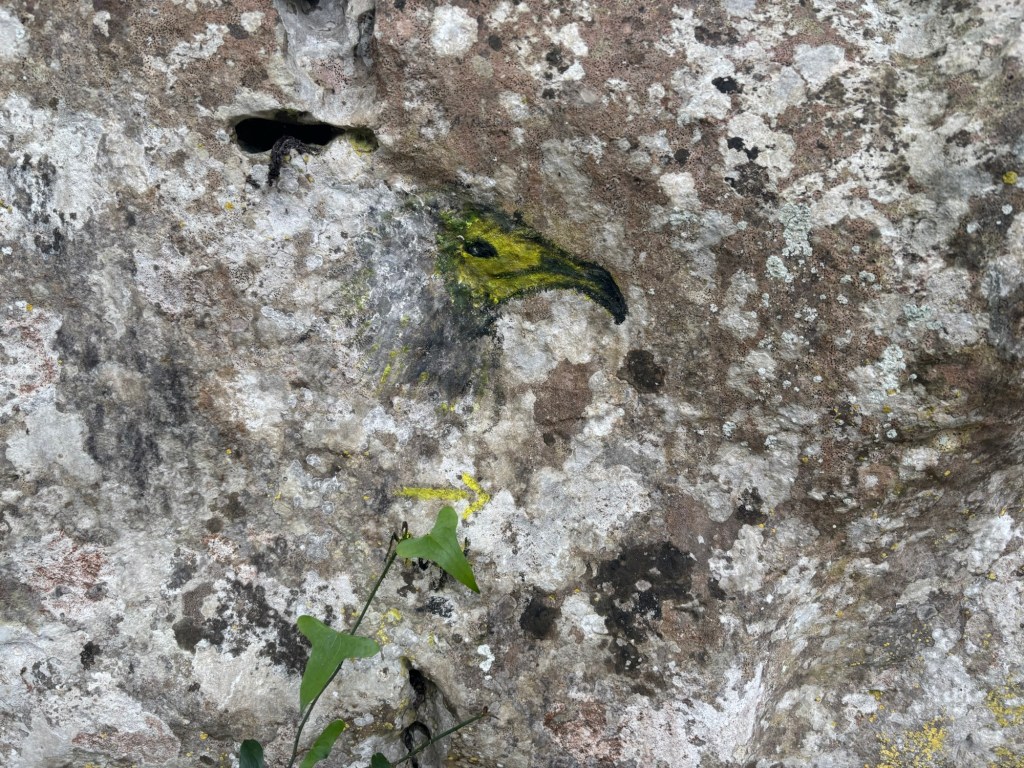
In one of the forested stretches, the Camino crosses a small clearing scarred with limestone teeth, like the bones of some ancient monster. A splash of colour on one of the rocks nearest to the road caught my eye and, on closer inspection, it was the head of one of the spirits the Lady of El Rocío sent to guide me yesterday: an Egyptian vulture.


Egyptian vultures are one of the oldest species of vulture still in existence. They are also the last of their kind, with their nearest relatives believed to have died out during the Miocene. They are incredibly intelligent creatures, being one of the few species to use not just one but two tools: using stones as hammers to break into eggs, and sticks as spools to gather wool or other nest-building materials.

They’re also amazing to look at, with their glam-rocker hairstyles and their black and white wings. I found myself wondering whether this bird was one of the inspirations for the Chozo, an ancient race of superintelligent avianoid aliens from the Metroid series. Their faces certainly match up to the earlier designs.

Well, while I had them on the brain, suddenly, there they were: a pair of them, circling low over a hamlet on the outskirts of Premoño. A local and his son were heaping refuse onto a small bonfire, which may be what drew them in, but before long they were riding the thermals high into the sky. It was enough to make me skip one breakfast stop just to chase after them and watch them ride higher and higher until I could no longer make out the diamond shape of their tailfeathers.


I tried to make amends on a breakfast stop in Valduno, but one of the waiters made frantic signs to be quiet as I opened the door: half the bar space had been given over to microphones and speakers, and they were in the middle of recording a podcast. I could get some water, they said, or wait in a corner. I felt I was intruding on something. I moved on.

I found a better spot in Paladín, where I had a nice long chat with the barman. He had some sort of alarm setup which sounded awfully close to Colours of the Wind from Disney’s Pocahontas, which went off whenever somebody walked through the gate – I guess that’s how he knew to appear the moment I arrived. He was keen to know how many pilgrims I had seen on the road. I told him only a handful, as I had been one of the first to leave Oviedo – which was true – but that there had been plenty at the albergue. He was quick to point out that not all of them would come this way, as the Camino Norte also runs through Oviedo, but seemed very appreciative to have a conversation with a peregrino. Spanish tourists bring money during the summer, he said, but they don’t bring much more than that: a place to eat and sleep and then they’re gone. He missed conversations with pilgrims and swapping tales from the road.

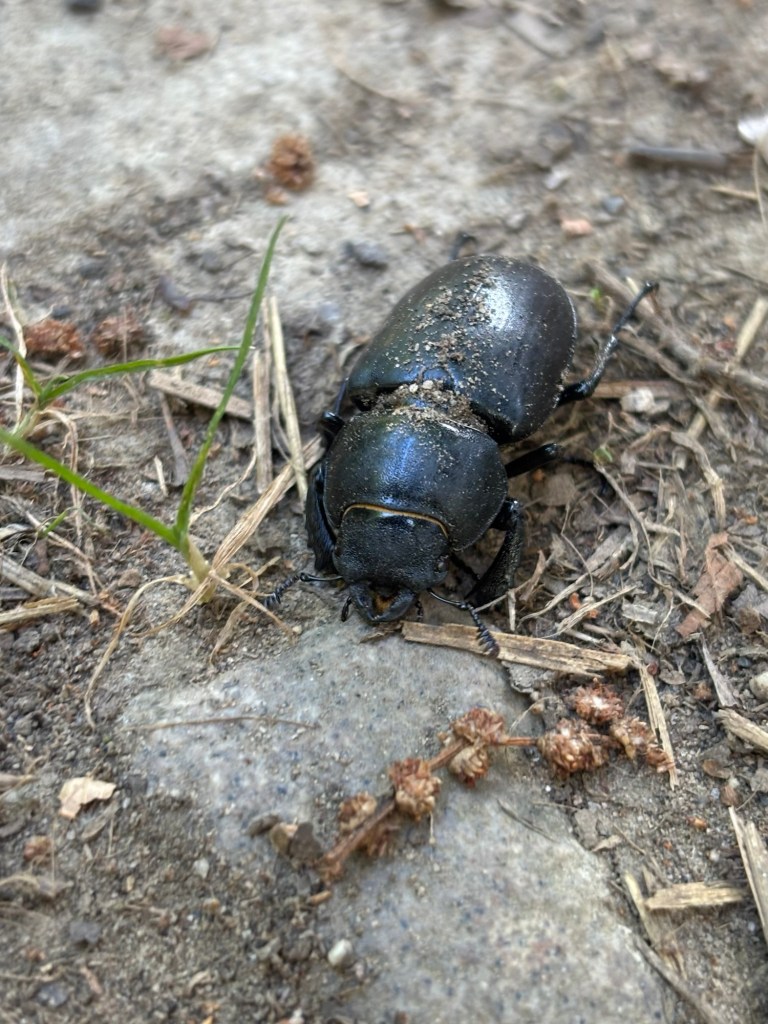
After Paladín, the Camino returns to the banks of the Nalón for a little while. I was so fixated on the beauty of the river that I almost stepped on a stag beetle. I have yet to see one of the impressive males, but the females seem to get about quite a bit during the day, as this is the sixth or seventh one I’ve seen along the Camino.


Like its sister, the Tajo, and a great number of other Spanish rivers and creeks, the Nalón cuts right through the craggy cliffs and sierras on its winding journey to the sea. The train from Oviedo seems to follow it, which must make for a spectacular journey. There’s a small bar at the foot of the Peñón de Peñaflor where you can stop for a drink, but I was much too busy drinking in the view. The old masters painted paradise as a garden with many mirrored lakes and fruit trees, but I think mine would be scarred with karstic crags just like these.


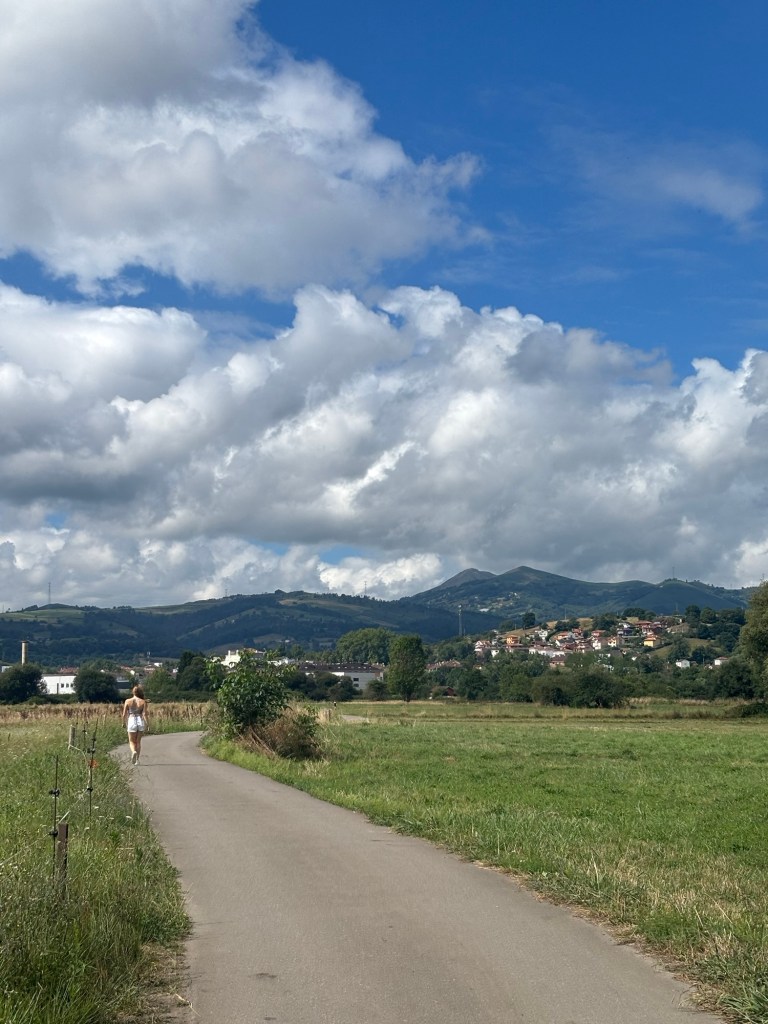
After crossing the river and the tiny settlement of Peñaflor – a small cluster of houses that seem to exist purely to justify the train station – the Camino cuts across the countryside toward the hill town of Grado. A local girl in white cut-off jeans stepped out into the road as I left town and sauntered on ahead with a jaunty, confident stride, toying with her hair over one shoulder and then the other, and then held up in one hand, as though she couldn’t quite make up her mind how she wanted it. It was about half an hour’s walk to Grado, where she finally disappeared into one of the apartment buildings. Spaniards aren’t known for being natural long-distance walkers, so I wonder what she was doing out here?


I reached the albergue a full two hours ahead of opening time, so I took off my sandals and zoned out for a bit. I’ve found a comfortable method in wearing my liner socks underneath the woolen socks (which may well be their original purpose). It’s not too hot and it meant no discomfort whatsoever from my blisters. Let’s see if it lasts.

Andrés, the cheery hospitalero from Badajoz (I’d recognise that accent anywhere) arrived just before 2pm and handled check-in, after which I had a good nap for two hours (that’s how I can justify still writing at this late hour, when all the other pilgrims have long since turned in). I considered going out to eat, but instead sorted out my flight home and popped out to a supermarket to get some supplies – namely, sun-tan lotion, as I’m all out and there are some long days ahead.

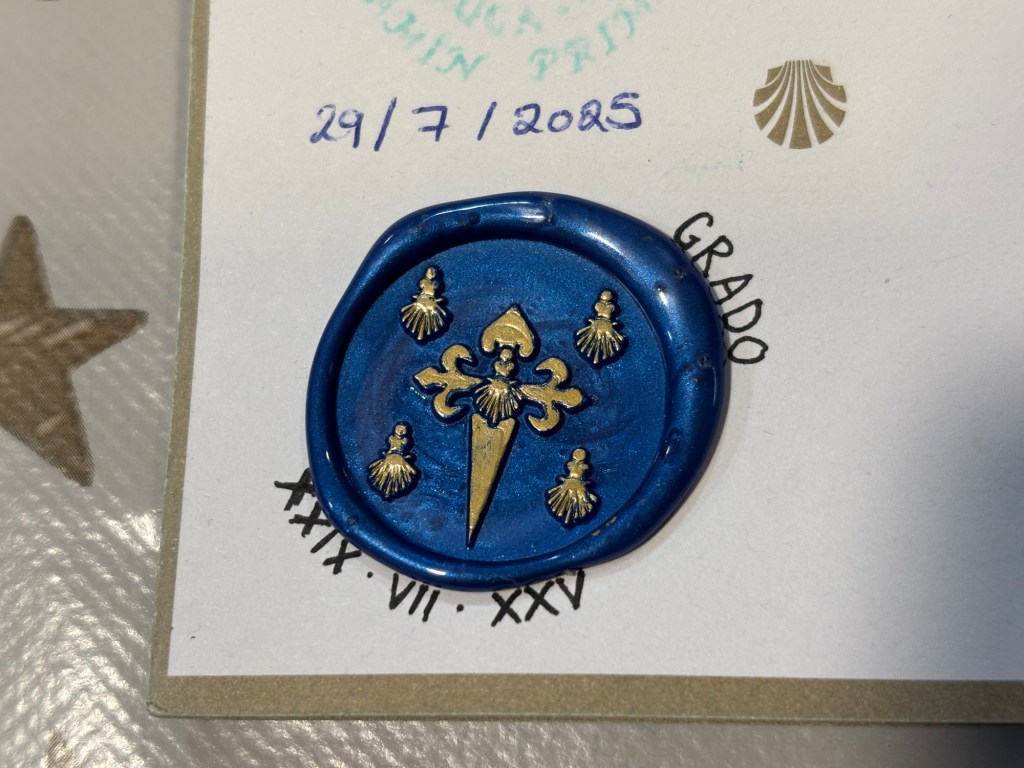
Back at the albergue, Andrés suggested making some wax stamps. This slowly brought all the pilgrims downstairs and got conversations flowing all around the room. Hospitaleros only typically work for around 15 days before moving on, but here was a master at work: friendly, accommodating, knowledgeable and unimposing. Just present.

He also had the spirit to call out a fellow Spaniard for a slightly tactless remark about how “easily” Moroccan migrants get Spanish citizenship. As a former civil servant, Andrés certainly knew his stuff – enough to put the man in his place with some hard facts about the reality of immigration policy in Spain.

I feel I learned a lot today. I also got a shiny new wax stamp for the passport, which I painted gold in a nod to the Asturian flag. Now when I look at it, I’ll remember this place.


I don’t know if I’ll find a “Camino family” again like I did on the Francés – that road does facilitate the group dynamic like no other. But this feels right. I’m learning so much and seeing so much more.

Somebody stopped me from catching that train, and they had the right of it. Here’s to another week and a half of wonder. BB x