Plaza de la Merced, Málaga. 21.13.
Everything always looks better in the light of a new day. It also always feels better after a decent night’s sleep, which – bar a brief episode where the street sweeper went by at 4am this morning and woke everyone up – I most definitely had. With my inner city blues no longer making me want to holler quite like they did the day before, I set out into Málaga in search of somewhere green and quiet.
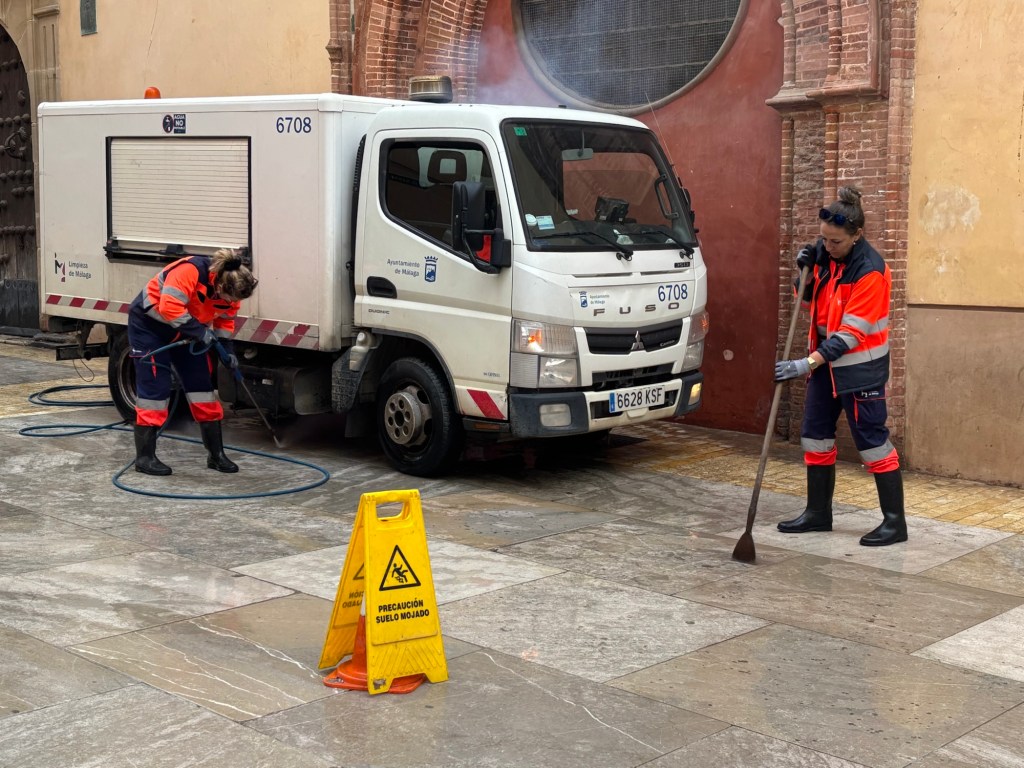
The street sweepers were still at work as I wandered across the old town, scouring the slabs outside the cathedral. There’s two reasons for this: one, to remove the wax from the dripping candles of the processions, and two, to remove the gum spat out by the thousands of spectators (especially the younger ones – almost every other guy and girl was chewing something last night).
I see a fair amount of gum-chewing as a teacher, but nowhere near as much as I do here. Spanish kids seem to be hooked on the stuff.
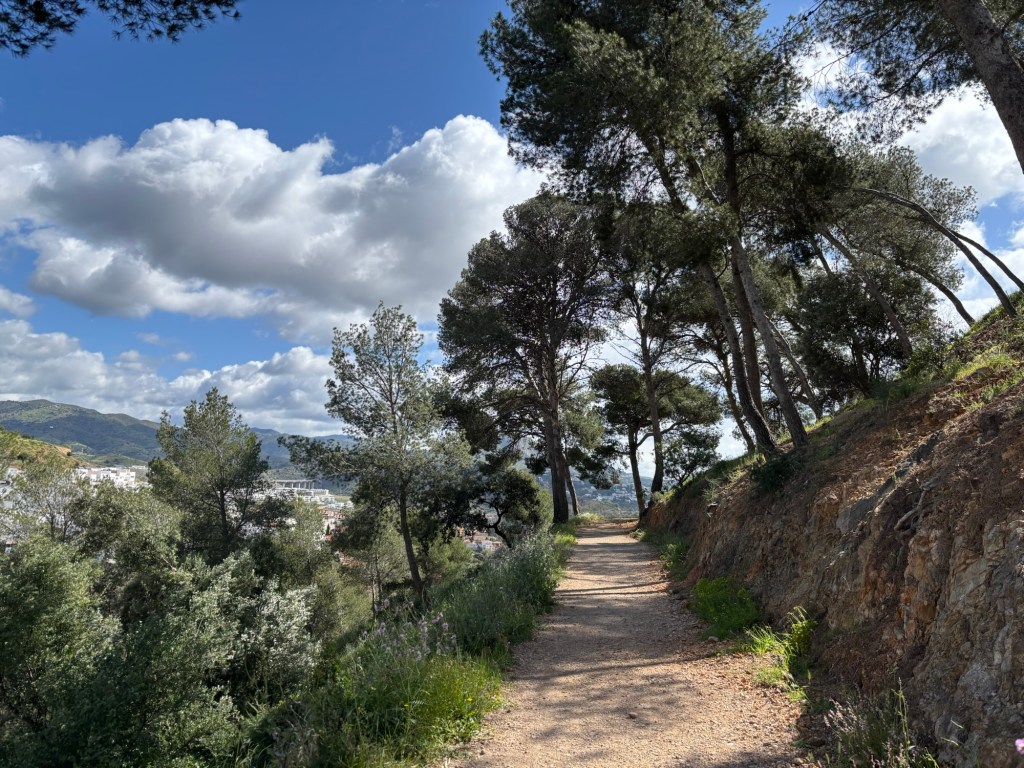
Gibralfaro is the antidote to the crowded streets of Málaga. An island of green in the busy seafront city, it allows for a rapid escape from the noise. Stick to the nature trails and you’ll leave even the rest of the foreigners behind. It might seem hard to believe, but there are corners of Gibralfaro where you can sit and imagine what this place was like a hundred years ago, before the coast was swallowed up by the leviathan of modern day tourism.
I came here looking for chameleons, primarily. They’re one of a number of strange African animals that can be found in Spain, alongside the genet, the mongoose, the Barbary macaque and the crested coot – all but the last of them introduced by the Moors, in all likelihood, though there is fossil evidence to indicate that some inhabited the Iberian peninsula in ancient times.
Looking for chameleons was something of a personal quest when I was a boy. They’re notoriously hard to spot, being both small in size and famously good at camouflaging themselves to blend into their surroundings, but that only made it more exciting. My parents took me on at least two abortive attempts along the coast of Cádiz, once to Barbate and once again to some other location whose name escapes me. Even with the knowledge that they have a preference for white broom bushes (perhaps on account of the insects they attract), they always managed to elude me.
It wasn’t until my last few days left in Spain, when my brief but life-changing year in Andalucía came to an end, that I finally struck gold. Hiding within the branches of a broom bush near the cliffs of Barbate, and not much longer than the span of my hand, was a chameleon. I had done it – I could leave Spain in peace.

It was, looking back, the first of the ‘great quests’ that I have set for myself. Finding a chameleon was the fulfilment of a boy’s dream just as finding my Spanish family was the accomplishment of an older, wiser wish.
Most of my ‘great quests’ have centred on Spain. I suspect that they will continue to do so as long as my heart beats in time with the magnetic pulse of this beautiful country.

Well, I didn’t find any chameleons this time. They’re quite numerous in the Axarquía, the verdant sierras that stretch east along the coast from Málaga, but while there are supposedly a few to be found on Gibralfaro, I didn’t see any. Still, it was a fun way to kill some time and step back into the shoes of a younger version of me whose passion for Spain was only just beginning to burn.
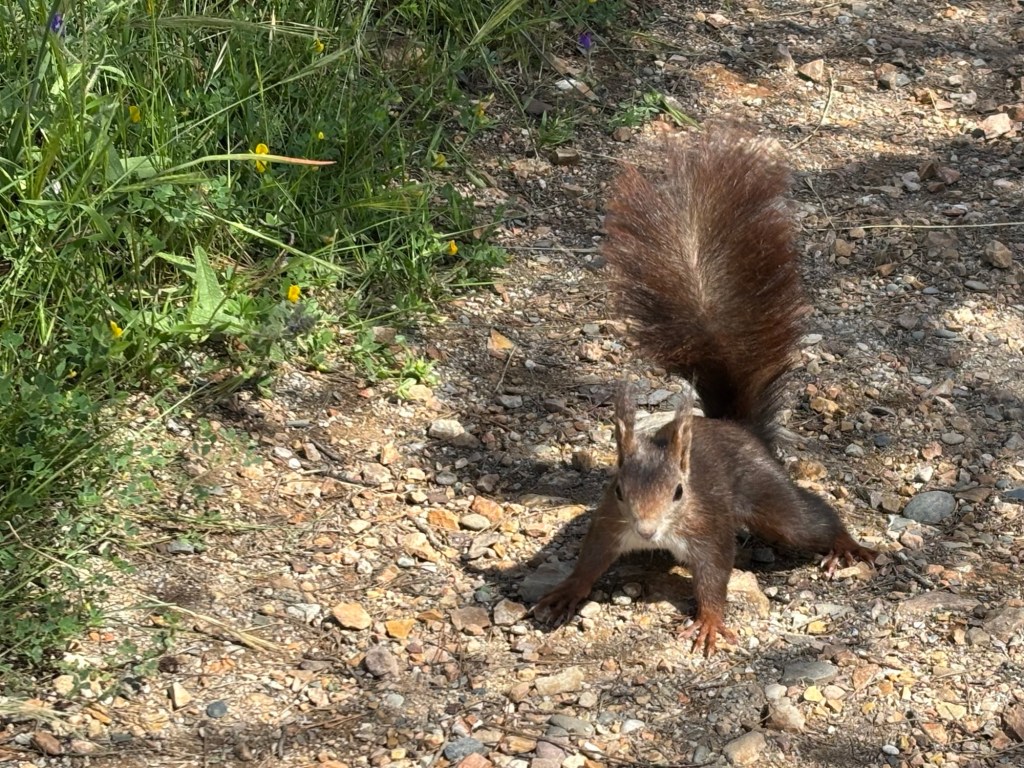
I did have a couple of encounters with the mountain’s red squirrels, though. Like most of the mammals that inhabit the Iberian peninsula, their fur is streaked with darker colours to better match the terrain around them. The only obvious shades of red can be seen in their fingers and toes.
The invasive American grey squirrels that have driven our native reds almost to extinction in the United Kingdom are not to be found here in Spain, so the reds are a lot less fearful than they are back home. They do, however, seem to possess the same fiery temperament that is often associated with humans of their colouring, and are quick to sound the alarm when they sense a threat.
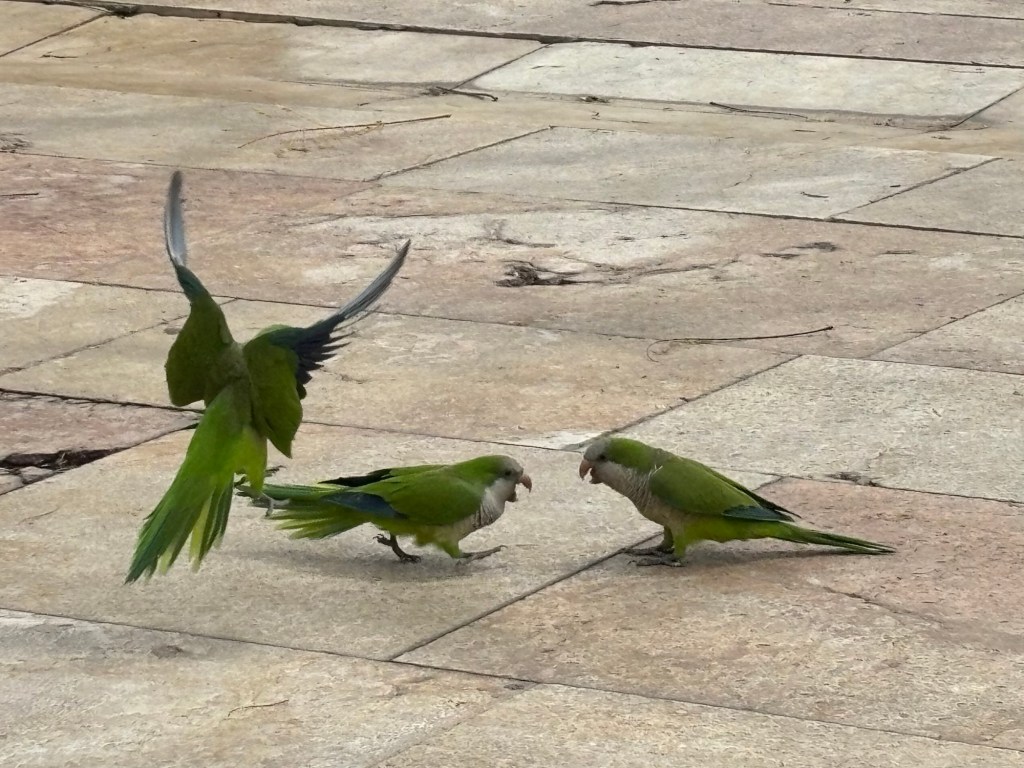
One species that has invaded Spain in the last century – almost as obviously as the tourists – is the monk parakeet. This South American species fulfils the same niche as the Asian ring-necked parakeet in the south of England, albeit with a much wider range: monk parakeets can be found in larger cities from Barcelona and Valencia all the way along the Mediterranean coast to Málaga and Cádiz, and even as far inland as Madrid.
They’re impossible to miss by even the briefest visitor to Spain’s cities, not least of all on account of the racket they make as they fly around the parks and gardens in search of fallen fruit, dried or otherwise. They made such an impact on the Spanish cityscape that the Japanese developers of the most recent Pokémon games, Scarlet and Violet, modelled an aggressive parrot-like Pokémon on them: Squawkabilly, whose appearance (and Pokédex description, for that matter) matches them exactly.
It was supposed to rain today, but it didn’t come down until late. Rain isn’t unheard of in Semana Santa. In fact it’s quite common, common enough for every hermandad to have a backup plan. And several backup plans were required this afternoon, as the heavens opened to a brief but torrential downpour.
I stayed inside for the worst of it, following the rescue attempts live on TV, and then set out to find a space in the brief respite provided by the rains – and, morbidly, perhaps, to see what damage had been done.
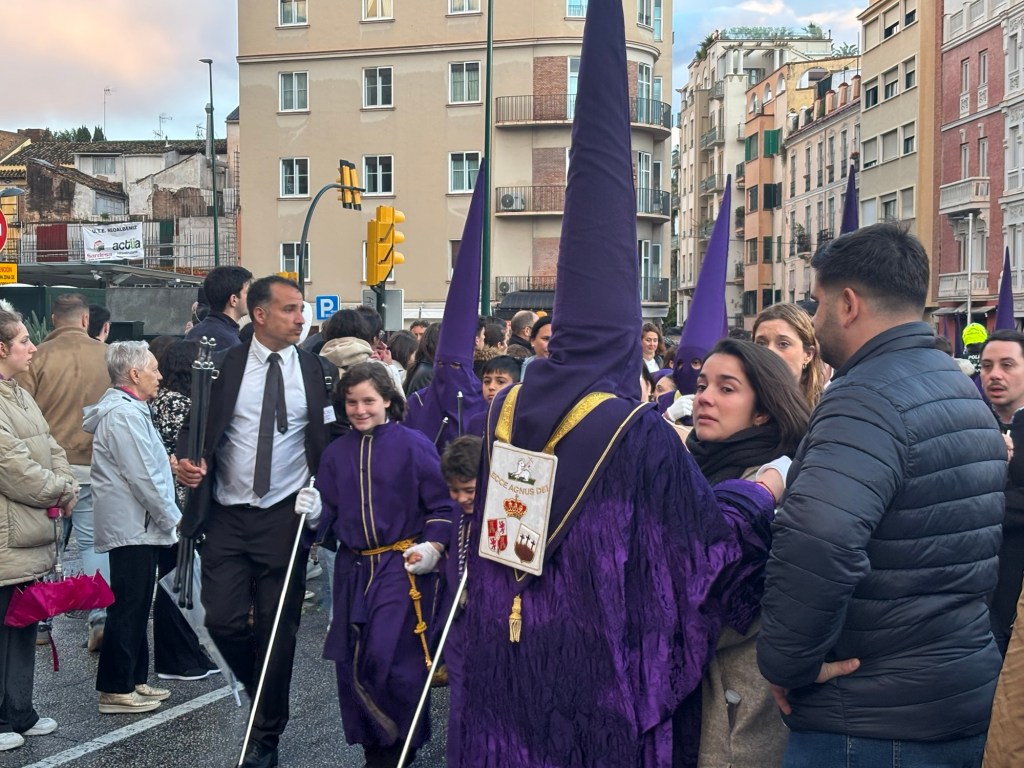
There’s usually the odd outpouring of grief from the spectators during the processions, sometimes in the form of a beautiful and spontaneous saeta (the traditional songs sung to the pasos, which requires the procession to come to an immediate halt), but there were a lot more tear-stained faces than usual. For some Catholics in Spain, this is the high point of the Christian calendar: publicly demonstrating their faith summa cum laude with their friends and family in the hermandad. When the conditions are just too poor, some pasos will be rained off entirely.
I counted at least five nazarenas in floods of tears being consoled by their families after dressing their best, only to be soaked to the skin and unable to continue their procession.
I’ve often wondered if the reason the Andalusians take Semana Santa to heart so much more than the other regions of Spain is that they once had far more to prove: being the region of Spain held longest by the Muslims, theirs was the shakiest of Christian bloodlines, and thus it must have behoved them to make twice as much of a show of being good Christians than their co-religionists in the north. It would go some way to explaining the unrestrained force of duende in the hearts of many an Andaluz costalero.
It’s just a theory, but I think it might have some grounding in truth.

Despite the threat in the clouds, the rain never returned. Jesus and Mary were taken out of the protective plastic coverings that had been hastily applied, the ornate candle-holders were emptied of all the water they had accumulated and those processions that had already made a start have now jumped the gun to make good for lost time. They will go on late into the morning, with the latest finishing around half past four. The crowds will be with them all throughout the night, but I need some sleep. Tomorrow brings another grand adventure – the last of this grand tour. I hope my legs are in good shape! BB x
 The Book of Barnabas