The Lost City

Cerro del Sol, Granada. 12.56pm.

They call it the Cerro del Sol, but the sun is hidden behind a white haze of cloud. It covers the snowy peaks of the Sierra Nevada so indistinctly that it’s hard to see where the snow stops and the clouds begin.

It’s pretty quiet up here. There’s a general soar of traffic on the road up to the skiing station of Pradollano in the Genil valley below, but beyond that – and the occasional rev and growl of some larger engine – it’s just me, the butterflies and the birdsong up here. Mostly fritillaries, coppers and marbled whites, though I did see a beautiful swallowtail float by a moment ago, before I put my cardigan over my head to shield my eyes from the white glare of the sun. It shines brighter than the garden Star-of-Bethlehem at my feet. Such a beautiful flower – I’m not sure why I never noticed them before.
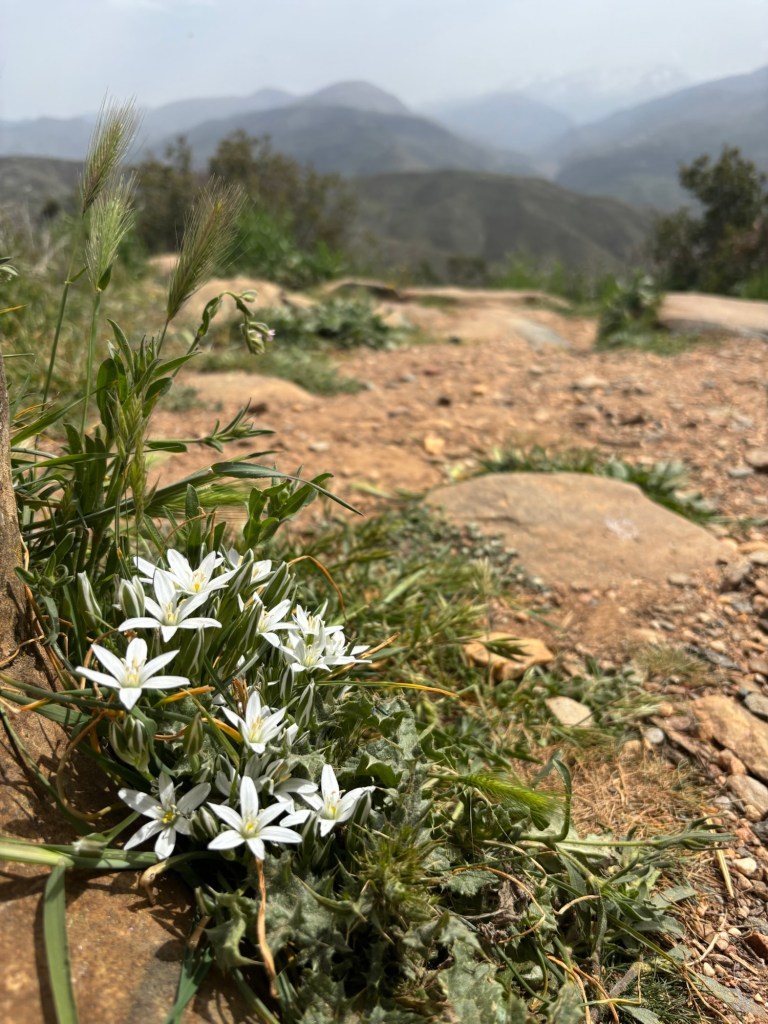

I’ve come up here to write – and to heal. I didn’t sleep well last night. Some wounds, it seems, take a long time to mend. So I’m up in the quiet of the dehesa, in the hills east of Granada, soaking in the best palliative that nature can offer. Herself.

The occasional buzz of a fly. The twitter of a pair of pallid swifts racing by. The summery buzz of a grasshopper and the chuk-chuk-chukar of a partridge somewhere in the scrub far below.

A couple of Sardinian warblers are engaged in a territorial dispute in the broom bushes below, rattling off their warnings like Gatling guns. And always and everywhere, I can hear the song of blackbirds – an ever-present symbol of Granada.

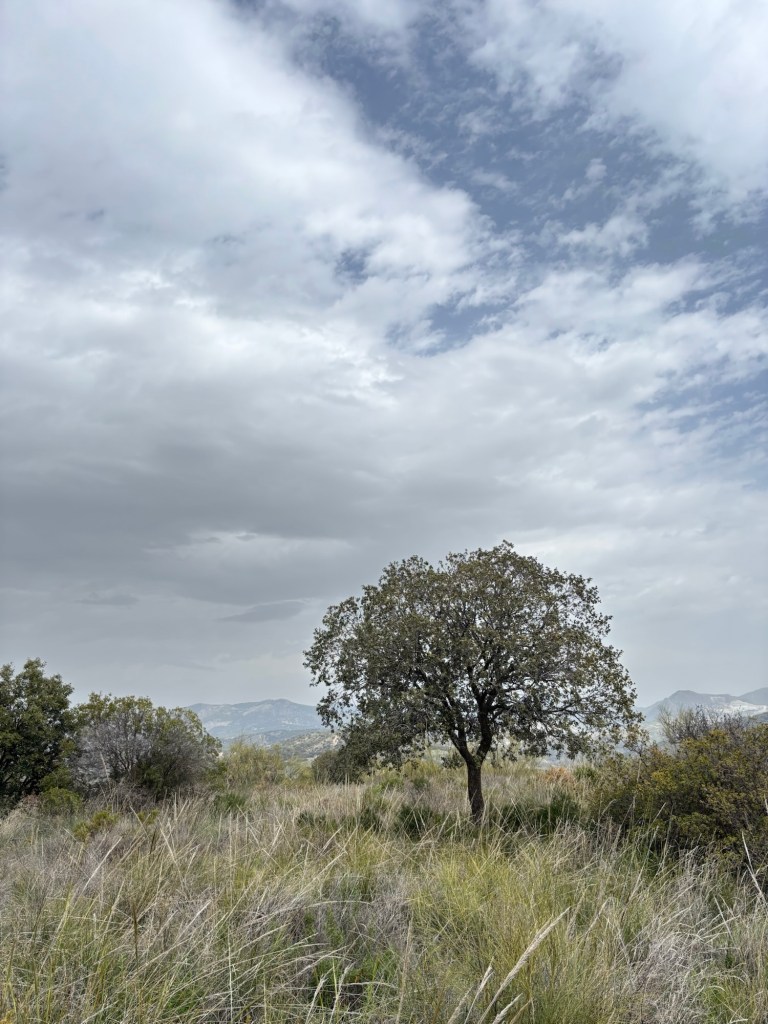
This is the Dehesa del Generalife. I suspect the Moorish sultan of old must have come hunting here with his retinue in the days of al-Andalus, as these hills are teeming with small game: wood pigeons, partridge and rabbits (I didn’t see the latter, but this is absolutely their kind of terrain). What a sight that must have been: the Moorish sultan and his hawks, looking up at the snowy peaks of the Sierra Nevada and across the Vega of Granada.

It’s far too easy to see why this place bewitched the Romantics and scores of travelers back in the day, before the modern tourist trade sank its teeth into the place. Well, here’s a corner of Granada they haven’t spoiled: quiet, ancient, magical. Sure, it’s an hour’s hike from the Alhambra, but some things are worth the trek.

On my way up here this morning, I paid a visit to the Capilla Real to see the tombs of Fernando and Isabel, the Reyes Católicos. I figured I’d made the voyage to El Escorial to see the other kings and queens of Spain, so I ought to pay my respects to the ones who started it all.

A surly security guard at the door gave me a long, hard look as he waved me in and warned me not to take any photos. I indicated the notebook and pencil in my hands and asked if I could sketch. He didn’t reply. His stoney expression might have been cast in the same marble as the sarcophagus behind him. I guess he didn’t see the joke.

It’s funny how some people get so uppity about tourists taking photos, but nobody ever seems to mind a sketchbook. I’ve stood on street corners for up to an hour sketching and nobody bats an eyelid, but whip your phone out in some places and there’s hell to pay.


I bought a couple books in the gift shop (I needed some reading material and they were relatively cheap, by Spanish standards) and climbed back up the Carretera Empedrada through the Alhambra forest, where I stopped to check in my flight for next week and sort out tomorrow’s bus to El Rocío. An enormous tour group of German pensioners ambled by. There must have been at least sixty of them, perhaps more. They were followed not too far behind by two outings from a Spanish private school – recognisable by the distinctive shade of blue uniform that is so popular with colegios privados out here.

That figure of eight thousand a day I heard yesterday really does seem more believable when you stop for a while and watch the tourist traffic.


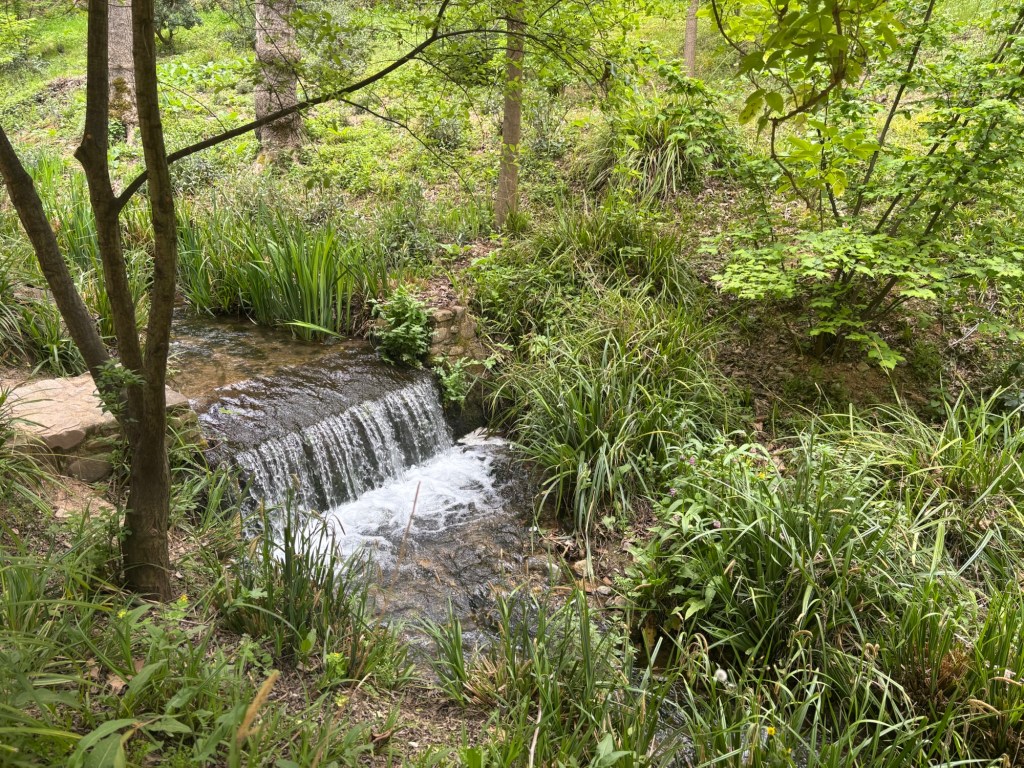
A short amount of time in the wilderness was enough, so around midday I dusted myself down, left the swallowtails to their games and headed back the way I came. When I came to the Alhambra, I took the right fork this time, following the Cuesta del Rey Chico down along the Acequía Real. It’s a steep descent (and an even less forgiving ascent) but it follows one of the main water channels right down to the Darro, so you’re accompanied all the way down (or up) by the most beautiful sound of running water. The Alhambra’s watchtowers serve as waymarkers: the Tower of the Captive, the Tower of the Judge, the Tower of the Peaks, and the Tower of Comares, the seat of the Sultan of old. The Sultan and his family may be long gone, but their waterworks are still running as they did then, six hundred years ago.
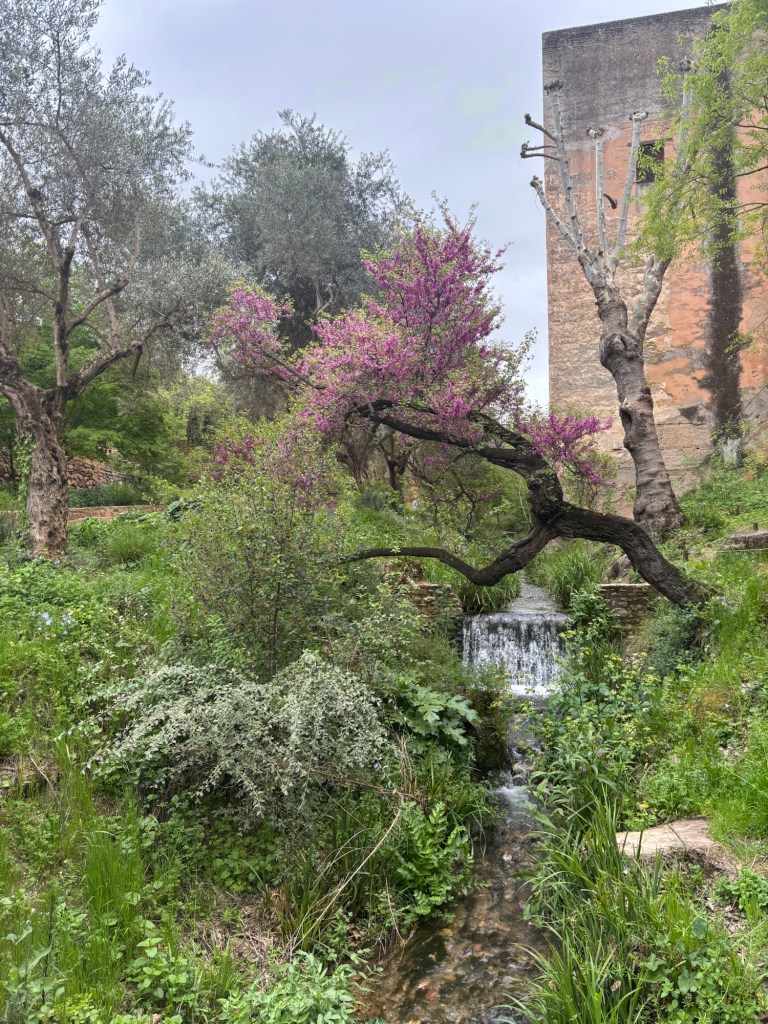

As I came down the hill, a thought came to me that had come several times now since I arrived in Granada. Who would not defy the world for such a place? Who would not have fought off the very hordes of Hell itself to defend this paradise on Earth? And what greater heartbreak can there be than to be banished forever from a place that was more than just a home, to know in the very depths of your heart that you had lost the keys to Heaven itself?

It’s not hyperbole. I’m merely paraphrasing the laments of the Andalusian poets of old when Granada fell to the Christians in 1492. It puts my own petty broken heart into a much-needed broader context. There was a sense of loss here far greater than anything a single heart can withstand. I have felt the tremors of it before in Sevilla and Córdoba, but nowhere stronger than here, the last bastion of the Muslims in Spain. Such a raw outpouring of emotion leaves a mark. Ghost stories would spring from it in more credulous parts of the world. Here, it is an indistinct melancholy – something in the air that once was, and is lost forever in all but memory.

Writing two hundred years before Granada’s demise, al-Rundi’s lament for the fate of Sevilla captures the grief:

A pretty lady, splendid as sunlight,
Her beauty just like coral and jewels bright,
Dragged off by infidel for rape most vile,
Her heart perplexed, she’s crying all the while.

Abu al Baqa’ Al-Rundi, Ritha alAndalus

I wonder how the Muslim tourists to the Alhambra feel upon seeing such a place? There do not seem to be as many as I remember.

One week remains. Tomorrow, I make for a place that has always been close to my heart: my Granada, my Jannah, my paradise on Earth. It looks like it will be a rainy weekend. But nothing could put a damper on the thought that I will see that place again, after all this time: El Rocío. BB x

Tears, Courage and Charisma

I hadn’t planned to write much this evening, what with reports to finish and the first round of the school debating competition to support, but as I let World Poetry Day pass me by without saying a word yesterday, I thought I might pay a short homage to some of my favourite poems and say why they’re so precious to me.


RITHA AL-ANDALUS

Ask Valencia what became of Murcia
And where is Jativa, or where is Jaen?
Where is Cordoba, the seat of great learning
And how many scholars of high repute remain there?
And where is Seville, the home of mirthful gatherings
On its great river, cooling and brimful with water?

These centres were the pillars of the country:
Can a building remain when the pillars are missing?
The white walls of ablution are weeping with sorrow
As a lover does when torn from his beloved;
They weep over the remains of dwellings devoid of Muslims,
Despoiled of Islam, now peopled by infidels!
Those mosques have now been changed into churches,
Where the bells are ringing and the crosses standing.

This misfortune has surpassed all that has preceded
And as long as time lasts, it can never be forgotten!

Lament for the Fall of Seville, Abu al-Baqaa al-Rundi (1267)

Al-Rundi’s lament for the fall of al-Andalus is poetry in action. It’s a desperate plea for help from the Muslims of al-Andalus to their coreligionists across the sea in the language in which they excelled. Regardless of where you stand on the debate over whether Islamic Spain really was a haven of tolerance in a darkening world, it is hard not to be moved by the words of its poets as the westernmost star of the Islamic world was dragged below the horizon, never to rise again. Perhaps it was that sense of impending doom, with the Christian wolves howling mightily at the door, that infuses the words of al-Rundi and Ibn Zaydun and their kin with such mournful magic, conjuring up an image not of what was lost that had once been great, but of what could have been in such a land. I could have chosen any one of a number of beautiful Hebrew poems to chime in more closely with my family’s experience, but al-Rundi says it so masterfully.

As a child growing up in a former Moorish stronghold in Andalusia, I was completely bewitched by the lost paradise of the Moors. I am under that spell still.

Of course, it sounds a lot better in Arabic – especially since Arabic poetry of the highest calibre is song in its purest form. You can have a listen here.


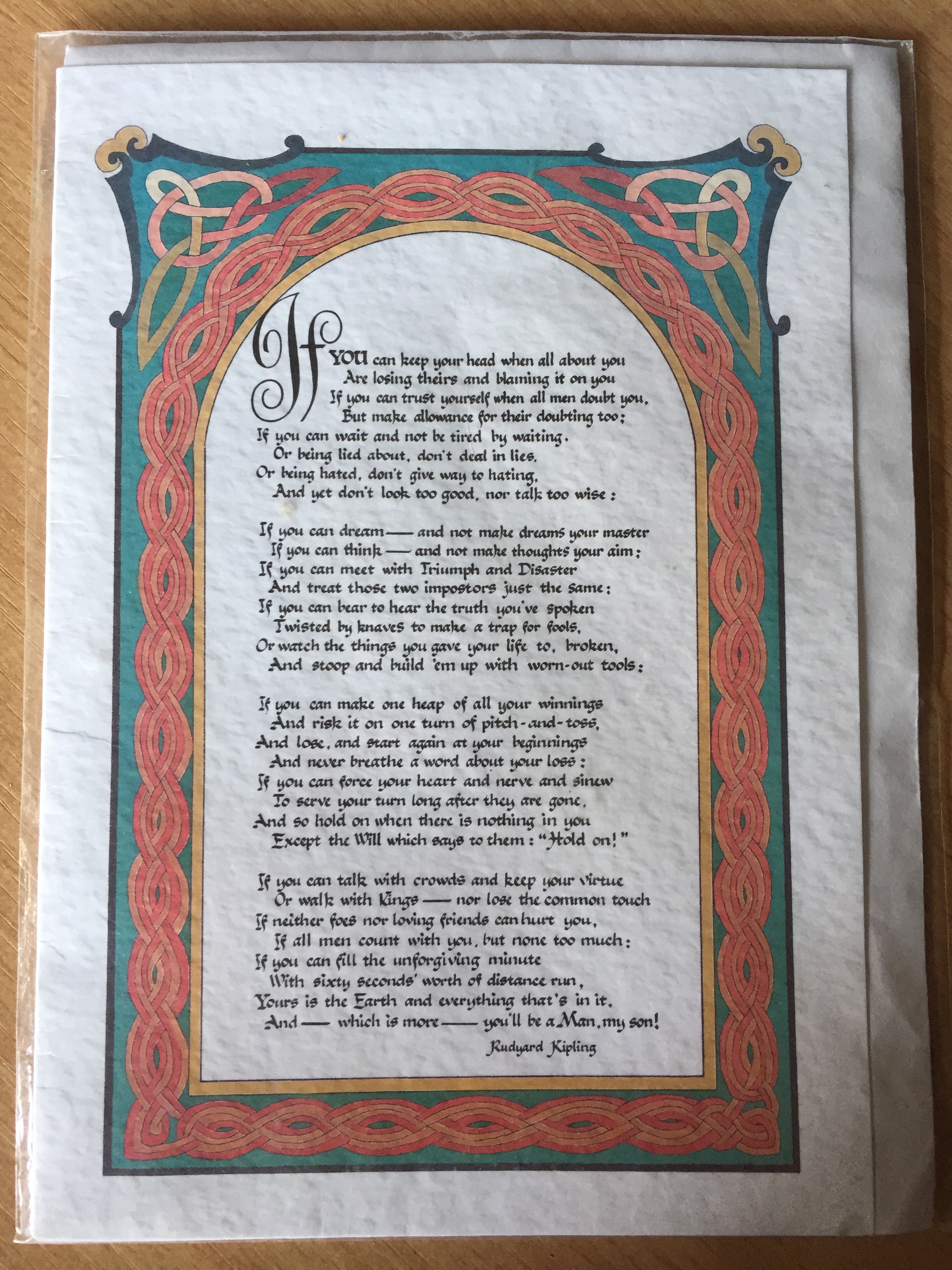
IF

If you can keep your head when all about you
Are losing theirs and blaming it on you,
If you can trust yourself when all men doubt you,
But make allowance for their doubting too;
If you can wait and not be tired by waiting,
Or being lied about, don’t deal in lies,
Or being hated, don’t give way to hating,
And yet don’t look too good, nor talk too wise;

If you can talk with crowds and keep your virtue,
Or walk with Kings – nor lose the common touch,
If neither foes nor loving friends can hurt you,
If all men count with you, but none too much,
If you can fill the unforgiving minute
With sixty seconds’ worth of distance run,
Yours is the Earth and everything that’s in it,
And – which is more – you’ll be a Man, my son!

Rudyard Kipling (1895)

I’ve always been a fan of Kipling. I guess you can chalk that up to a few years in a prep school when I was younger. Colonialism, privilege, blah blah blah. That doesn’t shake the fact he had a special gift for words. My relationship with this particular poem started on my first day as a deputy boarding master. My first housemaster kept a copy of this poem on his desk, propped up against the computer, and I made a point of reading it every time I should be in the office. It gave me strength in what was arguably a tough year – training as a teacher for the first time is tough enough without an earth-shattering global pandemic cutting right through the middle of it.

I really can’t think of a better poem for a housemaster. The virtues Kipling offers up (an edited selection above) are just as important today as they ever were, and if I should follow that path myself someday, I too will have a copy of this verse in my office. For myself, if not for my boys.


EL MOZO ARRIERO Y LOS SIETE BANDOLEROS

Camino de Naranjales
caminaba un arriero:
buen zapato, buena media,
buena bolsa de dinero.
Arreaba siete mulos,
ocho con el delantero;
nueve se podian contar,
con el de la silla y freno.
A la salida de un monte
siete pillos le salieron:
– Donde caminas, buen mozo,
el buen mozo arriero?
– Camino hacia la Mancha
a un encarguito que llevo.
– A la Mancha iremos todos
como buenos companeros.

Al revolver de una esquina
una taberna que vieron,
– Echa vino, montanes,
echa vino, tabernero,
que lo pagara el buen mozo,
el buen mozo arriero.
– Yo si lo pagare,
que tengo mucho dinero,
que tengo mas de doblones
que estrellitas tiene el cielo.
El primer vaso que echo
se le dieron al arriero.
– Eso no lo quiero yo,
que yo veneno no bebo.
Que lo beba el rey de Espana
que esta muy gordito y bueno.

Sacan los siete sus sables
saca el suyo el arriero.
De los siete mato a cinco
y los otros dos huyeron.
Viene la Guardia Civil
y se llevan al arriero
y el arriero tuvo tiempo
y a la reina escribio un priego.

Y la reina se reia
Cuando lo estaba leyendo
– Si como ha matado a cinco
hubiera matado ciento.
Y cinco reales son diario
mientras viva el arriero.

Camino a Naranjales, Spanish Folksong

Not all poems have to speak from the heart. I love a poem that tells a story. And I’ve loved this one since I first heard it years ago in the grating tenor voice of an extremeno shepherd, recorded for posterity in the archives of the town library. There’s a beguiling frivolity in a lot of Spanish verse that pairs jauntily with the mournful Andalusian elegies and love poems, but it’s the tales of the arrieros, the brave and hardy muleteers, that I’m especially drawn to. No art, no gravitas, just a wily muleteer who bests seven rogues and is rewarded for his courage by a queen, no less. Pure Spanish whimsy – and I adore it.


What are the poems that shaped your world? Do you have any favourite lines or stanzas? Do you sometimes try to weave them into your writing like I do? (You might have spotted a thinly-veiled reference to Lawrence Ferlinghetti’s Two Scavengers in a Truck, Two Beautiful People in a Mercedes in Sunday’s post, which remains stamped across my heart – like most poems one studies for GCSE.)

I should read more poetry this year. I’ll start this weekend, while I’m on duty. It’s a lot easier to get through a poem a day than a chapter of a book, I find. Especially as a teacher. BB x

Seehund

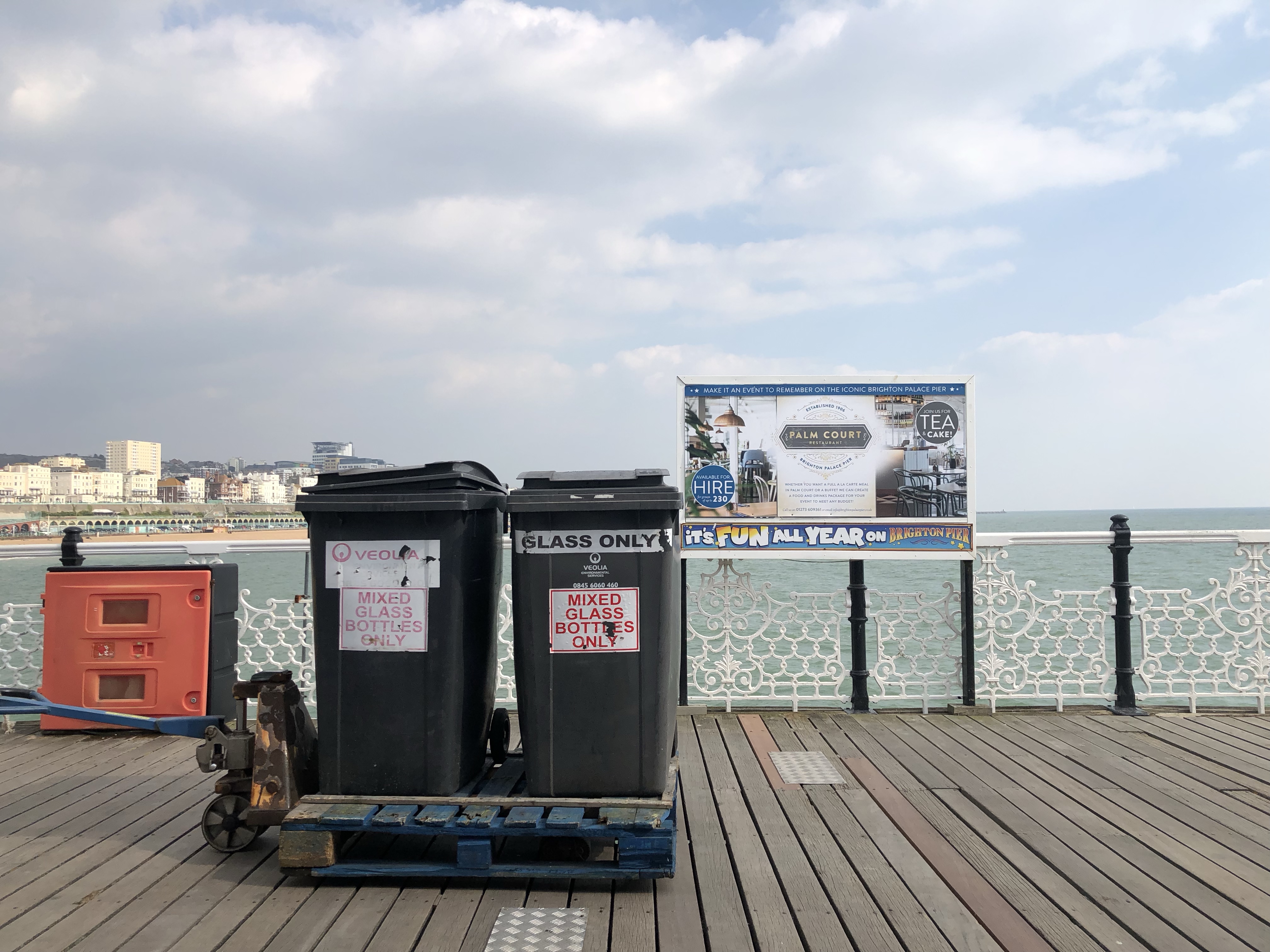
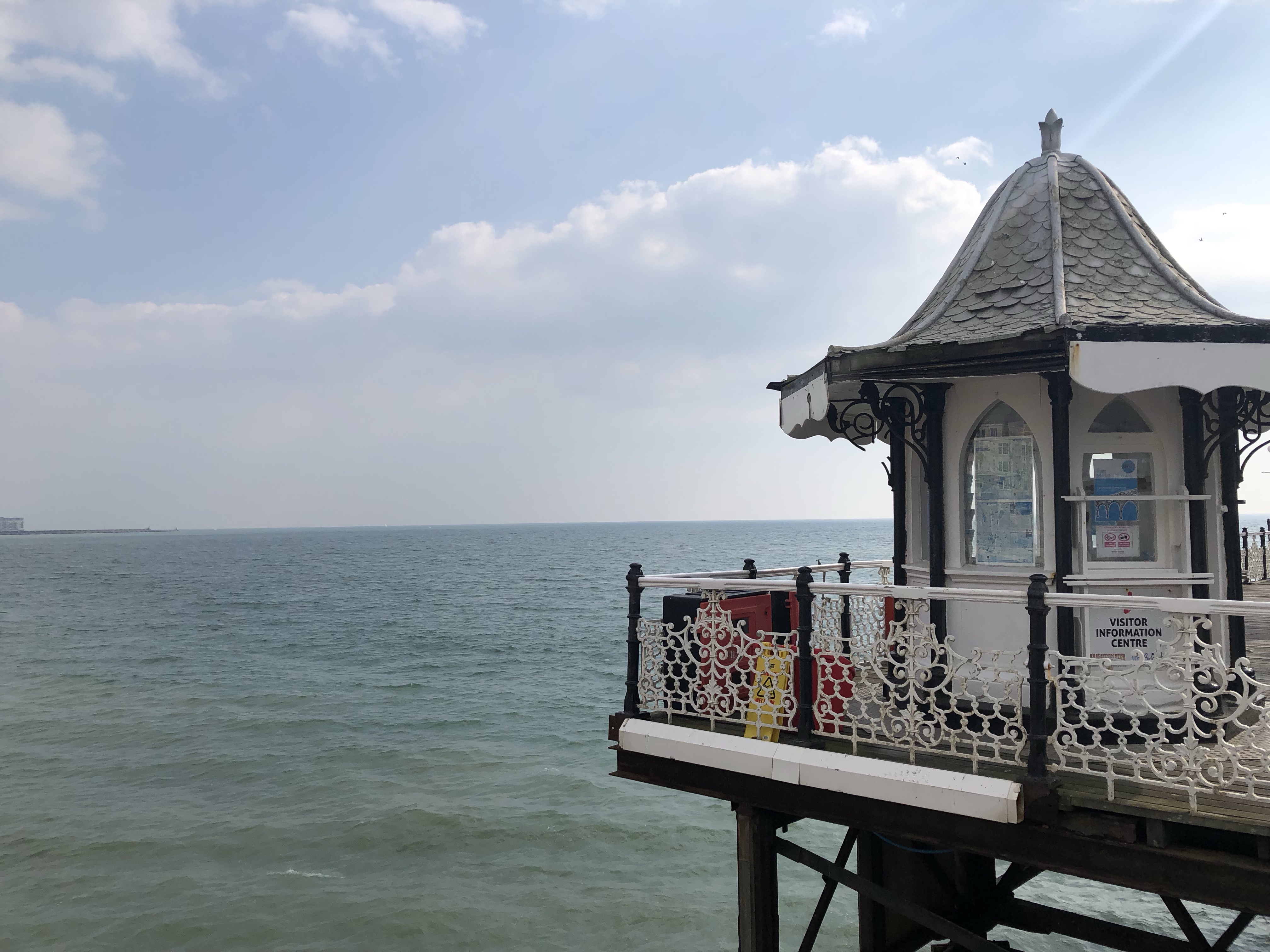
2:45pm, 20th March. I’m sitting on a bench on Brighton’s Palace Pier, sheltering for a moment from the wind. A sign in front of me reads “It’s fun all year on Brighton Pier”. Somewhere down the coast to the east, there’s a few mad folk towelling off after a swim. The sea doesn’t exactly look inviting today. I look down through the slats. The bottle green waters of the Channel heave and swell about the centipede legs of the pier below. I wonder what creatures of the deep might be looking back up at me, besides the silent starfish in the silt.

Two men wander over to the parapet, gazing down at the beachgoers below. One of them watches in silence, nodding occasionally. His companion holds a recording device of some kind in his hand and is whistling a crude but not inaccurate imitation of the gulls. Is he trying to lure them in, perhaps? To what end? I can’t quite make out his game. He keeps it up the whole time, occasionally saying something in Arabic to his companion and chuckling, and then whistling his gull-call again. After a while, they move on, whistling. His friend must have the patience of a saint. You get all sorts in Brighton.

A few seconds later, a herring gull lands on the parapet. It’s not there for long, as a gang of girls in tracksuits race up the aisle towards the gloom of the arcade, screaming and swearing, sending the panicked bird into the air in their wake. Two scavengers in a truck trundle by in the opposite direction, trailing two heavy GLASS ONLY bins behind them. The planks tremble beneath my feet. I imagine, for a moment, the structure collapsing beneath its weight. In slow motion I see the bins rolling over backwards and a cascade of bottles plummeting into the sea below, some of them shattering on the struts of the pier before they hit the water. I have a pretty active imagination.

I move on up the pier, past the booming darkness of the arcade, which still seems to draw in a faithful clientele, despite the mobile lure of pocket entertainment. In fact, I’m actually pleasantly surprised by the absence of phones on the pier – for once, I’ve got mine out more than most as I take notes. Beyond the arcade, I reach a collection of outdoor game stands. Tin Can Alley with a bored-looking brunette in a red shirt waiting for custom. Dolphin Derby with an enthusiastic announcer who wouldn’t look out of place in a pinstripe waistcoat and boater a hundred years back. An Indian family points out across the water talking in a language that isn’t English. A couple walk past, hand in hand, one of them gamine with a grey-tinged ponytail over shaved sides and a nose ring, and her partner robust, black, ripped jeans and winged eyeliner, a rainbow lapel badge pinned to her sleeve. The air is thick with the pungent smells of Brighton: fish batter, candy floss and the distinctive damp tang of weed. The breeze coming in off the sea cancels out one of the three at a time, but not for long.

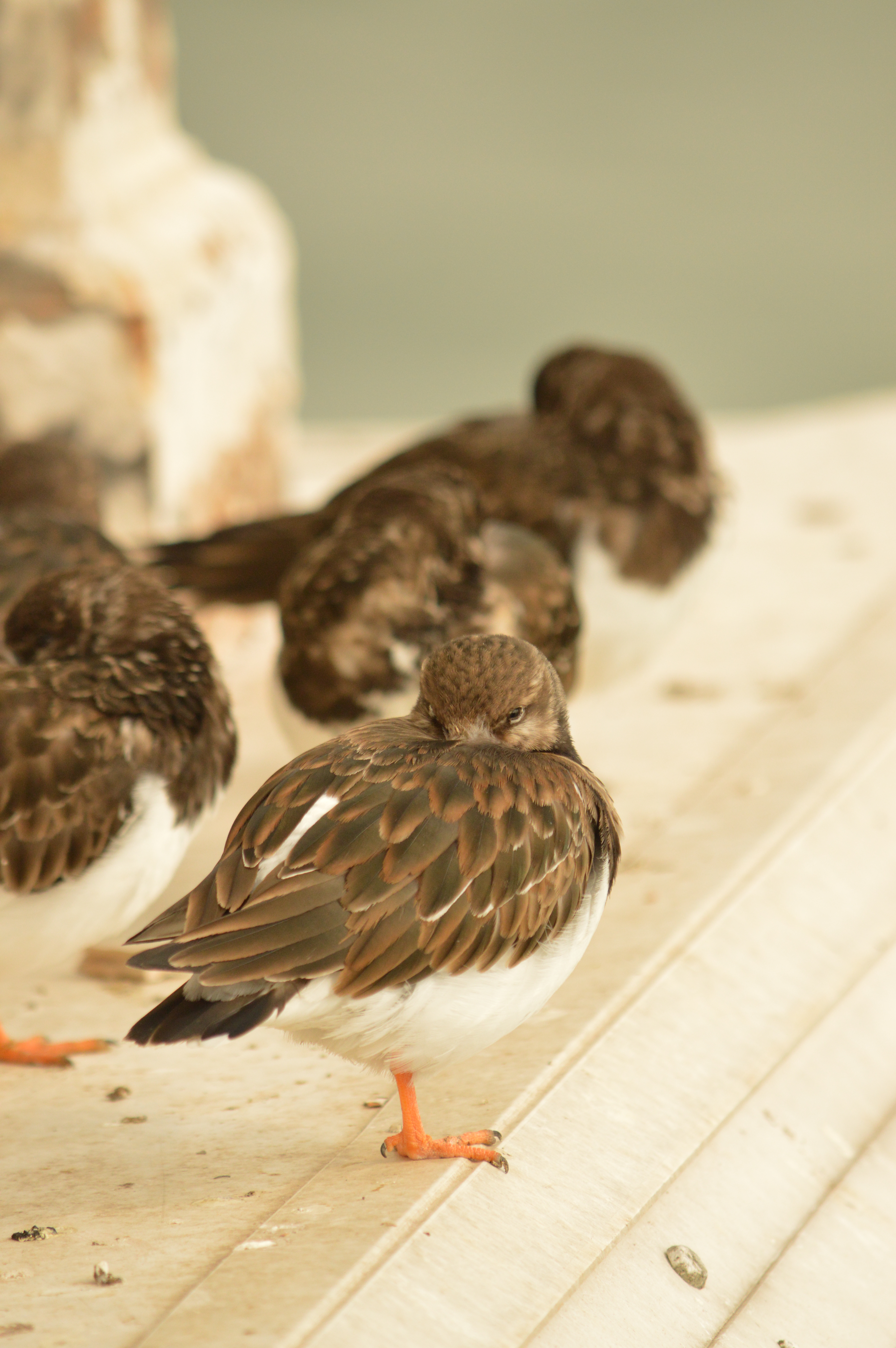
Behind the Tin Can Alley shack, a huddle of turnstones get some shut-eye. These often hyperactive creatures look out of place when static, and one wonders how they manage to get any rest at all with the thumping bass from the fairground rides at the end of the pier. It almost looks as though there’s a physical pecking order to the clan, and the ones at the bottom aren’t having much luck, hopping from strut to strut with remarkable dexterity. A passer-by sees what I’m looking at and stops to take a few photographs on her phone. The turnstones don’t seem to be fazed by me, or her, or any of this. After all, it’s fun all year on Brighton Pier. They’re probably used to it.

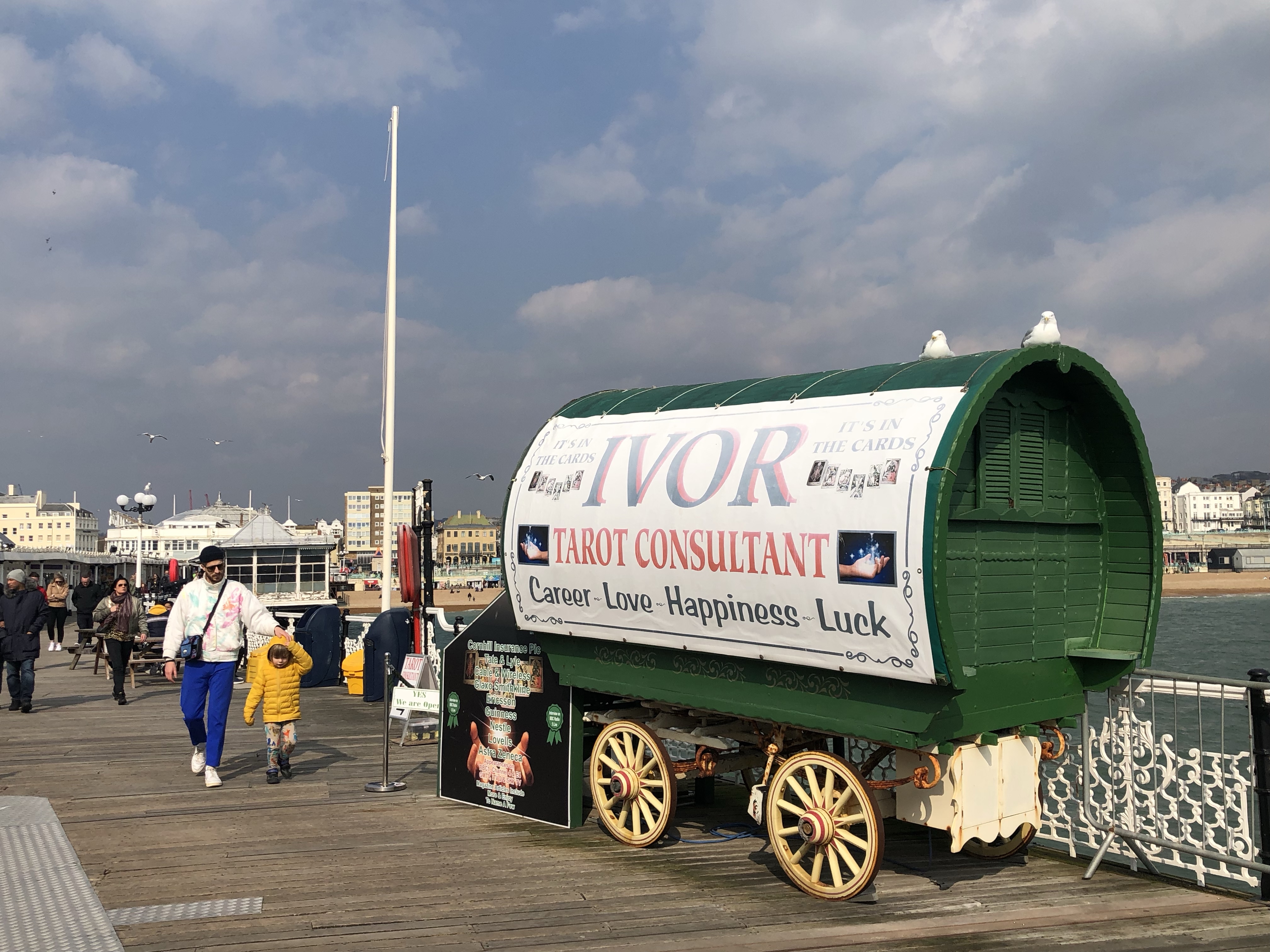
Nearer the fairground, an old gypsy-cart sits awkwardly beside the parapet, offering Tarot readings for a modest sum. Career, love, happiness and luck mingle strangely with Nestle, Astra Zeneca and Cornhill Insurance plc. I remember finding an abandoned gypsy-cart in the woods once when I was a child, its richly-painted woodwork fighting a losing battle with the forest’s silent army of moss, lichen and brambles. The gitanos in Tierra de Barros had no such fancies, eking out a living from beat-up cars and shabby tents. There is an old song of theirs I have consigned in part to memory, telling of their love for the Guadiana River, that came to mind:

The region of Chal was our dear native soil,
Where in fullness of pleasure we lived without toil,
Til dispersed through all lands ’twas our fortune to be,
Our steeds, Guadiana, must now drink of thee.

Gypsy ballad, translated by George Borrow (The Zincali, 1841)

I doubt the gitanos camped outside Villafranca de los Barros would know the song. It comes from an older world, much like the incongruous cart parked at the end of Palace Pier.

The fairground plies a busy trade for a chill-if-sunny Sunday in March. I feel like I’m walking through a childhood I haven’t known in twenty years, not since the distant summers in Dymchurch. Tea cups, log flumes and merry-go-rounds. A helter-skelter – see the Isle of Wight on a clear day! – painted up like a stick of Brighton Rock (or maybe the sticks are painted after the fashion of the fair). The static gilded horses on the merry-go-round look no less terrifying than they did when I was a boy. The ghost train reels in customers one at a time, lethargic, a chameleon in the cold. A father explains the “this high to ride” sign to his son, who is just a little too short for any of the attractions. I get the impression I’m snooping a little too much and wander away from the noise.

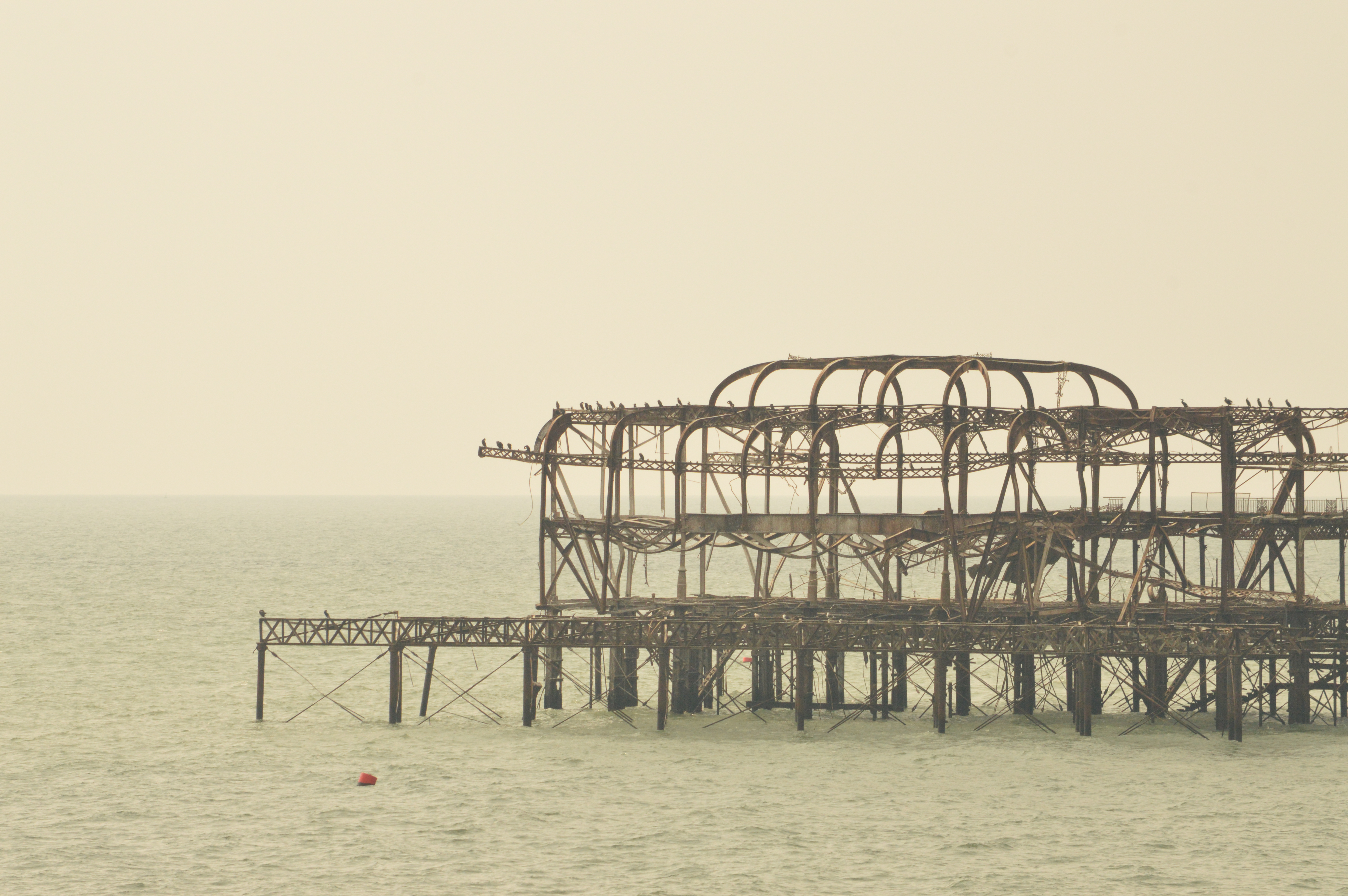
There’s a quiet spot behind one of the rides, looking out towards the mouldering wreck of the old pier. Seen from its sister with the city behind it, the Western Pier looks small and unimpressive. From the shore it looks a little more mysterious, where its mangled skeleton claws at the horizon like the blackened bones of a giant, mechanical whale, picked clean by the cormorants that sit on its ancient struts. In their oil-black funeral garb, they might as well be an extension of the wreckage. Brighton’s gargoyles.

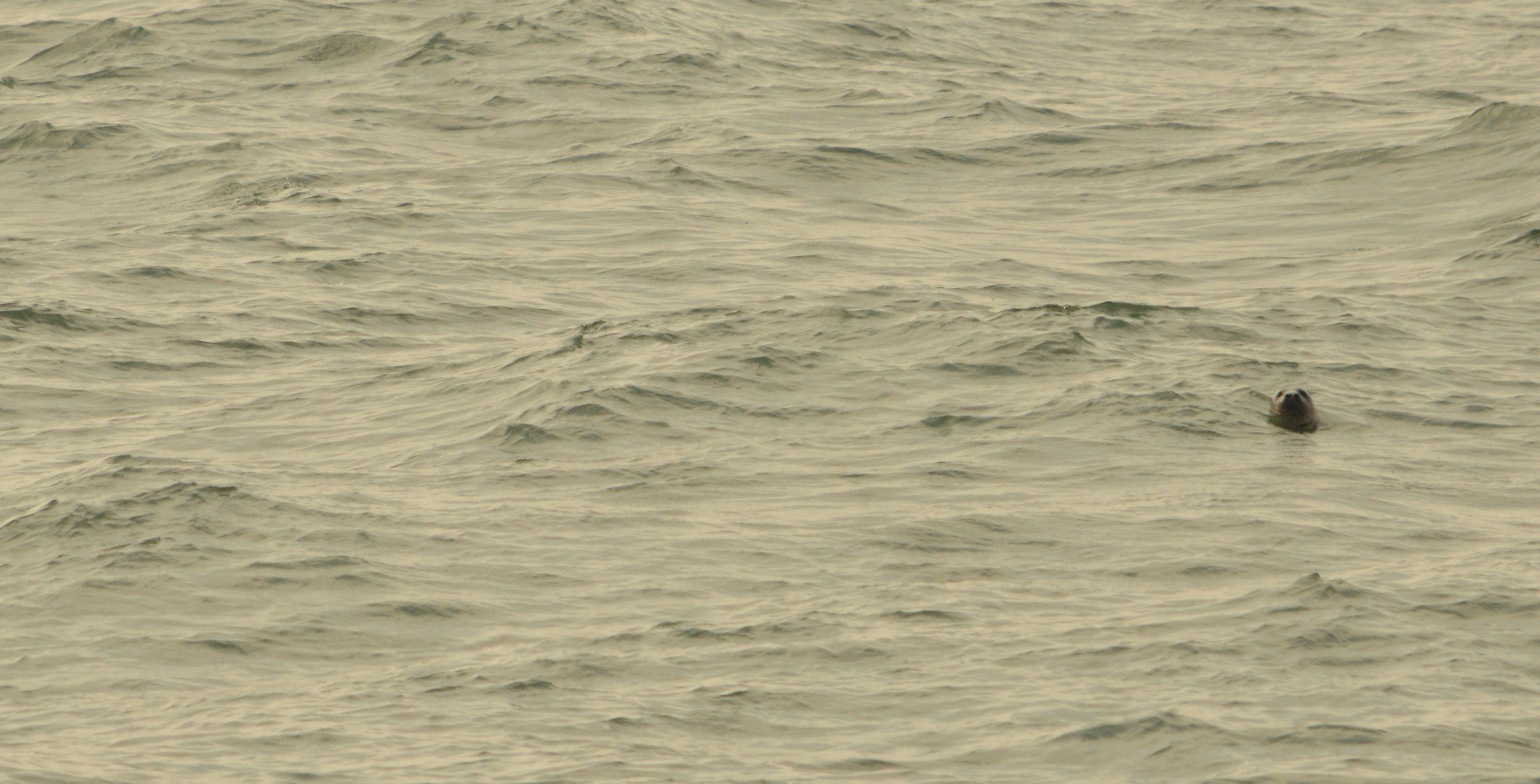
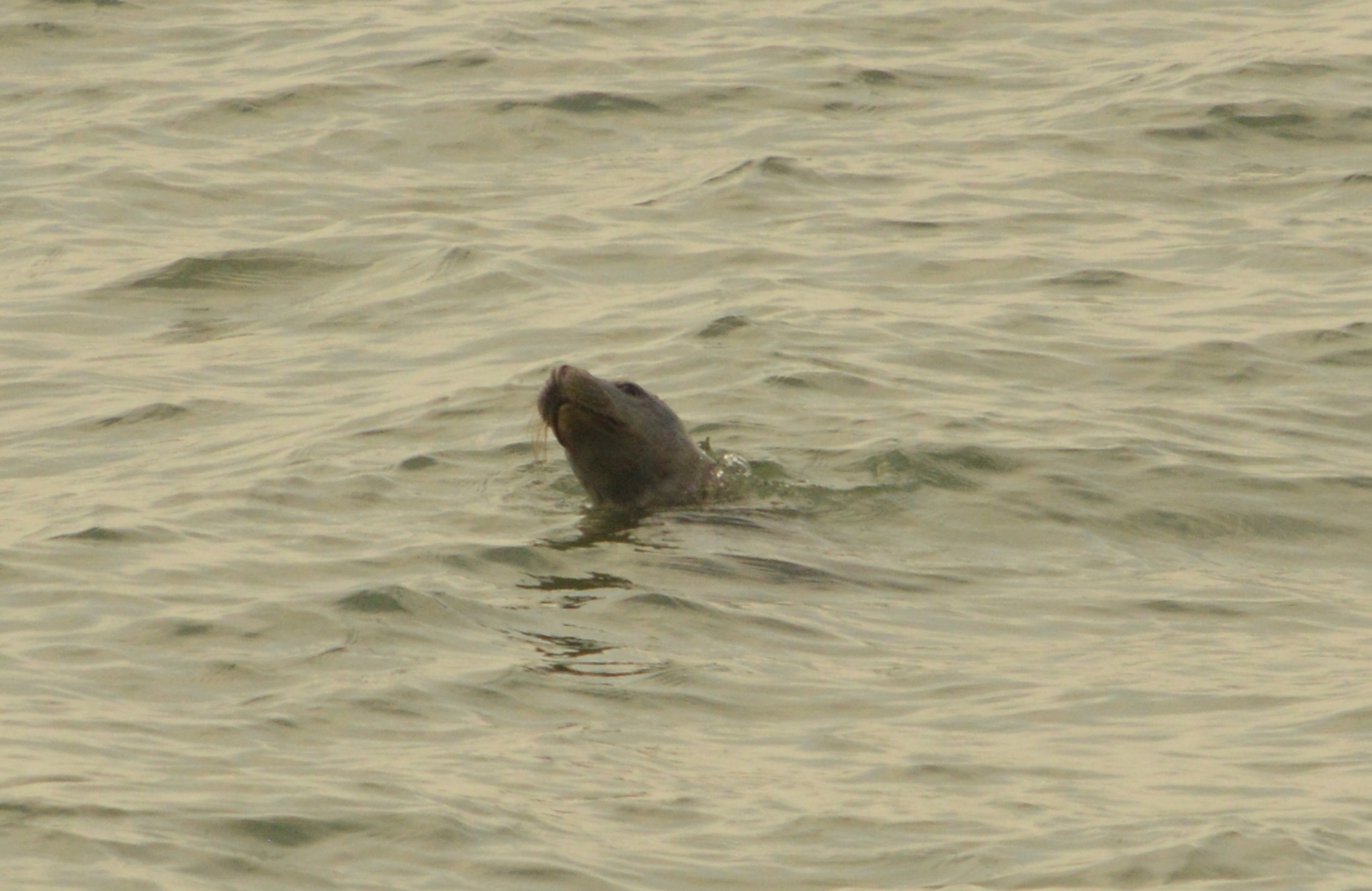
Something bobs in the water closer to the Palace Pier, and without looking through any lens it looks too misshapen to be a buoy. It turns for a moment revealing long whiskers and those baleful black eyes, before sinking beneath the waves. I’ve been scanning the water all morning for that sight, and now I’ve found one, I can’t let the moment pass me by. I count the seconds. One, two, three…

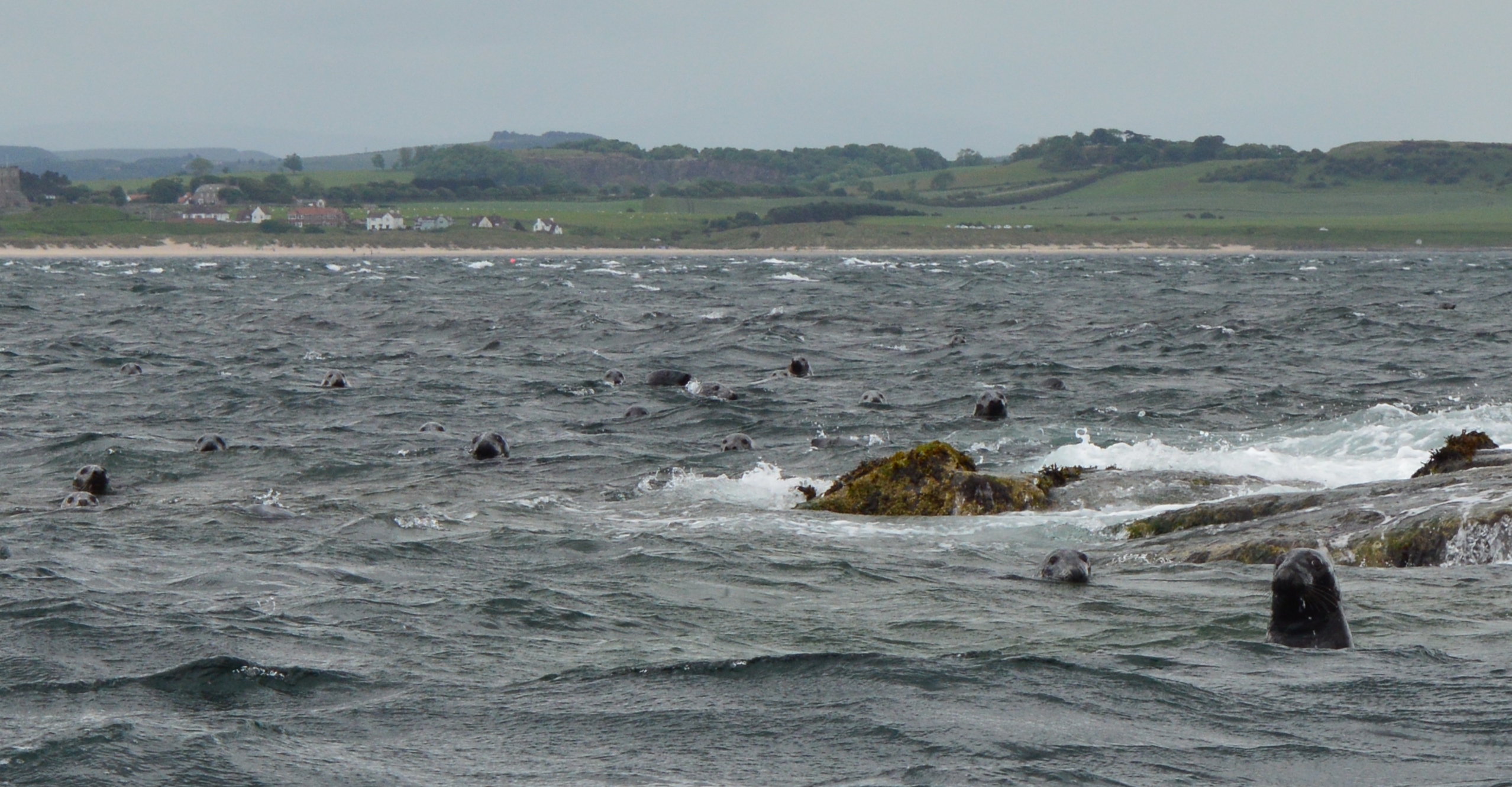
Seals are such mesmerising creatures to watch. It could be their friendly faces, the way they seem genuinely curious about the world above the waves. For me, it’s all about their eyes. There are few creatures out there with eyes like a seal’s: enormous, black orbs that seem to see forever. You only see the whites of a seal’s eye when they’re really close, otherwise you might as well be looking into the dull glaze of a shard of volcanic glass. I used to watch them bobbing about in the waves from the white cliffs when I was a teenager, and once or twice I was lucky enough to see them closer still, lounging about on the mudflats of the Stour Estuary and snorting their indignation at the noisy ferry-boat off the Farne Islands.

Those were greys: hulking, dog-like beasts of considerable size, especially the bulls who came charging after the boat. It’s not hard to see why so many languages label the creatures sea-dogs, or sea-calfs, or even sea-cats. But unless you’re in the water with them, all you see is the inquisitive face, bobbing above the surface. The seal comes into its own beneath the waves. I should love to see one in its murky underwater kingdom one day.

Some creatures command the eye. The ghostly silence of the male hen harrier, or the aerial mastery of the kite. The sunken eyes of the fox and the stern gaze of the stag. I once sat in my bedroom poring over bird guides of Spain and the Mediterranean, bemoaning how drab our world was by comparison. With age comes understanding, I suppose. If the seal hadn’t drifted further and further out to sea, I could have watched for hours.

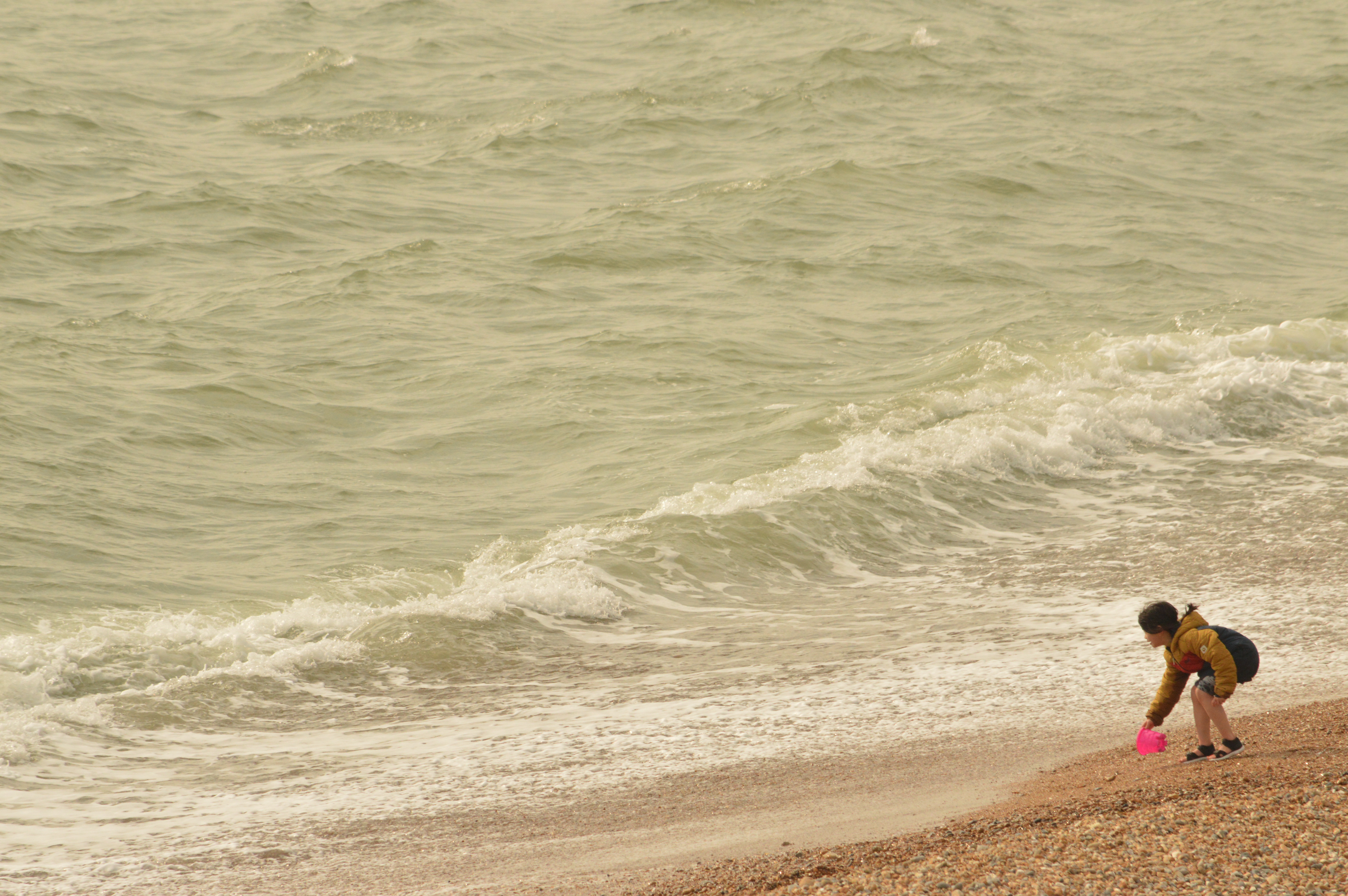
I spent most of my teenage years growing up on the pebbled shores of this same stretch of ocean. The salt breeze and yellow-grey skies of the Channel are written into my skin like age-lines. I should make a point of coming down to the coast more often in future, if not to blast the cobwebs of work aside with a healthy salt spray, then to find the writing material I’m always searching for. If I can find my way to a quieter spot than Brighton, I might even be able to sidestep the bookshops that always draw me in. Fortunately, I’ve been such a loyal customer to Waterstones over the last couple of months that I was able to walk away from today’s haul for a steal of a price. Just don’t ask how many books I bought – or how big the discount was. It’s all for a good cause. I’ll keep telling myself that. BB x

Wailing World

“Sir, what’s your opinion on Russia v Ukraine?”

In the vocabulary of a child, it sounds harmless, like a friendly football match. It tears away the shock and the hysteria. It tells a story of immediate information, of children monitoring the dawn of war on the screens of their smartphones. It seems almost absurd, watching a war unfold in real time.

I couldn’t answer the student because I don’t know enough about what’s going on in Ukraine to give anything like an informed opinion of my own. My meddling with Russian affairs amounted to nothing more than a short-lived attempt at after-school Russian classes in my sixth form days. The two other chaps in the class went on to study Russian at Oxbridge. I had no such intentions. I happened to be studying the Russian Civil War in A Level History, I was intrigued by the art style of the Soviet propaganda machine and felt like learning a new language. Not for the first time in my life, I felt like a foolish hobbyist amongst eager professionals. I don’t think I ever made it to the second class.

I chose to focus on Arabic instead, for equally casual reasons. I didn’t want to be a spy, or a civil servant, or an ambassador. I don’t have the cunning or the sense of national pride. All I wanted to do was to read my history books, and to draw back the curtain on al-Andalus. I had the chance to explore an entirely different world, and I took the other road. God only knows where my life might have taken me had I made it to that second Russian class.

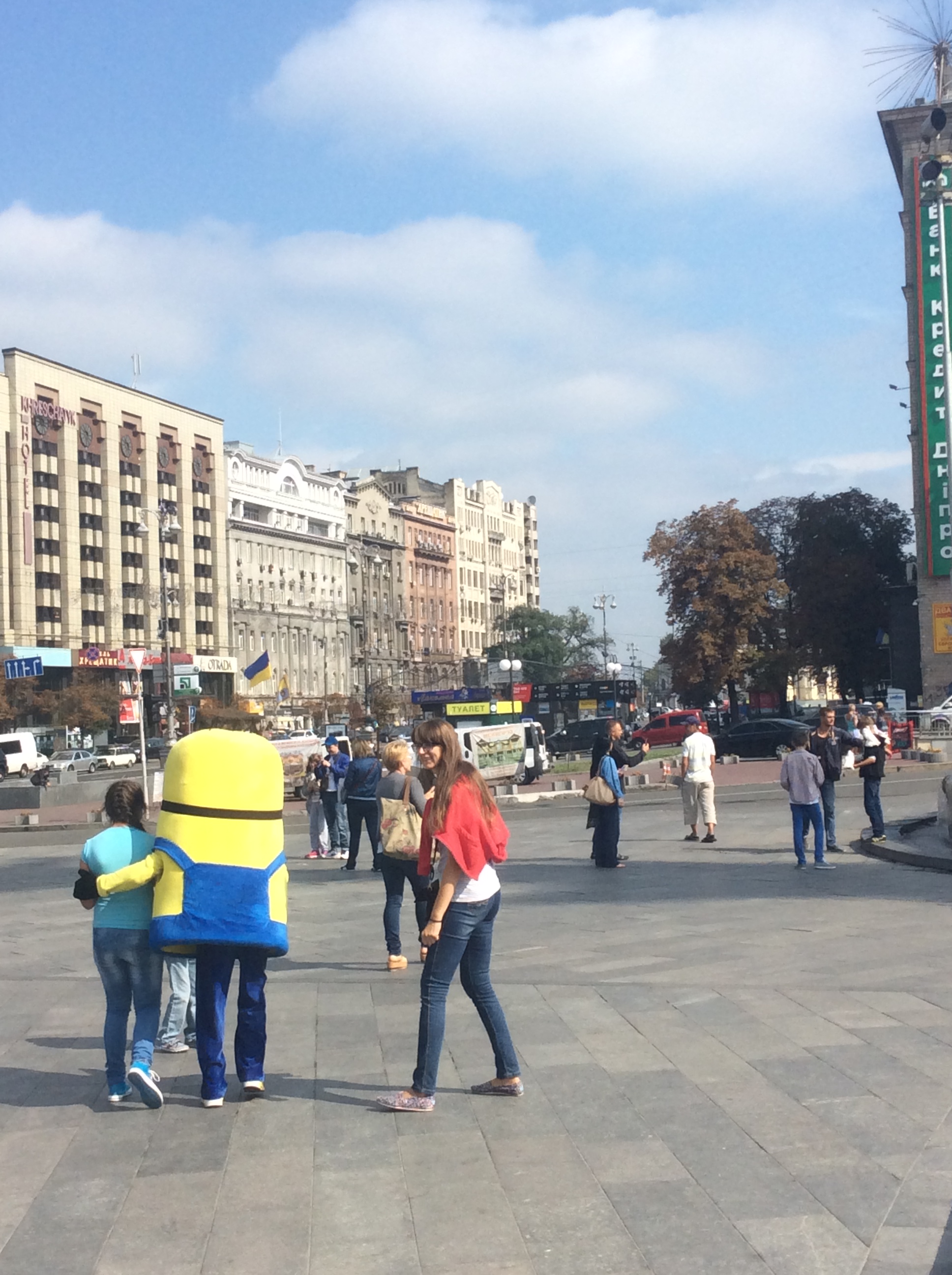
As the fighting intensifies in Kiev, I remember flashes of my brief stop in the city almost seven years ago. Bearded, sweat-scarred and looking forward to coming home, however briefly, after two trying months in Amman. The decision to take advantage of a twelve-hour layover and make a flying trip out to Kiev from Boryspil Airport was a fool’s fancy on my part, as it so often is, but it did mean that I got to see with my own eyes a city that is now in headlines around the world.

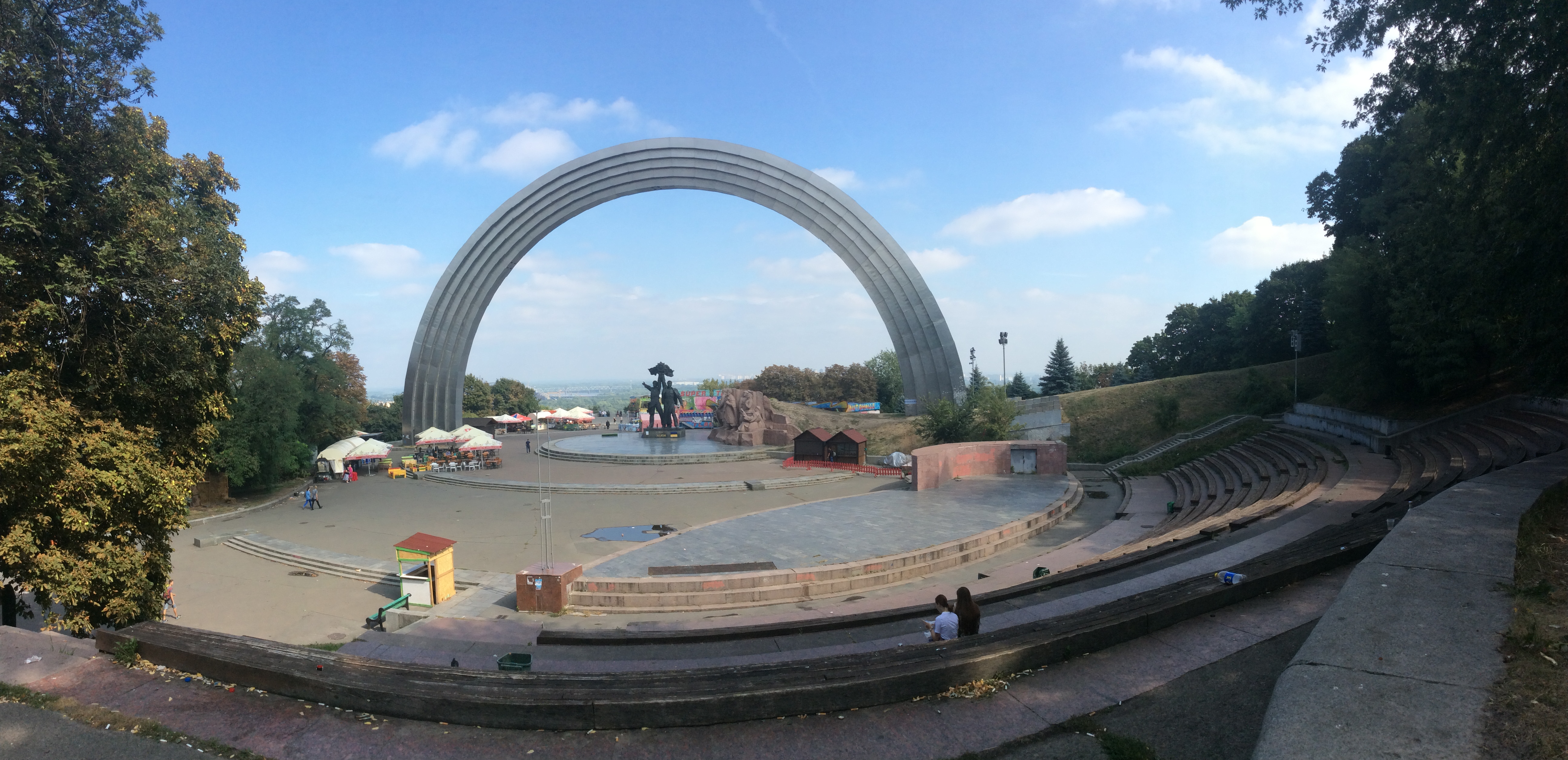
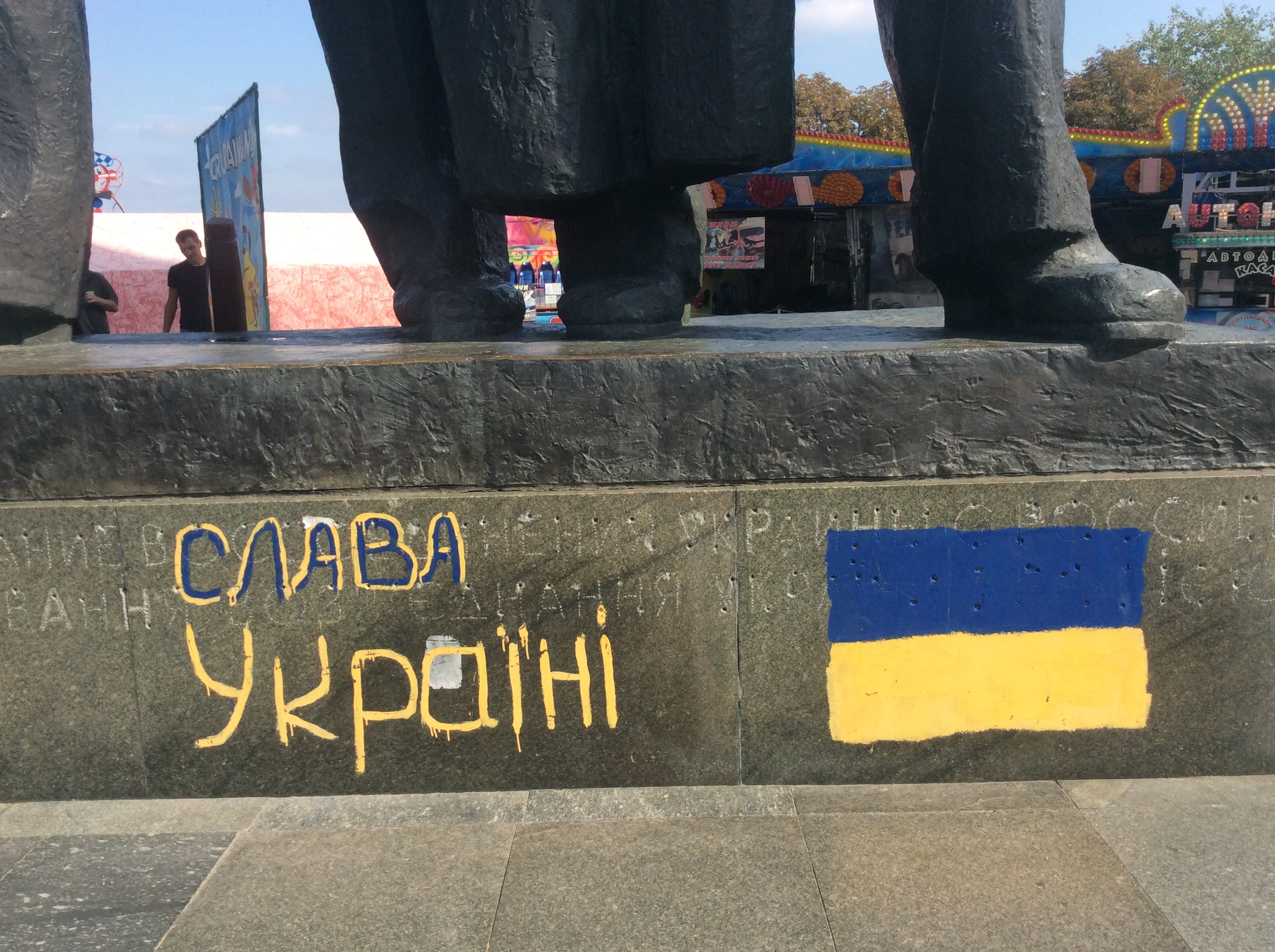
That was back in 2016, only a couple of years after the Revolution of Dignity and the subsequent annexation of the Crimea. The city was quiet, but the stress lines were there to see, if you looked closely. Beneath the People’s Friendship Arch, a monument to Russian and Ukrainian unity, a messaged daubed in Cyrillic: “Slava Ukraini” – Glory to Ukraine. The nationalist call-sign, forbidden during the years of the Soviet Union.

The blue and yellow of the national flag was everywhere, almost as fiercely ubiquitous as the rojigualda in the months following the 2017 Catalan rebellion. Even the street artist dressed as a minion in the Maidan Nezalezhnosti (Independence Square) seemed intentionally patriotic.

The blue and yellow from the city streets of Kiev has since fanned out across the web. Profile pictures bear its bicoloured hue. Thoughts, prayers and shares tell the story of the conflict to millions. And while part of me feels this is the way things should be, there’s something that keeps cropping up that I feel the need to talk about.

As is becoming customary in the Instagram Era, there’s just as much anger on my social media feed about the underrepresentation of conflicts happening elsewhere in the world as there is about the fighting taking place in Ukraine. For every “thoughts and prayers” post there’s a story bemoaning how much less of a fuss was made over Israel’s actions in Palestine, or the Indian occupation of Kashmir, or the assault on Yemen, as though one ought to be losing one’s head every time a gun is fired anywhere around the world. All of them immensely valid causes, no more or less than the chaos unfurling in the land of the Rus right now. Still, the phrase “pick your battles” comes to mind, and perhaps I’ve never used it more accurately. You can’t fight every war.

War. It’s not a word I’m used to using in the present tense, jaded as we are in the West by decades of relative peace. Thousands of us – maybe even millions – have never known what war means beyond what we studied at school. There’s a strong argument against the virtue-signalling “thoughts and prayers” response trending across social media, but maybe that’s just the knee-jerk reaction of a generation so far-removed from war that the word has all but lost its meaning.

Thoughts and prayers for the people of Paris after the Notre-Dame fire. Thoughts and prayers for the people of Afghanistan. Thoughts and prayers, but never enough of them, and never going to all the right places at the right time.

There’s so much human suffering that the whole world should be wailing.”

Joy Chambers, My Zulu, Myself

Taking the colonialist argument off the table, just for a moment, I don’t know whether we’re even capable of feeling a genuine sense of outrage at every injustice there is in the world – even my generation, which does a very good line in being outraged and incensed at everything. Every injustice, though? How can you fight for every cause and still remain true to your own beliefs? That much pain would be enough to tear the soul apart. It’s bad enough being a bleeding heart about the natural world – which, when the chips are down, is the first thing people forget to care about.

Fight, by all means. Resist. Shout about the things you care about. But pick your battles, and don’t attack those who didn’t come when you called, just because the fire in their hearts was not burning so bright.

What’s my opinion, then? Bewilderment. Jaded bewilderment, like so many of my generation. Bewilderment at the aggression. Bewilderment at the inaction. Bewilderment at the comparison to the Sudetenland saga I’ve heard so many times this week.

I studied the Soviet Union for years, but I’m no nearer an answer than any other armchair expert – probably because of my innate aversion to 20th century history, having studied it to the exclusion of every other century at school. Before I speak out, though, I will do what I do best. I will read. I will research. I will inform myself, as we were so often commanded to do during the BLM movement. I will speak to those who know more than I do, when the time is right.

While the world watched the city of Kiev, five islanders returned from the Chagos Archipelago in the Indian Ocean. It was their first independent trip home since they were forcibly removed by the British authorities during the 1970s as part of a deal to secure Mauritian independence. Mauritius wants its territory back. The Chagossians just want to go home.

Just one more injustice to add to the pile. Perhaps the whole world should be wailing – but for whom? Our world is full of people who think differently, and long may that be so. I will defy my generation and risk the use of a colonial poet to conclude, because I do believe Kipling had the right of it in this verse… BB x

Oh, East is East, and West is West, and never the twain shall meet,
Till Earth and Sky stand presently at God’s great judgement seat,
But there is neither East nor West, Border, nor breed, nor birth,
When two strong men stand face to face, though they come from the ends of the Earth!

Rudyard Kipling, The Ballad of East and West

Cherry Red

Masks are becoming a much less common sight around town these days. Most of the signs in shops still carry the warning to wear a face covering or face a penalty, but only the employees appear to follow the rules nowadays. John Q. Public seems to have taken Boris at his word and thrown caution the wind in favour of a return to the way things were. The lurid rojigualda of my own face mask is more notable for its presence than for its colour scheme.

Though perhaps less so today, when red is absolutely everywhere, in the name of love, romantic, commercial or otherwise.

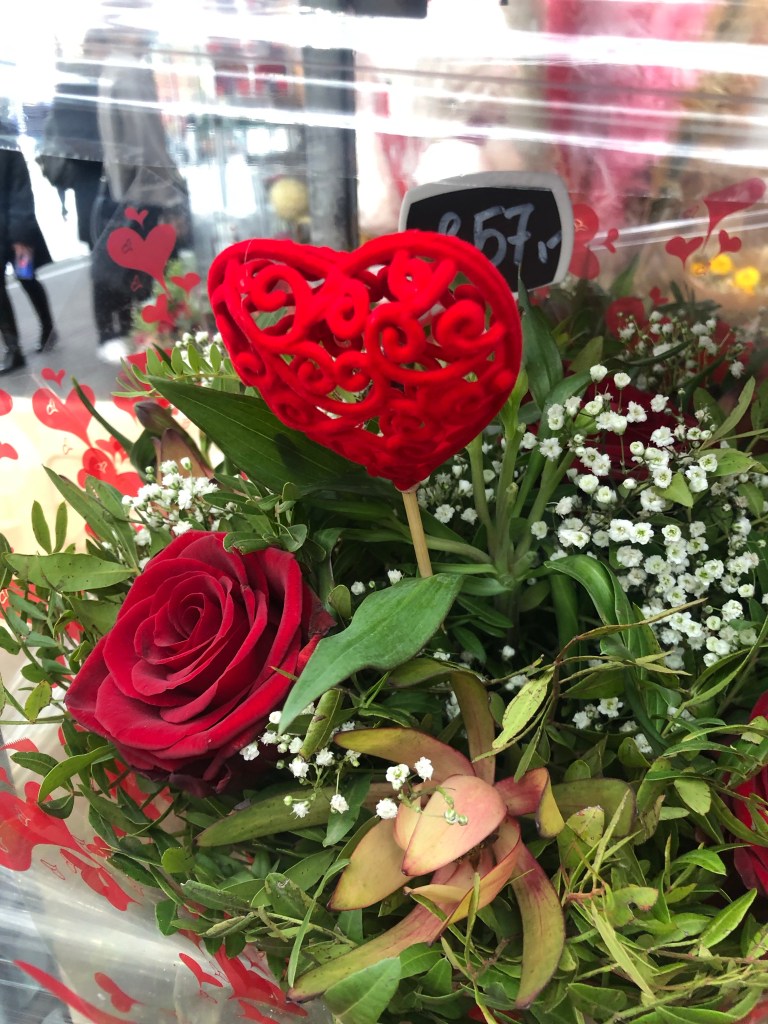
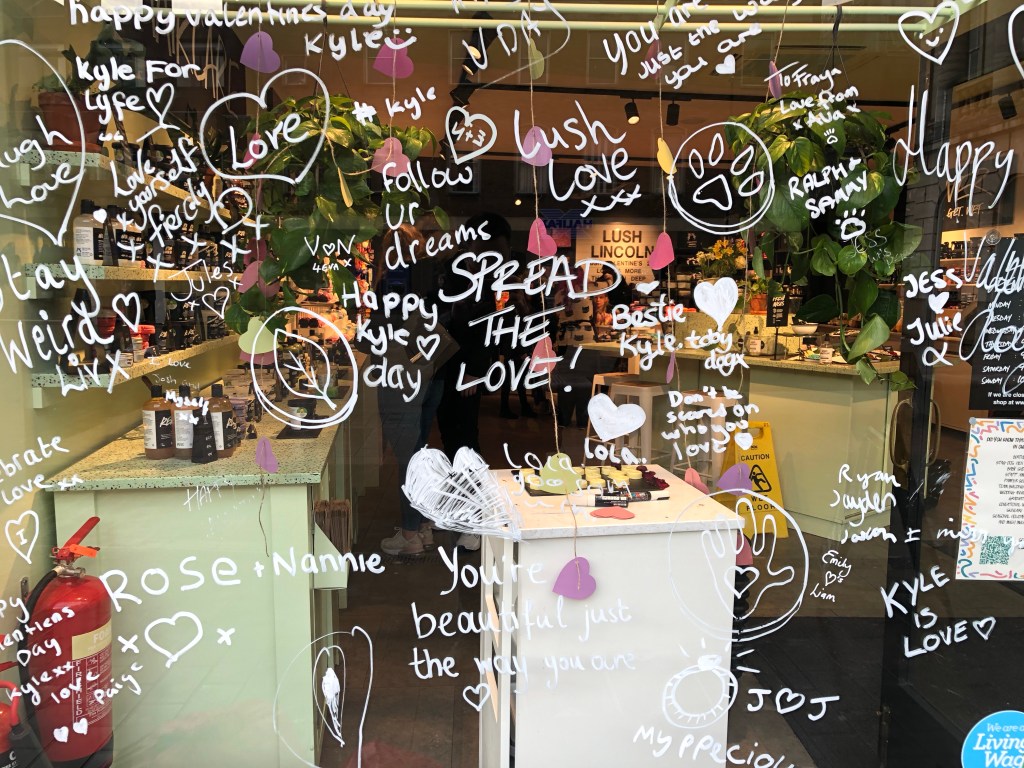
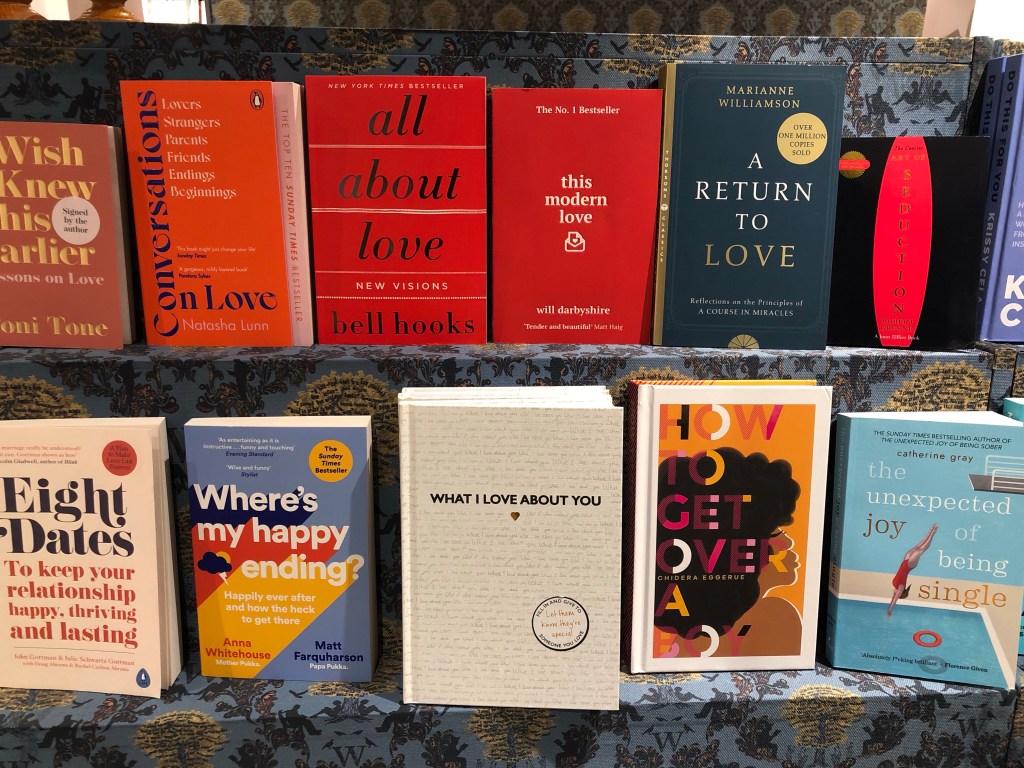
There’s been a pretty serious push for Valentine’s Day this year. Did you notice? I suppose it’s because we’ve had two years of two-metre rules and vaccination anxiety which has thrown the world’s dating community into total disarray. Still – it looks as though all the usual suspects are making up for lost time. Couples wandering about, hand in hand, head on shoulder. Trendy-looking young men scribbling hasty cards in cafes. Groups of girls carrying bouquets and single roses around every corner. Supplying them all, flowers stalls plied a roaring trade in every train station, booksellers put all their romcom collections in the window and Lush had its usual ‘leave a message’ montage daubed across its front.

I’ve never been one to hate on Valentine’s Day. Somehow all those years at an all-boys grammar school didn’t manage to quash the romantic in me. Sure, it’s got a commercial side these days, but then, what doesn’t? It may seem a little strange to celebrate the death of a third-century Roman saint by giving and eating (or just eating) a confectionery staple that the Mayans used to snack on, but is it really any weirder than Santa Claus’ transformation over the centuries from Turk to Coca Cola-chugging Nord?

I was raised on Disney movies, so of course I’m going to fight love’s corner. The same mega corporation that imbued us all with a considerable mistrust of employers (seriously, how many Disney villains use contracts or bargains?) has hammered home the message that true love conquers all since 1959. And though Sleeping Beauty gets its fair share of scrutiny these days, there’s a no less powerful dialogue from The Sword in the Stone that cuts (ha) right to it:

Merlin: “You know lad, that love business is a powerful thing.”

Arthur: “Greater than gravity?”

Merlin: “Well, yes, boy, in its way… yes, I’d say it’s the greatest force on earth.”

The Sword in the Stone (1963)

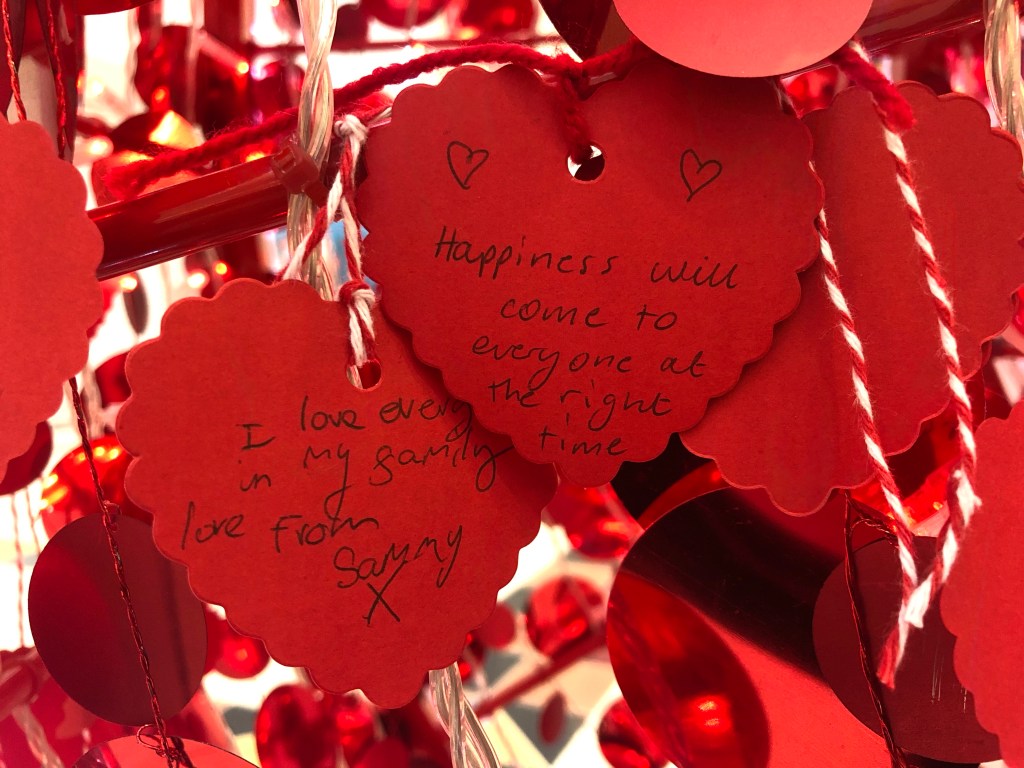
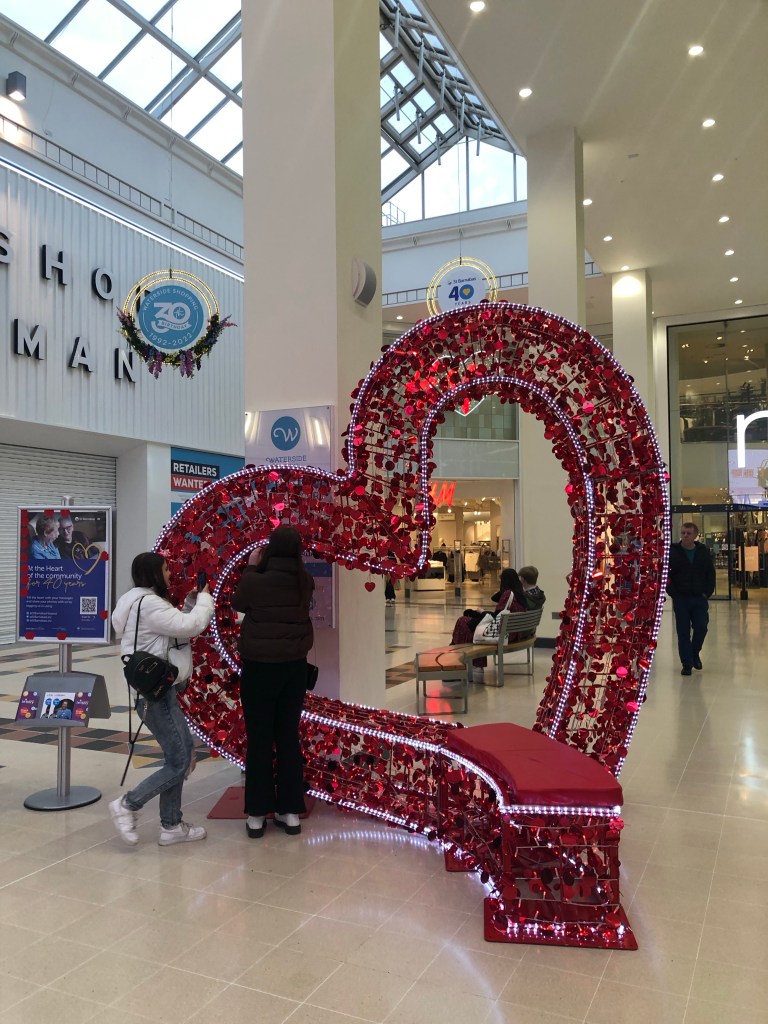
Lincoln’s town mall had an oversized display up which was drawing a small but steady stream of contributors, so I had a look. Folk had scribbled messages on little red hearts and strung them up from the display for all to see. Lots of “luv u Dave!! xoxo” type notelets, but a fair scattering of wise words threaded in: “Happiness will come to everyone at the right time”, “Don’t look for love it will find you”… “Snap me @.”

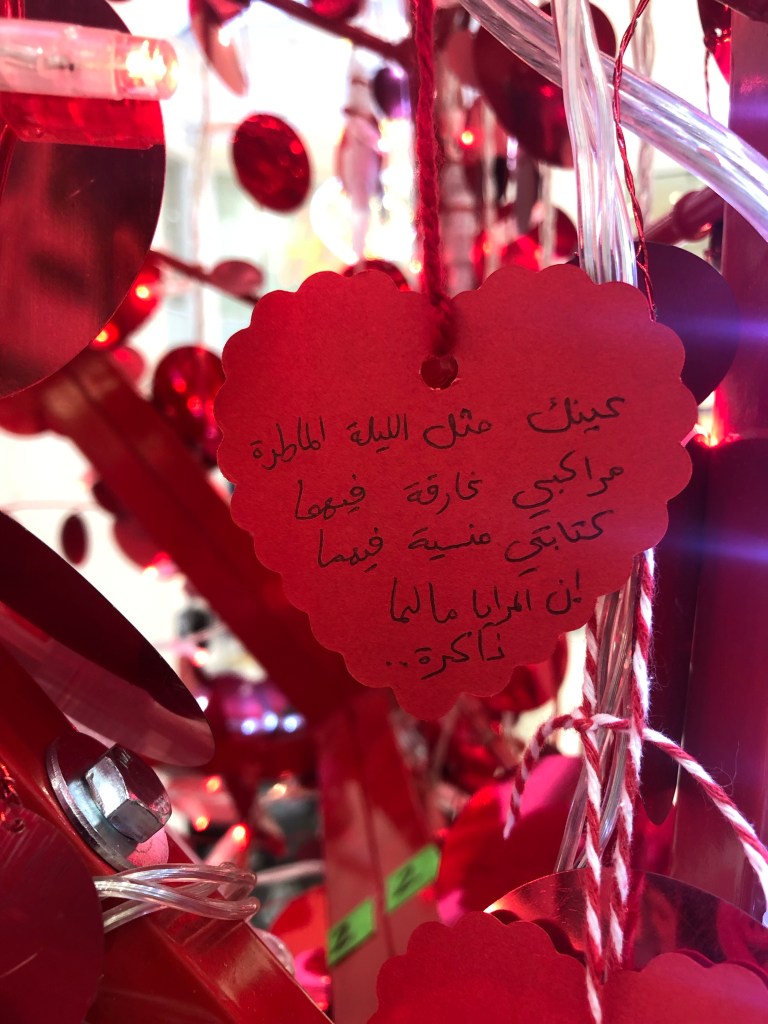
When I woke up this morning with this post in mind, I meant to read some good old love poetry and reel off that. I could only find a few that were to my liking in my poetry collection, namely a couple of Shakespeare sonnets (18 and 116) and Yeats’ He Wishes for the Cloths of Heaven. It wasn’t until I reached the garish display in Lincoln’s mall that I suddenly remembered one of the greatest poets to ever put love into verse: the Syrian wordsmith, Nizar Qabbani.

I’ve been a devotee of Qabbani’s work since I was introduced to him in my second year at university. There’s not a single one of his poems that I don’t adore. Even in translation his words hold their magic. His poems find their way into my journals at least once per book, and I couldn’t resist an opportunity to transcribe one of his verses here, for want of anything better to write. I’ll translate below:

Your eyes are like a rainy night

My boats sink in them

My writing disappears in their reflection

Mirrors have no memory…

Nizar Qabbani

Three local girls were busy penning their thoughts as I strung up my contribution and set off to catch my train. When I glanced back at the door, they’d all gathered to see what I’d written. I hope they find the words as powerful as I do.

As is so often the way after such highfalutin flights of fancy, I was brought back to reality with a crash when not even a minute later I was stopped by a drunk almost as soon as I’d stepped out into the street. Between slurred speech and staggered gait he managed to convey that he had ‘no credit’, the taxi people ‘weren’t talking to him’ and that he needed to get to ‘Cherwillingum’, though he couldn’t say where exactly. After we’d established that his destination was Cherry Willingham (which, apparently, is how the locals say it – I maintain that British place names make English the most unhelpful language on the planet), I called him a taxi and wished him good luck, hoping that the three-hour wait would find him in a more sober state. Fingers crossed for you, buddy!

The sun sets on another Valentine’s Day. Eros and Mammon join hands once a day every year, and frankly, I say let ’em have their fling. It’s very easy to roll your eyes at the consumerism and mawkish PDA everywhere, but I can’t help feeling there’s nothing wrong with one day out of 365 devoted to romantic love. That leaves at least 364 others to be a cold-hearted cynic, if you’re that way inclined. BB x

Love out of Love

100 Days of Writing: Day Two

It’s been a long time now since I was in the vicious grip of infatuation. And long may it be until it gets me again! I don’t remember ever feeling so free or so happy over the last few years, and I suspect it’s got a lot more to do with me growing up than anything else. Today’s topic would have been easy enough to tackle, but the stipulation was that it had to be in verse…

Now I’m not a massive fan of poetry, even good poetry. And poetry about love is seldom good. Reading some of the tripe you came up with in younger years is gut-wrenching, to say the least, but if you thought that was hard, trying writing it when that’s all in the past… The words don’t come to you as quickly as they did then, when a bleeding heart makes for an endless inkwell (with the verbal talents of a stroppy teenager). And isn’t there something about the very art of love poetry which belies imbalance?

Nevertheless, orders are orders. So here’s Day Two: The Unrequited Love Poem.

Chasing Cars was playing
As we stepped into the light
And we went our separate ways.
I went up the road
And she went down.

There’s no easy method
To describe a broken heart
When the breaking is so soft.
‘Let’s be friends’
Hurts much more than it should.

Looking back is easy
From the freedom of release
When the world is more than two.
You can see
When you were blind before.

The traffic light is blue
The battle flag is waving
But it’s painted all in white.
There are no rules
All’s fair in love and war.

—–

Her every word is wisdom
And her laugh is summer rain
And hearts, parts and cupid’s darts
All blind you to the pain.

I’ve heard that nice guys finish last
Or something of that kind
That romance died off years ago
And love is hard to find.

The front row of the theatre
The poems she shared with you
They all mean next to nothing
If that’s what a friend would do.

Pity is a murderer
Luck does not keep giving
Fate is just a child’s word
Hope is unforgiving.

—–

It saddens me to think that when you’re young and love’s the end
The worst thing you could bear to hear is to be called her friend.

—–

I’ve said it before and I’ll say it again. I am not a massive fan of poetry. Unless it’s Arabic poetry. I can totally dig that. BB x

The End is in Sight

No more Arabic Literature!

No more Arabic Literature!

It’s the last week of exams, which means most people are finished for the year. Most people. Everyone not doing Spanish Texts, that is, which has been lovingly placed on the last Friday of exams. How generous. On the plus side, no more Arabic Literature! What was set to be the toughest exam turned out to be a relative walk in the park, compared to the nefariously difficult Persian and Arabic papers. Though the Dissolute Poets didn’t feature at all – it was never very likely that they would – I still got the chance to quote our favourite poet, Abu Nuwas, in one of the questions, so all’s well that ends well. I’ve also learned from my mistakes, balancing eloquence and originality with the academic writing preferred by one of my lecturers. I take a Beyoncé approach to essays, these days: if you like it, then you need to put a lid on it, because it’s not meant to be an entertaining read, of course. See what I did there? Yeah, it wasn’t exactly inspired. I’ll try to avoid out-and-out humour.

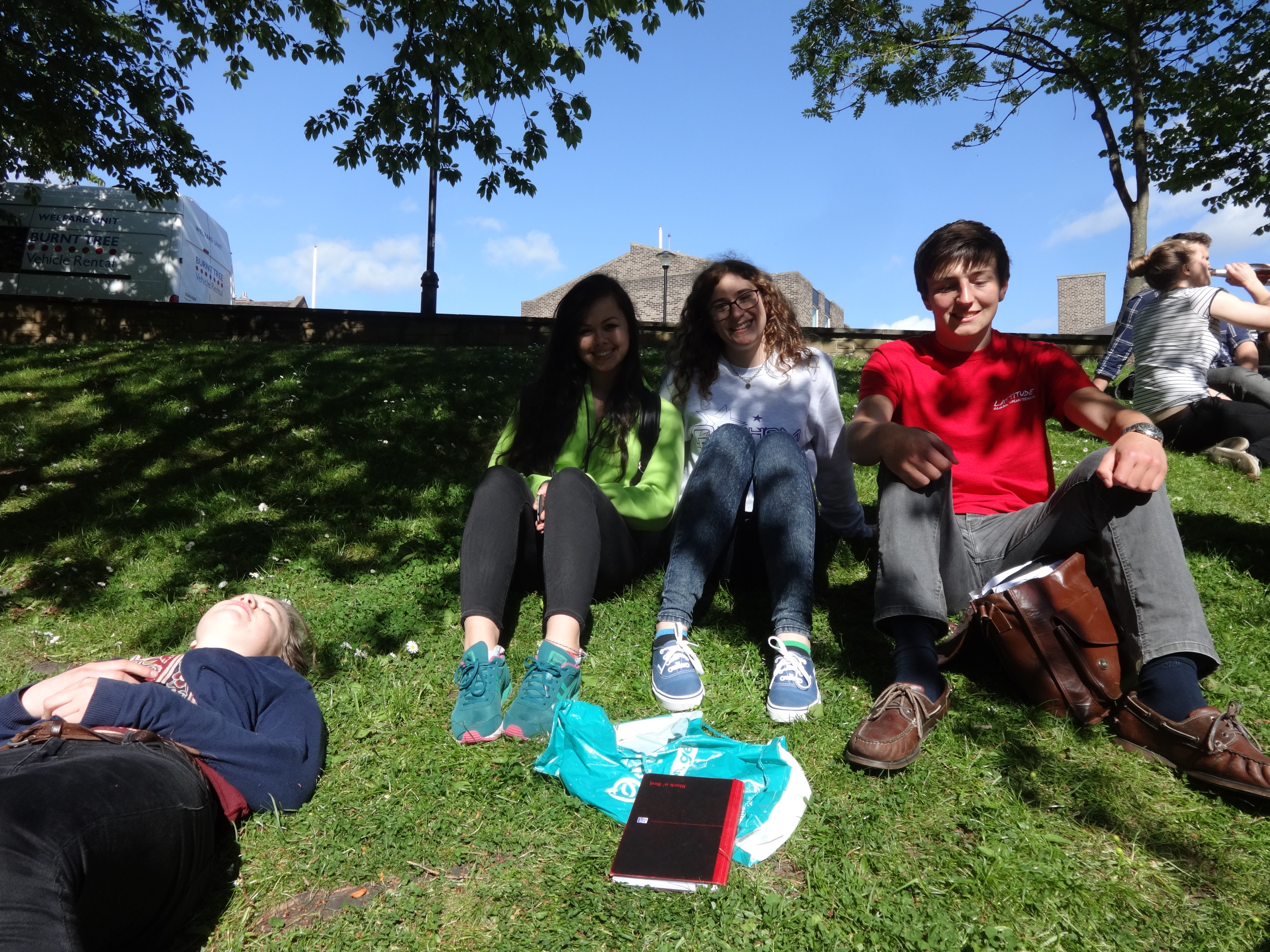
Still, if today’s weather sets a precedent for the rest of the term, I’ll be one happy guy. It was absolutely b-e-a-utiful this afternoon. Exams or no exams, I joined the rest of the lit crew to chill for an hour or so outside the Swan and Three in the sun, if just to revel in the knowledge that we don’t need to read up on Modern Arabic poetry, Jurji Zeydan and the maqamat anymore. I’m not free yet, but with the shackles of a history-based exams removed, I feel like flying. I’ve already been told that originality is valued over quoting in my last exam, which is much more up my street, so I’m not so worried about that. What I should be doing in the meantime is booking those flights to Amman. This time next month, I’ll be there. And that’s a little alarming… BB x

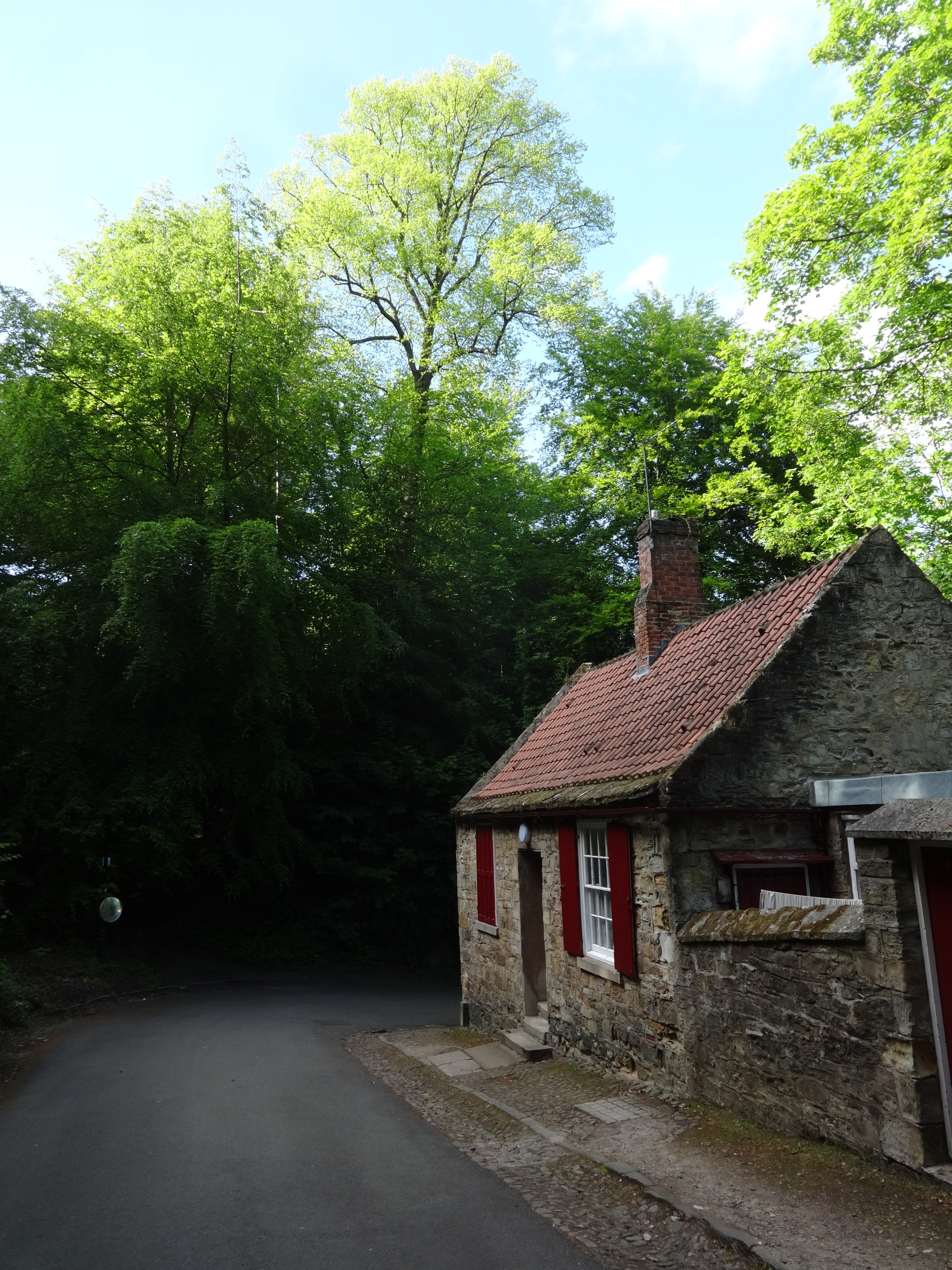
Prebends Cottage on a Summer's Afternoon, Durham

Prebends Cottage in the Afternoon Sun, Durham

Wine, Women and Song

As compensation for far too many hours spent trawling the internet for absolutely anything and everything to do with Extremadura, I’ve finally settled back into the all-too unfamiliar rut of revision. It’s not quite as entertaining as browsing beautiful images of the high sierras, rolling steppe and quaint medieval towns that’ll be my home next year, but I reckon I’ve nearly exhausted all the internet has to offer as far as Extremadura is concerned. Even so, I’m still no closer to having a decent idea as to where I might end up, or what it will really be like to live there. Just goes to show how a little knowledge can only take you some of the way. The rest will come in time.

So I spent most of today back in the armchair in the living room swotting up on the dissolute poets of the Abbasid Caliphate and their ringleader, the infamous Abu Nuwas, lover of wine, music, lewd verse and just about anything that walked on two legs. It seems that the scoundrel managed to carve a niche for himself into the fabric of Arabian myth as a master poet of almost unparalleled skill, along the way chasing slave boys, playing out some of the earliest rap battles, insulting almost everyone and everything and generally being an all-round prankster, for which he is so wittily remembered in several tales of the Arabian Nights. So outrageous a character is he that he is one of the only characters in the Arabian Nights that infuriates Shahriyar to such an extent that he threatens to break the frame narrative and kill Shahrazad (also Scheherezade), the narrator, if she mentions him again. Twice. But he’s obviously just too big a character and crops up time and time again. To give you an idea of his style, here’s a verse from the Mathers translation of the Arabian Nights. Obviously it sounds better in Arabic, but it’s such a high style Nuwas uses that it’s well beyond the comprehension of a second-year Arabist, and the meaning’s clear enough. Here, Abu Nuwas describes one of Caliph Harun al-Rashid’s slave girls, whom the Caliph has ordered to conceal a wine goblet in order to prevent the rapscallion from drinking any more:

Even as I desire the cup
The cup desires
Lips secret and more pleasant
And has gone up
Within her garments hollow
Whither the cup aspires
Nuwas would follow
If only Harun were not present.

Raunchy stuff. His legacy extends beyond the Arabian Nights; most of Baghdad’s nightclubs and restaurants are based in Abu Nuwas Street and the city is home to an immense statue of the rogue, with wine goblet in hand. For a man who is essentially the Arab world’s most glorified scoundrel and bisexual, it’s a miracle IS hasn’t done away with the effigy. And long may that be the case. After all that reading, it’s got to be a life ambition of mine, to see that statue with my own eyes. Let’s just hope the linguistic brilliance of his poetry continues to outweigh his lewd behaviour.

That was a little too informative for a blog post. But, as usual, I thought I’d share it with y’all in case you’re interested. My friend and I have some kind of cult-hero thing going on with Abu Nuwas so I’ve probably got the guy blown way out of proportion, if just in the vague hope that he comes up in the upcoming exam, so that I can use all this knowledge I’ve gleaned. I guess that’s the point of revision.

Oh, but hurry up next year already! I’m chomping at the bit to get teaching, wherever it is that they send me. As if that wasn’t already obvious… Until the next time! BB x