Albergue El Alfar de Rosalía, Hornillos del Camino. 20.03.
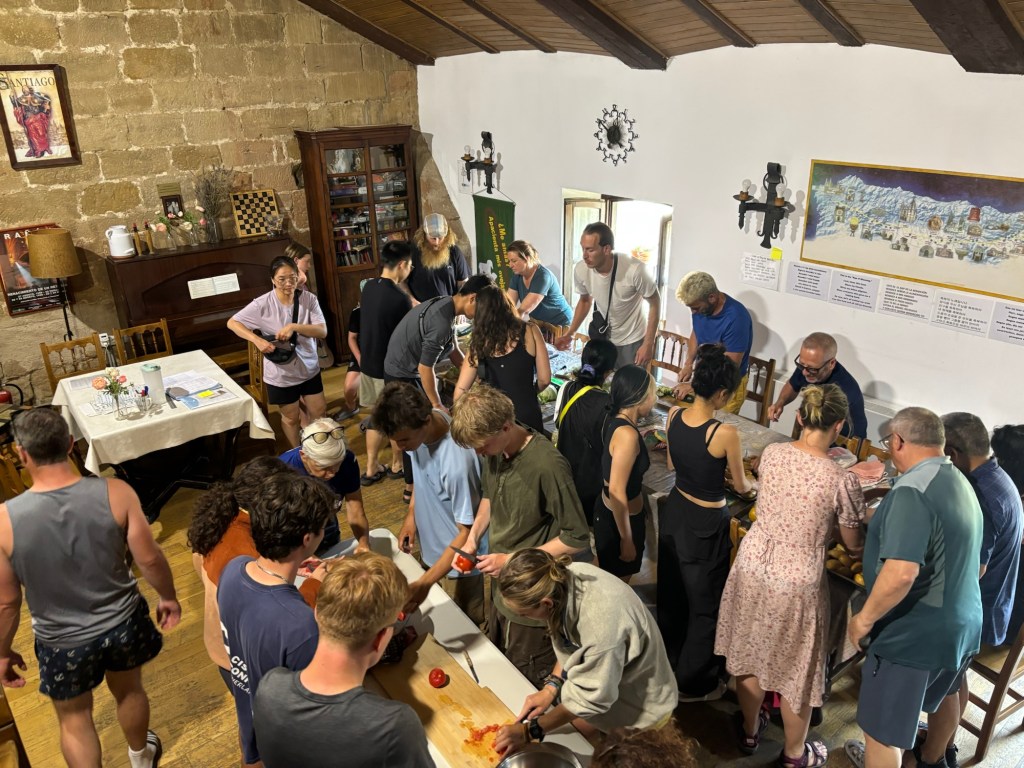
I was up at 4am this morning, probably due to the racket put up by the Koreans snoring next door. In any event, they were up and about with headlamps on by five and, since I couldn’t get back to sleep, I figured I’d get ready for the day, too.
It was as well that I did so. I had to intervene with a frantic Spanish woman in her fifties who was weeping into her phone with frustration because she couldn’t find the emergency exit that would allow her to leave the albergue before the main doors opened at 6.30am. I calmly pointed out the stairwell and a minor outflow of five or six similarly lost pilgrims followed suit, including Gust, the young Belgian lad we encountered in Grañón, and Lur, an enigmatic Basque girl with raven-black hair who has hardly said a word but who has been a feature of the Camino since Puente La Reina.

We said farewell to Alex after a last breakfast together outside the albergue and set off just after seven o’clock. Burgos’ Cathedral looked as magnificent as ever in the morning light, its twin towers visible for nearly four hours on the horizon after we left the city.
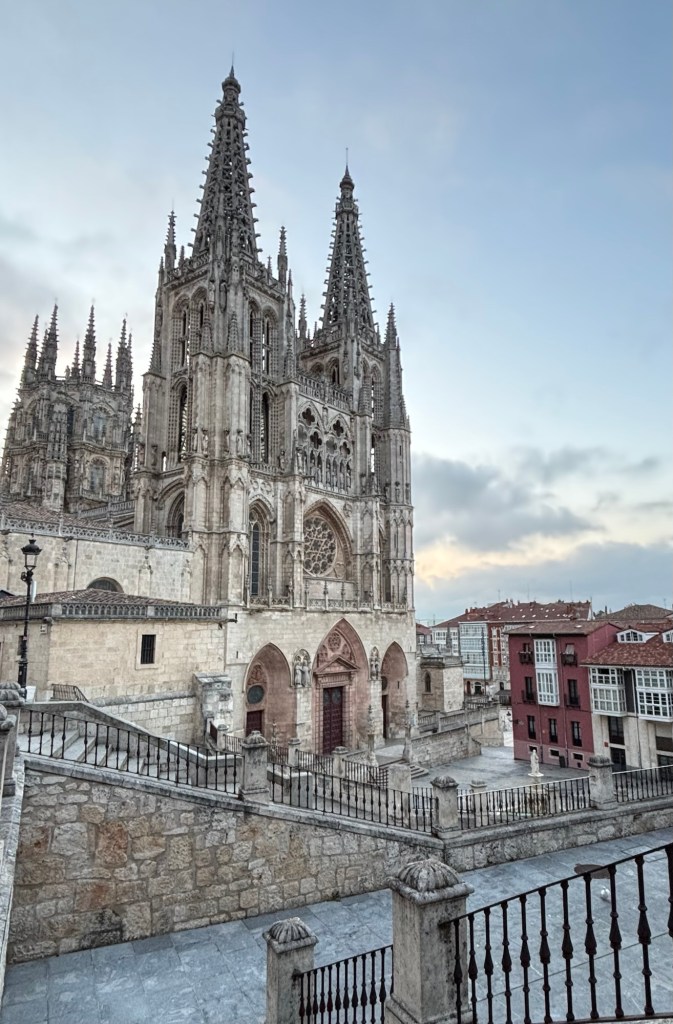
Leaving the city of Burgos is almost as laborious as entering it, but the west side of the city is a residential district and thus makes for a much more pleasant walk. An old lady redirected us near Villalbilla de Burgos, and while I don’t think it would have made an awful lot of difference if we’d kept going the way we were going, it’s nice that everyone around here id so invested in the Camino that they’re out to help.
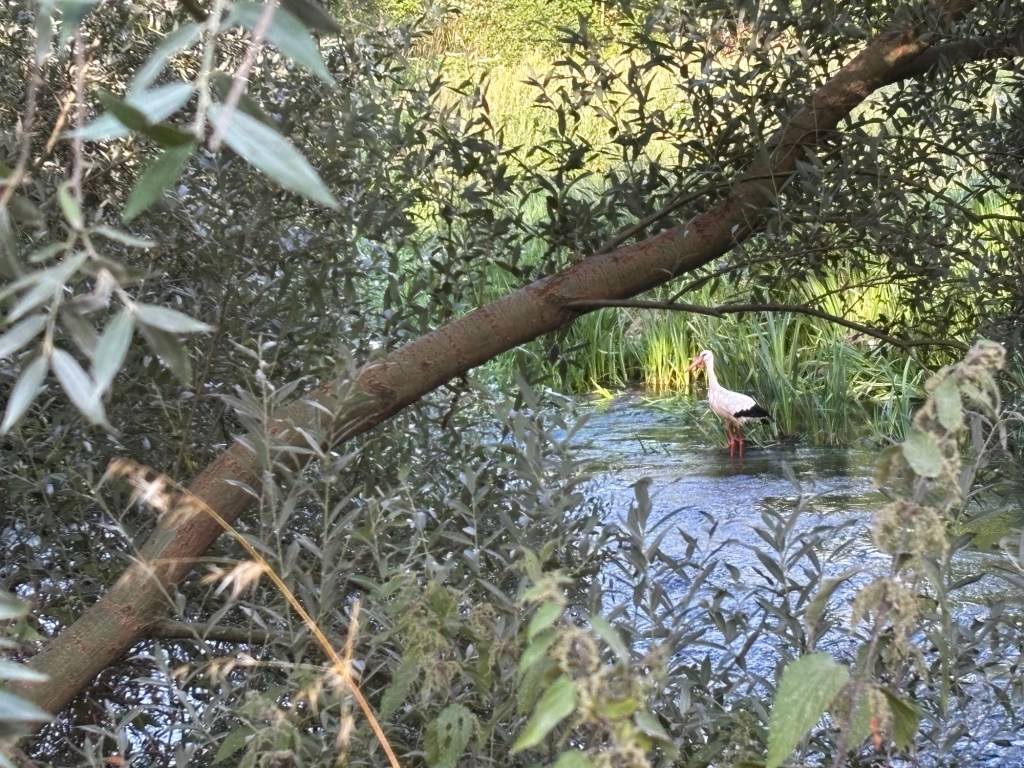
I found a couple of storks feeding in the Arlanzón river just after the crossing. They’re always so unaffected and untouchable in their nests atop the turrets and towers of Spain’s churches, so it’s not all that often that you encounter them in their “natural” habitat, where they are surprisingly wary and don’t let you get too close.
Tardajos’ church was open so I dropped in to collect the second stamp of the day, and a tip-off from pilgrims further ahead alerted us to a nun blessing pilgrims in Rabé de las Calzadas. The sister in question, a little old lady in her seventies dressed all in white from the Daughters of Charity, stood at the door of a little chapel on the edge of town, waving passing pilgrims over to approach. We went over for a blessing.
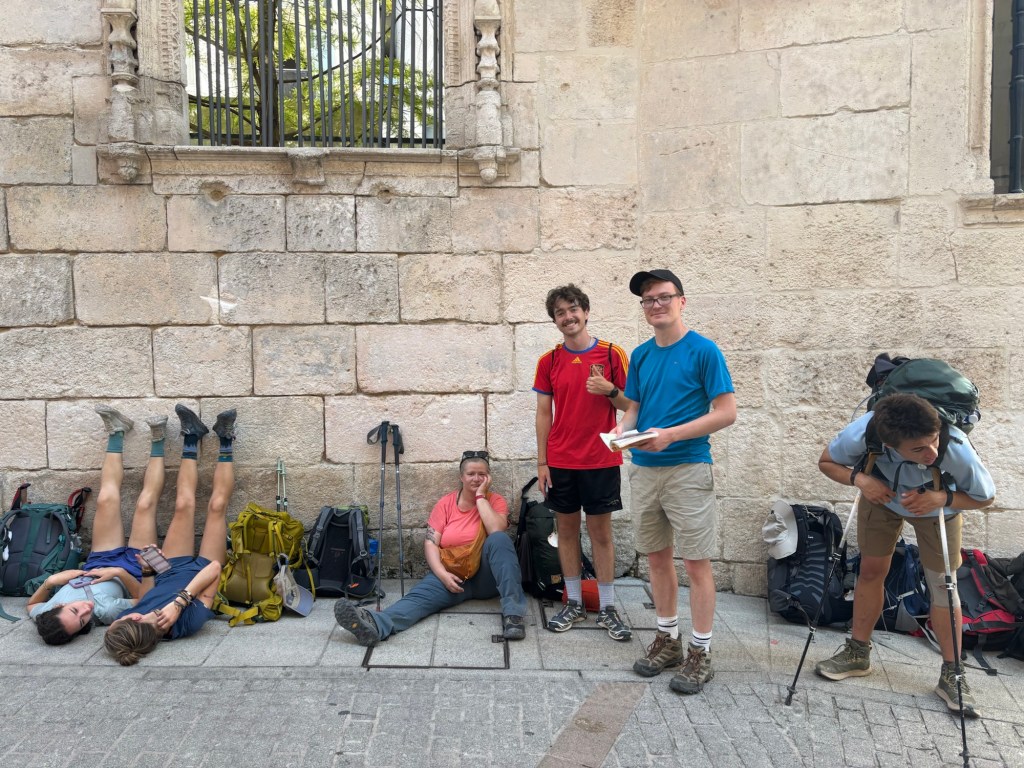
Spiritually, we’re a mixed group: a lapsed Catholic, a Reform Jew, an Agnostic and a Catholic who has found his way to God relatively recently. But for this last, this moment was one of the most magical of the entire Camino so far.
Taking us firmly by the hand, the Sister talked to us awhile about the spirit of the Camino and what it truly means to be a believer, in the least preachy way I have ever heard. Some of the would-be youth pastors I have worked with in the past would have learned much by her example. She quoted a poet who she could not remember (and I cannot locate) and asked us to go forward with the eyes of an owl, always searching, the heart of a child, always feeling, and the feet of a pilgrim, always walking.
Perhaps she was paraphrasing the Spanish poet Antonio Machado’s Olivo del camino, which has the following line:
Que en tu ramaje luzca, árbol sagrado,
bajo la luna llena,el ojo encandilado
del buho insomne de la sabia Atena.
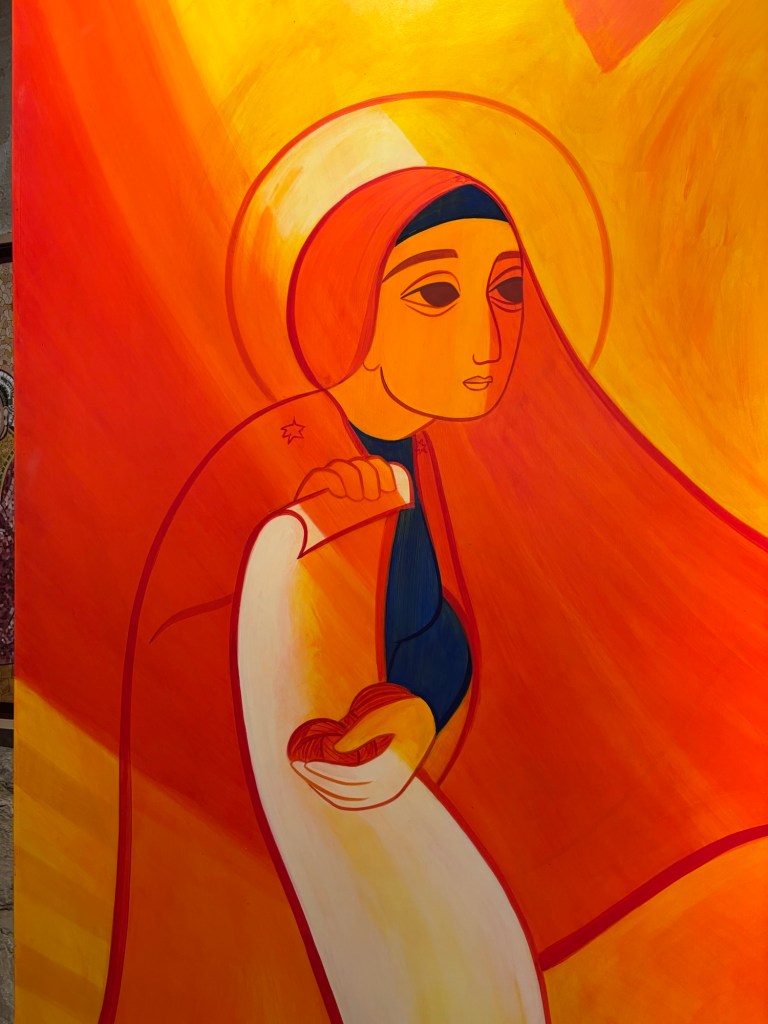
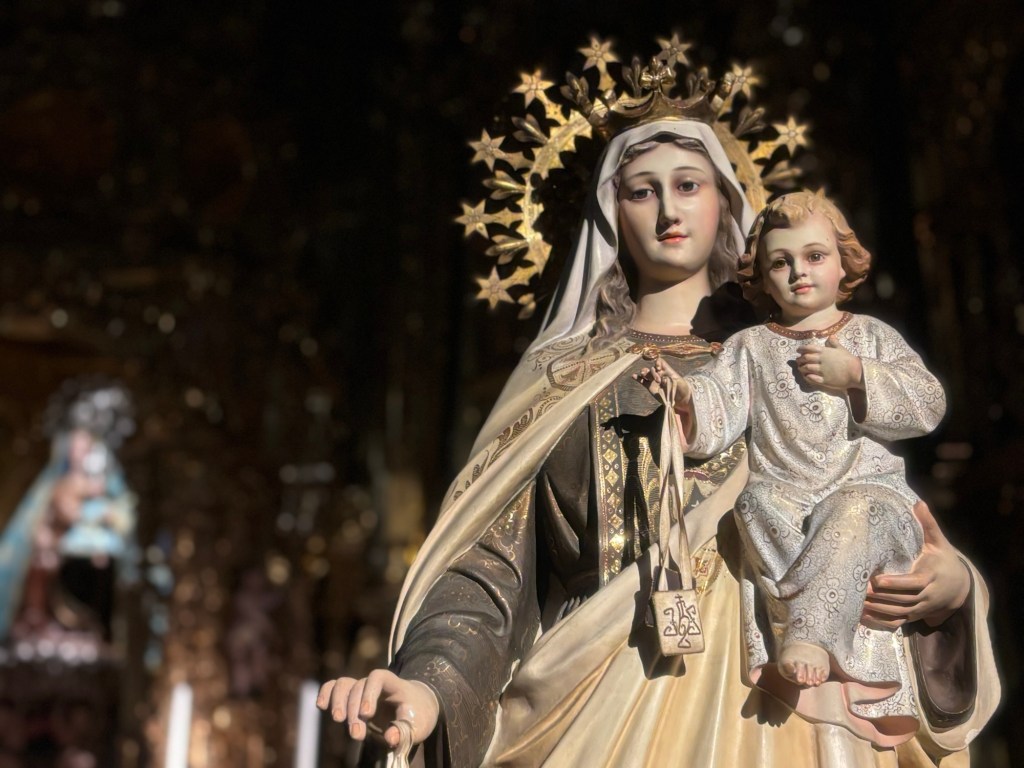
She gave us each a small token of the Lady of Charity, blessed us with a gentle hand on the forehead and sent us on her way. A purer soul on the Camino would be hard to find.
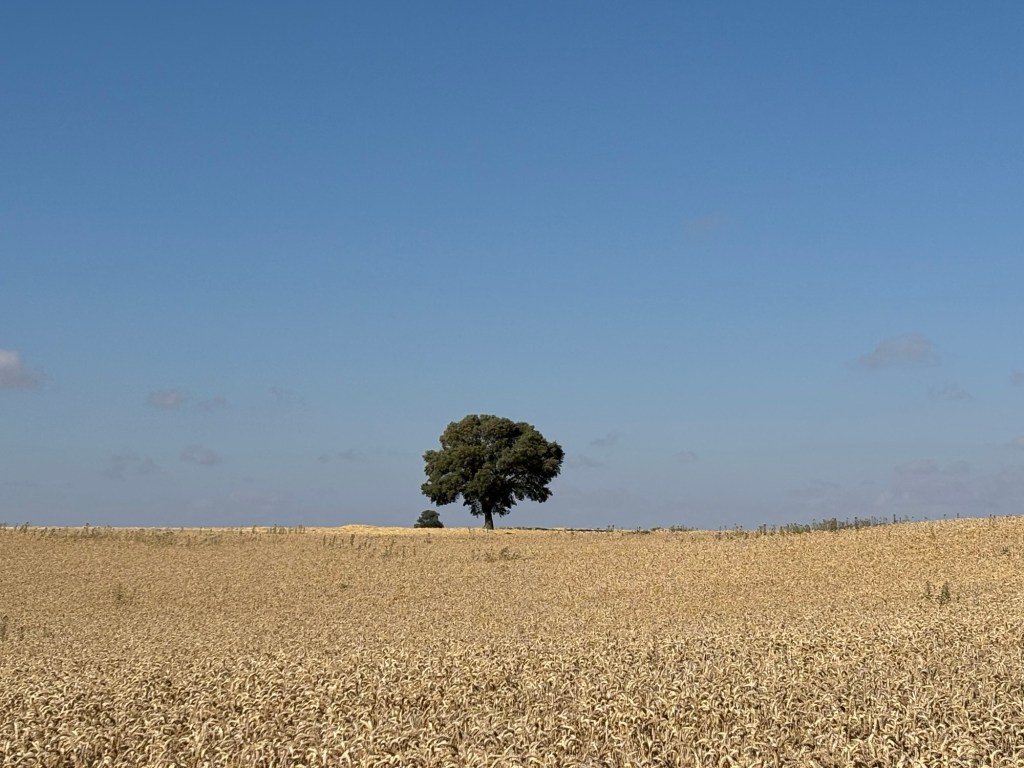
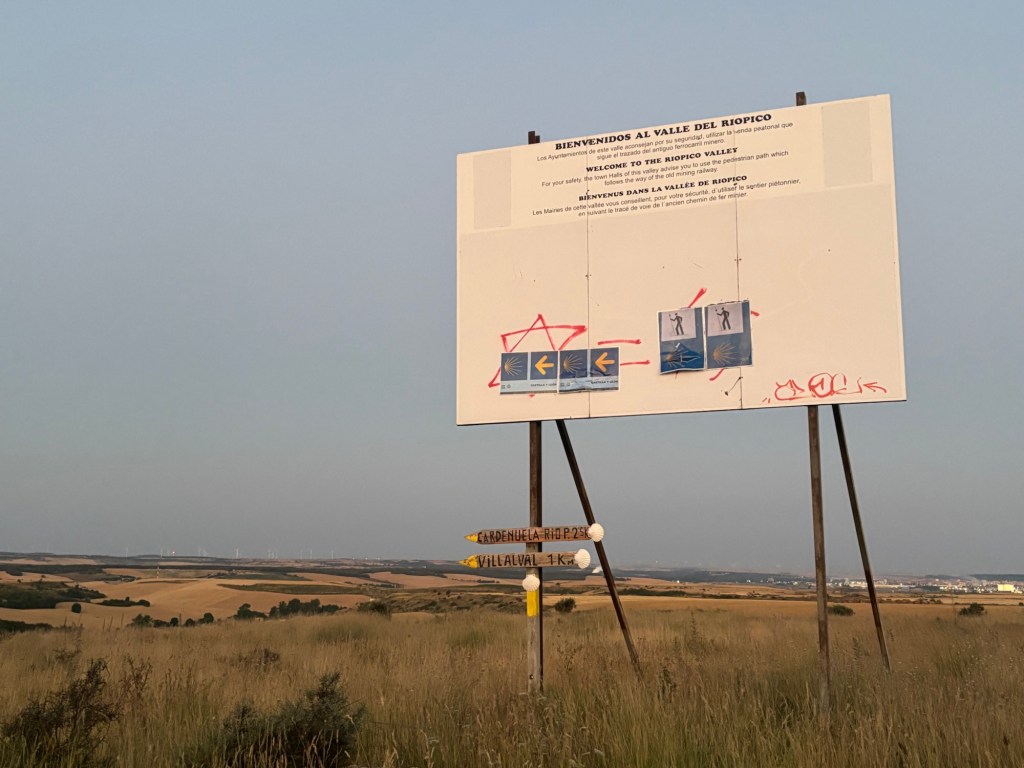
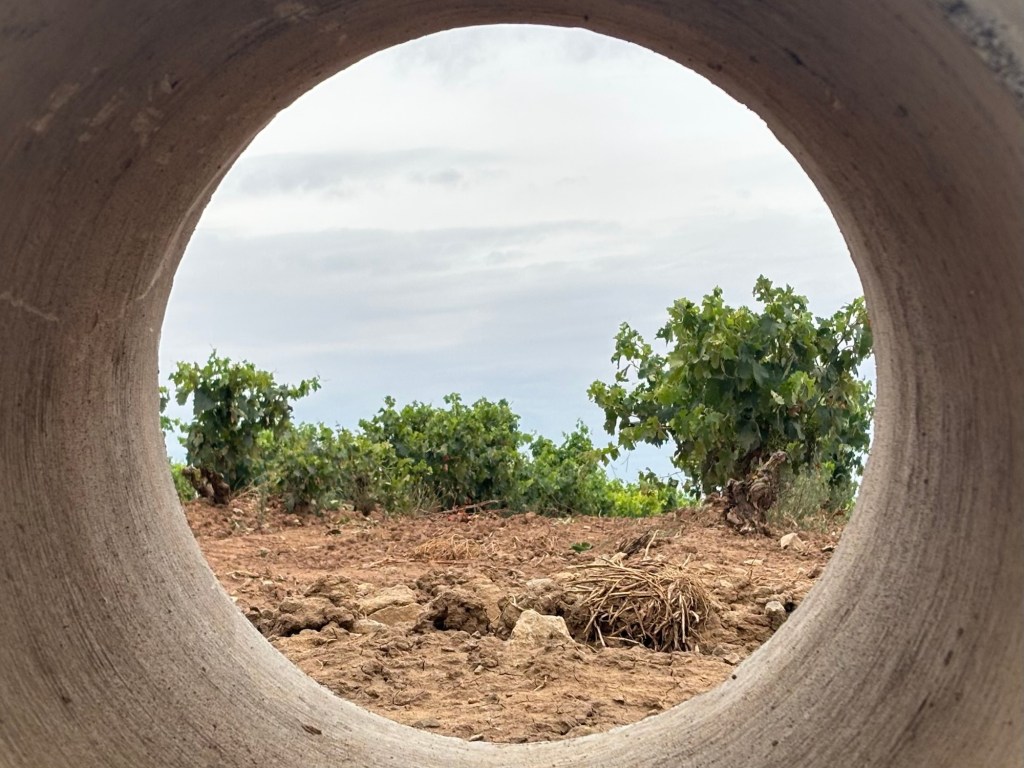
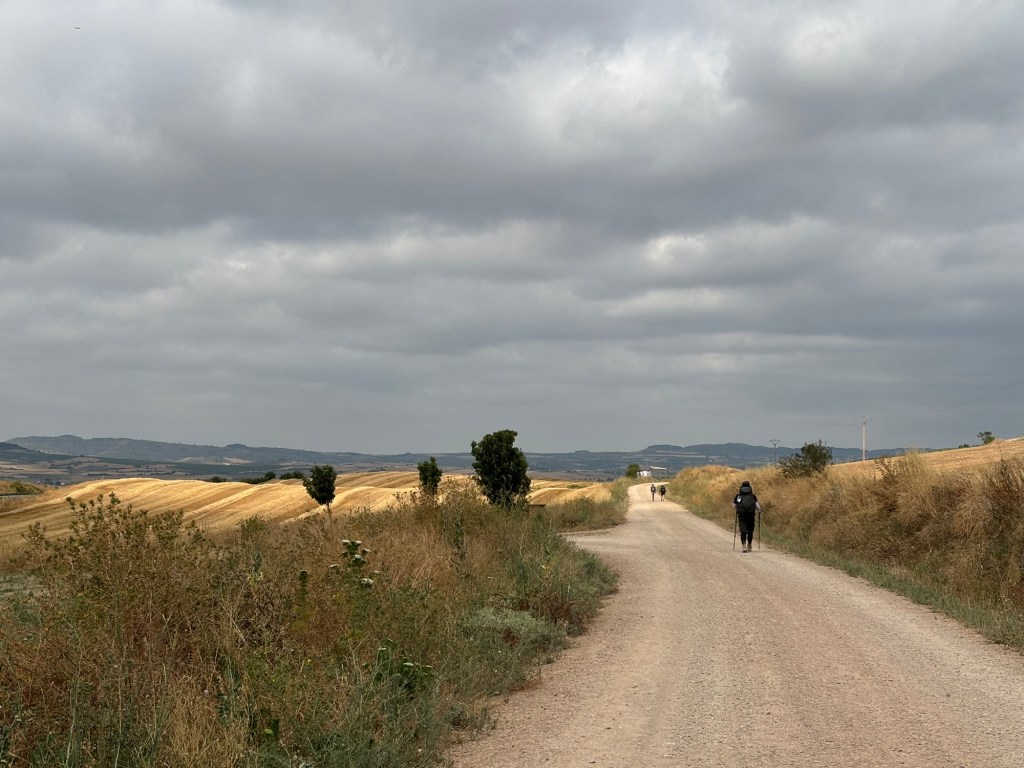
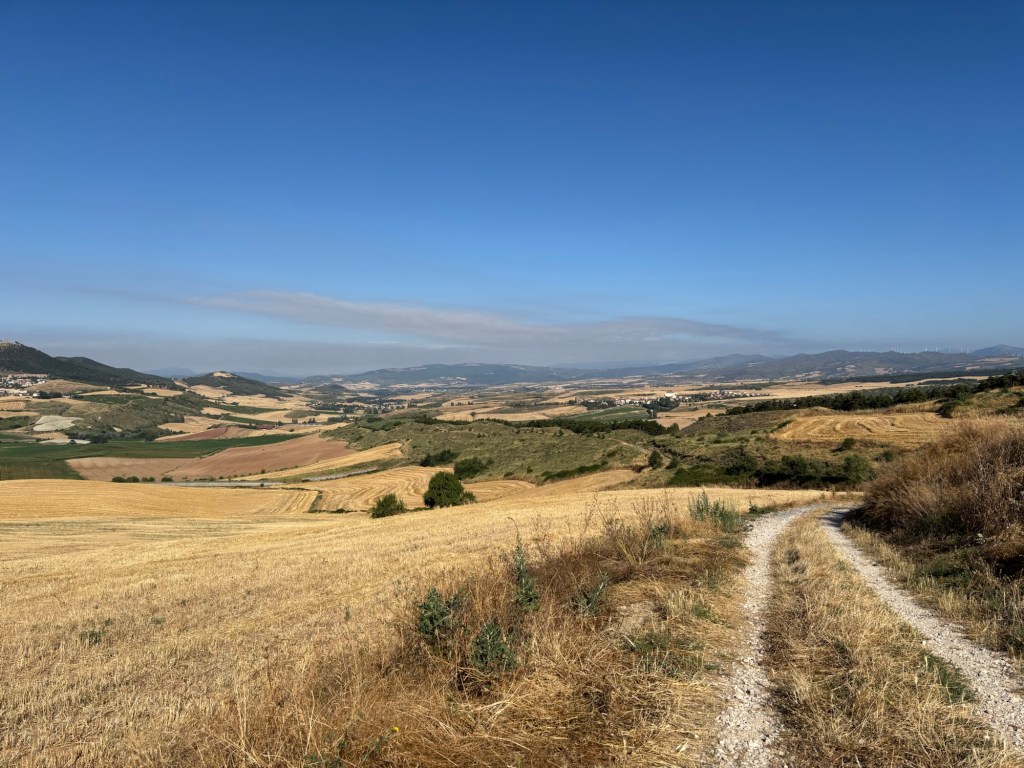
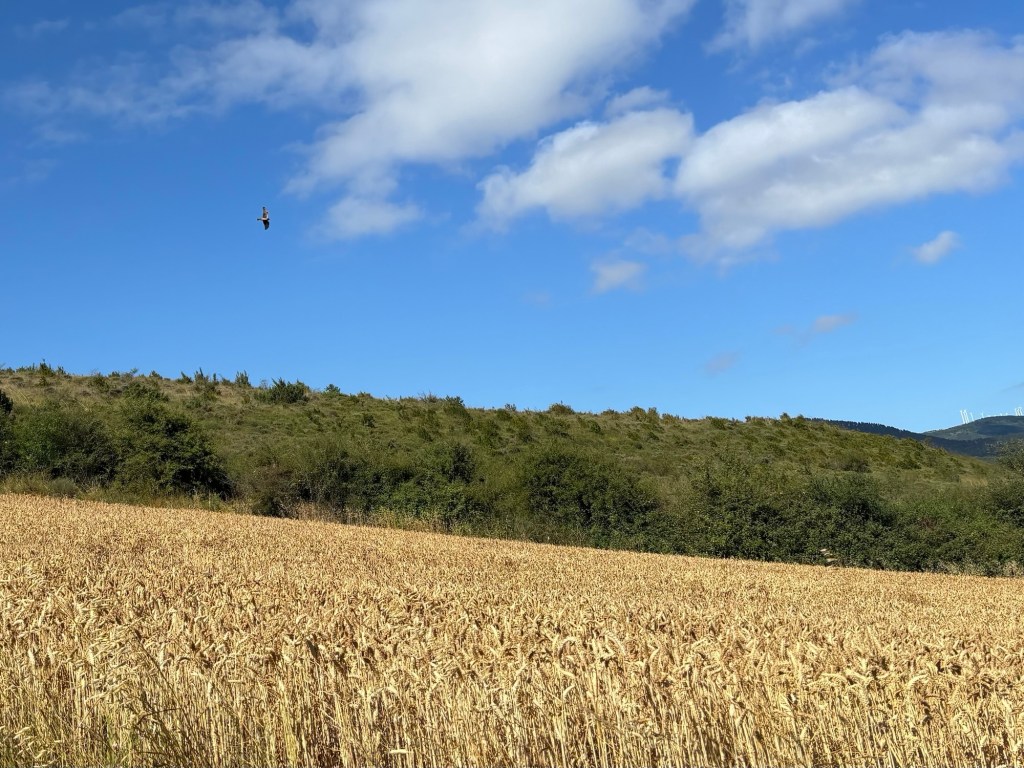
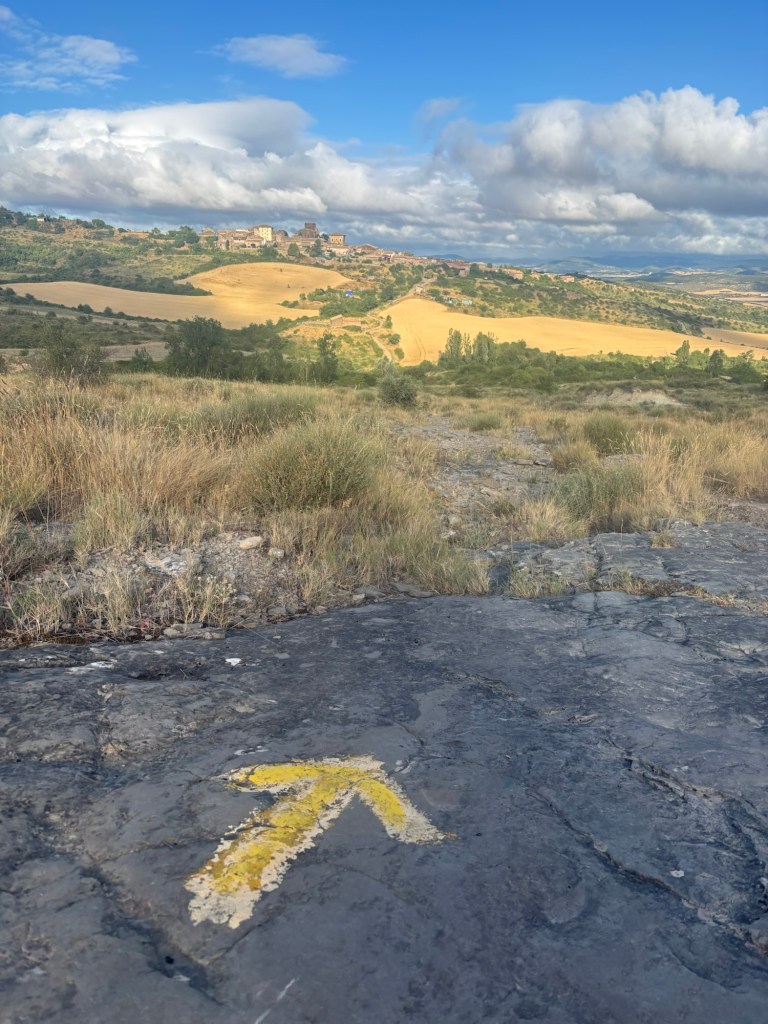
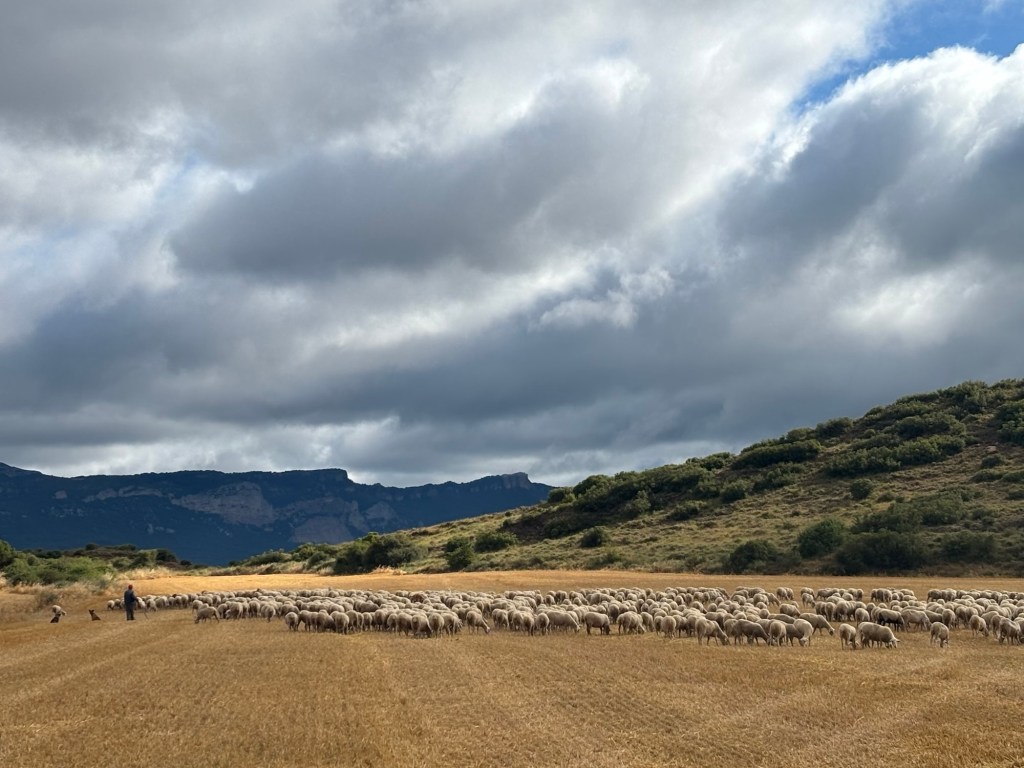
After Rabé de la Calzada, the Camino climbs up one last time and then the Meseta begins in earnest: a vast and unbroken expanse of gold beneath the immensity of the Castilian sky, pushed beyond the reach of man by a thousand generations of Castilian countryfolk.
It is hard to describe the true beauty of the Meseta when so many pilgrims describe it as the “hardest” stage. The “least interesting” stage. The “most boring” or even “the ugliest”. It is certainly true that the spectacular Pyrenean scenery of the first few days is now little more than a distant memory.
But to do so is to ignore the magic of the Meseta. The whistling wind in the golden fields. The gentle throb of the wind turbines on the hills all around. The near total absence of birdsong, interrupted only so often by the twitter of a linnet or the call of a quail. This is a road that can be walked with a companion, but is best walked alone.
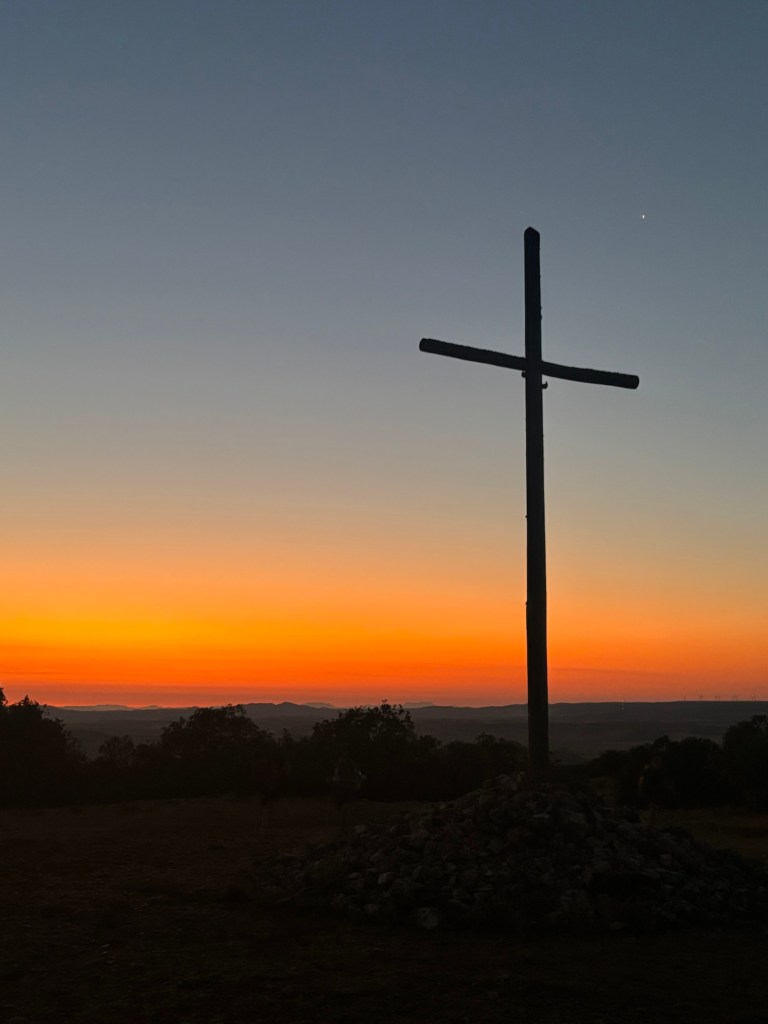
For me, this is where the true Camino begins: the road inside, into your head and into your heart, with nothing between you and your thoughts but the sapphire sky.

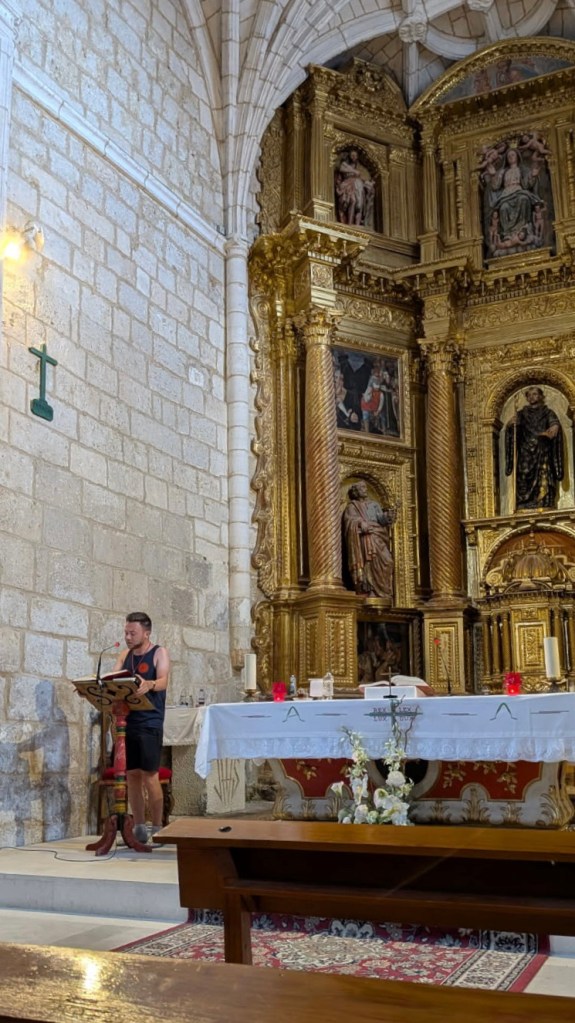
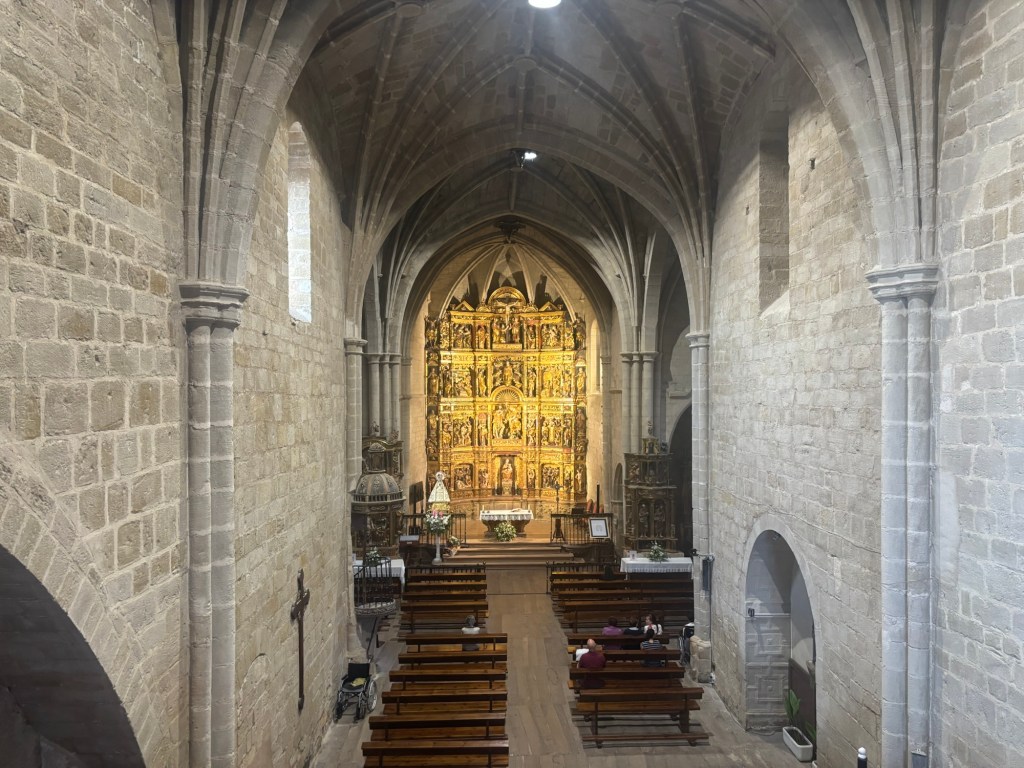
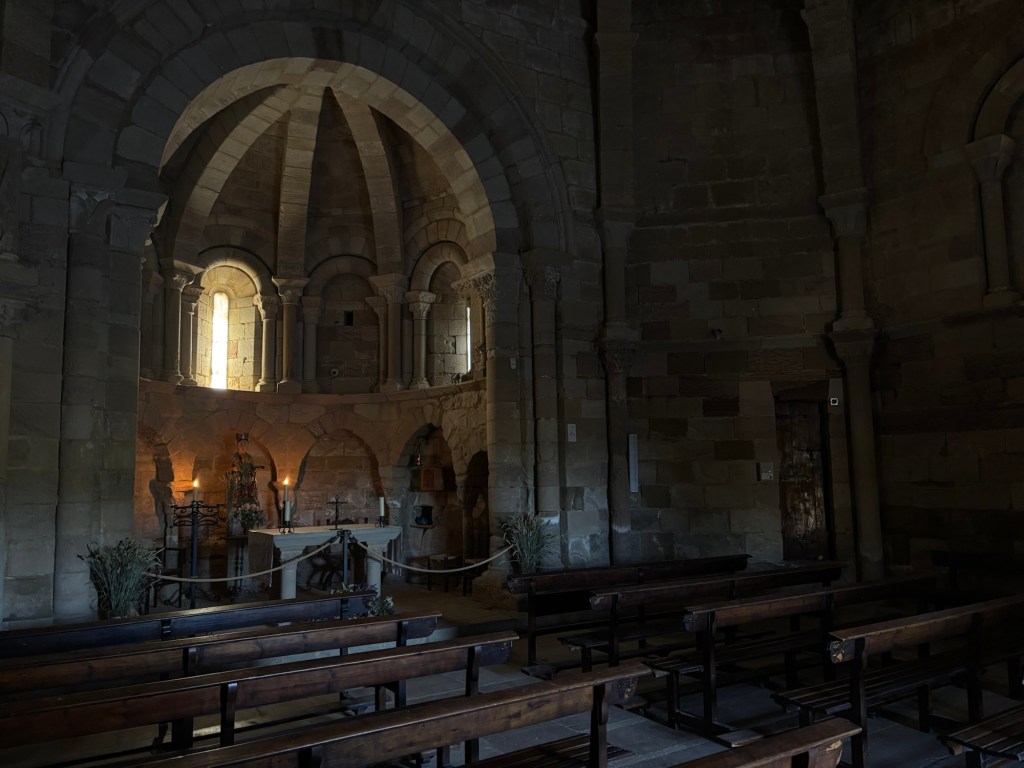
I was going to spend the afternoon writing, but I heard the church bells ringing for the afternoon Mass so I set down my things and wandered over. It wasn’t an especially large gathering, and I was the only Spanish speaker present until a small group of pilgrims from Urgell arrived, so I was called upon by the priest to do the reading. I could certainly have dressed more modestly, even though my options are limited out here, but I wasn’t expecting to be delivering the Lord’s word this afternoon, so… a sports vest, toe socks and Hawaiianas it was.
The reading was from Exodus, 11:10 to 12:14 – by far my favourite book of the Bible. For perhaps the first time in my life, I felt something in that church. It moved me. Not just the sacred words, but… something. Like a voice I could only perceive, that spoke to me without words. For a moment, I felt as though my great-grandparents and my grandfather were right there beside me. It was nearly enough to move me to tears.
When Mass was ended, the priest called us up to the altar for the pilgrim’s blessing. Everyone read the blessing in their own language. I read twice – once in English, once in Spanish. Spanish feels more natural for prayer – after all, if they prayed at all, that’s the language my ancestors would have spoken. And isn’t this all about a closer walk in their footsteps?
I have been on the road for eighteen days now. Twenty, if you count the day and night it took me to reach Oloron-Sainte-Marie and the start of the Camino. It has taken this long to find the spiritual side of the Camino for which my heart has been longing so. I feel more fortunate than ever and my heart is full of hope.
The Meseta stage can be a trial. It can deter many weary pilgrims, especially in the heat of the summer. But I remain convinced that it is where the unspoiled heart of the Camino can be found, in every sense of the word.
The way ahead is clear and my eyes are wide open. I shall follow that road, wherever it may lead, and trust in His plan, whatever that may be. BB x















 The Book of Barnabas