Camino X: Carry On, Carrión

I’m here in Carrión de los Condes, a full day ahead of schedule. So much for not rushing this time. It was definitely not my intention to walk nearly fifty kilometres today, but here we are. At the very least, I think it’s safe to say I have put one of the more tedious stretches of the meseta behind me. My feet might be killing me, but silver linings and all that.


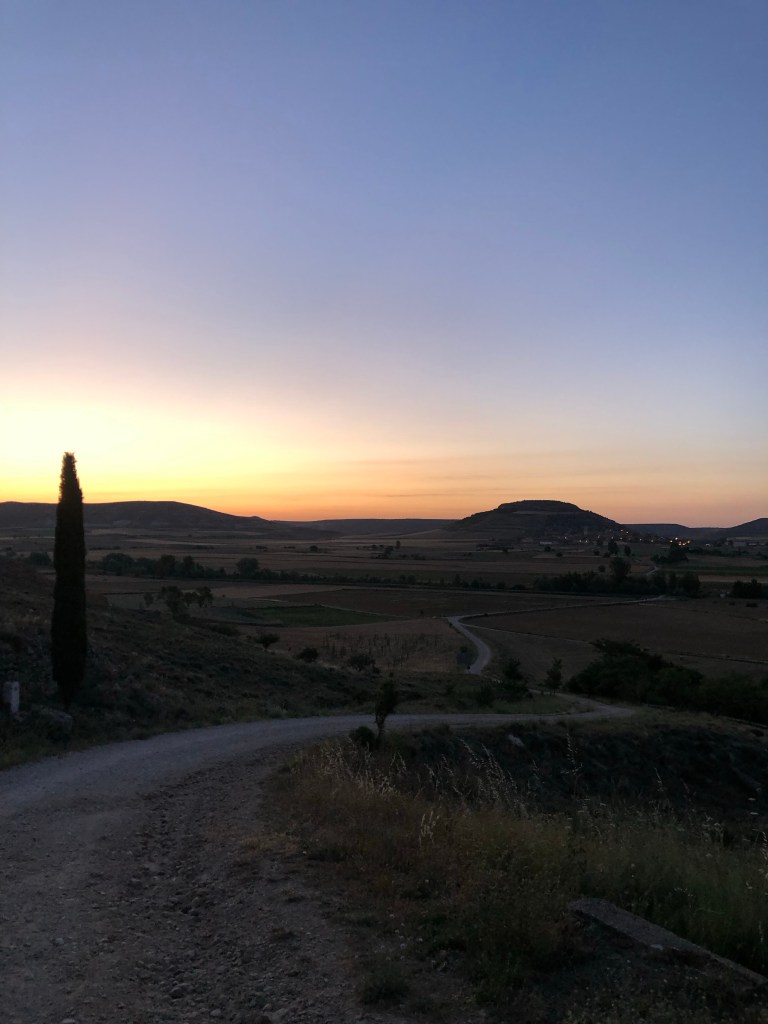
I got my comeuppance for being an early riser in Burgos this morning. By five o’clock half the dorm was already up and about, so at 5.15am I gave up trying to doze away the hour and got my things together. I’d had the foresight to buy breakfast the day prior, before a wander up to Castrojeríz’s ruined castle (as if I hadn’t walked enough already), so I chowed down on a Bolycao (childhood classic) and set off into the darkness.

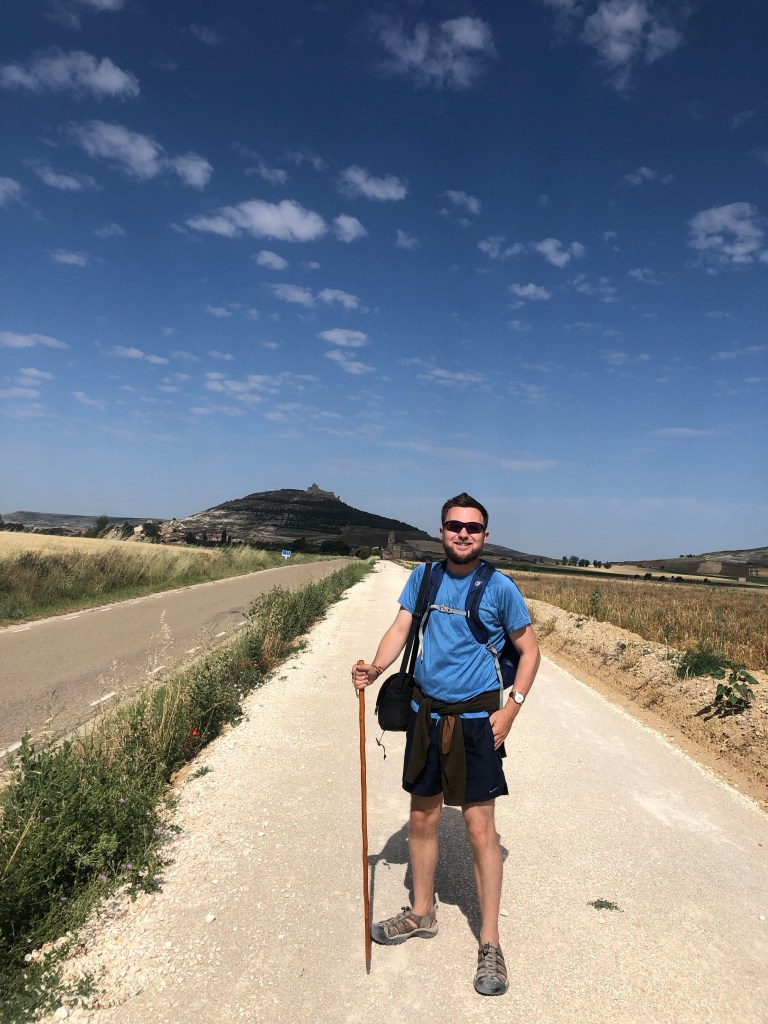
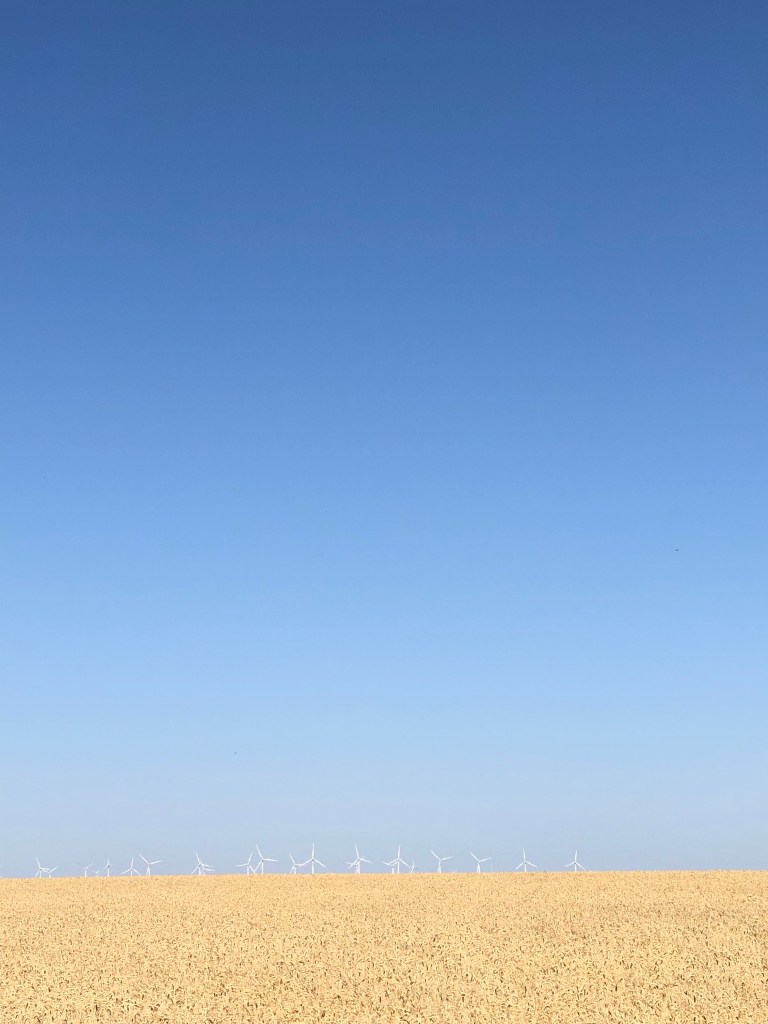
One definite plus to setting out before dawn was the climb up the side of Mostelares, a steep banked plateau guarding the road to Itero. In the late morning sun I’m sure it would have been a sweaty, unforgiving affair, but with the sun still below the horizon (and the help of my trusty stick) it was relatively easy. I overtook the only other pilgrims on the road, bade farewell to the army of wind turbines blinking like distant artillery fire in the distance, and put Castrojeríz behind me.

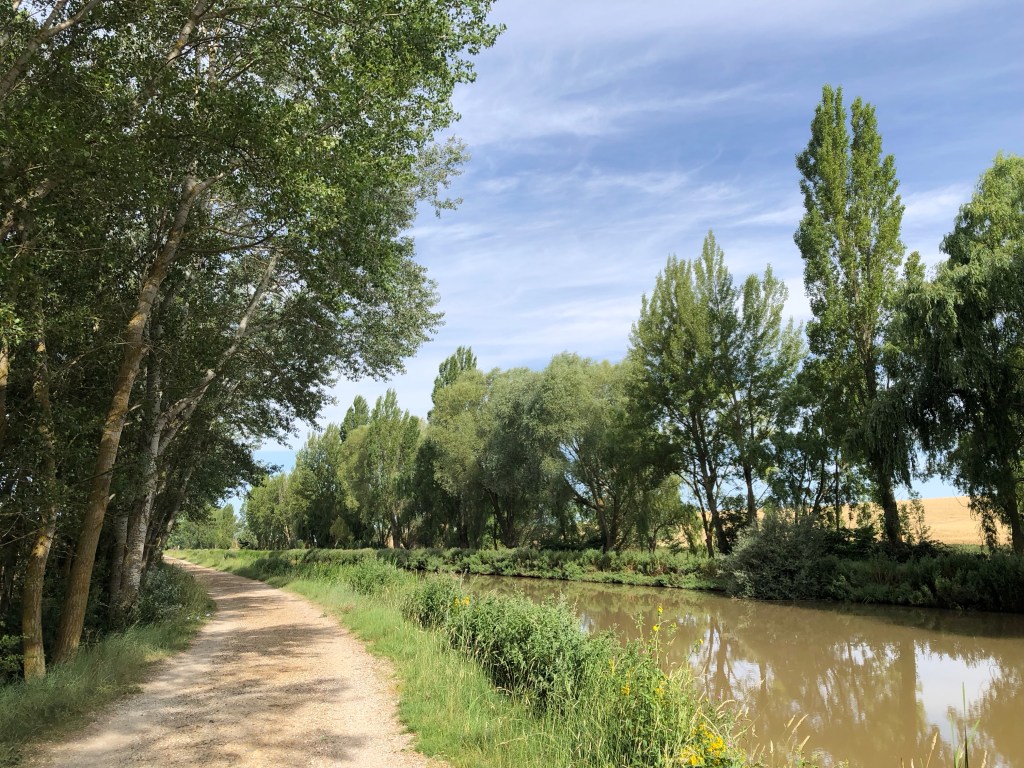
A large riverside grove before Itero de la Vega broke the monotony of the wheat-fields for a bit (Theresa May could get seriously naughty in this part of the world), and I caught a glimpse of a deer between the Lorien-esque rows of birch trees. A talkative group of five Spanish women were on my tail by this point, so I let them overtake and take the clickity-clack of their guiri sticks with them. I’m not sure what their real name is in English, but my kids in Extremadura used to call them palos guiri and the name has stuck.


After Itero, the usual stop is Boadilla del Camino, but it was not even 10am so I decided to press on (this is becoming a running theme). The Camino follows the Canal de Castilla until Frómista, which was a welcome change of scenery, if a little bizarre in the middle of the meseta. I’m not sure the local wildlife knows quite what to make of it: I heard the odd reed warbler and saw a flock of lapwings land in a nearby field, but other than that it was an eerily quiet waterway, as man-made imitations of natural things often are. God is not mocked.

Frómista was… a strange place. It felt decidedly more like an urbanización than a town per se. I arrived around 11.15, two hours too early for most of the albergues which habitually re-open around 13.00-14.00 after a lightning quick clean. A couple of merry storks did their beak-clicking ceremony as I reached the town centre, but I got a strange vibe from the place and decided not to linger. Perhaps it was the fact that all the albergues would be shut for another two hours, or maybe it was the fact that the one recommended by all the guidebooks had so many vitriolic one-star reviews on Google complaining about the rudeness of the hostalero.

Whatever it was, a madness took me, and I decided to try my luck in the next town along.

Big mistake. Población de Campos is only a few kilometres on from Frómista, but by now it was noon and the midday sun was up. After an uninspiring slog along the side of a main road – the first of many – I dropped in on the first option, Albergue La Finca.
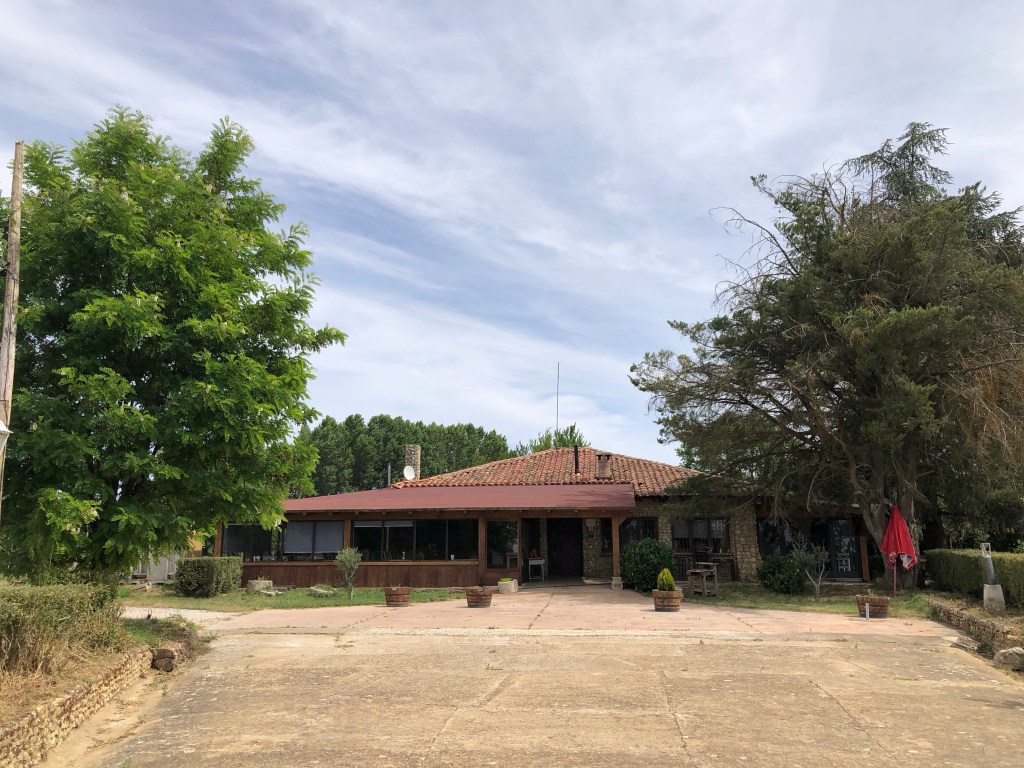

Well, there wasn’t any dust on the tables, and there were some papers on the front desk that looked recent, but that was about it. The garden looked as though it had seen better days, the gate was slightly ajar and there were no cars in the drive – or peregrinos, for that matter. I rang the doorbell a few times, waited, and then moved on to try my luck with the albergue municipal.

I didn’t fare much better there. The sign was missing, and after a brief search I found it stashed behind a bush. I decided to ask at the nearby hotel, where the kindly dueña informed me that, sadly, both albergues were closed for renovations. I could try at Villamentero, another 5km up the road. Her own Hotel would have set me back 40€, which isn’t ludicrously steep, but on the Camino that sum equates to five nights in an albergue, so I had to pass it up politely.

At this point, I got it into my head to push on all the way to Carrión. A stupid idea, but with prospects along the road ahead looking bleak, and zero desire on my part to backtrack to Frómista, the idea slowly began to seem more and more logical. and, I’ll admit, the whimsical desire to say I’d carried on to Carrión ultimately tipped the scales.
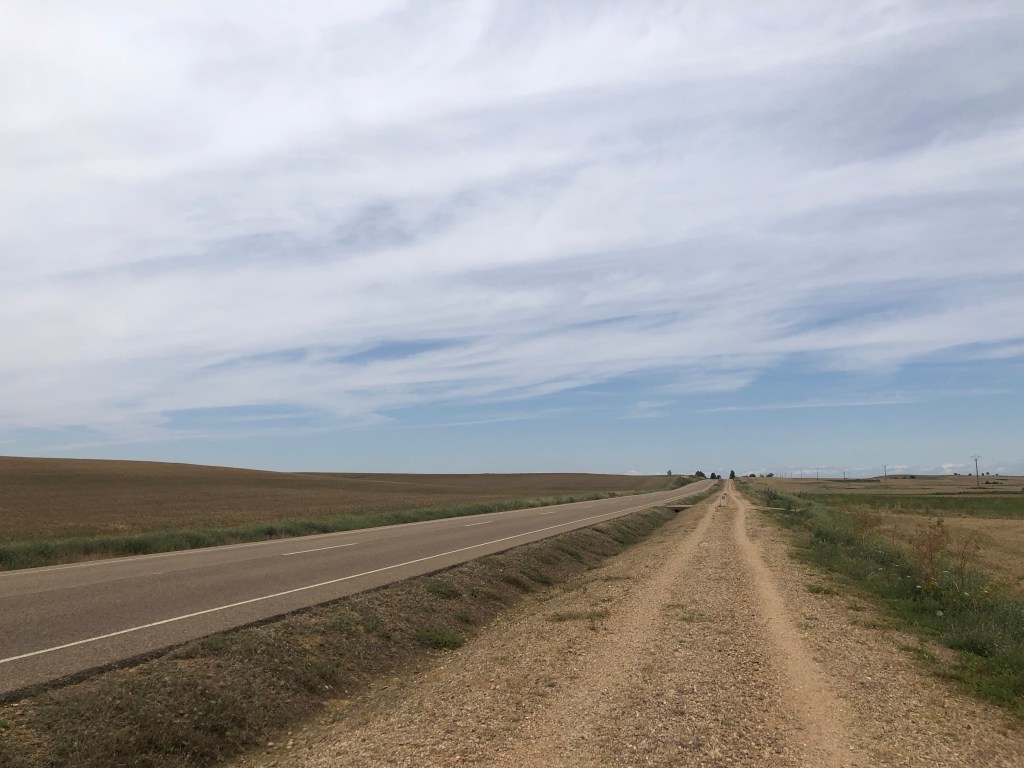

Cue the most tedious stretch of the Camino so far. Fifteen kilometres and three hours of featureless roadside walking. I guess this is what everyone was referring to when they said the meseta could drive a man mad. I clocked a couple of occelated lizards somewhere near Villalcázar – the enormous green buggers are unmistakeable – and claimed a bustard feather, but beyond that, and the chafing pain of my seriously overworked feet, I was genuinely counting the mileage signs all the way to Carrión.
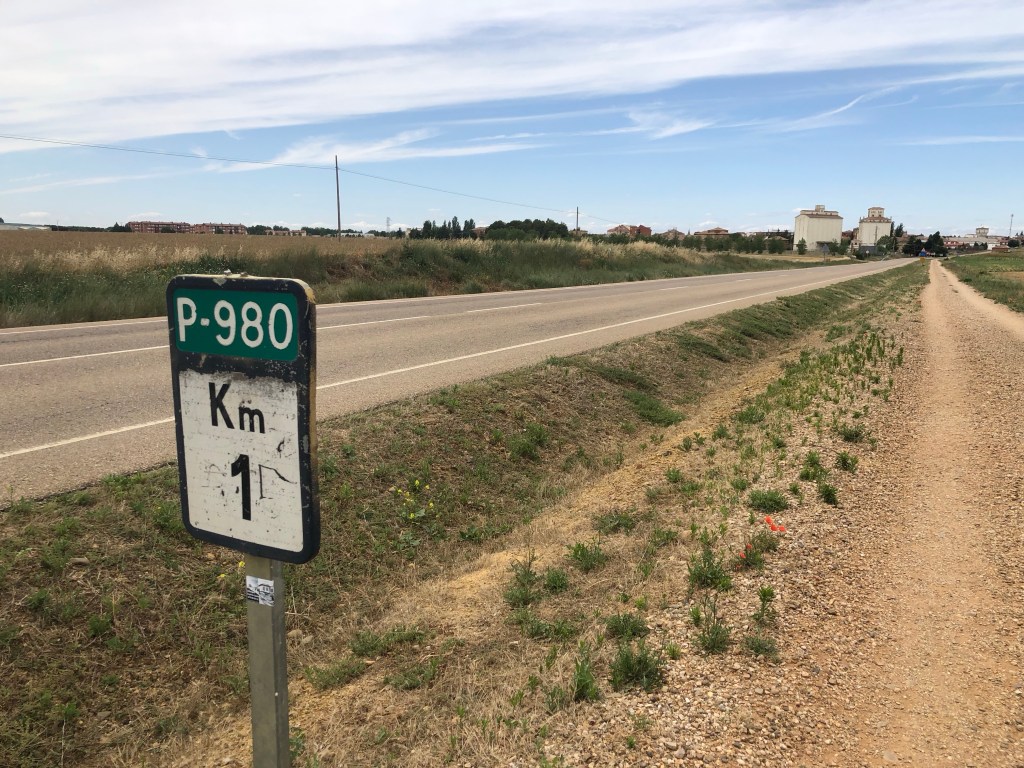

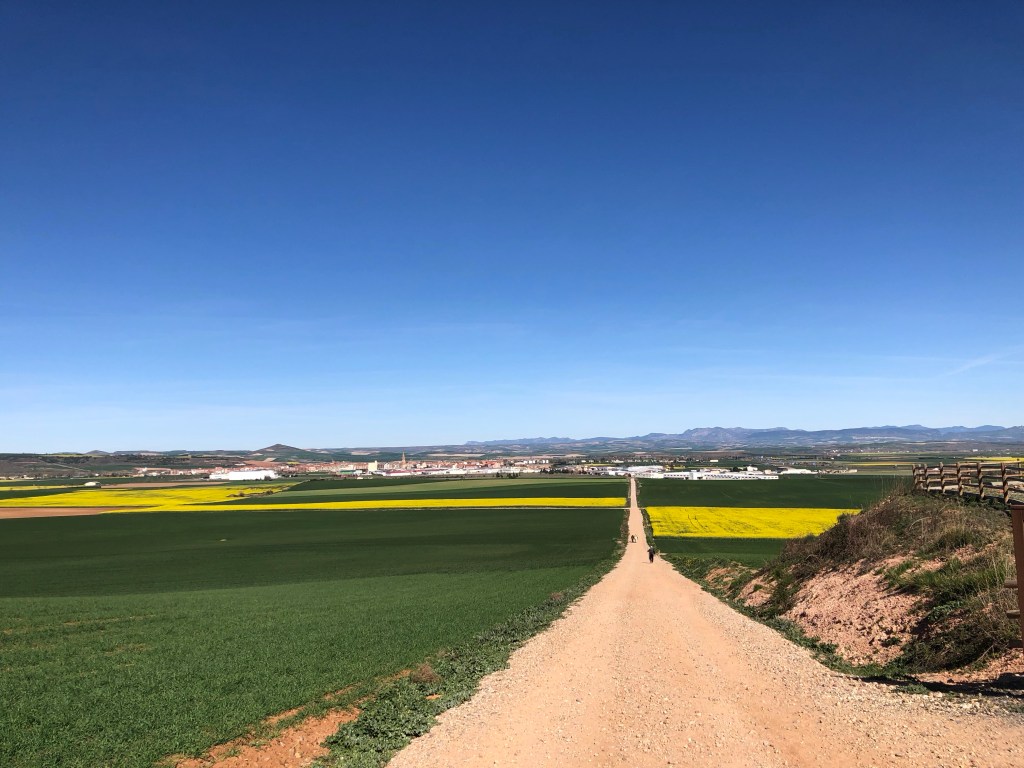
When it finally appeared on the horizon, with the mountains of León in the background, I could have done a somersault out of relief – only, I don’t think I’ve ever been athletic enough for such a feat, and it would have been the death of my feet anyway. So I contented myself with a hallelujah and used the last of my reserves to power on past the silos and into the promised land.

Somebody up there was looking out for me today. A merciful blanket of cloud covered me all the way from Población de Campos, and when I reached Carrión, the Albergue Santa María still had beds going spare. The shower that followed was never more welcome, nor felt so good.

It seems very busy all of a sudden up here. I guess I was one day behind the crowd. Perhaps I’ll meet some of the younger peregrinos tonight. It would make a change from three days of walking the Camino alone. But let’s just see how things pan out! BB x
Camino IX: Sticks and Stones

I spoke too soon last night. Around five o’clock, not too long before Lourdes, the hostalera, set off for home for the night, a bearded Frenchman arrived de la nada and set down his kit for the night. Antoine, from the town of Évian-les-Bains (of bottled fame), had walked a hell of a way to get to San Bol: not only had he walked a whopping 45km from Atapuerca that morning (bypassing the city of Burgos entirely), but he had started his Camino from his front door, making this his eighth week on the road. I’ve only ever met one other pilgrim on such a trek, a real rag-and-bones German who had gone for a walk with his dog and kept on going. Antoine, however, looked as though he had only set out yesterday. It was as good an excuse as any to practise my French, which isn’t nearly as rusty as I thought (though I did have to think how to say the number seventy-five), and it was good to hear a fresh perspective on what’s going on in France right now from a Frenchman.

I watched the sunset over the meseta from the porch and ended up having a very engaging chat with a local man from Iglesias with the most original name of Porfirio Celestino. He had come up on his bike to see if the new trees had grown in this spot, but also to check on his beehive, which he had been told to rejig by an expert. We had a laugh about our shared experiences as teachers and tried to outdo each other’s collection of oldy-worldy names like Araceli, Guadalupe and Diosgracias (the latter being my great-great grandfather’s Christian name). I think I won with the latter, he laughed so heartily. Wouldn’t you, if your parents named you Thanks-Be-To-God?


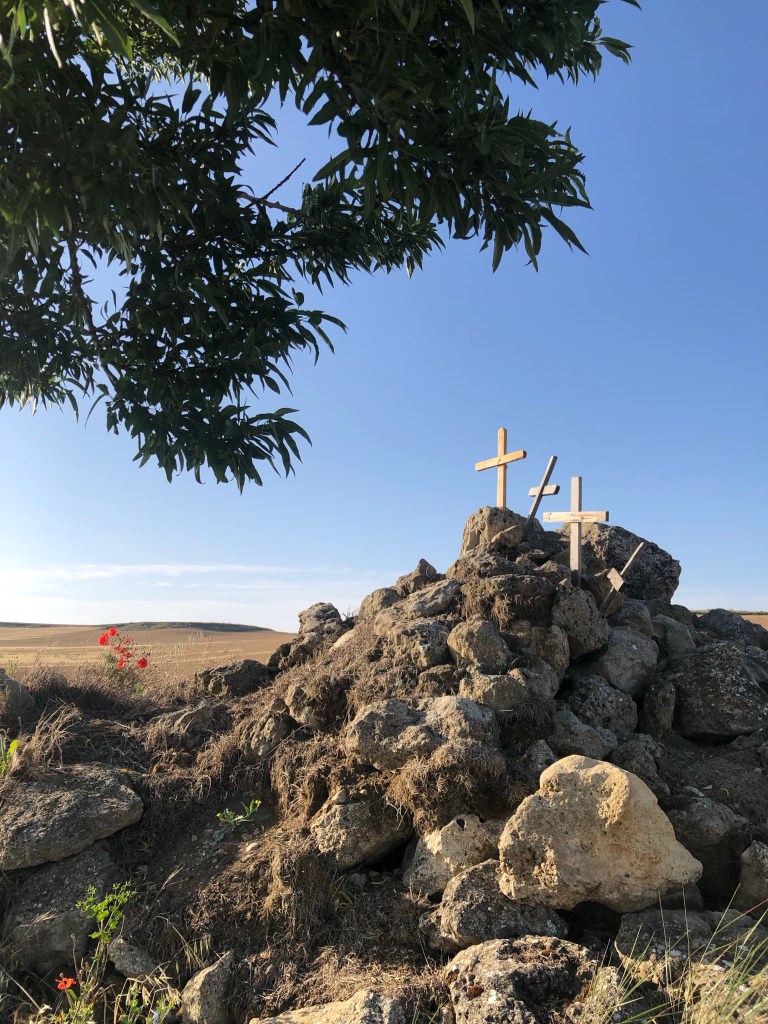
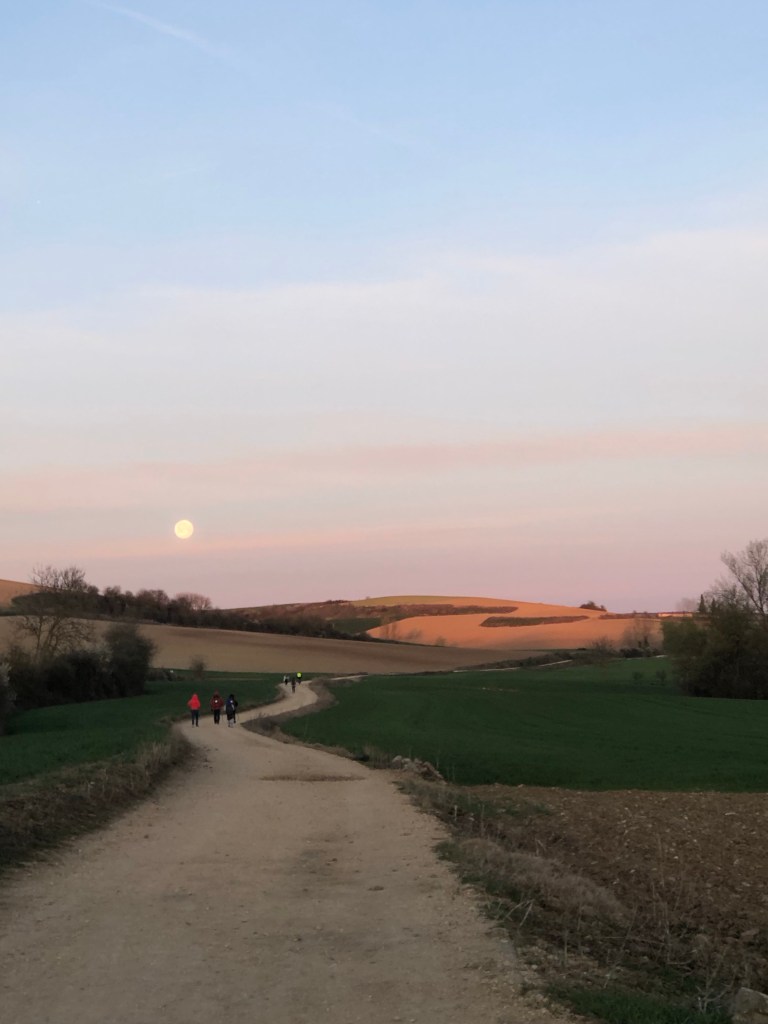
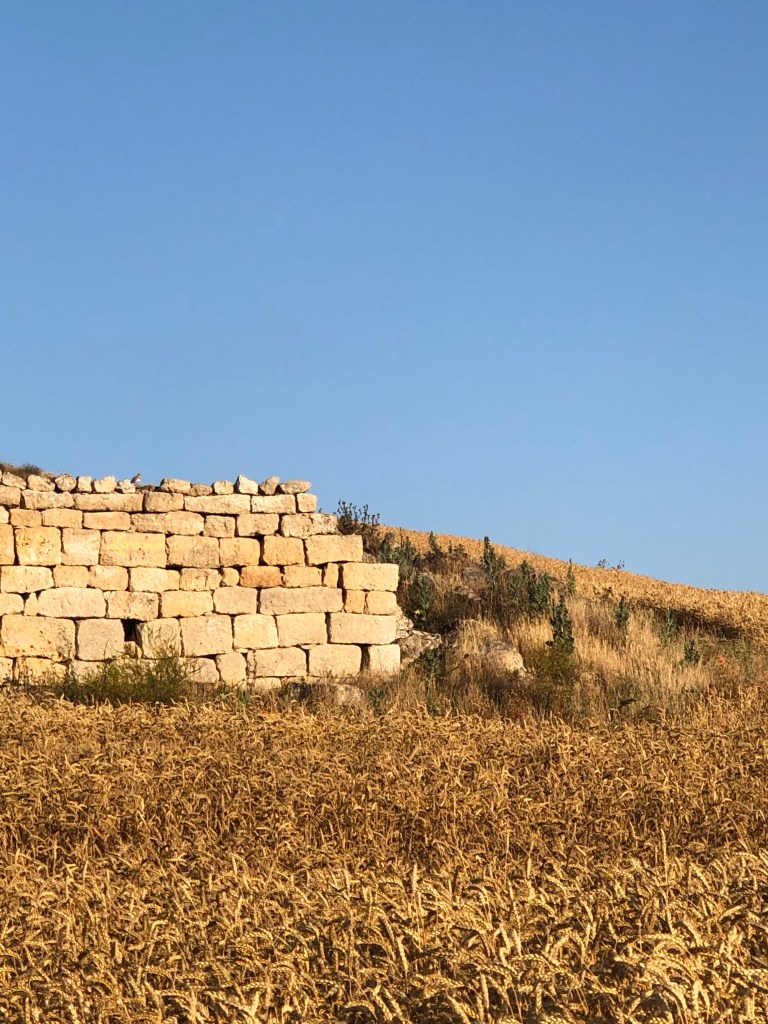
I allowed myself a later start this morning. Later being 7.45am, which is a perfectly respectable time to set out. The sunrise was nothing short of magical, and it was all I could do not to linger longer. I can’t recommend the Albergue de San Bol more highly. It was a perfect introduction to the Meseta and blissfully immersive. A partridge climbed up onto one of the many piles of rocks to serenade the valley as I set out, the twin flags of Spain and Iglesias fluttering in the cool morning breeze. There are lots of piles of rocks like that around. I guess they’re removed periodically from the fields to make plowing considerably easier.


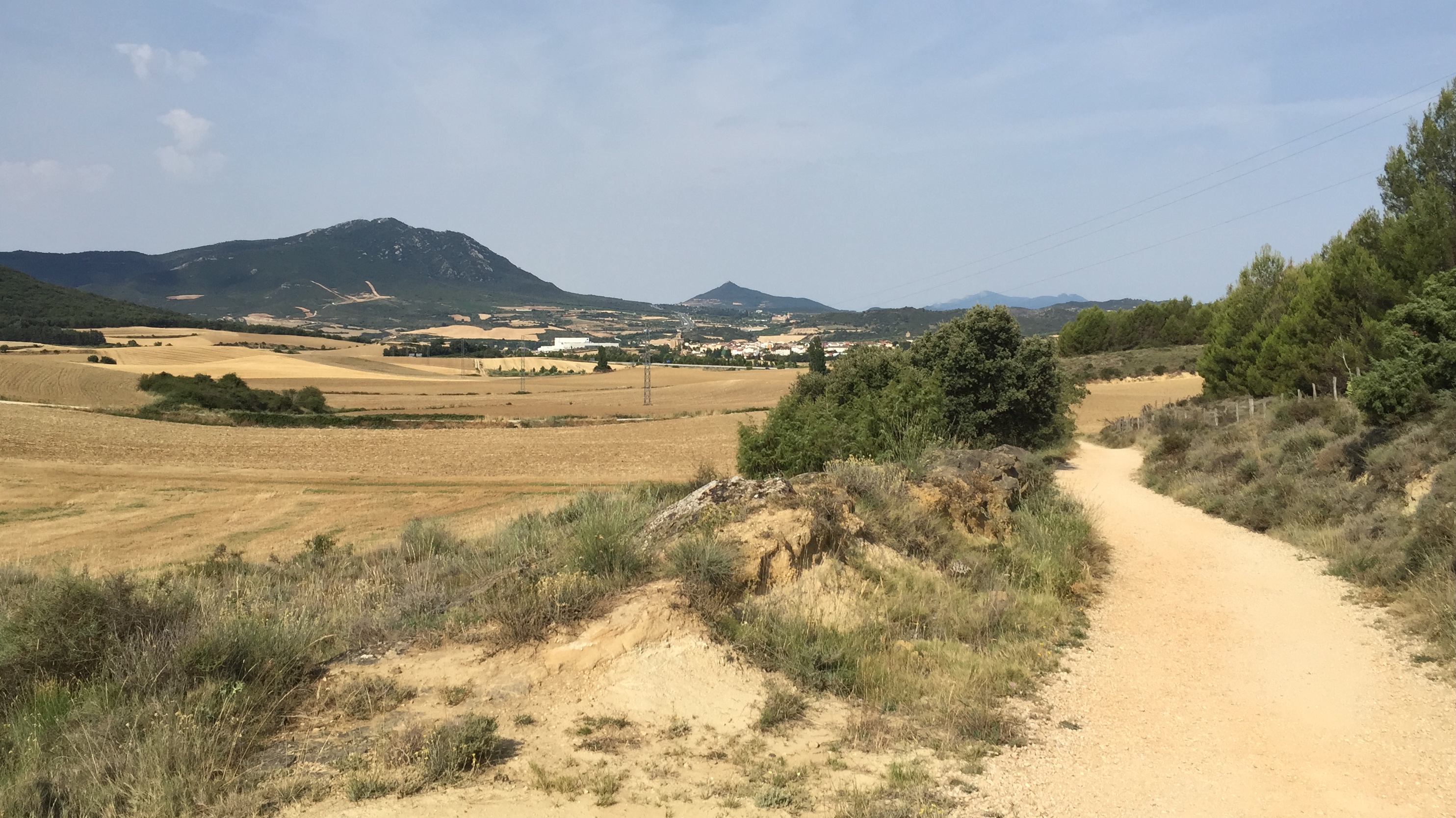
Hontanas was deceptively distant. I would have found it quite a slog under the midday sun had I attempted it yesterday, but in the morning light it was a very pleasant walk. Wild flowers line the luminous Camino right the way across the Meseta, adding dashes of crimson, cornflower blue and violet to the shimmering seas of gold.

At one point, high on the plateau above Hontanas, I seemed to be absolutely surrounded by quails. I couldn’t see a single one – they’re tiny, incredibly well-camouflaged and very rarely flush when cornered – but I could hear them all around. Their three-stop whistle can carry for as far as a mile, but if you can hear their childlike ‘—aauWAH’ it’s a good sign that they’re nearby. Quails and turtle doves are fast becoming the soundtrack to the meseta, and that puts a serious spring in my step.

I’ve passed a couple of roadside graves today (not pictured for obvious reasons). They were quite a common sight on the first couple of days of the Camino, where the mountain pass can be dangerous under the wrong conditions, and tended to be Asian or Latin American in origin. Out here in the middle of the Camino, however, the meseta proves a challenge that isn’t always insurmountable, claiming Spaniards and even the hardy Dutch. I try to say a small prayer at each one I pass. By the looks of the painted stones at their feet, I’m not the only one.


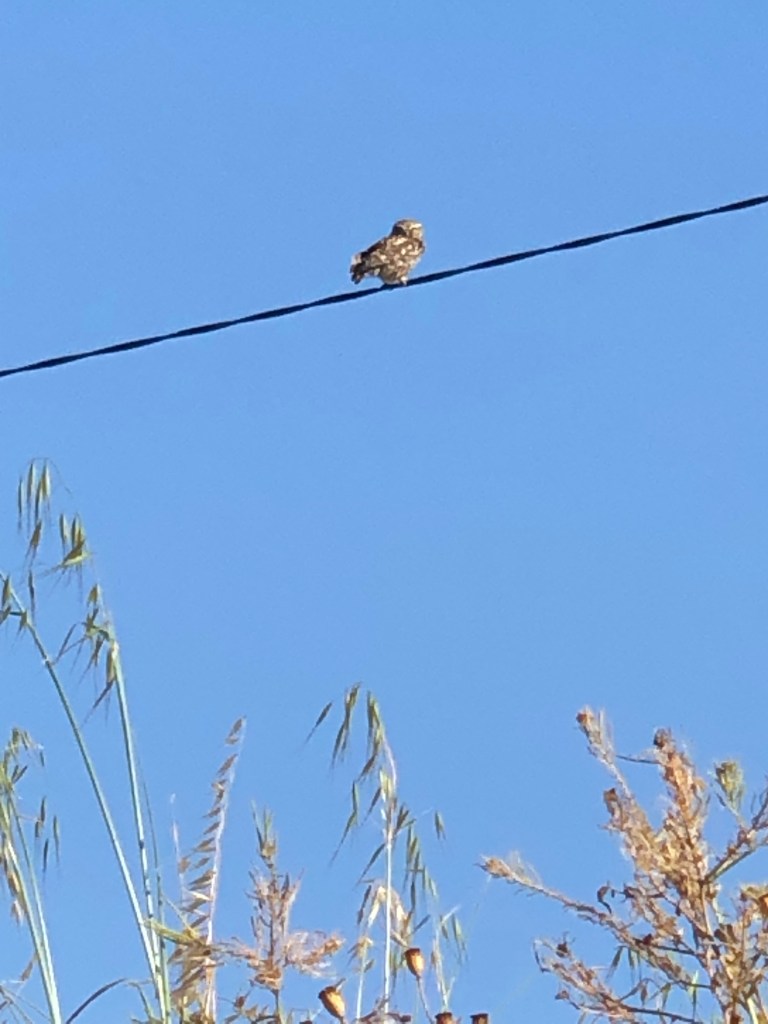
Hontanas seems to be a magnet for pilgrims. A sizeable number had stopped for breakfast at the first café, leaving the road ahead clear. I had only a few cents left in my wallet, but I still spent a good ten minutes there, though that was because I caught sight of a little owl perched on the wire opposite the café. I deliberately didn’t bring my camera as it would have been one belonging too many on the road, but I regretted that decision more than once today – my phone camera simply doesn’t do justice to the beautiful little thing!


After Hontanas the Camino crosses and then follows a wooded stream for a couple of miles. Here, once again, I came across one of my favourite sights of the route: the silver, scythe-like wings of a harrier. It caught me completely by surprise as I came up a low hill, and I could see the yellow rings of its eyes before it jinked and soared away down the valley.

I thought I’d lost him, loitering for a few minutes to see if I could spot where he went, but not five minutes later I saw him up ahead, quartering the valley floor. Kites are graceful, but harriers – especially the silver-grey males – are in a whole other league, drifting over the fields like black-fingered phantoms. He disappeared behind the trees as I drew near, and then re-appeared clutching a fair length of straw in his talons, to take back to his nest in the wheat-fields, no doubt.

Some things, I guess, are worth going solo for. Seriously, I could get used to encounters such as these.


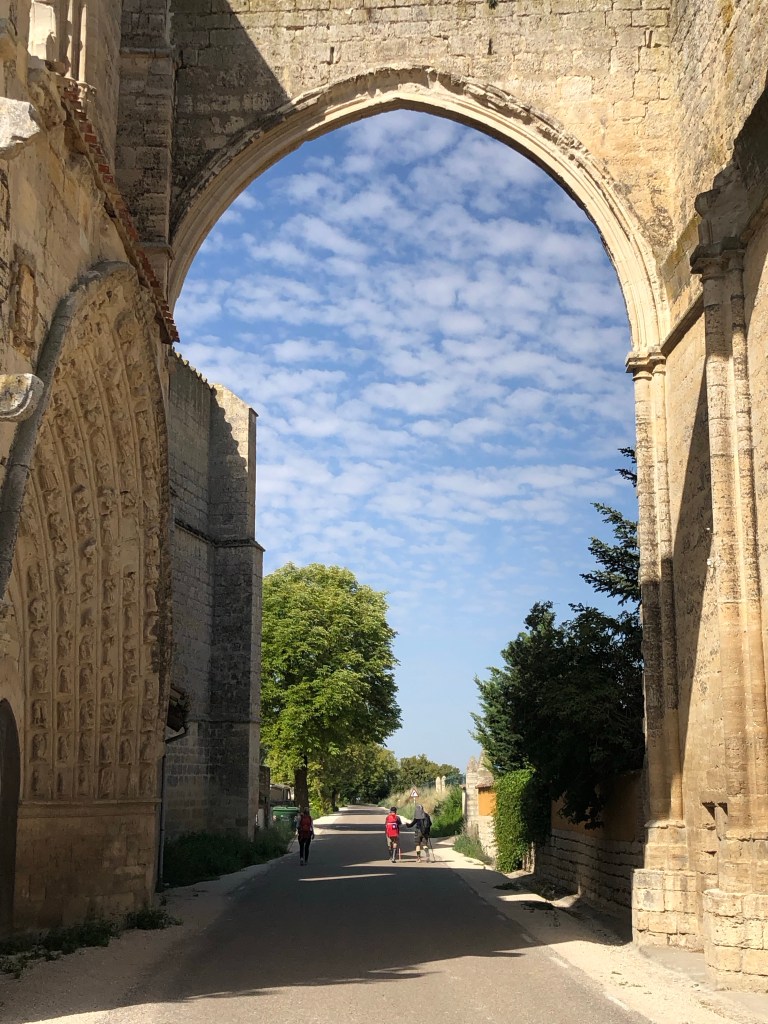
At the end of the valley, the road cuts right through the imposing ruins of the Monasterio de San Antón. So cleanly, in fact, that the main road runs beneath two of its great stone arches. There’s a tiny albergue here and a chance for a bonus stamp (at last!), but I was quite content to just explore for a bit, not being in any particular hurry.


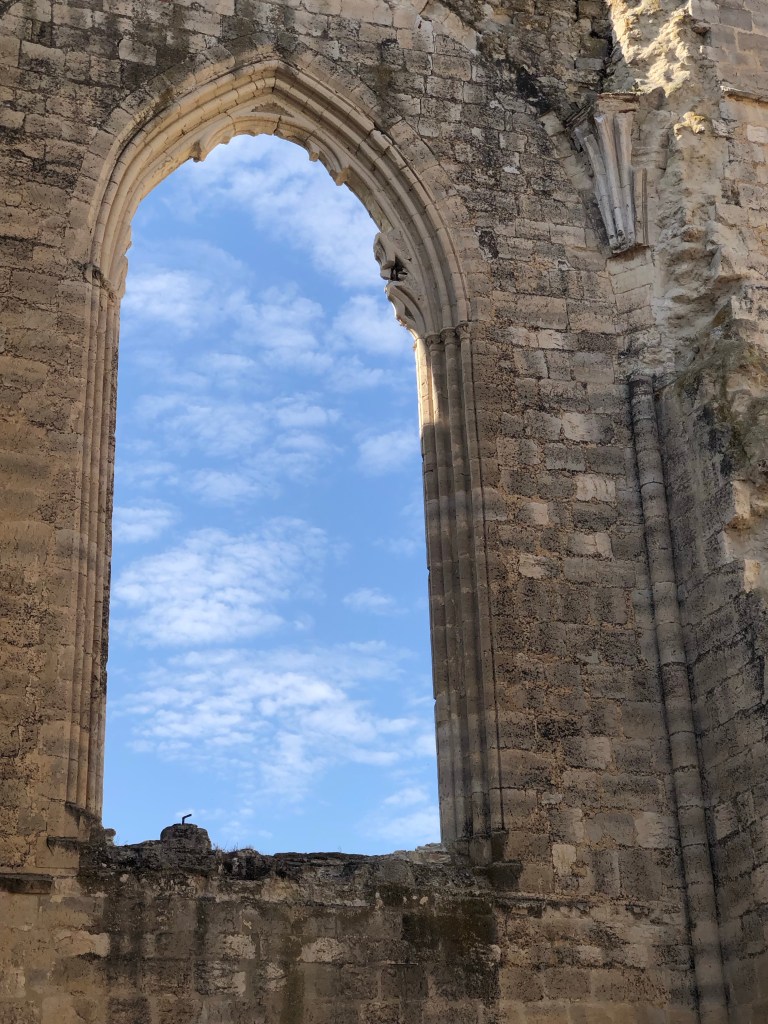
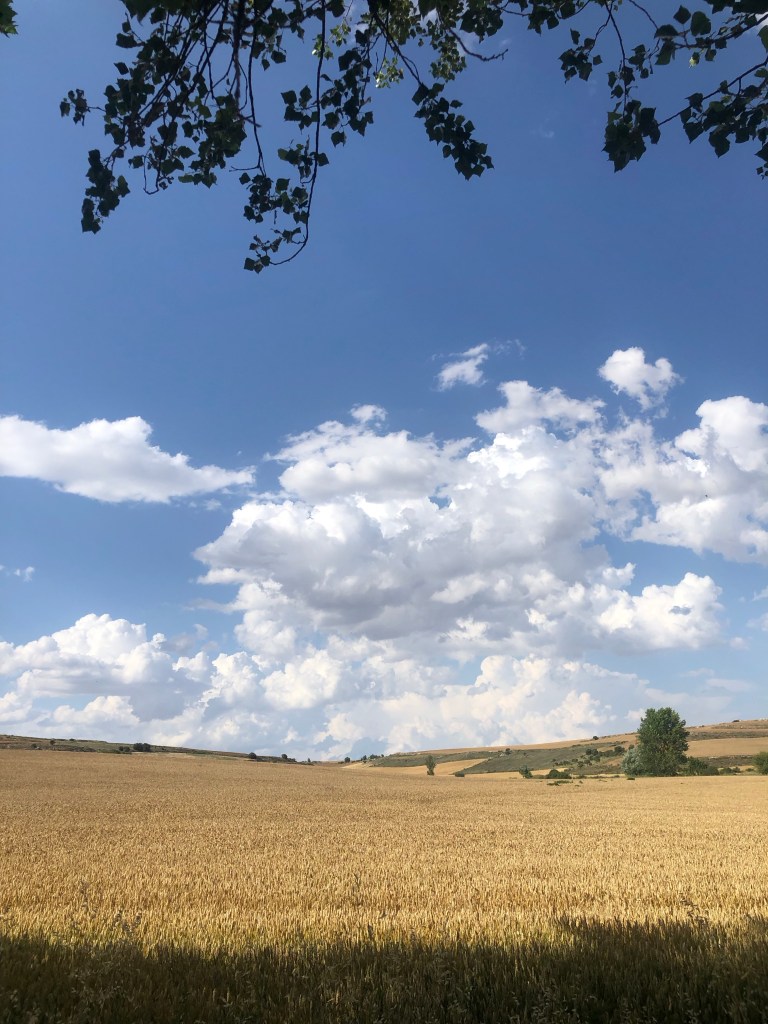
There are plenty of old churches along the Camino, but this ruined monastery is rather special – not least of all because of the way its hollow windows open out onto the endless blue of the Castilian skies beyond. I’m going to run out of adjectives for the sky long before I’m clear of the meseta, because it’s my constant traveling companion, but I’ll do my best to keep it original!

Best of all, they had a box outside the albergue for unwanted objects to take away. I’ll have a few of my own to offer before long, but my eyes lit upon a beautiful Aragonese walking stick from Ordesa National Park. I’ve blown the dust off it and put it to good use. With any luck – if it isn’t pinched along the way – it will take me to Santiago, and perhaps beyond.


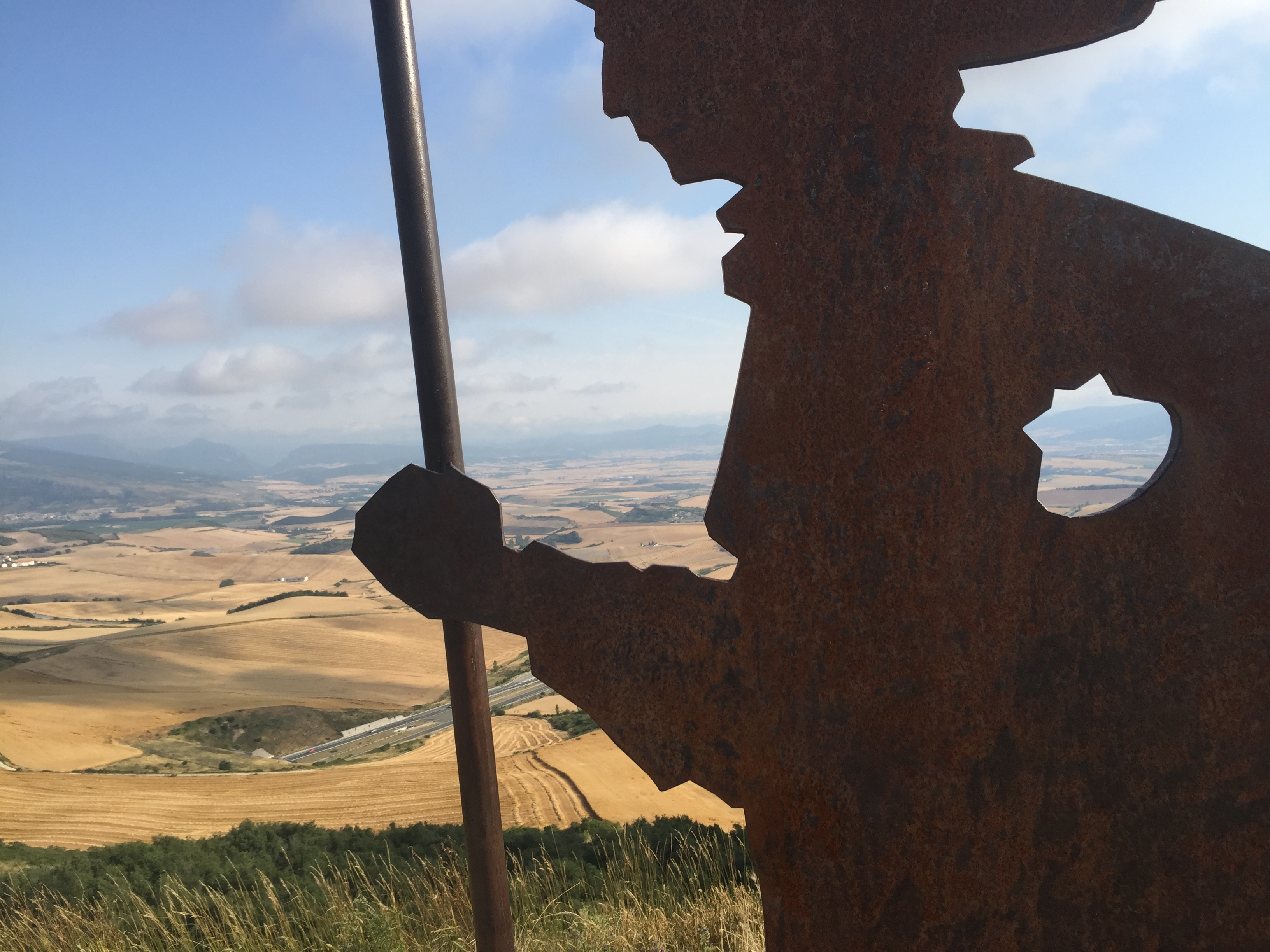
From the monastery, the hilltop castle of Castrojeríz comes immediately into view. It’s still a good hour’s walk until you reach the town proper, but it has to be one of the most scenic approaches of the Camino so far. I offered to take a photo for three Japanese pilgrims and they repaid the favour, meaning I will have at least one photo to show I walked the Camino this summer!


Well now, I’m here in Castrojeríz, and the kindly hospitalera has just returned from the hospital in Burgos. Her husband, with whom she runs the albergue, is currently walking the Camino himself. After a very light dinner last night I treated myself to a menu del día at a local mesón-restaurante. The barman must have clocked my La Mancha shirt because he brought out a lovely red wine from Tomelloso, just down the road from my family’s home. They didn’t have any sopa castellana – apparently it’s too hot for that – but the salmorejo he recommended was fantastic. So don’t worry, Mum, I’m eating very well out here!

I’ve showered, made the bed and claimed another stamp, so now that I’ve finished writing I’ll have a short siesta before buying supplies and exploring the hilltop castle this evening. What a perfect routine! BB x

Camino VIII: Lonely Oasis

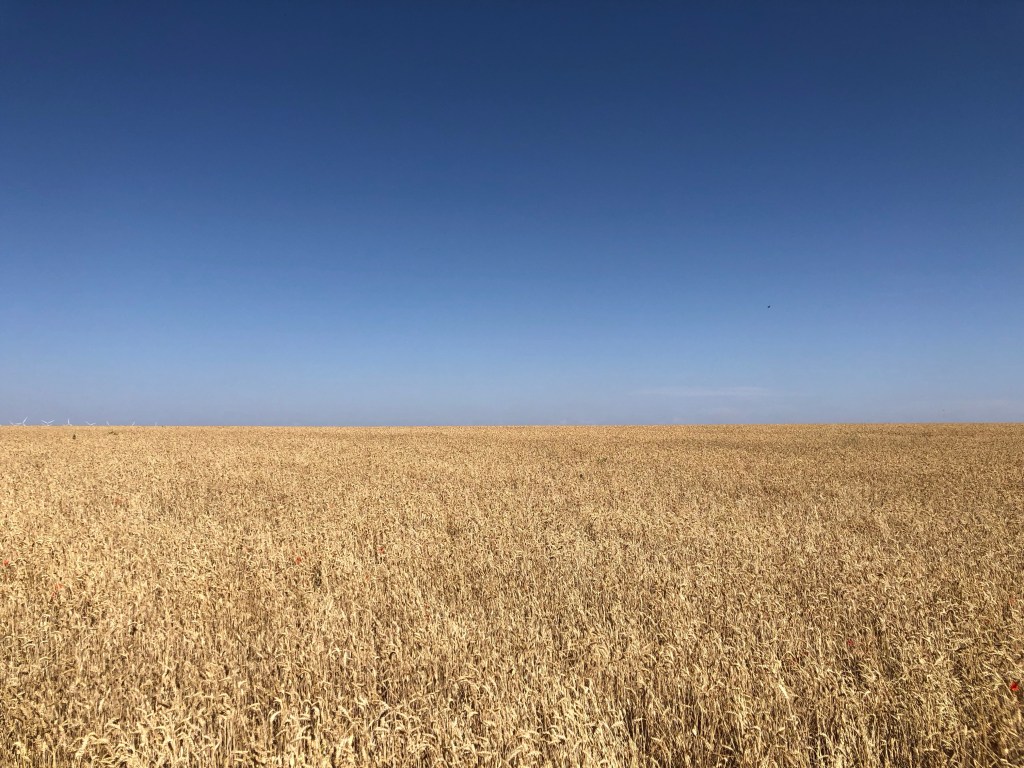
I’ve heard various accounts of the pilgrim road across the Meseta. It is so often described as the most arduous stretch of the Camino, skipped by those pilgrims who find its endless expanses of featureless wheat fields uninspiring and/or dull. A dear friend and former companion on the road wrote to me yesterday, calling it “demotivating and mentally draining”. So I haven’t come out here under any illusions.

I’m only one day in, so I haven’t yet got the full flavour of the Meseta. But I’ll tell you what it has in abundance: silence. Spain isn’t a country that is known for peace and quiet – quite the opposite, in fact, being a regular contender for Europe’s loudest country – but if there is a corner of the kingdom where silence is as golden as the fields over which it presides, this is


It should be said, setting off a full hour before daybreak probably didn’t help (yes, I am definitely that pilgrim). The others in the hostel in Burgos must have found my coming-and-going at a quarter past five in the morning frustrating, though I did what I could to soften my steps. I would have thought I had learned my lesson last time, but for whatever reason I’m still working on the assumption that most places fill up quickly around midday.

Burgos was softly lit by a clouded moon as I took my leave of the Cid’s city. Beside the storks, those speechless sentinels of Spanish skies, I only saw two other living things on my way out: a street-sweeper hosing down the steps above the cathedral, and a solitary Japanese peregrino who took a wrong turn. Everyone else with half a brain – the city’s entire population and the rest of the pilgrims on the trail, for that matter – was still in bed, enjoying a few hours’ more sleep.


The sun was up by the time I reached the outskirts of Villalba de Burgos, the first stop on the road. Still no pilgrims, but the Guardian Civil made a couple of appearances as they patrolled the road in their car. Here I took my leave of the Arlanzón river, stopping only to refill my water bottle at a park fountain and to listen to the flute-song of a golden oriole concealed somewhere within the poplar trees.

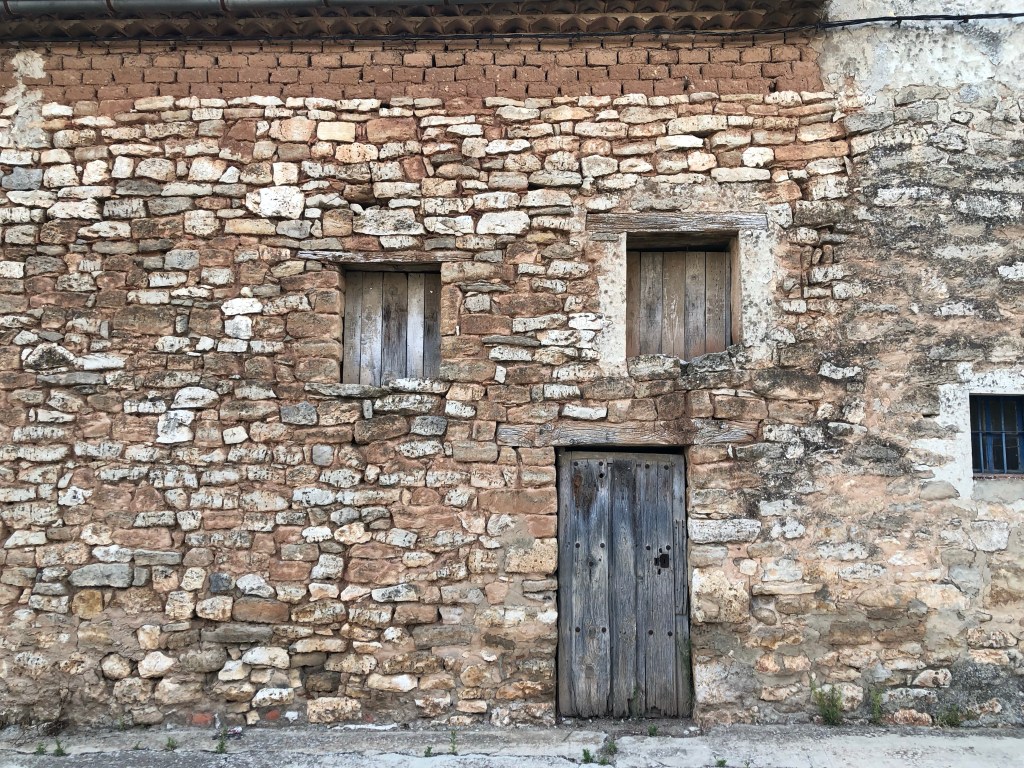
The Meseta begins to unravel in earnest after the sleepy town of Tardajos, which I imagine presents a good introduction of what is to come. Half the town seems deserted, and this time that has little to nothing to do with the time of day. Squat, single-storey townhouses rub shoulders with taller, more modern homes, though in some cases it is just as much the latter that have their windows boarded up as the former.


I stopped at Rabé de las Calzadas to see if the local church were open. No luck. It looks as though the parish priest serves multiple towns, celebrating Mass first at one church and then another. You can sometimes get stamps in these spots, but it’s really candles I’m looking for – when I can, I like to say a prayer for my grandfather and great-grandparents, for whom I walk this road. They say the reason is that pilgrims would probably try to sleep in them for free and might not be as respectful of their lodging if they did. Which is understandable. So far this year, I’ve only found one I could enter. I’ll keep looking, though.

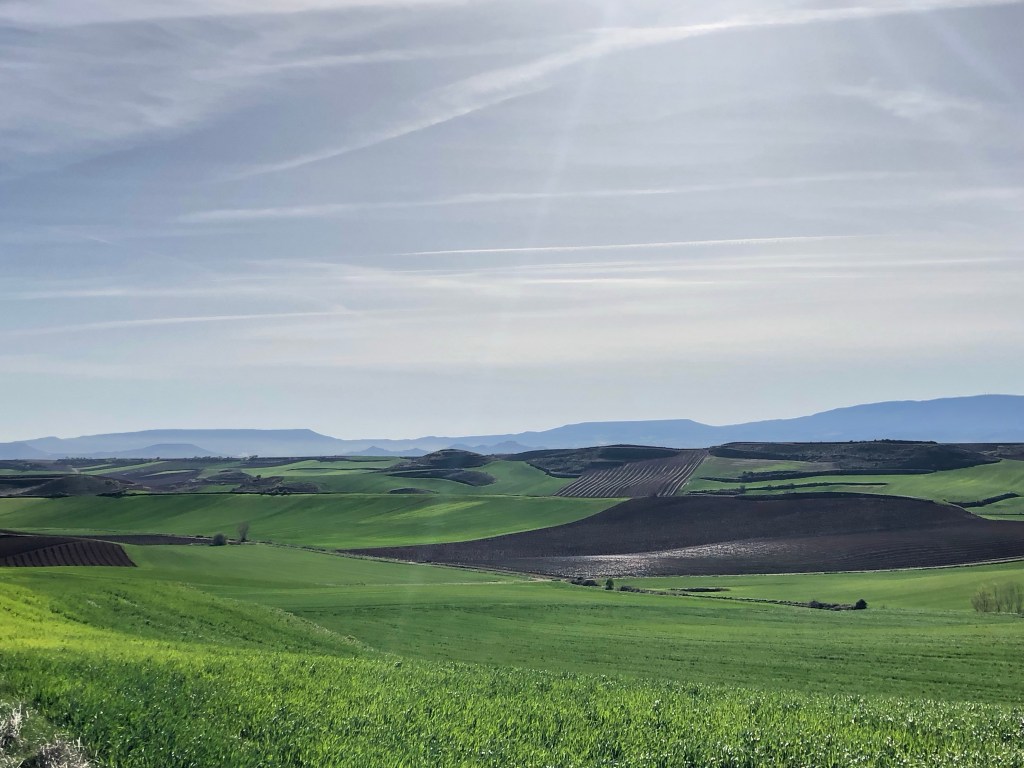
It’s a steep climb after Rabé up into the Meseta proper. The last green hills of Burgos give way to a sea of gold, unbroken at eye level but towered over by a host of wind turbines that make the place a dry parody of the North Sea: similarly featureless, though a great deal warmer.


I’m getting the feeling this is all coming across as rather maudlin. For a nature lover like me, however, this is bliss. If you can put a name to the sights and sounds around you, you’re never truly alone.

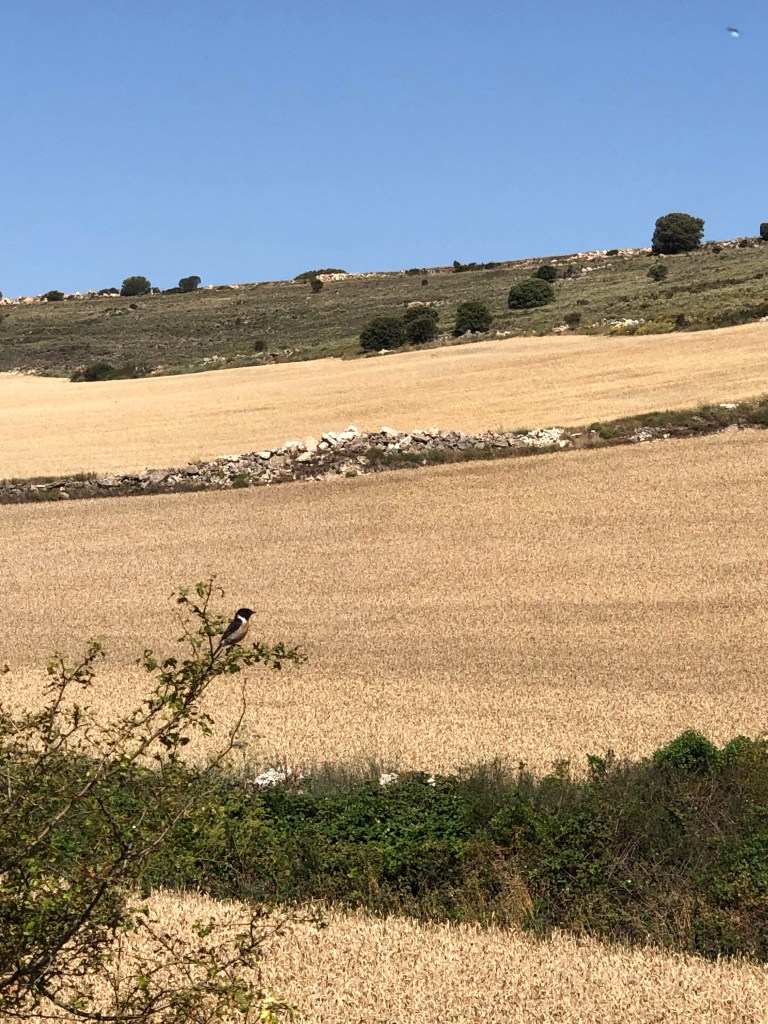
Since leaving Burgos, I’ve been accompanied most of the way by the friendly two-tone song of the stonechat. Families of three – a parent and two fledgelings – seem to pop up everywhere, unbothered by my passing in their tireless search for food. Warblers of every kind – willow, Sardinian, fan-tailed and Cetti’s – sing from the hedgerows, signalling the presence of a river long before it comes into view. Corn buntings, wagtails and jolly wheatears pop in and out of sight between the wheatsheafs. Swifts, swallows and martins fill the empty villages with sound, and hoopoes add a flash of brilliant black-and-white when disturbed in the parks and gardens along the way. In the vast Castilian skies, storks, kites, ravens and solitary griffons are a constant presence, and in the fields below, quail and turtle dove sing unseen, their purrs and whistles keeping the silence at bay. And butterflies of every colour and size are so abundant there’s a very real danger of stepping on them.

On the plateau above Hornillos, I even caught a glimpse of one of my favourite creatures of all: the slender, ghostly shape of a male Montagu’s harrier, quartering the fields like a runaway birdscarer. I haven’t seen one of those since my time in Extremadura, where they find the vast emptiness much to their liking.


I’ve come to a halt in arguably the strangest stop of the Camino so far. Falling prey to my own hubris, as I am often wont to do, I left Hornillos behind and pressed on to what several guidebooks call a “Camino favourite”, the remote Albergue de San Bol. Tucked away in a river valley just five kilometres shy of Hontanas, it is easily missed, and with so many pilgrims keen to race through the Meseta, that’s understandable. I got here at half twelve and found the place deserted, with a sign on the door saying it would be opened at two. I stuck around, taking the opportunity to wash my feet and sandals in the small pool and do some reading while I waited.

Five or six curious pilgrims came by to investigate. None of them have stayed. The first one, a German by the sound of him, asked about a place to fill up his bottle, shrugged and moved on. Another two came by, but went on their way not five minutes afterwards. A Dutchman made noises about staying on but disappeared without a trace while I was washing my clothes. Two Italians rocked up an hour later, who could easily have been my age… only, they were fresh out of school and keen to press on to Hontanas. By this point I’d already made the decision to stay, so I bid them addió and nailed my colours to the mast when at last the local hostalera showed up.

From her I learned the truth – the Camino has been quiet for a few days, but April and May were absolutely heaving this year. That’s probably due to the backlog of pilgrims like myself who haven’t been able to take the road for two years due to COVID. At this time of year, few pilgrims stop at this stage, unless they’re traveling in a group. Would I be alright if I were the only guest tonight, she asked?

Well, so much for my first “communal feel” albergue. On the plus side, it allows me one more day to really be my own boss. It isn’t often on the Camino that you get an entire dormitory to yourself, or the chance to watch the sunset in a place so idyllic as this. I’ve already paid for my bed for the night with the last of the coins I had on me (I really should have taken cash out in Burgos, as banks and ATMs are few and far between out here) so I’m going to kick back and really enjoy having this slice of paradise to myself for once.


There will be plenty of time to socialise on the Camino. But I’m in no hurry – if anything I’d like to avoid the crush in Santiago on Saint James’ day three weeks from now – so I will take my time and allow myself a few later starts from now on. And who knows? If I tarry a while, I might just find more stories in these slumbering villages than I would in the pilgrims tearing through this lonely stage.

Peace out. I’m getting some serious peace in tonight. BB x

Camino V: A Man Out of Time

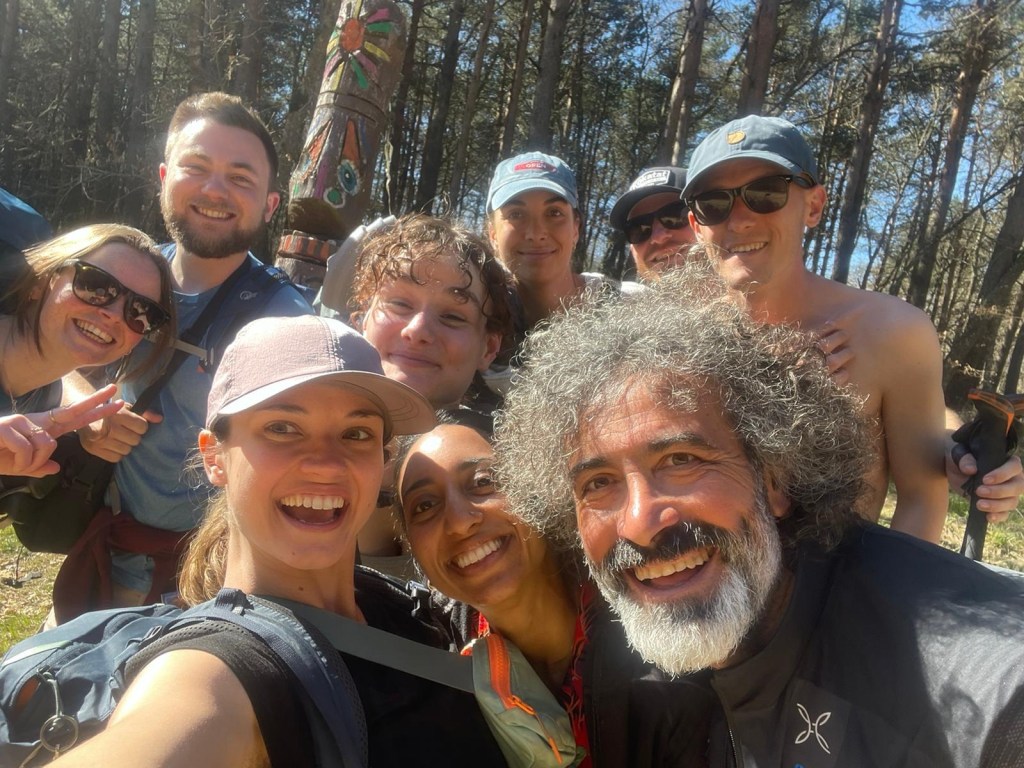
After the Carabiniere’s tip-off about the limited options in San Juan de Ortega, we made the collective decision to strike out early for Agés, the next town along. So, after a day’s hiatus, I had my sunrise again – at the cost of my fingers, which were numb with cold for the first half hour at least. Mikel the Dane caught up to my ferocious pace to lend me his fleece-lined gloves. The way everyone looks out for each other on the Camino… there’s really nothing quite like it.


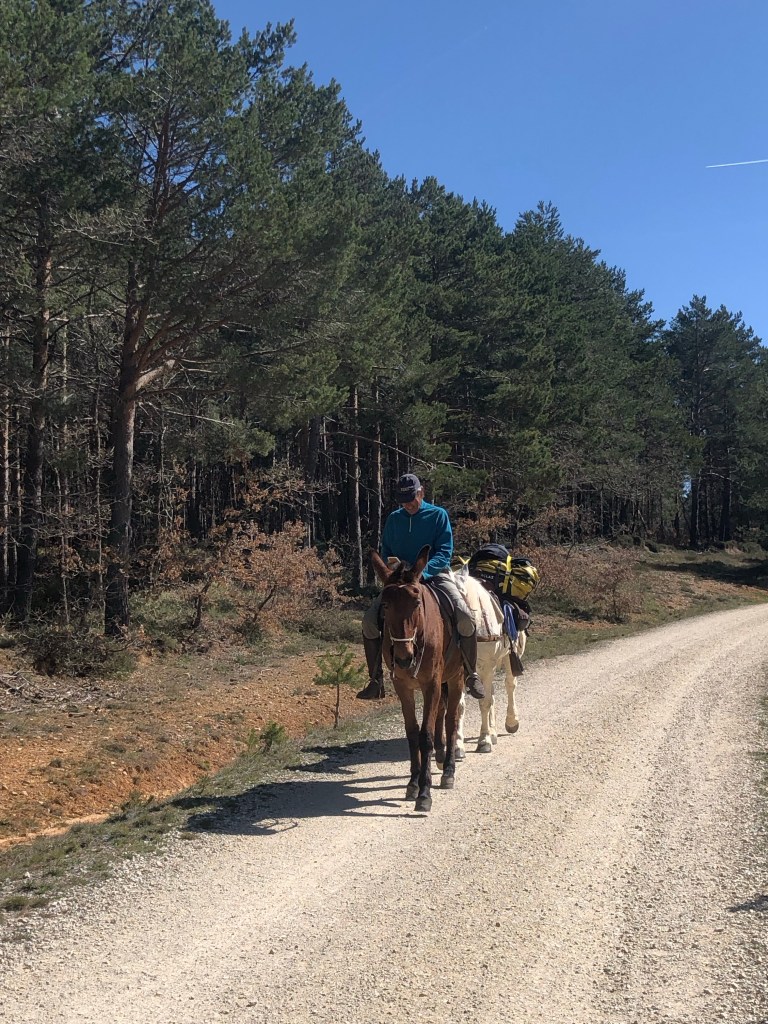
Shortly before reaching Tosantos I picked up the trail of Enrique the Arriero and his mule, Jena, and as soon as he came into sight I picked up the pace to catch up to him. It was a merciless effort on my already beleaguered heels but worth it – with so few in his trade left in the world, you don’t pass up a chance to learn something of that vanishing world. One of our number had lost his card to a hungry ATM so I couldn’t stop to chat long, but I told myself I’d try to catch him further down the road if I could. I had already penned “Entrevista con un arriero” in my journal and that would just be a waste of paper if I couldn’t fill it in.


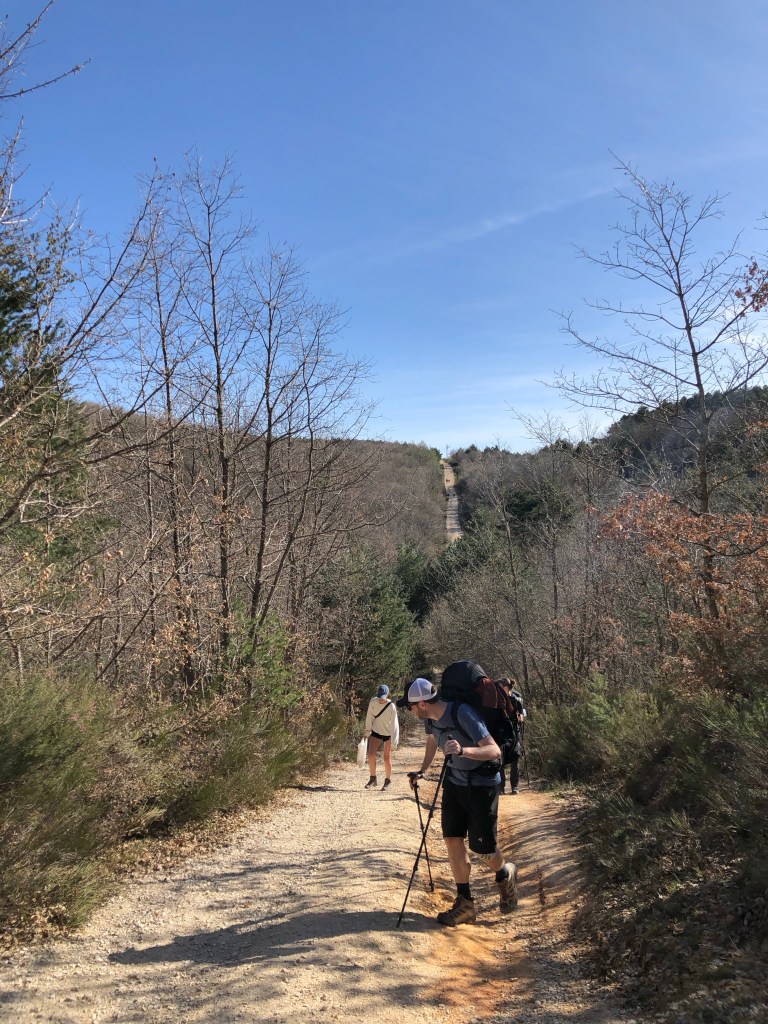
After grabbing an early lunch/late breakfast at Villafranca Montes de Oca (20€ fed all seven of us with a sizeable tortilla & jamón bocata and drinks) the Camino wound steeply uphill into the Sierra de La Demanda. I won’t be the first pilgrim to say it was demanding and I won’t be the last, but it was a welcome change to be under the shade of the trees after the roadside meandering of the last few days.


There’s a monument about halfway through the Sierra to the fallen of the Civil War – that is, the opponents of the Nationlists in Burgos who were dragged out of their beds and summarily executed up here in the woods in the early days of the war. Most Spanish families can relate to this grisly tale: most of the circle of friends of my great-grandfather Mateo similarly disappeared, being known for harbouring or having harboured socialist sympathies even after the war was over. I said a prayer and moved on.

After another steep climb we finally made it to an open stretch of the Camino where the Carabiniere led us to a shaded spot where a food van had been parked on his last run of the Camino a year prior. The proprietor was still here, and while the ‘stamp girl’ was on her way (she’d gone to get fresh ink) he was happy to provide us with fresh strawberries free of charge while we waited.


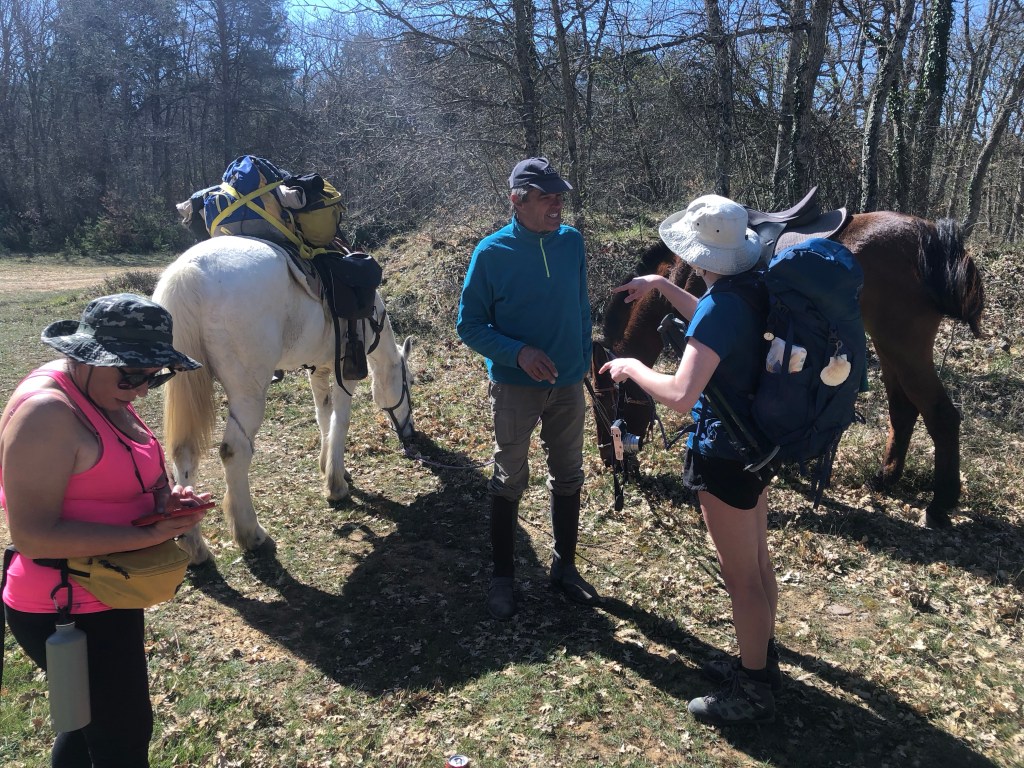
Here, at last, I caught up again with Enrique, and was able to ask him all the questions I’d had on my mind about being an arriero.


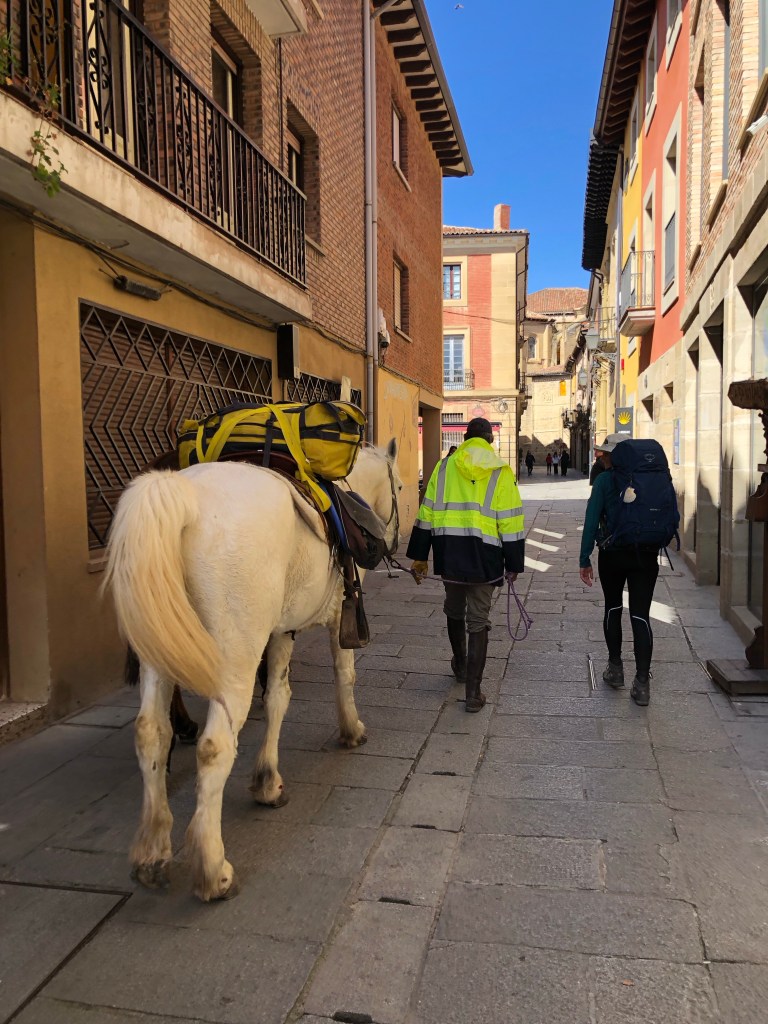
Enrique – or Kike, as written across his hat – has been a muleteer ever since he was a child. He picked up the trade back home in Argentina, where the vast distances and tricky terrain have allowed the profession to long outlive its run in Europe. He likened the trade to studying to become a surgeon: long, hard work and dependant on the collected wisdom of many teachers and masters of the art. Experience, said he, was the best teacher of all, and – now in his sixties – he has had almost six decades worth of it. He grew up a poor man, living on the streets and carving a life for himself in the countryside, not that you’d know now from his noble bearing, bright white smile and polished riding boots (an bold choice of footwear for the Camino). Since his move to Spain twenty-five years ago, he’s got by working with horses and mules wherever and however he can, teaching, buying and selling, running activities for children… whatever he can turn his hands to. I remember as a child seeing the odd arriero in the country around Olvera, so it was more than just an honour to meet a man whose profession is that of the title character in my books. It was a warm dash of nostalgia.


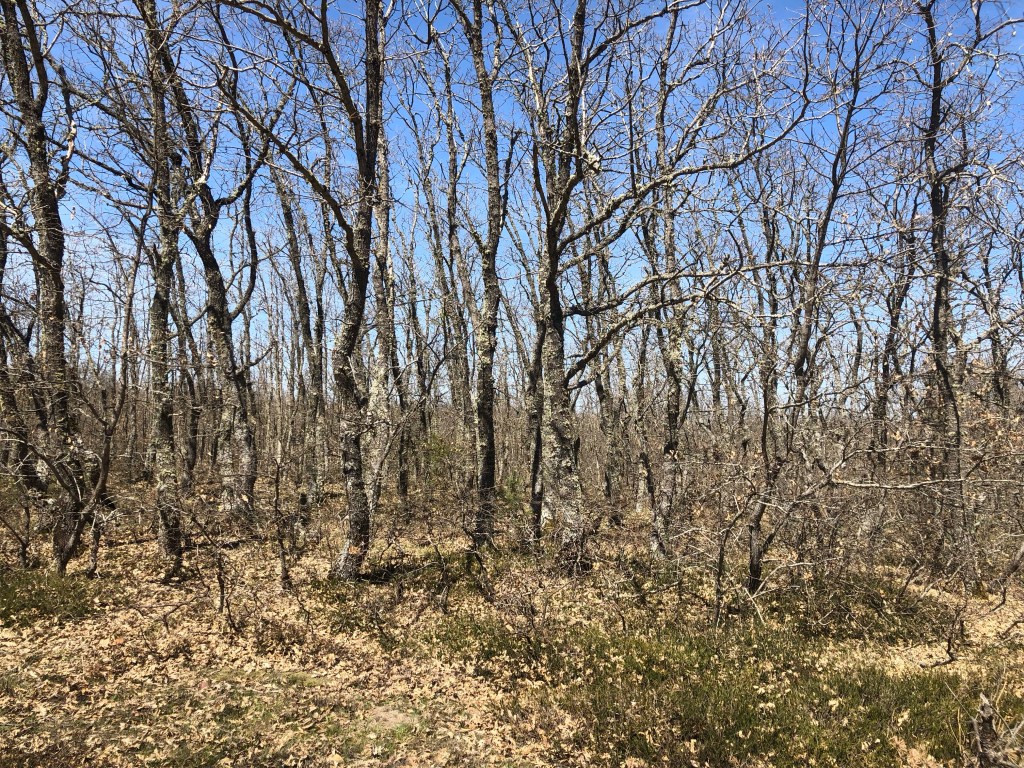
The dark pine forests of the Sierra de La Demanda soon gave way to a skylit swathe of leafless oaks, covered so thickly in lichen that they looked half-dead, like greying, flayed cadavers beneath the sun. However, the forest could not have been more alive. A cuckoo called in the trees and followed us like a shadow along the Camino for some time, while chaffinches, blue tits and the piping song of a wryneck played a merry tune to carry us along. It helped to take my mind off the blisters forming on my beleaguered feet and then some.


Then, before we knew it, the trees were at an end and there, stretching out before us, was the meseta. The prehistoric treasure trove of Atapuerca lay between us and Burgos, but far away in the blue beyond rose the mighty snow-capped peaks of the Cordillera Cantábrica, as impressive now as they ever have been. We came down into Agés shortly after half past two – well into the afternoon – and within another half hour we had all decided to take a siesta.

The other pilgrims have gone out for a beer. I needed a little longer to recover this time, and besides, I wanted to strike while the iron is hot with the blog rather than wait until later. With the last twenty-three kilometres of this stage of the Camino still to go tomorrow ending in Burgos, I don’t think I’ll see Enrique again. So I wanted to record my interview here before I forget.


You never know who you’ll meet on the Camino. Teachers, scholars and sailors, bereaved parents and happy families, policemen and anarchists, priests and atheists. Now, finally, I can add an arriero to that number. BB x

Camino III: Green Fields Forever

If this is a later blog post than usual, it’s because I’ve bought into the spirit of the Camino a bit more today and allowed myself to socialise with some of the other pilgrims – which often takes some doing for an introvert like me. Tonight’s digs are fantastic, though, and I’m writing from the genuine comfort of my dorm bed in Santo Domingo de La Calzada’s cofradía, one of the longest-serving albergues on the whole Camino.


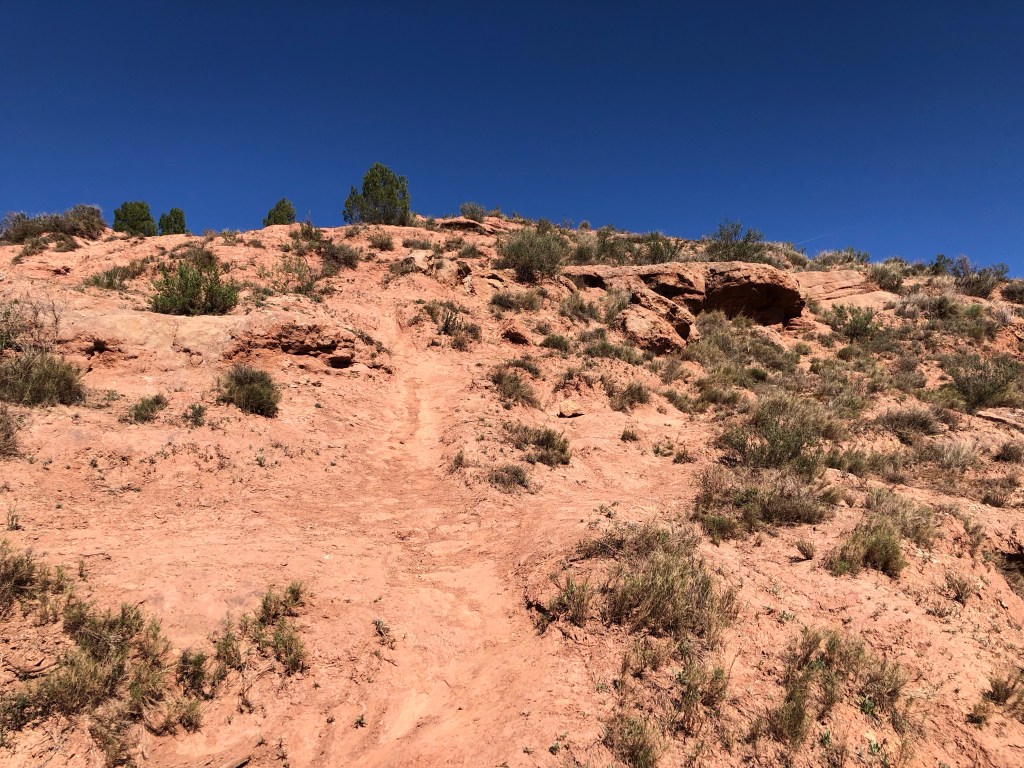
So first, a confession. After arriving in Nájera yesterday, I got itchy feet. The cliffs above the town were calling to me, and the voice telling me I’d already walked 30km that morning was drowned out by the other saying go on, do it, you’ll regret it if you don’t. The summit – a lonely bluff called Malpica – even had a cross at the top, which is essentially putting a hat on a hat. I had to climb it.


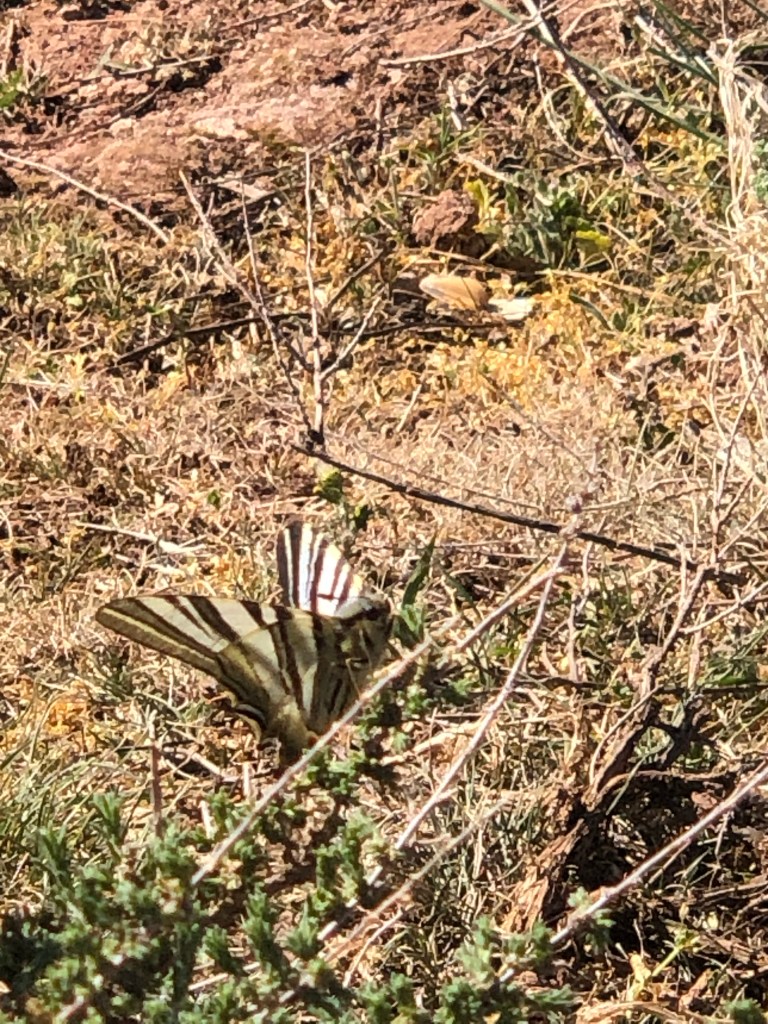
Oddly enough, nobody else was up there at half past four in the afternoon with temperatures pushing into the twenties. Which is just as well, because it turned out to be a hands-and-feet climb to the summit. Fortunately I’ve been doing that kind of thing since I was a kid, so I’m pretty handy with my feet. The view from the top of Malpica was breathtaking – moreso because I didn’t have an awful lot of breath left to take – but the real reward was the butterfly show. For whatever reason, a swarm had descended upon the clifftop, among them some of the most beautiful butterflies you can find in Europe: swallowtails. One or two of them – zebra swallowtails – were so large you could hear their wingbeats. The ‘blood dripping from their fangs’ kind, as my mother would put it. I was just happy to sit up at the top and watch them frolic for a while. It delayed the inevitable descent – again on hands and feet – for at least a short while.


I fully intended to wait for some of the other peregrinos this morning, but when 7 o’clock had come and gone, I came and went with it. I’m rather fussy about catching the sunrise on the Camino, and will happily sacrifice a sit-down breakfast for it. This morning, I’ll admit, I really should have dawdled, as it was biting cold out. It had been well below zero during the night and, with the sun still below the horizon, it was still -1°C when I set out. You notice these things quickly when you’ve only packed with heat in mind.


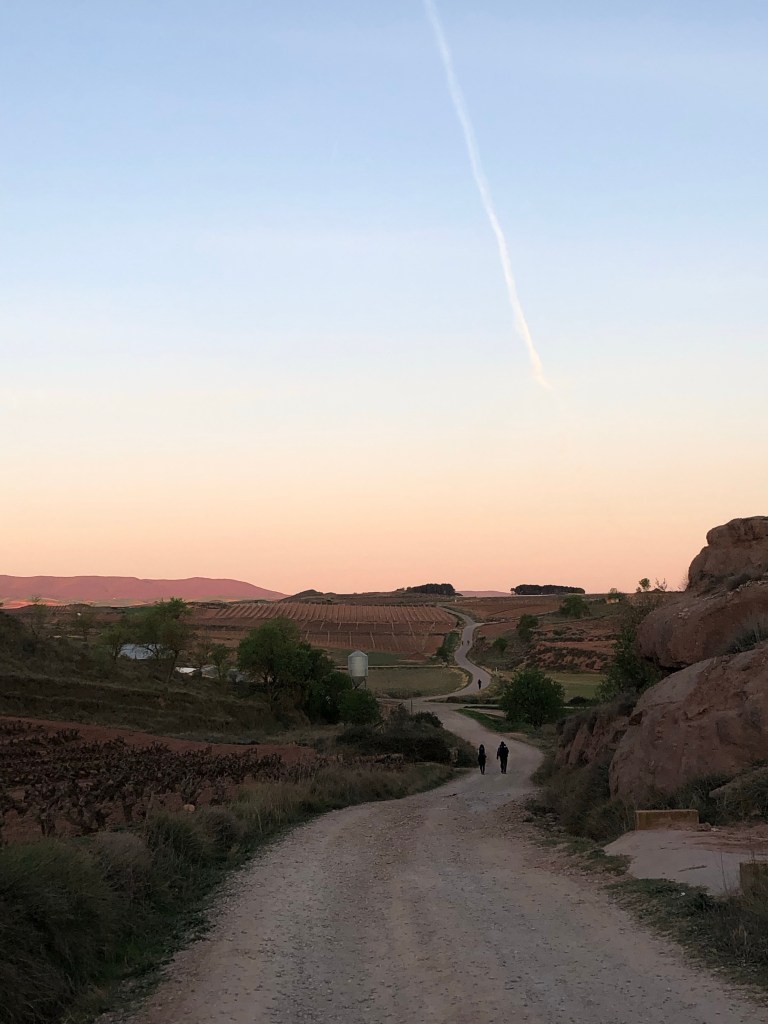
That being said, the Camino was busy. The Koreans had all set out well before sunrise. They’re turning out to be most of if not the only real pilgrims (in the religious sense) on the Camino, with the possible exception of the odd Brazilian. I’d hoped to explore some of the churches along the way, but they were all closed – a possible drawback to setting out so early – so I powered through the first fifteen kilometres alone, soaking up the silence of the green fields of La Rioja.

And what a silence! At the start of the day the birdsong was explosive, and I got quite used to listening out for certain motifs in certain places: the rasping call of a black redstart on tiled roofs, the drawn out wheeze of corn buntings on fence posts and the singsong warble of woodlarks in the vineyards. But at one point it suddenly all went quiet. No birdsong, no cars, not even the sound of distant chatter from other pilgrims on the road. I had to stop walking to listen, taking out the monotonous beat of my own two feet that’d I’d long since tuned out. It wasn’t eternal, but it was powerful while it lasted. I’d even say it will be a treasured Camino memory.


Just before Cirueña I fell into step alongside the only other English peregrino I’ve met thus far. It was good to share the road at last, and we swapped stories to the backdrop of the patchwork fields of La Rioja passing by.


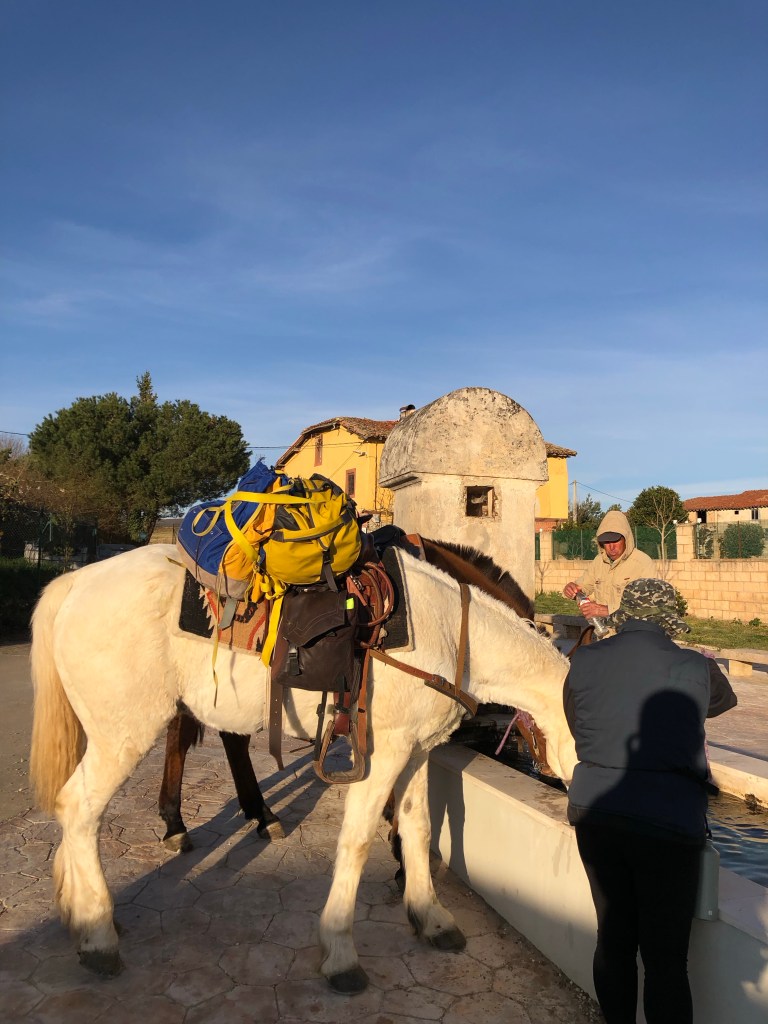
Just shy of Santo Domingo itself, we caught up with a genuine arriero, making the Camino in riding boots and a high vis jacket, taking his mule Jena and a Connemara horse along with him. It was a fleeting encounter, cut off all too soon by our imminent arrival in Santa Domingo, and I hope I can catch up to him again – I must have a hundred questions or more from years of research on arrieros that only a real muleteer could answer. Wait for me, Enrique! BB x

Peregrino Soy

Last night, according to the Beeb, there was a planetary parade. After yesterday’s exceptional conditions – the first day of spring in every sense – it would have been easy to spot from home. That the news decided to report the phenomenon exclusively in the past tense was a kick in the teeth. At the very least it would have been something to write about before the holidays. A warm-up exercise, so to speak, since that’s usually when I have the time to write. I bent the usual dry spell of the summer holidays to my will last year, but this year’s summer break is looking to be all about wheels with little to no time for anything else. Knowing I have to spend a great deal of the summer learning to drive is a pain in the neck, albeit a necessary one, and it’s naturally got me thinking about all the things I’d rather be doing. Fortunately, at this point in my life I can limit all those things to one thing and one thing only, and that’s the job I didn’t finish two years ago: the Camino de Santiago.

So, in my typical stubborn fashion, I’ve thrown caution to the wind and booked a return flight to Bilbao to pick up where I left off over the Easter break. Peregrino soy, volando voy.

Last time I made the trek I got as far as Logroño before having to fly home for both a house move and my pre-PGCE literacy and numeracy test. That’s somewhere between a quarter and a fifth of the total distance (780km). And though I’m not a fan of re-starting things if I can help it, it does feel like one of those treks that ought to be made in one, if you can.

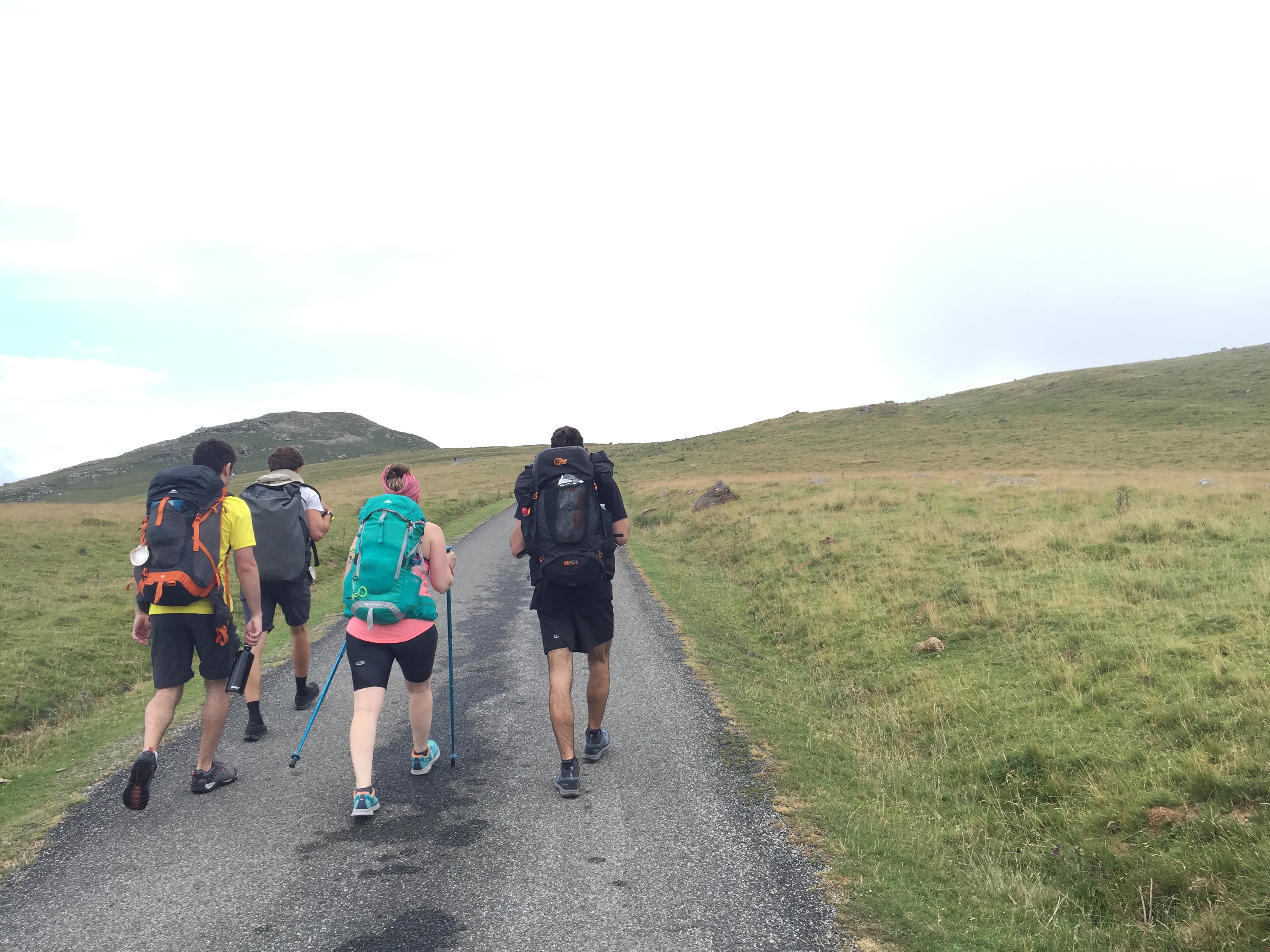
Realistically, it takes about a month to walk the whole Camino, from Saint-Jean-Pied-de-Port to Santiago de Compostela. A month of 5am starts and 12pm finishes, racking up around 20km a day before noon with afternoons spent resting, exploring and talking to fellow pilgrims. It’s an experience like none other. Everyone is on the same road, but no two people started in the same spot or with the same motivations. You fall into a healthy routine after a couple of days, and yet every day is different.

People come from all over the world to walk the Camino. For the first couple of days, I tagged along with three Italians and an Argentinian. We parted ways at Estella when I stayed behind, enchanted by the Basque town. You could easily walk the Camino in a month, but there’s so much to see and do that it’s worth stopping every so often to see all the towns along the pilgrim route have to offer – and your feet will appreciate a day off after five or six days’ walking. Since I’m traveling within the parameters of a two-week holiday I don’t have all the time in the world, so I’ll try to follow the same pattern this time around: five or six days of solid walking, broken up by a decent night’s sleep in somewhere that isn’t an albergue at either end. That tends to be a good idea.

My credencial, or pilgrim’s passport, is already sitting on the coffee table, open at the last stamp. My sleeping bag is rolled up and ready to go and I’ve ordered a good quality rucksack as the one I used last time is at my parents’ place – and it was falling apart after more than a decade of use. For a sense of continuity, I’ll aim to stay at the same place where I came to a stop last time. My Spanish colleagues at work expressed some dismay at the idea of doing the Camino at this time of year – “pero oye, esto se hace en verano” – but I’m going to trust my instinct on this one.

I’m well aware that I’m heading out in none other than Semana Santa, the holiest week in the Spanish calendar. As well as adding to the colour of the Camino nights, with all the reckless passion of the pasos, it may well make for a busier (and more Spanish) Camino than usual. But after a couple of safe and highly-organised school trips, I’m more than game for a proper adventure. And few things provide quite like the Camino.

Bring it on! BB x