Albergue Parroquial de Santiago, Logroño. 19.20.
Last night, quite out of nowhere, a summer storm swept across the north. No rain, no hail; nothing but the unfettered might of the wind. One moment the sun was shining, the next the wind had reached gale force and the shutters were slamming against the windows as a dirty vortex of dust, leaves and debris slammed into Sansol like a hurricane.
It didn’t last long – five minutes, tops – but it darkened the sky, and lightning bolts fell in silent flashes all through the night.
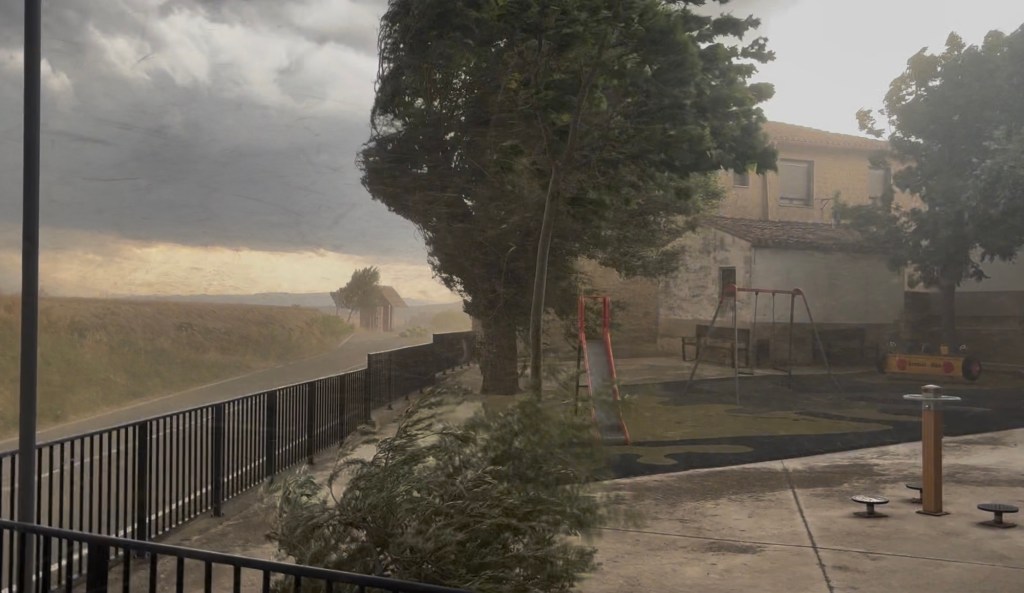
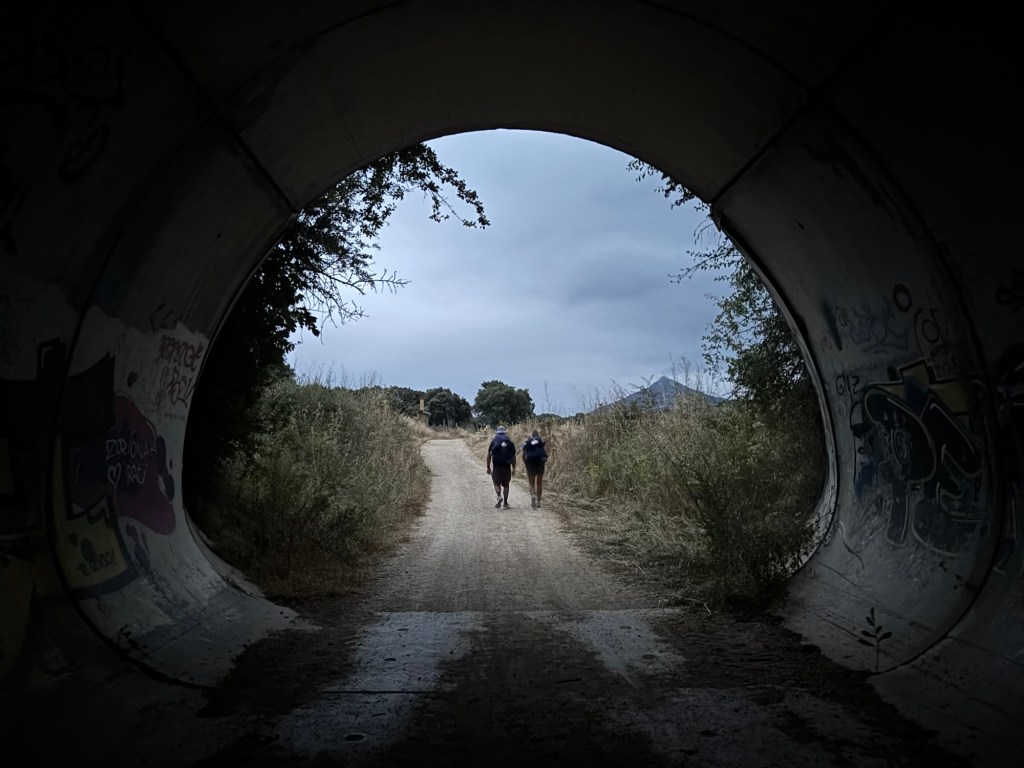
When I left Sansol the following morning, after a long night of waking dreams, it was to a battered world. A pool full of leaves. Branches uprooted and cast across the path. Trees felled. A solitary stone curlew cried its mournful call in the darkness amid the devastation. Perhaps it’s the same bird I heard six years ago. As I tiptoed through the debris, I nearly stepped on a baby toad, almost invisible amid the scattered stones.

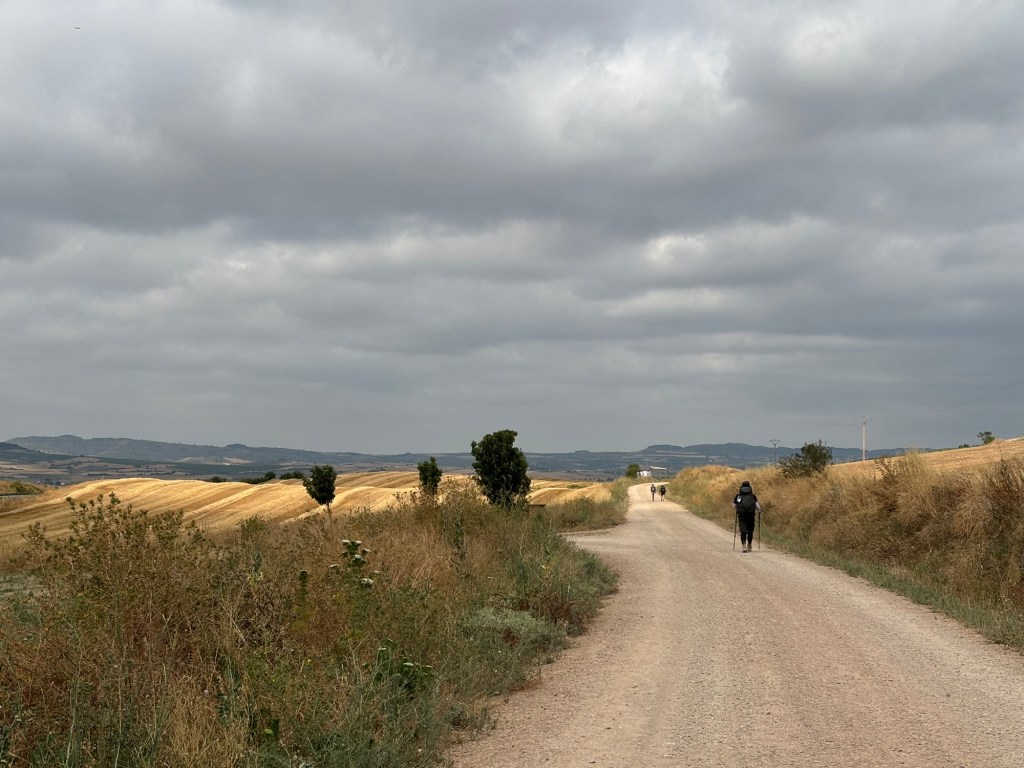
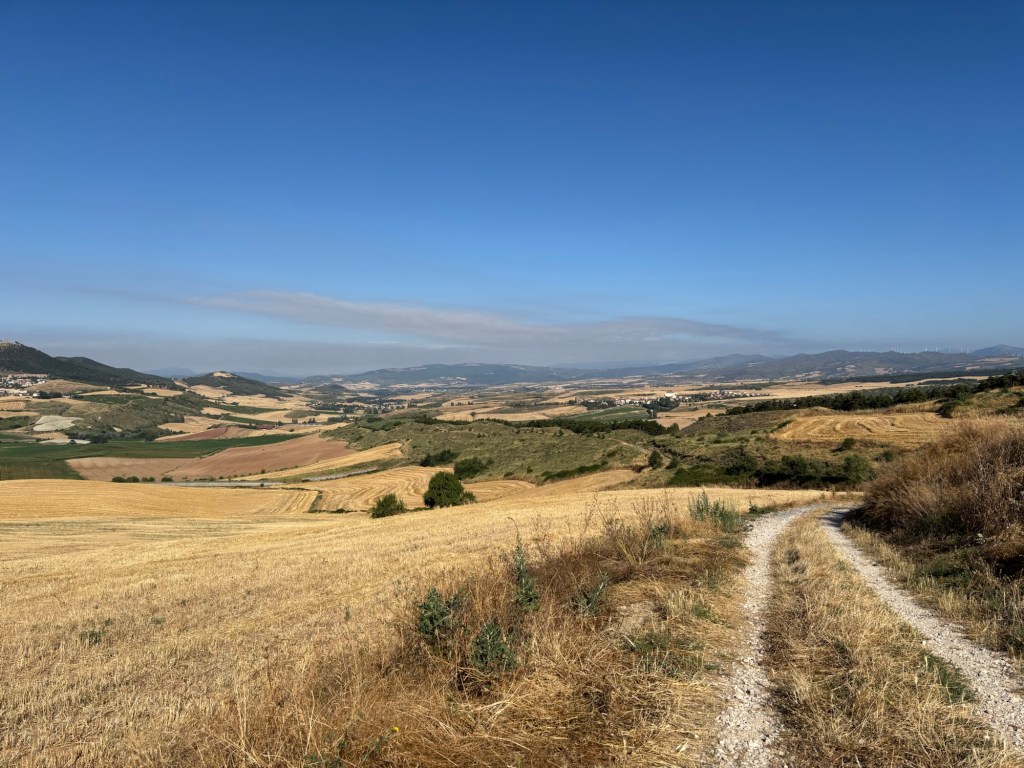
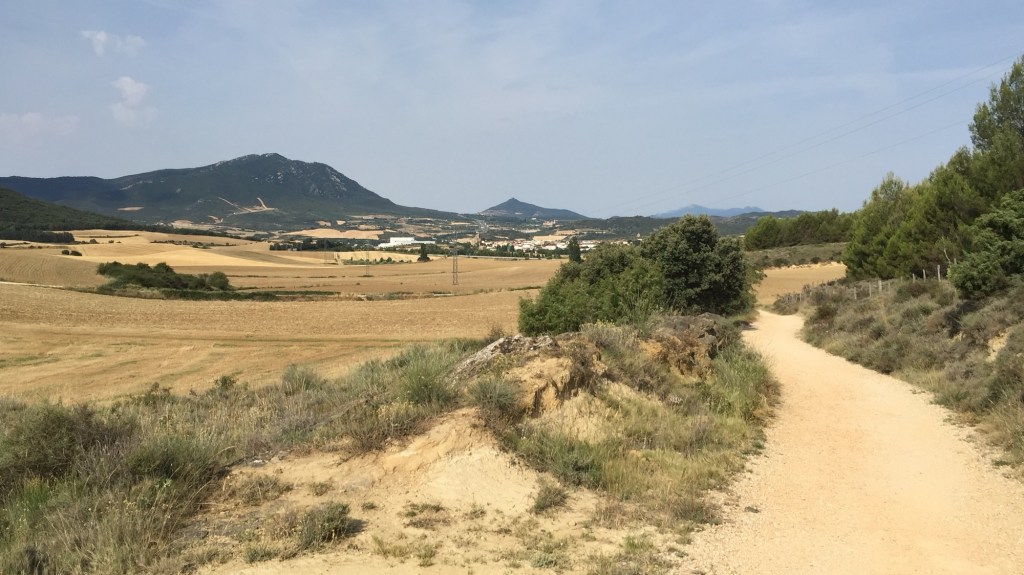
It’s a fair hike from Sansol to the next town, Viana, but it is the last stop before Logroño, which you can see from the hills long before you get there. This is also where we say goodbye to Navarra and the last glimpse of far-off Aragón, before they disappear behind the hills for good.
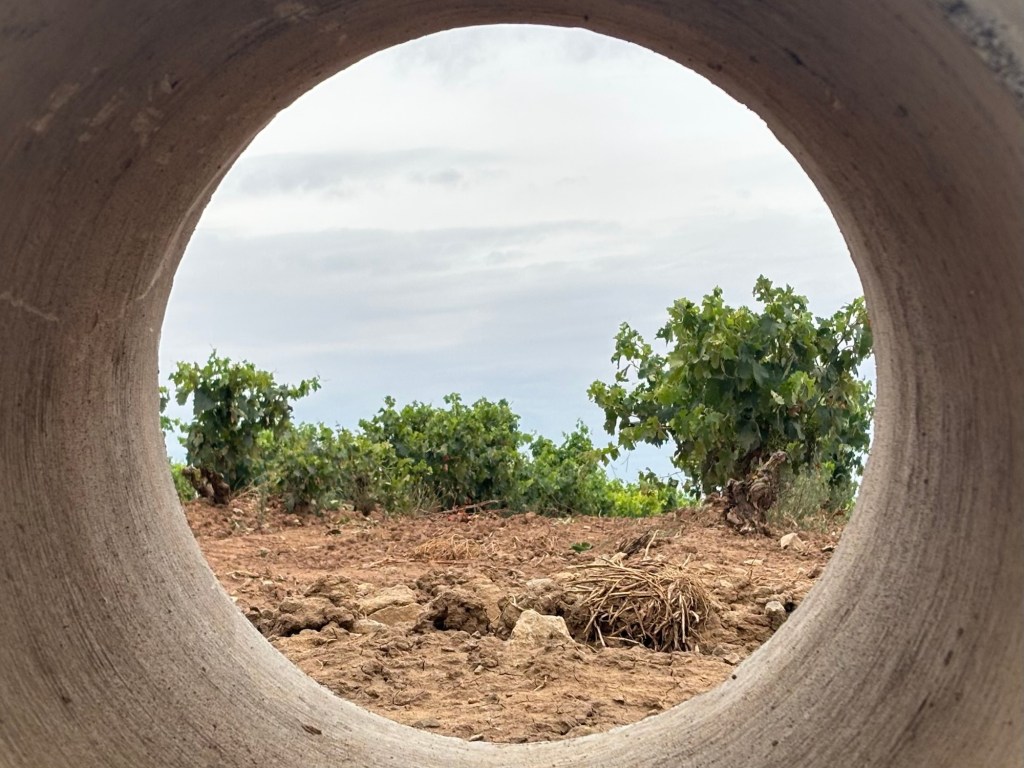
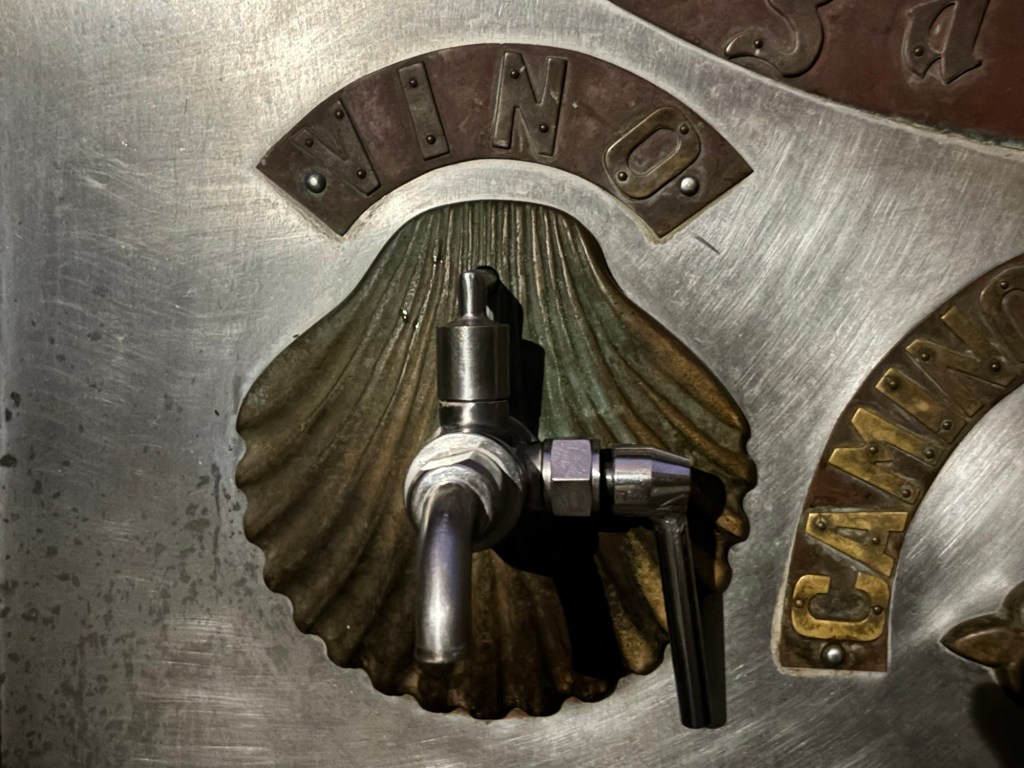
We’re now in the wine country of La Rioja – the rolling fields of wheat are still with us, but they’re interlaced with green vineyards now. Rioja wine is famous the world over, so it should come as no surprise that one of Spain’s smaller regions can’t handle the demand all on its own. In fact, most of the grapes that make a good Rioja actually come from neighbouring Castilla La Mancha, one of Spain’s largest regions, before being processed here. La Mancha produces its own incredible wine (which, realistically, should be up to the same standard), but it isn’t quite as famous as the world-renowned Rioja. One day, perhaps.
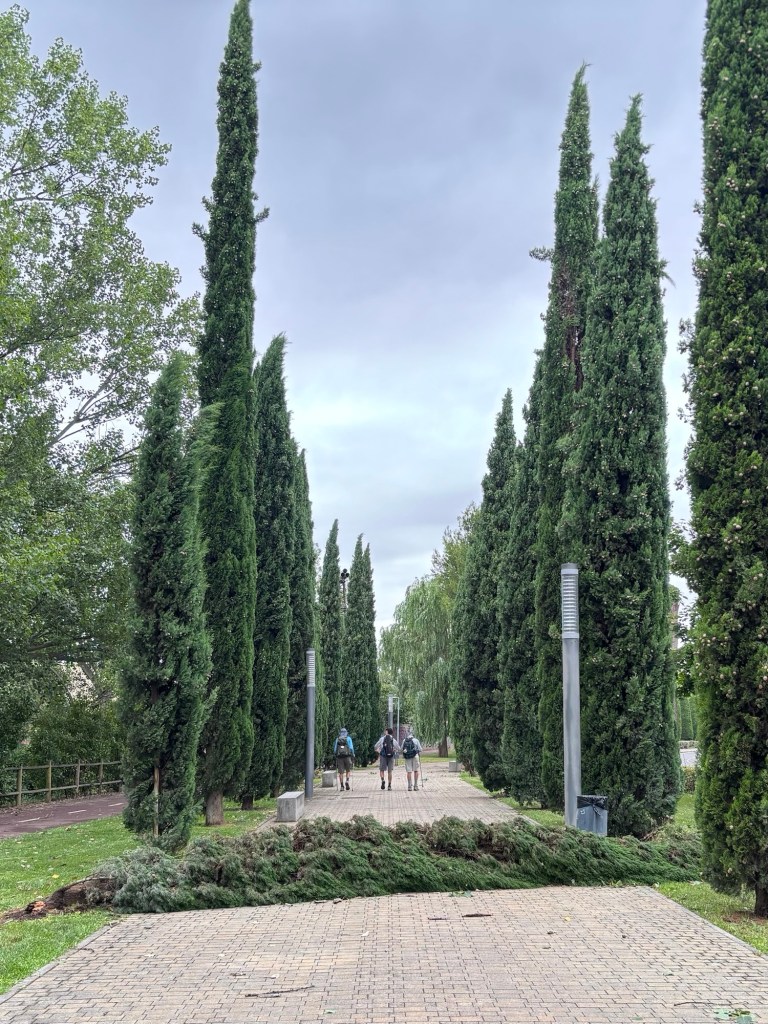
The wind picked up again as I reached Logroño. I didn’t much like the look of the clouds, and it looked like the storm had done even more damage here than in Sansol. Several of the trees lining the Ebro river had been ripped up by the roots and lay where they had fallen across the pavement. A quick glance at the Spanish news implied that it had looked even worse this morning, so perhaps they just hadn’t got around to fixing the park yet.
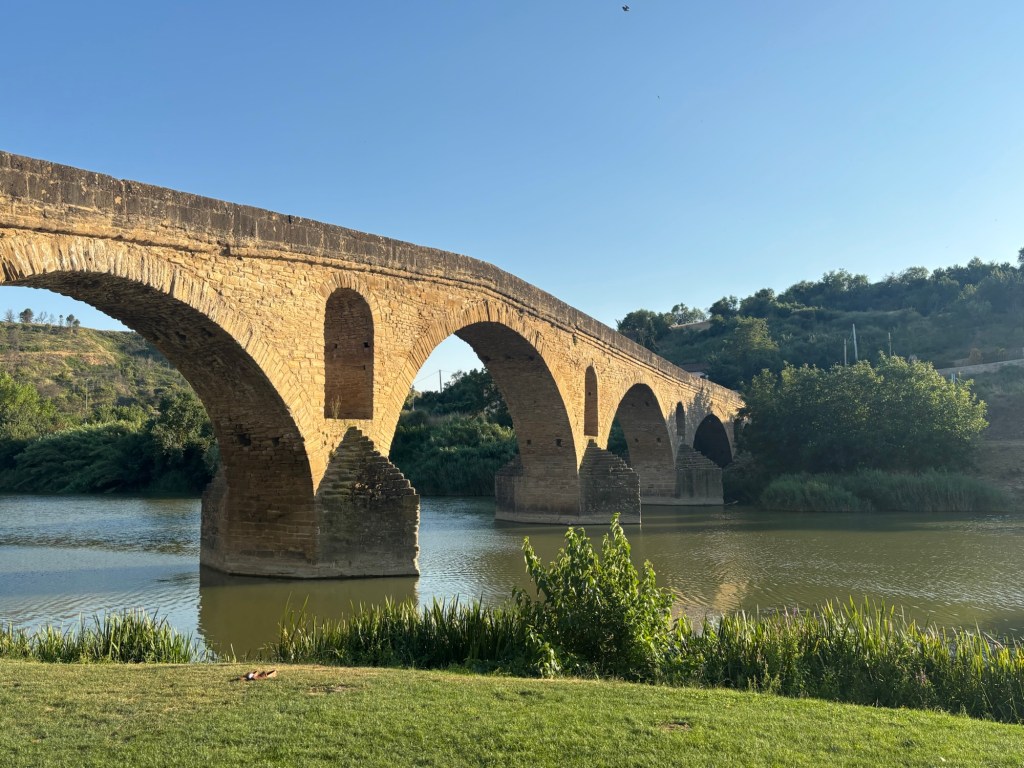
A flash of electric blue caught my eye as I crossed the bridge – a kingfisher. Who could ever lose that sense of wonder at such a sight? It didn’t hang around for long, but long enough for me to see it dive into the river in a halcyon blur before speeding away downriver.
It was still a good three hours until the Albergue Parroquial opened its doors, so I stashed my luggage in a locker which I hired for 6.50€ and set out to explore, unencumbered. It costs about the same to have the Jacotrans couriers deliver your rucksack to the next town for the day, but I felt a lot less guilty about this minor transaction. It’s difficult to justify lugging a whopping great backpack around a museum, after all.
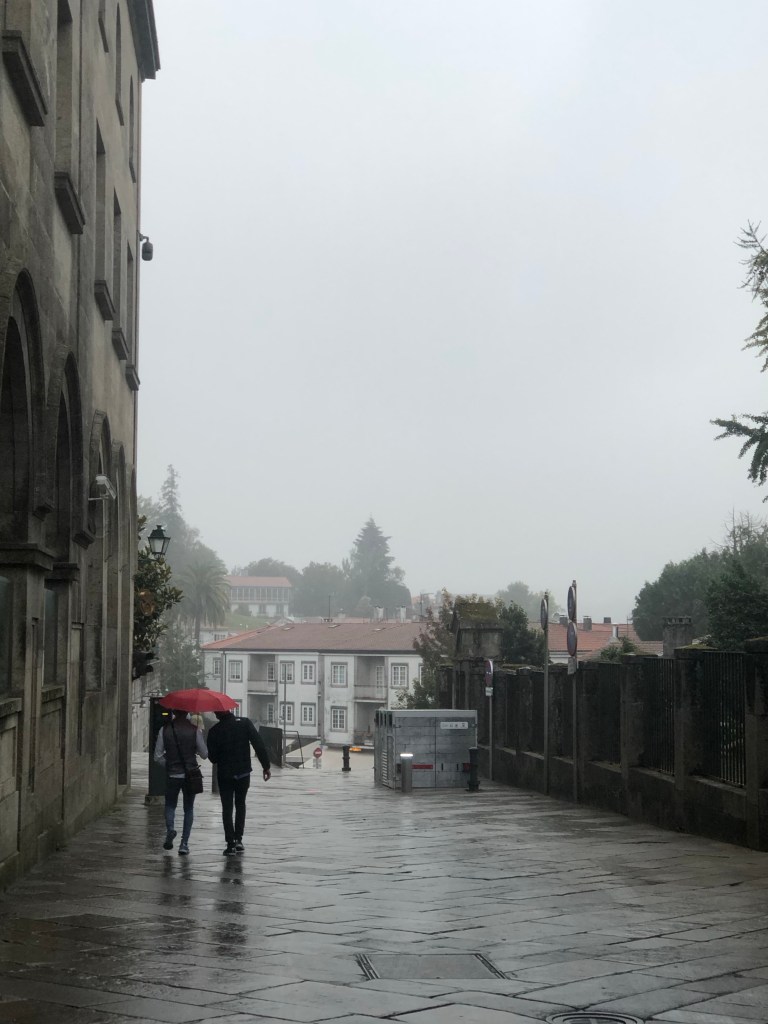
The rain came down while I was in the Museo de La Rioja, so I managed to dodge the worst of it. It wasn’t as impressive as the collection in Jaca or Santa Cruz de Tenerife, but I was rather taken with one of the paintings, which featured a blonde Virgin Mary. I don’t think I’ve ever seen her painted with blonde hair before. Jesus seems to have more colourings than a Pantene catalogue, but Mary is pretty consistently dark-haired, so this one stood out for… well, looking so odd. Beautiful, but… odd. Like an understudy. Was she the artist’s unrequited love, I wonder?

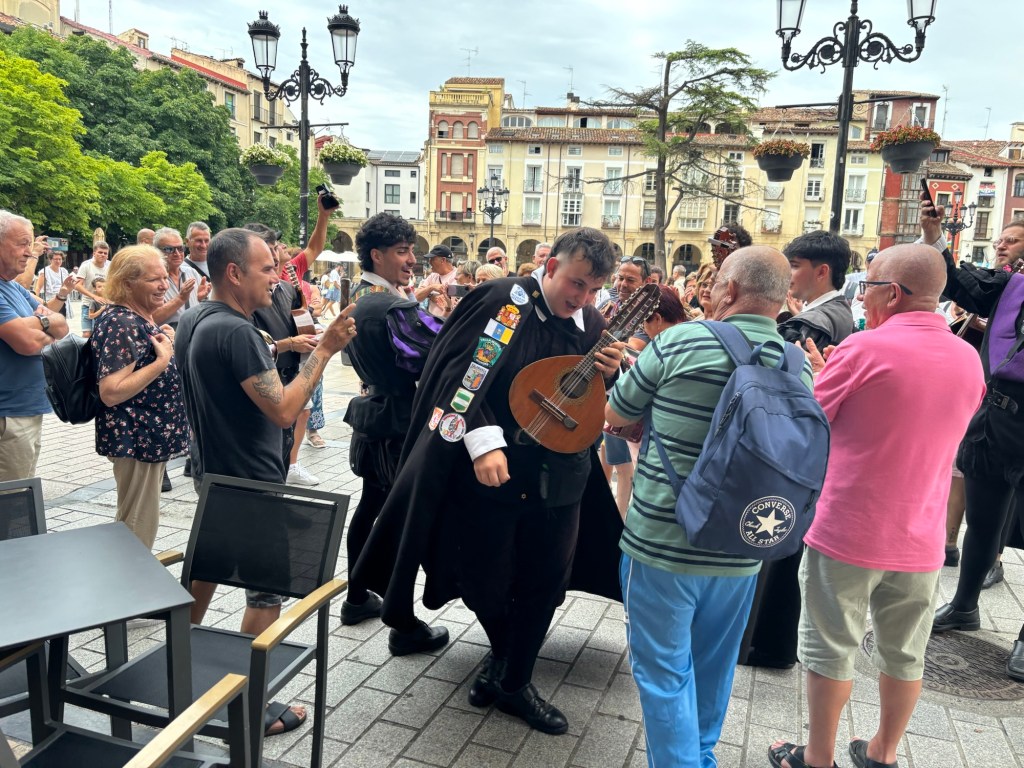
Once the rain had cleared, I grabbed my bag and checked in, before nipping back out for another wander. A tuna band was in town, dressed in their usual medieval splendour and serenading ladies left and right.

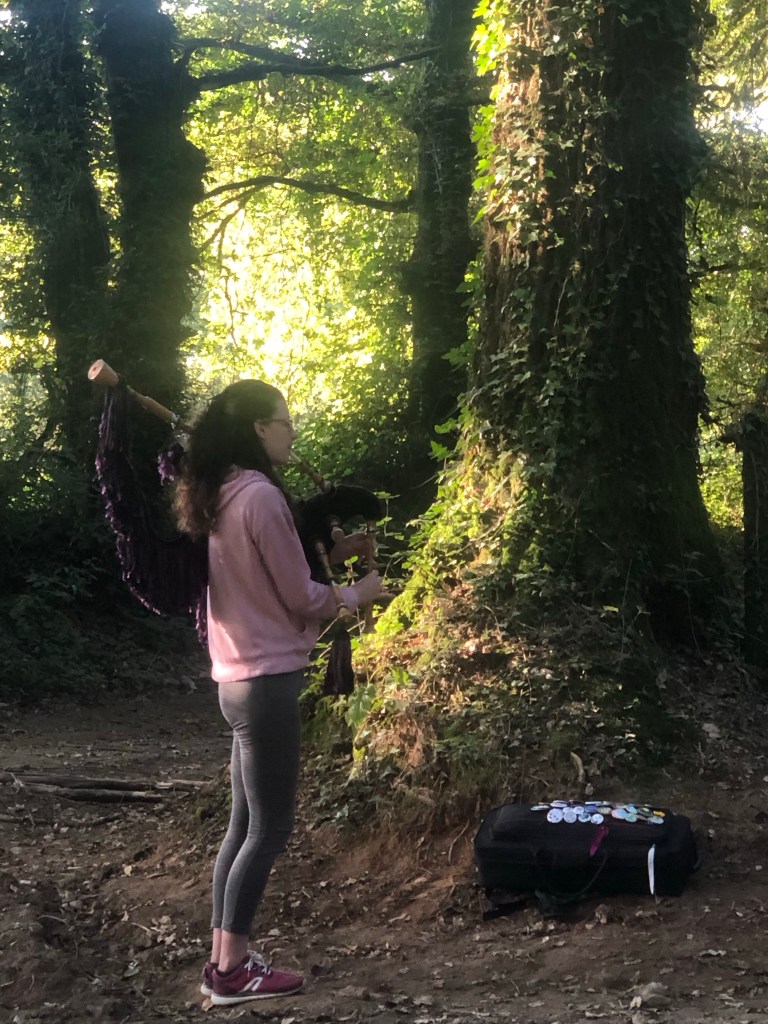
I’ve always loved tuna bands. If I’d done an Erasmus year or studied abroad, which was my original intention, I’m pretty sure I’d have launched myself at one. My uncle Rafael was in a tuna in his university days, and I suspect my grandfather and great-grandfather were also involved to some degree. It’s a tradition that goes back to the 13th century, so it’s a little bit grander than the a cappella groups that have taken the university music scene by storm. However, it is limited to Spain, and it is fundamentally a social and busking enterprise, so it’s not likely to break into a world championship anytime soon. After all – surely the real prize is a smile from the serenaded lady in question, be she twenty-one or seventy-three!
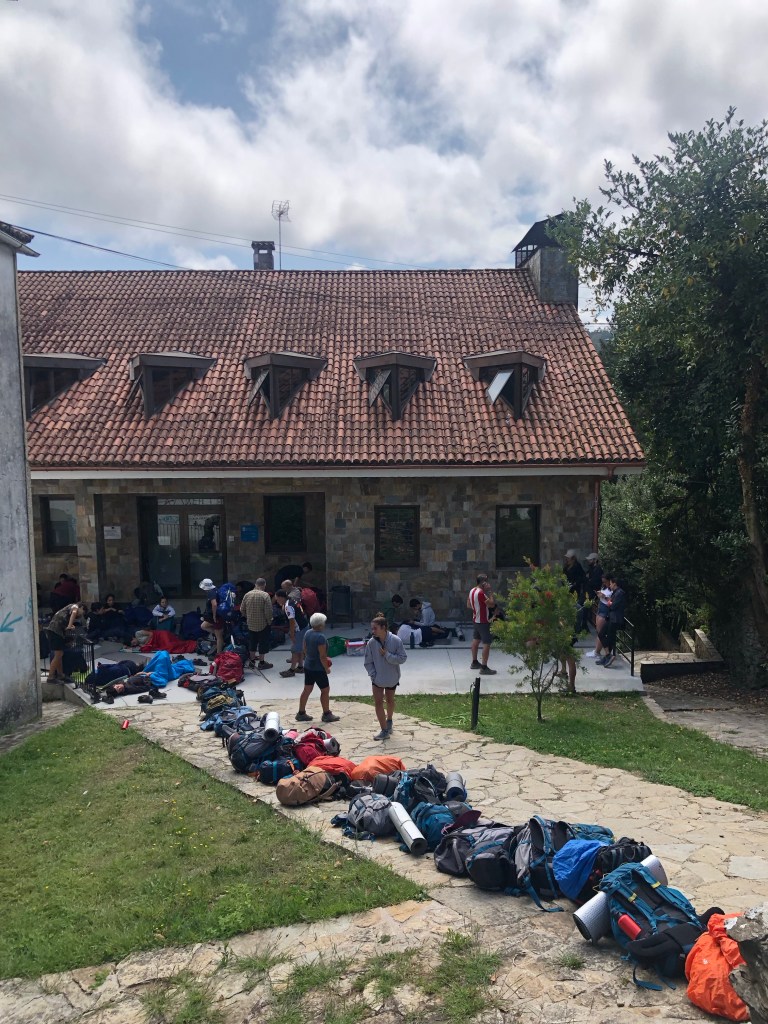
Logroño’s tapas street was absolutely packed, and with good reason: it’s famous for its gastronomy (not just the wine), with around fifty bars serving tapas and pintxos all within the city centre. There were at least six stag/hen do’s in town, all with matching t-shirts (together with one fairy godmother and one Jafar) so I was quite relieved to have a communal dinner with the other pilgrims at the Albergue Parroquial.
Dinner was a lovely affair, and a linguistic hurdle for me, constantly switching between English, French, Italian and Spanish. Sometimes I get bugged by the language barrier (I’m not fluent in Italian), but it does me a lot of good to listen and learn as I walk.
Tomorrow is still up in the air. I have in mind a rest day of sorts, going only as far as Navarrete. I’m not a huge fan of rest days, but I figure I might need it if I’m going to stay fit and healthy on my feet for the next four weeks. It might also be nice to shuffle the pilgrim pack a little. I haven’t really found my scene yet.

It’s gone twenty past ten. The Slovak flirt in the next bunk has finally stopped yapping away with the American girls and gone to bed. I should head, too. I might change my mind and make for Nájera tomorrow, or I might not. I’m still undecided. And that’s the best thing about the Camino. It allows me to be free. Every day. If only every day could be like this. BB x












 The Book of Barnabas