Camino XL: Last Man Standing

London Heathrow Airport, Terminal 5. 19.45.

The Camino isn’t truly over until you’ve made it home, so here I am on the 19.50 from Heathrow’s Terminal 5. It wasn’t the best welcome back to England. Somebody pinched the flip-flops from my bag. They weren’t exactly in the best condition and frankly I could care less, but it’s the principle of it. Six weeks of relatively careless travel across two countries and the first item stolen from me is within minutes of landing back in the UK. Add to that the grey hellscape that is Heathrow, the cost of just about everything, and the facelessness of London…

No. I don’t want to think about that. Not right now. My nerves are shredded enough as it is. I want to think about where I’ve been. Who I’ve met. What I’ve learned.

Nearly six weeks ago, I locked myself out of my flat, caught a late flight to Bordeaux and set out for the Spanish border with little but a few spare clothes and my journal. I did not know quite what to expect from such a last-minute decision: it had been a toss-up between the miserable money-sink of more driving lessons or a second Camino, and after a stressful year in a new school, the decision was just too easy.

My reasons for setting out upon the Camino this year were varied. I had an uncommonly wonderful holiday in Spain at Easter and wanted to say thank you. A dear friend lost her father and I promised to pray for him at every church I found. I needed some healing after last summer’s heartbreak, which was mostly healed in El Rocío, though this wound has proved difficult to recover from fully.

I also needed to get away for a while. Social media has been leering at me with a stream of weddings of old friends, and with each one, I am reminded of how much I have been forgotten – or rather, how much I have allowed myself to be forgotten by going radio silent and burying myself in my work for the last eight years. I am still coming to terms with what I am now fairly certain is my undiagnosed ADHD, which came to a head somewhat this year, and would go some way to explaining much of my behavioural quirks and communication issues. I ended the year on a major high with the triumph of my new funk band – something I’ve wanted back in my life for thirteen years – but I still needed a change.

I come into my own on the Camino. There’s no pressure to communicate, but so much reward for doing so. Fleeting but powerful friendships based on shared adventures and the sharing of stories. A chance to swap languages constantly, and to learn new things about myself and the world each day. A chance to be back in my grandfather’s country, and to feel his spirit at my side. To walk in the light of the Blanca Paloma and to see the wonders of her world. To patch up the wounds in my lonely heart with an alchemy of golden fields, griffons and the churring of nightjars. To sing, to write, to read, to tell stories, to laugh, to walk, to climb, to run, to swim and to be surrounded by the one thing in this world that has never let me down: nature.

In short: to walk the Camino is to be myself.

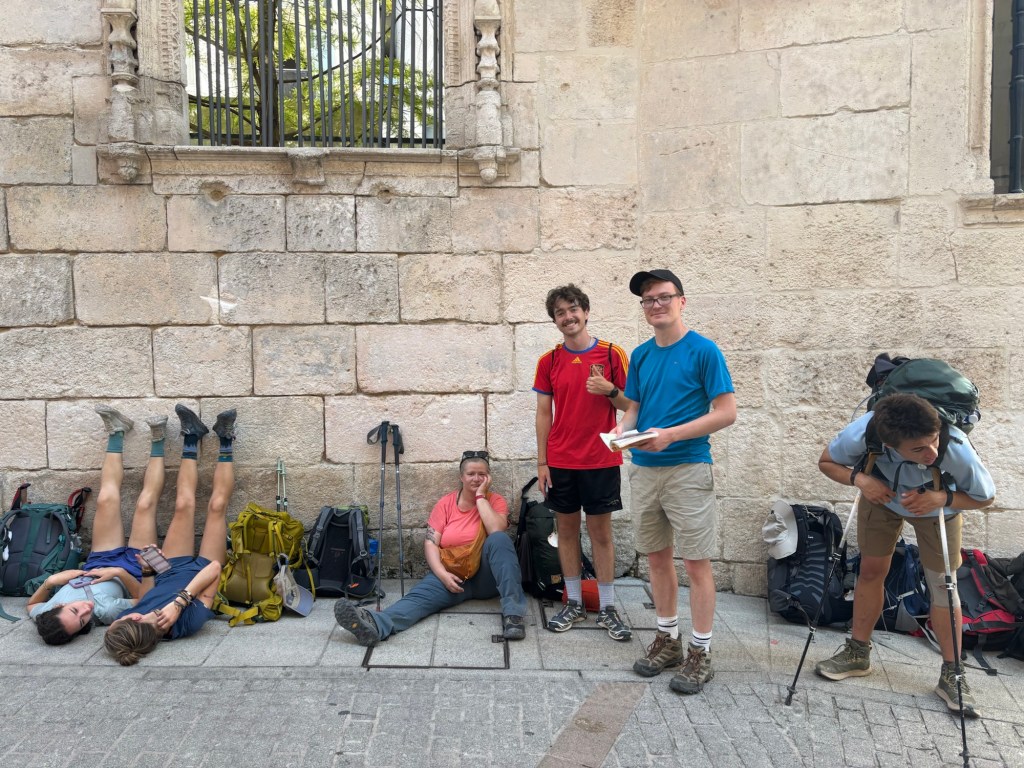
When Gust left this morning, I was the last of us left in Santiago. I have been incredibly fortunate this year with my companions, who have been the most wonderful company – even for this lonely wanderer who so often set off on his own to walk the road alone, for days or even weeks at a time.

Alex. The lawyer. My fellow countryman. Lost to us far too soon in Burgos. In many ways, the one who brought us all together. You set the pace – sometimes too fast for even me to catch up. You came to my defence against the Dutchman and his beer-fuelled football rant. I would have walked with you to the end.

Audrey. The marine biologist. The trooper. A seeker of solace and of silence, with a kind word for everyone and a pure heart. This was your Camino, I feel. The rest of us just fell into orbit. And who could resist the gravity of such a warm disposition? I hope you found the peace you were looking for in the shining Aegean Sea.

Talia. The neuroscientist. The brains of the operation and the questioner. Sage and sober and endlessly perceptive. You awoke in me an awareness of paths untraveled that I had long ignored, shining more light upon the road than any headtorch-wielding peregrino – which I, in my preference for the starlit dark, sorely needed.

Alonso. The diplomat. The wanderer with a thousand-yard smile. Powered by kudos and watermelon. Chasing the Sun across the horizon “for the bit”. Your wits were almost as fast as your Strava-fuelled sprints down hill and mountain, and you brought humour to every town and village we found. 100%. For you, the journey goes on.

Chip. The agent. The sunniest Salt Laker this side of the Atlantic. Friend to the saint, the sinner and the sandhill crane. Fountain of wisdom and wit and the only thing holding me back from being the eldest of the family (for which I was very grateful!). We never did get to say goodbye, so perhaps I will have the chance to say hello there again someday.

Gust. The drummer. The free-spirited Waldorf wayfarer. Blighted by blood blisters, broken sandals and Italian blessings and still one of the bravest of us all at seventeen years of age (or eighteen, if your credencial was to be believed). A chip off the old block who slept in a bus shelter to secure an earned Atlantic sunrise. You give me hope.

I’m already thinking ahead to my next Camino. I love the sociable side to the Camino Francés, but now that I have done it twice, I feel it may be time for a sea change. The Camino Mozárabe is calling to me, looping through the marbled hills of Andalusia and winding across the green fields of Extremadura. I don’t think I’d be likely to meet such an excellent and eclectic cast as the one with which I have shared the road for the last six weeks, but it would be another genuine adventure – as the Camino Aragonés, the Primitivo and the San Salvador were this summer.

Of course, for the same budget, I could probably have a week’s holiday somewhere really exciting: a tiger safari in India, chimp-tracking in Tanzania or an adventure around the deserts of northern Mexico. But would it make me as happy as another five or six weeks in Spain? Probably not. I know what makes me happy. Happiness has a name and her name is Spain.


Well, I’m back in England now. But the story isn’t over. Not yet. I’ll be back tomorrow to muse a little more. I just wanted to put some thoughts down while the memories are fresh in my mind. BB x
Camino XXXIX: The Breaking of the Fellowship

Albergue Seminario Menor, Santiago de Compostela. 22.00.

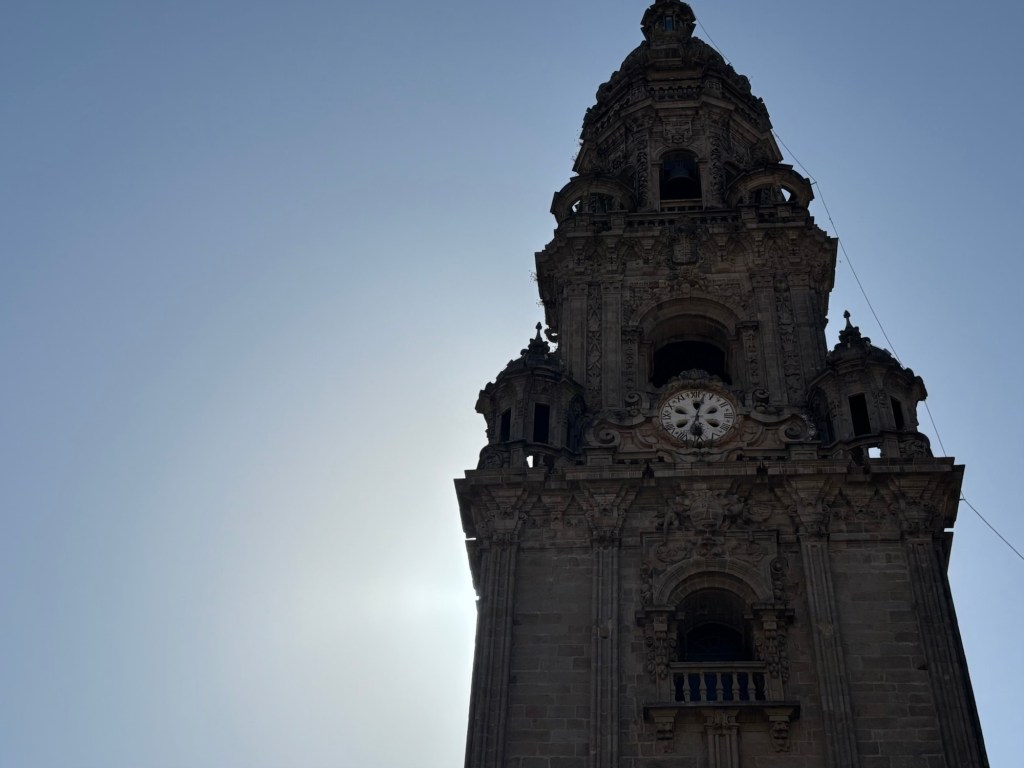
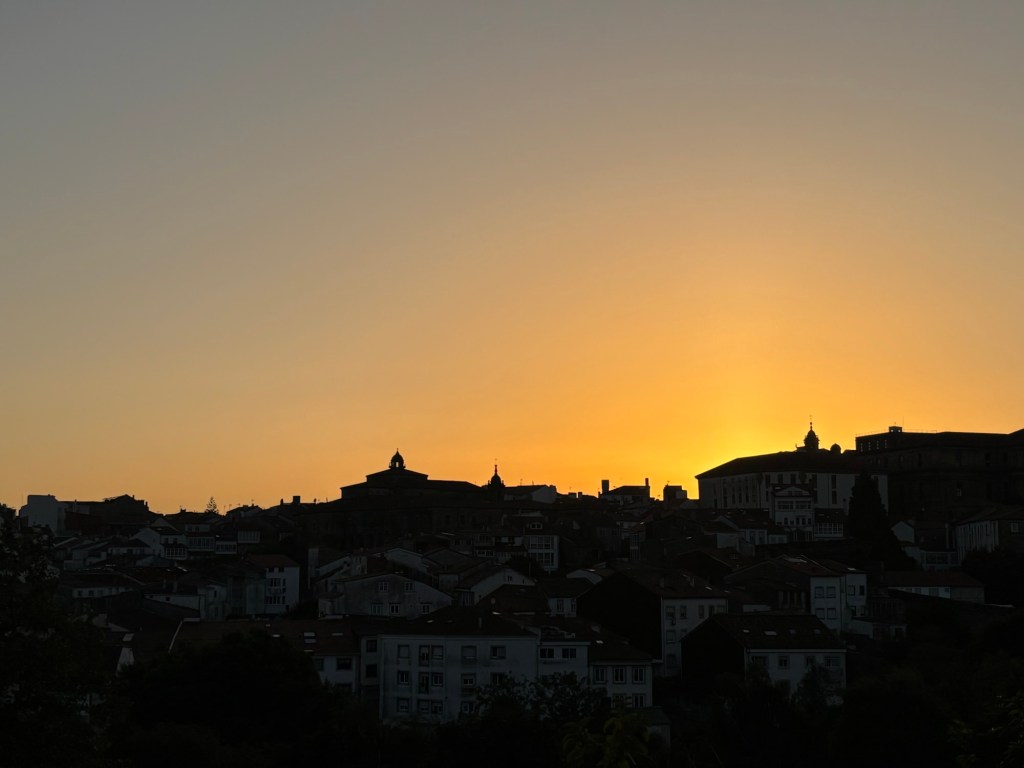
Santiago’s bells are ringing for ten o’clock. A smaller two-tone chime begins behind the echo, for just a few seconds… and then it’s gone. The city is quiet again and the world beyond is in darkness, broken by the slate-blue glow of the vanished sun and the twinkle of streetlights. It is a darkness that has become a fundamental part of my life for the last six weeks, and one that I will not know again until I set out on my next Camino, whenever and wherever that may be.


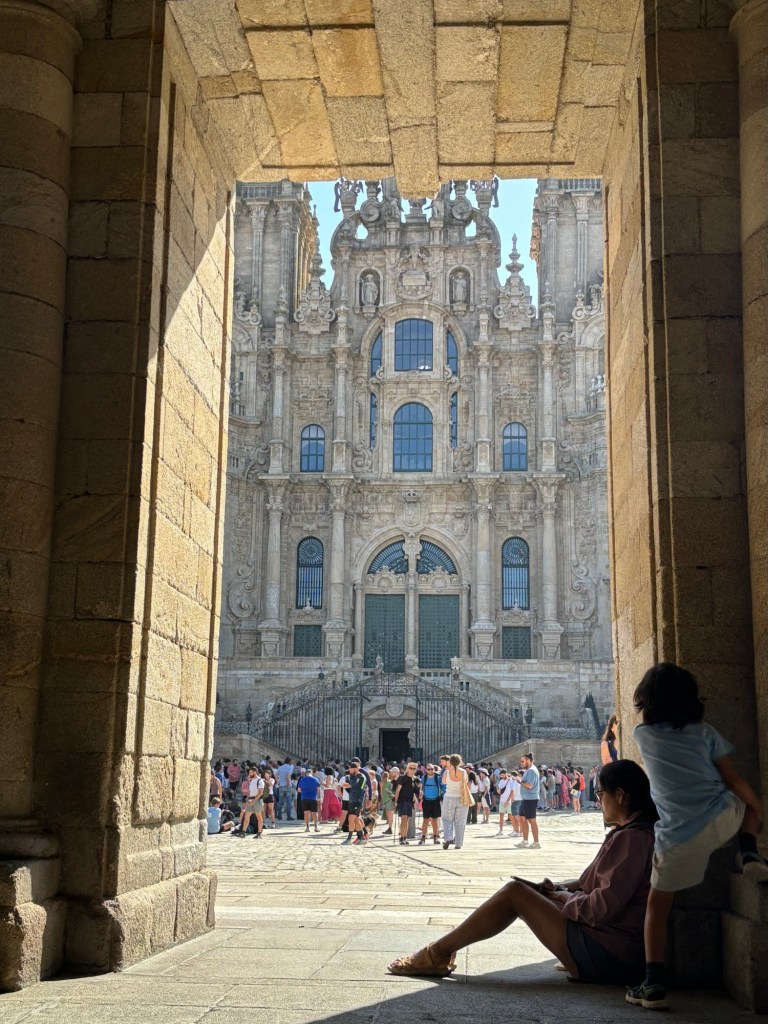
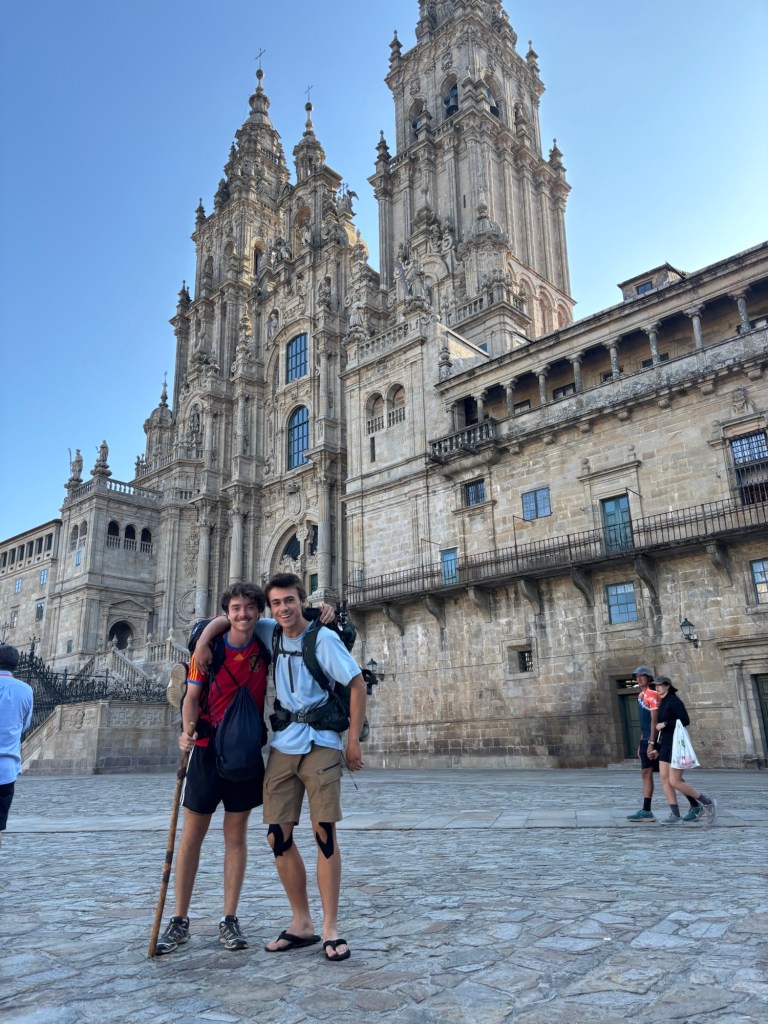
The breaking of the fellowship is nearly complete. Today I said farewell to Alonso, who sets out on the lonely road to Lisbon, walking the Camino Portugués in reverse. I suspect he was a little reluctant to leave, but to his great credit, he stuck to his plan. Gust and I accompanied him for a farewell breakfast of tortitas and huevos revueltos before parting ways in the Praza dos Obradoiros.

With Alonso gone and southward bound, Gust and I are now all that remains of a Camino family that, at its height, numbered around seven: Alex, Audrey, Talia, Alonso, Gust, Chip and myself. But for Gust and I, they have all departed the sacred city: some for home, some for the next adventure. There is always something sad about that. Gust and I are the lucky ones: with the last stragglers making it into Santiago today, we have been able to say a stoic farewell to pretty much everyone we knew.

Some small show of mercy, I think, for my decision to leave them behind for two weeks to pursue my own lonely trail over the mountains to Asturias.


There were even more pilgrims marching into Santiago today than yesterday, their numbers swelled by several huge scout groups with their colourful scarfs and boisterous songs. Many of them had tears in their eyes as they embraced before the steps of the cathedral. It’s easy to raise an eyebrow at this overflow of emotion after a four (or, at most, five) day march when you’ve been on the road for nearly ten times that amount, but it’s easier still to forget that – in reality – walking 100km is no small feat. Well may they cry. They have earned those tears.

There’s a clear divide in the pilgrims from Sarria and the others in the square: the Sarria pilgrims crowd the plaza in great colourful throngs, while the more seasoned peregrinos (with the possible exception of the Italians) sit alone and in silence in the shade of the arches of the Pazo do Raxoi, eyes shut and faces drawn, contemplating the weight of their road and its inevitable end.


This is my third time in Santiago and yet the city is already so familiar I could navigate it in the dark. I had a look around the Faculty of Galician Studies in Santiago’s grand university building and tried to imagine myself as a Masters student here. It wasn’t easy. It wasn’t easy to imagine Santiago de Compostela as anything other than a pilgrim town, a never-ending terminus for a thousand-thousand emotional journeys. But outside the old city, there’s a modern sprawl with its own beating heart.

I had no map, as I have no more mobile data to guide me (and only just in time!), but my feet (and some scrap of memory) guided me to Casa del Libro in the new town. I only bought the one book, but I found a children’s encyclopaedia of Iberian mythological creatures and took notes in my journal. Not every book has to be possessed. To learn, sometimes, is enough.


I’m falling asleep as I write. I should turn in. This time tomorrow, I will be back in England. My grand adventure will be over. It’s a bittersweet feeling, even if I have accomplished all I set out to do. The end of an adventure always is. BB x

Camino XXXVII: Hundreds and Thousands

Albergue de Peregrinos, Ribadiso da Baixo. 15.10.

Today marks the longest walk I have ever done in my life. As of eleven o’clock this morning, I have walked 1,013km since setting out from Bordeaux nearly six weeks back on the last day of June. My feet are mildly blistered but not painful, and one of my sandals is starting to fall apart, but my head and heart are clear and Pinta and Niña are none the worse for their thousand-kilometre journey across the country.

I haven’t used my journal much, but I wouldn’t have set out upon this road without it. It’s now by far the longest-serving and most well-travelled (and most battered) of the three journals I have kept since I bought the Red Book in a librería in Villafranca de los Barros back in 2015. Now a veteran of four Caminos, it’s earned an early retirement, I think, but I’m still a good fifty pages or so from finishing it, so it may well have further to travel, I suspect.

Maybe I should just hurry up and get that bloody book written already. Lord knows I have crammed enough research into those journals.


Today ought to have been a short one, but I ended up adding an extra three kilometres to my walk after realising halfway through the dark woods out of As Seixas that I’d left my credencial behind. I have three, including a spare and the completed one in my journal, so I wouldn’t have been turned away at the next albergue, but it’s the principal, damn it – and I was only ten minutes into the walk, so I legged it back without the aid of a torch to the albergue, hoping the other pilgrims had not shut the door behind them.

Luckily, they hadn’t, and my credencial was sitting on the bunk above mine along with a sachet of Cola Cao, just where I’d left it the night before. Sometimes I’m in such a hurry to be the first out the door and on the road that I leave things behind. So far on this trip, that has cost me a pair of sunglasses and a vest – and very nearly my credencial. Muppet.

I restored my reserves with a cup of hot chocolate from the vending machine and took a shortcut back to the Camino via an improvised route to the north. The roads were deserted, so I didn’t have any issues. The three pilgrims who I had sprinted past seemed surprised to be overtaken, after they’d last seen me going back down the Camino about half an hour ago.

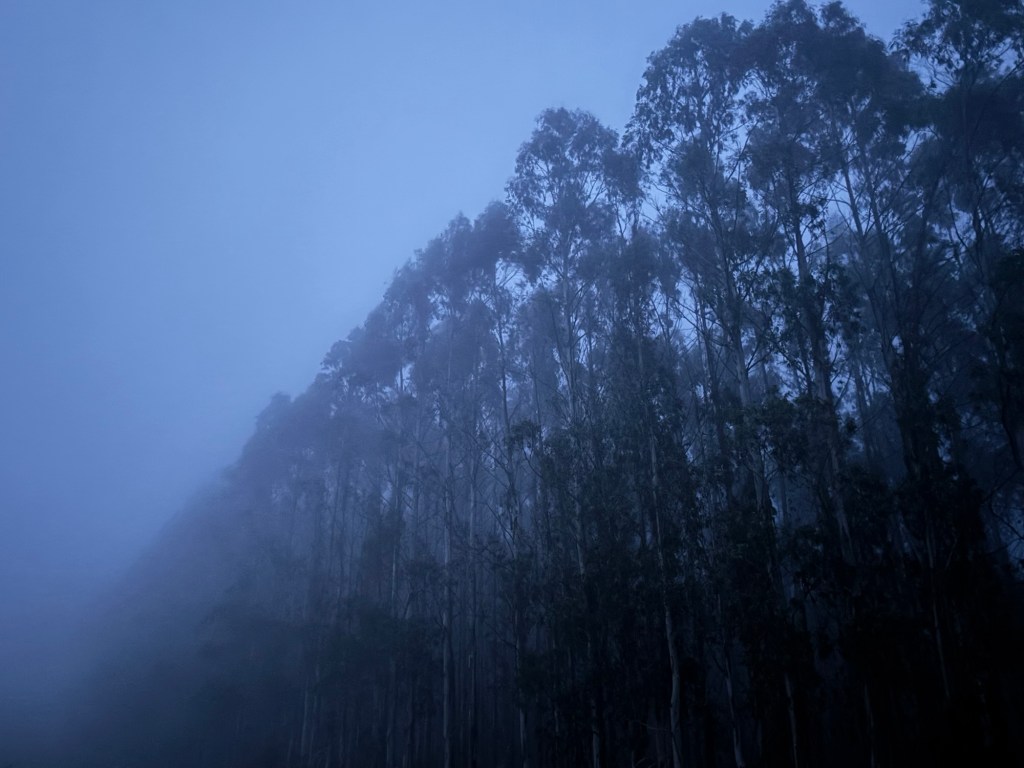
It was a very dark and misty morning. As Seixas is at the foot of a great big hill lined with wind turbines, which kept a lot of the morning mist hanging over the village and its eucalyptus stands. It was a little eerie, and I nearly jumped out of my skin when a nightjar almost clipped my head, announcing its presence merely inches from me with its frog-like grooik flight call. It may well be one of the last ones I see this summer, so I did not begrudge him the fright.


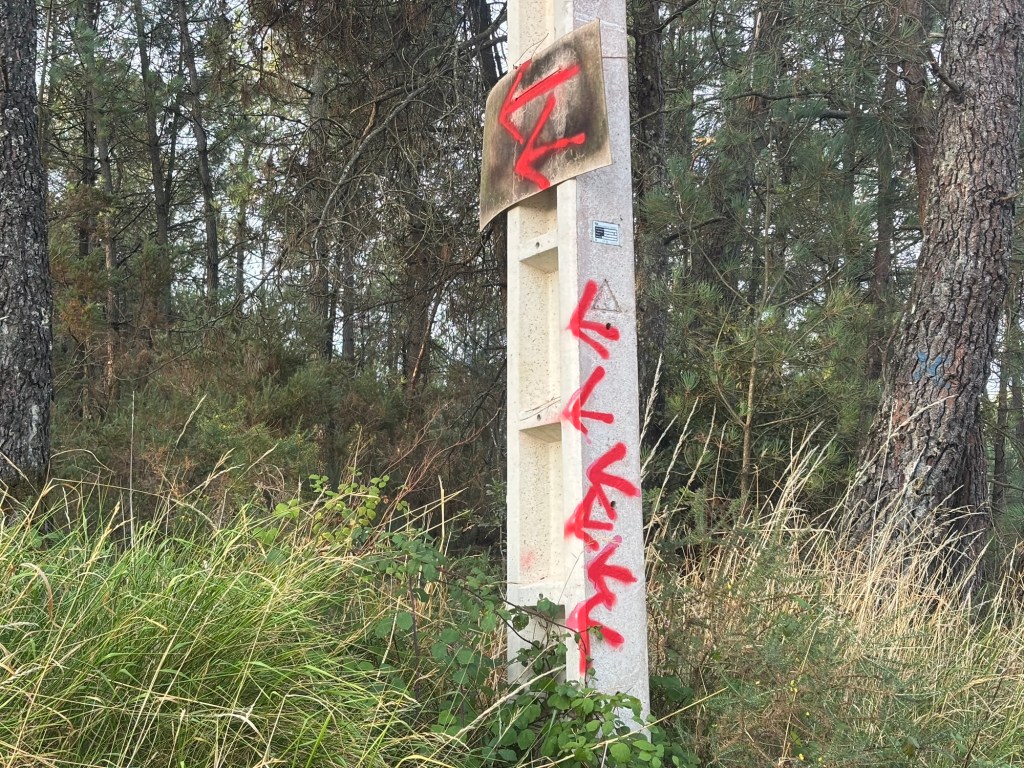
Twice today I very nearly took a wrong turn, saved by my intuition. I have followed the yellow arrows of the Camino all the way from the heights of Somport and they have not yet put me wrong. Curiously, however, a number of red arrows have sprung up, usually in large groups and always pointing off the road. They may indicate an alternative route but they are a little unreliable: in one case they put me back on track after I took the wrong road, but in another spot they pointed in completely the wrong directions and only a brief chat with a friendly labourer solved the conundrum.

If in doubt, don’t trust the red arrows. The yellow arrows always lead to Santiago. The red arrows might not. When you put it like that, it’s almost like a child’s game.


I reached Melide just before nine (ahead of schedule, despite the loss of 20 minutes) and bought a few supplies in one of the corner shops before moving on. The volunteer in the Concello de Melide warned me about the “fiesta” from here on out, and he wasn’t wrong: for the rest of the morning, the Camino was absolutely packed. Extended families and university groups, parishes and pensioners and pre-teens with their parents, and quite a lot of dog walkers, most of them carrying small backpacks and sticks they’d found at the side of the road (as opposed to the titanium pole wielding pilgrims of the Camino Francés). On average, it’s estimated around a thousand people a day walk the final 100km in August.

Hence the rush for a room.

I wonder what became of my shaman stick that was stolen in El Acebo? Who knows – perhaps it’s already done another Camino of its own.


I had a choice to make this morning: finish early and stake out the albergue municipal in Ribadiso, or roll the dice and shoot for Arzúa, only three kilometres further on. Arzúa’s municipal has fifty-seven beds to Ribadiso’s sixty, and it would lop three kilometres off tomorrow’s trek… but Arzúa is the end stage in all the guidebooks. How could I be certain that there’d be a bed left, even if I made it before half eleven? I passed at least a hundred pilgrims on the road before reaching Ribadiso, and I had set out from Melide after nine o’clock – a full four hours after the early birds.


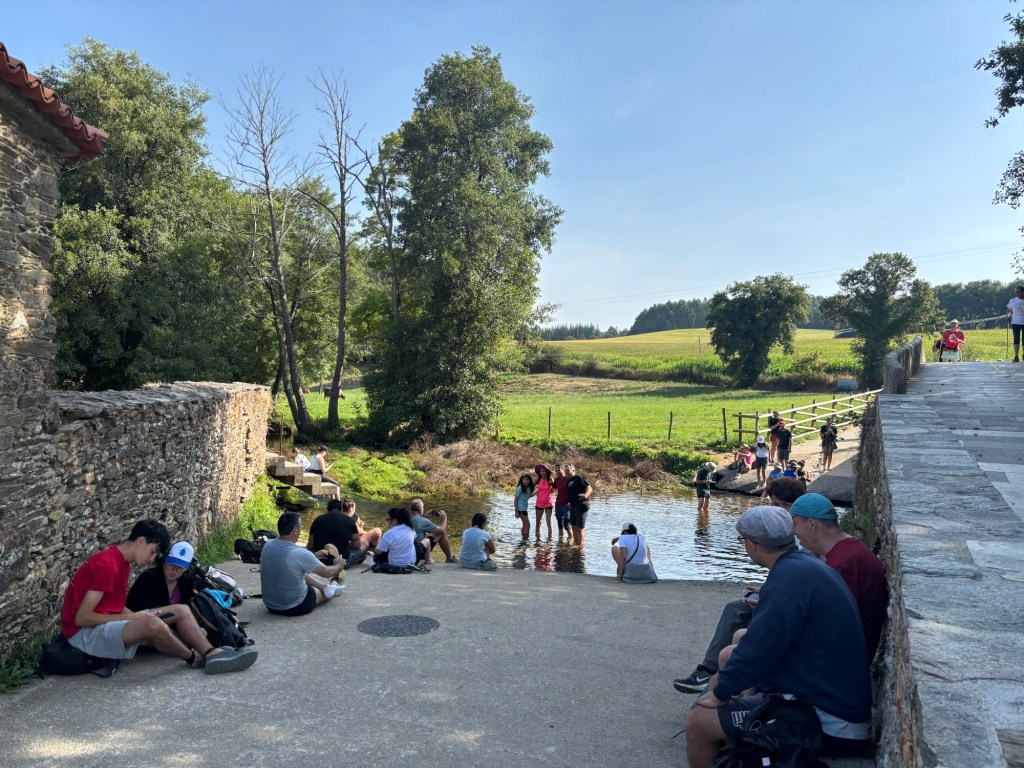
No – wisdom overcame risk today. I found a spot by the bridge in Ribadiso and sat down. It looked at first like around twenty to thirty other pilgrims had the same idea, but gradually they came and went, stopping only for a quick paddle in the river. With temperatures rising up into the mid thirties this afternoon, and so much paved road below, who can blame them?


I might go and paddle myself, once the hordes have moved on. For now, I might catch up on some sleep. I have one last challenge tomorrow and it’s a long one: over forty kilometres remain. Let’s…. Must focus and proof-read, but… Zzz… BB x
Camino XXXIII: Forty-Five

Albergue Pensión Casa Cuartel, A Fonsagrada. 17.15.

My feet are seriously tired, but I’ve done it – the longest stint yet on this year’s Camino. Forty-five kilometres of hills, sierras and reservoirs, of steep descents and sunlit climbs, which puts me one day closer to Santiago and gives me the peace of mind to spend a day exploring the city the day after I get there. I sacrificed seeing a local festival in Grandas de Salime for this, but after speaking to some of the pilgrims in this hostel, I think I made the right choice. It sounds just like the set-up at Castrojeriz, which – if memory serves – left me with a little less than two hours’ sleep after the local verbena went on into the small hours.

There are two English lads in this hostel who must be fresh out of private school, talking about “going for brekkie” in that easily identifiable southern drawl and using the same slang terms like “cooked” and “rizz” that my students do. They’re sitting on the steps outside playing one of those mobile phone games that their generation seems to be absolutely hooked on. They’ve been doing so for the best part of the last two hours, talking loudly about their tactics as they do. The two men from Valencia who went the wrong way today are both fast asleep in the next bunk, which is the quietest the shorter of the two has been all afternoon – he’s a particularly merry sort.


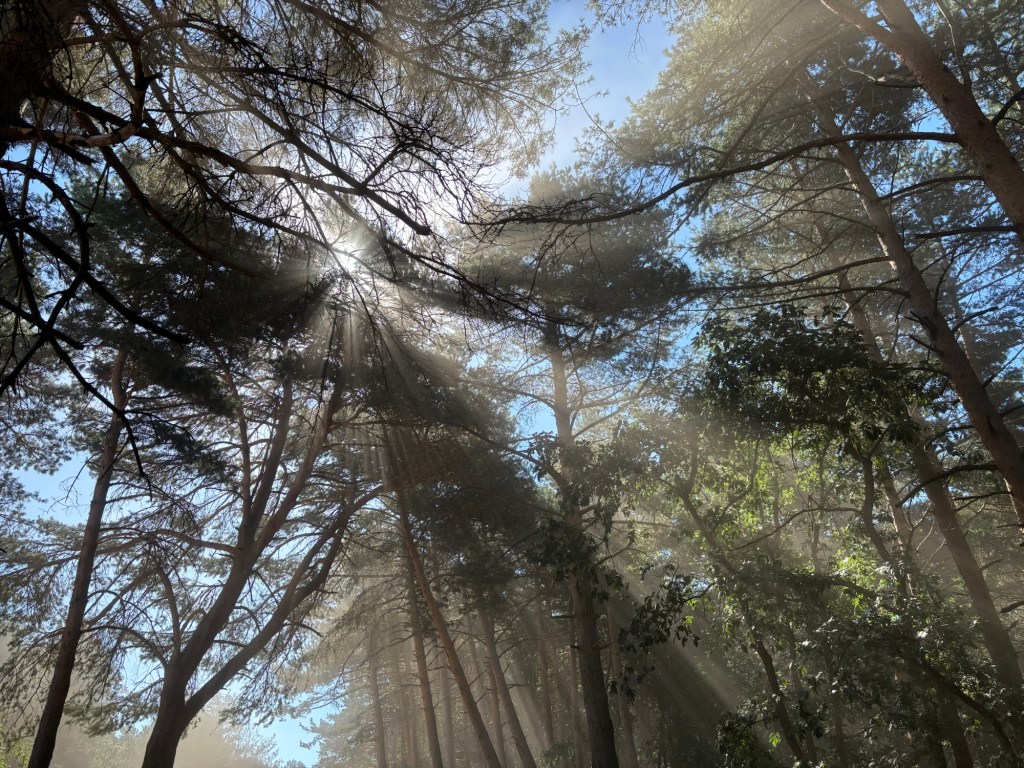
I left Berducedo a full two hours before dawn, long before any of the other pilgrims were up. There wasn’t even the faintest glow on the horizon, so I did have to use my phone torch for some of the trek, especially the hundred metres or so that cut through a forest (where a number of large bats seemed to enjoy the light and the moths it attracted). The constellations were a sight to behold, as was the arm of the Milky Way stretching away to the west, towards Santiago. It’s not quite Perseid season – that’s still a little over a week away – but I did see one shooting star away to the south and made a wish.


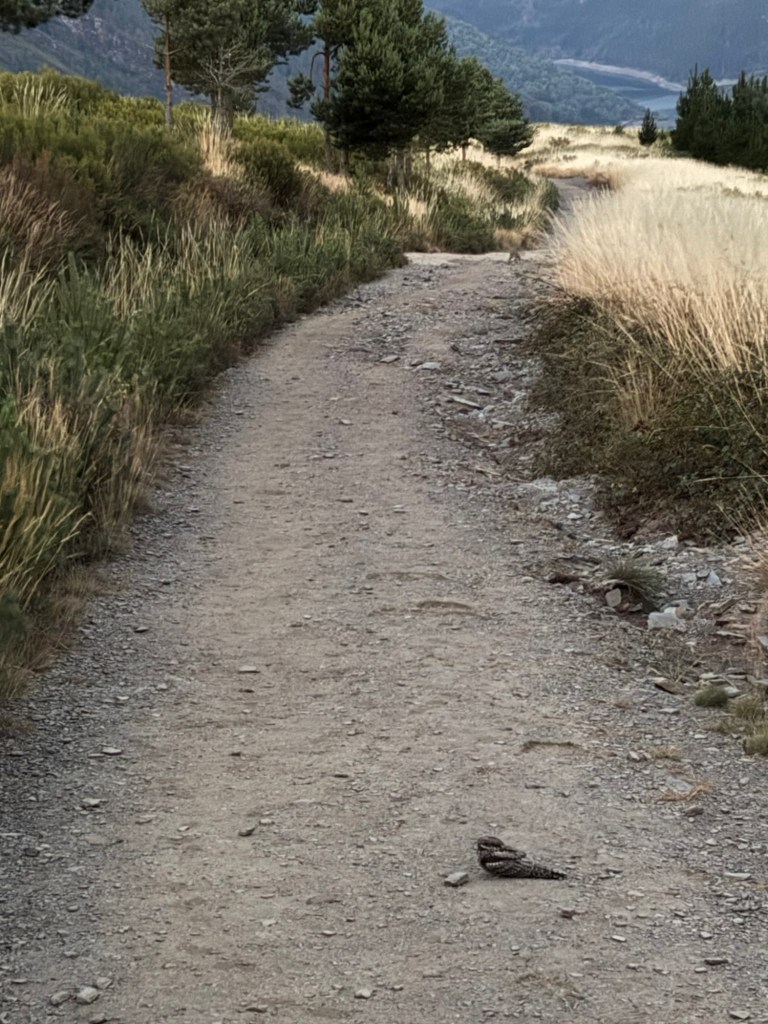
The first cold glow of dawn descended as I began my own descent into the valley before Grandas de Salime. It’s a very steep path that zigzags down the hillside, descending by 800m in a very short space of time. I was quite happily enjoying the Battle of Helm’s Deep when a nightjar almost clipped my face with its wings and one of the rocks in the path ahead suddenly grew wings of its own and took off into the morning air. There were at least three of them hawking about the track, looking for all the world like enormous feathered moths with their strange alternating flight, sometimes flappy, sometimes gliding with their wings held high.

One landed in a tree nearby and set up its eerie churring call, which is almost as iconic to the Camino as the endless tread of my own feet.


Another – the one I had mistaken for a rock – alighted on the track a little way ahead. I approached very slowly and, at least for a little while, it didn’t look like it was in any hurry to take off again. I got so close that I could see it yawn with my own eyes: their vast, gaping mouths are one of the features that gave them their Spanish name of “chotacabras”, or goatsuckers. I almost missed the hare that came bounding out of the grass behind it, appearing more clearly in the photos I took than it did in reality.

Of course, it took off before I could get too close, making its strange grooik flight call as it did so. It landed a little way back up the path but I left it alone and pressed on.

Nightjars are just one of the rewards of setting out early on the Camino. You might hear them, but you’d never see them if you set out after breakfast. I’ve been lucky enough to see quite a few on this year’s Camino, but never so close and never on camera. I haven’t wanted my SLR often on this Camino – I’m carrying enough as it is – but today I would have given a small part of my library to have had it in my hands!


I reached Grandas de Salime shortly after nine, making it a four hour walk from Berducedo (compared to the guidebooks’ suggestion of six or seven). This is usually the stage end, but as it was not even the halfway point, I allowed myself a decent breakfast of a tostada con aceite y tomate, a slice of tortilla and some fresh orange juice so that I might have the energy to push on. There were a few pilgrims having breakfast at the bar, but not that many. The townsfolk were setting up for the second night of their local festival, and I imagine a number of pilgrims had decided to stick around and have fun. I, however, had another twenty-five kilometres still to go and couldn’t stay for long.


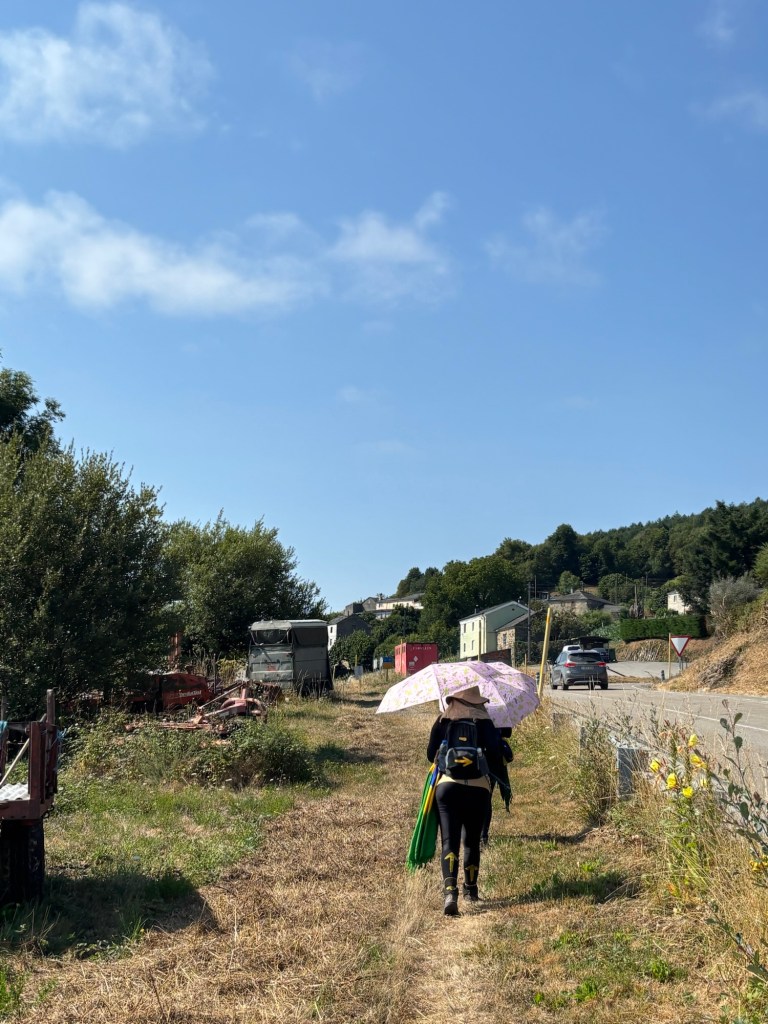
I trailed a couple of Brazilian pilgrims for a little while before Peñafuente, dressed in sporty Lycra, marching cactus-print parasols, a giant Brazilian flag and immaculate hair (something the Brazilian pilgrims seem to prioritise above all other things). I’ve become a lot less cagey about drinking from unmarked fountains along the Camino and the one at Peñafuente was absolutely incredible. The guidebooks recommended the one at Fonfría, but that wasn’t as good or as cold as the one at Peñafuente, so I drank deep and bottled deeper, as it was still a long way to A Fonsagrada. I had hardly begun the second leg, which the guidebooks suggested should take eight to nine hours, and what clouds there were in the sky did very little to block the sun. I was going to need all the water I could get. I can be a real camel on the Camino, but it’s always best to be prepared.


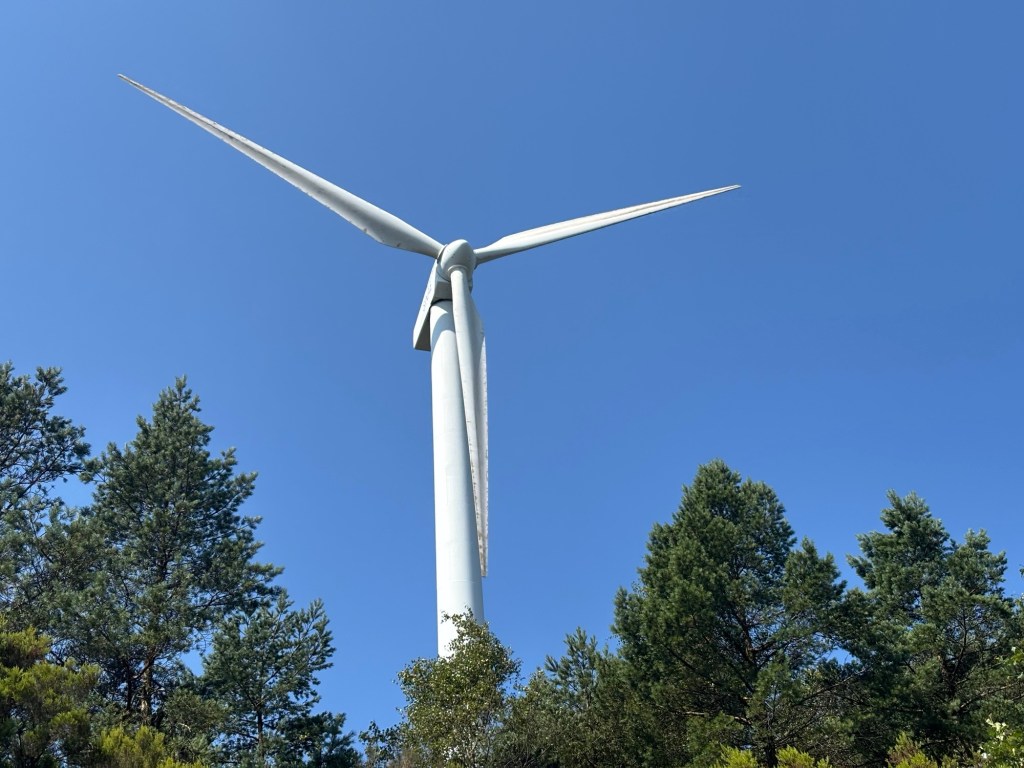
There are quite a few hills to climb between Grandas and A Fonsagrada, none of which were particularly easy under the midday sun. The Camino cuts right through one of Asturias’ many wind farms, though these ones are nowhere near as enormous as the turbines found up in the mountains on the San Salvador route. The heavy whoosh of their arms as they spin in the wind is quite something to hear up close, punctuated with the odd mechanical whirr when the head tilts one way or the other. The way the Spaniards were complaining about the wind up in the mountains yesterday, you’d think that wind was a rare occurrence in Spain – but the turbines that crown many of Spain’s hills and sierras say otherwise.


The Spanish are nothing if not practical with their high places. If there isn’t a watchtower, a sanctuary, a hermitage or a radio mast on top of this or that hill, there’s usually a row of wind turbines.

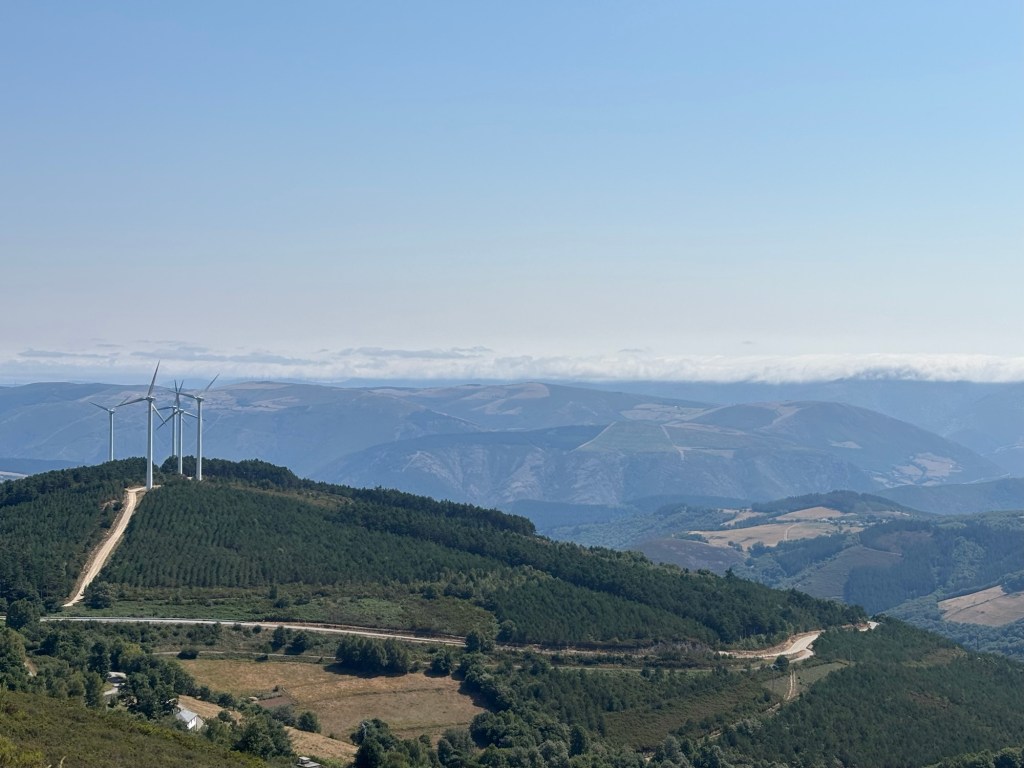
I passed the first row of turbines before sunrise this morning. You can just about see them to the right of the nearer turbines in the photo below, on the last range of hills before the wall of cloud held back by the mountains of Asturias. It’s a good indicator of just how far I walked today.


Shortly after passing the last row of turbines, I crossed the border into Galicia, the last of Spain’s regions on the Camino de Santiago. The marker wasn’t as grand as the one at O Cebreiro – just a crude line of flints and a small cement block featuring a Facebook link to a motorcycle page owned by a guy called Nando, which also happened to indicate that Asturias was on one side and Galicia on the other.

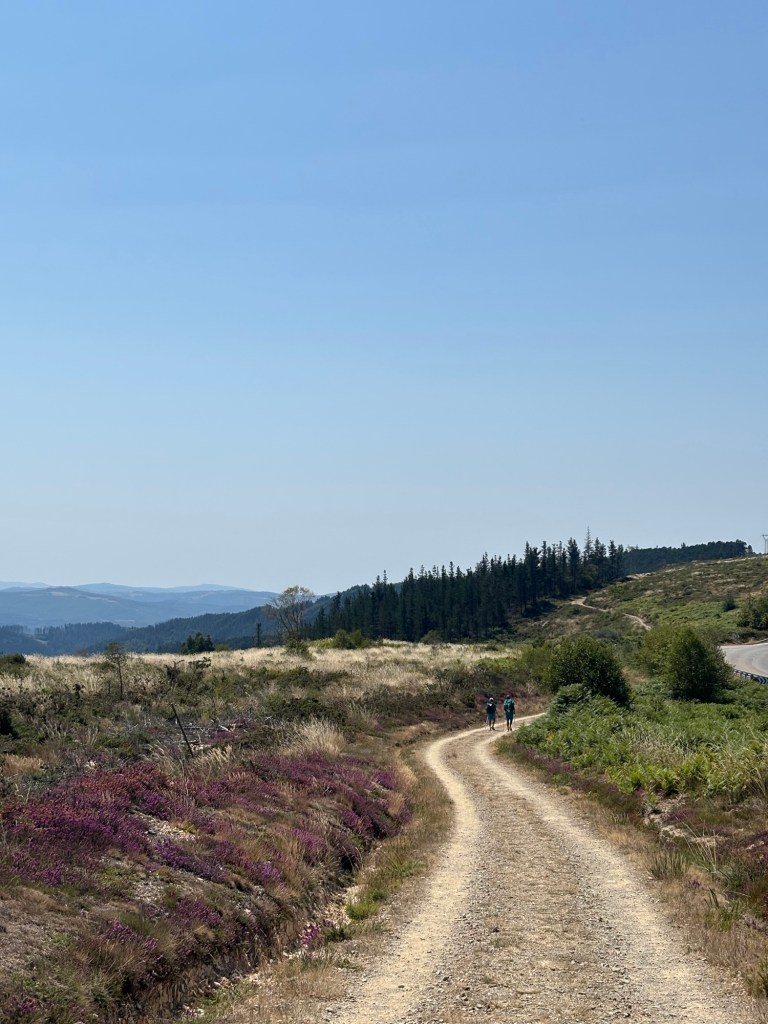
The scenery is already different. The hills are no longer quite as rugged. Instead, they’re carpeted in golden grass and purple heather. I was sorely tempted to get an ice cream at O Acebo, but decided to postpone that desire until I had reached my destination. It took another two and a half hours from the border to reach A Fonsagrada, and the last steep climb up to the hilltop town didn’t help, but I was relieved to learn that the albergue I had found was a bit of a step up from the usual, with real linen bedsheets, soap in the showers and an in-house washer-dryer complex (though I still prefer to wash my clothes by hand whenever I can).


So… forty-five kilometre days can be done, even on the Primitivo! That’s the longest I’ve done so far, and probably the longest I’ll do this year. There’s no sense in rushing to Santiago, which is a lot more expensive to stay in than the towns and villages along the way, so from here on out I intend to enjoy the Camino at a relatively leisurely pace.

Which is, of course, a white lie – because after 45km, 30km is relatively casual. Or 35. Or even 37… BB x
Camino XXXII: El Saltamontes

Albergue de Peregrinos, Berducedo. 17.10.

I have acquired a nickname on this Camino: the Grasshopper. It makes a bit more sense in Spanish, where the name literally translates as “mountain-leaper”. Evidently Hispanic grasshoppers are better at jumping than English ones. Well, not this one, anyway: I took the mountains today at something between a run and a hurdle, leaving the other peregrinos in the dust. I wasn’t in any particular hurry, as I’m still ahead of schedule, but let’s just say I didn’t want to end up walking another 40km day after yesterday’s fruitless endeavours.

Well – mission accomplished!


All the guidebooks indicate that making it as far as Pola de Allande puts the famous Hospitales route out of the question. Fortunately, that’s a load of nonsense. If you’re prepared to do some serious climbing, there’s a farm track that leads back up the mountainside, and I was more than prepared.

And so, as the Fellowship of the Ring tackled Caradhras and the Redhorn Gate (exceptional timing), I hurled myself at the mountain.


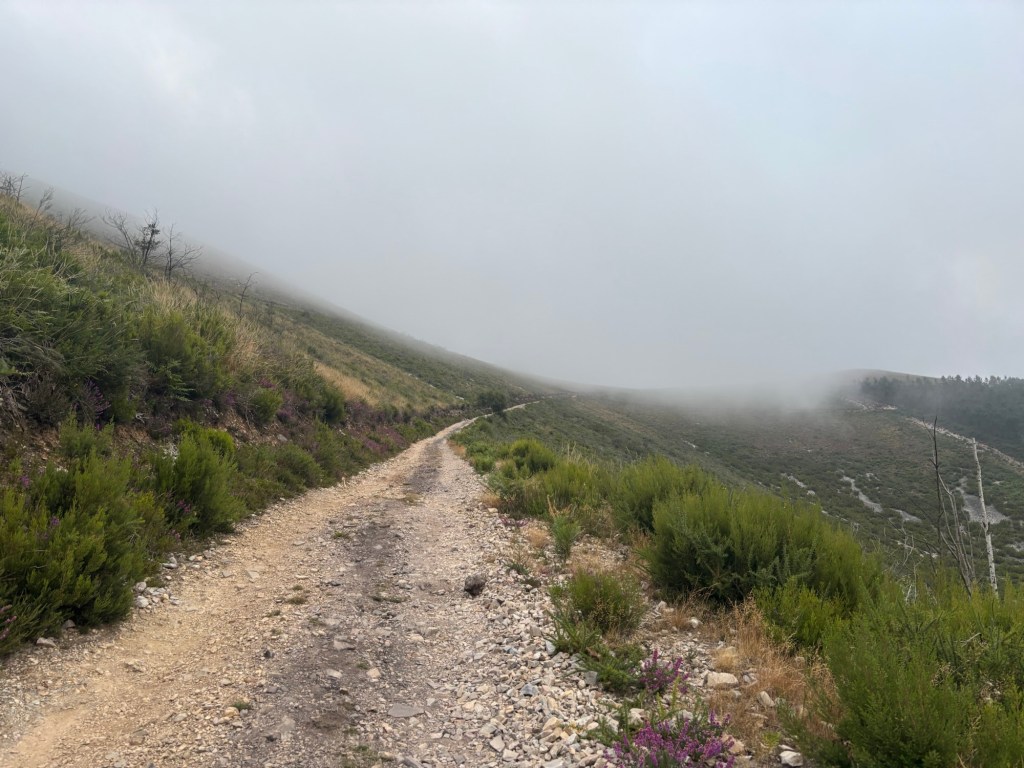
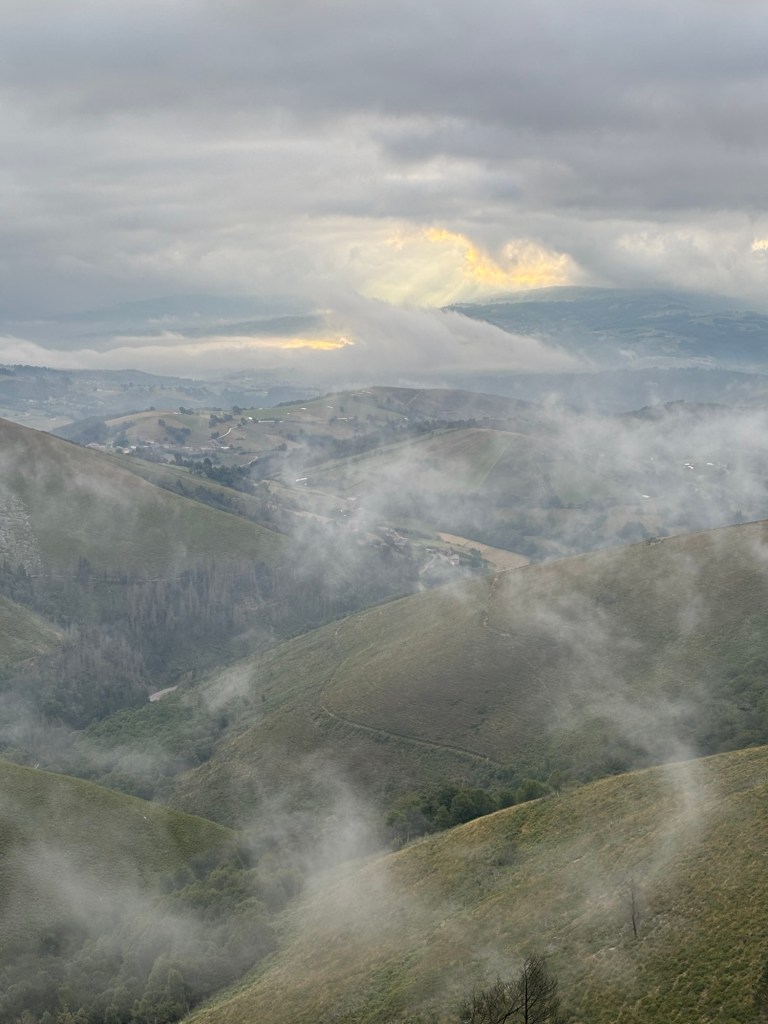
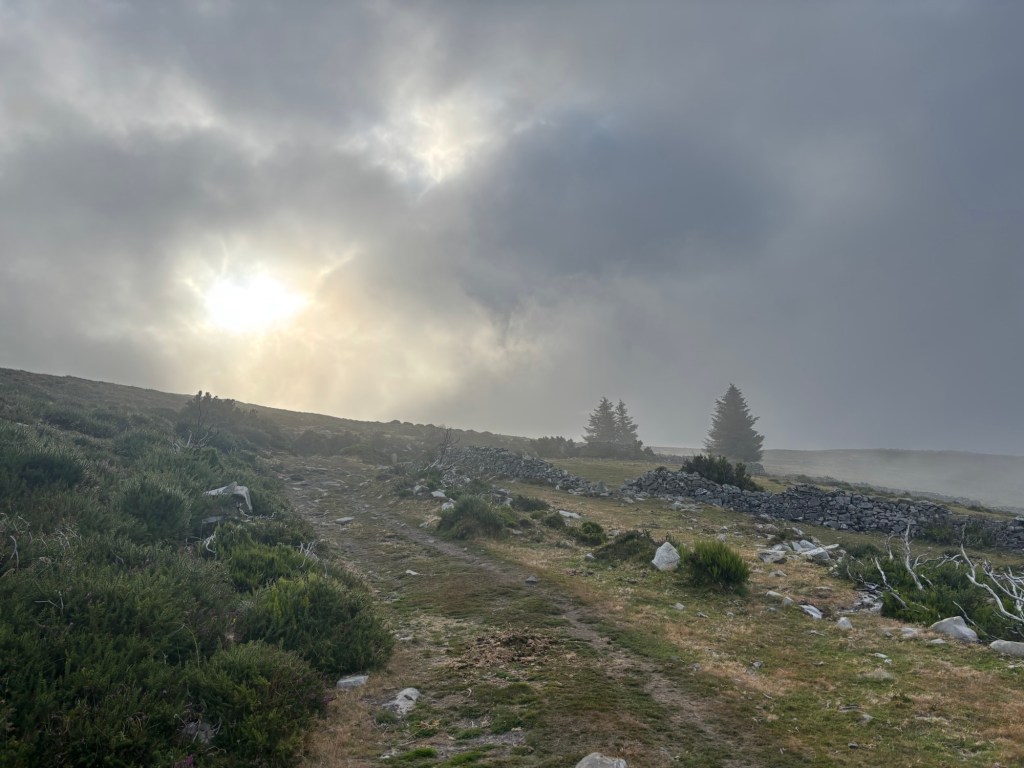
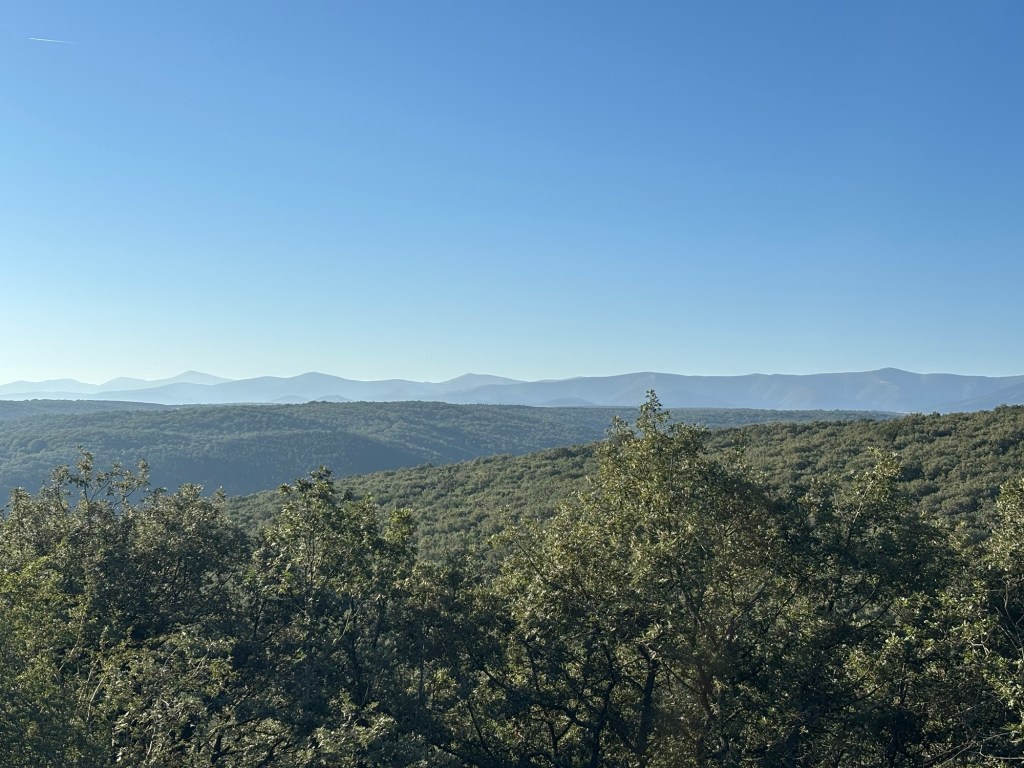
Uphill would be putting it lightly. Let’s just say that the company had already left Moria by the time I reached the top. But was it worth it? 100%. It wasn’t exactly the cloud sea that you get from the summit of O Cebreiro on the Camino Francés – which is around the same elevation – but it was a spectacular sight: pillars of golden light falling upon the green hills of Asturias to the east, dark forests of pine weaving through the valley floor below like a monstrous snakeskin, and great waves of clouds surging up the mountainside to break like water at its peak.


Standing here, upon the heights of the misty mountains, it was easy to see where the painters of Biblical masterpieces of old got their inspiration. Who wouldn’t be inspired with some sort of religious ecstasy in the high places of the world? Are not the mountains the closest we can get to the Heavens?


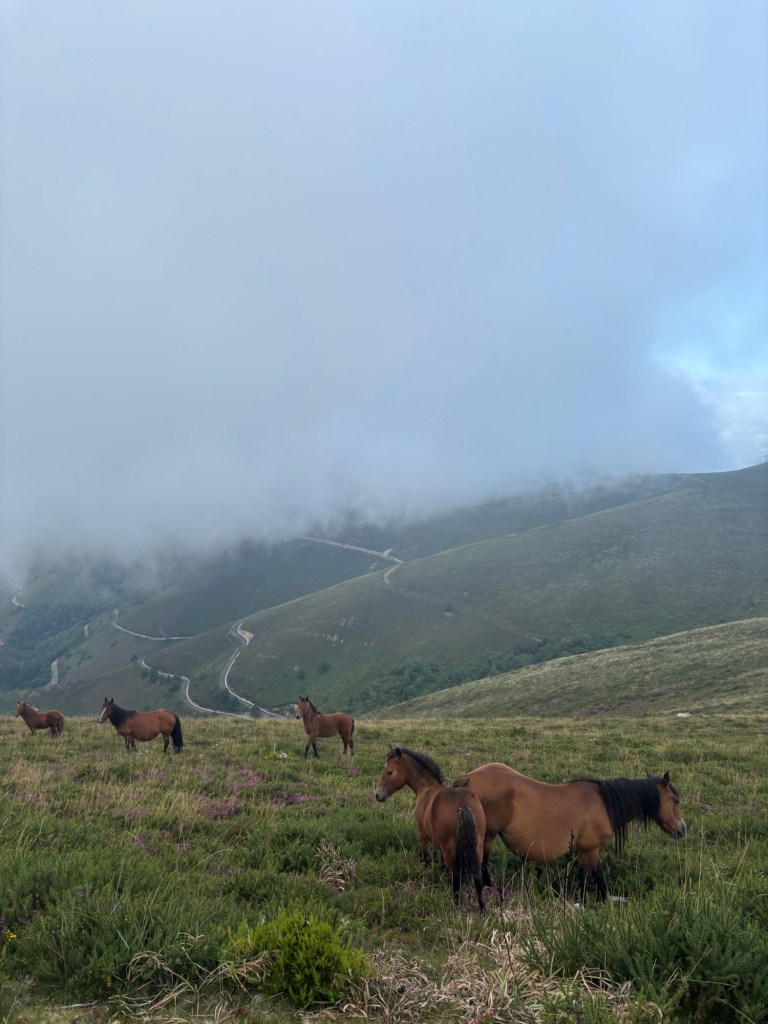
It’s still quite a schlep even when you’ve made it to the summit to reach the point where the Hospitales route joins up, so I had a fair stretch to myself. Me and the wild horses, that is, which were just about everywhere the cows weren’t. It must be a pretty charmed existence for them up here: all the fresh grass they can eat and all the space in the world, even if it is tremendously vertiginous…


After passing the ruins of the old pilgrim hospitals, I caught sight of the first peregrinos of the morning – mostly the crowd of twenty-odd who had reached Colinas de Arriba before me yesterday. Not to be outdone once again, I picked up the pace and vaulted past them. It’s hard to explain, as I don’t come from a particularly mountainous part of the world, but I have always been pretty nimble on my feet in the mountains, so there were large stretches where I confess I really was jumping from boulder to boulder. It feels right, somehow, in a way that a jog around the school grounds just doesn’t match. To think how fit and healthy I would be if I found a way to live in this country forever…!


The descent from Monfaraón was mightily steep, but then again, so is tomorrow’s descent to the Embalse de Grandas, so I looked at the exercise as good practice. The Camino climbs (or races) through the slumbering mountain villages of Montefurado and Santa María de Lago, and by the time I’d reached the latter I had put at least half an hour between myself and the last pilgrims I’d encountered on the road.


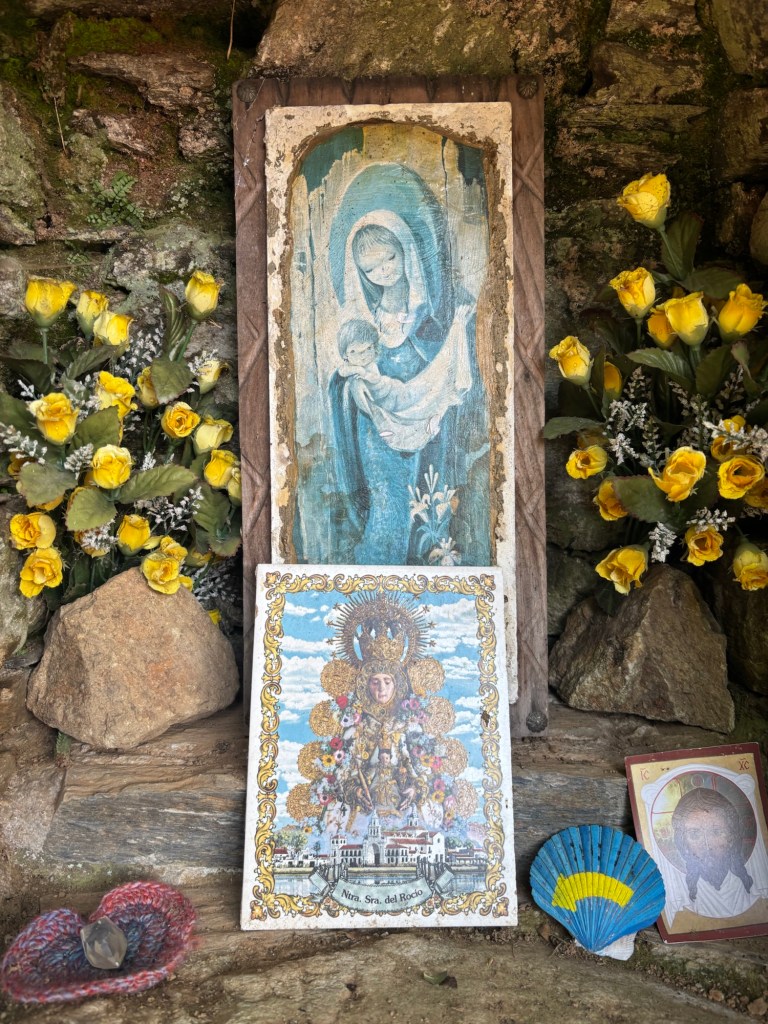
I didn’t see anything of especial note on the wildlife front beyond a veritable army of Dartford warblers in the heather on the mountaintop, but I did find a small shrine to the Virgen de Lago, in front of which somebody had placed an icon of the Blanca Paloma, which was a definite highlight. She has been a real guiding light on this Camino and my hearts soars whenever I find a space where she is venerated.


I got to Berducedo at around 11.40, all of an hour and a half before the albergue was due to open, so I could have pressed on – but after yesterday’s adventure, I wasn’t taking any chances, so I staked out the albergue and scored the first bed. A small victory, but one well-earned.

Not for the first time on this Camino, I bamboozled the other pilgrims by speaking only in Spanish and with a very thick southern accent which, I’m told, smacks of “La Línea o algo” – a mix of English and Andalusian, but more Spanish than English, which is plenty good enough for me.

I had lunch with a large group of Spanish pilgrims from all over: León, Toledo, Donostia, Madrid and Andújar, as well as an English lad here brushing up on his Spanish before the trials of Year 13. The fabada was phenomenal, and should give me all the energy I need for tomorrow’s mad trek, as I need to gain a day or two somewhere between now and Santiago.


There’s an Italian girl who is in tears because she can’t go on. One of the Spaniards is gently encouraging her to look after her health and to come back when she’s ready and pick up where she left off. She’s not the first casualty I’ve encountered on the Camino this year and she won’t be the last. I have to count myself lucky that I’ve made it so far in such good health. Maybe my daily prayers are doing some good for me after all. BB x
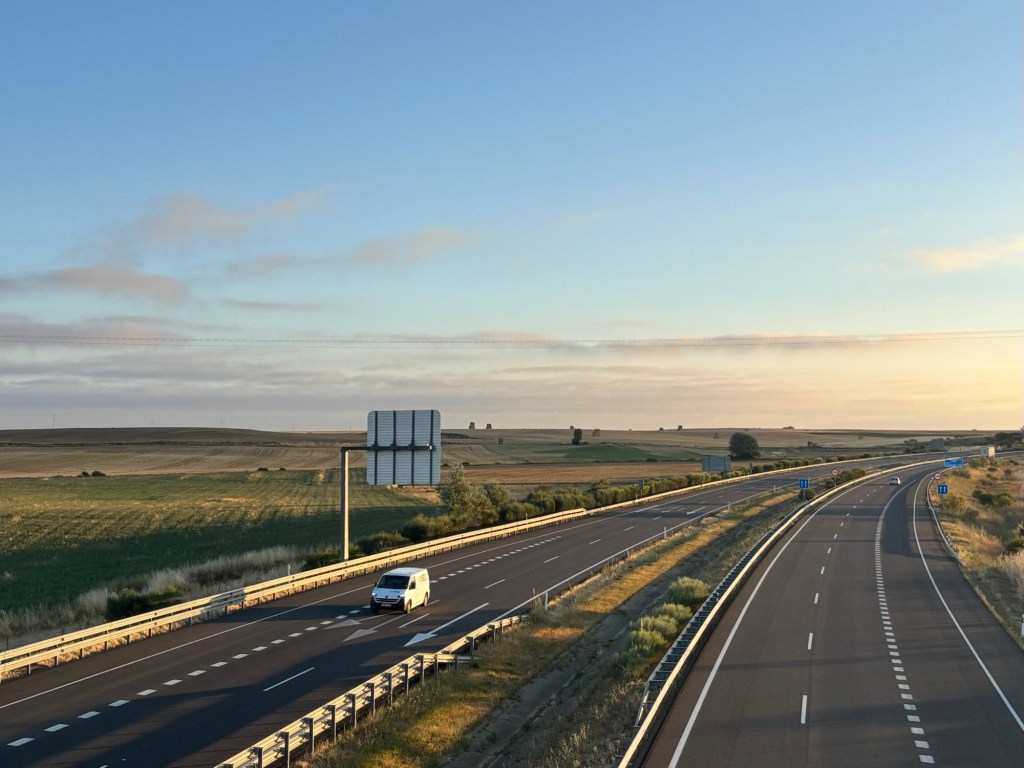
Camino XXX: Journey in Hope

Albergue El Texu, La Espina. 17.09.

One of the things I love the most about the Camino is that the planning required, relative to any other holiday, is minimal at best. In most instances, you can pick up your bag, start walking and stop in this town or the next when you’re tired. It helps to know which locations are truly special or worth seeking out, but you can always follow the Camino at your pace. For a teacher like me, for whom planning is a daily and often insurmountable chore, the last thing I want on a holiday is to have to plan all of my movements. The total freedom the Camino provides is one of its greatest blessings.

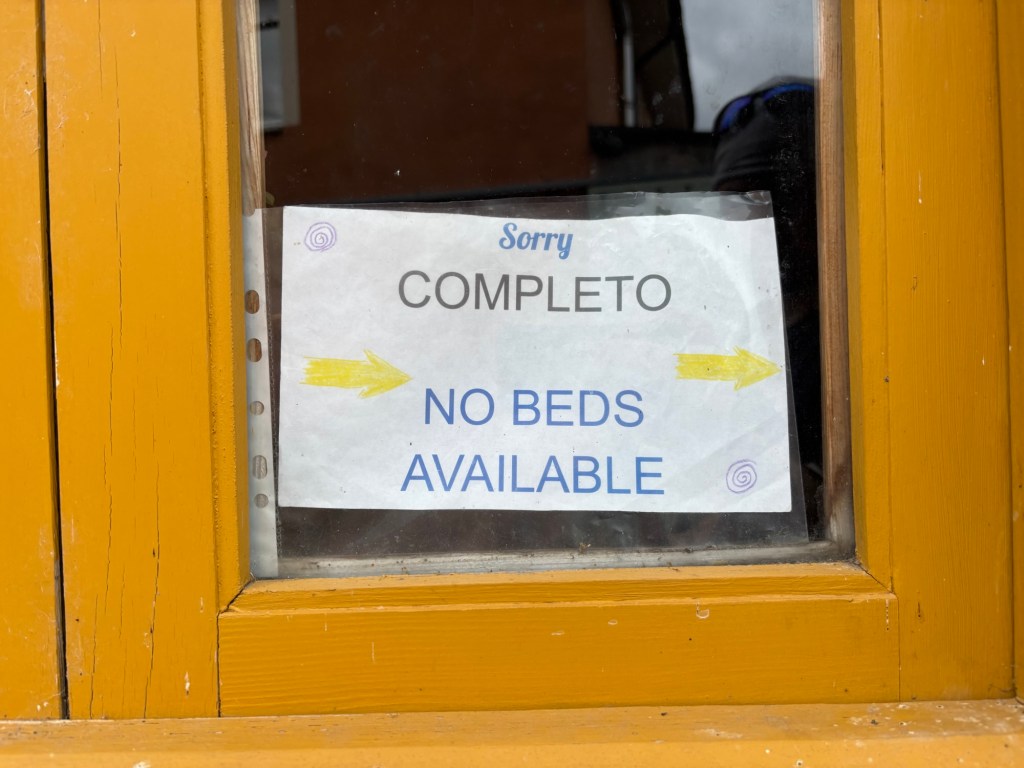
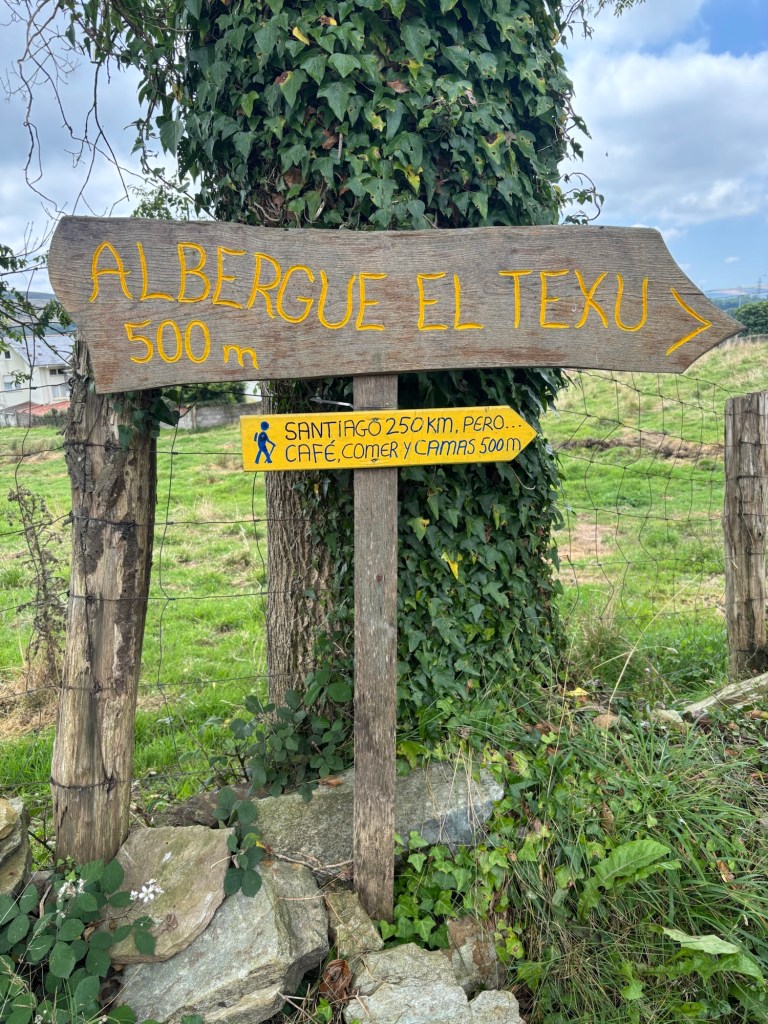
Except when you see signs like this.


I had read a lot about the quality of Bodenaya’s albergue, so I was a little disheartened to see this sign in the window when I got there at around half past one after an arduous climb up from Salas, only to find it was all full – already, and whole hour and a half before it was due to open. Bodenaya, like many albergues along the Primitivo, is small and personal, counting on just ten beds. However, this is not normally a problem if you’re quick on your feet and get there in plenty of time.

Sadly, popularity breeds on itself, and some pilgrims (sometimes with legitimate reasons) feel the need to book all of their accommodation ahead of time so that they can enjoy the walk in peace without worrying about having a bed for the night.

Which is great for them. But not for those of us who have to deal with the disappointment of doing everything right and being beaten to a bed by the eager beavers who would prefer peace of mind over the freedom of the Camino.

Everyone walks the Camino in their own way. That’s a fact. I just don’t agree with the idea of booking accommodation in advance along a route that is one of the few places in the world where you genuinely don’t need to. There are all sorts of other holidays where that kind of mindset is the norm. If I wanted to know where I’d be and what I’d be doing a week or a month in advance, I’d consult my teacher’s planner (or somebody else’s, as I hate writing in mine). Work is planned. The Camino is freedom.

There. I’ve said my piece. Let’s move on.


The hospitaleros at Grado put out a large breakfast spread, so I ate well this morning. I saw a few familiar faces along the road, many of whom had stayed at San Juan the night before after finding Grado’s municipal full (there’s a reason the municipales are often occupied by the younger and fitter pilgrims).

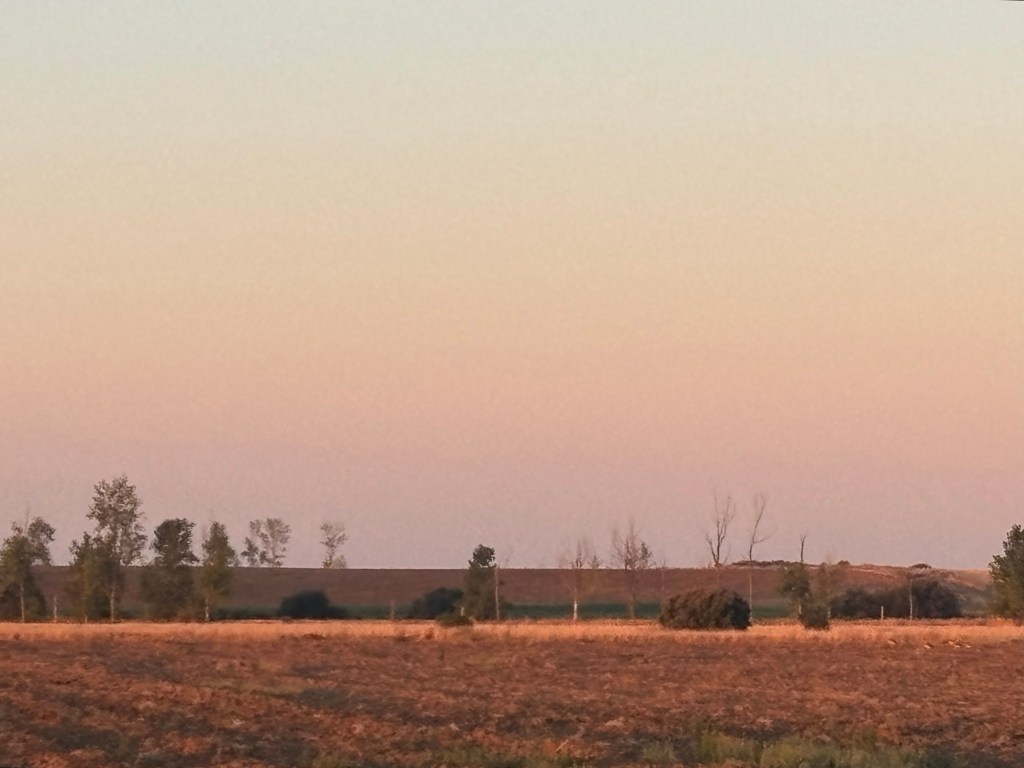
There were a few clouds on the horizon, but the sun rose in a warm, pastel pink, promising a warmer and drier day’s walk ahead. I was quite glad of the rain yesterday, but now that I am armed with more sun lotion, I am not as concerned about another day under the sun’s anvil as I was on the San Salvador trek.


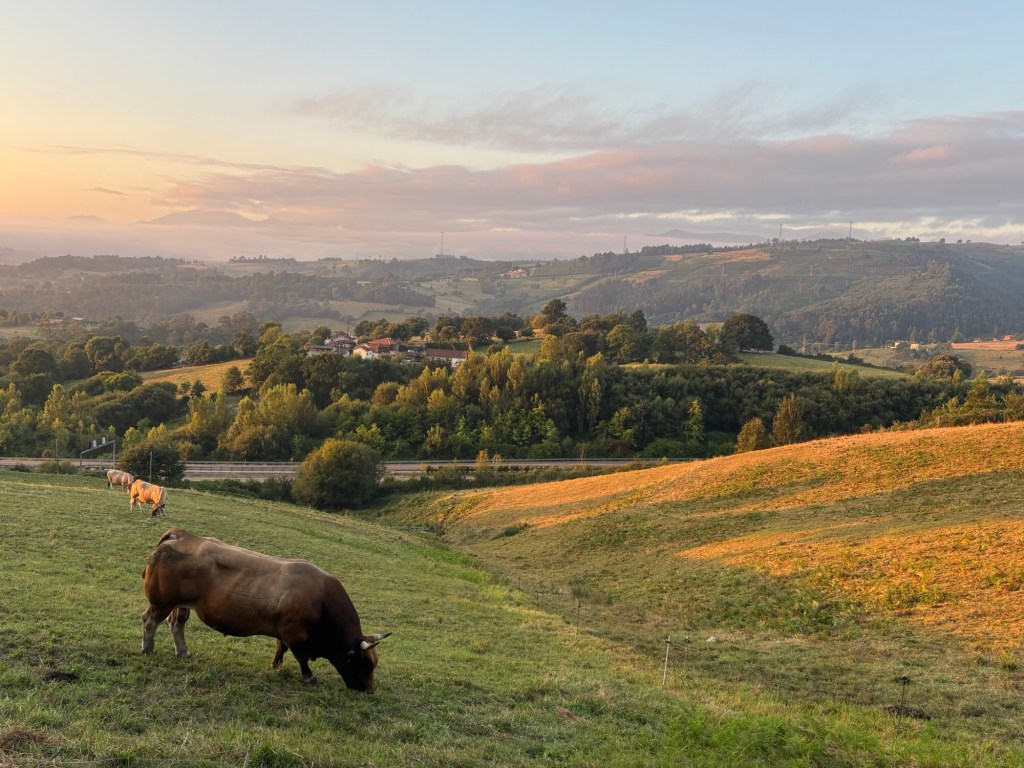
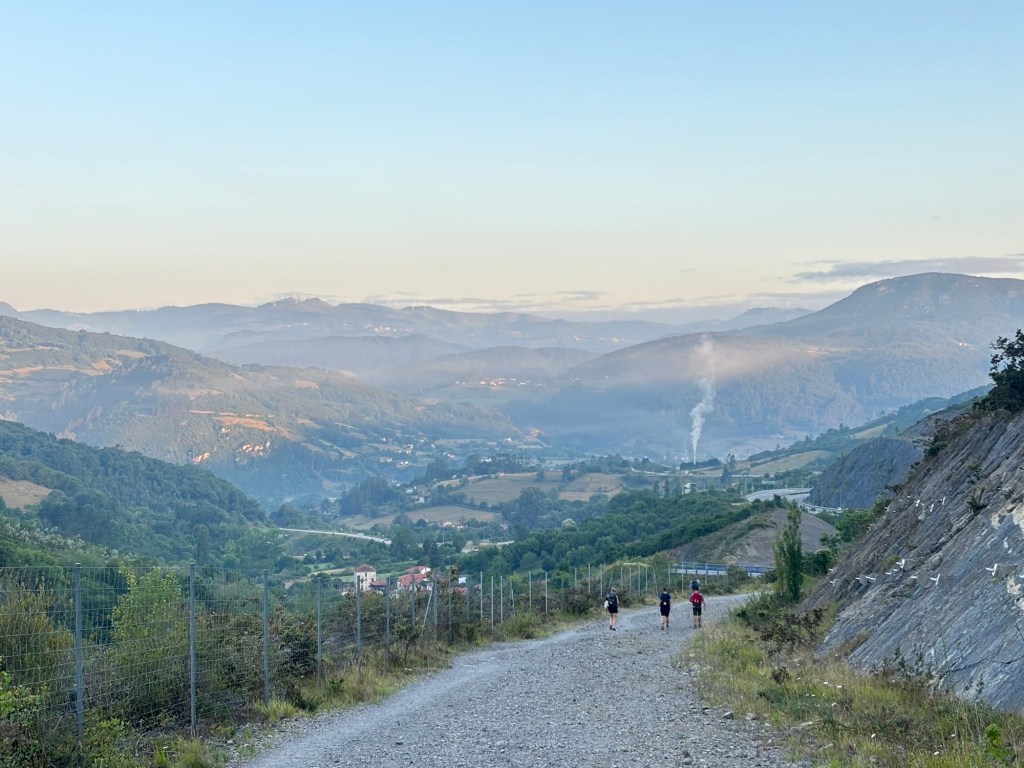
The climb up from Grado is not half as impressive as the descent on the other side, which provides a sweeping panorama of the valleys ahead, all the way to the turbine-topped hills of Pumar that lead to the Bay of Biscay. No Asturian landscape seems to be complete without a small pillar of smoke from some factory or quarry: in this instance, the chalk mines at La Doriga.


Spain’s north has always been its industrial heartland. This is largely due to its abundance of natural resources like iron, copper and coal, which gave the region all the tools it required to build what would become one of the world’s first global empires. There were even gold mines here once, when the Romans scoured their own empire in search of that most precious of metals.

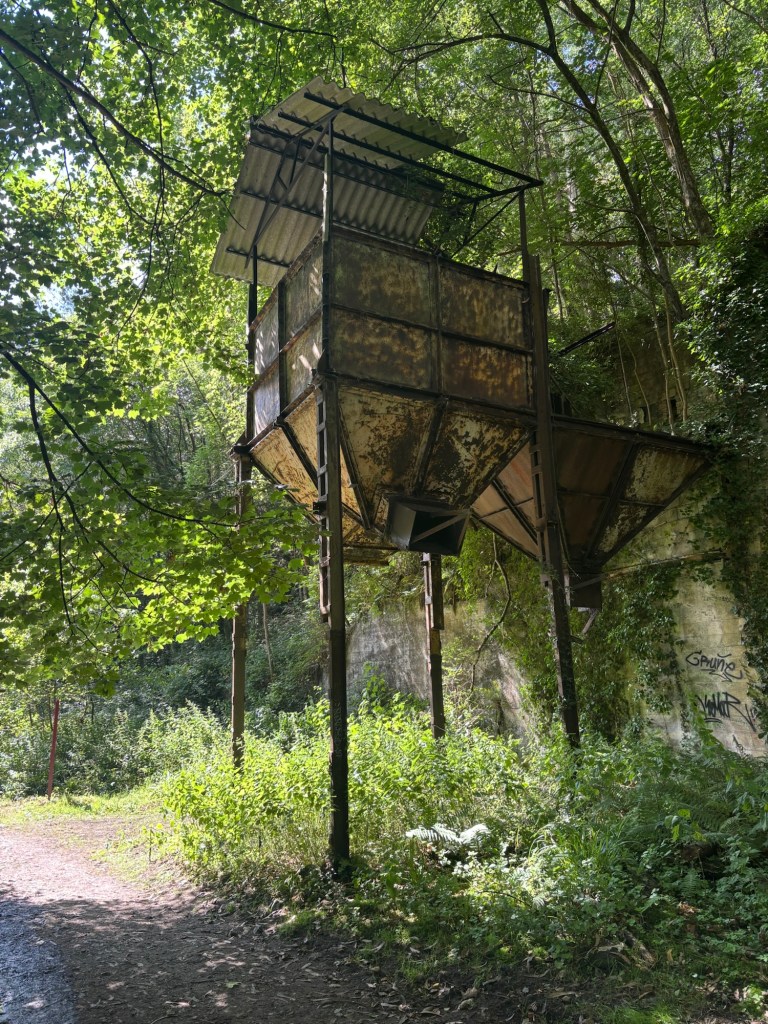
Many of the quarries are still in use, but some have fallen into disrepair, slowly disappearing within the dark forests of Asturias. This one caught me by surprise in the hills behind Salas. The vents through which the chalk must have been shuttled once had long since rusted shut, and vines and thick carpets of ivy had all but concealed the adjacent storehouses, but the tower remains standing. I’ve always been fascinated by abandoned quarries and factory buildings, and Asturias has plenty to explore, even along the Camino.


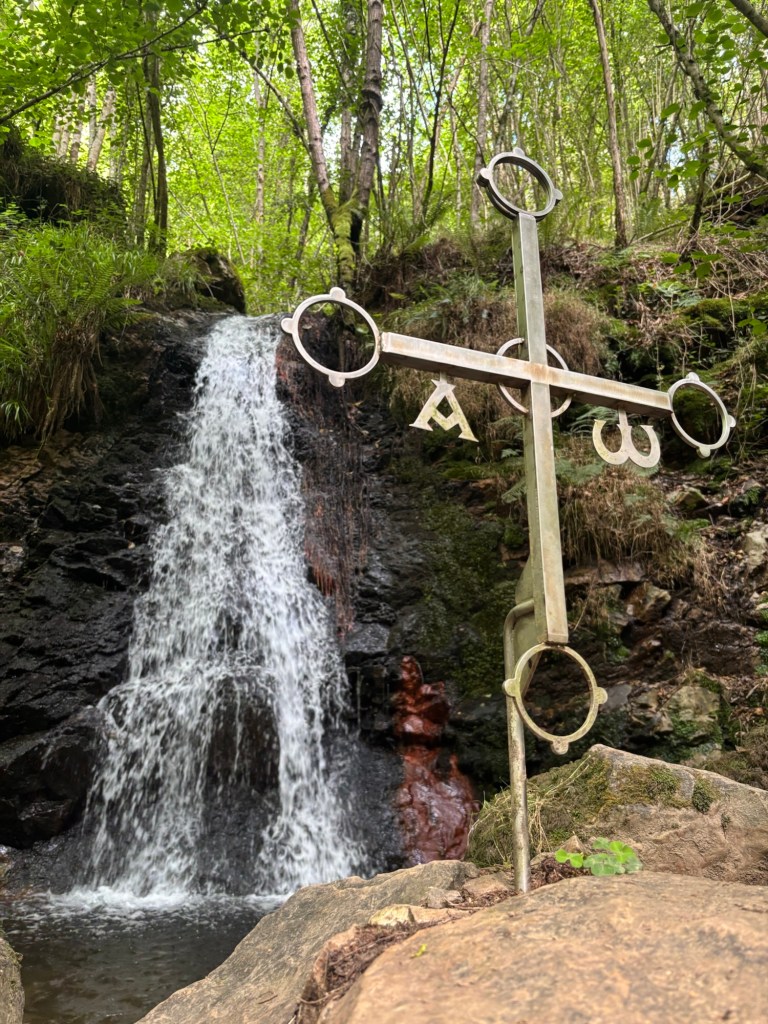
A short distance from the Camino (at the cost of a 200m descent) is the Cascada de Nonaya, a concealed waterfall hidden away deep in the forest. It’s easily missed from the pilgrim road, but Google Maps is a wonderful thing, so I knew what to look out for. Somebody has erected a metal simulacrum of the Victory Cross of Asturias at its base, so in the absence of a church, I made this one of my stops for a prayer today. It was a very special place: peaceful, dark, ancient.


After the waterfall, the Camino makes a very steep climb up the mountainside before levelling out along the main road towards Tineo. My destination, Bodenaya, turned out not to be – as I had the slightest inkling might be the case – so I shrugged and moved on. La Espina seemed promising, but the municipal albergue didn’t seem to be what it had been cranked up to be online. Then I saw yet another sign for a well-advertised albergue that wasn’t in any of the websites, and the fatalist took over. I know better than to deny fate when it’s trying to tell me something.


El Texu is a beautifully peaceful setup, run by a Dutch family and their volunteers. It wins the award for best shower on the Camino, as far as I’m concerned, and I haven’t even had the Thai green curry that Nani is making for supper! I’m normally a purist for Spanish fare on the Camino, but right now, a Thai curry sounds incredible. I can’t wait! BB x
Camino XXII: Starlight

Albergue de la Santa Cruz, Sahagún. 21.17.

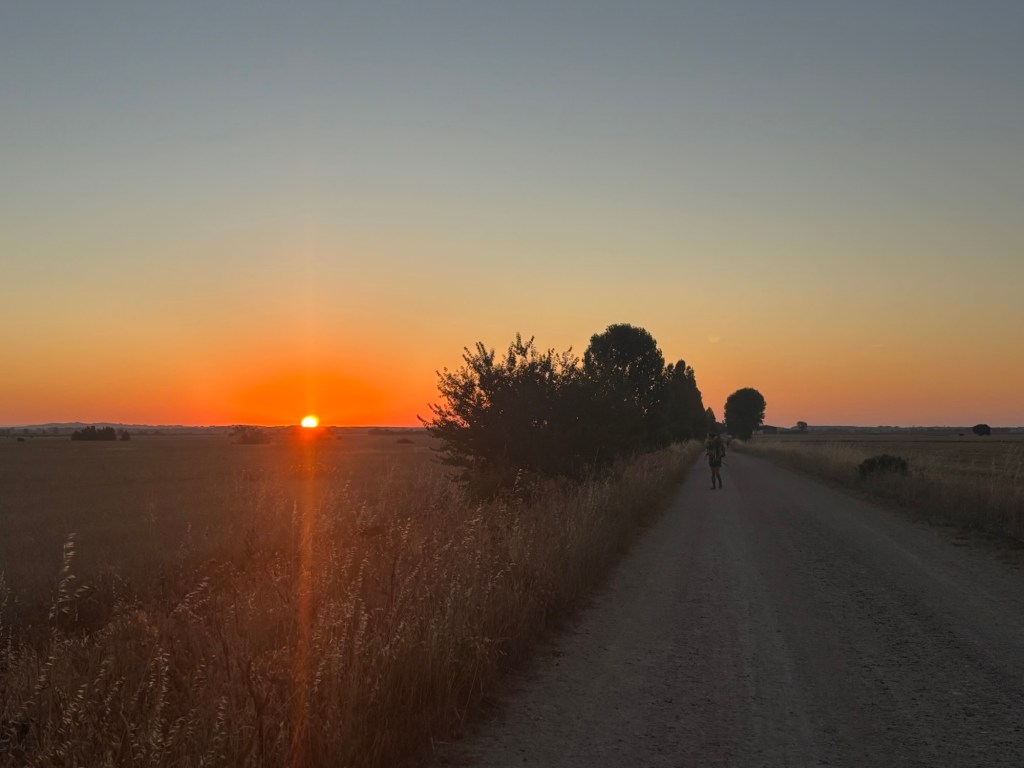
Today was a lot more like the Camino Francés that I remember: long, unforgiving, sociable and under the stars for the first half of the morning. I’ve been taking it easy with all these post-sunrise starts with the other pilgrims, so with my fork from León now very much on the horizon, it’s good to get back into the routine.


We agreed the night before to strike out for Sahagún, partly because Audrey wanted to go further and potentially save a day to add to the end of her trip, and partly because I wanted to get to Sahagún after having had the place recommended at least twice. There was also the very real possibility that we could both shake the freeloading Englishman and catch up to the endlessly entertaining double act of Juha and Mad Max, who have been at least a day ahead of since Grañón, where the floor beds didn’t agree with Max’s back.

So, at five on the dot, the five of us set out from Carrión and into the night. We lost Edoardo sometime before sunrise – I’m not sure he could keep up, as he does appear to be carrying the biggest stick on the Camino (which probably might be better described as a branch or log). I also got lost: in my stubborn refusal to use artificial light, I completely missed the turn-off to the pilgrim road after Carrión and lost twenty minutes backtracking once I’d realised my mistake. On the plus side, it did mean total silence and an unrestricted view of the night sky, which was spectacular this morning.


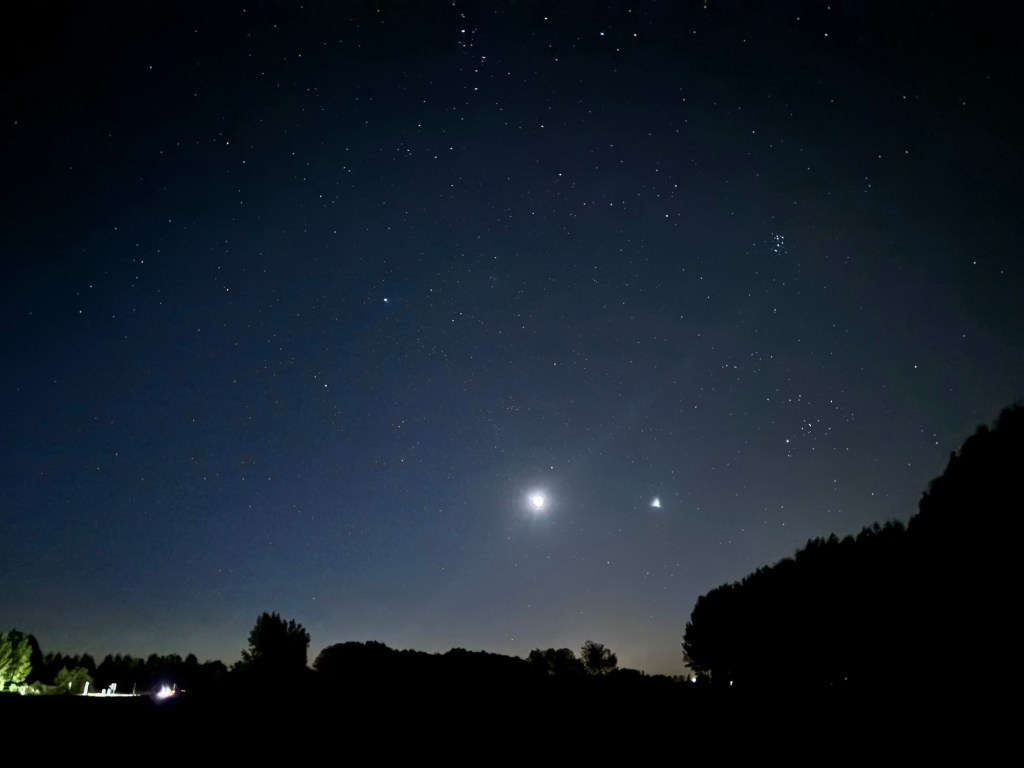
There’s no lighting along the nineteen kilometre road between Carrión and Calzadilla, and all the towns are distant, so the stargazing was almost as good as it was on Tenerife. Even the Milky Way was visible, stretching westwards toward Santiago like the songs describe.

I spent a great deal of the morning racing ahead, mostly because of an obnoxious pilgrim who was lighting the entire path with a brilliant LED head torch, even though visibility by star and moonlight was perfectly good enough once your eyes had adapted. With him in the dust, I allowed myself some time to listen to a couple of chapters of an audiobook (some short stories about the Sargasso Sea from Strange Tales from the Deep and I, Claudius).


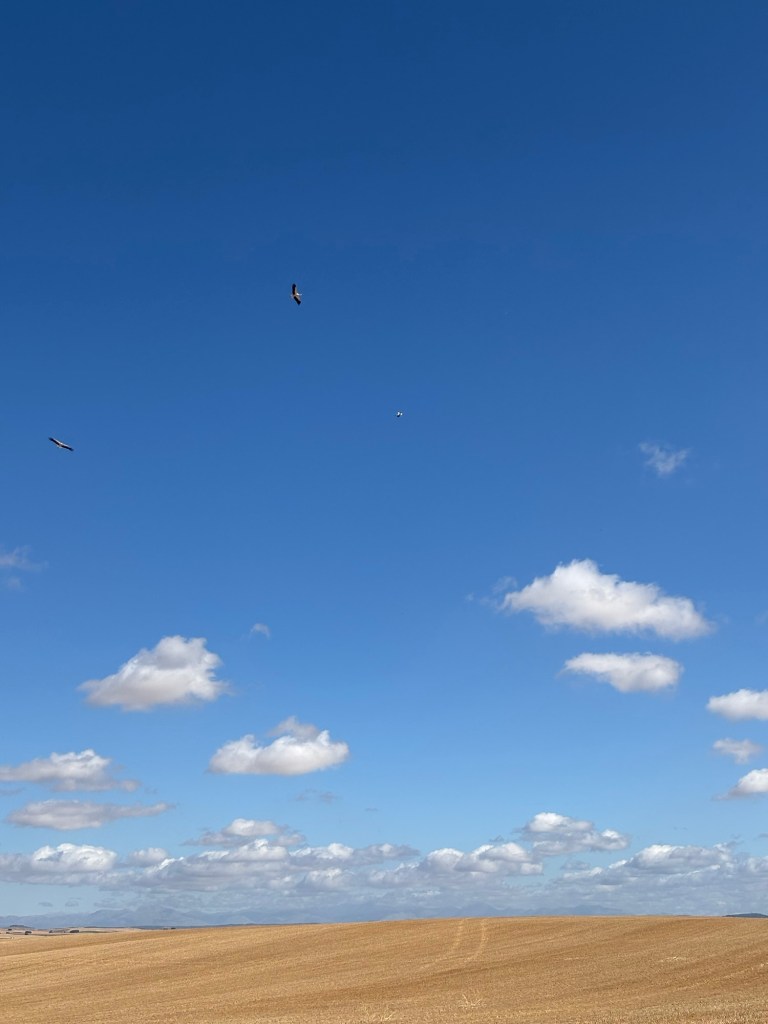
Not too long after sunrise, I saw flashes of white in a field by the road and trained my eyes on the spot: I counted ten great bustards, closer than I’ve ever seen them. Of course, they were far too distant for my iPhone (which makes for a superb camera, but is utterly useless as a telephoto lens), but you can just about make them out in the photo below (to the right).


After a brief pitstop for breakfast in Calzadilla, I raced on ahead once again. This time, I took advantage of the empty pilgrim road to do some singing practice, mostly from Jesus Christ Superstar, which I pretty much sang off-copy for all parts. I don’t have an eidetic memory, but I do have an uncanny ability to retain enormous amounts of information about things I’m interested in. Musical scripts fall under that category.


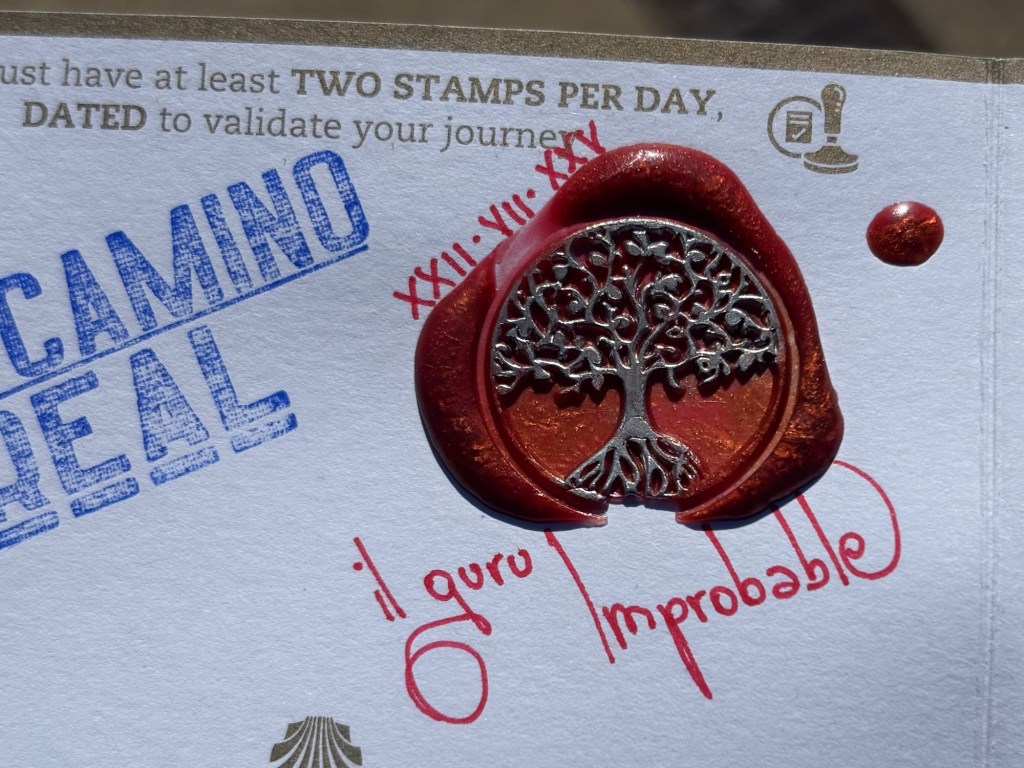
I stopped in Moratinos to pick up a beautiful wax stamp from Il Guru Improbable. I’ve missed this one before, as it’s much too soon after the usual staging post of Terradillos de los Templarios to obtain in the early hours of the morning, so I’m glad I pushed on today.

At Moratinos, I took up with a new group of pilgrims: Tom, a retired education superintendent from Michigan; a Finnish woman on her fourth Camino; and Tina, a Swiss-Guatemalan girl inspired to walk the Camino by a German comedian who hates walking. It made for a healthy change, and it was fun to tell my grandfather’s tale in full once again, which I haven’t done anywhere near as often on this Camino – last time, it usually preceded me by the time I met a new face!

Audrey caught up to me as we approached Sahagún and we entered the town together, seeking a pharmacy (for her feet) and an ice cream (for my appetite). At 13.10, it was the latest we’ve arrived at a destination yet, but it did mean no waiting for the albergue to open, which was a huge plus.


The bells are ringing for 22.00, and the white storks nesting on the bell tower are doing a lot of beak-clicking. That’s a sound I will always associate with Spain, no matter where else I may hear it.

Tomorrow we’re going to do another long slog, striking out for Mansilla de las Mulas if we can – which should, in theory, catch us up to the others who we lost on the road over a week ago.

Catch you later! BB x

Camino XXI: Carrionero

Albergue Parroquial de Santa María, Carrión de los Condes. 22.08.

Carrión de los Condes is a wonderful place. Which is odd, as it’s believed to have been named for the villainous counts who did their level best to defile the daughters of Rodrigo Díaz de Vivar in the Lay of El Cid, the (half) true story of Spain’s greatest hero. Even the proper name, Carrión, is an oddity: though it likely sprang from a mangling of the Latin name “Caro”, in its modern form, it carries a double meaning as a pejorative term used to describe somebody vile, useless or otherwise despicable. A carrion-eater, perhaps – one too weak and cowardly to do their own work, and happy or scavenge off the labour of others.

Which, curiously, serves as a good launch-point into today’s blog. Without putting too fine a point on it, I’ll paraphrase Hagrid from the Harry Potter films: not all pilgrims are good.


We left Frómista late (around 7.20ish) after making a valiant assault on the watermelon that Alonso bought last night. It made for a decent breakfast, but we couldn’t finish it all in one sitting, even between the four of us. We put it in the fridge for the benefit of other pilgrims coming after us. We were hardly out of the door when one pilgrim – who had been on the road with us for a while – appeared out of nowhere, made a beeline for the fridge, and took the melon for himself.

Well, that’s kind of what we intended by leaving the melon, right? So what’s the problem? As always, context is everything.


We cleared the 19km distance between Frómista and Carrión in a little over four hours, including a stop in Villalcázar de Sirga for an early lunch. It’s an easy walk, but easily the most tedious of the entire Camino, as it is an arrow-straight line that follows the P-980 highway in its entirety. Opportunities for wildlife observation are slim, and cultural tangents even less. It’s just a long walk in a straight line. At least the storks of Carrión kept us company. We also picked up a new companion in Edoardo, an effortlessly charismatic Italian soldier from Puglia, who was great company on the road.


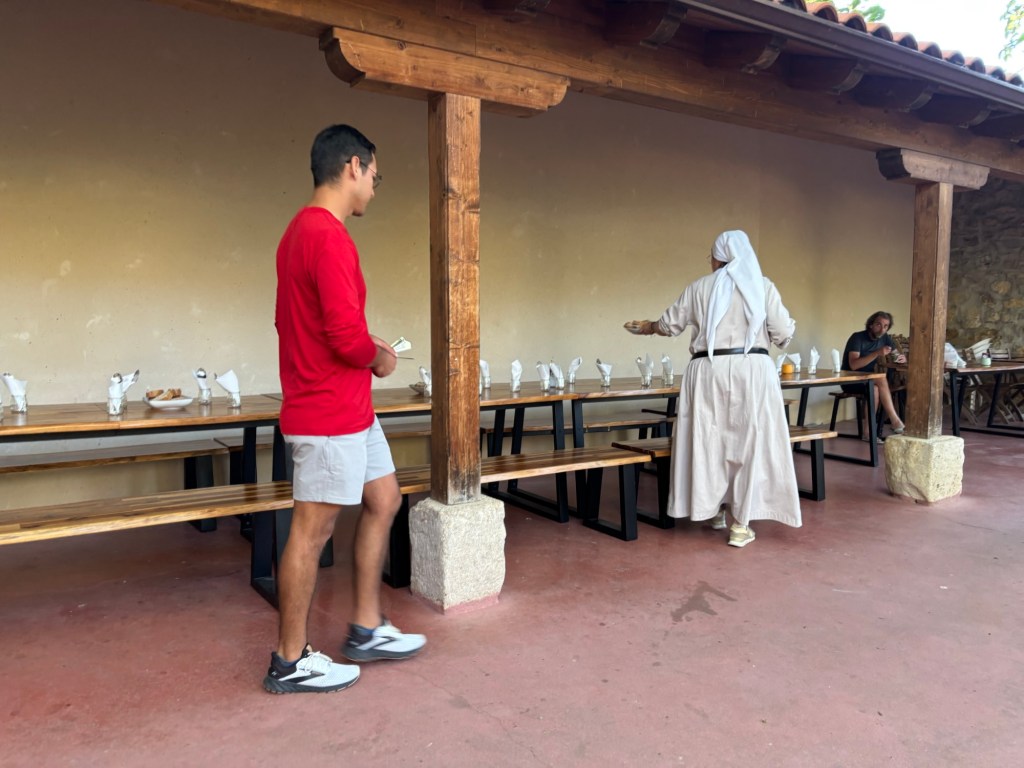
The Albergue Parroquial de Santa María opened at midday and we were warmly received by the Augustinian nuns and their young assistants, three university students from Galicia, Madrid and Granada. Marta, the granadina, was especially friendly – though that may have been on account of my Andaluz accent which always comes out roaring the moment I meet someone from the south. Edoardo was almost certainly smitten and did his best to charm all three of them, but the granadina especially. I’ve seen a fair amount of bare-faced flirting from older gentlemen on the Camino, but the Italians do it with considerably more panache. It also helps when they’re not over the age of fifty, I suppose.

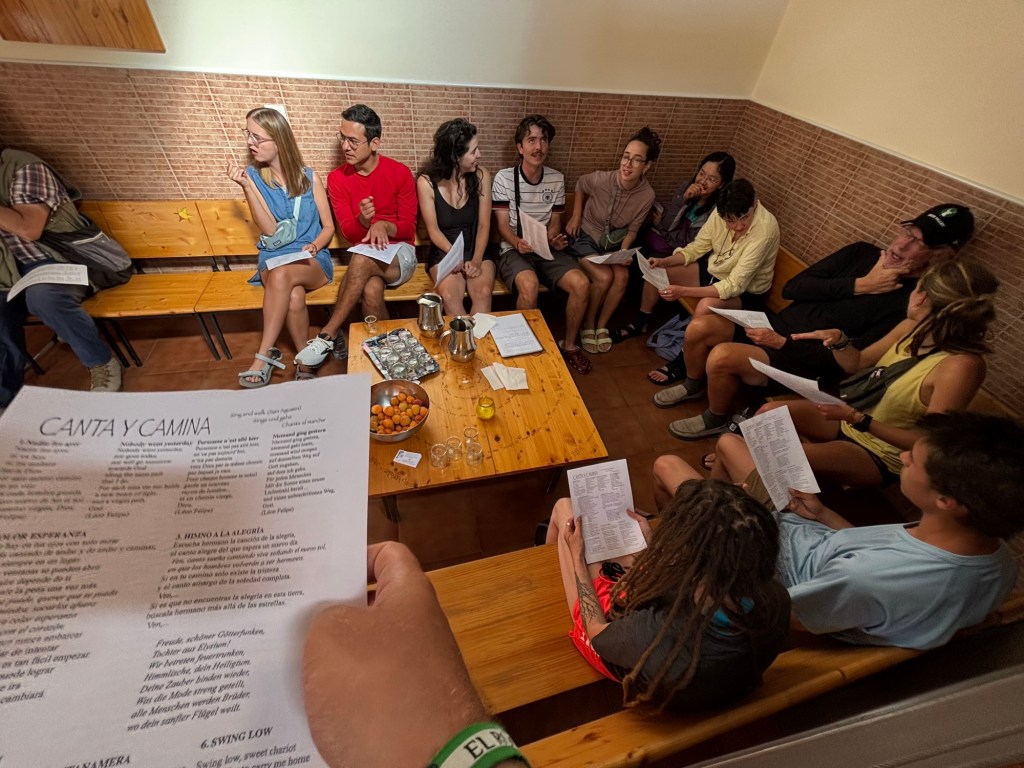
Vespers was beautiful, as Carrión’s nuns are famously musical, led by the vocals and guitar skills of the Peruvian sister (who was here the last time I stayed in Carrión). The encuentro musical was especially magical this time, because unlike Grañón, they asked us outright to share our reasons for walking the Camino. I did, explaining how I’m walking for my grandfather and my great-grandparents who never had the chance – but also as a way of saying thank you to La Virgen del Rocío, who was instrumental in curing me of a tremendously broken heart earlier this year.

And what did they do? They decided on a whim to play us a song for La Blanca Paloma, just for me – the Salve Rociera, known as Olé, Olé. What a beautiful thing to do! I’ve included the lyrics below, because they are so wonderfully poetic:

Dios te salve, María
Del Rocío, señora
Luna, sol, norte y guía
Y pastora celestial

Dios te salve, María
Todo el pueblo te adora
Y repite a porfía
Como tú no hay otra igual

Al Rocío yo quiero volver
A cantarle a la Virgen con fe
Con un olé…


Fizzing with the warm glow of a satisfied acolyte, I went along to Mass. It was… eventful, to say the least. The Bishop of Palencia was in town to conduct the proceedings, which – unbeknownst to all but the townsfolk – had kindled the fire of a small but powerful rebellion.

As was later explained to me by one of the parishioners, their long-serving and beloved parish priest was in the process of being transferred, and the locals – who seemed to adore the man with a fervour rarely seen in the UK – decided to use the arrival of the bishop to make their feelings known. There was a loud buzz toward the end of the service as the doors were flung open, and in marched a large crowd of children and their parents, all of them carrying placards and banners with slogans saying “La voz de la iglesia es la voz del pueblo” and “Queremos que Don Ricardo no se vaya”. The press seemed to have been tipped off, and Don Ricardo made a rather humble exit – I wonder what he made of the spontaneous show of fealty from his flock? It must have been hard to hide any emotion.


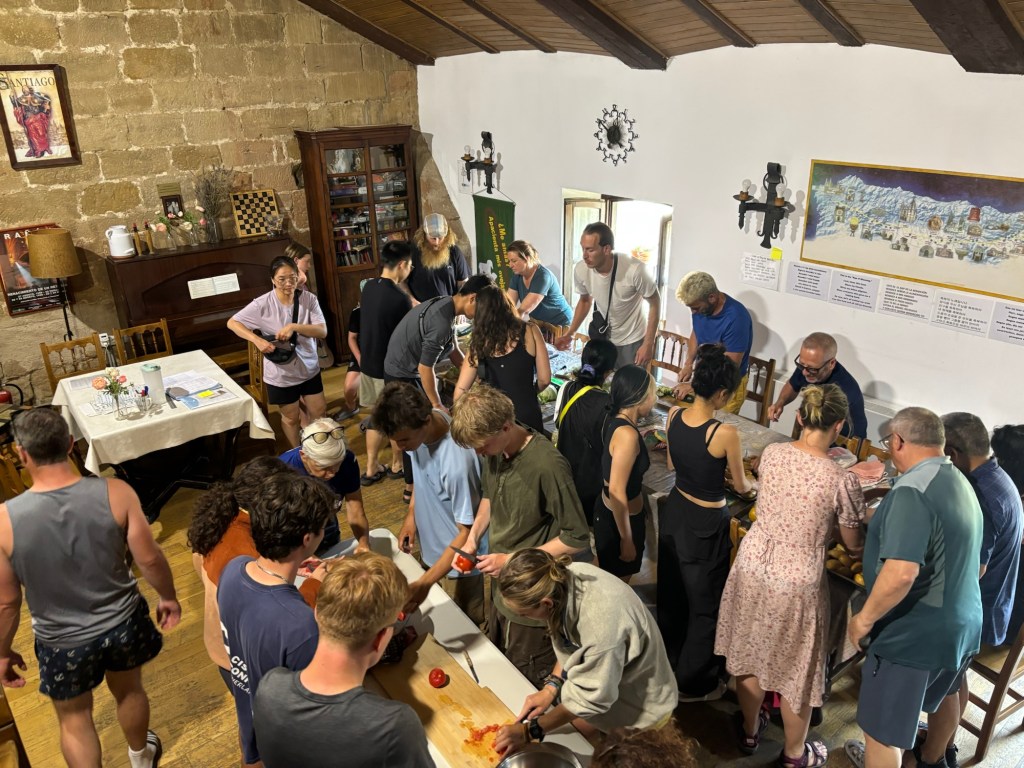
After Mass (and the mass protest), I went back to the albergue to help Edoardo make dinner – I cut and cooked the spaghetti and laid the table as the Italian had already prepared an enormous serving of pisto (free from gluten and meat, as it’s hard to cater to everyone with one dish). Together with the nuns and their three volunteers, we put out quite a spread.


And who should have arrived at our albergue at the last minute but our melon thief! He was conspicuous in his absence from the preparations and did not lift a finger during the clean-up operation, plugging in his earphones and retreating to the other side of the table – present but idle. Not only that, but while the nuns were saying a prayer, he got up and helped himself to seconds and then thirds of the soup the nuns had prepared.

Perhaps I’m being harsh, but this is the fourth time we’ve seen him do this: turn up to an albergue, contribute nothing, extricate himself from the communal preparations and then arrive just in time to devour the spoils, without so much as a please or thank you. Worse, he had the gall to comment that he didn’t think the meal was worth 4€ when the Italian asked for a small contribution to cover the costs of buying the supplies at the end of the supper.

I have spoken to the man previously – who, I am ashamed to admit, is a fellow Englishman – and he admitted that he doesn’t pay in donativos because he believes they’re already dodging taxes, and therefore don’t need our contributions. Which is odd, as he seems quite happy to scavenge off the contributions of others.

Shameful doesn’t cover it. I’m this close to confronting the man, which wouldn’t be in the spirit of the Camino… but if there’s one thing I won’t stand for, as a pilgrim and a teacher, it’s selfishness. I was raised to always put others’ needs before my own, so that kind of behaviour really sets my teeth on edge.

I prayed for him – partly to temper my own frustration and partly out of habit (it’s a good way to deal with people you don’t get on with). I hope he starts to see the light on this Camino and learns to chip in, like so many of us do every day along the pilgrim road, as it would be a dreadful shame if his behaviour cast a dim reflection on the English attitude toward the Camino.

Rant over. I just needed to point out that we pilgrims aren’t exactly model citizens. He’s not. I’m not. I should be the better man and not let it get to me so. But the Camino is the world, and thus have we made it. It’s up to us to call out that kind of behaviour in such a way that everyone feels they can contribute, even in some small way.

I’ll sleep on it. Hopefully I can come up with a way to bring him amicably to the service of his kin. Me, or some higher power.

Our Lady of El Rocío, if you’re listening… give me strength!

BB x

Camino XVI: Silent Hill

Hostal la Plazuela Verde, Atapuerca. 15.50.

After yesterday’s paltry fifteen kilometre walk, today’s 30km+ hike across the Montes de Oca felt like much more of a feat. We’ve landed, at last, in Atapuerca, the last post before Burgos and the end of the line for several peregrinos.


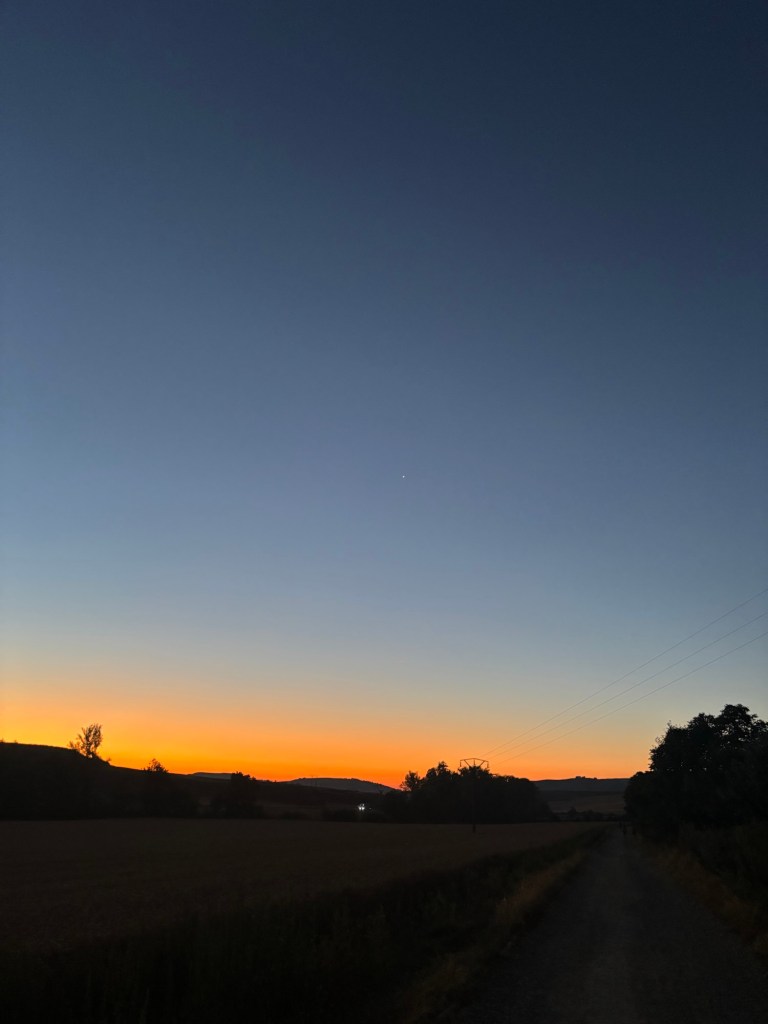
I’ve enjoyed a few later starts over the last few days, so it felt good to get back to another 5am departure under the stars. It was a little chilly this morning, though not as cold as it was the last time I made this trek, when (if my memory serves) I required the use of gloves to stop my hands from shaking in the spring of 2023. The sun rose late, so for at least the first hour of today’s march I was under the aegis of the morning star, Venus, sitting alone in the firmament to the east.


The signs for Santiago are getting shorter. The kilometre count is nearly down to 500, so I’ll be passing the halfway point of the Camino at some stage between Burgos and León. I’m looking forward to the flats of the Meseta, but the mystery of the Camino de San Salvador and the Camino Primitivo are becoming more and more appealing by the day as I hear stories of these less-traveled roads from some of the pilgrims that I meet. It will certainly be a very different Camino to the one I’ve had for the last week or so.


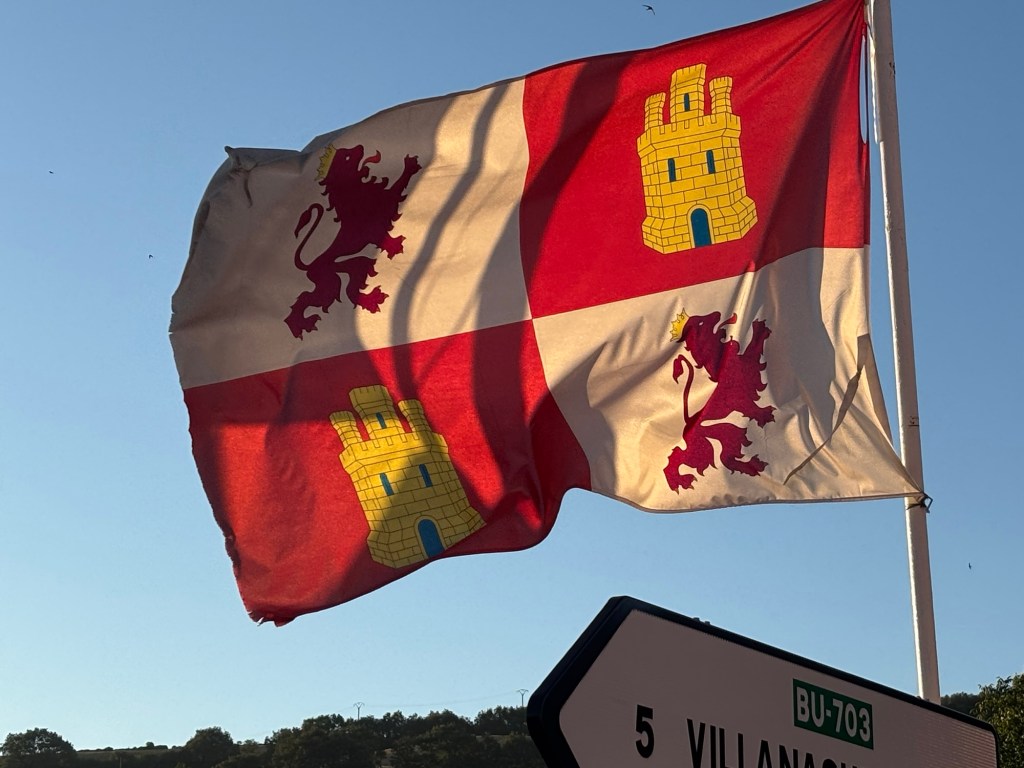
Shortly after leaving Grañón yesterday, we entered the immensity of Castilla y León, Spain’s largest territory. The rivalry between the twin kingdoms remains in the signage, with most of the Camino markers defaced in some way so that the word “León” is crossed or blacked out. The reverse is true once you enter the old Leonese territories around Sahagún, where the graffiti becomes even more markedly separatist in nature. It’s a not so subtle reminder that Spain had always been a conglomerate of different peoples rather than one singular nation, from the Castilians and the Catalans to the Leonese, the Basques, the Galicians, the Andalusians and the Asturians.

How do you even begin to govern such a diverse nation, with such ancient and deeply-rooted territorial disputes?


After a much-needed breakfast stop at Villafranca Montes de Oca, where the bar (El Pájaro) opened just minutes after we arrived, we set off up into the forested hills. The Montes de Oca are the very north-westernmost reach of the larger Sierra de la Demanda. The name comes from an old dispute over land use in the hill country rather than the difficulty of its terrain, but after the relatively flat and easy days from Puente La Reina to Logroño and beyond, it is a demanding task before the endless expanse of the Meseta Central.


The Montes de Oca are a mystical place. Toward the top of the hill, the birdsong seems to die back into silence. Not even the vultures circle here. I’ve encountered this eerie silence before in Sachsenhausen, an olive grove near Víznar (Granada) and a remote village in northern Uganda, where the Lord’s Resistance Army marched in and executed the entire village. It is the silence of the dead.

A small concrete block marks the spot where around three hundred men and women were executed during the Civil War: Republicans, political dissidents, liberal thinkers and just about anyone who disagreed with the vision of the Nationalist state that was to come. They were dragged from their homes during the night to this lonely stretch of forest, summarily shot and thrown into one of a number of mass graves that can be found less than a hundred metres from the Camino itself.

This is the fate that might have befallen my great-grandfather Mateo, had he been any more outspoken in his beliefs than he already was. Instead, he was dismissed from his post and sent away to a village where he would not cause trouble, and only when he went to hospital for a minor operation did they find a way to deal with him quietly, leaving him on the hospital bed to die.

I suspect this, however, is what happened to the rest of his friends: the circle of poets, free-thinkers and philosophers to which he and his wife Mercedes belonged, before Franco and his nationalist forces turned their world upside down.


Many of the trees here are new: plantations of pine trees that were planted after the ancient oaks burned down in a fire some fifty years ago. Somewhere beneath them all are the remains of other victims of the war, concealed by Spain’s painful attempt to forget. The official Pacto del Olvido – the Pact of Forgetting – passed in 1975 after Franco’s death was an attempt to move on from the divisive horrors of the past and forge a new country, but for many, the memory of the silenced dead is still very raw. Even the birds of the forest seem to abide by it, nearly a century later.


A jolly chappie called Ángel had set up shop in the spot where there was a food truck a few years ago, selling fruit juice and watermelon slices, and at 2€ a throw for the latter, it was simply too good to pass up.

We stopped for a snack lunch at San Juan de Ortega (if tostada con tomate can be considered lunch) before pressing on to Atapuerca. Today and tomorrow are going to be the hottest days for a while with an average high of 35°C, so we were keen to reach our destination before the sun got too high in the sky.

I brought the team to a halt at Agés, the village where I stayed the last time I came this way, to drink and re-supply before the final two kilometre push across the shadeless fields of Atapuerca. Being an average of nine years older than the others in my group (ranging from seventeen to twenty-five), I have somewhat fallen into the position of leader, which seems to happen rather easily these days. I guess it’s the teacher in me. I don’t resent it at all. It’s quite nice to be able to look out for them and to serve as their guide, especially since one of them is still at school and doing the Camino as part of an IB project.


There aren’t that many options for eating out in Atapuerca, so we might cook together tonight. That would be nice, as tomorrow will invariably involve a farewell meal out in Burgos, so a communal dinner of own creation would make a welcome change.

My pilgrim passport is looking a lot healthier. One whole side is nearly complete. It’s getting easier to pick up three or more stamps per day (which was near impossible in the first week or so). I may not need my third credencial after all, though I suspect I will still need my second! BB x

Camino XV: Grañón

Albergue Cuatro Cantones, Belorado. 20.57.

The grand majority of Camino guidebooks operate in such a fashion that some towns become natural starting and finishing points. At 21km from Nájera, Santo Domingo de la Calzada is a perfect example (with your average pilgrim walking around 20km a day). On the one hand, this is a very good thing, as it means any deviation from the recommended staging posts may give you a feel of the Camino as it used to be. On the other, it means that some towns soak up all the trade and leave the others dry. So how do you fight the industry?

Grañón has the answer: by being the most memorable and unique albergue on the entire Camino de Santiago.


After leaving Santo Domingo just before midday, I used the last of the cloud cover to beetle across the plains for a further 6km to Grañón, feeling slightly guilty that I was abandoning my Camino family again but confident that I was making the right decision – I’d missed Grañón before out of ignorance, and I wasn’t going to do so again in full knowledge.

Upon arrival I was greeted by the hospitaleros Kevin and Juan Manuel, a Chinese-Australian and a sevillano. For the first hour and a half it was just me and three Koreans, and it looked to be a rather cosy night ahead, but then Alex showed up, followed by Audrey, Alonso and Talia, and then Johan and Max. For whatever reason (possibly the clouds) they’d all decided to push on to Grañón after me. I must have sold it pretty convincingly without meaning to. My heart was lifted and I was tremendously grateful.

I fell into conversation with Juanma in the garden who asked after my Camino story, I told him about my grandfather and the grim fate that had befallen my great-grandparents, both victims of Franco’s regime – one murdered, the other dismissed and sent into a sort of internal exile. I’ve told this story so many times that it’s become second nature, but that’s the first time it’s drawn tears in a listener. Juanma explained that it had touched him deeply: his family, and so many others in Andalusia, had suffered a similar fate after the Civil War, which left thousands of families across the country broken, scattered and changed forever.

I’ll make a beeline for any Spanish accent, wherever I can find one, but I will always have a soft spot for an Andalusian. He was the only person thus far to recognise my Virgen del Rocío wristband for what it was, which was a tremendously good start for me: it’s not often one encounters a fellow devotee of the Mother of the Marshes on the Camino (or even another Catholic, but that’s another matter).


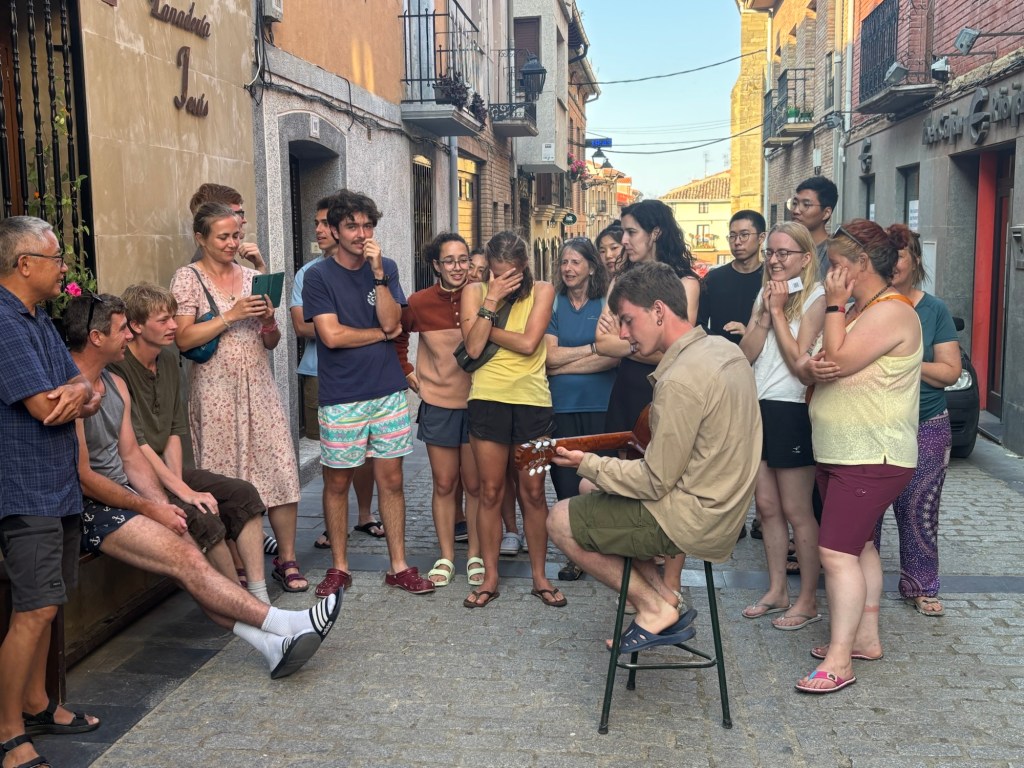
After preparing dinner – where for some reason I was assigned the role of sous chef and tasked with handing out jobs and ordering the entire operation – the hospitaleros requested some music. Johnny, an Irishman, was one of two who could play the guitar, but his repertoire and mine were worlds apart. The other guitarist, a young Danish kid fresh out of school, had only been learning a few months. So (not for the first time in my life) I ended up singing a cappella the only song I could think of that works: Pata Negra’s Yo me quedo en Sevilla.

It’s a gypsy love song to the city of Sevilla itself, and one that I’ve known since I first heard it on my mother’s Rough Guide to the Music of the Gypsies aged seven or eight. Back then, of course, my language skills weren’t really up to scratch, and I knew the song as “Single Feather”; my little brother and I used to run around the house holding a pheasant feather or something like that when it was playing in the old CD player. Ironically, it’s been a mainstay of my repertoire ever since, and one I usually wheel out if I’m called upon to sing in moments like this.

It’s amusing enough to be mistaken for a Spaniard because of the way that I speak, but delivering a gypsy ballad with all the frantic passion and duende that I can muster is both an ego trip and an out-of-body experience. I don’t think I have any gypsy blood at all, but the music speaks to me on a deeper level, touching my heartstrings in its dance through the blossom-scented squares of Sevilla.

God knows what the other pilgrims made of it but the Spaniards were impressed.


Later, after Mass, we had to go to the village bakery to collect our potatoes, as the albergue has no oven. There followed a strange ritual where we had to sing for our supper, divided up into nationalities. The Italians did two numbers (one I didn’t catch and Bella Ciao) and the Spanish committee (to which I defected) was psyched up for a tongue-in-cheek rendition of La Macarena, but since we were almost entirely hospitaleros (yours truly temporarily excluded), we were let off the hook. The English-speaking team (about 75% of the pilgrims, including my family and all the Koreans, Germans, Slovenes and Japanese) came up with… uh.,, Twinkle Twinkle Little Star.

Turns out they could easily have done Bohemian Rhapsody, but they didn’t organise in time. Never mind! One way or another, we got the potatoes.


After dinner, we went back into the church for a candlelit reflection in the choir. Prayers in multiple languages followed by the passing of the flame (the “pilgrim candle”) where we had a chance to say something: a reflection, a prayer, a wish for the Camino. Most of them just said “Buen camino” and passed it on. I held on for a good couple of minutes, I think.

I prayed out loud – something I don’t do all that often. It felt like the right thing to do. I prayed for my grandfather, José, and my great-grandparents, Mateo and Mercedes. I prayed for David, the father of one of my closest friends, for whom I have chosen to walk the Camino this year. I prayed for all of us, for a safe and spiritual road to Santiago. I prayed my thanks to God and to La Virgen del Rocío for all she has done for me this year: through heartbreak and healing and natural wonders, she has always been there to guide me.

Maybe it was a bit much. That would be very me. But it was (and may easily be) one of the only chances to worship together on the Camino and I took it with both hands.


I’d just brushed my teeth for bed when Juanma asked for a favour: he was taking over the albergue as hospitalero the day after and wanted help with translating his script into English. I worked it out with him from a notebook in a bar in town over a caña while he ordered his “usual” (a Maxibon ice cream).

We discussed a lot of things. Why there aren’t many Spaniards on the Camino (they’re all on bicycles, competing against each other to complete it in the fastest possible time). Why there are so many Koreans (it’s nationally regarded as a major CV booster, as well as a temporary solution to widespread youth unemployment). And where the Germans, who used to be everywhere, have gone (the Via de la Plata and the Via Mozárabe, to avoid the crowds on the Francés).


I’ll have more to say later about our next stop, I suspect. But I wanted to get this all down now while it’s fresh in my mind. It’s taken at least an hour, but it has killed the time and allowed me to stay and wait for the others to wake up, and that’s no bad thing. BB x