Seven Seconds in Madrid

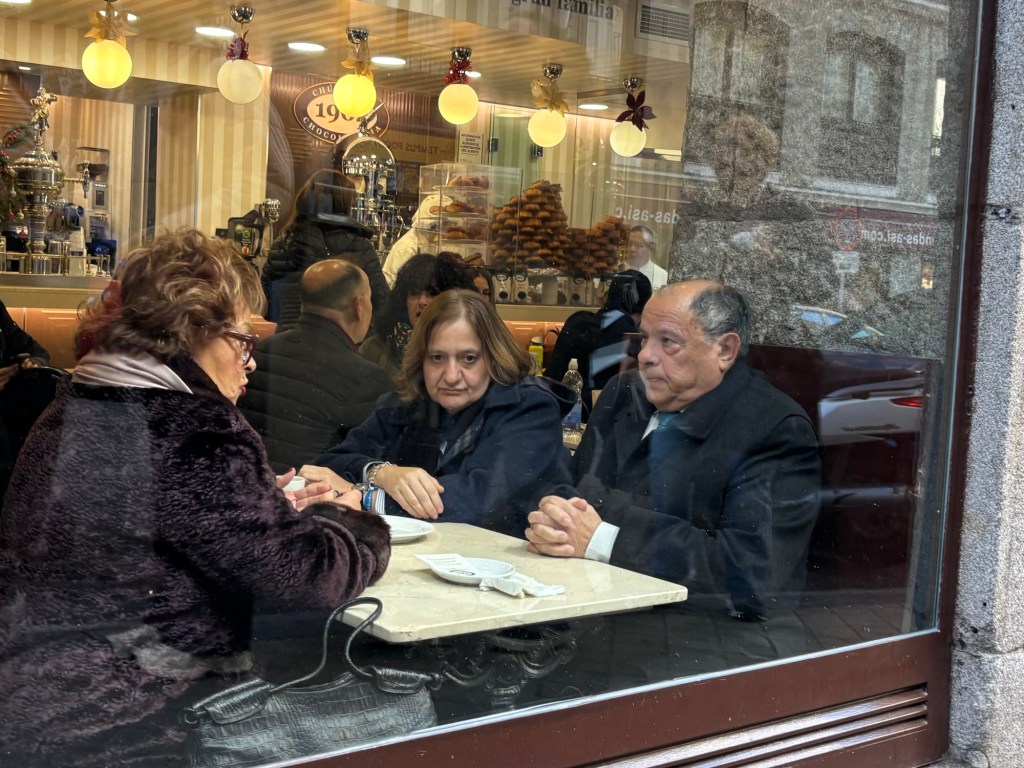
Chocolatería 1902, Calle de San Martín. Centro. 10.22.

I’m waiting in line to grab some churros con chocolate for breakfast at 1902, the same chocolatería I drop in on every time I’m in Madrid. It’s not yet half past ten on a Sunday, so the interior is still pretty busy with the usual morning traffic. The handsome lady manning the takeaway stall bustles in and out of the booth to resupply for the family of three in front of me. My attention is drawn to three punters sitting by the window. Locals, surely – only a Spaniard would keep their winter coat and furs on inside when there’s even the slightest chance of a draft slipping in. After all, it is a bitingly cold 16°C out there.

They look to be in their seventies, there or thereabouts. That means that the man on the right served his country for at least a year in the mili, before Aznar did away with national service in 2001 in a bid to win votes. It also means they probably remember very well what Madrid used to be like under Franco, before La Transición and La Móvida swept the city into the twentieth century like the rest of the European capitals.

Do they miss the way things were, perhaps? It must have been an altogether different place, back when the city’s demographics were primarily madrileños de raíces, before scores of regional migrants were drawn to the capital for work, followed by a larger tally of visitors from further corners of the world. Before Ale-Hops and Starbucks replaced the boarded-up shopfronts of local businesses. Before every sign and tannoy needed an English translation tacked on, to cater to a growing tourist class who were not expected to learn the language for their visit – another reminder of Spain’s falling status on the world stage.

I do not regret the end of Franco’s Spain – after all, it’s because of him that my Spanish family was torn apart. But I do understand why some might look back fondly on a time when the world seemed a whole lot more familiar.

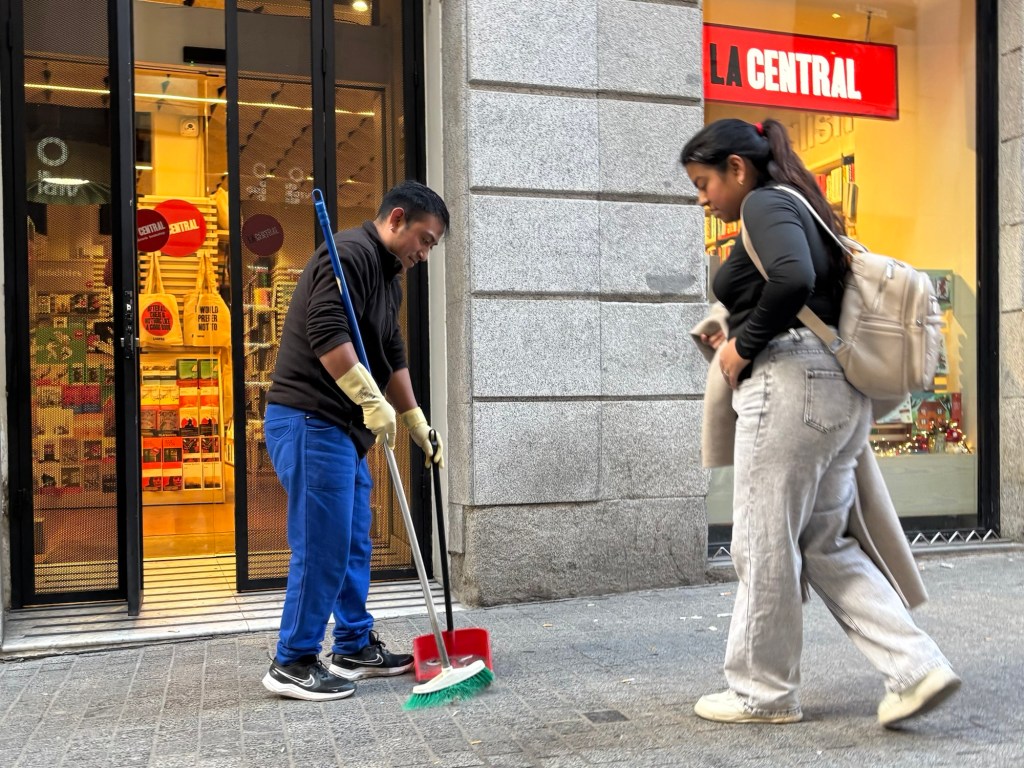
Librería La Central, Calle del Postigo de San Martín. Callao. 10.36.

Further up the street toward Gran Vía, I pass La Central. It’s not yet open, and an Amerindian in marigolds and workers’ blue pantalones laborales is sweeping the street in front of the door, which is open only just enough for a person of slender build to squeeze in untouched. It’s mostly confetti and spent chasquibumes that he’s clearing away – there aren’t nearly as many cigarette butts as there used to be.

A girl stands nearby, picking up some of the easier wrappers by hand. She’s dressed like a passer-by, but there’s a familiarity to their easy interaction: she could be a relative, a friend, or a lover. Neither of them are wearing the white worm-like earbuds that seem to have encrusted the faces of so many of the city’s inhabitants, and that makes them stand out.

I bought four books in the nearby Casa del Libro (after nearly two hours’ decision) and it cost me around 70€. Spain is often ranked as one of the least literate countries in Europe, with fewer than 9% of the country reading books on the regular. Statistically, that’s not all that far behind the UK, but there’s no escaping the fact that reading is a luxury activity in Spain. FBP (Fixed Book Price) might be a worthy attempt to level the playing field and prevent the market being swamped in Taylor Swift trash and cheap chick lit, but it does drive up the prices of everything as a result.

My great-grandfather dreamed of having his own library, and I’m doing pretty well at bringing that dream to fruition. But it’s not a cheap enterprise in this country. I wonder how much traffic the man in marigolds sees.

Outside The Madrid Edition, Calle del Maestro Victoria. Centro. 12.55.

The queue for Doña Manolita’s legendary lottery shop stretches all the way along Calle de Mesonero Romanos and away up Calle de la Abada and onto Gran Vía. The throng of hopefuls is a real mix: young and old, local and out-of-town, Spanish and French and American. El Gordo – Spain’s Christmas lottery – is much more of an event in Spain than it is elsewhere in the world.

At the end of one crowd, another begins: a great mass of children and their parents waiting for the giant animatronic train and its attendant polar bears on the Cortylandia shopfront to come to life and sing, as it does every hour, on the hour (until 10pm, it seems – it’s within earshot of my hostel room).

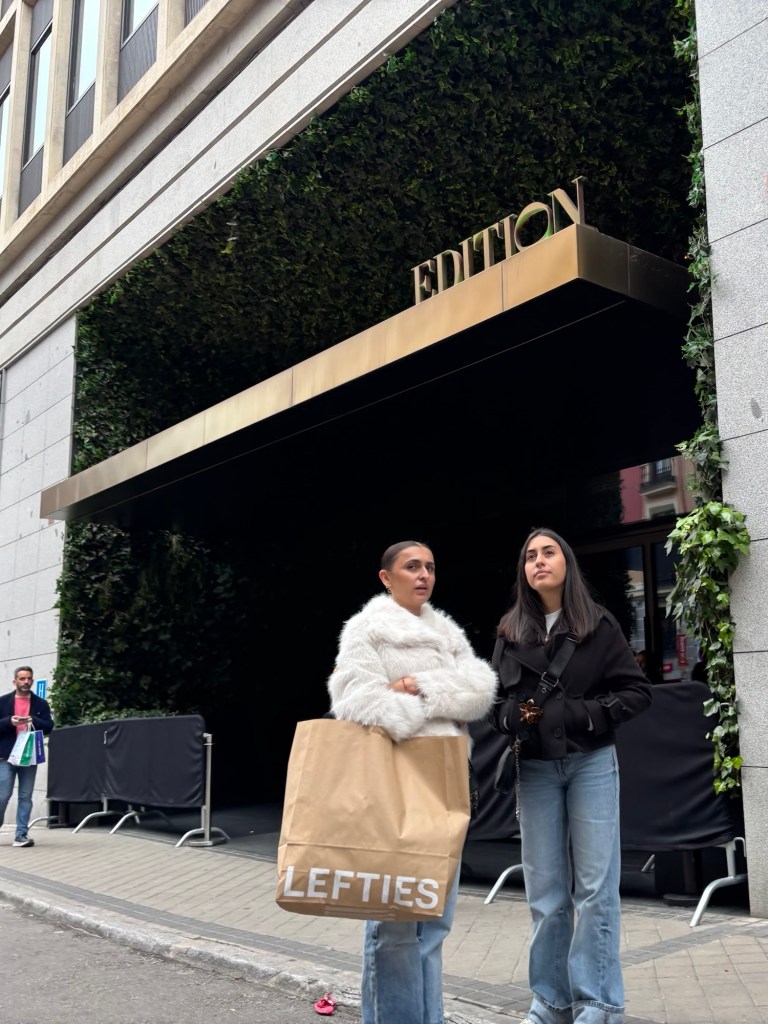
Two glamorous citizens standing apart from the hubbub seem to be above it all, watching the crowds come and go with unmoving eyes. One leads the conversation, the other listens, eyes skyward. Sometimes it’s hard to see how the haughty, angular beauty of a youthful Spaniard finds its way into the compact, shrunken shape of its senior citizens, but every once in a while there’s a flash of that future in the expressions of its youngsters: that look of casual ennui would be right at home on the face of a woman three times her age, still dressed in expensive furs and commenting on the world going by.

Outside Heladería Galia, Calle del Arenal. Puerta del Sol. 12.57.

A West African mantero plies his wares alone on the Arenal. They usually operate in groups – there being safety in numbers, I suppose – but this one seems to be his own agent. He has also upgraded his drawstring blanket to a couple of glassware boxes. While other mountebanks dressed as a gorilla, Eevee and Mickey Mouse try to fleece passing tourists of their loose change, he hawks a number of luminous splat toys, which he promotes by blowing into a bird whistle and hurling his devices onto the flat surface of the box, where they slowly revert to their original shape.

It’s hardly worthy of a moment’s notice to most of the adults passing by, but it’s the children he’s after. One girl is absolutely entranced and convinces her mother to buy one – no, two, as they will have to get one for her brother.

It can’t be an easy job, hawking cheap goods on the street, but from my casual observations, these manteros do seem to have a fairly good hit-rate when it comes to a quick sale.


Plaza de Isabel II, Puerta del Sol. 12.59.

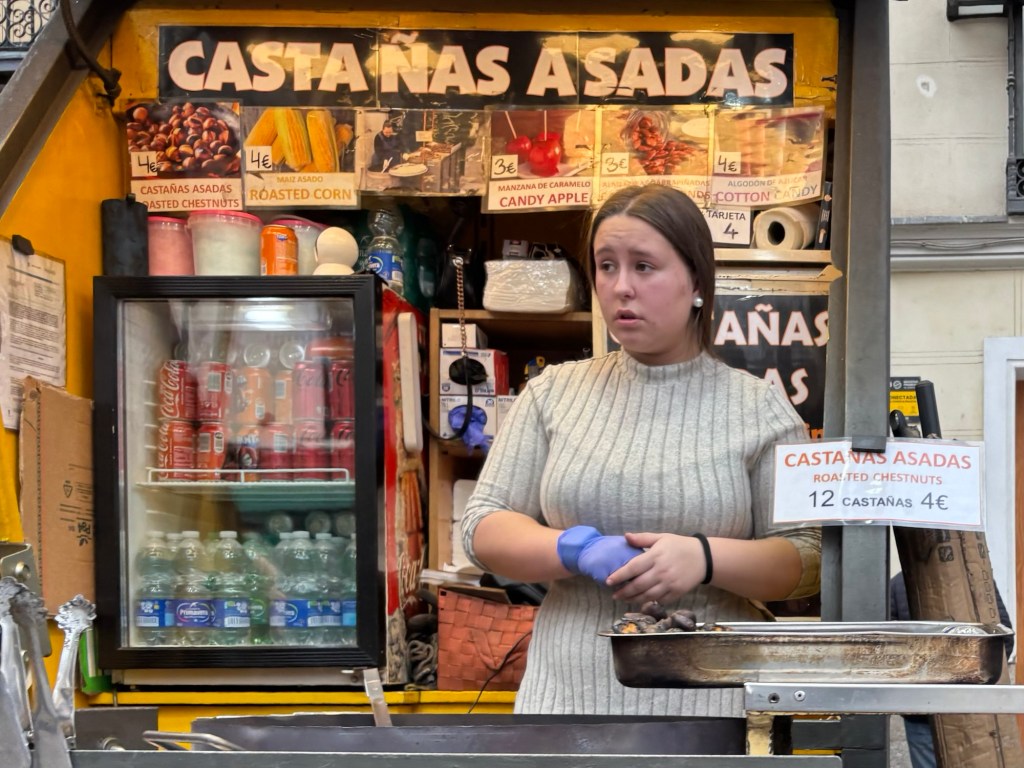
Before it became synonymous with one of C.J. Sansom’s greatest works, winter in Madrid always meant roast chestnuts. These warm, smoking stalls are as much in evidence now as they ever where, though they now often come with the modern niceties of a wireless card machine and an Aquarius-bearing fridge. Here, like everywhere else, the signs are written twice: once in Spanish and once again in inglis. The point I try to make in the classroom about the usefulness of this or that topic for traveling is increasingly redundant in the face of the relentless march of the English language.

The girl with the pearl earring isn’t as heavily dressed for the chill as the other madrileños in the street – but then, she is standing in front of a roasting dish all morning. She looks bored. The telltale rounded edges of a smartwatch bulges beneath the tight elastic of a sanitary glove on her right hand, and a swish handbag – presumably hers – sits nestled in an alcove behind her, so the chestnut business must be doing a reasonably good trade. I haven’t seen as many people tucking into the delicacy as I have in previous years, but then, it really isn’t quite that cold. Not yet. Not until the peaks of the Sierra de Guadarrama are covered in snow and the north wind blows chill across the plain and into the capital.

She’s cute – in a genuine, homely sort of way. There’s a natural beauty to people here. Not as many piercings, lip fillers, unconventional hairdos or fake tans. I don’t know why we go in for that so much in England. I already miss this place, and I’ve only just arrived.

Jardines de Lepanto, Plaza de Oriente. 13.26.

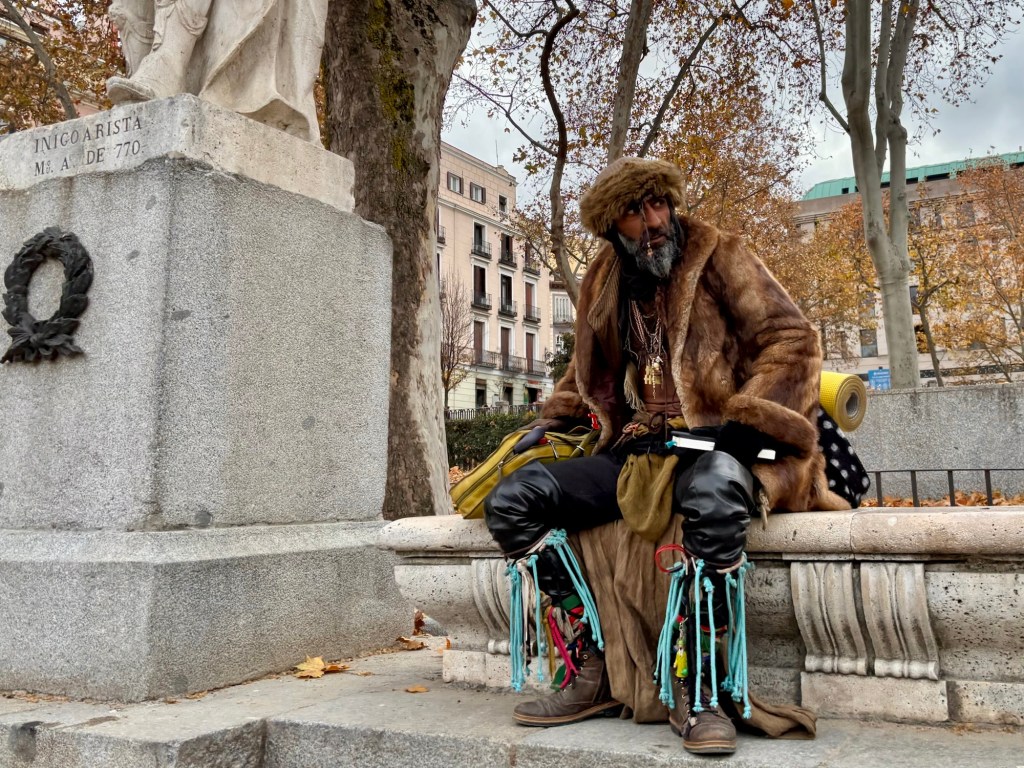
Sitting between the marble statues of the Asturian kings Iñigo Arista and Alfonso I is an exceedingly odd fellow. Like many of the city’s inhabitants, he is dressed in furs for the cold, but the similarities stop there. If the tassels on his black leather buckskins weren’t a metallic shade of blue, he might be a fur trapper from the Old West lost in time.

No – wrong continent. His regal nose, his dark, hooded eyes and the salt-and-pepper beard emerging in a neat diamond from his black headwarmer gives him the look of an Arab trader. A wise man, perhaps. It’s that time of year.

A curious assortment of symbols hang by threads across his naked torso: the Tau cross, an ivory pawn, a set of small keys and a card cut-out of the words “Ho-Ho” in gold letters that looks like it came out of a Christmas cracker. A fold-up umbrella pokes out of the smart yellow satchel at his side and there is a roll mat strapped to his waist. If he is a tramp, as his demeanour implies, he is a wealthy one.

Today the city of full of people in fancy dress. Ecuadoreans in tasselled hats and masks. Mountebanks in oversized costumes. Zambomberos in black and white and red. But he belongs to none of these clans.

When I return from watching the first of the zambomberos parade past, he has disappeared. I do not see him again.

Palacio Real, Plaza de Oriente. 14.36.

The fiesta zambombera is over. The crowded musicians begin to disperse, and with them, so too the clouds, bathing the Jardines Reales in warm winter sunlight. A modern dance troupe takes up where the traditionalists left off, showing that movement is as much a part of this country’s soul as its music. Still dressed in their folklore finery, the folcloristas return to their groups and prepare to depart. One huddle near the dance troupe stops to take a selfie. The red banner of Castilla flutters in the wind and the little cymbals in the tambourine shudder for a moment.

I must be a fool to have traded my life out here for England. So help me God, I will find my way back out here. I have to. It’s the only way I’ll ever assuage this restless heart of mine. BB x

Camino VII: Heart of Granite

I’m back! The cloud kingdom of the Basques is as impressive as ever, and since the earliest bus I could catch was the three-hour pueblo bus, I’m being treated to a great deal more of it than I ever imagined. It’s been a good three months since I was last here, but it looks and feels as though it were just the other day – like the Camino has just been waiting for me to return all this time. It’s a passing fancy, nothing more, but if I were to say I didn’t feel this country calling to me, I’d be lying.

It was a fairly busy flight out here, but if I thought I might encounter a handful of fellow pilgrims, I had another thing coming. From snatches of conversation (and a distinct lack of pilgrim paraphernalia) I’ve learned of the Bilbao BBK music festival that kicks off tomorrow. Apparently it’s one of Europe’s most popular? Shows how much I know!

Leaving a trio of Australian festival-goers and their awful mullets and porno moustaches behind (some girls on dating sites go mad for them, apparently, though God knows why), I bought myself an onward ticket to Burgos through the ALSA machine as there was nobody manning the three booths (“ni un Cristo en la taquilla”, in the words of the lady behind me). Two teenage girls in denim shorts propped their phone up against a pillar and did a TikTok dance, watched cautiously by a sub-Saharan umbrella salesmen on his way up the stairs. I treated myself to my first tortilla y tomate sandwich of the trip and made my way into the maw of the terminus in search of Lane 22.


Whoever designed the seating plan on this bus is even worse at maths than I am. There doesn’t seem to be any logic to it whatsoever. Seats 39-40 are followed by 45-46. The opposite seats are in the twenties. Four rows back, the sticker for seats 43-44 has been ripped off, but since they’re the only unnumbered seats on the bus, I can only assume I’m in one of the right seats. If this were a German bus, somebody would be having a fit (I’ve had altercations on German buses before over incorrect seat numbering). Fortunately, this is Spain, and nobody seems to care overmuch.


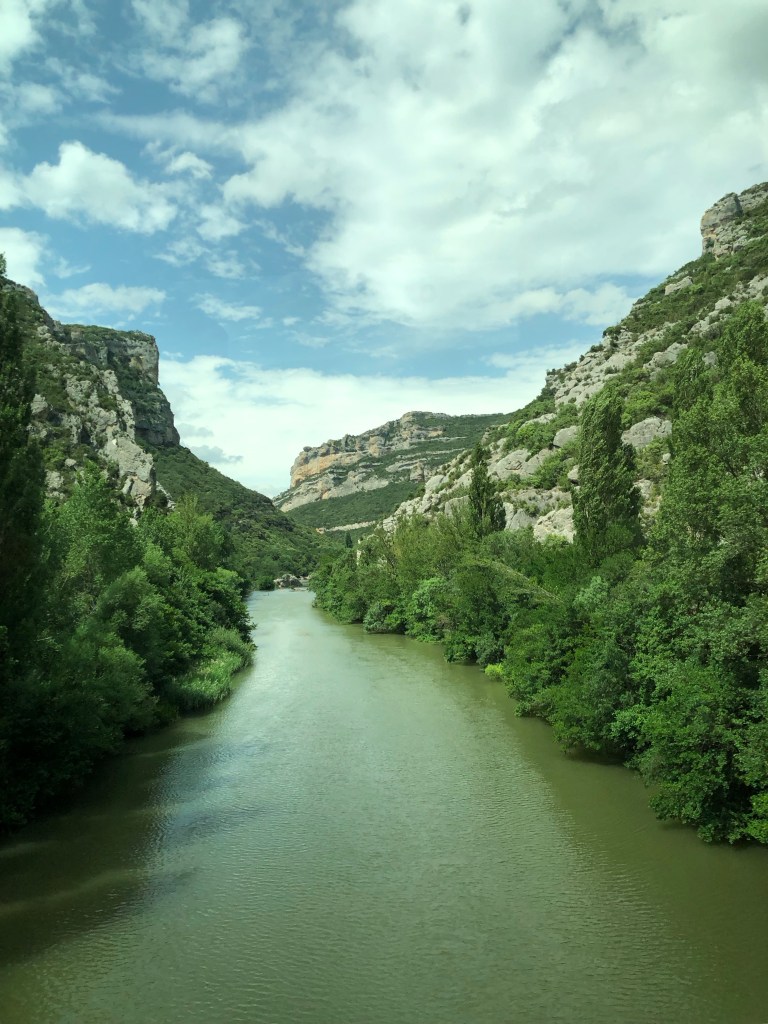
The bus is winding its way through the northern marches of Spain’s largest county, Castilla y León. A meandering river follows the road, and sleepy establishments dot the landscape: a host of cattle farms, ruined quarries, an ancient church or two, and an out-of-town brothel called ‘Las Vegas’ bearing a crude illustration of fishnet tights on the wall. For the last half hour we’ve been traveling in the shadow of the high cliffs of Lerdano, and beyond that… beyond that is the legendary Meseta. I’ve heard so much about it, I can hardly wait!

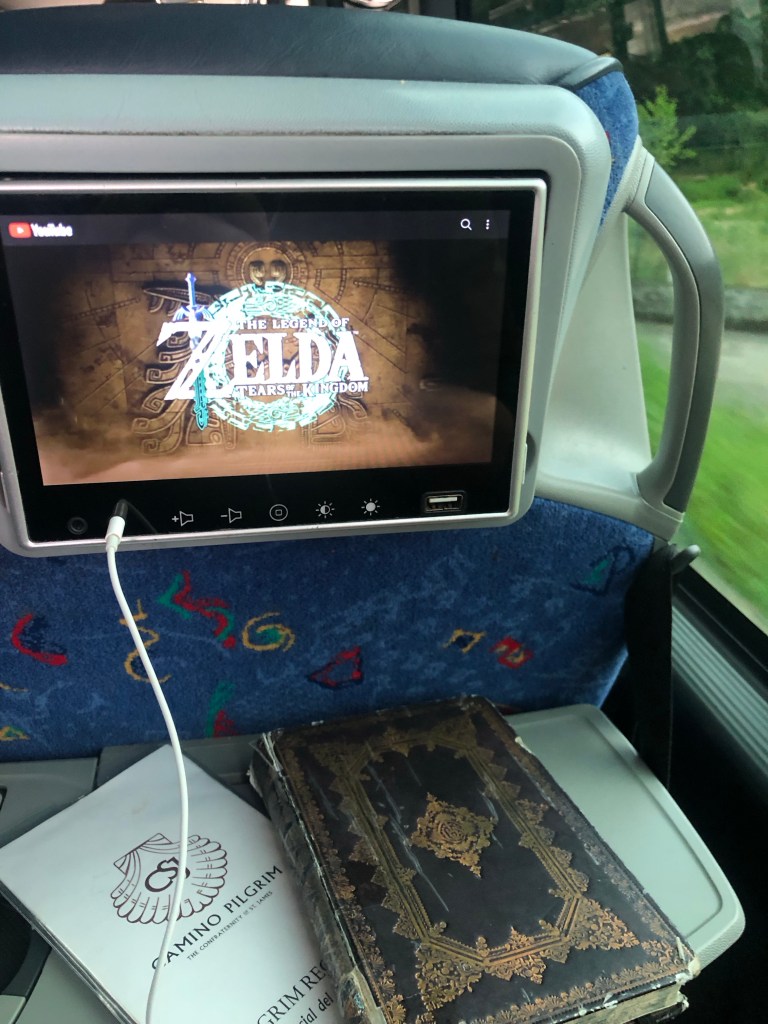
I’ve been trying to navigate the telescreen on the back of the seat in front of me. That nobody else except the noisy Moroccan family in front of me is doing the same should have been a clue. The tech is dated and hard to use. I was able to spin fifteen minutes of YouTube out of it after a few failed sign-in attempts (as it won’t let you scroll down to accept cookies), which meant I could enjoy the awesome soundtrack to The Legend of Zelda: Tears of the Kingdom for a bit. It’s been a bloody good palliative for a breakup, and while it’s unlikely to knock Ocarina of Time from the top spot (so much love for that classic) it’s easily become my second favourite game in the Zelda series. Plus the layering in the soundtrack is so bloody clever. I’m hooked.


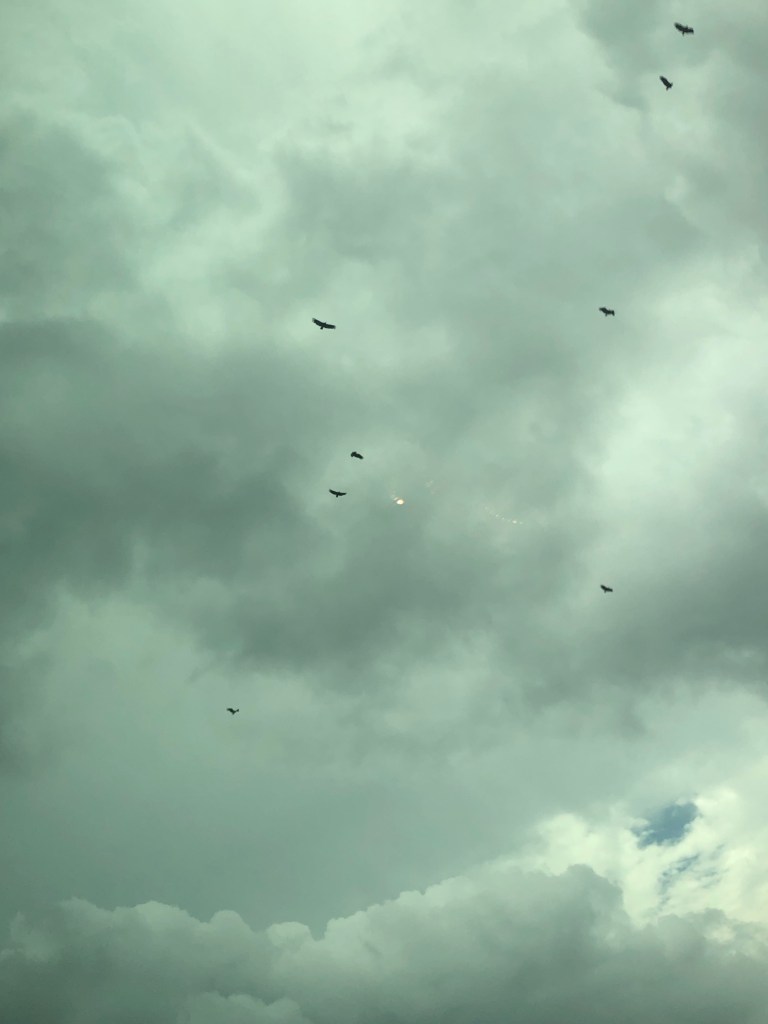
At Balmaseda, near the end of the Lerdano massif, I see my first vulture soaring overhead. It takes me a couple of seconds to see the rest of them: perhaps forty in all, racing toward a destination unseen behind me. I’m almost tempted to jump out the bus to investigate, if it weren’t for the very real possibility of ending up stuck in this backwater until the next pueblo bus, which could be a full twenty-four hours away. It’s a good thing I didn’t bring my camera, though, or I might just have chanced it.


The Moroccan family in the seats in front are making quite a scene. Or rather, their progeny are. The father appears to have given up on parenting his two year old, who has been screaming at the telescreen for the entire journey in a mixture of Spanish, Arabic and that nonsense parrot-speak that babies use. Dad is feigning sleep when he can. Half the remaining passengers appear to have found earplugs and put them to good use. Mine, unfortunately, are in the hold with my rucksack, so this is just something I’ve got to grin and bear. To add to the din, the veiled mother practically shouts down the phone to three friends in quick succession in a voice lucid enough for me to pick up what she’s on about, even with my rusty (and admittedly elementary) Arabic. Fourth time not so lucky: after a break she hears her phone ringing, picks it up, sees who is calling and promptly puts it back down. Seconds pass and it rings again. She lets it ring. Her husband casts a questioning side-eye her way, but their exchange is lost as the bus grinds around a corner. On the fourth attempt she rejects the call outright. The kid continues to wail at the telescreen, unable to understand the interface (which is all in English) or comprehend why hammering his tiny fists on the touchscreen keeps removing the game his father has long since given up reloading for him. So much for catching some Z’s on this bus.


We’ve stopped at a concrete-and-glass café near Villarcayo. It must be a nexus of some kind, because half the bus got off, to be replaced by just a handful of handsome locals. Not fifteen minutes later, we crossed the Ebro river, flanked on both sides by an even more handsome Sierra, its jaw-like granite crags sundered by the mighty river. There are few things more likely to make my jaw drop than a decent granite cliff. Maybe I’m just easily pleased, or maybe my heart is made of granite.

It doesn’t say in the Bible when God made Spain, but I figure it was somewhere towards the end of the week, because wherever I look I see such incomparable beauty. Which makes me just one more hopeless Romantic adventurer to this country before me. There’s quite the list…


Bloody hell, but it’s good to be traveling solo again. I know it’s not everyone’s cup of tea, but it is definitely santo de mi devoción. I’m not ashamed to admit I’m addicted to the unfettered freedom of it. I’m booked ahead for the night due to my late arrival in Burgos, but beyond that, the future is an open book. And that’s just the way I like it.

Roll on three weeks of uncertainty! At the very least, it makes for fantastic writing material. BB x
For Whom the Bell Tolls

My provisional license arrived in the post yesterday. My second, I should say, since after a very thorough summer holiday shakedown of the flat I’m convinced I must have accidentally thrown my first one out with the trash months ago. It’s put a major stopper on the whole learning-to-drive this summer by holding up the theory stage, but now that it’s here I’ve got no excuses. I should get booking.

But first, I’m getting out of here for a few days. I’m done with scrolling, hoping for contact from the outside world and turning off the WiFi for a bit of enforced internet downtime. Summer holidays just drag on and on when you have nothing to do, so I’ve decided to get out there and do something.

So here I am in the ferry terminal in Portsmouth, waiting for the 22.45 to Caen. The overhead telescreens keep alternating between the blue departures board and the vivid blue and yellow banner of Ukraine. The BBC News app remains focused on the heatwave, though the magic number 40 has disappeared from the headlines – “temperature tops 38C and likely to rise”. Five stories down, Tugendhat is eliminated from the running for Tory leader.


It certainly was hot today, but it didn’t feel much like that blisteringly hot summer holiday in Jerez almost twenty years ago. Despite the threat of 40°C heat, the breeze rolling in across the Weald kept the school grounds pleasantly cool. Even so, the signs that this has been an unseasonably hot few days are clear. When I went out to do a little reading in the morning, the summer soundscape was there: the echoing whack of a tennis racket, the ceaseless chatter of the house martins, grasshoppers chirping lazily in the meadow. A few hours later, the whole place was silent. Only a lone crow broke the stillness, and that was just the once.

I thought the train journey would be problematic due to the hysteria in the news, but despite the grovelling apologies over the Southern Rail tannoy, the train was only ten minutes late pulling into Portsmouth – which is remarkable, given how prone to delays they can be outside of a national crisis.

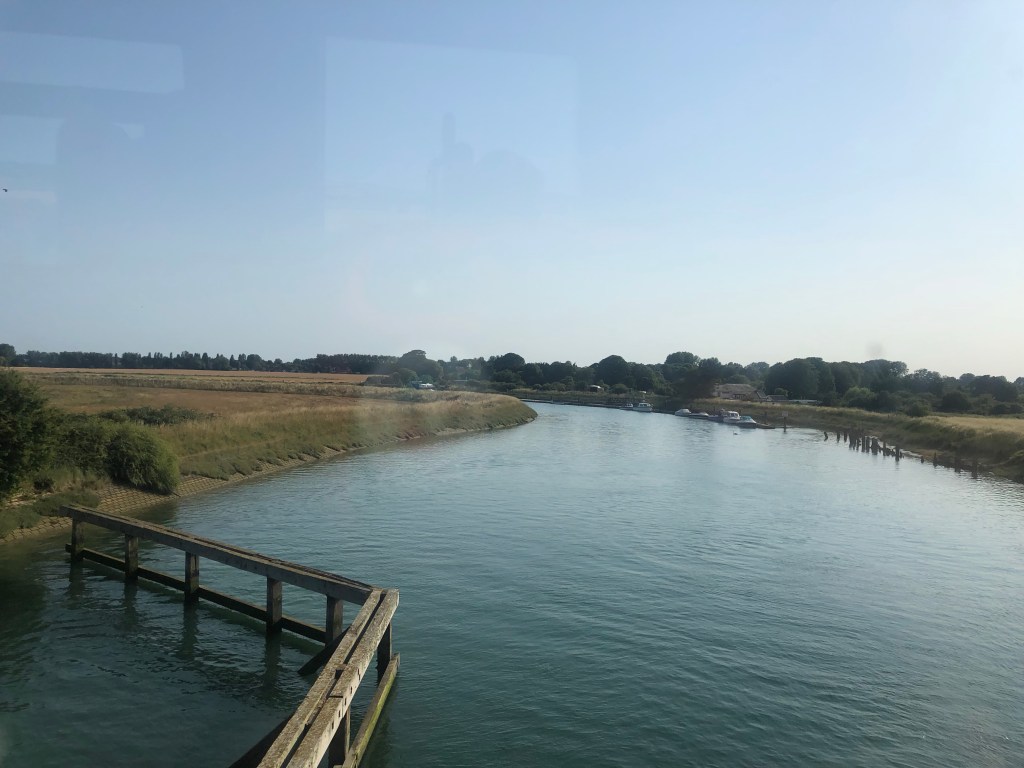
It’s a beautiful train ride, the route from Crawley to Portsmouth – one of those British rail journeys you should tick off the list, like the one from Darlington to Edinburgh. I never get tired of passing Arundel Castle and the fens at its feet. A childhood spent in and out of various salt-marshes around Kent has left me rather fond of their bleak serenity. Herons stalking the water’s edge. Egrets bedecking the bushes like so many plastic bags snagged on the branches.

Suddenly, an intensive greenhouse-farm appears, concealed from the outside by a thick growth of trees. A ravenous human hand clawing the depths of the earth to satisfy a hungry world. And then it’s gone, the train is hurtling forwards and I’m back in the marshes. I could be looking into the past or the future. I remember the fate of El Acebuche, its silent reeds swaying in the wind, and I’m not sure I want to.

The French family in the seats behind me must be headed for the ferry port, too. At least, I guess they are – I’ve caught the word “bateau” often enough. The children swap in and out of French and English without much of an accent overlay in either. The father speaks only on French, until he stops the ticket inspector to ask if she can turn off the air conditioning. “Don’t you think it’s rather nice, as it’s so hot out there?” – “For five minutes is nice, but it’s freezing.” – “If I were you I’d enjoy it.” At the next stop, the father gets out to soak up the sun. His daughter only just coaxes him back on as the doors close. Before he returns to his seat, he steps into the next carriage, remarks that it’s warmer, and moves. Within minutes the rest of his children have followed suit. It seems petty, but they have a point – the air con was turned up so high I had goose-flesh for half the journey.

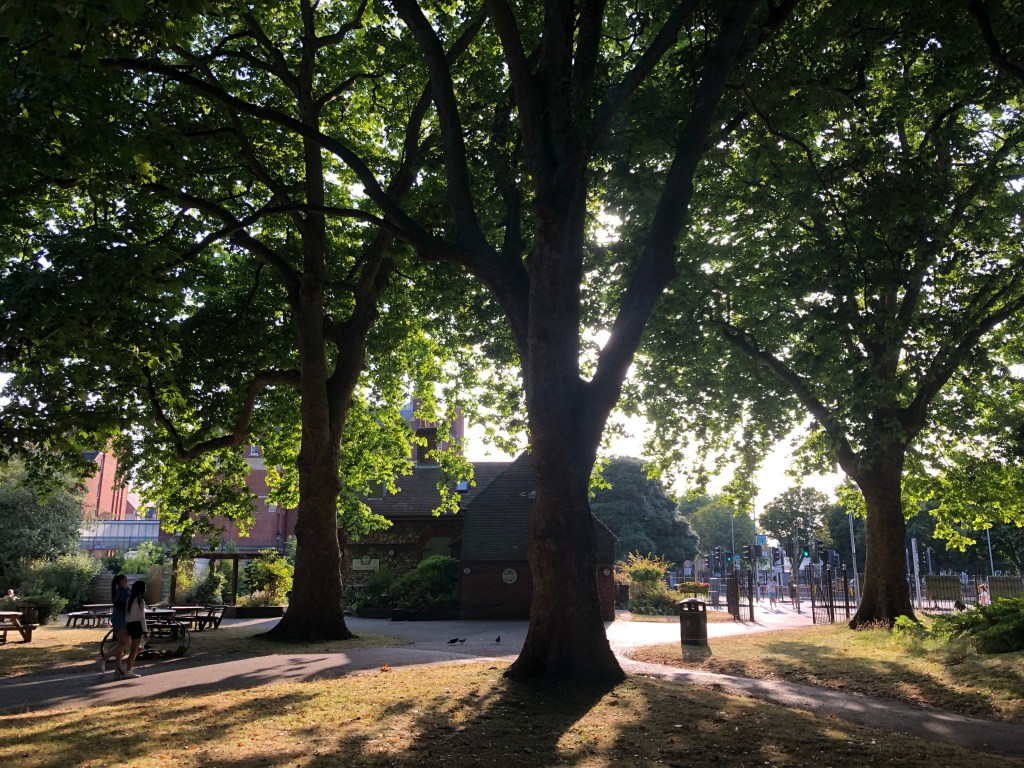
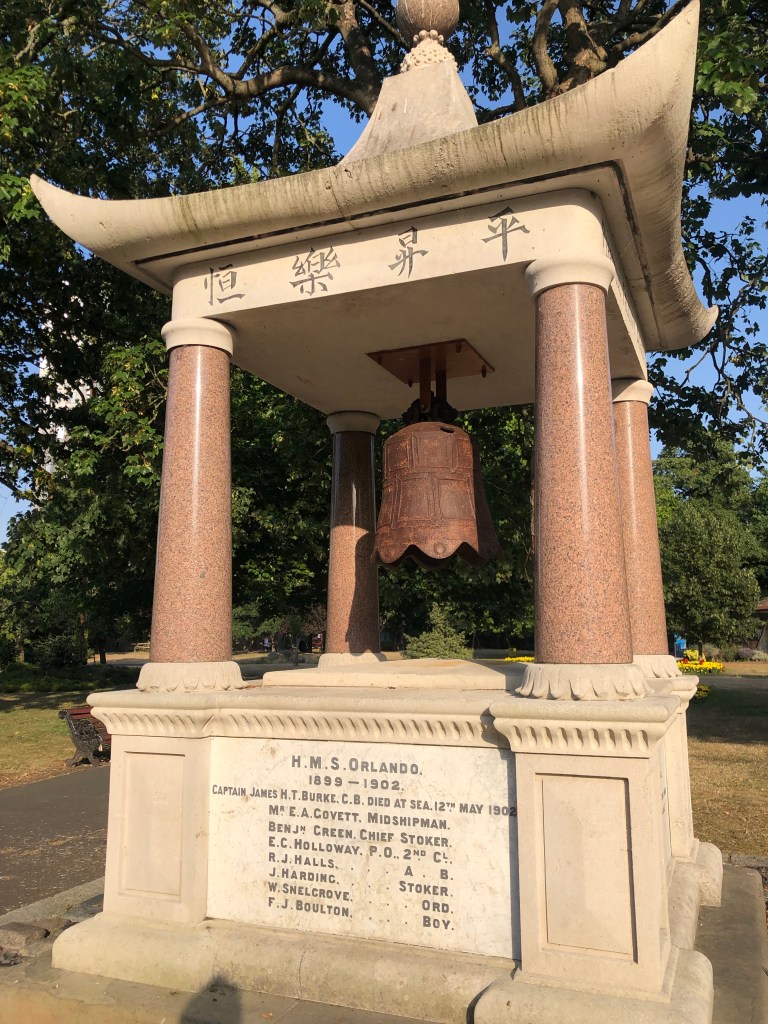
I haven’t been to Portsmouth before. The last time I caught a ferry in this neck of the woods was from Southampton, but that was many years ago and we didn’t stop. I had four hours to kill and not a lot to do, so I picked a spot in Victoria Park and watched the world go by. The bells of St John’s sounded for seven. They sounded strangely mournful, but though I hummed the melody back a couple of times, I couldn’t work out why. Two handsome women wander by, their accent West African and intensely musical. Three kids hurtle past, one on a scooter, two on skateboards. One wears a red-and-black chequered shirt tied around his waist (did everybody own one of those shirts at some point?). A family of cockatiels screeched from an aviary in the centre of the park, stolen away from their home far beyond the sea to entertain the fancy of the British public. An ancient Chinese bell stands nearby and seems to serve a similar function, pilfered – it says so in almost as many words on the plinth – during a campaign in Taku. A cryptically-worded message daubed above reads “Perpetual Felicity Achieved” in austere capitals. A breeze blows and the bell moves a little, but it makes no noise. Some cage birds stop singing after a while, too.

As the sun sets, I head to the port. The heat and the hysteria have driven everyone indoors. The high street is virtually empty. Just a couple of kids with drinks they’re nowhere near old enough to drink and a level of delirium to match, and a weatherbeaten gentleman sleeping in the shadow entrance to an Ann Summers store. A grey mannequin in turquoise lingerie poses suggestively through the window at him, blowing a kiss. He wipes his nose, shakes his head violently and turns the page in the book he’s reading.

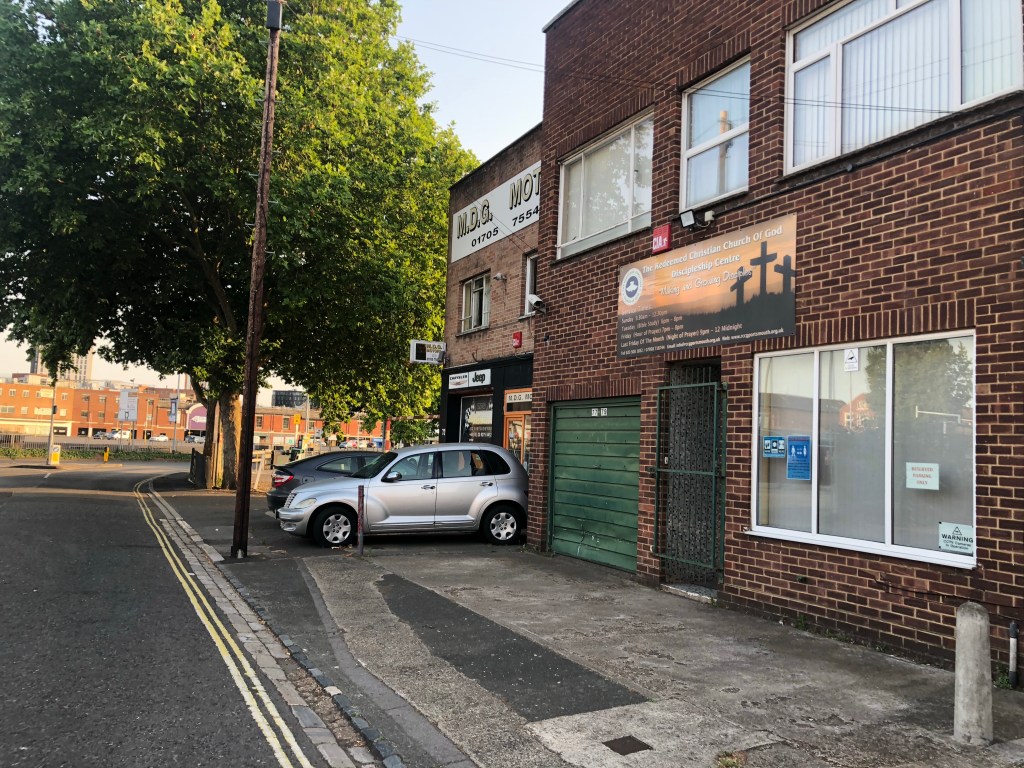
There’s plenty of folk driving here and there, but nobody on foot. For several minutes I feel like the only human in the city. A couple of Deliveroo me go by on their bikes. A bearded man in a red-and-black chequered shirt worn over his t-shirt, bent over almost double. I pass an outpost of the Redeemed Christian Church of God in a backstreet, and later, the house where Charles Dickens was born. Everything is shut. The high rasp of a motorbike going by, the evening heat and the strangeness of a new place… It almost feels like I’m abroad already.


But no. I’m still here in the terminal. Boarding starts in ten minutes, so I suppose I’d better close there. A demain, mes amis. France is calling! BB x
For the Glory of Jellyfish

Tuesday 12th July, 11.13am
Hassocks Station

I needed to get out. While it was ultimately my decision to come back south to my flat and cut myself off once again – and I stand by that decision – it’s all too easy to go stir crazy in here on my own. I was angling on getting out and seeing friends for a couple of days, but as my plans fell apart, I’ve had to take the reins myself. So I decided to strike out for the coast. Brighton always makes for good writing, that perfectly bizarre city.

It’s clearly a school trip day today. The train south from Three Bridges was absolutely rammed with saaf Landan kids in high-vis jackets, their beleaguered teachers sitting close at hand, identifiable for the throbbing veins in their temples if not by their lanyards. Standing room only. It’s kind of noisy in the gangway, so I pop my headphones on. The Spinners’ Rubberband Man cancels out some of the angrier verses the kids are throwing around from their phones. I don’t understand the unbridled rage in that kind of music, much less its magnetic appeal to kids. Give me the laidback fun of the seventies any day.


12.40pm
Brighton Palace Pier

Somehow it took me all of an hour to get from the station to the pier. Time slips through my fingers in a bookshop. It’s as though Waterstones operates in its own dimension. That could well be because I’ve become a lot more tactical when it comes to book-buying, taking the time to really get a flavour for a book before deciding to add it to my collection. As a general rule, any and all books on Spain (pre-20th century) go straight into the basket, but I’ve genuinely reached the stage now where if I don’t have it, it’s not worth having. There’s still a wealth of material out there in Spain in Spanish, but with Spain’s ludicrous stance on FBP, shopping for books over there is simply not economically viable. At the moment I’m trying to pick up my European reading challenge where I left off a few years ago, so I sought out a Ukrainian book to add to the collection today. I thought I was onto a winner with Sholem Aleichem’s Tevye the Dairyman – the forefather of Fiddler on the Roof – only it turns out, predictably, my mother already bought the book years ago. Still, no matter. That’s one more book I can feel better about giving away someday.


1.27pm
Brighton SeaLife Centre

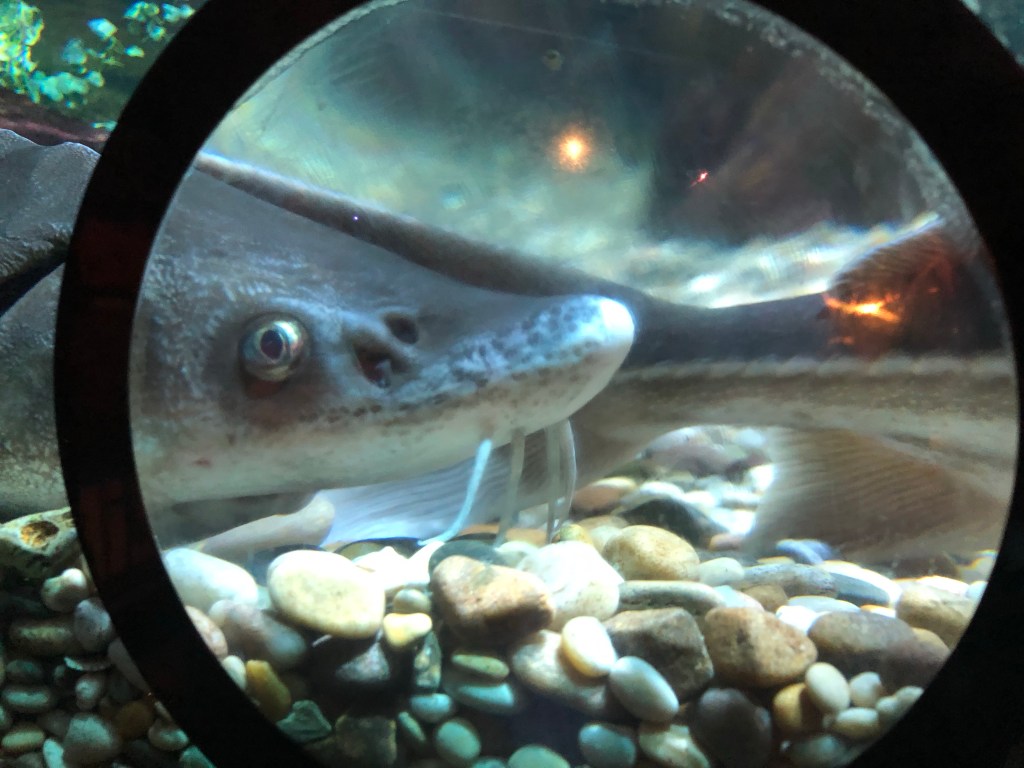
Yes, I visited the aquarium. Don’t judge! When I was a kid I used to love going to aquariums – or the more ecologically-sound sealife centres, as they are so often called these days. Nausicaa across the Channel in Boulogne was a personal favourite, but Hastings’ SeaLife Centre came a very close second.

It was pretty much deserted. A large primary school group came in after me, but they never made it any further than the cafe housed in the original Victorian aquarium. I felt like a kid again and challenged myself to name the fish whose names I’d furiously memorised more than twenty years ago. For some crazy reason it’s all still there. From loach, tench and trout (easy mode), to snakelocks anemones, garden eels and corkwing, rainbow and cuckoo wrasse (standard) and on to pacu, Bloody Henrys and discus fish (hard mode). It’s a safe bet that the reason I had such a hard time learning anything in science class was because that part of my brain was stuffed full of animal trivia. If only biology had been about animals and not plant cell structure…! Who knows, I might have gone on to study it. As it is, I was bored stiff and let it go as soon as I could.

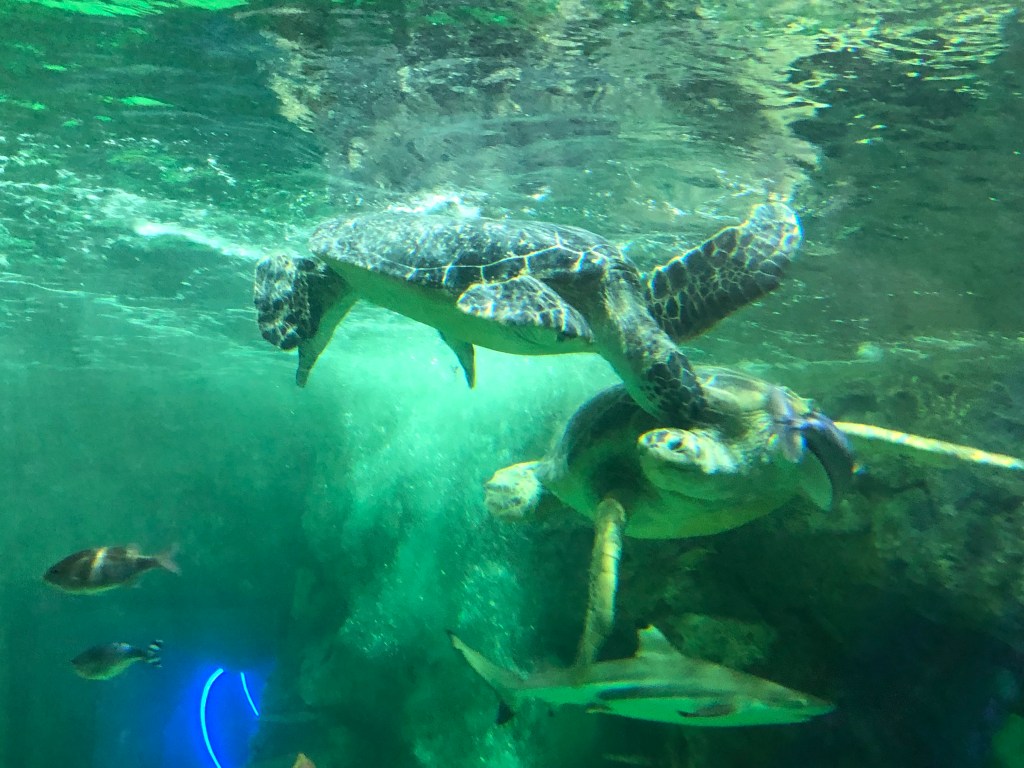
I stood and watched the turtles for quite a while. I don’t think I’ve ever seen a live sea turtle before. My god, they’re huge. Nature found a perfect recipe over 100 million years ago and decided ‘yep, that doesn’t need any more work’. Like sharks, turtles have been around for millions of years. Watch a turtle fly through the water and you’re reminded of how pathetically short our time on this planet has been by comparison. Only, these turtles looked a little stereotypic. One bit the other on one pass. Creatures can develop odd behaviours when they’re cooped up in small quarters. Maybe that’s a window into what’s happened to me in my flat this summer!

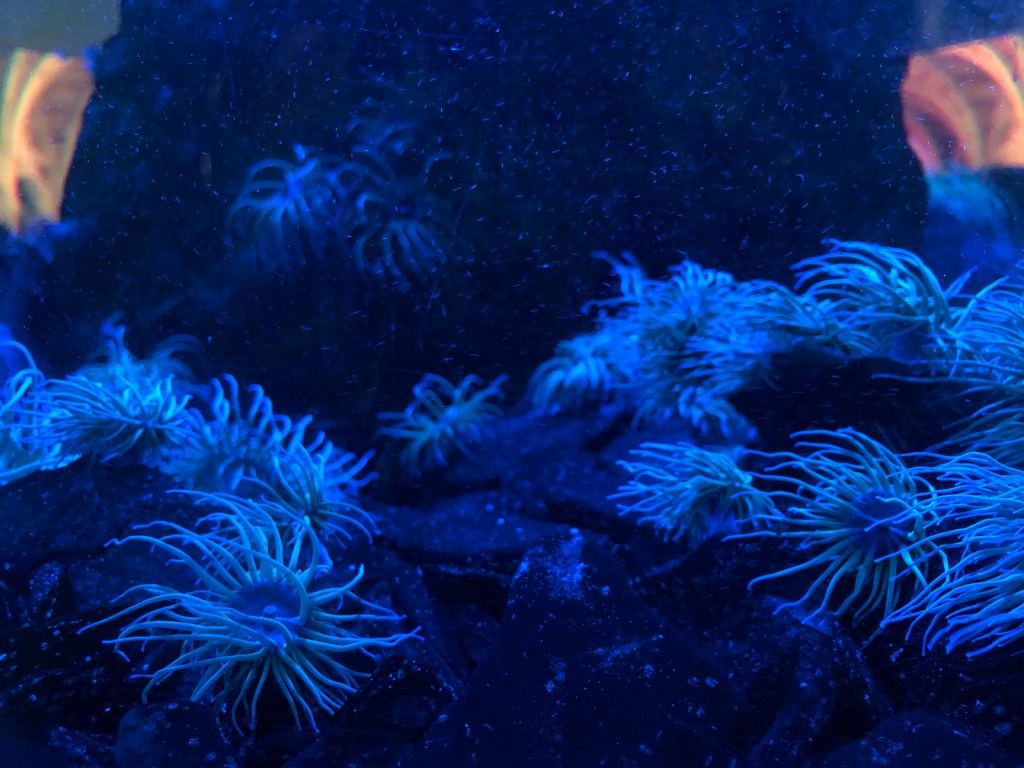
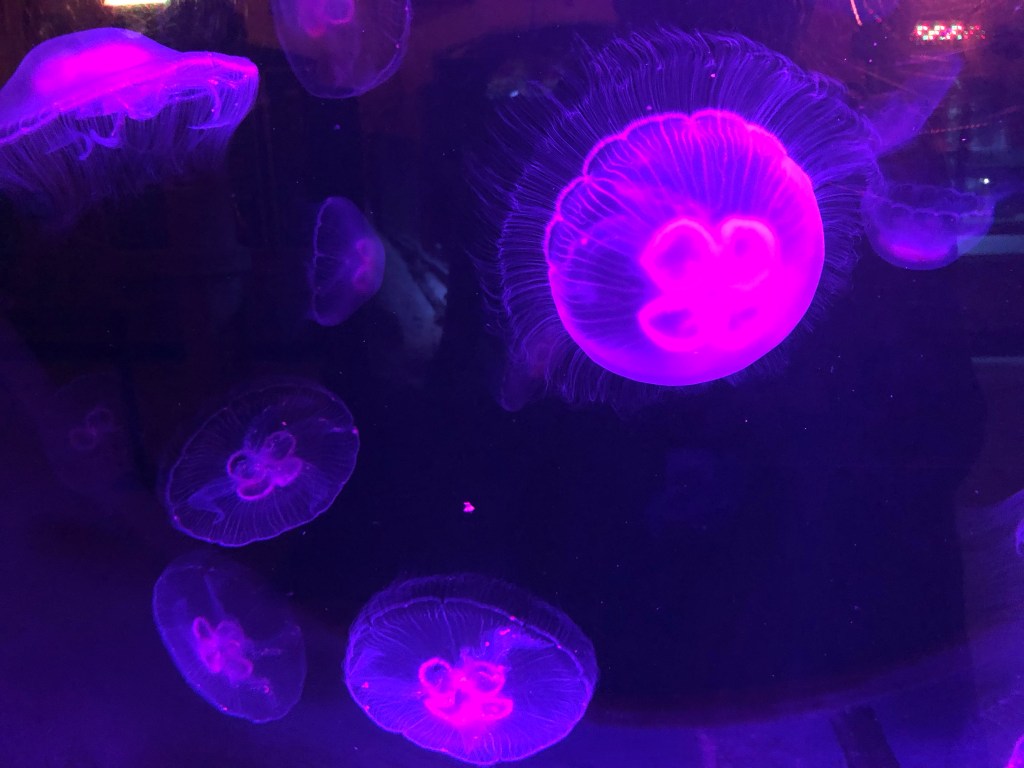
On to the jellies. I could have come here for the jellyfish alone. They’re absolutely mesmerising to watch in flight, pulsing slowly through the water, their hair-like tentacles trailing behind them. Another perfect life form that has seen millions of years of evolution come and go. Almost all sci-fi flicks imagine aliens from other planets as bipedal if not all-but human in appearance (Doctor Who and Star Wars are the prime examples), but if I were a betting man, I’d stake a fair amount on extra-terrestrials looking more like jellyfish than man. Isn’t it rather selfish of us to assume that ours is the perfect life form when turtles, sharks and jellyfish – hell, even cockroaches – have outlived us by millions of years? And on that note, I’d better clear out of here before I sell out mankind to the invading jellies faster than Kent Brockman.


2.58pm
Artists’ Beach

After nearly betraying humanity over a jellyfish and admiring the beautiful world beneath the waves for an hour, I promptly went outside, climbed the steps up to the palace pier and ate a battered fish with chips and vinegar. The irony was fortunately lost on the hoarse chippie vendor, who barely got the order numbers out in a grating voice. A group of girls next to me got their orders in after me, but somehow got their orders out first. £8.20 for fishcakes and chips seemed a bit steep compared to the £5.40 deal just 200 metres from the pier, but it was good quality, and since I barely managed to finish it, I didn’t have to wash it down with a tot of buyer’s remorse.

Brighton was packed with graduands this afternoon, red-faced and sweating in their full academic dress for the 28°C degree heat. If they opted for modesty, the other beach goers didn’t get the memo. British flesh on florid display, ranging from lobster-red to milk-white. A few lucky sightseers with bronze skin seemed to walk a little taller, but they were definitely in the minority. Lifeguards, street vendors and tramps made up the rest. Folk who have little choice but to soak up the sun.

Freeze frame. I pop the chip-box in the bin and look around – and really look. Yuppies in “gap-yah” pants and strappy tops. A lady in a wheelchair, and two women at the traffic lights who get to discussing behind their hands how she might have ended up there (the kind of curiosity my generation loves to hound out as aggression). Goth-types with nose rings, vape-sticks protruding from their fingers. On that note, cryptic vape ads everywhere (what on earth is the appeal?). A squadron of Korean cyclists suiting up on the sidewalk. A cormorant flying east along the coast. The indefatigable enthusiasm of the man selling rides on the motionless merry-go-round. A boy with what looks like rickets going by. The blonde girl in her thirties singing her heart out to a crowd of beachgoers enjoying a late lunch. Nobody is looking up at her.


3.35pm
Preston Park Station

The train home is much emptier, but I still walk the length of the train to find a carriage to myself. I pop the headphones back on as the train begins to pull away and Manu Dibango comes on. Sax City, Africadelic and Soul Makossa. Dibango was one of the victims of COVID two years ago. Like Marvin, James and Luther, that’s one more of my favourite artists who I’ll never get the chance to see live (or alive, for that matter).

During the Gospel Choir debacle, I spoke to a colleague and asked for their thoughts. They said they had thought a lot about the issue of music in a post-BLM world, and questioned even having been to a soul music gig as a white person. That messed with my head for months. It’s not that I don’t rate musicians who look like me, but give me a choice between Ed Sheeran and Fela and it’s Fela every time. Pop is catchy, but disco is eternal – it just keeps on giving, fifty years later. Folk is clever but Soul finds notes that folk just can’t. And highlife is surely a candidate for the most feel-good music genre on the planet. How can you deny yourself the chance to listen to such wonders on account of a feeling of awkwardness?

I’m all for better representation in the music industry. It needs it. I just hope we don’t end up carving ourselves up into islands where we can only listen to people who look like us, think like us, talk like us. And I mean that literally as well as musically. Social media is doing that already. It’s a dangerous path we’re treading, and I hope we can weather the storm that’s coming.

Would you look at that. I’m back to sermonising. I think I was doing better with committing acts of high treason for the conquering jellyfish. Time to go. Blppp blppp blpppp. BB x

Rome II: Vatican Two

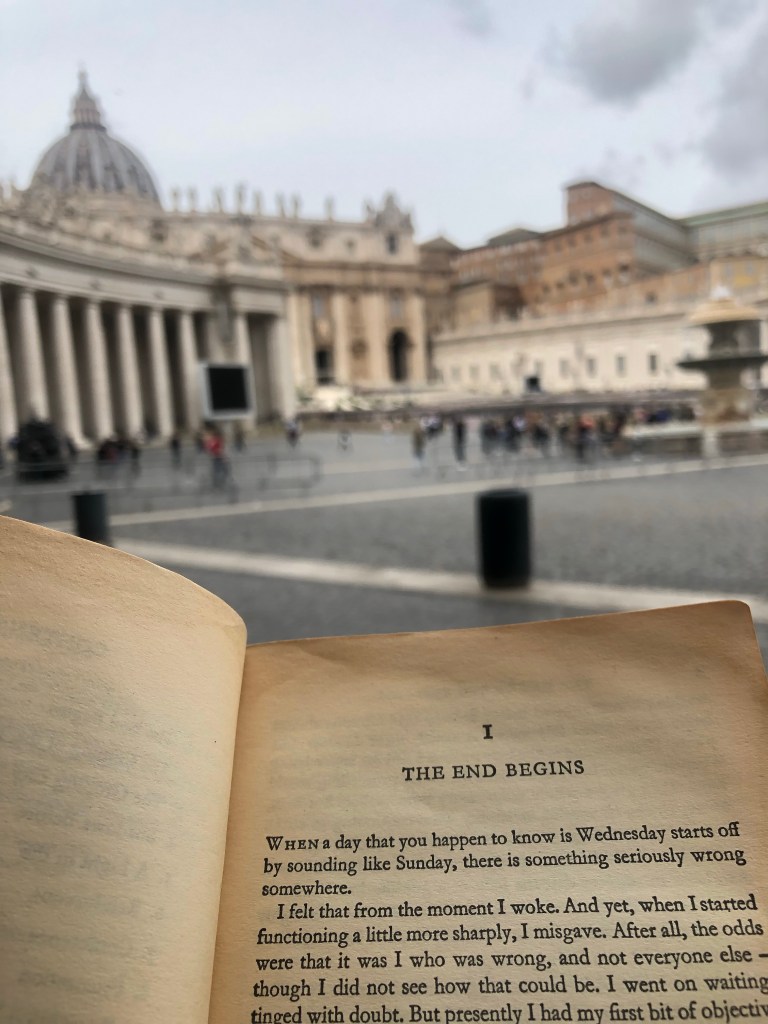
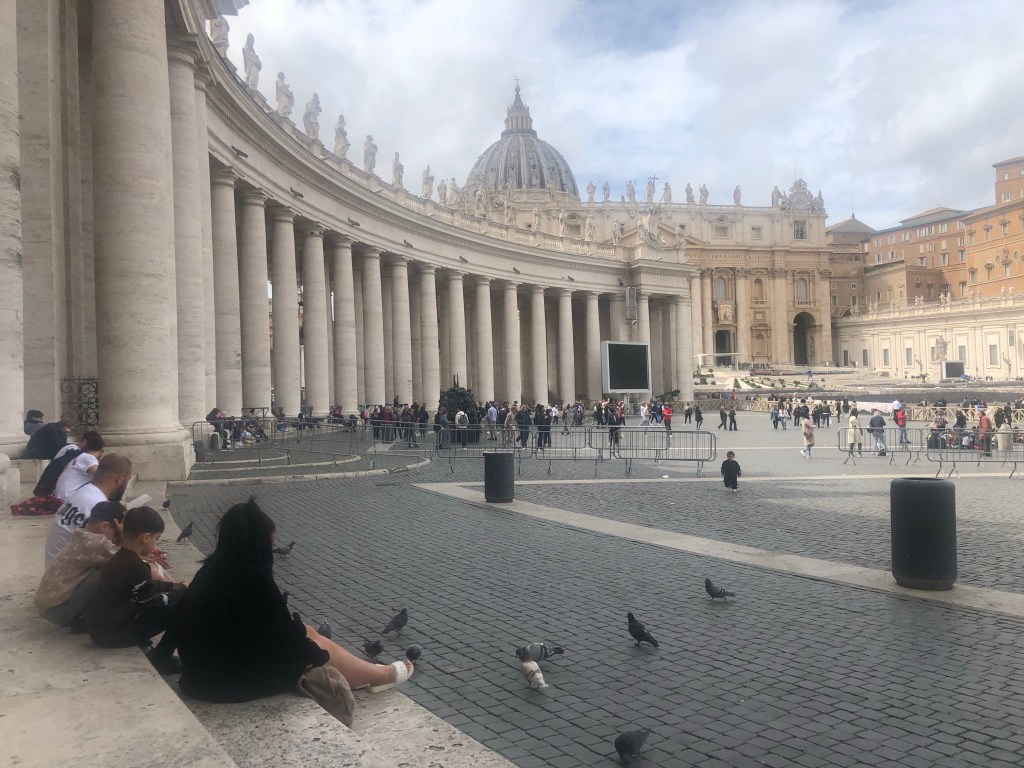
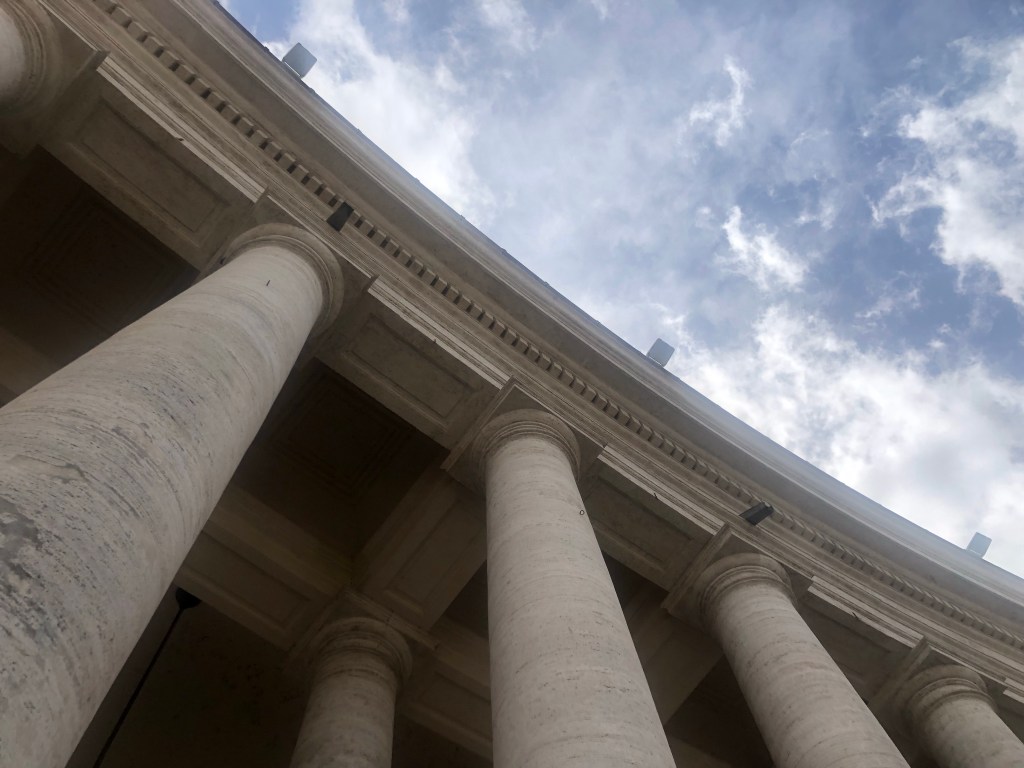
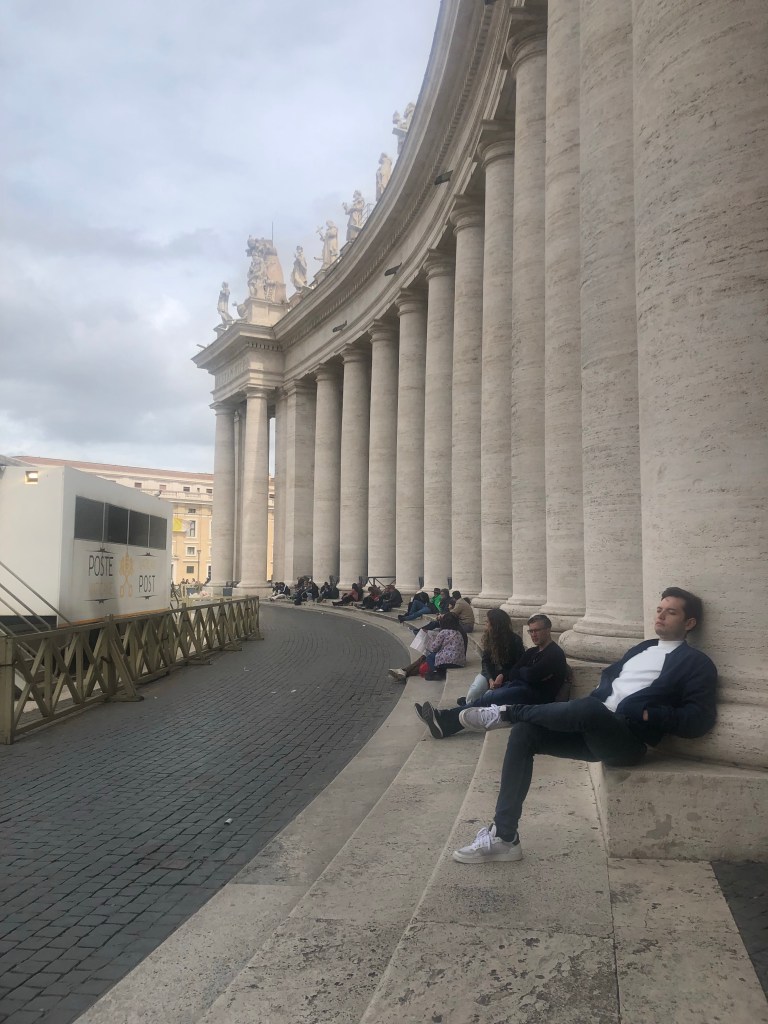
13.25. The surging throng of visitors to the Vatican Museums is steadily beginning to thin out. I could still probably count a thousand or more within the pillared walls of St Peter’s Square, but the morning rush is almost over. From my outpost under the statue of St Philip, I can see most of the piazza, except for the part obscured by the Vatican Post Car parked a few feet away. The postman came to pick up the mail around 11.30, some two hours ago. Since then I’ve been watching the visitors, tuning into the various languages around me and observing the interactions of the many thousands who pass through the Vatican every day. You could call it snooping, I suppose. I prefer to think of it as people watching. As I leaf through the first chapter of Triffids – my solo traveler’s Bible – I try to capture everything I see around me.

Two very well-heeled girls have been taking photographs of each other in front of the pillars for at least half an hour now. One of them is kitted out in a striking tea green trouser suit; the other is more noticeable for her red hair. Let’s call them Green and Red. I imagine what they’re trying to do is one of those time-lapse images for this or that social media network, since Red keeps strutting backwards and forwards in a highly artificial manner, flickering her hair over her shoulder and looking back to Green’s phone. The Vatican City seems an odd place for a glamour shoot, but then, what do I know? It’s a changed world.

A toddler is having the time of his life chasing pigeons in front of me. He’s so caught up in the chase that he keeps falling flat on his stomach, but the brave little soldier hasn’t cried once. He just gets right back up and charges headlong into the flock, giggling wildly and scattering the panicked sky-rats in his wake while his parents watch and mum takes a film on her phone.

After the people and pigeons, the next most numerous living thing here in the Vatican is the city’s gull population. Apparently they’re only a recent arrival: until as recently as the 1970s, gulls were a rare sight this far inland. Now they’re everywhere, raiding bins, snatching bread from hopeful pigeons and circling St Peter’s basilica like dirty angels – or do I mean vultures?

Three locals have dropped by with a pizza box for a snack lunch in the square. It seems the obvious spot for a lunch break: the domed sky is immense – you have to really open up your eyes to take it all in – and there’s always something going on here. A few minutes ago a woman was screaming something on the other side of the square – I never did see her face nor did I catch what she was shouting about over the cascade of the fountain, but from her constant used of “ustedes” I’m going to guess she had that evangelical fire that you only find in Latin American Catholicism.

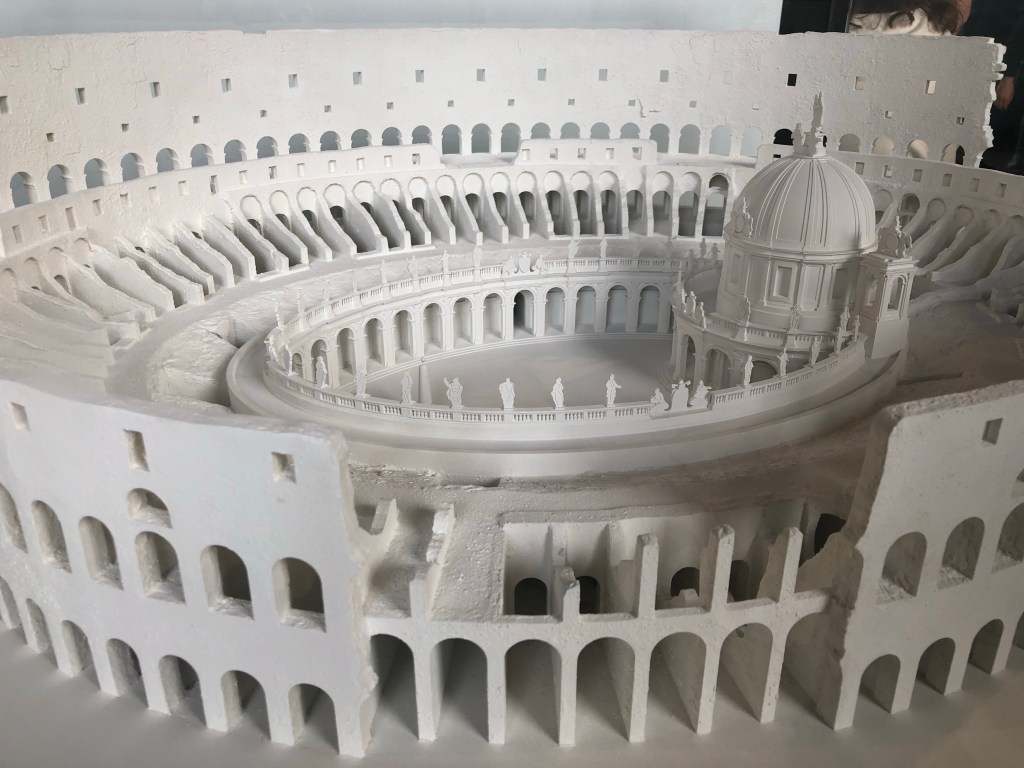
Did you know there were plans to turn the Colosseum into a church? Fortunately they were abandoned many years ago, sparing Italy the shame that Spain has to bear in the desecration of its greatest Islamic treasures of the Alhambra and the Great Mosque of Córdoba.

Well, perhaps not entirely. A casual walk around Rome reveals that many of its ancient churches are carved out of the bones of other Roman carcasses, perhaps most notably the basilica of Santa Maria degli Angeli e dei Martiri, housed in what was once an impressive frigidarium. Still, it’s worth remembering that this fate is probably what saved it from the twitching fingers of the stone-thieves that reduced many of Rome’s treasures, including the Colosseum itself, to the picked and dismembered skeletons we see today.

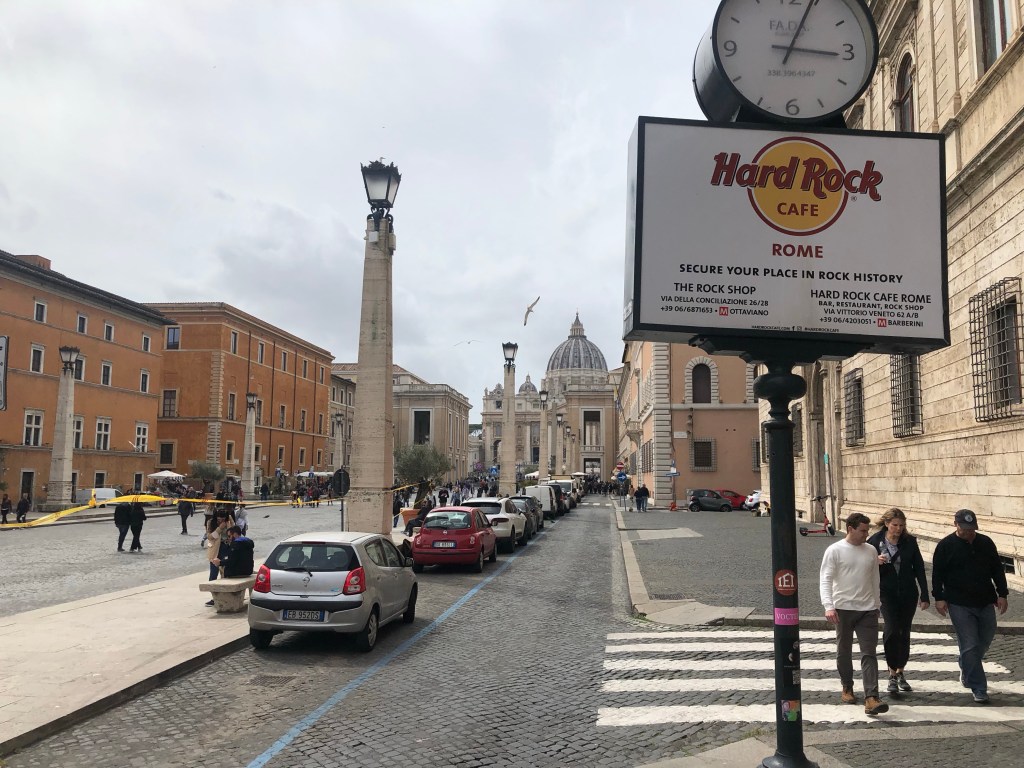
These days the Church has lost interest in “reclaiming” ancient wonders for Christ. Now it’s faithless corporations like Hard Rock and MacDonalds that play Columbus in the ancient places of the world, stamping their flags as close to the action as possible so as to draw in their customers like spiders. In that sense there’s not an awful lot of difference between them and the hawkers offering line cuts in St Peter’s Square at “special special” prices. They’re simply out to make a quick buck at the expense of the next band of pilgrims. It is a little disheartening that the first shop down from St Peter’s Square on the Via della Conciliazione sells branded British tee-shirts.

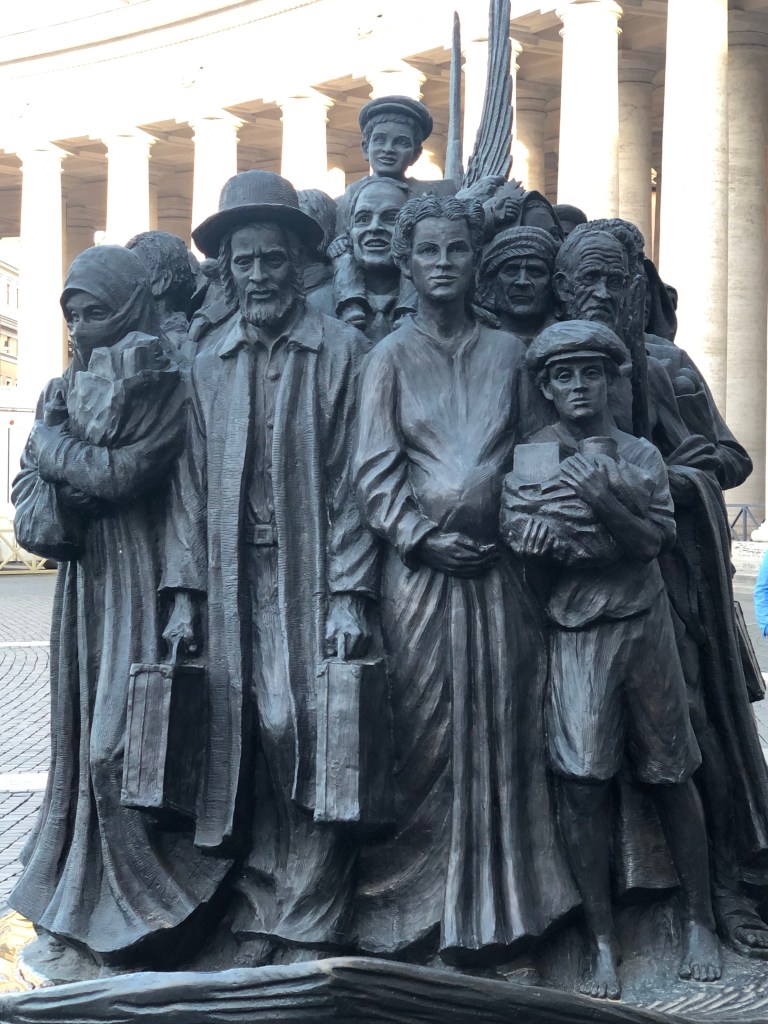
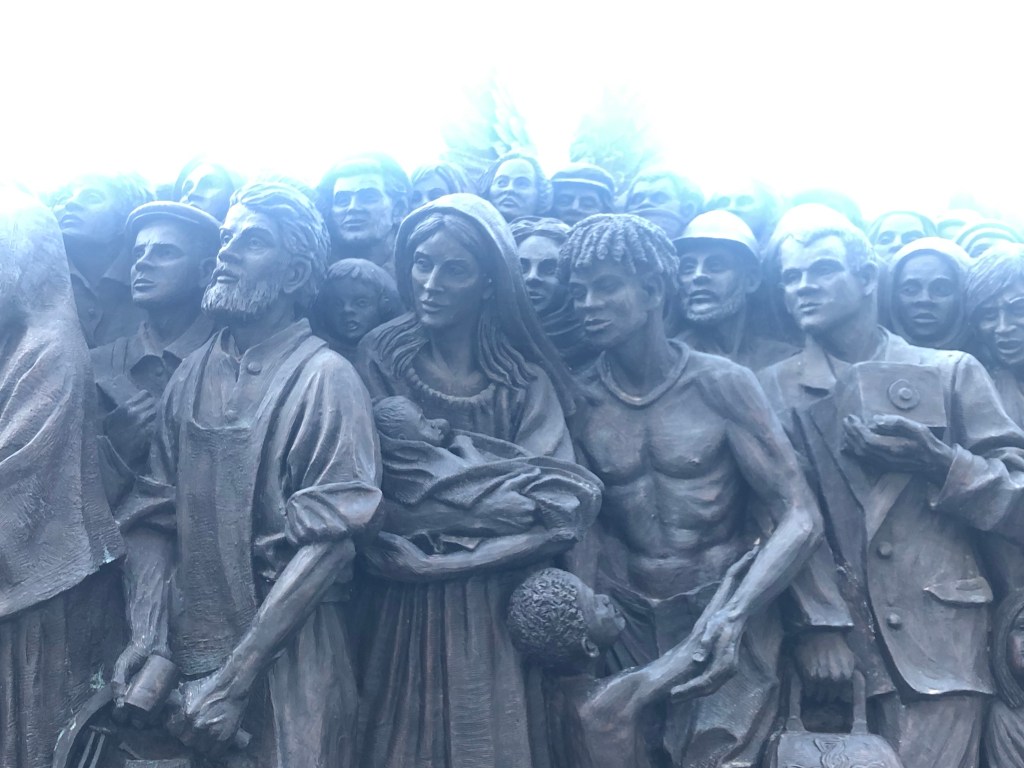
Speaking of which, the newest addition to the square is drawing a steady crowd. Timothy Schmalz’ Angels Unawares depicts a muddled group of refugees from every corner of the globe and drawn from across several ages in history: a Syrian mother and child, a Polish Jew, a family of African migrants, even a Native American nobleman. In a square full of righteous saints and martyrs, it’s a necessary homage to the real sufferers around the world: the everyday folk whose worlds are turned upside down because somebody somewhere thinks their world view has the right of it.

It’s 14.30. I’ve kept my vigil here for over four hours, and now I’m getting peckish. My feet, however, are immensely appreciative of the break from yesterday’s constant Roman around (ha ha). Time, I think, for a spot of lunch. BB x

Seehund

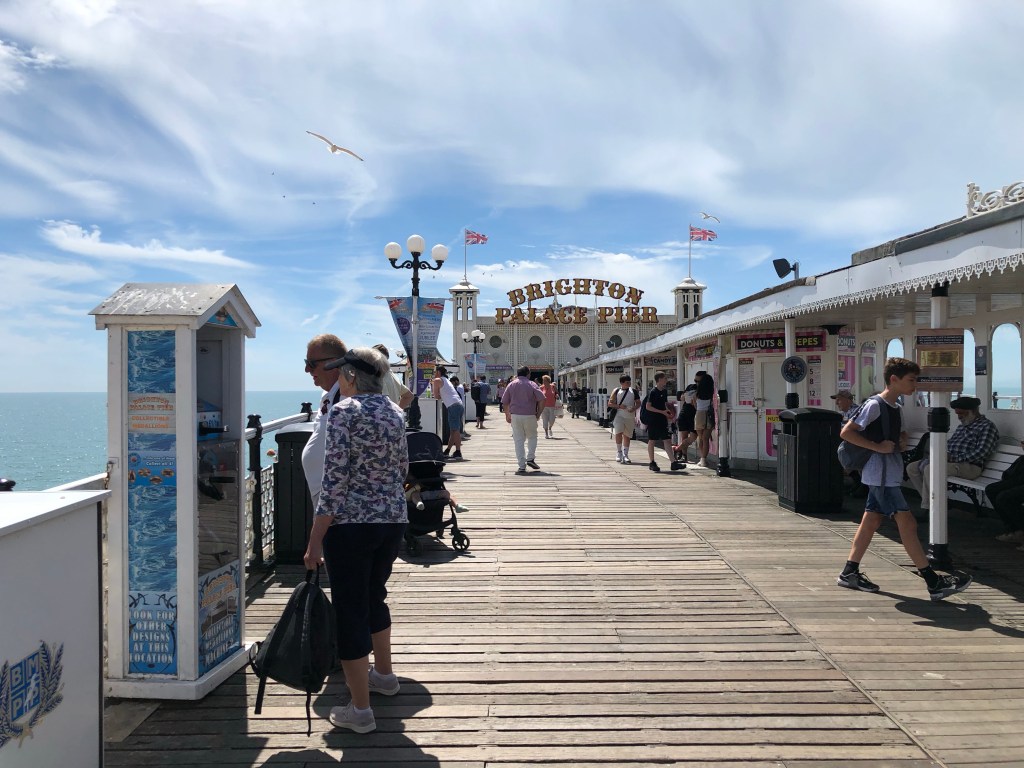
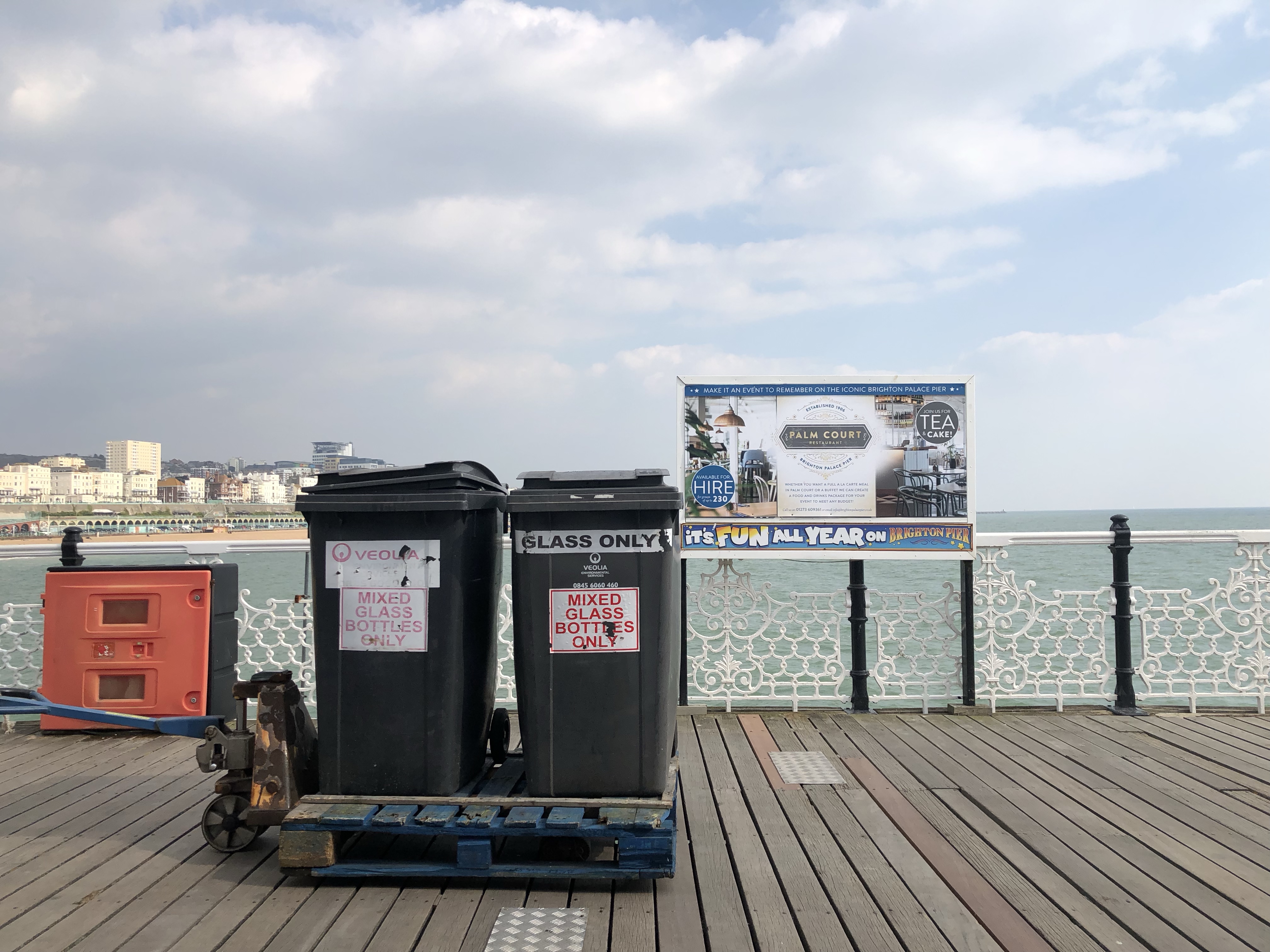
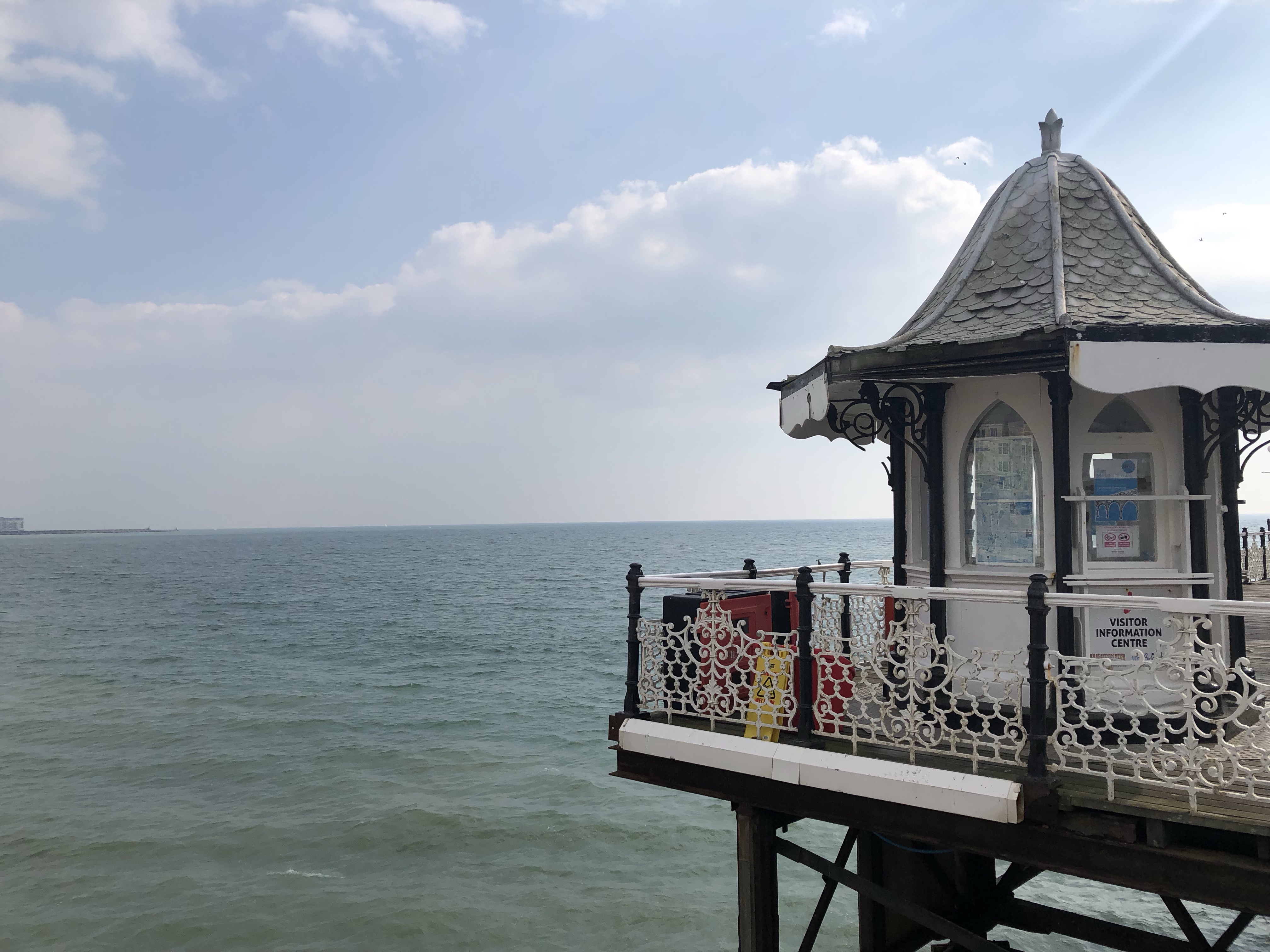
2:45pm, 20th March. I’m sitting on a bench on Brighton’s Palace Pier, sheltering for a moment from the wind. A sign in front of me reads “It’s fun all year on Brighton Pier”. Somewhere down the coast to the east, there’s a few mad folk towelling off after a swim. The sea doesn’t exactly look inviting today. I look down through the slats. The bottle green waters of the Channel heave and swell about the centipede legs of the pier below. I wonder what creatures of the deep might be looking back up at me, besides the silent starfish in the silt.

Two men wander over to the parapet, gazing down at the beachgoers below. One of them watches in silence, nodding occasionally. His companion holds a recording device of some kind in his hand and is whistling a crude but not inaccurate imitation of the gulls. Is he trying to lure them in, perhaps? To what end? I can’t quite make out his game. He keeps it up the whole time, occasionally saying something in Arabic to his companion and chuckling, and then whistling his gull-call again. After a while, they move on, whistling. His friend must have the patience of a saint. You get all sorts in Brighton.

A few seconds later, a herring gull lands on the parapet. It’s not there for long, as a gang of girls in tracksuits race up the aisle towards the gloom of the arcade, screaming and swearing, sending the panicked bird into the air in their wake. Two scavengers in a truck trundle by in the opposite direction, trailing two heavy GLASS ONLY bins behind them. The planks tremble beneath my feet. I imagine, for a moment, the structure collapsing beneath its weight. In slow motion I see the bins rolling over backwards and a cascade of bottles plummeting into the sea below, some of them shattering on the struts of the pier before they hit the water. I have a pretty active imagination.

I move on up the pier, past the booming darkness of the arcade, which still seems to draw in a faithful clientele, despite the mobile lure of pocket entertainment. In fact, I’m actually pleasantly surprised by the absence of phones on the pier – for once, I’ve got mine out more than most as I take notes. Beyond the arcade, I reach a collection of outdoor game stands. Tin Can Alley with a bored-looking brunette in a red shirt waiting for custom. Dolphin Derby with an enthusiastic announcer who wouldn’t look out of place in a pinstripe waistcoat and boater a hundred years back. An Indian family points out across the water talking in a language that isn’t English. A couple walk past, hand in hand, one of them gamine with a grey-tinged ponytail over shaved sides and a nose ring, and her partner robust, black, ripped jeans and winged eyeliner, a rainbow lapel badge pinned to her sleeve. The air is thick with the pungent smells of Brighton: fish batter, candy floss and the distinctive damp tang of weed. The breeze coming in off the sea cancels out one of the three at a time, but not for long.

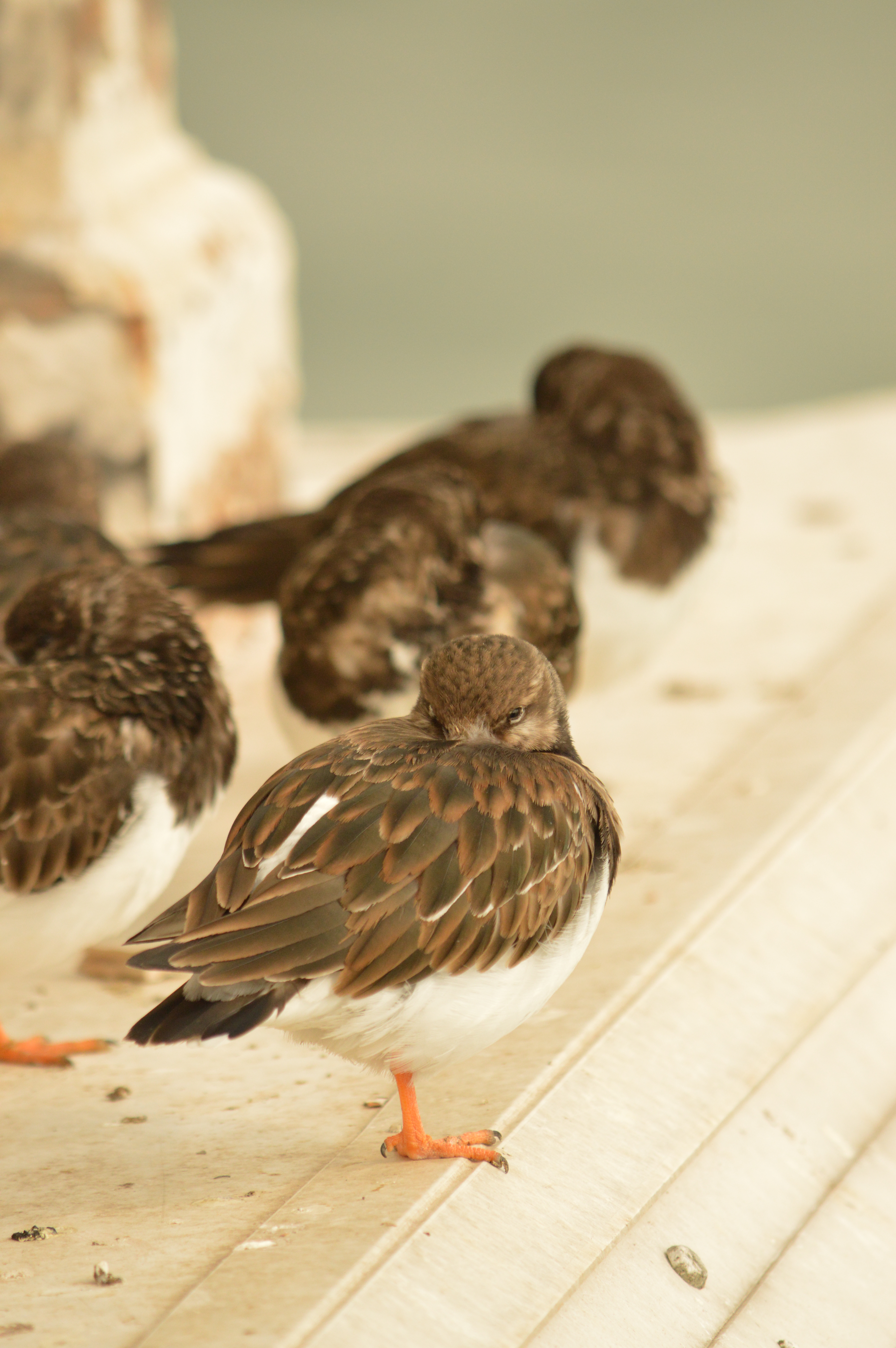
Behind the Tin Can Alley shack, a huddle of turnstones get some shut-eye. These often hyperactive creatures look out of place when static, and one wonders how they manage to get any rest at all with the thumping bass from the fairground rides at the end of the pier. It almost looks as though there’s a physical pecking order to the clan, and the ones at the bottom aren’t having much luck, hopping from strut to strut with remarkable dexterity. A passer-by sees what I’m looking at and stops to take a few photographs on her phone. The turnstones don’t seem to be fazed by me, or her, or any of this. After all, it’s fun all year on Brighton Pier. They’re probably used to it.

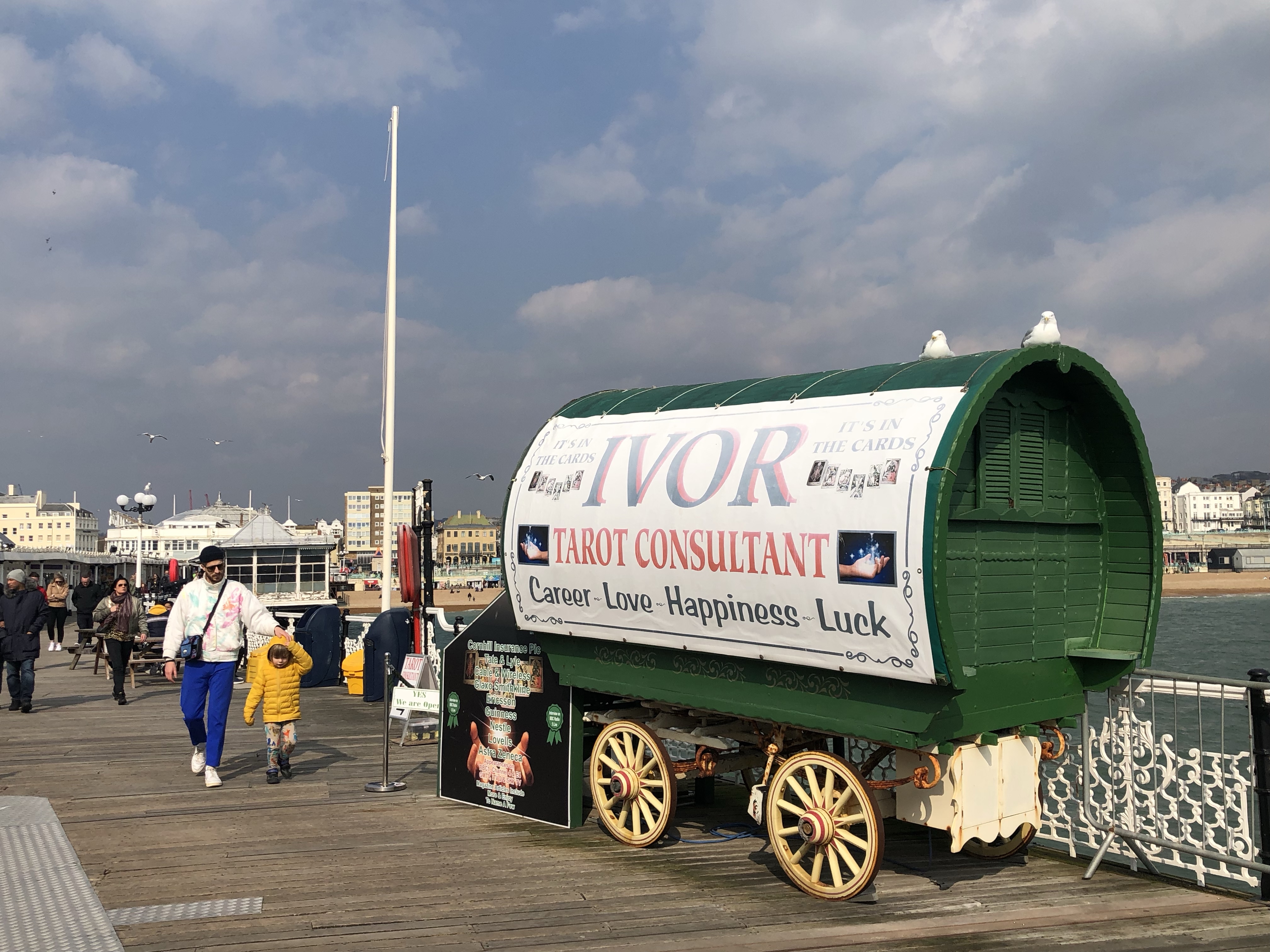
Nearer the fairground, an old gypsy-cart sits awkwardly beside the parapet, offering Tarot readings for a modest sum. Career, love, happiness and luck mingle strangely with Nestle, Astra Zeneca and Cornhill Insurance plc. I remember finding an abandoned gypsy-cart in the woods once when I was a child, its richly-painted woodwork fighting a losing battle with the forest’s silent army of moss, lichen and brambles. The gitanos in Tierra de Barros had no such fancies, eking out a living from beat-up cars and shabby tents. There is an old song of theirs I have consigned in part to memory, telling of their love for the Guadiana River, that came to mind:

The region of Chal was our dear native soil,
Where in fullness of pleasure we lived without toil,
Til dispersed through all lands ’twas our fortune to be,
Our steeds, Guadiana, must now drink of thee.

Gypsy ballad, translated by George Borrow (The Zincali, 1841)

I doubt the gitanos camped outside Villafranca de los Barros would know the song. It comes from an older world, much like the incongruous cart parked at the end of Palace Pier.

The fairground plies a busy trade for a chill-if-sunny Sunday in March. I feel like I’m walking through a childhood I haven’t known in twenty years, not since the distant summers in Dymchurch. Tea cups, log flumes and merry-go-rounds. A helter-skelter – see the Isle of Wight on a clear day! – painted up like a stick of Brighton Rock (or maybe the sticks are painted after the fashion of the fair). The static gilded horses on the merry-go-round look no less terrifying than they did when I was a boy. The ghost train reels in customers one at a time, lethargic, a chameleon in the cold. A father explains the “this high to ride” sign to his son, who is just a little too short for any of the attractions. I get the impression I’m snooping a little too much and wander away from the noise.

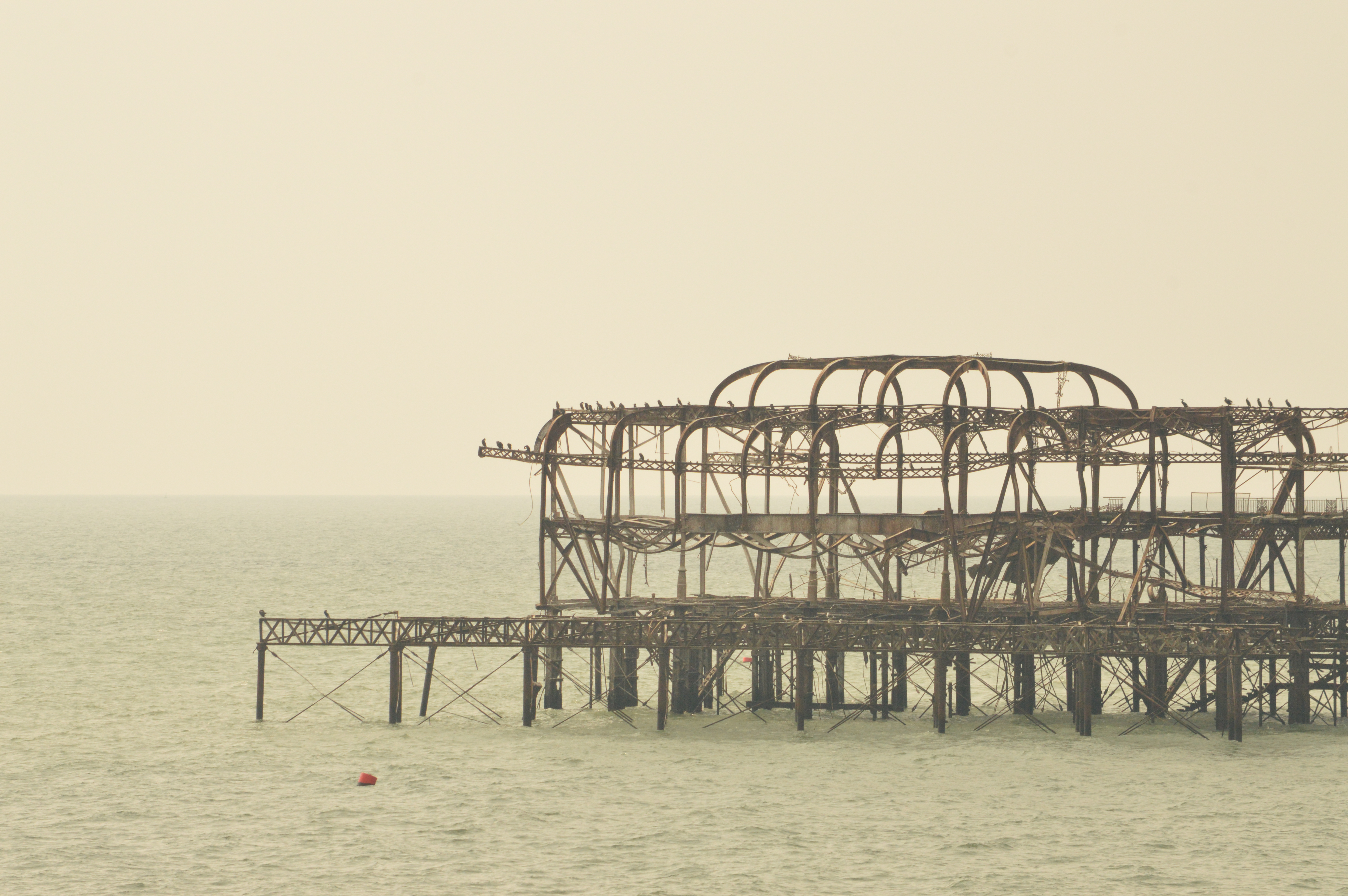
There’s a quiet spot behind one of the rides, looking out towards the mouldering wreck of the old pier. Seen from its sister with the city behind it, the Western Pier looks small and unimpressive. From the shore it looks a little more mysterious, where its mangled skeleton claws at the horizon like the blackened bones of a giant, mechanical whale, picked clean by the cormorants that sit on its ancient struts. In their oil-black funeral garb, they might as well be an extension of the wreckage. Brighton’s gargoyles.

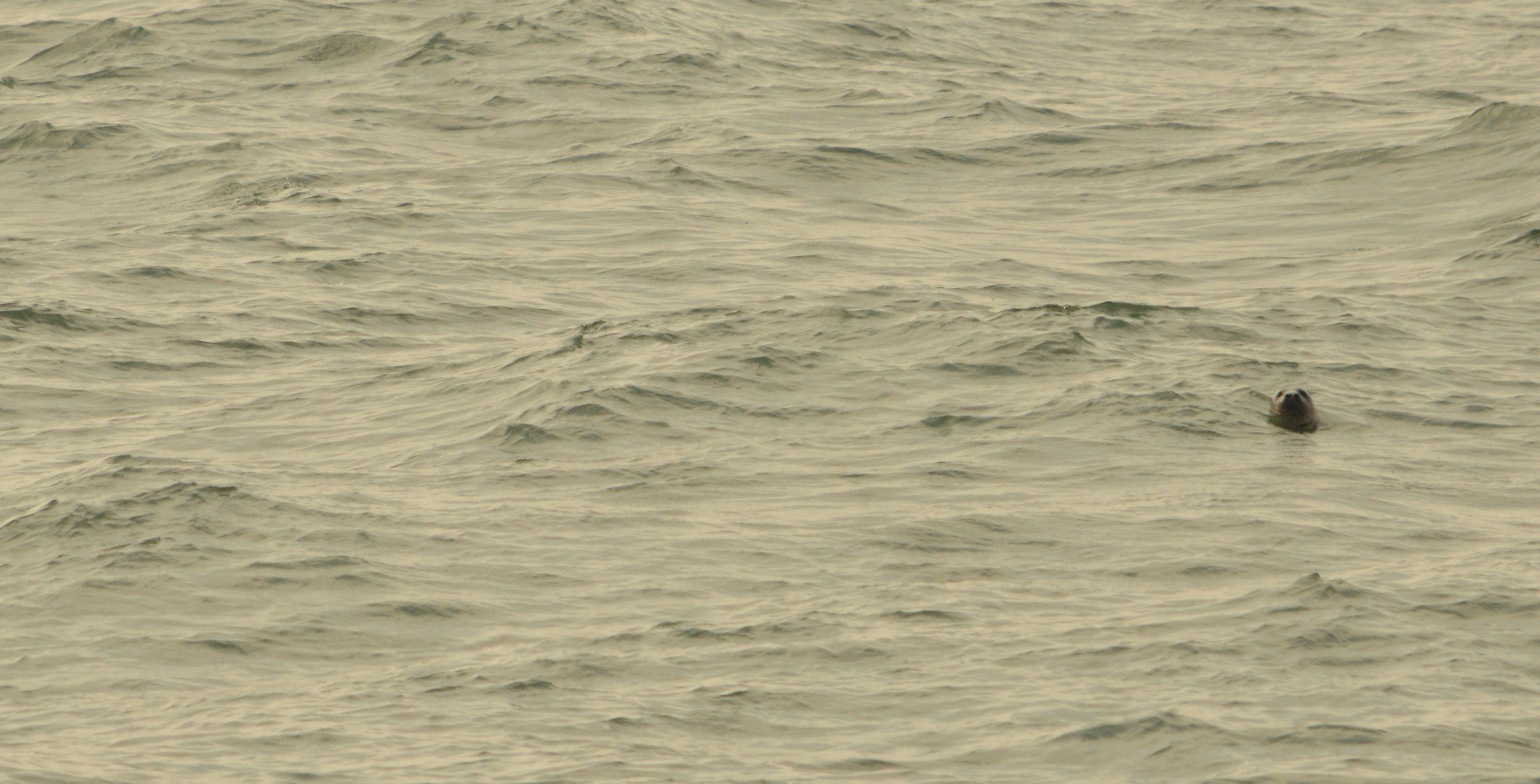
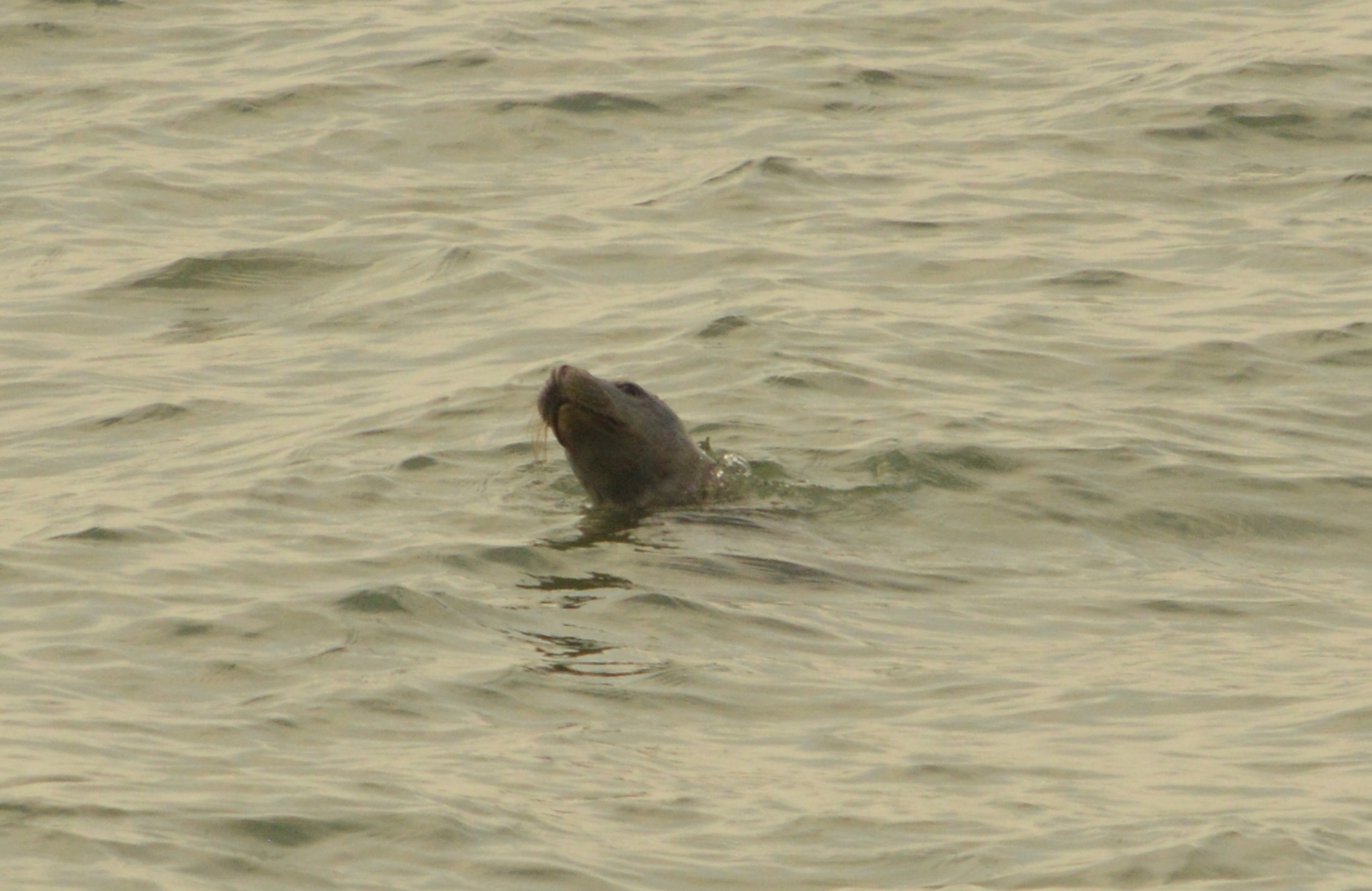
Something bobs in the water closer to the Palace Pier, and without looking through any lens it looks too misshapen to be a buoy. It turns for a moment revealing long whiskers and those baleful black eyes, before sinking beneath the waves. I’ve been scanning the water all morning for that sight, and now I’ve found one, I can’t let the moment pass me by. I count the seconds. One, two, three…

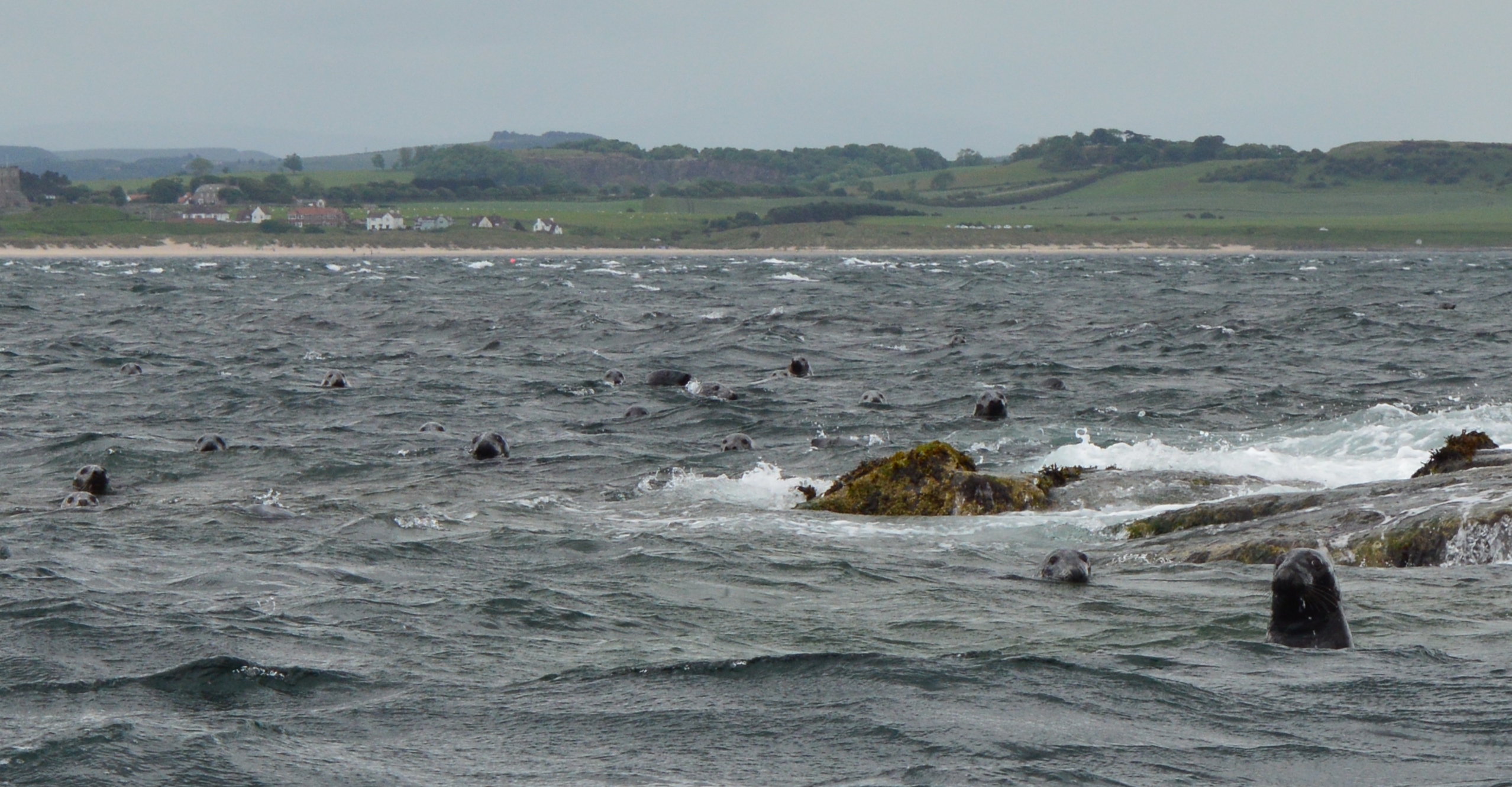
Seals are such mesmerising creatures to watch. It could be their friendly faces, the way they seem genuinely curious about the world above the waves. For me, it’s all about their eyes. There are few creatures out there with eyes like a seal’s: enormous, black orbs that seem to see forever. You only see the whites of a seal’s eye when they’re really close, otherwise you might as well be looking into the dull glaze of a shard of volcanic glass. I used to watch them bobbing about in the waves from the white cliffs when I was a teenager, and once or twice I was lucky enough to see them closer still, lounging about on the mudflats of the Stour Estuary and snorting their indignation at the noisy ferry-boat off the Farne Islands.

Those were greys: hulking, dog-like beasts of considerable size, especially the bulls who came charging after the boat. It’s not hard to see why so many languages label the creatures sea-dogs, or sea-calfs, or even sea-cats. But unless you’re in the water with them, all you see is the inquisitive face, bobbing above the surface. The seal comes into its own beneath the waves. I should love to see one in its murky underwater kingdom one day.

Some creatures command the eye. The ghostly silence of the male hen harrier, or the aerial mastery of the kite. The sunken eyes of the fox and the stern gaze of the stag. I once sat in my bedroom poring over bird guides of Spain and the Mediterranean, bemoaning how drab our world was by comparison. With age comes understanding, I suppose. If the seal hadn’t drifted further and further out to sea, I could have watched for hours.

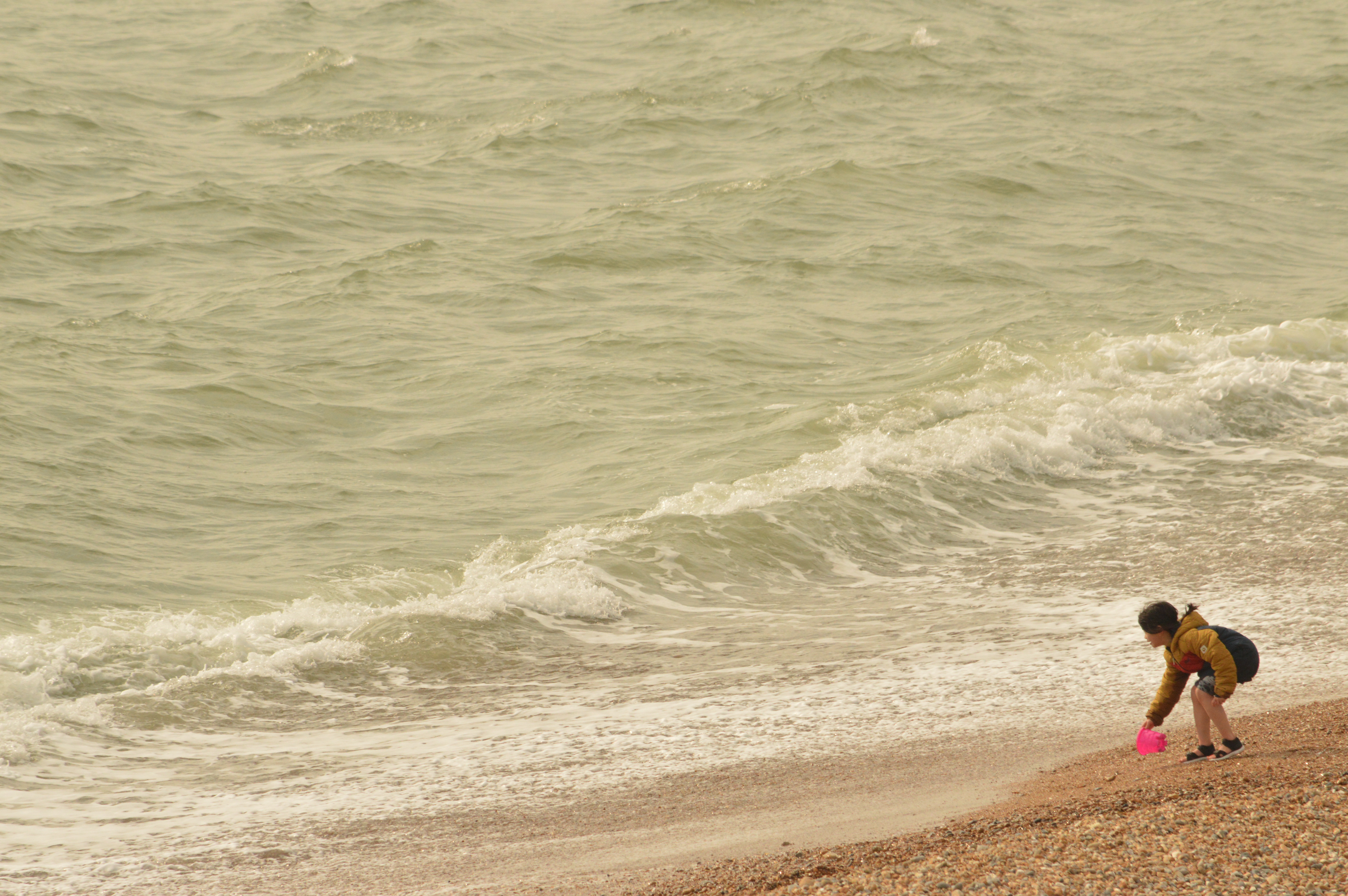
I spent most of my teenage years growing up on the pebbled shores of this same stretch of ocean. The salt breeze and yellow-grey skies of the Channel are written into my skin like age-lines. I should make a point of coming down to the coast more often in future, if not to blast the cobwebs of work aside with a healthy salt spray, then to find the writing material I’m always searching for. If I can find my way to a quieter spot than Brighton, I might even be able to sidestep the bookshops that always draw me in. Fortunately, I’ve been such a loyal customer to Waterstones over the last couple of months that I was able to walk away from today’s haul for a steal of a price. Just don’t ask how many books I bought – or how big the discount was. It’s all for a good cause. I’ll keep telling myself that. BB x