All Change

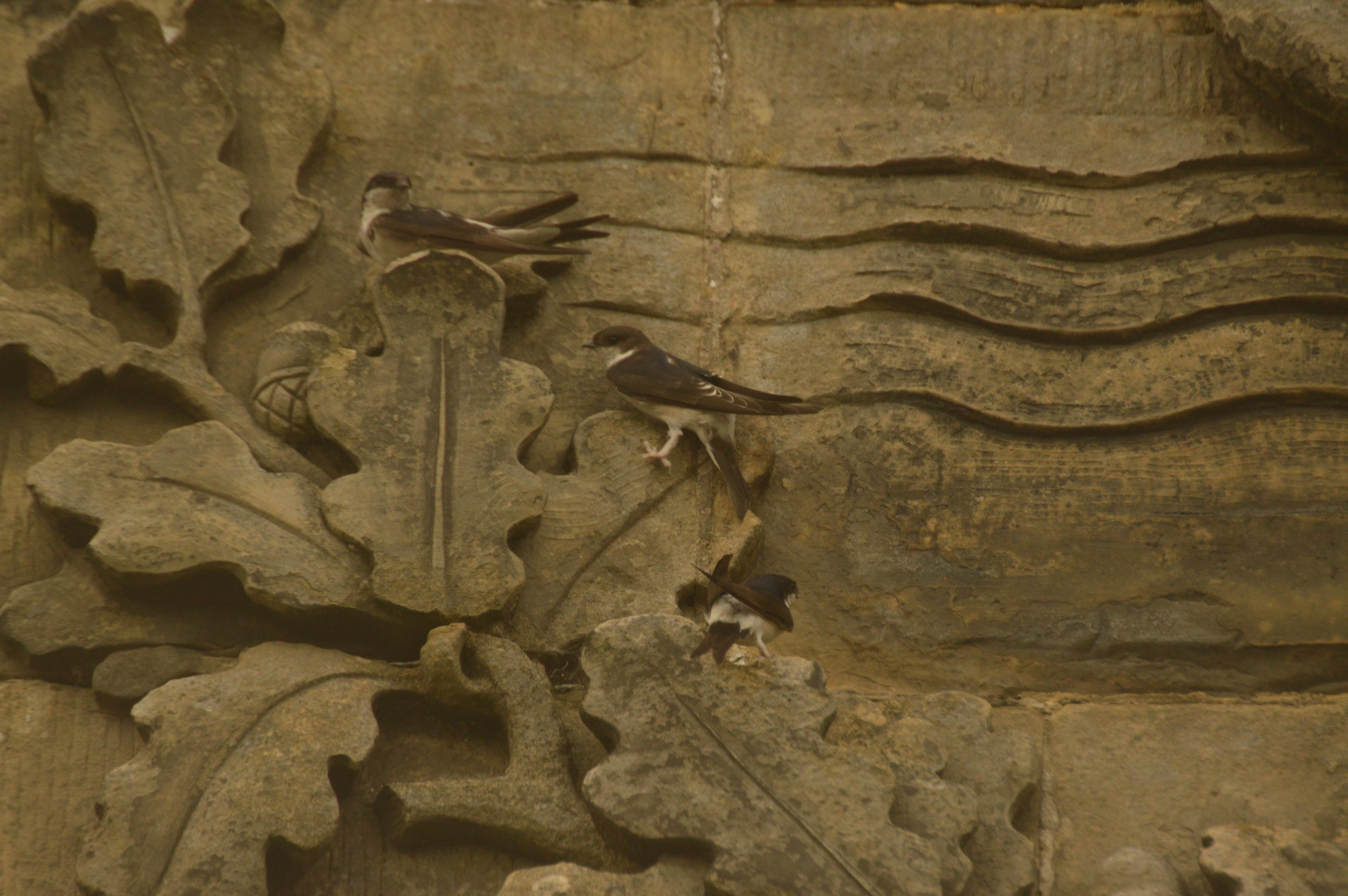
Autumn has come early this year. Following in the wake of the fierce heat of the hottest summer on record in the British Isles, many of the trees have started to shed their leaves almost two weeks earlier than usual. Two weeks does seem to be the number: the forest is thick with the musty air of fungus, and the colony of house martins that nest in the school have already started to muster on the roof as though they mean to depart any day now, though they are usually with us well into September. We’re in for a long winter when it comes.
The zenith of the summer stargazing season is behind us now. It’s one of the things I most look forward to about the summer, living where I do: despite the eternal glow from London to the north, the stars and the planets are surprisingly clear. Some of the summer nights this year were so hot it was possible to go out stargazing well after midnight without catching a chill, and I refamiliarised myself with the constellations: the twinkling ‘W’ of Cassiopeia; the Northern Cross; the winding enormity of Draco; and arrayed along the horizon, the bright lights of three planets: Jupiter, Saturn and Mars. It was so bright at the peak of the heatwave that I didn’t even need a torch to find my way around, thanks to the unfriendly glare of the hunter’s moon. While I couldn’t catch the planets with my camera, the Moon was easy enough.

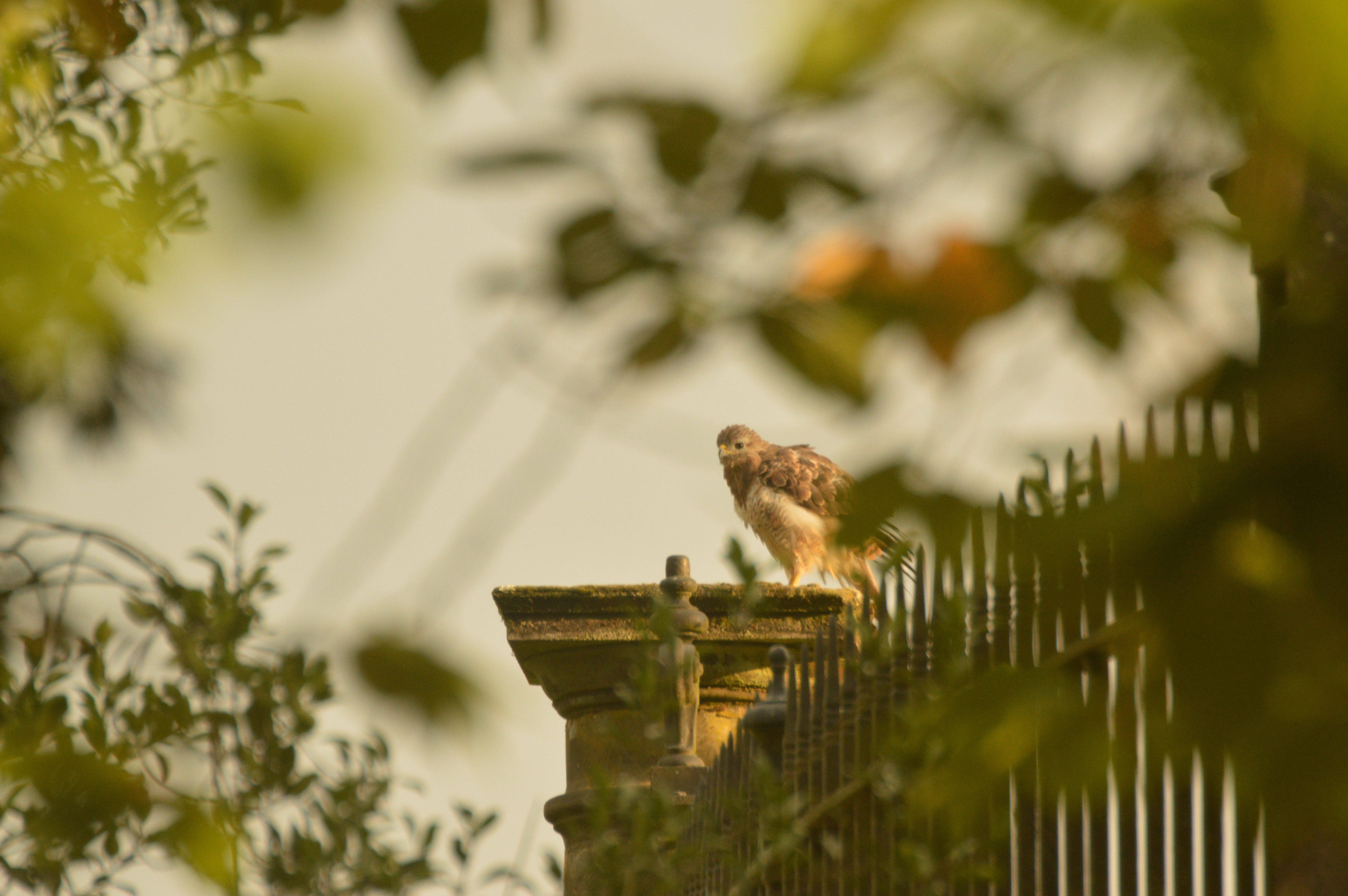
There’s a buzzard that lives in the forest which sometimes quarters the school grounds. A few days ago I saw her from the kitchen while I was having breakfast one morning, and on a childish whim I set out with my camera in hand. I used to be rather good at stalking for a good shot, but I’m a good number of years out of practice. I did manage to get close enough to see the hawk’s eyes with my own, which was the standard I always used to hold myself to back when I was a schoolboy, before it took off over the woods.

Words can’t describe how good it feels to be back at work. Usually, the two days of staff training can feel like a gut punch from the backstage crew as the curtain is yanked back – a kind of ‘playtime’s over, now get out there and earn a crust’. But this year, after eight weeks of on-and-off isolation, it could hardly be more welcome. I’ve been chomping at the bit to get back in the classroom since the end of July at least, and finally, it’s come around again. Only the bank holiday stands between the last few hours of the summer and blissful occupation.
I popped up to London yesterday and bought myself a new suit and shoes in a hollow attempt to pave the road to success this year, but also to treat myself after the success of my first ever GCSE cohort to sit exams came out shining. But will they detract from the beard? I find that doubtful.

Sir has been known to radically change his appearance before. I shaved my head once two years back and braved the raised eyebrows of my kids for months as it took its sweet time growing back. I’ve not cultivated a beard (or a ’tache, for that matter) since my time in Jordan, now seven years ago, and despite my initial apprehensions, I have to admit it’s starting to grow on me – faster than it’s growing in, anyway. I’ve accepted the fact that it’s going to leave me looking more like one of Leif Ericsson’s men than one of Hernán Cortés’ conquistadores – I am three-quarters English, after all, and what Spanish blood I have is more than a little rubio. Still, change is good. One can get too comfortable.


I tidied the flat a bit this morning. Took some clothes to a recycling centre. Did one last shopping trip before the portcullis comes down on Tuesday and ordered a grooming kit to keep this new project under control. The writing bug bit earlier this week, as it always does just before work begins. I guess I need to be busy to be productive.

As the clock runs down, I’m enjoying a warm mug of Cola Cao (courtesy of Garcia’s on Portobello Road) and leafing through one of the oldest books in my collection: a 138-year old copy of Washington Irving’s Life of Mahomet & Tales of the Alhambra. The writing is wonderfully poetic, and it even smells historical. One of my students is writing a project on the Alhambra, having fallen under the same spell that I did at his age – the same magic that ensnared Irving and countless other devotees long before us. It would do me a world of good to clue up on that old obsession once again.

It’s going to be a very busy year, but I’ll write as often as I can – it’s been really therapeutic, getting back into the writing game after a long hiatus. Until the next time, dear readers! BB x

White Hart

This time tomorrow I will be in Venice, hopefully enjoying una cena veneta with a few fellow travelers, but more likely getting some rest from a busy day on the road (and a 4.30am start). So, as is tradition, I went for a walk in the countryside to bid adieu – or even addio – to the England I love, as it will be almost a fortnight before I return to this island.

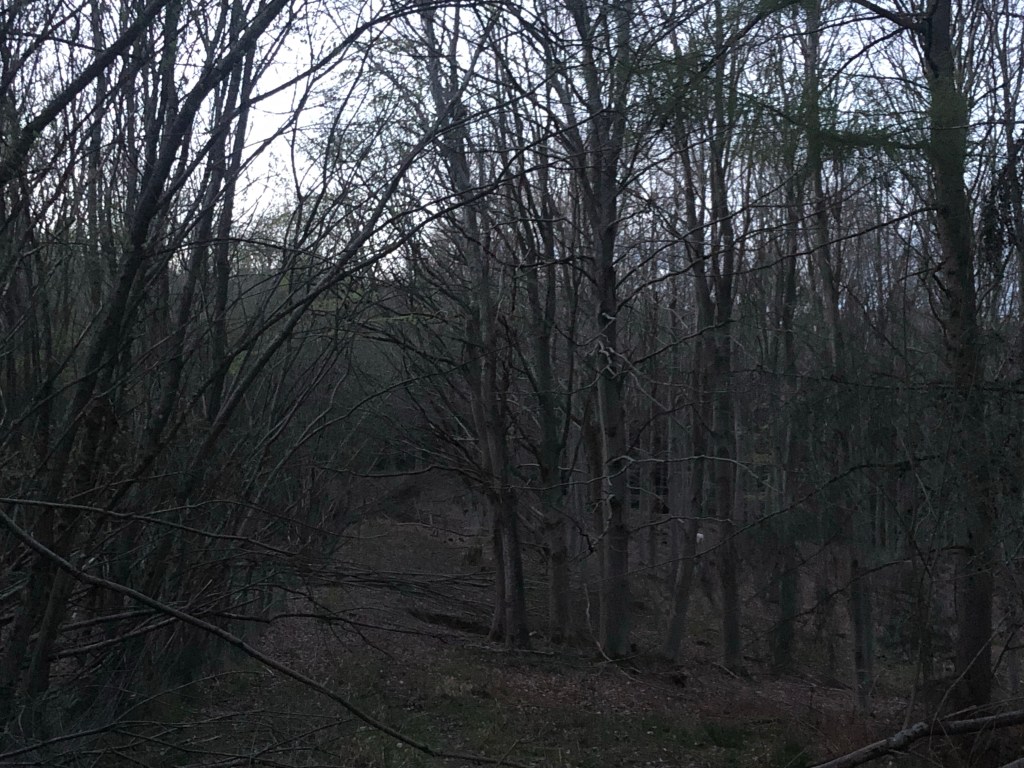
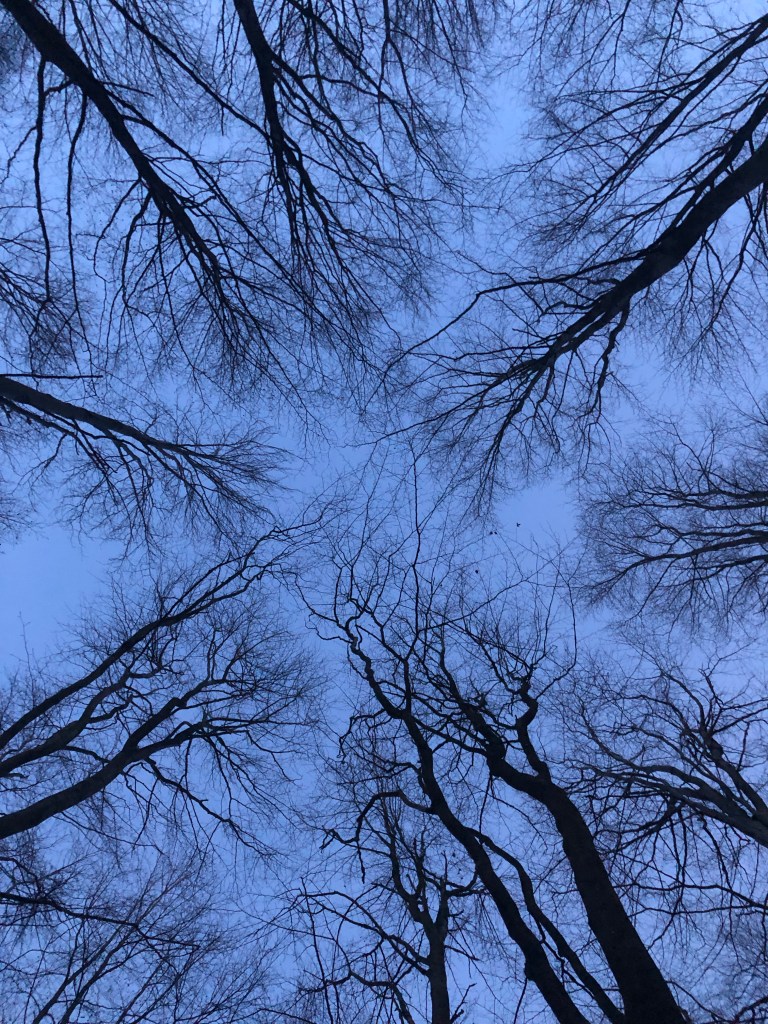
I originally meant to get a breath of fresh air and nothing more, having spent most of the day inside, packing and preparing. But the darkness between the trees in the dying light of the evening pulled me in, so I decided to take an alternative route home through the forest.

There’s something intensely magical about walking in a forest after sunset. For some reason it’s never given me the shivers – at least, not if we don’t count that frightful wild camping episode I wrote about a couple of months back. With the light failing with every second, your sense of hearing intensifies: the crunching leaves beneath your feet crackle like a bonfire, and the alarm calls of blackbirds echo through the trees like klaxons.

If you stop and stand still for a moment, though, you’ll hear other sounds. The rustle of movement in the undergrowth. The drumroll wingbeat of a cock pheasant after his cry. The distant hoot of an owl. The footsteps of deer, not too far away.

I came across the herd in their usual clearing, where the poplars grow. I call it the cathedral, because of the way the trees soar into the air in four rows, their branches covering the sky like the vaulted arches of Canterbury. It’s also blissfully dark here in summer, when the leaves blot out the sun, and I often find the muntjac here. Tonight, the fallow herd were resting between the pillars – until they heard me coming, that is.

Even with my keen eyesight, the deer did a fantastic job at staying out of sight, though there must have been at least twenty of them, fading seamlessly into the forest floor the moment they stopped moving. Only one remained visible, shining like the morning star: the white hart. Look closely and you’ll see it, even in the shoddy resolution of my phone’s camera.

In British folklore, white stags are quintessential symbols of quests. Lots of children’s books feature white stags that can never be caught. If anything one ought to feel sorry for the beasts, as nature can hardly play a crueller trick than to make a prey animal absolutely incapable of blending in to any environment that isn’t covered in thick snow. All the same, it’s always a sight to see – even if our white heart hasn’t got any antlers to show for it. So I won’t be following in the footsteps of Saint Eustace and seeing Christ between its antlers. Not that I got close enough to see whether it really was Jesus or a chaffinch perched upon its head – the beast had enough good sense to disappear deeper into the forest as I drew near. Saint Eustace must have been a damned good sneak.

As for my quest, my quest is to rediscover the thrill of the open road once again. With my taxi due to arrive in only a few hours’ time, I suppose I’ll know soon enough. BB x

Afterglow

Walking home from work this evening I found myself unnaturally aware of the night sky. Normally in the corner of West Sussex where I live, the skies at night are impressive, and you can see all the constellations of the season with a clarity you wouldn’t expect to find so close to London. Last summer I even saw a comet shining a brilliant blue as it shot across the sky overhead. But tonight the clouds were low, and a strange, eerie light hovered along the horizon on either side of me: a greenish-yellow to the north, hanging over the distant lights of London, and a more unholy bluish-green patch of cloud to the south, indicating a floodlit pitch somewhere below. Elsewhere along the skyline, similar patches of tarnished gold and green light made the night a rather sinister shade of grey. Somewhere in among the phosphorescence, the glow of an almost-full moon went unnoticed.

When I lived in Spain as a child, I remember a night when several towns in the area decided to take part in a five-minute power-cut. I believe it was in protest about climate change, or energy wastage, or something along those lines. Our town sat atop a lonely hill in the middle of a great valley ringed by mountains. Villages were few and far between, and the nights were dark enough even with the interference of the thousands of twinkling yellow streetlamps. But one night, for five minutes, it was even darker still. My mother took me up to the square at the top of the hill to look out upon a world blanketed in a darkness it had not known for decades, perhaps even centuries. I was only twelve years old, but it made a deep impression on me. I have never forgotten the quality of the darkness, the stars that shone so brightly that in memory they seemed almost like suns – which is perhaps not so very far from the truth.

We spend a lot of time discussing the irreversible damage we have done to our oceans, how we have choked the earth and its rivers with our plastics and detritus, but it is far deeper and more sinister than that. Man’s quest to vanquish his fear of the dark is well on the way to robbing us of our natural light. In some parts of the world, it already has.

It is not so much our desire to ape that concerns me – our fierce instinct to twist the natural into the artificial – because I know that story. It is the fable of the Emperor and the nightingale. Tragically, as is often the case with stories meant for children, it seems the moral was lost on us a long time ago – a modern-day version would no doubt have the Emperor plug simply his iNightingale in to recharge. No, it is our desire to outdo. The go one step beyond. To beat nature at her own game, like a petulant child insisting they are old enough to look after themselves. I am reminded of another children’s story concerning a devil’s mirror, that sought to make a mockery of all that it looked upon…

When you spend weeks going over the pollution topic of the iGCSE and IB exams with your foreign language students, it’s easy to forget the creeping damage of light pollution, if only because we choose not to see it. Light is good. It shows us the way, it helps us see where to go. It makes us comfortable and it keeps us safe. So perhaps it is a loss we must bear. What is, is what must be. But I do wish, on nights like these, when the clouds are low and heavy and stained with the unholy afterglow of the city, that I could go back to the night of the power-cut, when the night was clearer and more beautiful than any light show I have ever seen. BB x

YearAbroad (430)

Stargazing in La Siberia, May 2016


Pilgrim

That’s the first time I’ve ever walked twenty kilometres to get home after a night out. Suffice to say, I also sincerely hope it’s the last. Talk about a walk of shame…

Why did I do it? Because I could? Very possibly. I think it was more the thought of sitting shivering in the dark until the nine thirty bus that made me decide to walk the distance. It certainly wasn’t stinginess on my part; the Almendralejo bus fare is a paltry 1,31€. Perhaps I thought I could beat the earliest bus back to Villafranca on foot. That’s vaguely logical… in a very roundabout-Ben-way-of-thinking. But then, it was five forty-five in the morning. I don’t think I had any real sense of what I was doing. I just remember saying to myself “Alright, let’s do this” before marching off into the darkness like a low-budget Leeroy Jenkins.

As the crow flies, it’s just under twenty kilometres from Almendralejo to Villafranca. I had to take a detour to cross the motorway, so I reckon I clocked just over that. At night the distance looks deceptively close; the twinkling orange lights of the polígono merge with those of the hospital in the middle of the two towns, presumably so situated for industrial accidents in the field. Most of it is traced by the Via de la Plata, the pilgrim road to Santiago from Seville, so it wasn’t exactly a challenging hike. It’s also probably the first time I’ve been sincerely grateful for the vast, empty flat of the Tierra de Barros: navigation is as easy as pie when the nearest hills are a good forty kilometres behind your destination. 

The whole walking-at-night bit didn’t bother me in the slightest. I’d put that down to a six a.m. lack of awareness too, but then, it never has. Of all the things that frighten and frighten horribly in this world, I’ve never been afraid of the night. I learned a long time ago to consider night as just another shade of the day. It’s the same world, only somebody turned off the lights. No deep-seated fears of a shadowy assault or mugging either: I do believe that even the dullest criminal mind would have more sense than to be lying in wait in the countryside in the small hours. The countryside is safety. It always has been, in my eyes. In fact the only mildly unsettling thing in the whole walk was the occasional startled growls of the caged dogs in the farmsteads that dotted the early stages of the route. Alsatians, most of them. It’s a popular breed here. I remember saying to myself “Why can’t you people just keep cats?” and not for the first time. 

Besides the dogs, the soundscape of the early morning Tierra de Barros was really quite magical: roosters crowing, ravens croaking, the tinkle of a pipit overhead and, from somewhere far across the plains, the lonely cry of a stone-curlew. All of this as the sun rose dim and yellow into the clouds on the horizon. My feet might be punishing me two days later, but I don’t regret that walk for an instant. I just don’t think I’ll be repeating it all that soon. It’s a bit like that Spain north-to-south adventure of mine a few years back: it was there, it had to be done, and I did it. Now I can move on.

I don’t think I even stopped for one second to consider what I’d do if it started to rain. The forecast for the weekend was set to bucket it down. I guess I forgot all about that. That I will blame on my fatigue. If it had rained, I’d have been well and truly drenched, and in my best clothes, no less. Why is it that I’m always wearing my best clothes when I set out on these ridiculous adventures? At any rate, it did; a royal thunderstorm hit on the following night, sheet rain, lightning and all the works. Luckily by then I was holed up in my apartment with a cola cao and The Mummy: Tomb of the Dragon Emperor on TV. Someone up there likes me.

I’d like to think that it’s due to foolish misadventures like this that I get to see a side of Spain that most modern travelers simply pass over. You could be forgiven for thinking that Spain, like much of Europe, was fully humanised a long time ago: the sweep of olive plantations and vineyards in the Tierra de Barros certainly gives that impression. But all you have to is close your eyes and listen: the world survives on the fringes. The stone-curlews of these tilled fields and the mournful plovers that ply the once-pristine sands of the raped Costa del Sol hark back to an older Spain, one more ancient than even the oldest of the moorish forts that dot the distant hills. It puts me back in touch with that world to hear them again, just as though I were playing a record from a forgotten world.

It’s not a purely avian nostalgia. As I arrived on the fringes of Villafranca I saw another scene from a bygone age: a muddle of tents positioned about a small campfire where a couple of ragged-looking men stood cooking a light breakfast. Spain’s native gypsies (if such a term is not a misnomer) are a heavily romanticized lot and were mostly squeezed out if their old ways by government programs decades ago, but this new generation of travelers – Romanians, mostly – have taken their place. When I say tents I don’t mean the bright canvas of a modern traveler, nor the UNICEF-stamped donations you might encounter in a war-torn country. These ones might have been cut out of a picture book from the 1930s. Situated on the very fringes of the town, hidden from sight by the town’s waterworks, it’s the very definition of a gypsy encampment. And I thought such echoes had long since faded into history.

You don’t see them in Villafranca proper. The only encounters I’ve had with them so far have all been in Dia supermarket, where they are instantly recognizable by their clothes, by their language and by their complexion; a rich, ochre-brown, marbled like the soil. I’d like to get to know them, to know why they’re here, where they came from and what other stories they might have brought with them, but the townsfolk only have dirt to say on their account. And in my propensity for romanticising the underdog, am I really any better?

Seeing the Romanian encampment made me think of home for some reason, but I was really too tired by then to dwell on it for long. It was purely because I was still moving that I didn’t collapse from fatigue; on the two occasions I paused to get my bearings my head began to spin and I very nearly dozed off. It was only later that night, when sorting through my music collection and The Land Before Time‘s Whispering Winds came on, that my thoughts took me home again. I cried. Profusely. I always do when I hear that one. Damn you, Don Bluth, for producing a film that still brings tears to my eyes some twenty years later. Damn your genius.

Many auxiliares use the holidays to go home to be with their families. Some of my closest friends out here have done just that. It’s a very sensible move, but it’s only when I stumble over such memories that I remember how vulnerable and human I really am. Whispering Winds is on my iPod for exactly that reason; 1608 times around I can put my weaknesses aside and soldier on alone, but there’s that 1609th song that’s there to remind me that neither home nor family is ever truly put aside.

I won’t be seeing home until August. I won’t have time to do so until then, since the third and final leg of my year abroad across the Strait begins almost as soon as I’m done here. Fortunately my parents are coming out to visit me in a couple of weeks, so I don’t have to. I won’t deny that I’m looking forward to having a car at my disposal – being in Europe’s bird capital and relying on public transport is nothing less than tortuous – but more than that, I miss my parents. And there’s absolutely nothing wrong with that. Sometimes I need to remind myself of that. There’s only four of us left; my family is precious to me, no matter what impression my aloofness might give.

A lot of things have happened over the past year. Some good, some not so good. Now that I’ve got the time, I’m retreating for a couple of days to the one place in the whole world that makes me truly happy. It’s a place that has answers… of a sort. My rock, my cradle, my very own Shangri-La. BB x