Albergue de Sansol. 16.38.
Well, so much for Plan A. The American pilgrims I set out with this morning were in such a tearing hurry to beat the heat that we reached Los Arcos shortly before 10am. I’ve done the Camino a few times before, and my instincts tell me that – shy of the discovery of a true marvel – it’s nothing short of ridiculous to call it a day before the hour has even reached double figures. So I excused myself, picked up my sticks and set out, as I did all those years before, for Sansol.
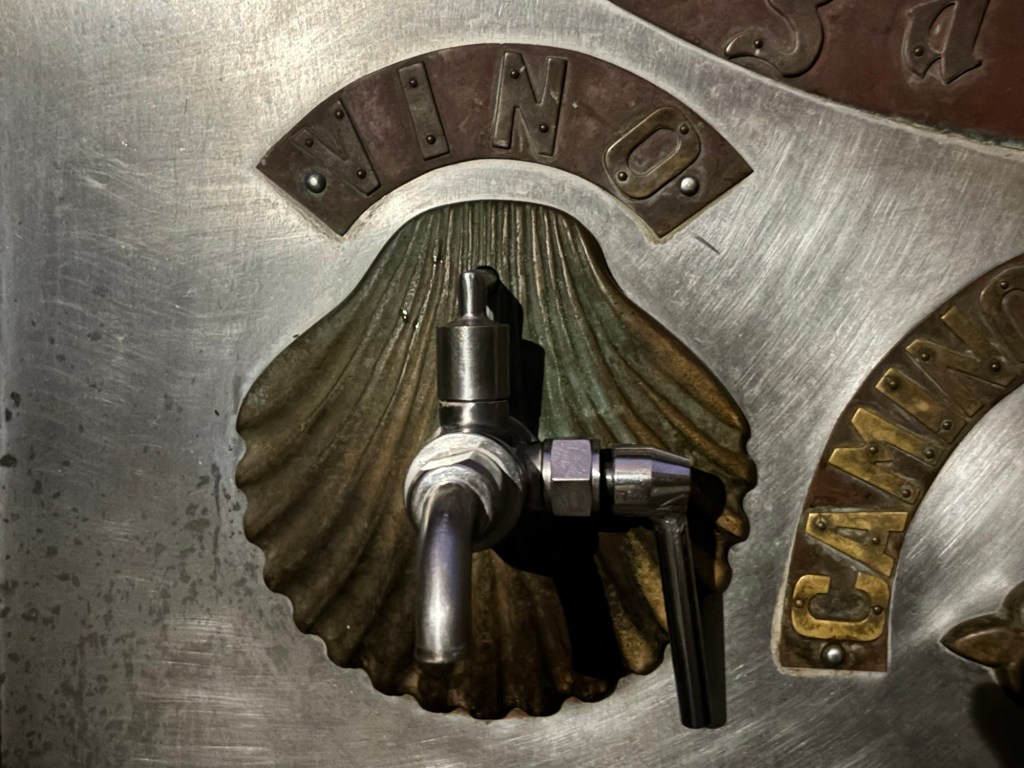
Estella is pretty much an essential stopover on the Camino de Santiago, but the primary disadvantage of doing so is the fact that the famous wine fountain of Iratxe is hardly a forty minute walk from the city. If you save your visit for the small hours of the morning, and expect the wine to flow like water, you will be disappointed. At least today it was running – the last time I came by it wasn’t operating at all – but it hardly gave more than a few drops when we reached it at around 5.50am.
I can’t think of many places in the world that have actual wine fountains, so it’s definitely worth checking out, but for those who want a little more than a few drops, this may be one to investigate via an afternoon sortie from Estella.
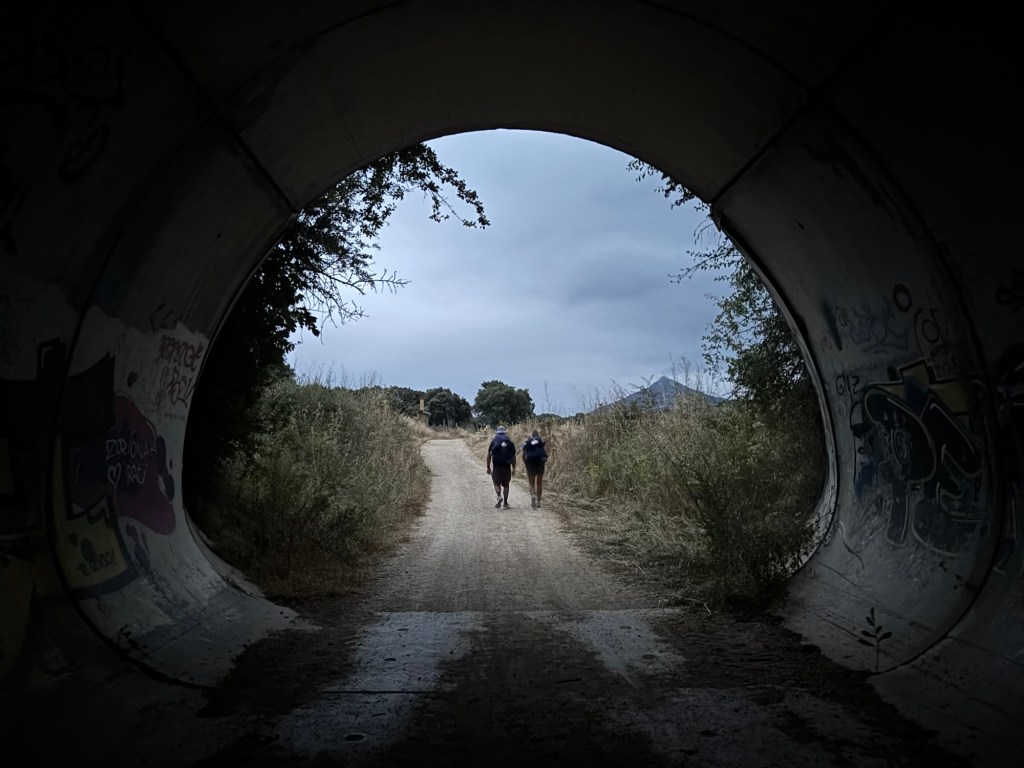
I walked with the Americans for a bit, but I stopped for breakfast in Azqueta and let them press on. It was easy to seek them out for a laugh and good company, but even easier to forget the gulf in age between us (I am about ten years older than all of them), which became steadily more apparent as the conversations went on. I was also missing the solitary aspects of the Camino that had become so deeply ingrained since Oloron – as I suspected I might – and the distance did me good.
My DNA Heritage tests results came back today. Turns out I’m actually more Spanish than English, if the test kit is gospel (which I would very much like to believe!): 37.5% Iberian to 26.4% English. Either the Spanish genes on my mother’s side are ridiculously strong or the English genes on my father’s side are a lot more varied than I thought. As it turns out, as well as the obvious Spanish genetic indicators (I didn’t really need a box kit to tell me that), I apparently have a not inconsiderable amount of French and Breton ancestry (6% each).
This last detail is really very interesting, as I’ve latterly developed something of a soft spot for Bretagne after spending the summer in Saint-Malo last year. Granted, the Breton genome encompasses most of Normandy, too, so it’s just as likely a relict trace of Norman (aka British) DNA, but still – I’ll take it. I’ll take any connection to that beautiful part of the world.
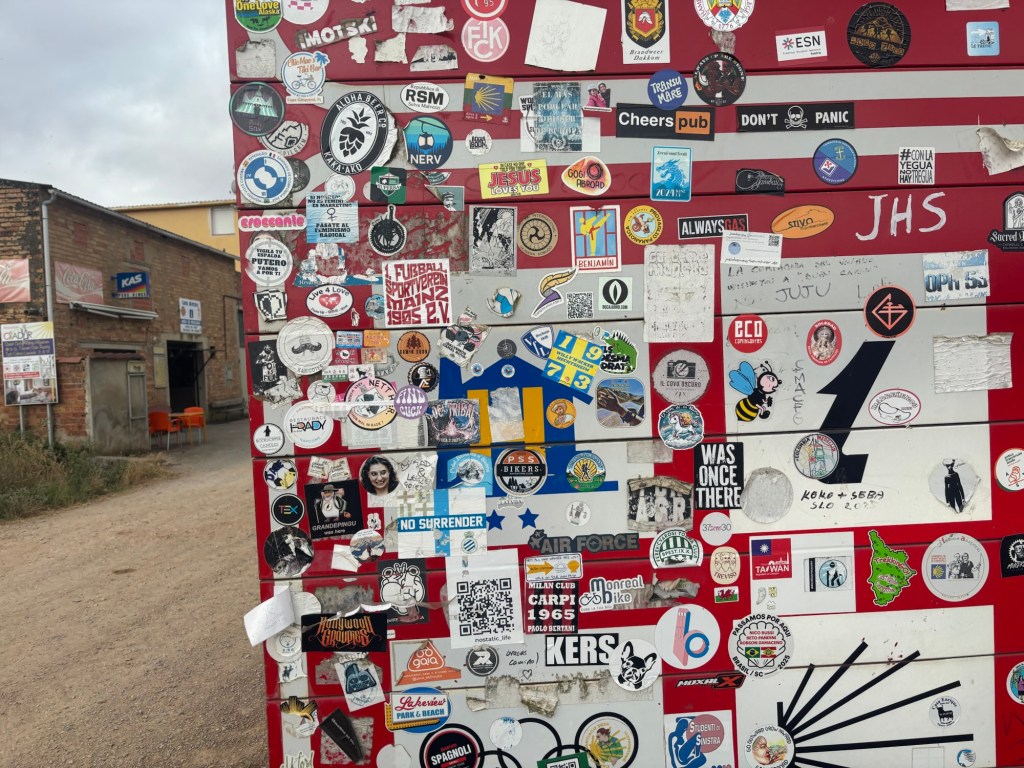
Now I’m on the Camino Francés, pilgrim junk is much more of a feature of the Camino. Stones piled in cairns upon the trailmarkers, obnoxious stickers plastered all over the signs, clothes and prayer flags left hanging in the branches of low-hanging trees… Even if the yellow arrows weren’t there, it would be hard to lose your way for all the detritus.
It’s very easy to criticise, and perhaps I shouldn’t. After all, as is so often repeated in hostels and on the Camino Facebook groups, everyone walks the Camino in their own way. But I do think we forget that this is a country, with real people getting on with their lives, long after we have come and gone.
Do the piles of stones left behind really make a difference, even to those who choose to do so, or are you just following a fad you’ve seen? And what happens when they start to change the landscape, as at Cruz de Ferro, and need to be removed by heavy machinery to prevent further damage?
Do the stickers you leave on signs actually contribute to the experience of the Camino for those who come after you, or are you just creating one more labour-intensive task for some local official who will have to spend hours scraping them off – or even using local funds to buy new signage?
Do we really need to be reminded to visit Baden-Würrtemberg? For the record, I thought Baden-Würrtemberg was bloody beautiful when I stayed in Karlsrühe in 2019, but after seeing the “Nett hier” stickers once too often in a place of spectacular beauty, I have developed a profound dislike for the name and the arrogance implied by the stickers. There is such a thing as overadvertising!
At the root of my consternation in today’s post is this. It’s been eleven days on the Camino de Santiago and I’ve yet to encounter somebody who’s here for reasons of faith. Everyone – everyone – is here for a walk. Because they’ve heard of the Camino. For a challenge. A holiday. An adventure. And the pilgrim community, like a hive, is very quick to turn angrily on anyone who voices the opinion that somewhere, underneath the spirit of free and individualistic adventure, might be found the bones of a genuinely spiritual journey.
Maybe I’ve just not had much luck. But it would be nice to share the road with another believer, in a place where you might have thought it so much more likely to find one.
I’m still stopping in every church I pass. I still say a prayer to God on behalf of my grandparents and my dear friends’ father before every cross, every chapel, every shrine. I don’t feel “holier” than my fellow pilgrims, because I’m just as guilty of using the Camino as an affordable excuse to spend my entire summer holiday in Spain. But still – it’d be nice to meet someone who has come to the Camino for a genuine reason beyond “I heard about it and it sounded pretty awesome”.
Perhaps the Koreans are the answer. The trouble is, they don’t speak much English, and no Spanish at all beyond Buen Camino, so conversation is something of a non-starter.
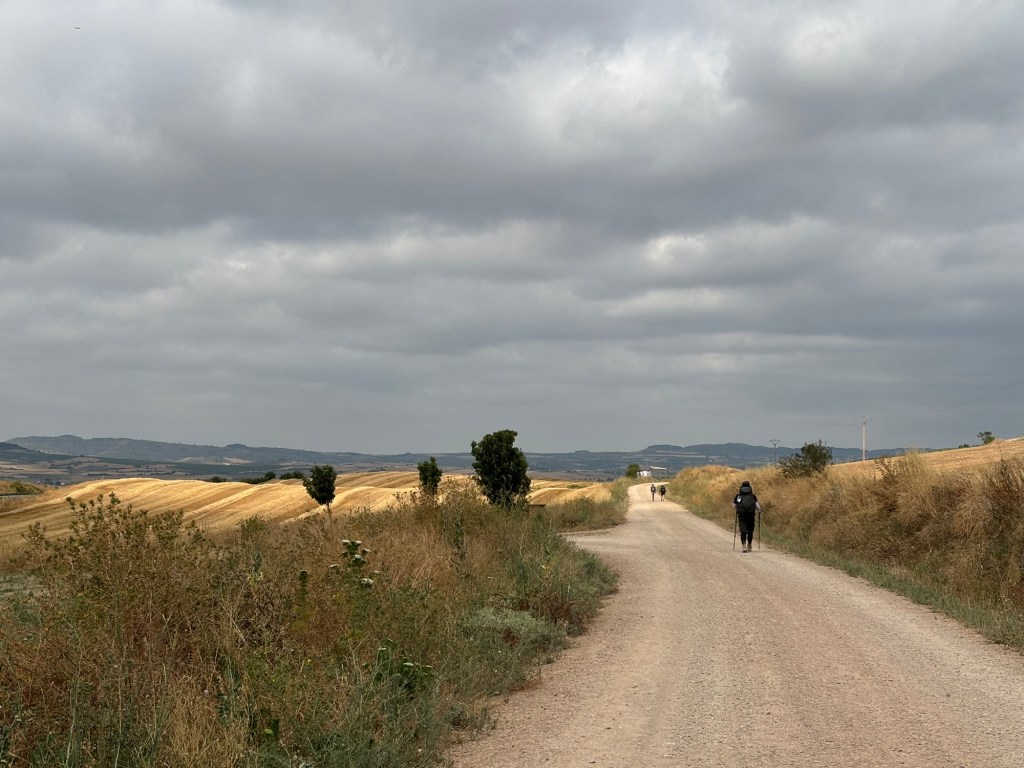
Spain needs pilgrim money now as much as it did when the wars against the Muslims were still raging on and cash was hard to come by. But I do wonder where they all are, those walking the Camino with spiritual intent. Maybe I’ll find them out on the Meseta. It truly is a magical place.
England is experiencing another heatwave, but out here, the weather is mild. The hospitalero is cooking up an enormous paella to share between us tonight. That is, me and the five other pilgrims who made it out here: a quiet German lady, an ageing Italian who talks to himself a lot and snores like it’s an Olympic sport, a Tuscan with a strong accent and a couple of very lovey-dovey Romans. The least that can be said is that English is no longer the lingua franca and that is such a sweet relief. I was almost starting to feel I’d left Spain behind! BB x
 The Book of Barnabas