Departures Lounge C, Malaga-Costa del Sol Airport. 9.18am.
My adventure is drawing to a close. In a matter of hours I will be back in the familiar settings of my flat. Sometimes, at the end of a holiday, I’d be feeling glum at this point. There’s a bit of that right now – I’m never overly happy to leave this country behind. But it’s been such an incredible three weeks that I have no regrets whatsoever, so I’m going back home with a full heart and a nauseatingly broad smile. Not even the British weather waiting for me when I get home could take that away from me.
I was up early this morning to check in to my last pensión of the trip. Nowhere is open for check-in at 8 o’clock in the morning, but I was suspicious about the link I’d been sent asking for confirmation payment up-front, and wanted to dot the I’s and cross the T’s in person. I was right to be cautious: their Booking.com account had been hacked, asking customers for a down payment that “might not be the same as on the website” – in my case, a fare ten times the amount agreed. Thank God I went in person to sort things out. God helps those who help themselves, or so the saying goes, but I’d like to think that La Virgen del Rocío is still watching out for me.
With my mind at ease, I had my last chocolate con churros of the trip and then set out to see the Legion, who had just disembarked and were on their way to their casa de hermandad west of the river. Once again, I was lucky to find a space to stand, since by the looks of things the entire city had turned out to welcome the troops.
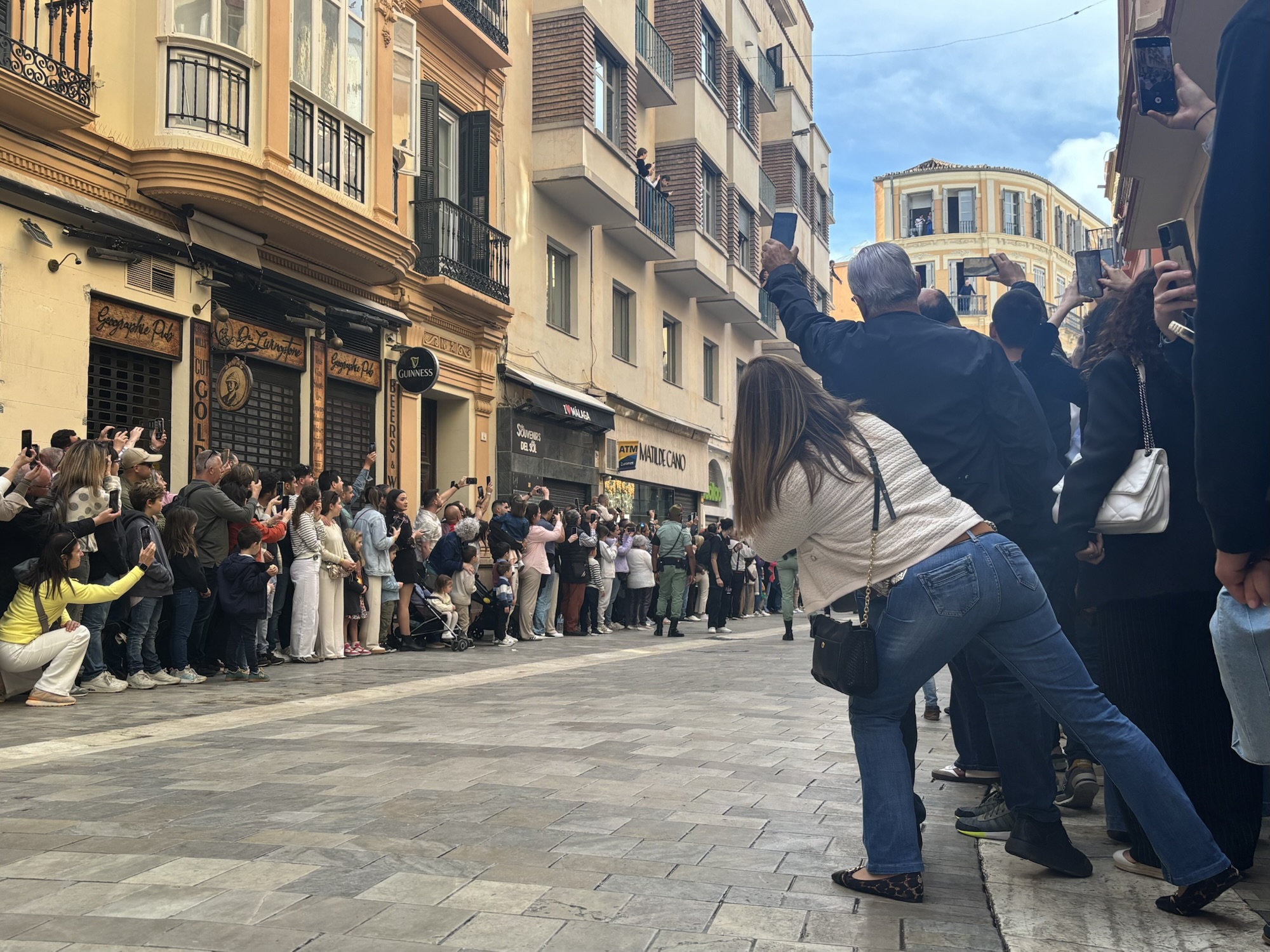
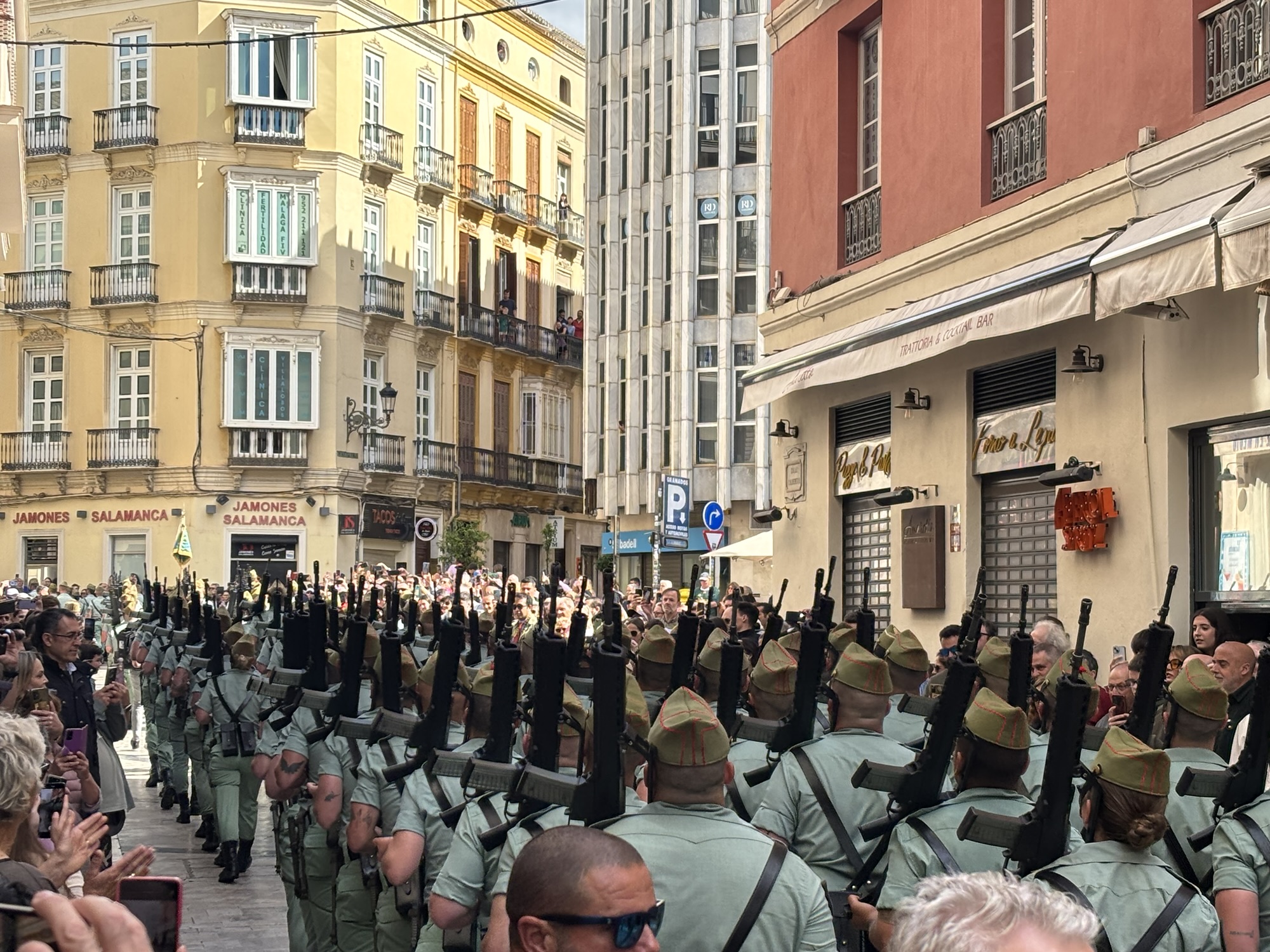
La Legión, also known as the Tercio, is one of the most famous wings of Spain’s military. Though modelled on the French Foreign Legion, a similarly fearsome fighting force, la Legión is not as foreign as its name might imply: Spaniards comprise the vast majority of its troops, with Latin American and citizens of other Spanish-speaking countries making up the rest. This was the unit that Francisco Franco commanded, a mighty and highly professional unit used with devastating effect against the Republican forces during the Civil War. My allegiance should be straightforward – my great-grandparents were Republicans, and my great-grandfather Mateo was a victim of the regime that La Legión helped to put into power – but even I have to admit that I thought them impressive as they paraded through the city, belting their battle hymn, El novio de la muerte, at the top of their lungs.
The past is the past. Hate has to find the hands that it knows, and I’m not one for grudges. I’m also a Catholic who bloody loves a good spectacle, and the Legión certainly provides.
In one last stroke of luck, when I came back to the pensión to check in, the receptionist asked if I would rather “dormir o ver la procesión”: somebody had cancelled just minutes before I arrived, and a balcony room had suddenly become available. As a good friend once said, “you can sleep when you’re dead” – so I snapped up the balcony room. My pensión of choice looked out over Calle Especería, which just so happened to be the primary conduit for all but one of the eight pasos making their way through the city. Not only would I be able to watch the processions from the comfort of my room, I would be able to do so without having to deal with the inevitable crowds, now at their greatest in number as Semana Santa reached its summit. I really couldn’t have been dealt a better card.
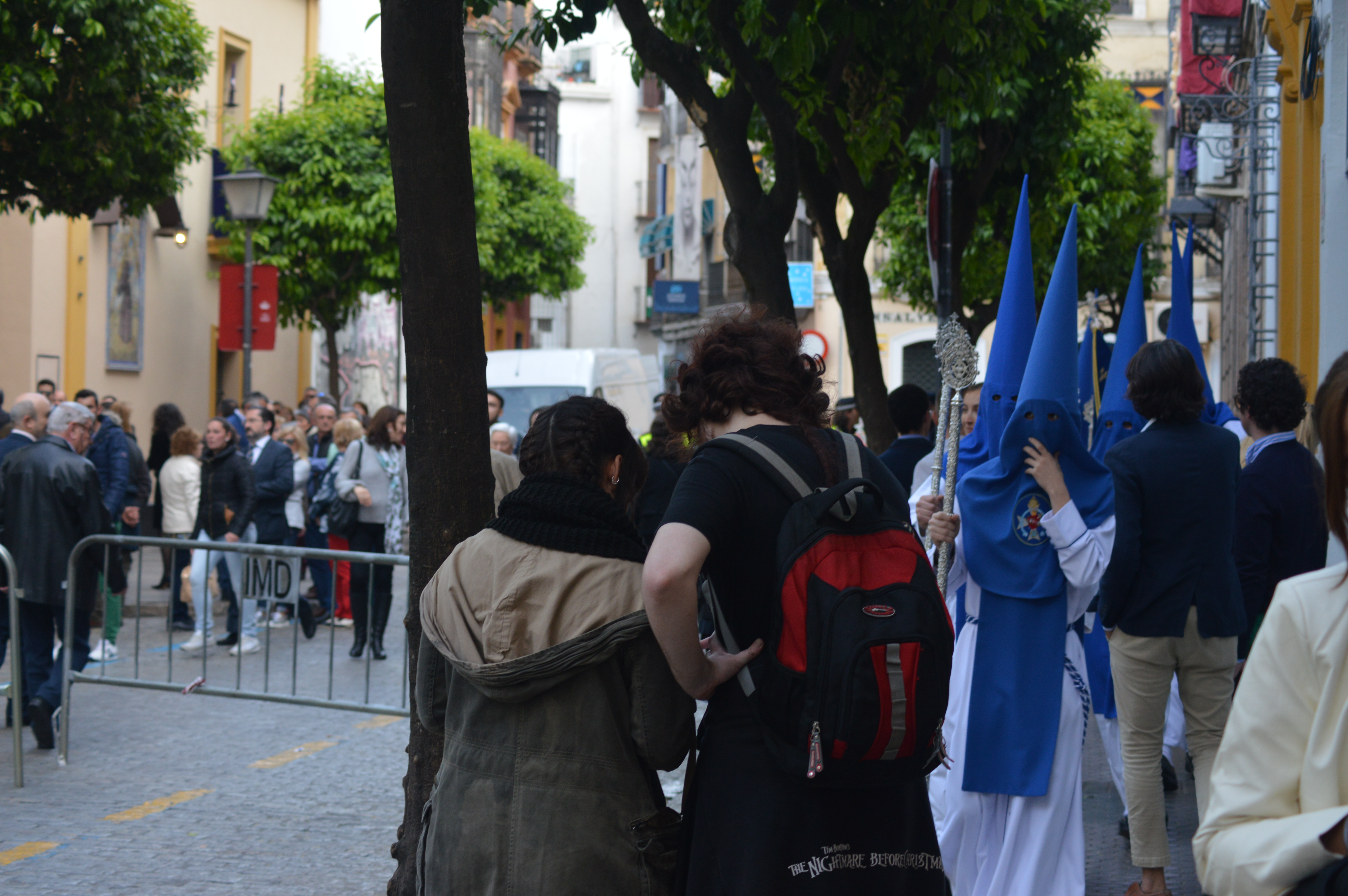
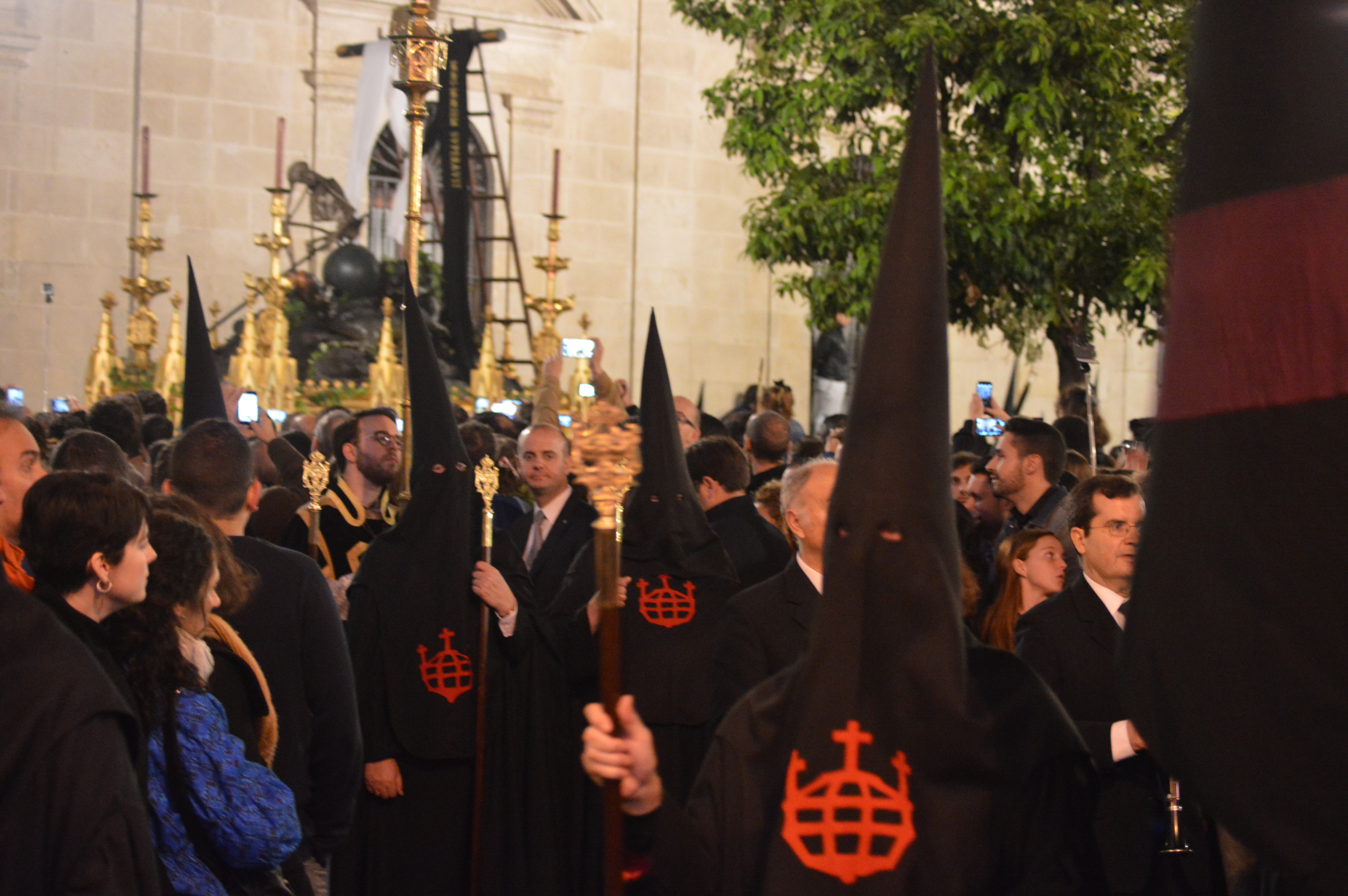
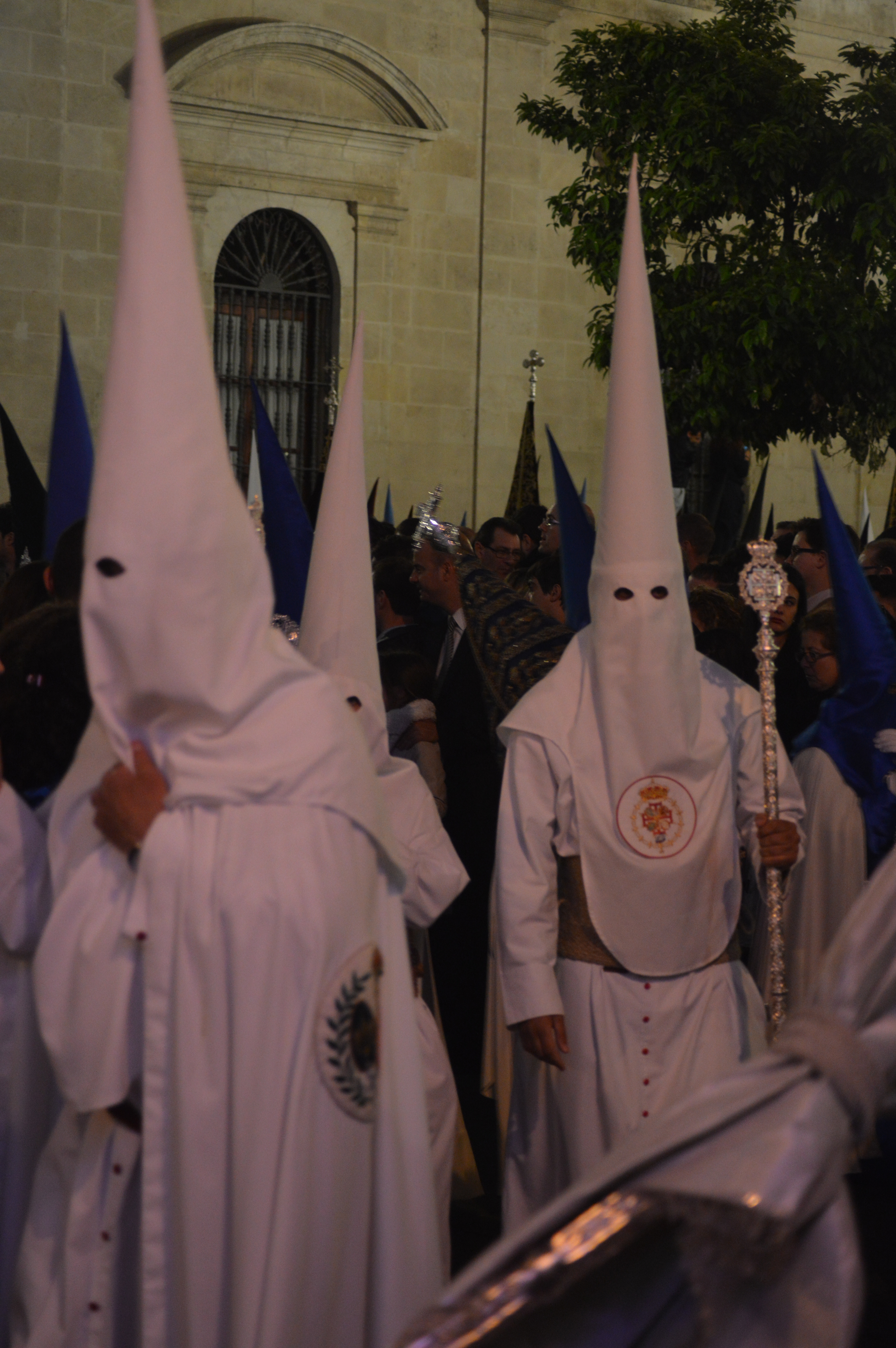
The first paso arrived shortly after half past five, at which point the street below became impassable. It’s just as well I had supplies, because one procession followed another – it would be past one o’clock in the morning before the last procession had come and gone, and the spectators walling the street with it.
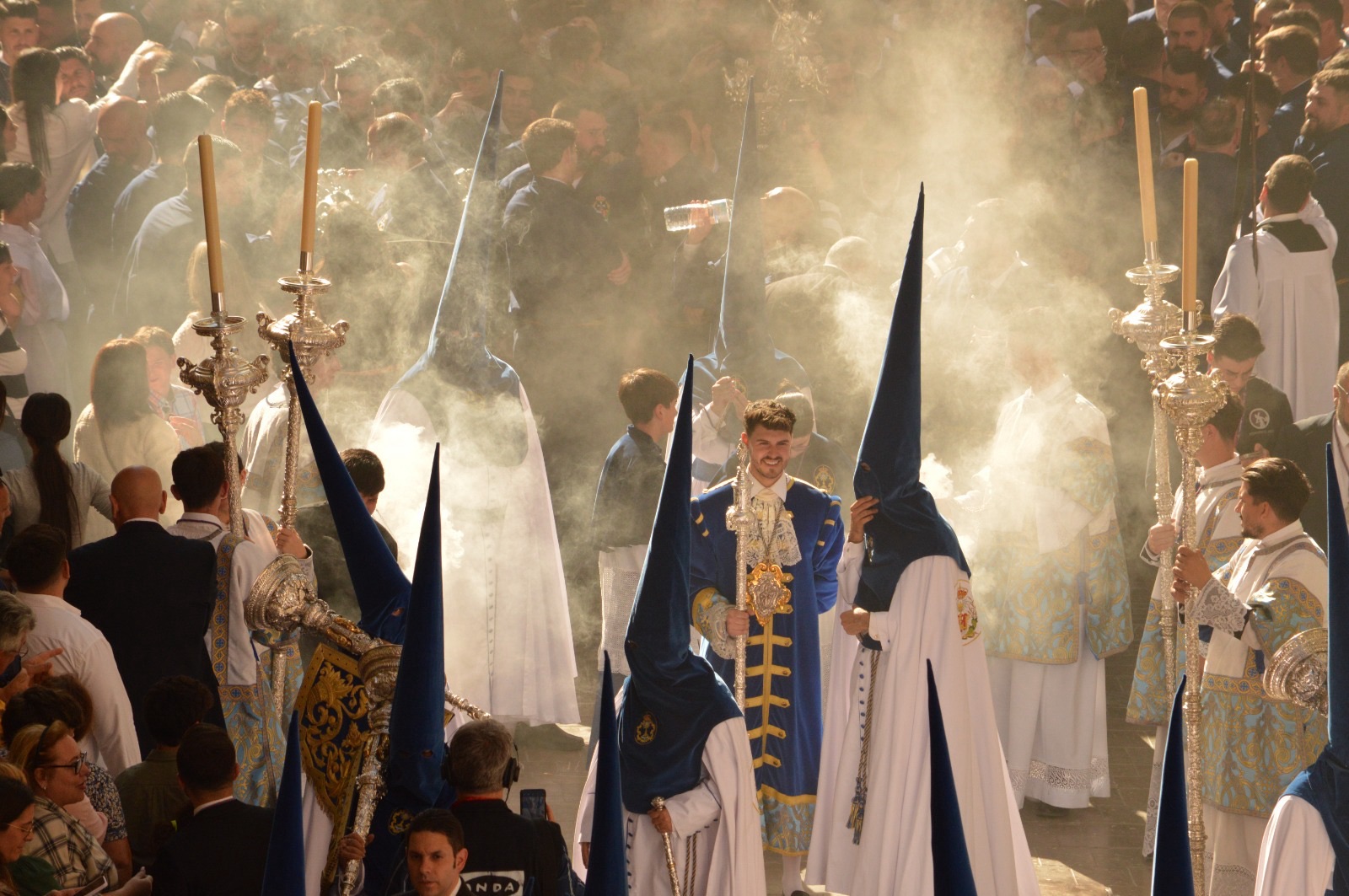
From my vantage point on the second floor, I could see a lot of things I hadn’t noticed before. Like the old-fashioned jugs each paso carried with it, appearing suddenly from beneath the tronos every time the procession came to a halt to provide relief to the weary costaleros. As the night went on, the train on the dresses of the Virgin Mary got longer and longer, and many of the costaleros were entirely reliant on the sound of the llamador (the bell at the front of the trono) and the voice of the capataz (the man in charge of guiding the costaleros) to know when to stop and when to go.

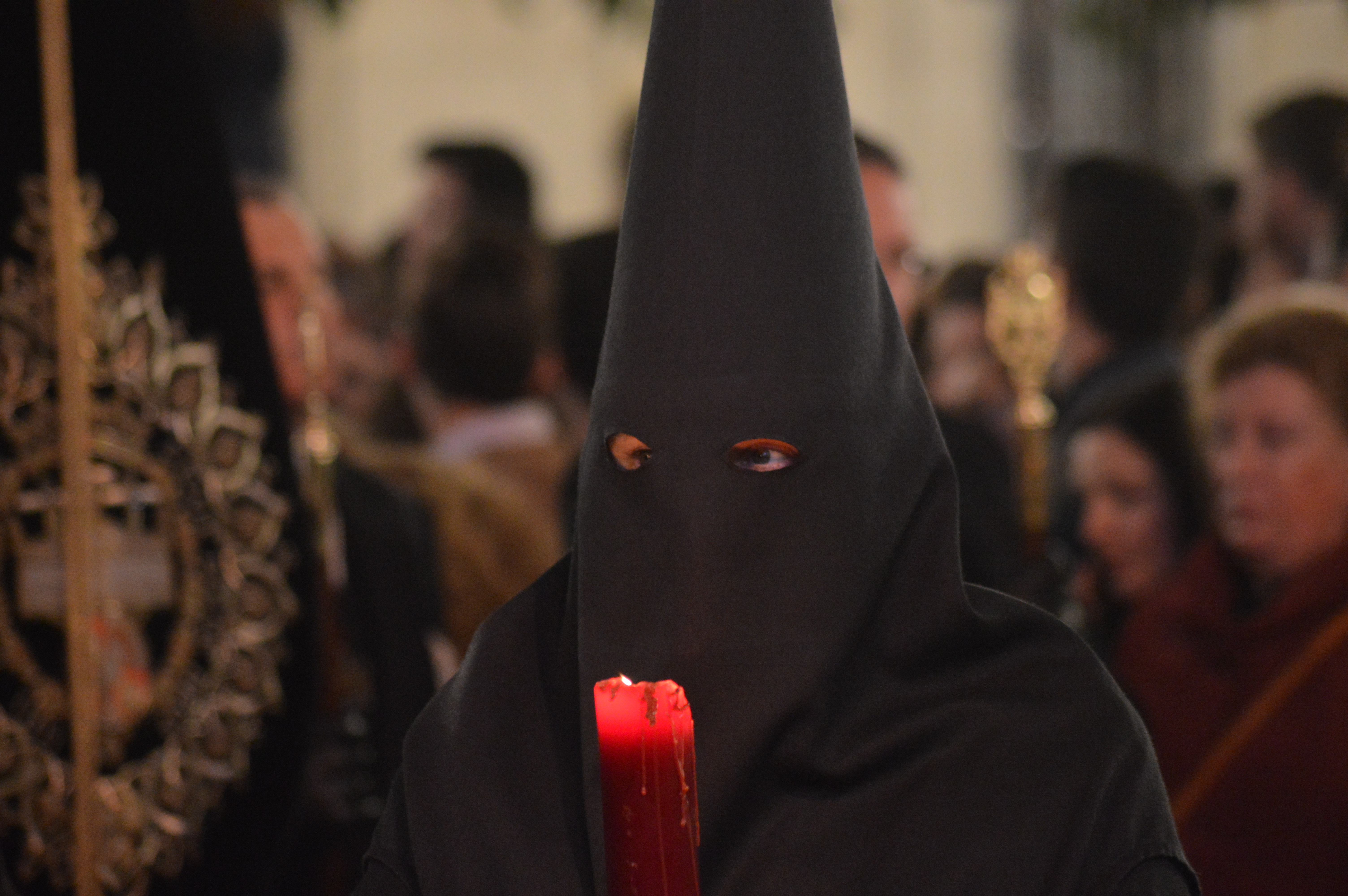
The Legión arrived a great deal sooner than I expected. I’d just popped back inside for a drink when I heard the first verse of El novio de la muerte (literally, The Groom of Death) and had to double back. I must have only seen one of the four tercios (divisions) of the Legión this morning, because they seemed to have quadrupled in number. Led by their officers, the nazarenos of their brotherhood and a number of standard-bearers carrying golden flagpoles, it had all the trappings of a Roman triumph. I guess that’s part of the look they were going for. Either way, it was quite something to watch from on high – especially the way their marching steps fanned out in a perfectly synchronised wave from the left.

I experienced my first genuine saeta shortly before midnight. There is little that can compare to a proper saeta: it is, in essence, a religiously inspired solo piece, sung by a spectator who feels so moved by the emotion of the procession that they put their feelings into song. The origins of the saeta are unclear, but they’re thought to have derived from a fusion of Islamic calls to prayer and Jewish psalmodies with old Franciscan processional hymns. In Andalusia, the region most commonly associated with the practice, they have a strong connection to flamenco, which becomes immediately obvious when you hear the wailing style of the singer and their wild gesturing toward the paso, which must by tradition come to an immediate halt when a saeta begins.
I’ve seen saetas before, albeit slightly less impressive – the kind where somebody stands in front of the church and reads from a score. Not this one. This came from the heart and soul of a man in his sixties, who was leaning half off his balcony and crying out to both El Cristo and La Virgen with every ounce of duende that his spirit could muster. It was really something to behold, and it had the whole street in silent rapture – which, with hundreds of people lining both sides of the street below, only made it all the more impressive.

There’s something about the music of Semana Santa that is fundamentally powerful. It could be the wailing solos played on the keyed trumpets with that quality of vibrato that is so ineffably Hispanic, often associated with bullfights and Mexican standoffs. It could be the way that the drumbeats make your very heart tremble within you as they reverberate off the walls of the narrow streets, or the way that one of the drumrolls is always delayed, producing an effect that is almost hypnotic. But I think a lot of it comes down to the fact that the music is modal – that is, a music form phased out by the Protestant Church as it was felt to be “too ornate” for worship.
You can say what you like about the quality of modern Christian worship music, but as far as I’m concerned, the moment that this kind of music was deemed “too distracting” was the moment that the decay set in. In the opinion of this author, there’s nothing that Hillsong and its ilk could ever do to even come close. Semana Santa is an endless replay of the last week of Jesus’ life, with all of the grief and pain and none of the vapid Jesus-we-love-you-ness that marks a lot of modern Christian music. That’s one of the reasons I have a thing for Gospel music, too: while it also indulges in giddying joy, it draws on the shared pain of its creators to delve into the dark heart of suffering in ways that Hillsong just can’t. There are three hundred and sixty days in the year to celebrate the joy of Jesus’ resurrection, but Semana Santa focuses the lens on the five days where he suffered most terribly. It’s a memento mori, a reminder of the relatable human mantle that Jesus took to suffer and die for the sins of mankind, and of the grief of a mother over the death of her son. Christ the Lord is Risen Today seems almost farcical by comparison (especially if you’ve seen the infamous John Daker video, which I have far too many times). By making worship music more accessible by simplifying its structure, they ripped out its soul.
Spain is a country that has experienced a tremendous amount of religious rage and repression, arguably more than any other in Europe if you factor in the tumultuous conquest and reconquest by Christian and Muslim overlords and the religious persecution that followed over a period of seven hundred years. So the suffering evoked by their saetas and processional marches is very, very real. In some parts of the country, the music isn’t enough: there’s a town in Extremadura where the penitentes bind themselves to crosses in a simulation of the crucifixion and do some of the procession on their knees, while the most devout Spaniards will even follow the processions with crowns of thorns of their own, or whip themselves as they march down the street. The suffering becomes as much a performance as the music itself. Church attendance may be on the wane here just as much as it is everywhere else, but in Semana Santa, you’d be forgiven for thinking that the official statistics were wrong.

La Virgen de la Esperanza and her bearers returned home shortly after seven o’clock in the morning, almost an hour before sunrise and just before I walked past on my way to the train for the airport, after a nine hour march through the city. In a few days it will all be over, and the city will return to normality until the whole process starts all over again in a year’s time. But I have bottled as much of the magic as I can and am returning to England with my head and my heart ringing with the rattle of snare drums and the wail of trumpets. I have been reminded in no uncertain terms that it is here in Andalusia that it all began, when my parents made that mad decision to move out here for a year, and my future was lashed forever to this wild and passionate corner of a wild and passionate country.
I’ll be back. So help me God, I’ll be back. BB x

 The Book of Barnabas