Camino III: Green Fields Forever

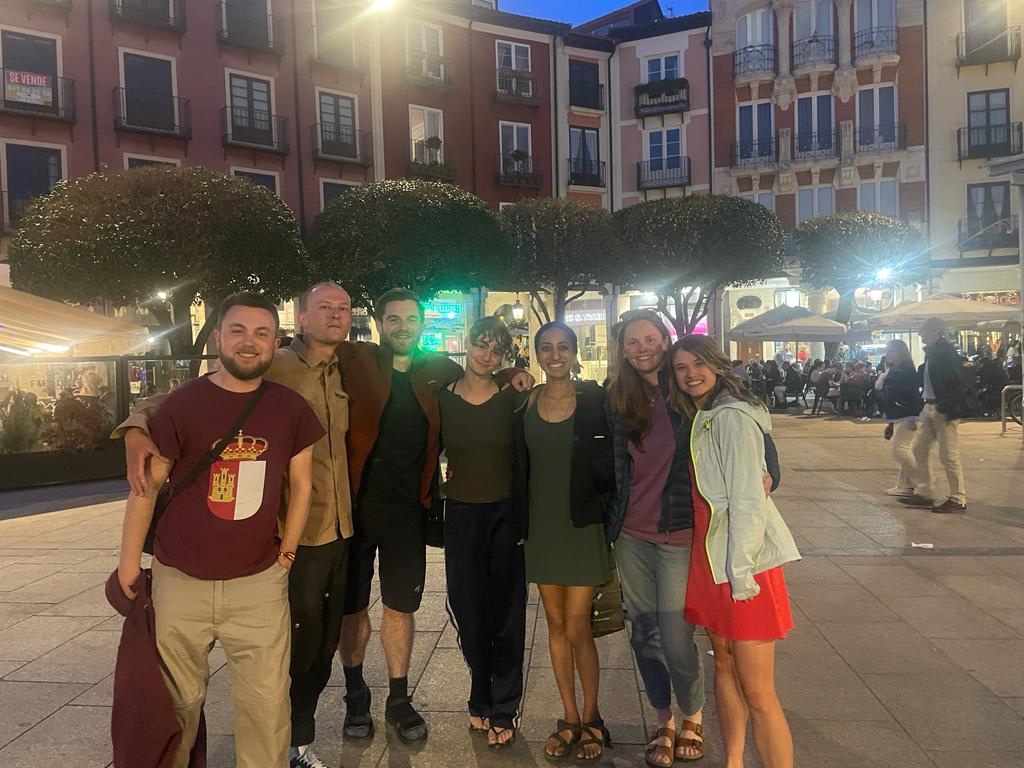
If this is a later blog post than usual, it’s because I’ve bought into the spirit of the Camino a bit more today and allowed myself to socialise with some of the other pilgrims – which often takes some doing for an introvert like me. Tonight’s digs are fantastic, though, and I’m writing from the genuine comfort of my dorm bed in Santo Domingo de La Calzada’s cofradía, one of the longest-serving albergues on the whole Camino.


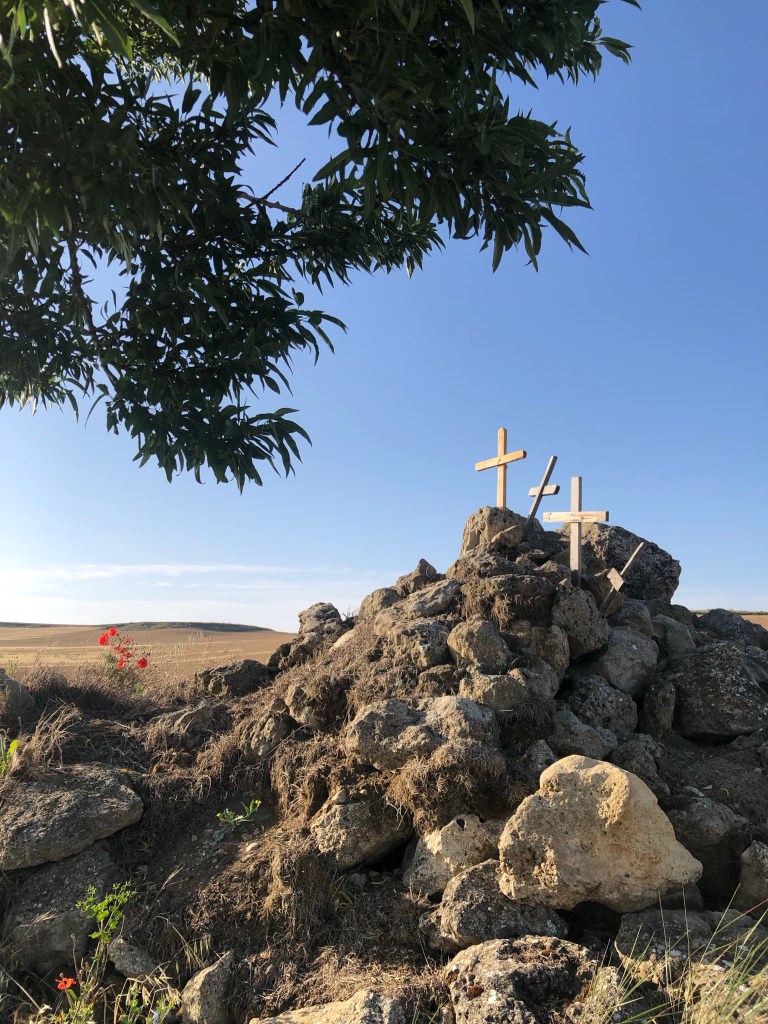
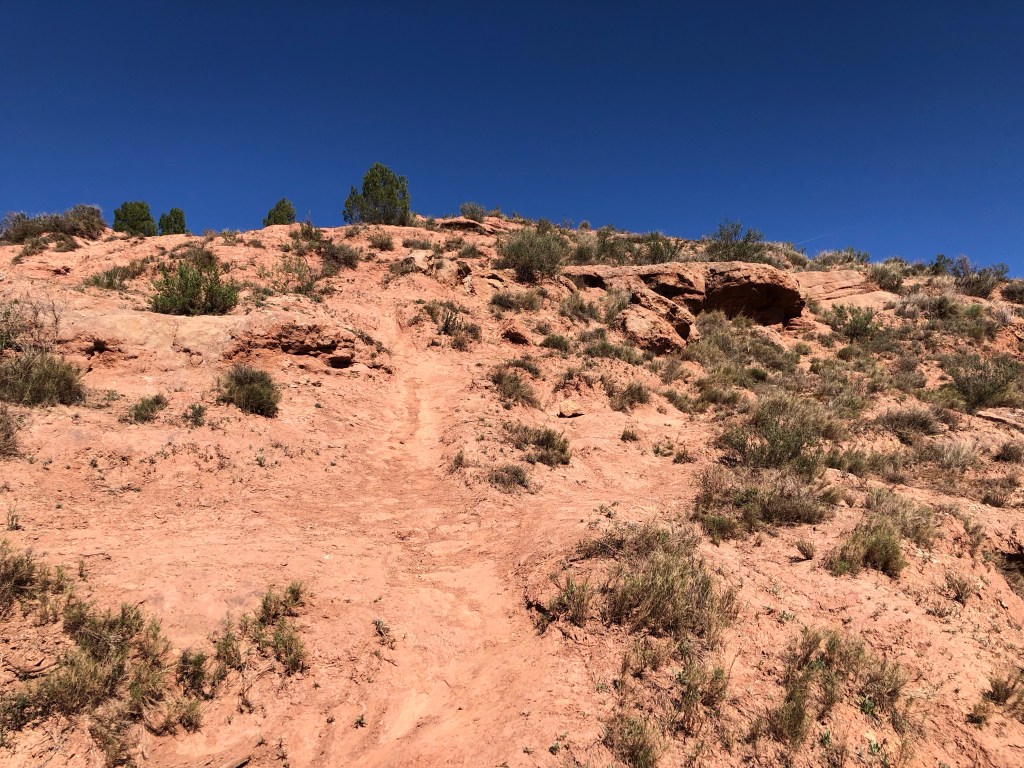
So first, a confession. After arriving in Nájera yesterday, I got itchy feet. The cliffs above the town were calling to me, and the voice telling me I’d already walked 30km that morning was drowned out by the other saying go on, do it, you’ll regret it if you don’t. The summit – a lonely bluff called Malpica – even had a cross at the top, which is essentially putting a hat on a hat. I had to climb it.


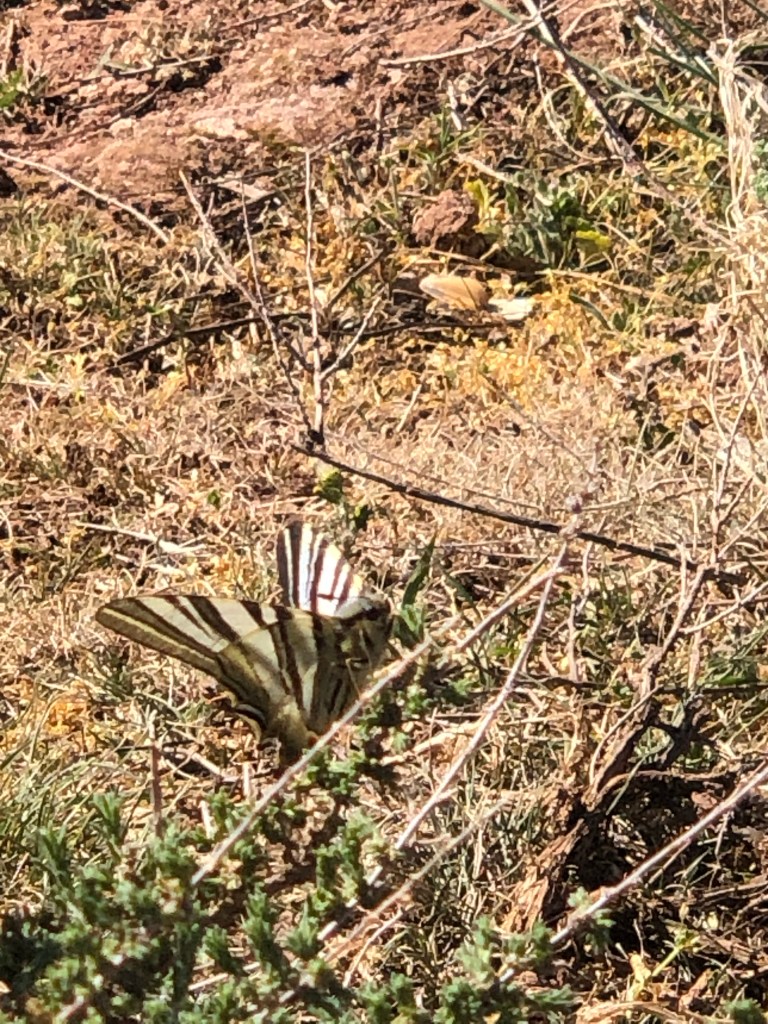
Oddly enough, nobody else was up there at half past four in the afternoon with temperatures pushing into the twenties. Which is just as well, because it turned out to be a hands-and-feet climb to the summit. Fortunately I’ve been doing that kind of thing since I was a kid, so I’m pretty handy with my feet. The view from the top of Malpica was breathtaking – moreso because I didn’t have an awful lot of breath left to take – but the real reward was the butterfly show. For whatever reason, a swarm had descended upon the clifftop, among them some of the most beautiful butterflies you can find in Europe: swallowtails. One or two of them – zebra swallowtails – were so large you could hear their wingbeats. The ‘blood dripping from their fangs’ kind, as my mother would put it. I was just happy to sit up at the top and watch them frolic for a while. It delayed the inevitable descent – again on hands and feet – for at least a short while.


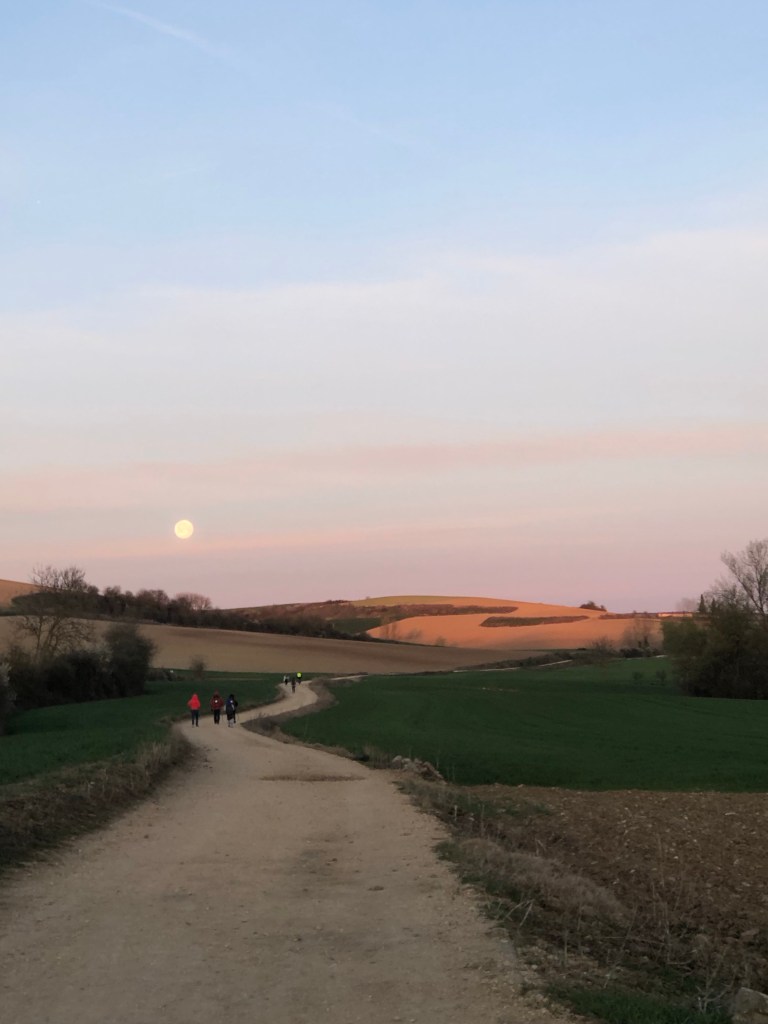
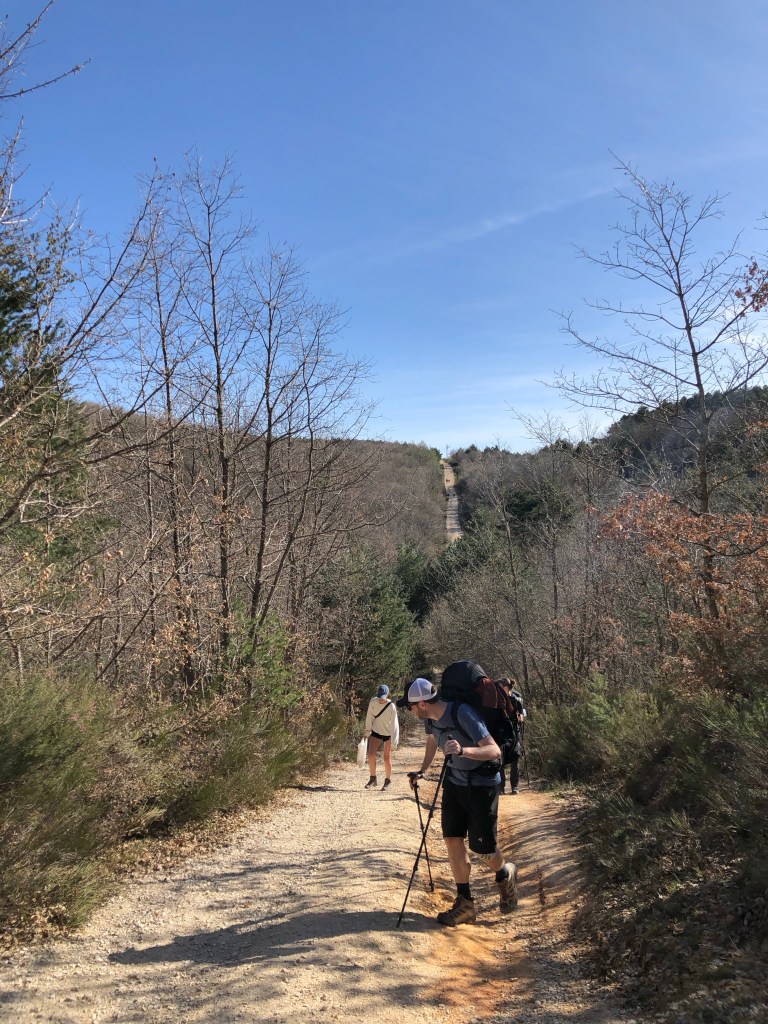
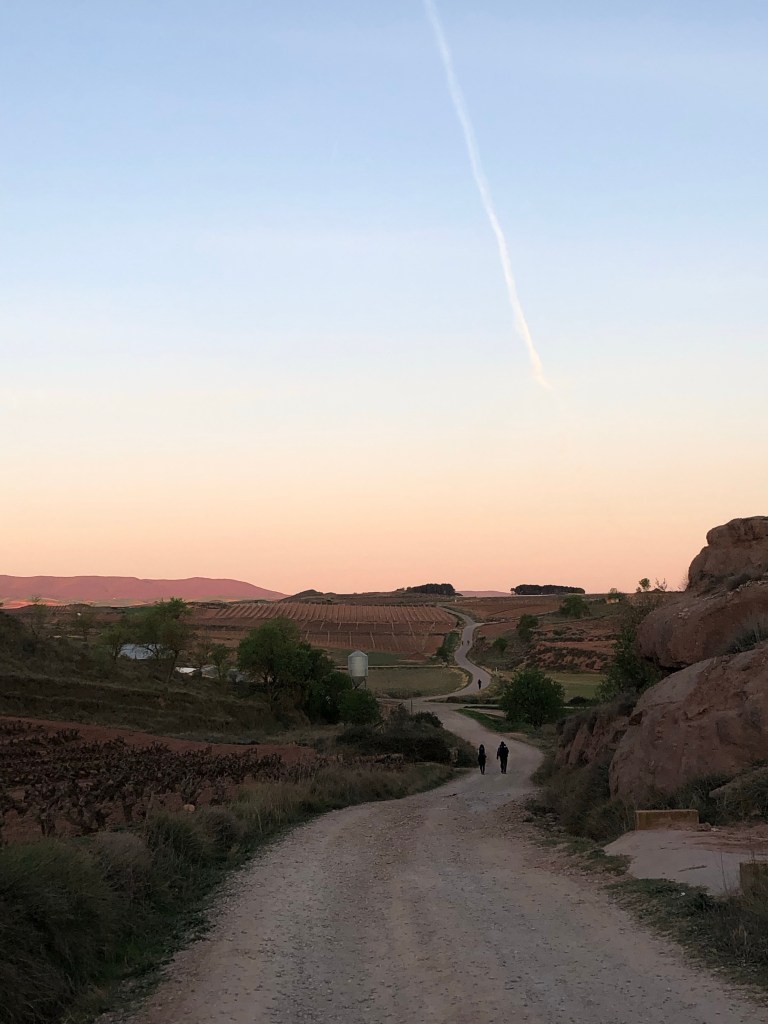
I fully intended to wait for some of the other peregrinos this morning, but when 7 o’clock had come and gone, I came and went with it. I’m rather fussy about catching the sunrise on the Camino, and will happily sacrifice a sit-down breakfast for it. This morning, I’ll admit, I really should have dawdled, as it was biting cold out. It had been well below zero during the night and, with the sun still below the horizon, it was still -1°C when I set out. You notice these things quickly when you’ve only packed with heat in mind.


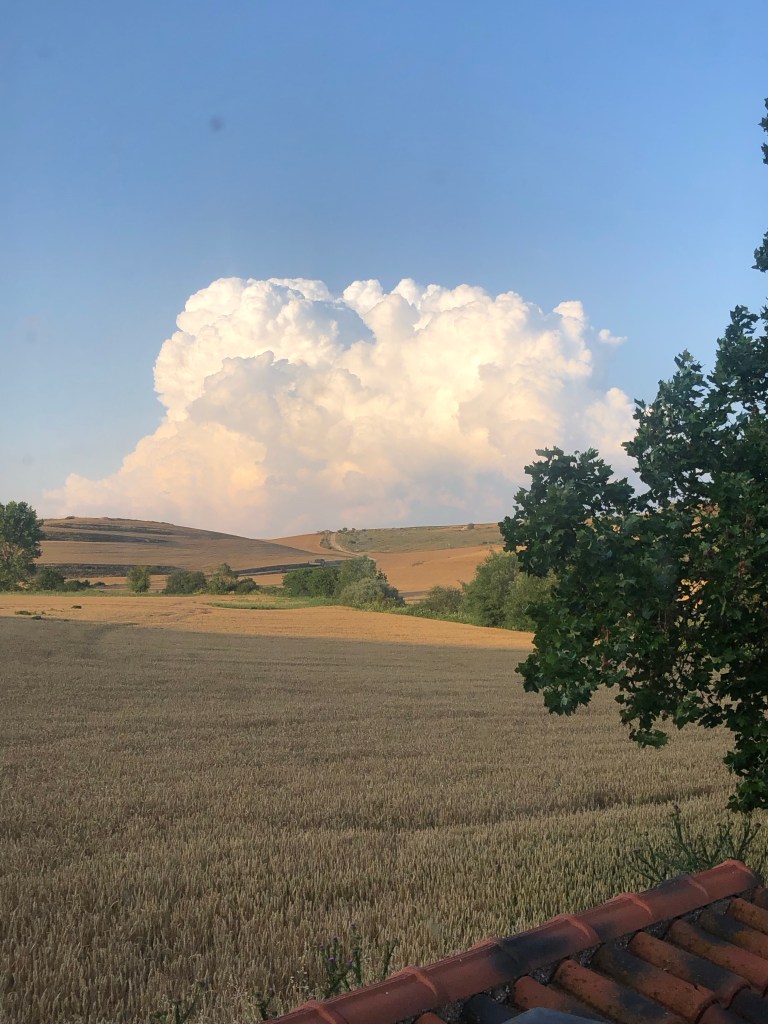
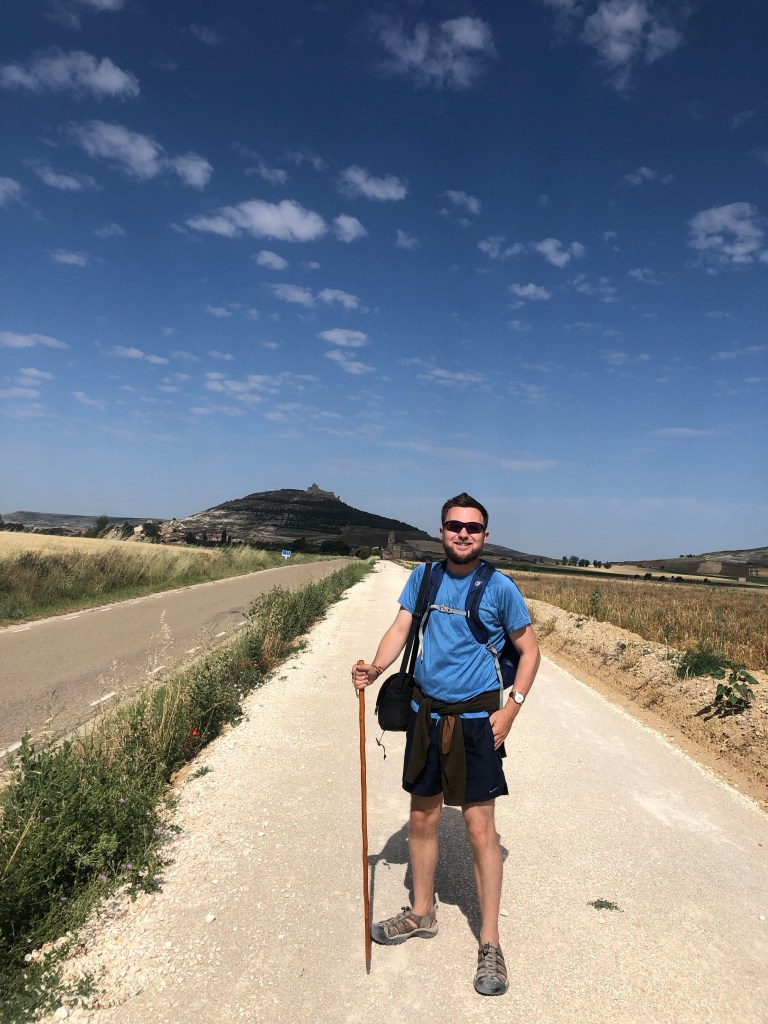
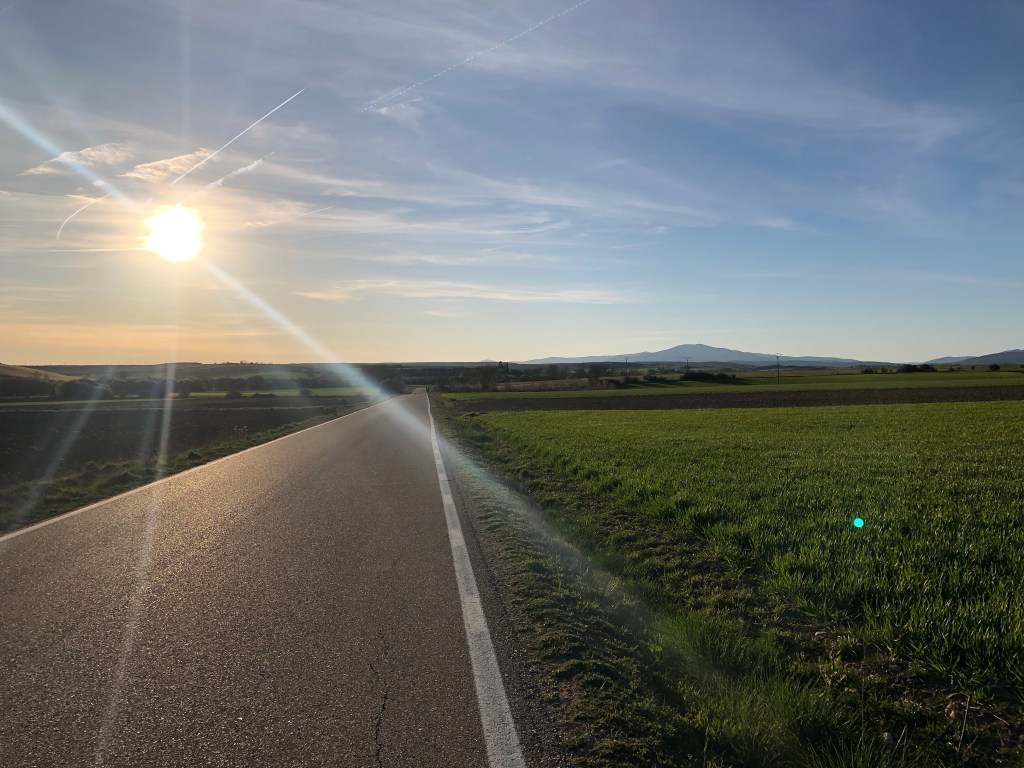
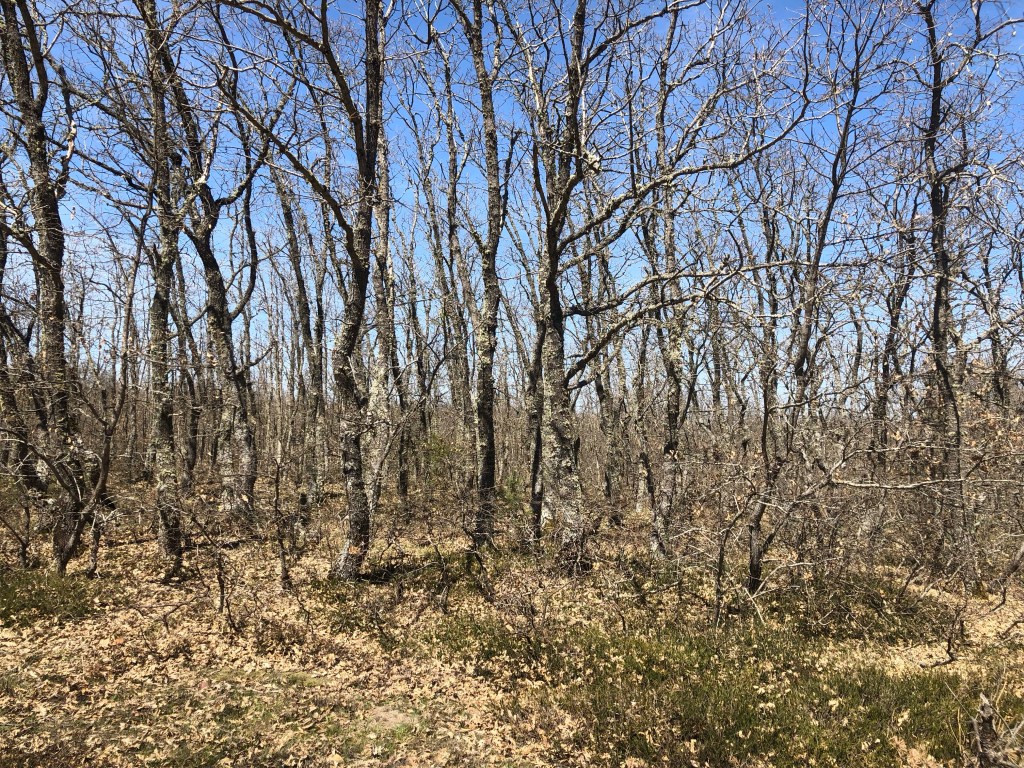
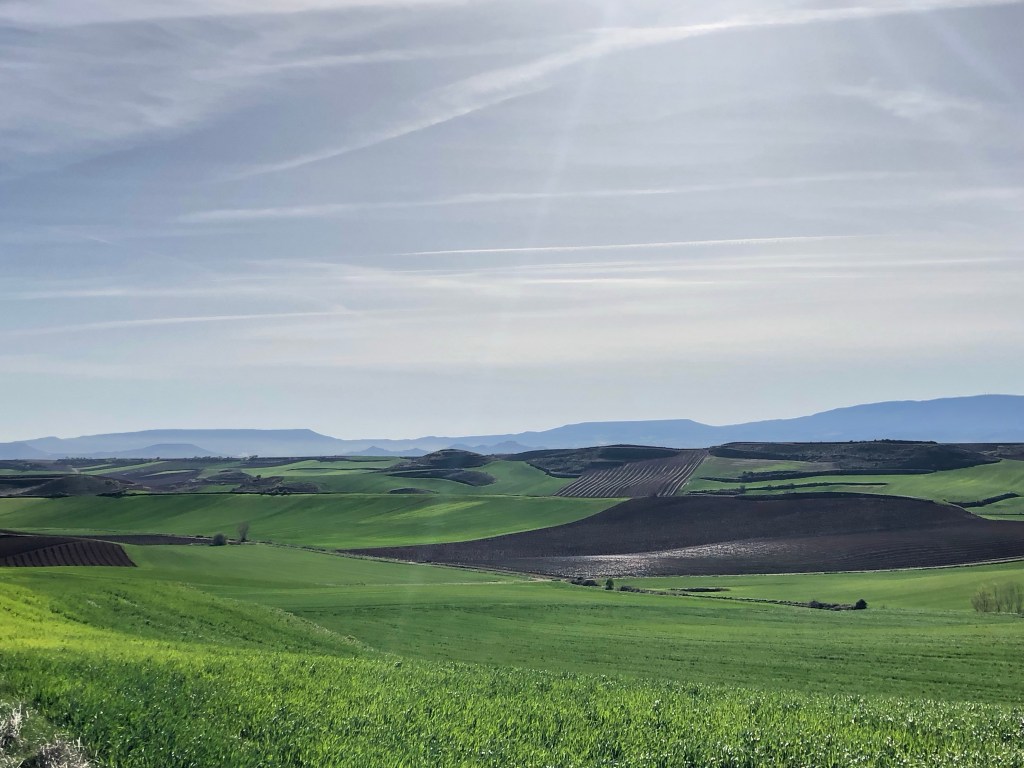
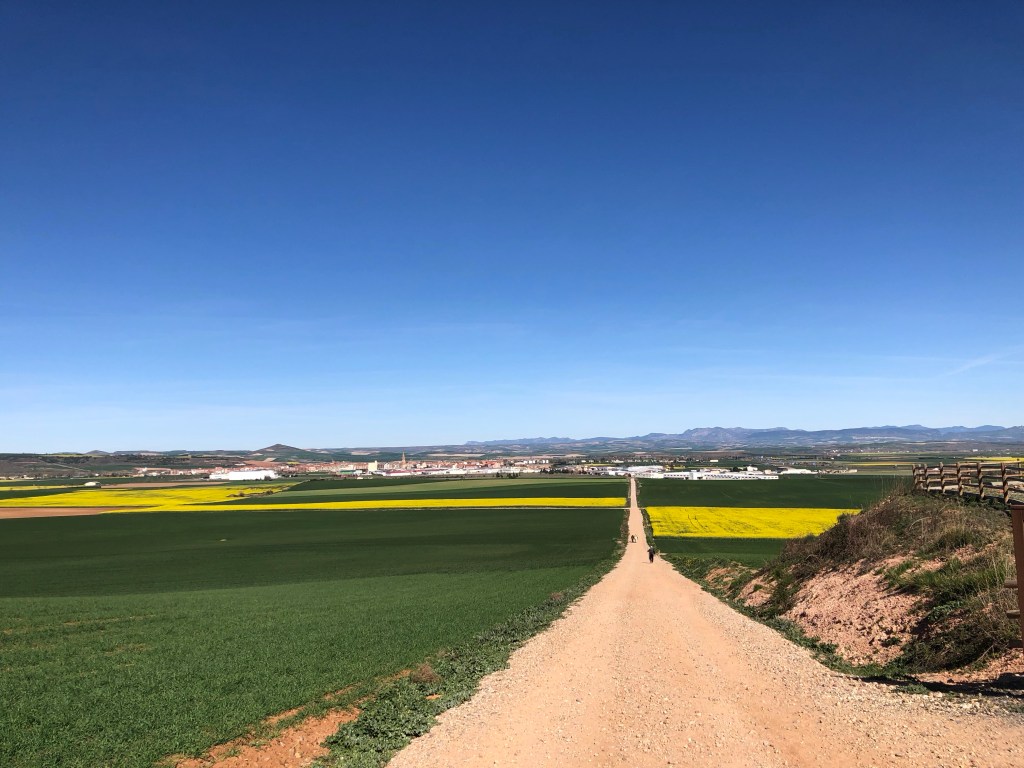
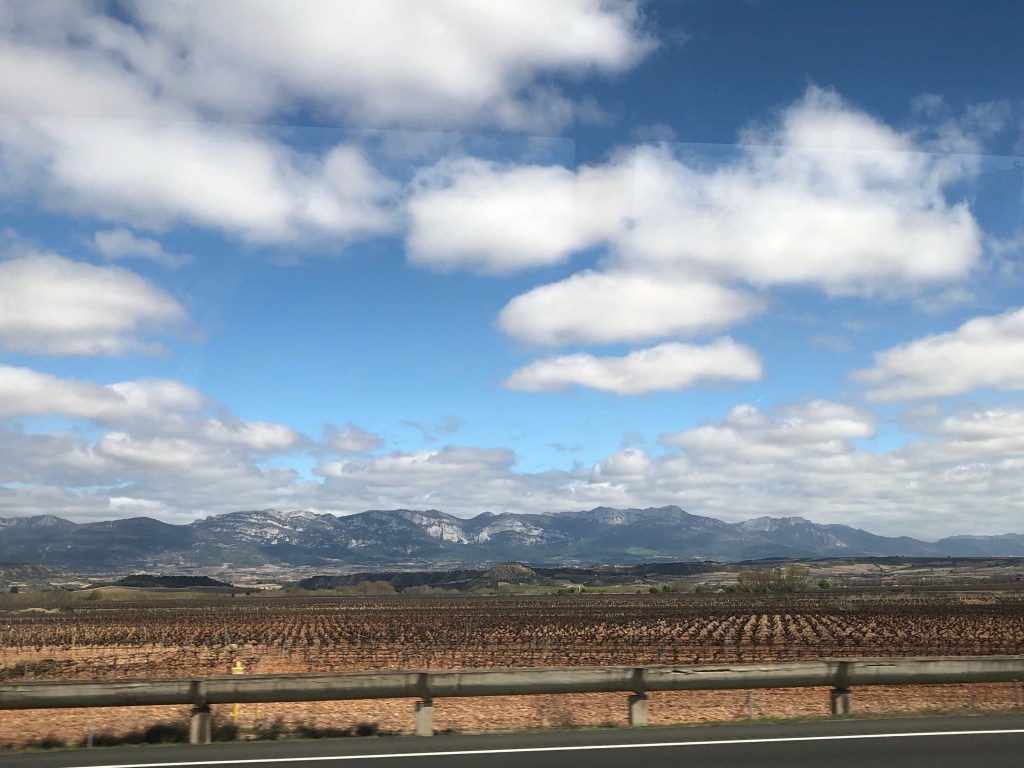
That being said, the Camino was busy. The Koreans had all set out well before sunrise. They’re turning out to be most of if not the only real pilgrims (in the religious sense) on the Camino, with the possible exception of the odd Brazilian. I’d hoped to explore some of the churches along the way, but they were all closed – a possible drawback to setting out so early – so I powered through the first fifteen kilometres alone, soaking up the silence of the green fields of La Rioja.

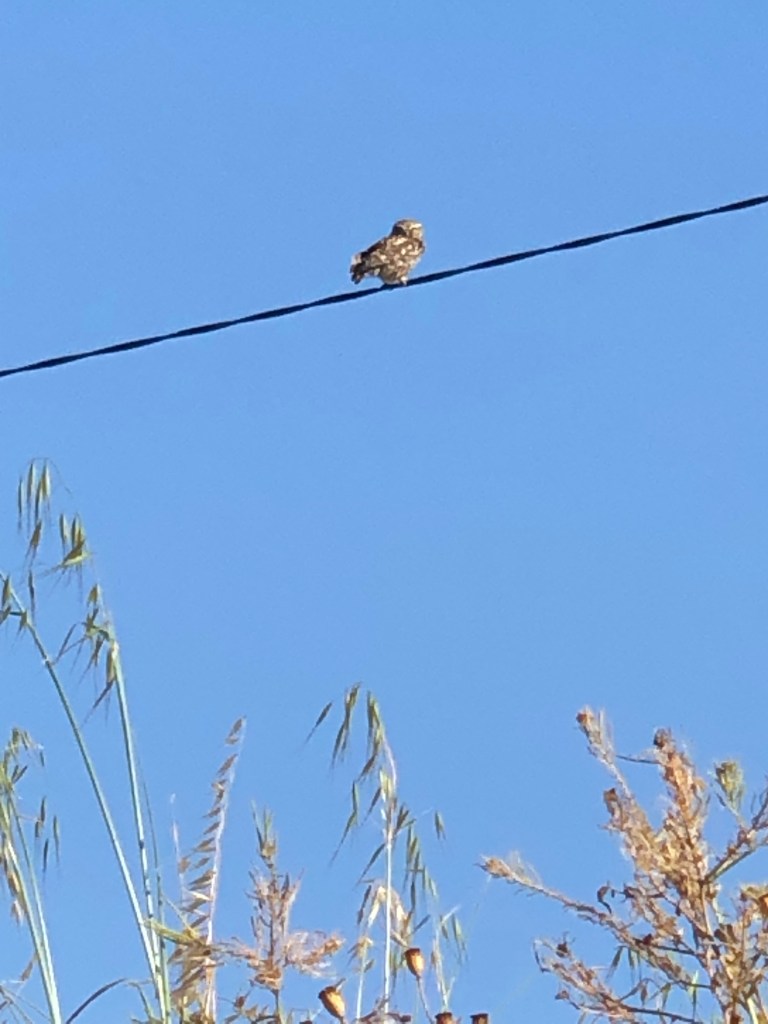
And what a silence! At the start of the day the birdsong was explosive, and I got quite used to listening out for certain motifs in certain places: the rasping call of a black redstart on tiled roofs, the drawn out wheeze of corn buntings on fence posts and the singsong warble of woodlarks in the vineyards. But at one point it suddenly all went quiet. No birdsong, no cars, not even the sound of distant chatter from other pilgrims on the road. I had to stop walking to listen, taking out the monotonous beat of my own two feet that’d I’d long since tuned out. It wasn’t eternal, but it was powerful while it lasted. I’d even say it will be a treasured Camino memory.


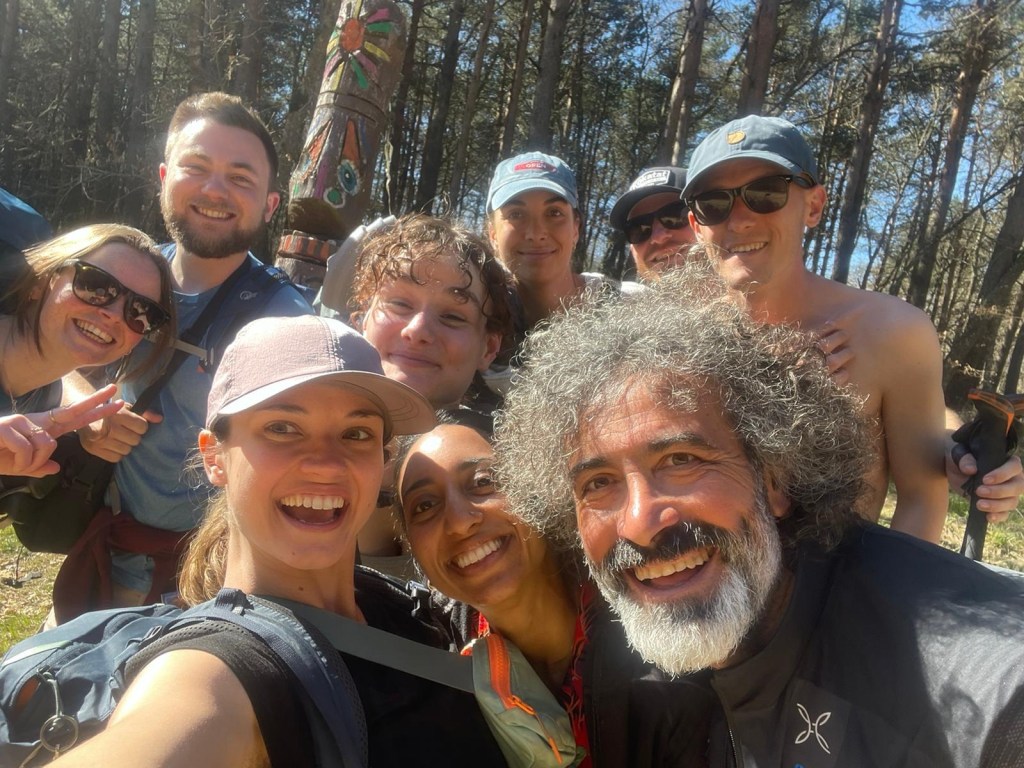
Just before Cirueña I fell into step alongside the only other English peregrino I’ve met thus far. It was good to share the road at last, and we swapped stories to the backdrop of the patchwork fields of La Rioja passing by.


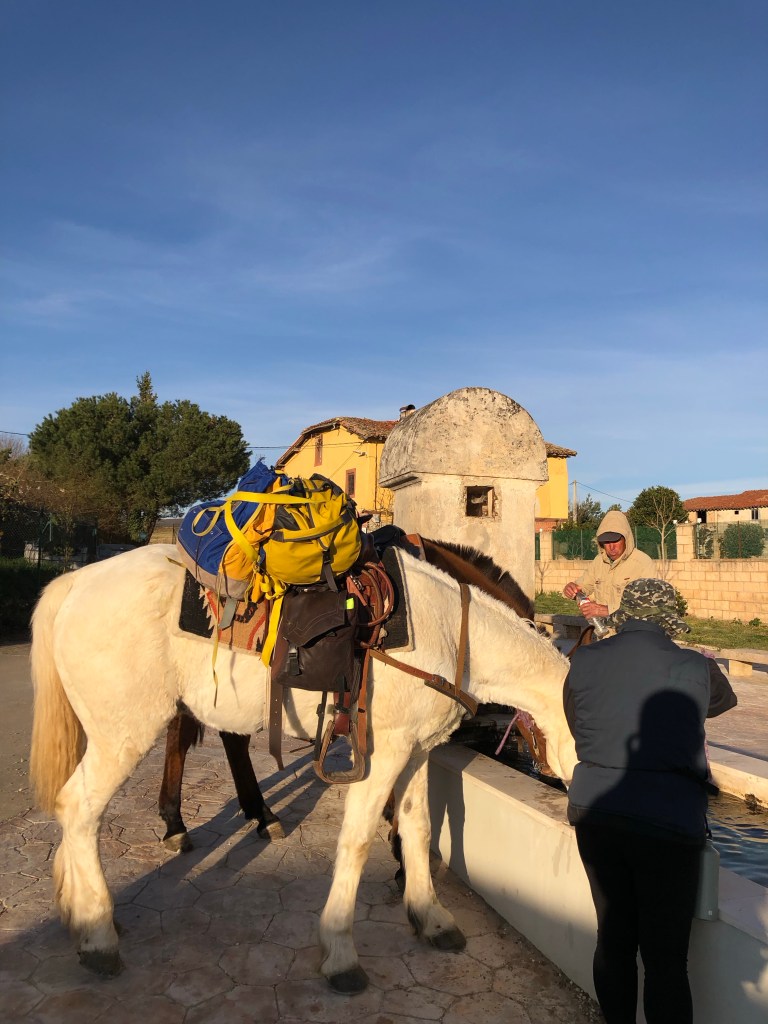
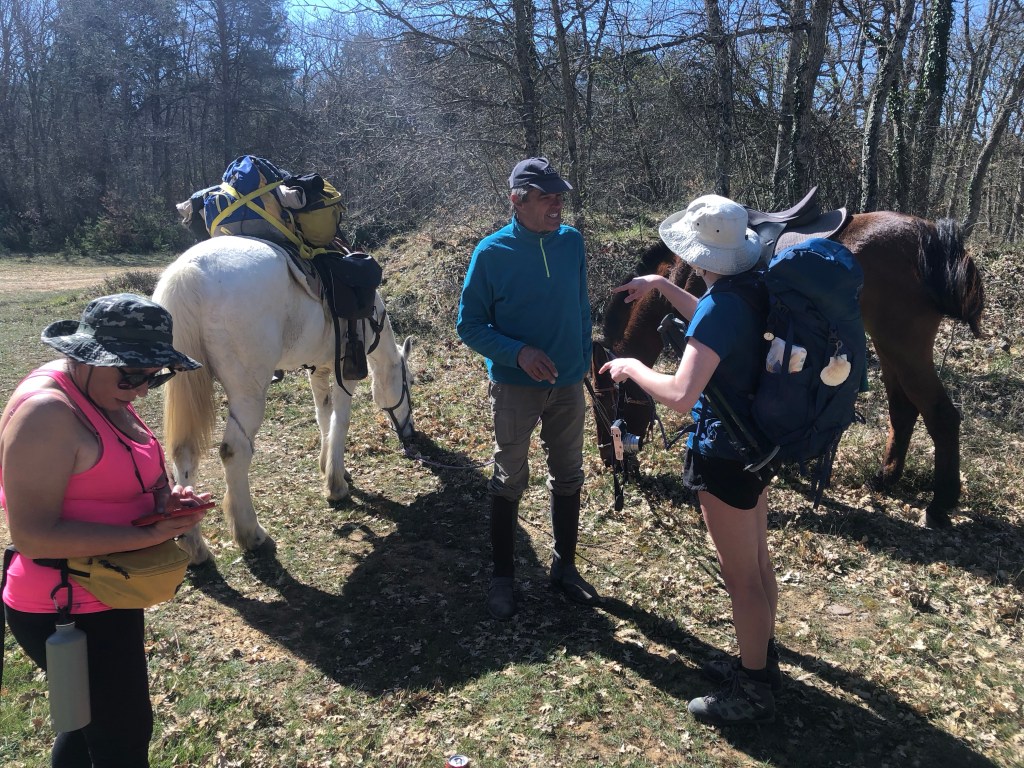
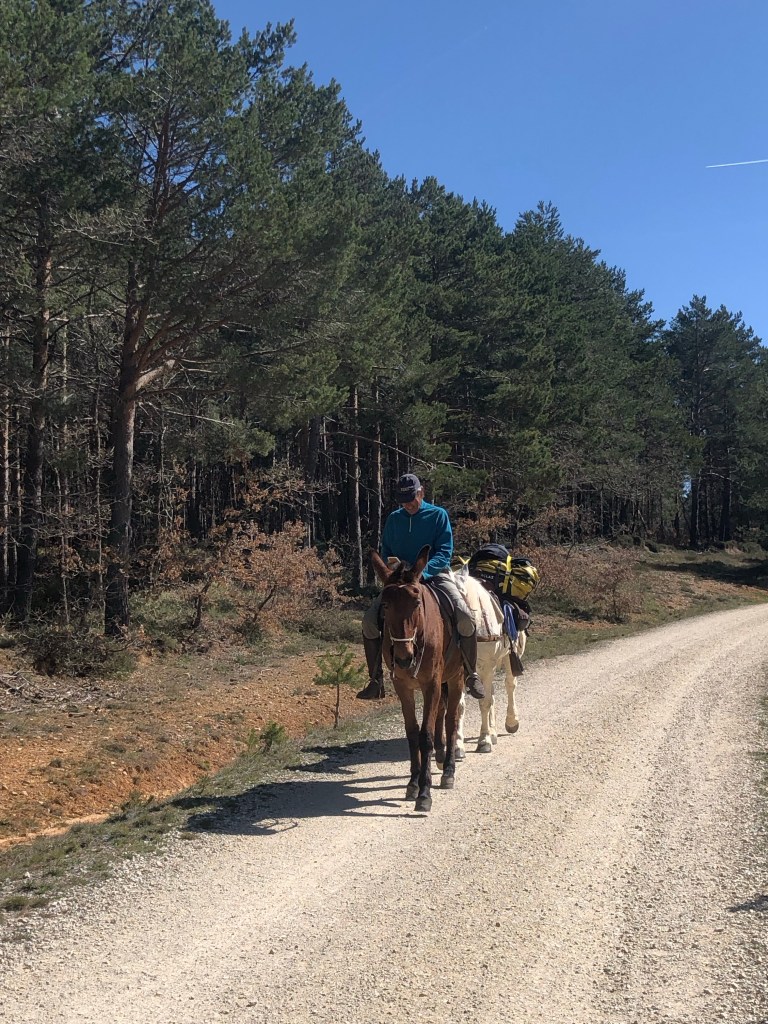
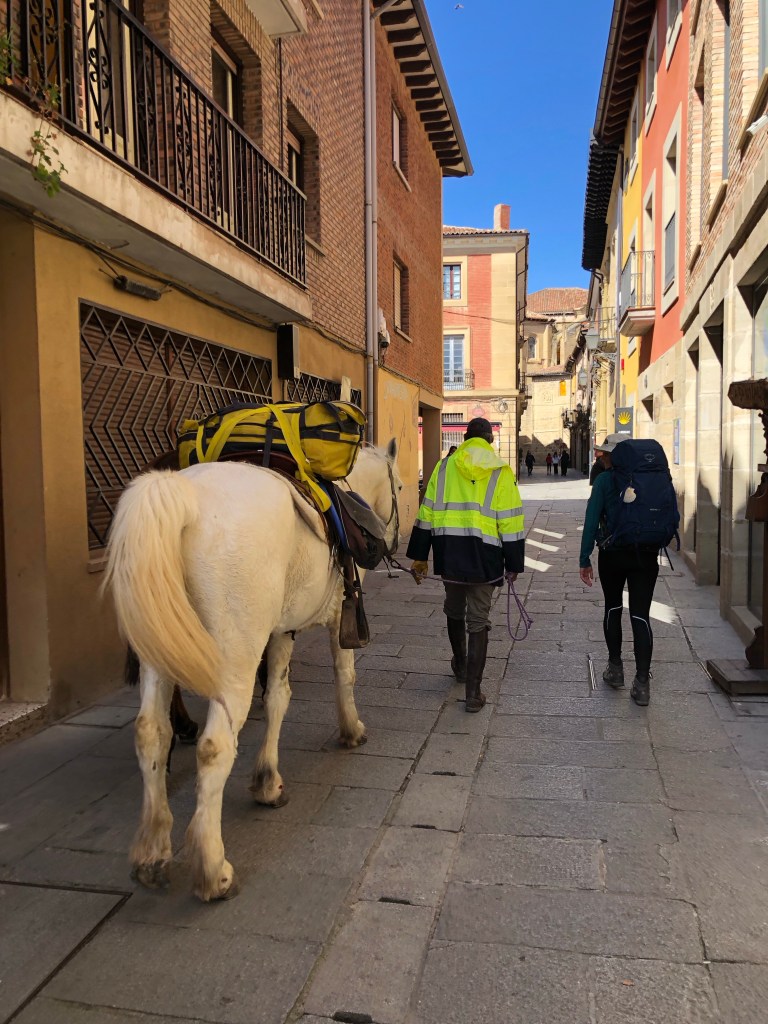
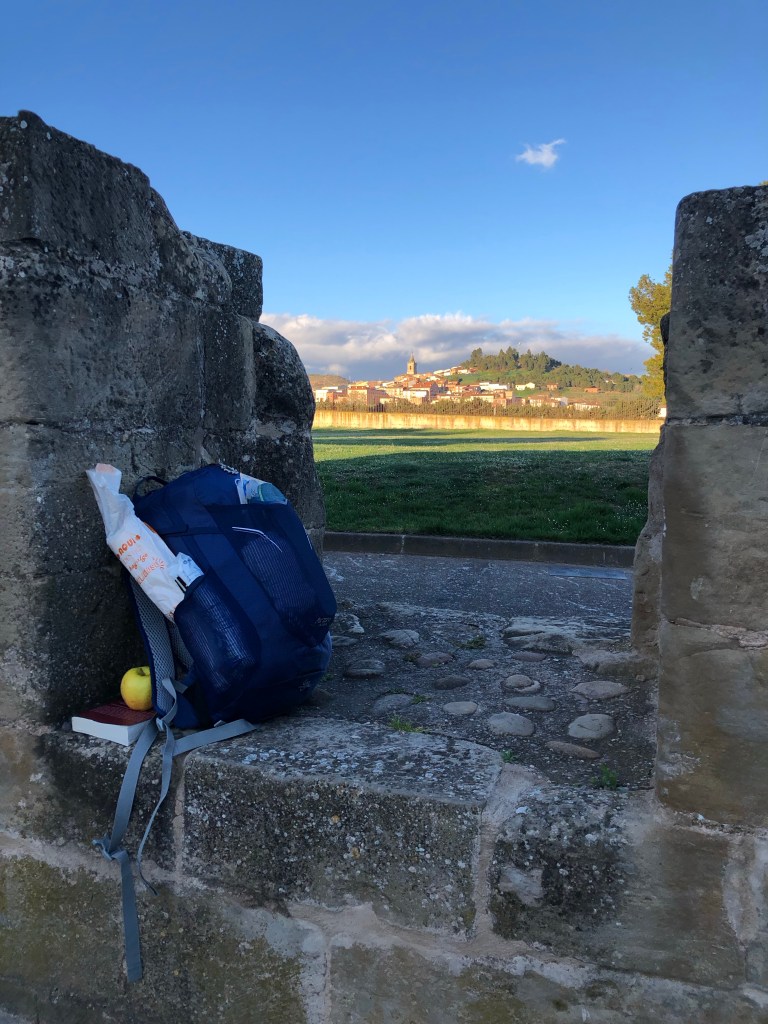
Just shy of Santo Domingo itself, we caught up with a genuine arriero, making the Camino in riding boots and a high vis jacket, taking his mule Jena and a Connemara horse along with him. It was a fleeting encounter, cut off all too soon by our imminent arrival in Santa Domingo, and I hope I can catch up to him again – I must have a hundred questions or more from years of research on arrieros that only a real muleteer could answer. Wait for me, Enrique! BB x
Camino II: Dawnbreaker

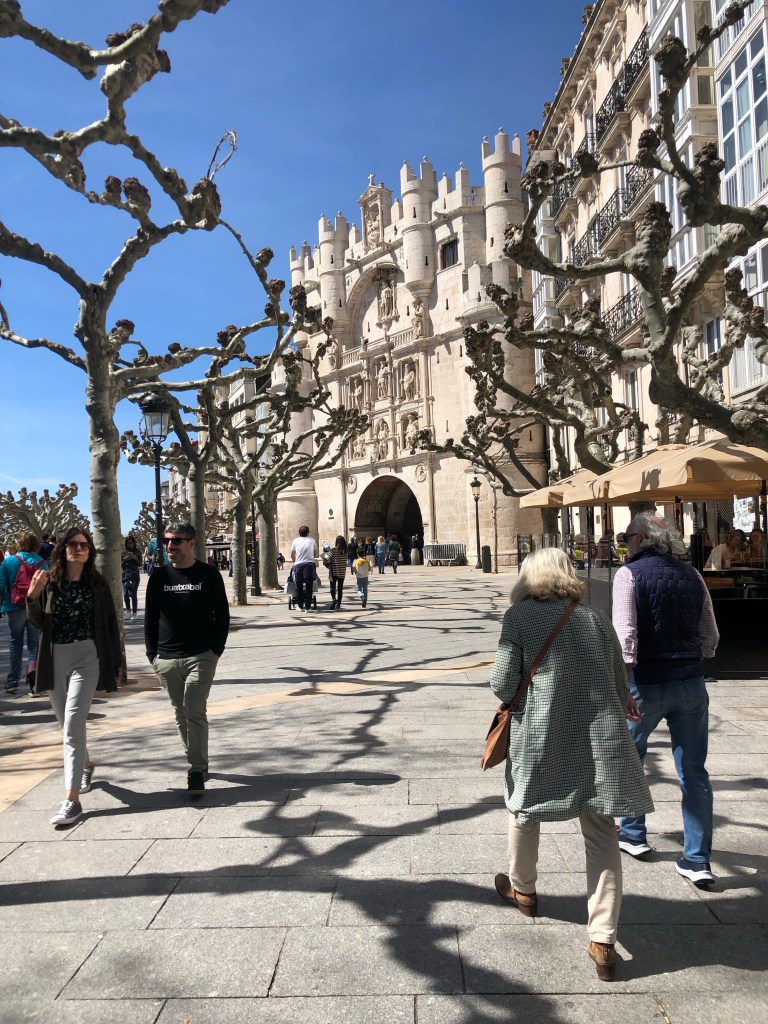
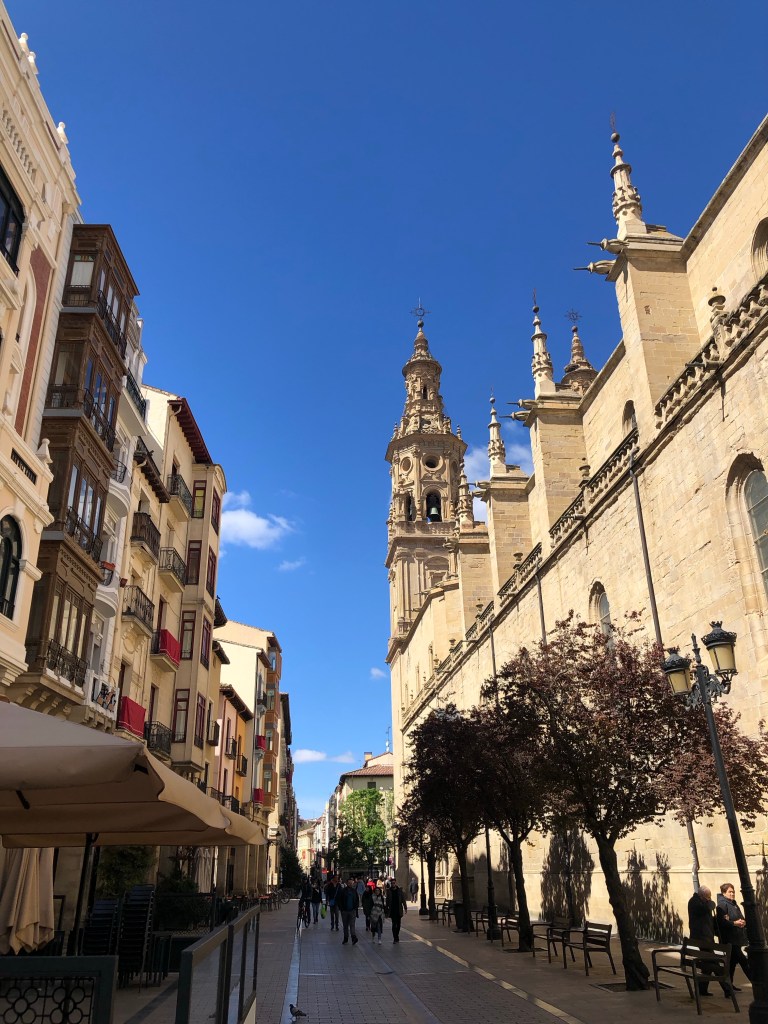
Holy Week got off to a flying start last night outside Logroño’s cathedral, Santa María de La Redonda. It isn’t always easy to tell which towns will have a serious procesión, but for the record, Logroño goes the distance. It looked as though all the brotherhoods were out in force last night, garbed in white, red, green, black and blue. Crucially for me, they also beat out the same halting drumbeat from my memories of Holy Week in the south. Not every town does it, but you’ll notice if they do: it’s the ever so slightly delayed drum roll during the march that, once you hear it, you can’t unhear. It’s the suspense of the last days of Jesus’ life, as his followers waited to see if he would save himself. At least, that’s one way of reading into it.

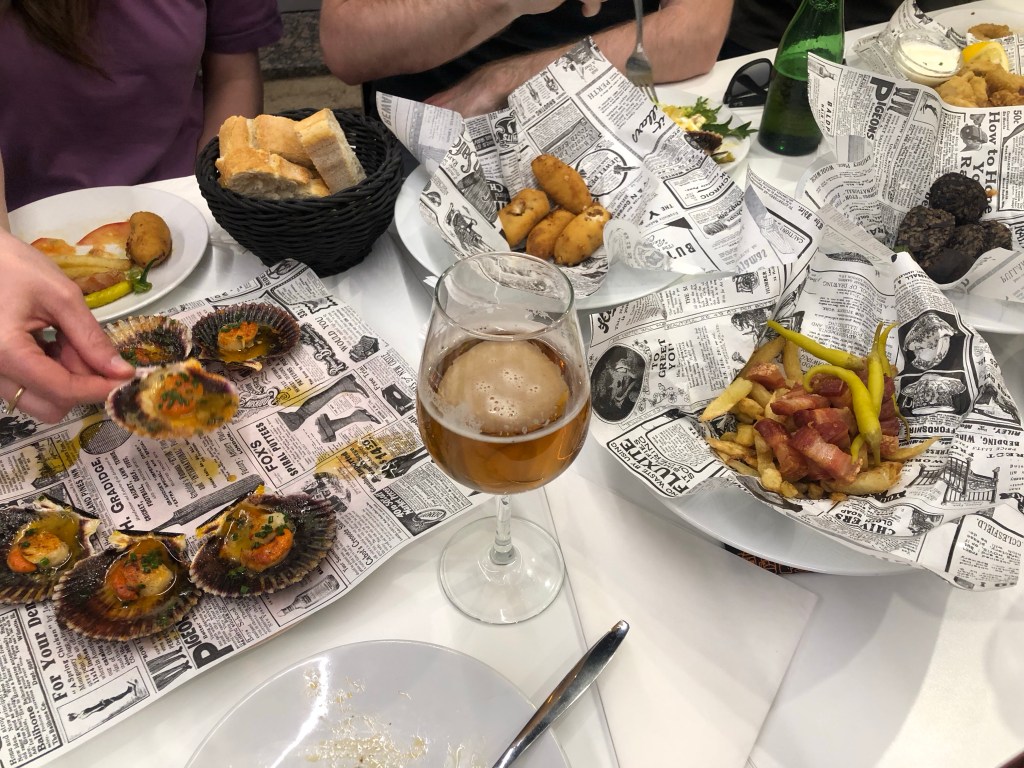
I had supper with a rather awkward American, the only other guest for dinner at the albergue. He wasn’t even staying there, but appeared to have wandered in looking for a menu peregrino (the cheap three-course fare offered to pilgrims on the Camino). He had his reservations about how sociable people are on the Camino and pined for the quieter stretches, and from his less than satisfied reaction to the ‘vegetarian option’ he’d asked for, I couldn’t help wondering what he was doing out here. He was quick to want to fact check my anecdote about his home state of California being one of the only places in the world named for a fictional location (it takes its name from the mythical island in Montalvo’s 16th-century chivalric novel, Las sergas de Esplandián) but I won’t begrudge him for it. After Trump and the fake news boom, who’d trust anyone?


I was definitely one of the first out of town this morning. Though I passed some pilgrims on the road a few hours in, from the speed at which they were walking I suspect they’d been lodging one or two towns ahead. As a result, I had pretty much the whole 30km hike to Nájera to myself – including the first hour and a half before sunrise, which is always one of the most magical times to walk the Camino.

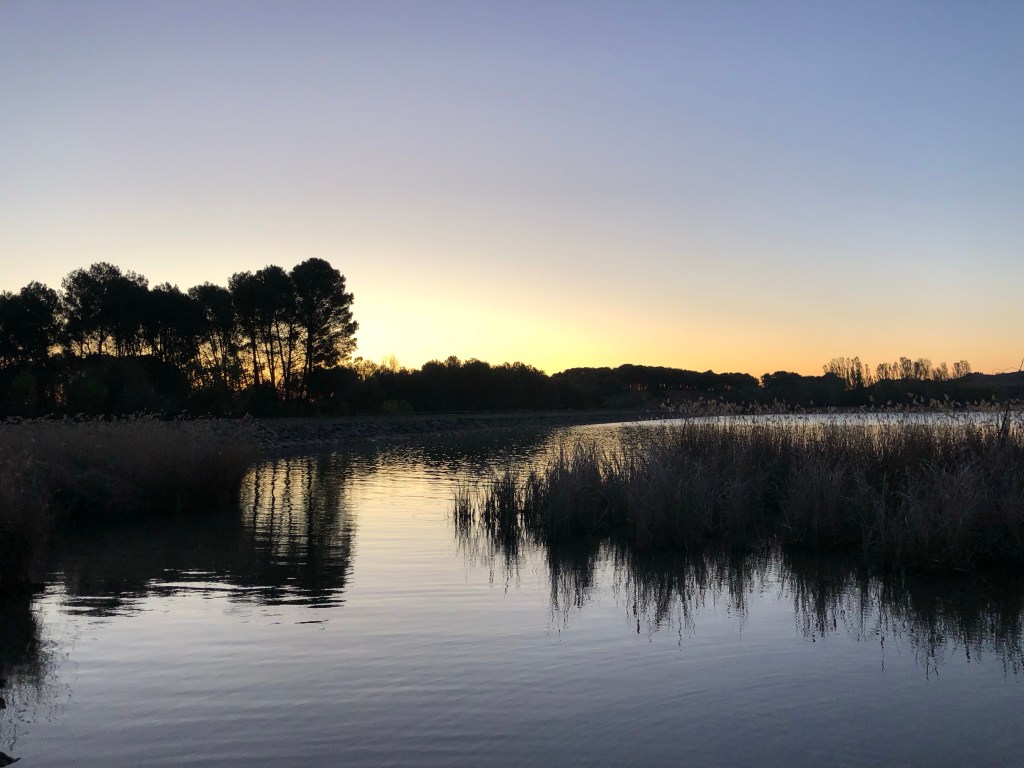
Approaching the Laguna de Grajera from the east, I counted about six or seven night herons flying in from their roost somewhere beyond Logroño. You can just about make out the silhouette of one of them in the photo above, as dawn was starting to break. There were rabbits everywhere – more than I’ve ever seen in this country – and the morning sky was alive with the songs of blackbirds and larks. I could have waited for company at any point, but I do love to have that part of the day to myself. Self indulgent, perhaps, but worth indulging all the same.

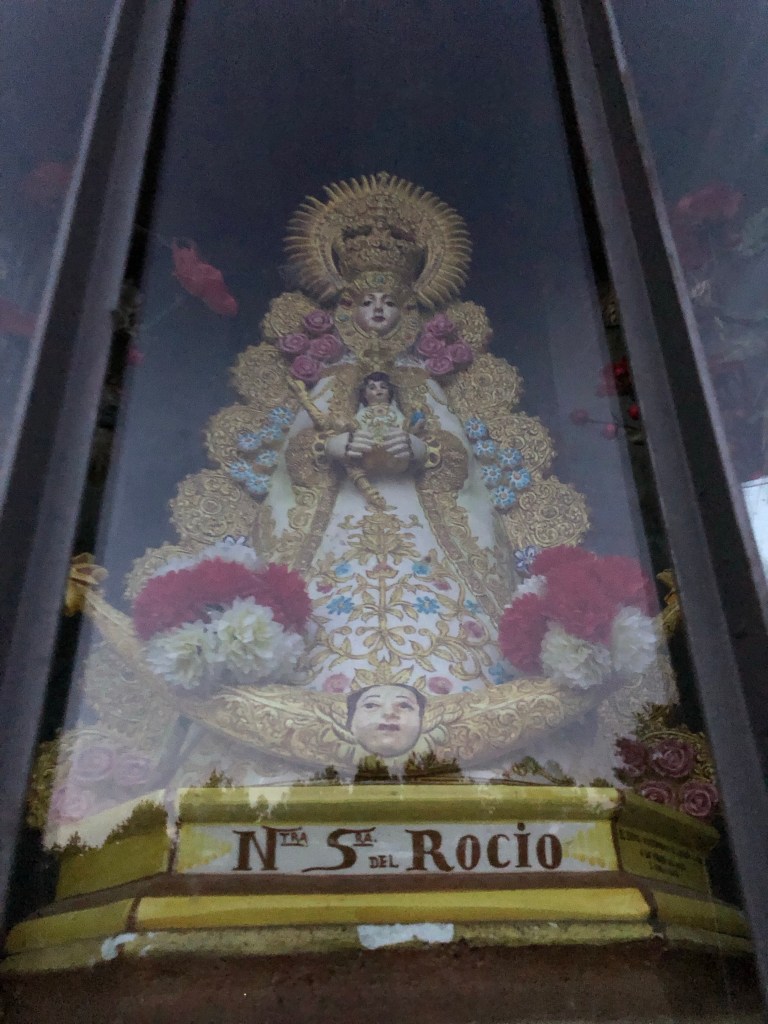
There was even an icon of Nuestra Señora del Rocío on the lakeside. Whether or not I sang her into existence through various repetitions of Las llanuras ardientes and El Rocío es un milagro as I was walking is conjecture. It felt special to find her here, so far from her usual haunt in the marismas down south.

Now, while I needn’t have set off quite so early (the 8 hours in the guidebook is a joke, the trek is at the very most 6h30 with a stop for lunch) I did have my reasons, and one was to catch a very specific angle of the sunrise at just the right moment.

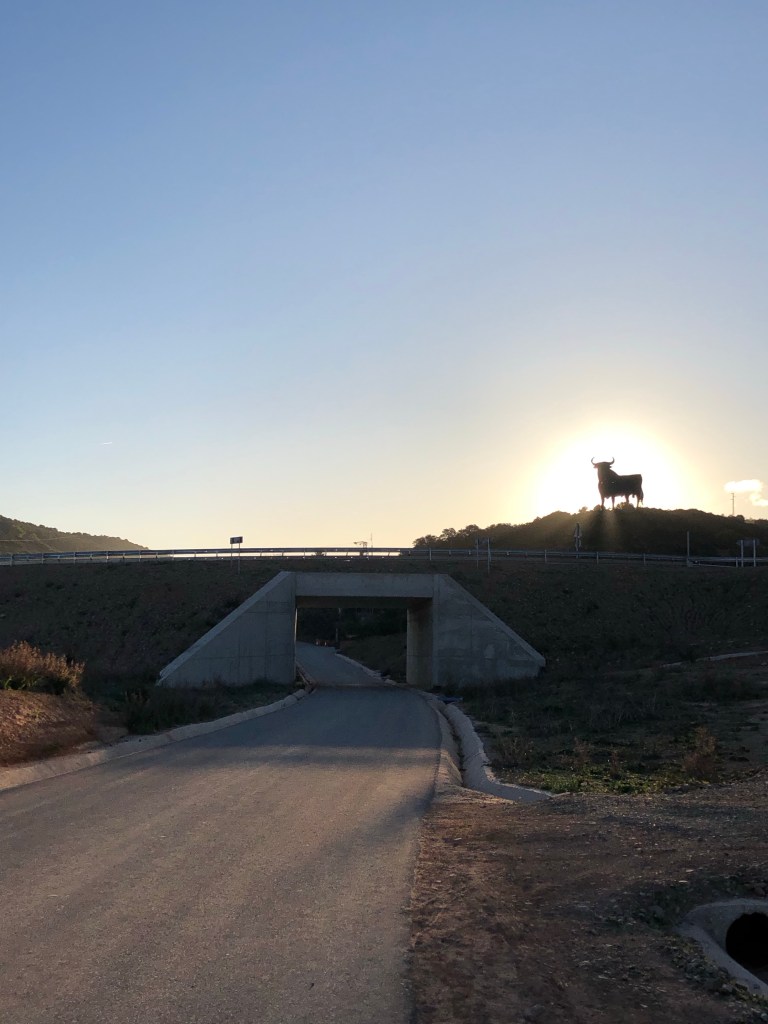
At the brow of a hill to the west of the laguna stands one of the famous Osborne bulls for which Spain is so famous. By the time I got clear of it – at around 8.20am – the sun was almost exactly behind it. I could not have timed it better. Point and shoot!

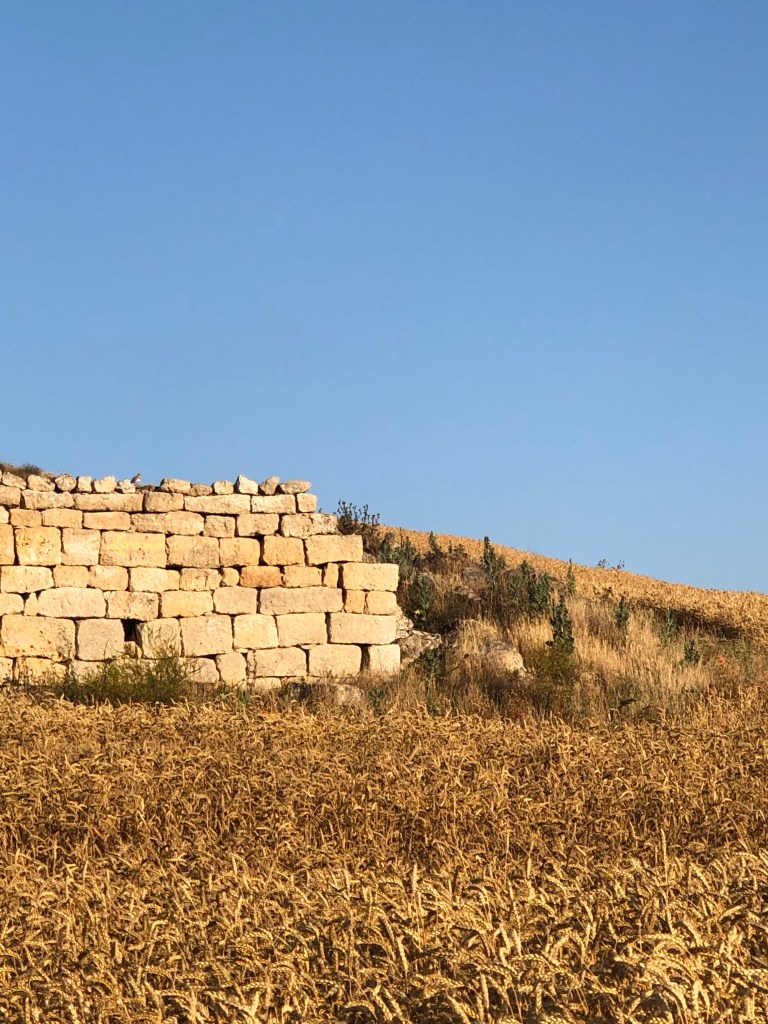
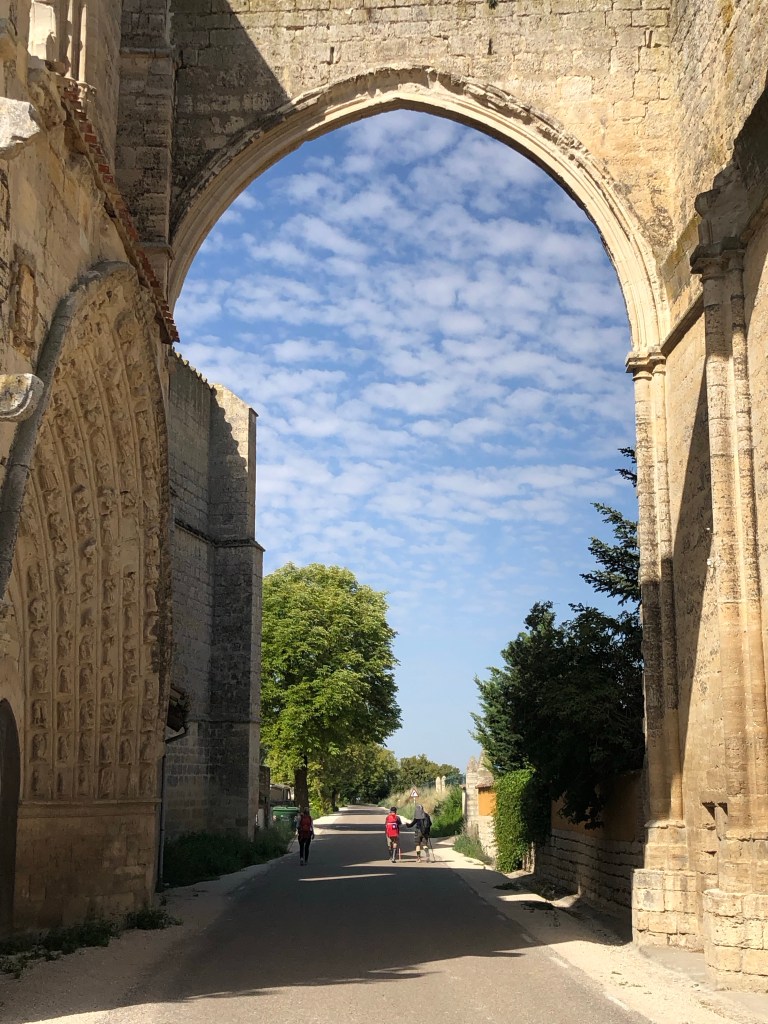
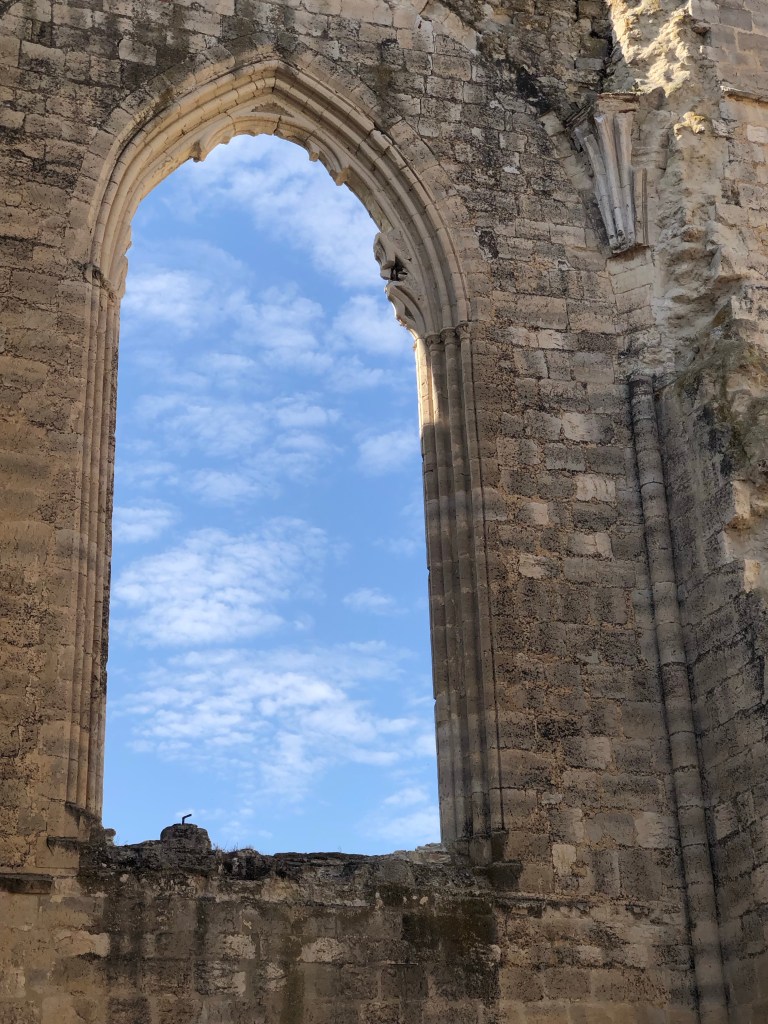
The rest of the walk was pretty straightforward. The ruins of the old pilgrims’ hospice at San Juan de Acre were picturesque and the Camino itself, though it cleaved close to the road on occasion, was quiet and easy underfoot. I let a couple of Dutch pilgrims overtake and continued to have the road to myself. The Sierra de Cebollera remained cloudbound for most of the walk, and I kept my hoodie on until I reached Nájera – it simply wasn’t hot enough to justify fewer layers, and that’s not bad thing!

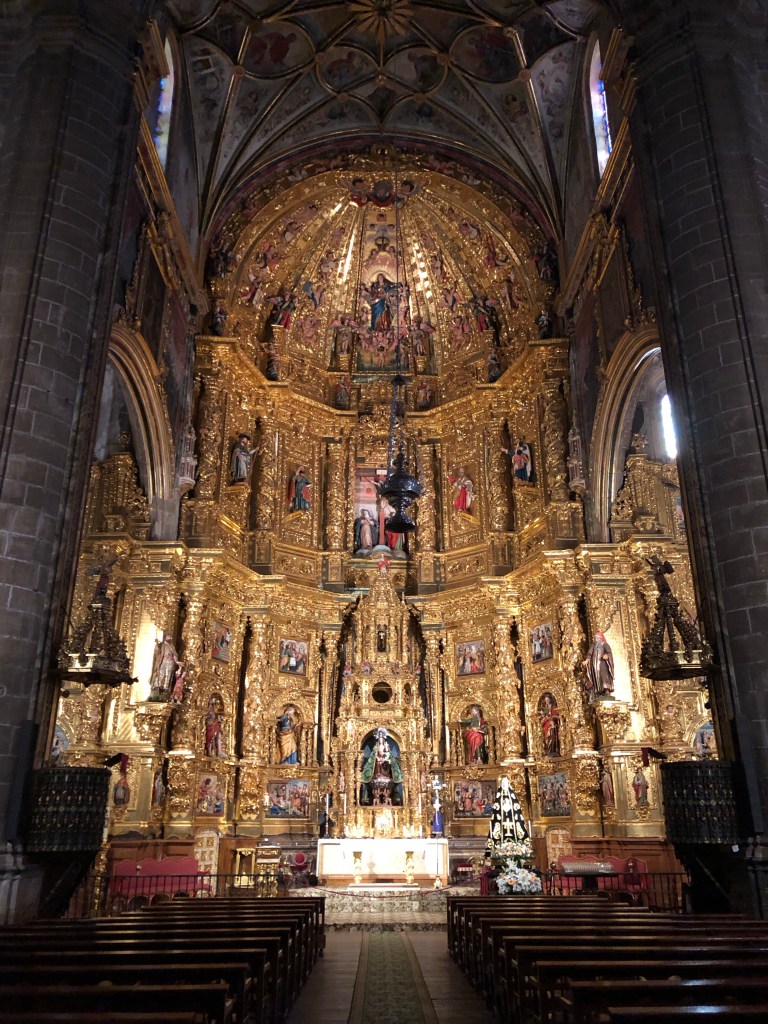
Navarrete was stunning – easily one of my favourite stations on the Camino so far. The church is a classic Spanish affair: pokey and generic on the outside, and an immense explosion of heavenly gold within. I lit a candle for abuelo, left a story in the visitor’s book, sang through Thomas Morley’s Nolo mortem peccatoris (since there was nobody there) and moved on.

From Navarrete, the final stretch rolled across the hills before sloping down toward the cliff face of Nájera. Legend has it the French hero Roland fought a Syrian giant on one of these hills in a single combat that went on for days, but I was happy enough to see the familiar silhouette of the giants of my childhood: griffon vultures, circling high above the meseta in the distance. I didn’t keep a tally, but there were raptors everywhere today. Kestrels and kites – both black and red – and buzzards and booted eagles, these last in both white and brown. Since it’s still early enough in the season, some of them were displaying still, climbing high and then plummeting down in a sharp V with wings tucked in. Between that and the flute-song of woodlarks that followed me for the last hour before Nájera, I have been in seventh heaven all morning. Oh Camino, I have missed you!

The Albergue Municipal is filling up. Maybe I’ll meet some of these people later. But for now, I’ve done my write-up for the day and I could use a little shut-eye before I seek further adventures in Nájera this evening. Until the next time, folks. BB x

Camino I: Plus Ultra

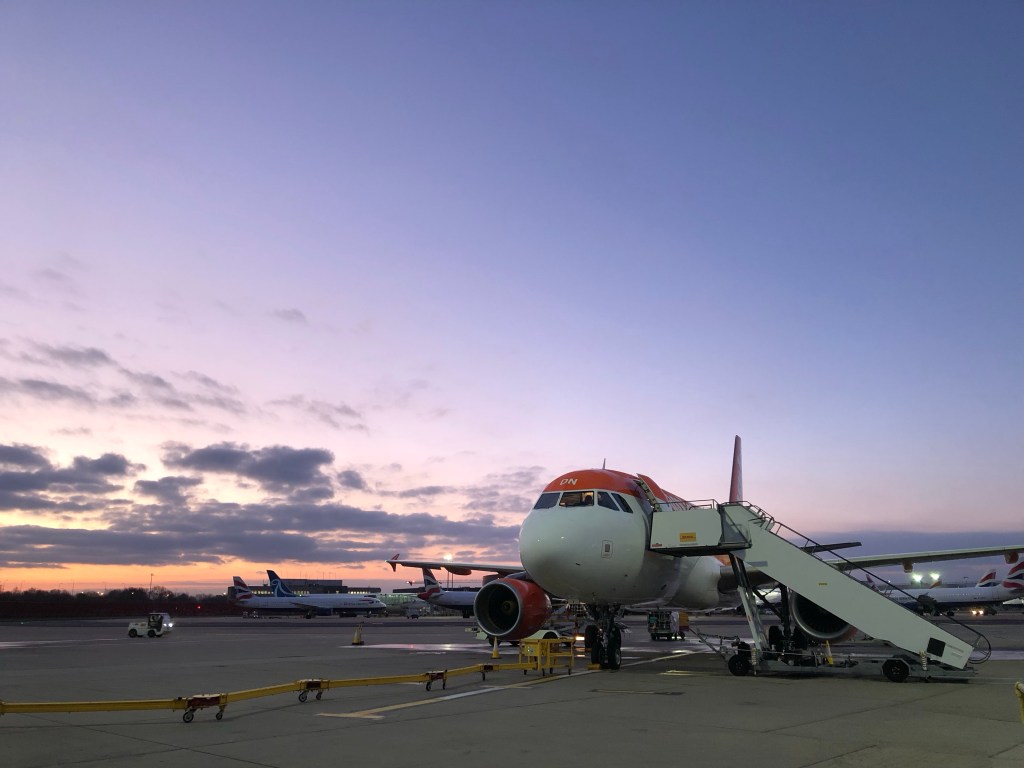
6.15am, Gatwick North Terminal

I left over an hour and a half to make my flight this morning, but I could easily have done it in less. Even with the extras (a few more items of clothing than originally planned in case of inclement weather), I’m traveling lighter than ever. Who’d have the fuss of a suitcase when the open road is so inviting?

I think I must have raced to the gate in my eagerness. It was almost deserted for some time when I got here. Only two or three others joined me in my vigil: a Spanish girl chaperoned by her mother, a Greek/English couple (yes, I googled the man’s passport symbol – call me a nosy Parker but the square cross had me stumped) and a woman who from her accent could only be Basque: one side of her head shaved, brow furrowed, a black hoodie emblazoned with the slogan ‘DESIGNED BY AN IMMIGRANT’ in block white capitals.

No tannoy for this flight – the attendant called out Bilbao almost as quietly as I did trying to call a student over in the canteen last week for his poor choice of language. She only changed her tune to ‘Speedy Boarding Only’ when the first six or seven of us were clear. Sometimes, just occasionally, it pays to arrive ahead of schedule.


10.18am, Bilbao Intermodal Bus Station

I’ll say this much for Bilbao Airport: it’s a lot less hassle than Gatwick. All in all I don’t think it took much more than fifteen minutes between touchdown and the shuttle bus.

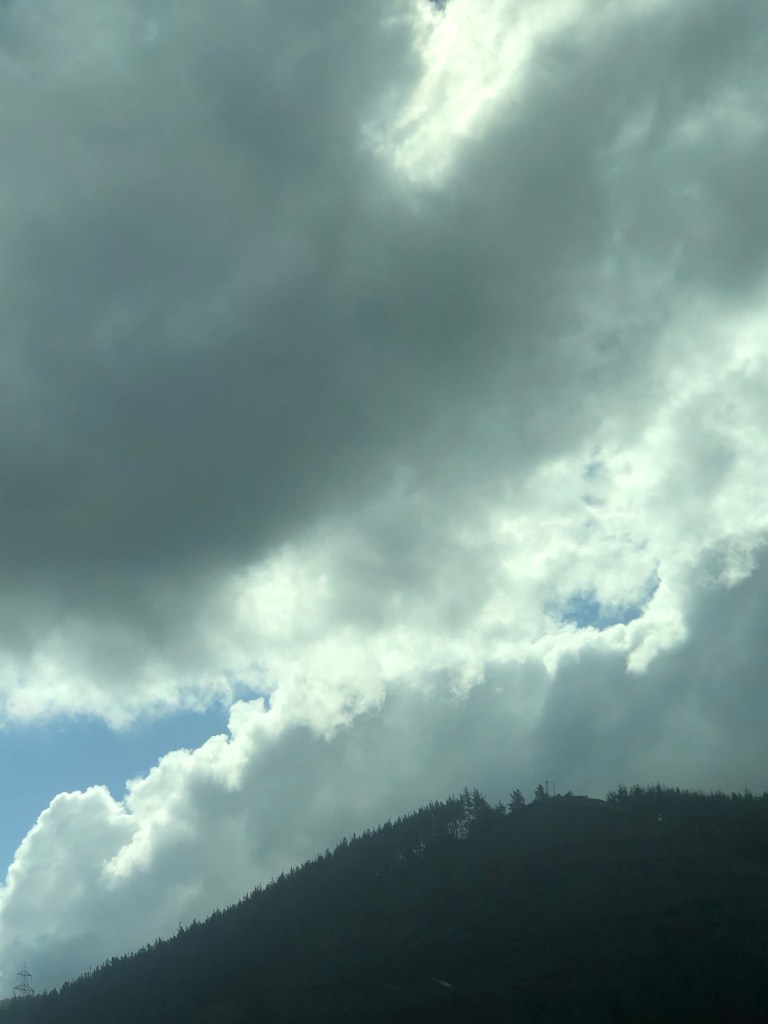
As I thought, the skies over Bilbao when we landed were clouded, grey and low. They always have been on my visits to this corner of Spain, to the extent that clouds and the Basque Country are virtually inseparable in my mind. The Spanish author Miguel Delibes once said that the sky over Castile is so high because the castellanos themselves put it there from staring at it so much. While my kith and kin chase the coy heavens plus ultra, always in search of the new, the ever practical Basques bring the skies down to their level, coveting the Viscayan rain and wrapping their dark forests in mist and cloud. I don’t expect to be free of that shroud until we reach the frontier.


11.56am, near Pobes

I’m now racing south on the Bilbao-Logroño bus, basking in the intermittent glow of the Spanish sun. Craters of blue have started to appear in the sky as though punched through by some celestial artillery, and still the Basque line of defence holds.

Here below, the landscape is changing. The military ranks of pines encamped around Bilbao suddenly give way to a gentle blanket of beech trees. Patches of brilliant green herald the coming of spring to these hills, and limestone crags scar the mountains like bones – first in uniform grey, then bleached with that warm golden stain that is so evocative of Spain’s highlands.

And then, suddenly, the dark hills of the Basque Country fall away and the plains of Castile are all around me: a forgivingly flat golden country, nestled between the high crags north of Haro and the snowbound peaks of the Sierra de Cebollera to the south. Castles and monasteries dating back to the time of a real frontier sit atop the hills and knolls like childish imitations of the limestone cliffs behind, the handiwork of the greatest craftsman of all.

And there, racing over the fields near an Alcampo petrol station, is my first swallow of the year. It’s only a fleeting glimpse as the bus races on past a bodega and a Lidl in quick succession, but it’s enough to make my heart soar – higher still than those Castilian skies.

I’m drunk on all this scenery, in case that wasn’t obvious (the overblown choice of a frontier semantic field was probably a dead giveaway). Rehab is the usual cure. However – to keep in line with this post’s choice of imagery – sod that for a game of soldiers. I have a week and more to wander around my grandfather’s country once again. I can’t think of a better rehab than this.


5.27pm, Albergue Santiago Apostol, Logroño

Logroño is climbing back out of its siesta. I’ve spent the afternoon here and there, though perhaps more here than there. Here being the Albergue Santiago Apostol, the same place I stayed when I last did the Camino four years ago. The only thing that seems to have changed is the stamp for my pilgrim’s passport. That, and I’ve come alone this time.

The albergue is quiet. I’ve only crossed paths with a handful of other pilgrims: Joan i Laura, a couple of peregrinos from Girona, a French family of three and a German family of four. I expected the Camino to be busier during Semana Santa, but I guess if you have a week’s holiday you’d do the stretch that can be done in a week or less – that is, the last 100km from Sarria. Out here in La Rioja, it’s likely to be rather quiet.

That will make for a rather soul-searching experience, which is no bad thing!

I’ve gone for dinner and breakfast at the albergue, 1) to make sure I actually eat and eat well and 2) to meet some of the other pilgrims ahead of the 31km stretch tomorrow. And also 3) because, at 16€ for dinner and breakfast, it’s a steal. I hadn’t forgotten how affordable the Camino is, but it is nice to rediscover, as it were.

I ate my lunch (chorizo and queso curado in a fresh barra de pan) under a beech tree on the bank of the Ebro river. Spring may be slow in coming to England but she’s been here a while already. The beak-clicking display of the local storks can be heard every so often, even from the albergue, though a drumming woodpecker in the park was giving them a run for their money.

English and Spanish birdsong combined on the riverbank. Blackcaps, wrens and blackbirds supported a local chorus of serins, short-toed treecreepers and wrynecks. I don’t think I’ve seen (or heard) a wryneck since my first stint in Villafranca back in 2015, but I hadn’t forgotten its call. After scanning the branches for a minute or so I tracked it down to a lightning tree just a few metres from where I was sitting. They really do look bizarre, the way they move about mechanically, looking for all the world like the clockwork nightingale from Hans Christian Andersen’s fairy tale. The wryneck kept me company for most of my lunch and only took off when a dog walker came by, carrying an African grey parrot on his arm.

I’ll try to catch the first of the procesiones tonight. ‘It’s only Monday,’ said the hostalero at the desk, alluding to the fact that the pinnacle of Semana Santa is toward the end of the week. Even so, my pride as a Spanish teacher is at stake (I have just been teaching the topic to my Year 10s) and besides, I’m a fanatic for the pasos. You can blame my year in Andalucía for that. I’ll also see if I can’t locate the local legend of the Bookseller of Logroño that fellow English traveler George Borrow recounted in his book on the Gypsies of Spain, published a little under two hundred years ago – because what’s an adventure without a quest of some description? BB x

Spirits of the Forest

Winter is on the retreat. It began on Tuesday, when I heard a dunnock singing from the top of one of the trees by the church. A tiny foot soldier, the herald of the advance guard that has set up camp at the edge of the Weald, singing his heart out in defiance of the lingering cold. The dawn chorus grows in strength by the day. It woke me before my alarm did yesterday. There are still a few redwings about, but it’s been a long time now since I heard the cackle of a fieldfare, and the evenings are getting lighter. Spring is still a little way off, but it is finally on its way.

I’ve been a lot more mobile these last few months. No, it’s not because I finally have a set of wheels – I don’t, and that is still very much a work in progress – but all the same, it has meant I have spent even more time in the Weald than ever before. While my head and my heart have been busy elsewhere, my eyes and ears have not taken a day off. The shifting seasons and the changes they bring have always been a major source of happiness for me, and there have been so many things to see on my weekly commutes that I’ve been pretty spoilt for choice.

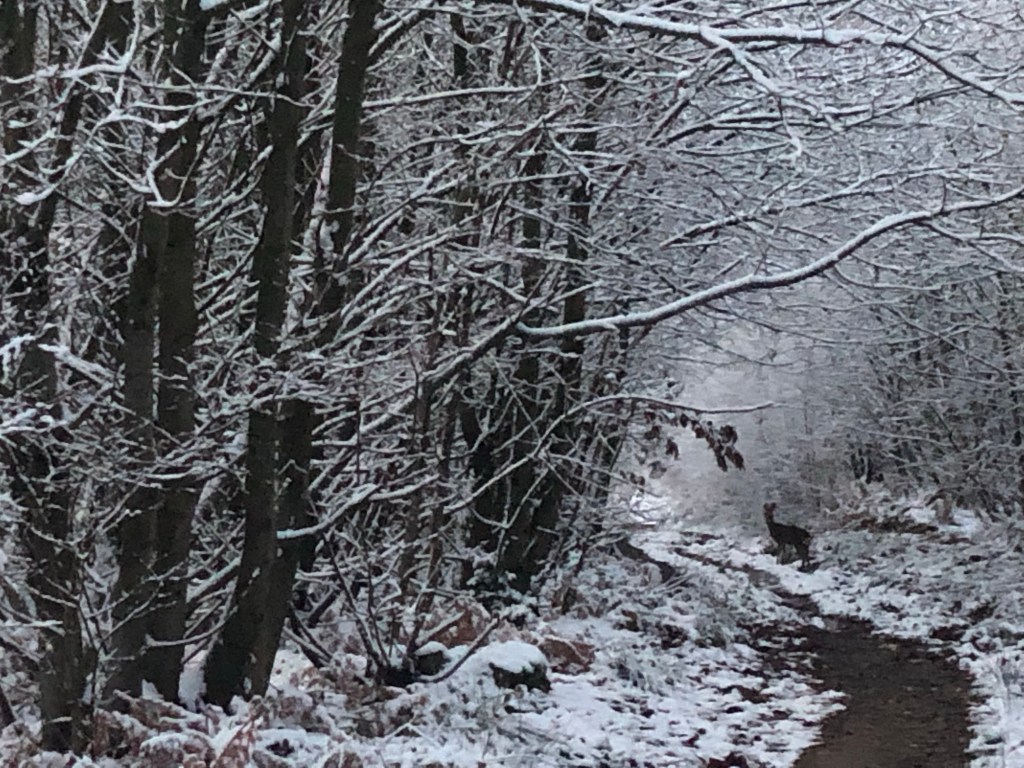
More than a couple of times, I’ve looked over my shoulder to see a roe buck staring back at me. I almost walked right past a couple on my way into town yesterday, and they stood their ground even when I stopped to stare right back. They’re easy to miss at this time of year, blending seamlessly into the starving ferns and leaf-litter, and I might well have missed them more than I’ve seen them. The only obvious sign you get is when they dash off into the woods, their tails flashing white like a signal behind them. When the snow came down in December, they were only too easy to spot. I very nearly missed my train into London because I stopped to let a small herd cross the path into the woods beyond, watching them until they disappeared into the gloom. It wouldn’t be the first time.

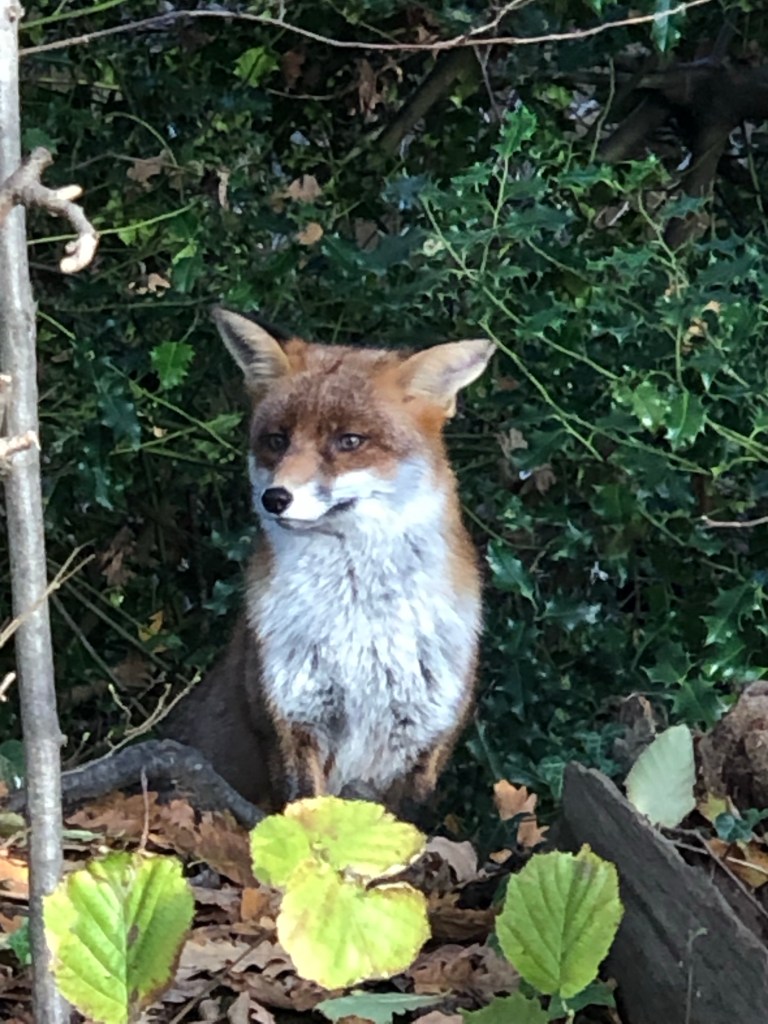
During a cold snap like the one we had before Christmas, it isn’t uncommon to see foxes out and about during the day, since the going gets tough for pretty much everything that lives in the forest. Last weekend I saw one curled up asleep in the open beside the Gatwick stream, one eye open and trained on me as I wandered by. Not too many weeks before, I had a close encounter with a younger tod on the edge of town, which was either so accustomed to people passing by or too hungry to care that I was sitting only a few metres away. Plenty of folk passed by without so much as a sideways glance, which is understandable, I suppose – foxes aren’t universally popular for a number of reasons – but the country boy in me can’t help but stop, and look, and listen. Whether or not they’re virus vectors or poultry pilferers, foxes are undeniably beautiful creatures when you get the chance to have a good look at them.

Then there’s all the voices of the Weald. Snatches of conversations in languages at once familiar and unfamiliar. The croak of the ravens that nest somewhere in the forest. The harsh cry of a hulking grey heron as it soars above the trees. The thin rattling wheeze of a wren, and the answering snare drum of a woodpecker. It’s all I can do to keep my head facing forward on my way to and from lessons at work, lest I make my love for these things painfully obvious. In a very real sense, I’ve been playing the same game since I was a schoolboy. That makes it twice as fun, I guess.

Boy, but it feels good to be writing again. I’m out of practice. I’ll report back when I have something to report. BB x

All Change

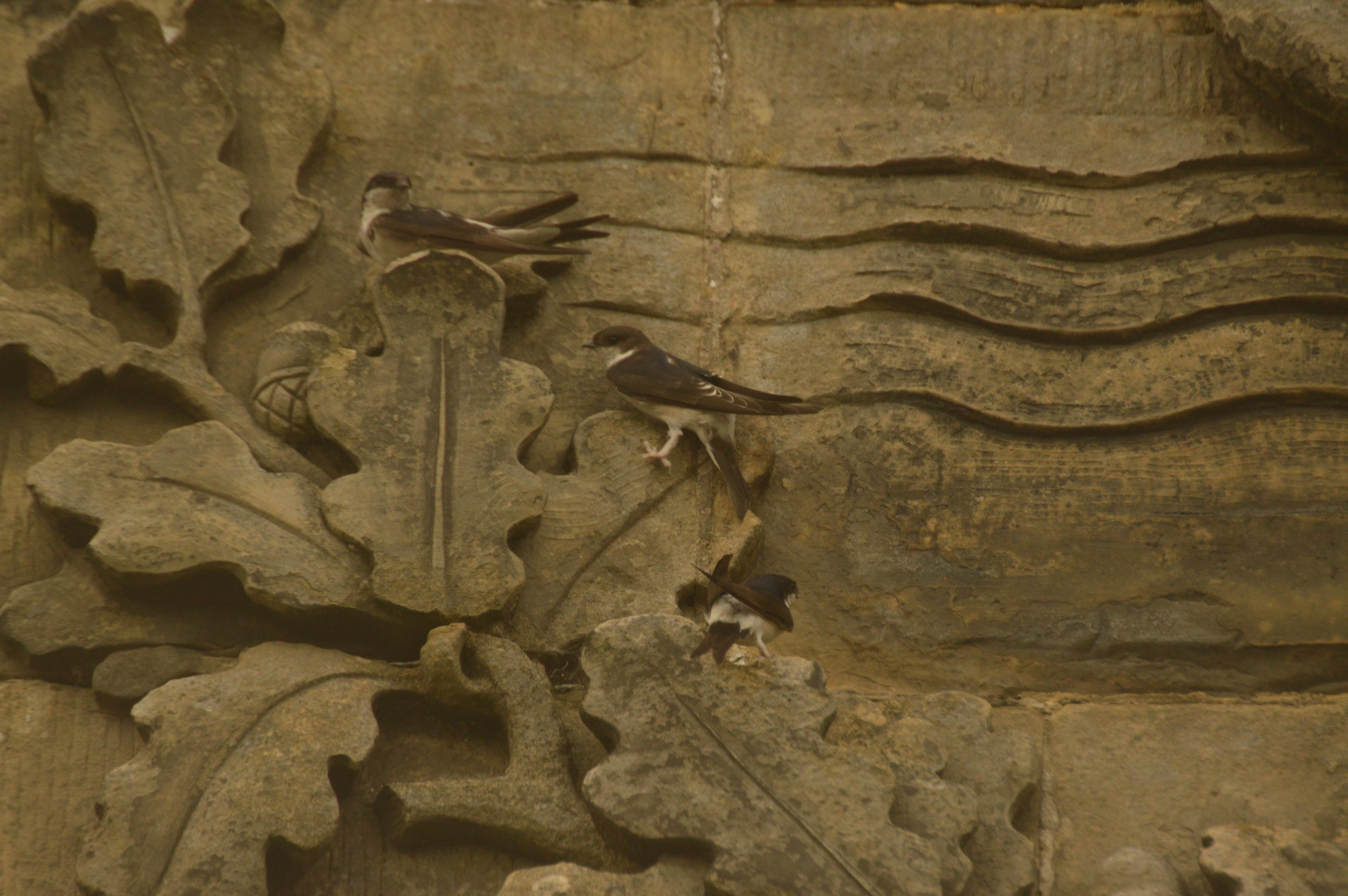
Autumn has come early this year. Following in the wake of the fierce heat of the hottest summer on record in the British Isles, many of the trees have started to shed their leaves almost two weeks earlier than usual. Two weeks does seem to be the number: the forest is thick with the musty air of fungus, and the colony of house martins that nest in the school have already started to muster on the roof as though they mean to depart any day now, though they are usually with us well into September. We’re in for a long winter when it comes.

The zenith of the summer stargazing season is behind us now. It’s one of the things I most look forward to about the summer, living where I do: despite the eternal glow from London to the north, the stars and the planets are surprisingly clear. Some of the summer nights this year were so hot it was possible to go out stargazing well after midnight without catching a chill, and I refamiliarised myself with the constellations: the twinkling ‘W’ of Cassiopeia; the Northern Cross; the winding enormity of Draco; and arrayed along the horizon, the bright lights of three planets: Jupiter, Saturn and Mars. It was so bright at the peak of the heatwave that I didn’t even need a torch to find my way around, thanks to the unfriendly glare of the hunter’s moon. While I couldn’t catch the planets with my camera, the Moon was easy enough.

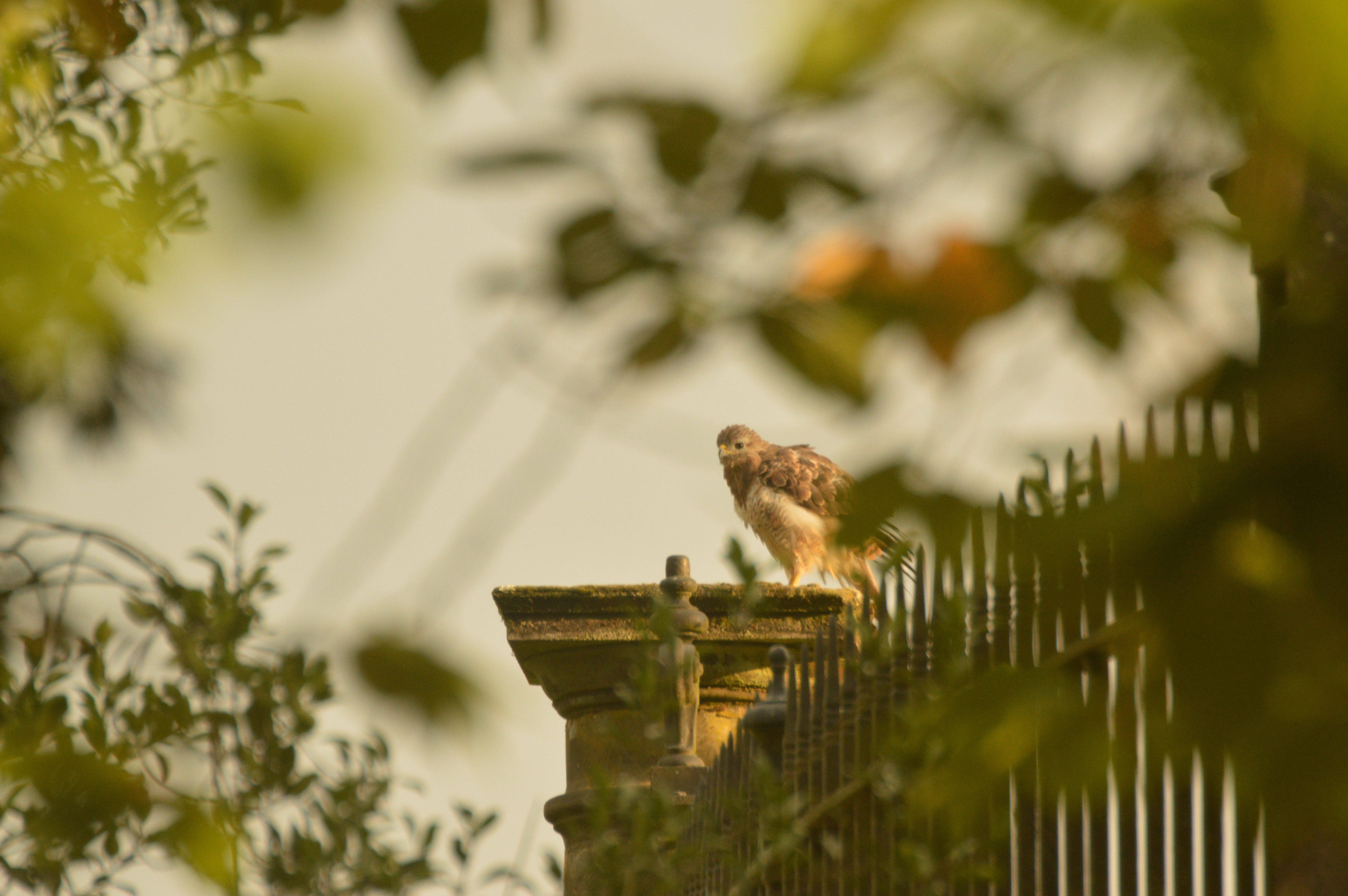
There’s a buzzard that lives in the forest which sometimes quarters the school grounds. A few days ago I saw her from the kitchen while I was having breakfast one morning, and on a childish whim I set out with my camera in hand. I used to be rather good at stalking for a good shot, but I’m a good number of years out of practice. I did manage to get close enough to see the hawk’s eyes with my own, which was the standard I always used to hold myself to back when I was a schoolboy, before it took off over the woods.


Words can’t describe how good it feels to be back at work. Usually, the two days of staff training can feel like a gut punch from the backstage crew as the curtain is yanked back – a kind of ‘playtime’s over, now get out there and earn a crust’. But this year, after eight weeks of on-and-off isolation, it could hardly be more welcome. I’ve been chomping at the bit to get back in the classroom since the end of July at least, and finally, it’s come around again. Only the bank holiday stands between the last few hours of the summer and blissful occupation.

I popped up to London yesterday and bought myself a new suit and shoes in a hollow attempt to pave the road to success this year, but also to treat myself after the success of my first ever GCSE cohort to sit exams came out shining. But will they detract from the beard? I find that doubtful.

Sir has been known to radically change his appearance before. I shaved my head once two years back and braved the raised eyebrows of my kids for months as it took its sweet time growing back. I’ve not cultivated a beard (or a ’tache, for that matter) since my time in Jordan, now seven years ago, and despite my initial apprehensions, I have to admit it’s starting to grow on me – faster than it’s growing in, anyway. I’ve accepted the fact that it’s going to leave me looking more like one of Leif Ericsson’s men than one of Hernán Cortés’ conquistadores – I am three-quarters English, after all, and what Spanish blood I have is more than a little rubio. Still, change is good. One can get too comfortable.


I tidied the flat a bit this morning. Took some clothes to a recycling centre. Did one last shopping trip before the portcullis comes down on Tuesday and ordered a grooming kit to keep this new project under control. The writing bug bit earlier this week, as it always does just before work begins. I guess I need to be busy to be productive.

As the clock runs down, I’m enjoying a warm mug of Cola Cao (courtesy of Garcia’s on Portobello Road) and leafing through one of the oldest books in my collection: a 138-year old copy of Washington Irving’s Life of Mahomet & Tales of the Alhambra. The writing is wonderfully poetic, and it even smells historical. One of my students is writing a project on the Alhambra, having fallen under the same spell that I did at his age – the same magic that ensnared Irving and countless other devotees long before us. It would do me a world of good to clue up on that old obsession once again.

It’s going to be a very busy year, but I’ll write as often as I can – it’s been really therapeutic, getting back into the writing game after a long hiatus. Until the next time, dear readers! BB x
Leveret

The heavens opened last night. The water butts, which were pretty much exhausted yesterday, were filled right up to the brim and overflowing as the rain continued long into the morning. Then the winds blew in hot from the southwest, then the skies clouded over and a chill set in. Looks like we’re back to formula with a regular English summer once again.

I read a couple of articles in The Critic today. Oxford University in a bind over a Benedictine college. Simmering anger against the rising tide of wokery. In the news, US Congresswoman Nancy Pelosi landed in Taiwan against the wishes of the Chinese government, Beyonce changed the lyrics to her latest hit single after outcry against an offensive word and Big Brother announced its return. I could have added that the latter information was revealed at the end of this year’s season of Love Island, but the ambiguity is very much intentional on my part.

I quit the house for a bit, grabbing a worn Barbour coat and a pair of binoculars. Figures if I’m on the wrong side of history, I might as well look the part. Watching the swallows yesterday made me nostalgic for the long, quiet days of my childhood when I would set out into the countryside with my camera in search of nature. It was a bit warm for the Barbour, despite the clouds, but it’s a damn sight better for blending into the khaki hues of the English countryside than anything else in my wardrobe.

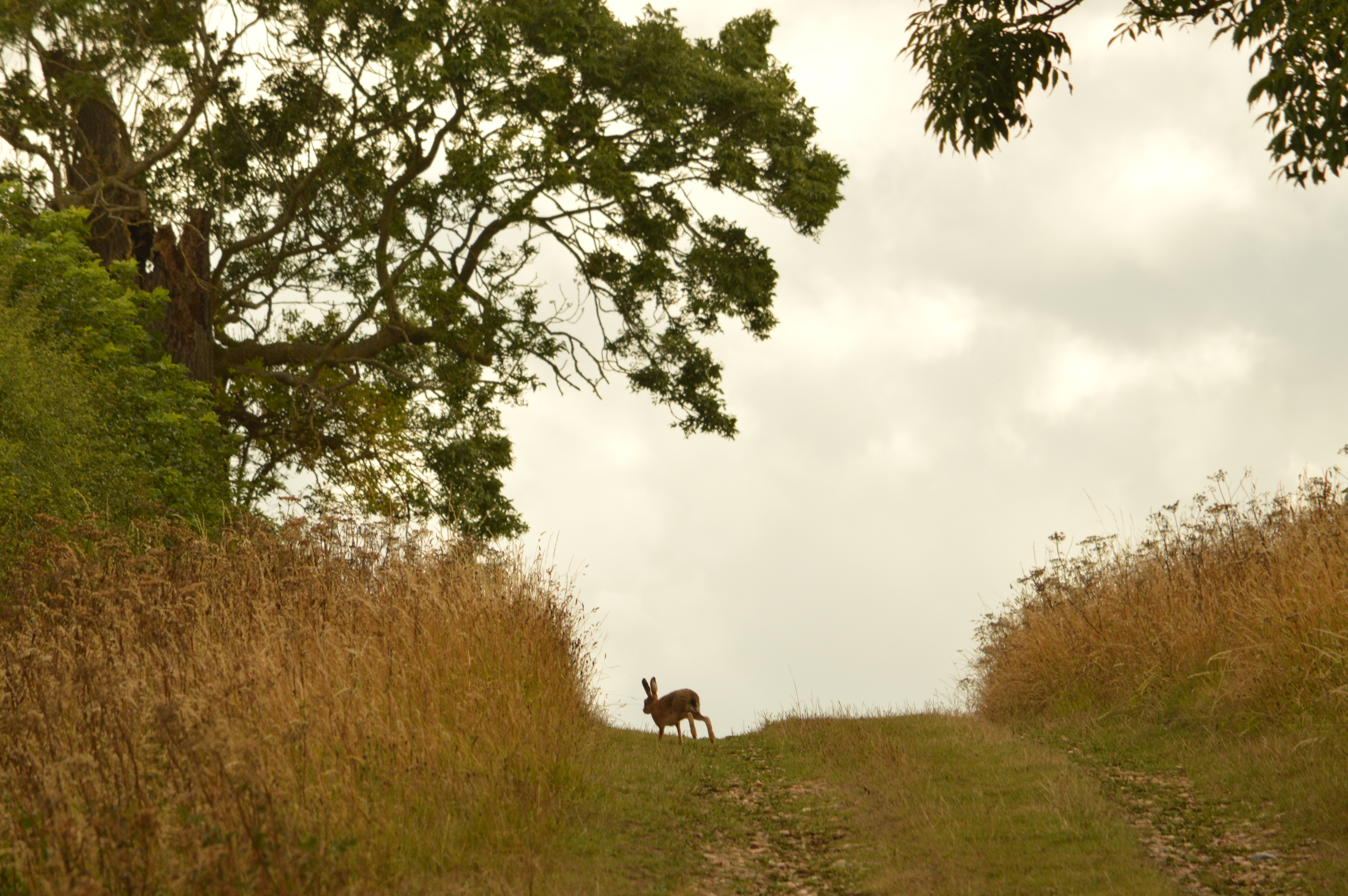
Lincolnshire seems to have quite a sizeable population of hares. You don’t see so many of these impressive creatures in the south-east. Being larger and more skittish than the rabbit, they don’t cope so well with how crowded it is down there. Neither the rabbit nor the hare are native to these islands. Both were brought over here by the Romans – for sport and for eating, if not for some early scientific whim. Our only native species is the mountain hare, and you’ll have to travel to the wildest parts of Great Britain and Ireland in order to find them. Ultimately, that’s neither here nor there: two thousand years have come and gone since the Romans were here, and the hares that race across the fields are by now as English as the oaks that have grown in our soil since time immemorial.

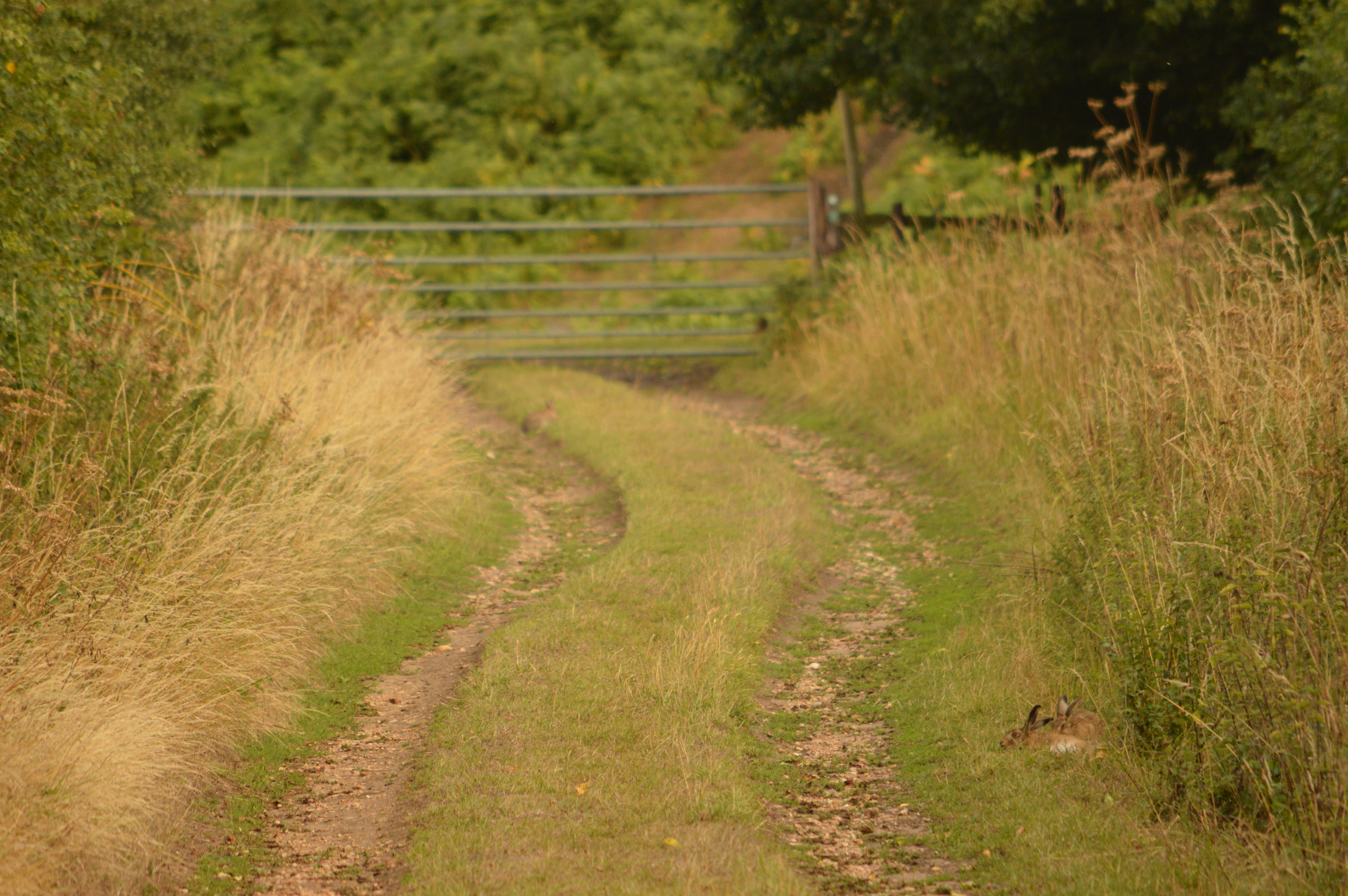
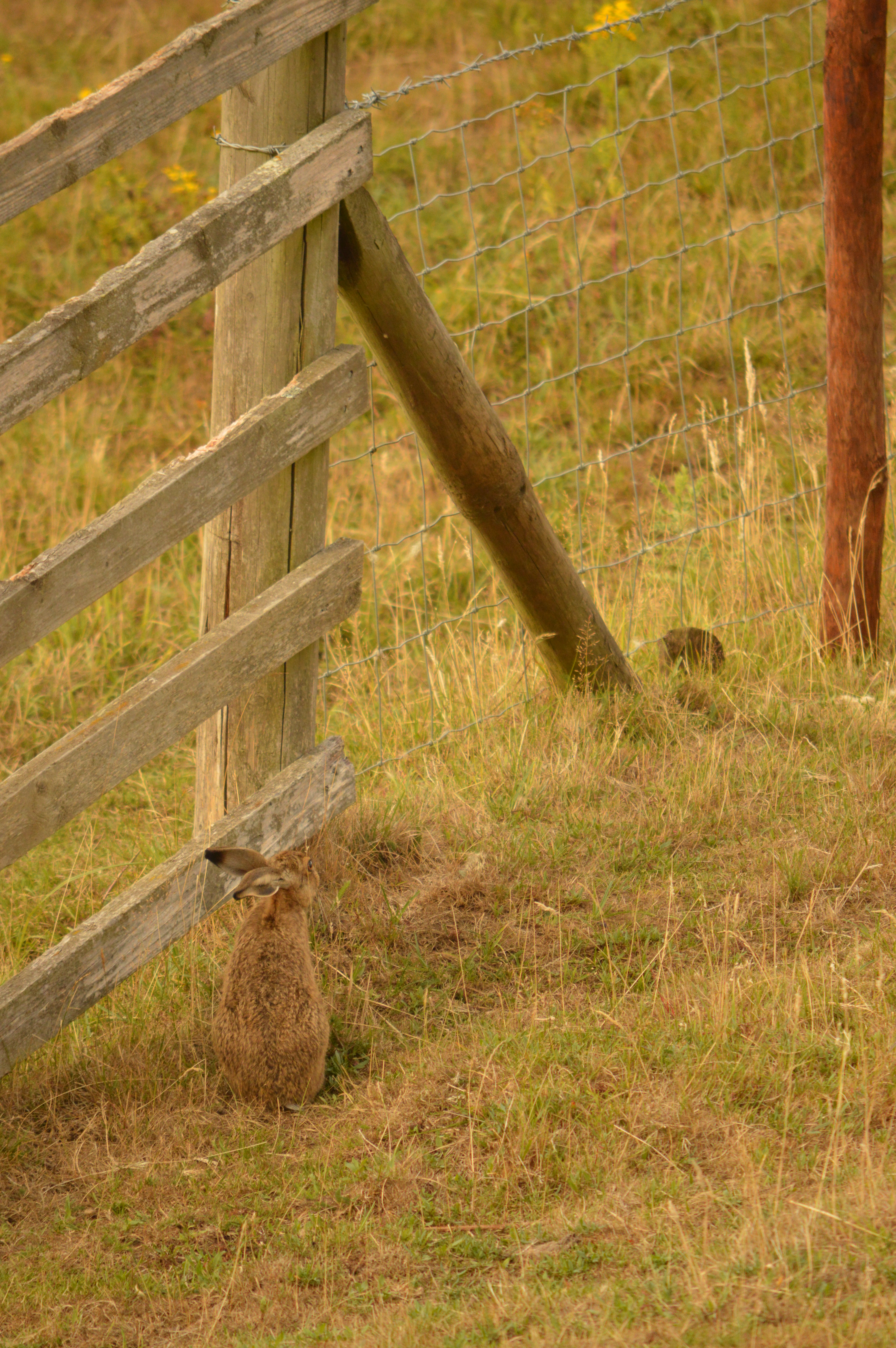
The hares I saw in the fields behind the house were only youngsters – leverets. They hadn’t developed the long and powerful back legs and enormous eyes that make adult hares so striking. They also weren’t as fleet-footed as adults, who will usually disappear in a black-and-tan dash into the middle distance long before you can get close. They let me approach further than I expected before deciding the Goldilocks line had been breached, and off they went. I followed, slowly, at a distance, and caught up with them by the sand martin colony. One hung back to watch me for a few moments before slipping through the fence and bounding after its sibling. After that, I climbed the fern-bound rise and scanned the forest for a while, listening to the wind in the trees and the buzzards calling. It feels good to be back in nature again.

When I get back home, I really must get back in the habit of spending more time in nature again. I’ve neglected this side of me for too long. At the end of the day, I love to try my hand at various things, but under all those layers is a naturalist. Life is a mosaic – you never lose who you were, or the people you’ve been at various stages of your life. You will always carry them with you in one shape or another. The largest shard in my mosaic is an earthy brown, like the soil; greenish-grey, like oak leaves; and bluish-white, like the sky. I need to go back to nature. I need to go back to being me again. BB x
They Bring the Summer

The year is turning. Can you feel it? The light in the morning has shifted ever so slightly, but it’s noticeable. We’re past the peak, and before long the red-gold winds of autumn will be upon us. Thanks to the fierce heat we had in July, some of the trees are already wearing their russet cloaks. I shouldn’t be surprised if we’re in for a long, dry winter this year. Perhaps that’s the way of things to come, perhaps not. Time will tell.

The family of swallows that nests in the barn near the house have had a very successful year. I counted eleven of them on the wires this morning: two parents with full streamers and nine noisy youngsters whose tails have yet to grow out in full. I had to count twice because of a sand martin who seems to prefer hanging out with swallows than his own kin, who have a colony in a field half a mile down the road. There comes a time every year, usually in September, when the swallows and martins suddenly gather en masse in a noisy spectacle before setting off for the south. We’re not quite there yet, no matter how abnormal this summer’s weather has been, but it sure felt like a nod to that day this morning.

Swallows, swifts and martins – collectively known as hirundines, which might have something to do with the Latin word harundo, meaning the forked shaft of an arrow – really are some of nature’s miracles. The tiny flashes of blue and white that dance over the fields with such cheerful abandon in summer travelled around 9,700km from their wintering grounds in South Africa to get here, and in the space of a few short months they have to make the same journey all over again in reverse, this time with their young in tow. Most estimates have them traveling about 320km every day. That’s a bloody long way to go when you’re only a few months old!

This morning the family looked like they were getting some practice in for the long journey ahead. Mum and dad would sit with the youngsters on the wires for a while, chattering amongst each other while the kids preened endlessly, before suddenly taking off and wheeling about the garden with their offspring racing after them. They might have been hunting, of course, but some of the young ones were far more interested in playing keep-up with a pigeon feather, catching it and keeping it from touching the ground, the way children sometimes do with a balloon. It was really quite endearing to see.

In the past, where our swallows went each winter had us stumped. There were some truly bizarre theories floating around. Following in Aristotle’s footsteps, some thought they hibernated underground. Some thought that they slept at the bottom of deep lakes and ponds, since they spent a great deal of their time hawking over the water during the summer months. One 17th century theory, courtesy of Englishman Charles Morton, claimed the Moon as the swallows’ winter destination as the only logical explanation for their total disappearance. It sounds absurd, but it’s not so outlandish a theory when you try to imagine explaining that these tiny creatures travel further twice a year than most humans will in a lifetime. It even makes the underground hibernation theory seem plausible!

It’s an incredibly hazardous journey, and not every one of our brave swallows will make it there and back. There are all manner of dangers they have to face: sea crossings, storms, high winds, predation by hobbies (consummate swallow-catchers), not to mention human interference – some will be caught for food, and the Maltese in particular are infamous for their practice of trapping migrating birds by liming fences. And then, of course, there’s the mighty Sahara Desert. Michael Morpurgo wrote a fantastic children’s book about that journey – Dear Olly – which you should read if you want an idea.

So why travel all that way? Competition might well have something to do with it. After all, Africa has plenty of swallows of its own (without all these European swallows “comin’ over ‘ere and takin’ our jobs” etc.) and fans of Monty Python will be well aware of the fact that African swallows are non-migratory. On my travels around Uganda during the rainy season (November) back in 2012, I saw plenty of familiar-looking swallows hawking over the White Nile, but most of the birds I clocked were local species that don’t travel far from home. Still, I couldn’t help wondering whether maybe just one of the brave little birds flitting by had crossed my path sometime before, either in Spain or the south of England. How’s that for a flight of fancy! <groan>

Greater striped swallow, Ishasha Lodge (Queen Elizabeth National Park) Uganda, 18th November 2012

Swallows are remarkable creatures to watch. While we still have a few weeks left of summer, try to find a few minutes to enjoy the little winged miracles. I’m sure they do wonders for one’s mental health, but to use less clinical terms, they sure can lift one’s spirits. Today, for the first time, I saw two of the youngsters doing something I’ve never seen swallows do before: sunbathing. Plenty of birds do this kind of thing to regulate body temperature, but it’s the first time I’ve seen swallows in the act. It was just two of them who kept leaning over in the sunlight – the others were far more interested in preening, though the sand martin looked as though he wanted to get in on the action!

One swallow does not a summer make, but their departure certainly puts an end to it! If you’ve enjoyed reading my homage to our chatty little neighbours, you might find the links below worth a browse, too. Until the next time! BB x
https://www.historytoday.com/archive/natural-histories/great-migration-mystery
https://www.rspb.org.uk/birds-and-wildlife/wildlife-guides/bird-a-z/swallow/migration/

Greenheart

I’ll be frank. Summer is my least favourite season. Summer is, in the vocabulary of my students, “dead”. Most of the birdsong is over for the year, the whole nation is out and about and the holidays stretch on for what feels like forever (especially when you work in a private school). There’s a dry stasis in the air that you don’t get in the changeling months of spring and autumn and you’re too cold to notice in winter. This summer, as is tradition, I’m spending my time between watching documentaries and watching the clock. There’s not all that much else to do when you find yourself in the countryside far away from everyone you know.

There are, however, massive perks to being here. A few days visiting my parents in Lincolnshire usually throws up a chance to explore somewhere new, and though today’s ramble was more of a wander “round the back” than an adventure per se, it was a beautiful reminder that there are some things that make an English summer worth seeing.

Up on the wolds near Donington, I heard a quail. It’s been years since I heard one in this country, but once heard, you never forget. That iconic wet-my-lips call carries for miles, especially under a hot midday sun when the only other sound is the wind. It reminded me of the green riverbanks of the Dehesa del Banco, where the call of quails was just one instrument in a wetland symphony: percussive reed warblers, the accelerando snare of the corn bunting, the indescribable beauty of the bee-eater’s woodwind and zitting cisticolas going zzzzit zzzzit zzzzit overhead. It sure felt nice to be taken back there from the sunlit uplands of Lincolnshire.

The skies here are immense. The land seems to go on forever in all directions. You get a real sense of eternity in this vast corner of England. Little wonder, then, that so many Lincolnshire folk hoist the red and green county flag over cars, windows and doors. And yet, as is so often the case in England (and why I really didn’t take too well to life in Jordan), you’re never too far from a dark forest, which – admittedly – are especially peaceful places in the quiet summer months.

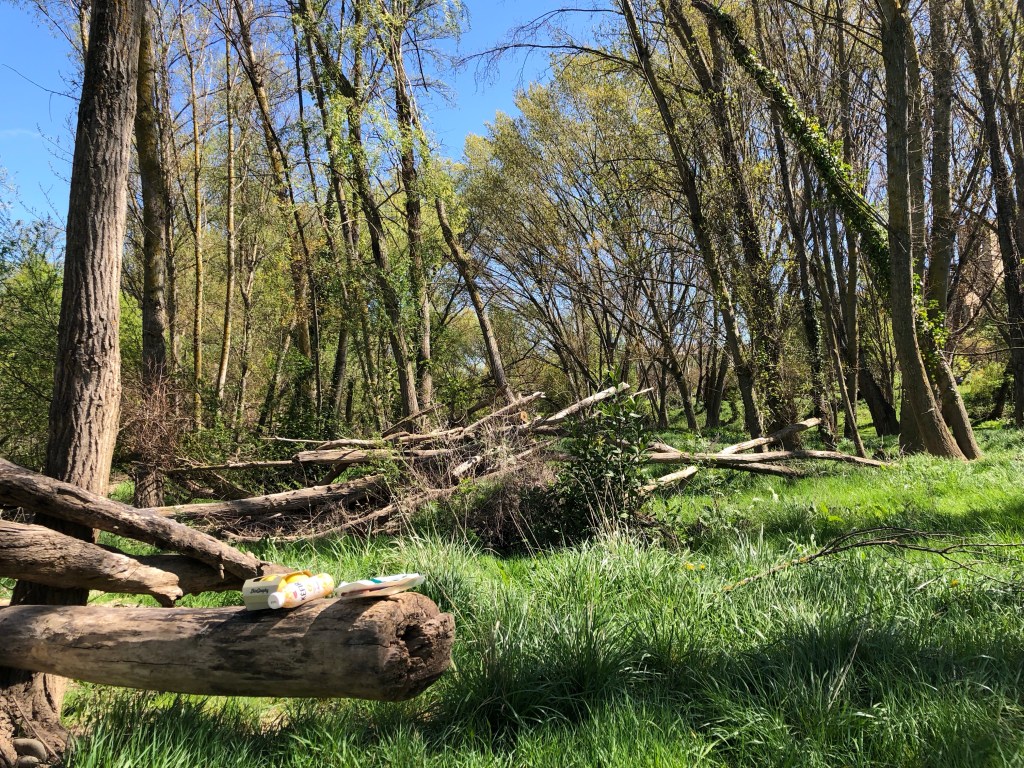
I tried to explain to my companions in Amman again and again the importance to me of green spaces. I think at the time I said I needed more trees, and was quite rightly told there were plenty of trees in Amman’s parks. But there’s something very special to an Englishman about the quality of light that can be found filtering through the trees in an English wood. Something about the infinite shades of green, alder branching over ash, ivy climbing up oak, a ceaseless communication from leaf to leaf, tree to tree. Little wooden fences put up by one of the country folk using fallen branches. The sound of the wind in the leaves: the way it chatters and whispers through the oak trees, and sings without syllables in the firs. Stop and listen the next time you’re near one and you’ll see what I mean.

It’s a magical feeling, standing in the dappled shade of an English forest in summer, and the loss of it in Amman broke my heart, I think. It was, perhaps, the time in my life when I stopped hating on my English heritage and came to appreciate the land where I was born – which, I think, is a stage we must all go through at some point in our lives. Not making peace with the establishment, exactly; rather, making peace with one’s roots. Learning to love the land that made you who you are.

Ten years ago today, I was spending my final childhood summer gigging with my funk band in an attempt to distract from results day. Two months later found me teaching for the very first time in a private school in East Africa. It’s been a colourful decade since then. I feel like I’ve lived around the world in my twenties: Durham, Jordan, Morocco, Sussex, Dorset, Lincolnshire and various corners of Spain. I’ve also found a real fondness for Edinburgh, reawakened my love for France and started a love affair with Italy. And while all those LinkedIn “so grateful for” posts make me want to throw up into my hands, I have to admit I’m incredibly lucky to have had such a colourful decade. I wonder where the next ten years will take me?

I hope She is out there somewhere. I never lose faith in that. And faith, as always, keeps one believing in a better tomorrow. For now, there is the English countryside and the sounds of summer. I can live with that. BB x

For the Glory of Jellyfish

Tuesday 12th July, 11.13am
Hassocks Station

I needed to get out. While it was ultimately my decision to come back south to my flat and cut myself off once again – and I stand by that decision – it’s all too easy to go stir crazy in here on my own. I was angling on getting out and seeing friends for a couple of days, but as my plans fell apart, I’ve had to take the reins myself. So I decided to strike out for the coast. Brighton always makes for good writing, that perfectly bizarre city.

It’s clearly a school trip day today. The train south from Three Bridges was absolutely rammed with saaf Landan kids in high-vis jackets, their beleaguered teachers sitting close at hand, identifiable for the throbbing veins in their temples if not by their lanyards. Standing room only. It’s kind of noisy in the gangway, so I pop my headphones on. The Spinners’ Rubberband Man cancels out some of the angrier verses the kids are throwing around from their phones. I don’t understand the unbridled rage in that kind of music, much less its magnetic appeal to kids. Give me the laidback fun of the seventies any day.


12.40pm
Brighton Palace Pier

Somehow it took me all of an hour to get from the station to the pier. Time slips through my fingers in a bookshop. It’s as though Waterstones operates in its own dimension. That could well be because I’ve become a lot more tactical when it comes to book-buying, taking the time to really get a flavour for a book before deciding to add it to my collection. As a general rule, any and all books on Spain (pre-20th century) go straight into the basket, but I’ve genuinely reached the stage now where if I don’t have it, it’s not worth having. There’s still a wealth of material out there in Spain in Spanish, but with Spain’s ludicrous stance on FBP, shopping for books over there is simply not economically viable. At the moment I’m trying to pick up my European reading challenge where I left off a few years ago, so I sought out a Ukrainian book to add to the collection today. I thought I was onto a winner with Sholem Aleichem’s Tevye the Dairyman – the forefather of Fiddler on the Roof – only it turns out, predictably, my mother already bought the book years ago. Still, no matter. That’s one more book I can feel better about giving away someday.


1.27pm
Brighton SeaLife Centre

Yes, I visited the aquarium. Don’t judge! When I was a kid I used to love going to aquariums – or the more ecologically-sound sealife centres, as they are so often called these days. Nausicaa across the Channel in Boulogne was a personal favourite, but Hastings’ SeaLife Centre came a very close second.

It was pretty much deserted. A large primary school group came in after me, but they never made it any further than the cafe housed in the original Victorian aquarium. I felt like a kid again and challenged myself to name the fish whose names I’d furiously memorised more than twenty years ago. For some crazy reason it’s all still there. From loach, tench and trout (easy mode), to snakelocks anemones, garden eels and corkwing, rainbow and cuckoo wrasse (standard) and on to pacu, Bloody Henrys and discus fish (hard mode). It’s a safe bet that the reason I had such a hard time learning anything in science class was because that part of my brain was stuffed full of animal trivia. If only biology had been about animals and not plant cell structure…! Who knows, I might have gone on to study it. As it is, I was bored stiff and let it go as soon as I could.

I stood and watched the turtles for quite a while. I don’t think I’ve ever seen a live sea turtle before. My god, they’re huge. Nature found a perfect recipe over 100 million years ago and decided ‘yep, that doesn’t need any more work’. Like sharks, turtles have been around for millions of years. Watch a turtle fly through the water and you’re reminded of how pathetically short our time on this planet has been by comparison. Only, these turtles looked a little stereotypic. One bit the other on one pass. Creatures can develop odd behaviours when they’re cooped up in small quarters. Maybe that’s a window into what’s happened to me in my flat this summer!

On to the jellies. I could have come here for the jellyfish alone. They’re absolutely mesmerising to watch in flight, pulsing slowly through the water, their hair-like tentacles trailing behind them. Another perfect life form that has seen millions of years of evolution come and go. Almost all sci-fi flicks imagine aliens from other planets as bipedal if not all-but human in appearance (Doctor Who and Star Wars are the prime examples), but if I were a betting man, I’d stake a fair amount on extra-terrestrials looking more like jellyfish than man. Isn’t it rather selfish of us to assume that ours is the perfect life form when turtles, sharks and jellyfish – hell, even cockroaches – have outlived us by millions of years? And on that note, I’d better clear out of here before I sell out mankind to the invading jellies faster than Kent Brockman.


2.58pm
Artists’ Beach

After nearly betraying humanity over a jellyfish and admiring the beautiful world beneath the waves for an hour, I promptly went outside, climbed the steps up to the palace pier and ate a battered fish with chips and vinegar. The irony was fortunately lost on the hoarse chippie vendor, who barely got the order numbers out in a grating voice. A group of girls next to me got their orders in after me, but somehow got their orders out first. £8.20 for fishcakes and chips seemed a bit steep compared to the £5.40 deal just 200 metres from the pier, but it was good quality, and since I barely managed to finish it, I didn’t have to wash it down with a tot of buyer’s remorse.

Brighton was packed with graduands this afternoon, red-faced and sweating in their full academic dress for the 28°C degree heat. If they opted for modesty, the other beach goers didn’t get the memo. British flesh on florid display, ranging from lobster-red to milk-white. A few lucky sightseers with bronze skin seemed to walk a little taller, but they were definitely in the minority. Lifeguards, street vendors and tramps made up the rest. Folk who have little choice but to soak up the sun.

Freeze frame. I pop the chip-box in the bin and look around – and really look. Yuppies in “gap-yah” pants and strappy tops. A lady in a wheelchair, and two women at the traffic lights who get to discussing behind their hands how she might have ended up there (the kind of curiosity my generation loves to hound out as aggression). Goth-types with nose rings, vape-sticks protruding from their fingers. On that note, cryptic vape ads everywhere (what on earth is the appeal?). A squadron of Korean cyclists suiting up on the sidewalk. A cormorant flying east along the coast. The indefatigable enthusiasm of the man selling rides on the motionless merry-go-round. A boy with what looks like rickets going by. The blonde girl in her thirties singing her heart out to a crowd of beachgoers enjoying a late lunch. Nobody is looking up at her.


3.35pm
Preston Park Station

The train home is much emptier, but I still walk the length of the train to find a carriage to myself. I pop the headphones back on as the train begins to pull away and Manu Dibango comes on. Sax City, Africadelic and Soul Makossa. Dibango was one of the victims of COVID two years ago. Like Marvin, James and Luther, that’s one more of my favourite artists who I’ll never get the chance to see live (or alive, for that matter).

During the Gospel Choir debacle, I spoke to a colleague and asked for their thoughts. They said they had thought a lot about the issue of music in a post-BLM world, and questioned even having been to a soul music gig as a white person. That messed with my head for months. It’s not that I don’t rate musicians who look like me, but give me a choice between Ed Sheeran and Fela and it’s Fela every time. Pop is catchy, but disco is eternal – it just keeps on giving, fifty years later. Folk is clever but Soul finds notes that folk just can’t. And highlife is surely a candidate for the most feel-good music genre on the planet. How can you deny yourself the chance to listen to such wonders on account of a feeling of awkwardness?

I’m all for better representation in the music industry. It needs it. I just hope we don’t end up carving ourselves up into islands where we can only listen to people who look like us, think like us, talk like us. And I mean that literally as well as musically. Social media is doing that already. It’s a dangerous path we’re treading, and I hope we can weather the storm that’s coming.

Would you look at that. I’m back to sermonising. I think I was doing better with committing acts of high treason for the conquering jellyfish. Time to go. Blppp blppp blpppp. BB x
Alpha Girls and Beta Men on the 13:07

London Bridge is quietly buzzing. I’m halfway through sandwich two of my Boots meal deal and watching commuters come and go beyond the glass. I can’t see many face masks anymore. The only masks I’ve seen in three minutes were worn by a couple of Asian women who got off the Gatwick train. To look around now, you might be forgiven for thinking the crisis is over. I wonder whether we eventually shrugged off the great plague with the same British phlegm.

Two twenty-somethings on the next aisle crack open a thin-tin of strawberry daiquiri and discuss the “right” way to shake a cocktail. A sweet synthetic hint of something that might once have been strawberry permeates the carriage for a few seconds, somewhere between the strength of a spring flowerbed and a subway urinal. A trendy man in dark glasses phases in and out of sleep a few seats along. A made-up mum scrolls through her Zara app and her daughter waves goodbye to London Town.

Graffiti lines the tracks. It daubs itself on every bridge, every sign and lamp post, every standing stone. Tags and words and call-signs in silver and black that make no sense to me, but mean something to someone, somewhere. Preek. Eo. Prydz. Busta. Cosa. DGMan. Looper. You never see them in the act, but the aerosol artists must work throughout the year, like Reebok-wearing shoemaker-elves.

The conversation shifts. The daiquiri girls discuss their thoughts about their respective partners and the foibles of men. “Don’t forget him, just think of him as, you know, that was a shiny boy you dated for a while,’; “He said that being in love is more important than being right, and that just didn’t sit with me, you know?”; “Mm yeah, that does sound a bit intense,”; “I just want to be in control all the time,”; “Me too!”

A yuppie asked to take the seat next to me on the train up last night. I noticed his face fallen slightly – that slight tightening of the jaw that I think is called emotional leakage in psychological circles. Perhaps I saw in it what I wanted to see, or perhaps I just saw a face I know too well. He was drafting a message in Notes to one “Alissa Bumble”. He struggled with one sentence, writing, erasing and re-writing the same words: “thank you for being honest with me”. His jaw twitched and he stared through his phone to the floor and into the empty space beyond.

In four months of experimenting with Bumble and it’s kin I’m more or less resolved to pull the plug at the end of the month. It was worth a shot, but I feel that yuppie’s frustration on my own level: it’s a soul-sapping task at best. I’ve seen that same quiet exasperation in the faces of many a young Tantalus on the train, now that I recognise that swiping gesture for what it means and read it like a book whenever I see it. Apples bobbing near, but always out of reach.

These social networking sites seem one and the same. One goes into the water like a fisherman and, though you could be sure you felt a tug on the line here or there, when you start to draw in the net you find your hands are empty. Maybe it was a missed encounter, or maybe it was a capricious twist of the algorithm, clamouring for your attention – and your custom. They play you like a lyre; Apollo in Diana’s hands. Even those connections you thought you’d made tend to disappear like so much dust in your hand. Again and again it’s the same hurdle online as it is in truth. Ambition gets in the way. Ambition for work and ambition for looks. It’s a game for the beautiful and the mirror never lies, and for somebody who would rather share stories than photos, the current of the online dating world flows like the Gibraltar Strait: close, tantalisingly so, but vicious and unforgiving. It’s been an interesting experiment, but it’s not for me.

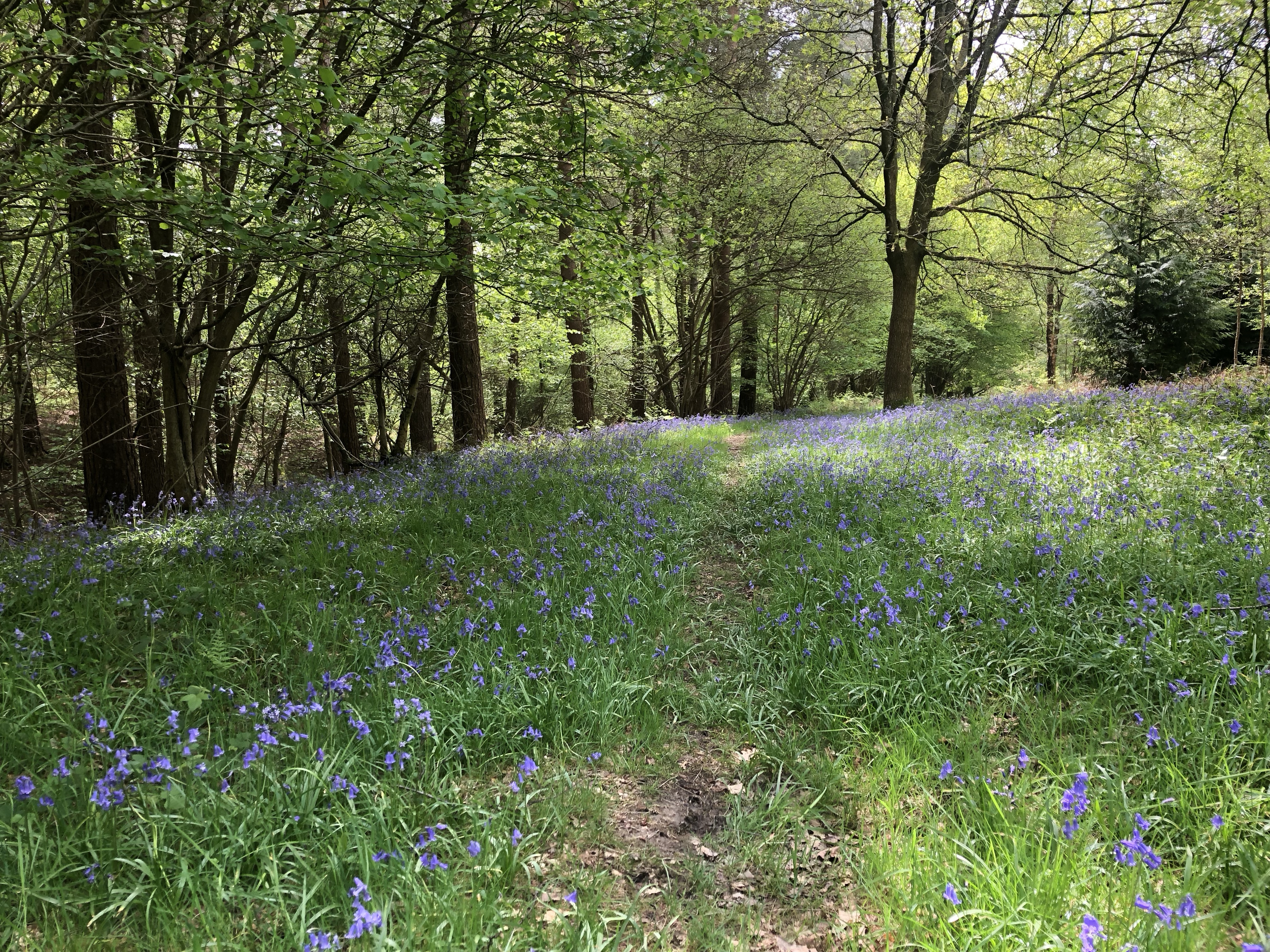
The sun is shining on Crawley Town. A nuthatch twirrups from the canopy and the wind whispers through the alder trees. A robin is singing as the clouds roll in. The bluebells are out at last and a walk home through the woods is the best therapy nature can provide, especially when it rides off the back of a night spent in the company of such honest and kind-hearted friends. The world has been good to me.

Time, I think, for a spring clean. First of the flat, then of the heart. BB x