Athene noctua

The students have gone home for half term. Silence hangs over the school. The corridors of the boarding house are dark, and a little cold, too. The floorboards creak under my foot with the kind of volume that only darkness can amplify. The dull glow from the torch on my phone casts long shadows. A friend of mine once explored an abandoned hospital on a dare. I did not go with him then, out of some primordial fear of the darkness within. And yet, here I am, haunting the empty corridors of this old house by night, the last man standing. Filling up a water bottle from the cooler on the Year 10 corridor becomes a quest in its own right.

I’ve had a lot of time to think lately. I guess coming out of a long term relationship will do that for you. One of the things I thought I might be able to recover was the fierce reading streak I had on my year abroad, but I just can’t find my mojo for that right now. Time just seems to slip through my fingers when I’m not at work. I wonder what the world does when it’s not working? I guess that’s what television is for, or Netflix, or whatever streaming service is in right now. But then, I’ve never been good at sitting down to movies or TV shows. My brain wants to be involved. There’s a precious few I’d happily watch over and over and over again, but it’s rare that I find a new picture out there that sinks in.

There’s not a day goes by where I don’t feel a genuine fulfilment in my line of work. Teaching is in my blood, a duty that my ancestors have carried out for generations. Knowing that I am the torch-bearer for my generation gives me a sense of purpose that is utterly unshakeable. And it’s not as though that purpose hasn’t been tested over the years. It’s just that, whenever something comes up to shake its fist in my direction, I know instinctively that there’s a greater mission behind it all, and that’s reason enough to persevere – even when my core beliefs are thrown into disarray. I wonder if my great-grandparents, Mateo and Mercedes, ever had such doubts?

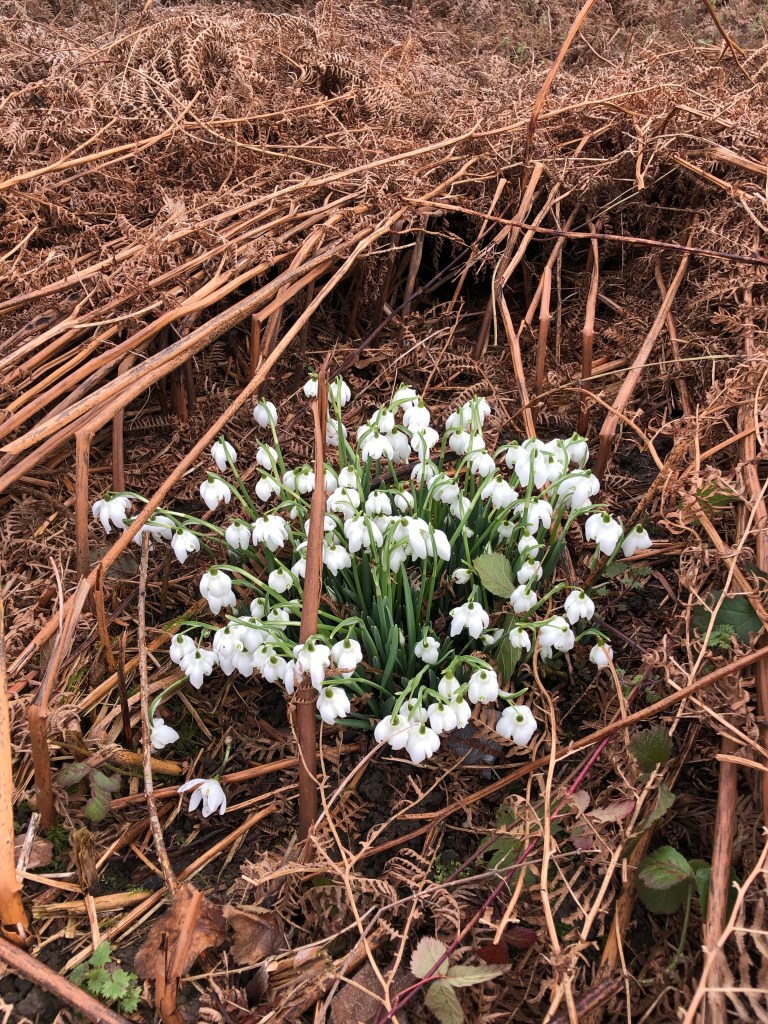
There’s a little owl calling outside. It’s been piping away from the upper branches of the Atlas cedar in the drive for half an hour now. The foxes have been quiet for a week or so now. I suppose their noisy January antics in the front quad are over for the year. Three buzzards were soaring over the grounds the other day during morning break, but none of the students seemed to notice. The redwings and the fieldfares have moved on and the snowdrops are out. The daffodils will be on their heels soon enough. I escaped to Richmond Park a few weekends back, just as the first blooms were sprouting. It was good to see the wide world again, even if only through my own eyes.

No photo description available.

The meltwater of the long Covid winter is starting to run. Just like the birdsong and the subtle shift in the light over the last couple of days, change is in the air. Piece by piece, the last fragments of the old world are coming back. At the request of one of my students, I blew the dust off my long-neglected violin and rocked up to orchestra this week. I’m about as good on the thing as I ever was – that is, haphazard at best – but I’d forgotten how much fun it used to be. It’s one of those things that simply slipped through my fingers over the last couple of years.

I think I’ll take up the guitar this half term. A zealous diet of sevillanas have powered me through the darkness of the winter months this year, and I’m done with being able to sing along but never sing alone. At the very least it will give me something to do until my provisional arrives and I finally confront the long-delayed challenge of learning to drive, which I have put off for far too long.

I’m done with playing games. It’s high time I went on another adventure. The Easter holidays aren’t far off, and I could do with some more writing fuel. And spring is always such a hopeful time of year. BB x

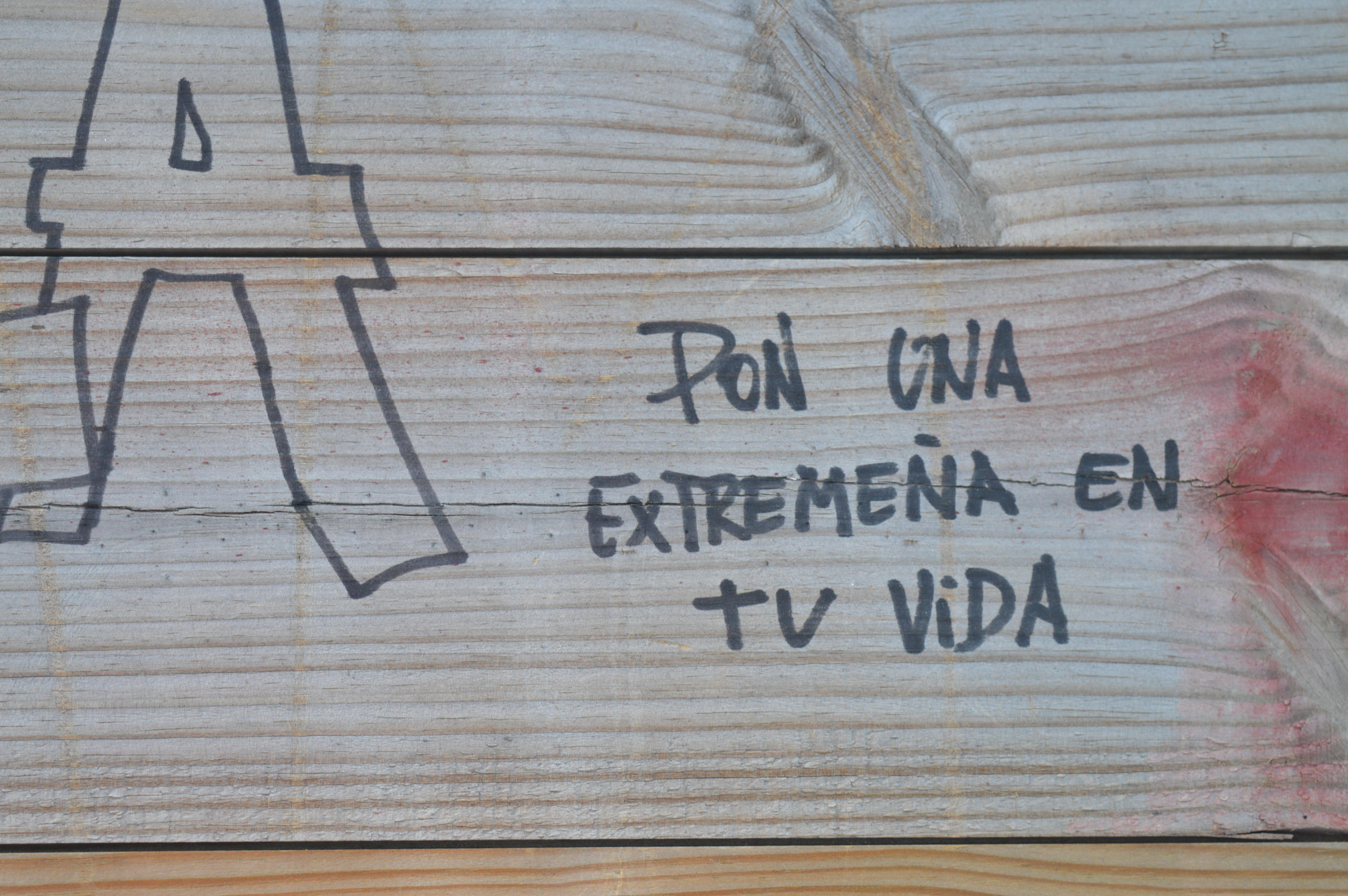
Tzompantli: An Ode to Extremadura

On Monday, I kick off my new role as the middle school gifted and talented programme coordinator with a lecture on the Aztecs. It wasn’t the obvious choice, as Mexico is a country I have neither visited nor researched nearly as extensively as my grandfather’s country. As a matter of fact I made a conscious effort to steer well clear of Latin American affairs at university, cleaving to the Iberian modules even when it meant the pickings would be slim. If Durham’s only Cervantes specialist hadn’t been on maternity leave in my final year, I could have stayed quite happily in my fairy-tale world of knights and princesses and Moorish warlords and binged on ballads, and I wouldn’t have had to go anywhere near strap-on wielding Catalans and metaphysical Madrilenians. Oh Quijote, en mala hora me abandonaste!

Ordinarily, for such a school project I would have stuck to my guns and wheeled out some Moorish magic with a talk about Islamic Spain, something that is close to my heart; or El Cid, a man whose legend (and whose 1961 movie) is embedded, thorn-like, a couple of inches deeper. I even briefly considered whipping up something about pirates, but I haven’t read nearly enough to do that one justice. Not yet.

I landed upon the Aztecs for a couple of reasons. One, because the book I have chosen to read with my IB students is Laura Esquivel’s Malinche. Two, because my school – or rather, the people whose money built the house in which I now live and work – has a long history with Mexico, a connection that is plainly carved into the stone in several places.

But I think the main reason I wanted to explore the Mexica was because it ties me back, through the ruthless conquistadors, to a place that is still very dear to me: Extremadura.

My first contact with Spain was with Andalusia, with her jagged crags and whitewashed mountain villages. If I wasn’t spellbound there and then, my mum and dad must have been, because they made the crazy decision to up sticks and move us there in 2006… right on the eve of the financial crisis that was already driving many of Spain’s expats out. It might not have been the wisest move for three out of the four of us, but after a year of weekend hikes in the surrounding sierras, gecko-hunts in the streets by night, Holy Week spectaculars and vulture-chasing in the misty heights of El Gastor, I was absolutely hooked. Andalusia was my polestar for many years to follow, and her light shone brightest on the paradise of the tierras rocieras of Doñana National Park.

(The author, blinded by the light since ’05)

Over the years I braved her jealousy and flirted with her sisters: a school trip took me from Barcelona and the magical Mediterranean town of Tossa de Mar up and into the clouded dales of Cantabria and the foothills of austere Asturias. Legends of the Cid led me to Burgos and the empty plains of Old Castile, the guiding light of my ancestry led me home to la Mancha, and in recent years I’ve swum in the crystal waters of Mallorca and Menorca. Throw in flying visits to Aragon, Alicante, La Rioja and the Basque Country and it’s getting to the stage where there’s hardly a corner of the country I haven’t explored.

But I don’t think I could ever have anticipated the rawness of my obsession with Extremadura. From the moment I set foot on her soil I was lost. It honestly felt like falling in love for the first time. Not the high school crush kind of falling in love, but that kind of mature depth of feeling, that gut-wrenching, iron-tasting jolt in your upper body that tells you something’s starting functioning inside that was only dormant before.

Oh, cut the poetry already, BB. If you’ve been reading this blog as long as I’ve been writing it, you’ll know I didn’t actually talk like that when I arrived in Villafranca de los Barros on that hot September afternoon seven years ago. But hindsight is a wonderful thing, and any corner of the Earth that could convince me to jettison my plans for taking my teaching game over to South America for a second (and very almost a third) time must have an awesome power.

When Hernan Cortes and his men entered Tenochtitlan, one of the greatest cities of the world at the time, one of the things that shocked them most of all were the dreadful tzompantli, wooden scaffolds nearly two metres in height that carried between them the many thousands of impaled skulls of the sacrificial victims of the Aztecs. They came back to Spain telling wild tales of eagle warriors and war priests with matted hair and bleeding knives, and when one reads of the savagery wielded in the name of Castile upon the Mexica, it isn’t hard to understand why it’s been so popular until recently to discount the stories of tzompantli as a myth invented by the conquistadors to justify their actions. Until 2015, the year I moved to their homeland, when the bases of the huey tzompantli were uncovered in Mexico City, complete with row upon row of human skulls, laid out like so many candy calaveras on Dia de los Muertos. The conquistadors, for all their sins, must have had stories worth telling, if only people would listen.

Extremadura is one of those places I will probably write about again and again for the rest of my life. If Andalusia was my first crush, Extremadura was the lady who captured my heart for good. Not even the knowledge I have now that ties my bloodline more closely to Valencia than la Mancha can put a stain (no pun intended) on my devotion to her. Hers is a story I would tell and tell and tell until my tongue split in two.

Tzompantli: an image which struck no small amount of awe and fear. The presence of a God or Gods unknown (and a word that first threatened to split my tongue in two, but is now so satisfying to say that I have rather awkwardly made it the title of this post).

That is my Extremadura. Unknown. Disconnected. Hard to say. Trainless. Abandoned. The conquistadors couldn’t get out fast enough. Malaria festered in her hidden valleys long after it had been extirpated everywhere else, and the Mesta virtually enslaved her very earth to their will, subjecting her people to centuries of poverty. But it is precisely because of these fascinating tales – coupled with her unparalleled natural beauty – that I do believe Extremadura to be the jewel in Spain’s crown.

And oh, look – I started writing about Mexico and here we are, back in Spain. I’m nothing if not predictable. Some of us spend our lives traveling in search of that “something” that is just beyond our reach. I count myself amongst the lucky ones who found what I was looking for and need look no further – at least, no further than the light that shines on Spain’s shores. I can only hope Doña Extremadura forgives my curiosity.

Did Rodrigo, last of the Visigoth kings, truly disappear in her mountains after the fall of Merida? Did an army of ants reduce one of her villages to rubble? Were there really hordes of dwarves in Las Hurdes who descended into the valleys by night to terrify the locals? And what made Carlos, supreme ruler of the Spains, the Americas and all the Hapsburg Empire decide to spend the last years of his life in her wooded hills?

You will only find out if you go. Don’t hold on too tightly to your heart. BB x

P.S. Thinking about sharing some more stories from this part of the world… watch this space.

Something Old, Something New

There’s a day in the second or third week of January that, at least in these cloud-ridden islands, marks the turning of the year. Not the first day of spring exactly, but an early harbinger that the dark days of winter are finally on the retreat. For me, it’s always marked by the first real blast of birdsong, and it usually goes hand in hand with a generous glow of sunlight after many days of cloud, or that infinite whitening of the sky that is so very well-known to those of us native to this rock. There’s no calling when exactly that day will fall, but when it does, it’s nothing more or less than exactly what the doctor ordered, as far as I’m concerned. I grab my journal and keys, leave the flat, walk up to the office and – boom. There it is. The dawn chorus is already in its final movement, but still going strong. The voices of robin and blackbird and woodpigeon and sparrow lift my heart skywards. I’m then in an irrepressible good mood for weeks which neither marking nor duty nights nor even thunder, rain and storm can stamp out.

I guess I can only apologise to my colleagues for the nauseous wave of positivity that nature washes over me. It’s almost first-year-of-university-level enthusiasm (which, for those of you who knew me then, you know…).

Perhaps spurred on by that wintry magic, I made two random throws this weekend. I bought a kite, and I decided to re-read one of my favourite childhood stories. The kite is easy enough to explain. I had a kite once, when I was a lot younger, which has Jeremy Fisher emblazoned on its face. If I remember correctly, it didn’t fly very well. I guess we never tried it out on a day when the winds were good. It just seemed to gather dust in one of the cupboards until, one day, it disappeared. Anyway, I’ve got the whimsically romantic notion in my head that kite-flying is one of those things I’d love to do with my kids someday, so I ordered one on that whim. It arrived yesterday, and if I get a moment’s peace this week, I’ll put it through its paces out on the South Downs.

As for the reading – alright, I confess, I didn’t do any reading per se. I had a fair amount of spring cleaning to do, but I wanted a soundtrack while I worked and I figured an audiobook would be just the ticket. I’d had Michelle Paver on my mind after dipping my toes back into her ghost stories a few days ago, which naturally conjured up memories of reading her Chronicles of Ancient Darkness series when I was at secondary school. I remember absolutely adoring the first in the series, Wolf Brother, and motoring through at least the first sequel through my school library. I cannot remember exactly whether I made it as far as Soul Eater, the third in the saga – if I did, I forgot the plot more completely than that of the second – but I remember the books rising out of a videogame-clogged adolescence like icebergs, one of precious few literary stepping stones across a goggle-eyed, pixelated river that ran at full strength for far too many years. Was it Paver’s intense attention to the natural world in her writing that hooked me? Probably. She is one of my favourite authors for precisely that reason: she knows her settings as though she has lived within them her whole life through.

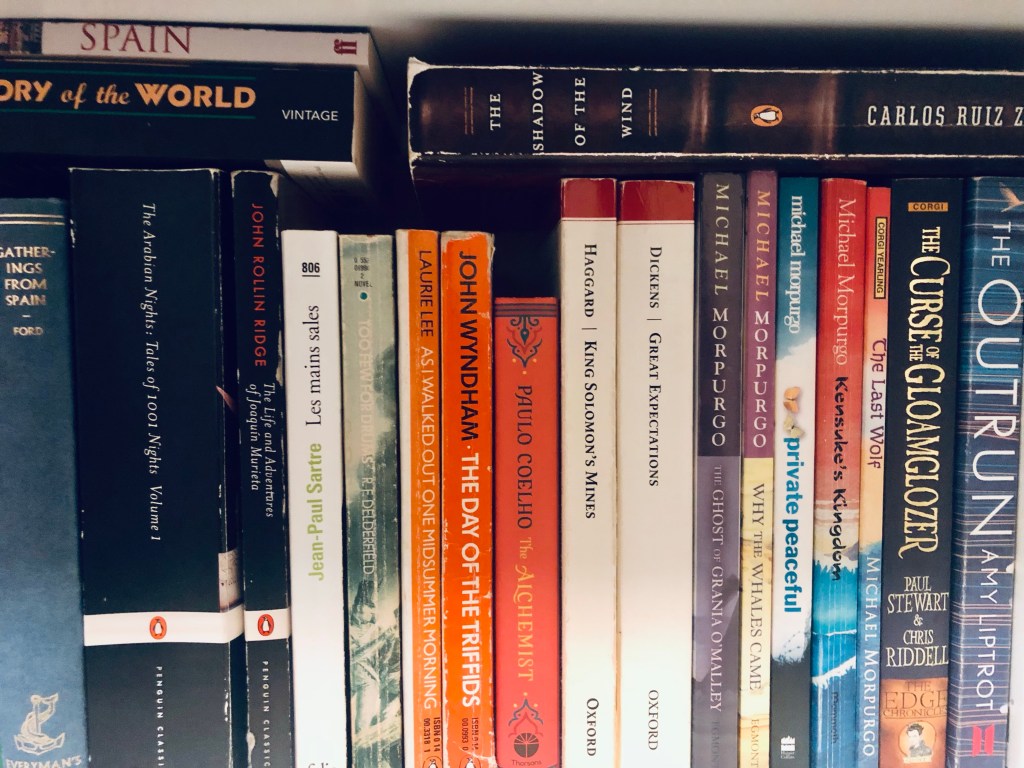
Wolf Brother had a lasting impact on me as a writer, more than I had previously suspected, and it took listening to the masterful narration of Sir Ian McKellen over the weekend to realise just how deep the roots of her magical storytelling stretched into my own creations. Naturally, my own stories have changed a great deal since I started writing them over twenty years ago, but if you look closely, you can see the tell-tale brush strokes of the authors who showed me the way. I could fire up my hard-drive right now, pull up a folder, pull out a chapter and point out the guiding hand of this or that storyteller. Here is some of Paver’s naturalism, and there’s some Rider Haggard gung-ho. Paul Stewart and Chris Riddell had no small part to play in the healthy dose of tragedy, and I’d wager a fair amount that there are traces of Michael Morpurgo spread throughout like watercolour, since at a certain point in my childhood I pretty much read nothing else. There was just something about his writing that spoke to me like no other writer could. He had me hooked on all his animal-centred storylines, his Scilly Isle adventures, and his occasional reference to something on my wavelength (like namedropping The Corrs in Arthur, High King of Britain). Kensuke’s Kingdom and Why the Whales Came rank near the top, and sit in pride of place by my desk alongside the other books that mark certain turning points in my life: Day of the Triffids for traveling solo, King Solomon’s Mines for going mad in Amman, The Arabian Nights from my university days and The Outrun for a dose of reality when I left that world behind… and The Tale of Benjamin Bunny… just because.

What were the stories that had the biggest impact on you as a child? Which authors colour your writing? I’ve ended the last couple of posts with a question, which is a) repetitive and b) pedantic and c) a sign of how much I’ve been teaching and how little I’ve been writing these past three years. But it’s something I love to ask people, when I get the chance. The power of storytelling has been precious to me since I was a bratty kid insisting on the fifteen-minute bedtime stories and not the three-minute tales (I swear I wasn’t just looking for an excuse to stay up late…!), and I hope it’s a joy I can share with my children someday.

When you come back to a book you enjoyed as a child, you see it through two pairs of eyes and two hearts: the eyes of a child embarking on a journey as though for the first time, and the eyes of a parent who knows the dangers ahead but cannot help hoping things turn out for the best. It’s incredible how the magic contained within the pages of those stories never fades, no matter how many times you come back to it. I make a point of re-reading Triffids every time I travel alone, but I’ve neglected the stories of my childhood for too long.

Once I’m done with the rest of Torak’s adventures, you’re next, Morpurgo!

BB x

Waldmusik

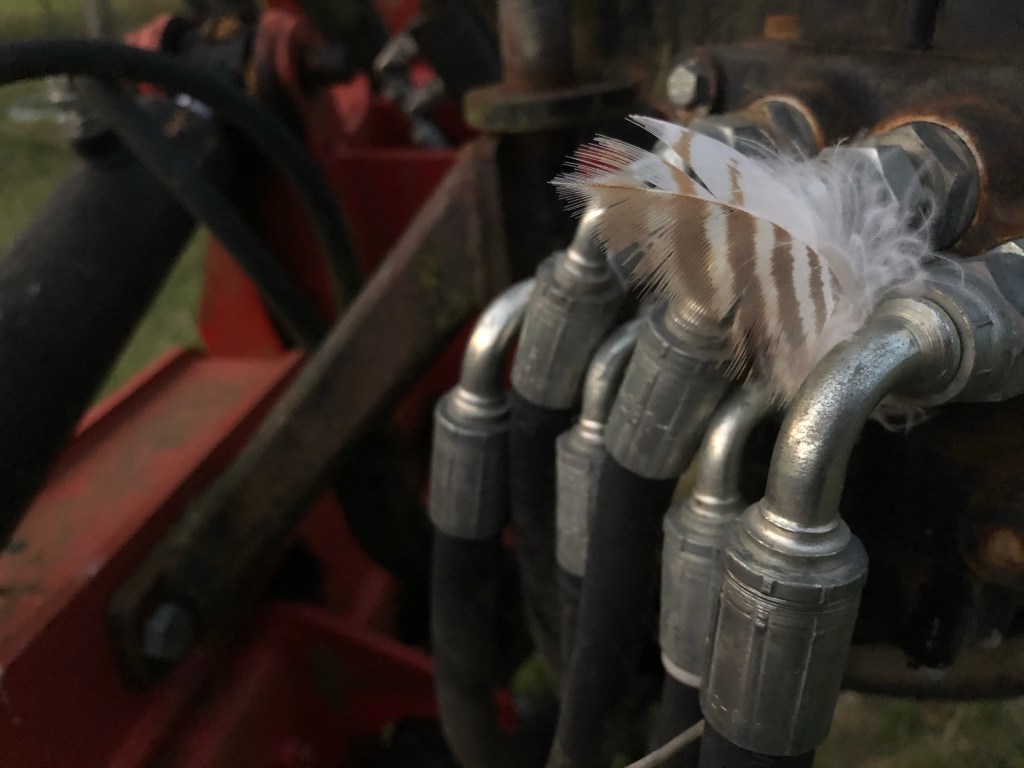
Monday night. Five weeks in. The first load of reports are due soon. I close my inbox, tired of leafing through the daily barrage of emails in my windowless office, and open my eyes. Packs of SureSan wipes on every shelf. Seven empty bottles of water from last week’s packed lunches, amassed in quiet protest. The number for the IT department scrawled in pink highlighter on a piece of paper folded and blue-tacked to the wall. A wall planner that hasn’t been updated since lockdown began. A chewed-up biro, an oak leaf and a buzzard feather. Karl Jenkins on Spotify. The ventilator roars overhead.

Tomorrow will be seven months to the day since the music died. Seven months since a final lucky fling at a friend’s wedding, which might as well have been a paean to the love of music itself. In retrospect I suppose “elegy” might be the better word. Rome burning and all that. COVID robbed the world of so much, and in the panic over its impact on work, health and the daily grind, music slipped quietly over the edge into silence.

I can’t think of a point in my life when music hasn’t been a constant. Having two music teachers for parents afforded me an incredibly privileged upbringing with regards to my musical education. I wanted for nothing, except perhaps an escape from Classic FM. Scarlatti and the Spice Girls. Klezmer, Raga and Jazz. The Stranglers, The Bee Gees and The Corrs. By the age of ten I had amassed a real symphony of diversity from all the CDs in the house, with an early preference for folk music and anything from the 1970s.Primary school, secondary school and university were a seamless pageant of choirs, bands and orchestras, with the occasional assignment as a reminder that education was happening somewhere within. Whether in a church or a school hall or a smoking stage, I was always singing.

The ventilator continues to growl. It’s about as close as I get to music without Spotify in here. The government directive against singing felled the school choir, the chamber choir and my gospel choir in a single axe stroke. Christmas waits at the end of the tunnel that is the Michaelmas term, but without the usual musical beacons to light the way, it simply doesn’t feel like it.

The last time I felt like this was half a lifetime ago, during my family’s earnest but ultimately unsuccessful attempt at a move to Spain. Then, too, the years of emerging into the frosty night after choir practice with carols ringing in your head melted away like snow in the sunshine. Spain has many beautiful musical traditions, but the buzz of advent – or, at least, the advent I had always known – isn’t one of them.

“Vosotros los ingleses, os flipáis con la música. No hay ese mismo afán por la música aquí, ¿sabes?”

Do I agree with her? The girl who told me that once? I do not know if I do. Years on, I’m still mulling it over.

Without the music, the days are long. They blur, one into the next. Web players and Bluetooth speakers are a poor imitation, like listening to the sound of the ocean in a seashell. There is nothing – nothing – like the exhilaration that comes from making music. It’s the difference between seeing and doing. Watching a cyclist and feeling the wind in your hair. The gulf is immeasurable. It’s the third half of my brain, the fifth chamber of my heart.

COVID cases continue to rise. Whole areas of the country are retreating back into lockdown. People stagger out of pubs at closing time and complain blindly at the loss of their freedom – or so the pictures in the Press seem to scream. Schools remain defiantly open as children come and go into and out of isolation. How long can it last, the question on everybody’s lips. In the music hall, silence hangs like mist.

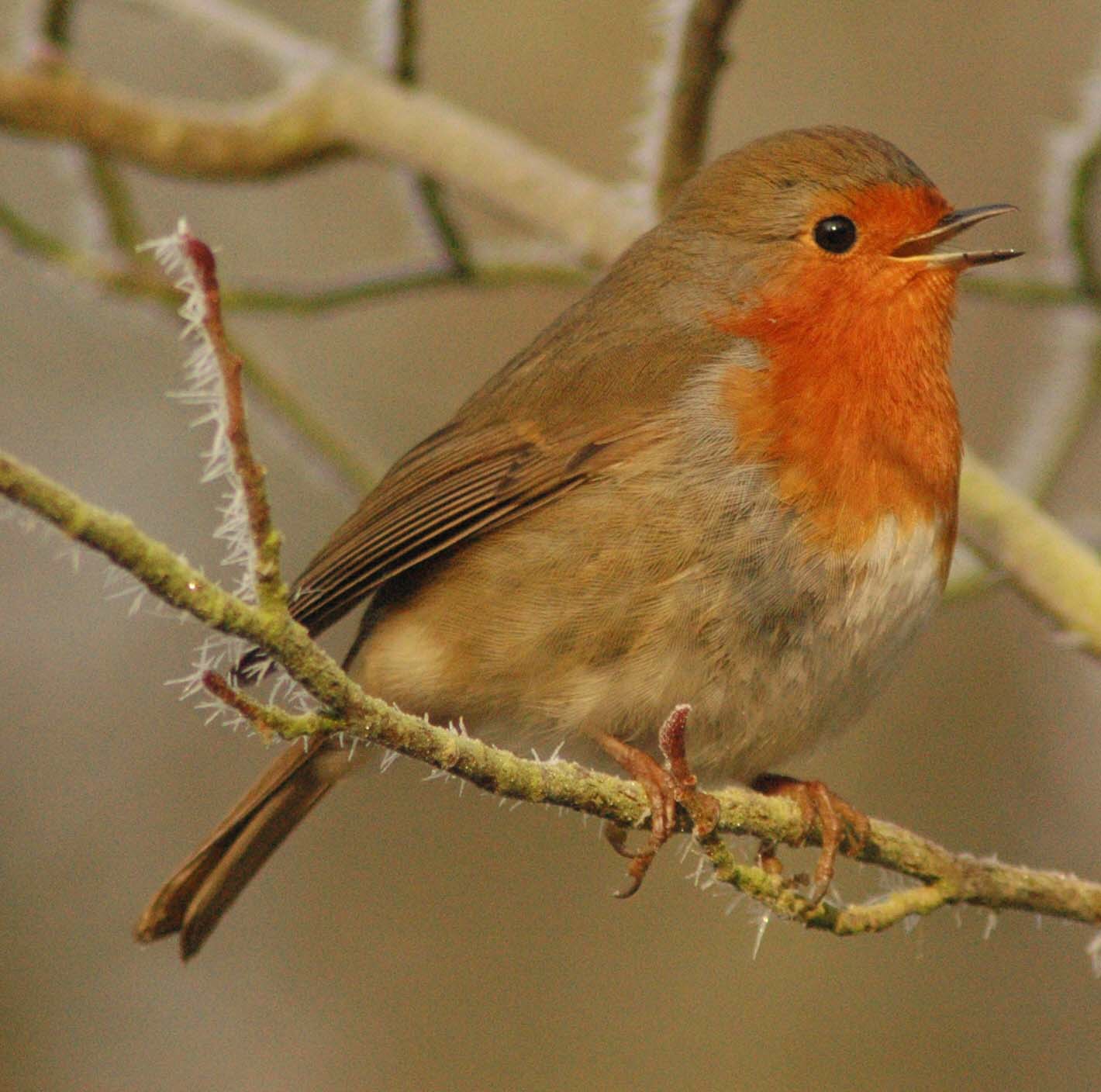
I put on my hat and coat and set out into the evening. Music was always my tonic of choice, but if one elixir is out of stock, the other at least is deathless. It waits out there in the dying light, eternal. Autumn chill is in the air and the martins are long gone. Soon the hedges will be alive with the cackle and chatter of fieldfares, and the liquid sound of redwings traveling by night will follow me home from duty. For now, the old guard plays the same music it has always played in the forest beyond the fields. Blackbirds chatter down in the gully. The staccato of a wren breaking through the hedgerow. And, perched on the exposed branch of a dead tree, cock robin sings his heart out.

The song of the robin is, I think, the most beautiful music that England has ever known. Gentle, melodic, like water – it cannot be put into words. Not by an unqualified amateur such as myself, anyway. The robin for me is a symbol of hope. Maybe it’s his boldness, his charming friendly nature; his defiance of the cold on a January morning, as if to let the world know the darkness cannot last forever. He pays no heed to government directives or social distancing measures. He sings as his ancestors have sung for generations, since the world was cold and dark and unforgiving. Hearing his voice now, at a low ebb, it lifts my spirits again.

Half past nine. Directionless text books. Vocab tests, marked and unmarked. Me and the tuneless ventilator, and the memory of the robin’s song. I think I’ll call it a night.

Marmite Man (A London Story)

Marmite Man

Marmite Man arrives in his chariot. He walks into a library, hiding from the autumn sun. He climbs up to the second floor, carrying a weatherworn traveling rucksack on his back, and finds a table hidden away on the west side. It’s eleven o’clock on a Tuesday morning, there are only a few other people in the building: a couple of students, a woman in her mid-twenties looking for jobs on one of the desktop computers, a middle-aged gentleman or two. Anybody who can afford not to be working at eleven a.m. on a Tuesday.

Marmite Man takes off his windbreaker, lays it over his chair and slouches into the seat. His face is red and pockmarked, his beard more of a tired, uniform grey than cultivated salt-and-pepper. He looks about. Once. Twice. Pauses. Then he empties the contents of his rucksack noisily onto the desk.

First, a multipack bag of McCoys ridge-cut crisps. Then two bottles of water and a plastic Pret a Manger cup. A can of spray-on deodorant – no, two cans. A pack of Johnson’s baby wipes. A hairbrush and a bath scrubber. And, finally, four pots of Marmite.

He inspects three of the Marmite pots in turn, looks around, and after some rumination, opens the multipack bag and breaks into a bag of crisps. In the silence of the library, his feasting sounds like the construction work beyond the Bunhill Cemetery: an unhappy ruckus in a place of quiet. He munches and crunches his way through a second bag, then a third, and another, and another. It’s as though he is issuing a deliberate challenge to the librarian downstairs: come up and stop me, if you dare. But the librarian does not hear, or perhaps he does not choose to hear, and still Marmite Man goes on munching, crunching, sniffing, snuffling, belching and clearing his throat. He wipes his fingers, stuffing the empty packets into a plastic Tescos bag, and smacks his lips, looking around. There it is again: the challenge, who’s going to stop me? There are signs everywhere that say that eating is forbidden, and yet here he is, Marmite Man, rattling the sabre with his portable orchestra of sound: percussive plastic bags, guttural brass belches, woodwind grunts and groans. The anteroom stinks of synthetic flavour, a fabrication of burnt and powdered meat. He rubs his hands, his breathing loud and laboured, and applies a baby wipe tissue to his fingers and thighs. He rolls up his trousers and scrubs vigorously at his shins, scraping off a night’s worth of grime – or perhaps more. He stops – smarts – curses under his breath as he hits a sore.

Who are you, Marmite Man? Where have you come from? What brought you into the library today? The world has been unkind to you, I think. You swore at the man who left the anteroom a while ago, repulsed by the stench and the noise. “You got something to say? Fucking pig.” That’s what you said, through a mouth full of crisps. But maybe it was he who threw the first stone, the stone of silent judgment, as he turned his head, lifted his bag over his shoulder and promptly left the room. Perhaps what hurts the most is the silence, the everyday judgment of those who do not wish to see you. A vagabond is a part of the world gone wrong; a cog out of place, a dust blur on a family photograph; a purple brushstroke across the Mona Lisa’s coquettish face. We can choose not to see it if we so desire. But that doesn’t mean it’s not there.

I notice you have not picked up a book since you arrived. To you, perhaps, escapism is dangerous – or maybe you have enough unhappiness in your life without imagining it through the eyes of somebody else. What is fiction, if not an experience of somebody’s else’s misfortunes? It is armchair entertainment for the comfortable, who sympathise enough with the poor to read about them, and would happily become them for a quiet hour or two in the afternoon, with a cup of tea on hand and the day’s work put behind them, only to return to reality as Mr Smith of Fulham, associate, papers due by close of play tomorrow. True misery is intangible to Mr Smith: it is merely something to be considered from behind a glass, and frosted glass if at all possible; the bubbling mire at the bottom of the ladder.

Marmite Man knows the mire. He has been cleaning it from his shins for the last twenty minutes.

Marmite Man counts his coins onto the desk. He is frustrated. He does not have enough. He pockets them again and sighs heavily. He plugs a charger into the socket under the table and wires in his phone, and sits. Looks about. Once. Twice. Then gets up and shuffles off in search of the toilets.

I am no longer hemmed in to my corner of the anteroom. I take my leave, packing my things away quickly and quietly. As I leave, I see Marmite Man again. He is standing in the history aisle, leafing through a book on the First World War. He does not see me go.


The Ladybird Tree

Regent’s Park is wide-open and cold. I have never been here before, except perhaps once when I was a little boy, and London Zoo was the destination. I hear they are closing down the aquarium today. I overheard a man in the London Review of Books talking about it, about how he’d taken his time coming to work because he wanted to see it, before it disappeared. What will they do with the fish, asked his associate. Feeding time for the penguins, he joked. It’ll be another ten years before the new aquarium comes along, so frankly I wouldn’t be surprised.

The benches are taken. It’s early afternoon, but we’re into the half-term holiday and the park is alive with kids on the swings, the climbing frame, running up and down the knolls, whilst mum and dad – but invariably mum – sits beyond the fence. And why not – the weather is gorgeous. The ground isn’t wet, and there are no ants about – none that I can see, anyway – so I sit down beneath a tree to eat my lunch.

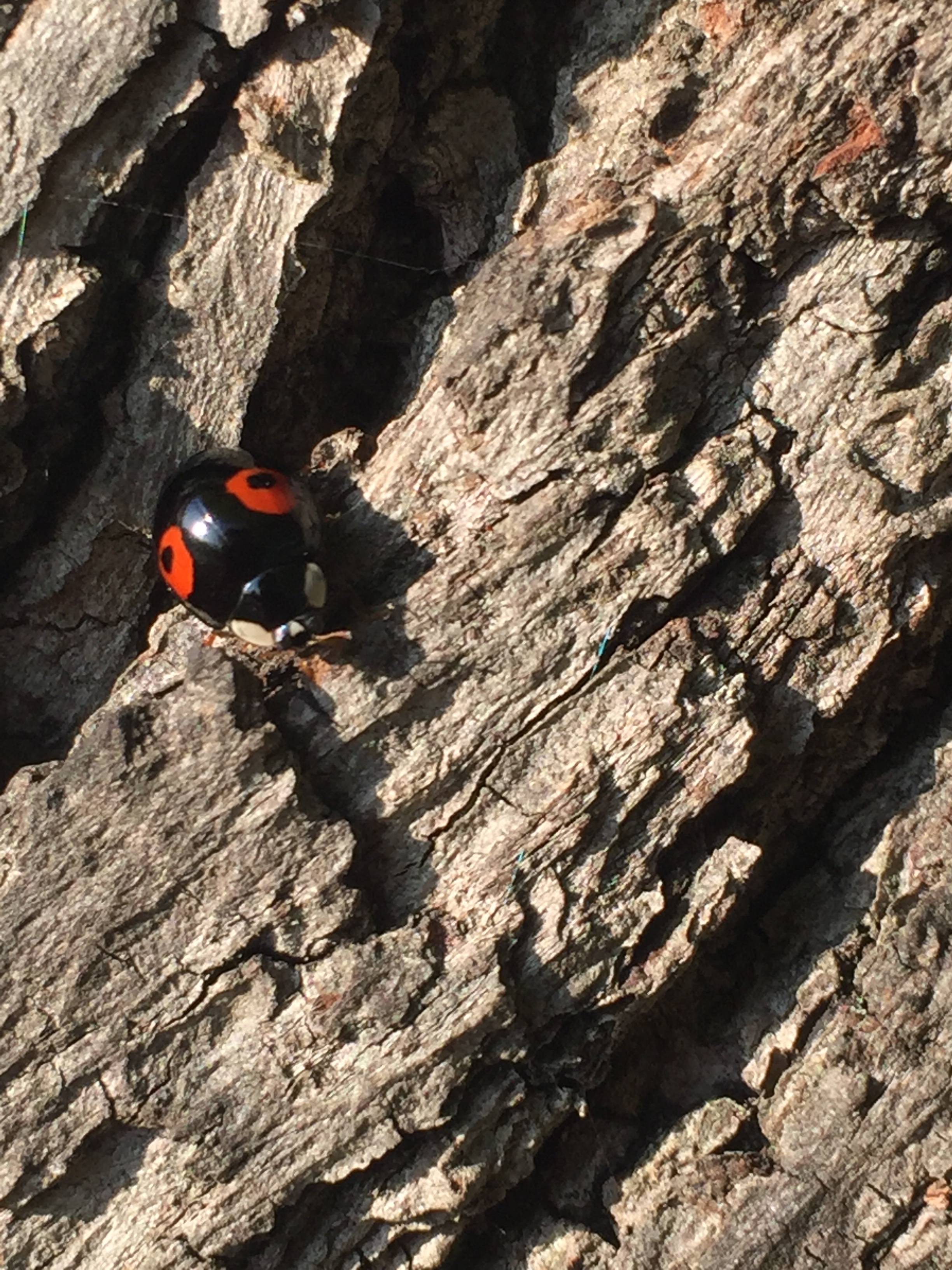
I can see a ladybird on the bark. It’s not the kind you grew up with in kids’ picture books, post-box red with big black spots. It’s beetle-black with two red eyes, giving its wing-cases the impression of a cartoonish snake’s head viewed from above.

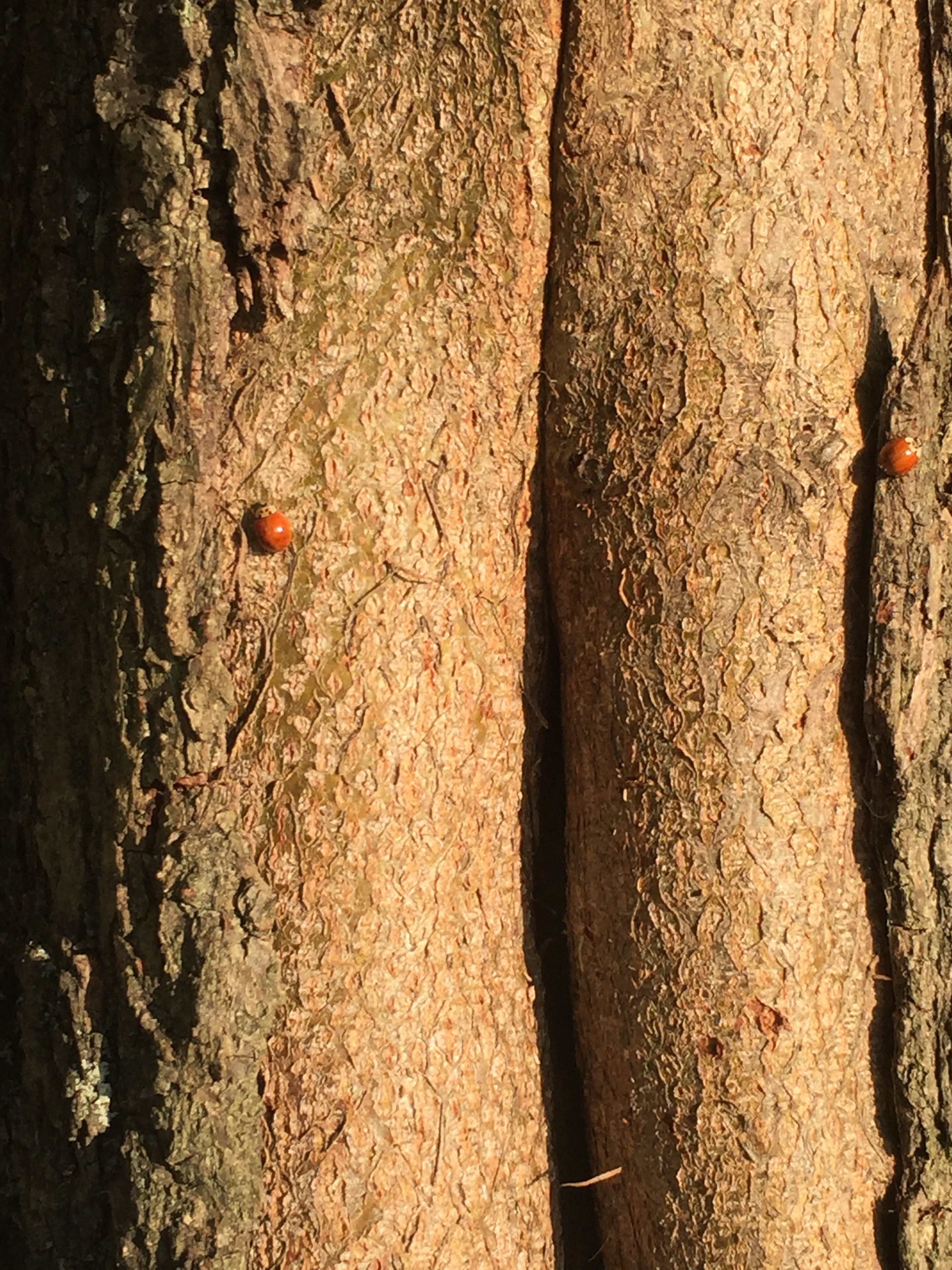
I don’t think I’ve ever seen a ladybird like that before. Point of fact, I don’t think I’ve seen any of the ladybirds on this tree before either. There are yellow ladybirds with twenty spots or more. Red or orange ladybirds with no spots at all. I believe these might be the so-called harlequins, invading ladybirds from distant Asia. Up and down the trunk they go, in that apparently directionless march that beetles seem to adopt, racing in and out of the grooves in the bark. One stops. Its wings click open in a single motion, like the safety-catch on a gun, and then it takes off from the tree into the sunlight. As it goes, another arrives, jet black with those two red eyes like the first one.

There are no deer in Regent’s Park. I rather hoped there might be, but that just goes to show how little I know London. I think that’s Richmond Park – anyway, there are deer enough in my neck of the woods. I walked right past one the other day; a roe buck, fearless, much like the muntjac I’ve become rather used to encountering there. I did not move so much as a muscle as I walked past, which is doubly impressive as I believe I was singing George Michael’s Freedom ’90 at the top of my voice at the time. It just watched as I walked past, eyes unmoving but always facing me, like that illusion of Mickey Mouse’s ears. Teaching bottom set classes is both physically and mentally draining, but I do get the payoff of working in the countryside, and that’s a major payoff by any standards – but especially by mine.

The ladybirds seem to be increasing in number. I just had to brush one off my shirt. I think it’s time I took my leave. I’m not getting any reading done. It’s hard to read when it’s cold outside, no matter how bright the sun is shining. I remember reading somewhere that you’re supposed to kill harlequin ladybirds, as they’re an invasive species. The trouble is, how can you be sure you’re not killing the native ones? Spain had the same problem with red-eared terrapins, if I remember correctly. I found one as a kid in the national park. It’s not so easy to stomp on a baby terrapin, just because it shouldn’t be there. Easier with ladybirds, I guess. Perhaps size does count. Though that is, was, and always has been a rather unpalatable idea.


Stormchasing

It only rained for three minutes this evening – four, at a push – but it was enough. The muggy, sweat-laundering heat that swallowed me body and soul from the moment I stepped out of the plane this morning is over, and with a night breeze blowing and the temperature pleasantly cool, the last three hours of the day are for writing. I’ve not had the time or mental energy to put pen to paper for several months, and I doubt I will at all next year. So tonight, and maybe for the next few nights, the sun is shining and a haymaker am I.

Sweet Caroline is playing on a loudspeaker in the hotel bar down the road. The only other sounds, besides the ever more distant rumblings of thunder, are the chirring of crickets, the metallic ring of a flagpole in the wind and snatches of conversation from the holidaymakers in the surrounding block. I thought tonight might be a night for geckos, but I can’t see or hear any tonight. Not on my balcony, anyway. The rain might have driven them off.

Beach holidays have been late in coming to me. As with so much in my life, I suppose I have been contrary: what appealed to everybody else must therefore be uninspired and dull. I’d love to say I’m still game to throw myself gung-ho into another madcap adventure, but after a year in a boarding school, I’m quite spent, and for once the idea of spending more than a couple of days on the beach isn’t quite as dreary as it once sounded.

Ok, scratch that. The storm that rolled in over the cliffs today lit a fire in my soul and I was up and out the door in a heartbeat.

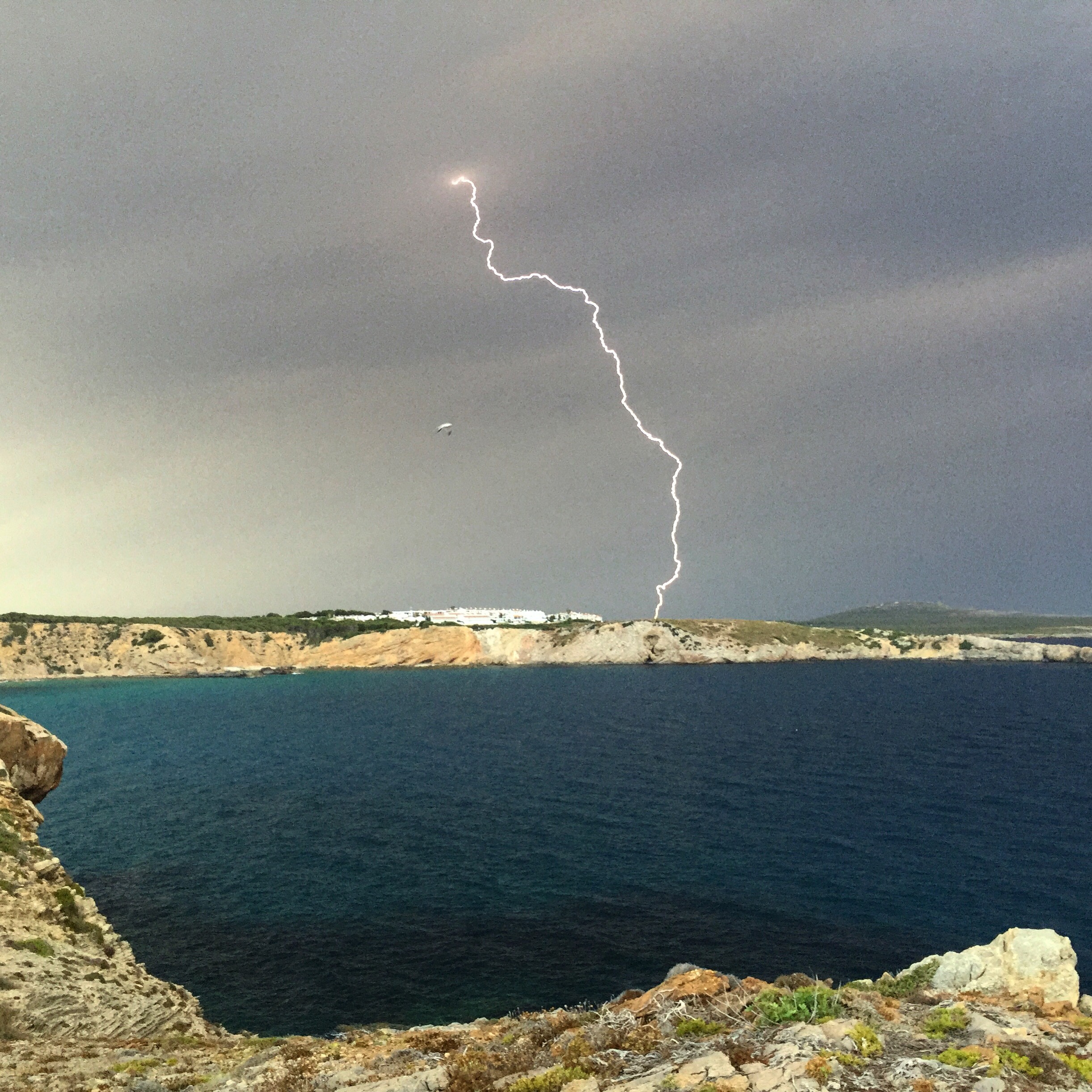
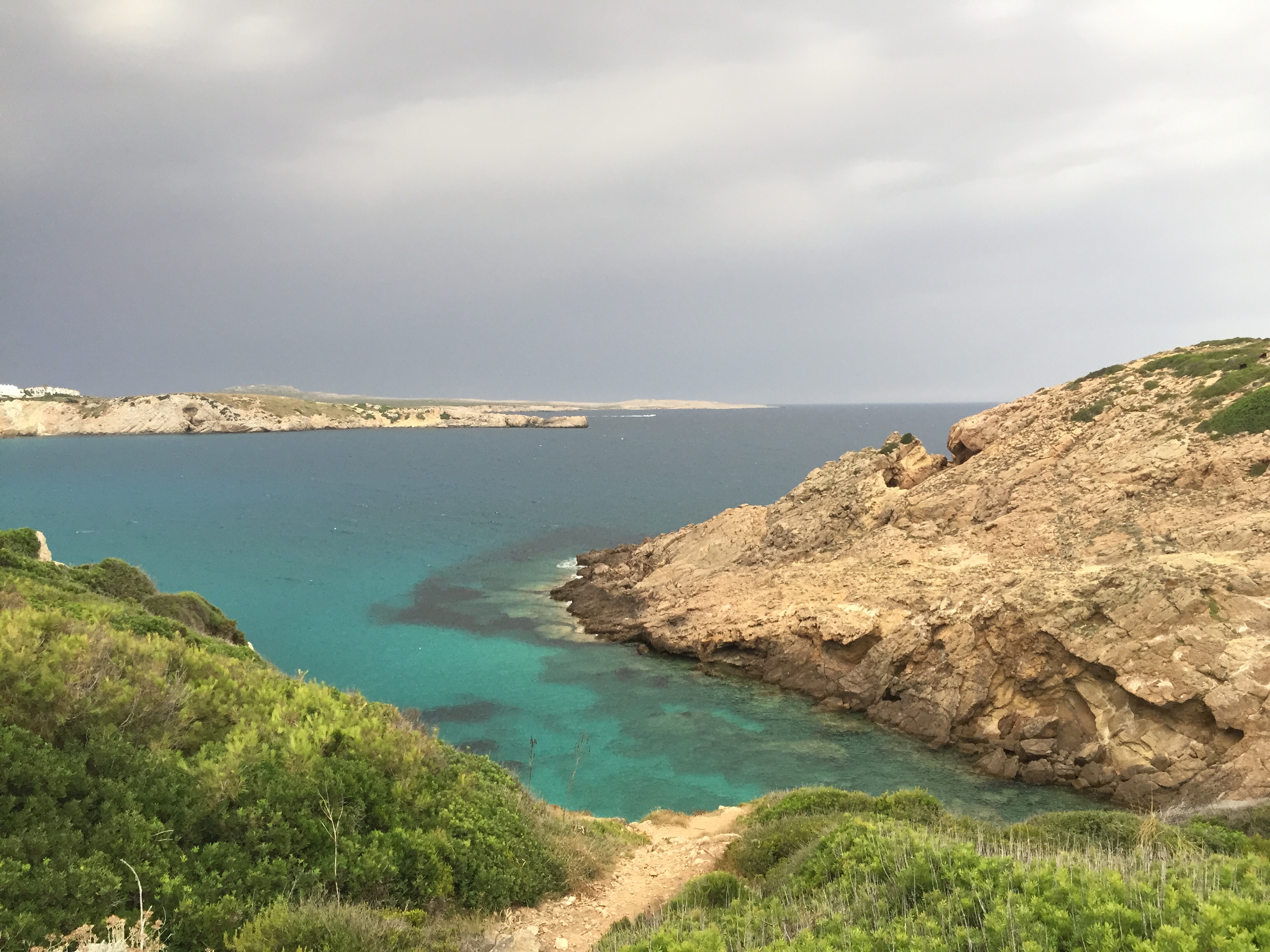
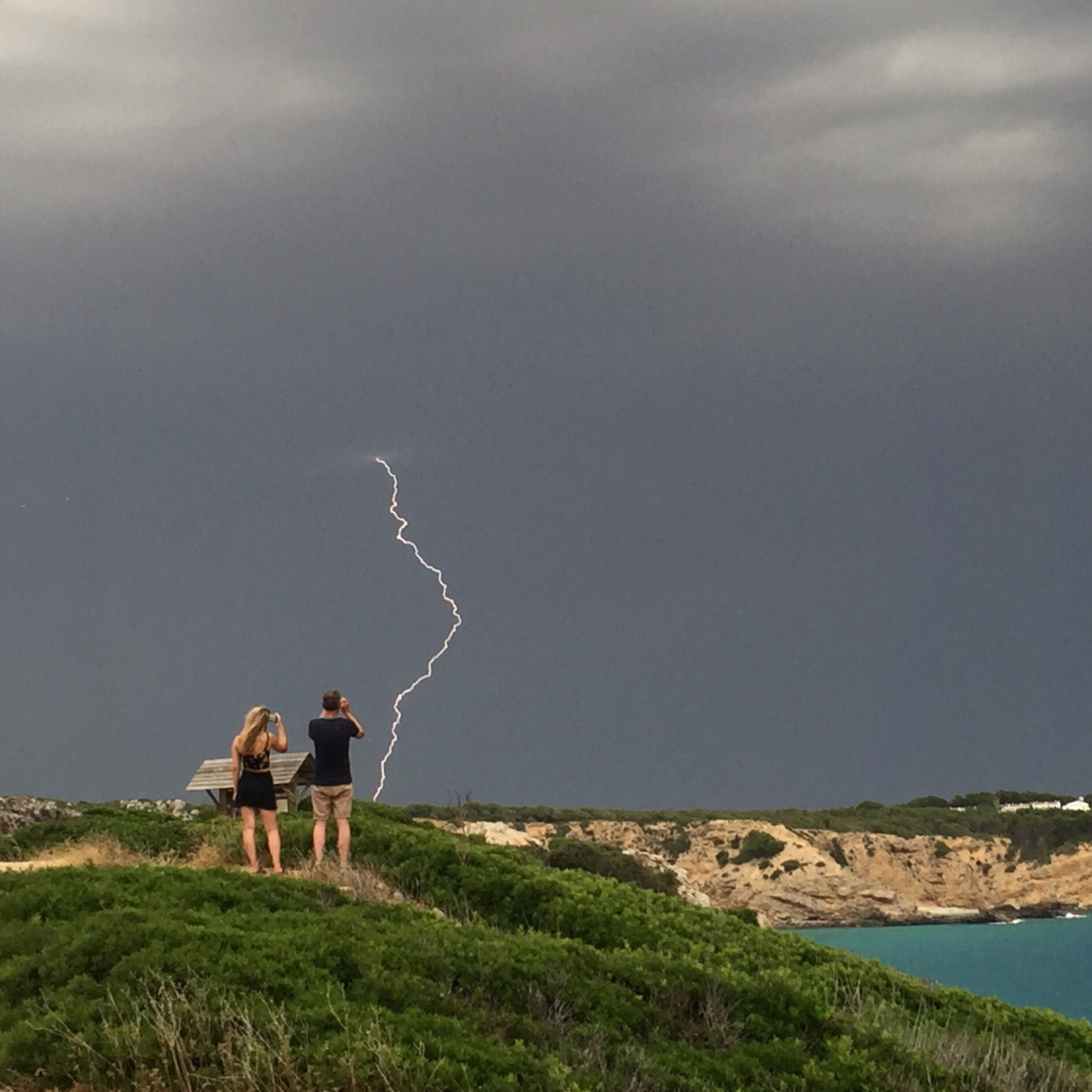
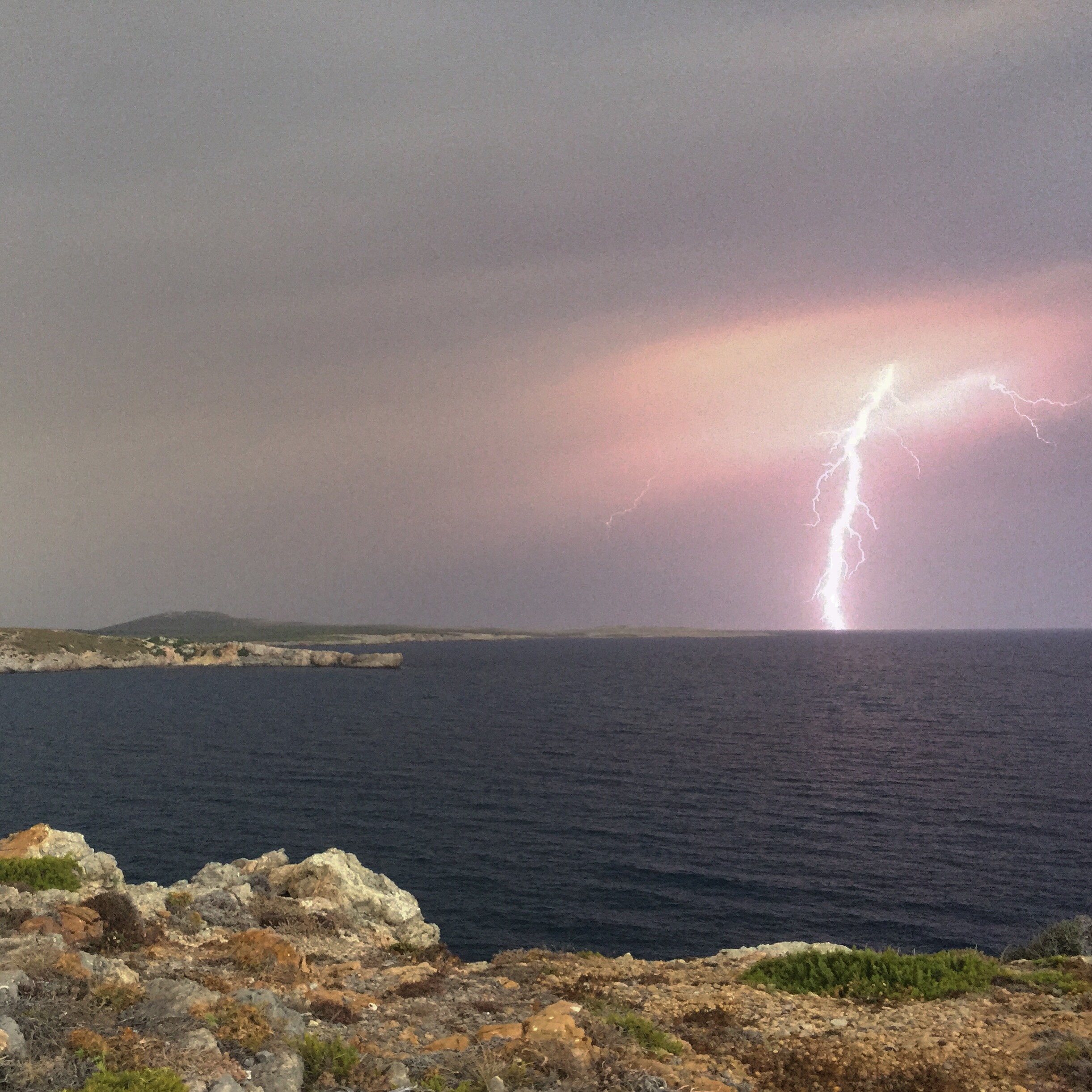
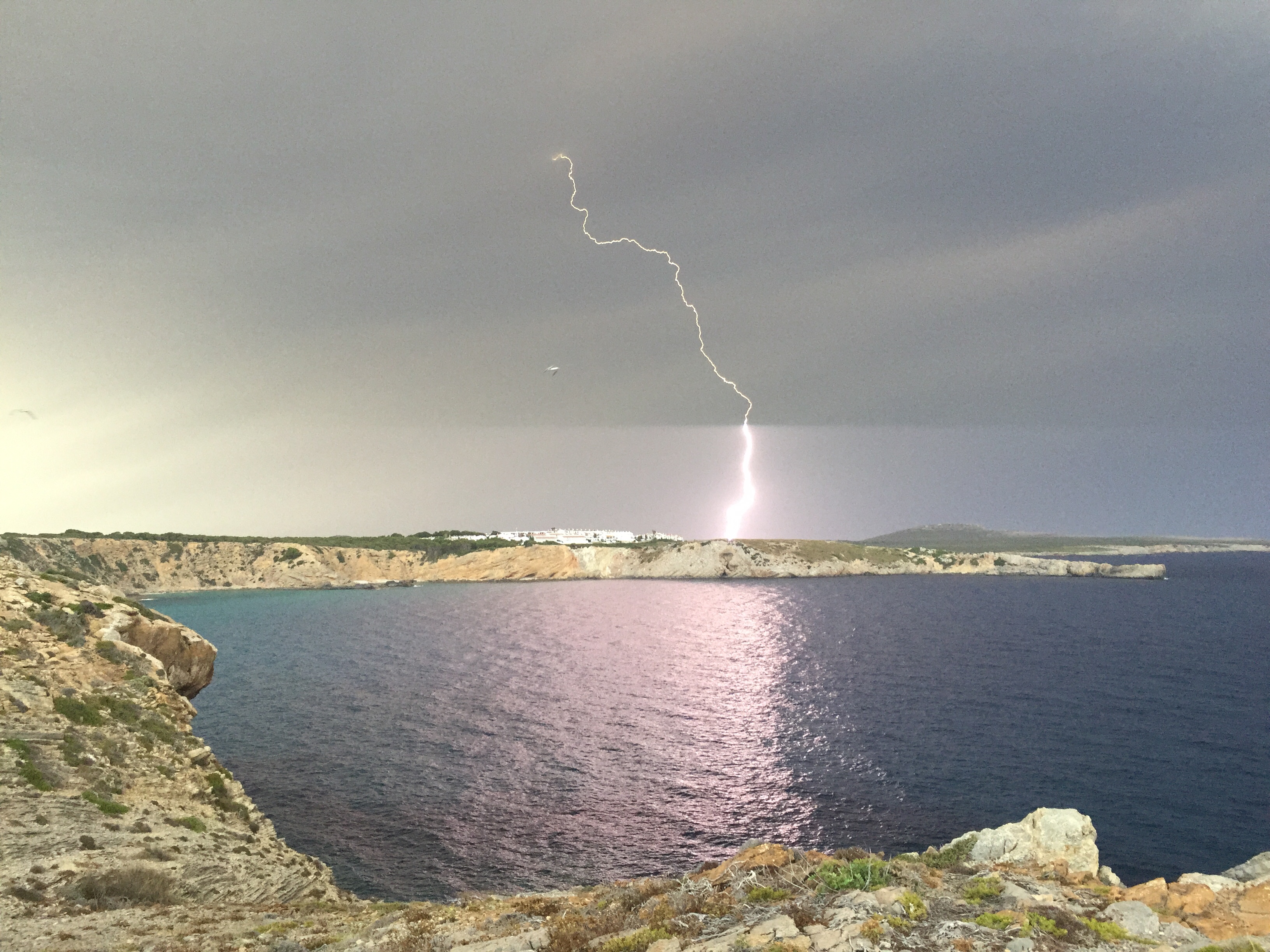
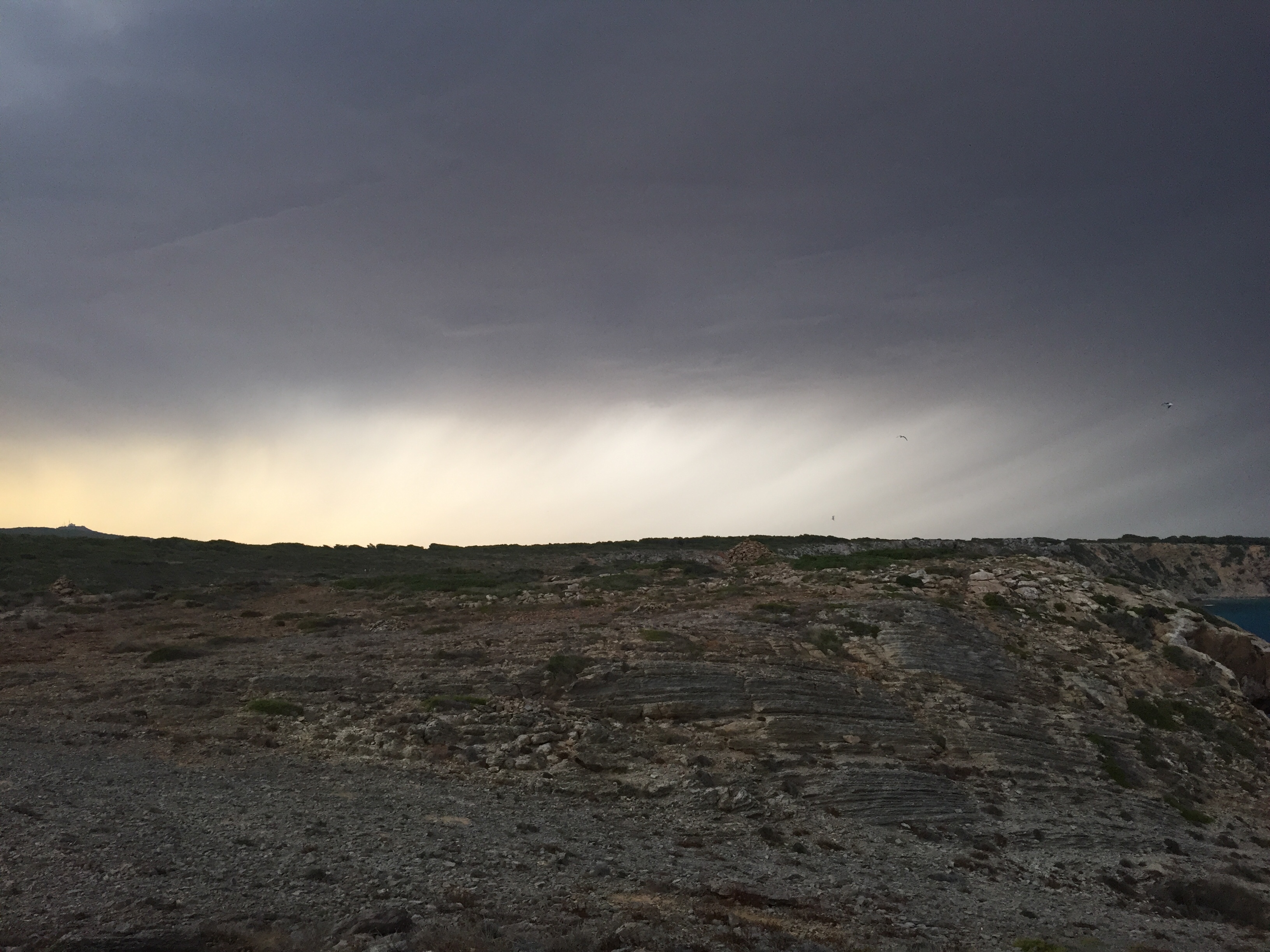
Standing alone atop the wind-scarred wastes of the Cap des Redoble, I looked out to the west and watched the thunderstorm come rolling in. I have seen displays of grater majesty and covered my ears before more deafening drumrolls, but it felt truly sensational to stand alone, high atop a cliff, as thunderbolts great and small rained down all around me.

Some forked across the sky, skirting beneath the clouds like bubbles under ice, whilst others weaved in and out of the haze as though there were a holes in the clouds. Others still hurtled straight into the sea offshore, some thin and wispy, others monstrous and so bright they lit up the sea in their wake and pulsed in stasis upon the grey canvas of the sky behind before disappearing into the ether – invariably just before I’d pressed down the shutter on my camera.

I love a good thunderstorm. Who doesn’t? It is truly one of nature’s most awesome performances, and who can blame the ancients for believing gods great and wicked were behind such electric devilry. Only weeks ago I wandered out into the grounds at night to watch a silent storm from the hilltop, and stood in equally silent awe for almost half an hour as lightning danced across the sky in flashes of silver and violet, twelve strikes to a minute. And six years before that, in the garden of the bishop’s residence in Boroboro, I watched a similar storm paint the sky shades of purple I had never seen before.

I had planned this first post to be about swimming with tetras and breams and mullets and wrasse, but the thunderstorm that followed somewhat stole its… well. You get the idea.

Nature has always been my elixir. A reliable restorative that works every time, if only I allow myself the time to go out in search of it. That’s part of the draw of working in a rural boarding school, I guess – that at any given moment, if I have an hour or two to spare, I can strap on my walking shoes and be in the heart of an English forest within minutes. My fears are gone, the world is put to rights and my soul is singing. Amman simply couldn’t offer that and I suffered.

In The Power of One, one of Bryce Courtenay’s best and one of my favourite books of all time, the wise and humble Doc tells Peekay that, whatever the question, ‘the answer you shall find in nature‘. Wise words and I swear by ’em. I just wish I were wise enough to act on them more often. Next year is likely to be my greatest hurdle yet, and I will need every trick in my arsenal to pull through.

Four more days in Menorca are just what the doctor ordered. And when Menorca is but a distant memory, a thunderstorm or two like the one I saw today wouldn’t be so bad. BB x
Afterglow

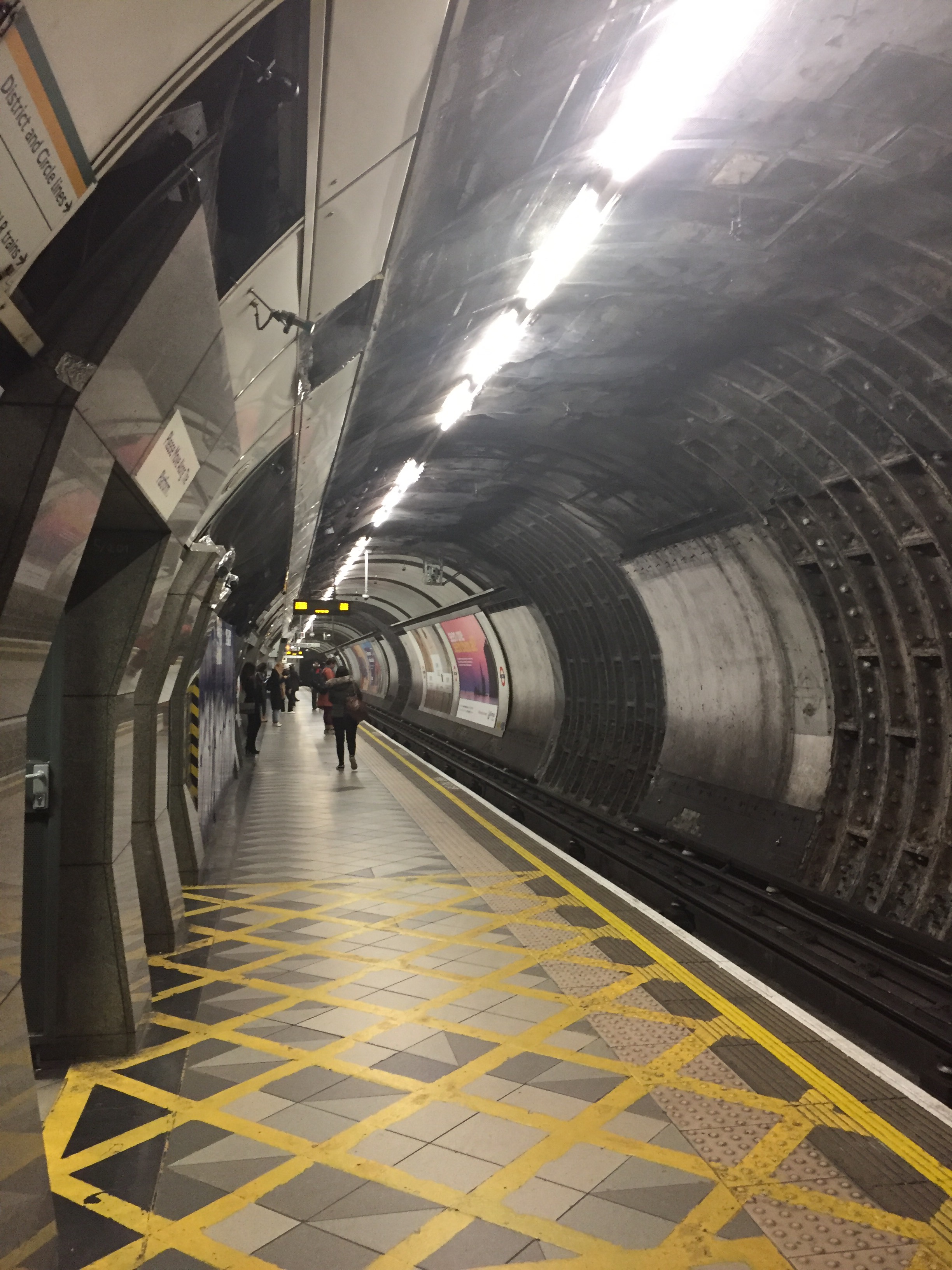
Walking home from work this evening I found myself unnaturally aware of the night sky. Normally in the corner of West Sussex where I live, the skies at night are impressive, and you can see all the constellations of the season with a clarity you wouldn’t expect to find so close to London. Last summer I even saw a comet shining a brilliant blue as it shot across the sky overhead. But tonight the clouds were low, and a strange, eerie light hovered along the horizon on either side of me: a greenish-yellow to the north, hanging over the distant lights of London, and a more unholy bluish-green patch of cloud to the south, indicating a floodlit pitch somewhere below. Elsewhere along the skyline, similar patches of tarnished gold and green light made the night a rather sinister shade of grey. Somewhere in among the phosphorescence, the glow of an almost-full moon went unnoticed.

When I lived in Spain as a child, I remember a night when several towns in the area decided to take part in a five-minute power-cut. I believe it was in protest about climate change, or energy wastage, or something along those lines. Our town sat atop a lonely hill in the middle of a great valley ringed by mountains. Villages were few and far between, and the nights were dark enough even with the interference of the thousands of twinkling yellow streetlamps. But one night, for five minutes, it was even darker still. My mother took me up to the square at the top of the hill to look out upon a world blanketed in a darkness it had not known for decades, perhaps even centuries. I was only twelve years old, but it made a deep impression on me. I have never forgotten the quality of the darkness, the stars that shone so brightly that in memory they seemed almost like suns – which is perhaps not so very far from the truth.

We spend a lot of time discussing the irreversible damage we have done to our oceans, how we have choked the earth and its rivers with our plastics and detritus, but it is far deeper and more sinister than that. Man’s quest to vanquish his fear of the dark is well on the way to robbing us of our natural light. In some parts of the world, it already has.

It is not so much our desire to ape that concerns me – our fierce instinct to twist the natural into the artificial – because I know that story. It is the fable of the Emperor and the nightingale. Tragically, as is often the case with stories meant for children, it seems the moral was lost on us a long time ago – a modern-day version would no doubt have the Emperor plug simply his iNightingale in to recharge. No, it is our desire to outdo. The go one step beyond. To beat nature at her own game, like a petulant child insisting they are old enough to look after themselves. I am reminded of another children’s story concerning a devil’s mirror, that sought to make a mockery of all that it looked upon…

When you spend weeks going over the pollution topic of the iGCSE and IB exams with your foreign language students, it’s easy to forget the creeping damage of light pollution, if only because we choose not to see it. Light is good. It shows us the way, it helps us see where to go. It makes us comfortable and it keeps us safe. So perhaps it is a loss we must bear. What is, is what must be. But I do wish, on nights like these, when the clouds are low and heavy and stained with the unholy afterglow of the city, that I could go back to the night of the power-cut, when the night was clearer and more beautiful than any light show I have ever seen. BB x

YearAbroad (430)

Stargazing in La Siberia, May 2016


Instant Friendship

I’m sure I’m bringing nothing new to the table when I make the claim that instant communication has changed what friendship is all about. It might not have altered the definition of the word, but it has radically changed how we go about expressing it. You only have to take both the mobile telephone and the internet away for a moment to consider the implications.

I was at a party last night when this particular dilemma crossed my mind, and it occupied my brain for the greater part of the journey home across central London. I heard in passing a friend mention how he’d been on the phone to another friend of mine just that morning. In and of itself it shouldn’t have unsettled me, but it did, because in the entire time I’ve known that friend, I couldn’t remember a single occasion I’d called him on the phone. In fact, in the last fifteen years or so I can count on the fingers of one hand the number of friends I have spoken to over the phone, two of which one can write off instantly for being girlfriends (on the popular assumption that a relationship necessarily requires such amenities). For some reason, I’ve never been the type to ring up my friends. It’s not for want of things to say – I’m an infamous chatterbox in good company – but I’ve simply never known what to say over the phone.

Should this trouble me? On a purely superficial level, no. Friendship isn’t calculated on a basis of words per minute. And yet in today’s hyper-connected world, it’s very easy to feel that if you’re not the kind of person who enjoys texting, WhatsApp groups or catchups over the phone, you’re failing in your task as an attentive friend. Why wait months for your next personal encounter when you could fire off a quick Facebook message? People often say it’s the little things that count, and it’s the “little things” like this that social media and it’s various offspring facilitate. You can, of course, turn up your nose and say you’ll hold out for the next time you meet in person, but that is easier said than done when we must necessarily part ways to pursue our various careers, which may well be far away – another hurdle of modernity. The fickle hand of progress draws us together with one hand whilst the other does its level best to drive us apart.

I must endeavour to write more letters. We all must. Far too much emphasis is placed on speed and frequency of communication these days. One should consider that, if we lived in a time without social media, data or the telephone, insecurities such as these simply wouldn’t exist. But because we can now be reached at the touch of a button, we should be reached. There’s no excuse for sloth. You can apply the scenario to work; it’s the same problem there. There’s simply no escaping it now. We’ve made ourselves slaves to our own desire for immediacy.

Working in a boarding school has left me with little time or energy to write as of late, be that my books, my blog or even my letters. At the party last night I found myself speaking to “close friends” I had not spoken to in all of a year, two in some cases, to my shame. My workload is set to increase twofold next year, but despite the obvious hurdles I have yet to face, I mean to turn that trend around. I have to do what I can. Snail mail may not provide the instant satisfaction that WhatsApp delivers, but there is a genuine sense of joy to be found in patience. And patience is surely what friendship is all about, when it comes down to it.

I can only hope my friends have been patient with me. BB x

Frost vs Nixon

That was, without a doubt, the smoothest flight I’ve ever taken. No more complicated than getting on and off a bus. The plane was on time, there was no security check at the other end and I was on the bus to the city centre within five minutes of leaving the plane. To top it off, my entire row was empty, so I got the window seat for free. It isn’t often that you get such a slick service with a budget airline, but after my previous experience (I haven’t forgiven you for that 20€ croque monsieur, EasyJet) I consider it my just reward.

DSC_0078

STOP PRESS: The automated American translation in Plaza de Armas just mangled Matalascañas beyond belief (Matter-lass-cun-arse). Help.

Toulouse was covered in a thick fog when I left this morning. Bella said it didn’t feel much like France, but it sure as heck didn’t feel like Spain. With all the yellow and brown trees, misty rivers and starling swarms overhead, it felt a lot more like England than anywhere else. The cold has set in down in Extremadura, but it’s not a true wintry chill like there is here in the lower foothills of the Pyrenees. Oddly enough, on our way through the city streets with salted caramel-drizzled Belgian waffles in hand, I found myself missing home.

That is, I wound up missing England whilst on holiday in France from working in Spain.

DSC_0119

In the past it was a lot easier to say where I wanted to be. Spain had purple gallinules, bee-eaters and griffon vultures, England had woodpigeons. It was an easy decision to make. Now that I’m older and avifauna is no longer priority number one, it’s not quite so clear cut (though the vultures are still a major factor). I don’t begrudge my mixed-up ancestry in the slightest – I couldn’t be more proud of it – but if I did, it would be over the confusion it’s left me with regards to where I want to be.

England is cold and England is damp, and my lungs suffer for over half the year for it. The English are, in my experience, prickly when it comes to difference, nervy when it comes to work and uncomfortable in just about any given situation, without mentioning their appalling inability to talk about their feelings. Living is expensive, work is hard and life is lived for the weekend.

It is, however, the land where I was born. And, for all their faults, the English understand a great many subtleties that pass the Spanish by: public footpaths, music for its own sake, quality satire and coffee shops, amongst others. It’s also a land of gorgeous crispy winter mornings with frosted grass, thick mist and a promise of rain, and indoor afternoons spent reading with a mug of hot chocolate on carpeted floors. In short, England does autumn and winter properly.

DSC_0007

Spain has everything else. Spain is hot – at least until November, when a harsh, dry cold sweeps in across the plains – and damp is a thing of the imagination, especially in drought years such as this. It doesn’t have a fantastic music scene, but it does have endless rolling hills of wild olive trees and cork oaks, overflown by kites, vultures, harriers and eagles, not to mention cranes, storks and a whole host of other impressive creatures. It has tostadas and decent olive oil. It has good food for good prices, skies so blue you couldn’t paint them properly if you tried, and a crippling addiction to ham that goes back centuries.

In addition, the Spanish are only too happy to tell you how they feel, at the expense of small-talk topics such as the weather (which most of them couldn’t give a fig about) and sport (where a lot will tell you how failed their exercise regime is/was/will be). And, for better of for worse, family is everything to them. Many Spaniards are completely hamstrung by their devotion to their families, and a good many more don’t begrudge them for it one bit.

Spain also has Spanish. The happiness machine. That’s the biggest win of them all.

Through my own strength of will (and a fair degree of my mother’s), Spain has become a far bigger part of my life than it otherwise might have been. And if I never shut up about it, it’s because Spain is not just the longest love affair of my life, it’s a family affair. It fills the enormous hole that most of my generation fill with Snapchat and social media. Just being here makes me happy.

You can’t spend your life chasing happiness, and it’s unhealthy to try. But it’s a rare kind of joy when happiness and work combine like they do out here. And when I find myself missing those autumn mornings, frost on the car bonnet and even the beautifully reassuring sound of the woodpigeons, I look around me and remind myself where I am. Azure-winged magpies bouncing out of the trees, shepherds leading their merino sheep across the fields and impressive stone castles sitting atop lonely hills. No Christmas feeling, no carols and definitely no a cappella, but no wheezing either. I can’t do everything I’d like, but at the very least I can be me. I can live with that. BB x

That Smell

I don’t make a habit of leaving my beloved Spain during a placement. Some misplaced sense of pride tends to keep me tied to this marbled rock whilst most of the American auxiliares catch every cheap flight to Yurp they can lay their hands on. And when they’ve traveled across the Atlantic to get here, who can blame them? But duty calls, and I find myself sitting in row five of an EasyJet plane bound for Toulouse. Pride is one thing, holding out in spite of your heart is another. And let’s face it, I won’t have the chance or excuse to stay in Toulouse for free again very soon, and as I rarely visit France anyway, I might as well carpe the diem.

As a gift for Bella’s host family for putting me up (not once but twice) I’m bringing some Torta del Casar, a delicious if seriously pungent cheese from Casar de Cáceres to the north. I’d have got my hands on the more local Torta de Barros if I could find it, but as the Casar is also denominación de origen and equally delicious, I do believe it’s a fine alternative. It’s a sloppy, spreading cheese, and has a spectacular tang like the pimentón that is grown in the north, or – come to that – a good deal of the dry foods that hail from the Iberian interior. The trouble with the cheese is that its smell is seriously strong. It must be, or else I wouldn’t be able to smell it so well. My sense of smell is terrible, and always has been (which must, I wonder, have a fairly major impact on my sense of taste as well), so as a rule of thumb if something smells strong to me, it could probably knock a dog out.

As sense loss goes, having a fault in the olfactory department is, at least to me, one of the easiest deficiencies to deal with in the sensory department. I’d far rather no smell than, say, no sight or hearing. It does, however, occasionally give me cause to wonder whether I’m missing out on the minutiae, like the smell of the Romanian family who were at the Leda kiosk before me on my return journey home last night. No sooner had they taken their leave, the tired-looking woman at the desk gave me a long, troubled look and said, grimly, ‘Qué olor… Qué olor’.

I wasn’t aware Romanians smelled differently. I wasn’t aware they smelled at all, to be honest. I for one didn’t smell anything (though I’ll grant you, for the reasons I’ve already given, I’m not the best judge).

It is, however, a small marker of the resentment some locals harbour towards the not-unremarkable Romanian immigrant population. Whether that’s because it’s harvest season, or because their population has grown in size since my last visit, their presence is particularly notable at the moment. Romanian is the second most commonly heard language in the streets after Spanish, doubly so in certain locations. There are now at least two shops in Villafranca that stock Romanian goods and foodstuffs. I run into the same families in Día on a regular basis (though not as often as I used to since it went upmarket). My weekly route to and from a private class in Almendralejo takes me through what can only be the Romanian quarter. As a local entity, their presence can no longer be ignored.

I’d love to learn Romanian. It’s apparently not such a great leap from the other Latin languages, being a Latinate language itself. But learning the language would be only the first hurdle; breaking the silence would be the next. There’s as much a cultural barrier in place as a language barrier. For a point of comparison, one need only look at the Chinese or the Moroccans, both of whom are now long-established here. There’s even a halal butcher’s in Almendralejo, with Arabic signage as plain as though al-Andalus had survived to the present. Commerce, at least, thrives between the three.

It’s different in the schools. This year I have at least five Muslim students in my classes, the children of Moroccans who live and work in town. It says a lot that that’s worth pointing out, but it says even more that their presence in my classes far outsizes the Romanian presence. There are Romanian kids in the school; that much I know from a glance over the register. But they’re in the non-bilingual classes, along with the gypsies, Moroccans and Algerians. I don’t see them at all.

After a week of hosting the Polish exchange, my mind’s caught up in the whole interculturalism thing, like it hasn’t been since that frustratingly theoretical text on interculturalism vs multiculturalism in university last year. If the Polish presence in the U.K. were as notable as the Romanian presence in Tierra de Barros, the usual intolerant factions of my homeland would have a great deal to say about it. It surprises me – and pleases me – that I’ve yet to see such a bubbling-up here. However, it’s little encounters like the lady at the bus station that make me wonder how deep the suspicion festers. I can only hope it was simply a case of an overly sensitive nose.

There are lots of babies on this flight. I deal with noisy children on a very regular basis on account of my private lessons, so I’m getting better at tuning them out. We’re passing Pamplona and preparing to cross the Pyrenees at their Western end, into French airspace. One can almost smell the strike fever. I hope it doesn’t give me too much trouble this time. I’ve got be back at work on Monday morning. But until then, let the music play. BB x

P.S. Students of Arabic Literature, yes, the title is a deliberate reference to Sonallah Ibrahim.