For Whom the Bell Tolls

My provisional license arrived in the post yesterday. My second, I should say, since after a very thorough summer holiday shakedown of the flat I’m convinced I must have accidentally thrown my first one out with the trash months ago. It’s put a major stopper on the whole learning-to-drive this summer by holding up the theory stage, but now that it’s here I’ve got no excuses. I should get booking.

But first, I’m getting out of here for a few days. I’m done with scrolling, hoping for contact from the outside world and turning off the WiFi for a bit of enforced internet downtime. Summer holidays just drag on and on when you have nothing to do, so I’ve decided to get out there and do something.

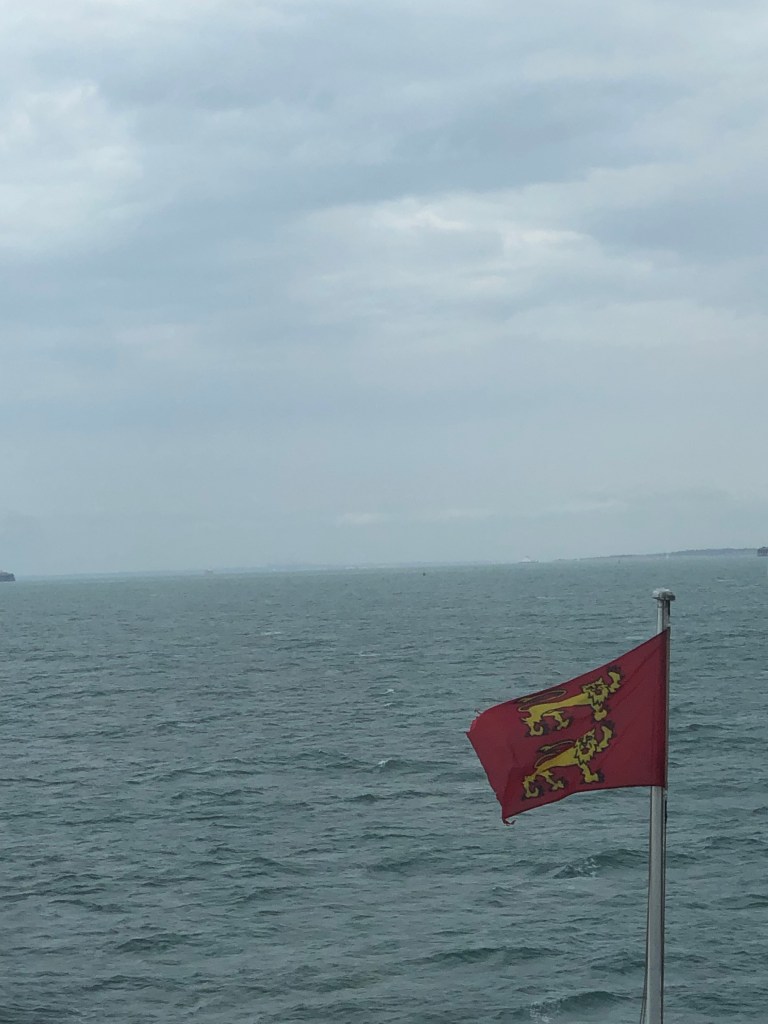
So here I am in the ferry terminal in Portsmouth, waiting for the 22.45 to Caen. The overhead telescreens keep alternating between the blue departures board and the vivid blue and yellow banner of Ukraine. The BBC News app remains focused on the heatwave, though the magic number 40 has disappeared from the headlines – “temperature tops 38C and likely to rise”. Five stories down, Tugendhat is eliminated from the running for Tory leader.


It certainly was hot today, but it didn’t feel much like that blisteringly hot summer holiday in Jerez almost twenty years ago. Despite the threat of 40°C heat, the breeze rolling in across the Weald kept the school grounds pleasantly cool. Even so, the signs that this has been an unseasonably hot few days are clear. When I went out to do a little reading in the morning, the summer soundscape was there: the echoing whack of a tennis racket, the ceaseless chatter of the house martins, grasshoppers chirping lazily in the meadow. A few hours later, the whole place was silent. Only a lone crow broke the stillness, and that was just the once.

I thought the train journey would be problematic due to the hysteria in the news, but despite the grovelling apologies over the Southern Rail tannoy, the train was only ten minutes late pulling into Portsmouth – which is remarkable, given how prone to delays they can be outside of a national crisis.

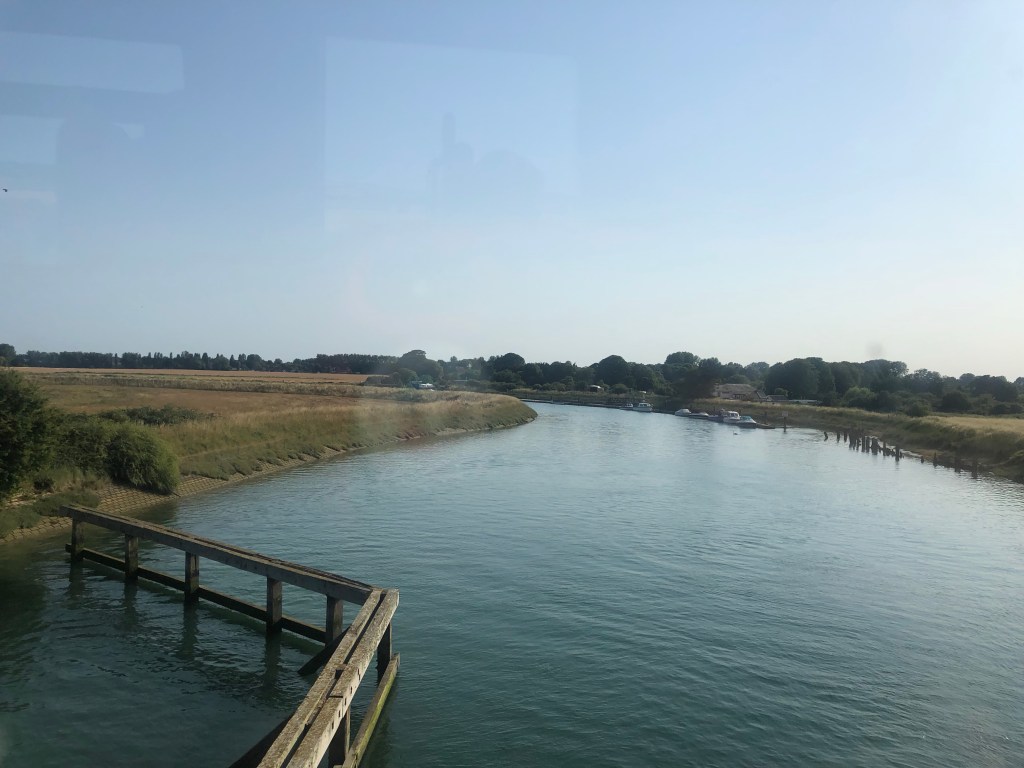
It’s a beautiful train ride, the route from Crawley to Portsmouth – one of those British rail journeys you should tick off the list, like the one from Darlington to Edinburgh. I never get tired of passing Arundel Castle and the fens at its feet. A childhood spent in and out of various salt-marshes around Kent has left me rather fond of their bleak serenity. Herons stalking the water’s edge. Egrets bedecking the bushes like so many plastic bags snagged on the branches.

Suddenly, an intensive greenhouse-farm appears, concealed from the outside by a thick growth of trees. A ravenous human hand clawing the depths of the earth to satisfy a hungry world. And then it’s gone, the train is hurtling forwards and I’m back in the marshes. I could be looking into the past or the future. I remember the fate of El Acebuche, its silent reeds swaying in the wind, and I’m not sure I want to.

The French family in the seats behind me must be headed for the ferry port, too. At least, I guess they are – I’ve caught the word “bateau” often enough. The children swap in and out of French and English without much of an accent overlay in either. The father speaks only on French, until he stops the ticket inspector to ask if she can turn off the air conditioning. “Don’t you think it’s rather nice, as it’s so hot out there?” – “For five minutes is nice, but it’s freezing.” – “If I were you I’d enjoy it.” At the next stop, the father gets out to soak up the sun. His daughter only just coaxes him back on as the doors close. Before he returns to his seat, he steps into the next carriage, remarks that it’s warmer, and moves. Within minutes the rest of his children have followed suit. It seems petty, but they have a point – the air con was turned up so high I had goose-flesh for half the journey.

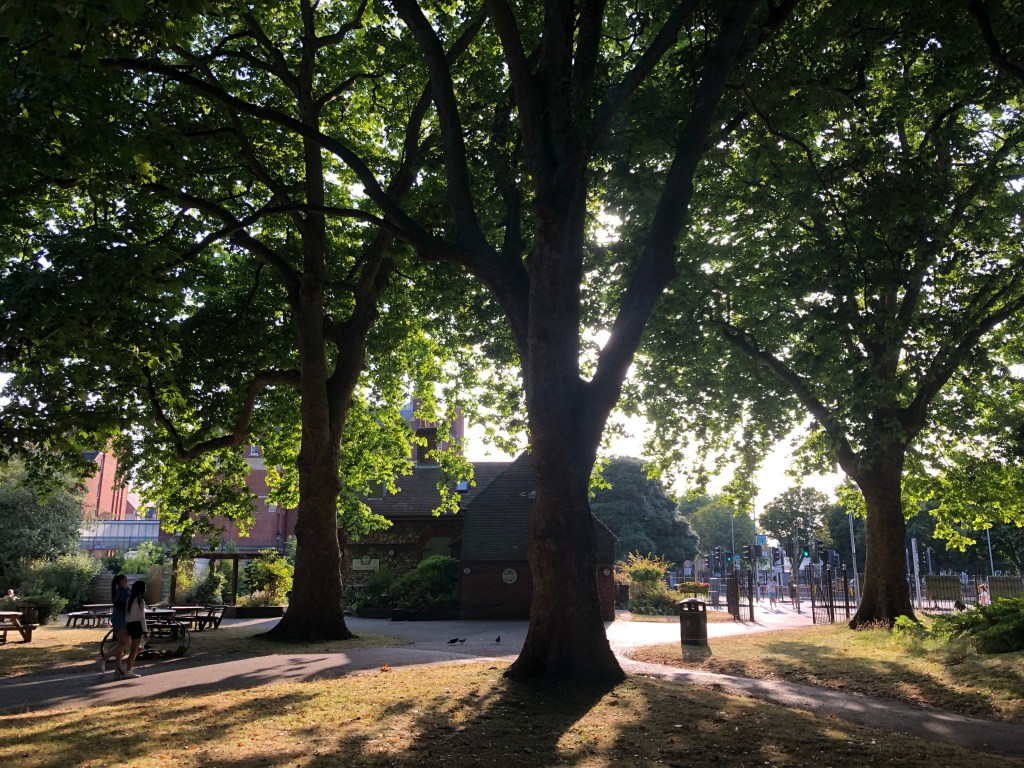
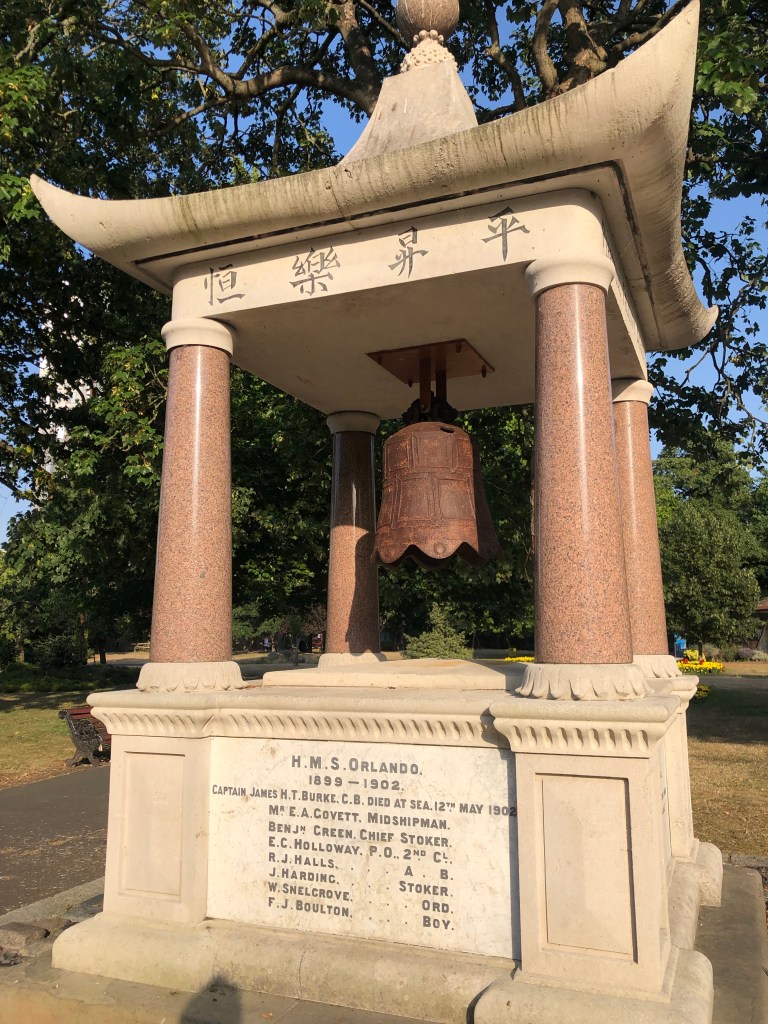
I haven’t been to Portsmouth before. The last time I caught a ferry in this neck of the woods was from Southampton, but that was many years ago and we didn’t stop. I had four hours to kill and not a lot to do, so I picked a spot in Victoria Park and watched the world go by. The bells of St John’s sounded for seven. They sounded strangely mournful, but though I hummed the melody back a couple of times, I couldn’t work out why. Two handsome women wander by, their accent West African and intensely musical. Three kids hurtle past, one on a scooter, two on skateboards. One wears a red-and-black chequered shirt tied around his waist (did everybody own one of those shirts at some point?). A family of cockatiels screeched from an aviary in the centre of the park, stolen away from their home far beyond the sea to entertain the fancy of the British public. An ancient Chinese bell stands nearby and seems to serve a similar function, pilfered – it says so in almost as many words on the plinth – during a campaign in Taku. A cryptically-worded message daubed above reads “Perpetual Felicity Achieved” in austere capitals. A breeze blows and the bell moves a little, but it makes no noise. Some cage birds stop singing after a while, too.

As the sun sets, I head to the port. The heat and the hysteria have driven everyone indoors. The high street is virtually empty. Just a couple of kids with drinks they’re nowhere near old enough to drink and a level of delirium to match, and a weatherbeaten gentleman sleeping in the shadow entrance to an Ann Summers store. A grey mannequin in turquoise lingerie poses suggestively through the window at him, blowing a kiss. He wipes his nose, shakes his head violently and turns the page in the book he’s reading.

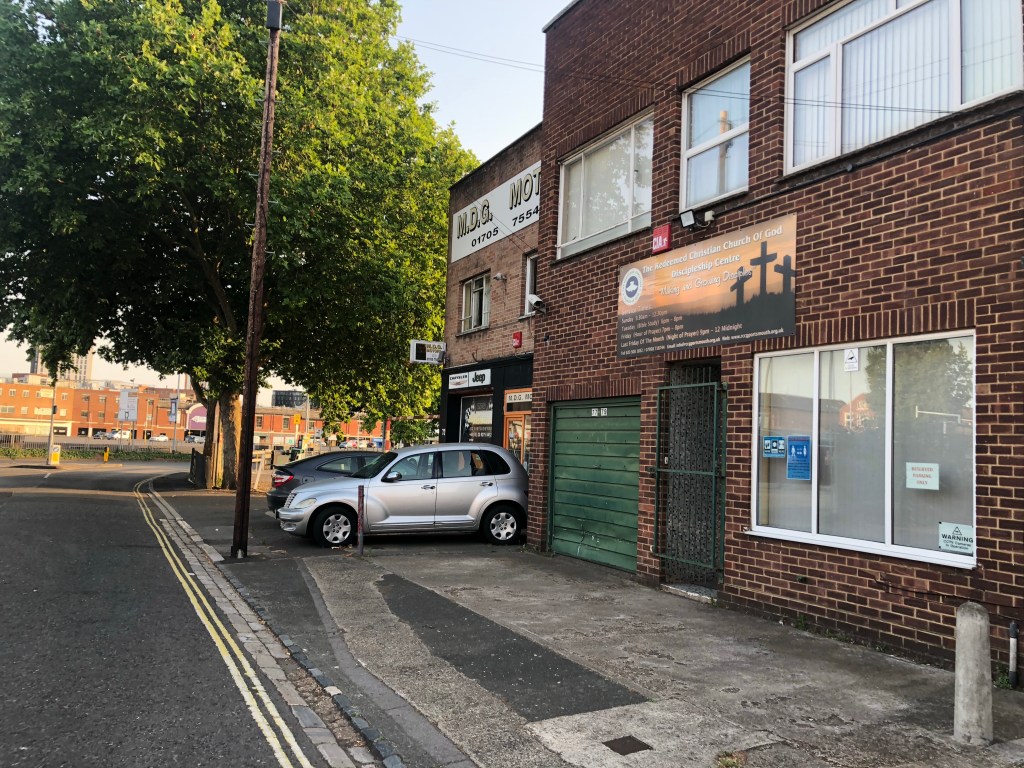
There’s plenty of folk driving here and there, but nobody on foot. For several minutes I feel like the only human in the city. A couple of Deliveroo me go by on their bikes. A bearded man in a red-and-black chequered shirt worn over his t-shirt, bent over almost double. I pass an outpost of the Redeemed Christian Church of God in a backstreet, and later, the house where Charles Dickens was born. Everything is shut. The high rasp of a motorbike going by, the evening heat and the strangeness of a new place… It almost feels like I’m abroad already.


But no. I’m still here in the terminal. Boarding starts in ten minutes, so I suppose I’d better close there. A demain, mes amis. France is calling! BB x
Summer Ramble on a Ha-Ha

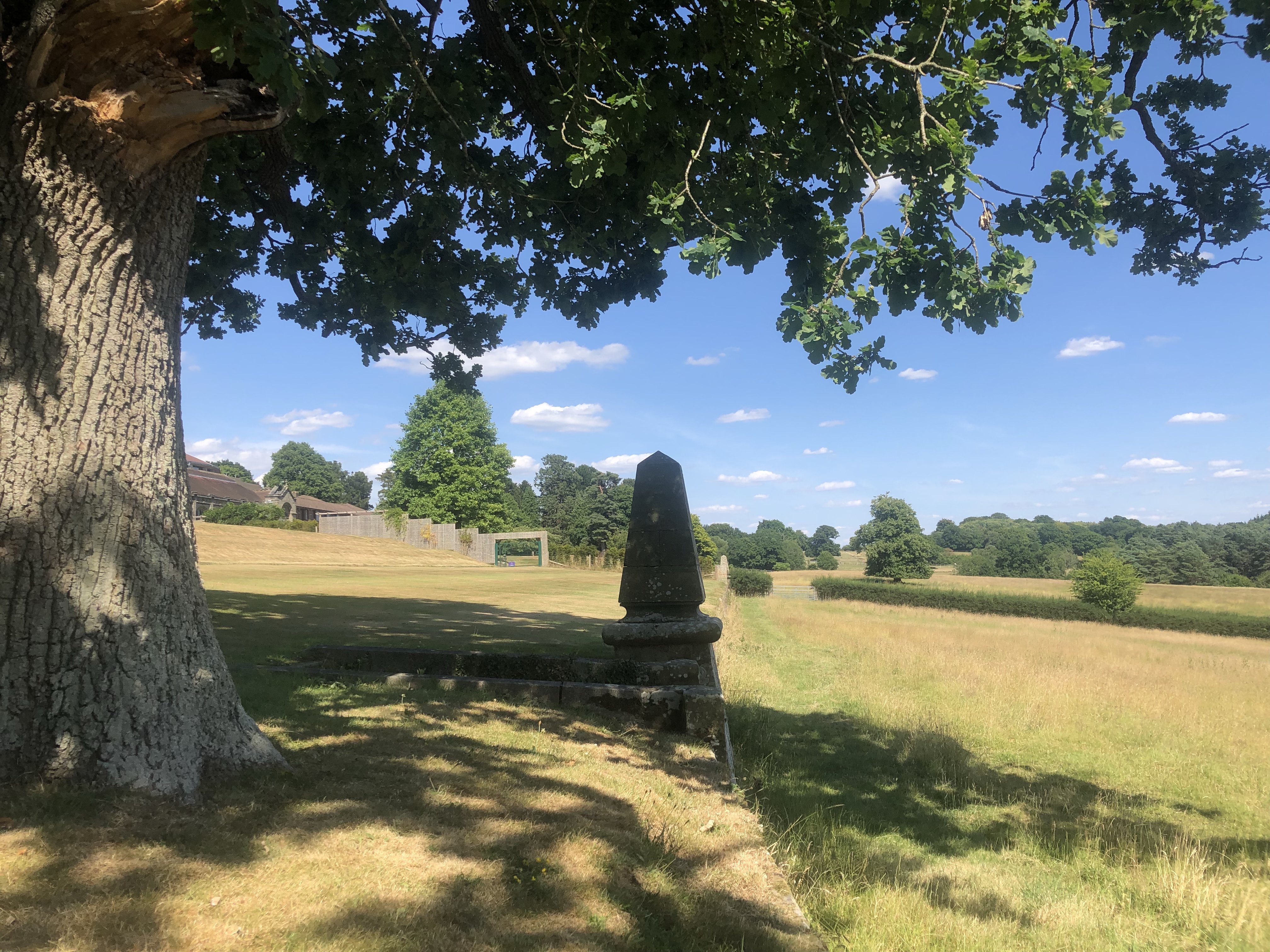
Bastille Day. The temperatures hit 26 degrees Celsius this afternoon. The BBC Weather app is predicting a high of 34 on Tuesday. The folks on the radio are starting to use the words ‘ration’ and ‘hosepipe ban’. I sat outside on the south-facing ha-ha and stared out across the Weald towards the South Downs for about an hour. I brought a few books to read – four more than I actually needed, as is my habit – and spent about ten minutes “reading” the mega-drawing, reliving the memories recorded on that gargantuan scroll.

I saw a monk in the quiet garden sitting in silent contemplation and reminded myself how lucky I am to live and work where I do. Isolation does no wonders for the human condition, but there’s a reason enlightenment is rarely sought in the cities. Sometimes the key to more positive thinking is just to get outside for an hour or two, even if there is no destination in mind. I certainly feel a lot happier for it.

Over the forest to the south, I saw a pair of hobbies displaying. I haven’t seen such a thing in a long, long time. I’d forgotten what masters of the air they are. Little wonder they’re among the few predators capable of catching a swallow on the swing. They cut through the air like feathered lightning, making the hovering kestrel nearby look like one of Da Vinci’s clumsy flying machines by comparison.

A few minutes later, the white buzzard flapped into view. It wasn’t around for more than half a minute, before two crows sent it back the way it had come, back into the wooded dark of the Weald. A hat-trick of British birds of prey in as little as five minutes. Reminded me of a sunny June afternoon when I was a kid, when to my disbelief I clocked no fewer than six raptor species circling above the house at once: kestrel, buzzard, sparrowhawk, hobby, two red kites and a peregrine. To this day I have no idea how they all came to be in the same place at the same time. In Gibraltar, maybe, but not in Kent.


The race for Boris’ replacement is picking up momentum. My parents were quick to bat aside my guess that Sunak would take the throne, but the odds seem to be in his favour at the moment. I’m no political pundit, but I feel it’s worth recording these things from time to time. Since reading Philipp Blom’s Nature’s Mutiny last year (a collection of anecdotes documenting the Little Ice Age), I’m all the more convinced it’s important that those of us who spend our free moments writing make a point of logging the everyday. Who knows what it might tell future generations about the way we lived?

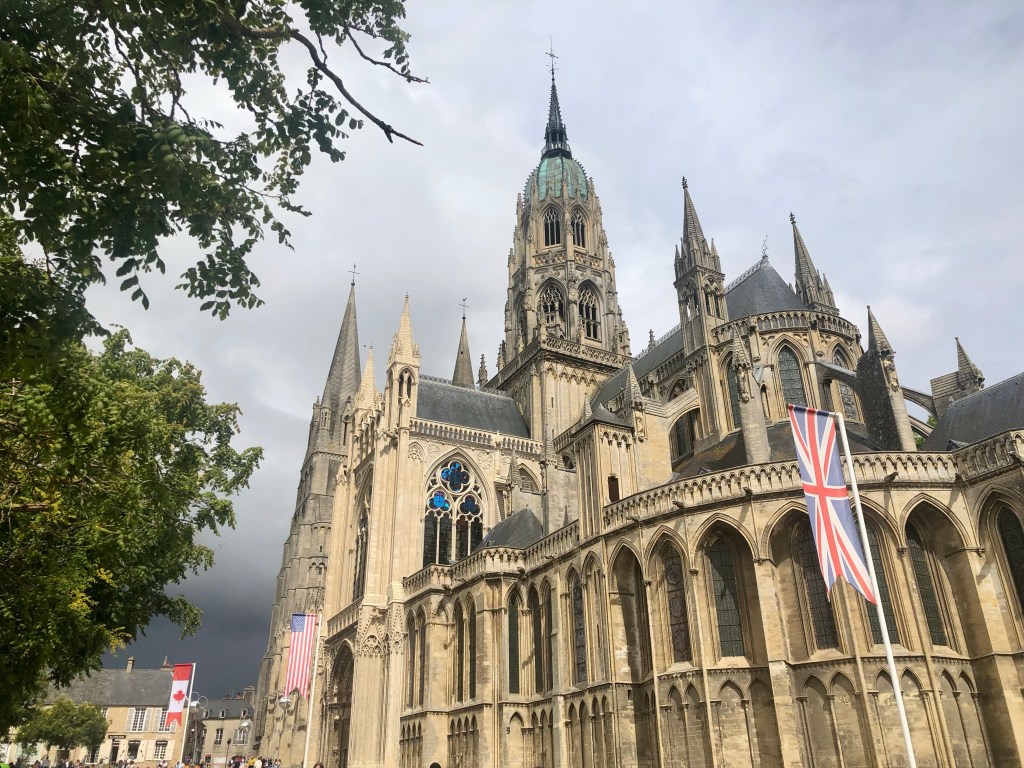
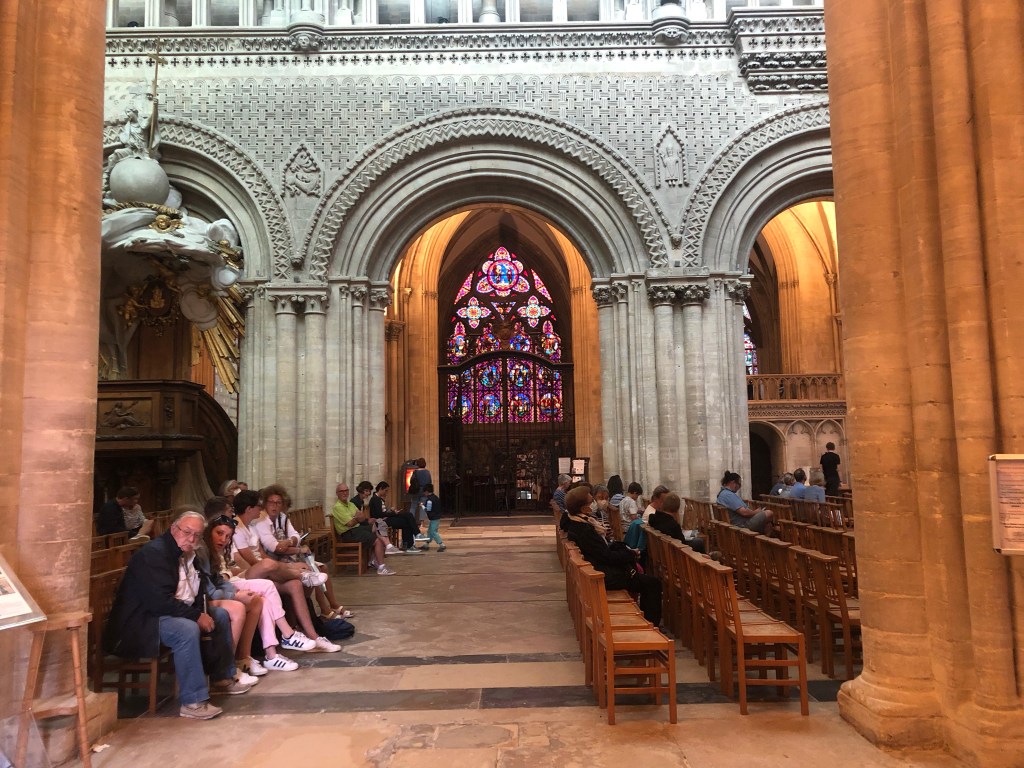
I’m getting itchy feet again. I think I might go on just the one *little* adventure before the summer is over, and I’m thinking it ought to be France – not least of all because of the relative ease of getting there by boat. It sounds like nothing less than chaos surrounding airlines at the moment, which are struggling to meet the logjam of two years’ worth of cancelled summer holidays when they haven’t yet recovered from the post-COVID staff shortages. I don’t plan on going far, but I have always wanted to see the Bayeux Tapestry, and one of the better things to come out of 2021/22 has been a rediscovery of my love for French, thanks to an especially heartwarming Year 7 class I had the pleasure to teach this year. I confess I wasn’t overly enthusiastic about going back to teaching two languages at the start of the year (after my experience teaching lower set Year 9 in my PGCE year), but these kids really turned it all around. So… Normandy? I’d better do some research, but… I’ve got to say, the opportunity to spend even a couple of days in a place of such historical importance… It’s dangerously tempting! BB x
Finding Doré

Women’s eyes are always bright, whatever the colour.

HENRY RIDER HAGGARD, KING SOLOMON’S MINES

Sunday 27th March. Eight days until Italy, my first solo adventure in a long time. My desk is a little cluttered: a Marco Polo guidebook to Rome, a spare exam paper for Year 7 French, the Greenwich Maritime Museum’s Pirates: Fact & Fiction and various other odds and sundries. The pile of books I dip in and out of continues to grow. Previous girlfriends would have kept that habit in check, but in this bachelor’s pad, the library creeps through the house like an advancing army, billeting its troops on every flat surface in sight.

I don’t know what to expect from Italy. The last time I set off with a city break in mind I came home early. Barcelona was all a bit much, and I didn’t have much of a plan beyond seeing the old city. After three months of windowless boarding school life, however, I’m just looking for a change of scenery, really. Something to make my journal hum with anticipation (since this one is currently the least-travelled of the five, despite having the longest shelf life – thanks a lot, COVID). I’m hoping I’ll meet some interesting people who’ll give me stories to tell, and with whom I can share stories of my own, but the most likely outcome is a solid twenty-odd pages of sketches. And that’s no bad thing.

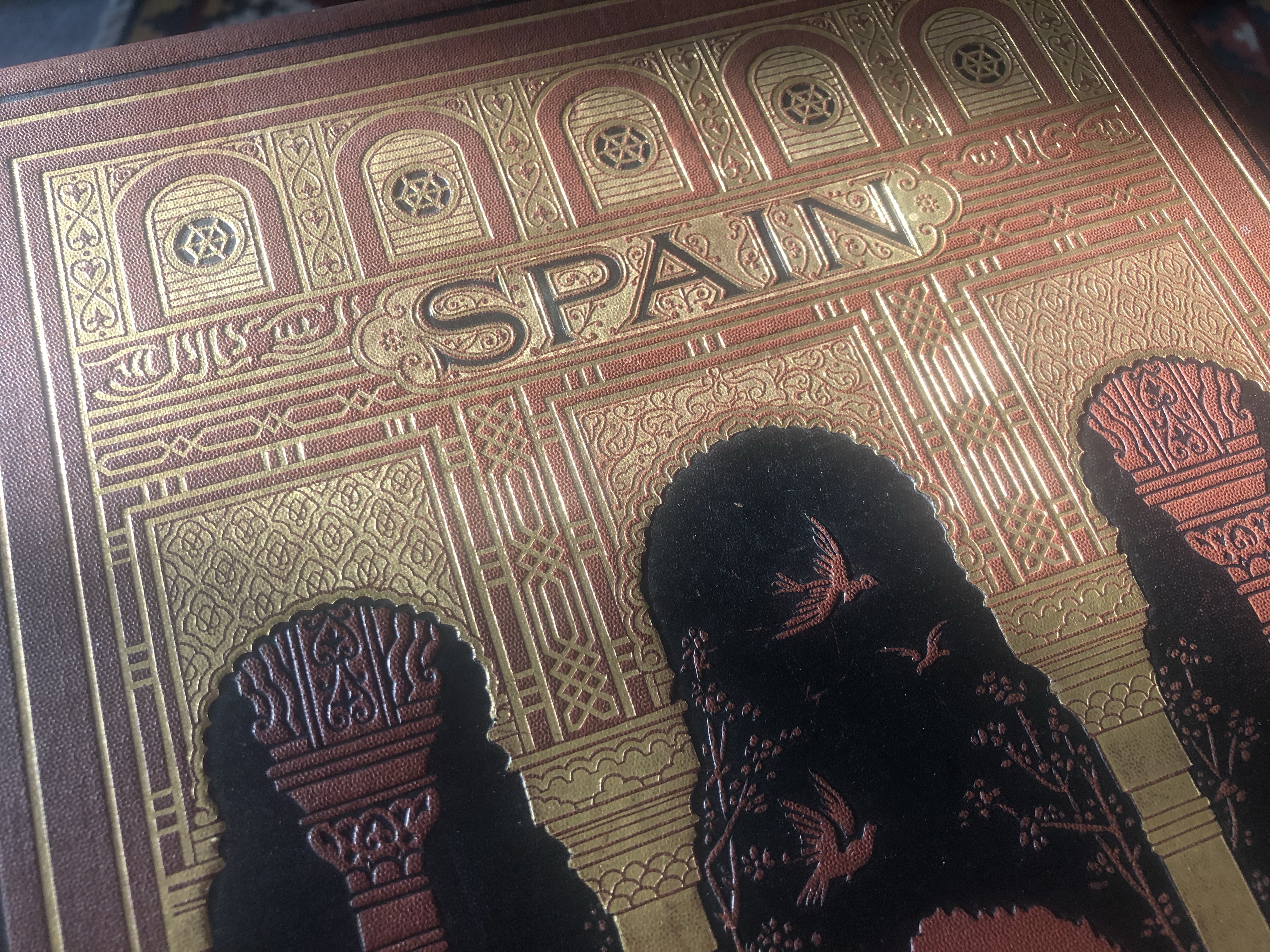
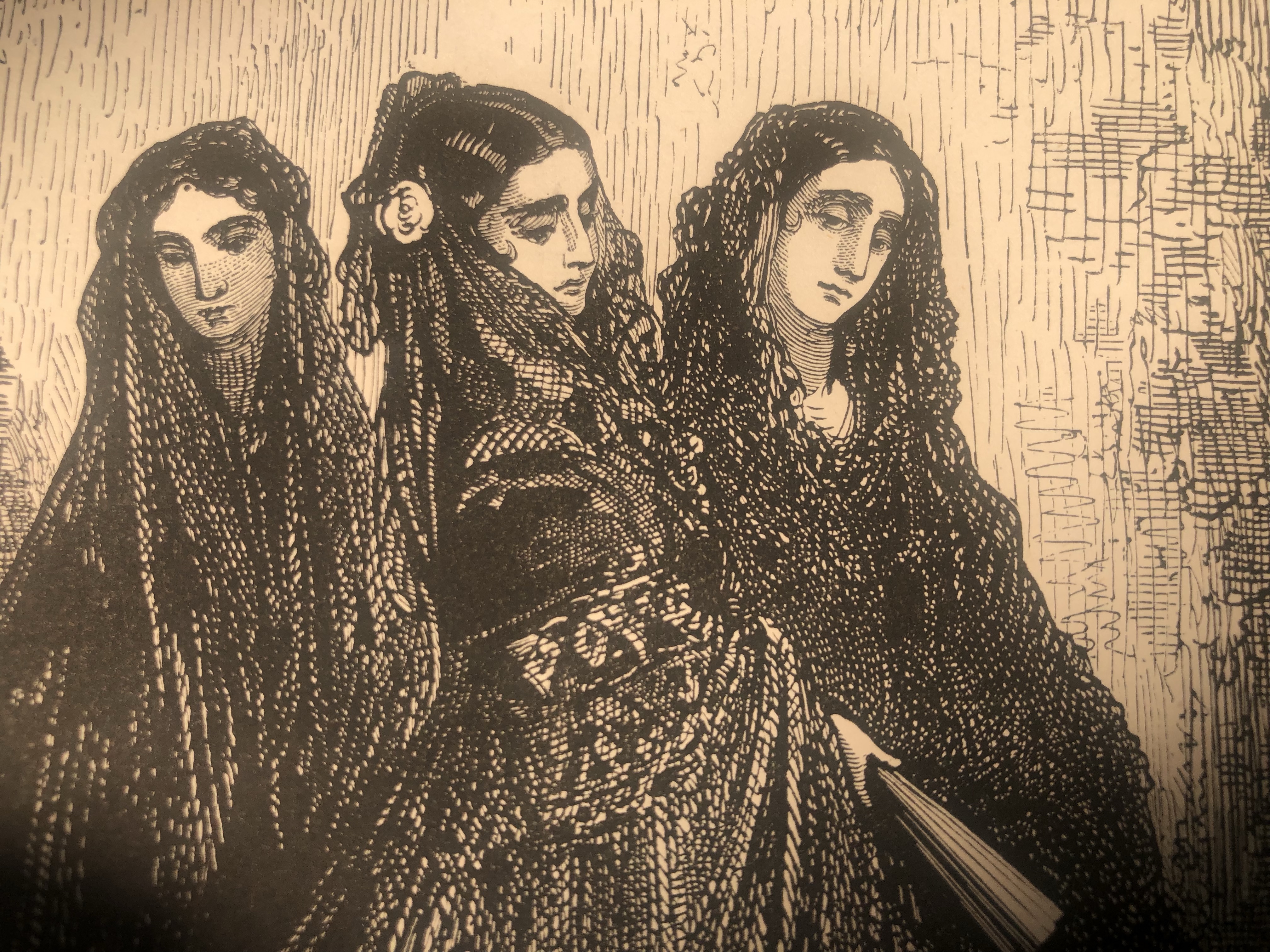
My primary inspiration in this field is the French illustrator Gustave Doré. You may have seen his works before, even if you don’t know the name: his was the creative genius behind the dark engravings that told the stories of Paradise Lost, Dante’s Inferno and Don Quixote, as well as various illustrations of the Bible. Some divine brilliance guided that man’s hand throughout his life. Half the hangings in my flat are prints of his, and all of them pillaged from desecrated copies of the most precious book in my library: an illustrated account of the Spanish adventures of Jean Charles Davillier.

It took me over a year to track down a copy of said book for myself. I’m not a collector of rare books, but I do take a small amount of pride in having a well-stocked Spanish library, and when I learned of the existence of this masterpiece, I knew I had to get my hands on one somehow – before they were all chopped up for their precious prints. Its rarity is evident in the ludicrous priced charged by some vendors on the internet: I’ve seen well-kept copies of the book go for as much as £1,350, with the most reasonable offers starting at around the £350 mark. So I could hardly believe my luck when I found an eBay vendor trying to get rid of theirs for £50. Collection only – as if that would prove an obstacle for such a prize. I’ll never forget the sheepish look on the trader’s face as she handed it over.

“Are you a collector, then? It was in a box in my dad’s garage along with all this other junk. Feel free to have a look. We’re converting the place and need to get rid of a lot of his old things. It’s funny, the day after you paid for it, I saw another copy going for several hundred. I guess I undervalued it.”

She did. Considerably. But beauty is in the eye of the beholder, and to me, it’s more than just a rare book of Doré’s. It’s a window into another man’s head: another man who, like myself, came to Spain and was bewitched by its very own brand of black magic.

Of all Doré’s prints, I treasure his landscapes most of all, but it’s his portraits of the Spaniards themselves that I want to leave with you today – and particularly the fair Spanish ladies.

I’ll be honest with you, I’m as much a sucker for beauty as the next man, and when I’m sitting on the high street, or on the Tube, or scrolling through Pinterest, nine times out of ten it’s the girls who catch my eye and stir my pencil into action (Freud and a thousand schoolboys would have a field day with that sentence, I know). Double the prize if the sun is shining at the right angle, and Doré does this spectacularly – you can almost hear the midday heat in the image above with its shadows cast straight down by an unforgiving Castilian sun immediately overhead.

The grass is always greener on the other side, right? My grandfather found something that caught his eye in an English girl, a long time ago, but it’s his people who hold my eye. Not that I’ve ever held down a relationship with a Spaniard. It’s a hard thing to do when you live on this rainy rock, as Spaniards’ ties to their homeland are stronger than steel. I’ve met a few wanderers, but they are the exception to the rule. Cortes, the great conquistador of Cuba and Honduras and the Mexica Empire, came home to die. And when Spain is as beautiful a country as she is, who can blame them?

I’ll leave it to San Isidro of Sevilla to conclude with words more powerful than my own:

Of all the lands that extend from the west to India, thou are the fairest, o sacred Hispania, ever-fecund mother of princes and peoples, rightful queen of all the provinces, from whom west and east draw their light.

SAINT ISIDORE OF SEVILLE, DE LAUDE HISPANIAE

See you soon. BB x
Wailing World

“Sir, what’s your opinion on Russia v Ukraine?”

In the vocabulary of a child, it sounds harmless, like a friendly football match. It tears away the shock and the hysteria. It tells a story of immediate information, of children monitoring the dawn of war on the screens of their smartphones. It seems almost absurd, watching a war unfold in real time.

I couldn’t answer the student because I don’t know enough about what’s going on in Ukraine to give anything like an informed opinion of my own. My meddling with Russian affairs amounted to nothing more than a short-lived attempt at after-school Russian classes in my sixth form days. The two other chaps in the class went on to study Russian at Oxbridge. I had no such intentions. I happened to be studying the Russian Civil War in A Level History, I was intrigued by the art style of the Soviet propaganda machine and felt like learning a new language. Not for the first time in my life, I felt like a foolish hobbyist amongst eager professionals. I don’t think I ever made it to the second class.

I chose to focus on Arabic instead, for equally casual reasons. I didn’t want to be a spy, or a civil servant, or an ambassador. I don’t have the cunning or the sense of national pride. All I wanted to do was to read my history books, and to draw back the curtain on al-Andalus. I had the chance to explore an entirely different world, and I took the other road. God only knows where my life might have taken me had I made it to that second Russian class.

As the fighting intensifies in Kiev, I remember flashes of my brief stop in the city almost seven years ago. Bearded, sweat-scarred and looking forward to coming home, however briefly, after two trying months in Amman. The decision to take advantage of a twelve-hour layover and make a flying trip out to Kiev from Boryspil Airport was a fool’s fancy on my part, as it so often is, but it did mean that I got to see with my own eyes a city that is now in headlines around the world.

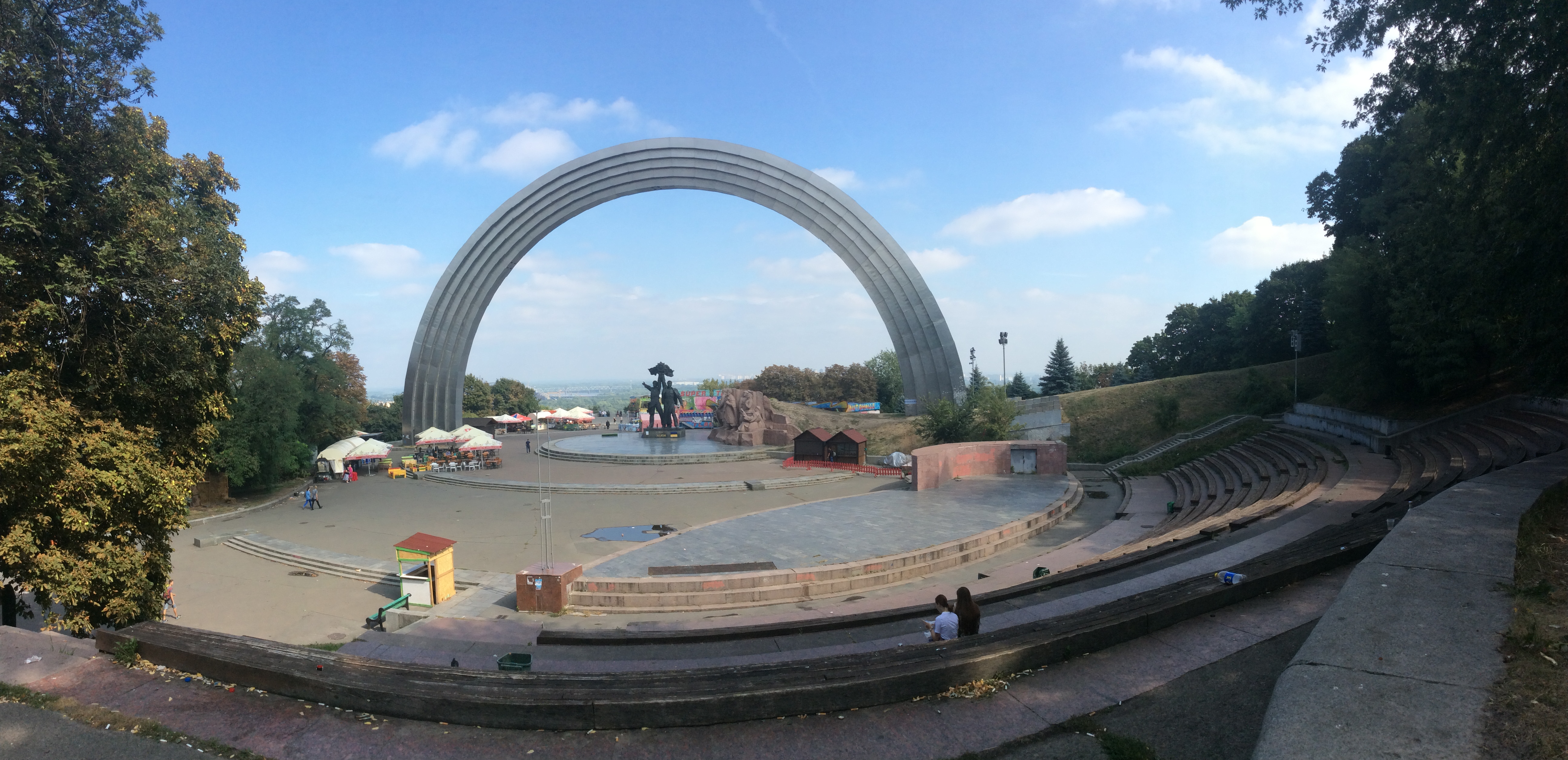
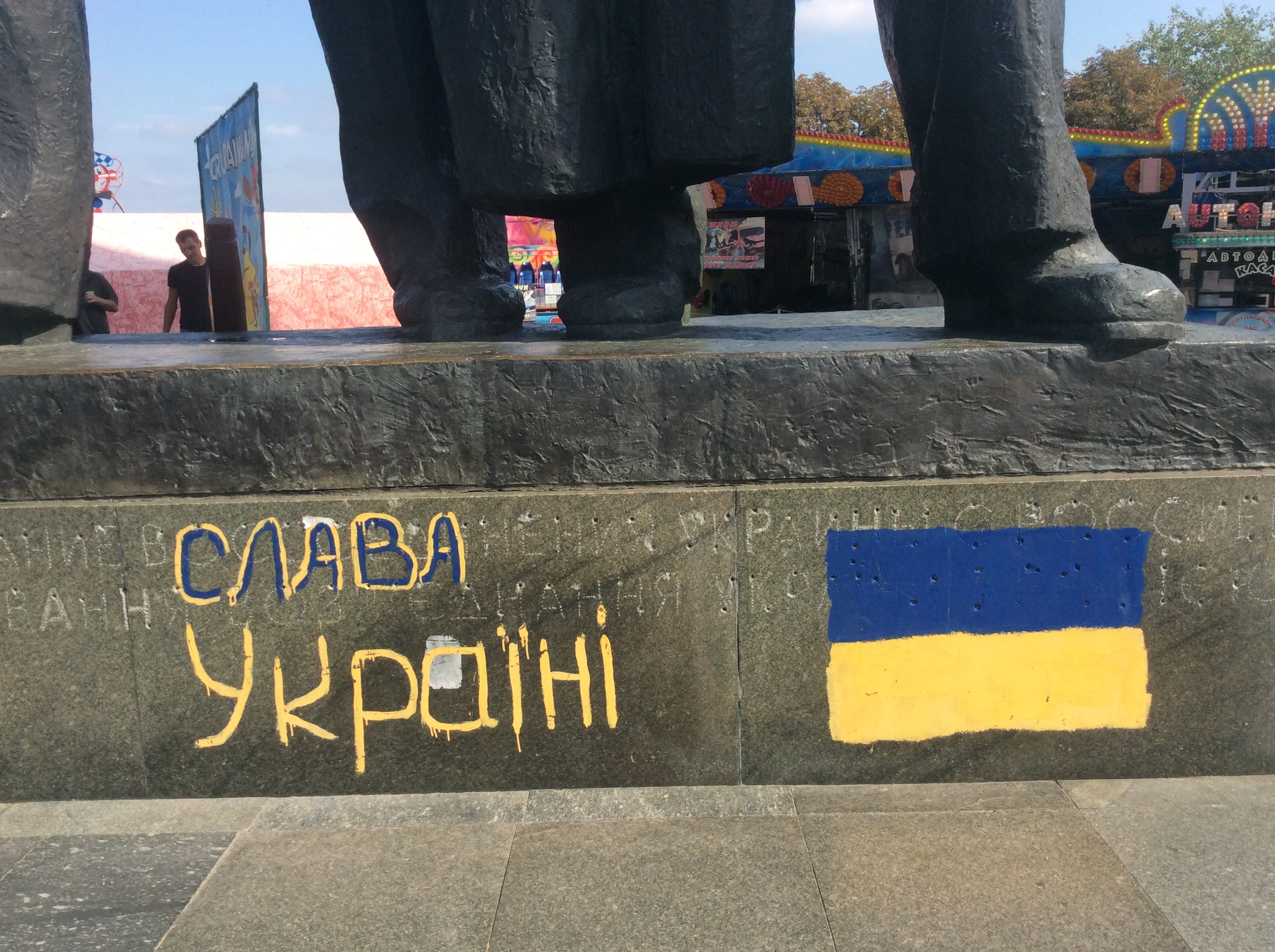
That was back in 2016, only a couple of years after the Revolution of Dignity and the subsequent annexation of the Crimea. The city was quiet, but the stress lines were there to see, if you looked closely. Beneath the People’s Friendship Arch, a monument to Russian and Ukrainian unity, a messaged daubed in Cyrillic: “Slava Ukraini” – Glory to Ukraine. The nationalist call-sign, forbidden during the years of the Soviet Union.

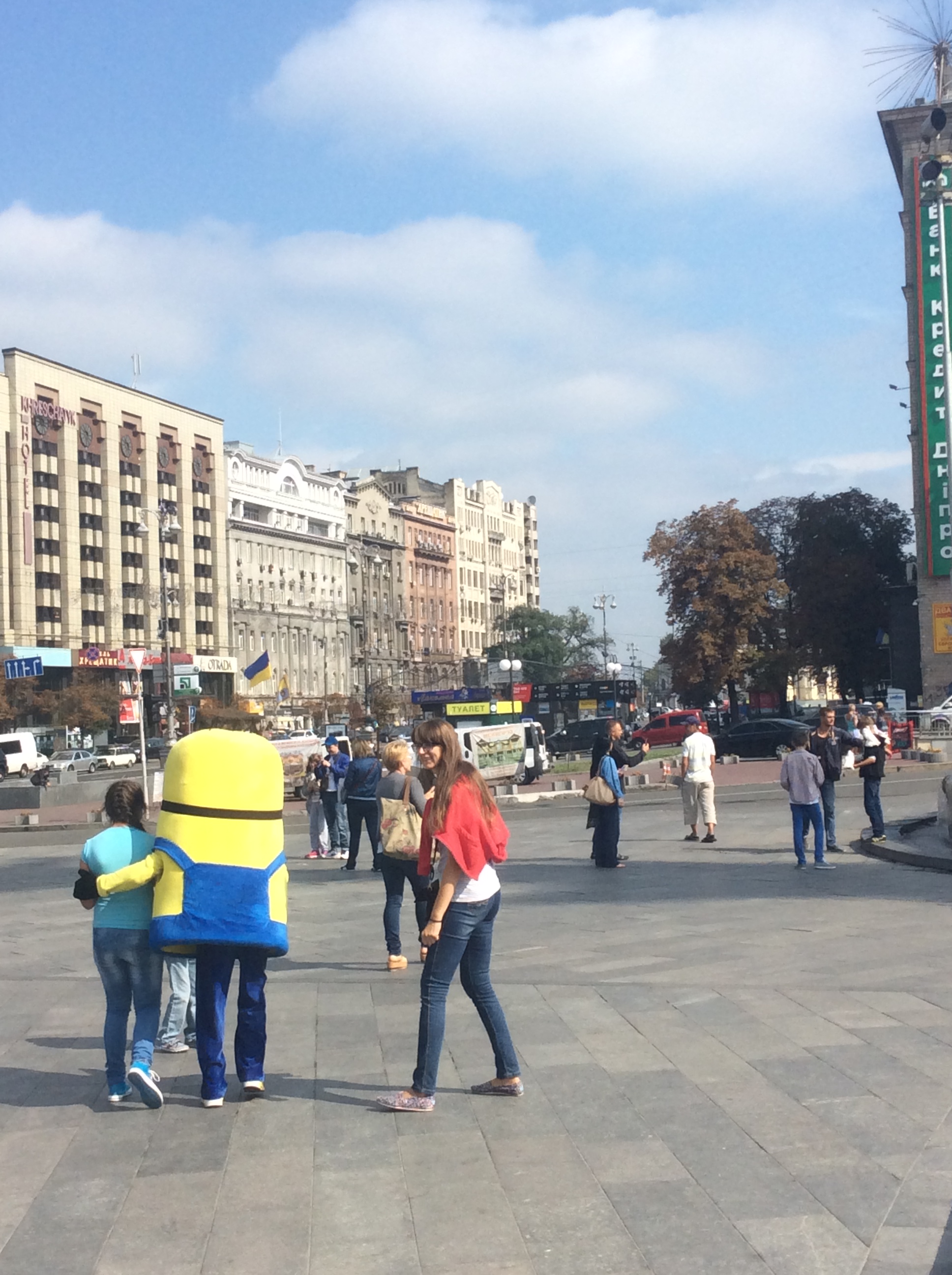
The blue and yellow of the national flag was everywhere, almost as fiercely ubiquitous as the rojigualda in the months following the 2017 Catalan rebellion. Even the street artist dressed as a minion in the Maidan Nezalezhnosti (Independence Square) seemed intentionally patriotic.

The blue and yellow from the city streets of Kiev has since fanned out across the web. Profile pictures bear its bicoloured hue. Thoughts, prayers and shares tell the story of the conflict to millions. And while part of me feels this is the way things should be, there’s something that keeps cropping up that I feel the need to talk about.

As is becoming customary in the Instagram Era, there’s just as much anger on my social media feed about the underrepresentation of conflicts happening elsewhere in the world as there is about the fighting taking place in Ukraine. For every “thoughts and prayers” post there’s a story bemoaning how much less of a fuss was made over Israel’s actions in Palestine, or the Indian occupation of Kashmir, or the assault on Yemen, as though one ought to be losing one’s head every time a gun is fired anywhere around the world. All of them immensely valid causes, no more or less than the chaos unfurling in the land of the Rus right now. Still, the phrase “pick your battles” comes to mind, and perhaps I’ve never used it more accurately. You can’t fight every war.

War. It’s not a word I’m used to using in the present tense, jaded as we are in the West by decades of relative peace. Thousands of us – maybe even millions – have never known what war means beyond what we studied at school. There’s a strong argument against the virtue-signalling “thoughts and prayers” response trending across social media, but maybe that’s just the knee-jerk reaction of a generation so far-removed from war that the word has all but lost its meaning.

Thoughts and prayers for the people of Paris after the Notre-Dame fire. Thoughts and prayers for the people of Afghanistan. Thoughts and prayers, but never enough of them, and never going to all the right places at the right time.

There’s so much human suffering that the whole world should be wailing.”

Joy Chambers, My Zulu, Myself

Taking the colonialist argument off the table, just for a moment, I don’t know whether we’re even capable of feeling a genuine sense of outrage at every injustice there is in the world – even my generation, which does a very good line in being outraged and incensed at everything. Every injustice, though? How can you fight for every cause and still remain true to your own beliefs? That much pain would be enough to tear the soul apart. It’s bad enough being a bleeding heart about the natural world – which, when the chips are down, is the first thing people forget to care about.

Fight, by all means. Resist. Shout about the things you care about. But pick your battles, and don’t attack those who didn’t come when you called, just because the fire in their hearts was not burning so bright.

What’s my opinion, then? Bewilderment. Jaded bewilderment, like so many of my generation. Bewilderment at the aggression. Bewilderment at the inaction. Bewilderment at the comparison to the Sudetenland saga I’ve heard so many times this week.

I studied the Soviet Union for years, but I’m no nearer an answer than any other armchair expert – probably because of my innate aversion to 20th century history, having studied it to the exclusion of every other century at school. Before I speak out, though, I will do what I do best. I will read. I will research. I will inform myself, as we were so often commanded to do during the BLM movement. I will speak to those who know more than I do, when the time is right.

While the world watched the city of Kiev, five islanders returned from the Chagos Archipelago in the Indian Ocean. It was their first independent trip home since they were forcibly removed by the British authorities during the 1970s as part of a deal to secure Mauritian independence. Mauritius wants its territory back. The Chagossians just want to go home.

Just one more injustice to add to the pile. Perhaps the whole world should be wailing – but for whom? Our world is full of people who think differently, and long may that be so. I will defy my generation and risk the use of a colonial poet to conclude, because I do believe Kipling had the right of it in this verse… BB x
Oh, East is East, and West is West, and never the twain shall meet,
Till Earth and Sky stand presently at God’s great judgement seat,
But there is neither East nor West, Border, nor breed, nor birth,
When two strong men stand face to face, though they come from the ends of the Earth!

Rudyard Kipling, The Ballad of East and West

Kicking the Habit

I can’t believe it. I’ve done the unthinkable: I’ve booked myself a holiday, and for once, it’s not Spain. Well, that’s not strictly true. I should say I’ve booked half a holiday that isn’t in Spain, because there’s nowhere else in the world I’d rather be in Holy Week than with my family, especially since the procesiones haven’t happened for two years now. But after an evening spent stuck in a rut over where to go and what to do in the week prior, I decided it was high time I broke the mould and explored somewhere new for a change. It’s a place I’ve never been before, and yet it’s also a place I’ve had so much to do with over the years that it would be nothing short of criminal to keep ignoring it.

The destination…? Italy!

For years the excuse for passing over Italy has been my (completely unfounded) belief that “everything Italy can do, Spain can do better… plus they speak Spanish”. Spoken like a true tercio, but not exactly the most grounded of opinions, nor a particularly sensible idea for somebody who’s supposed to be a modern foreign languages teacher.

So I’m giving myself a week out there to open my eyes and blow my mind.

I have six weeks to teach myself some basic Italian. Given the almost daily contact I have with Italians at work, that shouldn’t be too difficult – and hey, I could use a challenge.

Part of me feels I’m getting a little old for this solo travel malarkey, and yet there’s another part of me that’s been getting restless for months. I need something to take my mind off how messy 2021 was, something to jumpstart the thrill of adventure I used to feel all those years ago… and, most important of all, something that will give me stories to tell on here that aren’t always about my grandparents. I could certainly do with some fresh material for a change.

A slightly mad move on my part, but if I have to spend another holiday at home I’ll almost certainly go mad. 2017 Me is wagging a finger and calling this kind of behaviour entitled, but then, 2017 Me thought he had it all figured out – and he had just spent a week up at the Edinburgh Fringe, which was probably one of the most expensive holidays I’ve ever had. To throw more fuel on the fire, this year’s summer holidays are going to be little but driving lessons, and as the Camino de Santiago has yet to return to normal, I have no excuses. So it all hangs on Easter.

I have a start point in Venice. And I have an end point in Rome. Eight days is what I have to play around with. I suspect there’s so much to see in both cities that I ought to split the week in half between the two rather than trying to cram in anywhere else en route, but I’ll cross that bridge later. For now, I have a language to learn.

Gee, I haven’t felt this motivated in ages. It’s time to fall in love with the open road once again. Fatti sotto, Italia! BB x
Cherry Red

Masks are becoming a much less common sight around town these days. Most of the signs in shops still carry the warning to wear a face covering or face a penalty, but only the employees appear to follow the rules nowadays. John Q. Public seems to have taken Boris at his word and thrown caution the wind in favour of a return to the way things were. The lurid rojigualda of my own face mask is more notable for its presence than for its colour scheme.

Though perhaps less so today, when red is absolutely everywhere, in the name of love, romantic, commercial or otherwise.

There’s been a pretty serious push for Valentine’s Day this year. Did you notice? I suppose it’s because we’ve had two years of two-metre rules and vaccination anxiety which has thrown the world’s dating community into total disarray. Still – it looks as though all the usual suspects are making up for lost time. Couples wandering about, hand in hand, head on shoulder. Trendy-looking young men scribbling hasty cards in cafes. Groups of girls carrying bouquets and single roses around every corner. Supplying them all, flowers stalls plied a roaring trade in every train station, booksellers put all their romcom collections in the window and Lush had its usual ‘leave a message’ montage daubed across its front.

I’ve never been one to hate on Valentine’s Day. Somehow all those years at an all-boys grammar school didn’t manage to quash the romantic in me. Sure, it’s got a commercial side these days, but then, what doesn’t? It may seem a little strange to celebrate the death of a third-century Roman saint by giving and eating (or just eating) a confectionery staple that the Mayans used to snack on, but is it really any weirder than Santa Claus’ transformation over the centuries from Turk to Coca Cola-chugging Nord?

I was raised on Disney movies, so of course I’m going to fight love’s corner. The same mega corporation that imbued us all with a considerable mistrust of employers (seriously, how many Disney villains use contracts or bargains?) has hammered home the message that true love conquers all since 1959. And though Sleeping Beauty gets its fair share of scrutiny these days, there’s a no less powerful dialogue from The Sword in the Stone that cuts (ha) right to it:

Merlin: “You know lad, that love business is a powerful thing.”

Arthur: “Greater than gravity?”

Merlin: “Well, yes, boy, in its way… yes, I’d say it’s the greatest force on earth.”

The Sword in the Stone (1963)

Lincoln’s town mall had an oversized display up which was drawing a small but steady stream of contributors, so I had a look. Folk had scribbled messages on little red hearts and strung them up from the display for all to see. Lots of “luv u Dave!! xoxo” type notelets, but a fair scattering of wise words threaded in: “Happiness will come to everyone at the right time”, “Don’t look for love it will find you”… “Snap me @.”

When I woke up this morning with this post in mind, I meant to read some good old love poetry and reel off that. I could only find a few that were to my liking in my poetry collection, namely a couple of Shakespeare sonnets (18 and 116) and Yeats’ He Wishes for the Cloths of Heaven. It wasn’t until I reached the garish display in Lincoln’s mall that I suddenly remembered one of the greatest poets to ever put love into verse: the Syrian wordsmith, Nizar Qabbani.

I’ve been a devotee of Qabbani’s work since I was introduced to him in my second year at university. There’s not a single one of his poems that I don’t adore. Even in translation his words hold their magic. His poems find their way into my journals at least once per book, and I couldn’t resist an opportunity to transcribe one of his verses here, for want of anything better to write. I’ll translate below:

Your eyes are like a rainy night

My boats sink in them

My writing disappears in their reflection

Mirrors have no memory…

Nizar Qabbani

Three local girls were busy penning their thoughts as I strung up my contribution and set off to catch my train. When I glanced back at the door, they’d all gathered to see what I’d written. I hope they find the words as powerful as I do.

As is so often the way after such highfalutin flights of fancy, I was brought back to reality with a crash when not even a minute later I was stopped by a drunk almost as soon as I’d stepped out into the street. Between slurred speech and staggered gait he managed to convey that he had ‘no credit’, the taxi people ‘weren’t talking to him’ and that he needed to get to ‘Cherwillingum’, though he couldn’t say where exactly. After we’d established that his destination was Cherry Willingham (which, apparently, is how the locals say it – I maintain that British place names make English the most unhelpful language on the planet), I called him a taxi and wished him good luck, hoping that the three-hour wait would find him in a more sober state. Fingers crossed for you, buddy!

The sun sets on another Valentine’s Day. Eros and Mammon join hands once a day every year, and frankly, I say let ’em have their fling. It’s very easy to roll your eyes at the consumerism and mawkish PDA everywhere, but I can’t help feeling there’s nothing wrong with one day out of 365 devoted to romantic love. That leaves at least 364 others to be a cold-hearted cynic, if you’re that way inclined. BB x
Streets of London

2.20am. I’m riding home on the 2.08 from London Victoria. I didn’t even know trains still ran at that ungodly hour of the morning. Apparently they do: one every hour at eight minutes past the hour. They lock the station until ten minutes or so before the train leaves, and there’s quite a crowd loitering outside the gates just before they open them. Three Bridges is clearly the place to be at two in the morning. Who’d have thought it?

I did some much needed “getting out” today. With a couple of exceptions I’ve more or less turtled for four years or more. I guess that’s the nature of life in a boarding school: whereas most other folks can play their weekends and snatch evenings here and there, in teaching you block out your free time by your holidays…

The chap two seats ahead is fast asleep in his seat. His phone alarm is going off for the third time. The lads on the row of seats opposite looked annoyed at first, but one of them has struck up a conversation with the sleeper and asked if he’s going to get home OK.

I killed some time with my sketchbook on the Underground this afternoon, and again waiting in the street in Holborn before the party. A homeless man wandered over, cap in hand, to ask for help. Normally I have to admit I’d probably turn a callous blind eye, but something about London draws me in, makes me think differently. I asked for his name and we got talking. He said his name was James, and that he was trying to find a place that would take both him and his dog for the night. I gave him something to start his hunt – for once I happened to have a loose note on me. We shook hands and he set off at a run.

I didn’t have to make the trek home quite so soon. A friend offered me the key to his place for the night, if I could find my way there. I turned it down, partly out of habit, partly out of pride, and partly because of James. Having such an easy solution in London when so many are out on the streets… for some reason it didn’t sit right. You think in a different key in the small hours.

I remember sleeping rough in the wastelands beyond Almeria years ago. Gaunt from a month of under budgeting and undereating and feeling hollow. I remember the fear of that first night, the isolation. It could never compare to the real thing, of course, but I was young, foolhardy, and I wanted to have an idea of how it felt. One night I was curled up in the dunes when a couple of cars rolled up onto the beach around two in the morning. Men with flashlights climbed out and scanned the beach. I got the jitters and decided to move – they were probably night-fishing, but your brain plays all kinds of tricks at night. I don’t think I’ll ever forget the genuine pit-of-my-stomach terror when, barely a few yards down the beach, I saw two of the torch beams slowly sweep the beach and lock onto me. I ran. My God, did I run. I don’t think I’ve ever run so fast in my life. I must have gone at least a kilometre or more before I collapsed in the dunes.

Almeria seems a long way away. London is surprisingly busy in the small hours. Not the city that never sleeps, per se, but one that keeps at least one eye open all night. Offices lit up, calendars and Macs on desks. Lads coming home from the lash. A girl tottering home on heels, makeup streaming, eyes weeping. And many, many sleeping bags in doorways.

It felt good to go out again. I haven’t danced in years – not since university, I shouldn’t wonder. And as it’s London, the music was both a) quality and b) perfect for dancing shoes. I should do this again sometime. Not that I’d make a habit out of catching the 2.08, though.

Gatwick Airport ahead. Only another five minutes or so to go, and then it’s the long walk back through the forest. I’ll probably be in bed by 4, with or without the moonlight to guide me – I’ve made that journey so often I could probably do it blind.

I’ll sign off now so my phone has enough juice for another chapter or so of Michelle Paver’s Ghost Hunter on Audible. That will take me at least as far as the forest – there, at least, I will feel safe again. BB x

Athene noctua

The students have gone home for half term. Silence hangs over the school. The corridors of the boarding house are dark, and a little cold, too. The floorboards creak under my foot with the kind of volume that only darkness can amplify. The dull glow from the torch on my phone casts long shadows. A friend of mine once explored an abandoned hospital on a dare. I did not go with him then, out of some primordial fear of the darkness within. And yet, here I am, haunting the empty corridors of this old house by night, the last man standing. Filling up a water bottle from the cooler on the Year 10 corridor becomes a quest in its own right.

I’ve had a lot of time to think lately. I guess coming out of a long term relationship will do that for you. One of the things I thought I might be able to recover was the fierce reading streak I had on my year abroad, but I just can’t find my mojo for that right now. Time just seems to slip through my fingers when I’m not at work. I wonder what the world does when it’s not working? I guess that’s what television is for, or Netflix, or whatever streaming service is in right now. But then, I’ve never been good at sitting down to movies or TV shows. My brain wants to be involved. There’s a precious few I’d happily watch over and over and over again, but it’s rare that I find a new picture out there that sinks in.

There’s not a day goes by where I don’t feel a genuine fulfilment in my line of work. Teaching is in my blood, a duty that my ancestors have carried out for generations. Knowing that I am the torch-bearer for my generation gives me a sense of purpose that is utterly unshakeable. And it’s not as though that purpose hasn’t been tested over the years. It’s just that, whenever something comes up to shake its fist in my direction, I know instinctively that there’s a greater mission behind it all, and that’s reason enough to persevere – even when my core beliefs are thrown into disarray. I wonder if my great-grandparents, Mateo and Mercedes, ever had such doubts?

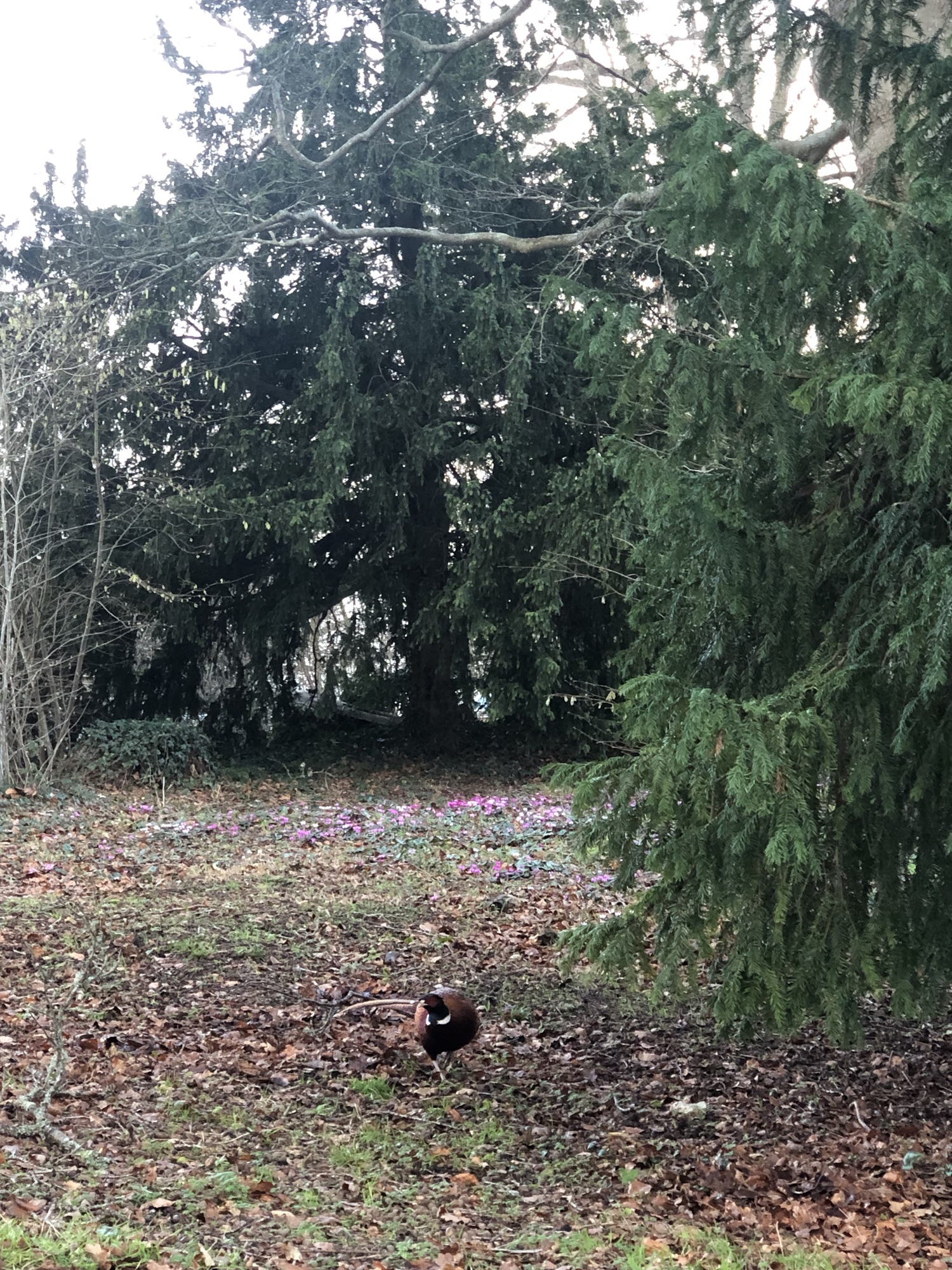
There’s a little owl calling outside. It’s been piping away from the upper branches of the Atlas cedar in the drive for half an hour now. The foxes have been quiet for a week or so now. I suppose their noisy January antics in the front quad are over for the year. Three buzzards were soaring over the grounds the other day during morning break, but none of the students seemed to notice. The redwings and the fieldfares have moved on and the snowdrops are out. The daffodils will be on their heels soon enough. I escaped to Richmond Park a few weekends back, just as the first blooms were sprouting. It was good to see the wide world again, even if only through my own eyes.

No photo description available.

The meltwater of the long Covid winter is starting to run. Just like the birdsong and the subtle shift in the light over the last couple of days, change is in the air. Piece by piece, the last fragments of the old world are coming back. At the request of one of my students, I blew the dust off my long-neglected violin and rocked up to orchestra this week. I’m about as good on the thing as I ever was – that is, haphazard at best – but I’d forgotten how much fun it used to be. It’s one of those things that simply slipped through my fingers over the last couple of years.

I think I’ll take up the guitar this half term. A zealous diet of sevillanas have powered me through the darkness of the winter months this year, and I’m done with being able to sing along but never sing alone. At the very least it will give me something to do until my provisional arrives and I finally confront the long-delayed challenge of learning to drive, which I have put off for far too long.

I’m done with playing games. It’s high time I went on another adventure. The Easter holidays aren’t far off, and I could do with some more writing fuel. And spring is always such a hopeful time of year. BB x

Tzompantli: An Ode to Extremadura

On Monday, I kick off my new role as the middle school gifted and talented programme coordinator with a lecture on the Aztecs. It wasn’t the obvious choice, as Mexico is a country I have neither visited nor researched nearly as extensively as my grandfather’s country. As a matter of fact I made a conscious effort to steer well clear of Latin American affairs at university, cleaving to the Iberian modules even when it meant the pickings would be slim. If Durham’s only Cervantes specialist hadn’t been on maternity leave in my final year, I could have stayed quite happily in my fairy-tale world of knights and princesses and Moorish warlords and binged on ballads, and I wouldn’t have had to go anywhere near strap-on wielding Catalans and metaphysical Madrilenians. Oh Quijote, en mala hora me abandonaste!

Ordinarily, for such a school project I would have stuck to my guns and wheeled out some Moorish magic with a talk about Islamic Spain, something that is close to my heart; or El Cid, a man whose legend (and whose 1961 movie) is embedded, thorn-like, a couple of inches deeper. I even briefly considered whipping up something about pirates, but I haven’t read nearly enough to do that one justice. Not yet.

I landed upon the Aztecs for a couple of reasons. One, because the book I have chosen to read with my IB students is Laura Esquivel’s Malinche. Two, because my school – or rather, the people whose money built the house in which I now live and work – has a long history with Mexico, a connection that is plainly carved into the stone in several places.

But I think the main reason I wanted to explore the Mexica was because it ties me back, through the ruthless conquistadors, to a place that is still very dear to me: Extremadura.

My first contact with Spain was with Andalusia, with her jagged crags and whitewashed mountain villages. If I wasn’t spellbound there and then, my mum and dad must have been, because they made the crazy decision to up sticks and move us there in 2006… right on the eve of the financial crisis that was already driving many of Spain’s expats out. It might not have been the wisest move for three out of the four of us, but after a year of weekend hikes in the surrounding sierras, gecko-hunts in the streets by night, Holy Week spectaculars and vulture-chasing in the misty heights of El Gastor, I was absolutely hooked. Andalusia was my polestar for many years to follow, and her light shone brightest on the paradise of the tierras rocieras of Doñana National Park.

(The author, blinded by the light since ’05)

Over the years I braved her jealousy and flirted with her sisters: a school trip took me from Barcelona and the magical Mediterranean town of Tossa de Mar up and into the clouded dales of Cantabria and the foothills of austere Asturias. Legends of the Cid led me to Burgos and the empty plains of Old Castile, the guiding light of my ancestry led me home to la Mancha, and in recent years I’ve swum in the crystal waters of Mallorca and Menorca. Throw in flying visits to Aragon, Alicante, La Rioja and the Basque Country and it’s getting to the stage where there’s hardly a corner of the country I haven’t explored.

But I don’t think I could ever have anticipated the rawness of my obsession with Extremadura. From the moment I set foot on her soil I was lost. It honestly felt like falling in love for the first time. Not the high school crush kind of falling in love, but that kind of mature depth of feeling, that gut-wrenching, iron-tasting jolt in your upper body that tells you something’s starting functioning inside that was only dormant before.

Oh, cut the poetry already, BB. If you’ve been reading this blog as long as I’ve been writing it, you’ll know I didn’t actually talk like that when I arrived in Villafranca de los Barros on that hot September afternoon seven years ago. But hindsight is a wonderful thing, and any corner of the Earth that could convince me to jettison my plans for taking my teaching game over to South America for a second (and very almost a third) time must have an awesome power.

When Hernan Cortes and his men entered Tenochtitlan, one of the greatest cities of the world at the time, one of the things that shocked them most of all were the dreadful tzompantli, wooden scaffolds nearly two metres in height that carried between them the many thousands of impaled skulls of the sacrificial victims of the Aztecs. They came back to Spain telling wild tales of eagle warriors and war priests with matted hair and bleeding knives, and when one reads of the savagery wielded in the name of Castile upon the Mexica, it isn’t hard to understand why it’s been so popular until recently to discount the stories of tzompantli as a myth invented by the conquistadors to justify their actions. Until 2015, the year I moved to their homeland, when the bases of the huey tzompantli were uncovered in Mexico City, complete with row upon row of human skulls, laid out like so many candy calaveras on Dia de los Muertos. The conquistadors, for all their sins, must have had stories worth telling, if only people would listen.

Extremadura is one of those places I will probably write about again and again for the rest of my life. If Andalusia was my first crush, Extremadura was the lady who captured my heart for good. Not even the knowledge I have now that ties my bloodline more closely to Valencia than la Mancha can put a stain (no pun intended) on my devotion to her. Hers is a story I would tell and tell and tell until my tongue split in two.

Tzompantli: an image which struck no small amount of awe and fear. The presence of a God or Gods unknown (and a word that first threatened to split my tongue in two, but is now so satisfying to say that I have rather awkwardly made it the title of this post).

That is my Extremadura. Unknown. Disconnected. Hard to say. Trainless. Abandoned. The conquistadors couldn’t get out fast enough. Malaria festered in her hidden valleys long after it had been extirpated everywhere else, and the Mesta virtually enslaved her very earth to their will, subjecting her people to centuries of poverty. But it is precisely because of these fascinating tales – coupled with her unparalleled natural beauty – that I do believe Extremadura to be the jewel in Spain’s crown.

And oh, look – I started writing about Mexico and here we are, back in Spain. I’m nothing if not predictable. Some of us spend our lives traveling in search of that “something” that is just beyond our reach. I count myself amongst the lucky ones who found what I was looking for and need look no further – at least, no further than the light that shines on Spain’s shores. I can only hope Doña Extremadura forgives my curiosity.

Did Rodrigo, last of the Visigoth kings, truly disappear in her mountains after the fall of Merida? Did an army of ants reduce one of her villages to rubble? Were there really hordes of dwarves in Las Hurdes who descended into the valleys by night to terrify the locals? And what made Carlos, supreme ruler of the Spains, the Americas and all the Hapsburg Empire decide to spend the last years of his life in her wooded hills?

You will only find out if you go. Don’t hold on too tightly to your heart. BB x

P.S. Thinking about sharing some more stories from this part of the world… watch this space.

Something Old, Something New

There’s a day in the second or third week of January that, at least in these cloud-ridden islands, marks the turning of the year. Not the first day of spring exactly, but an early harbinger that the dark days of winter are finally on the retreat. For me, it’s always marked by the first real blast of birdsong, and it usually goes hand in hand with a generous glow of sunlight after many days of cloud, or that infinite whitening of the sky that is so very well-known to those of us native to this rock. There’s no calling when exactly that day will fall, but when it does, it’s nothing more or less than exactly what the doctor ordered, as far as I’m concerned. I grab my journal and keys, leave the flat, walk up to the office and – boom. There it is. The dawn chorus is already in its final movement, but still going strong. The voices of robin and blackbird and woodpigeon and sparrow lift my heart skywards. I’m then in an irrepressible good mood for weeks which neither marking nor duty nights nor even thunder, rain and storm can stamp out.

I guess I can only apologise to my colleagues for the nauseous wave of positivity that nature washes over me. It’s almost first-year-of-university-level enthusiasm (which, for those of you who knew me then, you know…).

Perhaps spurred on by that wintry magic, I made two random throws this weekend. I bought a kite, and I decided to re-read one of my favourite childhood stories. The kite is easy enough to explain. I had a kite once, when I was a lot younger, which has Jeremy Fisher emblazoned on its face. If I remember correctly, it didn’t fly very well. I guess we never tried it out on a day when the winds were good. It just seemed to gather dust in one of the cupboards until, one day, it disappeared. Anyway, I’ve got the whimsically romantic notion in my head that kite-flying is one of those things I’d love to do with my kids someday, so I ordered one on that whim. It arrived yesterday, and if I get a moment’s peace this week, I’ll put it through its paces out on the South Downs.

As for the reading – alright, I confess, I didn’t do any reading per se. I had a fair amount of spring cleaning to do, but I wanted a soundtrack while I worked and I figured an audiobook would be just the ticket. I’d had Michelle Paver on my mind after dipping my toes back into her ghost stories a few days ago, which naturally conjured up memories of reading her Chronicles of Ancient Darkness series when I was at secondary school. I remember absolutely adoring the first in the series, Wolf Brother, and motoring through at least the first sequel through my school library. I cannot remember exactly whether I made it as far as Soul Eater, the third in the saga – if I did, I forgot the plot more completely than that of the second – but I remember the books rising out of a videogame-clogged adolescence like icebergs, one of precious few literary stepping stones across a goggle-eyed, pixelated river that ran at full strength for far too many years. Was it Paver’s intense attention to the natural world in her writing that hooked me? Probably. She is one of my favourite authors for precisely that reason: she knows her settings as though she has lived within them her whole life through.

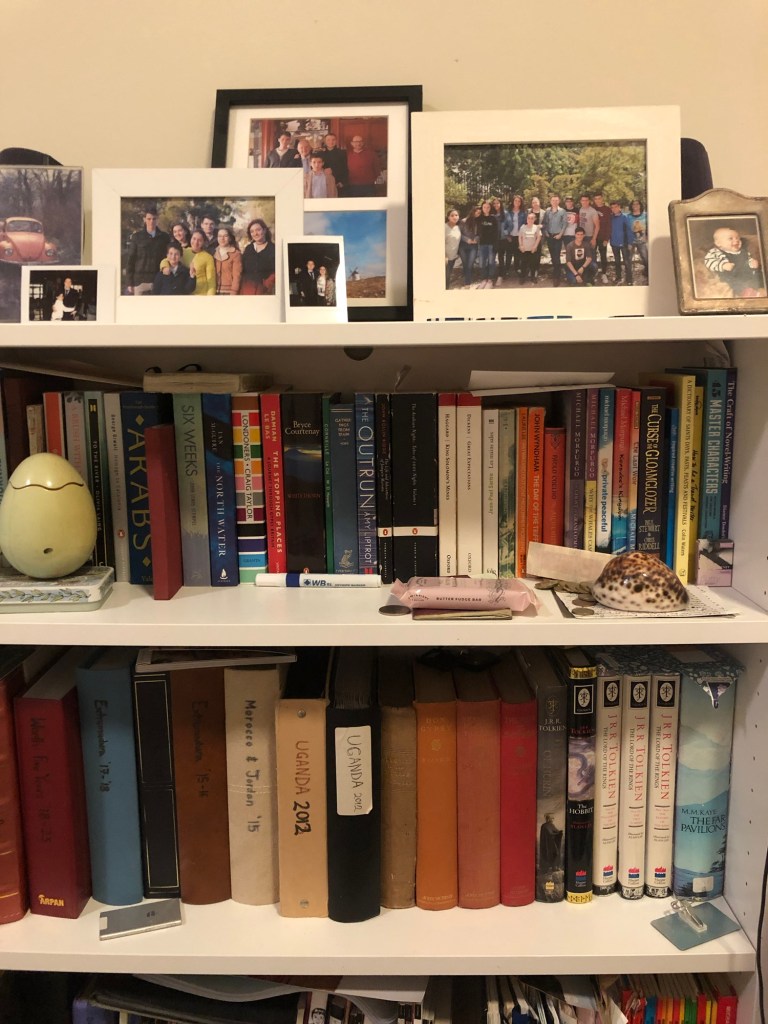
Wolf Brother had a lasting impact on me as a writer, more than I had previously suspected, and it took listening to the masterful narration of Sir Ian McKellen over the weekend to realise just how deep the roots of her magical storytelling stretched into my own creations. Naturally, my own stories have changed a great deal since I started writing them over twenty years ago, but if you look closely, you can see the tell-tale brush strokes of the authors who showed me the way. I could fire up my hard-drive right now, pull up a folder, pull out a chapter and point out the guiding hand of this or that storyteller. Here is some of Paver’s naturalism, and there’s some Rider Haggard gung-ho. Paul Stewart and Chris Riddell had no small part to play in the healthy dose of tragedy, and I’d wager a fair amount that there are traces of Michael Morpurgo spread throughout like watercolour, since at a certain point in my childhood I pretty much read nothing else. There was just something about his writing that spoke to me like no other writer could. He had me hooked on all his animal-centred storylines, his Scilly Isle adventures, and his occasional reference to something on my wavelength (like namedropping The Corrs in Arthur, High King of Britain). Kensuke’s Kingdom and Why the Whales Came rank near the top, and sit in pride of place by my desk alongside the other books that mark certain turning points in my life: Day of the Triffids for traveling solo, King Solomon’s Mines for going mad in Amman, The Arabian Nights from my university days and The Outrun for a dose of reality when I left that world behind… and The Tale of Benjamin Bunny… just because.

What were the stories that had the biggest impact on you as a child? Which authors colour your writing? I’ve ended the last couple of posts with a question, which is a) repetitive and b) pedantic and c) a sign of how much I’ve been teaching and how little I’ve been writing these past three years. But it’s something I love to ask people, when I get the chance. The power of storytelling has been precious to me since I was a bratty kid insisting on the fifteen-minute bedtime stories and not the three-minute tales (I swear I wasn’t just looking for an excuse to stay up late…!), and I hope it’s a joy I can share with my children someday.

When you come back to a book you enjoyed as a child, you see it through two pairs of eyes and two hearts: the eyes of a child embarking on a journey as though for the first time, and the eyes of a parent who knows the dangers ahead but cannot help hoping things turn out for the best. It’s incredible how the magic contained within the pages of those stories never fades, no matter how many times you come back to it. I make a point of re-reading Triffids every time I travel alone, but I’ve neglected the stories of my childhood for too long.

Once I’m done with the rest of Torak’s adventures, you’re next, Morpurgo!

BB x