Venice IV: Ghettos, Glass and Gold

The Italo high-speed train races across the Ponte della Libertà, leaving Venice and its islands far behind. I’m bound for Rome, the Eternal City, my final stop in this first expedition to Italy. In what is possibly a crime against humanity, I’m skipping Florence this time, on the pretext that to spend anything less than two full days in Dante’s city would be to woefully undervalue one of Italy’s greatest treasures. Next time – and there will be a next time – I’ll come back for Florence, and Trento, and maybe even Milan. But since it’s my first time here, and my Italian is rudimentary at best, I’d rather depart with a hunger to return.


Far and away my favourite corner of Venice is the Cannaregio district to the north of the island. It’s marked with a Star of David on most maps, and it’s where you’ll find the city’s former Jewish ghettos (not in confusingly named Giudecca which, despite being a mangling of judaica, was never home to the city’s Jewish population). It’s a quieter corner of the city, dark and understated, but take a moment to stop and take stock of your surroundings and you’ll see some surprising sights – chiefest of all being the Jews themselves, hanging on tenaciously in the same corner of the city in which they were once corralled.
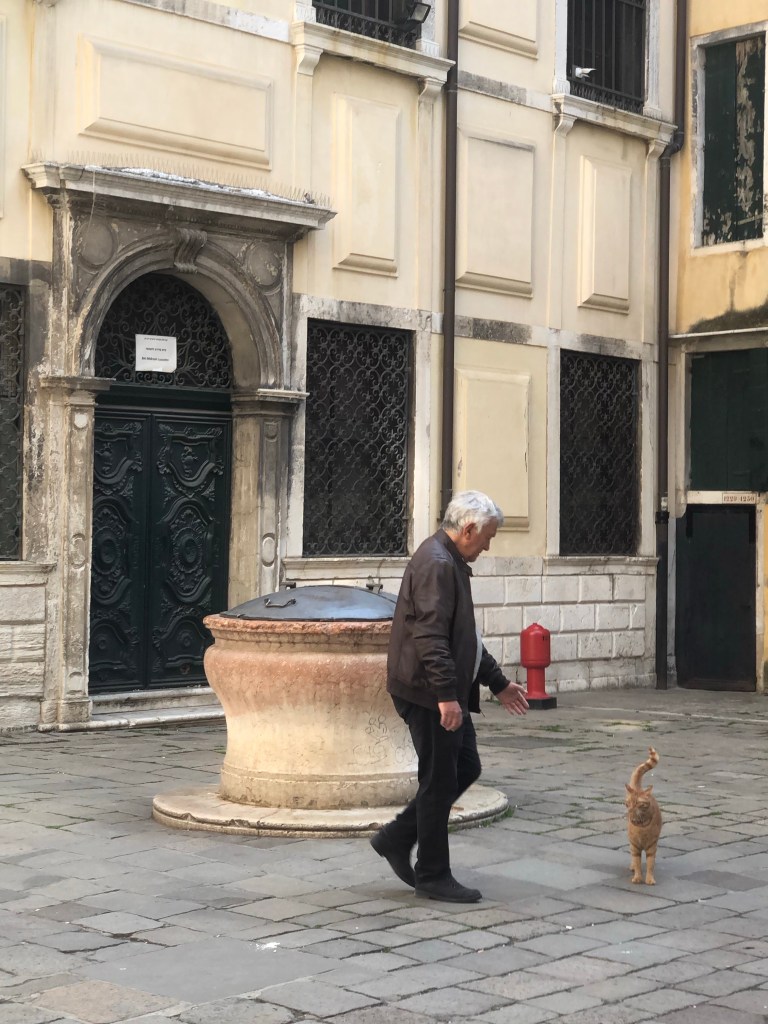
My contact with the Jewish world has been ethereal for the greater part of these last twenty-eight years. I played a Jewish tailor in Fiddler on the Roof and Klezmer stalwarts like Hava Nagilah and Tants, Yidelekh, tants (Dance, Jew, Dance) were my go-to violin pieces as a child, but that’s about as close as I ever got. Doubly so after Covid derailed my trip to Israel two years ago. To tell the truth, I could probably count on the fingers of one hand – two, tops – the number of Jews I’ve ever had a conversation with. So coming to Venice and seeing not just a sizeable but highly active Jewish community in the flesh has been nothing short of heart-stopping.

As usual, the Spanish connection was the real draw. Among the Italians, there are a great many Spanish surnames carved into the various memorials commemorating the disappeared and the dead. Morenos. Navarro. Vidal. Grim reminders of the centuries-long fate of the Jews, fleeing from one intolerant regime into the arms of another. At some point in their history, many of Spain’s Sephardim must have been faced with the painful choice: to abandon hope and their homes, or to abandon their faith. If the stories I do so want to believe are true, then my ancestors made the bitter decision to remain under the unforgiving aegis of a Christian God, rather than leaving behind the land that had been their home for generations. Could you blame them for that?
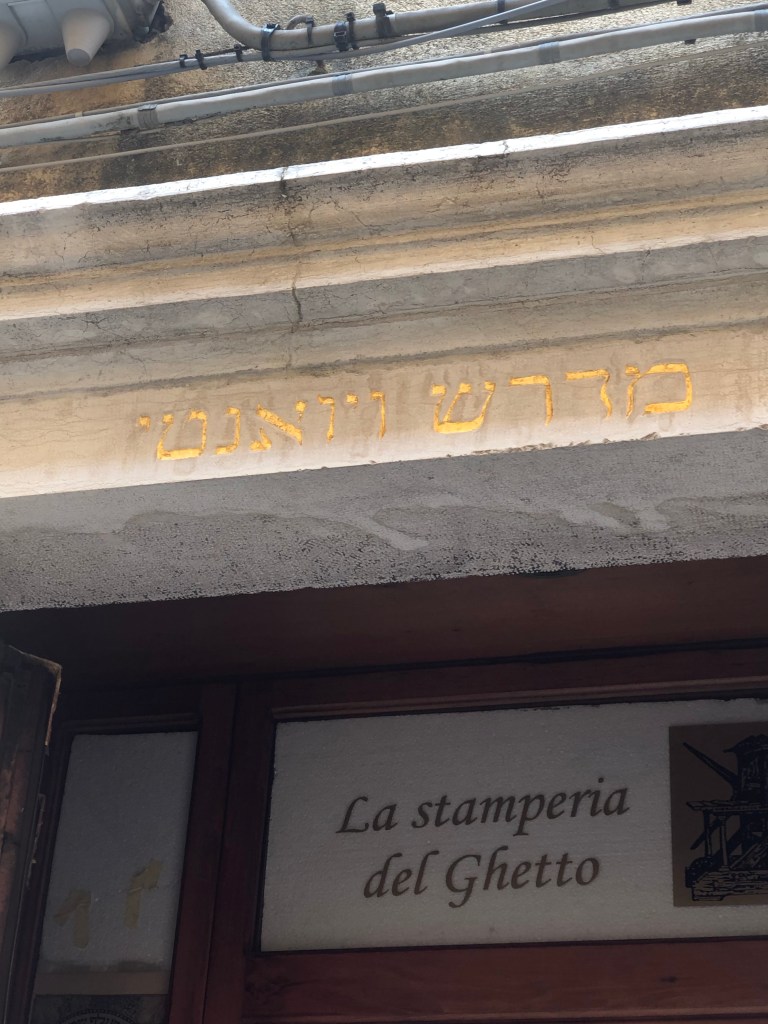
As I wandered through the ghetto nuovo, I saw a Haredi gathering through a window. A boy stood outside the window, shawl at his waist, shuckling at prayer. A girl on the vaporetto at Murano had a gold necklace bearing the Hebrew letter he (ה). Out in the backwaters of Burano, a man sped by on his boat as I ate my lunch, sidelocks flying in the wind. I didn’t expect Venice to be such a centre of Jewish activity, but it’s a miracle to behold.


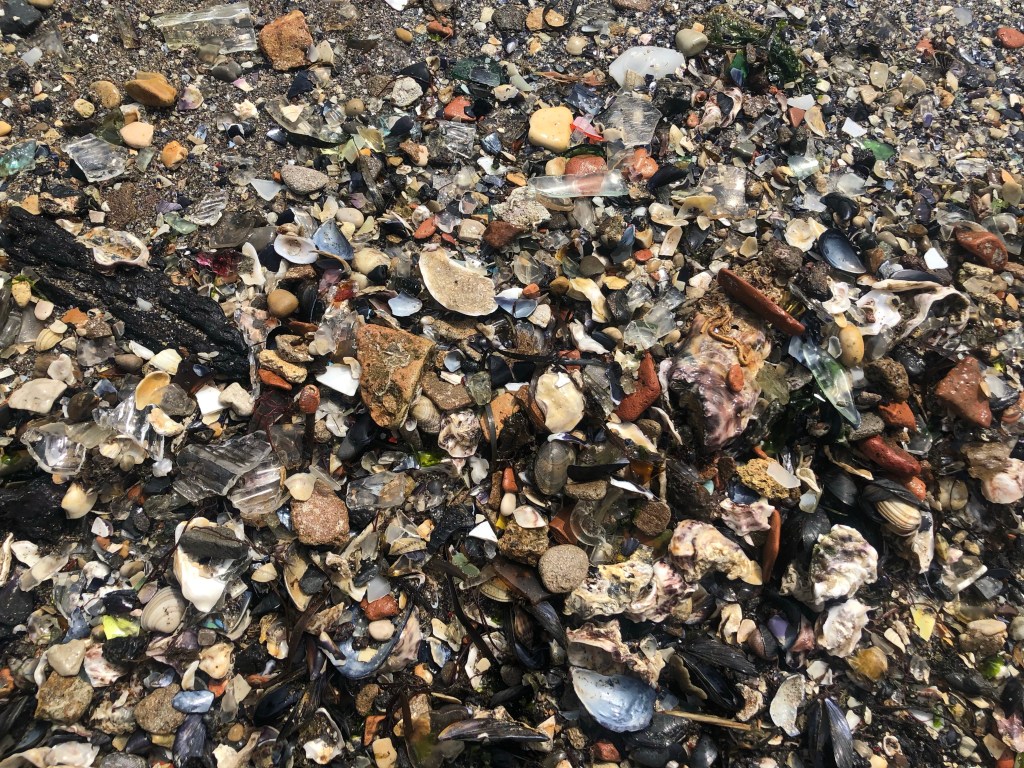
My eagle eyes were trained on other things than just bird life and Hebrew paraphernalia. If you visit Murano for its glasswork, something you ought to do is go beach-combing by the vaporetto stop near the lighthouse. For one thing, it’s ridiculously easy to spend a week in Venice without ever touching the water once, and this is a very accessible point to make contact. For another, an island whose primary output is glass and clumsy tourists makes for a mudlark’s dream: scattered amongst the lagoon’s mussel and oyster shells you’ll find all manner of glass washed up on the shore. Who knows how old the shards are? Some of them might be decades or even centuries old. A great many more were probably dropped in yesterday by this or that day tripper who was careless in boarding the boats. Whatever their history, there’s a rainbow of debris along Murano’s shoreline that’s well worth a careful investigation, if you fancy getting your hands on some free if highly fragmented Murano glass.
With only a few hours left on the clock, I very almost missed Venice’s main attraction entirely. Despite passing St Mark’s Basilica every time I got off the vaporetto from Giudecca, I confess I hadn’t considered going in to explore at all, until the realisation that I might let my private feud with scaffolding debar me from seeing one of the most beautiful churches in Christendom finally got the better of me. And not a moment too soon – after my island-hopping excursion around the lagoon, I only just made it back in time for the final opening hour.
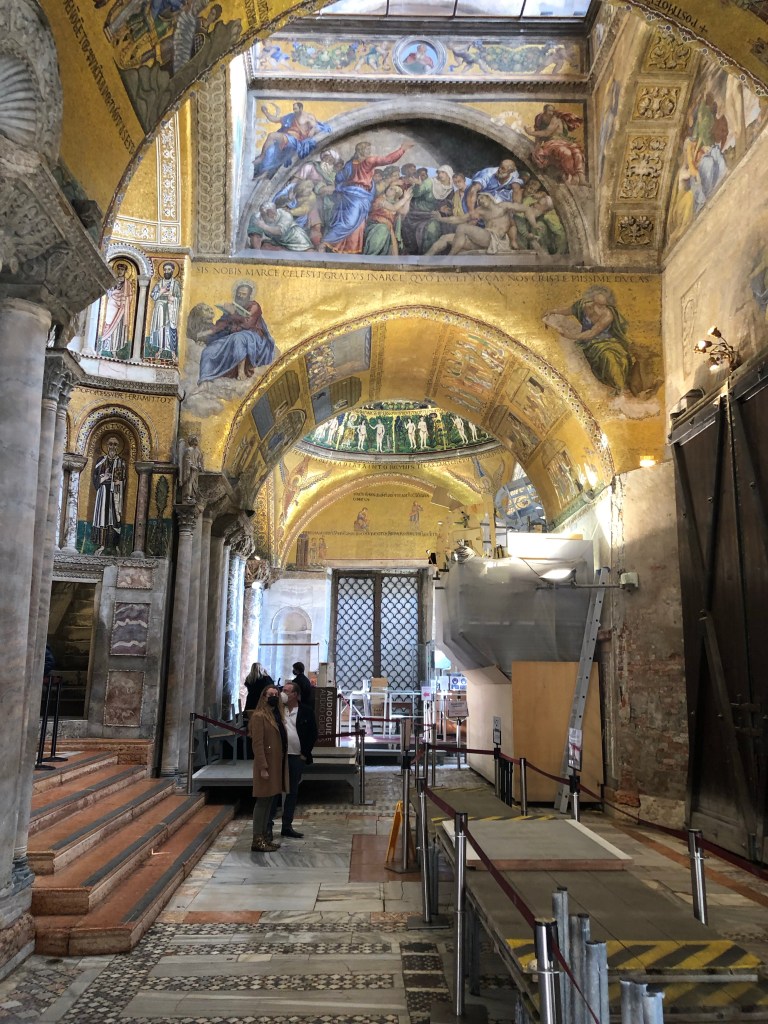
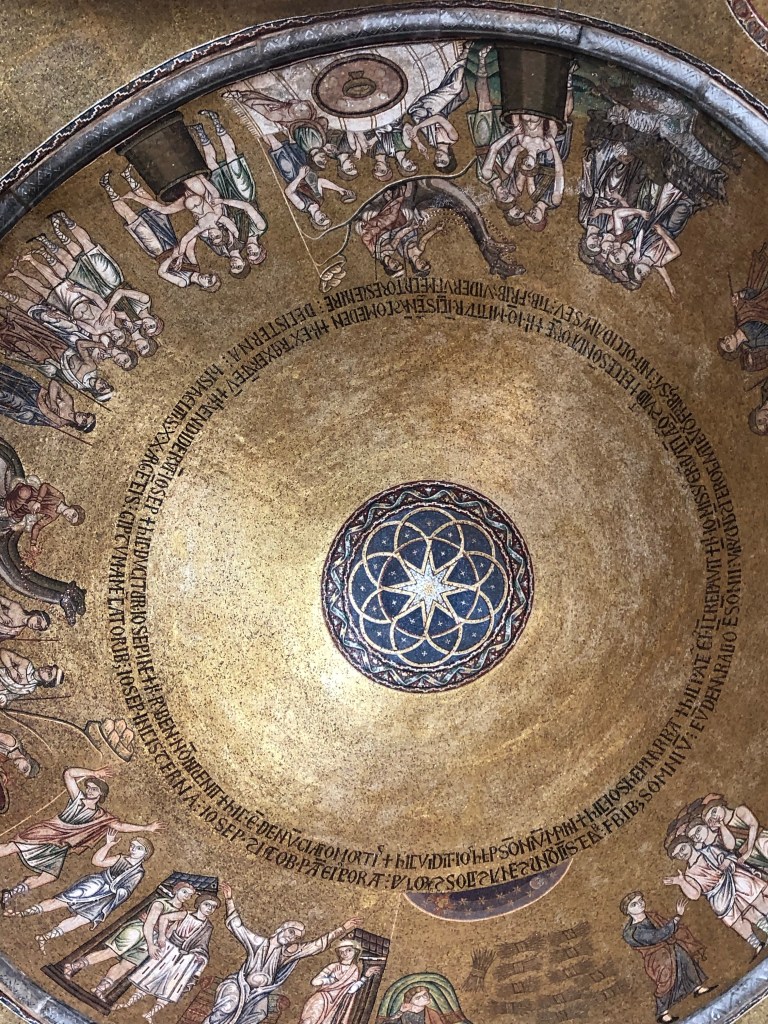
In short, I’m glad I did. It’s not free to enter like it once was, but 3€ is a pitifully small sum to pay to see the glittering Byzantine majesty that is St Mark’s ceiling. Heathen that I am, I don’t have a lot of time for Renaissance art, but there’s something about the sunken, staring eyes of Byzantine saints that I find absolutely spellbinding. And St Mark’s certainly isn’t short on saints.

Probably the most awe-inspiring part of the interior is the entrance itself – while you’re busy buying your ticket, don’t forget to look up at some of the best lit (and best preserved) of the basilica’s mosaics!
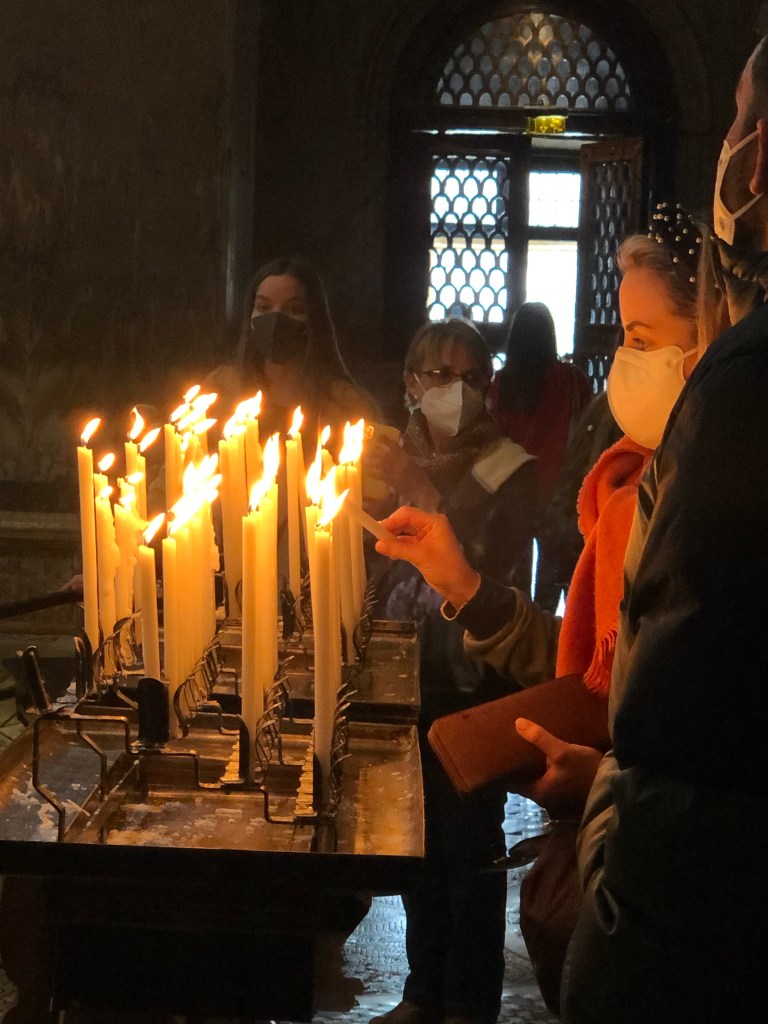
I lit a candle for my ancestors before leaving. My grandfather was a traveler, but I doubt he ever made it this far. So when I travel, I travel for him; just as when I write in my journal, I do so in memory of my great-grandmother. Traditions are everything. Insert your Fiddler on the Roof pun here.
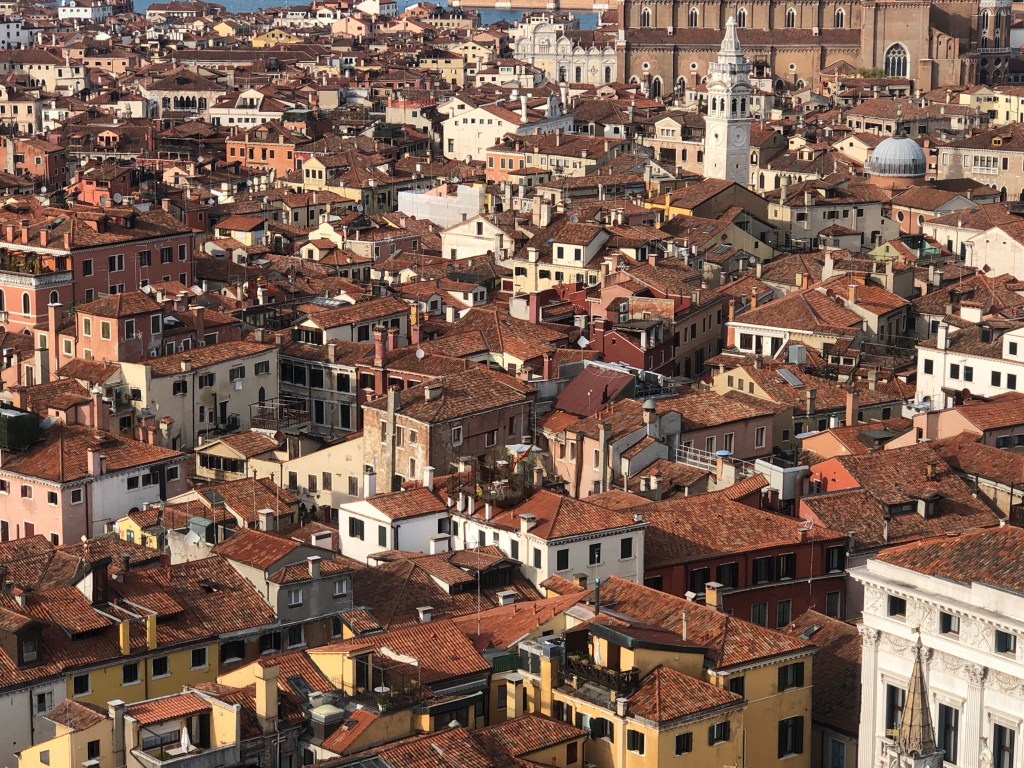
To round out my stay in Venice, I took the lift up the campanile to see the city from on high. It’s worth the 10€ – the views are spectacular and it really helps to put your adventures around the lagoon in context, as you can see most of the islands from up there. There aren’t many cities in the world that aren’t eaten away at by modern cement monstrosities, so Venice is a city you should see from as many angles as you can. And since I didn’t have the window seat on the flight in, this was the next best thing!
The train is slowing down. We’ve cleared the long dark tunnel through the Apennine Mountains and left clouded Florence far behind. The group of four American travellers from Badiddlyboing, Odawidaho (right out of the frighteningly accurate Harry and Paul skit https://youtu.be/BGc3zFOFI-s) have finally stopped talking about Geoff’s wine tour and are playing Candy Crush in silence. Outside, the sun shines on Lazio, and I’m ready for the next adventure. Andiamo di qua! BB x
Venice III: Spirits of the Marshes

Three days in and I’m already a day behind. I guess that’s a good thing, as it means I not only had a packed day yesterday, I also had a busy sociable evening swapping stories with fellow travellers. It’s travelling done right, and all I ask is your patience, dear readers – such days make for good writing.


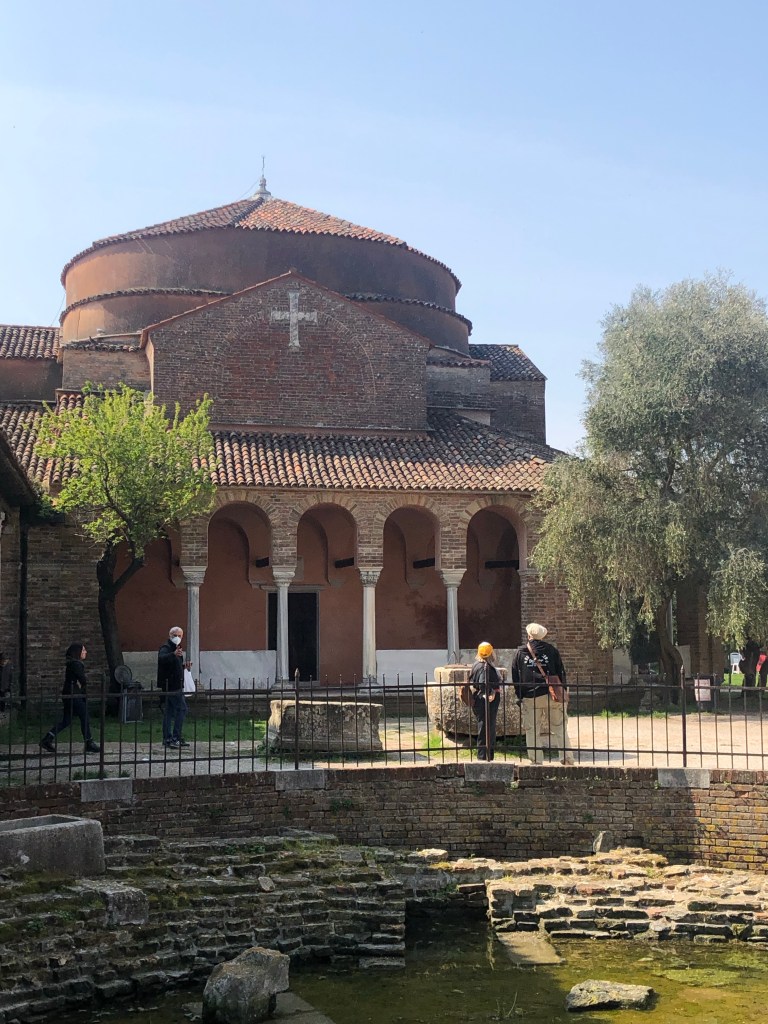
Wednesday was another make-it-up-as-you-go kind of day. I had it in mind to visit the smaller islands out in the lagoon – namely Murano and Burano – but as the vaporetto rolled up to Fondamente Nove, I suddenly decided to take a chance on mysterious Torcello, Venice’s predecessor. Most of the guidebooks pointed out it was almost deserted with very little to see other than an ancient church – the oldest in the lagoon – but if you’ve been reading for a while, you’ll know that’s one big fat tick in the box for me.

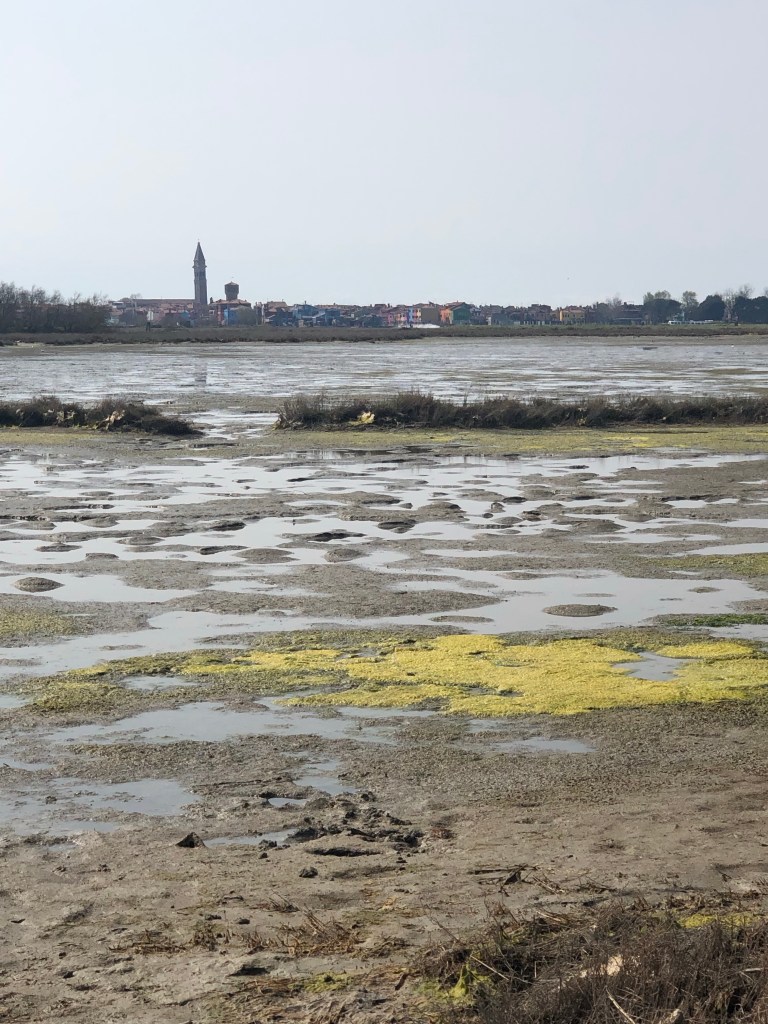
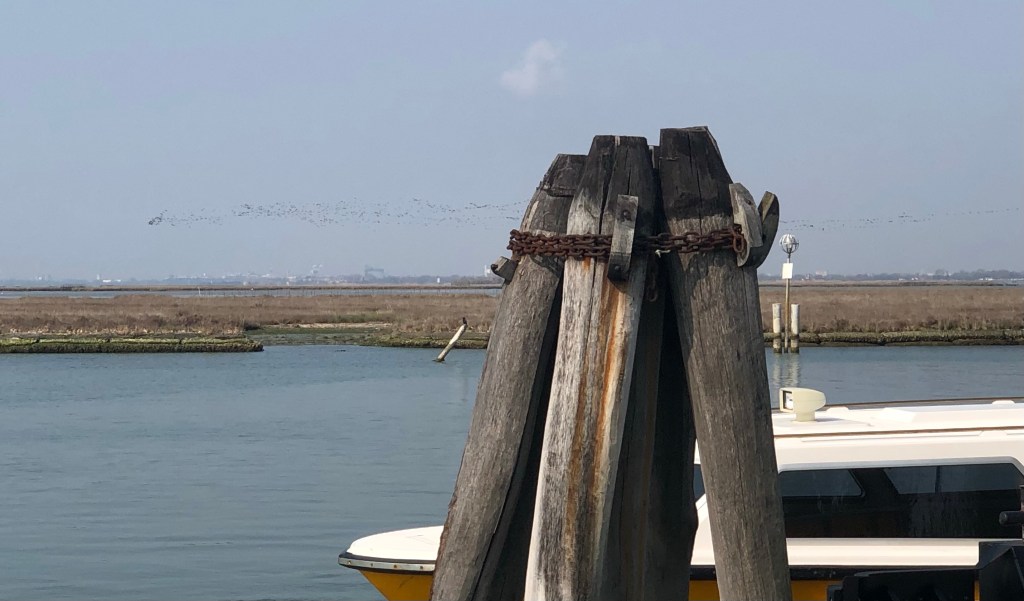
The lagoon feels truly vast once you’re out on it and Venice is behind you. Wooden struts stacked in threes mark what can only be described as water highways, giving the lagoon the appearance of a race course – until you realise it’s not mere practicality but also a safety measure for sailors, as there are multiple areas of the lagoon that are considerably shallower than they seem. Here and there, large expanses of mudflats rise out of the water, giving the lagoon’s waterbirds a place to retreat from the noise of the city.

The vaporetto chugged into Murano, city of glass, and then Burano in turn, city of lace and paintbox streets, but I spurned both of these for the diamond in the rough that is Torcello, risking a stranding for a chance to see one of the lagoon’s hidden gems. (In hindsight, I needn’t be so melodramatic – Torcello is surprisingly well serviced by the vaporetti, with a boat every fifteen minutes from neighbouring Burano).

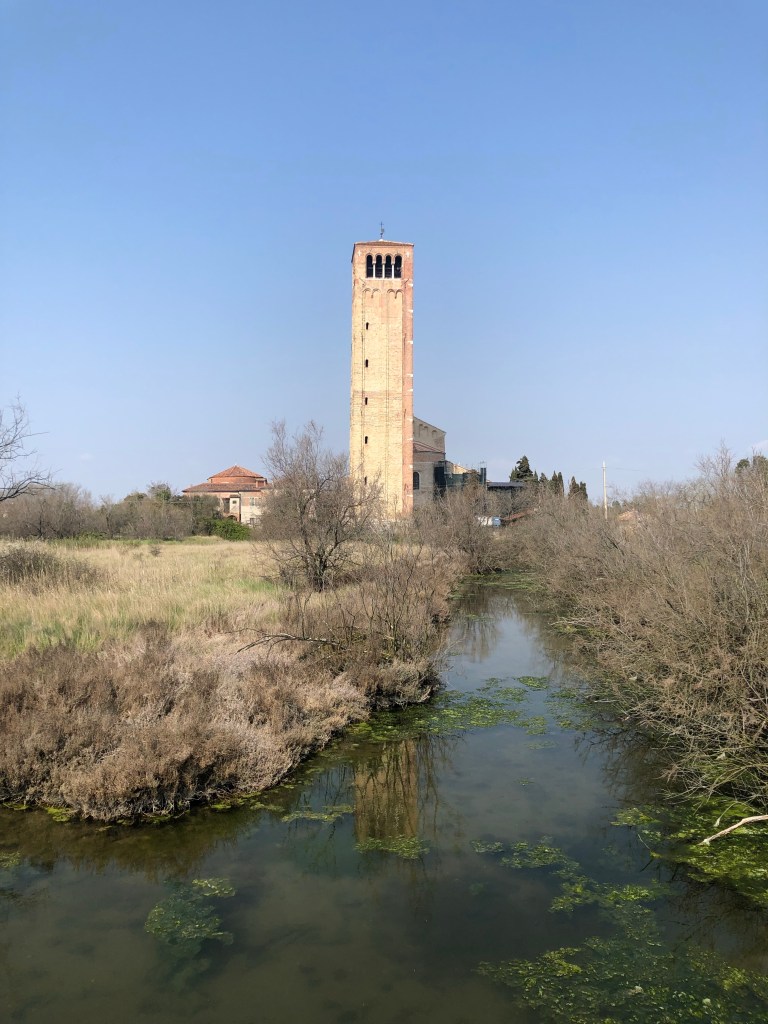
Why come way out here? Easy. Torcello is nothing less than Venice’s ancestor, home of the first Venetians who arrived in these islands around the year 422 fleeing the forces of Attila and his Huns as the Western Roman Empire fell beneath fire and the sword. Guided by the visions of their priest, the refugees escaped into the lagoon, believing the great water would hide them from the Huns. They named their new home Torcello, meaning “Tower and Sky” – which is eerily apt today, as that’s almost all that’s left of what was once a thriving city.

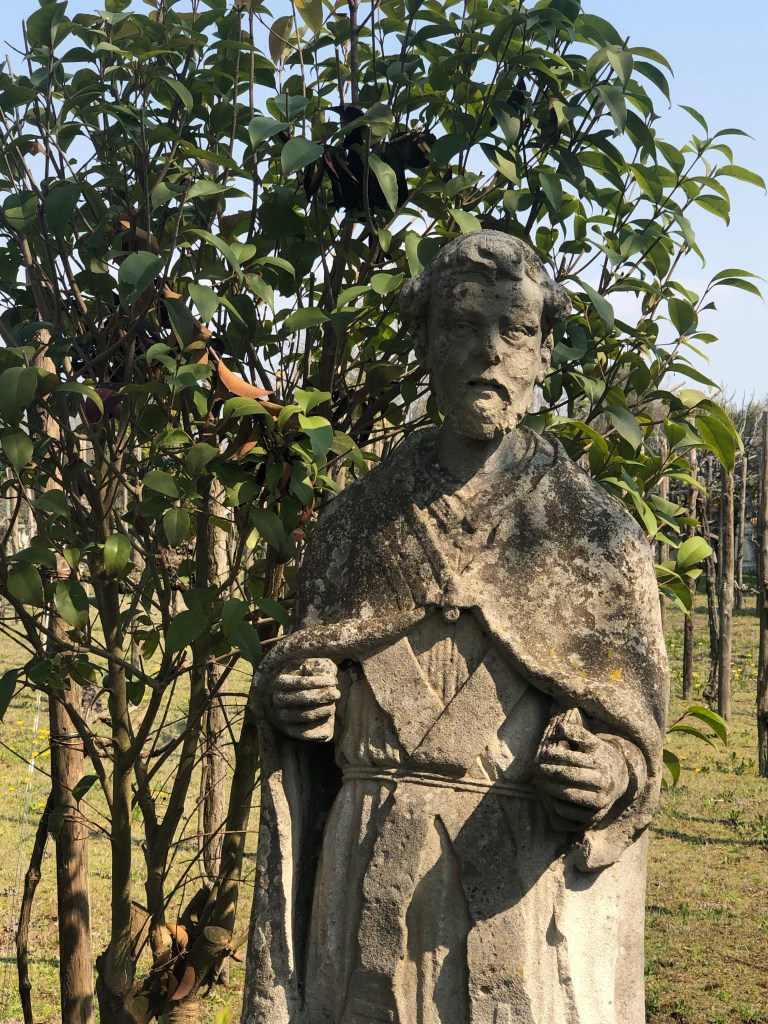
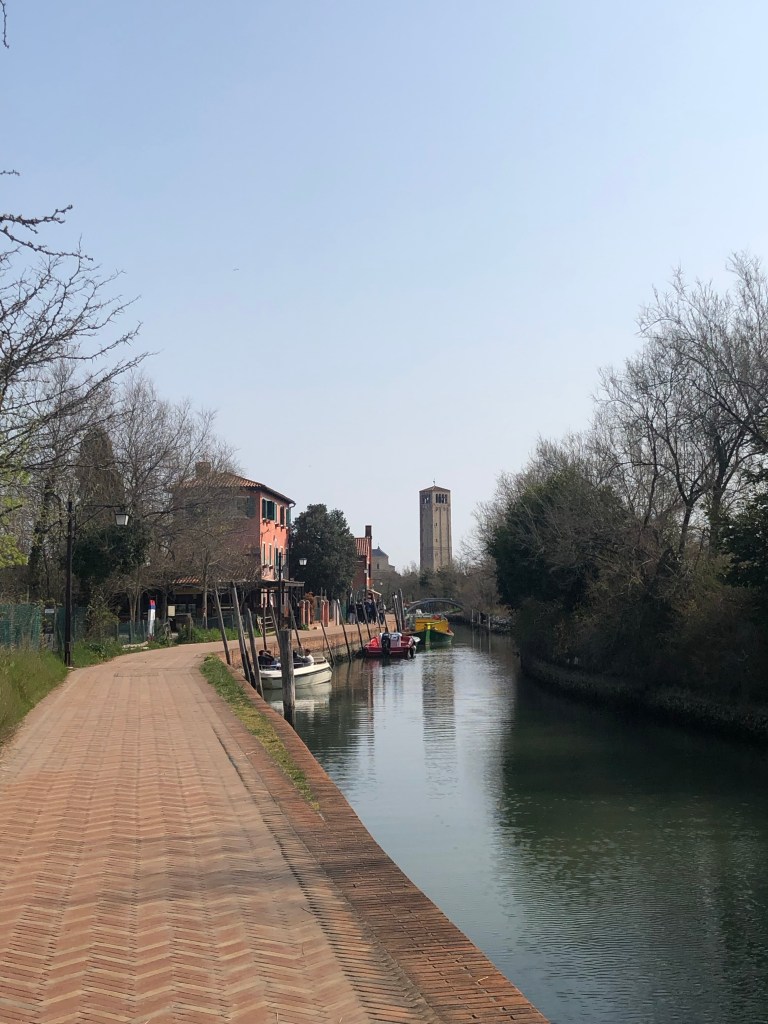
In its heyday, some twenty thousand people called this island home, and it punched well above its weight as a centre of commerce and tolerance until at least the tenth century, though you’d never guess to look at it today. All that remains are some twenty residents, a few houses, some scattered allotments, a collection of Romanesque statues abandoned to time and an old church in the Roman-Byzantine style, whose bell-tower still dominates the landscape – the “Sky Tower” that gave the town its name. On a clear day you can just about see it from Venice itself, staring jealously across the lagoon.

Several factors brought about Torcello’s decline, not least of all the lagoon itself. Just as she did during the first COVID lockdown, Nature showed how quickly she can regain control when she wants to. Over time the island began to sink back beneath the water, swallowing up the villages and turning the once prosperous salt-flats into malaria-ridden marshes. Torcello’s disciples fled in the wake of the tide, seeking refuge on the other islands.

And then, of course, there was Venice herself. What was originally an offshoot of Torcello quickly took advantage of its father’s plight, absorbing its fugitives into its own ranks. Eventually, the son far outshone the father, and as more and more citizens abandoned their former home to its fate, the glory of Torcello faded into memory. The many thousands who once called this island home simply disappeared.

I had my lunch on a jetty east of the Roman church with four ducks paddling hopefully in attendance below. Venice is quiet, but Torcello is something else. Sure, maybe not so much that afternoon, as one of the locals had his radio on full blast as he scoured his fishing boat upriver, but I can imagine this place is as silent as the desert most days.

I’ve always been attracted to the desolate corners of the world. A childhood spent exploring Dungeness, Stodmarsh, Elmley and Doñana National Park has left me with a voracious appetite for marshlands that has never really gone away. So when I look out across the mudflats and listen to the cries of the shorebirds, my heart falls into step and I feel calm and content. But marshes are lonely places. I can think of few places in the world with a lonelier atmosphere. The mournful cries of plovers and sandpipers out on the flats give the place an eerie sadness. The gulls almost sound as though they’re laughing at you for losing yourself here. Solitary herons and egrets prowl the canals like watchmen. And of course there’s the mournful curlew, whose bubbling trill is possibly one of the most haunting sounds in nature. What unholy terror drove the first Venetians to such a lonely place? Their fear of the Huns must have been great indeed to seek to build a home out here in the lonely marshes.

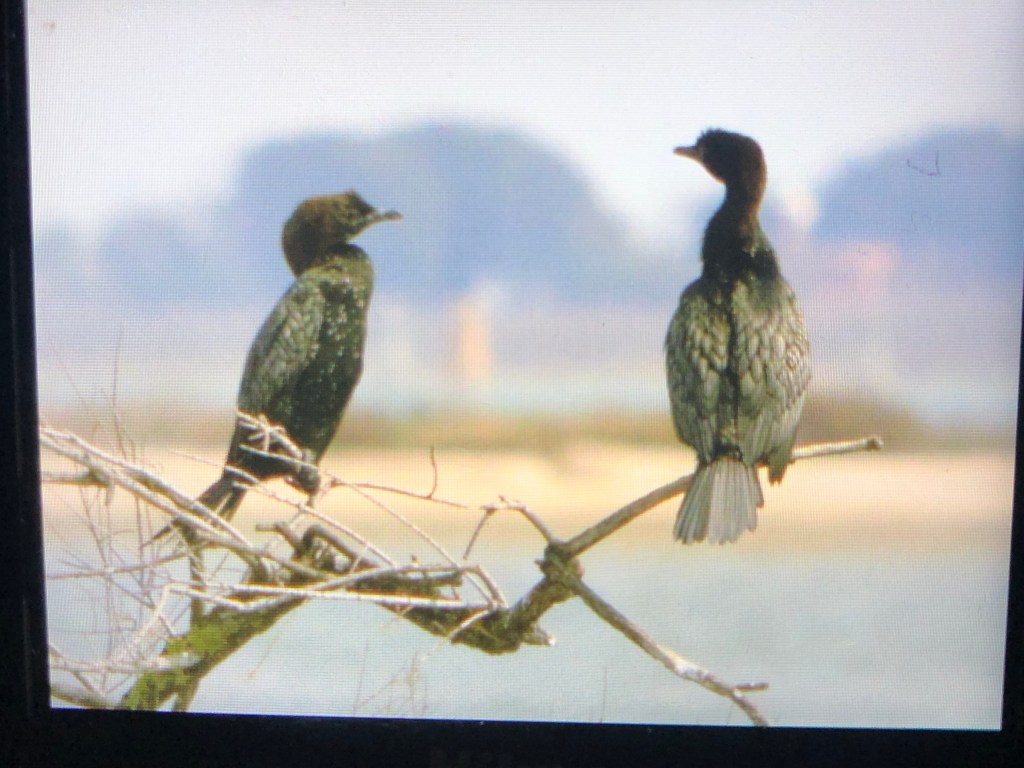
As I leave the island, a thin dark cloud appears on the horizon, moving fast toward Burano. As it draws near, I see it is no cloud at all but a raft of pygmy cormorants, thousands of them, flying in a loose formation that surely stretches for half a kilometre in length. Like oversized starlings, they sail over the marshes, moving deeper into the lagoon.

Perhaps these little sea-crows are the perfect metaphor for the Venetians themselves. A creature of the land that took to the water, making himself a master fisherman, building his nest out on the lagoon. I’m not the first to jump to that conclusion either. A sixth century Roman official wrote of the denizens of Torcello thus:

You live like sea-birds, with your homes dispersed, like the Cyclades, across the surface of the water.

Cassiodorus, 523 AD

Standing on the forgotten shore of Torcello, it’s easy to imagine that the thousands of cormorants passing by really are the spirits of those first Venetians, making the same exodus from land to lagoon every morning for generation after generation, like the denouement to a tragic Greek myth: some cruel trick of the old gods, granting the refugees an eternal escape from their would-be oppressors. That such creatures should choose to haunt Torcello, the forgotten ancestral home of the Venetians, only adds to that mythos.

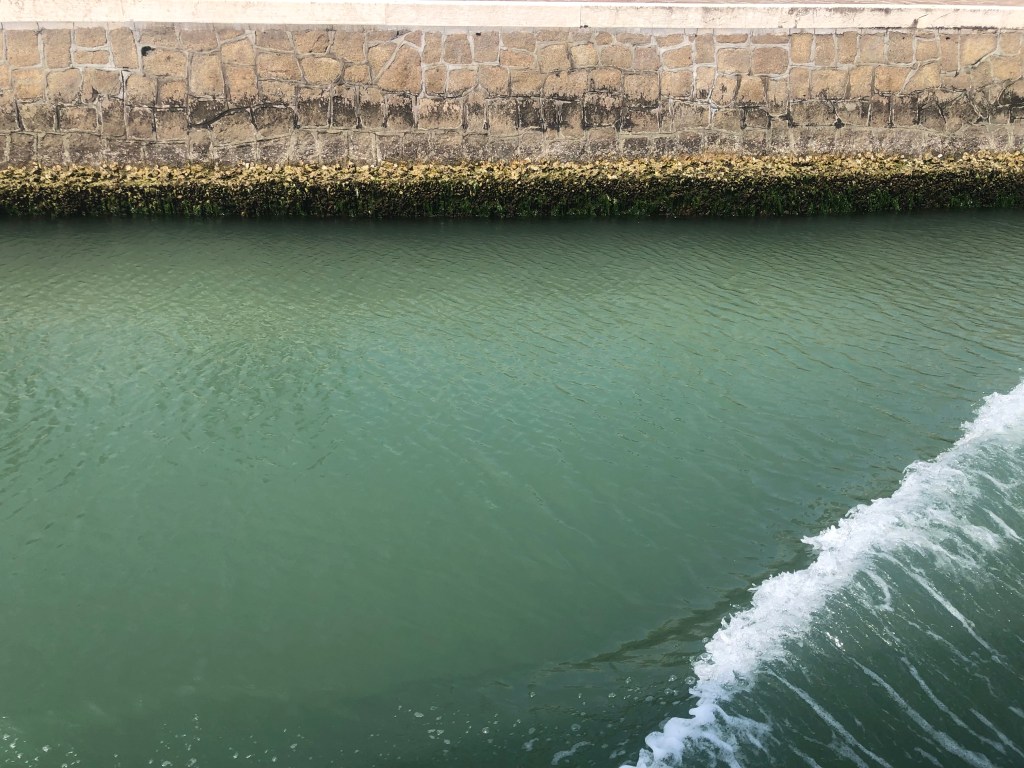
The outlying marshlands of the Venetian lagoon are full of such spirits, if you’re prepared to leave the bustle of Venice and its glass-blowing cousins behind for a couple of hours. If you truly want to see what Venice might have looked like before its canals become cloudy and green from all the water traffic, come to Torcello, whose ancient canals are clear as daylight, revealing a colourful array of sea grasses, seaweed and scuttling crabs on the silt below. And listen, just for a moment, to the ghosts out on the mudflats, knowing you’re hearing the same haunting sounds that the first Venetians defied to make their home here, over a thousand years ago. BB x