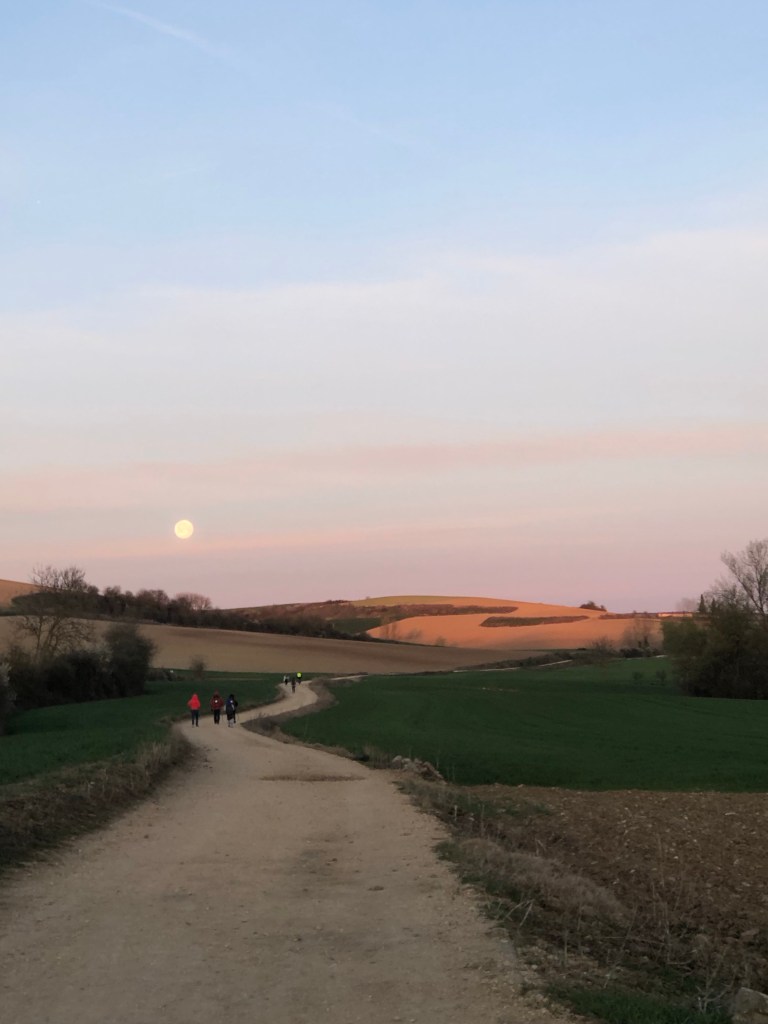
After the Carabiniere’s tip-off about the limited options in San Juan de Ortega, we made the collective decision to strike out early for Agés, the next town along. So, after a day’s hiatus, I had my sunrise again – at the cost of my fingers, which were numb with cold for the first half hour at least. Mikel the Dane caught up to my ferocious pace to lend me his fleece-lined gloves. The way everyone looks out for each other on the Camino… there’s really nothing quite like it.
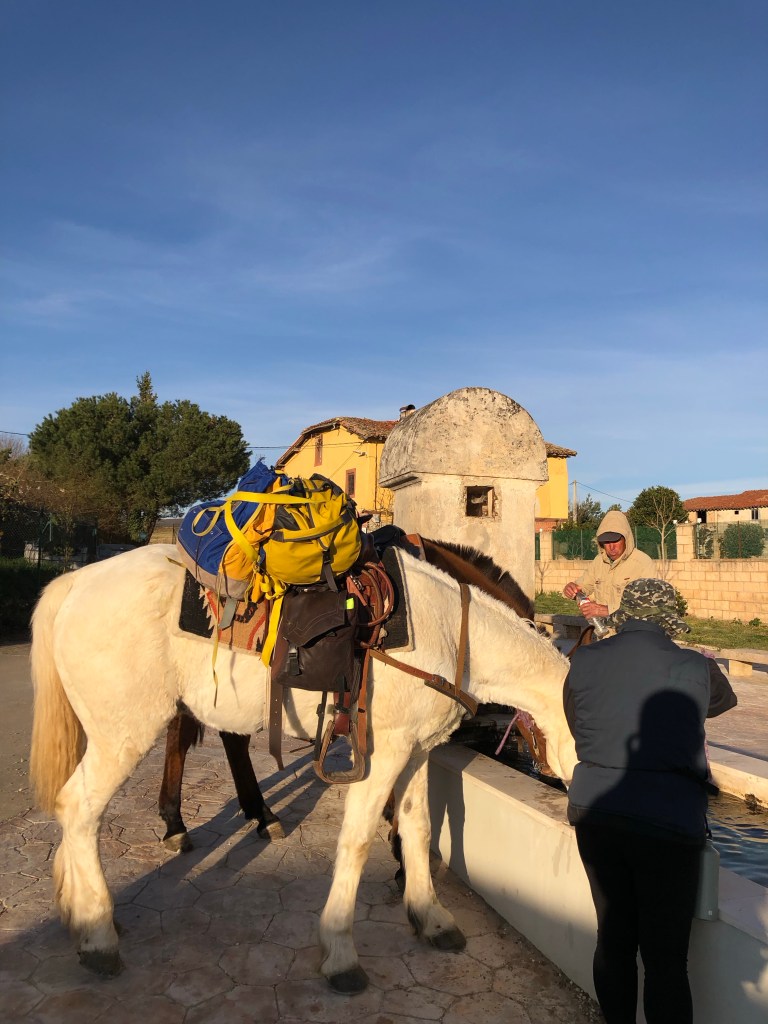
Shortly before reaching Tosantos I picked up the trail of Enrique the Arriero and his mule, Jena, and as soon as he came into sight I picked up the pace to catch up to him. It was a merciless effort on my already beleaguered heels but worth it – with so few in his trade left in the world, you don’t pass up a chance to learn something of that vanishing world. One of our number had lost his card to a hungry ATM so I couldn’t stop to chat long, but I told myself I’d try to catch him further down the road if I could. I had already penned “Entrevista con un arriero” in my journal and that would just be a waste of paper if I couldn’t fill it in.
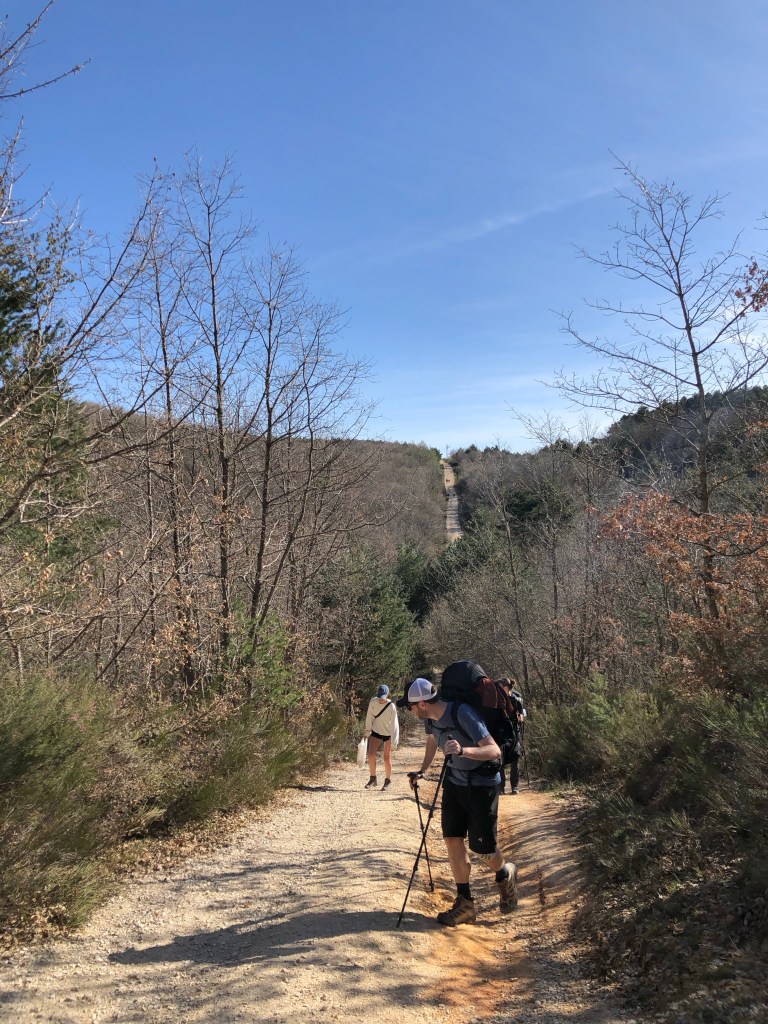
After grabbing an early lunch/late breakfast at Villafranca Montes de Oca (20€ fed all seven of us with a sizeable tortilla & jamón bocata and drinks) the Camino wound steeply uphill into the Sierra de La Demanda. I won’t be the first pilgrim to say it was demanding and I won’t be the last, but it was a welcome change to be under the shade of the trees after the roadside meandering of the last few days.
There’s a monument about halfway through the Sierra to the fallen of the Civil War – that is, the opponents of the Nationlists in Burgos who were dragged out of their beds and summarily executed up here in the woods in the early days of the war. Most Spanish families can relate to this grisly tale: most of the circle of friends of my great-grandfather Mateo similarly disappeared, being known for harbouring or having harboured socialist sympathies even after the war was over. I said a prayer and moved on.
After another steep climb we finally made it to an open stretch of the Camino where the Carabiniere led us to a shaded spot where a food van had been parked on his last run of the Camino a year prior. The proprietor was still here, and while the ‘stamp girl’ was on her way (she’d gone to get fresh ink) he was happy to provide us with fresh strawberries free of charge while we waited.
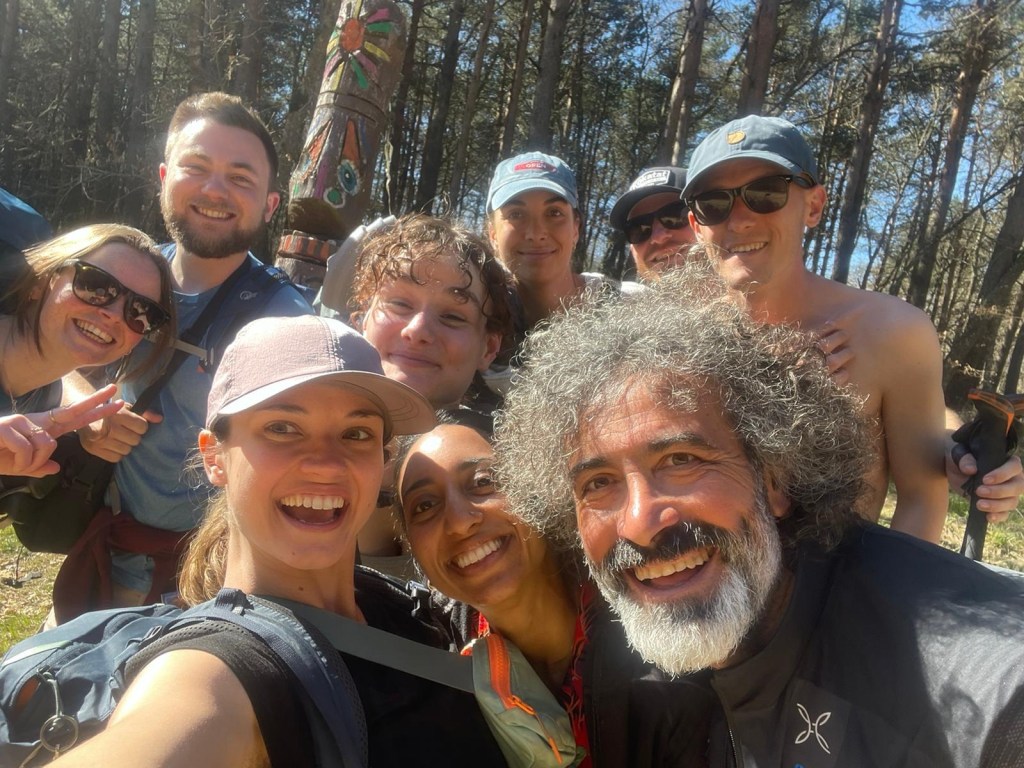
Here, at last, I caught up again with Enrique, and was able to ask him all the questions I’d had on my mind about being an arriero.
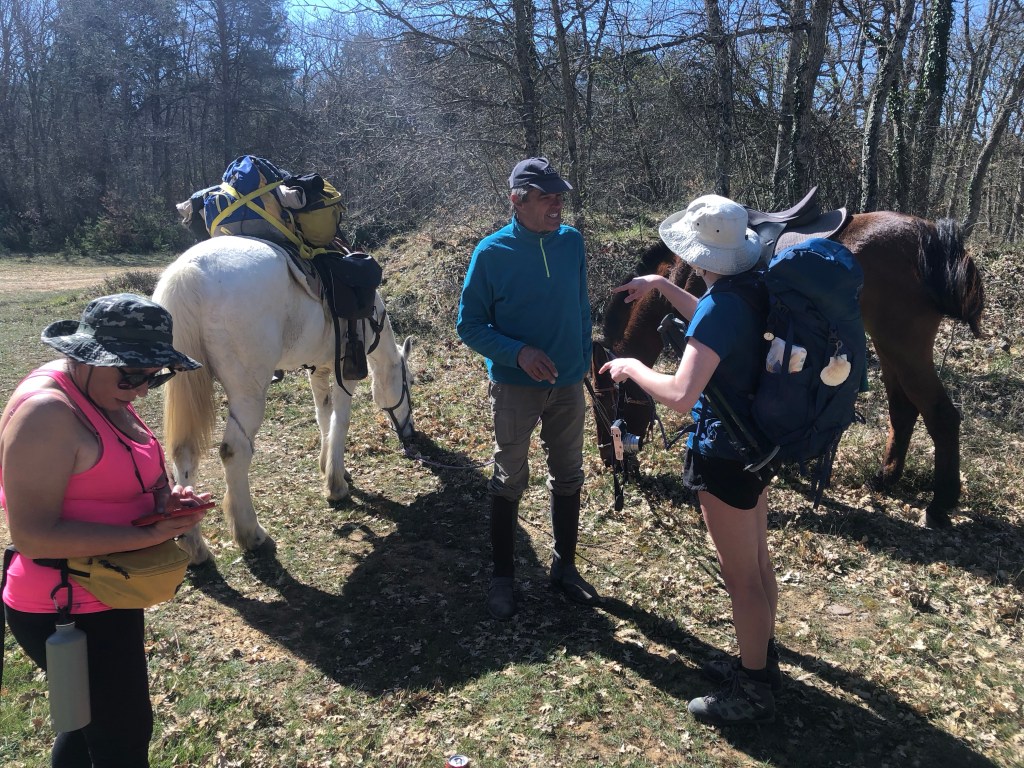
Enrique – or Kike, as written across his hat – has been a muleteer ever since he was a child. He picked up the trade back home in Argentina, where the vast distances and tricky terrain have allowed the profession to long outlive its run in Europe. He likened the trade to studying to become a surgeon: long, hard work and dependant on the collected wisdom of many teachers and masters of the art. Experience, said he, was the best teacher of all, and – now in his sixties – he has had almost six decades worth of it. He grew up a poor man, living on the streets and carving a life for himself in the countryside, not that you’d know now from his noble bearing, bright white smile and polished riding boots (an bold choice of footwear for the Camino). Since his move to Spain twenty-five years ago, he’s got by working with horses and mules wherever and however he can, teaching, buying and selling, running activities for children… whatever he can turn his hands to. I remember as a child seeing the odd arriero in the country around Olvera, so it was more than just an honour to meet a man whose profession is that of the title character in my books. It was a warm dash of nostalgia.
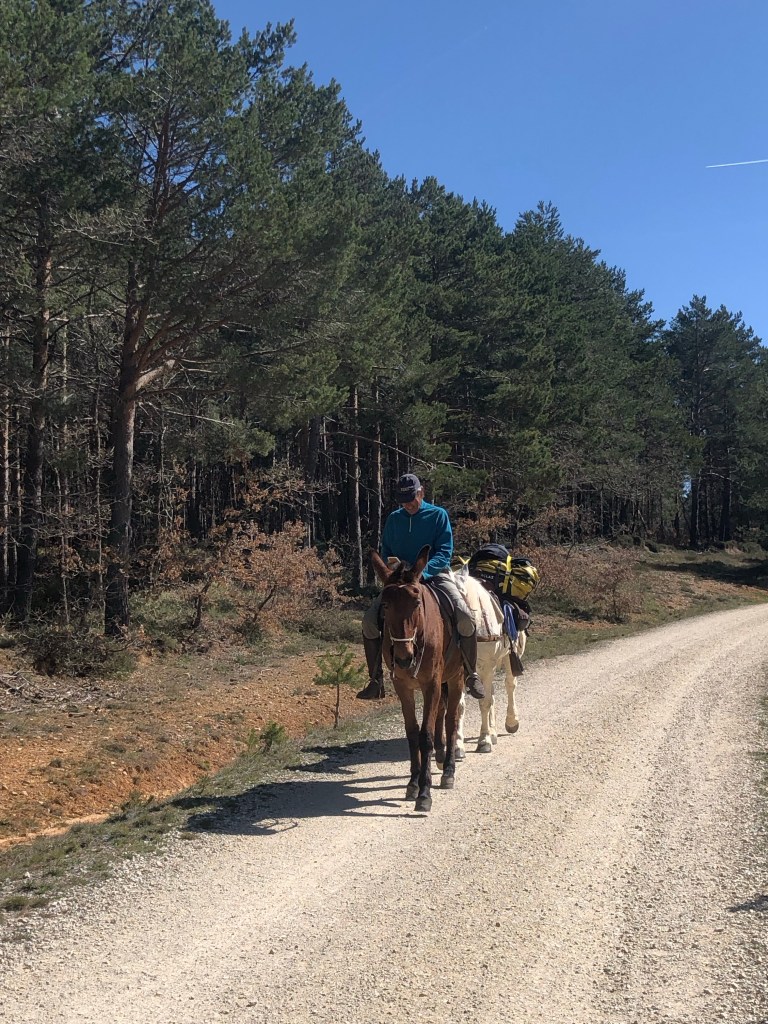
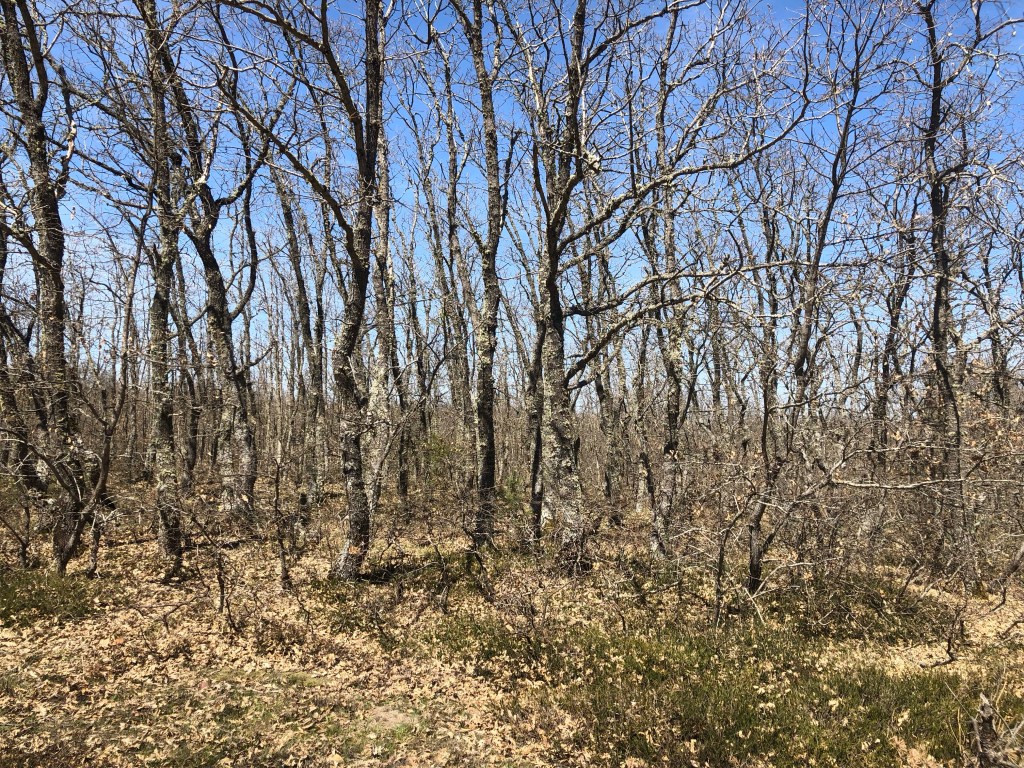
The dark pine forests of the Sierra de La Demanda soon gave way to a skylit swathe of leafless oaks, covered so thickly in lichen that they looked half-dead, like greying, flayed cadavers beneath the sun. However, the forest could not have been more alive. A cuckoo called in the trees and followed us like a shadow along the Camino for some time, while chaffinches, blue tits and the piping song of a wryneck played a merry tune to carry us along. It helped to take my mind off the blisters forming on my beleaguered feet and then some.
Then, before we knew it, the trees were at an end and there, stretching out before us, was the meseta. The prehistoric treasure trove of Atapuerca lay between us and Burgos, but far away in the blue beyond rose the mighty snow-capped peaks of the Cordillera Cantábrica, as impressive now as they ever have been. We came down into Agés shortly after half past two – well into the afternoon – and within another half hour we had all decided to take a siesta.
The other pilgrims have gone out for a beer. I needed a little longer to recover this time, and besides, I wanted to strike while the iron is hot with the blog rather than wait until later. With the last twenty-three kilometres of this stage of the Camino still to go tomorrow ending in Burgos, I don’t think I’ll see Enrique again. So I wanted to record my interview here before I forget.

You never know who you’ll meet on the Camino. Teachers, scholars and sailors, bereaved parents and happy families, policemen and anarchists, priests and atheists. Now, finally, I can add an arriero to that number. BB x
 The Book of Barnabas