Camino XXXII: El Saltamontes

Albergue de Peregrinos, Berducedo. 17.10.

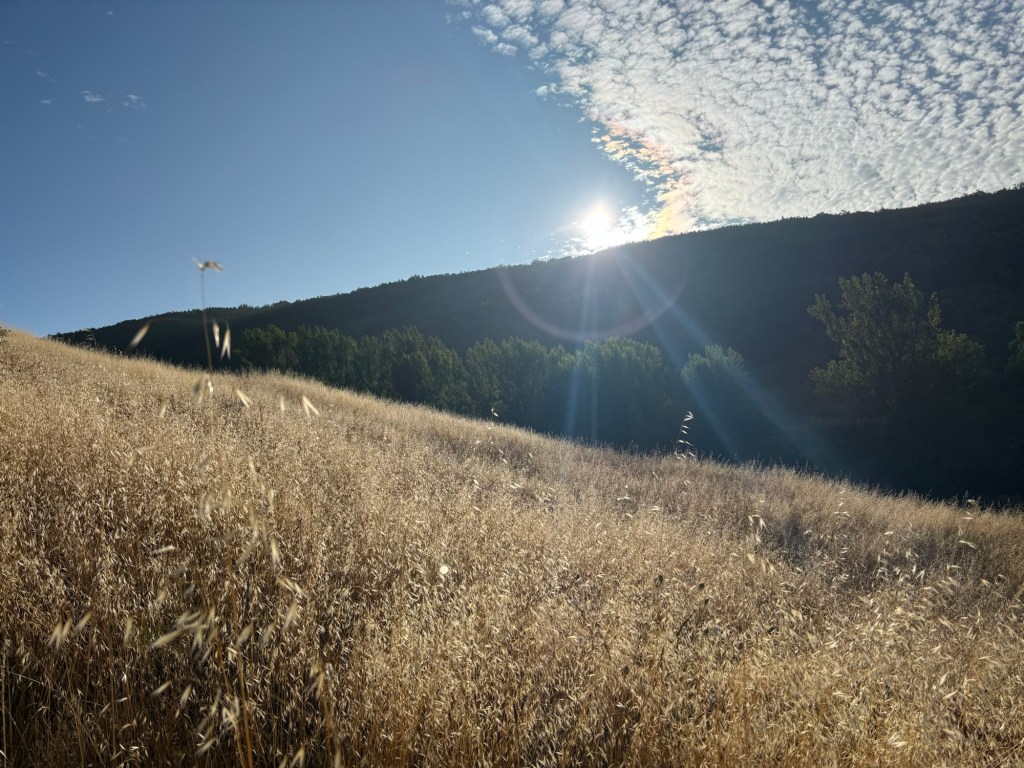
I have acquired a nickname on this Camino: the Grasshopper. It makes a bit more sense in Spanish, where the name literally translates as “mountain-leaper”. Evidently Hispanic grasshoppers are better at jumping than English ones. Well, not this one, anyway: I took the mountains today at something between a run and a hurdle, leaving the other peregrinos in the dust. I wasn’t in any particular hurry, as I’m still ahead of schedule, but let’s just say I didn’t want to end up walking another 40km day after yesterday’s fruitless endeavours.

Well – mission accomplished!


All the guidebooks indicate that making it as far as Pola de Allande puts the famous Hospitales route out of the question. Fortunately, that’s a load of nonsense. If you’re prepared to do some serious climbing, there’s a farm track that leads back up the mountainside, and I was more than prepared.

And so, as the Fellowship of the Ring tackled Caradhras and the Redhorn Gate (exceptional timing), I hurled myself at the mountain.
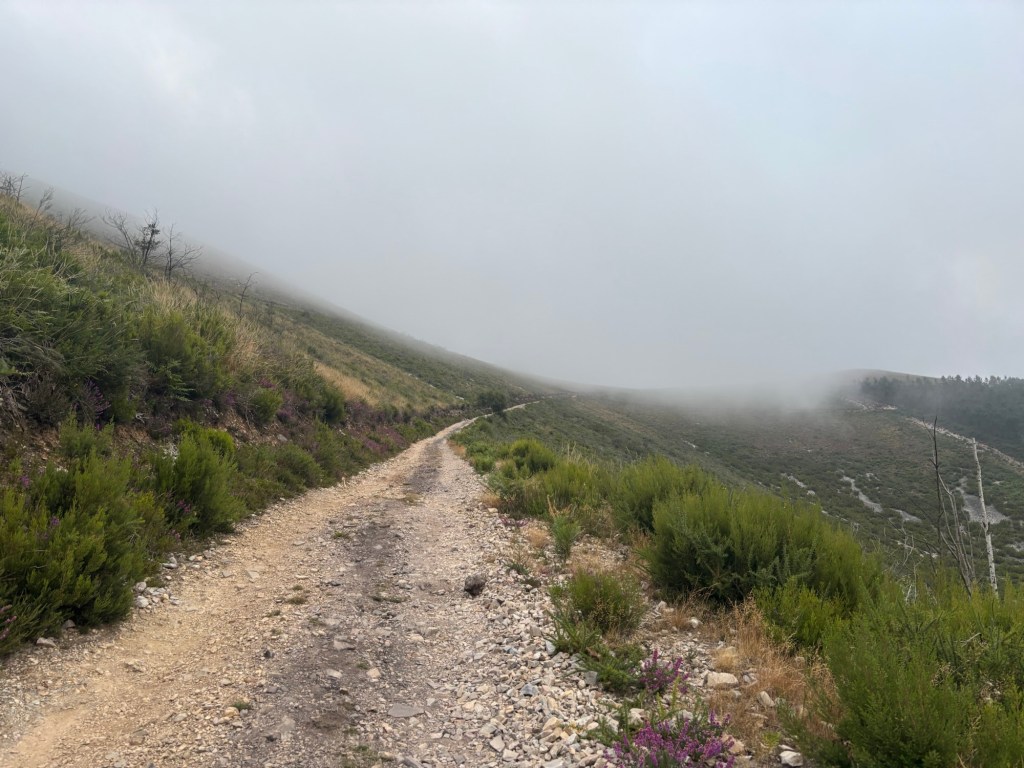

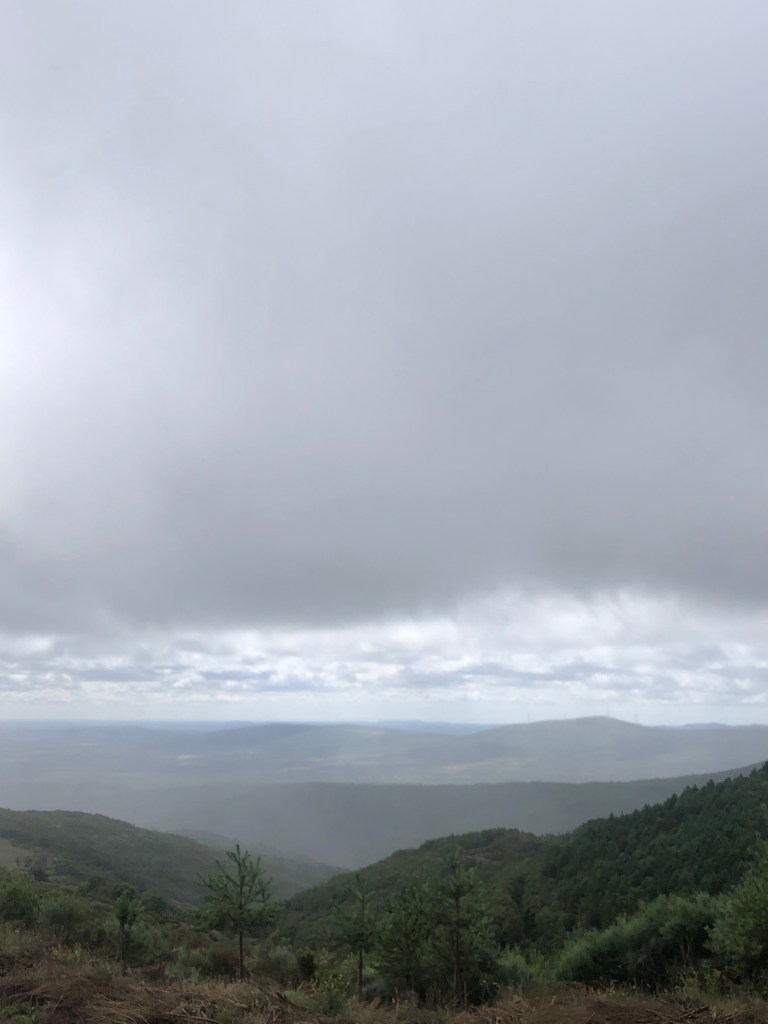
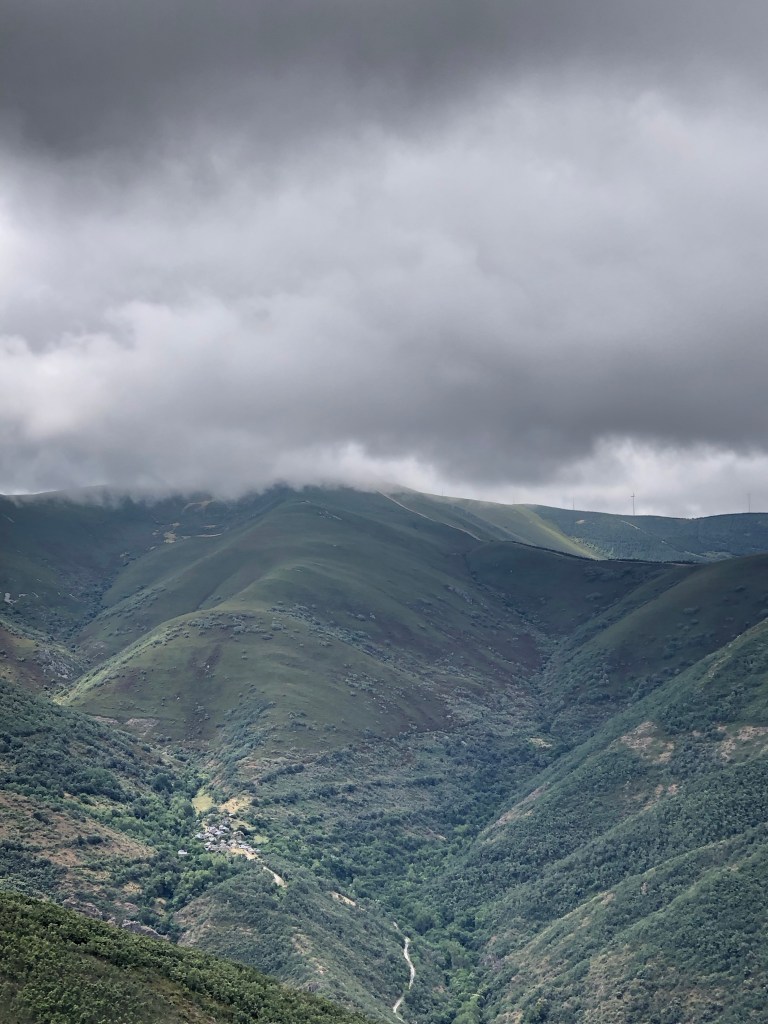
Uphill would be putting it lightly. Let’s just say that the company had already left Moria by the time I reached the top. But was it worth it? 100%. It wasn’t exactly the cloud sea that you get from the summit of O Cebreiro on the Camino Francés – which is around the same elevation – but it was a spectacular sight: pillars of golden light falling upon the green hills of Asturias to the east, dark forests of pine weaving through the valley floor below like a monstrous snakeskin, and great waves of clouds surging up the mountainside to break like water at its peak.
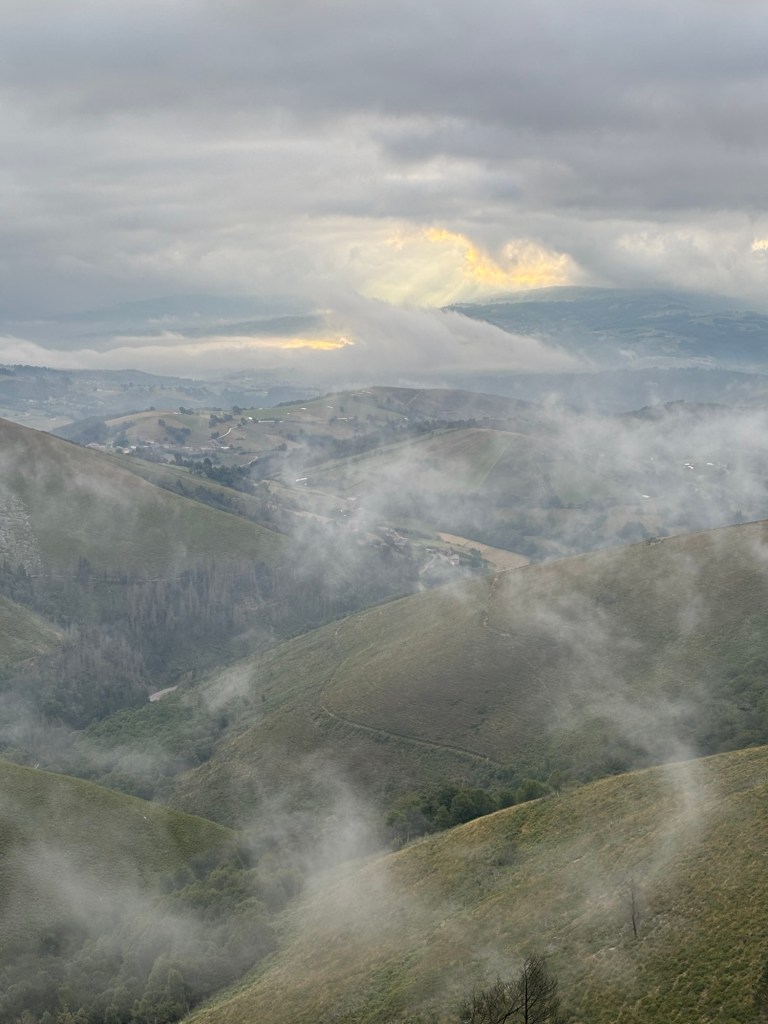

Standing here, upon the heights of the misty mountains, it was easy to see where the painters of Biblical masterpieces of old got their inspiration. Who wouldn’t be inspired with some sort of religious ecstasy in the high places of the world? Are not the mountains the closest we can get to the Heavens?
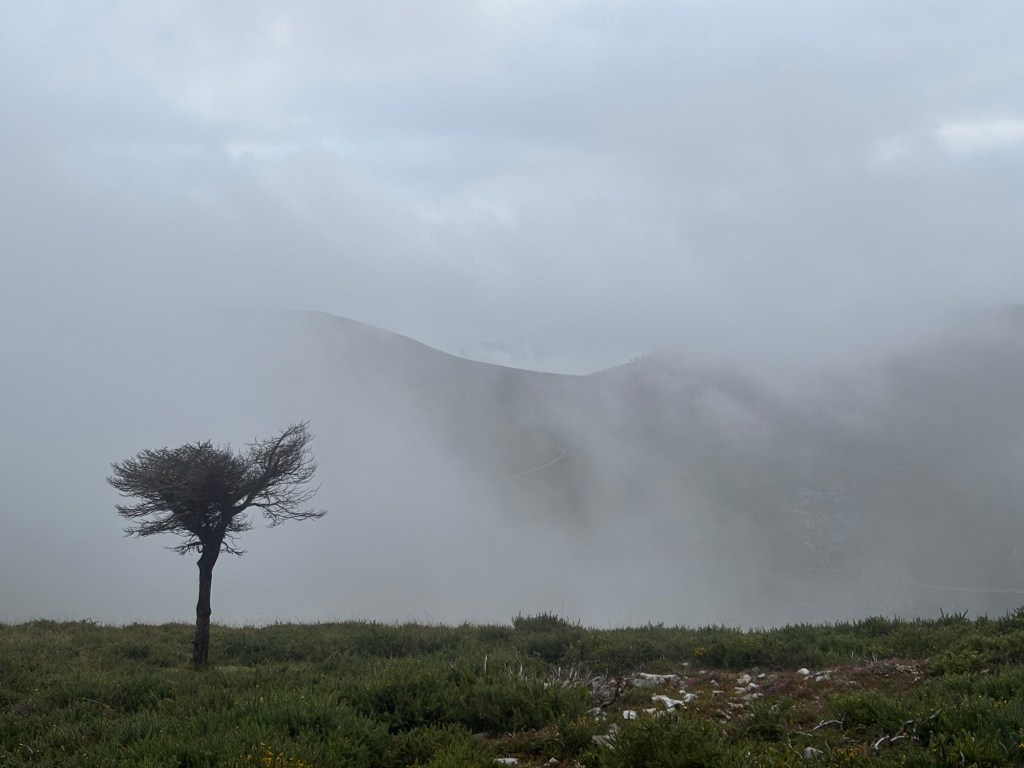

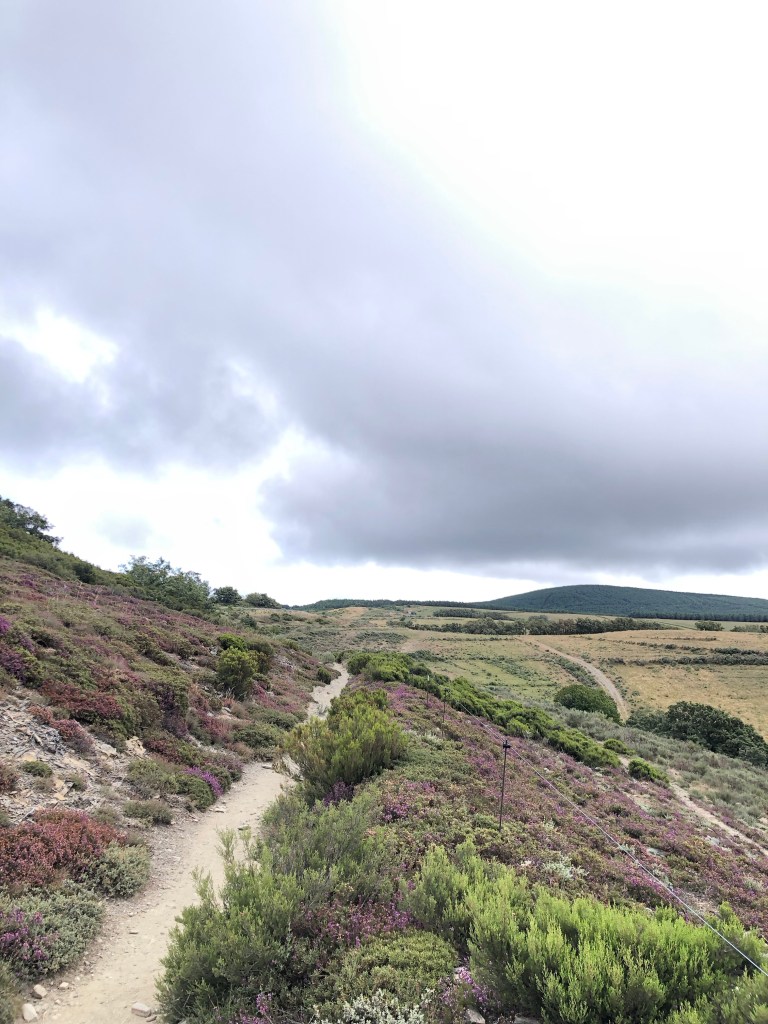
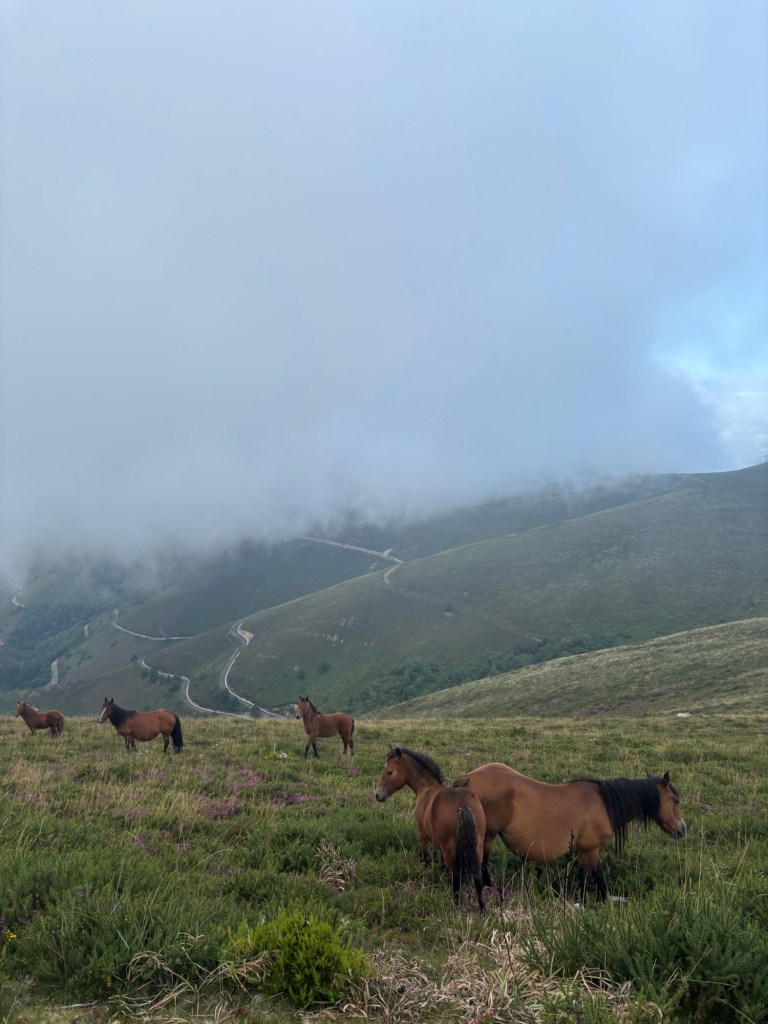
It’s still quite a schlep even when you’ve made it to the summit to reach the point where the Hospitales route joins up, so I had a fair stretch to myself. Me and the wild horses, that is, which were just about everywhere the cows weren’t. It must be a pretty charmed existence for them up here: all the fresh grass they can eat and all the space in the world, even if it is tremendously vertiginous…

After passing the ruins of the old pilgrim hospitals, I caught sight of the first peregrinos of the morning – mostly the crowd of twenty-odd who had reached Colinas de Arriba before me yesterday. Not to be outdone once again, I picked up the pace and vaulted past them. It’s hard to explain, as I don’t come from a particularly mountainous part of the world, but I have always been pretty nimble on my feet in the mountains, so there were large stretches where I confess I really was jumping from boulder to boulder. It feels right, somehow, in a way that a jog around the school grounds just doesn’t match. To think how fit and healthy I would be if I found a way to live in this country forever…!
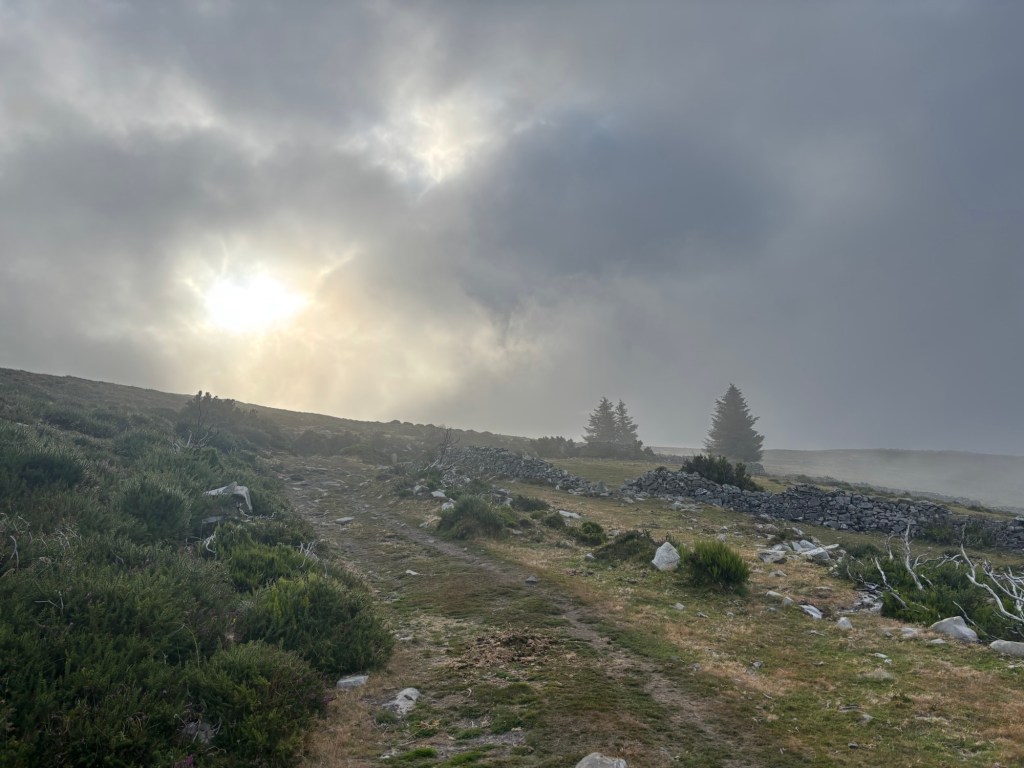

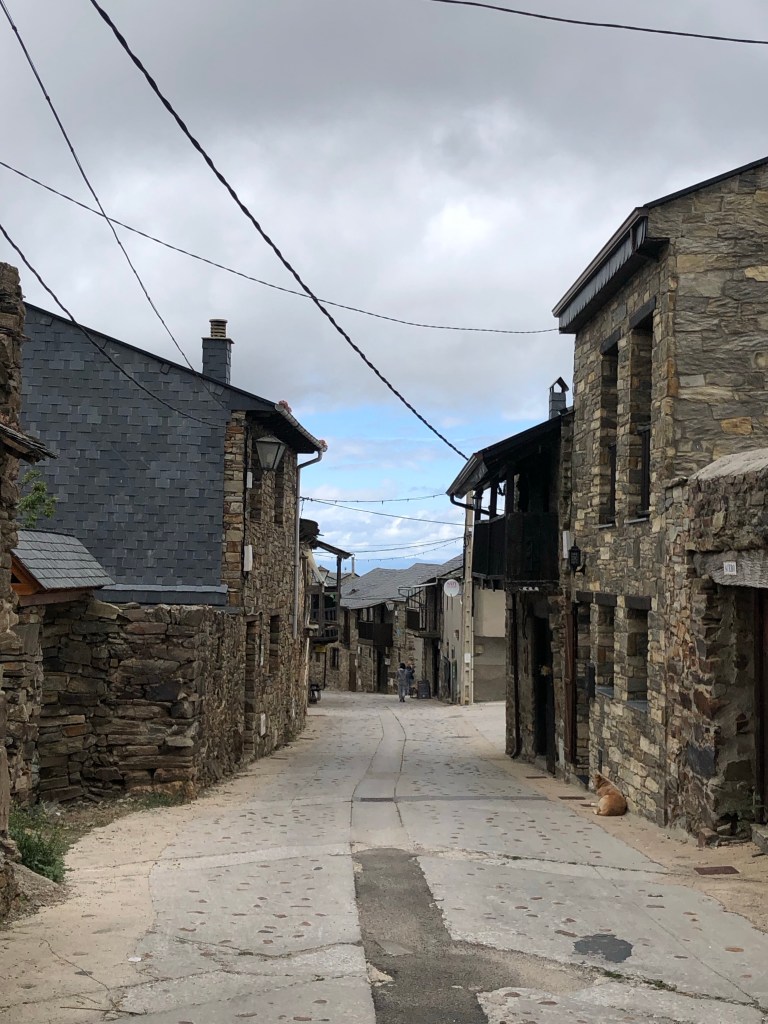
The descent from Monfaraón was mightily steep, but then again, so is tomorrow’s descent to the Embalse de Grandas, so I looked at the exercise as good practice. The Camino climbs (or races) through the slumbering mountain villages of Montefurado and Santa María de Lago, and by the time I’d reached the latter I had put at least half an hour between myself and the last pilgrims I’d encountered on the road.
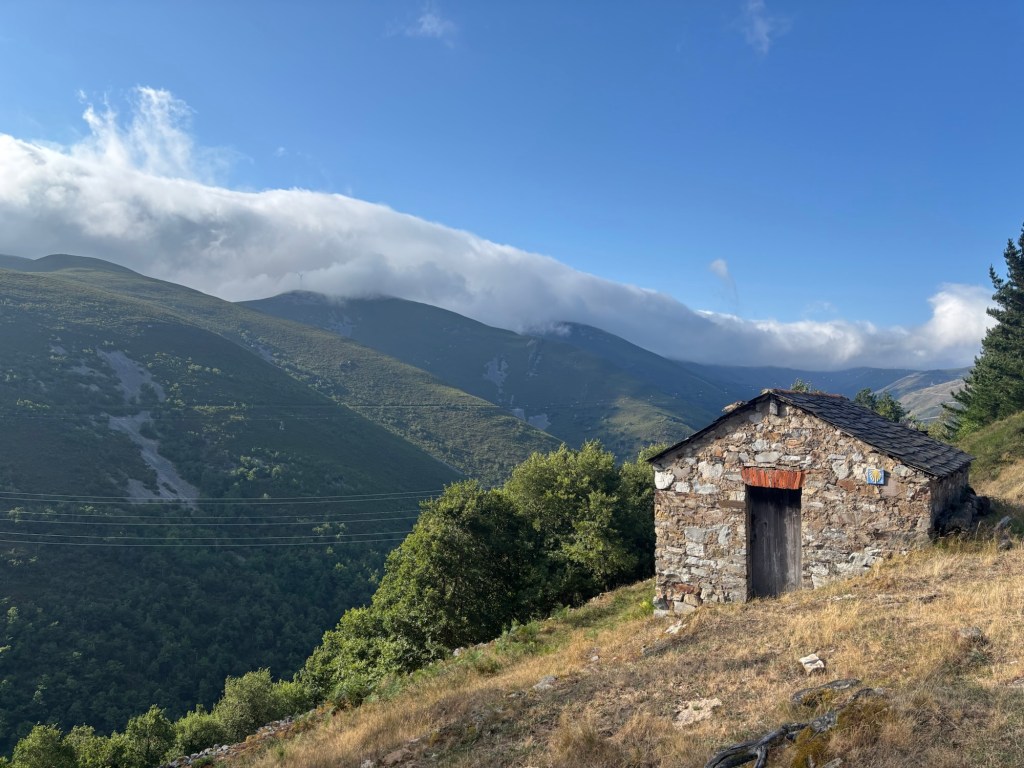

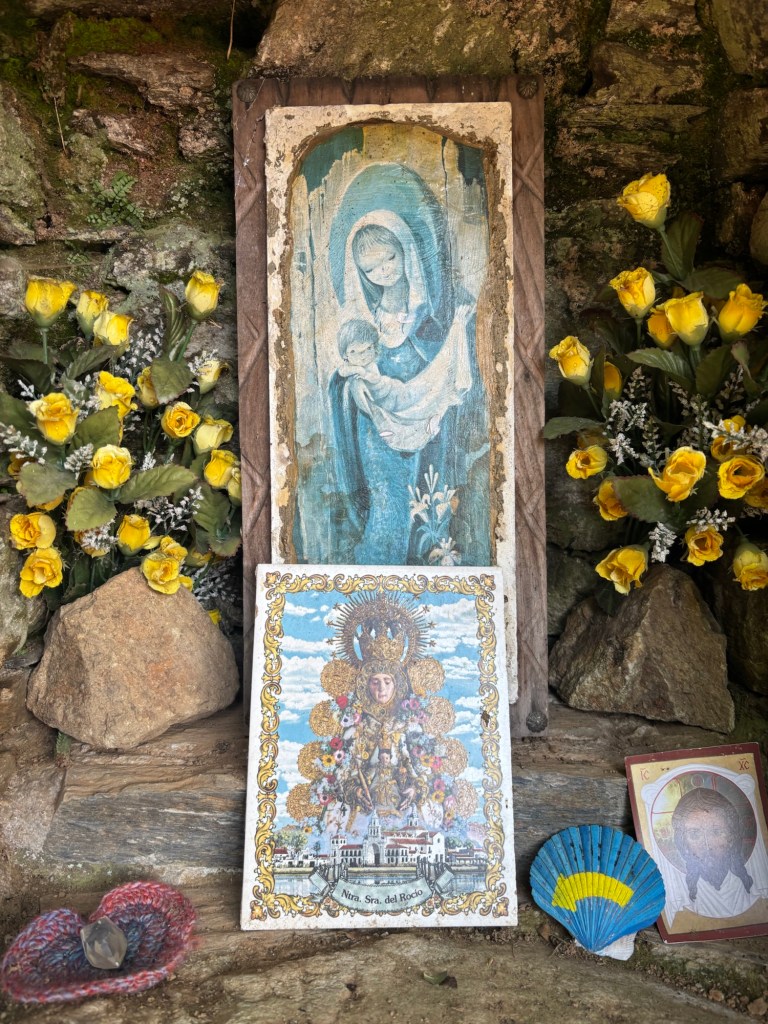
I didn’t see anything of especial note on the wildlife front beyond a veritable army of Dartford warblers in the heather on the mountaintop, but I did find a small shrine to the Virgen de Lago, in front of which somebody had placed an icon of the Blanca Paloma, which was a definite highlight. She has been a real guiding light on this Camino and my hearts soars whenever I find a space where she is venerated.

I got to Berducedo at around 11.40, all of an hour and a half before the albergue was due to open, so I could have pressed on – but after yesterday’s adventure, I wasn’t taking any chances, so I staked out the albergue and scored the first bed. A small victory, but one well-earned.

Not for the first time on this Camino, I bamboozled the other pilgrims by speaking only in Spanish and with a very thick southern accent which, I’m told, smacks of “La Línea o algo” – a mix of English and Andalusian, but more Spanish than English, which is plenty good enough for me.

I had lunch with a large group of Spanish pilgrims from all over: León, Toledo, Donostia, Madrid and Andújar, as well as an English lad here brushing up on his Spanish before the trials of Year 13. The fabada was phenomenal, and should give me all the energy I need for tomorrow’s mad trek, as I need to gain a day or two somewhere between now and Santiago.


There’s an Italian girl who is in tears because she can’t go on. One of the Spaniards is gently encouraging her to look after her health and to come back when she’s ready and pick up where she left off. She’s not the first casualty I’ve encountered on the Camino this year and she won’t be the last. I have to count myself lucky that I’ve made it so far in such good health. Maybe my daily prayers are doing some good for me after all. BB x
Camino XXVI: The Journey Continues

Albergue de Peregrinos, La Robla. 16.13.

I’ve just woken up from an hour’s nap. It might have been a little longer, I’m not so sure. All I know is that when I fall asleep there were only three of us in the albergue, and now it’s looking astonishingly busy. Mostly sporty Spanish types in their 40’s, mind: tall and lean, with hawklike handsomeness in their Roman profiles and dressed from head to foot in short-sleeved Lycra and health-tracking smartwatches. The exceptions are a greying Dane and a Japanese couple, neither of whom speak any Spanish whatsoever. To be honest, I wasn’t expecting company at all, but then, perhaps it’s hardly surprising that others beside myself should seek out a more rugged and quieter version of the Camino during high season.

Hopefully it doesn’t get too busy. I’ve come here for quiet reflection and a spiritual challenge, not a hiking holiday.


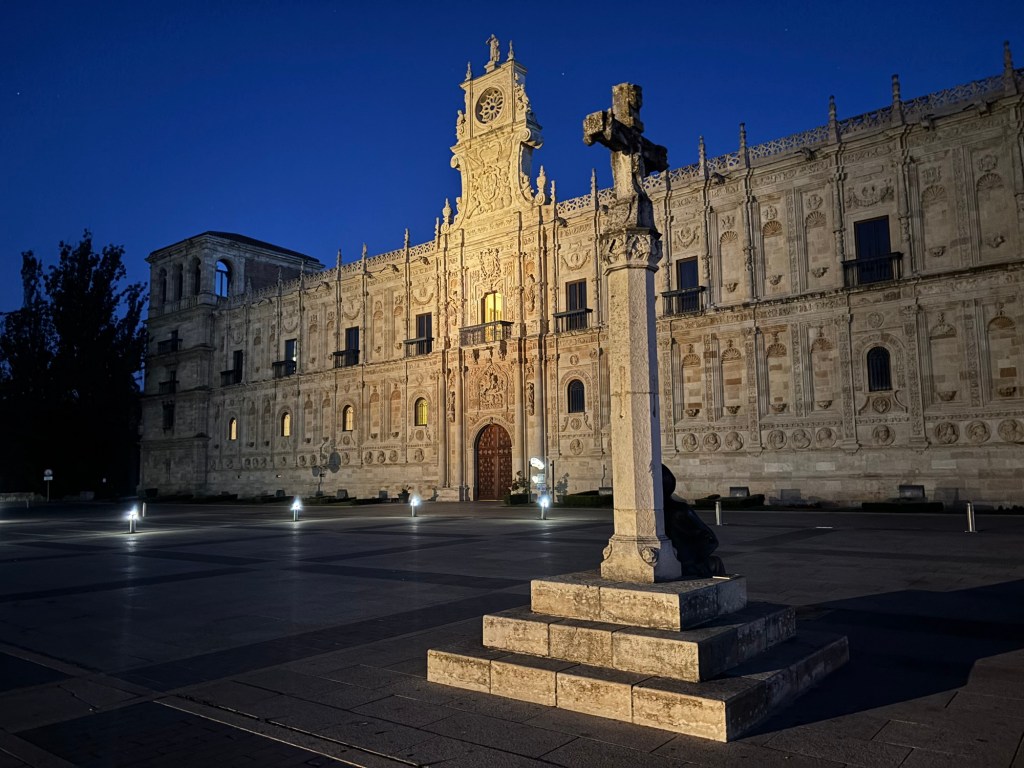
I left León shortly after six this morning and took the north road at the Convento de San Marcos, leaving the Camino de Santiago behind. I will not see that road again until I reach Melide, a little under two weeks from now.

I cast a glance down the westward road into the empty but well-lit streets of León’s industrial district, across the bridge where I said farewell to Audrey, Talia, Alonso and Steven yesterday morning. By now my companions will have reached Astorga and beyond a few manic longer days there is little hope of catching up to them before they arrive in Santiago, and with the terrain ahead I would be foolish to try. I have to let them go.


I had the Camino to myself all morning: no flashlight-wielding pilgrims in front, no Italian conversations behind. Just me, the morning and the voice of Derek Jacobi in his retelling of Robert Graves’ I, Claudius.

The pilgrim detritus of the Camino Francés is nowhere to be seen. This is what I had heard: this is the Camino as it once was, where the occasional painted stone, makeshift cross and shrine to the Virgin Mary indicate the way, not a scourge of senseless stickers and pilgrim graffiti. It was perfectly easy to follow, though I am glad I set out early, as the cloud cover began to fade before ten o’clock.

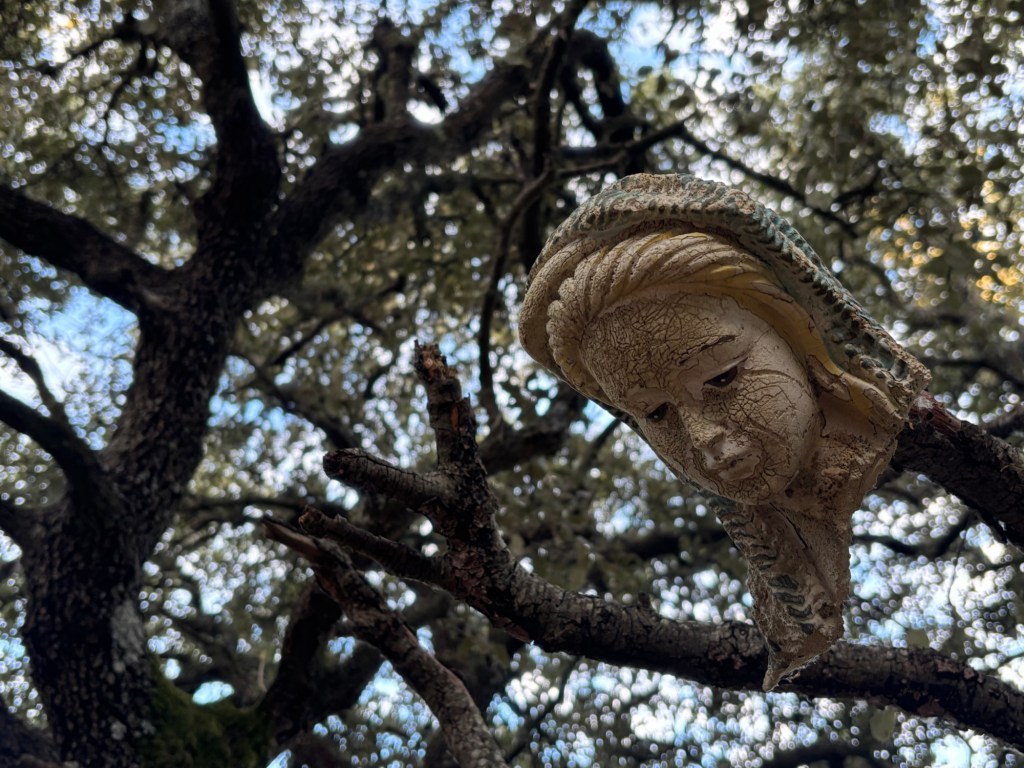
One such shrine to Mary was a little disturbing: her disembodied head had been impaled upon a branch staring down at the road, while her hands stretched across her chest to her sacred heart had been similarly affixed to a nearby branch. I could not find what became of her legs.


The Camino climbs up into the hills a couple of times, forging a path through the forest between the road and the river. Now and then it breaks out into the open, but for the most part I wandered beneath the canopy of ancient trees covered in carpets of trailing lichen. There was a strong smell in the forest that might have been fox, though it was different to any fox scent that I have ever caught. I thought at first it might have been wolf, but wolves are not as pungent as foxes – they also are good at covering their tracks by rolling in dirt to hide their scent so as to hunt more effectively. So I am not sure what it was.


I reached La Robla for 11.30 and considering pressing on to Buiza, but as tomorrow is Sunday, I figured it wiser to stop here, buy supplies for the road ahead (as nowhere will be open tomorrow), and rest. I popped into the local AlCampo supermarket to get some fruit, some bread and a few tinned meals in case of emergency. I took the flip-flops (a bad idea over anything but a short distance, but I needed a change of shoes) and managed to smash my big toe against the step when my flip-flop caught. It’s fine now, but it wasn’t a lot of fun at the time, though it may take some of the discomfort away from the blisters on my heels.

The lady at the checkout was very keen to get me an AlCampo card which they were “giving away”. The whole thing took around fifteen minutes to fix (as I had to use my long-since defunct Spanish mobile number and the town’s postcode, since the website wouldn’t accept either of my English credentials), but it may save me a little money in the long run – provided I shop at AlCampo. Which, I am sure, is the whole point.

The hospitalero still hasn’t appeared, but it’s nearly six, so I’m sure they’ll be here soon. In the meantime, I’m going to do some reading. BB x
Camino I: The Wall

Monastère de Sarrance, Sarrance. 15.07.

I’m sitting in the garden of Sarrance’s Premonstratensian monastery after a good morning’s walk. I didn’t have too far to go today: just over 20km, all in all, which is a good distance for the first couple of days as my feet get used to walking long distances again.

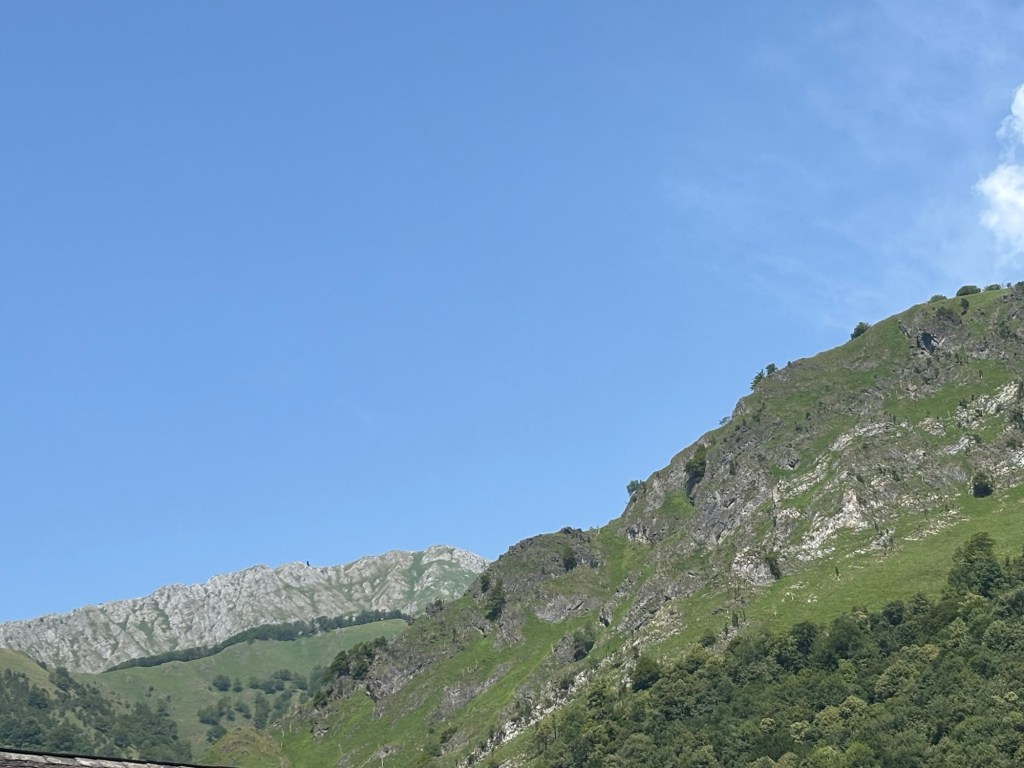
Sarrance is a quiet little village, perched on the west bank of the Aspe river which snakes its way north out of the mountains. Every now and then I see great shadows on the mountainside, cast by the hulking shape of a griffon vulture. There must be about eight or nine of them up there, circling above the craggy ridge of Escot. It feels good to be back in griffon country. It feels like home.


I left Oloron at seven on the dot this morning. Late, by summer Camino standards, but as I wasn’t aiming to travel far, there seemed no point in rushing a decent breakfast only to have to wait at the other end. There aren’t many pilgrims on this Camino, but I had a lovely communal dinner with Christian and Miguel, a Frenchman from Toulouse and a Belgian (rather, a Spaniard from Málaga who has lived in Belgium for almost his entire life and is now, to all intents and purposes, as Belgian as Leffe beer).

I set out on my own, as is my Camino tradition (and also because I know my pace tends to outstrip most pilgrims). Mercifully, somebody sent down from on high a great belt of clouds, so for the first half of the morning I was sheltered from the heatwave that is raging across Europe right now.

Which is just as well, as I was absolutely mauled by mosquitoes last night (it was far too hot to slip under even the flimsy sheet provided, never mind my sleeping bag liner), so the last thing I needed was a full morning’s sunburn to worry about on top!


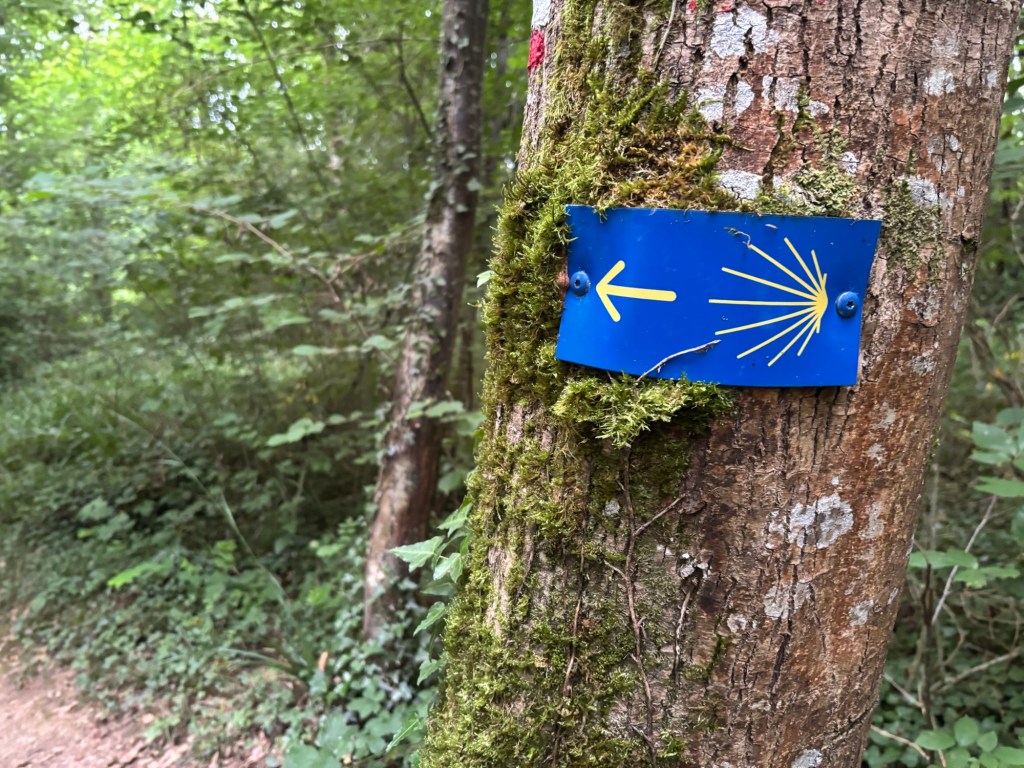
Today’s stretch involved quite a bit of off-roading through the dark Pyrenean forests that cover the valley floor. There isn’t as much signposting here as there is on the Camino francés, but the reliable GR symbol (the red and white stripes) and the occasional seashell serve as decent waymarkers. I didn’t get lost once today, and that’s the important thing, because in this heat, every detour and reroute becomes a proper trial.


By nine o’clock the sun was back with a vengeance, clearing all the cloud cover in a minutes. I was sweating buckets at this point, so thank goodness for breathable fabric, or putting my backpack on after every stop would have been very unpleasant!

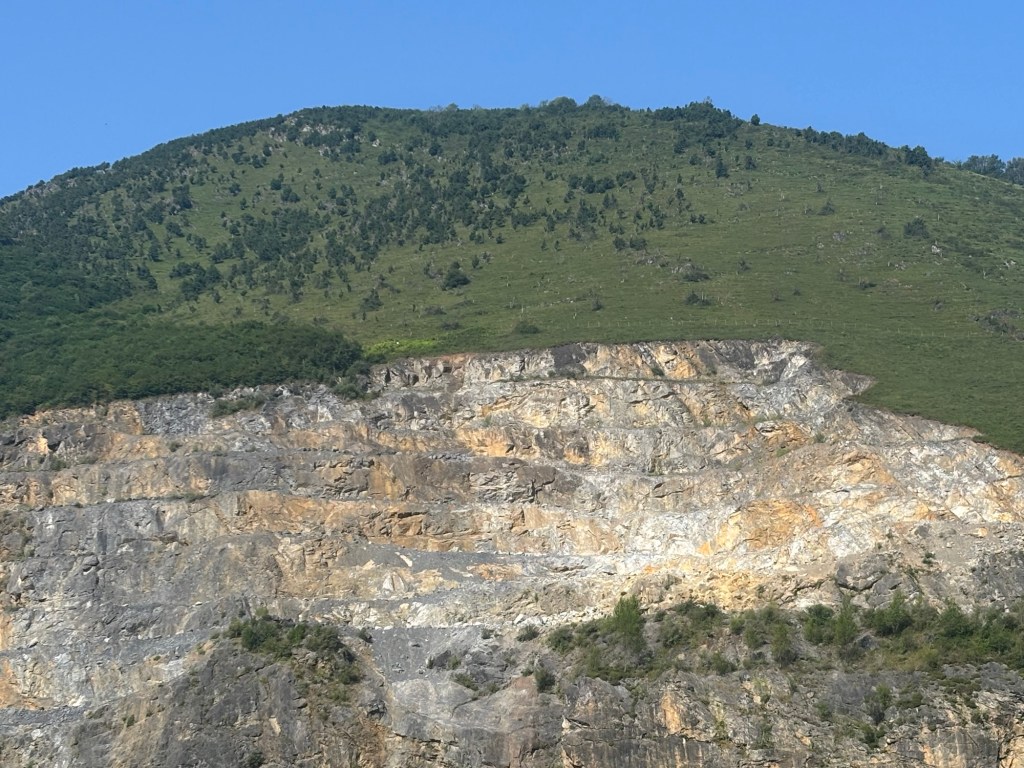
There’s a huge quarry carved into the mountainside just south of Lurbe-Saint-Christau. I don’t think I’d have given it much thought beyond ‘Jesus, who’d be working in this heat’ and ‘what kind of demon thinks it’s a good idea to take a huge bite out of a mountain’ until a deafening explosion caught my attention not longer after I’d passed it by. I couldn’t quite tell, but from the column of smoke and the enormous boulder tumbling down the slope it looked like the workers had dynamited a piece of the mountain.

I wonder if quarry workers ever feel a sense of remorse for what they do. It takes millions of years to build a mountain, and seconds to punch a hole in it. Or maybe I’m just being sentimental.


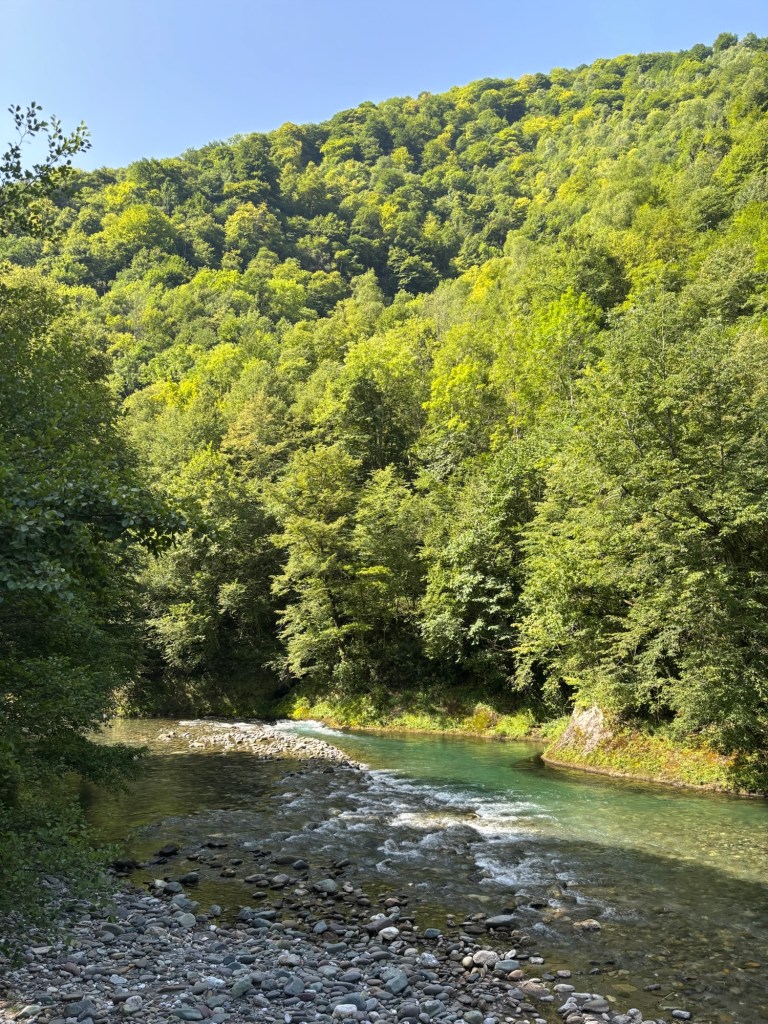
After the hamlet of Escot, the Camino winds its way through the forest along the banks of the Aspe River. There’s really nothing quite so pure and beautiful as a mountain stream, and I was drinking in the sight and sound of it for all of an hour and a half. It was all I could do not to strip down to my shorts and dive into the water (though I bet it would have been teeth-chatteringly chilly). I kept an eye out for otters, kingfishers, and even the Pyrenean desman, but no luck. Plenty of other critters kept me company along the road, like black redstarts, woodlarks, robins and a couple of red-backed shrikes, here near the westernmost limit of their range.


I got to Sarrance at around 11.30, making it a four-hour trek (with a half hour’s rest stop halfway). I thought I’d be far too early to check in, but one of the volunteers spotted me in the shade after the midday Mass and let me into the monastery to shower and wash my clothes, which was nothing short of bliss. Christian and Miguel showed up a couple of hours later, and we had a Leffe beer each at Miguel’s insistence while I counted raptors in the sky above. Within the space of half an hour I had clocked buzzards, honey buzzards, red and black kites, a booted eagle, kestrels and griffon vultures, all in the same airspace. No lammergeiers yet, but I’m keeping my eyes wide open for a sign of that diamond-shaped tail.


I spent most of the afternoon in the gardens, watching the vultures circling over the mountains. For about an hour there was a nearly constant drumroll of thunder to the south, but such is the natural wonder of the Pyrenees: the high mountains form one of Europe’s most imposing natural barriers, a great wall of stone that, throughout history, has cut the Iberian Peninsula off from the rest of Europe, dividing everything but the Basques and their language. A great belt of storm clouds had built itself up like mountains above the mountains, but it never did reach us here in Sarrance, breaking on the Spanish side like a besieging army. All we got was the wind, which was just what I needed after a long and hot walk.

The Premonstratensian fathers invited us to Vespers in their chapel before dinner, which was a warm and sociable affair. Christian and Miguel will take different route tomorrow, both by bus, so it may be that I find myself alone in Borce – I haven’t seen any other pilgrims on the road.

A quick leaf through the guestbook showed that the English are by far the least represented of all the nationalities on the Camino. I wonder why that is? Time was when we had one of the most famous pilgrim routes in Europe, the road to Saint Thomas A’Beckett’s tomb in Canterbury. What happened?

Naturally, we’re not a Catholic country, but I wonder if it’s deeper than that: after all, there are plenty of Europeans (and Americans) who do the Camino with no faith-oriented motivation whatsoever. Have we simply lost the culture of pilgrimage? The long and arduous journey on foot? Are we so wrapped up in our small island concerns and independence that the idea of schlepping across a landmass like Europe seems downright insane? I could name plenty of friends who consider themselves experienced walkers, but none of them has ever done the Camino. It’s not unheard of. It’s just not on our radar.

Anyway, that’s the first day of the Camino done! Only another forty-five or so to go! Here’s to them being mozzie-free, or I might just go mad. BB x

Devils of Fire and Dust

Capsule 19, Atypicap, Puerto de la Cruz. 19.02.

The last post went off on a tangent about guaguas – so much so that I didn’t even get on to talking about the purpose of my voyage: to hike in the caldera of Spain’s tallest mountain and the symbol of Tenerife itself: Teide National Park.


Ignore the ads plastered across bus stations and billboards: Teide, not the widely advertised Loro Parque, is the true ‘must’ of Tenerife. There is so much about Teide that is worthy of a story. It is an active volcano, erupting most recently in 1909. It was sacred to the Guanche people (the native peoples of the Canaries before the Spanish conquest), who saw it as both a holy mountain and the jail of the fire demon Guayota, interred within the mountain by their supreme deity, Achamán.

What did Guayota do to deserve such a fate? He kidnapped Magec, the Guanche sun god, and trapped them inside the mountain, plunging the world into darkness. Despairing for their future, the islanders prayed to Achamán, who fought a fierce battle with Guayota and imprisoned him within the mountain forever.


Teide itself is a mighty thing indeed. Even from the caldera – which, it must be said, is not the mountain’s most beautiful side – it towers above everything else, dwarfing not just the high cliffs and mountains around Tenerife’s rim but the surrounding islands as well. One can only imagine the terror the islanders must have felt when it caused the earth to roar and spewed fire and fury out of its peak.

It was said that Teide’s eruptions were a sign of Guayota’s fury at his imprisonment, and that his children, in the form of demonic dogs known as tibicenas, haunted the mountainside by night.

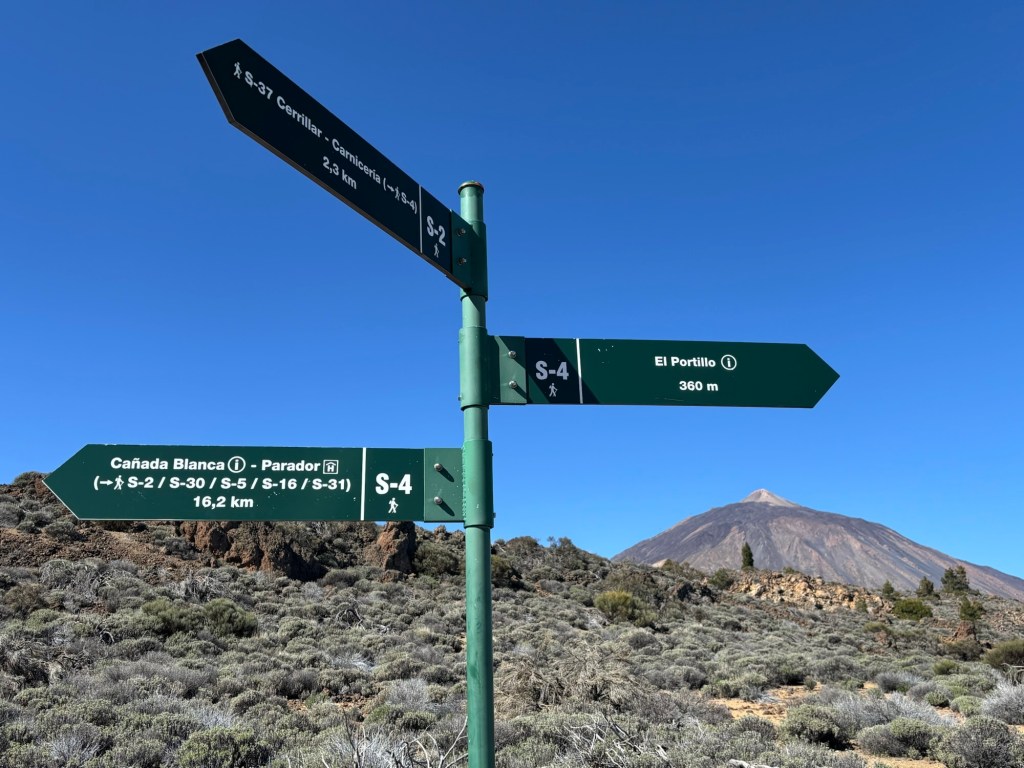
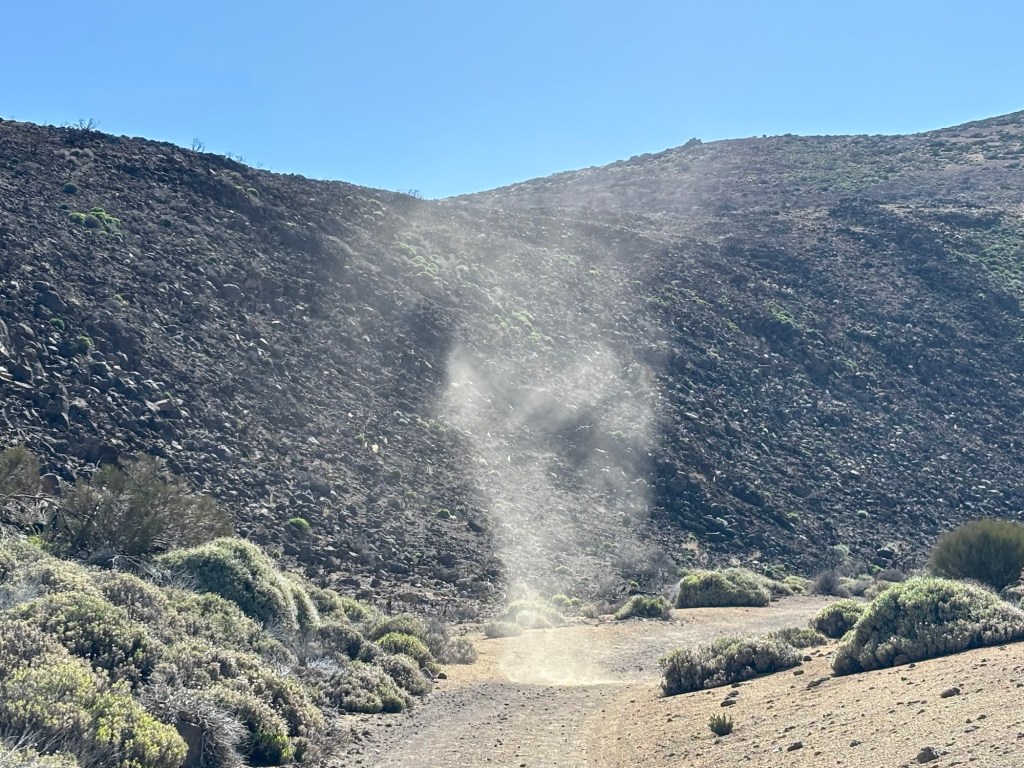
I didn’t see any hellhounds on my lap of the park, but I did see a dust devil as I set out from El Portillo. I used to see these quite frequently when I lived in Jordan, but outside of desert environments they are quite rare.


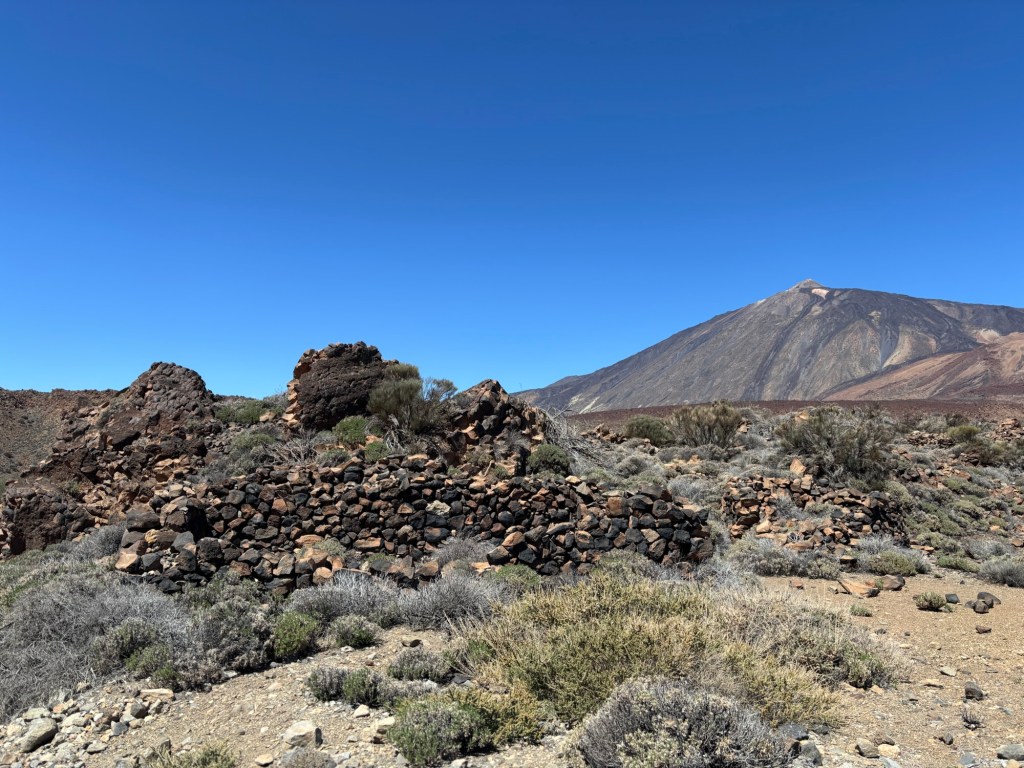
Scattered around the caldera floor are a number of unfinished or ruined dwellings built out of the scattered basalt rocks. These present a mystery to the casual hiker: what were they? The ancient dwellings of the Guanches? An initiative by the park authorities? Hunting refuges? In truth, they are none of these things: the caldera was far too hostile an environment for settlement by the Guanches, construction within the national park is tightly restricted, and hunting – naturally outlawed – would net a poor return, as the largest birds within the park are kestrels and the odd buzzard, and the only native mammals are bats.

No – they are actually the remains of a German attempt to build a sanatorium within the caldera in the early 20th century. A lack of funding, the eventual creation of the National park and, of course, two world wars put a bullet in the head of the project and now all that remains are the foundations of these houses, which now provide shelter for the enigmatic blue-bellied lizards that can only be found here on Tenerife.


These creatures are everywhere in the caldera, darting across the path and into the numerous crevices in the boulder-strewn ash field as you pass. There are two other species endemic reptiles within the park – the Tenerife skink and the Tenerife gecko – but the casual observer is much more likely to cross paths with the Tenerife lizard, especially around the Parador car park where they have become quite fearless.

The Canary Islands – curiously, named not for the species of finch that calls the islands home, but for the large population of monk seals (or sea dogs) that once lived here – are home to a large number of endemic reptiles, some of them textbook cases of island gigantism: that is, where a species has fewer natural predators and can thus grow to a size far greater than its mainland relatives. The largest of these, the El Hierro giant lizard, is a relic of precolonial times, when giant lizards were much more common in these islands, as well as much larger: fossils indicate that some could exceed a metre in length, right up until the arrival of the Spanish in the 1490s.


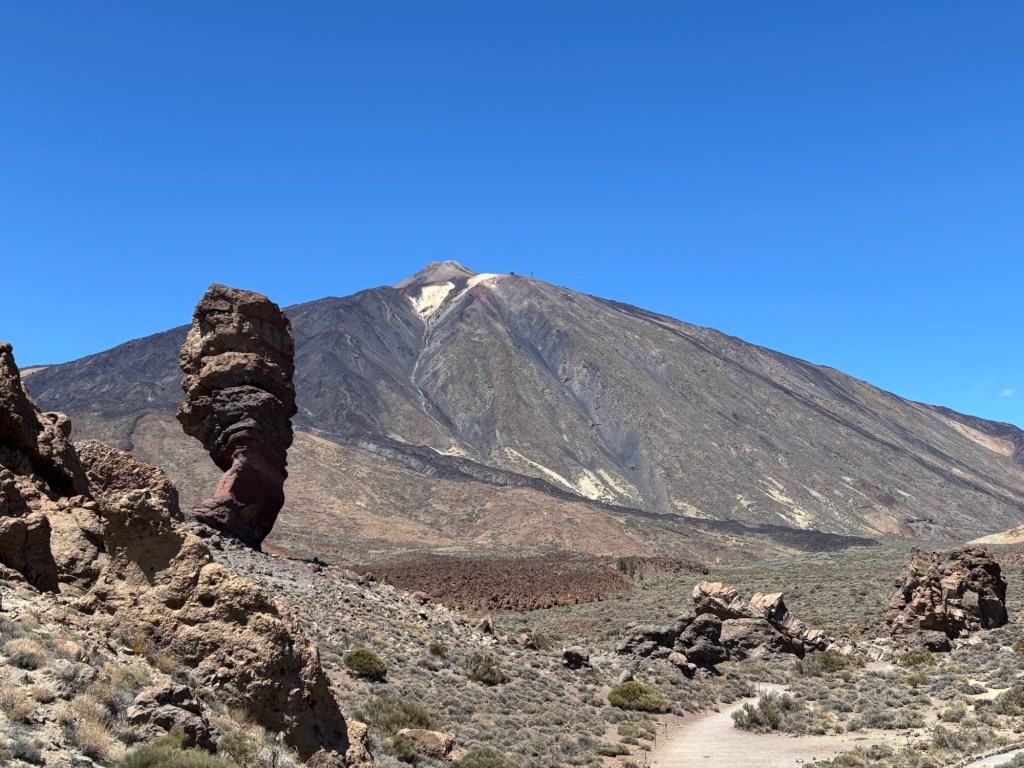
No visit to Teide would be complete without taking in the Roques de García, the roots of an ancient mountain even older than Teide itself. The most well-known of these has to be the Roque Cinchado, also known as ‘el árbol de piedra’ – the stone tree. Standing on the footpath a few paces from the car park provides you with one of the most famous views in all of Spain: the Roque Cinchado with Teide as its backdrop. The old man of the mountain and its son. I had to wait for a family testing out their drone to get a clear shot, but it was worth it.


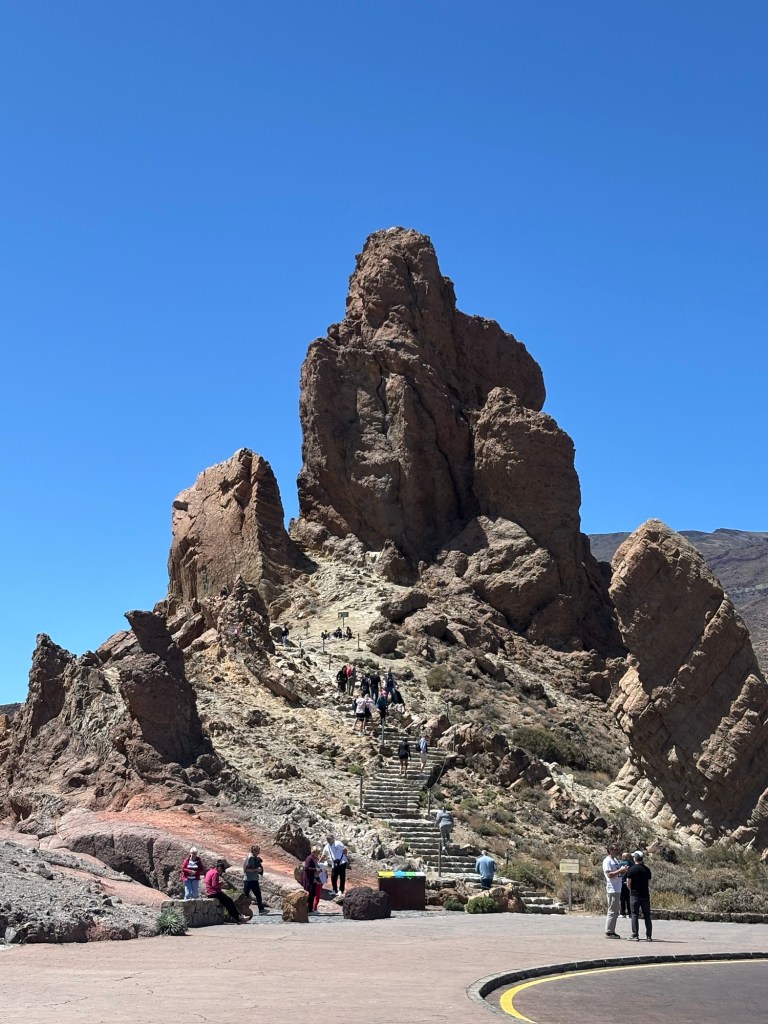
It’s not the only impressive rock formation in the caldera: there’s a mighty organ-like basalt structure down in the valley floor, and the largest of the Roques de García seems to have become – of all things – a beauty spot. Three Italian men sat at the top of the steps, sporting designer sunglasses and expensive shoes. A Ukrainian girl dressed in pink with her hair tied back in a high ponytail occupied one of the lower peaks for the best part of twenty minutes, turning her head this way and that while her friend took photographs. As a matter of fact, I was the odd one out for not wearing my best: it seems whole busloads of well-dressed teens and students come up here for the ultimate profile picture.

I wonder if they spared a thought for the ancient fire demon trapped with the mountain behind them – or whether they thought to learn about the Guanches, the true Canarians, whose fire was extinguished many hundreds of years ago. They were crushed as a mere prelude to the conquest of the Americas, and I don’t remember their story featuring much in my history classes in Spain. If there are any left, their bloodline had long since mingled with the Spanish to the point where it has all but faded away. Perhaps it is fate that they too, like the fire demon Guayota, now lie buried deep within the mountain.


Tomorrow I strike out west for the peace and quiet of Chinyero. It’s been a long time coming. BB x
Camino XVII: Letting Go

I’ve made it to the mountain village of El Acebo, the first town of El Bierzo, León’s westernmost outpost before the green hills of Galicia. I didn’t mean to shoot this far, but after arriving at Foncebadón before 11am I decided to press on with a couple of other pilgrims. It’s been a long hike today, and one of the most beautiful of the whole Camino.


I was up before 5am, which is just as well, as one of the pilgrims in my dormitory was impervious to his 5 o’clock alarm, which continued to ring for well over ten minutes, waking everybody up but him. I’d had the foresight to dress for the road ahead of time, so I simply slipped away from the phoney alarm clock (ha ha) and retreated to the downstairs kitchen to pack.

The doors of the albergue were closed until 6am, but some of the pilgrims must have been impatient, because after I’d had my breakfast and went upstairs to wait, I found it already ajar. So, not too long after half past five, I was out in the windy streets of Astorga and on my way.

I did my first bit of serious journaling for a while last night, so I had the company of all the characters of my novel in my head for the first few hours of the morning. Spain is working its usual magic: just being here gives me ideas, threading new storylines into the patchwork where life in England simply leaves me in a creative block. I must have run through some of the same dialogues over and over to keep them fresh in my mind before reaching the picturesque village of Santa Catalina de Somoza, where I stopped in front of a giant stone die to watch the sunrise. The clouds tumbling over the mountains ahead glowed a fierce salmon pink for just a few seconds, which I missed by a whisker with my phone, but it was worth the early start to catch even a glimpse of that morning wonder.


The meseta is well and truly behind me now. It was never low – most of the meseta from Belorado is over 800m above sea level – but from the lofty heights of the Montes de León, surrounded by a changing landscape of heather, broom and drystone walls, it feels a great deal more than two hundred metres down.

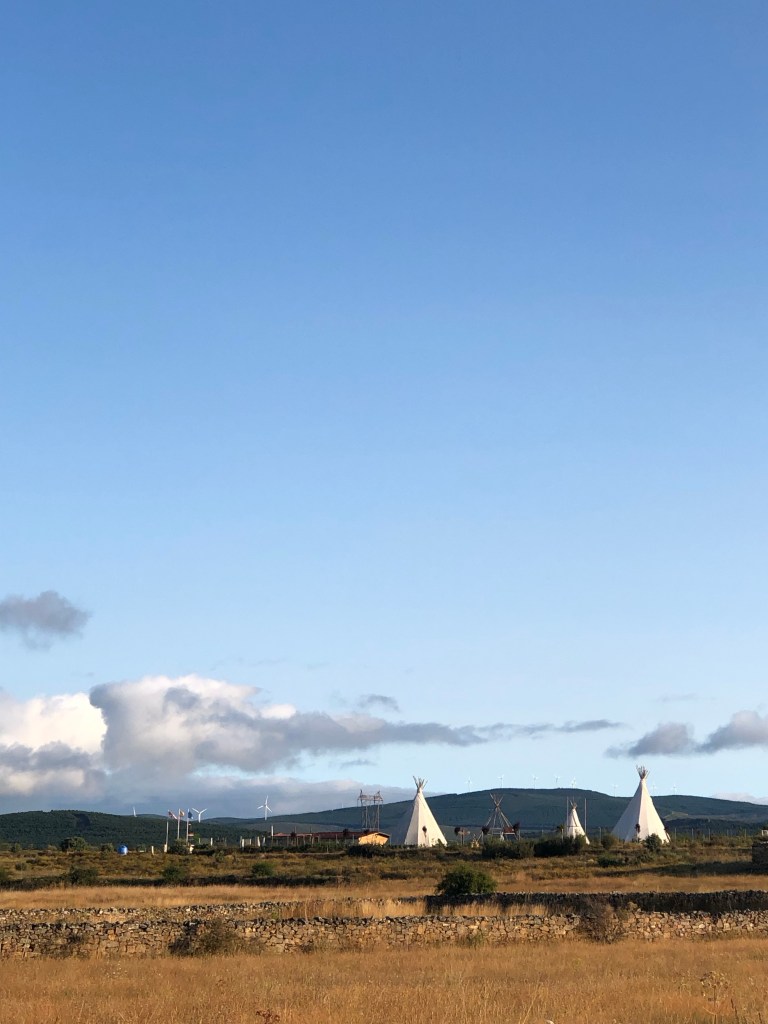
Even the wildlife has changed. Rock buntings replace corn buntings, and woodlarks sing in lieu of skylarks. The kites and kestrels of the plains are nowhere to be seen: instead, I clocked a peregrine and an eagle of some kind from a great distance, though I couldn’t tell what kind against the clouds. I practically stumbled upon a couple of red-backed shrikes near the decidedly out-of-place pueblo indio outside El Ganso, which is a first for me! You don’t find them further south than this.

The shrikes, I mean. I don’t know how far you’d have to go to find another faux-Indian setup like this one…


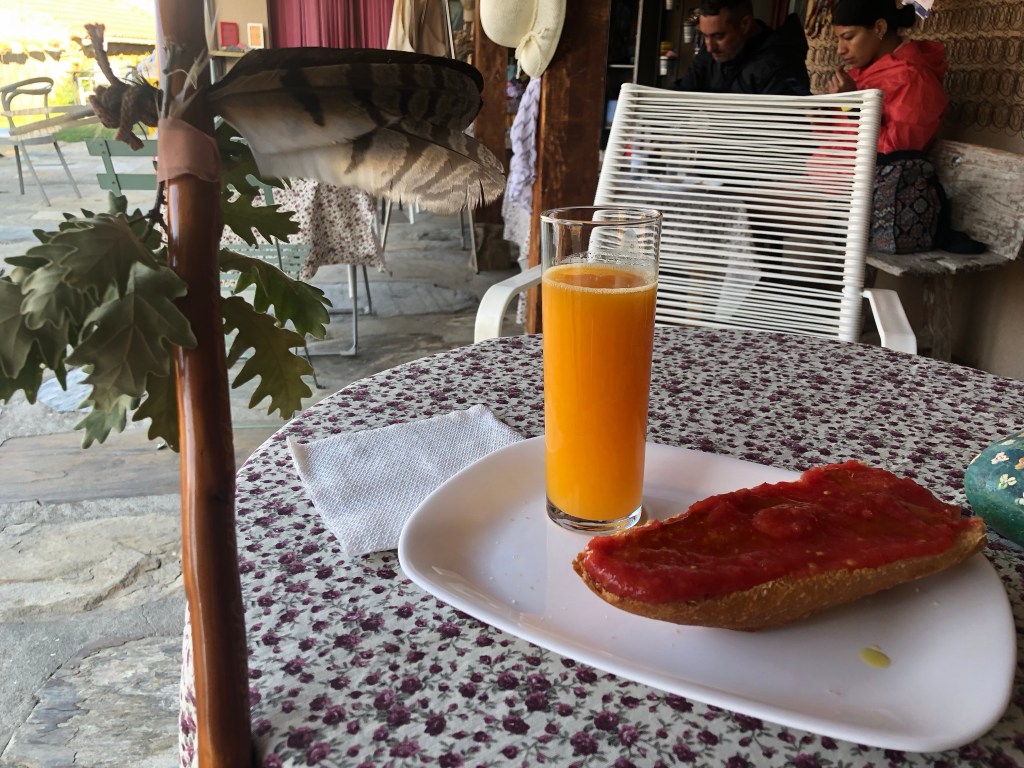
I made an uncharacteristic stop for breakfast in El Ganso, and what a fantastic idea that was. I had probably the best tostada con tomate y aceite of the whole Camino with a tall glass of fresh orange juice, and snagged a leather bracelet for the road as a keepsake. I missed the famous Cowboy pilgrim stop as it was too early, but at 5€ for the below, I think I found what I was really looking for.


Walking songs carried me on and up the mountainside toward Rabanal del Camino. I took advantage of my solitude in this forested part of the Camino and burned through my repertoire from Tolkein to all my favourite sevillanas, only shutting up when the town was in sight.

I shared the road thereafter with an Australian backpacker, Alex, for a little while, before reuniting with Belgian pilgrim Louis for the last push to Foncebadón. I even doubled down on my food pitstops and dropped into a bar for a cider. I even came away with a free tapa of tostada con jamón serrano. Win win!

And based on that boost, I threw caution to the wind and decided to press on with Louis to El Acebo. I’ll admit it was another linguistic flight of fancy on my part, based on his interpretation of the town’s name in French: là, c’est beau (it’s beautiful there).


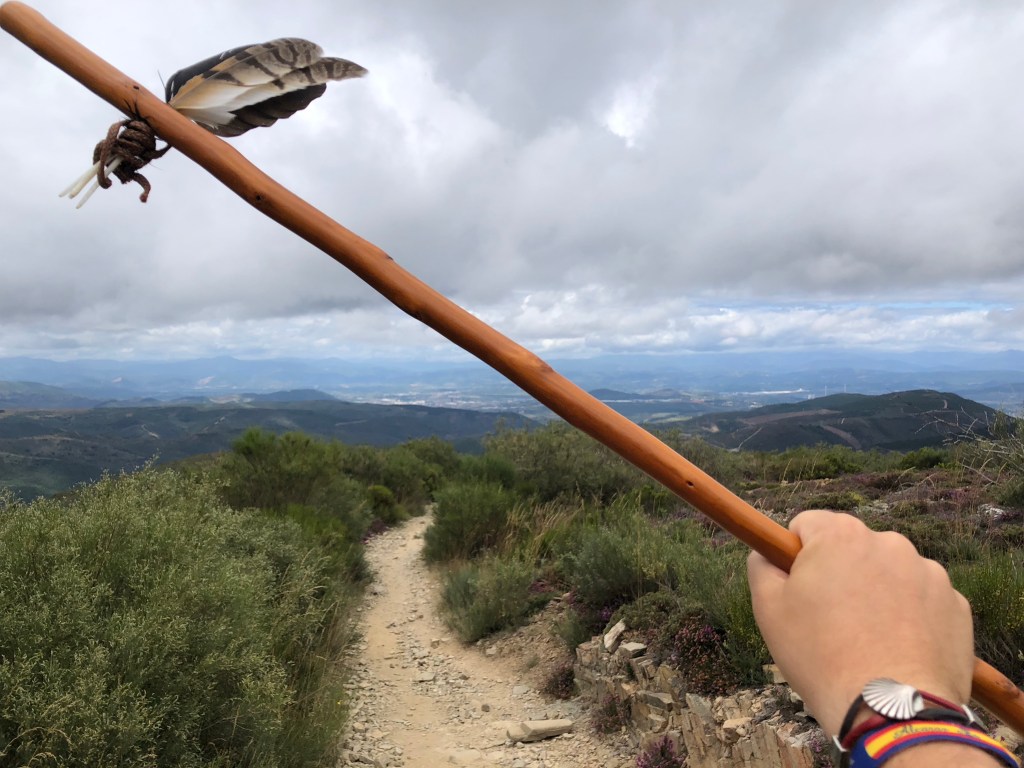
The clouds descended to punish me for my hubris just a few minutes out of town. I haven’t needed my poncho thus far, so it was buried at the very bottom of my rucksack, and I needed to do a lightning-quick pack and unpack to retrieve it as the rain came down. As luck would have it, the shower was over only a minute later, but I kept the coat on, and the showers came and went intermittently throughout the climb. The only thing that got really bedraggled were my owl feathers, but then, owls aren’t exactly famous for being waterproof.


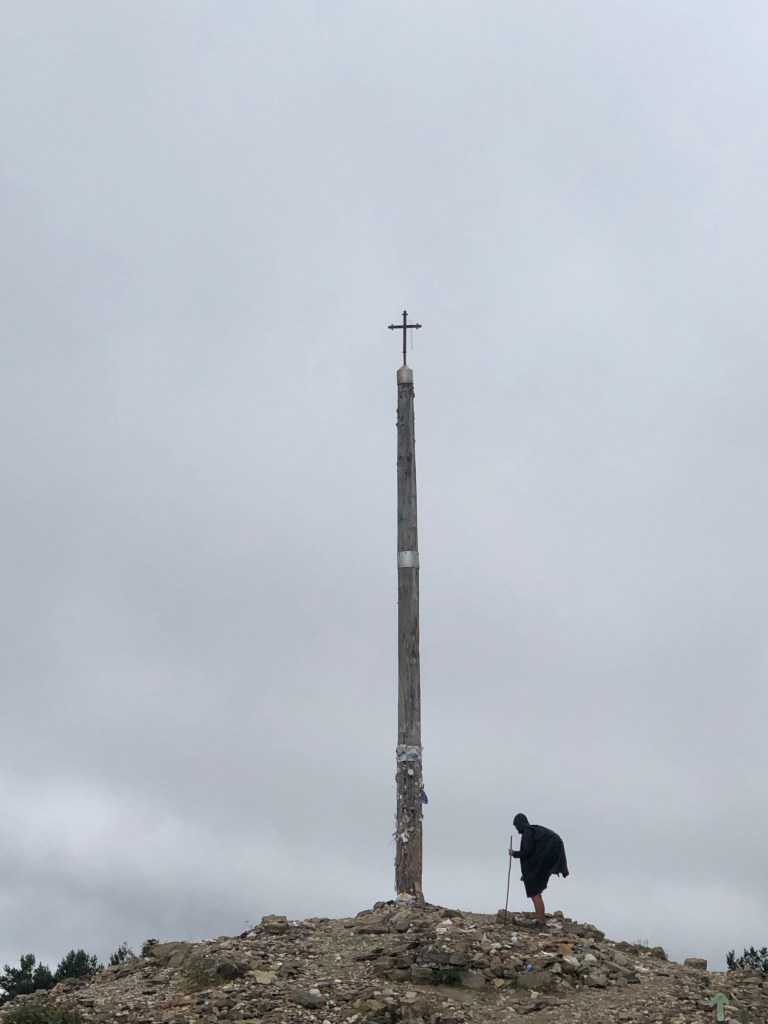
At 1498m above sea level, Cruz de Ferro marks the highest point of the Camino Francés. It’s perhaps more famous for the mountain of stone offerings at its base, which is a pilgrim tradition. I added my own to the stack and went on my way. I met Louis once again, who had gone on ahead but retreated because of a couple of stray dogs on the road. I’ll admit I hoped he’d stumbled upon some wolves, which are known to live in this part of the world, and I would dearly like to see one someday… but no, they were just a couple of strays. Louis’ wariness was understandable, and he wanted to go back and wait for them to pass, but there’s safety in numbers, so I led him past the dogs and back to the Camino. They followed us for a bit, but soon lost interest and returned to the road.


The rest of the hike winds its way through the spellbinding mountain countryside of the Bierzo borderlands, where the trees are covered in hanging moss and slate-roofed villages appear and disappear in clefts in the valley below. The bloody Welshman continues to make his presence known, daubing Cymru am byth in luminous white paint on roads, benches and even the odd boulder, but other than that, it’s a truly wild trek.


Finally, after what seemed like hours (and probably was), the ground underfoot began to descend and the city of Ponferrada came into view in the valley below. It was still some time before I was back below cloud level, but my feet were grateful for the sight of the finish line.


El Acebo is a stunning mountain village, and I’d probably have better memories of the place in future but for a minor disaster after my arrival.

I walked with Louis to the Casa del Peregrino, a new hostel touted as ‘the best albergue on the Camino’ with a shop, bar and swimming pool… Only, upon arrival, it turned out there was an additional charge for the pool, dinner came to the tune of 25€ and needed advance booking, and the whole place looked decidedly out of place – a chic hotel with a dorm option, rather than an albergue. I decided to double back in search of the albergue parroquial instead.


I realised I must have looked a sight in my bright red poncho and rainproofed rucksack, so I put my things down by a ruined barn to remedy the situation. I was a good 200m up the road when I realised I had my raincoat in one hand and my satchel in the other.

But no stick.

I kid you not, I legged it back to the barn where I’d propped it up against a door, but it was gone. I raced back to the other albergue to see if I’d left it there, but it wasn’t there either. I even went charging after the pilgrims I’d passed on the way up in case they’d picked it up, but they only had metal guiri sticks. I swore a lot – and badly at that – and had another look in town, but it was nowhere to be found. In the space of a single minute it had simply disappeared.

Oh, stick my stick! I was always going to have to leave it behind at some point – ideally near Finisterre – but the loss of it still bothered me more than it should have done. I can only hope that whoever took it away – pilgrim or child – finds some better use for it. And I suppose I did at least keep my word and give that owl one last journey, even if it wasn’t as long as I’d have hoped.


The Camino is all about letting go, when you think about it. From leaving the busy world behind and the ritual of placing stones on the cairns you find, to the very real possibility of losing weight along the way, it’s very easy to end the Camino with a great deal less than what you had when you started out. All the emotional baggage you carry out with you somehow finds its way through your fingers and out into the ether as you walk. There’s an ancient magic in that.

I’m not ashamed to admit my primary reason for throwing myself back onto the Camino this summer was to help with the healing process after a recent break-up. I know I made the right decision for both of us, but that doesn’t mean it hurt any the less to go through with it. Losing a partner often feels like losing a part of yourself. The Camino always provides, just as easily as it takes away, and I hoped it would help me to let go of the last of the hurt and find myself again.

Perhaps losing my faithful stick today was a reminder that, when it comes down to it, the only thing you need to be you is you.

What is life but loss upon loss, til life itself be lost? But in death, we may find all that we have lost.

Henry Rider Haggard, Allan’s Wife

Well, my brief sojourn as a shaman is over, and there’s no use grumbling about it. I’ll take a leaf out of another Haggard book and seek out a new stick for a new journey tomorrow. But for now, I’ll give my feet the rest they deserve. It’s been a hard day’s hike and then some. BB x
Cross Country

The Camino might be over for this year, but the adventure certainly isn’t. Before my flight back home tomorrow, one last challenge remained: to scale Monte Santiago and lay eyes upon Spain’s highest waterfall, the Salto del Nervión. Since I’m staying in Bilbao, which straddles the Nervión on its journey to the sea, it seemed only natural to go in search of its source. The fact that it springs from a mountain bearing the same name as the patron saint of the Camino clinched it. So, just after eight o’clock this morning, I grabbed my rucksack and poncho (just in case) and set off for the Bilbao-Arando train station.


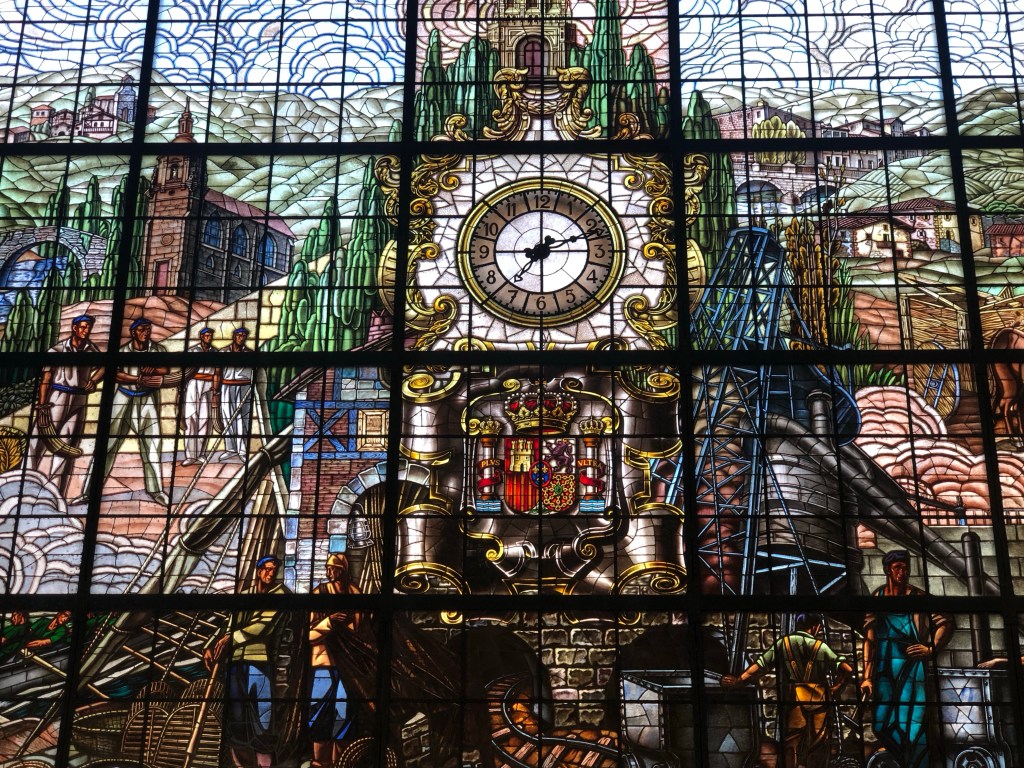
Leaving the stained-glass masterpiece of Bilbao-Arando behind, I took the 8.25 to Orduña on the C3 line. It’s the furthest stop on the Cercanías line and the trains were running very consistently even through the holiday season, so I was pretty confident about getting there and back OK.


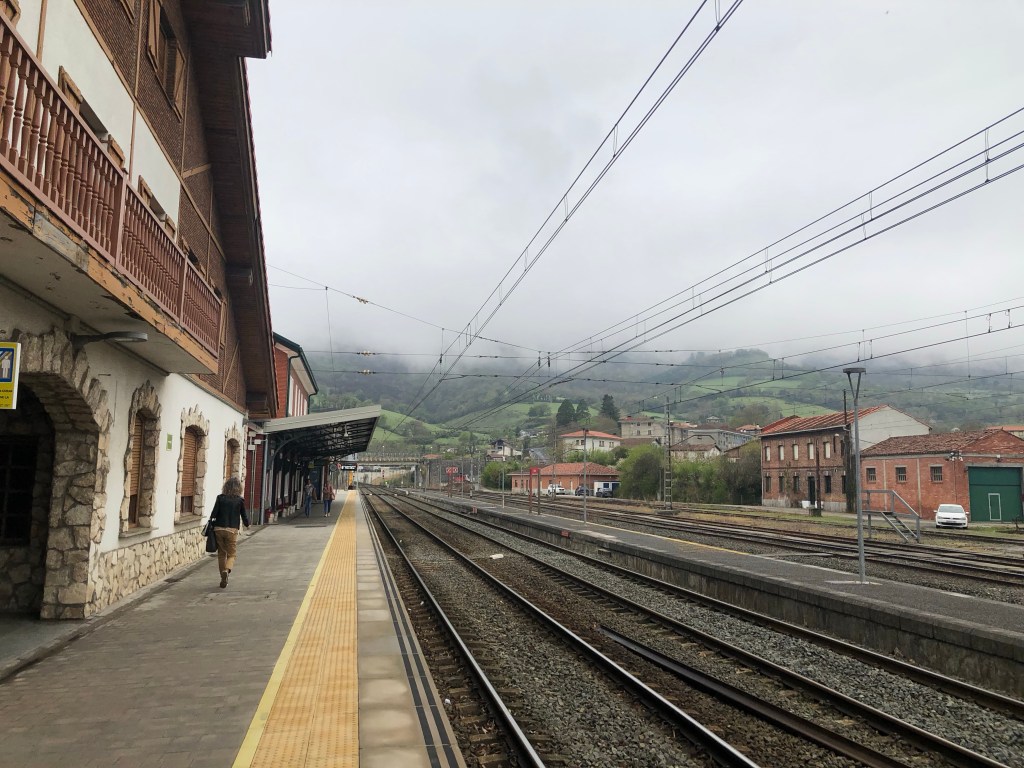
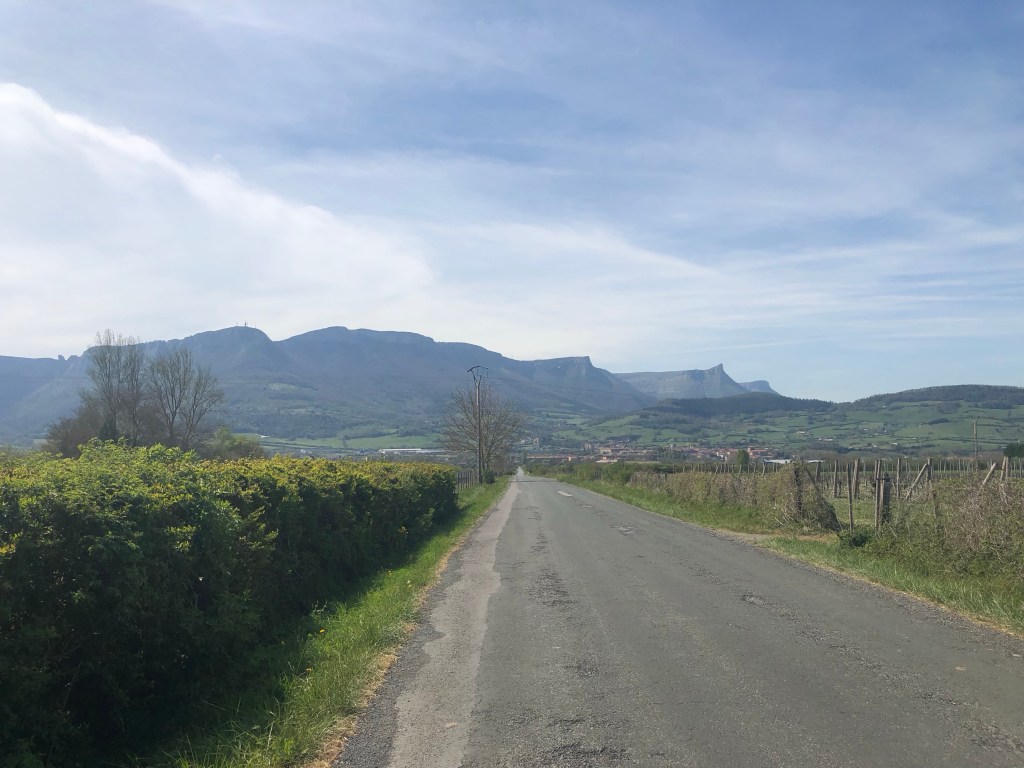
Orduña itself was just waking up when the train pulled in. I made a quick detour via an AlCampo mini-market to grab a picnic lunch: the usual fare of semicurado cheese, chorizo slices and a fresh loaf of bread, with a punnet of grapes to boot. I then doubled back, crossed the bridge over the railway and started to climb up into the hills.

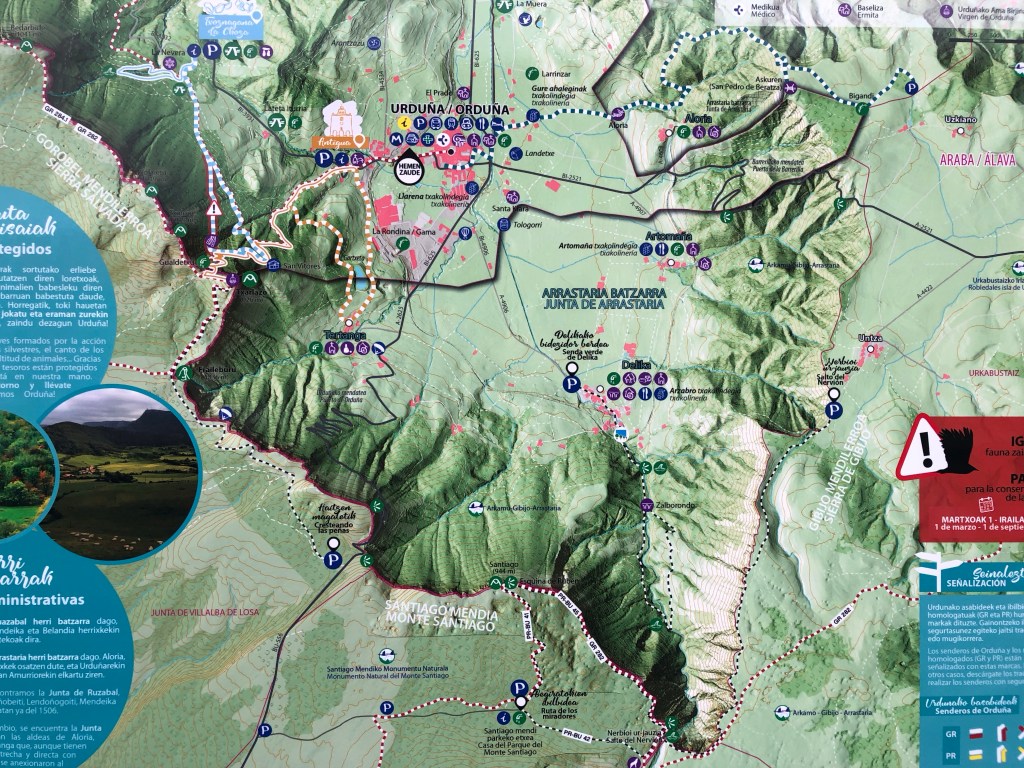
Fortunately for me, somebody had the peace of mind to leave a clearly-labelled map outside the train station. I’d found a few maps online, but I was relieved to find a more reliable one at the start of the trail, so I snapped a photo and used it as my map for the day. I can’t find it online, so here’s a copy if you’re interested:


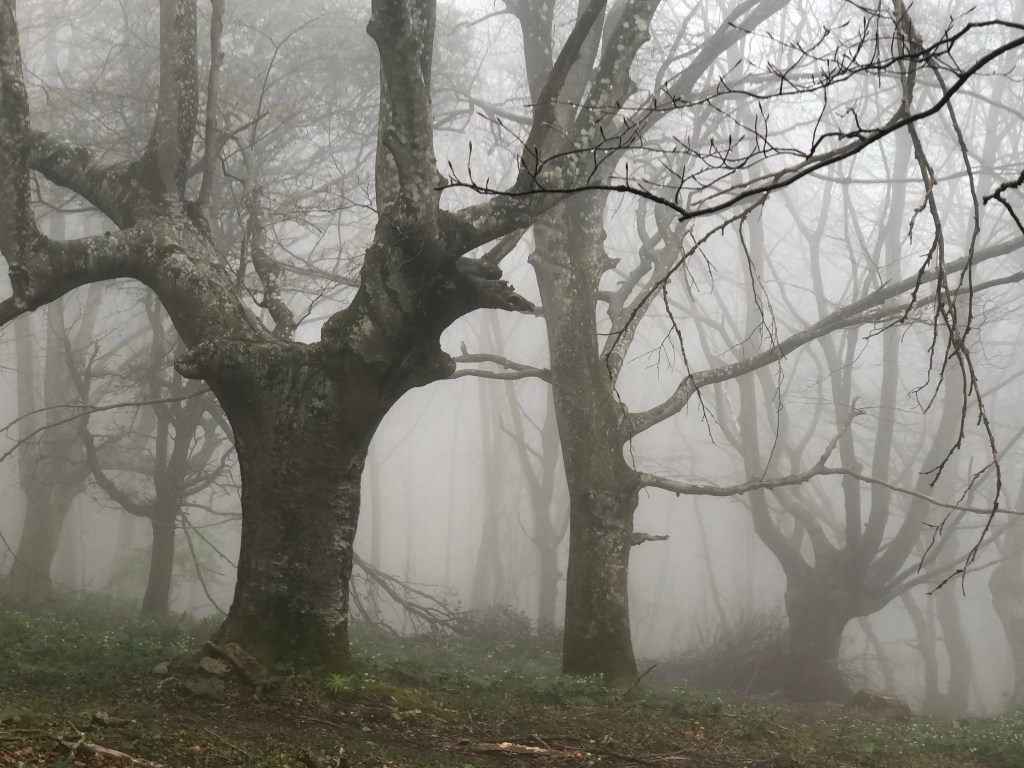
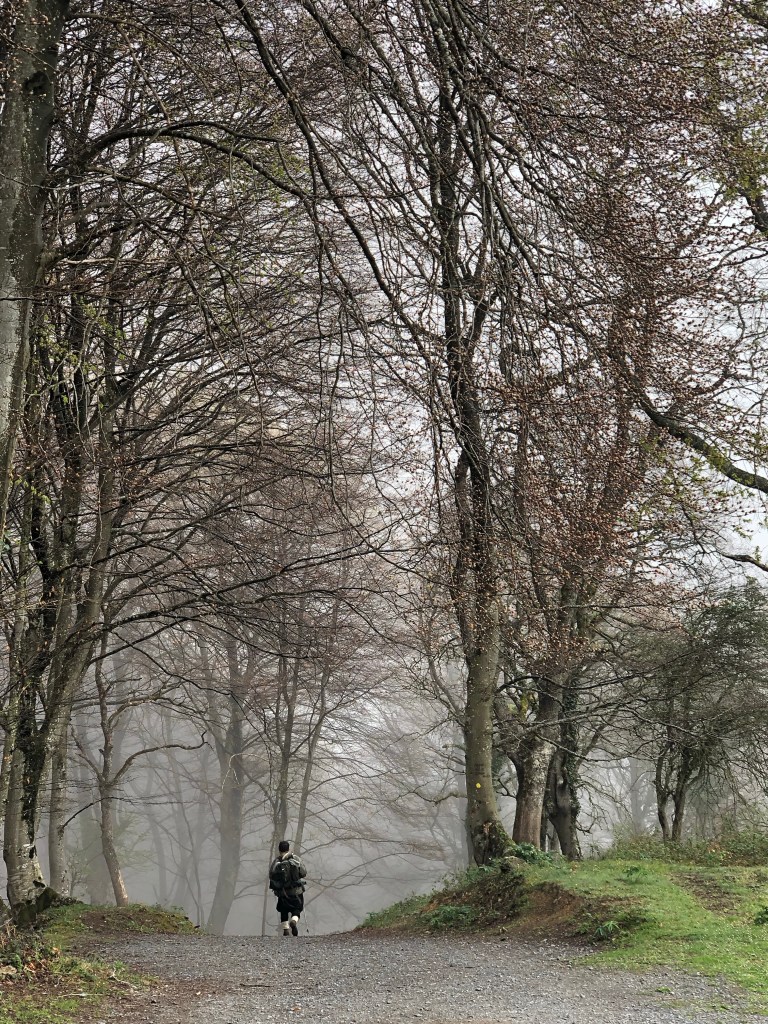
First things first: the climb was bloody steep. Easy to follow, but steep. And before long, I’d climbed up beyond the cloud level and was weaving in and out of the mist. Sometimes I couldn’t see more than ten metres or so ahead, and sometimes the road seemed to stretch on forever up the mountainside. A jay screeched at me from the base to the summit, and while it may well have been a number of them, I had the strange feeling it was the same bird watching my slow progress. And yet, whenever I tried to lock eyes upon it, I only ever caught a disappearing shadow between the trees.

In the deep woods of the Basque Country, when the clouds are at ground level, it’s easy to see how myths of the Basajaun – wild men of the woods – persisted for so long. God only knows what was watching me unseen in the mist.


I only met two other souls on the road coming down: a local man with a hiking pole in hand about halfway up and a jogger leaving the forest, which would imply he’d just run down the mountain. There’s a reason the Basques have a formidable reputation.


Near the summit, a spring of crystal clear water was a welcome find. I couldn’t help remembering a childhood memory of vomiting for days after drinking from a village spring in the Alpujarras, but the water looked so clean I couldn’t help myself. It was easily the most delicious water I’ve had out here – mountain water always is, if you can get it – though I was sane enough not to use the metal cup chained to the rock, which looked in dire need of a good clean. In a nearby tank, filled to the brim with the spotless spring water, a few tiny newt efts were swimming about.

After what felt like an age (but in reality only took ten minutes over an hour) the track suddenly came to a narrow crevasse which cut a path through the karst to the clifftop. With one last screech from the jay echoing after me, I put the cloud forest behind me, pushed the metal gate open and stepped out of the Basque Country and back into Castilla.

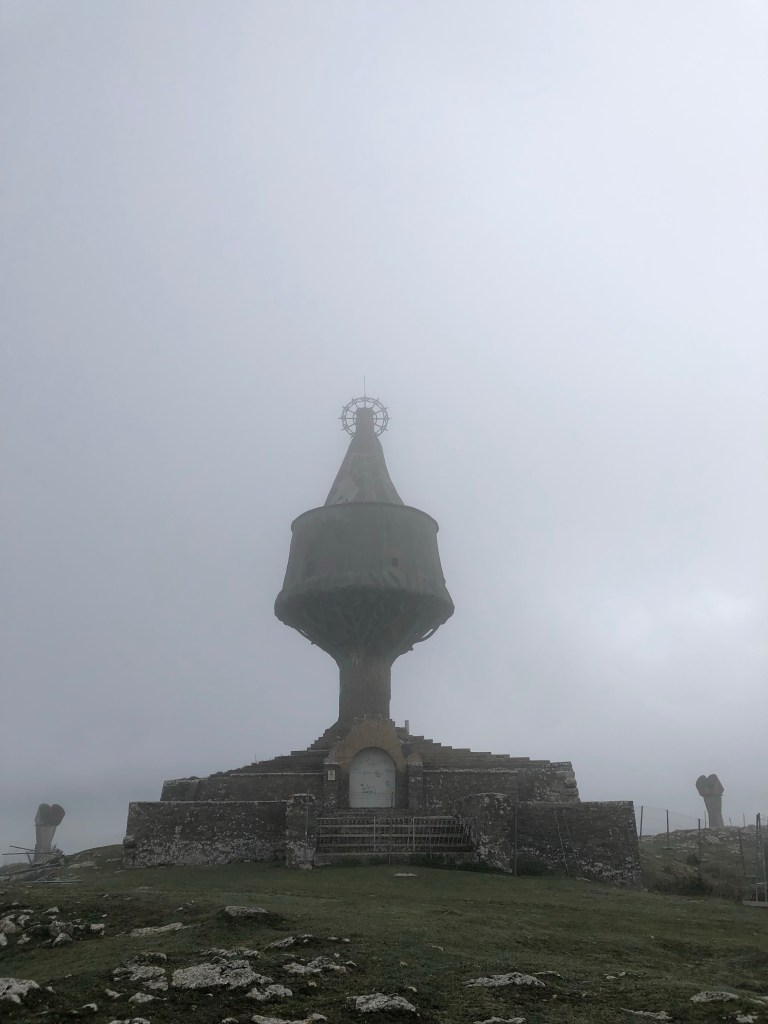
At first, the rolling clouds shrouded all but the peak upon which I was standing from view. I could just about make out the bizarre sculpture to an apparition of the Virgin Mary in the form of a colossal concrete block supported by a stylised tree looming out of the mist, but it looked like it had been fenced off and graffitied for good measure long ago.


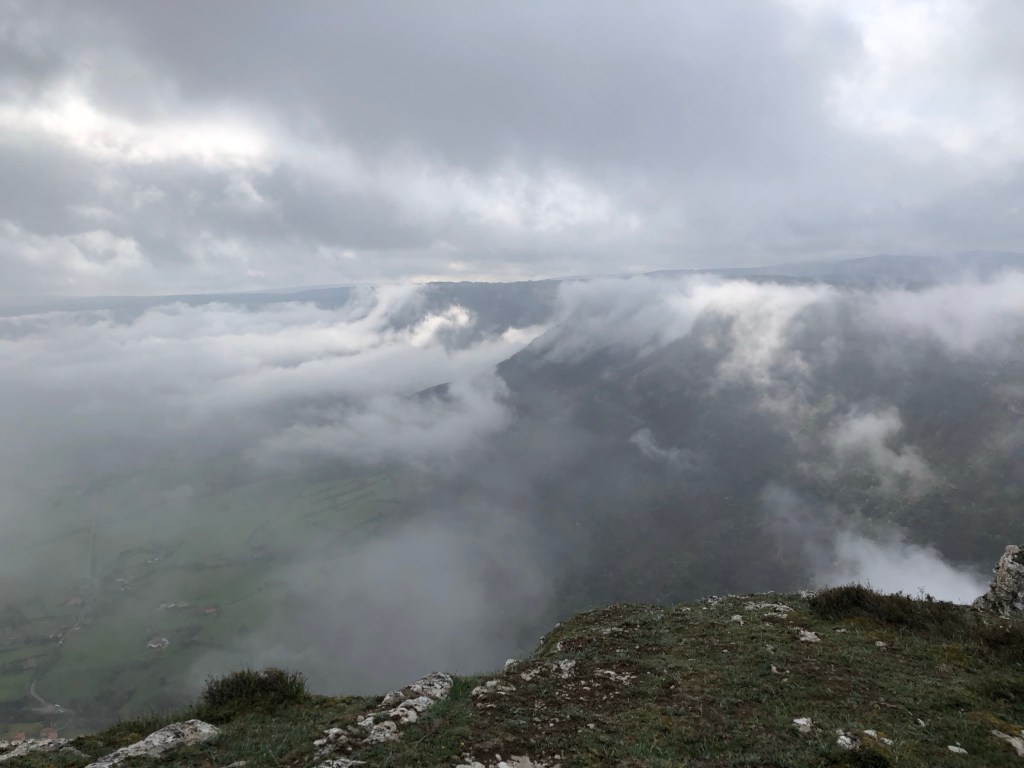
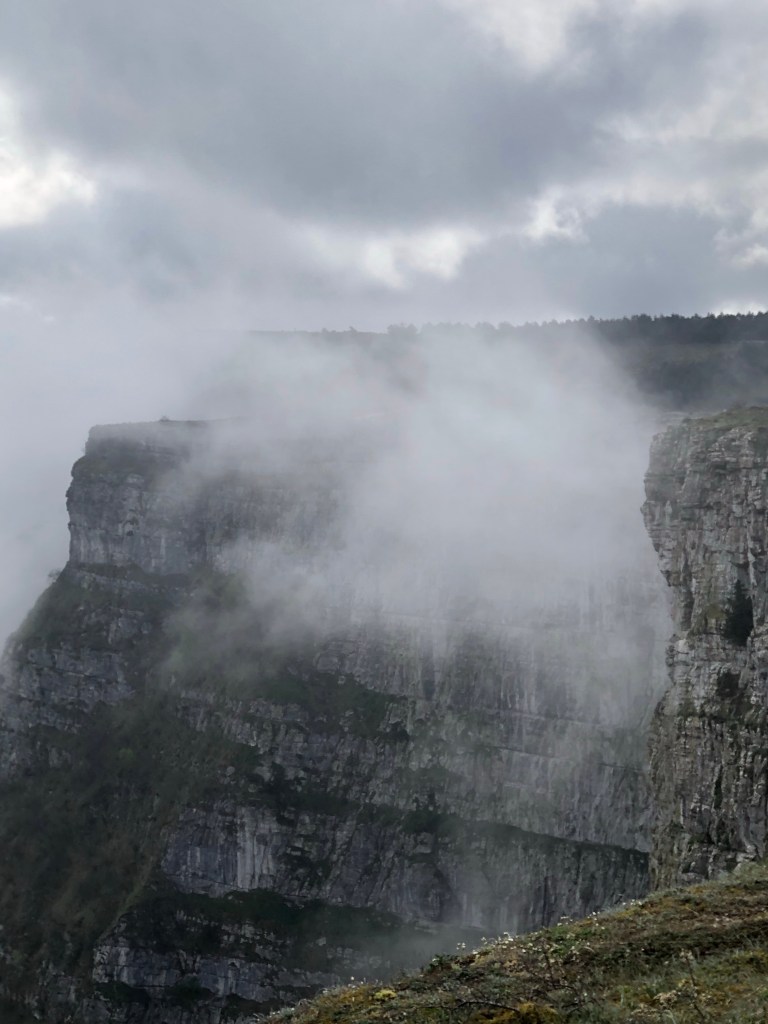
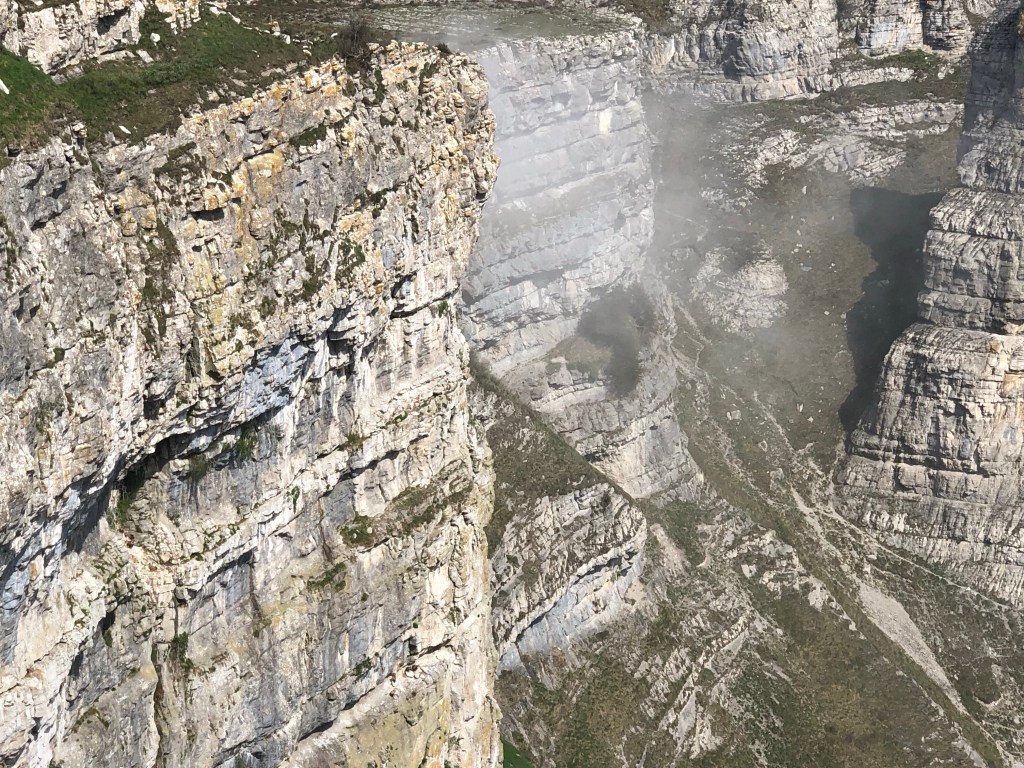
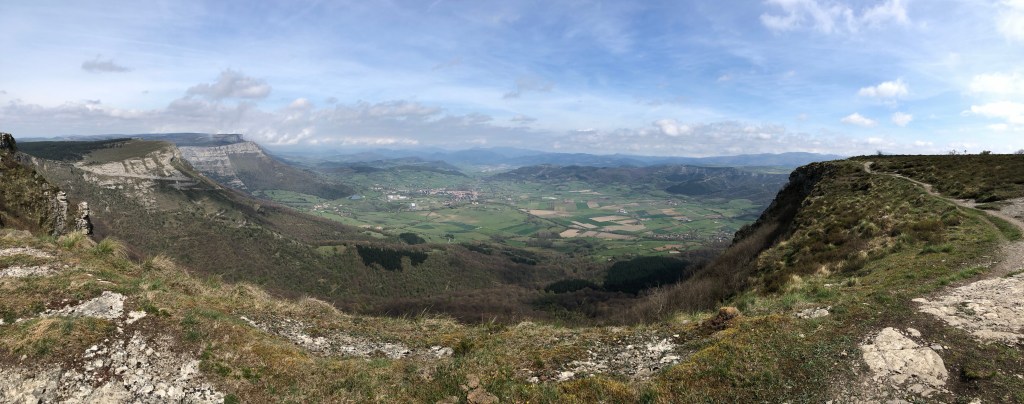
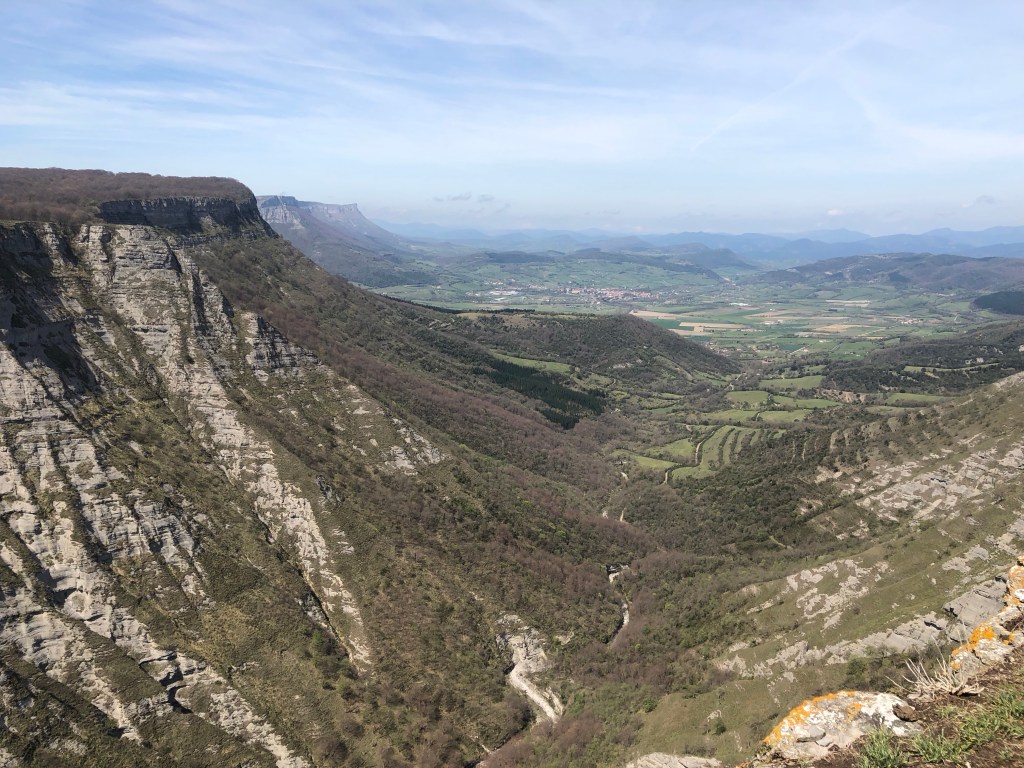
More impressive by far was what I could see when I turned around. The Castilian sun began to beat down through the clouds, and suddenly the sheer majesty of the Sierra Sálvada began to unroll before me like a painting. I was lost for words. Pictures don’t do it justice, but they might bring you closer to that wonder I witnessed.


The breathtaking crags of the Sierra Sálvada give an indication of what to expect from the Salto del Nervión long before you reach it. It’s a drop of more than 200m to the bottom in places, and even the thought of kicking a pebble over the edge is enough to tie your stomach in several uncomfortable knots.

Don’t get me wrong. I’m absolutely mad about mountains. But there’s nothing funny about a drop of that height, particularly when it isn’t broken by any tree or slope on the way down.


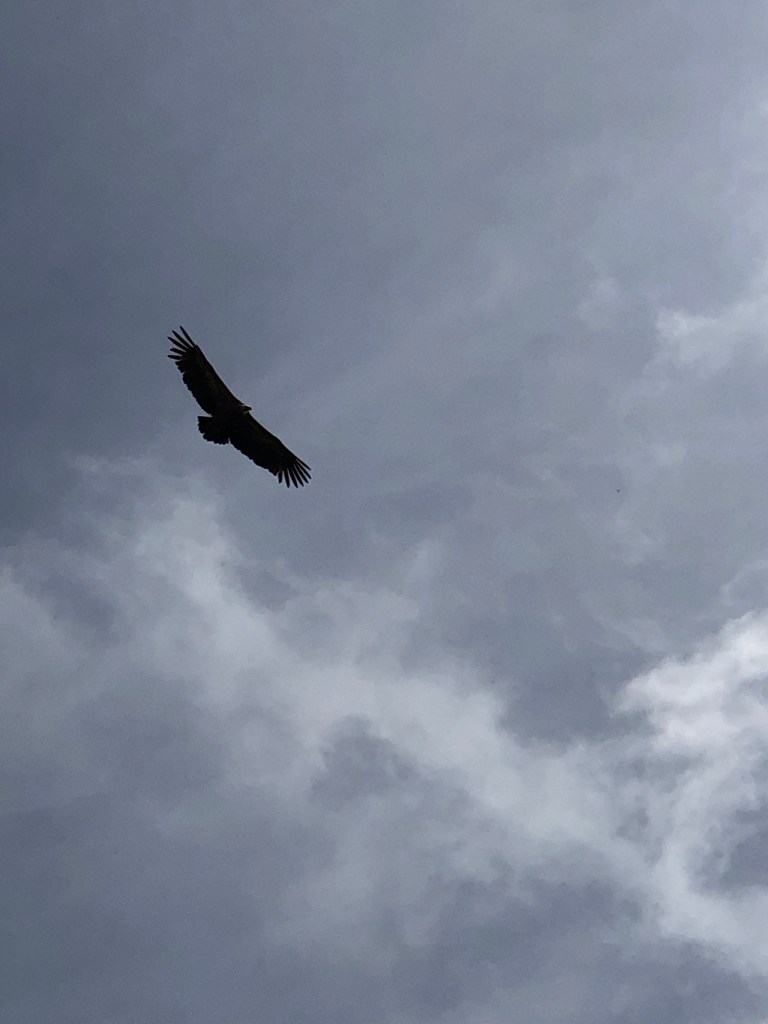
Ironically, perhaps, some of Spain’s biggest creatures are perfectly at home here. The hulking shape of the griffon vulture was rarely out of sight during my wanderings along the clifftop, but nowhere more so than about the stark stack known as the Fraileburu – the Friar’s Head – an utterly unassailable column where many of the Sierra’s griffons had chosen to roost, haughtily observing the valley below. I haven’t needed my camera once on this holiday – my phone has done a more than satisfactory job – but I was missing it then more than ever. A decent telephoto could have worked wonders on the griffons riding the thermals below, as well as pulling the acrobatic choughs and the few pairs of Egyptian vultures into focus for good measure. Instead you’ll just have to see how many you can spot clinging to the cliff face below.


From the summit of Monte Santiago, it’s a fair trek to the Salto del Nervión. I didn’t stop often and I keep a pretty merciless pace, but it still took me the better part of two hours to reach the waterfall. Fortunately, the path cuts through tree cover for a large stretch, and the views are incredible – especially so as the sun had burned off most of the mist by this point, offering spectacular views down to Orduña, now some way in the distance.


The Mirador at the Salto was quite busy by the time I arrived (around one o’clock) but one look was enough. The river was bone dry: I might have guessed from the absence of any sound of crashing water. So much for the highest waterfall in Spain! It seems it’s only really in action after heavy rain, otherwise the Nervión is supplied by a network of underground rivers that ensure it flows year-round, while its primary spring in neighbouring Castilla has a tendency of drying up in all but the wettest seasons.

Still – box ticked, I suppose.


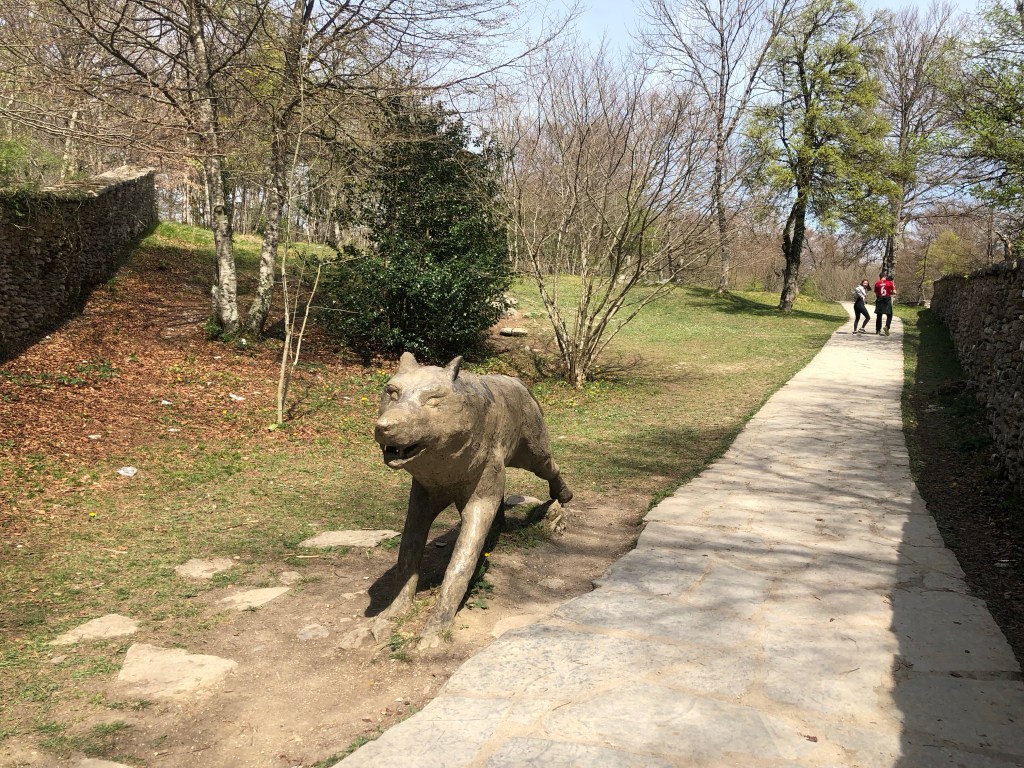
Perhaps more interesting than a dry waterfall is the nearby lobera, an ancient wolf trap built possibly over two thousand years ago by the ancient Basques to hunt wolves and other large game on the clifftop. In a fashion akin to the Native American buffalo jumps, the wolf would be chased into a funnel, with men beating drums on one side and the cliff on the other, driving the poor beast into a deep pit at the end of the funnel as its only escape.

I didn’t see any wolves during the hike, though they have been seen recently in the area after a long absence. Instead I disturbed an amorous couple who had straddled the large wolf statue and were enjoying each other’s company, though they had picked an exceedingly odd place: I can think of better spots for a tryst than the site of a Neolithic abattoir.


From the Salto del Nervión, I decided to fork east and descend back into the valley of Orduña that way. The trouble was, the map – which had been utterly brilliant thus far – was pretty dismal about suggesting a way back down bar turning around and heading back the way I came. One of the maps I’d found online seemed to indicate a track that led down through the forest an hour or so to the north of the Salto, but I couldn’t find anything like it. Scanning the east side of the valley during the hike didn’t show much either, beyond what might have been a dry river gulley running down the mountainside.

In the end, rather than face a possibly two or three-hour march to the north, I decided to follow the beginnings of a track that appeared as the cliff began to slope rather than drop. Whether it was made by man or beast I’m not entirely sure, only that it probably wasn’t the track suggested online and that it very quickly came to an end.

There are few things more frustrating than getting halfway down a mountain and realising you’ve lost the path. At least you can surrender going up, but on the descent, you have no choice but to find a way down somehow. So I did what I have done in the past, foolhardy though it seems, and cut across country.

This is a lot easier said than done when the cross country in question is a forest thick with underbrush that happens to be growing on the side of a mountain. The ground under my feet was not always stable, there were thorns everywhere and the animals tracks I was following – boar, I wouldn’t wonder – were not always reliable. The heat of the midday sun was similarly unwelcome, silencing the forest and making my every step sound like a cannon. The vultures circling overhead only added to the dismal state of affairs.


Twice I came upon what looked like a road, but rather than wind up on some local farmer’s turf (and potentially ending up in really cross country) I decided to stick to a personal motto (don’t ever, under any circumstances, f*ck with the Basques) and continue to forge my own path.

It took just over an hour to escape the forest. I don’t think I’ve been more relieved to see a tarmac road in years.


I made it back to Orduña’s train station with seven minutes to spare before the 16.45 train back to Bilbao. I must have looked a beardy, sweaty mess but I was past caring. Despite the mountain’s best efforts, I’d made it back in one piece.

My old English teacher once told me you can’t claim to conquer a mountain, a thing which has been standing on this earth since the world was young and will be there long after you have gone. I’m still hooked on the idea of climbing higher than the vultures – there are few things in this world more awe-inspiring than looking down on creatures that are usually specks in the great blue beyond – but I’ll hand it to him here. Mountains are ancient, treacherous things that deserve to be treated with respect.


I finished my time in Spain by summiting Santiago’s mountain, but the mountain very nearly got the better of me on the way down. A knock to my hubris – and a necessary one.

I’ll stick to regular cross country around the school grounds for now. I’ve had quite enough wayfaring for one holiday! BB x
Dagobah: The Longest Night of my Life

Planning ahead for Italy this April has got me thinking about the last time I travelled solo, now almost a decade ago.

When I was eighteen years old, my mother gave me a copy of Laurie Lee’s As I Walked Out One Midsummer Morning and a map of northern Spain. I joined the dots and bought myself a one way flight to Santander, planning to walk south as he did, until I reached the Mediterranean Sea.

It didn’t exactly pan out like that, but it was and is to this day one of the toughest and most formative adventures I’ve ever made in my life.

Travelling solo is not for everyone. You’ve got to be comfortable with your own company for long periods of time. You have to be able to think on your feet and adapt to whatever happens around you, because nobody is going to look out for you but yourself. Most importantly of all, you need to be brave. You’ll hear plenty of stories about the kindness of strangers, but nine times out of ten, it’s a case of shy bairns get nowt; if you aren’t prepared to talk to people, the loneliness birds will start to circle.

That’s what happened to me, all those years ago. My Spanish was good – more than good enough to hold my own in a conversation – but my courage was lacking. The bottomless charisma that comes almost by osmosis from working in a private school hadn’t sunk in yet, and I would have rather bitten my own tongue than enter into a conversation with a stranger. Consequently, I spent the greater part of those four and a half weeks in what can only be described as a state of monastic silence.

As a rule, I’ve tried to find a travel partner on every adventure since, as there are few things more reassuring than good company on the road. Back then, halfway through my gap year, I was cut off like never before: everybody I knew was either at university, at work or halfway across the globe on gap years of their own. So I didn’t have much choice.

I was young, inexperienced, and woefully naïve about how much I ought to be spending daily on food. Little wonder, then, that when I came home I was dangerously underweight. That first encounter with solo travel taught me a lot, but most of all it taught me never to skimp on food. Ever.

Looking back, it’s so easy to focus on the negatives, largely because of how didactic they all were. One stands clear above the others like a lonely mountain. Sleeping rough in the mountains above Madrid with nothing but a sleeping bag and a rucksack for a pillow. That endless night will be with me forever. Let me paint it for you.


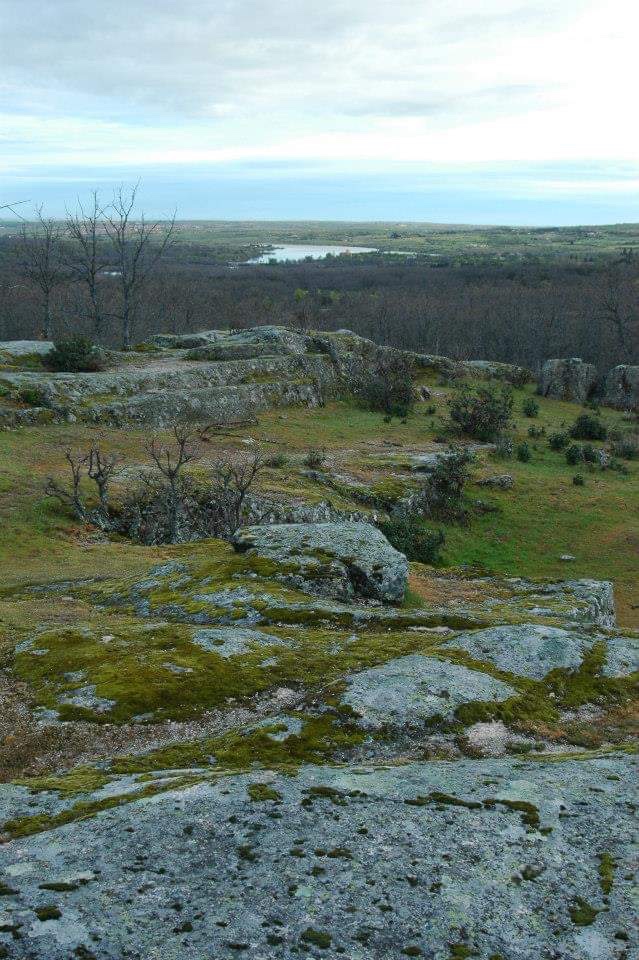
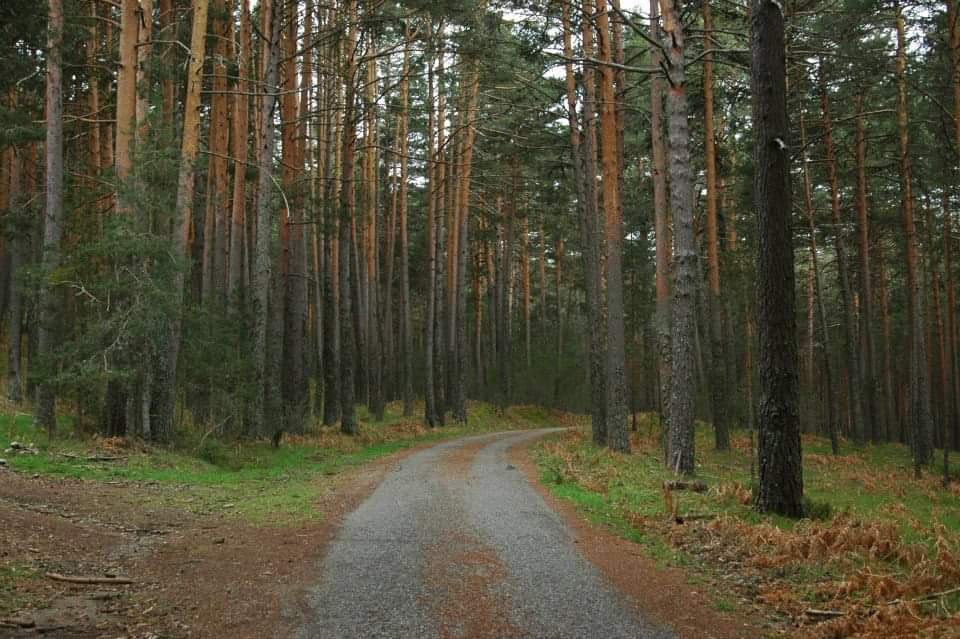
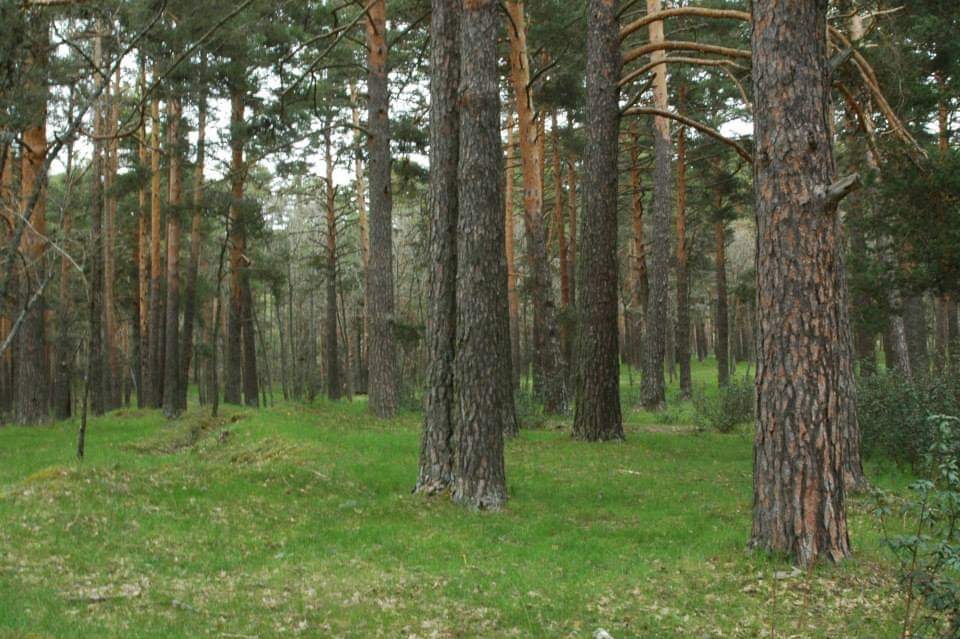
Picture it. A patch of relatively stable ground in the heart of a dark pine forest, on the lower slopes of the mountains. At least two hours’ walk from the nearest settlement. Pine needles where the grass doesn’t grow, and the roots of the trees poking out of the ground here and there like toes in the sand. The light fading as dusk sets in, no sunset, just a gradual darkening of the grey light between the trees as the world before your eyes starts to fuzz and crackle like static on an old television. From somewhere far off, a raven croaks, and once or twice, an owl.

You put your head on your rucksack and try to shut your eyes, but sleep doesn’t come. Maybe it’s because it’s still light out there. Minutes feel like hours. You turn on your iPod and ration a few songs to pass the time. Maybe fatigue will get you in the end. But it doesn’t.

Night falls, but there’s no moon. The ground under your sleeping bag is cold. Wet. It sinks through the lining and into your skin. Your teeth are chattering. You put on all the clothing you’ve brought; three layers of socks, two sweaters and a makeshift scarf. It doesn’t stop the chattering. Then there’s the gentle sound of rain as the clouds roll across the mountainside, scattering water through the trees.

You check your watch. It’s only been twenty minutes. It’s still only just after nine o’clock. Most Spaniards aren’t even in bed at this time. You ration some more music.

The darkness is almost absolute. You can only just make out the silvery light of the trunks of the nearest trees, lit by the ghost of the moon, buried deep in the clouded night. The patter of rain echoes through the whole forest.

Suddenly, a harsh bark breaks the silence. It shouldn’t scare you out of your wits, but it does. You freeze, listening, half expecting – wait! There it is again. It’s a roe deer, you know that. You’re sure of it. You’ve heard that barking cry so many times before back home. It’s just a deer. Harmless. But what good is that knowledge when you’re wrapped up in a sleeping bag, alone, and nobody knows you’re up there? And what if you’re not so sure? What if it’s something… else?

It’s funny how the mind plays tricks on you in the darkness. How quickly you can unravel. For a time I am certain I had managed to convince myself it was not deer but wolves I was hearing – that ancient terror of the deep forest that all of us carry, buried deep inside.

The barking goes on for hours. Or maybe minutes. The minutes feel like hours. The hours feel like days. Time seems to have slowed to a crawl. The night is endless. No moon, no stars, no light from the distant towns. Just the static darkness that creeps through the trees, and the rain, the endless, endless rain.

You count the barks. You count sheep. You call home, consider bailing there and then. You talk to yourself, argue with yourself. You turn to God, perhaps for the first time. You swear. You laugh. You cry. You drain the iPod to zero to keep your spirits up, trying not to picture the prowling things between the trees that your eyes are so keen to paint.

Sleep is fleeting: a minute or two of semi-consciousness here and there, leaving you more and more tired, and yet less able to find that rest you now desire above all things.

And when the dawn comes, that first blessed grey light between the trees, you don’t even care anymore how little you’ve slept. You hardly notice the gnawing aches in your legs, or the numbness in your teeth from all the chattering. You’re just overjoyed to see the light once again – because there’s a magic in the dawn that is timeless. The darkness is on the run, and there’s a new day on the way. Dawn was ever the hope of men.


Looking back now, there’s so much I didn’t do that I know I should have done. I didn’t tell anybody where I was going. I didn’t pack enough food. And any of you with even a little camping experience will have spotted one glaring absence: never mind the obvious lack of a tent, I didn’t even bring a roll mat. No wonder I spent the night shivering.

One thing’s for certain: there’ll be no repeats of that night in the Guadarrama, not in Italy, not ever. I’ve had some long and painful nights in my life, but that one stands head and shoulders above the others. I don’t think I’ve ever felt more alone. But that makes it all the more powerful a memory. It’s a lightning-rod for my fears. Whenever I’m feeling down for whatever reason, I think of that night in the mountains. I was miserable, I was lonely, I was terrified – but I survived.

In the old Star Wars stories, Master Yoda went into exile on the swamp world of Dagobah, a planet with a strong connection to the dark side of the Force. Hubris had laid his order low and taken everything from him; only by humbling himself in isolation and communing with the dark was he able to understand it – and, in so doing, learn to rise above it all.

At some point in our lives, we all need to be brought to our knees, if only to understand who we really are when it all falls apart. I wouldn’t say I look back on that night with pride – the whole enterprise was nothing short of madness to begin with – but it did settle once and for all what I believed.

Darkness is not something to run from. It cannot be escaped. There’s darkness in all of us, as sure as shadows lengthen in the light. But, like a shadow, it must be faced head on if you would not be afraid. We have to confront our fears if we wish to understand them – and to understand how we react it to them. And to face your demons, whatever and wherever they may be, you need your starlight. I call that starlight Hope.

Hope and despair. The light and the dark. All that I am today is built on that bedrock. Hope is my raison d’etre, my polestar, my core value if you will, and it was forged in that endless night on Guadarrama.

Travelling alone can be tough – especially if you’re inclined to sadistic escapades like sleeping rough in the mountains like I was – but I can think of few better ways to find the meaning of life.

And if you’re wondering why I put myself through that ordeal, there’s a perfectly logical answer: there’s a chapter in my book where my protagonist is abandoned in the wild, and my English teacher once told me to “write only about what you know”! The things we do for art…

I don’t expect anything nearly as dramatic in Italy. Heck, I’m mainly going to fill some pages in my journal. But I am going with a hopeful heart once again, to feel that brush with the world beyond.

And to find a better Margherita pizza than the ones they make at Lirios. Maybe. BB x
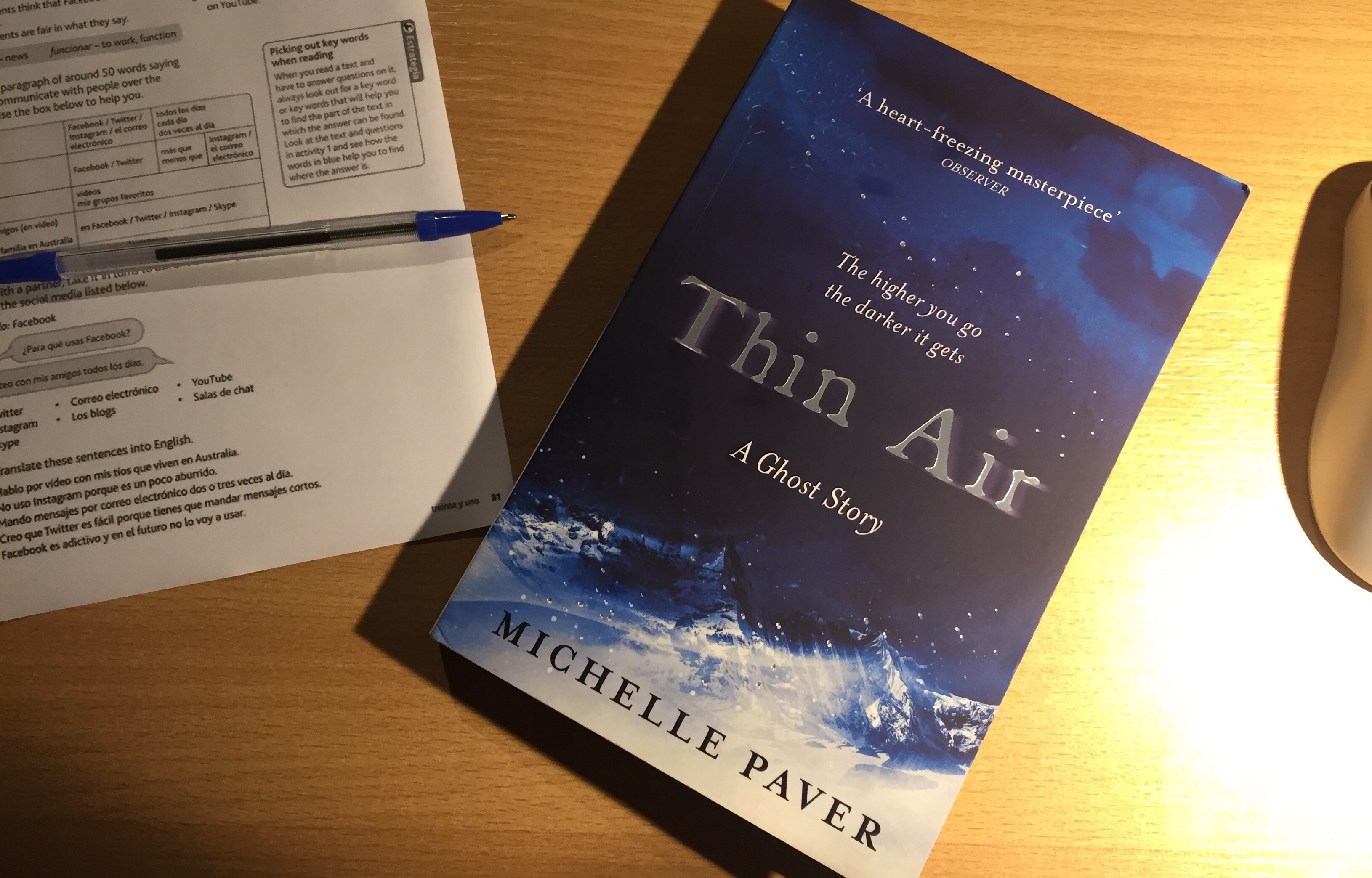
Quote Unquote: THIN AIR by Michelle Paver

img_4837

The funny thing about being busy is that it makes all the things you wanted to do when you were free that much more achievable. It seems counter-intuitive, but it’s true. When time is on your side and you have a stack of books to read, it can be hard to even chip away at one. When you have lessons to plan, essays to write, work to mark and affairs to set in order, reading for pleasure suddenly becomes both more appealing and more feasible. Somehow those twenty minutes you carve out of the day always come around. I suppose routine is the answer, as it so often is. It’s just a pity that routine is harder to maintain when you have nothing but time on your hands.

The days are growing shorter. Prep ends in darkness now, and this Saturday just gone, the martins gathered on the abbey roof, as they always do on a certain day every year. The following morning they were gone. All of them. They say a swallow does not a summer make, but for me, summer is always over on that day when the swallows and martins take their leave. Now is the time of cold, crisp mornings, clear blue autumn skies, mist in the trees and the musty smell of mushrooms.

It is also a wonderful time of year for ghost stories.

……..

Thin Air tells the tale of a British expedition up the southwest face of Kangchenjunga, a mountain of fearsome repute in the unforgiving wastes of the Himalayas, as seen through the eyes of Dr Stephen ‘Bodge’ Pearce. The expedition party, an assortment of British public-school chaps (the swot, the bully, the priest and the major), have set their sights on being the first to climb the evil mountain, which has turned away all previous comers and slain several for good measure for even trying. Struggling with an unenviably rocky relationship with his brother, Kits, Stephen tags along as the expedition’s medic. From the very beginning the expedition is hag-ridden by the previous sortie led by the larger-than-life Lyell and company, whose disastrous defeat casts a long shadow over the group’s attempt – in more ways than one. It quickly becomes apparent that Lyell’s disastrous attempt to climb Kangchenjunga was less of a heroic withdrawal than it seemed at first, and as Pearce’s company scales the mountain, something sinister begins to dog them by degrees. Bullied into silence by his older brother, who alone seems oblivious of the creeping dread, Stephen begins to believe they are being haunted by a vengeful spirit. The mountain may not be the only thing determined to prevent them from carrying out the mission that Lyell started…

The story is full of men walking in the shadows of others. Kits marches in the footsteps of his hero, General Lyell. Stephen plays second-fiddle to Kits for most of the narrative, who seemingly does his level-best to keep him from stealing his place in the spotlight. The sherpas follow meekly in their wake, dismayed at their employers’ ignorance, and both a dog and a raven – stylised with the more ominous name of gorak – shadow the company on their ascent into the darkness. More chillingly still, there is always the nameless presence of something unspeakable. And then, of course, there is Kangchenjunga itself, overshadowing them all.

Kangchenjunga is not just a setting. It is an objective, an idea, an antagonist and a fierce deity. It is also far and away the standout character of the story. There are more sinister incarnations of rage at work in the tale, but one is never allowed to forget the raw ferocity of the mighty mountain. It threatens the company with its avalanches. It sends blizzards to slow them down and it reminds them of their chances with the cairns of those who have tried to master it and fallen in the attempt. One of my favourite parts of the Lord of the Rings growing up was the section of Fellowship when the company of nine attempt the pass of Caradhras and are beaten back by a mountain that is more sentient than it appears. There is something truly awesome about nature at its most raw, and Kangchenjunga is Tolkienesque in its might (interestingly enough, Caradhras’ other name, the Redhorn, is evoked at least once in Paver’s description of the mountain’s “dark-red precipices” – a colour that instantly stands out from the whites, greys and blues of the snowbound Himalayas). Stephen, a Western doctor ruled by his head, flatly denies it all, shooing away the sherpas’ fears as the darkness settles:

“This mountain has no spirit, no sentience and no intent. It’s not trying to kill us. It simply is.”

The question is: are you convinced?

This is genuinely one of those books that merits re-reading. There is so much subtle foreshadowing throughout, and a great deal of it will pass you by until the end. To read it again is to watch Dr Pearce and the company march knowingly into the jaws of doom with an even greater surety than before. You knew the mountain was a killer from the word go – Lyell, Pearce and all the others point to that endlessly – but the way in which Paver weaves the narrative forwards and backwards is spine-chillingly precise. I have deliberately avoided talk of the ghost in this ghost story, if only because the less that is said about it the better – the strength of a ghost story is often in that which is left unsaid. If you know, you know, if you don’t, give it a go. And when you’re done, seriously, skim back through and read it again. It’s almost scarier the second time around. Which is exactly what a good ghost story should be.


Favourite Scene:

The first cairn. It is Dr Pearce’s first encounter with the reality of their situation – and also his first brush with the nameless terror of the mountains. For the superstitious, there is an ancient belief in some parts of the world that walking the wrong way around a sacred object, such as a pillar or monolith (or in the case of Thin Air, an urn) brings on bad luck. I remember the tradition being used to comedic effect in Tintin, but as soon as it showed its head in Paver’s narrative I knew we were in for trouble – I’m glad she made use of that old trick. Because it felt like the necessary snowball that starts an avalanche. Dr Pearce’s musing before the cairn of Dr Yates, the doctor on the Lyell expedition is both stark and satisfying in its foreshadowing – and powerful in the ensuing scene it delivers. This is definitely one of the scenes that is worth a second look.


Favourite Character:

Kangchenjunga. For all of the reasons I laid out above.


Favourite Quotes:

Surely the purpose of a grave is to benefit the living. Aren’t the dead beyond caring where they live?

It’s lack of knowledge which lets in the shadows.

Perhaps that’s what we find frightening. Being on a mountain forces us to confront the vast, unsentient reality that’s always present behind our own busy little human world, which we tuck around ourselves like a counterpane, to keep out the cold. No wonder that when we trespass into the mountains, we create phantoms. They’re easier to bear than all this lifelessness.

There is no justice in this world, so why should we expect it in the next?


img_4392


Rainbow’s End

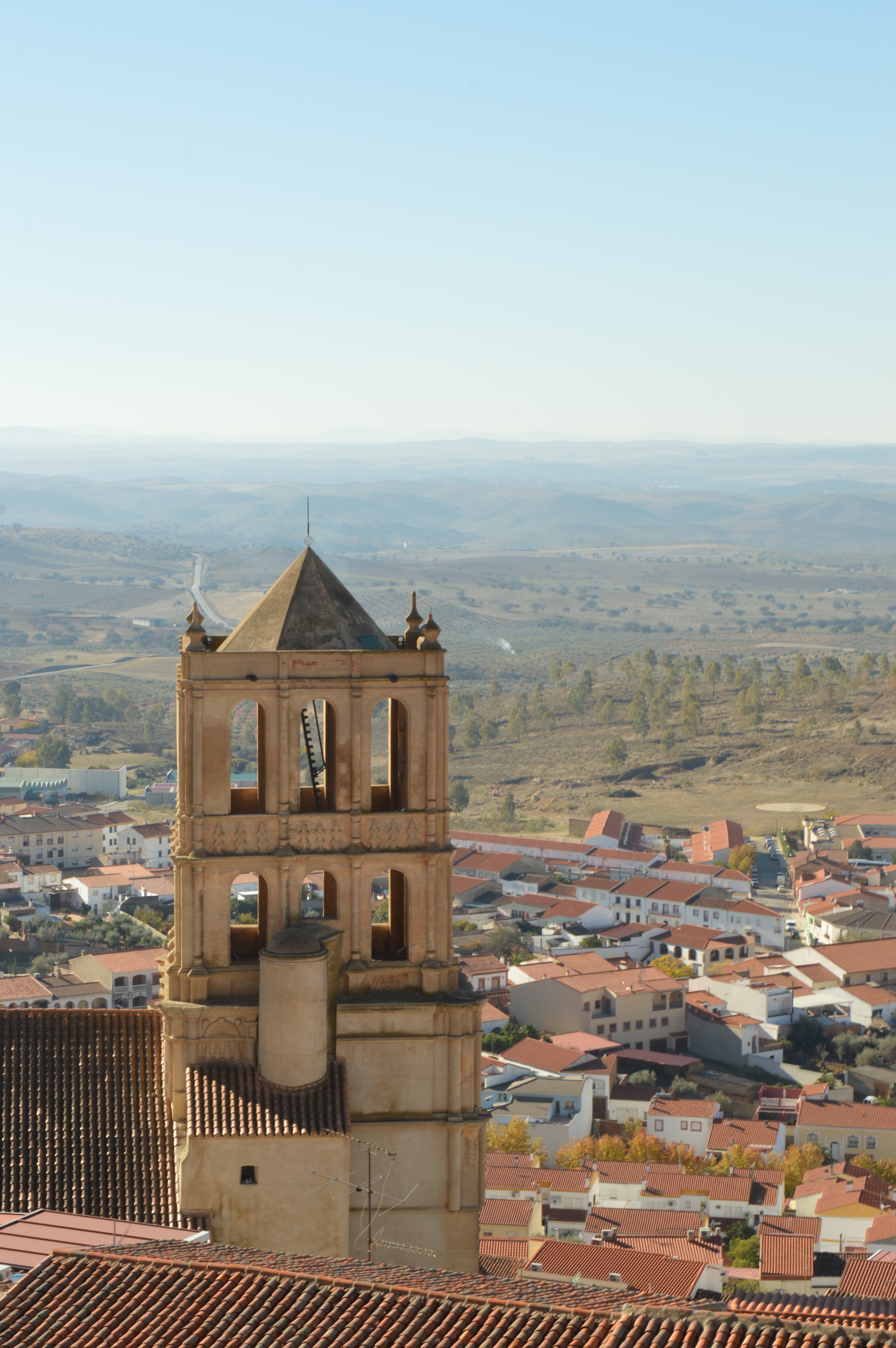
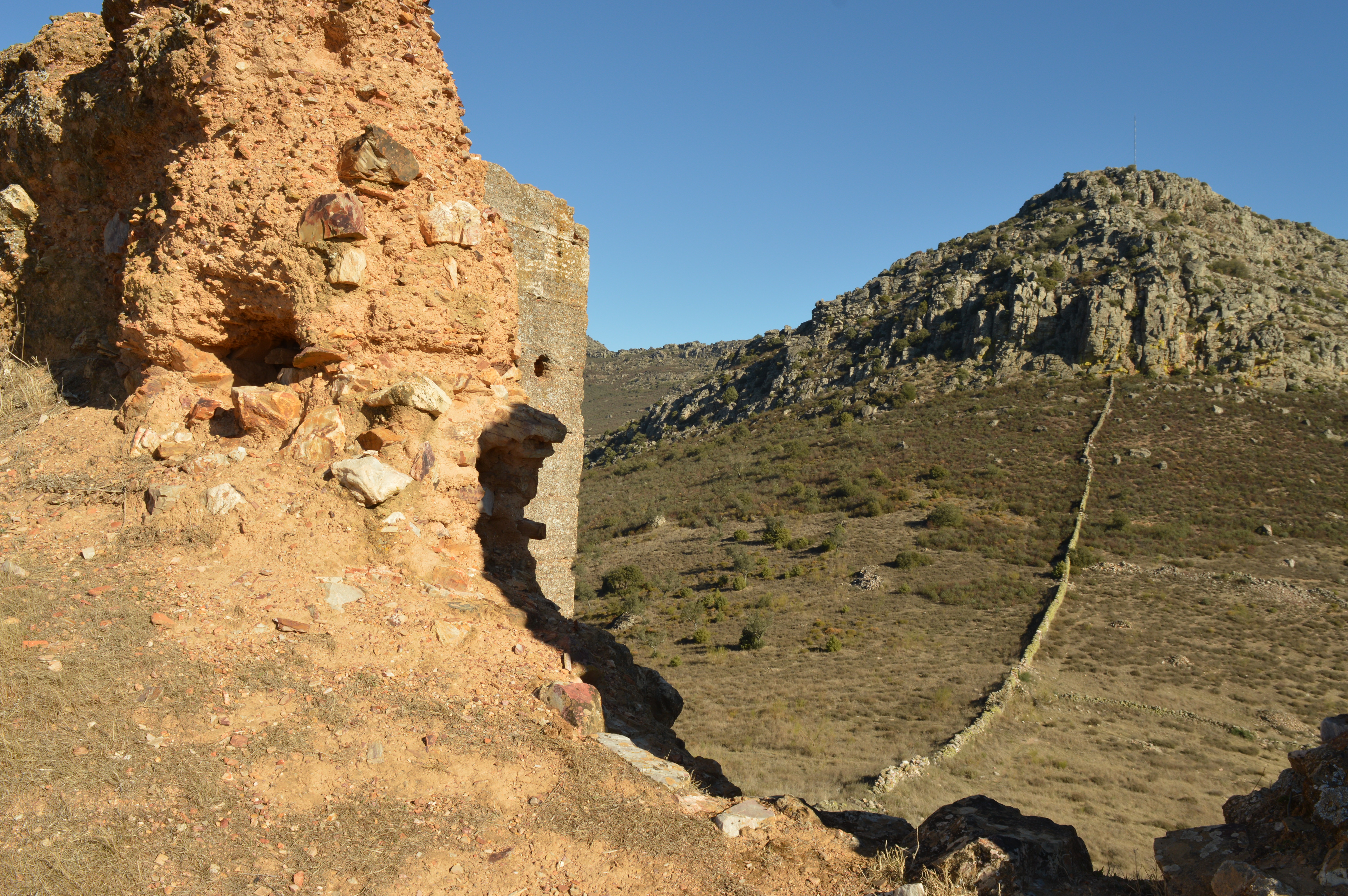
Hornachos. How you play with my heart! You, who the Moors adored in this land of endless fields, are indeed beautiful; the purple heights of the Sierra Grande soaring out of the earth like the broken spine of some great ship upon the shore… Home of the golden eagle and his imperial cousin, the fierce boar and the mighty griffons, the guardians of this beautiful kingdom… The twinkling lights of your houses, seen from afar to be floating in the night like the island of Laputa…

…why on earth do you only have one fucking bus per day?!

DSC_0249

That’s right. One of the most beautiful towns of Extremadura is hamstrung by its virtual inaccessibility. Centuries after the departure of the Moriscos, the mountainside town remains as unapproachable as ever it was under the rule of the soon-to-be pirate kings, albeit for slightly more mundane reasons.

Hornachos is served by one bus line, which is perfectly suited to the Hornachego with a job in the outside world, but virtually useless for the interested day-tripper. Two buses make for the town at 15.15 and 18.45 on weekdays (with the notable exception of Fridays), and one leaves for the outside world at 7.15am. And that’s it. It wouldn’t be so bad if there were any cheap accommodation offers, but with a slew of casas rurales, 50€ per night is the standard. When nearby Villafranca – which has almost nothing to see, by comparison – has a hostel for 10€ a night, it seems a little ridiculous. Not least of all because I would happily spend as much as 50€ every month (or more) if it meant I could be in Hornachos every weekend. Because I would. As for BlaBlaCar, the distance between Villafranca is too long to walk (and then hike), but too short for a popular carshare. You can’t free camp either, because of local laws. Goddammit.

Simply put, day-tripping to Hornachos is simply not possible without a car.

DSC_0262

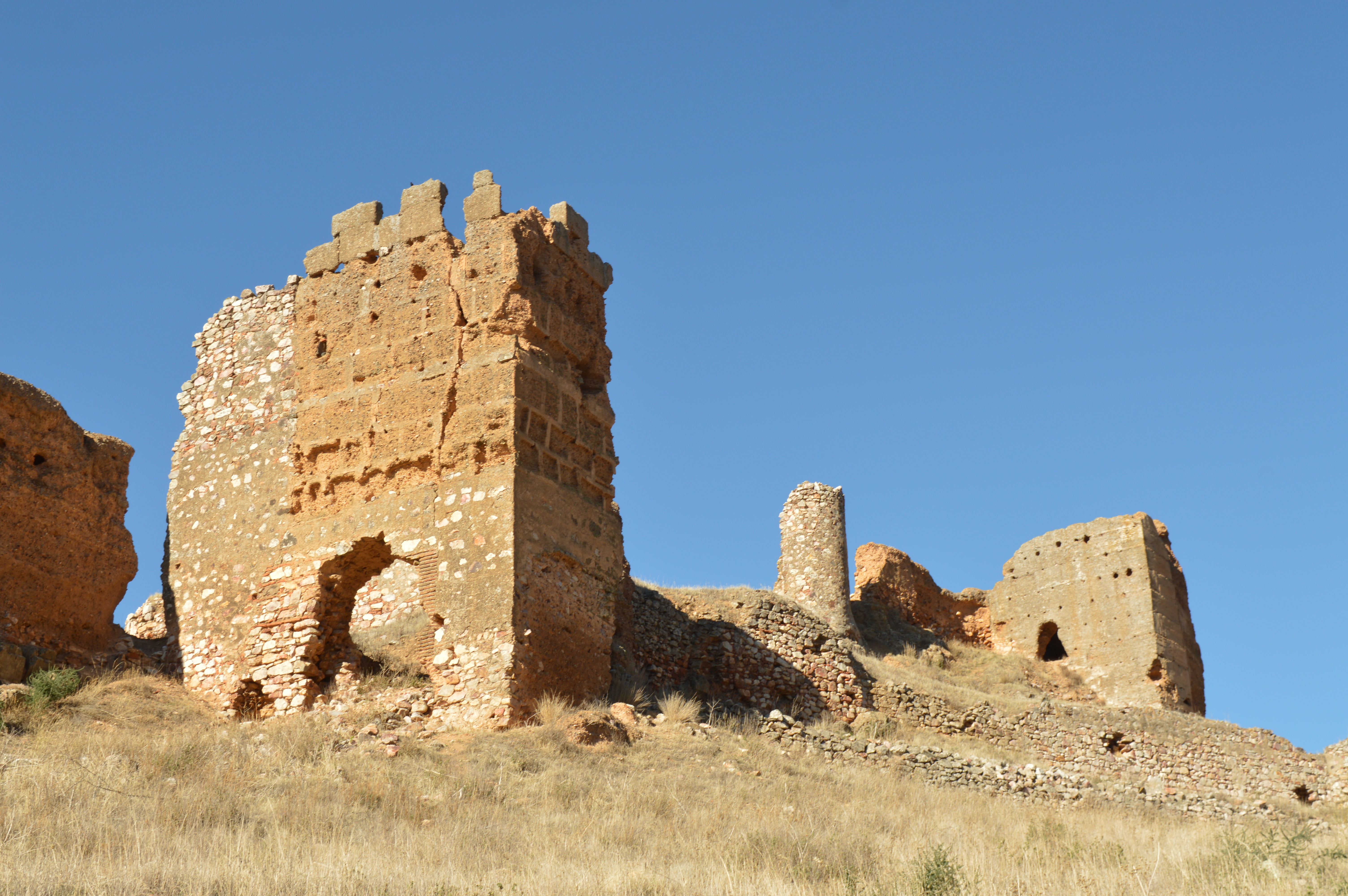
Its inaccessibility, however, is my sole complaint. Because, besides a lousy bus service, Hornachos has it all: the ruins of a tenth-century Moorish castle, a Mudejar church, an enormous sierra with vast fields of rolling dehesa stretching out for miles behind, a history so bitter and intense it might have been written in lemon juice and a super-friendly Casa de Cultura. I fell in love with Hornachos from the moment I first laid eyes on it. The unmistakable silhouette of Olvera, my old hometown, still strikes a chord or two in my heartstrings whenever I see it, but the Sierra Grande has long since overshadowed its place at the centre of my heart.

DSC_0269

I was lucky enough to hitch a ride with a couple of friends who wanted to go hiking in the Sierra, so I leaped at the chance. We didn’t have long to stay in the castle, because as we arrived atop the ruins, the shrieks and shouts of an approaching school trip sailed up the hill to meet us, like a colourful besieging army. Amber didn’t hesitate to let them know we were English. I replied to their questions in Arabic. Brownie points go to Amber for being a decent human being, where I just wanted to be difficult, I think.

It did drive home to me just how deceptive the mountains are, though. We had no idea there was a forty-strong school trip coming up the mountain to meet us until we’d reached the top, though one might have heard them for miles around. It’s a dangerous place up there, and little wonder the Moors made a beeline for the mountains when they reached these lonely parts.

DSC_0266

I had a private lesson in the afternoon and a language exchange at the EOI, so I had to be back in Almendralejo for four o’clock, which didn’t give us mountains of time to explore (ho ho). We fitted in the usual circular route, albeit in reverse, as well as a cheeky yoga session at the end – needless to say I remain as flexible as a dinner plate – though this time I scaled the first leg of the Trasierra route which crosses the Sierra Grande and winds down into the fields below. Further exploration is definitely required.

DSC_0270

The church, sadly, is closed to the public. Like the museum, if you’re interested, you have to ask for the key from the local tourist information office. I suppose this is the normal way of things; you take things for granted in the outside world, where Seville and Marrakesh whore their finery to the lowest bidder. Hornachos retains some of that ancient-world mystique. As much as it bothers me, perhaps that’s the secret to its survival.

You’ve got to hand it to the old town for its tenacity. Who’d have thought that this quiet gathering of houses on the side of the Sierra Grande was once home to the men who would go on to become the infamous Sallee Rovers of Robinson Crusoe fame? I wonder whether there were any Hornachegos amongst the corsairs who took part in the equally bloody Sack of Baltimore in 1631, only twenty-one years after their expulsion from the Iberian peninsula… Rabat sure does seem like a world away from this flat, flat world…

DSC_0550

‘We’re not in Hornachos anymore…’

I will make you famous, Hornachos. When the world knows of El Gran Hornachego and his adventures across Iberia and beyond, you will get the fame you deserve. I will write you back into history. That’s a promise.

DSC_0223

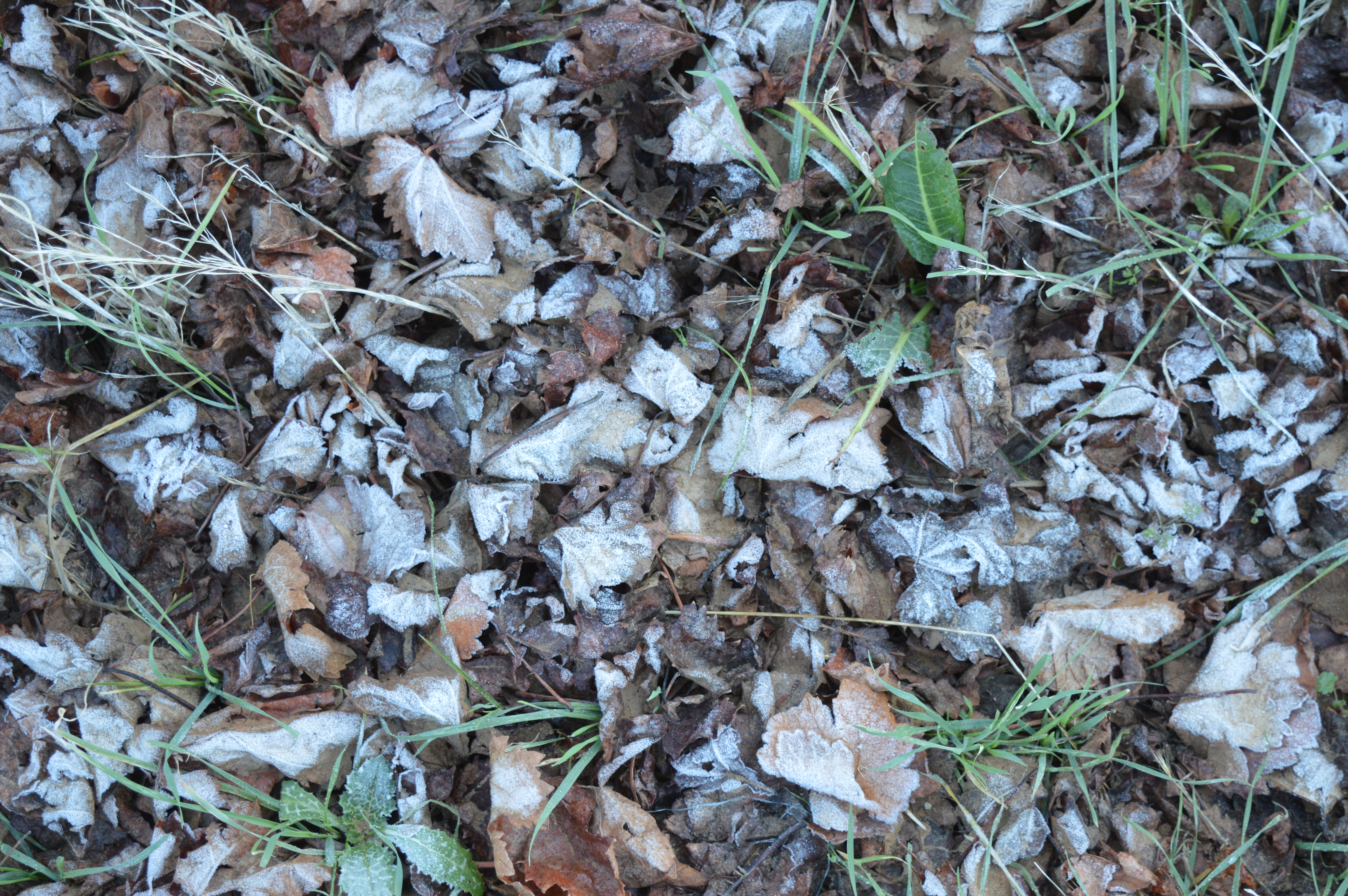
Also, after my sour-grapes episode about cold and snow, we did actually have some frost yesterday. Not much, and only in the shaded ditches at the side of the olive fields, but it was something. I hear Durham’s been looking beautiful in the snow lately, like Spain did last year. Why do I always manage to miss the snow wherever I go? BB x

Two Men Skilled in Climbing Mountains

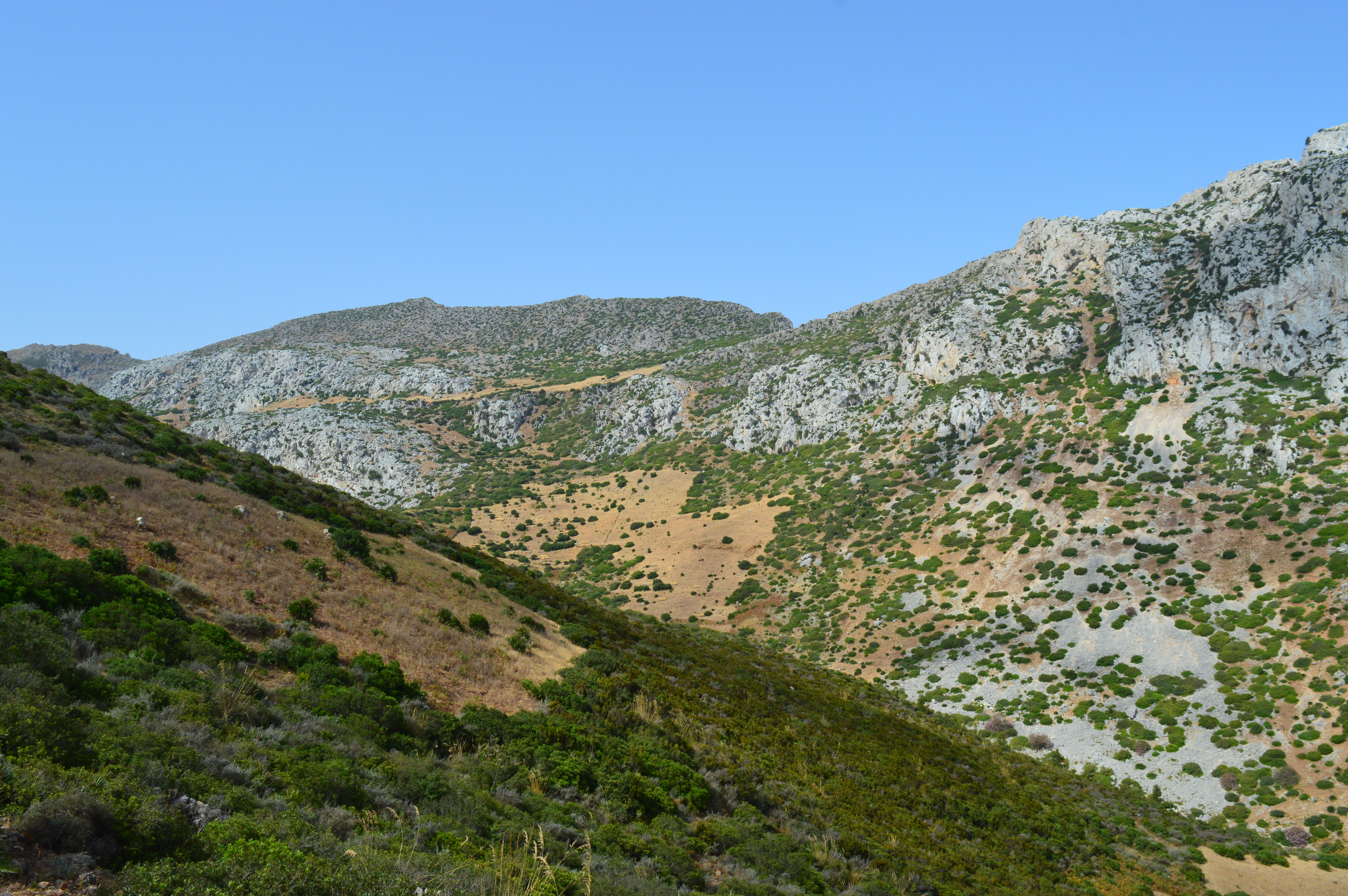
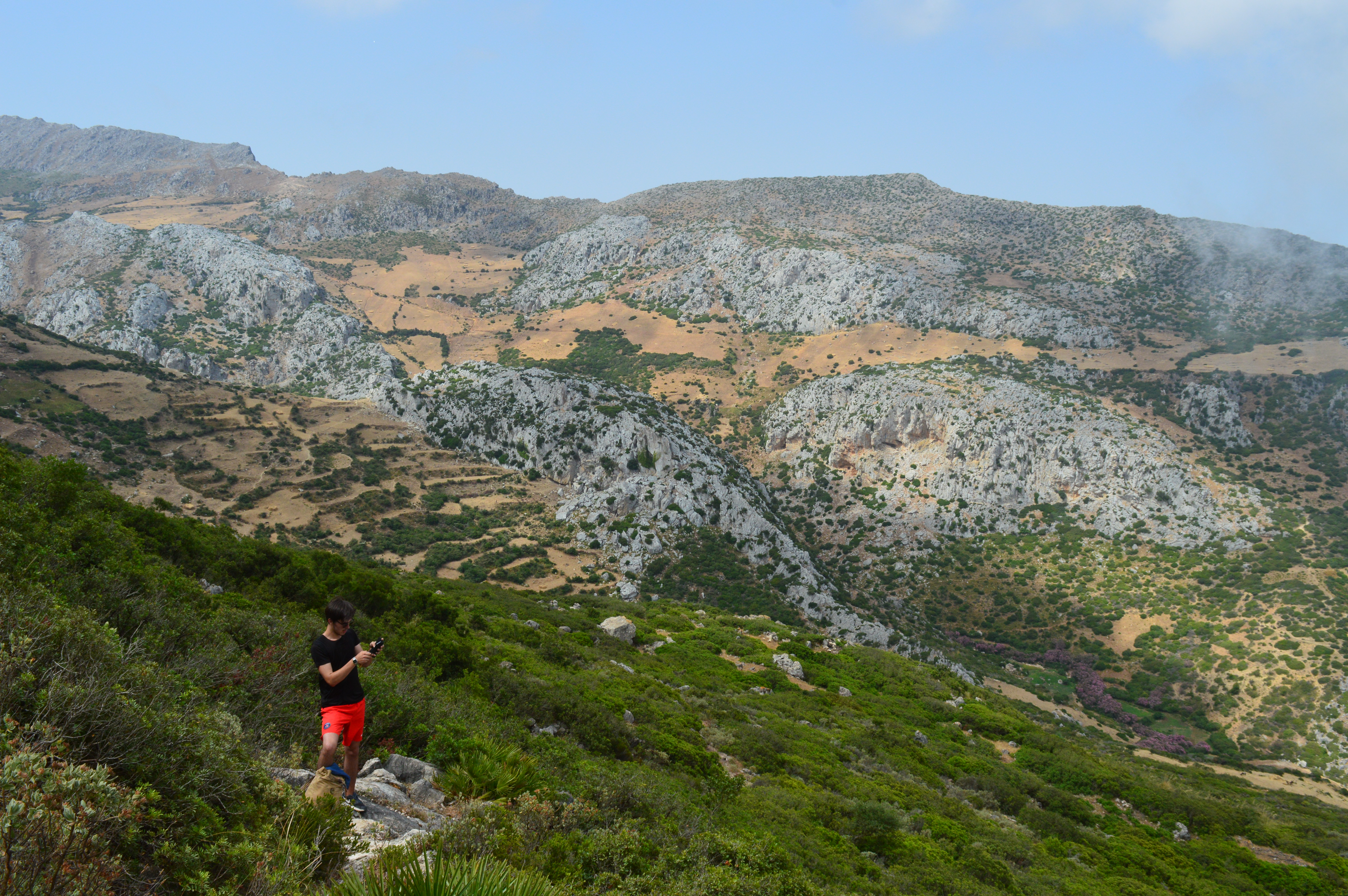
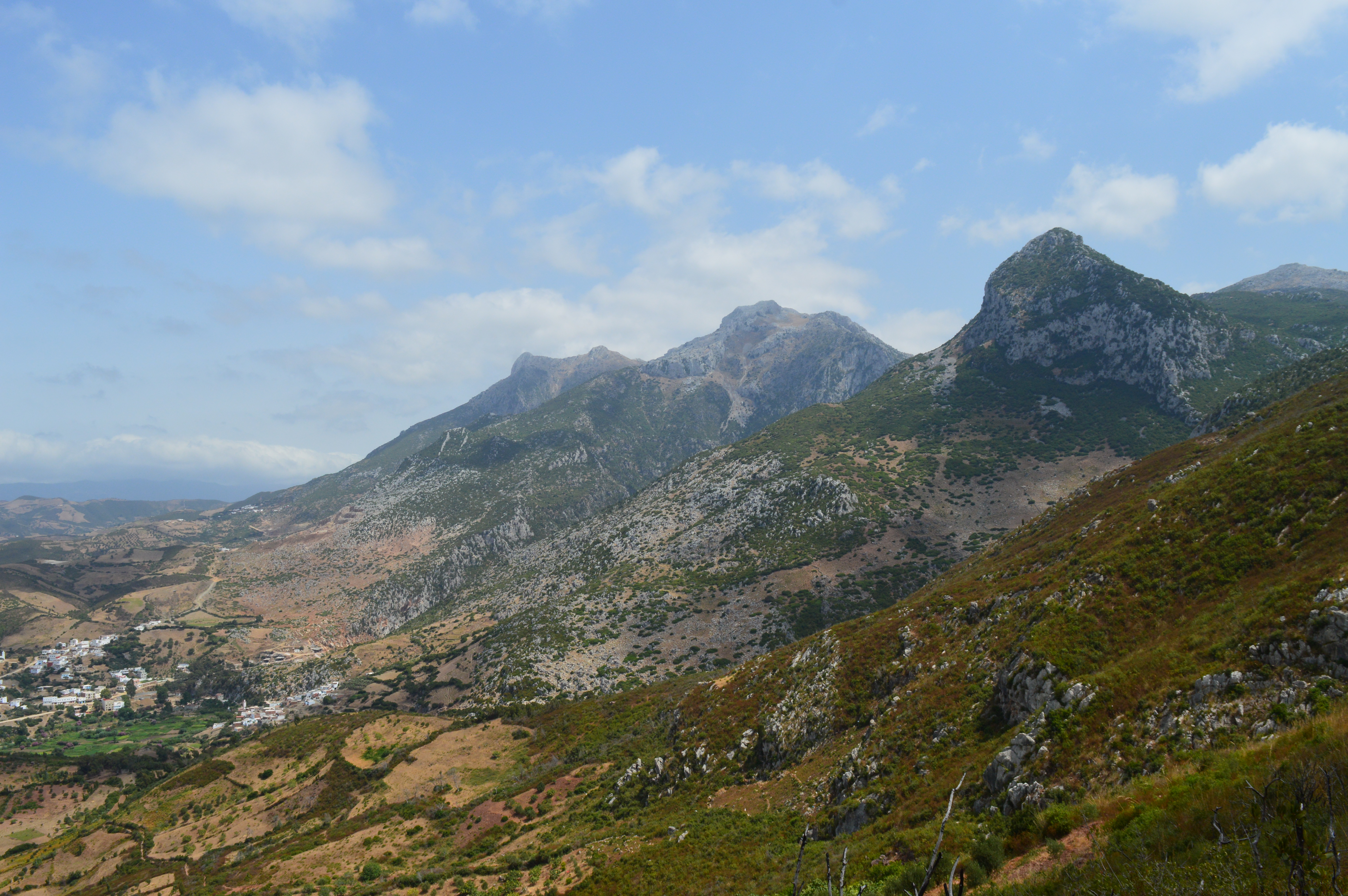
We did it. We conquered Ghorghez. It’s been staring us in the face for all of six weeks but now I can put my hand on my heart and say with all honesty that the beast has been vanquished. Call it the human desire to tame the wild in me, but I could never have left Tetouan with my head held high if I’d never managed to tackle that mountain.

Fortunately, Alex was of a similar opinion, so at nine o’clock this morning we hailed a cab and off we went.

DSC_0256

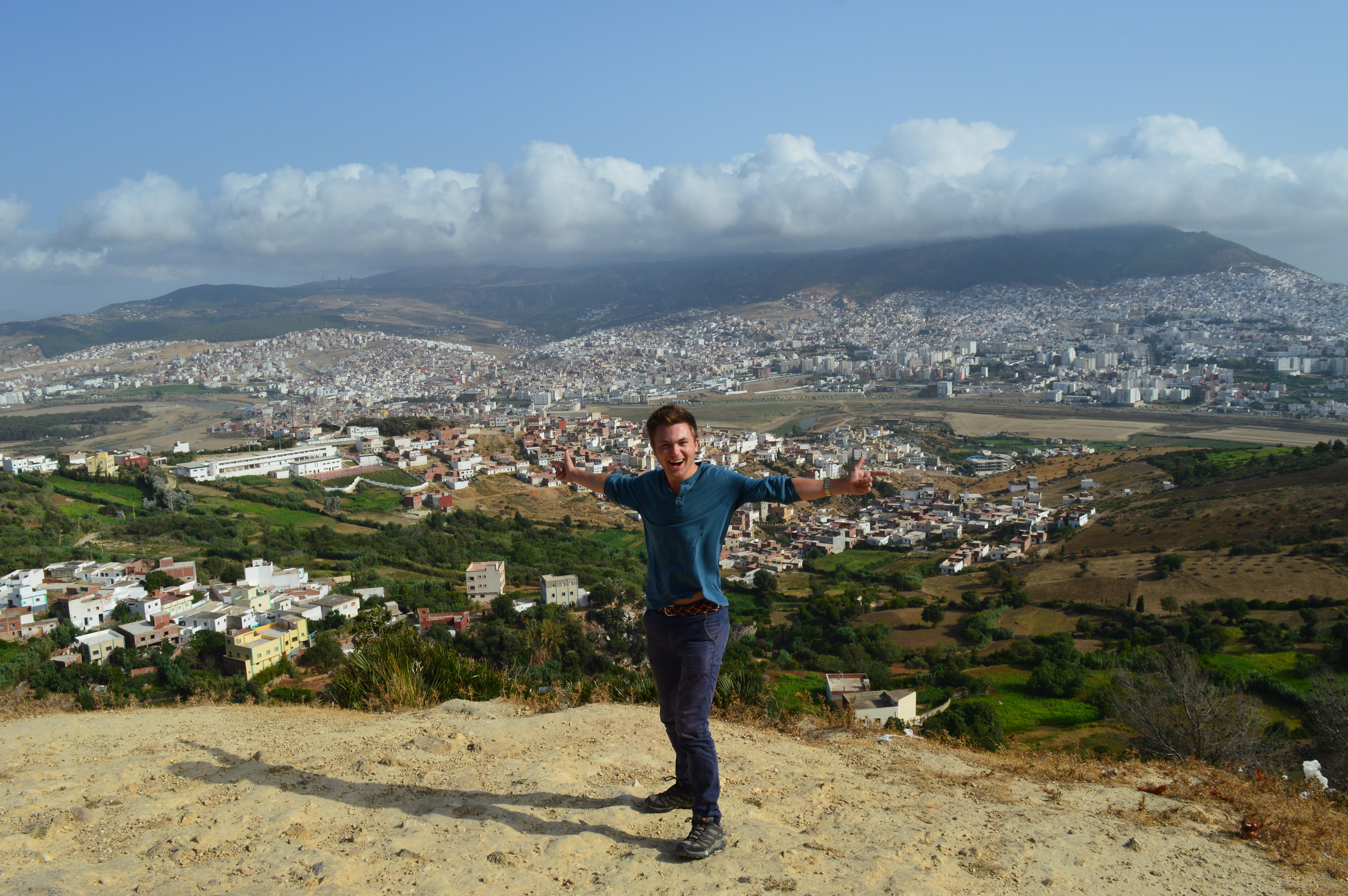
King of Tetouan (or that obligatory tourist photo)

We didn’t have the best of starts. My host father very kindly gave me the use of his topographic map and took me up to the roof to explain the route we could take; he would have come with us, if his wife was not still hospitalized from the accident. But when he asked how many of us were going, I had to lie and say five. If I’d told him the truth – that Alex and I alone were going – he’d probably have tried to stop us. The last time he went on a fossil-hunting excursion up in the mountains, he was attacked by a group of thugs and severely injured.

In that knowledge, Alex and I arrived at Ain Bou Anane and set off on our journey.

DSC_0263

Don’t be fooled… It wasn’t anywhere near as easy it looks

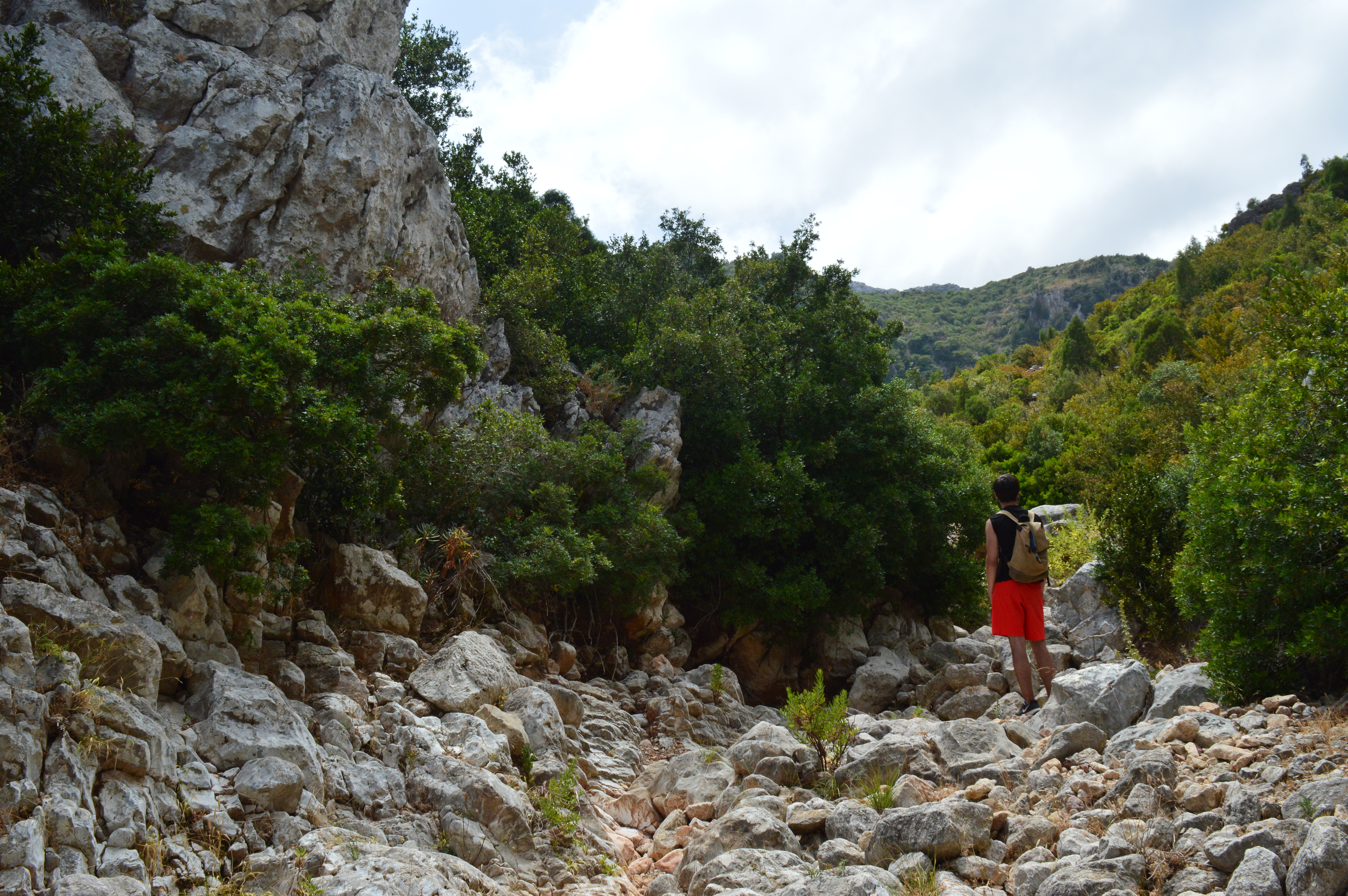
For the first ascent we had it easy, as there was a reliable, well-trodden path to begin with. Emphasis on ‘begin with’; after a hundred metres or so it vanished into the sea of thorns and scrub that covers most of Ghorghez and we were forced to resort to free-navigating the mountainside, cutting from goat track to goat track with the occasional wayward boulder as a bridge between the paths. And just as well: the tracks often vanished into thin air like fireflies in the night, leaving us stranded in the scrub.

The mountain wasn’t entirely wild. What I took at first for bird calls turned out to be the Ghorghez shepherds out on the slopes with their flocks. I’d quite forgotten how far sound travels in the mountains. More than once I thought we’d been followed, only to see the source of the noise sitting atop a boulder watching over his goats on the far side of the valley. I must admit, due to my host father’s tales, I was more wary than usual around these hill-folk. Seeing their silhoettes appearing and disappearing between the rocks set my teeth on edge. More than once I let slip that we might have to make a break for it if they ‘came back with reinforcements’.

But they didn’t, and Alex smiled and waved at them, and some of them waved back. I think we could all do with a reminder from time to time that, at the end of the day, everybody’s human. A smile and a wave could change everything.

DSC_0266

Now that’s what I call a hike!

As for their fences… Seriously. Fuck fences. The amount of backtracking we had to do to find a way around the vast sections of the mountainside that had been cordoned off was unfair, unhelpful and unnecessary. Who even builds fences on a mountain anyway? I guess they’re for the few cows we saw munching through the scrub, but what kind of a sadistic individual drives their cattle up into the mountains and then fences them in with barbed wire and brambles? Fuck those fences.

DSC_0274

You’ve got to hand it to Maroc Telecom. Fully functional 3G up in the mountains is impressive

Delaying our hike by one day was one of my better decisions. Not only was Alex fully recovered from his late late Friday night, but the weather couldn’t have been better. The sun shone out from behind the clouds all morning, and the wind, though strong, was cool and refreshing. Compared to the Azla trek, it was a much easier ascent. Which is jammy, for double the height.

DSC_0284

Ghorghez’ summit in the clouds

Alex had a run-in with a rather large snake on the way down. I know because one minute I was powering ahead with my trusty bamboo cane, and the next he was racing past, raving about snakes and putting about as much distance as he could between the cliff and himself. ‘I don’t like snakes. No one likes snakes. There isn’t a culture in the works that likes snakes. There’s just some things that nobody likes. Donald Trump, snakes… Oh, it was more than a metre long, easily.’ Ladies and gentlemen, Indiana Jones. ‘We don’t even have any antidote’. True, when I was packing this morning, I didn’t really think about preparing for a snake attack. I was too busy filling up five water bottles.

Five. I’d like to emphasize that five. Ben’s clearly learned his lesson from last year’s Dana disaster (you can read about that here).

DSC_0303

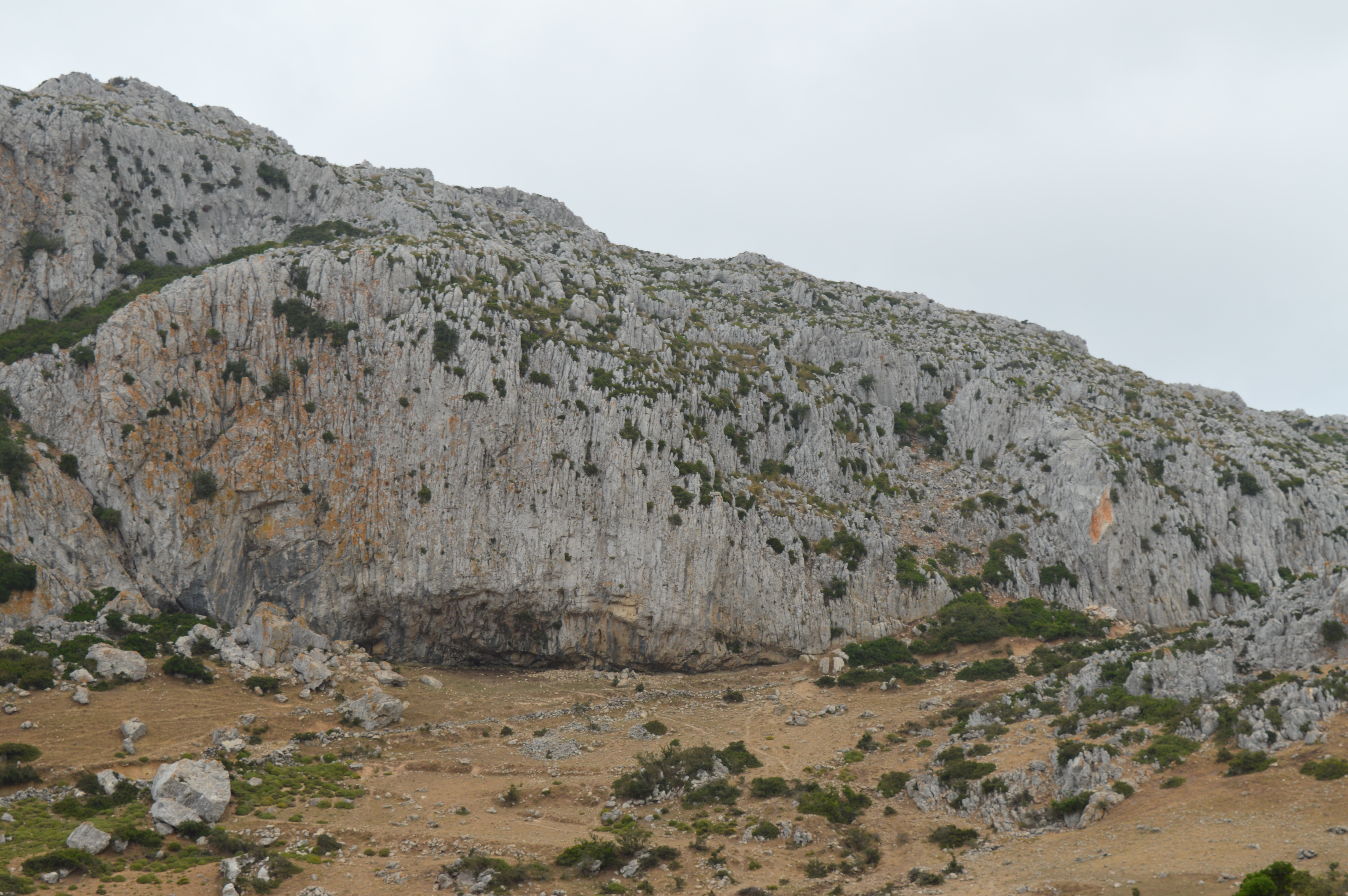
The coolest overhang in geology (or possibly the Wall from Game of Thrones)

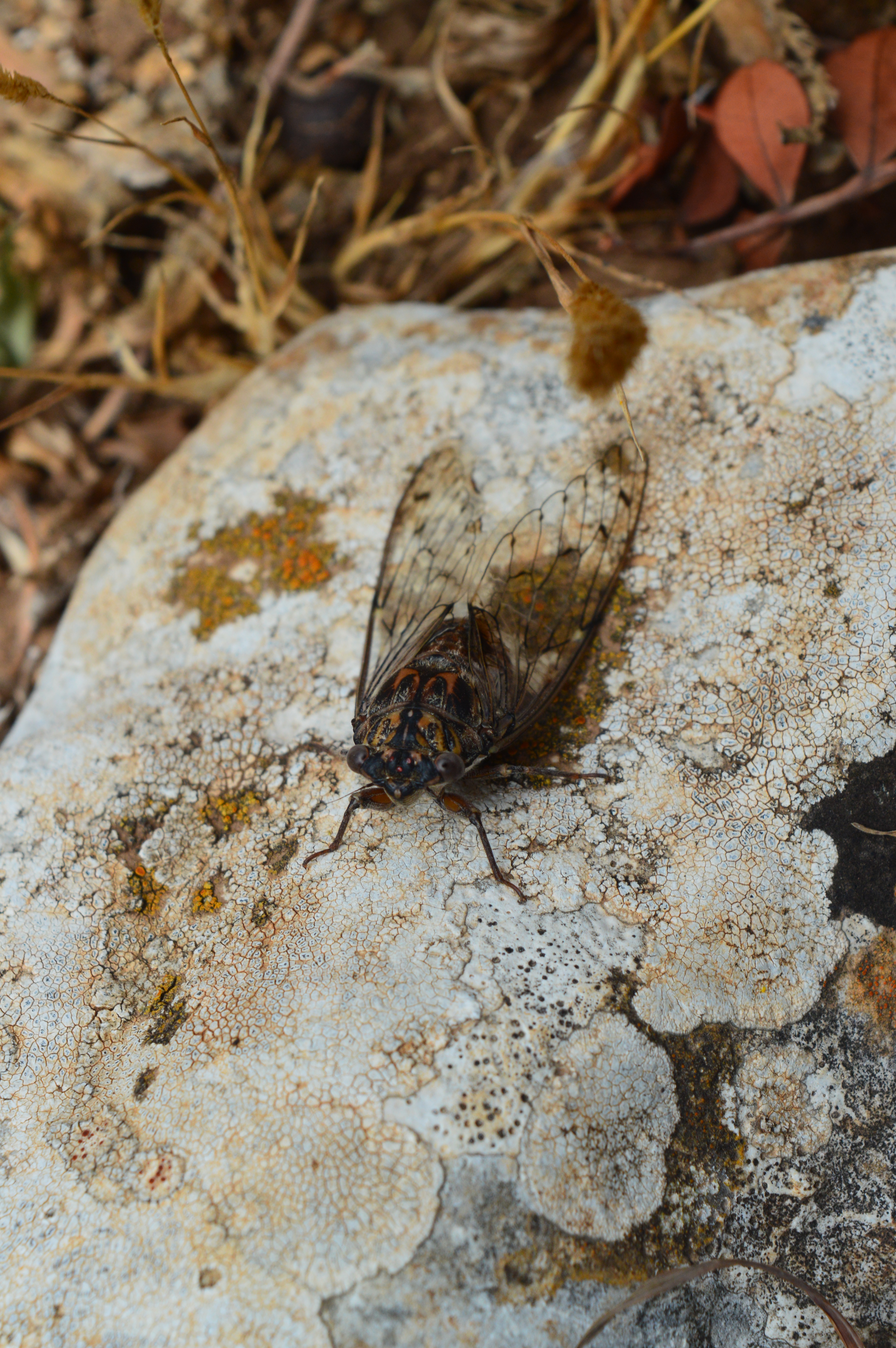
Not sure about the snakes, but the cicadas were absolutely massive. Blood-dripping-from-their-fangs massive, as my parents would put it.

DSC_0311

Who needs Pokémon Go? I found a Ninjask without my mobile, thank-you-very-much

Besides the creepy crawlies, the mountain was spectacular for wildlife. That’s probably my favourite thing about mountains: the wonderful creatures it brings you into contact with. Mountains are some of the last truly wild bastions on the earth. Especially for birds, and birds of prey in particular. For a city, Tetouan’s got its fair share of wildlife, namely the local kestrels and cattle egret colonies, as well as the flyover storks and kites, but if you want a really wild experience, you have to go out into the sticks. I watched a pair of booted eagles wheeling and diving and whistling overhead from the summit, as well as clocking a flyby peregrine, a couple of kestrels, a few buzzards, five or six kites, ten ravens and an Isengard-level swarm of choughs. Saruman the White couldn’t summon such a flock.

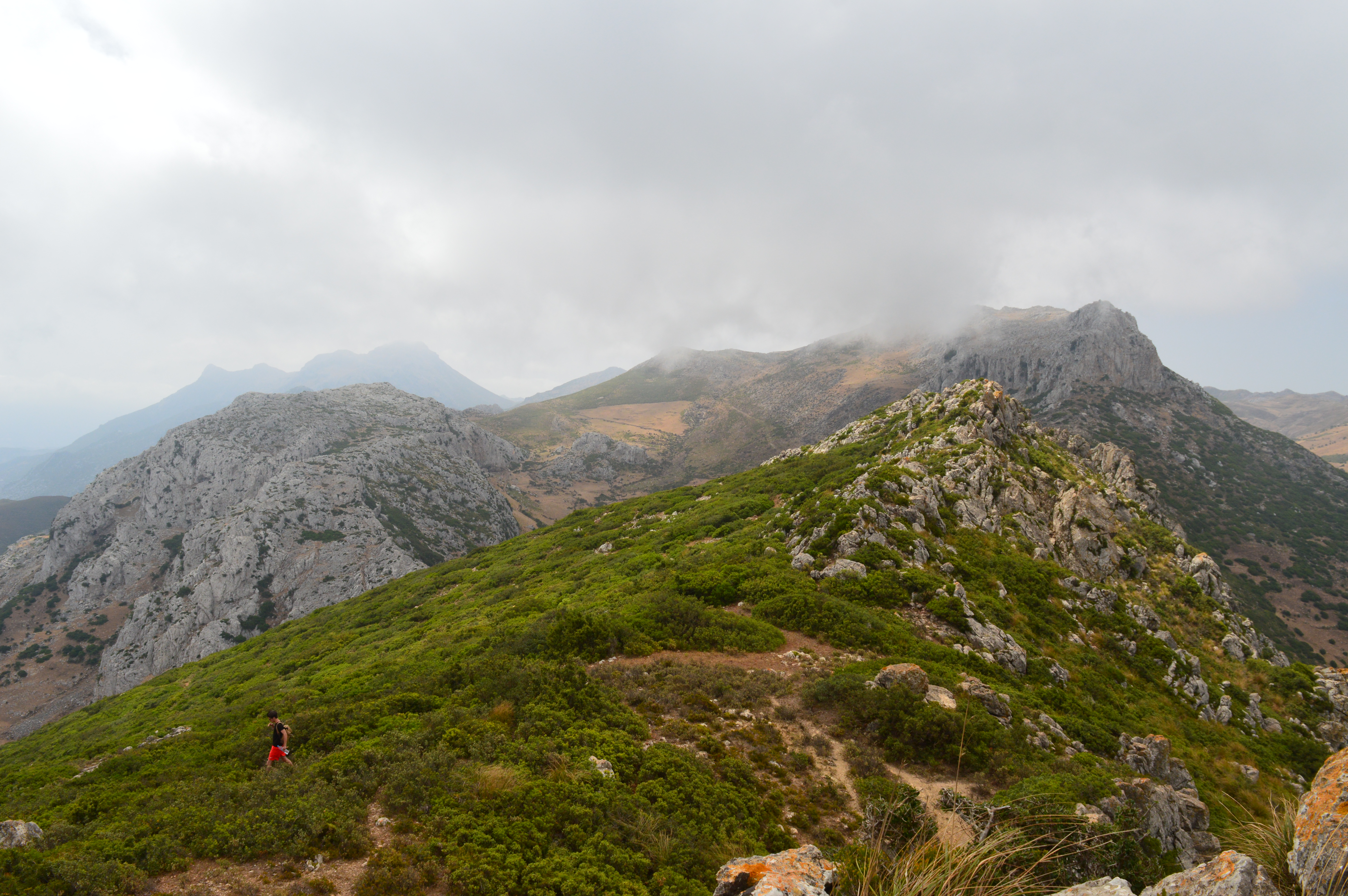
The scenery up at the top might have been taken from that very scene from The Fellowship of the Ring, strewn with jagged rocks and sparse bushes. But if Saruman was indeed watching our passage south, he must have tired of his vigil before long and gone for a coffee break because, as is the way with mountaineering, coming down was three times harder than going up.

DSC_0312

‘Let’s not throw ourselves to our deaths just yet.’

Finding our way up the mountain had been easy enough, since the next crest was always in sight. You’d think that the same might be said for the descent, but mountains are fickle. Not only do they play with sound, they also throw your perspective off frequently. More than once we followed the latest road/path/goat-track/dry river to its end only to find ourselves staring into abyss as it plunged fifty feet down over the edge of a cliff we’d never seen coming.

The resulting backtracking led us back into bramble country, which didn’t bother me and my long sleeves too much, but it ripped Alex’s exposed limbs to shreds. By the time we made it to open country again he looked as though he’d been mauled by a particularly savage beast. We couldn’t even use the wild boar we’d seen as an excuse, as it took off into the scrub as soon as it heard us coming. Nope, that’s just the bush at work.

DSC_0314

Ain Zarqa at the feet of the Great Pyramid and Saddle Mountain

Seven hours since setting out from Ain Bou Anane we found our way back down the mountain to the village of Wargane, completing the arc that had taken us around most of the Ghorghez ridge. I left my trusty bamboo cane at the side of the road (again) and Alex flagged down a cab to take us back to Tetouan. Three mountains in one. All in a day’s work.

Ghorghez is down. Mission accomplished. BB x