Something Old, Something New

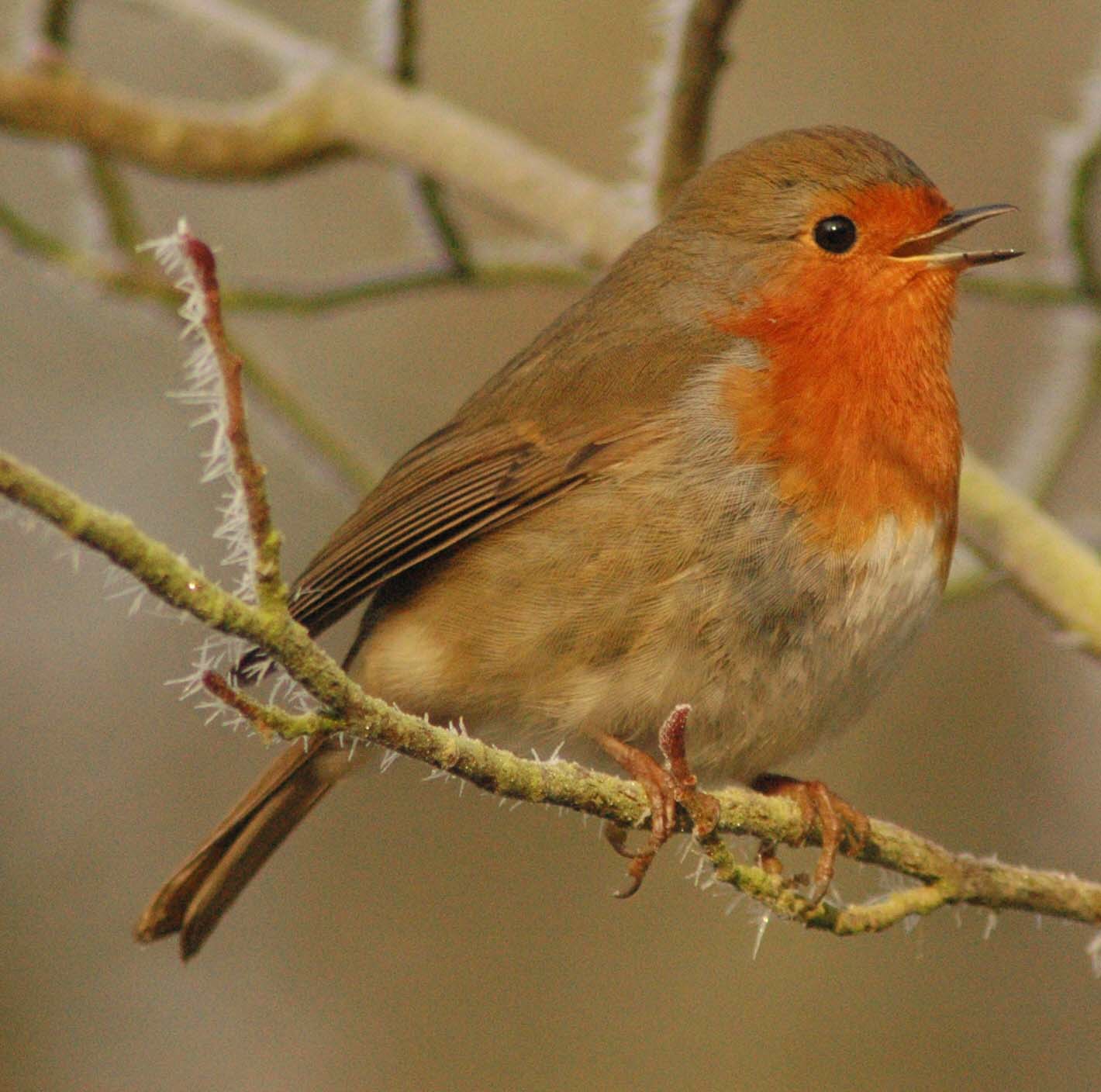
There’s a day in the second or third week of January that, at least in these cloud-ridden islands, marks the turning of the year. Not the first day of spring exactly, but an early harbinger that the dark days of winter are finally on the retreat. For me, it’s always marked by the first real blast of birdsong, and it usually goes hand in hand with a generous glow of sunlight after many days of cloud, or that infinite whitening of the sky that is so very well-known to those of us native to this rock. There’s no calling when exactly that day will fall, but when it does, it’s nothing more or less than exactly what the doctor ordered, as far as I’m concerned. I grab my journal and keys, leave the flat, walk up to the office and – boom. There it is. The dawn chorus is already in its final movement, but still going strong. The voices of robin and blackbird and woodpigeon and sparrow lift my heart skywards. I’m then in an irrepressible good mood for weeks which neither marking nor duty nights nor even thunder, rain and storm can stamp out.

I guess I can only apologise to my colleagues for the nauseous wave of positivity that nature washes over me. It’s almost first-year-of-university-level enthusiasm (which, for those of you who knew me then, you know…).
Perhaps spurred on by that wintry magic, I made two random throws this weekend. I bought a kite, and I decided to re-read one of my favourite childhood stories. The kite is easy enough to explain. I had a kite once, when I was a lot younger, which has Jeremy Fisher emblazoned on its face. If I remember correctly, it didn’t fly very well. I guess we never tried it out on a day when the winds were good. It just seemed to gather dust in one of the cupboards until, one day, it disappeared. Anyway, I’ve got the whimsically romantic notion in my head that kite-flying is one of those things I’d love to do with my kids someday, so I ordered one on that whim. It arrived yesterday, and if I get a moment’s peace this week, I’ll put it through its paces out on the South Downs.

As for the reading – alright, I confess, I didn’t do any reading per se. I had a fair amount of spring cleaning to do, but I wanted a soundtrack while I worked and I figured an audiobook would be just the ticket. I’d had Michelle Paver on my mind after dipping my toes back into her ghost stories a few days ago, which naturally conjured up memories of reading her Chronicles of Ancient Darkness series when I was at secondary school. I remember absolutely adoring the first in the series, Wolf Brother, and motoring through at least the first sequel through my school library. I cannot remember exactly whether I made it as far as Soul Eater, the third in the saga – if I did, I forgot the plot more completely than that of the second – but I remember the books rising out of a videogame-clogged adolescence like icebergs, one of precious few literary stepping stones across a goggle-eyed, pixelated river that ran at full strength for far too many years. Was it Paver’s intense attention to the natural world in her writing that hooked me? Probably. She is one of my favourite authors for precisely that reason: she knows her settings as though she has lived within them her whole life through.
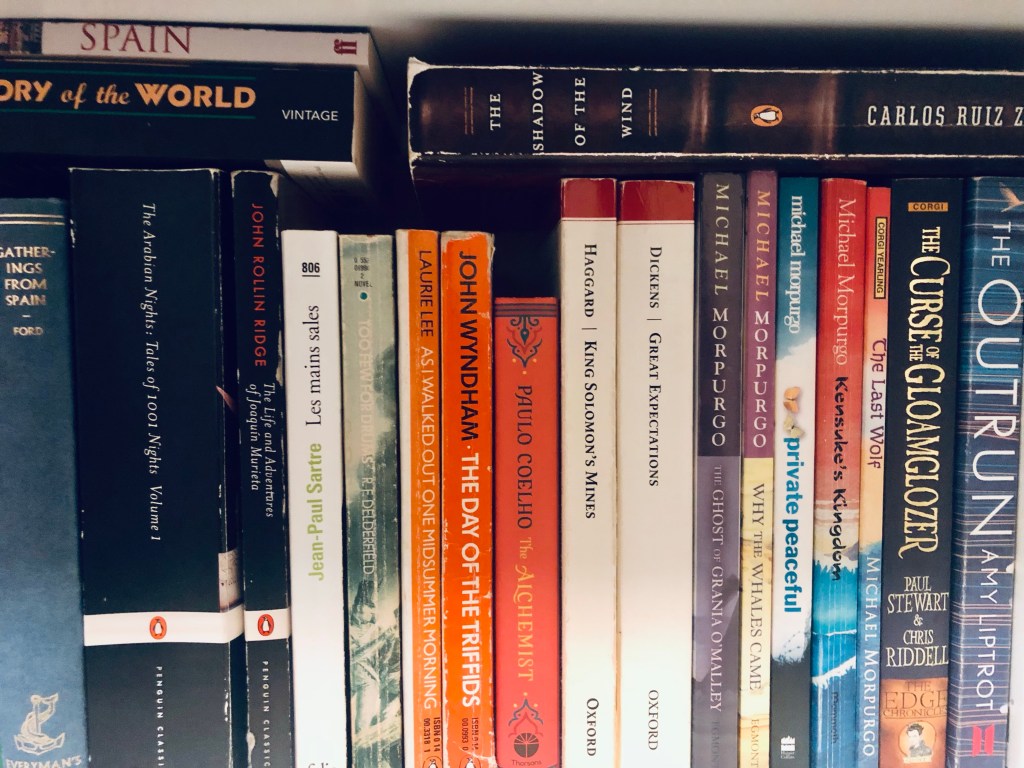
Wolf Brother had a lasting impact on me as a writer, more than I had previously suspected, and it took listening to the masterful narration of Sir Ian McKellen over the weekend to realise just how deep the roots of her magical storytelling stretched into my own creations. Naturally, my own stories have changed a great deal since I started writing them over twenty years ago, but if you look closely, you can see the tell-tale brush strokes of the authors who showed me the way. I could fire up my hard-drive right now, pull up a folder, pull out a chapter and point out the guiding hand of this or that storyteller. Here is some of Paver’s naturalism, and there’s some Rider Haggard gung-ho. Paul Stewart and Chris Riddell had no small part to play in the healthy dose of tragedy, and I’d wager a fair amount that there are traces of Michael Morpurgo spread throughout like watercolour, since at a certain point in my childhood I pretty much read nothing else. There was just something about his writing that spoke to me like no other writer could. He had me hooked on all his animal-centred storylines, his Scilly Isle adventures, and his occasional reference to something on my wavelength (like namedropping The Corrs in Arthur, High King of Britain). Kensuke’s Kingdom and Why the Whales Came rank near the top, and sit in pride of place by my desk alongside the other books that mark certain turning points in my life: Day of the Triffids for traveling solo, King Solomon’s Mines for going mad in Amman, The Arabian Nights from my university days and The Outrun for a dose of reality when I left that world behind… and The Tale of Benjamin Bunny… just because.
What were the stories that had the biggest impact on you as a child? Which authors colour your writing? I’ve ended the last couple of posts with a question, which is a) repetitive and b) pedantic and c) a sign of how much I’ve been teaching and how little I’ve been writing these past three years. But it’s something I love to ask people, when I get the chance. The power of storytelling has been precious to me since I was a bratty kid insisting on the fifteen-minute bedtime stories and not the three-minute tales (I swear I wasn’t just looking for an excuse to stay up late…!), and I hope it’s a joy I can share with my children someday.

When you come back to a book you enjoyed as a child, you see it through two pairs of eyes and two hearts: the eyes of a child embarking on a journey as though for the first time, and the eyes of a parent who knows the dangers ahead but cannot help hoping things turn out for the best. It’s incredible how the magic contained within the pages of those stories never fades, no matter how many times you come back to it. I make a point of re-reading Triffids every time I travel alone, but I’ve neglected the stories of my childhood for too long.

Once I’m done with the rest of Torak’s adventures, you’re next, Morpurgo!

BB x
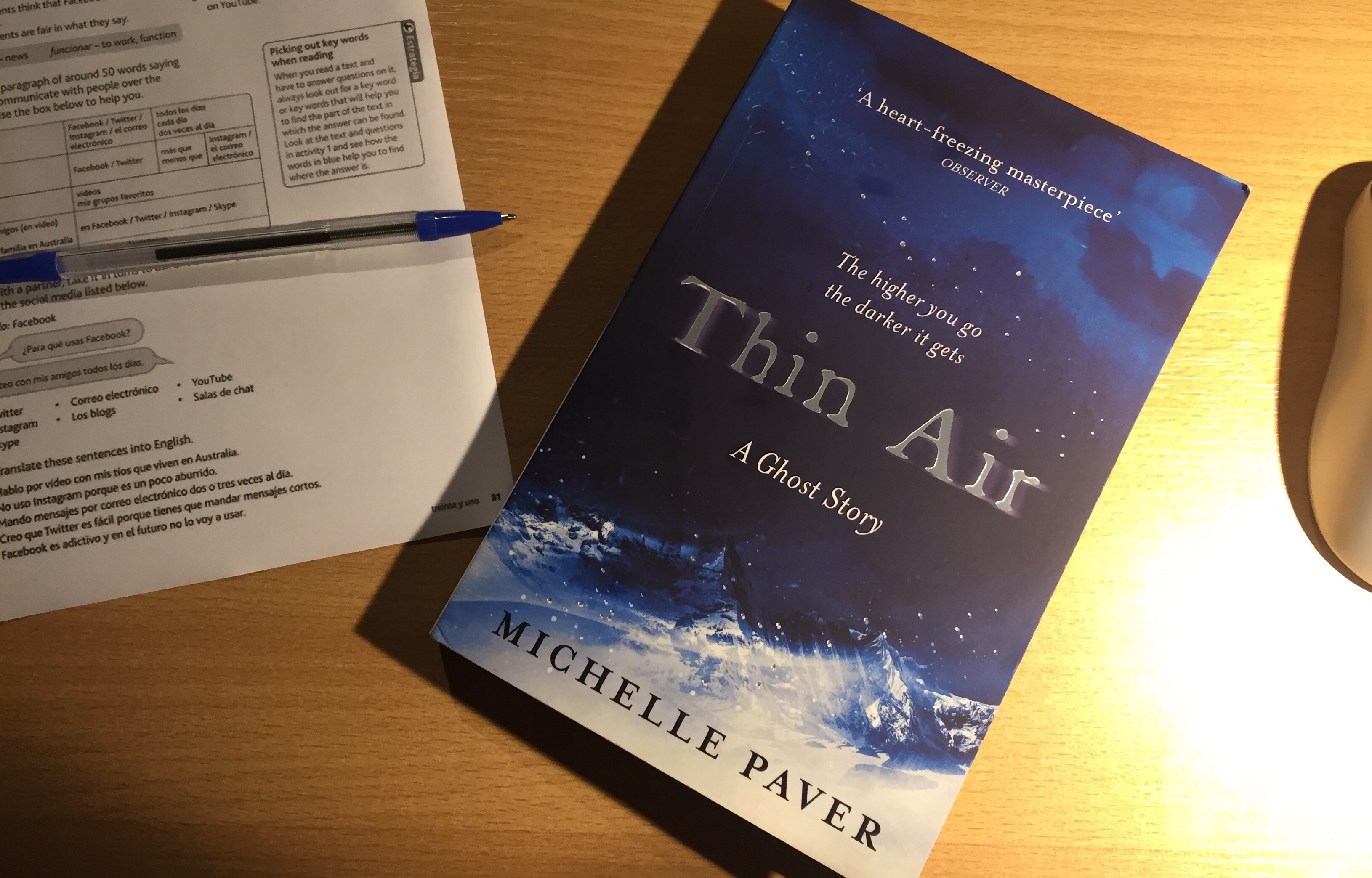
Quote Unquote: THIN AIR by Michelle Paver

img_4837

The funny thing about being busy is that it makes all the things you wanted to do when you were free that much more achievable. It seems counter-intuitive, but it’s true. When time is on your side and you have a stack of books to read, it can be hard to even chip away at one. When you have lessons to plan, essays to write, work to mark and affairs to set in order, reading for pleasure suddenly becomes both more appealing and more feasible. Somehow those twenty minutes you carve out of the day always come around. I suppose routine is the answer, as it so often is. It’s just a pity that routine is harder to maintain when you have nothing but time on your hands.

The days are growing shorter. Prep ends in darkness now, and this Saturday just gone, the martins gathered on the abbey roof, as they always do on a certain day every year. The following morning they were gone. All of them. They say a swallow does not a summer make, but for me, summer is always over on that day when the swallows and martins take their leave. Now is the time of cold, crisp mornings, clear blue autumn skies, mist in the trees and the musty smell of mushrooms.

It is also a wonderful time of year for ghost stories.

……..

Thin Air tells the tale of a British expedition up the southwest face of Kangchenjunga, a mountain of fearsome repute in the unforgiving wastes of the Himalayas, as seen through the eyes of Dr Stephen ‘Bodge’ Pearce. The expedition party, an assortment of British public-school chaps (the swot, the bully, the priest and the major), have set their sights on being the first to climb the evil mountain, which has turned away all previous comers and slain several for good measure for even trying. Struggling with an unenviably rocky relationship with his brother, Kits, Stephen tags along as the expedition’s medic. From the very beginning the expedition is hag-ridden by the previous sortie led by the larger-than-life Lyell and company, whose disastrous defeat casts a long shadow over the group’s attempt – in more ways than one. It quickly becomes apparent that Lyell’s disastrous attempt to climb Kangchenjunga was less of a heroic withdrawal than it seemed at first, and as Pearce’s company scales the mountain, something sinister begins to dog them by degrees. Bullied into silence by his older brother, who alone seems oblivious of the creeping dread, Stephen begins to believe they are being haunted by a vengeful spirit. The mountain may not be the only thing determined to prevent them from carrying out the mission that Lyell started…

The story is full of men walking in the shadows of others. Kits marches in the footsteps of his hero, General Lyell. Stephen plays second-fiddle to Kits for most of the narrative, who seemingly does his level-best to keep him from stealing his place in the spotlight. The sherpas follow meekly in their wake, dismayed at their employers’ ignorance, and both a dog and a raven – stylised with the more ominous name of gorak – shadow the company on their ascent into the darkness. More chillingly still, there is always the nameless presence of something unspeakable. And then, of course, there is Kangchenjunga itself, overshadowing them all.

Kangchenjunga is not just a setting. It is an objective, an idea, an antagonist and a fierce deity. It is also far and away the standout character of the story. There are more sinister incarnations of rage at work in the tale, but one is never allowed to forget the raw ferocity of the mighty mountain. It threatens the company with its avalanches. It sends blizzards to slow them down and it reminds them of their chances with the cairns of those who have tried to master it and fallen in the attempt. One of my favourite parts of the Lord of the Rings growing up was the section of Fellowship when the company of nine attempt the pass of Caradhras and are beaten back by a mountain that is more sentient than it appears. There is something truly awesome about nature at its most raw, and Kangchenjunga is Tolkienesque in its might (interestingly enough, Caradhras’ other name, the Redhorn, is evoked at least once in Paver’s description of the mountain’s “dark-red precipices” – a colour that instantly stands out from the whites, greys and blues of the snowbound Himalayas). Stephen, a Western doctor ruled by his head, flatly denies it all, shooing away the sherpas’ fears as the darkness settles:

“This mountain has no spirit, no sentience and no intent. It’s not trying to kill us. It simply is.”

The question is: are you convinced?

This is genuinely one of those books that merits re-reading. There is so much subtle foreshadowing throughout, and a great deal of it will pass you by until the end. To read it again is to watch Dr Pearce and the company march knowingly into the jaws of doom with an even greater surety than before. You knew the mountain was a killer from the word go – Lyell, Pearce and all the others point to that endlessly – but the way in which Paver weaves the narrative forwards and backwards is spine-chillingly precise. I have deliberately avoided talk of the ghost in this ghost story, if only because the less that is said about it the better – the strength of a ghost story is often in that which is left unsaid. If you know, you know, if you don’t, give it a go. And when you’re done, seriously, skim back through and read it again. It’s almost scarier the second time around. Which is exactly what a good ghost story should be.


Favourite Scene:

The first cairn. It is Dr Pearce’s first encounter with the reality of their situation – and also his first brush with the nameless terror of the mountains. For the superstitious, there is an ancient belief in some parts of the world that walking the wrong way around a sacred object, such as a pillar or monolith (or in the case of Thin Air, an urn) brings on bad luck. I remember the tradition being used to comedic effect in Tintin, but as soon as it showed its head in Paver’s narrative I knew we were in for trouble – I’m glad she made use of that old trick. Because it felt like the necessary snowball that starts an avalanche. Dr Pearce’s musing before the cairn of Dr Yates, the doctor on the Lyell expedition is both stark and satisfying in its foreshadowing – and powerful in the ensuing scene it delivers. This is definitely one of the scenes that is worth a second look.


Favourite Character:

Kangchenjunga. For all of the reasons I laid out above.


Favourite Quotes:

Surely the purpose of a grave is to benefit the living. Aren’t the dead beyond caring where they live?

It’s lack of knowledge which lets in the shadows.

Perhaps that’s what we find frightening. Being on a mountain forces us to confront the vast, unsentient reality that’s always present behind our own busy little human world, which we tuck around ourselves like a counterpane, to keep out the cold. No wonder that when we trespass into the mountains, we create phantoms. They’re easier to bear than all this lifelessness.

There is no justice in this world, so why should we expect it in the next?


img_4392