Seven Seconds in Madrid

Chocolatería 1902, Calle de San Martín. Centro. 10.22.

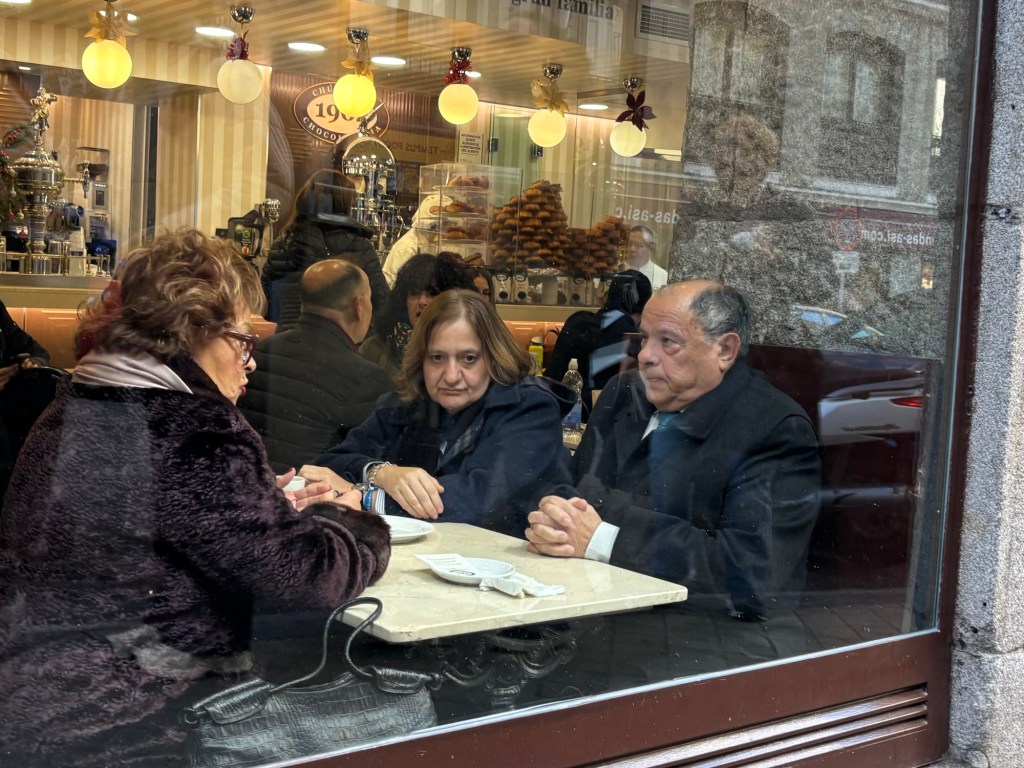
I’m waiting in line to grab some churros con chocolate for breakfast at 1902, the same chocolatería I drop in on every time I’m in Madrid. It’s not yet half past ten on a Sunday, so the interior is still pretty busy with the usual morning traffic. The handsome lady manning the takeaway stall bustles in and out of the booth to resupply for the family of three in front of me. My attention is drawn to three punters sitting by the window. Locals, surely – only a Spaniard would keep their winter coat and furs on inside when there’s even the slightest chance of a draft slipping in. After all, it is a bitingly cold 16°C out there.

They look to be in their seventies, there or thereabouts. That means that the man on the right served his country for at least a year in the mili, before Aznar did away with national service in 2001 in a bid to win votes. It also means they probably remember very well what Madrid used to be like under Franco, before La Transición and La Móvida swept the city into the twentieth century like the rest of the European capitals.

Do they miss the way things were, perhaps? It must have been an altogether different place, back when the city’s demographics were primarily madrileños de raíces, before scores of regional migrants were drawn to the capital for work, followed by a larger tally of visitors from further corners of the world. Before Ale-Hops and Starbucks replaced the boarded-up shopfronts of local businesses. Before every sign and tannoy needed an English translation tacked on, to cater to a growing tourist class who were not expected to learn the language for their visit – another reminder of Spain’s falling status on the world stage.

I do not regret the end of Franco’s Spain – after all, it’s because of him that my Spanish family was torn apart. But I do understand why some might look back fondly on a time when the world seemed a whole lot more familiar.


Librería La Central, Calle del Postigo de San Martín. Callao. 10.36.

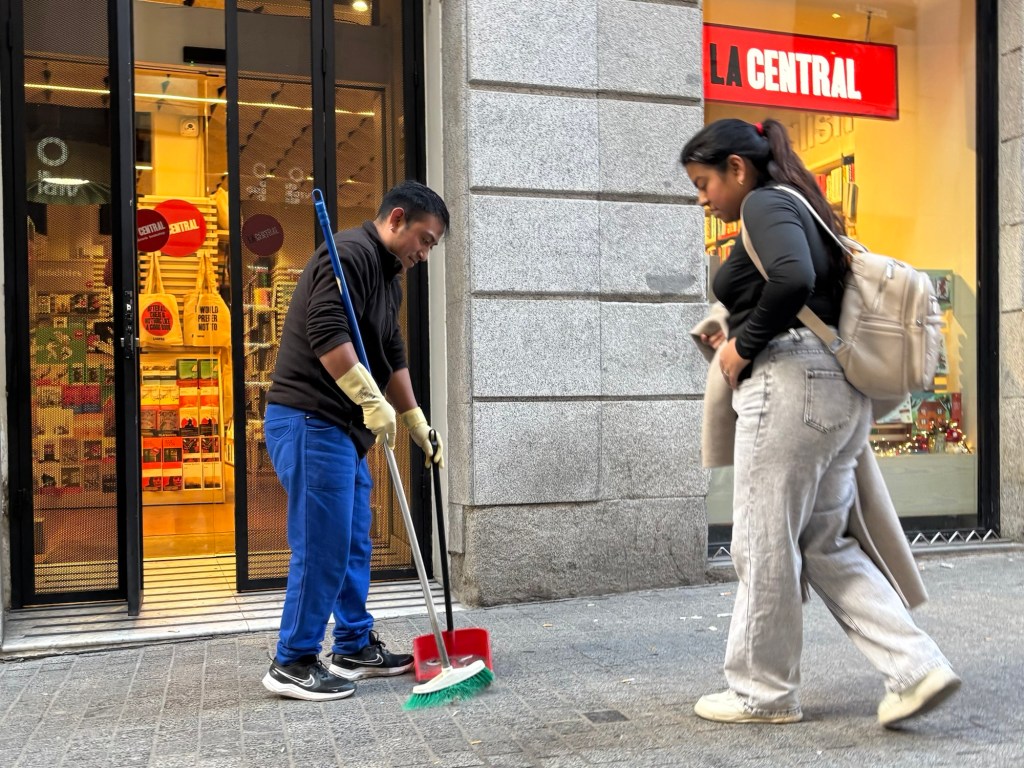
Further up the street toward Gran Vía, I pass La Central. It’s not yet open, and an Amerindian in marigolds and workers’ blue pantalones laborales is sweeping the street in front of the door, which is open only just enough for a person of slender build to squeeze in untouched. It’s mostly confetti and spent chasquibumes that he’s clearing away – there aren’t nearly as many cigarette butts as there used to be.

A girl stands nearby, picking up some of the easier wrappers by hand. She’s dressed like a passer-by, but there’s a familiarity to their easy interaction: she could be a relative, a friend, or a lover. Neither of them are wearing the white worm-like earbuds that seem to have encrusted the faces of so many of the city’s inhabitants, and that makes them stand out.

I bought four books in the nearby Casa del Libro (after nearly two hours’ decision) and it cost me around 70€. Spain is often ranked as one of the least literate countries in Europe, with fewer than 9% of the country reading books on the regular. Statistically, that’s not all that far behind the UK, but there’s no escaping the fact that reading is a luxury activity in Spain. FBP (Fixed Book Price) might be a worthy attempt to level the playing field and prevent the market being swamped in Taylor Swift trash and cheap chick lit, but it does drive up the prices of everything as a result.

My great-grandfather dreamed of having his own library, and I’m doing pretty well at bringing that dream to fruition. But it’s not a cheap enterprise in this country. I wonder how much traffic the man in marigolds sees.


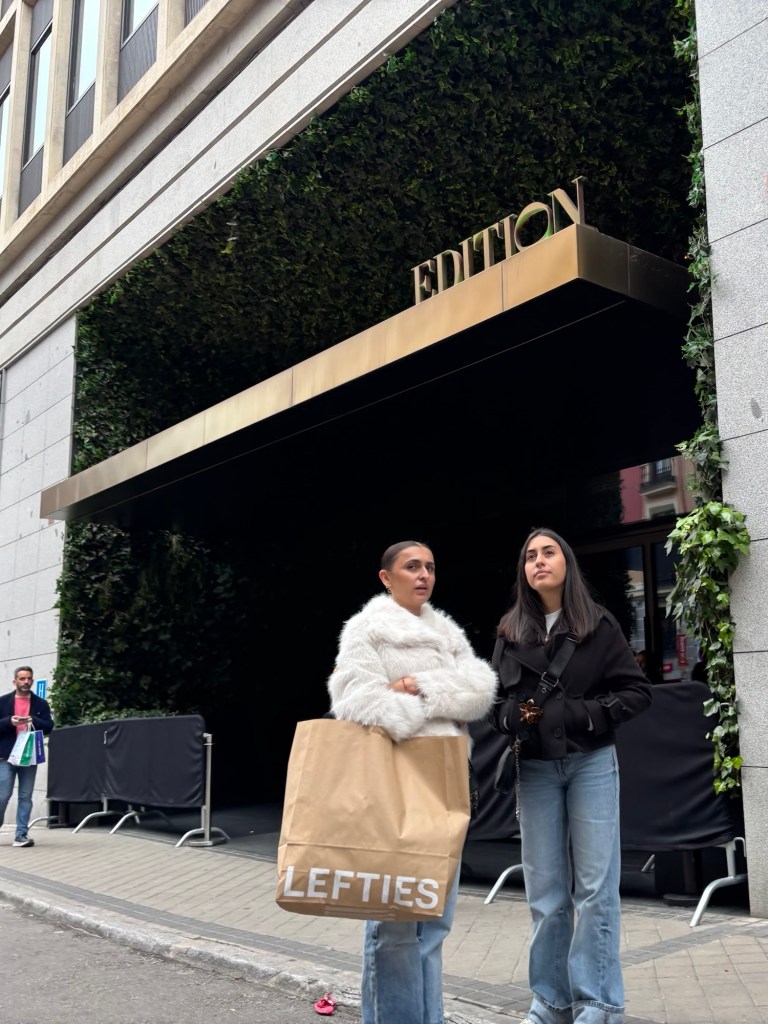
Outside The Madrid Edition, Calle del Maestro Victoria. Centro. 12.55.

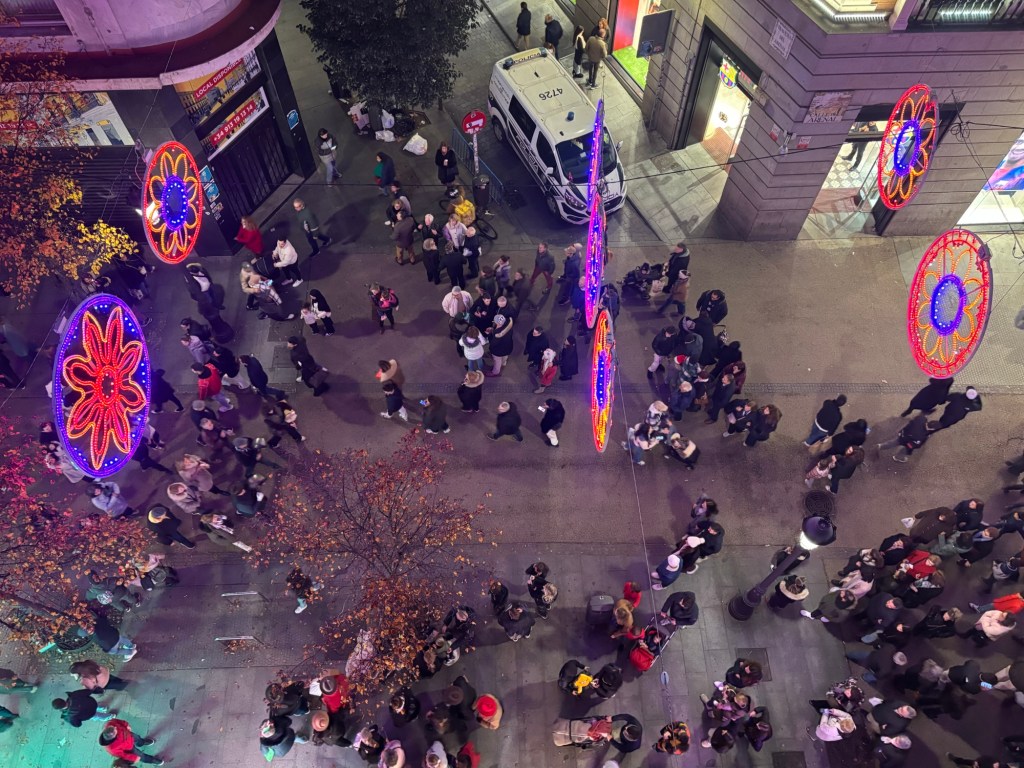
The queue for Doña Manolita’s legendary lottery shop stretches all the way along Calle de Mesonero Romanos and away up Calle de la Abada and onto Gran Vía. The throng of hopefuls is a real mix: young and old, local and out-of-town, Spanish and French and American. El Gordo – Spain’s Christmas lottery – is much more of an event in Spain than it is elsewhere in the world.

At the end of one crowd, another begins: a great mass of children and their parents waiting for the giant animatronic train and its attendant polar bears on the Cortylandia shopfront to come to life and sing, as it does every hour, on the hour (until 10pm, it seems – it’s within earshot of my hostel room).

Two glamorous citizens standing apart from the hubbub seem to be above it all, watching the crowds come and go with unmoving eyes. One leads the conversation, the other listens, eyes skyward. Sometimes it’s hard to see how the haughty, angular beauty of a youthful Spaniard finds its way into the compact, shrunken shape of its senior citizens, but every once in a while there’s a flash of that future in the expressions of its youngsters: that look of casual ennui would be right at home on the face of a woman three times her age, still dressed in expensive furs and commenting on the world going by.


Outside Heladería Galia, Calle del Arenal. Puerta del Sol. 12.57.

A West African mantero plies his wares alone on the Arenal. They usually operate in groups – there being safety in numbers, I suppose – but this one seems to be his own agent. He has also upgraded his drawstring blanket to a couple of glassware boxes. While other mountebanks dressed as a gorilla, Eevee and Mickey Mouse try to fleece passing tourists of their loose change, he hawks a number of luminous splat toys, which he promotes by blowing into a bird whistle and hurling his devices onto the flat surface of the box, where they slowly revert to their original shape.

It’s hardly worthy of a moment’s notice to most of the adults passing by, but it’s the children he’s after. One girl is absolutely entranced and convinces her mother to buy one – no, two, as they will have to get one for her brother.

It can’t be an easy job, hawking cheap goods on the street, but from my casual observations, these manteros do seem to have a fairly good hit-rate when it comes to a quick sale.


Plaza de Isabel II, Puerta del Sol. 12.59.

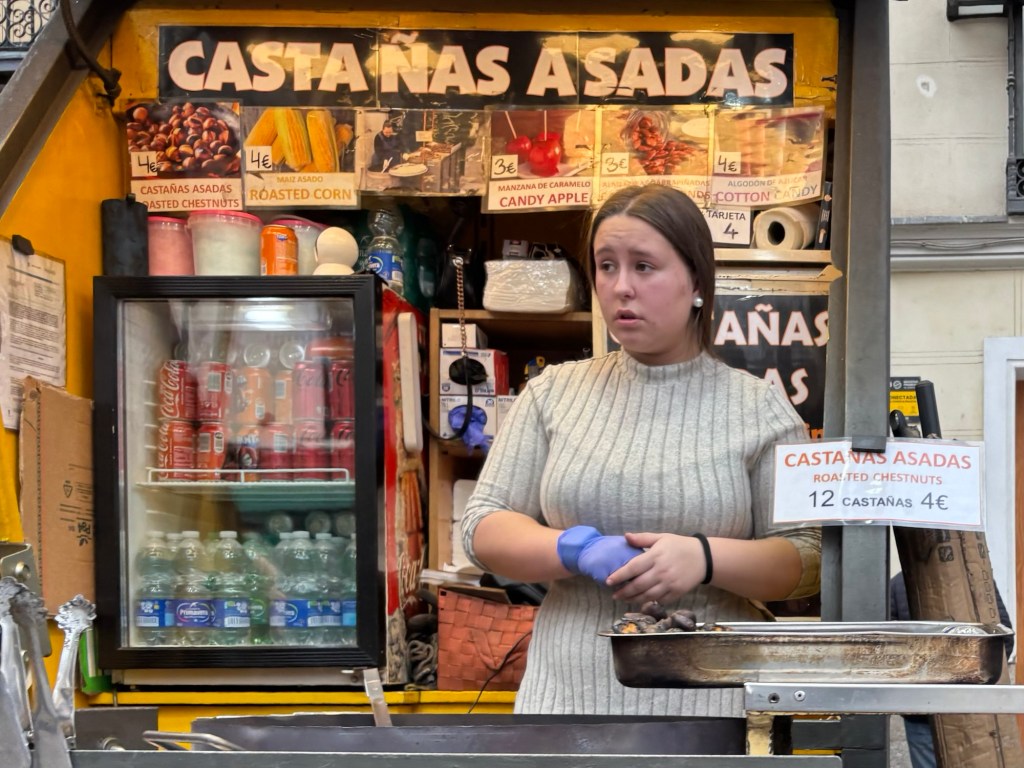
Before it became synonymous with one of C.J. Sansom’s greatest works, winter in Madrid always meant roast chestnuts. These warm, smoking stalls are as much in evidence now as they ever where, though they now often come with the modern niceties of a wireless card machine and an Aquarius-bearing fridge. Here, like everywhere else, the signs are written twice: once in Spanish and once again in inglis. The point I try to make in the classroom about the usefulness of this or that topic for traveling is increasingly redundant in the face of the relentless march of the English language.

The girl with the pearl earring isn’t as heavily dressed for the chill as the other madrileños in the street – but then, she is standing in front of a roasting dish all morning. She looks bored. The telltale rounded edges of a smartwatch bulges beneath the tight elastic of a sanitary glove on her right hand, and a swish handbag – presumably hers – sits nestled in an alcove behind her, so the chestnut business must be doing a reasonably good trade. I haven’t seen as many people tucking into the delicacy as I have in previous years, but then, it really isn’t quite that cold. Not yet. Not until the peaks of the Sierra de Guadarrama are covered in snow and the north wind blows chill across the plain and into the capital.

She’s cute – in a genuine, homely sort of way. There’s a natural beauty to people here. Not as many piercings, lip fillers, unconventional hairdos or fake tans. I don’t know why we go in for that so much in England. I already miss this place, and I’ve only just arrived.


Jardines de Lepanto, Plaza de Oriente. 13.26.

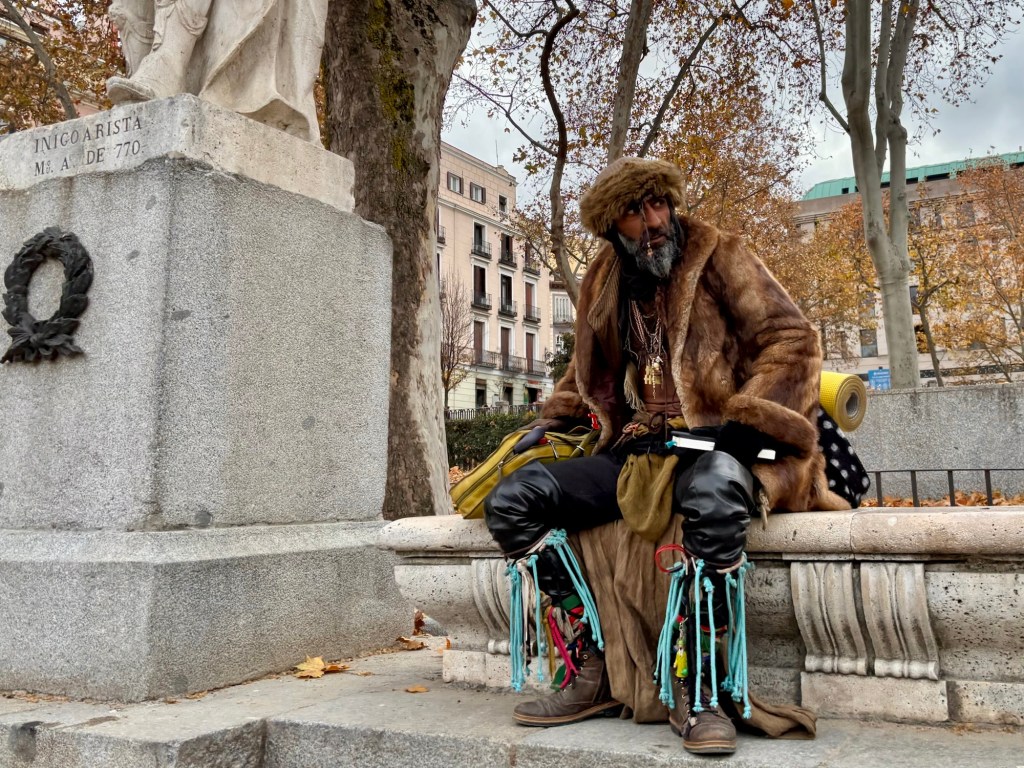
Sitting between the marble statues of the Asturian kings Iñigo Arista and Alfonso I is an exceedingly odd fellow. Like many of the city’s inhabitants, he is dressed in furs for the cold, but the similarities stop there. If the tassels on his black leather buckskins weren’t a metallic shade of blue, he might be a fur trapper from the Old West lost in time.

No – wrong continent. His regal nose, his dark, hooded eyes and the salt-and-pepper beard emerging in a neat diamond from his black headwarmer gives him the look of an Arab trader. A wise man, perhaps. It’s that time of year.

A curious assortment of symbols hang by threads across his naked torso: the Tau cross, an ivory pawn, a set of small keys and a card cut-out of the words “Ho-Ho” in gold letters that looks like it came out of a Christmas cracker. A fold-up umbrella pokes out of the smart yellow satchel at his side and there is a roll mat strapped to his waist. If he is a tramp, as his demeanour implies, he is a wealthy one.

Today the city of full of people in fancy dress. Ecuadoreans in tasselled hats and masks. Mountebanks in oversized costumes. Zambomberos in black and white and red. But he belongs to none of these clans.

When I return from watching the first of the zambomberos parade past, he has disappeared. I do not see him again.


Palacio Real, Plaza de Oriente. 14.36.

The fiesta zambombera is over. The crowded musicians begin to disperse, and with them, so too the clouds, bathing the Jardines Reales in warm winter sunlight. A modern dance troupe takes up where the traditionalists left off, showing that movement is as much a part of this country’s soul as its music. Still dressed in their folklore finery, the folcloristas return to their groups and prepare to depart. One huddle near the dance troupe stops to take a selfie. The red banner of Castilla flutters in the wind and the little cymbals in the tambourine shudder for a moment.

I must be a fool to have traded my life out here for England. So help me God, I will find my way back out here. I have to. It’s the only way I’ll ever assuage this restless heart of mine. BB x


Where there’s Light, there’s Hope

Room 402, TOC Hostel Madrid. 17.32.

It is categorically impossible to be down at heart in Madrid. Whatever my thoughts and feelings were, they were altogether altered the moment my feet were back on Spanish soil as I left the plane at Barajas last night. It’s not as though I need reminding that Spain is always the answer to my lonely heart, but it is good to know that its medicine is none the weaker for every visit – especially as this is my *fourth* visit this year (though if you count my sorties to and from the Canaries and Gibraltar, it would be my sixth). Anyone would have thought I had an itch that needed scratching…


Ah, Madrid. Like the girl next door in every American romcom, I have come to regret dismissing you so lightly when first we met, now that you have captured my heart. There is something undeniably homely about La Capital, which neither London nor Paris nor Berlin can match. Even now, bustling as it always is in the run-up to Christmas, it still feels more like a large town than a capital city.

From my vantage point in the hostel, overlooking the glittering Calle del Arenal, the hubbub below is a merry melange of conversation, villancicos, far-off snatches of song and the intermittent underground rumble of the metro. The near-constant snapping of chasquibumes (bang snaps) makes the city sound like a crackling fire.

I don’t say this often, but here is a city I wouldn’t mind living in.


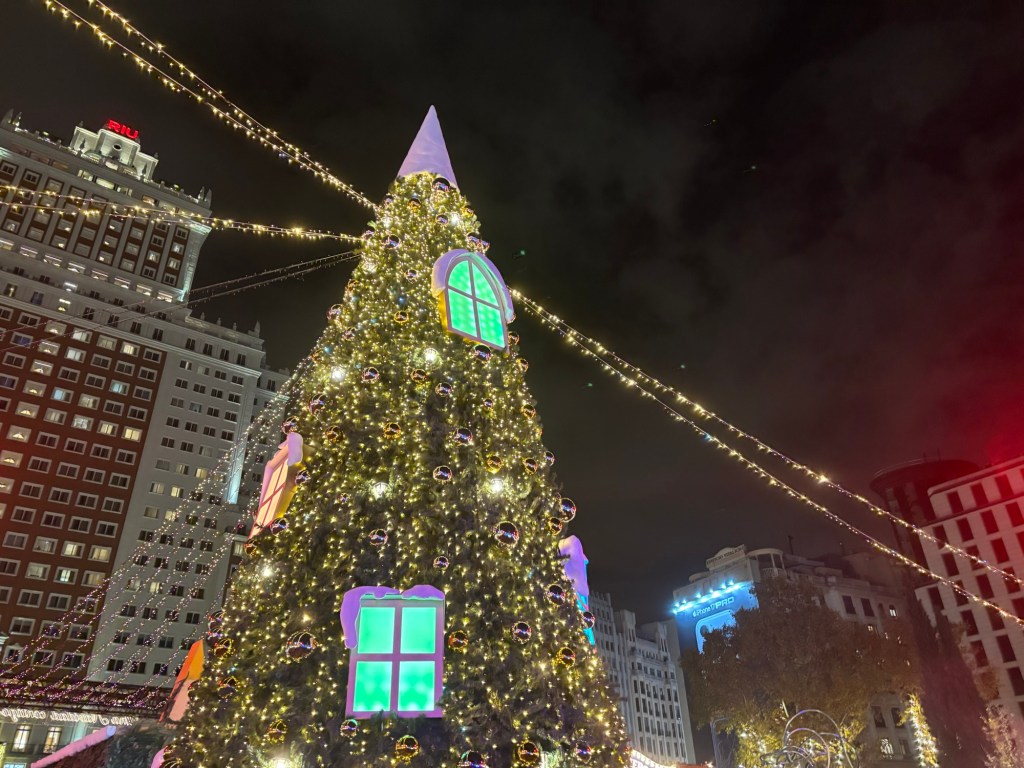
Merry-go-rounds, ice rinks and various Christmas-themed stalls have been set up in the various squares and open spaces throughout the city. Traditionally, it’s the Reyes Magos (the Three Wise Men) who bring children presents in Spain – which has always struck me as a much more logical excuse to celebrate the giving of gifts – but that doesn’t seem to have stopped the Spaniards from starting the festivities several weeks prior. And why not? Any excuse for a celebration will do.


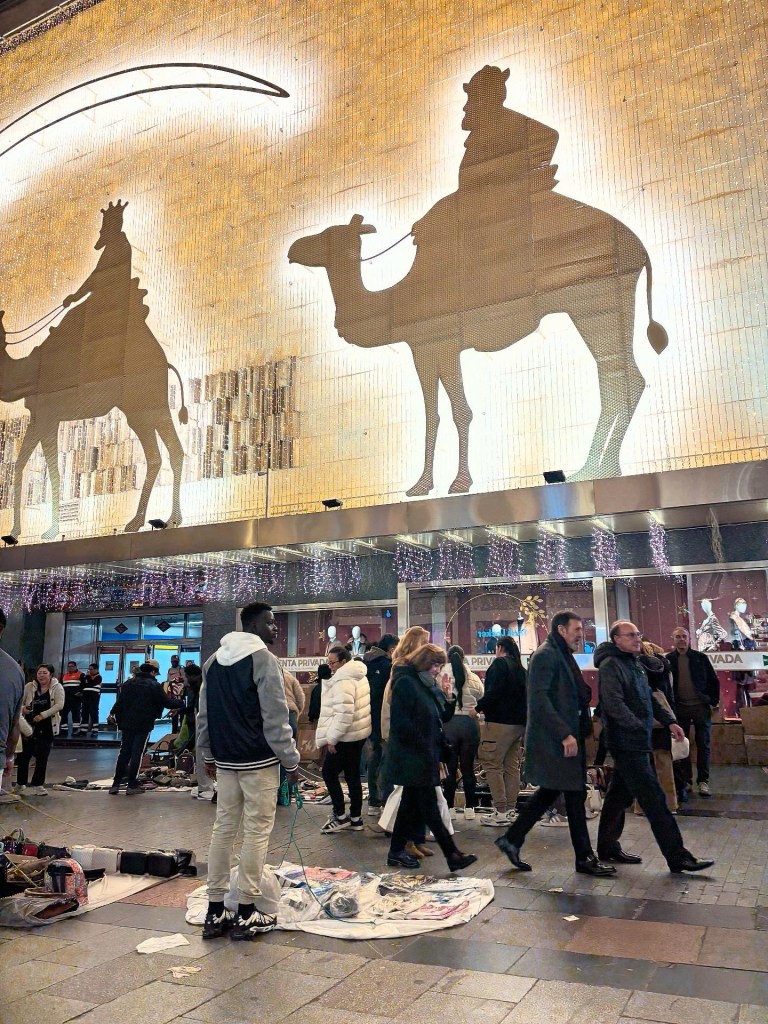
By far the brightest lights can be found on the walls of Callao’s Corte Inglés, which draws a constant stream of shoppers into the night (it was still heaving at half past nine when I passed by en route to the hostel last night). Wherever there’s a crowd, there’s usually a ragtag bunch of pedlars clinging remora-like to its underbelly. Sure enough, I found three manteros hawking the usual array of glasses, handbags and Yamine Lamal shirts outside the main entrance, the strings of their cloth blankets twitching in their nervous hands at every distant blast of a police car. Their location of choice – beneath the three wise men – seemed almost poetic.

I don’t suppose the Baby Jesus would have had any more call for a Barcelona tee-shirt than he did for frankincense. Neither, it seems, did the madrileños. But who’s to say that these three wise men didn’t follow a star of sorts to Europe?


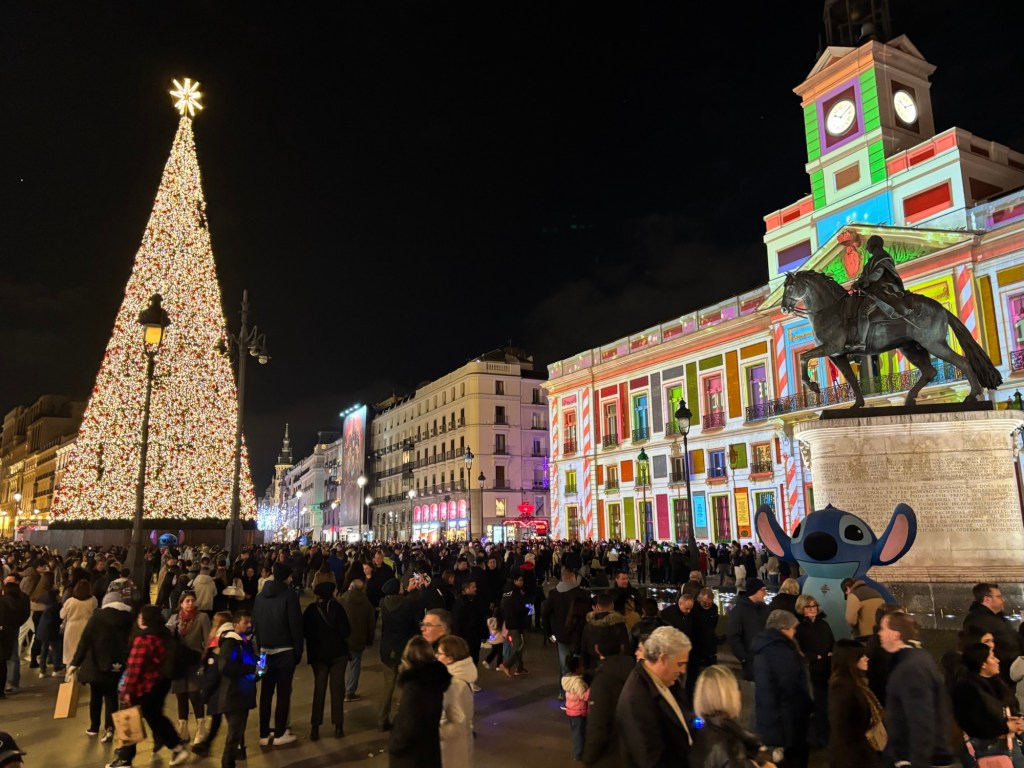
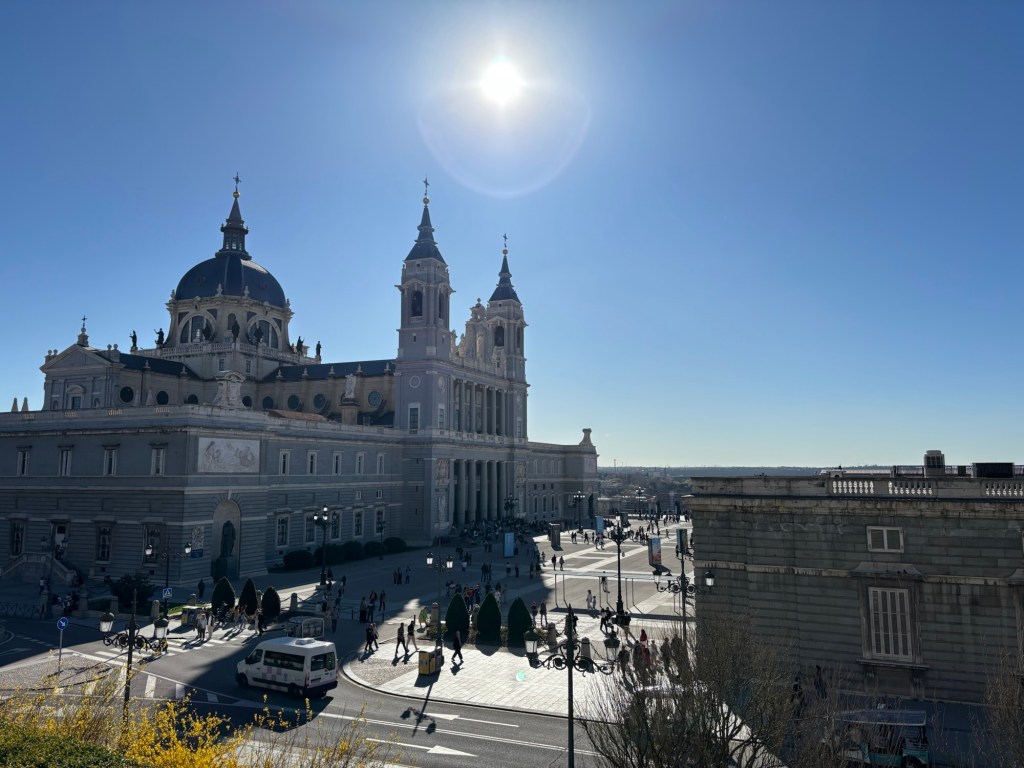
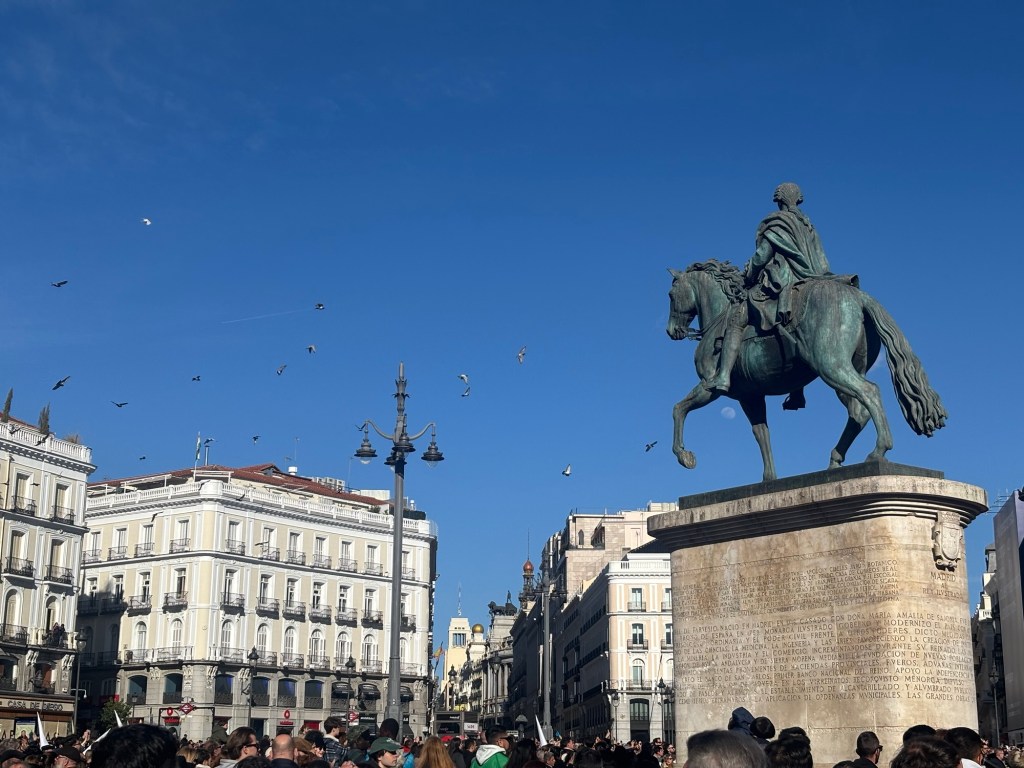
Down the street in the Puerta del Sol, the Real Casa de Correos is lit up like an advent calendar – though in its technicolour array it looks more like a dollhouse – and the usual conical tree of lights stands between Carlos III’s smug smile and the oso y madroño statue on the other side of the square.

Could you call La Puerta del Sol a square? It functions like one, more so than the nearby Plaza Mayor (which really is a square) but it’s really more of a semicircle – a giant protractor radiating in multiple directions from Kilómetro Cero at the feet of the Casa de Correos. At least, it would be, if the centre of the semicircle were just a few yards to the left.


I’m only here for a couple of nights. Extremadura is calling. It has been too long since I last laid eyes on the corner of Spain that well and truly stole my heart all those years ago, and since then, it’s been nothing more than a beautiful word on my lips. I’ve already had my fair share of nostalgia trips this year to Finisterre, Gibraltar and El Rocío, but one more won’t hurt. Holidays are for healing, and that’s exactly what I intend to do. BB x

At the End of the World

Cape Finisterre, 20.11.

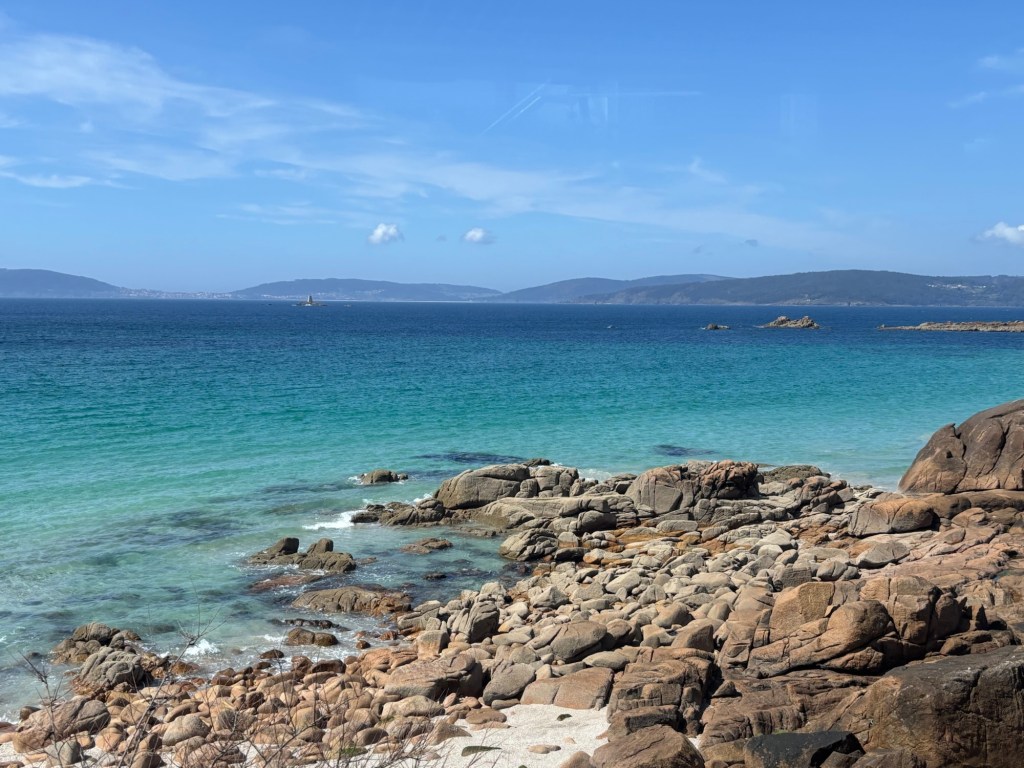
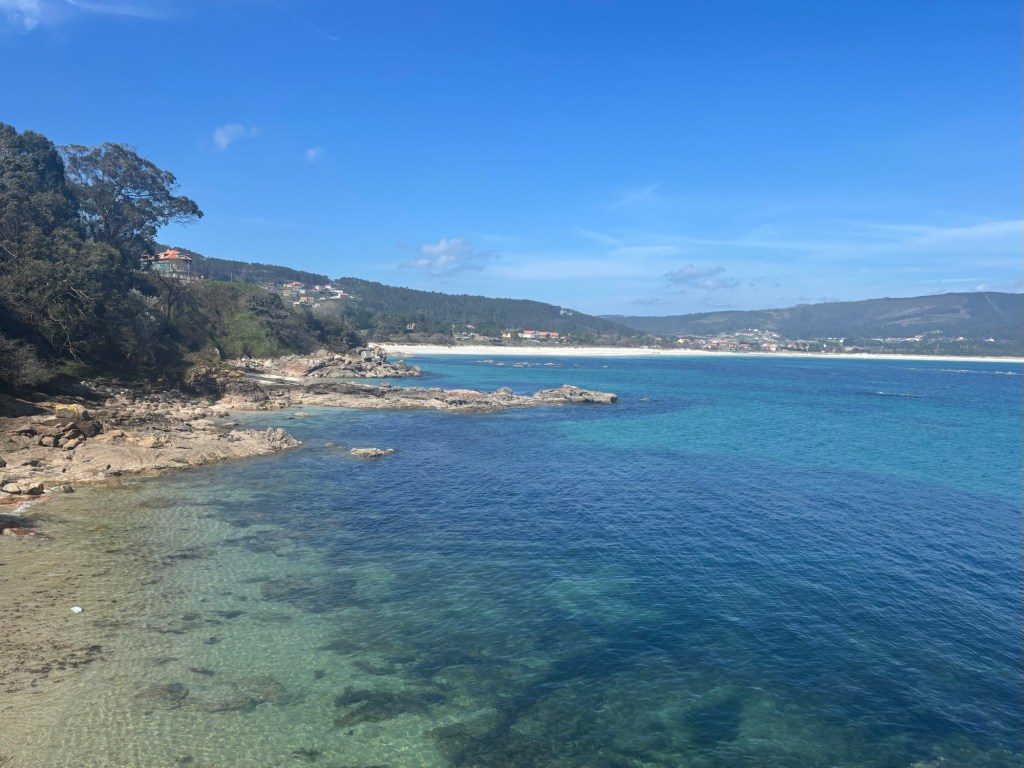
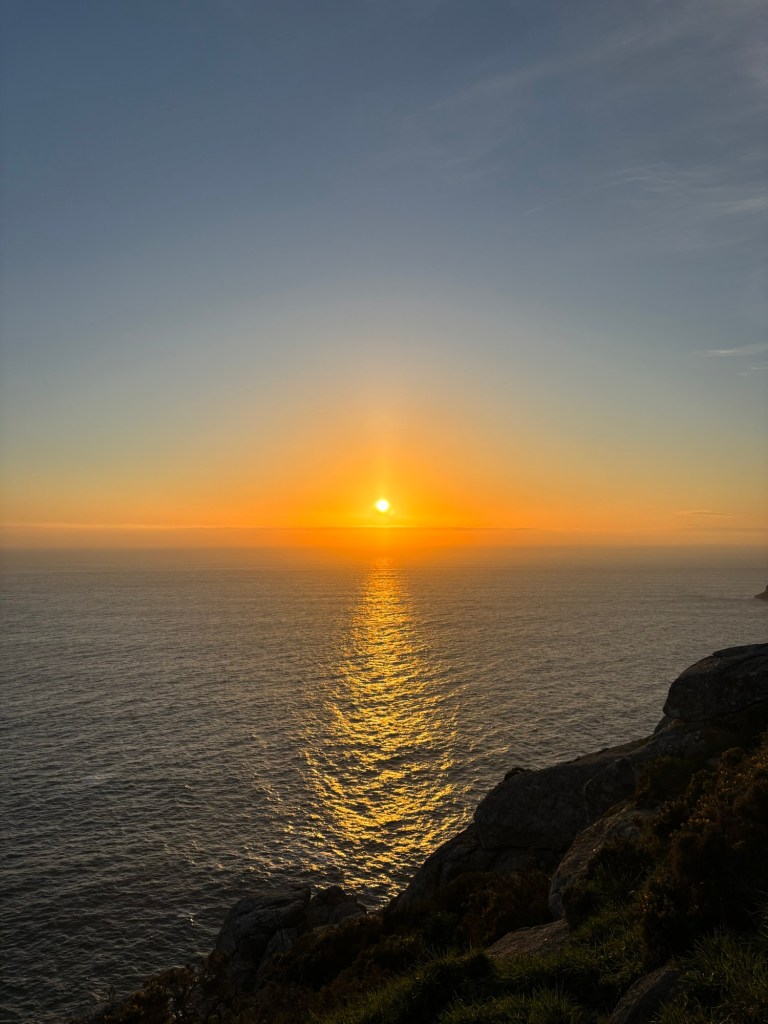
Galicia provides. Happiness writes white but the white light is brilliant, like the sands that run along the length of the bay beneath my window. Like the feathers of the gannets and terns that dance above the face of the water. Like the sparkling reflection of the sun as it sinks below the horizon along the 42nd parallel north, disappearing beyond the Atlantic, beyond Chicago, beyond the end of the world.


Madrid feels a world away. I caught the early AVLO train from Chamartín and joined a modest number of passengers on the three hour journey to Spain’s north-westernmost region. The railway line tunnels under the snowy peaks of the Guadarrama before racing across the featureless plains of Zamora and then, slowly, climbing into the wooded hills and craggy moors west of Astorga before rolling through the deep valleys of Galicia proper. Spain is one of those countries that alters radically as you travel through it, and the Madrid-A Coruña train is a very good way to prove that point.


I arrived in Santiago de Compostela with a couple of hours to kill before the bus to Fisterra, so I wandered into town and sat in the main square in front of the cathedral for a while. A few school groups posed noisily in front of the cathedral, while exhausted pilgrims sat at the feet of the pillars, soaking up the sunlight to recharge their batteries. There aren’t as many now as there were during the summer. I guess that’s to be expected. The year I made the trek, 2023, was also a delayed holy year, the first since the COVID-19 pandemic shut the Camino down, so the numbers were especially high.

I wonder how far these bold pilgrims had come this year. What friends did they make on their journey? What memories will they take away with them forever? Did somebody watching from the sidelines wonder that about me, years ago?


The bus from Santiago to Fisterra is almost as long as the train from Madrid, but it does travel along one of the most scenic routes in the whole country. To reach the famous cape, it first has to pass through all the towns and villages along the coast, fording the great rías that weave through the cliffs on their way to the sea. The sun came out from behind the clouds just as the cape came into sight, and the whole coast seemed to come to life: the yellow flowers of the gorse shone like gold, the sand beneath the shallows glittered like jade. My heart did a similar leap once when I saw the silhouette of Olvera, my old hometown, for the first time in seven years. It made me smile to think that this place had joined that pantheon.


I arrived early, so I went down to the beach to soak up the sea air for a while. Fisterra is so special to me because it combines the two sides of my heart: the sounds and smells of the sea from my childhood in England, and the language, cliffs and mountains of my adult love for Spain. Mountains take my breath away (especially the craggy limestone kind) and marshes hold a special kind of rapture for me, but I think I will always come back to the sea when I need to feel whole again.

As I watched, a sandwich tern flapped into the little bay and started diving for fish. It was a beautiful sight to see, for the waters are so clear here that I could see the bird’s brilliant white form beneath the water after it had dived, moving like a living arrow. After five attempts it speared a shining silver fish and took off to the south with its catch in its beak. I realised the path on Google Maps didn’t actually exist and beat a quick retreat to the hotel for check-in.


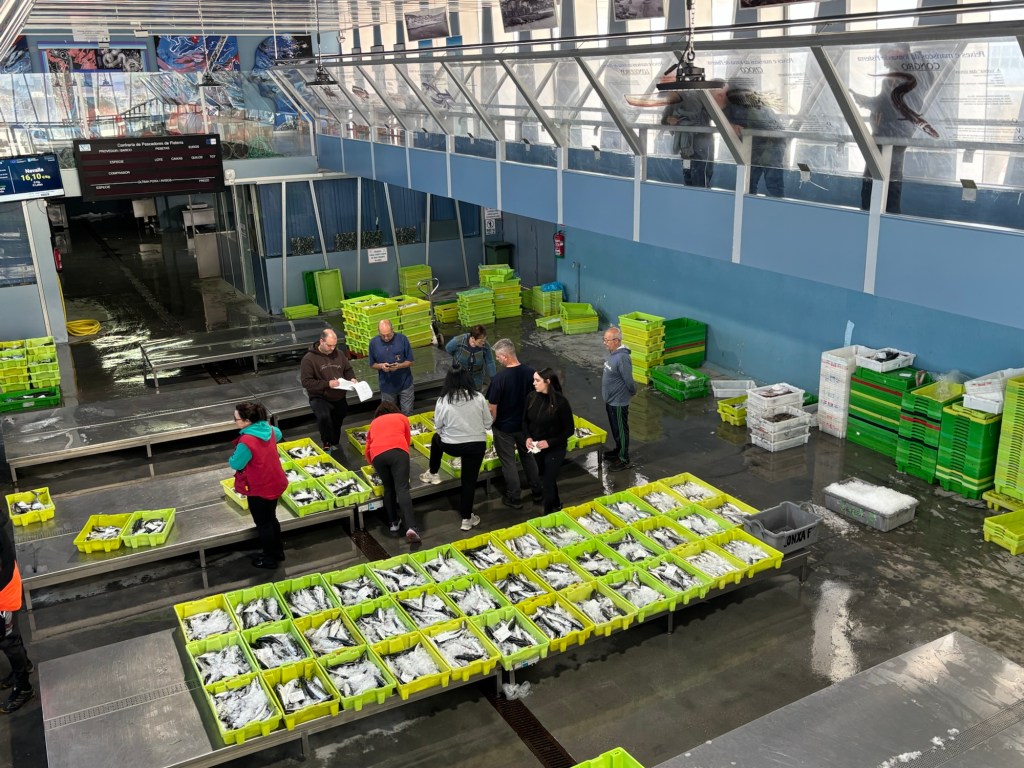
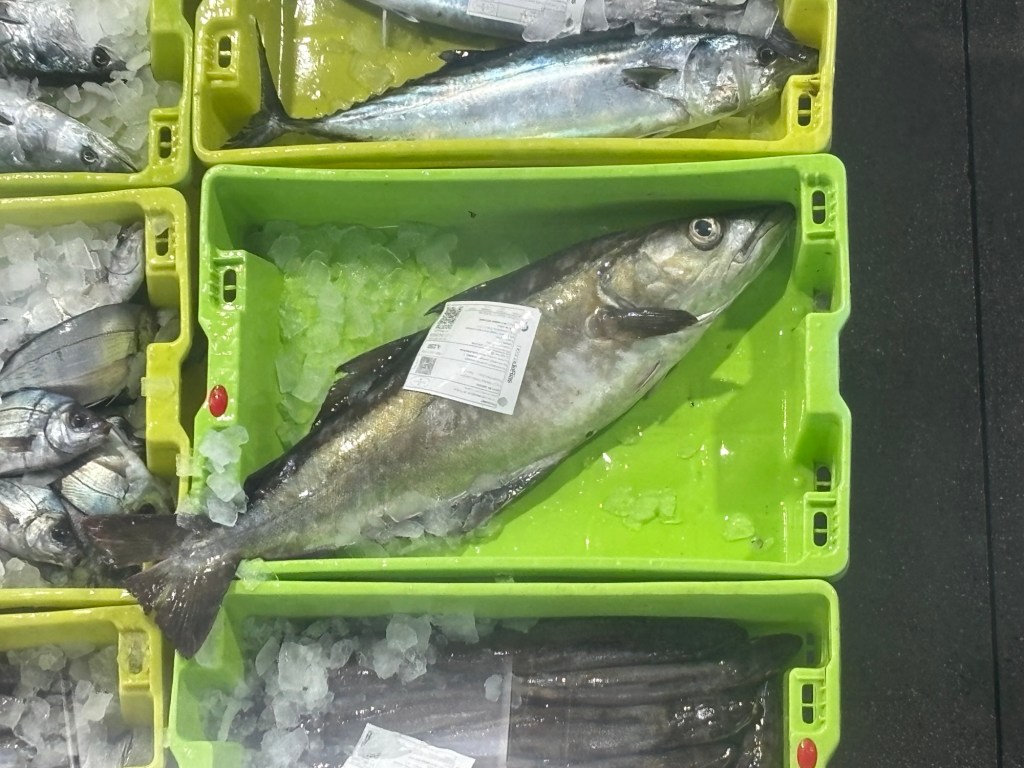
The last time I was here, I only saw the town’s fishery out of hours. I got lucky this afternoon: on my way to the cape I dropped in and caught the daily auction (or lonxa) in full flight. Crates of hake, mackerel, red gurnard and more than a dozen other species I learned to identify as a kid went to the highest bidder in one of the mildest mannered auctions I’ve ever seen (though, to be fair, I haven’t seen that many auctions). Some of the larger fish had QR codes slapped on the sides linking them to the fishermen who caught them, I suppose – my camera didn’t reach far enough to tell.


On one side of the room, crates of sea urchins were stacked fifteen high. I didn’t see any percebes (the region’s famous goose barnacles), but then, the manner by which they are collected is very different indeed, so that’s hardly surprising.

I left before the giant anglerfish went under the hammer. I’d have been curious to know how much that went for.


I called home from the cape and said I’d be back before sunset. It’s now fifteen minutes to sunset and I’m still here, but I’m glad I stayed. The weather here is so changeable and this might be my only chance to watch the sunset from the cape, as it was rained off the last time I was here. A small cohort of like-minded pilgrims and locals have come out here with the same idea. A couple of noisy Spaniards made a pig’s ear of taking a highly choreographed selfie nearby, much to everyone’s frustration, but they’ve gone now, and it’s been nothing but the sound of the waves for the last twenty minutes.

I’m going to stop writing now. The sun will be sinking below the horizon soon and I want to appreciate every second as it does. See you on the other side. BB x

Lost Souls

Calle de San Millán, Madrid. 21.03.

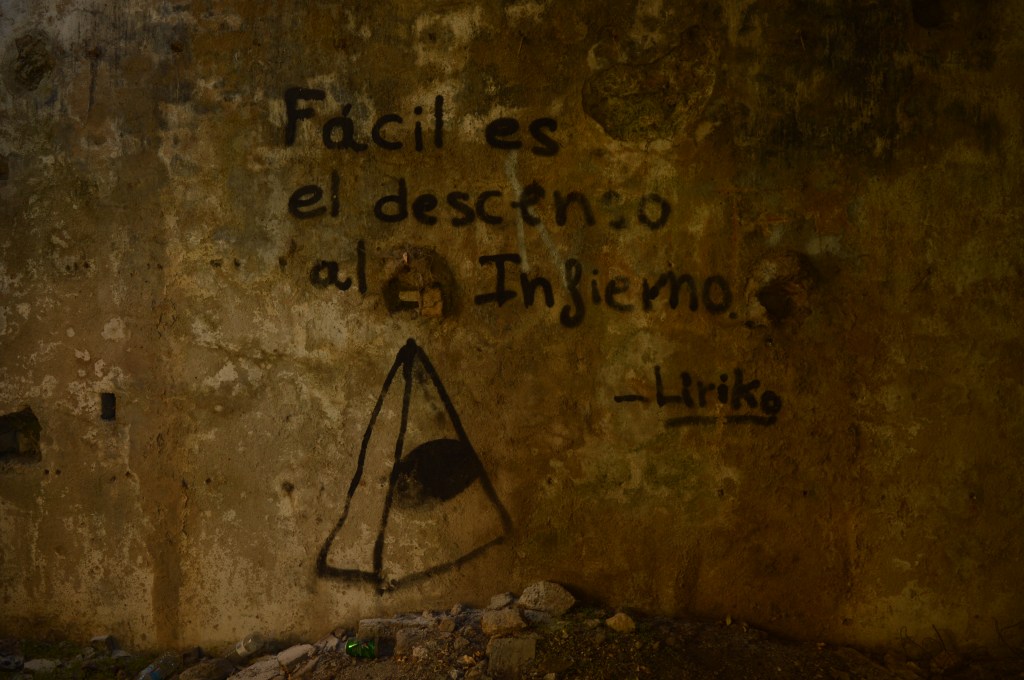
The gates of Hell are open night and day / smooth the descent, and easy the way.

Virgil, The Aeneid

At the foot of the mighty bridge that spans the gorge over the Río Tajo in Ronda, the yellowing ruin of an old pumphouse steadily crumbles into oblivion. Trees grow out of its windows and human and animal detritus clusters against its walls, as though they shrink from the searching light of the world beyond. Abandoned spots like this would be covered in graffiti in England; profane scribbles and indecipherable tags whose meanings will fade from the world long before their makers. A single graffito marks the eastern wall. Of all things, it is a quote from Virgil.


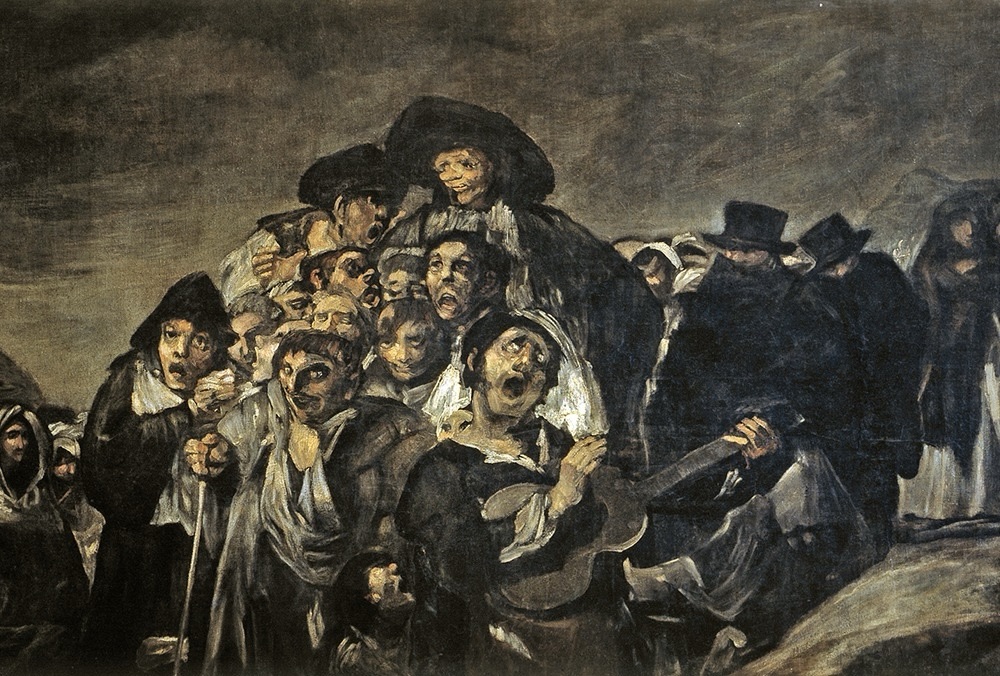
The memory came into my head as I stood before Goya’s Pinturas negras in the depths of the Prado, bewitched – and not for the first time – by the unfettered darkness on the canvas.


In the opinion of this jaded wanderer, there are few artists who can hold a candle to Goya, an artist whose style was shaped – or, perhaps, perfected – by the ravages of one of the darkest periods in Spain’s history.

The Prado does a fantastic job at telling his story. On the top floor, illuminated by the brilliant natural glow of several skylights, his early works shine with an innocent halo. Paintings such as El quitasol and La vendimia tell of a happier time, when Goya was young and using his gifts to make a name for himself in the circles of the rich and powerful, as many an artist had done before him for generations.

Descend to the ground floor, and some of his younger naïveté is stripped away like a layer of paint to reveal a cunning eye for detail and social commentary. Unlike the illustrious royal portraits by Titian and Velázquez which grace the walls further down, Goya’s subjects are painted as they are, without any false veneers of lustre or glory. Maja vestida has a cute smile, but she is a pale imitation of Maja vestida, whose knowing expression betrays a far greater honesty.

And then you descend to the basement. The lights dim. War comes to Spain, Goya’s former patrons flee for their lives, and the country descends into chaos. Goya sees it all and sketches furiously. The illness that robbed him of his hearing pushes him into a deeper, darker school of thought, and his subjects trade their rosy cheeks and playful smiles for pallid masks and devilish grins. At the same time, the faces become much more recognisably Iberian, replacing the stateless Western mannequins who previously adorned his tapestries. Still a master of light, Goya now perfects its dexter side, drawing on the darkness of the maddening world around him, culminating in the macabre frescos of the Quinta del sordo. The sunken, bulging eyes of Saturn and his gaping maw stare out of the canvas with a malice that is at once pitiful and horrifying.

An American girl is toured swiftly around the room by her imperious mother, the latter commenting loudly on the broader collection ‘back home in Washington’. A Latin-looking schoolboy fills out a couple of questions on a worksheet on one of the paintings and moves on. Two young parents push their infant child by in a pushchair. They cast Saturn a brief glance and move on, a little faster. A gallery official in black and red watches from a corner, but nobody needs reminding that photos are not allowed in here. Goya’s demons still have the power to strike terror, two hundred years later.


Out in the daylight, Madrid goes about its business. My footsteps take me back into the heart of the city. There are a lot of indios about: current estimates hold that they make up one in seven of the capital’s population. In the city centre, I’d wager the ratio is even higher. Pizarro’s pigeons have come home to roost.

In a side-street, two officers of the municipal police search a couple of North African men, who have their hands on their heads – “Qué hacéis por aquí?”. A carton of box wine lies discarded in the road, ignored by a street sweeper who is watching the scene unfold over his shoulder, sweeping the same dust in circles.


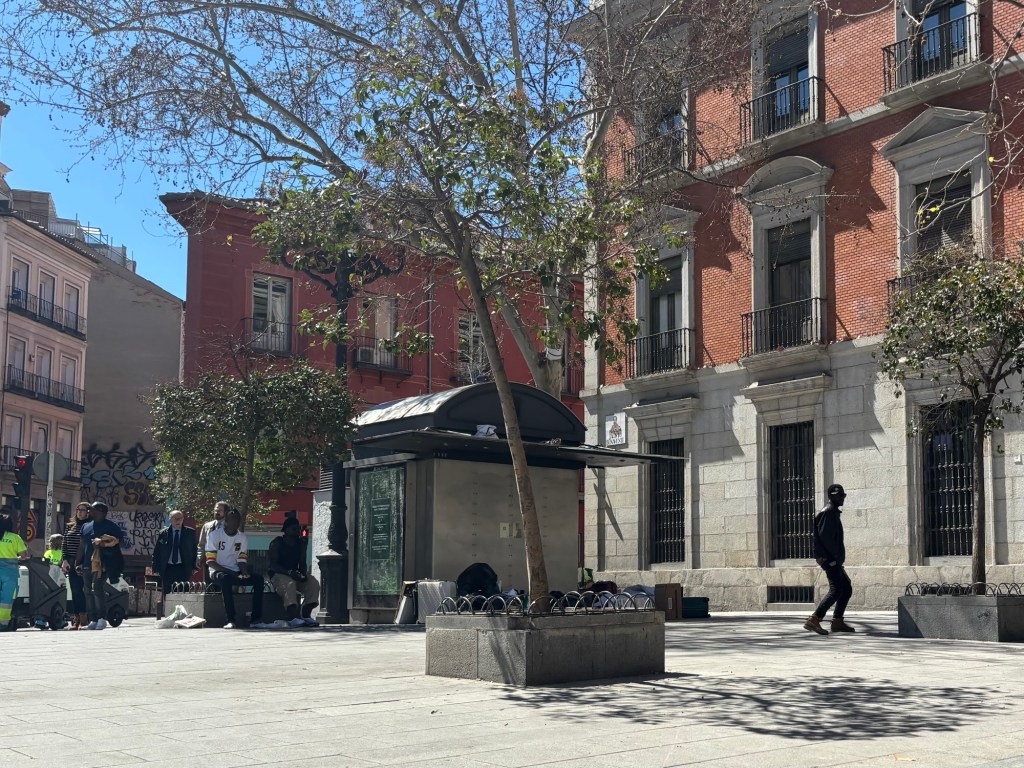
In Plaza Santa Ana, a small group of Africans have laid out their wares on white blankets and try to flog what they can to passers by in reluctant, almost disinterested tones. Clutched in their hands at all times are the ropes fastened to each corner of the blanket, ready to be drawn up in a moment’s notice. These unfortunate hawkers are known in Spain as top manta, and are usually more in evidence in the larger cities along the coast: Barcelona, Valencia, Málaga… wherever careless tourist money can be found.


It crosses my mind, as it has before, to strike up a conversation with one of them. To get their side of things. To hear their story. Something checks me: a sense that unfriendly eyes are watching. I scan the square.

Sure enough, standing in the shade of a plane tree at the edge of the square is their overseer: a surly man in a Cameroonian football shirt. He appears motionless, but his eyes are fixed on the street vendors, who occasionally return his gaze, like nervous shorebirds before a sleeping crocodile.

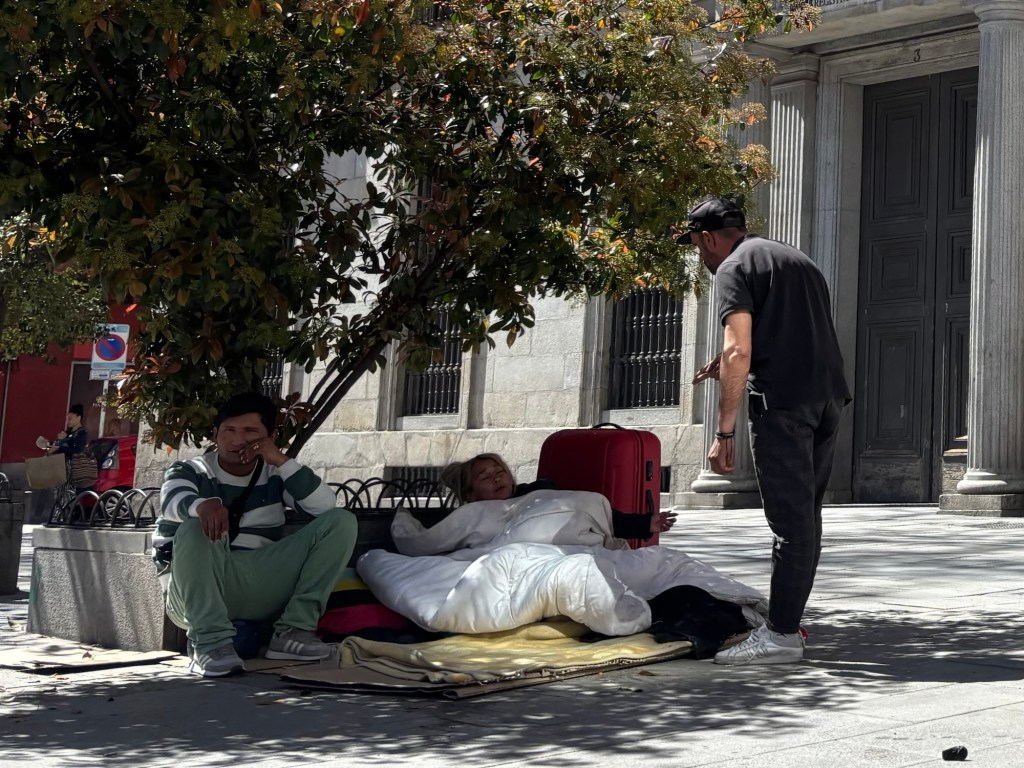
My speculation becomes flesh when one of the hawkers approaches him with what seems to be a question. The conversation is obviously not an amicable one, and the overseer is on his feet and shouting, followed swiftly by his companion, a big chap with dark shades and a military-style beret. The overseer barks at the hawker and sends him packing. “No eres más que un puto negro.” It’s a loaded insult, but since it’s contained, hurled from one immigrant at another, nobody seems to notice. Madrid’s shoppers continue about their business. Tourists sink half pints of Mahou and Amstel mere yards away. A lost soul staggers to keep his balance, either too drunk or too drugged up to pay the scene any heed. The two Latino vagrants sleeping rough in the shade of a nearby bush hardly bat an eyelid. One stirs slightly, the other draws on his cigarette, casting a gentle orange glow in the shadows.


As I turn down a street toward the city centre, I see a police car slowly crawling toward the square. I turn around, but the top manta touts have already got wind of the impending threat: their bags are slung across their shoulders and they are retreating into the shadows. They will be gone long before the police arrive.


Goya’s Madrid is a dichotomy: a place full of light and consequently of shadows also, of rosy-cheeked beauty and ugly avarice. This is no less true now than it was two hundred years ago: it just wears Adidas trainers now.


Tomorrow I leave the capital behind and make for the windswept coast of Galicia. I have never been much enamoured of cities, being inclined to agree with the author M.M. Kaye, who described them as “the breeding places of the very worst aspects of humanity”. My destination is the Costa da Morte – the Coast of Death – the wrecking place of many a luckless merchant sailor. But its name is deceptive: for me, it is a place of unfiltered light and hope.

The gates of hell are open night and day / Smooth the descent, and easy is the way / But to return, and view the cheerful skies / In this the task and mighty labor lies.

Virgil, The Aeneid

The mighty labour has begun. There are still fragments of my heart in need of healing after last year’s American adventure. Hard work and endless endeavour have been a good palliative, but they are not the solution. Finisterre healed my heart before. It will do so again. I am sure of it. BB x

The Hall of the Dead

San Lorenzo de El Escorial, 13.45

A shadow lies upon his tomb, in Moria, in Khazad-dûm. The Company stood silent beside the tombs of the kings of old. There were many recesses cut in the rock of the walls, and in them were large iron-bound sarcophagi of black marble. Frodo and the Company stood in awe, but Pippin felt a compulsive urge to reach for his iPhone so that he might share the spectacle on Instagram. He held it aloft, and for a moment it glimmered, faint as a rising star struggling in heavy earthward mists, and then it issued forth a minute heart of dazzling light, as though Eärendil had himself come down from the high sunset paths with the last Silmaril upon his brow.

“No photos!” barked the security guard, gesturing wildly in Pippin’s directions, before muttering a loaded “turistas” under her breath.


In the year 1563, Felipe II ordered the construction of an enormous palace in the foothills of Monte Abantos, partly to commemorate his victory over the French at the Battle of San Quintín, partly as a country retreat where he could hunt big game, but perhaps most importantly as a necropolis for the Hapsburg line. Here, entombed within the bowels of the largest Renaissance building on Earth, lie the remains of almost every king and queen of Spain of the Hapsburg and Bourbon lines.

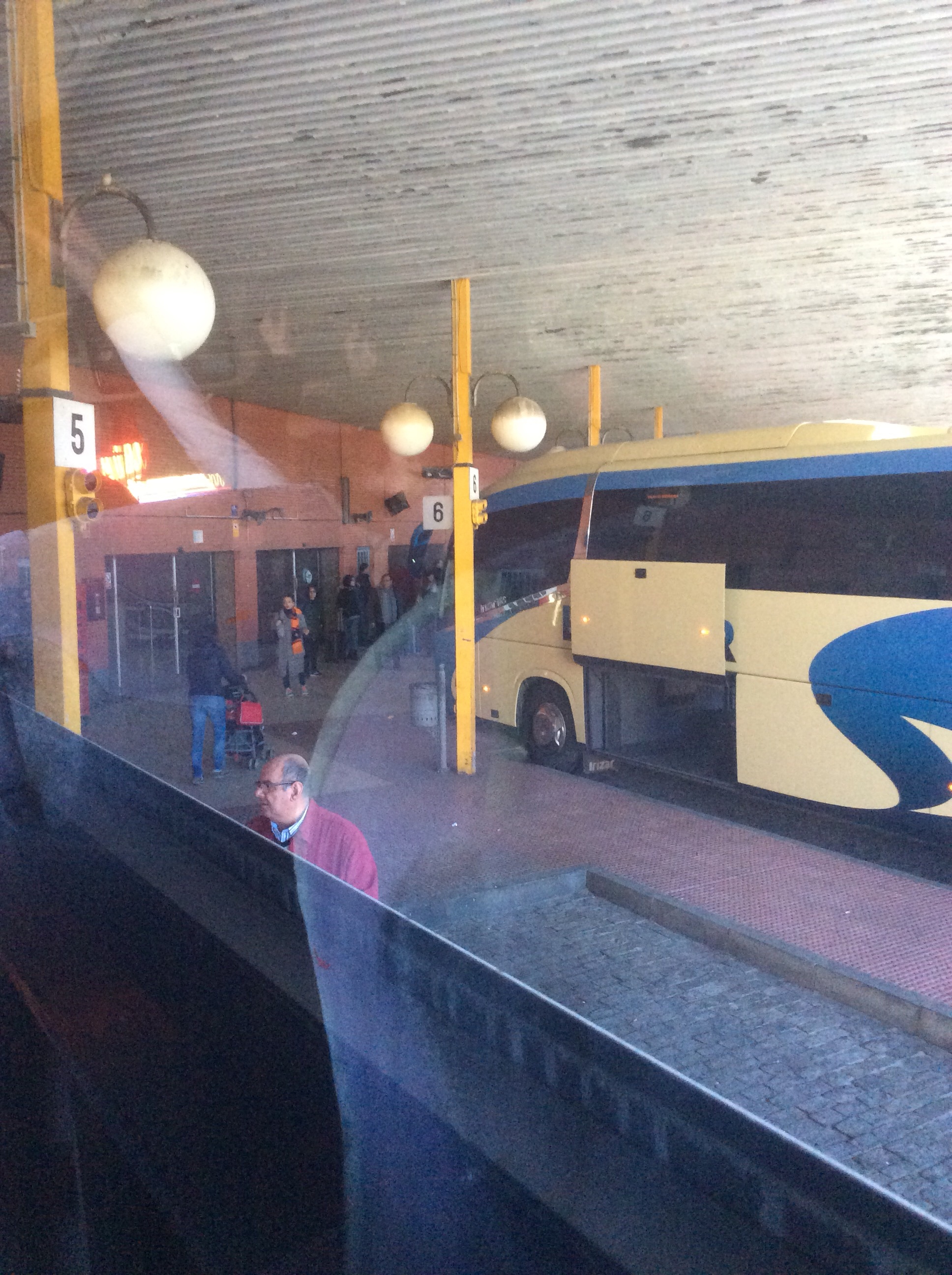
To get here from Madrid, you have to catch a bus from Moncloa. Spain is steadily catching up to the rest of the world as a cashless country, but most of the local bus companies are still coin-operated. I was delayed by an hour because my first attempt to board was a flop: the driver thought I said “puedo cobrar” instead of “comprar” and wagged a finger at me, saying “yo cobro, pagas”. Granted, I had a cold, but I’m pretty sure I made myself clear. I was honestly so ruffled by his wagging humour that I forgot I did actually have a ten euro note on me, so I got off the bus and went in search of breakfast and a cash machine – and a few plasters for my wounded ego.

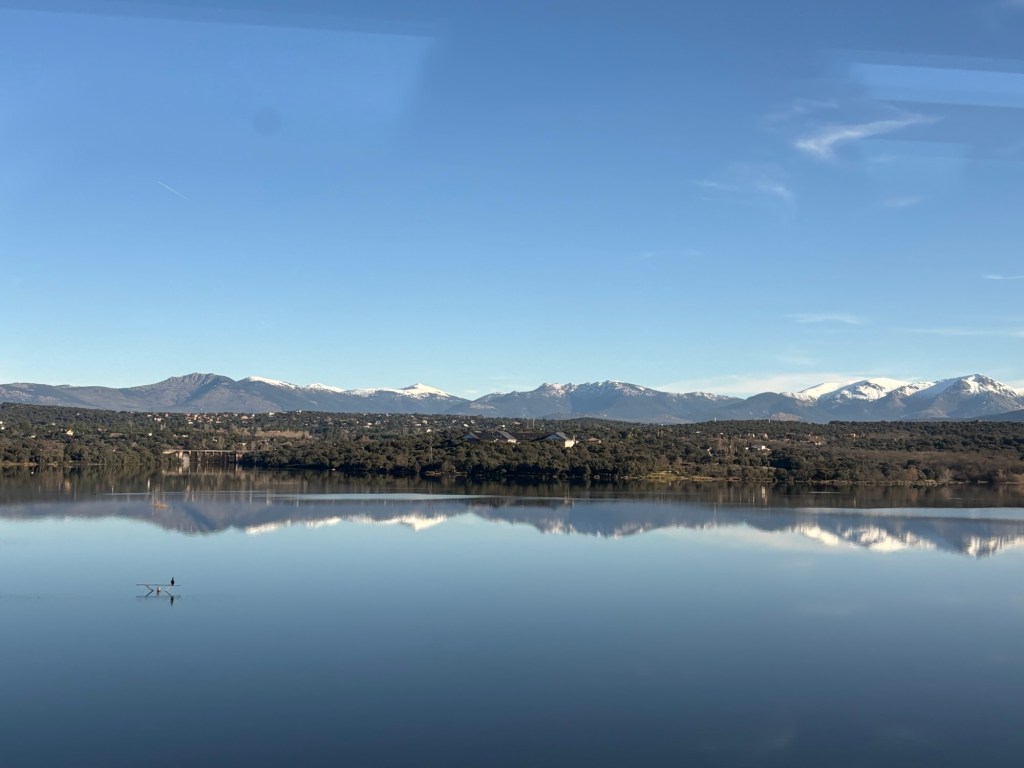
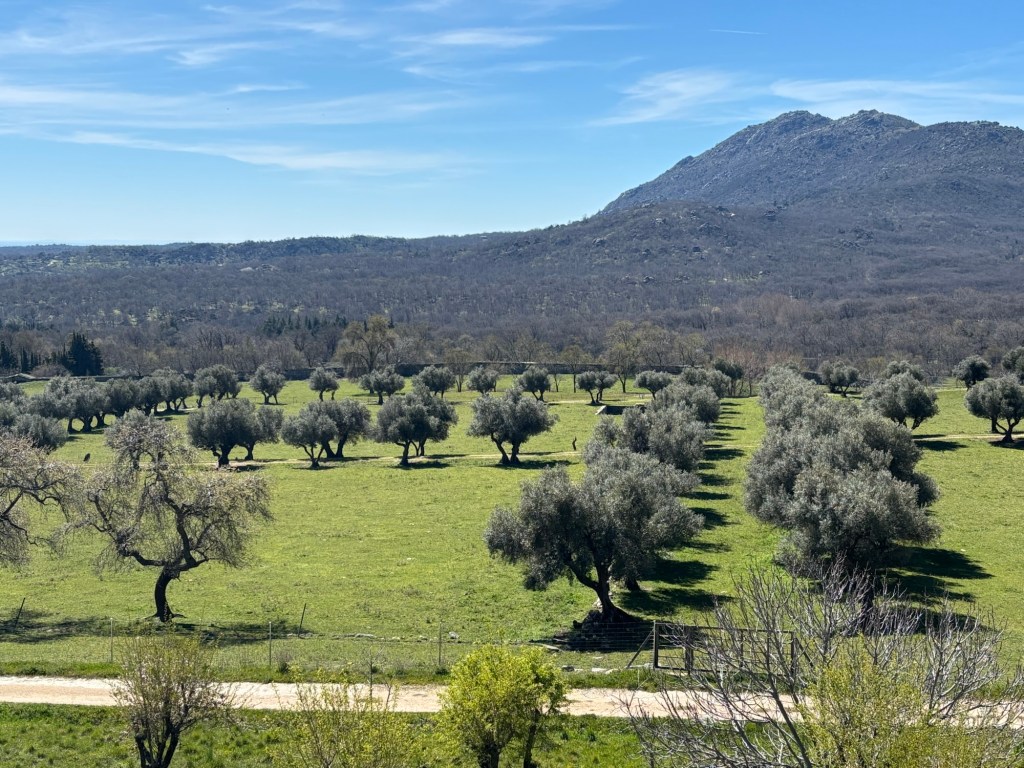
The next bus driver wasn’t a wisecrack, so I had a very enjoyable ride across the dehesa. To the north of the road to El Escorial, the snowbound peaks of the Guadarrama rise up out of the plain, its mantle pure and unspoilt by the ski-lifts and stations that criss-cross similar ranges in Central Europe. At one point, the road crosses the Valdemayor reservoir, and on a cloudless day such as this, the mountains rise again into the mirrored surface of the blue waters.


The centrepiece of El Escorial – as is so often the way with Spain’s grandest architectural treasures – is an enormous basilica, featuring a collection of saintly portraits, painted ceilings and a gilded reredos of jasper and red granite that stands an eye-watering 92 ft tall. As if that weren’t enough, the high altar is watched by the sentinel eyes of life-size bronze sculptures of Felipe II and his father, Carlos V, and their respective families, eternally offering their prayers to God above the crypt where their bodies are interred. It’s no great leap of the imagination to compare El Escorial to the Valley of the Kings: should it fade into memory someday, the discovery of the altarpiece alone would be an archaeologist’s field day.

The comparisons don’t end there. Much like the triumphal engravings of Ramses’ victory at Kadesh in Abu Simbel and Trajan’s Column in Rome, El Escorial’s “Sala de Batallas” (Hall of Battles) testifies to the martial prowess of the Habsburg line, depicting the greatest victories over the French, Moors and other enemies of the dynasty across over a hundred metres of fresco. That’s ten times the length of my mega drawing and eight times the height. I clearly missed my calling by four and a half centuries.


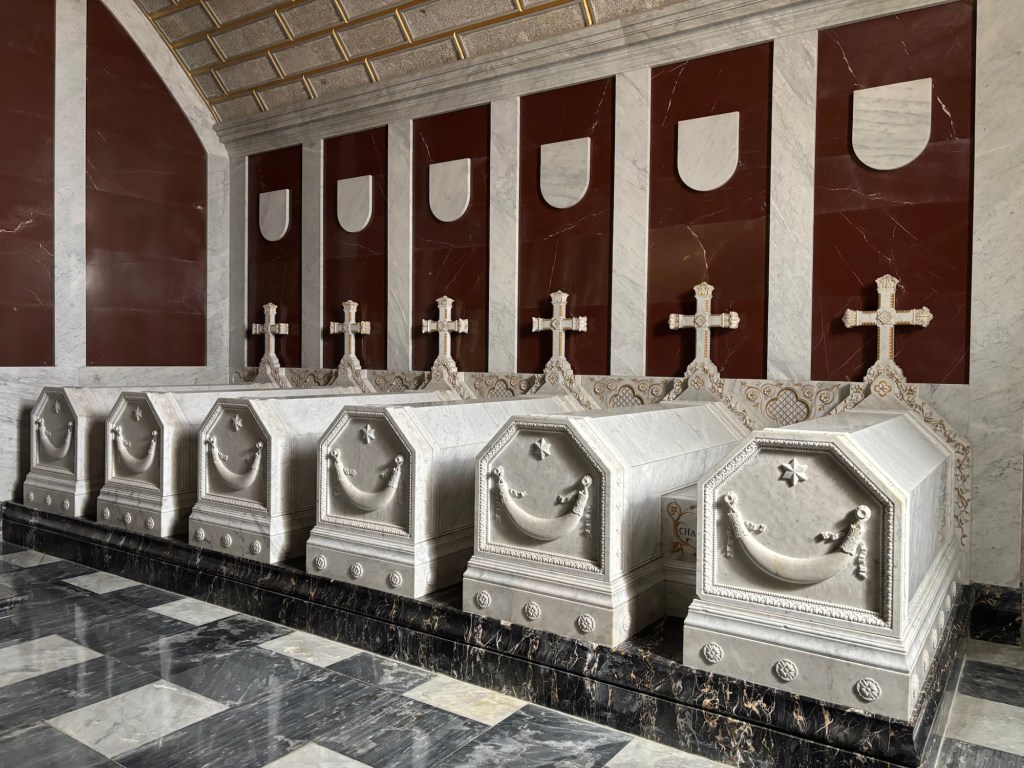
As well as a hoarding place for countless royal artefacts (including one of the largest collections of holy relics in the world, numbering around 7,500), El Escorial is most widely known as the final resting place of Spain’s monarchy from the early modern period on. These most haunting treasures of the royal palace can be found in the innermost depths of the palace complex, entombed within vaulted marble sarcophagi that contain the remains of princes, consorts, bastard sons and daughters and other high-ranking members of the Hapsburg line, right the way up to the present. The blank headstones above the sarcophagi in the last rooms sit waiting for Juan Carlos’ relatives and their progeny.


If that weren’t chilling enough, one of the rooms features an enormous marble monument to those of royal blood who perished before puberty, marked with A or B to differentiate between the Austria and Bourbon clans. With their famous predilection for morganatic marriages, it’s perhaps no surprise that so many infantes never made it to adulthood.

In the deepest reaches of all, far below the palace itself, is a golden chamber called the Panteón de los Reyes. This is the Habsburg Holy of Holies, where the bodies of the kings and queens were laid to rest: from Carlos V, who oversaw the conquest of the America’s and the birth of the Spanish Empire, all the way up to Alfonso XIII, exiled in 1931 by the short-lived Spanish Second Republic. In a single 360° turn you can see them all. There can be few places in the world quite like this, where you are quite literally encircled by the tombs of the kings of the past.

In such a sacred space, photos are, quite naturally, forbidden – but that didn’t stop a couple of Korean and American tourists from trying. I just carried out a quick sketch in my journal and was done with it. Nobody ever seems to mind the sketching. I wonder why that is?


Outside, the air is a lot less oppressive. A number of articles describe the location as “austere”, and I can imagine that in the grip of winter it may well be, but under the warm spring sunshine it is anything but. A cool wind blows down from the snowy mountains, but it is accompanied by a warmth in the air, sweeter with the scent of cherry blossom. Crag martins and wagtails twitter merrily over the pool, and in the dehesa beyond, I saw (and heard) a family of one of Spain’s most beautiful birds of all, the Iberian magpie, a relic of the Ice Age whose nearest living relatives can be found in eastern China. As I watched them hopping around in the branches of the nearest tree, a little owl flew into sight, calling to its partner in the valley below.

Finally, the greatest sight of all. As I made my way back to the bus station, a lonely black shadow came down from the mountains, casting an unmistakeable silhouette against the intense blue of the Spanish sky: a griffon vulture, the true king of these mountains. They were here long before the Hapsburgs and will be haunting these hills long after they have been forgotten.

I have been fascinated with vultures since the first time I saw one. That boyish glee I get when I see that shape in the ether hasn’t gone away after twenty years. I don’t think it ever will.


Austere? The building, perhaps, in true counter-reformation style, but the location? Hardly. I don’t think Felipe needed much convincing. If I had all that Habsburg money floating around, I’d have wanted to end my days here, too. BB x

Wishes and Migas

Calle de San Millán, Madrid. 20.09.

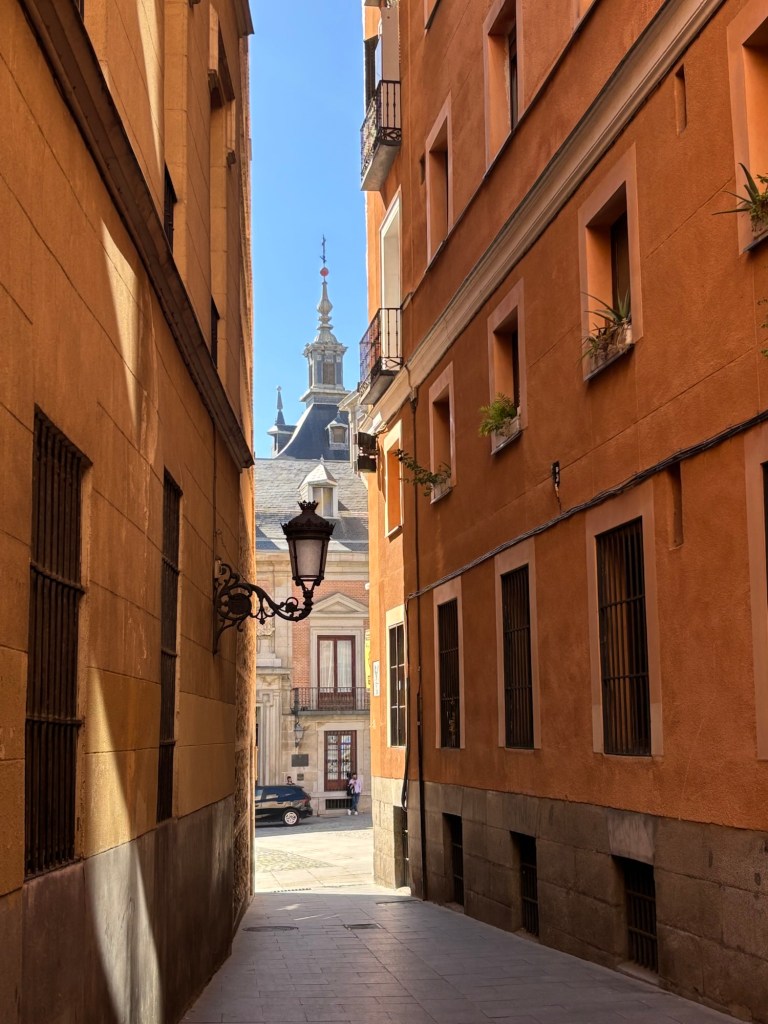
The sun is just starting to set beyond the skyline. Down in the street below, Madrid’s colourful denizens are out for an evening paseo, dressed to the nines to the last man (and woman). The rumble of motorbikes is a constant accompaniment to the general hubbub and the occasional police siren soars above it all every now and then. The lodgings I’ve managed to snag come with a balcony that looks out over the crossroads below, so I’m treating myself to the noise of Madrid for a few days before retreating to the quieter shores of Finisterre, at the end of the world.


The capital is much as I remember it from my last visit, several years ago, though it makes a change to see the place under the warm spring sunshine rather than wrapped up in the chestnut smoke of winter. It’s inching toward 20°C outside, but the madrileños are still going about in puffer jackets and (fashionable) greatcoats as though it were 5°C. I haven’t brought any heavy-duty winter wear as I have to carry everything with me from Madrid to Galicia to the Canary Islands and beyond on this latest adventure, but I might pick up a few Spanish clothing supplies while I’m here in the city. I haven’t overpacked, for once.


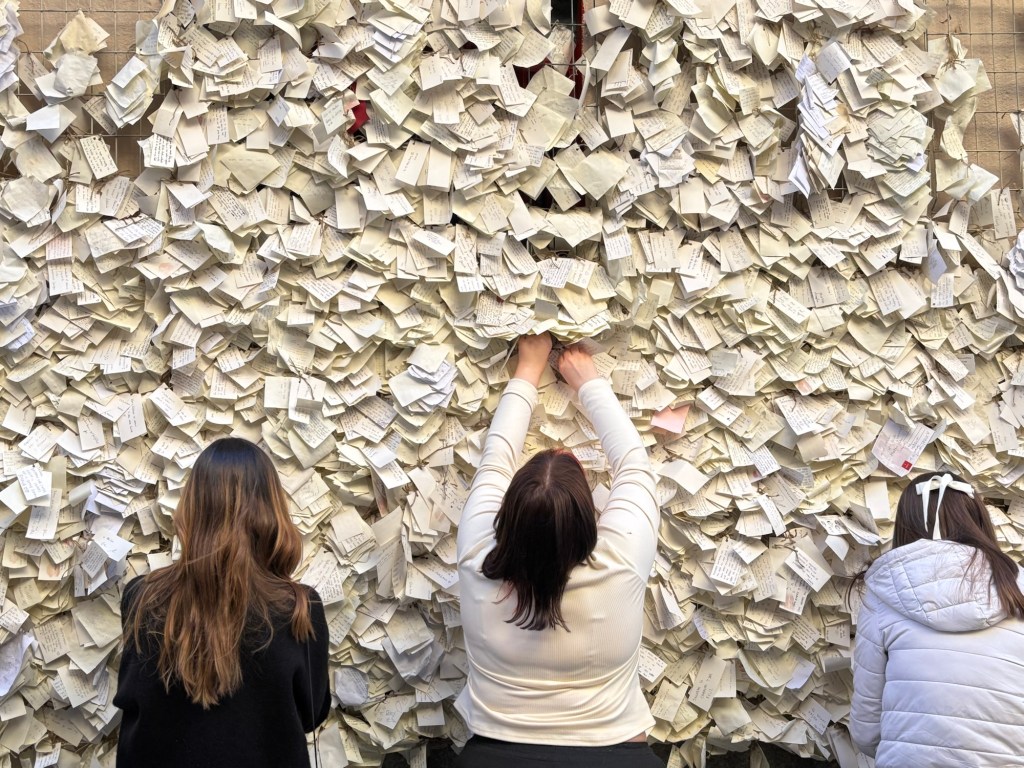
During the course of my wanderings I stumbled (quite by accident) upon the Tienda de Deseos again. I found this strange corner of Madrid last Christmas, its walls covered with the scribbled desires of a hundred passers-by fluttering in the winter wind. Last year there were quite a few lonely hearts on here. This year there seem to be a lot more general “wishing for all the best in life” requests. I made a wish last year to find her – “wherever she may be”. This year I was a bit more specific. Beautiful though it was, I don’t think I’m quite ready for another trans-Atlantic situationship.


Even in the heart of the capital, there are clear signs that spring is here. The cherry trees lining the Calle del Arenal are dressed all in white. The swifts are here early, too – they must have come hurtling in on the wings of the rainclouds, because I’ve never seen the Río Manzanares so full.

There were a few posters on some of the bollards advertising an anti-hate march in defense of the Trans community, which I really ought to have stuck around to watch, as it’s one of the A Level topics for Spanish at the moment. A smaller group of protesters were picketing the Corte Inglés just off Sol, sporting the usual V for Vendetta masks and carrying telescreens displaying the slaughter of fish off the Spanish coast. Nobody seemed to be paying them much attention.


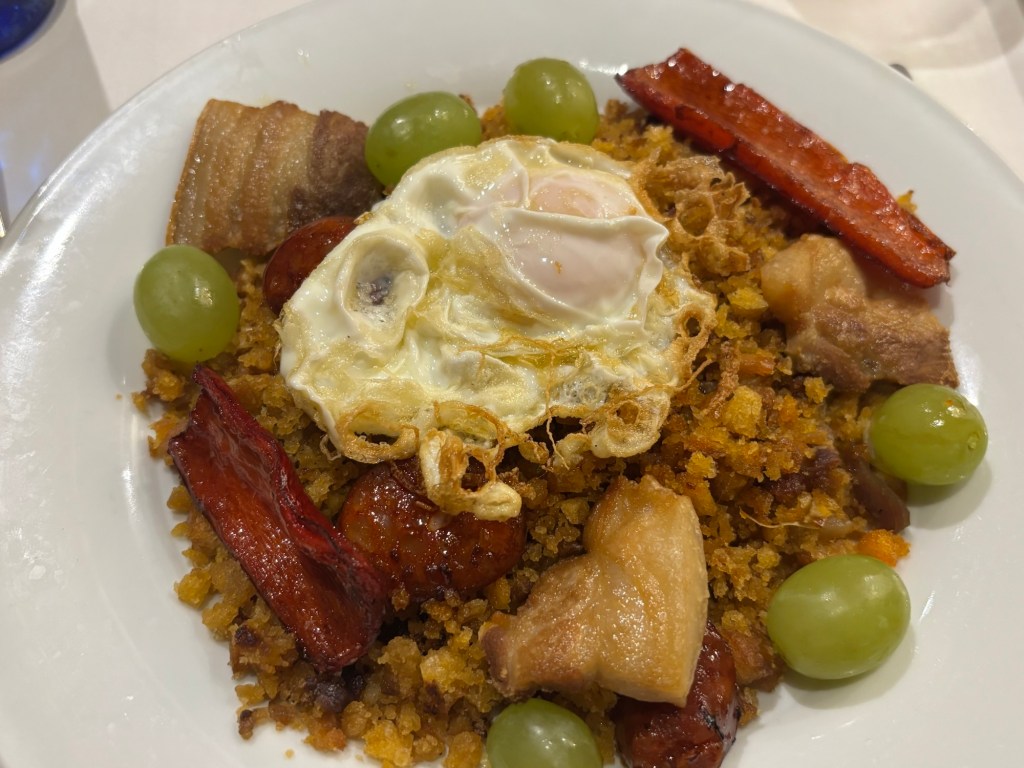
I treated myself at dinner with a rather upmarket restaurant modelled on Arturo Pérez-Reverte’s Capitán Alatriste books – dishes, decor and all. It didn’t disappoint one bit. I had my first migas in seven years and tried cochinillo for the first time. It was incredible, even though my taste buds hadn’t quite recovered from the usual end of term knockout cold.

On my first grand adventure across Spain many years ago, food was a luxury I rather recklessly decided to do without. Now that I have the means, I intend to make good on that dreadful error by exploring the best dishes the country has to offer as I go. I haven’t found any callos yet, but they’re on my list!


Please excuse the rather humdrum post today. I haven’t had any grand escapades yet! The real adventures start tomorrow… BB x

Family Reunion: Part One

10:52

It begins in Salamanca. It’s not exactly where I thought it was going to begin, but it’s a more auspicious starting point than Villafranca, I guess. The other passengers around me are reshuffling their seats on the bus. The lady on the seat next to me scrolls blindly through her Instagram feed. Flighty pigeons patrol the bus station roof and a few fluffy clouds pepper the sky. Suitcases roll in, buses roll out and people chat about what they’ll be having for lunch. It’s just another day in Salamanca – but not for me. Today’s the day I find my family.

It’s hard to say exactly how I’m feeling right now. Three days ago, when Rafael called, I was nervous. So nervous I waited until the call went through to my answerphone so I could deal with the matter calmly and indirectly. I’d already gone through the business of psyching myself up a couple of weeks ago, when I first made plans to visit. Spurred on by Coco, and some of Bella’s heartbreaking family stories, I decided I could wait no longer. Then Rafael’s sudden hospitalisation put our reunion on hold and I had to wait.

Now I’m racing across the sunny fields of old Castile with the cathedral of Salamanca shrinking into the distance, and my new quest – perhaps the greatest quest of my life so far – has begun.

12:58

The snows on the highest peaks of the Guadarrama seem as smooth as flour. San Rafael, the quiet town that harboured me once when I came down tired and hungry from a sixty kilometre trek across the mountains, looked warm and unfamiliar in the sunlight. I only remember it in the dark of the night. I have left the granite boulders and high sierras of old Castile behind me. Madrid stretches out across the plain with queer mountains of tower blocks and skyscrapers. The Buddenbrooks film they have playing on the monitor is drawing to its sad and depressing finale, a world away from the hopeful sunshine outside. Nineteenth-century Germany and sunlit Madrid could hardly be further apart.

I see a magpie. I count to ten. A second appears. I breathe again.

14:43

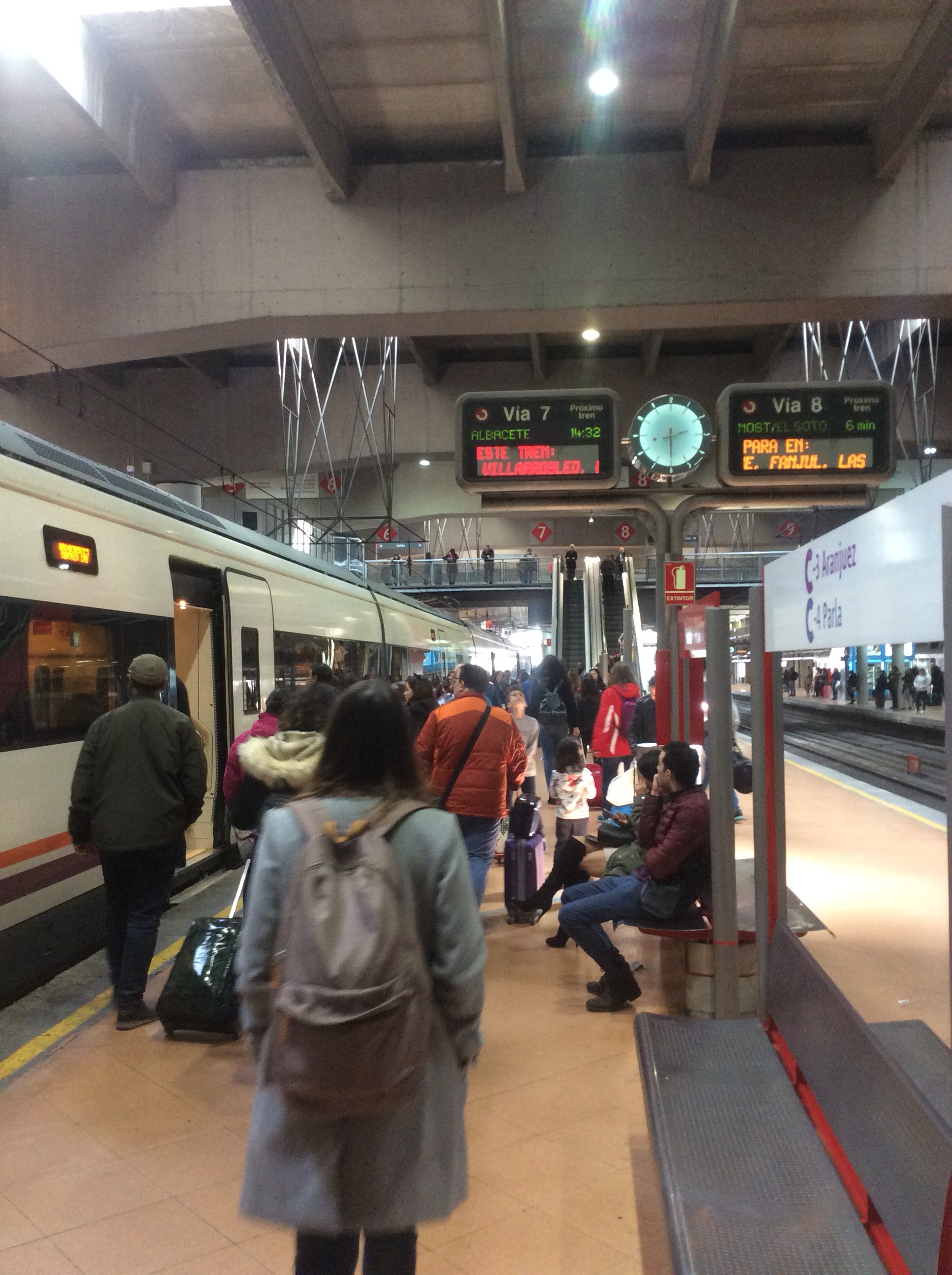
Every quest has a dragon to be slain, and today’s is Atocha Station. On the bus I briefly entertained the idea of a small paseo in the Retiro, should I find my way through the station easily. It’s as well that I didn’t. It took me several bewildered attempts to navigate the terminus. Atocha makes London King’s Cross seem like the Dunkeld and Birnam railway station. Stairs criss-crossing each other in all directions. Media distancia here, larga distancia there, high-speed AVE lines elsewhere. The icing on the cake: the platform is not revealed until minutes before the train arrives, or, in this case, withheld until the thing is just pulling in. I was a bag of nerves back there and I’m not proud of it. I love travel, but I don’t like cities. I never have. And it’ll only be harder on the way back when I have half the time to get from Atocha to Estación Sur. But the dragon is slain, and I’m headed south into New Castile and the immense emptiness of La Mancha.

15:08

Where do I begin? What questions do I ask the only man on Earth who knew my grandfather when he was still alive? It’s hard to know where to start. Rafael may be my first cousin twice removed, and his descendants more distant still, but they’re all that’s left of my family and I have to find them. I have to know. It’s what’s been driving this whole Spanish adventure from the very beginning. My grandfather José… When was he born? What was he like? Is there anything left of him in his hometown, or has he passed, like the Moorish kings, into memory? I can only hope for some small detail, a shred of the faintest of proofs. In truth I do not really know what awaits me in Villarrobledo, but I can wait no longer.

15:40

Some etymologists believe the Roman word “Hispania”, from which we derive the modern name of Spain, came via an old Punic-Hebrew cognate “i-shfania”, meaning “Island of Rabbits”. The rabbits are dying out by degrees – I haven’t seen one in months – so perhaps “Island of Magpies” might be a better term today. The kites and the swallows come and go, but I see magpies wherever I go in this country. I used to associate them with the oak tree that grew on the verge by my house when I was growing up. Nowadays I think of Spain when I see them. I’m not sure where we get the word “magpie” from, but the Spanish urraca is supposedly onomatopoeic, like the Arabic ‘āqāq. There was even a Spanish queen called Urraca once. I wonder why they called her that?

The earth is red. We’re rolling into Alcázar de San Juan. Three stops remain. Just to spite me, a pair of rabbits watched our train pass by from the sleepers on the opposite line. Hispania lives on.

17:29

The first words I heard on entering Villarrobledo were not in Spanish at all, but in American English. I’m not sure whether that marred my first experience or not. Villarrobledo looks like a lot like Villafranca, picked up and dropped in the middle of La Mancha. And I thought Extremadura was flat… I’ve never seen such horizons.

The hotel Rafael arranged for me has everything I need, except the little zing of extra courage I could do with right now. To be fair, there’s probably plenty of courage in the couple of Dueros I brought as presents for my family, but if I can soldier through twenty-two years of teetotal trials, I can manage this one sober. I’ve had a shower, freshened up and put today’s date in my journal. There’s nothing left to do but to step out of the hotel room and finish my quest. Some food wouldn’t go amiss, but as it’s Jueves Santo, I doubt anywhere will be open. Besides, needs must: there’s a greater cause at stake. Grandfather, this is for you. It always has been.

Ps. I’ve forward-dated this post, so by the time you read this, I’ll have met my family already. I’ll keep you posted.

Where to next…?

It’s getting mighty cold here in Tierra de Barros. I went to sleep clutching at my knees and somehow managed a decent night’s rest, only to wake up and find I’d left the window slightly ajar. I think I need to invest in a winter duvet more than a bike. I’m still not used to this system of alternating between summer and winter duvets. I almost miss the English climate. Almost…

We’re now three weeks away from the end of term. Yes, term ends on the 22nd December, and this year that falls on a Friday. Late, but not too late. Today’s a regular Monday. I’m sitting in the living room, easily the warmest room in the flat, having just turned the heating off after a generous couple of hours’ life-giving warmth. I have a private class with the kiddos at six (hopefully they’ll behave better this week – but then, they are only three years old), and I need to go shopping, as when I went this afternoon it took picking up the first item in the fruit and veg aisle for me to realise I’d left both my cash and my card at home.

So what’s to do? Well, it’s the time of year when I need to start thinking about where I’d like to be next year. Amongst other cards I have on the table – up to and including the JET programme in a few years’ time – the original plan still stands, which is to carry on with the British Council assistant jig for another year, albeit this time not in IES Meléndez Valdés, 06220 Villafranca de los Barros, Badajoz. The school has been wonderful to me and I could hardly have asked for a better host for two years, but I ought to spread my wings and discover somewhere new whilst I can. After all, Spain is a kingdom of many worlds: Extremadura may be one of her most beautiful, but there are other jewels in the crown!

So, for my own benefit – and for those who are interested in applying for the programme – I’ve decided to go through each region, in alphabetical order, to assess the strengths and drawbacks of working in each. Coming back to Villafranca was easy… it’s time to step back into the unknown!

(Ed.: I’ve used my own photos where possible – Andalucía, Cantabria, Extremadura and Madrid – but the rest are various stock images!)


Andalucía

DSC_0208

Where: South
Weather: Hot
Dialects: No (though Andalú, the regional accent, might as well be)
Visited?: Yes (far too often)

Ah, Andalucía. My old homeland! And, until recently, the region of Spain I knew best. In many ways the ‘classic’ Spain that comes to mind, Andalucía is – understandably – very oversubscribed as a destination. The Americans tend to have their eyes on it, and thanks to their system, which allows preferential treatment to consecutive-year assistants, they tend to end up there eventually, too (after doing time in equally beautiful backwater regions). Andalucía isn’t necessarily more spectacular than any of the other regions, but it offers a lot more bang-for-your-buck over the distance it spans: cities like Granada, Córdoba, Cádiz, Ronda and Sevilla ooze Romantic charm, and then there’s the natural beauty of the Alpujarras, Doñana National Park, the Sierra Morena and the all-too-often-overlooked beaches of the Costa de la Luz. It’s a fantastic region in which to fall in love with Spain, but because it’s so well known, it can be difficult to escape… unless, of course, you end up in somewhere like Olvera.

Probability: 7/10

Aragón
Where: Northeast
Weather: Cold
Dialect: Aragonese, Catalan (only in the high north and west)
Visited?: Yes

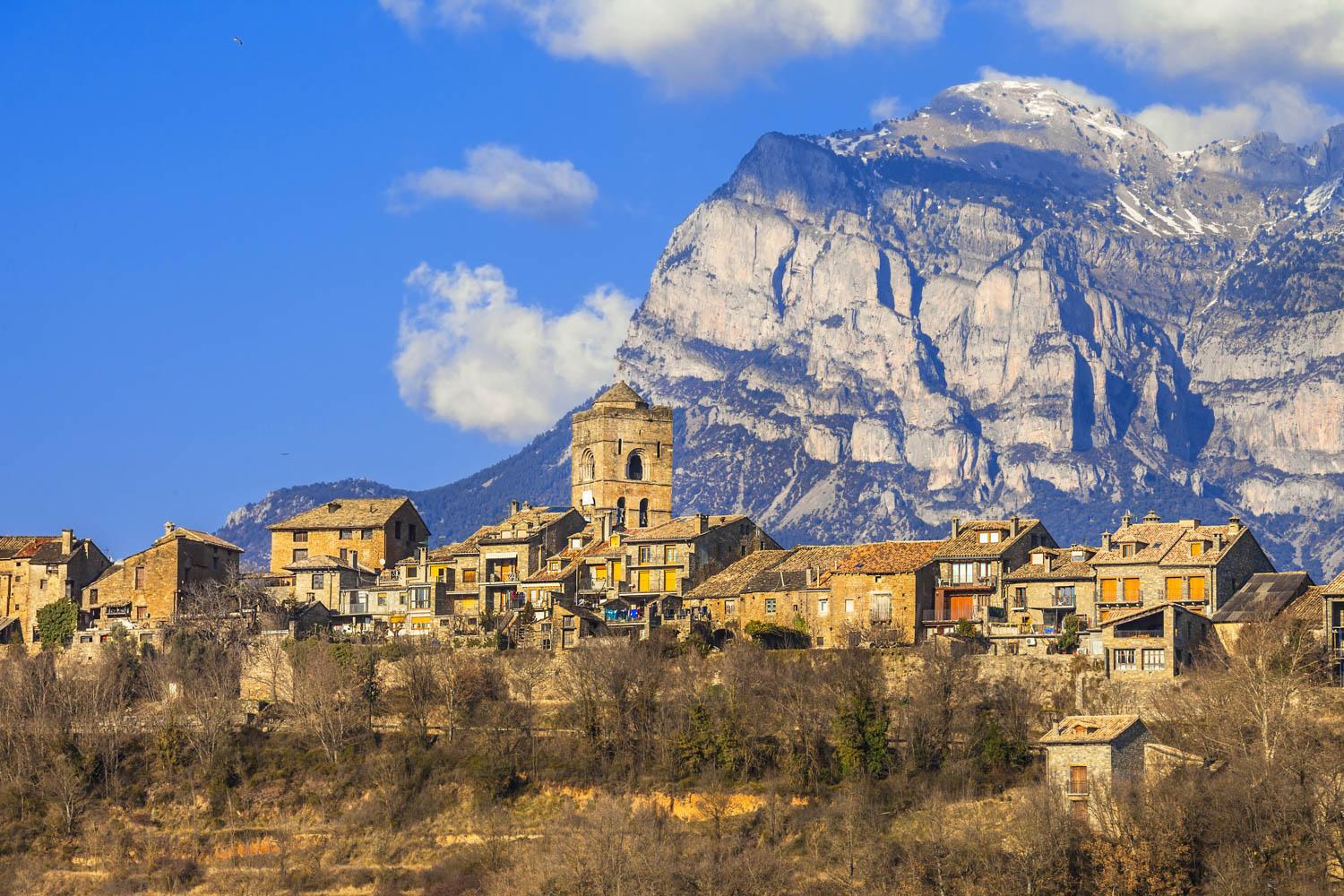
Alright, so a service station and a brief visit to Calatayud don’t exactly count as visiting Aragón per se… Aragón is a lot like Extremadura. Lots of people pass through it on their way to somewhere else. Zaragoza is probably its most famous city, but what of the rest of the region? Huesca in the north plays host to some of the most beautiful Pyrenean landscapes out there, and Teruel would kindly like to remind you that it does exist, despite what the rest of Spain will tell you. Aragonese, a local dialect, survives to the present, but as Spanish is the only ‘official’ language, there’s no cause for concern. High on the Spanish plateau, it gets mighty chilly in winter, but it is also the home of the Comarca de Monegros, a vast expense of semi-desert. And, like Extremadura, its comparatively unknown status makes it a very good place to go native.

Probability: 8/10

Asturias
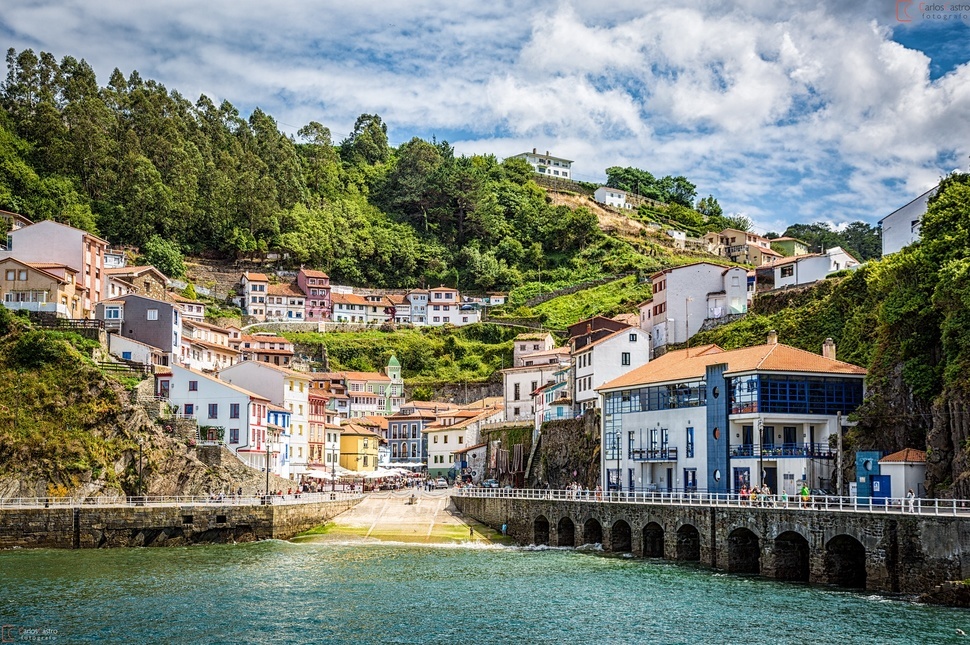
Where: North
Weather: Cold
Dialects: No
Visited: Yes

A popular choice amongst second-years, Asturias is where modern Spain was born. With pretty seaside towns, Alpine comforts and forested hills that actually go brown in autumn, in some ways it’s the perfect antidote to the Spanish south. For those used to endless heat, readily available paella and Moorish castles, it can seem like a very different world… which it is. The Spanish is very clear here, and it has some of the most beautiful beaches on the peninsula, even if they aren’t exactly the warmest. It’s a little harder to get to, but Santander’s airport offers cheap flights and is only just across the border. It is, however, a little on the expensive side.

Probability: 8/10

Cantabria
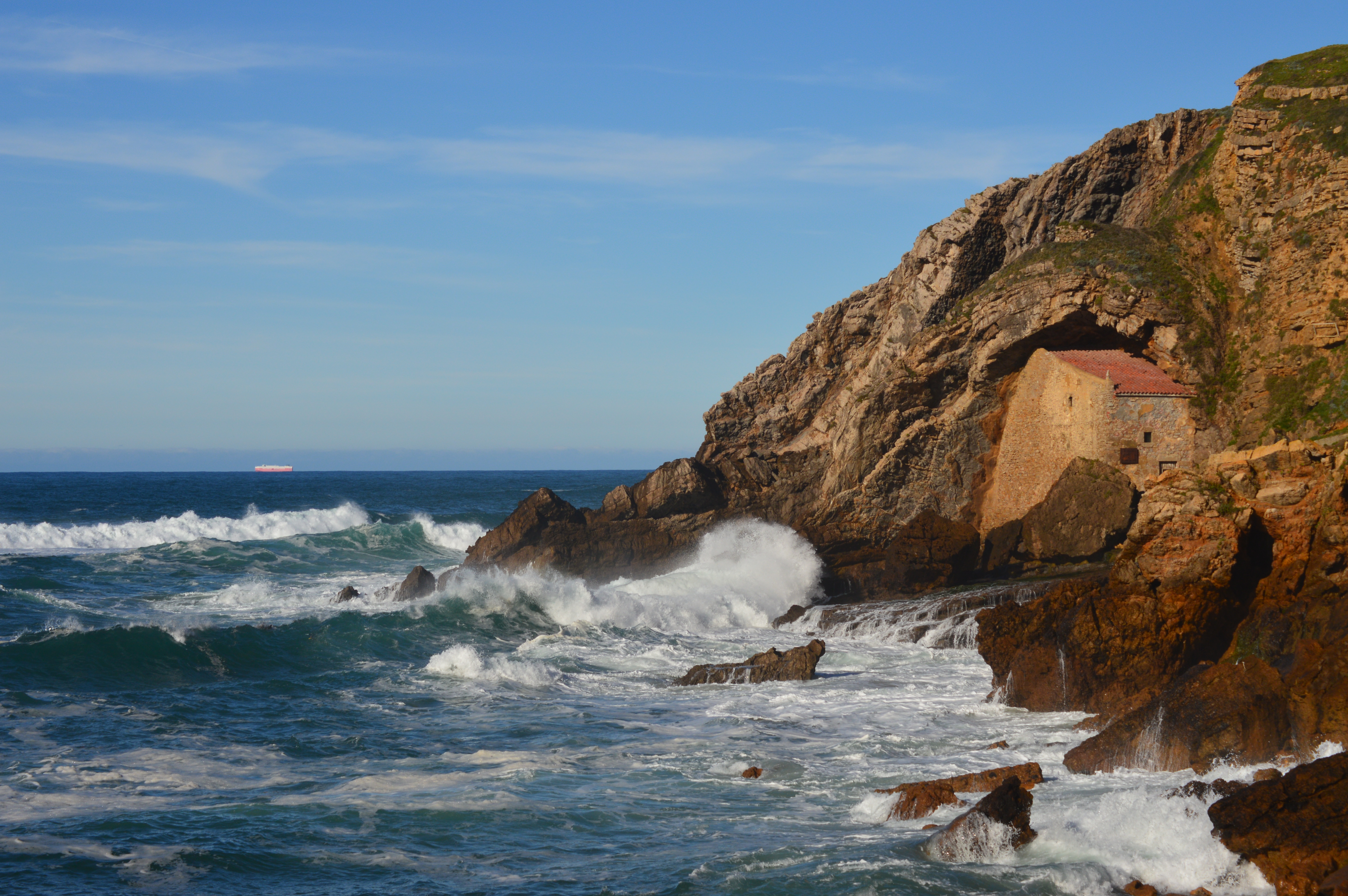
DSC_0201

Where: North
Weather: Cold
Dialects: No
Visited: Yes

Cantabria, after Andalucía and Extremadura, is the region of Spain I’ve visited the most. No, scratch that. Technically speaking, Santillana del Mar is the third region of Spain I’ve visited the most, as for some reason I ended up there on all three occasions. A marginally less mountainous version of Asturias, Cantabria is a good choice for the British auxiliar who doesn’t want to leave behind too many creature comforts. Quesada pasiega, a local speciality, is unheavenly good (like most of the Iberian peninsula’s takes on the custard tart), and the stereotype is true: I’ve seen more cows and tractors here than in any other part of Spain. It doesn’t have the quasi-African feel of the south, but what it does have is a cheap and reliable train network, which is a huge plus in any world.

Probability: 5/10

Castilla La Mancha

Where: South-central
Weather: Hot/cold
Dialects: No
Visited: Yes

Like Aragón, Castilla La Mancha is a region I can hardly claim to have visited, having spent just a few days in Toledo a few years back. If Andalucía is the Spain sold to tourists, Castilla La Mancha is the one you find in picture books. It’s Don Quijote country, and any bus ride from Madrid to the south will show you that: seemingly endless fields stretch as far as the eye can see, dotted in various locations with mountain ranges and the iconic windmills (see Consuegra, above). It’s also, coincidentally, the land of my ancestors; my grandfather was from Villarrobledo, a town near Albacete. An immense region where it is very easy to go native, but perhaps not the most awe-inspiring on offer. Toledo, however, is easily one of the world’s most beautiful cities…

Probability: 4/10

Castilla y León

Where: Northwest
Weather: Cold
Dialects: Leonese (in León province)
Visited: Yes

Make no bones about it. Castilla y León is gorgeous. It has its less interesting parts (the Camino de Santiago goes through them), and is in part a mirror of sister-province Castilla La Mancha to the south, but drawn across the meseta are some of Spain’s most striking landscapes. The Duero river gorge is breath-taking, as are the old Roman gold mines of Las Medulas (see above), and the granite-strewn scenery to the north of Burgos looks like something out of a Lord of the Rings film (but then, this was where El Cid was born). Here they speak the ‘purest’ Spanish, so you’ll have absolutely no problems with the language here. It’s clear, crisp and, whilst no slower than the usual Spanish machine-gun delivery, easier to understand than, say, any of the southern accents. The cuisine is also spectacular; in my humble opinion, most of Spain’s best food is its earthy, country food, and you’ll find a lot of it here. The cities of León, Burgos and especially Salamanca are wonders in their own right. Just watch out for the slow-burning Leonese separatist movement.

Probability: 8/10

Cataluña

Where: Northwest
Weather: Warm
Dialects: Catalan (official language)
Visited: Yes

This year would have been a very interesting year to be working in Spain’s black-sheep region. Even after the failure of Puigdemont’s half-hearted rebellion, I suspect it’d be worth a punt for the next few years. I’ve been to Barcelona a couple of times; school trips on both occasions, so I’ve barely begun to scratch to the surface of the place. The Costa Brava is undeniably beautiful, with stunning Mediterranean coves and sparkling white beaches. The Catalonian interior, however, is what grabs me: like neighbouring Aragón, Cataluña has some spectacular mountains. This is Serrallonga’s country, and I’d sure like to find out some more about the gang warfare between the Nyerros and the Cadells of old… if it weren’t for the language barrier. Now more than ever do I regret taking a Persian module over Catalan at university! You should bear in mind that Cataluña’s relative affluence makes it a little more expensive than the other comunidades, especially so in Barcelona itself. But if you’re after a more cosmopolitan experience, this is the place for you!

Probability: 6/10

Ceuta and Melilla

Where: North coast of Morocco
Weather: Hot
Dialect: No (though strong Arabic presence)
Visited: No

Despite the fact that I lived in Tetouan for an entire summer last year, I never did visit Ceuta. For one reason or another, something always came up to stop me going. Which is a shame, really: as the Spanish territories go, they’re pretty unique. Expect a very Moroccan vibe, with the North African kingdom literally within a stone’s throw at any given moment. If it weren’t for their size and the general cost and difficulty in getting to and from them if I ever wanted to travel, I’d probably sign up right away. It would, at the very least, give me an excuse to keep my Arabic polished. Most of the placements are in the two cities, though, which is a bit of a turn-off for me.

Probability: 4/10

Extremadura
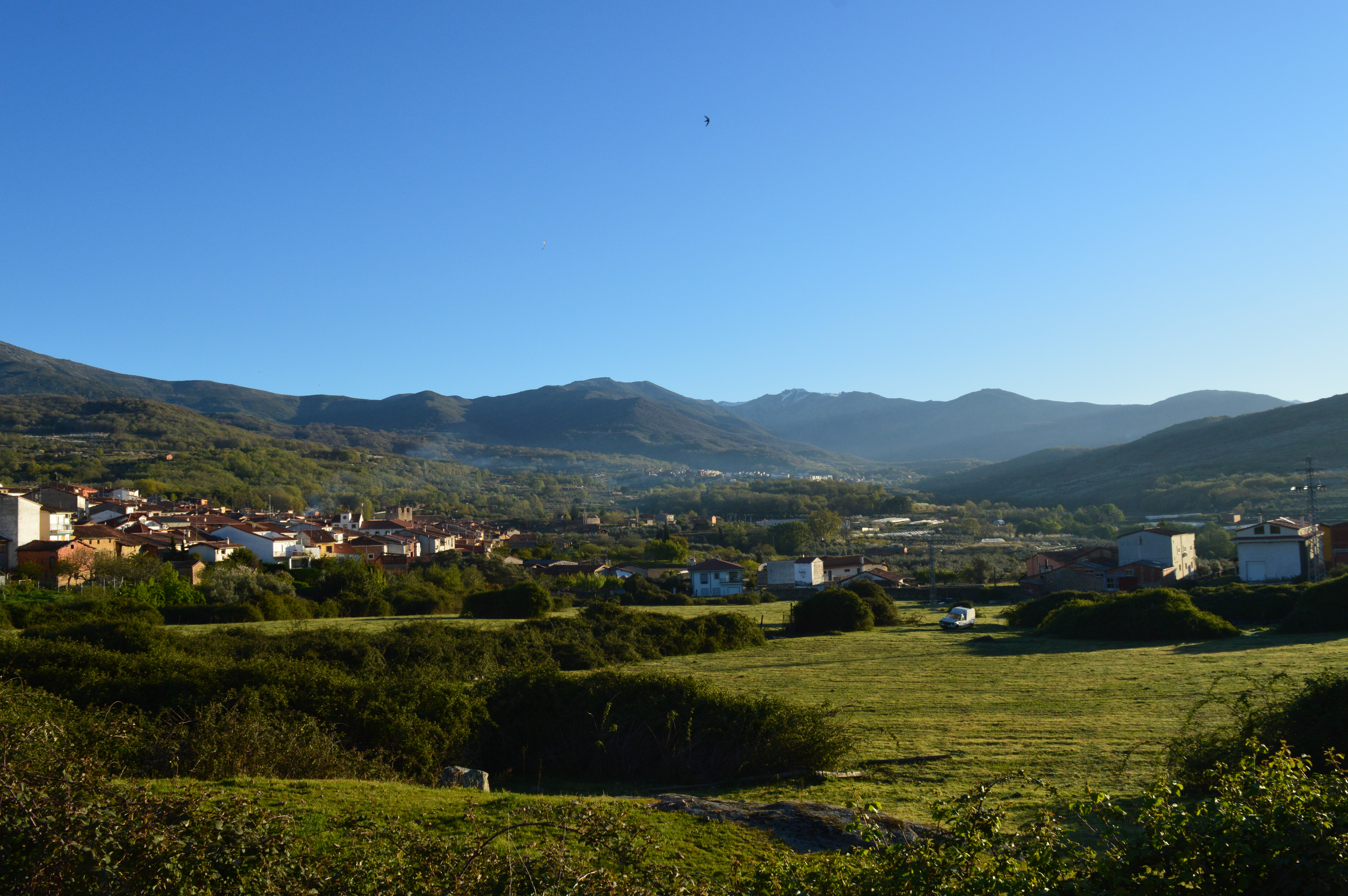
DSC_0546

Where: West
Weather: Hot/cold
Dialects: No
Visited: Yes

Of course, I could always stay put, but ask for a more northerly location: specifically, the green hills of Cáceres. There’s no denying Extremadura is by far my favourite region, and with good reason: it’s wild, it’s still relatively undiscovered, it’s lacking in other guiris and the people are some of the friendliest I’ve ever met. Plus, La Vera. Plus, Hornachos. Plus, the book. Heck, I’d stay just to be closer to Tasha and Miguel, who were pivotal in my return to Villafranca this year. With its welcoming vibe and its off-the-wall auxiliares, it’d be my top recommendation to anybody, though I’d concede you have to be prepared to be out in the sticks to be here. For me, however, it’s something of a safe option, and I’d much rather use this chance whilst I have it to explore some more of my grandfather’s beautiful country. Even if Extremadura is the best. Period. I’ll be coming back to this place for the rest of my life.

Probability: 7/10

Galicia
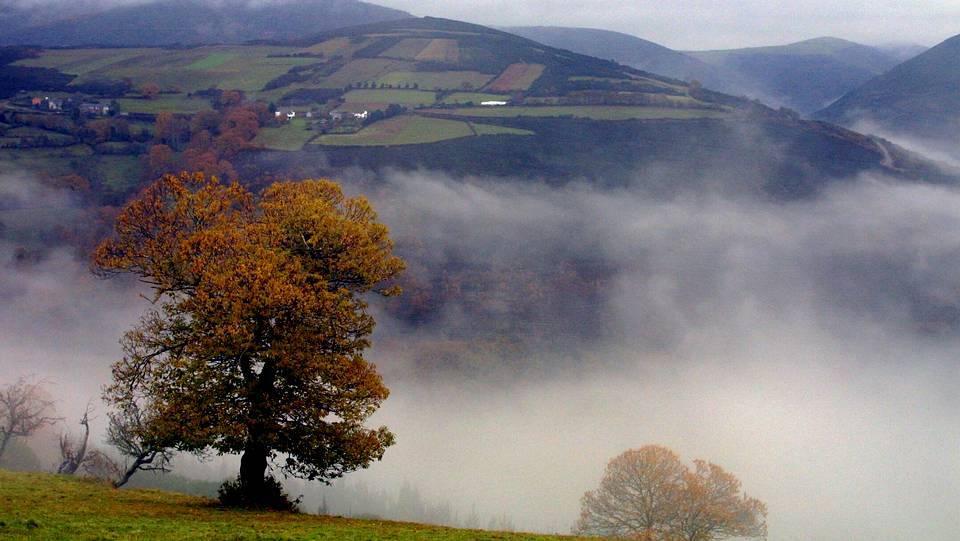
Where: Northwest
Weather: Cold
Dialects: Gallego (official language)
Visited: No

It rains a lot. Now that we’ve got that out of the way, let’s look at Galicia. Galicia is the Ireland of Spain, where the country’s Celtic roots are strongest. I mean, when their folk bands deliberately cover songs made famous by The Corrs, the ties are hard to miss. Galicia is about as far from the Spanish south as you can get on the mainland, in both distance and culture. Gallego is a thing, but I’m not above learning a new language. The word on the street is that the auxiliar programme there is one of the best in the country, if not the best. That, combined with the cheapness of living and otherworldliness that this region offers, make it the standout competitor for my attention this time around. And I never thought I’d consider it, which makes it all the more appealing. After all, I had no idea what or where Extremadura was, once upon a time. I’d very much like Galicia to be my next miraculous discovery.

Probability: 9/10

Islas Baleares

Where: Mediterranean Sea
Weather: Hot
Dialects: Catalan
Visited: No

Mallorca, Menorca and Ibiza. Party destinations in summer… and for the rest of the year? Well, EasyJet and Ryanair are always offering such cheap flights that there must be something to do there in January… right? If it weren’t for the fact that they’re islands, I might seriously consider the Baleares. But I like having room to manoeuvre, and I don’t know whether I’d feel trapped on an island. Plus, they speak a lot of Catalan there. Once again, I wish I’d not gone chasing Persian down the rabbit hole.

Probability: 2/10

Islas Canarias

Where: Off the west coast of Morocco
Weather: Hot
Dialects: No
Visited: No

First things first: it’s quite a long way from Spain. The Canary Islands, like the Baleares, can seem a very remote posting. Cheap flights are readily available to the UK and elsewhere, thanks to a steady flow of tourists, but I’m not sure I’d be thrilled if I were posted there – not least of all because it’s quite difficult to distance yourself from the touristic side, upon which the Canary Islands depend. I wouldn’t mind going in search of the islands’ Houbara bustards though, or taking a stroll in the misty laurel forests of the Garajonay National Park.

Probability: 3/10

La Rioja

Where: North
Weather: Warm
Dialects: No
Visited: No

I’m going to be perfectly honest. I know next to nothing about La Rioja, except for the fact that it’s a small region with a justifiable fame for its wine. Given its positioning, I expect it’s a little more pricey than what I’m used to, but don’t hold me to that. I’ll leave you to discover La Rioja in my stead.

Probability: 2/10

Madrid
DSC_0341

Where: Central
Weather: Hot
Dialects: No
Visited: Yes

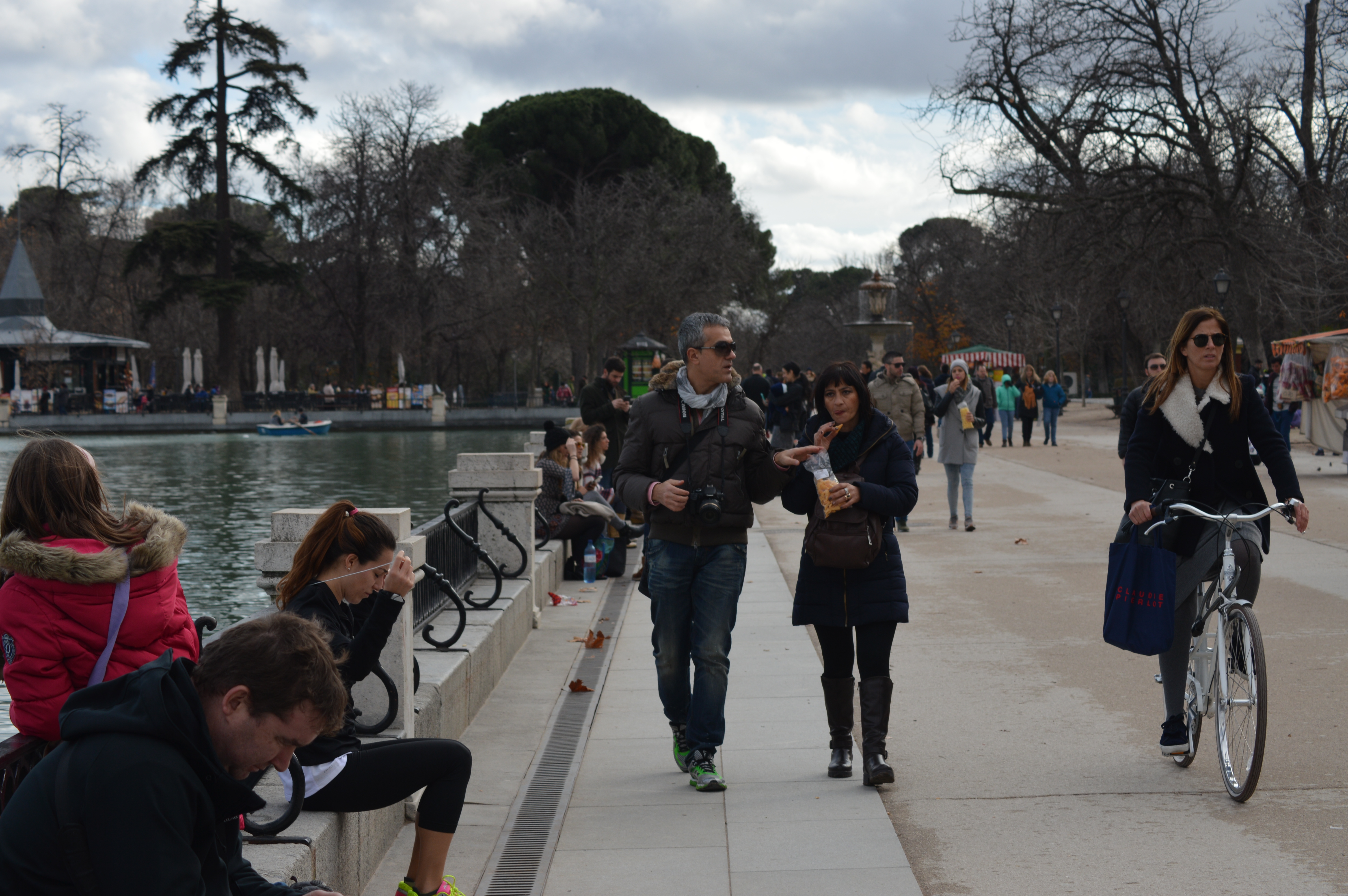
One word. No. The surrounding countryside of Madrid is unquestionably beautiful, no doubt about that, but I would rather leave the country than work in Madrid itself. As cities go, Madrid’s not so bad, but I’m a country boy; cities are for visiting, not for living in. Auxiliares posted in Madrid earn 1000€ instead of the usual 700€ to compensate for the higher living costs and also work 16 hours per week instead of 12, though after calculating the going rate for private lessons and such, I don’t half wonder whether that’s entirely fair – or even financially viable. No; for me, Madrid is just too big a move. I’d recommend the Sierra de Guadarrama, El Rey León and the Parque del Retiro, though (pictured).

Probability: 1/10

Murcia

Where: Southeast
Weather: Hot
Dialects: No
Visited: No

This year’s auxiliares are complaining about the fact we haven’t been paid for October and November yet. If what I’ve heard about Murcia is true, the auxiliares posted there are never paid on time. Murcia is one of Spain’s hidden gems: like Aragón and Extremadura, it often gets overlooked because it has more glamorous neighbours that have more of what it has and better. In Murcia’s case, that’s Valencia and Andalucía. I know a few lovely people from Murcia and I’d love to visit one day, but as year on year it becomes a larger wing of Almeria’s enormous European greenhouse, I find myself drawn to the greener, wilder parts of Spain.

Probability: 4/10

Navarra

Where: North
Weather: Cold
Dialects: No
Visited: No

A former kingdom in its own right (which, you could argue, is an accolade held by most of the Spanish realms), Navarra sits at the feet of the Pyrenees as a less extreme though equally wondrous region in the Spanish north. A friend of mine was based in Tudela last year and had a great time there, so it seems to be to be a good place to work. Like the Canary Islands, it’s also more popular with Brits than Americans, so expect less encounters with scotch tape, candies and Fall. It’s also rather well situated, allowing easy access to several of Spain’s more attractive destinations.

Probability: 6/10

País Vasco

Where: North
Weather: Cold
Dialects: Basque
Visited: Yes

The Basque Country got a positive makeover recently in the film Ocho Apellidos Vascos and its sequel, not doing away with but helping to redirect attention from the ETA bombings of the past to the more attractive aspects of Basque culture. If the Catalans are independent, it’s nothing compared to the Basques, whose regional language – Euskera – is so far removed from Spanish that it feels as though you’ve skipped five countries rather than one region. Situated in the industrial north, the Basque Country plays host to much of Spain’s industry (just look at all the Basque banks), and is therefore afforded a more affluent lifestyle. That makes it more expensive, which is a drawback, but many would argue it’s worth it. The Basques are, after all, the stuff of legend…

Probability: 5/10

Valencia

Where: East
Weather: Hot
Dialects: Valencian
Visited: No

There’s a good deal more to Valencia than the corruption and the coast, even if that is the image most people have. I’ve never made it to El Cid’s triumphal city, it never having been quite on my radar, and though I have many friends who have been up and down the coast, I’ve never quite felt the pull to go. Another more costly region, Valencian – a variant of Catalan – is widely spoken here, though Spanish is also used in its capacity as the kingdom’s official language. It played a large role in the expulsion of the Moriscos though, and that’s something I’d like to look into, albeit over a short period of time. Maybe for holidays, but for me, not for work.

Probability: 3/10


I’m more or less decided on the northwest, but I’m still open to ideas. Now that Senegal is an option for language assistant placements, it’s that little bit harder to say no to the world beyond Spain (that would have turned my world upside down if it had been an option in my second year. I would very probably have dropped Arabic, studied French and continued to wing it with Spanish). However, a promise is a promise, and I’m determined to do what I can to become truly fluent in Spanish, however long it takes, wherever it leads me.

The deadline for next year is 12th February 2018. I have a couple of months to decide. BB x
Winter in Madrid

I’m spent. Completely and utterly spent, in heart and body and mind. Ready to drop to my knees and sleep for a thousand years like some twenty-first century Rip van Winkle. I’m back in Spain, I’m back home, and I’m back in bed, and if it weren’t for the sake of this blog, I’d be fast asleep by now. But that can wait.

I’ve dropped enough hints over the last few months for you to guess what I’ve been up to. I’m back from three days in Madrid with my dear friend Ali, who has stuck with me through thick and thin over the last few months and been a most valiant and enduring friend, putting up with more of my less-than-perfect Spanish than she deserves. As a way of saying thank you, and as a birthday present, I took her to the capital (a long-term dream of hers) to see El Rey León, or The Lion King (a long-term dream of mine). And since Madrid’s a long way from both of us, we decided to make a weekend of it.

DSC_0162

First things first, The Lion King. Oh. My. God. Words fail me. I’m normally fairly speechless when I leave a theatre or cinema, but Friday night’s performance had me tongue-tied for a record half an hour. It being almost entirely in Spanish – but for the Zulu and Xhosa lyrics – had absolutely no effect on the impact whatsoever. Shadowland and He Lives in You had me welling up like a new father and it’s nothing short of a miracle that I didn’t lose all control and burst into tears completely. There’s even a few fitting modifications to the Spanish version that make it – dare I say it – even better than the original in places. Timon in especial, and he’s not normally one of my favourites, was pure gold in Spanish, and a lot of the puns translate brilliantly. I know, I know, I’m late to the party as ever, but I’ll recklessly advertise it to you as its been advertised to me. You’ll simply have to see it for yourself if you haven’t already. It’s a once in a lifetime experience, and with seats on the first row of the platform, it could hardly have been better.

DSC_0341

There’s so much to see and do in Madrid – too much for a single day’s sightseeing – but we made good of the following day, taking in the Palacio Real, the Egyptian Temple of Dagón, the gorgeous Parque del Retiro with its street musicians and its Crystal Palace and, last of all, the Prado, home to some of my all-time favourite works of art, like Velazquez’s study of the Conde-Duque de Olivares and Goya’s Maja Vestida and Maja Desnuda, as well as the über-famous Las Meninas. If photos were allowed in the Prado, I’d have gone berserk. Naturally, they’re not. So you’ll have to look them up. We were herded out with the rest by the guards before we had the chance to find the equally famous Dos de Mayo, which is a shame, but that’s what you get for being thrifty and waiting until the 6pm free entry, giving you, and everyone else who’s in on the secret – which seems to be most of Madrid – just under two hours to appreciate it all. Fear not, Goya. I’ll be back.

DSC_0418

This weekend has also done one system a world of good, and that’s the thrifty-gifty BlaBlaCar operation that so screwed me over in December (or maybe it was me that screwed up…?). Getting to and from Madrid from our respective backwater neck-o’-the-woods could hardly have been easier, faster and more enjoyable. This year I will try to use it much more often, if not all the time. It requires a little bravery and certainly more social skills than simply hopping on a bus, of course, but I do believe I’m getting there. Consider me, then, a willing convert. And if you’re reading this, Mr Oulad Berhil taxi driver, you could learn a lot from BlaBlaCar. It’s all about the conversation, at the end of the day, and these can be worth their weight in gold, though it’s mere pennies you’re paying. Truly.

DSC_0249

Post script. Madrid is a capital city. By all rights, it should have scared the living day lights out of me. But with Ali by my side, it didn’t occur to me even for a second. I’d even go so far as to say that it was one of the best adventures yet. A lot of auxiliares living and working here use Spain as a launch-pad to other European destinations, but I maintain that there’s enough to do here to last you not just a year, but a lifetime. Oh Spain, how cruelly you play with my heart…

DSC_0470

Well, I guess it’s finally time to pack up the festivities, dust off the schoolbooks and get back to work. I’m none too keen to do so, but at the same time I really need to. The wind is howling outside and winter, it seems, has finally arrived. And long has it been in coming. BB x

Back in Action

It’s been a while!

I kept my word, it seems. It’s been about two weeks since my last post. Probably more. In that time I’ve not honestly been up to much at all, hence the dearth of posts, though that probably has more to do with a real need to take some serious time-out; last term was pretty hectic, especially towards the finishing line.

Coming home for Christmas was never part of the original plan, but I’m glad I did. England at this time of year is pretty magical, with the mist, the frost and the rain in the pine woods about the house. Doubly so this year, as it’s been all of three months since the last time I saw rain in Spain. Apparently global warming is to blame. Whoever the culprit may be, it’s impressed upon me just how much I like rain. I don’t know whether that’s ineffably English or the reverse. I don’t really mind either way. I wasn’t really complaining about the gorgeous blue skies and twenty-two degree heat right up until my last day in the country (the twenty-second of December, in fact). All I hope is that it keeps for one week longer at least, so that it doesn’t put a damper on my stay in Madrid next week… more on that later.

That said, I haven’t sung a single Christmas carol this year, and that makes me feel more than a little wierd. Not even Silent Night. That must be the first time in my life where I haven’t. Next year had better make up for that.

I haven’t made anywhere near as much progress on the grand drawing as I’d have liked. Nor have I finished my series of 2015 doodles. What I have achieved over the last two weeks, however, is a new camera. The trusty old Nikon D70 has done me wonders over the last ten years, but… ten years is a long time. Especially in the fast-moving world of digital photography. I got my comeuppance for my loyalty when I went into Extremadura’s biggest camera store and was roundly told by the head clerk that nowhere stocked the ‘gigantic’ CompactFlash memory cards that the D70 runs off anymore. Time, perhaps, to move on.

Fortunately, I’ve been working two jobs and several private lessons over the last three months, so I’ve enough set aside for such adventures.

Introducing the Nikon D3200. In all its 24 megapixel glory.

DSC_0007

Tech that can crack out magazine quality prints on AUTO mode is worth the investment. Sadly, most of my lenses are a little out of date too, and the autofocus doesn’t work, so it’s been an ordeal learning to use manual (finally). A necessary one, but an ordeal nonetheless. Manual and nuthatches simply don’t mix.

To put it through its paces, I took it to Deal for a final coffee with the family before I jet off back to Spain for the unforeseeable future. Even on manual mode alone, it did a fine job.

The phrase ‘a kid at Christmas’ springs to mind; but then, I am a kid at heart, and this is technically still the Christmas season, so there you have it. I’m waiting on baited breath for my kit lens and the ol’ telephoto to have a functional autofocus (I haven’t been able to check thus far as I left them in Spain), but in the meantime, I’ll just keep practising with manual.

DSC_0039

A gannet far out to sea (Sigma 500mm, where are you when I need you?)

Apart from getting back into some serious camera hijinks, it was worth coming home for a reunion with two very special friends, and a whole panoply of others close to my heart. That’s what Christmas time is for; being with your nearest and dearest. A phrase I heard bandied about a lot this Christmas was that people had learned to distance themselves from those they ‘simply no longer really had time for’. I guess that’s a good ethos, and a strong marker of that over-the-hill feeling that is turning twenty-two. The first winnowing of friendships that were once so strong, and at the same time the moment when you see clearly, perhaps for the first time, who the people are that you will fight to keep in touch with. Having always had it in mind to leave these rainy shores to chase my dreams in Spain, I’ve never allowed myself to grow too attached to anybody here in England, but for two shining lights I would return home anytime and oft, and you know I would. You know who you are. Thank you.

DSC_0032

Things you’d be hard-pressed to find in Spain: a tankard of whipped-cream-topped hot chocolate

Well, Kent is behind me now, I’m back in West Sussex – where the rain and the darkness has not ceased for several days – and counting down the hours until my plane whisks me back to Seville and home. But for the wind, the place is as silent as the grave. That hasn’t stopped the birds from letting me know that they have not appreciated my absence, so I made sure to throw out some New Years’ seed for them. They’ve got to be so tame now that I hardly need to freeze when the camera’s out.

DSC_0055DSC_0064

Such is the power of that camera that neither of those have been zoomed in or edited whatsoever. Oh, but we’re going to have some serious fun with this thing.

Well, I’ll keep you posted. My next insert will probably be from Spain, but whether that will be pre- or post-Madrid depends entirely on whether the Bar Atalaya WiFi is in operation. In any case, hasta pronto, amigos. The rain in Spain falls mainly on England x